Tag: Middle East

  • Secure diplomatic, consular measures to safeguard Ghanaians caught up in Middle East tensions- Antwi-Danso appeals to govt

    Secure diplomatic, consular measures to safeguard Ghanaians caught up in Middle East tensions- Antwi-Danso appeals to govt

    International relations scholar and security commentator, Vladimir Antwi-Danso, has called on the government to swiftly pursue diplomatic and consular measures to safeguard Ghanaians caught up in rising tensions across the Middle East, especially in destinations experiencing widespread flight cancellations and disrupted air travel.

    During an appearance on The Pulse on Monday, he underscored the need for Ghana to engage Gulf nations and other allied states to guarantee the protection of its citizens overseas.

    “We are seeing flights cancelled all over. Government must liaise with those countries and coordinate with partners to safeguard the safety and security of our people,” he said.

    His remarks follow mounting anxiety over aviation security within conflict-affected zones. Several airlines operating within and around the Gulf have halted services amid escalating threats, including possible missile attacks and unstable airspace conditions.

    The analyst disclosed a personal concern, noting that his son, who works as a pilot for Qatar Airways, is presently stranded in Qatar due to the suspension of flights.

    “No plane flying in those areas has 100 percent assurance that it can fly in or out safely,” he said, drawing attention to the risks confronting both flight crews and travelers.

    He further appealed to the Ministry of Foreign Affairs to implement practical interventions to shield Ghanaian citizens, such as closely tracking the security situation in affected Gulf countries, offering prompt consular assistance to those stranded, preparing evacuation arrangements if required, and issuing up-to-date information to keep relatives informed.

    In addition, he stressed that Ghana should leverage platforms like the United Nations to advocate for calm and stability in the troubled region.

    Escalating tensions in the Middle East have led to the cancellation of flights from Accra to Dubai.

    The situation involves reported bombings in Iraq and retaliatory attacks across the region, prompting airlines to suspend services.

    Emirates flight EK 788 from Kotoka International Airport (ACC) in Accra to Dubai International Airport (DXB) has been cancelled, and passengers are advised to contact their airlines for rebooking or refund options.

    The flight from Accra to Dubai International Airport, scheduled for 7:15 pm GMT on Saturday, 28 February 2026, was canceled at the last minute through a notice.

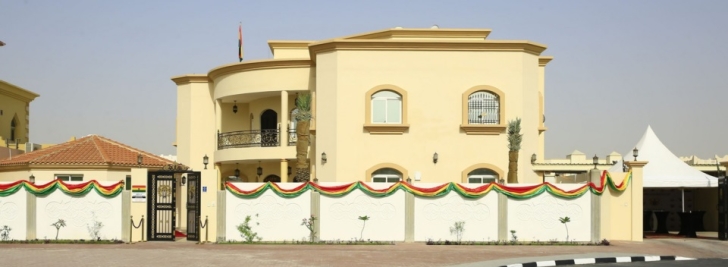
    In response to the ongoing tensions, the Embassy of Ghana Doha, State of Qatar has advised Ghanaians living in the area to exercise caution and remain vigilant during this period.

    A press statement from the Embassy of Ghana Doha, State of Qatar read, “Due to missle attack and its impact in Doha, please take shelter until further notice, obtain information from official sources. We urge everyone to stay from military states, remain indoors, avoid crowded areas for any exposure to danger and keep essentials supplies like medication and food”.

    This development is expected to significantly impact travelers from Ghana to Asia, Europe, and North America, as Dubai is a major transit hub connecting travelers through the United Arab Emirates.

    The ongoing tensions have been linked to the death of Iran’s Supreme Leader, Ayatollah Ali Khamenei.

    Ayatollah Ali Khamenei was reportedly killed in strikes by the Unites States (U.S.) and Israel.

    Last year, the Minister for Foreign Affairs, Samuel Okudzeto Ablakwa, warned the Israeli Embassy against maltreating Ghanaian nationals.

    Speaking to the media on Thursday, December 11, Mr. Ablakwa noted that Ghana will respond with equal force if any of its citizens are deported.

    According to him, “If they deport ten Ghanaians, we will deport ten. If they deport twenty, we will deport twenty. If they deport fifty, we will deport fifty. We are not going to accept this.”

    His comments are in response to an incident in which several Ghanaian travellers, including four members of a parliamentary delegation en route to Tel Aviv for an international cybersecurity conference, were detained and deported by Israel Embassy officials.

    Mr. Ablakwa narrated, “We were told that the Ghanaian Embassy was uncooperative, but the facts simply do not support that. Out of the six people on the list that Israel provided, one is not even Ghanaian. He is Gabonese. Our embassy had every right to verify the identity of the individuals involved.

    “One of the people listed was seriously ill, and Israeli doctors themselves advised that she should not travel until she had recovered. How can you deport someone who is unwell and needs medical attention? Another individual had already been issued a travel certificate, so there was no reason to stop their entry into Israel.”

    But in their actions, Israeli officials indicated that six Ghanaians who were supposedly due for deportation failed to provide the necessary details needed by Ghana’s Embassy in Tel Aviv to issue travel certificates.

    The matter adds to broader concerns surrounding deportation practices. In September, eleven West African nationals filed two ex-parte applications at the Labour Division of the High Court in Accra, challenging their alleged detention in Ghana after being deported from the United States (U.S).

    The eleven individuals include Nigerians Daniel Osas Aigbosa, Ahmed Animashaun, Ifeanyi Okechukwu, and Taiwo K. Lawson; Liberian national Kalu John; Togolese nationals Zito Yao Bruno and Agouda Richarla Oukpedzo Sikiratou; Gambian national Sidiben Dawda; and Malians Toure Dianke and Boubou Gassama.

    According to the applicants, they were forcibly transported to Ghana without prior notice. They allege that they were secretly moved from the U.S. detention centers between September 5 and 6 in shackles.

    They want the court to temporarily stop them from being deported back to their home countries until the court decides on their case. Their submission further revealed that Ghanaian authorities allegedly confined them in a military facility.

    They cited Article 14(1) of Ghana’s 1992 Constitution, which guarantees personal liberty, as well as Article 23, which protects the right to administrative justice. They are arguing that Ghana is violating international law by trying to send them back to countries where their lives or freedom could be at risk.

    As a result, they have demanded that the Attorney-General, the Chief of Defence Staff, and the Comptroller-General of the Ghana Immigration Service appear before the Human Rights Division of the High Court with valid reasons. The court has fixed Tuesday, September 23, to hear the case.
  • Middle East tensions: Ghanaians in Qatar directed to register over safety concerns

    Middle East tensions: Ghanaians in Qatar directed to register over safety concerns

    All Ghanaian nationals residing in Qatar have been directed by Ghana’s Embassy in Doha to register with the mission as part of emergency preparedness measures amid escalating tensions in the Middle East.

    The Embassy explained that this forms part of ongoing efforts to ensure the safety of Ghanaian nationals. This was contained in a statement issued by the Embassy on Monday, March 2.


    “The Embassy of the Republic of Ghana in Doha hereby urges all Ghanaian nationals residing in the State of Qatar who have not registered to immediately do so, as part of ongoing emergency preparedness measures.

    “In view of the heightened tensions and unrest within the region, this registration will enable the Embassy to effectively communicate with, assist, and, if necessary, coordinate evacuation arrangements for Ghanaian citizens,” it noted.

    On Saturday, 28 February, Emirates flight EK 788 from Kotoka International Airport (ACC) in Accra to Dubai International Airport (DXB) was cancelled, and passengers were advised to contact their airlines for rebooking or refund options due to the escalating tensions in the Middle East.

    The airline suspended its services following reported bombings in Iraq and retaliatory attacks across the region, prompting airlines to suspend services.


    The flight from Accra to Dubai International Airport, scheduled for 7:15 pm GMT on Saturday, 28 February 2026, was canceled at the last minute through a notice.


    In response to the ongoing tensions, the Embassy of Ghana, Doha, State of Qatar, on Sunday, March 1, advised Ghanaians living in the area to exercise caution and remain vigilant during this period.


    A press statement from the Embassy of Ghana Doha, State of Qatar read, “Due to missle attack and its impact in Doha, please take shelter until further notice, obtain information from official sources. We urge everyone to stay from military states, remain indoors, avoid crowded areas for any exposure to danger and keep essentials supplies like medication and food”.


    This development is expected to significantly impact travelers from Ghana to Asia, Europe, and North America, as Dubai is a major transit hub connecting travelers through the United Arab Emirates.


    The ongoing tensions have been linked to the death of Iran’s Supreme Leader, Ayatollah Ali Khamenei. Ayatollah Ali Khamenei was reportedly killed in strikes by the Unites States (U.S.) and Israel.


    Last year, the Minister for Foreign Affairs, Samuel Okudzeto Ablakwa, warned the Israeli Embassy against maltreating Ghanaian nationals. Speaking to the media on Thursday, December 11, Mr. Ablakwa noted that Ghana will respond with equal force if any of its citizens are deported.


    According to him, “If they deport ten Ghanaians, we will deport ten. If they deport twenty, we will deport twenty. If they deport fifty, we will deport fifty. We are not going to accept this.”


    His comments are in response to an incident in which several Ghanaian travellers, including four members of a parliamentary delegation en route to Tel Aviv for an international cybersecurity conference, were detained and deported by Israel Embassy officials.


    Mr. Ablakwa narrated, “We were told that the Ghanaian Embassy was uncooperative, but the facts simply do not support that. Out of the six people on the list that Israel provided, one is not even Ghanaian. He is Gabonese. Our embassy had every right to verify the identity of the individuals involved.


    “One of the people listed was seriously ill, and Israeli doctors themselves advised that she should not travel until she had recovered. How can you deport someone who is unwell and needs medical attention? Another individual had already been issued a travel certificate, so there was no reason to stop their entry into Israel.”


    But in their actions, Israeli officials indicated that six Ghanaians who were supposedly due for deportation failed to provide the necessary details needed by Ghana’s Embassy in Tel Aviv to issue travel certificates.

    The matter adds to broader concerns surrounding deportation practices. In September, eleven West African nationals filed two ex-parte applications at the Labour Division of the High Court in Accra, challenging their alleged detention in Ghana after being deported from the United States (U.S).


    The eleven individuals include Nigerians Daniel Osas Aigbosa, Ahmed Animashaun, Ifeanyi Okechukwu, and Taiwo K. Lawson; Liberian national Kalu John; Togolese nationals Zito Yao Bruno and Agouda Richarla Oukpedzo Sikiratou; Gambian national Sidiben Dawda; and Malians Toure Dianke and Boubou Gassama.


    According to the applicants, they were forcibly transported to Ghana without prior notice. They allege that they were secretly moved from the U.S. detention centers between September 5 and 6 in shackles.


    They want the court to temporarily stop them from being deported back to their home countries until the court decides on their case. Their submission further revealed that Ghanaian authorities allegedly confined them in a military facility.


    They cited Article 14(1) of Ghana’s 1992 Constitution, which guarantees personal liberty, as well as Article 23, which protects the right to administrative justice.

    They are arguing that Ghana is violating international law by trying to send them back to countries where their lives or freedom could be at risk.


    As a result, they have demanded that the Attorney-General, the Chief of Defence Staff, and the Comptroller-General of the Ghana Immigration Service appear before the Human Rights Division of the High Court with valid reasons. The court has fixed Tuesday, September 23, to hear the case.
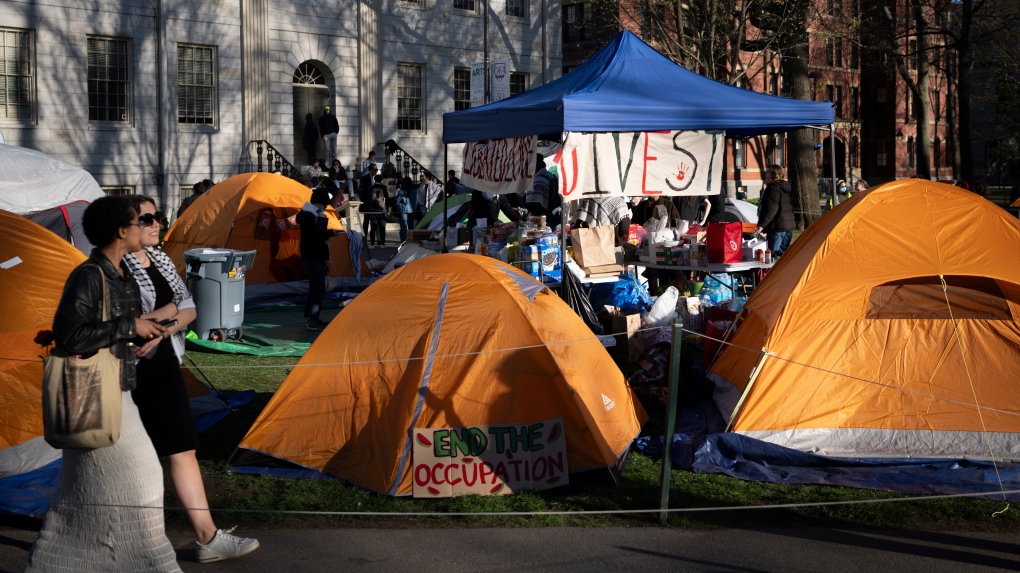
  • Harvard students call off demonstration as school decides to talk about Middle East crisis

    Harvard students call off demonstration as school decides to talk about Middle East crisis

    People who were against the fighting between Israel and Hamas were taking down their tents at Harvard Yard. This happened because the university agreed to talk to them about their concerns, which ended the protests peacefully. Other protests at different universities were stopped by the police.

    The group Harvard Out of Occupied Palestine said they no longer needed to stay in their camp, and the university president agreed to talk to them about their concerns.

    Many college students this spring made camps to ask their schools to end connections with Israel and companies that support it.

    The most recent war between Israel and Hamas started when Hamas and other fighters attacked southern Israel on October 7. They killed about 1,200 people and took 250 more as hostages. Palestinian fighters have around 100 prisoners and Israel’s army has killed over 35,000 people in Gaza, according to Gaza’s Health Ministry. They don’t separate between civilians and fighters.

    Harvard’s president and the dean of the Faculty of Arts and Sciences, Hopi Hoekstra, are going to talk with the protesters about the fighting in the Middle East.

    The protesters said they made a plan to talk to the people in charge of Harvard University, including the Harvard Management Company. This company manages the university’s money, which is around US$50 billion.

    The protesters said that the students will plan to talk about disclosure, divestment, reinvestment, and make a Center for Palestine Studies. The students also said that Harvard has offered to cancel suspensions for over 20 students and student workers and reduce punishments for 60 more.

    “A person speaking for the protesters said that in the past three weeks, the encampment has grown and strengthened support for Palestine on campus. ” “It has made a difference in how much information is shared and assets are sold at Harvard. “

  • Head of UN calls for immediate de-escalation in Middle East

    Head of UN calls for immediate de-escalation in Middle East

    UN leader Antonio Guterres wants fighting to calm down quickly in the Middle East.

    The UN spokesman, Stephane Dujarric, said that Guterres talked to Iran’s foreign minister on the phone and made the comments after Tehran’s attack on Israel over the weekend. Dujarric said Guterres talked to Foreign Minister Hossein Amirabdollahian on Monday.

    During a meeting about a serious situation, Guterres said that the Middle East is very close to a dangerous situation and we need to be careful.

    World leaders have told Israel not to fight back after Iran sent a lot of drones and missiles over the weekend. This made the Middle East get closer to a big war. Less than two weeks after two Iranian generals were killed in a suspected Israeli attack in Syria, the attack happened.

    There has been more fighting in the area since the latest Israel-Hamas war began in October. In 2007, two militant groups called Hamas and Islamic Jihad, which are supported by Iran, attacked Israel from across the border. They killed 1,200 people and kidnapped 250 others. Israel attacked Gaza and has caused a lot of damage and killed over 33,800 people, according to local health officials.

    The UN asks for $2. 8 billion to help three million Palestinians.

    The United Nations is asking for $2. 8 billion to help 3 million Palestinians. They need food, clean water, and healthcare in Gaza to prevent a famine.

    Andrea De Domenico, who is in charge of helping people in Gaza and the West Bank, said on Tuesday that big efforts are needed to bring back basic services, but it can’t be done while the military is still active.

    He said that hospitals, water and sanitation facilities, homes, roads and schools have been destroyed in Gaza. He also said that there are no universities left standing in Gaza.

    De Domenico said that Israel is starting to show they want to help Gaza, but the UN keeps asking for more aid.

    He said Israel has been saying no and taking too long to let UN aid convoys into Gaza.

    The UN person in charge of helping people in need said we need to focus more on preventing famine by making sure people have clean water, bathrooms, and good health care, not just on giving them flour for bread.
    The US will make it harder for Iran to do business by adding new penalties, the White House says.

    The US will punish Iran with more penalties because Iran attacked Israel from the air for the first time ever on Saturday. This was confirmed by National Security Adviser Jake Sullivan.

    Sullivan said that the sanctions will focus on Iran’s missile and drone programs, and on groups that support the country’s Revolutionary Guard Corps and defense ministry.

    The US expects that other countries in the Group of Seven will also impose their own penalties.

    Sullivan said that these new rules and other actions will keep up the pressure to limit and weaken Iran’s military power and effectiveness and deal with all of its troubling behavior.

    Israel says Iran fired more than 300 missiles and attack drones in the attack. Iran said the attack happened because they believed Israel had bombed and killed two Iranian generals in Syria on April 1.

  • US seeks to stop worsening situation in Middle East

    US seeks to stop worsening situation in Middle East

    The United States discussed its role in assisting Israel in thwarting an air attack by Iran on Sunday. President Joe Biden also met with leaders from other countries to prevent the situation from getting worse in the region and to work together to show disapproval of Iran.

    The US helped Israel stop many drones and missiles from Iran. This was the first time the US directly attacked Israel. Israeli officials said that almost all of the weapons coming towards them were destroyed before they could cause much harm.

    American officials said that even though a lot of the missiles were stopped, Iran wanted to cause a lot of damage and hurt people. They also said that if the missiles had hit their targets, the situation in the Middle East would have gotten much worse and out of control. US leaders said Biden told Israel’s leader, Benjamin Netanyahu, that America won’t join any attack on Iran. Biden also warned Netanyahu to be careful and think about the dangers of making things worse.

    The United States wants Israel to hold back and not fight so much against Hamas in Gaza. They also want Israel to make sure civilians in the area are kept safe. This is part of ongoing efforts to control the fighting between Israel and Hamas, which has been going on for seven months.

    The US and its friends were getting ready for this attack for a few days. The launches were even more powerful than expected, according to officials who cannot talk about it publicly. They spoke on the condition that their names would not be shared.

    Officials said that at one time, Iran had launched at least 100 missiles towards Israel, and they were close to reaching their target. Biden and some important people watched the firings and interception attempts happening live in the White House Situation Room. The officials were happy when they saw that the missile defence had worked.

    A high-ranking US military leader said that American planes destroyed more than 70 drones and cruise missiles, and US ships in the eastern Mediterranean Sea took down between four and six ballistic missiles. Also, a US missile system in Iraq shot down one more missile.

    “I told the US military to send planes and ships to help protect Israel. They arrived in the region last week,” Biden said in a statement on Saturday night. “Because of our troops and their great skills, we were able to help Israel stop almost all of the drones and missiles coming towards them. ”

    Government officials said the phone call showed that even though there are disagreements about the war in Gaza, the US is very committed to defending Israel. They said the commitment is very strong. I would do the same thing again if I had to.

    The officials said Iran didn’t plan for Israel and the US to have time to get ready for an attack, but they did use the time it took for Iran to get ready to plan how to respond. The officials said Iran told the US during the attack on Saturday that what they saw was their complete response. The message was sent through the Swiss government because the two countries don’t have direct diplomatic ties.

    On Saturday evening, Biden talked to Netanyahu and told him to show off Israel’s strong defense skills instead of attacking Iran. Biden wants to convince Israel to not make a bigger strike against Iran.

    Biden said that Israel did a great job at defending itself from attacks and showed that its enemies can’t threaten its security.

    Biden talked to Jordan’s King Abdullah II on Sunday. The king said that if Israel takes actions that make the situation worse, it could lead to a bigger conflict in the region. This information was from the Royal Court. The White House talked about the situation in Gaza and the leaders agreed to work together to end the crisis as soon as they can.

    The president talked with some US soldiers who helped shoot down the Iranian drones.

    After the G7 video call on Sunday, the leaders strongly condemned Iran’s direct attack on Israel. They said they fully support Israel and are committed to its security.

    The US, Italy, Japan, Germany, France, Britain, and Canada say that Iran’s actions are making the region unstable and could lead to more fighting. They are ready to take more action to stop Iran from making things worse.

    A top US government official said that some countries talked about calling Iran’s Revolutionary Guard Corps a terrorist group and imposing more penalties on Tehran, but they didn’t make a final decision yet.

    The G7 leaders talked about the war between Israel and Hamas and said they will work together to stop the fighting in Gaza. They also want to help free the hostages held by Hamas and give more aid to Palestinians who need it.

    Robert Wood from the US said at a meeting on Sunday that the US strongly supports Israel’s defense.

    “In the next few days, the United States will talk with other countries to find more ways to make Iran take responsibility at the United Nations,” Wood said, asking for the Security Council to quickly criticize the Iranian attack.

    The US and Israel were getting ready for an attack because Iran had said it would strike back.

  • Overview of US military bases in Middle East, recent drone attack in Jordan

    Overview of US military bases in Middle East, recent drone attack in Jordan

    The US base hit in a deadly drone attack last Sunday, situated in the north-west corner of Jordan, is just one among over a dozen where US military personnel operate across Iraq, Jordan, and Syria. Here’s a brief summary of the US bases in the Middle East and the reasons behind their presence.

    Iraq: Approximately 2,500 US troops are stationed in Iraq at the invitation of the Iraqi government. This deployment is part of a US-led coalition aimed at preventing the resurgence of the jihadist Islamic State group, which still maintains a presence in the country following its defeat in 2017.

    Syria: There are around 900 US personnel in Syria, officially present to support their anti-IS ally, the Kurdish-led Syrian Democratic Forces, in Syria’s semi-autonomous north-east region. However, the Syrian government opposes the US presence, considering it an occupation.

    Jordan: The US has approximately 3,000 troops based in Jordan, a key ally. Additionally, there are numerous other bases, including three major air bases in the Gulf and a port in Bahrain.

    Attacks on US bases are not uncommon, prompting regular retaliatory strikes by the US.

    A graphic showing attacks on US bases in Iraq, Syria and Jordan.Copyright: .Article share tools

  • AC Milan extends its reach in the Middle East, inaugurates headquarters in Dubai

    AC Milan extends its reach in the Middle East, inaugurates headquarters in Dubai


    AC Milan has inaugurated its headquarters in Dubai, aiming to strengthen its connections with key partners in the Middle East and explore commercial opportunities in the region, the Italian soccer club announced on Monday.

    The Gulf region is gaining increasing prominence in global football, with oil-rich nations like the UAE and Qatar acquiring top-tier clubs such as PSG in France and Manchester City in Britain.

    Notably, star players like Portugal forward Cristiano Ronaldo are now part of teams in Saudi Arabia, and Qatar successfully hosted the men’s World Cup last year.

    AC Milan had disclosed plans last year to establish an office in the United Arab Emirates (UAE), citing a fanbase of 2.5 million in the Middle East.

    The UAE is significant for AC Milan as it is home to the club’s primary partner, Emirates Airlines, the flagship carrier of Dubai, which has been a sponsor since 2007.

    The airline’s logo has adorned the shirts worn by AC Milan players since 2010.

    This move marks another stride in the club’s evolution under the ownership of U.S. investment firm RedBird Capital Partners, which acquired the seven-time European Cup champions in a 1.2 billion euro ($1.28 billion) deal in 2022.

    The “Rossoneri” sit third in Italy’s Serie A standings on 23 points after squandering a two-goal lead to draw 2-2 at Lecce on Saturday. They last won the league title in 2022.

  • Rishi Sunak travels to Egypt on a Middle East tour

    Rishi Sunak travels to Egypt on a Middle East tour

    The Prime Minister of the United Kingdom, Rishi Sunak, is having discussions with the President of Egypt, Abdul Fattah al-Sisi.

    Today, Sunak had a meeting with the Amir of Qatar in Saudi Arabia as a part of his visit to the area.

    A representative for the Prime Minister said that the UK’s main focus is on opening the Rafah crossing to allow humanitarian aid to pass through.

  • Israel elections: Benjamin Netanyahu set for dramatic comeback, exit polls say

    Former Israeli Prime Minister Benjamin Netanyahu is on course for victory in the country’s general election, exit polls say.

    The projections give his right-wing bloc a slim majority of seats over his centre-left opponents led by current Prime Minister Yair Lapid.

    Such a result would mark a dramatic comeback for Mr Netanyahu, toppled last year after 12 straight years in power.

    “We are close to a big victory,” he told jubilant supporters in Jerusalem.

    The election was widely seen as a vote for or against Mr Netanyahu’s return.

    The exit polls suggest Mr Netanyahu’s bloc will command 61 or 62 seats in the 120-seat knesset (parliament). Initial results are expected in the coming hours.

    Mr Netanyahu, accompanied by his wife Sara, appeared at his Likud party’s election night venue at 03:00 (01:00 GMT) to thunderous applause.

    “We have won a huge vote of confidence from the people of Israel,” he told his cheering supporters.

    Since the exit polls were announced hours earlier when voting ended, the room had been a scene of celebration as people jumped up and down, waved flags and chanted Netanyahu’s nickname, Bibi. One man repeatedly blew a shofar, or ram’s horn, a ritual instrument used by some Jewish people at times of special significance.

    At his party’s camp in Tel Aviv however, Prime Minister Lapid told his supporters that “nothing” was yet decided and his centre-left Yesh Atid party would wait for the final results.

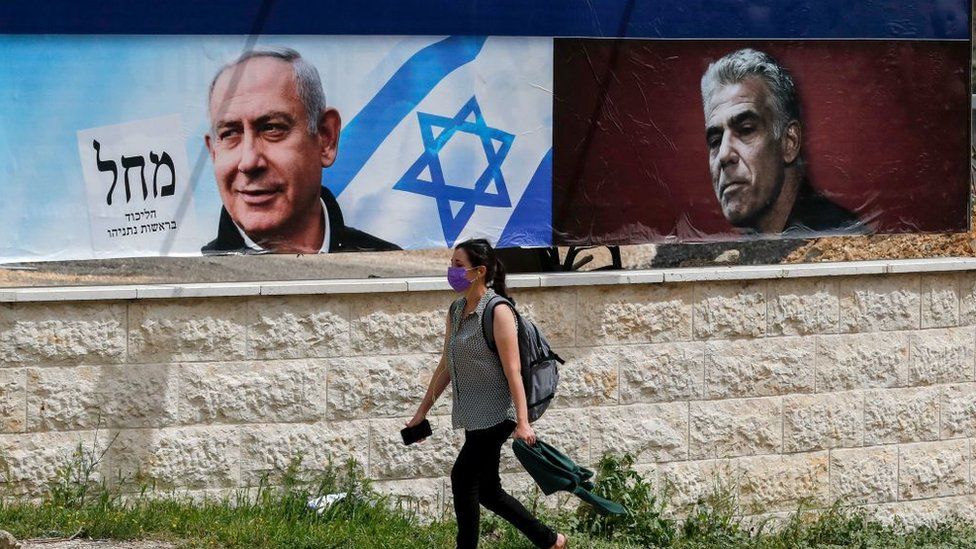
    Benjamin Netanyahu (left) and Yair Lapid (file photo)
    Mr Netanyahu is forecast to replace Yair Lapid, who toppled him just over a year ago

    Mr Netanyahu, 73, is one of Israel’s most controversial political figures, loathed by many on the centre and left but adored by Likud’s grassroots supporters.

    He is a firm supporter of Israel’s settlement-building in the West Bank, occupied since the 1967 Middle East war. Settlements there are considered illegal under international law, though Israel disputes this.

    He opposes the creation of a Palestinian state in the West Bank and Gaza Strip as a solution to the Israel-Palestinian conflict – a formula supported by most of the international community, including the Biden administration in the US.

    Mr Netanyahu is also currently on trial for alleged bribery, fraud and breach of trust – charges he fiercely denies. His possible partners in a Likud-led coalition government have said they would reform the law, in a move which would bring a halt to his trial.

    According to the exit polls, Likud stands to be the biggest party, with 30-31 seats, commanding a majority with the support of nationalist and religious parties.

    Yesh Atid, which led the coalition which brought down Mr Netanyahu in elections last year, is forecast to win 22-24 seats.

    Likud’s ultra-nationalist ally Religious Zionism appears to have won 14 seats, which would make it the third largest party. Its leaders have gained notoriety for using anti-Arab rhetoric and advocating the deportation of “disloyal” politicians or civilians.

    “It will be better now,” said Religious Zionism supporter, Julian, at the party’s venue in Jerusalem.

    “When [Religious Zionism politician Itamar Ben-Gvir] will be minister of public security, it will be even better – he’ll bring back security to the people of Israel. That’s very important.”

    However, political scientist Gayil Talshir, from the Hebrew University of Jerusalem, warned that if the exit polls “reflect the real results, Israel is on its way to become Orban’s Hungary”, recently branded an “electoral autocracy” by the EU.

    If the polls are confirmed, it will stave off the prospect of a sixth election in just four years after analysts predicted deadlock.

    It would mark a remarkable turnaround for Mr Netanyahu, whose political future was widely written off after Mr Lapid formed an unlikely alliance of ideologically diverse parties to take power in June 2021, with the uniting aim of making it impossible for Mr Netanyahu to form a government.

    At the time, Mr Netanyahu vowed to bring it down as quickly as possible and one year later the coalition government concluded it could not survive and collapsed after resignations meant it no longer had a majority.

     Source: BBC
  • IS video said to show Nigerian Christian executions

    The Islamic State group has published a video which it says shows the execution of 20 Christian civilians in north-eastern Nigeria’s Borno state.

    Speaking in the Hausa language, one of the masked militants who was brandishing a knife said it was to avenge the killing of the group’s leaders in the Middle East earlier this year.

    The BBC has not been able to verify the contents of the video or where the footage was shot.

    It was published on an IS-linked news outlet and shows three groups of captives in civilian clothes.

    The authorities have not yet commented on the video.

    The IS militants, which operate in the Lake Chad region under the name Islamic State West Africa Province (Iswap), along with another Islamist militant group, Boko Haram, have recently suffered huge losses as a result of attacks by a multi-national military force.

    Such military campaigns in the past have usually been followed by propaganda videos from the extremist groups.

    Source: BBC