In Malaysia and Singapore, a comedian in New York who joked about the safety of Malaysian airlines in an apparent allusion to the missing of flight MH370 has triggered a fierce protest.
Controversy over the joke by lawyer-turned comedian Jocelyn Chia at Manhattan’s Comedy Cellar erupted soon after a short clip of her stand-up performance was posted online earlier this week.
Chia’s bit had centered on the uneasy past between Singapore and Malaysia, which were once part of the same country. She led off with a suggestion that since the two had separated in 1965, Singapore had risen to become a first-world country while Malaysia had allegedly remained a “developing” one.
She then went on to take aim at Malaysian airplanes by suggesting they “can’t fly,” before making what many have taken as a reference to Malaysia Airlines flight MH370, the Beijing-bound flight which went missing along with 239 passengers and crew after taking off from Kuala Lumpur on March 8, 2014.
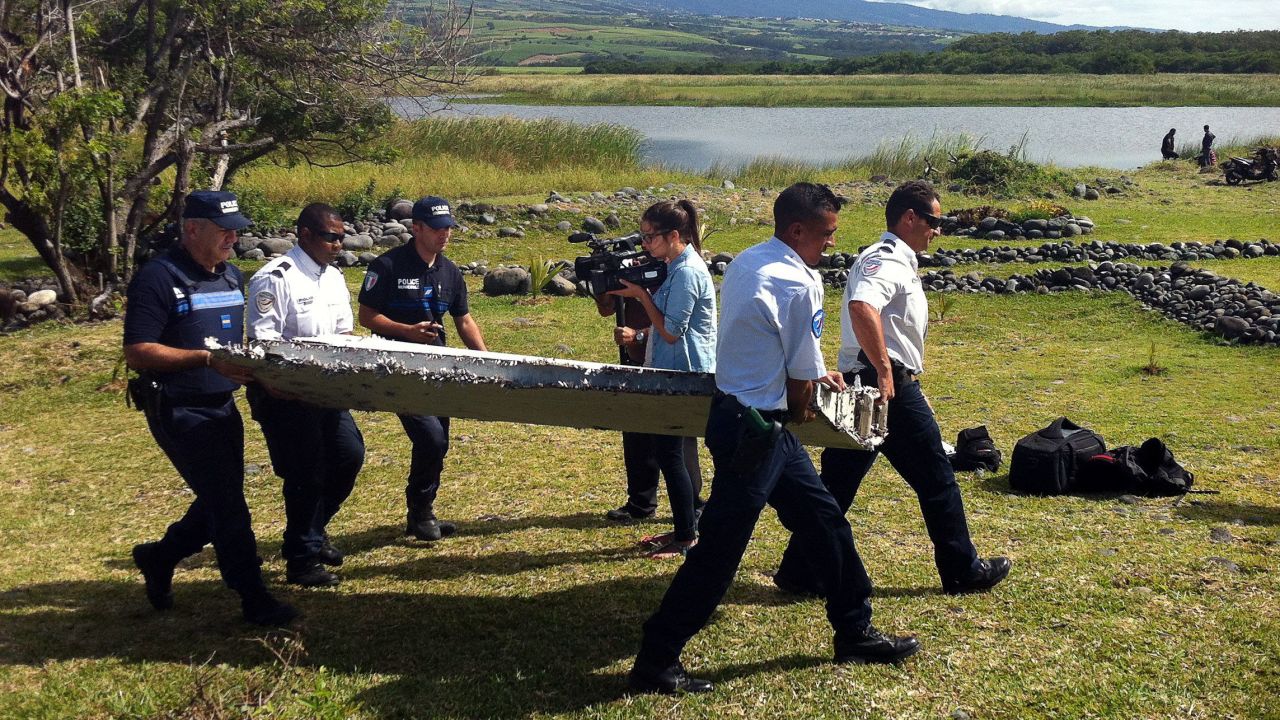
What happened to the flight has never been conclusively established, though pieces of debris suspected of belonging to it have occasionally been discovered.
“What? Malaysia Airlines going missing not funny, huh?” she quipped to laughter, before delivering her punchline: “Some jokes don’t land.”
Police carry debris from an unidentified aircraft found in the coastal area of Saint-Andre de la Reunion, in the east of the French Indian Ocean island of La Reunion, on July 29, 2015. An air safety expert did not exclude it could be a part of the Malaysia Airlines flight MH370.Yannick Pitonyaninick Piton/AFP/Getty Images/FILE
The joke has caused a wave of controversy in both Malaysia and Singapore. In Malaysia, the youth wing of the United Malays National Organization (UMNO) – one of the biggest political parties in the country – marched to the US embassy in Kuala Lumpur on Friday to protest what they see as an insult.
About 100 protesters and representatives handed a memorandum to the US diplomatic outpost, according to the youth group’s chief Dr Muhamad Akmal Saleh.
“This is something that is unacceptable for the whole nation and we are here,” he said, adding, “freedom of speech must come with sensitivity.”
Singapore meanwhile has distanced itself from Chia, who according to her website is originally from the Asian city state, and apologized to Malaysia.
“The Singapore government does not condone words or actions that cause harm or hurt to others and Chia,” said Vanu Gopala Menon, Singapore’s High Commissioner to Malaysia in a statement online. “(Chia) does not in any way reflect our views,” he added.
Menon said Chia’s joke contained “gratuitously offensive comments,” adding, “I sincerely apologize to all Malaysians for her hurtful remarks.”
In a tweet, Singapore’s Foreign Minister Vivian Balakrishnan said Chia “certainly does not speak for Singaporeans” and he was “appalled by her horrendous statements.”
“We treasure our ties with family and friends in Malaysia, and are sorry for the offense and hurt caused to all Malaysians,” he added.
His Malaysian counterpart, Dr Zambry Abd Kadir, accused the comedian of lacking sensitivity and empathy toward Malaysians and the families of the victims.
“This video also clearly depicts behavior that is contrary to the values of an Asian country that is known for its manners and morals,” he said, according to state-run news agency Bernama.
CNN has reached out to Jocelyn Chia, her agent and the Comedy Cellar for comment.
As of Sunday, Chia’s Facebook and Instagram accounts were no longer available to view.
Based on rumours, Donald Trump might spend up to 100 years in prison.
The former US President said that he was accused of mishandling confidential materials at his Florida resort and that he had been indicted.
The charge, which would lead to a federal investigation and provide possibly the most dangerous of legal threats to the former president, was not immediately publicly confirmed by the Justice Department.
Mr Trump said he is due in court in Miami on Tuesday afternoon.
The 76-year-old has already been indicted in New York and faces additional investigations in Washington and Atlanta that could lead to criminal charges.
The indictment arises from a months-long investigation by special counsel Jack Smith into whether he broke the law by holding onto hundreds of documents marked classified at his Palm Beach property Mar-a-Lago and whether he took steps to obstruct the government’s efforts to recover the records.
According to ABC News, which cited sources, Mr Trump could be looking at 100 years in prison if convicted on the seven charges in the classified documents case.
The charges he faces include willful retention of national defence information, which alone carries a maximum penalty of 10 years.
An extra 20 years could come from a conspiracy to obstruct justice, while another two decades could be added for withholding a document or record.
The charges of corruptly concealing a document or record and concealing a document in a federal investigation also could lead to 20 year sentences.
Finally, scheme to conceal and false statements and representations both carry the weight of five years as maximum penalty.
Prosecutors have said the former president took roughly 300 classified documents to Mar-a-Lago after leaving the White House, including around 100 which were seized by the FBI in August during a search of the home that underscored the gravity of the Justice Department’s investigation.
Mr Trump and his team have long seen the special counsel investigation as far more perilous than the New York matter – both politically and legally.
It remains unclear what the immediate and long-term political consequences will be for the former President.
His first indictment spurred millions of dollars in contributions from angry supporters and did not damage Mr Trump in the polls as the 2024 presidential race ramps up.
He revealed the news of his indictment in a fiery post on his Truth Social platform on Thursday evening.
‘The corrupt Biden Administration has informed my attorneys that I have been Indicted, seemingly over the Boxes Hoax,’ wrote Mr Trump.
‘I never thought it possible that such a thing could happen to a former President of the United States, who received far more votes than any sitting President in the History of our Country, and is currently leading, by far, all Candidates, both Democrat and Republican, in Polls of the 2024 Presidential Election,’ Trump wrote in another post.
‘I AM AN INNOCENT MAN!’
It comes after Trump on March 30 became the first former president to be indicted, in Manhattan District Attorney Alvin Bragg’s investigation into his role in a hush payment to porn star Stormy Daniels. Trump pleaded not guilty to 34 felony counts of falsifying business records on April 4.
Hong Kongers who have emigrated are helping to keep the flame of remembering for the victims of China’s Tiananmen massacre alive while authorities in a city that formerly hosted enormous annual vigils continue to stamp down dissent.
To mark the day in 1989 when the Communist Party sent tanks into Beijing’s Tiananmen Square to violently put down nonviolent student-led democratic movements, large-scale demonstrations were only permitted in Hong Kong until recently.
But the annual candlelight vigils have been silenced the last three years in the wake of pandemic restrictions and Beijing’s ongoing political crackdown in Hong Kong, which was upended by its own huge democracy protests in 2019.
This year is set to be no different.
As a result, it is overseas where the most concerted commemorations were taking place for the 34th anniversary.
Protests, vigils and exhibitions are planned in multiple cities around the world including in Australia, Japan, Taiwan, Europe, the United States and Canada bolstered by a growing cohort of Hong Kongers who have chosen to move overseas.
“I think it’s sad to say that what Beijing and Hong Kong are doing is trying to erase history and the memory,” said Kevin Yam, a former lawyer in Hong Kong, who will be attending a ceremony in Melbourne, Australia, where he now resides.
“For those who can still remember, we have the obligation to let the world know that we have not forgotten,” he told CNN.
A new museum in New York is a vivid example of how Tiananmen commemorations are going global.
On Friday, Zhou Fengsuo and Wang Dan, two former student leaders who took part in the 1989 Tiananmen protests and now live in the United States, unveiled a June 4th Memorial Exhibit on 6th Avenue.
The display includes items collected from those who survived the massacre including newspapers chronicling the event, a blood-stained shirt from a former journalist and a decades-old printer used by protesters that was sneaked out of China.
Zhou said the idea to create a New York exhibition began five years ago but the closure of Hong Kong’s own June 4 museum by authorities in 2021 “added to the urgency”.
“Hong Kong has been carrying the torch for commemorating the Tiananmen massacre, keeping the legacy alive. When the museum was shut down, with the Hong Kong alliance’s leaders in prison, we knew it was a critical moment,” he said.
“We have to continue here in the United States.”
The 2,200-square-feet venue in New York can host up to 100 guests at a time, with schools and universities already reaching to request for a tour, Zhou said, adding they have raised enough funding to keep it running for “many years”.
Thirty four years ago, Beijing sent in People’s Liberation Army troops armed with rifles and accompanied by tanks to forcibly clear the square where students were protesting for greater democracy.
No official death toll is available, but estimates range from several hundred to thousands, with many more injured.
Authorities in mainland China have always done their best to erase all memory of the Tiananmen massacre: Censoring news reports, scrubbing all mentions from the internet, arresting and chasing into exile the organizers of the protests, and keeping the relatives of those who died under tight surveillance.
The censorship has meant generations of mainland Chinese have grown up without knowledge of the events of June 4.
But Hong Kong was different.
Somber and defiant vigils were an annual political cornerstone, first under colonial British rule and then after the city’s 1997 handover to China. Every June 4, come rain or shine, tens of thousands of people would descend on Victoria Park with speakers demanding accountability from the Chinese Communist Party for ordering the bloody military crackdown.
But Hong Kong’s political culture has changed drastically in the aftermath in 2019’s huge and sometimes violent democracy protests.
Beijing responded with a sweeping national security law that outlawed most dissent. Leading democracy activists, including key Tiananmen vigil figures, have been jailed, critical newspapers shuttered and the political system overhauled to ensure only “patriots” are allowed.
Authorities banned the vigil in 2020 and 2021 citing coronavirus health restrictions – though many Hongkongers believe that was just an excuse to clamp down on shows of public dissent.
Last year, the park remained in darkness again, barricaded off on all sides with police stopping and searching passersby to “prevent any unauthorized assemblies which affect public safety and public order, and to prevent the risk of virus transmission due to such gatherings,” according to a government statement.
The Hong Kong Alliance, the group behind the past vigils, has disbanded with three leading figures in jail facing national security charges.
This year the park is again open after three years of coronavirus pandemic closures. But it is hosting a fair put on by patriotic pro-government associations to celebrate Hong Kong’s handover to China – an anniversary that is more than three weeks away.
In the run up to this Sunday’s anniversary, authorities made clear commemorating Tiananmen this year would not be tolerated.
Security secretary Chris Tang – a former police chief – said he expected some might use “this very special day” to advocate Hong Kong independence and subvert state power, acts banned by the new national security law.
“But I want to tell these people that if you carry out these acts, we will definitely take decisive action,” he warned, adding: “You will not be lucky.”
Hong Kong police maintained a heavy police presence around the park on the anniversary’s eve, deploying multiple police coaches and even an armored vehicle at one point.
A handful of artists and activists defied warnings and turned up either at the park or surrounding streets on Saturday evening to make private commemorations with floral tributes and banners, only to be quickly intercepted and taken away by officers.
A police spokesman said four people were arrested on suspicion of disorderly behavior in public or carrying out acts with seditious intent as of Saturday. Police said some individuals had protest props bearing allegedly “seditious” wording. Four others were brought in for further investigation, police added.
Richard Tsoi, former secretary for the now-defunct Hong Kong Alliance, said he planned to commemorate the event either at home or at a private location.
“Definitely there will be not be large-scale commemoration activities. Whether one can mourn in public without breaking the law is also a question,” said the ex-organizer, who used attend every vigil in the past.
Throughout Hong Kong physical reminders of the Tiananmen massacre, including a famous “Pillar of Shame” statue that used to stand in the city’s oldest university, have been dismantled in recent years.
Yet last month a replica of the “Pillar of Shame” was erected in Berlin, with the help of its original Danish artist Jens Galschiot and a prominent Hong Kong activist now living in Germany. The artist also provided more than 40 giant banners printed with an image of the pillar to 18 cities for their commemoration events, including Los Angeles and Boston.
Another pillar was unveiled in Norway last year.
“It is true that the commemorations around June 4th have expanded and become more global since it has become impossible to do anything in Hong Kong,” he told CNN.
Hong Kongers, Zhou says, are playing a key role in keeping Tiananmen remembrance alive overseas,
“Since last year, many places have seen record numbers in attendance largely because of Hong Kong immigrants,” he said.
Many Hong Kongers have left for overseas with the city’s population dropping from 7.41 million to 7.29 million last year.
In Britain – where more than 100,000 Hongkongers have since settled after London offered an easier pathway to citizenship two years ago – about a dozen marches and vigils are slated to take place throughout June 4 across the country, from Nottingham and Manchester, a popular destination for Hong Kong immigrants.
In London, marchers will gather at Trafalgar Square before marching to the Chinese embassies, where a vigil will be held.
After reportedly shooting a woman at a birthday party and killing a relative, a man handed himself in.
Delvin Diaz, 33, hosted a birthday celebration in his Brooklyn flat, and Geoliver Tineo, 23, reportedly attended. Police informed the New York Post that the argument started because Tineo, the nephew of Diaz’s sister-in-law, was either not invited or brought a visitor who was not invited.
Tineo is suspected of shooting at Diaz on Saturday night in front of his residence on Drew Street near Stanley Avenue. According to police, Diaz was hit numerous times.
In addition, a 31-year-old woman was grazed in the head. It was not immediately known if Tineo was targeting her.
Delvin Diaz was shot several times and died (Picture: Facebook)
Diaz was transported to Brookdale University Hospital Medical Center, where he died of the wounds. The woman was also taken to the same hospital and is in stable condition.
Tineo surrendered to law enforcement officials early Sunday, about four hours after the 9.30pm ordeal.
He has been charged with murder, attempted murder and criminal possession of a loaded firearm.
In addition, a 31-year-old woman was grazed in the head. It was not immediately known if Tineo was targeting her.
Delvin Diaz was shot several times and died (Picture: Facebook)
Diaz was transported to Brookdale University Hospital Medical Center, where he died of the wounds. The woman was also taken to the same hospital and is in stable condition.
Tineo surrendered to law enforcement officials early Sunday, about four hours after the 9.30pm ordeal.
He has been charged with murder, attempted murder and criminal possession of a loaded firearm.
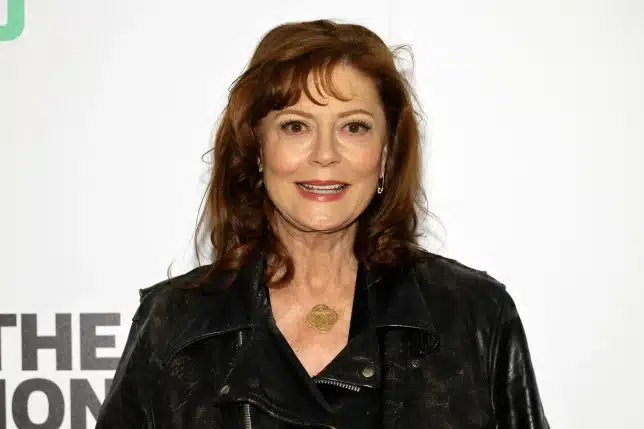
Susan Sarandon, who played Louise in Thelma & Louise, was handcuffed after being taken into custody for demonstrating outside the Albany, New York, state capitol.
The 76-year-old celebrity was in favour of increasing the minimum pay for tip-exempt waitstaff in restaurants.
After New York state legislators revealed intentions to raise the minimum wage to $17 (£13.5) per hour but excluded tipped restaurant workers from benefiting from the new law, she took a stand.
A local reporter for Spectrum 1 Albany – Kate Lisa – shared a video on Twitter that captured the activists at the state Capitol concourse.
They could be heard shouting, ‘One fair wage!’ over and over again.
Susan has been known to attend protests in the past (Picture: Getty Images)She was released after she was processed (Picture: Getty Images)
Apparently arrested for disorderly conduct, the group – that also included former New York lieutenant governor candidate Ana Maria Archila – were seen attempting to spread a huge pink banner across the concourse during which police intervened.
As stated by MailOnline, the actress and her fellow protesters were processed, issued appearance tickets and following which, were all released.
During the protest, the A-lister shared her thoughts and explained why restaurant workers were so important.
The actress marched with writers on strike in New York City (Picture: Getty Images)
She said before her arrest: ‘They are very, very important and need to be treated with dignity, not only for the back-breaking labor that they do, but what they have to do to communicate and understand and be patient and all the things that are linked to a successful business.’
No stranger to walking the streets for what she believes in, days earlier the star joined the picket line in support of the Writers Guild of America strike in New York City.
The Dead Man Walking actress was seen proudly holding a Writers Guild of America East placard while marching outside of Netflix’s New York City headquarters.
Susan has been arrested before for protesting and in June 2018 she found herself being taken away at the Women Disobey protests in Washington D.C.
At that time, she was arrested with 575 other individuals who were all marching against President Donald Trump’s immigration policies.
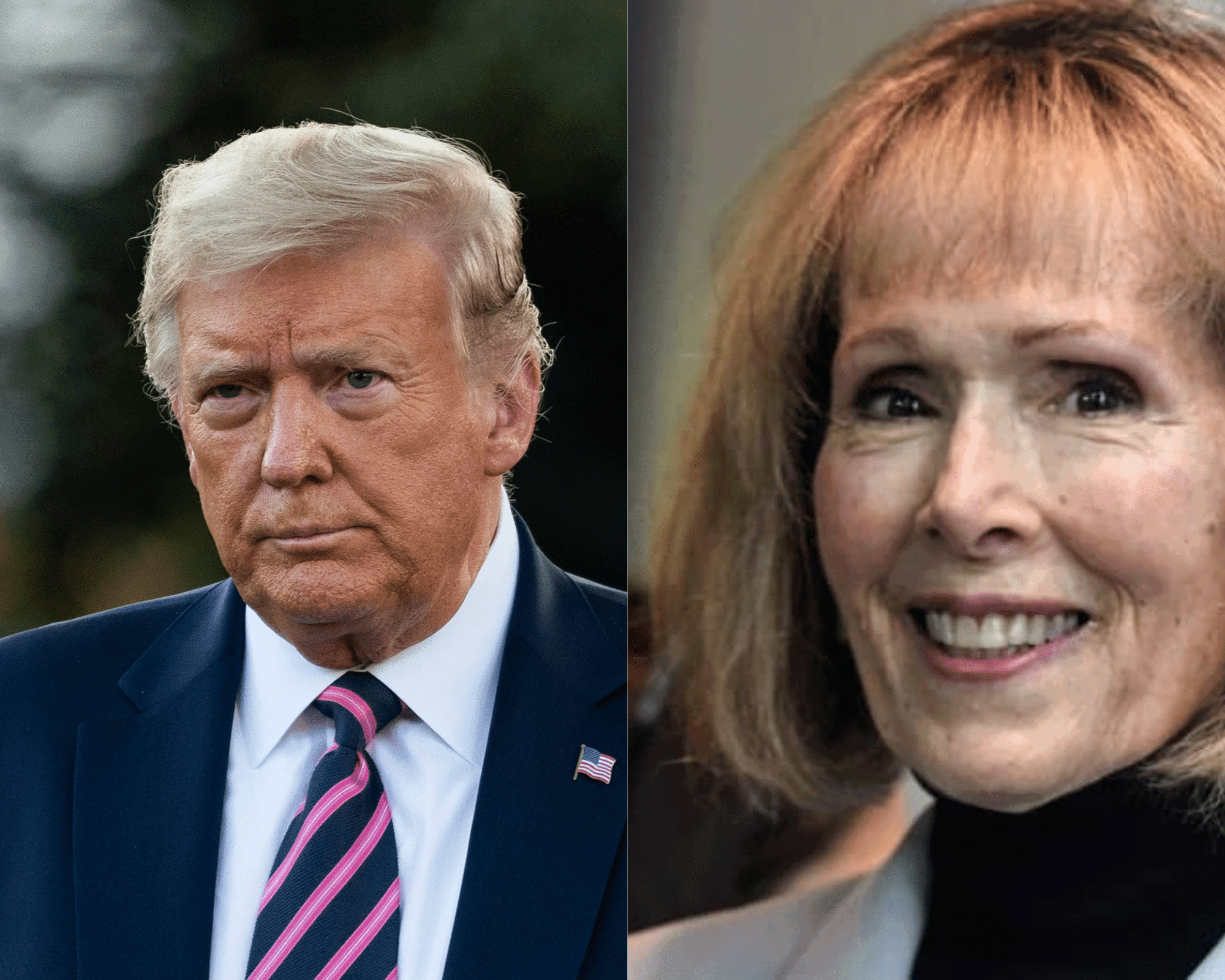
A federal jury inNew Yorkhas ruled that former President Donald Trump sexually abused and defamed E. Jean Carroll, a journalist and former advice columnist who accused him of raping her in a department store in the mid-1990s.
The jury of six men and three women awarded Carroll $5 million in damages on Monday, after deliberating for less than three hours.
They found that Trump committed battery against Carroll by forcibly kissing and groping her in a dressing room at Bergdorf Goodman, a luxury store in Manhattan. They also found that Trump defamed Carroll by calling her a liar and implying that she fabricated the story to sell her book.
Carroll, who wrote the popular “Ask E. Jean” column for Elle magazine for 26, first made the allegations against Trump in her 2019 memoir, What Do We Need Men For?: A Modest Proposal. She said that Trump attacked her in late 1995 or early 1996, when they ran into each other at the store and he asked her to help him pick out a gift for a woman. She said she tried to fight him off, but he overpowered her and penetrated her.
Trump, who was not present at the trial and did not testify, has denied the allegations. He said he never met Carroll, even though there is a photo of them together at a party in 1987. He also said she was not his type, and suggested she made up the story to boost sales of her. In October 2022, he posted a statement on his website accusing Carroll of being part of a “radical left” conspiracy to smear him.
Carroll sued Trump for defamation and battery in November 2022, under the New York State Adult Survivors Act, which allows victims of sexual abuse to file civil lawsuits even if the statute of limitations has expired. She did not specify an amount in her lawsuit, but asked for monetary damages and a retraction of Trump’s statement.
Carroll celebrated the verdict on Monday, saying she was “overjoyed” and “grateful” to the jury. She also thanked her lawyers and supporters for standing by her.
“This is for every woman who has ever been harassed, assaulted, silenced or spoken up,” she said outside the courthouse. “This is for you.”
Trump’s lawyers said they would appeal the verdict, calling it “a travesty of justice” and “a politically motivated attack” on the former president. They also claimed that Carroll had no evidence to support her claims, and that Trump had a right to express his opinion about her allegations.
On Long Island, two adolescents were killed when a drunk driver travelling the wrong way on a highway crashed into their car.
According to officials, the incident happened on Wednesday night in a suburb of Nassau County. Around 10.30 p.m., Amandeep Singh was travelling south in a northbound lane on a roadway in Jericho, New York, when he collided with a vehicle carrying four teens who were leaving a tennis match.
The youngsters were travelling on the right side of a small Alfa Romeo sedan, driven by Singh, 34, who was also driving a Dodge pickup truck.
‘One of the most catastrophic scenes I’ve seen in a long time. The debris field was almost like the car exploded,’ Nassau County Police Captain Stephen Fitzpatrick said. ‘The pickup truck went airborne, spinning, and landed 300 feet away.’
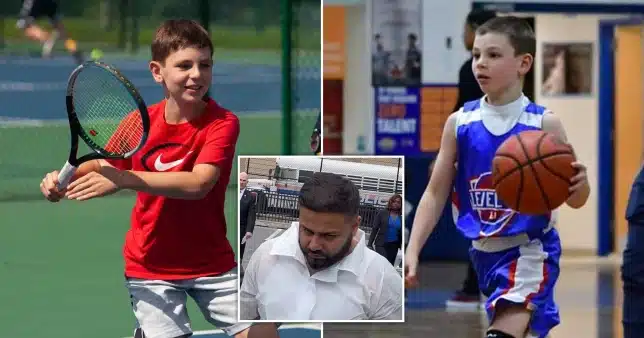
The crash killed the two 14-year-old boys sitting on the right side of the car. They have not yet been identified by authorities, but NBC New York confirmed their identities as Drew Hassenbein and Ethan Falkowitz, citing a note sent to parents at Roslyn Public Schools.
The two 14-year-olds were described as ‘stars’ in youth tennis. Despite being middle school students, the two teenagers both played for the Roslyn High School varsity team.
The two teenagers on the left side of the vehicle, a 16-year-old and a 17-year-old, were injured and hospitalized in stable condition.
Additionally, the sedan struck another nearby car, carrying a 49-year-old woman and a 16-year-old boy. Both at the scene for minor injuries.
Singh tried to flee from the scene on foot before officers arrived, according to the felony complaint filed against him.
The suspect didn’t get far, and when he was located by police down the street they noticed ‘glassy, bloodshot eyes, a strong odor of an alcoholic beverage coming from his breath, blood on his shirt, and a laceration to the back of his head.’
A breathalyzer test revealed Singh had a 0.18% blood-alcohol level, which is more than twice the legal limit to drive.
At a press briefing after Singh’s first court appearance, Captain Fitzpatrick said the Roslyn, New York resident was ‘highly intoxicated’ and told officers he was coming from a birthday party.
‘He thought he was in New Jersey. He asked our officers, “what are you doing here, it’s New Jersey?”‘
Singh has been charged with aggravated vehicular homicide, first-degree vehicular manslaughter, second-degree manslaughter, leaving the scene of an accident with a fatality, driving while intoxicated, and two counts of second-degree assault.
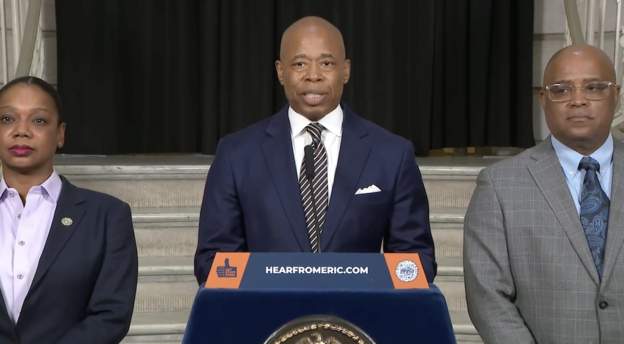
New York Mayor Eric Adams has spoken against the possibility of a protest against Donald Trump’s arraignment on Tuesday.
Speaking at a press conference with police, the mayor Trump supporters to “control yourselves.”
He noted that while there were no specific threats against the city, the city was prepared, and encouraged anyone planning to protest to do so peacefully.
“While there may be some rabble rousers thinking about coming to our city tomorrow our message is clear and simple: control yourselves. New York City is our home, not a playground for your misplaced anger,” the mayor said.
He also had a specific message for Republican Congresswoman Marjorie Taylor Greene, who has announced she will lead a protest outside the courthouse.
“While you’re in town, be on your best behaviour,” he said.
A third person has died from the crush that broke out at a New York concert by rap star GloRilla on Sunday, police have confirmed.
Aisha Stephens, 35, of Syracuse had been in hospital since the show, where the crowd panicked and surged for the exits shortly after the music ended.
Police say the incident, at Rochester’s Main Street Armory, may have been started by unfounded fears of gunfire.
The venue has since had its licence revoked.
The decision was made after the owner failed to show up for a scheduled meeting with the police chief and Rochester’s city attorney on Wednesday.
“It is one step we can immediately take to ensure that the events of Sunday night are not repeated,” said police chief David Smith.
“The bottom line is, lives were lost, and we need to take steps to make sure that no lives are lost in the future if this was indeed something that was preventable.”
The crush claimed the lives of two other women – nursing assistant Brandy Miller, 35, and city employee Rhondesia Belton, 33. Seven others were taken to hospital with injuries.
GloRilla ‘heartbroken’
An investigation into several possible causes, including “possibly crowd size, shots fired, pepper spray and other contributing factors,” is currently under way.
Police are also trying to determine whether the crowd size exceeded the capacity of the Armory and whether the proper safety measures were taken.
GloRilla, whose breakout song F.N.F. (Let’s Go) was nominated for best rap performance at last month’s Grammy Awards, only learned about the tragedy after leaving the venue.
She later tweeted: “I am devastated and heartbroken over the tragic deaths that happened after Sunday’s show.
“My fans mean the world to me 😢. Praying for their families & for a speedy recovery of everyone affected.”
Image caption, GloRilla was one of the breakout rap stars of 2022 in the US
Fans who attended the gig recalled scenes of hysteria as fear gripped the audience.
“I didn’t see anything but the whole crowd pushing everyone towards the bathroom like a wave pool,” 28-year-old Tamira De Jesus told Rolling Stone magazine.
“I was literally being suffocated while trying to help people on the ground stand up. I heard a man literally say, ‘[Expletive] them, step on them.’
“It was the most inhumane thing I have seen in my whole life and I am still having anxiety.”
Another attendee recalled: “Me and the girl next to me were climbing on each other trying to get each other up.”
Ikea Hayes, 28, told local reporters that she remembered praying and telling herself: “You got to get up. You got to move. If you stay here they’re going to keep running you over.”
She went back to the venue on Monday morning to retrieve earrings, a phone and a set of keys she had lost in the chaos.
Tribute to victims
Buffalo Mayor Byron Brown paid tribute to the first victim, Rhondesia Belton, 33, who had worked at the city’s Traffic Violations Agency, on Monday.
“This is another difficult day for our City’s workforce and our entire community,” Brown wrote on Twitter. “I join all of our City employees in mourning the loss of one of our own.”
Miller’s family said her life was “one full of love and joy”.
“If you knew her, you knew that her spirit could lift anyone out of a bad mood. She cherished her life and celebrated her loved ones.”
Doctors and nurses lined the hallway at Rochester’s Strong Hospital to honour the 35-year-old, who had decided to donate her organs if she died.
Her sister said her heart, kidneys, and liver were used to save four other lives.
Tributes were also paid to Aisha Stephens by the Pop Warner foundation, where she had been a cheerleading coach.
“She made an incredible impact on so many,” said the organisation in a statement. “She will be greatly missed.”
After ten years of talks, nations have secured a historic pact to safeguard the oceans.
To protect and restore marine life, the High Seas Treaty designates 30% of the oceans as protected zones by 2030.
After 38 hours of negotiations, the deal was finalized on Saturday night at the UN’s New York headquarters.
Years of negotiations have been stalled due to divergent views on funding and fishing rights.
The UN Convention on the Law of the Sea, the most recent international accord on ocean preservation, was signed in 1982, 40 years ago.
That agreement established an area called the high seas – international waters where all countries have a right to fish, ship and do research – but only 1.2% of these waters are protected.
Marine life living outside of these protected areas has been at risk from climate change, overfishing and shipping traffic.
These new protected areas, established in the treaty, will put limits on how much fishing can take place, the routes of shipping lanes and exploration activities like deep sea mining – when minerals are taken from a sea bed 200m or more below the surface.
Environmental groups have been concerned that mining processes could disturb animal breeding grounds, create noise pollution and be toxic for marine life.
The International Seabed Authority that oversees licensing told the BBC that moving forward “any future activity in the deep seabed will be subject to strict environmental regulations and oversight to ensure that they are carried out sustainably and responsibly”.
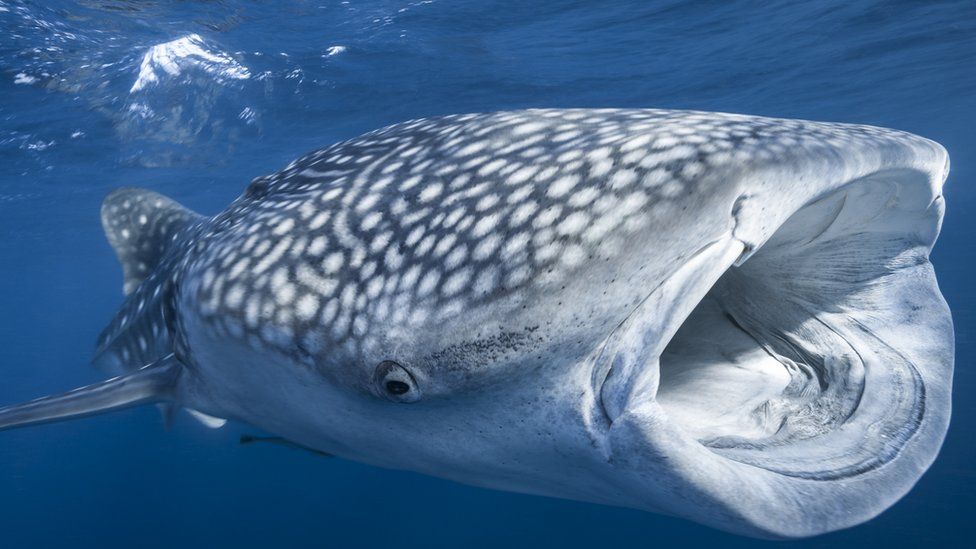
Image caption,Marine protected areas could help endangered species like the whale shark – the largest living fish – recover
Rena Lee, UN Ambassador for Oceans, brought down the gavel after two weeks of negotiations that at times threatened to unravel.
Minna Epps, director of the IUCN Ocean team, said the main issue was over the sharing of marine genetic resources.
Marine genetic resources are biological material from plants and animals in the ocean that can have benefits for society, such as pharmaceuticals, industrial processes and food.
Richer nations currently have the resources and funding to explore the deep ocean but poorer nations wanted to ensure any benefits they find are shared equally.
Image caption,Sea sponges have yielded key ingredients for HIV and cancer treatments
Dr Robert Blasiak, ocean researcher at Stockholm University, said the challenge was that no one knows how much ocean resources are worth and therefore how they could be split.
He said: “If you imagine a big, high-definition, widescreen TV, and if only like three or four of the pixels on that giant screen are working, that’s our knowledge of the deep ocean. So we’ve recorded about 230,000 species in the ocean, but it’s estimated that there are over two million.”
Laura Meller, an oceans campaigner for Greenpeace Nordic, commended countries for “putting aside differences and delivering a treaty that will let us protect the oceans, build our resilience to climate change and safeguard the lives and livelihoods of billions of people”
“This is a historic day for conservation and a sign that in a divided world, protecting nature and people can triumph over geopolitics,” she added.
Countries will need to meet again to formally adopt the agreement and then have plenty of work to do before the treaty can be implemented.
Liz Karan, director of Pews Trust ocean governance team, told the BBC: “It will take some time to take effect. Countries have to ratify it [legally adopt it] for it to enter force. Then there are a lot of institutional bodies like the Science and Technical Committee that have to get set up.”
The UN 2023 Water Conference – formally known as the 2023 Conference for the Midterm Comprehensive Review of Implementation of the UN Decade for Action on Water and Sanitation (2018-2028) will take place at UN Headquarters in New York, 22-24 March 2023, co-hosted by Tajikistan and the Netherlands.
The conference will include an opening and closing session, six plenary sessions, and five interactive dialogues, as well as side events organized by participants. It will result in a summary of proceedings from the UNGA President that will feed into the 2023 session of the UN High-level Political Forum on Sustainable Development (HLPF).
In support of the preparations for the UN 2023 Water Conference, UN DESA with the support of UN-Water, has developed a Technical Advice on the possible themes for the interactive dialogues of the Conference.
Non-governmental organizations, civil society organizations, academic institutions, the scientific community, the private sector, philanthropic organizations and other stakeholders are now invited to contribute proposals for the themes of the interactive dialogues through a global online consultation.
A school in New York has apologised after students were served Chicken and Waffles for Black History Month.
The incident reportedly took place on Feb. 1 at Nyack Middle School, when students were offered a chicken-and-waffles lunch with a side of watermelon. According WABC, the school’s principal, David Johnson, placed the blame on food-service vendor Aramark, claiming the company had changed the hot lunch menu without informing the school. Officials said the original menu for Feb. 1 was Philly cheesesteak, broccoli, and fresh fruit.
“We are extremely disappointed by this regrettable situation and apologise to the entire Nyack community for the cultural insensitivity displayed by our food service provider,” Johnson said in a statement. “I am disappointed that Aramark would serve items that differed from the published monthly menu. Especially items that reinforce negative stereotypes concerning the African-American Community.”
This isn’t the first time Aramark has been accused of perpetuating racial stereotypes. In 2018, New York University cut ties with the company after it included ribs, collard greens, and Kool-Aid on a special menu for Black History Month.
The vendor apologized for the incident at Nyack Middle School, claiming it was not intended to be a “cultural meal.”
“We apologize for the unintentional insensitivity shown on February 1, the first day of Black History Month,” it wrote in a statement. “… We acknowledge that the timing was inappropriate, and our team should have been more thoughtful in its service. This was a mistake and does not represent the values of our company, and we are committed to doing better in the future.
“We will be partnering with the District so employees who work in the schools participate in training that aligns to the Nyack School District’s vision and commitment to equity-driven work. We believe this will provide a good learning opportunity to deepen understanding on the impact of systemic biases and negative stereotypes concerning the African-American Community.”
Six people are dead and three others injured after a crash between a tour bus and freight truck in upstate New York.
CNN reports the accident took place around 6:00 a.m. on State Highway 37 in Louisville, a small town on the US-Canada border, when both vehicles collided into one another. It’s not yet known which vehicle crashed into the other. State Police said the accident left one person in critical condition and two others seriously injured. The injured were transported to Massena Memorial, Canton-Potsdam Hospital, and Claxton Hepburn Medical Center.
Officials described the crash site as “gruesome,” TV station WWNY reported.
“The facts about the cause of this accident are unknown at this time,” spokesperson Randolph P. Ryerson for Penske, the rental company of the truck involved in the accident, told CNN in a statement.
“We do not yet have specific information about the rental vehicle involved or information about who was driving the rental vehicle at the time of the incident,” Ryerson added.
It is unknown how many people were on board the tour bus when the crash took place, though State Police confirmed the bus held as many as 15 people. It’s also unclear where the tour bus was headed. Additionally, the highway was shut down for traffic for 12 hours following the incident.
A Los Angeles jury has found former Hollywood film mogul Harvey Weinstein guilty of raping a woman.
During the two-month trial, it was revealed that Weinstein had enticed women into private meetings with him before attacking them.
When he is sentenced, the 70-year-old Oscar winner could spend up to 24 years behind bars.
After being found guilty of rape and sexual assault at his first trial in New York two years ago, he has already completed serving 23 years in prison.
Weinstein was found guilty on Monday of two counts of sexual assault and rape against an accuser who will only be identified as Jane Doe 1.
The jury could not reach verdicts on allegations by Jennifer Siebel Newsom, the wife of California Governor Gavin Newsom, and a woman known as Jane Doe 2. A mistrial was declared on those counts.
The Shakespeare in Love and Pulp Fiction producer and co-founder of the entertainment company Miramax was wearing a grey suit and looked pale at the court in Los Angeles on Monday.
He was not using a wheelchair as he had done at previous court appearances.
When he heard guilty on count one, the former Hollywood producer looked down. Then the court clerk read guilty on count two and he looked at his lawyer. At one point he stared at the jury.
The trial heard from dozens of witnesses in more than four weeks of often emotional testimony.
But Monday’s verdict focused on allegations by four women stemming from 2005-13.
The jury of eight men and four women spent nine days deliberating on three charges of rape and four other sexual assault counts.
The woman whom Weinstein was convicted on Monday of raping, Jane Doe 1, was a Russian-born model.
The trial’s first witness, she testified that she was in Los Angeles for an Italian film festival in February 2013 when the producer arrived uninvited at her Beverly Hills hotel room and raped her.
She said after the verdict: “Harvey Weinstein forever destroyed a part of me that night in 2013 and I will never get that back.
“The criminal trial was brutal and Weinstein’s lawyers put me through hell on the witness stand, but I knew I had to see this through to the end, and I did.
“I hope Weinstein never sees the outside of a prison cell during his lifetime.”
Ms Siebel Newsom gave emotional testimony that she was a documentary filmmaker when she was raped by Weinstein in a hotel room in 2005.
California’s first lady said in a statement on Monday after the verdict: “Throughout the trial, Weinstein’s lawyers used sexism, misogyny, and bullying tactics to intimidate, demean, and ridicule us survivors.
“The trial was a stark reminder that we as a society have work to do.”
The only other of the four main accusers to publicly identify herself was Lauren Young.
She said she was a model and aspiring actress and screenwriter when she met Weinstein about a script in 2013.
Ms Young said he had trapped her in a hotel bathroom and sexually assaulted her.
The jury was unable to reach a verdict on the charges involving her.
A massage therapist, Jane Doe 3, testified that Weinstein had trapped and sexually assaulted her in a hotel bathroom in 2010. He was cleared of that attack.
His conviction in New York in 2020 was a landmark moment for the #MeToo movement, which had been calling out widespread sexual abuse and harassment in the film industry for several years.
Weinstein is currently appealing against the New York conviction.
More than 80 women have come forward with accusations of sexual assaultand misconduct against Weinstein spanning several decades.
A Utah man is facing federal chargesafter allegedly assaulting another passenger with a razor blade on a JetBlue flight, NBC News reports.
The incident took place on Tuesday aboard a JetBlue flight that departed from New York’s John F. Kennedy International Airport en route to Salt Lake City International Airport in Utah.
Merrill Fackrell, 41, from Syracuse, Utah, was charged on Tuesday with carrying a weapon on an aircraft and assault with a dangerous weapon in the special aircraft jurisdiction of the United States.
According to authorities, Fackrell was sitting in a window seat next to a married couple, whom he was engaged in a conversation with.
At some point, Fackrell asked the woman to pause her movie. The woman then noticed Fackrell was holding a knife a few inches from her throat. While the woman’s husband left their row to alert flight attendants, the woman lunged for the aisle, and was able to escape.
“He was going to get help because he knew something was really off with Fackrell and had had enough,” the woman NBC affiliate KSL-TV. “(My husband) was only a few steps ahead of me when I lunged into the aisle. He didn’t knowingly leave me to handle a man with a weapon all by myself.”
Fackrell allegedly stood up and began yelling, “She’s going to be OK,” and, “No one needs to worry.”
After flight attendants moved the woman and her husband to a new row at the front of the plane, a passenger confronted Fackrell and got him to put the weapon down.
The object was secured and later identified as a Facon wood-handled straight edge razor with a one-to-two-inch blade.
Victims of sexual abuse in the US state of New York can now sue over allegations dating back decades.
The Adult Survivors Act, which went into effect on Thursday, gives victims a one-year window to file lawsuits that would have otherwise expired under the statute of limitations.
E Jean Carroll, a writer, was among the first to sue under the act, accusing Donald Trump of raping her in the 1990s.
Mr. Trump has denied her claims.
Ms Carroll, a writer, claims the attack occurred in a luxury department store dressing room in New York 27 years ago.
New York’s Adult Survivors Act allows victims to come forward if the sexual assault occurred when they were over the age of 18 and took place on a date that exceeds time limit that exists on most felonies.
The Child Abuse Act, which came into effect in 2019, allowed a two-year period for victims to come forward. Around 11,000 lawsuits were filed in New York against churches, hospitals, schools, camps and other institutions under that act.
Ms Carroll has also sued former president Trump for defamation after he accused her of lying when she first made her allegations public in 2019. Mr Trump has called Ms Carroll’s claims “fiction”. A civil trial for that case is scheduled for 6 February.
In a statement to media, Ms Carroll’s attorney, Roberta Kaplan, said the new lawsuit filed on Thursday is intended to hold Mr Trump accountable for the alleged assault.
Others are also planning to file lawsuits under the new Adult Survivors Act.
This includes a planned class action lawsuit against Robert Hadden, a former gynaecologist at hospitals tied to New York-Presbyterian and Columbia University, who has been accused by dozens of patients of sexual abuse.
Mr Hadden was convicted in 2016 on sex-related charges in state court but has pleaded not guilty to federal charges of abusing female patients over two decades.
Advocates for survivors of sex abuse believe the legislation provides an opportunity for people to come forward who may not have done so previously due to trauma or fear of retaliation.
Several other states have also extended or temporarily eliminated their statues of limitation on sex crimes in the wake of the #MeToo in 2018, including New Jersey, California, Arizona and Montana.
A sexual assault complaint filed against actor Kevin Spacey has been dismissed by a New York judge.
Anthony Rapp filed the lawsuit, alleging that the actor illegally assaulted him when he was 14 years old at a party in 1986.
Mr Rapp, now 50 and also an actor, filed the lawsuit in September 2020, asking for approximately $40 million (£36 million) in damages.
Mr Spacey, an Oscar winner, has denied the accusations against him.
He is separately facing five charges in the UK of sexual assault, to which he has pleaded not guilty. That trial is due to begin in June 2023.
On Thursday, following a three-week civil trial in a Manhattan federal court, a jury found that Mr Rapp had not proved his claim that Mr Spacey had made an unwanted sexual advance.
Deliberations lasted for more than an hour and, after the verdict was read out by the judge, Mr Spacey reportedly hugged his lawyers before leaving the courtroom.
Mr Rapp says that Mr Spacey was around 26 or 27 years old when he met him at a party at his Manhattan apartment.
In a Buzzfeed article from October 2017, Mr Rapp said that Mr Spacey had picked him up, placed him on a bed, and lain down partially on top of him. “I was aware that he was trying to get with me sexually,” he wrote.
Taking the stand in his own defence in the third week of his trial, Mr Spacey said he had been shocked when Mr Rapp went public with his allegations five years ago.
“I didn’t know how this could possibly be true,” the 63-year-old said, adding he would not have been sexually interested in Mr Rapp as he was underage.
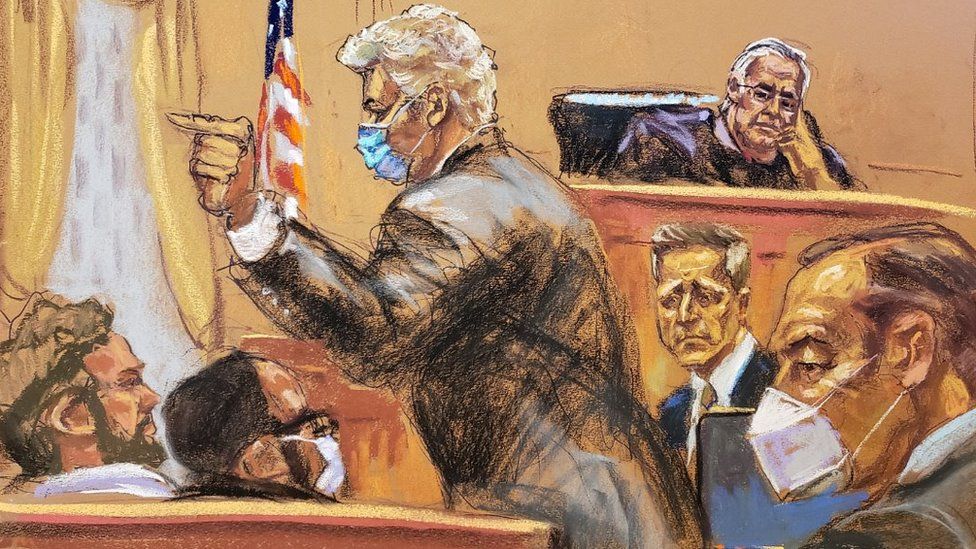
IMAGE SOURCE,REUTERS Image caption, A sketch in court shows Mr Spacey (R) and Mr Rapp’s lawyer Richard Steigman (C)
Mr Rapp’s lawyer Richard Steigman argued there were gaps in Mr Spacey’s memory and changes in his recollection.
Mr Spacey’s lawyer Jennifer Keller countered that Mr Rapp’s story was a fabrication, and she said he was “getting more attention in this trial than he has in his entire acting life”.
Career derailed
Multiple allegations of sexual misconduct derailed the Hollywood star’s stage career. Netflix dropped him from its political drama series House of Cards and Christopher Plummer replaced him in the role of J. Paul Getty in All the Money in the World.
In August, a judge ruled that Mr Spacey must pay $31m to the producers of House of Cards for the costs they incurred after firing him from the show.
Mr Spacey won Oscars for his performances in American Beauty and The Usual Suspects.
In July, he entered a not-guilty plea in London to criminal charges of sexually assaulting three men over a decade ago.
During the New York trial, he was asked about a suggestion by Mr Rapp that he was a “fraud” for not coming out as gay sooner. Mr Spacey said he had always been private about his personal life, including his childhood because his father had held racist and homophobic views.
A TV series adaptation of The Gangs of New York is in development at Miramax, and Martin Scorsese is set to direct some of it.
Deadline reports that Scorsese will direct the first two episodes of the show, which is based on Herbert Asbury’s 1927 non-fiction book of the same name. The director previously helmed the Oscar-nominated 2002 movie adaptation of the book, starring Daniel Day-Lewis, Camero Diaz, and Leonardo DiCaprio. Details on the series remain scarce for now, but playwright and TV writer Brett Leonard has penned the script.
It’s unclear when the show is expected to either enter production or arrive, and it currently does not have an attached network or streamer. However, the prestige of Scorsese’s involvement means it likely won’t stay that way for long. This isn’t his first time attempting to adapt the book for the small screen, as he announced a show focused on the gangs of Chicago and New Orleans in 2013. That project never came to fruition, though.
Gangs of New York marks yet another foray into the world of television for Scorsese, who previously helped bring HBO’s Boardwalk Empire to life as both executive producer and director of the pilot episode. He later collaborated with HBO on the short-lived period drama Vinyl, which he also directed the pilot episode of. He directed the seven-episode documentary series Pretend It’s a City last year, and is attached to produce an adaptation of Erik Larson’s 2003 non-fiction book The Devil in the White City.
He’s also got a number of movie projects on the way, including the documentary Personality Crisis: One Night Only, which just recently premiered at the 60th New York Film Festival.
His next major motion picture project, however, is the Apple Studios-produced Killers of the Flower Moon, a western drama starring his frequent collaborators DiCaprio and Robert De Niro, alongside the likes of Jesse Plemons, Lily Gladstone, John Lithgow, and Brendan Fraser.
The notorious scammer-socialite, who stole over $67 million from banks and prominent New York City figures, is no longer behind bars.
Anna “Delvey” Sorokin, the con artist who defrauded Manhattan’s elite by pretending to be a German heiress, claims that after being released from prison, she received “exactly what I desired.”
She told the New York Times in her first interview after being released that she is “really happy” to be free and added that “nothing was guaranteed.”
The infamous scammer-socialite defrauded banks and New York City bignames to the tune of around $67m (£51.5m) to fund her jet-setting lifestyle.
The spree eventually saw her sentenced to four to 12 years and was the subject of the hit Netflix series Inventing Anna.
She was released from state prison in February 2021 but was swiftly back in jail again after Immigrant and Customs Enforcement (ICE) took her into custody.
Sorokin, 31, was granted a $10,000 bond and released from jail on Friday.
She is subject to house arrest and is banned from social media.
Sorokin spoke to the New York Times, saying she is “really happy”.
She told the newspaper: “They denied bail before. It was an exercise in perseverance.
“So many immigration lawyers told me I’d get deported to Mars before I’d get out in New York.”
Sorokin, who was born in the then-Soviet Union, expects to be in the Big Apple for a while as her immigration case goes through the courts.
“I’m really, really happy about that. That’s exactly what I wanted. I’m just hoping to get more freedom eventually.”
Sorokin is now living in a one-bedroom apartment in the East Village area of the city.
Asked if the money to lease the apartment and the $10,000 bond were hers, she replied: “Yes.”
The American Red Cross has dispatched more than 1,000 emergency personnel to Florida in response to Ian, which they have called as one of the worst natural catastrophes to ever impact the state.
After Hurricane Ian hit the US, at least 77 deaths have been verified, and rescuers are frantically looking for survivors among the wreckage of flooded homes.
The remnants of one of the strongest and costliest hurricanes in American history is now headed north, with authorities in Florida and South Carolina left assessing the damage.
Ian has been likened to an “A-bomb” and about 10,000 people remain unaccounted for, although the authorities believe many are likely to be in shelters or without power.
It comes as President Joe Biden and the first lady confirmed their plans to travel to Florida and Puerto Rico next week to survey the damage and meet officials and residents after the hurricane-battered both regions.
The Bidens will visit Puerto Rico on Monday and then Florida on Wednesday.
According to the American Red Cross, more than 1,300 disaster workers are supporting relief efforts across five states.
Of those killed, 73 were in Florida – mostly from drowning. But the storm has also had knock-on effects, and an elderly couple lost their lives after oxygen machines stopped working because of a power outage.
A further four fatalities connected to the severe weather were reported in North Carolina – including two who died in a road crash during the storm.
Hurricane Ian’s winds and coastal surges have terrorised millions of people for most of the week – and although it has now been slightly downgraded to a cyclone, officials have warned the storm is still dangerous.
“Treacherous” conditions are still forecast throughout this weekend for large swathes of the east coast – including New York, New Jersey and Washington DC.
Image:Lee County, Florida
Back in Florida, a massive clean-up effort is now underway, and the latest figures suggest that more than 1.1 million residents are still without power and WiFi.
Governor Ron DeSantis said SpaceX chief executive Elon Musk had agreed to provide the company’s satellite internet service Starlink to all those without connectivity trying to get help or reunite with loved ones.
Celebrities are also beginning to donate to a disaster relief fund.
American football star Tom Brady, who now plays for the Florida-based Tampa Bay Buccaneers, tweeted that he would be contributing to the Florida Disaster Fund, and urged other NFL players to do the same.
‘I want to sit in a corner and cry’
Anthony Rivera, 25, described climbing through the window of his ground-floor Fort Myers flat during the storm to carry his grandmother and girlfriend to the first floor.
As they hurried to escape the rising water, the storm surge hadwashed a boat right up next to his apartment.
“That’s the scariest thing in the world because I can’t stop no boat,” he said. “I’m not Superman.”
Other distraught residents waded through knee-high water, salvaging what possessions they could from their flooded homes and loading them onto rafts and canoes.
“I want to sit in the corner and cry. I don’t know what else to do,” Stevie Scuderi said after shuffling through her mostly destroyed Fort Myers home.
According to Bullgod who was guesting on Accra-based Hitz FM on Monday, 26 September, 2022, the booing the Ghanaian President received some time during his address at Saturday night’s Global Citizen Festival was an ample indicator.
“Look, what happened that day, if we were going to the ballot box that day he would lose. Trust,” he declared.
Earlier, he opined the Ghanaian leader was at the wrong place when he came to address the audience and thus was booed.
“That environment is not for him,” had shared before giving the impression Mr Akufo-Addo has failed his people and not shown empathy for their hardship.
“If you are leading a people, you need to listen to them. You need to feel what they feel. You need to make their lives better. That’s why we elect leaders,” he said.
“So if you’re in leadership and your followership is not in the right space, the right frame of mind, conditions are harsh, chale, what do you expect them to do? This is the only way [they could register their displeasure],” he stressed.
Bullgod, an entertainment pundit, also opined about 90 per cent of the crowd present at the event booed Akufo-Addo.
The Daybreak Hitz team led by Andy Dosty challenged him on this but he maintained his stance and added “This is the youth and not even a political crowd. So if these youth are seeing this, or they are doing this, you should know where the country is going.”
In its tenth year, the Global Citizen Festivalheld a simultaneous event in Central Park, New York City, New York, USA and at the Black Star Square, Accra, Greater Accra Region, Ghana on Saturday, 24 September, 2022.
A renowned business executive and former Chief Executive Officer of Ashanti Goldfields, Sir Sam Jonah, has revealed that Ghana’s government has sold all its shares in AngloGold Ashanti.
According to the business mogul, Ghana sold 30% of its shares in the company in 1994.
However, the rest of the 25% was sold after the company was listed on the New York Stock Exchange.
He described the turnout of events as shameful as he bemoaned the low level of ownership the country has in major companies and businesses that are run locally.
According to him, no Ghanaian has any shares in any of the mines in the country.
Speaking on GTV’s BBUM show on September 25, 2022, he said: “Ghana’s government has 10 percent interest in all the mines but beyond the government, there is no Ghanaian who has [even] 2 percent shares in the mines. Ghana’s government has 55%, and they sold their interest from 55% to 25% in 1994.
“So, the Ghana government sold and took 400million dollars out and so Ghana government became 25% and not a 55% shareholder and later on we merged and became AngloGold Ashanti.
“And currently, as we speak, it has zero equity interest in AngloGold Ashanti. The Ghana government had 10 percent in the mines, like Obuasi etc, but as the company that merged, the Ghana government has zero percent of AngloGold Ashanti, which is a shame because we sold,” he said.
Sam Jonah also stated that in South Africa, all the mines are owned by South Africans which meant that profit was not expatriated and that accounted for Johannesburg’s recognition as a gold mining city.
Meanwhile, as Ghana currently faces harsh economic crisis, trade unions have asked the government to institute some laws that will ensure that foreigners who do business in Ghana retain a percentage of their profit in the country.
They believe that this will help address the rapid depreciation of the cedi.
President of the United States, Joe Biden, on Wednesday (September 21) held a reception for a select group of Heads of States and government representative at the American Museum of Natural History in New York.
The leaders present were in New York to attend the 77th United Nations General Assembly with the US president hosting the reception on the sidelines of the UNGA.
President Nana Addo Dankwa Akufo-Addo who is also attending the annual gathering of world leaders happened to be in town but per GhanaWeb checks was not at the reception.
A rundown of the President’s engagements at the UNGA as shared by deputy director of communications at the presidency, Jefferson Sackey, also did not capture any such engagement by Akufo-Addo.
Some of his peers who were present included William Samoei Ruto, the new Kenyan president, Felix Tshisekedi of the Democratic Republic of Congo, DRC; Hakainde Hichilema of Zambia and Ali Bongo Ondhimba of Gabon.
Also present was George Weah of Liberia as well as the Chairperson of the African Union Commission, AUC, Moussa Faki Mahamat.
All attending presidents and their spouses took photos with the Bidens – Joe and Jill – with the American flag and presidential flag against a black background.
“Kenya will continue expanding its strategic partnership with the United States of America to advance peace and prosperity in Africa.
“With Rachel at a reception hosted by the @POTUS during the 77th Session of the United Nations General Assembly, New York,” Ruto captioned his photo with Joe Biden.
Other world leaders who attended include: Racep Tayyip Erdogan of Turkey, Crown Princess Mary of Denmark, President Klaus Iohannis of Romania, Prime Minister of St. Lucia, Philip Pierre; Foreign Minister of Sri Lanka, Ali Sabry and Prime Minister Andrew Holness of Jamaica.
Akufo-Addo among African guests of Trump in 2017
The President of the Republic, Nana Addo Dankwa Akufo-Addo, together with eight other African Heads of State, on Wednesday, 20th September, 2017, at the side-lines of the 72nd Session of the United Nations General Assembly, held talks with the President of the United States of America, Donald Trump, on US-African relations.
The 8 Heads of State present at the meeting were President Muhammadu Buhari of Nigeria, President Alasanne Ouattara of Côte d’Ivoire, President Jacob Zuma of South Africa, President Macky Sall of Senegal, President Alpha Conde of Guinea, who is also Chairperson of the African Union, President Yoweri Museveni of Uganda, and President Hage Geingob of Namibia.
President of the United States, Joe Biden, on Wednesday (September 21) held a reception for a select group of Heads of States and government representatives at the American Museum of Natural History in New York.
The leaders present were in New York to attend the 77th United Nations General Assembly with the US president hosting the reception on the sidelines of the UNGA.
Per GhanaWeb checks, African leaders present included William Samoei Ruto, the newKenyan president, Felix Tshisekedi of the Democratic Republic of Congo, DRC and Ali Bongo Ondimba of Gabon.
Also present was George Weah of Liberia as well as the Chairperson of the African Union Commission, AUC, Moussa Faki Mahamat.
All attending presidents and their spouses took photos with the Bidens – Joe and Jill – with the American flag and presidential flag against a black background.
“Kenya will continue expanding its strategic partnership with the United States of America to advance peace and prosperity in Africa.
“With Rachel at a reception hosted by the @POTUS during the 77th Session of the United Nations General Assembly, New York,” Ruto captioned his photo with Joe Biden.
Other world leaders who attended include: Racep Tayyip Erdogan of Turkey, Crown Princess Mary of Denmark, President Klaus Iohannis of Romania, Prime Minister of St. Lucia, Philip Pierre; Foreign Minister of Sri Lanka, Ali Sabry and Prime Minister Andrew Holness of Jamaica.
A United Nations human rights team says rape cases are now so frequent in South Sudan that many women choose not to bother reporting frequent sexual assaults.
Even those who have been gang-raped repeatedly during the country’s prolonged conflict lack access to medical and trauma care.
Some women have been raped up to five times in the last nine years, the panel said.
“Just imagine what it means to be raped by multiple armed men, pick yourself up for the sake of your children, and then for it to happen again and again and again,” said Yasmin Sooka, the chairperson of the panel.
In several villages in Western Equatoria State and Unity State – where fighting is ongoing – there is no medical care for rape victims, the panel said.
“Women raped by armed forces while collecting firewood are threatened with death if they report it,” said Prof Andrew Clapham, a member of the panel.
The experts have been participating in meetings at the UN General Assembly in New York to speak about the situation in South Sudan.
In response to the coup in Conakry last year, the Economic Community of West African States (Ecowas) has decided to impose sanctions on individuals in Guinea’s military government.
The leaders from the bloc met in New York where they were attending the UN General Assembly.
They agreed on “gradual sanctions” on a list of people linked to the Guinean junta who will be identified “very soon”, the AFP news agency reports.
In a statement, the Guinean interim prime minister, Bernard Gomou, had earlier described the Ecowas chief and president of neighbouring Guinea-Bissau, Umaro Sissoco Embaló, as a “puppet” and an “overexcited” man who had “forced his way in” to lead the regional organisation.
Guinea was suspended from Ecowas following the coup in September last year.
For decades, the blueprint for a Black show has hit similar notes — a stable, middle class family based in New York or Los Angeles.
Of course, sometimes the family consisted of a group of friends, as seen on “Girlfriends.” And other times, the city was in the Midwest, as seen on “Family Matters” (Chicago) or “Martin” (Detroit).
But rarely did a mainstream show featuring Black people take place in the South. And rarely did they portray struggles outside the middle class existence.
A look around recent television offerings, though, points to something new. “P-Valley” on Starz, HBO Max’s “Rap Sh!t,” FX’s “Atlanta,” and OWN’s “Queen Sugar,” the latter two of which both began their final seasons this month, are some of the buzziest shows on TV.
Their characters are not doctors or lawyers — they’re strippers, rappers, farmers, or, simply put, hustlers. And the shows all take place in the South.
Southern stories are not new
Telling Southern stories, though, isn’t new. In some ways, television is simply following the lead of other spaces in culture, said Aisha Durham, a professor of communication who studies Black popular culture at the University of South Florida.
In music and film, the South has been portrayed for decades with nuance and intentionality, Durham said, referencing films like “Eve’s Bayou” and, more recently, “Moonlight” — both movies where the Southern setting, Louisiana and Miami respectively, play a crucial role.
At the same time, new sounds and music genres have emerged from the South, she explained, like trap. And artists like Beyoncé and Megan Thee Stallion have incorporated Southern Black aesthetics into their fashion and music videos.
“You have new bodies, new people, new experiences and I think it invites us to look at the South differently,” Durham said. “I would say that TV is almost, especially in terms of dramatic series, a little late.”
The South has also been top of mind in other areas of our culture, often receiving national attention — as seen with this year’s runoff votes in Georgia.
For a long time, many people thought of Southern stories only in the context of the civil rights movement and segregation, Durham said. But the South is a bedrock of every aspect of American popular culture, she said. And now, many are looking back at the region and thinking of the other stories that can still be told.
“We’re now seeing some of the vividness and vibrancy that has always been a part of the South,” Durham said. “We have known that in the South, it’s just that everybody else is catching up.”
Current shifts reflect the shifting entertainment industry
If there has been a shift, it’s been a business one, argued Tracey Salisbury, professor of ethnic studies at California State University, Bakersfield.
It’s not that perceptions of the South are changing, or have changed — but that the industry has shifted locales, Salisbury said, making Atlanta a major hub for entertainment rather than just New York or Los Angeles.
Tyler Perry, whose work is polarizing to some, has based his production studio in Atlanta, and has long set his film and shows in the South. He also has a partnership with the Oprah Winfrey Network, which produces “Queen Sugar.”
There are also simply more Black creatives who have a voice in television, Salisbury said, which allows for the telling of new and interesting stories.
“These stories have been present and these stories have been previously pitched, I just think now there’s a significant talent base and a significant audience … to drive Hollywood to support these stories,” she said.
Still, Salisbury is hesitant to call the uptick a trend. She pointed to Quinta Brunson, the creator of ABC’s hit show “Abbott Elementary,” about an elementary school in Philadelphia, as an example. Before “Abbott Elementary,” Brunson created comedy sketches on Instagram, eventually moving to BuzzFeed and YouTube, until she finally got a shot at a network show. Then, she knocked it out of the park, winning an Emmy for writing earlier this week.
“I think that’s still what Black creatives have to do,” Salisbury said. “If you don’t knock it out of the park, you have to start all over again.”
In the past, Black shows like “The Cosby Show” and “The Fresh Prince of Bel-Air” were made for mainstream consumption, Salisbury said. Bill Cosby, at the time, was considered “America’s Dad,” not Black America’s dad.
The difference with these new shows lies in the intent: They are made by Black people, for Black people. Uncle Clifford, the nonbinary owner of the strip club in “P-Valley,” is not America’s Uncle, Salisbury said — but his grandmother reminds her of her own.
These series finally show the richness of the South
If most Black shows in the past took place outside of the South, these new shows then become a type of homegoing — back to the place where everything started, Salisbury said.
In other shows, these Southern characters may have been used as a joke. In the ’90s “Fresh Prince,” for example, Uncle Phil’s childhood on a farm in the Carolinas is viewed as almost a primitive existence compared to life in Bel-Air. But in these shows, the South and its characters refuse the bumpkin stereotypes and embrace all the aspects of the South.
Salisbury used “P-Valley,” which takes place in the fictional town of Chucalissa, Mississippi, as an example. From the fashion aesthetics of the show and its marijuana-infused wings to the very specific MemphisSsippi accents, the show is deeply rooted in the South — and even takes some hits at Black Southern religious traditions, Salisbury said.
But it’s done with respect, she noted. That’s why it works.
“We’re not laughing at these people, we’re laughing with them,” she said.
New York City and Los Angeles are often already presented as cosmopolitan, diverse spaces on television. The South, though, is often seen as stuck in the past, Durham said, an already knowable space that lacks the diversity of other regions.
These shows reject those notions.
Durham used “Rap Sh!t” as an example. (HBO Max, which streams the show, and CNN share parent company Warner Bros. Discovery.) The characters in the show live in and around the Little Haiti neighborhood in Miami, she said, allowing for discussions of Caribbean and Haitian culture and of African Americans as an ethnicity alongside other ethnic Black people in the South.
“There are whole ways in which we are having to reimagine Blackness in the South,” Durham said.
Then there’s the question of class. In earlier periods of television, the assumed class was always middle. This newer crop of shows displays something different, Durham said, highlighting more economically vulnerable people simply trying to make it in the world.
These characters are portrayed with depth and sincerity — the strippers in “P-Valley,” for instance, are not simply aesthetic bodies in a trap music video. Paper Boi from “Atlanta” and Shawna from “Rap Sh!t” are not simply rappers soundtracking the background. Audiences are instead invited inward.
“We’re actually invited to see what the experiences are of the people who produce the culture,” Durham said. “We love the culture but do we know these women and men? These shows give us a way to see that.”
These shows, then, challenge existing perceptions of the South — allowing for a layered and complex narrative of the region to form, Durham said.
As these shows point out: There are queer communities in the South. There’s sex work; there’s class struggle; there’s diversity; there’s joy. There are people, not simple caricatures, just trying to survive.
R. Kellywas found guilty on Wednesday of three counts of child pornography by a federal jury in Chicago after he recorded himself abusing his goddaughter, who was 14 at the time.
The Chicago Tribune reports that out of the 13 charges in the indictment, Kelly was also found responsible for three counts of coercive and enticing child sex trafficking.
In his Cook County case from 2002, he was cleared of conspiring to impede justice. He was also cleared on two counts of receiving child pornography and one count of conspiring to do so.
The verdict follows the testimony ofKelly’s goddaughter, who went by the pseudonym Jane. Three other women testified that Kelly had also recorded and kept tapes of himself sexually abusing them when they were underage.
There were two co-defendants in the proceedings, former employees Milton “June” Brown and Derrel McDavid. Charges against them alleged a conspiracy to hide the videotapes and convince Jane to keep her sexual contact with Kelly private.
Both Brown and McDavid were acquitted of all charges, including that they had conspired to receive child pornography, and that McDavid conspired to obstruct justice.
In closing arguments, R Kelly’s attorney Jennifer Bonjean claimed that Jane’s parents were to blame for lying about her relationship with the singer and asserted this was not due to coercion, but because “They condoned it.”
R Kelly was convicted on enticement counts regarding witnesses Jane, Nia and Pauline (all pseudonyms), but was found not guilty on two others.
Jurors acquitted R Kelly of the alleged enticement counts in relation to another woman Tracy, one of the only witnesses whose age at the time of her alleged meetings with Kelly was challenged by defense attorneys.
Jurors also acquitted the singer on one count of enticement related to Brittany, whom prosecutors had originally planned to take the stand. That did not happen for reasons that remain unclear.
Jane joined the investigation just three years ago, after the airing of the 2019 Lifetime docuseries “Surviving R. Kelly.”In her June verdict, Jane testified that it was her on the videotapes and that Kelly had sexually abused her multiple times as a minor.
R Kelly was sentenced to 30 years in prison in June after a jury declared him guilty of racketeering related to the sexual exploitation of children, kidnapping, and forced labour. He was also charged with eight counts of violating the Mann Act in a separate federal case in New York.
New York’s Governor has declared a state of emergency over evidence that polio is spreading across the state.
Wastewater samples in New York City and four adjacent counties have tested positive for a poliovirus that can cause paralysis.
New York’s state health department said it aims to boost vaccination rates from the current state-wide average of about 79% to above 90%.
“On polio, we simply cannot roll the dice,” Health Commissioner Dr Mary Bassett said in a statement. “If you or your child are unvaccinated or not up to date with vaccinations, the risk of paralytic disease is real.”
Although only one case has so far been confirmed, it was the first in the country in nearly a decade.
Polio was largely eradicated from the US by vaccinations that began in 1955. By 1979, the US was declared polio-free.
But according to New York officials, vaccination rates are too low in parts of the state. Friday’s emergency declaration is aimed at boosting flagging immunisation rates.
There is no cure for polio, but it can be prevented by the vaccine. Mostly affecting children, the virus typically causes muscle weakness and paralysis, and in the most serious cases permanent disability and death.
Dr Mary Bassett added that “for every one case of paralytic polio observed, there may be hundreds of other people infected”.
An inactivated polio vaccine is used in both the US and the UK as part of the routine childhood programme. In the US, about 93% of toddlers have received at least three doses of the polio jab, according to vaccination data from the CDC.
Officials began monitoring wastewater in the state for poliovirus after an unvaccinated man in Rockland County, just north of New York City, contracted the virus in July – the first recorded case since 2013 – and suffered paralysis.
The case was later genetically linked to paralytic polio found in a wastewater sample collected from nearby Nassau County in August.
Wastewater samples in Orange County, Sullivan County and the five boroughs of New York City have also tested positive for paralytic polio.
The emergency order issued on Friday by Governor Kathy Hochul is the state’s third this year, in addition to similar orders issued in response to the coronavirus pandemic and monkeypox.
It empowers emergency medical workers, midwives and pharmacists to join the network of providers who can roll out the polio vaccine.
On a fun night in New York full of hope and excitement, Serena Williams extended her US Open farewell with a tough opening victory.
Williams defeated Danka Kovinic of Montenegro, winning 6-3 6-3. Williams will retire after the competition.
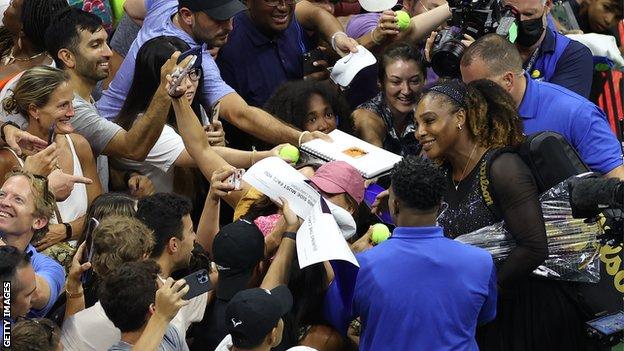
A fairly full 25,000-person Arthur Ashe Stadium crowd yelled at their hero, who reacted with trademark tenacity.
Williams, 40, will play Estonian second seed Anett Kontaveit in the second round on Wednesday.
The 23-time Grand Slam singles champion, who is one short of Australian Margaret Court’s all-time record, is also playing in the doubles alongside older sister Venus, adding another exciting element to what she hopes will be a long goodbye this fortnight.
Her first assignment was beating Kovinic, ranked 80th in the world, and there was a thunderous noise when she took the first of three match points to ensure her singles career was not over yet.
Williams jumped on the spot when Kovinic’s backhand return hit the net, then twirled ecstatically in the center of the court before blowing kisses to her adoring fans when she had returned to her seat to soak in the occasion.
“The more tournaments I play, I feel like the more I can belong out there. That’s a tough feeling to have, and to leave knowing the more you do it, the more you can shine.
“But it’s time for me, you know, to evolve to the next thing. I think it’s important because there are so many other things that I want to do.”
Williams thrills the crowd on a night of celebration
Williams’ announcement about her retirement plans led to a surge in ticket sales and a record 29,402 fans turning up at the opening night session of the tournament
Williams has long been more than a tennis player and it was a sign of her status – as an American icon and one of the world’s most recognizable sports stars – that she announced her retirement in an essay for glossy fashion magazine Vogue.
Although the former world number one did not use the word retirement itself, preferring to say she was “evolving away” from the sport, there is no mistaking her intention is to end her glittering career this fortnight at her home major.
Suitably, for what could have been her final match, it was a night of celebrity and glamour.
Williams – wearing a glittery, figure skating-inspired dress and diamond-encrusted trainers to add further theatre to the occasion – unsurprisingly arrived on the court to a rapturous reception, moments after the stadium watched a video montage in celebration of what she has achieved as a player and a person.
“When I walked out, the reception was really overwhelming. It was loud and I could feel it in my chest. It was a really good feeling,” she said.
“It’s a feeling I’ll never forget. It meant a lot to me.”
Kovinic had already come out to the court, leaving her with a long – and what must have been nervous – wait next to her chair.
Film director Spike Lee, who called Williams his “little sister” in a video released earlier on Monday, took part in the coin toss, while Vogue editor Anna Wintour, another close personal friend, was sat in her support box behind the player’s family.
Other famous faces picked out by the stadium cameras included former US President Bill Clinton, soul singer Gladys Knight, boxer Mike Tyson and model Bella Hadid.
New York state’s highest court will hear arguments from Harvey Weinstein’s lawyers and prosecutors and then decide whether to uphold the conviction or order a new trial
Harvey Weinstein has been given permission to appeal his rape and sexual assault conviction.
The written decision was sent to Weinstein’s lawyers and according to Reuters, it contained no details on what grounds may have led to the decision.
It means New York state’s highest court will hear arguments from Weinstein’s lawyers and prosecutors and then decide to uphold the conviction or order a new trial.
In June, a lower appeals court upheld the conviction, rejecting arguments that the Manhattan trial judge made several errors that tainted the trial.
In a 45-page ruling, the appellate court said trial Judge James Burke properly exercised his discretion in allowing prosecutors to bolster their case with testimony from three women who accused Weinstein of violating them but whose claims did not lead to charges in the New York case.
Weinstein, 70, is currently serving a 23-year prison sentence in California, where he was extradited in 2021 as he awaits trial on charges that he sexually assaulted five women in Los Angeles and Beverley Hills from 2004 to 2013.
Iga Swiatek is still a standout candidate to win the US Open, even if the WTA field has plenty of strength in depth, so says Laura Robson.
The latest iteration of the season’s final grand slam gets under way on August 29, with Emma Raducanu looking to mount a successful defence at Flushing Meadows.
But with six different winners in the last eight WTA majors, the race is wide open to take glory in New York, particularly after three-time major winner Ash Barty called time on her career following this year’s Australian Open.
That leaves former British number one Robson feeling any title fight is too tough to call, though she believes the strength of the field makes it all the more thrilling and unpredictable.
“I think it just shows that there’s a lot of depth on the WTA side,” she told Stats Perform. “You’ve got 15 players in any given slam [who could win], which for me makes it more exciting.
“I’m pumped when I see the draw come out, because things can open up so quickly. Had Ash Barty not retired earlier this year, then she probably would have been the front runner going into the rest of the season.
“It really could be anyone. Ons Jabeur is playing great tennis, [Elena] Rybakina and then [Paula] Badosa, on hardcourts is playing great as well.”
Robson acknowledged it is tough to look past world number one Swiatek, though. The Pole claimed her second French Open crown earlier this year and has won 50 matches in 2022.
“She just looked like she was on fire,” Robson added, before suggesting Swiatek’s defeat at Wimbledon to Alize Cornet came merely because “she just ran out of gas”.
“I think she’s going to transition a little slower on to the hard courts then at the US Open. They’re not quite the same surface that works best for her game.
“But at the same time, you know, she’s got so much confidence at the moment that you can’t really bet against her.”
Play Your Way to Wimbledon, Powered by Vodafone is the largest individual mass participation tennis competition in the UK – delivered by Vodafone in partnership with the LTA and The All England Lawn Tennis Club.
A celebrated author and winner of the world’s top literary prizes Salman Rushdie, whose writings have attracted death threats has been attacked and apparently stabbed in the neck on stage Friday before giving a lecture at the Chautauqua Institution in western New York, State Police said.
Police say a state trooper on the scene arrested the suspect.
Rushdie was airlifted to a local hospital according to the police, but his current state is unknown.
However, an interviewer also suffered a minor head injury, police said.
Medical staff and police were called to the amphitheater, according to a Chautauqua spokesperson who would not elaborate or confirm details about the incident.
Salman Rushdie’s treatment of delicate political and religious subjects turned him into a controversial figure.
A witness in the audience told CNN he saw Rushdie attack on stage.
The witness could not confirm what was used in the attack, adding that he was 75 feet from the stage.
The 75-year-old novelist — the son of a successful Muslim businessman in India — was educated in England, first at Rugby School and later at the University of Cambridge where he received an MA degree in history.
After college, he began working as an advertising copywriter in London, before publishing his first novel, “Grimus” in 1975.
Rushdie’s treatment of delicate political and religious subjects turned him into a controversial figure. But it was the publication of his fourth novel “The Satanic Verses” in 1988 that hounded him for more than three decades.
Some Muslims found the book to be sacrilegious and it sparked public demonstrations. In 1989, the late Iranian leader Ayatollah Ruhollah Khomeini called Rushdie a blasphemer and said “The Satanic Verses” was an insult to Islam and the Prophet Mohammed, and issued a religious decree, or fatwa, calling for his death.
As a result, the Mumbai-born writer spent a decade under British protection before the Iranian government announced it would no longer seek to enforce the fatwa in 1998.
Sir Christopher Meyer, the UK’s former ambassador to the US and one-time Downing Street press secretary, has died aged 78.
His six years in Washington came during the Clinton and George W Bush eras.
The current ambassador, Dame Karen Pierce, paid tribute, saying: “He was a great diplomat and a great character.”
The Daily Mail reported that Sir Christopher died after suffering a stroke while on holiday in the French Alps with his wife Catherine.
Sir Christopher joined the Foreign Office in 1966 and had early postings to Moscow, Madrid, and Brussels.
In 1993, he was appointed press secretary to then-prime minister John Major.
After three years, Sir Christopher returned to foreign postings, initially as ambassador to Germany before being sent to Washington.
He served as ambassador to the US for six years during Tony Blair‘s time as prime minister, with his tenure covering the end of the Clinton administration and the 9/11 attacks.
Sir Christopher Meyer enjoyed a long career as a diplomat. The high point was his posting, by Tony Blair, to Washington.
It was a turbulent time in American politics, embracing the end of the Clinton administration, the president’s impeachment over the Monica Lewinsky affair, the narrow victory of George W Bush over Al Gore, the attacks on September 11, 2001, and the subsequent invasion of Afghanistan – and the run-up to the war in Iraq.
Sir Christopher played a central role in dealing with the immediate aftermath of 9/11, traveling to New York to support British officials and bereaved relatives – later working with Mr. Blair and the Bush administration on a strategy to tackle international terrorism.
Sir Christopher is seen wearing his signature red socks
Known for his fondness of red – or green – socks, Sir Christopher was quick-witted and an ebullient communicator.
He was engaged in politics, including the Conservative leadership race, to the end – tweeting about it under the handle @SirSocks.
Just two days ago he posted that he’d found the recent debates “quite useful in exposing the candidates’ personalities and policies”.
Between 2003 and 2009, he served as chairman of the Press Complaints Commission, and later became known as an author and broadcaster, appearing frequently in the media as a commentator on current affairs.
He was also active on Twitter, with more than 32,000 people following his account under the name @sirsocks – which was a reference to his penchant for wearing colorful socks during his public life. It led to him being described as a “red-socked fop” by Labour’s former deputy prime minister John Prescott.
His 2005 memoir DC Confidential prompted further spats with politicians of the era. He criticized Tony Blair for failing to use his leverage in Washington to delay the Iraq war to allow better planning for the post-Saddam Hussein era.
And he said that many of Mr. Blair’s ministers who visited the US were political “pygmies” who failed to impress their American counterparts.
In particular, he described Jack Straw as being “mystifyingly tongue-tied” in one key UK/US meeting and labeled him as a B-list politician who was “more to be liked than admired”. In response, Mr. Straw said that Sir Christopher’s book amounted to an “unacceptable” breach of trust.
The arrest of a protester by New York City Police (NYPD) has led to outrage from officials and accusations of “kidnapping” by witnesses.
Footage of the dramatic arrest shows mostly plain-clothed men grabbing a woman and pushing her into an unmarked van during a policing protest.
The arrest on Tuesday comes amid furore over allegations of similar operations by federal agents in Portland, Oregon.
Marches against racism and policing have continued all summer in the US.
The NYPD later identified the suspect as 18-year-old Nikki Stone, saying she was wanted for vandalising police cameras near City Hall and spraying graffiti.
Ms Stone, a trans woman from Manhattan’s Lower East Side, was released early Monday morning to cheers from a crowd of protesters. She was issued an order to appear in court to face charges of vandalism and criminal mischief.
The arrest took place on Tuesday evening at 25th Street and Second Avenue in Manhattan.
Footage shared on social media shows men in T-shirts and shorts grabbing a skateboarder and shoving her into a silver Kia minivan. It was unclear if the officers making the arrest had badges or any identifying information.
Uniformed police then rushed in and used their bicycles to form a barrier to keep other protesters back.
“We didn’t see where they came from,” one witness told the Gothamist, adding: “It was like a kidnapping.”
Police said the arresting officers were assaulted with rocks and bottles by the crowd, but protesters dispute this. Officers used pepper spray to disperse the crowd.
What is the reaction?
Congresswoman Alexandria Ocasio-Cortez, who represents the Bronx borough of New York City, tweeted: “Our civil liberties are on brink. This is not a drill.”
“There is no excuse for snatching women off the street and throwing them into unmarked vans.”
“There must be an immediate explanation for this anonymous use of force,” tweeted fellow New York City Congressman Jerrold Nadler.
The speaker of the New York City council called the video “incredibly disturbing” while the city’s comptroller said he was ‘deeply concerned”.
The arrest comes as federal police in Portland, Oregon, have been criticised for operations that involved officers dressed in military-style gear grabbing protesters off the street and placing them in unmarked vehicles.
President Donald Trump has vowed to deploy more federal police to cities that he says are facing unacceptable levels of unrest in wake of the 25 May death of George Floyd in police custody.
New York city council member Brad Lander wrote on Twitter: “With anxiety about what’s happening in Portland, the NYPD deploying unmarked vans with plainclothes cops to make street arrests of protestors feels more like provocation than public safety”.
What happens to arrested protesters?
Any person arrested in the US is read “Miranda rights” by police, which inform them of their rights under the US constitution to refuse to answer police questions and the right to consult with a lawyer. However, some states do require people to identify themselves when asked by police.
If a suspect speaks to police during the arrest, a judge could later rule that they have waived their Miranda rights, according to the National Lawyers Guild.
Lying to investigators is a crime, and anything a suspect says during the arrest could be held against them later. Physically resisting can lead to additional charges, including resisting arrest or assault.
Depending on the severity of the alleged offence, a judge may issue a summons to return to court at a later date or hold the suspect in jail pending trial.
The NYPD Warrant Squad, who were involved in Ms Stone’s arrest, typically use unmarked vehicles and plainclothes officers in order to catch suspects off guard, according to police.
Broadly, US police do not have a requirement to provide identification, according to the Lawfare Blog.
Some cities or police department require police to display name tags or badges, or identify themselves as law enforcement during an arrest, but no requirement exists at the federal level.
Milton Glaser, the influential American graphic designer who created the “I ? NY” logo, has died aged 91.
Made for a 1977 tourism campaign, the logo rapidly gained recognition across the world and has been described as the most frequently imitated in history.
Glaser later said he was “flabbergasted by what happened to this little, simple nothing of an idea”.
He also created a famous poster of Bob Dylan with psychedelic hair and was a co-founder of New York magazine.
The cause of his death was a stroke, his wife Shirley told the New York Times.
Glaser was born in the Bronx borough of New York City in 1929. He studied at the Cooper Union for the Advancement of Science and Art, a college in Manhattan, and at the Academy of Fine Arts in Bologna, Italy.
In 1954, Glaser set up Push Pin Studios with three Cooper Union classmates and helped bring a new visual language to commercial art, seeking inspiration from everything from Art Nouveau to Chinese wash drawing, German woodcuts, and the cartoons of the 1930s.
His poster of Bob Dylan featured a silhouette of the musician based on a self-portrait by Marcel Duchamp and brightly coloured locks of hair borrowed from Islamic art. The poster was included in Dylan’s 1967 album Greatest Hits, which was bought by six million fans, and adorned countless walls.
In 1968, Glaser co-founded New York magazine and was its design director for nine years.
“Around our office, of course, he will forever be one of the small team of men and women that, in the late sixties, yanked New York out of the newspaper morgue and turned it into a great American magazine,” the magazine’s obituary said.
In 1974, he established his own design firm, Milton Glaser, Inc.
Three years later, he designed the “I ? NY” logo free of charge to help promote tourism in his home city, amid a crime wave and financial crisis. He came up with the idea while riding in a taxi and scribbled it in red crayon on an envelope, which is now in the permanent collection of the Museum of Modern Art (MoMA).
“It is one of those peculiarities of your own life where you don’t know the consequences of your own actions,” he told the New York Times in 2008. “Who in the world would have thought that this silly little bit of ephemera would become one of the most pervasive images of the 20th Century?”
After the 9/11 attacks, Glaser released an amended version of the logo that featured a bruised heart and read “I ? NY MORE THAN EVER”.
Glaser is also known for his designing the World Health Organization’s international Aids symbol and poster, the logo for the Brooklyn Brewery, and an advertisement for the final series of Mad Men.
In 2004, he was given a lifetime achievement award by the Cooper-Hewitt, Smithsonian Design Museum. In 2009, he was awarded the National Medal of Arts.
Security measures in the US have been lifted as unrest over the death in police custody of African-American George Floyd eases.
New York ended its nearly week-long curfew and President Donald Trump said he was ordering the National Guard to start withdrawing from Washington DC.
The unrest has largely been replaced by largely peaceful worldwide protests against racism and police brutality.
Black Lives Matter protests continued on Sunday in European nations.
George Floyd died in police custody in Minneapolis on 25 May. Video showed him pinned to the floor, with a white police officer kneeling on his neck for almost nine minutes.
Officer Derek Chauvin has been dismissed and charged with murder. Three other officers who were at the scene have also been sacked and charged with aiding and abetting.
Mr Floyd’s funeral is scheduled for Tuesday in Houston, his home city before he moved to Minneapolis.
US Democratic presidential candidate Joe Biden is due to travel to Texas on Monday to meet Mr Floyd’s family ahead of the service and offer his condolences, two senior aides told Reuters news agency. He is not expected to attend the funeral.
Mr Biden also took to Twitter on Sunday to hit out at Mr Trump’s handling of the protests, saying he had “callously used his [words as a president] to incite violence, stoke the flames of hatred and division, and drive us further apart”.
Hours earlier, President Trump had tweeted that the National Guard could start withdrawing from the capital as “everything is under perfect control”.
“They will be going home, but can quickly return, if needed. Far fewer protesters showed up last night than anticipated!” he said.
The National Guard is the reserve military force that can be called on by the US president or state governors to intervene in domestic emergencies.
Washington had seen angry protests outside the White House, particularly last Monday when demonstrators were cleared for Mr Trump to walk to a nearby church.
Saturday’s massive protest in the capital was peaceful.
New York City Mayor Bill de Blasio tweeted: “We are lifting the curfew, effective immediately. Yesterday and last night we saw the very best of our city.”
The end of the curfew comes a day before New York enters the first phase of its plan to reopen after more than two months of lockdown due to the coronavirus outbreak.
“Tomorrow we take the first big step to restart. Keep staying safe. Keep looking out for each other,” Mr de Blasio said.
New York has seen its fair share of violence in the past week, with looting of luxury stores in Manhattan, scores of arrests and the burning of dozens of police cars.
There were also accusations against the police, including the beating of protesters. One patrol car was also driven into a crowd of protesters, sparking a row between politicians.
Many major US cities that saw unrest have now lifted curfews, including San Francisco and Los Angeles, although a few protests have still led to clashes.
Where are protests continuing now?
Sunday has seen more demonstrations taking place across Europe under the banner of Black Lives Matter.
In Madrid, thousands of people marched carrying anti-racism placards and wearing masks to observe coronavirus measures, although images showed social distancing was not being followed.
Outside the US embassy in Madrid, protesters shouted “I can’t breathe”, echoing Mr Floyd’s last words. Others took a knee to observe the mark of protest that originated in the US against police brutality and racism.
Similar protests were held in Rome, where protesters fell silent for roughly the same time that George Floyd was pinned down.
There have also been events in Brussels, Copenhagen and in several places in the UK.
Protesters in Bristol tore down a statue of Edward Colston, a prominent 17th Century slave trader.
What happened on Saturday?
Huge peaceful rallies took place across the US.
Tens of thousands of people gathered in Washington DC, in the city’s largest protest so far, many of them at the newly renamed Black Lives Matter Plaza outside Lafayette Park.
There were also massive protests in San Francisco, Chicago and Los Angeles.
There was even a protest in the small, east Texas town of Vidor, once infamous as a Ku Klux Klan stronghold.
Dozens of white and black protesters carrying Black Lives Matter banners rallied in a place previously known as a “sundown town” because blacks did not venture out after dark.
Though the vast majority of protests were peaceful, both Portland and Seattle saw unrest on Saturday night, with projectiles thrown and arrests made.
Meanwhile, people paid their respects to Mr Floyd in North Carolina, where he was born, with a memorial service held.
Kelvin Mensah (also known as PJ Kev), was born and raised in the Bronx, New York. With guidance from Ghanaian parents, Kelvin found the courage to lead himself in a generation of self-starters, landing him into the Luxury Lifestyle business. Starting with a little more than a love for travel, Kelvin Mensah has amassed a notable reputation as one of the youngest African American Private jet brokers in the world.
Since booking his first jet at 21, Kelvin has been flying recording artists, celebrities, athletes and top executives around the world; including the likes of Scott Disick, Young Thug, Tyga, The Kardashians, and Neymar Jr. just to name a few. His ever-expanding list of high-profile clientele has set him apart in this industry in addition to his relentless effort to master his craft. At just 28 years old, Kelvin has successfully booked over 75 jets, totaling over $1.6M in sales. Innovative, proactive, and business-minded, Kelvin Mensah is ready to make a significant impact in his generation.
Kelvin is a baller and his lavish lifestyle oozes class and a pinch of boujee. He is seen hanging outing with  big spenders in both the hippop and business world. This young millionaire is definitely a gem and inspiration to many.
A 72-year-old man has been stabbed to death by his son in New York state during a Zoom video chat with 20 other participants, police say.
Dwight Powers was attacked by his 32-year-old son, Thomas Scully-Powers, who then jumped out of a window and fled in Long Island’s Amityville village.
He was held within an hour after chat guests had called the police. The motive of the attack was not yet clear.
Mr Scully-Powers was later charged with second-degree murder.
In a statement, Suffolk County police said further information would be provided once the suspect, who sustained minor injuries, was treated and discharged from hospital.
Police said it had been alerted of the incident on Thursday afternoon after several of the chat’s participants noticed the man fall, but that it took some time for them to locate the house because the guests did not know where Mr Powers lived.
Some of the people may have witnessed the attack, reports said. It was not clear what type of meeting was being held.
New York’s Mayor Bill de Blasio on Sunday voiced “tremendous concern” over an uptick in cases of a pediatric syndrome that scientists suspect could be linked to COVID-19.
The mayor said there have been 38 cases of pediatric multi-system inflammatory syndrome detected in New York City, with an additional nine suspected cases awaiting confirmation.
There have been three deaths statewide linked to the syndrome, Governor Andrew Cuomo had said over the weekend, with one in the city.
Symptoms of the syndrome include persistent fever, rash, abdominal pain and vomiting.
“What it does is, basically, in a child’s body triggers an intensive, almost overwhelming immune system response. And that actually causes harm to the body,” de Blasio said.
The mayor said all children with associated symptoms would now be tested for COVID-19 as well as antibodies.
So far, of the confirmed cases, 47 percent had tested positive for coronavirus and 81 percent had antibodies, indicating exposure to the fast-spreading virus at some point.
De Blasio urged all parents whose children exhibited the symptoms to seek immediate medical attention.
On Friday Cuomo had reported at least 73 children throughout New York state had developed the rare illness, which has some similarities to Kawasaki disease.
Kawasaki disease is a mysterious illness that primarily affects children up to the age of five and causes the walls of arteries to become inflamed, resulting in fever, skin peeling and joint pain.
Britain’s National Health Service first sounded the alarm last month, warning about a small rise in children infected with the coronavirus that have “overlapping features of toxic shock syndrome and atypical Kawasaki disease.”
France has also reported several cases.
Though frightening, most recover without serious issues.
Dozens of New Yorkers were fined for violating coronavirus social distancing guidelines as they flocked to the city’s beaches and parks to enjoy balmy weekend weather, police said Sunday.
NYPD Commissioner Dermot Shea told reporters that officers had issued 51 summonses on Saturday, mostly for social distance violations, as temperatures in America’s COVID-19 epicenter registered upwards of 70 degrees Fahrenheit (21 degrees Celsius).
Residents of the Big Apple, which has been shut down since mid-March, are allowed outside to exercise providing they maintain six-feet (two meters) of distance and wear a mask when around others.
New Yorkers can be fined up to $1000 for violating the orders, which many did as they descended on popular spots like Manhattan’s Central Park and Rockaway Beach in Queens following a largely rainy week.
Shea said tickets were issued to 43 people in parks and eight others elsewhere as New York leaders warned residents not to spark a second wave of infections.
Governor Andrew Cuomo said he appreciated residents were bored but that they should not take “false comfort” from falling COVID-19 cases or from seeing other states reopen.
He insisted that the outbreak — which has killed almost 20,000 people statewide — was far from over.
“How people cannot wear masks is disrespectful. It’s disrespectful to the nurses, the doctors, the people who have been frontline workers, the transit workers.
“You wear the mask not for yourself — you wear the mask for me,” he added.
Cuomo reported 280 new deaths from COVID-19 in New York state in the last 24 hours, down from 289 the day before.
More than 700 New Yorkers were dying daily at the peak of the outbreak last Month.
Cuomo announced that new cases and intubations continued to fall.
Dozens of bodies have been found stored in moving lorries in New York, authorities say, after passersby complained of the smell.
The Andrew T Cleckley Funeral Home in Brooklyn had rented trucks and put about 50 corpses inside with ice.
One official quoted anonymously in the New York Times said the home’s freezer had stopped working.
Police were called to the scene and sealed off the area. A refrigerated truck later arrived.
Workers in protective suits were later seen moving bodies.
It is unclear if these were victims of the coronavirus. But officials and funeral homes have struggled to cope with the huge numbers of dead in New York, the worst-affected state in the US.
More than 18,000 people have died in New York City alone, according to Johns Hopkins University data. As a whole, the US has more than one million confirmed cases of coronavirus, more than any other country.
“They had dead bodies in the vans and trucks,” the owner of the building next door told the New York Times. “They were on top of each other in body bags… all of [the vehicles] were packed.”
Eric Adams, the Borough President of Brooklyn, went to the scene after the funeral home complaint emerged.
“While this situation is under investigation, we should not have what we have right now, with trucks lining the streets filled with bodies,” he later told the New York Daily News.
Mr Adams said they were alerted by “people who walked by who saw some leakage and detected an odour coming from a truck.”
By law, funeral directors must keep bodies in safe conditions that prevent infection before they are buried or cremated. The home has since been cited by health officials.
In separate news, New York City Mayor Bill de Blasio apologized after criticizing a gathering at a Jewish funeral – comments some said were anti-Semitic.
Mourners had gathered in large numbers to mourn the passing of a rabbi in Williamsburg.
“If in my passion and in my emotion I said something that was hurtful, I’m sorry about that,” Mr de Blasio said.
“I have no regrets about calling out this danger and saying we’re going to deal with it very, very aggressively.”
A top New York City doctor who was on the front line of the US fight against coronavirus has taken her own life.
Dr Lorna Breen, who was medical director of the emergency department at New York-Presbyterian Allen Hospital in Manhattan, died of self-inflicted injuries on Sunday, police said.
The 49-year-old’s father, Dr Philip Breen, told the New York Times: “She tried to do her job and it killed her.”
New York accounts for 17,500 out of America’s coronavirus 56,000 deaths.
The elder Dr Breen said his daughter had had no history of mental illness. She died in Charlottesville, Virginia, where she had been staying with her family.
Lorna Breen herself had fallen ill with the coronavirus during the course of her work and returned to the job after about a week-and-a-half of recuperating, said her father.
The hospital had sent her home again, before her family “intervened” to bring her to Charlottesville, said her father.
He said that when they last spoke, his daughter had seemed “detached” and told him how Covid-19 patients were dying before they could even be removed from ambulances. Dozens of patients have succumbed to coronavirus at the 200-bed hospital in Manhattan.
“She was truly in the trenches on the front line,” her father told the Times.
“Make sure she’s praised as a hero. She’s a casualty just as much as anyone else who has died.”
According to the newspaper, Dr Lorna Breen was a devout Christian who was very close to her family. She was an avid skiier who also enjoyed salsa dancing. She volunteered once a week at a home for old people.
New York-Presbyterian Allen Hospital said in a statement: “Dr Breen is a hero who brought the highest ideals of medicine to the challenging front lines of the emergency department.”
In a press release confirming her death, the Charlottesville Police Department also described Dr Breen as a “hero”.
The police department said that after a call for help on 26 April, Dr Breen was taken to a local hospital for treatment “where she later succumbed to self-inflicted injuries”.
Police chief RaShall Brackney said in a statement: “Frontline healthcare professionals and first responders are not immune to the mental or physical effects of the current pandemic.
“On a daily basis,” she added, “these professionals operate under the most stressful of circumstances, and the coronavirus has introduced additional stressors.”
New York state has recorded almost a third of the country’s nearly one million confirmed Covid-19 cases.
On Monday, New York Governor Andrew Cuomo said random antibody tests indicated that a quarter of New York City (24.7%) – America’s most populous city with 8.3 million people – had been infected with coronavirus.
A top New York City doctor who was on the front line of the US fight against coronavirus has taken her own life.
Dr Lorna Breen, who was medical director of the emergency department at New York-Presbyterian Allen Hospital in Manhattan, died of self-inflicted injuries on Sunday, police said.
The 49-year-old’s father, Dr Philip Breen, told the New York Times: “She tried to do her job and it killed her.”
New York accounts for 17,500 out of America’s coronavirus 56,000 deaths.
The elder Dr Breen said his daughter had had no history of mental illness. She died in Charlottesville, Virginia, where she had been staying with her family.
Lorna Breen herself had fallen ill with the coronavirus during the course of her work and returned to the job after about a week-and-a-half of recuperating, said her father.
The hospital had sent her home again, before her family “intervened” to bring her to Charlottesville, said her father.
He said that when they last spoke, his daughter had seemed “detached” and told him how Covid-19 patients were dying before they could even be removed from ambulances. Dozens of patients have succumbed to coronavirus at the 200-bed hospital in Manhattan.
“She was truly in the trenches on the front line,” her father told the Times.
“Make sure she’s praised as a hero. She’s a casualty just as much as anyone else who has died.”
According to the newspaper, Dr Lorna Breen was a devout Christian who was very close to her family. She was an avid skier who also enjoyed salsa dancing. She volunteered once a week at a home for old people.
New York-Presbyterian Allen Hospital said in a statement: “Dr Breen is a hero who brought the highest ideals of medicine to the challenging front lines of the emergency department.”
In a press release confirming her death, the Charlottesville Police Department also described Dr Breen as a “hero”.
The police department said that after a call for help on 26 April, Dr Breen was taken to a local hospital for treatment “where she later succumbed to self-inflicted injuries”.
Police chief RaShall Brackney said in a statement: “Frontline healthcare professionals and first responders are not immune to the mental or physical effects of the current pandemic.
“On a daily basis,” she added, “these professionals operate under the most stressful of circumstances, and the coronavirus has introduced additional stressors.”
New York state has recorded almost a third of the country’s nearly one million confirmed Covid-19 cases.
On Monday, New York Governor Andrew Cuomo said random antibody tests indicated that a quarter of New York City (24.7%) – America’s most populous city with 8.3 million people – had been infected with coronavirus.
New York City, the hardest hit U.S. city in the coronavirus pandemic, revised its official COVID-19 death toll sharply higher to more than 10,000 on Tuesday to include victims presumed to have perished from the disease but never tested.
The new cumulative figure for “confirmed and probable COVID-19 deaths” released by the New York City Health Department marked a staggering increase of over 3,700 deaths formally attributed to the highly contagious illness since March 11.
The 60 percent spike in reported deaths underscored the enormous losses endured in the nation’s most populous city, where the sounds of wailing sirens have echoed almost non-stop through largely empty streets for weeks.
The city’s revised count, 10,367 in all, raised the number of coronavirus deaths nationwide to more than 28,300 – New York accounting for the biggest share of deaths.
With only a tiny fraction of the U.S. population tested for coronavirus, the number of known infections climbed to more than 600,000 as of Tuesday, according to a running Reuters tally.
U.S. public health authorities have generally only attributed deaths to COVID-19, the respiratory disease caused by the novel coronavirus, when patients tested positive for the virus.
New York City’s Health Department said it will now also count any fatality deemed a “probable” coronavirus death, defined as a victim whose “death certificate lists as a cause of death ‘COVID-19’ or an equivalent.”
March 11 was used as the starting point because that was the date of the first confirmed coronavirus death, the city said.
“Behind every death is a friend, a family member, a loved one,” said Health Commissioner Dr. Oxiris Barbot. “We are focused on ensuring that every New Yorker who died because of COVID-19 gets counted.”
The new approach in New York City could pave the way for similar policies across the country, possibly leading to a surge in the US number of reported coronavirus deaths.
Even before Tuesday’s revision in New York City, the number of new U.S. deaths on Tuesday had reached at least 2,228, the highest toll yet in a single 24-hour period.
‘Not a comfortable place’
Louisiana, another coronavirus hot spot, and California also reported record daily spikes in deaths on Tuesday, despite tentative signs across the country in recent days the outbreak was beginning to ebb.
New York Governor Andrew Cuomo, whose state’s healthcare network was strained to breaking point by a wave of COVID-19 hospitalisations, had said on Monday it appeared “the worst is over.”
Health officials have cautioned that death figures are a lagging indicator of the outbreak, coming after the most severely ill patients fall sick, and do not mean stay-at-home restrictions are failing to curb transmissions.
New York state and some other hard-hit areas continue to report sharp decreases in hospitalisations and numbers of patients on ventilators, although front-line healthcare workers and resources remained under extraordinary stress.
“The plateau is not a very comfortable place to live,” David Reich, president of New York’s Mount Sinai Hospital, said in a telephone interview. “So I don’t think people should be celebrating prematurely.”
That cautious note was also sounded by President Donald Trump’s top infectious diseases adviser, Dr. Anthony Fauci, who said Trump’s May 1 target for restarting the economy was “overly optimistic”.
Fauci, echoing many governors, said in an Associated Press interview that health officials must first be able to test for the virus quickly, isolate new cases and track down new infections.
At his daily White House briefing later in the day, Trump said he was close to completing a plan for ending America’s coronavirus shutdown, which has thrown millions out of work, and may forge ahead with restarting the battered U.S. economy in some parts of the country even before May 1.
The president took renewed aim at the World Health Organization at the briefing, saying he has instructed his administration to halt U.S. funding to the Geneva-based institution over its handling of the pandemic.
Mutiny on the bounty
Trump, a Republican who before the outbreak touted a vibrant economy as a pillar of his Nov. 3 re-election bid, earlier lashed out at Democratic state governors, after Cuomo said he would refuse any presidential order to reopen the economy too soon.
“Tell the Democrat Governors that ‘Mutiny On The Bounty’ was one of my all time favorite movies,” Trump wrote on Twitter on Tuesday, referring to a classic film about an 18th-century rebellion against the commanding officer of a British naval vessel.
But Trump toned down his remarks at the White House briefing saying he would “authorize” governors – despite doubts from some experts that the presidency has such powers – to implement plans in their states at the appropriate time.
Cuomo, a Democrat, and governors of six other northeastern states have announced they are coordinating on a regional plan to gradually lift restrictions. The governors of California, Oregon and Washington formed a similar West Coast regional pact.
California Governor Gavin Newsom and Oregon Governor Kate Brown, both Democrats, on Tuesday offered frameworks for eventually restarting public life and business in their states.
Some Republicans, including the governors of Ohio, Maryland and New Hampshire, also said states have the right to decide when and how to reopen.
By last Tuesday, the death toll from coronavirus in New York City had passed that of the 9/11 attacks on the World Trade Center.
The figure was reached only three weeks after the first coronavirus death in the city.
The outbreak has placed New York at the centre of the global pandemic and put an unprecedented strain on the city’s emergency workers and frontline staff.
Over the course of Tuesday, six of those people – two doctors, an undertaker, two senior care home staff and a food delivery worker – kept diaries of their day and shared them with the BBC.
This is their story.
Midnight, Tuesday 7 April
Kathleen Flanagan returns from a late shift at a nursing home. The TV is on in the living room, playing the sitcom That ’70s Show. As has become the custom in her household she shouts “Hello” to let her family know that she is home and to make sure they avoid contact with her.
She heads downstairs into the laundry room, takes off her clothes and showers.
Everything she has worn at work must go into the washing machine before she sees her husband and children.
When she heads back up the stairs, she is greeted by a bouquet of sunflowers in the kitchen. A card from her eight-year-old son reads: “Keep kicking butt Mom!”
Two of her three sons are asleep on the couch waiting for her. She cooks eggs and spinach for dinner and shares details of her day with her husband – the good news is that coronavirus patients in one of the centres she oversees are starting to look better, but in another the situation is getting worse.
She opens her laptop to do some work and falls asleep somewhere between 01:00 and 02:00.:57
Doctor Jennifer Haythe is woken by a call from the intensive care unit at her hospital, letting her know about a Covid-19 patient whose condition is deteriorating.
The 46-year-old hangs up the phone and tosses and turns in bed, worrying about the patient. She rethinks the plan for them and then is met by the increasingly familiar feeling of loneliness.
‘Like 9/11 every day’: A New York paramedic’s diary
Like many healthcare professionals working with coronavirus patients, Jennifer is living separately from her family. She is staying in an apartment in Greenwich Village, while her husband and children are in their house upstate.
Faced with an eerie silence outside and missing her loved ones, she does a deep breathing exercise: “In for four, hold for seven, out for eight.” It must work because she falls asleep.
02:00
Outside the city, in the New York state town of Corinth, Faith Willett, a director of nursing at a care home, is woken by a member of staff reporting a high fever. She advises her to self-isolate and contact a doctor as soon as possible.
Faith feels sick and struggles to fall back to sleep. She scrolls through her phone to see the latest news on the coronavirus outbreak, paying close attention to local updates that might be worrying residents and their families.
In deserted Times Square, a Muslim woman prays on Tuesday The news feels so surreal that the 46-year-old nurse wonders if she’s asleep. She wakes her husband to ask if she’s dreaming. “No, babes, you’re awake,” he replies. He tells her to get some rest.After a few hours of disturbed sleep, she wakes to her alarm. She grabs her computer and scans the latest updates from her colleagues. She can breathe a sigh of relief. There are no confirmed cases – for now.
05:00
Funeral director Steven Baxter is already out of the house. His hours have completely changed since the virus struck, as he and funeral workers across New York struggle to keep up with the rising number of fatalities.
The days of wearing a suit to work are gone. He now dons “scrubs” that he can throw out afterwards, without risking cross-contamination. The trainers he wears to work are always kept outside.
He sets off to a nursing home, where he has to collect the body of yet another coronavirus victim. It is the first of several such visits he will have to make that day.
06:30
Back in Greenwich Village, doctor Jennifer Hayth wakes up to her alarm. She opens her eyes with the fleeting hope that the past few weeks have been a bad dream.
She has a shower and gets ready for work. There are no dogs for her to walk, no husband to kiss goodbye and no children to prepare breakfast for.
She heads to a coffee shop where a woman walking her dog notices her doctor’s uniform and thanks her. In the cafe, the only other customer – a retired police officer – pays for her coffee.
The Cat Stevens song Peace Train comes on the radio as she drives to work at Columbia University Medical Center. She hasn’t heard it for a while and it makes her feel energised. She looks over the highway at the USNS Comfort – a Navy hospital ship docked in New York City where coronavirus patients are being treated – and thinks to herself that it seems almost majestic.
Arriving at work, she puts on her mask, gown, gloves and other equipment required for working with coronavirus patients and heads over for another day in the ICU.
07:00
Nurse Kathleen Flanagan wakes to a hug from her eight-year-old son. Before she leaves the house, he performs a dance to the song High Hopes by the band Panic! At the Disco.
She listens to it again in the car, applying the lyrics to her own life.
Mama said don’t give up, it’s a little complicated…
Had to have high, high hopes for a living
As she listens to the song, she passes the traffic light where last month she received a phone call that changed everything. A colleague at a nursing and rehabilitation centre in New York City told her that two residents had fevers and respiratory symptoms – the first signs of coronavirus in any of the six facilities she oversees.
She was heading to a different centre at the time and was faced with the decision of whether to help remotely or change her plans and put herself on the frontlines of the outbreak. She turned her car around.
Her normal job does not include direct patient care. But three weeks later, she continues to take a hands-on role at the centres with coronavirus patients in spite of the risks.
08:45
At another nursing home in Glens Falls, New York, Faith Willett has been at work for about an hour and there is already cause for concern.
Before leaving the house this morning, she said her personal mantra aloud to herself in the shower: “We’ve got this.” Like every day in recent weeks, she hoped there would be no signs of coronavirus in the centre.
But as a nurse walked out of a resident’s room during the routine morning checks, Faith could tell from her eyes it was bad news – the resident had a high temperature and was getting short of breath while reading her Bible.
Image captionCoronavirus has forced carers like Faith Willett to go against all their natural instincts
All the staff at the home know this might end up being the day the virus made its way in. Masks need to be issued and the door to the resident’s room must be closed, with only designated caregivers in full protective equipment allowed in.
Faith considers the order.
You should never close a door to a resident’s room unless they ask you to – it’s a violation of their rights; it’s forced isolation; it’s mistreatment, she thinks. But she reminds herself that they must go against all their instincts as caregivers to save lives.
A nurse in full protective equipment goes into the room to perform the test. There are tears in the nurse’s eyes but they soften as she walks in. She completes the test, packages it and takes it to the lab. Faith admires the woman’s bravery for being able to do it.
09:00
Steven Baxter is sorting through death certificates and other documentation at Gannon Funeral Home in Manhattan. The phone line has just opened so he is preparing for another day of calls from families who have lost loved ones to the virus.
The 53-year-old recently converted the chapel in the funeral home into a morgue. He has a rule: the dead need to be treated with respect and given adequate space. But the number of bodies coming in is hard to keep up with.
Later today he will need to take the bodies of eight Covid-19 patients to be cremated, and to chase a supplier about cremation boxes, which are increasingly in short supply.
It will be about three weeks before the person he collected this morning can be cremated – the pandemic has put a strain on the system, creating major backlogs.
All his days are merging into one at the moment. The “removal” this morning was like any other in the time of coronavirus – he put on a respirator and other protective equipment, and used disinfectant spray as he worked to ensure he was safely transferring the body.
09:34
People not directly on the frontline are also performing critical jobs to prevent the virus spreading.
Since the pandemic began, doctor Michael Morgenstern has swapped his subway commute for a walk upstairs. This morning, he logs on to video conferencing platform Zoom for his first appointment of the day.
Many of his patients are elderly and part of his role now is explaining the risks of coronavirus to them, and the precautions they should take.
Image copyrightGETTY IMAGESImage captionPeople queue at a food distribution centre in Harlem
The first patient wants to go out and visit two other doctors. Michael asks the son, who is also on the call, to try to see if the appointments can be conducted over the phone or through a video platform.
He is concerned about people exposing themselves to the virus and has spent much of his morning up to now working on a petition calling for the public to wear non-medical face masks, in line with recommendations from the Centers for Disease Control.
He repeats the mantra “an ounce of prevention is worth a pound of cure” to himself as he works.
His legs shake as he begins his second appointment of the day. He’s nervous about what’s happening in the world.
10:00
Faith Willett gets a call from the nurse who fell ill – she can’t get tested and has instead been labelled “presumed positive”.
Faith is angry about the lack of testing for a frontline worker. She worries that the residents may have been exposed and then finds herself wondering – selfishly, she thinks – if she too might have been.
Five other people working at the home have been tested for Covid-19 because of symptoms – four were negative and the fifth is pending.
Faith and her colleagues all worry about the same thing: they don’t want to be the person who brings the virus into the facility.
11:00
At another nursing and rehabilitation home, Kathleen Flanagan has spent much of the morning checking on residents with coronavirus symptoms.
The hospital calls to discuss returning one long-term resident, assuring her that he is alert and responsive.
Two others are at the hospital. One is not doing well. When asked who his next of kin are, she replies: “We are his family.”
She urges the doctor to fight for him.
Image copyrightAFPImage captionAt the Wyckoff Heights Medical Center, a hospital worker takes a moment to pause
11:23
Michael Morgenstern sees his next patient via video call. An elderly person with cancer.
The cancer appears to be spreading but while the patient is continuing with chemotherapy, they are holding off on adding radiation treatment for now because of the Covid-19 risk.
Michael is worried. He advises relatives who are still going outside to consider wearing face masks when they are around the patient.
He continues to see patients and work with volunteers for his coronavirus campaign throughout the morning. One of the patients was born only shortly after the Spanish flu pandemic of 1918, he thinks to himself.
12:00
Doctor Jennifer Haythe is carrying out rounds in the ICU. Everyone she sees is a Covid-19 patient. They are all on ventilators.
She passes colleagues but can only see their eyes. In them she sees stress, but also hope and courage.
Image copyrightEPAImage captionA patient is transported through Jennifer’s hospital in Manhattan
As she attends to sick and dying patients she thinks about what it must be like for them and their families.
“A hospital without visitors. What is that?” she asks herself.
12:30
Sarujen Sivakumar, a 22-year-old Lebanese-born delivery team manager for Eat Offbeat – a catering company led by immigrants and refugees – heads out to work.
Like many businesses across New York, his company has had to re-model amid the pandemic and now sells coronavirus “care packages” of a week’s worth of meals and snacks.
As he begins his journey, he is struck again by how quiet the city is. In the six years since he arrived here as a refugee, he has never seen it like this. There are no groups talking to each other, no performers at the subway station. He feels almost as if he is in a video game.
Before the outbreak, he would greet his colleagues with special handshakes and hugs. But as he walks into the kitchen today, he knows he has to keep his distance.
13:00
At the Glens Falls nursing home, it is visiting time.
Faith and her colleagues bring residents into the dining room where there are big windows through which they can see their relatives.
Families wait outside in their cars and take turns coming to the windows. They have agreed to limit their visits to 10 minutes each.
As emotional reunions take place through the glass, Faith observes the range of tears being shed – joy, laughter, sadness and, of course, fear.
13:45
The chefs at Sarujen’s company say they are too scared to take the train to work any more, but also worry about how they would survive financially if the company stops running.
Sarujen knows how hard he and others at the company worked to get where they are today. He worries that if it closes, it won’t be the same again in the future.
There is little time to talk about it in depth as they have deliveries to get on with.
14:30
Steven Baxter heads to a funeral home to collect the body of another coronavirus victim.
He received a call the previous day from a man whose father had died. He couldn’t afford what the company was charging for a cremation and needed someone else to take over.
As he collects the body, Steven is angry about what he sees as exploitation of victims of a health crisis. He believes the price that was being charged is four times the average in the city.
16:20
It’s the news everyone had been dreading. The result for the fifth employee tested at Faith Willett’s home comes back positive.
She tells herself there’s no time to feel – she needs to act.
She begins the difficult process of alerting residents and their families.
Image copyrightAFPImage captionMessages in support of medical staff have appeared outside Mount Sinai West Medical Center
17:00
While speaking to a patient earlier in the day who was unable to get a mask, doctor Michael Morgenstern shows him how to fashion one out of a T-shirt.
He decides others may also need to see how to do this so shoots a video and shares it online.
18:00
As Sarujen drops off his last package, he gets a call asking him to join a team meeting about the future of the company.
At the meeting, they agree that the delivery drivers will take the chefs to and from work so they can avoid trains.
He is happy that he can continue working but exhausted from stress over the virus and the day’s concerns over his job.
20:00
Steven Baxter returns home from the funeral home but his day isn’t over.
His twin sons are playing basketball in the backyard. They ask him if he has to shower. When he says yes, they know what sort of day he must have had.
For the next few hours, he deals with calls from more bereaved families. He doesn’t have time to speak with his wife, who is also a funeral director.
He falls asleep before his children. He has to be at another nursing home to collect another body at 04:00.
20:22
Jennifer has a hot bath and is ready to crawl into bed. Even though her hours haven’t changed, she feels much more exhausted than before.
As she responds to more texts about patient care, she reviews how she feels. Achy, tired, sore throat. She wonders if she should get tested.
20:40
Faith Willett gets a call from a nurse who says she can’t do an upcoming shift. She isn’t unwell but news has got around about today’s positive result at the nursing home.
The nurse’s skills and training are invaluable. Faith can’t understand the woman’s decision, which she sees as jumping ship at a time of crisis.
21:00
Jennifer watches an episode of TV sitcom Friends. It is all she can manage to watch these days – she struggles to focus on anything too heavy.
She has a goodnight FaceTime with her children before turning out the lights. She hasn’t seen them in person for eight days.
As she closes her eyes, she makes a mental note: “Thank the cast of Friends when this is over.”
22:00
Kathleen Flanagan has been home for about an hour. It was the usual routine – a shout of “hello” to the family again, clothes in the washing machine again, a shower again.
She has time for only one meal a day at the moment. Today it was eggs and spinach, again.
She goes to sleep with The Office playing on Netflix. It is her winding-down time before she has to start again. But her phone stays close in case anyone needs her.
23:58
There are only a few hours before Faith has to start work again. She has been trying to get some rest but is woken by an email reminder from the department of health about an upcoming call about the virus.
There has been no news from her nursing home of new or worsening symptoms. But that doesn’t mean she can relax.
Throughout this day, Tuesday 7 April, another 779 people died of coronavirus in New York state – a new high.
Images have emerged of coffins being buried in a mass grave in New York City, as the death toll from the coronavirus outbreak continues to rise.
Workers in hazmat outfits were seen using a ladder to descend into a huge pit where the coffins were stacked.
The location is Hart Island, used for New Yorkers with no next of kin or who could not afford a funeral.
New York state now has more coronavirus cases than any single country, according to the latest figures.
The state’s confirmed caseload of COVID-19 jumped by 10,000 on Thursday to 159,937, of whom 7,000 have died.
Spain has had 153,000 cases and Italy 143,000, while China, where the virus emerged last year, has reported 82,000 cases.
The US as a whole has recorded 462,000 cases and nearly 16,500 deaths. Globally there are 1.6 million cases and 95,000 deaths.
The drone footage comes from Hart Island, off the Bronx in Long Island Sound, which has been used for more than 150 years by city officials as a mass burial site for those with no next-of-kin, or families who cannot afford funerals.
It is probable that many of the coffins are for coronavirus victims, but it is not clear whether they fall into the above categories.
Burial operations at the site have ramped up amid the pandemic from one day a week to five days a week, according to the Department of Corrections.
Prisoners from Rikers Island, the city’s main jail complex, usually do the job, but the rising workload has recently been taken over by contractors.
New York City Mayor Bill de Blasio indicated earlier this week that “temporary burials” might be necessary until the crisis had passed.
“Obviously the place we have used historically is Hart Island,” he said.
The number of coronavirus deaths in New York state increased to 799 on Wednesday, a record high for a third day.
But Governor Andrew Cuomo took heart from the fact that the number of Covid-19 patients admitted to New York hospitals dropped for a second day, to 200.
He said it was a sign social distancing was working. He called the outbreak a “silent explosion that ripples through society with the same randomness, the same evil that we saw on 9/11”.
Another glimmer of hope was heralded on Thursday as official projections for the nationwide death toll were lowered.
The 60,000 projection would match the upper estimate for total flu deaths in the US between October 2019 to March 2020, according to government data.
But Vice-President Mike Pence stressed on Thursday that Covid-19 is about three times as contagious as influenza.
The White House has previously touted estimates that 2.2 million Americans could die from coronavirus if nothing was done to stop its spread.
Stay-at-home orders have in the meantime closed non-essential businesses in 42 states, while drastically slowing the US economy.
New data on Thursday showed unemployment claims topped 6 million for the second week in a row, bringing the number of Americans out of work over the last three weeks to 16.8 million.
Chicago meanwhile imposed a curfew on liquor sales from 21:00 local time on Thursday to stop the persistent violation of a ban on large gatherings.
New York is “undoubtedly flattening the curve”, Governor Andrew Cuomo says, despite reporting the largest single-day death toll – for the second day in a row – with 779 New Yorkers succumbing to the virus on 7 April.
“We are flattening the curve because we are being rigorous about social distancing,” Cuomo says. “It’s not a time to get complacent.”
What else did the governor say?
Statewide hospitalisation rates have continued to decline, suggesting that the infection rate is beginning to plateau
Cuomo notes that black and Hispanic people in New York are disproportionately likely to die of the virus. “The poorest people play the highest price,” he says. “Why? Let’s figure it out, let’s do the work.”
All of New York’s flags will be flown at half-mast, in honour of those who have died of Covid-19. Cuomo notes that New York lost 2,753 lives on the 11 September attacks, while 6,268 New Yorkers have already died of the virus As the disease continues to pummel the eastern state, Cuomo has promised an additional $600 to those who have filed for unemployment.
“I don’t think we return to normal,” Cuomo says. “If we’re smart, we achieve a new normal.”