Tag: NHIA

  • More Ghanaians enrolling in NHIS as coverage rises from 57% to 66% in 2025 – NHIA boss

    More Ghanaians enrolling in NHIS as coverage rises from 57% to 66% in 2025 – NHIA boss

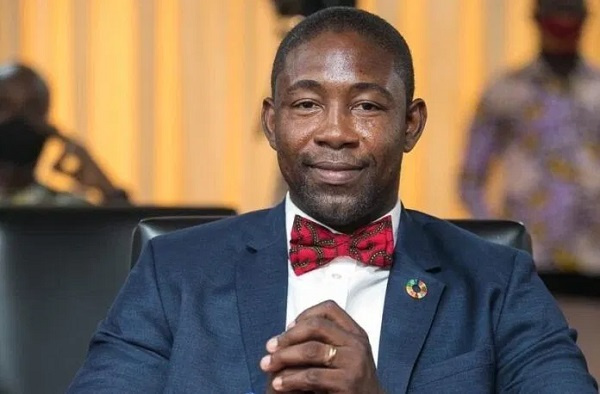
    Ghana’s National Health Insurance Scheme (NHIS) coverage has increased from 57 per cent to 66 per cent as of 2025, the Chief Executive Officer of the National Health Insurance Authority (NHIA), Dr Victor Bampoe, has disclosed.

    Speaking during a media interaction on Tuesday, April 14, Dr Bampoe said that prior to his assumption of office, only 57 per cent of Ghanaians were enrolled in the scheme.
    “The NHIS, at the time we took office, the coverage was 57%; last year [2025], we pushed it to 66%. But it means 34% of Ghanaians are not covered,” he said.

    Meanwhile, the government’s flagship Free Primary Health Care Programme will be launched today, Wednesday, April 15, by President John Dramani Mahama at Dodowa in the Greater Accra Region.

    The Free Primary Healthcare Policy is Ghana’s bold initiative to ensure that every resident, especially vulnerable populations, can access essential health services without paying out-of-pocket at the point of care.

    The government is poised to officially roll out the Free Primary Healthcare (FPHC) initiative on September 1, 2025. This forms part of the key steps adopted towards achieving Universal Health Coverage (UHC) by 2030.

    Over 24,534 pieces of medical equipment have been received by the government ahead of its Free Primary Healthcare policy rollout. Speaking at the Government Accountability Series, Health Minister Kwabena Mintah Akandoh stated, “In preparation for implementation, we have procured and are ready to deploy 24,534 pieces of essential medical equipment across the country. This is intended to ensure our facilities and health workers are equipped and ready.”

    The National Health Insurance Authority (NHIA) has disbursed over GH¢392 million in vetted claims to healthcare providers across Ghana between December 2025 and January 2026.

    The payments cover services provided under the National Health Insurance Scheme (NHIS).

    According to the Finance Directorate of the NHIA, the funds were released following an extensive vetting and approval process of claims submitted by health facilities. In December 2025, the Authority paid GH¢301,658,338.13, while in January 2026, healthcare providers received GH¢90,373,513.13.

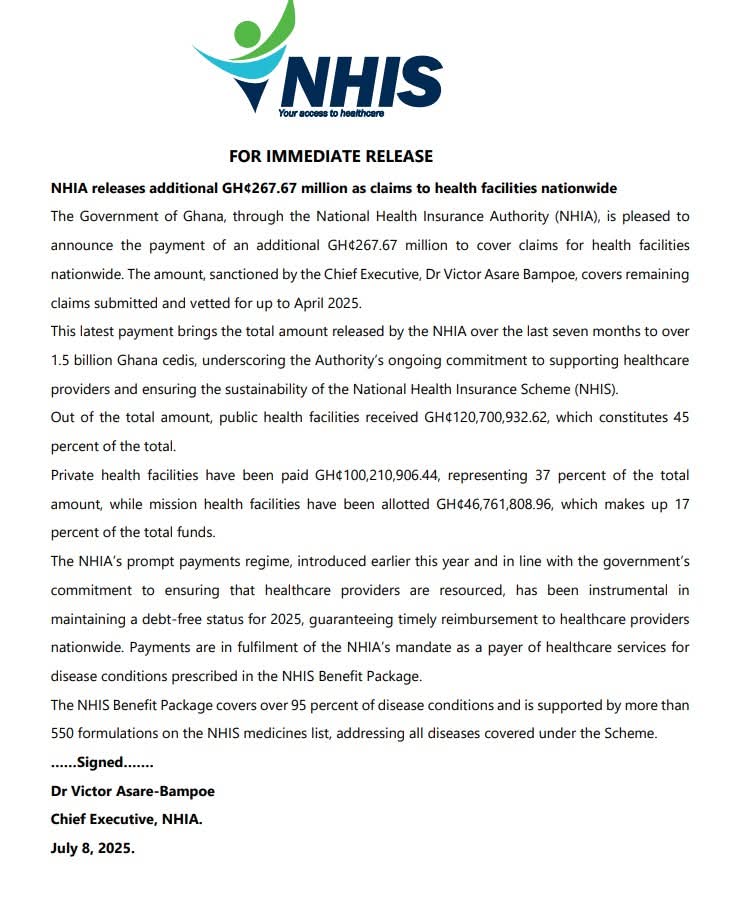
    The NHIA in early July 205 disbursed an amount of GH¢267.67 million as claims to health facilities across the country. The disbursement became possible following approval by Chief Executive Dr. Victor Asare-Bampoe. The total payments made by the NHIA in the past seven months stand at over GH¢1.5 billion.

    Out of the total amount, public health facilities received GH¢120,700,932.62, which constitutes 45 percent of the total.

    Private health facilities have been paid GH¢100,210,906.44, representing 37 percent of the total amount, while mission health facilities have been allotted GH¢446,761,808.96, which makes up 17 percent of the total funds.

    One of the ways the National Health Insurance Authority (NHIA) seeks to ease the financial burden on citizens, ensure equal access to healthcare, and reduce illegal fees is by proposing a 120 per cent increase in service tariffs, pending approval from its Board and the Minister of Health.

    This was revealed by the Chief Executive Officer of the NHIA, Dr. Victor Asare Bampoe, during an appearance on Channel One TV’s The Point of View on Wednesday, November 26. According to Dr. Bampoe, the proposed tariff increase, if approved, would help reduce the extra charges patients pay at hospitals for medical care and services.

    He explained that the proposed increase was planned in consultation with a group of independent experts mandated to review tariffs under Sections 33 and 34 of the National Health Insurance Act, which require annual revisions of both medicines and service tariffs.

    “Regarding the 120% tariff increase: this is proposed after comprehensive work by a group of experts. The law requires an annual review of service and medicine tariffs (Sections 33 and 34). Although the review was delayed, the proposal is now ready and will go to our board and the Minister of Health for approval. Once approved, it will be implemented. This is partly to address the problem of illegal fees at hospitals, ensuring health providers are paid realistic tariffs so patients no longer have to pay out-of-pocket,” he said.

    As the “cash manager” of Ghana’s health insurance system, Dr. Bampoe explained that the NHIA is mandated to collect funds, set tariffs, and pay hospitals, clinics, and pharmacies for services provided to insured patients.

    However, he noted that the Authority plans to move beyond this traditional role and become more of a “strategic health purchasing provider.”

    “But the NHS is more like a spending entity; we do not generate money on our own. So, we are a spending entity. One of the things we’re trying to do is move away from being a claims payment mechanism to a strategic health purchasing provider, which means that we are able to dictate health outcomes because of the financial muscle that the government provides us with.

    We’re able to determine the prices of medicines, the prices of services, and even go on the global stage and provide a platform to discuss what kind of health outcomes we want, as you saw with the ACRA Health Sovereignty Summit that happened on August 5. So it’s an interesting time, and His Excellency the President, the Minister of Finance, and the Minister of Health have given us the tools to be able to deliver on this mandate,” he said, citing the government’s commitment to ensuring that his outfit can deliver on its mandate.

    As part of its vision to move from just paying claims to becoming a “strategic health purchasing provider,” Dr. Bampoe highlighted that the NHIA also seeks to provide Universal Health Coverage (UHC) under three distinct pillars. Lauding the NHIA for its success in granting health coverage, he revealed that out of over 35 million Ghanaians, the Authority has provided coverage for about 20 million.“

    So essentially, the health insurance scheme was set up in 2003 (Act 650) and amended in 2012 (Act 852), and its primary purpose was to pay claims. But now what we are looking at is getting universal health coverage for all Ghanaians. Universal health coverage has three pillars: population coverage, service coverage, and financial protection. I am proud to say that we are at 20 million in population coverage, which is unprecedented.”

    He noted that while the medicines tariff review has already been completed, the service tariff review, initiated in 2022, took longer due to its comprehensive nature.

    “There are two types of reviews that we need to do, but this was a really comprehensive one, so I think they could not finish on time, and so it is now that they have finished,” he explained.

    Dr. Bampoe stressed that implementation now depends solely on statutory approvals. “Now it has to go to the Board for them to look at it and give their view on it. It has to go to the Minister of Health to give his assent, and then we will implement it if they all think it is okay,” he stated.

    The NHIA CEO applauded the government for removing the cap on NHIA funds.“Regarding funding, we are dependent on the importance the government places on healthcare. I’m proud of His Excellency the President, the Finance Minister, and the Minister of Health because the capping act (Act 947 of 2019) has put a limit on funds coming to the NHIA.

    The President removed that cap, giving us an extra 3.4–3.5 billion cedis for healthcare.“We are trying to do three things; shift mindsets in government and across the country to see healthcare as important for development. Healthy people are more productive. Focus on areas where we get the best results, such as Mahama Cares and Free Primary Healthcare. If 40%+ of people are affected by non-communicable diseases, it makes sense to prevent them.

    “Preventive actions include health promotion and screenings. For example, catching prostate cancer early with a PSA test is more cost-effective than treating stage 4 disease. Shift realities. At the Global Fund and UN, programs were comprehensive but expensive. We now aim for solutions that fit our reality, whether that’s a Rolls-Royce, a Toyota VIT, or even a motorbike; the key is to deliver,” he detailed.
  • Govt to roll out free primary healthcare to cover all Ghanaians by April

    Govt to roll out free primary healthcare to cover all Ghanaians by April

    Effective April, Ghanaians across the country will have access to free essential healthcare services at hospitals.

    The Minister for Health, Kwabena Mintah Akandoh, disclosed this while speaking on the sidelines of the Accra Reset Addis Reckoning event in Addis Ababa on Saturday, February 14.

    “As part of our effort to achieve Universal Health Coverage, since everybody is contributing to the NHIS levy, Ghanaians deserve this basic benefit. Everyone should be able to enjoy at least free primary healthcare.

    “We have been directed to ensure that Free Primary Health Care is fully implemented across the country by that timeline,” he said.

    Meanwhile, the National Health Insurance Authority (NHIA) has disbursed over GH¢392 million in vetted claims to healthcare providers across Ghana between December 2025 and January 2026.

    The payments cover services provided under the National Health Insurance Scheme (NHIS).

    According to the Finance Directorate of the NHIA, the funds were released following an extensive vetting and approval process of claims submitted by health facilities. In December 2025, the Authority paid GH¢301,658,338.13, while in January 2026, healthcare providers received GH¢90,373,513.13.

    The NHIA in early July 205 disbursed an amount of GH¢267.67 million as claims to health facilities across the country. The disbursement became possible following approval by Chief Executive Dr. Victor Asare-Bampoe. The total payments made by the NHIA in the past seven months stand at over GH¢1.5 billion.

    Out of the total amount, public health facilities received GH¢120,700,932.62, which constitutes 45 percent of the total.

    Private health facilities have been paid GH¢100,210,906.44, representing 37 percent of the total amount, while mission health facilities have been allotted GH¢446,761,808.96, which makes up 17 percent of the total funds.

    One of the ways the National Health Insurance Authority (NHIA) seeks to ease the financial burden on citizens, ensure equal access to healthcare, and reduce illegal fees is by proposing a 120 per cent increase in service tariffs, pending approval from its Board and the Minister of Health.

    This was revealed by the Chief Executive Officer of the NHIA, Dr. Victor Asare Bampoe, during an appearance on Channel One TV’s The Point of View on Wednesday, November 26. According to Dr. Bampoe, the proposed tariff increase, if approved, would help reduce the extra charges patients pay at hospitals for medical care and services.

    He explained that the proposed increase was planned in consultation with a group of independent experts mandated to review tariffs under Sections 33 and 34 of the National Health Insurance Act, which require annual revisions of both medicines and service tariffs.“Regarding the 120% tariff increase: this is proposed after comprehensive work by a group of experts. The law requires an annual review of service and medicine tariffs (Sections 33 and 34). Although the review was delayed, the proposal is now ready and will go to our board and the Minister of Health for approval. Once approved, it will be implemented. This is partly to address the problem of illegal fees at hospitals, ensuring health providers are paid realistic tariffs so patients no longer have to pay out-of-pocket,” he said.

    As the “cash manager” of Ghana’s health insurance system, Dr. Bampoe explained that the NHIA is mandated to collect funds, set tariffs, and pay hospitals, clinics, and pharmacies for services provided to insured patients.

    However, he noted that the Authority plans to move beyond this traditional role and become more of a “strategic health purchasing provider.”“But the NHS is more like a spending entity; we do not generate money on our own. So, we are a spending entity. One of the things we’re trying to do is move away from being a claims payment mechanism to a strategic health purchasing provider, which means that we are able to dictate health outcomes because of the financial muscle that the government provides us with.We’re able to determine the prices of medicines, the prices of services, and even go on the global stage and provide a platform to discuss what kind of health outcomes we want, as you saw with the ACRA Health Sovereignty Summit that happened on August 5. So it’s an interesting time, and His Excellency the President, the Minister of Finance, and the Minister of Health have given us the tools to be able to deliver on this mandate,” he said, citing the government’s commitment to ensuring that his outfit can deliver on its mandate.As part of its vision to move from just paying claims to becoming a “strategic health purchasing provider,” Dr. Bampoe highlighted that the NHIA also seeks to provide Universal Health Coverage (UHC) under three distinct pillars. Lauding the NHIA for its success in granting health coverage, he revealed that out of over 35 million Ghanaians, the Authority has provided coverage for about 20 million.“So essentially, the health insurance scheme was set up in 2003 (Act 650) and amended in 2012 (Act 852), and its primary purpose was to pay claims. But now what we are looking at is getting universal health coverage for all Ghanaians. Universal health coverage has three pillars: population coverage, service coverage, and financial protection. I am proud to say that we are at 20 million in population coverage, which is unprecedented.”He noted that while the medicines tariff review has already been completed, the service tariff review, initiated in 2022, took longer due to its comprehensive nature. “There are two types of reviews that we need to do, but this was a really comprehensive one, so I think they could not finish on time, and so it is now that they have finished,” he explained.

    Dr. Bampoe stressed that implementation now depends solely on statutory approvals. “Now it has to go to the Board for them to look at it and give their view on it. It has to go to the Minister of Health to give his assent, and then we will implement it if they all think it is okay,” he stated.

    The NHIA CEO applauded the government for removing the cap on NHIA funds.“Regarding funding, we are dependent on the importance the government places on healthcare. I’m proud of His Excellency the President, the Finance Minister, and the Minister of Health because the capping act (Act 947 of 2019) has put a limit on funds coming to the NHIA. The President removed that cap, giving us an extra 3.4–3.5 billion cedis for healthcare.“We are trying to do three things; shift mindsets in government and across the country to see healthcare as important for development. Healthy people are more productive. Focus on areas where we get the best results, such as Mahama Cares and Free Primary Healthcare. If 40%+ of people are affected by non-communicable diseases, it makes sense to prevent them. Preventive actions include health promotion and screenings. For example, catching prostate cancer early with a PSA test is more cost-effective than treating stage 4 disease. Shift realities. At the Global Fund and UN, programs were comprehensive but expensive. We now aim for solutions that fit our reality, whether that’s a Rolls-Royce, a Toyota VIT, or even a motorbike; the key is to deliver,” he detailed.

  • Over GHS390m settled by NHIA for Health Insurance claims for Dec 2025, Jan 2026

    Over GHS390m settled by NHIA for Health Insurance claims for Dec 2025, Jan 2026

    The National Health Insurance Authority (NHIA) has disbursed over GH¢392 million in vetted claims to healthcare providers across Ghana between December 2025 and January 2026.

    The payments cover services provided under the National Health Insurance Scheme (NHIS).


    According to the Finance Directorate of the NHIA, the funds were released following an extensive vetting and approval process of claims submitted by health facilities. In December 2025, the Authority paid GH¢301,658,338.13, while in January 2026, healthcare providers received GH¢90,373,513.13.


    The NHIA in early July 205 disbursed an amount of GH¢267.67 million as claims to health facilities across the country. The disbursement became possible following approval by Chief Executive Dr. Victor Asare-Bampoe. The total payments made by the NHIA in the past seven months stand at over GH¢1.5 billion.


    Out of the total amount, public health facilities received GH¢120,700,932.62, which constitutes 45 percent of the total. Private health facilities have been paid GH¢100,210,906.44, representing 37 percent of the total amount, while mission health facilities have been allotted GH¢446,761,808.96, which makes up 17 percent of the total funds.


    One of the ways the National Health Insurance Authority (NHIA) seeks to ease the financial burden on citizens, ensure equal access to healthcare, and reduce illegal fees is by proposing a 120 per cent increase in service tariffs, pending approval from its Board and the Minister of Health.


    This was revealed by the Chief Executive Officer of the NHIA, Dr. Victor Asare Bampoe, during an appearance on Channel One TV’s The Point of View on Wednesday, November 26. According to Dr. Bampoe, the proposed tariff increase, if approved, would help reduce the extra charges patients pay at hospitals for medical care and services.
    He explained that the proposed increase was planned in consultation with a group of independent experts mandated to review tariffs under Sections 33 and 34 of the National Health Insurance Act, which require annual revisions of both medicines and service tariffs.
    “Regarding the 120% tariff increase: this is proposed after comprehensive work by a group of experts. The law requires an annual review of service and medicine tariffs (Sections 33 and 34). Although the review was delayed, the proposal is now ready and will go to our board and the Minister of Health for approval. Once approved, it will be implemented. This is partly to address the problem of illegal fees at hospitals, ensuring health providers are paid realistic tariffs so patients no longer have to pay out-of-pocket,” he said.
    As the “cash manager” of Ghana’s health insurance system, Dr. Bampoe explained that the NHIA is mandated to collect funds, set tariffs, and pay hospitals, clinics, and pharmacies for services provided to insured patients. However, he noted that the Authority plans to move beyond this traditional role and become more of a “strategic health purchasing provider.”
    “But the NHS is more like a spending entity; we do not generate money on our own. So, we are a spending entity. One of the things we’re trying to do is move away from being a claims payment mechanism to a strategic health purchasing provider, which means that we are able to dictate health outcomes because of the financial muscle that the government provides us with.
    We’re able to determine the prices of medicines, the prices of services, and even go on the global stage and provide a platform to discuss what kind of health outcomes we want, as you saw with the ACRA Health Sovereignty Summit that happened on August 5. So it’s an interesting time, and His Excellency the President, the Minister of Finance, and the Minister of Health have given us the tools to be able to deliver on this mandate,” he said, citing the government’s commitment to ensuring that his outfit can deliver on its mandate.
    As part of its vision to move from just paying claims to becoming a “strategic health purchasing provider,” Dr. Bampoe highlighted that the NHIA also seeks to provide Universal Health Coverage (UHC) under three distinct pillars. Lauding the NHIA for its success in granting health coverage, he revealed that out of over 35 million Ghanaians, the Authority has provided coverage for about 20 million.
    “So essentially, the health insurance scheme was set up in 2003 (Act 650) and amended in 2012 (Act 852), and its primary purpose was to pay claims. But now what we are looking at is getting universal health coverage for all Ghanaians. Universal health coverage has three pillars: population coverage, service coverage, and financial protection. I am proud to say that we are at 20 million in population coverage, which is unprecedented.”
    He noted that while the medicines tariff review has already been completed, the service tariff review, initiated in 2022, took longer due to its comprehensive nature. “There are two types of reviews that we need to do, but this was a really comprehensive one, so I think they could not finish on time, and so it is now that they have finished,” he explained.
    Dr. Bampoe stressed that implementation now depends solely on statutory approvals. “Now it has to go to the Board for them to look at it and give their view on it. It has to go to the Minister of Health to give his assent, and then we will implement it if they all think it is okay,” he stated.
    The NHIA CEO applauded the government for removing the cap on NHIA funds.
    “Regarding funding, we are dependent on the importance the government places on healthcare. I’m proud of His Excellency the President, the Finance Minister, and the Minister of Health because the capping act (Act 947 of 2019) has put a limit on funds coming to the NHIA. The President removed that cap, giving us an extra 3.4–3.5 billion cedis for healthcare.
    “We are trying to do three things; shift mindsets in government and across the country to see healthcare as important for development. Healthy people are more productive. Focus on areas where we get the best results, such as Mahama Cares and Free Primary Healthcare. If 40%+ of people are affected by non-communicable diseases, it makes sense to prevent them. Preventive actions include health promotion and screenings. For example, catching prostate cancer early with a PSA test is more cost-effective than treating stage 4 disease. Shift realities. At the Global Fund and UN, programs were comprehensive but expensive. We now aim for solutions that fit our reality, whether that’s a Rolls-Royce, a Toyota VIT, or even a motorbike; the key is to deliver,” he detailed.
  • GHS1.38bn disbursed to NHIS from Jan -June – Health Minister

    GHS1.38bn disbursed to NHIS from Jan -June – Health Minister

    The government has disbursed over GH¢1.38 billion to healthcare providers from Jan to June this year.

    This was disclosed by the Minister of Health, Kwabena Mintah Akandoh at the second edition of the Government Accountability Series on Friday, July 18.

    According to him, the recent disbursement is part of broader efforts to ensure timely support for service providers.

    “I’m proud to announce a total of GH¢603 million as of December 2024, have been fully settled. This milestone demonstrates our commitment, government’s steadfast dedication to timely payments and fulfilling our obligations to healthcare providers.

    “In the first half of the 2025 alone, The National Health Insurance Authority disbursed over GH¢1.38 billion to providers reflecting a system that is stronger, more responsive and more reliable than ever before,” he stated.

    Last month, the National Health Insurance Authority (NHIA) announced the disbursement of an amount of GH¢267.67 million as claims to health facilities across the country.

    The disbursement was possible following approval by Chief Executive Dr. Victor Asare-Bampoe. The total payments made by the NHIA in the past seven months stand at over GH¢1.5 billion.

    Out of the total amount, public health facilities received GH¢120,700,932.62, which constitutes 45 percent of the total.

    Private health facilities have been paid GH¢100,210,906.44, representing 37 percent of the total amount, while mission health facilities have been allotted GH¢446,761,808.96, which makes up 17 percent of the total funds.

    For the authority, its significant disbursement demonstrates its unwavering commitment to sustaining the National Health Insurance Scheme (NHIS) and ensuring that healthcare providers are resourced and motivated to deliver quality services to our cherished members.

    “The NHIA remains focused on improving efficiency, enhancing provider relations, and delivering on its mandate to ensure financial access to quality healthcare for all residents of Ghana. We thank our stakeholders for their continued support and assure the public of our dedication to transparency, accountability, and timely payments,” the NHIA said in a statement.

    The Authority has stated that it is firstly committed to strengthening internal controls and operational efficiencies to ensure the long-term sustainability of the National Health Insurance Scheme (NHIS).

    Two months ago, the Private Health Facilities Association of Ghana (PHFAoG) suspended health insurance services for National Health Insurance Scheme (NHIS) cardholders at all its member facilities, citing the National Health Insurance Authority’s (NHIA) failure to settle outstanding claims.

    In a statement signed by its President, Dr. Kwame Buabeng-Frimpong, on Friday, April 4, the association disclosed that the NHIA owed service providers for claims dating as far back as September and October 2024, despite multiple assurances.

    The PHFAoG highlighted the severe financial strain the delays have placed on member facilities, making it increasingly difficult for them to deliver quality healthcare to NHIS beneficiaries.

    The group also expressed disappointment that the NHIA had failed to honour its recent commitment to settle claims by the end of March, as outlined in a March 25, 2025, press release from the Authority.

    The association has called for urgent intervention to resolve the impasse to ensure the continuity of health services for Ghanaians enrolled in the scheme.

    Following the suspension, NHIA paid GH¢834 million to various healthcare providers across the country.

    Presently, it is the aim of the Authority to restore public trust and confidence by reducing out-of-pocket payments through frequent tariff reviews, enhanced monitoring and public education, effective provider engagement, and stricter enforcement of NHIS policies.

  • Health facilities receive additional GHc267m as claims from NHIA

    Health facilities receive additional GHc267m as claims from NHIA

    The National Health Insurance Authority (NHIA) has disbursed an amount of GH¢267.67 million as claims to health facilities across the country.

    The disbursement has become possible following approval by Chief Executive Dr. Victor Asare-Bampoe. The total payments made by the NHIA in the past seven months stand at over GH¢1.5 billion.

    Out of the total amount, public health facilities received GH¢120,700,932.62, which constitutes 45 percent of the total.

    Private health facilities have been paid GH¢100,210,906.44, representing 37 percent of the total amount, while mission health facilities have been allotted GH¢446,761,808.96, which makes up 17 percent of the total funds.

    For the authority, its significant disbursement demonstrates its unwavering commitment to sustaining the National Health Insurance Scheme (NHIS) and ensuring that healthcare providers are resourced and motivated to deliver quality services to our cherished members.

    “The NHIA remains focused on improving efficiency, enhancing provider relations, and delivering on its mandate to ensure financial access to quality healthcare for all residents of Ghana. We thank our stakeholders for their continued support and assure the public of our dedication to transparency, accountability, and timely payments,” the NHIA said in a statement.

    The Authority has stated that it is firstly committed to strengthening internal controls and operational efficiencies to ensure the long-term sustainability of the National Health Insurance Scheme (NHIS).

    Two months ago, the Private Health Facilities Association of Ghana (PHFAoG) suspended health insurance services for National Health Insurance Scheme (NHIS) cardholders at all its member facilities, citing the National Health Insurance Authority’s (NHIA) failure to settle outstanding claims.

    In a statement signed by its President, Dr. Kwame Buabeng-Frimpong, on Friday, April 4, the association disclosed that the NHIA owed service providers for claims dating as far back as September and October 2024, despite multiple assurances.

    The PHFAoG highlighted the severe financial strain the delays have placed on member facilities, making it increasingly difficult for them to deliver quality healthcare to NHIS beneficiaries.

    The group also expressed disappointment that the NHIA had failed to honour its recent commitment to settle claims by the end of March, as outlined in a March 25, 2025, press release from the Authority.

    The association has called for urgent intervention to resolve the impasse to ensure the continuity of health services for Ghanaians enrolled in the scheme.

    Following the suspension, NHIA paid GH¢834 million to various healthcare providers across the country.

    Presently, it is the aim of the Authority to restore public trust and confidence by reducing out-of-pocket payments through frequent tariff reviews, enhanced monitoring and public education, effective provider engagement, and stricter enforcement of NHIS policies.

  • NHIA to introduce economic tariffs to boost provider payments

    NHIA to introduce economic tariffs to boost provider payments

    The National Health Insurance Authority (NHIA) has announced plans to implement new economic tariffs aimed at significantly increasing payments to healthcare providers.

    This was disclosed by the Deputy Chief Executive for Operations, Dr. Senanu Kwesi Djokoto, during a conference in Ho organised by the NHIA’s Quality Assurance Directorate to disseminate the clinical and audit findings for the last quarter of 2024.

    “We have gathered a group of experts from all fields—private, public, all over—and we had a consensus on what will be economic tariffs. So very soon, you are going to see an appreciable increase in tariffs that you receive,” he said.

    He noted that while the NHIA is responsible for ensuring financial access to healthcare, providers must ensure geographical accessibility of services.

    “We depend on each other. You, the providers, must ensure the sustainability of service delivery, while we ensure the sustainability of the Scheme,” he said.

    In a bid to fast-track reimbursement, he encouraged providers to submit claims within 30 days rather than wait until the statutory 90-day deadline.

    “If you can submit within 30 days and there is adequate liquidity, we can begin to pay you before the 90 days. We do all this so that there will be quality healthcare delivery,” he said.

    Dr. Djokoto also called on providers to join the NHIA in the fight against illegal payments. “Dr. Victor Bampoe has a vision to ensure that when we say financial access, we mean true financial access. With the variety of payments and economic tariffs, we believe that illegal payment should now be a thing of the past,” he said.

    The Director for Quality Assurance, Lydia Anaab Bisi, emphasised the need for collective action toward delivering quality care.

    “We are partners in the provision of healthcare services. Our common goal is to ensure that every person living in Ghana, especially those registered with NHIA, will receive quality care without paying out-of-pocket. But that goal, we have not yet achieved,” she said.

    A representative from the Ghana Health Service Director-General’s office stressed the importance of listening to feedback from service providers. “We hold in high esteem our role as gatekeepers to always protect the Scheme so that we can reach out to the population. We have structures in place that will help us implement some of the feedback you have shared,” he said.

    Deputy Director for Quality Assurance, Mr. William Omane-Adjekum, made available findings from a regional audit of healthcare facilities across the Volta and Oti regions.

    The findings were presented by a Manager at Quality Assurance, Eugene Ernest Kofie, on behalf of Mr. Omane-Adjekum.

    “We came to the Volta Region sometime last year and selected facilities across all levels of care, except the teaching hospital. There will be an audit specifically for the teaching hospital,” Mr. Omane-Adjekum said.

    The audit results showed non-compliance with malaria treatment protocols. Some of the facilities treated malaria with no evidence of testing in the records. In some cases, malaria tests came out negative, yet treatment was still administered. The audit also established that public confidence in the Scheme was declining.

    “Members are losing trust due to illegal payments and are increasingly choosing not to renew their NHIS membership,” Mr. Kofie said.

    To address these issues, he announced upcoming training initiatives. “We have identified a knowledge gap regarding the NHIS benefit package. More training will be conducted to bridge this gap,” he said.

    Source: NHIA| Shaniece Palm

  • We must enhance healthcare access, quality of service delivery for all – NHIA Boss charges staff members

    We must enhance healthcare access, quality of service delivery for all – NHIA Boss charges staff members

    The newly appointed Chief Executive Officer of the National Health Insurance Authority (NHIA), Dr. Victor Bampoe, has urged staff to commit to improving healthcare access and service delivery for all Ghanaians.

    Addressing NHIA management and employees during his first official engagement, Dr. Bampoe underscored the urgent need to enhance the effectiveness of the National Health Insurance Scheme (NHIS) to align with the health priorities of the National Democratic Congress (NDC) government.

    “There is an urgent need to uncap the National Health Insurance Scheme (NHIS) levy to enhance healthcare access and quality of service delivery for all,” he emphasized. “And I will need every one of you to be part of this vision.”

    Dr. Bampoe’s appointment by President John Dramani Mahama marks a new phase for the NHIA. He takes over from Dr. Da Costa Aboagye, who had served in the role since February 2024.

    A highly experienced physician and public health specialist, Dr. Bampoe brings a wealth of expertise in global health financing and policy implementation.

    A former student of Achimota School, he obtained his medical degree from the University of Ghana Medical School before furthering his studies at the Johns Hopkins School of Hygiene and Public Health in the United States, where he earned a Master of Public Health.

    His career spans international health institutions, including the Global Fund to Fight AIDS, Tuberculosis, and Malaria, where he worked as a Senior Fund Portfolio Manager in Geneva, Switzerland.

    Dr. Bampoe also held key roles within the United Nations, serving as the UNAIDS Country Director in Kenya and a UNAIDS Representative to UNEP and UN-Habitat.

    With his extensive background in public health financing, Dr. Bampoe is expected to spearhead efforts to expand NHIS coverage, particularly for vulnerable populations. He acknowledged that global funding cuts pose a challenge to critical health programmes, such as HIV prevention, but stressed the importance of innovation in resource management.

    He also expressed appreciation to his predecessor, Dr. Da Costa Aboagye, for his contributions to the NHIA before embarking on a brief tour of the authority’s facilities.

    As he assumes office, expectations are high that Dr. Bampoe’s leadership will strengthen Ghana’s healthcare system, ensuring a more sustainable and accessible health insurance framework.

  • NHIA allocates GHS270m to hospitals for claims from October, November 2024

    NHIA allocates GHS270m to hospitals for claims from October, November 2024

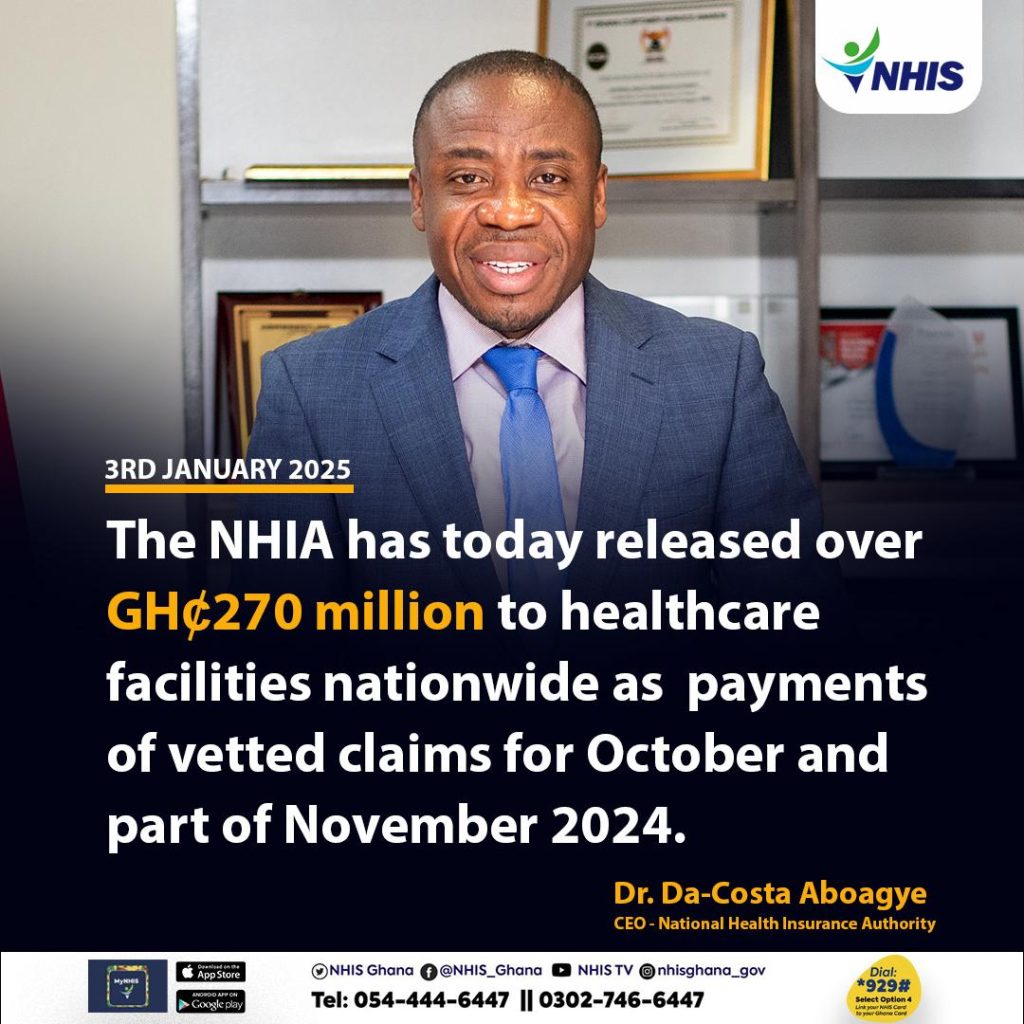
    National Health Insurance Authority (NHIA) has released GH¢270 million to healthcare providers to cover claims submitted and verified up until October 2024, along with part of November 2024.

    In a statement issued on January 3, Dr. Da-Costa Aboagye, the NHIA Chief Executive, confirmed that the payments were made within the three-month reimbursement period.

    The NHIA has no outstanding claims to address at this time.

    “This latest payment brings the total amount released by the NHIA over the past four months to over GH¢1.2 billion, reinforcing the Authority’s ongoing commitment to supporting healthcare providers and ensuring the sustainability of the NHIS.”

    Dr. Da-Costa Aboagye encouraged healthcare facilities under the NHIA to submit their claims on time, as claims should not exceed 90 days.

    Along with the current payment of GH¢270 million, the NHIA made significant previous payments, including GH¢200 million on December 1, 2024, and over GH¢335 million on October 9, 2024.

    In September 2024, GH¢402 million was released for June and July claims. These payments highlight the NHIA’s commitment to meeting its financial obligations and improving healthcare for Ghanaians.

  • We’re not recruiting, beware of scammers – NHIA

    We’re not recruiting, beware of scammers – NHIA

    The National Health Insurance Authority (NHIA) has rejected recent claims about ongoing recruitment, calling them baseless and inaccurate.

    In a statement released on December 23, the CEO of NHIA, Dr. Da-Costa Aboagye, clarified that all recruitment efforts for 2024 had been finalized by October.

    The Authority also emphasized that decisions regarding appointments to director-level positions fall exclusively under the jurisdiction of the Public Services Commission, with the NHIA’s role limited to notifying applicants once the Commission’s full report is received.

    The NHIA has urged the public to disregard any misleading information regarding recruitment, reinforcing its commitment to operational integrity and adherence to official procedures.

    “We remain committed to upholding the highest standards of integrity and professionalism in all our operations. We encourage anyone with questions or concerns to contact the NHIA directly through our official communication channels for clarification.” They added.

  • NHIA releases GHS 200m to health facilities for free dialysis treatment nationwide

    NHIA releases GHS 200m to health facilities for free dialysis treatment nationwide

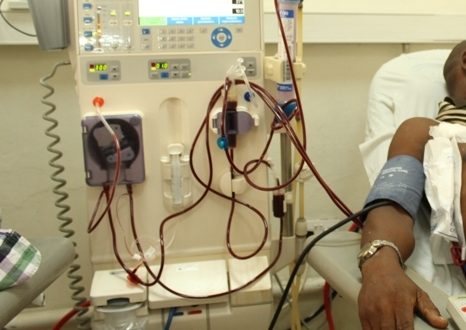
    National Health Insurance Authority (NHIA) has disbursed over GH₵200 million to healthcare facilities across the country, signaling the start of free dialysis services for kidney patients under the National Health Insurance Scheme (NHIS).

    NHIA Chief Executive Officer, Dr. Da-Costa Aboagye, announced, “The NHIA has today [Sunday] released over GHS200 million as claims payment to healthcare facilities nationwide as free dialysis treatment begins.”

    This initiative follows the NHIS’s announcement on November 30, 2024, listing accredited health facilities that will provide free dialysis treatment across Ghana, effective December 1, 2024.

    The policy, unveiled by Vice President Dr. Mahamudu Bawumia, aims to relieve the financial strain on kidney patients covered by the NHIS. It builds on a successful pilot program earlier this year, which targeted patients under 18 and those over 60.

    This nationwide rollout is expected to greatly reduce the financial burden on kidney patients, ensuring fair access to critical dialysis services.

  • NHIA to launch free dialysis services starting December 1

    NHIA to launch free dialysis services starting December 1

    National Health Insurance Authority (NHIA) will introduce free dialysis services for individuals with renal conditions beginning December 1, 2024.

    Dr. Da Costa Aboagye, CEO of the NHIA, announced this development during an interview with Joy News on November 25, 2024.

    According to him, the program’s annual expenditure is projected to range from GH₵20 million to GH₵57 million, depending on the number of patients who require treatment.

    “And we can now confirm that the NHIS will need a minimum of between GH₵20 million and GH₵57 million annually for this dialysis programme. Where will we get the finds from? Initially, I told you that Parliament had approved some funds for us, and we will leverage our core corporate social responsibility,” he stated.

    Dr. Da Costa Aboagye further indicated that the NHIA had already launched a pilot program covering children under 18 and adults above 60.

    According to him, it revealed that the number of patients needing dialysis was much lower than initially estimated.

    “The numbers given to us by the association of people on dialysis were a deviation from the actual.

    The number given to us was almost 700, but the actual number we got in the pilot was around 400.

    “With this, we now started our modelling of the pilot to see if, indeed, the National Health Authority can take up the cost of the dialysis,” he added.

    The Chief Executive Officer of the NHIA also stated that they based their projections on two research papers estimating the prevalence of end-stage kidney disease at between 24 and 39 cases per million people in the country.

    “So, we look at certain indicators. The first thing was to look at the prevalence of people suffering from kidney disease in the country or end-stage kidney disease.

    We got two research papers; one put it at 24 percent per million population and the other at 38.8 per million population; basically 39 percent,” he indicated.

  • 40 health facilities nationwide to offer free dialysis from Dec 1 – NHIA CEO

    40 health facilities nationwide to offer free dialysis from Dec 1 – NHIA CEO

    The Chief Executive Officer of the National Health Insurance Authority (NHIA), Dr. Dacosta Aboagye, has announced that, starting December 1, 2024, forty health facilities across the country will offer free dialysis services to patients.

    The NHIA recently added dialysis treatment to its benefits package, aiming to provide financial relief to Ghanaians who struggle with the high cost of dialysis.

    Currently, dialysis costs between GHC300 and GHC1,000, and it is estimated that between 4 million and 5.2 million people in Ghana have some level of renal function impairment.

    Dr. Aboagye confirmed that patients can access the dialysis services at 40 selected facilities, including both public and private hospitals.

    On November 26, the NHIA will meet with facility managers to discuss how the service will be implemented effectively.

    “We have currently listed about 40 of these centres that our patients would have to go to,” he said.

    In a Monday interview on Joy News’ AM Show, Dr. Aboagye reassured the public that the programme is financially sustainable, as the NHIA has sufficient funds to cover the cost.

    He further emphasized that regardless of any change in government, the free dialysis service will remain in place, as it is a constitutional part of the NHIA’s benefits package.

    Vice President Dr. Mahamudu Bawumia, who is running for president, has reiterated the government’s commitment to offering free dialysis treatment, aligning with his earlier pledge that the NHIA programme will begin on December 1. This initiative, according to Dr. Bawumia, demonstrates the government’s dedication to improving the health of Ghanaians dealing with renal diseases.

    Earlier this year, a pilot scheme for free dialysis was launched for patients under 18 and over 60. In addition, John Mahama, the NDC’s candidate for re-election, has promised to establish modern dialysis centres in regions where they are currently unavailable, which would help decentralize treatment and increase access.

    Currently, around 2,000 individuals in Ghana are undergoing dialysis, but many delay seeking medical treatment until their condition worsens, often turning to alternative methods first. This delay significantly impacts their health and life expectancy.

  • NHIS in need of about GHC57m annually to sustain free dialysis – NHIA

    NHIS in need of about GHC57m annually to sustain free dialysis – NHIA

    Effective December 1, 2024, government will provide free dialysis treatment for all kidney patients covered by the National Health Insurance Scheme (NHIS).

    For the sustenance of this initiative years to come, Chief Executive of the National Health Insurance Authority (NHIA), Dr. Dacosta Aboagye, has disclosed that an amount ranging from GHC20 million to GHC57 million will be needed.

    He made this disclosure during an interview on JoyNews’ AM Show on Monday. “The NHIS will need a minimum of about GHC20 million to GHC57 million annually for this dialysis programme,” he said.

    According to the NHIA, 24 out of every 1 million Ghanaians suffer from end-stage kidney disease. This translates to a prevalence rate of 1,250 patients per million population.

    NHIA’s pilot programme launched earlier this year offered free dialysis for patients over 60 and under 18 years of age. Around 400 patients actively claiming benefits.

    The programme, which aims to ease the financial burden of dialysis treatment, is part of the NHIA’s broader efforts to provide accessible healthcare to those with chronic conditions.

  • No cause for concern, program on track; more machines to be distributed – NHIA assures on free dialysis

    No cause for concern, program on track; more machines to be distributed – NHIA assures on free dialysis

    National Health Insurance Authority (NHIA) has addressed public concerns, affirming that the free dialysis policy remains on track and is not under threat before its official launch.

    The NHIA announced it is accelerating efforts to equip participating facilities with additional dialysis machines to support the policy’s rollout. Dr. Dacosta Aboagye, CEO of NHIA, stated that funding from the World Bank has been approved to facilitate a successful implementation, which aims to benefit hundreds of patients in need of dialysis.

    This assurance follows concerns raised by the Komfo Anokye Teaching Hospital (KATH), a major referral center, regarding limited resources to implement the policy.

    KATH’s Deputy Medical Director, Dr. Yaw Opare Larbi, noted in an interview with JoyNews that the hospital currently operates with only seven functional machines and urgently requires additional equipment.

    “We are hoping that the government will support us. This has been done recently. I think I can mention Korle Bu, who were given 30 dialysis machines,” he said.

    “And we have seven, and if you look at the number of patients we see in our catchment area, we certainly need more help.”

    He added that the hospital’s workload would worsen without additional machines.

    However, NHIA’s Dr Dacosta Aboagye reassured that plans are already underway to equip KATH and other facilities with additional machines, ensuring a smooth launch in December.

    “Let me assure Komfo Anokye Teaching Hospital that there should be no cause for alarm. About two months ago, they brought a request to the NHIS for equipment support, and we wrote a proposal to the World Bank.

    “That proposal, as we speak, has been approved and is currently with the PPA. Once we get the PPA letter, we’ll be procuring some dialysis machines, and Komfo Anokye, Effia Nkwanta, and a few other centers will be beneficiaries. So they shouldn’t worry at all,” he stated.

    Dr Aboagye highlighted that the procurement of these machines is part of a larger government strategy, noting that under the Agenda 111 initiative, dialysis centers will be established to ensure people do not have to travel far for treatment.

    “It’s a comprehensive programme that is going to be rolled out by the government, and I believe that the facilities will be able to cope with it,” he added.

    Dr. Aboagye revealed that the National Health Insurance Scheme (NHIS) has successfully settled a legacy debt of GH₵1.2 billion, which had been carried over since 2017.

    Speaking at an event with the Ghana Medical Association, he assured that the scheme is now financially sound and equipped to efficiently carry out its responsibilities.

  • NHIA clears outstanding GHS800m debts owed to healthcare providers

    NHIA clears outstanding GHS800m debts owed to healthcare providers

    The National Health Insurance Authority (NHIA) has announced that it has cleared the outstanding debts owed to healthcare providers under the Scheme.

    According to the Chief Executive Officer of NHIA, Dr. Da-costa Aboagye, payments have been made to cover claims up to August 2024, with some further disbursements made in October 2024.

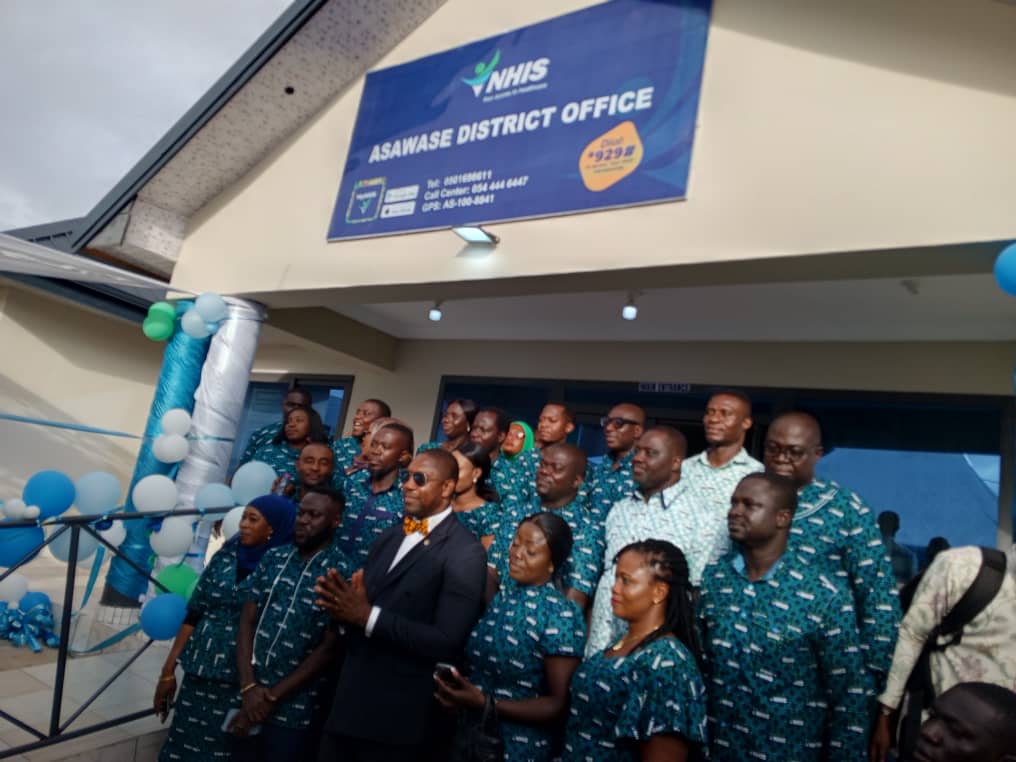
    He shared this update during the inauguration of the Authority’s new district office in Juaboso, Western North Region, on Thursday.

    “In 2017, the NHIA struggled with a staggering debt of 1.2 billion Ghana cedis, reflecting its entire annual budget and which hindered timely payments to healthcare facilities and adversely affected access to care,” he pointed out.

    “Today, the NHIA boasts an unprecedented payment of claims, having disbursed over GHS 800 million cedis in just the past month, with additional over GHS300 million payments made in October.

    “We have now paid claims up to August 2024 and we currently have no outstanding claims.

    “We are actually calling on facilities to submit their claims for payment,” he stated in a release copied to Ghana News Agency.

    Addressing the Chiefs’ durbar in Juaboso, Dr. Aboagye highlighted the government’s dedication to making healthcare more accessible to the public.

    He noted that the newly established district office reflects the Authority’s effort to broaden its reach and enhance service quality. The physical office will also provide support to individuals who face difficulties in registering or renewing their health insurance due to restricted access to digital platforms.

    “The NHIA recognises that many residents in rural areas face challenges when trying to access health insurance services, especially those who may struggle with digital tools like the “MyNHISapp” or the USSD short code *929#.

    “Our aim is to ensure that no Ghanaian is left behind in accessing quality healthcare…By making services more accessible through district offices, the NHIA hopes to increase coverage under the NHIS, a crucial component of achieving universal healthcare in Ghana,” he said.

    Dr. Aboagye noted that the number of active members on the National Health Insurance Scheme had grown from 10 million in 2015 to 17.8 million by December 2023.

    He also emphasized that the Authority is committed to sustaining a strong healthcare system and putting an end to the practice where healthcare facilities bill patients for services already covered by the NHIS.

    Other initiatives, he noted, were the introduction of the “E-pharmacy policy” which would allow pharmacies to manage prescriptions more effectively, and ensure “patients have better access to necessary medications.”

    The Chief Executive praised the recent inclusion of mental health conditions such as depression, bipolar disorder, anxiety disorder, and others on the NHIS.

    Mr Kwabena Mintah Akandoh, Member of Parliament for Juaboso, urged the public to “protect and sustain” the NHIS which remained “a vital social intervention that has benefited countless individuals.”

    Deputy Minister of Finance and the New Patriotic Party’s parliamentary candidate for Juaboso, Dr. Alex Ampabeng, stressed the significance of digital tools in simplifying the NHIA registration process, encouraging citizens to enroll in the scheme.

    A similar office has also been launched in Suaman, within the same region, with additional offices slated to open in the West Gonja, Kpandai, and Savelugu districts soon.

  • 25 additional dialysis machines needed to serve increasing number of patients – KATH

    25 additional dialysis machines needed to serve increasing number of patients – KATH

    The management of Komfo Anokye Teaching Hospital (KATH) has expressed grave concern over the urgent shortage of dialysis machines, which has made it increasingly difficult to meet the rising demand for kidney treatment at the facility.

    This issue has intensified following a recent government policy that significantly increased the number of patients requiring dialysis.

    KATH, based in Kumasi, is well-known for its extensive medical services, serving a vast population across the country and acting as a referral center for over 12 regions.

    As one of the limited facilities equipped to handle complex medical issues like kidney failure, KATH has always seen high demand for dialysis treatments.

    However, this demand has surged recently, driven by the National Health Insurance Authority (NHIA) initiative to subsidize dialysis sessions for renal patients.

    During a press briefing, the CEO of KATH, underscored the growing challenge posed by this surge in demand.

    He acknowledged the hospital’s commitment to enhancing dialysis services but stressed that current resources are inadequate to keep up with the increasing patient load.

    Professor Addai-Mensah revealed that the hospital is actively working to acquire more dialysis machines to address the growing need.

    He further highlighted that KATH requires a total of 25 dialysis machines to fully equip its refurbished dialysis center.

    “The hospital is making arrangements to buy six new dialysis machines, also from internally generated funds, our own funds, to buy these anesthesia machines. The challenge, however, is that we have also refurbished the dialysis center. The place is empty and we need a maximum of about 25 dialysis machines to complement it.

    “Now the need for more dialysis machines has become dire. And it so because of a very good policy that has been rolled out by the government, people within a certain age bracket are enjoying free sessions and so on.”

  • GHC151m released to healthcare providers nationwide

    GHC151m released to healthcare providers nationwide

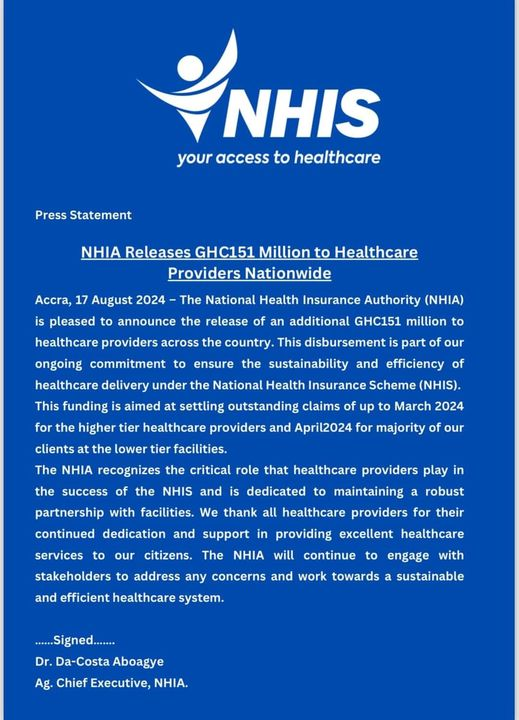
    The National Health Insurance Authority (NHIA) has released an additional GH¢151 million to healthcare providers across the country, reinforcing its dedication to ensuring the continuous delivery of quality healthcare under the National Health Insurance Scheme (NHIS).

    According to a statement shared on its official Facebook page, the NHIA revealed that the funds are aimed at settling outstanding claims.

    The disbursement covers claims up to March 2024 for higher-tier healthcare providers, while the majority of clients at lower-tier facilities will have their claims cleared through April 2024.

    This follows an earlier disbursement of GH¢135.6 million, which was used to clear February 2024 claims for higher-tier providers and March 2024 claims for lower-tier facilities.

    NHIA CEO, Dr. Da-Costa Aboagye, reiterated the authority’s commitment to addressing the needs of stakeholders and emphasized the NHIA’s ongoing efforts to foster a sustainable and efficient healthcare system.

  • NHIA rolls out free annual health check-up scheme

    NHIA rolls out free annual health check-up scheme

    On Monday, July 29, 2024, the National Health Insurance Authority (NHIA) launched its new free annual health check-up program, marking a significant shift towards preventive healthcare.

    The program allows Ghanaians to access a range of health services at no cost by simply presenting their Ghana card.

    The initial phase includes comprehensive screenings such as blood pressure monitoring, blood sugar testing, body mass index assessments, and counseling, with referrals for further treatment if needed.

    During the launch, NHIA Chief Executive Officer Dr. Dacosta Aboagye discussed the program’s goals and features.

    He emphasized that the initiative aims to address the rise in non-communicable diseases like fibroids, hypertension, and diabetes, which are increasingly affecting the population.

    Dr. Aboagye highlighted that this initiative is part of the NHIA’s broader efforts, in collaboration with other stakeholders, to improve Ghanaians’ health and prevent diseases.

    “Let me say the NHIA and partners are delighted to introduce this programme at this time, which embodies our commitment to promoting preventive healthcare and ensuring access to essential health services for all.”

    “Health systems worldwide are increasingly recognising the importance of preventive healthcare measures. Early detection and intervention can prevent serious health conditions, reduce the burden of diseases, and improve quality of life. Our free annual health programme is designed with these goals in mind.”

    “By offering free comprehensive screenings annually, we aim to identify potential health issues at an early stage, allowing for timely treatment and management. The first phase of the free annual health programme will provide a range of services, including health screening services, blood pressure management, blood sugar testing, body mass index assessments, e-meds, counselling, and referrals where needed.”

    The free annual health check-up program is available to all citizens enrolled in the National Health Insurance Scheme and those holding a Ghana Card.

    He added, “This programme is not just about testing. It’s about educating our population on healthy lifestyles and preventive measures. I urge all citizens to take advantage of this free service during their month of birth.”

    NHIA CEO, Dr. Dacosta Aboagye, emphasized that the program is more than just testing; it’s designed to educate people about healthy living and preventive measures. He encouraged citizens to make use of the free service during their birth month.

    Dr. Patrick Kuma Aboagye, Director-General of Ghana Health Services, presented compelling data supporting the NHIA’s new preventive approach.

    He reported that in 2019, non-communicable diseases accounted for 41 million out of 55 million global deaths, or 74% of all health-related deaths.

    Shockingly, 17 million people under 70 die annually from NCDs, with 86% of these deaths considered premature, primarily affecting low- and middle-income countries like Ghana.

    “These statistics present the need for us to do things differently if we are to indeed use universal health coverage in about six years from now and attain a healthy population for economic development.

    “In our small but impactful way, we have the wellness concept sought to increase access to screening and early detection of risk factors for non-communicable diseases, promote physical health through awareness creation and adoption of healthy lifestyles such as good nutrition, physical activity, and promotion of overall wellbeing,” he said.

    Dr. Kuma Aboagye stressed the importance of adapting strategies to improve health outcomes and economic development.

    The initiative aims to enhance access to screenings, early detection of risk factors, and encourage healthy lifestyles, including proper nutrition and physical activity.

    Board Chairman of the NHIA, Dr. Ernest Kwarko, praised those involved in developing the program and assured that the NHIA will continue to seek ways to enhance healthcare for Ghanaians.

  • Ghana on track for Universal Health Coverage before 2030 – NHIA

    Ghana on track for Universal Health Coverage before 2030 – NHIA

    The National Health Insurance Authority (NHIA) has forecasted that Ghana will achieve universal health coverage before 2030.

    Chief Executive of the NHIA, Dr. Da-Costa Aboagye, emphasized the implementation of innovative measures, including a forthcoming preventive healthcare initiative integrated into the NHIS claim package.

    This initiative aims to provide medical check-ups on birthdays for all enrolled Ghanaians, with the goal of alleviating financial burdens on both individuals and the nation.

    “To achieve universal health coverage, you see there are things you need to do. So far, over our 20-year history, the NHIS 20 years history, it has been curative. So curative means that you get sick before you go to the hospital. But we believe that with the rise of the noncommunicable diseases, hypertension for example, hypertension contributes a lot of our claims, diabetes.”

    “So we want to reduce the cost burden of the curative services. By doing that, you introduce what we call a preventive approach, so annual health check for every Ghanaian. So you detect the diseases early. Not only that, you also make sure by doing that, you increase life expectancy and, you reduce the cost burden on the patient in the whole country.”

    “The modalities are being worked out, and I’m sure very soon, preventive health care will become part of our claim benefit package in such a way that on your month of birth, you’ll get a notification from the NHIA that goes to the nearest health facility and check your basic vitals. The vitals, obviously, your sugar levels, your, BP, your body weight, and all those things will be included…Reforms are taking place, and I’m hoping that it will all come to the benefit of all Ghanaians,” he stated.

    Dr. Da-Costa Aboagye, who voiced concern about co-payments at various health facilities, asserted that the issue must be tackled directly.

    “Co-payments are a big issue, and we need to address it head-on. We need to address it by our systems, and we also need to address it from the provider’s point of view. Now if you look at our systems, okay, the government e-pharmacy platform offers us the best solution out of this co-payment.

    “Because now when you go to the hospital facilities, they tell you that some of the medicines are not there. But it’s very difficult for our clients to understand the packages we provide in terms of the medicines because they are not experts.”

    “So by this, what we are doing is we put the responsibility on the pharmacies to make sure that they upload their prescriptions on the e-pharmacy platforms because of the property addressing system. So it can be delivered to their local pharmacies or the patients can go to the various, local pharmacies and collect it.

    “So once we also review the tariffs and give the pharma companies and the facilities the accurate tariffs, we will seek parliamentary approval for what we call the automatic price adjustment so that we have what we call the national tariff review committee that will look at the economic conditions and review the tariffs as we go along.”

    “In this case, we from the NHIS will be fulfilling our part, and we will now put the burden on the facilities to fulfil their part. Then we use the systems to check in terms of the e-pharmacy platform to make sure that patients are not being charged for the services that are being paid for by the NHIS,” he stated.

  • 3m children above 5 to get free Ghana Cards

    3m children above 5 to get free Ghana Cards

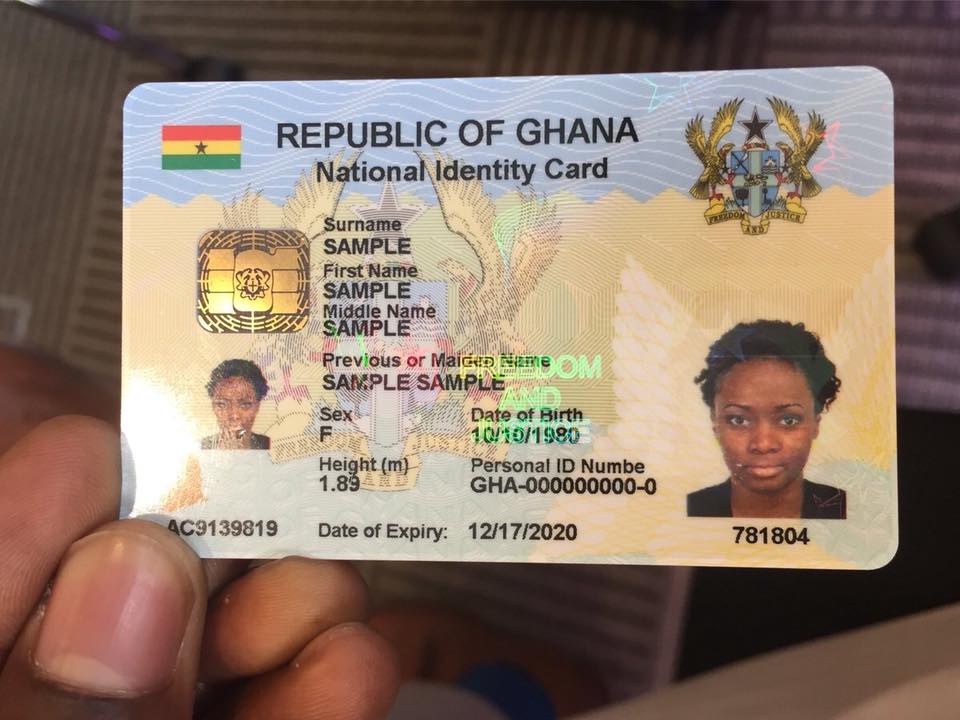
    Effective July 2024, children aged six to 14 will receive Ghana Cards free of charge.

    The National Health Insurance Authority (NHIA) will cover the cost for approximately three million children, enabling them to link their cards with the National Health Insurance Scheme (NHIS) for primary health care access.

    The NHIA will allocate GH¢245 million to the National Identification Authority (NIA) for this initiative.

    Dr. Da-Costa Aboagye, the NHIA CEO, revealed this at a workshop in Kumasi, explaining that this measure is part of the authority’s efforts to achieve universal health coverage (UHC).

    Children aged zero to five are already issued Ghana Cards at birth, and NHIS members aged 15 and above receive Ghana Cards, facilitating the linkage of NHIS cards to the Ghana Card.

    Currently, nearly 900,000 of the one million active SSNIT contributors on the NHIS have linked their cards, with another 1.3 million undergoing data cleaning.

    Dr. Aboagye emphasized that issuing Ghana Cards to children under 15 will enhance membership data and integrity by linking it to the NIA database, saving costs on procuring biometric cards.

    The NHIS cards cost between $4 and $6, whereas the Ghana Card costs between $6 and $7, making it financially sensible to consolidate the two cards.

    The NHIA Board decided to have the NIA print cards, linking NHIS subscriber numbers to the Ghana Card for primary health care access under the NHIS.

    Additionally, the NHIA plans to introduce preventive healthcare programs focusing on hypertension, diabetes, and body mass index check-ups. Wellness centers and clinics will be established, and NHIS members will receive annual text messages on their birthdays, encouraging health check-ups at government hospitals at the scheme’s expense.

    For non-resident Ghanaians, the NHIA is seeking advice from the Attorney-General and Cabinet approval to issue NHIS cards.

    NHIA Board Chairman, Dr. Ernest Quarcoo, highlighted the importance of health insurance for national development and called for media support to enhance the scheme for vulnerable populations.

    William Omane-Adjekum, NHIA Deputy Director of Quality Assurance, reported a GH¢9.5 million savings from fraudulent claims last year due to the digital payment platform, which uses Artificial Intelligence to detect fraud and errors in real time.

    Deputy Director in charge of Claims, Theophilus Owusu-Ansah, stated that the NHIA handles between GH¢20 million and GH¢30 million in claims annually, covering free maternal care, breast/cervical cancers, and family planning. Hypertension, diabetes, and maternity care are the largest cost drivers.

    NHIA Deputy Director of the Information Management System, Joseph Annor, noted that 30 million Ghanaians are enrolled in the NHIS, with 17.9 million active members.

    The NHIS has evolved from issuing booklets to using smart biometric cards.

  • NHIA allocates over GHS500K for free dialysis sessions at hospitals

    NHIA allocates over GHS500K for free dialysis sessions at hospitals

    The National Health Insurance Authority (NHIA) has allocated GH¢ 587,236 to six health facilities to offer free dialysis sessions for kidney patients under 18 and over 60 years of age.

    This action follows the government’s pledge to cover the costs of dialysis treatment for these age groups.

    The health facilities benefiting from this allocation are Komfo Anokye Teaching Hospital, Cape Coast Teaching Hospital, Efia Nkwanta Regional Hospital, Ho Teaching Hospital, Tamale Teaching Hospital, and Korle Bu Teaching Hospital.

    According to the NHIA, these funds will support the uninterrupted delivery of healthcare services and maintain the National Health Insurance Scheme (NHIS).

    In a statement released on Sunday, June 30, the NHIA confirmed the disbursement and indicated that the hospitals will manage the funds and reimburse patients who paid out-of-pocket in June.

    This disbursement represents the first month of the government’s initiative to support kidney patients, with the NHIA reaffirming its commitment to ensuring access to quality healthcare for all.

  • 6 hospitals receive GHC587K for free dialysis coverage in June

    6 hospitals receive GHC587K for free dialysis coverage in June

    The National Health Insurance Authority (NHIA) as part of step towards supporting vulnerable patients requiring dialysis has announced the allocation of GH¢587,236.00 for free dialysis treatments for the month of June.

    This new initiative ensured that the six designated hospitals, namely Komfo Anokye Teaching Hospital (KATH), Cape Coast Teaching Hospital (CCTH), Efia Nkwanta Regional Hospital (ENRH), Ho Teaching Hospital (HTH), Tamale Teaching Hospital (TTH), and Korle Bu Teaching Hospital (KBTH), submitted their lists of chronic dialysis patients treated in June.

    “A total of GHS 587,236.00 has been disbursed for these treatments, marking the commencement of the Government’s crucial support for these patients,” the statement from the Authority, dated Sunday, June 30, detailed.
    In the press release, the CEO of NHIA, Dr. Da-Costa Aboagye, affirmed the Authority’s dedication to timely payments, emphasizing their commitment to aiding those in need of dialysis.

    The NHIA also clarified that the allocated funds will be managed by the hospitals, ensuring that patients who paid out of pocket for dialysis in June will be reimbursed according to approved rates for various patient categories.

    From June to December 2024, the NHIS will provide eight free dialysis sessions per month for patients aged 18 and below, as well as those aged 60 and above. Additionally, patients aged 19 to 59 will receive two free dialysis sessions per month at KATH, CCTH, ENRH, HTH, and TTH, with the exception of KBTH.

  • NHIA disburses over GHS300m to hospitals

    NHIA disburses over GHS300m to hospitals

    The National Health Insurance Authority (NHIA) announced that over GH¢300 million has been disbursed to healthcare facilities nationwide for claims payment.

    In a statement released on June 11, the NHIA revealed that the funds were allocated to cover claims vetted for higher-tier facilities up to January 2024.

    Additionally, payments for lower-tier facilities were made within the acceptable three-month debt period, as stated in the press release.

    The NHIA emphasized that this disbursement underscores its dedication to sustaining the National Health Insurance Scheme (NHIS) and ensuring the smooth functioning of healthcare services.

    Acting Chief Executive of NHIA, Dr. Da-Costa Aboagye, clarified that the disbursement aims to improve the quality of care for all NHIS members and support the operational needs of healthcare providers.

    The NHIA expressed gratitude for the cooperation and patience of healthcare providers, assuring them of ongoing efforts to enhance the efficiency and timeliness of claims processing and payments.

    Through the statement, the NHIA acknowledged “the cooperation and patience of all healthcare providers and assured them of continuous efforts to improve the efficiency and timeliness of claims processing and payments.”

  • Government set to purchase more dialysis machines – NHIA

    Government set to purchase more dialysis machines – NHIA

    The National Health Insurance Authority (NHIA) has announced its intention to collaborate with the government in procuring dialysis machines for select public hospitals to enhance kidney treatment.

    Dr. Aboagye DaCosta, the Chief Executive Officer of the NHIA, affirmed the authority’s commitment to ensuring universal access to basic healthcare.

    Initiating its support program for dialysis patients at the Korle Bu Teaching Hospital on Monday, June 3, the NHIA aims to expand assistance to renal patients nationwide.

    Dr. DaCosta assured journalists of the government’s well-defined strategy to sustain the support initiative for renal patients, which may include provisions for dialysis machines in various facilities.

    “It is a comprehensive one so this will even serve as a learning for us in improving what we are going to put in place as a government.

  • Children under 15 to be enrolled on Ghana Card from June 10

    Children under 15 to be enrolled on Ghana Card from June 10

    The National Health Insurance Authority (NHIA) and the National Identification Authority (NIA) have launched a partnership to register children under the age of 15, starting from June 10.

    This collaboration marks a significant step towards expanding healthcare coverage and national identification for the nation’s youth.

    The initiative aims to issue Ghana cards to these children, serving a dual purpose: providing access to healthcare services under the NHIS and acting as official identification through the NIA.

    The joint registration drive, beginning on June 10, 2024, will establish registration centers in schools nationwide to streamline the process. This information was detailed in a statement released by the NHIA on Tuesday, June 4.

    The Authority stated that by issuing Ghana cards to young individuals early, the initiative seeks to enhance their access to essential healthcare services and enable their participation in various socio-economic activities requiring official identification.

    “The collaborative efforts between the two government agencies underscore Ghana’s commitment to streamlining administrative processes and broadening the reach of social services.”

    “The agenda behind this joint registration drive contributes to a more inclusive society by emphasising the vital role of healthcare access and identity recognition for the Ghanaian youth,” it stated.

    During a second-phase training session in Winneba for staff from the middle and northern belts of the Authority, NHIA and NIA representatives highlighted the importance of universal healthcare coverage and ensuring every child’s access to fundamental services in the country.

    Mrs. Louisa Atta-Agyemang, Deputy Chief Executive in charge of Operations at NHIA, emphasized the importance of this partnership in expanding healthcare access and building a more inclusive and empowered community.

    Dr. Kenneth Agyemang Attafuah, NIA Executive Secretary, highlighted the Ghana card’s role as a crucial tool for identity verification and access to public services, particularly for children aged 6 to 14 years.

  • NHIA Chief signals major expansion of NHIS coverage beyond kidney care

    NHIA Chief signals major expansion of NHIS coverage beyond kidney care

    National Health Insurance Scheme (NHIS) may cover other chronic diseases in addition to renal disorders, according to a statement made by the CEO of the National Health Insurance Authority (NHIA).

    Dr. Dacosta Aboagye stated on PM Express on JoyNews that kidney disease is not the only chronic sickness that affects the nation.

    Accordingly, he informed presenter Evans Mensah, the NHIA is doing actuarial assessments to inform the way forward following the first announced six months of coverage for renal disease.

    “So my advice, of the government knows about this, of which we are working together, is that we should look at it in totality. How do we fund chronic diseases, including dialysis?

    “So what is happening is that we’ll use this as learning to obviously see what we can do. By that time, the actuarial study would have been ready,” Dr Aboagye said.

    Regarding which other chronic diseases might be included, the NHIA CEO said that he cannot prematurely disclose any other details to prevent expectations.

    “But what I know is that we are looking at it in totality.

    It’s not the case that we are only going to look at kidney diseases. We are going to look at other diseases. Governments do have a comprehensive plan from where I sit to not only focus on kidney diseases but other chronic diseases,” Dr Aboagye added.

    This comes after it was revealed that renal patients would receive free six-month dialysis support from June to December of 2024.

    The support was provided by the National Health Insurance Authority (NHIA) in a statement dated June 1.

    The NHIA stated that patients enrolled in the dialysis programme fall into two categories: those who are 60 years of age or older and those who are between the ages of 18 and 59.

    According to the scheme, “patients under 18 and above 60 years old will receive all eight free dialysis sessions per month,” with a cumulative cost estimated to be approximately GH₵ 2.3 million.

    It added that “patients from the Komfo Anokye Teaching Hospital (KATH), Cape Coast Teaching Hospital (CCTH), Effia Nkwanta Regional Hospital (EFRH), Ho Teaching Hospital (HTH), and Tamale Teaching Hospital will receive two dialysis sessions per month at GH₵ 982.00, that is, GH₵ 491 per session.”

    “The cost of dialysis for this treatment category [persons aged 18 to 59 years] is projected to be GH₵144,354 per month and by the end of December 2024, the cumulative cost is estimated to be approximately GH₵ 1.01 million.”

    Renal patients at Korle Bu Teaching Hospital (KATH) would receive GH₵491 per month for two dialysis sessions; however, they will not benefit from the above.

    This NHIA clarified that this is because renal patients are the beneficiaries of a charitable donation of GH₵380.00.

    Dr. Aboagye stated that preventive healthcare would be made available through the NHIA.

    He said that the transition from a curative to a preventive approach is critical to lowering the overall cost of healthcare.

    “So the National Health Insurance Scheme, by next month, will be rolling out what we call the preventive healthcare as part of the claims budget.

    The reason is that we cannot have a disease under the under the National Health Insurance Scheme.

    “So far, since its inception, we have been focusing on curative and services. How do we start from the basis by introducing something that will reduce these chronic diseases and the cost burden?”

  • NHIS rolls out free dialysis program for kidney patients

    NHIS rolls out free dialysis program for kidney patients

    Beginning June 1, 2024, until December 2024, individuals aged under 18 and over 60 years old suffering from kidney diseases will qualify for eight free dialysis sessions monthly under the National Health Insurance Scheme (NHIS).

    The National Health Insurance Authority (NHIA) announced this initiative as part of the scheme’s 20th-anniversary celebrations.

    Dr. Da-Costa Aboagye, Acting CEO of NHIA, confirmed in a statement that this program is a highlight of the anniversary activities.

    A government allocation of GH¢2,000,000.00, endorsed by parliament according to the NHIA’s 2024 Allocation Formula, aims to aid financially challenged and vulnerable patients requiring dialysis treatments.

    Furthermore, NHIA has earmarked an additional GH¢2,400,000.00 from its Corporate Social Responsibility budget to support this health initiative.

    “As part of NHIA’s 20th Anniversary, the NHIA, through administrative arrangements has allocated an additional GH¢2,400,000.00, under the Corporate Social Responsibility approved budget of the scheme to support this initiative,” the statement said.

    Monthly costs for patients in the specified age groups currently undergoing dialysis are projected at GH¢329,952, with a total estimated expenditure by December 2024 reaching approximately GH¢2.3 million.

    Patients aged 18 to 59 at certain hospitals will receive a subsidy covering two dialysis sessions per month, excluding Korle-Bu Teaching Hospital (KBTH), where patients will receive support for two sessions each month.

    The subsidy will amount to GH¢982.00 monthly, with GH¢491 per session.

    “The cost of dialysis for this treatment category is projected to be GH¢144,354 per month and by the end of December 2024, the cumulative cost is estimated to be approximately GH¢1.01 million,” it added.

    For KBTH patients, the cost per session will be GH¢245.50, half of the standard GH¢491.00. This reduction is enabled by a philanthropic contribution of GH¢380.00 per patient.

    Monthly dialysis costs for KBTH patients are expected to be GH¢147,300, reaching approximately GH¢1.03 million by December 2024.

    The government is committed to implementing sustainable solutions for renal diseases and other uncovered illnesses, promising to unveil a comprehensive plan soon, the statement concluded.

    “The Government is committed to finding sustainable interventions to dealing with renal diseases and other illnesses not currently covered under the NHIS in a holistic manner, and will soon unveil a sustainable plan,” the statement concluded.

  • Stop diverting funds allocated to NHIA to Consolidated Fund – Gov’t told

    Stop diverting funds allocated to NHIA to Consolidated Fund – Gov’t told

    A Pharmacist and Research Fellow at the Ghana Centre for Democratic Development (CDD-Ghana), Kwame Sarpong Asiedu, has warned the Akufo-Addo government about the imminent danger of continuing to divert funds allocated to the National Health Insurance Authority (NHIA) into the consolidated fund.

    In an interview on Joy FM’s Super Morning Show, Asiedu stated that this diversion threatens the sustainability of healthcare services in Ghana, as hospitals require these funds to operate effectively.

    “We know from parliamentary documents that they [NHIA] had only 6% of releases in a particular year. We also know that this government has capped the funding they can receive even though citizens are making the statutory payment. When you go and buy anything, you pay for your NHIS levy among the taxes but they are not receiving the money so they also can’t pay.

    “Our health system is 75 to 80% dependent on forex because a lot of the consumables are imported whether they are being used in hospitals, pharmacies, and medical laboratories. So they are losing money, because if you’ve not been paid since October of last year what was the dollar then and what is the dollar now? The true value of whatever service you [hospitals] gave has reduced,” he said on Wednesday.

    Mr. Asiedu further indicated that this financial strain on health facilities threatens Ghana’s commitment to achieving universal health coverage by 2030, a key component of the Sustainable Development Goals (SDGs).

    He warned that health facilities may be compelled to refuse patients who present NHIA cards, instead requiring upfront payment before providing care. Asiedu believes this move would undermine the efforts invested in attaining universal health coverage.

    “Ghana has signed up to provide universal health coverage to all citizens by 2030 as part of the SDG. The key thing about this universal health coverage is that finance should not be a barrier to the obtaining of healthcare. It doesn’t mean that healthcare shouldn’t be paid for, but it means, at the point of need, you shouldn’t be denied access because of lack of funds.

    “So the worst case scenario is that Ghana wouldn’t be able to achieve this goal because that fundamental requirement that money should not be a barrier is not being met. So, basically we are paying lip service. With the way things are going with the NHIS, in a while, you’ll go to private hospitals and healthcare providers won’t be able to provide healthcare when you come with NHIA card,” he projected.

    The CDD-Ghana fellow also noted that citizens’ plight would worsen, given the current high inflation and cedi depreciation, if they are forced to resort to out-of-pocket payments for healthcare.

    Mr. Asiedu called for an immediate cessation of the fund capping, arguing that the government should prioritize healthcare funding over the consolidated fund, especially in an election year.

    “Government has been collecting the NHIS taxes. This has nothing to do with the IMF because when we buy something, we pay the NHIS tax, so all what government needs to do is to send the money back to where it belongs which is the NHIA.

    “Give the money back to NHIA so that they can use it to do what they are supposed to. It is a very easy fix, but the complication is that, if they do that there will be a massive hole in the consolidated fund and they are prioritising the consolidated fund in an election year at the expense of our health and expected life span.”

  • NHIA is bankrupt, Fund has less than GHS1M – Mintah Akandoh

    NHIA is bankrupt, Fund has less than GHS1M – Mintah Akandoh

    The Minority in Parliament has called on the government to direct the Finance Minister to release all pending payments to the National Health Insurance Fund.

    They warn that failure to do so could jeopardize the scheme. They argue that neglect of the scheme has pushed the NHIS into a critical financial state, threatening its existence.

    Additionally, the caucus has urged the Finance Minister to adhere fully to the provisions of the National Health Insurance Act (Act 852).

    Kwabena Mintah Akandoh, Ranking Member on the Parliamentary Select Committee on Health, in a statement on May 24, noted, “The Minority, therefore, calls on the Bawumia-led Economic Management Team to direct the Minister responsible for Finance to release and transfer all outstanding payments to the National Health Insurance Fund by close of the week to prevent the scheme from being imperilled due to lack of funds.”

    “Furthermore, we urge the Minister responsible for Finance to fully comply with the provisions of the National Health Insurance Act (Act 852), as non-compliance has clear consequences outlined in the Act.”

    Mr. Akandoh emphasized that the NHIA is in a state of bankruptcy, having not received any releases from the Ministry of Finance this year. Additionally, their checks at the Bank of Ghana indicate that the National Health Insurance Fund has less than GHS1.0 million.

    He expressed the minority’s outrage at the Akufo-Addo-Bawumia-led administration’s blatant disregard for the sustainability of the National Health Insurance Scheme, which has led to its current financially bankrupt state.

    “This gross and wanton neglect has driven the National Health Insurance Scheme (NHIS) into a precarious financial state of comatose requiring intensive care services to save it from impending and inevitable collapse.

    “In fact, the NHIA is bankrupt because it has not received any releases from the Ministry of Finance this year. In addition, our checks at the Bank of Ghana show that the National Health Insurance Fund has less than GHS1.0 million. This a fund that is bankrupt, to say the least.”

    Chief Executive Officer of the National Health Insurance Authority (NHIA), Dr. Dacosta Aboagye, has dismissed claims suggesting that the NHIA is financially insolvent.

    Dr. Aboagye emphasized the strong financial standing of the NHIA, pointing out that the authority disburses between GH₵180 million and GH₵250 million every month.

    He asserted that such a substantial level of expenditure would not be feasible if the NHIA were truly bankrupt.

    Speaking on the JoyNews’ AM show, he stated that, “It can never be bankrupt; a scheme paying between one-hundred-and-eighty and two-hundred-and-fifty million can never be bankrupt, but there is also the case that the Ministry of Finance should release the funds to the NHIS: once we have constant release, then we would not have problems, and it is sustainable.”

    In response to host’s inquiry about how often the Finance Ministry releases funds for its operations, Dr. Dacosta Aboagye stated that… “I was conferred about some few weeks ago, but I think…… we are waiting for them to do the releases, but I think they will; the Minister has actually assured me that.”

    Dr. Dacosta Aboagye, the CEO of NHIA, has reassured the public that the funding for the National Health Insurance Authority (NHIA) will remain stable despite Ghana’s engagement with the International Monetary Fund (IMF) and the upcoming election year.

  • NHIA calls for reforms in Ghana’s health sector 

    NHIA calls for reforms in Ghana’s health sector 

    Chief Executive Officer (CEO) of the National Health Insurance Authority (NHIA), Dr. Dacosta Aboagye, has highlighted the urgent need for health sector reforms in Ghana.

    He expressed concern over certain hospitals refusing to accept NHIS cards and emphasized the necessity to eliminate illegal charges imposed by some healthcare providers on patients.

    Speaking on the JoyNews’ AM show on Friday, he stated, “When you look at other jurisdictions, they guarantee what we call… like what we do in the petroleum industry, the automatic price adjustment. But if you look at our act, our act stipulate that we should do a yearly review, but you see that that is not really helping because it is not realistic.

    “Because if we do a yearly review, it means when there is a spike in price, the pharmaceutical industry obviously they will still be complaining. So, I believe that it is time for reforms.”

    Dr. Dacosta Aboagye has proposed the introduction of automatic price adjustments as a means to stabilize the pharmaceutical industry.

    He believes this measure would provide the much-needed stability for the sector, ensuring that pharmaceutical companies can operate with the assurance of fair prices.

    “I am recommending a nation-wide tariff review committee when, obviously, prices go up. Depending on the economic situation, that committee would actually sit and review the tariff then we start to implement it.

    “That would be one of the solutions to curbing these illegal charges, so at the end of the day, it could be that that is happening, but we also need to put our house in order to make sure that we are meeting them in such a way that they would have no right to be charging the patient,” he noted.

  • NHIA is not broke – CEO Dacosta Aboagye

    NHIA is not broke – CEO Dacosta Aboagye

    Chief Executive Officer of the National Health Insurance Authority (NHIA), Dr. Dacosta Aboagye, has dismissed claims suggesting that the NHIA is financially insolvent.

    Dr. Aboagye emphasized the strong financial standing of the NHIA, pointing out that the authority disburses between GH₵180 million and GH₵250 million every month.

    He asserted that such a substantial level of expenditure would not be feasible if the NHIA were truly bankrupt.

    Speaking on the JoyNews’ AM show, he stated that, “It can never be bankrupt; a scheme paying between one-hundred-and-eighty and two-hundred-and-fifty million can never be bankrupt, but there is also the case that the Ministry of Finance should release the funds to the NHIS: once we have constant release, then we would not have problems, and it is sustainable.”

    In response to host’s inquiry about how often the Finance Ministry releases funds for its operations, Dr. Dacosta Aboagye stated that… “I was conferred about some few weeks ago, but I think…… we are waiting for them to do the releases, but I think they will; the Minister has actually assured me that.”

    Dr. Dacosta Aboagye, the CEO of NHIA, has reassured the public that the funding for the National Health Insurance Authority (NHIA) will remain stable despite Ghana’s engagement with the International Monetary Fund (IMF) and the upcoming election year.

    Dr. Aboagye clarified that the NHIA’s resources are not dependent on the IMF’s financial support and that the NHIS is safeguarded under the IMF’s social protection programme.

    “At the end of the day, you are paying, and I am paying, so all we know is that our father does have money, and our father should release the money. I think social protection is very important; we cannot put the vulnerable in distress, and I believe that the ministry of finances would do the needful by releasing the funds to us. I have no doubt, obviously to doubt. I do not have any doubt that they would obviously release the funds to us to make the payments.”

  • NHIA considers offering free health screening to Ghanaians on their birthdays

    NHIA considers offering free health screening to Ghanaians on their birthdays

    The Chief Executive Officer (CEO) of the National Health Insurance Authority (NHIA), Dr. Da Costa Aboagye, has unveiled an upcoming initiative that will offer Ghanaians free medical checkups at any health facility on their birthday.

    This initiative is designed to revolutionize healthcare by emphasizing preventive care and reducing the incidence of non-communicable diseases in Ghana.

    In a media interview on Thursday, May 16, Dr. Aboagye revealed that the committee overseeing the initiative’s implementation is in the final stages of engaging with stakeholders.

    “Now we are offering every Ghanaian the opportunity to go to any health facility on their date of birth or month of birth to at least check their vitals once a month.”

    “We are almost done with the work and we will be starting very soon … we have really worked hard to ensure this intervention is actually implemented at the earliest possible time.”

    “So we have even cut some of the processes that we use to make sure we implement this, the committee is at the tail end of doing the stakeholder engagements then implementation will start. So, for me, that will be good news and it will revolutionise our healthcare architecture in such a way that we will reduce some of these diseases and non-communicable diseases,” Dr Aboagye said.

    He emphasized that the NHIA has streamlined its processes to facilitate the realization of this initiative.

    Dr. Aboagye emphasized that this initiative demonstrates the NHIA’s commitment to improving access to healthcare services for Ghanaians and promoting proactive health management strategies.

    By offering free medical checkups on birthdays, he stressed that the NHIA aims to empower individuals to take control of their health and address potential health issues early.

  • NHIA to implement 6-month dialysis support effective June 1 – CEO reveals

    NHIA to implement 6-month dialysis support effective June 1 – CEO reveals

    The National Health Insurance Authority (NHIA) is gearing up to launch its dialysis treatment support program starting June 1, according to the Chief Executive Officer, Dr. Aboagye Da-Costa.

    In a media briefing on Wednesday, May 15, Dr. Da-Costa revealed that the program will run for six months, aiming to assist dialysis patients nationwide.

    This initiative follows Parliament’s approval of GH₵2 million to aid dialysis patients, alleviating the financial burden associated with the treatment.

    Recent data indicates that about 1,300 Ghanaians undergo dialysis, requiring an average of 12 sessions per month. With the cost per session rising from GH₵380 to GHS491, patients now face a monthly cost of nearly GHS6,000 for a complete treatment.

    The allocation of funds was determined by a committee comprising key stakeholders, including the Chief Executive Officers and medical directors of prominent healthcare institutions such as Korle Bu Teaching Hospital, Komfo Anokye Teaching Hospital, and Cape Coast Teaching Hospital.

    This committee, chaired by Presidential Advisor on Health, Dr. Nsiah Asare, and including representatives of dialysis patients and Dr. Da-Costa, collaborated to devise a strategy for the fair distribution and use of the funds.

    “Based on the money that we had, we knew that we could support two sessions at full cost. For Korle Bu, there is a philanthropy that supports each patient with GH₵380 so we will add the remaining balance so that they don’t pay anything for the two sessions.

    “However, the patients at other facilities don’t get any support at all, and to be fair, we decided to support them fully for two sessions as well,” he explained the modality of implementation.

  • NHIA to roll out scheme to subsidize dialysis expenses

    NHIA to roll out scheme to subsidize dialysis expenses

    The Chief Executive Officer of the National Health Insurance Authority (NHIA), Dr. Aboagye Dacosta, has announced a policy agreement aimed at alleviating the financial burden on end-stage kidney patients.

    Dr. Dacosta disclosed that the decision awaits approval from the NHIA Board, envisaging the scheme absorbing a portion of the kidney treatment expenses.

    In an interview with JoyNews on May 14, he stated, “I think we have made progress on dialysis, so just last week a committee that has been set up to chair and implement the disbursement of the funds that were approved by Parliament has actually concluded their report including the dialysis patients themselves.

    He elaborated that the scheme would complement the increased dialysis costs, offering assistance to those in need.

    “So, we work with themselves, they have concluded there and I can confidently say that within the next few weeks we will be starting the disbursement to the various facilities,” he said.

    Dr. Dacosta noted that kidney patients at Korle Bu receive support from philanthropists covering approximately GH¢380 of their bills, with the scheme likely to cover the remaining expenses.

    “We are looking at supplementing for both patients from Korle Bu, Komfo Anokye Teaching hospital in Central in such a way that for Korle Bu because they do get that support, we will be able to breach a gap for them and we support our patients also from Cape Coast and Komfo Anokye Teaching Hospital

    “The fact is they[kidney patients] do eight cycles per month, we cannot do all  the eight so we are looking at an average or may be below average…Like I said the report is ready, it is just to be taken to the board for final consideration then implementation starts,” he added.

    Regarding the coverage provided by philanthropists, Kojo Baffour Ahenkorah, President of the Renal Patients Association of Ghana, praised Dr. Dacosta’s initiative during an interview on JoyNews’ the Pulse on May 14.

    He mentioned that since the hospital reopened after its temporary closure, renal patients have paid the full dialysis cost, expressing uncertainty about the NHIA boss’s statement regarding the covered costs.

    “So, we work with themselves, they have concluded there and I can confidently say that within the next few weeks we will be starting the disbursement to the various facilities,” he said.

  • NHIA disburses over GHS170m to healthcare facilities across the nation

    NHIA disburses over GHS170m to healthcare facilities across the nation

    Government of Ghana, via the National Health Insurance Authority (NHIA), disbursed GH¢170,775,035.07 to various healthcare providers across the country on Tuesday, April 30, 2024.

    According to a letter dated May 1, 2024, signed by Dr. Da-Costa Aboagye, the Acting Chief Executive Officer of the NHIA, the payment covers claims for January and February 2024 for lower-tier facilities, which constitute the majority of healthcare providers.

    Furthermore, the statement clarified that this amount also includes outstanding claims up to November 2023 for upper-tier facilities and healthcare providers.

    “This payment covers predominantly claims for January and February 2024 for lower-tier facilities, which form the majority of healthcare providers, and up to November 2023 for upper-tier facilities and healthcare providers,” part of the statement read.

    The NHIA also thanked all healthcare providers for their services to the Ghanaian community.

    Read the full statement below:

    PUBLIC ANNOUNCEMENT

    The Government of Ghana through the National Health Insurance Authority (NHIA) has yesterday 30th of April 2024, released an amount of One Hundred and Seventy Million, Seven Hundred and Seventy Five Thousand and Thirty Five Cedis, Seven Pesewas (GHS170, 775,035.07) to mixed tiers of healthcare providers across the country.

    This payment covers predominantly claims of January and February 2024 for lower tier facilities who form the majority of healthcare providers and up to November 2023 for upper tier facilities and healthcare providers.

    This is in fulfilment of the NHIA’s mandate and ensures the continued provision of quality healthcare services to all citizens.

    Management of the NHIA thanks all credentialed healthcare facilities for their dedication to the well-being of our communities and wishes all workers a Happy May Day.

    Payments to healthcare facilities can be verified via nhis.gov.gh/payments

    Signed: Dr. Da-Costa Aboagye
    Ag. Chief Executive, NHIA
    Date: 1st May 2024

  • CEO of NHIA aims to provide free medical check up once a year for every citizen

    CEO of NHIA aims to provide free medical check up once a year for every citizen

    The CEO of the National Health Insurance Authority, Dr. Dacosta Aboagye, has revealed an ambitious plan aimed at ensuring every Ghanaian undergoes at least one annual medical check-up.

    This initiative forms a key part of his vision, aiming not only to address current health issues but also to proactively identify potential risks, ultimately promoting a healthier population nationwide.

    Under this plan, individuals in Ghana who are not yet registered with the NHIS will be enrolled when they visit the hospital for their annual check-up.

    During an exclusive interview with JoyNews’ Raymond Acquah, which is set to air soon on Upfront, Dr. Dacosta Aboagye, formerly the Director of Health Promotion at the Ghana Health Service, outlined the fundamental principles guiding this initiative.

    At the core of his vision is the conviction that preventive healthcare is not merely a privilege reserved for a select few but rather an essential entitlement for all individuals.

    “By shifting the focus from reactive treatment to proactive prevention, Ghana can significantly reduce the burden of disease, improve overall well-being, and enhance productivity across all sectors of society,” he told Raymond Acquah.

    The introduction of annual medical check-ups will act as proactive measures, enabling healthcare providers to identify health issues early when they are most manageable.

    Additionally, these check-ups offer opportunities for health education and lifestyle guidance, empowering individuals to make informed decisions that support long-term health and well-being

    The introduction of annual medical check-ups will act as proactive measures, enabling healthcare providers to identify health issues early when they are most manageable. Additionally, these check-ups offer opportunities for health education and lifestyle guidance, empowering individuals to make informed decisions that support long-term health and well-being.

    The NHIA is in the final stages of preparing the details for the launch of this initiative, with plans scheduled to begin as soon as next month.

    This initiative is in line with the broader national healthcare objectives outlined in Ghana’s health policy framework. By emphasizing preventive measures, the country aims to reduce the prevalence of both communicable and non-communicable diseases, enhance maternal and child health outcomes, and progress towards achieving universal health coverage.

    Dr. Dacosta Aboagye, the current Chief Executive of the National Health Insurance Authority, brings a wealth of expertise to his role. With a background in National Health Insurance Financing, Public Health, and Health Promotion from Leeds Beckett University in the UK, he previously served as a lecturer in Public Health & Health Promotion at the University of West London.

    Additionally, he holds leadership positions in regional and continental health organizations, including chairing the ECOWAS Risk Communication and Community Engagements network for 15 member states and the Africa CDC Public Health Risk Communication and Community Engagements.

  • Bawumia and NHIA’s dubious, deadly digitalization initiatives have cost Ghana over GHC2 billion – Ablakwa

    Bawumia and NHIA’s dubious, deadly digitalization initiatives have cost Ghana over GHC2 billion – Ablakwa

    Member of Parliament for North Tongu, Samuel Okudzeto Ablakwa, has accused the government of significant expenditure in the health sector, describing its initiatives as “dubious, duplicative, and deadly so-called digitalization.”

    In a detailed Facebook post on April 3, 2024, Mr Ablakwa stated that these initiatives amounted to GH¢2.67 billion. He expressed concern over repeated reports of deprivation in health facilities nationwide in recent years.

    “With this shambolic state of health care in Ghana, one wonders why the current Akufo-Addo/Bawumia-led government will ignore the priorities begging for urgent solutions and rather be fixated on dubious, duplicative and deadly so-called digitalization initiatives at a heartless cost of GHS2.67 billion?” a portion of his post read.

    He noted that the National Health Insurance Authority has submitted a 2024 allocation formula to Parliament that prioritizes the following in a “thoughtless and unpatriotic manner”:

    1. Biometric ID Cards and Authentication System — GHS405.74 million (despite the substantial amount already spent on Ghana Cards)
    2. Management Information System — GHS343.92 million
    3. Capturing of Claims Data — GHS112 million
    4. Ministry of Health (Health Provider – E-Health Solution) — GHS80 million
    5. Claims Processing Centres and E-Claims — GHS76 million
    6. Archival System and Document Management— GHS38.58 million
    7. Telecare Services Platform — GHS30 million
    8. Transfer of Data from NIA GHS10 million
    9. E-Pharmacy — GHS11 million

    Mr Ablakwa questioned whether it was right for a “struggling health insurance scheme which is unable to pay claims on time, a scheme owing hospitals, a scheme operating in dilapidated hospitals without critical equipment, with many analysts indicating that cash-and-carry is back in many parts of Ghana, be spending over GHS1.1billion on non-core interventions in the name of digitalization?”

    “Note also that after the NHIA allocated over GHS1.1 billion in 2024 to shady and misplaced digitalization deals, they callously and shamelessly allocated only a paltry GHS2 million for desperate dialysis patients,” he added.

  • GHC400m for Ghana Card, GHC2m for dialysis – NHIA’s ‘wicked’ budget revealed

    GHC400m for Ghana Card, GHC2m for dialysis – NHIA’s ‘wicked’ budget revealed

    Vice President for IMANI Africa, Bright Simons, has accused the National Health Insurance Authority (NHIA) of misplaced priority in carrying out its duty.

    He noted that instead of focusing on subsidizing the cost of dialysis in the country, the NHIA has rather pumped huge sums of money into the Ghana Card system.

    Mr Simons noted that the NHIA has unwillingly released GHC2 million to aid in kidney treatment but has budgeted GHC300 million for Ghana Cards.

    According to him, such action displays the insensitivity of the NHIA, particularly when many Ghanaians cannot afford dialysis.

    “The cost of dialysis in Accra can exceed 100k GHS a year. Many poor people in Ghana these days need dialysis but can’t afford. After much pressure, NHIA has grudgingly released 2M GHS, enough for 10 – 20 folks.

    “Same NHIA budgeted 400M for Ghana Cards in 2023 & 300M for 2024.”

    Recent fee hikes for dialysis treatment at the Komfo Anokye Teaching Hospital and Korle Bu Teaching Hospital raised concerns about the affordability of care for patients. Some patients have tragically died due to financial constraints.

    Meanwhile, Haruna Iddrisu, the Member of Parliament for Tamale South, has raised concerns about the National Health Insurance Authority’s (NHIA) allocation of GH¢2 million for dialysis support to needy patients this year.

    He believes that a more sufficient allocation would have been GH¢10 million.

    In October 2023, President Akufo-Addo issued a directive to the Ministry of Health and the National Health Insurance Authority (NHIA) to create a comprehensive strategy for funding kidney treatment in the country.

  • GHS180m disbursed by NHIA to support healthcare initiatives

    GHS180m disbursed by NHIA to support healthcare initiatives

    The National Health Insurance Authority (NHIA) has allocated GH¢180 million to diverse healthcare providers nationwide.

    Primarily, this sum settles claims forwarded by providers under the National Health Insurance Scheme (NHIS), audited up to December of the preceding year.

    The NHIA asserts that with this current disbursement, it remains on schedule and not in arrears, adhering to the stipulated 90-day timeframe for settling audited claims.

    Dr. Da-Costa Aboagye, NHIA’s Chief Executive Officer (CEO), disclosed this development in a recent statement.

    Elaborating on the disbursement breakdown, the NHIA revealed that it covered GH¢10.57 million in claims from January to July of the prior year, submitted on March 19, 2024.

    Out of this amount, GH¢9 million cleared claims for August of the same year, also submitted on March 19, 2024.

    Additional disbursements for the same year, all submitted on March 19, 2024, encompassed GH¢35.07 million for September, GH¢103.46 million for October, GH¢12.56 million for November, and GH¢7.05 million for December.

    Moreover, the NHIA settled arrears from 2020, 2021, and 2022, totaling GH¢2.25 million.

    This financial allocation aligns with NHIA’s mandate as the payer of healthcare services within the NHIS Benefit Package, covering over 95% of disease conditions prevalent among residents. This package is supported by an extensive medicines list, offering over 550 formulations to address all included diseases.

    To enhance service delivery and combat illegal charges, the NHIA, in collaboration with the Ghana Health Service and other stakeholders, is revising NHIS medicines tariffs. Simultaneously, efforts are underway to boost public awareness, promote NHIS members’ rights, and engage communities extensively to deepen understanding and ownership of the NHIS.

    NHIS members are urged to report any illegal charges or extortions to local NHIS District Offices, the Call Centre on 6447 (MTN & Vodafone), or official NHIS social media handles (NHIS Ghana) for resolution.

    Furthermore, the NHIA encourages the public to download the MyNHIS App from Google Play or App Store for registration or renewal using a Ghana Card. Alternatively, membership renewal is possible by dialing *929# and following the prompts.

  • NHIA to go after hospitals charging for services covered by NHIS

    NHIA to go after hospitals charging for services covered by NHIS

    The National Health Insurance Authority (NHIA) is actively combatting illegal payments, commonly referred to as “copayment,” levied on clients within the National Health Insurance Scheme (NHIS) at certain healthcare facilities.

    Instances of some health service providers charging for services covered by the NHIS, identified as copayments, have been deemed illegal.

    The NHIA has issued warning letters to implicated providers and is collaborating with stakeholders to eliminate this practice.

    Mr. Mohammed Awudu, the NHIA District Director for Talensi and Nabdam in the Upper East Region, stated, “Some of our members have expressed concern that they still pay for some services covered by the NHIS,” says Mr Mohammed Awudu, the District Director of the NHIA in charge of Talensi and Nabdam, Upper East Region. 

     “…And we are working to stop those illegal payments that are happening at some of the hospitals because it is affecting our members.” 

    “The agreement we have with the service providers is that under the benefit package, they should give us 100 per cent of the services that we have agreed with them, and under no circumstances should they charge for any services we have contracted with them”.  

    According to Mr. Awudu, the NHIA has agreements with service providers stipulating that they must provide 100% of the services outlined in the benefit package without charging for any contracted services.

    Mr. Awudu disclosed this during an interview with the Ghana News Agency on the sidelines of a data validation forum for research conducted by the Rural Initiative for Self-Empowerment Ghana in the Nabdam and Talensi districts.

    The research aimed to evaluate the utilization of NHIS by pregnant women for Antenatal Care (ANC) services in the two districts.

    Findings indicated concerns over copayments among pregnant women in both districts, along with limited knowledge of NHIS policy coverage and challenges accessing medicines under the Scheme.

    While satisfaction levels varied, Mr. Awudu emphasized the NHIA’s commitment to addressing concerns and urged Ghanaians with inactive NHIS memberships to renew and encouraged those yet to register to do so to access benefits.

    Additionally, Mr. Awudu highlighted the NHIA’s comprehensive sensitization efforts, targeting not only pregnant women but also service providers, midwives, and nurses, to ensure widespread understanding of NHIS policies and coverage.

  • NHIA yet to settle Nov. and Dec. arrears to service providers

    NHIA yet to settle Nov. and Dec. arrears to service providers

    The National Health Insurance Authority (NHIA) has significantly reduced its debt to service providers, now owing only for claims from November and December 2023, as it begins processing claims for January 2024.

    Over the past two years, the NHIA has been making monthly payments to healthcare providers following thorough vetting and approval of claims.

    The most recent payments, totaling GH¢130.24 million, were made on February 13, 2024, to 4,850 Mission, Public, Private, and Quasi-Public healthcare providers nationwide, primarily for claims submitted for October 2023. The NHIA aims to process claims within 90 days of submission, as per the scheme’s design and agreed arrangements with healthcare providers.

    The NHIA introduced the “Sunshine Policy” in March last year to enhance accountability, social auditing, and transparency in monthly claims payments. All claims paid are now published on the NHIS homepage, nhis.gov.gh/payments, to update healthcare facilities and stakeholders.

    To further improve efficiency and reduce fraud, the NHIA is set to achieve 100% electronic claims management by the end of the first quarter. This will allow facilities to submit claims electronically through the Claim-IT platform, streamlining the vetting and payment process.

    Recently, the NHIA signed a facility with the World Bank Group, providing $27.7 million to increase NHIS annual active membership and facilitate claims processing and payments for primary healthcare providers. The funding is contingent on achieving set targets, including expanding active membership and digitizing the claims management process.

    Despite progress, the NHIA cautioned against illegal payments by some credentialed service providers charging NHIS members for services covered by the scheme. The NHIA has suspended 81 identified health facilities involved in unauthorized charges and is enforcing its contract clause to make deductions from claims submitted for services wrongly charged to members.

    The NHIA reiterated its commitment to reducing out-of-pocket payments under the NHIS policy to prevent catastrophic health expenditures, especially for the poor and vulnerable.

  • Dr Dacosta Aboagye appointed as NHIA CEO

    Dr Dacosta Aboagye appointed as NHIA CEO

    President Akufo-Addo has appointed the Director of Health Promotion at the Ghana Health Service, Dr. Dacosta Aboagye, as the new Chief Executive of the National Health Insurance Authority (NHIA).

    The appointment, according to the Secretary to the President in a letter, is in accordance with Section 14 (1) of the National Health Insurance Act, 2012 (Act 852).

    Dr Aboagye takes over from Dr Bernard Okoe Boye, Minister of Health-designate per the letter and the appointment is “pending receipt of the constitutionally required advice of the governing board of the Authority given in consul­tation with the Public Services Commission.”

    Dr. Dacosta Aboagye, a 45-year-old national health insurance expert, holds a higher national certificate in Pharmacy Technology from the Kumasi Technical University, obtained in 2002.

    Currently serving as the Director of the Health Promotion Division within the Ghana Health Service, he brings a wealth of experience in national health insurance finance, public health, and health promotion.

    Dr. Aboagye led Ghana’s risk communication efforts and was part of the presidential task force for managing the COVID-19 pandemic in Ghana from 2020 to 2023.

    Before his current role, he served as the cohort leader for the Public Health and Health Promotion program at the University of West London, UK, and as an external examiner on National Health Insurance Financing, Public Health, and Health Promotion at the University of Salford and London Metropolitan University.

    Within the ECOWAS community, Dr. Aboagye chairs the Public Health Risk Communication and Community Engagement for Disease Control within the West Africa Health Organization. This role involves facilitating experience sharing, advocacy, learning, and promoting better health through building stronger health systems across the 15 ECOWAS member states to achieve universal health coverage and sustainable development goals.

    He also serves as the Chairman of the Africa CDC Public Health Risk Communication and Community Engagements Community of Practice for the 55 member states, aiming to promote best practices, health system strengthening, including national health insurance finance, continuous learning, and knowledge exchange in Africa.

    Dr. Aboagye has about 11 impactful research papers in health insurance, public health, and health promotion and has extensively presented his research work locally and internationally.

    He has received numerous prestigious awards and citations, including the MTN Young Professionals Role Model in Health (Gold Category, 2020), the Golden Citizen Award (2021), and the overall National Best Health Leader of the Year 2023. Dr. Aboagye was also honored with the Order of the Volta-Companion Category, the highest award of the Republic of Ghana, for his contributions and sacrifices during Ghana’s response to the COVID-19 pandemic in 2023.

  • NPP Primaries: Former NHIA Board Member announces bid for Atwima Nwabiagya South

    NPP Primaries: Former NHIA Board Member announces bid for Atwima Nwabiagya South

    A Board Member of the National Health Insurance Authority (NHIA), Dr. Dennis Addo, has submitted his nomination to participate in the New Patriotic Party (NPP) Parliamentary primaries for the Atwima Nwabiagya South Constituency in the Ashanti Region.

    The competition includes the incumbent, Emmanuel Agyei Ahwere, and retired Commissioner of the Ghana Police Service, Mr. George Duffuor. Dr. Dennis Addo, undeterred by the challenging contest, expresses confidence in securing the slot and winning the polls.

    He emphasized his extensive experience in student politics and connection with the grassroots, positioning himself as a potential savior for the Atwima Nwabiagya South Constituency.

    Dr. Dennis Addo has been an active member of the NPP for 17 years, starting as a member of TESCON, the party’s student wing, during his time at KNUST.

    Over the past 15 years, he has actively contributed to party elections through donations of cash, motorbikes, computers, and other logistics.

    His notable efforts significantly impacted the record-breaking results in the 2016 elections. Nationally, he played a key role in forming volunteer groups such as P4C, Loyal Ladies, Volta4Change, and Strategic Patriots.

    Currently serving as the National Coordination Member of the NPP Medical Team, Dr. Dennis Addo has been a consistent participant in all NPP National congresses for the past 15 years.

    Professionally, he served as a medical officer in rural communities, including Donkorkrom Presbyterian Hospital and Kintampo Hospital.

    In the public policy space, Dr. Dennis Addo was appointed to the Board of the NHIA by President Akufo-Addo in 2017, tasked with reforming the NHIA to provide Social Health Insurance and Financial Risk Protection for all Ghanaians.

    A member of the Ghana College of Physicians and Surgeons, he holds a Master’s degree from Harvard University. As a Cheng Fellow at Harvard, Dr. Dennis Addo is spearheading Wala Digital Health, an innovative digital marketplace addressing blood shortages in Africa.

    His educational background includes undergraduate and medical degrees from KNUST, postgraduate degrees from the University of California Berkeley, and graduation from the MIT Entrepreneurship Program.

  • NHIA disburses GHS150m to healthcare facilities on a monthly basis – Okoe-Boye

    NHIA disburses GHS150m to healthcare facilities on a monthly basis – Okoe-Boye

    Chief Executive Officer of the National Health Insurance Authority (NHIA), Dr. Bernard Okoe Boye, has averred that a whopping GH¢150 million is paid monthly as financial assistance to various health facilities in the country.

    According to him, the National Health Insurance scheme aims at providing equitable access and financial coverage for basic healthcare services to Ghanaian citizens.

    Speaking on Peace FM’s Kokrokroo morning show, Dr Okoe-Boye said, “We pay an average of GHC150 million every 30 days.”

    According to him, the Health Finances Summit in Africa, “is the first time that over 60 countries in Africa are coming to Ghana to discuss ways to achieve universal health coverage which is one of the key pillars of the Sustainable Development Goals.”

    Meanwhile, there have been calls for the government to include the expense of dialysis in the National Health Insurance Scheme from some Ghanaians and experts.

    This follows the administration of the Korle-Bu Teaching Hospital raising the price of renal dialysis from Ghana Cedi (GH) 380 to Ghana Cedi (GH) 765.42.

    Although the new fee’s implementation has been put on hold, patient concerns about its effects still exist.

  • NHIA opens two new NHIS offices in Western North Region

    NHIA opens two new NHIS offices in Western North Region

    The Western North Region has received two newly constructed National Health Insurance Scheme (NHIS) offices from the National Health Insurance Authority (NHIA).

    Chief Executive of the NHIA, Dr. Bernard Okoe-Boye inaugurated the projects comprising the Western North Regional and Sefwi Wiawso NHIS projects on Wednesday, August 2, 2023.

    During the inauguration of the Western North Regional office, Dr. Okoe Boye expressed his gratitude to the NHIS staff in the region for attaining 80% of their set targets for the active membership of the Scheme. 

    He urged them to push further and achieve 100%, aligning with the national objective of Universal Health Coverage. He highlighted that the expansion of NHIS infrastructure reflects the government’s commitment to making the Scheme accessible to all. 

    The NHIA Chief Executive lauded the support of the Regional Coordinating Council and traditional leaders in the government’s efforts to improve people’s lives.

    Dr. Okoe Boye emphasized that the government’s performance across various sectors, particularly healthcare, is exceptional. 

    He also encouraged individuals to enroll in the NHIS to benefit from the expanded Benefit Package, which now includes coverage for the four most common childhood cancers and free healthcare for individuals aged 70 and above.

    Western North Regional Minister, Joojo Rocky Obeng,  praised the “new NHIS” and emphasized the importance of sustaining it.

    On his part, former Minister of Health, Dr. Kwaku Afriyie, who was instrumental in the initiation of the NHIS, expressed concern over the politicization of health matters, including the NHIS. 

    He criticized the adverse effects of capping the National Health Insurance Fund, asserting that it hinders the NHIA’s necessary funding. 

    Dr. Afriyie stressed that the state of healthcare demands adequate financing and criticized the decision to underfund the NHIS as a misguided priority.

    During a staff gathering, Dr. Okoe Boye engaged with drivers and district managers, promising to address issues affecting their operations to enhance service delivery. He acknowledged the staff’s dedication to their duties and urged them to remain committed and industrious in increasing the NHIS’s active membership.

    This occasion provided frontline staff with the opportunity to directly interact with their Chief Executive, who is genuinely concerned about their well-being. Dr. Okoe Boye also met with Paul Andoh, the Municipal Chief Executive for the Bibiani-Anhwiaso-Bekwai Municipal Assembly, and addressed NHIS staff in the district.

    The Chief Executive’s visit to the Western North Region marked the conclusion of his working visits to all 16 regions.

  • New NHIS office inaugurated at Asawase

    New NHIS office inaugurated at Asawase

    The Chief Executive Officer of the National Health Insurance Authority (NHIA), Dr. Bernard Okoe-Boye, on August 1, 2023, inaugurated the NHIS Asawase district office in the Ashanti Region.

    Speaking at the inauguration he stated that the Authority is focusing on expanding the coverage of the National Health Insurance Scheme (NHIS) by constructing new regional and district offices.

    The aim is to make the NHIS accessible to all residents of Ghana, including visitors, and bolster the Scheme’s active membership drive.

    He also emphasized the NHIA’s commitment to removing any financial barriers that could negatively impact the healthcare needs of its members.

    Praising the efforts of successive governments, especially the current government led by His Excellency, Akufo-Addo, Dr. Okoe-Boye acknowledged their contributions to the sustainability and achievements of the NHIS over the past 20 years.

    The benefit package has been continuously expanded, with recent additions including the Free Elderly Healthcare policy for individuals aged 70 and above and coverage for four childhood cancers.

    To ensure that members are not burdened with out-of-pocket payments (copayments) for covered services, Dr. Okoe-Boye stressed the importance of prompt payments to credentialed healthcare service providers.

    He mentioned that on July 31st, the NHIA paid over Ghs186 million cedis to healthcare providers, significantly reducing previous outstanding debts.

    To enhance transparency and accountability, the NHIS introduced the “Sunshine policy,” allowing suppliers of drugs to healthcare facilities and other stakeholders privileged access to view payments made to deserving facilities on the NHIS website.

    Dr. Okoe-Boye thanked Hon. Alhaji Mohammed Mubarak Muntaka, the Member of Parliament for Asawase constituency, for supporting the construction of the NHIS District office.

    He encouraged all residents of Asawase to sign up for the NHIS, emphasizing the Scheme’s motto: “Your access to health.” Regular medical checkups were advised to prevent complicated disease conditions that may affect longevity.

    Additionally, Dr. Okoe-Boye mentioned that the NHIS plans to extend coverage to include people with mental health challenges in the near future. The ultimate goal of the NHIA is to achieve Universal Health Coverage (UHC) for the nation by 2030.

    The NHIA has taken various initiatives and accomplished significant milestones in contributing to the overall growth and development of the Ghanaian economy.

  • NHIA cuts backlog in claims payments to just 1 month

    The National Health Insurance Authority (NHIA) has recently disbursed an additional Ghs186 million cedis to accredited healthcare service providers. These payments, made on July 31, 2023, have significantly reduced the outstanding debt owed to these providers, now only covering one month.

    Prior to this recent payment, the NHIA had already disbursed GHs 471 million cedis to cover claims submitted up to January 2023. Going forward, the Authority now makes monthly payments to healthcare service providers whose claims have been vetted and approved.

    The promptness of these payments has boosted the confidence and trust of healthcare providers in the NHIA. To further improve efficiency and prudent resource utilization, the Authority is committed to achieving 100 percent electronic claims management by the end of 2023.

    In pursuit of eliminating wastage and enhancing accountability, transparency, and social auditing, the Authority introduced the ‘Sunshine policy’ platform in March 2023. Through this platform, suppliers of drugs and other stakeholders have privileged access to view payments made to deserving healthcare facilities on the NHIS website.

    This high level of transparency has been lauded as a critical innovation by healthcare managers and has reinforced the government’s confidence in the NHIA’s fiscal discipline. The NHIA remains dedicated to providing the best healthcare services to NHIS members while maintaining transparency and responsible financial management.

  • Find culprit of plot against Dampare to prove your innocence – Prof Gyampo to Akufo-Addo

    A political scientist at the University of Ghana, Prof Ransford Gyampo, has urged the Akufo-Addo administration to confront the damaging revelations made in a leaked recording regarding Ghana’s police commander, Dr George Akuffo Dampare.

    The claimed scheme by persons presumed to be high-ranking members of the ruling New Patriotic Party (NPP) and a key member of the Ghana Police Service to depose the incumbent Inspector General of Police, Dr George Akuffo Dampare, from office ahead of the 2024 elections was outlined in the stated hidden audio.

    The unidentified individuals involved in the recorded conversation expressed frustration over the IGP’s alleged reluctance to align the police force’s activities with the interests of the ruling party.

    They expressed reservations about his leadership style and alleged ties to the opposition National Democratic Congress (NDC).

    “I know there are others who are also good for this position. If I don’t get and this man is changed and those people that we think are our men get it, [I will be happy]… Because we need to break this 8. That is important, we need to break the 8… Because I wouldn’t want a doctor to become the flagbearer and then we lose the elections,” one of the men who is reportedly a police officer in the audio is heard saying.

    As a result, they concluded that carrying out the NPP’s ‘Breaking the 8’ agenda would be difficult with Dampare as police chief.

    Prof Gyampo, on the other hand, feels that if the current trend continues, the government should abandon any plans in that direction.

    He posted on Facebook that the President should take decisive action on the recording to demonstrate that he is not considering such a scheme.

  • 17.2 million have signed up to NHIS – NHIA reveals

    17.2 million have signed up to NHIS – NHIA reveals

    Chief Executive of the National Health Insurance Authority (NHIA), Dr Bernard Okoe-Boye, has revealed that as of 2022, the National Health Insurance Scheme had an active membership of 17.2 million.

    The current data suggests that about 55 per cent of Ghana’s population have signed up to the NHIS – the highest membership recorded so far.

    Dr Bernard Okoe-Boye made the announcement last Friday during a news conference.

    According to him, the NHIA has paid more than GH¢471 million to a total of 4,500 credentialed healthcare providers across the country.

    The certified health facilities comprise public, private, quasi and faith-based health facilities, Community-based Health Planning and Services (CHPS) compounds, health centres, pharmacies, diagnostic centres and some primary, secondary and tertiary hospitals.

    The amount, paid within 45 days from May 24 to July 7, 2023, is said to have covered claims submitted to the authority for periods up to January 2023.

    According to Dr. Okoe-Boye, the National Health Insurance Authority (NHIA) is dedicated to creating a robust health insurance system that effectively addresses the healthcare needs of the population. Their goal is to ensure that people have access to quality and affordable healthcare services.

    Dr. Okoe-Boye further explained that the NHIS benefit package covers over 95% of known disease conditions in Ghana. Additionally, he highlighted that a significant majority of individuals visiting public healthcare centers, approximately 80%, present their NHIS membership cards. On average, each visit results in the dispensing of at least three different drugs.

    Moreover, the NHIA said to be proactive in expanding its benefit package have included coverage for childhood cancers and drugs for women afflicted by breast cancer, recognizing the importance of addressing these specific healthcare needs.

    Currently, the NHIA is working on catering for mental health treatment via the National Health Insurance Scheme.

  • NHIS to cover mental health treatment before end of 2023 – NHIA

    NHIS to cover mental health treatment before end of 2023 – NHIA

    Chief Executive Officer of the National Health Insurance Authority (NHIA), Dr Bernard Okoe-Boye, has revealed that mental health treatment will be catered for by the National Health Insurance Scheme (NHIS) before the end of 2023.

    The NHIA CEO made this information known last Friday during a news conference.

    “Before the end of this year, the National Health Insurance Authority is for the first time going to pay for mental health conditions, at least the top-most conditions that are seen daily in our hospitals. It will be covered by the National Health Insurance Scheme,” he said.

    Dr Bernard Okoe-Boye however added that the NHIA is still working on some nitty-gritties before it implements this initiative.

    “We are working on the details as to the cost and how to go about it, the coding and all that. These are things that we will go through. So that when people take care of our brothers and sisters with depression, schizophrenia, suicidal tendencies, all those mental conditions, they will not have to go through the burden of finding money for themselves.”

    He further noted that the Mental Health Authority will now be covering the cost of drugs that “are not available from the Authority.”

    For over a year, the National Health Insurance Authority has been working on covering the cost of mental health treatment via the National Health Insurance Scheme.

    According to the NHIA, it has requested data from the Mental Health Authority to conduct its analysis.

    Although the coverage of mental health treatment comes as good news, it comes at a time when the NHIS has not been able to operate effectively.

    Some health facilities have refused to accept the use of the NHIS card due to lack of funds, thereby compelling patients to pay more for healthcare.

    The Ministry of Health has announced its decision to sanction health facilities found complicit of refusing NHIS cards from patients.

    Source: The Independent Ghana | Andy Ogbarmey-Tettey