Tag: Nigeria

  • Nigeria police kill kidnapper of Ghanaian lady, friend during transport from Abuja

    Nigeria police kill kidnapper of Ghanaian lady, friend during transport from Abuja

    Reports have surfaced confirming the tragic death of a businessman in Nigeria. According to sources, the individual was killed while being transported from Abuja by the police.

    Investigations into the incident are currently underway.

    An observer named Harrison, who has been closely monitoring developments at the police station, revealed that the businessman was shot while allegedly attempting to escape during transportation.

    Furthermore, it was disclosed that the deceased had not disclosed the whereabouts of the missing women, adding complexity to the case.

    “I travelled from Delta to Abuja with the victim and received threats. I was informed that Andrew, the man accused of kidnapping the two women, has been confirmed dead.

    While in police custody in Aba, he lived comfortably until a petition for case transfer was filed with the IGP’s office, which was granted. Police from Abuja were dispatched to Aba to retrieve the case file.

    “They claimed that after collecting the case file and the suspect, they were en route to Abuja when an incident occurred. The man attempted to flee, and he was shot and killed by some individuals.

    Now, this man can no longer inform us of the current whereabouts of Celine and Afiba,” he stated in a post by Instablg9ja on X.

  • 11 separatist insurgents in southeast Nigeria killed, including soldiers

    11 separatist insurgents in southeast Nigeria killed, including soldiers

    The Nigerian military has reported that rebels in the southeastern region, seeking to break away from Nigeria, assaulted the soldiers deployed to curb the unrest, resulting in the deaths of five soldiers and six civilians.

    The soldiers were attacked on Thursday at a checkpoint in Aba town in Abia state. The separatists were enforcing a lockdown to remember the Republic of Biafra, which fought a war in 1967 to become independent from Nigeria.

    The Indigenous People of Biafra (IPOB) wants to create their own country in the southeast. They use lockdowns to try to make this happen, even though many people died in a war in the past. Many people have been killed in violent lockdowns and attacks by a group that says it wants to peacefully break away from the country.

    The Nigerian army sent soldiers to keep peace in Aba town, but the militants unexpectedly attacked their security outpost. “Buba said that six innocent people were also killed in the fighting. ”

    He said that the Nigerian military is very busy dealing with other security problems in different parts of the country, but they will keep trying to catch the people who did this. “We will use a lot of military force to make sure the group is completely defeated,” he said.

    The IPOB group is asking for their leader Nnamdi Kanu to be released from jail. He is facing charges of treason and terrorism.

    The southeast of Nigeria used to be very safe, but now it has violence and more people are becoming poor because of the lockdowns that are hurting the economy.

  • Ghana has economically advanced than Nigeria under Tinubu – Economist

    Ghana has economically advanced than Nigeria under Tinubu – Economist

    In the aftermath the one-year anniversary of Nigeria’s current administration under President Bola Tinubu, both the country’s achievements and shortcomings were brought to light.

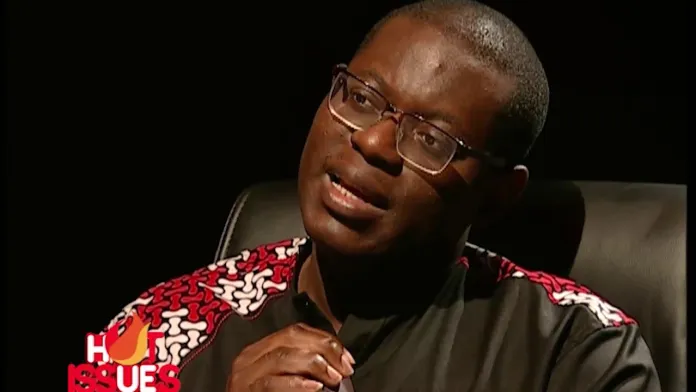
    Unfortunately, the deficiencies overshadowed the progress, as conveyed through infographics presented by Bismarck Rewane, the Managing Director/Chief Executive Officer of Financial Derivatives Company Limited. The overall sentiment surrounding the president’s first year in office appeared lackluster.

    As reported by Nigerian newspaper The Punch, Bismarck Rewane disclosed on a segment aired on Nigerian news channel Channels Television that Nigeria had slipped from being the 32nd largest economy globally to 42nd.

    He made this revelation during a presentation analyzing the impact of the president’s tenure since assuming office. He illustrated how hyperinflation had impacted consumer prices of various essential goods over the past year, with some food items experiencing increases of over 200%.

    Additionally, beyond essential commodities, he revealed that Nigeria had dropped from first to fourth place in terms of wealth management and accumulation in Africa.

    The economist then pointed out that Ghana has also surpassed Nigeria, stating, “In the past, we were always richer than Ghana, now we are here. External reserves and GDP figures speak for themselves.”

    He however expressed optimism, noting that things may look bleak, but there may be some hope.

    “Our ranking among African countries has declined. Last year, our GDP growth was 2.98 percent; South Africa was 1.93 percent, Kenya was 4 percent, and Ghana was 3.8 percent. Inflation was 33 percent for us, 5 percent for South Africa, 5 percent for Kenya, and 25 percent for Ghana,” he said.

    “Our GDP per capita is $1,111, while South Africa’s is $6,700, Kenya’s is $2,000, and Ghana’s is $2,200. External reserves as a percentage of GDP illustrate a tough picture. In the past, we were always richer than Ghana, but now we are here. External reserves and GDP figures speak for themselves,” the renowned economist added.

    Given the fact that Ghana’s GDP per capita is almost double that of Nigeria’s, it’s fair to say that the economist’s assessment could be considered accurate.

    Additionally, with a GDP of $1,111, Nigeria is nowhere near the richest countries on the continent, according to Global Finance GDP-PPP per capital index, Nigeria is currently the 46th poorest country in the world.

  • Is Nigeria on the right track after a year of Tinubu?

    Is Nigeria on the right track after a year of Tinubu?

    Nigerians love their football but it is no longer the main topic of conversation for many.

    On the first anniversary of the Bola Tinubu presidency, Abubakar Sheka, who sells bread on the streets of the northern city of Kano, says that his customers’ primary focus is now on what they can afford to buy.

    “Football talk is only sweet when the tummy is full but at the moment a lot of Nigerians are finding it difficult to feed, which makes people always talk about the economy when they meet,” the 36-year-old tells the BBC above the noise of the morning traffic.

    He has also noticed that fewer people are buying bread as the price has more than doubled since last May, reflecting the increase in the cost of flour, cutting off many families from one of the country’s basic staples.

    Inflation, coupled with the falling value of the currency, the naira, has been the major theme for many of the past 12 months.

    Though Nigeria has been hit by the same harsh economic winds as much of the rest of the world, some of what has happened is a direct result of the policies of President Tinubu, sworn in to office exactly a year ago.

    The new president, 71 at the time, had won a bruising election with 37% of the vote – a result that was then disputed in court. His task was to bring the country back together.

    He also faced a challenging financial situation, along with concerns about kidnapping and corruption.

    Amid the pomp and lofty sentiments on inauguration day, the president let slip a major announcement.

    “Fuel subsidy is gone,” he told Nigerians without giving a timetable for when the policy would be in place, or any measures that might cushion the inevitable blow.

    The decades-old subsidy was costing the nation huge sums of money which Mr Tinubu argued would be better spent elsewhere.

    “President Bola Tinubu’s inauguration speech began at around 10:00 and by 11:00 there are already fuel queues across Nigeria,” public affairs analyst Hashim Abubakar says.

    “That statement sent prices of fuel and other items skyrocketing immediately.”

    Annual inflation was already at an 18-year high of 22% and, partly as a result of getting rid of the fuel subsidy, it has risen to nearly 34%. Wages have not kept up.

    The government has also ended the policy of pegging the value of the naira to the US dollar, allowing it to dramatically depreciate. Whereas 10,000 naira would have bought $22 last May, it will now only purchase $6.80.

    This has made anything that is imported more expensive.

    And all this has pushed more people into poverty.

    Abubakar Ameer hands out food to those in need in Kano. He said that over the past year the number of people coming for help has more than doubled.

    “We had to reduce the ration we normally give to others so that everyone can get something to eat,” he tells the BBC.

    The government has given cash transfers amounting to $54 (£42) over three months to the very poorest families, but this has not helped everyone.

    Mr Tinubu’s ministers are aware of the hardships that many are now experiencing.

    Last week, Minister of Economic Planning Atiku Bagudu apologised “for the pains that [the policies] may occasion”, but, he added, “they are necessary”.

    He characterised the measures as part of an overdue economic restructuring which would result in long-term stability.

    The hugely expensive fuel subsidy and the over-valued naira was damaging the economy, it is argued.

    “This administration has implemented significant economic reforms aimed at stabilising our economy and fostering sustainable growth,” an official in the Tinubu administration, George Akume, said when presenting the government’s one-year progress report.

    The reforms were also aimed at boosting the confidence of foreign investors. The amount of investment money flowing into the country reached a peak just over a decade ago and has been relatively low since then.

    “I believe things are beginning to pick up in terms of foreign investment in the country due to the government’s economic policies,” says Victor Aluyi, senior vice-president of financial firm Sankore.

    “The improvements are not massive but there are improvements nonetheless compared to when things were really low in the past years.”

    One of the other big challenges facing the president in his first year in power was security, with violent attacks and abductions plaguing parts of the country under his predecessor.

    When it came to kidnapping, the north-west of the country was particularly badly hit. But from a peak at the beginning of last year up to March, the number of incidents of abductions fell in the region, according to Acled, which monitors conflict and violence.

    Nevertheless, two high-profile mass abductions in March and another one last week in different parts of the country have shown that more needs to be done to ensure people’s safety.

    The government has defended its record.

    Defence Minister Mohammed Badaru recently said that security forces had killed over 9,300 “bandits” and insurgents while 7,000 had been arrested in the past year.

    As for the battle against corruption, the president has come in for some praise.

    “So far, the Tinubu-led administration, has not been quiet over the issue and has displayed the political will to confront the hydra-headed monster,” says Kola Adeyemi chairman of NGO Anti-Corruption Awareness.

    The suspension in January of Humanitarian Affairs Minister Betta Edu over the alleged diversion of public money was seen as a bold move. An investigation is under way and the minister has denied any wrongdoing.

    A former top official from the Economic and Financial Crimes Commission, speaking to the BBC on condition of anonymity, says that the president needs to do more despite good early signs.

    “Corruption has been a huge problem for decades so it will be unfair to score him based on a year in office – a lot needs to be done to wipe it out.”

    In all areas of policy, the administration will insist that more time is needed for the people to feel the benefits if its policies.

    But for Mr Sheka the bread-seller, time is running out.

    “If things don’t improve economically then I’ll either get something else alongside this to bring in more money or abandon bread-selling altogether and find something else to do as there are needs to take care of.”

  • Nigerian Police arrest one amid search for missing Ghanaian and friend

    Nigerian Police arrest one amid search for missing Ghanaian and friend

    Following a month-long search for missing Ghanaian women Afiba Abigail Tandoh and her friend Celine Chidinma Ndidum, significant developments have emerged pointing to suspect Andrew Amechi Otchipo, a 52-year-old British Nigerian with deep ties to Nigeria.

    Otchipo, a reputedly notorious figure wanted by security agencies, was apprehended by Interpol in Nigeria to aid in investigations related to the disappearance of the two women.

    Close Circuit Camera (CCTV) footage from the hotel where the trio last met revealed crucial evidence linking Otchipo to the missing women, including personal belongings such as handbags and ATM cards found in his residence.

    Despite this breakthrough, authorities face challenges extracting information from Otchipo regarding the whereabouts of Afiba and Celine.

    The Ghanaian government, deeply concerned about the welfare of its citizens, has instructed its consulate in Nigeria to intensify efforts to locate the missing individuals.

    Meanwhile, pressure is mounting on the Nigerian Police Force to expedite the search for Afiba and Celine, whose sudden disappearance has raised alarms in both countries.

  • Stakeholders in the creative space must enforce laws against sensitive contents – Ola Michaels

    Stakeholders in the creative space must enforce laws against sensitive contents – Ola Michaels

    Following Nigeria‘s recent ban on depicting ritual killings and smoking in movies, Ghanaian director Ola Michael has urged the activation of existing classification laws in Ghana to regulate sensitive content in media.

    Speaking to GhanaWeb’s Isaac Dadzie, Michael emphasized that Ghana has regulations to restrict content showcasing smoking, money rituals, and other vices, but their enforcement has been lacking.

    “I have followed the Nigerian narrative for a long time. It has existed for a long time. In any movie you see, there has to be some money ritual, some ritual killing, campus ritual killing, and all that. Leaders at that time realised this was going to be a huge problem if they didn’t stop it. So they began looking for some sort of regulation towards it.

    “Now, if you come to Ghana, let’s look at the larger board. Is this something we want the young people to keep learning? No. Is it the only thing we can do in movies? No,” he said.

    He criticized the political inertia preventing these laws from being operational, leading to the glamourization of such vices influenced by Nigerian films.

    “The version of the NFVCB in Ghana is the film classification board. I was an integral part of the people that drafted the law, and I know exactly why we put every single line there. If we had activated this, we wouldn’t have faced these challenges because ours covers TV stations as well.

    “So such a law exists, but it hasn’t been activated. The law that we drafted and was passed by parliament is sleeping and that is because the people that have been positioned to activate it are also sleeping. It’s been a political football. So that is the challenge,” he said.

    Michael highlighted the importance of active classification to protect young viewers and drew parallels with India’s stringent film guidelines as a model.

    He called for immediate enforcement to prevent further negative impacts on Ghanaian society.

    “If you watch Bollywood movies, before the movie starts, there’s a classification and censorship certificate shown. After that, there’s a compulsory advert advising people against smoking for every movie… because the tobacco industry is a strong one. You cannot stop them so all you do is create guidelines that will prevent the young ones from smoking. So, in their films, you will never see a young person smoking. It’s either a certain policeman or a rich man smoking.

    “In Nigeria, they have the right to even take out any iota of smoke. In the films, they have the right to do that. And you can’t do anything about it. The only way you can deal with them is to go to the courts to challenge the law.

    “There are people responsible for that, but they are just playing politics with it. Christopher was part of us when we were drafting the law, and he is supposed to be the chairman of the classification committee but the film authority executive secretary feels she is so powerful that she has to set up her own classification committee.

    “And it’s become a political football for the past four or five years. That is why you see all these things happening, and it seems like there’s no law,” he said.

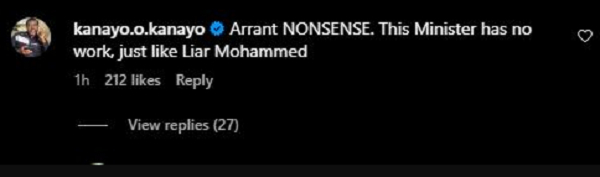
  • Ban on money rituals, smoking in Nigerian movies arrant nonsense – Kanayo O. Kanayo fires

    Ban on money rituals, smoking in Nigerian movies arrant nonsense – Kanayo O. Kanayo fires

    Key figures in Nigeria‘s entertainment industry have raised objections to the recent governmental decision to impose restrictions on content in films, music videos, and skits.

    Renowned actor Kanayo O. Kanayo has criticized the move, dubbing it “arrant nonsense” and questioning the logic behind the Minister of Arts, Culture, and Creative Economy, Barrister Hannatu Musa Musawa’s support of such limitations on filmmakers.

    Veteran musician Mike Okri voiced skepticism about the government’s motives, suggesting that the ban could be an attempt to stifle the film industry.

    “Whoever is behind this from the FG is joking. It’s a way to silence the movie industry. They should focus on the real challenges facing the country,” Okri snapped.

    He urged authorities to prioritize addressing more pressing national concerns.

    Earlier, the federal government, represented by the Executive Director/CEO of the National Film and Video Censors Board (NFVCB), Dr. Shaibu Husseini, announced a ban on the portrayal and endorsement of money rituals, and the promotion of tobacco products in entertainment content, citing Section 65 of the NFVCB Act 2004.

    This announcement came during a National Stakeholders Engagement on Smoke-Free Nollywood event held in Enugu state in collaboration with Corporate Accountability and Public Participation Africa (CAPPA).

    Dr. Husseini underscored the importance of the film industry’s progress and the necessity for entertainment media to refrain from promoting harmful behaviors and substances.

    He concluded by emphasizing the urgent need for decisive and collective action to preserve the industry’s integrity and the welfare of society.

    See post below:

  • Hundreds of hostages rescued from Boko Haram extremists in Nigeria

    Hundreds of hostages rescued from Boko Haram extremists in Nigeria

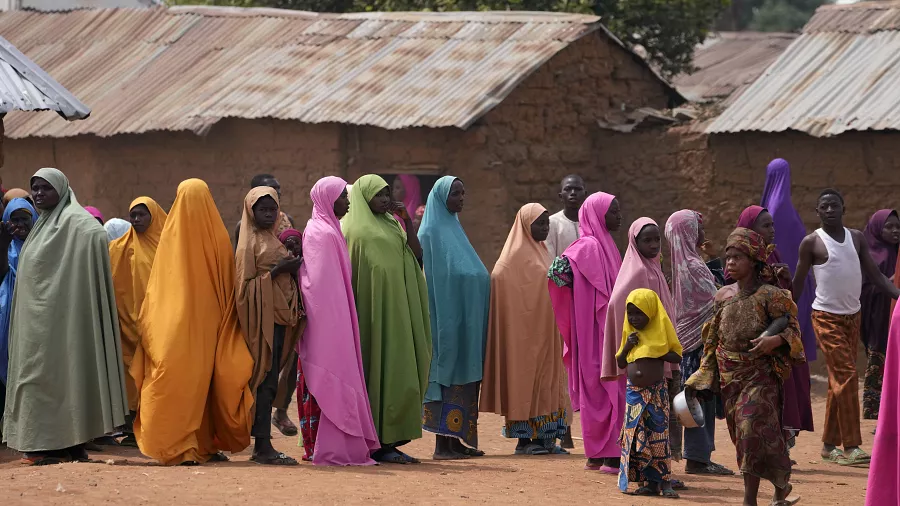
    The Nigerian military has rescued numerous individuals, including women and children, who had been kidnapped by Boko Haram in Nigeria.They were kept in the forest for a long time.

    The extremist group held 350 people captive in the Sambisa Forest. The group started fighting in 2009. GeneralKen Chigbu, a high-ranking officer in the Nigerian army, said on Monday that he handed over the people to the authorities in Borno, where the forest is located.

    209 kids, 135 ladies, and six men looked tired in their old clothes. Some girls had babies from forced marriages or being raped while in captivity by the militants.

    One of the hostages had seven kids and said they couldn’t get away because of their children.

    Hajara Umara said, “I always wanted to leave, but I couldn’t because of my children. ” She and her children were rescued. “If they found out you tried to run away, they would hurt you and keep you locked up forever. ”

    The army saved the hostages after a long operation in Sambisa Forest. The forest used to be a busy place but now it’s where Boko Haram and its groups attack people and security forces in nearby countries.

    The people who were released were taken in trucks to the Borno state government house. The government will take care of them until they can go back home.

    The army said that some extremists were killed during the rescue and their temporary houses were destroyed.

    Boko Haram, a group of rebels in Nigeria, started a war in 2009 to make Islamic Shariah law the law of the land. At least 35,000 people have died and 2.1 million people had to leave their homes because of violent extremists in Nigeria, as per the UN.

    Since the kidnapping of 276 schoolgirls in 2014, Boko Haram militants have taken at least 1,400 students from Nigerian schools. Recently, many kidnappings have been happening in the northwestern and central parts of the country, where armed groups often take villagers and travelers and ask for money to release them.

  • Nigeria will not import a single drop of fuel by June – Dangote on capacity of his refinery

    Nigerian billionaire and chairman of the Dangote Group, Aliko Dangote, has announced that Nigeria will no longer need to import gasoline by June 2024, thanks to the Dangote Refinery.

    Dangote revealed that his refinery, which is already producing diesel and aviation fuel, will be capable of meeting the gasoline needs of West Africa and the aviation fuel demands of the entire continent.

    He made this declaration at the Africa CEO Forum Annual Summit in Kigali, Rwanda, on Friday, May 17, 2024, while discussing the progress of the refinery.

    “Right now, Nigeria has no cause to import anything apart from gasoline and by sometime in June, within the next four or five weeks, Nigeria shouldn’t import anything like gasoline; not one drop of a litre,” he is quoted to have said.

    He added that his company “can supply gasoline to West Africa, diesel to West and Central Africa, and aviation fuel to the entire continent.”
    He also pointed out that the work of his company would make Africa self-sufficient in the production of by-products of oil, including fertilizer and raw materials for detergents.

    The business mogul stated that his decision to invest all his resources in Africa is to end fuel imports and create jobs on the continent, and the Dangote Refinery was an important part of the transformation process.

    “We just commissioned in February and now we are producing jet fuel, we are producing diesel, and by next month, we will be producing gasoline.

    What that would do is that we would be taking most of the African crude that is being produced and also be able to supply not only Nigeria, because our capacity is too big for Nigeria, but it would also supply West Africa, Central Africa, and also South Africa.

    “We have 650,000 barrels per day, 1 million tonnes of polypropylene, we have 590,000 tonnes of carbon black, which is the raw material for ink, dyes, and so on. We are expanding more. This is the first phase, and we are going on to the next phase, which will start early next year.”

  • Ghanaian film maker bags best unscripted series in AMVC

    Ghanaian film maker bags best unscripted series in AMVC

    Ghanaian-born filmmaker Ayebea BZ Darko has won the Award for Best Unscripted Series at the recent Africa Magic Viewers’ Choice Awards (AMVCA) held in Lagos, Nigeria.

    Darko received the award for her reality TV series “GH Queens,” which aired on Akwaaba Magic, Showmax, and GH One TV.

    Season 1 of “GH Queens” premiered in 2021, followed by Season 2 in 2022-2023, with Darko serving as the show’s executive producer.

    The series, featuring a diverse cast of talented women, provided a platform for their unscripted stories, resonating with audiences across Ghana and beyond. It sparked conversations and inspired a new generation of entertainers in the country.

    Ayebea BZ Darko, a natural storyteller raised amidst Ghana’s vibrant cultural tapestry, has gained recognition in the entertainment world after years of mastering her craft.

    Before launching “GH Queens,” she worked with TV3, a national free-to-air television station in Ghana, and on projects such as Dirty Rave and Afrochella, consistently capturing the essence of Ghanaian culture while breaking new ground.

    Watch video below:

  • Movie producer highlights why Nollywood actors die quickly

    Movie producer highlights why Nollywood actors die quickly

    This year, the industry has repeatedly mourned the loss of veterans and promising actors.

    Film producer Hope Omenihu Samuel has shed light on the alarming mortality rate among actors in Nigeria‘s Nollywood scene.

    In a candid conversation with ‘The Sun’, she voiced her alarm over the recent spate of deaths.

    Highlighting the need for systemic change within the industry’s treatment of its actors, Hope advocates for a professional environment that prioritizes the health of its talent.

    “If given the authority, I would spearhead initiatives like health seminars to emphasize self-care while we’re in our prime. The relentless grind without proper self-care is taking a toll, leading many to deplete their savings on health issues that stem from long-term neglect.

    “It’s crucial to understand that diligence in our work doesn’t preclude us from maintaining our health through adequate nutrition and rest. The rising death toll and illness in our community are direct results of neglecting personal health, and this trend must be addressed,” she stated.

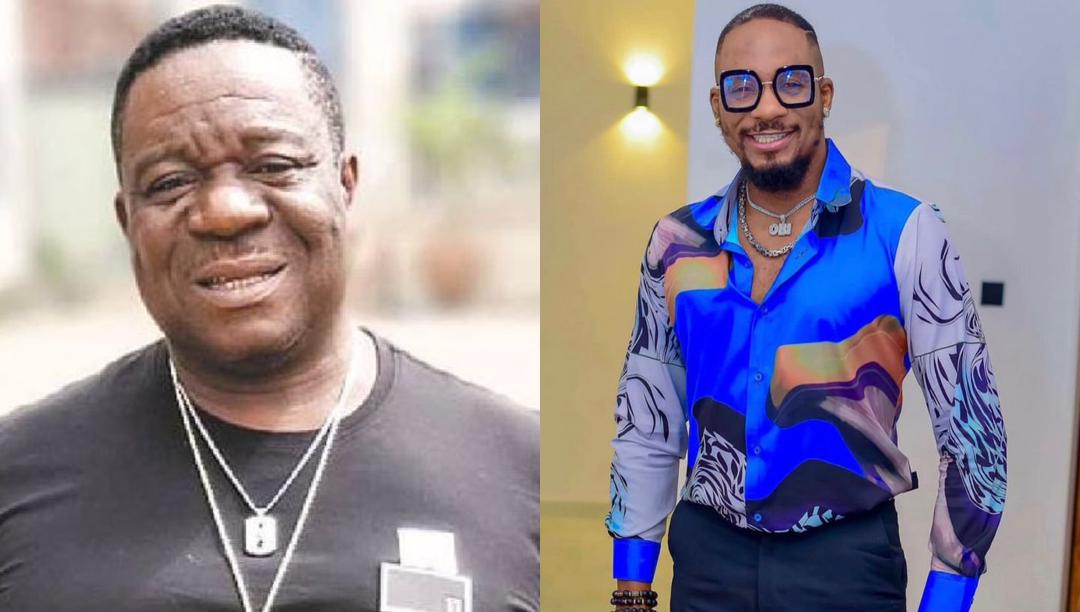
    The Nollywood industry has been hit hard by the loss of numerous esteemed and emerging actors in 2024, with notable figures such as Mr. Ibu and Junior Pope among the recent bereavements.

    The community has repeatedly been in mourning for its lost veterans and promising newcomers.

    Many have succumbed to severe health conditions like diabetes, cancer, and heart disease, often passing away suddenly.

    Among those Nollywood has had to bid farewell to in 2024 are Olofa Ina, Ethel Ekpe, Sisi Quadri, Mr. Ibu, Amaechi Muonagor, and Aderounmu Adeju.

  • 8 people killed in northern Nigerian mosque attack

    8 people killed in northern Nigerian mosque attack

    At least eight people were killed and 16 others were hurt when a man attacked a mosque with a homemade bomb in northern Nigeria’s Kano state. The bomb caused a fire, according to the police.

    The suspect, a 38-year-old person who lives in the area, admitted that he attacked the mosque in a village called Gadan in Kano because he was angry about an ongoing dispute with his family. This is according to a statement from the police spokesman Abdullahi Haruna on Wednesday.

    Eight people who were hurt passed away in a hospital later, Haruna said in an interview with local Channels Television on Thursday. Four kids were hurt in the church, but we don’t know if any of them died.

    The event made people in Kano, the biggest state in northern Nigeria, very scared. This area has had fights related to religion in the past, which have sometimes turned into violence.

    The suspect went into the mosque with a homemade bomb and set it off, said local police chief Umar Sanda. “It’s not related to terrorism. ”

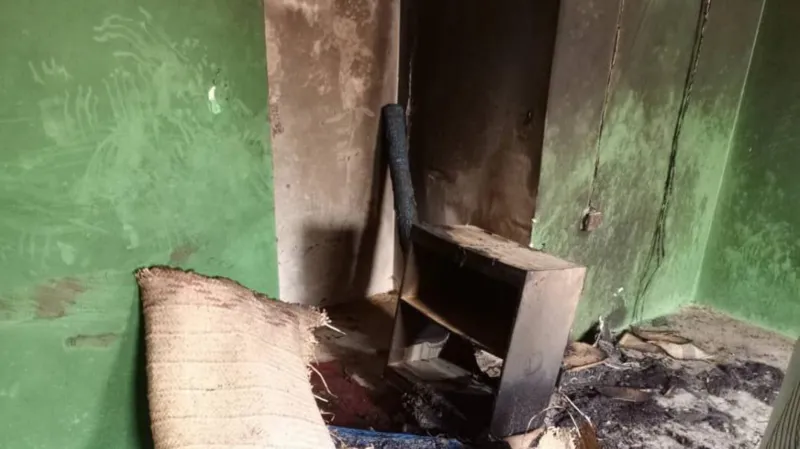
    The TV station showed a mosque in Gadan village, Kano state, where the walls and furniture were burnt. The mosque is an important place for Muslims to pray.

    Local news also said that the people at the mosque were trapped inside, so it was hard for them to get out.

    “A few kids ran away from the fire, trying to stay safe. ” “We had to pour water to put the fire out,” said Hussaini Adamu, who lives here, to TVC.

    The police blocked off the area while the injured people were taken to a hospital in the main city of the state.

    “The argument was about sharing inheritance. The person who started the fight claims that the people he thought cheated him were in the mosque at the time. He did it there so that people could hear him,” according to the police.

  • 11 dead, several others injured as  worshippers trapped in Nigerian Mosque, set ablaze

    11 dead, several others injured as worshippers trapped in Nigerian Mosque, set ablaze

    Tragedy struck in Nigeria’s northern Kano state as at least 11 worshippers lost their lives and several others sustained injuries in a horrific attack on a mosque, according to local police.

    Reports indicate that a man, allegedly embroiled in a family dispute over inheritance, perpetrated the attack by spraying the mosque with petrol and locking its doors before setting it ablaze.

    The incident occurred during morning prayers on Wednesday, May 15 in the Gezawa area of Kano state.

    Rescue efforts were hampered as the flames engulfed the mosque, trapping approximately 40 worshippers inside. Neighbours rushed to assist, but it wasn’t until after the fire had already consumed much of the building that authorities were alerted.

    While initial fears of a bomb were raised, police later confirmed that no explosive device was used in the attack.

    However, questions have arisen regarding the delayed response from the Fire Service, with officials acknowledging that earlier intervention could have mitigated the devastation.

    Meanwhile A 38-year-old suspect has been apprehended in connection with the attack, as investigations into the tragic incident continue.

    “In a situation like this, people are supposed to call us but we didn’t get any call from the location until after normalcy had returned,” Mr Yusuf added.

    According to the police, the suspect admitted that his actions were motivated by a dispute over inheritance. He stated that he intended to target specific family members who were present inside the mosque.

    “What happened is not associated with any act of terrorism, rather it was a skirmish that arose as a result of inheritance distribution,” Umar Sanda, a local police chief, told journalists after visiting the scene.

    “The suspect is presently with us and is giving out useful information,” Mr Sandahe added.

    Initial reports indicated that one worshipper had succumbed to the attack, but the death toll later increased as additional victims passed away while undergoing treatment at the Murtala Muhammad Specialist Hospital in Kano.

    According to the police, more victims, including children, are currently receiving medical attention at the hospital.

    Islamic cleric Sheik Dauda Sulaiman condemned the act, stating that killing people while they are praying constitutes one of the gravest sins. He emphasized that besides seeking forgiveness from God, the perpetrator should also provide compensation to the families of the deceased.

    The entire village is now in mourning over the tragic incident.

  • Autopsy for Mohbad’s death failed to determine cause – Pathologist reveals

    Autopsy for Mohbad’s death failed to determine cause – Pathologist reveals

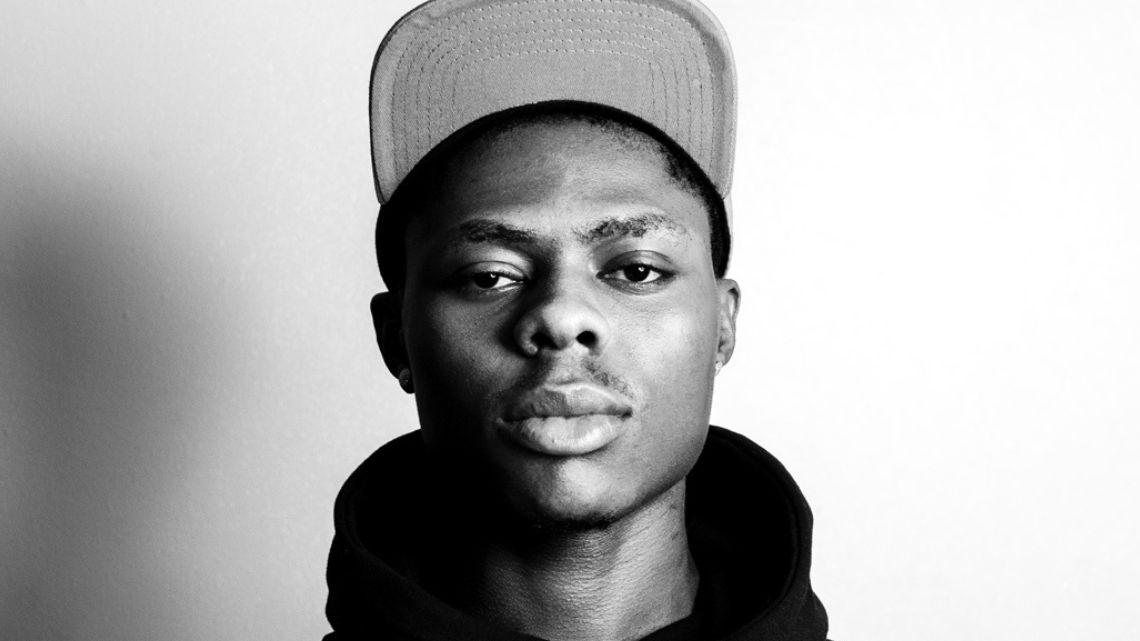
    The post-mortem examination of the late Nigerian singer Ilerioluwa Aloba, popularly known as Mohbad, has yielded no definitive cause of death, as reported during a recent press briefing in Lagos State.

    Wahab Shittu, a distinguished Senior Advocate of Nigeria, shared that the examination was hindered by significant decomposition, preventing a clear determination of what led to Mohbad’s passing.

    According to Shittu, the forensic expert conducting the autopsy explained that due to the advanced decomposition of the body at the time of examination, pinpointing the cause of death was not possible.

    This uncertainty leaves the circumstances surrounding Mohbad’s death under suspicion and without a specific explanation.

    Additionally, the pathologist raised the possibility of medications administered before Mohbad’s death potentially playing a role.

    However, definitive confirmation of whether these medications directly contributed to his passing remains elusive.

    As a result, the inquest into Mohbad’s death has been postponed until June 11th.

    This delay aims to allow for further questioning and investigation to glean more insights from the forensic expert regarding the circumstances surrounding the acclaimed singer’s untimely demise.

    Mohbad’s autopsy commenced eight months ago

    The Lagos Police Command verified the exhumation of Mohbad’s body for post-mortem analysis on September 21, 2023, due to the suspicious nature of his passing.

    Benjamin Hundeyin, the spokesperson for the Lagos Police, announced this through his official communication channels.

    Additionally, Hundeyin reported the detention of the nurse implicated in delivering the lethal injection to the late musician.

    In the early stages of the probe, the police constituted a 19-member panel to carry out a thorough investigation, which included tasks like exhumation, autopsy, inspection of the scene, medical evaluations, and gathering statements from suspects and witnesses.

    The panel was charged with concluding their detailed investigation within a fortnight.

    Background

    Mohbad’s death on September 12, 2023, in Lagos, ignited widespread controversy, with many calling for a thorough investigation into the events leading to his untimely demise.

    His former managers, Naira Marley and Sam Larry, were taken into custody concerning his death, amid accusations of harassment and more.

    On September 19, 2023, the nurse who had given him medications prior to his death, was arrested by the Lagos State Police Command upon discovery that she lacked proper medical licensing.

  • House, car, 45K dollars – Benefits Nigeria’s Super Eagles coach is set to enjoy

    House, car, 45K dollars – Benefits Nigeria’s Super Eagles coach is set to enjoy

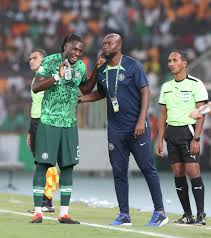
    Former Real Betis forward Finidi George has stepped into the limelight as the newly appointed head coach of the Super Eagles, Nigeria’s national football team.

    The Nigeria Football Federation (NFF) officially introduced him on Monday, May 13, at a ceremony held in Abuja.

    The 53-year-old, who previously served as an assistant to Portuguese coach Jose Peseiro for 20 months, now takes the helm, succeeding Peseiro.

    This announcement comes after his appointment on April 29.

    At the unveiling event, the NFF also disclosed the lineup of Finidi George’s support staff, a team featuring former internationals Daniel Amokachi and Abideen Baruwa, among others.

    Chima Onyeike, Mehmet Ozturk, and Mohammed Mowiz Suleiman complete the group, offering a diverse range of expertise to bolster the team’s performance.

    Reports indicate that Finidi George will be earning a salary of $45,000, while his assistants have a pay-per-game arrangement, covering all four members, including the three foreign coaches.

    Moreover, as part of his contract, he will be provided with a residence of his choice anywhere in Nigeria, along with a car and a dedicated driver, ensuring his comfort and convenience, as emphasised by NFF Chief Ibrahim Gusau.

    With his sights set on the upcoming challenges, Finidi George’s first official game in charge will be against South Africa’s Bafana Bafana on June 7, followed by a clash with the Benin Republic shortly after.

    His primary objective is to lead the Super Eagles through the qualifiers for the next World Cup, slated to take place in Canada, Mexico, and the USA, showcasing his leadership and tactical prowess on the international stage.

  • Kidnapped students in Northern Nigeria successfully rescued by hunters

    Kidnapped students in Northern Nigeria successfully rescued by hunters


    A cohort of university students and additional individuals abducted in northern Nigeria were liberated on Sunday, officials confirmed.

    Assailants raided Confluence University of Science and Technology in Kogi state late Thursday night, abducting nine students.

    The captives were freed by local hunters and security personnel who engaged the kidnappers in a gun battle, according to Kogi’s information commissioner, Kingsley Femi Fanwo, who shared the update on the social media platform X.

    Mr. Fanwo further mentioned that the rescued abductees had been transported to a hospital for medical care.

    “Security agents are currently combing the forests to ensure all the kidnapped students are found and brought home safely,” he added.

    A surge in kidnapping incidents perpetrated by criminal gangs, commonly referred to as bandits, is being observed in Nigeria, particularly in the north-west region of the country.

    Hundreds of individuals have been abducted since the beginning of the year, with many of them subsequently released, often following the payment of ransom.

  • Harry and Meghan in Nigeria for a 3-day visit

    Harry and Meghan in Nigeria for a 3-day visit

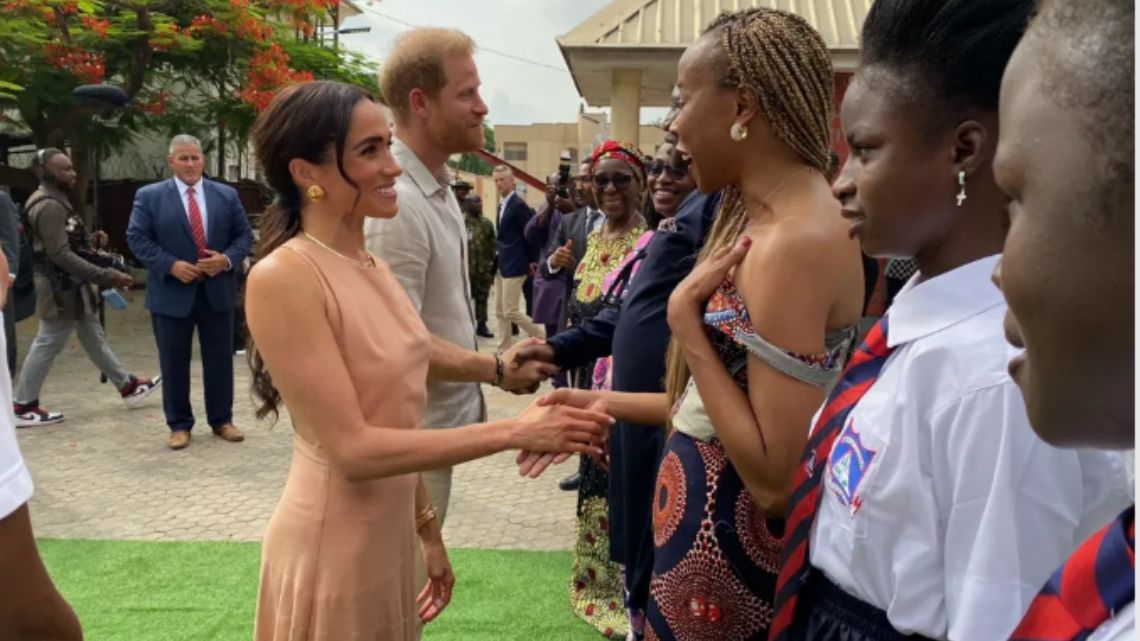
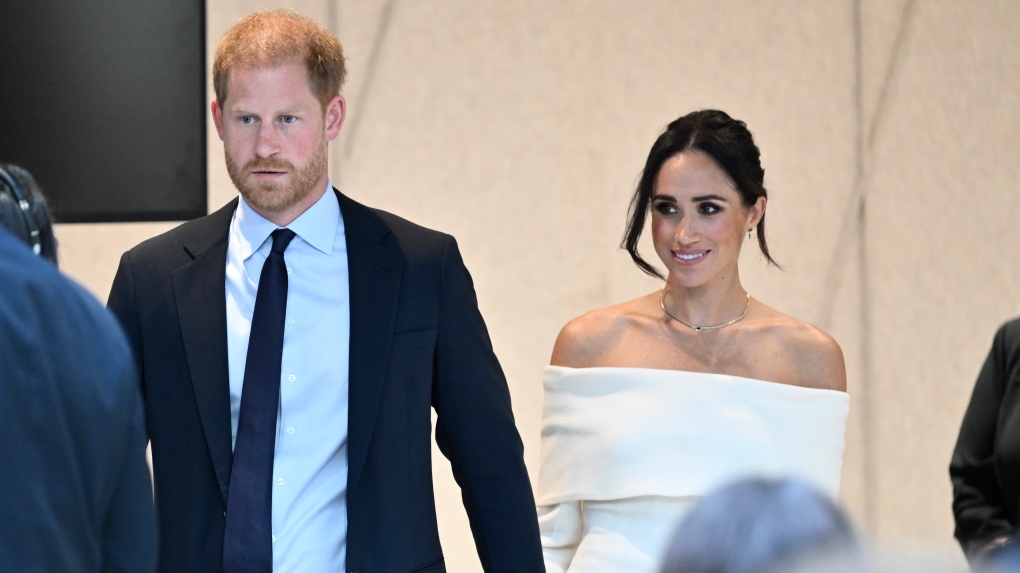
    The Duke and Duchess of Sussex have embarked on a three-day visit to Nigeria, their first as a couple.

    The visit follows Prince Harry’s recent brief trip to London, where he expressed his pleasure at being back in the UK.

    Their visit was at the invitation of Nigeria’s chief of defence staff, General Christopher Musa, and includes meetings with injured service personnel.

    This visit is part of a series of events connected to the 10th anniversary of the Invictus Games, a sporting event for injured servicemen and women founded by Prince Harry.

    The couple arrived in Abuja on Friday morning and commenced their visit with a tour of Lightway Academy, a primary and secondary school in the capital.

    Prince Harry and Meghan Markle were welcomed by staff and pupils at Lightway Academy. Credit: AFP

    They were welcomed by traditional dancers and had the opportunity to meet some of the primary schoolchildren.

    During their visit, the couple launched a two-day mental health summit. Prince Harry will also visit a military rehabilitation center in Kaduna, while the Duke and Duchess are scheduled to visit Lagos.

    Their itinerary in Lagos includes attending a training session for Nigeria: Unconquered, a charity affiliated with the Invictus Games, as well as a cultural reception and a polo fundraiser for the charity. Meghan will also co-host an event on Women in Leadership with Dr. Ngozi Okonjo-Iweala, director-general of the World Trade Organization (WTO).

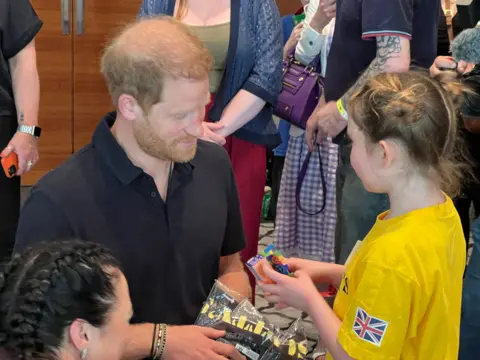
    Prince Harry speaking to a young girl in a yellow shirt at a party for bereaved children of military personnel
    Harry was the surprise guest at a party in London hosted by a charity supporting the bereaved children of military personnel

    Following the Duke’s celebration of the 10th anniversary of the Invictus Games at St Paul’s Cathedral in London on Wednesday, he and the Duchess embarked on their visit to Nigeria.

    The Duke was warmly received by a crowd gathered in the sunshine outside St Paul’s Cathedral, where he smiled and waved.

    The service was attended by his uncle Earl Spencer, Princess Diana’s brother. Meanwhile, the King, who is undergoing cancer treatment, met with members of the public at a Buckingham Palace garden party a little over two miles away. However, due to the King’s “full programme,” the two did not have the opportunity to meet.

  • Nigeria Senate approves death penalty for drug traffickers

    Nigeria Senate approves death penalty for drug traffickers

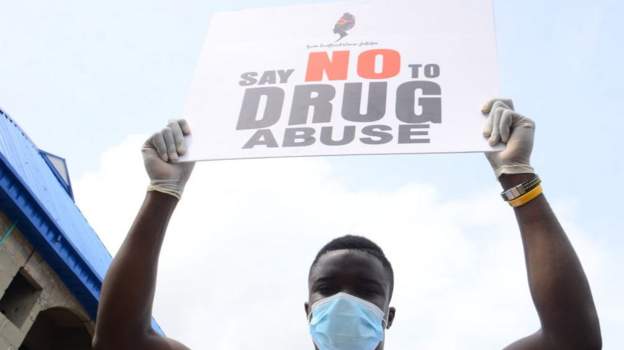
    Nigeria’s senate has passed a bill for a third reading that seeks to impose the death penalty on individuals convicted of drug trafficking, replacing the previous maximum sentence of life imprisonment.

    The bill, which is not yet law, was introduced by Senator Mohammed Monguno on behalf of the joint committees on Judiciary and Drugs and Narcotics.

    Supporters of the bill argued that the threat of execution would be a stronger deterrent to drug traffickers than life imprisonment.

    However, some lawmakers expressed concerns about the irreversible nature of the death penalty and the potential for wrongful convictions. Despite these concerns, the majority of senators voted in favor of the bill.

    In addition to imposing the death penalty, the bill aims to enhance the operations of the Nigerian Drug Law Enforcement Agency (NDLEA).

    The bill will now await presidential assent to become law. Nigeria has recently seen significant drug seizures, including cannabis and opioids, from suspected traffickers.

  • 2 Nigerian military officers to appear in court after drone attack killed 85

    2 Nigerian military officers to appear in court after drone attack killed 85

    Two soldiers from Nigeria will go to court for killing 85 people in a drone attack last December. The attack happened in the conflict-ridden north of Nigeria. A rights group is asking for more information and justice for the victims.

    Two people will face military justice for making mistakes that led to civilians being killed. They thought the civilians were terrorists. The Defense Headquarters spokesperson did not give more information.

    The Nigerian military frequently uses air strikes to fight against violent extremists and rebel attacks in the northern part of Nigeria. This has caused harm to innocent people for over ten years.

    Since 2017, the military has accidentally killed about 400 civilians, according to a security firm in Lagos.

    In December, there was a problem with a gun while people were celebrating a Muslim holiday in Tudun Biri village, Kaduna state.

    The Nigerian military needs to give more details about their investigation, pay the victims, and create better ways to prevent accidents from happening again, according to Anietie Ewang, a researcher with Human Rights Watch.

    Ewang said we really need a careful plan to make sure the victims of the airstrikes get fairness and justice.

    Nigeria’s President Bola Tinubu said that mistakes that could have been prevented cannot happen again. Rights groups and activists also criticized the attack and asked for more careful monitoring of the military’s actions in war areas.

    One big worry is that there are too many drones in Nigerian security groups and there are no clear rules on when they can be used. This was said by Kabir Adamu, a security expert in Abuja.

    Buba said that the military will be more careful in the future to make sure that people who are not fighting in wars are safe.

  • Trial of Binance and executives in Nigeria adjourned to May 17

    Trial of Binance and executives in Nigeria adjourned to May 17

    A court in Nigeria’s capital, Abuja, has postponed a money laundering trial involving cryptocurrency exchange Binance and two of its executives to May 17.

    The adjournment, announced Thursday, followed a statement by Chukwuka Ikuazom, a lawyer for the exchange, who claimed he had not received necessary documents for case preparation.

    Binance and its executives, Tigran Gambaryan, a U.S. citizen, and British-Kenyan Nadeem Anjarwalla, face charges of laundering over $35.4 million and conducting specialized financial activities without a license.

    Apart from the EFCC’s money laundering case, Nigeria’s anti-graft agency, Binance, also faces four counts of tax evasion in a separate trial set to resume on May 17.

    The Binance executives have all entered pleas of not guilty. Nigeria boasts Africa’s largest crypto economy in trade volume, with many citizens using crypto to hedge against inflation and currency depreciation.

    However, authorities allege the platform has been utilized for money laundering and terrorism financing.

    Since their arrest on Feb. 26, Gambaryan and Anjarwalla have accused authorities of illegal detention and passport seizure, adding controversy to their trial.

    Additionally, local media reported that the Nigerian government sought the identities of citizens trading on the platform. This marks the second postponement of the money laundering trial’s formal commencement by the Abuja court.

  • Salaries of civil servants increased by 25% and 35% in Nigeria

    Salaries of civil servants increased by 25% and 35% in Nigeria

    Civil servants in Nigeria will see their salaries boosted by 25% to 35% in a bid to address the challenges posed by the escalating cost of living, as reported by Reuters news agency.

    According to the report, the least-paid government employee will now earn $324 (£258) annually.

    Police and military personnel are among the state workers slated to benefit from these salary increments, effective from January and retroactively applied.

    This announcement coincided with the eve of Wednesday’s Workers’ Day holiday.

    However, Nigeria’s inflation rate has surged to over 30%, the highest in nearly thirty years.

    Moreover, food prices have soared by 35%, according to the latest data from the National Bureau of Statistics. As a result, the salary increases for civil servants effectively maintain their purchasing power at existing levels.

    The National Salaries, Incomes, and Wages Commission (NSIWC) disclosed that pensions for eligible workers would also witness a boost of 20% to 28%.

    These adjustments follow recent salary increases for academic and healthcare professionals.

    Despite these measures, the monthly minimum wage, mandated by the government for all employers, remains stagnant since 2019, standing at 30,000 naira. With the currency’s sharp depreciation, this amounts to just $19 (£15).

    Furthermore, the government has hiked electricity tariffs for high-consuming consumers, aiming to reduce the financial burden on public finances.

    While the Nigeria Labour Congress (NLC) appreciated the salary increments, it urged the government to ensure they reflect the country’s challenging economic conditions.

    “These categories of workers are already in the privileged sector but we expect it to be extended also to other categories of civil servants who are in lower cadre and are vulnerable,” NLC spokesman Comrade Benson Upah told local media.

  • Fuel shortage in Nigeria halts business operations in Nigeria

    Fuel shortage in Nigeria halts business operations in Nigeria

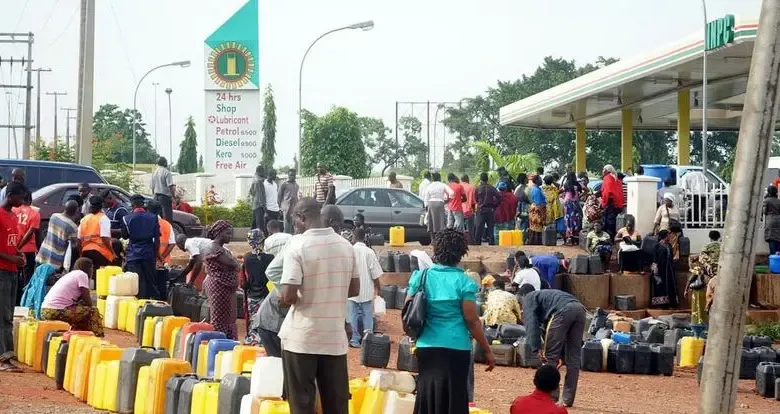
    Last week’s fuel shortages in parts of Nigeria have intensified, causing disruptions to businesses, particularly in the commercial hub of Lagos.

    According to reports from privately-owned broadcaster Channels Television, public transport services were suspended on Monday, leaving commuters stranded. Those fortunate enough to secure transportation had to contend with inflated fares.

    Local media accounts depict motorists enduring lengthy queues at the few operational petrol stations. Many stations have shuttered due to supply shortages from the formerly state-owned oil company, leading to a surge in black market sales at exorbitant prices, sometimes triple the normal rate.

    Last Thursday, Abuja, as well as neighbouring Nasarawa and Niger states, witnessed the resurgence of long queues at petrol stations.

    Despite assurances from the Nigerian National Petroleum Company (NNPC) that petrol prices would remain stable and supplies were sufficient, panic buying persisted. The NNPC attributed the limited availability of petrol to logistical challenges, which it claims to have addressed.

    Contrary to rumors, an NNPC spokesperson, as reported by privately-owned newspaper The Punch, denied allegations of fuel rationing and favoritism towards supplying Abuja.

    Nigeria, despite its status as one of Africa’s largest economies and oil producers, frequently grapples with oil scarcity issues.

  • Finidi George appointed as Nigeria’s new head coach

    Finidi George appointed as Nigeria’s new head coach

    On Monday, the Nigeria Football Federation (NFF) announced Finidi George as the new head coach, succeeding Jose Peseiro.

    Peseiro, who guided Nigeria to the final of the Africa Cup of Nations (AFCON) earlier this year, departed after his contract concluded in February, marking a tenure of 22 months.

    George, formerly a member of Peseiro’s coaching staff, took interim charge for Nigeria’s friendlies against Ghana and Mali in March.

    Concurrently, he has been leading Nigerian top-flight team Enyimba since September 2021.

    Notably, George boasts a successful playing career with Ajax, clinching the Eredivisie title and the Champions League. He also played a pivotal role in Nigeria’s 1994 AFCON victory.

    George’s key objectives will encompass guiding Nigeria to qualification for the upcoming AFCON in Morocco in 2025 and the 2026 World Cup.

    His tenure will commence with Nigeria’s World Cup qualifiers against South Africa and Benin in June.

  • Nigerian man allegedly ordered to buy meat pie before purchasing fuel

    Nigerian man allegedly ordered to buy meat pie before purchasing fuel

    Frustration ensued at a total Filling Station in Nigeria as a customer express disbelief over a new policy requiring her to purchase meat pie before buying fuel.

    She queried the fuel attendant about the station’s primary function, pondering whether it was a fuel station or a bakery.

    The customer captured the moment on video, capturing her displeasure towards the fuel attendant.

    “See I no really understand weytin dey happen for this Total Filling Station like this. Because how on earth, I go come, they go tell me say I must buy meat pie before I buy fuel. You must go buy meat pie before you buy fuel. Is this place open for a meatpie or open for a fuel station? Rubbish… This is Total filling station trying (unprintable word) with the masses that we have to buy meatpie before we can buy fuel. What kind of insult, rubbbish. This is total rubbish,” she indicated

  • Prince Harry and Meghan to visit Nigeria in May over Invictus Games

    Prince Harry and Meghan to visit Nigeria in May over Invictus Games

    Prince Harry and Meghan are set to visit Nigeria in May to speak about the Invictus Games.The games help injured and ill soldiers and veterans recover. A Nigerian official announced this on Sunday.

    A spokesman for the Nigerian defense didn’t say when Prince Harry will come to Africa, a place he loves. Harry is going to travel after a ceremony at St Paul’s Cathedral in London to celebrate the 10th anniversary of the games.

    Last year, Nigeria took part in the games. Nigeria’s military has been fighting a dangerous war against Islamic extremists in the country’s northeast since 2009.

    The Invictus Games were created by Harry in 2014, inspired by the Warrior Games in the United States. These games give injured veterans the opportunity to compete in sports like the Paralympics.

    Harry flew Apache helicopters in Afghanistan and has supported veterans who need help.

    He will do cultural things during his trip to Nigeria and also work on making Nigeria’s position in the games stronger. He will also talk about the chance of Nigeria hosting the event in the future. Gusau said this.

    In his new Netflix show about the games, Harry said he didn’t get the help he needed when he came back from fighting in Afghanistan.

    He said that coming back from Afghanistan in 2012 brought back feelings he had been hiding since his mother, Princess Diana, died when he was 12. These feelings are called post-traumatic stress disorder.

    The prince, who has had many problems with his family, said they never talked about how Diana’s death affected him.

  • Check out multi-million dollar house belonging to Nigeria’s Odion Ighalo

    Check out multi-million dollar house belonging to Nigeria’s Odion Ighalo

    Footballers in top-flight leagues are among the highest-paid professionals worldwide, earning substantial amounts of money weekly.

    For many African players in these leagues, their earnings allow them to support themselves and their families back home. Some of them occasionally share glimpses of their lavish residences on social media.

    Notable examples include Asamoah Gyan‘s impressive residence known as “The Basilica” and Togolese star Emmanuel Adebayor’s luxurious home, which have captured the attention of social media users.

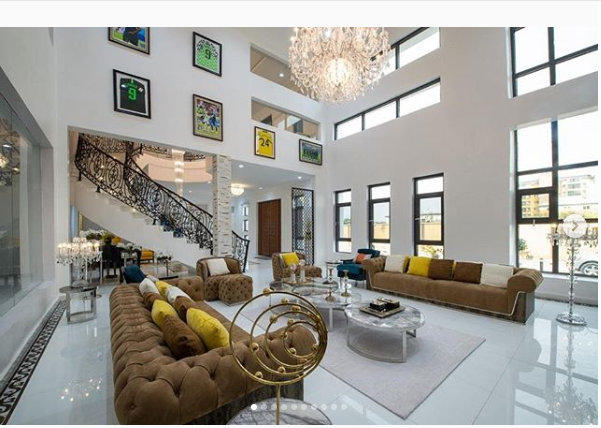
    Nigerian star Odion Ighalo also offered a limited tour of his multimillion-dollar mansion to journalist Oma Akatugba. Ighalo revealed that he conceived the idea of building such a house during his time at Watford, even though he did not have the funds at that time. It took several years before he had enough money to turn his dream into reality.

    Ighalo, who enjoys staying indoors, designed his house, named Ighalo Residence, to meet all his needs without having to leave often. Located in the suburbs of Lekki, south-east of Lagos, he has resided there since its official opening in 2020.

    He first showcased parts of the mansion in 2022, revealing its impressive features, including a swimming pool, sauna, football pitch, and basketball court, among other outdoor amenities.

  • Over 100 prisoners escape from old Nigerian prison after heavy rain

    Over 100 prisoners escape from old Nigerian prison after heavy rain

    Over 100 prisoners got away from a run-down prison near Nigeria‘s capital after a heavy rain wrecked part of the prison. Security teams are looking for the escaped prisoners.

    The heavy rainstorm on Wednesday night broke the fence around the medium-security prison in Suleja. 119 prisoners escaped because of this. Suleja is about 30 miles northwest of Abuja. Adamu Duza, who works for the prison, said this.

    The prison and other organizations found 10 of the escaped prisoners and are looking for the others.

    The Suleja prison only had one floor and its walls were cracked and damaged. It was supposed to hold 250 inmates, but it had 499. This information was given by Nigeria’s Interior Minister Olubunmi Tunji-Ojo, who visited the prison after some inmates escaped.

    This means we have to move many of our jails to new places. The minister said they want to make improvements to the space, security, and infrastructure.

    “We will take new measures to make the prisons safe and prevent this from happening again in Nigeria,” he said.

    People were worried that the escaped criminals might hide in the big forests between Suleja and nearby states, where criminal gangs are known to hide.

    Most prisons in Nigeria are very full, with 70% of the prisoners still waiting for their trial. These prisons are also very old, built before Nigeria became independent from Britain in 1960.

    The buildings are not fixed up very often, so it’s easier for prisoners to escape when they break out of jail. Many prisoners have gotten away from jails in big breakouts. In Abuja, almost 900 prisoners got away in 2022.

  • Nigeria mandates oil companies to sell to local refineries

    Nigeria mandates oil companies to sell to local refineries

    The Nigerian Upstream Petroleum Regulatory Commission (NUPRC), on behalf of the federal government, has introduced new regulations mandating oil producers to prioritize selling crude oil to local refineries.

    This strategic move aims to lessen the country’s reliance on imported refined products.

    Under the new regulations, all oil companies operating in Nigeria are obligated to supply crude to domestic refineries that cannot source it locally. Only after fulfilling these domestic supply obligations are producers allowed to export crude.

    In cases where agreements on crude supply cannot be reached directly between local refiners and producers, the NUPRC will act as an intermediary. It will facilitate the arrangement of a sales purchase agreement based on a willing-buyer, willing-seller model.

    Payments for crude supplied to domestic refiners can be made in either dollars, naira, or a combination of both, as outlined in the regulations.

    The implementation of the Domestic Crude Oil Supply Obligation initiative is scheduled for the second half of the year. However, the specific quantity of crude each refinery is required to procure has yet to be determined.

  • Nigeria: EFCC Corruption probe recovers additional $445,000 in poverty ministry

    Nigeria: EFCC Corruption probe recovers additional $445,000 in poverty ministry

    Nigeria’s anti-corruption agency, the Economic and Financial Crimes Commission (EFCC), has disclosed that it has retrieved an additional $445,000 (£357,000) during its continued investigation into the Ministry of Poverty Alleviation.

    This sum is in addition to the approximately $24 million that the EFCC announced last week it had already recovered from the ministry.

    The EFCC’s probe has focused on the suspended Nigerian minister, Betta Edu, as well as her predecessors, amid allegations of misappropriating Covid-19 funds and a World Bank loan.

    While Dr. Edu has not responded to the EFCC’s recent statement, she has previously refuted any allegations of wrongdoing.

  • Olympic Games: Africa to be represented by Nigeria and Zambia

    Olympic Games: Africa to be represented by Nigeria and Zambia

    Nigeria and Zambia have secured their spots at the Paris 2024 Olympic Games in France later this year.

    The Super Falcons clinched their place with a 1-0 aggregate victory over South Africa. After a 1-0 win in Abuja, they held South Africa to a goalless draw in Pretoria.

    This will be Nigeria’s fifth appearance in the Olympic women’s football tournament, returning after missing out in 2012, 2016, and 2020. They are placed in Group C and will face Spain, Japan, and Brazil, with their first match against Brazil in Bordeaux on July 25.

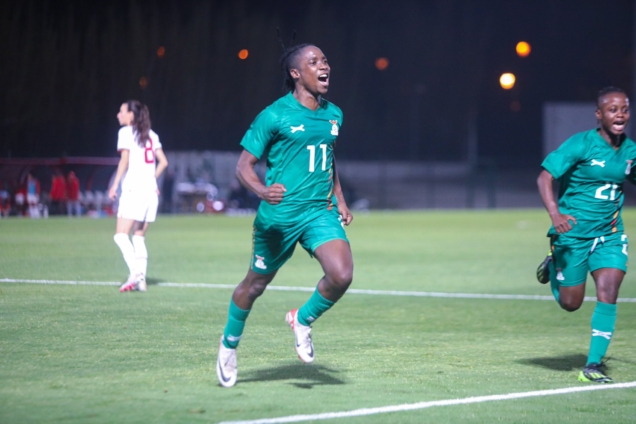
    Meanwhile, Zambia overturned a first-leg deficit to qualify ahead of Morocco. Despite a 2-1 loss at home, they secured a 2-0 win in the second leg for a 3-2 aggregate score.

    Barbra Banda, the Orlando Pride striker, scored the opener and a penalty in the 105th minute to seal Zambia’s qualification.

    They are drawn in Group B alongside the United States, Germany, and Australia, and will kick off their campaign against the USWNT in Nice on July 25.

  • Air pollution crisis grips Nigeria, South Africa, and Egypt through power sector

    Air pollution crisis grips Nigeria, South Africa, and Egypt through power sector

    According to a recent report by environmental NGO Greenpeace, Nigeria, South Africa, and Egypt are experiencing the highest levels of air pollution in Africa.

    These countries have also recorded a significant number of the continent’s nearly one million annual air pollution-related deaths.

    The report highlights that exposure to air pollution is the second leading risk factor for death in Africa.

    South Africa, in particular, has been identified as a major air polluter on the continent, with high associated health risks.

    The country is home to two of the world’s largest and six of Africa’s biggest nitrogen dioxide emission hotspots.

    Of particular concern are the thermal power stations in South Africa, operated by state power provider Eskom, which are among the world’s 10 largest sulphur dioxide emission points.

    This contributes significantly to the country’s air pollution levels.

    “The pollution from coal plants like those operated by Sasol in our region has not only tarnished our health, leading to failed health assessments and chronic diseases… but it has also clouded our future, leaving us jobless as companies opt to hire from outside, citing our unfitness for work, ” Fana Sibanyoni, an activist from the coal-rich Mpumalanga province.

    The region’s multiple coal mines and coal-fired power stations have been linked to extreme air pollution levels.

  • Zack Orji is not dead – Actors Guild of Nigeria debunks rumours

    Zack Orji is not dead – Actors Guild of Nigeria debunks rumours

    The National President Actors Guild of Nigeria, Emeka Rollas Ejezie, has debunked rumors purporting the death of Nollyhood actor Zack Orji.

    In an Instagram post, Emeka shared shared a photo of the nigerian actor with the caption, “Mr Zack Orji is alive 💯💯💯💯💯💯 Please ignore misschief makers who enjoy circulating fake news. This is to show how wicked some people can be. It is totally unacceptable. He will not die but live to declare the good works of God in Jesus name
    🙏🙏🙏🙏🙏🙏🙏”

    Meamwhile, the Veteran actor was seen in a critical condition at the beginning of 2023, in a widely circulated video, which prompted various reactions from Nigerians about what could have happened to the actor, amidst various health concerns to the Nollywood veterans.

    The Veteran actor was seen in a critical condition on the eve of new year, in a widely circulated video, which prompted various reactions from Nigerians about what could have happened to the actor, amidst various health concerns to the Nollywood veterans.

    But reports came in later that his condition was stable, thus Zack Orji is doing well currently.

    Hence, the public is encouraged to bear him up in prayers so he can live even longer on earth.

  • Close to 300 kidnapped schoolchildren freed in Nigeria

    Close to 300 kidnapped schoolchildren freed in Nigeria

    Local officials announced on Sunday that nearly 300 Nigerian schoolchildren who were kidnapped in the northwestern state of Kaduna have been released, over two weeks after they were abducted from their school and taken into the forests.

    Since 2014, over 1,400 students have been abducted from Nigerian schools, following the infamous kidnapping of hundreds of schoolgirls by Boko Haram militants in Borno state’s Chibok village. Recent years have seen a concentration of abductions in the northwestern and central regions, where numerous armed groups target villagers and travelers for ransom.

    Kaduna state Gov. Uba Sani did not provide specific details regarding the release of the 287 students abducted from their school in the remote town of Kuriga on March 7, with at least 100 of them aged 12 or younger. In his statement, he expressed gratitude to Nigerian President Bola Tinubu, particularly for ensuring the safe release of the abducted school children.

    President Tinubu had pledged to rescue the children without paying any ransom, though it is common for families to arrange ransom payments for kidnappings. Official acknowledgment of such payments is rare in Nigeria.

    No group has claimed responsibility for the Kaduna kidnapping, which locals attribute to bandit groups notorious for mass killings and ransom kidnappings in the conflict-affected northern region. Many of these groups comprise former herders engaged in conflicts with settled communities.

    According to sources familiar with the security situation in Nigeria’s northwest, the identity of the abductors is known. Murtala Ahmed Rufa’i, a professor of peace and conflict studies at Usmanu Danfodiyo University, and Sheikh Ahmad Gumi, a cleric involved in negotiations with the bandits, stated that the abductors are hiding in the vast and ungoverned forests of the region.

    Arrests are infrequent in Nigeria’s mass kidnappings, as victims are typically released only after families pay ransoms or through negotiations with government and security officials.

    The Kaduna governor expressed gratitude to Nigerian security forces and officials for their efforts leading to the release of the students.

    “I spent sleepless nights with the National Security Adviser, Mal. Nuhu Ribadu … fine-tuning strategies and coordinating the operations of the security agencies, which eventually resulted in this successful outcome,” he said.

  • Over 280 Nigerian students kidnapped by gunmen freed

    Over 280 Nigerian students kidnapped by gunmen freed

    Reports from officials indicate that more than 280 children in Nigeria who were kidnapped from the town of Kuriga, have been released unharmed.

    The governor of Kaduna state, Uba Sani, didn’t say what happened when the kidnapped people were set free. This happened a few days before the kidnappers wanted money.

    A group of kids, aged eight to 15, and one teacher were taken by force on March 7th.

    Criminal groups called bandits have taken thousands of people captive in the past few years, especially in the north-west.

    But, there were fewer children being kidnapped last year until this week.

    This time, the people who took someone wanted $690,000 (£548,000) as a payment to let the person go. The government said it will not give any money to set someone free.

    Governor Sani thanked President Bola Tinubu for making sure that the kidnapped Kuriga schoolchildren were set free without getting hurt.

    Mr Sani said that the Nigerian Army did a great job in showing that they have the courage, determination, and commitment to fight criminal activity and make our communities safe again.

    The big kidnapping happened on March 7th in the morning while students were all together for a school meeting.

    Witnesses saw some students in the school yard around 8:30am when a lot of gunmen on motorcycles came through the school. They took away 187 students from the high school and 125 from the nearby elementary school. Twenty-five people came back later.

    A 14-year-old student was shot and killed by the gunmen.

    Many kidnappings in north-west Nigeria, like in Kaduna state, are thought to be done by criminals who want to get money from ransom.

    In 2022, a law was passed in Nigeria to try to stop the growing problem of kidnapping. The law made it illegal to pay kidnappers ransom money. The punishment is being in jail for at least 15 years, but no one has ever been caught.

    Earlier this year, a family in Abuja said the police were wrong when they claimed to have rescued their kidnapped daughters. The family had to pay a ransom to get the girls back.

    Many people around the world were very angry when Boko Haram kidnapped almost 300 girls in the town of Chibok in Nigeria in 2014.

    Most of the people who were taken have been released or got away, but there are still many people who are missing.

  • Nigerian actor arrested over bribery charges

    Nigerian actor arrested over bribery charges

    A renowned actress in Nigeria‘s vibrant film industry, Kannywood, has recently made headlines after being arrested for allegedly attempting to bribe a police officer in Kano state.

    The incident involved a sum of 250,000 naira (£137; $175), which Umar purportedly offered to have her impounded car released.

    According to the police, Umar’s vehicle was seized over a year ago under suspicion of being purchased with proceeds from fraud allegedly committed by her boyfriend, Ramadan Inuwa, who is currently wanted on charges related to obtaining money by false pretenses.

    Umar’s lawyer, Adama Usman, vehemently denies the charges, stating that it was the police officer who initially solicited money.

    Usman claims that Umar was coerced into the situation and asserts that they will vigorously defend her innocence in court.

    “We won the initial case in court where they were trying to link her with her boyfriend’s activities which she has no hands in,” stated Mrs. Usman. “But the police are yet to obey court orders four months in by still holding on to her car.”

    The police, represented by spokesman Bashir Muhammad, allege that Umar promised more money after giving the initial sum to the officer.

    Despite being released on bail, the actress faces a legal battle ahead as the case unfolds.

    Umar, known for her extensive work in the film industry and massive social media following, remains a prominent figure in Nigerian entertainment.

  • Nigeria’s richest woman allegedly part ways with his husband

    Nigeria’s richest woman allegedly part ways with his husband

    In a surprising development, Folorunsho Alakija, Nigeria‘s wealthiest woman, is reportedly facing a marital crisis after over three decades of marriage to her husband, Modupe Alakija.

    The couple, long prominent in Nigerian society, has chosen to separate.

    According to The Will newspaper, the former socialite, now a gospel minister, has officially split from her spouse. Sources close to the situation suggest that frequent disagreements led to their decision to live apart.

    Modupe Alakija, once a regular presence at their upscale residence in Ikoyi, Lagos, is now said to spend nights elsewhere.

    The strain in their relationship has prompted Folorunsho Alakija to seek complete privacy, while her husband seeks alternative housing in Ikoyi.

    The specific reasons for their marital discord remain undisclosed, but some speculate that their status in Nigerian society may have influenced their united front until now.

    Folorunsho Alakija, the founder of FAMFA Oil Limited, has not only made a name for herself as a successful businesswoman but also as a philanthropist and minister. This recent upheaval coincides with rumors about her health, particularly regarding her vision.

    As the nation observes, the end of their 30-year marriage marks a significant chapter in the lives of these influential individuals. We extend our wishes for strength and healing during this difficult period.

  • Bola Tinubu of Nigeria suspends overseas travel for government officials

    Bola Tinubu of Nigeria suspends overseas travel for government officials


    Nigeria’s President Bola Tinubu plans to implement a three-month restriction on ministers and other government officials from utilizing publicly funded foreign travel.

    According to Mr. Tinubu’s chief of staff, the decision stems from the president’s concerns regarding the escalating expenses associated with official travel by public officials. The ban is scheduled to commence on April 1.

    Critics have targeted President Tinubu and his administration, particularly for their frequent overseas trips. The controversy intensified following the government’s sponsorship of over 400 individuals to attend the COP28 climate conference in Dubai last November.

    Since assuming office in May 2023, President Tinubu has embarked on more than 15 foreign trips. Reports suggest that he has expended at least 3.4 billion naira ($2.2 million; £1.8 million) on both domestic and foreign travel within the first six months of his presidency.

    This expenditure surpasses the budgeted amount for 2023 by 36%, as reported by the Nigerian newspaper Punch in January, citing GovSpend, a civic tech platform that monitors government spending.

    Femi Gbajabiamila, the chief of staff to Mr. Tinubu, stated that the travel ban aims to reduce costs amidst Nigeria’s current economic challenges and the imperative for responsible fiscal management. Nigeria is currently facing one of its most severe cost-of-living crises in decades, resulting in widespread hardship and discontent.

    The three-month suspension of official travel by government officials represents Mr. Tinubu’s latest effort to address public criticism. In January, the Nigerian president announced a 60% reduction in the size of official travel delegations, including cuts to his own entourage.

    When the ban takes effect in April, government officials will only be permitted to undertake foreign trips deemed absolutely necessary, requiring President Tinubu’s approval at least two weeks prior to travel. Mr. Gbajabiamila emphasized that the travel halt will enable government officials to concentrate on their respective mandates for effective service delivery.

    Despite tightening restrictions on travel by government officials, Mr. Tinubu has not indicated whether he will reduce his own trips.

    In the past, the president and his representatives have justified his trips as essential for tackling the economic challenges he is accused of neglecting.

  • Check out Nigeria’s new home & away kits for 2024

    Check out Nigeria’s new home & away kits for 2024

    Renowned athletic apparel company Nike has unveiled the 2024 home and away uniforms for Nigeria’s national football team, the Super Eagles.

    The home kit, primarily white, showcases green-white-green accents reminiscent of the Nigerian flag on the sleeves and shorts, featuring a subtle eagle motif on the front along with the word “Naija.”

    Meanwhile, the away kit features the classic Nigerian green hue and prominently displays the emblem of the Nigerian Football Federation.

    This unveiling marks the return of white as a primary colour for the Super Eagles’ home kit after a three-year hiatus from wearing white jerseys.

    The Super Eagles are set to face Ghana on March 22, followed by a match against Mali in Marrakech, Morocco, and it is anticipated that the team will sport their new kits during these upcoming matches.

  • Ghana’s economic crisis has forced Unilever Ghana to move tea production to Nigeria – Ato Forson

    Ghana’s economic crisis has forced Unilever Ghana to move tea production to Nigeria – Ato Forson

    The Minority Leader in Parliament, Dr. Cassiel Ato Forson, has revealed that Unilever Ghana has decided to relocate its tea production operations to Nigeria due to the ongoing economic challenges in Ghana.

    During his response to President Akufo-Addo’s 2024 State of the Nation address, Dr. Ato Forson expressed concern that other companies might also relocate due to the country’s current economic downturn, emphasizing the need for Ghanaians to be worried about this trend.

    “Again, Mr Speaker, Unilever Ghana, which has for a very long time been producing its famous Lipton tea in Ghana, has stopped its tea production here. Unilever has relocated its tea production to Nigeria.”

    “We have lost jobs by exporting the Lipton tea production to Nigeria. This is bad news for Ghanaian employees!.”

    “Again, Mr Speaker, Unilever Ghana has not been able to commence its Pepsodent production in Ghana after President Akufo-Addo commissioned the plant, five years ago. This is as a result of the worsening business environment.”

    As a former Deputy Finance Minister, Dr. Ato Forson’s remarks highlight the growing apprehension about Ghana’s economic stability and its impact on local businesses.

    Dr. Ato Forson expressed disappointment with the government’s performance and predicted that it would be remembered as the least successful in Ghana’s history.

    “Never in the history of Ghana was a government so hyped up, with massive goodwill and huge fiscal space enough to transform our country as this Akufo-Addo/Bawumia government. Yet, this government and the NPP have gone down as the worst-performing government in the history of Ghana!

    “Mr Speaker, I can say without any doubt that President Akufo-Addo and Vice President Bawumia who promised to transform Ghana within 18 months have been a monumental failure. They promised heaven but delivered hell! Mr Speaker, deep down in the hearts of members of the NPP, including my colleagues on the opposite side, they accept that the Akufo-Addo/Bawumia government has been an unmitigated disaster!”

    He criticized the government for the chaos it has caused, highlighting that the nation’s economic situation is vastly different from the positive image portrayed by the President during the SONA.

    “Each time President Akufo-Addo gets the opportunity to tell the people of Ghana about how he and his government got us into this mess, he chooses to bury his head in the sand, like the proverbial ostrich. President Akufo-Addo and Alhaji Bawumia pretend not to see the mess that they have created. They still live in a bubble of denial over the true state of Ghana today.

    “Hon. Speaker, Parliament remains a House of record, and the record must reflect nothing but the true state of our nation. Our reality today stands in sharp contrast with the glossy picture the President depicted to the people of Ghana.”

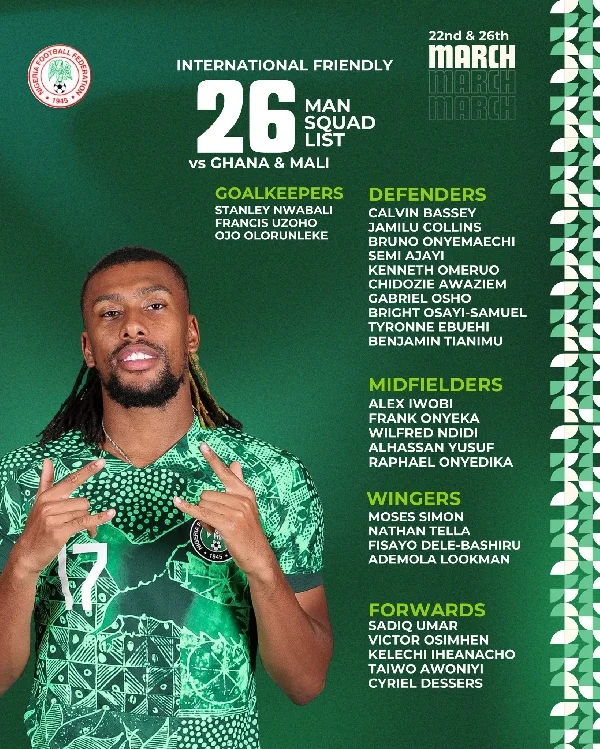
  • Nigeria releases lineup for upcoming friendly against Ghana

    Nigeria releases lineup for upcoming friendly against Ghana

    Nigeria and Ghana are scheduled to clash in an international friendly on March 22 in Marrakech as both teams aim to recover from their disappointments at the 2023 Africa Cup of Nations held in Ivory Coast.

    The Nigerian Football Federation (NFF) has unveiled its squad for the upcoming match.

    The Super Eagles, who finished as runners-up in the tournament following a heartbreaking loss to hosts Ivory Coast in the final, seek to rebound and establish momentum for future engagements.

    However, the NFF has yet to appoint a new coach following the resignation of Portuguese trainer Jose Peseiro.

    Meanwhile, Ghana had a dismal outing in the Africa Cup of Nations, exiting the competition in the group stage with only two points from three matches.

    The Black Stars are currently without a permanent head coach, but the Ghana Football Association (GFA) is anticipated to announce a new appointment before the friendly against Nigeria.

  • 287 pupils kidnapped by gunmen in most recent Nigerian school raid – Headteacher

    287 pupils kidnapped by gunmen in most recent Nigerian school raid – Headteacher

    Gunmen raided a school in the northwest region of Nigeria on Thursday and abducted 287 students.This is the second time in less than a week that a large number of students have been kidnapped in Nigeria.

    Many students are being taken from schools in northern Nigeria. This has been happening a lot and has been worrying people since 2014, when Islamic extremists kidnapped more than 200 schoolgirls in Chibok village in Borno state. Lately, many kidnappings have been happening in the northwestern and central areas. Armed groups are taking villagers and travelers and asking for a lot of money to let them go.

    People who live there told the news organization The Associated Press that on Thursday, some attackers surrounded the school that is owned by the government in the town of Kuriga in Kaduna State. This happened just as the children were getting ready to start their school day around 8 a. m

    Government officials previously stated that over 100 students were captured in the attack. Sani Abdullahi, the person in charge of the school, spoke to the governor of Kaduna. “When Uba Sani visited the town, he found out that 287 people were missing after a headcount. ”

    “We will make sure that all the children return. ” “We are working with the police and other security teams,” the governor told people in the village which is 55 miles away from the capital.

    No one said they did the attack on Thursday, but people think it was done by armed herders. They have been accused of attacking and kidnapping people for money after fighting with local communities for a long time.

    The police and the governor came hours later to look for more things, while people and parents waited for information.

    The attack happened a few days after over 200 people, mostly women and children, were taken by extremists in northeastern Nigeria.

    Women, kids, and students are often kidnapped in the conflict-affected northern area, and many of them are only released when their families pay a lot of money.

    Experts say that both attacks show that Nigeria’s security situation is getting worse. In 2023, several hundred people died because of the country’s security crisis.

    Bola Tinubu became the president of Nigeria last year. He said he would stop the fighting. But according to Oluwole Ojewale, a researcher at the Institute for Security Studies, there hasn’t been much improvement in security under Tinubu’s leadership.

  • Binance halts transactions with Nigeria’s local currency amid dispute

    Binance halts transactions with Nigeria’s local currency amid dispute

    Largest cryptocurrency firm globally, Binance, has initiated a halt on all transactions involving Nigeria’s local currency amidst an ongoing dispute with the authorities.

    The Nigerian government has leveled accusations against the company, alleging its involvement in the devaluation of the naira through manipulation of foreign exchange rates.

    Additionally, the central bank governor has asserted that cryptocurrency firms are being exploited for money laundering activities.

    Last week, officials demanded nearly $10 billion in compensation from Binance, escalating tensions between the company and Nigerian regulators.

    As the naira continues to weaken, many Nigerians view cryptocurrency exchanges as a means to safeguard their savings.

  • African Games: Uganda net late goal to beat Nigeria to claim all three points

    African Games: Uganda net late goal to beat Nigeria to claim all three points

    Nigeria’s Flying Eagles faced a tough challenge in their opening game of the 2023 African Games as they were defeated by Uganda in a thrilling encounter at the Accra Sports Stadium.

    Ladan Bosso’s Nigeria U20 side suffered a setback in their African Games campaign with a 2-1 loss to Uganda.

    Despite responding swiftly to Usama Arafat’s 33rd-minute opener with an equalizer from Sadiq Isiyaka before halftime, Nigeria ultimately fell short as Uganda secured all three points with a brilliant long-range strike in the dying moments of the game.

    Nigeria struggled to match Uganda’s intensity throughout the match, with Arafat’s early goal exposing defensive vulnerabilities. While Nigeria showed resilience to level the score, Uganda’s persistence paid off as they clinched victory with a spectacular long-range effort.

    In another match played on Thursday, Senegal claimed a narrow 1-0 win over South Sudan, with Lamine Sadio scoring the only goal of the game.

  • Binance halts Nigerian Naira services

    Binance halts Nigerian Naira services

    Binance, one of the world’s largest cryptocurrency exchanges, has announced that it will discontinue all Nigerian Naira (NGN) services.

    This decision will impact users who hold NGN balances on the platform and those who use NGN for trading or other transactions.

    According to the announcement, users are encouraged to withdraw their NGN balances, trade their NGN assets, or convert NGN into cryptocurrency before the discontinuation of NGN services.

    Binance will not support deposits of NGN after 2024-03-05 14:00 (UTC), and withdrawals of NGN will not be supported after 2024-03-08 06:00 (UTC).

    Any remaining NGN balances in users’ Binance accounts after 2024-03-08 08:00 (UTC) will be automatically converted to USDT at a conversion rate of 1 USDT = 1,515.13 NGN.

    This conversion rate is based on the average closing price of the USDT/NGN trading pair on Binance Spot over the last seven days. The conversion process may take up to 24 hours or longer, and USDT tokens will be credited to users’ Spot wallets.

    Binance will also delist all existing NGN spot trading pairs, including BTC/NGN and USDT/NGN, at 2024-03-07 03:00 (UTC). All open spot orders with respect to these trading pairs will automatically be closed when trading ceases. Users are advised to ensure they have not selected “Hide Small Balances” in all of their wallets to view their assets after trading ceases.

    Additionally, Binance Convert will delist NGN and all corresponding pairs at 2024-03-07 02:00 (UTC), and Binance Auto-Invest will delist NGN after 2024-03-06 03:00 (UTC). Binance P2P had already delisted all NGN trading pairs at 2024-02-28 15:00 (UTC), and Binance Pay will remove NGN from the list of supported payment options at 2024-03-06 03:00 (UTC).

    Binance expressed gratitude for the support of its users as it continues to build the crypto ecosystem in a way that promotes transparency and long-term, sustainable growth.

  • Nigerian government forces out world’s largest crypto broker; blames it for depreciation in national currency – Bright Simons

    Nigerian government forces out world’s largest crypto broker; blames it for depreciation in national currency – Bright Simons

    The Vice President of IMANI in charge of research at the IMANI Centre for Policy and Education, Bright Simons, has disclosed the Nigerian government’s action of forcing out the world’s largest crypto broker, Binance, due to the country’s depreciation of the national currency.

    According to the Nigerian government, Binance manipulated foreign exchange rates through currency speculation and rate-fixing, which have seen the naira lose nearly 70% of its value in recent months.

    Two Binance executives were arrested in Nigeria earlier in the week.

    The Nigerian government says it has demanded almost $10bn (£8bn) in compensation from the cryptocurrency firm, Binance.

    Nigeria is Africa’s biggest economy and also one of the world’s biggest cryptocurrency markets.

    On Tuesday, Nigeria’s central bank governor Olayemi Cardoso said Binance Nigeria had moved $26bn worth of untraceable funds.

    Binance is understood to be one of the most popular cryptocurrency platforms in the country.

    To the frustration of Nigerian users, Binance and several other cryptocurrency firms have been suspended in the country in recent weeks including Coinbase, Kraken, Forextime, OctaFX, Crypto and FXTM in an attempt to halt the slide of the naira.

    As well as the collapse of the naira, the government also says cryptocurrency is used for money-laundering and funding terror.

    The “anonymity and privacy inherent in the cryptocurrency system are what draw individuals, particularly those with illicit intentions, towards its use,” said a recent report by the Nigerian Financial Intelligence Unit.

    Central bank governor Mr Cardoso said on Tuesday that “illicit flows” had been spotted on some cryptocurrency platforms in Nigeria. No specific firms were named as culprits.

    In another measure intended to curb foreign-currency trading, Nigeria has closed thousands of bureaux de change.

    Nigeria’s central bank has been under pressure to stabilize the national currency, the naira, which currently exchanges at 1,595 naira to US$1, compared to about 460 a year ago.

    The collapse of the naira has worsened the cost-of-living crisis. High food and commodity prices – including fuel and transport – have led to protests in recent weeks.

    See post by Bright Simons below:

  • Nigerian Disney show Iwájú receives poor review from critics

    Nigerian Disney show Iwájú receives poor review from critics

    Disney’s latest venture, the animated series Iwájú on Disney+, is making waves for its “top-notch” animation, “stellar voice acting,” and a “delightful” portrayal of futuristic Nigeria, according to critics.

    The collaboration with Nigerian production company Kugali marks a historic milestone for Disney+, showcasing a commitment to boosting African representation in animation.

    Centred around Tola, a young girl navigating a sci-fi version of Lagos, Iwájú introduces viewers to a world where luxury cars fly over bustling markets, supervillains wield bionic arms, and AI pets are a must-have.

    Despite praise for its inventiveness, some critics note flaws, with concerns about the show’s pacing and character development.

    The Guardian applauds Iwájú as a “delightful coming-of-age adventure” but acknowledges its “frantically paced” narrative.

    Similarly, Screengrab criticises pacing and character development but acknowledges the distraction provided by the “top-notch animation.”

    Social media users with access to the show call it an “instant classic” and “authentic.”

    While the series receives positive global reviews, some Nigerians express frustration as Disney+ is not available in their country.

    Disney responds by announcing that Nigerians with DSTV subscriptions can watch Iwájú on the Disney Channel starting in late April and early May.

    Australian news outlet ABC praises Iwájú for being “uniquely African” yet universally appealing, while Mashable describes the show as “gorgeous” with covetable gadgets.

    Nigeria’s Culture Minister hails the series as a monumental moment, asserting, “This is huge for Nigeria because at last, we now have our own stories being told from our own perspective.”

    Kugali co-founder Hamid Ibrahim, who once vowed to compete with Disney in the African market, reflects on their collaboration in a documentary.

    He hopes Iwájú will inspire the next generation of artists and bring about meaningful change.

    The Guardian’s review notes that Iwájú taps into Afrofuturism, presenting a “solid sense of Nigerian identity.”

    However, it assures viewers outside Nigeria that universal themes like self-identity, family, and independence make the series relatable regardless of cultural background.

    Watch video below:


  • Obasanjo launches new book on leadership today

    Obasanjo launches new book on leadership today

    Former Nigerian President Olusegun Obasanjo is set to launch his new book on leadership, ‘The Art of Leading: Unconventional Wisdom from Biblical Leaders’ in Abeokuta, Nigeria, later today.

    Former President of Ghana, John Mahama, has been invited to chair the ceremony. In an X post, the NDC flagbearer, Mr Mahama noted that he is looking forward to Tuesday’s grand lecture to celebrate his 87th birthday on the theme, ‘Quality Leadership and Inclusive Democracy as Catalysts for Development in a Strife-Ridden World.’

    Olusegun Obasanjo is a prominent Nigerian statesman who has played a significant role in Nigerian politics and governance. He was born on March 5, 1937, in Abeokuta, Nigeria.

    Obasanjo served as Nigeria’s military head of state from 1976 to 1979 after the assassination of General Murtala Mohammed. He then became Nigeria’s president, serving two terms from 1999 to 2007, making him the first Nigerian leader to serve as both a military ruler and a civilian president.

    During his presidency, Obasanjo implemented various reforms aimed at addressing corruption, improving governance, and fostering economic development. He also played a key role in Nigeria’s return to democracy after years of military rule.

    Obasanjo is known for his outspokenness and has been a vocal critic of corruption and mismanagement in Nigeria. He has also been involved in various international peacekeeping and mediation efforts, including serving as a United Nations peace envoy to the Democratic Republic of the Congo.

    Beyond politics, Obasanjo is a prolific author, writing several books on African development, leadership, and governance. He remains an influential figure in Nigerian and African politics, often sought after for his wisdom and advice on a range of issues.

  • Binance: Nigeria demands $10b payment from cryptocurrency firm

    Binance: Nigeria demands $10b payment from cryptocurrency firm

    Binance, recognized as one of Nigeria’s most popular cryptocurrency platforms, has come under scrutiny from the Nigerian government.

    The government claims to have demanded nearly $10 billion in compensation from Binance, alleging that the platform engaged in manipulation of foreign exchange rates through currency speculation and rate-fixing.

    This alleged manipulation has purportedly contributed to the significant devaluation of the naira, with the currency losing nearly 70% of its value in recent months.

    In response to these allegations, two Binance executives were reportedly arrested in Nigeria earlier in the week. Despite these developments, Binance has not provided any official comment in response to requests from the BBC.

    Nigeria, being Africa’s largest economy, holds significant importance in the global cryptocurrency market. The central bank governor, Olayemi Cardoso, disclosed on Tuesday that Binance Nigeria had facilitated the movement of $26 billion worth of untraceable funds.

    “These allegations are weighty,” Tilewa Adebajo CFG Advisory tells the BBC. “That’s a huge sum – even more than the annual Nigeria diaspora remittances of $24bn”.

    “The government must have done their homework, hence the allegations.”

    According to Reuters news agency, cryptocurrency transactions in Nigeria accounted for approximately 12% of the country’s total income or GDP in the year leading up to June 2023.

    While cryptocurrencies are not prohibited in Nigeria, firms are required to register in order to operate legally, as stated by the government. A special adviser to Nigeria’s president informed the BBC that Binance, a prominent cryptocurrency platform, had failed to comply with this requirement.

    Since assuming office last year, President Bola Tinubu has abolished the policy of pegging the naira to the dollar, allowing traders to engage in buying and selling the currency at rates determined by the market.

    However, special advisor Bayo Onanuga expressed that the recent collapse in the currency’s value was not a result of typical market activity.

    “All of a sudden the exchange rate went through the roof… and it was being caused by the people on Binance platform,” he told the BBC Newsday programme.

    “The government could not just fold its hands and allow this thing to continue.”

    Binance is widely recognized as one of the most popular cryptocurrency platforms in Nigeria. However, to the disappointment of Nigerian users, Binance and several other cryptocurrency firms have faced suspension in recent weeks, including Coinbase, Kraken, Forextime, OctaFX, Crypto, and FXTM. This move by the government aims to halt the decline of the naira.

    In addition to concerns about the weakening naira, the government has cited the use of cryptocurrency for money laundering and funding terrorism. According to a recent report by the Nigerian Financial Intelligence Unit, the anonymity and privacy inherent in the cryptocurrency system attract individuals, particularly those with illicit intentions, to its use.

    Central bank governor Mr. Cardoso revealed on Tuesday that “illicit flows” had been observed on some cryptocurrency platforms in Nigeria. However, no specific firms were named as culprits.

    In another effort to regulate foreign currency trading, Nigeria has shut down thousands of bureaux de change.

    The Central Bank of Nigeria has faced mounting pressure to stabilize the national currency, the naira, which currently exchanges at 1,595 naira to US$1, compared to about 460 a year ago.

    The depreciation of the naira has exacerbated the cost-of-living crisis. High prices of food and commodities, including fuel and transportation, have sparked protests in recent weeks.

  • Nigeria seeks $10bn from Binance over alleged currency manipulation

    Nigeria seeks $10bn from Binance over alleged currency manipulation

    The Nigerian government has formally requested compensation of nearly $10 billion (£8 billion) from the cryptocurrency company Binance, alleging that it engaged in manipulative practices affecting foreign exchange rates through currency speculation and rate-fixing.

    These actions are claimed to have resulted in a significant depreciation of the Nigerian naira, losing almost 70% of its value in recent months.

    Earlier in the week, two Binance executives were arrested in Nigeria, and the company has not yet responded to inquiries from the BBC.

    Nigeria, as the largest economy in Africa and a major player in the global cryptocurrency market, has been grappling with the implications of these allegations.

    The central bank governor, Olayemi Cardoso, asserted that Binance Nigeria moved $26 billion in untraceable funds. Cryptocurrency transactions, constituting approximately 12% of Nigeria’s GDP, occurred in the year leading up to June 2023, according to Reuters.

    “These allegations are weighty,” Tilewa Adebajo CFG Advisory tells the BBC. “That’s a huge sum – even more than the annual Nigeria diaspora remittances of $24bn”.

    “The government must have done their homework, hence the allegations.”

    While cryptocurrencies are not illegal in Nigeria, the government insists that firms must register to operate within the country.

    Binance allegedly failed to comply with this requirement, as claimed by a special adviser to Nigeria’s president.

    The recent surge in exchange rates, leading to the abrupt collapse of the naira, is attributed to activities on the Binance platform, prompting the government’s intervention.

    Binance, a popular cryptocurrency platform in Nigeria, has faced suspension in the country, along with other firms like Coinbase, Kraken, Forextime, OctaFX, Crypto, and FXTM, in an attempt to stabilize the naira.

    The government also accuses cryptocurrencies of being utilized for money laundering and terror financing, citing the anonymity and privacy features of the cryptocurrency system.

    In response to the economic challenges posed by the depreciation of the naira, Nigeria has taken measures such as closing numerous bureaux de change and putting pressure on its central bank to stabilize the national currency. The current exchange rate is 1,595 naira to US$1, a significant decline from about 460 a year ago. This currency collapse has contributed to a cost-of-living crisis, including high food and commodity prices, fueling protests in recent weeks.

  • 17 dead over outbreak of Meningitis in Nigeria

    17 dead over outbreak of Meningitis in Nigeria

    An outbreak of meningitis in Nigeria’s northeastern Yobe state has resulted in the tragic loss of at least 17 schoolchildren across five schools, as confirmed by local authorities.

    According to Mohammed Sani-Idris, the state commissioner for education, among the victims are students from both primary and boarding secondary schools.

    The total number of suspected cases stands at 473, highlighting the severity of the situation.

    Meningitis, characterized by acute inflammation of the brain and spinal cord’s outer layers, poses a significant threat to life if not promptly diagnosed and treated. Vaccination stands as an effective preventive measure against this infectious disease.

    Earlier, the Nigeria Centre for Disease Control and Prevention (NCDC) issued a public health advisory emphasizing the heightened risk of meningitis during the dry season, especially in densely populated areas with poor ventilation.

    The majority of meningitis cases in Nigeria occur within the “Meningitis Belt,” encompassing all 19 states in the northern region. This geographical concentration underscores the importance of targeted preventive measures and vigilant surveillance to mitigate the impact of such outbreaks.