A Nigerian man recently amazed many when he posted a photo on the microblogging platform X showcasing the luxurious car he acquired three years after successfully quitting smoking.
In his post, he disclosed that the funds for this extravagant purchase were accumulated during the period he refrained from smoking.
Sharing images of his new vehicle, a Ford F-150, the young man expressed gratitude for his decision to quit smoking, asserting that without this lifestyle change, he wouldn’t have had the financial means to buy his impressive new car.
The new starting prices for the Ford F-150 Lightning will range from $54,995 for an entry-level Pro model to $92,995 for a Platinum Black trim.
He also pledged to share a detailed update on his journey to quitting smoking, potentially inspiring others to make positive changes in their lives.
Encouraged by his revelation, Twitter users flooded his comment section with congratulations, expressing admiration for his accomplishment.
Meanwhile, some users inquired humorously about the “secret” substance he might have been saving money on to afford such a high-end car within just three years.
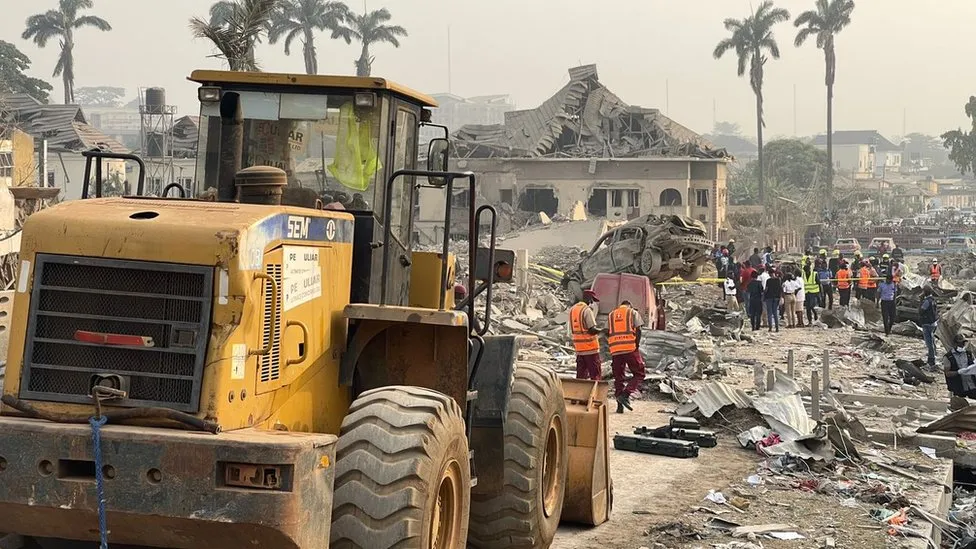
A big blast in the Nigerian city of Ibadan killed two people and hurt 77 others last night.
Rescue and recovery work is still happening in seven neighborhoods of Nigeria’s third biggest city.
The reason for the explosion is not known yet, but the officials think it could have been caused by mining explosives that were kept in a house.
Pictures show buildings almost completely destroyed and vehicles ruined by explosions.
People posted scary videos on social media. One person saw a mall being destroyed in Bodija, a neighborhood in the city.
A big noise woke us up at 07:30 in the evening. “Domino’s Pizza and Ace Mall in Bodija got destroyed,” he said.
The police said they will look into the explosion quickly.
“The security agencies found out that illegal miners were living in a house in Bodija and had kept explosive devices there, which caused the explosion,” said the regional governor Seyi Makinde.
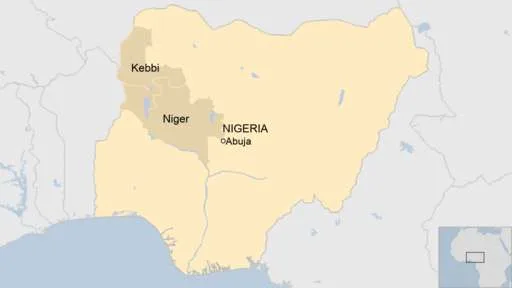
At least eight people have died and many more are still missing after a boat overturned in a river in Nigeria’s north-central Niger state, according to the emergency services.
The people hurt are from Dugga village. They were going to Kebbi state to sell grain and sugar cane for their business.
According to the Niger state Emergency management agency (Sema), the accident caused eight people to die and many more are still missing.
Sema spokesperson Ibrahim Hussaini told the media that five women and three men passed away.
Ten people were saved, and the search and rescue mission is still happening, he said.
Between 2018 and 2023, over 1,200 people died in boat accidents in Nigeria, as reported by the International Centre for Investigative Reporting (ICIR).
The accidents were caused by too many people, not enough life jackets, and not taking care of the boats properly.
In a devastating incident in Nigeria’s north-central Niger state, a boat carrying residents of Dugga village capsized, resulting in at least eight fatalities and dozens still missing.
The passengers were en route to neighboring Kebbi state for business purposes, intending to sell grain and sugar cane.
The Niger state Emergency Management Agency reported that the accident claimed the lives of five women and three men, with ten individuals rescued.
Search and rescue operations are ongoing. Boat accidents have been a recurring issue in Nigeria, with over 1,200 lives lost between 2018 and 2023, attributed to overcrowding, lack of life jackets, and inadequate maintenance.
The court decided that the money in the Jersey bank account was probably stolen by Nigerian government officials in 2014.
The assets will be discussed with Nigeria to be given back.
Money was moved in a way that looked like the government was buying weapons, but it was actually being used for something else during attacks by Boko Haram in Nigeria from 2009 to 2015.
‘People who have been hurt by a criminal’
The Jersey government said that it’s likely that the money meant for legal weapons deals was moved to and from foreign bank accounts through fake companies.
The Attorney General’s office said they think the money went to the former ruling party’s family members and was shared among its members during the 2015 general elections in Nigeria. They also said the tainted property was going to be used for this “illegal transaction”.
Mark Temple, who is a lawyer for the King, said that the Jersey government had worked closely with Nigeria to get back the property for the Nigerian people.
He said: “The 2018 Forfeiture Law is doing a good job in getting back stolen money from corruption and giving it back to the people who were hurt by crime. ”
“I plan to make a deal with Nigeria to get back something valuable. “
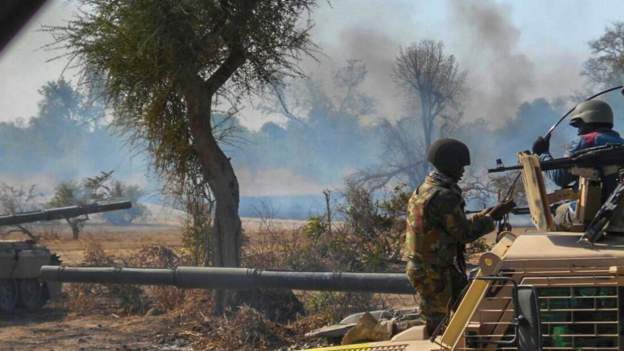
People in a village in Nigeria‘s Katsina state are running away from their homes because some armed men attacked a nearby military camp, set vehicles on fire, and stole things.
Over 100 armed men attacked a military base in Batsari, Katsina state on Sunday night. The base houses soldiers, police, and other security forces.
An army official told the Premium Times news website that the attackers set fire to two army vehicles. No soldiers died, said the source.
A person who lives there told the news that the attackers, who came on bikes and a truck, defeated the soldiers after three hours of shooting.
After the attack on the army base, the armed men went to Nahuta and stole a lot of things from the shops and houses, including goods and animals worth a lot of money.
The attack has made a lot of people very scared. Many of them have run away to nearby villages to stay safe, according to reports.
Criminal gangs called bandits are causing a lot of trouble in Nigeria. They kidnap people and ask for money in exchange for their release. They have killed many people, even though the military has tried to stop them.
Jersey’s Royal Court has ruled that stolen assets amounting to £6.9 million ($8.9 million) can be repatriated to Nigeria.
The decision follows a forfeiture notice served by Jersey’s Attorney General in November.
The court found that the funds, deposited in a Jersey bank account, were likely stolen by Nigerian government officials in 2014.
The money, initially disguised as government-sanctioned contracts for arms purchases during Boko Haram incursions from 2009 to 2015, is believed to have been diverted through foreign bank accounts and shell companies.
The return of these assets will be negotiated with the Federal Republic of Nigeria.
The Attorney General’s office emphasized that the recovered funds would be returned to the victims of the crime, showcasing the effectiveness of the 2018 Forfeiture Law in combating corruption and restoring misappropriated funds.
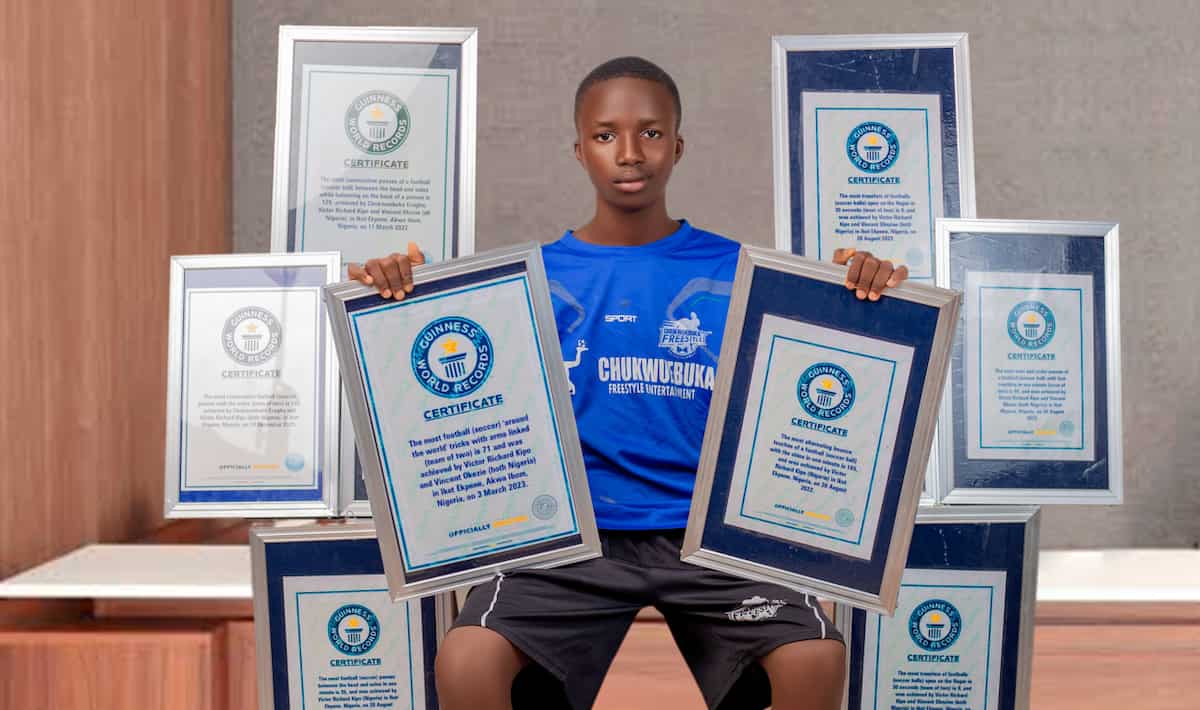
A Nigerian teen named Victor Richard Kipo has showcased his remarkable achievement of earning eight Guinness World Records certificates.
15-year-old Victor, known for his exceptional skills in touching a football, has set records in various categories.
Little-known Kipo’s photographs with the certificates have surfaced online.
Chukwuebuka Ezugha, the founder/chairman of Chukwuebuka Freestyle Entertainment and Academy noted that he discovered Victor in 2019 during his weekly school training program in Ikot Ekpene, Akwa Ibom State.
Victor’s records, as listed on the Guinness World Records website, include:
Most consecutive passes of a football (soccer ball) between the head and soles (team of two).
Most consecutive passes of a football (soccer ball) between the head and soles while balancing on the back of a person.
Most consecutive football (soccer) passes with the soles (team of two).
Most football (soccer) passes between the head and soles in one minute.
Most alternating bounce touches of a football (soccer ball) with the shins in one minute.
Most transfers of footballs (soccer balls) spun on the finger in 30 seconds (team of two).
Most over and underpasses of a football (soccer ball) with feet touching in one minute (team of two).
Most football (soccer) ‘around the world’ tricks with arms linked (team of two).
Coach Jose Peseiro reassured that Nigeria’s lacklustre beginning in theAfrica Cup of Nations finals, marked by a 1-1 draw against minnows Equatorial Guinea in their initial Group A encounter, should not be a cause for worry.
“I’m talking about the result but not the capacity of our performance,” he said as his team failed to overcome a country whose population of 1.6 million is dwarfed by Nigeria’s 214 million people.
The modest central African nation proved to be a surprise contender in the previous tournament two years ago, and once again, they exceeded expectations. They took an unexpected lead when Iban Salvador scored in the 36th minute, against the flow of the game.
However, their advantage was short-lived, lasting only two minutes before Victor Osimhen, the Napoli forward, equalised with a header for Nigeria.
“We played a good game; we created many chances and clear opportunities, especially in the second half, and I think we deserved to win,” Peseiro told a press conference.
“If we keep up this dominance, we will do well. Of course I’m not happy we drew but if the other side deserved their point, then I’d be concerned.”
The draw was the third in competitive internationals for the Super Eagles after two disappointing results in their opening two World Cup qualifiers in November. They were held at home by Lesotho and then drew away against Zimbabwe.
“Obviously we need to improve finishing but it is not as if the players meant to miss their chances,” the Nigeria coach added.
He also said the hot and humid conditions had taken a toll and the pressure from disgruntled home fans did not help. “It is not easy to wear the Super Eagles shirt,” Peseiro said.
Next up for Nigeria is potential crunch game against hosts Ivory Coast on Thursday, where there would be a hostile atmosphere to deal with.
“But I think my players prefer to play in front of 60,000 rather than the 8,000 we had today.”
In 19 previousCup of Nations finals appearances, Nigeria have only twice failed to advance past the first round but could face early elimination if they lose to the Ivorians.
Nigeria narrowly avoided a shock defeat in their opening game of the 2023 Africa Cup of Nations (AFCON) against Equatorial Guinea as Victor Osimhen’s quick response secured a 1-1 draw.
Equatorial Guinea took a surprising lead with Iban Salvador’s classy first-half finish, their only shot on target. Osimhen promptly equalized by heading in Ademola Lookman’s cross right after the underdogs’ opener.
Despite Equatorial Guinea being 46 places below Nigeria in world rankings, they celebrated their lead jubilantly. However, Osimhen’s goal and some crucial saves from goalkeeper Jesus Owono ensured a hard-fought draw for both teams.
The result leaves Nigeria and Equatorial Guinea two points behind Ivory Coast in Group A, with the latter securing a 2-0 win over Guinea-Bissau in the tournament opener. Nigeria will face Ivory Coast in their next match, while Equatorial Guinea will take on Guinea-Bissau.
The Public Health Department of the Accra Metropolitan Assembly (AMA) has apprehended three Nigerian nationals for purportedly trafficking aphrodisiacs and an unidentified liquid substance, which they claim is a heart cleanser.
The apprehension occurred based on a tip-off, and the individuals in question are presently in police custody, collaborating with investigators to determine the origin and composition of the substance.
Following this, they will face legal proceedings.
Initial inspections carried out by the AMA Health Department indicated that the alleged heart cleanser led to the melting of a plastic takeaway pack when applied to it, prompting concerns about potential health risks associated with the substance.
In a distinct occurrence, seven individuals captured for their purported roles in the violent assault resulting in the deaths of three individuals in Kyekyire, Afigya Kwabre South district of the Ashanti region, are slated to appear in court on Wednesday, January 10, 2024.
Eyewitnesses reported that the clash between two groups of young men resulted in fatalities and injuries.
The police arrested the seven individuals for their purported roles in the incident.
The assembly member for the Kyekyire-Kyerease electoral area, Joyce Osei Assibey, confirmed the upcoming court appearance and mentioned that residents are living in fear, with some fleeing their homes due to the incident.
The Nigerian army caught two soldiers who were seen in a viral video hurting a civilian.
In the video, a man in military clothes and another in regular clothes keep hitting and whipping a third man who is shirtless. The man being hurt keeps asking them to stop.
“Please, sir, no. I beg you. ” “Sir, please, I admit it. ” the man begs.
The army is very unhappy with how the officers have been acting.
The army said on Wednesday that the soldiers who acted unprofessionally have been found and taken into custody.
The attack happened in Rivers state, Nigeria, but we don’t know when.
The video of soldiers behaving badly on social media upset a lot of people. One person said the soldiers were being very cruel and using their power in a bad way.
The army will look into the incident and punish anyone involved.
International human rights organizations have previously spoken out against the Nigerian army for mistreating people and doing things like torture, arresting people for no reason, and killing people without a fair trial.
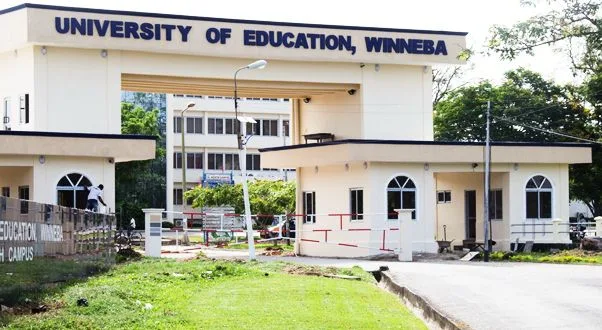
The University of Education, Winneba (UEW), has denied allegations suggesting the existence of a remote or satellite campus in Nigeria.
The university’s administration has asserted that any conflicting reports or statements are unfounded and has urged the public to be vigilant.
On Thursday, reports circulated in some media spaces alleging that UEW’s operations in Nigeria were banned due to the alleged awarding of questionable degrees.
In response, UEW released a statement on Friday, January 5, categorically denying the claims and emphasising its commitment to delivering quality education exclusively at its campuses in Ghana.
“It is crucial to emphasize that UEW does not maintain any satellite campuses, physical establishments, or remote operations within Nigeria.
“Additionally, we have no affiliations with any educational institution or entity in Nigeria for purposes of awarding degrees.”
“Our commitment has always been and remains focused on delivering quality education at our esteemed campuses in Ghana.”
UEW thus urged both the media and the general public to verify information before disseminating it on public platforms.
“The Management of UEW urges the media, stakeholders, and the general public to verify information from credible sources before dissemination to avoid misconceptions and misinformation.”
“We remain committed to upholding the highest standards of integrity, transparency, and excellence in all our operations,” the statement said.
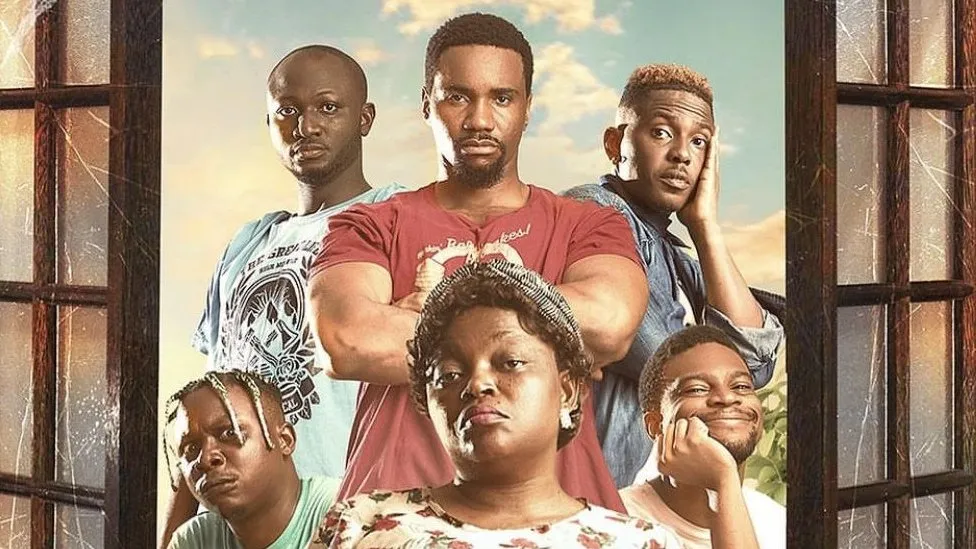
A Nollywood movie broke box office records by being the first Nigerian film to make 1 billion naira ($1. 1 million) in local theaters.
A group called Tribe Called Judah did something amazing in just three weeks.
Nigerian actor, director, and producer Funke Akindele thanked her fans for achieving a milestone.
“Thank you God. thank you Nigeria. thank you Ghana. ” she wrote on Instagram and got lots of congratulations.
Akindele, who is 46 years old, is now confirmed as the director who has made the most money in Nollywood.
A Tribe Called Judah is going to make more money in Nigerian theaters than popular Hollywood movies like Black Panther: Wakanda Forever.
“This accomplishment is not just about numbers. It shows the strength of storytelling, cultural pride, and the determined spirit of Nollywood,” FilmOne Entertainment wrote on Instagram.
The film is considered a very special part of our culture.
The company also said nice things about Akindele and her dedication to telling stories has made a big impact on Nigerian cinema.
The movie, A Tribe Called Judah, has gotten great reviews from both critics and fans. It’s also doing really well on movie review websites.
The movie is about five brothers who plan to rob a mall to help their mother who is struggling with money. It was inspired by the director’s late mother, to whom she dedicated the film.
Authorities in the United States have initiated legal proceedings against Olusegun Samson Adejorin, a Nigerian national. He faces federal charges related to an alleged $7.5 million business email compromise scheme targeting two charitable organizations.
According to a report from graphic.com.gh, the suspect linked to the $7.5 million charity scam was apprehended in Ghana on December 29, 2023.
Olusegun Samson Adejorin is yet to make his initial court appearance in Ghana, as indicated by an eight-count indictment unsealed in Maryland. The charges outline his alleged operations between June and August 2020, involving the infiltration of accounts belonging to two organizations in the United States.
According to the report, the said Nigerian national operated by gaining unauthorized access to employee email accounts at two charities, one in Maryland and the other in New York. Posing as authorized personnel, he allegedly deceived the institutions into transferring funds.
In total, he got the organisations to transfer over US$7.5 million from the New York charity’s investment funds held by the Maryland organisation, the report added.
“The indictment details a sophisticated scheme. Adejorin allegedly used a credential harvesting tool to steal login information, created fake domain names to mask his tracks, and even manipulated email accounts to hide his activity.
“If convicted, Adejorin faces a maximum sentence of 20 years per count of wire fraud, an additional five years for unauthorised computer access, and mandatory two-year sentences for aggravated identity theft,” the report stated.
It added that since Adejorin misused a domain name, the potential penalty he is facing could rise further.
The report also indicated that the FBI, along with international partners in Ghana, played a crucial role in apprehending Adejorin and bringing him to justice.
Nigerian Police Officer, Cosmos Ugwu met a tragic fate as a 23-year-old woman reportedly entered an Imo State police station and, according to reports, shot him fatally.
On Tuesday, December 26, Ugwu was allegedly shot by his supposed girlfriend, identified as Amanda Uchechi Ugo, a native of Ahiazu Mbaise Local Government Area in Imo State.
The incident occurred around 6:30 pm on Boxing Day at the Ezinihitte Area Command, causing officers on duty to seek cover upon hearing three gunshots from Ugwu’s room.
According to sources, officers later discovered Corporal Ugwu lying in a pool of blood with three gunshot wounds to his chest and left hand. He was swiftly taken to Evergreen Hospital in Ezinihitte, where he was pronounced dead by the attending doctor.
“When police officers ran into the room later to see what was going on, they found Corporal Ugwu lying in a pool of his blood. The girl shot him three times in his chest and his left hand. He was rushed immediately to Evergreen Hospital in Ezinihitte, where he was pronounced dead by the doctor on duty.”
The reports suggest a serious altercation between the deceased and his girlfriend in their police station room.
During the confrontation, the girl reportedly seized Ugwu’s rifle, pulled the trigger, and shot him three times.
“It was like a movie,” the source added.
“Nobody knows what went wrong between the two, but how the girl was able to use a police rifle successfully is still a surprise to many. Maybe, Ugwu was the one who taught her.”
Described as a scene from a movie, the source expressed surprise at how the girl successfully used a police rifle, speculating that Ugwu might have taught her.
The deceased officer’s remains were taken to the Obizi mortuary, and an ongoing investigation is in progress.
The suspect is currently in police custody, undergoing interrogation, and may face prosecution, according to gathered information.
Police Public Relations Officer in Imo State, Henry Okoye, confirmed the incident, assuring that investigations are underway to determine the facts and potentially bring the suspect to court.
“Yes, the incident happened. We are doing everything to ensure we investigate the matter, to ascertain the fact and possibly arraign the suspect in court,” Okoye said.
Nigeria, with its 36 states and one federal capital territory, each further divided into 774 local government areas, holds immense economic potential.
Evans Osabuohien, an Economics Professor at Covenant University, shares valuable perspectives on how these states can contribute to Nigeria’s economic prowess, promoting inclusive growth and sustainable development.
Nigeria’s Vast Landscape: A Closer Look at the Top 10 Largest States
With a population approaching 200 million, Nigeria stands as Africa’s most populous nation. Exploring the diversity within its vast expanse, here’s a glimpse into the ten largest states in Nigeria, accompanied by key facts that shed light on their significance in the nation’s economic landscape.
Kebbi State – 36,800 km²
Date created: 27 August 1991
Capital: Birnin Kebbi
Total area: 36,800 km²
Kebbi State is bordered by Sokoto State, Niger State, Zamfara State, Dosso Region in the Republic of Niger and the nation of Benin. It has 21 Local Government Areas.
Kebbi is the tenth largest state in the region and the 22nd most populous, with an estimated population of 4.4 million people in 2016. It is known as the “Equity Land.”
9. Kwara State – 36,825 km²
Date created: 27 May 1967
Capital: Ilorin
Total area: 36,825 km²
Kwara is located within the North Central geopolitical zone, commonly referred to as the Middle Belt. It has 16 Local Government Areas. They include Asa, Baruten, Edu, Ekiti, Ifelodun, Ilorin East, Ilorin South, Ilorin West, Irepodun, Isin, Kaiama, Moro, Offa, Oke Ero, Oyun, and Pategi.
Kwara is the sixth-least populous state, with an estimated population of 3.2 million people in 2016.
Geographically, it is divided into two ecoregions: the West Sudanian savanna to the east and the Guinean forest-savanna mosaic ecoregion to the west.
8. Adamawa State – 36,917 km²
Date created: 27 August 1991
Capital: Yola
Total area: 36,917 km²
The Borno borders Adamawa State on the northwest, Gombe on the west, and Taraba on the southwest. Its eastern border forms the national eastern border with Cameroon. It has 21 Local Government Areas.
They include: Demsa, Fufore, Ganye, Girei, Gombi, Guyuk, Hong, Jada, Lamurde, Madagali, Maiha, Mayo-Belwa, Michika, Mubi North, Mubi South, Numan, Shelleng, Song, Toungo, Yola North, and Yola South.
Adamawa is the thirteenth least populated in population, with an estimated 4.25 million residents as of 2016. It also has a diverse religious community, with roughly 55% Sunni Muslims, 30% Christians, and 15% followers of traditional ethnic religions.
7. Zamfara State – 39,762 km²
Date created: 1 October 1996
Capital: Gusau
Total area: 39,762 km²
Zamfara is a state in northwestern Nigeria with a predominantly Hausa and Fulani population. It has fourteen Local Government Areas.
They include: Anka, Bakura, Birnin Magaji/Kiyaw, Bukkuyum, Bungudu, Tsafe, Gummi, Gusau, Kaura Namoda, Maradun, Maru, Shinkafi, Talata Mafara, and Zurmi.
It has a population of 9,278,873, according to the 2006 census.
The state’s primary industries and main sources of revenue are agriculture and gold mining. More than 80% of the population works in agriculture.
6. Yobe State – 45,502 km²
Date created: 27 August 1991
Capital: Damaturu
Total area: 45,502 km² Yobe State borders four states: Bauchi, Borno, Gombe, and Jigawa State.
In addition, it borders the Diffa Region and the Zinder Region to the north of the Republic of Niger.
It has seventeen Local Government Areas. They include: Bade, Bursari, Damaturu, Geidam, Gujba, Gulani, Fika, Fune, Jakusko, Karasuwa, Machina, Nangere, Nguru, Potiskum, Tarmuwa, Yunusari, and Yusufari. Yobe is a state that is both rich in mineral reserves like gypsum and kaolin and is also an agricultural state.
Groundnuts, beans, cotton, gum arabic, and gum arabic are among the state’s agricultural products.
5. Bauchi State – 45,893 km²
Date created: 3 February 1976
Capital: Bauchi
Total area: 45,893 km²
The state is bordered by seven states: Kano and Jigawa on the north, Taraba and Plateau on the south, Gombe and Yobe on the east, and Kaduna on the west. It has twenty Local Government Areas.
According to 2016 estimates, the population of Bauchi State was over 6,530,000, making it the ninth most populous country. Livestock and crops like tomatoes, yams, cotton, groundnuts, and millet are a part of its economy.
4. Kaduna State – 46,053 km²
Date created: 27 May 1967
Capital: Kaduna
Total area: 46,053 km² Kaduna State is a state in northern Nigeria.
It is the third most populous state in the country, with numerous educational institutions of importance, such as Ahmadu Bello University. It has twenty-three Local Government Areas.
Total area: 54,473 km² Taraba State is bordered in the west by Nasarawa State and Benue State, in the northwest by Plateau State, in the north by Bauchi State and Gombe State, in the northeast by Adamawa State, in the east and south by Cameroon.
It has sixteen Local Government Areas. They include: Ardo Kola, Bali, Donga, Gashaka, Gassol, Ibi, Jalingo, Karim Lamido, Kurmi, Lau, Sardauna, Takum, Ussa, Wukari, Yorro, and Zing.
2. Borno State – 70,898 km²
Date created: 3 February 1976
Capital: Maiduguri
Total area: 70,898 km²
Borno is the second biggest state in Nigeria. It has twenty-seven Local Government Areas.
As of 2016, the state’s population was predicted to be 5.86 million, making it the ninth most populated state. In Borno State, many people practise Islam, and an equal number practise Christianity and other religions.
1. Niger State – 76,363 km²
Date created: 3 February 1976
Capital: Minna
Total area: 76,363 km²
In the expansive landscape of Nigeria, the title of the largest state is claimed by Niger State, situated in the country’s north-central region. The state is organized into three political zones, denoted as A, B, and C, and encompasses a total of twenty-five Local Government Areas.
These Local Government Areas are diverse, including Agaie, Agwara, Bida, Borgu, Bosso, Chanchaga, Edati, Gbako, Gurara, Katcha, Kontagora, Lapai, Lavun, Magama, Mariga, Mashegu, Mokwa, Munya, Paikoro, Rafi, Rijau, Shiroro, Suleja, Tafa, and Wushishi.
In a conversation with Evans Osabuohien, an Economics Professor at Covenant University and an esteemed researcher, the importance of judiciously utilizing land as an economic resource in Niger State was underscored. Professor Osabuohien emphasized that effective land use is pivotal for the state’s prosperity.
Contrary to the assumption that a larger landmass guarantees greater economic productivity, Professor Osabuohien pointed out that size alone does not determine economic success. Drawing a comparison with Lagos State, the smallest in the country yet economically potent, he highlighted that many of the top ten largest states in terms of landmass do not feature prominently among the top states in GDP or economic empowerment.
In an effort to lessen the financial burden of holiday travel, the Nigerian government has reduced public bus fares by 50% and provided free train rides throughout the nation during the holiday season.
According to Mr. Alake, who also serves as the head of the inter-ministerial committee on presidential intervention, the reduction in inter-state fares and complimentary train rides will be implemented from Thursday to January 4.
The agreement, approved by President Bola Tinubu, was reached in collaboration with companies that operate luxury buses across 22 routes nationwide, as stated by Mr. Alake.
He said air transportation was not part of the arrangement because the target of the president “is the masses”.
Transport Minister Sa’idu Alkali said the substantial reduction in bus fares and the free train rides would ensure “every Nigerian can partake in the joy of the season without the burden of exorbitant transportation costs”.
Segun Falade, the spokesperson for the National Union of Road Transport Workers, stated that the bus operators would commence implementing the fare subsidy as agreed, as reported by local media.
December is typically the peak month for travel in Nigeria, witnessing the highest number of air, road transport, and railway passengers.
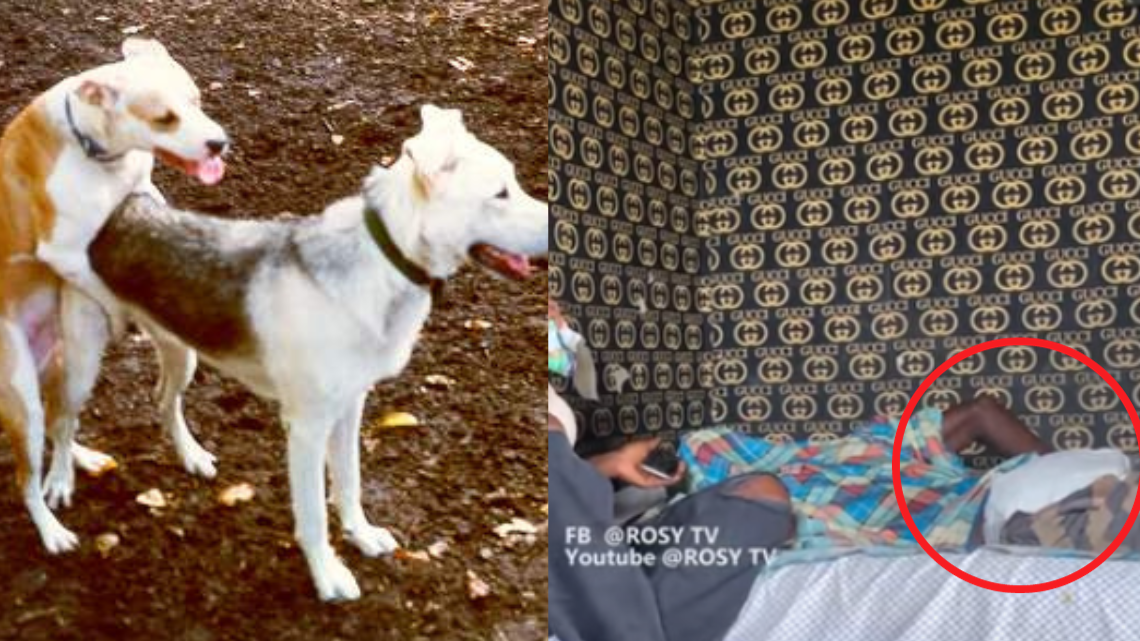
A Nigerian man is appealing for financial assistance to help him resolve a mysterious disease he is currently battling.
This individual (let’s call him Obi), during an interview with one Rosy, shared that his ordeal all started after deciding to enter a human-dog connection business where he was required to sleep with dogs.
According to the young man, he only entered into this business to enable him cater for his mother and sister, after their father died and were stripped of their properties by the extended family.
“It all started in secondary school. It’s not like it was deliberate. I had dreams for myself. But growing up in a house where there is no father and a struggling mother for me and my younger sister. Things were very hard.
“My uncles, they took everything. They didn’t leave anything. Even our house, they took it. But my mother found another man who she gave a daughter. Living with him was very difficult. He used to beat my mother. He beat her like a thief so she left him.
“Anything she put her hands on, it didn’t work so when I saw this opportunity, I took it. I looked at my future, I was a very talent artist. I could draw very well. I wanted to further my education and it was just my mother, I could feel her pain. I couldn’t pressure the woman,” he narrated.
Obi revealed that his friend introduced him to the dog business where he earned 250,000 naira on his first attempt. According to him, he was rest assured there were no side effects. Despite the assurance, he had to be intoxicated to carry out this odd act referred to as bestiality.
“I had this friend who said they have these people who had this dog business. A human-dog connection business, so if you sleep with the dog, they will give you 250,000 naira. So I followed this friend of mine who assured me that nothing to him. He and his friends had everything.
“I couldn’t do it while being rational so I had to take alcohol. So the following morning, they gave me the money. That was the first time I was touching anything about 10,000 naira in my life. I was so happy.”
Upon reaching home, he had to cook up a story to throw his mum off balance.
“So I took it home and my mother questioned me. She is a Christian so she was worried I was into online fraud. I explained and tried to cover up. I got to further my education but because there was I sponsor I had to continue this act.
Obi was reached out to again by these friends, who this time round, requested that he allowed the dog penetrate him. During this period, his mom was ill and needed money. He obliged.
Subsequently, Obi started noticing them he began to emanate an awful smell whenever he sweats or pees. Later, he started observing liquid pouring from his butt side.
Unfortunately, Obi lost his mum and now battles this mysterious illness which doctors have failed to diagnose. He is currently being taken care of by his sister after his friends who introduced him to the business abandoned him.
Now, Obi puts on pampers and he wears about 3 or 4 diapers daily depending on the flow of the liquid.
“Sometimes, I use three or four pampers a day depending on how heavy the leakage is.
“I need help. Everyday, everytime I am wearing pampers. All these friends who introduced me to this business, none of them is responding to my calls and messages,” Obi pleaded.
In a disturbing incident, the Osun police command has apprehended two individuals involved in ritualistic activities, accompanied by the discovery of female body parts in their possession.
The shocking confession made by the suspects has sparked widespread public attention and discussions.
According to a senior police officer’s statement, the incident unfolded when a distress call was received from a hotel where the suspects were lodging.
The hotel management reported that they heard a girl scream, and subsequent silence raised concerns.
Sensing trouble, the management requested the suspects to return to the room for verification, as the girl they arrived with had not left.
Despite the suspects’ attempt to escape, the vigilant hotel management secured the premises and detained them.
Upon entering the room, a horrifying scene awaited them – a pool of blood and body parts removed from the lifeless female victim, who had been concealed in a bag in an attempt to escape.
The swift response of the police force led to the emergency arrest of the ritualists, shedding light on the gruesome details of the crime.
As the police delved deeper into their investigation, the arrested individuals were identified as Ayodeji Saheed and Tunde Obadimeji. In a startling confession, the duo admitted that their recent arrest was not their first criminal act and claimed responsibility for over 70 murders.
Their modus operandi involved harvesting female body parts, and they disclosed a disturbing connection with an individual named Abefe Sadiq, who allegedly paid them for each severed body part.
Authorities proceeded to inquire about the methods employed by the culprits to procure their victims.
“Getting the girls was so easy, we lure them with money and fancy things. Girls of this days are easily lured with those things.”
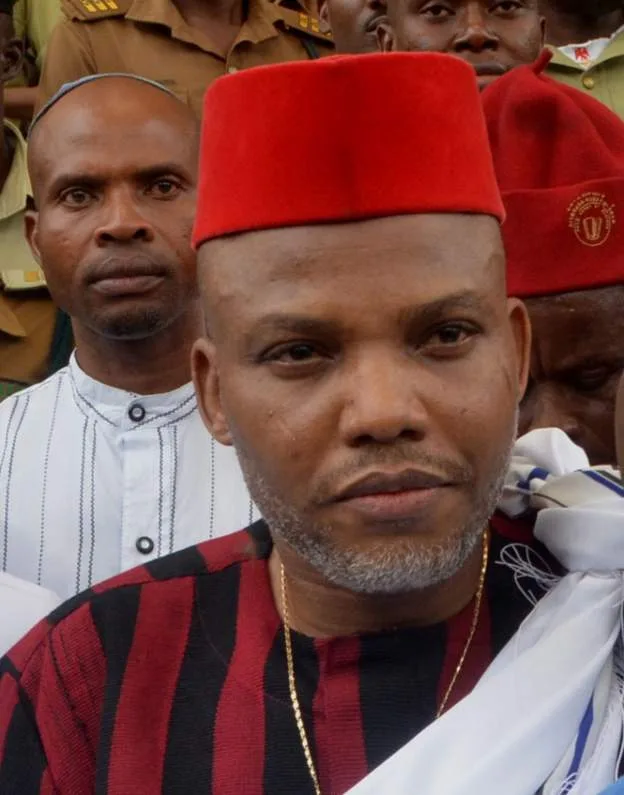
The highest court in Nigeria will soon make a decision about whether to release separatist leader Nnamdi Kanu.
Mr Kanu leads a group called the Indigenous People of Biafra (Ipob) that wants to make a new country in south-eastern Nigeria.
He wants to be let out of jail because he believes there is no reason for the government to keep him there. The government wants to keep him in jail for a longer time and is asking the court to agree.
Mr Kanu was arrested in 2015 and then ran away from Nigeria in 2017 while he was waiting for his trial to start.
He has been in jail since 2021, when he was brought back from Kenya to be charged with terrorism.
Last year in October, a court said Mr. Kanu should be released because there were legal problems with how he was sent to jail.
The government tried to stop the separatist leader from being released because they were afraid that he might run away and cause trouble.
Some leaders from the south-eastern part of Nigeria want him to be set free.
FIFA has granted approval for the inclusion of 30 Nigerian referees on the international lists for the year 2024.
This sanctioned group comprises 11 referees, 11 assistant referees, four beach soccer referees, and four futsal referees.
The 11 referees authorised for international duty in 2024 are: Basheer Salisu, Ogabor Odey Joseph, Olufunmilayo Abigael Alaba, Nurudeen Abubakar, Abdulsalam Kasimu Abiola, Elaigwe Hannah Enekole, Akintoye Yemisi Eunice, Egba Patrick John, Madu Ndidi Patience, Mustapha Grema Mohammed, and Abdullahi Abubakar.
The 11 individuals approved as assistant referees include: Pwadutakam Samuel, Igudia Efosa Celestine, Abibatu Iyadunni, Muhammad Yakubu, Mfon Friday Akpan, Digbori Tejiri, Usman Abdulmajeed Olaide, Igho Hope Ogenekewe, Terah Kabenda Beauty, Ahmad Mustapha Tijjani, and Agbons Faith.
For futsal soccer, Ukah Ndubuisi Odigomma, Musa Dung Davou, Umuago Paul Akpome, and Bello Zuru Alhassan have been included, while Ogunmuyiwa Jelili, Fawole Olawale Adeolu, Olajide Olayinka, and Rabiu Ahmad made the list for beach soccer.
FIFA’s approval underscores the recognition and competence of theseNigerian referees at the international level for the upcoming year.
If worries about airlines’ incapacity to repatriate profits are not addressed promptly, Nigeria runs the risk of losing major international airlines that service its two major airports, Lagos and Abuja, according to the Regional Vice-President of the International Air Transport Association for Africa and the Middle East.
“We are getting to a breaking point for Nigeria where airlines will drop off and not operate to Nigeria,” Kamil Alawadhi told AviationGhana and selected African journalists during a press briefing at the IATA office in Geneva, Switzerland.
Nigeria is yet to propose a definitive plan to address the approximately $792 million in blocked funds belonging to airlines operating in the populous West African country. Despite initial efforts to engage with the International Air Transport Association (IATA) on this matter, the Nigerian government has remained silent for several months.
According to data from the International Air Transport Association (IATA), a total of $1.9 billion in airlines’ funds is currently blocked in Africa, with Nigeria being the most affected.
The top five countries facing challenges in repatriating airline funds include Egypt with $348 million, Algeria with $199 million, the XAF Zone with $183 million, and Ethiopia with $128 million.
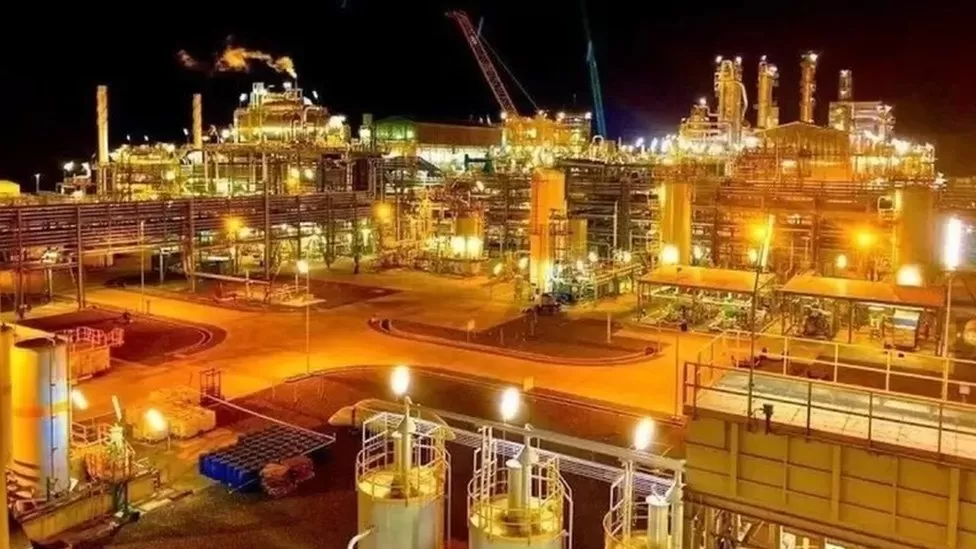
One million barrels of crude oil were delivered to a big new refinery in Nigeria. This is a big step towards the country being able to make its own fuel.
For many years, the country with a lot of oil has not been able to process the oil.
Buying refined oil from other countries costs our country a lot of money in foreign currency.
We don’t know when the big Dangote refinery will start working. But when it does, it will help us become more self-sufficient in energy.
The first one million barrels of crude will be delivered, and then five million more will come. After that, the plant can start making fuel.
When the facility in Nigeria’s busy city, Lagos, is running at full capacity, it is expected to make around 650,000 barrels of oil every day. It costs $19 billion.
It will start by making diesel, airplane fuel, and LPG before moving on to making petrol.
Africa’s wealthiest man and leader of the Dangote Group, Aliko Dangote, said on Friday that the main goal in the next few months is to increase the refinery’s production to its maximum level. I am excited for the next big step when we send the first products to Nigeria.
The company says it will eventually be able to meet all of Nigeria’s needs for fuel and have even more to sell to other countries.
The biggest economy and one of the biggest oil producers in the continent has had problems getting enough fuel. This is because they don’t have enough foreign money and this has caused a lot of times when there isn’t enough fuel. The price of fuel has also become a big issue in politics.
For years, the government had been paying part of the cost – something that many Nigerians saw as a benefit.
However, the government had to spend a lot of money on the subsidy. This year, the new President, Bola Tinubu, got rid of it. This made fuel prices go up by more than 400%.
Even though unions have asked the government to change its decision and help most Nigerians, President Tinubu still thinks that the decision will be good for the future.
In November, the government announced that it had saved more than $1. 8 billion from June to September this year by removing a subsidy. This money will now be used for social development projects.
Nigeria wants to have the most electric buses for public transport in Africa, said a minister at the COP28 summit.
Yusuf Tuggar, who is the Minister of Foreign Affairs, said this after President Bola Tinubu announced at a UN conference in the United Arab Emirates that Nigeria will introduce 100 electric buses.
Reported by the local news, Mr Tuggar said on Tuesday that Nigeria plans to have 100 electric buses next year and wants to increase that number to 1,000. They want to have the biggest electric bus fleet for public transportation in Africa.
Mr Tuggar said the project is focused on reducing pollution, helping green initiatives, and making new jobs in big businesses.
Environmental organizations have identified Nigeria as one of the biggest polluters of greenhouse gases in Africa.
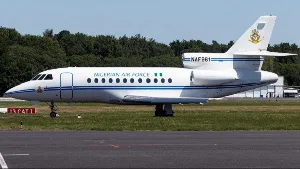
The Nigerian Air Force has announced the sale of the Falcon 900B aircraft, a component of the presidential air fleet. Interested individuals are invited to submit their bids for the purchase of the aircraft.
Details regarding the sale were disseminated through a flyer posted on the NAF’s X page on Monday. The decision to sell the aircraft received approval from the Federal Government.
The announcement partly read, “The Federal Government of Nigeria has approved the sale of Falcon 900B aircraft owned by the Nigerian Air Force (NAF).
“In compliance with provisions of the public procurement Act 2007, the NAF hereby invites all interested parties to submit bids for purchase of the aircraft. The bids can be submitted by email or physically.
“If submitted by email, the bids are to be password protected and sent to dproc@airforce.mil.ng while the password is to be sent separately to d proc2@ airforce.miI.ng.
“For physical submission, the quotations are to be enclosed in an envelope and sealed while the envelope is to bear the name and address of the interested company/entity as well as the description and reference to the request.
“It should also bear the statement, ‘DO NOT OPEN BEFORE 24 DECEMBER 2023’.
“Please note that the bids would be processed immediately after expiration of the deadline for submission.”
At least 85 people were killed by a military attack during a Muslim holiday in Kaduna state, Nigeria.
The military drone killed innocent people by accident while trying to attack terrorists and criminals. Governor Uba Sani didn’t say how many people died.
The defense ministry said the operation was a “sad and unnecessary event”.
Many people were hurt in the attack.
A state official named Samuel Aruwa said that a military officer named Maj VU Okoro explained that the Nigerian army was on a regular mission against terrorists but accidentally harmed members of the community.
Maj Gen Edward Buba, who speaks for the military, said on Tuesday that they did an airstrike because they had good information that there were “terrorists” in that place.
Governor Sani is looking into the “sad event” that happened when people from Tundun Biri gathered for a religious celebration.
The Northwest Zonal Office got information from local authorities that 85 dead bodies have been buried, and they are still looking for more. This was said by the National Emergency Management Agency in Abuja.
“It’s important to know that children, women, and old people were injured or killed. ”
One person saw what happened and told the media that there were two attacks.
“The plane dropped a bomb on the place, and it killed our people, including women and children,” he said.
“The second bomb was dropped on us while we were trying to bring back the bodies of the first blast victims. ” “Many of my family members died, and 66 are hurt and in the hospital. ”
A lady saw what happened after the bombing. She told the media that there were bodies scattered everywhere.
She said that some women died while holding their babies. Some of the babies lived, but others died with their mothers.
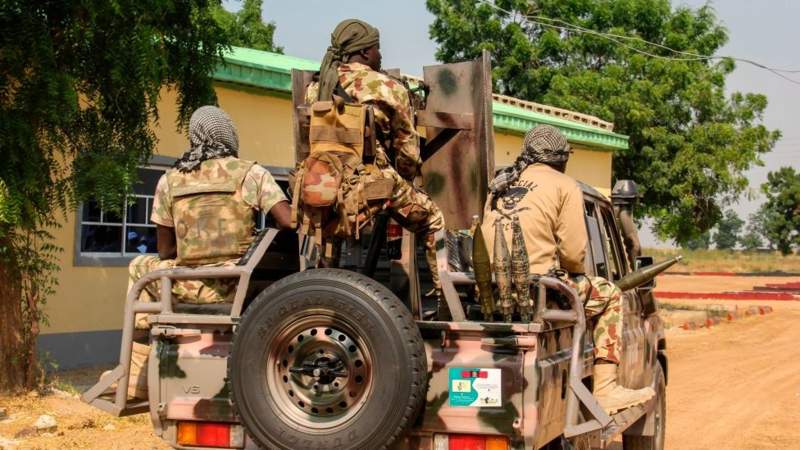
The Nigerian military has been blamed for hurting innocent people while fighting militia groups called bandits in the north-west of the country. The government is calling the gangs “terrorists”.
In 2021, a Nigerian fighter jet accidentally killed at least 20 fishermen while attacking a jihadist camp in north-east Nigeria.
The Nigerian forces have accidentally killed over 300 people since 2017, according to a report by SB Morgen, a research firm.
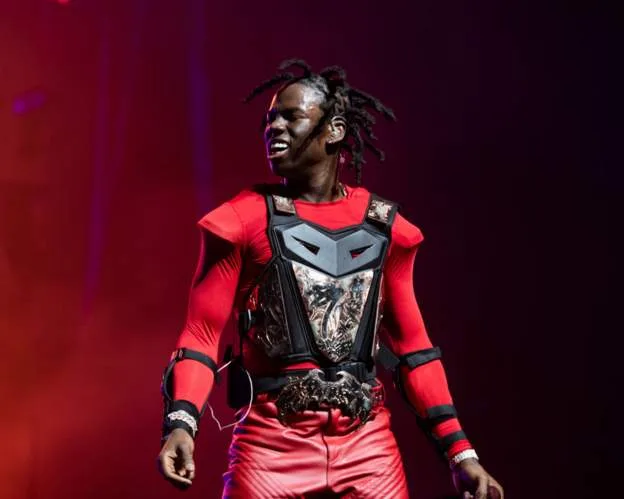
Nigerian singer Rema won’t be doing any shows in December because he needs to take care of his health.
On Instagram, the Afrobeats star said he didn’t take care of his health because he was always on tour.
The famous person, who had upcoming performances in Nigeria and South Africa, said it’s time to rest and get better.
“It makes me sad to say that I won’t be doing any shows in December. ” I have been traveling for many years and I haven’t taken care of my health. Now, I need time to rest and get better. “We will go again in 2024, my love,” he said.
The singer has had many popular songs this year, especially “Calm Down” which he sings with Selena Gomez. It has broken many records for streaming and chart rankings.
The song was the most searched on Shazam in 2023 around the world and won the best Afrobeats song at the Billboard Music Awards last week.
Earlier this month, he impressed famous football players at the Ballon D’Or awards. Also, his song Calm Down made history by being the longest-charting and most successful African song ever on the Billboard Hot 100 in the US.
“Davido supports Rema’s decision to cancel his shows and thinks he has done a great job. ”
“The job is really hard, both physically and mentally. You have made Africa and the world very proud, more than anyone expected. ” “Take a break, recover, and return even stronger,” he said.
Special Assistant to the Ebonyi State Governor on Internal Security for Ohaukwu Local Government Area, Ogbonna Tobias, issued a stern warning to residents about spreading false news regarding alleged manhood disappearance in the region.
Addressing journalists in the local government, Ogbonna emphasized that the proliferation of fake news was causing unwarranted tension and panic in the community.
He cautioned that the State Government would take decisive action against those found spreading such misinformation.
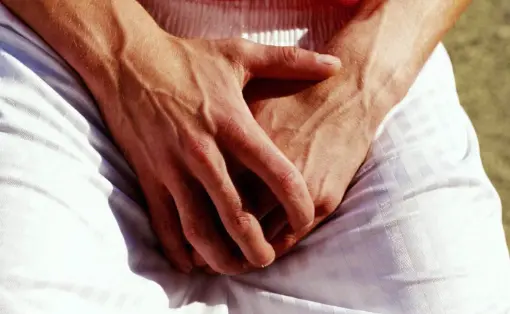
Last week, reports surfaced of four men purportedly losing their manhood in mysterious circumstances within the Local Government, heightening anxiety among residents.
Ogbonna highlighted the detrimental impact of the fake news, noting that economic activities had been disrupted, with numerous youths avoiding Nkwo markets to prevent falling victim to the alleged ritualists.
While the incident was rumored to have occurred at the popular Nkwo market, the whereabouts or identity of the victims remains unconfirmed.
Ogbonna, denouncing the report as false, unfounded, and misleading, expressed concern about the potential for the rumor to incite jungle justice against perceived suspects. He emphasized the lack of evidence or proof supporting claims of manhood disappearance after a handshake in the Local Government Area.
“Let me emphasis that there is no record of any manhood disappearance either at the Nkwo market or any other part of the local government as being spread by propagandist. The fake news if not stopped or checked is capable of causing mob action against perceived suspect or capable of creating crisis and communal clashes in the area.
Comrade Ogbonna, in collaboration with fellow security operatives, asserted that a thorough investigation had been conducted, revealing no evidence to substantiate the allegation of manhood disappearance in the Council. He appealed to the youths in the area, encouraging them to report anyone accusing another of spreading false news to the security agencies rather than resorting to vigilantism.
Over the past week, there has been a noticeable shift in behavior among residents, with many now avoiding any form of handshake or physical contact.
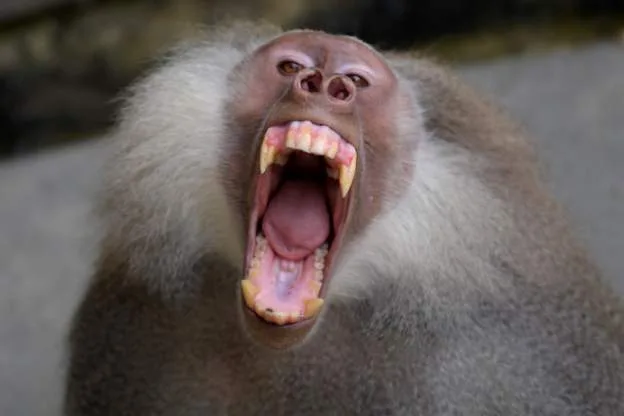
Baboons usually don’t care about people, but they can get aggressive and attack if they are bothered. They can be very dangerous because they have sharp teeth and claws.
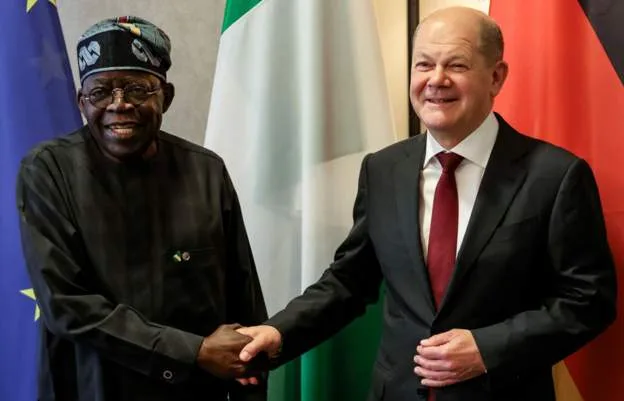
Nigeria and Germany agreed to work together on a deal that will send more gas to Germany. The deal also includes $500 million in renewable energy investments for Nigeria.
Nigeria’s leader said that a gas contract was approved at a business conference in Berlin between Riverside LNG project in the Niger Delta and a German company called Johannes Schuetze Energy Import.
David Ige, who is helping with the Nigerian project, said they will send a lot of energy from Nigeria to Germany each year. At first, it will be 850,000 tons, but it will increase to 1. 2 million tons later on. The first gas from the agreement will be sent to Germany in 2026.
The Union Bank of Nigeria and the DWS Group agreed for the German company to invest $500 million in renewable energy projects in Nigeria.
Germany is talking to Siemens, a big electronics company, to help Nigeria make its electricity supply better because Nigeria often has no power. This was reported by German state broadcaster Deutsche Welle.
German leader Olaf Scholz promised to give more money to help Nigeria’s important minerals and energy industries when he talked with President Bola Tinubu in Abuja in October.
Nigerian wig artisan Helen Williams has set a remarkable record by creating the world’s longest handmade wig, measuring an impressive 351.28 meters (1,152 feet 5 inches), according to the Guinness World Records.
Helen dedicated 11 days and invested over two million naira (£2,031; $2,493) in bringing this extraordinary creation to life.
After constructing the underlay with wig-cap netting and black fabric attached to a bicycle helmet, she completed the hairpiece using 1,000 bundles of hair, 12 cans of hair spray, 35 tubes of hair glue, and 6,250 hair clips.
“Finding the materials to make the longest wig was not an easy task,” Helen said. “My experience as a wigmaker helped a lot.”
Helen has been working as a professional wigmaker for eight years, producing anywhere from 50 to 300 wigs per week.
“I have trained hundreds of students and have made thousands of wigs,” she revealed.
Despite having such extensive experience, creating the record-breaking wig was not a simple feat for Helen.
“At some point, I felt exhausted,” she shared.
“However, friends and family encouraged me. I did not want to let them down, so I maintained my focus. The outcome is the longest handmade wig in the world.”
Helen Williams from Lagos, Nigeria has achieved a new record for the longest handmade wig which stretches an incredible 351.28 metres (1,152 ft 5 in) 👏 pic.twitter.com/gwGdqjF8Wp
This achievement follows Nigeria’s recent recognition in the Guinness World Records, with Alan Fisher setting a new cooking marathon record of 119 hours and 57 minutes in Japan.
Helen Williams’s feat adds to Nigeria’s list of remarkable accomplishments, showcasing the nation’s talent and creativity on the global stage.
This statement was made in response to the recent outrage following the publication of details of the N2.1 trillion supplementary budget submitted to the National Assembly, where the yacht was listed under the Nigerian Navy’s proposed capital expenditure of N42.3 billion.
The supplementary budget included allocations of N5.09 billion for a yacht, N2.9 billion for sport utility vehicles for the Presidential Villa, and an additional N2.9 billion for the replacement of operational vehicles for the presidency.
The yacht was categorized under the Nigerian Navy’s proposed capital expenditure of N42.3 billion.
In response to this, Ajayi expressed skepticism about the necessity of a yacht for his principal to carry out his official duties.
“The trending issues on social media since yesterday are two items in the 2023 supplementary budget. One is the provision for a presidential yacht in the supplementary budget by the Navy, and the other is over N6 billion for vehicles for the State House.”
“It is important to state clearly that President Bola Tinubu didn’t ask for a presidential yatch, and I doubt he needs one to perform the functions of his office. From what I know, the request for a yacht, however it is named or couched in the budget, is from the Navy, and they must have operational reasons for why it is required.
“The budget office should be in a position to also explain to the public why such expenditures should be accommodated now, considering the economic situation of the country. I must readily admit that the one reason our budgeting system has been the subject of public attack is the very simplistic way some of the line items are described by civil servants who prepare the budget.
“Examples abound. Sometimes in 2016, an Enterprise Resource Planning (ERP) project of the Ministry of Solid Minerals worth over N300 million was captured in that year’s budget as a “website”. Naturally, it generated a massive controversy as people, rightly, asked to know the type of website that would be built with N300 million.
Ajayi further stated, “It is important to say that journalism should enrich public enlightenment and not create an atmosphere of siege. It is poor reporting to always reduce State House budgetary provisions to the President and Vice President.
A presidential spokesman, Tope Ajayi said President Bola Tinubu did not ask for a yacht.
This comes amid outrage after details of the N2.1 trillion supplementary budget Tinubu submitted to the National Assembly were published.
According to the budget, N5.09 billion was allocated for the yacht, N2.9 billion for sport utility vehicles for the Presidential Villa, and another N2.9 billion for the replacement of operational vehicles for the presidency.
The yacht was listed under the Nigerian Navy’s proposed capital expenditure of N42.3 billion.
Speaking on the development, Ajayi said he doubted if his principal needed one to perform the functions of his office.
“The trending issues on social media since yesterday are two items in the 2023 supplementary budget. One is the provision for a presidential yacht in the supplementary budget by the Navy, and the other is over N6 billion for vehicles for the State House.”
“It is important to state clearly that President Bola Tinubu didn’t ask for a presidential yatch, and I doubt he needs one to perform the functions of his office. From what I know, the request for a yacht, however it is named or couched in the budget, is from the Navy, and they must have operational reasons for why it is required.
“The budget office should be in a position to also explain to the public why such expenditures should be accommodated now, considering the economic situation of the country. I must readily admit that the one reason our budgeting system has been the subject of public attack is the very simplistic way some of the line items are described by civil servants who prepare the budget.
“Examples abound. Sometimes in 2016, an Enterprise Resource Planning (ERP) project of the Ministry of Solid Minerals worth over N300 million was captured in that year’s budget as a “website”. Naturally, it generated a massive controversy as people, rightly, asked to know the type of website that would be built with N300 million.
Ajayi further stated, “It is important to say that journalism should enrich public enlightenment and not create an atmosphere of siege. It is poor reporting to always reduce State House budgetary provisions to the President and Vice President.
“When the State House makes provision for vehicles, it is reported as if it is the President that will use all the vehicles or eat all the food when a provision is made for food and catering services.
“We have had such inaccurate reporting in the past. A President and Vice President cannot, for any reason, spend N20 million naira to eat in a year if it is about the food they will eat as first and second families. How much food can a person really eat?
“Yet, we will read headlines that Tinubu, Buhari, Jonathan, or whoever the President is wants to spend N5 billion on food and catering in a year when in actual fact such budgetary provisions are made to accommodate many state events, meetings, hosting of VIPs, foreign dignitaries, and even visits by other Heads of State and bilateral and multilateral meetings that the State House will deal with in a given year,” he said.
Nigeria’s House of Representatives has rejected the government’s proposal to procure a presidential yacht for $6 million amid public criticism of extravagant spending during an economic crisis, according to senior lawmaker Abubakar Bichi.
Instead, lawmakers redirected the $6 million to increase the budget for student loans, effectively doubling its allocation.
President Bola Tinubu, who assumed office in May with a pledge to reduce waste and alleviate financial burdens on citizens, sparked controversy when he presented a supplementary budget to the National Assembly.
The proposed purchase of the yacht was listed within the Nigerian Navy’s capital expenditure of $53 million.
Human rights activist and former lawmaker Shehu Sani reacted by saying that “the poor can’t be struggling for survival in a canoe while their leader is yachting”.
Mr. Tinubu’s spokesperson, Temitope Ajayi, clarified that the president had no involvement in the plans to acquire the yacht.
“From what I know, the request for a yacht, however it is named or couched in the budget is from the navy and they must have operational reasons for why it is required,” he said.
The budget, which was approved by the House of Representatives on Thursday, allocates $36 million for State House expenses, including luxury vehicle purchases and the construction of a presidential office complex. Additionally, $15 million is earmarked for the presidential air fleet.
This issue has arisen at a critical time when President Tinubu is facing significant challenges related to the cost of living and the steep depreciation of Nigeria’s currency, the naira, against the US dollar. Nigeria’s annual inflation rate reached 26.7% in September, according to official data.
A leading advocacy group in Nigeria, the Socio-Economic Rights and Accountability Project (Serap), said the purchase of a yacht could not be justified when “137 million Nigerians live in extreme poverty”.
Furthermore, their situation has deteriorated following President Tinubu’s decision to eliminate fuel subsidies in his inaugural address, leading to increases in fuel prices and the cost of essential goods.
Activist Omoyele Sowore accused the government of spending on luxuries while it “maintains the miseries of the Nigerian populace”.
Mr Ajayi said the president and his vice-president were not planning to add new vehicles to their fleet, and were using “inherited vehicles” from the previous administration.
He said the budget for vehicles was for hundreds of civil servants and political aides working at State House.
President Bola Tinubu’s administration has put forward a proposal to allocate N1.5 billion for the procurement of vehicles for the First Lady’s office.
This expenditure is included in the 2023 supplementary budget, which the President submitted to the National Assembly for approval and has passed the second reading in the House of Representatives.
Despite the prevailing high levels of poverty and economic hardship in the country, the supplementary budget also allocates N19.3 billion for the purchase of vehicles for the President and the renovation of the Presidential and Vice Presidential lodges in Abuja and Lagos.
Additionally, the budget includes N3 billion for the acquisition, renovation, and rehabilitation of two fortified quarters used by the Economic and Financial Crimes Commission (EFCC) within the State House Complex in Guzape and Mabushi.
The Nigerian Navy’s capital expenditure is proposed to be ₦42.3 billion, with a recurrent expenditure of ₦20.42 billion, including N5.095 billion designated for the acquisition of a presidential yacht.
The supplementary budget outlines further allocations, including N2.9 billion for the purchase of SUVs, N2.9 billion for the replacement of operational pool vehicles, N4 billion for the renovation of residential quarters for the President, N2.5 billion for the renovation of Aguda House (Vice President’s residence), N200 million for the computerization and digitalization of the State House, N4 billion for the construction of an office complex within the State House, N4 billion for the renovation of Dodan Barracks (the official residence of the President), and N3 billion for the renovation of the official quarters of the Vice President in Lagos.
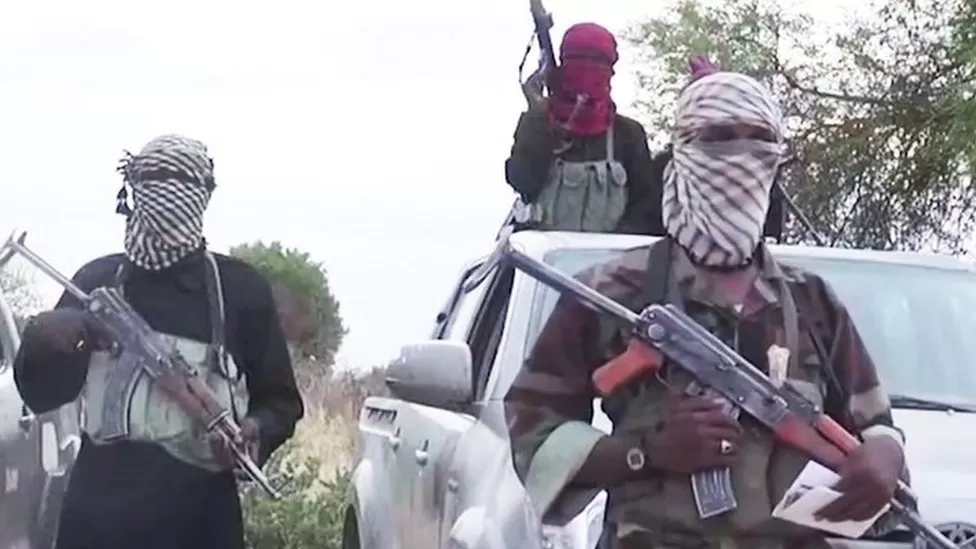
Police in northeastern Nigeria have reported that a militant Islamist group, Boko Haram, has killed 20 individuals who were returning from the burial of victims of a prior attack by the insurgents.
This tragic incident occurred in Yobe state when a vehicle carrying mourners detonated an explosive device planted by the insurgents.
Just the day before, the militants launched an attack on Gurokayeya village, resulting in the death of 17 people. According to the police, Boko Haram orchestrated these attacks in response to the villagers’ refusal to pay a so-called “harvest tax.”
Boko Haram militants have been repeatedly accused of extorting payments from residents in northeastern Nigeria, using the funds to sustain their operations and exert control over local communities.
“This is one of the most horrific attacks by Boko Haram in recent times. For a burial group to be attacked shortly after the loss of their loved ones is beyond horrific,” resident Idris Geidam told the Associated Press news agency.
Yobe police spokesman Dungus Abdulkarim said that 10 members of the burial group died on the spot while another 10 died at a health centre where they were rushed to for treatment.
The incident occurred on Tuesday – a day after the deadly raid on Gurokayeya village.
The attacks are the first major assault that Boko Haram has waged in Yobe in more than a year.
State authorities said they suspected that the militants had arrived from neighbouring Borno state, where Boko Haram has carried out several attacks against civilians this year.
Much of Borno, the birthplace of Boko Haram, is still considered too dangerous to travel by road.
The group launched its insurgency in 2009, with aid agencies reporting that more than two million people have been displaced in the conflict.
The militant group has also extended its reach into neighbouring Niger, Chad and Cameroon, with government forces failing to defeat the group.
Boko Haram means “Western education is forbidden”, and it has repeatedly targeted secular schools as part of its attempts to establish its version of Islamic rule in the region.
The group gained notoriety internationally when it kidnapped more than 200 school girls from the north-eastern town of Chibok in 2014.
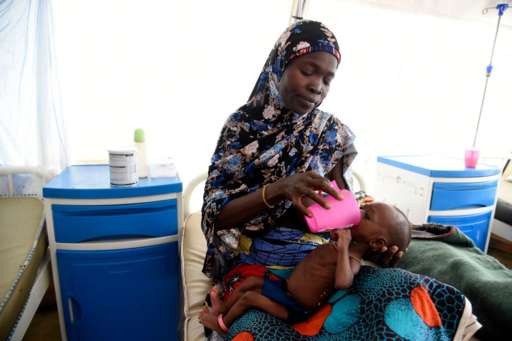
An NGO has issued a concerning warning regarding the escalating cases of severe malnutrition among children under the age of five in northeastern Nigeria.
According to FHI 360, an alarming total of 15,781 malnourished children required treatment at its facilities between February and September.
This figure represents a staggering increase of almost 160% compared to the previous year.
“The situation in north-east Nigeria is grave, and increased support is needed to address the critical health and nutritional needs of communities, especially women and children,” the organisation added.
Unicef, the United Nations children’s organization, has previously reported that Nigeria holds the unfortunate distinction of having the second-highest global rate of child stunting. This condition, often caused by extensive malnutrition, is particularly prevalent in the northern region of the country.
Unicef’s estimates indicate that approximately two million children in Nigeria are affected by malnutrition. However, only a mere 20% of these children receive the necessary treatment.
Furthermore, according to Unicef data, malnutrition plays a significant role in contributing to 45% of child deaths in Nigeria among those aged under five years.
During a conference and retreat for senior police officers in Imo State, Nigerian actress and singer Mercy Isoyip, popularly known as Descushiel, was assigned the task of reciting the National Anthem.
The event, attended by dignitaries and politicians, including Imo State Governor Hope Uzodinma, was broadcast live on various TV stations on Monday, October 30.
At a certain juncture in the proceedings, a policewoman was seen taking the stage to recite the National Anthem, but she encountered difficulties and made mistakes in her rendition.
A video of this incident, showing the police officer singing incorrect lyrics, has since gone viral on social media platforms, with Nigerians sharing their perspectives on the matter.
During a conference and retreat for senior police officers in Imo State, a policewoman was assigned the task of reciting the National Anthem.
The event, attended by dignitaries and politicians, including Imo State Governor Hope Uzodinma, was broadcast live on various TV stations on Monday, October 30.
At a certain juncture in the proceedings, a policewoman was seen taking the stage to recite the National Anthem, but she encountered difficulties and made mistakes in her rendition.
A video of this incident, showing the police officer singing incorrect lyrics, has since gone viral on social media platforms, with Nigerians sharing their perspectives on the matter.
Una don wake ? I no fit laff alone Abeg tag somebody make all us laff together! Wetin I just watch so? Laff wan wound me. My belle my head o! Ye. Na Nigerian national anthem i Dey hear like this ? pic.twitter.com/632pgIXHpf
Just how much depth will Nigeria descend before the expected collapse?
A serving @NigerianPolice woman is unable to recite Nigerian national anthem
Singing national anthem in front of a non-deserving character, Hope Uzodinma, Supreme Court Gov of Imo State made matters worse. pic.twitter.com/gfrUZmc5av
The Nigerian national anthem has two stanzas. Here are the lyrics for both:
First Stanza: Arise, O compatriots, Nigeria’s call obey To serve our fatherland With love and strength and faith. The labor of our heroes past Shall never be in vain, To serve with heart and might One nation bound in freedom, peace, and unity.
Chorus: Oh God of creation, Direct our noble cause; Guide our leaders right; Help our youth the truth to know In love and honesty to grow And living just and true, Great lofty heights attain, To build a nation where peace and justice shall reign.
Second Stanza (Rarely sung): O sons and daughters of Nigeria Now is the time to stand To serve and to build our nation With love and strength and faith The labor of our heroes past Shall never be in vain, To serve with heart and might One nation bound in freedom, peace, and unity.
Nigerian students applying for admission to foreign universities expended a total of $340.84 million to support their applications from January to June 2023, according to data analysis by The PUNCH.
This figure is based on data from the Central Bank of Nigeria, specifically related to the amount spent on educational services under the sectoral utilization for transactions eligible for foreign exchange.
The Central Bank reported that in April 2023, there was a total expenditure of $40.54 million on foreign education, and in May 2023, this amount increased to $48.81 million. However, in June 2023, there was a noticeable decrease, with the bank reporting an expenditure of $32.61 million.
When comparing this expenditure with the $218.88 million recorded in the first quarter of 2023, there is a decrease of $96.92 million or 44.28 percent.
Additionally, the first quarter of 2023 performed poorly when compared to figures from the second quarter of 2022, indicating a decrease of $124.42 million, equivalent to a 50.5 percent decline.
The PUNCH reported that the funds remitted to foreign academic institutions lacked significant reciprocity, with limited inflows from foreign sources into the local education sector.
Experts have predicted that the challenges with the Central Bank’s supply have led international students to seek dollars from Bureau De Change operators due to delays by banks in processing Form A requests.
Recent data released by the Home Office of the United Kingdom revealed a 222.8 percent increase in study visas issued to Nigerians, with 65,929 visas issued as of June 2022 compared to 20,427 during the same period in 2021.
The Central Bank currently faces a backlog of accumulated forex demand on the official market, pushing individuals and businesses to resort to the black market for dollar transactions. Dollar inflows to Nigeria have decreased in recent years due to declining investment and lower crude oil exports, which contribute over 90 percent of the country’s export income.
In an earlier interview, Dr. Anderson Ezeibe, the National President of the Academic Staff Union of Polytechnics, expressed concerns about the government’s inadequate investment in the education sector and its negative impact on education in Nigeria.
“You go to tertiary institutions and you see dilapidated buildings, lecturers and students alike are not happy, students do not have access to good equipment for practicals, and at the end of the day, the system continues to churn out half-baked graduates.
“The only solution to this is for the government to invest fully in the sector. If we operate world-class schools in the country, there will be no need for people to go to other countries to obtain a good education.”
Prof. Alabi Thomas, an education professor at the Federal University of Technology, Minna, also attributed the migration to government policies that have, in his opinion, continued to severely damage the education sector.
A 24-year-old final-year student of Petrochemical Engineering at the University of Port Harcourt (UNIPORT), identified as Collins, who has been arrested for allegedly killing his girlfriend, 21-year-old Justina Otuene Nkang, a 300-level Biochemistry student of the same university, for ritual purposes has broken his silence.
In an engagement with the media, Collins noted that he did not commit the dastardly act. He stated that he did not report the incident to his girlfriend’s family or friends because he was scared that he would be accused of committing the act.
When asked if he contacted any of the lady’s relatives or friends, he said, “No, I did not.”
“I didn’t tell anybody. I was very scared. I did not know what to do. I did not report to my neighbours because I am new here. Everybody will blame it on me,” he said.
He added, “I didn’t dismember her body.”
According to Collins, they ate a snack, Hollandia yogurt, the night before her demise.
“I bought it. It was both of us who drank it,” he continued.
The incident happened on October 22, 2023, at the suspect’s rented room on Road 15, NTA Road, Port Harcourt. The suspect was caught by the estate security when he was trying to dispose of the victim’s mutilated body in a wheelbarrow. The security alerted the police, who arrested the suspect and recovered the body.
The victim’s body was wrapped in bloody sacks. It was alleged that the suspect plucked out her eyes and cut off her breast. The suspect claimed that the victim slept and did not wake up, but he did not explain why he butchered her.
The victim was reported missing on October 20, 2023, after she boarded a bolt ride from her workplace at Prestige Specialist Hospital. She was last seen by her colleagues and friends on that day. Her family and friends launched a search for her on social media, but their efforts were in vain.
According to the police, a search in the suspect’s room also revealed some hard drugs.
A family source, John Otuene, who is the victim’s cousin, told the media that the victim’s father had died and her mother had struggled to raise Justina and her siblings. The boyfriend was not known to the family until this unfortunate occurrence. She was the only daughter and fourth child of the family.
Justina’s brother, Osas Otene, a level 500 Chemical Engineering student also of UNIPORT, said that although the family were distraught, they were trying to cope with the sudden death of their beloved sister.
The suspect is currently in police custody assisting in investigations. The state’s Police Public Relations Officer (PPRO), Grace Iringe-Koko, said the Commissioner of Police (CP) would address the press on the development by 12 p.m. on October 26, 2023.
The murder case has sparked outrage and condemnation on social media, with many users calling for justice for the victim and an end to ritual killings in the country. Some users also expressed sympathy and condolences to the victim’s family and friends.
This is a tragic and shocking case that has shaken the UNIPORT community and the nation at large.
The Vice President of Nigeria, Senator Kashim Shettima, emphasized the importance of utilizing the domestic capital market to address infrastructure deficits in Nigeria and the broader West African sub-region. He stressed that foreign borrowing alone is insufficient in tackling these challenges effectively.
Similarly, Mr. Babajide Sanwo-Olu, the Executive Governor of Lagos State, acknowledged the vital role of the capital market in providing long-term financing, with Lagos State being a significant beneficiary. He recognized the ongoing efforts by governments to bridge the substantial infrastructure gaps.
The remarks were made during the opening ceremony of the 3rd West Africa Capital Market Conference (WACMaC), held in Lagos. The conference revolved around the theme “Infrastructural Deficit and Sustainable Financing in an Integrated West African Capital Market.”
Senator Shettima, represented by Mr. Tope Fasua, Special Adviser to the President on Economic Affairs in the Office of the Vice President of Nigeria, highlighted the central role of the capital market in Nigeria’s development journey. He emphasized its significance in fostering the growth of the corporate sector, industries, and, most notably, infrastructure development.
“In this era of intense competition for resources among nations and advancements in technology,” Senator Shettima explained, “nations can reach each other with their products, and businesses have a global presence.” He stressed that innovation has become a potent force, offering both advantages and disadvantages, depending on a nation’s readiness to engage.
The Vice President urged a proactive approach, noting that preparing for the future requires creating it. He recognized the challenges of developing and sustaining a capital market but stressed its importance in the nation’s growth and development.
“We must commend the efforts of entities, governments, corporates and individuals across West Africa who have over the time come together to put in the shift that got us here. There are three exchanges in the sub region, Nigeria, Ghana and Cote I’voire with others coming up. The question is why have other West African nations not developed their exchanges? How do they hope to leverage the advantage of capital formation, corporate governance and also to get companies fund in them to someday play big on the global stage?”
In a speech, Mr. Babajide Sanwo-Olu, the Executive Governor of Lagos State, stated that governments in the area are cognizant of the necessity of tackling the infrastructure deficit and finding sustainable financing sources. According to him, the conference’s theme is particularly appropriate at this time because modern infrastructure, such as ports, railroads, highways, fiber optic connectivity, and electricity, is mostly lacking throughout the subregion.
“These perennial inadequacies have hindered the economic growth of our various nations and economic development of our people. It behoves therefore on us to deliberate on ideas, financial strategies that can bridge these infrastructural gaps, enhancing the quality of life of our people and propelling our economy to greater heights.
“While governments like ours continues to make efforts at plugging the huge infrastructural deficits, we cannot do it alone and that is why we are collaborating with you and say we are waiting to see the types of innovative instruments and ideas that you can bring forward for us to be able to do the quick and very difficult work that you have asked us to do.”
The Federal Government, represented by the Nigerian Shippers Council (NSC), has announced a significant reduction in port terminal charges, cutting them by 33 percent from the initial proposal of 400 to 600 percent of storage charges.
However, bulk cargo charges have been increased by 100 percent, rising from 125 to 250 percent.
These adjustments were the primary outcomes of a meeting that brought together the leadership of the Council, seaport terminal operators, shipping companies, freight forwarders, and various stakeholders.
One notable change that emerged from the meeting is the extension of the number of free days for cargo storage at the terminals.
This extension sees the free storage period increase from three days to five days, a move intended to provide greater flexibility for shippers and reduce overall costs.
Rekiya Dhikru-Yagboyaju, the Director of the Public Relations Unit of the Nigerian Shippers Council, confirmed these developments, emphasizing that the proposed 600 percent increase in terminal charges was scaled back to 400 percent.
The adjustments aim to strike a balance between the needs of terminal operators and the interests of shippers.
“All complaints regarding inefficiencies by the terminal operators will be addressed immediately. This commitment aims to improve overall operations and enhance customer satisfaction.
A court in Nigeria has given a medical director a life sentence in prison for sexually assaulting his wife’s teenage niece.
Dr Olufemi Olaleye hurt the girl in a sexual way for a long time. His wife discovered this and told the police, according to the prosecutor.
The doctor said he did not do anything wrong when he went to court.
However, a judge in a Lagos court disagreed and believed that there was enough evidence against the doctor. The judge also refused to go easy on the doctor despite his plea for a more lenient punishment.
Olaleye appeared in court last November. He was accused of raping someone twice, once between December 2019 and July 2022. This happened when the girl came to live with their family.
During the trial, the doctor’s wife, Aderemi Olaleye, explained that she found out about the abuse when the girl informed her aunt and the family’s driver. The 18-year-old girl said the doctor had been having a sexual relationship with her and had said he would harm her if she told anyone, according to the doctor’s wife.
He was charged with making her watch sexual videos against her will.
In the trial, six people spoke: a girl, the defendant’s wife, a doctor, an expert in child care, and two police officers who investigated the case.
The doctor spoke in his own defense with the help of another doctor who disagreed with the evidence presented by the prosecution.
However, when giving the decision on Tuesday, Justice Rahman Oshodi stated that the proof shown in court strongly points to the defendant being responsible.
Justice Oshodi called the head of Optimal Cancer Care Foundation a “dangerous” criminal who did not show any regret.
The judge said that because Olaleye admitted to the police that he did the wrongdoing, it shows that he is guilty.
The judge didn’t agree with the doctor’s lawyers, who said the girl was taught by the defendant’s wife to lie about him, so she could take his property.
The judge said the defendant is guilty.
“He said that this charge means you have to go to jail for the rest of your life. ”
The doctor’s lawyer, Adebisi Oridate, asked the state to consider Olaleye’s work as a cancer doctor and that he had never committed a crime before, as he made a plea for a lighter punishment.
But the judge rejected the request and said that Olaleye must go to prison for a long time to show that Nigeria does not tolerate sexual violence.
He also told them to put the doctor’s name on the list of sex offenders in Lagos State.
We don’t know if the doctor will try to change the decision of the court.
Nigeria has integrated the human papillomavirus (HPV) vaccine into its routine immunization system, with the goal of reaching 7.7 million girls.
This initiative represents the largest single-round HPV vaccination campaign in the African region and targets the virus responsible for almost all cervical cancer cases.
The vaccination program is designed for girls aged 9 to 14 years and involves administering a single dose of the vaccine. This particular vaccine is known for its high efficacy in preventing infection with HPV types 16 and 18, which are responsible for at least 70% of cervical cancers.
In Nigeria, cervical cancer is the third most common cancer, and it ranks as the second leading cause of cancer-related deaths among women aged 15 to 44. In 2020, the most recent year for which data is available, the country reported 12,000 new cases of cervical cancer and 8,000 deaths from the disease.
“The loss of about 8000 Nigerian women yearly from a disease that is preventable is completely unacceptable,” says Muhammad Ali Pate, the Coordinating Minister of Health & Social Welfare.
“Cervical cancer is mostly caused by Human Papilloma Virus (HPV), and parents can avoid physical and financial pain by protecting their children with a single dose of the vaccine. Saving lives, and producing quality health outcomes and protecting the wellbeing of Nigerians are central to the Renewed Health Agenda of President Bola Ahmed Tinubu. The onset of the vaccination campaign is an opportunity to safeguard our girls from the scourge of cervical cancers many years into the future. As a parent myself, I have four daughters, all of them have had the same HPV vaccine to protect them against cervical cancer. I’d like to implore fellow parents to dutifully ensure that this generation of our girls disrupt the preventable loss of lives to cervical cancer in addition to other untold hardship, loss, and pain.”
A five-day mass vaccination campaign in schools and communities will be carried out during the inaugural rollout in 16 states and the Federal Capital Territory.
The vaccine will then be incorporated in routine immunization schedules with in health facilities. The second phase of the vaccination introduction is set to start in May 2024 in 21 states.
The vaccine is being provided for free by the Federal Ministry of Health through the National Primary Health Care Development Agency with support from Gavi, the Vaccine Alliance, United Nations Children’s Fund (UNICEF), World Health Organization (WHO) and other partners.
With support from WHO country office in Nigeria and other partners, over 35 000 health workers have so far been trained in preparation for the campaign and subsequent vaccine delivery in all health facilities.
Vaccination sites have been established in all 4163 wards across the 16 states included in the phase one rollout to ensure no eligible girl is left behind. Mobile vaccination units have also been set up to ensure that remote communities can access the vaccine.
“This is a pivotal moment in Nigeria’s efforts to lower the burden of cervical cancer – one of the few cancers which can potentially be eliminated through vaccination,” said Dr Walter Kazadi Mulombo, WHO Representative in Nigeria.
“We’re committed to supporting the government increase access to the HPV vaccine to protect the health and well-being of the next generation of women.”
WHO recommends that HPV vaccination is included in the national immunization programmes of countries where cervical cancer is a public health priority, where its cost-effective and sustainable implementation is feasible.
As such, Nigeria has prioritized the addition of the vaccine to the country’s routine immunization schedule.
Global supply shortages have slowed Gavi-supported vaccine introductions. These supply issues are now easing thanks to years of market shaping efforts to develop a more robust HPV vaccine market, and the single dose recommendation.
Recognizing this critical opportunity to reach more girls with higher levels of global HPV vaccine supply and renewed momentum towards accelerating efforts to prevent cervical cancer, the Gavi board approved the revitalization of its HPV vaccine programme with an investment of over US$ 600 million by end of 2025.
With the additional funding, Gavi and its partners have set an ambitious goal to reach over 86 million girls by 2025, aiming to avert over 1.4 million future deaths from cervical cancer.
“Every day, cervical cancer inflicts profound loss and devastation on families across Nigeria. It also disproportionately impacts the lives of women. And yet, it is a disease that can be prevented. With the HPV vaccine now available in Nigeria for eligible adolescent girls at no cost, communities now have the most effective tool to fight cervical cancer and the nation has an opportunity, collectively to save millions of lives,” says Thabani Maphosa, Managing Director of Country Programmes Delivery at Gavi.
Over 16 million girls could be protected in Nigeria alone by 2025.To support these efforts in Nigeria and in line with its goal to build sustainable immunisation programmes, Gavi is co-financing the cost of the vaccines and providing technical support for the introduction.
UNICEF has procured nearly 15 million HPV vaccines on behalf of the Government of Nigeria. Alongside this, the children’s agency has produced informational materials, including radio and TV jingles in multiple local languages to dispel misinformation and rumours.
To further the outreach, UNICEF also supported academia and researches with two rounds of readiness assessments to understand the population’s sentiments on HPV and the vaccine. Additionally, UNICEF has facilitated logistical support for vaccination campaigns and distributed cold chain equipment for vaccine preservation.
“In our shared quest for a brighter future, the introduction of the HPV vaccine in Nigeria represents a monumental stride towards safeguarding our girls from the grips of cervical cancer. This vaccine doesn’t just prevent a disease; it promises a life where our young women can thrive, unburdened by the spectre of this grave health concern. UNICEF, in collaboration with the government and other partners, is proud to be a key partner in this initiative, ensuring that every eligible girl, irrespective of her location or circumstances, has access to this life-saving intervention. Together, we are scripting a narrative of hope, resilience, and a healthier Nigeria,” says Cristian Munduate, UNICEF Representative in Nigeria.
Nigeria’s government has avoided a potentially massive $11 billion payout after a London judge ruled that an arbitration award, related to a failed gas deal and awarded to a hedge-fund backed firm, was secured fraudulently.
The judge found that the substantial arbitration award in favor of Process & Industrial Development Ltd. (P&ID), a firm with hedge fund backing, was tainted by bribes. “The awards were obtained by fraud,” Judge Robin Knowles stated in a ruling on Monday.
The case, according to the judge, serves as a striking example of what some individuals are willing to do for financial gain. He described them as individuals driven by greed, ready to engage in corruption without contemplating the harm it would cause, including harm to the people of Nigeria.
This ruling, subject to potential appeal in the UK, comes as a relief to Africa’s largest crude oil producer. The Nigerian economy is grappling with double-digit inflation and declining oil revenues, and an adverse ruling could have added a considerable financial burden to the country. Nigeria has seen its debt increase nearly eightfold in the past eight years, reaching over $110 billion.
While Nigeria’s allegations of widespread bribery concerning the gas deal and attempts to buy off lawyers representing the country in winning the arbitration award in 2017 did not entirely hold, the judge acknowledged the presence of irregularities in the award. This could pave the way for the court to nullify the award, relieving Nigeria from facing this substantial financial liability.
Spokespeople for Nigeria, as well as lawyers for P&ID and its founders, did not provide immediate responses to requests for comments.
At the heart of this legal battle is a failed 2010 gas deal between Nigeria and P&ID, a British Virgin Islands-registered firm founded by two Irish businessmen. This agreement resulted in an initial $6.6 billion arbitration award for P&ID, which has now grown to over $11 billion with accumulated interest.
In its pursuit of avoiding the significant payout, Nigeria alleged “bribery of epic and industrial scale” related to the gas deal and in attempts to influence the lawyers representing the country during the arbitration process in 2017. The country’s lawyer, Mark Howard, stated during the trial in March that no one who had witnessed the factual evidence could have missed the “stench of corruption.”
While not all of Nigeria’s allegations were accepted by the court, the judge recognized the irregularities in the award, providing a pathway for the court to invalidate the award’s enforceability.
Among the potential beneficiaries of the award if P&ID had succeeded in receiving the full amount were the Richard Deitz-led hedge fund VR Capital Group Ltd., two UK lawyers, P&ID’s founder, and two missing witnesses.
“We completely deny that there was any corruption,” David Wolfson, P&ID’s lawyer, previously said. Nigeria came up with fabricated evidence to lay a “forensic trap” for the court to rule against the award.
Over 70 young individuals were detained by security forces in northeastern Nigeria on Saturday, accused of arranging a same-sex wedding in a country where such unions are illegal, and violence against the LGBT+ community is pervasive.
Same-sex marriage is prohibited in Nigeria, subject to a 2014 law that imposes a 14-year prison sentence for violations.
Buhari Saad, the spokesperson for the Nigeria Security and Civil Defence Corps (NSCDC) in Gombe State, a government-affiliated paramilitary organization, stated, “We apprehended 76 suspected homosexuals at a birthday party organized by one of them who was due to marry his fiancé at the event.”
The detained group includes 59 men and 17 women.
Legal representation for those arrested was not immediately available for comment or confirmation.
Intimidation of the LGBT+ community is widespread in Nigeria, and security forces have conducted numerous raids on gatherings they suspect involve same-sex weddings in recent years. However, none of those arrested have been convicted.
In August, police arrested over a hundred men in a similar situation in southeastern Nigeria.
Amnesty International, a human rights organization, has called for an end to what it terms a “witch-hunt.”
“In a society where corruption is endemic, the law prohibiting same-sex relationships is increasingly being used for harassment, extortion and blackmail by law enforcement officials and other members of the public”, it also condemned.
In December, the Islamic police, known as Hisbah, arrested 19 men and women in their twenties in Kano, the largest city in northern Nigeria, on allegations of arranging a same-sex wedding. The suspects were detained briefly and subsequently released without facing legal proceedings.
Gombe State, where the recent arrests occurred, is among the northern states with a Muslim-majority population where Islamic Sharia law is applied in conjunction with federal and state legal systems.
Under Sharia law, homosexual relationships are subject to the death penalty, although this punishment has never been implemented in northern Nigeria.
The NSCDC spokesperson did not clarify whether the individuals detained on Saturday would be prosecuted under Sharia law or the regular legal system.
The governor of Nigeria’s central Kogi state, Yahaya Bello, has refuted allegations that he was the target of an assassination attempt during an incident on the bustling Lokoja-Abuja highway.
Initially, his spokesperson, Kingsley Fanwo, was quoted by local media as stating that unidentified gunmen, attired in military uniforms, had launched an attack on Governor Bello’s convoy on a Sunday.
Fanwo reported that the assailants ambushed the governor’s convoy, opening fire indiscriminately at his vehicle. However, in a subsequent statement, Governor Bello categorically dismissed these claims as false and urged the public to disregard them.
According to the governor, the incident was merely a “fracas” involving his security team and soldiers responsible for patrolling the highway.
Google has paid tribute to the Nigerian footballer Rashidi Yekini by featuring a special drawing on their homepage, celebrating what would have been his 60th birthday.
Yekini went from being poor and homeless to becoming one of Nigeria’s greatest football players.
The Google doodle shows a picture of Yekini celebrating during the 1994 World Cup.
This is about the moment when Yekini scored against Bulgaria in the World Cup. He ran to the net, hugged it tightly, and cried tears of joy because he scored Nigeria’s very first goal in the World Cup finals.
“Google said that many people think it is one of the most famous goal celebrations in the history of football, and it inspired today’s Doodle artwork. ”
Nigeria won against Bulgaria with a score of 3-0. The team then reached the second round of the tournament but lost to Italy.
Yekini has the highest number of goals for the Super Eagles, with a total of 37 goals.
Apart from playing for his country, Yekini also did really well playing for clubs like Shooting Stars of Nigeria, Africa Sport in Ivory Coast, and Vitoria Setubal in Portugal.
In 1984, he played for Shooting Stars and helped them make it to the final of the African Champions Cup. That same year, he also played his first game for Nigeria.
He won the title of the best African football player in 1993.
Yekini got the nickname “Goalsfather” because he was really good at tricking goalkeepers and scoring a lot.
The Supreme Court in Nigeria has started to listen to the opposition’s argument about the presidential election outcome from February 2023.
Bola Tinubu won the poll, but his opponents, Atiku Abubakar and Peter Obi, want the country’s highest court to change the decision made by the Election Petition Court, which confirmed Mr Tinubu’s win.
The legal problem could make things worse and keep dividing the country based on political parties.
It might take a couple of weeks for the seven judges on the Supreme Court panel to make a decision on the issue.
If the higher court agrees with the lower court’s decision, this would be consistent with what has happened before in elections in Africa’s most populated country. In the past, there has never been a situation where the result of a presidential election has been changed.
However, Abubakar has stated that he will provide the court with additional proof regarding the controversy surrounding the president’s alleged use of a fake educational certificate as evidence of his eligibility.
However, Tinubu is against the introduction of new evidence.
He is asking the court to not allow his opponent to give more evidence for their new claim.
The Election Petition Court said that the opposition candidates could not show that there were problems with the election.
The judges said that the people who started the petition were not able to show evidence for their argument that there was too much voting and that some voters were stopped from voting.