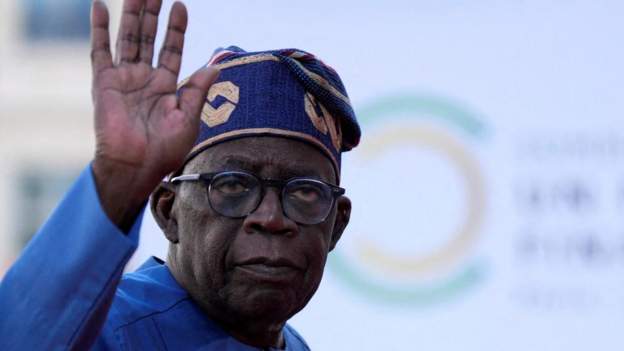
The Supreme Court in Nigeria has started to listen to the opposition’s argument about the presidential election outcome from February 2023.
Bola Tinubu won the poll, but his opponents, Atiku Abubakar and Peter Obi, want the country’s highest court to change the decision made by the Election Petition Court, which confirmed Mr Tinubu’s win.
The legal problem could make things worse and keep dividing the country based on political parties.
It might take a couple of weeks for the seven judges on the Supreme Court panel to make a decision on the issue.
If the higher court agrees with the lower court’s decision, this would be consistent with what has happened before in elections in Africa’s most populated country. In the past, there has never been a situation where the result of a presidential election has been changed.
However, Abubakar has stated that he will provide the court with additional proof regarding the controversy surrounding the president’s alleged use of a fake educational certificate as evidence of his eligibility.
However, Tinubu is against the introduction of new evidence.
He is asking the court to not allow his opponent to give more evidence for their new claim.
The Election Petition Court said that the opposition candidates could not show that there were problems with the election.
The judges said that the people who started the petition were not able to show evidence for their argument that there was too much voting and that some voters were stopped from voting.
Tag: Nigeria
-
Nigeria’s supreme court set to listen to Presidential election challenges
-
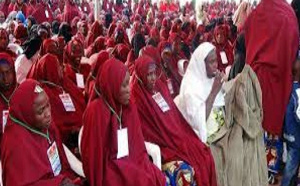
Kano, Nigeria, allocated $1 million for a mass wedding of 1,500 women
In a historic mass wedding held on Friday, authorities in the North West of Nigeria married off 1,500 women.
The Kano state administration sponsored these marriages to provide support to widows and new brides, helping them establish the foundations of family life and improve social well-being.
During the event, only the grooms were present, as the brides were absent. This mass wedding was a campaign promise made by the current governor before his election.
Although such weddings were an annual tradition for years, the previous government discontinued them.
Kano, Nigeria’s second-largest city and a major commercial center in the northern region, hosted this significant event due to the challenging economic conditions in the country, which made it difficult for many couples to independently arrange their wedding ceremonies.
Yusuf Abdullahi, a textile trader, expressed his struggle, saying, “Life is really tough, which is why I could not get married until now, though I wanted to. I pray my marriage becomes the key to my prosperity.”
The government not only covered the cost of the bridewealth but also provided a modest startup capital of $26 for the brides and offered a professional training program.
Trainer Naisa Ahmad explained that the state’s aim is to provide the brides with vocational skills to promote self-reliance. The initiative recognizes the increasing cost of living and seeks to empower women to support themselves, their spouses, and society through their chosen trades, as reported by Africa News.
In Nigeria’s traditional northern regions, where husbands typically bear the primary financial responsibility for the household, rising inflation has prompted authorities to encourage women’s participation in income-generating activities.
The head of the Sharia police in Kano state disclosed that organizing the mass wedding incurred an expense of approximately $1 million for the state.
The wedding of the 1,500 couples was reportedly decentralized, with ceremonies taking place in different local governments within the state.
-

Nigeria: Govt launches $1.5b cash distribution to alleviate economic strain for vulnerable households
The Nigerian government has unveiled a plan to distribute $1.5 billion (£1.2 billion) in cash to support 15 million vulnerable households.
This initiative aims to ease the impact of soaring prices for essential items such as food, fuel, and commodities.
Under this program, each eligible household will receive $32 in cash over a three-month period starting this month, as stated by the Finance Minister. The specific commencement date, however, was not provided during the press conference held in the capital, Abuja, on Tuesday.
The government estimates that these vulnerable households encompass approximately 62 million Nigerians, out of a total population exceeding 200 million.
Initially, the scheme was announced in July with the intention to provide $10 to each of the 12 million households. However, this drew public criticism, with many expressing concerns that the amount was insufficient.
In response to these concerns, President Bola Tinubu introduced a revised plan during the Independence Day celebrations earlier this month.
Nonetheless, questions persist regarding the criteria for eligibility and the selection process for households.
The economic challenges faced by many Nigerians stem from the removal of fuel subsidies by the government in May, coinciding with Mr. Tinubu’s assumption of office.
According to Nigeria’s National Bureau of Statistics, approximately 63% of Nigerians are classified as “multidimensionally poor,” experiencing various forms of deprivation.
-
50 persons abducted by armed guys in northwest Nigeria
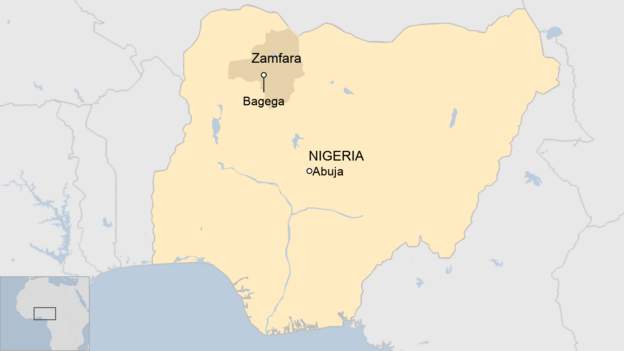
More than 50 people, including women and children, were taken away by armed men in north-western Nigeria.
People who live in Bagega, a village where mining happens in Zamfara state, said a group of armed men came into the village on motorcycles. They shot at people without choosing who to shoot and also set houses on fire.
Three individuals lost their lives, and seven more were harmed in the assault.
In the past few years, kidnapping for money has been happening a lot in north-western Nigeria. Armed groups called bandits have been going to villages, schools, and people on the road to take them captive. -
Nigeria burns pangolin scales worth $1.4 million
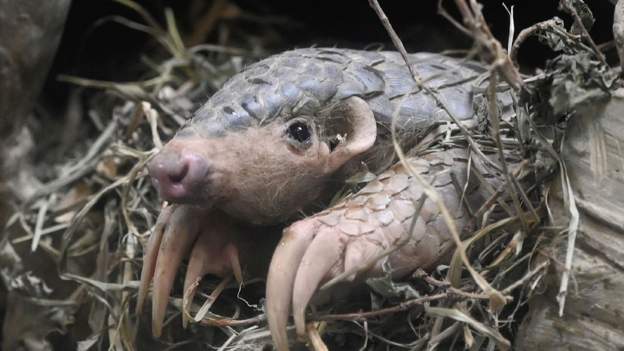
Officials in Nigeria have set fire to pangolin scales worth $1. 4m (£12m)
This is the first time that the West African nation publicly destroyed wildlife products that they took from illegal trafficking, in order to discourage more illegal activities.
The pangolin is a very rare and shy animal that is in danger of disappearing. It is also one of the most hunted and traded creatures in the world. Many people want to buy their scales for traditional Chinese medicine.
Nigeria has become an important place for moving African pangolin scales and other wildlife products to Asia.
Aliyu Jauro, the director-general of NESREA, said that destroying these seized items shows how committed we are to protecting the environment, saving wildlife, and stopping illegal trade that puts species in danger of disappearing. He also mentioned that we destroyed four tonnes of pangolin scales. -
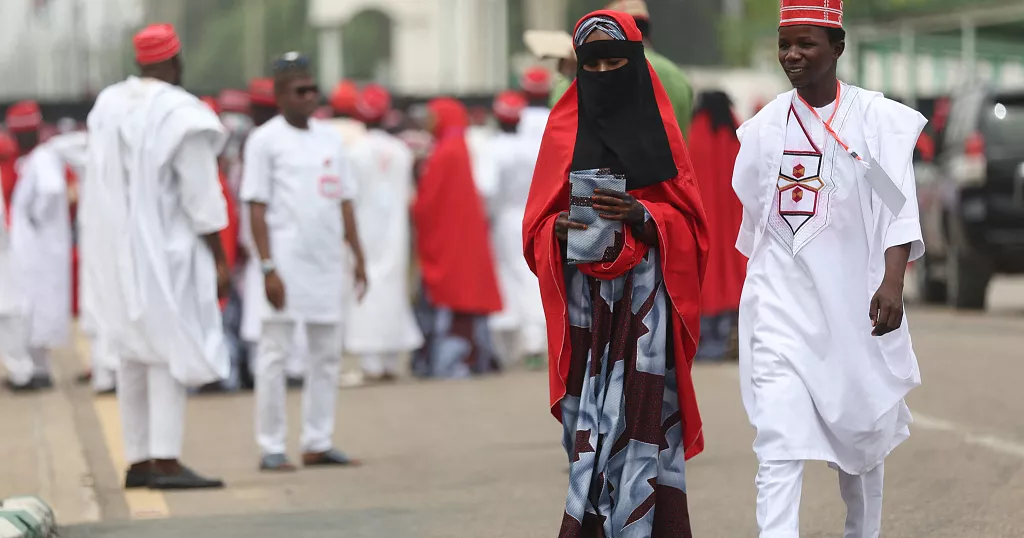
Nigeria: Mass wedding for 1,800 couples held in Kano state
Local officials officiated the mass wedding of hundreds of couples in Kano State, northern Nigeria.
The mass wedding program for the underprivileged, sponsored by the local government, took place on Friday, October 13.
Many couples couldn’t afford to plan the wedding on their own in a nation where the economy is struggling.
“Life is really tough, this is why I could not get married untill now, though I wanted to. I pray my marriage becomes the key to my prosperity,” Yusuf Abdullahi, a textile trader said.
The government also planned a professional training session in addition to paying the dowry, purchasing furnishings, giving future brides trousseau gifts and a 26 dollar start-up capital. The state’s motivation was explained by trainer Naisa Ahmad.
“The wisdom behind teaching the brides some vocational skills is to make them self-reliant. Life has become so expensive. But if a woman has a trade she will be of help to herself, her husband, and the society as a whole.”
Rising inflation has compelled authorities to promote women’s employment, but in Nigeria’s traditional north, the husband is generally responsible for handling the household’s finances.
“These small trades will prevent us from constantly making demands on our husbands,” Maimuna Yakubu Yakasai said. “We have learnt a lot. If you have a trade that fetches you some little money you can pay for little ‘cash expenses which is a relief to your husband.”
As per the Sharia law enforcement leader in Kano state, arranging the mass wedding incurred an expense of around $1 million for the state. The wedding of the 1,800 couples was conducted in a decentralized manner, with ceremonies held across different local governments.
-
Inflation rate in Nigeria at 26.72%
The inflation rate in Nigeria has increased to 26.72 percent, up 0.92 percent from 25.80 percent the previous month.
This was announced on Monday by the National Bureau of Statistics in its most recent Consumer Price Index data for September 2023. It was distributed over NBS’s X handle.
The elimination of gasoline subsidies and the depreciation of the official currency rate, both of which had a significant impact on consumer prices, are mostly to blame for the increase in inflation.
According to the statement, “September 2023 saw an increase in the headline inflation rate from 25.80% in August to 26.72% in September.
“ Looking at the movement, the September 2023 headline inflation rate showed an increase of 0.92 percentage points when compared to the August 2023 headline inflation rate.
“On a year-on-year basis, the headline inflation rate was 5.94 per cent points higher compared to the rate recorded in September 2022, which was 20.77 per cent.
” This shows that the headline inflation rate (year-on-year basis) increased in September 2023 when compared to the same month in the preceding year (i.e., September 2022).”
-
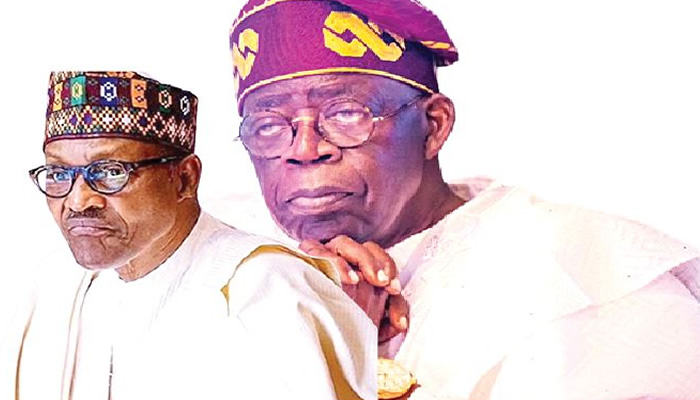
Nigeria’s borrowing spree raises deep concerns
The Federal Government’s decision to persist with borrowing funds, despite the escalating and unsustainable debt burden, is causing apprehension among financial experts and various stakeholders.
According to the Debt Management Office (DMO), Nigeria’s total public debt had surged to N87.38 trillion by the end of the second quarter of the current year.
This signifies a significant increase of 75.29 percent, or N37.53 trillion, when compared to the N49.85 trillion recorded at the end of March 2023.
Further data from the DMO reveals that Nigeria’s total domestic debt stands at N54.13 trillion, while its total external debt is N33.25 trillion. Domestic debt accounts for 61.95 percent of the total debt, with external debt making up the remaining 38.05 percent.
The DMO, in its 2022 Debt Sustainability Analysis Report, cautioned that the Federal Government’s projected revenue of N10 trillion for 2023 would not be sufficient to support additional borrowings.
It expressed concern that the projected government debt service-to-revenue ratio of 73.5 percent for this year is exceedingly high and poses a threat to debt sustainability. The report emphasized that the government’s current revenue profile cannot sustain higher borrowing levels.
“Of course, this is true, the debt burden of Nigeria is clearly unsustainable right now and the government needs to slow down on borrowing,” the Chief Executive Officer, Centre for the Promotion of Private Enterprise, Dr Muda Yusuf, stated.
However, in spite of the apprehensions voiced by both the DMO and analysts regarding the nation’s debt, a recent October report by the local media, revealed that the Federal Government is presently in discussions with the World Bank for a new $1.5 billion loan.
According to the report, this loan, referred to as HOPE (Nigeria Human Capital for Opportunities and Empowerment), derives its name from information acquired from the website of the Washington-based institution.
It stated that the objective of the loan was “to strengthen systems for improved delivery of basic education and primary health services in participating states.”
The loan is meant to be implemented in 2024 pending approval by the board of the World Bank Group. The report also stated that there was another loan titled, ‘Nigeria Macro-Fiscal Reforms for Economic Stability and Economic Transformation’.
The report mentioned that there are additional loan projects currently under discussion. These encompass a $300 million project aimed at addressing the needs of internally displaced persons and host communities, a $500 million project to expand rural access and agricultural marketing, a $750 million project focused on increasing distributed access to renewable energy in Nigeria, a $700 million project designed to support sustainable power and irrigation in the country, and a $500 million project for accelerating resource mobilization for reforms (PforR).
The outcome of these discussions will determine whether these loans will be approved or rejected. According to the report, Nigeria has secured a total of $1.95 billion in loans from the World Bank during the first four months of President Bola Tinubu’s administration.
These loans include, a $750 million loan approved on June 9, 2023, to enhance Nigeria’s power sector, a $500 million loan approved on June 22, 2023, to support women’s empowerment initiatives in the country and a $700 million loan approved on September 21, 2023, to improve adolescent girls’ education and empowerment.
Commenting further on the development, Yusuf said, “We cannot continue like this. Our debt level has reached a point now that is clearly unsustainable. You know our debt profile now is over N87tn, and the DMO has added the Ways and Means advances that were securitised. So, the thing has jumped to over N87tn.
“And the debt service burden is still extremely heavy; almost 100 per cent of our revenue. So, the debt situation is extremely bad. Therefore, this is not the time to borrow for projects that cannot significantly add value to productivity.”
Yusuf pointed out that the administration of former President Muhammadu Buhari negotiated some loans with the World Bank before he left office. He, however, stated that if the current government must borrow, it should not be for servicing recurrent expenditures, but must be targeted on capital projects that would attract income.
“Personally I don’t think this is the right time to be borrowing that kind of money (the $1.5bn loan). We need to be very careful about the way we go about borrowing, given the enormity of the debt service burden, the current size of our debt, and our very limited capacity to service both domestic and external debts.
“If we must borrow, it should be something that can support real productivity in the economy. I’m not saying education is not important, but we should be looking at more structural issues. You are dealing with an infrastructure deficit and a problem of logistics, these things make productivity to be extremely low, thereby affecting the competitiveness of our economy. So, they are much more fundamental,” the CPPE boss stated.
On Ways and Means financing of fiscal deficit, he said, “Ways and Means finances of the Central Bank of Nigeria must be kept within statutory limits to avoid the damaging impacts of high-powered money on the macroeconomic environment. The experience of the last few years must not be allowed to repeat itself.”
Also commenting on the issue, a former President of the Association of National Accountants of Nigeria, Dr Sam Nzekwe, wondered how the government would be able to raise funds to pay the additional N35,000 that it promised civil servants.
“The Tinubu government has not settled down to actually see the direction the economy is going. They have promised to pay an additional N35,000 to each civil servant. But the question is where will they get the money? That announcement has no backing of any appropriation. So, one may think that maybe they will come up with an appropriation to cover that. Several other pronouncements had been made as well, without any appropriation backing them.
“Now all these things require money, but where are they going to get money to finance them? Is it by borrowing? If you borrow to finance all these things, it means you are now financing recurrent expenditure, which is too bad because it is not taking us anywhere,” Nzekwe stated.
The former ANAN president stated that though he was not totally against the act of borrowing by the government when such funds were acquired, they should be deployed into capital projects.
“I am not totally against borrowing, but it should be for capital development. Is it to finance roads, infrastructure, or which capital project? But if the money goes to recurrent expenditure, then it is too bad,” he stated.
On his part, the Secretary of the Independent Petroleum Marketers Association of Nigeria, Abuja-Suleja, Mohammed Shuaibu, said the government would have reduced its borrowings had it been Nigeria’s refineries were working.
“Recently, the NNPCL said it secured a $3bn loan to help the local currency and boost activities in the oil sector. There wouldn’t be a need for such a level of borrowing if our refineries were working. The government should work hard to get our refineries working. It will save Nigeria a lot of funds. It will reduce the pressure on our forex. It will create jobs and guarantee the supply of refined products. Marketers will stop chasing dollars for imports.
“The gains are enormous. So, if they really want to reduce the level at which they go about borrowing billions of dollars, one sure way to help in doing that is by ensuring that our refineries are brought back on stream fast,” Shuaibu stated.
He said it was high time the Federal Government realised that the huge foreign exchange expended in importing refined petroleum products was not only depleting the country’s forex but was affecting revenues accruable to both investors and the government.
“So as we strive to cut down on our excessive borrowing as a country, we must also strive to reduce the amount of forex that we send out to other nations through the imports of petroleum products,” the IPMAN official stated.
Offering his perspective on the issue, Chief Chinedu Ukadike, the National Public Relations Officer for IPMAN, highlighted that the government’s failure to address certain critical issues in the oil sector has had adverse effects on the country’s income.
He further noted that this situation has been a contributing factor to the ongoing borrowing by the government and emphasized the importance of addressing these challenges to enhance the government’s financial stability.
“Had it been our oil industry is doing well and supplying the required revenue, I don’t think the government would be borrowing that much. We import refined petroleum products and spend billions of dollars on them when we have refineries.
“I remember that in one of my interviews, I encouraged the President to declare a state of emergency in the refineries, so as to ensure that our four refineries in Nigeria begin to work. Nigeria is heavily dependent on the importation of petroleum products.
“You will also agree with me that petroleum products drive the economic activities of this country and any little increase in petroleum product prices leads to galloping inflation, which ultimately affects domestic production and the prices of goods,” he stated.
Ukadike added, “Nigeria has spent trillions of naira on subsidy, billions of naira on logistics, etc. It is very unfortunate that up till now, we’ve not been able to deliver at least one refinery. So, why won’t the government borrow, when we spend trillions importing petroleum products?”
Nonetheless, he encouraged the government to address the issues within the oil sector, as doing so would not only bolster revenue but also result in a decreased reliance on borrowing by Nigeria.
“In the domestic distribution of petroleum products, we’ve lost all the pipelines. We lost those along the waterways; we lost those in the hinterland. It is becoming increasingly difficult for Nigeria to meet its crude oil production quota, which is due to the vandalism of pipelines.
“When you come internally, all our 21 depots are networked to our refineries. We have lines that pump products from refineries to various depots. The way it was designed, pipelines are supposed to send products from the Port Harcourt refinery even up to Makurdi. But now, all those pipelines are obsolete.
“Many of them cannot even pump up to 3km, while these are pipelines that are supposed to supply petroleum products to between 400 and 500km. But right now, they cannot supply to 1km even within the radius of the refineries because of lack of production. All these should be fixed to help increase revenue to both government and private businesses,” Ukadike stated.
In the meantime, the head of CPPE emphasized that the inherent instability in the foreign exchange market has been a source of concern, significantly influencing the difficulties that have led to the government’s heightened borrowing activities.
“But it is not unexpected, given the long period of distortions in the foreign exchange market. Correcting the entrenched distortions would take some time. But in the meantime, the monetary authorities should come up with a sustainable intervention framework to ensure the moderation of current volatility in the forex market.
“We recognise the forex supply limitations, but the system needs to be managed in a way that it will not undermine investors’ confidence. The erosion of confidence triggers speculation and influences expectations which in turn trigger diverse responses among economic players,” Yusuf stated.
Nevertheless, given the array of economic policies pursued by the government, only time will reveal whether it will come to recognize that engaging in further borrowing may ultimately prove detrimental to the nation. Additionally, leadership should remain mindful of the fact that resorting to borrowing to cover recurring expenses can be deleterious to any economy.
-

17-year-old boy buries brother alive over GHS150
On Thursday, the Kogi State Police Command apprehended an individual named Goodness Oshodi, accused of attempting to bury his younger brother, Friday Oshodi, alive.
This drastic act was allegedly in response to Friday’s theft of N10,000 (equivalent to about GHS150) belonging to their mother.
The incident occurred in the Apamisede community, situated near the Army Barracks in Adavi Local Government Area, on the outskirts of Lokoja, Kogi State. Fortunately, a kind-hearted neighbor intervened and saved the boy’s life by exhuming him.
An eyewitness, who requested anonymity, reported that the mother of the boys had instructed her eldest son, Goodness Oshodi, to discipline Friday for the theft of N10,000. In compliance with their mother’s directive, the elder brother opted to bury Friday alive until a compassionate neighbor stepped in to rescue him.
Expanding on the incident, the eyewitness revealed that when questioned about his decision to bury his younger brother alive, Goodness explained that he was simply following their mother’s directives. She had instructed him to discipline his brother for the theft of her N10,000.
The eyewitness added that, in response to inquiries regarding their mother’s whereabouts, Goodness explained that she was attending a church service.
SP William Aya, the State Police Public Relations Officer, confirmed the incident and informed that the boy had been apprehended and was currently undergoing questioning.
“Yes, we are aware. The boy (Goodness) has been arrested. Investigation is ongoing as to why and how such a thing could happen,” Aya said.
-
Nigeria’s dollar supply surges as Central Bank eases restrictions
The supply of dollars in Nigeria experienced a significant surge following the central bank’s decision to remove restrictions on the purchase of foreign currency necessary for importing 43 specific items. This move aimed to curb the 40% depreciation of the naira this year.
As per Chapel Hill Denham, an investment bank based in Lagos, liquidity at the official foreign exchange market for investors and exporters increased by over five times, reaching $407.7 million on Thursday after the central bank’s announcement. According to Umar Salisu, a data-compiling trader, the naira saw an increase in value for the first time in three weeks in the parallel market on Friday.
“The supply was mainly from sources outside the central bank but I expect central bank supply to increase,” Tajudeen Ibrahim, head of research at Chapel Hill said. The announcement on Thursday “is an indication that the central bank wants to be more frequent in its intervention,” which will moderate the rate in the parallel market, he said.
Nigeria, the largest crude oil producer in Africa, has faced persistent challenges in bolstering its supply of dollars, primarily due to declining oil revenues that have left its foreign exchange reserves in a precarious state. In response, authorities ceased selling foreign currency to importers of items like rice, vegetables, and chicken, with the aim of promoting local production.
However, this action only exacerbated the demand for dollars in the unofficial market. On Friday, the naira rose by 0.3% to 1,042 against the dollar in the parallel market, according to Salisu.
President Bola Tinubu’s decision to allow the currency to trade with greater flexibility temporarily narrowed the gap between the official and parallel-market exchange rates. Nonetheless, the spread began widening again in August, driven by an insufficient supply of official dollars and heightened demand in the parallel market.
The central bank’s objective is to eliminate the 27% premium in the parallel market concerning the official rate of 759.20 naira to a dollar. This effort is intended to boost the confidence of foreign investors.
The central bank’s ability to win investor confidence and stabilize the market will depend on the country’s capacity to amass dollars, Ibrahim said. “If there is no inflows to the central bank and to the government from crude oil sales and borrowing, then we may see the intervention dissipate faster than expected.”
-

Military in Nigeria kills 100 people after launching airstrikes in northwest
Nigerian military jets have conducted airstrikes on a gathering of bandit militias in the country’s northwest, resulting in the reported death of approximately 100 gunmen, as stated by two army sources and local residents on Friday.
Nigeria’s air force confirmed conducting bombardments in northwestern Zamfara State on Tuesday; however, a spokesperson noted that specific casualty figures were not available at that time.
For years, the northwestern and central Nigerian states have grappled with armed groups that raid villages, targeting residents for ransom and engaging in violence in areas with limited state presence.
These criminal groups, known for large-scale kidnappings in recent years, operate from concealed camps within a vast forest spanning Zamfara, Katsina, Kaduna, and Niger states.
“Fighter jets conducted air strikes on bandits, I’m sure more than 100 were killed and almost twice that number were badly injured,” one of the military officers involved in the operation said.
A similar amount was also confirmed by another military official. Because they were not authorized to talk about the operation, both talked anonymously.
Prior to the attacks, the military got information indicating that multiple gangs had gathered in a region along the borders of the states of Zamfara, Kebbi, and Niger with the intention of targeting local towns and a military post.
Since the military arrived in 2015 to combat the gangs, the air strike on Tuesday was the second most intensive aerial operation against bandits in Zamfara.
-
Parallel market sees a drop in Nigerian naira
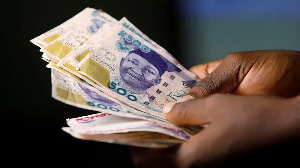
The Nigerian naira has reached fresh lows on the parallel market due to declining reserves and limited dollar inflows, posing challenges for the Central Bank of Nigeria in meeting the demand for the greenback from both corporate entities and individuals.
The local currency slipped to 1,030 naira per dollar on Wednesday, down from 1,015 naira the previous day. These figures were reported by Abubakar Mohammed, the CEO of Forward Marketing Bureau de Change Ltd., which compiles data on the informal market in Lagos, Nigeria’s commercial hub.
This rate has further diverged from the official rate, which stood at 765.8 naira per dollar on the FMDQ OTC trading platform.
The widening gap signals continued pressure to devalue the currency after Nigeria, the most populous nation in Africa, adopted a more flexible exchange rate system in June as part of economic reforms aimed at attracting foreign investment and bolstering the economy.
In addition, the country has experienced a 33% drop in capital inflows in the three months through June, with foreign investors expressing concerns about capital controls and the country’s economic stability.
Nigeria’s external reserves have also fallen to a two-year low, amounting to $33.2 billion, as reported by data from the central bank.
“People are looking for dollars, both the seller and the buyer,” said Umar Salisu, a foreign-exchange operator in Lagos. “Until there’s enough supply, you can’t predict the exchange rate.”
-

No proof that president of Nigeria fabricated college record
The BBC’s Global Disinformation Team has found no proof that the diploma submitted by Nigeria’s President Bola Ahmed Tinubu to the country’s electoral commission was fake.
Claims that President Tinubu’s educational credentials were fraudulent became widely shared on social media after Chicago State University (CSU) made his academic records public last week.
We have examined some of the most popular statements that are widely spread.
The president’s academic papers are being made public because of a court case that started in August. Atiku Abubakar, one of the president’s opponents in the presidential election, filed the case.
Mr Abubakar wanted the winner to be disqualified because he said that the person faked their diploma in Business Administration from CSU in 1979, which was submitted to the electoral authority (INEC).
Mr Abubakar asked a US court in August to make CSU give him Mr. Tinubu’s school records as evidence for his case in Nigeria. This is done through a process called discovery, where both sides share information and documents before a trial.
Mr Tinubu’s lawyers didn’t want the discovery application to happen because they were worried about privacy. However, the US court decided that it should still go forward.
Mr Abubakar asked for certain papers.
You can get a copy of any diploma that was given out by CSU in 1979.In 1979, Mr. Tinubu received a diploma from CSU.
Diploma copies that look like the one Mr. Tinubu got from CSU in 1979, with the same writing style, official stamp and signatures, and the same words on it, were given to other students too.
Jamar Orr, who worked at CSU, certified documents for CSU between 1 August 2022 and the next 12 months.
CSU provided seven diplomas for different areas of study as requested. The names of the students were removed. The university’s registrar says that the students did not pickup these diplomas.
CSU said they couldn’t find Mr. Tinubu’s diploma from 1979 because they don’t keep copies of diplomas once they have been given to students.
CSU added that, they made a new diploma for Mr. Tinubu on June 27, 1979. It also gave out diplomas to other students that looked similar to Mr Tinubu’s diplomas.
As a response to request four, CSU provided additional academic documents that were confirmed and released by Mr. OrrAtiku Abubakar is disagreeing with Bola Tinubu’s win as president, because Atiku came in second place in the February 2023 elections.
Following the judge’s decision, Mr. Abubakar’s lawyer, Angela Liu, asked Caleb Westberg, who is currently the registrar at CSU, some questions during a legal session.
Mr Abubakar’s spokesperson, Phrank Shaibu, allowed the BBC to see and use the deposition transcript.
Some people on social media in Nigeria claim that the evidence from CSU shows that Mr. Tinubu’s diploma given to Inec was fake. Last week, one of Mr Abubakar’s lawyers, Kalu Kalu, said the same thing at a press conference.
We didn’t find any proof for this statement.The CSU gave out a bunch of certificates from 1979 to 2003. We looked at all of them.
In our analysis, we talk about three diplomas belonging to Mr. They are different from each other.
The first version of the text, made in 1979, which he previously mentioned that he lost while living away from his home in the 1990s.
He submitted another diploma to Inec, which was supposed to be a replacement for his original diploma from CSU. This diploma resembles the ones that CSU issued in the 1990s.
Moreover, CSU has an extra diploma for Mr. Tinubu which they believe was issued in the early 2000s, but he never picked it up.
People on social media are saying that Mr. Tinubu’s document that he gave to Inec is similar to the diplomas from CSU in 1979.
During Mr Westberg’s statement, Mr Atiku’s lawyer paid attention to the diploma given by President Tinubu to the electoral commission and argued that it was different from any of the diplomas issued by CSU.
But, Mr Westberg agreed with Ms Liu that the diploma does not resemble the samples from 1979. However, he said that the certificate actually looks similar to three of the diplomas CSU gave to Mr Abubakar. Our study says the same thing.
The reason why the diploma looks different is because it was re-issued in the 1990s.
MrWestberg mentioned that the design of CSU’s diploma has been changed many times in the past. He said if a student wants a new diploma, it would look like the template at the time they request it, regardless of when they graduated.
So, if Mr Tinubu had requested a replacement for his diploma in the late 1990s, the new one would have looked like the diplomas from that time.CSU gave out diplomas to students in 1998 and 1999. The diploma from 1998 looks exactly the same as the one Mr Tinubu gave to Inec.
CSU submitted three diplomas from the 1990s that were like Mr.
One of them, which was from 18 December 1998, is exactly the same (except for the names, degree class, and dates) as the diploma Mr. Tinubu gave to Inec.
Mr Westberg also said that CSU doesn’t keep track of when a graduate asks for a new diploma, so Mr. Tinubu’s request for a copy of the diploma wasn’t written down.
The copy he gave to the election commission was missing part of the university logo. Westberg said in his statement that it may have been “cut off” during photocopying.
We looked at the diploma. It looks like the bottom of it was not copied.
The BBC asked Mr. Tinubu’s team for a copy of his diploma. They sent the only copy of the diploma that they claimed existed. This is a black and white copy of the document that was given to Inec.
Another organization in Nigeria that checks facts claimed that Mr. Tinubu’s diploma was not from CSU because CSU’s diplomas do not say “with honors” under the degree title.
But the BBC discovered that although this was not shown in the other diplomas published by CSU, it does exist in Mr Tinubu’s diploma given in the early 2000s, which was confirmed by Mr Westberg during his statement.
The text means that the words “with honors” on the diploma match the information submitted by the president to INEC.
Mr Tinubu’s diploma, which was requested again in the 1990s, is still with CSU because he did not pick it up.
Mr Westberg said that the school could confirm that this specific diploma is real because the school still has it since nobody has come to get it.
Not all students finish university with honours. Tinubu completed his studies at CSU and received high marks, according to court documents reviewed by the BBC.
The BBC asked CSU about its diplomas and CSU directed us to a statement that said they are confident that Tinubu met all the requirements for attending and graduating from CSU.
There is a claim on social media that someone named Bola A Tinubu, who went to CSU, is actually a woman.
Daley College) in Chicago, where he studied Accounting. Daley College is where I went to school first before I moved to CSU in 1976. In the Southwest transcript, it shows that a person who is identified as female attended the school. This has made people say that the person named Mr. Tinubu took the identity of that woman. Atiku’s lawyer, Mr. Kalu, mentioned this during a press conference last week.
However, Westberg made it clear during his statement that there was no doubt that the person who went to CSU was a man named Bola A Tinubu. He said the university used additional things besides the name to make sure the student was who they said they were.
He said that the Social Security Number (SSN) in the transcript from Southwest College is the same as in other documents where the student’s gender is clearly noted as male.
But the documents that were made public made people wonder about Mr. Tinubu’s real birth date and which secondary school he went to.
According to one document, Mr Tinubu went to Government College Lagos in 1970. However, the school website says that it was started in 1974.
Other than the difference in gender, the birth dates mentioned in some of the released documents don’t match President Tinubu’s official birth date, which is 29 March 1952.
The document from CSU shows that he was born on 29 March 1954. The form he used to apply for college asks for his birthday, and he wrote down March 29, 1955.
During Westberg’s questioning, Mr. Atiku’s lawyer stated that Mr. Tinubu had provided his birth date as March 29, 1952 on the forms submitted to Inec.
During questioning, Mr. Westberg said that the differences might have happened because someone made a mistake.
We reached out to Mr. Tinubu’s team to ask about these differences, but instead of giving us a response, a spokesperson told us to contact his political party, the All Progressives Congress. We spoke to Festus Keyamo, who is both Mr. Tinubu’s spokesperson for his campaign and a minister in the government. He ignored our calls and messages.
We also sent some questions to Mr Abubakar’s team. They did not reply. -
Separatist from Nigeria released in Benin – Report
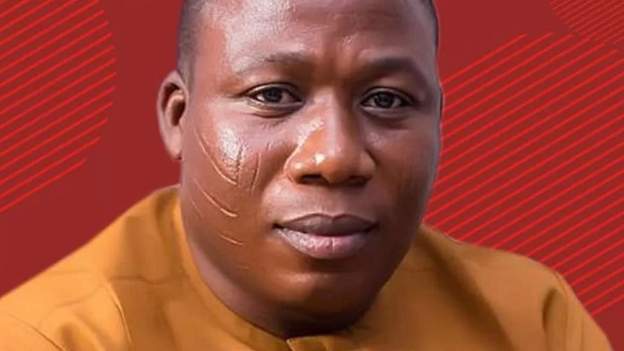
Separatist from Nigeria, known for his advocacy for an independent Yoruba nation, Sunday Igboho Adeyemo, has been released in Benin, where he had been detained after fleeing Nigeria in 2021, according to his lawyer as reported by AFP news agency.
“He has been freed and he has left Benin,” said his attorney Ibrahim Salami.
There has been no official statement from Benin authorities. Adeyemo gained attention in Nigeria in October 2020 when he called for an independent Yoruba republic, although he faced ridicule initially.
He later became a focal point for grievances related to land rights. After authorities raided his home in Ibadan in 2021, he fled Nigeria, leading to his detention in Benin.
Adeyemo has expressed gratitude to Benin’s President Patrice Talon in a social media video, as per AFP reports.
-
Aliko Dangote loses his place in the top 100 billionaires list after $17 billion wealth slip
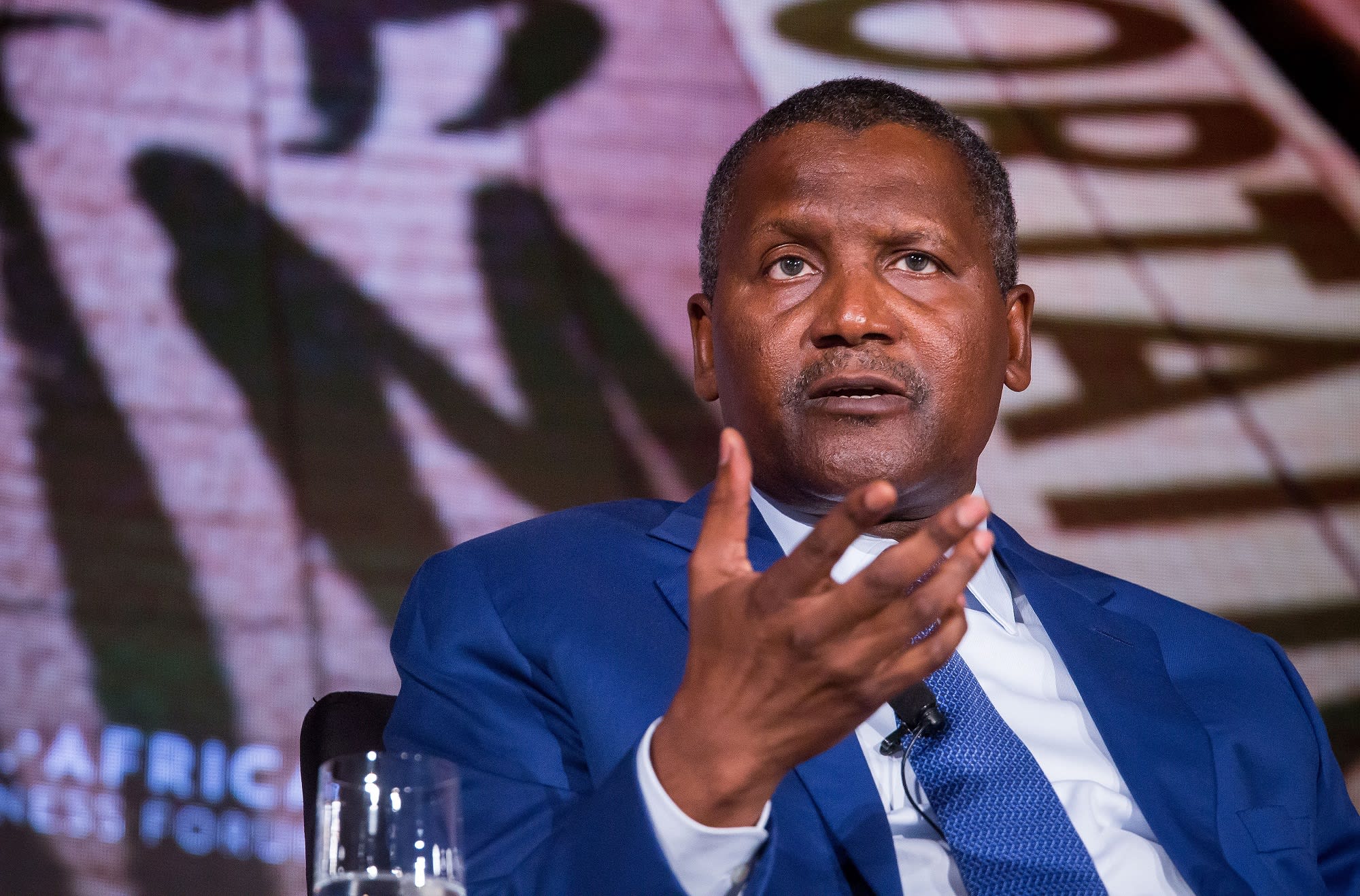
Aliko Dangote, Africa’s wealthiest individual, has experienced a significant decline in his net worth, resulting in his removal from the prestigious list of the world’s top 100 billionaires, as reported by the Bloomberg Billionaires Index.
As of September 1, 2023, Dangote’s net worth stood at a substantial $17.8 billion.
However, in just one month, his fortune has taken a substantial hit, plummeting to $16.7 billion, marking a startling decrease of $1.1 billion.
This downturn has led to a year-to-date loss of $1.99 billion.
The primary cause behind this dip in Dangote’s net worth can be attributed to the decreasing market value of his holdings in two major companies, Dangote Cement and Dangote Sugar Refinery.
Notably, Dangote Sugar is currently in the process of merging with NASCON Allied Industries and Dangote Rice Limited, with the merger expected to be finalized by the end of 2023.
This merger is poised to create a formidable food conglomerate by combining Dangote Sugar, NASCON (a salt-processing company), and Dangote Rice.
The conglomerate will offer an extensive range of products, including sugar, rice, salt, vegetable oil, tomato paste, seasonings, and other edible goods.
This strategic merger also holds the potential to significantly boost Dangote’s net worth.
According to Bloomberg’s data, his stakes in Dangote Cement, Dangote Sugar, and NASCON are currently valued at $6.95 billion, $615 million, and $111 million, respectively, contributing to his current net worth of $16.7 billion.
While Aliko Dangote may have temporarily slipped out of the global top 100 billionaires list, the merger and the projected growth of the United Food Conglomerate could pave the way for a resurgence in his wealth, potentially allowing him to reclaim his position among the world’s wealthiest individuals.
This development underscores the ever-fluid nature of global wealth rankings and how market dynamics can significantly impact the fortunes of even the most prominent billionaires.
Meanwhile, business analysts and investors worldwide are closely monitoring Aliko Dangote’s financial journey with keen interest.
-
Nigeria’s govt suffers N847b loss due to gas flaring – NOSDRA
Between January 2022 and August 2023, the Nigerian government incurred losses of approximately N843 billion due to gas flaring, according to data from the National Oil Spill Detection and Response Agency (NOSDRA).
NOSDRA’s latest gas flare report revealed that oil and gas companies operating in the country flared 147.1 billion standard cubic feet (SCF) of gas, valued at $514.9 million or about N390 billion (based on the Central Bank of Nigeria’s current exchange rate of N757.5 to a dollar) from January to August 2022.
Similarly, from January to August 2023, these companies flared 171.1 billion SCF of gas valued at approximately $599 million or N453 billion.
This totals to about N847 billion lost between the same periods in 2022 and 2023.
The report reveals that during the first eight months of this year, the volume of gas flared was 16.28% higher compared to the same period in 2022. This gas flaring in the initial eight months of this year had the potential to generate 17,100 gigawatts/hour of electricity while emitting 9.1 million tons of carbon dioxide into the atmosphere.
Furthermore, the report points out that the responsible companies were subject to penalties totaling $342 million, approximately N251 billion. However, it’s worth noting that a significant portion of these penalties was never collected by the Federal Government.
In contrast, during the period between January and August 2022, the oil firms faced penalties of about $294 million (N223 billion). During this time, the gas that was lost had the potential to generate 14,700 GWh of electricity, with an equivalent carbon dioxide emission of 7,800 tonnes.
Some of the companies responsible for these actions, as mentioned by NOSDRA, include Shell Petroleum Development Company, Nigerian Petroleum Development Company, Chevron Nigeria, Mobil Oil, Elf Petroleum Nigeria, Nigeria Agip Oil Company, Addax Petroleum, Texaco Overseas (Nigeria), Cromwell, and South Atlantic Petroleum, among others.
These companies flared gas from Oil Mining Leases 04, 05, 11, 13, 14, 17, 18, 22, 28, 23, 24, 38, 40, 42, 43, 72, 49, 54, 90, 95, 67, 70, 104, 59, 99, 100, 101, 102 and Oil Prospecting Licenses 222, 316 and 306, among others.
The report comes on the heels of FG’s pledge to the United Nations in 2020, to attain zero gas flare by 2060, ten years after the UN’s 2050 target.
-
Nigeria: Interior Minister appeals for funding to support food production for inmates
The Minister of Interior, Dr. Olubunmi Tunji-Ojo, has proposed a collaboration with the Nigeria Incentive-Based Risk Sharing System for Agricultural Lending (NIRSAL) to secure funding for involving inmates in agricultural activities.
He highlighted the increasing budgetary expenses associated with feeding inmates and suggested that NIRSAL could partner with the ministry to enable inmates to produce their own food.
This proposal was made during a visit by NIRSAL’s management, led by its Managing Director, Abbas Masanawa, to Dr. Tunji-Ojo in Abuja on Thursday.
It partly read, “The Minister, citing the relevance of the organization, said NIRSAL can do a lot of good to Nigeria Correctional Service and Nigeria Security and Civil Defence Corps.”
He added that with the rising budgetary cost of the feeding of inmates, he said NIRSAL can partner with the Interior Ministry to secure funds for the engagement of inmates in farming activities to produce their food.”
During the meeting, Masanawa expressed the purpose of their visit, which was to explore potential collaboration with the Ministry in its services.
He further elaborated on NIRSAL’s role as a non-bank financial institution fully owned by the Central Bank of Nigeria. NIRSAL’s mission is to redefine, measure, reprice, and share credit risks associated with agribusiness in Nigeria.
-
Birthday bash turns sour as 70-year-old woman curses guests for not buying Aso-Ebi
A Nigerian woman who threw a lavish party for her 70th birthday in London ended up cursing and chasing away some of her guests for not buying Aso-Ebi, a uniform dress that is traditionally worn by relatives, friends, and guests of the celebrant.
The woman, identified as Oluwatoyin Bucknor, had sold Aso-Ebi to her guests, but some of them declined to buy it and came in their own outfits.
A video posted by Lindaikejiblog official instagram shows the shocking moment when the woman grabbed the microphone and ordered those who did not buy Aso-Ebi to leave her party immediately.
The video, which has gone viral on social media, shows the woman saying: “I beg you in God’s name, leave now. If you know you want to get to the age of 70, leave now.”
She added that she did not invite them to come and eat at her party, but to celebrate with her and honour her with Aso-Ebi.
The guests, who were visibly stunned and offended by the woman’s outburst, had no choice but to grumble and leave.
Some of them were heard saying: “This is wickedness”, “This is unfair”, “This is London, not Nigeria”, and “She should have told us before”.
The video has sparked mixed reactions from social media users, with some condemning the woman for being rude and ungrateful, while others sympathising with her for being disappointed by her guests.
Some of the comments are:
- “This is so disrespectful. How can you chase away your guests because they did not buy your overpriced cloth? You should be happy that they came to celebrate with you in the first place.”
- “I feel sorry for her. She must have spent a lot of money and time to organise this party and expected her guests to support her with Aso-Ebi. Maybe she was counting on the money from Aso-Ebi to cover some of the expenses.”
- “This is why I don’t like attending Nigerian parties. They always have one drama or another. Why can’t we just enjoy ourselves without imposing unnecessary rules and obligations on ourselves?”
- “She has every right to do what she did. It is her party and she can invite or uninvite whoever she wants. If you cannot buy Aso-Ebi, then don’t come to eat at her party. Simple as that.”
The party drama was also reported by Premium Times, a Nigerian leading newspaper for news and investigations.
According to the report, the party was held on September 30 from 5 p.m. until dawn and was strictly by invitation.
The invitation card also contained a warning note to guests such as No sharing of Aso-Ebi to avoid being bounced and no access card, no entry.
It also warned guests not to sit on any chair if their names were not written on the table to avoid embarrassment.
The final note on the invitation card justified the reasons for the warning, which was tied to the hall capacity secured to accommodate guests.
After the woman ordered the guests who did not buy Aso-Ebi to leave, some men stormed out in anger.
Another video clip captured them without revealing their faces outside the venue.
They were dressed in the party Aso-Ebi, a lilac Agbada attire as they complained bitterly about the woman’s utterances.
-
CBN cautioned by World Bank against subsidy programmes, FX control, direct lending
The World Bank has cautioned the Central Banks of Nigeria, Ethiopia, and Uganda on Wednesday to avoid using unusual actions that could weaken their monetary policies.
According to the Washington Bank, these measures include “monetizing the fiscal deficit, direct lending interventions, untargeted subsidy programs, and foreign exchange controls.”
The lender emphasised the critical challenge of inflation faced by monetary authorities in the region, particularly in countries struggling with “underdeveloped financial systems, a substantial informal sector, and a lack of coordination between monetary and fiscal policies.”
The organization highlighted the potential consequences, stating, “If monetary and fiscal actions are not adequately coordinated to bring down inflation, the risk of de-anchoring inflation expectations would fuel further inflation, accelerate interest rate increases, and exacerbate the deceleration of economic activity.”
The World Bank, in its Africa’s Pulse report, emphasized the ongoing inflationary difficulties experienced by many countries in the region.
Africa’s Pulse is a semi-annual publication from the Office of the Chief Economist in the World Bank Africa Region. It assesses the continent’s near-term economic outlook, prevailing development obstacles, and explores a specific development-related subject.
The 2023 edition of the report attributed the inflationary challenges to several factors, including “a global demand slowdown, eased supply chain disruptions, lower commodity prices, and stricter monetary policies.”
Despite a projected decrease from 9.3 percent in 2022 to 7.3 percent in 2023, double-digit inflation remains a challenge for 18 countries.
The report highlighted the adverse impact on households, especially those with lower incomes who allocate a significant portion of their earnings to food, due to escalating food and fuel prices and the depreciation of domestic currencies.
In terms of fiscal matters, the report expressed concern about the slow progress in fiscal consolidation efforts in some countries. In 2023, fiscal deficits continue to exceed pre-pandemic levels in nearly two-thirds of the region’s nations.
The World Bank emphasized the urgency of addressing these issues, stressing the importance of “domestic resource mobilization and efficient spending” to mitigate fiscal and debt sustainability risks, control inflation, and create room for development spending.
The World Bank also acknowledged the efforts of certain countries, such as Kenya and Ghana, in implementing revenue reforms, as well as Angola and Nigeria in subsidy reforms, demonstrating the region’s commitment to fiscal consolidation.
Furthermore, the adoption of digital tools for tax administration and compliance has emerged as a recent trend in the region.
-
Tinubu’s university transcript is authentic – Aide
A staff member of Nigeria’s President Bola Tinubu has said that the claim of Mr Tinubu using a fake university diploma for the country’s electoral body is not true.
At a meeting on Tuesday, a person from Chicago State University (CSU) stated that Mr. Tinubu finished his studies at the university in 1979.
But the official also said that the university cannot confirm if Mr. Tinubu’s diploma is real because they don’t keep copies of student diplomas.
He also said that the signature, logo, and seal on Mr Tinubu’s certificate that he showed to Inec were different from those on the other certificates given out by the CSU when Mr Tinubu graduated.
Atiku Abubakar asked a court in the United States to make CSU give out Mr Tinubu’s school records. Mr Tinubu and Atiku Abubakar both ran for president in Nigeria’s February elections.
He planned to use the documents as evidence to show that Mr. Tinubu’s election should be cancelled because he supposedly gave Inec fake university documents.
Temitope Ajayi, who works for Mr Tinubu as his media and publicity assistant, said on Wednesday that the accusation that President Tinubu gave Inec a fake certificate doesn’t make sense because Mr Tinubu already has a genuine university certificate.
He also mentioned that the new certificate Mr. Tinubu showed to Inec was legitimate because the CSU official verified that “the university does not issue replacements for lost certificates, vendors do. ” -
Dozens killed in fire at an illicit oil refinery in Nigeria
Many people died after an explosion and fire at a secret oil refinery in the southern part of Nigeria.
The event supposedly occurred on Sunday night in Rivers state, but it was only widely talked about on Tuesday.
The leader of Nigeria Security and Civil Defence Corps (NSCDC), Basil Igwebueze, told BBC Pidgin that the incident happened.
He said that 18 people were completely burnt and couldn’t be identified, but 25 were saved.
Mr Igwebueze is holding responsible those who damage oil pipelines and run illegal refineries for the tragic accident.
Many people in the area regularly steal oil from pipelines and sell it, which is against the law.
Over 100 people died last year after a big boom at an illegal place where they make oil in Imo state. -
Musician Naira Marley arrested over MohBad’s death
The police in Nigeria have arrested the singer Naira Marley because they believe he is involved in the death of the Afrobeats star MohBad.
The Lagos police spokesperson, Benjamin Hundeyin, said that Marley was being kept in custody for questioning and other investigative activities.
Marley posted on X that he was helping the police with the investigation into MohBad’s death and wanted the truth to come out and justice to be served.
MohBad passed away under mysterious circumstances at a hospital in Lagos on 12 September and his family quickly laid him to rest.
The 27-year-old star’s death caused his fans to be angry and demand investigations. This made the police dig up his body to perform an autopsy.
Fans were really mad at Marley because he signed MohBad to his music label called Marlian Records.
MohBad left the music company they were signed to last year, because he had a disagreement with Marley.
After MohBad passed away, some videos of him talking about his problems with Marlian Records started circulating again. -
Black Book movie considered as Netflix’s ‘largest ever’ Nigerian film – Director
The Black Book has achieved the status of being Netflix’s ‘biggest ever’ Nigerian film, according to its director.
This action movie, which debuted on Netflix last Friday, tells the story of a deacon seeking justice for his late son, who was wrongfully accused of kidnapping.
Director Editi Effiòng shared on X (formerly Twitter): ‘Just got off a call with Netflix. #TheBlackBook is a global hit! The biggest film out of Nigeria on Netflix ever.’
Data from the streaming platform reveals that within two days of its release, The Black Book garnered 5,600,000 views and became the fourth most-watched film of that week.
Over the past five years, Netflix has expanded its collection of African-made films and TV shows, including popular titles like South Africa’s ‘Blood and Water’ and the pan-African reality TV show ‘Young Famous and African.
-
I would be put to death for being gay in Nigeria – Man
As I stared out of the window of the plane, looking down at the land I was moving away from, tears started flowing from my eyes.
I didn’t know when I would be returning to Nigeria, but I had to leave to protect myself.
It has been over four years, but I am still unable to return home because I am scared that I will be murdered for being gay.
That’s why I feel really disgusted by the recent things Home Secretary Suella Braverman said.
During a speech yesterday in Washington, she said that just being gay or a woman and fearing discrimination in your home country is not enough to qualify for asylum.
Once again, her remarks show that politicians who make important decisions about life and death are completely disconnected from reality and don’t understand the situation.
When I discovered I was gay when I was young, it was something that everyone knew but no one wanted to talk about.
The Home Secretary says that just being gay or a woman is not sufficient to request asylum.
When I was around eight or nine years old, I loved colors and used to imagine things in different shades. I stood out because I didn’t enjoy typical sports like the other boys who played football all the time.
Growing up in a Christian culture meant that there were strict expectations and norms about how to behave, especially when it came to gender and sexuality. This could be harmful and create a lot of pressure. When I was a teenager, I didn’t like girls and couldn’t understand what my biology teacher was talking about.
I didn’t have anyone to talk to and I couldn’t talk freely because of the highly religious nature of the society I lived in.
Looking back, my childhood seemed happy, but it was actually a lie hiding my sadness, a life that was taken from me, and a happiness that was never real.
Lying about a big part of who I am meant pretending every day for many years, and that is not a good way to live. So, I turned to social justice to help heal from my troubles and find peace with my situation. I really love it a lot.
I began advocating for the rights of refugees in Nigeria eight years ago.
Social media gave me the ability to discuss topics that were usually not allowed, and I worked very hard for causes that were important to me on X (previously called Twitter). When I reflect on my experiences, it’s easy to understand why I am so passionate about bringing about positive transformations.
Joel is hanging up a lot of LGBTQ+ flags in Nigeria.But in 2019, I realized it was time to speak up about the unfair treatment of LGBTQ+ individuals in my country.
I felt like I had to be really honest and true to myself in order to live my life the way I wanted to. I wanted to start living life how I wanted and make peace with my different sides that want to be acknowledged.
So, me and eight other people decided to plan the very first Pride event in Nigeria.
Drawing inspiration from LGBTQ+ trailblazers of previous generations like Bayard Rustin, Bisi Alimi, and Lady Phyll, and having the privilege of knowing some in my own generation through social media, we joined together to plan a set of demonstrations in 15 important places throughout our country, including the capital city of Abuja and the megacity of Lagos.
In our group, we felt scared, mad, upset, excited, brave, happy, hurt, and most importantly, loved.
However, before the protests, my eight friends decided not to participate because they were worried about their safety and how it would affect their loved ones.
However, I had the intention to attend, so it was decided that this gathering would be an individual celebration of pride. I will be the main face of this LGBTQ+ protest, while others will be there to help and support behind the scenes.
The night before the first day was a strange and restless night. I felt really excited and it seemed like I had reached the end of my journey to freedom (or at least I thought so).
I wore my Pride shoes, Pride clothes, and Pride watch when I went to protests. My outfits had strong messages. That was the belief I needed. Nothing else was important when I wore them.
There were no signs because I was the sign. My shoes and clothes were the main focus, along with the three flags representing LGBTQ, Bisexual and Trans.
My flags and clothes with pride colors got a lot of attention from people passing by and also from the authorities. During the protests, I experienced a mix of fear and strength that made me feel like I went through many cycles of being born again.
It felt like I was by myself, but I had the backup and strength of all my friends and important LGBTQ+ people, both alive and deceased.
We came to show our disagreement with laws in Nigeria that affect the LGBTQ+ community, especially the Same Sex Marriage Prohibition Act. We want this law to be removed as soon as possible.
Besides not allowing same-sex marriage, the law made oppression acceptable and was used by authorities to explain and support mistreatment.
People can harm LGBTQ+ individuals without getting punished, which happens frequently and often leads to lynching and murder. The protest wanted to get rid of the very strict law, teach and make my community’s experience more humane.Our Pride event ended with a month-long protest at the National Assembly in Abuja. This is where the strict law had been officially put into effect five years ago.
We voiced our dissatisfaction four times every week, and to our surprise, most people from the general public showed their support.
Every day had difficulties, and we always felt the danger of being lynched – especially in Lagos. It almost happened before my friends calmed the situation down.
In the end, I felt really happy to be a part of such a movement that aimed to make positive changes in society. However, the consequences were very bad and our group found out that we had become people who were being investigated.
We successfully entered the Senate building to protest. However, kind people at the National Assembly advised us to hide. We were caught on camera and people knew that we were there to support LGBTQ+ rights.
Because I stood up for what I believed was right, I experienced persecution from both the Nigerian government and religious groups. My family called me and said that the police were asking weird questions about what I do and what kind of life I live.
In just a few days, it became too dangerous for me to stay in my country, so I had to leave my home and go somewhere else to be safe. There wasn’t enough time to say goodbye.
The Court of Appeal has stopped the government’s plan to send asylum seekers back to Rwanda.
I had the option to go to the USA or Canada, but I chose the UK because I had been there before and it was a place I was familiar with. Also, I didn’t have enough time to get new visas for the other countries.
I believed that all my concerns were over once I boarded the plane to Britain.
I came to the UK on November 5, 2019. When I got to the airport, I talked to the UK officials and explained that I came here because my life was at risk. After waiting for 11 hours, they informed me that I would be placed in an immigration detention center.
I was worried, but I couldn’t feel anything. The good part was that I managed to escape from being hunted and from the dangerous situation I was in.
In detention, there was no safety or protection. I am not ready to explain the bad and unfair treatment I went through there, but what happened to me is not an uncommon occurrence.
It bothers me to know that other people have gone through the same thing. Many of my friends who have been through similar bad experiences in jail are too afraid to talk about it.
After I was arrested, I was put in a place that was not made for people like me.
I was with mean straight people and they treated me badly because of my race, sexual orientation, and behavior. No matter how hard I try, I can’t hide because I am a Black LGBTQ+ non-binary person seeking asylum in Britain.
Since I arrived in the UK, life has been uncertain, especially because Covid-19 started just a few months later.
The pandemic has made life really difficult for asylum seekers like me. We are stuck in a state of uncertainty, living in unsafe and unstable housing, struggling with lack of resources and support. This is taking a toll on our mental, emotional, and physical well-being.
But luckily, I got in touch with nonprofits like Albert Kennedy Trust and Safe Passage International, who always helped me and many others in the past.
AKT is where I first lived and it is still where I live now. I met LGBTQ+ people who were open about their identities, and it felt like a celebration of their pride every day. AKT also took care of my mental, emotional, and physical well-being, such as helping me find a doctor.
Safe Passage helped me find other stories of people who went on journeys to a safe place and they also helped me speak up for safe paths for child refugees. I joined a group called Young Leaders. In this group, we learned how to talk to politicians and promote causes. We also became more confident and learned about our own abilities.
Luckily, I was given refugee status one year after I came to the UK. Receiving this news made me very happy.
But I think Suella Braverman’s recent remarks are very harmful.
Today, it is harder for LGBTQ+ individuals to live and love openly in different parts of the world. We are always losing and never fully recovering from the pain and sadness of death and funerals.
In my home country, I was someone who caught people’s attention and I still am. However, not much has happened since 2019. I think it’s safe to say, things are getting even worse. In certain areas of Africa, like Uganda and Ghana, there are frequent incidents where LGBTQ+ individuals are targeted and persecuted.
Just recently in Nigeria, a large number of people who were thought to be LGBTQ+ were arrested. They were accused of organizing a ‘gay wedding’ which is illegal. There were also violent attacks where LGBTQ+ men were tied to a tree and severely beaten up.
This might have happened to me. I am very angry that Braverman is saying that being afraid of discrimination as a gay person is not a good reason to seek asylum in the UK.
People like me who are seeking safety should not have to wait for something terrible to happen before we leave our homes. Being queer should never feel like taking a risk.
Once again, a few people who make important decisions are hurting humanity. We should be treated with respect and honor. -
Fire outbreak in Nigeria’s Supreme Court building
A fire broke out on Monday morning at the Supreme Court building in Nigeria, located in the Three Arms Zone of the capital, Abuja. The building houses the offices of several justices.
The cause of the fire is not yet clear, but eyewitnesses reported hearing a loud noise from the building before the fire started.
Firefighters were able to extinguish the blaze before it could spread further.
The Director of Press for the Supreme Court stated that the fire was caused by a “normal electrical problem.” Dr. Festus Akande, Director of Press and Information, also confirmed that some documents were burned in the incident.
He mentioned that the fire affected the chamber of one of the Supreme Court Justices but did not provide details about the specific judge who was affected.
-
Batteries for hire could help Nigerians ditch their generators – Reeddi company
Even though Nigeria has a lot of energy, more than 92 million people in the country don’t have electricity, according to an organization called the International Energy Agency. People who are connected to the electricity grid have to deal with power cuts often. These power cuts are expensive for the country, costing around $28 billion a year, which is almost 2% of its GDP.
Because of this, a lot of Nigerians use petrol and diesel to run the generators that provide electricity for their homes and businesses.
However, generators make a lot of noise, they cost a lot of money, and they release harmful substances into the air. In Nigeria’s recent presidential election, a big problem was the lack of fuel. This has made it really hard to use generators.
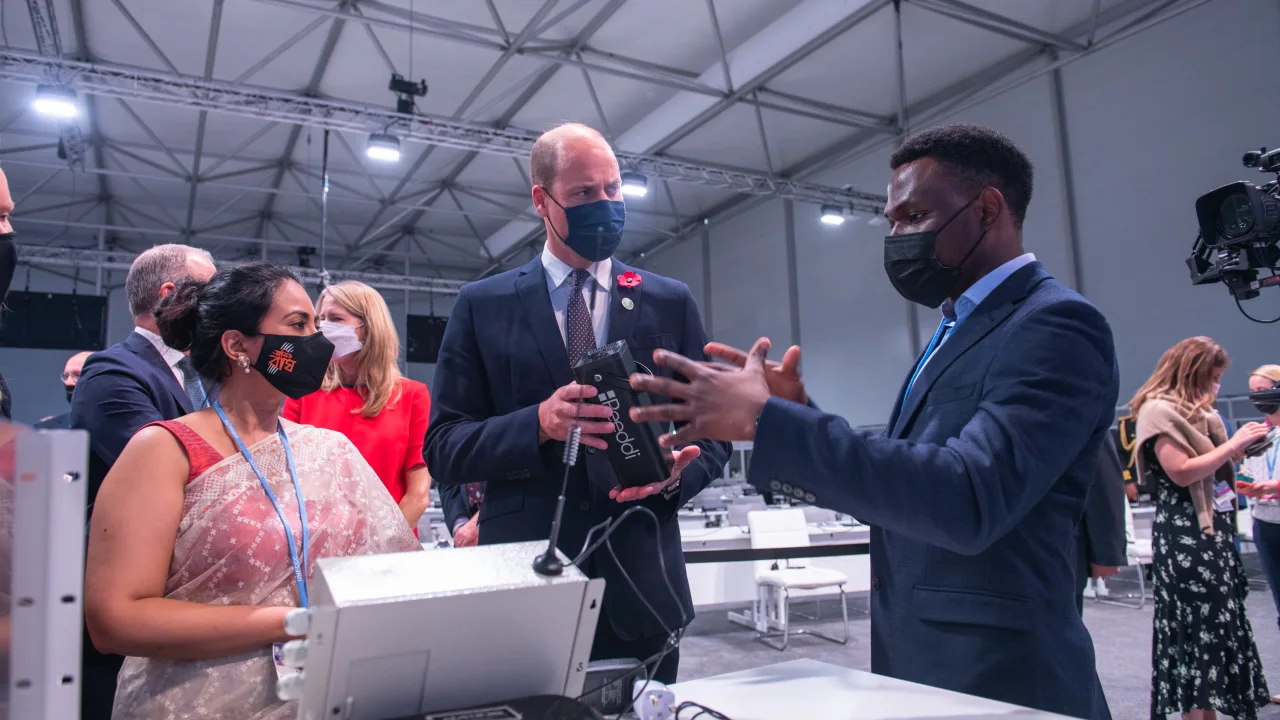
Entrepreneur Olugbenga Olubanjo has come up with another choice. His company, Reeddi, loans out small, lightweight batteries called “Reeddi Capsules” that use solar power. These batteries can provide energy to devices such as TVs, laptops, and refrigerators.
Reeddi was chosen as a finalist for Prince William’s Earthshot Prize, a prize that rewards ambitious attempts to solve environmental issues. In a podcast, the Prince of Wales said that the capsule will have a big impact on communities with a lot of energy poverty.
Olubanjo is from Nigeria and while he was studying engineering at the University of Ibadan, he had to do his school work without electricity a lot. He continued studying at the University of Toronto in Canada after finishing his initial studies. “I had electricity for the first time ever and I noticed that I was able to get four times as much work done,” Olubanjo shared.
Sometimes, when I would call my family and friends in my home country, their electricity would suddenly go out. This shows that there is a big difference in access to energy between different places. “I knew a lot about the community, so I felt like I had to do something,” he said.
You can buy Reeddi Capsules with a solar panel for 199,000 Nigerian Naira or rent them for 24 hours from small shops for about 50 cents. The rented capsules are powered by Reeddi solar panels. Olubanjo says that with one battery, you can use a TV for about five hours or a 15-watt fan for 15 hours.
This means that using it is more costly than using electricity from the power grid, but it is usually less expensive than operating a generator.
Joel Jewell, a trader in Ogun State, says he uses the small device on a regular basis to charge his laptop and phone. If he doesn’t have it, he has to use his generator when the power goes out. “He said that sometimes we only get less than two hours of electricity. ” Reeddi coming is like a prayer being answered.
Right now, the batteries can only be bought in Nigeria. Olubanjo says that over 1,600 people use them there, mostly in Lagos and Ogun State. However, there are over 600 million people in the continent who do not have electricity, according to the International Energy Agency.
Olubanjo says that some organizations in countries like Uganda, Ghana, and South Africa are interested in the Reeddi Capsule. “He said we will do our best to improve what we have in Nigeria before expanding to the rest of Africa. ”
Mobile Power, a company in the UK, rents out batteries in countries like Nigeria, Zambia, and Ghana.
Anita Otubu, who works for a group associated with the United Nations called Sustainable Energy for All, believes that companies like Reeddi are important in helping Nigeria have better access to energy.
But she says that if Reeddi wants to grow its business, it must make the battery rentals cheaper “or increase the amount of power each system can hold, so that Nigerians can get their money’s worth when they buy these systems. ”
The company’s main problem, according to Olubanjo, is making enough products to meet the demand. It takes three to four months to produce each batch of batteries. However, he believes that Reeddi can make a bigger difference.
“He said the aim is to improve the future for many Nigerians and Africans. ” -
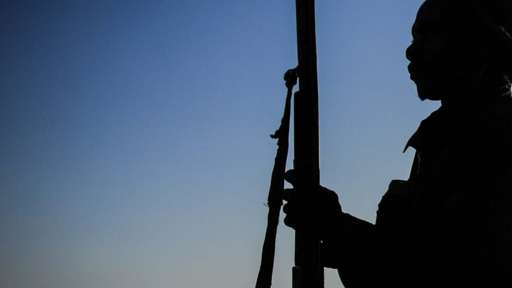
Female students in north-west Nigeria abducted by gunmen
Gunmen have abducted an unspecified number of female students from a Nigerian university in north-west Zamfara state.
The students, from the Federal University Gusau, were taken from three hostels in the Sabon Gida community during the early hours of Friday.
Local reporters informed the BBC that the gunmen opened fire indiscriminately before attacking the students’ hostels. Both the police and university authorities have not provided any comments on the situation.
In 2021, bandits kidnapped over 300 schoolgirls in Zamfara state, but they were eventually released after the government negotiated with the kidnappers.
Kidnapping has become increasingly prevalent in north-west Nigeria, with armed gangs targeting individuals in villages, on highways, and in farmlands for ransom.
-
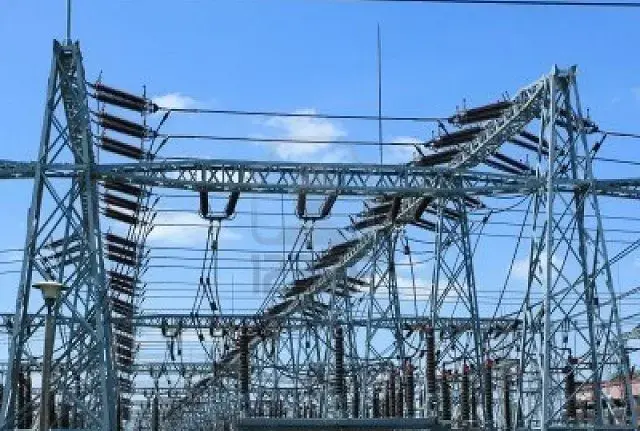
Nigeria: Grid failure causes electricity supply to fall by 97% to 88MW
Once again, homes and businesses experienced power outages as the national power grid plummeted by 97.1 percent, falling from 3,152.7MW at 11 am to 88MW at 12 noon.
Data from the National System Operator (NSO) revealed that by 5 pm, the Transmission Company of Nigeria (TCN) was still working to restore the grid, with supply reaching 246MW.
Key power plants contributing to this supply included Afam VI (1.6MW), Ibom Power (70MW), Olorunsogo Plant (58.6MW), Omotosho Plant (67.9MW), and Trans-Amadi (47.7MW).
This marks the third grid collapse in less than a week, following 421 days of grid stability. While the cause of the latest collapse remains unclear, a source at the TCN emphasized the need for a thorough investigation into the recent incidents.
“What is happening to the grid is unusual. It bordering on sabotage and deliberate attempt to discredit the effort by the government to improve power supply”, the source who declined to be named added.
Just two days ago, Engr. Sule Abdulaziz, the Managing Director of TCN, revealed that the repair of damaged equipment at the Birnin Kebbi Transmission Station would require approximately $4 million. The station had suffered extensive damage in a fire incident that occurred in the early hours of Friday, resulting in disruptions to power supply in Kebbi and Sokoto states.
The fire had destroyed two major transformers, one with a capacity of 90 MVA and the other 60MVA, along with the control room.
Engr. Abdulaziz mentioned that TCN engineers were actively working to determine the cause of the fire outbreak. Mr. Adetayo Adegbemle, Executive Director of PowerUp Nigeria, emphasized the need for the country to either establish a comprehensive cyclical grid, allowing for the isolation of issues without affecting the entire nation, or consider regional grids—a proposal advocated by some stakeholders.
“There is also the need for the spinning reserve which no one has been been able to resolve, I would have expected the new Minister of Power to have started engagements with key stakeholders in Generation, Transmission, Distribution and most importantly, Consumers that are paying for the inefficiencies in the power sector, so we can have policies that will work in the interest of the nation”, he added.
-

‘Gay wedding’ suspects in Nigeria granted bail
A court in Nigeria has granted bail to 69 individuals who were arrested last month following a police raid on what was described as a “gay wedding.”
Homosexuality is widely considered immoral in Nigeria, and the country has stringent laws against same-sex marriage.
The defense lawyer confirmed that all 69 clients would be released on bail but were required to pay more than $600 (£480) each to the court.
The raid on a hotel in Warri city last month occurred based on a police tip-off regarding a gay wedding.
Human Rights Watch criticized the Nigerian police for publicly parading the suspects before the media and interrogating them about the accusations.
Despite international condemnation, Nigeria passed legislation nearly a decade ago criminalizing public displays of same-sex relationships, carrying a prison sentence of up to 10 years, and up to 14 years for those convicted of same-sex marriage.
In 2019, police in Lagos State prosecuted 47 men under the law, but the case was dismissed because the police failed to appear and present witnesses.
-
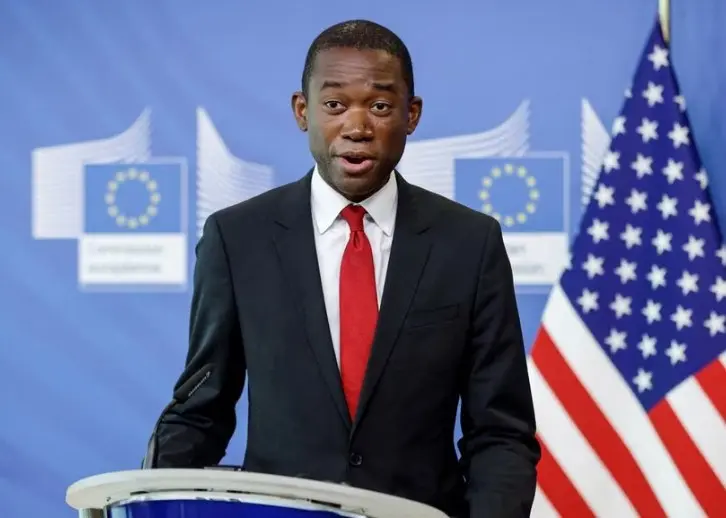
US advices Nigeria to digitize government services due to corruption
Yesterday, the United States emphasized the importance of digitizing government services in Nigeria as a crucial measure to combat corruption in the country.
U.S. Deputy Secretary of the Treasury, Wally Adeyemo, made this appeal during a press briefing in Lagos to conclude his three-day visit to Nigeria.
Adeyemo also highlighted that maintaining a stable Naira is essential for Nigeria’s economic growth and for attracting foreign investment into the country.
Further details to follow soon…
-
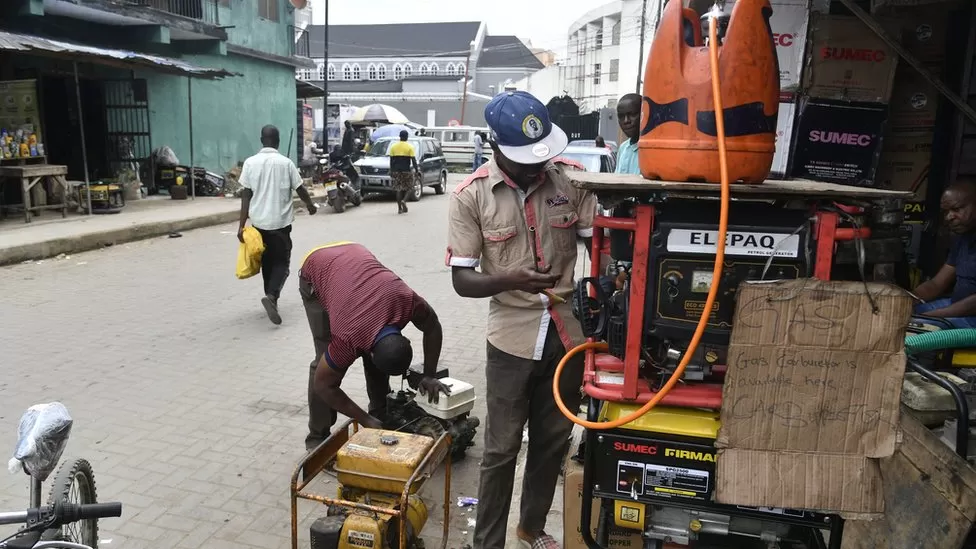
Nigeria’s ‘total system collapse’ causes widespread blackouts
Nigeria is currently experiencing a lot of power outages caused by a complete breakdown in the electricity system.
On Thursday, the amount of power being made went down to zero megawatts.
Only a very small amount of things have been given back, but this is much less than what is usually used in Africa’s most crowded country.
Power supply in Nigeria is not reliable, even though Nigeria produces a lot of oil and gas.
This is the most severe power failure in a year – the electrical system in the West African country broke down at least four times in 2022, and the authorities said it was due to technical issues.
Less than half of the people living in Nigeria have access to steady electricity. Many people rely on generators, inverters, and other alternative sources of power. Most homes and offices don’t only rely on the national grid for electricity.
Nigeria has the potential to generate 12,500MW of power, but usually only produces a quarter of that amount.
According to data from the Transmission Company of Nigeria, on Thursday around 10:30 local time (09:30 GMT), the power levels increased from zero to 273MW. However, this is much lower than the usual daily average of 4,100MW.
President Bola Tinubu, who has been in charge for a little more than 100 days, has promised to make the electricity supply better by letting state governments construct their own power plants. -
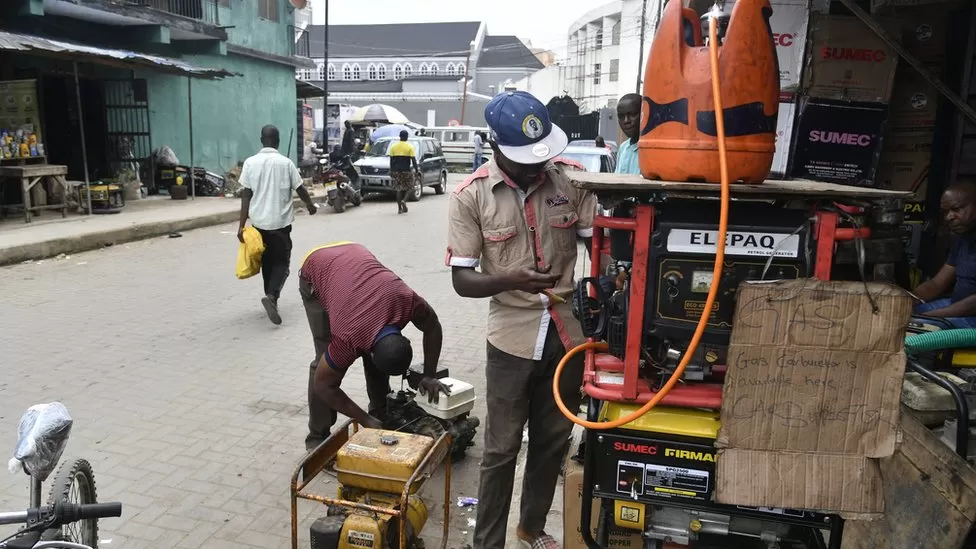
Total blackout in Nigeria after complete breakdown of electrical system
Nigeria has experienced extensive power cuts due to a “total system collapse,” as reported by electricity distribution companies.
Early on Thursday, power generation levels plummeted to zero megawatts. Although some supply has been restored, it remains significantly below the usual consumption levels in Africa’s most populous nation.
Nigeria frequently grapples with unreliable power supplies, despite being a major producer of oil and gas. This represents the most severe outage in a year, with the country’s grid collapsing at least four times in 2022, typically attributed to technical issues by authorities.
Access to a consistent power supply is available to less than half of Nigeria’s population, with many relying on alternative sources such as generators and inverters.
Most homes and businesses use a combination of these sources in addition to the national grid.
In theory, Nigeria has the capacity to generate up to 12,500 MW of power, but in practise, it typically produces only a quarter of that capacity, according to Reuters.
Around 10:30 local time on Thursday (09:30 GMT), power levels increased from zero to 273 MW, which still falls significantly short of the daily average of 4,100 MW, as indicated by data from the Transmission Company of Nigeria.
President Bola Tinubu, who has been in office for just over 100 days, has pledged to enhance the power supply by permitting state governments to establish their own power plants.
-
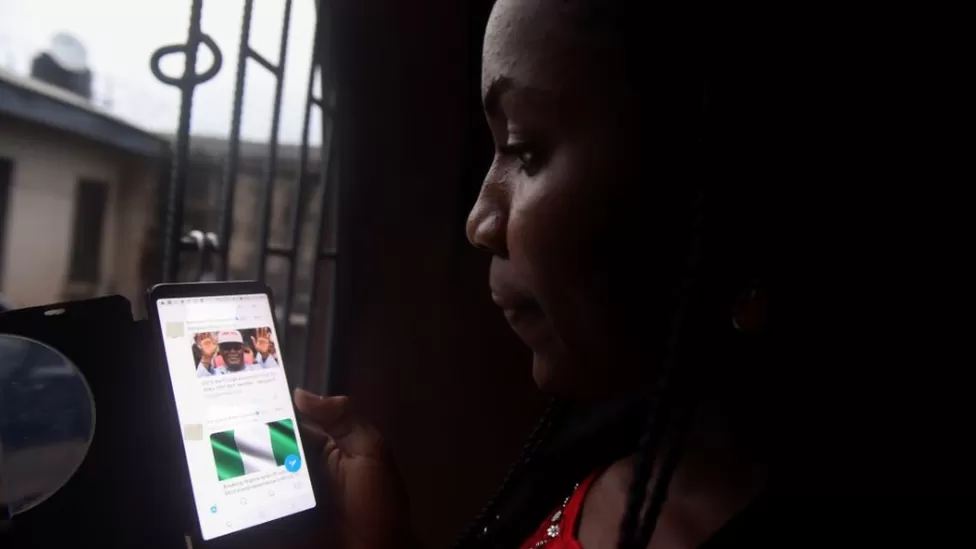
Nigeria elections: Websites fabricate stories to increase views and adverts
Numerous websites that emerged during Nigeria’s February 2023 elections, as uncovered by the BBC, are disseminating false information and gaining substantial visibility.
If there are many ads on websites, it could mean that they are making money by spreading false or misleading information.
They create untrue stories mixed with real news about sports, entertainment, and politics. Some of them even publish up to 700 pieces per month. They also like or criticize politicians in Nigeria.
Nearly seven months have passed since the intense elections took place. However, the country is still greatly split, as seen in the response to the recent verdict regarding the opposition’s objection to the election results.
These websites are spreading false information that could be making these divisions worse.
Lawyer Mojirayo Ogunlana recalls seeing unfamiliar stories on Twitter, which are now called X, from websites she had not encountered before, during the period before the elections. Many people were also joining her WhatsApp groups. She said there was a lot of fake news and it was too much to handle. Almost every day, false information was being spread on social media. “It made me lose trust,” Ms. Ogunlana explains
Mayowa Tijani, who studies false information, keeps track of how popular websites are becoming. He says that their stories became widely talked about during the elections and had a noticeable effect. He says that they keep spreading untrue stories.
Now, if one website makes up a false story, it is likely that other websites will share it and it becomes popular on social media. “They assist in pushing it further, causing it to go offline and spread even more. Eventually, it becomes the main story,” he explains.
The BBC Global Disinformation Team looked at three new websites: Podium Reporters, which was made in 2021, Reportera, which was made in July 2022, and Parallel Facts, which was made in May 2023. Tijani said there was a reason for creating them at those specific times.
During the campaign and afterwards, all three main candidates had false news stories about them published on the websites we studied.
Bola Tinubu, a member of the ruling APC party, became president after winning a close election with 37% of the total votes. The candidates who came in second and third place, Atiku Abubakar of the PDP and Peter Obi of the Labour Party, are still disputing his election. Last week, the election tribunal said no to their complaints. However, they plan to take their case to the Supreme Court.
Politicians also told stories from the internet to gain more popularity. Festus Keyamo, who is currently the Minister of Aviation and Aerospace Development, shared many stories from Podium Reporters during the elections.
Mr Obi joined two Twitter discussions called Twitter Spaces with Parallel Facts. In one of these discussions, the website’s activity increased from less than 10,000 mentions to 40,000 mentions between May and July 2023.
The website belongs to Kingsley Izuchukwu Okafor, who says he is interested in technology, public relations, and standing up against “bad governance” on his social media profiles. He has previously posted a picture of Peter Obi, saying “Obi is the man”.
The slogan of the website is “We don’t use misleading headlines, false information, or propaganda”. However, what we discovered is different.
Between 19 June and 15 July, the BBC found many news stories with lies on the website Parallel Facts. A news article published on 27 June said that Yakubu Mahmood, who leads Nigeria’s Independent National Electoral Commission (Inec), was attempting to unlawfully give the APC political party 25% of the votes in Abuja.
However, there is no proof that Inec or Mr. Mahmood changed the election results in the capital as they were accused of.
Even though fact-checking agencies have proven that many untrue stories like this are not true, they still continue to be shown or not corrected.
A place in Nigeria where newspapers were being sold, before the final results of the presidential election were told to the public.
Reportera is a website that supports and has a political preference for the Labour Party. In a tweet that they have made important, they state that they do not accept or acknowledge Mr. Tinubu’s government
In just one month, the website shared four stories that were proven to be untrue. One of these stories said that President Tinubu came in third place during the election.
It also gave wrong information about a BBC investigation on the vote. In a story that was published on June 28, Reportera stated that the BBC found evidence that voters were prevented from voting and said that Mr Tinubu couldn’t be declared the winner.
But the BBC investigation did not reach that conclusion. This means that in certain areas in Rivers State, the number of votes for the Labour Party decreased, and the votes for the APC increased.
The BBC used information from Inec’s results-viewing portal to show that the Labour Party should have received the most votes in the state, not Mr. However, we didn’t have any proof that this happened in other parts of the country, so we couldn’t say that he shouldn’t have won the election.
The story mentioned that Reportera did a “review”, but it didn’t explain how it figured out that Mr Obi supposedly won. Instead, it referred to a poll on Twitter where 93% out of 31,000 people said that Mr Obi was the winner of the election.
Recently, the person who owns the website, Nnamdi Ibezim, confessed in a statement that they posted a story that was “based on a rumor”. On social media, Mr. Ibezim says he is a business person who has knowledge in many different areas.
According to his website’s story, published on August 6th, it was said that the former Minister of Works and Housing in Nigeria, Babatunde Fashola, was assisting judges of the Presidential Election Petition Tribunal in writing verdicts that favored the APC.
Mr Fashola later said that he wrote a letter to the Police Inspector General complaining about Repotera for making false claims and cyberstalking. Ibezim said that his brother, Chike Ibezim, got arrested by the Department of State Services (DSS) because of an article he published. Ibezim stated that the arrest was against the rules of the country’s constitution.
The Nigerian Police said they caught Chike Ibezim.
First, he says that it seemed like the websites were trying to support specific candidates in the election. However, he thinks that the publishers also wanted to make money from advertisements on their websites.
We talked to experts in the media industry to find out how much money these websites could be earning.
According to IT and Digital Marketing consultant Yusufuddeen A Yusuf, they can earn a monthly income ranging from $100 to $10,000 (£80 to £8,000).
“He says that stories that get a lot of attention will bring in a lot of visitors, which leads to a lot of money from advertisements. ”
But according to Adebayo Ilupeju, a consultant at Africa Media Works who focuses on digital media and public relations, these websites may not be making money yet because they are still relatively new. “It’s a way to put money into something,” he says.
We contacted Podium Reporters, Reportera, and Parallel Facts. They ignored our emails asking about the untrue news on their websites and how much money they earn from ads.At the same time, the website Podium Reporters shares positive stories about the ruling APC.
On 4 July, 2023, an article was published giving an opinion about the Indigenous People of Biafra (Ipob), a group that wants to separate from Nigeria and has been declared a terrorist organization by the government.
It had a lot of untrue accusations. For instance, it stated that Ipob officially chose Mr Obi as their candidate. The Podium Reports often link Mr. Obi with Ipob in their stories. We found seven instances of this in a month.
BothObi and his party say they have no connection to Ipob, and the group has never publicly supported him.
We couldn’t prove that Podium Reporters belongs to someone. -
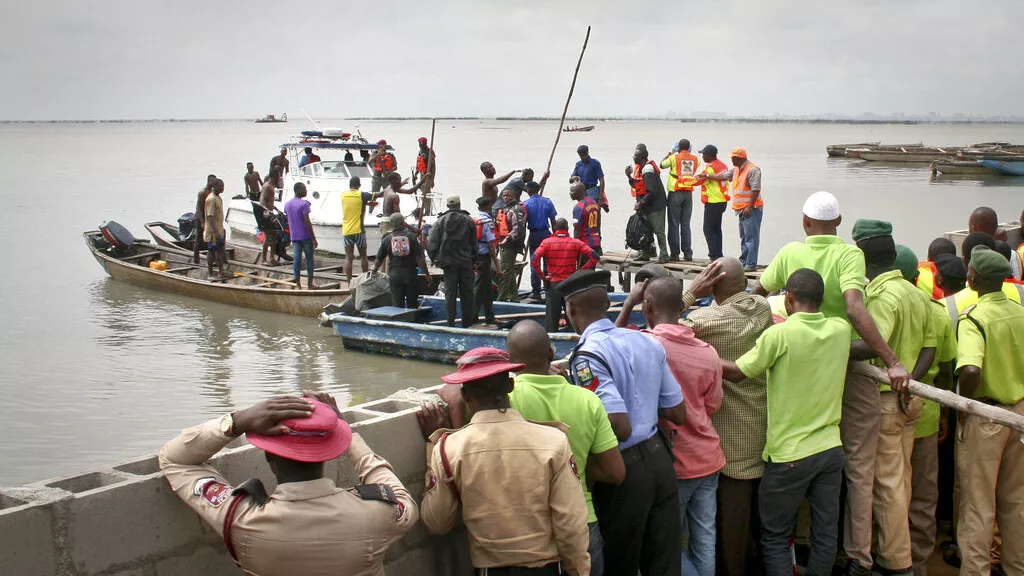
Boat accident in Nigeria kills 24 farmers
Rescue crews have said that dozens are missing while 24 people perished when a boat bringing farmers to their crops in central Nigeria capsized on Sunday.
According to Garba Salihu, the chairman of the Niger State Rescue Management Agency, the boat carrying more than a hundred farmers overturned while crossing the River Niger on their way to their fields on the other side, in Niger State.
“At this stage, 24 bodies have been recovered and 30 people rescued,” he said. “More than 100 people must have been on board when the boat sank,” he added. The causes of the accident were not specified.
He reported that efforts to locate the missing passengers were ongoing.
On Friday, a tragic incident occurred when a boat carrying 23 passengers, including traders en route to a market, capsized on Lake Njuwa in the northern state of Adamawa, Nigeria. According to Amin Suleiman, the local head of the Rescue Management Agency, ten individuals lost their lives in the accident, while three others were reported missing, as confirmed by AFP.
Boat accidents on Nigeria’s bustling rivers are regrettably common and often attributed to factors such as overloading, inadequate maintenance, and safety oversights.
-

Nigeria: N1.3 trillion trade surplus recorded in 2023 Q2
In the second quarter of 2023 (Q2’23), Nigeria recorded a trade surplus of N1.3 trillion, marking a 38 percent increase compared to the N927.15 billion surplus in Q1’23. However, in a year-on-year comparison, the trade surplus experienced a 7.6 percent decline when compared to the corresponding period in 2022.These figures coincide with significant increases in both total imports and exports during this period.
The National Bureau of Statistics (NBS) disclosed these findings in its Q1’23 Foreign Trade in Goods Statistics. The total merchandise trade also saw a quarter-on-quarter (QoQ) increase of 5.7 percent, reaching N12.7 trillion in Q2’23, up from N12.04 trillion in Q1’23.
According to the NBS report: “Nigeria’s total merchandise trade in Q2’23 amounted to N12.74 trillion, reflecting a 5.7 percent increase over the value recorded in Q1’23 but a 7.6 percent decline compared to the value recorded in Q2’22.
“Breaking down the total trade into exports and imports, total exports reached N7.02 trillion, an 8.15 percent increase over the preceding quarter and a 5.2 percent decrease compared to the same period in the previous year.
“Exports accounted for 55.06 percent of total trade in Q2’23. Crude oil exports dominated the exports, valued at N5.58 trillion, representing 79.63 percent of total exports, while non-crude oil exports were valued at N1.43 trillion, making up 20.37 percent of total exports, with non-oil products contributing N688.68 billion, or 9.82 percent of total exports.
“On the other hand, total imports amounted to N5.72 trillion in Q2’23, indicating a 2.9 percent increase over the preceding quarter but a 10.37 percent decrease compared to the same period in 2022.
“Imports accounted for 44.94 percent of total trade in Q2’23, resulting in a trade surplus of N1.28 trillion.”
The Bureau reported that the top five partner countries for imports to Nigeria in Q2’23 were China (N1.26 trillion or 22.17 percent), the United States of America (N921.45 billion or 16.09 percent), Belgium (N460.43 billion or 8.04 percent), India (N417.77 billion or 7.3 percent), and The Netherlands (N369.69 billion or 6.46 percent).
-

Nigeria’s Q2 trade balance recorded N1.28 trillion
Nigeria’s trade balance increased by 38% during the first and second quarters of 2023, from N927.15 billion to N1.28 trillion (Q2’23).
This resulted from the rises in overall imports and exports that were observed during the time.
This information was released by the National Bureau of Statistics (NBS) today in its Foreign Trade in Goods Statistics for Q1’23, along with the additional information that total merchandise trade climbed by 5.7 percent to N12.7 trillion in Q2’23 from N12.04 trillion in Q1’23.
NBS said, “Nigeria’s total merchandise trade stood at ₦12.74 trillion in Q2’23, indicating an increase of 5.7 percent over the value recorded in Q1’23 but it declined by 7.6 percent when compared to the value recorded in Q2’22.
“The disaggregation of total trade into exports and imports shows that total exports stood at ₦7,015.71 billion, showing an increase of 8.15% over the value recorded in the preceding quarter and a decrease of 5.2 percent over the corresponding period in the preceding year.
“In addition, the data reveals that the share of exports in total trade stood at 55.06 percent in Q2’23.
“Exports trade in Q2’23 was dominated by crude oil exports valued at ₦5.58 trillion, which accounted for 79.63 percent of total exports, while non-crude oil exports value stood at ₦1.43 trillion, or 20.37 percent of total exports, of which non-oil products contributed ₦688.68 billion, representing 9.82 percent of total exports.
“On the other hand, total imports stood at ₦5.72 trillion in Q2’23, indicating an increase of 2.9 percent over the value recorded in the preceding quarter.
“The value of imports in the quarter under review fell by 10.37 percent compared to the value recorded in the corresponding period of 2022.
“Imports trade share of total trade in Q2’23 accounted for 44.94 percent of total trade, bringing the trade balance to ₦1.28 trillion.”
According to the bureau’s report, the leading partner countries responsible for imports to Nigeria were as follows: China (₦1.26 trillion, equivalent to 22.17 percent), the United States of America (₦921.45 billion, equivalent to 16.09 percent), Belgium (₦460.43 billion, accounting for 8.04 percent), India (₦417.77 billion, making up 7.3 percent), and the Netherlands (₦369.69 billion, representing 6.46 percent).
The report also noted, “The total import value from these top five countries reached ₦3,438.76 billion, constituting 60.05 percent of the overall imports.”
Furthermore, the commodities with the highest import values were identified as ‘Motor Spirit Ordinary’ (₦1.23 trillion or 21.50 percent), ‘Used Vehicles with diesel or semi-diesel engines, of cylinder capacity >2500cc’ (₦733.92 billion or 12.82 percent), and ‘Gas oil’ (₦230.83 billion or 4.03 percent).
-

Nigeria: We’ll work with Customs to get rid of extra cargos – Minister
Minister of marine and blue economy, Mr. Adegboyega Oyetola, has stated that the ministry will work with the Nigeria Customs Service (NCS) to clear 6,000 overdue shipments of cargo that have been piling up in the port since 2011.
As part of his tour of agencies under his ministry, the Minister made this disclosure in Lagos while paying a courtesy call to the NSC headquarters.
According to Oyetola, there are around 6,000 extra shipments in the Apapa and TinCan Ports. He also claimed that his administration would make sure that the shipments were cleared within the allotted period.
He stated: “On the port community transport, it is something that needs to be pursued. I have gone round to look at the state of the ports, it is discouraging. I am not blaming anybody. My concept of ports development is more of Public Private Partnership, PPP. Government should not own a port 100 per cent.
“Another thing I noticed is the extent to which cargoes are being abandoned. You need to engage with Customs to see how we can decongest our ports. Tin-can and Apapa have about 6,000 cargo that have been abandoned. You can imagine how much space they are occupying. I am going to engage the Customs management to see what can be done. There must be a time frame for clearing of cargo. To have kept cargo in one place since 2011 is unfortunate. I believe a solution can be created.
“I am charging all of us to be more creative. You have to see yourselves as civil servants in business because the blue economy is purely business. The issue of port rehabilitation is critical, I went there and I saw a lot of cracks.”
In his opening remarks, NSC Executive Secretary Emmanuel Jime asked the Minister to ensure that Nigeria develops into a marine hub in the West Africa subregion.
He said: “You have come with a determination to change the narrative and ensure that when you leave, you will write your name in gold. This is one agency in the industry that would help you on the road to achieving that objective of yours, which is to turn around maritime.
“The objective of everyone here is to make certain that Nigeria becomes a maritime hub in this West Africa sub region. That is our objective and desire.”
-

Peter Obi promises not to give up his fight for justice after court’s decision
Labour Party’s nominee for president, Peter Obi, vowed on Wednesday to appeal the ruling of the Presidential Election Petition Tribunal and to continue seeking justice.
Obi made this statement in response to the five-person panel’s decision, which supported President Bola Tinubu’s victory and was led by Justice Haruna Tsammani, on Thursday during a press conference in Onitsha, Anambra state.
Obi said, “Yesterday, 6 September 2023, the Presidential Election Petition Court (PEPC) finally delivered its long-awaited judgments on the Petitions challenging the outcome of the presidential election held on 25 February 2023. This judgment was delivered within the statutory time frame under the extant statutes. We acknowledge the Court’s contributions to due process and the seeming attempt to strengthen our democracy.
“As petitioners in this case, we respect the views and rulings of the Court, but we disagree with the Court’s reasoning and conclusions in the judgment it delivered. It is my intention as a presidential candidate and the intention of the Labour Party to challenge this judgment by way of appeal immediately, as allowed by the Constitution of the Federal Republic of Nigeria.
“The PEPC has rendered its judgment, but that esteemed body is not the final arbiter. The responsibility now falls on the Supreme Court. I do know that judgment is not coterminous with justice. I implore Nigerians to remain focused, steadfast, and peaceful; abide by the rule of law, and understand that this matter has not reached its logical conclusion.
“Our legal team has already received our firm instruction to file an appeal against the decision. I shall not relent in the quest for justice, not necessarily for myself but indeed for our teeming supporters all over the country whose mandate to us at the polls was regrettably truncated by INEC.
“The strength and value of our democracy reside in solid national institutions and our confidence in them. Electoral litigations will be almost unnecessary and nonexistent if the Independent National Electoral Commission (INEC) discharges its statutory functions creditably, transparently, and with discernible fairness. When that body fails, as it did recently, thus subverting the will of Nigerian voters, the recourse to the judiciary becomes imperative, as is now the case.
“I thank every Nigerian who has supported our cause and campaign for a New Nigeria characterized by fairness, equity, justice, the rule of law, peace, prosperity, inclusiveness, sustainable growth, and development. A New Nigeria is possible and achievable. I especially thank our legal team, the Labour Party and Obidient Family, and all those who showed up daily during the court trials. God bless you all, and God bless the Federal Republic of Nigeria.”
Earlier, in a statement released on Wednesday by the party’s national publicity secretary, Obiora Ifoh, the LP rejected the ruling.
Ifoh said, “The Labour Party watched with dismay and trepidation the dismissal of petitions by the five-man panel of the Presidential Election Petition Court led by Justice Haruna Tsammani today and we reject the outcome of the judgment in its entirety because justice was not served and it did not reflect the law and the desire of the people.
“Nigerians were witnesses to the electoral robbery that took place on February 25, 2023, which was globally condemned but the Tribunal in its wisdom refused to accept the obvious.
“What is at stake is democracy and we will not relent until the people will prevail. We salute the doggedness of our team of lawyers who fearlessly exposed the wrath in our system. We can only weep for democracy in Nigeria but we refuse to give up on Nigeria.”
-
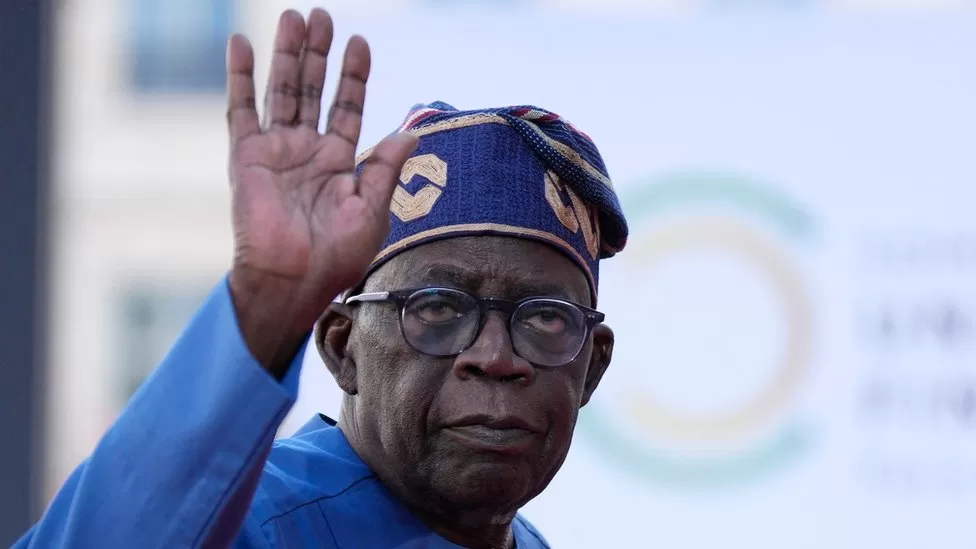
Peter Obi’s presidential election challenge in Nigeria rejected by election tribunal
The Appeal Court in Nigeria has said no to a challenge against Bola Tinubu‘s small win in the presidential election held in February.
After thinking for six hours, they said Peter Obi’s Labour Party’s request was not valid and rejected all of his arguments, including the accusation of deceit.
We will know soon what they decide about the complaint made by Atiku Abubakar from the Peoples Democratic Party.
Although there were issues with the election, Mr. Tinubu was officially sworn in as an officeholder on May 29th.
The election was the most strongly fought since the military rule ended in 1999, with three very capable candidates competing for the first time. Mr Tinubu received the highest amount of votes with 37%, while Mr Abubakar got 29% and Mr Obi got 25%.
Before Wednesday’s decision, there was a lot of tension in the country. The capital, Abuja, saw more security measures put in place.
Even though authorities told people not to protest, different political groups came together outside the courthouse and started singing and dancing.
The decision made on the same day the President served 100 days in office will be a big win for President Tinubu. He will now closely watch the Supreme Court, as his opponents may challenge this ruling.
But the judges at the Appeal Court all agreed and their decision will make him feel more assured. This was already shown because he was not in the country when Wednesday’s decision was made. He was in India for the G20 summit.
Lead justice Haruna Tsammani, who made the final decision, said “the people who brought the case couldn’t prove that there was corruption and too many votes. ”
Justice Tsammani also mentioned that:
The people who made the petition did not say exactly which polling stations they believe had cheating.
The people who started the petition did not give enough evidence to support their claim that votes were being unfairly stopped from being counted in the areas where they have the most support.
The electoral commission didn’t have to send results electronically.
Not uploading pictures of the polling unit results right away did not make the election not count. -
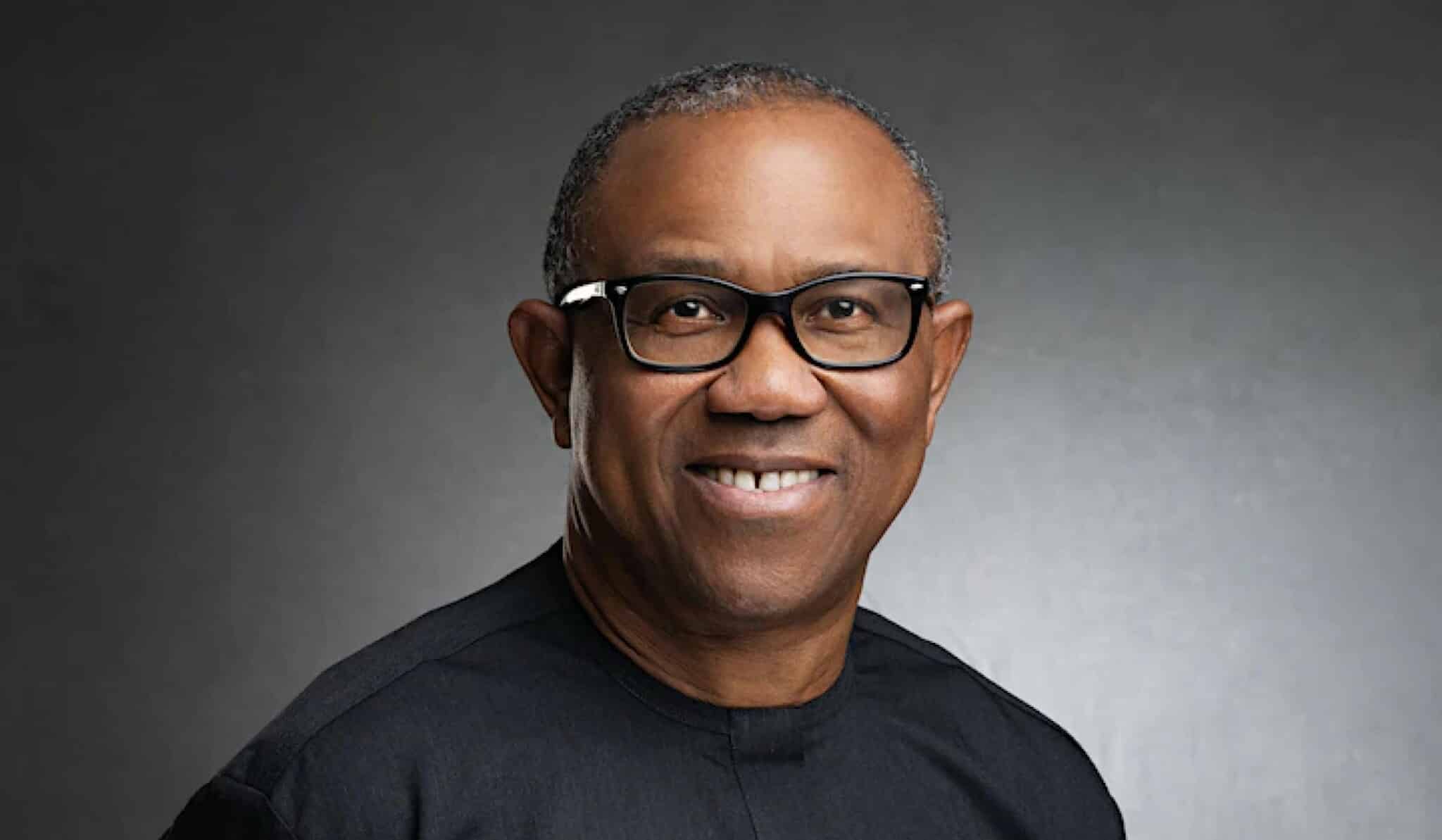
Tinubu’s US drug trafficking accusation against Peter Obi rejected by court
The Presidential Election Petition Court in Abuja has issued a ruling stating that the allegations of drug trafficking in the US against President Bola Tinubu, made by the Labour Party’s presidential candidate, Peter Obi, were unsubstantiated.
A five-member panel of the court, led by Haruna Tsammani, delivered the lead judgment on the substantive suit and clarified that President Tinubu had not been convicted of any crime in the United States.
The court referenced correspondences between the Nigeria Police and the US embassy in Nigeria, indicating that the US consulate in Lagos had cleared Mr. Tinubu of any criminal record in the US.
Mr. Obi had asserted in court that Mr. Tinubu was convicted of drug trafficking, resulting in the forfeiture of $460,000.
However, the court emphasized that the forfeiture of $460,000 by Mr. Tinubu was part of a civil case and could not serve as a basis for disqualification from the election under Nigerian law.
-
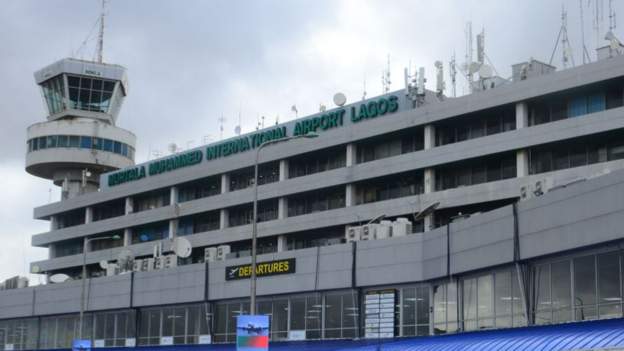
‘Smoke incident’ forces the evacuation of workers and passengers at Lagos airport
Smoke issues arose at the international airport located in Lagos, Nigeria. As a result, people who work at the airport and people traveling had to leave the building. The airport authority said this in a statement.
Firefighters worked hard to control the dark smoke and stop it from moving to different areas of the terminal.
According to the airport authority, the smoke was caused by batteries made of lithium located in the baggage hall of Terminal 1.
“We are happy to inform you that the situation is currently under control and the incident will not impact flight operations,” Yakubu Funtua from the authority said to the BBC. -
Nigeria: The 5 judges comprising the Presidential Election Petition Tribunal
The Presidential Election Petition Tribunal is scheduled to deliver its verdict on Wednesday, September 6, in response to suits filed by five political parties, namely the Peoples Democratic Party (PDP), Labour Party (LP), Action Peoples Party (APP), Allied Peoples Movement (APM), and the Action Alliance (AA).
These parties contested the outcome of the February 25, 2023, presidential election, which resulted in the emergence of Bola Tinubu as the winner.
The five-member panel of justices, headed by the presiding justice, Justice Haruna Tsammani, will convene to deliberate and possibly vote on the final decision. In the event of disagreements on trial issues, the panel will make a collective decision. It’s important to note that the tribunal’s decision is not final, as any dissatisfied party can still appeal to the Supreme Court.
The judges overseeing the tribunal proceedings are as follows:
- Justice Haruna Tsammani: Born on November 23, 1959, Justice Tsammani is from Tafawa Balewa LGA of Bauchi State. He earned his LL.B degree from Ahmadu Bello University, Zaria, in 1982. He began his career as a High Court judge in Bauchi State on September 17, 1998, and was subsequently elevated to the Court of Appeal on July 16, 2010. He is the longest-serving Justice of the Court of Appeal among the panel members.
- Justice Stephen Adah: Born on June 13, 1957, Justice Adah hails from Dekina Local Government Area of Kogi State. He obtained his LL.B degree from Ahmadu Bello University, Zaria, in 1981 and his BL from the Nigerian Law School, Lagos, in 1982. He was appointed a judge of the Federal High Court on November 12, 1998, and later elevated to the Court of Appeal on November 5, 2012.
- Justice Mistura Bolaji-Yusuf: The sole female member of the panel, Justice Bolaji-Yusuf, was born on August 7, 1959, and is from Oyo West LGA of Oyo State. She earned her LL.B degree from the Obafemi Awolowo University, Ile-Ife, in 1983, and her BL certificate from the Nigerian Law School the following year. She became a Judge of the High Court of Oyo State on January 30, 1997, and was later elevated to the Court of Appeal on March 24, 2014.
- Justice Boloukuoromo Ugo: At 57 years old, Justice Ugo is the youngest member of the panel. He hails from Kolokuma/Opokua Local Government Area of Bayelsa State. He obtained his LL.B degree from the University of Calabar in 1989 and his BL certificate from the Nigerian Law School in Lagos in 1990. He was appointed a Judge of the High Court of Bayelsa State on March 21, 2006, and later elevated to the Court of Appeal on March 24, 2014.
- Justice Abba Mohammed: Justice Mohammed is from Kano State and was born on February 19, 1961. He earned his LL.B degree from the Institute of Administration, Ahmadu Bello University, Zaria, in 1984 and his BL certificate from the Nigerian Law School in Lagos in 1985. He was appointed a judge of the Federal Capital Territory (FCT) High Court in 2010 and later promoted to the Court of Appeal on June 28, 2021. He previously chaired the Nasarawa State Governorship Election Tribunal in 2019.
These justices will play a pivotal role in delivering a verdict on the presidential election petitions, and their decisions will have significant implications for the outcome of the case.
-
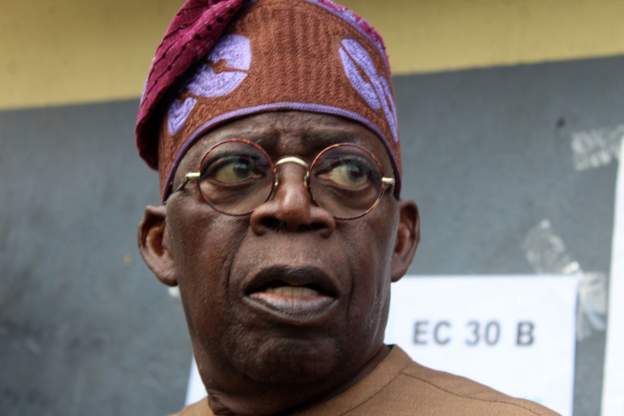
Presidential Election Tribunal delivers verdict today
The eagerly anticipated judgment day has arrived, casting a cloud of tension and anxiety across Nigeria. In a significant development, the Presidential Election Petition Tribunal (PEPT) has announced a date for delivering its judgment on the petitions challenging the outcome of the 2023 presidential election.
Adding to the intrigue, the PEPT has declared that the judgment delivery will be broadcast live.
Notably, President Bola Tinubu is scheduled to travel to New Delhi, India, for the G-20 Summit, as disclosed in a statement issued by the Presidency on Sunday, September 3.
This means that he won’t be in the country when the tribunal determines the fate of his victory, which is being contested by Atiku Abubakar of the Peoples Democratic Party (PDP), Peter Obi of the Labour Party (LP), and the Allied Peoples Movement (APM). Each of them filed separate petitions to challenge the outcome declared by the Independent National Electoral Commission (INEC) following the presidential poll on February 25.
It’s worth noting that the coincidence of the tribunal scheduling its judgment on a day when the President is abroad has not gone unnoticed. Nigerians are awaiting the decision of the Justice Haruna Tsammani-led panel with great anticipation.
The 2023 presidential election was among the most fiercely contested and disputed in Nigeria’s democratic history since the return to civilian rule in 1999. As the tribunal prepares to announce its verdict today, Wednesday, tensions have risen throughout the country.
On Monday, September 4, the same day when the tribunal disclosed its judgment date, the Department of State Services (DSS) released a statement revealing that it had uncovered plans by certain elements in various regions of the country to organize violent protests aimed at discrediting the Federal Government.
While the DSS did not explicitly link this alleged plot to the tribunal’s judgment, the language used in the statement bore similarities to an earlier one released by the agency, which warned of plans by certain politicians to establish an interim government after the 2023 general elections, just before former President Muhammadu Buhari handed over power to Tinubu on May 29.
“Intelligence reports have indicated that the plotters include certain politicians who are desperately mobilising unsuspecting student leaders, ethnic-based associations, youth, and disgruntled groups for the planned action.
“The Service has identified the ring leaders of the plot as well as sustained monitoring around them in order to deter them from plunging the country into anarchy,” the DSS said in the statement released on Monday, September 4.
Before his departure for India, Tinubu presided over a National Security Council meeting at the State House in Abuja. Although the specifics of the meeting were not disclosed publicly, many Nigerians speculate that it might be related to the mounting tensions surrounding the impending tribunal judgment.
Contrary to the escalating tension, the Presidency asserted that the President remains unfazed by the tribunal’s impending decision. Ajuri Ngelale, Special Adviser to the President on Media and Publicity, conveyed this message during his appearance on Channels Television’s Politics Today program on Monday evening.
“He’s not worried simply because he knows he won the election,” Ngelale said.
But, in a veiled reference to the controversial ‘All Eyes on the Judiciary’ billboards erected by some Nigerians ahead of the tribunal’s verdict, the presidential spokesperson added, “The President sees no need to threaten judicial officers. He sees no need to raise speculations against the integrity of judicial officers; he believes in the sanctity and integrity of the Nigerian judicial system, he believes the great men and women on the panel will make their decisions based only on the facts before them.”
According to Ngelale, “He (Tinubu) will continue to ensure that no matter what the outcome of the judgement is, he does his part and ensure that our institutions continue to be respected, not just by him, but all actors.”
However, the Labour Party immediately countered the Presidency’s assertion that Tinubu won the election.
When contacted by DAILY POST on Tuesday, September 5, spokesperson of the Labour Party, Obiora Ifoh expressed confidence that the judgement will go the way of the party and its presidential candidate, Obi.
“We are positive that the judgement will favour the Labour Party and our presidential candidate, Peter Obi. We are also positive that the will of the people will prevail.
“Most Nigerians have waited this long and their wishes will be granted. The mandate freely expressed on February 25 will be returned to the rightful winner of the election,” Ifoh said in a message he sent to DAILY POST on Whatsapp.
PDP spokesperson, Debo Ologunagba, could not be reached for comments on Tuesday. Calls to his phone were not answered. He also did not reply to an SMS sent to him by DAILY POST.
The Presidential Election Petition Tribunal (PEPT) has reserved judgment since August 1, following the adoption of final written addresses by all parties involved. According to the Independent National Electoral Commission (INEC), Bola Tinubu of the APC won the presidential election with 8,794,726 votes. Atiku Abubakar of the PDP came second with 6,984,520 votes, and Peter Obi of the LP finished third with 6,101,533 votes.
Tinubu secured victory in 12 states, just like Atiku, while Obi won 11 states along with the Federal Capital Territory (FCT). However, an issue to be decided by the tribunal is Tinubu’s eligibility for the presidency, given that he failed to obtain at least 25 percent of the votes in the FCT.
Atiku, Obi, and the APM have requested that the tribunal nullify the 2023 presidential election. Atiku, represented by lead counsel Chris Uche, SAN, argued that Tinubu was not qualified to contest the election due to a United States court ruling that ordered him to forfeit $460,000 for drug and money laundering-related offenses. He also urged the tribunal to nullify the election and call for a fresh one, alleging that INEC failed to electronically transmit the results, in contravention of the amended Electoral Act.
Obi, in his petition, raised concerns about Tinubu’s alleged drug trafficking offense in the US and his failure to obtain 25 percent of the votes in the FCT. Obi’s legal team argued that Tinubu should not have been declared president because of these issues. They also claimed that the votes for Tinubu should be invalidated due to the simultaneous nomination of Kashim Shettima as the APC candidate for Borno Central Senatorial District and the party’s vice-presidential candidate, which violated the Electoral Act.
The LP candidate contended that INEC’s claim of technical glitches causing the failure to upload results on the INEC Result Viewing portal was an act of sabotage to influence the election outcome. Obi asked the tribunal to cancel the election and order a fresh one or declare him the President-elect and issue him a certificate of return.
The APM argued that Tinubu’s candidacy was invalidated by the withdrawal of Ibrahim Masari, who was initially nominated as the vice-presidential candidate of the APC. They urged the tribunal to declare that Shettima was not qualified to contest as the vice-presidential candidate of the APC as of February 25 when the election took place. The APM requested the tribunal to nullify all the votes Tinubu received and set aside his Certificate of Return.
Tinubu, the APC, and INEC have asked the tribunal to dismiss the petitions. Fagbemi, SAN, argued that Tinubu’s forfeiture of $460,000 in the US was a civil matter and should not disqualify him from the election. Olanipekun, SAN, argued that the FCT should be counted as the 37th state for electoral purposes, and the President’s failure to obtain 25 percent of the votes in the FCT should not invalidate his election.
INEC’s counsel, Mahmoud, SAN, disputed the petitioners’ claims that the failure to upload results on the INEC IReV portal affected the election outcome. He argued that the election was conducted in substantial compliance with the Electoral Act.
All eyes are on the judiciary as the tribunal prepares to deliver its verdict. Nigerians have various expectations for the judgment, with some emphasizing the need for a fair and just decision, while others express their anticipation for the outcome. Billboards with the inscription “All Eyes on the Judiciary” had appeared in different parts of the country but were later removed due to ARCON’s orders. However, the focus remains on the judiciary as the nation awaits the tribunal’s decision on this matter.
He said, “Nigerians are divided along political lines. Peoples’ expectations are largely based on their political affiliations.
“Supporters of the APC, PDP and LP are all clamouring that the judgement must be in their favour. But this is like a game of football, not all of them will carry the day. Somebody will come out victorious.
“But the judgement should be based on sound reasoning. Whatever decision they arrive at should be based on sound principles of law, not on technicalities. That is what every Nigerian should be expecting.
“Justice is not a one-way traffic. Justice must be done based on what the law says. The only advice for the judges of the tribunal is that their judgement should be based on justice, fairness and equity and on sound principles of law.”
Also speaking with DAILY POST, Secretary General of the Conference Of Nigeria Political Parties, CNPP, Willy Ezugwu, noted that the eyes of the whole world is on the tribunal.
“The world is watching, not only Nigerians. Everybody is watching the judiciary. We are watching to see what the tribunal will come up with, with all the evidence on the ground,” Ezugwu said.
He also advised against building the judgement on technicalities.
“They don’t have to arrive at the judgement on technicalities. Every person knows – no one can say they are not judges and for that reason, they are not able to decide. That is why Nigerians are crying, they are shouting, they are pronouncing that all eyes are on the judges,” he stated.
-
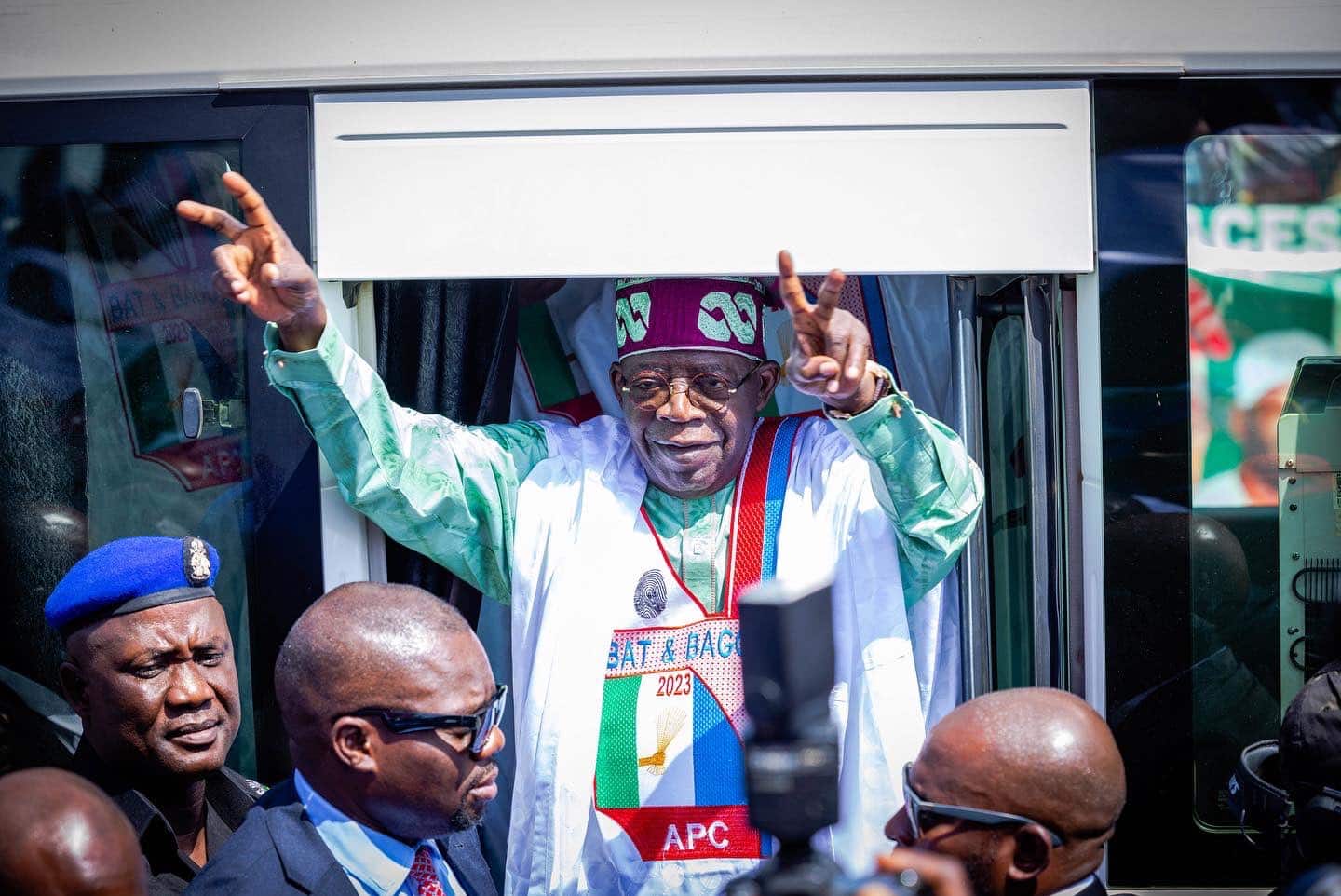
How Tinubu won the 2023 elections despite ‘losing’ – Report
A recent report has suggested that the President-elect, Asiwaju Bola Tinubu, who emerged as the victor in the 2023 presidential elections, could potentially have faced defeat.
Published by TheCable, this report highlights a noteworthy detail: all of Tinubu’s primary opponents were former members of the main opposition party, the PDP.
Collectively, they garnered a significant total of 14,582,740 votes, surpassing the number of votes secured by Tinubu to secure the presidency.
For context, the presidential candidate of the All Progressive Congress, Tinubu, received a total of 8,794,726 votes to clinch the victory over his rivals, which included Atiku Abubakar of the Peoples Democratic Party (PDP), Peter Obi of the Labour Party, and Senator Rabiu Kwankwaso of the New Nigeria People’s Party (NNPP).
Atiku, the former Vice President, secured the second position with a total of 6,984,520 votes, while Obi accumulated 6,101,533 votes, placing him third in the race. Kwankwaso came in fourth with 1,496,687 votes.
In terms of the nationwide distribution of votes, the APC garnered 37%, compared to PDP’s 29%, and LP’s 25%.
ICYMI: How Tinubu lost but won the 2023 presidential election. #TheCableIndex pic.twitter.com/ZcoHmvbNQI
— TheCableIndex (@thecableindex) May 25, 2023 -
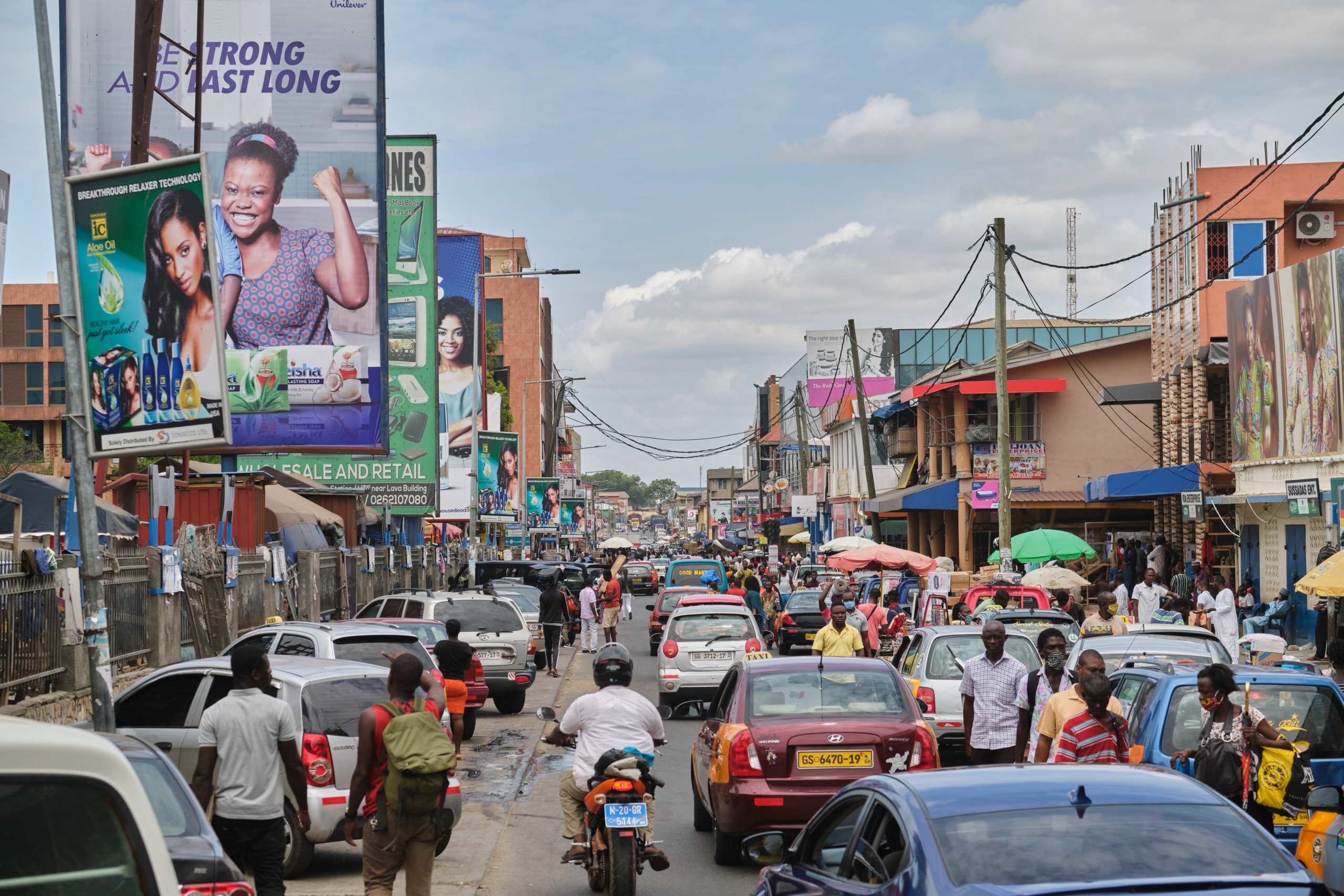
UK pledges £15 million to improve Kenya, Nigeria, and Ghana’s health workforce
The UK government has declared a substantial financial injection aimed at supporting the recruitment and retention of healthcare personnel in three African nations: Kenya, Nigeria, and Ghana.
This initiative is designed to enhance resilience in the face of global health challenges.
A sum of £15 million from the dedicated Official Development Assistance (ODA) budget for the period of 2022 to 2025 will be dedicated to optimizing, constructing, and fortifying the healthcare workforce in these three African countries.
As stated on the UK government’s official website, this funding acknowledges the critical role of the healthcare workforce in lower and middle-income countries in enhancing health outcomes and achieving universal health coverage. The aim is to ensure that individuals in Kenya, Nigeria, and Ghana have access to a comprehensive range of healthcare services precisely when they require them.
It has been emphasized that the COVID-19 pandemic underscored the imperative for the UK to collaborate closely with international partners in addressing global health threats.
This has placed significant strain on the NHS, and the pandemic has also exacerbated challenges related to retaining healthcare workers worldwide, all while the demand for healthcare personnel has surged.
Furthermore, it was highlighted that effectively addressing critical workforce issues is essential for bolstering healthcare systems and enhancing global preparedness against future pandemics. This is crucial to ensure the protection of people worldwide, including those in the UK.
The World Health Organization (WHO) has projected a shortage of 10 million healthcare workers globally by the year 2030. This shortage poses a threat to the achievement of universal health coverage on a global scale and has the potential to exacerbate health inequalities worldwide.
According to the Health Minister of the country, Will Quince, highly skilled and resilient staff members serve as the backbone of a robust healthcare service.
“So I’m delighted we can support the training, recruitment and retention of skilled health workforces in Kenya, Nigeria and Ghana.”
Will explained that the funding’s primary objective is to have a tangible impact on enhancing the effectiveness of healthcare systems in each of the involved nations.
This, in turn, will contribute to improving worldwide readiness to combat pandemics and diminishing disparities in healthcare access.
-
Nigeria: Lagos metro train open for citizens
In the aftermath of two decades since the announcement of plans and 14 years since the project’s construction commenced, paying passengers have finally utilized the Lagos metro rail service for the first time. The commercial operations began with the presence of Governor Babajide Sanwo-Olu, following months of test rides since the launch earlier this year.
The newly operational 13km (eight-mile) Blue Line connects Marina on Lagos Island to Mile 2 on the mainland, establishing a vital link between business districts and residential areas. This development is expected to alleviate the traffic congestion that Lagos has long been notorious for.
The introduction of this rail line is anticipated to reduce travel times on this route by up to three hours, although road commutes have already seen significant improvements due to the reduction in traffic following the removal of fuel subsidies.
The overland route encompasses five stations, offering a 30-minute journey at a cost of 750 naira ($1; £0.80) for a full trip. Initially, there will be 12 trips during morning and evening peak hours, increasing to 76 at full operation.
The Blue Line is part of a comprehensive transport plan in Lagos, which includes ferries and the Bus Rapid Transport system.
-
Hugh Jackman eats substantial food at Nigerian eatery in London
Hugh Jackman recently became a big fan of Nigerian food after visiting a popular restaurant chain over the weekend.
The popular Australian actor, famous for his role as Wolverine in the Marvel movies, is now in London to shoot the next Deadpool movie. However, the production of the film has temporarily stopped because of the Sag-Aftra actors’ strike.
Hugh, who is 54 years old, is currently not busy with work. He is enjoying his time in the UK and recently decided to eat delicious food at a Nigerian restaurant called Enish.
The famous actor surprised the employees and customers at a restaurant on Oxford Street. His children suggested the restaurant to him.
A representative from the restaurant said that he went there over the weekend with his friends and they ordered a variety of dishes, including BBQ chicken for their appetizer.
For the main course, they had different dishes like jollof rice cooked with stockfish, yam porridge served with chicken, jollof rice with fresh fish, Ogbona soup accompanied by pounded yam and fried fish. They had Coke, Nigerian Fanta, and a big glass of Merlot to drink.Yes, it’s true, Hugh tasted Nigerian Fanta and definitely enjoyed it.
The spokesperson said that it was the person’s first time trying Nigerian food. Their kids suggested that they go to that place. He liked his food and we saw him moving to the Afrobeats music in the restaurant.
‘He was a nice and friendly customer to have in the restaurant. ‘
Hugh made himself inconspicuous by wearing a cap and dressing casually in a T-shirt and jeans. But, he gladly showed his face and smiled for a picture that was shared on the Enish Instagram account.
In simple words, they wrote in the caption: ‘Hugh Jackman visited our Enish Oxford St branch this weekend and enjoyed some traditional Nigerian food. ‘
Enish’s fans really liked that Hugh enjoyed the food from West Africa. Some even called it “awesome” and one person said they love Hugh Jackman.
Another person on Instagram made a joke about someone needing to recharge themselves by eating fufu.
Now that Hugh likes the restaurant, there are many other places he can go to because the restaurant has branches in Brixton, Croydon, Finchley, and even Dubai. Additionally, a new store will be opening in Covent Garden on September 14th.
Enish, a company started by Olushola and Eniola Medupin in 2013, is now valued at £10 million.
Hugh has been seen at other restaurants besides Enish. In July, he went to The Waffle House in Norwich and had a big and indulgent meal.
Hugh ordered a normal milkshake with cream on top and banana waffles. However, his main meal was unusual. Hugh chose waffles covered in cheese, mushrooms, and what seemed to be ground meat.
He wrote with his post: ‘I am enjoying a special meal just for myself. Oops I didn’t give any to others. ‘ “I don’t feel apologetic. ”
The actor from Les Miserables has a lot of free time because the filming for Deadpool 3, in which he acts alongside Ryan Reynolds, got delayed because of a strike among actors in Hollywood.
Ryan and Rob, who are famous actors, were spotted hanging out with local people at a football match of Wrexham FC last month. Ryan was able to get tickets because he is one of the owners of the Welsh football team, along with Rob McElhenney.
Marvel fans are excitedly waiting for Hugh to come back as Wolverine. He last portrayed the character in the movie Logan from 2017. -
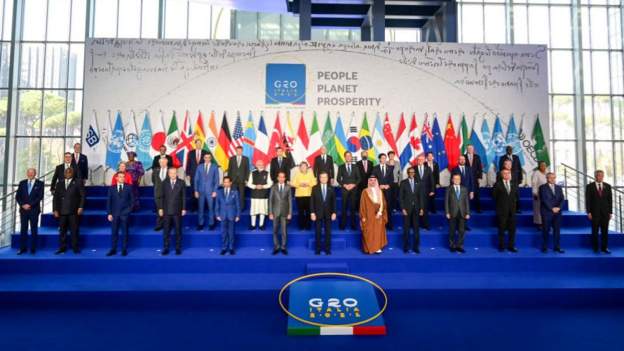
Nigeria considers its G20 membership options
Nigeria is thinking about joining the G20 group of big economies.
President Bola Tinubu’s spokesperson Ajuri Ngelale said on Sunday that the government is thinking about the advantages and disadvantages of joining before deciding whether to apply.
Mr Ngelale said in a statement that Nigeria wants to be a part of the G20, but the government is talking to different people to understand the good and bad things that could come from being a member.
President Tinubu went to Delhi because he was invited by the Indian Prime Minister Narendra Modi to attend a summit with other leaders.
Mr Ngelale said that Mr. Tinubu went to the G20 summit to look for money from other countries to invest in Nigeria. He also wanted to get more people interested in investing in Nigeria and make agreements with other countries to work together.
Right now, South Africa is the only country from Africa that is part of the G20. -
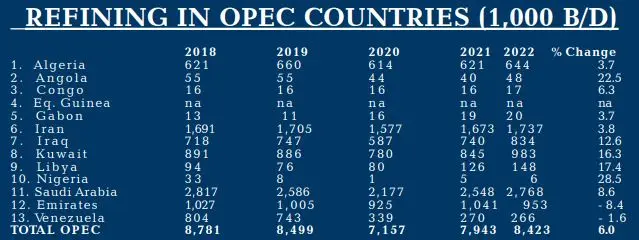
Nigeria has lowest OPEC refining capacity, averaging 10,600 bpd over 5 years
Nigeria, a prominent African oil producer, has been identified by the Organization of the Petroleum Exporting Countries (OPEC) as its member with the lowest refining capacity, averaging approximately 10,600 barrels per day (bpd) over a five-year period.
In 2018, 2019, 2020, 2021, and 2022, Nigeria refined an equivalent of 33,000 bpd, 8,000 bpd, 1,000 bpd, 5,000 bpd, and 6,000 bpd, respectively, according to OPEC’s Annual Statistical Bulletin for 2023.
Conversely, Saudi Arabia emerged as the leading OPEC member in terms of refining capacity, averaging 2.6 million barrels per day (mb/d) during the same period.
Specifically, Saudi Arabia refined 2.8 mb/d, 2.6 mb/d, 2.3 mb/d, 2.5 mb/d, and 2.9 mb/d in 2018, 2019, 2020, 2021, and 2022, respectively.
Saudi Arabia has five operational refineries, while Nigeria has four non-functional state-owned refineries and some privately owned facilities.
Nigeria has continued to import petroleum products from the global market due to inconsistent policies, a lack of long-term funding, difficulties in sourcing foreign exchange and feedstock for new refineries, and other factors.
Experts have cited these challenges, along with a lack of sustainable crude oil supply guarantees and lawlessness in the country, as deterrents for investors looking to build refineries in Nigeria.
Despite these hurdles, the Minister of State for Petroleum Resources, Heineken Lokpobiri, expressed optimism during an inspection of the Port Harcourt Refining Company that fuel importation in Nigeria would cease by 2024, with refineries expected to come online and operate more efficiently in the near future.
-
Nigerian police to arrest motorists using tinted glasses, unauthorised sirens
The Kebbi Police Command has issued an order for the arrest and prosecution of individuals using unauthorized sirens, tinted glasses, and unregistered vehicles.
According to SP Nafi’u Abubakar, the command’s Public Relations Officer (PRO), this directive was conveyed in a statement released in Birnin Kebbi and attributed to CP Samuel Musa, the State Commissioner of Police.
CP Musa emphasized the ongoing campaign against the abuse of diplomatic number plates, unregistered vehicles, covered number plates, unauthorized use of sirens, and tinted glasses.
He instructed his Tactical Commanders, Area Commanders, and Divisional Police Officers (DPOs) to take action against offenders.
The commissioner assured that these officers had been directed to arrest and prosecute violators while also impounding their vehicles, sirens, and fake private number plates. He urged the people of the state to refrain from violating this order, emphasizing that anyone found in contravention would face appropriate sanctions.