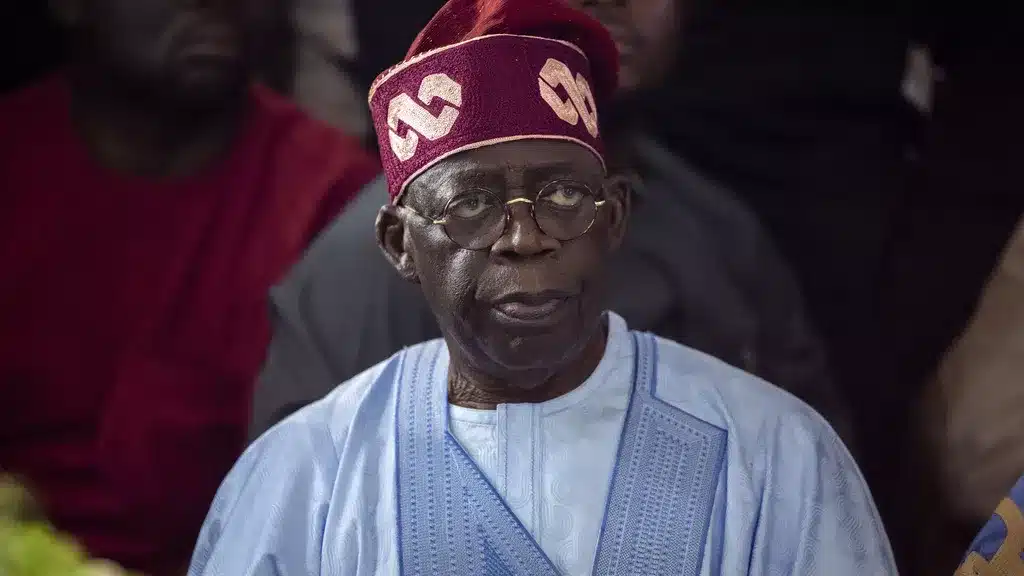
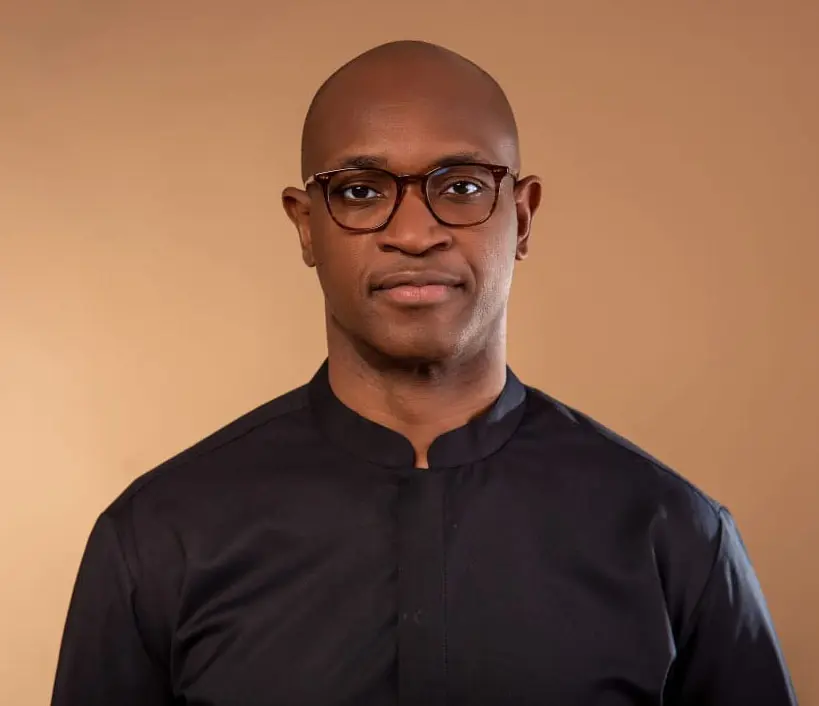
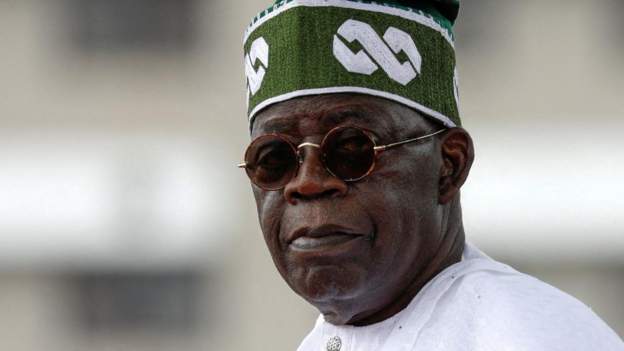
As Nigerians continue to grapple with economic challenges stemming from the removal of fuel subsidies, President Bola Tinubu offered reassurance on Thursday that, with patience and determination, he would achieve success.
President Tinubu emphasized the necessity of administering a “bitter pill” to a nation and economy in need of healing to pave the way for a brighter future.
During a meeting with the Board and Management of the Nigeria Economic Support Group (NESG) in Abuja, President Tinubu reiterated his commitment to fostering a robust public-private sector partnership to foster economic growth. He emphasized that his administration’s ongoing, bold, and coordinated reforms are built upon a “strong commitment to accountability and transparency.”
The President reaffirmed his unwavering commitment to fully implementing the eight priority reform areas outlined in the Renewed Hope Agenda within the next three years.
He stressed that Nigeria possesses abundant human and natural resources, coupled with unrealized opportunities that can be swiftly harnessed to bring about new prosperity. He called for the urgent exploitation of Nigeria’s diversity for the collective benefit of the nation, with a particular focus on establishing think tanks in the agricultural sector and creating a commodity exchange.
In his words, “We have left the past behind. I will not dwell on the past. My focus, like a racehorse, remains forward-looking. We possess a wealth of knowledge and untapped mineral resources, as well as a divinely endowed agricultural sector. Yet, we often hesitate to take the bold steps necessary for our people’s prosperity. Instead of harnessing our diversity for collective gain, we engage in needless disputes rather than focusing on thinking and working for our people.”
The President underlined that he was elected on a “no excuses” platform rooted in renewed hope and that he would not tolerate excuses from any member of his government as they embark on fulfilling his agenda.
Olaniyi Yusuf, the chairman of NESG, applauded the economic reforms announced by the Tinubu administration, particularly with regard to the elimination of fuel subsidies, the harmonization of foreign exchange rates, food security, and consolation for sub-national governments.
The NESG Chairman promised that the NESG would cooperate with the newly appointed cabinet to carry out the administration’s eight-point plan.
“Your track record in the effective implementation of bold economic reforms as the Governor of Lagos leaves those of us in the private sector without doubt that you will achieve much greater feats as our nation’s president,” the NESG Chairman confided.
During the courtesy visit, he asked the President to officially declare the NESG Summit open and instructed the heads of the ministries, departments, and agencies (MDAs) to join them and fully participate in the Summit as part of efforts to increase both domestic and foreign direct investment in Nigeria.
The Nigerian government has granted approval for the allocation of 5 billion naira ($6.5 million; £5.1 million) to each of the country’s 36 states and the federal capital city. This funding is earmarked for procuring food items intended for distribution among the impoverished.
Governor Babagana Zulum of the north-western Borno state shared this information with the media following a National Economic Council meeting held at the presidential villa in Abuja, the capital.
This decision is part of a broader strategy to alleviate the mounting cost of living, a consequence of President Bola Tinubu’s decision to eliminate fuel subsidies after assuming power in May.
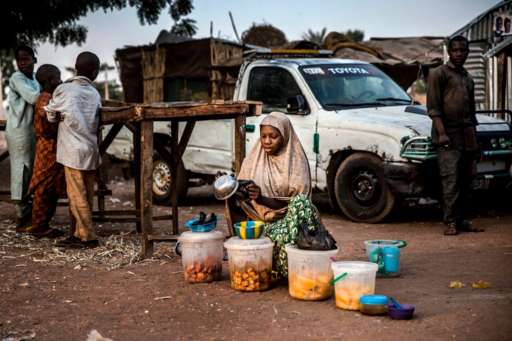
Subsequent to the subsidy removal, fuel prices have escalated by 200%, while food prices have more than doubled. These developments prompted the president to declare a state of emergency concerning food insecurity last month. He also announced measures aimed at enhancing food security, bolstering small businesses, fortifying manufacturing, and establishing affordable transport options.
President Tinubu emphasized that the removal of subsidies facilitated the government in saving over 1 trillion naira ($1.2 billion).
A Nigerian preacher, Prophet Abel Boma, has invoked prayers against potential coups in West Africa, revealing that he received a revelation about a coup plot in Ghana.
In his prophetic message, he advised people across West Africa not to entertain thoughts of orchestrating coups against their governments.
In a TikTok video, he cautioned that a coup in Ghana would not be beneficial for the nation.
“Spread this message to the people of Ghana: a coup will not bring good results. Anyone considering a coup as a solution will experience continuous betrayal in that nation for generations,” Boma declared.
The recent coup in Niger has reignited discussions about the prevalence of military takeovers in Africa, particularly in West Africa.
Instances of military-led changes in government have occurred in countries like Mali, Burkina Faso, and Guinea.
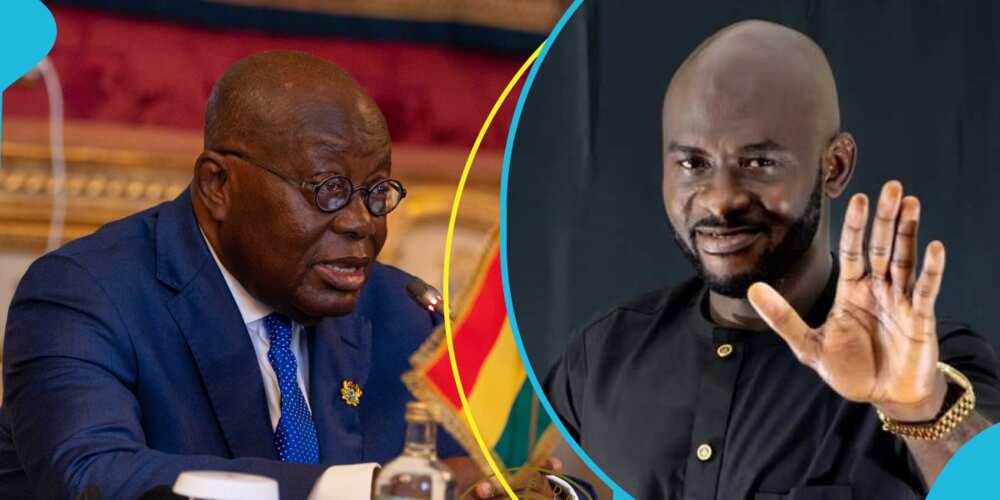
Ghana’s President Akufo-Addo promptly condemned coups in the West African subregion following the Niger incident.
Speaking during Liberia’s Independence Day celebrations, he emphasized that ECOWAS must unite to eliminate coups in the region, aiming to eradicate widespread poverty.
Ghana also hosted a meeting of the ECOWAS Committee of Chiefs of Defence Staff on August 17, 2023, to address the Niger coup.
The meeting aimed to finalize plans for deploying a standby military force to Niger, with the objective of removing the junta that toppled the government.
This gathering followed the ECOWAS Authority of Heads of State and Government’s directive during an Extraordinary Summit on the political situation in Niger, held on August 10, 2023, in Abuja, Nigeria.
The Nigerian government has given the go-ahead for the distribution of 5 billion naira ($6.5 million; £5.1 million) to each of the nation’s 36 states and the federal capital for the purchase of food goods for the underprivileged.
In addition, bags of rice, corn, and fertiliser will be distributed, the governor of Nigeria’s northwestern Borno state, Babagana Zulum, told the media after a meeting of the National Economic Council at the presidential residence in the nation’s capital, Abuja.
The action is a part of efforts to reduce the rising cost of living, which is a result of President Bola Tinubu’s decision to end gasoline subsidies shortly after we came to power in May.
Since then, food costs have more than doubled and fuel prices have increased by 200%. As a result, the president last month declared a state of emergency due to food insecurity and announced measures to improve small enterprises, manufacturing, and accessible transportation.
President Tinubu said that by eliminating subsidies, the government was able to save more than 1 trillion naira ($1.2 billion).
Some member states of the Economic Community of West African States ( ECOWAS) did not attend the ECOWAS military chiefs meeting held in Accra, which started on Thursday, August 16, 2023.
The meeting was a follow-up to the directive of the ECOWAS Authority of Heads of State and Government at its Extraordinary Summit on the political situation in Niger held on August 10, 2023 in Abuja, Nigeria. The ECOWAS Committee of Chiefs of Defence Staff (CCDS) was tasked to activate the ECOWAS Standby Force for the restoration of constitutional order in Niger.
The CCDS had an extraordinary meeting in Accra, Ghana from August 17 to 18, 2023 to finalise plans for the deployment of the Standby Force.
Addressing the gathering on the first day of the meeting, Minister of Defence of Ghana Dominic Nitiwul explained that some countries, including Mali, Niger, Burkina Faso and Guinea, were absent due to the sanctions imposed on them.
“Four of our member states [Mali, Niger, Burkina Faso and Guinea] are now facing sanctions for resorting to unconstitutional change of government which contradicts the ECOWAS protocol on good governance and democracy,” he said.
According to ECOWAS, these countries have been suspended from its bodies and have faced economic and financial sanctions after their respective military coups that ousted their elected leaders. Mali underwent two coups in August 2020 and May 2021, followed by Guinea in September 2021 and Burkina Faso in January 2023.
ECOWAS has been keen to limit political instability in the region and has urged the military juntas to shorten their transition periods and return to civilian rule.
Also, Guinea Bissau and Cape Verde were also present. According to the Minister, they had “genuine reasons” for their absence.
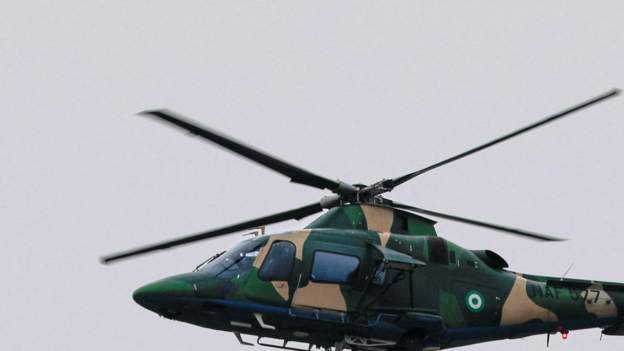
On Monday, a military helicopter from Nigeria that had been dispatched to the central Niger state to rescue wounded soldiers after a devastating attack had been shot at by robbers.
According to reports, an ambush in the region where the army has been battling armed groups claimed the lives of over a dozen soldiers.
At least 26 members of the Nigerian security forces were killed and eight were injured in the attack on Sunday, according to military officials cited by the AFP news agency.
However, local media in Nigeria said that the ambush had claimed at least 13 lives of soldiers.
The rescue chopper was carrying 11 of the deceased and seven of the injured when it crashed, according to the AFP news agency.
An air force spokesman said that rescue efforts and inquiries were in progress but made no mention of crash victims.
According to Edward Gabkwet, the plane had left Zungeru Primary School for Kaduna but was subsequently found to have crashed close to Chukuba Village in Niger State’s Shiroro Local Government Area.
Armed gangs are widespread in central and northwestern Nigeria, where they regularly commit robberies and kidnappings for ransom. In recent years, thousands of people have been slain in these operations.
Sanusi Lamido Sanusi, a former governor of Nigeria’s central bank and the Emir of Kano, met with the leader of the military coup in Niger on Wednesday in the Nigerean capital Niamey in an effort to mediate the issue.
The coup commander, Gen. Abdourahmane Tchiani, has avoided multiple envoys, including one from the West African regional organisation, Ecowas. This is the first delegation he has personally met.
Sa’ad Abubakar III, the Sultan of Sokoto, Victoria Nuland, the US Acting Deputy Secretary of State, and other African Union and UN delegations have all been ignored by Gen Tchiani in the past.
The Ecowas chairman, Nigerian President Bola Tinubu, would get a “message” from Mr. Sanusi, who said he had spoken with Gen. Tchiani on Wednesday.
The leaders of Niger and Nigeria are expected to hold substantive conversations after our arrival, Mr. Sanusi continued.
It occurs as the heads of state of the Ecowas are about to meet in Abuja, Nigeria, to debate the next steps after the military junta in Niger disregarded an ultimatum to reinstate deposed President Mohamed Bazoum.
Three years ago, Abigail Babatunde struggled to read her schoolwork and frequently required the assistance of her teachers to correctly enunciate difficult words.
The working-class Lagos suburb of Ejigbo’s 11-year-old public school student, who is currently in primary six, reads them alone at home. She now reads books about friendship and adventure on a regular basis as well.
Eniola Akanbi, her class teacher, claims that Babatunde, who wants to be a doctor, is also more active in class. “Now, she [Babatunde] would jump up whenever I asked for a volunteer to come up to read to the classroom,” she said.
“Reading improves my mood,” Babatunde, who wants to be a medical doctor, said. [And] when a teacher asks a question in class, I’m able to respond because I’ve read the day before. While I’m walking along the street, I occasionally read the signboard.”
The narrative underwent a transformation following the introduction of a new classroom library in January 2022.
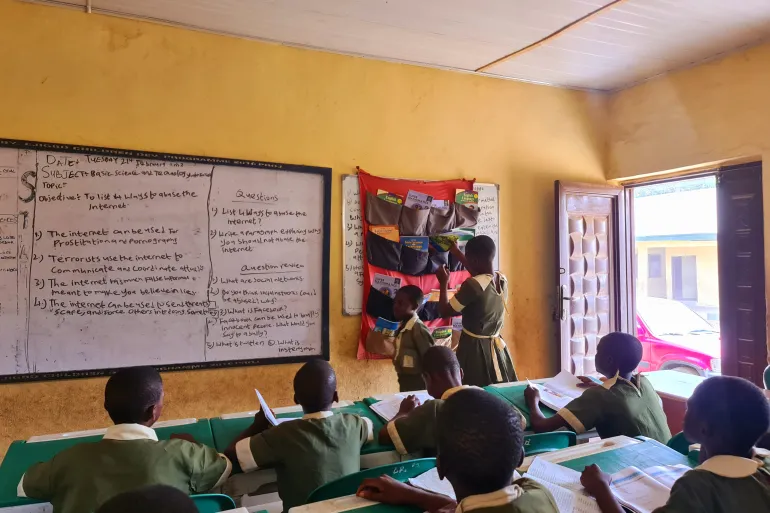
The classroom library takes the form of a bookshelf crafted from repurposed fabric that hangs from a nail on the classroom wall. Resembling a hanging shoe rack but slightly larger, it features between seven to 10 compartments. Each compartment houses a collection of three to five books of varying dimensions. These books are meticulously organized in a vertical arrangement, with their placement determined by size, descending from largest to smallest.
The inception of these bookshelves is credited to The Hanging Library, an initiative established by The Neo-Child Initiative. This volunteer group is dedicated to providing mentorship, literacy support, free medical services, and medication to children residing in low-income neighborhoods. With an impressive roster of nearly 300 committed volunteers, the initiative is chiefly financed through a book donation campaign and contributions from family, friends, and volunteers.
Currently, there are a total of 50 libraries and over 5,000 books spanning academic textbooks to engaging stories. These libraries are distributed across Abuja, the federal capital, as well as various cities within six states.
The initiative is funded mainly through a book drive and contributions from family, friends, and volunteers. There are now 50 libraries and more than 5,000 books from academic textbooks to story books, across Abuja, the federal capital, and cities in six states.
Two pupils read in front of the hanging library at a school in Lagos [Muhammed Bello/Al Jazeera]
Closing the gap
According to a UNESCO 2022 assessment, there are more than 20 million youngsters in the nation who are not in school. However, due to inadequate funding for public schools and limited access to basic resources for students who are still in school, Nigeria’s basic education has suffered.
An estimated two-thirds of Nigerians are literate at a basic level since education is free at that level. But this January, Cristian Munduate, UNICEF’s Nigeria representative claimed that “75 per cent of children aged seven-to-14 years cannot read a simple sentence or solve a basic math problem”.
Seyi Bolaji, founder of Kaduna-based Project Educate A Child (ProjectEAC) campaign, thinks these numbers are a conservative estimate.
“The 20 million are those that are counted, what about those that are not counted … because people are still giving birth and they do not care whether these children go to school or not,” said Bolaji.
“Also too much energy is being given to out-of-school children while the ones in school are planning to leave school because the standard of education is declining,” she added. “When those in school are still unable to read and write, what is the point?”
The void that The Hanging Library, initially established in 2017 in Lagos, aims to bridge.
During his obligatory one-year national service in Lagos, Yusuf Shittu, the founder of TNCI, would routinely commute past Babatunde’s school on his way to work. On a particular day, he observed the absence of a physical library or an organized space for book storage within the expansive school complex, spanning seven buildings.
Having been nurtured with a fondness for reading newspapers from an early age by his father, Yusuf Shittu was motivated to pass on his passion for books. He expressed to Al Jazeera that this initiative provides an opportunity to positively shape an entire generation.
This perspective has garnered support from experts in the field.
“It’s an innovative solution to a deep problem in our society,” said Kemi Ogunsanya, a project manager at Lagos-based online hub TeacherX Project. “A lot of factors and lack of reading materials is one of the causes of the declining rate of reading culture. A lot of schools don’t have libraries and are only left with just bare classrooms.”
More than half of Nigeria’s estimated 200 million people live on less than $2 daily, according to the National Bureau of Statistics. For many of them, their meagre wages can barely afford enough food, much less books for their children.
“You can’t give what you don’t have,” said Bolaji. “There are some families who have not eaten for days, telling them to invest in buying textbooks for their children will make one look stupid.”
The hanging libraries can help children from low-income households at schools improve their grades and have a broadened worldview, said Ogunsanya.
“A reader is a leader,” she said. “A reader will always have an expanded mindset, and all of this will often affect academic progression.
One of the coordinators of The Hanging Library initiative visits a school in Lagos after the installation of a library [Muhammed Bello/Al Jazeera]
A life-changer
But more needs to be done with initiatives like this, experts said, to target not just children in the classroom but also out-of-school children. “The school is only a building, a child can learn anywhere,” Bolaji said. “We can get this mobile library to them [street kids] and teach them how to read and write.”
According to Shittu, there are plans to expand it to additional communities in other states and develop a plan to replace ripped and missing books but there are financial and logistical challenges to resolve in order to make that happen.
For Babatunde, who lives with her father and lone caregiver, a butcher by day and security guard by night, the library has been a life-changer. By day, she chooses any book available at the library to aid her in her assignment because she is not allowed to take books out of the school.
Often, her book of choice is Without a Silver Spoon, by Eddie Iroh, the story of a boy born into poverty, who is wrongly accused of theft in the household where he works as a domestic help to pay his school fees.
During the daily 15-minute free periods for her class, Babatunde rushes to the hanging library beside the chalkboard, almost breaking into a run to get it, before anyone else does. And on her way back to her seat, she is already flipping through the pages, reading.
Power generation companies have stated that Nigeria possesses the capacity to generate approximately 427,000 megawatts of electricity using solar energy derived from sunlight.
Presently, Nigeria’s power generation stands at less than 5,000MW, which is inadequate for its population of over 200 million people.
For instance, data extracted from the Federal Ministry of Power reveals that the grid’s power generation at 6am was recorded at 3,803.6MW.
The CEO of the Association of Power Generation Companies, Joy Ogaji, delivered a presentation titled ‘The Electricity Act 2023: Options for Renewable Energy Penetration and Role of Stakeholders.’
She highlighted that solar energy could potentially contribute over 420,000MW to Nigeria’s power generation capacity.
Ogaji presented this information at a workshop centered on renewable energy penetration and the roles of stakeholders, organized by the Renewable Energy and Energy Efficiency Association-Alliance in Abuja.
This presentation was shared with our correspondent on Sunday by the REEEA-A.
She said, “The potential of renewable energy in Nigeria is huge. The country has solar radiation of 3.5 to 7.0 kWh/m2 per day, and 427,000MW can be generated in Nigeria from solar alone!
“Hydro resources are estimated at 14,750MW. Wind speeds of 2-5m/s with a potential of 150,000 TJ per year.”
Describing the present state of renewable energy in Nigeria, the representative from the power generation companies (Gencos) indicated that no renewable energy generation was linked to the distribution or transmission levels, despite having set targets.
She elaborated, “The majority of energy generation occurs off-grid, involving solar home systems and rooftop solar. However, accurate data is lacking.” The cost of renewable energy in Nigeria is around $0.55 to $0.6 per kWh, making it less competitive compared to utility electricity, which costs approximately $0.105 per kWh.
“Achieving set targets with mini-grids will be a slow process. If 1,000 mini-grids of 1MW each are built, we will only achieve 1GW (gigawatts).”
On the challenges in the renewable market, she said domestic demand in West African countries was too low to attract investments in large projects that benefitted from economies of scale.
Ogaji said, “Lack of effective planning and monitoring has led to reliance on emergency rental plants, which further inflates costs. Imbalance in bilateral contracts for the purchase and sale of electricity, especially for deliveries beyond the borders, payment defaults of buyers, as well as the failures to deliver the electricity promised by several sellers.
“There is a lack of synergy in the regulatory frameworks of some member states. Differences in contractual arrangements and disparities in the organisation of national markets are challenges. Lack of harmonisation and standardisation in operational, security rules, contractual provisions and tariffs are concerns.”
The President, REEEA-A, Prof. Magnus Onuoha, said with enough renewable energy capacity, Nigeria could create green jobs, entrepreneurs and evolve women and youth empowerment.
Onuoha said, “Beyond installation and deployment of renewable energy and energy efficient technologies, there are millions of ancillary jobs/efforts that accrue from there.
“There are so many activities, new dynamics, technologies, interventions, measures, policies and relationships flowing around the renewable energy and energy efficiency sector.
“Globally, the Russia-Ukraine war showed us that beyond energy transition, we need to look vigorously at energy security. Here in Nigeria, the fuel subsidy removal, the Electricity Act recently signed into law, rising cost of energy dominant systems and measures, show us that it is time for a very critical rapprochement and behavioural change towards renewable energy and energy efficiency.”
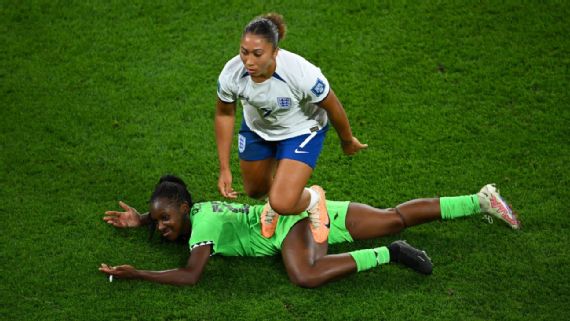
England coach, Sarina Wiegman, revealed that Lauren James apologised after her red card incident against Nigeria, where she “lost her emotions,” causing her to receive a straight red card.
During the match, James made a reckless challenge on Michelle Alozie, stamping on her back as they both tried to get up from a tussle.
The incident initially resulted in a yellow card, but it was later upgraded to a red after a VAR review.
As a result, James will miss the quarterfinal against Colombia or Jamaica, and depending on England’s progress, her ban may extend further if FIFA decides to increase the punishment.
The red card incident evoked memories of David Beckham’s and Wayne Rooney’s red cards in the 1998 and 2006 World Cups, respectively.
Despite being England’s standout young star and player of the tournament so far, James was halted by a moment of madness.
Wiegman emphasised that although emotions got the better of the 21-year-old, James never intended for such an incident to occur.
“It was a moment of a split second, and it was later in the game, so players also get a little tired. She is an inexperienced player on this stage and has done really well,” she said. “And I think, in a split-second, she just lost her emotions. And, of course, she does not want to hurt anyone. She is the sweetest person I know.
“Yet then things happen like that, and you cannot change it any more. So it is a huge lesson for her to learn, but it is not something that she really did on purpose.
“It happens sometimes with human beings – that you are in such an intense game, such an emotional game, and, in a split-second, she lost her emotions. “She apologised, and she felt really, really bad, and she absolutely she does not want to hurt anyone.”
While James’ sending off was petulant at best, it would not have been the turning point if England had been knocked out. They toiled through the goalless last-16 fixture in Brisbane, and were lucky to reach a penalty shootout, ultimately won by Chloe Kelly’s deciding kick.
But Wiegman was still pleased with how England reacted after James’ sending off, adding: “I am really proud of the team. We have had many setbacks. I think this was a big one too. Lauren James’ red card was reminiscent of David Beckham’s sending off against Argentina at the 1998 World Cup “So, as soon as it looked like Lauren James was sent off, we straight away had to re-organise and do something else on the pitch.
“Then the conviction to keep [the score] to 0-0 and to try to get out of their press, that was just incredible. The players got really, really tired, but we really stuck together and showed a lot of resilience.
“When you are so tired and then go into a penalty shootout and do so well, I think that is really incredible how the team did.”
27-year-old Tanzanian Melkiori Dominick Mahinini was taken hostage in Nigeria and is now being held for ransom in the amount of $70,000 (Sh170 million).
The Major Seminarian hails from Kabanga Parish in the Kigoma Region and was sent to Nigeria by the Africa Missionary Society for his studies.
Bishop Joseph Mlola of the Kigoma Catholic Diocese said that the Frater and Priest Paul Sanogo of Burkina Faso were both kidnapped in Nigeria’s Minna Province.
“The two were abducted on August 3, 2023 by unknown people at the Saint Luke Gyedna Parish in the Minna Province,” said Bishop Mlola.
“The Frater has been in Nigeria for a missionary mission before proceeding for theological studies. We should pray to God that the two are rescued from any dangers and return in peace, light and complete freedom,” he added.
Dr. Benson Bana, the Tanzanian ambassador to Nigeria, acknowledged the occurrence and stated that all required steps are being taken to guarantee the two are released safely.
He noted that the country of Nigeria experiences many abductions and that precautions are being taken to protect the two.
“After receiving reports of abduction, the Embassy has informed the government at home (Tanzania). We have also communicated the matter to the Ministry of Foreign Affairs in Nigeria as required by diplomatic procedures,” he told The Citizen over the phone.
He claimed that on August 3, a gang of unidentified individuals broke into Saint Luke Gyedna Parish, opened fire, and kidnapped two of the four people present.
The former University of Dar es Salaam (UDSM) dean claimed to have learned that kidnappers are demanding a ransom of 100 million naira, or Sh325.1 million, according to information they have received.
He claims that the desired sum is $70,000, or more than Sh170 million.
“We are supposed to be careful with these people because they can inflate the ransom to over 500 million naira,” he cautioned.
According to Dr. Bana, they are currently working with the Africa Missionary Society, who have also already informed Nigerian law enforcement about the situation.
Bishop Gervas Nyaisonga, head of the Tanzania Episcopal Conference (TEC), expressed disappointment on behalf of the Church at the brutal kidnapping episode.
“We insist on the importance of respecting the principles of human rights and stir on diplomatic efforts to ensure abducted people are unconditionally freed,” he told this paper, saying the Church is praying for the abductees to be rescued.
Mr. Dominick Mahinini, the father of the Frater, has requested that the Church work with the Ministry of Foreign Affairs and East African Cooperation to free his son.
Furthermore, he claimed that on August 3, the Parish Priest informed him of allegations of his kidnapping.
“I have nothing to do rather than praying to God for his life. I ask the government’s support over the matter,” he said at his Masanza home in Kabanga Ward, Kasulu District.
According to him, the Diocese should collaborate with the Tanzania government to ensure his son is freed safely.
He claimed that despite the fact that the occurrence had taken place far away, his family had been shocked and alarmed when they learned of the abduction.
Melkiori, the fifth child in a family of nine, was called to serve God, according to Mr. Mahinini, who also noted that he had a responsibility to help Melkiori as a dad.
On Monday, the 2023 FIFA Women’s World Cup continued its action with the clash between England and Nigeria in the round of 16 at Brisbane’s Suncorp Stadium in Australia.
The eventual outcome hinged on a penalty shootout, with England securing victory through four successful penalty kicks compared to Nigeria’s two.
Adding to the already intense spectacle, a significant highlight occurred late in the game.
England’s standout player, Lauren James, was shown a red card for stepping on the back of Nigeria‘s Michelle Alozie.
This expulsion reduced England’s player count to 10 as the match ventured into extra time.
Notable performances from Nigeria’s goalkeeper, Chiamaka Nnadozie, managed to keep the Super Falcons in contention, holding the match to a goalless draw.
However, England managed to clinch the victory in the end.
The Super Falcons unfortunately suffered a 4-2 defeat in the penalty shootout at the Women’s World Cup.
The announcement made by the governor of Adamawa state in north-east Nigeria, Ahmadu Fintiri, regarding the appointment of a 47-member media team, has sparked anger and ridicule.
Governor Fintiri’s tweet, which listed all the names, has garnered one million views on the social media site.
The media team comprises:
Two special advisers
Ten senior special assistants
35 “special assistants for social media and content creation”
In his tweet, the governor expressed confidence that this diverse and talented team would significantly enhance communication efforts and strengthen public engagement.
However, reactions to the announcement have been critical, with many questioning the need for such a large media team. People on social media responded with laughter emojis and memes, joking that not even Nollywood stars have such extensive media teams.
Some even sarcastically suggested that the governor might be aiming to establish a media production company to rival Universal Studios.
Amidst the rising prices and economic difficulties faced by people in Adamawa state and beyond, questions were raised about how the governor intends to reduce the cost of governance with such a large number of media advisers.
The state of people’s personal budgets has become a pressing concern, exemplified by the recent looting of warehouses in the state capital, Yola, as people struggle to cope with the increasing challenges.
On Thursday, the Christian Association of Nigeria (CAN) urged Nigerians to be patient with President Bola Tinubu and allow him the opportunity to address the country’s challenges.
CAN also praised Tinubu for proactively taking measures to prevent the proposed strike by the Nigeria Labour Congress and Trade Union Congress in response to the removal of fuel subsidies.
The organization advised the NLC and TUC that if any call to action is necessary, it should be for the prudent and accountable use of the funds that would have been allocated to subsidize fuel.
During a press conference in Abuja, the Chairman of Lagos State chapter of CAN and Methodist Bishop of Ikeja Diocese, Stephen Adegbite, raised these concerns.
He criticized the fuel subsidy as a misguided policy that benefits the wealthy and politically connected, while ordinary citizens suffer.
Adegbite commended Tinubu’s approach in inviting the leaders of NLC and TUC for private discussions, which led to a resolution and the end of the nationwide protest.
He praised the President’s willingness to listen and take action in the national interest.
Adegbite appealed to Nigerians to give President Tinubu an opportunity to address the country’s issues once and for all.
He said, “I have keenly followed the socio-economic developments in our country since May 29, 2023, when the new administration of President Bola Ahmed Tinubu took the reigns of governance.
“The President had, on assuming office, made his now famous ‘fuel subsidy is gone’ pronouncement in his inaugural speech and since then, fuel prices have twice gone up in line with the dictates of market forces.
“The step he took was one majority of Nigerians had agreed needed to be taken. It was increasingly obvious that the subsidy regime was not benefiting the masses it was originally designed to benefit.”
He added, “The truth is that the fuel subsidy misadventure was profiting the rich, the politically connected, and even worse, our regional neighbours and smugglers who enjoyed opulent returns at the expense of the citizenry.
“Basically, the masses who were supposed to benefit from the subsidy were not the primary or secondary beneficiaries, but the saddest part is that the people have somehow been hoodwinked and deceived into believing that the fraud of subsidy was in their favour.
“It is against this background that I commend President Tinubu for inviting NLC and TUC leaders for follow-up discussions after organized labour went ahead with protest marches, despite his nationwide broadcast.”
Adegbite stated that Tinubu is a listening president who provided clarity to the leaders of the NLC and TUC, over matters that were unclear.
He mentioned, “I find it assuring that he used the opportunity to provide clarity on a number of things labour leaders felt were not clear enough.
“This, in my view, shows that we indeed have a listening President who is interested in getting things done in national interest.”
Adegbite acknowledged that labor raised the issue of refineries in its criticism of President Tinubu’s recent nationwide broadcast. He mentioned that there have been assurances that the Port Harcourt refineries will be operational by December 2023.
He added that the Nigeria Labour Congress (NLC) should be aware that all four of the nation’s refineries are undergoing refurbishment under an arrangement made during the previous administration of Muhammadu Buhari, each with its specific timeline.
Adegbite emphasized that there is a clear plan in place to ensure local refining of petroleum. He expressed his satisfaction with the decision of labor to suspend its protest marches.
“So my message to NLC and TUC is that if there is any need for a call to action, it should be for the judicious and accountable use of the funds that would otherwise have been used to subsidise fuel.”
“We can’t be complaining about a deficit of social infrastructure and amenities as well as low wages for civil servants, and at the same time be opposed to efforts to improve the quality and availability of same,” the state CAN chairman said.
Chelsea midfielder Carney Chukwuemeka has not ruled out the possibility of playing international football for the Super Eagles in the future. However, he emphasized that his current focus is on representing England.
Born in Austria to Nigerian parents but raised in England, Chukwuemeka is eligible to play for Nigeria, Austria, and England.
Having begun his international career with England’s U18s and progressing to the U20s, the Aston Villa academy product was recently named in the Young Lions’ FIFA U20 World Cup squad, making one appearance in the competition.
When asked about the prospect of playing for the Super Eagles, he stated, “I haven’t really thought that far. At the minute, I’m focused on England. Obviously, I’ve played for England at youth level, so we’ll see what the future holds,” as quoted by Football London.
Chukwuemeka showcased his talents during Chelsea’s pre-season games, providing one assist in the club’s 5-0 victory over Wrexham. Despite struggling for game time last season with just two Premier League starts, he hopes to receive more opportunities under his new manager Mauricio Pochettino in the upcoming season.
Veteran Journalist, Kwesi Pratt has expressed his views on the state of elections in West Africa, stating that no country in the sub-region, including Ghana and Nigeria, has had a truly free and fair election in the past few decades.
According to Pratt, the concept of free and fair elections collapsed a long time ago in West Africa.
He pointed out that in the past 20 years, all elections held in the sub-region have been marred by rigging and other irregularities.
Pratt questioned how many countries in West Africa have been able to conduct genuinely free and fair elections over such a period.
Pratt further criticized the national elections in the sub-region, calling them a pretense of democratic elections. He described the electoral process as a farce and claimed that it lacks credibility.
The journalist highlighted various issues that plague elections in West Africa, including vote buying, influence peddling, violence against unarmed civilians, and the distribution of tempting offers to voters.
According to Pratt, these practices have become common in the region, undermining the credibility and integrity of the electoral process.
“How many countries in West Africa have over 20 years organized free and fair elections?”
“Elections have become a farce. Everybody is talking about it. Go to the streets. Take cameras to the street of Accra and asked people their opinion about elections. It’s a farce,” Kwesi Pratt added.
He urged people to take to the streets and inquire about citizens’ opinions on elections to understand the disillusionment and skepticism surrounding the process.
Overall, Pratt’s comments reflect his concerns about the state of democracy and electoral integrity in West Africa and the urgent need for meaningful reforms to restore public confidence in the electoral process.
The army of Nigeria has stated that it has not received a directive “to begin military action against the military junta in Niger.”
The armed forces could not launch a mission on behalf of the regional organization, Ecowas, without the heads of state’s authorization, a spokesperson said in a statement in response to a news that Nigerian soldiers were mobilizing in anticipation.
According to Brig Gen Tukur Gusau, the military option in Niger was the last resort in the event that all other measures proved unsuccessful in changing the course of events.
In order to “submit their plans” to the leaders of the area, military leaders are currently gathering in Abuja, Nigeria.
The Manufacturers Association of Nigeria (MAN) has urged the Federal Government to involve local automobile companies in the production of the proposed 3,000 units of 20-seater buses fueled by compressed natural gas (CNG).
This measure aims to improve transportation efficiency throughout the country.
While making this appeal, MAN also applauded President Bola Tinubu’s commitment to allocate N75 billion over the next eight months to support the manufacturing sector. This move is part of the government’s broader plan to mitigate the impact of fuel subsidy removal on Nigerian citizens.
In a recent nationwide broadcast, President Tinubu specifically pledged to reserve N75 billion for 75 manufacturing enterprises, allowing them to access N1 billion credit at an interest rate of 9% per annum from August 2023 to March 2024.
This financial intervention is expected to accelerate growth and transformation within the manufacturing sector.
The Director-General of MAN, Segun Ajayi-Kadir, expressed his positive reaction to the broadcast, highlighting that such interventions will alleviate hardships faced across various socio-economic segments.
Furthermore, he emphasized that these initiatives will lead to widespread and far-reaching benefits for the nation.
His words: “We had indicated that the best palliative is to remove the binding constraints that have bedevilled the productive sector so that jobs can be created and guaranteed, salaries can be paid and production capacity boosted, with the attendant lower prices and improved availability.
“This is far more beneficial than palliatives that would only give nominal relief.”
Ajayi-Kadir further stated: “The promise that 75 manufacturing enterprises will access N1 billion credit at 9% interest rate per annum and working capital is commendable. It is a good start to address the dearth of loanable funds in the face of rising lending rate occasioned by the continued increase in the monetary policy rate (MPR) by the Central Bank of Nigeria (CBN).
“It is however very important and critical that the vehicles for the delivery of these loans should be carefully selected and the implementation diligently monitored. The Bank of Industry (BoI) has shown excellent performance as an appropriate transaction structure for such facilities.”
On the procurement of 3,000 buses, the MAN DG said: “It is equally important to ensure that the promised 3000 units of 20-seater buses be procured from indigenous automobile Industries.
“This is a golden opportunity for the federal government to demonstrate unfailing commitment to the implementation of the subsisting Executive Order 003, which prioritizes the patronage of made in Nigeria products.”
FCMB Group Plc has released its unaudited six-month results, revealing a strong positive financial performance across key indicators.
During the period from January to June this year, the company experienced remarkable growth, reporting a 148% increase in profit before tax, which amounted to N38.2 billion.
This significant surge is in contrast to the N15.4 billion recorded during the corresponding period in 2022.
The diverse segments of the group demonstrated robust earnings growth during this period, with Banking Group showing an impressive 185.5% increase, Consumer Finance achieving 10.3% growth, Investment Management seeing a 53.3% rise, and Investment Banking experiencing a substantial 54.3% surge.
Furthermore, FCMB Group’s gross revenue for June 2023 witnessed remarkable growth, reaching N238.2 billion, which represents an 88.7% increase when compared to the N126.2 billion generated during the same period in the previous year.
This remarkable growth was largely driven by a 51.9% increase in interest income and a staggering 216.9% increase in non-interest income, showcasing the company’s strong performance and ability to capitalize on various opportunities in the financial market.
Commenting on the half-year financial results, the Group Chief Executive of FCMB Group Plc, Mr Ladi Balogun, said: “We continue to leverage our unique Group structure to build a technology-driven ecosystem that fosters inclusive and sustainable growth in the communities we serve.
“This strategy enables us to deliver robust performance despite the challenging domestic and global environment.
“Barring unforeseen circumstances, this trend will be sustained and accompanied by improving efficiencies arising from greater scale and ongoing digitization.”
In July 2023, amid the prevailing dollar scarcity in the economy, the volume of dollars traded (turnover) in the Investors and Exporters (I&E) window of the foreign exchange market experienced a significant 21% decline, dropping from $2.64 billion in June to $1.6 billion.
Weekly data from FMDQ showed that turnover started at $417.33 million in the first week of July, declined by 6.4% to $390.59 million in the second week, increased by 6.05% to $414.24 million in the third week, and then decreased by 4.13% to $397.11 million in the fourth week.
On the last day of July, the turnover stood at $67.21 million.
Despite this decline in the I&E window, the naira appreciated by N12.31, reaching N756.94 per dollar by the end of July 2023, compared to N769.25 per dollar on June 30th, 2023.
However, in the parallel market, the naira depreciated by N105, with the exchange rate rising to N870 per dollar by the end of July from N765 per dollar on June 30th, 2023.
The sharp decline in turnover in the I&E window indicates that the forex reforms introduced by the Central Bank of Nigeria (CBN) on June 14th, 2023, have not yet translated into increased foreign exchange inflow into the country.
However, the Acting CBN Governor, Mr. Ade Shonubi, has assured that the prevailing volatility of the exchange rate in the I&E window will soon be resolved, as the CBN will continue to intervene in the market to ensure stability.
Addressing the press at the end of the meeting of the Monetary Policy Committee, MPC in Abuja, Shonubi said:
“ We have started intervening and we have been doing it for a while and we will continue to intervene to bring the market to the level that we believe it should be. Right now and in the short run these volatile times are expected but we expect them to moderate sooner rather than later.”
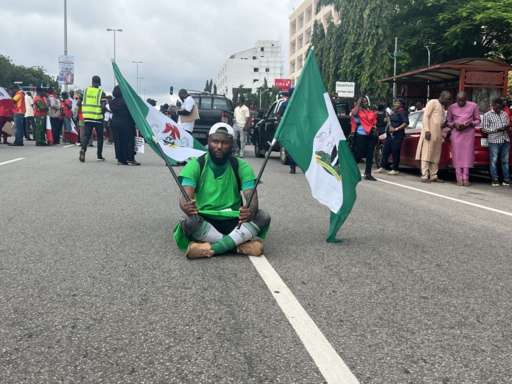
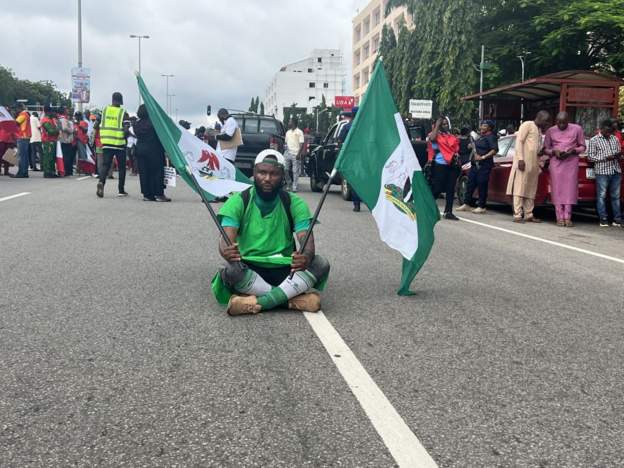
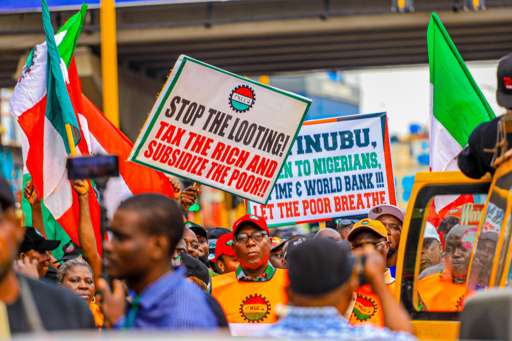
In Nigeria, trade union members are staging protests against high fuel prices and inflation resulting from the removal of a fuel subsidy. Talks between the unions and the government failed to yield an agreement on Tuesday.
Joe Ajaero, the head of the Nigeria Labour Congress, called on members to gather in their respective states and locations across the nation to express their collective resolve.
In light of the protests, Police chief Kayode Egbetokun warned against violence and urged commissioners to deploy officers fully to ensure the safety of the protesters.
President Bola Tinubu’s sweeping measures announced on Monday to mitigate the impact of the fuel subsidy removal, including conditional grants to at least one million small businesses, were deemed insufficient by the unions.
The government justifies the lifting of the fuel subsidy, citing it as a measure to alleviate a government funding crisis, despite its popularity.
The men told the news agency Reuters that they had to ration their meagre food and water for ten days until they were able to survive for four days by drinking seawater.
They boarded the ferry expecting to reach Europe, but instead they arrived in Brazil, which left them, to put it mildly, startled.
The guys fastened themselves to the rudder with a rope and constructed a net around it to keep from falling off while the ship sailed over the Atlantic.
One of the men, 35-year-old Roman Ebimene Friday, claimed that he frequently glanced below to spot “big fish like whales and sharks.”
Sleep was also not an option. One wrong move could be fatal, and it was hard to sleep anyhow with the sound of the engine running.
The men’s first concern was to hide from the crew because they feared that if they were discovered, they would be cast into the water.
Thankgod Opemipo Matthew Yeye, 38, continued, “It was a terrible experience for me.”
It is difficult to be on board. I was trembling from fear. However, I’m here.
Liberian-flagged ship On June 27, Ken Wave left Lagos. A fisherman rowed Friday from Bayelsa to the boat, where he discovered three individuals sitting close above the propeller.
The ship was finally located off the coast of the state of Esprito Santo in the southeast, and the sailors were saved.
The guys were all in “precarious health conditions,” according to the force, and were saved by federal police officers at the port of Vitoria.
Each had a different reason for leaving Nigeria, one of the most populous countries in Africa but also one of the most violent and impoverished. The nation has experienced a spike in kidnappings in recent years, and according to one survey, security is one of the top worries among the populace.
Yeye, a Pentecostal priest, claimed that his farm producing peanuts and palm oil was destroyed by heavy flooding, displacing his family.
He expressed optimism that one day they will be able to accompany him to Brazil.
While the other two guys asked to be sent back to Nigeria, Yeye and Friday both requested asylum in Brazil.
They are not the only men. According to the UN department for human rights, 123,300 refugees and migrants travelled across the Mediterranean to reach Europe in 2021.
Deaths are on the rise as people brave choppy waves and bad weather, despite the fact that the number has been down for years.
3,231 individuals at least perished or perished at sea in the Mediterranean and northwest African routes last year.
The agency said that it had “constantly warned of the horrific experiences and dangers faced by refugees and migrants who resort to these journeys.”
“Many of them are people running from conflict, violence, and persecution,” it is said.
Following the coup last week, major cities in Niger are currently experiencing rolling blackouts.
According to Nigelec, the energy utility of Niger, Nigeria has suspended supply to its northern neighbour as a result of the power shortages.
Sanctions have been placed on Niger as a result of the coup by the West African trading bloc ECOWAS, but it is unclear if these measures cover electrical supplies.
The Niger conflict is the topic of a meeting between ECOWAS defence chiefs in Nigeria.
The military junta in Niger was given a week to resign or risk military intervention by West African leaders on Sunday.
European nations are currently pulling their citizens out of Niger.
The power is only on for roughly an hour at a period for residents of the cities of Niamey, Maradi, and Zinder before being shut off for up to five hours.
In Niger, where supplies are often consistent and reliable, power outages like these are uncommon.
However, Nigeria, the nation’s wealthier neighbour to the south, is highly reliant on it as its primary source of electricity.
Regarding the power outages in Niger, the Transmission Company of Nigeria has refrained from speaking.However, a source who would not be named informed the BBC that a presidential decree caused the supply to Niger to be turned off on Tuesday.
The democratically elected president of Niger, Mohamed Bazoum, was deposed by his own presidential guards who were stationed outside his palace last week.
Gen. Abdourahmane Tchiani, commander of the presidential guard, was appointed president while the constitution was suspended.
The Niger’s borders with Algeria, Burkina Faso, Libya, Mali, and Chad will now be reopened, according to the military government. It still has closed borders with Nigeria.
Following the coup, mediation is continuing, and a delegation from Ecowas (the Economic Community of West African States) is meeting in Niger on Wednesday. Gen. Abdulsalami Abubakar, a former military head of state in Nigeria who managed the nation’s 1999 transition from military rule to democracy, is currently in charge of it.
According to reports, the delegation also includes Muhammadu Sa’adu Abubakar III, the Sultan of Sokoto, who is Nigeria’s most senior Muslim leader. He is also quite powerful in Niger, which was once a part of the Sokoto Caliphate, a stronghold before colonial administration.
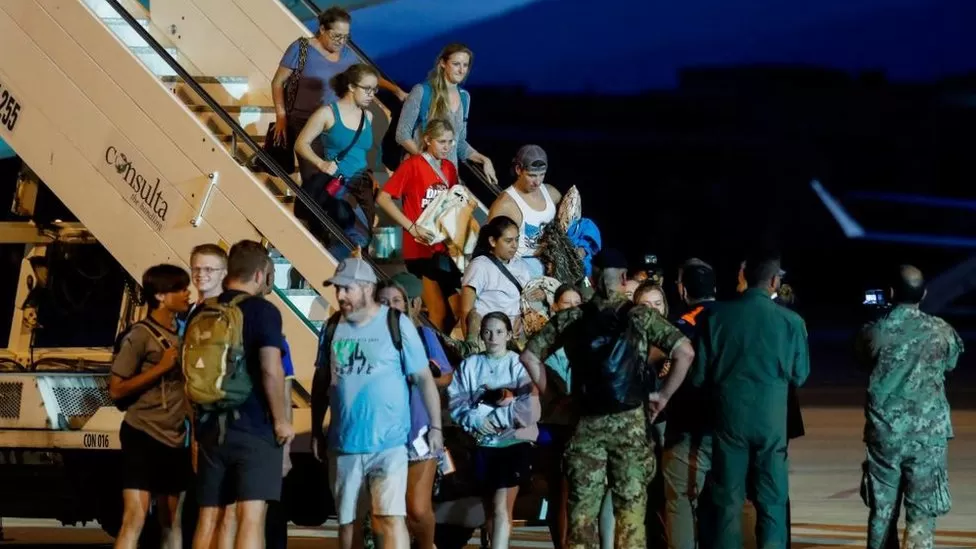
The first evacuation flights have now begun to land in Europe. Early on Wednesday, 262 French nationals arrived in Paris amid anti-French sentiment in the nation.
Following the coup, there have been protests against the former colonial power, and the French embassy has even come under attack.
Regarding the roughly 1,000 French soldiers stationed there as part of operations to combat Islamist militants, France claims it has no intentions to send them home.
Nigeria’s President Bola Tinubu has urged his citizens to trust him on solving the perennial challenges in Nigeria
Mr. Tinubu announced in a televised speech to the country that he had directed the release of 200,000 tonnes of grain from strategic stocks.
Additionally, he pledged to raise the minimum wage, promote more well-paying jobs, and provide financial support for the manufacturing, farming, and small business sectors.
While acknowledging the challenges individuals faced, Mr. Tinubu justified the recent elimination of a fuel subsidy, claiming it had saved Nigeria about $1.3 billion (£1 billion).
Protests have been sparked by the elimination of the subsidy.
“I understand the hardship you face; I wish there were other ways, but there are none… Have faith in our ability to deliver. We will get out of this turbulence,” he assured citizens.
In order to counteract the rising expense of transportation, he proposed a $129 million fund to buy around 3,000 commercial buses that would be spread across the country.
He pleaded for tolerance as he carried out his economic strategies.
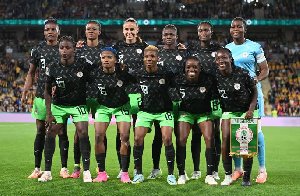
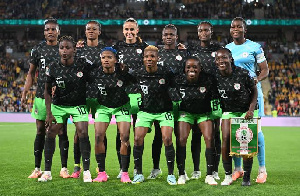
Nigeria’s national women’s team, the Super Falcons, has made history in the 2023 Women’s World Cup by becoming the first African team to secure a spot in the knockout phase.
The team’s journey to the Round of 16 was confirmed following a goalless draw against Republic of Ireland in Group B at the Brisbane Stadium.
With this hard-earned draw, the Super Falcons finished as Group B’s runners-up, accumulating 5 points during the group stage.
The Nigerian side displayed remarkable performance, particularly in the first half, where Barcelona striker Oshoala came agonizingly close to breaking the deadlock, creating the best chance of the match.
In the second half, the former African champions continued their domination, and Kanu’s header posed a serious threat to the Irish goal, only to be brilliantly saved by their goalkeeper.
Oshoala almost capitalized on the rebound, further showcasing Nigeria’s attacking prowess.
With their impressive second-place finish in Group B, the Super Falcons secured their place in the Round of 16, while host country Australia emerged as the group winners.
Australia bounced back from their previous defeat against Nigeria, sealing their position atop the group with an impressive 4-0 victory against Canada.
As the tournament progresses to the knockout stage, Nigeria is set to face the winners of Group D, with England emerging as the likely opponent in this crucial Round of 16 encounter.
The Super Falcons have undoubtedly made their mark on the world stage, and fans and supporters in Nigeria and across the continent eagerly anticipate their continued success in the tournament.
Nigeria’s national women’s team, Super Falcons, has achieved a historic milestone in the 2023 Women’s World Cup, becoming the first African team to advance to the knockout phase.
Securing their place in the Round of 16, they achieved this feat after playing a goalless draw against their Group B rivals, the Republic of Ireland, at the Brisbane Stadium.
Finishing in second place in Group B with 5 points, the Super Falcons earned their ticket to the Round of 16. In their match against Ireland, they displayed impressive performance, particularly in the first half, with Barcelona striker Oshoala finally breaking the deadlock and creating the best opportunity.
During the early minutes of the second half, the former African champions maintained dominance and came close to scoring, with Kanu’s header brilliantly saved by the Irish goalkeeper, followed by a rebound chance for Oshoala.
The draw secured Nigeria’s second position in Group B, leading them to qualify for the Round of 16 as runners-up, with the host country Australia topping the group after a resounding 4-0 victory against Canada, recovering from their previous defeat against Nigeria.
Looking ahead to the Round of 16, the Super Falcons will face the winners of Group D, where England appears to be their likely opponent. The team’s exceptional performance has not only made history but also raised hopes for a promising journey in the knockout stages of the tournament.
In response to the looting of food stores and warehouses in the state capital, Yola, the governor of Nigeria’s north-eastern Adamawa state, Ahmadu Umaru Fintiri, has declared a 24-hour curfew. Numerous individuals were captured on video breaking into the warehouses and making away with sacks of grain, cartons of pasta, and other household items.
Governor Fintiri has ordered the deployment of security personnel to enforce the curfew.
The situation has been exacerbated by Nigeria’s decision to end a fuel subsidy regime, leading to a significant increase in food and petrol prices. The economy is also facing challenges from recession and the ongoing impacts of the Covid pandemic.
The Manufacturers Association of Nigeria is asking the Federal Government to clarify the increased excise taxes on tobacco and alcoholic beverages that are included in the 2023 Finance Act.
Francis Meshioye, the president of MAN, praised President Bola Tinubu for postponing the implementation of several new taxes included in the Finance Act in an exclusive interview with The PUNCH.
According to him, there is still some ambiguity around the government’s stance on the excise tax on alcoholic beverages and tobacco goods.
He said, “About the excise tax increase on alcoholic beverages and tobacco products. It is not clear whether this has been suspended. It was mentioned by Alake that the President was conscious of this, but he did clarify whether this would be suspended. Our prayer has been that this should be totally suspended.”
According to Meshioye, there was a plan for how the increase would be implemented, and the manufacturers had the previous administration’s assurance that they would follow the plan exactly as agreed.
He added, “But all of a sudden, we find that this is not the case, that the Finance Act introduced an increase. This is very astonishing to us. We plead that if this part of what is being suspended by this Executive Order, we want it to be very clear so that our members will not have any problems in compliance and that there would be no threats from any other government agencies, especially Customs.
“If otherwise, I want to use this medium to plead with the President to suspend it totally because the roadmap stipulates a gradual increase in excise duty. What I want the president to do is evaluate the impact of the increase already meted, which has been passed on to the consumers. How are they reacting to it? What does it mean to them? This is our plea to the President. He should engage the stakeholders. We are willing to dialogue with the administration and see how we can support the economy without jeopardising the interest of the manufacturers.”
Chief Executive Officer of FoodCo Nigeria, Ade Sun-Basorun, has expressed concerns about the negative impact of low purchasing power on the retail space. He observed that consumers are becoming increasingly price-sensitive and are opting for low-priced goods.
In light of this trend, Sun-Basorun emphasized the importance for retail operators to focus on providing cost-effective consumer engagement strategies.
In a statement, Sun-Basorun said, “We are experiencing a tough economic cycle that has contracted consumers’ purchasing power and is consequently having a direct effect on the organised retail space.
“Now, more than ever, we have a consumer class that is particularly price-sensitive, so it is up to operators to innovate around systems and processes to deliver retail services at the lowest prices possible.
“Equally as critical is the need to elevate the bar on the quality and value of products and services on offer.”
He added that, “The proliferation of fake and sub-standard products has been a long-standing concern in the consumer retail space and the modern retail segment must take the lead in ensuring that things are done properly and to approved quality standards in order to retain the attractiveness of the sector.”
He believed that modern retail needs to be more accessible to customers and offer a channel of communication for the manufacturers creating new items.
While the current economic situation would make investments in malls and other large-scale stores less likely, he continued, physical shopping experiences would still play a crucial role in contemporary retail.
The CEO pointed out that modern retail was dependent on government for infrastructure, effective agency coordination, and successful agency taxes.
Approximately 15,000 doctors in Nigeria are persisting with their strike action to protest against inadequate working conditions and low pay, resulting in the complete shutdown of healthcare services in public hospitals.
The Nigerian Association of Resident Doctors has revealed that a significant number of doctors are opting to leave the country for more favorable job opportunities overseas, and unfortunately, they are not being replaced by new medical professionals.
One such doctor, Dr. Adenuga Omogbolahan, has also joined the ranks of medical staff who have walked out in solidarity with the ongoing strike.
“We are not asking for too much, we are saying they should increase the minimum wage because the current minimum wage is a criminal wage, it’s not a living wage, it cannot take us anywhere,” he explains.
“So, that’s why we are saying, ‘let the take home, take us home,’ the take home cannot take us home again. Doctors cannot come to work; they are trekking to work.”
The Association of Resident Doctors at Lagos University Teaching Hospital is led by physician Kemi Abiloye.
She adds: “For somebody like me, I’m really overworked, I will be on call for almost 48 hours, I don’t go home to see my children, I don’t see my husband.
“Government employed me, government is not paying my salary you know, I don’t have that social relationship with my family and here with work I don’t even have money to feed myself.”
Doctors are significantly poorer today than they were 15 years ago in actual terms due to stagnant salaries since 2009 and a decline in the value of the naira.
“We are left with no other options,” adds Abiloye. “We’ve advocated, we’ve lobbied, there’s nothing we have not done. Our national executive practically sleeps on the street of Abuja, entering one offices to another, from finance to budget, to this and that just to ensure that they solve issues, but they are frustrated. They just can’t get any audience.”
The World Health Organisation reports that Nigeria has a ratio of four doctors to 10,000 patients as of 2021.
However, the Nigerian Medical Association says it is closer to a ratio of two doctors to 10,000 patients generally and one to 10,000 in some rural areas. Such staffing levels would make Nigeria’s doctor staffing one of the worst globally.
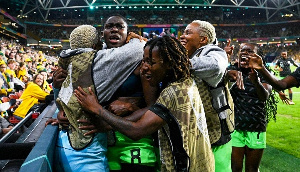
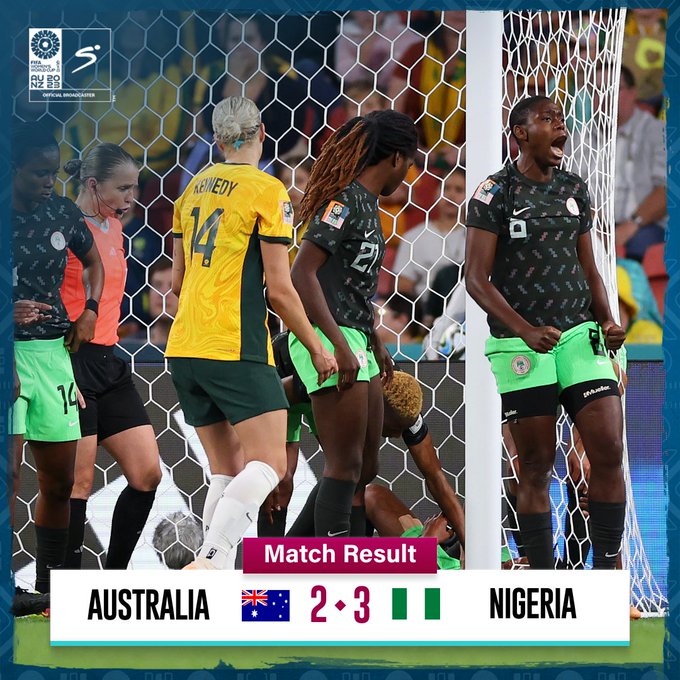
Superstar and Nigerian, Asisat Oshoala, etched her name in the history books as she led the Super Falcons to a thrilling victory against Australia in the 2023 FIFA Women’s World Cup Group B encounter.
Coming off the bench, Oshoala scored the decisive goal, propelling Nigeria to a 3-2 triumph over the tournament co-host at Brisbane Stadium on Thursday, July 27, 2023.
Her remarkable feat also makes her the first African player to score in three different World Cups, adding another milestone to her illustrious career. As a result of her goal, Oshoala is now Nigeria’s joint top scorer at the World Cup, sharing the record of three goals with Rita Nwadike and Nkiru Okosieme.
The match saw Australia taking the lead in additional time during the first half, with Van Egmond converting a pass from the left. However, Nigeria swiftly equalized as Uchenna Kanu found the back of the net, ending the first half at 1-1.
In the second half, the Super Falcons surged ahead five minutes after the hour mark when Osinachi Ohale headed in a close-range pass. Oshoala’s entry into the game in the 63rd minute proved to be a game-changer, as she extended Nigeria’s lead just 11 minutes later. Taking advantage of a defensive error, she calmly slotted the ball into the net from a tight angle.
Australia fought back during stoppage time, with Alanna Kennedy scoring, but Nigeria managed to hold on for the crucial victory, securing Africa’s first win at the tournament and claiming the top spot in their group with four points.
The 11-time African champions will face the Republic of Ireland, currently in the bottom place, in their final group game. To advance to the knockout stage, they will need at least a draw in this crucial encounter.
In a surprising turn of events at theWomen’s World Cup, Nigeria pulled off a remarkable comeback to defeat co-hosts Australia 3-2 in Brisbane, taking a significant step towards qualifying for the knockout phase.
After Australia took the lead just before halftime, Nigeria showed great resilience and determination in the second half.
Uchenna Kanu, Osinachi Ohale, and substitute Asisat Oshoala all found the back of the net, securing Africa’s first victory in the tournament Down Under. This win places Nigeria one point away from securing a spot in the last-16 stage.
With four points, Nigeria now tops Group B, edging ahead of Canada on goal difference, while Australia stands at three points. Ireland, at the bottom of the standings, is out of contention without any points.
In their final group game, Nigeria will face Ireland in Brisbane next Monday, where they only need a draw to progress further. Meanwhile, Australia and Canada will clash in Melbourne at the same time.
Although Australia dominated the early exchanges and scored just before halftime, Nigeria quickly equalized within three minutes, showing their determination to stay in the game.
Rasheedat Ajibade’s cross led to a deflection that found Uchenna Kanu at the back post, allowing her to poke it home from close range.
The victory for Nigeria has added excitement to the tournament, and the Super Falcons are proving to be a formidable force in the Women’s World Cup.
A 65th minute corner was not properly cleared by the Australians, allowing Nigeria to get the ball across the goal and a brave header from Ohale put them ahead.
Seven minutes after taking the lead, Nigeria stunned the crowd as they went two goals clear with Oshoala taking advantage of a defensive mix-up between central defender Alanna Kennedy and goalkeeper Mackenzie Arnold, stealing away the ball and scoring from a tight angle.
Nigeria had to weather 13 minutes of stoppage time added on at the end of the game to ensure a precious three-point haul, although conceded in the 100th minute to Kennedy, who headed home a corner.
Nigeria had previously beaten Australia at the Women’s World Cup in Canada in 2015 and Thursday’s win was only their fifth in 28 games at nine final appearances.
Defeat for Australia’s Matildas follows a similar defeat for the other co-hosts New Zealand at the hands of the Philippines earlier in the week.
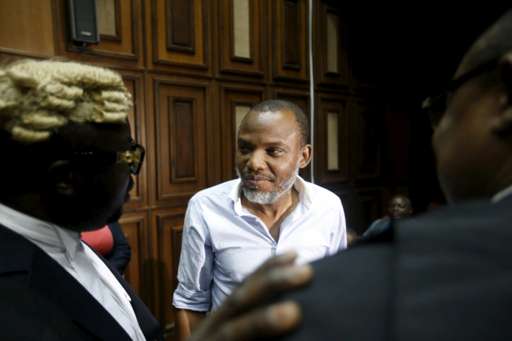
Head of the secessionist Indigenous People of Biafra (Ipob), Nnamdi Kanu, had a resolution for his release rejected by the Nigerian senate by senators from the south-east area.
The motion’s sponsor, Senator Osita Izunaso of Imo West, said that releasing Mr. Kanu would put an end to the local gunmen’s sit-at-home instructions.
“When people are forced to stay at home and businesses remain closed, productivity declines and income is reduced, affecting livelihoods and economic growth,” he said.
Nevertheless, the Senate turned down the appeals from the south-east lawmaker and instead urged the federal government to arrest those responsible for enforcing the sit-at-home orders.
Since August 2021, unknown gunmen have been enforcing the weekly sit-at-home directives every Monday, despite Ipob’s disassociation from their actions.
Mr. Kanu has been in detention since June 2021, even after the court dismissed all terror charges against him in October 2022.
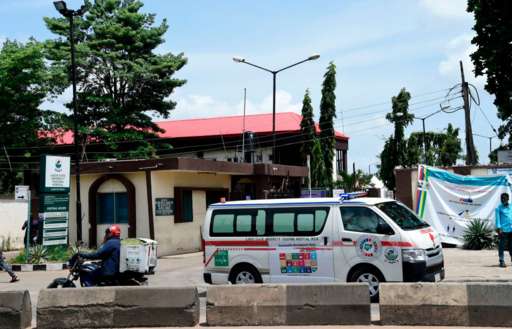
On the first day of a strike initiated by public service doctors in Nigeria, government hospitals experienced a complete shutdown of services, causing significant difficulties for patients seeking healthcare.
The president of the resident doctors’ union informed the BBC that his members had exhausted all possible avenues to resolve the crisis before resorting to the strike.
At the Aminu Kano Teaching Hospital in Kano, the largest city in the north-west region, the situation was dire as patients were turned away and advised to take their sick relatives back home due to the unavailability of doctors to attend to them.
Khadijah Hassan had brought her husband, who was involved in a car accident, to the hospital at midnight on Wednesday, but the doctors refused to provide medical attention due to the strike.
The patient was left lying down in the hospital corridors. “What are we going to do? We will have to sit here in the hospital till the doctors resume work,” she said.
Khadijah’s situation mirrored that of Ishiaku Musa, who brought his elder brother from a neighboring state to the teaching hospital in Kano 12 days ago. Ishiaku’s brother was suffering from migraine headaches, but due to the ongoing strike, they were only given prescriptions and asked to leave without any significant improvement in his condition.
In the capital city, Abuja, the local chapter of the doctors’ union was still attending to patients as they awaited a statement from the national body regarding joining the strike.
In Lagos, the commercial hub, doctors were still attending to admitted patients, but no new patients were being admitted.
The resident doctors, who constitute a significant portion of Nigeria’s tertiary hospital doctors, have gone on strike until their demands concerning salaries and welfare are met. They are seeking immediate payment of salary arrears owed to them, a new hazard allowance, and the establishment of a training fund.
Given Nigeria’s fragile healthcare system, strikes by resident doctors could have a substantial impact on medical services in government hospitals nationwide.
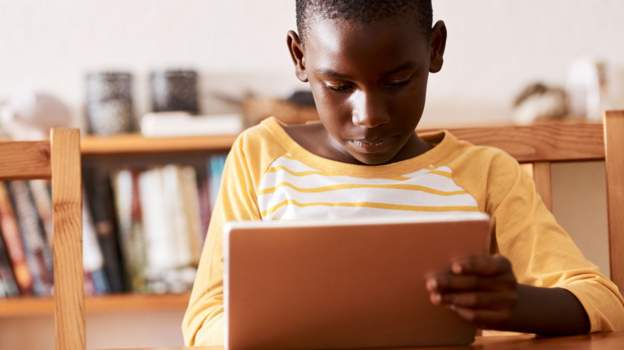
According to a report from the UN’s education agency (Unesco), approximately 360 million students worldwide, with 72% of them from Africa, were unable to access distance learning during theCovid-19 pandemic.
Despite the potential of online learning to reach over one billion students, the study highlighted the significant disparities in access to educational resources during the pandemic.
However, the report also acknowledged that distance learning did help mitigate the crisis in the education sector when schools were forced to close in 2020 due to the coronavirus.
In particular, distance learning proved beneficial for 22,000 children affected by the Islamist Boko Haram insurgency in north-eastern Nigeria. Mobile phones and radios were utilized to support their education, resulting in improvements in both literacy and numeracy skills.
However, the research pointed out that not everyone has access to the internet: Only 40% of elementary, 50% of lower secondary, and 65% of upper secondary schools worldwide have internet access.
In order to preserve teacher-led, in-person instruction, the report encourages nations to have technology built on their own terms.
Unesco also cautioned that using technology by kids in the classroom or at home could be “distracting, disrupting learning” and that it should not be used as a substitute for face-to-face connection.
“Its use must be for enhanced learning experiences and for the well-being of students and teachers, not to their detriment,” Unesco head Audrey Azoulay said.
Nigerian doctors are on strike, according to a prominent doctor, in order to demand that the government quickly hire doctors for dangerously understaffed public hospitals.
“Our first request is for the government to quickly replace the doctors and nurses that have left the system. A lot of our colleagues have left the country in search of greener pastures,” Dr Emeka Innocent Orji, president of the Nigerian Association of Resident Doctors (Nard), told BBC Newsday’s Rob Young.
Their “total and indefinite strike” was also because an earlier pay deal had not been honoured by the government, he said.
Due to the demanding working conditions, Nard employees were “breaking down and dying,” and patients were suffering as a result of the “brain drain” in the workforce.
There areNigerian doctors available, according to Dr. Orji, who added that the government should act fast to fill the gap before they decide to leave the nation as well.
According to the International College of Surgeons, Nigerian Section (ICS-NS), one destination for Nigerian medical professionals is the UK, where their numbers increased from 4,765 in 2017 to 10,986 in 2023.
In Nigeria, there are currently more than 4,000 patients per doctor. A doctor should see 600 patients, according to the World Health Organization.
Buckwyld Media Network and BHM have teamed up to bring you Naija To The World, a groundbreaking series of international showcases that will celebrate the diversity and richness of Nigeria’s culture and creativity.’
The first edition of Naija To The World will kick off at the legendary Apollo Theatre in New York City on September 16, 2023, after touring several Nigerian cities from Lagos to Port Harcourt, Benin, Abuja, Jos.
The theme of the debut showcase is the Niger Delta Experience, a tribute to the region that has produced some of the most influential talents in the creative industry over the past 25 years. The Niger Delta is also home to most of Nigeria’s crude oil, but it has faced many challenges such as environmental degradation, poverty, and violence.
Naija To The World will shine a light on the positive aspects of the Niger Delta, such as its vibrant music, its delicious cuisine, its colorful fashion, and its inspiring literature. You will hear stories that you have never heard before, from the people who have lived them. You will see performances that will blow your mind, from the stars who have made it big. You will discover the culture that has shaped Nigeria’s national identity and global influence.
Ayeni Adekunle, founder of BHM, says: ‘We are thrilled to co-host this new series of cultural showcases around the US and later other parts of the world. The aim is to tell original African stories through live concerts, exhibitions, films, documentaries, and so on. And the first instalment will focus on the Niger Delta region of Nigeria where most of Nigeria’s crude oil comes from but which continues to be troubled, abandoned, and impoverished. The world already knows this and many have had cause to use the oil directly or indirectly. But what many do not know is that most of the African pop music dominating the world right now also comes from there (Burna Boy For example). So we want to showcase the music, the food, the fashion, and the literature from a place many only previously associated with oil and violence…’
Efe Omorogbe, Chief Executive Officer of Buckwyld Media Network, adds: ‘Against a backdrop of multi-billion dollar operations and squalid communities, confounding extremes that seem to leave the polity constantly tethering on the brink of crisis, the Niger Delta region remains the premiere incubator for talent in Nigeria. Talent who have continually shaped the course of creative enterprise in Nigeria; talent who are driving the redefinition of Nigeria’s national identity and burgeoning soft power; talent who are primed for world domination and seem unwilling to let anything deter them from reaching their goal.’
Naija To The World – The Niger Delta Experience will feature a star-studded line-up of emerging and leading actors, comedians, designers, chefs, musicians and performers from Nigeria’s Niger Delta. You will witness the culture of Ken Saro-Wiwa; the culture of Burna Boy; the culture of Don Jazzy; the culture of Timaya; Rema and so many more. Only 1,500 lucky fans will get to watch live at the Apollo Theatre, while millions more will tune in through broadcast partners across North America, Europe, Asia, and Africa.
N2TW is the first instalment of the original African exhibition concert series which will happen annually and feature the brightest and biggest stars from Nigeria and other parts of Africa headlining at the most iconic music venues around the world.
Apart from live-curated concerts, the series will also produce themed biographies, biopics, and documentaries in partnership with select platforms.
Nigeria’s suspended bank chief has made a court appearance over a month after being arrested by the country’s secret police.
Godwin Emefiele faced charges of illegally owning a shotgun and ammunition during Tuesday’s hearing in Lagos, where he arrived with a large Bible in hand.
Emefiele vehemently denied the allegations.
Despite the government’s claim that he posed a flight risk, Justice Nicholas Oweibo granted the 61-year-old bail.
This turn of events marks a significant downfall for a man who had recently considered running for Nigeria’s presidency. Although he did not secure the nomination of the ruling party, his decision to pursue it while still serving at the bank drew strong criticism and marked a low point in the institution’s history, according to critics.
Before the tightly contested presidential election in February, Emefiele led an unsuccessful effort to redesign the local currency to combat vote-buying.
Many Nigerians view him as a crucial figure in the government of former President Muhammadu Buhari, which presided over eight years of economic turmoil, including two recessions, high inflation, currency devaluation, surging unemployment, and mounting debts.
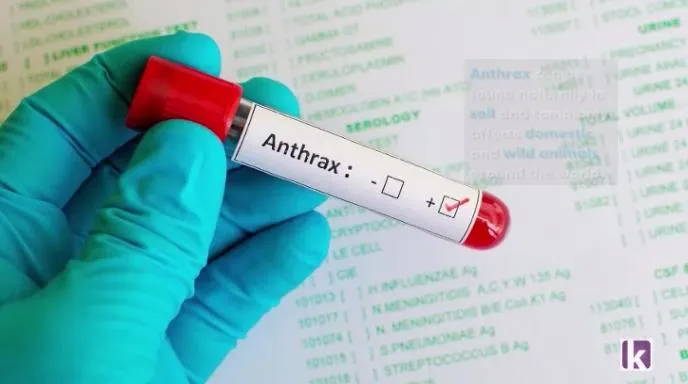
On July 24 2023, the Federal Government officially announced the country’s first confirmed case of anthrax.
According to a statement from the Ministry of Agriculture and Rural Development, Dr. Columba Vakuru, the Chief Veterinary Officer of Nigeria, confirmed that animals displaying symptoms suggestive of anthrax were reported on a farm in Suleja, Niger State, to the Office of the Chief Veterinary Officer on July 14.
The affected farm, located at Gajiri along the Abuja-Kaduna Expressway in Suleja Local Government Area of Niger State, is a multi-species animal farm housing cattle, sheep, and goats. Some of these animals exhibited distressing symptoms, including bleeding from various body openings such as the anus, nose, eyes, and ears.
In response to the situation, a rapid response team consisting of federal and state health professionals promptly visited the farm to conduct initial investigations and collected samples from the ailing animals.
The ministry said subsequent laboratory tests by the National Veterinary Research Institute’s laboratory confirmed the diagnosis, “marking the first recorded case of anthrax in Nigeria in recent years”.
In response to learning of an anthrax outbreak in Northern Ghana where all infected animals had perished, the federal government had issued a warning to Nigerians weeks earlier.
“Anthrax is caused by the spore-forming bacterium Bacillus, which mostly affects livestock like cattle, sheep, and goats. However, it can also infect people who come into contact with infected people or contaminated animal products like meat, wool, or skins.
“Anthrax that spreads via the skin might result through open wounds or contact with contaminated objects, while anthrax that spreads through the air can happen when spores are inhaled,” it stated.
The ministry said the federal government appealed to Nigerians to immediately report cases of animals bleeding from body openings to veterinary authorities or agriculture extension workers.
“The blood of an anthrax-infected animal does not clot. Do not process or move the dead or sick animal, quickly report to your veterinary doctor or veterinary authorities at the ministry of agriculture in your state,” the statement added.
Eight people have died in a petrol tanker explosion that happened in the commercial town of Ore, in the state’s Odigbo Local Government Area, according to the Federal Road Safety Corps (FRSC) in Ondo State on Monday.
According to the Daily Trust, on Sunday, a fuel tanker carrying 33,000 liters of petroleum crashed as the driver was navigating the Benin-Ore-Lagos Expressway.
Mr. Ezekiel SonAllah, State Sector Commander of the FRSC, briefed journalists on the event and reported that the victims were petrol scoopers who had swooped on the fuel tanker as soon as it fell into a ditch by the roadside.
“The driver and motor boy of the vehicle escaped unhurt, but the eight villagers scooping fuel got burnt in the act. The dead bodies were taken to General Hospital Ore Morge, our men were on the ground,” he stated.
Mr. SonAllah’s provided casualty figure contradicted the accounts of eyewitnesses who observed the petrol tanker explosion. Several witnesses stated that the incident resulted in the death of over 20 people, including three children and a pregnant woman.
On another note, the Ondo State government expressed deep sorrow over the victims of the tragic petrol tanker explosion. In an official statement issued by the Commissioner for Information and Orientation, Mrs. Bamidele Ademola-Olateju, the government conveyed its profound devastation caused by the unfortunate incident.
The statement read in part, “This is a most horrendous way to die. We are shocked and traumatized as we express the depth of our grief for the victims of the explosion. The state would reach out to the victims’ families who are affected by these avoidable deaths. Whatever circumstances that led to this unfortunate incident must be discouraged.
“This is one tragedy too many and it is our joint responsibility to ensure this does not happen again.”
Likewise, Mr. Olatunji Ifabiyi, the representative of Odigbo 1 Constituency, expressed his condolences in response to the incident on Monday, referring to it as an unfortunate event.
He issued a stern warning to those engaged in the dangerous act of scooping fuel from fallen tankers, urging them to desist from such actions to prevent fatal consequences among residents.
Furthermore, the All Progressives Congress (APC) in Ondo State also described the incident as deeply unfortunate and emotionally moving.
In a statement released by the party’s spokesperson, Alex Kalejaiye, they appealed to all Nigerians to exercise greater caution when dealing with explosive materials, regardless of the temptations they may face.
“Times are hard, no doubt, but we are very certain that the situation will begin to relax very soon. We need to stay safe, and in good health to keep hope alive,” the party said.
Nigeria has not lived up to expectations since it gained independence 63 years ago, according to former president Olusegun Obasanjo
He addressed Wednesday in Abuja at the launch of a book written by Olusegun Aganga, a former minister of trades, investment, and industry.
At the time of its independence, he claimed, the black race looked to Nigeria as a guiding beacon.
“We’ve disappointed ourselves, we’ve disappointed Africa, we’ve disappointed the black race and we’ve disappointed the world,” he said.
Obasanjo said to chart a new course for the country, the leaders needed to admit their failure.
The former president said: “We’ve not always put the round peg in the round hole.
“We’re carried along by ego and emotion of self, selfishness and self-centeredness, ethnic and religious jingoism with total lack of understanding of the world we live in and gross misunderstanding of what development entails and how to move fast and continuously on the trajectory of development.”
He said the country needed leaders that would shape and give direction for the development
“If you ask most of our leaders why they want to be in the position they’re craving for, you’ll weep for your nation over their level of emptiness as far as development issues are concerned,” he stated.
He identified two major issues which are inter-related on the factors for all-round development, saying “these are peace and security which we cannot achieve without justice, equity and inclusive society.”
Also speaking, former President Goodluck Jonathan described the book as a rich resource on development and a pathway to progress.
According to him, the book focuses on the solutions Nigeria needs to unleash its greatness for the good of our people.
“As my Minister of Industry Trade and Investment, Dr Aganga, at a point, turned me into a marketing manager by travelling with me to at least 40 countries in search of foreign investment. I’m glad that the venture and travels which he captured in one of the chapters in the book paid off as our nation then became Africa’s first destination for foreign direct investment and one of the fastest growing economies at that time,” Jonathan said.
The Nigerian public is in an uproar following the leak of a memo revealing that the Lagos State government authorized $77,000 (£60,000) for a mass burial of 103 individuals allegedly linked to the historic 2020 #EndSars protest against police brutality.
Many Nigerians are expressing shock and disbelief, as they believe that the victims set to be buried were demonstrators who were allegedly killed by the army during the Lekki toll gate shooting on 20th October, a tragic event that occurred amidst the protests.
The exact number of casualties from the incident has been a contentious issue in Nigeria, with the military initially denying any fatalities. However, a Judicial Panel of Inquiry has since reported that nine protesters were killed, and four others were presumed dead.
Despite the leaked memo, the government refutes the claim that the 103 bodies are all from the Lekki incident, dismissing such interpretations as misleading. According to the permanent secretary to the Lagos State Ministry of Health, Dr. Olusegun Ogboye, the bodies were gathered from various locations across the state, amounting to at least 12 sites. These locations include areas affected by #EndSARS violence and community clashes, as well as the aftermath of a jailbreak at Ikoyi Prison.
The situation has sparked significant controversy and public outcry, with many demanding transparency and accountability from the government regarding the handling of these casualties related to the #EndSARS protests.
“Peddlers of the news are deliberately misinterpreting and sensationalizing a letter from the Lagos State Government Public Procurement Agency.”
He said the government had approved the mass burial after no families claimed the 103 bodies.
Tens of thousands of Nigerians took to the streets in October 2020 against police brutality and also called for the Special Anti-Robbery Squad (SARS) police unit to be disbanded.
In southwestern Nigeria, a fuel truck exploded as locals tried to siphon gasoline out of it, killing at least eight people, according to authorities on Monday.
The truck was involved in an accident on Sunday night that sent it off the road and onto its side in a neighborhood in Ondo state, according to the police.
“Some people went there to scoop fuel, in the process the tanker exploded,” said Ondo state police spokesman Fumilayo Odunlami-Omisanya.
Since a long-standing subsidy was eliminated at the end of May, the price of gasoline has more than tripled, impacting both drivers and residents and small companies who use gasoline generators to generate electricity.
Tife Owolabi reported, MacDonald Dzirutwe wrote, and Miral Fahmy edited.
Diana Hamilton’s most recent track, “Say Amen,” has been an instant hit throughout Africa, winning over admirers in nations like Nigeria, Liberia, Cote D’Ivoire, and more.
Listeners have responded strongly to the song by the celebrated Ghanaian artist, posting videos of themselves performing it and expressing their gratitude on social media.
‘Say Amen’ is more than simply another song; it is a potent demonstration of confidence and assurance in God’s promises. Diana Hamilton’s soul-stirring vocals and heartfelt lyrics have connected with audiences all over Africa. Diana Hamilton draws her inspiration from passages that exhort believers to walk by faith and not by sight.
Diana focuses on the strength of declarations and faith in God’s integrity throughout the song. She echoes the ageless insight found in Job 22:28 by decreeing and pronouncing with faith, reminding audiences that God will establish what they believe in.
Her supporters, who have enthusiastically embraced the song, have responded strongly to this song’s profound message.
Viewers have been deeply affected by the song’s impactful lyrics and engaging imagery, which have brought them even closer to the song’s core.
Videos with the new single playing in the background are everywhere on social media. As followers continue to post their moving interpretations of “Say Amen” on social media, it is clear that Diana Hamilton’s song has reached believers all over Africa, bridging cultural and linguistic divides.
Her unshakeable faith and dedication to her craft have brought audiences together, making “Say Amen” a potent hymn of inspiration and hope in these trying times.
The Nigerian government has announced its plans to alleviate the impact of soaring fuel prices, resulting from the president’s decision to end the petrol subsidy.
To address the rising cost of living, the government will begin distributing grains and fertilizers from the coming week.
The increased expenses on food, transportation, and other services have raised concerns among citizens.
Moreover, the government is considering proposals to increase civil service salaries, aiming to ease the burden on public servants.
As frustrations grow over the cost of living, President Bola Tinubu, who has been in office for nearly two months, is keen on being perceived as actively addressing the crisis.
Among other measures, the administration intends to provide financial assistance to impoverished families.
However, before implementing this cash distribution program, the government aims to establish a new registry to determine the eligibility of beneficiaries.
There are also proposals to deploy electric buses and cars as well as vehicles powered by compressed natural gas to reduce the cost of transportation.
Labour unions have criticised the removal of the fuel subsidy without measures to mitigate rising prices.
Last month, the unions and the government agreed on an eight-week timeline to raise the minimum wage forgovernment workers.
Ghanaian actress Salma Mumin has faced strong criticism following her appearance at the Barbie Movie premiere in Lagos, Nigeria.
Salma Mumin traveled from Ghana to attend the premiere, which took place last night in Lagos, Nigeria.
She made an effort to resemble Barbie for the occasion, choosing a black and pink mermaid dress adorned with butterfly wings on her chest.
To complete her look, she wore a hat resembling religious leader attire, carried a pink bag, and wore heels.
While Salma sought to make a bold fashion statement and capture attention at the event, some Nigerians felt she missed the mark. They argued that her outfit resembled more of a “Babalawo” look rather than the desired Barbie appearance.
Others even compared her look to a Wakanda vibe, claiming it lacked the princess or Barbie essence.
It is worth noting that this criticism comes after Salma previously trended in Ghana for undergoing butt surgery. Now, her supposed Babalawo look is making waves in Nigeria, further adding to the buzz surrounding her recent appearances.
College of Education Academic Staff Union, COEASU, has informed the media that its members will limit their work to only two days per week until the government takes action to tackle the surging cost of living.
COEASU which ranks as the third largest in Nigeria, is requesting a substantial 200% salary increase to cope with rising transportation and other essential expenses.
The union has expressed that its members have been facing unbearable conditions. To push for their demand for a salary adjustment, the union has made a decisive move.
According to a statement released on Wednesday by COEASU National President, Smart Olugbeko, the union’s national leadership convened an extraordinary meeting on Tuesday, July 18, 2023.
During this meeting, it was unanimously agreed that members will only be able to work for two days a week until their demand is met by the government.
This call comes in the wake of a significant hike in petrol prices resulting from the removal of a government fuel subsidy.
The statement read in full:”The National leadership of our great Union in its extraordinary meeting held on Tuesday, 18th July 2023 had agreed to direct its members to go to work two days weekly until Federal Government yields to its demand of 200 per cent increase in salary amidst the difficulty of members to get to work as a result of hike in the price of petrol.
“The implementation of the removal of fuel subsidy by the Federal Government two months ago raised the price of a litre of petrol by 250%. This worsened the inflationary rate on the cost of transportation, food and other essential commodities and impoverished the Nigerian people.
“Workers, including staff of colleges of education, kept faith with the government and chose to endure the untold hardship thinking it would be only for a while as Government promised to roll out palliative measures including significant increase in salaries. Alas! While our capabilities to sustain hope were already exhausted, the price of petrol rose further to N650 per litre.
“Now, the leadership of the Union has been inundated by members’ complaints that they could no longer go to work as a result of a hike in the price of petrol and the resultant high cost of transportation. Against this backdrop, it has become inevitable for the Union to direct members to go to work only two days weekly while an emergency NEC meeting shall be convened to ratify this decision and decide on the specific days of the week members are to go to work.
“The present salary of staff of Colleges of Education was approved in the year 2010 – 13 years ago! This means we have been on same salary since 2010 while the petrol price rose intermittently from N65/N70 in 2010 to N650 in 2023 (a tenfold increase). Our salary structure which is subject to renegotiation at 3-year intervals has remained static for 13 years, skipping four due renegotiations. It is ludicrous that Government has refused to return to the negotiation table on the welfare package for staff after the Union, prior to the removal of the fuel subsidy, had proposed a 200% increase in salary as against the Government’s offer of a ridiculous 35% for the Chief Lecturers and 23% for other cadres.
“We call on the FG to urgently do the needful because the inevitable action of the Union against this hardship will have devastating effects on the students as it will lead to a prolonged academic calendar – a semester of 16 weeks will become 32 weeks or more; while Teaching Practice exercise of 6 months will become 12 months.
“We call on His Excellency, President Bola Ahmed Tinubu to quickly address the issue of salary adjustment for staff of Colleges of Education. We believe in the capacity of the President to address this problem as he did when he was the Governor of Lagos State where he so generously increased the salaries of staff in the then Lagos State-owned Colleges of Education that they became the highest paid nationwide.”
Imagine a river that is home to a colony of catfish that can never die. Sounds unbelievable, right?
But that’s exactly what you’ll find in a small town in Nigeria, where a sacred river is worshipped as a goddess and her fishy children are protected by a powerful curse.
The river is called, a town in Ekiti State, Nigeria. The river is believed to have miraculous healing properties, as it can cure over 200 ailments and grant fertility to barren women.
But the most astonishing feature of the river is the presence of hundreds of catfish that live in its waters. These catfish are not ordinary fish; they are immortal.
They cannot be killed, cooked, or harmed in any way. They are considered the children of the river goddess, and anyone who dares to violate them will face dire consequences.
The catfish demonstrate their immortality by floating on the water when bread is thrown into the river. The person who does this must have faith in the river’s power and no evil intentions. If someone tries to take a fish out of the water, they will witness a shocking phenomenon: the fish will never cook, even when cut into pieces. It will regenerate itself and remain alive, no matter how high the fire is.
The river goddess does not take kindly to such attempts, and she will punish the offender by inflicting harm on their youngest family members until they are all wiped out. The only way to appease her wrath is to return the fish to the river and beg for forgiveness.
The immortal catfish of Omi Erin Ayonigba are a fascinating and seemingly unreal phenomenon, but they are not the only creatures in the world that defy natural death.
There is also a species of jellyfish called that can rejuvenate itself by reversing its cells. This unique jellyfish defies ageing and can live forever, unless it is eaten by predators or affected by human activities.
Scientists are still exploring the secrets of these extraordinary life forms, as well as other animals that have remarkably long lifespans, such as certain turtles, sharks, and whales.
However, none of them are truly immortal like the catfish and the jellyfish.
What do you think of these amazing animals? Would you like to visit the river of the supposed immortal catfish? Let us know in the comments below!