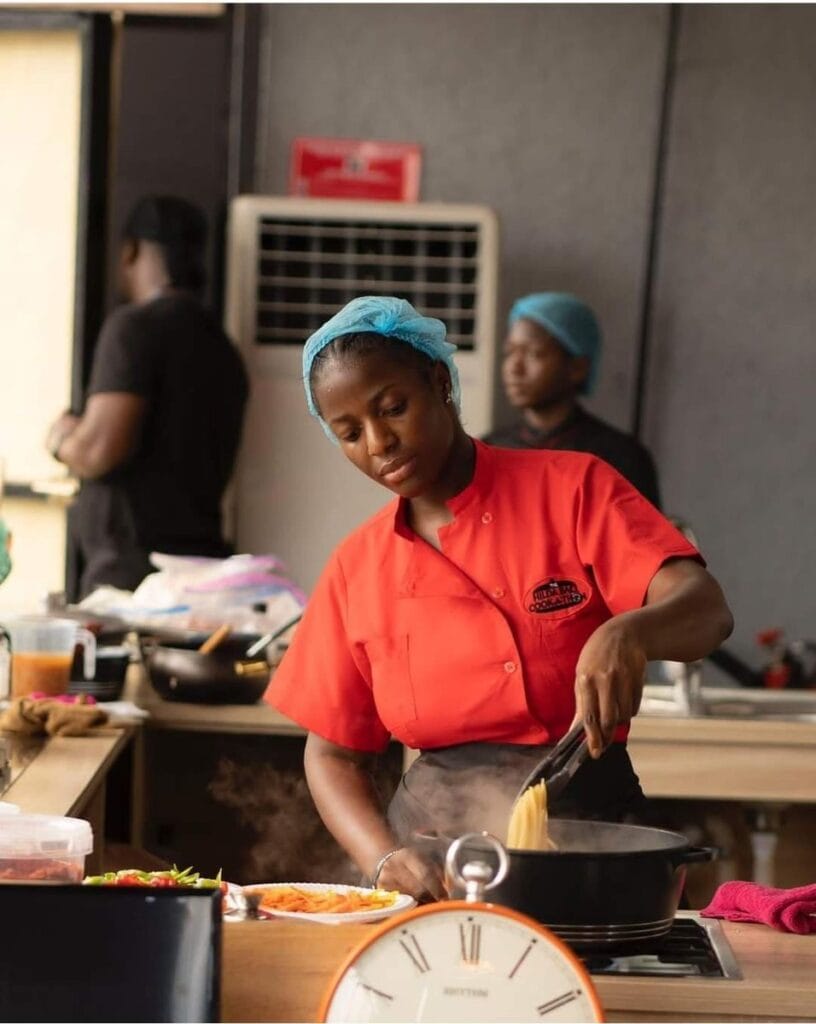
When Nigerian chef Hilda Baci learned that she was currently the record holder for the longest cooking marathon by one individual, she was unable to contain her tears.
The 26-year-old garnered a lot of support from many people in Nigeria and beyond when she went on a journey to break the previous record held by an Indian chef, on Thursday, May 11.
The Nigerian Chef, following the official confirmation, was captured in a car with a friend when the news first broke.
“Oh my God, oh my God,” she repeated numerous times while jubilating excitedly in the car while staring at her phone.
Seconds later, Hilda started tearing up as the reality of the news hit her. “Thank you God,” she said.
Hilda also took to her Twitter account to acknowledge the news and support she has received from everyone, writing “This is the best news ever omg omg omg thank you so much.”
The Guinness World Records on Tuesday, June 13, officially updated their records to include Nigerian chef Hilda Baci for breaking the longest cooking marathon by an individual.
The GWR explained that almost seven hours were deducted from her final total because she mistakenly took extra minutes for one of her rest breaks early on in the attempt.
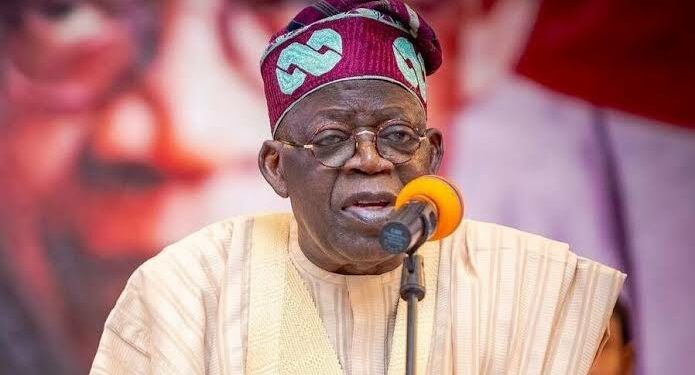
President Bola Ahmed Tinubu of Nigeria has enacted a groundbreaking student loan bill, marking a significant milestone in the country.
The new law provides financial support to underprivileged students pursuing higher education.
This legislation enables local students enrolled in tertiary institutions, including universities, colleges, and polytechnics, to easily access interest-free loans from the Nigerian Education Loan Fund, covering their tuition fees.
I was pleased, today, to have signed into law, the Access to Higher Education Act which provides interest-free loans to deserving students across the country who wish to further their education in tertiary institutions.
In November, the Nigerian parliament approved the bill, which aimed to establish a national education bank responsible for offering loans to students. However, former President Muhammadu Buhari did not give his assent to the bill before leaving office on May 29. No official explanation was provided for his inaction.
The bill was initially introduced in 2016 by Femi Gbajabiamila, who served as the speaker of the House of Representatives and currently holds the position of Chief of Staff to President Tinubu.
He now says the “future of the country” is guaranteed, adding that “no Nigerian child [will] be denied access to tertiary education on account of lack of financial resources”.
Beneficiaries of the loan are expected to start repayment as soon as they gain employment, following the completion of their studies and mandatory national service.
Before now, banks in Nigeria could only grant student loans to parents of the students with very stringent conditions.
Some students have had to drop out or get odd jobs to pay their way through college.
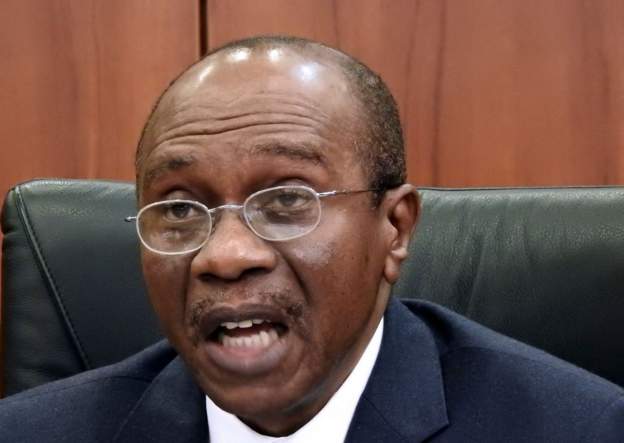
As foreign investors rejoiced at the Central Bank governor Godwin Emefiele’s suspension late last week after overseeing various exchange rates that failed to maintain the naira strong, Nigeria’s sovereign dollar-denominated bonds gained substantially.
The price of the West African oil producer’s eurobonds rose on Monday as much as 2.6 cents in the dollar before moderating slightly with many issues reaching their highest prices since late January, according to the Reuters news agency.
Longer-dated maturities saw the biggest gains with the 2049 maturity up 2.353 cents to 80.231 at 07:46 GMT, according to Tradeweb data.
Nigeria is facing severe dollar shortages, forcing many people to seek out foreign currency on the black market, where the naira trades much lower than its official exchange rate.
“We believe the changes signal a new era of focused, predictable monetary policy and a shift towards non-interventionism in the foreign-exchange regime,” Barclays economist Michael Kafe said in a note to clients on Monday about the suspension of the Central Bank chief.
President Bola Tinubu had criticised Emefiele’s handling of the naira and monetary policy at his inauguration two weeks ago.
Tinubu, who has promised to reset Nigeria’s ailing economy, has also removed a fuel subsidy and promised to consolidate the multiple exchange rates.
“The haste with which the newly appointed president has begun to tackle the country’s economic challenges (e.g. the immediate removal of the fuel subsidy…) suggests that he is keen to pursue all the difficult reforms at the early stages of his term,” Kafe wrote.
Folashodun Shonubi, a deputy governor, was named acting head of the Central Bank.
The suspended governor is now in custody and under investigation, police said on Saturday.
The governor of Nigeria’s Central Bank, Godwin Emefiele, has been arrested by authorities shortly after being suspended from his position by the country’s new president, Bola Tinubu.
The Nigerian secret police confirmed Emefiele’s custody, stating it was for “investigative reasons,” although no further details were provided.
Emefiele had served as the governor of the Central Bank of Nigeria for nine years, overseeing the monetary policy affairs of Africa’s largest economy and most populous country.
However, following his suspension by President Tinubu on Friday night, his tenure was abruptly halted.
Emefiele’s suspension “is sequel to the ongoing investigation of his office and the planned reforms in the financial sector of the economy,” according to a statement from the Secretary to the Government of the Federation. Folashodun Adebisi Shonubi, a deputy governor at the bank, immediately took over as acting governor.
The arrest of Emefiele concludes several months of investigation into his position by Nigeria’s Department of State Services (DSS), which previously attempted to arrest him in December but was denied by a local court. The secret police had accused him of terrorism financing and economic crimes; however, a judge ruled that there was insufficient evidence to support these allegations. It remains unclear if any new findings have emerged from the ongoing investigation.
Financial analysts noted that Emefiele’s removal from office did not come as a surprise, citing certain controversial policies he implemented in recent months. These policies included the bank’s currency swap program and its decision to engage in continuous money printing and lending to the Nigerian government. Abiola Gbemisola, a financial analyst based in Lagos, highlighted these policies as contributing factors to the perceived controversy surrounding Emefiele’s tenure.
“The central bank governor was very powerful” in office, Gbemisola said.
“I wasn’t expecting him to stay under the new administration, especially given the fact that he was not so kind in his policies leading up to the (February presidential) election. Rather than focusing on reducing inflation, he contributed to Nigeria’s high inflation by giving money to the federal government, printing money essentially to give loans,” added Gbemisola.
Under Emefiele, Nigeria’s economy struggled with a weakened currency caused by the foreign exchange crisis as well as a surging inflation rate, which was at a near-two-decade high of 22.2% in April.
The bank’s move to replace the local naira currency with newly designed ones caused economic hardship for so many Nigerians that it affected the turnout in the February election while authorities were forced to reintroduce the old bank notes being replaced.
“The fact that he has been removed is a positive thing for the (financial) market and we can now expect to see something different,” Gbemisola said.
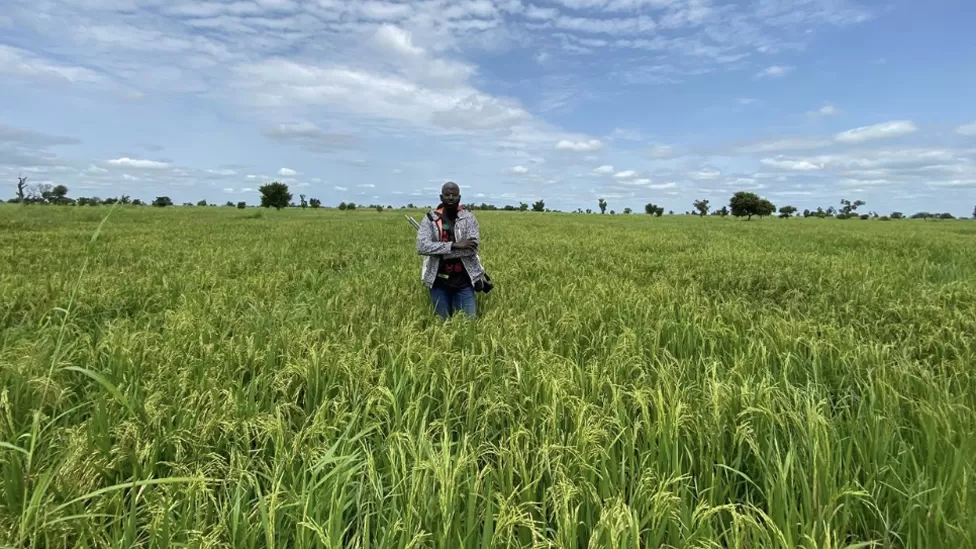
Rotimi Williams was seen as one of Nigeria’s most successful rice farmers seven years ago, but now the 42-year-old’s land stands idle.
The problem: insecurity, which has ground his farms to a halt.
In 2012, Mr Williams left his career as a banker and ventured into agriculture. He was profiled in international media and described as the second-largest producer of rice in Nigeria, with thriving farms across the north.
But the threat to his life and the lives of his workers grew too much.
“There was a time my car was shot at on my way back from the farm,” he said. “There were also kidnap attempts.”
In the past three years, a sharp rise in insecurity has led to gangs kidnap hundreds of people for ransom in Nigeria, and staff of prosperous agricultural enterprises have been particularly targeted, forcing many farms to abandon or reduce operations.
More than 350 farmers were kidnapped or killed in the 12 months up to June 2022 alone, according to a Nigerian security tracking website.
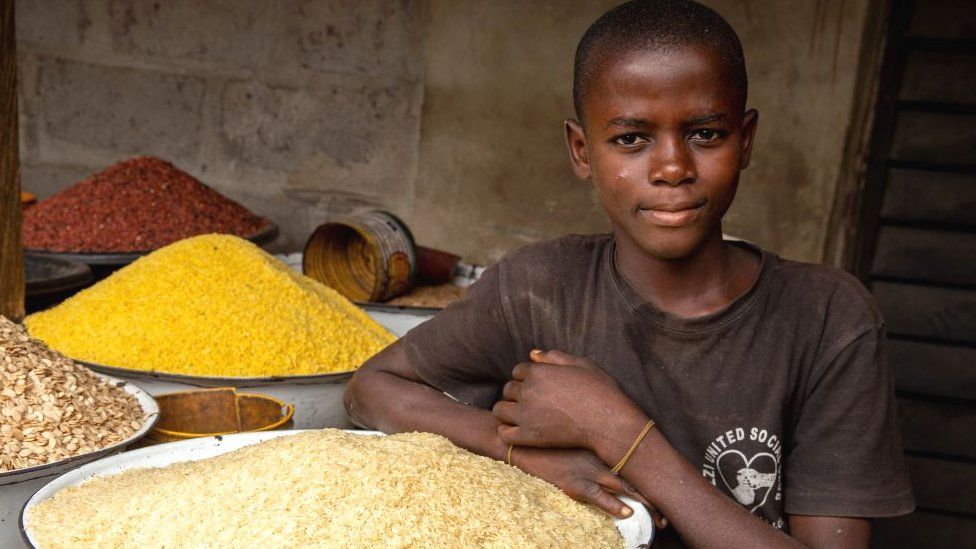
Image caption,Rice is a crucial part of many Nigerians’ diet
The majority of attacks took place in the northern region where there is swathes of uncultivated land and some of the country’s largest farms.
In January 2022, five people were killed in an exchange of gunfire between security agents and armed gunmen on motorbikes, gang members known locally as “bandits”, who attacked the premises of GB Foods, a tomato-processing plant in the north-western state of Kebbi.
When the multi-million-dollar factory, partly funded by the central bank, had launched to great fanfare in 2020, it was described in the media as Nigeria’s second-largest food processing plant and included the country’s largest tomato farm.
Bandits then tried to kidnap some of the staff. They failed, but the plant has been out of operation since.
“There’s nowhere else in the world where people require armed security to go to the farm,” said Mezuo Nwuneli, the managing partner of Sahel Capital.
His agriculture investment firm is in its ninth year of a 10-year contract to invest $66m (£54m) in the farming sector on behalf of the government and its partners, including the UK government and some Dutch investors.
On one of Sahel Capital’s farms, a security officer was killed during a kidnapping attempt.
“They used to be comfortable working till 10pm but because of the attack, they don’t feel safe to work late. In other parts of the world, you can run a farm 24/7.”
‘Green revolution’
Prior to the discovery of crude oil in 1956, Nigeria was known for a long list of cash crops, such as palm oil, cocoa, and groundnuts, but the government’s focus on the booming oil sector led to the underdevelopment of non-oil sectors, such as agriculture.
This began to change after Olusegun Obasanjo was elected as president in 1999, and made a push to revive agriculture. His government offered farmers improved irrigation as well as new machinery and crop varieties to help boost agricultural productivity.
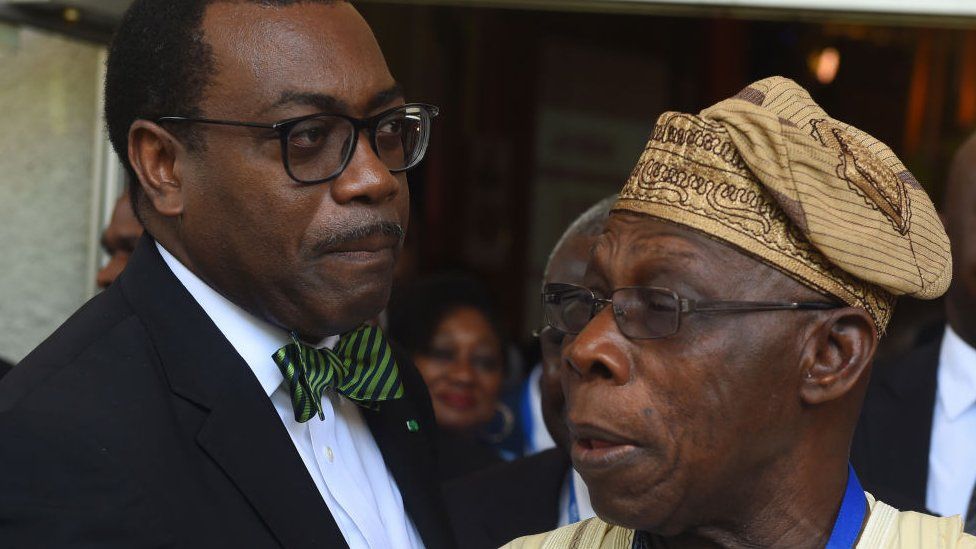
Image caption,Akinwumi Adesina (L) and Olusegun Obasanjo (R) were instrumental in boosting Nigeria’s agricultural sector
However, the magic really began to happen when the subsequent administration in 2010 appointed the sleek, bowtie-wearing, charismatic Akinwumi Adesina, as the minister for agriculture.
“When Adesina was minister, he was able to communicate the opportunities in the sector in a way that was exciting for people,” said Mr Nwuneli, a graduate of Harvard Business School, who launched Sahel Capital in 2010 when he was 35 years old.
“Around that time, there was a lot of excitement and interest in the youths and the many people coming into the sector at the same time.”
The next few years saw the emergence of many young Nigerian agriculture entrepreneurs, like Mr Williams and Mr Nwuneli, in a period that many reports described as Nigeria’s “green revolution”.
“We had 20 million youths entering the oversaturated workforce from 1990 to 2010. For us, we are committed to unlocking the power of agriculture and job creation with the goal to create 10 million jobs by 2030,” said Kola Masha, another Harvard graduate, who founded Babban Gona, which means “Great Farm” in Hausa, in 2010.
His firm uses innovative technology to help its more than 20,000 smallholder maize farmer members to improve crop yields, reduce the cost of production and increase the sale price.
In 2017, Mr Adesina, by then head of the African Development Bank, was awarded the World Food Prize “for driving change in African agriculture” and “his breakthrough achievements as minister of agriculture”.
‘We lost 300 farms’
All that progress now seems to be unravelling, with nearly 25 million Nigerians at risk of facing hunger between June and August 2023, according to the UN.
“We’ve lost about 300 farms,” said Stella Thomas, who in 2011, at the age of 32, founded Techni Seeds. Based in the north-western city of Kano, the company applies scientific research to produce quality seeds that it then distributes to thousands of farmers across Nigeria, whose work they supervise from planting to harvesting, to ensure maximum yield.
“We call them ‘out growers’. We found out that because most farmers use saved seeds – they recycle their seeds – [then] over time, they don’t get enough output. So, we give them the seeds that they use, and we are responsible for ensuring that they do the right thing.”
The insecurity has forced hundreds of her “out growers” to drop out of the network of supervised farms.
otimi Williams
If there’s no security, there’s no agriculture. It’s that’s simple”
Mr Williams used to enjoy spending months at a time on his farm, organising barbecues for the farmers at the end of a hard day’s work, complete with a stereo and loud music.
He is now in the process of moving his rice production to other West African countries, such as The Gambia and Senegal, which also consume rice in large quantities.
His current calculations show that transportation costs would make it unprofitable for him to supply rice to Nigeria from those countries, and he predicts that the rising food inflation in Nigeria will only get worse – if the government continues to slack in its handling of security.
“If there’s no security, there’s no agriculture,” he said. “It’s that’s simple.”
Bola Ahmed Tinubu was sworn in at the end of last month as the new president taking over from Muhammadu Buhari – and the insecurity is his problem to solve.
“We all have hopes that this issue will be dealt with,” said Mr Williams, reflecting on the future, “but we will see.”
Nigeria’s outgoing parliament has finally passed a bill that aims to prevent the sexual harassment of university students.
Once it is signed into law by newly elected President Bola Tinubu it will be illegal for lecturers to make any sexual advances towards students.
Those who do have sexual relationships with their students could face up to 14 years in jail.
The anti-sexual harassment bill was originally introduced in 2016 but did not pass both houses of parliament.
It was reintroduced by the senate in 2019 following a BBC investigation that uncovered alleged sexual misconduct by lecturers in Nigeria and Ghana.
BBC Africa Eye’s Sex for Grades documentary prompted outrage, but the bill was further delayed as the house of representatives wanted some changes – and two parliamentary committees had to come to an agreement on the final wording.
Outgoing lawmakers are trying to wrap up business before newly elected MPs are sworn in next week.
A student told BBC news she was happy about the development and hoped President Tinubu would pass it into law soon.
Earlier in the month, a group of students had issued a statement to express their displeasure that the National Assembly had failed to pass it in time for his predecessor – President Muhammadu Buhari – to assent to it before leaving office.
Governor of Edo State, Mr. Godwin Obaseki, has expressed sympathy with the people of Edo following the increase in the prices of products and services, as well as the general cost of living, caused by the elimination of gasoline subsidies, by outlining initiatives to alleviate residents’ miseries.
In a statement, Obaseki said the state has reduced the number of work days that civil and public servants will have to commute to their workplaces from five days a week to three days a week, among other measures.
The statement reads: “In the wake of fuel subsidy removal by the Federal Government, fuel prices have increased astronomically leading to rise in prices of goods and services and overall cost of living.
“The Edo State Government shares the pains of our people and wants to assure everyone that we are standing with them in these very challenging times.
“We want to reassure our people that we will do all within our powers as a sub-national government to reduce the pains and ameliorate the sufferings our people are currently facing due to the current realities.”
The governor further noted, “as a proactive government, we have since taken the step to increase the minimum wage paid to workers in Edo State from the approved N30,000 to N40,000, the highest in the country today.
“We want to assure you that we will continue to pay this amount, while we hope to increase it even further, if more allocation accrues to our State from the Federal Government in view of the expected savings occasioned by the removal of the fuel subsidy.
“We know the hardship that has been caused by this policy which has radically increased the cost of transportation, eating deep into the wages of workers in the State. Therefore, the Edo State Government is hereby reducing the number of work days that civil and public servants will have to commute to their workplaces from five days a week to three days a week till further notice. Workers will now work from home two days every week.
“Similarly, for teachers and parents, their commuting to school will be reduced as government is working on deepening the EdoBEST@Home initiative to create more virtual classrooms, thereby reducing the cost of commuting on parents, teachers and pupils. The Edo SUBEB will provide details on this initiative in the coming days.”
He added: “To lower the rising cost of energy on our people, we will continue to work with the electricity companies in the State to improve power supply to homes and businesses. “Similarly, fibre optic connections are being made available to help our people work remotely, thereby reducing their cost of transportation.
“While government intensifies these efforts to alleviate the burden of the fuel price increase on the people during this very challenging period, we want to call on everyone to remain calm and go about their daily businesses lawfully.”
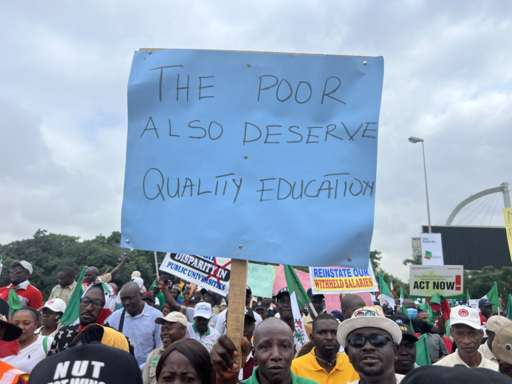
The biggest trade union movement in Nigeria has cancelled its call for a statewide strike on Wednesday, following the government’s decision to cease subsidizing fuel. The walkout was intended to protest a dramatic increase in the price of petrol.
After an hours-long meeting with the government, Nigeria Labour Congress (NLC) President Joe Ajaero said the decision had been taken to give more time for negotiations.
A court has ordered unions to desist from industrial action until an application filed by the government is heard on 19 June.
An increase in the minimum wage and tax holidays for workers are some of the demands organised labour is making to cushion the effects of the removal of the fuel subsidy.
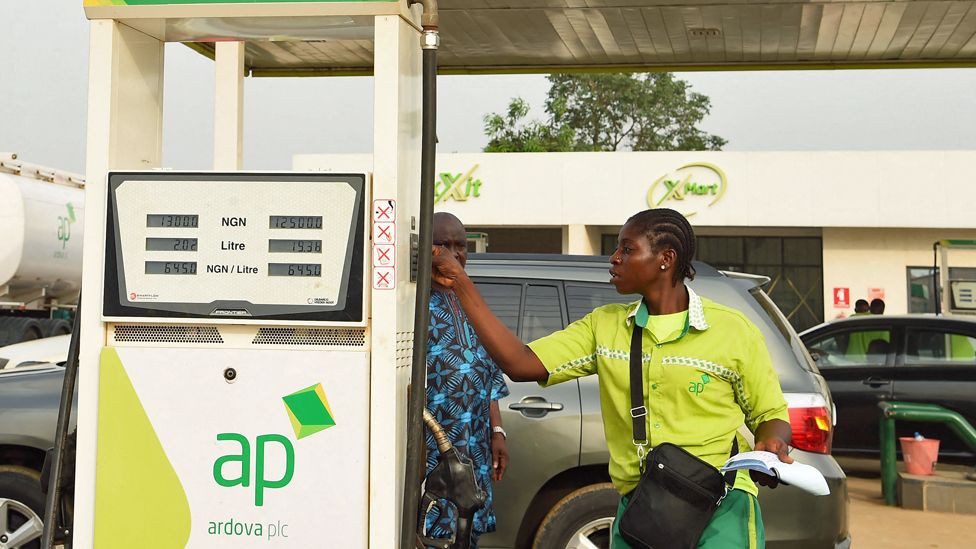
Last Wednesday, fuel marketers increased the price of petrol to at least $1 (£0.80) per litre – up by about 200%.
This has had a knock-on effect on the price of transport, food and other commodities, while the minimum wage is about 65$.
Nigeria’s new President Bola Tinubu announced the scrapping of the fuel subsidy in his inaugural address on 29 May, but did not give a date.
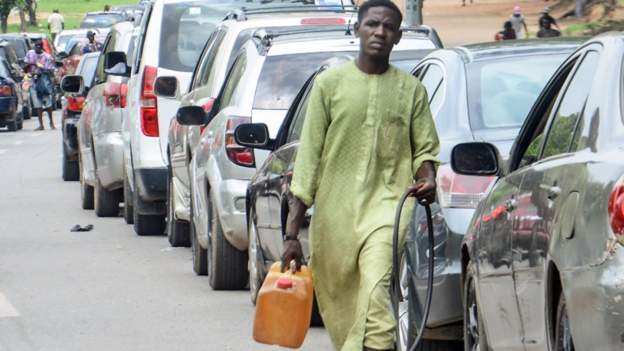
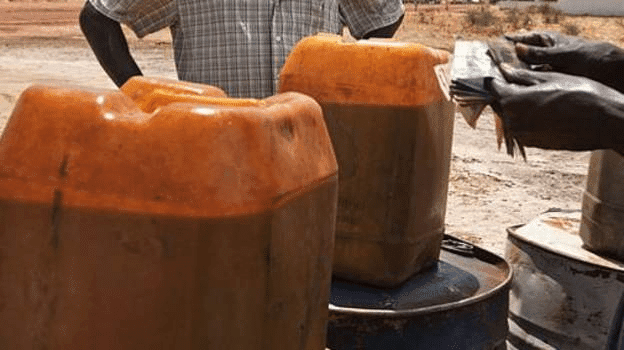
Within hours of Mr Tinubu’s first address, hundreds of people had poured on to the streets, either in their cars or on foot with yellow jerrycans, to grab what they believed to be the last drops of fuel to be sold at a government-fixed price.
Despite its oil riches, Nigeria is unable to refine crude locally to meet demands.
The four state-owned refineries are moribund, forcing the country to import refined petroleum products which are then sold at a price fixed by the government.
Mr Tinubu says the government can no longer afford to subsidise fuel because of dwindling revenue: the government has already set aside $7bn to subsidise fuel for the first six months of this year.
Petrol prices in Benin have nearly doubled since it was announced that fuel subsidies would be phased out in neighboring Nigeria.
Nigeria is one of Africa’s oil giants and subsidised petroleum products are routinely smuggled into Benin, where they’re mostly sold by the roadside and serve a large part of the population
Popularly called kpayo – which means “unoriginal” in Goun, a native language – it is cheaper than fuelling up at stations, local media reported.
Nigeria’s new President Bola Tinubu had in his inauguration speech said fuel subsidy was “gone”, an announcement that triggered panic-buying and a surge in fuel prices.
It was later clarified that it would be phased out in the coming weeks.
In his inaugural meeting with security and intelligence chiefs since assuming the presidency, Bola Ahmed Tinubu has pledged to implement reforms to address Nigeria’s pressing security challenges.
The country faces deep-rooted issues, including terrorism and an Islamist insurgency in the north-east, prevalent banditry and armed militias in the north-west and central regions, as well as separatist movements, oil theft, and sea piracy threatening the south.
Tinubu’s predecessor, Muhammadu Buhari, famously failed to fulfill his promise of defeating Islamist insurgents.
However, President Tinubu has made his determination clear to build upon any progress made, reverse setbacks, and shift the tide in favor of security and stability, according to national security adviser Babagana Monguno after their meeting in Abuja.
Tinubu emphasized the need for enhanced coordination, consultations, and timely reporting to foster better collaboration among security agencies.
During his inauguration on Monday, Tinubu also highlighted health, education, and infrastructure development as major priorities for his administration.
Local media has reported that Nigerian police rescued six pregnant women after raiding a suspected “baby factory” in Rivers state.
Police said they had arrested a 39-year-old woman, the alleged owner of the child trafficking home.
They said she had confessed to the crime and that she had been in the trafficking business for a long time.
“The prime suspect and her accomplice are currently in custody and further investigation is in top gear for the possible arrest of other suspects in connection with the crime,” the state commissioner of police, Polycarp Emeka, was quoted as saying on Wednesday.
Stories of the so-called “baby factories” are not uncommon in Nigeria – where women are abducted for the purpose of getting them pregnant and selling the babies.
In 2019, Nigerian police freed 19 pregnant women from properties in Lagos, described as “baby factories”.
A year earlier more than 160 children rescued from two unregistered orphanages in the city.
In a spectacular turn of events, Jim Ovia, Nigeria’s wealthiest banker and the founder of Zenith Bank Plc, has seen his net worth skyrocket in just 24 hours.
The surge can be attributed to the remarkable increase in his stake in the Lagos-based financial services group, as the Nigerian Equities rallied to an impressive 5.2-percent gain on Tuesday.
According to data tracked by Billionaires.Africa, Ovia, who holds a prominent position among Nigeria’s richest businessmen, witnessed the market value of his stake in Zenith Bank soar by a staggering N13.69 billion ($29.64 million) in just one day.
This significant surge in his stake can be directly attributed to the recent bullish pressures in the Nigerian Equities market, which saw stocks gain N1.5 trillion ($3.2 billion) in a single day — a record on the local bourse.
Investors responded positively to Nigerian President Bola Ahmed Tinubu’s inaugural speech, which unveiled a range of policies aimed at addressing critical issues such as high-interest rates, multiple exchange rates, slow GDP growth, and the repatriation of foreign investors’ dividends.
Bolstered by the anticipation of these policy shifts, Nigerian equities rallied right from the opening sessions, culminating in one of the most impressive one-day returns in recent memory.
During today’s trading session, Zenith Bank’s shares on the Nigerian Exchange surged by 10 percent, rising from N27 ($0.0584) at the morning’s opening to N29.7 ($0.0643) at the close.
Consequently, Ovia’s 16.2-percent stake in the leading financial services group soared by an astounding N13.69 billion ($29.64 million) within the same trading session, increasing his total stake from N136.95 billion ($296.42 million) to N150.64 billion ($326.06 million).
This recent spike has further solidified Ovia’s position as one of the most affluent investors on the Nigerian Exchange, with his stake in Zenith Bank surging by an impressive N28.91 billion ($62.58 million) since the beginning of the year.
The Nigerian National Petroleum Corporation (NNPC) has revealed that the country’s government owes the company over $6 billion. This amount represents the funds that NNPC has utilized to maintain affordable gasoline prices, and the disclosure comes just a day after President Bola Tinubu‘s announcement of the discontinuation of the subsidy program.
The state-owned company shouldn’t keep absorbing the burden of preserving one of the lowest prices of the fuel in the world, Chief Executive Officer Mele Kyari told reporters in the capital, Abuja, on Tuesday, welcoming the new head of state’s decision to stop the payments that cost more than $10 billion last year.
The NNPC is waiting for the government to pay a 2.8 trillion naira ($6.1 billion) debt, Kyari said. “We can’t continue to build this,” he said.
Following Tinubu’s first address to Nigerians after taking the oath of office on Monday, queues formed outside petrol stations, which have already started raising their prices. Phasing out the subsidies will significantly increase transport costs and could trigger social unrest as it did during a previous effort to remove the payments in 2012.
Although Nigeria is Africa’s biggest oil producer, the NNPC purchases all the country’s gasoline from overseas via crude-for-fuel swaps with local and international traders before selling the imported products at a loss to wholesalers and retailers.
The Tinubu administration plans to license other gasoline importers, according to Farouk Ahmed, chief executive of the Nigerian Midstream and Downstream Petroleum Regulatory Authority. This will introduce competition into the industry, he said alongside Kyari at the presidency.
While the previous government under President Muhammadu Buhari was supposed to fund the subsidies for the last 18 months, most of the cost has been “supported by the cash flow from NNPC’s other businesses,” Kyari said. “Since you cannot pay, you cannot expect NNPC to continue to carry it.”
The owner of Hilton Hotel in Ile-Ife, Nigeria, Dr Rahmon Adedoyin has been sentenced to death by hanging, along with two workers of the hotel, for the murder of a student, Timothy Adegoke.
Justice Oyebola Ojo, Osun State Chief Judge sitting at the High Court in Osogbo, said based on the circumstances of the case as established by the prosecution, the three were culpable of conspiracy to commit murder, and the unlawful killing of the postgraduate student of the Obafemi Awolowo University (OAU) student.
The two others also sentenced to death are Adeniyi Aderogba, 37 and Kazeem Oyetunde, 38, both workers of the hotel.
Three others – Magdalene Chiefuna, 24, Lawrence Oluwale, 37, and Adedeji Adesola, 23, were acquitted of the charges and discharged by the court, while sentencing for a seventh defendant was adjourned to Wednesday.
The late Timothy Adegoke
Adegoke, 37, went missing after lodging at the Hilton Hotels and Resorts at Ile-Ife on his arrival from Abuja on November 5, 2021.
He was due to write an examination at the OAU Distance Learning Centre, Moro, Osun State, the next day, November 6 and November 7, 2021.
He however went missing and was found dead, buried in a grave following a police investigation of the hotel owner, Dr Rahman Adedoyin and its workers.
The defendants were slapped with the crime of murder, with counts including conspiracy to commit murder, unlawful killing of Timothy Adegoke, conspiracy to commit a felony, dumping of the body of Adegoke, conspiracy to improperly and indecently interfere with the body of Adegoke, conspiracy to alter receipt, altering and cancelling of receipt and administering of extra-judicial oath in connection with the killing.
The European Union (EU) has begun an interventionist project aimed at protecting residents of coastal towns in Nigeria’s Niger Delta region from the severe consequences of climate change.
The Security Component Coordinator of the project known as “Coping with Climate Change as a Cause of Conflict in Coastal Communities of West Africa (C7-West Africa),” Air Commodore Darlington Abdullahi, announced this during a two-day Inception/Ceremony and Cooperative Planning Event in Yenagoa, Bayelsa State.
Explaining further, Air Commodore Abdullahi promised that the EU will render support to the affected area in the best possible approach, just as it will get commitments from state and non-state actors regarding the project.
The Governor of Bayelsa state, Sen. Douye Diri, who was represented by Secretary to the State Government, Gideon Ekeuwei, called on the European Union, to intensify their support approach in helping coastal communities from negative effects as a result of climate change.
Ekeuwei also thanked the Italian Shipping Academy for appointing the Nigeria Maritime University as the local implementing partner, adding that the state government is ready to partner with the EU to ensure the success of the project.
Fielding questions from journalists, leaders of coastal communities expressed optimism of better days ahead for their people who suffer negative impacts, as well as, conflicts that are induced by climate change.
Also present at the event are Nigeria’s Chief of Defence Staff and Director-General of the National Environmental Standards, Regulations Enforcement Agency (NESREA) and the Chairman of the Bayelsa State Traditional Rulers Council who applauded a train the trainers’ workshops scheduled to hold in Rivers, Akwa Ibom, Delta, and Cross River States soon.
Nigeria’s new president’s first full day in office is seeing panic buying of fuel following an announcement to end a decades-long subsidy on petroleum goods.
In Monday’s inaugural address, Bola Tinubu said the subsidy was “gone”.
But gave no timeframe or any more details of this major policy move.
On Tuesday, his team clarified that he meant end of June and that the panic buying is “needless” as the policy will not take immediate effect.
President Tinubu wants to ease pressure on government finances, but ending the subsidy will increase the petrol price and impact other prices too at a time when inflation is already high.
In response to Monday’s statement, many filling stations hiked the petrol price while others stopped selling altogether.
Nigeria’s state-owned oil company, the sole importer of petroleum products, assured the public that it has enough supplies.
But this did not prevent the panic buying, with most people fearing a drastic rise in price of petrol which should be sold at the regulated price of 185 naira per litre (£0.32, $0.40).
Some people have posted videos online of filling stations already increasing prices, in some cases by more than 200%.
Some private bus drivers, which many Nigerians rely on to get around, have also been unable to fill up their vehicles. This has left people stranded at major bus stops in the capital, Abuja, and the country’s biggest city, Lagos.
Despite its oil wealth, Nigeria is unable to refine enough crude to meet local demands so it imports petroleum products, which are then sold at a government-set price.
But the subsidy is a huge drain on public finances. Last year it gulped 4.3trn naira ($9.3bn; £7.5bn) and for the first half of this year, 3.36trn naira was budgeted for it.
On Monday, Mr Tinubu said It could no longer be justified and that the funds would instead be spent on public infrastructure and to improve the lives of people.
But the subsidy has long been seen by many Nigerians as one of the few perks they receive from the state.
The last attempt to remove it in 2012 led to nationwide protests and then President Goodluck Jonathan had to perform a policy U-turn.
So far, a powerful association of those who sell petroleum products has come out to say it does not support President Tinubu’s plan. It said the new government should begin a dialogue before taking the decision.
The spokesman of the Independent Petroleum Marketers Association of Nigeria, Ukadike Chinedu, is quoted by Nigeria’s Punch newspaper as saying that the move will cause “galloping inflation and inflict more hardship on the masses”.
President Bola Tinubu has lauded his predecessor and former President Muhammadu Buhari saying he did a good job during his tenure.
Tinubu stated this while delivering his inaugural speech as the 16th President of Nigeria at the Eagle Square today (Monday).
He said, “Permit me to say a few words to my predecessor, President Muhammadu Buhari. You have been a honest man and patriotic leader. Buhari has done his best for the nation.”
Tinubu was sworn in as the 16th President of the Federal Republic of Nigeria.
Similarly, Kashim Shettima was also sworn in as the Vice President of Nigeria.
Chief Justice of the Federation, Olukayode Ariwoola administered the oath of office to the President at 10:40 am, shortly after the Vice President took his oath of office.
Nigeria‘s newly inaugurated President, Bola Tinubu, has wasted no time embracing his new role with boundless enthusiasm, captivating the nation and online audiences alike.
As the inauguration ceremony unfolded, with many Nigerians tuning in through live streaming platforms and keeping track of updates on social media, eagle-eyed netizens quickly noticed a significant change in Tinubu’s Twitter and Facebook bios.
Mere minutes after being officially sworn in as President, his Twitter profile underwent a swift transformation, shedding the title of “President-elect of the Federal Republic of Nigeria” and proudly donning the prestigious status of “President of the Federal Republic of Nigeria.” The alteration was met with both awe and anticipation, symbolizing the dawn of a new era under his leadership.
Bola Ahmed Tinubu, widely known as Asiwaju, secured his place as President after emerging victorious in the Nigerian elections held in March earlier this year. Brimming with eagerness, he eagerly embraces the weighty responsibilities that accompany his new position, prepared to steer the nation towards a brighter future.
In the lead-up to his inauguration, Tinubu took to Twitter to express his heartfelt gratitude to all those who have supported him thus far. In a tweet that resonated with his supporters, he extended his appreciation to those who joined both physically and virtually in the exhilarating RENEWED HOPE CONCERT.
With sincere admiration, he acknowledged their unwavering support and dedication, highlighting the awe-inspiring rendition of the National Anthem by @Praiz8 as the standout moment of the night. The performance filled hearts with renewed hope, serving as a powerful reminder of the unity that binds Nigerians together.
Tinubu’s message carried a resounding call for the nation to embrace this moment of unity, allowing it to ignite their collective determination and propel them towards a Nigeria adorned with a brighter future. Together, he believes they will forge a nation synonymous with freedom, peace, and unity.
As the nation embarks on this new chapter under President Tinubu’s leadership, the anticipation and optimism in the air are palpable. With a vibrant spirit and a renewed sense of hope, Nigerians eagerly look forward to the transformative journey ahead, united in their pursuit of a stronger, more prosperous Nigeria.
Former Lagos State Governor Asiwaju Bola Ahmed Tinubu was sworn in as Nigeria’s 16th President on Monday May 29, 2023.
The oath of office was administered by the Chief of Nigeria, CJN Olukayode Ariwoola at the ongoing inauguration ceremony at Eagles Square, Abuja.
Recall that Tinubu emerged Nigeria’s President-elect on the platform of the ruling APC following the outcome of February 25 presidential election after polling highest votes cast to defeat his closest rivals; former Vice President and candidate of the PDP, Atiku Abubakar and the Labour Party’s candidate, Peter Obi.
Following his oath of office, Tinubu has become the new President of the Federal Republic of Nigeria succeeding the two terms of eight years by former President Muhammadu Buhari.
Asiwaju Bola Ahmed Tinubu, born in Lagos on 29th March 1952, will be sworn in as the President of Nigeria today, Monday, 29th May 2023.
He is set to become the country’s 16th president since 1960 after taking over from Muhammadu Buhari, his immediate predecessor. He will also become Nigeria’s fifth president of the Fourth Republic.
Tinubu is known as the “godfather” in Nigeria’s political space due to his influence. He has held several positions that have elevated his impact in Nigeria.
This article will look at Tinubu’s journey and highlight the most significant parts, from his birth to his most influential position as President.
Asiwaju Bola Ahmed Tinubu and Buhari
Early life and education
Asiwaju Bola Ahmed Tinubu was born in Lagos on 29th March 1952. Information about his parents is scarce. Tinubu is said to have spent his early days in southwestern Nigeria before moving to the United States of America (USA). According to reports, his mother supported this migration.
He arrived in the US in 1975 and completed his undergraduate studies there, first at Richard J. Daley College in Chicago and then at Chicago State University. To overcome the initial difficulties of school, he had to take on jobs such as dishwashing, night-guard, and cab-driving.
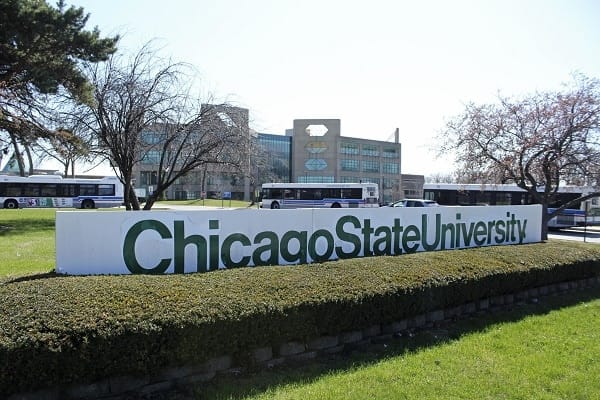
Chicago State University
Due to his brilliance, Tinubu had the rare privilege of partly teaching other students in his Faculty remedial tutorial classes during his first year at Chicago State University.
During his undergraduate years, Bola excelled academically, consistently making the Dean’s List and receiving prestigious awards such as the Outstanding Student’s Award, the University Scholar’s Award, and the Certificate of Merit in Accounting and Finance. His exceptional performance earned him the esteemed Summa Cum Laude distinction with a GPA of 3.54 out of 4.0.
In his final year at university, Bola successfully ran for and won the position of President of the Accounting Society, showcasing his leadership abilities and popularity among his peers.
Tinubu later graduated in 1979 with a bachelor’s degree in Business Administration (Accounting and Management).
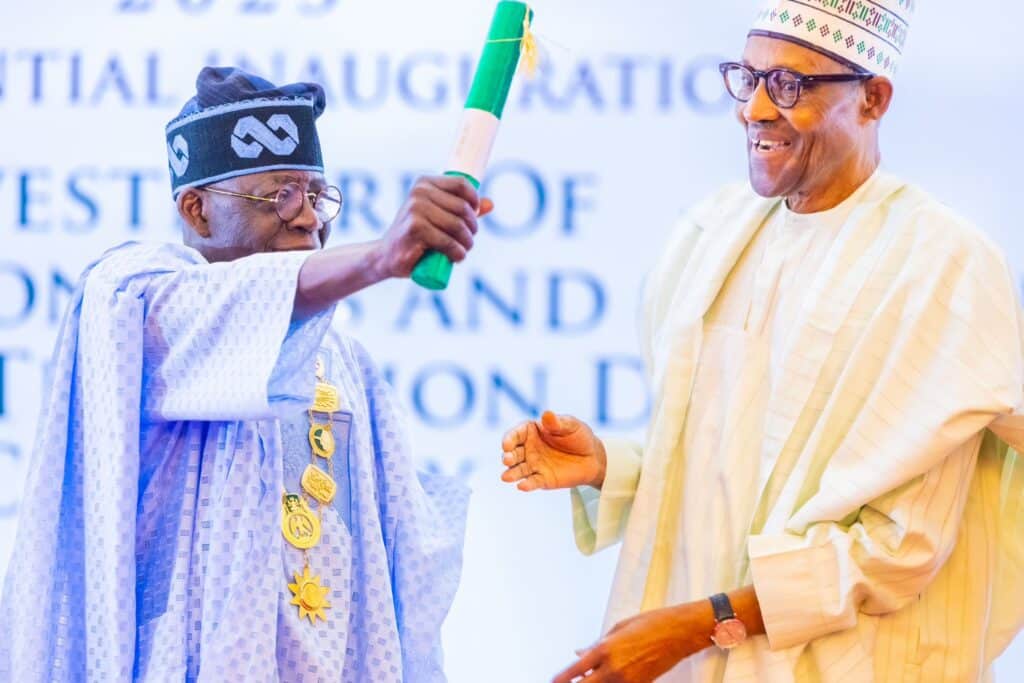
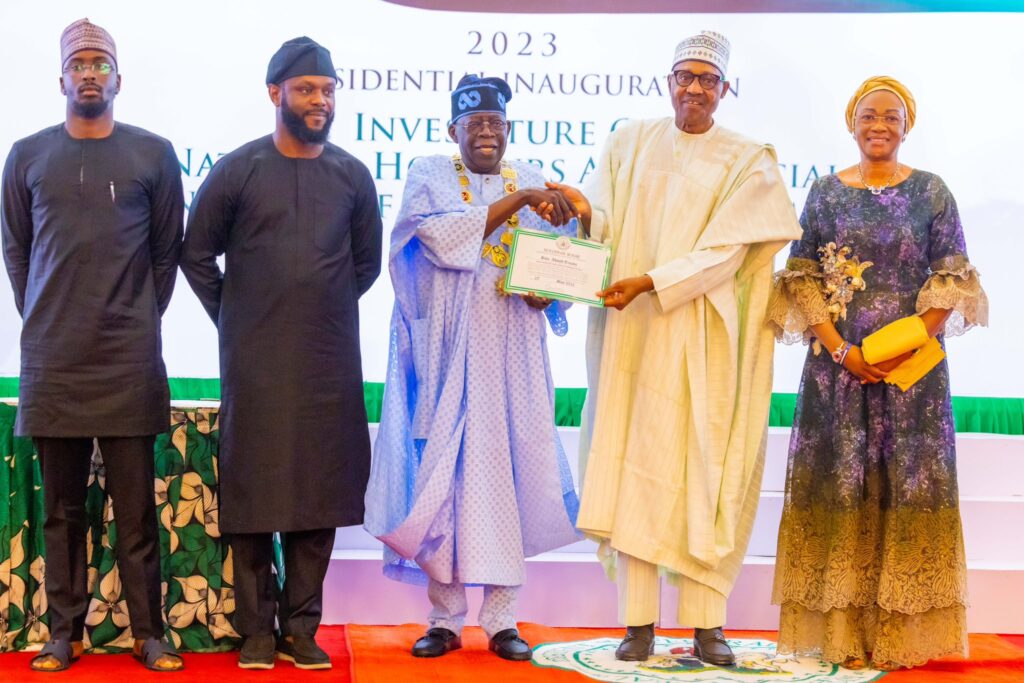
Tinubu at 2023 Presidential inauguration
Life outside school
After graduating with honors and numerous accolades, Bola Tinubu embarked on his professional journey at renowned American firms such as Arthur Anderson, Deloitte Haskins and Sells (now known as Deloitte Haskins and Touche), and GTE Service Corporation, the largest communication and utility company in the United States.
At Deloitte Haskins and Sells, Bola gained valuable experience by contributing to auditing and management consultancy services for prominent companies like General Motors, First National Bank of Chicago, Procter and Gamble, International Harvester, GEC, and other Fortune 500 firms.
Equipped with his international exposure in financial management, Bola returned to Nigeria and joined Mobil Producing Nigeria, where he occupied a senior position.
Tinubu’s political life
Bola Ahmed Tinubu made his initial entry into active politics as a founding member of the now-defunct Social Democratic Party (SDP). In 1992, he was elected as a respected Senator representing Lagos West Senatorial District in the National Assembly.
During his tenure, he notably served as the Chairman of the Senate Committee on Banking, Finance, Appropriation, and Currency, a prominent committee in the Senate.
Following the annulment of the June 12, 1993 Nigerian Presidential Election and the subsequent militarization of Nigerian politics, Tinubu became a founding member of the renowned pro-democracy group, the National Democratic Coalition (NADECO).
Despite facing numerous arrests, detentions, harassment, and threats to his life, he remained committed to the cause, even going into exile to join NADECO abroad in advocating for the restoration of democratic governance in Nigeria.
In 1998, Tinubu responded to the call for national reconciliation and development and returned to Nigeria. The following year, he began his two-term tenure as the elected Executive Governor of Lagos State, representing the Alliance for Democracy (AD) political party.
During his time as Governor (1999-2007), Tinubu’s exemplary performance earned him several accolades and recognition, including the Best Governor in Nigeria for Y2000 by the Nigerian-Belgian Chamber of Commerce and the Y2002 Best Practices Prize for improving the living environment awarded by the Federal Ministry of Works and the UN Habitat Group.
He also received the Y2000 Best Computerized Government in Nigeria Award from the Computer Association of Nigeria. In recognition of his significant contributions to democracy, good governance, and national development, Tinubu was conferred with an Honorary Doctor of Law Degree by Abia State University.
He holds various chieftaincy titles and serves as a patron to numerous professional and social organizations.
As a skilled political strategist, Tinubu successfully navigated the incursion of the ruling Peoples Democratic Party (PDP) into the South Western States of Nigeria.
Tinubu during his two-day visit to Rivers State
Despite facing opposition, he stood as the lone re-elected Governor from the Alliance for Democracy (AD) and engaged in frequent disputes with the PDP-controlled Federal Government, particularly regarding the creation of an additional 37 Local Council Development Areas for Lagos State.
A Supreme Court judgment ruled in his favor, compelling the release of the seized statutory allocation of the Lagos State Local Government funds by the administration of President Olusegun Obasanjo.
Tinubu played a significant role in the establishment of the Action Congress (AC) political party as a response to the weakened Alliance for Democracy (AD).
Through his adept leadership and persuasive ideas, he quickly transformed the AC into a credible opposition party to the PDP at the national level.
In 2013, Mr. Tinubu’s Action Congress (AC) joined forces with the All Nigerians Peoples Party (ANPP), Congress for Progressive Change (CPC), and factions of the All Progressives Grand Alliance (APGA) and the People’s Democratic Party (PDP) to form the All Progressives Congress (APC). This merger resulted in a powerful opposition party in Nigeria.
On 31st July 2013, the party received approval from the Independent National Electoral Commission (INEC) to become an official political party, leading to the withdrawal of operating licenses for the ACN, CPC, and ANPP.
The APC quickly gained popularity among Nigerian voters and successfully defeated the ruling People’s Democratic Party (PDP) in the 2015 elections. The pivotal role played by Mr. Tinubu in the formation of the APC was acknowledged by several leaders within the party.
Tinubu’s journey to becoming President
In January 2022, Bola Tinubu officially announced his candidacy for the Nigerian presidency in the 2023 elections.
In June of that same year, Tinubu won the presidential primary of his party, securing over 1,271 votes and defeating his closest rivals, ex-minister Rotimi Amaechi and Vice President Yemi Osinbajo.
Subsequently, in the presidential elections held in February 2023, Tinubu competed against Atiku Abubakar of the Peoples Democratic Party (PDP) and Peter Obi of the Labour Party, who were his main contenders.
Tinubu emerged as the victor, receiving 36 percent of the more than 24 million votes cast, according to the results announced by the Independent National Electoral Commission (INEC).
The opposition has raised concerns of possible irregularities, and Mr. Peter Obi has sought legal recourse to address the situation. But the class action has not hindered President-elect Tinubu from being sworn in as the country’s substantive president.
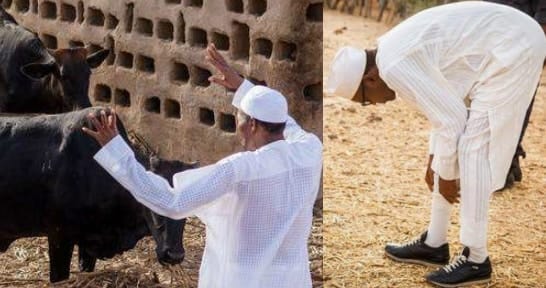
Ex-President of Nigeria, Muhammadu Buhari has stated that his cows are much simpler to govern than Nigerian citizens.— Buhari
He spoke at a gala and dinner held on Sunday in Abuja.
While praising the outcome of the elections, Buhari congratulated fellow Nigerians for realising that they had power in their votes and that their ballots counted.
“I am looking forward to tomorrow (Monday) to fly to my base and go back to my cows and sheep, which are much easier to control than fellow Nigerians.
“Your Excellencies, Heads of State and Government, and their representatives, I thank you very much and I say goodbye to you and wish us the best of luck”, the News Agency of Nigeria (NAN) quoted him as saying.
Today, President-elect Bola Tinubu will be sworn in as Nigeria’s 16th president since the country’s independence in 1960.
Kashim Shettima will be sworn in as the country’s new vice president.
Both will take over from President Muhammadu Buhari and Vice President Yemi Osinbajo, whose second four-year term ends today.
The inauguration of Messrs Tinubu and Shettima will hold at Eagle Square, Abuja.
The Independent National Electoral Commission (INEC), on 1 March, declared Mr Tinubu, the candidate of the All Progressives Congress (APC) as the winner of the 25 February presidential election.
He defeated 17 other candidates who took part in the election after polling 8,794,726 votes. He also scored over 25 per cent of the votes in over 25 states.
His closest rival, Atiku Abubakar of the Peoples Democratic Party (PDP), a former vice president, polled a total of 6,984,520 votes while the Labour Party (LP) flag bearer, Peter Obi, a former governor of Anambra State, garnered 6,101,533 votes and Rabiu Kwankwaso of the New Nigeria Peoples Party (NNPP) 1,496,687 votes.
Mr Tinubu, 71, will be inaugurated as the fifth president of the current Fourth Republic which began in 1999. He served as governor of Lagos State, the country’s economic hub, between 1999 and 2007. An accountant by profession, Mr Tinubu had previously served as a senator in the short-lived Third Republic.
Mr Shettima, 57, was governor of Borno State in the nation’s north-east region between 2011 and 2015 when he was elected to represent the state’s central district. The vice president-elect who is a professional banker served at various times as the state commissioner for finance and economic development, local government and chieftaincy affairs, education, agriculture and health.
Today’s ceremony, the 7th consecutive transition of power, holds at 10 a.m., according to the Presidential Transition Committee (PTC) constituted by the outgoing Buhari administration to midwife the transition programme. Previous presidents’ inaugurations were held in the same facility. The facility has since undergone renovation in preparation for today’s Inauguration.
The Chief Justice of Nigeria, Olukayode Ariwoola, is expected to administer the oath of office on Messrs Tinubu and Shettima. The inauguration was preceded by a number of other activities packaged by the 24-member PTC and held in the last eight days. They included the dinner in honour of the duo and the outgoing administration and the conferment of GCFR and GCON on them.
Foreign heads of state and government and dignitaries, including delegations from the US and the UK, will attend the inauguration. Several foreign and local media have also been accredited to cover the historic event.
Remarkably, the event is holding despite various moves to abort it through the plethora of court cases as well as protests by some groups. Messrs Atiku and Obi as well as the Allied Peoples Movement (APM) are currently challenging the declaration of Mr Tinubu as the winner of the February poll. The Presidential Election Petition Court has since consolidated the three petitions.
The transition council, chaired by the Secretary to the Government of the Federation (SGF), Boss Mustapha, said adequate arrangements have been made for the safety and security of the people attending the ceremony. Already, security has been beefed up in the federal capital, especially around Eagle Square located in the Central Business District of the territory. The police and paramilitary outfits have cordoned off the venue and restricted movements around Eagle Square to ensure a hitch-free ceremony.
Many of the presidents from Africa other foreign dignitaries have settled in Nigeria for the inauguration of Bola Tinubu as the continent’s 16th president.
Movements around Eagle Square in Abuja, the venue of the handover and inauguration parade, have been restricted until Tuesday.
Local media say about 20 African leaders are expected in Abuja.
Rwanda’s President Paul Kagame, Cyril Ramaphosa of South Africa and Algerian President Abdelmadjid Tebboune are among leaders who arrived on Sunday.
Also in Abuja is the president of Tanzania, Samia Suluhu Hassan, the president of the Republic of Congo Brazzaville, Denis Sassou Nguesso, the president of Guinea Bissau, Umaro Sissoco Embaló and Sierra Leone’s President Julius Maada Bio.
The president of Burundi, Évariste Ndayishimiye, the transitional President of Chad Mahamat Déby, the president of Niger Republic, Mohamed Bazoum and President Nana Akufo-Ado of Ghana are also in Nigeria for the ceremony.
The prime cabinet secretary of Kenya, Musalia Mudavadi, will be representing President William Ruto.
A nine-member delegation from the US and Chinese officials led by a Communist Party senior member have also arrived for the event.
Mr Tinubu’s electoral victory is being challenged by opposition rivals.
On Tuesday, a tribunal will begin to hear the main arguments in the election petition.
Former Deputy National Chairman of the Peoples Democratic Party, PDP, Bode George, has called President Muhammadu Buhari’s eight years in office a failure.
George said Buhari did not live up to the expectations of Nigerians in the last eight years.
Addressing journalists in Lagos on Saturday, the PDP chieftain said history will judge Buhari’s government because it failed to impact Nigerians positively.
He lamented that Buhari failed to ensure the security of Nigerians.
He berated Buhari for failing to deliver on his electoral promises of fighting corruption among other things.
According to George: “My personal assessment is that he failed, not completely in every sector, but if you do an examination and say you must have a minimum of 33%, then you can go to the next class, but they did not attain that 33%.
“I can give them maybe about 5%, even the 5% requires a lot of retrospection.
“So it is very very disheartening and heartbreaking that he failed in his number one job, which is to guarantee security of lives and property.
“So let’s put those promises now into his departure because that’s what will be written on the pages of history. Whatever a leader does during his time, it is on the pages of history.”
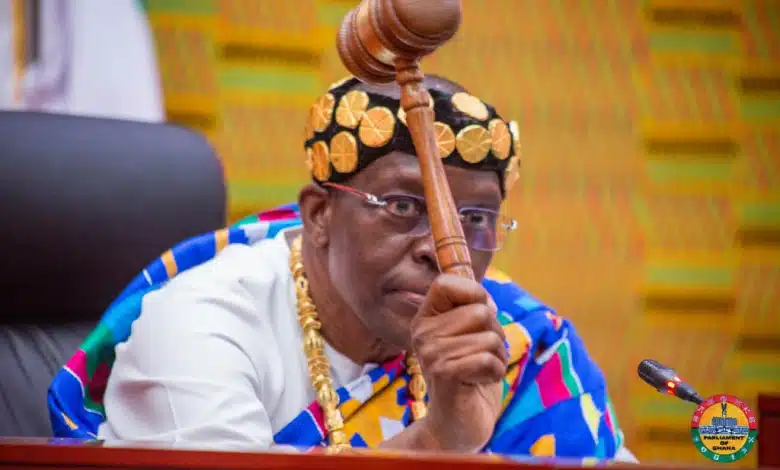
The Conference of Speakers and Heads of African Parliaments (CoSAP) has appointed Mr. Alban Sumana Kingsford Bagbin as its president.
He takes over from Mr Femi Gbajabiamila, the Speaker of Nigeria’s House of Representatives.
The CoSAP was officially launched on October 12, 2020, after three key meetings between founding Speakers took place on August 17, 2020, September 17, 2020, and October 12, 2020.
In his acceptance speech at the conference held in Abuja, Nigeria, Mr Bagbin underpinned the importance of the representative role undertaken by parliamentarians across Africa.
The role, according to him, strengthened the future and longevity of Africa’s democratic dispensation, hence, the need to strengthen collaborative action against emerging political and socio-economic challenges.
Mr Bagbin described the new appointment as an opportunity to work with neighbouring Parliaments to pursue and advance the agenda of collaborative representation at every level of governance.
Addressing the respective speakers’ Mr Bagbin outlined some measures which he considered would set the path for a progressive and representative democratic government within the member organizations.
These included the need for African Parliaments taking decisive action to end the unconstitutional overthrow of governments in Africa to further ensure more effective parliamentary oversight to curb Africa’s rising debt, and mitigation of their vulnerability to external shocks.
He, however, called for the need to safeguard and strengthen the role and powers of legislatures across the continent and for Africa to build capacity to feed itself by tackling food insecurity as a priority.
Mr Bagbin called on respective Parliaments across the sub-region to focus on inclusive budgeting and policy planning that addressed the needs of women, youth, and people living with disabilities and ensured that they were provided with the same opportunities as all other citizens.
He stressed the urgent need for creating and sustaining enabling legislative environment for public-private partnerships and enhancing the capacity and effectiveness of African inter-parliamentary institutions.
Mr Bagbin assured member countries of his intention to ensure that the CoSAP continued to provide a platform for discussion, dialogue and action by Speakers and Heads of AfricanParliaments.
“The platform will be used to advocate for more effective approaches in Africa’s public financial and economic management, developing collaborative strategies for tackling issues of common concern, and devise legislative interventions and solutions to address issues on a wider continental scale during his tenure of office,” he added.
The CoSAP is a platform initiated to facilitate increased deliberation, collaboration and cooperation between Speakers, Heads of Parliaments, and National Assemblies across Africa to address common challenges, devise joint solutions and mobilise collective action to advance African development.
Nigeria is often referred to as the “giant of Africa”, given its huge population and economic potential, but it has some gigantic problems too – and these will confront Bola Tinubu as he takes over as president on Monday.
The 71-year-old is unlikely to be fazed by the challenges. As a two-time governor of Lagos, he revitalised Nigeria’s commercial hub – no easy task – and is well aware of the issues.
But Nigerians, even those who did not vote for him, will want to see early results from Mr Tinubu. Here are some of the major hurdles he faces and how he may tackle them.
Ending the fuel subsidy
This challenge has been kicked down the road by successive governments since its introduction in the 1970s.
Despite its oil riches, Nigeria is unable to refine enough crude to meet local demands so it imports petroleum products, which are then sold at a government-set price. As this is usually lower than the import price, the government pays the difference.
Image caption,Cheap fuel is seen by many Nigerians as their right given the country’s oil wealth
But this subsidy is taking a huge toll on dwindling public finances. Last year it guzzled 4.3trn naira ($9.3bn; £7.5bn) and for the first half of this year, 3.36trn naira was budgeted.
These payments come at the expense of development goals such as building schools or hospitals, but removing the subsidy will not be easy as it will lead to an increase in prices.
The last attempt to do so in 2012 ended in widespread protests.
Many struggling Nigerians, used to seeing politicians mismanaging the country’s oil wealth, believe cheap petrol is their share of what has been described as the “national cake”.
But Mr Tinubu has firmly repeated that the subsidy has to go, and his associates insist he has the political will to do it.
“He has a capacity to listen and to consult widely before making tough decisions,” Housing Minister Babatunde Fashola, a close colleague who succeeded Mr Tinubu as Lagos governor in 2007, told the BBC.
One area he may explore to lessen the impact is to subsidise and improve public transport – something he has experience in after implementing a massive public transport scheme in Lagos that put in place fast bus links.
The outgoing government has also managed to secure an $800m World Bank loan, intended to beef up its welfare scheme for vulnerable Nigerians who will be most affected by the loss of the subsidy. However, lawmakers still have to approve the package – so it is not a done deal.
Lack of popular support
Only 37% of voters backed Mr Tinubu, making him the Nigerian president elected with the least vote-share since 1999.
He won a tightly contested election that was not only rancorous, but exposed ethnic and religious divisions that have lingered even in Nigeria’s most cosmopolitan cities.
He will have to perform a balancing act when it comes to choosing his government to build bridges across these divides.
There are signs he is already doing so, reportedly meeting two opposition politicians since winning February’s vote:
Musa Kwankwaso, a powerful rival from the north, who was third runner-up
Nyesom Wike, the influential and outgoing governor of Rivers state.
As governor of Lagos, Mr Tinubu probably had the most ethnically diverse cabinet in Nigeria, appointing non-Lagosians into key positions, which is still a rarity.
“He is more interested in technocrats who are thinkers and researchers,” his friend Seye Oyetade told the BBC.
But politicians, often with common interests, may be easier to placate than the millions of young Nigerians who did not vote for him – especially those who supported Peter Obi of the Labour Party.
Many of them consider the vote flawed, though the electoral commission denies this – and an election challenge is still pending in court.
Close allies say by making jobs available and getting young people involved in governance, Mr Tinubu may win over some of them.
“You will see a government that will embrace new ideas and technology and by extension, you will see a lot of young people around him,” Mr Fashola explained.
Fixing the economy
Most agree that as a trained accountant, this is Mr Tinubu’s area of expertise – but things have never looked worse for Nigeria:
One in three are unemployed
Inflation is at a record 22%
96 million live below the poverty line of $1.90 per day
GDP per head (the economic output produced in a year by the average person) was $2,065 for 2021 (compared to $70,248 for the US and $46,510 for the UK)
Low revenues from declining oil sales.
Mr Oyetade bats away such statistics: “These are not too dissimilar to what he met in Lagos in 1999.”
This may be hyperbole, but Mr Tinubu’s use of technology to improve tax collection in Lagos was remarkable, increasing revenue by more than 400% in eight years.
Image caption,It can be hard to get hold of foreign currency, which has led to a widening gap between the official and black market rates
He has spoken several times of his ambition to widen the tax net, but this might be harder to replicate at a national level given high inflation, rising poverty and widespread insecurity that often stops people from working.
Mr Tinubu also favours a more private-sector led approach, in contrast to his predecessor, Muhammadu Buhari, who aimed to bolster national welfare safety nets.
But it his relationship with Godwin Emefiele, the central bank governor, that will be key.
The incoming president has criticised the bank’s policy of using multiple exchange rates.
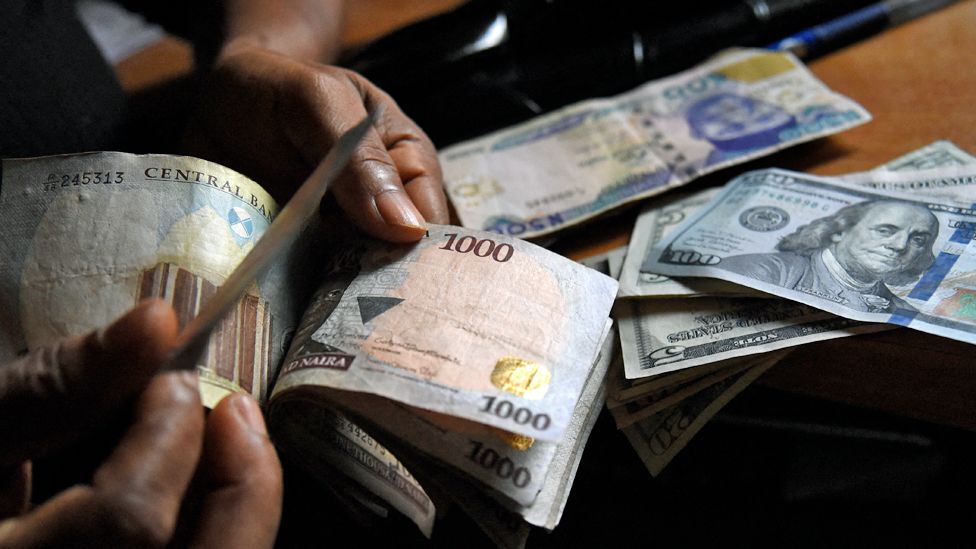
This keeps the naira artificially high – the official exchange rate is 460 naira: $1, available to different categories of people who have to apply and wait till it is available.
Everyone else who wants forex must use the parallel rate – currently 760 naira: $1, meaning there is a widening gap between the official and black market.
For any review to happen, Mr Tinubu will need to work with Mr Emefiele, who has another year left to serve as governor.
The two have a fractious relationship following the central bank’s move to redesign the local currency – leading to huge cash shortages – just before the election. This was seen by some as a ploy to scupper the ruling party’s chances of winning the vote – allegations Mr Emefiele denies.
Kidnapping and insecurity
Mr Tinubu will want to get a grip on this quickly, given the scale of problem. His administration will be confronting armed criminals on motorcycles in the north-west, countrywide kidnapping and a violent secessionist group in the south-east. Deadly clashes between farmers and herders also continue in the central states.
During the election campaign, Mr Tinubu’s deputy, incoming Vice-President Kashim Shettima, said this would be his remit – touting his experience as governor of north-eastern Borno state, home to many Islamist militant groups and the Boko Haram insurgency.
Image caption,Relatives of those kidnapped have been left distraught and desperate to raise money for ransoms
But Nigeria’s security challenges have evolved since he left office in 2019 and President Buhari, a former army general, failed dismally to find an answer during his eight years in power – instead insecurity has escalated nationwide.
The Tinubu-Shettima plan includes using anti-terrorist battalions with special forces to go after the kidnappers and extremist groups.
More importantly, they have proposed freeing police personnel from VIP security and guard duties, which could see more officers on the streets fighting crime.
Staying fit – and other distractions
Opponents of the incoming president say he has lost the vitality he used to forcefully modernise Lagos.
Since the election, he has travelled abroad twice, raising questions about his health. In 2021 he spent months in London being treated for an undisclosed illness.
He has brushed off the criticism, saying the job does not require the fitness of an Olympic athlete and his associates are quick to remind everyone that US President Joe Biden is older, at 80.
But Nigerians are weary of seeing presidents spend considerable time in hospitals abroad, leading to government in-fighting for control. This happened under both Mr Buhari and Umaru Yar’Adua, who died in office in 2010.
They are also worried about potential controversies. Before the vote Mr Tinubu denied various allegations of links to narcotics and corruption.
Since his victory, it has been revealed that he was once issued with a Guinean diplomatic passport – which is not illegal but was not previously disclosed. While a Bloomberg investigation said his son owns an £11m mansion in London. Neither Mr Tinubu, his son, nor his allies have commented on the report, and it has not been confirmed that Mr Tinubu was involved in the purchase.
Allies of Mr Tinubu will be concerned that any further allegations could distract him from the massive job he is about to undertake.
The Supreme Court of Nigeria has dismissed a case that sought to disqualify Vice-President-elect Kashim Shettima as the candidate for the All Progressives Congress (APC) in the country’s general election.
Had the case proceeded, it could have had significant implications for the candidacy and eventual victory of President-elect Bola Tinubu, as they ran on a joint ticket.
The opposition Peoples Democratic Party (PDP) filed the suit in July of the previous year, arguing that Mr. Shettima’s nomination as Mr. Tinubu’s running mate violated the Nigerian constitution.
They contended that Mr. Shettima’s simultaneous nomination to contest the positions of both vice president and the Borno central senatorial seat was contrary to the law.
However, a five-member panel of the Supreme Court ruled on Friday that the case lacked merit. The court cited evidence that Mr. Shettima had eventually withdrawn his nomination for the senatorial seat, thus resolving the constitutional concern raised by the opposition party.
There had been palpable fear and anxiety before the landmark judgement but the justices also decided that the PDP lacked the power to put forward the lawsuit since it is not a member of the APC.
Justice Adamu Jauro, who delivered the lead judgment, noted that the PDP was meddling in the internal affairs of another party and ordered it to pay a fine of around $4,300 (£3,500).
The Supreme Court ruling has now put the issue to rest and seemingly given a judicial seal of approval for the inauguration of President-elect Bola Ahmed Tinubu and Vice President-elect Kashim Shettima.
They are due to be sworn in on 29 May when outgoing President Muhammadu Buhari leaves office after completing a two terms.
However, lawsuits by major opposition parties challenging Mr Tinubu’s election victory are still ongoing at the election petitions tribunal, where hearings will begin on 30 May, a day after Mr Tinubu is sworn in.
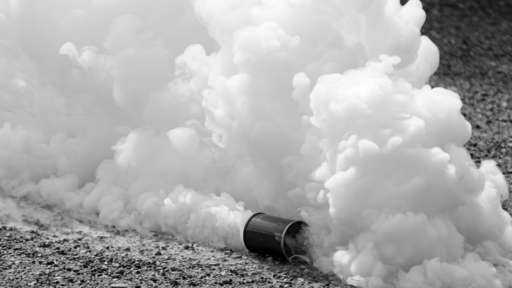
Over 30 schoolchildren have been hospitalized after inhaling tear gas discharged by anti-riot police during a morning drill in Osogbo, a city in Nigeria’s south-western Osun State.
The incident occurred at the opposition Fakunle Comprehensive School, but the tear gas fumes drifted onto the school campus.
Secondary school students who lost consciousness were quickly transported to two different hospitals for urgent medical attention.
The occurrence triggered panic among parents, prompting some to promptly collect their children from school as authorities advised closure for the day.
Osun police spokesperson, Yemisi Opalola, issued an apology for the incident and assured that the officers would take necessary measures to prevent any future recurrences.
Imagine a town where almost every household has at least one set of twins. Where the sight of two identical faces is so common that no one bats an eye. Where the local greeting is “Iba oloye”, meaning “greetings to the twins”.
In the heart of southwestern Nigeria lies this town. A place where the birth of twins defies statistical norms and captivates the imagination of visitors and researchers alike.
Welcome to Igbo Ora, a serene community nestled in the Oyo State, known as the “Twin Capital of the World.” Here, an astonishingly high rate of twin births has earned the town a reputation that stretches far beyond its borders.
Igbo Ora is located about 80 kilometres north of Lagos, the commercial capital of Nigeria. It has a population of about 278,514 people, according to a 2017 estimate based on the 2006 census The town is also home to the Oyo State College of Agriculture and a High Court of Justice. But what makes Igbo Ora stand out from other towns is its remarkable reputation as the “twin capital”.
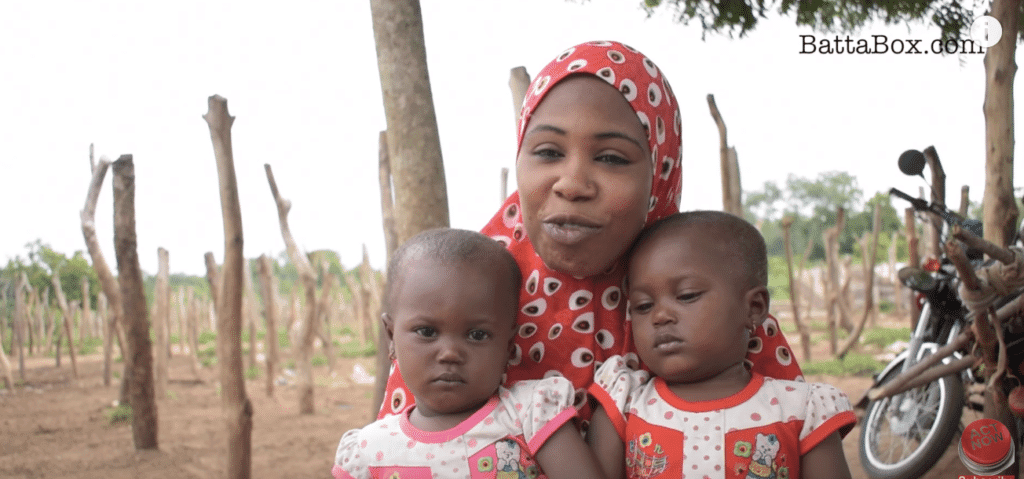
A woman with her twin baby girls | Image Source: BattaBox (YouTube)
According to a study conducted by a British gynaecologist, Patrick Nylander, between 1972 and 1982, the average number of twins per 1000 live births in southwest Nigeria was 45 to 50, compared to the global average of roughly 13 twins per 1,000 births.
Igbo Ora’s unique status has attracted attention from scientists, anthropologists, and curious individuals eager to unravel the secrets behind this extraordinary occurrence. The town’s reputation has grown so significant that it has become a tourist attraction in its own right, drawing visitors from far and wide who yearn to witness the marvel of twin births first-hand.What lies behind this statistical anomaly, one may ask.
Various theories attempt to explain the remarkable prevalence of twins in Igbo Ora. Some, including the locals, attribute it to the diet of the local population, rich in yams, a crop believed to contain properties that stimulate ovulation and increase the chances of multiple births. Others point to the genetic predisposition of the Yoruba people, the dominant ethnic group in the region, suggesting that certain genes prevalent in this community contribute to the high twinning rate.
However, beyond these theories, Igbo Ora’s fascination with twins runs deep within its cultural fabric. Twins are considered a divine blessing, with locals celebrating their arrival through unique ceremonies and festivals.
Families often regard them as a sign of prosperity and good fortune. As a result, the town has become a nurturing environment for twins, where they are cherished and embraced by a community that takes immense pride in their presence.
The town’s inhabitants have even developed distinct names for twins, reflecting their reverence for this extraordinary phenomenon. The festival also aims to promote tourism and attract investment to the town.
However, scientific evidence for these claims is scarce and inconclusive. Some researchers suggest that genetics may play a role, as twinning tends to run in families and among certain ethnic groups. The Yoruba people, who make up the majority of Igbo Ora’s population, have a higher frequency of dizygotic or fraternal twins than other groups. These are twins who develop from two separate eggs fertilized by two different sperm cells.
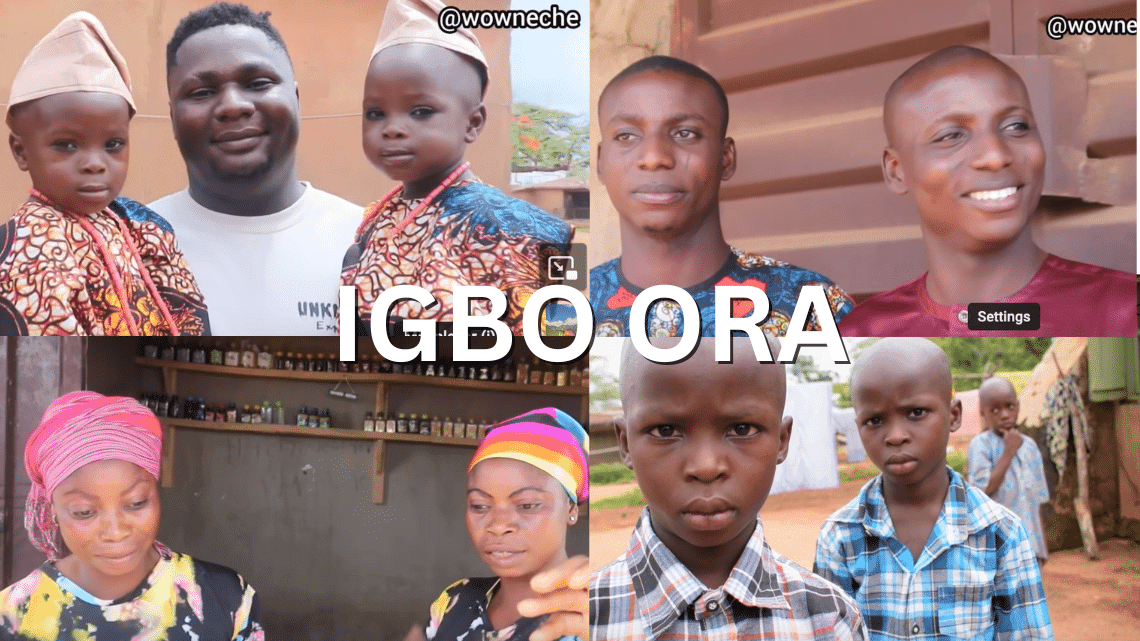
YouTuber @wowneche holding twin boys during a visit to Igbo Ora | Image Source: wowneche (YouTube)
Other factors that may influence twinning include maternal age, parity, fertility treatments and environmental conditions. However, none of these can fully explain why Igbo Ora has such an exceptional concentration of twins. More studies are needed to unravel the mystery of this town’s remarkable reproductive feat.
In recent years, the global spotlight has turned towards Igbo Ora, with media outlets and researchers seeking to shed light on the secrets of this twin capital. The BBC and other international news organizations have explored the town, capturing the essence of its vibrant culture and the awe-inspiring frequency of twin births.
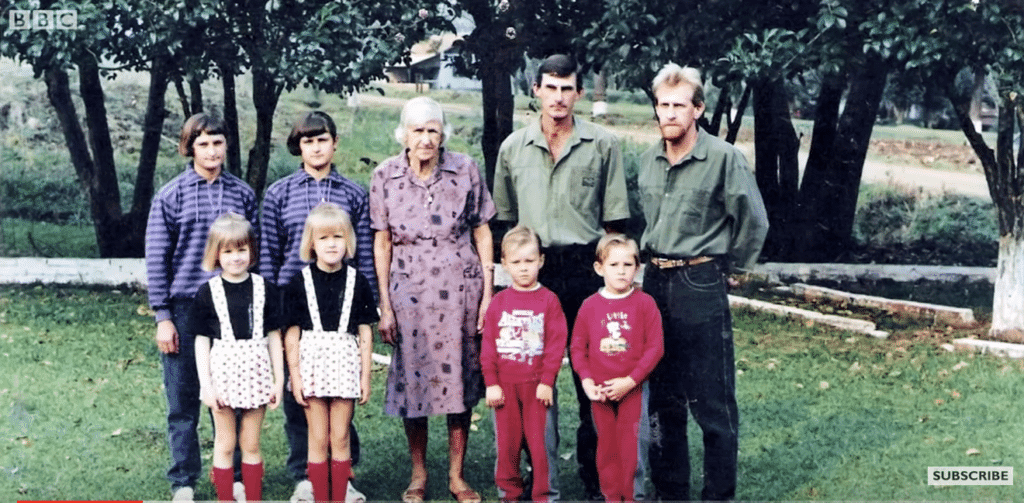
However there are other towns in the world where twinning is frequent, including Cândido Godói, Brazil, Mohammadpur Umri, India, Abu Atwa Ismaila, Egypt and Podgora, Croatia.
Four (4) sets of twins in Cândido Godói, posing in a photo with an elderly woman. Image source: BBC News (Youtube) https://www.youtube.com/watch?v=_YxjdfP4qBU
These towns, with their diverse cultural and genetic backgrounds, encompass a remarkable commonality: an elevated incidence of twins that surpasses the global average. It is intriguing to ponder how their unique heritage and intrinsic traits intertwine, potentially influencing this extraordinary phenomenon.
Nonetheless, the fascination with Igbo Ora’s twins extends beyond scientific curiosity and media coverage. Igbo Ora’s twins are a source of joy and pride for their families and community. They are also a testament to the diversity and richness of Nigeria’s culture and heritage.
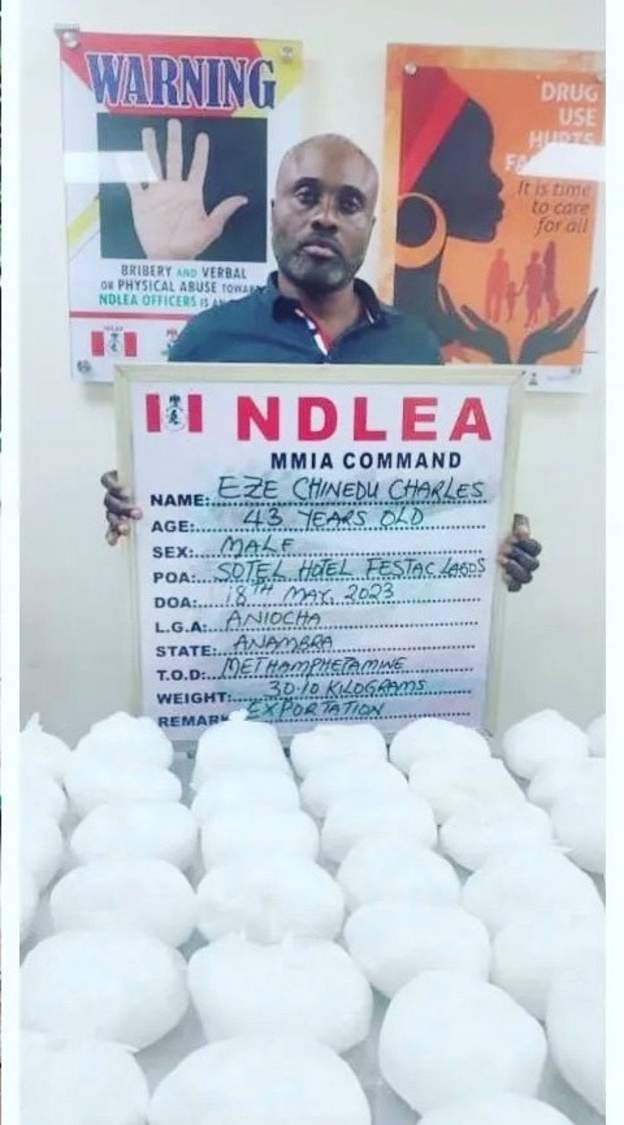
Nigeria’s anti-narcotics agency has made a significant seizure of methamphetamine, amounting to 30kg and valued at $1.2 million (£960,000), which was intended to be shipped to the United Kingdom via Lagos’ main airport.
The National Drug Law Enforcement Agency (NDLEA) revealed in a statement on Sunday that the methamphetamine was concealed within containers of powdered custard, forming part of a consolidated cargo destined for London.
During the operation, the NDLEA arrested three individuals, including the suspected drug baron Charles Chinedu Eze, at the Murtala Muhammed International Airport.
Following a search, detectives discovered Mr. Eze’s personal identification documents, leading them to seize his property located in the upscale Lekki suburb.
According to reports, the main suspect had allegedly fled the United Kingdom in December 2022, following his suspected involvement in a drug-related offense. As of now, Mr. Eze has not responded to the allegations made against him.
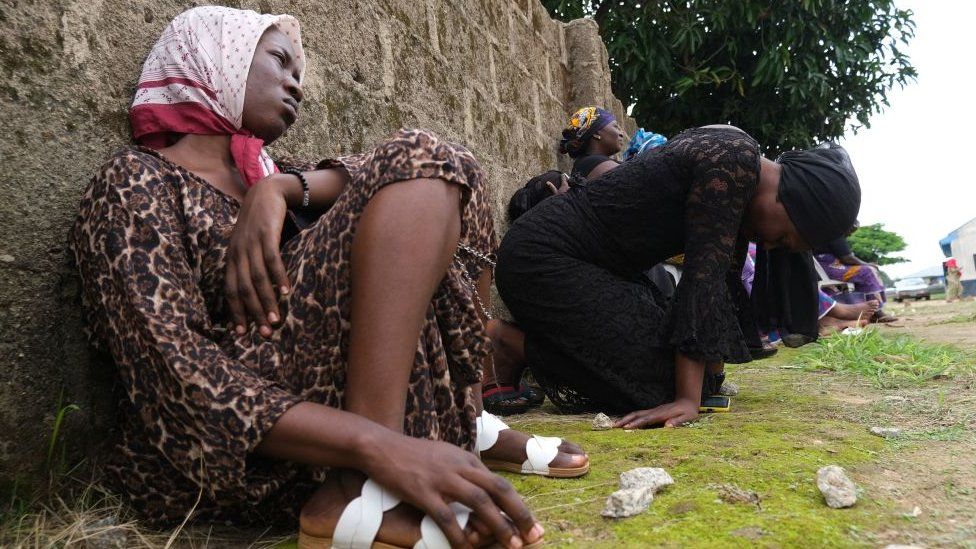
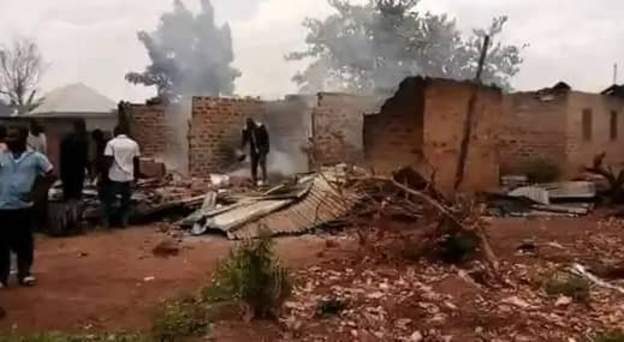
Dozens of victims have been buried in a mass grave following an attack on a town in Nigeria’s Plateau state, with many survivors fleeing the region.
Residents of Mwaghavul, a farming community in Mangu area of central Nigeria, told the BBC the assailants charged into their villages on Tuesday, shot indiscriminately before torching buildings.
A community leader told the BBC that “the gunmen invaded up to 17 villages” and that there were at least 85 people who died.
Deborah Samuel, a resident who escaped after hearing gunshots while at a market, said her father-in-law and four of her husband’s younger brothers were killed.
“We suddenly started hearing gunshots from different angles. We started running. I am still in pain of what has happened,” she said, cuddling her months-old baby.
Some of those who fled the attack have taken refuge at a private-run camp for internally displaced people.
African leaders have been advised by Nigeria’s major opposition Peoples Democratic Party (PDP) to abstain from the country’s impending inauguration ceremony, which will see President-elect Bola Ahmed Tinubu take the oath of office.
Speaking exclusively to the Daily Statesman, the spokesperson for PDP Presidential candidate Atiku Abubakar, Otunba Segun Showunmi, believes it is time African leaders put aside the familiarity among themselves and not partake in what he described as an “embarrassing democratic heist.”
“We would advise a lot of African countries to reconsider attending the upcoming inaugural ceremony. They will be invariably lending themselves to a very embarrassing democratic heist. Our recommendation is that African leaders must show more than a passing interest in using their attitude, conduct, and utterances. One of the things they could do is boycott the inauguration not because they want to be involved in our issue but because they want the court to adjudicate,” he said.
Referring to a similar situation during South Africa’s Apartheid, he noted that “in South Africa, if some African leaders did not use their boycott, staying away, reprimand, to say this is not right; then probably everybody would have just clapped and said Kumbaya to those who are doing the wrong thing.”
“Of course, it is his (President Nana Akufo-Addo’s) decision and the decision of Ghana to attend the ceremony but our recommendation as the main opposition party, the Peoples Democratic Party of Nigeria, which has a very strong and good relationship with Ghana would be when in doubt, leave it out. And in this particular situation, we recommend that they don’t come,” he stressed.
Other infiltrations
Responding to whether the court battle has inured to the benefit of other political parties, Otunba Showunmi said that although the flawed electoral process paved the way for parties to claim victory, the PDP is convinced that it won the presidential election.
“Without getting involved in the merit and demerit of the case, we are very convinced that we won. Because the process was flawed, it has created room for every other person to claim that they won and that’s part of the reason we say African and world leaders should boycott,” he indicated.
“Elections are a procedural selection process that guarantees the integrity of the citizens picking who will be their representative. If comes to an end, that a greater percentage of the people in the country do not believe that a fair process has trolled up the president-select, then the least that African leaders can do is stay away for now,” he said.
“If the court rules that he is right, then they can congratulate him. Knowing fully well that it will serve as a strong signal that when another election comes, African leaders are not going to play the ostrich by pretending the issues do not concern them. It will form a basis for Ghana and other African countries to clean up democracy,” he pointed out.
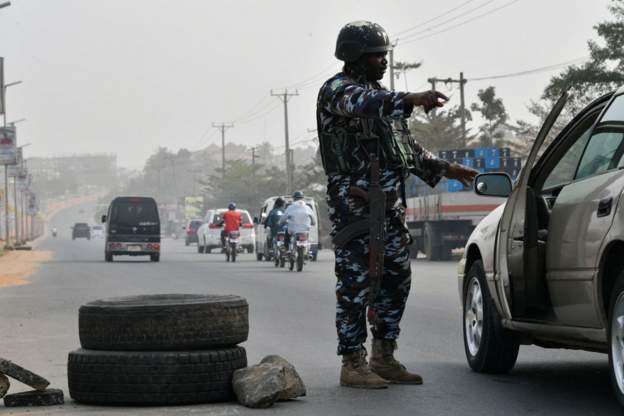
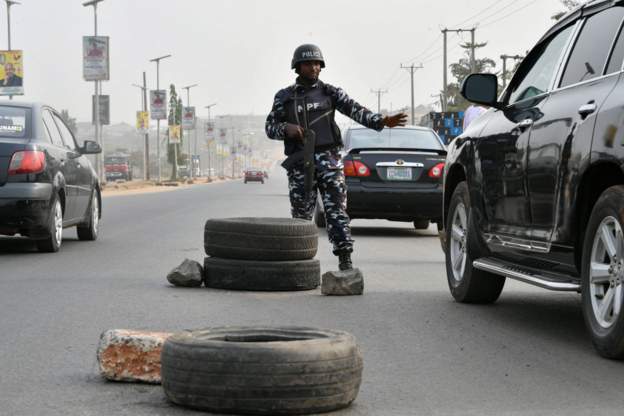
Police in Nigeria have successfully rescued two kidnapped US embassy staff without any harm after a recent attack that claimed the lives of seven other individuals who were traveling in the same convoy.
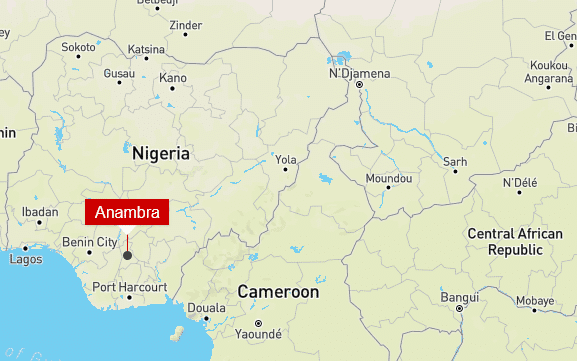
The attack took place on Tuesday in the district of Ogbaru, located in the south-eastern part of the country. This particular area has been placed under a curfew for the past year due to safety concerns.
According to a local official, the assailants opened fire on the vehicles and set them ablaze, resulting in the victims being burnt beyond recognition.
The identity of the gunmen remains unclear at this time. However, some officials have attributed the attack to Igbo separatist fighters associated with the Indigenous People of Biafra (Ipob), a group known to operate in the region. Ipob has not responded to these allegations as of yet.
President Muhammadu Buhari, who leaves office later this month after pledging and failing to end Nigeria’s security crisis, says his government is “committed to fishing out” the culprits behind Tuesday’s attack.
No US citizen was among the victims and there are “no indications at this time that it was targeted against our mission”, said Secretary of State Antony Blinken.
Of the seven people killed on Tuesday, three were Nigerian staff at the US embassy and four were security escorts. The two people who were abducted, then released, have not been publicly identified by police.
“Operations are still ongoing and further details shall be communicated,” says Anambra state police spokesman Ikenga Tochukwu.
Two suspects believed to be connected to the attack on a US convoy in Nigeria’s Anambra state have been apprehended, according to local police.
Preliminary investigations indicate that the attack resulted in the tragic deaths of seven individuals. Among the victims were three US consulate officials and four police escorts.
Fortunately, no US citizens lost their lives, although two consulate officials remain missing as they were reportedly abducted by the assailants.
Anambra state’s police commissioner, Echeng Echeng, attributed the attack to alleged members of the Eastern Security Network (ESN), the armed branch of the separatist group known as the Indigenous People of Biafra (Ipob).
However, Mr. Echeng did not provide evidence to support this claim regarding the separatists’ involvement.
US Secretary of State Antony Blinken denounced the attack and revealed that it targeted an advance team from a US mission visiting a flood response project funded by the United States in the southeastern Nigerian state.
President Muhammadu Buhari of Nigeria also condemned the attack and reaffirmed his government’s commitment to ensuring the safety of its citizens.
He vowed that those responsible for the assault would face appropriate punishment.
As reported by local the police and US officials, an attack on a US convoy took place in Nigeria on Tuesday. Four individuals were killed, including two police officers and two members of the US embassy staff. Three other people were also taken hostage.
The attack happened in the southeast Anambra state, according to the Anambra Police Command, who told CNN that the attackers “murdered two police operatives and two staff of the US consulate and set their bodies and their vehicles ablaze.”
According to the White House and the neighbourhood police, none of the dead personnel were US nationals. John Kirby of the US National Security Council stated that “no US citizens were involved and no US citizens were injured.” “There have been some injuries, and possibly some deaths,”
When the assailants saw security forces “they made away with two police operatives and a driver of the second vehicle in the convoy,” Ikenga Tochukwu, deputy superintendent of police, said. “No US citizen was in the convoy,” he added.
Police said that joint security forces “have embarked on a rescue and recovery operation in the area.”
A State Department spokesperson said Tuesday that “Mission Nigeria personnel are working with Nigerian security services to investigate.”
They continued: “The security of our personnel is always paramount, and we take extensive precautions when organizing trips to the field,” they continued.
Gunmen in Nigeriahave launched an assault on a convoy of US personnel, resulting in the tragic deaths of four individuals, including two members of the US consulate and two police officers.
During the attack, three additional individuals were abducted before the assailants set their vehicle ablaze.
The incident occurred in the southeastern region of Anambra state. Authorities have promptly initiated a rescue and recovery operation to address the situation.
It is important to note that no US citizens were present in the targeted convoy, and further information regarding the purpose of the convoy’s presence in the state has not been disclosed.
A Nigerian state police spokesperson expressed regret that the convoy entered the state “without recourse to the police in the area or any security agency”.
The US said its mission in Nigeria was working with Nigerian security services to investigate the incident.
“The security of our personnel is always paramount, and we take extensive precautions when organising trips to the field,” the US State Department said.
Violence in the south-east of the country is just one of the many issues facing president-elect Bola Tinubu, who takes the helm of Africa’s most populous nation later this month.
Nigerian chef, Hilda Effiong Bassey, popularly known as Hilda Baci, has spiced things up in the culinary world by setting a thrilling new Guinness World Record.
She has supposedly claimed the title for the “longest cooking marathon by an individual.”
With her apron on and determination in her eyes, Hilda surpassed the previous record held by Lata Tondon of 87 hours and 45 minutes.
Her sizzling journey began on a Thursday at 4pm, and she hasn’t put down her ladle since then.
Hilda is on a mission to cook for an astonishing 96 hours, aiming to create a fresh world record as the first person ever to showcase such incredible culinary endurance
Along the way, she has been receiving an outpouring of support from government officials, celebrities, clerics, and her fellow Nigerians.
Even the rain couldn’t dampen the spirits of Hilda’s fans, as they braved the downpour in the early hours of Monday to cheer her on. It’s an electrifying feat that has the nation buzzing with excitement and anticipation.
At a special ceremony in London, Samuel Fosso, one of Africa’s most accomplished photographers, was awarded the esteemed Deutsche Börse Photography Foundation Prize for 2023.
Described as “a man of 1,000 faces”, the Cameroonian-born artist has specialised in self-portraiture and performative photography since starting out in the 1970s – and his works now appear in renowned galleries all over the world.
The Deutsche Börse award recognises photographers whose work have “made the most significant contribution to international contemporary photography over the past 12 months”, according to a press release.
Fosso, now 60, was raised in Nigeria, but fled during the Biafran war when his mother died and later settled with his uncle in the Central Africa Republic (CAR), where he began an apprenticeship at a local photographic studio.
At the age of 13 in 1975, he branched out on his own opening his Studio Photo Nationale in the capital, Bangui. He started taking self-portraits using up exposures on his films to send to his grandmother in Nigeria.
His initial aim was to show he was alive and well, but his interest in exploring the genre grew – and he experimented with new techniques and poses.
“Winning this prestigious prize, recognised as one of the most important in the field of photography, means that my work is recognised by the artistic community,” Fosso said.
“This recognition is very important to me. I feel a lot of joy and pride.”
One of his most famous images, from his series from the 1970s, is of him sporting bell bottom trousers inspired by West African fashion and images seen in American magazines:
Samuel Fosso, Autoportrait, from the series 70s Lifestyle, 1976Image caption: Samuel Fosso, Autoportrait, from the series 70s Lifestyle, 1976Samuel Fosso, from the series 70s Lifestyle, 1975-78Image caption: Samuel Fosso, from the series 70s Lifestyle, 1975-78
In his series African Spirits from 2008, Fosso posed as 14 iconic figures of the US Civil Rights Movement:
Samuel Fosso, Self-Portrait (Angela Davis) from the series African Spirits, 2008Image caption: Samuel Fosso, Self-Portrait (Angela Davis) from the series African Spirits, 2008
In his Allonzenfans series from 2013, he reflected on how France conscripted men from its West African colonies to fight in World War One and World War Two:
“I want to show the black man’s relationship to the power that oppresses him,” Samuel FossoImage caption: “I want to show the black man’s relationship to the power that oppresses him,” Samuel Fosso
An assistant inspector general of police, Garba Umar, has been appointed by Nigerian President Muhammadu Buhari as a top security advisor on counterterrorism.
Mr Umar is the vice-president of the International Criminal Police Organisation (Interpol) for Africa and also the head of the agency’s national central bureau (NCB) in Nigeria.
He was elected as a member of the executive committee of Interpol in 2021 and his tenure is ending next year, local media said.
In a statement on Thursday, Garba Shehu, the presidential spokesperson said President Buhari took note of Mr Umar’s service at Interpol and hoped he would assist Nigeria in counter-terrorism efforts.
The president also hoped that Mr Umar’s appointment would “get more Nigerians into important positions in the Interpol”.
The appointment takes effect next week and Mr Umar’s role is stationed in the office of the minister of police affairs, according to Mr Shehu.
Mr Buhari is expected to hand over power to President-elect Bola Tinubu on 29 May.
Tragically, 15 children have drowned and 25 others went missing after an overcrowded boat capsized on the Shagari river in Nigeria’s Sokoto state.
The boat was carrying children who were on their way to collect firewood in the bush on Tuesday morning. According to Aliyu Abubakar, the political administrator of Shagari district, the incident happened on the other side of the river.
Eyewitness accounts reveal that the boat was overloaded with over 40 girls onboard, leading to the capsizing of the boat. Although 15 corpses have been recovered, local divers are still searching for the other victims.
Local authorities confirm the incident, prepare for burials
The chairman of Shagari Local Government Area, Aliyu Abubakar, confirmed the incident and expressed deep condolences to the families of the victims. He stated that the bodies of the victims have been recovered and are being prepared for burial.
At the time of filing this report, local divers and authorities have not confirmed any survivors. The boat, which was carrying over 40 girls, resulted in the recovery of only 15 dead bodies with 25 still missing. The divers are currently conducting search and rescue operations to locate the missing girls.
The Food and Drugs Authority (FDA) has issued a public warning concerning the recall of all batches of Polyfort Suspension in Nigeria.
According to a statement made by the Authority on Tuesday, the recall is the result of bad results from a series of continuing stability tests.
Swiss Pharma Limited manufactures the drug, which is used to treat heartburn, indigestion, and hyperacidity.
According to the FDA, its surveillance team is actively monitoring the country’s ports of entry and markets to ensure that such unregistered products are not available in the country.
It however advised that anyone who comes across this product in trade in Ghana should report to any of the FDA’s offices across the country.
A Nigerian woman has sued her dad for forcing her to marry a stranger, local media report.
20-year-old Fatima Aliyu’s lawyer told a Sharia (Islamic) court in Kaduna state that she already had someone she loves.
He said that the woman was not suing the father out of disrespect for him.
The father told the court that her late parents had chosen the groom for his daughter when they were alive and he wanted to respect their wishes.
Judge Malam Aiyeku Abdulrahman ruled that while the father has the right to choose a husband for his daughter, forced marriage was not encouraged.
He advised the man to be patient with his daughter.
“Allow her to present the person she wants to marry and if you are pleased with his religion and character, you allow her to get married,” the Punch quoted the judge as saying.
On Monday, a Nigerian court started considering several lawsuits that the opposition had filed to contest the incumbent party’s victory in the nation’s presidential election.
The presidential tribunal at the Court of Appeal in the capital, Abuja, heard the opening statements of lawyers representing opposition parties, which are challenging the outcome of the February vote won by Bola Tinubu of the ruling All Progressives Congress.
As the court hearing began, armed security personnel blocked major access roads and prevented a handful of journalists and lawyers from entering the facility. Some protesters waved Nigerian flags and displayed placards, alleging that the electoral process was flawed.
“Why I am demonstrating is because of the anger and the pain I have as a Nigerian not allowed to express and enjoy the resources of the land,” said protester James Mike, who accused the Nigerian political class of pilfering the country’s wealth from huge mineral and crude oil resources.
Nigeria’s election commission declared Tinubu the winner of the election in a televised broadcast after he garnered 37% of the votes.
But the two main opposition candidates rejected the result, questioning Tinubu’s qualification and alleging that results from the country’s 177,000 polling stations were tampered with.
Analysts and observers said that the voting on Feb. 25 was largely an improvement from Nigeria’s previous elections, but said that delays in uploading results might have given room for the figures to be tampered with.
In separate petitions, both second-place finisher Atiku Abubakar of the Peoples Democratic Party and No. 3 finisher Peter Obi of the Labour Party argued that Nigeria’s electoral commission violated the provisions of the law in announcing the results of the election.
Obi has said he has evidence to show he tallied the majority votes in the election while Abubakar has asked the court to disqualify Tinubu, alleging that he has a Guinean passport and therefore wasn’t eligible to enter the presidential contest under the Nigerian Constitution.
“We are telling the court that he (Tinubu) is not qualified and contrary to the law, he did not put (the election commission) on notice that he has citizenship of another country,” said Paul Ibe, a spokesman for Abubakar.
In Nigeria, an election can be invalidated only if it’s proven that the national electoral body largely didn’t follow the law and acted in ways that could have changed the result. None of Nigeria’s presidential election results has ever been overturned by the country’s Supreme Court, though analysts said this year’s vote is peculiar with the heavy deployment of technology in the electoral process.
The main opposition party has said without evidence that the ruling party is plotting to interfere with the court process, adding to tensions as the country awaits the judgment of the court while preparing for the inauguration of Tinubu as president.
The court challenge though is usually a lengthy process and is expected to last for months, beyond May 29 when Tinubu is due to take over from incumbent President Muhammadu Buhari.
The Nigerian police say they have freed 58 persons who had been kidnapped and held prisoner in Kogi state’s central region by criminal groups.
How long they had been detained remained unclear.
According to a police spokeswoman, the rescue in Udulu Forest was a cooperative effort by local volunteer defense organizations.
She claimed that one captive died during the operation while the abduction group fled with minor injuries.
Bola Tinubu, the incoming president who will take office later this month, will face a number of difficult security concerns, including kidnappings for ransom.
During Muhammadu Buhari’s tenure as president, they spread to numerous states and became typical.
A wealthy Nigerian politician and his wife were sentenced to prison for planning to have a young man trafficked to the UK so they could use his organs to treat their ailing daughter.
Multimillionaire Senator Ike Ekweremadu, 60, his wife Beatrice, 56, and medical “middleman” Dr. Obinna Obeta, 51, were convicted guilty at the Old Bailey in March as a result of a landmark case involving contemporary slavery.
The Ekweremadus’ 25-year-old daughter Sonia needed a kidney, so they sent their victim, a street vendor in Lagos, to the UK.
He fled in fear of his life and walked into a police station exactly a year ago to report what had happened after the Royal Free Hospital called a halt on the private £80,000 procedure.
In a televised sentencing on Friday, Mr Justice Johnson recognised Ike Ekweremadu’s ‘substantial fall from grace’ as he jailed him for nine years and eight months.
Beatrice Ekweremadu was jailed for four years and six months and Obeta for 10 years.
The senior judge said: ‘People-trafficking across international borders for the harvesting of human organs is a form of slavery.
‘It treats human beings and their body parts as commodities to be bought and sold.
‘It is a trade that preys on poverty, misery and desperation.’
He told the defendants: ‘You each played a part in that despicable trade.’
On the question of harm to the victim if the intended transplant went ahead, he said: ‘He would have faced spending the rest of his life with only one kidney and without the requisite funding for the required aftercare.’
He added the risks had not been properly explained and there had been no consent ‘in any meaningful sense’.
During the hearing, the victim, who cannot be identified for legal reasons, said he only found out what was planned when he was taken to the north London hospital for an initial consultation.
In a statement read to court: ‘I would never (have) agreed to any of this.
‘My body is not for sale.’
He spoke of his fears for his own safety and that of his family in Nigeria who had been visited and told to ‘drop’ the case.
He said: ‘I cannot think about going home to Nigeria.
‘These people are extremely powerful and I worry for my family.
‘Even though I live here in the UK at the moment I know I need to be careful too.
‘I have no-one here, no family, no friends.
‘I am having to start my life again.
‘I’m worried about my family in Nigeria but I have been told my dad had been visited and was told to drop the case in the UK.’
It is the first time anyone has been convicted under the Modern Slavery Act of an organ-harvesting conspiracy.
Scotland Yard declined to say whether more charges would be brought but said the investigation was ongoing.
Police have highlighted soaring numbers of modern slavery cases in recent years with a small number involving organ harvesting.
Detective Superintendent Andy Furphy said: ‘Human trafficking for the purpose of organ removal is relatively rare in the UK, but what we have seen since the victim’s bravery is that this is now not the only investigation of that nature taking place in London.
‘Although organ harvesting forms a very small percentage of modern slavery, human trafficking, we’re now starting to see more people coming forward.
‘The victim of this case, a very brave young man, was exploited due to his vulnerable economic circumstances, by people that were powerful, wealthy, and that exerted control and dominance over him bringing into the UK for purposes of taking his kidney.
‘Modern slavery is prevalent across all of our communities in London, be it in labour exploitation, nail bars, car washes, the sex trade industry.
‘If people are lurking in the background, controlling them, exerting some kind of dominance over people, then please just report any suspicion whatsoever.
‘It might be the straw that breaks the camel’s back and allow us to move forward with an investigation and prosecution.’
While it is lawful to donate a kidney, it becomes criminal if there is a reward of money or other material advantage.
The prosecution said the young man was offered up to £7,000 and the promise of a better life in the UK.
When the transplant bid failed, Ms Ekweremadu’s family, who own £6 million worth of property and have an address in Willesden Green, north-west London, switched to Turkey and set about finding more potential donors, the court was told.
An investigation was launched after the victim ran away from London and slept rough for days before walking into a police station more than 20 miles away in Staines in Surrey, crying and in distress.
He told police how he fled in fear for his life after overhearing a plan to take him back to Nigeria for the procedure after the transplant plan in London failed.
Further inquiries led to Ike Ekweremadu, Nigeria’s deputy Senate president, as ‘sponsor’ for the young man’s travel.
Ike and Beatrice Ekweremadu were arrested on June 21 last year as they arrived on a flight to Heathrow, stepping off the plane with 30,000 US dollars.
Examination of the defendants’ phones revealed a stream of messages detailing the progress of the failed organ transplant plan.
The defendants denied conspiracy to arrange or facilitate the travel of another person with a view to exploitation, claiming they believed the victim was acting ‘altruistically’.
Sonia Ekweremadu was cleared of wrongdoing by the jury and watched her parents being sentenced from the public gallery.
Recalls from Malaysia and Taiwan after detecting a potentially cancerous substances in the instant indomie noddles, Nigeria’s food and drug regulator has announced that it is making investigations into the brand
Nigeria’s National Agency for Food and Drug Administration and Control (NAFDAC) said in a statement Tuesday it was “taking swift actions” to analyze samples of the product, as well as its seasoning, and will also scrutinize “other brands of instant noodles offered for sale to Nigerians.”
Health officials in Malaysia and Taiwan last week recalled the noodles saying they had detected a compound called ethylene oxide in the “special chicken” flavor of the noodles.
The Nigerian regulator said Indomie is produced by a local manufacturer and that the special chicken” flavor noodles is not available for sale in the country.
“The public is … informed that the implicated Indomie instant noodle is not registered for sale in Nigeria. It is important to mention that noodles are on the Import Prohibition List of the Federal government of Nigeria and is therefore not permitted for importation to Nigeria,” NAFDAC Director General Mojisola Christianah Adeyeye wrote in the statement.
Indomie: The instant noodle giant in Nigeria
Indonesian food giant Indofoods has defended the safety of its products.
“We would like to emphasize that … our Indomie instant noodles are safe for consumption,” Taufik Wiraatmadja, a member of the board of directors at Indofoods, said in a statement last week.
“All instant noodles produced by (Indofood) in Indonesia are processed in compliance with the food safety standards from the Codex Standard for Instant Noodles and standards set by the Indonesian National Agency for Drug and Food Control (BPOM),” the statement added.
Ethylene oxide is a colorless, odorless gas that is used to sterilize medical devices and spices. The United States Environmental Protection Agency found in a report that the gas could contribute to increased cancer risk.
Indonesia’s food and drug monitoring agency also said last week the products available locally were “safe for consumption as it met its safety standards” — despite containing traces of ethylene oxide.
Nigeria is one of the largest instant noodle markets in the world and Indomie is the “market leader in the noodles industry in Nigeria,” according to the Indofoods, which owns the brand.
Indonesian food giant Indofoods says Indomie noodles is available in more than 100 countries across the world in Africa, Asia, Europe and the Middle East.
Indomie first launched instant noodles in 1972 with a chicken flavor but is now produced in many varieties.
A Nigerian MP, Ike Ekweremadu, who has been found guilty of an organ harvesting conspiracy, will be sentenced in the UK on Friday. However, his fellow MPs in Nigeria have joined mounting pleas for leniency in his case.
Ekweremadu, 60, his wife Beatrice, 56, and a middleman Obinna Obeta, 51, were found guilty in March of trafficking a 21-year-old Nigerian street trader to the UK to provide a kidney for the Ekweremadus’ daughter, Britain’s Crown Prosecution Service (CPS) said in a statement.
Nigerian senator guilty of organ harvesting plot, UK court rules
Prosecutors say the victim was brought to the UK after being offered a reward of up to £7,000 ($8,810) and the promise of work in the country, but he was unaware that he was expected to provide a kidney in return.
A medical consultant called off the planned transplant after becoming suspicious of the circumstances surrounding it and the victim fled, sleeping rough for days before reporting the plan to UK police last May, the CPS said.
Ekweremadu, Beatrice and Obeta will be sentenced at the UK’s Old Bailey Court Friday and face up to 10 years in prison under the Modern Slavery Act 2015.
Political class plea for leniency
Ekweremadu was a former deputy senate president for 12 years and his case has elicited sympathy with some in Nigeria where many see him and his wife as victims of circumstance who were desperate to help their sick daughter.
Many of the country’s political class have written to the UK courts appealing for leniency during his sentencing, including Nigeria’s former President Olusegun Obasanjo.
President of the Nigerian Senate, Ahmad Lawan, said Wednesday that he had written to the British judiciary on behalf of Ekweremadu asking them to “temper justice with mercy.”
“We are now using this particular intervention to seek for clemency in the sentencing. … The conviction has already been done but we are seeking clemency because this is the first time our colleague is getting involved in this kind of thing,” Lawan said.
Femi Gbajabiamila, the Speaker of Nigeria’s House of Representatives, the country’s junior parliament, described Ekweremadu as “a brilliant lawyer, a distinguished public servant and a dedicated family man.”
Nigerian senator and wife charged with plotting to get child to UK to harvest organs
The speaker of parliament of the West African regional bloc ECOWAS, Sidie Mohamed Tunis has also written to the chief clerk of the Old Bailey Court seeking leniency for the Ekweremadus.
Ekweremadu served as speaker of the ECOWAS parliament between 2011 and 2015.
But the calls for clemency are unlikely to hold any sway over the UK court and some in Nigeria have raised eyebrows that high profile politicians are using their influence to advocate for a convicted criminal.
Enter your email to sign up for CNN’s “Meanwhile in the Middle East” Newsletter.
IPC Justice, a non-governmental organization dedicated to fighting corruption in politics wrote on Twitter: “… Nigeria has a reputation for not enforcing laws against political elites, which could lead to the perception of condoning criminal activity if the Speaker advocates for clemency for someone convicted of a serious crime.”
The President of Zimbabwe, Emmerson Mnangagwa, President Muhammadu Buhari of Nigeria, and Seychelles President Wavel Ramkalawan, and his wife, First lady Linda Ramkalawa will join the Ashanti ruler, Otumfuo Osei Tutu and his wife, Lady Julia to witness King Charles III’s coronation, this is according to the full list of invitees released by townandcountrymag.com.
Members of the Royal Family attending the coronation:
Members of the House of Windsor will be in attendance, including Charles’s sister, Princess Anne; his son, Prince William; and daughter-in-law Catherine, Princess of Wales.
Prince George, his grandson, will be a page of honor at the coronation. His other son, Prince Harry, will attend, but Meghan, Duchess of Sussex, and their two children, Prince Archie and Princess Lilibet, will not be in attendance.
All the members of the British royal family we can expect to attend include:
Prince William and Catherine, Princess of Wales, and their children Prince George, Princess Charlotte, and Prince Louis
Princess Anne and her husband, Sir Timothy Laurence
Prince Edward and his wife, Sophie, Duchess of Edinburgh, and their children Lady Louise and James, Earl of Wessex
Prince Andrew
Princess Beatrice and Edoardo Mapelli Mozzi
Princess Eugenie and Jack Brooksbank
Zara Tindall and Mike Tindall
Peter Phillips
Prince Edward, the Duke of Kent
Prince Michael of Kent and Princess Michael of Kent
Princess Alexandra
Prince Richard, Duke of Gloucester and Birgitte, Duchess of Gloucester
Princess Margaret’s children Lady Sarah Chatto (and her husband, Daniel Chatto) and David Armstron
The king of the Ashanti kingdom, Otumfuo Osei Tutu II, may, perhaps already be in the United Kingdom now, ahead of the coronation of Charles III as the new monarch.
This follows the official invitation that was sent to the king, as was confirmed through a statement issued by the Chief of Staff of the Manhyia Palace, John Badu, that said that the Asantehene had been invited for the coronation ceremony, which is slated for May 6, 2023, with his wife, Lady Julia.
It added that Otumfuo Osei Tutu and Lady Julia will meet the British monarch before the coronation on May 4 at Buckingham Palace and also attend the King’s official reception on May 5, 2023.
The coronation of King Charles III would also be done with that of Queen Consort Camilla.
Already, about 2,000 people have been confirmed to attend the coronation of King Charles and Queen Camilla.
A bill supporting life imprisonment without the option of a fine has been approved by the Nigerian senate and is now in effect.
The passing of the bill on on Wednesday followed the consideration and adoption of a report by a senate committee on solid minerals, mines, steel development and metallurgy, local media reported.
The lawmakers said criminals were getting more innovative in the use of explosives to perpetrate crimes.
They said suicide bombers had killed dozens of Nigerians using explosives.
The bill will be debated by the House of Representatives before being forwarded for presidential assent.
Most of the explosives used by insurgents are reportedly made from ammonium nitrate and carbamide, which are locally available.