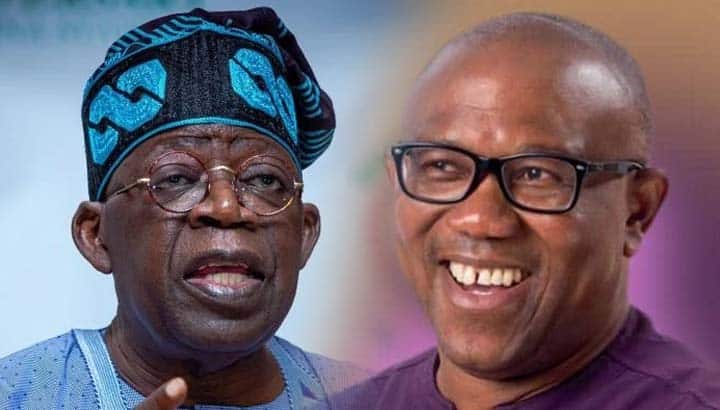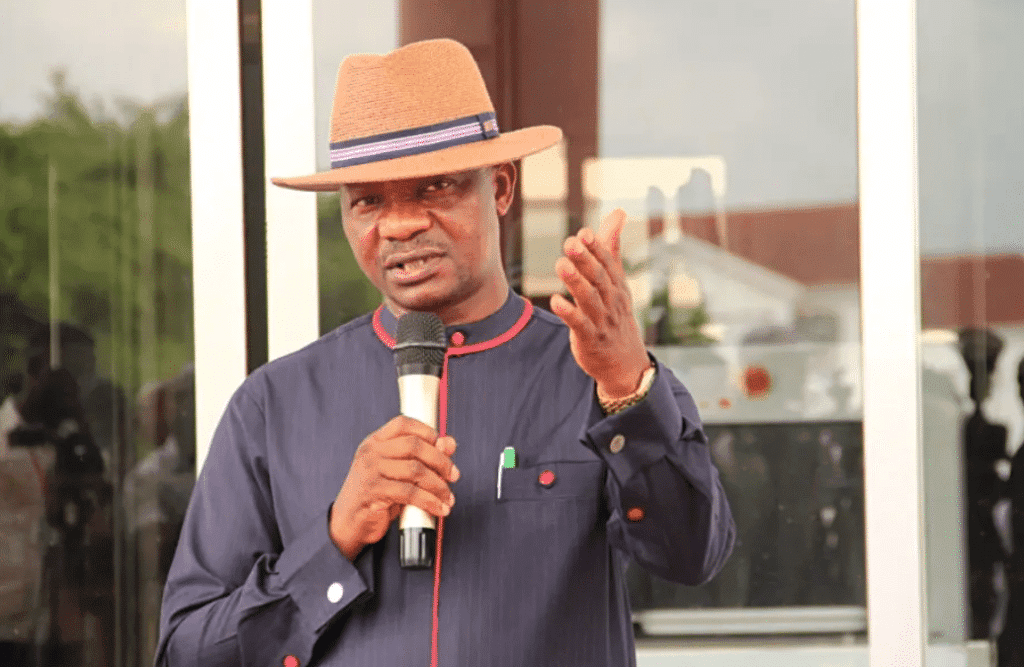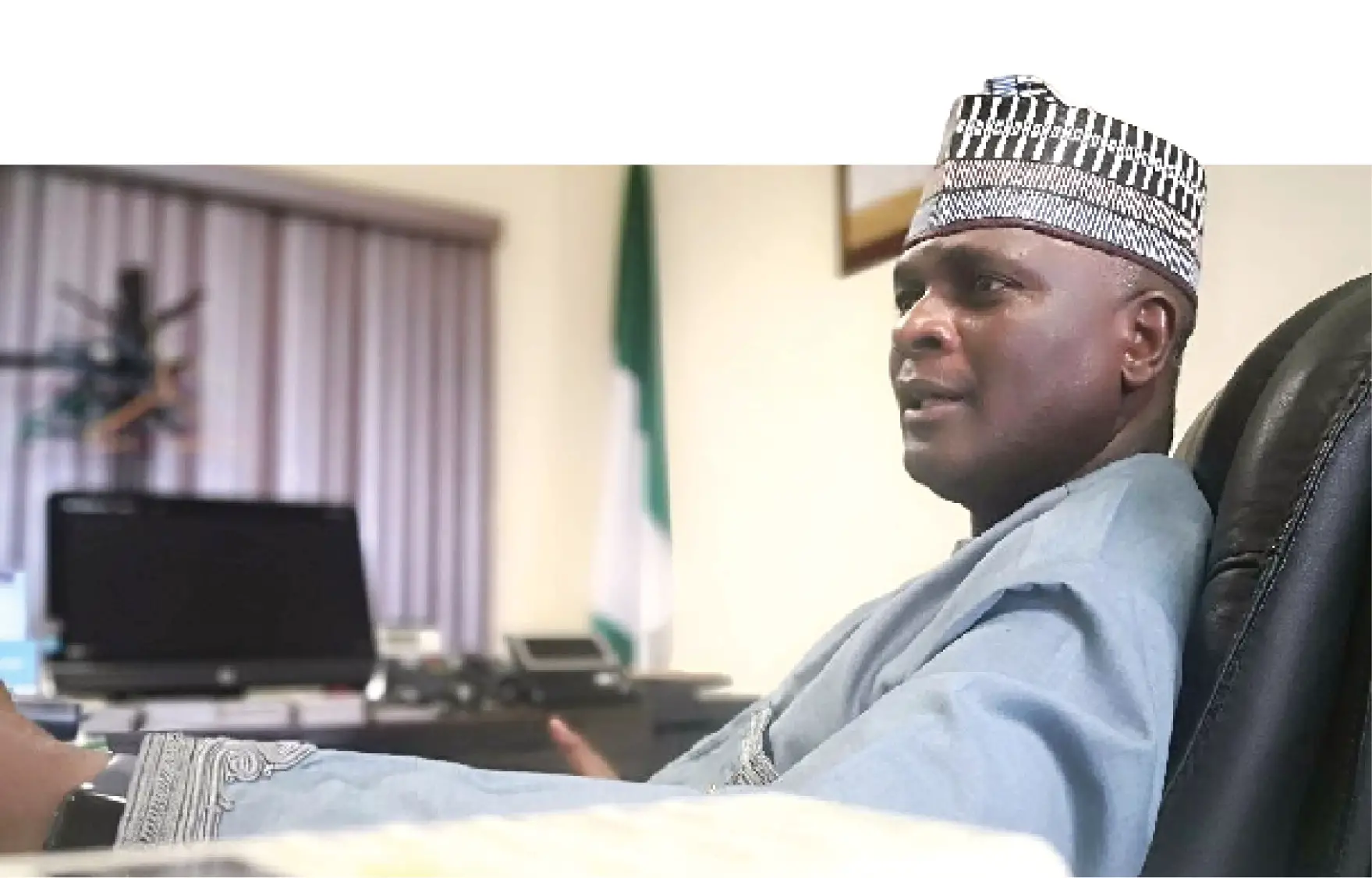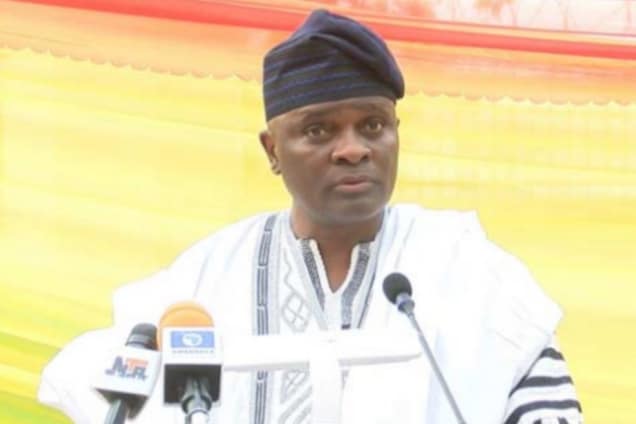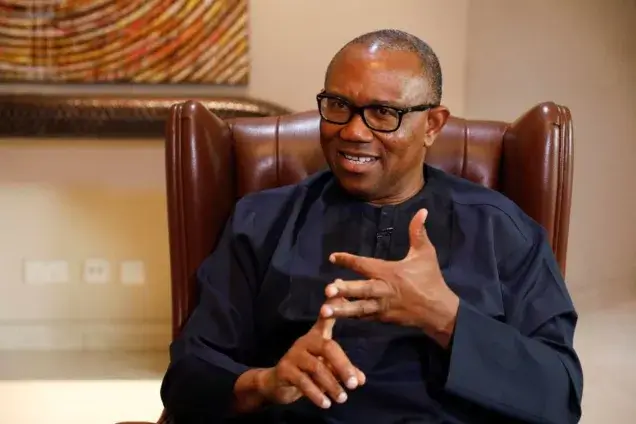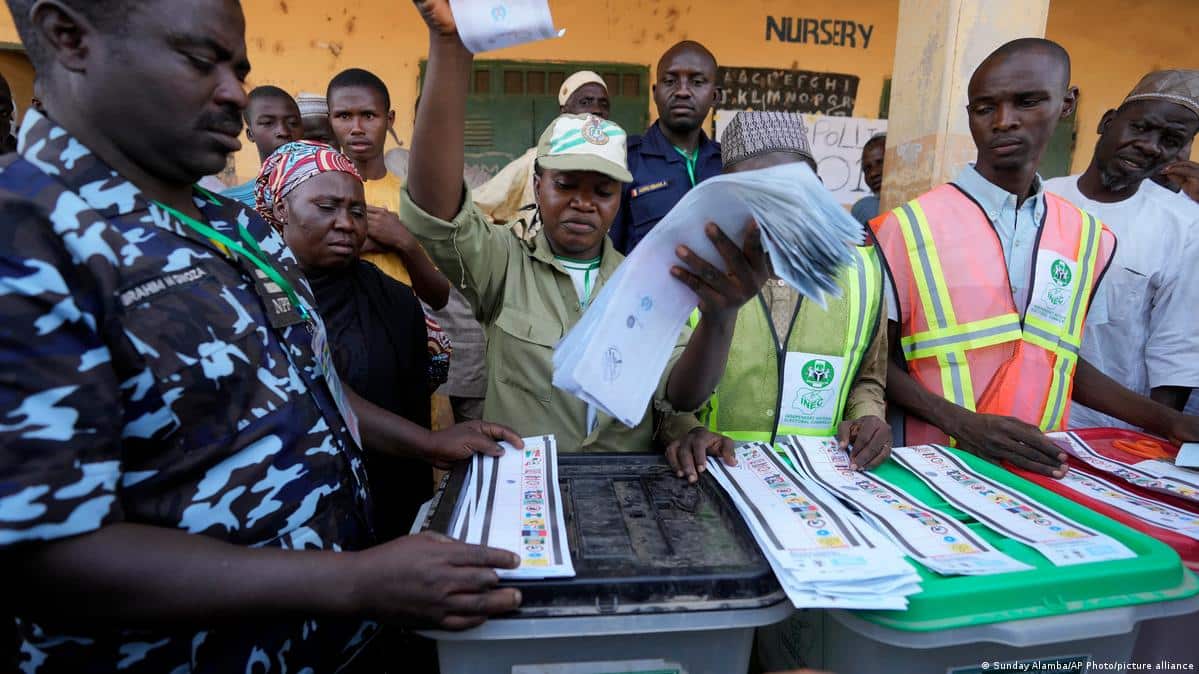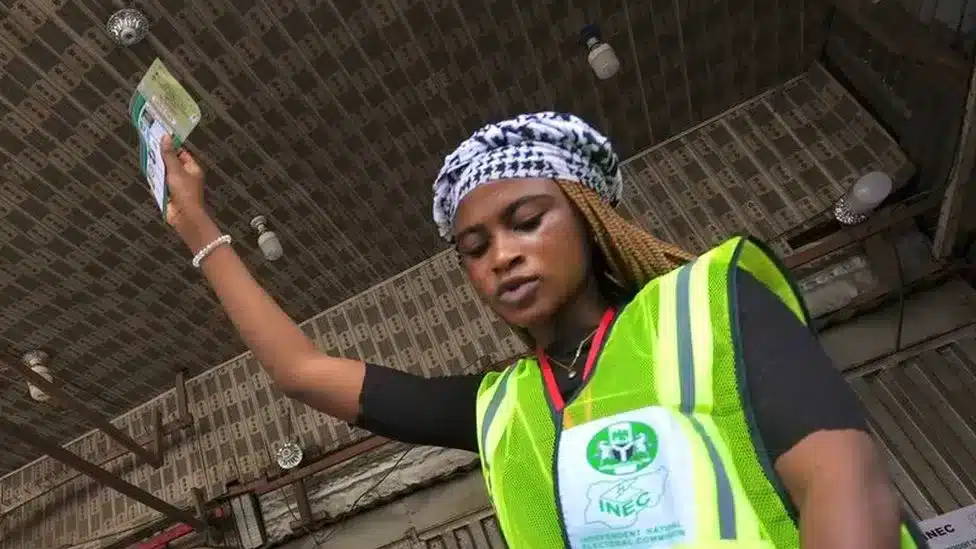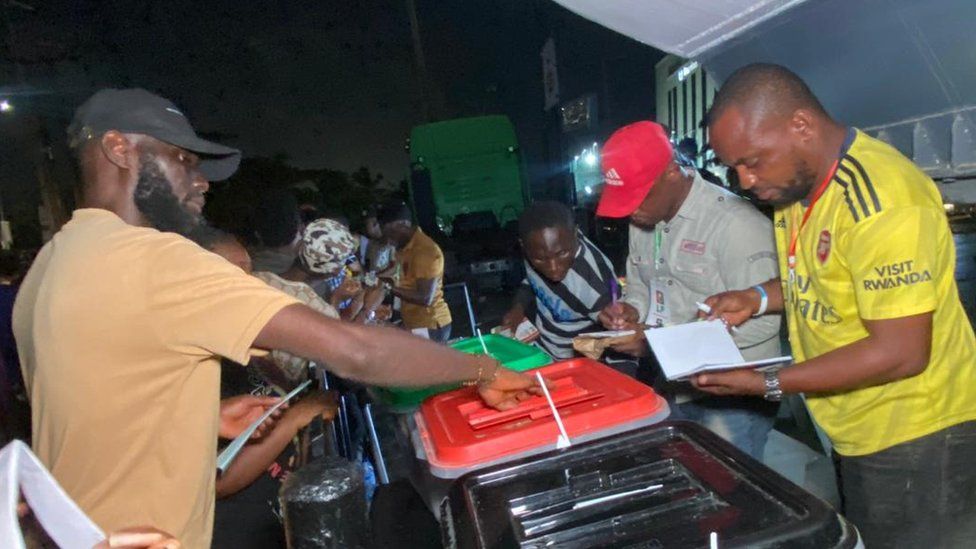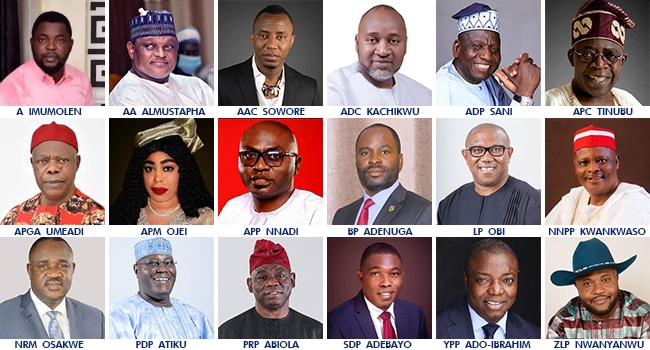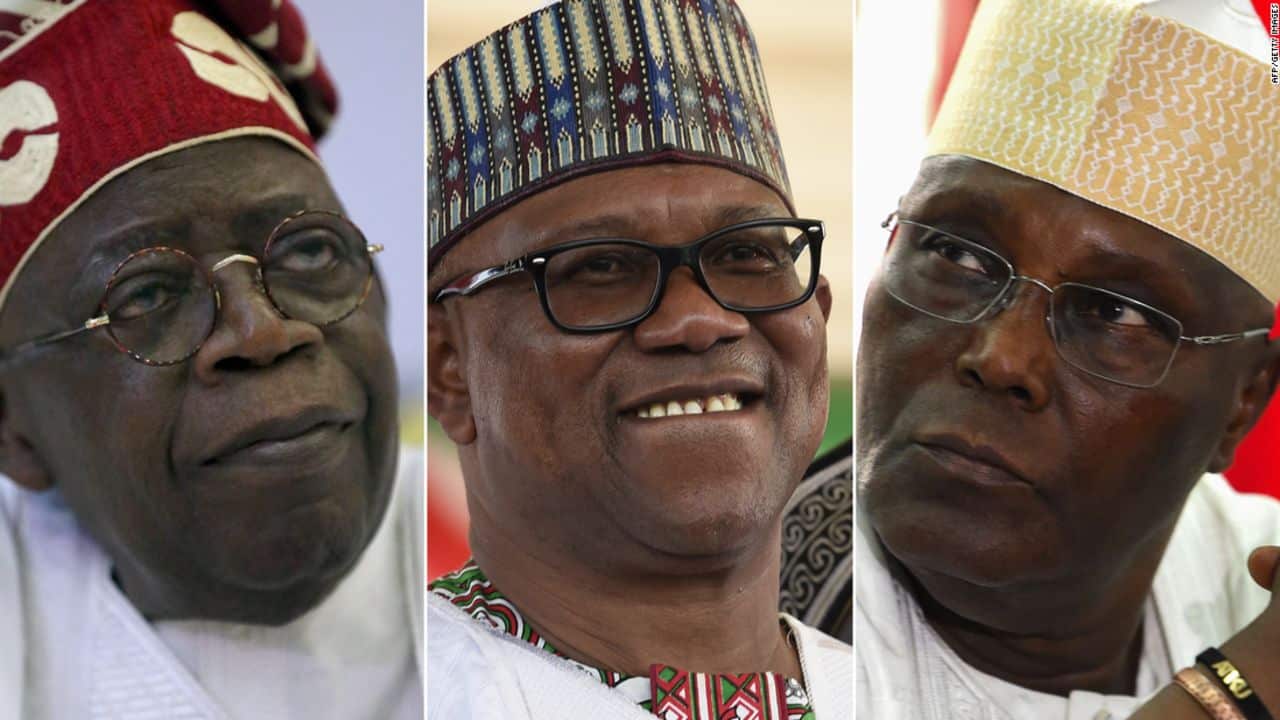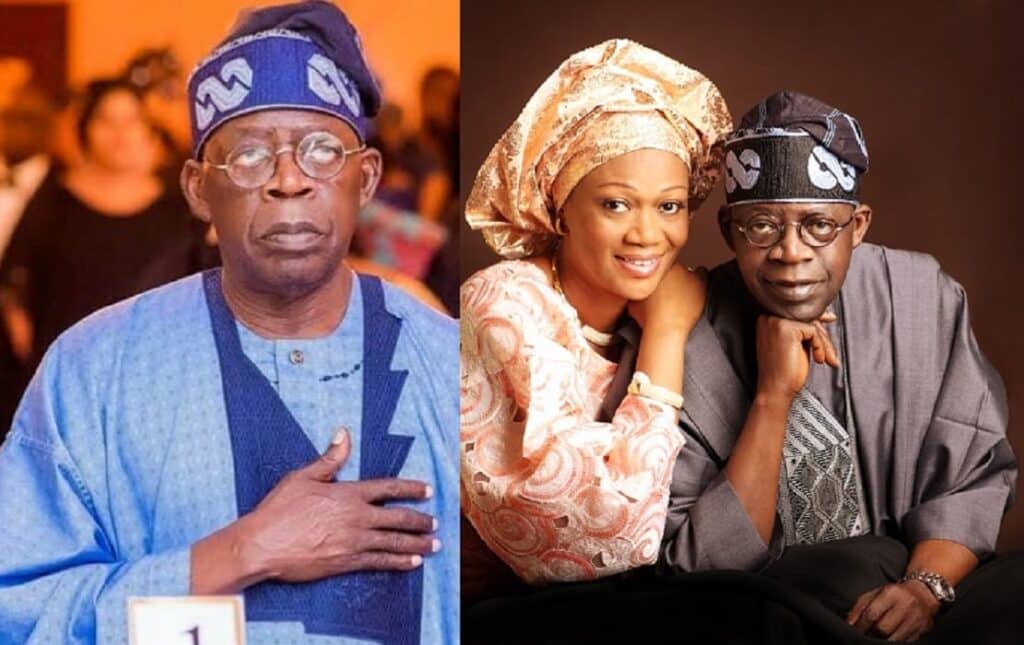
After receiving more than 25% of the vote in 12 states, Bola Tinubu of the All Progressive Congress Party has obtained the simple majority needed to be proclaimed the winner of the presidential elections.
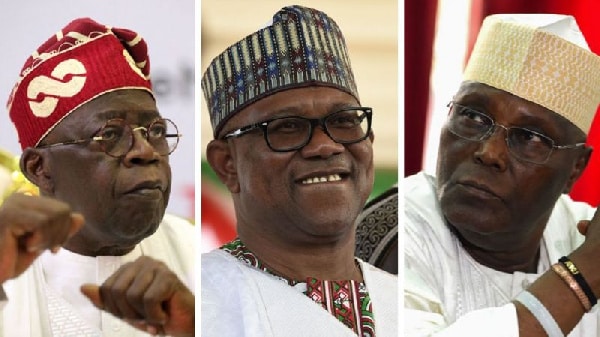
With 8,805,428 votes, the former governor of Lagos and APC national leader won the majority of the vote. Atiku and Obi came in second and third with 6,984,290 votes and 6,093,962 votes, respectively.
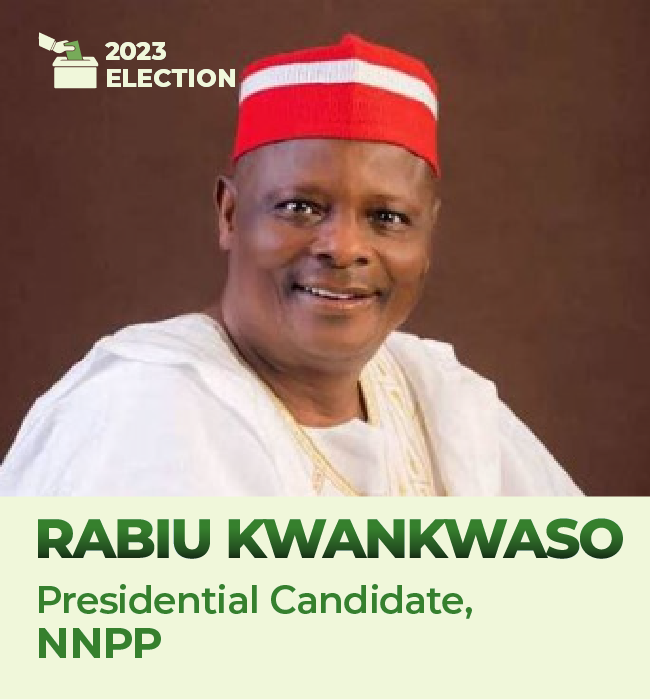
Rabiu Kwankwaso, the New Nigeria Peoples Party’s (NNPP) fourth-place finisher in the presidential election, received 1,496,671 votes.
The winner must receive the most votes overall and at least 25% of the votes cast in each of the 36 states and the Federal Capital Territory, as required by the constitution (Abuja)
According to the results, Peter Obi of the Labour Party is in second place with 24% of the votes, followed by former vice president Abubakar with 2%.
Tinubu won the elections in Rivers, Borno, Jigawa, Zamfara, Benue, Kogi, Kwara, Niger, Osun, Ekiti, Ondo, Oyo, and Ogun states.
Atiku won in Katsina, Kebbi, Sokoto, Kaduna, Gombe, Yobe, Bauchi, Adamawa, and Taraba states. He also won in Osun, Akwa Ibom, and Bayelsa states.
Due to claimed extensive irregularities, three opposition parties have demanded that Nigeria’s election be annulled and held again.
At a news conference in the nation’s capital, Abuja, the Peoples Democratic Party (PDP), the Labour Party, and the African Democratic Congress (ADC) made the statement.
“I demand that this sham of an election be cancelled and we call on Inec to conduct fresh elections within the window period provided by the electoral act,” Julius Abure, chairman of the Labour Party said.
The PDP chairman at the recent press conference in the capital, Abuja, where his party along with two other opposition parties called for the cancellation of the election, called for calm.
“We don’t want Nigerians to erupt,” Iyorchia Ayu said.
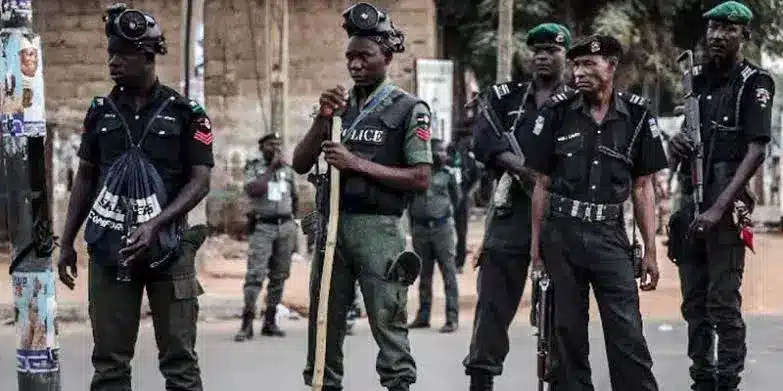
Earlier, the police chief warned candidates and their parties against inciting violence.
The Independent National Electoral Commission has confirmed there have been major technical hitches, which has made it difficult to upload results on to its server.
At the opposition press conference in Abuja, the PDP’s agent, Dino Melaye, said the problems with servers should have been corrected before any results were announced.
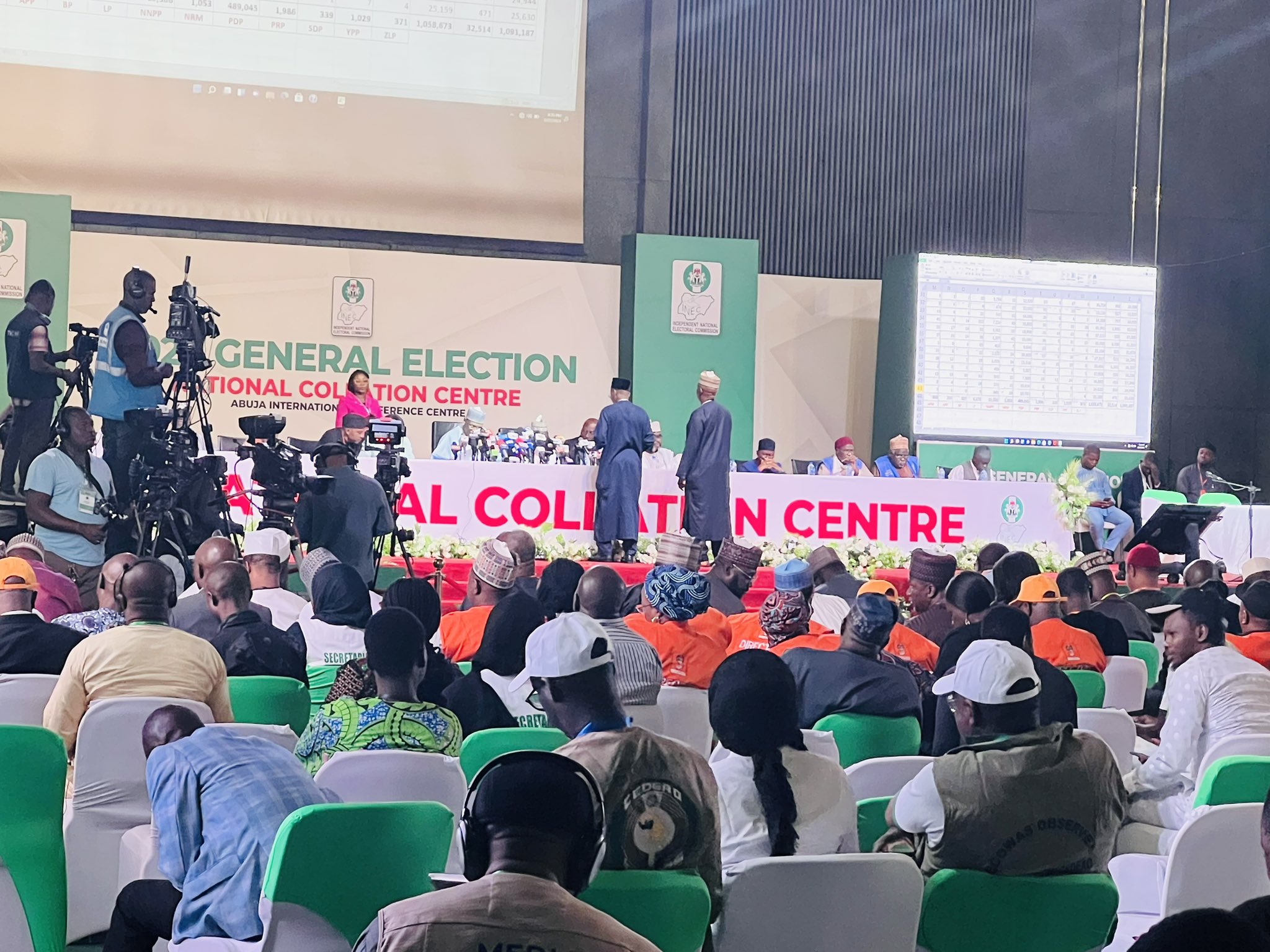
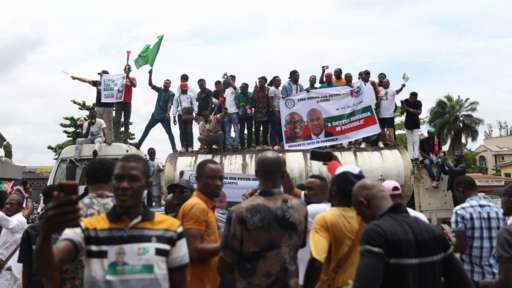
Meanwhile, a group of angry protesters have gathered outside the national collation centre in Nigeria’s capital, Abuja.
They are carrying placards denouncing the Independent National Electoral Commission, alleging votes have been stolen.
“Everything happening there is all lies, all lies, lies… they are cooking up results,” one man told the BBC as he pointed to the Inec collation centre.
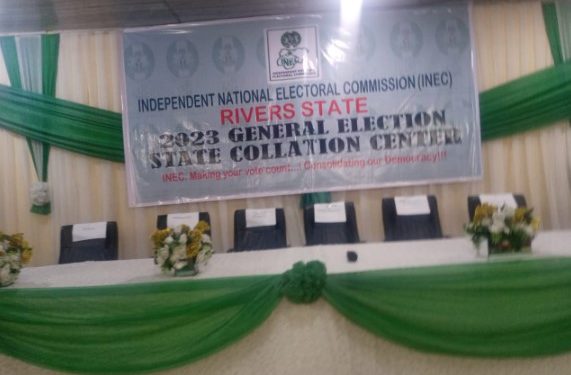
Prof. Charles Adias, the Independent National Electoral Commission’s designated collation officer for the presidential election in Nigeria’s Rivers State, has put the process on hold due to alleged threats to his life.
At the start of collation at the INEC headquarters in Port Harcourt on Tuesday morning, Prof. Adias, who is also the vice chancellor of the Federal University in Bayelsa State, revealed that the threats were from members of a specific political party.
He stated, “I have been receiving threats, messages and calls to my life and that of my family for two days now. My picture is all over the social media that I was sent to rig the elections in Rivers State.
“Every hour, I receive more than one million calls of threats to my life and other things. I hereby stand down collation until the INEC and security agencies can guarantee my safety to continue this national assignment.”
The duration of Nigerian tourist and business visas has been increased from two to five years by the United States of America.
On Monday, a press release by the US Consulate General stated that as of March 1, 2023, it will increase visitor visa validity from 24 months to 60 months for Nigerians.
Rauf Aregbesola, The Minister of Interior, said the decree was approved to implement the new Bilateral Consular Policy Agreements between the two governments.
According to Aregbesola, the agreements include the reciprocity of five-year tourist visa validity for American Citizens under Section 30 of the Immigration Act, 2015 and; Extension of visa validity to three years for diplomats and government officials between the citizens of Nigeria and the United States of America.
The US Consulate assured that the visa fee cost remains the same.
The statement reads, “Effective March 1, 2023, the US Mission will increase visitor visa validity from 24 months to 60 months for Nigerians who want to enter the United States temporarily for business and tourism.
“The visa validity extension allows Nigerians to use the visa for 60 months to make short trips to the United States for tourism or business purposes before renewing their visa. The visa application fee, currently USD160, will not increase due to the increased visa validity.”
“Increasing visa validity is one of several initiatives the United States took to reduce visa appointment wait times in Nigeria.
The US Mission continues to offer No-Interview Visa Renewals to those who meet the eligibility criteria.
You may be eligible for a visa renewal without an interview if your application is for a B1/B2, F, M, J (academic only), H, L, or C1/D (combined only) visa and you meet the criteria.
“Please see our website at https://ng.usembassy.gov/visas/nonimmigrant-visas/ for further information.
“Please note that processing times for the program are expected to be up to two months, and you will not be able to retrieve your passport during that time.
Minors can apply without an interview only if they meet the eligibility criteria independently.”
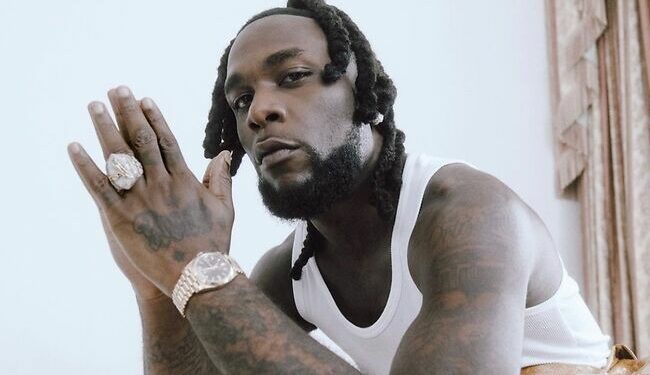
Grammy Award-winning musician Burna Boy, known in real life as Damini Ebunoluwa Ogulu, has responded to online trolls who have criticized him for not voting or participating in Nigerian politics.
Burna Boy responded by claiming he has never received money from the Nigerian government in his Instagram story on Tuesday.
The singer, who affirmed his political stance, stated that he does good for the country because of his heart and not for social media validation.
“I’ve never made money from any Nigerian government and I never took any house, land or money from any governor.
“I’ve never been appointed into any public office and I never intended to be. All the good I do for my country comes from my heart, pockets, time and emotions. it’s not for social media validation and it’s definitely not because I owe anybody.
“I say I nor vote. Make everybody getat,” he wrote.
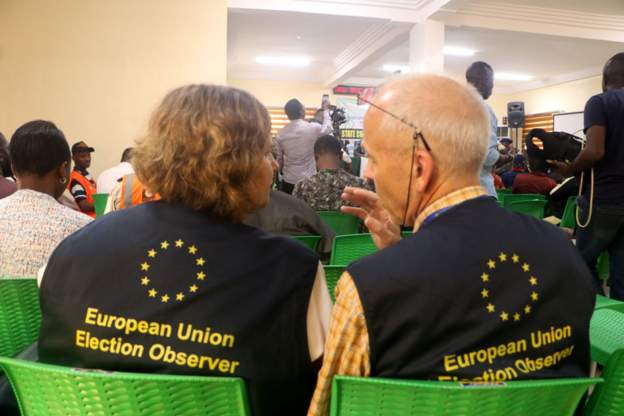
An EU observation team has criticized the lack of openness and operational mistakes in the Nigerian election.
Throughout the election’s planning, it was stated that there was faith in the electoral body’s independence and expertise.
However the observers noted that a lack of good preparation and communication throughout the process, especially on election day, contributed to a decline in public confidence.
The observers observed that some polling places opened their doors late and that voting procedures weren’t always followed.
They said the uploading of the results using an electronic system did not work, raising concerns as transmission of presidential election results forms was delayed.
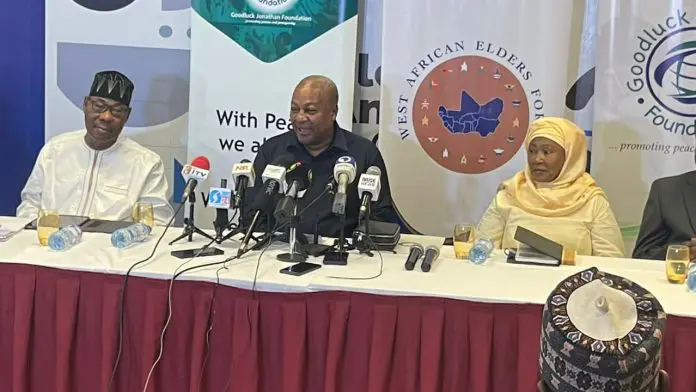
The observer team has urged stakeholders in the election to uphold peace until the process is completed and called for any disputes arising to be addressed through legal channels.
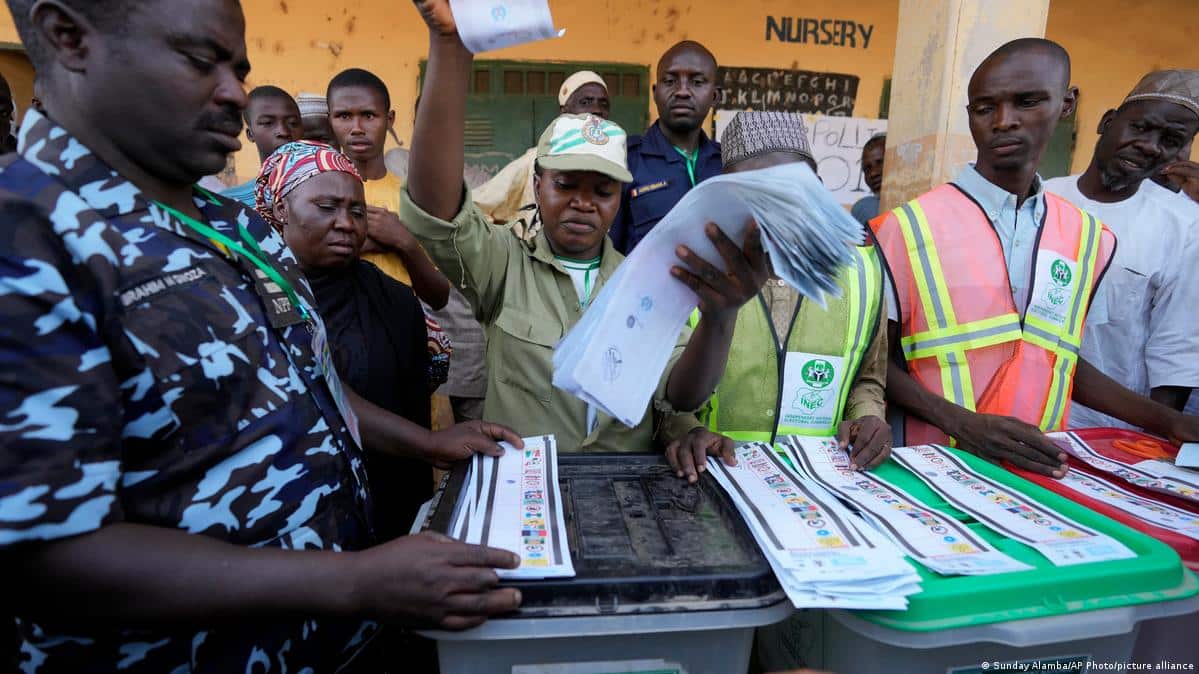
The Independent National Electoral Commission (INEC) has released the results of 14 states with regards to Nigeria’s presidential election.
All People’s Congress’ (APC) Bola Tinubu has won six states. They are Kwara state, Oyo state, Ogun state, Ekiti state, Ondo state and Jigawa state.
Atiku Abubakar of the People’s Democratic Party has won five states. Osun state, Adamawa state, Gombe state, Yobe state and Katsina state are the said five.
Peter Obi, who is representing the Labour Party has won three states, namely; Lagos state, Enugu state and Nasarawa state.
To win in the first round, a candidate must have the largest number of votes nationwide. Also, he or she must have at least 25% of the votes in two-thirds of the 36 states and the Federal Capital Territory.
Results coming in from the Independent National Electoral Commission (INEC) indicate that candidate for All Progressives Congress’ (APC), Bola Tinubu, has secured 44% of the votes so far.
These are from official results declared in 14 out of 36 states.
The People’s Democratic Party’s candidate, Atiku Abubakar has secured 33% while Labour Party’s Peter Obi, who caused an upset by defeating Mr Tinubu in Lagos has 17%.
Mr Abubakar is a former vice-president who has failed in previous presidential bids, whereas Mr Obi is running for the presidency for the first time.
Mr Tinubu, on the other hand, is seen as a political godfather.
He now wants to be president and take over affairs from President Muhammadu Buhari, who is stepping down after governing for two terms.
Nigerians are awaiting the final results to find out who will succeed President Muhammadu Buhari, as well as the results for the numerous candidates elected to the national parliament and the senate.
Results from the various states in the nation are still coming in slowly after more than 48 hours.
The Independent National Electoral Commission (INEC) of Nigeria has characterized the election as largely peaceful, despite isolated incidents of violence and interference at some polling places.
The Commission has been providing updates about the electoral process in between time during which they also announce voting results from the states where results have been collated.
The provisional figures indicated in no way determine the final results as the figures from the other states could change the ‘game’ at any point.
Regardless, these are the figures currently as indicative of provisional results.
1. Bola Ahmed Tinubu of the All Progressives Congress (APC) currently has 3,329,968 votes representing 42.98%
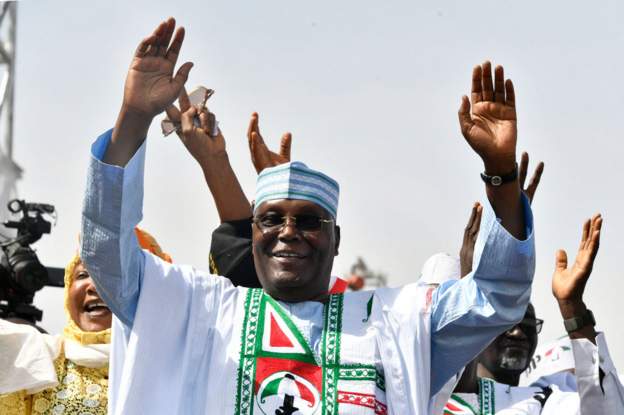
2. Atiku Abubakar of the Peoples Democratic Party (PDP) currently has 2,292,433 representing 29.59%
3. Peter Obi of the Labour Party (LP) has some 1,480,948 votes, representing 19.11%
4. Rabiu Musa Kwankwaso of the New Nigeria Peoples Party (NNP) got 573,372 representing 7.40%
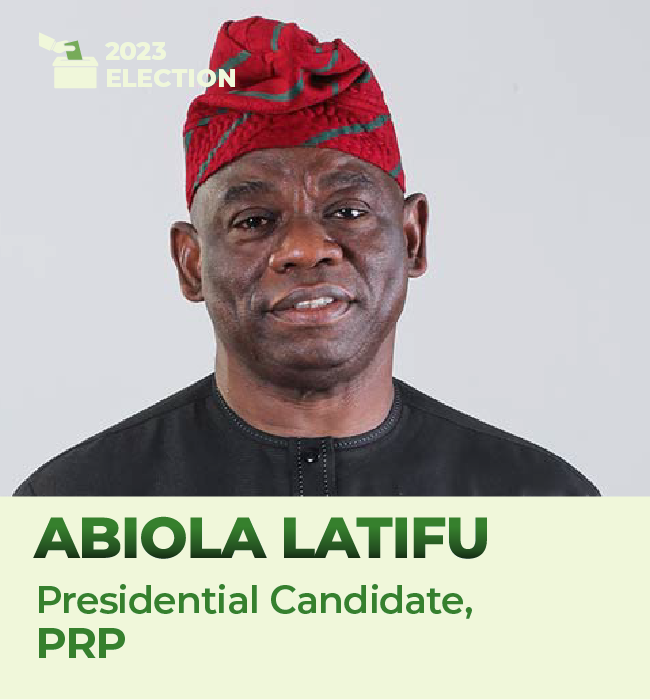
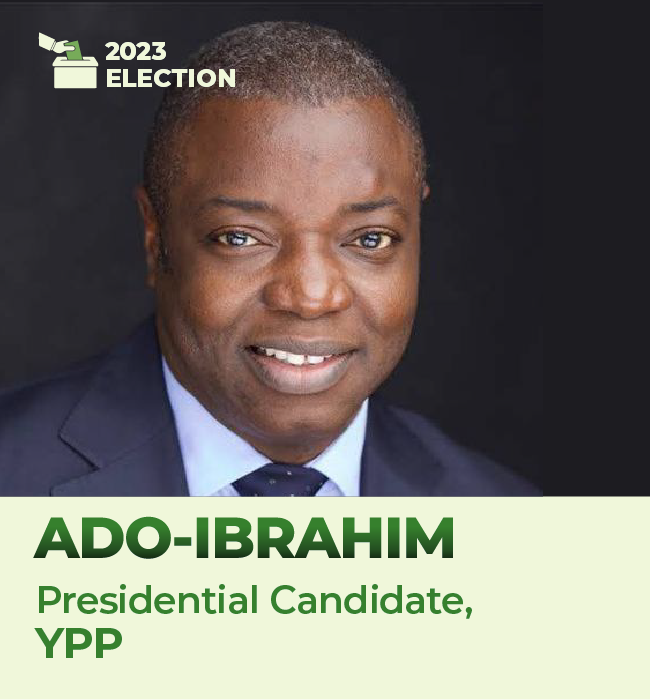
The other candidates – Peter Umeadi of APGA, Adebayo Adewole of SDP, Omoyele Sowore of AAC, Dumebi Kachikwu of ADC, Christopher Imumolen of AP, Hamza Al-Mustapha of AA, Yusuf Sani Yabagi of ADP, Ojei Chichi of APM, Adenuga Sunday Oluwafemi of BP, Okwudili Nwa-Anyajike of NRM, Abiola Latifu Kolawole of PRP, Ado-Ibrahim Abdulmalik of YPP, Daniel Nwanyanwu of ZLP, and Charles Nnadi Osita of APP all currently have votes beneath 1%.
Breakdown:
Bola Ahmed Tinubu of the All Progressives Congress (APC) won states like Benue, Jigawa, Katsina, Kwara, Lagos, Niger, Ogun, Oyo, Rivers, Sokoto, Yobe and Ekiti Atiku Abuabkar of of the Peoples Democratic Party (PDP) won states including – Ondo, Federal Capital Territory, Taraba, Osun, Kaduna, Bayelsa, Bauchi, Akwa Ibom, and Adamawa
Peter Obi of the Labour Party (LP) won states including Abia, Delta, Ebony, Edo, Enugu, Gombe, Imo, and Plateau
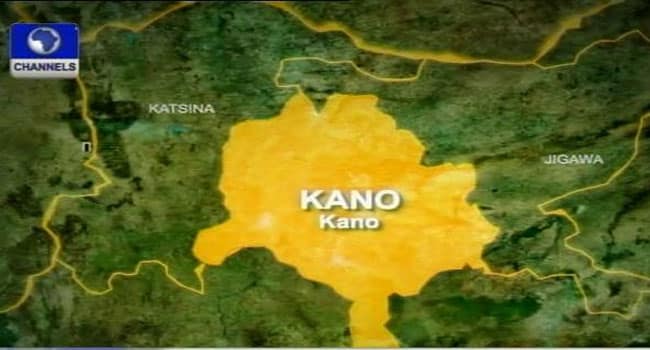
Rabiu Musa Kwankwaso of the New Nigeria Peoples Party (NNP) won the Kano state.
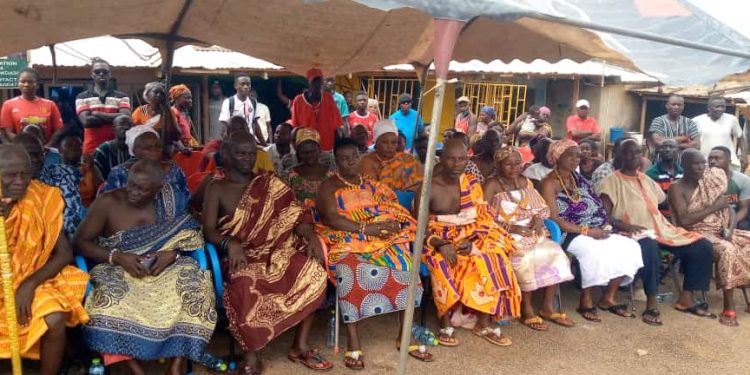
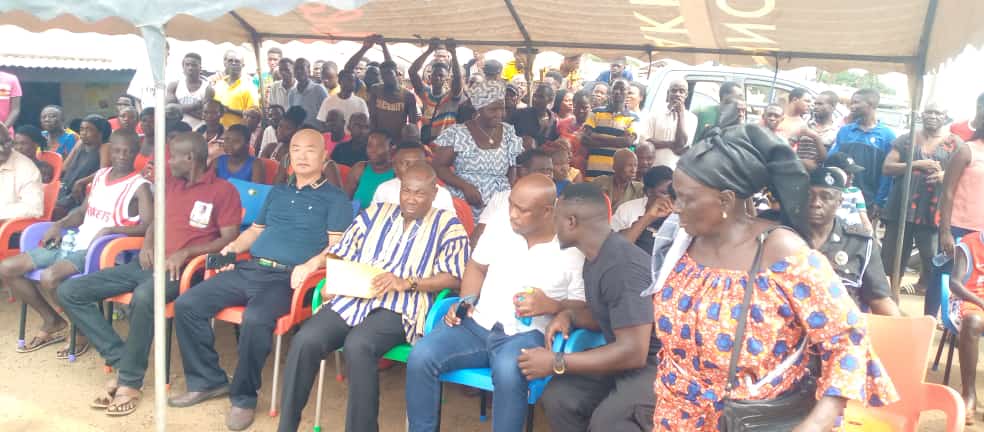
Jia Xin Industrial Mining Corporation has received final consent from the chiefs and residents of Akokoaso, a rural hamlet in the Akyemansa District rich in mineral reserves, to conduct business there.
The community protested to stop the Chinese mining business from utilizing prospecting licenses to dig for gold in the region earlier, and now they have given their approval.
Following receipt of a community petition, the Minerals commission halted the company’s operations in the region.
The Jia Xin industrial mining firm has been awarded permission to start work in the area after obtaining all required mining papers and fulfilling all relevant procedures with community stakeholder participation.
Speaking at a community stakeholders engagement organized by the Minerals Commission, the Queen Mother of Akokoaso Nana Agyeiwaa Kodie II appreciated the mining company for securing all necessary documents.
“We want to appreciate the Minerals commission for intervening in ensuring that the right thing is done and sanctioning them. We thought they were engaging in galamsey but that is not the case because the president despises illegal mining so this company will not be given documents to engage in illegal mining.
“We are grateful to them because we know they will employ community members to work in the company so I want to tell the company that out of the number of workers who will be employed, the community should be given a 70 percent ratio and the 30 percent for foreigners, so all abled members of the community should get ready to work”.
The Manager of the mining company speaking to the media after the community engagement denied claims that the company is into illegal mining
“We are not engaging in galamsey, we are looking forward to employing competent members of the community who are willing and ready to work. Our structures here at the site can never be referred to as galamsey because we are doing legitimate work, we do not use chemicals and you can see from the green around the site.
“As part of our corporate social responsibility to the community we have already dug two boreholes for them with pumping machines, now that we are resuming work here we will put the overhead tanks on it and provide another water system for them”.
“It’s a fact that they have some legitimate concerns and I want to assure you that we are going to sit with them and get it all addressed”.
On his part, the Akim Oda Divisional Police Commander ACP Rev. Dr Adane Ameyaw cautioned the youth of the community to leave in harmony with the workers and desist from creating unnecessary tension in the community.
“I want to caution all of you to stay away from trouble because the law will not shield anyone not even children or women if they come in contact with it”.
Counting is still underway in Nigeria’s recently concluded general elections.
Young people, who make up approximately one-third of the 87 million eligible voters, have turned up in great numbers for the exercise.
The two-party system that has ruled Nigeria for the past 24 years has faced an unprecedented threat in the election.
The candidates include Atiku Abubakar of the main opposition Peoples Democratic Party (PDP), Peter Obi of the hitherto unknown Labour Party, Mr. Tinubu of the ruling All Progressives Congress (APC), and 15 others.
Bola Tinubu of the ruling party has won handily so far, according to official results from the south-western Ekiti state, which is one of his strongholds.
In the upcoming updates, we will bring you the latest headlines from major press hubs covering the polls.
Segun Adekoya, the House of Representatives Deputy Minority Whip and member for Ijebu-North/East/Ogun Waterside Federal Constituency, has failed to keep his seat.
In Ogun’s National Assembly election on Saturday, Mr. Adekoya, also known as “Attacker,” ran under the Peoples Democratic Party (PDP) banner but was unsuccessful in winning a third term.
Adegbesan Joseph of the All Progressives Congress defeated him (APC).
Mr. Joseph received 35,708 votes, defeating Mr. Adekoya, who received 25,450 votes, according to INEC Returning Officer Adeyemi Bamgbose, who announced the results.
As the Independent National Electoral Commission, INEC, prepares to announce the results of Saturday’s senate election, there is apprehension in Anambra State’s three senatorial zones.
On the Labor Party’s (LP) platform, Umeh, a former senator for the region, is easily winning Anambra Central, and Dr. Tony Nwoye, a former member of the House of Representatives, is winning Anambra North.
The senator who represents Anambra Central is Uche Ekwunife, while Stella Oduah represents Anambra North.
There are signs that Senator Ifeanyi Ubah of the Young People’s Party (YPP), who is now leading in Anambra South, will return to the red chamber.
Spokesman for the Peoples Democratic Party (PDP) Presidential Campaign Council, Charles Aniagwu, urged the public to ignore rumors that the presidential election results for the Ika North-East Local Government Area of Delta had been canceled on Monday.
Spokesman, Peoples Democratic Party (PDP) Presidential Campaign Council, Charles Aniagwu
Aniagwu claimed in a statement made in Asaba that the alleged cancellation was a fabrication by the spreaders of false information.
According to him, the Independent National Electoral Commission INEC has duly acknowledged and proclaimed the results of the local National Assembly and Presidential elections, and the PDP won the local government.
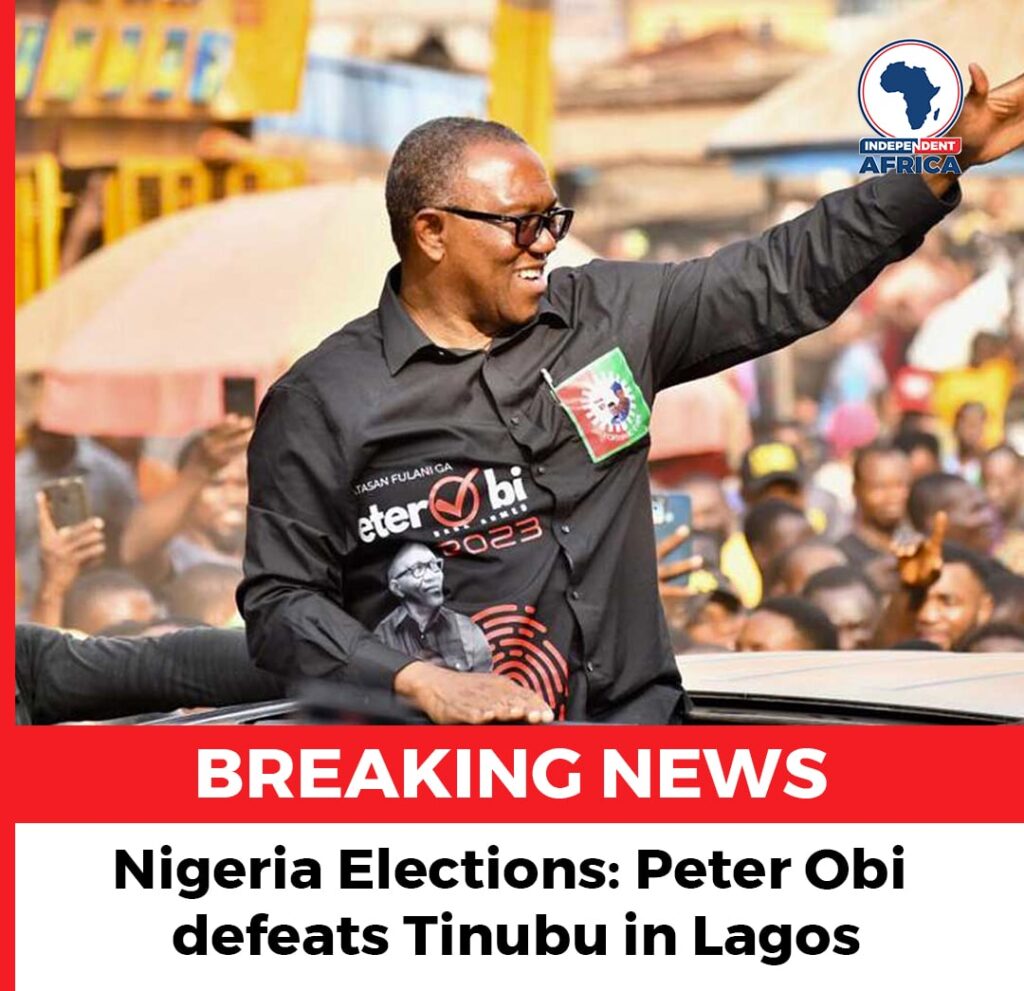
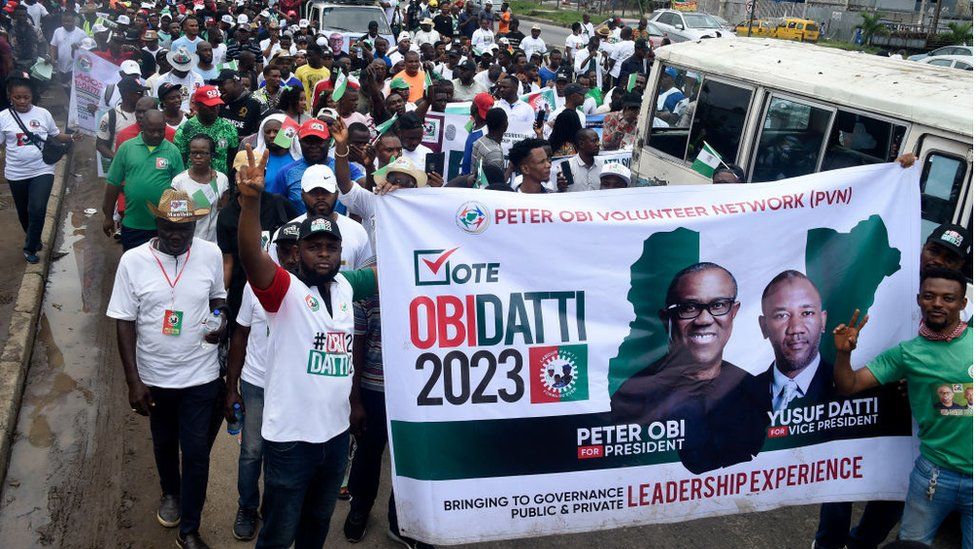
With the announcement of the results, Peter Obi’s supporters erupted in delirious celebration. Obi is the presidential candidate for the Labour Party.
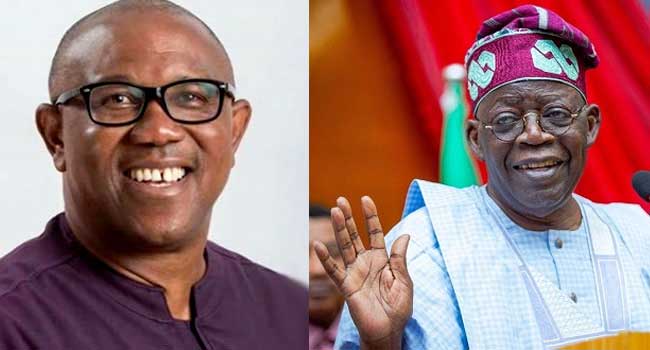
Obi received 582,664 votes, according to the statistics, while former Lagos state governor Bola Ahmed Tinubu of the APC received 541,850.
With the announcement of the results, Peter Obi’s supporters erupted in delirious celebration. Obi is the presidential candidate for the Labour Party.
Obi received 582,664 votes, according to the statistics, while former Lagos state governor Bola Ahmed Tinubu of the APC received 541,850.
Even with all of Tinubu's rigging, @NgLabour won Lagos. That gives you an idea of just how vast the real margin of victory was against the drug pusher before he fought back in his usual criminal manner.
And since we won Lagos, you know the true result in Rivers.
Although the APC candidate won more local government areas, Obi defeated Tinubu with the majority of the votes cast in the state.
All the results of the 20 local governments have been declared. Tinubu won in 11 while Obi won in nine local governments.
A candidate for the New Nigeria People’s Party, Suleiman Abdurrahman Kawu Sumaila, has been ajudged victorious in Kano South senatorial race by the Independent National Election Commission.
The election results were declared at the collation center in the state’s Rano Local Government Area by the returning officer, Prof. Ibrahim Barde.
In comparison to Gaya of the All Progressives Congress, who received 192, 518 votes, Sumaila received 319, 857 votes, according to him. Murtala Bashir Galadanci of the Peoples Democratic Party received 14, 880 votes.
Ghana’s High Commissioner to Nigeria, Rashid Bawa, has said that his office will take steps to safeguard the safety of Ghanaians living in the country of West Africa.
Currently, polls have officially ended in the country, with collation underway.
Despite what has been generally described as a relatively peaceful election, there have been some pockets of disturbances in some polling units across the country.
But speaking on JoyNews‘ The Probe/Nigeria Decides on Sunday, Mr Bawa said Ghanaians in that country will be shielded from harm.
“So far there’s no incident involving a Ghanaian. But we’re still monitoring because it’s quite fluid. Until the elections is declared and situations return to normal, we are not resting on our oars.
“We’re in touch with almost all the associations across the federation; from Maiduguri down to River States. Hopefully, we can go through this period and there’ll be no incidents”, he told host, Emefa Apawu.
He continued, “We want to assure Ghanaians who have got their relatives here that all things are being done to ensure the safety of Ghanaians during this period”.
Meanwhile, Rashid Bawa, says he is not surprised by the results compiled so far by the country’s electoral management body.
Earlier, the Independent Electoral Commission (INEC), announced results from Ekiti state with Bola Tinubu of the All Progressives Congress (APC) leading in that regard.
Reacting to the trickling results on JoyNews, Mr Bawa said with hesitation that, he is not surprised at the present outcome.
“I hardly, would want to talk about it but I’m not too surprised. It’s expected. If you look at where the results is coming from”, he said.
“Nigeria is actually divided into geographical zones. We have the North, we have the South-South and we have the South-West. The South-South are largely the Igbo’s.
“The South-West are the Youba’s. And the North are the Hausa’s, the Hausa’s Fulani. Now these major tribes have got three leading candidates. Each candidate wherever he’s coming from, has his strength”, he explained.
Mr Bawa continued, “So when you look at most of the results, if it’s the North that is dropping in, you’ll realise that the candidate from the North gets most of the votes.”
Ghana’s High Commissioner to Nigeria, Rashid Bawa, has stated that he is not surprised by the preliminary results of the ongoing elections in Nigeria.
Earlier, the Independent Electoral Commission (INEC), announced results from some states with Bola Tinubu of the All Progressives Congress (APC) leading in the Ekiti State.
Reacting to this development on JoyNews, on Sunday, Mr Bawa said with hesitation that, he is not surprised at the present outcome.
“I hardly, would want to talk about it but I’m not too surprised. It’s expected. If you look at where the results is coming from”, he told host, Emefa Apawu.
“Nigeria is actually divided into geographical zones. We have the North, we have the South-South and we have the South-West. The South-South are largely the Igbo’s.
“The South-West are the Youba’s. And the North are the Hausa’s, the Hausa’s Fulani. Now these major tribes have got three leading candidates. Each candidate wherever he’s coming from, has his strength”, he explained.
Mr Bawa continued, “So when you look at most of the results, if it’s the North that is dropping in, you’ll realise that the candidate from the North gets most of the votes.
If it’s coming from the South-West, which is the Yoruba’s, then the candidate who is coming from that particular zone gets most of the votes. So this is how it is”.
Collation is presently underway, following the close of polls on Saturday, February 25.
Meanwhile, some aggrieved political parties have expressed their grievances with the conduct of the polls; alleging attempted rigging.
The elections have however been described as peaceful by many pundits and observers, despite isolated incidents of violence at some polling units.
South Africa, ranked as one of Africa’s “Big 5” wealth markets alongside Egypt, Nigeria, Morocco, and Kenya, collectively holds more than one half of the continent’s total wealth.
With a total private wealth exceeding $650 billion, South Africa maintains its position as Africa’s largest wealth market and most industrialized economy.
Many individuals within the country have seized the opportunities within and outside its economy to create wealth for themselves while simultaneously contributing value to society.
Johann Rupert is a prime example.
As a prominent luxury mogul and billionaire businessman, he holds the notable distinction of being South Africa’s wealthiest individual, and the second-richest man in all of Africa.
This is largely attributed to his diverse business interests, spanning from luxury ventures in Switzerland under Richemont, to private investments in South Africa through Remgro Limited.
With numerous other ultra-wealthy individuals vying for a spot on the coveted richest list, it has become increasingly crucial to keep an eye on the top seven wealthiest South African billionaires and track the growth of their fortunes since the beginning of the year.
This is especially vital as global equities undergo a rebound after a lackluster performance in 2022.
#1 Johann Rupert
Net worth: $12 billion
Source: Diversified
Johann Rupert is South Africa’s wealthiest man, with a net worth of $12 billion stemming from his investments in luxury goods companies Compagnie Financiere Richemont, Reinet Investments, and Remgro, a South Africa-based investment vehicle.
His net worth has risen by $1.04 billion from $10.9 billion at the start of the year to $12 billion due to the performance of his 9.14 percent stake in Richemont, a Swiss luxury goods company with a diverse portfolio of premium brands including Chloe, Dunhill, Alaa, Cartier, and Delvaux.
#2 Nicky Oppenheimer
Net worth: $8.5 billion
Source: Diversified
Nicky Oppenheimer is the second-richest South African billionaire and the third-richest billionaire in Africa, with a net worth estimated to be around $8.5 billion.
His fortune is held in private equity investments in Africa, Asia, the United States, and Europe through the London-based Stockdale Street and Johannesburg-based Tana Africa Capital.
In 2012, the billionaire sold his family’s 40-percent interest in De Beers to Anglo-American for $5.2 billion in cash, bringing his family’s 80-year ownership to an end.
Since the start of 2023, Oppenheimer’s net worth has increased by $475 million.
#3 Patrick Soon-Shiong
Net worth: $8.5 billion
Source: Healthcare
Patrick Soon-Shiong, the Chinese-South African transplant surgeon, bioscientist, and biopharma billionaire, is the 24th richest person in the world, with a reported net worth of $8.81 billion, according to the Bloomberg Billionaires Index.
He became a billionaire through his development of the cancer treatment Abraxane and the subsequent sale of his pharmaceutical companies, APP Pharmaceuticals, and Abraxis BioScience, for a combined $7.5 billion.
He now holds a 76-percent stake in late-stage immunotherapy firm ImmunityBio, which has contributed an additional $811 million to his net worth.
#4 Patrice Motsepe
Net worth: $2.8 billion
Source: Mining, Investments
Patrice Motsepe, a South African billionaire mining tycoon and the founder of African Rainbow Minerals (ARM), is one of the most successful entrepreneurs in the country.
Established in 1997 as South Africa’s first Black-owned mining corporation, ARM has extensive holdings in iron, coal, copper, gold, platinum, and other precious metal mines.
Motsepe’s current ownership of ARM stands at 39.7 percent, and the company is now worth more than $1.3 billion.
Despite his net worth declining by $400 million since the start of 2023, from $3.2 billion to $2.8 billion, Motsepe continues to be a powerful force in the African mining industry.
#5 Koos Bekker
Net worth: $2.4 billion
Source: Media, Investments
Koos Bekker, a renowned entrepreneur whose smart investments and business acumen have propelled the success of companies like Naspers, a multinational holding company based in Cape Town, and Amsterdam-based Prosus N.V., an investment group, has established himself as one of Africa’s wealthiest individuals.
His impressive net worth of $2.4 billion is derived mainly from his stakes in Naspers (0.96 percent) and Prosus NV (0.89 percent), with his shareholding in Naspers alone being worth R13.53 billion ($740 million).
#6 Christoffel Wiese
Net worth: $1.1 billion
Source: Retail
Christoffel Wiese, a South African billionaire, built his fortune through his Pepkor retail empire, which expanded into other African countries.
After Steinhoff International acquired Pepkor in 2015, Wiese lost his billionaire status when the company disclosed accounting irregularities in 2017.
In 2022, Wiese regained his wealth through a settlement with Steinhoff, which included a five-percent stake in Pepkor. His main asset is Shoprite, along with holdings in Tradehold, Brait, and Invicta Holdings.
#7 Michiel Le Roux
Net worth: $1 billion
Source: Banking
Michiel Le Roux, who founded Capitec Bank, one of South Africa’s leading retail banks, roughly 21 years ago, derives the majority of his $1 billion net worth from his 11.41-percent shareholding in Capitec Bank, a Stellenbosch-based banking company.
His net worth has declined from $1.9 billion to $1 billion, mainly due to a $160-million surge in the market value of his equity position in Capitec Bank.
The New Nigeria Peoples Party (NNPP) candidate for the House of Representatives in Kano State’s campaign headquarters was attacked on Sunday, leaving two people dead.
SP Abdullahi Kiyawa, the Police Public Relations Officer (PPRO), revealed the information in a statement on Monday. He said that two unidentified people who were inside a stationary car were burned to death by a bunch of suspected thugs who set fire to the office.
The incident was reported to the INEC office in the Tudun Wada Local Government Area about 4 p.m., according to the Kano State Police Command (LGA).
A route leading to the INEC headquarters was reportedly attempted to be blocked by the hoodlums, according to Kiyawa.
“Security personnel were immediately mobilised to the scene,” the PPRO said. “One of the thugs was fatally injured and was rushed to Hospital where he died while receiving treatment.
Noting that an investigation is in progress, he added that “four other suspected thugs were arrested.”
In a similar incident, police foiled an attempt to burn down the INEC office in Takai LGA as election results were being collated. The incident reportedly occurred on Sunday around 2:30 pm.
Kiyawa noted that the police and other security agencies, in a swift response, prevented the attack, and four suspected thugs were arrested.
“The collation of the results was concluded peacefully and an investigation is in progress,” the statement said.
In 17 local government areas (LGAs) in Lagos State, Peter Obi, the presidential candidate of the Labour Party (LP), is ahead of Bola Tinubu, the APC’s nominee, by more than 1,000 votes.
In 17 local government areas in Lagos, as of the time of posting this report at 7:30 am on Monday, Obi had received 448,878 votes while Tinubu had received 447,187.
The state collation center in the Yaba area of the state opened its doors on Sunday, and the collation continued there till midnight on Monday. Olusegun Agbaje, the INEC Resident Electoral Commissioner.
The results for 17 of the state’s 20 LGAs presented by 3:40 am on Monday including Lagos Mainland, Ikorodu, Epe, Ibeju-Lekki, Lagos Island, Badagry, Agege, Ikeja, Shomolu, Kosofe, Amuwo Odofin, Eti Osa, Surulere, Apapa, Ifako Ijaiye, Ajeromi, Oshodi Isolo.
Results presented for Mushin LGA have yet to get cleared by the state collation officer as they are being contested by the Inter-party Advisory Committee (IPAC) and thus had yet to be signed by most party agents.
INEC asked that they be presented afresh.
Meanwhile, Ojo and Alimosho are the only two LGAs left to be announced. The REC in the state is expected to reconvene later on Monday for the final collation of results.
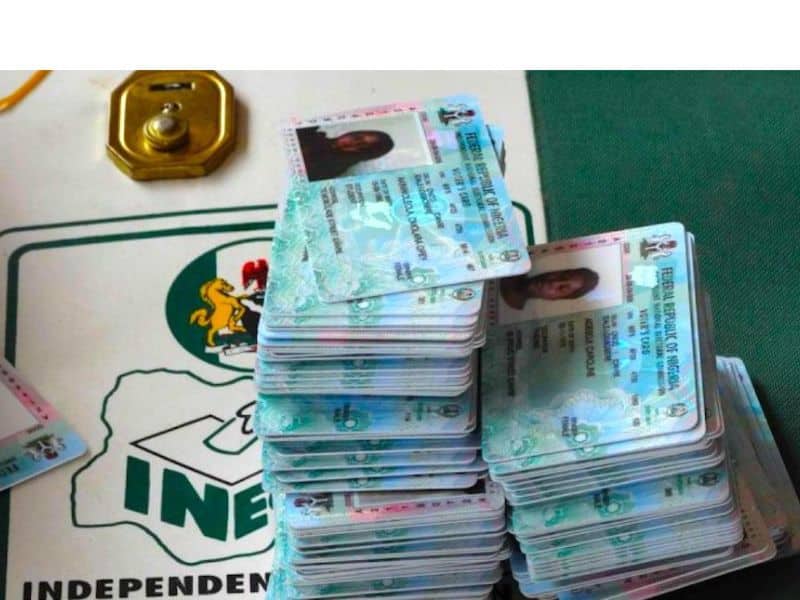
Of the 87, 209,007 Permanent Voter Cards (PVCs) collected nationwide for the election, 6,214,970 PVCs were collected in Lagos. This is closely followed by Kano with 5,594,193, and Kaduna with 4,164, 473.
Lagos is the base of who was governor of the state from 1999 to 2007. Aside from Tinubu and Obi, an ex-governor of Anambra State, other presidential candidates in the race include Atiku Abubakar of the Peoples Democratic Party (PDP), and Rabiu Kwankwaso of the New Nigeria Peoples Party (NNPP).
Atiku Abubakar, the opposition Peoples Democratic Party (PDP) candidate, claims that early results indicate he will likely win Nigeria’s presidential election.
The party said on Twitter that Mr Abubakar was “securing the highest number of valid votes cast as well as the statutory 25% in at least two thirds of the states”.
This is true despite the fact that only one of Nigeria’s 36 states had official results declared by the Independent National Electoral Commission (Inec).
Bola Tinubu, the candidate for the ruling All Progressives Congress (APC) party, received 201,494 votes from the state’s southwest.
Peter Obi of the Labour Party received 11,397 votes, compared to Mr. Abubakar’s 89,554 votes.
Mahmood Yakubu, the chairman of Inec, stated that the commission would make part of the findings from the other states public on Monday at 10:00 GMT.
On Sunday, Inec announced that it was attempting to resolve issues with its portal for viewing election results.
Final presidential results are expected to be declared by 1 March. The vote on Saturday was marred by pockets of violence, widespread delays and logistical problems.
The Economic Community of West African States’ (Ecowas) election observer mission described the election as generally peaceful and with a massive voter turnout.
Nigeria’s Independent National Electoral Commission (INEC) has received presidential results from various parts of the country and counting is currently underway in Lagos.
Nigeria‘s second-richest man, Abdul Samad Rabiu, has once again demonstrated its financial prowess by achieving record-breaking profits at the end of its 2022 fiscal year.
Despite intense competition, the company reported a 12.14-percent increase in profit from N90.08 billion ($195.6 million) in 2021 to an all-time high of N101.01 billion ($219.4 million) in 2022, according to its recently released financial statements.
These impressive figures serve as a testament to BUA Cement’s unwavering financial strength and its ability to optimize profitability in a highly competitive market, cementing its position as a top-performing company in the industry.
The group’s remarkable earnings surge can be attributed to a 40.28-percent increase in revenue during the period under review, which rose from N257.3 billion ($558.8 million) to N360.9 billion ($783.8 million). This was due to a combination of pricing benefits and increased sales volume, driven by rising demand and highly efficient operations at its state-of-the-art facilities.
While the surge in revenue would have resulted in even higher profits for the group, the increase was offset by higher direct costs, as well as a rise in selling and distribution costs, including administrative expenses, which exceeded N17.2 billion ($37.3 million) during the period under review.
Nevertheless, the group’s overall performance remains strong and highlights its ability to deliver impressive financial results even in challenging market conditions.
BUA Cement’s exceptional financial performance during the period under review has led to a substantial increase in its assets from N728.5 billion ($1.58 billion) to N874 billion ($1.89 billion), as well as a rise in retained earnings from N181.9 billion ($395 million) to N194 billion ($421.3 million).
These impressive figures reflect the company’s continued success in maximizing profitability and maintaining financial stability. In recognition of its outstanding performance, the Board of Directors approved an increased dividend payout of N2.8 ($0.00608) per share to shareholders, compared to the N2.6 ($0.0056) paid out in the previous year.
The tightest presidential race in Nigeria since the end of military rule in 1999 is currently going through the counting process.
Several youthful, first-time voters arrived early to cast their ballots, indicating that turnout was high.
Long lines at the polls on Saturday and sporadic claims of ballot box stealing and armed man attacks hampered the voting process.
Voting continued throughout the night in some areas, and was postponed until Sunday in parts of Bayelsa state.
In at least five states, voting in some places did not begin until around 18:00 local time – one-and-a-half hours after polls were due to close.
There is tension in parts of Rivers and Lagos states, where some political parties have asked their members to go to the centres where votes are being collated, over fears that they are being manipulated.
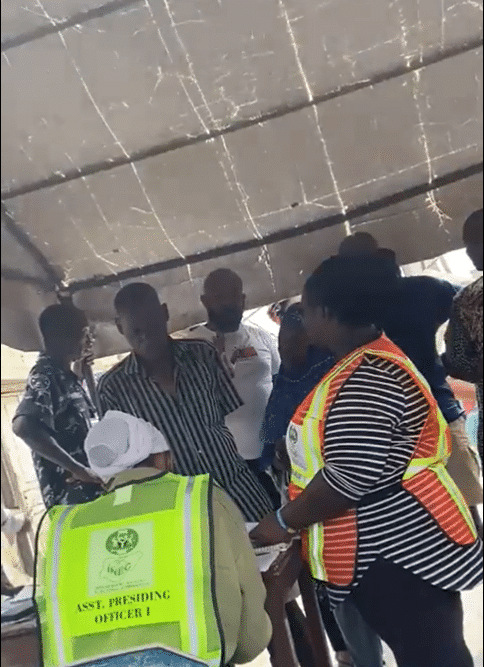
There have also been complaints over the use of the recently introduced electronic voting system with many voters accusing electoral officials of refusing to upload the results at the polling units as they are supposed to.
However, in those areas where voting went smoothly, results are already being posted outside individual polling stations.
Nigeria decides: Voting day as it happened
The elections are the biggest democratic exercise in Africa, with 87 million people eligible to vote.
Politics has been dominated by two parties – the ruling APC and the PDP – since the restoration of multi-party democracy 24 years ago.
But this time, there is also a strong challenge from a third-party candidate in the race to succeed President Muhammadu Buhari – from the Labour Party’s Peter Obi, who is backed by many young people.
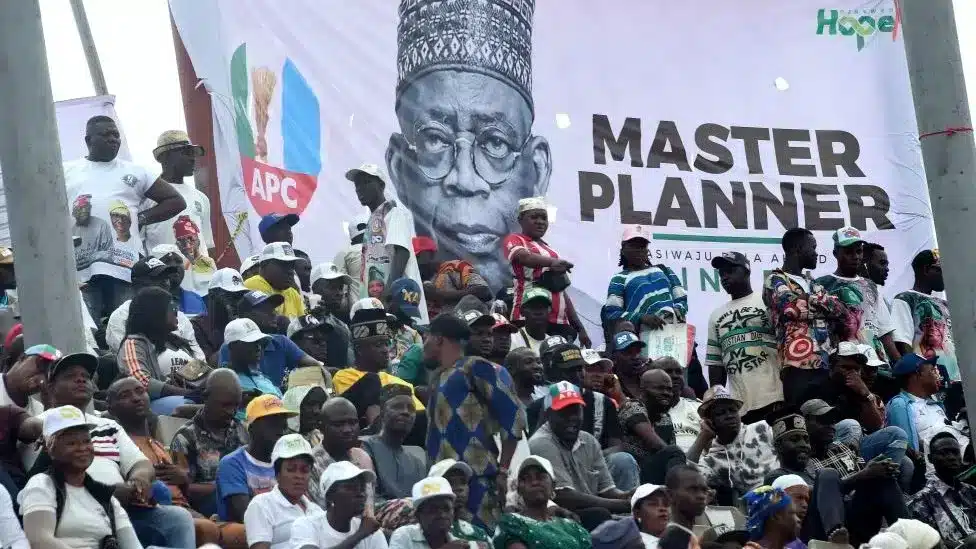
The APC is represented by former Lagos state governor Bola Tinubu, while former Vice-President Atiku Abubakar is running for the PDP.
The results from tens of thousands of polling stations around the country are being collated and sent to the electoral headquarters in the capital Abuja.
The final result is not expected until at least Tuesday.
At a press briefing on Saturday, electoral chief Mahmood Yakubu apologised for the delays in voting.
The election day was largely peaceful, but there have been reports from Lagos of violence and ballot boxes being snatched. Some voters complained of being attacked and chased away from polling stations.
In other places, people reported being asked to either vote for a particular candidate or leave.
Mr Yakubu said that armed men had also attacked some polling units in the southern state of Delta and the northern state of Katsina, where voter-card verification machines were carted away.
They were subsequently replaced and security boosted to allow voting to take place, he added.
In the north-eastern state of Borno, Mr Yakubu said that militant Islamists had opened fire on electoral officers from a mountain top in the Gwoza area, injuring a number of officials.
Image caption,Voting carried on through the night in some areas
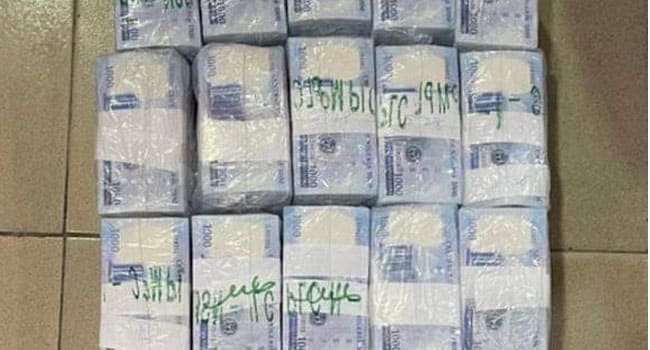
The lead-up to the polls was overshadowed by a cash shortage caused by a botched attempt to redesign the currency, leading to widespread chaos at banks and cash machines as desperate people sought access to their money.
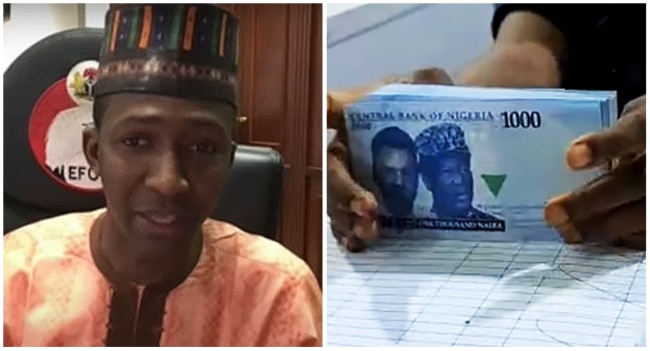
The new notes were introduced in order to tackle inflation, and also vote-buying. On the eve of the election a member of the House of Representatives was arrested with almost $500,000 (£419,000) in cash, and a list of people he was supposed to give it to, police say.
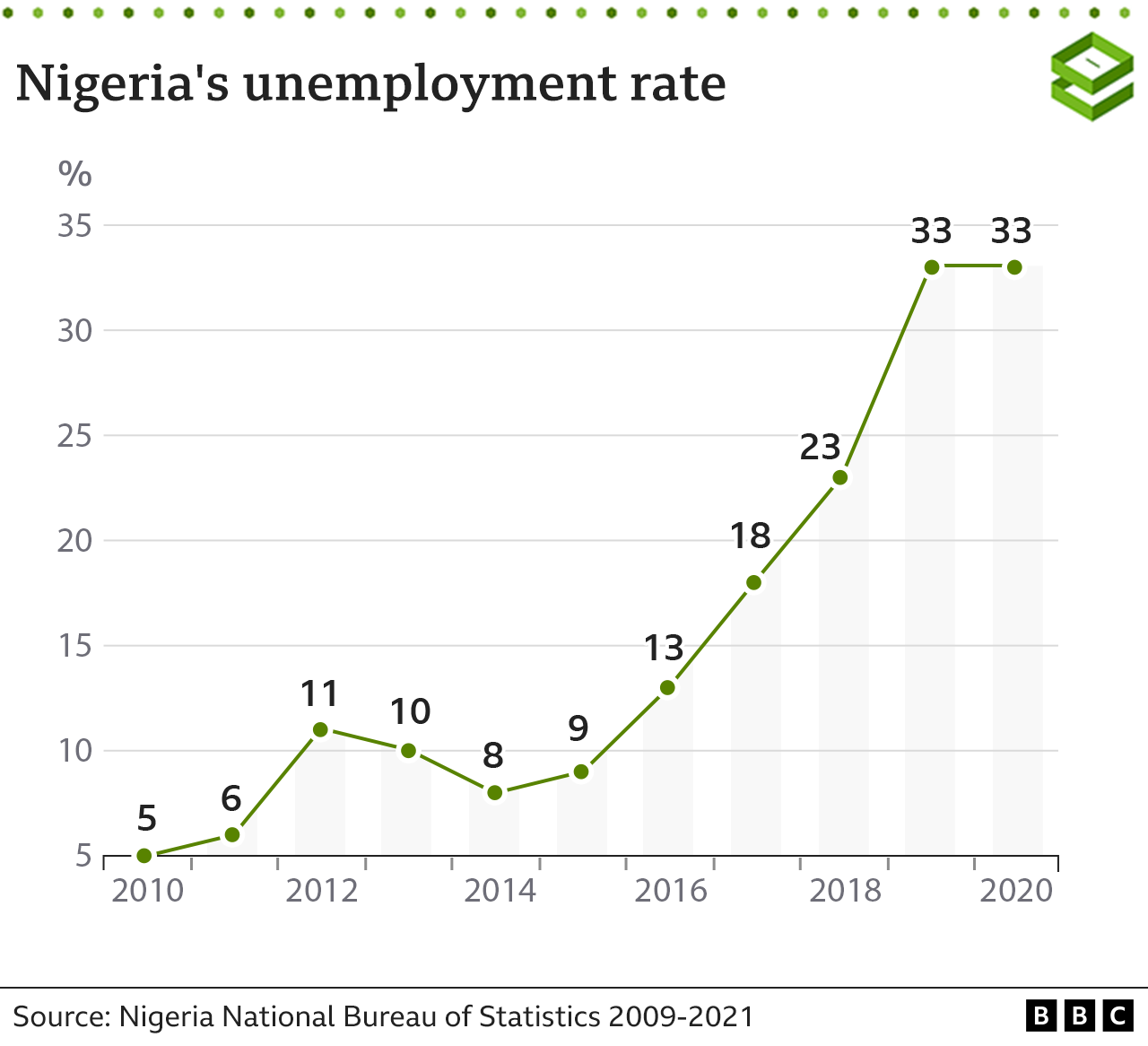
Whoever wins will have to deal with a crumbling economy, high youth unemployment, and widespread insecurity which saw 10,000 killed last year.
Voters also cast their ballots for 109 federal senators and 360 members of the house of representatives, with another vote for state governors in March.
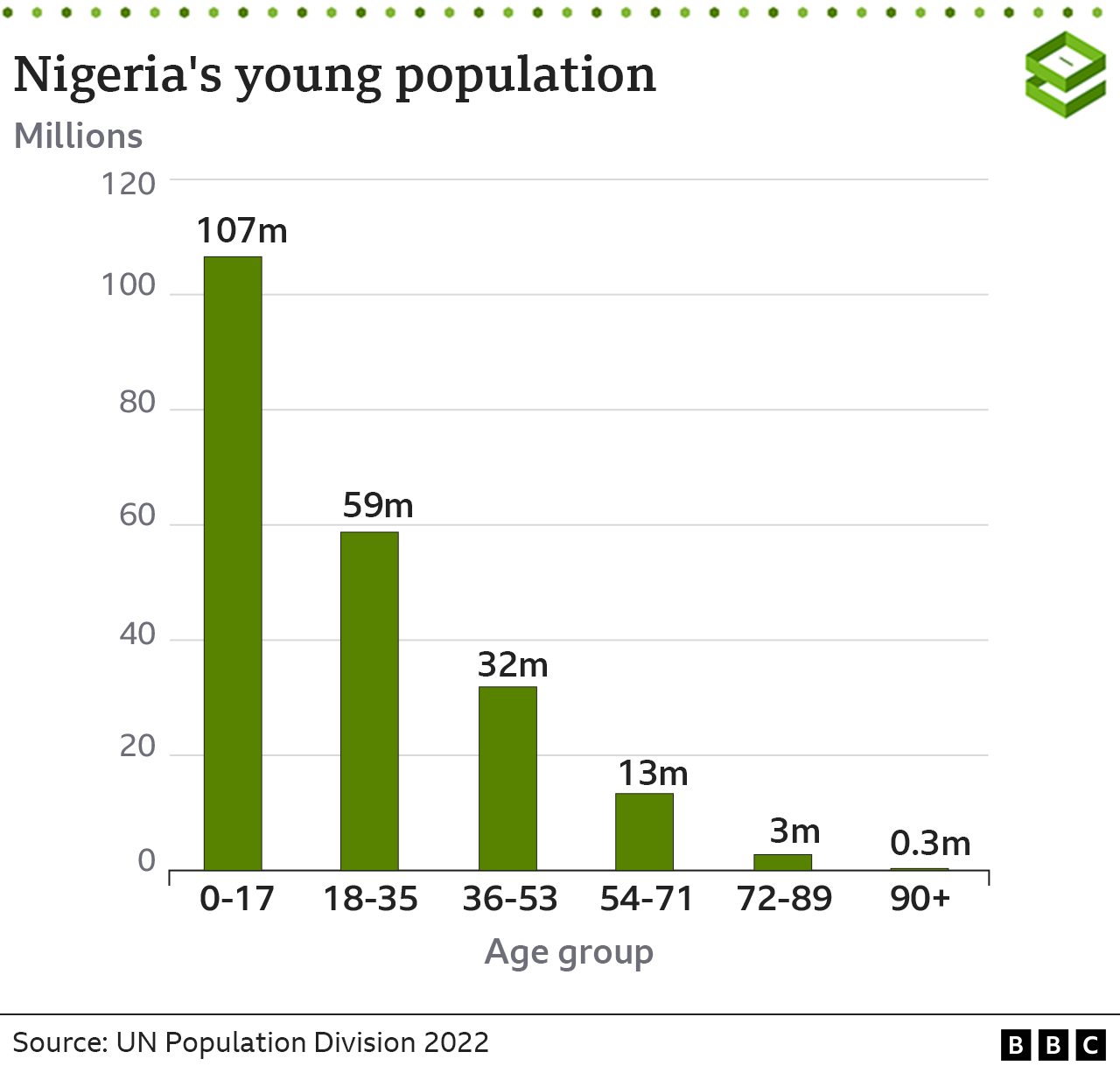
The election has seen a huge interest from young people – a third of eligible voters are below 35.
Mr Obi, 61, is hoping to break up Nigeria’s two-party system after joining the Labour Party last May.
Although he was in the PDP before then, he is seen as a relatively fresh face and enjoys fervent support among some sections of Nigeria’s youth, especially in the south.
The wealthy businessman served as governor of the south-eastern Anambra State from 2006 to 2014. His backers, known as the “OBIdients”, say he is the only candidate with integrity, but his critics argue that a vote for him is wasted as he is unlikely to win.
Who is Peter Obi?
Instead, the PDP, which ruled until 2015, wants Nigerians to vote for Mr Abubakar, 76 – the only major candidate from the country’s mainly Muslim north.
He has run for the presidency five times before – all of which he has lost. He has been dogged by accusations of corruption and cronyism, which he denies.
Most of his career has been spent in the corridors of power, having worked as a top civil servant, vice-president and a prominent businessman.
Who is Atiku Abubakar?
Most people consider the election a referendum on the APC, which has overseen a period of economic hardship and worsening insecurity.
Its candidate, Mr Tinubu, 70, is credited with building Nigeria’s commercial hub Lagos, during his two terms as governor until 2007.
He is known as a political godfather in the south-west region, where he wields huge influence, but like Mr Abubakar, has also been dogged by allegations of corruption over the years and poor health, both of which he denies.
Who is Bola Tinubu?
A candidate needs to have the most votes and 25% of ballots cast in two-thirds of Nigeria’s 36 states to be declared the winner.
Otherwise, there will be a run-off within 21 days – a first in Nigeria’s history.
Nigeria’s election will continue on Sunday, February 26, 2023, in some parts of the country.
This is according to the Chairman of the Independent National Electoral Commission (INEC), who disclosed that the election has been rescheduled following disruptions in the election process at some places.
During the second briefing on the elections, Chairman of INEC, Professor Mahmood Yakubu, noted that: “we have a situation in Bayelsa state, particularly in the capital Yenogoa, where in four wards; ward 4, 6, 8, and 14, involving a 141 polling units the process was disrupted.”
He, however, mentioned that the situation is currently under control.
“We will mobilise security. The security is calm for us to proceed with the process but the youth core members expressed some apprehension in going back. So we met with the security agencies and we have decided that voting in these 141 polling units where the materials are actually intact will take place tomorrow morning,” he said.
The elections which commenced on Saturday morning, February 25, 2023, was expected to end at 2pm same day. For some polling stations, the election ended smoothly and counting commenced.
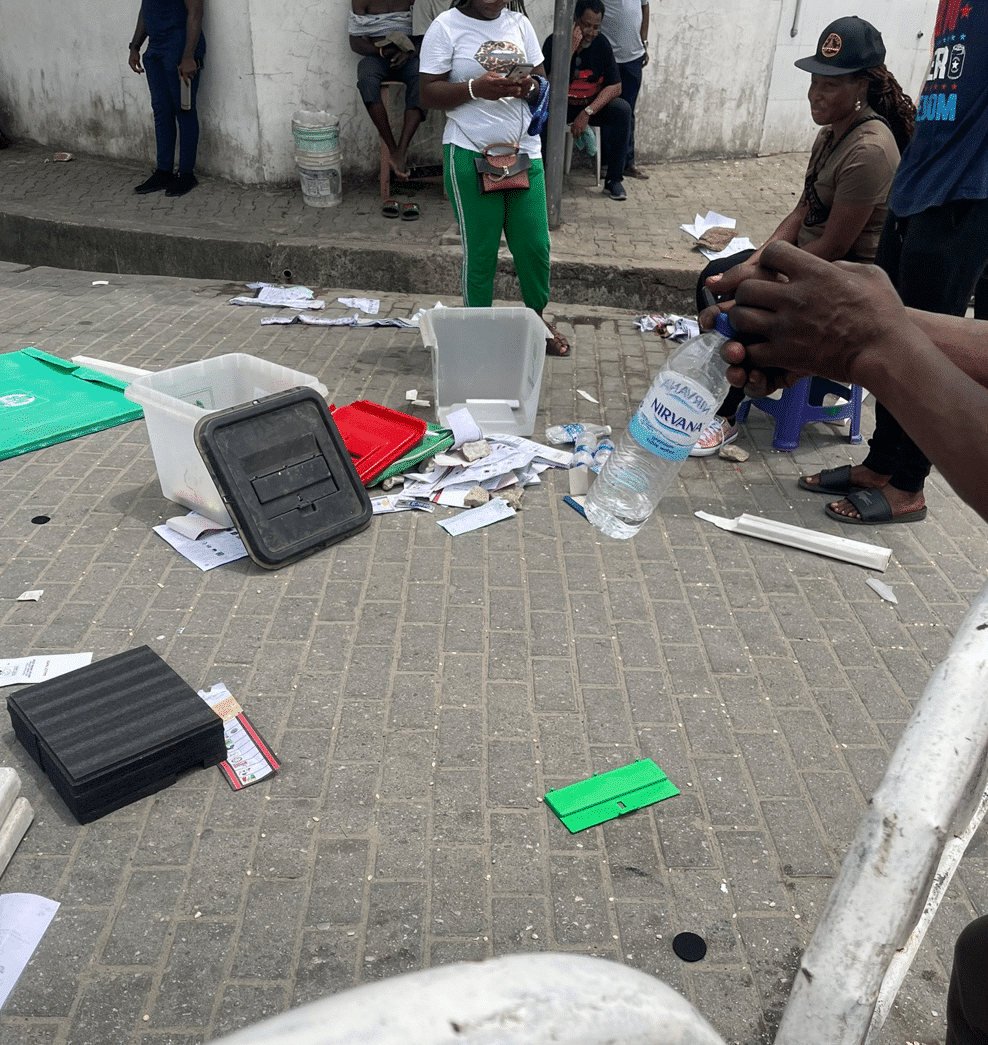
However, at other stations, the process could not go on as expected due to disruptions such as seizing, destroying and in some instances burning of ballot boxes.
Nollywood actress, Kate Henshaw has lamented an alleged failure of the Bimodal Voter Accreditation System,( BVAS) at her polling unit on Saturday.
The entertainment superstar made this known in a video posted on her Twitter page, alleging that the Independent National Electoral Commission, INEC, was toying with her destiny.
Henshaw claimed her name was found on the INEC website aforetime but bemoaned the inability of the BVAS to make her accreditation happen, thus alleging disenfranchisement.
While she failed to mention the name of her polling unit, the diva called on the country’s electoral body to hastily address the challenge.
INEC is playing with my destiny, Kate Henshaw laments
Nollywood actress, Kate Henshaw, has called out the Independent National Electoral Commission for the alleged failure of the Bimodal Voter Accreditation System to accredit her as a registered voter…1 pic.twitter.com/kqJSzBSwz4
“INEC! I registered. I transferred my card and picked up my PVC. Now, your BVAS is saying I’m not registered but I’ve seen my name on the register on the wall and on your website,” Henshaw tweeted. “What are you guys trying to say? You people are looking for trouble with me. INEC! CNN! BBC! Anybody watching this election from outside of the country should know that INEC is playing games. “Not just me, but there are many people here whose names are not found on the BVAS. The person in charge of INEC Lagos should come and sort it out in the polling unit here. “You people are playing with my destiny. Yes!” She added.
Reports of physical attacks on voters at various polling stations in the ongoing Nigerian elections are emerging.
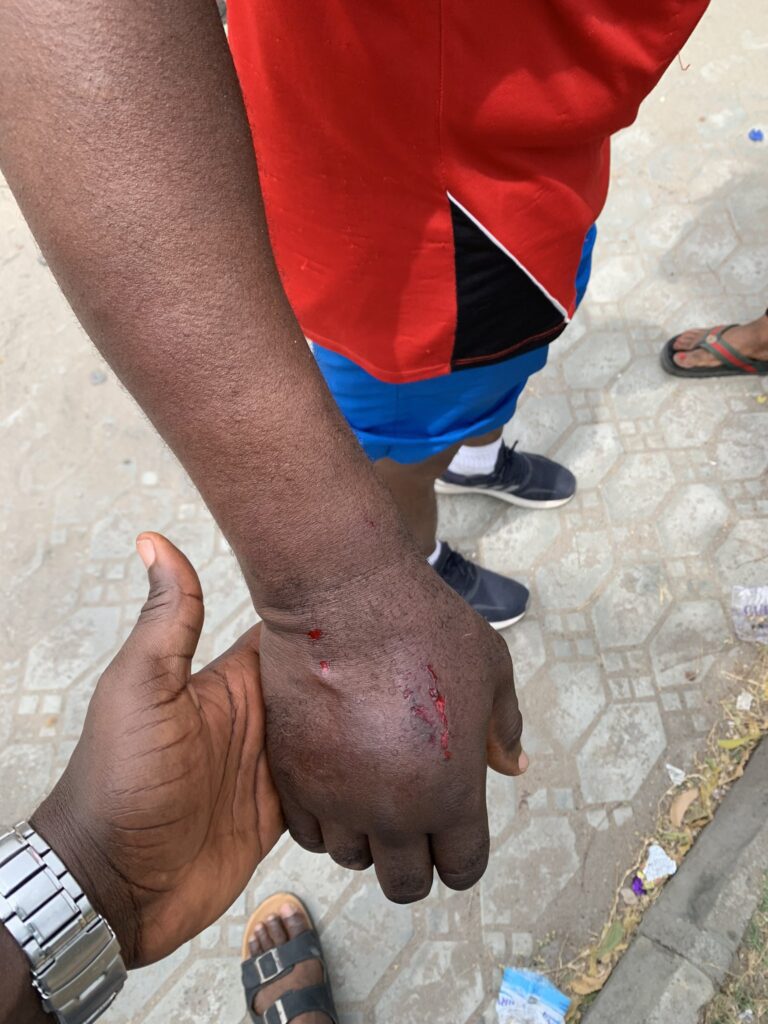
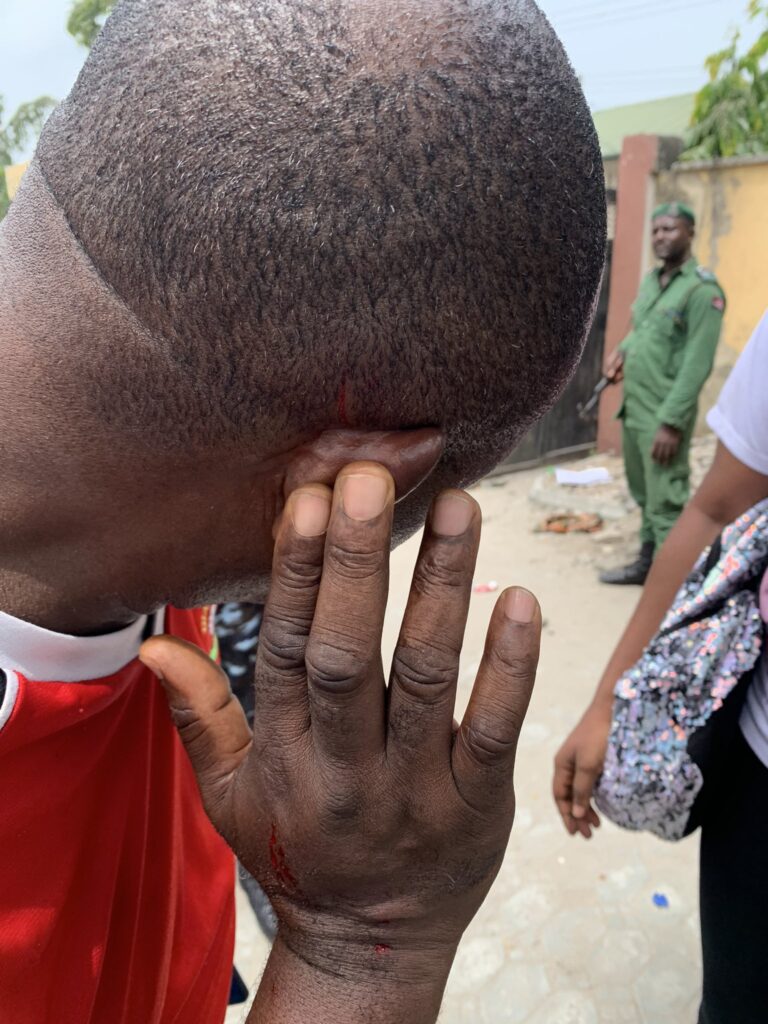
Thugs have reportedly disrupted the voting process at Ikota Primary School, Oshodi, Lagos. Although it is unclear what may have triggered the violence, The Independent Ghana has intercepted photos of a man who was allegedly attacked and has sustained cuts on his arms and head following the incident.
There have also been reports of vandalised ballot boxes.
Some hoodlums are roaming the streets of Nigeria, destroying ballot boxes at various polling stations in the country.
According to one Joey Akan, a journalist, these thugs visited Oba Elegushi and turned the place upside down.
In his attempt to save the situation, he received a number of slaps before being rescued.
“Thugs have destroyed ballot boxes and threw away the ballot papers at Oba Elegushi. I collected a couple of slaps for fighting back before I got pulled from the melee, into a house for my safety. Now I have to be smuggled out of the voting area because I have been marked,” he tweeted.
Some hoodlums are roaming the streets of Nigeria, destroying ballot boxes at various polling stations in the country.
According to one Joey Akan, a journalist, these thugs visited Oba Elegushi and turned the place upside down.
In his attempt to save the situation, he received a number of slaps before being rescued.
“Thugs have destroyed ballot boxes and threw away the ballot papers at Oba Elegushi. I collected a couple of slaps for fighting back before I got pulled from the melee, into a house for my safety. Now I have to be smuggled out of the voting area because I have been marked,” he tweeted.
Thugs have destroyed ballot boxes and threw away the ballot papers at Oba Elegushi.
I collected a couple of slaps for fighting back before I got pulled from the melee, into a house for my safety.
Now I have to be smuggled out of the voting area because I have been marked.
The Chairperson of Ghana’s Electoral Commission, Mrs. Jean Mensa, has expressed optimism that the Nigerian election on Saturday, February 25, 2023, will be credible, transparent, free, and fair.
In an interview with GBC News Correspondent Edward Nyarko, Mrs. Mensa said her engagement with the Independent National Electoral Commission of Nigeria indicates that all stakeholders are prepared to ensure the elections turn out to be one of the best in Nigeria’s history.
Nigeria, the most populous nation in Africa, will hold presidential elections on Febuary 25, 2023 amid growing dissatisfaction in the nation due to deteriorating security and economic hardship. Would any of the front-runners, the majority of whom have spent decades in politics, be able to change the course of the nation?
Muhammadu Buhari, the outgoing president of Nigeria, is leaving office after nearly eight years in charge amid instability and intense agitation, as many people are unable to access the money they require to purchase food due to a bungled roll-out of new banknotes.
But the cash crisis is not the only problem Nigerians face, with the last year being marked by struggle and tragedy, including high inflation and deadly attacks by gunmen against innocent civilians.
Mr Buhari’s supporters say he has done his best and highlight achievements, such as his work on infrastructure projects and attempts to combat violent extremism. But even his own wife, Aisha Buhari, has apologised to the Nigerian people for falling short of their expectations.
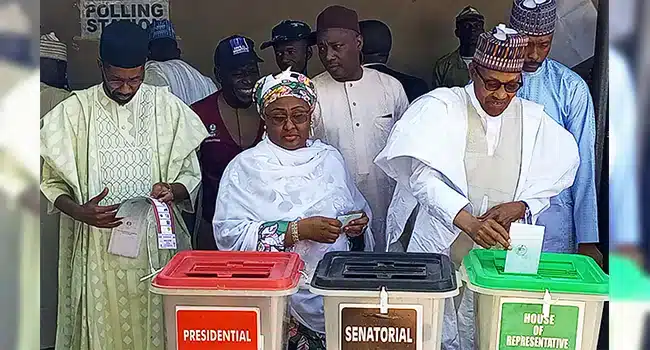
President Muhammadu Buhari has taken his turn to cast his ballot in the ongoing presidential election.
The outgoing President did so in his hometown of Daura, Katsina State. He voted alongside his wife, Aisha.
The President, whose two-term tenure of eight years ends on May 29, 2023, is a member of the All Progressives Congress (APC) and a campaigner for his party’s flag bearer, Bola Tinubu.
Addressing reporters, the President urged Nigerians to vote for the candidate of their choice, adding that nobody has more than one vote.
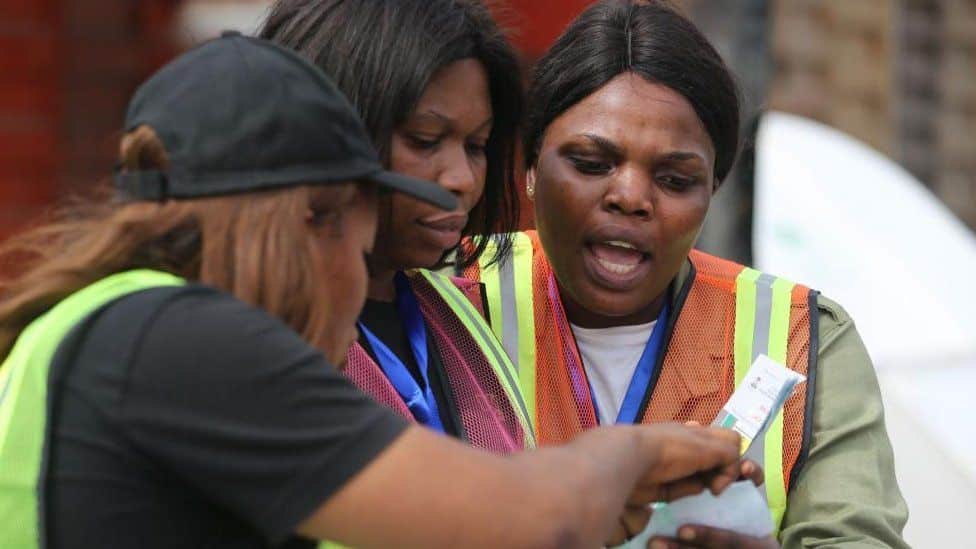
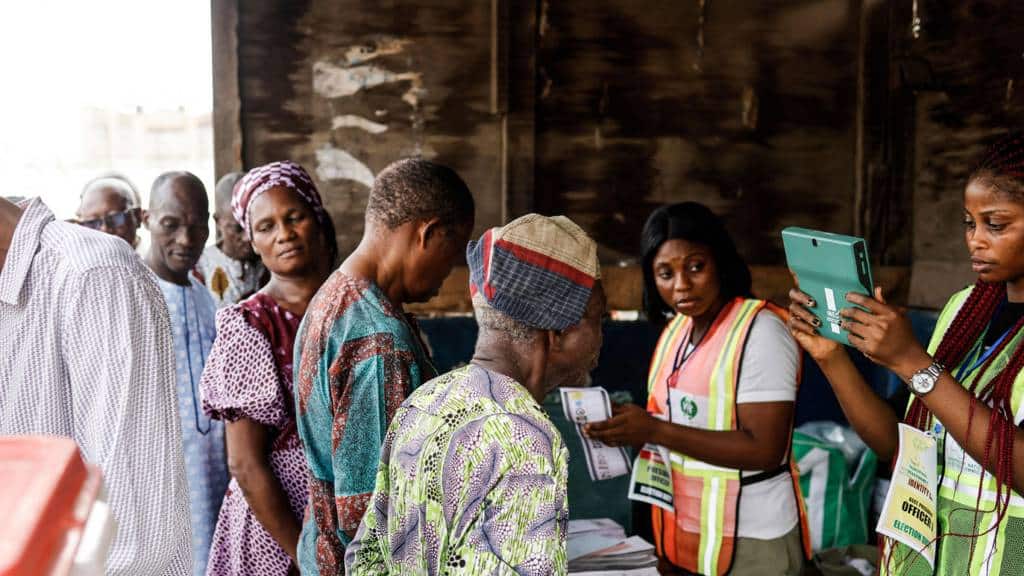
Nationwide, officials of the country’s electoral agency, the Independent National Electoral Commission (INEC) have arrived at some of the 176,606 polling units scattered across the 36 states and the Federal Capital Territory that make up Nigeria.
Accreditation and voting commenced around 08:30 am in some polling units in parts of Nigeria as the 87.2 million voters with Permanent Voter Cards go to the polls to elect a new president and members of the country’s National Assembly.
In order to reduce crowding in polling places that were deemed to be overcrowded, the electoral authority transferred numerous voters from some polling places to others.
Such reassigned voters were instructed to visit a URL provided by the electoral umpire to confirm the new polling places after INEC informed them via text messages that they had been transferred to units close to their original voting units.
Nigeria faces troubling times amid economic woes and insecurity challenges and the presidential poll will be a major decider in the fate of over 200 million people in the next four years. At least 93,469,008 eligible Nigerian voters will go to the polls on Saturday, February 25 to elect the next President of the most populous black African nation among 18 of the contestants.
Meet the 18 presidential candidates:
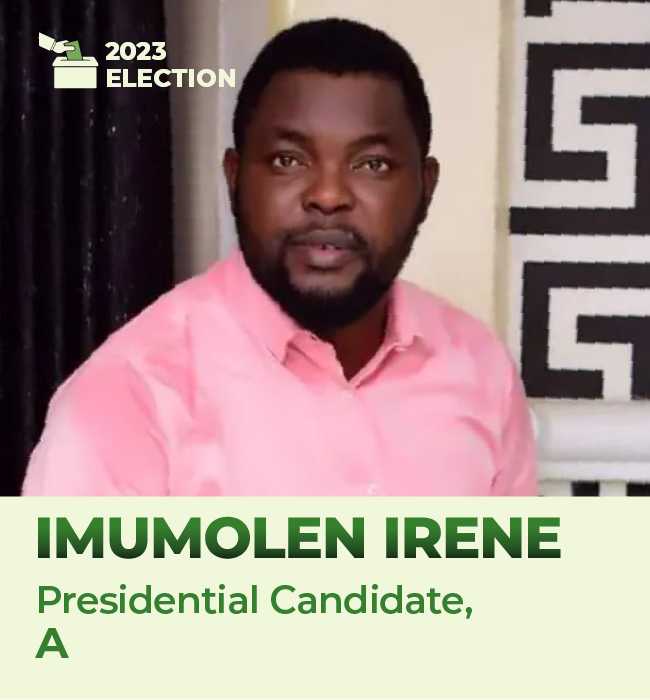
Imumolen Christopher – Accord Party (AP)
Arguably the youngest of the candidates, Imumolen Christopher, 39, is a graduate of Mechanical Engineering who hails from the Esan West Local Government Area of Edo State. His running mate, Bello Bala Maru, is from northern Nigeria.
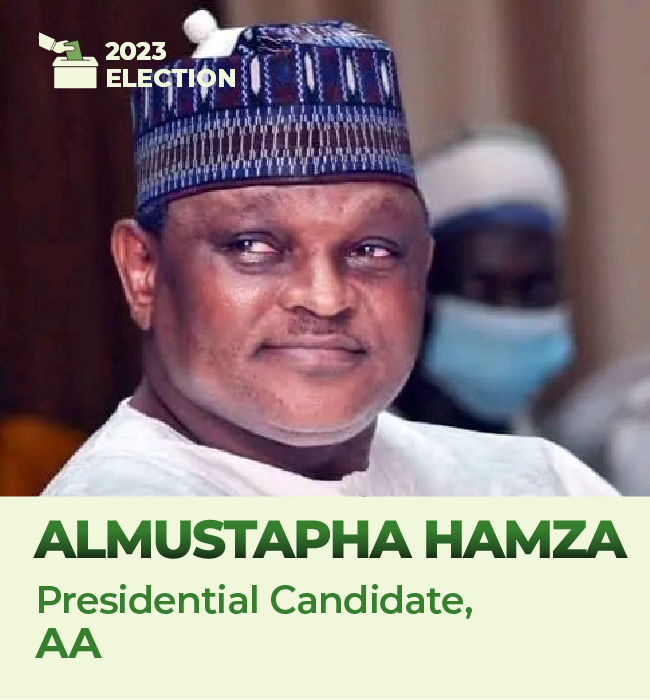
Hamza Al-Mustapha, 62, a former Chief Security Officer to the late Nigerian Head of State, General Sani Abacha is an alumnus of the Nigerian Defence Academy in Kaduna. He was a career military officer for about two decades. Not a newbie in the race, Al-Mustapha, from Yobe in Nigeria’s North-East was the presidential candidate of the defunct Peoples Party of Nigeria (PPN) in 2019. He has a southerner, Johnson Emmanuel Chukwuka, as his running mate.
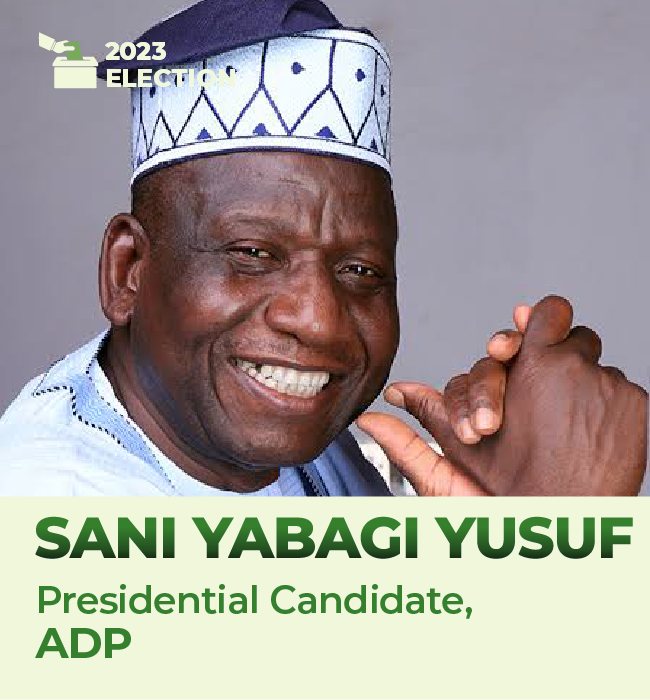
Sani Yabagi Yusuf – Action Democratic Party (ADP)
Yabaji Sani Yusuf, 68, doubles as the National Chairman of the Action Democratic Party (ADP) as well as the Chairman of the Inter-Party Advisory Committee (IPAC). He holds a first degree, according to the Independent National Electoral Commission. He is running alongside, Udo Okey Okoro.
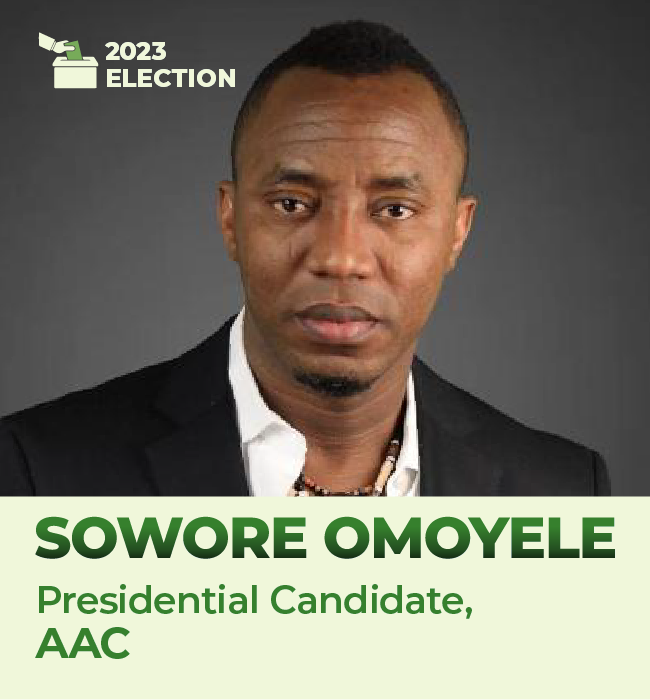
Omoyele Sowore, 51, from Ondo State in South-West Nigeria is a graduate of the University of Lagos. Sowore has been detained a number of times by the Department of State Services for human rights activism. He previously ran for president in 2019 under the banner of the AAC but lost. He is running alongside a northerner, 45-year-old Magashi Garba.
Kachikwu Dumebi – African Democratic Congress (ADC)
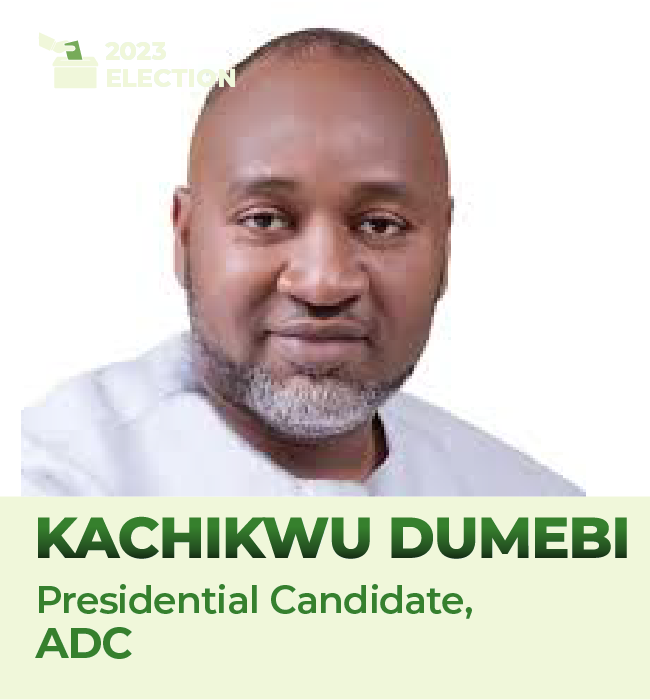
Kachikwu Dumebi is a media entrepreneur and founder of Roots Television Nigeria. The 40-year-old is a younger brother of a former Nigerian Minister of State for Petroleum Resources, Ibe Kachikwu. A first-timer in the presidential race, Dumebi, from Delta State, is running for Aso Rock top job with a northern running mate, Buhari Muhammed.
Bola Tinubu – All Progressives Congress (APC)
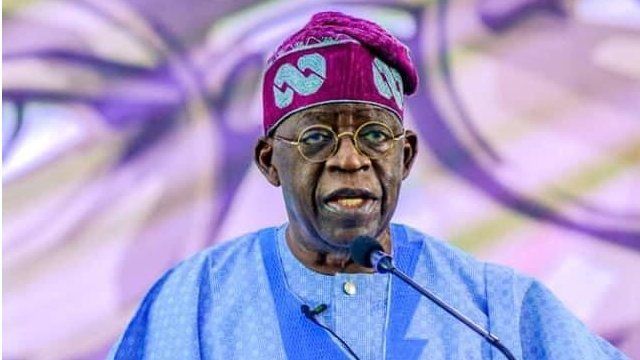
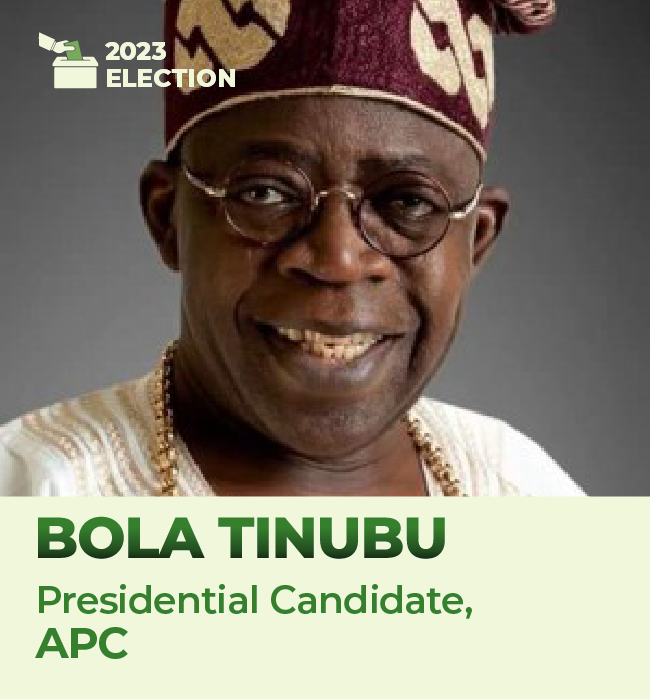
Bola Tinubu was governor of Nigeria’s commercial capital, Lagos, from May 1999 to May 2007. He was the Senator for Lagos West in the brief Third Republic. The 70-year-old politician, according to INEC data, has a Bachelor of Science in Business and Administration. Tinubu, the flag bearer of the President’s party, is running alongside a former governor of Borno State, Kashim Shettima.
Peter Umeadi – All Progressives Grand Alliance (APGA)
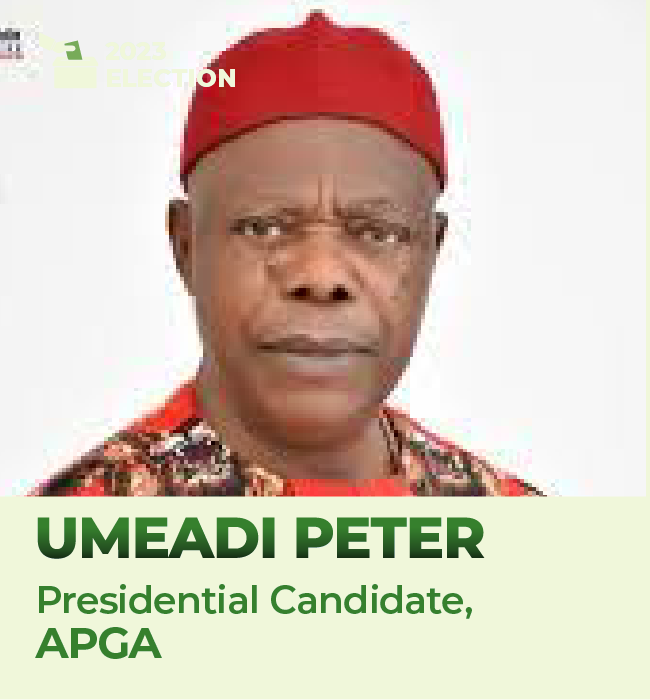
Peter Umeadi, a Professor of Law at the University of Nigeria, Nsukka, is a former Chief Judge of Anambra State. The 67-year-old academic-turn-politician from the South-East geopolitical zone has a northerner, Mohammed Koli, 65, has his running mate.
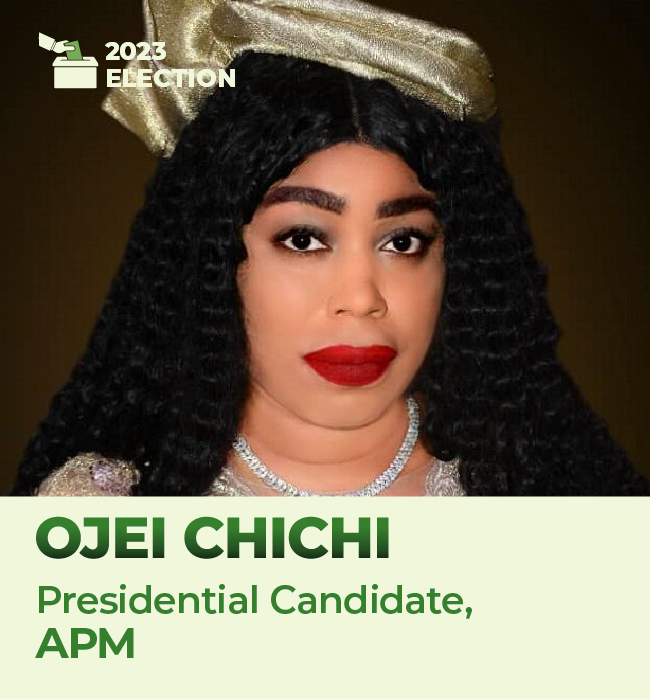
Ojei Princess Chichi – Allied People’s Movement (APM)
The only female presidential candidate in the race, Delta-born Ojei, 44, was educated at the American International School and the Agos Lerosey Rolle, Switzerland, according to INEC. The daughter of Emmanuel Ojei, the founder, chairman and chief executive of Nuel Ojei Holdings, also a first-timer, is running alongside Ibrahim Mohammed.
Nnadi Charles Osita – Action Peoples Party (APP)
Nnadi Charles Osita, 49, is one of the first-timers in the race. The APP candidate has first school leaving certificate Senior Secondary School Certificate, according to INEC data. He has a northerner, Hamisu Isah as his running mate.
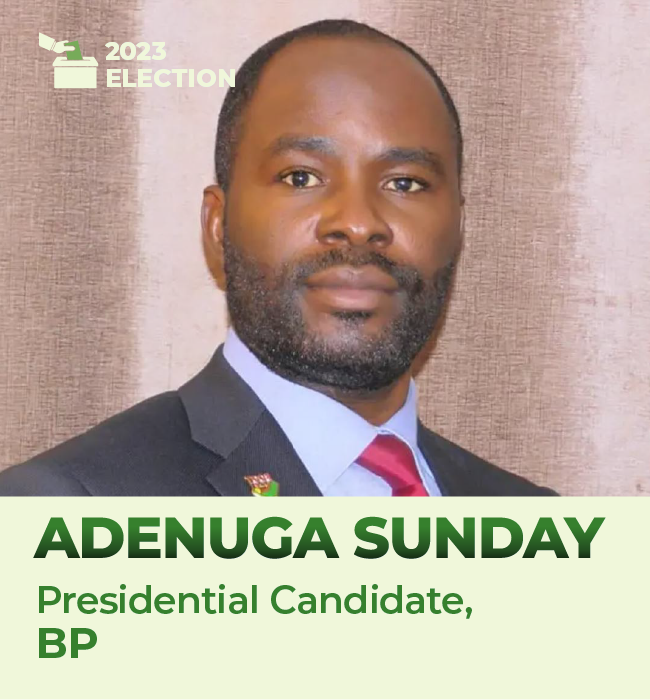
Sunday Adenuga – Boot Party (BP)
Sunday Adenuga, 48, doubles as the national chairman of the Boot Party. Adenuga is a technology expert who has worked on projects by the World Bank and the African Development Bank. The first-timer from the southern region of Nigeria is running alongside a northerner, Usman Mustapha.
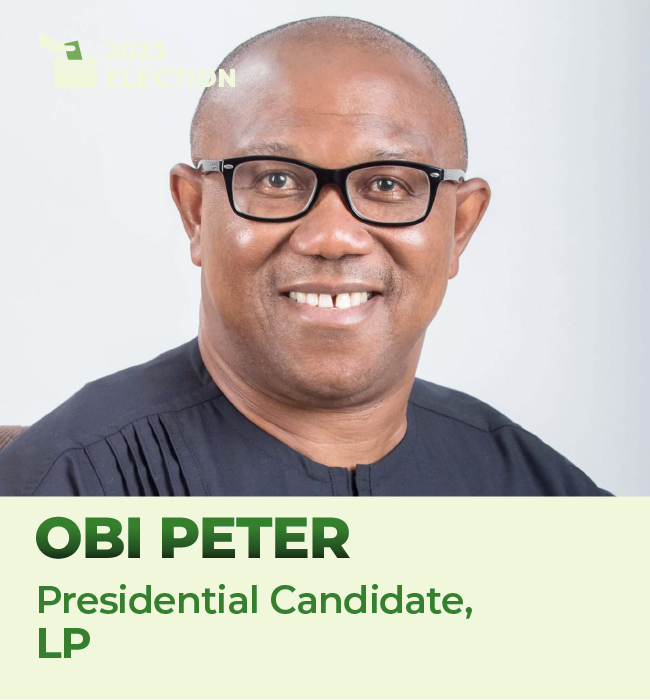
Peter Obi – Labour Party (LP)
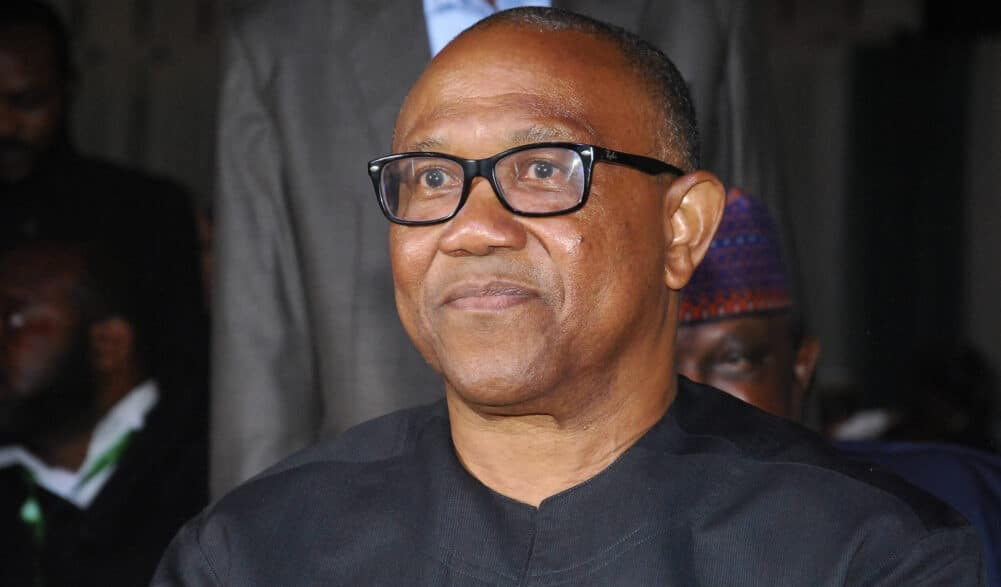
Peter Obi, a graduate of Philosophy from the University of Nigeria (UNN), is a former Governor of Anambra State from 2006 to 2014. The 61-year-old businessman was the vice presidential candidate of the Peoples Democratic Party (PDP) in the 2019 elections but left the party early 2022 to clinch the LP presidential ticket. Many pre-election polls have predicted victory for Obi, who is running alongside Kaduna-based Datti Baba-Ahmed.
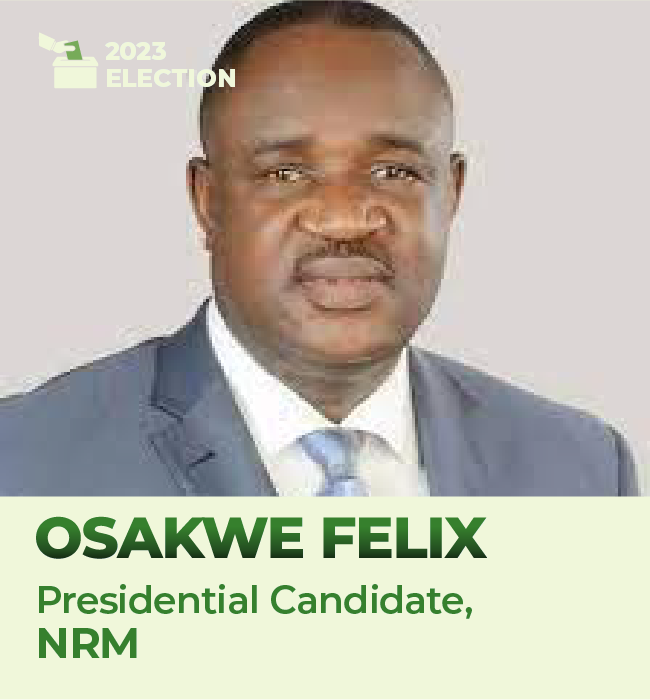
Felix Johnson Osakwe – National Rescue Movement (NRM)
Though not a neophyte, Felix Johnson Osakwe hails from Delta State. The development expert has a Master of Science degree and is running with Kyabo Yahaya Muhammad.
Rabiu Kwankwaso – New Nigeria People’s Party (NNPP)
Rabiu Kwankwaso, 66, is a former governor of Kano State, and an ex- Minister of Defence. The PhD holder commands a “cut-like following” in North-West Nigeria with his socio-political movement, Kwankwasiyya movement with strong presence in Kano and other states. Pre-election polls have positioned Kwankwaso as one of the top four contenders in Niger’a’s 2023 presidential poll. The ex-governor, known for his red cap, is running alongside a southerner, Isaac Idahosa.
Atiku Abubakar – Peoples Democratic Party (PDP)
A former Vice President from 1999 to 2007, Atiku Abubakar, 75, is ranked as one of the top four contenders for the poll. The former customs officer has aimed ambitiously at Nigeria’s top seat in Aso Rock for about three decades. Atiku was PDP presidential candidate in 2019 but came second with over 11 million votes, closely behind the winner, Muhammadu Buhari who polled over 15 million votes. Atiku is running this time with Delta State Governor, Ifeanyi Okowa.
Kola Abiola – Peoples Redemption Party (PRP)
Kola Abiola is the son of the late Moshood Abiola, the presumed winner of the annulled June 12, 1993, presidential election. The Master degree holder and businessman is running alongside Zego Haro Haruna, a northerner.
Adewole Adebayo – Social Democratic Party (SDP)
Adewole Adebayo, 50, is a lawyer and philanthropist from Ondo State in South-West Nigeria. The public commentator is running alongside Buhari Yusuf.
Ado-Ibrahim Malik – Young Progressive Party (YPP)
Ado-Ibrahim Malik is one of the sons of the Ohinoyi of Ebira land in Kogi, AbdulRahman Ado-Ibrahim. The 58-year-old economics graduate and rights activist has a southerner, Enyinna Kasarachi, 44, as his running mate.
Nwanyanwu Daniel – Zenith Labour Party (ZLP)
Dan Nwanyanwu, 62 doubles as the party’s national chairman. The Imo-born politician and lawyer is running alongside a northerner, Abubakar Jibrin.
It is a sincere wish motivated by aggravation at having to live in a nation that is so broken that not even wealth can protect you from the wahala (problems) of Nigeria and its structural flaws. Thus, those who can do so do so.
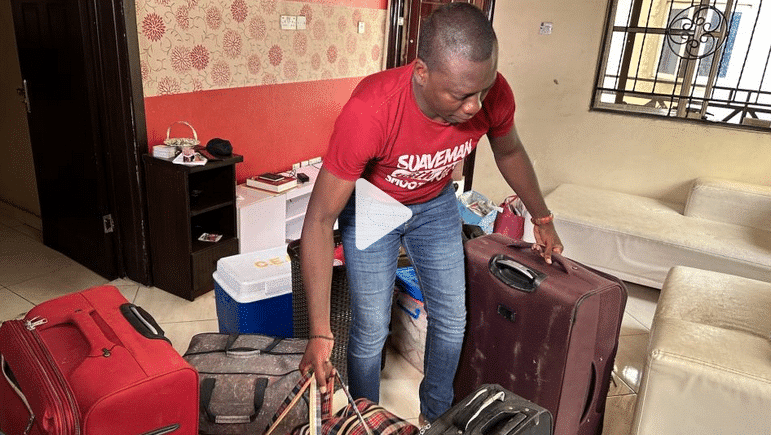
Ayeni Adu, 36,had just given away his fridge when he spoke to CNN on Tuesday, four days before the general election. Suitcases, a cooler box, an empty television stand and a white leather couch were all that were left in his living room. A friend was on the way to pick up the sofa that afternoon. His wife was on her last day at work. The couple had six days left in Nigeria before they moved to the United Kingdom.
They are part of the “japa” wave, the Yoruba word for run or flee that has become the shorthand for the exodus out of Nigeria for better pastures overseas. “I am japa-ing, leaving the country because of the opportunities that are available to me abroad. I am going there to have a better life and a better economy for my family,” Adu told CNN.
A staggering 69% of Nigerians would relocate out of the country with their families if given the chance, a 2022 survey by the Africa Polling Institute found. Only 39% were willing to emigrate in 2019 according to the same poll.
Persistent insecurity, a crumbling economy and rampant corruption are the leading issues for the next government, according to a pre-election survey of voters by Lagos-based SBM Intelligence. Coupled with the high cost of living and unemployment, these concerns have made the country unstable and unpredictable for many, even hostile.
As conditions have worsened in the country, more Nigerians are getting out. Europe and North America are the top destinations for resettlement. The number of “Worker” visas in the UK issued to Nigerians shot up by 399% comparing 2019 to the year ending September 2022, according to data from the UK Home Office. Nigeria was the 5th largest source of immigrants to Canada in 2021, moving up eight places in just five years, Statistics Canada reported.
“This particular wave is hollowing out the upwardly mobile middle class, especially in the mid-20s to late-40s age range,” Cheta Nwanze, lead partner at SBM Intelligence, told CNN. “The very people who are either on the fast track to management or already in the lower cadres of senior management. The very people that the country needs to rebuild.
Adu worked as a radio presenter in Lagos but took a few professional courses and used his health sciences degree to get a job in the UK. Nigeria’s health sector is among the worst hit by the japa phenomenon as doctors, nurses, pharmacists and other professionals emigrate for better working conditions, higher pay and a predictable life. The Nigerian Medical Association says 50 health professionals leave the country every week.
The country appears to be largely training medics for the United States, Canada and the UK. “If nothing is done to reduce the rate at which doctors, medical professionals and other healthcare workers are leaving the shores of this country, it’s just a matter of years,” Dr. Kemi Abiloye, the president of the Lagos Association of Resident Doctors, told CNN before starting her hospital rounds. “I’m not sure whether any doctor will be left in this country.”
An entire cottage industry has sprung up to support those who want to emigrate from Nigeria. Immigration consultants and agencies charge thousands of dollars to offer relocation advice, visa processing services and immigration routes.
On her Instagram page, travel relocation provider Chinwe Iwuanyanwu promises end-to-end application support to destinations like Australia, Finland and Ireland.
“A lot of people don’t trust that things will get better in Nigeria so they’re looking for Plan B,” the Nigerian-born project manager told CNN from her base in Chicago, Illinois. “People want a better life for themselves and their families. We have a lot of talents in Nigeria but they are not getting fully realized, that’s why so many want to relocate.”
Iwuanyanwu says she has aided more than 50 Nigerians in getting hired in Europe and elsewhere. She helps them “optimize” their professional profiles online, revamps their resumés and offers interview prep sessions.
All 18 candidates standing for president in Saturday’s vote are running on a platform of radical change, an acknowledgment that Nigeria is so deeply broken that nothing short of a complete overhaul will work. Japa is now part of everyday language because almost everyone knows someone who is leaving, or has left.
The Afrobeats stars P-Square just finished a comeback tour where they say they encountered Nigerians who have resettled all over the western world. “And when they japa, they see the good life, good roads, good everything,” Peter Okoye, one half of the singing duo, said.
“My family schools in America because of security,” added his twin brother Paul. They support Labour party presidential candidate Peter Obi, who’s inspired the youth in Nigeria but is considered a long shot. He’s in what many believe is a three-horse race with the ruling party All Progressive Congress candidate Bola Ahmed Tinubu and six-time contestant Atiku Abubakar of the People’s Democratic Party.
The next leader of Nigeria can’t do much in the immediate future to reverse the steady stream of talent leaving the country, Nwanze believes. “He needs to focus on restoring confidence, and making sure that people believe that their earnings are not being eroded. Stemming that is one of the very first things the new president would have to focus on. As well as security of course, but all of that would take time,” he told CNN.
There are thousands of TikTok videos, Instagram posts, tweets and Facebook updates of Nigerians celebrating their new lives abroad. They are powerful magnets for those still left at home, considering whether it’s time for the parachute out of “the giant of Africa.”
So, is it “goodbye Nigeria” forever for Adu? “No, it’s goodbye Nigeria until I come back – but it may be a very long time away,” he responds with a laugh.
In a vital presidential election, Nigerians will cast their ballots to choose the nation’s new leader. In addition to electing members of the nation’s parliament, the contentious election is taking place concurrently.
According to the electoral agency INEC, 93 million Nigerians are registered to vote, but only 87 million have a permanent voter card (PVC), which is a necessary prerequisite for voting.
The polls will be open beginning at 8:30 a.m. local time and closing at 2:30 p.m. (or 2:30 a.m. ET Saturday to 8:30 a.m. ET). Yet according to INEC, those who were in line to cast their ballots by the polls closed still have the opportunity to do so.
Ballots will be counted at polling places at the close of voting and transmitted electronically in real-time to INEC’s Result Viewing portal (IReV), a first of its kind in Nigeria, the commission tells CNN.
“With the electronic transmission system (IREV), people will already know the winners before the official announcement is made,” adds Rotimi Oyekanmi, a spokesman for INEC’s chairperson.
To win, a candidate must garner a sufficient number of ballots to meet the 25% vote spread in 24 of Nigeria’s 36 states. In the absence of this, a second round run-off between the top two candidates will be held within 21 days.
Eighteen candidates are on the ballot for Nigeria’s top, but three are leading the race for the popular vote, according to pre-election surveys.
One of the key contenders is Bola Ahmed Tinubu, the candidate of term-limited President Muhammadu Buhari’s party, the All Progressives Congress (APC). Another is the main opposition leader and former vice president Atiku Abubakar, of the People’s Democratic Party (PDP). And third strong contender, Peter Obi, is running under the lesser known Labour Party, and altered early predictions of the presidential vote, which has typically been two-horse races between the ruling and opposition parties.
Seventy-year-old Tinubu, 70, is a former governor of Nigeria’s wealthy Lagos State, who wields significant influence in the southwestern region where he is acclaimed as a political godfather and kingmaker.
He boasts of aiding the election of Buhari to the presidency and declares it is now his turn to lead the country.
Here’s what to know about Nigeria’s presidential election
Candidate of the opposition party PDP Abubakar, 76, is a former Nigerian vice president and a staunch capitalist who made his fortune investing in various sectors in the country.
Abubakar’s presidential bid (his sixth attempt) had fueled concern that it might usurp an unofficial arrangement to rotate the presidency between Nigeria’s northern and southern regions, since he is from the same northern region as the outgoing leader, Buhari.
Labor Party’s Obi is a two-time former governor of southeastern Anambra State and has been touted as a credible alternative to the two major candidates by his hordes of supporters, mostly young Nigerians who call themselves ‘Obidients.’
Obi is also the only Christian among the leading candidates. His southeastern region has yet to produce a president or vice president since Nigeria returned to civil rule in 1999.
The ruling party’s Tinubu, from the religiously mixed southwestern part of the country, is a Muslim and also chose a Muslim running mate, despite the country’s unofficial tradition of mixed-faith presidential tickets.
All top three candidates are confident they can turn Nigeria’s fortunes around if voted into power, as the country battles myriad economic and security problems that range from fuel and cash shortages to rising terror attacks, high inflation, and a plummeting local currency.
Nigeria’s security forces have mobilized personnel to ensure hitch-free electioneering across the country.
The run-up to the polls has been fraught with violence that stemmed from protests against unpopular government policies and lethal attacks by armed criminal gangs.
On Wednesday, a senatorial candidate for the Labour Party, was shot and burned in his campaign vehicle in the country’s southeastern Enugu State, police said.
Before the killing, violent protests had erupted across Nigerian states as citizens railed against the scarcity of gasoline in petrol outlets and a shortage of cash that followed a controversial currency redesign.
Electoral body INEC hasn’t been spared from the chaos; its facilities have been torched in parts of the country.
Voting was canceled at more than 200 planned polling units across Nigeria and voters redirected to other poll locations, INEC said, due to security concerns.
Ahead of the elections, national police ordered a restriction of non-essential vehicular and waterway movements from midnight on election day until 6 p.m., while the country’s immigration service has ordered the closure of Nigeria’s land borders from midnight Saturday until midnight Sunday.
Weeks before polling day, the service had confiscated over 6000 voter cards from illegal migrants, whom it said had other national documents in their possession.
INEC spokesperson Oyekanmi nevertheless insists the poll results will be free and fair.
“The experience Nigerians will have for the 2023 elections will be far better than previous elections and the integrity (of the polls) will be clear for everyone to see,”Oyekanmi told CNN days before the election.
Final results are expected to be announced a few days after polling.
After more than one year of posturing, and preparations the stage is finally set and the die is cast.
Nigeria will hold her historic seventh democratic transition polls today.
One woman is contesting the presidential election as 17 men lock horns in the battle to succeed President Muhammadu Buhari, who will complete his second term on May 29, 2023.
Princess Chichi Ojei, the presidential candidate of the Allied People’s Movement, APM, is the only woman in a crowd of 36 presidential and vice presidential standard bearers.
Apart from the presidential election, there will also be battle for the nation’s 109 senatorial districts and 360 House of
Representatives seats. The Independent National Electoral Commission, INEC, has cleared 1101 senatorial and 3122 House of Representatives candidates for the election. However, there will be no senatorial election in Enugu East, where the Labour Party, LP, Candidate, Mr. Oyibo Chukwu, was assassinated by gunmen, last Wednesday.
Section 34 (1) and (3) of the Electoral Act, 2022 provides that if a candidate dies before the elections begin, the elections will be rescheduled within 14 days by the INEC to enable the affected party replace the dead candidate.
in spite of insecurity concerns following series of violence and killings that trailed the campaigns, and attacks on INEC’s facilities, the Police and the electoral commission have declared their readiness to conduct free, fair and violence free polls.
Already, the Police have deployed 310,973 personnel across the over 176,000 polling units where voting will take place.
Polling Units
Nigeria has 176,846 polling units but elections would only take place in 176,606 as 240 of the total figure have no registered voters according to the INEC.
Readiness of electoral umpire
The INEC Chairman, Professor Mahmood, said the commission had recovered from the recent 50 attacks on its facilities and is set for the elections.
Police riot act
The Inspector General of Police, Usman Baba, has ordered restriction of vehicular movement on roads, waterways, and other forms of transportation from 6am to 6pm today except for those on essential duties. The IG said the Police would ensure public order management, safety of the electorate, as well as assist security agencies in effective policing, thereby preventing hoodlums and criminally-minded elements from disrupting the electoral process.
87.2 m voters to decide Atiku, Tinubu, Obi, others’ fate From a voters’ list of 93.469 million, only 87.209 million voters will are eligible to vote today. They were those who collected their Permanent Voters Cards, PVCs, before the deadline to do so ended on February 5, according to the INEC. Among the 18 candidates jostling to succeed President Buhari are Asiwaju Bola Tinubu of the ruling All Progressives Congress, APC; Alhaji Atiku Abubakar of the People’s Democratic Party, PDP; Mr. Peter Obi of the Labour Party, LP; and Senator Rabiu Kwakwanso of the New Nigeria People’s Party, NNPP. Others include Prince Adewole Adebayo of the Social Democratic Party, SDP; Mr. Dumebi Kaachikwu of the African Democratic Congress, ADC; Chief Kola Abiola of the Peoples Redemption Party, PRP; and Mr. Omoyele Sowere of the African Actin Congress, AAC. Also in theerace are Felix Osakwe, National Rescue Movement NRM; Prof Peter Umeadi, All Progressive Grand Alliance, APGA; Dan Nwanyanwu, Zenith Labour Party, ZLP; Oluwafemi Adenuga, Boot Party, BP; Christopher Imumolen, Accord; Hamza Al-Mustapha, Action Alliance, AA; Sani Yabagi Yusuf, African Democratic Party, ADP; Malik Ibrahim Ado, Young Progressive Party, YPP; and Osita Nnadi, Action People’s Party, APP.
Worries over BVAS A key feature of today’s election is the use of Bimodal Voters Accreditation System, BVAS, to authentic voters’ PVCs The INEC has insisted on using BVAS With the introduction of BVAS, balloting may drag into the night today. Reports from the February 4 mock accredidation of voters by INEC in 436 polling units across the country showed that it took two to three minutes to accredit a voter. At two minutes per voter, 30 voters will be accredited in one hour and 300 voters in 10 hours. So if INEC officials arrive on time today and begin the exercise at 8am 300 voters will be accredited by 6pm using one BVAS. With two BVAS, 300 voters may be accredited in five hours. Sorting, counting and announcement of the results of the presidential, senatorial and House of Representatives polls may take two hours or more. So, if voters turnout is impressive, the election may drag into the night and the INEC must make arrangements for power supply or torch lights.
Poor run of women
Only one woman is on the presidential ballot in spite of women’s fresh push for more accommodation for women in the political arena. Women were not on the radar in 1999, when only two candidates, General Olusegun Obasanjo of the Peoples Democratic, PDP, and Chief Olu Falae of the Alliance for Democracy, AD/All Peoples Party, APP, slugged it out with Obasanjo emerging the winner. However, women were on the ballot in 2003, which so far remains their best attempt at occupying Aso Villa. Of the 20 presidential candidates, two were women – Mrs Sarah Jubril of the Progressive Action Congress, PAC, and Major Mojisola Adekunle Obasanjo, retd, of the Masses Movement of Nigeria, MMN. While Major Obasanjo polled 3,757 votes at that election, Mrs Jubril scored 157,560 votes, the highest any woman has ever got in a presidential election in the country. Ever since, the fortunes of women have been dwindling at the presidential polls. In a pool of 27 candidates in 2007, there was only one woman – Major Obasanjo, who garnered a miserly 4,309 votes. In 2011, with 63 political parties in which 20 parties fielded candidates, there was also only one woman – Ebiti Ndok of the United National Party for Development, UNPD, who polled 21,2017 votes. Mrs. Sarah Jubril’s efforts to be on the ballot did not yield dividend. She got one vote at the PDP presidential primary. In 2015, the poor run of women continued. Mrs. Oluremi Sonaiya, was the only female in a crowd of 14 presidential standard bearers and she got 13,076 votes. In 2019, in a crowd of 73 presidential candidates, there were six women, the highest so far in the history of electioneering in Nigeria. However, the women fared badly polling altogether 25,594 votes in a contest that President Buhari polled 15,191,847 of the total votes cast while his closest opponent, Atiku Abubakar of the PDP got 11,262,978 votes, an astonishing victory margin of 3,928,869 votes. The women who part in the 2019 election were Mrs Oby Ezekwesili (ACPN, 7,223 votes); Angela Johnson (AUN, 1,092 votes); Olufunmilayo Adesanya-Davies (MAJA, 2,651 votes); Eunice Atuejide (NIP, 2,248 votes); Rabia Yasai Hassan Cengiz (NAC, 2,279); and Maina Maimuna Kyari (NPC, 10,081 votes). The gains made by women in the last five electoral cycles appeared to have been eroded in 2023 with only one woman standing
The News Agency of Nigeria (NAN) reports that 11 military vehicles on patrol made a stop over at the office, which caused some minutes of gridlock, prompting motorists to divert to other routes.
Also, several Police officers were seen patrolling the vicinity, while some men of the Vehicle Inspection Office (VIO) were equally seen in and around the vicinity.
Meanwhile, the office was a beehive of activities as materials were being sorted and dispatched to Wuse, Gwarimpa and other wards under the municipal.
Several vehicles were seen as late as 8: 30 p.m carrying materials from the office to the various voting points.
NAN reports that expectations were high among business operators and residents as many were seen discussing about the likely outcome of the election.
Some of the residents interviewed by NAN expressed their readiness to vote for their preferred candidates on the election day.
A business woman, Amanda, said in spite of her busy schedule, she made out time to collect her Permanent Voter Card (PVC).
According to her, she has decided to carryout her civic responsibility to choose leaders that would take the country to the “promised land”.
An elderly man, who gave his name as Yakubu, said the 2023 election would be a deciding moment for the country.
He said he would go out very early on Saturday to cast his vote.
He further said all his family members of voting age also had their PVCs and would be going out to vote.
NAN reports that Feb. 25 has been scheduled by INEC for Presidential and National Assembly elections while March 11 is scheduled for Governorship and State Houses of Assembly elections.(NAN)
Nigeria, the most populous nation in Africa, will hold presidential elections on Febuary 25, 2023 amid growing dissatisfaction in the nation due to deteriorating security and economic hardship. Would any of the front-runners, the majority of whom have spent decades in politics, be able to change the course of the nation?
Muhammadu Buhari, the outgoing president of Nigeria, is leaving office after nearly eight years in charge amid instability and intense agitation, as many people are unable to access the money they require to purchase food due to a bungled roll-out of new banknotes.
But the cash crisis is not the only problem Nigerians face, with the last year being marked by struggle and tragedy, including high inflation and deadly attacks by gunmen against innocent civilians.
Mr Buhari’s supporters say he has done his best and highlight achievements, such as his work on infrastructure projects and attempts to combat violent extremism. But even his own wife, Aisha Buhari, has apologised to the Nigerian people for falling short of their expectations.
So whoever wins the election will not have an easy job.
Who is running for president?
A total of 18 candidates are campaigning for the top job, but only three have a realistic chance of winning, according to opinion polls. Only one of the 18 is a woman.
Bola Ahmed Tinubu, 70, is standing for the governing All Progressives Congress (APC) party. Known as a political godfather in the south-west region, he wields huge influence but has been dogged by allegations of corruption over the years and poor health, both of which he denies. Some say his campaign slogan Emi Lokan, which means “it’s my turn [to be president]” in the Yoruba language, shows a sense of entitlement.
Who is Bola Tinubu?
Atiku Abubakar, 76, is running on behalf of the main opposition People’s Democratic Party (PDP). He has run for the presidency five times before – all of which he has lost. Most of his career has been in the corridors of power, having worked as a top civil servant, vice-president under Olusegun Obasanjo and a prominent businessman. Just like Mr Tinubu, he has been accused of corruption and cronyism, which he denies.
Who is Atiku Abubakar?
Peter Obi, 61, is hoping to break up the two-party system which has dominated Nigeria since the end of military rule in 1999 and is running for the little known Labour Party. Although he was in the PDP until last year, he is seen as a relatively fresh face and enjoys fervent support on social media and among Nigeria’s youth. The wealthy businessman served as governor of the south-eastern Anambra State from 2006 to 2014. His backers, known as the “OBIdients” say he is the only candidate with integrity, but his critics argue that a vote for Obi is wasted as he is unlikely to win.
Who is likely to win?
Convention suggests a candidate from one of the two main parties will win – Mr Atiku or Mr Tinubu. But Mr Obi’s supporters are hoping he can spring a surprise if they can mobilise the large youth vote to back him.
When is the election?
It is due to take place on Saturday 25 February 2023. If there is no clear winner, a second round will be held within three weeks. There will also be elections for the country’s powerful state governors on Saturday 11 March.
The head of the election commission has dismissed suggestions that the vote could be delayed because of insecurity.
When will the election results be announced?
In the last two presidential elections the winner has been known on the third day after voting.
But votes will be counted as soon as voting ends on Saturday 25 February. Those who stay behind at their polling station will have the result announced to them, but it is a long process before all the results work their way up to Abuja from the tens of thousands of polling units across the country.
BVAS might speed up the process this year, but Inec-appointed officials will still have to travel to Abuja from the 36 states with hard copies to be read aloud.
Only then will the Inec chairman announce a winner – or that a second round is needed.
How does the election work?
In order to win, a candidate has to obtain the highest number of votes nationwide, and more than a quarter of ballots cast in at least two-thirds of Nigeria’s states.
If none of the candidates manage this, there will be a second round run-off between the top two candidates within 21 days.
What are the main issues?
Reducing insecurity is one of the key concerns of voters, in a country which is currently experiencing a kidnapping-for-ransom crisis, battling militant Islamists groups in parts of the north and a separatist insurgency in the south-east.
Two of the most shocking cases last year were a mass shooting at a Catholic Church in Owo and the storming by gunmen of a passenger train in which dozens of people were killed or kidnapped.
Image caption,Peter Obi’s supporters, who appear to be younger Nigerians, are vocal on social media
President Buhari says he has fulfilled his promise to “frontally and courageously tackle terrorism”, but many Nigerians feel the country is still not safe.
Has Buhari tackled jihadist threat in Nigeria?
The economy is another area of concern. Inflation now stands at 21.8%, according to the latest figures released this month. This rising cost of living has left many families struggling to make ends meet, with local media describing the situation as “dire”.
Unemployment is also a major problem, leaving many graduates fearful that they may not find work even after years of university study, which has prompted many to try and leave the country. Latest figures from the country’s National Bureau of Statistics show that 33% of the population is unemployed – jumping to 42.5% for younger adults.
Despite being a major oil producer, four out of 10 Nigerians live below the poverty line and “lack education and access to basic infrastructure, such as electricity, safe drinking water, and improved sanitation,” according to the World Bank.
Many of the candidates have put these issues at the centre of their campaigns.
But these problems have been mounting for several years, leaving some Nigerians sceptical about whether whoever wins the election will actually be able to fix them. Despite the large number of registered voters – 93.5 million – concerns persist about apathy and how many people will actually show up on the day to cast their ballot.
With almost 40% of registered voters under 34, the vote has been called the “election of young people” by elections chief Mahmood Yakubu.
Former President, John Dramani Mahama is leading theWest African Elders Forum(WAEF) in Nigeria as the country chooses a new leader on Saturday, February 25.
Interacting with journalists on the eve of elections in the federal capital, Abuja, Mr Mahama said the former West African leaders are in the country to ensure that there is a peaceful outcome to the polls.
He intimated that they were invited by the federal government to witness the polls and so far they are impressed with the commitment of all the 18 candidates to ensure violence-free elections.
“This year’s election is attracting this level of interest because Nigeria’s success and progress in this regard will go a long way in stabilizing democracy, promoting good governance and maintaining peace in the sub-region,” the former Ghanaian President told journalists on Friday, February 24.
“We are pleased with the level of preparedness by the Independent National Electoral Commission (INEC), the security forces policing the elections and other stakeholders involved in the elections, towards conducting a free and fair exercise.”
He disclosed that last December, the Forum deployed a three-man delegation to the country to undertake a pre-election mediation mission.
The delegation was made up of former President of Sierra Leone, Ernest Vai Koroma, former Vice President of the Gambia Fatoumata Tambajang and former President of the ECOWAS Commission and former Special Representative of the United Nations Secretary-General and Head of the UNOWAS Dr Mohammed Ibn Chambas.
During the mission, the delegation met with President Muhammadu Buhari, INEC Chair Prof Mahmood Yakubu, National Security Adviser, presidential candidates, political parties, civil society leaders, President of the ECOWAS Commission, development partners and other stakeholders.
Mr Mahama further disclosed that meetings have been held with former Nigeria Head of State General Abdulsalami Abubakar and other former leaders, all to ensure peaceful polls.
“We are pleased that Gen. Abubakar is a member of our the Elders of Forum, just as we also have former Presidents Olusegun Obasanjo and Goodluck Jonathan as our members.
“We will also visit other key stakeholders just to encourage them in the job they are doing to ensure free, fair and peaceful elections.”
He assured all that members of the Forum will visit a few polling stations in Abuja to observe election day procedures and results collation processes while others will stay after Saturday’s elections “to engage key stakeholders, if need be, towards guaranteeing peaceful outcomes”.
“This means that some of our members will remain in the country until the election procedures are peacefully concluded.”
The Economic and Financial Crimes Commission (EFCC) has seized N32.4 million in fresh notes that they believe are to be used in Lagos to buy votes.
The anti-graft organization said in a tweet on Friday that authorities had also detained a suspect and were questioning him.
“The massive operation by the Economic and Financial Crimes Commission, EFCC, to deter vote trading and other financial malfeasance ahead of tomorrow’s presidential and national assembly elections may have begun paying dividends with the interception in Lagos of the sum of N32,400,000 allegedly suspected to be used for vote buying in Lagos,” the statement read.
“The recovery was made by operatives of the Lagos Zonal Command of the Commission. The suspect involved has been taken into custody for further questioning.”
Abdulrasheed Bawa, the chairman of the EFCC, urged members of the anti-corruption organization assigned to the task of election monitoring to act courageously.
Bawa also urged them to avoid creating conditions that would allow dishonest individuals to compromise the integrity of the polls by offering money inducements.
“Tactical teams of operatives are currently on the ground in all the states of the federation and the FCT. Telephone hotlines have already been circulated through social media for members of the public to share information regarding financial malpractices with agents of the Commission.
“Members of the public are encouraged to report anyone trying to buy or sell votes by making use of the EFCC financial crimes reporting App, Eagle Eye, which is available for download on the Google Play or Apple store,” the statement added.
EFCC Intercepts N32.4m Allegedly Meant for Vote-buying in Lagos
The massive operation by the EFCC to deter vote trading and other financial malfeasance ahead of tomorrow's presidential and national assembly elections may have begun paying dividends… pic.twitter.com/btYopNaqYH
Earlier, security operatives arrested a federal lawmaker, Dr. Chinyere Igwe, with $498,100 on suspicion of attempted vote buying and money laundering.
The lawmaker who represents Port Harcourt Federal Constituency 2 in the House of Representatives was arrested along Aba Road in the state capital on Thursday.
These incidents come amid a scarcity of the new naira notes, subjecting millions of Nigerians to hardship. The situation also triggered protests in some states with aggrieved citizens barricading major roads to register their displeasure.
As of Thursday, February 23, 2023, a total of 6,259,229, Permanent Voter Cards (PVCs) were still in the custody of Nigerian Elections officers, data from the Independent National Electoral Commission INEC, indicates.
A total number of 87,209,007 PVCs had been collected by Nigerians during the time of the release of the data.
The data which was collated as of 5th February 2023 shows that uncollected PVCs stood at 6,259,229. Nigeria has a registered voting population of 93,469,008.
The Tinubu-Shettima Presidential Campaign Council PCC had on Wednesday demanded a breakdown of Nigerians who have collected their PVCs, saying the data was necessary for its election planning.
At a news conference Wednesday in Abuja, INEC Chairman, Prof. Mahmood Yakubu disclosed that the commission would upload the PVC data collection disaggregation on a polling unit basis to its website by Friday.
Aside from journalists from domestic and foreign media, some of those present at the briefing were a former President of Malawi, Joyce Banda; leaders of the International Republican Institute IRI and National Democratic Institute NDI; Chairmen of the electoral commissions of the Republic of Benin, Gambia, Sierra Leone, Namibia, Tanzania, and Niger Republic as well as members of the Diplomatic Corps.
State-by-state figures.
A state-by-state analysis of PVCs collection showed that Lagos has the highest figure of 6,214,970, followed by Kano with 5,594,193; Kaduna, 4,164,473; Katsina, 3,459,945; and, Rivers, 3,285,785.
Ekiti which has the lowest number of registered voters also has the lowest number of PVCs collected – 958, 052.
A summation of PVCs collected on the basis of geopolitical zones showed that the Northwest has 21,445,000; Southwest, 15,536,213; North Central, 14,603,621; South-South, 13,284,920; North East, 11,937,769; and, South East, 10,401,484.
In his address, Yakubu said the Commission has meticulously prepared and implemented its Election Project Plan, learning from recent elections.
“This election is a huge logistical deployment. We have painstakingly procured, organized, and delivered all the materials to the States for deployment. We commenced the delivery of non-sensitive materials over two months ago and they have been batched down to Registration Area/Ward and Pulling Unit levels.
“Sensitive materials have been delivered to the States and are presently being delivered to our Local Government Area offices. As such, these materials are only between one and two levels away from the Polling Units. We have achieved this by learning from our recent difficult experience with logistics. We have completed arrangements with the transport unions for the final leg of the movement of personnel and materials to the Polling Units. They have assured us of their readiness to provide all the vehicular needs of the Commission for the election”, he said.
Yakubu added that the commission has also completed all the testing of its technologies to be deployed for the election, particularly the Bimodal Voter Accreditation System BVAS and the INEC Results Viewing Portal IReV.
“On 4th February 2023, we tested the BVAS in a mock accreditation exercise and uploaded the results to IReV. We are satisfied with the performance of the BVAS, which has been confirmed by several groups that observed the exercise. Lessons learnt from the exercise have helped us in the training of 10,600 Registration Area Technical Support Staff RATECHS. They will provide the necessary support to ensure that the deployment of the BVAS is without hitches.
No PVC, no voting
“Let me reiterate that the procedure for voting as provided in the Electoral Act 2022, clearly makes the use of the BVAS mandatory. So also, the use of the Permanent Voters’ Card PVC. The ‘No PVC, No Voting’ rule subsists.
“In the last few months, we made 13,676,907 PVCs available for collection for new voters and applicants for transfer and replacement of lost/damaged cards. While we are pleased that the rate of collection is higher than in previous years, there are still, unfortunately, many cards that were not collected.
“Vote buying remains a major threat to our democracy. We have worked closely with enforcement agencies to ensure that this is eliminated from our electoral process. We are convinced that our joint operations before and on election day will vastly reduce the prospect of voter inducement, which is not only illegal but immoral.
“The ban on the use of mobile phones and photographic devices at the voting cubicles is still in place. Some voters have used these devices in previous elections to snap their marked ballot papers for vote transactions. However, citizens are permitted to come to the Polling Units with these devices, as long as they do not take them to the voting cubicles. Our arrangement of placing the ballot box near the voting cubicle and away from party agents remains.
“In the build-up to the general election, several of our facilities were attacked by unknown assailants in various parts of the country. I am pleased that we have fully recovered from those attacks, and we have been further assured that our facilities, staff, voters, observers, and citizens will be safe during the election.
“As a result of recent developments in the economy, we have also had to consult with the Nigerian National Petroleum Company Limited NNPCL on the fuel situation. As you all know, we require Premium Motor Spirit PMS and Automotive Gas Oil AGO to power vehicles and boast for land and marine transportation as well as our generators during the election.
“We are pleased that the NNPC Limited assured us that it will ensure the availability of the products for the polls. Likewise, the Central Bank of Nigeria (CBN) has assured us that it will provide us with the small amount of cash we require from our budget to cash payments to some critical service providers for the election. I must reiterate that the bulk of payment for works goods and services is still paid for by electronic transfer.
“I want to assure Nigerians that we are adequately prepared for this election. We remain fully committed to a free, fair, and credible process. I want to once again declare that our allegiance is only to Nigerians. Our commitment is to ensure that in this election we put everything in place for free choice, fair contest, and credible outcome”, he added.
House of Representatives member representing Port Harcourt Constituency 2, at the National Assembly, Chinyere Igwe, has been apprehended by operatives of the Rivers State Police in Nigeria for alleged money laundering.
He was picked up on Thursday night in a stop and search operation on Port Harcourt-Aba expressway while driving home
Spokesperson of the state police command, SP Grace Iringe-Koko, on Friday, revealed that the sum of $498,100, was recovered from the suspect.
She said: “Police Officers from Rivers State Command deployed to INEC Headquarters Aba Road today 24/2/2023 at about 0245hrs, while on stop and search, arrested one Hon Chinyere Igwe, member House of Representatives representing Port Harcourt II Federal Constituency with a cash sum of 498,100 USD inside a bag in his car.
“Also recovered was a list for distribution of the money. The AIG Election, AIG Abutu Yaro fdc, has ordered swift interrogation and arraignment in court.
“The Command urges all contestants and political parties to comply strictly with provisions of the Electoral Act and other relevant laws.”
Voters in Africa’s most populous country, Nigeria, will head to the polls this week to select their next president amid mounting unhappiness in the country due to worsening insecurity and economic hardship. Will any of the frontrunners, most of whom have been in the political system for decades, be able to turn the country around?
Nigeria’s outgoing President Muhammadu Buhari is stepping down after nearly eight years in power amid a backdrop of chaos and widespread unrest, as many people are unable to access the cash they need to buy food because of a botched roll-out of new banknotes.
But the cash crisis is not the only problem Nigerians face, with the last year being marked by struggle and tragedy, including high inflation and deadly attacks by gunmen against innocent civilians.
Mr Buhari’s supporters say he has done his best and highlight achievements, such as his work on infrastructure projects and attempts to combat violent extremism. But even his own wife, Aisha Buhari, has apologised to the Nigerian people for falling short of their expectations.
So whoever wins the election will not have an easy job.
Who is running for president?
A total of 18 candidates are campaigning for the top job, but only three have a realistic chance of winning, according to opinion polls. Only one of the 18 is a woman.
Bola Ahmed Tinubu, 70, is standing for the governing All Progressives Congress (APC) party. Known as a political godfather in the south-west region, he wields huge influence but has been dogged by allegations of corruption over the years and poor health, both of which he denies. Some say his campaign slogan Emi Lokan, which means “it’s my turn [to be president]” in the Yoruba language, shows a sense of entitlement.
Atiku Abubakar, 76, is running on behalf of the main opposition People’s Democratic Party (PDP). He has run for the presidency five times before – all of which he has lost. Most of his career has been in the corridors of power, having worked as a top civil servant, vice-president under Olusegun Obasanjo and a prominent businessman. Just like Mr Tinubu, he has been accused of corruption and cronyism, which he denies.
Peter Obi, 61, is hoping to break up the two-party system which has dominated Nigeria since the end of military rule in 1999 and is running for the little known Labour Party. Although he was in the PDP until last year, he is seen as a relatively fresh face and enjoys fervent support on social media and among Nigeria’s youth. The wealthy businessman served as governor of the south-eastern Anambra State from 2006 to 2014. His backers, known as the “OBIdients” say he is the only candidate with integrity, but his critics argue that a vote for Obi is wasted as he is unlikely to win.
Who is likely to win?
Convention suggests a candidate from one of the two main parties will win – Mr Atiku or Mr Tinubu. But Mr Obi’s supporters are hoping he can spring a surprise if they can mobilise the large youth vote to back him.
When is the election?
It is due to take place on Saturday 25 February 2023. If there is no clear winner, a second round will be held within three weeks. There will also be elections for the country’s powerful state governors on Saturday 11 March.
The head of the election commission has dismissed suggestions that the vote could be delayed because of insecurity.
When will the election results be announced?
In the last two presidential elections the winner has been known on the third day after voting.
But votes will be counted as soon as voting ends on Saturday 25 February. Those who stay behind at their polling station will have the result announced to them, but it is a long process before all the results work their way up to Abuja from the tens of thousands of polling units across the country.
BVAS might speed up the process this year, but Inec-appointed officials will still have to travel to Abuja from the 36 states with hard copies to be read aloud.
Only then will the Inec chairman announce a winner – or that a second round is needed.
How does the election work?
In order to win, a candidate has to obtain the highest number of votes nationwide, and more than a quarter of ballots cast in at least two-thirds of Nigeria’s states.
If none of the candidates manage this, there will be a second round run-off between the top two candidates within 21 days.
What are the main issues?
Reducing insecurity is one of the key concerns of voters, in a country which is currently experiencing a kidnapping-for-ransom crisis, battling militant Islamists groups in parts of the north and a separatist insurgency in the south-east.
Two of the most shocking cases last year were a mass shooting at a Catholic Church in Owo and the storming by gunmen of a passenger train in which dozens of people were killed or kidnapped.
Image caption, Peter Obi’s supporters, who appear to be younger Nigerians, are vocal on social media
President Buhari says he has fulfilled his promise to “frontally and courageously tackle terrorism”, but many Nigerians feel the country is still not safe.
The economy is another area of concern. Inflation now stands at 21.8%, according to the latest figures released this month. This rising cost of living has left many families struggling to make ends meet, with local media describing the situation as “dire”.
Unemployment is also a major problem, leaving many graduates fearful that they may not find work even after years of university study, which has prompted many to try and leave the country. Latest figures from the country’s National Bureau of Statistics show that 33% of the population is unemployed – jumping to 42.5% for younger adults.
Despite being a major oil producer, four out of 10 Nigerians live below the poverty line and “lack education and access to basic infrastructure, such as electricity, safe drinking water, and improved sanitation,” according to the World Bank.
Many of the candidates have put these issues at the centre of their campaigns.
But these problems have been mounting for several years, leaving some Nigerians sceptical about whether whoever wins the election will actually be able to fix them. Despite the large number of registered voters – 93.5 million – concerns persist about apathy and how many people will actually show up on the day to cast their ballot.
With almost 40% of registered voters under 34, the vote has been called the “election of young people” by elections chief Mahmood Yakubu.
According to local police, a manhunt is under way for the assassins of a senatorial candidate for Nigeria’s opposition Labor Party who was shot and set on fire in his campaign truck late Wednesday in the southeast of the country’s Enugu State.
Oyibo Chukwu, a politician, and an unnamed personal assistant were killed by assailants who authorities believe to be members of the outlawed separatist organisation IPOB and its militant offshoot ESN.
According to a police statement, many attacks late on Wednesday targeted members of other political parties, with Chukwu’s murder being one of them.
“The Commissioner of Police, Enugu State Command, CP Ahmed Ammani, fdc, has ordered the … manhunt of the subversive criminal elements, suspected to be IPOB/ESN renegades, who … ambushed and simultaneously attacked and murdered People’s Democratic Party (PDP) and Labour Party (LP) members, and also attempted to attack the convoy of the All Progressive Congress (APC) Governorship Candidate.”
The armed attackers stormed their target points in a tricycle and Hilux vehicle, the statement added.
The attacks are happening less than three days before Nigeria’s presidential and parliamentary elections.
Labor Party presidential candidate Peter Obi said in a tweet Thursday he was saddened to learn of the brutal murder of his party’s senate candidate.
“I received with deep shock and sadness, the news of the painful killing of Barr Oyibo Chukwu, the Senatorial Candidate of the Labour Party, for Enugu East Senatorial Zone. … I strongly condemn the killing of Barr Chukwu in all its entirety,” Obi tweeted adding that Nigerians should “freely exercise their civic duties without intimidation.”
More than 93 million Nigerians are registered to participate in the country’s general elections starting Saturday, but uncertainty hangs over voter turnout on polling day, with insecurity among the biggest concerns.
Separatist gangs have terrorized the southeastern region where agitations for a breakaway Biafra state have turned violent many times. In other parts of the country, marauding gunmen known locally as bandits have carried out mass kidnappings mostly for ransom.
Voting will not take place in more than 200 polling units across Nigeria, INEC says, because of concerns over security.
The Nigeria branch of Amnesty International has also condemned the killing, describing it as “horrific.”
“Amnesty International strongly condemns the horrific killing last night of the Labour Party (LP) candidate … Oyibo Chukwu, who was also gruesomely burnt inside his vehicle while returning from a campaign activity in Agbani, Enugu state … The Nigerian authorities must order a prompt, thorough, independent, impartial, transparent, and effective investigation into the killing, and bring those suspected to be responsible to justice,” the human rights group tweeted Thursday.
All of Nigeria’s land borders will be closed on Saturday for the fiercely disputed elections.
According to the Nigeria Immigration Service, the decision is intended to ensure that the “elections are free, fair, and devoid of anomalies.”
Border officials have been instructed to ensure that the directive is strictly followed.
According to reports, the presidential and parliamentary elections will feature the fiercest competition since the end of military government in 1999.
We are committed to Project Nigeria while ensuring that, within the parameters of the powers vested on us by the relevant laws, the coming elections are free, fair and devoid of anomalies.#NISDeyForYou🫶 pic.twitter.com/zzuHK8Q4jm
The immigration service said it had seized 6,000 voters cards and other Nigerian identification documents from illegal immigrants in the run-up to the elections.
President Muhammadu Buhari had earlier on Thursday urged security agencies to be “firm and courageous” in the election period, and warned against riots after after the announcement of election results.
Nigeria, with 214 million inhabitants, is the most populous and wealthiest nation in Africa, and its actions have a significant impact on the rest of the continent. After eight years under Muhammadu Buhari, voters will choose a new president, but whoever is elected will face some difficult obstacles.
Some of the issues that voters are considering are shown in the following charts.
Nigerians, like others all over the world, have experienced an increase in food costs over the past year as a result of the consequences from the conflict in Ukraine. Yet, prices had been rising prior to the war due to a shortage of foreign currency and the closing of the border to numerous imports.
In total, inflation in 2022 was just under 19%, which was the highest level in 20 years. Garri, or cassava flakes, a staple food, has been one of the fundamental items least impacted, but families are being greatly impacted by the sharp increase in the price of other necessities like tomatoes and vegetable oil.
If the new president wants to help people with the cost of basic items, they will face the problem that the government is already spending more than it receives.
Huge sums are spent on subsidising petrol and the oil-producing nation has not been able to take advantage of higher oil prices as it has little refining capacity and has to re-import petrol.
Analysts are getting increasingly concerned about the sustainability of the public debt with the cost of paying the interest on it exceeding government income at times in 2022.
As one of Africa’s top oil producers, Nigeria has relied on the black gold for government revenue as well as a source of vital foreign currency. Nevertheless, the oil-rich country has not taken advantage of the money generated – much of it has been stolen or misused.
And oil production has been declining in the last decade. In 2022 it fell to its lowest level in 30 years.
Oil theft and vandalism have been blamed for the loss of output. This, added to years of under-investment and the age of the oil fields themselves, means that Nigeria is falling behind other oil-producing nations.
With half of Nigerians under the age of 18, the country’s leaders face the challenge of how to harness this youthful population.
They need to help the economy grow to fulfil the needs and ambitions of all those young people.
Even with so many people too young to cast their ballots, 40% of registered voters are under the age of 35, making them a huge constituency. A direct appeal to them could influence the outcome of the election.
The first thing that most young Nigerians want is a job.
Currently a third of Nigerians who want to work are unemployed. When it comes to young people, more than half of those between 15 and 24 are looking for work.
The measures to deal with the Covid pandemic certainly had an impact but unemployment rates were rising before the outbreak of the virus.
The economy has grown since 2015, but just not fast enough to accommodate all the new people seeking jobs.
Insecurity has been cited as one of the reasons behind low growth, but economists have also blamed other measures such as currency restrictions and shutting the borders to many imports, saying they discourage investment.
The level of access to some basic infrastructure that could improve the ease of doing business, as well as everyday lives, is low.
The poor state of the power network has long been a source of criticism and only around 55% of the population have access to electricity, according to World Bank figures.
And when it comes to the internet, just 36% of Nigerians are getting online, which puts it in the middle of the pack of West African countries.
Dealing with the growing levels of violence in Nigeria will be a major priority for the next president.
When President Buhari was first elected in 2015, the threat from militant Islamist group Boko Haram in the north-east was the biggest concern. While they no longer control much territory, upsurges in kidnappings, politically motivated attacks, farmer-herder tensions, criminal violence and a separatist insurgency in the south-east, as well as police brutality, undermine faith in the state to keep the population safe.
This is no longer an issue that is largely confined to the north-east – the problem has now spread across the country.
Of all the children around the world who don’t go to school, one in five live in Nigeria.
While this is partly a reflection of the sheer size of the country’s young population, the fact that nearly 40% of the country’s 5-11-year-olds are not in school is a major concern.
This is a countrywide issue but attendance levels are generally worse in the north. Some of this has been affected by insecurity, but gender and poverty are also factors.
“I think public servants out there or some businessmen with questionable character still have these funds out there,” the Chairman of the Economic and Financial Crimes Commission (EFCC), Abdulrasheed Bawa, said during a live appearance on Channels Television’s The 2023 Verdict on Wednesday.
He however stressed that the law allows for anyone with the old notes in their possession to deposit them with the Central Bank of Nigeria (CBN) at any time in the future.
“Throughout this exercise, from October 2022 to date, we have not arrested anybody. We have not raised any question regarding who deposited what, where and how because we’re determined not to cause too much panic within the system.
“One of the cardinal objectives of the policy is to ensure that monies are returned to the banking system, and that is why we are holding on; we’re not eager to start that. Facts cannot change for things that are already within the financial institutions,” he said.
‘Sabotage Of Cash Distribution’
According to Bawa, the new currency is easier to track using the serial numbers on the banknotes as well as the locations to which they have been distributed across the country.
He further stated that the anti-graft agency has an added responsibility in its eventual recovery of all funds which are allegedly being used for vote-buying.
“We can actually trace and see whether this currency is genuine currency gotten from ATMs across the country, or whether somebody somewhere used them in bulk and gave the politicians the money,” the EFCC boss said.
“One of the problems that we’re having is that the bankers are actually sabotaging the equitable distribution of these new naira notes.
“We are working on all of that and we’re sure that at the end of the day, we’re going to be successful, more than any other time, but this time around, because of this issue of new naira notes that we have across the country in circulation.”
A Nigerian senatorial candidate was on Wednesday shot dead and his body burned by attackers while on his way from a campaign rally in the southern state of Enugu.
Three days prior to Saturday’s general elections, which are being hailed as the most competitive in 24 years, Labour Party member Oyibo Chukwu passed away.
Local media reports that his aides were also shot dead before their car was set on fire with their bodies inside.
“Our party members are being targeted for assassination by political parties that feel threatened by the rise of the Labour Party in the state and are afraid they may lose Saturday’s election,” said Chijioke Edeoga, a candidate for the governor’s seat in the state.
The Labour Party has not commented on the attack, but its presidential candidate,Peter Obi, has been urging supporters to vote “correctly, peacefully, and hopefully.”
According to testimony given in court, a Nigerian street vendor who was reportedly transported into the UK for the purpose of collecting organs entered a police station and announced that he was “searching for someone to save my life.”
According to information provided to the Old Bailey, the 21-year-old from Lagos had been rough sleeping for three nights before asking for assistance at Staines Police Station in May of last year.
According to allegations, the young man was a target of a scheme to remove his kidney in preparation for a transplant operation at the Royal Free Hospital in north London.
Jurors have seen a photograph of him smiling and sharing a meal with the alleged recipient, Sonia Ekweremadu, the 25-year-old daughter of senior Nigerian politician Ike Ekweremadu.
It is claimed that he was coached before meeting doctors in London and told to say that he was Ms Ekerewadu’s cousin when they were in fact not related.
The Old Bailey heard that the proposed donor, who cannot be identified for legal reasons, ran away after doctors decided he was not a suitable candidate.
In body-worn footage shown in court on Tuesday, he appeared to be crying and distressed when he walked into the police station and spoke to a woman on reception.
He told the woman repeatedly he had ‘no papers’ having been brought into the country by a man he met in Lagos.
Nigeria’s former deputy Senate president will go on trial for alleged organ harvesting
He said: ‘He carried me to hospital to remove my kidneys. The doctor said I was too young but the man said if you do not do it here he would carry me back to Nigeria and do it there.’
On being told he was in Staines, he said: ‘I don’t know anywhere, I don’t know where I am. I was sleeping three days outside around, looking for someone to help me, save my life.’
Ike Ekweremadu, 60, his wife Beatrice, 56, Sonia, 25, and medical ‘middleman’ Obinna Obeta, 50, are charged with conspiring to arrange or facilitate the travel of the young man to Britain with a view to his exploitation.
Beatrice Ekweremadu, 56, has been charged with helping to arrange the organ harvesting
Previously, the court heard that he came from a village in Nigeria and was allegedly recruited by Dr Obeta while selling phone accessories from a wheelbarrow in Lagos.
Giving evidence, he told jurors that he thought he was being brought to the UK to work and only found out it was for a kidney transplant when he visited the Royal Free Hospital.
The young man was ‘shocked’, felt like crying, and told jurors: ‘Nobody told me about kidney transplant.’
Sonia was due to receive the kidney
In a video-taped interview, he told police he was treated like a “slave” at the house in London where he was staying.
He claimed he was told he had to go ahead with the operation in exchange for £2,000.
He said: “I was afraid because I don’t know what they are going to do to me.”
He initially set off on foot from London not knowing where he was going and asked any black people he saw for help.
Even though he was given money, he had nowhere to stay so decided to ask for directions to a police station, the court was told.
The Ekweremadus, who have an address in Willesden Green, north-west London, and Obeta, from Southwark, south London, deny the charge against the.
Bishop of the Catholic Diocese of Sokoto, Matthew Hassan-Kukah, has said that in the 62-year history of Nigeria, spanning democratic and military governments, no president or head of state was ready to hit the ground running.
The bishop pondered Nigeria’s need for leadership resulting from individuals taking the time to understand the problems of Nigeria and planning accordingly.
“You can go all the way down in Nigeria, you’re not going to find one single person who has been president or head of state in Nigeria that came prepared for the job,” Kukah said during an appearance on Channels Television’s Roadmap 2023.
Since attaining independence on October 1, 1960, Nigeria has had 16 leaders – eight civilian presidents/prime ministers and eight military heads of state.
The civilian leaders include late Prime Minister Abubakar Tafawa Balewa (1960-1966), and presidents Nnamdi Azikiwe (1963-1966), Shehu Shagari (1979-1983), Ernest Shonekan (Aug.-Nov. 1993), Olusegun Obasanjo (1999-2007), Umaru Yar’Adua (2007-2010), Goodluck Jonathan (2010-2015), and Muhammadu Buhari (2015-date).
Meanwhile, previous military heads of state include Major-General Aguiyi Ironsi (Jan.-Jul. 1966), General Yakubu Gowon (1966-1975), General Murtala Muhammed (1975-1976), and General Olusegun Obasanjo (1976-1979).
Others are Major-General Muhammadu Buhari (1983-1985), General Ibrahim Babangida (1985-1993), General Sani Abacha (1993-1998), and General Abdulsalami Abubakar (1998-1999).
Kukah used the analogy of a bad marriage to explain the relationship between Nigeria and its political leaders.
“I always say to people as a priest that the solution to a bad marriage is not a new marriage. It’s often an attempt to look at what has gone wrong. And if you jump to a new marriage very quickly, after some time, you become nostalgic about the first marriage.
“Metaphorically, you can say the same thing about Nigeria. A lot of these changes that we have seen in Nigeria are largely unprogrammed.”
According to the clergyman, going back as far as the 1960s running through the entire leadership history from prime minister or president to beneficiairies of military coups, there has been no “linearity”.
“There’s been nothing linear,” he explained. “In the sense that military coups by themselves that stretch over a 20-year period were just glorified banditry and armed robbery because you pull the gun and became a head of state.”
Giving a snapshot of Nigeria’s recent political history, Kukah argued that the country has yet to produce an executive head who is prepared for office.
According to the clergyman, going back as far as the 1960s running through the entire leadership history from prime minister or president to beneficiairies of military coups, there has been no “linearity”.
“There’s been nothing linear,” he explained. “In the sense that military coups by themselves that stretch over a 20-year period were just glorified banditry and armed robbery because you pull the gun and became a head of state.”
Giving a snapshot of Nigeria’s recent political history, Kukah argued that the country has yet to produce an executive head who is prepared for office.
Amidst a chaotic cash shortage in Nigeria, where citizens are forced to wait for hours to withdraw a meager $43 from their savings in banks, causing a disruption in business activities for millions of people, Africa’s wealthiest man Aliko Dangote has seen a significant increase in his wealth since the start of the year.
The Nigerian billionaire, who has built his vast fortune from several businesses in the country, has seen his net worth increase by $541 million, cementing his status as the richest man in Africa, ahead of Johann Rupert, Nicky Oppenheimer, and Abdul Samad Rabiu.
Dangote’s net worth stands at $19.2 billion, an increase of $541 million from his previous net worth of $18.7 billion at the beginning of the year. According to Bloomberg, he now ranks as the 86th wealthiest person globally.
While Nigerians face cash shortages that have disrupted financial transactions and overwhelmed the digital payments system, Aliko Dangote has seen his net worth surpass the $19-billion mark, according to the Bloomberg Billionaires Index.
The development has occurred amid the political backdrop of the country’s upcoming presidential elections, where a candidate has suggested that the redesign of the naira is an attempt to impede or postpone the polls, and amid the controversial decision by Central Bank Governor Godwin Emefiele to replace N2.7 trillion ($5.85 billion) of cash outside the banking system.
The billionaire businessman’s impressive $541-million wealth gain so far this year can be attributed to the success of Dangote Cement Plc, Africa’s largest cement manufacturer, in which he holds an 86-percent stake.
The company’s share price has increased by single digits from N261 ($0.568) on Jan. 1 to N270 ($0.588), boosting its market capitalization beyond the N4.6 trillion ($10 billion) mark and pushing the market value of Dangote’s stake above $8.5 billion.
Dangote’s wealth is expected to soar even higher, potentially making him the first African and Black person to amass a fortune of $30 billion, as he prepares to commission his 650,000-barrel-per-day Dangote Refinery and Petrochemical Ltd. later this year. The completion of this project is set to provide a whopping $18 billion boost to his net worth.
Armed robbers have attacked the Ghana Wheelchair Tennis National Team in Nigeria, taking their goods.
After competing in a tournament, the team was traveling to Ghana.
On Tuesday, around 2:30 am, the terrible tragedy took place at Ogun Stage in Nigeria.
Despite their best efforts to flee, the robbers were able to smash the car’s windshield and escape with some of the valuables inside.
As a result of the incident, three squad members suffered facial injuries. Team members who were hurt were transferred to the hospital where they got medical attention.
The Wheelchair Tennis National Team were on their way to Ghana from Nigeria after participating in the 2023 ITF World Team Cup Africa Qualifiers.
The team is made up of No.1 seed Daniel Laryer, Razak Baba Abdul and National Ranking Tour 1 Champion, Bernard Yawson.
Also among the team are Bridget Nartey, Issah Zenabu and Stacy Mensah Konadu with coach Philip Plange.
The tournament took place on 8th February and ended on the 12th in Abuja, Nigeria.