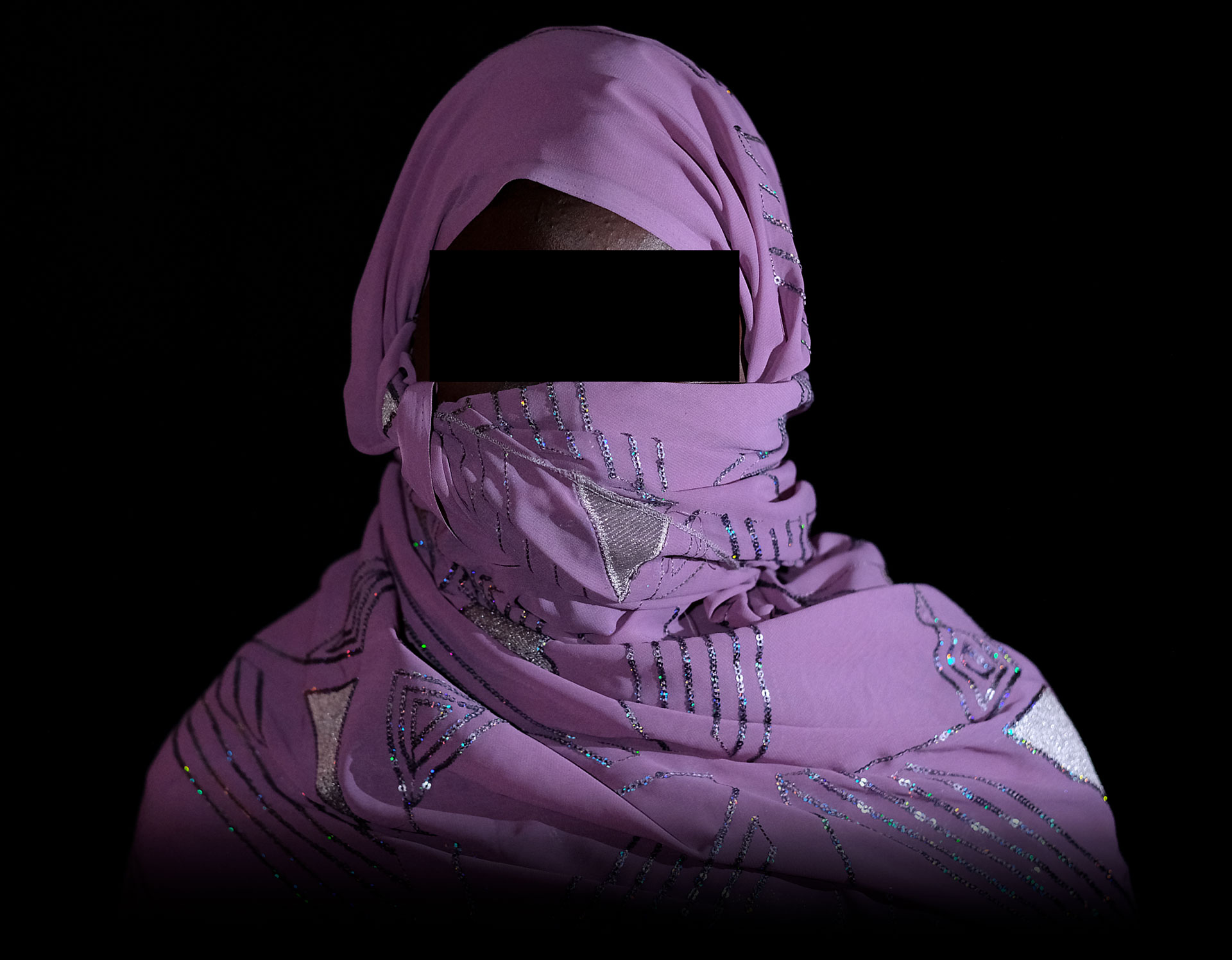
A 31-year-old Nigerian woman has been sentenced to a five-year jail term by a Circuit courtfor human trafficking.
Blessing Favour pleaded guilty to human trafficking and forced prostitution and was convicted on her plea.
Blessing had earlier pleaded for mercy and told the court she had regretted her action, adding that she was a single mother.
The judge, His Lordship, Alexander Oworae ignored her plea and sentenced her to five years to serve as a deterrent to others who are engaged in similar acts.
The suspect collapsed in the dock after the judge pronounced his judgement.
The culprit on Monday, December 5, 2022, pleaded guilty to charges of human trafficking and forced prostitution after she was arrested.
She had trafficked young women from Nigeria under the guise that they were coming to work in Ghana but ended up in a brothel in Tamale, the Northern Region capital and “Dollar Power” a mining community in the Savannah Region.
On Sunday, December 4, 2022, one of the victims who was pursued by Blessing Favour when she tried to escape coincidentally fell into the hands of the Police.
The victim saw the Police while she was being chased and raised an alarm leading to the arrest of the suspect.
In Nigeria, officials have announced that regardless of vaccination status, all travelers will no longer be required to present documentation of a negative Covid-19 test upon arrival or departure.
In its latest guideline, theNigerian Civil Aviation Authority(NCAA) said the decision comes after the government said the virus “has been persistently rare in Nigeria and most of the rest of the world”.
“Pre-departure and post-arrival Covid-19 PCR tests are no longer required for all passengers irrespective of vaccination status,” it said.
Health declaration forms and permission to travel would no longer be required, the agency added.
Dog owners flocked to Nigeria’s economic capital of Lagos to display their canines at the weekend’s fourth annual canine carnival.
According to the Reuters news agency, the dogs on show came out beautifully groomed and in fancy dress.
ReutersCopyright: Reuters
The aim was to break stereotypes that Africans mistreat their pets, Reuters says quoting organiser Jackie Idimogu.
“I have been able to make humans understand that dogs are not for guards, like they are not just to be kept at the gate or outside the compound,” she said.
ReutersCopyright: Reuters
Pasha (above) – dressed in sunglasses and an outfit to match the owner’s – was named dog of the year.
Reports from the Debt Management Office (DMO)indicate that Nigeria’s overall debt stock increased to N44.06 trillion as of September 30, 2022, up from N42.84 trillion on June 30.
According to a recent announcement by the Debt Management Office, Nigeria’s debt profile does not appear to be decreasing as the amount increased once more by over N1 trillion in just three months, between June and September 2022.
According to the DMO, Nigeria’s overall debt stock increased to N44.06 trillion as of September 30, 2022, up from N42.84 trillion on June 30.
The debt “comprises the Total Domestic and External Debt Stockof the Federal Government of Nigeria (FGN), all State Governments, and the Federal Capital Territory (FCT),” the Debt Management Office said in a release on Friday.
According to DMO, the increase in the public debt stock was largely due to new borrowings by the federal government to finance the deficit in the 2022 Appropriation Act, as well as new borrowings by state governments.
With a proposal to further borrow over N11 trillion to fund the 2023 budget deficit, President Muhammadu Buhari may bequeath a debt profile in excess of N55 trillion when he leaves office next May.
Former President Olusegun Obasanjo, under whose leadership Nigeria cleared its external debts, earlier in the year criticised the incumbent regime for accumulating debt for future generations, describing it as a “foolish” and “criminal” act.
But Buhari’s media adviser, Femi Adesina, justified the huge borrowings, saying the regime is borrowing for infrastructural development, unlike past governments who looted loans.
SaharaReporters had in September reported how amid the gruelling economic challenges facing the country, the Buhari-led government between January and March 2022 incurred N2trillion in Public Debt, bringing total debts to a record N41trillion.
The country in the first quarter of 2022 alone spent an average of N9.94 billion on debt servicing.
“A World Bank report showed that in terms of debt to GDP ratio, Nigeria is low but for debt service to revenue ratio, we are very high. So, if you look at the tax-to-GDP ratio of these other countries, they are in multiples of Nigeria.
“The World Bank survey report of about 197 countries revealed that Nigeria is number 195, meaning we beat only two countries and that was Yemen and Afghanistan and I don’t think we want to be like those places,” DMO’s head, Patience Oliha, had warned in September.
On Saturday morning, gunmen enforcing a purported five-day sit-at-home order in Enugu State attacked and burned a police patrol vehicle in the New Market area.
No lives were lost, according to a police source who verified the incident to SaharaReporters, but he gave no other information.
It was learned that the over ten hoodlums assaulted the New Market area around 6 am, probably to close down the market, but ran into several police officers on the ground and attacked them.
They were reported to have engaged the policemen deployed to the market in a gun duel and eventually succeeded in setting ablaze their patrol vehicle.
Some early morning traders told Sahara Reporters that the shooting forced traders who had arrived in the market for their daily business to scamper for safety, leaving their goods behind.
“Shortly, I saw a police patrol vehicle coming, and immediately, they engaged them in the shootout. I left my goods and ran to safety. After the shooting stopped I came out and saw they had set ablaze the police patrol vehicle in front of the Colliery hospital,” Ezeh said.
No casualty has been reported at the time of this report just as the police are yet to make a statement on the incident.
Efforts to speak with the state police public relations officer DSP Daniel Ndukwe were unsuccessful as he could not answer his calls.
SaharaReporters had reported on Friday that residents of Enugu State shunned the five-day sit-at-home, Simon Ekpa, the self-proclaimed disciple of the detained leader of the Indigenous People of Biafra, Mazi Nnamdi Kanu declared in the South East region.
The early morning attack in the Enugu metropolismay have been a deliberate effort to scare the people and force them to obey the sit-at-home order.
The Second Niger Bridge will only be accessible to drivers from December15, 2022, to January 15, 2023, according to the Nigerian government.
This information was provided by Babatunde Fashola (SAN), minister of works and housing, during a Thursday press conference in Abuja.
The minister believes that the move is being made by the Nigerian government to relieve pressure on the bridge, which is currently being used for Christmas celebrations.
He asserted that although the bridge’s building was complete, there was still work to be done to connect it to the main road.
Fashola said, “We have completed work on the bridge, so if you go there now you can walk from one end of the bridge to the other or drive from one end of the bridge to the other but the connecting road that links that bridge to the main highway, is what we want to finish.
“What delayed us is rain and the stop work orders on Mondays in that part of the country.
“The President approved that since the bridge is finished that we should create a access road so that during Christmas you can begin to experience what it would feel like plying the bridge.
“It would be open for traffic going from the West to the East from the 15th December, 2022 to 15th January 2023.
“Let me be clear again: we haven’t finished construction work but we would open it for people to use to relive the pressure from the one bridge, it wouldn’t be available for heavy duty trucks, it would only be small vehicles for now until we finish our work.
“On the 15th January we would reverse that movement for those coming from the east to the west. We have told all the contractors that they shouldn’t open anymore sections for construction i.e. there shouldn’t be any barrier on the roads this season.”
The Independent Corrupt Practicesand Other Related Offences Commission (ICPC) has released well-known Nigerian musician Daniel Oladapo, also known as D’Banj.
D’banj’s lawyer, Pelumi Olajengbesi announced the development on Friday, adding that the musician was released on self-recognition. The ICPC released Dbanj on grounds that he may be summoned later for further investigations.
Olajengbesi said the ICPC didn’t trace any evidence of fraudulent activity to D’banj. That claim could however not be independently verified at this time.
“Nothing incriminating was found on him. He was released on self-recognition. Right now, we expect the ICPC to give a letter of clearance to Dbanj because, as we have always said, he is innocent of the charges brought against him,” the lawyer explained.
Investigations show that two Nigerian banks have submitted detailed financial statements to the anti-graft agency in relation to the matter.
Gunmen in the northern Nigerianstate of Zamfara have abducted the entire family of a local state politician.
Residents say the kidnappers broke into the home of the lawmaker, Aminu Yusuf Ardo, in the town of Jangebe on Thursday night, seizing his wife and their four young children.
Mr Ardo, who is a representative in the Zamfara state house of assembly, was not at home at the time of the raid.
The attackers have also kidnapped at least eight other people – most of them the politician’s neighbours, according to residents.
A man whose father was among the hostages told the BBC they were in shock, adding that people were coming to sympathise with them.
He said the gunmen had not made any demands yet.
Zamfara state Information Commissioner Ibrahim Magaji Dosara has confirmed the attack but said they were still gathering details.
Jangebe is the town where gunmen abducted nearly 300 female students from a boarding school in February last year.
The schoolgirls were later released following negotiations with the kidnappers.
Zamfara is among several states in Nigeria where armed criminal gangs frequently carry out killings and kidnappings for ransom.
The Nigerian security forces have recently stepped up raids on the armed groups’ forest hideouts as the country prepares for elections due to take place in February.
The execution of a recently established regulation that limits cash withdrawals has prompted Nigerian lawmakersto call the head of the nation’s central bank.
Following the introduction of new banknotes, the program aims to encourage cashless transactions in the largest economy in Africa.
Last week, the bank set a weekly cap on over-the-counter cash withdrawals at 100,000 naira ($225) for individuals and 500,000 naira ($1,125) for enterprises.
ATM withdrawals were restricted to a maximum of 100,000 naira per week and 20,000 naira per day.
The new policy takes effect from 9 January.
Parliament resolved to have the central bank governor, Godwin Emefiele, appear before it next Thursday and have asked for the new cash withdrawal policy to be suspended.
Since at least 2013, when it conducted a secret, illegal abduction programme for women and girls in the northeast, the Nigerian military has aborted at least 10,000 pregnancies.
According to Reuters, many of the women and girls were abducted and raped by Islamist militants.
Fati recounted her ordeal after being kidnapped by terrorists and later rescued by the military.
During an insurgent attack on Monguno, she lost contact with her family one night. She was later kidnapped by terrorists and thrown into one of two pickup trucks with the other women, she claimed. They drove through the night to the vast Lake Chad’s shores, where fighters loaded the women into canoes.
Captives were hauled out to the lake’s numerous islands as the sun rose.
Fati was four months pregnant when liberated from the insurgents. Soon after, she says, soldiers medically aborted the pregnancy without telling her. And she was warned: “If you share this with anyone, you will be seriously beaten.”
Fati said she was married off three times, forced to take a new husband whenever the previous one didn’t return from the war. The third, who impregnated her, “was the worst out of all of them,” she said. “He would hit me with the butt of his gun … He would beat me until I was sick.”
Now in her 20s, Fati said shortly after being rescued with four months of pregnancy, uniformed men gave her and five other women mysterious injections and pills in a dim room at a military barracks in Maiduguri, the Borno state capital.
After about four hours, Fati, who said she was about four months pregnant, felt a searing pain in her stomach and black blood seeped out of her. The other women were bleeding as well, and writhing on the floor. “The soldiers want to kill us,” she thought.
According to her, the soldiers aborted the pregnancies without telling them. And she was warned: “If you share this with anyone, you will be seriously beaten.”
The abortions mostly were carried out without the person’s consent – and often without their prior knowledge, according to the witness accounts. The women and girls ranged from a few weeks to eight months pregnant, and some were as young as 12 years old, interviews and records showed.
This investigation is based on interviews with 33 women and girls who say they underwent abortions while in the custody of the Nigerian Army. Just one said she freely gave consent. Reporters also interviewed five civilian healthcare workers and nine security personnel involved in the programme, including soldiers and other government employees such as armed guards engaged in escorting pregnant women to abortion sites. In addition, Reuters reviewed copies of military documents and civilian hospital records describing or tallying thousands of abortion procedures.
Three soldiers and a guard said they commonly assured women, who often were debilitated from captivity in the bush, that the pills and injections given to them were to restore their health and fight diseases such as malaria. In some instances, women who resisted were beaten, caned, held at gunpoint or drugged into compliance. Others were tied or pinned down, as abortion drugs were inserted inside them, said a guard and a health worker.
Bintu Ibrahim, now in her late 20s, recounted how soldiers gave her two injections without her consent after picking her up with a group of other women who fled the insurgents about three years ago. When the blood came, and the terrifying pain, she knew she and the others had undergone abortions. The women protested and demanded to know why, she said, until the soldiers threatened to kill them.
“If they had left me with the baby, I would have wanted it,” said Ibrahim, whose account was confirmed by a fellow former captive, Yagana Bukar.
At military facilities and in the field, some abortions proved fatal. Although Reuters could not determine the full scope of the deaths in nearly 10 years of the programme, four soldiers and two security officers said they witnessed women die from abortions, or saw their corpses afterward.
“That woman was more pregnant than the rest of us, almost six or seven months,” Ibrahim said. “She was crying, yelling, rolling around, and at long last she stopped rolling and shouting. She became so weak and traumatised, and then she stopped breathing.
“They just dug a hole, and they put sand over it and buried her.”
Reuters was unable to establish who created the abortion programme or determine who in the military or government ran it.
Nigerian military leaders denied the programme has ever existed and said Reuters reporting was part of a foreign effort to undermine the country’s fight against the insurgents.
“Not in Nigeria, not in Nigeria,” said Major General Christopher Musa, who heads the military’s counterinsurgency campaign in the northeast, in a November 24 interview with Reuters that addressed the abortion programme.
“Everybody respects life. We respect families. We respect women and children. We respect every living soul.”
General Lucky Irabor, Nigeria’s chief of defence staff, did not respond to requests for comment from Reuters. On December 2, a week after Reuters sought an interview with Irabor and shared detailed findings and questions with his office, the military’s director of defence information released a five-page statement to reporters, and later posted it on Facebook and Twitter. Major General Jimmy Akpor said Reuters was motivated by “wickedness” and a “bullying” mentality, according to the statement.
“The fictitious series of stories actually constitute a body of insults on the Nigerian peoples and culture,” Akpor added. “Nigerian military personnel have been raised, bred and further trained to protect lives, even at their own risk, especially when it concerns the lives of children, women and the elderly.”
Central to the abortion programme is a notion widely held within the military and among some civilians in the northeast: that the children of insurgents are predestined, by the blood in their veins, to one day take up arms against the Nigerian government and society. Four soldiers and one guard said they were told by superiors that the programme was needed to destroy insurgent fighters before they could be born.
“It’s just like sanitising the society,” said a civilian health worker, one of seven people who acknowledged performing abortions under army orders.
Four of the health workers interviewed by Reuters also said that the programme was for the good of the women and any children they might bear, who would face the stigma of being associated with an insurgent father.
The army-run abortion programme has been in place since at least 2013, and procedures were being performed through at least November of last year, according to accounts from soldiers.
The procedures have occurred in at least five military facilities and five civilian hospitals in the region, according to witness accounts and documentation reviewed by Reuters. Many occurred in Maiduguri, the largest city in Nigeria’s northeast and the command centre of the government’s war on Islamist extremists.
The Maiduguri sites include the detention centre at Giwa Barracks, where Fati said she was forced to have an abortion. Other sites include the Maimalari Barracks, which is the city’s main military base, and two civilian hospitals – State Specialist and Umaru Shehu. The two hospitals did not comment on this story.
Forced abortions may amount to war crimes and crimes against humanity, according to four legal experts briefed by Reuters on its findings. Although forced abortions are not specifically criminalised under the Rome Statute of the International Criminal Court, the experts said, they could be construed as torture or other inhumane treatment and be prosecuted as such.
The International Criminal Court’s prosecutor found in 2020 that grounds existed to investigate possible war crimes and crimes against humanity by both Nigerian security forces and insurgents. But the court has not opened a probe.
The ICC’s Office of the Prosecutor declined to comment on Reuters’ findings.
SaharaReporters had reported how in April 2014, Boko Haram terrorists kidnapped 276 schoolgirls in Chibok town in Borno, prompting the #BringBackOurGirls campaign. About 98 of the kidnapped girls are still missing.
Two young women, Felerin and Aisha, described undergoing abortions after being taken into custody by the Nigerian military.
Other women interviewed by Reuters offered similar accounts of captivity and rescue – including being raped by insurgents and escaping with the help of soldiers who took them into custody and transported them under armed guard to military facilities or civilian hospitals. Many said they were made to give urine or blood samples before receiving unspecified injections and pills.
Nigerian facilities often used misoprostol, which helps induce labour or contractions, according to the documentation reviewed by Reuters. The drug is also used to treat ulcers and post-partum hemorrhaging, and is widely available in Nigerian cities, including through unofficial abortion-drug distribution networks. Women sometimes were also given the progesterone-blocker called mifepristone, which in many countries is used in conjunction with misoprostol in medication abortions.
Also given was the drug oxytocin, which is widely used during labour to stimulate contractions and safe to use when under medical supervision. Though experts say it is not recommended for abortions, it was sometimes given at military bases to trigger terminations, said two soldiers who performed the procedures.
Using oxytocin to induce abortion is dangerous, several international medical experts told Reuters, particularly if it is injected intramuscularly, as soldiers involved in the Nigerian programme said it was. If the drug is administered too quickly, the results can be fatal, the experts said.
The medications misoprostol and mifepristone are considered safe for abortions when the standard medical protocol is used, according to the World Health Organization and other authorities.
Among those forced to undergo an abortion was a girl named Hafsat.
The soldier said he and other troops injected Hafsat and three others with oxytocin while they lay on the ground outside the army clinic.
Within an hour, the soldier said, he heard cries and turned to see Hafsat bleeding heavily from between her legs. He grabbed her a cloth to stanch the blood.
Hafsat began crying out for a man named Ali, and for her mother. “Half an hour later, maybe, she just went quiet,” he said. “She died.”
The soldier said he and his comrades wrapped her in her turquoise dress and buried her. The memory haunts him.
“I can’t forget her name,” he said.
The details of the soldier’s account were corroborated by a second soldier at the base, who said he also witnessed the girl’s abortion and death.
In all, eight sources, including four soldiers, said they witnessed deaths or saw corpses of women who died from abortions performed at military barracks or administered in the field.
Nigerian Communications Commission (NCC) has issued a warning regarding the risks of taking part in specific TikTok video challenges, stating that doing so could expose devices to malware that steals information.
An advisory shared on Tuesday by the NCC’s Computer Security Incident Response Team (NCC-CSIRT) said hackers had taken advantage of a viral TikTok challenge, known as the ‘Invisible Challenge’, to disseminate an information-stealing malware called the WASP (or W4SP) stealer.
“This malware may be capable of covertly collecting screenshots, video recordings, or the ability to activate any connected camera or microphone,” the advisory said.
It added that personally identifiable information (PII), including names and passwords, keystrokes from emails, chat programmes, websites visited and financial activity may also be harvested by the malware secretly monitoring user behaviour.
TikTok’s popularity continues to grow rapidly in Nigeria, especially among young people.
It is the ninth most popular social media app in the country, but has largely escaped the attention of regulatory authorities.
Nigeria’s central bank has limited weekly over-the-counter cash withdrawals by individuals and corporates to 100,000 naira ($225; £186) and 500,000 naira ($1,125; £928) respectively.
This is in line with its policy to promote cashless transactions, it said.
It comes days after the West African country launched new banknotes.
In a circular, the central bank fixed the maximum daily withdrawal from ATMs at 20,000 naira with a weekly limit of 100,000 naira.
It also directed that only denominations of 200 naira and below be loaded on ATMs.
Withdrawals through point-of-sale (PoS) system, used mostly to pay for goods, will be limited at 20,000 naira.
The new restrictions will come to effect on 9 January.
Bola Tinubu, a two-time governor of Lagos state who is running for the ruling All Progressives Congress (APC) in the February elections, has avoided the Nigerian media since winning the party’s ticket, instead delegating spokespeople to speak on his behalf.
In addition, in the run-up to the elections, he avoided presidential debates and town hall meetings with other candidates.
As a result, many people who tuned in to Mr Tinubu’s highly publicised appearance in London had high hopes of hearing him answer key policy questions.
How would he deal with widespread insecurity in Nigeria? How would he solve the country’s huge unemployment rate? How would he stop oil theft in the Niger Delta?
Thankfully, these questions were asked by journalists inside the packed hall but many were stunned as Mr Tinubu elected aides to respond on his behalf, a departure from the norm at the institute popular with those seeking elective offices in Nigeria.
A spokesman for the candidate of the main opposition Peoples Democratic Party (PDP) described it as “an abdication of responsibility” while many others said it confirmed Mr Tinubu’s lack of physical and mental rigour to lead Africa’s most populous country.
But Dele Alake, his media adviser – who answered a question on his behalf at the event – said those criticising Mr Tinubu “are ignorant of the nuance and dynamics of leadership”.
“He wanted to show the calibre of his team,” he said.
The APC candidate did take some questions though, speaking publicly for the first time on controversies surrounding his age and work profile.
He confirmed he was 70 sayinghe was born in March 1952 – there had previously been a lot of speculation about his age.
He also said that he had been schooled at Chicago State University and later worked at financial consultancy firm Deloitte, both facts have been greatly disputed in the past.
Mr Tinubu is one of three frontrunners seeking to lead Nigeria next year.
Tope Awotona, the 40-year-old CEO and co-founder of the digital company Calendly who was born in Nigeria, is the newest African to enter the select group of businesspeople with annual revenues over $1 billion.
Calendly, a firm that creates scheduling software and creates a corporate communication platform used by teams to organize, prepare for, and follow up on external meetings, was founded by Awotona, a tech entrepreneur from Lagos, Nigeria, now headquartered in Atlanta.
One of the most prosperous African-American computer entrepreneurs of his time, he launched a number of prior enterprises before achieving success with his present one.
How he built his billion-dollar fortune is a success story of self-belief, resilience, and a desire to solve problems in a fast-changing corporate world, as he poured his $200,000 in life savings into the business idea that grew into Calendly, while also founding a dating website, a company that sold projectors, and a company that sold garden tools, all of which failed.
Calendly raised $350 million in funding from OpenView Venture Partners and Iconiq Capital in 2021, valuing the tech firm at $3 billion after years of bootstrapping. According to Awotona, the company, which has no physical location, has also been profitable since 2016.
Its revenue surpassed $100 million in 2021 as it was able to create value by leveraging its 10 million users. Individual users can use Calendly for free, but corporations typically pay $25 per user per month.
Awotona’s majority stake in Calendly is worth at least $1.4 billion after the 10-percent discount that Forbes applies to shares of all private companies.
Gunmenabducted 19 Muslim worshippers after attacking a mosque in the restive northwest of Nigeria, police said Sunday November 4.
The attackers stormed the mosque in Maigamji village, in Katsina state, during evening prayers Saturday and carried out the kidnappings after shooting and wounding the imam and another worshipper said local police spokesman Gambo Isah.
“Our men went after the bandits and managed to rescue six of the worshippers from their abductorswhile efforts are underway to free the other 13,” he added.
The two injured people are being treated at a hospital, the spokesman said.
Criminal gangs known locally as “bandits” operate in northwestern and central Nigeria, where they terrorise people, attack and loot villages, killing many.
These armed gangs also carry out many kidnappings for ransom but rarely target places of worship, instead targeting schools or travellers on the roads.
Hostages are usually released after paying ransom to the gangs who take refuge in the vast Rugu forest, which straddles Zamfara, Niger, Katsina and Kaduna states.
In November, 15 people were killed and several others injured in multiple bandit attacks on villages in neighbouring Kaduna state, according to authorities.
President Muhammadu Buhari is under fire after two terms in office marked by rising insecurity, two and a half months before the presidential election in which he will not stand for re-election, in accordance with the Constitution.
The Black Stars were eliminated after the first round of the tournament following a 2-0 defeat to Uruguay.
After defeating South Korea in their second group game, the Black Stars needed a draw or win against Uruguay to advance to the last 16 stage.
But the team failed to negotiate for points against their ‘enemies’ Uruguay.
At the post-match conference, the Germany-based trainer announced he has stepped down as coach of the Black Stars to concentrate on his role as the talent development coach of Dortmund.
“It was always clear that I would stop after the World Cup. My family and I see our role in Germany. I like my life at (Borussia) Dortmund (where he works as a talent coach, and wants to carry on there.” he said.
Below are some reactions from Nigerian football fanatics:
Super eagle’s coaches will never resign. They prefer to die there
9ja coach no dey ever resign
He actually did what he was hired to do😂. Get Ghana to qualify for the world cup thereafter, he became clueless😂😂😂
The dude will rather be an assistant than a national team coach 😢 he’s not confident, always making panic subs
He did well within a short period. Kudos to him.
Respect to him. He did well
He did his best, I guess
He don try. Would have courageously continued, thou. he wrote.
17 owners of private aircraft, including billionaires from Nigeria, top commercial institutions, and other extremely wealthy people, have filed lawsuits against the Nigerian government for import tariffs totaling more than N30 billion ($67.5 million).
Customs, acting under the auspices of the federal government, has been working hard in recent weeks to perfect the process of grounding private jets whose owners failed to pay the import duty.
In response, the jet owners sued the government through the foreign shell companies and trustees through which the foreign-registered jets were purchased, requesting a judicial review of whether or not it is legal for them to pay the contentious import duty on their private jets.
MHS Aviation GmbH, Murano Trust Company Limited, Panther Jets, SAIB LLC, Empire Aviation Group, and Osa Aviation Limited are some of the other companies.
Respondents in the court documents included Customs, the Nigerian Civil Aviation Authority, the Federal Airports Authority of Nigeria, and the Nigerian Airspace Management Agency .
It is unknown who owns this private jet, but it is worth noting that Nigeria’s richest woman Folorunsho Alakija, the vice chairman of Famfa Oil and the owner of one of Nigeria’s most productive oil blocks, owns a Bombardier Global Express XRS with the registration number “VP-CEO.”
Africa’s richest man Aliko Dangote jets around the world on his Bombardier Global Express XRS, and Nigerian energy and telecom billionaire Mike Adenuga owns both a Bombardier Global Express XRS and a Bombardier Challenger 604.
According to a new research from the International Credit Corporation (IFC) and the World Trade Organization, Nigeria, Cote d’Ivoire, Ghana, and Senegal may make up to $26 billion by reducing costs and expanding access to trade finance (WTO).
The primary obstacles to trade finance in the four largest economies in the region were examined in the research, Trade Finance in West Africa.
Even though the four nations have had increased trade flows over time, particularly during the COVID-19 pandemic, they still experience a trade finance shortage of up to $14 billion annually.
The authors of the report predict that there are opportunities awaiting member countries of the Economic Communication of West Africa States (ECOWAS) once they can remove the barriers to trade and are able to trade with other African countries, and with developing countries outside the continent.
“Global trade finance gaps increased during the pandemic. Supply chain pressures, inflation, and the war in Ukraine have only exacerbated the problem,” said Makhtar Diop, managing director, IFC. “This study couldn’t be timelier. There is enormous potential for an economic boost in West Africa by harnessing intra-Africa trade, but we will need coordinated action from the government. The private sector, and the multilateral to build the capacity of local lenders and improve access to SMEs,” the report said.
According to the report, trade finance in these countries only supports 25 percent of merchandise trade. This is low considering that, trade finance support 40 percent of Africa’s imports and exports, and up to 80 percent globally.
The low coverage is being driven by expensive offerings and high rejection rates from banks, which fail disproportionately on small and medium-sized enterprises, particularly those owned by women. Traditional banks are not helping matters as they see many loan seekers are high-risk and lacking collateral.
The financial institutions are also bogged down by difficulties in meeting the requirements of foreign correspondent banks and shortages of low-cost funding.
Nigeria and the three countries can unlock the opportunities by expanding the range of firms that can access trade finance through efforts like IFC’s Africa Trade Recovery Initiative.
There is also a need to build the capacity of local lenders and local firms, integrating trade finance into the implementation of the African Continental Free Trade Area (AfCFTA); strengthen foreign correspondent banking relationships; and support decision-making through better data and analytics.
“Trade finance is the indispensable oil for trade and the WTO is proud to be part of an effort to provide evidence-based solutions to help close the trade finance gap,” said WTO Director-General Ngozi Okonjo-Iweala. “At the WTO, we are happy to act as a conduit for a dialogue on trade finance, bringing together governments, banks, SMEs, and professional organizations. We look forward to partnering with financial institutions to transfer this knowledge locally.”
The Borno State Government said yesterday that 90% of die-hard Boko Haram insurgents were dead, and it attributed the sect’s mass surrender to the death of their leader, Ibrahim Shakau, as well as military operations.
This comes as military authorities announced yesterday that 1,952 terror suspects were being investigated in the North-east, with 900 of them set to go on trial in January.
But taking journalists round the Hajj Camp in Maiduguri, which housed 14,804 repentant insurgents and families, Special Adviser on Security to the Borno State government, Brig.Gen Abdulrasaq Ishaq (rtd), said about 90 per cent of die-hard Boko Haram insurgents had died.
He equally explained that of the number housed in the three camps, married males were 3,472, single males 1,773, spouses, 4,438, male children, 2,691 and female children 2,497, noting that 5000 fighters and their families were living in the three camps as well.
On his part, the Theatre Commander, Operation Hadin Kai, Maj Gen Christopher Musa, while speaking in Maiduguri, said 82,237 insurgents and their families had surrendered so far, out of which 16,577 were active male fighters, 52,44 men, women and 96 children.
He stated that of the 276 kidnapped Chibok girls, 57 escaped, 117 were released while 11 were rescued this year.
Eleven of the Chibok girls, who recently escaped captivity now have 25 children, adding that, in all, 180 girls were out of captivity while 96 remained in captivity.
Addressing newsmen too at the Joint Investigation Center, Operation Hadin Kai, Captain Adeniyi Oluwagbenga, said 1,952 combatants were in detention, including 23 females and 11 children.
He affirmed that 900 Boko Haram members would go on trial in Niger State while 323 were sent to Operation Safe Corridor in Gombe State for rehabilitation.
He further explained that the trial of the suspects was moved to Niger State following the difficulty in accessing witnesses while some lawyers refused to go to Maiduguri for the trial.
“Most suspects are awaiting prosecution. The Attorney-General of the Federation (AGF), has assured that by January, more than 900 of them will be moved to Niger State for prosecution. Some lawyers refused to come to Maiduguri for trial hence it can’t be held in Maiduguri,” he said.
In a separate interview, the Borno State Commissioner for Women Affairs, Zoyara Gambo, said the 11 Chibok Girls, who recently escaped captivity had 25 children, adding that government was already taking care of the young mothers.
In a chat with some of them, the young mothers expressed their desire to return to school like some of their colleagues.
“We want to go back to school like others. We are not happy,” they said.
Ekpe Ogbu, the state of Benue’s housing and urban development commissioner, has been kidnapped.
The Commissioner was kidnapped around 4 p.m. on Sunday at the notorious Adankari Junction on the Otukpo-Ado Road.
On Sunday night, Colonel Paul Hemba, Governor Samuel Ortom’s security advisor, confirmed the incident to reporters.
Governor Samuel Ortom
He said that while rescue efforts have started and the police in Otukpo have found the Hilux vanthe victim was riding in, no contact has been made with the kidnappers.
With at least three instances of kidnappings there, the Adankari Junction has turned into a hotspot for kidnapping activity.
At the intersection on different days in the past, a priest, a professor from Benue State University, and an elected official from Otobi were all abducted.
After being freed, the victims said the abductors were armed herdsmen terrorising the area’s residents and commuters.
Meanwhile, Troops of Operation Whirl-Stroke (OPWS) covering Benue, Nasarawa and Taraba states respectively Sunday proclaimed the arrest of two notorious kidnappers who have been terrorising residents of Zaki-Biam in Ukum Local Government Area of Benue State and rescued some kidnapped victims.
An essential train link between Nigeria’s capital, Abuja,and the northern city of Kaduna is set to reopen on Monday, nine months after it was shut down.
Last March, gunmen mined the track, forcing a train carrying over 360 passengers to come to a stop.
At least eight passengers were killed, and dozens more were abducted.
The link was popular with passengers who were afraid of travelling by road.
The Nigeria Railway Corporation is introducing new security measures, including surveillance devices to monitor the tracks and the trains.
Passengers will also have to provide their national identification number.
The government said the train attack was carried out by the Islamist militant group Boko Haram.
A Nigerian student who was arrested for allegedly accusing the first lady of Nigeria, Aisha Buhari, of squandering public funds in a tweet has had all charges against him dropped.
Aminu Adamu was charged by the government with spreading “false” information and defamation, which he vigorously rejected.
The prosecution withdrew the accusation at a high court in Abuja on Friday, according to his attorney Chijioke Kingsley Agu, who spoke to the BBC.
Mr Agu said his client has been discharged on “compassionate grounds” and that they were “in the process of his release” on Friday evening.
The 24-year-old undergraduate’s detention and subsequent charge had caused outcry in Nigeria, with many social media users and advocates for human rights demanding his immediate release.
On Thursday Amnesty International said the student was subjected to “torture” and other forms of “ill-treatment” after his arrest, calling it a “deeply repressive act” that “brazenly violates his human rights”.
Nigerian authorities have not yet commented on these allegations.
He is studying Environmental Management at the Federal University in Dutse, in the northern state of Jigawa, and is due to start his final exams on Monday.
The Nigerian government has announced a policy aimed at promoting the teaching of primary school pupils in local languages rather than in English.
Education Minister Adamu Adamu told journalists on Wednesday that the new framework known as the National Language Policy had been approved for implementation.
It stipulates that instruction for the first six years in primary schools will be in the mother tongue.
English is Nigeria’s official language and all learning institutions use it as the common language of teaching and learning.
But local languages will now take the centre stage, with the education minister saying “pupils learn much better” when they are taught in their own mother tongue.
He acknowledged that implementing the new policy would be challenging because it would “require a lot of work to develop materials to teach and get the teachers”.
Another challenge is the number of languages spoken in Nigeria – more than 600.
It’s not immediately clear when the government will start implementing the new system.
The Nigerian authorities suggest they will first provide teaching materials and teachers for the local languages before the implementation in earnest.
Aminu Adamu, an undergraduate of the Federal University, Dutse, Jigawa State who was detained by security officials over a post on Twitter alleging that the wife of President Muhammadu Buhari, Aisha Buhari, “was feeding fat on poor people’s money,” has been remanded at Suleja Prison in Niger State.
While addressing press men, his lawyer, CK Agu said the student was charged to a court in Abuja.
Nigeria’s President Muhammadu Buhari and his wife, Aisha Buhari
“Even in the court session yesterday, we notified the judge about the efforts made to have him released on bail, but we did not receive any reply from the police. We applied to the court to release the student on bail on health grounds and the fact that he will sit for the exam on 5, December. The court has ordered the police to provide the bail application before it for consideration between Tuesday and Wednesday,” Agu was quoted to have said.
Earlier, the Executive Director, Human Rights Writers Association of Nigeria, Emmanuel Onwubiko, said Aminu’s arrest showed the level of rot in Nigeria’s security system.
He said, “It is a very sad development. Whether it was the DSS or police that arrested the guy, it shows that the government has continued to deploy security assets to chase after gossip. They go to websites and social media in search of those gossiping about the President, his wife and his children, to arrest them.”
The Nigeria Police Force’s, Enugu Command has arrested Odoh Emmanuel, a 23-year-old native doctorwho allegedly shot and killed one Onunze Benedict while testing a gunshot amulet.
According to a statement issued on Tuesday by the Command’s spokesman, Daniel Ndukwe, the suspect, who is from Umuaram village in Ikem community in the state’s Isi-Uzo Local Government Area, committed the offence on November 16, 2022.
According to the statement, the suspect was apprehended around 11 p.m. on November 16 by Isi-Uzo Police Division personnel.
According to Ndukwe, the suspect confessed to using a locally-made single-barreled gun to shoot and kill the victim in his shrine in Umuaram, while testing the charm meant to protect him from gunshots.
“The gun has been recovered, while further investigation is ongoing at the Homicide Section of the State CID Enugu,” the police spokesperson said.
Meanwhile, Ndukwe in the statement revealed that the command has arrested another 16 suspects for conspiracy, armed robbery, car-jacking, abduction and unlawful possession of firearms.
The statement partly read: “Acting on credible information, Police Operatives serving in 9th Mile Police Division of the Command, on 24/11/2022 at about 3.20pm, arrested six (6) male suspects in a building along Nsukka/Makurdi Highway, 9th Mile in Udi LGA, and recovered in their unlawful possession, one (1) locally-fabricated double-barreled pistol with one (1) live cartridge.
“They include: Anigbo Stephen aged 23, Iyere Promise aged 28, Charles Onoh aged 24, Obinna Joseph aged 19, Charles Obilor aged 25 and Ede Chibuike aged 24.
“Ongoing investigation into the case at the Anti-Robbery Section of the State CID Enugu, has revealed that the sextet, three (3) of whom are linked to a similar case earlier reported, were perfecting plans to commit felonious crimes before they were apprehended.
“In another development, the following male suspects: Everest Ayokalam aged 48, Anayo Akakem aged 33, Iwuanyanwu Kelechi aged 32, Uchenna Iwuoha (a.k.a “Uchewinde”) aged 47 and Gospel Chimankpa Nnorom aged 32, all of Imo State, involved in the case of conspiracy, armed robbery, abduction and attempted murder, have been arraigned in court and remanded accordingly.
“They were arrested at Ikeduru in Imo State on 12/11/2022, through the concerted efforts of Police Operatives serving in Isi-Uzo Police Division of the Command and their counterpart in Imo State Command, after acting on credible information/intelligence.
“The suspects and others at large, armed with machetes and other weapons, had on 09/11/2022 at about 3 am, abducted at Umuhu in Isi-Uzo LGA (a border community between Enugu and Ebonyi States), the driver and conductor of a Sino Truck, said to be loaded with 900 bags of cement and en route to Abakaliki, Ebonyi State.
“They took them to the forest, beat up and tied them to a tree, and thereafter made away with the truck and bags of cement therein. The suspects confessed to the crime, while the truck was recovered alongside 789 bags of the cement from the warehouse of Everest Ayokalam (the receiver of the robbed exhibits).
“Also, on 05/11/2022 at about 4 am, a combined team of Police Operatives drawn from Awkunanaw Police Division, Operation Restore Peace and Safer Highway Patrol, with assistance from Neigbourhood Watch Group, arrested one Kasie Ani (male) aged 25, Tochukwu Igwe (male) aged 25, Felix Maduakonam (male) aged 24, Chidera Okoye (male) aged 21 and Jennifer Nwafor (female) aged 17.
“Their arrest is sequel to the Team’s swift response to a distress call alleging that the suspects blocked the road at the Garriki axis of Enugu/Port-Harcourt Expressway and were robbing travelers. The four (4) male suspects were consequently arrested and the victims rescued, while the female suspect was arrested thereafter, for harbouring one of the male suspects.
“Exhibits recovered from the suspects includes: three (3) mock guns that they used in the criminal operation, twenty-one (21) pieces of wrappers, clothes, phones, ATM cards and other valuables belonging to their victims.
“The arraignment of all the suspects yet-to-be arraigned shall be done once investigations are concluded.”
Also according to the statement, the state police commissioner, Ahmed Ammani, urged the personnel to remain focused on the fight to flush unrepentant criminal elements out of the state, while soliciting the continued support and cooperation of its residents.
Three stowaways were discovered on the rudder of a ship after it completed an 11-day voyage from Nigeria, according to Spanish authorities.
The coastguard shared a photo of the men sitting on the rudder at the oil tanker’s helm, their feet less than a metre from the water.
They were taken to a hospital in Gran Canaria, where they were treated for moderate dehydration.
It’s unclear if they sat on the rudder the entire journey.
According to data collected by maritime tracking websites, the Maltese-flagged Althini II arrived in Las Palmas, Gran Canaria, after a journey of more than 2,700 nautical miles from Nigeria’s largest city, Lagos.
The men were seen by medics at the dock where they were found, and were taken to hospital soon after, the Spanish news agency EFE said.
This isn’t the first time stowaways have been found on rudders, which are large blade-like fins found under ships and used for steering.
A 14 year-old boy who also travelled from Lagos to Gran Canaria in 2020 told the paper El Pais that he spent the entire 15 day journey on the rudder of a huge fuel tanker. He was hospitalised upon arrival, after surviving on salt water and taking turns sleeping in a hole above the rudder with the other men he was travelling with.
“We were very weak. I never imagined it could be this hard.” he said.
In another incident the same year, four men were found on the rudder of the Norwegian oil tanker, Champion Pula, after it had travelled from Lagos to Las Palmas. Reports at the time said the men hid in a room behind the rudder during its 10 days at sea.
The number of migrants crossing on boats from west Africa to the Spanish-owned Canary Islands has risen significantly in recent years.
Nasiru Idris has been sentenced to one year in prison by a magistrate court in Sokoto, Nigeria, after being caught with 101 Permanent Voter Cards (PVCs),a violation of Sections 117 and 145 of the Electoral Act of 2002.
Barr. Festus Okoye, National Commissioner in Charge of the Information and Voter Education Committee at the Independent National Electoral Commission INEC, announced this in a statement issued on Sunday in Abuja.
Over 60,000 Permanent Voter Cards were recently destroyed by hoodlums in Ogun state
According to him, the Commission convened over the weekend and deliberated on a variety of matters, including the date and procedure for collecting Permanent Voter Cards (PVCs), as well as the prosecution of individuals caught for illegally possessing PVCs.
Okoye stated that the Commission is resolved to make the collection of PVCs as seamless as possible following the end of the statutory period for the presentation of the register of voters for claims and objections.
Okoye stated that a Standard Operating Procedure SOP has been developed and that this will be one of the issues discussed and finalised at a retreat scheduled to hold in Lagos from November 28th to December 2nd, 2022, involving all Resident Electoral Commissioners RECs from the 36 states of the Federation and the Federal Capital Territory FCT).
If elected president in 2023, Atiku Abubakar, the Peoples Democratic Party’s presidential candidate, has promised to name and shame oil thieves in the country.
This pledge was made by Atiku Abubakar on Saturday during an interactive session with the Business Dialogue Stakeholders Forum at the Eko hotel in Lagos. Atiku attended the session alongside his running mate, Delta State Governor Ifeanyi Okowa.
The PDP presidential candidate also promised to seize any oil blocks assigned to Nigerians who have yet to put them into operation.
Atiku Abubakar, Nigeria’s Presidential Candidate for the Peoples’ Democratic Party
“If you are not going to develop oil blocs given to you, we will take it away and give it to those who will develop it.” he stated, adding that We will also assemble the names of those involved in oil theft, publish same and prosecute them.”
He reiterated his resolve to privatising the refineries in Kaduna, Port Harcourt,and Warri in order to boost production.
The Chairman and Director General of the Atiku/Okowa presidential campaign team, governors Udom Emmanuel and Aminu Waziri Tambuwal of Akwa Ibom and Sokoto states, respectively, spoke at the gathering and asked stakeholders to support their presidential flagbearer, for a better Nigeria.
Brig. Gen. Mohamed Marwa (retired), Chairman and Chief Executive Officer of the National Drug Law Enforcement Agency,has stated that Nigeria is the world’s most popular cannabis-using nation, with 10.6 million residents abusing the drug.
Marwa stated that Nigeria has a significant drug usage problem when speaking at the second Vanguard Mental Health Summit, which was sponsored by 9mobile and Guaranty Trust Bank Ltd.
He pointed out that before the 2018 National Survey on Drug Use and Health, which was funded by the UNODC and revealed alarming results, the seriousness of the situation was unclear.
“Before then, the drug use profile of Nigeria was sketchy. The survey gave us facts for the first time and we got to know that Nigeria, as of 2018, had a 14.4 percent drug use prevalence.
“The average global drug use prevalence was 5.5 percent, at 14.4 percent. Nigeria has almost three times the global prevalence. “Without any doubt, the country has a serious substance abuse problem.
“The biggest revelation was that 10.6 million Nigerians abused cannabis. Again, this is a mere figure until you begin to figure it out in terms of the human impact. The ramification is that we have a cannabis-using population that is bigger than countries like Portugal and the United Arab Emirates.”
Marwa who was represented at the event by Zonal Commander, NDLEA, Lagos, Dr. Segun Oke, said: “In 22 months, the agency has arrested 20, 000 offenders and convicted 3,111 in court. We have seized 5.5 million kg of illicit drugs, destroyed 900 hectares of cannabis farms, and dismantled two illicit methamphetamine laboratories.”
He assured that next year will be tougher as a result of the amended NDLEA Act that will pave way for convicted traffickers to spend long years in jail without the option of a fine.
“We are also trying to present a counter-narrative to the wrong messages out there that brainwash young people to believe that illicit substances are harmless.”
In his keynote address, the Head, of the Department of Psychiatry, College of Medicine, University of Lagos/ Lagos University Teaching Hospital, Idi-Araba, Lagos, Prof. Olatunji Aina, said the current economic situation of the country had worsened the mental health of Nigerians.
“A number of factors, namely poor planning, fiscal indiscipline, and policy somersault, could be ascribed to why Nigeria gradually walked her way into a distressed economy.
“The health of any given population is shaped by socio-economic context, employment, public policies, socio-demographic characteristics, and social welfare system of the country.
“There are strong research findings to show that changes in these key socio-economic determinants may be reflected in the mental health of the populace.
“Thus, the mental health of the people is vulnerable during economic distress or recession.
“In other words, economic recession and its associated problems such as unemployment, income decline and huge debts are significantly associated with poor mental health, increased rates of common mental disorders (anxiety and depression), psycho-active substance use disorders and suicidal behaviours.”
He explained that in the face of security and socio-economic challenges facing the country, prevalent mental health, complications include anxiety disorders, depression, sleep disorders, and suicide, among others.
Corroborating his views, the President of the World Medical Association, WMA, Dr. Osahon Enabulele, appealed to the Federal Government to assent to the Mental Health Bill to address the challenges of mental health in Nigeria.
Enabulele said about a billion people in the world, and one in every four Commonwealth citizens, particularly in the low and middle-income (LMICs) countries and pre-eminently among women and the younger age group 20-24 years, were known to be affected by one form of a mental health problem or the other.
“This is with about 80 percent of people unable to receive any form of treatment, a situation that leads to the loss of a trillion dollars annually.
“Unfortunately, during the COVID-19 pandemic, this burden of mental health is estimated to have increased by 25 percent.
“This was due to an interplay of factors, including economic fortunes and worsening poverty, increased resort to substance use, and the disruption of mental health services, including emergency psychiatric services.”
The Nigerian parliament has passed a bill seeking to establish a bank that can grant loans to students in higher institutions of learning – which include universities and colleges.
The bill is the first of its kind in Nigeria. It was passed by the two chambers of the National Assembly on Tuesday and will be forwarded to President Muhammadu Buhari for final approval.
The sponsor of the bill and speaker of the House of Representatives, Femi Gbajabiamila, said that the Nigerian Education Bank will offer interest-free loans to higher education students in Nigeria.
If signed into law, it is expected to enable students get more financial support from the government.
The bill says the bank “shall have the powers to approve and disburse the loan to qualified applicants. It will also monitor the students’ loan account/fund and ensure compliance in respect of disbursement”.
The loan beneficiaries are expected to start paying back the loan as soon as they gain employment, on completion of their studies and a mandatory national service.
Nigerian banks have been giving student loans only to the students’ parents, with very stringent conditions including a very short tenure.
Needy students have had to drop out of school or engage in odd jobs to pay their way through school.
Nigeria has launched new banknotes today in an effort to fight counterfeiting and the financing of Islamist groups.
The president, Muhammadu Buhari on Wednesday said the new naira bank notes would help to control liquidity in an economy where most money is held outside the bank.
The 200, 500 and 1000 naira notes are the ones being replaced. The redesigned notes which are produced in Nigeria by the Nigeria Security Printing and Minting have new security features, the president said during the introduction of the new notes at the presidential Villa.
The central bank of Nigeria is reported to announce plans of issuing the new notes to the public from December 15, 2022.
Members of the public have till January 31, 2023, to hand in their old notes.
Death has claimed the life of one Sadiya, who lived in Nguru, Yobe State of Nigeria with her husband.
Sadiya is alleged to have been held captive by her husband in their Nguru residence for a whole year. During the period, she is said to have not been provided any food but a local drink known as Kunu.
The deceased’s mother, Hadiza has accused Ibrahim Yunusa Bature for the death of a child, who was a mother of four.
Instabiog9ja says, interacting with the media, Hadiza noted that she smelt foul play when she phoned her daughter and sensed a very depressing tone.
She then visited her son-in-law and found her daughter at the brink of death. Hadiza stated that Sadiya could not walk because she was extremely weak.
Sadiya was then rushed to the Aminu Kano Teaching hospital for treatment where she died a few days later.
Hadiza has called on relevant authorities to ensure that the death of her daughter is investigated.
It is reported that Yunusa Bature has accepted blame. It is claimed that he locked up his wife to protect her from her family members who allegedly sought to harm her.
At least 37 people were killed Tuesday in a multi-bus crash in northeastern Nigeria, authorities said.
The accident occurred near the city of Maiduguri when two commercial buses collided head-on and burst into flames.
A third bus then crashed into them, Utten Boyi, head of the road safety agency for Borno state, said in a statement.
“Thirty-seven people have been confirmed dead, most of them burnt beyond recognition,” Boyi said.
A burst tire on the first bus, coupled with “excessive speed,” according to the official, was the cause of the tragedy.
Road accidents are common in Nigeria, where road conditions have deteriorated in recent weeks following heavy rains and flooding, the worst in a decade in the country.
Earlier Tuesday, 17 people were killed and four injured when their bus crashed into a truck near Abuja, Nigeria’s capital, local media reported.
On Saturday, nine people drowned when their overloaded vehicle plunged into a dam after a tire burst near the northern city of Kano, local officials said.
Officials in Nigeria have announced that , at least 54 people were killed and scores more were injured in two separate road accidents on Tuesday.
Women and children were among the victims.
At least 37 people were killed in one of the crashes when two buses collided head-on and burst into flames on a highway connecting the north-eastern cities of Maiduguri and Damaturu.
According to a regional official of Nigeria’s Federal Road Safety Commission, some passengers were burned beyond recognition inside the buses.
The other accident on the outskirts of the capital, Abuja, killed 17 people when a passenger bus had a head-on-collision with a truck.
Five suspects made up of three Nigeriannationals and 2 Ghanaians have been re-arrested after attempting to escape police custody.
The escapees were in detention following their arrest for various offences such as stealing mobile phones, and air-conditioners among others.
According to a Dailyguidenetwork.com report, the suspects made their move on Monday, November 21, 2022, at about 1 am with the help of a chisel and a hammer.
Their attempt was in a bid to evade court arraignment within the week.
The suspects succeeded in breaking the iron bars of the cell but saw their efforts thwarted by the officers on duty who became alarmed by the unusual noise emanating from the cells.
The Awutu Bereku Police Command has since rounded up the suspects and transferred them to a different police station for safekeeping pending their trial.
Ghanaian football star, Asamoah Gyan has landed in South Africa where he will serve as a commentator for SuperSport for the 2022 FIFA World Cup.
The well-known striker and his Nigerian brother Jay Jay Okocha arrived in South Africa over the weekend.
Caught on camera, the pair were seen having a good time as they walked and shared smiles while talking.
In a word of praise, former Ghana captain Asamoah Gyan described the Nigeria legend as a master of the game.
“That’s the master of the game,” Asamoah Gyan shared.
The 2022 FIFA World Cup officially kicked off on Sunday, November 20.
In the opening game, Ecuador defeated Qatar 2-0 after the host nation served the world with a stunning opening ceremony.
Jay Jay Okocha made his first appearance for the coverage of the World Cup for SuperSport during that first match.
Asamoah Gyan is expected to make multiple appearances this week and has already been billed for Ghana’s first match against Portugal on Thursday, November 24.
Okocha and Gyan will be working with football experts including former players not only from the continent but from Europe.
The Super Eagles of Nigeria locked horns with the Black Stars of Ghana in the final round of the African qualifiers for the mundial.
Unfortunately, for Nigeria, the national team suffered a defeat to Ghana on aggregates and missed out on booking a place in the tournament.
With the mundial starting on Sunday, November 20, it has come to light that the Nigeria FA has missed out financially and is feeling disappointed for not making it to the tournament.
In addition, several businesses have been hard hit after losing a lot of money.
A businessman living in Qatar, Ekene Romeo has disclosed that he pre-ordered 20,000 Nigeria jerseys hoping to cash in when Nigeria beats Ghana to qualify for the World Cup.
With the Super Eagles failing the Black Stars test, he has not lost massively with the jerseys not being sold at the rate he anticipated.
“I had placed an order for 20,000 Nigerian national team jerseys, which I knew would be in high demand. I was also making plans to host the first ever Nigerian entertainment and fashion week here in Qatar during the World Cup,” Romeo told Al Jazeera.
Meanwhile, Bukola Aliu who is the National Association of Nigeria Travel Agencies (NANTA) Lagos zone has admitted that the failure of the Super Eagles to qualify for the World Cup has adversely affected business.
“Many people expressed interest in touring Qatar as well. The demand has reduced because most people are no longer interested,” he told Aljazeera when contacted in Nigeria.
The International Monetary Fund (IMF) has hinted on a possible food crises in Nigeria by the year 2023.
This it said is as a result of recent flooding and expensive fertilizer.
The National Bureau of Statistics reports sated that, food inflation reached 23.72 percent in October 2022, with inflation on some food items reaching by 50 to 100 percent anually
Despite this, the IMF has forecasted that food prices would worsen in 2023 as the floods reduces agricultural productivity.
The report further stated that the Federal Government’s continuous reliance on the Central Bank of Nigeria to finance its budget deficit and the effects of climate change were additional risk concerns.
Meanwhile the value of the naira is as well prone to fluctuation.
This information was provided by the Washington-based lender in a report titled “Nigeria: Staff Concluding Statement of the 2022 Article IV Mission,”
It said, “The effects of recent flooding and high fertilizer prices could become more entrenched impacting negatively both agricultural production and food prices in 2023.
“Similarly, further volatility in the parallel market exchange rate and continued dependence on central bank financing of the budget deficit could exacerbate price pressures. In the medium term, there are downside risks to the oil sector from possible price and production volatility, while climate-related natural disasters pose downside risks to agriculture.”
It added that despite Nigeria’s limited direct exposures, the war in Ukraine was affecting the nation through higher domestic food prices. The IMF said high food insecurity was compounding the pandemic’s effect on Nigeria’s vulnerable.
It stated that the nation’s headline inflation should moderate by the end of 2022 because of the start of the harvest season, although it also projected an increase in rice prices caused by recent flooding.
The IMF further stated that over the next 10 years, the nation would have to create about 25 million additional jobs. It said, “Strengthening the performance of the agricultural sector is key to job creation, food security, and social cohesion.
“Over the next decade, an estimated 25 million additional jobs will be needed to employ the new labor market entrants. For agriculture to continue playing a strong role in employment and ensure food security, boosting production and yields through improved input usage, especially through affordable fertilizers and higher quality seeds, better storage facilities and more coordinated policy support across government agencies are recommended.”
The NBS disclosed last Thursday that 133 million Nigerians were multidimensionally poor, with a significant portion of them lacking access to food security, healthcare, and education.
If the discussion is limited to Nigeria’sversion of the world’s wonders, it would be unfair to leave out the ancient city of Sungbo’s Eredo.
Sungbo’s Eredo is said to be Africa’s largest single pre-colonial monument (or ancient fortification). It is now located in Ijebu-Ode, Ogun State, and it was built a millennium ago.
This ancient city’s construction required more sand to be moved than that used to build the Great Pyramid of Giza (one of the Seven Wonders of The Ancient World).
The most amazing fact is that when Sungbo’s Eredo was built, it was the largest cityin the world (larger than Rome and Cairo).
Anyone familiar with these historical cities would know that Rome and Cairo were both civilisational centers and world powers at the time.
It is thus astonishing and a source of great pride that a Nigerian city can outclass them in terms of size and magnificence.
The city was built in honor of the Ijebu noblewoman Oloye Bilikisu Sungbo between 800-1000 AD. The location is now on Nigeria’s preliminary list of potential UNESCO World Heritage Sites.
According to biblical and Quranic accounts, Oloye Bilikisu Sungbo was actually the Queen of Sheba. She built this monument as a personal memorial for herself, a wealthy and industrious widow who was greatly revered by her people.
It is located near her grave in Oke-Eiri, a town north of the Eredo that pilgrims continue to visit today.
Since its discovery in 1999 by the late British archaeologist Dr Patrick Darling, it has sparked both mystery and curiosity. Since then, there has been much discussion and debate about its existence and, indeed, its purpose.
The Bill & Melinda Gates Foundationhas announced a $7 billion commitment to Africa over the next four years on Thursday, as Bill Gates warned that the Ukraine crisis was reducing the amount of aid flowing to the continent.
The Foundation’s pledge, which is 40% more than what it spent in the previous four years, will go toward projects that address hunger, disease, poverty, and gender inequality.
Nigeria, Africa’s most populous country, will receive the greatest proportion.
Humanitarian groups in Africa are grappling with the diversion of funding away towards Ukraine, and as Russia’s invasion increases goods prices globally, impacting aid operations.
“The European budgets are deeply affected by the Ukraine war and so right now the trend for aid is not to go up,” the billionaire co-founder of Microsoft Corp (MSFT.O) told journalists at the University of Nairobi during a visit to Kenya.
“If you take all aid (into Africa) including all climate aid – we’ll have a few years where it’ll probably go down.”
Kenya and much of East Africa are suffering their worst drought in four decades.
Drought, compounded by conflict and the COVID-19 pandemic, has pushed more than 10 million people in the region “to the very brink of a hunger crisis”, the U.S.-based Christian relief group World Vision said this week.
The United Nations says it expects famine to be declared in parts of Somalia this year.
Following a meeting with Kenyan President William Ruto, Gates said on Wednesday that the Foundation would establish a regional office in Nairobi.
“Our foundation will continue to support solutions in health, agriculture, and other critical areas—and the systems to get them out of the labs and to the people who need them,” Gates, who runs the foundation with his ex-wife Melinda French Gates, said in a statement.
The Foundation in 2021 gave charitable support of $6.7 billion and last week pledged $1.4 billion to help the world’s smallholder farmers cope with climate change.
Climate change was the main cause of the floods that killed over 600 people in Nigeria this year, according to scientists.
In a study revealed on Wednesday, scientists claim that the floods that affected Nigeria, but also Niger, Chad, and neighbouring countries were directly linked to human activity.
According to the experts the floods between June and October this year displaced more than 1.4 million people and were 80 times likelier to occur because of human activity.
The report comes as COP27 climate talks continue in Egypt’s Sharm el-Sheikh, where developing nations are demanding rich polluters pay for climate-change-linked calamities.
Africa is home to some of the countries least responsible for carbon emissions but hardest hit by weather extremes, with the Horn of Africa currently in the grips of a severe drought.
A new study has found that climate change severely worsened the heavy rains that caused large-scale flooding across swathes of Nigeria and Niger this year, killing hundreds of people.
The floods were recorded as the worst-ever in the two countries.
The report by World Weather Attribution says extreme seasonal rainfall and the release of water from dams caused the flooding from June to October.
They concluded the event was made 80 times more likely by climate change.
Almost 1.5 million people were displaced, hundreds of thousands of homes were swept away and over half a million hectares of farmland was devastated by the floods.
The Ministry of Foreign Affairs and Regional Integration has recanted its earlier statement warning Ghanaians to avoid making non-essential trips to Nigeria’s national capital, Abuja.
In a statement dated Thursday, November 16, 2022, and issued on the letterhead of the ministry, members of the general public were asked to avoid travelling to the city due to security developments.
However in a rejoinder issued some hours after, the ministry said the contents of the earlier statement were unauthorised.
“The Ministry of Foreign Affairs and Regional Integration wishes to refer to the travel advisory published this evening, Wednesday 16th November 2022 advising against non-essential travel to Abuja and wishes to state that the statement was unauthorised.
“The Ministry is not aware of any threat targeted at Ghanaians who continue to live in harmony with their Nigerian brothers and sisters,” the statement copied to the media said.
In the earlier statement, the ministry said the travel advisory was necessitated by recent security events in the Nigerian Capital.
“The Ministry of Foreign Affairs and Regional Integration wishes to inform the travelling public about security developments in Abuja, Nigeria, and the subsequent directive by local authorities to hotels operating in residential buildings to shut down.
Accordingly, the public is advised to avoid non-essential travel to Abuja, due to the unpredictable security situation in the city, and the high danger of terrorism, criminality, inter-communal conflict, armed attacks, and kidnappings.
“Whilst advising travellers who must travel out of necessity to Abuja to take precautionary measures the Ministry will continue to monitor the situation and provide updates to the public when the situation improves,” it added.
However, in its latest statement, the ministry said it regrets any inconvenience that may have risen out of the travel advisory.
Cristiano Ronaldo will not be able to play in Portugal’s World Cup warm-up game against Nigeria on Thursday, according to head coach Fernando Santos.
Speaking at a press conference, Santos said: “Ronaldo has gastritis and did not train today in order to recover and rest.
“It’s a condition that doesn’t help much as it affects the players a lot, they lose a lot of liquid, they weaken. He won’t be ready for tomorrow, for sure.”
The Portugal boss also dismissed concerns about Ronaldo’s interview with Piers Morgan in which he criticised his club, Manchester United.
“[Ronaldo] didn’t have to inform us about the interview. Isn’t he free [to make his decisions]?
“What I’m interested in is what is being spoken about in our camp and not what is being said outside. We have to respect his decision.
“We have to respect the interview he gave. It has nothing to do with the national team,” he said.
Portugal begin their World Cup campaign against Ghana on November 24, before also taking on Uruguay and South Korea in Group H.
The Ministry of Foreign Affairs and Regional Integration has advised the general public against making non-important travels to Abuja in Nigeria.
In a statement dated November 16, the Ministry explained that this is “due to the unpredictable security situation in the city, and the high danger of terrorism, criminality, inter-communal conflict, armed attacks and kidnappings” happening.
The Ministry also warned about the subsequent directive by local authorities to hotels operating in residential buildings to shut down.
Meanwhile, the Ministry has noted that it will continue to monitor the situation and provide updates to the public when the situation improves.
A local chief in Nigeria has been shot dead by suspected separatists in his palace in the Oguta council area of Imo State.
Ignatius Asor and two of his aides were killed on Monday, November 14.
According to spokesperson for police in Imo, Michael Abattam, the attackers are members of the leading pro-Biafra group.
Reports have it that the gunmen arrived at the local palace in Imo’s Obudi Agwa village, where they were received by the chief after disguising themselves as “persons in distress” and who had come to report an emergency situation to him.”
However, Emma Powerful, a spokesperson for IPOB, has denied the group’s involvement in the attack. They accused the police and government of trying to “implicate them in every criminality going on in our territory.”
More than 15 million people in Lagos are already competing for basic amenities of life.
Over the next three decades, the West African nation’s population is expected to soar even more: From 216 million people this year to 375 million, the United Nations says, making Nigeria to the fourth most populous country in the world after only India, China and the United States.
Tuesday marks the UN projection for when the world’s population is expected to hit 8 billion people, though officials are careful to note it’s not a precise milestone.
Nigeria is among the eight countries that the UN says will account for more than half the world’s population growth between now and 2050 – along with Congo, Ethiopia, and Tanzania, among others.
Other countries rounding out the list of those contributing most to the population increase are India, Pakistan, and the Philippines.
Such rapid population growth also means more people vying for increasingly scarce water resources and potentially more families facing hunger as climate change increasingly impacts crop production.
The UN has said that slowing population growth“over many decades could help to mitigate the further accumulation of environmental damage in the second half of the current century.”
In sub-Saharan Africa, the population is growing at 2.5% – more than three times the global average.
Some of that can be attributed to people living longer, but family size remains the driving factor.
Women in sub-Saharan Africa on average have 4.6 births each, twice the current global average of 2.3.
Part of that can be traced to the high rate of child marriage, with 4 out of 10 girls married before they reach the age of 18, according to UN figures.
And the rate of teen pregnancy on the continent is the highest in the world, about half of the children born last year to mothers under 20 worldwide were in sub-Saharan Africa.
Omolayo Adeleke, a Nurse in Nigeria’s busiest city believes that customs and traditions in some parts of the country play a major role in the high population figure.
Still, any efforts to reduce family sizes now would come too late to significantly slow the 2050 growth projections, the UN has said.
About two-thirds of it “will be driven by the momentum of past growth”.
There are also important cultural reasons for large families that drive the tradition. In sub-Saharan Africa, children are seen as a blessing and as a source of support to their elders: The more sons and daughters, the greater success for the family and comfort in retirement.
Kenya’s Directorate of Criminal Investigations, DCI, says it has rescued an 8-yr-old boy who was kidnapped by his father on November 12 and used to demand for a ransom of Sh50,000 from his wife.
A distraught mother of the boy, Everline Nandera who filed a report at Embakasi police station said the incident occured after a domestic disagreement with the father identified as Nemwel Ondari.
“Nandera told detectives that she had left their home in Embakasi’s Tel Aviv area at the crack of dawn, headed for Muthurwa market.” A statement read
“But upon coming back at around 9:20am, she found her husband and son missing. A note had been left behind by the husband demanding for a ransom of Sh50,000, for the release of the boy.
“In the note, the man also warned his wife that he would kill the boy using a kitchen knife which he had carried, should she try any monkey business.
“Immediately the woman filled her report at Embakasi police station, detectives from the elite Crime Research and Intelligence Bureau (CRIB) based at DCI Nairobi area were assembled and a manhunt for the suspect was launched.
“The detectives assisted by their Embakasi counterparts traced the suspect and arrested him at the NMS Green Park matatu terminus off Haile Sellasie avenue, a few hours later.
“The detectives established that the couple had a heated argument last night and after Everline left early in the morning for Muthurwa to fend for her family, the man packed his clothes and a kitchen knife in two bags, before taking off with the innocent boy.
“The detectives pounced on the man at around 4pm, as he eagerly waited for the ransom to be deposited into his Mpesa account.
“Mother and child were reunited as the man was escorted to Embakasi police station, where he is cooling his heels awaiting arraignment.”
Muna and Mary believed they were beginning a fresh life when they relocated to Anambra, in southeast Nigeria.
But for the trans man and his lover, the dream quickly turned into a nightmare.
They had no choice but to leave after receiving rape threats and other insults from the neighborhood.
“It destroyed me. We didn’t know where to go. I felt like killing myself,” says Muna, 26, with tears in her eyes.
Today, the couple lives in a house that looks like any other, hidden away in a gated community in a deprived suburb of Lagos.
It is in fact one of the few refuges for LGBT+people – they can be counted on the fingers of one hand – in Nigeria’s vibrant economic capital. A rare haven of peace that welcomes eight gay, lesbian, bisexual or trans men and women for three to six months free of charge.
They have been rejected by their families, living mainly off the streets, but at least they don’t have to pay rent as Nigeria, Africa’s largest economy, faces a severe economic crisis three months before the presidential election.
“This place means a lot. We’ve come back from a very dark phase. Here you feel loved and safe, away from danger,” Muna whispers, sitting on a sofa in the living room where daylight barely filters through the curtains.
law on LGBTQ+
In 2014, Africa’s most populous country – a very religious one – passed a law against “same-sex marriage”. Since then, homosexuality is punishable by 10 to 14 years in prison. In practice, this law is rarely enforced but it has legitimised widespread intimidation and violence against the LGBT+ community.
Even the police are frequently accused of extortion and humiliation.
The country is divided between the predominantly Muslim north, where Islamic law is applied alongside the judicial system, and the predominantly Christian south, where the church retains considerable influence.
As in much of Africa, homosexuality is often seen as imported from the West and contrary to local ‘values’. But in Nigeria, homophobia is at its worst.
– “Kito” –
The Nigerian NGO La Crème de la Crème, which campaigns for the rights of transgender people, provides the three-room shelter at its own expense.
Next to Muna, in front of the open window, Mary, 25, laughs yellow at the idea that her mother often asks God “what she did to deserve a lesbian daughter”.
“Almost everyone is homophobic. It’s funny, this country is full of LGBT+ people but we have to stay hidden in the wardrobe. And if one of us is caught…”
In the shelter, distrust and silence reign. Everyone tells their story in a low voice, for fear of being overheard. The coordinator, Richard, 26, admits that “nobody talks to each other”.
“But we shouldn’t blame them, we don’t know what they have been through. We’re doing our best to ensure that they’re at peace here,” he says.
One word explains this climate of mistrust and is a source of fear in the Nigerian LGBT+ community: “Kito”. It refers to the numerous photos, videos and stories of humiliation – or worse – of gay Nigerians posted on social networks.
This common practice, which mainly targets gay men, consists of creating a fake account on a gay dating application, mainly Grindr, and “tricking” a “target” by inviting him somewhere.
Once there, the victim is filmed, beaten, humiliated, insulted, sometimes raped and killed. They also have to pay large sums of money if they want to stay alive.
– Poverty” –
Diego, 29, says he is “lucky” when he hears these stories. The young man in the blue polo shirt and long fingernails says he takes every precaution, including waiting “months” or even “years” to invite someone over or to travel.
“You have to be invisible and really pay attention to the people around you,” he says.
There are, however, a few ephemeral pockets of freedom in Lagos, the tumultuous megalopolis of 20 million people, especially at parties and in the bustling art scene. Shrubs that hide a forest of dangers.
The country of over 215 million people is preparing to elect a successor to President Muhammadu Buhari in February. During the presidential campaign, no candidate mentioned sexual and gender minorities.
The authorities in Nigeria say there has been an increase in snake bites as severe floods continue being experienced in parts of the country.
Snakes are jostling with humans for shelter in most cities experiencing floods, according to Nasir Sani Gwarzo of the Ministry of Humanitarian Affairs.
“After the increase in snake bites, what will follow is the outbreak of epidemics, such as cholera, typhoid fever and many other diseases,” Dr Gwarzo told BBC Hausa.
He said the ministry had urged health facilities to stock sufficient antivenoms due to the increase in snake bites.
Nigeria is being hit by some of its worst flooding in over a decade. The authorities say that more than one million people have been displaced.
The state-owned News Agency of Nigeria alleges that the Nigerian government is “closely monitoring” Twitter in the wake of the billionaire Elon Musk’s takeover.
It quotes Information Minister Lai Mohammed as saying the government will not allow any social media platform to plunge the country into crisis.
In January, Twitter agreed to demands to register in Nigeria and pay local taxes in order to end a seven-month ban after the government had accused it of siding with secessionists.
The minister on Thursday raised concerns for “what will become of our agreement with Twitter in view of the change in its ownership”.
He is quoted as saying:
Quote Message: We are closely monitoring the evolving developments at Twitter. It has never been our intention to ban any social mediaplatform or stifle free speech. Not at all. But we will also not sit by and allow any platform whatsoever to throw our nation into crisis.”
We are closely monitoring the evolving developments at Twitter. It has never been our intention to ban any social media platform or stifle free speech. Not at all. But we will also not sit by and allow any platform whatsoever to throw our nation into crisis.”
The news agency adds that the minister said he and the government were engaging positively with the different social media platforms, including Facebook, Google (which owns YouTube) and Twitter.