23 looted artefacts have been delivered back to Nigeria by the United States.
A Nigerian delegation received the Benin Bronzes during a ceremony on Tuesday in Washington.
Nigeria’s Minister of Information and Culture Lai Mohammed, who received the artefacts, hailed the US and its institutions for the repatriation of the “highly-cherished” cultural artworks.
“These artefacts are intrinsic to the culture that produced them. A people ought not to be denied the works of their forebears. It is in the light of this that we are delighted with today’s repatriation,” he said.
The information ministry said the returned artefacts “comprise 21 from the Smithsonian and one each from the National Gallery of Arts and the Rhode Island School of Design”.
The repatriation is part of a bilateral cultural property agreement to prevent illegal imports into the US of some categories of Nigerian artefacts.
Lonnie G. Bunch III, the secretary of the Smithsonian, said the institution was “humbled and honoured to play a small role in transferring ownership of the artworks to Nigeria”, based on ethical consideration.
The items were among thousands of artworks known as the Benin Bronzes stolen from the Benin Kingdom in present-day Nigeria by British colonialists in 1897.
The items were then distributed to various museums and institutions across Europe and the US.
Nigeria is set to receive more such artefacts from The Netherlands, the UK, and Germany.
The West African country says it will soon launch an international traveling exhibition with the artefacts ”in a manner that will win more friends and promote greater goodwill for Nigeria and the ethnic groups that produced [them]”.
Seventy-six people have died as their boat capsized while they tried to flee dangerously high floodwaters that have inundated swathes of southern Nigeria.
The boat, carrying more than 80 people, capsized in the southeastern state of Anambra on Friday, as people desperately tried to escape floods that had risen as high as rooftops.
Recent flooding in the area had displaced up to 600,000 people, according to the country’s National Emergency Management Agency (NEMA).
Nigeria’s flood crisis has been disastrous this year, killing at least 300 people and affecting more than half a million people, NEMA said last month. NEMA warned of more catastrophic flooding for states located along the courses of rivers Nigerand Benue, explaining that three of Nigeria’s overfilled reservoirs were expected to overflow.
The Anambra tragedy follows the devastating aftermath of a flood that swept through swaths of neighboring north-central Kogi state a week ago, leaving buildings submerged under water that rose to levels not seen in a decade, according to officials of the Kogi Red Cross Society.
At least six people, including a toddler, were reported to have died in Kogi’s worst-hit Ibaji district, which the state Governor Yahaya Bello said was “100% underwater.”
Bello described the flooding as a “humanitarian tragedy” in an October 1 address.
Kogi is located around 200 kilometers from Nigeria’s capital, Abuja. Kogi’s capital, Lokoja, is the meeting point for West Africa’s largest rivers, the Niger and Benue.
“As the two major rivers meet in Lokoja, they overwhelmed the banks of the Lower Niger river, hence the inundation,” environmentalist Simi Adeodun told CNN.
“Not only Lokoja is inundated right now, but most of the riparian communities along the fringes of River Benue in Nasarawa State … and River Niger traversing the boundary between Kwara and Niger states are also submerged.” he said.
The Kogi Red Cross Society said: “Many people have been rendered homeless in Lokoja … as houses were submerged by flood,” adding that some major roads in the capital city had been submerged.
“The roads served as a link between North Central and Southern parts of the country,” it said. “And many passengers were stranded.”
The Red Cross told CNN some of the deceased in Ibaji also lost their lives in a separate boat accident as they canoed through flood waters.
Bello said that nine areas along the Niger and Benue were affected.
“Ibaji [district] is almost 100% under water while the rest range from 30% up … We therefore have a serious and humanitarian tragedy on our hands, but I wish to assure every person, family and community which has been affected that they are not alone and that help is coming,” he said.
Some travelers said they were trapped for more than a day in flooded areas.
Okeke Grace Eche told CNN of her experience traveling from Lokoja to Abuja at the height of the flooding on October 3.
“It was the most terrifying two nights of my life,” she says of a two-day ordeal for a trip that would normally take only a few hours.
Eche arrived at Lokoja at 4 pm on Monday (October 3), and told CNN she “noticed a long queue of trailers, and vans conveying heavy equipment and animals.”
“I had hoped that it was normal traffic caused by a fallen trailer but we were not ready for the nights that followed,” she said.
“I spent my first night in the middle of bushes … I saw first-hand, houses, filling stations, vast land submerged, women, children, and their husbands building makeshift paper bag houses along the road,” she told CNN.
In many parts of the north-central state, locals are taxiing across their flooded communities in canoes.
Abdullahi Abubakar, an official of the Red Cross in Kogi is worried that the use of canoes may lead to more fatal accidents.
“It is dangerous, especially for those who don’t know how to swim,” Abubakar told CNN.
Abubakar said many displaced people were taking shelter in the homes of relatives and good Samaritans in neighboring towns unaffected by the flood, which he added was gradually receding.
Kogi Governor Bello, who visited ravaged communities by canoe, said he was working to reduce the impact of the flood while urging those affected to relocate to designated camps for displaced persons in the state.
According to NEMA, the release of excess water from a dam in neighboring Cameroon was bound to “complicate”” Nigeria’s already disastrous flood crisis.
“The Lagdo dam operators in the Republic of Cameroun have commenced the release of excess water from the reservoir by 13th September, 2022. We are aware that the released water cascades down to Nigeria through River Benue and its tributaries thereby inundating communities that have already been impacted by heavy precipitation,” NEMA said in a statement on September 19.
“The released water complicates the situation further downstream as Nigeria’s inland reservoirs … are also expected to overflow between now and October ending,” it stated, adding that: “This will have serious consequences on frontline states and communities along the courses of rivers Niger and Benue.”
Kogi and Anambra were among 13 Nigerian states predicted to be overrun by “the combined waters of rivers Niger and Benue as they empty into the region,” NEMA said.
Many communities in Kogi are now underwater.
Flooding in Kogi this year had a more severe impact on communities than what was recorded during the last major flooding in 2012, Abubakar told CNN.
According to Nigeria’s National Inland Waterways Authority, the 2012 flood rose to the level of 12.84 meters while the latest flooding was gauged at 13.22 meters.
But Kogi is not the only state reeling from the devastating impact of the latest flood.
In neighboring Nasarawa state, which is also grappling with flood water cascading down the River Benue, farmers are counting their losses from ravaged farmlands.
In northeastern Adamawa, more people are dying from flood-related incidents, NEMA said. Around 37 people have died during the current rainy season and more than 170,000 displaced, the agency stated.
Many parts of Nigeria are prone to yearly floods with coastal cities like Lagos even more vulnerable to seasonal flooding.
Climate activists are intensifying the call for climate finance to address Nigeria’s climate crisis.
Nigerian authorities are heeding this call as the country joins its African counterparts to seek an expansion of climate financing ahead of next month’s COP27 climate summit in Egypt.
A 28-year-old lady identified as Amelia Pounds has unfortunately died whiles undergoing a liposuction surgery.
Plastic Surgery, Liposuction, cosmetic surgery, collagen injections, BBL (Brazilian Butt Lift), etc are some of the professional terms used to describe the process of going under the knife to enhance one’s body parts.
From what we gathered, the beautiful young lady happens to be a socialite and businesswoman from Nigeria. According to reports, Amelia died in New Delhi, India as a result of complications following the liposuction surgery.
Doctors recruited from some of the poorest countries in the world to work in hospitals in the UK say they are facing exploitation and are so overworked they worry about putting patients’ health at risk.
A BBC investigation has found evidence that doctors from Nigeria are being targeted by a British healthcare company called NES Healthcare.
It found they are expected to work in private hospitals under conditions that are not allowed in the National Health Service – the UK’s publicly funded healthcare system.
NES Healthcare disputes the BBC findings and insists it provides a safe and supportive career route.
The company says feedback about doctors’ experiences with them is extremely positive.
But the British Medical Association has called some of the working conditions a disgrace to UK medicine.
Referee Yelebodom Gado Mawabwe Bodjona will officiate the CAF Confederation Cup second preliminary stage match between Hearts of Oak and AS Real Bamako.He will be assisted by compatriots Jonathan Ahonto Koffi, Wassiou Tchamolla Ourotou with Kouassi Attisso Attiogbe as the fourth official.
Match Commissioner for the game is Alhaji Babagana Kalli from Nigeria and Christiana Baah is the COVID-19 Officer.
The match has been scheduled for Sunday, October 16,2022 at the Accra Sports Stadum. Kick off is at 3:00pm.
Hearts of Oak lost the first leg 3-0 in Bamako last weekend and are poised to overturn the result and keep their hopes of progressing to the next stage alive.Yelebodom Gado Mawabwe Bodjona – Referee – Togo
Jonathan Ahonto Koffi – Assistant Referee 1 – Togo
DAILY POST gathered that the attacks and setting ablaze of Ezza North LGA came barely about one month of swearing in of a new council chairman in the state
Recall that Nora Alo, the former chairman of Ezza North LGA and handed over to the new chairman Mr. Ogodo Ali Nomeh.
It was gathered that the hoodlums broke into some of the offices, where important documents were kept and carted them away and set some of them ablaze.
Confirming the attack, the new chairman of the council, Mr. Ogodo Ali Nomeh said the hoodlums engaged the security operatives manning the council in a gun battle, and that some of the hoodlums sustained gunshot injuries.
He said the hoodlums are yet to be arrested at the time of filing this report.
According to him: “we have not arrested anybody now. You know the thing happened in the night and before we came out this morning, they already escaped.
“There were so many gunshots. And I think that so many of them were injured. So, we are moving from one hospital to another to check for people that sustained gunshot injuries.
“We are not suspecting anybody for now, until we apprehend the suspects. You know the thing happened around 2;00am in the morning.
“We are talking with security operatives that had an encounter with the hoodlums” he stressed.
Professor Deborah Olufunmilaya Makinde of the Department of Mathematics, Obafemi Awolowo University, Nigeria, has expressed the need for governments, to make learning and teaching of Science, Technology, Engineering and Mathematics (STEM), attractive by providing critical funding for infrastructure.
Professor Makinde made the call in an address she delivered at a workshop for Females in STEM on the topic “Bridging the Gender in STEM” at Winneba.
The workshop on the theme: “Evidence Based Approach to Bringing the Gender Gap in STEM,” was organised by STEM Research Working Group of University of Education and supported by the Committee for Women in Mathematics- International and the Mathematical Union.
Its focus was to create a strong mentorship, linkage, networking model to support girls in mathematics, create a forum to rethink challenges prompting gender gap in scientific and academic communities and to obtain baseline data to enable them conduct joint research across West Africa on innovative ways to ensure gender parity in STEM.
According to her, gender gap was the difference between women and men as reflected in political, intellectual, cultural, economic attainment or attitudes as well as gap in their level of participation, access, right, remuneration and benefits.
Equity she explained, was about all genders having equal rights and opportunities irrespective of sex, gender, race, difference, and choice.
Prof. Makinde said, the positive effect of regular and constant fully funded workshops; training and conferences for teachers of STEM on research; methods of teaching and the attitude towards teaching was important.
She therefore recommended that governments and non-governmental organizations rose to this duty by initiating reasonable financial incentives or scholarship for high score in STEM examinations.
There should also be immediate employment for STEM graduates to arouse the interest of many students towards the learning and studying of STEM.
Looking into the great achievement of some women in Science Technology, Engineering and Mathematics (STEM) education, she said there was great and prominent future for female gender as they contributed to technological and economic balance for themselves and their nations.
She therefore stressed the need for strong committed spirit and attitude, honest conversation about stereotype threats and the creation of an inclusive environment to expose students to a range of perspectives and teaching materials as well as to foster growth mindset in the classroom to help address key factors perpetuating gender STEM Gaps.
Dr. Gloria Armah of the Department of Mathematics of UEW, in a presentation on the topic: “Challenges faced by females in pursuing mathematics related courses, stated that for nations to develop its citizens scientifically and technologically, the entire population, including girls and women must actively be involved.
According to her, the diversity in an organization, including gender diversity was known to be associated with improved productivity, creativity and organizational sales and profits, saying this highlighted the need to increase women’s representation in mathematics and as such with STEM fields.
“There are challenges to deal with and as such let us not give up as females in the STEM fields but be confident in ourselves and be motivated by the few other females already in the field and those aspiring to be there.
“We cannot afford to fail this and the unborn generation, with regard it is about time we rise, forge on and together we will do great things,” she added.
Dr. Peter Akayuure, Senior lecturer, and Ms. Dorcas Attuabea Addo, Assista Lecturer, both STEM research working group and of the UEW Mathematics Department, in a joint presentation informed the gathering that the group was formed in 2020 to promote indigenous and contextualize teaching and learning of science and mathematics and STEM education through action research professional development workshops and instructional material development.
It is also focused on promoting STEM in Ghana through research, advocacy, innovative teacher training and global networking mentorship programmes.
The National Drug Law Enforcement Agency (NDLEA) has said Nigeria cannot imitate other countries legalising cannabis cultivation and usage due to the evil it would bring to the country.
The chairman/chief executive of the NDLEA, Brig. Gen. Mohamed Buba Marwa (retd), said this yesterday when he hosted a delegation of Media Trust management, led by the Group Chief Executive Officer (GCEO) of Media Trust Group (MTG), Mounir Gwarzo, in his office.
“It is everywhere. And it’s actually the number one problem because it is also at the root of the criminalities. We have about 15million Nigerians that use drugs, and that is a very high prevalence, which is approaching three times the global prevalence. When you talk drugs, it is everywhere every community has this problem, and it is now in families and neighborhoods; it is critical for all of us as stakeholders to stand up and face this challenge,” he said.
He said it was in that line that the president launched the war against drug abuse last year.
“The purpose of the war against drug abuse is to sensitise and to make Nigerians themselves take the ownership of this war as their own personnel war because we are all affected,” Marwa said.
Speaking earlier, Mounir Gwarzo, commended the NDLEA and Marwa for the successes of the organisation.
“I am very happy to see that the NDLEA is doing extremely well. Daily Trust has been covering the excellent activities you have been doing, and we want to continue to partner with you to continue to do what is right for the country.”
Marwa also commended the Media Trust Group for creating a niche for itself, based on competence, ethics and professionalism.
Olusegun Obasanjo, a delegate of the AU and a former president of Nigeria, was supposed to lead the negotiations in South Africa.
The African Union-led peace talks proposed for this weekend to try to end a two-year conflict in Ethiopia’s northern Tigray region have been delayed for logistical reasons, two diplomatic sources told Reuters news agency on Friday.
Ethiopia’s government and rival Tigray regional forces said on Wednesday that they accepted the AU’s invitation to talks in South Africa, which would be the first formal negotiations between the two sides since war broke out in November 2020.
The conflict in Africa’s second most populous nation has killed thousands of civilians and uprooted millions.
The diplomatic sources, who asked not to be named, said the postponement was related to organising logistics and that a new date had not yet been scheduled.
Ethiopian government spokesperson Legesse Tulu; Redwan Hussein, the national security adviser to Prime Minister Abiy Ahmed; Getachew Reda, a spokesperson for the Tigray People’s Liberation Front (TPLF); and Ebba Kalondo, an AU spokesperson, did not immediately respond to requests for comment.
The negotiations will be led by former Nigerian President Olusegun Obasanjo, the AU’s high representative for the Horn of Africa, supported by former Kenyan President Uhuru Kenyatta and former South African Deputy President Phumzile Mlambo-Ngcuka, according to one of the AU’s invitation letters seen by Reuters.
At least 18 women and children have drowned in Nigeria’s north-western Zamfara state after their boats capsized as a gang of kidnappers opened fire on them, a resident has said.
The 18 were among dozens of people trying to escape an attack by the gunmen on the village of Birnin Wajje in the Bukkuyum area.
The attackers shot dead at least six people and kidnapped seven other villagers before opening fire on the those fleeing on two boats, the resident told the BBC.
The shooting caused something of a stampede on the boats, which then tipped over, the resident explained.
A police spokesman confirmed to the BBC that there had been attack on the village and drownings, but could not give casualty figures.
The resident, who the BBC is not naming for safety reasons, said that 18 bodies had been recovered, but several others were still missing.
The attackers have also abducted at least 16 people in the nearby village of Dargaje.
Zamfara is one of Nigerian states worst affected by killings and kidnappings for ransom.
Ghana’s internet penetration has now increased from 2.3 million in 2010 to 17 million in 2022, the director-general of the Cyber Security Authority (CSA), Albert Antwi-Boasiako has said.
Speaking on The Asaase Breakfast Show on Thursday (6 October), Antwi-Boasiako said pornography and betting are among the top five most visited websites in Ghana.
“I think that even at the social level, statistics are showing back in 2012, I think Ghana’s internet population was 2.3 million, according to statistics, but somewhere this year we were around 17 million users,” he said.
“Our citizens are quite active on social media, and statistics show that we are ranked the third country with active social media presence behind Nigeria and Philippines in the whole world.
“You may be surprised, access to betting sites is one of them, also it is not very nice to say but even pornographic access is one of them,” Antwi-Boasiako said.
The last 23 hostages held by gunmen who carried out a major attack on a train in northwestern Nigeria at the end of March have regained their freedom, authorities in Africa’s most populous country announced Wednesday.
Nigeria, which is preparing to elect a new president on February 25, is plagued by widespread insecurity. Criminal groups are attacking villages almost daily, stealing cattle and kidnapping local officials on the roads or travelers for ransom in the northwest and central parts of the country.
On March 28, eight people were killed and dozens abducted when assailants detonated a bomb on a railway track and opened fire on the train from the capital Abuja to Kaduna.
Six months later, the authorities announced that they had secured the release of the “last 23 passengers” still being held hostage, in a statement signed by the head of the Defence Staff Action Committee, Usman Yusuf.
Contacted by AFP, the head of security in Kaduna State Samuel Aruwan confirmed the release of the hostages and their care by the authorities.
No jihadist group has so far claimed responsibility for the attack.
The criminal gangs in the northwest operate for financial reasons, with no ideological claims. However, recent alliances between bandits and jihadists are raising many concerns.
Several security sources believe that fighters from the jihadist group Ansaru, affiliated with al-Qaeda, cooperated with criminal gangs in the train attack.
Ansaru, which split from Boko Haram in 2012, is the only known jihadist group based in the northwest for several years.
Nigerian authorities refer to an attack carried out “by Boko Haram terrorists,” but they generally use the term “Boko Haram” to refer indiscriminately to all jihadist groups present in Nigeria.
In early August, Nigerian President Muhammadu Buharisaid that 31 passengers were still being held hostage, but that the use of force to free them had been ruled out.
The kidnappers had demanded in several videos the release of some of their imprisoned commanders in exchange for the hostages. On several occasions, they had threatened to execute the captives while releasing some of them.
Security is a major issue in the presidential election to be held on February 25.
President Buhari is completing his second term in office and has been criticized by many for his inability to curb the rampant violence of criminal, jihadist and separatist groups across the country.
The Nigerian army is deployed on multiple fronts, notably in the northeast, the scene of a jihadist insurgency for more than 13 years that has left more than 40,000 dead and two million displaced.
It is also fighting criminal groups in the northwest and a separatist insurgency in the southeast.
In a world transformed by technology African universities have a vital role to play in ensuring that young people develop the skills required to remain relevant and employable in an increasingly automated world and to contribute to progress on the continent.
Africa’s youth population is rapidly growing and expected to double to over 830 million by 2050.The continent is the youngest on the planet. Of its nearly 420 million youth aged 15-35, one-third are unemployed, another third is vulnerably employed, and only one in six is in wage employment. Failure to invest in and support the continent’s youth will have a profound impact on the global economy, as half of the new entrants into the global workforce over the next decade will come from sub-Saharan Africa.
The International Monetary Fund (IMF) has warned that neglecting Africa now will result in critical labour shortages globally. There are opportunities for African countries to benefit from the changes the fourth industrial revolution (4IR) is bringing, but without the skill sets in place, the continent will fall behind.
The new requirement for African universities is to be able to track skills demands and respond quickly to make sure that graduates are ready to add real value to businesses worldwide, and to think entrepreneurially, critically, creatively, and analytically. At present, they are not being adequately prepared to enter employment.
This has triggered a renewed focus on higher education. Graduates with limited skills require further training to meet modern workplace needs. Universities also need to produce job creators as well as job seekers. They need to cultivate innovation and entrepreneurship as exploratory solutions to youth employability.
Beyond providing a platform for learning, research and knowledge creation, universities can be catalysts for change and drivers of economic growth by developing young people who can contribute to the growth of new and existing companies. Universities can also encourage and support the creation of new ideas, innovations, and commercialisation. They have a vital role to play in researching the ecosystems that support innovation and entrepreneurship.
One way to respond to the critical shortage of skills is to encourage the development of collaborative partnerships between universities in Africa and abroad, to adopt global best practices when it comes to content, programmes and processes and strengthening research capacity.
An example of a successful initiative is the British Council’s Innovation for African Universities (IAU) programme, launched in 2021. The IAU supports the development of skilled youth who are equipped for the new world of work. The objective is to develop young Africans who can start innovative businesses, generate jobs, build wealth and take advantage of growth opportunities.
The IAU aims to strengthen the capacity of African universities to participate and provide meaningful contributions as key players within the entrepreneurship ecosystem, and to foster a culture of innovation among students.
Universities can give graduates the knowledge and skills to contribute to the growth of new economic initiatives. They can also encourage and support the creation of new ideas, innovations, and commercialisation.
The IAU programme facilitates the development of practical skills required to build industries, companies, products and services and is being developed through partnerships between African and UK universities. Together, they are building institutional capacity for engagement in entrepreneurship and innovation ecosystems in South Africa, Kenya, Ghana and Nigeria – where 24 projects have been chosen that will grow universities’ capabilities for developing a culture of entrepreneurship and giving graduates the skills they need to build sustainable industries, companies and services.
A learning and collaboration platform, the IAU brings together African and UK universities to engage, interact and learn from one another, and develop mutually beneficial partnerships that strengthen higher education systems in both regions. The programme’s objectives are already being actualised and many positive outcomes are being achieved.
De Montfort University in the UK is working with the Pan African University Life and Earth Sciences Institute and Africa’s largest innovation hub Co-Creation Hub to create ecosystems that re-use and recycle plastic into new products, reducing the need for landfill and creating new businesses. Academics at the three institutions take creative ideas and test them in the real world.
In Ghana the IAU has brought together Accra Technical University, University of Huddersfield, Achievers Ghana Education, and the University of Bolton to drive social enterprise innovation. The aim is to develop a toolkit for higher education institutions in Ghana to help them embed social enterprise within the curriculum, across the whole university.
Transforming Climate Innovation Ecosystems through Inclusive Transdisciplinarity (TransCIIT), a project comprising five partners: Jaramogi Oginga Odinga University of Science and Technology (JOOUST), Kenya Climate Innovation Center (KCIC), and African Centre for Technology Studies (ACTS), along with the University of Johannesburg and University of Sussex. The partnership is developing an integrated research ecosystem emphasising the greening of the economy, skills, and building back better (post-COVID) agendas.
The Carbon Literacy for Youth Employability project includes the Durban University of Technology in South Africa, Sheffield Hallam University in the UK, as well as Innovate Durban, Kisii University in Kenya, and Ladoke Akintola University of Technology in Nigeria.
With stronger peer-to-peer connections and sharing best practices and knowledge between higher education institutions, the programme aims to enhance students’ employability and support economic development across Kenya and Sub-Saharan Africa now and into the future.
The university of the Witwatersrand’s Wits Entrepreneurship Clinic (WEC) in Johannesburg was created to address the alarming youth unemployment rate in South Africa. The Clinic is a partnership between the University of the Witwatersrand School of Business, the University of Edinburgh in the UK, the Wits Tshimologong Digital Innovation Precinct, and the African Circular Economy Network (ACEN). The clinic is training graduate and postgraduate students to become consultants, providing them with a skill set that they can add to their CVs and use as a stronger basis to seek employment. The clinic also helps graduates through the acceleration of businesses started by student entrepreneurs.
These types of partnerships are fostering institutional capacity for higher education engagement in entrepreneurship and innovation particularly because the solutions are being developed locally in the selected African countries. The overarching objective is to strengthen the capacity of universities and increase their capability to participate and provide meaningful contributions as key players within the much-needed entrepreneurship ecosystem.
Increased investment in higher education is needed to develop a pipeline of skilled youth on the continent. Private sector companies need to reassess their social investment and sustainability plans and provide greater investments in higher education to help build the talent and skills of young men and women as an engine to power sustainable economic transformation.
As the IAU prepares for the next cycle of programmes to be launched, we are calling on technology players and universities to come on board as partners and help accelerate the development of graduates who are as work ready as possible.
DISCLAIMER: Brand Voice is a paid program. Articles appearing in this section have been commercially supported.
Nigeriawill award contracts for its flared gas by the end of December under an accelerated programme to harness gas that is released as a byproduct of oil production, its petroleum regulator has said.
President Muhammadu Buhari first launched the programme to auction rights to capture and sell flared gas in 2016. Four years later, the government approved 200 bidders but the process was stalled due to the outbreak of the coronavirus pandemic.
On Sunday, Nigerian Upstream Petroleum Regulatory Commission chief executive Gbenga Komolafe said the auction was being restarted and would be open to previous applicants and new bidders.
“The auction process has been streamlined to enable an accelerated delivery schedule for this exercise with the announcement of winners planned for December 2022,” Komolafe said in a statement.
The government has said flaring costs it roughly $1bn a year in lost revenue. The gas can be used in power plants, in industry or exported.
Last month, Petroleum Minister Timipre Sylva said Nigeria’s plan to commercialise gas burned from its oilfields was at an advanced stage and would help cut 15 million tonnes of carbon emissions from the atmosphere.
Nigeria, which has Africa’s largest gas reserves of more than 190 trillion cubic feet, first targeted gas flaring in the late 1970s and, through various schemes and regulations, has more than halved it since 2001.
Jane Toku sheds no tears as she recalls the moment when she saw the smouldering remains of her son’s corpse on the morning he and three of his friends were lynched 10 years ago.
The four students had run into a local vigilante group at dawn in Aluu, a community behind the University of Port Harcourt in southern Nigeria’s oil capital.
There had been a spate of robberies in the area and at that time of the morning, people became suspicions. Accused of being petty thieves, the four – Llody Toku, Ugonna Obuzor, Chiadika Biringa and Tekena Elkanah – were given a mock trial and found guilty.
Their punishment was handed out immediately: they were stripped, marched around the community, brutally beaten and set alight by the mob as thousands watched and filmed.
“When I arrived, I forced my way through the crowd and knelt before my son’s corpse.
“His friend Tekena was barely breathing, I watched his chest heave with his last breaths,” Mrs Toku said.
Such mob killings are not uncommon in Nigeria but this was the first to go viral on social media, causing widespread outrage, protests and debates about the country’s judicial system, and questions about a society where people resort to such levels of violence.
“One is tired and sick of coming here to lament after these dastardly acts,” a lawmaker said at the time when the incident was discussed at the National Assembly.
“It is important for ‘jungle justice’ to be stopped – it is bad,” said radio host Yaw, as celebrities condemned the incident.
But despite the shock and anger over the killing of the students, now known as the Aluu Four, and the sentencing of three men including one police officer, for their roles in the lynching, mob attacks continue to happen in Nigeria.
There have been 391 mob killings in Nigeria since 2019, according to SBM Intelligence, a Lagos-based think-tank, with at least five this year alone.
That begs the question why the outrage over the killing of the Aluu Four didn’t lead to a national reckoning over lynchings.
“The failure of the criminal justice system is one very important reason for this,” said Dr Agwanwo Destiny, a criminologist at the sociology department of the University of Port Harcourt.
He pointed to instances where criminal suspects handed over to the police were released without investigation and ended up seeking revenge on those who had given them up.
“Such incidents erode trust in the judicial system, so when people are alleged to have committed a crime, people are quick to pass judgement and vent their frustrations,” Dr Destiny said.
It is an argument also made by activist Annkio Briggs, who led demonstrations in Port Harcourt to demand justice for the students and their families, because she “couldn’t trust the system to do what was right,” she told the BBC.
Perpetrators of mob killings in Nigeria are rarely arrested and prosecuted.
Two suspects arrested in May after the lynching of a Christian student on allegations of blasphemy in Sokoto have still not been brought to trial, while the police said the main culprits are still at large.
It was one of four reported cases of mob killing in that month alone:
Two men were burnt to death by a mob in the Ijesha area of Lagos over alleged theft of mobile phones
One man was murdered in Lugbe, Abuja on allegations of blasphemy
Commercial motorcyclists lynched a sound engineer identified as David Imoh in the Lekki area of Lagos.
Suspects have been charged in all cases, the police said. But it might be years before there are any verdicts because of the slow pace of justice in Nigeria.
Two years ago, Nigeria’s anti-corruption agency, the ICPC, said the judiciary was the most corrupt arm of government in the country. It said that more than nine billion naira ($21m; £19m) was offered and paid as bribes in the sector.
Such reports indicating that justice is for sale to the highest bidder erode trust in the system, said Dr Destiny.
It has never been determined what the four students were doing when they were stopped by the vigilante group in Aluu.
One version said they were thieves, another said they were members of a violent gang but neither allegation was proved in court.
Image caption, Mike and Jane Toku say their son had a bright future ahead of him
“He was not a perfect child but he was humble and he was our confidant.
“He was close to us because we had our second child 11 years after him,” Mrs Toku said of her son.
The four students, best friends, were in their late teens and early 20s and came from middle-class homes.
Ugonna, 18, and his friend Lloyd, 19 – known as Tipsy and Big L – were budding musicians in Port Harcourt’s rap scene.
One of their three unreleased songs Love In The City could almost be a prophesy of what befell them.
Growing up in the city like PH where Ra was made to sing right
We embrace the street life cos
There’s no love in the heart of the city
How can the seeds grow when the garden is weary
It used to be very cool but the oil crude brought violence
“There can be no justification, no reason why anybody should die like that,” said their friend Gloria During, who lived in the same Hilton hostel in Aluu as both musicians.
Aluu is popular for its private apartments that are rented by students who can’t find accommodation at the university’s insufficient hostels.
At the time it was a small village with many undeveloped plots and a population that were mostly farmers.
Today, Port Harcourt’s sprawling metropolis has caught up with the fringes of Aluu – most of the land has been built on by Pentecostal churches and more hostels have sprung up.
But in the centre of the community remains two barren plots, the playground where the students were first held and death pronounced on them, and the burrow-pit, several hundred yards away, where they were marched to, beaten and killed.
Despite the nationwide shock when the incident happened, time has allowed most of Nigeria to move on.
But for a mother, time is a keen reminder of the loss of a beloved first son with a bright future ahead of him.
“He had a bright career in music, he would have gone far by now,” Mrs Toku said.
The Federal High Court in Gusau, Zamfara State has nullified the Peoples Democratic Party’s governorship primary election in the state held on May 25, 2022.
The primary election was nullified on the grounds of irregularities and non-compliance with the party’s 2017 Constitution as well as its electoral guidelines for the conduct of elections.
Justice Aminu B. Aliyu nullified the governorship primary while delivering judgment in Suit No. FHC/GS/CS/13/2022, filed by Dr. Ibrahim Shehu Gusau, Aliyu Hafiz Muhammad and Mallam Wadatau Madawaki against the purported primary election, which sought the order of the court to nullify it for breaching the constitutional provisions and other instant laws.
Joined in the suit were the Peoples Democratic Party (PDP), Adamu Maina Waziri, Chairman, Zamfara State Governorship primary election of PDP; Col. Bala Mande (rtd), Chairman, Zamfara State chapter of the PDP; Dr. Dauda Lawal Dare and Independent National Electoral Commission (INEC) as defendants 1 to 5.
Justice Aliyu in a Certified True Copy of the judgment delivered on September 16, 2022, which SaharaReporters obtained exclusively, restrained the PDP from submitting the name of Dr. Dauda Lawal Dare, the 4th Defendant to INEC as its candidate for the governorship election in Zamfara State come 2023 unless a valid primary election is conducted in compliance with the 2017 Constitution and electoral guidelines of the PDP.
The Plaintiffs/Applicants in the suit filed on July 6, 2022, had sought other reliefs “an Order directing the 1st Defendant (PDP) to conduct a valid Primary Election for Governorship position in Zamfara State under the full supervision of the 5th Defendant (INEC) and present the winner to the 5th Defendant for enlistment as the party’s candidate for the 2023 General Election in Nigeria.
“An Order directing the 5th Defendant (INEC) to accept the Governorship candidate of the Peoples Democratic Partyin Zamfara State for the 2023 General Election upon the valid conduct of Primary Election on the Order of Court.”
But in its judgment, the court ordered: “A declaration is made that the 1st Defendant Governorship Primary Election in Zamfara State Claimed to have been held on 25th May, 2022 was conducted in flagrant violation of Sections 50(2) (b) & (3) of the Constitution of the Peoples Democratic Party, 2017 (as amended).
“A declaration is made that the importation of staunch members of the opposition party into the 1st Defendant’s list delegates and the consequent failure to validly conduct accreditation of delegates and announcement of the total number of delegates accredited to vote at the 1st Defendant’s Governorship Primary Election in Zamfara State on the 25th May, 2022 is a substantial irregularity and same is offensive to part V8(c) (d) (e) & (6) of the Peoples Democratic Party Electoral Guidelines for the conduct of Primary Election.
“An Order is made nullifying the Peoples Democratic Party’s Governorship Primary Election in Zamfara State claimed to have been held on the 25th May, 2022 on the grounds of irregularities and non-compliance with the 2017 Constitution of the Peoples Democratic Party as well as its Electoral Guidelines for the conduct of Primary Election.
“An Order of injunction is made restraining the 1st Defendant from submitting the name of the 4th Defendant to the 5th Defendant as the Peoples Democratic Party flag bearer for the Governorship Election in Zamfara State come 2023 unless a valid Primary Election is conducted in compliance with the 2017 Constitution and Electoral Guidelines of the Peoples Peoples Democratic Party.
“An Order is made directing the 1st Defendant to conduct a valid Primary Election for Governorship position in Zamfara State under the full supervision of the 5th Defendant and present the winner to the 5th Defendant for enlistment as the party’s candidate for the 2023 General Election in Nigeria.”
The plaintiff had while arguing their case told the court that the electoral act provides a mandatory 21-day notice to the Independent National Electoral Commission (INEC) before the conduct of any primary election, adding that a non-compliance with this provision of the law renders any purported election, primary or nomination invalid.
Section 85 (1) of the Electoral Act (as amended) provides that: “Every registered political party shall give the Commission at least 21-day notice of any convention, congress, conference or meeting convened for the purpose of electing members of its executive committees, other governing bodies or nominating candidates for any of the elective offices specified under this Act.”
A source who is a legal practitioner said, “It is well-settled law that where legislation lays down a procedure for doing a thing, there should be no other method of doing it. Thus, where a notice of primary election given to INEC whereat a candidate emerged as a candidate is short of the mandatory 21 days, that candidate is not qualified to contest the election.
“While surprisingly Zamfara state PDP conducts a primary election within three days which is purely a violation of electoral legislation and it’s highly nonsensical.
“As it has been held that any violation of the 21 days mandatory notice goes to the root of the sponsorship or qualification of a candidate. See Dangana v. Usman. In that case, the qualification of the 1st Appellant to contest election into the Senate was attacked on the basis of the invalid primary election from which he emerged as a candidate and which primary election did not comply with the mandatory provision of Section 85 of the Electoral Act 2010.
“Therefore, Dr. Dauda Lawal has breached the statute in order to impose himself as ‘a candidate’ of the PDP in the upcoming 2023 general election. In the eye of the law, his failure to meet the due process of law will surely invalidate his attempt to be regarded as a candidate sponsored by the PDP.
“Also, the case of C.P.C. v. Ombugadu further underscores the point that for a candidate to emerge and properly acquire the right to be nominated and sponsored by a political party at an election, he ought to have emerged from a properly conducted primary election. Per Ngwuta J.S.C. thus: ‘…the sole purpose of a party’s primary election is the emergence of one of the contestants as the party’s candidate at the election…I subscribe to the above view and I wish to add that there can be no nomination of a candidate and acquisition of a vested interest in an inconclusive party primary election.’
“In the case of Labour Party v. Wike, the Court of Appeal, Abuja Division reviewed and upheld the earlier decision of the Tribunal on its interpretation and application of Section 85(1) of the Electoral Act 2010 (as amended). In that case, the Labour Party had sponsored a candidate for the governorship election but the notice it gave for its primary election was less than the 21 days prescribed by Section 85(1) of the Electoral Act 2010 (as amended). The party and its candidate lost the election and the party presented the election petition subject matter of the appeal.
“In conclusion, the above position of the law has shown that only a candidate who duly complied with electoral provisions can participate in an election.”
As part of an expedited initiative to utilise gas discharged as a byproduct of oil production, Nigeria will award contracts for its flared gas by the end of December, according to the country’s petroleum regulator.
President Muhammadu Buhari first launched the programme to auction rights to capture and sell flared gas in 2016. Four years later, the government approved 200 bidders but the process was stalled due to the outbreak of the coronavirus pandemic.
On Sunday, Nigerian Upstream Petroleum Regulatory Commission chief executive Gbenga Komolafe said the auction was being restarted and would be open to previous applicants and new bidders.
“The auction process has been streamlined to enable an accelerated delivery schedule for this exercise with the announcement of winners planned for December 2022,” Komolafe said in a statement.
The government has said flaring costs it roughly $1bn a year in lost revenue. The gas can be used in power plants, in industry or exported.
Last month, Petroleum Minister Timipre Sylva said Nigeria’s plan to commercialise gas burned from its oilfields was at an advanced stage and would help cut 15 million tonnes of carbon emissions from the atmosphere.
Nigeria, which has Africa’s largest gas reserves of more than190 trillion cubic feet, first targeted gas flaring in the late 1970s and, through various schemes and regulations, has more than halved it since 2001.
“For years, we’ve suffered a lot, we don’t want to suffer again. Peter Obi has come to save the Nigerians. We don’t want bribes, no more bribes. Things are expensive. We want a man, a governor, a president that will hear the voice of the masses”, said Felicity Okorocha, therapist and Labour party organiser.
Peter Obi, a former state governor and banking executive, is challenging the long dominance of the ruling APC and main opposition PDP parties to succeed President Muhammadu Buhariat the end of February next year.
“Peter Obi is different from the other politicians. Because we have seen a track record of how he spends money because the problem in Nigeria is because people loot our collective patrimony. So Peter Obi is different and the whole of Nigeria now knows that he is going to rescue Nigeria”, claims tech consultant Chijioke Chuwunyere.
High inflation, lack of jobs and insecurity have left many younger Nigerians frustrated with politics and apathetic about change at the ballot box.
Electoral authorities say 70% of newly registered voters for 2023 are aged between 18-34.
Phyna has been announced the winner of this year’s Big Brother Naija (BBNAIJA2022).
This comes after three months of being housed together with other housemates for a period of three months.
This year’s edition was dubbed the “Level Up Edition”.
Phyna goes home with prizes worth N100,000 and will be celebrated in Nigeria for the feat achieved.
After she was announced the winner of the competition, Phyna in a tweet congratulated her fans for ensuring that she was crowned winner of the competition.
“Phynation una dey here? your queen is grateful.”
How Many Housemates are in BBNAIJA
Fourteen Housemates were contesting for the crown. These housemates were made to live their lives albeit restricted and at the end of the day, one person emerged as the winner of the competition.
The Six Who Made It to the final
After three months of being in the Big Brother House, Adekunle, Chichi, Bryan, Phyna, Daniella and Bella were the individuals who made it to the final of the programme.
As the Muhammadu Buhariadministration draws to a close, Aisha Buhari, the first lady of Nigeria, has pleaded with people to pardon her husband for failing to advance the country’s economy during his nearly eight years in power.
Aisha Buhari made the prayer of forgiveness at a special Juma’at service and public lecture to celebrate the nation’s 62nd independence anniversary, held at the National Mosque Conference Hall in Abuja on Friday. The event was themed: ‘Shura: The Islamic Foundation of True Democracy.
“Your Excellencies, distinguished guests, ladies, and gentlemen, as you may be aware that this government is making its exit and perhaps witnessing the last anniversary of the regime, I ask Nigerians to pray for a successful election and transition programme,” urged Mrs. Buhari.
“The regime might not have been a perfect one,but I want to seize this opportunity to seek forgiveness from the Ulamas and Nigerians in general. We all need to work together to achieve a better Nigeria,” she added.
The First Lady acknowledged that the naira’s helpless fall in her husband’s tenure had subjected many citizens to untold hardship. The policies of Godwin Emefiele appointed by Mr. Buhari to man the nation’s apex bank, the Central Bank of Nigeria, had yet to positively impact the economy.
“Your Excellencies, distinguished guests, it is also noticeable that our Naira is being evaluated and the foreign exchange rate has affected our economy causing a lot of hardship and difficulties in terms of education, health, and other day-to-day activities of our citizens.”
She commended the efforts of security operatives in fighting terrorists and bandits, she prayed “for more successes in their operations,”
“I’m particularly happy that our security agents have stood up to the challenges of security more than ever before. And at the moment, their efforts have been pushing the effects of banditry, kidnapping, and many other ills in society.
“I commend the efforts of our gallant security men and women.”
Mum-Zi was just eight years and four months old when she gave birth to a baby girl in 1884.
From Nigeria, on an island called Akwa Akpa, now known as the city of Calabar, Mum-Zi’s daughter followed her mother’s footsteps, becoming a mother at the age of eight years and eight months.
Over the years, it has not been uncommon to find young parents out there but what is perhaps unusual is to find young teens – as young as 17 – as grandparents.
In recent times, most people at that age are looking to complete their education or to graduate from high school. The thought of even becoming a parent is rare, thus, having grandchildren is often out of place.
According to Lyall Archibald’s 1936 book, The Future of Taboo in These Islands, Mum-Zi was a member of Chief Akkiri’s harem in Akwa Akpa (now Calabar), who would later be the father of her daughter.
Since the 16th Century, Calabar had been a busy international seaport, shipping out goods such as palm oil.
Historical accounts state that during the Atlantic slave trade, it became a major port in the transportation of African slaves, with most slave ships being owned by Bristol and Liverpool.
Some missionaries would later record the challenges of poor water supplies, malaria, and the presence of some tribes who were sometimes not too welcoming to evangelists and other slave traders.
What was common, however, was the fact that chiefs kept a harem of wives and slaves.
The harem is basically a female backyard or household largely reserved for princes and lords of this world.
This privatespace has traditionally served the purposes of maintaining the modesty, privilege, and protection of women.
In most parts of Africa and elsewhere, a harem, in terms of royal harems of the past, may house a man’s wives and concubines, as well as, their children, unmarried daughters, female domestic workers, and other unmarried female relatives.
Mum-Zi was one of the many women and girls who lived in a harem belonging to Chief Akkiri. After giving birth at 8 years and four months, with the chief being the father, her daughter would also become a mother exactly eight years later. She was reportedly impregnated by the same chief who happens to be her father.
She gave birth at an age slightly older than that of her mother, as she was 8 years plus 8 months. Nevertheless, this remains one of the most shocking moments in history.
Ever since the 1700s, a number of cases have been highlighted to show how girls and women across the world suffer just because of their gender.
Among these forms of gender-based violence is child marriage, which denies children the right to be children and takes away from them the opportunities for education and a better life. It also exposes them to the risk of violence at the hands of their usually older and more powerful husbands.
A recent report by Girls Not Brides revealed that globally, more than 700 million women alive today were married as children and 17 per cent of them, or 125 million, live in Africa.
It added that about 39 percent of girls in sub-Saharan Africa are married before the age of 18 and all African countries face the challenge of child marriage.
According to the report, Niger has the highest number of child brides, with three out of four girls married before they are 18.
The Central African Republic follows. There, the legal minimum age for marriage is 18, however, girls can get married at 13 years if it is approved by a court and/or if the girl is pregnant.
Some of the drivers for child marriage in these countries are poverty, upholding social and religious traditions, as well as, conflict, which forces many parents to consent to child marriage as a way of protecting their girls from violence and sexual assault.
Candidates for next February’s presidential elections in Nigeriahave signed an agreement promising to run peaceful campaigns.
They’ve also agreed to respect electoral laws before, during and after the elections to ensure a violence-free process.
In a recorded video massage to the signing ceremony in Abuja, outgoing President Muhammadu Buhari urged candidates to run “issue-based campaigns”, shun “personal attacks, insults and incitement” and avoid spreading fake news.
Mr Buhari is serving his second and final term in office and the election will be to choose his successor.
Campaigning for the crucial election in Africa’s largest democracy officially started on Wednesday.
Elections in Nigeria are usually held in a tense atmosphere.
The National Peace Accord initiative was first introduced during the 2015 election season – following post-election violence in 2011 when hundreds of people were killed.
AFPCopyright: AFP Campaign season began on Wednesday
Campaigns for Presidential and National Assembly seats officially kicked off Wednesday, Sept 28, in Nigeria.
In accordance with Section 94(1) of the Electoral Act 2022, campaign in public by all political parties “commences 150 days before polling day [Editor’s note: Sept.28] and ends 24 hours prior to that day”.
On September 20, the Commission published the final list of candidates for national elections – Presidential, Senatorial and House of Representatives – as provided in Sec. 32(1) of the Electoral Act 2022 and the Timetable and Schedule of Activities released by the Commission.
18 candidates are vying to become Mohammadu Buhari’s successor and the 16th Presidentof the Federal Republic of Nigeria.
Only one woman is among the 18 presidential candidates listed by Nigeria’s Independent National Electoral Commission, or INEC, on Tuesday.
The campaign for the governorship and State Houses of Assembly will start on October,12.
Speaking at a meeting organised the by Centre for Democracy and Development on Sept.1 st, the Chairman of the Independent National Electoral Commission (INEC) appealed “to all political parties and candidates to focus on issue-based campaigns”.
“This is the best way to complement our efforts to ensure transparent elections in which only the votes cast by citizens determine the winner”, Mahmood Yakubu added.
Upcoming challenges
The electoral commission projected that 95 million voters would participate in the February election. Security and economic crises have caused hardship for many of the more than 200 million citizens of Africa’s most populous country.
Despite being one of the continent’s top oil producers, Nigeria is grappling with a 33% unemployment rate and a 40% poverty rate, according to the latest government statistics.
The country has also battled an insurgency by Islamic extremist rebels in the northeast, as well as armed violence now spreading across parts of the northwest and southeast regions.
Nigerian drug enforcementagency says it appears to have made the largest cocaine seizure in the nation’s history.
1.8 tonnes of cocaine, estimated to be valued at over $278 million (£243 million), were found in a warehouse in the Ikorodu neighborhood, northeast of Lagos’ commercial center.
The drugs were stored in 10 travel bags and 13 drums, said the National Drug Law Enforcement Agency (NDLEA).
Four Nigerian men aged 69, 65, and two 53-year-olds were arrested in different parts of Lagos.
A foreign national was also detailed, in what the agency said was a “well coordinated and intelligence-led operation” conducted over two days.
NDLEA says the men were planning to sell the drugs to buyers in Europe, Asia, and other parts of the world.
“The bust is a historical blow to the drug cartels and a strong warning that they’ll all go down if they fail to realize that the game has changed,” a statement from the agency quoted him as saying.
The Central Bank of Nigeria has raised interest rates for local bank lending to 15.5%, just two months after it was pegged at 14%.
This is highest level yet. It comes as Nigeria’s inflation continues to spike – exceeding the 20% mark as at August.
The bank’s governor Godwin Emefiele said the monetary policy committee voted unanimously to raise the rate after deliberating on the impact of the widening margin between policy rate and the inflation rate.
“The committee thus agreed unanimously to raise the policy rate to narrow the interest rate gap and rein in inflation,” Mr Emefiele said in a statement.
Nigeria’s economy continues to struggle amid dwindling reserves and poor foreign exchange earnings.
Local banks are also slow in lending to businesses, insisting on stringent processes including the provision of adequate collateral.
Business owners say borrowing at high interest rates puts their businesses at risk.
The Central Bank of Nigeria has raised interest rates for local bank lending to 15.5%, its highest level yet, just two months after it was pegged at 14%.
It comes as Nigeria’s inflation continues to spike – exceeding the 20% mark as at August.
The bank’s governor Godwin Emefiele said the monetary policy committee voted unanimously to raise the rate after deliberating on the impact of the widening margin between policy rate and the inflation rate.
“The committee thus agreed unanimously to raise the policy rate to narrow the interest rate gap and rein in inflation,” Mr Emefiele said in a statement.
Nigeria’s economy continues to struggle amid dwindling reserves and poor foreign exchange earnings.
Local banks are also slow in lending to businesses, insisting on stringent processes including the provision of adequate collateral.
Business owners say borrowing at high interest rates puts their businesses at risk.
Deputy Minister of Tourism, Culture and Creative Arts, Mark Okraku Mantey, has explained that the Global Citizen Festival that took place on September 24, 2022, had originally been scheduled to take place in Nigeria.
Ghana was picked by the organizers partly because President Akufo-Addo had showed interest in having it take place in Ghana.
He stressed in an interview on Hitz FM, September 26, that the concert was part of efforts aimed at marketing Ghana’s tourism, “and so, president Akufo-Addo showed interest, originally Global Citizen, they wanted to go to Nigeria, for some good reasons, we were the ones who won,” he said.
The event has hogged the news headlines because of an incident where the president was booed by a section of the crowd as he arrived on stage to deliver his welcome address.
The governing New Patriotic Party (NPP) has suggested that the opposition National Democratic Congress, NDC, were behind the incident, something the NDC has roundly rejected stating that it was a sign of Akufo-Addo’s growing loss of popularity.
Exactly what happened?
Thousands of patrons were at the Black Star Square to witness the concert that had a number of local and international artistes performing.
As host of the event, the president was called upon to give his remarks, which happened to be a prepared speech that lasted over six minutes.
The booing happened when he started his speech saying: “The whole world is in Ghana today.”
What started initially as people showing their disapproval of his presence on the stage, turned into loud clapping and chanting of the words: “away, away…,” the president, however, stayed the course and delivered his full speech.
As if that was not enough, people on social media latched on to the development to mock the president.
Global Citizen is the world’s largest movement of action takers and impact makers dedicated to ending extreme poverty NOW.
The voices of millions of Global Citizens around the world are driving lasting change towards sustainability, equality, and humanity by taking action every day.
The Global Citizen Festival started as a music festival where fans take actions to end extreme poverty in order to earn free tickets to attend.
Nigeria’s electricity national grid has collapsed again, the 6th time this year.
The last national system collapse was recorded on June 13, 2022.
The National System Operator’s data showed that as at 12 noon today no power generation plant was on the grid.
Further checks showed that as of 10 am, 19 plants were generating a combined 3,302 Megawatts with Shiroro Hydro at 573MW.
In a notice to its customers, the Enugu Electricity Distribution Company PLC, EEDC, informed its “esteemed customers of a system collapse which occurred at 10:51 am today, September 26, 2022. This has resulted in the loss of supply currently being experienced across the network.
“Due to this development, all our interface TCN stations are out of supply, and we are unable to provide service to our customers in Abia, Anambra, Ebonyi, Enugu, and Imo States.
“We are on standby awaiting detailed information of the collapse and restoration of supply from the National Control Centre (NCC), Osogbo”, the statement by Emeka Ezeh, Head, Corporate Communications, stated.
The Transmission Company of Nigeria, TCN, which manages the grid was yet to advance reasons for the latest collapse at the time of filing this report.
Police in Nigeria have paraded four suspected kidnappers, including a “notorious” one called John Lyon, who we reported about earlier.
A spokesperson for the police told the BBC that Mr Lyon was tracked down after three alleged members of the same gang gave information about his whereabouts.
He was then traced to a central district of the capital Abuja where he was said to be living ”lavishly”.
Officers then transferred him to the southern state of Bayelsa where he allegedly committed the crimes.
The authorities said at least 10 kidnappings had been traced to the gang.
Police say the suspects usually targeted ”high-profile” individuals so that they could get ”huge ransoms”.
In one incident, they allegedly collected a ransom of 60m naira ($140,000; £130,000) from their victim – a senior bank executive.
In another kidnapping, they allegedly extorted more than $150,000.
The authorities say the suspects usually hid their weapons by a riverside outside the state capital – and picked them up whenever they planned a kidnapping.
Police say they hope the arrest of “the most notorious kidnapping gang in Bayelsa” will help bring peace to the area.
But more members of the gang remain at large. None of those arrested has commented.
Police in Nigeriahave arrested a suspected notorious kidnapper known for flaunting his wealth on social media.
Many knew John Lyon as a banker whose posts always advised people to work hard and to stay safe, local media report.
A spokesperson for the police in the southern Bayelsa state told the BBC that Mr Lyon was in their custody.
The suspect was transferred to the state after being arrested in the capital, Abuja, said Asimi Butswat.
“When they get the money they go to Abuja to live lavishly,” Mr Butswat told the BBC.
At least ten kidnappings for ransom in Bayelsa state had been traced to his gang, the authorities say. But he is not the the group’s leader.
Many Nigerians have expressed dismay over the development with some describing the suspect as a generous person who was fond of giving gifts.
Mr Lyon has not yet commented publicly.
But a video reportedly of him while in police custody has surfaced on social media. In the short clip, the detained man is seen asking for forgiveness after his arrest.
The police are expected to give further updates on Monday afternoon.
Nigeria’s electoral commission has cleared 18 candidates to contest the presidential election scheduled for February next year.
In a list published on Tuesday, the Independent National Electoral Commission (INEC) noted that 18 parties had fielded presidential candidates and their running mates.
The list includes the names of the 75-year-old veteran presidential contestant and former vice-president, Atiku Abubakar of the opposition Peoples’ Democratic Party, and former Lagos governor Ahmed Bola Tinubu, 70, of the ruling All Progressives Congress.
Election campaigns officially begin next week on Wednesday.
Rampant insecurity, chronic unemployment, and a worsening economic outlook are among the issues the candidates are expected to address.
Nigeria has a population of more than 200 million people, out of which more than 95 million voters have registered to participate in the coming election.
The West African country of Nigeria’s narcotics enforcement agency claimed to have carried out what appears to be the greatest cocaine seizure in its history, according to the BBC.
Near the commercial district of Lagos, in the Ikorodu neighborhood, 1.8 tons of cocaine were discovered in a warehouse. This quantity is thought to be worth approximately $278 million (£243 million).
The drugs were stashed in 13 drums and 10 travel bags, according to the National Drug Law Enforcement Agency (NDLEA).
In different parts of Lagos, four Nigerian men—ages 69, 65, and two 53—were seized.
A foreign individual was also apprehended in what the agency characterized as a “well structured and intelligence led operation” extended over two days.
The individuals wanted to sell the medicines to customers in Europe, Asia,and other continents, according to NDLEA.
Former Nigeria basketball international, Ime Udoka, ceases to be Boston Celtics head coach for the 2022-23 season.
He was caught having a relationship with a female member of staff.
Udoka, who led the Celtics to the NBA Finals earlier this year in his first season as a head coach, was suspended for “violations of team policies”.
Udoka has been in a long-time relationship with well-known American actress Nia Long, with whom he has a child.
The team added that a decision about the 45-year-old’s future beyond 2022-23 “will be made at a later date”.
Assistant coach Joe Mazzulla will be promoted to interim head coach.
Udoka, born to a Nigerian father and an American mother, represented Nigeria in international competition throughout his playing career, earning bronze medals at the African Championships in 2005 and 2011.
The striking university lecturers inNigeria say they would challenge the arbitration court’s decision ordering them to call off their seven-month strike and report to work.
The National Industrial Court gave the order on Wednesday while it considered a government suit challenging the strike.
But the Academic Staff Union of Universities said its lawyers were already filing an appeal and urged its members to “remain calm”.
The government approached the court to stop the lecturers from continuing their strike after both parties failed to resolve their differences. It said the strike would result in irreparable damage to Nigerian students and to the country if not suspended.
For the past seven months, public university lecturers have suspended classes across the country due to pay disagreements with the government.
The lecturers accused the government of failing to fulfill some of the agreements reached with the union 10 years ago.
The umbrella body of university students in Nigeria, the National Association of Nigerian Students (Nans),had earlier welcomed the court order, describing it as a win-win situation for all the stakeholders in the matter.
The students’ union however urged the government not to see the ruling as a victory over the lecturers.
Nigerian university teachers who are currently on strike are appealing against the order of an arbitration court directing them to suspend their seven-month strike and return to work.
The National Industrial Court gave the order on Wednesday while it considered a government’s suit challenging the strike.
But the Academic Staff Union of Universities have urged its members to “remain calm” as its lawyers are already filing an appeal.
The government approached the court to stop the lecturers from continuing their strike, after both parties failed to resolve their differences. It said the strike would result in irreparable damage to Nigerian students and to the country if not suspended.
For the past seven months, public university lecturers have suspended classes across the country due to pay disagreements with the government.
The lecturers accused the government of failing to fulfil some of the agreements reached with the union 10 years ago.
The umbrella body of university students in Nigeria, the National Association of Nigerian Students (Nans), had earlier welcomed the court order, describing it as a win-win situation for all the stakeholders in the matter.
The students’ union however urged the government not to see the ruling as a victory over the lecturers.
Nigeria’s visit to Algeria will provide a good test for the Super Eagles with Ghana vs Brazil the glamour fixture involving a team from the continent.
Nigeria’s clash with Algeria in Oran headlines a number of high-profile friendly matches involving African countries during this international break.
The Super Eagles will visit Algeria next Tuesday as Jose Peseiro tests a host of players but that will come after Ghana have faced Brazil in France on Friday.
The Black Stars will use the match to prepare for the 2022 World Cup with the Samba Boys set to stretch them to the limit.
Looking at the facts and numbers ahead of Nigeria and South Africa‘s opening match at the 2002 Women Africa Cup of Nations
African champions Senegal have a date with Bolivia on Saturday while South Africa host Sierra Leone in another friendly encounter the same day.
Getty Images | Super Eagles
Algeria vs Nigeria
Nigeria coach Peseiro will seek to make it three straight wins when the Super Eagles take on the Desert Foxes in Oran next Tuesday.
Nigeria beat Sierra Leone 2-1 before thrashing Sao Tome and Principe 10-0 in the 2023 Africa Cup of Nations qualifiers in June but the 2019 African champions will provide a different kind of test.
Nigeria and Algeria have faced each other six times with the Super Eagles winning thrice while the North Africans have managed one victory, the win coming during the 2019 Afcon semi-final when they won 2-1 en route to the final.
Both teams missed out on a ticket to the World Cup in disappointing fashion during the playoffs, Nigeria falling to Ghana on away goals, while Algeria were edged out courtesy of a last-minute goal by Cameroon, having looked like they had sealed their ticket to Qatar.
For Peseiro, it will also be an opportunity to test a host of new players, especially upfront, where captain Ahmed Musa, Samuel Chukwueze and Emmanuel Dennis were the latest to withdraw from the squad due to injuries, joining long-term injury absentees Victor Osimhen and Umar Sadiq.
That leaves Lorient striker Terem Moffi, Cremonese’s Cyriel Dessers, Nottingham Forest forward Taiwo Awoniyi and Kelechi Iheanacho of Leicester City to battle it out for a starting berth.
BlackStars of Ghana
Brazil vs Ghana
The glamour tie involving an African team, the five-time world champions will certainly provide Ghana with the one of their biggest tests in recent years during Friday’s meeting at the Stade Oceane in Le Havre, France.
Brazil lined up with Thiago Silva and Marquinhos at centre-back with Alex Telles (left-back) and Eder Militao (left-back) as Casemiro and Lucas Paqueta were paired in central midfield while Neymar played just behind Richarlison as Vinicius Jr and Raphinha occupied the wings during Tuesday’s training.
That might give Ghana coach Otto Addo a hint on how to line up or where to exploit as he prepares his charges for the high-profile encounter. Ghana have conceded five goals without reply in their three meetings with Brazil, losing 1-0 twice in 2007 and 2011 as well as 3-0 defeat in the 2006 World Cup at the Round of 16.
While history favours the South Americans, Addo has a number of experienced players in his squad who can hold their own against the Selecao such as Thomas Partey, Daniel Amartey and the in-form Mohammed Kudus.
He was also recently boosted by the availability of Inaki Williams, Tariq Lamptey and Mohammed Salisu who switched allegiance to the Black Stars in June.
Ghana have Portugal, Uruguay and South Korea in their World Cup group and after falling to Japan and Chile in their last two matches, Brazil should give them a taste of what to expect in Qatar.
Safa | Bafana Bafana
South Africa vs Sierra Leone
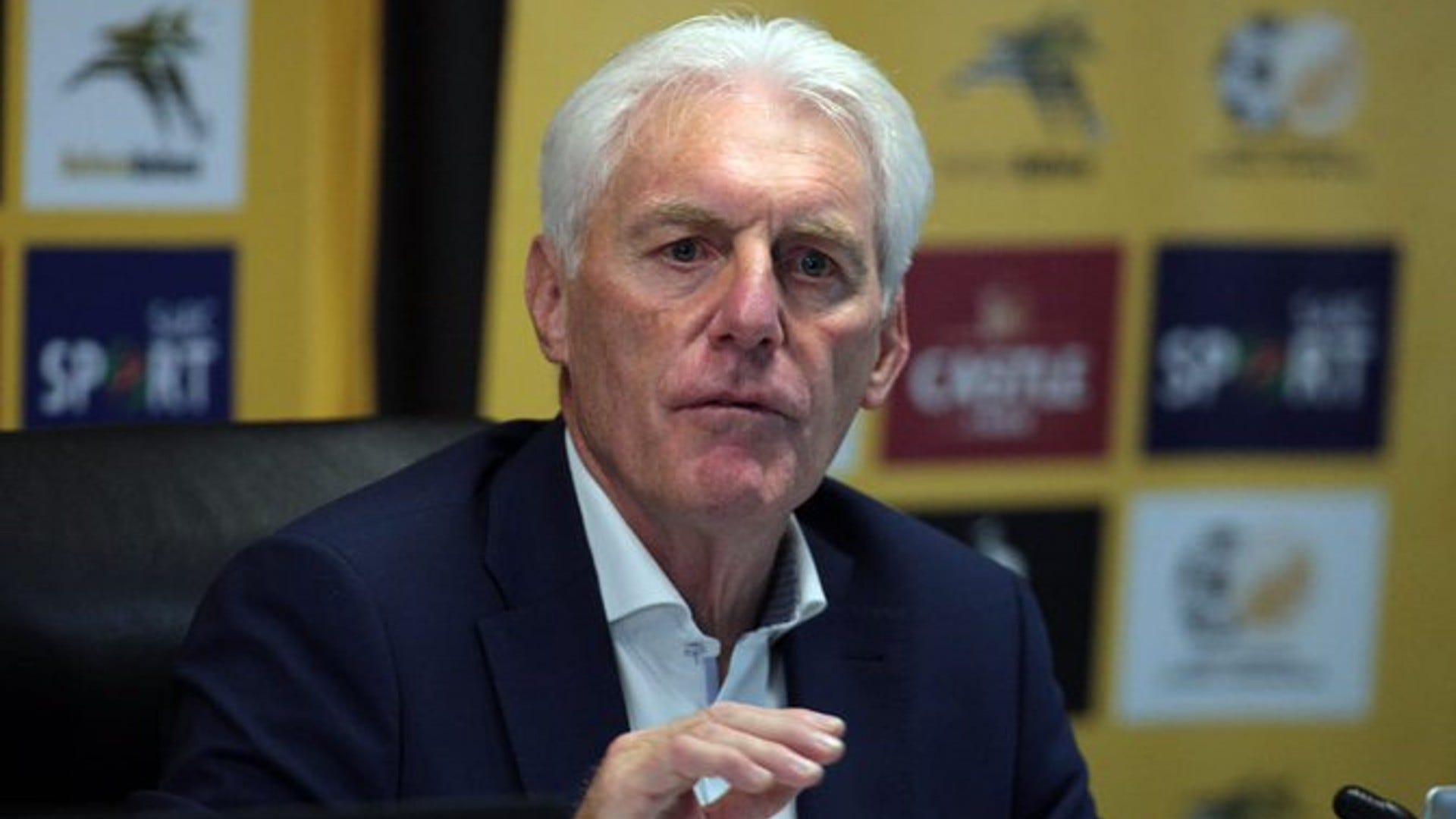
Bafana Bafana coach Hugo Broos can get some of his critics off his back with a victory against Sierra Leone in a friendly match at the FNB Stadium on Saturday.
Broos was criticised for his selection and tactics following South Africa’s 2-1 loss to Morocco in the 2023 Afcon qualifiers in June and had to apologise for saying the PSL’s lack of ‘quality’ was the reason for the national team’s struggles.
The Belgian coach has included Mamelodi Sundowns talisman Themba Zwane into the squad that has several newcomers, among them Melusi Buthelezi (TS Galaxy), Sibongiseni Mthethwa (Stellenbosch FC), Luke le Roux (Varbergs), Cyprus-based Mihlali Mayambela and Orlando Pirates marksman Zakhele Lepasa.
Zwane was among the players Broos was criticised for not including and he will hope the 33-year-old can replicate his good club form with national team against the Leone Stars, whose last game was a 2-1 loss to Nigeria three months ago.
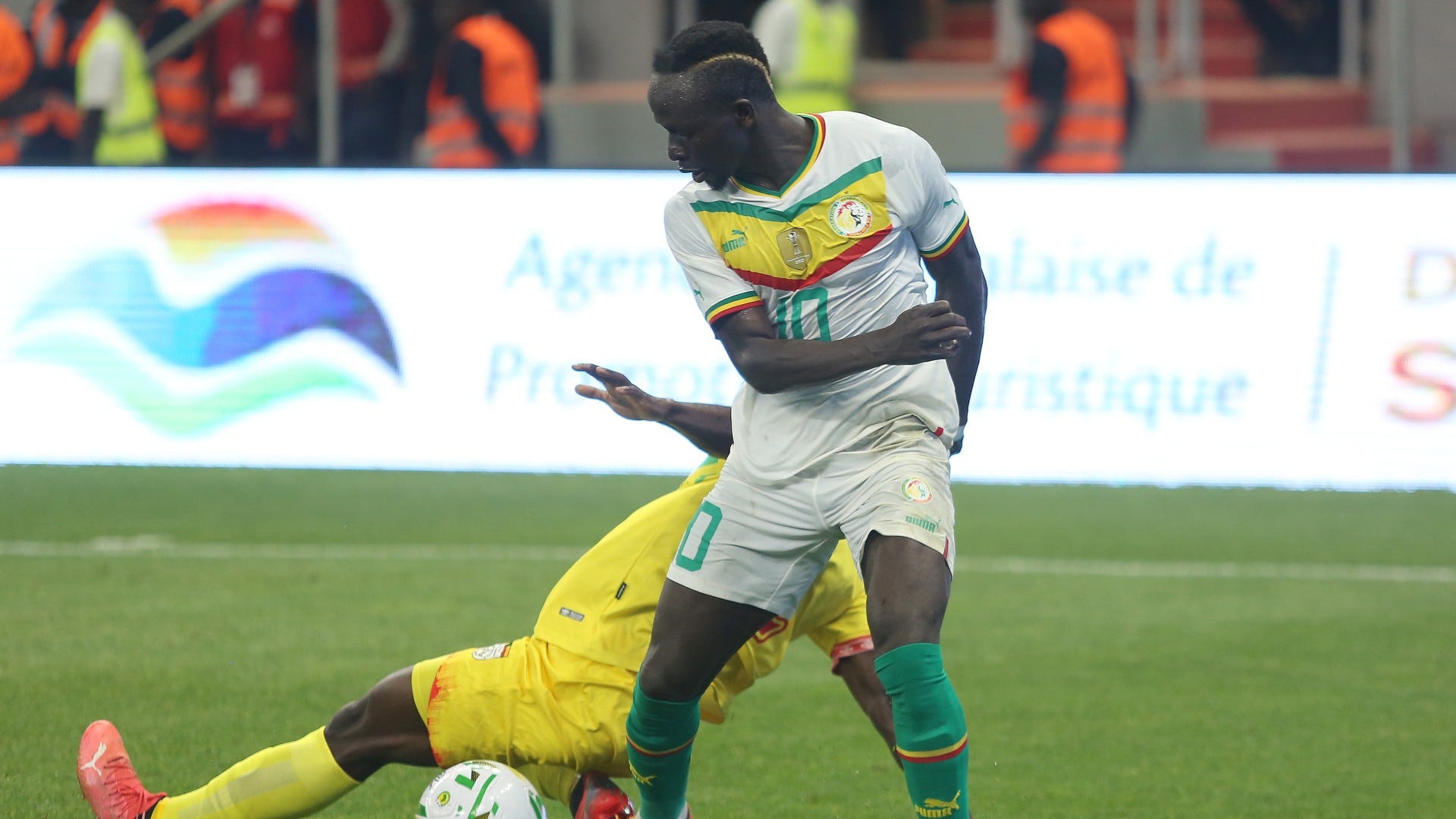
BackpagePix | Sadio Mane
Senegal vs Bolivia
France will also host another top African nation this weekend as Senegal take on Bolivia at the Stade de la Source in Orleans, using the match as a tune up for the World Cup.
Aliou Cisse’s men will face the Netherlands, the hosts and Ecuador in Group A in Qatar and the tactician has called up five new players, including Noah Fadiga, the son of Khalilou Fadiga, and Nottingham Forest defender Moussa Niakhate, as he looks to shake things up.
Eight players from the victorious 2021 Afcon squad are missing due to injuries or a lack of game time with right-back Bouna Sarr out of the World Cup with a knee injury and left-back Saliou Ciss without a club. Spartak Moscow forward Keita Balde has also been handed a three-month ban due to a doping violation.
However, with Chelsea pair Edouard Mendy and Kalidou Koulibaly, Everton’s Idrissa Gueye, Crystal Palace midfielder Cheikhou Kouyate, Watford’s Imaila Sarr and Bayern Munich superstar Sadio Mane available, the Teranga Lions have enough to cause Bolivia problems.
Mane became his country’s top scorer with 33 goals when he scored a hat-trick in the 3-1 win over Benin before his penalty earned a 1-0 over Rwanda in the Afcon qualifiers in June and despite his goal drought at Bayern, he is still the man to watch against the South Americans.
Getty Images | Vincent Aboubakar
Cameroon vs Uzbekistan
The Indomitable Lions are under pressure to improve following their lacklustre 1-0 win over Burundi in June’s 2023 Afcon qualifiers when Fecafoot boss Samuel Eto’o read the riot act to the players for taking their positions in the team for granted.
Rigobert Song’s men can start righting those wrongs against Uzbekistan in South Korea’s northern city of Goyang on Friday with Vincent Aboubakar set to captain the team.
Song has handed Brentford forward Bryan Mbeumo his first call-up after he switched allegiance from France to Cameroon in August and he will likely make his debut against Uzbekistan.
Cameroon are in a race against time to be ready for their return to the World Cup after missing the 2018 edition and have Switzerland, Serbia and Brazil to contend with in their group in Qatar.
Getty Images | Hakim Ziyech
Morocco vs Chile
Another World Cup-bound side taking on a South American team in this window, the Atlas Lions are under new management after former Wydad Casablanca coach Walid Regragui replaced Vahid Halilhodzic this month.
Regragui’s first task was to repair strained relationships between players and the technical bench and that was seen from his selection of Chelsea winger Hakim Ziyech, who had retired from international duty after falling out with Halilhodzic, and the inclusion Bayern Munich full-back Noussair Mazraoui.
Morocco will also have a number of youngsters for Friday’s friendly against Chile in Barcelona in what will be the first meeting between the two countries as the North Africans prepare for the global tournament in Qatar where they have Croatia, Belgium and Canada in their group.
A Magistrates’ Court in the northern Nigerian city of Kano has remanded in custody a Chinese businessman who is accused of killing his Nigerian girlfriend.
The suspect, Geng Quanrong, allegedly forced himself into the young woman’s family house, attacked her and slit her throat with a knife last weekend.
The killing sparked public outrage across Nigeria – with social media users and the victim’s family calling for justice.
Mr Geng, 47, was arraigned on Wednesday and government prosecutors accused him of murder.
But they asked the court to grant them time to prepare proper charges. The suspect has not yet entered a plea.
A spokesperson for the judiciary in Kano state told the BBC the case had been adjourned to 13 October.
The victim, Ummukulthum Sani Buhari, 22, was taken to a local hospital after the stabbing. Doctors confirmed she was dead on arrival.
The suspect was arrested as he attempted to flee the scene – after residents raised the alarm. Since then he has been in police custody.
It is unclear what exactly triggered the incident on Friday night, but residents and family sources say the estranged lovers had started having problems when the deceased indicated she was no longer interested in marrying the Chinese man.
18 candidates have so far been cleared by Nigeria’s electoral commission to contest the presidential election scheduled for February next year.
In a list published on Tuesday, the Independent National Electoral Commission (INEC) noted that 18 parties had fielded presidential candidates and their running mates.
The list include the names of the 75-year-old veteran presidential contestant and former vice-president, Atiku Abubakar of the opposition Peoples’ Democratic Party, and former Lagos governor Ahmed Bola Tinubu, 70, of the ruling All Progressives Congress.
It also includes the 60-year-old former governor of Anambra state, Peter Obi of Labour Party, who is seen as a third force.
Election campaigns officially begin next week on Wednesday.
Rampant insecurity, chronic unemployment and a worsening economic outlook are among issues the candidates are expected to address.
Nigeria has a population of more than 200 million people, out of which more than 95 million voters have registered to participate in the coming election.
Nigerians have been cautioned to brace themselves for more floods as Cameroonopens its Lagdo dam.
The cautions comes after Nigeria’s National Emergency Management Agency (Nema) held an emergency meeting on Tuesday following deadly floods that could worsen after neighbouring Cameroon opened flood gates at a dam to release excess water.
Since the start of the rainy season in July, at least 300 people have been killed and more than 100,000 others displaced.
Nema Director General Mustapha Habib Ahmed said 13 Nigerian states are at risk.
He said the spill-over effects from Cameroon’s Lagdo dam combined with heavy rainfall could affect more states – including the oil-producing Niger Delta.
“The released water complicates the situation further downstream, as Nigeria’s inland reservoirs including Kainji, Jebba and Shiroro, are also expected to overflow between now and October ending,” Mr Ahmed said.
Heavy rains in the north-eastern Yobe State have submerged roads and swept a major bridge linking the state capital and some local government areas, the authorities said.
Fati Usman’s son lies on a hospital bed in north-eastern Nigeria, looking almost lifeless.
He has difficulty breathing and looks extremely emaciated. A fly perches on his gaunt cheek.
From his size, you would think he is about two years old. But his mother says he is actually five.
He is just one of several million people caught up in a massive humanitarian crisis that an Islamist-led insurgency has caused in north-east Nigeria, leaving families in desperate need of food and medical care.
Dwindling funds are to blame for people’s hunger, say aid workers, as Nigeria’s government relies on support from aid agencies and the UN who in turn are more focused on crises in Ukraine and elsewhere.
Camps for internally displaced people (IDPs) are a last resort for millions of vulnerable Nigerians, yet Borno state, one of the worst affected, decided to close all such camps last year – labelling them slums and paying $200 (£175) to each family forced to leave.
And when it comes to government funding in the wider north-east, the malnutrition crisis comes second to fighting the region’s insurgents.
Aid workers predict that an estimated 1.74 million children under the age of five could suffer from acute malnutrition in north-east Nigeria in 2022 – a 20% increase from the previous year – and 5,000 could die in the next two months.
Ms Usman says her son caught measles, followed by diarrhoea.
“I got some medicines to give to him, but his condition didn’t improve. For 37 days he has been having diarrhoea.”
As his health deteriorated, she rushed him to the hospital in Damaturu, the main city in Yobe state in north-eastern Nigeria.
“I brought him here two days ago,” she says.
Five of her children had already died before this crisis – he is one of four who are still alive.
The 34-year-old mother is worn out and traumatised.
She fled attacks by militant Islamist group Boko Haram in the small town of Maino in Yobe, and moved into a camp for internally displaced people (IDP) five years ago.
“We couldn’t even take our belongings, not even food,” Ms Usman says.
Image source, Getty Images Image caption, The security forces have failed to end the insurgency
The spike in malnutrition has been worsened by outbreaks of disease including cholera, and disruption to farming because of attacks by militants.
Ms Usman’s husband works as a Muslim cleric, but he does not live with the family.
She tries to earn a living by sometimes helping neighbours sew their torn clothes in exchange for food. But the neighbours are also victims of the insurgency and have fled their homes, depending mainly on handouts from aid agencies and the government.
With plenty of mouths to feed, there are not enough food supplies to sustain the children and many become sick.
“This is the epicentre, so most of the cases that come here are severe ones,” Dr Japhet Udokwu, the coordinator of the centre, tells the BBC.
Like many doctors and humanitarians, he fears a disaster. Dr Udokwu is working around the clock, admitting at least 40 severely malnourished children every week for treatment.
According to him, some families travelled more than 100km (62 miles) from remote communities where there was no access to medical care. Many of them had lived in IDP camps in Borno state’s capital, Maiduguri, which have closed and are now unable to get enough food for their children, because they could not farm for fear of attacks.
Now is a critical moment, because the lean harvesting season is at its peak and there has been an uptick in the number of children brought in since the start of the year. As a result this facility – and others like it – are overwhelmed.
Dr Udokwu tells me his team has just finished administering treatment to a child who was rushed in a few hours earlier.
“The child is unconscious as a result of several days of passing loose stool, so we had to resuscitate him,” he says.
“We actually have a lot of severe cases coming with hypoglycaemia, shock, and the like in this facility.”
The facility is one of the few stabilisation centres that the BBC gained access to in some of the hard-to-reach locations in the north-east, where aid workers are battling to save the lives of hundreds of children.
Image source, Reuters Image caption, Aid workers fear that thousands of children could die
In another stabilisation facility in the commercial hub of Bama in Borno state, healthcare workers are also racing against time to cope with the mounting number of cases of children suffering severe acute malnutrition.
There, 25-year-old Fatima Bukar says she lost three children to malnutrition and walked 30km, carrying her two remaining children to the camp.
The children are among 22 patients in a 16-bed ward at the health centre in Bama.
Her four-year-old daughter, who lies on her side with swollen cheeks, cries intermittently whenever her mother turns to care for the one-year-old, emaciated-looking child in her arms.
Opposite Ms Bukar, another child cries as her mother tries to turn her around and make her lie on her back. Most of her skin looks burnt, all the way up to her face.
This is the result of what medics call grade three oedema and dermatosis. It starts when there is severe swelling in the body. When the swelling starts to subside the skin cracks, making it look like burns.
Dr Ibrahim Muhammad, who is in charge of the centre, says this is one of the effects of severe acute malnutrition.
“We see a huge influx of children with severe acute malnutrition every day. Many of them live in the Bama camp,” he adds.
Aid worker John Mukisa says that without a rapid increase in food aid, many children will die or be left disabled.
Since taking office in 2015, President Muhammadu Buhari’s government has repeatedly promised to tackle the security and humanitarian disaster, but it has largely failed to do so.
Yet it defends its record, claiming to have made significant success in the fight against Islamist militants, including the voluntarily surrender of thousands of militants in the north-east.
This comes as little comfort to the communities that have been devastated across this region.
Ms Usman says she fears that the worst could be still to come.
“Since our village was attacked, we have been visited with lots of tragedies. Our children have been dying of diseases and they may continue unless there’s intervention to save our lives.”
The Nigerian drug enforcement agency says it has made what appears to be the biggest seizure of cocaine in the country’s history.
Some 1.8 tons of cocaine estimated to be worth more than $278m (£243m) were discovered in a warehouse in the Ikorodu area, north-east of the commercial hub, Lagos.
The drugs were stored in 10 travel bags and 13 drums, said the National Drug Law Enforcement Agency (NDLEA).
Four Nigerian men aged 69, 65, and two 53-year-olds were arrested in different parts of Lagos.
A foreign national was also detailed, in what the agency said was a “well-coordinated and intelligence-led operation” conducted over two days.
NDLEA says the men were planning to sell the drugs to buyers in Europe, Asia and other parts of the world.
The agency’s head, Brig Gen Mohamed Buba Marwa (Retd), praised his officers, who worked with their US counterparts in the operation.
“The bust is a historical blow to the drug cartels and a strong warning that they’ll all go down if they fail to realise that the game has changed,” a statement from the agency quoted him as saying.
The Nigerian drug enforcement agency says it has made what appears to be the biggest seizure of cocaine in the country’s history.
Some 1.8 tons of cocaine estimated to be worth more than $278m (£243m) were discovered in a warehouse in the Ikorodu area, north-east of the commercial hub, Lagos.
The drugs were stored in 10 travel bags and 13 drums, said the National Drug Law Enforcement Agency (NDLEA).
Four Nigerian men aged 69, 65, and two 53-year-olds were arrested in different parts of Lagos.
A foreign national was also detailed, in what the agency said was a “well coordinated and intelligence led operation” conducted over two days.
NDLEA says the men were planning to sell the drugs to buyers in Europe, Asia and other parts of the world.
The agency’s head, Brig Gen Mohamed Buba Marwa (Retd), praised his officers, who worked with their US counterparts in the operation.
“The bust is a historical blow to the drug cartels and a strong warning that they’ll all go down if they fail to realise that the game has changed,” a statement from the agency quoted him as saying.
Gregory Rockson, the founder of M. Pharma, a healthcare firm, has announced the acquisition of a controlling stake in Health-plus Pharmacy, Nigeria’s first integrative pharmacy chain, over eight months after collecting $35 million in a Series-D funding round to expand its operations.
According to Rockson, CEO and co-founder of M. Pharma, the acquisition aligns with the company’s mission to build a healthy Africa by providing life-changing healthcare services and drugs to patients.
“M. Pharma is deepening its long-standing commitment to Africa by re-imagining primary healthcare in some of the most vulnerable communities on the continent,” he said. “We continue to transform community pharmacies into primary care centers to provide affordable and accessible healthcare to all patients, so they can live not just longer but healthier lives.”
Afsane Jetha, co-founder and CEO of Alta Semper Capital, stated in her remarks on the acquisition that the Health-plus team is convinced that M. Pharma’s strategy of revolutionizing primary healthcare across Africa is the ideal steward for HealthPlus’s next chapter of growth.
She added that the management is excited to support the business going forward through a relationship with M. Pharma.
Founded in 2013 by Rockson, Daniel Shoukimas, and James Finucane, M. Pharma manages pharmaceutical inventories for African mom-and-pop pharmacies. It also offers unique financial and inventory management solutions to hospitals, as well as patients directly.
With 300 partner pharmacies in Ghana, Nigeria, Kenya, Zambia, Malawi, Rwanda, Ethiopia, and Gabon, M. Pharma has managed to upend the African healthcare industry since its founding more than nine years ago. The company serves around 1 million patients yearly through these locations.
With the purchase of HealthPlus Pharmacy, M. Pharma will have chances for growth in Nigeria and a platform to increase the number of pharmacies it operates on the continent thanks to its fast expanding QualityRx program.
Seven thousand donkeypenises being exported to Hong Kong have been intercepted by Nigeria’s customs service at an airport in the commercial hub, Lagos.
The animal parts were packed in 16 sacks found in the animal export section, said Sambo Dangaladima, the customs controller at Murtala Muhammed airport.
The stench from the sacks aroused suspicion of the authorities.
The consignment is estimated to be worth 200 million Naira ($478,000; £416,000)
A suspect linked to the package is said to have escaped. Nigerian law forbids export of donkey parts.
Donkey parts are sought after in China where they are used to make traditional medicine.
State Commissioner of Police, Friday Eboka, said investigations revealed that some had been abducted years ago, including a nine-year-old boy who had been taken from a market in 2020.
He said some of the children had recounted to the police their experiences of torture and mistreatment.
He said a further probe into the incident was ongoing with a view to arresting other suspects linked to the crimes.
Security sources in Nigeria have reported that dozens of Islamist militants have drowned in a river while fleeing ground and aerial assaults in the north-eastern Nigerian state of Borno.
Local militias who fight alongside government troops said they pulled more than 100 bodies from the water and buried them nearby.
The jihadists are reported to have abandoned their positions, rushing into a river swollen by heavy rain.
Some troops attacked villages on the edge of Sambisa Forest where Boko Haram fighters have their hideouts.
Tens of thousands have been killed and about two million displaced by the Islamist insurgency which began in 2009.