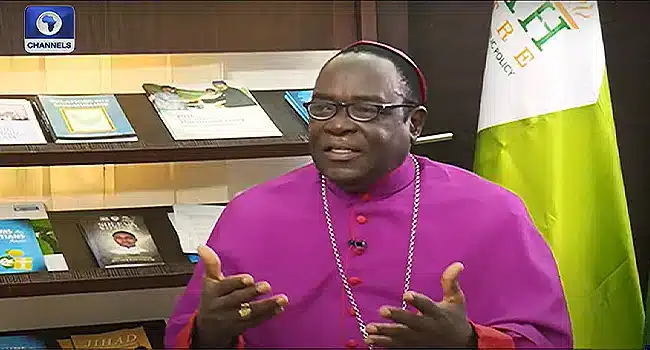
Bishop of the Catholic Diocese of Sokoto, Matthew Hassan-Kukah, has said that in the 62-year history of Nigeria, spanning democratic and military governments, no president or head of state was ready to hit the ground running.
The bishop pondered Nigeria’s need for leadership resulting from individuals taking the time to understand the problems of Nigeria and planning accordingly.
“You can go all the way down in Nigeria, you’re not going to find one single person who has been president or head of state in Nigeria that came prepared for the job,” Kukah said during an appearance on Channels Television’s Roadmap 2023.
Since attaining independence on October 1, 1960, Nigeria has had 16 leaders – eight civilian presidents/prime ministers and eight military heads of state.
The civilian leaders include late Prime Minister Abubakar Tafawa Balewa (1960-1966), and presidents Nnamdi Azikiwe (1963-1966), Shehu Shagari (1979-1983), Ernest Shonekan (Aug.-Nov. 1993), Olusegun Obasanjo (1999-2007), Umaru Yar’Adua (2007-2010), Goodluck Jonathan (2010-2015), and Muhammadu Buhari (2015-date).
Meanwhile, previous military heads of state include Major-General Aguiyi Ironsi (Jan.-Jul. 1966), General Yakubu Gowon (1966-1975), General Murtala Muhammed (1975-1976), and General Olusegun Obasanjo (1976-1979).
Others are Major-General Muhammadu Buhari (1983-1985), General Ibrahim Babangida (1985-1993), General Sani Abacha (1993-1998), and General Abdulsalami Abubakar (1998-1999).
Kukah used the analogy of a bad marriage to explain the relationship between Nigeria and its political leaders.
“I always say to people as a priest that the solution to a bad marriage is not a new marriage. It’s often an attempt to look at what has gone wrong. And if you jump to a new marriage very quickly, after some time, you become nostalgic about the first marriage.
“Metaphorically, you can say the same thing about Nigeria. A lot of these changes that we have seen in Nigeria are largely unprogrammed.”
According to the clergyman, going back as far as the 1960s running through the entire leadership history from prime minister or president to beneficiairies of military coups, there has been no “linearity”.
“There’s been nothing linear,” he explained. “In the sense that military coups by themselves that stretch over a 20-year period were just glorified banditry and armed robbery because you pull the gun and became a head of state.”
Giving a snapshot of Nigeria’s recent political history, Kukah argued that the country has yet to produce an executive head who is prepared for office.
According to the clergyman, going back as far as the 1960s running through the entire leadership history from prime minister or president to beneficiairies of military coups, there has been no “linearity”.
“There’s been nothing linear,” he explained. “In the sense that military coups by themselves that stretch over a 20-year period were just glorified banditry and armed robbery because you pull the gun and became a head of state.”
Giving a snapshot of Nigeria’s recent political history, Kukah argued that the country has yet to produce an executive head who is prepared for office.
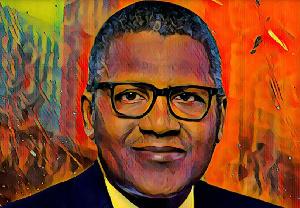
Amidst a chaotic cash shortage in Nigeria, where citizens are forced to wait for hours to withdraw a meager $43 from their savings in banks, causing a disruption in business activities for millions of people, Africa’s wealthiest man Aliko Dangote has seen a significant increase in his wealth since the start of the year.
The Nigerian billionaire, who has built his vast fortune from several businesses in the country, has seen his net worth increase by $541 million, cementing his status as the richest man in Africa, ahead of Johann Rupert, Nicky Oppenheimer, and Abdul Samad Rabiu.
Dangote’s net worth stands at $19.2 billion, an increase of $541 million from his previous net worth of $18.7 billion at the beginning of the year. According to Bloomberg, he now ranks as the 86th wealthiest person globally.
While Nigerians face cash shortages that have disrupted financial transactions and overwhelmed the digital payments system, Aliko Dangote has seen his net worth surpass the $19-billion mark, according to the Bloomberg Billionaires Index.
The development has occurred amid the political backdrop of the country’s upcoming presidential elections, where a candidate has suggested that the redesign of the naira is an attempt to impede or postpone the polls, and amid the controversial decision by Central Bank Governor Godwin Emefiele to replace N2.7 trillion ($5.85 billion) of cash outside the banking system.
The billionaire businessman’s impressive $541-million wealth gain so far this year can be attributed to the success of Dangote Cement Plc, Africa’s largest cement manufacturer, in which he holds an 86-percent stake.
The company’s share price has increased by single digits from N261 ($0.568) on Jan. 1 to N270 ($0.588), boosting its market capitalization beyond the N4.6 trillion ($10 billion) mark and pushing the market value of Dangote’s stake above $8.5 billion.
Dangote’s wealth is expected to soar even higher, potentially making him the first African and Black person to amass a fortune of $30 billion, as he prepares to commission his 650,000-barrel-per-day Dangote Refinery and Petrochemical Ltd. later this year. The completion of this project is set to provide a whopping $18 billion boost to his net worth.
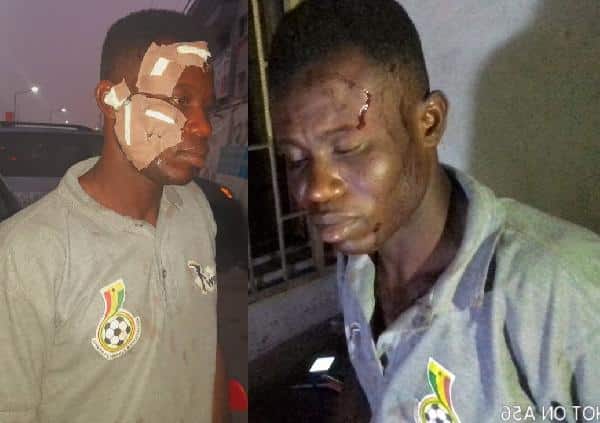
Armed robbers have attacked the Ghana Wheelchair Tennis National Team in Nigeria, taking their goods.
After competing in a tournament, the team was traveling to Ghana.
On Tuesday, around 2:30 am, the terrible tragedy took place at Ogun Stage in Nigeria.
Despite their best efforts to flee, the robbers were able to smash the car’s windshield and escape with some of the valuables inside.
As a result of the incident, three squad members suffered facial injuries. Team members who were hurt were transferred to the hospital where they got medical attention.
The Wheelchair Tennis National Team were on their way to Ghana from Nigeria after participating in the 2023 ITF World Team Cup Africa Qualifiers.
The team is made up of No.1 seed Daniel Laryer, Razak Baba Abdul and National Ranking Tour 1 Champion, Bernard Yawson.
Also among the team are Bridget Nartey, Issah Zenabu and Stacy Mensah Konadu with coach Philip Plange.
The tournament took place on 8th February and ended on the 12th in Abuja, Nigeria.
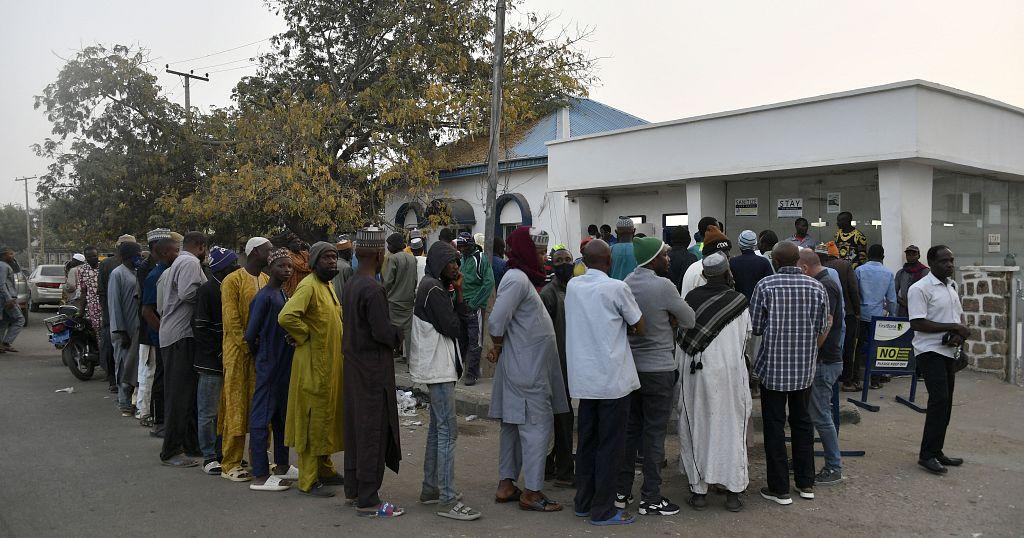
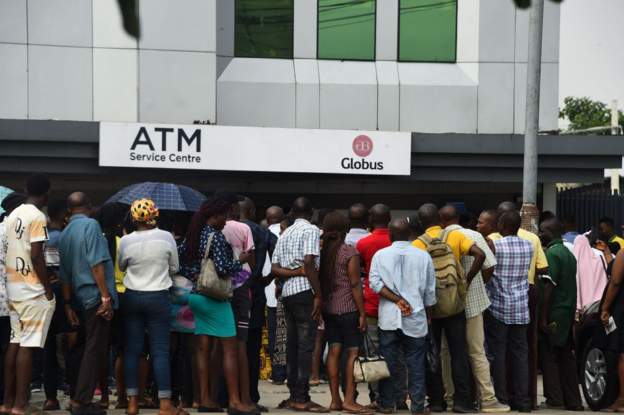
It was just after dawn and tempers were fraying outside the First Bank in the northern Nigerian town of Kano, where scores of customers jostled to get on a waiting list to withdraw money.
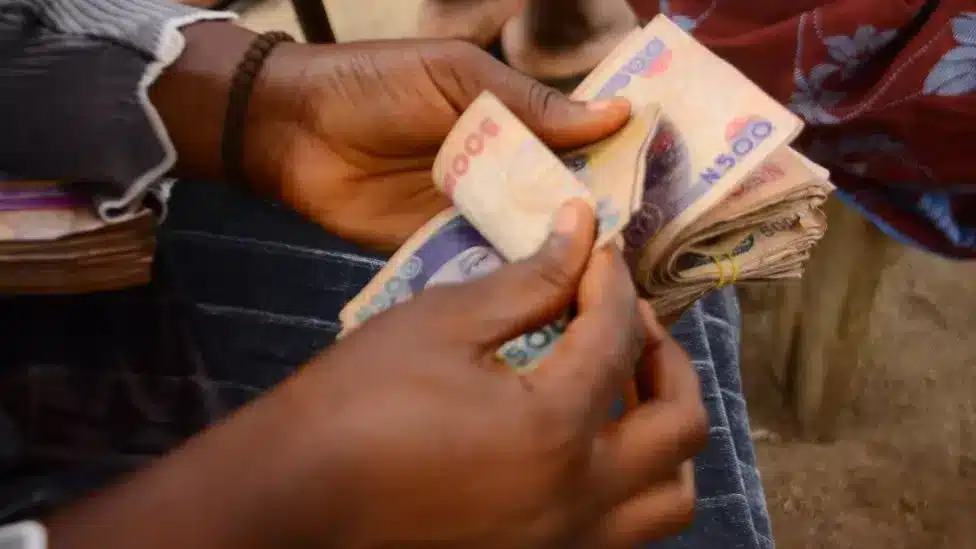
Long before the branch had opened its doors, crowds had formed of people desperate to take out cash, which was being limited to 10,000 naira — just $20 — per person.
The reason: a government plan to swap old banknotes for a new design has run into chaos, limiting the number of bills in circulation and creating a cash shortage.
Near the bank, hundreds of cars, motorbikes and rickshaw taxis had sat since early morning outside filling stations waiting to fill their tanks because of another shortage: petrol.
Little more than two weeks before an election to pick President Muhammadu Buhari’s successor, the twin shortages in Africa’s largest economy are overshadowing campaigning, angering voters and causing jitters over vote preparations.
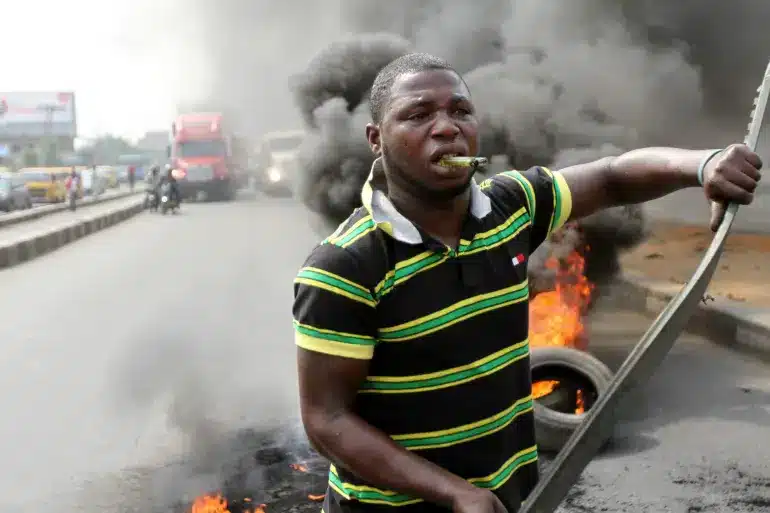
Riots erupted in frustration over the cash crunch last week when Buhari visited Kano state, one of his power bases and a key election battleground with the second largest number of registered voters.
Independent National Electoral Commission (INEC) Chairman Mahmood Yakubu on Wednesday reassured Nigerians the February 25 ballot would happen, with three major presidential candidates in a tight race.
But watching the lines outside Kano’s banks, market trader Mohammed Ali Danazumi said elections were far from his mind. He was on a second hours-long wait to get cash after failing to get naira the day before.
“Today, I am number 290, what can I do?” he asked after joining the waiting list to get access to the cash machine.
“We need change, we need some serious change.”
– Conspiracy theories –
The fuel and cash crunches have already soured the mood ahead of the February 25 presidential vote.
Buhari’s ruling All Progressives Congress (APC) party and main opposition Peoples Democratic Party (PDP) are trading accusations of plots and sabotage — or of hoarding new banknotes in order to buy votes.
Some APC stalwarts even blame “fifth columnist” enemies in the presidency for creating the shortages to undermine their man, former Lagos governor Bola Tinubu.
Buhari, who steps down after two terms, last week asked Nigerians to give him seven days to resolve the shortages, which he blamed on inefficiencies and hoarding in distribution of new notes.
Buhari holds an emergency meeting on the cash shortage with top officials on Friday. But APC governors already warned him they are worried about the impact on the election.
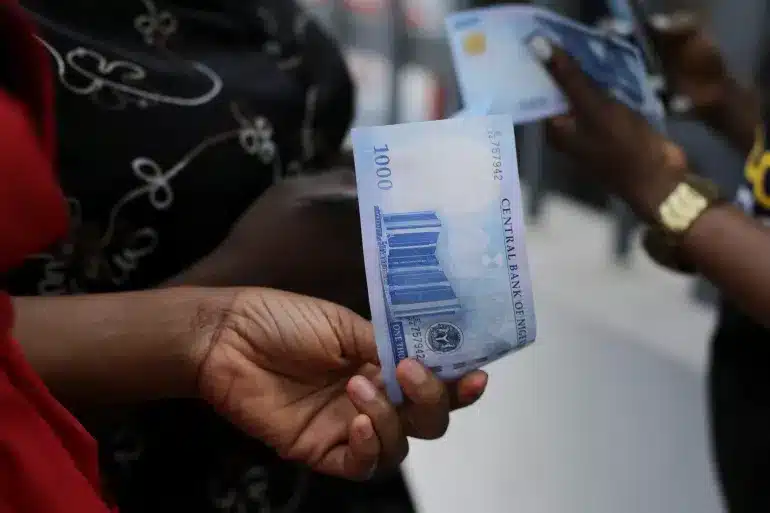
Government officials defend the cash swap to replace old 1,000, 500 and 200 naira notes as a way to clear counterfeit bills and a large amount of cash held outside banks.
But for many Nigerians, already coping with widespread insecurity and the inflationary fallout from the Ukraine war, the dual cash and fuel shortage is fast becoming too much.
Traders have been quick to profit. Street vendors sell cash via a bank card transaction on mobile POS machines, but with a hefty charge of 1,000 naira for 5,000 naira, Lagos and Kano residents say.
“You pay cash for your own cash,” said a Lagos business administrator after a transaction.
For Kano auto mechanic Sayo Ade, who left his car overnight in a line outside a petrol station, patience was beyond thin.
“There is no cash in Nigeria now. You can’t get any at the ATM (cash machine). But in here, the POS machines (for electronic transactions) don’t work, so they are asking for cash,” he said waving his bank card at the gasoline station.
“Who has cash in Nigeria now?”
Nigeria is one of Africa’s largest crude oil producers, but has almost no refining capacity and must import fuel from Europe and elsewhere.
– Northern stronghold –
Since the end of military rule in 1999, Nigeria’s elections were often marred by violence, vote buying or logistical problems. The 2019 vote was delayed by a week.
Kano state has long played an important part in Nigeria elections. Buhari was elected in 2015 and re-elected in 2019 thanks in large part to a block of ballots from the northwestern state.
But in Kano city, the country’s second largest and commercial heart of the mostly Muslim north, frustrations are growing, even among those who voted twice for Buhari.
Protests have also broken out in the southwestern cities of Ibadan and Abeokuta, where police said rioters attacked local banks.
Outside a Kano bank, civil servant Dauda Yusuf was focussed on finances not politics.
“We don’t know why the government is treating us like this,” he said. “We are heading into an election and they want us to vote? Look at what is going on here.”
Despite its status as a major oil producer, fuel lines recently reappeared in Lagos and other cities.
Perched on his yellow rickshaw taxi, Adamu Isyaku said he spent hours to fill up at a station where fuel is sold at the regular subsidised price. Black market fuel would save him time but cost him double.
Now even some customers have little cash.
“Sometimes we are like a charity. Sometimes people just say, ‘this all I have,’ and you have no choice but to accept,” he said.
“I was going to vote. I have my voter card with me. But with all this suffering, I’ve changed my mind.”
Others took a pragmatic view in a country where coping with “wahala” — a widely used Hausa phrase for Nigeria’s daily struggles — is seen as a necessary skill.
“We are Nigerians, we will survive,” said Kayode Gabriel, 46, a salesman, waiting for his turn to fill up his car tank in Kano. “No, it’s not normal, but God gave us a resilient spirit. Someday, somehow we will get it right.”
To start with, election candidacy ought not to be an impromptu decision. For inspiration, we may have to turn to Western civilization for succour. After all, our social structures and institutions are patterned after theirs.
In the United Kingdom, as in other saner climes, young men and women who participate in school politics – and are interested in running governments – are provided with ample chance to express themselves in an enabling environment; and they follow through till they graduate from these schools. It’s like a recruitment centre, and they eventually form the bulk of the grooming pool. It’s out of this pool that future leaders are chosen.
Of course, that’s why it’s customary: when you see candidates aiming to become prime ministers in the UK, they are products of certain Ivy League schools. So, it’s like the tertiary institutions in the West actually helping to groom the leadership class from which society decides who runs the race.
Elections, by definition, are supposed to reflect the pathway to the hopes and yearnings of the people. As such, any attempt to subvert or circumvent the process will be tantamount to committing a crime against humanity. Manifestly, subversion of the people’s will breeds illegitimacy and makes any government that comes to power through that flawed process unpopular, thus crippling its ability to govern effectively, because, whatever the government in question does will not appeal to the popular will of the people.
Therefore, it’s a disservice to anybody who is rigging elections in the first instance, for he or she may end up practically hurting himself or herself. So, the real deal is to have a genuine will to help, improve and develop society in all its ramifications. That’s the criteria! Obviously, what is important is for the candidate to be educationally sound so that, as a leader, he or she can debate anything with anybody, anywhere, reasonably; not through sophistry.
Again, sad that, rather than base a candidate’s recruitment criteria on merit and other concrete attributes, what we actually have are sentiments and other unprofitable concomitants mushrooming as the sacrosanct stuff!
Socrates was once quoted as saying that “until philosophers are kings, or the kings and princes of this world have the spirit and power of philosophy, cities will never have rest from their evils…” Except we are being immodest, the university system is a pool where the people are really groomed. Impliedly, it is at the level of the students that we should get the best hands to run the affairs of the country.
However, since our universities are always shut for the better part of the year, Nigeria is hardly portrayed as a serious country. So, it may not be out of place to say that the kind of products from such a system can only be described as half-baked or, not-baked at all. Of course, that’s why we keep forcing a 70-year-old to come back into politics and contest because the younger fold is not adequately equipped.
If, in a degraded society, nincompoops, running on the wave of popular culture, will always have their way, then, watch out for refined motor park touts, aka Agberos, in the society and their whet appetite for political offices! Sad that even our professors are not helping matters either!
While they are no longer interested in research works or theories that are not only novel but also needed for the healthy survival and improvement of society, they are with each passing day running after research grants, just to do ‘owambe.’
In any healthy competition for political office, the character of the candidate is also central. Therefore, a prospective candidate must have the patience to be able to listen to other people at all times and consider their opinions. He or she must accommodate other people’s views and must not be intolerant of their opinions.
Since it is not a day’s journey, anyone who wants to lead must over time have done certain things in society that showed his or her inner intents without the hope of getting a reward. In other words, there must be qualities of humanity in such a contestant; that is, he or she must have records or antecedents that are favourable to the leadership position being aspired.
Again, this is where Bola Tinubu, the presidential candidate of the ruling All Progressives Congress (APC), remains unbeatable! Regrettably, those who are closer to the ‘Jagaban of Borgu’ never see him as a teacher, talkless of being a mentor. And that’s where the problem lies!
Candidates standing for elections must be prepared to abide by the rules of the game even as a society must have the right orientation, and it must be sustained! The orientation programme must be ongoing, not only before or during elections but also after elections so that it doesn’t become a fire-brigade approach.
From primary school to the university, pupils and students must be exposed to the evils of election malpractices so that every Tom, Dick and Harry will know his or her rights and what’s expected of him or her in an electoral system.
Another critical quality is the structure! Without doubt, party structures must ensure that standards are not compromised. Yes, this is the peak of the pack! For instance, how are the chairmen and secretaries of political parties in Nigeria elected into office? Where is their curriculum vitae?
Do they come in because they’re foot soldiers of the party or because they possess the requisite administrative knowledge, which is indeed, different from one to the other? What we are saying essentially is that competence should define the suitability or otherwise of applicants to party offices.
A party chairman who doesn’t understand the nuances of public administration can be likened to a square peg in a round hole; none other than a misfit!
Quite frankly, Nigerians must admit that many of the processes of the current electoral process did not start from the right premises. So, we may just have to manage whatever results we get. For instance, the Peoples’ Democratic Party (PDP) rejoiced over a pyrrhic victory, following the July 16, 2022 governorship election in Osun State, until the Election Petition Tribunal appropriately scrutinized the process and delivered justice accordingly. From the look of things, nobody imagined that it would be ‘Lanlehin’; that whatever goes around comes around!
As the 2023 General Elections are nearing us by the eyelids, election riggers should watch out! It’s always easy to say that Rome was not built in a day. Of course, that’s true! But then, the initiative to build Rome started sometime; and it was sustained. That’s why we have Rome standing today.
In like manner, the lofty intention to have free, fair and credible elections in Nigeria has been initiated. What this demands, really, is for candidates to work hard, not relying on the usual mundaneness of issues like religion, ethnicity or fetish approach to prayers or metaphysics. In truth, prayers and belief systems are very personal issues while coming into politics is public service.
After all, God didn’t ask anyone to go into politics. But if there’s anyone who said he’s sent by God to practice politics, let him or her supply evidence to support his or her claim.
Thank God, Osun has now shown that the fear of the Bimodal Voter Accreditation System (BVAS) is the beginning of wisdom!
May the Lamb of God, who takes away the sin of the world, grant us peace in Nigeria!
Source: Abiodun Komolafe
DISCLAIMER: Independentghana.com will not be liable for any inaccuracies contained in this article. The views expressed in the article are solely those of the author’s, and do not reflect those of The Independent Ghana
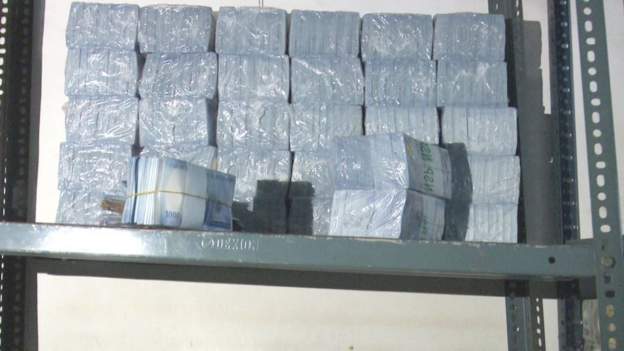
The branch manager of a commercial bank in Abuja, the nation’s capital, has been detained by the Nigerian agency that looks into financial crimes for reportedly refusing to load ATMs with cash despite having the newly designed banknotes in the vaults.
Nigeria just underwent a currency makeover, but the transition has not gone as planned due to a lack of new notes.
This has sparked resentment and caused unplanned protests at banks. Friday is the last day to utilize old currency.
It said the bank had 29 million Naira ($63,000; £52,000) of the new banknotes in its vaults – which officers ordered to be loaded on ATMs.
It’s unclear if the arrested bank manager has commented on the accusation, but the commission said some banks were “sabotaging government’s monetary policy”.
EFCC Arrests Operations Manager of a Commercial Bank for Hoarding New Naira Notes in Abuja
An Operations Manager of a leading Commercial bank in Abuja Central Area was today, February 6, 2023, arrested by operatives of the Economic and Financial Commission, EFCC,… pic.twitter.com/nP2rbgNTOc
Olusegun Obasanjo, a former president of Nigeria, has outlined some strategies African countries might use to capitalize on their expanding populations.
According to him, Africa’s growing population – which is projected to hit 2.5 billion by 2050, has the ability to to serve as a liability to the continent.
Using his own country as an example, Olusegun Obasanjo said that by 2050, Nigeria’s population is projected to be at 400 million, a situation he said is currently troubling.
“We will be the third largest country in the world after China and India. Should the really be a great concern to us? I would say normally that it shouldn’t be because population can be a liability or an asset.
“Now, as we have it today, it is a great liability, and don’t let us deceive ourselves. In my country, Nigeria, where we are 225 million today, 20 million of our children that should be in school are not in school – that is the beginning of insecurity, whichever way you look at it,” he stressed.
Speaking at the Insiders and Outsiders Meeting the African Security Challenge in the 2020s, organised by the Brenthurst Foundation and the Kofi Annan International Peacekeeping Training Centre (KAIPTC), the former Nigerian president said that regardless of the situation, something good can come out of over-population.
He explained that an advantage that Africa can attain with its growing human resource, is to ensure that it equips the population with needed skills, education and knowledge in technology.
“Can we make population an asset? Of course, we can if we nurture our population from the womb; if we have food and nutrition security; if we give every child education. If everybody can acquire skills; if we give science and technology the attention it should be given.
“If we give every child employment, population will cease to be a liability; it will be an asset. But if we are not able to do this, as we have not been able to do it in the past, then there will be no hope, or any great expectation for our population. And once the population is depleted, then we have lack of protection, we have insecurity on our hands,” he stated.
The West African Security Roundtable – Insiders and Outsiders: Meeting the African Security Challenge in the 2020s was hosted by President Olusegun Obasanjo of Nigeria, President Ernest Bai Koroma of Sierra Leone, and Dr. Greg Mills, Head of the Brenthurst Foundation.
The event forms part of a series across the region: Accra, Abidjan, Dakar, Niamey, and Abeokuta.
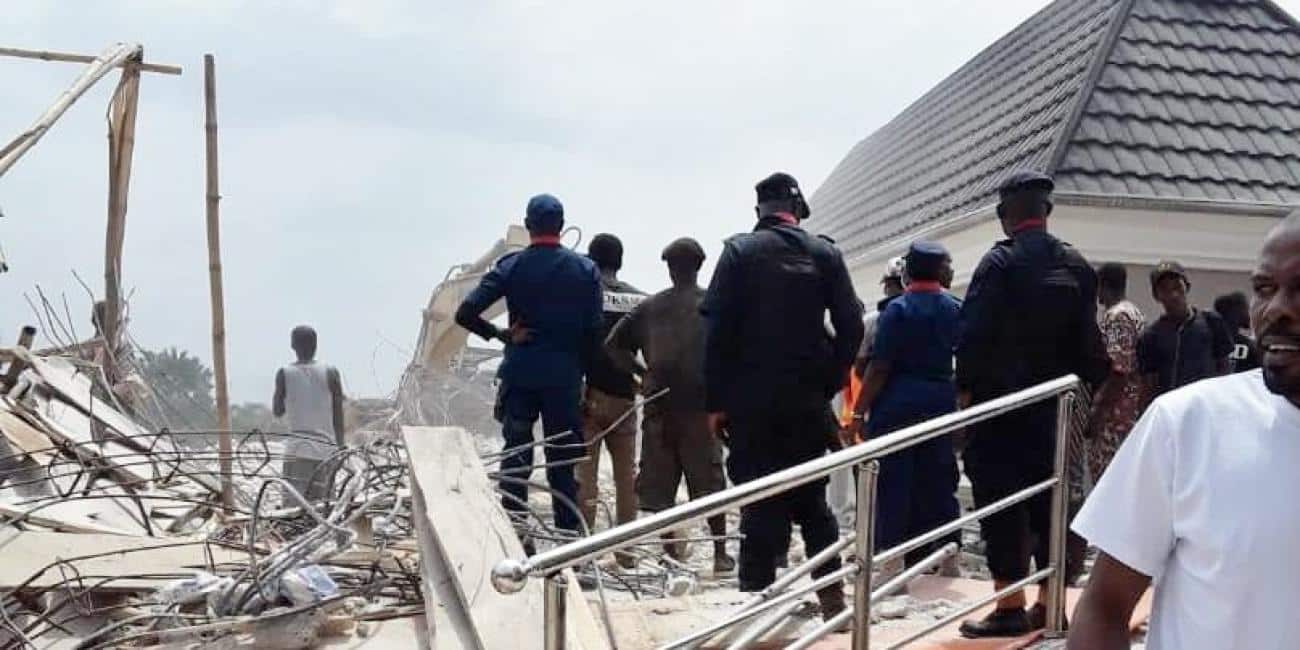
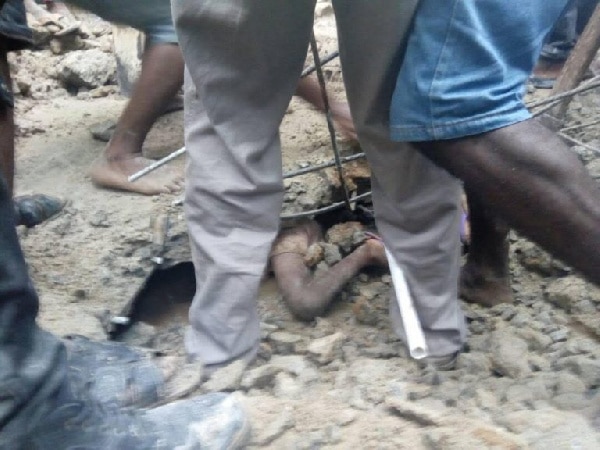
A two-storey building collapsed on Saturday in Aluu community in Rivers State, South-South Nigeria, reportedly killing three labourers.
Confirming the incident, the Rivers State Police Public Relations Officer, Grace Iringe-Koko, said that “only one labourer died as a result of the incident.”
Meanwhile, TheCable reports that while confirming the incident on Sunday, the head of the disaster management rescue team of the Nigeria Security and Civil Defence Corps (NSCDC) in the state, Ngene James, said three labourers died in the building collapse.
James said the property has been sealed off to ensure a detailed investigation is carried out on the cause of the incident, adding that preliminary investigations showed that the building collapsed due to the use of substandard building materials.
He said, “Upon arrival at the disaster scene, we joined in the joint rescue operation by the National Emergency Management Agency (NEMA) and sister security agencies.
“Three labourers working at the construction site lost their lives.
“Preliminary investigation showed that the two-storey building collapsed as a result of the use of low-quality iron rods and other materials in its construction.”
James advised property owners to be wary of quacks and desperate building contractors who care only about their pockets rather than safety.
Three individuals have died after receiving fatal injuries, while 24 people have been pulled from an Abuja building that has collapsed .
According to emergency services in Nigeria, the three-story structure with a basement was under construction when it came down on Thursday morning trapping an unidentified number of people with may of them being workers.
The building is believed to have been planned for a commercial complex in Gwarinpa, a sprawling residential suburb of the Nigerian capital.
A combined team of emergency and security agencies, including some construction companies with heavy-duty equipment, were mobilized to the scene of the incident and worked overnight digging through the rubble to try to save people trapped in the collapsed building.
Abbas Idris, head of the Federal Capital Territory’s Emergency Agency in Abuja, told the BBC that it had been a battle to rescue the people and that the building was poor quality: “We discovered that a lot of corners have been cut, there are substandard materials used in this construction.”
The most recent violence before the parliamentary and presidential elections in Nigeria saw over 40 people dead in skirmishes between vigilantes and gunmen in the country’s northern Katsina state.
Katsina state police spokesperson Gambo Isah said on Friday that an armed gang, known locally as bandits, attacked a village in Katsina’s Bakori local government area and had rustled cattle and sheep before fleeing into the bush.
A local vigilante group mobilised and pursued the gunmen, which led to the deadly clash and large loss of life on Thursday, the spokesperson said.
“A joint security operations is currently ongoing with a view to bringing the perpetrators to book,” Isah said.
Katsina is one of the northern states hardest hit by armed gangs who attack and kidnap people from villages and highways in remote parts of the region where security forces are stretched.
Lack of security has become widespread and is a key concern for voters ahead of the February 25 election to choose new members of parliament and a successor to President Muhammadu Buhari, a former military ruler who came to power eight years ago promising to end insecurity.
Two security sources put the death toll in Katsina at 50. The bodies of those killed were recovered on Friday from the bush. Those injured in the clashes were taken to Kankara hospital in the state, the sources said.
Katsina special adviser on security Ibrahim Ahmed said communities were discouraged from taking the law into their own hands through vigilantism as it would lead to deadly consequences.
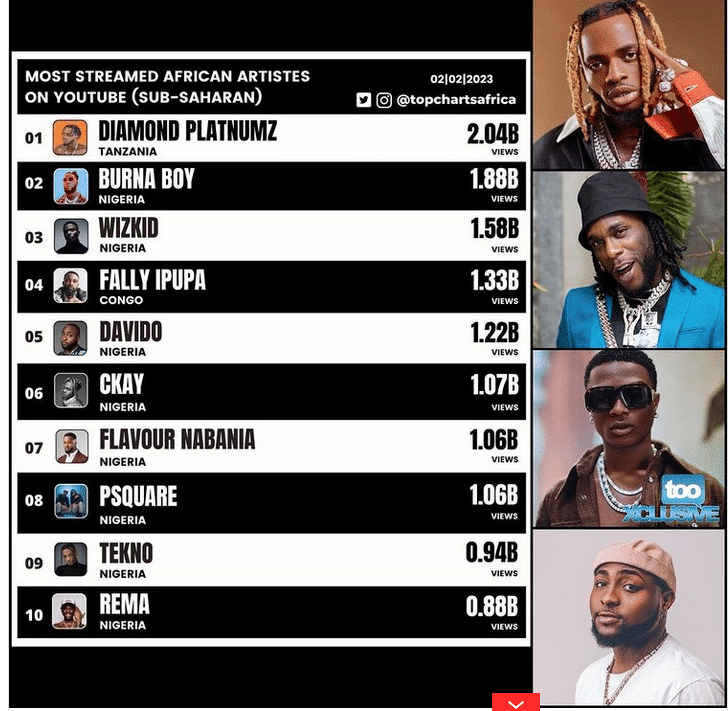
The Nigerian music industry is in a very dominant form as it proves its mettle yet again. The YouTube index for the most-streamed artists in Africa was recently released, and Tanzanian singer Diamond Platnumz tops it with Burna Boy in 2nd place.
Essence crooner, Wizkid ranked 3rd then followed by internationally renowned Congolese singer, Fally Pupa.
The six other positions were filled up by Nigerian singers. The Afrobeat industry is no doubt on a world rage of global dominance, and Africa knows it.
See the official list of the most streamed African singers on YouTube in the Sub-Saharan region:
See how Nigerians have reacted to the list of most streamed African singers on YouTube
@iam_kinglq:
“Wizkid with how many videos Abeg? Make una count their videos use am judge.”
@paulinxx09:
“Una sha squeeze David’s picture put… Justice for fally ipupa.”
@icesun_y3:
“Who dey even stream this diamond sef.”
@didashaibuofficial:
“Diamond platnumz is biggest Artist in Africa After wizkid, burna and Davido.”
@reims_wrld:
“The king OBO is 5th despite that he hasn’t dropped jam oo still he’s at the 5th, then come to think of it you will see that he’s the true king and by may the king is definitely taking back his position.”
@ayll30bg:
“All of them upload video pass Davido, davido uploaded most of his old videos on Dmwhq with 500m+ views, and wizkid is not the only one using that YouTube channel it’s called Starboy TV not for only wizkid, the channel is for all the artists under the Starboy label, if you know you know, go and brush before you reply me!!!”
@iam_bravosky:
“So pelu gbogbo 24hrs 1million.Wizzy still top 001.”
@successfulcollinso:
“Make una they play go on the YouTube and check yourself Burna boy has posted over 160 videos there while Diamond has posted over 750 videos and Wizkid, Davido, Rema and Ckay has posted lesser than 70 videos and still has such streams no hate but they deserve great accolades. All wizkid first 2 Albums were posted on Banky W page while Davido on Dmw page but Burna and Diamond has everything on their page so I guess you should know the difference now.”
The outgoing president of Nigeria, Muhammadu Buhari, has pledged to address the nation’s currency shortage, which is resulting in disorderly situations as citizens scramble to obtain new naira notes.
After 10 February the old notes will become worthless but can be exchanged for a further seven days at the country’s central bank.
“I am aware of the cash shortages and hardship being faced by people and businesses, on account of the Naira redesign,” President Buhari tweeted.
“I want to assure that we are doing everything to resolve these issues. Nigerians should expect significant improvements between now and the February 10 deadline,” he continued.
I am aware of the cash shortages and hardship being faced by people and businesses, on account of the Naira redesign. I want to assure that we are doing everything to resolve these issues. Nigerians should expect significant improvements between now and the February 10 deadline.
One video showed people fighting at an ATM to get money. Another showed a man stripping down to his underwear as he was waiting at the bank, as we reported on Thursday.
The deadline to exchange the money was supposed to have been 31 January, but it was extended by 10 days to give more people in rural areas time to get the new notes, the central bank’s governor had said.
When the bank announced in October that the 1,000 ($2.18; £1.75), 500 and 200 naira notes were to be replaced, it said 80% of the notes in circulation were outside banks.
The central bank believes that with the redesigned currency it will have a better understanding of the money circulating in the economy so it can better manage inflation.
The Lagos High Court has charged singer, Ikuforiji Olaitan Abdulrahman, known professionally as Oxlade over his leaked sex tape.
One can recall that the singer made the news in 2022 after his sex tape leaked on social media. He was accused of releasing the tape by the lady in the video identified as Blessing.
The singer received several backlashes and was made to apologize to the public and the lady.
Although Oxlade apologized, Blessing filled a lawsuit seeking N20 million in damages and a declaration that Oxlade’s act of recording the explicit sexual acts without her knowledge and consent constituted a flagrant violation of enabling laws and a gross violation of her fundamental rights to dignity, privacy, and freedom from discrimination guaranteed by Sections 34 and 37 of the 1999 Constitution (as amended); and Articles 5 of the African Charter on Human and People’s Rights.
In a ruling dated January 24, 2023, Justice Olalekan Oresanya slammed the singer’s actions saying that recording and posting the tape online is “despicable, awful, nasty, and classless”.
The judge also reprimanded Oxlade for disrespecting the legal process and accused his lawyer of assisting him in desecrating the court.
The singer was then asked to pay the claimant N5 million in two installments of N2 million and N3 million.
In addition, the judgment prohibits Blessing from beginning any additional legal procedure or any process relating to the facts and matters giving rise to the litigation, as well as from instituting or addressing the concerns raised in the claim on any platform or before any third person.
Southern African countries dominated the continent’s growth markets and wealth in 2021, experiencing the fastest growth compared to 2020.
Total private wealth in Africa was $21 trillion between the first quarter of 2021 and the last quarter of 2022. This included 136,000 approximations of millionaires with net assets of at least $1 million each, 6,700 approximations of multi-millionaires with net assets of at least $10 million each, 305 approximations of cent-millionaires with net assets of at least $100 million each, and 18 approximations of billionaires with net assets of at least $1 billion each.
Nigeria’s total private wealth stood at $228 billion, with many multi-millionaires, cent-millionaires, and three billionaires. Morocco’s total private wealth stood at $125 billion, with many multi-millionaires, cent-millionaires, and two billionaires.
Algeria, Zimbabwe, and Tanzania have one billionaire each with many multi-millionaires and cent-millionaires, while Ghana, Kenya, and many other countries have many multi-millionaires and cent-millionaires. South Africa, Egypt, and Nigeria make up about 56% of Africa’s wealth (wealth of individuals).
As the wealth reports for 2023 are gradually emerging, let’s take a look at the top African countries with the highest number of billionaires.
A few months ago, I survived a lynching: This is how I remember it.
I was out on a walk with a friend in Uyo, one of Southern Nigeria’s fastest-growing cities, when four young men accosted us. They first accused us of being homosexuals – as it happens, we are not, but same-sex relations of any kind are punishable by law in Nigeria.
They then demanded that we surrender our phones. When we tried to defuse the situation by trying to talk to them, the men began to attack us with machetes. My friend escaped, but I wasn’t as lucky.
What unfolded next was a long-dreaded nightmare. The young men attacked me with a barrage of machete strikes, punches, slaps and kicks. Within minutes, my face swelled up, bloodied. As a crowd gathered and people asked questions, the young men lied, claiming that I was a paedophile. I wasn’t surprised. Now that we were out in the open, it made sense to accuse me of something in order to justify this insane attack, this robbery.
‘Funny scene’
The next morning, a local journalist who had witnessed the incident would recount it on Facebook: “Yesterday, I witnessed a very funny scene…A guy was being beaten and manhandled by several other guys in the middle of the road and it caused a traffic gridlock.”
Public brawls are fairly common in Nigeria, so it’s possible for onlookers to observe, bemused, from a distance. But there was nothing funny about the incident.
At the height of the attack, my assailants quickly sought out tyres, a cigarette lighter and diesel – the familiar tools of jungle justice. Here’s how the script usually plays out in such situations: After accused victims have been thrashed, bloodied and perhaps even stripped naked, a large tyre is placed around their body to limit movement – this act is called “necklacing”. Then the victims get a baptism of petrol or diesel and a lit match is thrown at them.
When one of the men charged towards me with a can of diesel, I broke away and tried to latch onto a moving tricycle. It was a recklessly futile effort. The men dragged me down and I fell hard on the road. I was already bleeding from the knees when one of them yanked me up and hit my face hard (my right eye would hurt for weeks after this). He had tripped and fallen after pulling me off the tricycle and was clearly infuriated.
“You’ve wounded me, right?” he said. “I will make sure you die tonight.”
I believed him.
Fire and blood
Central to Nigeria’s context of jungle justice is the role of state-sanctioned extrajudicial killings in creating this unfettered monster. When Nigeria was under military rule, executions of thieves by firing squad would be broadcast into living rooms. Meanwhile, the military increasingly acted with impunity away from the cameras, corruption was rampant and soon it was known that those who wanted justice had to bid for it.
Though democracy returned in 1999, justice didn’t.
In the early 2000s, state governors were unable to curb crime in Nigeriaʼs southeast region. So they hired a brutal vigilante group called the Bakassi Boys and gave them free rein to violently fight crimes, leading to a reign of terror marked by the public lynching of criminal suspects.
As faith in the law wilted, people channelled their hateful frustration towards low-level criminals. Scenes of flaming bodies ringed by frenzied mobs slowly became normal. In 2005, a short video of a 12-year-old boyʼs lynching circulated, shocking Nigerians.
Then on October 5, 2012, four students of the University of Port Harcourt, all between 18 and 20 years old, were lynched in an obscure southern village called Aluu. The young men, who tragically became known as the “Aluu 4”, constantly pleaded for mercy and stated their innocence, even as they were being tortured.
Gory videos of this attack went viral globally. The boys, it turns out, were not thieves as the mob had alleged – they had been set up by a debtor whom they had confronted to pay up. And most importantly, their names became known: Chiadika Biringa, Ugonna Obuzor, Lloyd Toku, and Tekena Elkanah. Outraged over their deaths, students of the University of Port Harcourt attacked local homes in Aluu.
Like many others, I was permanently scarred by the Aluu lynchings.
Defenders of jungle justice in Nigeria often say, “If we don’t beat and kill these criminals, they will bribe the police, go scot-free and return to deal with us. These people are dangerous!”
It is for this reason that survivors of lynching attempts are rare.
Nothing has changed
In March 2022, US President Joe Biden signed into law a bill that now makes lynching a federal hate crime within the United States. The Emmett Till Anti-Lynching Act was welcomed for its historic significance, although most Americans saw it as long overdue. Some even asked if lynchings were “still a thing”.
In Nigeria, they definitely are.
A survey in 2014 revealed that 43 percent of Nigerians had witnessed mob violence. According to a report by SB Morgen Intelligence, a Nigerian think tank, at least 391 persons were killed by mobs in the country between January 2019 and May 2022.
Often, I see headlines and social media posts arguing that Nigeria is descending into “chaos and anarchy”. While that might be true, such words serve only to mask the failure of the rule of law that is at the root of the country’s jungle justice – a problem so endemic that only a total overhaul of the present system will solve it. Nigerians are not inherently violent. They have merely lost so much faith in the law that mob action appears more effective.
After the Aluu 4 lynching, an anti-lynching bill was proposed in Nigeriaʼs legislature but fizzled out while it was being deliberated. You see, mob actions rarely ever ruffle the wealthy and powerful.
Perhaps one needs to remind Nigeriaʼs political elite that if they don’t take this seriously, the poor might soon tire of killing each other and turn their focus upon those who steal much more than mobile phones.
Rigorous sensitisation campaigns, an urgent reform of Nigeria’s correctional systems and an emphasis on restitution – not death – as the endpoint of criminal justice are some of the changes Nigeria needs.
At the centre of a mob on that cold July night, I knew better than to beg for mercy. Towards the end of my ordeal, a dark police patrol truck with tinted windows passed by, its occupants unfazed, even when it was clear that something was terribly wrong. The law did not help. The only thing I could do was to keep on asserting my innocence. I told anyone who would hear that I was simply the victim of plain armed robbery. Silently though, I prayed.
Somehow, I was able to convince a few people, until a brave stranger rescued me. Somehow, I survived, and for weeks afterwards, I slowly recovered.
I think of families whose loved ones have been murdered by this strangest and most elusive of killers: a mob that pounces, murders brutally and disappears into thin air. And for what? Because no one trusts the law any longer, because life itself has little value here.
Many people have told me that it was a miracle I made it home alive that night. I agree, even though I am aware that my survival has a dark underside – I can never fully recover.
DISCLAIMER: Independentghana.com will not be liable for any inaccuracies contained in this article. The views expressed in the article are solely those of the author’s, and do not reflect those of The Independent Ghana
Despite the difficult operating environment, the petroleum marketing company’s recently released unaudited financial statements showed a remarkable increase in profit.
In contrast to the N3.08 billion ($6.68 million) reported in 2021, the company’s earnings more than doubled in 2022, reaching an astounding N6.22 billion ($13.51 million).
The substantial growth in the group’s revenue can be attributed to its exceptional performance in the final quarter of 2022, resulting in a profit of over N3.28 billion ($7.12 million), surpassing the entire 2021 profit of N3.08 billion ($6.68 million).
This remarkable achievement showcases the group’s financial stability, strategic planning, and effective execution of its business model, which has resulted in a substantial increase in its earnings. This impressive growth further solidifies the group’s position as a leading player in its industry and its ability to continuously deliver outstanding financial results.
As a result of its resilient financial performance, the group’s retained earnings increased from N17.62 billion ($38.2 million) in 2021 to N22.1 billion ($48 million), while shareholders’ equity expanded from N21.79 billion ($47.3 million) at the end of 2021 to N26.27 billion ($57.05 million).
Adenuga, the chairman of Conoil and the founder of telecom service provider Globacom, holds a majority (74.4 percent) stake in the oil marketing business.
As of press time on Feb. 1, the group’s shares were trading at N26.5 ($0.0575) per share, bringing Conoil’s market capitalization to a staggering N18.4 billion ($40 million), while Adenuga’s 74.4-percent stake in Conoil is worth N13.7 billion ($29.75 million).
According to the electoral board of Nigeria, an attack on one of its offices in the state of Anambra in the country’s southeast resulted in the destruction of roughly 800 ballot boxes and more than 200 voting booths.
The nation’s general elections are less than a month away when the attack occurs.
Gunmen allegedly broke into the Independent National Electoral Commission (Inec) office in Ojoto in the early hours of Wednesday, according to the Anambra state police.
Tochukwu Ikenga, a police spokesman, informed journalists that the mob also attacked a police station and a residential structure nearby.
He claimed that one adolescent had died and another had been hurt and sent to the hospital.
It is the most recent in a string of assaults on the electoral commission’s offices in the area, where the Indigenous People of Biafra, a separatist organization, is active.
The security of election officials and materials in the lead-up to the polls has come under scrutiny in light of the attacks on the headquarters of the electoral board.
Prior to two weeks ago, the European Union warned that a “hostile security situation” may prevent several regions of the country from holding elections.
Such a situation would have “a lot of legal ramifications for the entire process,” according to EU official Rudolf Elbling.
Despite the instability in some areas of the country, the electoral commission has previously stated that there won’t be any delays to the elections.
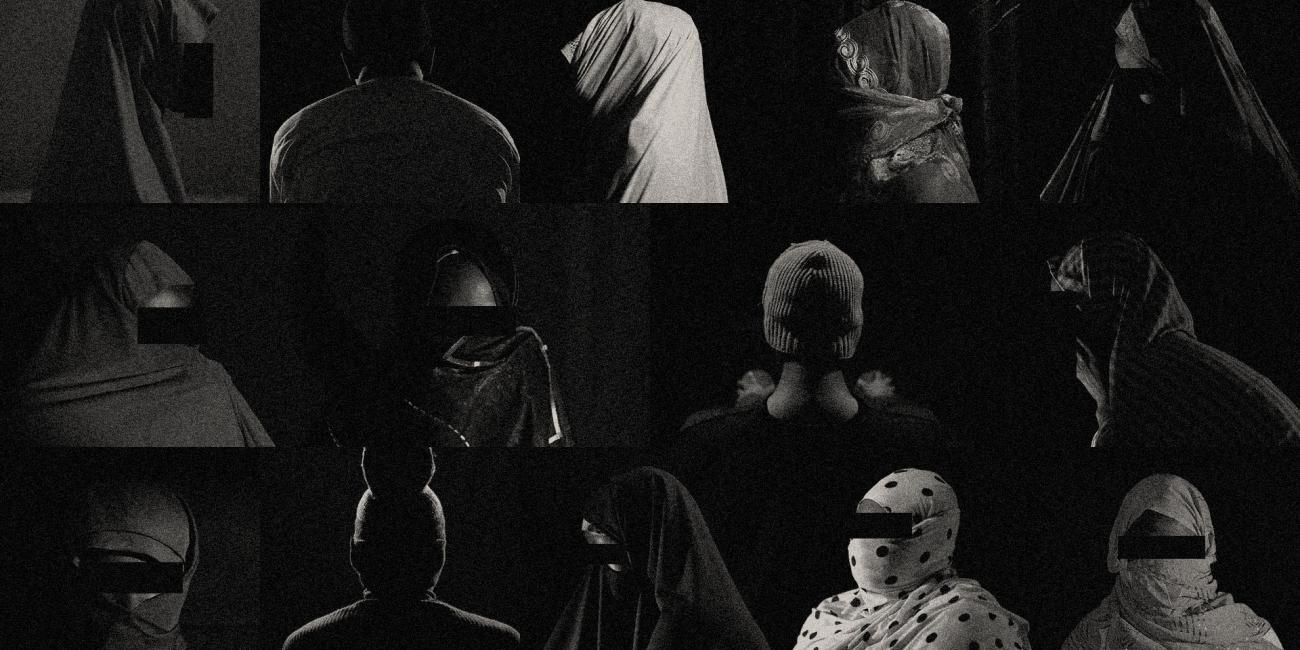
The National Human Rights Commission (NHRC) has said that it has begun an investigation into the allegation that the Nigerian Army has been running a secret abortion programme for female officers since 2013.
Recall that a report by the Reuters had alleged that the Nigerian Army had been running a secret abortion programme for rescued women and girls for which about 10,000 pregnancies have been aborted since 2013. But the military had denied the report
The Executive Secretary of NHRC, Tony Ojukwu (SAN) on Tuesday in a statement issued by the Deputy Director of Public Affairs and External Linkages, Fatimah Agwai Mohammed, said that the commission would Tuesday, February 7, 2023, inaugurate a Special Independent Investigative Panel on Human Rights Violations in the Implementation of Counter Insurgency Operations in the North-East.
According to Ojukwu, the panel will among other things “Focus on investigating the Reuters report which alleged that the Nigerian military was involved in abortion of many pregnancies in the North-East in the last 10 years.”
The statement noted that members of the panel are retired Justice of the Supreme Court, Justice Abdu Aboki, (Chairman); Ms Kemi Okonyedo (representing women rights organisations); Azubuike Nwankenta (representing the Nigerian Bar Association); a military law and intelligence expert, Major-General Letam Wiwa (retd.).
Other members of the panel are consultant in Obstetrics and Gynecology at Modibbo Adama University Teaching Hospital, Yola, Dr Maisaratu Bakari; humanitarian expert (representing civil society), Dr. Fatima Akilu and psychologist (representing youths), Ms Halima Nuradeen.
Recall that the Chief of Defence Staff, General Lucky Irabor, had on Friday, December 17, 2022, during a visit to the commission, demanded an investigation into the Reuters report.
Similarly, a coalition of over 228 women’s rights organisations under the aegis of Womanifesto, requested an investigation of the reported forced abortion.
The convener of Womanifesto and Executive Director of Women Advocates Research and Documentation Centre, Dr Abiola Akiyode-Afolabi, reportedly made the demand in a statement issued in Abuja, with a call on the Nigerian Government to institute a panel of inquiry.
In its campaign againstBoko Haram in northeast Nigeria, the military reportedly used a covert abortion programme, according to a December report from Reuters.
A special panel appointed by Nigeria’s human rights commission has been tasked with looking into a Reuters report alleging that the military used a covert abortion programme to fight armed groups in the northeast.
The government-appointed National Human Rights Commission (NHRC) announced on its website on Tuesday that it would introduce the special panel in Abuja the following week.
“The National Human Rights Commission will on Tuesday (7th February 2023) inaugurate a Special Independent Investigative Panel on human rights violations in the implementation of counterinsurgency operations in the northeast,” NHRC said.
“The panel will, among other things, focus on investigating Reuters report which alleged that Nigerian Military was involved in abortion of many pregnancies in the North East in the last 10 years,” NHRC said.
The seven-member panel will be chaired by retired Supreme Court Judge Abdu Aboki and includes a retired major general, a representative from the Nigerian Bar Association and an expert in obstetrics and gynaecology, NHRC said.
It was not immediately clear how long the investigation would last and what the panel would do with its findings. NHCR has no powers to prosecute human rights violators but can recommend prosecution for offenders.
An NHRC spokesperson did not respond to calls and messages sent to their mobile phone seeking further details.
Reuters reported in December, based on dozens of witness accounts and documentation, that the military abortion programme involved terminating at least 10,000 pregnancies among women and girls, many of whom had been kidnapped and raped by rebel fighters.
Africa’s largest economy, Nigeria, is in the process of introducing new banknotes for the first time in more than 20 years. The move is an attempt to reignite confidence in the currency, the naira, which is under severe pressure. With inflation at more than 20%, people are struggling to cope with the rising cost of living. It is leading to the largest exodus of young professionals in years.
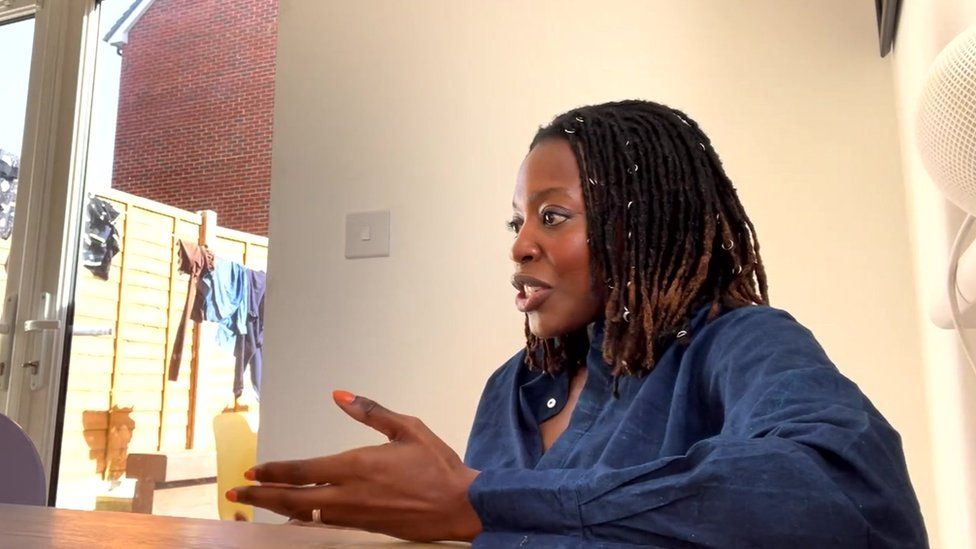
“Imagine going to the grocery store one day, and everything has tripled in price? How do you even cope? You have a family at home. What do you cut out of the budget?” Oroma Cookey Gam tells me by Zoom, her face incredulous.
The fashion designer left Nigeria’s biggest city, Lagos, with her young family a year ago for the UK capital, London. Her husband and business partner Osione, an artist, was granted a Global Talent visa, which enables leaders in academia, arts and culture, as well as digital technology to work in the UK.
She says it had become too expensive to raise their young family in Lagos. “Our money was buying us less and less. We weren’t able to pay our bills, we weren’t able to do normal things that we were doing.”
Oroma studied law at the UK’s University of Northumbria and moved back to Nigeria almost 20 years ago, keen to use her degree to help develop her country. Along with Osione, she eventually set up This Is Us, a sustainable fashion and lifestyle brand that uses local materials and artisans, including cotton grown and dyed in northern Nigeria.
Initially, the cost of living crisis wasn’t impacting them.
“Because we are 100% sourced in Nigeria, things were not as terrible for us as it was for other people,” Oroma says. “So when everyone was increasing their prices, we skipped a couple of increases because we could manage.”
Image caption,Oroma Cookey Gam moved to London because of the rising cost of living in Nigeria
But eventually their Nigerian customer base was finding it harder to afford non-essential items like clothing – particularly when food accounts for 63% of their spending. This means when the price of food goes up, people have less disposable income.
Oroma says it is particularly bad for young Nigerians. “Speaking to my mum, one thing that I realised is that when they were younger, things were a lot easier for them. They could afford to buy houses, cars.
“I always felt like: ‘What is going on with me?’ I’m failing because I can’t do all the things my mum was doing, but I realised that the country is not working for me.”
She is not the only one to feel this way. Nigeria is experiencing its worst wave of emigration in years. Reliable statistics are hard to find, but the number of Nigerians granted UK work visas has quadrupled since 2019. And 700% more visas have been awarded to Nigerian students.
There are long queues outside immigration processing centres and embassies every day, and everyone here seems to know someone who’s leaving or trying to relocate abroad.
The term “japa”, which means “to run, flee or escape” in Yoruba, has become a popular topic of conversation online, as well as on radio and TV chat shows.
Most of those who can afford to leave the country legally are well educated. They include doctors, nurses, engineers and IT professionals. It’s led some to call the exodus a “brain drain”.
The Nigeria Medical Association, says at least 50 doctors leave Nigeria every week to work abroad. Poor working conditions, coupled with bad pay and the rising cost of living are the main factors.
Kunle Ibisola is a junior doctor who used to work at the University College Hospital (UCH), in the south-western city of Ibadan. He now works for NHS Scotland.
Image caption,Dr Kunle Ibisola moved from Ibadan to Scotland – and his wife and children are set to join him soon
“My story is the story of most Nigerian doctors,” he tells me over the phone. “I never wanted to leave Nigeria. My intention was to start my residency there, become a consultant and practice in my country.
“The main reason I left is salary, and the cost of living. In the UK, if I work six to eight hours of locum work [overtime] and I convert that to naira, it will be the equivalent of my monthly salary in Nigeria. And that’s not even including my main UK salary.”
He says a year ago his hospital in Nigeria started haemorrhaging doctors.
“Some doctors didn’t get paid for six to nine months, because there was an issue with the federal payment system. Some senior colleagues couldn’t afford to drive to work or send their children to school. That was an eye-opener for a lot of people.”
His wife and children are planning to join him in Scotland soon. When I ask him what he thinks the future holds for Nigeria, he grows pensive.
“If I think about it too much, it’s depressing because even people currently in medical school are all planning to leave. If you aren’t planning to leave, people think you’re unfortunate or you don’t have money.”
I have spoken to half a dozen doctors, all with similar stories. Overworked and underpaid, they all decided to relocate over the past two years.
For those left behind, the pressure is immense. Cheta Nwanze, an economic analyst at SBM Intelligence, says Nigeria’s current high rate of inflation is mainly caused by food inflation.
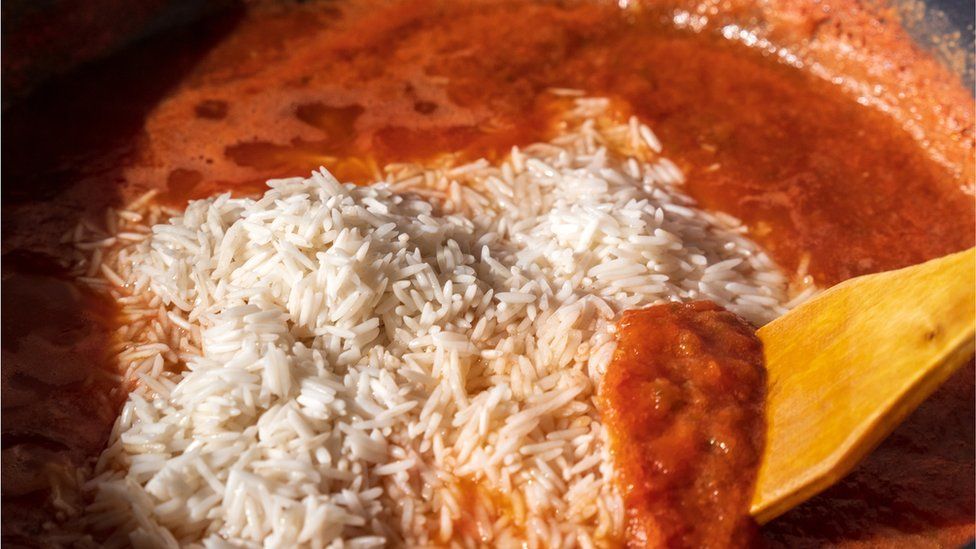
“SBM has this proxy for food inflation called the Jollof Index,” he explains, referring to the tomato-based rice dish, popular across West Africa. “We calculate the average cost of making a pot of jollof rice for a family of five. It was just under 4,000 naira at the start of 2016, and now it’s around 10,000 naira [$22, £18] – so it’s more than doubled in five years.”
Image caption,The price of jollof rice – a staple in West Africa – has surged in Nigeria recently
He explains that although Nigeria has been affected by some of the same drivers of inflation as elsewhere in the world, namely the war in Ukraine and the 2020 pandemic, there are additional factors unique to the country.
He says that many farmers in the north, where much of the country’s food comes from, have been unable to plant their crops in recent years because of attacks by Islamist militants and kidnappers.
“When you couple that with the government’s protectionist policies with respect to food imports, and Nigeria’s growing population, it means there’s less food for more mouths to feed, which drives up inflation.”
The impact of this can be seen in the country’s markets. In Ajah, a small food market in a residential suburb of Lagos, there are fewer people than usual.
Omowunmi Ajekigbe, a market trader, is grating okra under a huge parasol. “Things weren’t too expensive last year,” she tells me, “but this year, it’s too much. You used to see lots of customers rushing about, but now… you barely see anybody.
At a nearby stall, Cordelia Fidelis, a young woman with long braids and a big smile, is haggling with a vegetable seller. She owns a catering business and comes to the market every day.
“The cost of goods is alarming – in just two months the price of yams has more than doubled. It’s crazy, I swear it’s crazy, everything is so expensive. A box of egg is expensive, beef is expensive, palm oil is so expensive.”
Image caption,Private food banks in Lagos are trying to help feed people in Lagos, Nigeria’s largest city
Some have started taking drastic action to manage their expenses. Angela Chukwulozie is a retired teacher who now sells Italian shoes. “Since the price of everything has gone up, I’ve cut back on how many meals my family and I eat every day. Instead of eating three times in a day we now eat twice.”
The economy is one of the key concerns for voters in next month’s elections. Despite being Africa’s largest economy, four out of 10 Nigerians live below the poverty line, according to the World Bank. All of the main candidates have promised to improve the country’s economy if elected, but there is scepticism as to whether they can deliver.
The Central Bank says the change of currency, which must be completed by 10 February when the old banknotes will no longer be legal tender, will help bring some of the cash currently being hoarded by individuals and companies back into the banking system.
It says 80% of the notes currently in circulation are outside banks. The organisation hopes the change will give it a better understanding of the money circulating in the economy so it can better manage inflation. Whether or not it will be successful is debatable.
Back in London, Oroma is optimistic, despite the hardships her country is facing.
“There’s no place like home. I go back to Nigeria every three months, because when I haven’t been there, I literally feel like I’m dying.
“I feel like Nigeria is at the point where, if we can change now, it’s not too late. We just need some basics: people need to be educated, we need electricity, we need roads. If we can just do these three things and improve security, I think the potential in Nigeria is amazing.”
In an effort to further its goal of transforming Africa’s largest economy into a cashless society and saving the nation foreign transaction fees, Nigeria’s central bank has launched a domestic card programme to compete with foreign cards like Mastercard and Visa.
Godwin Emefiele, the governor of the Central Bank of Nigeria (CBN), made the announcement on Thursday. The CBN had previously introduced the e-naira, Africa’s first digital currency, in October 2021.
Emefiele stated during the virtual launch of the AfriGo card programme that even though card payments have become more prevalent in Nigeria over time, many people are still left out.
“The challenges that have limited the inclusion of Nigerians include the high cost of card services as a result of foreign exchange requirements of international card schemes and the fact that existing card products do not address local peculiarities of the Nigerian market,” he said.
Emefiele said Nigeria was joining China, Russia, India and Turkey in launching a domestic card scheme. AfriGo is owned by CBN and Nigerian banks.
The operations of international card service providers like Mastercard and Visa would not end, he said, as AfriGo is meant to provide more options for domestic consumers in a “cost-effective and competitive manner”.
Nigeria, Africa’s biggest economy, has more than 200 million people and the majority still use cash because they live in rural areas where there are no banks.
To promote “financial inclusion” in remote areas, the central bank announced last week the launch of a cash swap programme introducing a redesigned version of the local currency, the naira.
Airlines in Nigeria said on Monday that flights were being disrupted after ground staff began an indefinite strike to demand higher pay.
Air Peace, which has the biggest fleet in Nigeria, and smaller domestic carrier Dana Air said the strike by the Nigerian Aviation Handling Company (NAHCO) was delaying flights and they hoped the issue would be quickly resolve.
“The strike has affected all operations of all airlines being handled by the company [NAHCO],” Air Peace said in a statement.
British Airways and Qatar Airways, among the foreign airlines frequently flying to Nigeria, did not immediately respond to requests for comment.
The National Union of Transport Employees and Air Transport Services Senior Staff Association of Nigeria issued a notice last week that its members would go on strike from Monday to press NAHCO for better pay.
Flight disruptions are common in Nigeria due to issues surrounding logistics, labour union strikes and fuel scarcity.
In May 2022, the Airline Operators of Nigeria, an umbrella organisation of domestic airlines, suspended flights for days saying the price of jet fuel had jumped from 190 to 700 Nigerian naira per litre (from $0.45 to almost $1.70). The rise was primarily caused by the Russian invasion of Ukraine in February.
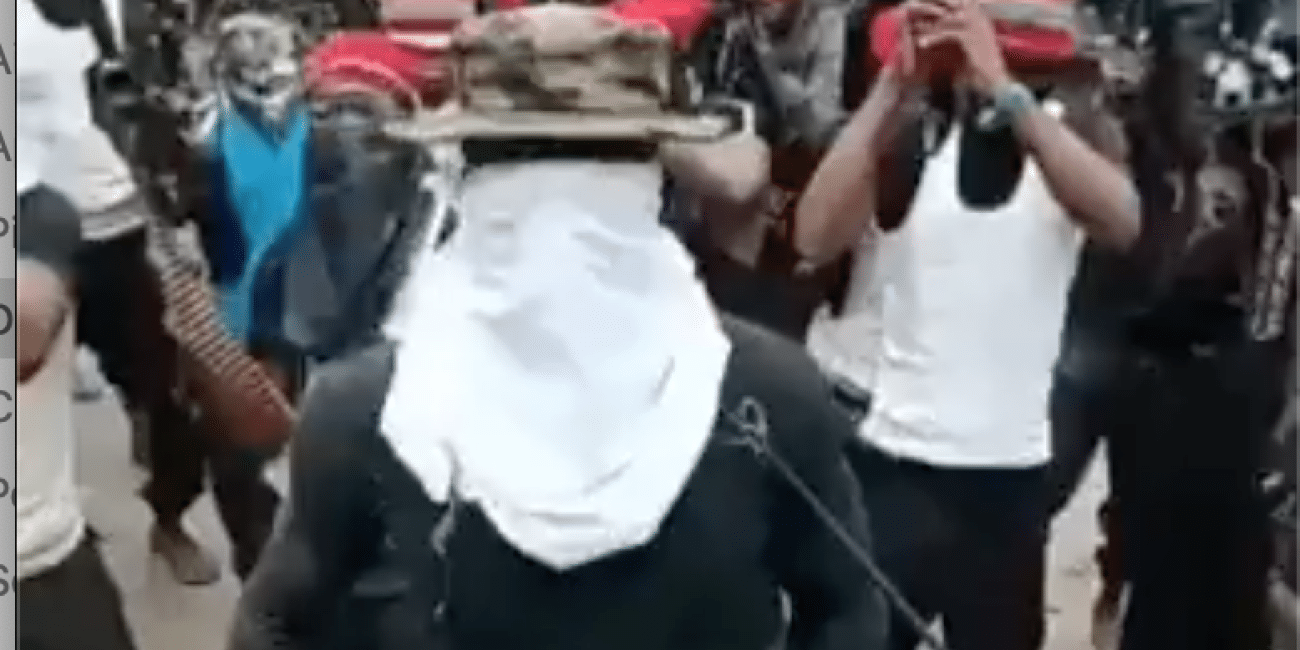
The leader of a new militant group in the Niger Delta region of Nigeria has threatened to unleash hell on the country and make the forthcoming general elections bloody.
The militant group which identified itself as ‘Force of Ekpesu’ in the region threatened that the 2023 general elections will be bloody unless President Muhammadu Buhari and governors of the Niger Delta states meet them for negotiation, which the armed militant group described as doing the needful for the well-being of the oil-rich region of the country.
The armed group issued the threat in video footage posted by @GoldmyneTV, showing over 20 militants with various offensive guns and masked faces at a riverside with operational boats.
Speaking on behalf of the group, the leader who did not disclose his identity said, “This video that I’m doing Mr. President, listen to me and listen very good. Also, you governors that are in Niger Delta. I’m the Force of Ekpesu.
“I’m doing this video for Bayelsa State and also the President. This coming up election, if the governor and the President don’t know what to do, I am the Force of Ekpesu, look at my war boats and these are my fighters. I’m getting myself ready all the 24 hours.
“I’m coming for you people for the elections. If you don’t know what to do. And President, if you know what to do, come to me. Also, governor, come to me or else there will be no election for the Basan clan.
“President, governors and senators, listen to me, this coming election, there will be bloody elections in the Basan clan, Southern Ijaw Local Government. You know what to do.”
Eight girls trafficked to Ghana to be sex workers have been rescued, with seven of them repatriated to Nigeria by the Ghana Police Service and the Cape Coast office of the Social Welfare Department.
The young girls, aged between 15 and 22, were trafficked into the country under the pretext of securing them white collar jobs to enable them to improve their standard of living.
Two of the girls were rescued at Diaso, the Upper Denkyira West District capital, three at Mankessim in the Mfantseman Municipality, and three at Assin Awisen in the Assin South Municipality of the Central Region.
However, a 22-year-old lady among them was later freed by the Department when the caretaker of the Social Welfare Shelter reported that she was causing problems at the home.
Mr Alexander Ofosu Yeboah, the Unit Head in-charge of the Children Residential Home of the Department, in an interview with the Ghana News Agency, said human trafficking cases were mostly high during vacations.
The rescued girls were repatriated through the International Organisation for Migration after identifying their families in Nigeria.
He said the perpetrators deceived the victims, who were secondary school girls, of providing basic needs and giving them jobs that could change their lives and make them comfortable.
According to Mr Yeboah, the rescue mission was possible based on intelligence gathered by the police and the victims reporting the incident to them after realising they had been deceived.
The Department provided shelter for them throughout their stay in the country until they were identified and sent back to their country.
The perpetrators, all Nigerians, are on the run except one female who was arrested and sentenced to five years imprisonment in hard labour, Mr Yeboah said.
The menace was rife in mining, farming, and fishing areas of the region where many trafficked girls were sent to engage in sexual activities for their masters, he said.
Mr Yeboah said human trafficking was the inhuman practice that negatively affected the future of its victims and needed collective efforts to reduce to its barest minimum.
Laws governing human trafficking must be strictly enforced to scare perpetrators from involving in the act, he noted.
On challenges confronting the Department, Mr Yeboah said, sadly perpetrators of trafficking were mostly freed or released due to the 48- hour clause in police cells.
He said since most of the perpetrators were foreigners, granting bail was not guaranteed because they had no relative or family member in the country to stand in for them.
He, therefore, appealed to the Government to either extend the 48 hours period for trafficking perpetrators or enact a law to process them for court right after arrest.
Tiwa Savage has shed some light on why Nigerian artistes are succeeding more than other African artists globally.
According to her, it is because Nigerians are tough and naturally hard workers.
Among other things, Tiwa provided some insightful commentary on the ongoing rivalry between the South African and Nigerian music industries.
She said in a recent interview that there is much reconciliation between South African and Nigerian musicians that has to happen.
Tiwa also emphasized that both parties need to do a lot of mending in order to rid each other of mistrust, while also pointing out that the actions of a few people shouldn’t be used to criticize everyone.
“I want to be recognized as an African lady who didn’t take no for an answer.” The singer established.
https://youtube.com/watch?v=tr_JLhpHUyc
The “Loaded” hitmaker also discussed the legacy she hopes to leave as a role model for the upcoming generation of female musicians.
The Peoples Democratic Party’s (PDP) nominee for president, Atiku Abubakar, has stated that Nigerians should not trust their future to his primary opponents Peter Obi and Bola Tinubu in the 2023 presidential election.
Speaking at the Nigeria Economic Summit Group (NESG) Presidential Dialogue on the Economy in Lagos on Monday, Atiku said he had a good understanding of the challenges bedeviling Nigeria.
Atiku described Peter Obi, the candidate of the Labour Party, as a greenhorn and alleged that the APC-led government where Bola Tinubu is presidential candidate brought Nigerians to “this sorry situation,” Daily Trust reports.
He said, “Experience is important and we must avoid the mistakes of the recent past. It is too risky for Nigerians to hand over their future to a green horn or to the National Leader of the very party that brought us to this sorry situation.
“This is election season. So, you will see and hear from snake-oil salespeople, false prophets and purveyors of false hope and misleading statistics. There is, therefore, need for caution.
“We must also remember that we cannot trust the doctor that poisoned and continues to poison the patient to be the one who provides the curative treatment. The stakes are too high, so we must get it right. This may well be our last chance to do so.
“The Nigerian economy is barely growing. Per capita income, a measure of citizens’ well-being, has progressively fallen since 2015 because of declining output and a fast-growing population. Our people are worse-off today than they were in 2015.
“The oil and gas sector, which is the country’s main foreign exchange earner has declined for most of the period since 2014. For many economic sectors and for the ordinary citizens it still feels like we are in a recession.
“Under the current administration our people are not working. More than 23 million people are out of jobs. In just 5 years between 2015 and 2020, the number of fully employed people dropped by 54%, from 68 million to 31 million people. This is frightening in a country of 200 million people.
“And the majority of the unemployed are young men and women, who lack not only the means to survive but any hope for the future. The number of unemployed youths increased by 9 million from 4 million in 2015 to 13 million in 2020.
“High youth unemployment and limited employment opportunities pose serious economic and security challenges. It is, therefore, an urgent matter to ensure that there are enough jobs for Nigeria’s youth. More Nigerians are poorer and more miserable today than in 2015.”
Bandits have kidnapped no less than 25 members of the New Life for All Church in Katsina State’s Kankara Local Government Area.
It was learnt that the bandits attacked the church around 10 am on Sunday and rode motorcycles there.
The Senior Special Assistant on Christian Affairs to Governor Aminu Bello Masari, Rev. Ishaya Jurau, who confirmed the incident to ThisDay, said the church pastor was injured during the attack while the service was going on.
“Bandits attacked New Life for All Church in Jan-Tsauni, Gidan Haruna in Kankara local government of Katsina State today (Sunday) around 10 am.
“They abducted 25 worshippers and left the church pastor with injuries while they were conducting service this morning.
“The security (operatives) are currently on top of the situation. They are working tirelessly to rescue the victims unhurt. We appreciate the efforts of the security,” he said.
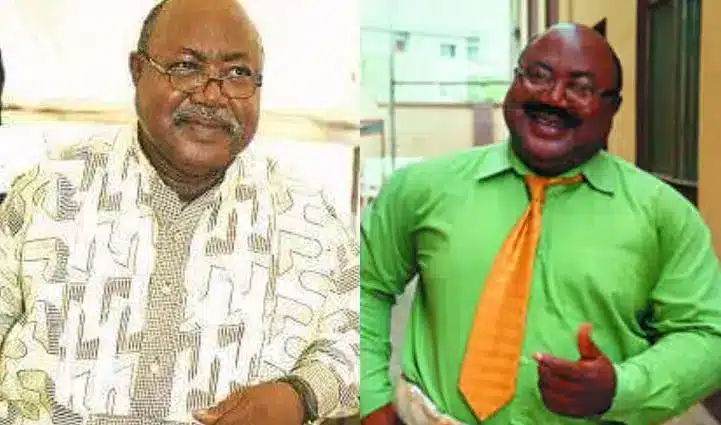
Brand Spur Nigeria understands that Papa Ajasco death was confirmed in a post by lecturer, writer and theatre practitioner, Shaibu Husseini PhD.
Although, the details given by Husseini is quite sketchy, he however confirmed that the seasoned Thespian breathed his last on Saturday, January 14, 2023.
Dr. Shaibu wrote, “I have just been reliably informed that the ethnomusicologist, former Music Instructor with the NationalTroupe OfNigeria and one time stand in for the ‘Papa Ajasco’ character on the popular WAP Comic Series ‘Papa Ajasco’ Mr. Femi Ogunrombi is DEAD”!
According to him, “I am told that the actor, singer, highlifist and trained Nurse whom we fondly called ‘Uncle Ogurombo’ (not to his hearing though) passed on this evening”.
The late Femi Ogunrombi took over the characher, Papa Ajasco when the former character pulled out of the show and he carried the light very well while it lasted.
Femi Ogunrombi was the face of Papa Ajasco, a TV family comedy. An enthno-musicologist with tutelage from masters like Dr. Ademola Adegbite and Pa Christopher Oyesiku, he has made his mark in creative activities both in drama and music, spanning over 25 years.
The late Papa Ajasco was a recipient of many local and international awards, most notably in 1995 when he was awarded a gold plaque and a Diploma Certificate in Creative Composition in North Korea for performing a song in that language.
Before his death, the late Papa Ajasco actor was also the Founder and Director of the famous Ayoro Voices, a performing choral group in the University of Ife.
A Nigerian court has struck out a police regulation that forbids unmarried female officers from getting pregnant, local media report.
In a landmark judgment, a judge ruled that the regulation, which calls for the dismissal of any unmarried officer who gets pregnant, was “discriminatory, illegal, null and void”.
It followed a suit by a sacked policewoman who challenged her dismissal on grounds of discrimination since her male counterparts are not dismissed in similar circumstances.
“The court finds and holds that the provision [of the regulation], which applies to unmarried women police officers getting pregnant while in service but does not apply to unmarried male police officers impregnating females while they are in service, is discriminatory,” Justice Dashe Damulak ruled on Wednesday.
The court also awarded her 5m naira ($11,100; £9,100) in compensation for the violation of her fundamental right to freedom from discrimination.
The University also accused the plaintiffs of using ‘blatant falsehoods’ to secure the said injunction.
“Students and members of the public are further reminded that the ban placed by the University on meetings, processions and gatherings on the University’s campuses is still in place.
“Any student or other person or group that attempts to disturb the peace and congenial teaching and learning environment on any of the University’s campuses will be dealt with appropriately.”
It however ruled that she could not be reinstated to the police service, as she had sought, as she was on probation at the time of her dismissal.
A police rule prohibiting unmarried female officers from becoming pregnant has been overturned by a Nigerian court, according to local media.
In a landmark judgment, a judge ruled that the regulation, which calls for the dismissal of any unmarried officer who gets pregnant, was “discriminatory, illegal, null and void”.
It followed a suit by a sacked policewoman who challenged her dismissal on grounds of discrimination since her male counterparts are not dismissed in similar circumstances.
“The court finds and holds that the provision [of the regulation], which applies to unmarried women police officers getting pregnant while in service but does not apply to unmarried male police officers impregnating females while they are in service, is discriminatory,” Justice Dashe Damulak ruled on Wednesday.
The court also awarded her 5m naira ($11,100; £9,100) in compensation for the violation of her fundamental right to freedom from discrimination.
It however ruled that she could not be reinstated to the police service, as she had sought, as she was on probation at the time of her dismissal.
The Independent National Electoral Commission (Inec) of Nigeria has issued a warning that the general elections may be postponed if nothing is done to reduce insecurity in the nation.
The elections are due to be held on 25 February.
Inec chairman Mahmood Yakubu said the commission was ensuring that election personnel, materials and process have the highest level of protection especially “given the current insecurity challenges in various parts the country“.
He said if it was was not dealt with decisively, the insecurity “could ultimately culminate in the cancellation or postponement of elections in sufficient constituencies to hinder declaration of elections results and precipitate constitutional crisis”.
“This must not be allowed to happen and shall not be allowed to happen,” Mr Yakubu said.
He called for strengthening of security outfits to ensure the polls are held successfully across the country.
Local media have flagged 15 states likely to experience poll-related violence in the run-up to, during and after the elections.
Gunmen wielding AK-47 rifles kidnapped at least 32 people from a train station in Nigeria’s southernEdo state on Sunday, according to the governor’s office.
The majority of the victims were people waiting to board a train from Igueben to Warri in neighbouring Delta state.
According to reports, the gunmen shot sporadically into the air during the attack on Saturday evening before seizing the hostages and transporting them to a nearby forest.
The train station has been closed, according to state spokesperson Chris Osa Nehikhare, as security forces and local hunters search for the hostages.
Eyewitnesses say some of those who escaped from the attackers sustained bullet wounds. The gunmen are also said to have released two children.
A woman with a baby also reportedly escaped from the attackers and found her way to a neighbouring community where she was rescued.
The incident comes as Nigeria prepares for next month’s general elections where rising insecurity has become a big campaign topic.
Last month, the rail service between the capital, Abuja, and the northern city of Kaduna resumed operations after being closed for nine months.
It followed an audacious hijacking of a high-speed train that left at least eight passengers dead and dozens of others kidnapped. The hostages were released months later.
New analysis reveals Singapore as the country most interested in stocks and trading in the past year.
India and Canada are the second and third most stock-obsessed countries worldwide.
The study, carried out by UK financial services provider CMC Markets, examined Google Trends data of search terms frequently used by people interested in stocks and trading. These terms were then combined to give each English-speaking country a ‘total search score’ to discover which countries have been the most interested in stocks in the past 12 months.
The study revealed that Singapore ranks highest as the country most interested in stocks and trading. With a total search score of 555 out of a possible 700, Singapore topped the list for its population, having the highest search levels for the phrases ‘stocks’, ‘buy stocks’, and ‘interest rate’ worldwide. Additionally, the population of Singapore’s search for the ‘stock market’ is the third most worldwide, behind the United States and India.
India is second on the list, with a total search score of 492. India has the second-highest proportion of its population, searching for the phrases ‘stock market’ and ‘swing trading’, placing the country second in the ranking.
Canada ranks as the third country most interested in stocks worldwide. The North American country has the second-highest level of searches for the term ‘invest in stocks’, in addition to being the country searching for ‘buy stocks’ the third most worldwide, giving Canada a total search score of 462.
The United States places fourth overall. With a total search score of 453 out of a possible 700, the USA has the highest level of searches for both terms ‘invest in stocks’ and ‘stock market’, and the fourth-highest level of searches for the term ‘buy stocks’.
The United Arab Emirates ranks fifth, with a total search score of 374. The study revealed that the UAE has the fourth-highest search levels for the term ‘swing trading’ and is the fifth country most interested in ‘day trading’.
Australia is sixth on the list, with a total search score of 338. Australia has the sixth-highest proportion of its population searching for the phrase ‘invest in stocks’ and is interestingly the country most interested in ‘day trading’ worldwide, meaning that they may like to hold their stocks for the shortest period of time!
The top ten is rounded out by South Africa ranking in seventh place and New Zealand in eighth, followed by the United Kingdom and Nigeria in ninth and tenth place, respectively.
President of Nigeria, Muhammadu Buhari, might not be viewed as a failure, but the toll banditry and terrorism have taken on his security services may mark the end of his two terms as Nigeria’s civilian leader.
Hardly a week passes before the forces declare killings of bandits or terrorists. But the terror gangs also, occasionally take a toll on the forces and civilians.
In one recent attack, the bandits saw 83 civilians killed, most of them women and children and according to a statement from the Nigerian military, the bandits had used the civilians as human shields in a battle with forces.
The surge in banditry has forced the military to deploy aerial firepower in some cases to tackle the menace in the 12 states in North Central and North West Nigeria.
Caught in crossfire
But the 83 killed on Tuesday, December 20, 2022, in Mutunji in Maru Local Government Area of North West Zamfara States shows the dangers of it. The Nigerian Air Force (NAF) jets dropped bombs that killed 215 persons, most of them bandits in their hideouts.
It was indiscriminate.
Bandits who were fleeing from NAF airstrikes ran into a small village called Mutunji to take refuge but were hit by bombs, a military dispatch indicated. “
Mr. Zailani Bappa, the Special Adviser on Public Enlightenment, Media, and Communications to Governor Bello Matawalle of Zamfara, delivered condolences and heartfelt sympathy to the families of victims caught in military crossfire against the bandits.
The incident, one of the worst so far, is an indication that the military is becoming more desperate in its offensive against bandits that have been legally declared terrorists, Mr. Agboola Olayinka, a security expert, told The EastAfrican in Abuja on Tuesday.
Nigeria had been battling whether to classify bandits as terrorists or just as criminals keen on kidnapping for ransom. Recently, officials decided to categorize bandits as terrorists which would allow security forces to consider their threats as dangerous and use weapons that would otherwise draw criticism.
Besides atrocities, bandits have seized some remote communities in the 12 states of North West and North Central, imposed illegal levies and taxes on people as well as destroyed social infrastructure especially schools, telecom, and electricity facilities.
In Kwata, a small farming settlement in Zurmi local government area of Zamfara state and Shirroro in Niger state bandits invaded, forcing peasant farmers to abandon their homes and farmlands.
The bandits, as known as terrorists like Boko Haram, kill, maim, kidnap, and rape women in the troubled states of Zamfara, Sokoto, Kebbi, Katsina, Kaduna, Niger, Kaduna, Kogi, Benue, Jigawa, Plateau, and part of FCT.
Governors worried
Banditry is, however, older than Buhari’s administration. It started as a farmers-versus-herders crisis in 2011 and was initially considered to be a passing cloud. But it has ballooned into full-blown terrorism displacing over 2.1 million people.
In Zamfara state, for instance, about 69,000 Internally Displaced Persons, Kaduna 71,000, Katsina 61,000, and Sokoto 45,000, while at least 3,000 have crossed the borders through the axis of Maradi to take refuge in Niger and Chad Republics.
One of the farmers in Shiroro, Mr. Tarka Mohamed, said the bandits demanded farmers pay N1.2 million ($2,500) to allow them to access and cultivate farmlands.
Mr. Usman Kelly, another farmer in Zamfara, who said many farmers have fled their stead, said they were forced to pay levies, yet the bandits prevent them from entering their farms.
The Nigerian Red Cross Society has confirmed the fear of imminent food insecurity in the North West and North Central saying: “The situation is critical and is one that needs immediate attention.”
Buhari, expected to leave his post in 2023, had said he wants forces to eliminate the banditry problem before the end of 2022, a missed deadline.
“The military is now strong, well-fortified, and impregnable. If anyone or group dares to test our will now, they may not live to regret it,” argued Nigerian Interior Minister, Rauf Aregbesola, in Abuja.
But governors of the affected states are frustrated the problem is increasing.
Governor Abubakar Sani Bello of Niger state expressed his helplessness over the incessant invasion of bandits from various communities. In his state, some 50 villages are now occupied by bandits.
Ibrahim Dan-Musa, the spokesperson of the northern youth lobby Northern Ethnic Group Assembly, NEYGA, says the police are poorly funded and poorly motivated, and the military, which is fighting a decade-long insurgency in the North East, appears to be at the end of its wits on how to curtail the spiraling insecurity.
The war on banditry may be helped, however. Original terror groups Boko Haram and ISIS in West Africa are in a deadly battle of supremacy which has seen fighters kill one another in a bid to carve out an Islamic state.
Nigerian police have reported on the recovery of 10 lifeless bodies on Wednesday after a boat carrying dozens of passengers capsized in a river in the north.
A local official is quoted as saying that the boat had been overloaded with passengers “beyond its capacity”.
The boat had been carrying passengers returning from a farm on the River Niger and broke in half as it approached Samanaji village in Koko-Besse district.
Over 80 passengers were rescued.
Boat accidents are relatively common in Nigeria with many being blamed on overloading or poor safety measures.
Nigeria’s President Muhammadu Buhari has signed into law a budget of more than $45 billion (£37 billion) for 2023.
It is his administration’s final budget.
According to the budget, the government intends to sell some public assets in order to reduce the massive deficit, which amounts to just less than 5% of GDP.
Along with the main budget, there is an additional budget to deal with the aftermath of the recent nationwide floods, which damaged critical infrastructure.
A large portion of the budget is funded by the earnings from crude oil, but volatility in the oil price has meant that borrowing has increased and forced the government to look for other ways to raise funds.
Mr Buhari’s two terms in office will come to an end after voters elect hissuccessornext month.
Olusegun Obasanjo, the former president of Nigeria, is at the center of a political uproar after supporting Peter Obi, an opposition candidate for president, ahead of the general election scheduled for next month.
Mr. Obasanjo described Mr. Obi of the Labour Party in his endorsement as a “mentee” with an “edge over other candidates.”
He added that the nation of West Africa had “moved from [the] frying pan into [the] fire and from the mountain top to the valley” in regards to its current situation.
Mr Obasanjo governed Nigeria between 1999 and 2007 as the flag bearer for the now-main opposition PDP party. But he has since distanced himself from the party.
In an angry response, President Muhammadu Buhari’s office said the former leader was “being jealous” and represented the “dark days of Nigeria’s democracy.”
The former president thinks “he is the best ever to lead Nigeria and there will never be another one better than him,” a statement from a presidential aide said.
MORALLY SQUALID OBASANJO ATTACKS LEADERS OUT OF FRUSTRATION
Peter Obi is seen as one of the three main contenders. The others are Bola Ahmed Tinubu of the governng APC and Abubakar Atiku of the opposition PDP.
Local outlets quote Mr Tinubu’s campaign as saying that their candidate “will not lose sleep” over Mr Obasanjo’s endorsement, while Mr Atiku’s camp said the “endorsement of an individual no matter how highly placed does not translate to victory at the polls”.
At least 14 people have been killed and 24 others injured after a vehicle ploughed into crowds watching bikers at a popular carnival in Nigeria’s southern port city of Calabar.
Eyewitnesses said that a speeding driver lost control of the car.
Pictures shared online in the immediate aftermath of the incident show bodies strewn across the street.
The month-long annual carnival, which features several events, has become a big draw since it was launched in 2004.
Describing itself as Africa’s biggest street party, it attracts local and foreign tourists throughout December.
This year’s event was special because it was the first since the Covid pandemic, which had forced its cancellation for the last two years.
Tuesday’s incident took place during the popular bikers’ parade on one of the major carnival routes which had been closed to vehicle traffic.
The event features riders including celebrities from across the country, some adorned in colourful costumes, performing stunts.
The police said a drunk driver – who has been arrested – had lost control of their car and ploughed into the crowd.
A father of a 15-year-old boy who was injured in the incident told the BBC that the car was being driven “recklessly”.
“The driver had been swerving from left to right and then when he got to where the crowd stood, he started spraying money on the road. The crowd rushed to pick up the money, which is when the ugly incident took place,” Musa Kutama said.
His son Abdulsalam Musa Kutama survived but with scratches to his face and cuts to his thigh.
The teenager was among 24 people who were rushed to Cross River state’s navy hospital and University of Calabar teaching hospital for treatment.
“We were at the navy hospital last night – they treated him and gave us some drugs, later discharging him. He is currently at home healthy and good,” Mr Kutama said.
A statement from the state’s governor, Professor Ben Ayade, said the government was investigating how the car passed through the many security barricades which barred access to public traffic.
Prof Ayade cancelled the rest of the bikers’ parade but other events planned for the rest of the carnival – which is set to end on New Year’s Eve with a fireworks display – will still go ahead.
At least 14 people have been killed and 24 others injured after a vehicle ploughed into crowds watching bikers at a popular carnival in Nigeria’s southern port city of Calabar.
Eyewitnesses said that a speeding driver lost control of the car.
Pictures shared online in the immediate aftermath of the incident show bodies strewn across the street.
The month-long annual carnival, which features several events, has become a big draw since it was launched in 2004.
Dubbed Africa’s biggest street party, it attracts local and foreign tourists throughout December.
Tuesday’s incident took place during the popular bikers’ parade on one of the major carnival routes which had been closed to vehicle traffic.
The event features riders, including celebrities, from across the country, some adorned in colourful costumes, performing stunts.
The police said a drunk driver – who has been arrested – had lost control of the car and ploughed into the crowd.
Cross River State Governor Prof Ben Ayade cancelled the rest of the bikers’ parade and called for an immediate investigation.
Other events planned for the rest of the carnival – which is set to end on New Year’s Eve with a fireworks display – have not been cancelled.
Rhodes, who is only 32 years old, has already made significant progress. She is the first female solo general partner to raise over $10 million for an institutional first fund in Nigeria.
Just two weeks ago, she made headlines as the youngest solo general partner to raise a $20-million fund in Nigeria when her firm, Aruwa Capital, surpassed its $20-million target in its first institutional fund, which was led by the Visa Foundation and the MasterCard Foundation Africa Growth Fund.
But Rhodes’ achievements go beyond just raising capital. She is one of the few African women to create an investment fund and is possibly the youngest to do so. Through Aruwa Capital, she has worked to create one of the few women-owned and led early-stage growth equity funds on the continent, focused on investing in untapped investment opportunities in West Africa in the small to lower mid-market.
Her dedication to closing the investment gap affecting women-owned businesses in Africa extends beyond just her work with Aruwa Capital. Prior to starting the company, she was a partner and managing Director at Syntaxis Africa, a member of Syntaxis Capital, a leading provider of growth credit for mid- to lower mid-market companies.
During her time as an Investment Banker at J.P. Morgan, Rhodes executed $2 billion of M&A transactions in the UK and United States across the industrial, consumer, and healthcare, sectors, and $3.6 billion of structured credit transactions across emerging markets, including Africa.
It’s clear that her experience and track record make her a valuable asset in the investment world. But her efforts to close the funding gap for women-owned businesses in Africa and use her skills to make a positive impact in society have not gone unrecognized. She has been named one of the top 35 women moving Africa forward in 2020, one of the top 100 global leaders combining profit and purpose in 2021, and one of the top 50 inspiring women in Nigeria in 2022.
Rhodes’ success with Aruwa Capital highlights the importance of increasing the number of women-led investment firms in order to close the funding gap for women-owned businesses.
It also showcases the potential for local capital to play a crucial role in supporting and investing in these businesses. As one of the youngest female private equity fund managers in Africa, she is leading the way in breaking down barriers and paving the way for other women in the industry.
Nigeria had a chance to defeat Ghana on Friday, December 23, 2022 when a select team from the nation played a Ghanaian select team in a ceremonial basketball game after Nigeria lost to Ghana in the World Cup play-off in March thanks to a Thomas Partey goal.
Unfortunately for Nigeria, their squad was unable to achieve any success as they fell short of Ghana by a single point.
At the end of the highly-patronized match played at the Bukom Boxing Arena, the Ghanaian team won 33-32 against Nigeria.
Prior to the fiercely contested game, the basketball team for the Ghana Immigration Service had overpowered a select team from France with a 33-30 victory.
The GIS team came from behind to snatch victory from the French who made a blistering start to the match.
The event which was christened African Basketball Festival was organized by RITE Sports under the auspices of the Beyond the Return secretariat.
The festival was a blend of entertainment, fashion, and sport as musician Edem and dancer, Kobby Rana entertained the crowd with some good music.
Bloom by Edziban, Beatiful Beneath and Elikem Kumordzie provided fashion lovers with some excitement on the night.
Speaking to the press after the event, Yaw Sakyi Afari, the Chief Executive Officer of RITE Sports commended the partners, stakeholders and patrons for their role in helping his outfit deliver a great show.
He indicated his satisfaction with the event saying ‘ We are happy with the performance of the teams, officials and all partners. Looking at the excitement generated from the second edition, we are confident next year which has more countries participating will be more fun and rewarding for both teams and patrons with a number of days of extended ‘.
“We thank our sponsors, fashion houses, musicians, Ghana Basketball Association, Beyond The Return office, Team Coordinators and all who played a role in ensuring the success of the show”.
The festival also enjoyed support from GLICO, Ebony Condoms, Sprite , Caveman Watches and the French Embassy.
Germany has returned multiple historic sculptures to Nigeria after they were stolen more than a century ago.
The sculptures in question, widely referred to as the Benin bronzes, were the subject of a joint declaration between the two governments earlier this year. That agreement established plans to begin transferring the pieces back to Nigeria following their initial seizure by British forces in 1897.
According to a report from the Guardian on Tuesday, more than 20 sculptures were returned this week, with Germany’s foreign minister Annalena Baerbock and Nigeria’s culture minister Lai Mohammed appearing together alongside other officials during a return-celebrating ceremony. Notably, many stolen Benin bronzes remain in a British Museum collection.
“We are taking a long overdue step,” Baerbock acknowledged in a statement shared earlier this week. “It will not heal all the wounds of the past. But together with the Länder, cities and museums we are showing that Germanyis taking seriously its efforts to address its dark colonial history.”
The pieces returned as part of Baerbock’s visit are the first of what the government says are five total collections from the country.
“By addressing colonial injustice, we are opening a new chapter of intensified cooperation with Nigeria,” Baerbock said over the weekend.
19 Muslims were detained by the Islamic police force in the largest city in northern Nigeria on suspicion of attending a same-sex marriage.
According to the force’s spokesman Lawal Ibrahim Fagge, a tip-off led to the raid on the wedding in Kano.
He added that the couple, who had not yet exchanged vows, had managed to escape and that police were looking for them.
With a predominance of Muslims, Kano has both a secular legal system and an Islamic one.
In Nigeria as a whole, where residents of the north are predominately Muslims and those of the south are predominately Christians, homosexual acts are prohibited by both legal systems.
Kano’s Islamic police force is popularly known as the Hisbah and enforces a strict moral code.
Mr Fagge told the BBC that the police force did not intend to punish the 15 male and four female wedding guests arrested during the raid on Sunday.
Instead, the group – which he said included gay people and cross-dressers – was undergoing “counselling”, and their parents or guardians had been urged to come forward.
“We’ll explore the avenue of change before we charge them in court. First we counsel them, and involve the parents and we hope they change their lifestyle,” the Hisbah spokesman said.
Kano’s Islamic courts have never convicted anyone for being gay.
Mr Fagge said that 18 people who attended a similar wedding ceremony last year had been released after signing a document that gave an “undertaking that they would change their lifestyle”.
Rights groups in Nigeria have long campaigned for gay rights to be respected, but there is strong opposition to it in a country where many Muslims and Christians uphold conservative religious values.
Nigeria, the country with the largest population in Africa, reported Monday that gunmen killed more than 20 villagers in two separate attacks in the violent northern province of Kaduna.
The death toll from Sunday’s violence against the villages of Malagum 1 and Sakwong in Kaura district rose to 28 or 37, according to sources.
Criminal gangs have been attacking villages in the northwest and central parts of the country for years, stealing livestock, kidnapping people for ransom, looting food and burning down homes.
Atuk Stephen, a Kaura district official, told a local television station that 37 people had been killed by bandits who had burned more than 100 homes and several vehicles.
Other local sources put the death toll at 28.
The Kaduna State Commissioner for Internal Affairs, Samuel Aruwan, confirmed that several people were killed in the attacks, but did not give a definite death toll. He added that the army had deployed to the area to hunt down the attackers.
Kaduna is one of the states most affected by “bandits” in northern Nigeria.
This situation is compounded by sometimes deadly clashes between nomadic cattle herders and local farmers over grazing and water rights, which have taken on ethnic and religious dimensions.
Nigerian President Muhammadu Buhari is under intense pressure to end the violence before he leaves office next year after an eight-year term.
The “bandits”, described as “terrorists” by the federal government, are motivated by greed. But analysts worry about growing links with jihadist groups in the northeast, which have been waging an insurgency there for 13 years.
A prominent presidential candidate named Peter Obi’s campaign manager was found guilty of money laundering by a Nigerian High Court in the nation’s capital, Abuja.
Doyin Okupe was found guilty of receiving more than $400,000 (£330,000) from a person without following the proper procedures in addition to other charges.
The presidential campaign of Mr. Obi is likely to suffer a serious setback as a result.
He has positioned himself as a departure from prior leaders and corrupted parties.
Just two months remain until the elections. Okupe, a crucial ally and the director-general of Mr. Obi’s campaign organisation.
Nigeria’s anti-corruption agency, the Economic and Financial Crimes Commission, had charged Okupe in 2019 for money laundering and diversion of funds.
This was before he began working for Mr Obi. He was accused of accepting money in 2015 in excess of the amount that is allowed without having to declare it to the authorities.
Delivering the judgement on Monday, Justice Ijeoma Ojukwu said that Okupe had violated the Money Laundering Act, and sentenced him to two years in prison – though there is the option to pay a fine.
Neither Okupe’s lawyers nor the Obi campaign have yet reacted to the judgement.
Mr Obi is running without the backing of either of Nigeria’s two main political parties but he has cultivated a lot of support among young people.
The second-richest person in Nigeria and one of the richest business people on the African continent is Rabiu. He makes his income via publicly traded companies on the Nigerian Exchange.
As a result of a rise in the stock prices of his publicly traded cement company, BUA Cement Plc, and his recently consolidated food empire, BUA Foods Plc, Rabiu’s net worth has reportedly topped $8.1 billion, according to Forbes.
Recently, his net worth rose by $800 million from $7.3 billion on Dec. 9 to $8.1 billion at the time of drafting this report, driven majorly by the stock market performance of his cement business.
According to data retrieved from the Nigerian Exchange, BUA Cement shares have increased from N77 ($0.1725) to N97.75 ($0.219) at the time of writing this report. This double-digit increase can be attributed to the cement company’s strong financial performance this year, as investors and shareholders continue to accumulate stakes in the company.
While other cement companies struggled to match their 2022 results, BUA Cement reported a 12.3-percent increase in profit during the first nine months of its 2022 fiscal year, from N65.9 billion ($145 million) in the same period in 2021 to N74 billion ($168.4 million), as cement sales increased by double digits.
During the period under review, the leading cement manufacturer opened a 3-million-metric-tonne cement factory in Sokoto, a state in northwestern Nigeria, as part of its expansion plans to meet the country’s growing cement demand as well as regional exports to other countries.
Although he denies the accusations, a Sharia court in the northern Nigerian state of Kano has sentenced a well-known Islamic cleric to death by hanging after finding him guilty of blasphemy against the Prophet Muhammad and incitement in some of his sermons.
Authorities have been holding Sheikh Abduljabar Nasir Kabara since July of last year after accusing him of spreading falsehoods about the Prophet.
Nigerians are closely following the trial. Twelve states in northern Nigeria, including Kano, practise Sharia alongside the nation’s secular law.
The 52-year-old scholar is from the Qadiriyya sect. He has a sizeable number of followers mainly in Kano state.
His father was the leader of the sect in West Africa until his death in 1996.
Sheikh Abduljabar has the right to appeal against the judgement.
Death sentences in Nigeria are rarely carried out. Instead, convicted people are usually kept in prisons indefinitely.
At the Moshood Abiola National Stadium in Abuja, Ghana held Nigeria to a 1-1 draw in the 2022 World Cup final play-offs to secure qualification for the grand tournament.
The first leg in Kumasi ended goalless and goals from Thomas Partey and William Troost-Ekong ensured the return game also ended all square to leave the tie at 1-1 on aggregate after 180 minutes, but the Black Stars claimed the ticket to Qatar 2022 on the away goals rule.
Balogun said, “It’s the first leg, we did not score, that would have changed the whole picture probably.”
“It’s a bit funny because that season the away goal-rule was scrapped everywhere. I don’t know why they didn’t do it in Africa. I have no clue, until this day, I don’t understand.
“We did go to Ghana to play that first leg and it was a tough game. There was this whole fuss about them changing the stadium last minute where they’ve never lost, and they said whether juju may or may not have been involved.
“It was really, really tough and we ended up playing 0-0. I remember we had a meeting one or two days after and one of the staff said we’re 70 percent through and I thought to myself that can’t be right.
“We played a goalless draw away from home, if that’s helpful to anyone then it’s Ghana. We said we have to just pour our hearts out for that game.”
Former senator of the Federal Republic of NigeriaShehu Sani has responded to President Nana Akufo-Addo of Ghana’s recent counsel to African leaders not to beg from the west.
He said the Ghanaian president cannot call on African leaders to stop begging from the West while he is doing the same.
Sani juxtaposed Ghana’s current economic engagement with the IMF with the president’s call.
In a post on Twitter, Mr Sani referred to Ghana’s recent staff-level agreement with the International Monetary Fund.
“Ghana’s President is collecting IMF loan with the right hand and using the left hand to warn African Governments against begging the west for money,” the tweet read.
Ghana’s President is collecting IMF loan with the right hand and using the left hand to warn African Governments against begging the west for money.
Ghana on Tuesday (November 13) reached an agreement with the International Monetary Fund on a $3 billion bailout loan, as the country faces a severe economic crisis.
On the same day of the agreement, President Akufo-Addo urged African leaders to stop begging. “If we stop being beggars and spend African money inside the continent, Africa will not need to ask for respect from anyone. We will get the respect we deserve. If we make it prosperous as it should be, respect will follow,” Akufo-Addo said.
Ghana’s President is collecting IMF loan with the right hand and using the left hand to warn African Governments against begging the west for money.
This was during the opening of the US-Africa Leaders’ Summit in Washington DC on Tuesday, December 13.
He admonished Africans living abroad to bring their expertise and wealthy knowledge on board to help shape the image of the continent. He believes that it will take unity of purpose to succeed in changing the narrative and enhancing Africa’s image.