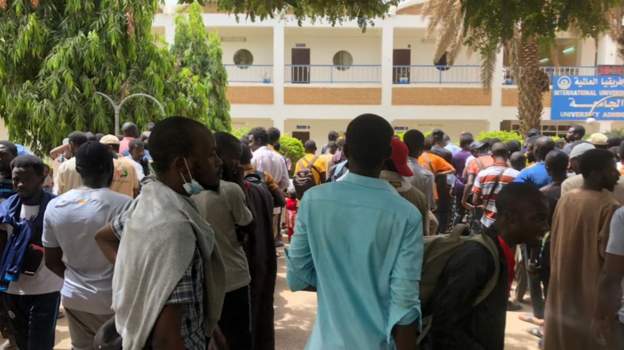
The capital city of Sudan draws university students from all around Africa, Asia, and beyond. Nigeria has one of the largest student populations.
But many Nigerians say they’re still waiting to be rescued from Khartoum, despite seeing their friends from other nations being safely removed.
“There is no presence of the embassy of Nigeria at the International University of Africa. There is no communication. There are only Nigerian students [left there] right now,” Abubakar Sadiq Ibrahim told the Reuters news agency.
Other Nigerian students have made similar complaints to the BBC. Nigeria has asked for a safe corridor to evacuate 5,500 citizens, most of them students, Reuters reports.
The fighting broke out when Ibrahim was just two weeks away from completing his degree.
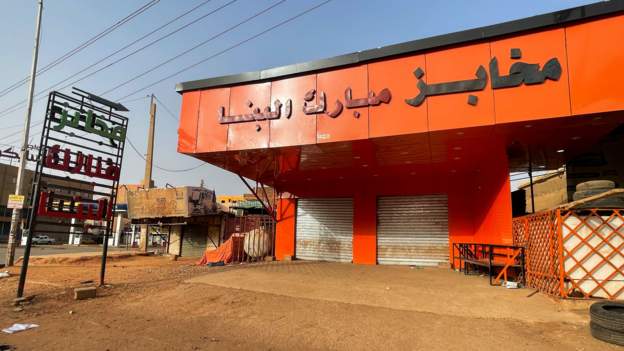
“It’s a very sad and unpleasant experience,” he said. He cited inflation, food shortages, and walks of 3km [1.8 miles] to buy supplies. “All the shops are closed. There is no movement, there is nothing.”
A Nigerian man is said to have passed away from shock after learning that his wife, whom he sponsored to relocate overseas for a better life, waspregnant by someone else.
This cruel story was shared by Twitter user @BolanleCole who claimed that the man had struggled to send his wife and two kids to the United Kingdom so they could have a better life while he remained in Nigeria.
Disappointingly, the wife started having an extramarital affair with another man when she arrived in her safe haven.
Their relationship resulted in pregnancy, which the husband only found out about it recently after his wife gave birth.
The tweep noted that the news of the woman’s infidelity and pregnancy was too much for the man to bear, leading to his sudden death.
Nigeria’s government has chosen to put off eliminating fuel subsidies, citing the need for additional planning and consultations with important parties, including the new administration.
Nigeria’s Minister of Finance, Budget, and National Planning, Mrs. Zainab Ahmed, disclosed this to local media on Thursday after the valedictory Council meeting presided over by Vice President Yemi Osinbajo at the Council Chambers of the Presidential Villa, Abuja.
Ahmed said the Council agreed on the need for continued discussions on the issue adding that the FG, together with states and representatives of the incoming administration, require more preparatory work.
She said, “Council agreed that the timing of the removal of fuel subsidy should not be now. But that we should continue with all of the preparatory works that need to be done and this preparatory has to be done in consultation with the states and other key stakeholders including representatives of the incoming administration.
This comes a few days after Nigeria’s outgoing government recommended that the new administration of president-elect Bola Tinubu give public sector workers pay rises after removing a fuel subsidy in June, Labour Minister Chris Ngige said on Tuesday.
President Muhammadu Buhari, who steps down in May, had planned to remove the popular but costly subsidy in 2022 as part of fiscal and petroleum sector reforms but abandoned the plan because of fears of protests in the run-up to last month’s election.
Previous Nigerian governments have promised to remove the fuel subsidy, which most economists say is an unsustainable drag on public finances, but have failed to do so because of fierce opposition from citizens.
Ahmed added that the FG will be working together with representatives of the states between now and June 2023.
Earlier this month, the federal government secured $800m (£640m) in grants from the World Bank to scale up its national social programme ahead of removing its petroleum subsidies in mid-2023, aimed at reducing the impact of fuel subsidy removal.
Africa’s biggest economy set aside 3.36 trillion naira ($7.3bn) this year to spend on petroleum subsidies until mid-year 2023 when it will cease payments.
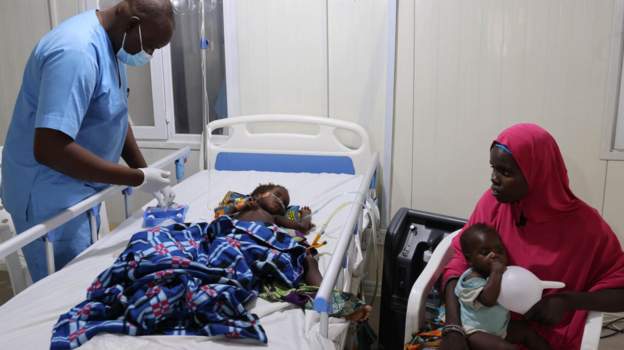
Médecins Sans Frontières (MSF) has revealed that feeding centers in Maiduguri, in northeastern Nigeria, are receiving an unprecedented number of malnourished children in need of life-saving care.
According to the medical organization, approximately 1,300 kids have been admitted to intensive care units since the year began, which is the most for this time period ever seen in Borno state.
Per the report, by April, the number of severely malnourished youngsters admitted each week had doubled from January’s average of 75.
The living conditions in some of the children’s previous detention camps—which are run by armed opposition groups—are quite terrible.
MSF is warning of an impending catastrophe if urgent action is not taken.
A currency crisis and a fire which destroyed the main market in Maiduguri have made things worse.
An ongoing insurgency in the region by the Islamist militant group, Boko Haram, has left thousands dead, forced many more from their homes and resulted in a humanitarian crisis.
Evacuation efforts for Nigerian students stuck in Sudan have begun , according to the chairman of the Nigerians in Diaspora Commission.
Students are seen waiting outside for buses in a video released on Twitter by Abike Dabiri-Erewa.
These buses, according to Ms. Dabiri-Erewa, are loading pupils before departing Sudan.
Sudan update: For ease of conveying the students, they were put on the buses according to their states of origin , as our excited Student doing this narration tells us here.Journey mercies 🙏🏿🙏🏿🙏🏿 pic.twitter.com/JQmVdHB0to
She stated that they would first be flown to Egypt and then Nigeria.
It happens just a short while after we spoke to a university student in Khartoum who was anxiously anticipating assistance from the Nigerian embassy but felt abandoned.
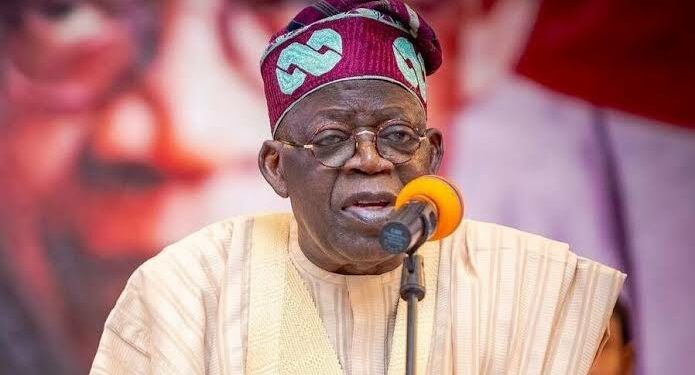
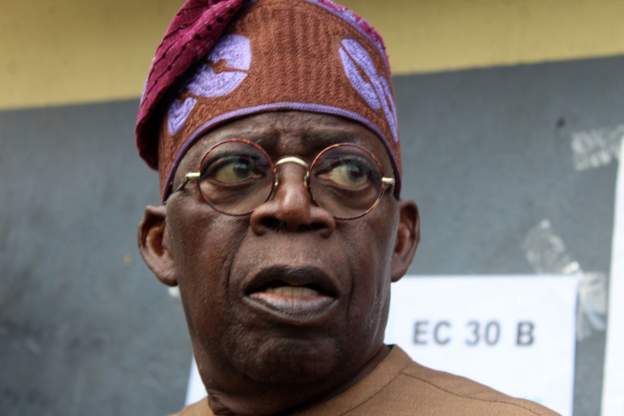
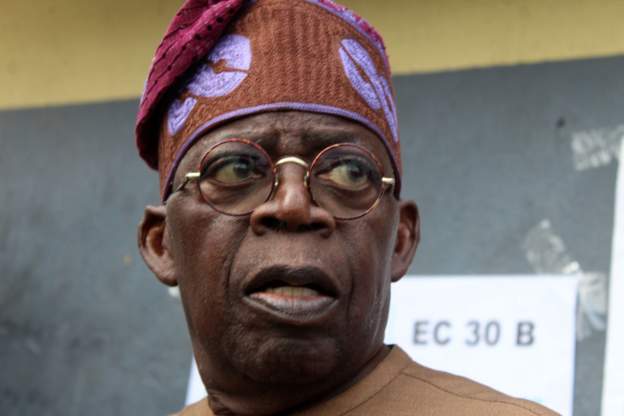
Nigeria’s president-elect, Asiwaju Bola Ahmed Tinubu, has expressed readiness to kick start work ahead of the May 29th handing-over date.
The President-elect returned to Nigeria on Monday evening after about a month trip to Paris, France.
He was received by a mammoth crowd of enthusiastic associates and supporters who thronged the Presidential Wing of the Nnamdi Azikwe International Airport, Abuja where his plane touched down.
The President-elect was in the company of his wife, Senator Remi, and son, Seyi.
Among those at the airport to receive him were Vice President-elect Kashim Shettima, House of Representatives Speaker Femi Gbajabiamila, as well as Governors Simon Lalong (Plateau) and Abubakar Sani-Bello (Niger), former Borno State Governor Ali Modu Sheriff.
Also at the airport were former Chairman of the Economic and Financial Crimes Commission, Mallam Nuhu Ribadu, the All Progressives Congress, APC Deputy National Chairman, North, Senator Abubakar Kyari, Deputy National Chairman, South, Barrister Emma Enekwu, and National Woman Leader, Dr. Betta Edu.
There were also Senators Barau Jibril, Adeola Olamilekan Yahyi, Opeyemi Bamidele, Dayo Adeyeye, Sabi Abdullahi and Adelere Oriolowo as well as Secretary of the recently-dissolved Presidential Campaign Council, Hon. James Faleke, Hon. Babajimi Benson and Mr. Bayo Onanuga, Director of media and publicity in the dissolved Presidential Campaign Council.
Speaking to the tumultuous crowd who followed him home, the President-elect said: “I’m happy to be back. I have rested, I’m refreshed and I’m ready for the task ahead.
“Forget about what the rumour mill may have told you. I’m strong, very strong.”
Asked about about his plans for the country, he said he had been consulting and planning with a view to putting together a strong team so he could hit the ground running once he assumes office on May 29.
The President-elect left the country on March 21 for Paris on a vacation after a hectic campaign and election season.
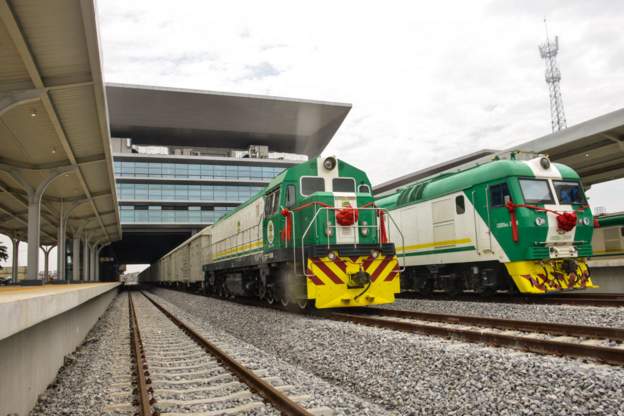
The Federal Government of Nigeria’s federal government did not fall behind on interest payments to China for loans, according to the Debt Management Office (DMO) of Nigeria.
According to local media, Nigeria incurred a $90 million (£81 million) penalty after its debt to China increased to $240 million (£217 million) over the previous two years.
The country’s railway lines were supposedly renovated thanks to the financing.
The DMO referred to the accusations as untrue in a statement on Wednesday, asserting that Nigeria was completely committed to honoring its debt obligations and had not missed any deadlines for debt service.
“Nigeria remains unwaveringly committed to fulfilling its debt obligations in a responsible and timely manner,” the statement added.
It urged the public to ignore the reports. As of December 2021, the DMO said, Nigeria’s debt to China stood at $4.1bn. It was, however, silent on the current status of the Chinese loans to Nigeria.
Nigeria has in recent years suffered revenue losses following a spate of attacks on rail tracks and the kidnap of train passengers that resulted in the stoppage of train services on some routes for a while.
A new malaria vaccine created by researchers at Oxford University has been approved by Nigeria.
The move comes days after Ghana became the first country in the world to approve the (R21) vaccine.
Mojisola Adeyeye, the director-general of Nigeria’s National Agency for Food and Drug Administration, stated that the vaccine would be used to prevent malaria in children between the ages of five months and three years, who are the most vulnerable population.
The approval is rare because it occurs before the vaccine’s final stage trial results, which are anticipated to show an effectiveness of 80%, are released.
Nigeria has the highest number of malaria deaths worldwide.
The disease kills more than 6,000 people around the world every year – many of them children in Sub-Saharan Africa.
Mike Igini, a former Akwa Ibom State Resident Electoral Commissioner (REC) for INEC, has claimed that the UK brought election manipulation to the Nigerian political system.
Igini noted that the UK has no post-election adjudication court, whereas Nigerians are in court today over the election outcome.
Igini stated this while on Arise Television’s Morning Show program on Friday, where he was fielding questions about the conduct of the just concluded 2023 general elections
He said, ”What I want Nigerians to know is that whatever we make of this country, that is what it will become. It is clearly in our hands because, in this country, Nigeria, with all the human and material resources, all that’s required is leadership.
”Today, we are now in Court over the election that has been conducted. It should be noted that the United Kingdom, UK, that today is one of the countries that our people are going to; in short, after Nigeria, they go to the UK. It should be noted that even the UK, which introduced Nigeria to election rigging for a period of 99 years, almost a hundred years, had no post-election adjudication in the United Kingdom.”
A seven-story structure under construction on First Avenue in the Banana Island neighborhood of Ikoyi, Nigeria’s commercial capital Lagos, has made headlines once more.
The latest incident in the exclusive neighbourhood of some of the wealthiest Nigerians brings to fore what seems to have become an incident common in the southwestern state.
While residents try to figure out why Lagos has continued to be in the news for cases of building collapse, building experts question the role of government agencies in the approval processes for buildings in the state.
A Former President of Nigerian Institute of Building, Kenneth Nduka says the inability of government to prosecute those responsible for building collapses in the country is a factor fueling reoccurrence.
‘Let me integrate backwards, there have been collapses and these collapses have been investigated. I am yet to hear or maybe I am not being so cognizant of what is happening, but I am yet to hear that Mr. X or Mr. Y has been sent to jail because he participated in the development of a building that has collapsed.’ Nduka Said
Nduka while reacting to the collapse of a seven-storey building under construction in Lagos called on the Lagos state government to ensure buildings in the state are constructed under proper guidelines.
‘If you are using material, there is a specification of the type of material you use. If you are going to start a multistorey building, it should be such that there should be geotechnical investigation of the soil.” Nduka says.
Officials of the state government who visited the site of the incident said rescue efforts were in top gear to find whoever was trapped under the rubble.
On Thursday, April 13 a team of Lagos state government officials were on the scene of the incident for an on-the-spot assessment.
Oluwafemi Oke-Osanyitolu, Director General, Lagos State Emergency Management Agency says the rescue team swung into action on getting to the site.
‘With our combined effort, we were able to recover seven people alive. Those people that were rescued were treated on the spot and discharged.’ Oke-Osanyitolu said.
‘One was transferred to a private hospital where he is receiving adequate treatment.’ He adds.
Mobolaji Ogunlende, Special Adviser to Lagos Governor on Special Duties and intergovernmental relations gave an update on the rescue effort .
‘Lagos State Emergency Ambulance Services (LASAMBUS) were already on ground by the time I personally got here, they had treated about 7 to 8 minor injuries on getting to the scene. And a few of them we felt needed to go to the hospital have been taken to the hospital.’ Ogunlende said.
When asked of the fatality figure, he said ‘In terms of fatalities which you asked, as of this moment we have not recorded any fatalities. We are here, our equipment is here, what we are trying to do now is to see how we can go through the rubble very quickly to say if and indeed any fatality we can recover.’
According to the Lagos State health authorities, out of the 25 persons rescued by emergency responders, 16 victims who sustained moderate injuries were receiving treatment.
Africanews Correspondent David Agunlouye Tayor reports that the Building Collapse Prevention Guild in Nigeria says Lagos State has recorded 115 building collapses in the last 10 years.
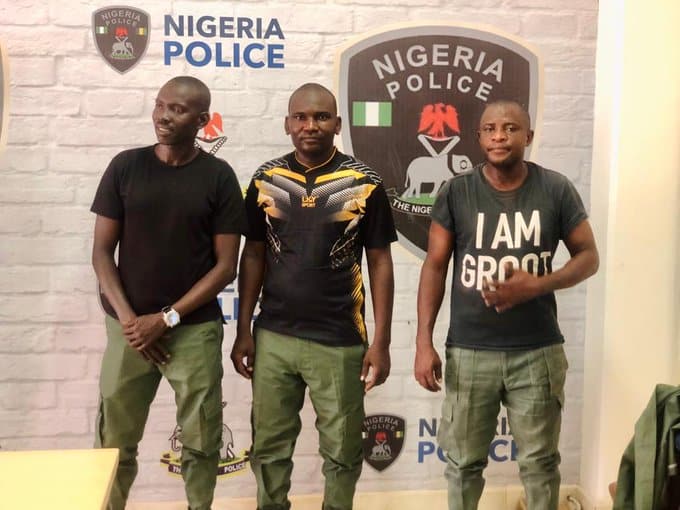
For the offences of discreditable conduct to wit misuse of firearms, abuse of power, gross indiscipline, and wastage of live ammunition, three officers from the SPU Base 1 Kano in Nigeria have been dismissed.
The trio, Inspr. Dahiru Shuaibu, Sgt. Abdullahi Badamasi, and Sgt. Isah Danladi were attached to a musician in Kano on escort duties.
In the course of their duty on Friday 7th April, 2023 at Kahutu Village, Katsina State, the officers are said to have repeatedly fired shots from their official firearms into the air despite police policy against firing in the air.
This goes against standard operating procedure and relevant Force Orders; and disregarding the possible risk to the crowd at the location which included children.
The Police in a social media post said “The act was not only criminal and unprofessional but also embarrassing to the Force and the nation at large. The Nigeria Police Force hereby warms all officers to ensure they carry out their duties in line with the extant laws to avoid running foul of its provisions and attracting attendant sanctions.”
Supervising officers have also been tasked to ensure continuous and detailed lectures of their men to ensure they are well acquainted with all necessary standard operating procedures.
Despite legal challenges to his victory, the president-elect of Nigeria, Bola Tinubu, will be sworn in on May 29, according to Lai Mohammed, the minister of information.
As outgoing President Muhammadu Buhari officially leaves office in May, groups angry over the results of the presidential election on February 25 are calling for an interim administration.
Mr Mohammed said there was “no basis” for the constitution of an interim government. He said the opposition political parties have the right to challenge the presidential election in court
Four presidential candidates filed legal challenges on 21 March against Mr Tinubu’s victory, alleging widespread rigging and manipulation of tallies.
It takes about eight months for the judiciary to determine a presidential election petition. The petition must be heard within 180 days from the day it is filed. A petitioner can appeal the tribunal’s judgement at the Court of Appeal within 21 days from the decision date.
If petitioners are dissatisfied with the appellate court’s decision, which is delivered within 60 days, they have 21 days to appeal it at the Supreme Court, whose decision is final.
Despite legal challenges to his victory, Bola Tinubu, the president-elect of Nigeria, will be sworn in on May 29, according to Lai Mohammed, the minister of information.
As outgoing President Muhammadu Buhari officially leaves office in May, groups angry over the results of the presidential election on February 25 are calling for an interim administration.
According to Mr. Mohammed, there is “no basis” for the formation of an interim administration. The right to dispute the presidential election in court, he claimed, belongs to the opposition political groups.
On March 21, four presidential candidates filed lawsuits to contest Mr. Tinubu’s election, alleging massive vote-rigging and tallying manipulation.
It takes about eight months for the judiciary to determine a presidential election petition. The petition must be heard within 180 days from the day it is filed. A petitioner can appeal the tribunal’s judgement at the Court of Appeal within 21 days from the decision date.
If petitioners are dissatisfied with the appellate court’s decision, which is delivered within 60 days, they have 21 days to appeal it at the Supreme Court, whose decision is final.
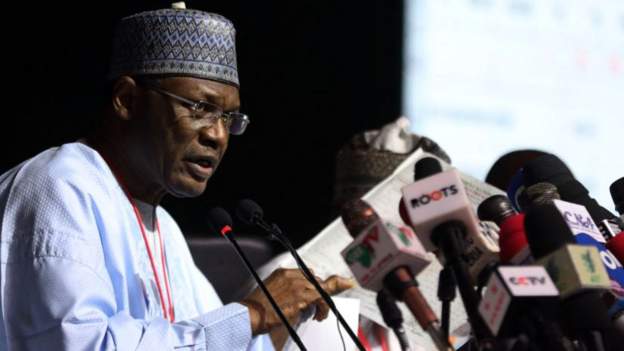
The Independent National Electoral Commission (Inec), the electoral body of Nigeria, has requested that challenges to the results of the presidential election held in February be dismissed by an election court.
Bola Tinubu of the ruling APC party was declared the winner with 37%. But his opponents, second-placed Atiku Abubakar and third-placed Peter Obi, have rejected the results and they want the election tribunal to nullify the result.
In its defence at the Presidential Election Petitions Tribunal, the electoral commission described the petitions filed by the opposition candidates as “grossly incompetent, vague and academic”.
It said they were “an abuse of the court process”.
Inec has previously apologised for “technical glitches” that hindered the electronic transmission of results from polling stations.
It said that any discrepancies between results on its website and “physical results” would be investigated and resolved.
The electoral process was criticised by observer groups as falling short of required standards.
The kidnapping of 80 persons last week in northern Nigeria has been denounced by Economic Community of West African States (ECOWAS).
In Zamfara state, many of those taken hostage were women and teenagers who had been gathering firewood.
ECOWAS demanded the release of the kids in a statement.
It’s unclear who carried out the abductions. Armed criminal gangs frequently demand ransom while kidnapping people in Zamfara. This latest episode in a string of brutal crimes in Nigeria.
Armed gangs killed more than 70 people in two separate attacks in the central state of Benue last week.
On Friday, a camp for internally displaced people in the area of Mgban was targeted by gunmen and dozens killed.
And a week ago, a number of residents were shot in the remote village of Umogidi. Some were decapitated.
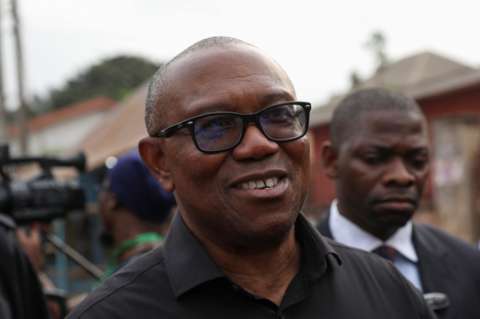
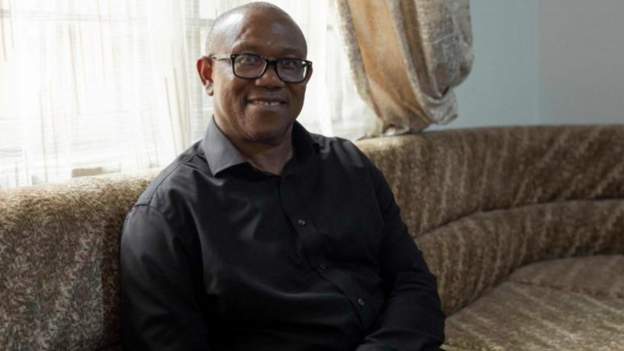
The third-placed candidate in Nigeria’s presidential election, Peter Obi, says he is being pressured to leave the country.
He did not offer proof to back the claim but said it was part of government’s attempt to “divert attention” from a “blatantly stolen” elections.
Mr Obi has already challenged the results of the presidential election at Nigeria’s highest appeal court.
“The attempts to manipulate Nigerians is very sad and wicked,” he tweeted on Wednesday night.
An audio recording has been doing rounds in Nigeria of an alleged conversation between Mr Obi and a religious leader, in which the presidential election is likened to a religious war.
Mr Obi said the audio was a “fake doctored audio call”.
“Let me reiterate that the audio call being circulated is fake, and at no time throughout the campaign and now did I ever say, think, or even imply that the 2023 election is, or was a religious war,” he said.
He added that his lawyers will take action against an online publication that circulated the clip.
Twenty years ago the man who recorded one of the most successful songs of all time was thrown off a motorbike by a car in Calabar, Nigeria. He hit his head on the road and was rushed to the hospital, where he lay for two weeks, in and out of consciousness, but deteriorating all the time. On June 24, 1997, Prince Nico Mbarga was pronounced dead.
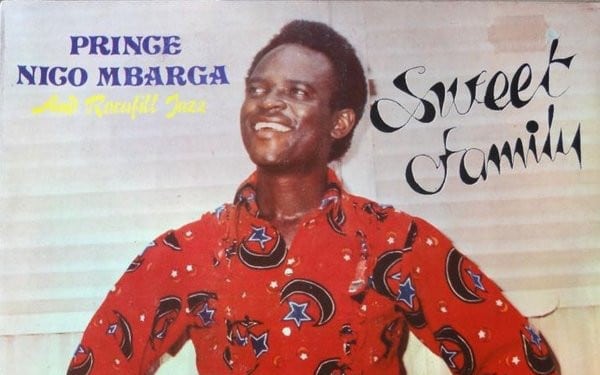
“Sweet Mother,” his 1976 one-hit wonder, had sold at least 13 million copies across the African continent – more than The Beatles’ bestseller “I Want to Hold Your Hand.” But no global media outlet thought to cover the life and death of the artist behind Africa’s most popular song.
Today, the only internet accounts of his life reach around four paragraphs and bookend Mbarga’s career with two big political events of the time: the Biafran War in 1967 that saw him, at 17, flee across the border to Cameroon, where he mastered the guitar; and the expulsion of undocumented migrants from Nigeria in 1983, with his band’s Cameroonian members among the two million West Africans forced to leave the country.
Politics, however, rarely frames lives quite so neatly.
Over the last few months, I have tried to piece together a more textured story: traveling to Mbarga’s hometown to talk to his childhood friend, his wife and his mistress; tracking down his former band members from Cameroon to France to the US; prodding the memory of his octogenarian producer; and reading rare transcripts of his interviews.
Twenty years after his death, this is the obituary that never was.
The first place Mbarga knew, the town of Ikom was the last stop on my journey. In a modest bungalow there I met Esame, his widow, and Ojong, his best friend, on a warm evening on the cusp of the wet season. On plastic chairs in the shadow of his mausoleum, they told me about Nico Mbarga and the place he called home.
The son of a Cameroonian father and a Nigerian mother, Nico Mbarga was born in nearby Abakaliki on April 8, 1950, but grew up in Ikom. In the 1950s it was little more than a series of administrative buildings, houses and farms clumped around Cross River, surrounded by tropical rainforest, right on Nigeria’s eastern border with Cameroon. Ojong remembers early mornings with young Nico on the river, fishing for tilapia and catfish, and days spent in the shade of the forests, setting traps for birds. Today Ikom is still fairly remote – the tarmac roads coming in and out quickly crumble into dirt – but back then it was positively isolated. The only way goods such as bicycles and sewing machines made their way to the village was by lighters on the river from Calabar, more than 100 miles to the south. But even in rural Ikom, all the flux of being in a British colony in Africa in the mid-twentieth century – and the trappings of modernity it entailed – had its effect.
The Cross River in Ikom, Nigeria, the town where Mbarga grew up.
Nico’s father drew a salary sawing timber, so Nico himself was able to go to primary school (perhaps fewer than one in five children did at the time). More exciting for Nico though, his music-loving father bought a Phillips radio. For if anything was to capture the mood of the new country emerging in Nigeria’s faraway and growing cities, it was the highlife music he could now hear from home.
From Bobby Benson’s “Taxi Driver,” to EC Arinze’s “Saturday Night,” to Rex Lawson’s “Yellow Sisi,” highlife was a music of young men in big towns, marveling at cars, dancing at nightclubs, chasing single women. There was something, a new confidence, beyond the lyrics too. From miners’ football clubs in the Zambian Copperbelt to the newspapers of the intelligentsia on Ghana’s coast, Africans were making colonial tools their own.
Highlife took western instruments – the trumpets and saxophones of big jazz bands – and set them to local, offbeat rhythms. It was a genre well-suited to a country preparing for independence, and its optimistic sound was to suffuse all the music young Nico would go on to create. (Even his later song “Oh Death,” with the opening line “Oh death, everybody hates you,” is impossibly cheery.)
His father, from a long line of xylophone players, taught him the instrument, a handheld version with metal tines plucked by the thumbs. But Nico wanted to make a sound more like the western instruments of highlife, so he built his own xylophone from dried-out plantain skins and scooped bark. “It was completely something that he innovated,” Ojong recalls.
Nico Mbarga’s best friend Ojong, left, and Mbarga’s widow, Esame, right.
Despite the celebratory mood of the country, however, Nico’s childhood was not easy. His father died of a sudden illness, and the family he left behind – his wife, three sons and a daughter – became reliant on Nico’s mother, a peasant farmer. They downsized, becoming tenants in a compound in the middle of the village, and though Ojong remembers a mother dearly trying her best – caregiver with one hand, breadwinner the other – things were difficult. As a teenager, Nico tried to do his bit, playing sets in nearby small villages, but there was little money in it.
Thus when the Biafran War broke out in 1967, Nico Mbarga wasn’t so much fleeing for his safety – the rest of his family stayed in Ikom – as pursuing his ambitions in music. The civil war put a sharp stop to eastern Nigeria’s vibrant music scene, but the hotel gig economy was still running over the border.
In Mamfe, Cameroon, he met Lucy, who today lives in a half-built mansion ringed by palm trees on the outskirts of Ikom. I had been slightly nervous about meeting Lucy myself, remembering my first call back in London with Esame, Mbarga’s wife: “And I’ve been told about someone called Lucy as well, who is that?”
“Oh that is his concubine,” she responded matter-of-factly, “I will take you to her.” My worries were eased by their laughing and hugging as they greeted each other. Then a smiling Lucy recounted the moment 50 years ago when she met Nico Mbarga: a charming, handsome, if slightly short and dirt-poor 17-year-old. “As I first see him, I love him, eh? Even my mother did no gree, she said, ‘He’s a small boy, he don’t have money,’ but I said, ‘No, that boy is my choice.’”
Indeed, despite the objections of her parents, and their own struggles to buy even “a money for pot” to boil water, she would soon have the first of her two children with Mbarga.
Working as a “band boy” for a Congolese cover group in Mamfe, carrying instruments for concerts at hotels in nearby towns, Mbarga came to learn and love Congolese rumba. With its staccato guitar, spontaneous spoken asides and high-pitched harmonies, it had the whole continent dancing the soukous and the kara-kara. Mbarga, always dedicated, taught himself the conga, the drums, the bass and, most importantly, the finger-picking style of Congolese electric guitar.
When the three hard years of the Biafran War came to an end, he looked to launch his career back in Nigeria. After one failed border-crossing by road, in which Lucy and Mbarga were arrested by officials and sent to prison for three days for not having passports, they successfully made it across a second time, going “the bush way” in 1970. They came to Onitsha, a trading town on the banks of the Niger River, with at its center one of the largest markets on the continent. And while the money this brought has always attracted writers and musicians – today there are shops stacked high with thousands of albums in paper covers, posters for studio rentals everywhere, and music filling the air – the 1970s was Onitsha’s heyday, fuelled by Nigeria’s petrol boom and the good mood of people just relieved to get on with their lives again. It was, as Chinua Achebe wrote, “the esoteric region from which creativity sallies forth at will to manifest itself,” and the home of some of Nigeria’s great highlife musicians.
“We loved the place,” Lucy almost shouts. “From there, God blessed him.”
Lucy, Nico Mbarga’s first love.
Mbarga thrived. He formed his group, Rocafil Jazz, signed a contract to play every Sunday at Onitsha’s Plaza Hotel, and began to mix with stars like Stephen Osadebe and Bobby Benson. Then, in 1973 he was picked up by EMI and recorded his first hit “I No Go Marry My Papa,” about a daughter disagreeing with her parents over the choice of her husband, surely inspired by Mbarga’s brush with Lucy’s parents. It sold reasonably well – “I did not know that I would make such an amount in my life,” Mbarga said of the modest success – and in it you can hear the beginnings of something, a mix of influences, that would come to define his music.
Odion Iruoje, then a producer at EMI, recalls working with a 23-year-old Mbarga “who knew what he wanted,” very able at “directing his boys.” By all accounts the non-smoking, non-drinking Mbarga, who studied law on the side in Onitsha, was a man of real self-possession.
He was not to be deterred, therefore, by the stalling of his career after his first single. Mbarga was dropped by EMI for failing to create any other commercial hits. Instead, around 1974, tired of “I love you, you love me, my baby,” he wrote “Sweet Mother.”
It was a love song from a son to a mother that, in its old-fashioned way, never actually once says “I love you.” Instead, it’s a grateful son praising what his mother did for him as a child: drying his tears, putting him to bed, feeding him, praying when he’s ill:
When I dey hungry my mother go run up and down / she dey find me something when I go chop oh! / Sweet Mother a-aah / Sweet Mother oh-e-oh!
And if “Sweet Mother” was dedicated to all mothers and the things they do for children, it was inspired by the loving sacrifices Mbarga saw his own mother, a widowed farmer, make after his father died. The lyrics began, “Sweet Mother, I no go forget you, for dey suffer wey you suffer for me.”
Mbarga sent a tape to Odion Iruoje at EMI, who remembers hearing the song for the first time and knowing that “it was the magic.” On the agreed date for recording, however, Odion had to fly to London to record at Abbey Road, and some other EMI officials told Mbarga that the song was “too childish” for them to record. Affronted, Mbarga did not come back. So it was only two years later when the small, Onitsha-based producer Rogers All Stars heard “Sweet Mother” at the Plaza Hotel, that the song found a label to release it.
Rogers All Stars is now in his 80s, slightly frail and very soft-spoken, still working in his Onitsha studio with which he now shares his name. And though his memories sometimes come to him in a slight haze, he still clearly recalls the day Nico Mbarga came to the producer’s house uninvited early one morning to introduce himself. They bonded over Rogers’s collection of Congolese records, and Mbarga invited the older man to come see him one day at the hotel. “I could see he was a star,” Rogers says.
For six months Mbarga – now calling himself Prince Nico Mbarga – Rocafil and Rogers All Stars worked on “Sweet Mother,” rehearsing daily from seven in the morning until one in the afternoon. It was, says Rocafil rhythm guitarist, Cameroonian Jean Duclair, “real every day work,” as they made change after change, turning it from a gentle “cha cha cha” to a more upbeat highlife sound, adding little dance breaks, and crafting a song marked more and more by the drive of Mbarga’s Congolese-style finger-picking lead guitar.
Finally satisfied, the band travelled across the country to record, and after a heavy night in a Lagos hotel, with all but Mbarga drinking and smoking, recorded it live at Decca Studios – hung over for sure, but they had practiced so much it hardly mattered.
It took a few months to really take off. Nigerian radio host Benson Idonije rates the fact that it eventually did as one of his finest achievements. At the time, he explains from his house in Lagos, he had just launched Radio Nigeria Two, the country’s FM station. After shows he would often drop into bars to wind down the night. On one of these evenings in late ’77, he remembers, there was a song released by an obscure label from Onitsha, that got everyone up to dance. With an inkling that his audience might like the song’s message, he found it, undiscovered, in Radio Nigeria’s gramophone library, and played it that evening. “I started getting calls from everywhere,” he says. From then on, for months nearly every request Radio Nigeria received was for “Sweet Mother.”
“You have hit jackpot,” Jean Duclair remembers being told by their producer, with the record suddenly selling out in the shops. On a 20-seater Mercedes bus bought by Rogers, Mbarga and his band toured the country, up north during the wet season, down south when the rains stopped. And though culturally Nigeria can be a divided place, Jean remembers Nigerians everywhere demanding “Sweet Mother” – “it was like a national anthem.”
Album artwork. (Courtesy Mbarga’s producer, Rogers All Stars)
Soon they were touring all across West Africa – Togo, Cameroon, Cote D’Ivoire, Ghana, Benin and Burkina Faso – and even as far east as Kenya. As Jean Duclair recalls, the band members were scared to leave the plane when they saw the crowds waiting for them at airports, wearing Rocafil Jazz t-shirts, screaming Mbarga’s name.
And what was the reason for its success? Certainly, with its Congolese guitar-picking, its West African highlife beat and its pidgin lyrics, “Sweet Mother” had something for people all over.
Yet even beyond that, perhaps what it really caught was differing shades of Africa at the time. For, by the 1970s, these were societies that – after the profound changes wrought first by colonialism, then by the liberation movements that challenged it, and finally by the mixed records of those same movements once in power – had reason to feel both excited and uneasy at the new continent these encounters had created. It was a creative tension at the heart of “Sweet Mother.” In its style, with its hybrid English and its electric guitars calling its listeners to dance, it was unquestionably modern; but in its content, with its heartfelt praise for the nurturing role of mothers, “Sweet Mother” nodded to a more traditional life. It was a contradiction that Mbarga embodied himself. He was a man who would later, in “Green Revolution,” bemoan the flight of the sons and daughters of the land for the lure of the city – singing, “let’s go farming, and be self-sufficient!” – while he himself performed on stage in Nigeria’s biggest towns in his famous three-inch platform shoes. As his best friend Ojong would say, “He’s a blender.”
Or perhaps it was just a great tune.
Regardless, Mbarga and Rocafil Jazz were completely unprepared for the popularity of “Sweet Mother.” While numerous online reports of Mbarga’s career have Rocafil Jazz falling apart when, in 1983, Nigeria’s President Shagari ordered the country’s two million undocumented migrants to leave – amongst them Rocafil’s Cameroonian musicians – no former band member I spoke with recognized that story. Instead, it was something much more mundane: money. On its release, they were a local band that practiced in a small compound in Onitsha, playing Sunday gigs at the Plaza Hotel with instruments that Rogers All Stars himself had bought for them, and with no contracts in place. It was always an issue with the potential to cause problems. After a loss-making and slightly demoralizing tour to London in ’79 – playing at venues like St. Pancras Town Hall and the African Centre to half-empty European crowds – the members of Rocafil Jazz complained to Mbarga that they were underpaid.
Mbarga was, according to Jean Duclair, unwilling to give an inch, and the mood soured. Before a scheduled trip to Japan, unable to agree on their percentages, Rocafil disbanded. Though they later re-formed, changed members, re-formed and disbanded again, the band never quite gained the same momentum – there was even an actual physical altercation, broken up by the police, after a New Year’s Eve hotel show in 1980. Meanwhile, convinced that Rogers All Stars hadn’t given him his share of the royalties, Mbarga unsuccessfully took his producer to court. (Everyone did eventually reconcile – Rogers refers to Mbarga as “like a son.”)
In the end, not much of the money made from “Sweet Mother” ever made it back to any of them. Royalty payments were limited by the hundreds of pirate recordings of the song, as economies across the continent began to suffer and record stores started to make their money by dubbing cassettes.
No one involved with “Sweet Mother” is now living a life that would suggest they were behind one of the top twenty bestselling songs in history. Mbarga’s family live in a pleasant but modest bungalow in Ikom; his former band members like Jean Duclair still struggle to raise funds for their musical projects; and his old producer, Rogers All Stars, though he owns a four-story building in Onitsha, admitted to many mistakes in trying to protect “Sweet Mother” from piracy. “You can see,” he says in his dusty office, exaggerating slightly in a room that still dwarfs his fragile frame, “you can see how poor we are.”
With the money he did receive from “Sweet Mother,” Mbarga moved back to Ikom, built and managed the Sweet Mother Hotel – where he would perform every Sunday – and married a local girl, Esame, the daughter of the owner of the only petrol station in town. He also built the house where she still lives today.
The former Sweet Mother Hotel in Ikom.
Lucy and their two children also moved to Ikom. Indeed, while Mbarga eulogized about mothers on stage, he did not quite show so much respect to the mothers of his own children. “His only weakness was temptation,” says Rogers. For alongside Esame, his wife, and Lucy, his first love, he had numerous other lovers. Even a track on his first album, “Christiana,” two songs after “Sweet Mother,” is about a girl he was courting in Onitsha. It was an attitude he alluded to in “Sweet Mother” itself, asking before one of its many instrumental breaks: “You fit get another wife / you fit get another husband / but you fit get another mother? No!” Not that, when pressed on it all these years later, neither Lucy nor Esame seem to mind that much.
And if Mbarga disappeared from the music scene, it was not through lack of trying. Esame recalls that he would sing, play air guitar and compose songs even when they were eating. He would go on to produce 17 albums and records after “Sweet Mother,” all with the same highlife beat and Congolese style guitar. In fact, he didn’t even rate “Sweet Mother” as one of his best songs, preferring “Simplicity” instead.
But while the lives of some artists darken as the fame fades, there is no such twist here. Mbarga lived a satisfied life, caring for his own mother, supporting his two “wives” and spoiling his children with gifts. He was, on the accounts of both Lucy and Esame, a loving father, “too sweet” to punish his kids, always willing to dance with them. “He lived a happy life,” Esame says.
It was Mbarga’s desire to carry on his music that saw his end in Calabar 20 years ago. If his childhood witnessed the enthusiasm of early independence, his death seemed a cruel symbol of what the impoverished Nigeria of the 1990s had become. After a ten-year hiatus, the original band was back together for a 50-state tour of the U.S. and Mbarga was on his way to pick up visas. His car ran out of fuel – a scandalously common occurrence in one of the world’s largest oil exporters – so he hopped on an okada (motorbike taxi) to complete the journey and, once in Calabar, was thrown off by a car. In the hospital for two weeks, visited by his band members, his friends, his children and his first love Lucy – who held his hand as he drifted in and out of consciousness – he died with Esame at his side. Back home in Ikom, his elderly mother fell down when she heard the news, and did not get back up. She died too shortly afterwards.
It was a fitting end for the two of them. Mbarga never forgot all that his mother did for him when he was a boy – leaving their home every day before dawn to work on a rented plot, growing bananas and yams, trying to raise four children – and he spent his life paying her back for it. She was, by all accounts, delighted with “Sweet Mother,” his timeless dedication to her. When Rocafil Jazz were in Onitsha, she would come down every month to watch them practice, dancing with a broom in her hand, and inviting them all back to Ikom so she could feed them up. As she aged, he took care of her, as Lucy remembers, refusing to eat until she had, and talking to her morning and night. After all, he did say in his bestseller, “If you forget your mother, you’ve lost your life.”
As I traveled throughout Nigeria, I noticed Nico Mbarga moving from a human being who had lived here on earth to, on a small scale, an icon in the making. The things he touched and made in life were slowly fading away: the Ikom compound where he grew up with his mother had been knocked down, leaving just an empty plot; the multitrack records of his “Sweet Mother” studio session in Lagos had long been thrown away; his Sweet Mother hotel, under different ownership now, was completely rundown.
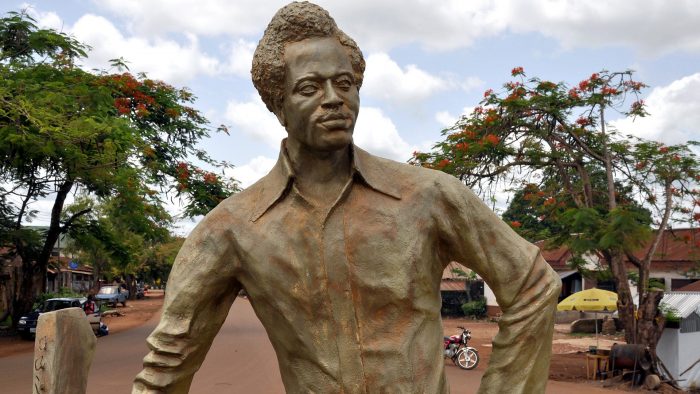
In their place, in Ikom, Mbarga is newly remembered by a statue erected early this year. It’s a golden Mbarga in his platform shoes, standing his guitar on a plinth, looking out over the traffic of “Mbarga Junction.” Nearby, shaded by Ikom’s many red-blossomed African tulip trees, is Sweet Mother Road. And if it is sad in a sense – Lucy cried the day the statue was put up, as if it were final confirmation of his death – it does at least constitute a well-earned recognition for Mbarga at last.
Which leaves just one final question: Why have Mbarga and “Sweet Mother” been so ignored elsewhere? While the continent’s cultural contributions are generally marginalized, some African music does make it outside, from Fela Kuti’s afrobeats, to Ali Farka Toure’s Malian blues, to Ethiopia’s otherworldly-sounding jazz. The music that makes it to western ears is usually tough and cool, if not explicitly political, reflective of what many perceive must be a dark political mood.
Yet none of this music, brilliant and rich as it is, has proved as popular with Africans themselves as Prince Nico Mbarga and Rocafil Jazz’s ten-minute ode to mothers. It is played at weddings, as newlywed brides about to leave their homes for the first time dance with their mums to say thank you, at birthday parties celebrating the long lives of family grandmothers, and at Mother’s Day church services, the only secular song amongst the hymns, with worshippers swinging in the aisles adding their own “hallelujah!” to Mbarga’s lyrics. The “Sweet Mother” ideal, the all-consuming mother, not eating until her children are fed, not sleeping until they sleep, crying when they are sick, might be a little conservative, but it has deep cultural roots.
The Cameroonian philosopher Achille Mbembe wrote that discovering the jubilance of Congolese rumba in the 1980s – a time of impoverishment, of brutal wars, of cruel leaders – taught him to look beyond the mere facts of political life. In Africa, he argued, “music has always been a celebration of the ineradicability of life.” More than anything, it was the genre that articulated “the practice of joy before death.” In the west perhaps, we have only wanted to hear music from the continent about the facts; in its joyful way, “Sweet Mother” captured something else: the suffering, the love, the human relationships between those facts.
Peter Obi, the third-place candidate in Nigeria’s presidential vote, claims he is under pressure to leave the nation.
The government was trying to “divert attention” from “blatantly stolen” elections, he claimed, without providing any evidence to support his assertion.
The results of the presidential election have already been disputed by Mr. Obi at Nigeria’s highest appeals court.
“The attempts to manipulate Nigerians is very sad and wicked,” he tweeted on Wednesday night.
An audio has been doing rounds in Nigeria of an alleged conversation between Mr Obi and a religious leader, in which the presidential election is likened to a religious war.
Mr Obi said the audio was a “fake doctored audio call”.
“Let me reiterate that the audio call being circulated is fake, and at no time throughout the campaign and now did I ever say, think, or even imply that the 2023 election is, or was a religious war,” he said.
He added that his lawyers will take action against an online publication that circulated the clip.
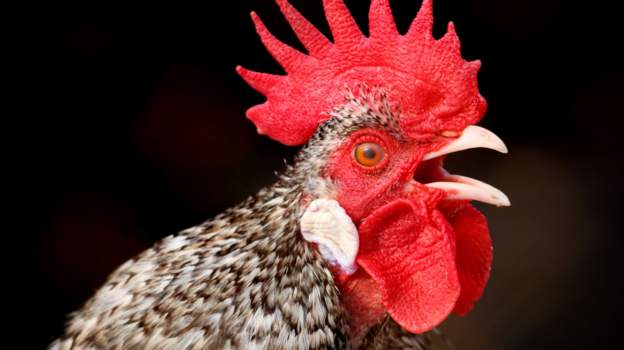
Following a complaint about noise pollution from neighbors, a Nigerian court has given the owner of a raucous rooster until Friday to kill it, according to local media.
According to two neighbors, the cockerel’s constant crowing kept them from sleeping, and the court in the northern city of Kano pronounced it a nuisance to the neighborhood, according to the Premium Times news website.
Yusuf Muhammed, one of the neighbors, testified in court that the rooster’s crowing violated his right to a sound sleep.
Isyaku Shu’aibu informed the court that he had purchased the fowl for use in celebrations of Good Friday and requested that it be allowed to live until the Christian holiday before being killed for a family meal.
Magistrate Halima Wali granted the request on Tuesday but warned him to prevent the cockerel from roaming the area and disturbing residents, the Daily Trust news website adds.
The owner was also ordered to ensure he slaughters the bird on Friday as promised or face a penalty.
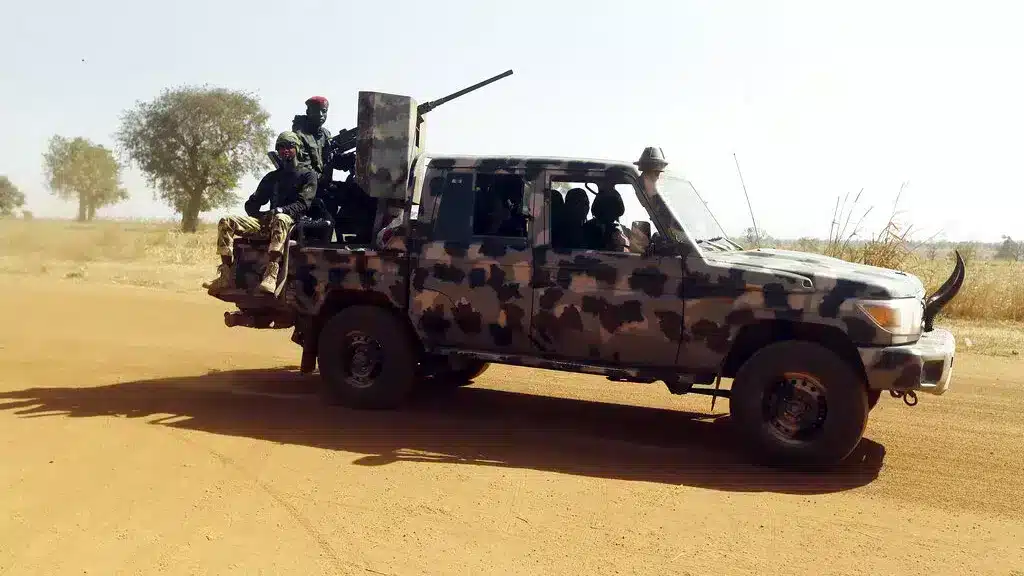
Gunmen have kidnapped at least 10 students in northwest Nigeria, according to authorities on Tuesday.
The state commissioner of security, Samuel Aruwan, said students from the Government Secondary School in Kaduna state were kidnapped during an attack on Monday, however it was unclear exactly where they were taken.
“The exact location of the incident is yet to be ascertained but detailed reports being awaited will clarify whether the incident occurred within the school premises or elsewhere,” he said.
Abductions of students from schools in northern Nigeria are common and have become a growing concern since 2014 when Islamic extremists kidnapped over 200 schoolgirls in Borno state. More than 1,000 students were kidnapped from schools in the northwest and northcentral regions in 2020 and 2021, according to a United Nations report last year.
Authorities blame the abductions on armed groups who often target remote communities. Most of the gunmen are thought to be young men who are ethnic Fulani, a largely Muslim group of semi-nomadic herders who have been embroiled in conflicts with communities over access to land and water.
While attacks were reduced last year as Nigeria’s security forces ramped up military operations targeting the gunmen’s hideouts, the government’s still struggling to quell the insurgency.
The China Development Bank has been accepted by the Nigerian Senate as the new funder for a rail project, which is expected to cost close to $1 billion.
The route between Kaduna and Kano, the biggest city in the north, was scheduled to be funded by another Chinese lender, but it withdrew in 2020.
Eight years ago, when President Muhammadu Buhari took office, he made improving the country’s inadequate electrical grid and transportation system a top priority.
But a significant barrier has been a lack of money.
Many billion dollars in loans from China and other foreign lenders have been approved by the parliament, but the money has not yet arrived.
When president-elect Bola Tinubu takes over in May, he will inherit a raft of challenges including double-digit inflation and widespread insecurity.
Nigeria has been battling cholera for so many years. It is highly contagious and occurs in places without safe water and proper sanitation. It causes profuse diarrhoea and vomiting, and without treatment can quickly lead to severe dehydration followed by death .
At about 6:40 pm on 17 January 2023, Gift Sunday-James, (35 years) shouts for help as she approaches the Primary Health Centre (PHC) located in Ovomum, Obabura Local Government Area (LGA), in Cross River State.
Her brother Emmanuel Sunday-James, conveyed in a taxi, had been stooling and vomiting continuously and was now dehydrated and could not move.
“As a farmer, my usual practice was to drink water from the stream near my farm” says Mr Emmanuel.
On that fateful day Mr Emmanuel fell ill, he recalled drinking water from the stream.
“I was passing watery stool and vomiting for about four hours after getting home. I felt like I was dying, and I am grateful for the quick intervention I got at the health facility, he says.
At the clinic, Mr Emmanuel was placed on Intravenous Fluid (IVU) and subsequently on oral rehydration solution.
Furthermore, a Rapid Diagnostic Test (RDT) was conducted on his stool sample and it tested positive for cholera.
Mr Emmanuel has since been discharged and now advises people to drink purified water either by boiling or using water purifiers.
“I don’t want anybody to experience what I went through,” he says.
Interrupting the outbreak transmission
Aside from Mr Emmanuel. many people have reported cases of stooling and vomiting in other LGAs (Abi, Biase and Obabura, and Ikom,Etung). While some got better after being hospitalized, some died from the disease particularly those who reported late for treament.
An epidemiological report from the State Ministry of Health shows that 638 suspected cases and 17 deaths have been reported between December 2022 and February 2023 in the affected LGAs.
To stop further fatalities, the state government, in collaboration with the World Health Organization (WHO) and its partners, set up a Rapid Response Team (RRT) comprising experts to coordinate the interruption of the disease,” says Dr Janet Ekpeyong, the Cross River State Commissioner of Health.
“With support from partners, we increased the capacity of existing cholera treatment centres (CTC) in the hotspot LGAs. The government is committed to taking action to ensure residents of the state have access to safe drinking water and sanitation services to reduce the incidences of cholera and other waterborne infectious diseases.
Commending WHO for its prompt support, Dr Ekpeyong says “WHO is a dependable lead partner providing technical guidance, coordination and also donated medical commodities for the emergency cholera intervention in the state.
Part of WHO’s support to the state included the donation of Rapid Diagnosis Test (RDT) cholera kits, and Cary Blair medium for transporting stool samples for culture testing for effective diagnosis of the patients.
In addition, 2000 intravenous fluids, cannula and oral rehydration salts and Infection Prevention Control (IPC) commodities were donated.
“The donated medical commodities eased testing and case management, says the WHO State Coordinator in Cross River State, Dr Yewande Olatunde.
Dr Olatunde explains that WHO further supported the replenishment of testing and treatment commodities at the 29 cholera treatment units (CTU) in three hotspot LGAs.
“To enusure all cases receive prompt care at the facilities, WHO conducted an extensive training for health professionals on treatment, and increasing infection prevention and control (IPC) measures,” she adds.
Robust community engagement Further working with community leaders and volunteers from the affected communities, WHO partnered with the state to promote educational risk messaging on water, sanitation and hygiene (WASH) and conducted decontamination of homes of active and recovered persons, health facilities attending to cases and providing IPC materials to volunteering community members.
The WHO-trained volunteers from the affected communities conducted house-to-house (H2H) awareness campaigns to stop the spread of the disease.
From December to January, 4811 households were covered, and 88 607 residents were educated about WASH and IPC control measures in the three hotspot LGAs of the state.
Base on the integrated support and coordinated response, there has been a decline in the number of cases reported since January. ( 69% decline between Epi-weeks 3 and 7, 2023). Other partners involved in the response are Nigeria Centre for Disease Control and Prevention (NCDC), UNICEF, Medicine San Frontier (MSF) and Save the Children, who donated commodities to strengthen the Cholera response.
A search and rescue effort has been started by police in northwest Nigeria to find two female students who have been kidnapped from a university dorm in Zamfara state.
They said that an armed gang broke into the exclusive Gusau hostel and imprisoned two guards before robbing the students.
Fears of instability in Zamfara, which has previously experienced multiple kidnappings for ransom, have increased as a result of the occurrence.
Gunmen kidnapped around 300 female students from a boarding school in Zamfara in February of last year.
After being held captive for a few days, they were freed. Four staff members and fifteen students from an agriculture college were taken into custody on August 15.
Judges at the Supreme Court of England and Wales have begun considering a case that will determine whether or not almost 30,000 Nigerians can request compensation from the oil company Shell for land damage brought on by an oil spill in 2011.
Communities from Delta and Bayelsa State’s coastal regions said that the spill had severely harmed their land.
In a previous decision, the London Court of Appeal ruled that the complaint had been filed too soon after the leak had occurred.
According to English law, a complainant has six years from the claimed incidence to file a lawsuit for property damage.
The spill was about 120km (75 miles) off the coast of Nigeria and lasted several hours before the pipeline was closed and oil stopped.
At least 40,000 barrels leaked into the sea, making it one of the largest spills ever in Nigeria.
The Nigerian communities argue that the oil devastated their shoreline and has continued to cause widespread damage to their land and water supply and so they should be allowed to seek compensation.
One of the largest manufacturers of consumer goods, Unilever Nigeria Plc, has said that it will stop producing some of its well-known brands, including Omo and Lux.
The manufacturer says it will leave the Home Care and Skin Cleansing categories, which will have an impact on the aforementioned brands.
Sunlight, Dove Beauty Bar, Lux soap, Pepsodent toothpaste, vaseline, Lifebuoy, and Rexona products are just a few of the numerous names that may be impacted.
In a statement sent to the capital market, Unilever informed shareholders that: “The Company will make changes to its business model in order to accelerate growth and sustain profitability while enhancing its ability to meet consumer needs.”
“The 100-year-old consumer goods company will repurpose its portfolio while putting in place measures to make the business more efficient and future fit.”
These changes will reposition the Company to better meet the needs of consumers, shareholders, and employees.
This will involve: Repurposing the portfolio by exiting the Home Care and Skin Cleansing categories to concentrate on higher growth opportunities. Unilever also noted that the new model would reduce exposure to devaluation and currency liquidity, Punch reports.
It also believed offloading its home care and skin cleansing portfolios would enable the management to “concentrate on higher growth opportunities.”
The statement continues: “Strengthening business operations with measures to digitize and simplify processes; and Focusing more on business continuity measures that reduce exposure to devaluation and currency liquidity in our business model.
“The exit of these two categories over 2023 will boost the vision to make Unilever Nigeria great, building on the impressive progress made in other key aspects of the business, and is envisaged to result in overall improvement in profitability, growth and a more sustainable Unilever Nigeria plc. Business.”
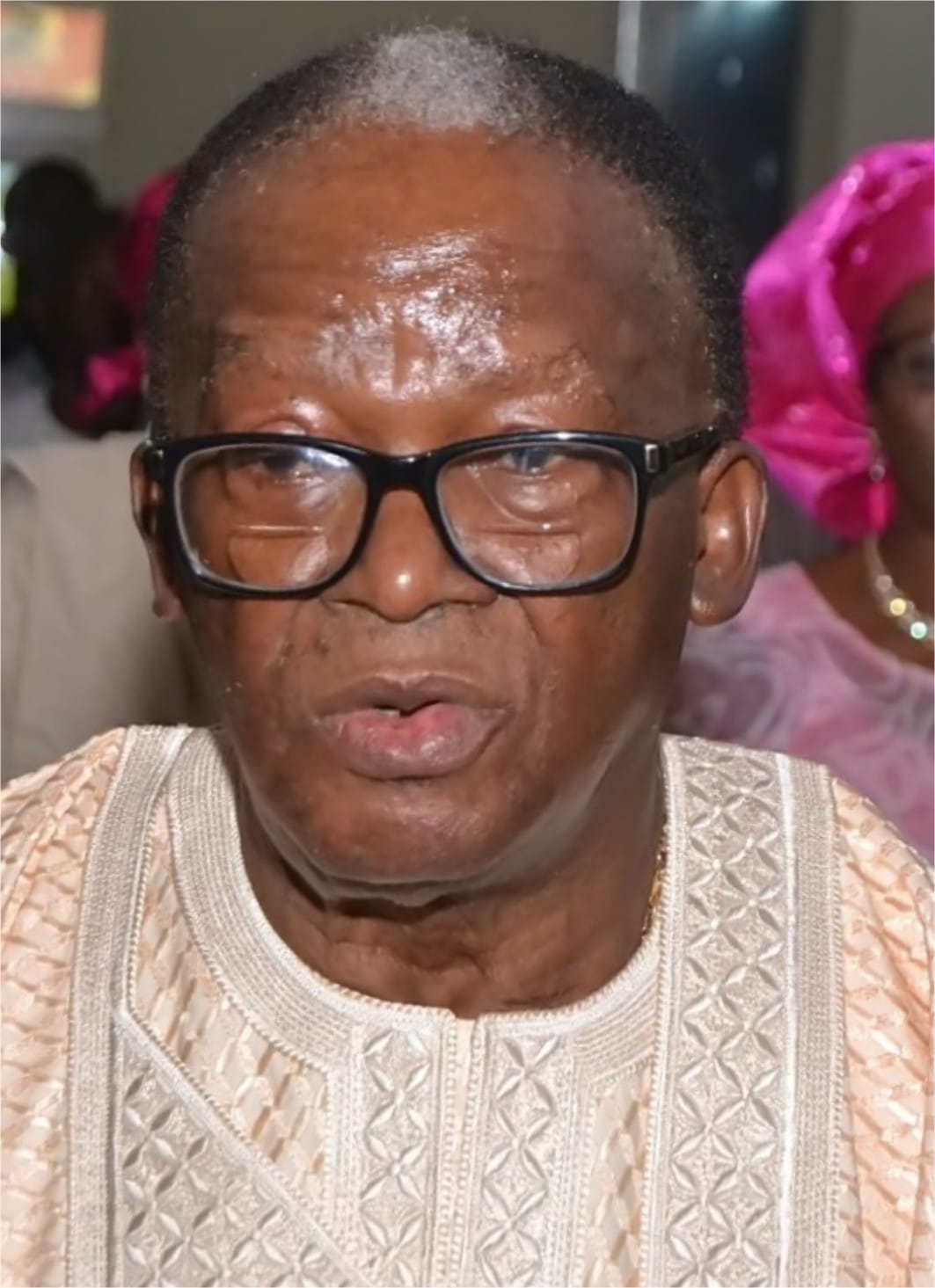
Former Chief of General Staff (CGS) and Lt. General Oladipo Donaldson Oyeyinka Diya, who also served as Vice Chairman of the Provisional Ruling Council (PRC) in 1994, has away at age 78.
One of Diya’s children, Oyesinmilola Diya, posted a message on social media announcing his passing on behalf of the family. According to the message, Diya passed away early on March 26—yesterday.
“Our dear Daddy passed onto glory in the early hours of 26th March 2023. Please, keep us in your prayers as we mourn his demise in this period. “Further announcements will be made public in due course.
“Barrister Prince Oyesinmilola Diya, on behalf of the family.”
There has been an outpouring of tributes from Nigerians, paying homage to Diya, who served as second-in-command to the late dictator, General Sanni Abacha. Born on April 3, 1944 at Odogbolu, Ogun State, Diya was educated at the Methodist Primary School, Lagos, and Odogbolu Grammar School. He joined the Nigerian Defence Academy, Kaduna, and fought during the Nigerian Civil War. He later attended the US Army School of Infantry, the Command and Staff College, Jaji (1980–1981), and the National Institute for Policy and Strategic Studies, Kuru.
While serving in the military, Diya studied law at Ahmadu Bello University, Zaria, where he obtained an LLB degree, and then at the Nigerian Law School, where he was called to Bar as Solicitor and Advocate of the Supreme Court of Nigeria.
The deceased officer was Commander 31, Airborne Brigade, and was appointed Military Governor of Ogun State from January 1984 to August 1985. He became General Officer Commanding 82 Division, Nigerian Army, in 1985, and later, Commandant, National War College (1991–1993) and, subsequently, appointed Chief of Defence Staff.
He was appointed Chief of General Staff in 1993 and Vice Chairman of the Provisional Ruling Council in 1994. As Chief of the General Staff, he was the de facto Vice President of Nigeria during the Sani Abacha military junta from 1994 until he was arrested for treason in 1997. In 1997, Diya and some dissident soldiers had allegedly planned to overthrow the regime ofAbacha. The alleged coup was uncovered by forces loyal to Abacha, and Diya and his cohorts were jailed.
Diya was tried in a military tribunal and was given the death penalty. But following the untimely death of Abacha in 1998, Diya was pardoned by the successor to Abacha, Abdusalami Abubakar.
Buhari: He Was Brilliant, Possessed Exceptional Skills
President Muhammadu Buhari mourned the demise of Diya and described him as a brilliant officer with exceptional skills. Buhari, in a release yesterday by Femi Adesina, paid tribute to Diya’s bold and courageous career in the Nigerian military and dedicated service to the country as General Officer Commanding, 82 Division; Commandant, National War College (1991–1993); Chief of Defence Staff; and Military Governor of Ogun State from January 1984 to August 1985.
Buhari recalled that Diya was known for his brilliance, exceptional organisational skills and discipline, and that he displayed those virtues in the important roles he held in office as a military officer.
He praised Diya for his love, belief and loyalty to the country he cherished so much and fought gallantly on the frontlines to defend her unity. On behalf of the federal government, the president extended heartfelt condolences to Diya’s family, friends and colleagues, and prayed that his soul finds rest with his Creator, saying may his contributions to the country never be forgotten.
Obasanjo: Diya’s Feats Will Be Remembered After Him
Former President, Chief Olusegun Obasanjo, described the life of the late Diya as a great success and one of accomplishments, which would long be remembered after him.
Obasanjo, in a release by his Special Assistant on Media, Kehinde Akinyemi, stated that with Diya’s passing, there was no doubt that the ranks of the country’s leadership had depleted “by the loss of a dedicated and resourceful patriot, who served the nation in various capacities as an army officer, community leader, and a legal practitioner.
“It is noteworthy that in the course of his military service, which straddled more than three decades, he acquitted himself as a dedicated officer and a real patriot. From the thick of the Nigerian Civil War to the post-war re-organisation of the army, he distinguished himself as a seasoned soldier.
“The rare diligence, loyalty and resourcefulness with which he carried out his duties and responsibilities, culminated in his appointment as Commander, 31 Airborne Brigade; Military Governor of Ogun State from January 1984 to August 1985; and General Officer Commanding 82 Division, Nigerian Army in 1985.” That, Obasanjo said, was also responsible for his appointment as “Commandant, National War College, 1991–1993; Chief of Defence Staff in 1993 and soon after, Chief of General Staff also in 1993; Vice Chairman of the Provisional Ruling Council in 1994 and later functioned as Nigeria’s Number Two man under the military administration of General Sani Abacha from 1994 to 1997.
“I recall as a Military Governor of Ogun State, he made tremendous mark through dedication to duty, loyalty to his fatherland and an impeccable example of incorruptible leadership. He was courageous and quite a disciplinarian and a no-nonsense officer.
“In retirement, Diya contributed to national development as a private businessman, legal practitioner and a provider of employment for many of our people. He is being mourned, therefore, beyond his immediate family and community. I believe the entire nation also shares the pain and grief for the irreparable loss of a distinguished son of Nigeria, indeed.”
Jonathan, Atiku Mourn, Say Diya Was Kind, Loved Education
Former President, Dr. Goodluck Jonathan, and former Vice President, Atiku Abubakar, expressed sadness over the death of Diya, describing him as a committed patriot and courageous soldier.
Media assistant to Jonathan, Ikechukwu Eze, in a condolence message to the family, noted that Diya served the country diligently and fought for the unity of Nigeria, showing bravery and brilliance as a military leader.
He said he was as a kind-hearted and disciplined officer, well known for his loyalty to the country and love of fellow citizens. The message added, “Diya devoted so much of his energy towards uniting Nigeria and showed exceptional brilliance while holding different command positions in the nation’s military leadership
“He will be remembered for his efforts towards promoting peace and commitment to the progress and development of our nation.” On his part, the PDP presidential candidate in the February 25 presidential election, Atiku, in his condolence message, said, “My profound condolences to the family of Lt. Gen. Oladipo Diya on the passing of the illustrious son of Odogbolu, where he was born and from where he rose to be a remarkable part of Nigeria’s history.
“His love for education saw him return to the university for his law degree, and his call to Bar at the time was an inspiration to many soldiers who came after him. I pray that God grants him rest and gives his family and friends the strength to go through this period.”
Tinubu: He Played Stabilising Role in June 12 Crisis
President-elect Bola Tinubu commiserated with the family of Diya, saying the deceased officer lived a remarkable life and played a stabilising role in the June 12 crisis.
Tinubu, in a statement by Tunde Rahman, said, “The news of the death of General Oladipo Diya early this morning came to me as a shock. I send my heartfelt condolences and sympathy to his immediate family, especially his wives and children.
“General Diya lived a remarkable life of a soldier and made his mark in the military, where he served our country diligently. As military governor of Ogun State, in the various military positions he held till he rose to the enviable position of Chief of General Staff and second-in-command to the Head of State, he served meritoriously.
“As much as he could, he played a stabilising role during one of the most turbulent periods in our nation’s life in the aftermath of June 12, 1993 presidential election. He will be remembered for his patriotism and service to the nation.”
He Was a Seasoned, Admirable Officer, FEC Mourns
Secretary to the Government of the Federation, Mr Boss Mustapha, on behalf of the Federal Executive Council (FEC), yesterday, mourned Diya, describing him as a seasoned and admirable officer of the Nigerian Army.
In a statement by Director, Information, Office of Secretary to the Government of the Federation, Willie Bassey, Mustapha said Diya was an experienced officer who showed excellent administrative capabilities in his various functions as Military Governor of Ogun State (1984 – 1985), Chief of Defence Staff, and Chief of General Staff (1993 – 1997); as well as a notable statesman who made invaluable contributions to nation-building.
The FEC condoled with the government and people of Ogun State, his family and friends, and prayed God to grant the soul of the deceased eternal rest.
Gbajabiamila Mourns, Recalls Diya’s Commitment to Nation
Speaker of the House of Representatives, Femi Gbajabiamila, expressed sadness over the passing of Diya, even as he recalled his commitment and service to the country.
Gbajabiamila, in a condolence message, recalled Diya’s commitment and service to Nigeria during his term in office as Chief of General Staff and in other capacities.
He prayed for the repose of the soul of Diya and that God should give his family, the people and government of Ogun State the fortitude to bear the loss.
Sanwo-Olu, George: It’s a Huge Loss, He Ran Good Race
Lagos State Governor, Mr. Babajide Sanwo-Olu, and the leader of the Peoples Democratic Party (PDP) in Lagos State, Chief Olabode George, mourned the passage of Diya.
Sanwo-Olu described Diya’s demise as a great loss to the country, and George said he ran a worthy race.
Sanwo-Olu, in a condolence message by his Chief Press Secretary, Mr. Gboyega Akosile, described the late Diya, as a gallant soldier and elder statesman, who served the country meritoriously as a military officer, Governor of Ogun State, and Chief of General Staff.
Sanwo-Olu also commiserated with Ogun State Governor Dapo Abiodun and the entire people of the state, especially indigenes of Odogbolu, on the demise of their illustrious son.
The governor stated, “The death of Lt.-General Oladipo Diya is a colossal loss to the country. He made lots of positive impact and contribution during his lifetime to the growth and development of Nigeria, especially in the Nigeria Army.
“He fought, along with several other patriots tirelessly for a united Nigeria during his days in the Nigerian Army, especially during the civil war. He also held positions in the armed forces and rose to the position of Chief of General Staff, (de facto Vice President of Nigeria) under the late Head of State, General Sani Abacha.”
George stated in his message, “The Lord giveth and the Lord taketh away. May God give him eternal rest and may his memory be a blessing to his family and friends.
“He ran his race to the best of his calling and we must leave the rest for the pages of history. Good night, sir, till the resurrection morning, when we shall meet to part no more. May the Angels sing you to your resting place. My deepest condolences to his family, especially Simi.”
Uzodimma: Nigeria Just Lost Another Professional Soldier
Imo State Governor Hope Uzodimma described the passing of Diya as shocking and regrettable, saying the country just lost another professional soldier, whose experience garnered over many years, services and advice, are badly needed in the country today.
A statement by Uzodimma’s Chief Press Secretary/Media Adviser, Oguwike Nwachuku, stated that the governor commiserated, not just with the Diya family and his Odogbolu community in Ogun State, where he impacted lives so much, but also the government and people of Ogun State, the Nigerian military and the federal government, over the loss.
Abiodun: His Contributions to Nigeria’s Security Indelible
Ogun State Governor Dapo Abiodun commiserated with the government and people of Nigeria, as well as the military, friends and associates of Diya, saying his contributions to the country’s security architecture are indelible.
In a statement by his spokesman, Kunle Somorin, Abiodun described the departed army general as a seasoned administrator and gentleman whose role in the history of Ogun State will never be forgotten.
The governor stated regarding Diya, “He was courageous and daring, quick-witted and patriotic. Gen. Diya played frontline roles in the evolution and development of the state and his activities in the military, in part, led to the eventual return and enthronement of democracy in the country In 1999.”
Olarenwaju: A Fine Soldier Has Passed On
Former Minister of Communication and military commander, Major General Tajudeen Adeniyi Olarenwaju, described the passing of Diya as national loss of a patriot, statesman, courageous officer and a fine gentleman.
Olanrenwaju, who was jailed together with Diya by their estranged boss, Abacha, following a phantom coup trial, but escaped death after the death of Abacha in 1998, extolled the virtues of Diya as a principled military officer with high intellectual disposition.
“His legal knowledge coupled with vast military experience, made him to excel on many fronts as a no-nonsense field officer or office administrator,” said Olarenwaju.
He expressed heartfelt condolences to Diya’s nuclear and extended families, colleagues and friends.
Okowa: Nigeria Still in Dire Need of His Wise Counsel
Governor of Delta State, Ifeanyi Okowa, commiserated with Ogun State Government, the Diya family of Odogbolu and the people of the state on the passing of Diya, saying he passed at a time the country still needed his wise counsel.
In a statement by his Chief Press Secretary, Mr Olisa Ifeajika, Okowa stated that the news of Diya’s death was saddening, especially as the country was currently in dire need of the wise counsels of well-meaning Nigerians, including the deceased.
Okowa, however, stated that the memories of the departed general would remain immortal, and urged Nigerians and the Yoruba race in particular, to remember him for his illustrious contributions to the unity of Nigeria and sanctity of its sovereignty.
The governor stated, “As Deltans, we are extremely proud of the outstanding contributions of Gen. Diya to the Nigerian Army, where he served in different capacities from 1964 to 1997, including as Vice Chairman, Provincial Ruling Council in 1994.
“He was also Military Governor of Ogun State from January, 1984 to August, 1985. Gen. Diya had an illustrious military career and served the nation with full dedication and commitment to duty. On behalf of my family, the government and people of Delta, I send my deepest condolences to the Diya family, the Yoruba nation and the people of Odogbolu where he hails from.”
An Indian woman who is passionate about Nigeria has revealed her reasons for yearning to travel there.
During a conversation with media personality Melody Fidel on Instagram Live, the woman expressed her desire to move.
The Indian woman claimed that she had always loved Nigeria and had been planning to move there, but that she wouldn’t be moving this year because of several obstacles.
She said she has devoted Nigerian friends in India who have taught her how to prepare different Nigerian dishes.
The Nigerian aficionado mentioned some of the national dishes she is capable of preparing and noted that she has some Igbo language skills.
In 2022, Shell made claims of a substantial decrease in oil spills caused by sabotage in Nigeria’s oil-rich Delta, which was attributable to the shutdown of activities for six months following attacks.
According to Shell’s annual report, which was obtained by Reuters news, the amount of crude oil spilt as a result of sabotage in the Delta decreased to 600 tonnes from 3,300 tonnes the previous year. Such leaks decreased from 106 to 7
“The decreased number of incidents in 2022 correlates with a shutdown of production for about six months because of an unprecedented increase of crude oil theft from the Trans Niger,” it said.
The primary onshore oil and gas joint venture in Nigeria is operated by Shell and is called SPDC. For years, operational problems, theft, and sabotage have plagued SPDC.
The United Nations Children’s Fund (UNICEF) have assessed that , no fewer than 78 million children in Nigeria are at the greatest risk from a confluence of three water-related risks.
One-third of children in Nigeria do not have access to at least basic water at home, and two-thirds do not have basic sanitation services, according to Dr. Jane Bevan, Chief of Water, Sanitation and Hygiene for UNICEF Nigeria, who made this known in a statement on Monday in Abuja.
Also, just a quarter of kids can wash their hands at home because there isn’t enough water or soap, she said, citing other issues with hand hygiene.
She disclosed further that as a result, Nigeria is one of the 10 countries that carry the heaviest burden of child deaths from diseases caused by inadequate WASH, such as diarrhoeal diseases.
The statement read in part: “Nigeria also ranks second out of 163 countries globally with the highest risk of exposure to climate and environmental threats.
“Groundwater levels are also dropping, requiring some communities to dig wells twice as deep as just a decade ago. At the same time, rainfall has become more erratic and intense, leading to floods that contaminate scarce water supplies.
“I believe we need to rapidly scale up investment in the sector, including from global climate financing, strengthen climate resilience in the WASH sector and communities, increase effective and accountable systems, coordination, and capacities to provide water and sanitation services and implement the UN-Water SDG6 Global Acceleration Framework.
“If we continue at the current pace, it will take 16 years to achieve access to safe water for all in Nigeria. We cannot wait that long, and the time to move quickly is now. Investing in climate-resilient water, sanitation, and hygiene services is not only a matter of protecting children’s health today but also ensuring a sustainable future for generations to come.”
The statement was released ahead of the UN 2023 Water Conference in New York, from March 22-24, 2023, co-hosted by Tajikistan and the Netherlands, called for urgent action to address the water crisis in Nigeria.
The UN 2023 Water Conference, formally known as the 2023 Conference for the Midterm Comprehensive Review of Implementation of the UN Decade for Action on Water and Sanitation (2018-2028), will result in a summary of proceedings from the UN General Assembly President, Csaba Korosi, that will feed into the 2023 session of the UN High-level Political Forum on Sustainable Development.
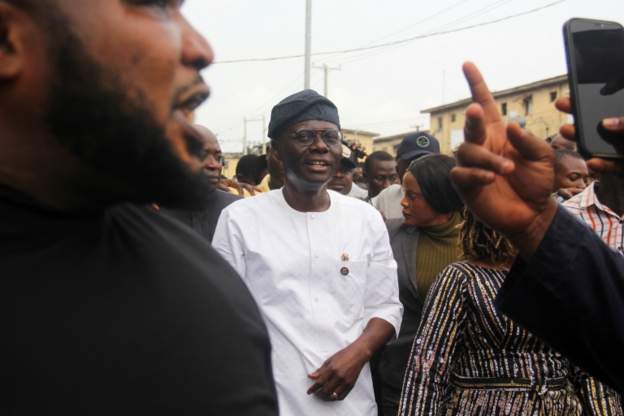
In state elections with low attendance, Nigeria’s ruling All Progressive Congress (APC) party maintained control of Lagos, the nation’s commercial capital.
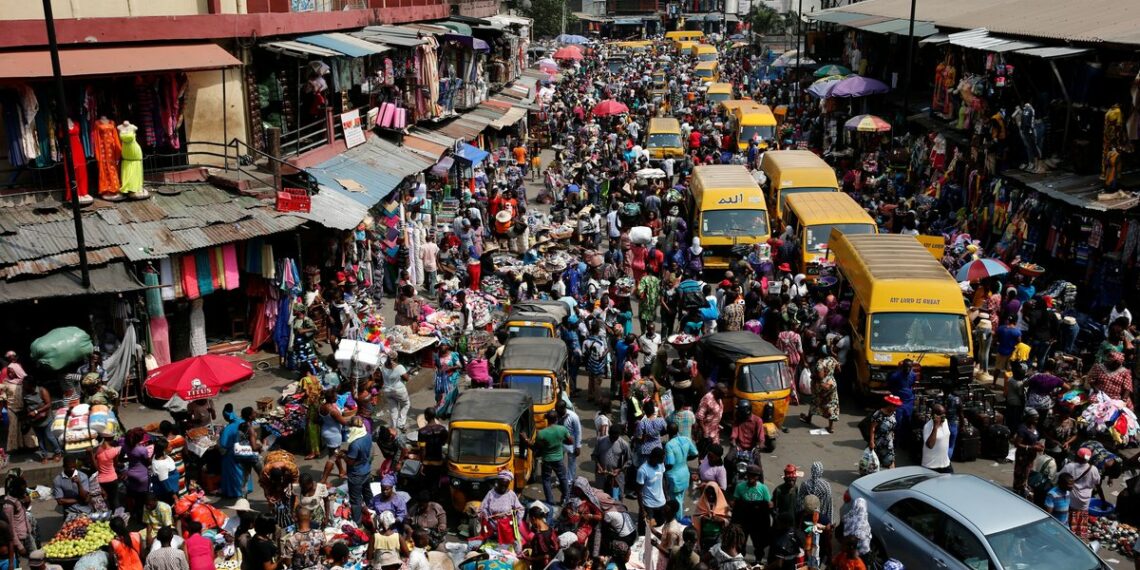
Lagos, which has a population of more than 20 million, is the biggest metropolis in Africa.
Voters in the state had last month backed opposition candidate Peter Obi in disputed presidential elections that have been challenged in court.
Incumbent Governor Babajide Sanwo-Olu retained his seat with a tally of over 760,000 votes – double the count of his closest rival – in results announced by the electoral commission.
His opponent rejected the outcome before the final count was announced citing fraud. He vowed to challenge the results.
Nigerian governors control budgets worth millions of dollars and are in charge of schools, hospitals and infrastructure.
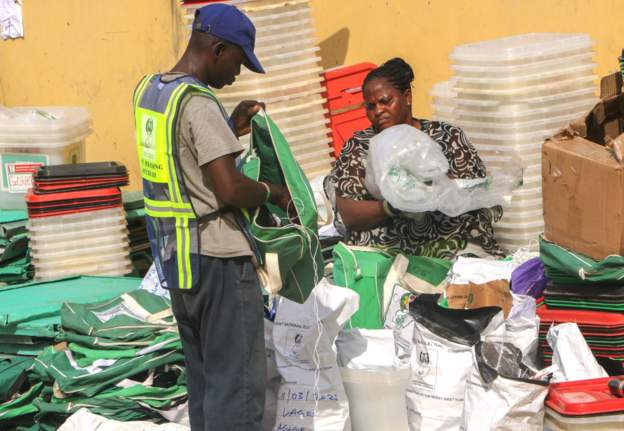
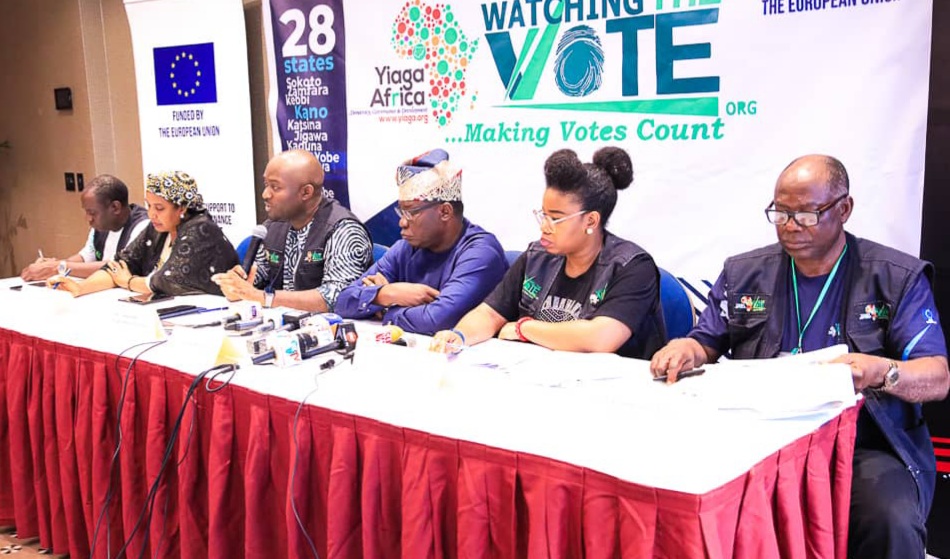
On Sunday, Yiaga Africa reported that the Governorship and State Assembly elections were successfully conducted thanks to the Independent National Electoral Commission’s (INEC) Result Viewing platform (IReV).
At a news conference in Abuja about the governorship and state assembly elections backed by the European Union through its Support to Democratic Government in Nigeria program, Mr. Ezenwa Nwagwu, a board member of Yiaga Africa, made this statement (EU-SDGN).
Yiaga Africa, according to Nwagwu, applauded INEC for the great improvement in the administration of election logistics, particularly the early start of voting thanks to the election officials’ fast arrival in most polling places.
“Unlike the Feb. 25 presidential election, the INEC Election Results Viewing (IReV) portal functioned optimally in this election, enabling citizens to download polling unit-level results.
“Electronic accreditation using the Bimodal Voter Accreditation System (BVAS) was successfully implemented in a significant number of polling units observed by Yiaga Africa.
“Yiaga Africa calls on INEC to ensure proper oversight of the results collation process and ensure that results declared under duress or in breach of the Electoral Act, INEC Guidelines or Manual, are reviewed in line with Section 65 of the Electoral Act.”
Nwagwu said as INEC continued to collate results, citizens, candidates and supporters are encouraged to remain calm and peaceful, and reject any call for violence.
He said that only INEC has the legal mandate to announce the election results and return a candidate as a winner.
“We urge all stakeholders to respect the commission’s constitutional power and refrain from declaring election results.”
Nwagwu said that Yiaga Africa observers noted that the Governorship and State Assembly elections were signposted with voter suppression, electoral violence, electoral impunity, vote buying and capture of the results management by political thugs.
This, he said, were in Delta, Lagos, Rivers, Akwa Ibom, Kano, and Taraba states.
He said that Yiaga Africa was saddened by the cases of attacks on voters, INEC officials, journalists, election observers and personnel of the EFCC by political thugs.
“Reports also indicate that at least eight fatalities were recorded within the last 24 hrs.
“These election-related deaths are unacceptable and highly condemnable. It is important for security agencies to hold the political thugs and their sponsors accountable for these deaths and attacks.”
He said that Yiaga Africa condemned, in unequivocal terms, acts of voter suppression fuelled by ethnic profiling, political thuggery and desperation to secure electoral victory at all costs.
He said that in flagrant abuse of the constitution and the 2022 Electoral Act, registered voters and fellow citizens were denied the right to vote in some states.
“On Professional Conduct, Yiaga Africa received reports that security personnel were unprofessional and partisan in 26 polling units observed.
“Yiaga Africa received reports that polling officials were unprofessional and partisan in 21 polling units observed.”
Nwagwu reported that Yiaga Africa validated 216 critical occurrences on Election Day, March 18, during the course of the day, which is more than was observed in the polls on February 25.
Intimidation and harassment at voting places, violent disturbance, ballot box snatching and destruction, results manipulation during collation, and obstruction of election observation, according to him, have all occurred.
According to Nwagwu, Yiaga Africa got 44 allegations of people bribing people to vote with money or by giving them food.
Thus, he said, Yiaga Africa urged the members of the Inter-Agency Consultative Committee on Election Security (ICCES) to make sure that security personnel were deployed in a sufficient and effective manner at the collation centers.
He added that Yiaga Africa called on political parties, their supporters and voters across the states to remain calm and peaceful as the results collation process is still ongoing.
Paul Okoye of the P-Square duo has bemoaned the extreme inefficiency of the nation’s security institutions.
He claims that the police and other security personnel are among Nigeria’s many issues because they are inefficient.
On March 18, 2023, Paul took to Twitter to express his displeasure with the way the elections had so far been conducted.
He wrote, “Until we realize our major problem in Nigeria is the security agencies … someone is threatening some certain tribes in Lagos, and the police came out to say he was just joking.”
He added: “Now look at what is happening in Lagos today!! Oga Police was he really joking? Sha*eless people.”
Until we realize our major problem in Nigeria is the security agencies…someone is threatening some certain tribes in lagos , and the police came out to say he was just joking. Now look at what is happening in lagos today!! Oga Police was he really joking? Sh*meless people🤮
Twenty-five broadcasters in Nigeria has sanctioned for breaking broadcasting restrictions while covering the general elections last month
According to local media, the National Broadcasting Commission (NBC) has also given 16 additional people a final warning for various poll-related offenses.
Seventeen stations were accused of airing partisan content 24 hours prior to election
Three were sanctioned for inciting comments
Four were said to have aired divisive ethnic or religious content
One was sanctioned for announcing results ahead of an official announcement by the electoral commission.
“Subversive discussions and reckless comments, capable of tearing us apart as a people were broadcast freely without proper gatekeeping. Ethics and professionalism were thrown overboard,” the director-general of NBC, Balarabe Ilelah, said.
Mr Ilelah urged all broadcast stations to adhere to the provisions of laws on broadcasting ahead of Saturday’s gubernatorial and state assembly polls.
In February, Nigeria’s inflation rate increased as a result of the uncertainty brought on by the lack of the newly designed Naira notes.
Inflation increased to 21.91% in February from 21.82% in January, according to data released on Wednesday by the National Bureau of Statistics.
According to the statistics office, the headline inflation rate for February increased by 0.09 percentage points from January’s rate.
In recent months, Nigerians have faced an unprecedented cash crunch as a result of the naira redesign policy of the Central Bank of Nigeria (CBN).
The crisis has plunged many citizens into hardship, with numerous others finding it extremely difficult to meet their daily needs.
Earlier in March, the Supreme Court ruled that the CBN must extend the use of old banknotes until 31 December due to the negative impact of the policy.
A seven-member panel of the court, led by John Okoro, unanimously ordered the CBN to continue receiving the old notes from Nigerian citizens.
The court also found that President Muhammadu Buhari’s directive to the CBN on the withdrawal of old notes and redesign of new banknotes without proper consultation was invalid.
On Monday, hours after the presidency said that Mr Buhari never directed the CBN to disobey the order of the Supreme Court, the CBN directed banks to comply with the apex court’s order and accept the old notes as legal tender until the end of the year.
In its inflation report Wednesday, the NBS said that increases were recorded in all Individual Consumption by Purpose (COICOP) divisions that yielded the headline index.
“Similarly, on a year-on-year basis, the headline inflation rate was 6.21 per cent points higher compared to the rate recorded in February 2022, which was 15.70 per cent.
“This shows that the headline inflation rate (year-on-year basis) increased in February 2023 when compared to the same month in the preceding year (i.e., February 2022),” the NBS said.
The report noted that the contributions of items on a class basis to the increase in the headline index are bread and cereal (21.67 per cent), actual and imputed rent (7.74 per cent), potatoes, yam and other tubers (6.06 per cent), vegetable (5.44 per cent) and meat (4.78 per cent ).
“On a month-on-month basis, the percentage change in the All-Items Index in February 2023 was 1.71 per cent, which was 0.16 per cent points lower than the rate recorded in January 2023 (1.87 per cent).
“This means that in February 2023, on average, the general price level was 0.16 per cent lower relative to January 2023.
It is emerging that the Ewe people of Ghana, Togo and Benin among others are of Hebrew origin before migrating through various parts of the world and then settling at their present locations.
This was disclosed by the Mankrado of Gbledi Gbogame, Togbe Adabra IV while speaking during the “Afadjato edition” of Joy FM’s Showbiz A-Z dubbed.
He told Kwame Dadzie that the facts about the origin of the Ewe people can be found in the Dead Sea Scrolls. He added that Abraham was referred to as Abraham the Evreh then.
“There was a time when Nebuchadnezzar launched a war against the Palestinians and a group of the Hebrews escaped from that war. They went to Egypt, then to Sudan then to Ethiopia all the way down to the Niger,” Togbe Adabra IV said
He added that the Ewes stayed in the Niger area for a while, just before the Mali and Songhai Empires and when Songhai defeated Mali, they (Ewes) moved to a place in Nigeria called Ile Ife and were there when the Oyo State sprung up.
While in Ile Ife, the Ewe people felt they were being persecuted, so they decided to move to Western Benin and settled at a place called Tado before further migrating to Dogbonyigbo and then to Ŋɔtsie in Togo.
Legend has it that while at Ŋɔtsie, the Ewes lived under different traditional leaderships including those of Agɔ and Agorkoli at different times.
However, they could not bear the callousness of King Agɔkɔli any longer, so they escaped to Daƒe and then to Tsevie.
From there, they dispersed, with some of them moving to present-day Ghana, Togo and Benin. There are also some Ewes living between the Volta River in Ghana and beyond the Mono River in Benin.
Currently, it is said that there are mainly 18 sub-tribes of Eʋe people.
Member of Parliament for North Tongu, Samuel Okudzeto Ablakwa, has alleged that the vaccines for childhood killer diseases procured by the government were borrowed from Nigeria.
In a Facebook post on Monday, he noted that the consignment came as “a benevolent gesture which the Ghanaian government has promised to replace when it finally puts its house in order.”
The Ministry of Health and Ghana Health Service on March 11, 2023, received the first consignment of Measles vaccines, BCG vaccines and Oral Polio Vaccines.
The source of the vaccines was not disclosed by the Ghana Health Service when it made the announcement over the weekend.
According to Mr Ablakwa, who believes the government is being secretive, the Akufo-Addo-led government “should not be embarrassed to admit that it reached out to Nigeria and Côte d’Ivoire for urgent bailout on Ghana’s avoidable and indefensible shortage of childhood vaccines.”
Samuel Okudzeto Ablakwa, MP for North-Tongu
“There is absolutely nothing wrong saying thank you to a neighbour who exhibits superior public health policies, better prioritization, and who responds positively and swiftly when you come begging.”
“Ghanaian officials should not be concealing this fact and therefore appearing ungrateful within the comity of nations even though I acknowledge that an honest and transparent narrative from government will further expose false claims by President Akufo-Addo during his Message on the State of the Nation last week that childhood vaccine shortage was a global phenomenon,” he added.
The North Tongu legislator insists that Ghana’s childhood vaccine crisis could have been prevented if the government had not ignored the World Health Organisation (WHO) stock-out warnings since July last year.
Since Nigeria was allegedly able to supply Ghana with vaccines, he believes the “global phenomenon” claim by the president is a fabrication.
“Ghanaians shall not accept fabrications, ineptitude, mediocrity & leadership failure.
If there was truly a global shortage of childhood vaccines, how did Nigeria (despite their population) have excess supply to bail out Ghana? Why are others not in the same predicament as Ghana?” he quizzed.
Mr Ablakwa further revealed that the Nigerian vaccines can only last for 6 weeks, hence the need for the government to find a permanent solution.
Meanwhile, the Ghana Health Service has noted that more vaccines are expected in Ghana in the coming weeks from multiple sources.
On the other hand, the Ketu South Municipality in the Volta Region has recorded 10 cases of measles.
Acting Volta Regional Director of Health, Dr Kwasi Senanu Djokoto, made the revelation at a time when the government is working to address the shortage of vaccines.
33-year-old Ifeoma Ossai, has been detained by Ogun State Police Command agents after her landlord, Oladele, was allegedly killed on Monday over a minor argument.
The suspect, a single mother, was detained as a result of a report submitted at the Sango Ota Divisional Police Headquarters by the dead person’s brother, Olaleye Taiwo, according to a statement released by the State Police Public Relations Officer, SP Abimbola Oyeyemi on Tuesday.
The complainant said the suspect and his brother disagreed over the payment of the electricity bill, while the suspect grabbed his manhood and dragged him with it.
The deceased was said to have become unconscious and eventually died.
The statement reads “Men of Ogun State Police Command on Saturday 11th of March 2023, arrested a 33-year old woman, Ifeoma Ossai, for killing her 50-year old landlord, Monday Surulere Oladele, over a minor disagreement.
“The suspect was arrested following a report lodged at Sango Ota divisional headquarters by one Olaleye Taiwo, who reported that his brother, Monday Oladele has a disagreement with his tenant over the payment of the electricity bill, and in the process, the said tenant grabbed the manhood of the deceased and dragged him with it.
“Consequently, the landlord fell unconsciously on the ground and he was rushed to General Hospital, Ota where the doctor on duty confirmed him dead.
“Upon the report, the DPO Sango Ota division, CSP Saleh Dahiru, quickly led his detectives to the scene where the suspect was promptly arrested and taken to custody for investigation.
“On interrogation, the suspect claimed that the deceased asked her to pay for the electricity bill, but she insisted that until water is directly connected to her apartment as promised by the landlord before she packed in she will not pay the electricity or any other utility bill.
“This led to a scuffle between them consequence upon which the suspect grabbed the manhood of the deceased and dragged him with it.
“The deceased subsequently slumped, and he was rushed to the hospital but was pronounced dead by the doctor on duty.
“The corpse has been deposited at the hospital mortuary for postmortem examination.
“Meanwhile, the Commissioner of Police, CP Frank Mba, has ordered the immediate transfer of the suspect to the Homicide section of the State Criminal Investigation Departments for further investigation and diligent prosecution.”
Just two months after declaring that he was ill as a result of the death of his wife, Ismaila Mabo, the former head coach of the Nigerian women’s national team,Super Falcons, passed away at 78.
The captain of the Mighty Jets of Jos and former international passed away early on Monday morning at his home in Jos. He is scheduled to be buried soon after, in accordance with Islamic customs.
After guiding the Super Falcons to the quarterfinals of the 1999 tournament shortly after his appointment, Mabo is regarded as one of the most successful Nigerian coaches in women’s football.
It is Nigeria’s best performance at a Women’s World Cup to date, and he also led the team at the Australian Summer Olympic Games in Sydney in 2000.
He left the team in 2002 but returned two years later to leadSuper Falcons at the 2004 Athens Summer Olympic Games in Greece.
On Monday, the airport medical staff at the Jinnah International Airport declared Abdullah, a Nigerian national who goes by the name Abdul, dead in the flight.
Abdullah was declared dead upon arrival following an emergency flight.
The local media gathered a Doha-bound IndiGo flight had to make an emergency landing at the Karachi International Airport.
The pilot of flight 6E-1736 requested permission to make an emergency landing when the Nigerian passenger on board felt unwell, his health quickly worsened, and he died mid-air, according to BBC reports.
The man who died has been identified as a 60-year-old Nigerian national.
Reacting, IndiGo in a statement said they are currently making arrangements for transferring the other passengers aboard.
“We are deeply saddened by the news and our prayers and wishes are with his family and loved ones. We’re currently making arrangements for transferring the other passengers of the flight, in coordination with the relevant authorities,” the statement read.
Unidentified officials said the aircraft remained at the Karachi airport for nearly five hours.
It returned to Delhi after the authorities in Karachi issued a death certificate for the passenger.
The German carrier, Lufthansa Airlines is accused of mistreating more than 200 customers traveling to Nigeria, and the Nigerian Civil Aviation Authority has launched an investigation into the matter
According to local media, the airline threatened to contact the police last Friday when the customers, whose flight was delayed, asked for accommodations for their stay.
The flight from Frankfurt to Lagos, which was meant to arrive at the Murtala Muhammed International Airport, was reportedly delayed after diverting to Cotonou in Benin, and Malabo, Equatorial Guinea.
Lufthansa apologised for the flight delay in a circular sent to its passengers last Friday.
The passengers alleged the Lagos airport was not closed, contrary to the claim by the Lufthansa pilot.
Sam Adurogboye, the NCAA public affairs official, on Thursday said the regulator has begun investigation into the matter after receiving complaints from the passengers.
A spokesman for the airline has told the BBC that they are investigating the circumstances of the incident.
Elections for local assemblies and state governors in Nigeria have been postponed by one week.
The election was slated to happen on Saturday. They will now take place on March 18.
The opposition in Nigeria requested a review of the computerized voting equipment. A judge dismissed their lawsuit. However, the electoral commission claimed that because of the legal challenge, preparations had been delayed and the machines would not be ready in time.
Election postponements are frequent in this nation.
In 2019 presidential and parliamentary elections were postponed for a week. The electoral body cited logistical issues.
The opposition has disputed last month’s election victory by President- elect Bolu Tinubu.
The Independent National Electoral Commission (Inec) introduced the Bimodal Voter Accreditation System (BVAS) for the first time as part of new technologies used in this year’s elections in a bid to improve transparency.
But observer groups and opposition parties said huge delays in voting and failures in the system when uploading tallies allowed for ballot disparities during the presidential election.
Several persons are presently feared dead and injured following an early morning collision between a Nigerian Railway Corporation (NRC) train and a bus from the Lagos State Bus Rapid Transit (BRT) program near the PwD bus stop before Oshodi, on Thursday.
Eyewitness accounts claim that a BRT bus was struck by a train at the Shogunle railway crossing as it attempted to cross.
“The BRT bus was crossing the railway track at Shogunle when it got hit by the train. The BRT bus shouldn’t have attempted to cross because the train was already nearbye.
“Many people are inside the BRT bus and I cannot give account of the number of injured for now,.
“The train ran into the BRT bus at Shogunle and dragged it along the rail track up to PwD area” an eye witness told the Nigerian Tribune exclusively.
A significant number of casualties are anticipated following a collision involving a train and a Bus Rapid Transit (BRT) vehicle. The train collided with the BRT, causing it to be dragged from the Ikeja Along area to Shogunle. pic.twitter.com/LLgI2jqDIv
Natasha Akpoti-Uduaghan of the Peoples Democratic Party (PDP) has asked the Inspector General of Police, Usman Baba to look into the outcome of the just concluded senatorial election in Kogi Central.
Akpoti-Uduaghan in the letter dated March 6, 2023, is demanding investigation into allegations of electoral offences including offence of destruction of election materials, obstruction of election, intimidation and harassment of INEC officials and voters on election day.
Akpoti-Uduaghan in the letter written by her lawyer, Samuel Ogala, said there was disruption at Adavi Local Government Area of the State during Saturday’s poll, with video evidence to back the claim.
Read full letter below:
We are Solicitors to Mrs. Natasha Hadiza Akpoti-Uduaghan (hereinafter referred to as “our client”).
Our client was the candidate of the Peoples Democratic Party (PDP) vying for the position of Senate to represent Kogi Central Senatorial District at the National Assembly general election of 25th February 2023.
Between 12 noon and 2 pm, while voting and collation of results was ongoing on the 25th February 2023, several of our client’s polling agents in Adavi Local Government Area of Kogi State reported to our client that the Chairman of Adavi Local Government Area, Kogi State, Hon. Joseph Omuya Salami in the company of his police escorts were going around destroying ballot boxes that were already thumb printed by voters in favour of our client at the various polling units.
Our client’s agents were able to capture on camera the criminal activities perpetrated by Hon. Salami at the polling unit with Code 034, along Eid Prayer Ground, Nagazi/Farm Centre Ward and Polling Unit 033 Mikab Model School, Nagazi/Farm center ward, Adavi Local Government Area, Kogi State where he was destroying polling materials, ballot papers, intimidating voters and harassing electoral officials with the aid of police officers and thugs.
He went to other polling units where he tore ballot papers already thumb-printed in favor of our client to reduce her wild margin against the candidate of the APC.
There is no doubt that the unwholesome activities of Hon. Joseph Omuya Salami, the Chairman of Adavi L.G.A. constitute very grave offences under the Electoral Act, 2022. Hence, it is our client’s instruction to request you to use your good office to investigate the said offences which contravene sections 115(1) (f) & (j), 125 and 126(1) (j) of the Electoral Act, 2022 which are punishable under section 125, 126(3) (4) of the Electoral Act 2022.
In order to facilitate your investigation, we hereby attach the tape of the tearing of ballot papers by Hon Salami to facilitate your investigation.
Kindly accept the assurances of our highest esteem as we await your timely intervention in this regard.
A well-known Nigerian dancer, Kaffy Shafau, has taken her daughter out of Chrisland High School.
In a video posted to her Instagram, Kaffy made this revelation while discussing the tragic event that resulted in the death of 12-year-old Whitney Adeniran, a pupil at the school.
According to her, the negative reports trailing the school are becoming one too many with the institution not showing effort to make amends.
Recall that Tribune Online reported Whitney’s autopsy indicated she died from electrocution during an inter-house sports ceremony.
The mother of two decried the several ‘sacrifices’ of children in Nigerian schools due to carelessness.
She noted that it is sad that an unfortunate incident has to keep happening at the school before things change, meanwhile innocent students and parents keep getting affected.
“I have to make this video as a mother, I don’t think anybody in this life prays to lose a child, it is inconsolable because it is a grief you carry forever, there is nothing that can replace it.
“I’m speaking out not as solidarity with the victim’s mum, but because my children goes there. This is a school that I use to be so proud of and I thrived to put my children there because I belief in the System. The foundation at which the school was built upon, and this is not it.
“The entire school need to be shutdown totally, as I feel right now, my child is not going there, even though I paid school fees already.
“It is becoming a consistent pattern where systems are not properly put in place, it now looks like we need to sacrifice our children before a system needs to be checked,” she lamented.
The market value of Nigerian billionaire Mike Adenuga‘s shareholding in Conoil Plc has increased over the previous two months as renewed investor interest in the company’s shares as a result of its remarkable financial performance has sent its shares soaring on the Nigerian Exchange.
Adenuga currently holds the third-richest position in Nigeria after Abdul Samad Rabiu overtook him in October 2022, according to data compiled by Billionaires Africa. The value of his Conoil share has increased by N10.5 billion ($22.82 million) from the beginning of the year.
Conoil is a leading petroleum marketing firm that offers a range of products, including diesel, kerosene, low-pour fuel, aviation fuel, and gasoline. The company also produces and markets lubricants under the “Quatro” brand name.
With a majority stake of 74.4 percent in the oil marketing business, Adenuga serves as its chairman and is also the founder of telecom service provider, Globacom.
Since the start of the year, the company has experienced a significant surge in its share price on the Nigerian Exchange, rising by nearly 77 percent from N26.5 ($0.0576) on Jan. 1 to N46.85 ($0.1017) on March 2.
This can be attributed to sustained investor interest in the company’s shares following its outstanding financial performance at the end of its 2022 fiscal year.
As a result, investors continue to accumulate shares in Conoil, making it a highly attractive investment opportunity.
As a result of the remarkable 77-percent year-to-date increase in Conoil’s share price, the value of Adenuga’s stake has risen from N13.68 billion ($29.7 million) at the start of the year to N24.19 billion ($52.53 million) at the time of writing this report.
With a profit of $168.4 million in 2022, Conoil is well-positioned for another substantial dividend payout in 2023, making it a highly attractive investment opportunity for shareholders like Adenuga.
Olalere Michael, a 40-year-old mobile police sergeant has shot himself in the head in Ilorin, the capital of Kwara state after murdered his sweetheart Bamidele Cecilia Oluwatosin and then
The incident took place on March 2, 2023, on the grounds of the Redemption Model Nursery and Primary School, Agba Dam, Ilorin, which is housed inside the Chapel of Redemption UMCA.
The late officer is survived by his wife and two daughters.
The mother of Desmond, a student at the school who will be celebrating his third birthday on May 12, 2023, was said to be the late Tosin, who worked as a maid at the Banquet Hall across from the Government House, according to Daily Trust.
It was gathered that some parents refused to allow their children attend school on Friday because of the incident which caused panic around the area.
According to residents and shop owners around the school who spoke to the publication, the deceased mobile police officer trailed his lover to the school premises and waited for her to come pick up her child before opening fire on her at close range.
Some of them were astonished as to why “A young and promising guy like this would kill himself because of a side chic, without considering what his beautiful family will face.”
“The officer was dressed in a camouflage police uniform. He entered the school premises at about a few minutes before 8am in his Toyota Corolla car earlier than his female friend who had brought her son to the school later.
“Immediately she walked him, he brought out his AK-47 rifle and shot Oluwatosin on the chest three times at close range and she died on the spot.
“He thereafter shot himself on the throat which blew off some part of his head and the two of them were there in a pool of blood before the police came to evacuate their bodies about one hour later. It was really a gory scene”, a resident, Olaleye Arodeyo, told Daily Trust.
It was further gathered that the late officer with force number F/NO 497093 was attached to one of the aides of the Kwara State Governor but recently left the position. It was while serving at the Government House that he met Oluwatosin.
Residents who spoke on the issue said they have been dating for a while but trouble started when the late Oluwatosin said she was no longer interested in the relationship.
“What we understand is that Oluwatosin had a fiancé abroad whom she had a son for, and who was preparing to come to Nigeria having left for Dublin about a year ago.
“Because of that, she wanted to end the affair which triggered their frosty relationship and their fatal end,” one of the residents, Mrs Hannah, said.
Unconfirmed reports said Olalere had told some of his colleagues on the day of the incident that he was going to kill somebody and also kill himself.
“But many of them didn’t believe him because he was doing very well as a police officer. He had two houses, one in Iloffa and Omu-Aran, Oke-Ero and Irepodun local government areas of the state. Here in Ilorin, he was staying in the Barrack and had a very beautiful wife and two daughters,” a police source told the publication.
It was further gathered that the late Olalere had tried severally to convince Oluwatosin to rescind her decision to end the relationship but to no avail.
Residents said he had visited the family house of the deceased female friend a few days before where he allegedly made away with some electronics and other items he was said to have bought for her.
“This was at the height of his frustration over the situation. But Olalere was very much in love with her and I believe that was why he killed her and shot himself,” Mr Bello, another resident of the area, said. A female provision seller in the area who simple identified herself as Mrs Benedicta said;
“Most times, when the man (Olalere) is around, they used to come to my shop to buy things. I never knew he was a police officer because he doesn’t wear his uniform and seldom comes down from the car.
“But from their disposition, you could see that he truly loves her. This is very sad. Oluwatosin should be in her 30s and a very beautiful woman. It was after the incident we learnt that she had a fiancé abroad who was coming to Nigeria,” she added.
According to the spokesman of the police command, Ajayi Okasanmi, their corpses have been deposited at the morgue of the University of Ilorin Teaching Hospital (UITH).
“What we can establish now is that the two of them were lovers but at a point, they had a misunderstanding which led to the mobile police officer trailing her to the school, shot her and also killed himself in the process. It has nothing to do with police brutality.
“But the Commissioner of Police, Paul Odama, has ordered investigation of this unfortunate incident. No arrest has been made yet. But I can assure you that the report of the investigation will be made public as soon as it is ready,” Okasanmi added.
President Akufo-Addo has congratulated Bola Ahmed Tinubu, the newly elected president of Nigeria, on his victory in the just ended elections.
Bola Tinubu who was the Presidential Candidate of the All Progressives Congress (APC), won the fiercely contested elections held on February 25, 2023.
“On behalf of the Ghanaian people and their Government, I extend warm congratulations to the Presidential Candidate of the All Progressives Congress (APC), Bola Ahmed Tinubu, on his victory in the Nigerian presidential election of Saturday, 25th February,” President Akufo-Addo posted on his social media handles.
He expressed hope that the Nigerian President-elect would deepen the strong friendship that exists between Nigeria and Ghana.
“It is my expectation that the President-elect would continue in the stead of past Nigerian leaders, and deepen even further the strong friendship that exists between Nigeria and Ghana, which has been based on a shared agenda of freedom, development, security, progress and prosperity,” he said.
Tinubu won the election ahead of other contenders — the Peoples Democratic Party candidate, Atiku Abubakar; the Labour Party candidate, Peter Obi; and the New Nigeria Peoples Party candidate, Rabiu Kwankwaso.
The three leading presidential candidates won in 12 states each, while Kwankwaso claimed only Kano State.
Tinubu edged Atiku, a former vice president and his closest challenger, with no fewer than 1.8 million votes.
Read below President Akufo-Addo’s full statement
On behalf of the Ghanaian people and their Government, I extend warm congratulations to the Presidential Candidate of the All Progressives Congress (APC), Bola Ahmed Tinubu, on his victory in the Nigerian presidential election of Saturday, 25th February.
President-elect Bola Tinubu’s victory has ensured that the ruling APC Government has been given four (4) more years to continue in office, which, I am hopeful, will go a long way to enhancing the quality of governance, the rule of law and the performance of the Nigerian economy.
The presidential candidates of the Peoples’ Democratic Party and the Labour Party, Alhaji Atiku Abubakar and Peter Obi, respectively, are to be commended for their vigorous, well-fought campaigns, and I am confident that their reactions to the results of the election will reinforce the boundaries of Nigerian democracy, and consolidate the peace and stability of Nigeria, Africa’s giant.
It is my expectation that the President-elect would continue in the stead of past Nigerian leaders, and deepen even further the strong friendship that exists between Nigeria and Ghana, which has been based on a shared agenda of freedom, development, security, progress and prosperity.
Warm congratulations, once again, to President-elect Bola Ahmed Adekunle Tinubu, and to the people of Nigeria. Best wishes for his and Nigeria’s success.