Tag: Nurses

  • Restore and pay ‘mysteriously erased’ arrears immediately – Coalition of Unpaid Nurses and Midwives tells govt

    Restore and pay ‘mysteriously erased’ arrears immediately – Coalition of Unpaid Nurses and Midwives tells govt

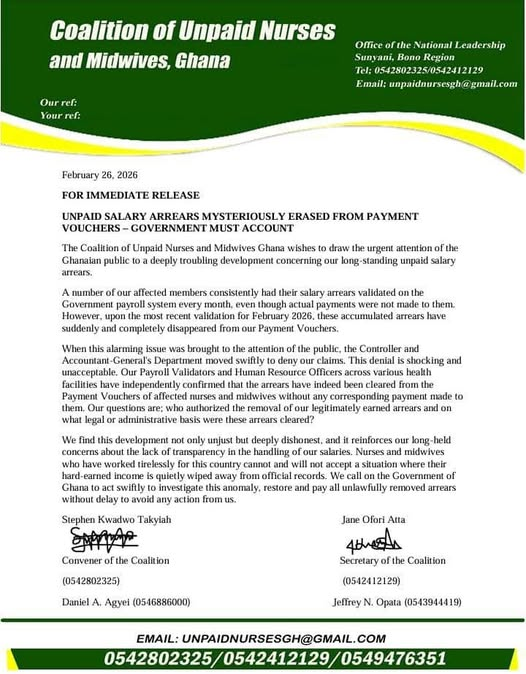
    The Coalition of Unpaid Nurses and Midwives Ghana has urged the government to immediately probe and restore salary arrears it says were removed from its members’ payment vouchers without any payment being made.

    In a statement signed by its Convener, Stephen Kwadwo Takyi, the coalition explained that several affected members had their salary arrears validated on the government payroll system each month, although the monies were not paid.

    The group noted that during the latest validation in February 2026, the accumulated arrears suddenly disappeared from their payment vouchers.

    “We call on the Government of Ghana to act swiftly to investigate this anomaly, restore and pay all unlawfully removed arrears without delay to avoid any action from us,” part of the statement read.

    The coalition further stated that when the matter was brought into the public domain, the Controller and Accountant-General’s Department denied the claims.

    It, however, maintained that its payroll validators and human resource officers across various health facilities have confirmed that the arrears were cleared from the payment vouchers of the affected nurses and midwives without any corresponding payment.

    “Our questions are: who authorized the removal of our legitimately earned arrears and on what legal or administrative basis were these arrears cleared?” the coalition queried in the statement.

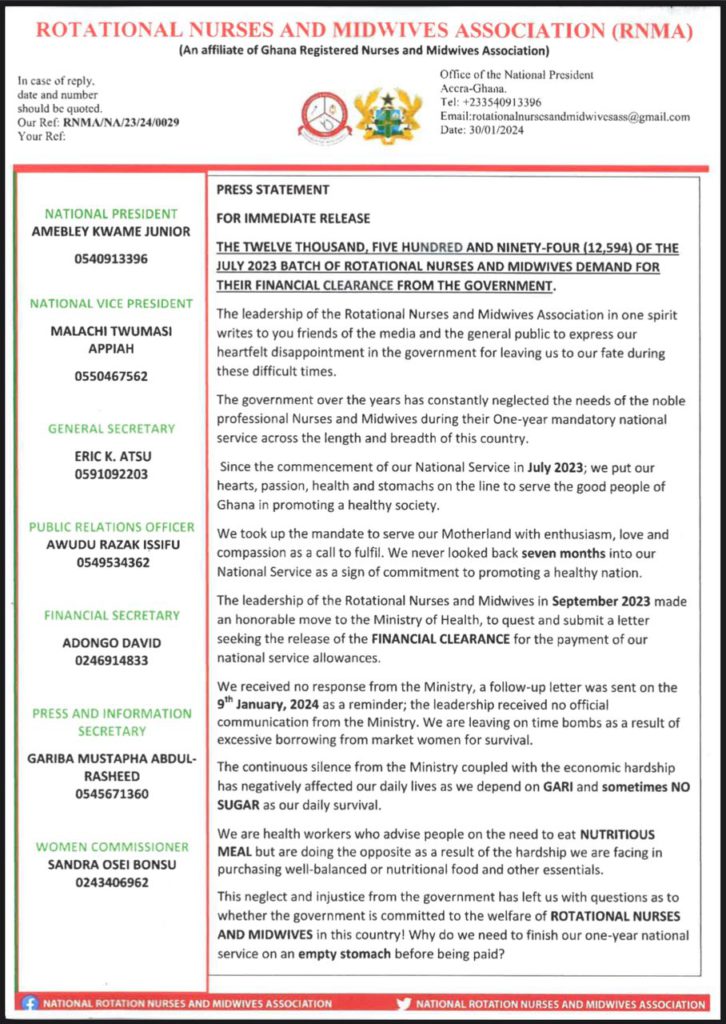
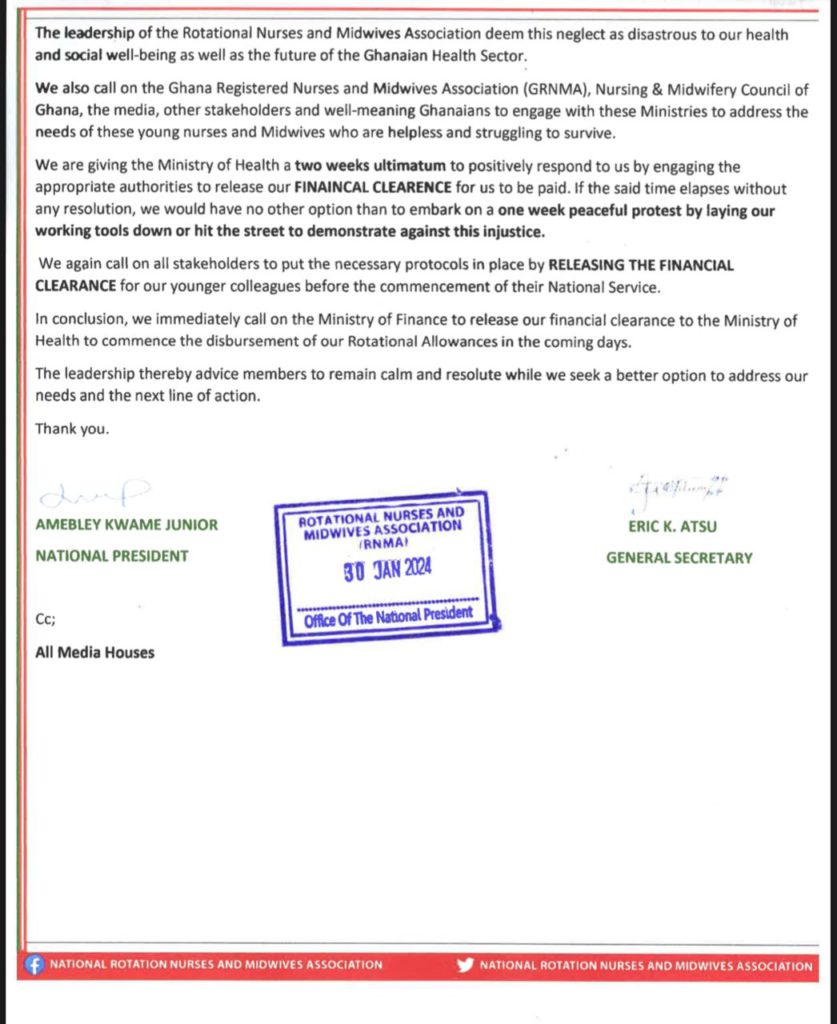
    In 2025, members of the Rotational Nurses and Midwives Association of Ghana complained that they had been working without receiving financial clearance, depriving members of their allowance.

    National President of the Association, Ebenezer Boateng, made this known at a press briefing on Wednesday, May 14, 2025 while noting the economic difficulties over hundreds of rotational health workers have had to face.

    In his delivery, he bemoaned the inactivity of the Health Ministry in ensuring their allowances are paid.

    “We’ve been diligently working since May 2024—almost a full year – without receiving financial clearance, thereby depriving us of our rightful allowances.

    “These repeated delays reflect a broader pattern of neglect that has persisted for over four years, with little to no meaningful intervention from the Ministry of Health.”

    Members of GRNMA on June 2 withdrew from their posts over delays in their 2024 Collective Agreement. In response, the National Labour Commission (NLC) filed an ex parte application on Thursday, June 5.

    A 10-day injunction was placed on the nationwide strike after the Industrial and Labour Division of the High Court in Accra described the protest as illegal.

    The GRNMA disclosed that it was yet to formally receive a court order restraining its ongoing strike. Public Relations Officer of the GRNMA, Joseph Krampah, insisted that the group was proceeding with the strike until an official injunction notice was served.

    Health Minister Mintah Akandoh, on the matter, revealed that the government waas unable to meet the conditions of service for the Ghana Registered Nurses and Midwives Association (GRNMA), currently on strike, this year.

    Engaging the press, the sector minister announced that the conditions of service being requested to be implemented were not captured in the 2025 budget statement; hence, it will “completely throw the economy off gear if implemented in the manner it currently exists.”

    “We are mindful of the serious economic consequences of unbudgeted expenditure and want to avoid the economic slippages that have led to the hardship in the recent past,” the Health Minister revealed.

    The Minority in Parliament entreated the government to put in the necessary measures to ensure the strike action was called off.

    Dr Afriyie Ayew told the government to work towards providing the conditions of service worked on by the previous government.

    “It is our belief that governance is a continuous process regardless of which party is in government public servants are paid, collective bargaining rights which are agreed on remain their rights regardless of which government takes over after elections.”

    The nationwide strike by the Ghana Registered Nurses and Midwives Association (GRNMA) took a heavy toll on the delivery of healthcare services, with many lives being lost due to patients being stranded.

    The Mortuary Workers Association of Ghana (MOWAG) bemoaned the evident rise in mortality cases amid the ongoing strike by nurses and midwives in the country.

    General Secretary of MOWAG, Richard Kofi Jordan, noted that the death rate has increased by approximately 100% to 150% due to nurses not being at post.

    “Looking at the [number] of deaths compared to the past and now, the death toll has increased significantly, and it is not surprising because of the impact of the nurse’s absence. On average, where we are to record about 10 a day, we are recording about 20 to 25. This tells you that the absence of our nurses is becoming so severe,” he said.

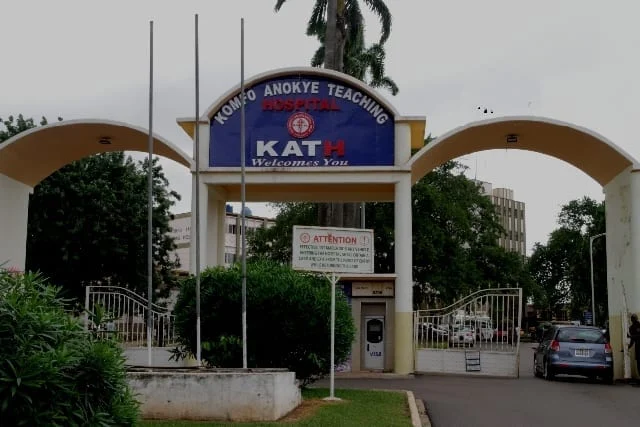
    Making reference to Korle-Bu Teaching Hospital, he mentioned that “we know averagely in Korle Bu, you can have about 50 this time. It has risen above that. Other facilities (like) KATH and all that, we are hearing it.”

    According to him, the nurses who are no longer at their posts were mitigating the daily death rate across medical facilities in Accra.

  • Korle Bu interdicts two doctors, two nurses, for not attending to a hit-and-run victim

    Korle Bu interdicts two doctors, two nurses, for not attending to a hit-and-run victim

    Two medical doctors and two nurses at the Korle Bu Teaching Hospital have been temporarily relieved of their duties to allow for investigations into the alleged negligence involving a hit-and-run victim, Charles Amissah.


    Management of the hospital, in a press statement issued on Monday, February 23, indicated that it has constituted a committee to ascertain the circumstances surrounding the death of the victim.


    “The Management of Korle Bu Teaching Hospital wishes to announce that two medical doctors and two nurses have been interdicted following their alleged failure to provide emergency medical care to a hit-and-run victim.

    “In line with established administrative procedures, a committee has been constituted to conduct a thorough investigation into the circumstances surrounding the incident and the unfortunate death of the victim.


    “Pending the outcome of the committee’s work, the Board and Management call on all persons connected to the matter to cooperate fully with the committee to ensure a fair and transparent inquiry,” part of the statement read.

    Meanwhile, the Korle Bu Teaching Hospital has assured that it remains committed to transparency, accountability, and the delivery of quality healthcare services, adding that further information will be communicated upon completion of the investigation.

    General Secretary of the Ghana Medical Association (GMA), Dr Richard Selormey, has called for urgent reforms in Ghana’s emergency healthcare system.

    According to him, “There’s no centralised point where we can know how many beds are available … any capacity system that can tell us this”. 

    He noted that it is about time the government invested in peripheral hospitals to address the country’s persistent “no bed syndrome”.

    He added, “There’s also the challenge of dumping. No matter how many beds we provide in Korle Bu, if all the peripheries are dumping into Korle Bu and are not strengthened, Korle Bu always have no beds. Ridge will always have no bed. Komfo Anokye will always have no bed”.

    Dr Richard Selormey, General Secretary of the Ghana Medical Association (GMA), has urged the government to strengthen peripheral hospitals to prevent the persistent “no bed syndrome” at major facilities such as Korle Bu, Ridge, and Komfo Anokye.


    The deceased, a 29-year-old engineer with Promasidor Ghana Limited, sustained multiple injuries, particularly to his shoulders, after he was knocked down by a speeding vehicle at the Kwame Nkrumah Circle Overpass in Accra on February 6.


    Charles Amissah was reportedly denied further medical attention at the Police Hospital, the Greater Accra Regional Hospital, and the Korle Bu Teaching Hospital due to a lack of available beds, after being stabilised by Emergency Medical Services (EMS) personnel.


    The development has sparked public outrage, with many Ghanaians demanding answers. Reports indicate that Charles Amissah’s father has, over the years, donated hospital beds to health facilities.

    Ghana has been struggling with the ‘no bed syndrome’ for decades, with no lasting solution to the situation. The ‘no bed syndrome’ describes the practice of hospitals and clinics turning away patients seeking walk-in or referral emergency care, citing reasons such as “no bed available” or “all beds are full.”


    The term, which has become a familiar phrase in Ghana, has led several others to their untimely deaths.


    In 2023, an eleven-year-old girl, Linda Mirekua, who was suffering from kidney disease, was reportedly denied admission at Korle Bu Teaching Hospital due to the unavailability of a medical bed.


    Mirekua, from Nobi, a farming community in the Abuakwa North Municipality, was diagnosed with kidney disease but was left at home due to the inability of her physically challenged mother to afford the cost of her dialysis.


    Her condition worsened in recent times, and she was admitted to Akyem Tafo Government Hospital.


    Linda’s situation was shared on a local social media platform, where GH¢6,000 was mobilised through contributions from philanthropists to support dialysis treatment at Korle Bu Teaching Hospital.


    However, on Thursday, February 16, 2023, Korle Bu Teaching Hospital reportedly denied her admission due to the unavailability of a bed.


    Management of Akyem Tafo Hospital subsequently contacted the University of Ghana Medical Center (UGMC) to refer Linda Mirekua.

    However, UGMC reportedly demanded that the patient settle GH¢8,000 in outstanding medical bills owed to the facility from the previous year and be prepared for “cash and carry” before she would be admitted for dialysis treatment.

  • 2026/27 NSS: NSA issues PIN codes to 6,867 nurses, midwives

    2026/27 NSS: NSA issues PIN codes to 6,867 nurses, midwives

    A total of 6,867 eligible nurses and midwives have obtained PIN codes to enable their registration for the 2026/27 National Service Year.

    The National Service Authority (NSA) on Monday, January 19, directed the listed candidates to retrieve their PIN codes from the Authority’s website to begin the registration process for the 2026/27 National Service Year.


    According to the NSA, “All eligible trained Nurses and Midwives are requested to visit the Authority’s website and click on the portal to access their PIN codes using their respective Student ID numbers and dates of birth”.

    Prospective Service Personnel are required to note that a registration fee of GH¢41.00 must be paid via Mobile Money across all networks to access the enrolment platform.

    In June, the National Service Authority (NSA) released PIN codes for 132,393 prospective national service personnel ahead of the 2025/2026 service year. This information was made known in a press release issued by the Authority on Tuesday, June 17.


    The NSA indicated that this year’s intake dropped by an average of 26% compared to the past three years, with a 36% decline in 2022/2023.


    The Authority also revealed that it received 135,990 submissions for this year from 122 tertiary institutions. It noted that 3,597 submissions are pending verification of accreditation.


    “This figure is part of a total of 135,990 final-year Ghanaian students submitted by 122 tertiary institutions across the country.


    “However, 3,597 of these submissions, representing graduates from 22 institutions, have not been processed, as those institutions are currently not accredited and remain unknown to the Ghana Tertiary Education Commission (GTEC),” it added.


    Tertiary institutions have been granted a 30-day window to address their accreditation irregularities with GTEC. Meanwhile, 908 PIN codes for private applicants are currently awaiting final verification from the related institutions to be released.


    Prospective service personnel are required to activate their PIN codes by paying a fee of GHS 40 at any ADB Bank Ltd branch. Alternatively, payments can be made via MTN Mobile Money at a fee of GHS 41.


    To begin the registration process, applicants should visit the NSA portal and follow the instructions to retrieve their PIN codes and complete the required steps.

    To strengthen the transparency and security of the registration process, the NSA has introduced several improvements to its online enrolment platform:


    Facial Biometric Verification: All prospective service personnel must complete facial verification against their Ghana Card data held by the National Identification Authority (NIA) prior to accessing the registration form.


    Verified Address Input: Applicants must provide a valid Ghana Post GPSaddress, which will be used for distance mapping and regional posting decisions, to guide proximity to the workplace.

    The accuracy of this information is essential for effective placement. Detailed guidance is available at
    Registrants may also contact support@nss.gov.gh for additional assistance or chat with us live on the portal.

    The National Service Authority (NSA) canceled online registration for the 2025/2026 service year submitted in June due to suspected irregularities in its Central Management System (CMS).In this regard, the Authority has announced that online registration for prospective national service personnel will begin on Wednesday, October 8, and end on Wednesday, October 15.

    All national service personnel reported to their assigned service stations on Saturday, November 1. The Authority directed personnel to visit its new website, www.gnsa.gov.gh, for step-by-step guidelines for the online registration.

    “All previous registrations from June 2025 have been declared null and void. Every prospective service personnel must re-register on the new platform,” the statement noted.

    On June 18, the NSA’s Central Management System (CMS) was abruptly suspended by the Ministry of Youth Development and Empowerment following a directive from President John Dramani Mahama due to suspicions of irregularities.

    Speaking to JoyNews on Tuesday, September 9, the Acting Director General of the National Service Authority (NSA), Ruth Seddoh, revealed that the audit exposed more than 1,000 babies, some less than a year old, listed as National Service Personnel on NSA’s payroll.

    She explained, “If the system were foolproof, we wouldn’t have had children under one year without a Ghana Card being on our payroll. We had almost 1,000 kids under one year on our payroll, on our system.

    “But we were thinking that if the system were to be foolproof, the system would have detected that these people were minors. Because it is done, and it can be done. To the extent that the system can determine that these ones are below the age of 18, but that was not done.”

    This suspension delayed postings for the 2025/2026 national service personnel.

    The Authority is among several institutions being probed by the Office of the Special Prosecutor (OSP) for alleged irregularities. A recent report by the non-profit investigative body, The Fourth Estate, alleges that the former Director-General (D-G) of the NSA, Osei Assibey Antwi, was listed as a volunteer within the NSA while in office.

  • No budgetary allocation was made for 13k nurses employed in 2024 – Akandoh

    No budgetary allocation was made for 13k nurses employed in 2024 – Akandoh

    Health Minister Kwabena Mintah Akandoh has disclosed that the then Akufo-Addo government recruited over 13,000 newly recruited nurses and midwives onto the government payroll without any budgetary allocation.

    He made this revelation while clarifying the challenges his ministry is facing in settling debts owed to government workers, particularly those in the health sector.

    “The reality is that in 2024, government started to recruit nurses and midwives. So the summary is that they recruited about 13,500 nurses and midwives and issued clearance,” he said.

    “Once you issue clearance, you must make financial provision. Clearance is not just a paper… you issue clearance when indeed you can pay when you recruit the people.”

    The Minister explained that the clearances of 13,500 nurses and midwives had expired by December 2024, even though they began work in August of the same year. However, none of them were added to the government payroll during that period.

    “The clearance expired on 31st December 2024. What it means is that before the expiration… you must necessarily have all these 13,500 people on the payroll. As at the end of 31st December 2024, not a single one of the 13,500 people were on the payroll,” he said.

    “When we came, there were two options available because there was no allocation for these nurses and midwives. One — let them go home and look for the funding and extend the clearance and then they come and work. Two — you can allow them to work while you look at how you will pay them, because that was not captured as part of our budget,” he explained.
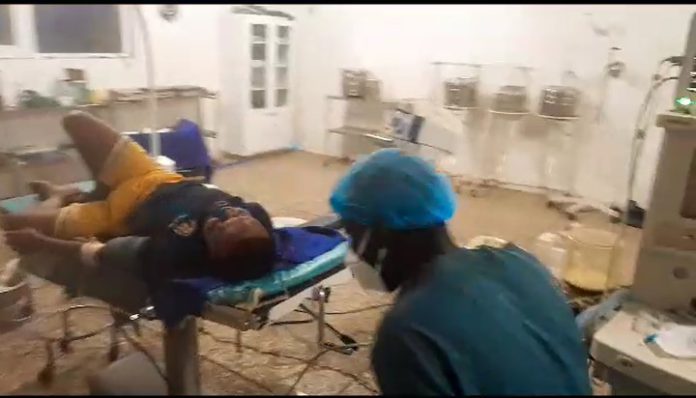
    Ghana, in recent times, has witnessed several protests from government employees, particularly teachers, nurses, and doctors. According to him, the former government handed over a poorly planned budget that made no provision for the payment of nurses, teachers, and doctors.

    As such, the Minister has called on the protesting groups to keep calm as the ruling National Democratic Congress (NDC) administration will work to rectify the anomalies.

    “We are taking it up very seriously, and I can assure the nurses, teachers, and junior doctors who are caught up in the process that we are going to respond to them before the end of the year,” he stated.

    On Tuesday, September 30, the Newly Posted Teachers group, comprising graduates from Colleges of Education and universities, submitted their petition to the Finance Ministry, calling on the government to clear debts owed them.

    The group had initially declared its intention to hit the streets over unpaid salaries on Tuesday, September 23. However, speaking to Citi News, the group’s Lead Convener, Simon Kofi Nartey, noted that the Ministry of Education and other relevant authorities were yet to respond to their earlier petitions, thus rescheduling the protest to September 30.

    Simon Kofi Nartey called on the government to settle their 12-month and 8-month salary arrears, respectively, within the given ultimatum. According to him, the group would have no option but to hit the streets if the government did not treat their demands with urgency.

    “It is rather unfortunate that, as we speak, nothing has been done about the concerns we raised at our press conference. We have no option but to take to the streets to let Ghanaians know what is happening. We have already met with the Greater Accra Regional Police Command and agreed on September 30 for the demonstration,” he said.

    Also, on October 3, the Junior Doctors’ Association of Ghana (JDA-GH) declared its intention to withdraw services nationwide over unpaid salaries and alleged unfair treatment from the government.

    However, the group made a U-turn on its nationwide strike, which was expected to commence on Tuesday, October 6. The decision to suspend the withdrawal of services followed constructive discussions with the Ministry of Health (MoH) and other key stakeholders.

    This was contained in a press statement issued by the Association’s leadership on Monday, October 6. According to the statement, “After careful consideration and following assurances from the Ministry of Health and relevant stakeholders, the Association has decided to suspend its planned industrial action to allow for the full implementation of the agreed resolutions.”

    The group lamented that over 200 junior doctors had been left unpaid for 10 to 14 months. According to the Association, some medical officers had been suspended without explanation, even though they were previously on the government payroll.

    It also emphasized that more than 800 medical officers were yet to be assigned to hospitals despite numerous engagements with authorities on the matter.

    “Despite goodwill shown towards the government, no solutions have been offered. The continued exploitation of junior doctors will no longer be tolerated,” the statement read.

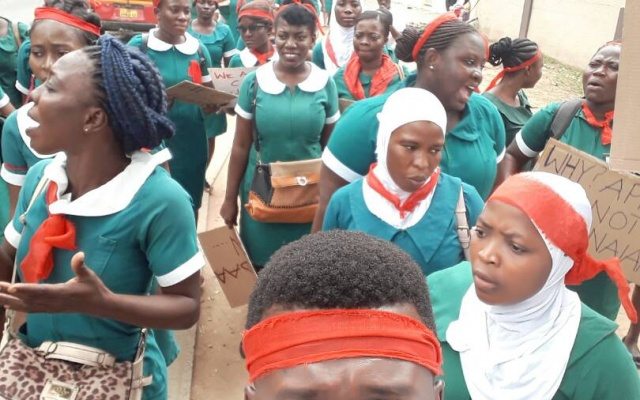
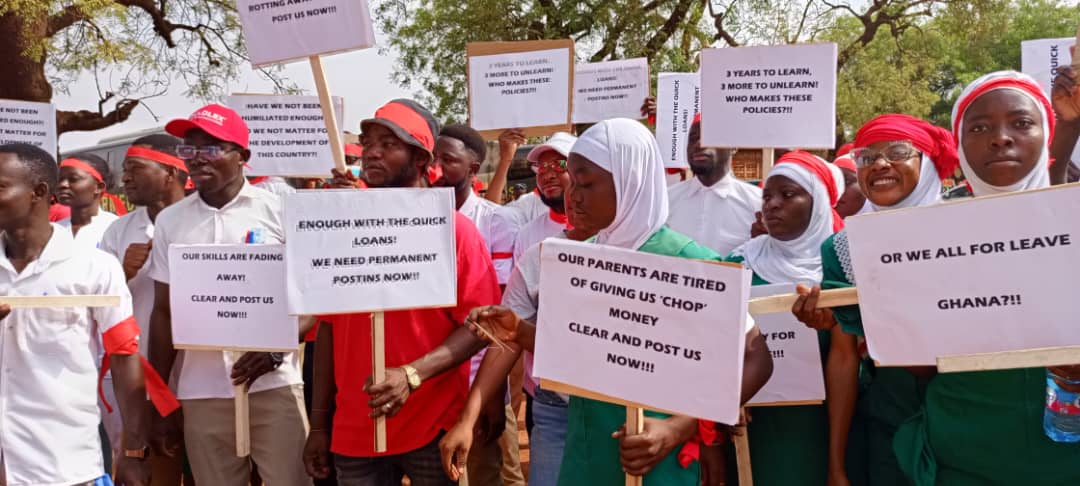
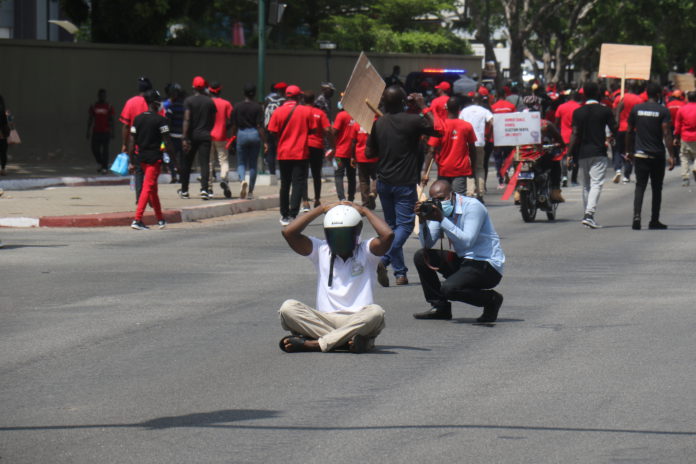
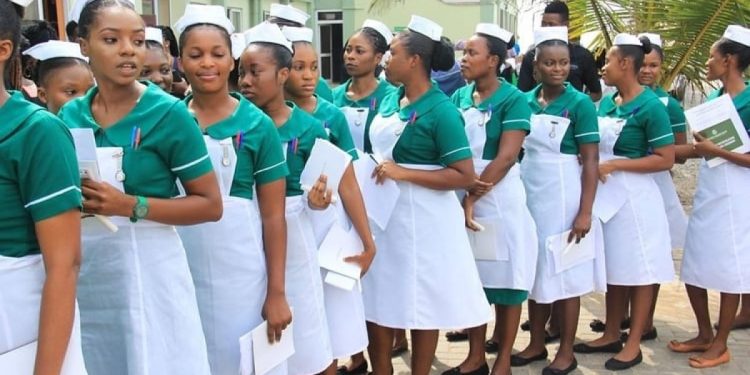
    On Thursday, October 2, the Coalition of Unpaid Nurses and Midwives staged a protest to register similar sentiments. Over 7,000 nurses and midwives gathered at the Ministry of Finance and the Ministry of Health, lamenting over working without salaries for nine to ten months.

    Convenor of the coalition, Stephen Kwadwo Takyiah, described the situation as unfair and unsustainable. He added, “We are not comfortable hitting the streets, but it has become necessary. We are citizens, trained as professional nurses and midwives from nursing training colleges and universities.

    “We graduated in 2020, completed our rotations, and waited at home for three years. In July 2024, the Ministry of Health announced it had secured financial clearance from the Ministry of Finance for our employment.

    “The portals were opened, we registered, and by October 2024, we received postings and reported to work in December. Out of the 15,000 announced, about 13,000 took up postings.

    “But in April 2025, only some of our colleagues started receiving salaries. As we speak, just over 6,500 have been paid, while nearly 7,000 of us have worked for close to 10 months without pay.”

    In response, the Minister for Health, Hon. Kwabena Mintah Akandoh, urged the group to exercise patience, assuring them that the government had taken steps to address their concerns.

    Addressing the aggrieved group on Thursday, October 2, the Minister disclosed that the government would include funds to settle their unpaid salaries in next year’s budget.

    On June 2, members of the Ghana Registered Nurses and Midwives Association (GRNMA) withdrew from their posts over delays in their 2024 Collective Agreement.

    In response, the National Labour Commission (NLC) filed an ex parte application on Thursday, June 5. A 10-day injunction was placed on the nationwide strike after the Industrial and Labour Division of the High Court in Accra described the protest as illegal.

    The GRNMA disclosed that it had yet to formally receive a court order restraining its ongoing strike. Public Relations Officer of the GRNMA, Joseph Krampah, insisted that the group would proceed with the strike until an official injunction notice was served.

    Health Minister Mintah Akandoh, on the matter, revealed that the government was unable to meet the conditions of service for the Ghana Registered Nurses and Midwives Association (GRNMA), currently on strike, this year.

    Engaging the press, the sector minister announced that the conditions of service being requested were not captured in the 2025 budget statement, noting that it would “completely throw the economy off gear if implemented in the manner it currently exists.”

    “We are mindful of the serious economic consequences of unbudgeted expenditure and want to avoid the economic slippages that have led to hardship in the recent past,” the Health Minister revealed.

    The Minority in Parliament entreated the government to put in the necessary measures to ensure the strike action was called off. Dr. Afriyie Ayew urged the government to work towards providing the conditions of service negotiated by the previous administration.

    “It is our belief that governance is a continuous process; regardless of which party is in government, public servants are paid. Collective bargaining rights which are agreed on remain their rights regardless of which government takes over after elections.”

    The nationwide strike by the Ghana Registered Nurses and Midwives Association (GRNMA) took a heavy toll on healthcare delivery, with many lives lost as patients were left stranded.

    The Mortuary Workers Association of Ghana (MOWAG) bemoaned the sharp rise in mortality cases amid the ongoing strike by nurses and midwives.

    General Secretary of MOWAG, Richard Kofi Jordan, noted that the death rate had increased by approximately 100% to 150% due to the absence of nurses at post.

    “Looking at the number of deaths compared to the past and now, the death toll has increased significantly, and it is not surprising because of the impact of the nurses’ absence. On average, where we are to record about 10 a day, we are recording about 20 to 25. This tells you that the absence of our nurses is becoming so severe,” he said.

    Making reference to Korle Bu Teaching Hospital, he mentioned that “we know the average in Korle Bu; you can have about 50 this time. It has risen above that. Other facilities (like) KATH and all that, we are hearing it.”

    According to him, nurses who are no longer at post previously helped to reduce the daily death rate across medical facilities in Accra.

  • 13,500 nurses now on govt’s payroll – Health Ministry announces

    13,500 nurses now on govt’s payroll – Health Ministry announces

    Thirteen thousand five hundred (13,500) nurses have now been placed on the government payroll, according to the Ministry of Health.

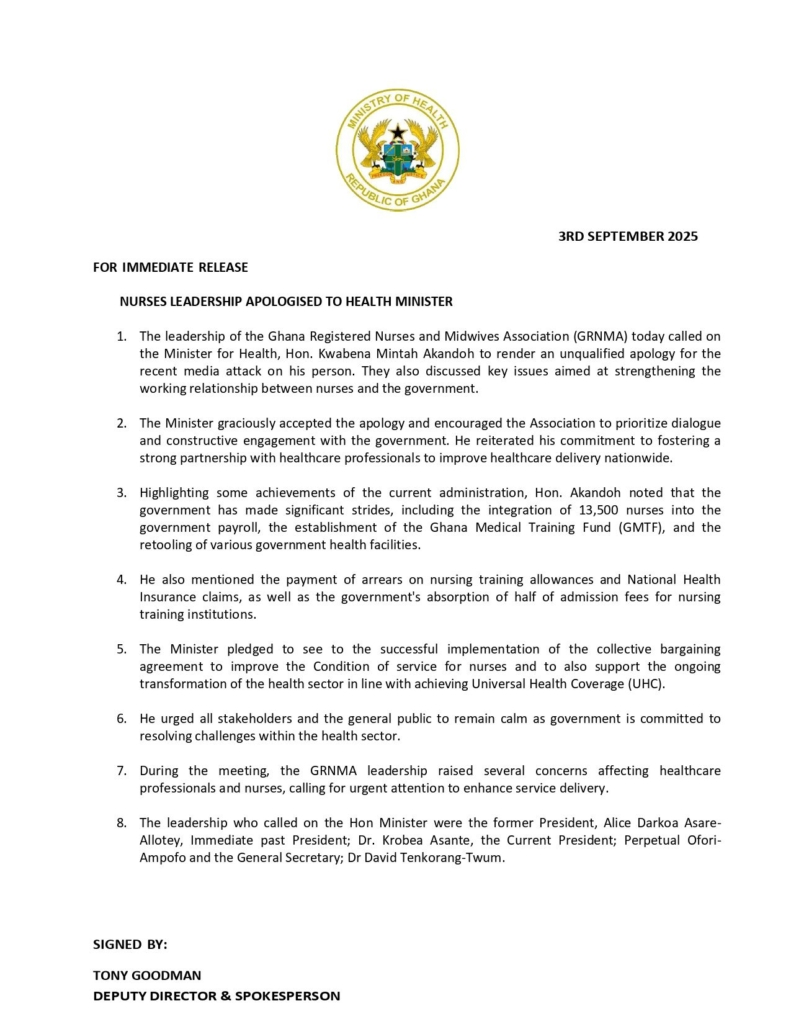
    This development was made public when the leadership of the Ghana Registered Nurses and Midwives Association (GRNMA) paid a courtesy call on the Health Minister, Kwabena Mintah Akandoh, on Wednesday, September 3, 2025.

    Members of the Association were there to render an unqualified apology to the Minister for a recent media attack on his person and discussed strategies to strengthen ties between nurses and the government.

    Amidst making amends, a statement was shared on the Health Ministry’s Facebook page, where Honourable Akandoh highlighted some achievements of the current administration, and noted that “the government has made significant strides, including the integration of 13,500 nurses into the government payroll, the establishment of the Ghana Medical Training Fund (GMTF), and the retooling of various government health facilities.”

    He also mentioned the payment of arrears on nursing training allowances and National Health Insurance claims, as well as the government’s absorption of half of admission fees for nursing training institutions.

    The Minister pledged to see to the successful implementation of the collective bargaining agreement to improve the Condition of service for nurses and to also support the ongoing transformation of the health sector in line with achieving Universal Health Coverage (UHC).

    He urged all stakeholders and the general public to remain calm as government is committed to resolving challenges within the health sector.

    During the meeting, the GRNMA leadership raised several concerns affecting healthcare professionals and nurses, calling for urgent attention to enhance service delivery.

    The leadership who called on the Hon Minister were the former President, Alice Darkoa Asare-Allotey, Immediate past President; Dr. Krobea Asante, the Current President; Perpetual Ofori Ampofo and the General Secretary; Dr. David Tenkorang-Twum.

    Members of GRNMA on June 2 withdrew from their posts over delays in their 2024 Collective Agreement. In response, the National Labour Commission (NLC) filed an ex parte application on Thursday, June 5.

    A 10-day injunction was placed on the nationwide strike after the Industrial and Labour Division of the High Court in Accra described the protest as illegal.

    The GRNMA disclosed that it was yet to formally receive a court order restraining its ongoing strike. Public Relations Officer of the GRNMA, Joseph Krampah, insisted that the group was proceeding with the strike until an official injunction notice was served.

    Health Minister Mintah Akandoh, on the matter, revealed that the government waas unable to meet the conditions of service for the Ghana Registered Nurses and Midwives Association (GRNMA), currently on strike, this year.

    Engaging the press, the sector minister announced that the conditions of service being requested to be implemented were not captured in the 2025 budget statement; hence, it will “completely throw the economy off gear if implemented in the manner it currently exists.”

    “We are mindful of the serious economic consequences of unbudgeted expenditure and want to avoid the economic slippages that have led to the hardship in the recent past,” the Health Minister revealed.

    The Minority in Parliament entreated the government to put in the necessary measures to ensure the strike action was called off.

    Dr Afriyie Ayew told the government to work towards providing the conditions of service worked on by the previous government.

    “It is our belief that governance is a continuous process regardless of which party is in government public servants are paid, collective bargaining rights which are agreed on remain their rights regardless of which government takes over after elections.”

    The nationwide strike by the Ghana Registered Nurses and Midwives Association (GRNMA) took a heavy toll on the delivery of healthcare services, with many lives being lost due to patients being stranded.

    The Mortuary Workers Association of Ghana (MOWAG) bemoaned the evident rise in mortality cases amid the ongoing strike by nurses and midwives in the country.

    General Secretary of MOWAG, Richard Kofi Jordan, noted that the death rate has increased by approximately 100% to 150% due to nurses not being at post.

    “Looking at the [number] of deaths compared to the past and now, the death toll has increased significantly, and it is not surprising because of the impact of the nurse’s absence. On average, where we are to record about 10 a day, we are recording about 20 to 25. This tells you that the absence of our nurses is becoming so severe,” he said.

    Making reference to Korle-Bu Teaching Hospital, he mentioned that “we know averagely in Korle Bu, you can have about 50 this time. It has risen above that. Other facilities (like) KATH and all that, we are hearing it.”

    According to him, the nurses who are no longer at their posts were mitigating the daily death rate across medical facilities in Accra.

  • Nursing trainee admission fees slashed, students to pay 50%

    Nursing trainee admission fees slashed, students to pay 50%

    First-year students enrolling in Nursing and Allied Health Training Institutions for the 2025/2026 academic year will enjoy a 50% reduction in admission fees.

    The new development fulfills President John Dramani Mahama’s promise to make education accessible to all groups of Ghanaian citizens under the “No-Fee-Stress” policy.

    This information was made known by the Ministry of Health in a Facebook post on Sunday, August 31.

    “The Ministry of Health wishes to inform the general public and all stakeholders that, effective the 2025/2026 academic year, school fees for Nursing and Allied Health Training students have been reduced by 50%.

    “This intervention has been made possible through the introduction of Government’s flagship ‘“’No-Fee-Stress” Policy for tertiary students across the country. By this initiative, the Government has absorbed about half of the approved fees for all first-year students enrolled in Nursing and Allied Health Training Institutions,” parts of the release read.


    All institutions have been directed by the Ministry to strictly adhere to the approved fees and items as communicated by the Ministry.

    The ‘No Fees Stress’ policy was launched on Friday, July 4, at Koforidua in the Eastern Region.

    According to President John Dramani Mahama at the launch, fifteen thousand (15,000) of Ghanaian students have so far received the alerts for payment.

    He further stated that, “Out of this, 34,500 have been validated and are awaiting payment. And out of that number, as at July 3, 15,000 students had received the alerts for payment.”

    “This policy is not about welfare. It is about fairness. It is about restoring dignity to the Ghanaian student. It is about affirming that the right to education is not a privilege for the wealthy, but a shared national inheritance”.

    The “No-Fee Stress” initiative was a major campaign promise by then-presidential candidate John Dramani Mahama, who pledged to absorb academic fees for all Level 100 students within the first 120 days of his administration.


    To support the rollout of the “No-Fee Stress” policy, GH¢499.8 million has been allocated under the 2025 national budget, which was presented to Parliament by Finance Minister Dr. Cassiel Ato Forson on Tuesday, March 11.


    The Ministry of Education has made accessible a registration portal to help first-year students at public tertiary institutions in Ghana apply for financial assistance under the government’s new No-Fees-Stress Policy.


    Launching the portal on Monday, April 29, Education Minister Hon. Haruna Iddrisu described the policy as a bold and strategic move by the government to improve access to tertiary education and invest in the country’s future workforce.


    The Students Loan Trust Fund (SLTF) explained that the new system will make it easier for eligible students to register, submit their details, and be assessed for financial support.


    A total of 35,608 tertiary students across 130 public and private institutions nationwide have received financial support from the Students Loan Trust Fund (SLTF) for the 2024/2025 academic year.


    The SLTF, conversely, has reiterated its resolve to release funds on time to allow students to gain admission into their preferred tertiary institutions without financial hindrance.


    Education Minister Haruna Iddrisu has announced that the Ghana Education Trust Fund’s (GETFUND) allocation to the Students Loan Trust Fund (SLTF) will be doubled in 2026.


    “Next year, the GETFUND will double its allocation to the Students Loan Trust from 70 million to 150 million to support students who may want to access it further,” the minister said.

    In July this year, the government disbursed an amount of GHS 462 million to settle training allowances owed to 120,000 nursing students nationwide.

    The six-month payment is part of the government’s wider effort to assist students in Nursing Training Colleges financially.

    A statement released by the Ministry of Health on Thursday, July 17, indicated that the new development aligns with President John Dramani Mahama’s campaign promise in 2024.

    “The Ministry views this development as a significant step in improving the welfare of nursing trainees and sustaining the motivation of future health professionals. It further aligns with ongoing efforts to strengthen the health sector by ensuring that critical human resources receive the needed support throughout their training,” parts of the statement read.

    The Ministry extended its appreciation to President Mahama for facilitating the timely release and distribution of the funds.

    It pledged to strengthen its collaboration with nursing schools to uphold the quality of healthcare education countrywide.

    “The Ministry extends its appreciation to the president of the Republic of Ghana, His Excellency John Dramani Mahama for fulfilling his promise to the nurses, as well as all other stakeholders involved in facilitating the timely release and distribution of the funds.”

    In 2024, President Mahama encouraged trainee nurses to prioritize securing stable employment over relying on allowances. He highlighted the need for sustainable job opportunities in Ghana’s healthcare sector.

    Speaking to trainee nurses on Saturday, Mahama acknowledged their financial difficulties but emphasized that long-term job security is more beneficial than temporary financial support.

    He assured them that his administration would focus on job creation within the healthcare industry, ensuring stable and rewarding careers for nurses and other health professionals.

    “We know the problems with trainee nurses and that is why when we were in government, we said we were going to substitute your allowance with the students’ loan because we wanted to create more employment for you. What is important for you is not the allowance it is to get a job when you finish school,” he stated.

    Adding that “But somebody came and said he will pay the allowances. Unfortunately, it was 419…Come and pay the nurses you owe them almost 30 months of arrears. Some of them have left school without receiving their allowances and some of them are going to leave school again without receiving their allowances.

    “…I make you a commitment when I come to the hospitals, we were building that have been abandoned by this government we will continue them.

    “When I come to the agenda 111 hospitals, they are building I will continue and finish them so that we can create more space to be able to absorb all of you when you finish school. This election is between Ghana and NPP.”

  • Finance Ministry fully committed to  resolving GRNMA’s demand – Health Minister

    Finance Ministry fully committed to resolving GRNMA’s demand – Health Minister

    Minister for Health, Kwabena Mintah Akandoh, has assured that the Ministry of Finance is fully committed to addressing the concerns raised by striking nurses and midwives in the country.

    His assurance came in the wake of a nationwide industrial action embarked upon by members of the Ghana Registered Nurses and Midwives Association (GRNMA), who are protesting the non-implementation of a collective bargaining agreement they reached with the previous administration.

    Speaking in an interview with JoyNews on Wednesday, June 5, Mr. Akandoh stressed that his ministry has been working closely with the Finance Ministry to ensure that nurses’ grievances are resolved in a manner that prevents further disruption of healthcare delivery.

    “They have been in constant touch with the Ministry of Finance because this goes beyond the Ministry of Health,” he explained. “I could not absolve myself from responsibility until the full implementation of the agreement because we are their employers. Where we have reached, the Minister of Finance would have to play a key role, of which we are engaging the Ministry.”

    According to him, the Finance Ministry has given its word to help find a solution to the matter.

    “I can tell you the Ministry of Finance is fully committed to finding solution for this matter,” Mr Akandoh stated.

    He, however, cautioned that it will be difficult to hold meaningful negotiations while the strike is in full effect.

    “But we cannot be on strike and negotiate at the same time,” he emphasized.

    The Health Minister further acknowledged the adverse impact of the ongoing strike on patients, recounting an instance where a pregnant woman bitten by a snake was denied medical attention.

    “These are all the things we want to avoid. I get emotional when I hear of some of these things,” he said.

    Calling for calm, Mr Akandoh appealed to the nurses and midwives to return to the negotiation table in good faith.

    “With the greatest of respect, lives lost can never be replaced. We are not ready to intimidate anybody, and I hope nobody wants to intimidate the government. We are the mother ministry, and we must behave as mothers, so we are calling on them to come and let’s talk,” he said.

    He maintained that the government remains open and ready to engage the leadership of GRNMA at any time to ensure a lasting resolution to the issue.

    “We operate an open-door policy, and I am ready to engage and meet anybody at any time. Not until we find a lasting solution to the matter, we will not rest,” he said.

    The GRNMA strike began on Monday, June 2, with the association expected to fully withdraw all services by June 9 if their demands are not met.

    The situation has already begun affecting healthcare delivery in parts of the country.

  • Barbados High Commissioner advocates health training programmes for their nurses in Ghana

    Barbados High Commissioner advocates health training programmes for their nurses in Ghana

    The High Commissioner of Barbados to Ghana, Juliette Byone-Sutherland, has called for opportunities for Barbadian nurses to undergo health training in Ghana, emphasizing the benefits of hands-on experience in the country’s healthcare system.

    During a meeting with the Minister of Health, Mr Kwabena Mintah Akandoh, discussions centered on strengthening healthcare collaboration between the two nations.

    The Minister outlined key initiatives to enhance healthcare delivery in Ghana, including incentives for rural health workers such as salary bonuses, accelerated promotions, and scholarships for further education.

    Plans to improve regional and teaching hospitals and the need for additional healthcare facilities in Ghana’s newly created regions were also highlighted.

    Byone-Sutherland acknowledged Ghana’s ongoing efforts to strengthen its health sector and proposed that Barbadian nurses could gain valuable practical experience through training programmes in the country.

    This engagement underscores the significance of international partnerships in healthcare development. The Ministry of Health continues to explore initiatives to support healthcare workers and improve service delivery for Ghanaians.

    Ghana has already established ties with Barbados in the health sector. Since 2022, approximately 400 Ghanaian registered nurses have been deployed to Barbados as part of an exchange programme.

  • Govt to pay teacher, nursing trainees via CAGD to avert payment delays

    Govt to pay teacher, nursing trainees via CAGD to avert payment delays

    The government has announced plans to pay teacher and nursing trainees’ allowances through the Controller and Accountant General’s Department (CAGD) to ensure timely disbursement.

    President John Dramani Mahama made this known while addressing a durbar at the Jubilee Park in Tamale as part of his “Thank You Tour” of the Northern Region following his victory in the December Presidential Elections.

    “There is good news for teacher and nursing trainees. Nursing and teacher trainees’ allowances are to be paid directly by the Controller and Accountant-General. This has been made a part of the compensations item in the budget and this will permanently eliminate the delay in trainees receiving their allowances. This means that anytime public sector workers receive their monthly salaries, teacher and nursing trainees will also receive their allowances,” the president said on Saturday, March 22.

    For years, teacher and nursing trainees in Ghana have grappled with persistent delays in the payment of their monthly allowances, often waiting for several months before receiving them. These delays have made it difficult for many trainees to afford essential expenses such as transportation, feeding, and study materials.

    Some affected students have staged protests to demand the timely release of their allowances.

    To address these concerns, Finance Minister Dr. Cassiel Ato Forson has announced an allocation of GH¢684 million in the 2025 budget to cover the payment of teacher and nursing trainee allowances.

    “We have allocated GH¢203 million for the payment of teacher trainee allowances and another GH¢480 million for nursing trainee allowances,” Dr. Forson confirmed while presenting the 2025 Budget on March 11.

    He explained that this funding reflects the government’s commitment to investing in education and healthcare, ensuring that future teachers and health professionals are adequately supported during their training.

    The Finance Minister also detailed other allocations in the 2025 budget, including investments in education, infrastructure, social protection, and disaster relief.

  • Let’s make patients feel comfortable around us – Health Minister urges nurses

    Let’s make patients feel comfortable around us – Health Minister urges nurses

    The Minister of Health, Kwabena Mintah Akandoh, has asked nurses and other medical personnel to avoid unprofessional and discourteous behavior toward patients.

    Speaking during a cholera awareness initiative at the Winneba Government Hospital, he expressed concern that such attitudes discourage individuals—especially the elderly—from seeking medical care, even when in urgent need.

    While acknowledging the dedication and competence of most healthcare workers, the minister noted that a small fraction of them negatively impact the profession’s reputation through poor patient interactions, fostering apprehension and distrust in the healthcare system.

    “We have fantastic and very professional health workers but there are a few bad nuts amongst them, especially the way some of you handle patients. Sometimes you will be surprised to hear that somebody may be sick, (especially the aged). If you ask him or her to go to the hospital, he will say the nurse will insult me or shout at me.

    “Irrespective of the level of provocation, we expect you to be very professional, its an appeal to the few bad nuts that are amongst you. Some of these things I will take it seriously. It doesn’t mean that we are going to come after somebody but it’s important for us to protect our patients and also make them feel comfortable,” he said.

    He encouraged all medical staff to maintain professionalism at all times, regardless of the circumstances, emphasizing that patients should always be treated with dignity and care.

    The minister further pointed out that the way patients are handled has contributed to declining attendance at some public health institutions, as many now opt for private hospitals instead.

    To address the problem, the minister announced plans to enforce stricter disciplinary measures against misconduct while also committing to enhancing working conditions to ease frustrations among healthcare professionals.

  • Over 6,000 nurses and midwives to receive placement

    Over 6,000 nurses and midwives to receive placement

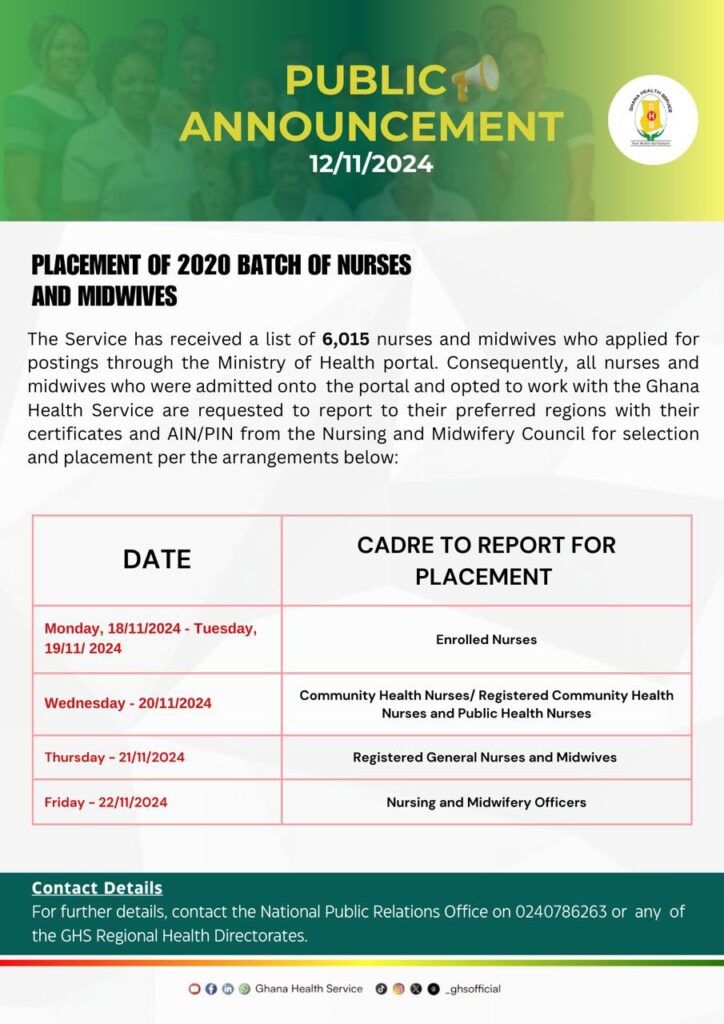
    The Ghana Health Service (GHS) has announced the placement process for the 2020 batch of nurses and midwives.

    A total of 6,015 nurses and midwives who applied for postings via the Ministry of Health portal are to report for selection and placement.

    All eligible nurses and midwives who opted to work with the Ghana Health Service are required to report to their preferred regions with their certificates and AIN/PIN from the Nursing and Midwifery Council. The placements will occur on different dates based on the cadres, as detailed below:

    Placement Schedule

    • Monday, 18th November 2024 – Tuesday, 19th November 2024: Enrolled Nurses
    • Wednesday, 20th November 2024: Community Health Nurses, Registered Community Health Nurses, and Public Health Nurses
    • Thursday, 21st November 2024: Registered General Nurses and Midwives
    • Friday, 22nd November 2024: Nursing and Midwifery Officers

    For more information, nurses and midwives can contact the National Public Relations Office at 0240786263 or reach out to any of the GHS Regional Health Directorates.

  • Govt owes us 12 months in allowances – Rotational nurses

    Govt owes us 12 months in allowances – Rotational nurses

    The Ghana-Nurse-Midwife Trainees Association (GNMTA) has called for the correction and disbursement of 12 months’ worth of unpaid allowances owed to rotational nurses and midwives.

    In a statement issued on Sunday, September 29, GNMTA, which serves as the umbrella body for these rotational nurses, highlighted that despite being on duty for the past year, the government has yet to settle the outstanding payments for the affected nurses and midwives.

    “The Ghana-Nurse-Midwife Trainees Association (GNMTA) wishes to address a pressing issue concerning the unpaid allowances of our Rotational Nurses and Midwives. For over a year now, our nursing and midwifery interns, who have diligently completed their mandatory one-year service, have not received their due allowances. This delay in disbursement has caused significant financial strain and emotional distress among our members,” GNMTA’s statement read in part.

    The statement also clarified that, despite two increases in the allowances between September 2022 and 2023, some interns have only started receiving payments amounting to GH¢9,000 for 12 months, which averages to GH¢750 per month—far below the expected GH¢1,393.93.

    As a result, GNMTA is urging the Ministry of Health, the Ghana Health Service, and the Controller and Accountant-General’s Department to:

    1. Address and rectify the discrepancies in the allowance disbursements without further delay.

    2. Ensure that the correct amounts, as stipulated in the SSSS document, are paid to the interns, including any arrears owed from the past year and,

    3. Provide clear and transparent communication regarding the allowance structure and any future changes to avoid confusion and unrest among our members.

  • Mahama pledges automatic recruitment of Ghanaian nurses 

    Mahama pledges automatic recruitment of Ghanaian nurses 

    The flagbearer of the National Democratic Congress (NDC), John Dramani Mahama, has pledged to reinstate automatic recruitment for nursing trainees if he is elected into office.

    Speaking to students at the Ntotronso Nursing and Midwifery College in the Ahafo Region, Mahama assured them of the NDC’s commitment to addressing their concerns, including reviewing the current nursing trainees’ allowance system.

    “I know all the problems you have with your allowances and everything, and we are going to come and make things better for you. We are going to come and restore automatic posting so that when you come out of school, you can get a job as quickly as possible,” Mahama stated.

    He also reiterated his promise to waive academic user fees for first-year university students, adding: “Your younger brothers and sisters who are going to come after you, when they come to the first year, they are not going to pay any school fees.”

    In addition to addressing recruitment concerns, Mahama pledged to continue ongoing hospital construction projects to create employment opportunities for nursing graduates. He urged the students to support the NDC in the upcoming December 7 election.

    “We are going to continue all the hospitals that are being built so that we can employ as many of you as possible. And so, as I have explained to your patron, I will create a proper programme and come and speak to you,” he explained.

    Mahama concluded by encouraging the students to safeguard their voter ID cards and vote for change. “Make sure that you keep your voting cards well on 7th December, vote for a change and vote for the 24-hour economy.”

  • Akufo-Addo has refused to post us – Ghanaian nurses fleeing to London

    Akufo-Addo has refused to post us – Ghanaian nurses fleeing to London

    A viral video has captured a group of Ghanaian nurses expressing their frustration over delayed postings and their decision to permanently relocate to London, UK.

    The video, shared by YouTuber and vlogger Wodemaya, shows seven Ghanaians at an airport eagerly preparing to leave the country.

    In their conversation with Wodemaya, the nurses voiced their discontent with the government’s handling of their postings. “We are moving to London, forever and ever. The country has collapsed,” one male nurse lamented.

    Another female nurse specifically blamed President Akufo-Addo, saying, “Akufo-Addo has refused to post us.”

    This exodus comes amidst a broader crisis in Ghana’s healthcare sector. On August 5, 2024, the Ministry of Health began recruiting 15,200 nurses and midwives, with the application deadline set for August 23, 2024.

    Despite these efforts, the lack of timely postings has spurred discontent among newly graduated nurses, leading some to seek opportunities abroad.

    Madam Perpetual Ofori-Ampofo, President of the Ghana Registered Nurses and Midwives Association (GRNMA), has highlighted the negative impact of this emigration on the nation’s healthcare system.

    The departure of skilled nurses and midwives is exacerbating the existing challenges within the sector, further straining the country’s healthcare resources.

  • Ghanaian nurses to Barbados: Govt begins recruitment

    Ghanaian nurses to Barbados: Govt begins recruitment

    The Ministry of Health has commenced the recruitment of Ghanaian registered nurses to Barbados, a small island country in the south-eastern Caribbean Sea.

    This information was made public by the ministry via a statement dated August 15, 2024, posted on its social media platforms on Thursday.

    The recruitment exercise is expected to end on Thursday, August 22, 2024.

    The release indicated that the anomaly that affected the portal for the recruitment of these nurses has been rectified.

    Following the resolution, prospective applicants are requested to formally access the form on hr.moh.gov.gh, click on Barbados application and follow the instructions to apply.

    Meanwhile, the ministry has thrown a word of caution to the public over an alternative application portal with regard to recruitment.

    “The public is kindly informed that, the Ministry of Health does not have an alternative application portal and middlemen with regards to the recruitment of the Nurses’ to Barbados. Any suspicious activity should be reported to the Chief Director of the Ministry,” the release read.

    In an unrelated event, the recruitment of 15,200 nurses and midwives, which commenced on Monday, August 5, 2024, is ongoing and set to end on Friday, August 23, 2024, at 6:00 pm.

    Qualified candidates are invited to apply through the Ministry of Health’s online application portal. Applicants should log in to https://hr.moh.gov.gh and follow the instructions to complete their application.

    The Ministry has assured the public that the recruitment process will be conducted transparently. As such, individuals are warned against any third parties claiming to offer assistance for a fee.

    It strongly advises all applicants not to make any payments for recruitment services. Any money paid under these pretenses is done so at the applicant’s own risk.

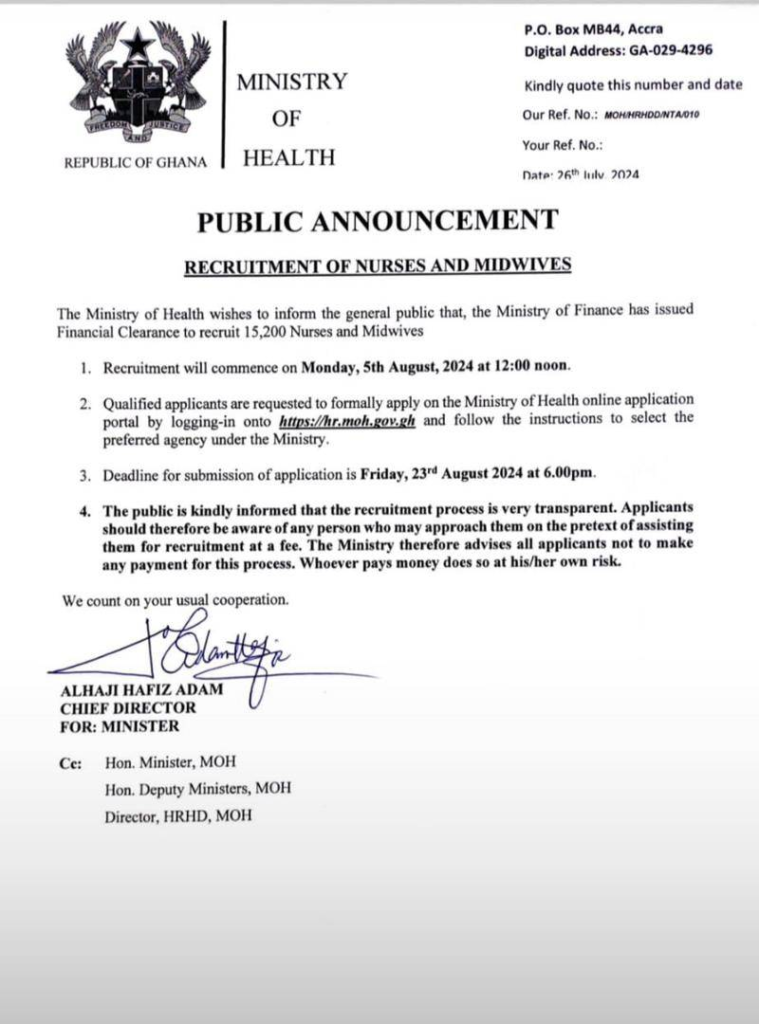
  • Health Ministry opens applications for 15,200 nursing and midwifery roles

    Health Ministry opens applications for 15,200 nursing and midwifery roles

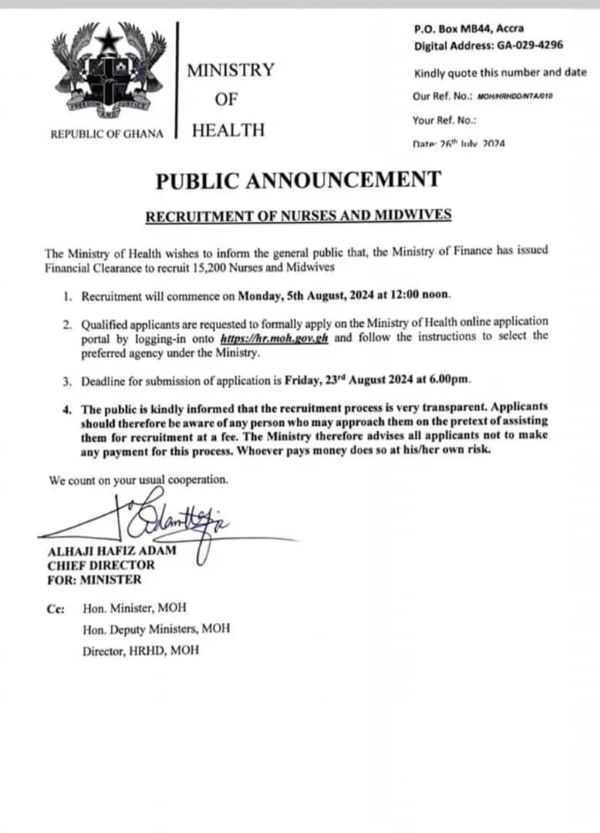
    The Ministry of Health is set to recruit 15,200 nurses and midwives, starting Monday, August 5, 2024, at 12 noon.

    This recruitment drive follows financial approval from the Ministry of Finance.

    The ministry is inviting qualified candidates to apply and submit their applications by the deadline on Friday, August 23, 2024, at 6:00 pm.

    The Ministry of Health has cautioned applicants to be vigilant about fraudulent activities.

    They have warned against individuals who may offer to assist with the recruitment process for a fee, emphasizing that the recruitment process is transparent and that no payments should be made.

    “The public is hereby informed that the recruitment process is highly transparent. Applicants should be wary of anyone claiming to help them with recruitment for a fee. The Ministry advises all applicants not to make any payments for this process. Anyone who pays money does so at their own risk,” excerpts from the statement read.

    For the complete details, refer to the full statement from the Ministry of Health below:

  • Health Ministry to begin recruitment of 15,200 nurses, midwives on Aug. 5

    Health Ministry to begin recruitment of 15,200 nurses, midwives on Aug. 5

    The Ministry of Health has announced the recruitment of 15,200 nurses and midwives, with the process set to commence on Monday, August 5, 2024, at 12:00 noon.

    This initiative follows the issuance of Financial Clearance by the Ministry of Finance to address the pressing need for healthcare professionals across the country.

    Qualified candidates are invited to apply through the Ministry of Health’s online application portal. Applicants should log in to https://hr.moh.gov.gh and follow the instructions to complete their application. The deadline for submissions is Friday, August 23, 2024, at 6:00 pm.

    The Ministry has assured the public that the recruitment process will be conducted transparently. As such, individuals are warned against any third parties claiming to offer assistance for a fee. The Ministry strongly advises all applicants not to make any payments for recruitment services. Any money paid under these pretenses is done so at the applicant’s own risk.

    This large-scale recruitment aims to bolster the healthcare system and improve service delivery across various regions.

    The Ministry of Health encouraged all qualified individuals to apply within the specified timeframe and avoid falling victim to fraudulent schemes.

  • GRNMA pushes for degree-level training for nurses and midwives

    GRNMA pushes for degree-level training for nurses and midwives

    The Ghana Registered Nurses and Midwives Association (GRNMA) has put forward a bold proposal to overhaul nursing education in Ghana by advocating for the cancellation of certificate and diploma programs.

    Instead, they propose elevating all nursing education to the degree level, aiming to enhance the quality and professionalism of the nursing workforce.

    General Secretary of the GRNMA, Dr. David Tenkorang Twum, revealed this proposal during an interview on Joy News’ PM Express, labeling the current system as “bizarre.”

    He emphasized the complexity of having multiple entry levels into the nursing and midwifery profession, particularly noting the dominance of auxiliary nurses who constitute nearly 60% of the current workforce.

    “We think that the majority must be degree-prepared,” Dr. Twum asserted.

    Comparing Ghana to Nigeria, where registered nurses and midwives are required to hold a first degree, Dr. Twum argued that Ghana possesses the necessary human resources and educational infrastructure to implement similar standards.

    “We have the human resources and the schools so we can do that,” he affirmed, advocating for a comprehensive transition to degree-level training for all nurses and midwives.

    Addressing concerns about current certificate and diploma holders, Dr. Twum assured that existing nurses would have opportunities to upgrade their qualifications. “If we cancel the training of diploma and certificate [programs], we can upgrade the knowledge of those who are here,” he explained, highlighting existing courses available for skill enhancement.

    The GRNMA’s proposal, if implemented, aims to raise the standard of nursing education in Ghana significantly. By preparing all nurses at the baccalaureate level, they believe it will lead to improved maternal health outcomes and overall healthcare delivery.

    This move by the GRNMA marks a significant step towards professionalizing the nursing sector in Ghana and ensuring a more competent healthcare workforce for the future.

  • Hire new nurses and pay them with salaries of  those who have migrated – Ashanti Regional Health director

    Hire new nurses and pay them with salaries of those who have migrated – Ashanti Regional Health director

    Health Director for Ashanti Region, Dr. Emmanuel Tinkorang, is advocating for the government to enlist nurses to address the significant shortage caused by the departure of these healthcare workers from the nation.

    He voiced his concern regarding the unemployment crisis among nurses in Ghana, highlighting the insufficient number of nurses in healthcare facilities.

    Addressing attendees at the commencement of the 2024 Nurses and Midwives Week in the Ashanti region, he urged the government to implement practical measures to employ nurses who are presently awaiting assignments.

    “Why would we be crying for a shortage of nurses while we have nurses staying in the house after school for over 4 years? We cannot be complaining while there are solutions available to the problem”.

    Dr. Tinkorang downplayed the claim of financial constraints in employing more nurses suggesting government employs these nurses with the salaries of those who have left.

    “As a country, we must look at possible ways to recruit these nurses and one of the ways to do this is by using the salaries of nurses who have traveled out of the country. The nurses were taking salary before leaving, so what happens to that salary since they are not working in the country anymore?”

    On health infrastructure development and access to quality health services, Dr. Tinkorang revealed that all new hospitals built in the region especially the Fomena hospital will be operationalized as specialist hospitals to improve health care in the region.

    “In order to ensure universal coverage as this year’s theme implies; all newly established hospitals in the region are being converted into a specialist hospitals. For example, the Fomena hospital will have specialist to attend to gynaecological cases in or to reduce maternal and child mortality,” he added.

  • Implementation of new fees for nurses, midwives begins today

    Implementation of new fees for nurses, midwives begins today

    The Nursing and Midwifery Council (N&MC) will implement new fees starting Wednesday, May 21, 2024.

    The new fees cover foreign verification, examination fees for various courses, acquisition of personal identification numbers (PINs) and their renewals, registration and licensing, and accreditation for training institutions, among other services.

    However, the council clarified that the fee for foreign verification will remain at GH¢550.

    The previously approved new fee of GH¢3,000, announced in March this year, is still under review. A statement from the Governing Board of the council on March 15 confirmed the decision to implement the newly approved fees, with the exception of the foreign verification fee.

    “The effective date for the revocation and implementation of the newly approved fees (Miscellaneous Provisions) Regulations, 2024 (L.I 2481) is Wednesday, May 22, 2024,” the statement read.

    The N&MC assured the public of its commitment to maintaining the highest standards in nursing and midwifery training and practices.

    Background
    The N&MC had previously suspended the newly approved fees, which were initially set to take effect from March 1 this year.

    These fees included a significant increase in foreign verification costs from GH¢550 to GH¢3,000, a 445.45 percent rise.

    The Governing Board decided to halt the implementation of the new fees following discussions with relevant stakeholders who raised concerns about the drastic increase.

    This decision was made during a board meeting in March.

    Checks by the Daily Graphic indicated that the council had not revised its fees for many years. Despite the necessity of raising the fees, particularly for verification, the council suspended them due to backlash from members concerned about the sudden, substantial hike.

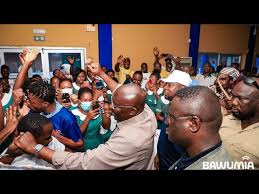
  • You will receive your allowances on time if I become president – Bawumia to trainee nurses

    You will receive your allowances on time if I become president – Bawumia to trainee nurses

    Vice President Dr. Mahamadu Bawumia has committed to ensuring the timely and consistent disbursement of nursing trainee allowances, aiming to eliminate any future arrears.

    Addressing nursing trainees in the Savannah Region, Dr. Bawumia reiterated his dedication to ensuring that these vital funds are allocated promptly.

    “For us, we restored the allawa. For other people, they cancelled the allawa. And we are going to keep working hard. And I am going to keep my eyes on your allawa so that we can make sure that it is regular and comes and comes and comes.

    “You will be assured of that. I am going to keep my eye on it. We are going to change this country,” Dr. Bawumia assured the gathering.

    Furthermore, during a meeting with nurses and midwives in Accra on Tuesday, May 14, 2024, the Vice President announced the disbursement of 177 million Ghana cedis on Thursday, May 16, 2024, to settle outstanding arrears owed to nursing trainees.

    “This Thursday, the Controller is transferring 177 million Ghana cedis to the Ministry of Health to pay the nursing training allowances.

    “So I have also alerted Dr. Okoe-Boye to be on standby when the money hits the Ministry of Health account. They should move it quickly to the accounts of the nursing trainees so that they will have their allawa. It will drop,” Dr. Bawumia stated.

  • Efforts still underway to employ jobless nurses – MoH

    Ministry of Health (MoH) has addressed concerns regarding the recruitment of health personnel and the payment of overdue allowances following a demonstration by rotational nurses, midwifery associations, and unemployed nurses in Accra.

    During a media briefing, Isaac Offei Baah, the Public Relations Officer for the Ministry of Health, reiterated the ministry’s dedication to resolving these issues promptly.

    “Unfortunately, we have gotten to this level, but we are all aware that we cannot employ without clearance from the Ministry of Finance.

    That also doesn’t mean that we are not working to ensure that we get adequate clearance and clear all our nurses who are not employed.

    “We have enough evidence to show that after we received the list from NMC, we forwarded it to the Minister of Finance.

    Their leader, who always comes to negotiate on their behalf, can attest to the fact that we have given him copies of evidence to show that the Ministry of Health is committed to ensuring their recruitment and ensuring their posting.

    https://www.youtube.com/watch?v=obWr1qGhOu0
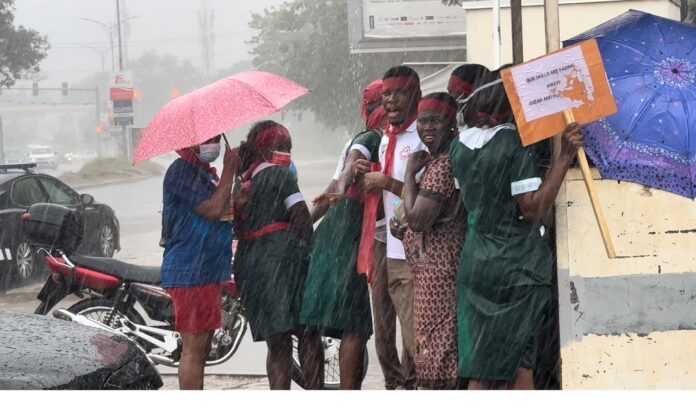
  • Newly graduated nurses and midwives protest in rain to demand posting

    Newly graduated nurses and midwives protest in rain to demand posting

    Nurses and Midwifery Association marched through the streets of Accra to voice their concerns on Tuesday, April 16 to voice their discontent .

    Their dissatisfaction primarily targets governmental bodies, particularly the Ministry of Health (MoH) and the Ministry of Finance (MoF), for their failure to provide financial clearance for nine months, hindering the permanent employment prospects of trained nurses and midwives from accredited institutions since 2020.

    Unfazed by the heavy rain, the determined nurses and midwives continued to fervently demand improved working conditions.

    The protest kicked off at the Greater Accra Regional Hospital, with participation from both the Rotational Nurses and Midwifery Association and the Graduate Unemployed Nurses.

    Subsequently, they marched to the Ministry of Health, formally presenting their initial petition.

    Among the demonstrators was Karen Appiah, a 28-year-old mother and unemployed nurse, who arrived with her baby securely strapped to her back.

    Since 2020, she has anxiously awaited employment opportunities, holding onto hope for a brighter future for herself and her child.

    The Secretary of the Unregistered Nurses and Midwives Association, Atta Asante, revealed turning to illegal mining activities for survival.

    Karen, Atta, and their fellow demonstrators eventually made their way to Parliament House, where they submitted their petition to Deputy Clerk of Parliament, Ebenezer Djietror.

    With over 75,000 graduate unemployed nurses and midwives expressing frustration over the lack of employment four years after completing their education, the urgency of their plight reverberates across the nation.

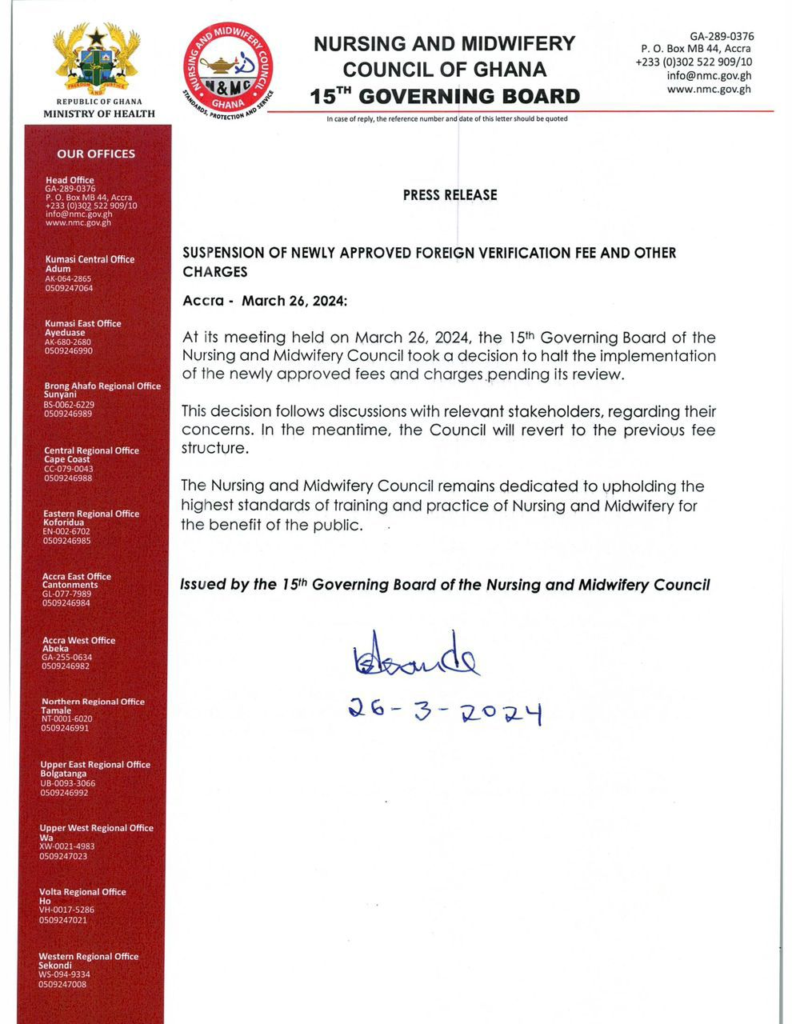
  • Nursing and Midwifery Council halts implementation of approved GHC3,000 verification fee

    Nursing and Midwifery Council halts implementation of approved GHC3,000 verification fee

    The Nursing and Midwifery Council of Ghana has halted the implementation of recently approved fees for nurses, pending a review of the charges.

    This decision comes after the Ghana Nurses and Midwives Association threatened to strike over the Council’s significant increase in the nursing verification fee, raising it from GH¢500 to GH¢3,000.

    Following discussions with the Health Ministry, the association withdrew their planned protest.

    The Nursing and Midwifery Council’s decision to suspend the new fees was reached during a meeting of its 15th Governing Board on Tuesday, March 26, 2024.

    The Council stated that its decision was made after engaging with relevant stakeholders regarding their concerns, and it will revert to the previous fee structure.

    “At its meeting held on March 26, 2024, the 15th Governing Board of the Nursing and Midwifery Council took a decision to halt the implementation of the newly approved fees and charges pending its review.

    “This decision follows discussions with relevant stakeholders, regarding their concerns. In the meantime, the Council will revert to the previous fee structure.”

  • Nurses to withdraw services, wear red headbands in protest against verification fee increment

    Nurses to withdraw services, wear red headbands in protest against verification fee increment

    The National Council of the Ghana Registered Nurses and Midwives Association (GRNMA) has announced a series of activities to express their dissatisfaction with the recent increase in the cost of verification fees for nurses.

    The cost of foreign verification has been raised from an initial 550 Ghana cedis to GHS 3,000, representing a 445.45% increase. Despite calls for the Health Ministry and the Nurses and Midwives Council to reconsider the cost, no action has been taken.

    As a result, the nurses’ leadership has outlined a plan of action from March 22 to April 3, 2024, to protest against the new fees.

    Starting from March 22 to 27, nurses and midwives across the country will wear red bands on their departments and wards while also wearing head and armbands in protest.

    A major press conference is scheduled for March 27, 2024, followed by the withdrawal of outpatient department services from March 28 to April 2, 2024.

    If their demands are not met, the health workers intend to escalate their actions by fully withdrawing all services, including in-patient care, on April 3, 2024.

    The group, led by National President Perpetual Ofori-Ampofo, stated that despite writing letters to the Health Ministry and the nurses and midwives council to reconsider the fee hike, they have not received any acknowledgment.

    The Council says they can only contain a maximum of 25% increment on the previous cost given the current economic difficulties.

    “We wish to reiterate that, considering the current economic challenges and the fact that our salaries are not the best, nurses and midwives of Ghana can only contain a maximum of 25% increment which in our view can be borne by all grades of nurses and midwives,” the statement read.

    The council entreated the nurses and midwives to oblige with the directive as it is the civic right.

    “All nurses and midwives are expected to fully participate in the above-stated actions because it is their right to do so and therefore under no circumstance should they be threatened or coerced,” the statement said.

    PROCEDURE AND REQUIREMENTS FOR REGISTRATION

    Upon passing the Council’s licensing examination, a Nurse Assistant, Nurse or Midwife is required to go through the following procedure to be registered to practice legally in the country:

    Go to the Council’s Regional Office (the Region in which your institution of training is located).

    Present your Results Slip (Letter from the Council indicating that you have passed the licensing examination). You will be required to complete a Registration Form and pay a non-refundable Registration Fee.

    You will be issued with:

    A Log Book for rotation.

    Provisional License and Code for National Service registration.

    After completing the Rotation/National Service, you would be required to return the Log Book and Provisional License to the Regional Office where you registered and await your PIN and Certificate of Registration.


    The Council issues Professional Identification Numbers (PIN) to Nurses and Midwives upon completion of the Registration process.  Nurse Assistants are also issued with Auxiliary Identification Number (AIN) after registration.


    Registration of Foreign-Trained Nurses and Midwives (Permanent):


    Foreign-trained Nurse Assistants, Nurses and Midwives who wish to practice in the country would be required to pass a Licensing Examination and satisfy other requirements before they are registered.

    Requirements:
    1. Transcript of training
    2. Three (3) passport-sized photographs
    3. A copy of Birth Certificate
    4. Photocopies of Professional Certificates (original copy to be presented for inspection)
    5. Marriage certificate where applicable
    6. Two (2) testimonials from previous/current employers where you have practiced for at least one year
    7. Copy of last appointment letter
    8. Verification of registration from the original Council/Board.
    9. Copy of certificate of proficiency in English from approved school of languages.
    Upon fulfilling all eligibility requirements, applicants are required to sit for a written examination. The fee for the examination is …..? The amount is subject to review from time to time. The examination is organized twice a year that is, June and December.

    After the written examination successful candidates will:
    1. Complete Registration Forms and pay a fee of $ 125 or its Ghana cedi equivalent to the Council.
    2. Undergo a three- month practical orientation programme in a Teaching, Regional or any hospital accredited by the Council.
    3. Be registered to practice based on satisfactory performance during the practical orientation programme.
    A provisional license for newly qualified foreign trained Nurses and Midwives would attract a fee of $ 125 or its Ghana cedi equivalent.

    NB:
    Documents which are in Languages other than English should be translated into English with a copy of the document in the original language attached to it.

  • Gov’t should also benefit from exodus of nurses – Deputy Health Minister-designate

    Gov’t should also benefit from exodus of nurses – Deputy Health Minister-designate

    Deputy Minister-designate for Health, Alexander Akwasi Acquah, is advocating for a strategy to tackle the significant exodus of Ghanaian nurses and healthcare workers from the country.

    During his appearance before Parliament’s Appointments Committee, Acquah expressed concern about the high rate at which personnel, particularly nurses, are leaving Ghana for better opportunities abroad.

    He stressed the importance of government intervention to address this issue and suggested that Ghana could benefit from this trend by developing a strategic approach.

    Mr Acquah highlighted that while the exodus is alarming, it also presents an opportunity for the government to capitalize on the situation and derive benefits.

    “It is a worry to a lot of us. But I am on record to have said that if these nurses think that there is greener pasture somewhere and they would want to go for it, it will be better that we organise it well for the government to have a benefit therefrom,” Mr Acquah stated during the committee hearing on Tuesday, March 12, 2024.

    Acquah’s comments are timely, given the increasing concerns about the shortage of healthcare professionals in Ghana, especially nurses.

    Healthcare facilities across the country have been facing staffing challenges, impacting the quality of healthcare services provided to the public.

    President Akufo-Addo’s recent ministerial reshuffle on Wednesday, February 14, is significant as it marks the first major overhaul since he assumed office in January 2017.

  • Medical and Dental Council inducts 72 practitioners

    Medical and Dental Council inducts 72 practitioners

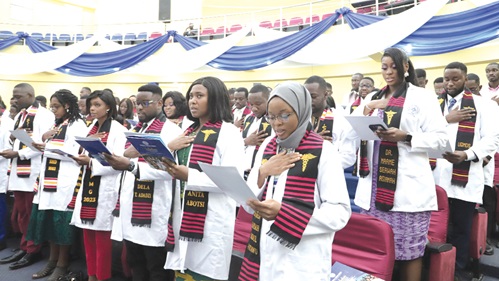
    The Medical and Dental Council has welcomed 72 new practitioners into its ranks, hailing from esteemed institutions like the University of Ghana Dental School, Accra, and the Kwame Nkrumah University of Science and Technology School of Medical Sciences Dental School, among others.

    Draped in their white overcoats and solemnly placing their right hands on their chests, the inductees solemnly recited the physician’s oath.

    With this oath, they pledged unwavering commitment to serving humanity and prioritizing the health and well-being of their patients, while upholding the sanctity of human life.

    Dr. Divine Ndonbi Banyubala, the Registrar of the council, emphasized the weighty responsibility now bestowed upon the inductees.

    He stressed the transition from the role of students, under the guidance of teachers, to that of practitioners, directly responsible for the lives entrusted to them.

    The registrar emphasized the pivotal role of these practitioners, entrusted with the power to make decisions that can literally be matters of life or death.

    He assured the council’s dedication to maintaining unparalleled healthcare standards in the country.

    Reflecting on the gravity of their new titles, Prof. Dr. Ernest Yorke, speaking on behalf of the Board Chair of the MDC, Prof. Paul Kwame Nyame, urged the inductees to deeply consider the solemn responsibilities accompanying their profession.

    He underscored the importance of empathy, humanity, and a profound sense of duty in their interactions with patients.

    Prof. Nyame reminded the new doctors of the foundational principles of their profession, stressing the importance of the doctor-patient relationship and advocating for treating patients with dignity, respect, and compassion. He encouraged them to empower patients to actively participate in their healthcare decisions.

    The Chief Director of the Ministry of Health, Alhaji Hafiz Adam, reiterated the significance of the knowledge, skills, and competencies possessed by the new practitioners.

    He highlighted the imperative to address challenges such as professional negligence and unethical behavior in the healthcare sector, outlining collaborative efforts between the MDC and the Ministry of Health to elevate standards and foster a healthier, more equitable society.

  • British Columbia provides $30K bonuses to entice and keep nurses

    British Columbia provides $30K bonuses to entice and keep nurses

    “The British Columbia government is offering extra rewards to attract new nurses to the province. Nurses who are willing to work in the north will get the highest bonuses.

    Nurses can get $30,000 for working for at least two years in the northern parts of the province, or $20,000 for working in other rural and faraway places.

    Even in big cities, nurses who apply for jobs that are hard to fill or in high demand could get bonuses as high as $15,000.

    The government will give $15,000 to nurses who work for two years in the GoHealth BC travel nurse program.

    Health Minister Adrian Dix revealed the rewards at a press conference on Friday. He also talked about other ways the government is trying to solve the problem of not having enough nurses in the province.

    “Dix said we need to practice more. ” “We need more ways for nurses trained in other countries to work here, and we’re working on making that happen. ”

    One part of the plan is to make the Provincial Rural Retention Incentive bigger. Nurses can make up to $8,000 a year if they choose to work in one of 63 communities that qualify for the program.

    Also, the government is getting ready to put in place rules about how many nurses there must be for each patient in different places where people get medical care.

    This means there is one nurse for every four patients in regular hospital units, one nurse for every three patients in palliative care, and one nurse for every patient in intensive care.

    British Columbia is starting to use ratios like Australia and California. “will be the first place in Canada to do it. ”

    “Having enough nurses for each patient not only benefits the patients, but also helps the nurses,” stated Adriane Grear, who is the president of the BC Nurses’ Union. “But they help get new employees, keep them, and I think other places will copy what we’re doing. ” What we are doing here is very important for history. What we are doing here shows our beliefs about health-care workplaces.

    New benefits have been added for people who are learning to become nurses in B.C. This means that students studying Nursing or Psychiatric Nursing can get $2,000 off their tuition fees each year. Indigenous students in a BSN program can get an extra $5,000 off their tuition.

    The province will spend $237. 6-million on hiring, keeping, and training employees.

  • Delayed postings: Unemployed nurses, midwives in Tamale embark on demo

    Delayed postings: Unemployed nurses, midwives in Tamale embark on demo

    The Graduate Unemployed Nurses and Midwives Association (GUNMA) has staged a protest in Tamale to voice their discontent over their unemployment.

    The group is particularly critical of the government, the Ministry of Health (MoH), and the Ministry of Finance (MoF) for failing to provide financial clearance and permanent employment to over 75,000 graduate nurses and midwives who have completed their training and passed their Nursing and Midwifery Council (NMC) licensing exams.

    They are demanding that the government clear the backlog of nurses and midwives from 2020, 2021, and 2022 who are awaiting their postings.

    GUNMA alleges that qualified nurses and midwives remain unemployed, while the government has been hiring unqualified individuals, such as senior high school graduates with minimal training, to work in healthcare facilities instead of them.

    “The Nursing and Midwifery Council is mandated by the Health Professional Regulatory Act to secure, in the public’s interest, the highest training and practice for nurses and midwives in this country. If I have been trained and inducted and sit home for close to four years, where then lies their mandate?” one nurse, Abdul Rauf, questioned what the NMC is doing to alleviate their plight.

    “Nurses should not do their rotation for close to a year before their allowances are released, nurses should not sit in the house for so many years before they are posted, nurses should not picket before they are posted, and believe it or not, throughout the world, nurses are the backbone of every country,” another nurse lamented.

  • I will export nurses, other health workers to check unemployment – Mahama

    I will export nurses, other health workers to check unemployment – Mahama

    John Mahama, the flagbearer of the National Democratic Congress (NDC), has proposed a solution to address unemployment among healthcare workers, particularly nurses, by advocating for their deployment to other countries.

    He believes that sending nurses abroad would be more beneficial than allowing them to remain unemployed in Ghana.

    During a visit to the Savannah Region, Mahama emphasized the importance of providing employment opportunities for nurses after they complete their education.

    To implement this plan, he suggested the establishment of a specialized unit within the Ministry of Employment responsible for recruiting qualified nurses for overseas deployment.

    Mahama promised that if elected, he would work to significantly reduce unemployment rates in the country.

    “We want to increase the production of health workers and nurses, and we will employ them to work for us as many as we can, but at the same time, we will sign agreements with other countries where we can post our nurses to go and work on fixed contracts.

    “So under the Ministry of Employment, we will have a unit that can recruit nurses and make sure they are of the standard that can work in international hospitals.”

    This proposition comes at a time when Ghana is experiencing a mass exodus of health professionals.

    The Ghana Registered Nurses and Midwives Association has revealed a staggering exodus, with 732 nurses having left the country since the onset of January 2024 alone.

    Per reports, poor working conditions and the lack of job opportunities have pushed health workers to seek greener pastures elsewhere.

  • Replace 200 nurses who left in 2023 – KATH CEO to govt

    Replace 200 nurses who left in 2023 – KATH CEO to govt

    The Chief Executive Officer of the Komfo Anokye Teaching Hospital (KATH), Professor Otchere Addai-Mensah, has revealed that more than 200 nurses and other health professionals departed the hospital in 2023, negatively impacting its operations.

    During a facility tour with Finance Minister Mohammed Amin Adam, Professor Addai-Mensah urged the government to authorize the replacement of the departed staff for improved service delivery.

    “In the past year, we have had over 200 nurses leave Komfo Anokye. Every day, I have had to approve three to five applications for either leave of absence or resignation, mostly nurses, radiographers, and medical laboratory scientists, and so we are praying that we should be allowed to replace these people who are leaving so that we can continue with the care that we are supposed to be giving to our patients.”

    The hospital is also grappling with a severe equipment deficit, prompting a plea from the CEO for the government to commit to retooling various departments.

    “One of the major things we are facing is the retooling of the hospital. We are aware of the difficulties that the government has had concerning COVID-19 and others. Still, we believe that it is also possible for some help to be extended [to us] as far as retooling is concerned, especially given the fact that we are serving twelve regions.”

  • Rotational nurses to hit streets over unpaid salaries

    Rotational nurses to hit streets over unpaid salaries

    The Rotational Nurses and Midwives Association (RNMA) is poised to initiate a one-week peaceful protest in response to the government’s delay in providing financial clearance.

    The 12,594 members of the July 2023 RNMA batch are prepared to embark on a strike if their demands are not addressed within the stipulated two-week timeframe.

    Claiming negligence of their needs during the one-year mandatory national service since July 2023, the Association emphasized that the government has failed to fulfill its obligations.

    In a press statement signed by the National President, Ambley Kwame Junior, the group revealed that their plea for financial clearance was submitted to the Ministry of Health in September 2023 but has gone unanswered.

    The RNMA is urging all stakeholders involved, including the government and the Ministry of Health, to take prompt action and ensure that their rightful entitlements are granted.

    Read full statement below:

  • Upper East: Trainee nurses’ bus ambushed by gunmen at Binduri

    Upper East: Trainee nurses’ bus ambushed by gunmen at Binduri

    A bus transporting approximately 45 students from the Presbyterian Nurses Training College, Bawku, was assaulted by two gunmen on motorbikes near Binduri in the Upper East region.

    The incident, which occurred on a Friday afternoon, resulted in several students sustaining injuries, prompting their immediate transfer to Bawku Presbyterian Hospital for treatment.

    The attack took place as the students, who had recently completed their term, were en route to Bolgatanga. The bus came under fire near the police barrier in Binduri, though no fatalities were reported.

    Municipal Chief Executive of Bawku, Amadu Hamza, confirmed the incident, noting that gun-related incidents are unfortunately not uncommon in the area. The remaining students, unharmed in the attack, were escorted to Bolgatanga by the Police.

  • North East Region gets new nursing and midwifery training college

    North East Region gets new nursing and midwifery training college

    A new nursing and midwifery training institution has been inaugurated in the Mamprugu-Moaduri district of the North East Region, marking the second of its kind in the region, with the first one established 18 years ago in Nalerigu.

    Situated in Kubori, one of the northernmost communities in the country, the college has already commenced operations, welcoming 200 students into its program.

    During a gathering of local chiefs and residents to celebrate the opening of the institution, the Divisional Chief of Kubori expressed deep appreciation for the project.

    Additionally, he appealed to the government to ensure the provision of necessary infrastructure and resources to facilitate effective and conducive training for professional nurses and midwives at the school.

  • Nurses at La Polyclinic protest against changes in shift schedules

    Nurses at La Polyclinic protest against changes in shift schedules

    Operational disruptions and discontent are becoming apparent at the La Polyclinic in Accra, as nurses at the facility raise issues about challenging work schedules and alleged management indifference.

    Approximately 25 nurses from the Out Patients Department (OPD), Emergency Room (ER), and Treatment Room are reportedly advocating for a return to a schedule that allows for two days off while maintaining their 40-hour work duties.

    The concerned nurses argue that recent changes in their schedules, known as “timetable differentials,” are taking a toll on their well-being and could impact health delivery if nurses are not in the right frame of mind during their shifts.

    Sources within the facility’s management mentioned that a meeting took place in June with the disgruntled nurses and district-level officials. However, no concrete agreement was reached, except for an advisory to reconcile and start afresh.

    This issue arose due to a change in the “timetable differential,” proposed by the Deputy Director of Nursing Services (DDNS) at the facility, Ms. Veronica Momo Blabi.

    The nurses, in a petition, explained that they had initially agreed to a different schedule that allowed them at least two days off within a week, which did not affect their service delivery.

    “The DDNS wanted us to run our shift with just one day off in a week, which is not favourable to us, so at the unit level, with the knowledge of our in-charges, we agreed and designed a different timetable that enabled us to have at least two days off within a week.

    The nurses requested management to consider restoring the previous schedule, providing them with two days off each week to refresh both body and mind for work. However, they alleged that this plea resulted in tension between the nurses and the DDNS.
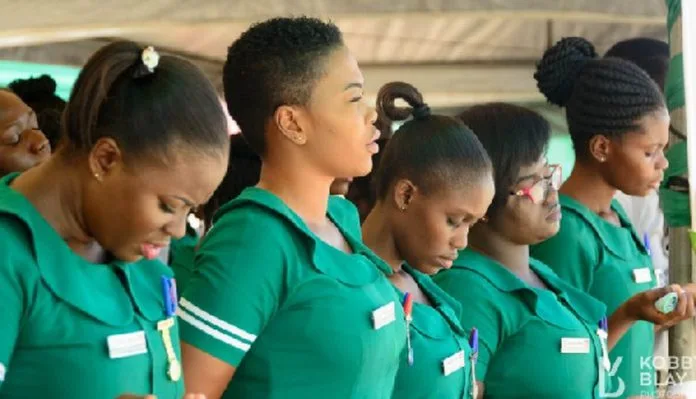
    In a follow-up petition, the nurses expressed concerns about experiencing stress and fear, which could negatively impact their professional performance, mental well-being, and overall social health.

    They also questioned the lack of action from hospital management regarding verbal abuse, threats, and excessive working hours.

    When contacted by the Ghanaian Times, management did not provide specific comments on the matter, stating that doors were open for nurses to discuss their grievances and find lasting solutions.

  • We have been fed empty promises and assurances – Aggrieved trainee nurses and midwives

    We have been fed empty promises and assurances – Aggrieved trainee nurses and midwives

    The Ghana Nurse-Midwife Trainees Association (GNMTA) is considering the option of staging a protest due to unpaid arrears.

    The association alleges that the government has not fulfilled its commitment to pay members their allowances.

    According to a statement from GNMTA’s National President, Adumbisa Pascal, and General Secretary, Blessing Ampofo, they submitted a petition to the Ministry of Health on November 25, 2023, regarding the outstanding arrears.

    “Since the release of our letter on November 25, 2023, where we beseeched the Ministry of Health to address the long-overdue payment of our outstanding allowances, we have only been met with empty promises and false assurances. Out of the two years’ worth of arrears and the seven months’ clearance received from the Ministry of Finance, we have merely received payment for two months. This stark disparity leaves us bewildered, undervalued, and profoundly wounded,” the association said in a press statement.

    Despite obtaining financial clearance from the Ministry of Finance for two years of arrears, trainees have reportedly only received payment for two months, leading to concerns among the members.

    “Our reservoir of patience and tolerance has been exhausted. We demand immediate redress for this egregious injustice. The fate of nursing and midwifery in Ghana lies precariously in the balance, highlighting the indispensability of addressing this matter with the profound urgency and unwavering gravity it commands” the statement added.

  • More than 3000 nurses left Ghana since 2020 for better opportunities – GHS

    More than 3000 nurses left Ghana since 2020 for better opportunities – GHS

    The Ghana Health Service (GHS) has disclosed that a total of 3,688 healthcare professionals have emigrated in the past three years in search of better opportunities abroad.

    This exodus includes both professional and critical caregivers.

    Some of these departing health professionals cite unfavorable working conditions in Ghana as the primary reason for leaving their posts in pursuit of more favorable prospects overseas.

    In response to the growing concern, the Ghana Health Service has implemented measures to address the issue.

    In 2021, they revised and doubled study leave for unprofessional nurses.

    The service expects that by the middle of the next year, many of these nurses taking advantage of the initiative will have qualified to fill the resulting staffing gap.

    However, during the parliamentary debate on the Health Ministry’s 2024 budget, Majority Leader Osei Kyei-Mensah-Bonsu suggested that the government should consider increasing remuneration to counteract this trend.

    In his words, “Mr. Speaker, I think that we should look at the remuneration [of nurses]. If we look at the compensation, it was over and above what was allocated, and if people have left, the compensation should then climb up. We should do a proper audit of the nurses who have left to know the deficit and should be able to employ to replace those who have exited.”

  • Salaries of nurses, other health experts must be increased to check mass exodus – Majority leader

    Salaries of nurses, other health experts must be increased to check mass exodus – Majority leader

    Majority Leader in Parliament, Osei Kyei-Mensah-Bonsu, has called on the government consider an increment in remuneration to deal with the mass exodus of nurses and other health experts.

    He made this recommendation while debating the Health Ministry’s 2024 budget last week.

    “Mr. Speaker, I think that we should look at the remuneration [of nurses]. If we look at the compensation, it was over and above what was allocated and if people have left, the compensation should then climb up. We should do a proper audit of the nurses who have left to know the deficit and should be able to employ to replace those who have exited.”

    He made the call after the Ghana Health Service (GHS) revealed that a total of 3,688 health personnel have left the country to seek greener pastures within the last three years.

    The Ghana Health Service says the figure comprises professional and critical caregivers.

    Some health professionals leaving the country have cited poor working conditions in Ghana as the reason for vacating their positions to seek greener pastures abroad.

  • Improve health and educational facilities for nurses, teachers to work – Mpraeso MP to govt

    Improve health and educational facilities for nurses, teachers to work – Mpraeso MP to govt

    Member of Parliament for the Mpraeso, Davis Opoku Ansah, has called on the government to take a look at providing and upgrading the various health and educational facilities in the country.

    He believes that this forms part of one of the ways to ensure the retention of health experts in the country.

    He expressed about the increasing exodus of Ghanaian-trained nurses and teachers.

    “Most of these advanced countries (UK, Canada, USA) are giving away visas for skilled workers, and our trained teachers and nurses are leaving for these countries for free without the state getting anything in return, and that is affecting the workforce in this country.”

    “But the most important thing is the equipment they need to work because if you post a nurse to a health facility and they go there and can’t work because there is no equipment, they become frustrated. So it will be important for us to improve the facilities for them to work,” Davis Opoku Ansah said on Rainbow Radio Accra.

    In the last couple of years, Ghana has seen an increased exodus of trained nurses and teachers abroad in search of greener pastures due to unfavourable working conditions.

    Davis Opoku Ansah said this when he presented health logistics to ten CHPS compounds in Kwahu South Municipality.

    Some of the equipment he donated includes delivery beds, hospital beds, drip stands, scales, BP apparatus, and more.

  • Nurses, midwives, others honoured at 3rd Excellence and Hall of Fame Awards ceremony

    Nurses, midwives, others honoured at 3rd Excellence and Hall of Fame Awards ceremony

    The 4th Nursing and Midwifery Leaders and Managers Conference has been climaxed with the 3rd Excellence and Hall of Fame Awards ceremony, which saw 25 nurses, midwives, managers, and leaders across the country get awards in six different categories.

    The aim of the awards is to recognise and celebrate exceptional nurses and midwives whose contributions have significantly impacted healthcare delivery in the country.

    The Deputy Minister for Health, Tina Naa Ayeley Mensah, the guest of honour at the ceremony, while addressing awardees and participants, indicated that the Ministry of Health fully sponsored the awards as a demonstration of the Ministry’s appreciation for the contribution of nurses and midwives in the health care system who represent about 60% of the overall health workforce.

    “I wish to congratulate all the awardees for their nominations and achievements. I hope that this recognition will further motivate you to excel more and make us proud”, she said.

    The Deputy Minister commended Dr. Yeboah and the planning committee for assembling about 300 distinguished nursing and midwifery leaders and managers across the country, as well as key partners and stakeholders, to deliberate on national health issues.

  • Dormaa Presby Nursing school refutes claims of expelling 80 students over academic failures

    Dormaa Presby Nursing school refutes claims of expelling 80 students over academic failures

    Principal of Dormaa Presbyterian Nursing and Midwifery Training College, Dr. Charles Agyeman-Prempeh, has advised the public to dismiss reports suggesting that 80 students were expelled for academic failure.

    Contrary to claims that the Presbyterian Nursing and Midwifery Training College in Dormaa, Ahenkroh, expelled over 80 students due to academic shortcomings, Dr. Charles Agyeman-Prempeh clarified that no such decision has been made at his institution.

    He explained that the students in question were instead placed on repeat status because they couldn’t progress until they met the cumulative requirement of 1.0 grade points.

    “The school has rules, and before you come to the school, you are told that before you progress further, you need a cumulative grade point, and in the university, it is 1.0, and if you get below that, it means you can’t progress until you meet that requirement.”

    “That is what we have done. We have repeated students who couldn’t meet the requirement, but the school hasn’t sacked anyone for meeting the requirements, so that report should be disregarded,” he said on Rainbow Radio Accra.

  • Students who failed their exams were repeated, not sacked – Dormaa Presby Nursing School

    Students who failed their exams were repeated, not sacked – Dormaa Presby Nursing School

    Principal of Dormaa Presbyterian Nursing and Midwifery Training College, Dr. Charles Agyeman-Prempeh, has advised the public to dismiss reports of 80 students being dismissed due to academic failure.

    Reports claimed that over 80 students were expelled from the Presbyterian Nursing and Midwifery Training College in Dormaa, Ahenkroh, for failing to meet academic standards. However, Dr. Charles Agyeman-Prempeh clarified that no such decision had been made at his institution.

    He explained that the students in question were actually asked to repeat due to not meeting the cumulative requirement of 1.0 grade points and could not progress until this academic standard was achieved.

    “The school has rules, and before you come to the school, you are told that before you progress further, you need a cumulative grade point, and in the university, it is 1.0, and if you get below that, it means you can’t progress until you meet that requirement.”

    “That is what we have done. We have repeated students who couldn’t meet the requirement, but the school hasn’t sacked anyone for meeting the requirements, so that report should be disregarded,” he said on Rainbow Radio Accra.

  • NMC sounds alarm on challenges in nursing, midwifery training amid soaring student numbers

    NMC sounds alarm on challenges in nursing, midwifery training amid soaring student numbers

    The Nursing and Midwifery Council (NMC) of Ghana’s Acting Registrar has highlighted a critical juncture in the professional training system for nurses and midwives. This situation arises due to the increasing student population and the challenges faced by educational institutions and programs in maintaining quality standards.

    Madam Philomina Woolley emphasizes the pivotal role of the interaction between students and lecturers in assessing the effectiveness of the teaching and learning process. She also underscores the importance of implementing quality assurance measures, such as accreditation, support, and supervision, to ensure that the educational process is closely monitored and maintained at the desired standards.

    “We are at a crossroads in the training of nurses and midwives in Ghana because the Nursing and Midwifery Training institutions are busting at themselves with an increasing student population. 

    “The increase in student population has not seen a commiserate increase in infrastructure and human resources,” Madam Woolley said at an ongoing Annual General Meeting (AGM) of the Conference of Heads of Health Training Institutions (COHHETI) in Bolgatanga. 

    Speaking on the theme: “Quality assurance and accreditation in the training of healthcare professionals: The anchor for quality education,” the Acting Registrar said training institutions overadmitted students to the extent that some did not have spaces to sit. 

    “I know that in some of the schools, a whole class says they are having online education in nursing. And I heard someone say that we are praying that one day, the NMC will understand that we are in the 20th Century, so we should do online nursing. 

    “We the stakeholders, therefore, cannot assure the public we serve, of the quality of some of our training institutions and programmes,” Madam Woolley said. 

    According to her, clinical attachment students at different hospitals were more than just the patients they cared for.

    “When you go to some of the hospitals, the trainee nurses and midwives are even more than the patients.”  

    The Acting Registrar stated that nursing and midwifery training could not be exceptional and that strict adherence to educational program accreditation requirements and standards was necessary for quality assurance in education and the accreditation of educational programs.

    “Commencing nursing and midwifery training programmes without the due professional accreditation from the regulatory body which is statutorily mandated to undertake the accreditation is tantamount not only to being an enemy to the core tenets of quality assurance in nursing and midwifery education but also an enemy to the State,” she said.  

    Madam Woolley added that quality in nursing and midwifery education was a multi-faceted phenomenon that called for the joint efforts of all key stakeholders, insisting that “We need the quality.” 

    In a world where people’s health depends on the knowledge and abilities of healthcare professionals, Professor Ahmed Abdullai Jinapor, Acting Director-General of the Ghana Tertiary Education Commission (GTEC), stated that maintaining the highest standards of education and training is not only a moral requirement but also a matter of choice.

    “The quality of healthcare education is the cornerstone upon which the foundation of any nation’s healthcare system rests. It doesn’t only affect the lives of individuals, but also determines the overall health and well-being of a society. 

    “In developing countries such as ours, where healthcare resources are often limited, the need for high-quality training of healthcare professionals is even more critical since it solves the human resource challenge of our healthcare system,” he said. 

    The Acting Director-General of GTEC expressed that the healthcare sector holds great significance, as it pertains to the health and welfare of both individuals and communities, making it a noble and essential field.

    “It is imperative that those who aspire to become healthcare professionals receive education of the highest quality to ensure that they are prepared to meet the challenges and complexities of modern healthcare,” he said. 

  • TikTok nurses from Namibia being investigated for dancing at a clinic

    TikTok nurses from Namibia being investigated for dancing at a clinic

    Two trainee nurses from Namibia are in trouble because they made a video of themselves dancing in a health clinic and posted it on TikTok.

    The two people said they were happy and having fun because they helped a person have a baby safely, according to the local news.

    The privately owned Welwitchia Health Training Centre said the dancing was “unacceptable behavior” and called them in front of a panel to address it.

    The biggest student group in Namibia wants a just and equal opportunity to be heard.

    Charmaine Keandra and Smart Muranda are wearing their nursing uniforms and dancing in front of a bed that doesn’t have a patient.

    The Namibian newspaper said that the video was made two weeks ago at the health center.

    The person who was sick went to a special room where they had surgery. The surgery was successful and the baby was healthy. The mother was also healthy and doing well. “Later, since we were feeling joyful, we chose to create a TikTok video,” a student informed the newspaper.

    The student who put up the video, which lots of people talked about and shared, has now taken it down.

    The Welwitchia health centre wrote a letter saying that the two trainees did not follow the rules for students and made the institution look bad.

    The Student Union of Namibia (Sun) has accused the health institution of being unfair. They say that in the past, nurses were seen dancing the Jerusalem challenge on different platforms, but none of them were fired.

    Benhard Kavau, the president of Sun, said to the BBC that a nurse who feels happy is more likely to be effective at their job, regardless of the university’s rules.

    He said the two students should only be told and taught when to record videos, instead of being kicked out.

    MrKavau said the group is prepared to take legal action if our request is not taken seriously.

    The students had a meeting with the disciplinary committee on Friday, as informed by the union leader.

    The institution did not reply right away when the BBC asked for a comment.

  • Vacant positions left by migrated nurses must be filled –  College of Nurses and Midwives to govt

    Vacant positions left by migrated nurses must be filled – College of Nurses and Midwives to govt

    President of the Ghana College of Nurses and Midwives (GCNM), Professor Mrs. Victoria Bam, has made an urgent appeal to the government to address the critical shortage of healthcare professionals by filling the vacancies left by over 4,000 nurses who have emigrated in search of better opportunities.

    She emphasized that this is necessary to prevent the burnout and stress that could be experienced by the healthcare workers who remain in the country.

    This appeal was made during an interview conducted on the sidelines of the College’s 8th Annual General Meeting (AGM) and 4th Scientific Conference held in Gomoa Fetteh, Central region, under the theme “A decade of nursing and midwifery specialist education in Ghana: Innovation and high impact interventions towards Universal Health Coverage (UHC).”

    Professor Bam expressed her concern about the alarming rate of nurse emigration, attributing it to poor remuneration and inadequate conditions of service that require improvement.

    She emphasized that improving conditions of service encompasses not only salary but also the ability to meet healthcare workers’ and their families’ health and educational needs to make progress in life.

    She said: “When we talk about conditions of service it’s not only the salary, but to meet the health and educational needs of their families and be able to make progress in life.”

    Additionally, Professor Bam highlighted the lack of essential resources in healthcare facilities and called on the government to provide the necessary resources to enable healthcare professionals to carry out their duties effectively.

    Ms. Hannah Akua Oparebea Acquah, the Rector of GCNM, emphasized the importance of providing opportunities for professional growth through higher education as a means to motivate and retain healthcare professionals.

    She said: “As a nurse, it is so frustrating when you know so well that you have the knowledge and skills to help a patient, but you lack basic resources to work.
    “We have graduated nurses and midwives who are sitting at home. The more you use your skills, the more competent you become. We acknowledge the fact that there are financial challenges in the country, but the issue is that they are migrating and we need urgent action to curb the menace,” she added.

    The former Registrar of the Nurses and Midwives Council, Reverend Mrs. Veronica Darko, stressed the importance of innovation, creativity, and commitment to improving healthcare for achieving Universal Health Coverage. She also expressed readiness to embrace emerging technologies and Artificial Intelligence (AI) in the healthcare system.

    The Minister of Health, Kwaku Agyeman Manu, highlighted the positive impact of empowering nurses and midwives through specialization on Ghana’s progress towards achieving Universal Health Coverage and the Sustainable Development Goals.

    He pledged the government’s support for the growth and development of the College and the recognition and remuneration of specialized nurses and midwives.

    The conference served as a platform for networking, idea-sharing, and discussions on challenges, progress, and future projections in the field of healthcare.

    It also marked the 10th anniversary of specialist nursing and midwifery training in Ghana, during which new members were inducted into the College.

  • Current migration pattern may be advantageous – Prof. Osei-Assibey

    Current migration pattern may be advantageous – Prof. Osei-Assibey

    The recent increase in migration, especially among skilled professionals, leaving the country will not hinder long-term economic prosperity, provided appropriate measures are implemented to promote knowledge transfer.

    This viewpoint was expressed by Eric Osei-Assibey, an Associate Professor of Economics at the University of Ghana.

    He elaborated that technological advancements ensure that the skills acquired by Ghanaians abroad can still be shared, even if individuals do not physically return to their home countries.

    Professor Osei-Assibey shared this perspective during the launch and inaugural lecture of the Pan-African International Students (PAIS) movement, a platform aimed at harnessing the benefits of the growing number of African students studying abroad.

    Citing a recent example, he explained: “I was somewhere recently, and when I spoke to students there about returning to Africa they were unhappy, saying there are no opportunities – and that is a reflection of how they perceive things to be at the moment. But there is innate patriotism in them, and that should never be overlooked”.

    Trends

    The economist made his statement at a time when the pace of emigration has increased, with attrition rates in industries including finance, healthcare services, and technology exceeding four times pre-2022 levels.

    Data from the Ghana Registered Nurses and Midwives Association (GRNMA) secretariat indicates a significant trend: over 10,000 nurses have applied for clearance to seek employment opportunities abroad since the beginning of the year. Approximately 4,000 of them have received clearance and have embarked on overseas employment journeys.

    The United Kingdom, Ireland, Australia, and Canada are the preferred destinations for these nurses, primarily due to improved working conditions and flexible schedules offered in those countries.

    This surge in the demand for healthcare professionals, especially nurses, can be attributed to the aftermath of the COVID-19 pandemic and the ongoing phenomenon known as the ‘Great Resignation.’ The Great Resignation refers to the mass resignation of employees, which started in early 2021 as a response to the economic impacts of the pandemic. Reasons for this trend include stagnant wages, rising living costs, limited career advancement opportunities, hostile work environments, lack of benefits, inflexible work policies, and prolonged job dissatisfaction. The sectors most affected by these resignations include hospitality, healthcare, and education.

    The healthcare sector in the United Kingdom has been particularly hard-hit, with reports indicating that around 4,000 European doctors left the UK’s healthcare services following Brexit. Over the past two years, nurses have been leaving the UK’s health service in record numbers, primarily due to the strain of managing a healthcare system with 133,000 vacant positions.

    The remaining healthcare workers are overworked and underpaid, exacerbating the situation. Data also reveals that 15,000 nurses resigned from the health service in the year leading up to March 2022, with 4,000 citing work-life balance issues as their primary reason for leaving.

    Some of these nurses have chosen to work in the Middle East, mirroring the motivations of their Ghanaian counterparts.

    Additionally, the UK government has announced a substantial increase in student visa application fees, from £127 to £490, representing a 385 percent increase, effective from October 4, following the enactment of new legislation. Furthermore, the British government has raised visit visa application fees from £100 to £115.

    These fee hikes are intended to sustain the immigration system independently, without relying on funding from British taxpayers.

    In contrast, countries like Canada are actively pursuing immigration policies, such as the Immigration Levels Plan, with the aim of welcoming over 460,000 new immigrants annually until 2025, demonstrating their commitment to attracting and accommodating a substantial number of newcomers.

    Knowledge Transfer

    But Prof. Osei-Assibey believes that the onus is mostly on the state, among all stakeholders, to work toward a framework that ensures skills gained by these individuals benefit the country in the long-run.

    “Throughout history, people have migrated and will continue to migrate for a variety of reasons, but the question we must ask is: How can this be beneficial in the long-run?” he remarked.

    “We have not witnessed much growth economically because the focus has been on the transfer of technology. However, even if the most advanced technology is transferred, without the requisite knowledge on how to operate it we would not see the benefits. The focus now must be how to collectively build an environment that sees the transfer of knowledge; that should be the emphasis, and our people in the diaspora serve as the best bet to partnering for this knowledge-transfer,” he added.

  • Salaries of nurses appalling – GRNMA

    Salaries of nurses appalling – GRNMA

    The nature of the pay that health workers in Ghana get, according to the Ghana Registered Nurses and Midwives Association (GRNMA), is another factor contributing to their emigration.

    Nurses don’t make enough money, says association president Perpetual Ofori Ampofo, which is a sad reality.

    With over 4,000 nurses leaving the country between January and July for Europe, she claimed that the exodus has grown alarming.

    She quickly clarified, though, that other nations have the same problems as Ghana.

    The reality is that nurses and midwives in Ghana do not receive the highest pay. I am aware that it is not limited to Ghana, though. The problem exists both inside the subregion and throughout all of Africa.

    Therefore, the issue of nurses leaving Ghana is not limited to that country; it also affects Nigeria, the Ivory Coast, and other nations. Because of the poor pay and terrible working circumstances, she was quoted by citinewsroom.com as saying, “They are leaving.

  • Healthcare Workers advocate for Insurance Coverage and Incentives

    Healthcare Workers advocate for Insurance Coverage and Incentives

    Healthcare professionals in the Greater Accra Region have urged the government to establish an insurance program specifically designed for health workers.

    Additionally, they are appealing for incentive packages to be provided to those working in remote areas.

    They argue that, these measures will enhance healthcare staff commitment and ensure their well-being.

    Reverend Dr. Ebenezer Asiamah, Chairman of the Greater Accra Regional Directors of Health, highlighted these crucial points during an awards ceremony honoring over 5,000 frontline and allied health workers in the region.

    Dr. Asiamah emphasized, “I would ask that the President should still consider health workers and the good things we are doing… We don’t even have an insurance policy for health workers. There’s no insurance policy, we sacrifice daily, and our motto says ‘your health our concern’ so for our health, who is concerned? It is a question, and I believe the president will hear us. If I’m now going to a deprived place and I know I won’t pay water and light bills, there’s accommodation, free transportation, I will sacrifice a young nurse or doctor or any profession to serve a number of years.”

    The Greater Accra Regional Minister, Henry Quartey, expressed his commitment to collaborate with the health sector minister in addressing these concerns.

    He acknowledged that the President has discussed similar incentives to motivate healthcare professionals and other disciplines.

    He assured that these issues are not new to the President and that efforts are being made to improve the overall economic situation.

  • Ghanaian nurses share experience after moving to UK

    Ghanaian nurses share experience after moving to UK

    Life is renowned for its unpredictability, encompassing moments of joy, hardship, and adversity.

    While some individuals experience a smooth journey towards success, others must navigate a rough path before reaping the benefits of their labor.

    In Ghana, a group of nurses is voicing their discontent over unfavorable working conditions and inadequate salaries, among other concerns. One Ghanaian nurse, having relocated to the United Kingdom (UK), shared her remarkable transformation after opting to work within the UK’s National Health Service.

    During an appearance on the Citi Breakfast show on August 3, 2023, this Ghanaian nurse, now based in the UK, revealed that the combination of meager wages and other factors heavily influenced her decision to exchange Ghana’s healthcare system for that of the UK.

    She explained that since her move to the United Kingdom, her income has substantially increased, even after accounting for tax deductions. Nurses in the UK are compensated based on the shifts they work, resulting in earnings determined by the hours they dedicate to their roles.

    Elaborating further, she stated, “Payment is tied to shifts. Even if your hourly wage is 15 pounds, working a 12-hour shift four times a week multiplies your earnings. If my monthly income amounts to 2800 pounds, after deducting around 500 pounds for taxes and rent, I can still save approximately 800 pounds.”

    Encouraging Ghanaian nurses aspiring to practice abroad, she emphasized that such a move could lead to higher earnings compared to working in Ghana.

    Meanwhile, a growing number of Ghanaian nurses and trained healthcare professionals are securing visas to work overseas, a trend they attribute to unfavorable working conditions in their home country. According to a report by the BBC, as many as 1,200 nurses departed Ghana to join the UK workforce in 2022.

    Consequently, Ghana’s healthcare system is grappling with significant shortages of medical professionals, placing immense strain on hospitals across the nation. Coupled with soaring inflation, the country’s economy is facing considerable challenges, resulting in a higher cost of living.

    In essence, the narrative showcases the allure of better opportunities abroad for Ghanaian nurses, stemming from their dissatisfaction with local conditions and echoing the strain this has placed on Ghana’s healthcare system and economy.

  • Bimbilla nurses strike over prolonged water crisis

    Bimbilla nurses strike over prolonged water crisis


    Nurses at Bimbilla Hospital, Nanumba North municipality of the Northern Region, have commenced a sit-down strike in response to the prolonged lack of water in the facility, which has persisted for the past two months.

    The issue arose after the community water company in Bimbilla disconnected the water supply to the hospital due to outstanding bills of over two hundred and forty thousand Ghana cedis.

    Patients are being turned away as the nurses firmly state that they will not resume work until the water supply is restored.

    The Medical Superintendent of the hospital, Dr. Barihama Adam, expressed concerns over the situation during an interview with the media.

    The manager of the water system, Ibrahim Sugri Issah, stated that they will not reconnect the water supply to the hospital until the outstanding bills are settled. The water crisis has resulted in an unfortunate situation at the hospital, affecting both the healthcare services and the wellbeing of the patients.