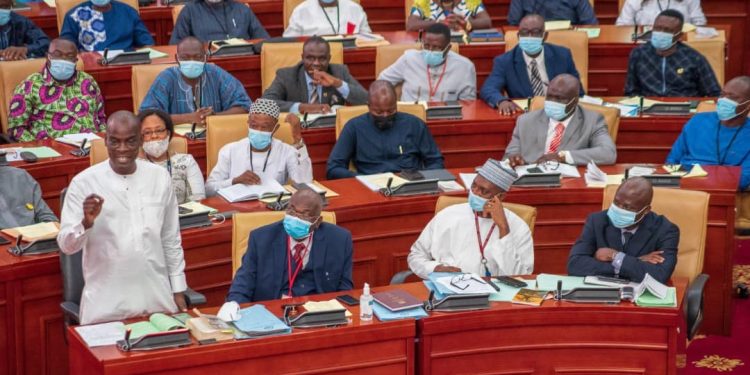
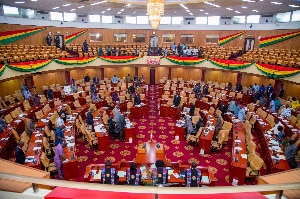
Today, January 26, 2023, the Minority caucus in Parliament is expected to meet to discuss the leadership changes announced by the National Democratic Congress national executives (NDC).
This comes following the stand-off between the NDC MPs following the changes in their leadership.
Some 44 MPs signed a petition to reject the decision of the party. The 44 members believe the decision by the party is unfair and unpopular.
However, some 77 MPs have also reportedly signed a different petition to endorse the decision of the party.
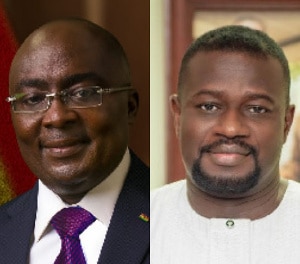
According to reports, the 77 MPs believe that Dr. Ato Forson and Emmanuel Armah-Kofi Buah are politically astute and have the quality to lead the party in Parliament.
The NDC in a letter to the Speaker of Parliament, Alban Bagbin, on Tuesday, January 24, stated that it had decided to replace Minority Leader Haruna Iddrisu with Dr. Cassiel Ato Forson.
Other changes include Emmanuel Armah-Kofi Buah, MP for Ellembelle who has been brought in to replace Ketu North MP, James Klutse Avedzi as the Deputy Minority Leader while Kwame Governs Agbodza has also replaced Asawase MP, Muntaka Mubarak as the Minority Chief Whip.
Several NDC MPs including MP for Bolgatanga East, Dominic Ayine and Tamale Central MP, Murtala Muhammed have described the leadership changes as undemocratic and deeply worrying, since no consultations were held with the Minority caucus.
Speaking to Citi News, the Member of Parliament for Anlo, Richard Kwami Sefe said the caucus will have a meeting at 10am today to address the concerns.
“The meeting is being called at the behest of the outgoing leadership. I believe those who have now been appointed will be part of the discussion. If we meet today, we will be able to discuss the issues thoroughly without emotions and insinuations.”
“Probably we will vote on it to see how we will go over this issue. Because if care is not taken, those who are coming may not have peace, and those who are there too if the party says no, then it’s going to cause us a lot of divisions,” the Member of Parliament for Anlo stated.
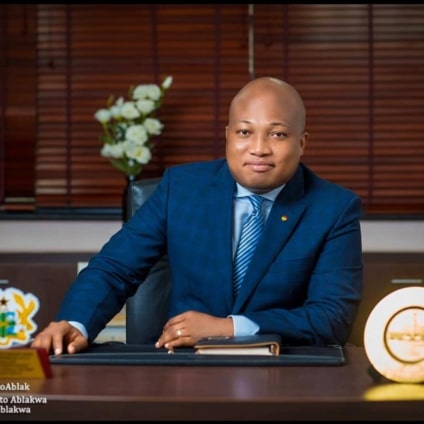
Contrary to the widely publicised information that the building of Ghana’s National Cathedral will cost $400 million, the Member of Parliament for North Tongu, Samuel Okudzeto Ablakwa, has contested the figure.
According to him, the Ghanaian taxpayer could rather be paying about $1 billion for the construction of the edifice that has recently been embroiled in a lot of controversies and allegations of corruption.
“We were told by the finance minister that the project will cost $100 million, then the figure rose to $150 million. The Chairman, Opoku Onyinah later mentioned $200 million but now based on fresh documents, I have realized the project is going to cost the Ghanaian taxpayer about $1 billion.
“The same amount former president Mahama used to set up the Ghana Gas project which is earning us about $400 million a year,” he is quoted by citinewsroom.com to have said.
Explaining further, the MP stated that the original cost of $400 million that has been mentioned does not include such costs as the monies the government had to incur in relocating the judges’ bungalows in the areas that are currently going to house the National Cathedral.
This, he added, did not also include some $50 million needed for the relocation of the Judicial Training Institute, as well as an amount of $10 million that made up the cost of the relocation of the Passport Office of Ghana.
Samuel Okudzeto Ablakwa, who has been at the center of a lot of revelations of misconduct or alleged corruption related to the building of the national edifice, also added that one other company, Waterstone Complex, which had its offices pulled down to allow for the construction to go on, is in court.
He added that the private company has sued the government for $120 million.
By adding all these amounts, plus the modifications to the project, such as the Biblical Garden and the museum, he added, will see the original cost of the project shoot up exponentially.
While the National Cathedral project remains one of the most topical government projects that have been fought against by many currently, President Nana Addo Dankwa Akufo-Addo has reiterated his resolve to see to its completion.
Not even the current economic challenges being faced in the country have stopped him from doing so.
The Senior Political Science Lecturer at the University of Ghana (UG) Dr. Kwame Asah Asante says the shakeup in the leadership for the Minority caucus in Parliament was necessitated by disturbing issues in the house.
The opposition NDC has made changes to its leadership in Parliament with the appointment of Dr. Cassiel Ato Forson as the new Minority Leader.
The former Ranking Member of the Finance Committee of Parliament and Member of Parliament for Ajumako Enyan Essiam replaces Hon. Haruna Iddrisu.
Dr. Ato Forson is to be assisted by MP for Ellembele, Kofi Armah Buah who has been appointed as the Deputy Minority Leader.
Commenting on the changes made by the party on Starr News with Naa Dedei Tettey, the Political Science Lecturer said “political parties undertake such exercises in order to win power and form the next government. So, any rule that they will make in order to wrestle power from whoever is holding political power they will do it. So, for me, it doesn’t come to me as a surprise at all.
Mr. Asante also believes there might be some happenings within the opposition party that caused this immediate change of leadership with the Minority.
“It’s gradually appearing to me that there is something that is going on in Parliament that the leadership of the party is not happy of, for which reason they want to make this change and the time that they are meeting is more significant. More often than not, you tend to see such changes when Parliament is about to start a sitting. But now that they are in recess and this thing comes in then you realize that there is something that is pushing them into doing that”, the lecturer reiterated.
The NDC party has also appointed Adaklu MP, Governs Kwame Agbodza as the new Minority Chief Whip. He replaced Asawase MP, Mohammed Muntaka Mubarak.
Both Ahmed Ibrahim and Comfort Doyoe Ghansah maintained their position as deputy Minority Whips.
There is increasing pressure on the National Executive Council (NEC) of the National Democratic Congress to change its decision of reconstructing the NDC caucus in Parliament.
Some two MPs on the ticket of the NDC have spoken publicly against the decision by NEC and are demanding the immediate reinstatement of Haruna Iddrisu and Muntaka Mubarak as Minority Leader and Minority Chief Whip respectively.
The Member of Parliament for Tamale Central, Ibrahim Murtala Muhammad was the first MP to issue an angry reaction to the decision by NEC.
Speaking on Asempa FM, Murtala Muhammaed expressed the hope that the decision will be reversed and that Haruna Iddrisu and Muntaka Mubarak will have their roles handed back to them.
According to him the caucus is happy with the performance of the Haruna Iddrisu and Muntaka and would want them reinstated.
“The timing is completely wrong. What is the basis for changing our parliamentary leadership?
“They are only taking away the most experienced leaders and bringing the less experienced ones. Nobody told them we are dissatisfied with the leadership. Who told them we are unhappy with their performance,” he said.
Cletus Avoka, the Member of Parliament for Zebilla East Constituency questioned the timing of the decision and rationale behind it.
“Our focus should be a collective effort against the NPP for the next two years. Now you are going to have low morale in Parliament. The new leadership will now have to learn to ride leadership both in Parliament and the outside world and that will require time. That will retard the progress of the NDC in its bid to regain power from the NPP in 2024.
“This is unstrategic and didn’t have to come out at this time. We need the effort of everybody to fight for the 2024 elections. The timing was not the best. I will recommend that the NEC will withdraw the letter and reinstate them and also want the new leadership to step down in the interest of the caucus.”
The Tamale South Constituency Chairman of the National Democratic Congress (NDC), Abdul Rauf has also rejected the decision of the NEC, demanding the immediate reinstatement of the Haruna Iddrisu.
“We would not accept this decision. Asiedu Nketiah is responsible for this. Asiedu Nketiah, I want to remind you today, when you became the general secretary, you did not have a pesewa to give to anybody but we gave the chairmanship to you.
“Now you are a big man, you want to punish people. What nonsense. If you are national chairman and so what. Asiedu Nketiah, I want to tell you, I am the constituency chairman, I don’t care about you or Fifi Kwetey,” he said.
Meanwhile Joy New is reporting that the National Executive Council of party will meet the minority caucus in the coming days to iron out issues arising out of the move.
The Majority Chief Whip, Frank Annoh-Dompreh, has praised Vice President, Dr. Mahamudu Bawumia, for leading Ghana’s digitalisation drive.
Annoh-Dompreh was reacting to news of Ghana being ranked number one in the 2022 Digital Competitiveness Index in Anglophone West Africa.
Ghana scored 66 percent on the index, half a percentage point more than Cape Verde, which was ranked second-best. Nigeria completed the top three with a 65 percent score.
The index was compiled by the pan-African think tank Digital Foundation Africa, and it measures and ranks which of the West African states is implementing and adopting good digitalisation policies while mapping the growth of its digital development sectors for socio-economic transformations.
The index was compiled using about 10 variables, ranging from mobile money and online transactions, to digital infrastructure and policy implementation.
“The Ranking would guide ECOWAS states in their approach in the implementation and development of the digital sector hence translating into how citizens transact and use digital in their daily lives. After the release of the index, activities will be held to engage governments and other stakeholders per country to help in the direction and future of the digital sector,” parts of a statement announcing the 2022 Digital Competitiveness Index read.
Reacting to the development in a tweet shared on January 24, 2023, Annoh-Dompreh, the Member of Parliament for Nsawam Adoagyiri, described Bawumia as an economic and digitalisation genius.
His tweet was a retweet of a feat as shared by a pro-NPP activist. He captioned his post, “The Economic & Digital Messiah.”
The minority in the House of Representatives has intimated that when the Parliament reconvenes in February, there will be further, embarrassing discoveries about how the government used COVID-19 funds.
It comes on the back of revelations in the Auditor General’s Special Report on Ghana’s COVID-19 expenditure which revealed serious procurement breaches and financial misappropriation.
According to the report, the Ministry of Health paid over 10 million cedis in insurance premiums to cover 10,000 frontline health workers and allied health professionals without a life insurance policy document.
But Ranking Member on the Health Committee of Parliament, Kwabena Mintah Akandoh said this is the tip of the iceberg, adding that more damning revelations will come out when Parliament reconvenes.
“Nothing in this report is surprising, I think that there’s more to it than we are hearing or seeing at the moment. For me, it doesn’t come as a surprise at all. Let people get this clear, it is not as though the Auditor-General set out himself to uncover certain rot or to audit COVID expenditure. This is something we on the Minority side have fought for all this while. If you’ll recall there was a point in time when the Deputy Speaker was presiding and a motion in that regard was thrown out.
“We on the Minority side have control over what we can do to contribute to the development of this country. I can assure you on that note that we’ll do our best, very soon, the five-member bi-partisan committee will start sitting in public. We are inviting memoranda and we’ll do what we think must be done as a Parliament.”
The only thing he says he is afraid of is birth and not death.
Answering questions on the directive against the publication of doom prophecies while appearing before the Public Accounts Committee (PAC) of Parliament on Thursday, January 19, he said “Why should it be such that you found something, God has revealed something to you and you want to share it with me, you have to make it showmanship and tell the whole country that I am about to die, which of course I am not afraid of.
“The only thing I am afraid of is birth because if you don’t want to die you shouldn’t allow yourself to be birthed, so once I have been born, I am going to die.
“As for death, the only thing I can do is to become a friend of it so that it can treat me with some leniency.
“So, the point is that you go and make such an announcement to the whole world, and I have a wife, I have children, I have a parent who is alive and I have family members. So every day when I live in my house and I always get up around 3AM, but today, I slept up to 5 AM, my wife will be thinking that I am dead. This is something she is going to live with for the rest of her life. Why is it that God himself did not tell us when we are going to die, it means a lot.”
He further justified the directive regarding the communication of negative prophecies.
He insisted that nobody has the right to cause fear and panic through prophecies.
Dr Dampare told the PAC that “Even then, if you have a prophecy about somebody dying, you have a way to communicate it in our typical Ghanaian environment even in proverbs for the person to decipher but you don’t put fear and panic in the person, the person’s immediate family, and the person’s extended family and the whole country.
“Honourable Chair, you were elected to be Members of Parliament by our votes therefore, you have been empowered by the Constitution and other laws to make certain pronouncements, which is acceptable. But those who are prophets, who elected them over my life to just get out there and make pronouncements about me when I am not a member of your family, I am not your church member and probably the person might not even believe in God.
“We [Police] are deep-seated Christians that we don’t joke with Godliness but we will also not allow anybody to use God to create a mess and confusion because God is not a God of confusion and God is not a God of disorderliness.”
The Police cautioned Prophets over the way and manner they communicate prophecies.
“As the year 2022 draws to a close, we wish to once again entreat the general public, especially faith-based groups to ensure continuous compliance with the law as it relates to the communication of prophecies,” the police said in a statement on Tuesday, December 27, 2022.
“Let us continue to remember that whereas we have the right to practice our faith in religion, freedom of worship and speech, this right must not be exercised in violation of the rights of others and the public interest,” it added.
The warning that was first given 2021 forced some prophets to adopt different styles in communicating prophecies.
The Public Accounts Committee of Parliament has faulted the Ministry of Foreign Affairs and Regional Integration for spending $2.8 million and €1.79 million for the payment of rent for home-based staff of 21 missions.
The Auditor General in its 2020 report described the payment of these rents as uneconomic and recommended the use of mortgage systems to curtail the situation.
But appearing before the committee, the Deputy Minister for the Ministry of Foreign Affairs and Regional Integration, Kwaku Ampratwum-Sarpong, said the proposed mortgage system of accommodation for missions has been a challenge.
He said the government’s policy is to acquire properties for all its missions abroad but securing finance has been a major challenge to the Ministry.
“The government’s policy is to acquire properties for the missions, residency and chancery but the reality on the ground is that it is not easy for Foreign Missions to get mortgages in these foreign countries. So far we haven’t succeeded. We are exploring a whole range of avenues to try and raise the needed funds.
“We have made some progress, and we are hopeful that we will get there.”
The Committee also raised concerns about the Ministry’s payment of GH₵7.9 million for a project which cost GH₵1.4 million to start in 2007.
The project according to the Ministry was abandoned by the contractor in 2008 but had the contract reviewed in 2017 to GH₵7.9 million despite the initial payment of about 90 percent of the amount.
The Chairman of the Public Accounts Committee of Parliament has asked the government to review the current guarantor system used to support workers to pursue higher education.
According to the Chairman of the Committee, most of the beneficiaries do not comply with the terms and conditions of the agreement after completing their programmes, adding that this situation makes it difficult for the State to recover the investment made in these workers.
James Klutse Avedzi was of the view that government could allow interested applicants to use banks as guarantors instead of individuals so that defaulted workers can easily be tracked.
Mr. Avedzi made this known at the ongoing public hearing of the Committee when the Ministry of Health and their various agencies appeared before them to respond to a number of infractions cited in the Report of the Auditor-General on the Public Accounts of Ghana, Ministries, Departments and Other Agencies (MDAs) for the year ended 31st December 2020.
When the Minister of Health, Kweku Agyeman Manu, Director General of the Ghana Health Service, Dr. Patrick Kuma-Aboagye, Chief Director and Senior Officers of the Health Service appeared before the Committee, the Chairman ordered the arrest of two guarantors of two former staff of Korle-bu Teaching Hospital for failing to fulfill bonds after being sponsored to pursue their higher education.
According to the report of the Auditor-General, the former workers of Korle-Bu Teaching Hospital have failed to honour their bonds or refund an amount to the tune of Gh 98,546.00, which was spent on their studies abroad.
Members of the Committee asked questions relating to the queries cited in the Auditor-General’s Report and officials from the Ministry of Health and agencies including NTC-Pantang, Ghana Institute of Clinical Genetics, Nurses Training College Damongo among others.
Leader of the Minority in Parliament, Haruna Iddrisu, has revealed that his side of the House is working to subject the debt exchange programme to legal scrutiny.
Speaking to the media, he noted that Finance Minister Ken Ofori-Atta may have breached Article 181(5) of the Constitution, which requires the government to seek approval from Parliament before announcing any haircut on all government bonds, loans, and instruments.
“We are even beginning to elevate this matter to a legal constitutional matter as to whether or not the Minister of Finance, suo moto, by himself as an individual can undo what the sovereign Parliament of Ghana has done pursuant to Article 181(5) of the constitution,” he said.
“All those loans, all those bonds, all those instruments whose terms and conditions were approved by Parliament, including the debt of domestic bonds, contractual relationships have been entered into. How can the Finance Minister allocate to himself the mandate to do this even without providing information to Parliament or with its prior approval?” he questioned.
Article 181(5) of the 1992 Constitution requires that all international business or economic transactions to which the government is a party must be laid before Parliament for approval before they can come into effect.
Mr Iddrisu, therefore, urged the government to halt ongoing processes related to its debt exchange program, which is intended to keep the country from defaulting on its debt.
At a press conference on Monday, Mr Iddrisu noted that there is “total confusion, rejection, and disapproval of the initiative” since it was launched by Finance Minister Ken Ofori-Atta in December last year.
According to him, the opposition is justified since the programme poses a major risk to financial institutions, insurance companies, as well as individual bondholders who have recently been included in the programme.
“The programme will exacerbate the already perilous financial sector that we have in Ghana,” he added.
The Tamale South legislator, therefore, said, “We in the NDC, the Minority group, call on President Nana Addo Dankwa Akufo-Addo to immediately suspend the ongoing debt exchange programme.”
In an attempt to secure a deal with the International Monetary Fund (IMF), the government has proposed that all bondholders will not receive any interest in 2023.
As per government estimates, dividends will begin to be paid next year, in 2024, at a discounted rate of 5%. Due to this, bondholders who wish to transfer their bonds will not be able to get back their full principal.
The proposal, however, has been rejected by many bondholders since its announcement. Their view is that if the proposal is implemented, they will suffer a great deal of loss, and some may even lose money on their investments.
The Minority’s call seeks to add to the numerous voices urging the government to restrain from implementing the debt exchange programme. Mr Haruna Iddrisu believes that unemployment will heighten and support for the private sector will dwindle if the programme is implemented in its current state.
In the meantime, the government has extended the deadline for the domestic debt exchange programme to January 31, 2022. This is the fourth time the government has extended its deadline, and according to the Finance Ministry, the programme has been suspended yet again due to “pending further stakeholder engagement with institutional and individual investors.”
Osei Kyei-Mensah-Bonsu, the Majority Leader in Parliament, has emphasized the governing New Patriotic Party’s (NPP) ‘we have the men’ slogan with respect to the upcoming 2024 flagbearerhip race.
According to him, most of the aspirants who are rumoured to be interested or have openly declared their intentions have what it takes to represent the party and to ‘break the 8,’ i.e. win the 2024 elections.
In an interview with pro-NPP network Asaase Radio (January 12, 2023), the Member of Parliament for Suame said even though a number of aspirants are in the race, one name stood above all but that he wa refraining from mentioning it yet.
“I can say that many of them that I have assessed have the potential of helping us break the 8 [but] there may be a primo among them.
“In terms of competence and qualification, I can vouch for many of them who have come up, like [Vice-President Mahamudu] Bawumia, Alan Kyerematen, Owusu Afriyie Akoto, Boakye Agyarko … Kennedy Agyapong, Kwabena Agyepong, Kofi Konadu Apraku …” he said.
The comments by the MP, who also doubles as the Minister of Parliamentary Affairs, comes on the back of two cabinet-level resignations in respect of Alan Kyeremayen and Owusu Afriyie Akoto, outgoing Ministers of Trade and Industry and Agriculture respectively.
The former resigned last week and has since announced his ambition to contest the NPP flagbearership. The latter’s resignation took place earlier this week and was accepted on Thursday, January 12.
Both the opposition National Democratic Congress (NDC) and the NPP are expected to elect their flagbearers ahead of keenly-awaited 2024 elections.
Former president John Dramani Mahama is seen as a frontrunner to lead the NDC for a third successive bid as candidate.
In the case of the NPP, aside from Alan, Bawumia and the, former Minister of Agric, Assin Central Member of Parliament Kennedy Agyapong and former General Secretary Kwabena Agyepong are among some of the candidates expected to contest for the slot.
The Member of Parliament (MP) for the Asuogyaman Constituency, Thomas Ampem Nyarko has given support to about 150 needy students in his constituency.
The Member of Parliament, who was re-elected for a second consecutive term as MP for Asuogyaman Constituency issued a check of GH¢200,000.00 to support the students.
According to a report on Atinka Tv, beneficiaries of the MP’s philanthropy include Senior High School graduates and students at the tertiary level who are finding it difficult to pay their fees. The report further explained that the support covers both tuition and hostel fees.
Thomas Ampem Nyarko also requested tertiary institutions to be considerate sometimes and consider the ability of students to pay for their fees.
“I know that every university’s wish is to have enough funds to enable them run and provide good education but it is necessary to also look at all sides’ ability to pay fees, which is also very important. So, they should take it in good faith and be considerate,” he stated.
The MP further expressed joy about the government’s directive to all universities to refund overcharged fees to students.
“It is refreshing to know that government has directed heads of universities that charge fees exceeding what has been approved by government to return the surcharges to the students. It is very necessary because looking at the hardship in Ghana, we need to be considerate”.
Some of the students at the meeting also expressed their gratitude towards the Member of Parliament for his kindness.
“If the Member of Parliament had not decided to support us financially, I doubt I would have been able to go to school this year,” one of the beneficiaries said.
The Ghana Chamber of Telecommunications has, as of today, January 11, 2023, commenced the implementation of a 1% charge on all electronic transfers.
This is in line with the announcement of the revision of the Electronic Transfers Levy rate from 1.5% to 1% during the presentation of the 2023 budget statement in parliament by the Minister for Finance, Ken Ofori-Atta.
Parliament subsequently debated and passed the revised E-Levy rate before the house went on recess in December 2022.
“As captured in the Electronic Transfer Levy (Amendment) Act, 2022, Act 1089 which has been passed by parliament and assented to by the President, the levy on electronic transfers has been reduced from 1.5% to 1%, while the GHS100 threshold remains unchanged,” the Chamber of Telecommunication stated in a statement ahead of the implementation.
Meanwhile, the Chamber has assured of its collaboration with the Ghana Revenue Authority and other key institutions to ensure a seamless implementation of the revised rate.
As part of the amendment of the E-Levy law, the government had sought to remove the GHC100 threshold as exempted by the initial act.
However, that failed as the minority in parliament which was opposed to the proposal won a vote against it.
The Member of Parliament (MP) for North Tongu, Samuel Okudzeto Ablakwa says he is carrying out his parliamentary duties by exposing the underhand dealing in the National cathedral project.
According to him, his role as an MP makes it mandatory for him to check the excesses of the Executive and therefore has no intention of getting the clergy to support him.
“This is not a popularity contest. I am not seeking to get church leaders on my side. That is not what this is about, I am carrying out my mandate, my parliamentary duties. I am required and all of us in Parliament are required to constitutionally carry out oversight duties to make sure there are checks and balances,” he said.
Mr. Okudzeto’s comments were in response to questions posed by the host of Top Story, Evans Mensah on whether he acknowledges that those representing Christians [the Clergy] were publicly not on his side in regard to halting the construction of the national cathedral.
Evans Mensah’s questions were informed by comments from the Metropolitan Archbishop of the Anglican Church, Rev Dr. Cyril Smith, earlier today (Tuesday) that the building of the national cathedral will happen no matter the objection by naysayers.
However, Mr. Ablakwa explained that as far as he was concerned it was not a popularity contest but it was his duty to expose wrongdoing.
“There is a reason why it’s said all over in literature that ‘Parliament, we are the custodians of the purse’. We must ensure that public funds are being utilised properly and judiciously. It’s not a popularity contest,” he said.
“If this project was so popular and the Christian community had been rallied, they shouldn’t be struggling to raise funds.”
In the past few days, Mr. Ablakwa has been one of the most outspoken parliamentarians on the unconstitutional processes the government had taken when it comes to the national cathedral project.
Founder and head pastor of the Prophetic Hill Chapel, Nigel Gaisie, has prophesied the demise of two Members of Parliament before the end of the eighth parliament.
Nigel Gaisie who in his 2023 message gave a number of prophecies relating to Ghana in another fictional country known as the Republic of Yemp3 Nokware, did not mention names or give further details. He said prayers are being said for these MPs to avert the unfortunate.
“There is going to be an attack on the Republic of Yemp3 Nokware. Two of the parliamentarians will not make it to the last meeting of parliament but we will be praying for them. We will avert it like the other ones have been averted,” he said.
He also added that a woman holding a sensitive position will be murdered in cold blood.
He however said if prayers are not said to avert it, the country will lose the high-profile woman.
“I saw it clearly, a woman who is leading a sensitive position in the republic of ‘Yempɛ Nokware’, I saw she was murdered in cold blood. So I asked the angel of the lord why so? I saw a party complaining she was not fair to them, let’s pray to avert it, I see it handing and if we joke with this, it will happen because I keep seeing it,” he said.
His premonition comes at a time when the Police Service is clamping down on such prophecies.
Member of Parliament for Atwima Kwanwoma, Kofi Amankwa-Manu has said that contrary to perceptions that the current Parliament is good for Ghana, the hung Parliament is actually not ideal for the country.
According to him, the current system in Parliament prevents the realization of the full benefits of a hung Parliament.
He noted that the whip system which is to ensure that members of Parliament are almost always on the side of their party does not allow for the benefit of Hung Parliament.
Speaking in an Oyerepa FM interview, the MP said that the whip system prevents the MPs from executing their jobs independently and effectively.
He said that hung parliament will be beneficial for Ghana if the whip system is removed and MPs are at liberty to support the opposing side.
“I agree with the school of thought that Hung Parliament is not good for Ghana. It is certainly not the best. The country has not gotten to the point where a hung parliament is good for the country.
“There are certain things in Parliament I disagree. I disagree with the whip system. Whipping me in line basically means that I’m blockheaded and have no mind of my own. I disagree because this system does not make you grow. It prevents you from being independent.
“We must get to a situation where you must be able to disagree with your government. When the country gets to that level and we have a hung parliament, I’d go for it but currently if certain individuals disagree with government, they can’t come out to say it because they are being whipped,” he said.
Ghana’s eighth Parliament currently has 137 MPs on either side with an independent candidate who has chosen to do business with NPP caucus making them the majority group in Parliament.
Whereas the government has had its way with the passage of E-levy, VAT Amendment Bill and others, the Minority caucus has also chalked some successes including the shooting down of the budgetary allocation for the National Cathedral.
The Coalition for Democratic Accountability and Inclusive Governance, otherwise called the Citizens’ Coalition, has described as a “bold and long overdue step”, Parliament’s close scrutiny of the 2023 Budget of the Government of Ghana.
According to the Coalition, Parliament’s scrutiny of the budget “reflects a positive outcome of the current ‘Hung Parliament’ that should be celebrated,” and that “Given the economic challenges that faces the country, Parliament will have to intensify its oversight activities including reenergizing the Committee on Government Assurances and empowering Standing and Sector Committees to maintain strict vigilance over the implementation of the Appropriation Act by the Executive.”
The commendation by the Citizens’ Coalition follows a similar one by the Ghana Center for Democratic Development, which equally gave Parliament the thumbs up for doing a diligent job on the 2023 budget.
Citizens’ Coalition particularly welcomed “the decision of Parliament to reallocate the GH¢80 million allocated for the construction of the National Cathedral to the Roads and Highways and Communication Ministries and to slash the allocation to the Contingency Vote by half among other cost cutting measures in their approval of the 2023 Budget.”
“As part of the cost cutting measures, the Coalition notes Parliament also defunded the Special Development Initiatives and Monitoring and Evaluation secretariats at the Office of the President. This responds to some of the Coalition’s proposals on areas of expenditure that government can still cut down. We reiterate our call on government to look closely at the cost of running government and reduce it further. Additional cuts should include reducing the total number of ministers and deputies to 60 as a first step and absorb and merge a number of secretariats set up to oversee flagship programs and let civil servants manage them in the relevant ministries, and finally reshuffle the Ministerial Team including relieving the Finance Minister of his duties in order to refocus government on the challenging task of returning Ghana to the path of economic recovery.
“The Citizens’ Coalition will tirelessly continue to amplify the concerns of Ghanaians and demand that government acts in a manner which does not only take us out of this economic mess but give citizens, particularly the young men and women of this nation hope for the future,” said the group comprising Civil Society Organizations (CSOs) and individuals that harnesses democratic processes of mass education and mobilization to establish a culture of accountable and transparent governance that actively and consciously responds to the demands of citizens and promotes human rights, peace, constitutionalism and the national interest.
Parliament has trimmed GH¢17 million from the budget estimate for the Office of the Government Machinery for the year 2023.
The cut reduced the initial budget estimate for the Office from GH¢1,428,303,634 to the approved GH¢1,410,712,912
The House considered that some of the allocations to two units under the Office of the President – the Special Development Initiatives and the Monitoring and Evaluation secretariats – were frivolous expenditures, especially at a time when expenditure rationalisation was of utmost importance.
Consensus decision
The Chairman of the Finance Committee, Kweku Kwarteng, who disclosed this on the floor of Parliament last Thursday (December 22, 2022), said decision to reduce the budget of the Office was a consensus one arrived at by the members of the Finance Committee during the consideration of the budget estimate for the Office of the Government Machinery.
“The recommendation of the budget approved by the committee is less than the amount requested by the Finance Minister,” he stated.
Why cut?
Mr Kwarteng said when the Finance Minister, Ken Ofori-Atta appeared before the committee for the consideration of the budget estimate for the Office of the government Machinery, he stated on behalf of the Ministry of State at the Office of the President that the amount for the Office of the Government Machinery was GH¢1.42 billion
He told the House that the budget estimate for the Office included the amount of GH¢15.56 million for the Special Development Initiatives Secretariat and an amount of GH¢2.2 million for the Monitoring and Evaluation Secretariat.
“The committee, after thoroughly considering the estimate, came to a consensus that the national development authorities established by law are capable of managing their affairs without the need for a bureaucratic secretariat to coordinate and at times duplicate the functions of these authorities while ambulance operations ought to be properly handled by the National Ambulance Service and not the Special Development initiative secretariat.
“Also, the Monitoring and Evaluation function is performed across ministries, departments and agencies and metropolitan, municipal and district assemblies and hence there is no compelling need to maintain the secretariat for same, especially in an era where expenditure rationalisation is of utmost importance,” he stated.
Signal to government
The Ranking Member, Dr Cassiel Ato Forson, was happy that the committee was able to save that amount.
He said as part of the deliberation by the committee, members noticed that even though there were development authorities that had been established by law with their own governing board, the Office of the Government Machinery had special development initiative secretariats that the government had apportioned GH¢15.6 million to oversee the work of those development authorities.
“Mr Speaker, we think this is needless and we think that the time has come for us not to behave as robber stamp but to cut needless expenditures anytime we see them.
“Mr Speaker, this is one of the needless expenditures and we felt strongly that there is the need to send the signal that if you bring frivolous expenditures, we will cut them,” he said.
Dr Forson told the House that the Monitoring and Evaluation Secretariat used to be a ministry but was disbanded by the President, with the personnel of the ministry being employed under the Presidency and doing virtually nothing.
GH¢2 billion Finance Ministry budget suspended
Earlier, the House also put on hold the approval of over GH¢2 billion budget estimate for the services of the Finance Ministry for 2023.
That was after the Minority had raised concerns about the allocation of GH¢1 billion for resource mobilisation by the ministry within the estimates.
The Minority urged the Finance Ministry to provide the needed details to justify the allocation, failure of which it would not support the budget approval.
The Ghana Center for Democratic Development (CDD-Ghana) has lauded Parliament for its scrutiny of the 2023 Budget of the Government of Ghana.
It has also commended the house for disapproving a number of allocations.
“The Center commends the House’s decision to disapprove allocations to the National Cathedral and reallocation to the Roads and Communications ministries, demolition and redevelopment of a new Accra International Conference Center (AICC), and establishment of three new diplomatic missions in Jamaica, Mexico and Trinidad, and Tobago”.
In a statement issued Friday, December 23, 2022, the CDD-Ghana said ‘the decision to also defund the Special Development Initiatives and Monitoring and Evaluation secretariats at the Office of the President as well as slashing the Contingency Vote by half, among other cost-cutting measures is a great demonstration that the Members of Parliament are in touch with the economic reality of the country and will assist the government to spend the scarce public resources judiciously”
CDD-Ghana also asked MPs to take advantage of the recess period to engage their constituents to keep them well-informed about their roles.
The 2 billion budget allocation for the Ministry of Finance has been suspended by Parliament.
Minority claims that the suspension is the result of the Ministry’s unwillingness to respond to questions on the allocation of $1 billion for resource mobilization.
The Finance Ministry received a budget of 2.4 billion, of which 1 billion is designated for resource mobilization.
James Klutse Avedzi, the deputy minority leader who raised the issues, stated that the House cannot accept the allocation unless sufficient explanations are given as to what precisely that sum would be utilized for.
“I asked for details for this allocation, but up to now, I have not received the details so we cannot put the question. There is an allocation for ¢1 billion for resource mobilisation, we want details of that amount, we have not received it,” he said.
Additionally, Minority Leader Haruna Iddrisu supported his deputy’s argument that the distribution is unfair.
“Our attitude is for government to cut expenditure so we are not convinced. Why do you need GH₵1 billion to mobilise resources? As far as we know we know, resource mobilsation is the collection of taxes in a manner which is effective and efficient.
Mr Haruna also mentioned that, “if the Ministry of Finance does not give a convincing explanation, we think that this is part of what they should be cutting from the budget to save the country this GH₵1 billion. What do you need 1 billion for in the name of resource mobilisation? Isn’t it GRA which should be mobilising resources by collecting taxes? Why are you giving this money to the Ministry of Finance? To do what?”
However, Abena Osei Asare, the deputy minister of finance, said that the allocation is essential for the Ministry’s operation.
According to her, the fund is needed to strengthen institutional capacity for economic management.
“As part of the breakdown, we showed that GH₵5.2 million of this is going to be used for the strengthening institutional capacity for economic management. We also mentioned that, the Financial Sector Development project where we are going to maintain and operate the core banking system is also part of this allocation. That is GH₵ 79 million.
“The Ghana Development Finance project which is under the development bank operationalisation will also take about GH₵110 million. The GIFMIS ICT infrastructure system will also be upgraded and it also take a take portion,” she said.
Parliament has approved GH¢114.78 million for the implementation of programmes and activities of the Ministry of Information and its agencies for the 2023 financial year.
For fiscal year 2022, the sum of GH¢151.89 million was appropriated by the House to the Ministry of Information and its agencies, which was later revised to GH¢ 143.30 million.
Out of the revised budget, the Ministry and its agencies expended a total of GHC90.38 million as of the end of November 2022.
The policy objectives in line with the Ministry’s National Medium-Term Development Plan (2022-2025) include deepening democratic governance, strengthening transparency and public accountability, and promoting the fight against corruption and economic crimes.
Vincent Kojo Oppong Nkrumah, the Minister of Information, who moved the motion for the approval of the Ministry’s budgetary allocation, said in his comment on GBC’s debt issues before the court that public resources could not be used to settle that and, therefore, the Corporation had to generate resources to settle that.
“…And, therefore, working with the Board and Management of GBC, we have been exploring ways by which an arrangement can be made to settle a part of the outstanding (debts), and then moving forward, there will be a new arrangement that will be in consonance with the law put in place,” he said.
“So, Mr. Speaker, we expect that between these two extremes, we would be able to bring an end to the annual debt issues of the Ghana Broadcasting Corporation.”
Mr. Sylvester Matthew Tetteh, the Vice Chairman of the Parliamentary Select Committee on Communication, and New Patriotic Party (NPP) Member of Parliament (MP) for Ngleshie-Amanfro, said the Committee noted the achievement of the Ministry of Information regarding the government flagship programmes (GOVCOM) being implemented by the Ministry.
He said the programmes being implemented comprised the Minister’s Press Briefing, Mass Media Campaigns, Reach on Social Media, Nation Building Updates, and Amplified.
He said it was, however, noted that out of the Ministry’s request of six million Ghana cedis submitted to the Ministry of Finance for the implementation of the GOVCOM activities in 2023, only a paltry sum of GH¢600,000.00 (representing 10 per cent) had been allocated; stating that the Committee considered these programmes very critical to consolidate the nation’s democracy and good governance and should be continued.
“In this regard, the Committee implores the Ministry of Finance to source additional funding to sustain the implementation of the programmes.”
He said the committee noted the precarious financial circumstances of the Ministry of Information and its agencies, especially the GBC, and accordingly, strongly requested the Ministry of Finance to arrange additional funding to support their operations in 2023.
Contributing to the debate on the Motion, Mr Alhassan Bashir Alhassan Fuseini, the Ranking Member of the Parliamentary Select Committee on Communication, and National Democratic Congress (NDC) MP for Sagnarigu, said the Information Ministry had the onerous responsibility of having to sensitise the people of the country about Government Policies and programmes, as well as serving as the feedback.
He said the government could have the best of intentions; however, it still had to get the mechanisms for conveying that information to the people.
He said many of the agencies under the Ministry were dealing with obsolete equipment and that there was a need for the government to do more to retool them.
Mr. Iddrisu Haruna, the Minority Leader in Parliament and NDC MP for Tamale South, noted in his contribution that the Minister of Information needed support in order to communicate the government and its policies well.
He said he was disappointed at what he was seeing in terms of budgetary allocation and budgetary resources for the Ministry of Information.
He called for the repositioning of the GBC, like the BBC and CNN, to make sure that the GBC itself functioned more effectively on a digital platform.
The minority leader said GBC was very capable of making it if given the needed support by the government.
Majority Leader, Osei Kyei-Mensah-Bonsu, has called for the establishment of a committee of parliament that would probe the impact of loan agreements by government.
The lawmaker, in his submission, explained that the functions of the Finance Committee of Parliament are limited and cannot assess the economic impact of loans on the country.
He said, “There should be a committee on the economy that will determine for Parliament, the impact of any loan that the nation will be taking. The Finance Committee has some functions like that, but they don’t make any referral of the impact of loans on the economy. They only talk about the terms and conditions. 10 or 15 years from now, we will wake up to the reality”.
He also proposed to the House that chairpersons from the opposing party in the House be allowed to chair core committees.
He argued that doing so would ensure proper checks and balances.
“Parliament is as strong as its committees make it. The structure of our committee’s system is not helping us to grow our parliament. When we have a system where all committees are headed by the members from the ruling party, certainly you will have this dividend, you will really lower the standards of parliament”.
Even though the beginning of the eighth parliament had major happenings like a hung parliament and the election of the speaker from the opposition party, among others, the year 2022 had some unprecedented incidents that got the nation talking.
GhanaWeb compiles a list of some of these happenings;
Majority calls for Dome-Kwabenya’s seat to be declared vacant
On April 5, 2022, Speaker Alban Bagbin directed Adwoa Safo, Kennedy Agyapong and Henry Quartey to the Privileges Committee.
The Speaker’s directive was in line with Article 97 (1) (c) of the 1992 Constitution and Order 17 of the Standing Orders of Parliament, which states emphatically that “A Member shall not absent himself during a meeting for more than fifteen sittings without the permission in writing of the Speaker. Any member infringing this Order shall have his conduct referred to the Privileges Committee.”
The Privileges Committee produced a report after meeting the two other MPs, Ken Agyapong and Henry Quartey, and presented it to parliament.
The Privileges Committee said in their report that they could not reach Adwoa Safo; therefore, they could not come out with a decision, but the majority maintained that whether or not they heard from Adwoa Safo, the constitution stated clearly that the seat should be declared vacant as it was automatic for it to be so.
However, when the report was brought to the house, the majority leader insisted that the committee had submitted the report to the house and the report had been laid for the information of the house and, therefore, a decision had already been determined concerning the three persons and the imperatives of Article 97 would automatically be triggered.
The majority leader added that what was captured as a motion in the order paper had issues as the purpose of a motion is for the house to make a determination, one he considers already determined (by declaring the seat vacant).
“Mr Speaker, the privileges committee have submitted the report, and indeed my own thinking and the incumbent of the situation is that once the committee has made a determination in respect of the three persons, then the imperative of Article 97 will automatically be triggered.
“Mr Speaker, my thinking is that even what is captured here as a motion; the purpose of a motion is for the house to make a determination and thinking that rarely this is not for the house to make a determination.”
The Minority Leader, Haruna Iddrisu, argued that the house is governed by the 1992 constitution and the standing orders of the house.
According to him, the house should not set a precedent that a seat can be declared vacant based on recommendations of a Privileges Committee report, a precedent that could likely affect the house subsequently.
Haruna Iddrisu emphasized that if a report has been submitted to parliament, the house must take a decision.
However, the Speaker dismissed this call by the majority, stating that the report from the committee was not final but to be brought before the house for the plenary to take a decision on the matter.
The Speaker is yet to take a decision on this matter even though Adwoa Safo officially returned to the house on November 11, 2022.
NPP MPs protesting against an appointee of their govt
On October 25, a group of New Patriotic Party (NPP) Members of Parliament petitioned President Nana Addo Dankwa Akufo-Addo to sack the Minister of Finance, Ken Ofori-Atta, and the Minister of State at the Finance Ministry, Charles Adu Boahen, to restore public confidence in the economy.
This was announced in a media briefing by their spokesperson, Andy Kwame Appiah-Kubi, Member of Parliament for Asante-Akim North.
The group said it will not partake in government business nor support the 2023 budget if the president fails to heed their calls.
According to them, the move follows previous concerns sent to the government that had not yielded any positive results.
“We have had occasions to defend allegations of conflicts of interest, lack of confidence, and trust against the leadership of the Finance Ministry.
“The recent development within the economy is of major concern to our caucus and our constituents. We have made our grave concern to our president through the parliamentary leadership and the leadership of the party without any positive response,” Andy Appiah Kubi said.
The MPs believe the move would change the current economic situation in the country.
This action has been described as unprecedented, as many have also called on the president to take action to avoid political instability.
However, just at the time these calls were made, a video of Aremeyaw Anas’ latest exposé, dubbed ‘Galamsey Economy’ compelled President Nana Addo Dankwa Akufo-Addo to sack the Minister of State in Charge of Finance, Charles Adu Boahen, from office.
Charles Adu Boahen alleged on video that Vice President Dr. Mahamudu Bawumia needs just USD 200,000 as an ‘appearance fee’ and some positions from an investor for his siblings to get his backing and influence in establishing a business in Ghana.
A few days before the budget reading, the leadership of the New Patriotic Party called on the aggrieved members not to boycott the budget reading.
They obliged this plea and showed up in their numbers for the budget.
Joe Wise overturns major decision by Alban Bagbin again
On February 22, 2022, the First Deputy Speaker, Joseph Osei Owusu, threw out a motion by the minority for a bipartisan committee to look into the government’s COVID-19 expenditure.
This is after the Speaker, Alban Bagbin, had admitted the motion before leaving his chair for the First Deputy Speaker to continue with proceedings in the chamber on the day.
It is not the first time the First Deputy Speaker has overturned a decision by the Speaker of Parliament.
Motion by Minority to probe COVID-19 expenditure
On February 22, the Minority in Parliament presented a memo to the House seeking to probe the government’s expenditure on COVID-19 from 2020.
The motion, championed by three members of the minority, proposed, “that this house constitutes a bi-partisan parliamentary committee chaired by a member of the minority caucus, to enquire into the expenditures made by the Ghana Government in relation to COVID-19 since the outbreak of the pandemic in 2020.”
Haruna Iddrisu, Minority Leader; Mohammed-Mubarak Muntaka, Minority Chief Whip; and Dr. Cassiel Ato Forson, Ranking Member on Parliament’s Finance Committee, were the proposed members.
The motion was presented and read by Dr. Cassiel Ato Forson as he outlined the need for the house to probe the expenditure.
Ato Forson stated that an amount of 1.2 billion Ghana cedis was approved by parliament to support the Coronavirus alleviation program, but the government is yet to account for their expenditure, even though they exceeded the approved amount to 8.2 billion Ghana cedis.
Seconding the motion, the Member of Parliament for Asawase, Mohammed-Mubarak Muntaka, added that the health ministry, per the 2021 budget review, was only able to account for an amount of 600 million Ghana cedis.
However, before the debate could continue, Speaker Alban Bagbin requested that the Deputy First Speaker take the chair, leaving the actual debate in the hands of Joseph Osei Owusu.
After the motion was seconded, the Deputy Majority Leader, Alexander Afenyo-Markin, raised a preliminary objection to the motion.
He described the motion as baseless and urged the sit-in Speaker to reject the motion.
Making reference to Article 187 of the Constitution, he indicated that the Auditor General is the best person to investigate the matter and not any other committee.
Ruling on the motion, Joe Wise said the Speaker, Alban Bagbin, should not have admitted the motion.
“My view is that the motion ought not to have been admitted and it is improperly before the house. I so rule,” he said.
On March 29, the Minority Members of Parliament staged a walk-out before the Electronic Transfer Levy (E-Levy) Bill 2021 was passed.
The walkout occurred after the House had concluded the debate on the bill and the Speaker was to put the question on the motion for the adoption of the Finance
The Committee’s report in 2.4 million, approximately eight per cent of the population, were registered as personal income taxpayers.
Prior to the walking out, the minority had complained that the E-Levy bill consideration came as a surprise as it was not listed in Parliament’s business statement for the week.
However the bill was passed after the 137 MPs of the Minority side of Parliament staged a walkout of the Chamber, on the grounds that they did not want to be associated with any further proceedings on or approval of the bill, which was being considered under a certificate of urgency.
The yearly program is one of the events planned by Parliament to get the holiday season started and promote fellowship.
Vice President Dr. Mahamudu Bawumia, Finance Minister Ken Ofori-Atta, Speaker of the House Alban Sumana Kingsford Bagbin, lawmakers, representatives from the judicial and executive branches of government, as well as certain clergy members, all attended the occasion.
Minority Leader, Mr Haruna Iddrisu, says Parliamenthas contributed to the country’s current economic crisis.
He said Parliament had failed in its oversight responsibility of the government’s excessive borrowing, which had increased the debt stock beyond 100 per cent of the Gross Domestic Product.
Mr Iddrisu said this when the Ministry of Parliamentary Affairs (MoPA) engaged the core leadership of Parliament and other key functionaries to deliberate on Parliament and Ghana’s democratic dividend in Accra on Tuesday.
The meeting was on the theme: “Parliament and the Harnessing of Democratic Dividend: An Assessment,” was part of the Ministry’s capacity-building efforts to support the enhancement of the ability of Parliament in a functioning democracy.
It had the objectives that core leadership and other functionaries would be engaged to stimulate discussions on Ghana’s democratic dividend and examine the extent to which the Parliament of Ghana had ensured the responsibility of government to the needs and concerns of citizens.
It was also to identify challenges hampering the effective and efficient performance of Parliament and propose measures to enhance the effectiveness and efficiency in the discharge of its core responsibilities.
It was expected that a report consolidating the views on Ghana’s Parliament and democratic dividend would be developed at the end of the engagement and subjected to an impact assessment to facilitate future training programmes of the Ministry.
Mr Iddrisu noted that Parliament’s role in defending the public’s interest had deteriorated.
“Parliament’s role as the defender of the people’s interest is lost. So how did we get here, how come we didn’t anticipate it? It is only Parliament that approves the terms and conditions of the loan. So, if we have exceeded 100 per cent of GDP, how did it happen?”
According to him, Parliament had become a clearing house for the executive without proper scrutiny of government policies.
On his part, Mr Osei Kyei-Mensah-Bonsu, Minister MoPA and Leader of Government Business Parliament, said the appreciation of the cedi had contributed to the reduction of the country’s debt stock by about 40 billion cedis.
“You know that the appreciation of the cedi now has brought the debt stock down even though nothing has been done. It has climbed down by close to 40 billion and it will still climb down if the cedi continues to appreciate against the dollar,” he said.
Mr Kyei-Mensah-Bonsu also urged Members of Parliament to strengthen committees in the House to improve their work.
Dr Maame Adwoa Gyeke-Jandoh, University of Ghana, Department of Political Science, said Ghana must stick to its current democratic system despite the challenges.
She said despite the bottlenecks, Ghana was enjoying democratic dividends of peace, stability, and political inclusion.
Dr Gyeke-Jandoh, however, said smaller political parties must be involved in the democratic dispensation of the country, tackle corruption, have transparent governance, strong parliament with professional legislators, and complete separation of power with progressive gender equity.
Mr Yaw Boadu Ayeboafo, Chairman, National Media Commission, said public thinking and the thinking of parliament were incongruous.
He expressed dissatisfaction when political leaders were part of the speaker’s advisory body.
“I am bothered about policies passed by the president but not bothered about who is elected as president. There is no Ghanaian happy about the economic problems the country is facing,” he said.
Mr James Klutse Avedzi, Deputy Minority Leader, said Parliament had been weakened due to the rubber-stamping work they were performing on behalf of the executive.
He said that practice had made the public lose confidence in the House.
Mr Cyril Nsiah, Clerk to Parliament, said Parliament was working towards strengthening the institution of Parliament.
The engagement had a delegation from the Ministry of Parliamentary Affairs led by Mr Kyei-Mensah-Bonsu with support from the Chief Director, management and staff, the core leadership of Parliament, Chair and Ranking Members of the Committees of Constitutional, Legal and Parliamentary Affairs, Subsidiary Legislation, Special Budget and Finance, representatives from the Ministry of Finance and Ministerial Advisory Board Members of MoPA.
The Minority leader in parliament, has asked Parliament to shoulder some of the blame and accountability for the failure to hold the executive branch of government accountable for carrying out its duties.
According to him, Parliament must accept the blame for the government’s excessive borrowing.
He said it was the responsibility of Parliament to check the excessive borrowing by the government, asking: “How did we get here?”
“Parliament’s role as the defender of the people’s interests is lost,” he said.
He made the admission on Tuesday, December 20, 2022, during a roundtable with the core leadership of Parliament on harnessing the dividends of democracy over the last 30 years, organised by the Ministry of Parliamentary Affairs.
Democratic dividends refer to the benefits that a democratic system can provide for society.
Among these benefits are the provision of public goods and an institutionalised arrangement for carrying the people along in the discharge of the duties of the state.
The discussion was on the theme: ‘Parliament and the harnessing of democratic dividends: Assignment.’
It brought together experts, including the Chairman of the National Media Commission (NMC), Yaw Boadu-Ayeboafoh, and Dr Maame Adwoa Gyeke-Jandoh, former Head of the Political Science Department at the University of Ghana, Legon.
The Minority Leader admitted that Parliament was always found wanting when it came to exercising its oversight due to intense partisanship.
He said the House struggled to determine what was best for the national interest against the interests of political parties.
Mr. Iddrisu said the consequences of excessive borrowing were being felt by “all of us.”
He argued that Article 181 of the Constitution gave Parliament the sole right to approve the terms and conditions of all loans.
“So if the Minister of Finance’s borrowing has exceeded 100 percent of GDP, how did we get here?” He asked.
He intimated that Parliament had become a “clearing house,” approving Executive members nominated to serve, without scrutinizing them and telling them in the face “that their conduct is not good enough.”
“The Parliament of Ghana is contributing, through acts of commission or omission, to eroding public faith and confidence in our democracy,” he stressed.
The official turnout for the parliamentary elections in Tunisia, which took place on Saturday, was 11.22%, according to the country’s electoral commission on Monday. This is just marginally higher than the 8.8% preliminary figure that was made public after the polls closed.
The final turnout was announced by the president of the electoral authority Isie, Farouk Bouasker, at a press conference in Tunis.
Even revised upwards, this turnout is the lowest since the revolution that toppled the dictatorship in 2011, after records (nearly 70% in the October 2014 legislative) and is three times less than for the referendum on the Constitution last summer (30.5%), already marked by a high abstention. According to Bouasker, 1.025 million people out of just over 9 million registered voters cast their ballots.
The head of the main coalition of opponents in Tunisia, Ahmed Nejib Chebbi, called on President Kais Saied to “leave immediately”, after the fiasco of massive abstention in the legislative elections, boycotted by the opposition.
After his coup de force on July 25, 2021 and the dissolution of the old Parliament, denounced as a “coup d’état” by the opposition, President Saied had a constitution adopted this summer that drastically reduces the prerogatives of Parliament.
The new Assembly of MPs will not be able to dismiss the president and it will be almost impossible for it to censure the government. It will take ten deputies to propose a law, and the president will have priority in getting his laws passed.
The amount of GH$2,074,323,448 was approved by Parliament on Monday for the Ministry of Local Government, Decentralization, and Rural Development (MLGDRD) and its Departments and Agencies for the Fiscal Year 2023.
For the 2022 fiscal year, GH1, 861,335,000.00 was allotted to the MLGDRD and agencies.
While a total amount of GH¢859,805,000 was approved for the Ministry for compensation in 2022, GH¢741,470,596.23 had been released as of September 2022, leaving a difference of GH¢118,334,403.77 for the fourth quarter of the year, a report of the Committee of Local Government and Rural Development observed.
It said: “The amount released constitutes 86.2 per cent of the Compensation Budget and the difference mentioned afore, constitutes 13.8 per cent which an average will not be sufficient to pay salaries and allowances of staff of the Ministry and its agencies for the fourth quarter.”
Mr Dan Botwe, Minister for MLGDRD moved the Motion for approval for the ministry’s budget estimate.
Seconding the Motion, Mr Emmanuel Akwasi Gyamfi, the Chairman of Parliament’s Local Government and Rural Development Committee, said on average, an amount of GH¢214,951,250 representing 25 per cent of the allocation for Compensation would be needed for payment of salaries for the last quarter of the 2022 fiscal year.
“Mr Speaker, the officials from the Ministry admitted that the 13.8 per cent left for the fourth quarter of 2022, was not sufficient, and they added that it was as a result of the government’s directive for the payment of Cost-of-Living Allowance (COLA) for all public servants on the Single Spine Salary Structure,” he said.
Mr Gyamfi, however, expressed the Committee’s unhappiness with the Birth and Death Registry not having an office for their day-to-day administrative works and urged the District Assemblies Common Fund to find the Registry an edifice.
In 2023, the MLGDRD among its actions would continue to assess the performance of the Metropolitan, Municipal, and District Assemblies (MMDAs) using the District Assemblies Performance Assessment of Tool (DPAT) based on the outcomes of the 2020 and 2021 Fiscal Years.
“In line with this, GH¢220.59 million will be transferred to qualifying MMDAs,” the report said.
Further, in 2023, the Department of Parks and Gardens under the Ministry would continue to maintain 2.1 million square meters of landscaped areas and road medians in urban and peri-urban communities.
The Department would also propagate 400,000 seedlings for sale and supply to institutions, and plant 100,000 trees across the country as part of the horticultural sensitisation programs.
Debating the Motion, Mr Abdul-Salam Adams, National Democratic Congress (NDC)Member of Parliament, (MP) for New Edubiase, questioned why an update on the property rate was missing from the report.
He, therefore, advocated for fair treatment to be accorded the Birth and Death Registry, especially when they worked with data just as the Electoral Commission.
Mr Richard Acheampong, NDC MP, Bia East, alleged that the Ministry failed to transfer finance to the local assemblies the whole year.
Mr Alban Bagbin, Speaker of Parliament, called for support for the ministry to strengthen those at the grass-root to have the benefit of the ministry.
Pursuant to Article 179 of the Constitution, and Order 140 (1) and (2) of the Standing Orders of the House, the Minister for Finance Mr Ofori-Atta presented the Budget Statement and Economic Policy of the Government of Ghana for the 2023 financial year to Parliament on Thursday, November 24, 2022.
By Orders, 140 (4) and 181 of the Standing Orders of the House, the Speaker of Parliament referred the Annual Draft Estimates of the MLGDRD to the Committee on Local Government and Rural Development for consideration and report.
Parliamenthas suspended the approval of the 2023 budgetary allocation for the Office of Special Prosecutor.
Minority Leader Haruna Iddrisu alleges that Special Prosecutor, Kissi Agyebeng, has made unconstitutional appointments to the office and any allocation made to pay such persons will be unlawful.
“I am strongly arguing that any appointment other than those done by the president be deemed illegal and unconstitutional,” he told the House on Friday.
This follows allegations by the former Special Prosecutor, Martin Amidu to the effect that Mr. Agyebeng has appointed some persons to the office without recourse to public service procedures.
Speaking in Parliament, Mr Iddrisu explained that no compensation can be appropriated to this creation.
This comes a day after exclusive documents available to JoyNews revealed that Mr Agyebeng and his staff had not been paid salaries since his appointment 16 months ago.
According to the said documents, only the Deputy Special Prosecutor has been paid; leaving other staff of the office agitated.
The documents further disclosed that the former Special Prosecutor, Martin Amidu is owed salary arrears.
Reacting to this development, the Special Prosecutor, Kissi Agyebeng, says the situation can potentially derail the fight against corruption since the unpaid staff are left in a vulnerable state.
However, Majority Leader, Osei Kyei-Mensah-Bonsuraised some questions as to the validity of the claims made by the Minority Leader.
He further criticised government for not paying the staff at the Special Prosecutor’s office.
“We need to provide him with adequate remuneration such that he will not be exposed and be tempted to be courted. If that should happen Mr Speaker, this nation will be in serious trouble,” he said on Friday.
The Speaker, Alban Bagbin, thereby deferred the approval of the OSP’s budget.
The sixteen months’ salary owing to Special Prosecutor Kissi Agyebeng, according to anti-corruption activist Vitus Azeem, poses a significant corruption risk.
The Minority in Parliament alleged that per documents available to them, the Special Prosecutor has not drawn a salary since he was sworn into office on August 5, 2021.
Speaking to Starr News, Vitus Azeem said this is a corruption risk that has to be addressed with the utmost urgency.
“I’m not surprised but it’s very unfortunate, what will be the reason? You appoint somebody and give the person an appointment letter and fix the person’s salary and for sixteen months you are not paying the person and you expect the person to be going to work. Is it that the salary has not been determined or there’s no money to pay? It is unfortunate but I’m not surprised because this is not the first time it is happening. We even have ministers coming out and saying we have not been paid, why it is so, I don’t understand. How do you expect the person to survive?
He added: “It is a corruption risk because if I don’t have money to spend and I have to pay my child’s school fees and then somebody comes to offer me money in the morning, I would be tempted to take it. So if the government is serious about the fight against corruption then it needs to do something about that practice.”
Parliament has approved GH₵618.2 million for the Ministry of Railways Development to run its programmes and activities for the year 2023.
The Ministry’s budgetary allocation for the financial year has seen a significant increase over the 2022 figure of GHS530.6 million, showing a 16.5 per cent increase.
Within the year under review, a total amount of GHS475.3 million was released with GHS419.96 million expended by the Ministry as at September 2022.
As regards the programmes and outlook for 2023, the Ministry in 2023 would continue to develop local human resources and technical capacity for the maintenance of the railway system.
This would be done by organising workshops and equipping the youth through practical hands-on training to create jobs and wealth to support the growth of the economy.
In 2023, the construction of the 22km Kojokrom-Manso section of the Western Railway Line and the 97.97km of the Tema-Mpakadan Line are expected to be completed and operationalised, being the first standard gauge railway line in Ghana.
Mr John-Peter Amewu, the Minister of Railways Development in moving the Motion on Wednesday, said the Ministry was working very hard to stop the encroachment on railway lands.
He noted that in the short to medium term, there was the possibility of linking the Western Railway Line, which was 35 to 40 per cent complete, to the Boankra Inland Port.
The Eastern Line, had, however, seen no improvement.
“On the completion of the Western Line, there is the possibility that we may move on through the Port of Takoradi to the Boankra Inland Port,” Mr Amewu said.
“So, that is what we are doing while looking to the long term of completing the Eastern Railway Line.”
Mr Kennedy Nyarko Osei, the Chairman of the Parliamentary Select Committee on Roads and Transport, who seconded the Motion, said the Committee noted the challenges of the Ministry with encroachment on lands earmarked for railway projects.
He said those challenges had financial implications since the Government had to compensate those encroachers when projects were being undertaken to get the right of way on its own land, which delayed the work.
Mr Osei, who is also the New Patriotic Party (NPP) Member of Parliament for Akyem Swedru, said the Committee was concerned about the Ministry’s ability to take the necessary steps to protect all earmarked lands and properties from encroachment.
The Committee was informed about illegal mining (galamsey) activities, which were causing damage to railway infrastructure resulting in huge financial losses.
Mr Osei said the Ministry would require an estimated two million dollars to reclaim lands destroyed as a result of illegal mining activities.
He urged the Ministry to collaborate with the National Security and Lands and Natural Resources ministries, through Operation Halt, to curb the activities of galamsey operators.
Touching on the Boankra Integrated Logistics Terminal, the Chairman said there was the need for a railway line from Boankra to be extended to the Tema Port to facilitate the transportation of heavy goods to the inland Port.
Mr Haruna Iddrisu, the National Democratic Congress (NDC) Minority Leader in Parliament, said Ghana must prioritise its railway development and ensure that adequate resources were allocated towards achieving that to improve the general transportation of persons and goods.
He suggested that with the annual amount that Parliament approves every year, the House should take a position and allocate $200 million for the next five years for anyone who would want to come and build the railway system.
Mr Frank Annoh-Dompreh, the NPP Majority Chief Whip and MP for Nsawam-Adoagyiri, said it was time for massive investment in the railway sector to make it more vibrant.
Mr Governs Kwame Agbodza, the Deputy Ranking Member on the Roads and Transport Committee, and MP for Adaklu, urged the ruling NPP Government to give credit to the opposition NDC for initiating some development projects while it was in office, such as the Tema-Npakanda Railway Line.
The Ministry of Roads and Highways’ budget for the fiscal year that ends on December 31, 2023, totaling GHC 5,295,359,626 was approved by Parliament on Wednesday.
The funds will be utilized to carry out the Ministry’s budgeted programs for the upcoming fiscal year.
The budget statement and economic policy of the government for the fiscal year 2023 were delivered to the parliament on Thursday, November 24, 2022 by Mr. Ken Ofori-Atta, the Minister of Finance.
This was mandated by article 179 (1) of the 1992 Constitution of Ghana and 140 (2) of the Standing Orders of Parliament.
For the year 2022, the Ministry of Roads and Highways was allocated an initial amount of GH¢4,000,673,000.00 which was revised to GH¢3,568,318,458.00.
As of September 2022, the Ministry had expended an amount of GH¢1,931,989,582.47.
Meanwhile, an allocation of GH¢4,526,271,586.22 was made to the Road Fund for 2022.
However, as of September 30, 2022, a sum of GH¢612,111,078.21, representing 13.5 per cent of the allocation, had been released by the Ministry of Finance, and the same was expended by the Ministry of Roads and Highways.
On the floor of the legislature, the resolution was proposed by Mr. Kwasi Amoako-Attah, the minister of roads and highways.
He claimed that although the total amount allotted to the Ministry was GH5,295,359,626.00, as stated in the Budget Statement and Economic Policy for the year, the total amount allotted to the Government, Internally Generated Fund (IGF), Annual Budget Funding Amount (ABFA), and Donor Partners was GH5,295,359,627.00.
According to Mr. Amoako-Attah, the GH $1.00 discrepancy was caused by the GIFMIS budget module’s (hyperion) rounding of decimal numbers to the nearest whole numbers while recording the budget.
Seconding the motion, Mr Kennedy Nyarko Osei, the Chairman of the Roads and Transport Committee in Parliament, said the road sector was crucial in delivering an efficient road transportation system in the country.
He said the Ministry’s mandate of providing a road transport system that was responsive to the needs of society, supporting growth, and reducing poverty while establishing and maintaining Ghana as the transportation hub of West Africa could be realised if the Ministry was adequately resourced.
The Ministry intends to engage Parliament to seek approval prior to the reinstatement of the road tolls in 2023 on selected public routes, with the potential deployment of electronic technology, according to Mr. Osei, who is also the New Patriotic Party (NPP) Member of Parliament for Akim Swedru.
Mr. Kwame Governs Agbodza, a National Democratic Congress (NDC) MP for Adaklu and the Deputy Ranking Member on the Roads and Transport Committee, encouraged the Finance Minister to critically examine the capping of road funds during the debate on the motion.
He said that would enable the Ministry to retain enough IGF to carry out some programmes and activities as the capping of Road Fund, under the earmarked Funds Capping and Realignment Act, 2017 (947), continued to affect the number of funds available for use under the Road Fund by the Ministry.
Mr Haruna Iddrisu, the Minority Leader and MP for Tamale South, recognised that access to durable roads was a challenge to many constituencies.
He therefore urged the Finance Minister to guarantee the House that road cappings would be removed and that sufficient funding would be available for the construction of road infrastructure.
The majority chief whip and representative for Nsawam-Adoagyiri, Mr. Frank Annoh-Dompreh, praised the Committee for finishing the report quickly.
Africa Education Watch (otherwise known as Eduwatch) is unhappy about the budget allocation for the GETFund. It thus has petitioned Parliamentto reject the allocation of ₵1.8 billion made to the Ghana Education Trust Fund (GETFund).
According to Eduwatch the allocation of ₵1.8 billion raises serious concern about the formula used in capping the GETFund in the 2023 budget, and whether it is in accordance with the Earmarked Funds Capping and Realignment Law.
The ₵1.8 billion GETFundallocation forms only 39% of the GETFund levy accruals which are meant to be used to finance education projects and activities.
This a sharp decline from the previous year’s 81% allocation.
“Going by the 25% capping under the Earmarked Funds Capping and Realignment Act, 2017 (Act 947) and the history of allocations in line with same, we estimate that, at least ₵2.7billion, representing 60% of the total 2022 GETFund Levy accruals of ₵4.6billion should be allocated to the GETFund for 2023,” Eduwatch said in a statement to Parliament.
They added that the continuous decline in the allocation to GETFund, amidst consistent increment in the GETFund Levy, has remained a significant issue of worry for stakeholders concerned about the widening infrastructure gap in the education sector, particularly at the basic education level.
Parliament has approved a whooping GHC1.2 billion for the TransportMinistry and its associated agencies to carry out activities for the fiscal year ending December 31, 2023.
This happened on Wednesday, December 14, 2022.
on Wednesday approved GHC1.2 billion for the Transport Ministry and its agencies to carry out activities for the fiscal year ending December 31, 2023.
The amount represents a 33.06 per cent increase over the 2022 initial budgetary allocation of GHC921,483,000.00.
The 2022 fiscal year amount was subsequently revised to GHC832,028,321.00, and, as of September 2022, the Ministry had expended GHC461,824,396.84.
The Transport Ministry, in 2023, plans to undertake activities such as operationalising the “Ghana Airlines” as the home-based carrier for the country and deliver 55 intercity buses to Metro Mass Transit Limited to augment its fleet.
Mr Kwaku Ofori Asiamah, the Minister of Transport, moving the Motion for the approval in Parliament, said the Keta Port construction was a Public Private Partnership (PPP) Project that the Government was embarking upon.
He said feasibility studies had been completed, which came out that the project was viable.
The Government had made available an initial five million dollars for the administration, and by the first quarter of 2023, the construction of the Administrative Block of the Keta Port would start, he said.
As regards the Airport Passenger Service Charge (APSC), Mr Asiamah said other airports in the country, apart from Accra and Kumasi, did not generate income.
He said the revenue from the two airports were used to administer the rest of the airports in the country.
There was the need for an economic rate for the APSC, which would enable the airports to recover the investments made in them to avoid becoming a burden on the Government, Mr Asiamah said, and assured the House that the Ministry would consult the House in all its dealings.
Mr Kennedy Nyarko Osei, the Chairman of the Roads and Transport Committee, said the Committee observed that the current charges pertaining to the APSC were not competitive.
The Ministry brought to the attention of the Committee the need for the APSC to be reviewed to enable the Ghana Airport Company Limited (GACL) to generate revenue to complement Government’s efforts in implementing the Ministry’s programmes.
The Ministry had programmed to complete the construction of the Boankra Integrated Logistics Terminal (BILT) in 2023, he said, but there was the need to connect it to the Tema Habour to ensure it functioned optimally.
Mr Osei said the Committee, therefore, urged the Ministry of Transport to collaborate with the Railways Development Ministry to ensure that rail lines were extended through the BILT to the Tema Port.
Mr Governs Kwame Agbodza, the Deputy Ranking Member of the Roads and Transport Committee, in seconding the Motion, said the road carnage in the country had not changed, though the situation this year appeared slightly better than last year.
Touching on Aviation, he said the Ministry informed the Committee that it had selected an entity to operate Ghana Airlines as a home-based carrier; “that is to fly the flag of Ghana”.
“Mr Speaker, some of us are quite surprised that the entity that had been selected has no record in operating an airline, it is not merely a matter of recruiting former pilots and other things, I mean aviation business is quite a risky business,” Mr Agbodza said.
“Yes, we are happy that a local group will be part of this, but if they have no record of doing this, it is difficult to understand why we are doing this.”
The Constitutional and Legal Affairs Committee of Parliament is anticipated to exert significant pressure on the Finance Ministry to enhance funding provided to the Office of the Special Prosecutor (OSP).
The Committee believes that the GH129.5 million allotted to the OSP is insufficient for hiring new employees and maintaining an efficient office.
Out of the entire budgeted sum of $129.5 million, 68.9 million will be utilized for salary, 34 million will be spent on goods and services, and 26 million will go toward stationery for the OSP’s operations.
It is reported that Special Prosecutor in a meeting with the Committee complained that the funds allocated are insufficient as it intends to recruit more lawyers and other personnel.
He added that officials of the Finance Ministry are expected to be in the House on Wednesday, to brief Parliament on why such an amount was allocated to the OSP.
The 2023 Budget has not yet received approval from Parliament for any estimates assigned to any Ministries, Departments, or Agencies.
Minority Leader Haruna Iddrisu has meantime issued a warning that Ministers of State who skip Parliament would not have their budgets approved.
The Ministers must be present during the debate, according to the Minority.
South Africa’s parliament will vote on whether to start impeachment procedures against President Cyril Ramaphosa during a special session.
The president is accused of covering up the theft of a large sum of foreign currency from his farm in 2020, some of which had been hidden in a sofa.
The debate will focus on an independent report which concluded he may have violated the constitution.
Mr Ramaphosa, who is up for re-election as ANC leader, denies any wrongdoing.
The African National Congress has told its MPs to block a possible impeachment – although some could break ranks and side with opposition parties to vote for proceedings to get under way.
But some last-minute legal questions could halt the sitting altogether.
If Mr Ramaphosasurvives, he is thought likely to win re-election at his party’s conference, which starts on Friday. He will then be in pole position to become the ANC’s presidential candidate at the next election in 2024.
The report, which was commissioned from a panel of legal experts by the speaker, is due to be debated in parliament from 12:00 GMT (14:00 local time) on Tuesday.
The 70-year-old leader has denied any wrongdoing calling the report, which he has challenged in the Constitutional Court, “flawed”.
Mr Ramaphosa became president in 2018 pledging to tackle corruption. He replaced Jacob Zuma, whose time in office had been weighed down by many such allegations.
This scandal erupted in June, when a former South African spy boss, Zuma-ally Arthur Fraser, filed a complaint with police accusing the president of hiding a theft of $4m (£3.25m) in cash from his Phala Phala game farm in 2020.
Mr Ramaphosa admitted that some money, which had been hidden in a sofa, had been stolen, but said it was $580,000 not $4m.
The president said the $580,000 had come from the sale of buffalo, but the panel, headed by a former chief justice, said it had “substantial doubt” about whether a sale took place.
South Africa has strict rules on holding foreign currency, which say that it must be deposited with an authorised dealer such as a bank with 30 days. It appears as though the president may have broken those rules, according to the panel’s report.
Furthermore, if the money was from selling buffalo as he said, this money should have been declared, rather than kept in cash.
In his submission to the Constitutional Court, Mr Ramaphosa wants the country’s top judges to rule that the findings of the panel are unlawful and set aside.
The president argues that the panel went beyond its scope when looking at whether he had a case to answer related to the robbery at the farm.
He is also asking the court to declare that any steps taken by parliament on the back of the release of the report to be declared unlawful and invalid.
An appropriation is a proposed law that authorises the use of public cash. It is also known as a supply bill or spending bill.
This bill allots funds to particular expenditures.
In several democracies, the legislature must provide its consent before the government can spend money.
Deputy Majority Leader Alexander Kwamina Afenyo-Markin, who is also the Vice Chair of the Business Committee, presenting the Business Statement for the Eighth Week ending Friday, December 16, 2022, advised that the House commenced sitting each day at 1000 hours and have extended sittings to ensure the business scheduled for the week under consideration was completed.
“Mr Speaker, the Business Committee again reminds all Committees that the House has only eight sitting days between Monday 12 and Wednesday, 21st December 2022 to transact business related to the Appropriations Bill,” he said.
The House is expected to adjourn sine die on Wednesday, December 21, 2022.
Mr Afenyo-Markin said: “In this regard, the Business Committee urges committees that have taken custody of the estimates of the respective sectors should expedite consideration of same for presentation at plenary”.
He told Parliament that priority had, therefore, been given particularly to motions in respect of the Heads of Estimates of the various municipal and district assemblies and other bodies, budget-related Bills, the Appropriation Bill and other businesses requiring the attention of Parliament.
Before adopting the Business Statement, the Speaker of Parliament, Mr Alban Bagbin, proposed that the House sat on Monday at 1400 hours.
His proposal came after some Members of Parliament raised concerns about how sitting on Monday would give them limited engagement with their constituents.
The Speaker advised: “Concerning the Monday sitting, my proposal to the House is that sitting is done on Monday at 2 pm to enable members to have better engagements with their constituents since they are here to represent them.”
A new law is set to be passed by the Scottish Parliament which will simplify the legal process for anyone in Scotland who wants to change their gender.
But the signs are that the UK government could refuse to recognise it, causing huge issues for people affected who want to relocate elsewhere in the UK.
Since 1998 some laws which apply in Scotland are made by MSPs in Edinburgh, while others are made by MPs at Westminster.
Legislation now in the Scottish Parliament will shorten the timescale for anyone who wants to obtain a gender recognition certificate, a document allowing someone to change their gender on their birth certificate.
Gender recognition certificates allow people to change certain legal documents, and can affect areas such as entitlement to benefits and pensions.
The legislation is currently making its way through the Scottish Parliament and is likely to pass later this month.
UK government ministers are responsible for the law in this area in England and Wales, and have no plans to move in the same direction as the Scottish government.
Legal challenge
But they may go further by refusing to recognise documentation issued under the new Scottish system in other parts of the UK.
A UK government source close to the process told the BBC this was “absolutely” possible.
The Westminster government is also not ruling out the prospect of a legal challenge once the legislation is passed by MSPs – it believes the new law may have an impact on areas where policy is decided in London.
Asked if there could be a legal challenge to the Scottish legislation, the source told the BBC “nothing can be ruled out”.
Scottish government ministers have said they are happy to meet their UK counterparts to discuss their concerns – and officials in Edinburgh said they had tried to set up talks in October, without any response.
The SNP-led government believes the bill involves powers held solely in Edinburgh, so the UK government would not have grounds to mount a legal challenge.
Equalities Secretary Kemi Badenoch has written to the Scottish government expressing concerns about the Scottish legislation, and has offered to meet Scottish ministers to discuss it.
‘Nasty Westminster’
A UK government source told the BBC that they had concerns people from elsewhere in the UK may relocate to Scotland to change gender.
And they claimed Scottish ministers wanted to paint Scotland as a “haven of inclusivity” in comparison to a “nasty Westminster”.
The source described the Scottish legislation as a “test case scenario” of how a bill passed by the Scottish Parliament could “undermine Westminster competencies” – in other words, handing Holyrood powers outside Scotland.
A separate UK government official told the BBC there was “genuine concern” about the impact the legislation could have across the rest of the UK. They added that they hoped a legal battle could be avoided.
Scottish Social Justice Secretary Shona Robison has said she would be “happy to meet with Ms Badenoch” to discuss the issue.
The motion of censure was brought by the Minority Caucus against the Finance Minister, who they charged with economic incompetence, financial irresponsibility, conflict of interest, and egregious economic mismanagement.
The discussion will revolve on whether the House should vote to remove Mr Ofori-Atta from office or not. It was originally scheduled to take place on Wednesday but was moved to today.
On November 25, 2022, the eight-person ad hoc committee that Speaker of the House Alban Bagbin appointed to look into the motion moved against the Finance Minister delivered its findings to the House.
President Akufo-Addo’s list of candidates for appointment as Justices of the Supreme Court has been reported by the Appointments Committee of Parliament to the House.
Mr Andrew Amoako Asiamah, the Second Deputy Speaker, Presiding as Speaker, subsequently referred the report to the House for consideration.
It would be recalled that on Tuesday, July 26, 2022, President Nana Addo Dankwa Akufo-Addo, in accordance with Article 144(2) of the 1992 Constitution, communicated to Parliament the nominations of four Justices for appointment to the Supreme Court.
The Speaker, in accordance with Standing Order 172, referred the nominations to the Appointment Commitment of the House for consideration and report.
The nominees include Justice Barbara Frances Ackah-Yensu, Justice of the Court of Appeal; Mr Justice Samuel Kwame Adibu Asiedu, Justice of the Court of Appeal; Mr Justice George Kingsley Koomson, Justice of the Court of Appeal; and Mr Justice Ernest Yao Gaewu, Justice of the High Court.
The Committee after its deliberations recommended to the House by consensus the approval of the nominations of Justice Ackah-Yensu and Justice Asiedu for appointment as Justices of the Supreme Court.
It also requests the House to adopt its report and approve the nominees as Justices to the Supreme Court.
The Appointments Committee of Parliament has recommended, to the plenary, the approval of two of the four persons nominated by President Nana Addo Dankwa Akufo-Addo for appointment as Supreme Court Justices.
The two recommend nominees are Justice Barbara Frances Ackah-Yensu and Justice Samuel Kwame Adibu Asiedu.
“The Committee, therefore, recommends to the House by consensus the approval of Justice Barbara Frances Ackah-Yensu and Justice Samuel Kwame Adibu Asiedu as justices of the Supreme Court.
“The Committee also request to the House to adopt its report and approve the nominees as Justices of the Supreme Court,” parts of the committee’s report which was sighted by GhanaWeb read.
It can be recalled that four nominees, including Justice George Kingsley Koomson, Justice of the Court of Appeal; Justice Samuel Kwame Adibu Asiedu, Justice of the Court of Appeal; Justice Ernest Yao Gaewu, Justice of the High Court; and Justice Barbara Frances Ackah-Yensu, Justice of the Court of Appeal, were vetted in October 2022 after their nomination by President Akufo-Addo.
The report of the Appointments Committee did not indicate the fate of the remaining two nominees, Justice Ernest Yao Gaewu and Justice George Kingsley Koomson.
Parliament on Tuesday, December 6, 2022, approved the Budget and Economic Statement for Ghana for the 2023 financial year.
The budget was approved by the House after the conclusion of the debate on it by Members of Parliament (MPs).
After the brouhaha surrounding the budgets, with some MPs of the ruling government threatening to boycott it and other MPs being heavily criticised for missing the debate on it (the budget), it was passed without any aggression in the House.
But members of the minority caucus of Parliament could not help but mock their colleagues on the majority side over the poor performance of the economy.
Immediately, the Speaker of Parliament, Alban Bagbin, passed the motion for the approval of the budget after a voice vote, the National Democratic Congress MPs started singing Sidney Barima Oppong’s ‘Africa Money (Our Money)’.
‘Wanna money ee oga dey chop am nyafunyafu. Wonna money eh, ao money oh. Africa money eh, Oga dey chop am fuga fuga. Wonna money eh, ao money oh Africa money eh, Oga dey chop am fuga fuga. E dey chop am nyaga nyaga. Oga dey chop am nyafu nyafu, nyafu nyafu,” the MPs could be heard singing.
The song literally translates to African leaders using the resources of their countries (monies) for their personal benefit.
On Tuesday, December 6, 2022 parliament approved the Budget and Economic Statement for the 2023 fiscal year.
According to 3news.com, the budget was approved by the House after the conclusion of the debate on it by Members of Parliament.
The leader of the minority caucus of the House, Haruna Iddrisu, who concluded the debate on behalf of the Minority, urged the government to drastically cut down its expenditure in order to deal with the challenges facing the economy.
“It is the demand of this group that there must be major expenditure cuts otherwise some of your tax handles will suffer in our hands. For instance, GHS1.4 billion allocation to contingency vote, we shouldn’t give him that,” he said.
For his part, the Majority Leader Osei Kyei-Mensah-Bonsu said that the approval of the budget will help ensure that some infrastructure projects including roads are completed.
“Some roads have begun. Intention is to ensure that they don’t deteriorate; they are not left unattended to,” he said.
Cassiel Ato Forson, the Ranking Member on the Finance Committee of Parliament has lamented what he says is the mess created by the Nana Addo Dankwa Akufo-Addo government for which reason a domestic debt restructuring has been announced.
The magnitude of mess created he added will be bequeathed to whichever government takes over when Akufo-Addo exits.
He stressed at a Minority press conference (December 5) that with Ghana’s debt officially classified as ‘unsustainable,’ the simple meaning was that government is unable to pay debts in its current shape and form hence a debt exchange.
Ato Forson added that by defaulting on its current debts, thus announcing a domestic debt exchange, “Ghana has announced default of its external debts. That is what it means,” he stated before announcing that rating agencies will by close of the week, downgrade Ghana to D status.
“Ghana will be the first country in the entire Africa ever to restructure its domestic debts. We have joined the league of Greece and Jamaica in the last 10 years,” he said.
He also described government’s claims that there will be “no haircuts” on principals of bondholders and their interest as a hoax.
He explained how investors with the Daakye bond for example will record as much as 63% of losses on their investments.
“…the haircut is steep and that is what I call back bow, it is very steep and it is going to erode your hair completely Ablakwa will be better off. So let no one lie to you, we are in trouble. Ghana is in trouble,” he added.
How Ofori-Atta compared the Ghana operation to Greece and Jamaica
Ghana is not the first nation to undertake such Domestic Debt operation. To illustrate the point, let me cite the examples of just two countries among many others in the last 10 years.
Jamaica resorted to such operations in the past, notably in 2010 and 2013. In both cases, it chose to trust the sense of responsibility of the Jamaican people and proceeded through a voluntary approach. This approach was highly successful, as more than 99% of holders of domestic bonds participated in the exchange.
On the contrary, in the case of Greece, the Authorities chose to undertake a coercive approach, whereby a law was passed to force people into participating. We intend to avoid as much as possible the Greek approach, as we strive to reach a consensual solution with our bondholders, which the is Ghanaian way.
In any case, the good news is that the Domestic Debt Exchange has yielded positive results both in Greece and Jamaica, and many others, and will certainly put our economy on a much stronger footing. Greece has now recovered full market access.
We certainly anticipate a similar success story in Ghana. I want to assure you about the Government’s commitment to do what is necessary to succeed.
Ofori-Atta announces Domestic Debt Exchange:
The Minister of Finance announced a number of measures under government’s Domestic Debt Exchange (DDE) programme late Sunday.
He stated in a 4-minute address that the announcement was in line with government’s Debt Sustainability Analysis as contained in the 2023 budget he presented to Parliament on November 24.
The Minister laid out among others the exchange of existing domestic bonds with four new ones as well as their maturity dates and terms of coupon payments.
He also addressed the overarching goal of the government relative to its engagements with the International Monetary Fund as well as measures to minimize impact of domestic bond exchange on different stakeholders.
“The Government of Ghana has been working hard to minimize the impact of the domestic debt exchange on investors holding government bonds, particularly small investors, individuals, and other vulnerable groups,” he said before outlining three main measures:
• Treasury Bills are completely exempted and all holders will be paid the full value of their investments on maturity.
• There will be NO haircut on the principal of bonds.
• Individual holders of bonds will not be affected.
The Minister of Communications, Ursula Owusu-Ekuful has denied reports that mobile subscribers without a Ghana Card which is the main document for the registration of SIM cards have had their numbers deactivated.
Telecommunication Networks have since Thursday, December 1, been applying sanctions to unregistered subscribers, including the deactivation of SIM cards that have successfully passed the first phase of registration but are yet to complete the second stage.
There are, however, reports that subscribers without Ghana cards to complete the registration process have also had their SIM cards deactivated.
But responding to some of these concerns raised by the ranking member of the Communication committee of Parliament, the Minister said these reports are inaccurate.
“People who did not have Ghana Cards have had their cards blocked, and I said No, that has not happened. It is those who have completed the first phase of the exercise by linking their cards to the SIM cards but had not gone on to do the biometric capture that has had their Ghana Cards blocked.”
Meanwhile, police officers have been deployed to some SIM registration centers in the Ashanti Regional capital, Kumasi to avert possible chaos, after hundreds of customers whose SIM cards have been blocked thronged the various centers.
There is growing frustration among affected customers at the various centers who say they cannot access major services on their mobile phones like calls, data and mobile money transactions after their SIM cards were deactivated.
The customers claim that despite going through the re-registration successfully, they have had their SIM cards deactivated.
The minority in parliament has said they will resist every effort by government to increase VAT by 2.5 per cent adding that the increment will worsen the cost of living for Ghanaians.
According to Haruna Iddrisu, the president has no moral right to increase VAT after he led the demo in 1995 for the same tax increment that claimed five lives.
Speaking at a press conference, he said, “Whilst whittling away the little we have as a country in this intransigent manner, the Akufo-Addo/Bawumia government has decided to pile more hardships on the people of Ghana through the introduction of more taxes in the 2023 Budget presented to Parliament.”
He added, “The most punitive among these taxes is the addition of 2.5% to the VAT rate bringing it to a cumulative 21.5% (made up of 2.5% GETFund, 2.5% National Health Insurance, 1% Covid Levy and 15% VAT all levied under the terms of Value Added Act, Act 870) the highest in Africa. What moral right does President Akufo-Addo have to increase VAT by 2.5% when he led the ‘KUMI PREKO’ demonstration in 1995 resulting in the loss of five lives. As sure as night follows day, this will worsen the hardship faced by Ghanaians, as the prices of almost all items will increase instantaneously once this tax comes into effect.”
Haruna Iddrisu said the minority will no longer allow a government that is “determined to waste Ghana’s resources on extravagant living.”
Government has announced an increment in Value Added Tax (VAT) by 2.5 percent for consumers of goods and services.
The move, according to government is expected to improve government’s domestic revenue measures while seeking to reach an IMF deal to restore macroeconomic stability.
“Mr. Speaker, we will undertake the following actions, initiatives, and interventions under the seven-point agenda. To aggressively mobilize domestic revenue, we will among others: Increase the VAT rate by 2.5 percent to directly support our roads and digitalization agenda; Fast-track the implementation of the Unified Property Rate Platform programme in 2023; and Review the E-Levy Act and more specifically, reduce the headline rate from 1.5% to one percent (1%) of the transaction value as well as the removal of the daily threshold,” he said.
The Minister of Finance, Ken Ofori-Atta, made this known in parliament when he delivered the 2023 budget before lawmakers on Thursday, November 24, 2022.
But the minority has vowed to oppose this VAT increment.
Parliament will on Wednesday, December 21, adjourn its third meeting this year which began on October 25.
This was revealed by Majority Leader and Leader of Government Business in Parliament, Osei Kyei-Mensah-Bonsu when he presented the business statement for the week ending Friday, December 9.
The House will sit today, to enable the expeditious consideration of the budget estimates and the passage of the Appropriation Bill.
To enable the various ministries to receive the budget allocated to them, Parliament has to first approve the 2023 budget statement and economic policy presented to the House by Finance Minister, Ken Ofori-Atta on November 24.
Prior to returning from recess on Tuesday, October 25, Parliament’s Director of Public Affairs, Kate Addo, announced that 66 bills would be laid before the House.
These bills included the Affirmation Action Bill, 2022, the Minerals and Mining (Amendment) Bill, 2022, the Ghana Housing Authority Bill, 2022, the Small Scale Mining Bill, 2022 and the Petroleum Revenue Management (Amendment) Bill, 2022.
She had also mentioned that a private members’ bill which was referred to the Council of State will also be presented before the House.
Eleven bills are at the committee level, of which seven (7) are public bills and four (4) are private member bills.
They include the Interstate Succession Bill, 2022, which was before the Constitutional, Legal, and Parliamentary Affairs Committee, and the Armed Forces (Amendment) Bill, 2022, before the Committee on Defence and Interior.
The rest are the Promotion of Proper Human Sexual Rights and Ghanaian Family Values Bill, 2021 (Committee on Constitutional, Legal, and Parliamentary Affairs) and the Criminal Offences (Amendment) Bill, 2021 (Committee on Constitutional, Legal and Parliamentary Affairs).
Meanwhile, the maiden Africa Open Parliament Index by the Parliamentary Network Africa (PNAfrica) and the Ghana Parliamentary Monitoring Organisations Network (GPMON) has revealed that Ghana is leading in parliamentary openness in the West African subregion.
The Africa Open Parliament Index (OPI), is a tool that seeks to periodically measure the level of openness of legislative assemblies on the continent.
The OPI uses the three criteria of Open Parliament: Transparency, Civic Participation and Public Accountability, to assess Parliaments across Africa.
A technical advisor at the Office of the Vice President, Dr Kabiru Mahama, has condemned some cabinet ministers and NPP MPs who abandoned parliamentary work to cheer the Black Stars in Qatar.
Parliament on Tuesday, November 29, began the debate on the 2023 budget, which is considered crucial to the government’s efforts to reach an agreement with the International Monetary Fund for a bailout.
But on the day the debate commenced, less than 30 NPP MPs were in the Chamber to participate in the Budget debate.
Subsequently, photos of some leading cabinet ministers in Qatar including the Minister for Communications and Digitalisation Ursula Owusu-Ekuful surfaced online, attracting condemnation by some Ghanaians who described the development as insensitive.
Speaking on the Big Issue on Citi TV/Citi FM, Dr. Mahama said President Akufo-Addo would be appalled by the lack of critical reflection by the MPs.
“I am sure that this is something the President will be very appalled at because the Members of Parliament are expected to sit through the debate of the budget.
“That exercise of discretion by the cabinet ministers involved in this particular case was exercised without critical reflection on the situation because nothing justifies the fact that you are in this situation, and you go to Qatar to cheer the Black Stars.”
According to Osei Kyei-Mensah-Bonsu, the majority leader, the sessions of Parliamentwill be adjourned on Wednesday, December 21.
The House is scheduled to meet on Monday, December 5, according to Mr. Kyei-Mensah-Bonsu, who presented the Business Statement for the week ending on Friday, December 9.
This, he said, was to enable the expeditious consideration of the Budget Estimates and the passing of the Appropriation Bill, 2023 prior to the House adjourning on Wednesday, 21st December.
The third meeting of Parliament for 2022 resumed from recess on Tuesday, October 25.
The 2023 Budget and Economic Policy, released by Finance Minister Ken Ofori-Atta, contains certain expenditure lines that the Tax Justice Coalition is pleading with lawmakers to reject.
The Coalition claims that the Minister of Finance broke the law when he gave money to the National Cathedral Secretariat that was intended for emergency use.
The coalition said it has noticed with concern the budget line “Contingency Vote” that appears in Ghana’s Annual Budget and Economic Policy Statement over the years and wishes to call on Ghana’s Parliamentnot to approve the expenditure line in the 2023 Annual Budget and future Budgets.
It described as unacceptable the contingency vote amounting to ¢1.41 billion, ¢3.41 billion, ¢5.9 billion and ¢14.5 billion for 2023, 2024, 2025 and 2026, respectively, saying “this is unacceptable as it defeats the purpose of budgeting and subverts the approval powers by Parliament”.
“This is because the practice is at variance with the laws of the country. The laws have prescribed the procedures that the Minister of Finance must follow in order to cater for unforeseen and unbudgeted expenditures that come up after the budget has been approved”.
“In other words, there is NO provision for a Contingency Vote in Ghana’s 1992 Constitution and there is also NO provision for it in the Public Financial Management Act, 2016 (Act 921) and its predecessor Financial Administration Act, 2003 (Act 654)” it explained.