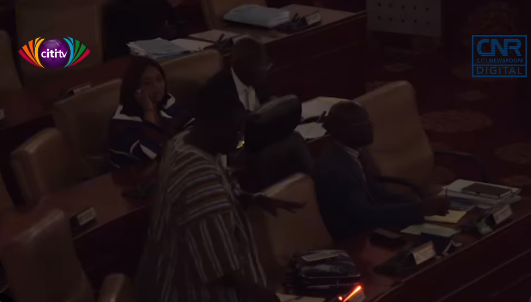
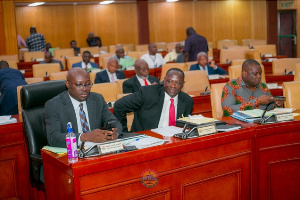
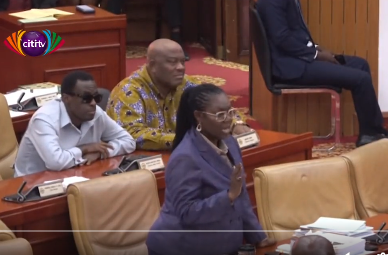
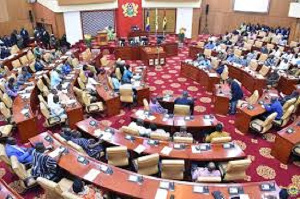
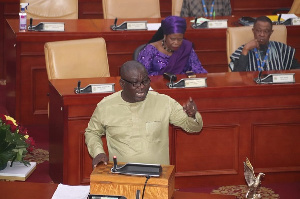
Parliament experienced an intermittent power outage during its sitting today.
The lights went out while the Majority Chief Whip and Member of Parliament (MP) for Nsawam-Adoagyiri, Frank Annoh-Dompreh, was speaking on the floor of the House.
The unfortunate incident generated mockery from the Minority side of Parliament.
Frank Annoh-Dompreh, who was displeased by the Minority’s action, criticised its members for complaining about a phenomenon they failed to address.
The Nsawam-Adoagyiri MP, stated that the erratic power supply currently being experienced is nowhere close to what was experienced under the Mahama-led administration.
“What’s your problem? This is better than what we experienced under you. You should know this. Sam George, you should know this. This is far better than what we endured under your tenure,” he said.
His comments did not prevent the Minority from ridiculing the Majority the more. An MP shouted, “You go explain tire,” indicating that no amount of explanation can take away the fact that “dumsor” is back under the Akufo-Addo-led government.
A few minutes later, Parliament was lit once more. It is unknown if power was restored or if a plant had been turned on.
Staff of the Ghana Grid Company, GRIDCo are threatening the return of incessant power cuts, popularly known as dumsor, which plagued the country some years back.
This is due to the failure of the government to settle some arrears of industry players.
In a statement registering their displeasure over the situation, the aggrieved staff noted that there will be a return of ‘dumsor’ this Christmas if the financial status of the company is not improved with immediate effect.
“The main cause of the poor cash flow situation is because the Cash Waterfall Mechanism which is used as the mode of payment to the industry players within the sector is not working and is suspected to have been discontinued,” they stated.
In the statement issued by the Senior Staff Association’s National Chairman and addressed to the Minister of Energy, the Board Chairman, and the Chief Executive of GRIDCo, the staff are pointing accusing fingers at ECG for their refusal to pay, in full, for the services rendered to them by the company.
They explain that GRIDCo bills ECG – their major customer – over GH₵100 million per month, out of which only about 18% to 25% is paid, and in an irregular manner.
The Agbogbomefia of the Asogli State, Togbe Afede XIV, has urged Members of Parliament (MPs) in Ghana to prioritize the creation of laws that foster development and contribute to the nation’s overall growth.
Emphasizing the importance of legislation that enhances living standards and addresses challenges such as poverty and unemployment, Togbe Afede XIV spoke at the Public Forum commemorating 30 years of uninterrupted parliamentary democracy under the fourth republic at the Technical University Auditorium in Ho.
“We all desire democracy, good governance, effective governance, but what we desire most as a people is development. Development that brings incomes to the people enhances living standards, and improves basic necessities of life, including job opportunities for our graduating students,” he stated.
Highlighting the significance of quality, development-oriented laws over quantity, the Agbogbomefia stressed that the ultimate goal is to ensure that the economy is well managed to maximize development and elevate the living standards of the people, aligning with the principles outlined in the 1992 constitution of the Fourth Republic.
The theme of the 30-year celebration of Ghana’s parliament is “30 Years of Parliamentary Democracy under the Fourth Republic: the Journey Thus Far.” The Public Forum brought together MPs, Parliamentary Service staff, political parties, academics, Civil Society Organisations (CSOs), security services personnel, traditional leaders, religious leaders, students, and the general public.
The Speaker of Parliament, Alban Bagbin, has lauded the 8th Parliament of Ghana under the 4th Republic as unparalleled, citing its unique dynamics that prevent the dominant imposition of policies.
Speaking at a public forum in Ho to commemorate the 30th anniversary of the parliament, Bagbin highlighted the distinctive nature of the hung parliament, where the New Patriotic Party and the National Democratic Congress share equal representation.
He commended the balance between majority and minority forces, asserting that this prevents the unilateral imposition of decisions and encourages consensus-building.
“This hung parliament is not like the other parliaments, and I would want to urge all of you to let us continue along this path, and with time you will see the difference. We take time to take decisions, but we build consensus in taking the decision. We don’t push it down the throat of many people.
Bagbin stressed the importance of maintaining such equilibrium, urging voters to consider the advantages of a hung parliament where decisions are carefully deliberated and not forcefully pushed through.
He cautioned against the idea of having a single party with a significant majority, emphasizing his own experiences and the benefits of a collaborative approach to governance.
The Agbogbomefia of the Asogli State, Togbe Afede XIV, chaired the event and used the occasion to reflect on the national goals outlined in the 1992 constitution.
Expressing concern about the unfulfilled dreams of the founding fathers and the challenges faced by the country, he urged Parliament to assess its role in facilitating development, improving living standards, and supporting local businesses.
The forum provided a timely opportunity for introspection and evaluation of Parliament’s contributions to national progress over the past 30 years.
“There are several graduates of six years standing who are still looking for jobs. What it means, therefore, is that we have not achieved the objectives of our people. You’ve not realized the dreams of our founding fathers, and of course, we have not realized the aspirations that are enshrined in our 1992 constitution”, he stressed.
“This forum would not have been happening at a better time than now, time to take stock, time for parliament to look back and ask, how much have we done to facilitate the development of the country? How much have we done to raise living standards? How much have we done to bring business to our people? That is the essence”, he added.
Parliament is slated to adjourn sine die on Friday, December 22, 2023, according to the Majority Chief Whip, Frank Annoh Dompreh, who outlined the upcoming week’s business in a recent statement.
Emphasizing the importance of adhering to the planned schedule, Mr Dompreh urged all members to remain committed to the scheduled business, aiming for a seamless adjournment on the specified date.
To expedite the resolution of pending matters, the House is expected to convene on both Mondays and Saturdays.
The Business Committee anticipates no further meetings until the adjournment sine die, he added.
“The Business Committee takes this opportunity to sincerely commend you, Rt. Hon. Speaker, your deputies, and all Hon. Members for the sacrifice and devotion to the business of the House during this Third Meeting. Remarkable among them is the willingness to sit for long hours and even on Mondays and a Saturday to consider the business of the House. The Committee urges all Hon. Members to sustain the enthusiasm until the House adjourns sine die,” he said.
In expressing gratitude, Mr Dompreh acknowledged the dedication of Rt. Hon. Speaker, deputies, and all Hon. Members throughout the Third Meeting.
He specifically noted their willingness to extend working hours and convene on unconventional days, urging members to maintain this commitment until the sine die adjournment.
Concluding his statement, Mr Dompreh extended wishes for a joyful yuletide and recess to all members, expressing optimism for a healthy return during the Fourth Session’s proceedings.
Speaker of Parliament, Alban Bagbin, has attributed the challenges faced by Parliament in effectively executing its oversight role over the Executive Arm of Government to the inequitable distribution of resources.
Speaker Bagbin argues that the government’s allocation of 600 million Cedis is insufficient to empower the legislature adequately, especially when compared to the consistently higher allocations received by the executive in the billions of Cedis.
Speaking at a Press Soiree in Ho, Volta Region, as part of the commemoration of 30 years of uninterrupted parliamentary democracy in Ghana, Mr. Bagbin emphasized the necessity for reforms to strengthen parliamentary governance in the country.
“If the Presidency in an annual budget can take, for example, 3 billion cedis and the whole arm that is to hold the president to account is given about 600 million cedis, now how can that weak body hold that mighty executive to account, how is it going to happen?.”
The Speaker further emphasized that the challenges in overseeing the executive are compounded by the lack of support from the government for the media.
He underscored the crucial role of the media in supervising all three arms of government and expressed concern that, in Ghana, the media is often perceived as a private enterprise with insufficient attention to its conditions of service or accountability mechanisms.
“If the media which is supposed to hold the three of us accountable is not even catered for, the media is seen in Ghana as a private enterprise and nobody cares whether there is conditions of service or not.”
The Speaker of Parliament, Alban Bagbin, has attributed the challenges faced by Parliament in effectively carrying out its oversight role over the Executive Arm of Government to the inadequate distribution of resources.
Bagbin argues that the government’s allocation of 600 million Cedis is insufficient to empower the legislature for scrutinizing the executive, which consistently receives allocations in the billions of Cedis.
Addressing a Press Soiree in Ho, Volta Region, as part of the commemoration of 30 years of uninterrupted parliamentary democracy in Ghana, Mr. Bagbin underscored the need for reforms to strengthen parliamentary governance in the country.
“If the Presidency in an annual budget can take, for example, 3 billion cedis and the whole arm that is to hold the president to account is given about 600 million cedis, now how can that weak body hold that mighty executive to account, how is it going to happen?.”
The Speaker further noted that the challenges in overseeing the executive are compounded by the media’s lack of support from the government. He highlighted the crucial role of the media in supervising all three arms of government and lamented that, in Ghana, the media is often perceived as a private enterprise with little regard for its conditions of service or accountability mechanisms.
“If the media, which is supposed to hold all three of us accountable, is not even catered for, the media is seen in Ghana as a private enterprise and nobody cares whether there are conditions of service or not.”
Parliament has officially sanctioned the cultivation and regulation of cannabis for industrial and commercial purposes.
This development comes in the wake of the endorsement of the Narcotics Control Commission Regulations 2023, legitimizing cannabis with a tetrahydrocannabinol (THC) content of 0.3.
During his contribution to the passage of the Legislative Instrument, Interior Minister Ambrose Dery emphasized that this should not be construed as the legalization of recreational marijuana.
He clarified that cannabis with THC of 0.3 is not yet cultivated in the country and that the ministry is now preparing to bring such types into the country.
However, Minority Chief Whip, Governs Kwame Agbodza, asserts that this legislation is prone to abuse and predicts that the cultivation of cannabis will not positively impact the fortunes of the country.
He warned that the passing of the law and its subsequent abuse could exacerbate an already dire mental health situation in the country.
“And none of you is talking about the potential of abuse and how that can degenerate into mental health problems we already have in this country. Why are we pretending that this is going to solve our problem? Minister? Do you even know how many people in this country are smoking weed?” he quizzed.
“Even electricity that the sources we produce we are known, we are unable to police the amount of electricity we produce in this country. You are not talking about giving license to people to produce weed. While I don’t have the potential of stopping this, the fact is that Ghana is blessed enough with gold, diamond and just recently we found E-Levy, none of them is able to save our country,” the MP added.
Meanwhile, the new Vice Chair of the Constitutional and Legal Affairs Committee, Sarah Adwoa Safo disagreed with Mr Agbodza.
According to her, cannabis for medicinal and industrial purposes will help Ghana economically.
“We’re not talking about just a leaf in someone’s backyard, we’re talking about a whole industry that is been created. And if we have our fertile lands here, and we can grow and make sure that the right framework is in place, I don’t see why we can’t take advantage of it,” she said.
Cannabis of THC 0.3 has little to no psychoactive effects and can be purposed into ropes, paper, and other building materials among others.
Former Central Region Chairman of the National Democratic Congress (NDC), Bernard Jacobs Allotey, has praised the Member of Parliament (MP) for the Effutu constituency, Kwabena Afenyo-Markin, for his positive impact on Winneba in the Central Region.
During an appearance on Peace FM’s Kokrokoo show, Mr Allotey commended the Deputy Majority Leader in Parliament for his achievements, specifically highlighting his efforts in securing Winneba the host for the ECOWAS parliament.
He drew a contrast with other parliamentarians who, according to him, have left their constituents disappointed by not fulfilling their promises.
Mr Allotey called on Ghanaians to rally behind and applaud Mr Afenyo for his contributions, emphasizing that the MP has transformed Winneba in a relatively short period.
He suggested that Mr Afenyo’s accomplishments should serve as an example for other parliamentarians to emulate.
“Kwabena Afenyo, I knew him when he was very young, he changed the face of Winneba, I wish all parliamentarians would do that. He has made Winneba host ECOWAS parliament twice. People must learn from this young man,” he added.
Serving on both the Defense and Interior Finance Committees in the Ghana Parliament, Afenyo-Markin has a diverse background.
He pursued Law at the University of Buckingham, completing LLB/mgt from 2003 to 2006, followed by a Barrister at Law Cert. from the Ghana School of Law (2007-2009), and an M.A. in International Politics & Security at the University of Bradford (2009-2010).
His professional journey includes roles such as Principal Postal Officer at the Ghana Post Company Limited (1999-2003), Director at Excel Courier Ghana Limited (2004-2011), and an Associate at Dehenya Chambers (2010-2016).
Beyond his legislative responsibilities, Afenyo-Markin has contributed significantly to community initiatives. He spearheaded the One Teacher, One Laptop initiative, resulting in the donation of over 1000 laptops. Launched on October 13th, 2018, the initiative provided 100 laptops to teachers in the Effutuman constituency at the Ebenezer Methodist Church in Winneba. Additionally, 14 libraries were constructed in his constituency, aiming to enhance educational opportunities and foster a reading culture among young people.
On March 7, 2020, Afenyo-Markin further demonstrated his commitment to environmental beautification by planting Royal Palm trees in the capital of Winneba.
Majority Leader and Member of Parliament for Suame Constituency, Osei Kyei-Mensah-Bonsu, has affirmed his decision to exit the legislative chamber upon completing his present term. The announcement marks a notable development in the political landscape as Kyei-Mensah-Bonsu signals his intention to conclude his parliamentary service after the current term.
The legislator, who is set to mark 28 years in parliament by 2024, reiterated once again during an interview with Kwame Nkrumah Tikese on Okay FM that he will not pursue re-election in 2024.
“Akans have a saying that a man does not go back to lick his spit. I’ve already mentioned it a number of times and I still stand by it,” he stated of a possible U-turn.
According to him, while he is yet to officially write to the New Patriotic Party informing the leadership of his decision, his mind is already made up.
The NPP ahead of the 2024 general elections has held primaries in constituencies that do not have seats in parliament – orphan constituencies so called.
Meanwhile, the party has fixed early 2024 to hold parliamentary primaries in constituencies with sitting Members of Parliament.
Ranking Member on the Agriculture Committee of Parliament, Eric Opoku, has voiced deep disappointment at the government’s failure to honor its commitment to construct a promised two-bedroom house for the Best Fish Farmer of 2021.
Years have passed, and the unfulfilled pledge has drawn criticism, raising questions about the government’s commitment to supporting and recognizing excellence in the agricultural sector.
Eric Opoku has rebuked the Ministry of Agriculture for requesting an additional sum of GH¢50,000 three years later to finalize the construction of the promised house.
Opoku made these remarks while deliberating on the 2024 budget estimates of the Ministry of Fisheries and Aquaculture Development during the Committee on Agric and Cocoa Affairs discussion.
“…Mr. Speaker, Farmers Day. This is a very important celebration that every Ghanaian must have heard. Unfortunately, during the celebration, the best fish farmer is not given the award. In 2021, the best fish farmer was to be given a two-bedroom house. The ceremony, attended by the President and all state apparatus, was widely publicized. However, as we speak, the house has not been completed, and the ministry is now asking for five hundred thousand cedis to be able to complete the building and hand it over to the best fish farmer. Mr. Speaker, this is something that must not be told anywhere. We don’t have to allow this to happen.”
However, the ministry, as revealed in the report, has abandoned the decision to award the Best Fish Farmer a house due to financial constraints.
The Committee urged the Ministry of Finance to release the GH¢500,000.00 allocated for the completion of the two-bedroom house awarded to the 2021 Best Fish Farmer.
This move aims to enable the ministry to reconsider reinstating the housing award, intending to motivate more investors to venture into aquaculture.
The House has since approved a total sum of two hundred and ninety-eight million, seven hundred and seventy-two thousand, two hundred and fifty-three Ghana Cedis (GHC298,772,253) to implement the planned programs and activities of the Ministry of Fisheries and Aquaculture Development for the 2024 financial year.
A Public Accounts Committee (PAC) report has revealed that GH¢ 17 billion was recorded as irregularities recorded in some 19 State Institutions in 2021.
In response to the report, Majority Leader of Parliament and Minister of Parliamentary Affairs, Osei Kyei Mensah Bonsu, proposed the establishment of a parliamentary committee to address and investigate the reported financial discrepancies and ensure accountability in the management of public funds within the implicated institutions.
According to the report, an amount of GH¢17,483,483,539.25 was recorded as irregularities in the management of some 19 State institutions for the period ended December 31, 2021. The report pressed the Majority Leader to call on the House to constitute a committee that would further probe on the recommendations of the Public Accounts Committee.
The 19 state institutions and agencies that were cited for causing these irregularities were under the Ministry of Energy, Ministry of Finance, Ministry of Education, Ministry of Health, Ministry of Lands and Natural Resources, Ministry of Food and Agriculture, Ministry of Justice and Attorney-General, Ministry of Communication and Digitization, Ministry of Tourism, Creative Arts and Culture, Ministry of Interior, Ministry of Employment and Labour Relations. The rest were the Ministry of Transport, Ministry of Trade and Industry, Ministry of Information, Ministry of Works and Housing, and Ministry of Sanitation and Water Resources.
He expressed the view that even though the Public Accounts Committee has as parts of its mandate to investigate the reports by the Auditor General and presents its reports to Parliament, the House also is empowered by the same constitution to further work with the Attorney General’s Department to ensure that all recommendations made by the Public Accounts Committee are carried out.
The report of the Public Accounts Committee further revealed that, the total irregularities increased from GH¢ 12,856,172,626 in the year 2020 to GH¢17,483,483,539.25 in 2021, representing an increase of 36.0% from the 2020 irregularities uncovered.
The report classified the irregularities under eight (8) different headings namely, Outstanding Debtors/Loans Receivable (58.98%), Dues from Customers for power sales (COVID -M19 & Others) (34.56%), Cash (2.89%), Payroll (0.05%), Procurement (1.75%), Tax (0.13) and Contract irregularities (1.62%).
Parliament has instructed the Ministries of Energy and Health to collaborate in finding a permanent solution to issues related to electricity supply to health facilities nationwide.
This directive comes after revelations by the Member of Parliament for Tain, Adama Sulemana, that the Tain District Hospital had been disconnected from the national power grid by the Northern Electricity Distribution Company (NEDCO) due to an outstanding debt of over GH¢7 million.
Although power has been reportedly restored to the health facility, the Second Deputy Speaker, Andrew Asiamah Amoako, emphasized that hospitals should not face power cuts affecting healthcare delivery.
The MP for Tain urged Parliament to compel the government to cover the electricity cost for the effective operation of the hospital.
Parliament faced challenges reaching a consensus on the punishment for LGBTQ+ individuals engaging in unnatural carnal knowledge under the Proper Human Sexual Rights and Ghanaian Family Values Bill.
The proposed legislation criminalizes same-sex activities, proposing a penalty of 3 to 5 years.
However, the Constitutional and Legal Affairs Committee suggested a jail term of up to 3 years without specifying a minimum sentence, citing various considerations in support of this proposal on December 12, 2023.
“Most of the religious bodies were supporting the fact that they would give people who are prepared to go through reforms, the opportunity to go through. If we make a strict law that if you are found guilty, or you practice this, you don’t have an option. Mr. Speaker, we don’t have a community service that would have been more severe than giving the person a custodial sentence, because the society will look down upon you.
“But to caution you or to give you deserve imprisonment or imprisonment, if we leave it to the discretion of the judge, they are also members of this society, they are learned, and depending on the circumstances, that’s why I am comfortable if we give the upper limit without saying that the person must be imprisoned as a minimum requirement.”
A sponsor of the Proper Human Sexual Rights and Ghanaian Family Values Bill, and Ningo-Prampram MP, Sam George, emphasized the importance of seeking advice on the penalty units to be imposed on offenders.
“We should then get advice on what the minimum penalty or 750 units is concurrent with, is it three months or six months? So we have a lower limit also for custodial sentence,” he said on the floor.
But the Speaker interjected, saying that there was already a law on equivalence on penalty units and therefore “that will apply.”
After extensive deliberations, the Speaker deferred the questions related to the LGBTQ+ bill to parliamentary drafters. The intention is to draft a detailed form of the discussions that accurately reflects the perspectives and intentions of various legislators. The bill, led by eight Members of Parliament, seeks to criminalize the promotion, advocacy, funding, and acts of homosexuality in Ghana.
The Controller and Accountant-General’s Department (CGD) has levied an accusation against an opposition Member of Parliament, alleging a display of ignorance in the understanding of how government payroll operations are managed.
The MP in question, Edward Bawa, representing the Bongo Constituency, made allegations on TV3’s Big Issues program in September 2023. He claimed that Kwasi Kwaning-Bosompem, the government‘s accountant, in pursuit of his parliamentary ambitions, included New Patriotic Party (NPP) delegates on the government payroll.
Bawa stated that some of the delegates openly acknowledged this during the broadcast.
The government’s chief accountant is vying for the parliamentary seat in the Akim Swedru constituency, with primaries scheduled for early next year.
In a rejoinder addressed to TV3’s Head of Programmes, the CAGD said the MP had exhibited ignorance in how payroll works spelling out the processes involved and how it was impossible to include and proceed to pay persons unjustifiably.
“The said panelist made a spurious allegation to the effect that the Controller and Accountant-General has put the names of delegates on Payroll and they have been receiving salary for two years.
“I would like to categorically state that this accusation is false, unsubstantiated, and exhibits his level of ignorance of the business process in the management of Government payroll,” the statement dated DEcember 9, 2023 read in part.
A $150 million loan from the World Bank’s International Development Association, allocated for the West Africa Coastal Areas Resilience Investment Project 2, has received approval by Parliament.
The objective of the initiative is to enhance the socio-economic resilience of coastal communities through the implementation of effective coastal management practices.
It is in accordance with the government’s dedication to reducing the vulnerability of coastal regions and enhancing the well-being of local communities along the coastlines of Ghana.
Chairman of the Finance Committee of Parliament, Kwaku Kwarteng, underscored the vital role of the loan in tackling challenges like tidal waves, particularly in coastal regions such as Keta in the Volta Region. Furthermore, the house approved a distinct $200 million loan from the World Bank Group for the financing of the Ghana Tree Crop Diversification Project.
A few weeks ago, the World Bank expressed sympathy for the victims of the recent flood disaster in regions along the Volta River, resulting from the release of excess water from the Akosombo and Kpong dams.
Approximately 30,000 residents were forced to evacuate, and the floodwaters devastated their farmlands.
At the 3rd Conference on Fisheries and Coastal Environment in Accra, the Operations Manager of the World Bank in Ghana, Liberia, and Sierra Leone, Ms Michelle Keane, said: “We can’t speak about flooding today without conveying the World Bank’s sincere empathy and concern for the ten thousand of people who have been impacted by the recent floods along the Volta River”.
“The World Bank would want to express its readiness to support the government in its response to this crisis”, she said.
She added: “In the longer term, developing a sustainability and risk management strategy for the Volta River and Volta Delta among other areas will be crucial to determine where it is safe for people to live and how their livelihoods can be sustained and grow along the Volta River supported by a healthy ecosystem”.
“We hope that the government and its partners will take full advantage of the $150 million approved by the World Bank for Ghana under the West Africa Coastal Areas Management Programme (WACA)”, she noted.
She said the financing is expected to become available “very soon after parliamentary approval”.
Parliament has granted approval for two loan agreements from the World Bank estimating $350 million.
On Friday, the House approved a loan agreement of $150 million from the International Development Association of the World Bank. The loan is allocated for the West Africa Coastal Areas Resilience Investment Project 2.
The objective of the project is to enhance the socio-economic resilience of coastal communities by promoting effective coastal management practices.
Additionally, it seeks to aid the government in its endeavors to diminish the vulnerability of coastal areas and the local communities residing along the country’s coastlines.
The Chairman of the Finance Committee of Parliament, Kwaku Kwarteng, has presented a motion for the approval of a $150 million loan from the International Development Association of the World Bank. This loan is intended to address challenges posed by tidal waves in coastal areas, including Keta in the Volta Region.
In addition, Parliament has also given its approval for a separate loan agreement of $200 million from the World Bank Group. This funding is earmarked for the Ghana Tree Crop Diversification Project, reflecting a commitment to supporting initiatives that promote diversification in the country’s agricultural sector.
Ningo-Prampram MP, Samuel Nartey George, has expressed apprehensions regarding the delay in disbursing the promised 30% allowance to police officers tasked with providing security for Members of Parliament.
According to him, this delay is adversely affecting the morale of these officers. Mr Sam George brought attention to this matter during his contribution to the discussion on the business statement for the upcoming week, as presented by the Majority Leader, Osei Kyei-Mensah-Bonsu.
He stated, “There is a critical issue that is affecting the morale of bodyguards assigned to MPs in the house. The issue of current mistreatment is because when the signal came for them to be transferred from their various units to the parliamentary protection unit, that signal came with a certain benefit of 30% allowance to be paid to them.”
To have the situation rectified, the Ninigo-Prampram legislator called for the Minister of Interior, Ambrose Dery, to be summoned to Parliament.
He further added, “It appears that the majority of our police are not receiving that and is affecting the well-being of bodyguards. So if the Interior Minister can be brought to come and explain to us what that is, we will be grateful,” he said.
The bill, currently undergoing the consideration stage, is slated for refinement to align more closely with the prevailing Ghanaian legal framework.
The advancement of the bill had experienced a prolonged hiatus, causing frustration among its supporters. Allegations were raised by proponents, asserting that certain Members of Parliament had collaborated with pro-LGBT campaigners, intentionally contributing to the delay in its passage.
In a press conference, lead campaigner for the anti-LGBT bill, Sam George, said “Those who have gone and gotten influenced by persons who have an interest in the LGBTQ should return whatever influence they have collected because we will fight, and the next time we address the media, I will mention names.”
In the ongoing consideration of the bill, the Chairman of the Constitution and Legal Affairs Committee is notably absent. This echoes a recent incident earlier in the week when a similar situation resulted in a temporary halt to the bill’s progress.
The Deputy Majority Chief Whip, Lydia Alhassan, clarified that the Committee Chairman, who had proposed amendments to the bill, was unavailable and absent from the parliamentary session due to health reasons. Consequently, the decision was made to postpone the proceedings on the bill during that time.
However, reacting to her statement, Sam George had said, “The excuse given today that the chairman of the committee is not in the chamber so we can’t take the amendments is alien to the practice of this house.”
The Bill which has generated a lot of attention locally and internationally, seeks to curb the acknowledgement and promotion of any rights of LGBTQI+ individuals or group.
The dust is settled. The Parliament of Ghana has approved the Government’s 2024 Budget. One absentee on the Minority side dealt a blow to their resolute opposition to the budget at the preliminary stages.
This means the House was packed by Majority.
The decision was by a headcount won by a simple majority. The Speaker of Parliament, Rt. Hon. Alban Bagbin pronounced the verdict after the tortuous lead-up to this outcome.
A hard-fought. The Finance Minister, Ken Ofori Atta can heave a sigh of relief and get going.
Ghana’s Parliament is a near tie between the two sides as far as the numbers are concerned.
Today, Members of Parliament are expected to cast their votes on the 2024 budget statement.
This comes in the wake of Speaker of Parliament, Alban Bagbin’s, reiteration on November 30 that the 2024 budget statement and economic policy had not yet received approval.
In the preceding session, the Majority orchestrated a walkout during the endorsement of the statement, alleging that the Speaker was conducting himself in an unfortunate and improper manner. Their contention was that, after a voice vote on the floor, the Speaker initially ruled in favor of the Majority but reversed his decision when the Minority challenged the voice vote and insisted on a headcount.
The Majority also accused the Speaker of employing delaying tactics. They claimed that he ensured that members from the Minority, who were initially absent from the chamber, could rush in to be counted after the Speaker had instructed members to stand following the mention of their names for the count.
“What is happening is that there are five members of the minority who are not here, so all that he’s doing is to play for time to enable them to come to the chamber. That is it, that’s all that it is,” the Majority Leader, Osei Kyei-Mensah-Bonsu had said.
In defense of his purported reversal, the Speaker clarified that he had expressed an opinion rather than issued a formal ruling.
He said, “So throughout the practice when it’s an opinion, you say I think, I think, that is an opinion I’m expressing. I think the ayes have it. Now an opportunity is created for somebody to challenge the opinion and so when you read 113 (2) it doesn’t talk about ruling, it talks about the opinion that’s why it says a member may call for a headcount or division if the opinion of Mr Speaker on a voice vote is challenged.”
On November 30, the Speaker directed the business committee to reschedule the headcount to today for a final decision to be taken on the budget.
According to him, the matter is not up for debate.
Interior Minister Ambrose Dery is proposing the formation of a Parliamentary committee to address the ongoing land disputes in Nkwanta, located in the Oti Region.
A curfew has been implemented in the area following recent disturbances that resulted in 11 fatalities.
The MP for Nkwanta South, Geoffrey Kini, called for intervention from the Interior Minister and Parliament to resolve the conflict. He also urged the people of Nkwanta South to contribute to maintaining peace in the region.
“We in Nkwanta South cannot afford to continue to be at each other’s throats when our very lives are being destroyed. I wish to indicate that any individual or group of persons who persist in ignoring the national call and continue to wreak havoc on the area must be decisively and comprehensively dealt with according to the law so that they do not hold the people of the area to ransom,” he said.
In response to the concerns raised by MP Geoffrey Kini, Interior Minister Ambrose Dery asserted that resolving the underlying land dispute is crucial for effectively bringing an end to the conflict in Nkwanta.
He therefore recommended the formation of a committee, including the land committee, to resolve the dispute.
“We will be sending NADMO to go to the area to find out what we can do to ameliorate the situation. Mr Speaker, I want to work with my colleagues, with the REGSEG. Let us set up a committee – I want the Lands Commission to be involved – that will do something about the underlying land conflict,” he said on the floor.
Since last month, there have been renewed clashes between the Adele, Challa, and Akyode ethnic groups in Nkwanta, resulting in the tragic loss of about 11 lives. Additionally, numerous houses and properties have been destroyed during the conflicts.
A member of the Parliament’s Education Committee, holding the position of Ranking Member, Peter Nortsu-Kotoe, has criticized the Education Ministry’s insistence on maintaining the December 4 reopening date for new Senior High School students, despite a plea from the Speaker for a change.
Peter Nortsu-Kotoe expressed his disapproval in an interview on JoyNews Desk on Friday, December 1, stating that such a lack of respect should not be tolerated.
“For me, the refusal of the Ministry to listen to the Speaker is also disrespectful to the House,” he said.
On Thursday, November 30, the Speaker of Parliament urged the Education Ministry to reconsider its decision regarding the reopening date for fresh students, scheduled for Monday, December 4, 2023, which is just a week after their placement.
Many students are currently collecting prospectuses from the schools they’ve been enrolled in.
The Speaker also directed the Education Minister, Dr. Yaw Osei Adutwum, to appear before the House and reverse the decision.
However, the Education Ministry remains firm on maintaining the December 4 reopening date. According to the Ministry’s spokesperson, Kwaku Kwarteng, the academic calendar had been released several weeks ago, implying that parents should have made adequate preparations before the scheduled reopening.
He, however, added that “the first-year students who are unable to report on the first day will not automatically lose their slots.”
In response to these statements, Mr. Nortsu-Kotoe raised questions about the Ministry’s urgency in having first-year students report to school on December 4, especially considering the approximately 108,000 placement issues that still need to be addressed. He argued that it would be unreasonable to overburden the students and suggested pushing the reopening date to January to allow the students some time to rest.
“If you’re saying that you have given a directive and there would be no change, why are you making it so difficult for parents and teachers to prepare for proper academic work?” he quizzed.
According to him, the House will impress on the Education Minister to change the date when he appears before Parliament on Monday.
Speaker of Parliament, Alban S. K. Bagbin has urged the Ministry of Education to reconsider its decision to allow Senior High School (SHS) first-year students to report on Monday, December 4, 2023.
He proposes that the reopening date be moved to the first week of January to allow for adequate preparation on the part of both parents and teachers.
The Speaker has invited Minister of Education, Dr Yaw Osei Adutwum, to appear before the House on Monday, December 4 to brief the House on the reopening date and other matters.
The action comes after Ranking Member on Education and Member of Parliament (MP) for Akatsi North Peter Kwasi Nortsu-Kotoe made a statement regarding the apparent rush to permit the students to return to school on Monday.
The minority-party MPs voiced their concerns about the difficulties parents would face in preparing their kids for school on Monday between Thursday and Sunday.
According to the MPs, it is inexplicable that students had to rush to report on Monday and that school placement was only announced two days ago.
According to the MPs, constituents have called for support and even for changes to be made to their placement.
Samuel Okudzeto Ablakwa, the MP for North Tongu, made it clear that he had received calls from teachers who were tired and requesting time off.
Parliament is set to conduct a headcount for the approval of the 2024 budget on November 30, 2023.
The Speaker of Parliament, Alban Bagbin, had declared a voice vote in favor of the majority after the budget debate on November 29.
However, the minority challenged the ruling and called for a headcount, leading to a majority walkout. The headcount is expected to take place despite the earlier suspension of sittings.
The Minority has affirmed its intention to oppose the budget approval.
Despite the suspension of sittings, indications on the order paper of Parliament suggest that a headcount for the approval of the 2024 budget will be conducted on the same day. Ernest Norgbey, the Member of Parliament for Ashaiman, affirmed the Minority’s decision to once again oppose the approval.
“Well, the same story, we will still kick against the budget. We are ready and poised for the headcount. We are optimistic that all our members will be present today, and we will reject the budget. We are all here but, none of them is available as we speak now.
“There are so many anomalies in the budget, so many taxes we want the government to take away to reduce the burden and sufferings of Ghanaians. Even some of the members of the majority are not in agreement with some of the taxes. We have decided to kick against the budget so that they go and correct the anomalies.” he said.
The Majority of Members of Parliament staged a walkout when Parliament was about to approve the 2024 budget statement.#TV3NewDaypic.twitter.com/8F3Nb9PwTt
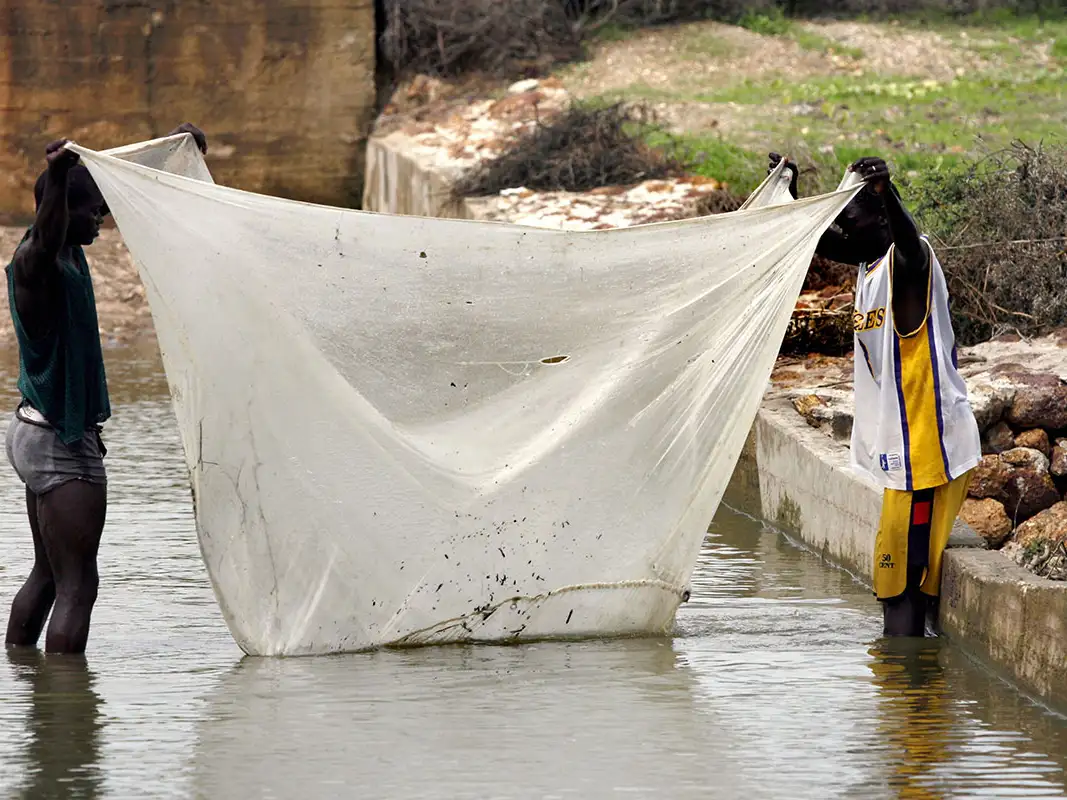
The Parliamentary Select Committee on Health has issued a warning to the public against using the government-distributed insecticide-treated nets (mosquito nets) for purposes other than their intended use, such as fishing, garden fencing, and covering refuse.
The Committee emphasized that these nets are specifically designed to prevent malaria by warding off mosquitoes.
Dr. Patrick Boakye-Yiadom, the Member of Parliament (MP) for Obuasi East and Vice Chair of the Committee, cautioned that such inappropriate use exposes communities and households to mosquitoes, undermining the country’s efforts in the fight against malaria.
The warning was conveyed during a working visit to selected schools in the Central Region, where the Committee monitored the ongoing distribution of insecticide-treated nets targeting pupils from class two to six.
The net distribution is a key initiative of the National Malaria Elimination Programme (NMEP) of the Ghana Health Service (GHS), aimed at eradicating malaria in Ghana.
Dr. Boakye-Yiadom, along with other officials, emphasized the importance of using the nets appropriately to serve their purpose and encouraged pupils to consistently sleep under the nets to collectively prevent malaria and ensure the continuity of their education.
The Committee, in collaboration with the GHS and the Ghana Education Service (GES), expressed its commitment to closely monitor public activities to ensure the proper use of the nets. Dr. Boakye-Yiadom highlighted that malaria remains a significant burden on the economy and education, emphasizing the need to strengthen efforts to eliminate it.
Despite significant progress in reducing malaria’s burden in Ghana, the Committee stressed the importance of continuous efforts and support for the National Malaria Elimination Programme.
Dr. Paul Boateng from NMEP noted that the distribution of nets has significantly contributed to the reduction of malaria and associated mortalities over the years. Last year’s malaria rate was around 8.6%, compared to approximately 14% four years ago, showcasing the positive impact of various interventions and efforts by GHS and NMEP.
“Last year, Ghana recorded a little over five million confirmed cases of malaria and 151 malaria-related deaths, but that has been an improvement on the situation over the years,” he said.
Dr Boateng said that starting next year, they would intensify actions towards eliminating malaria from Ghana by 2028 and that they should be able to eliminate malaria in at least 21 districts, mainly in the Greater Accra Region.
During a parliamentary session on Tuesday, the Speaker of Parliament, Alban Bagbin, and Communications Minister Ursula Owusu-Ekuful clashed over the contentious Import Restrictions Bill.
The disagreement led to a heated exchange, only brought to a close by the Speaker’s authoritative intervention, with Ursula eventually concurring to end the dispute.
The parliamentary drama unfolded after another unsuccessful attempt by the Minister of Trade, KT Hammond, to present the controversial Import Restrictions Bill. The bill aims to grant the Trade Ministry the authority to approve or disapprove the importation of a specified list of products.
The Minority MPs, who had adamantly pledged to oppose both the laying and approval of the bill, maintained their vigorous resistance. Ursula questioned the Speaker, expressing her concern about why he wouldn’t instruct the Minority to withhold their objections since the bill had not yet been laid, a directive the Speaker had previously given to the Trade and Industry Minister, K.T. Hammond.
Ursula contended that there was no valid reason for the Minority’s opposition, as, from her perspective, there was nothing formally presented before the House that warranted such resistance.
After close to a minute of exchange of words, the Speaker said, “Hon. Minister, Honourable Minister, Honourable Minister, this is not the Ministry of Communications, this is Parliament.”
In response, Mrs Owusu-Ekuful said, “I am very much aware of that, Sir,” before the speaker thundered, “Resume your seat.”
Following the Speaker’s comment, a loud voice was heard saying, “Sit down”. The individual behind the phrase “Sit down” which is now on X’s trends list, remains unknown.
For some users, they believe Ningo-Prampram MP, Sam Nartey George was the individual who made the utterance.
Mr George and Mrs Owusu-Ekuful have clashed over the re-registration SIM Card exercises which saw millions of SIMs being blocked.
The man who shouted “sit down”…Only one name comes to mind…Sam Dzata Nbs cooking for Parliament House 🔥 😂 pic.twitter.com/VztwhjFqDg
This is happening even though a court said they can’t do it until they finish looking into the plan.
Lawmakers who disagreed with the government’s decision spoke out against the vote, but the ruling party, which has the most members, supported the government after a heated discussion.
Haiti asked other countries for help to deal with increasing crime.
Kenya’s proposal was accepted by the UN Security Council last month, but the main opposition party is against it.
About 300 groups of people who work together to do illegal things are causing problems in Haiti. Almost all of the main city, Port-au-Prince, is being controlled by these groups.
These groups have gained more power in the city since the president of Haiti was killed in 2021 and the country became chaotic politically.
At the vote on Thursday in Kenya’s parliament, lawmakers who supported the motion said that the country is part of the world and should not ignore the calls for help from other countries.
They also said that the East African country has a history of helping keep peace in places like Somalia, the Democratic Republic of Congo and Sierra Leone.
Parliament agreed to the plan by vote just before the High Court was set to start hearing the case about the deployment.
The Thirdway Alliance party is against the plan because they think it breaks the rules. They believe only the military should be sent to other countries.
The government said no to the argument and is standing up for itself in court.
The court said again that the soldiers couldn’t go until the case was finished.
The judge will make his decision in January.
Charles Midega, who is the legal spokesperson for Thirdway Alliance, said to the BBC that it was bold for parliament to talk about sending troops even though there was a court order against it.
In the parliament, lawmakers who are not in the ruling party said that they shouldn’t vote on something that is currently being decided by the courts.
However, lawmakers from the ruling party said that parliament can debate the issue as long as they focus on the main points of the case.
Kenya’s top opposition leader, Raila Odinga, has spoken out against the planned deployment before.
“Before you go to Africa, Haiti is really close to the United States, which is the strongest country in the world. ” Why did Kenya get picked to lead the multinational force in Haiti.
Kenya’s President Willim Ruto supports the plan because he thinks Africa wants to help Haiti be free and safe.
The US has promised to give $100 million to help with the mission, and Canada will also provide money.
During a trip to Kenya in September, the US Defense Secretary, Lloyd Austin, signed a five-year security agreement. He also thanked Kenya for its leadership in dealing with security issues in the region and worldwide.
Some people in Kenya think that Mr. Ruto and his government should focus on solving security problems in the country.
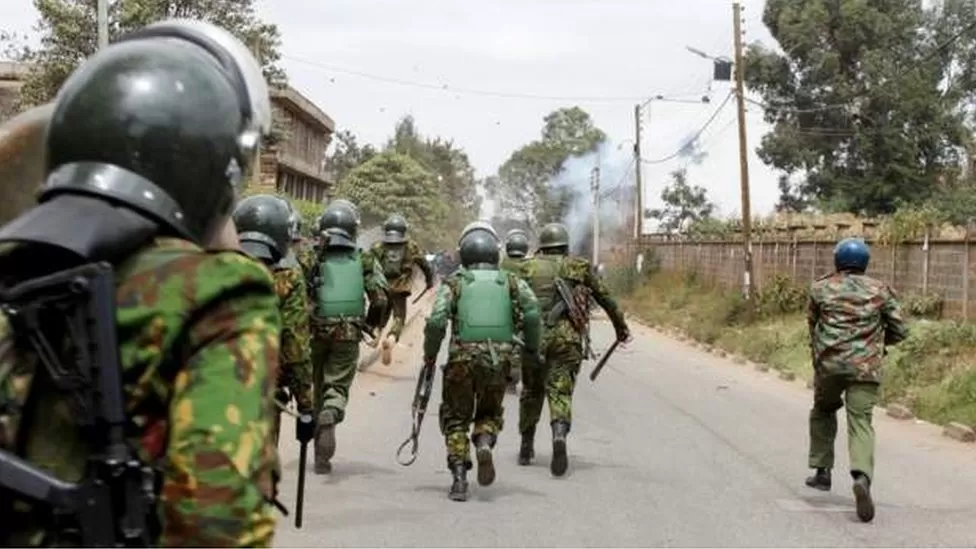
Rights organizations, like Amnesty International, are worried about the Kenyan police using too much force in the past few months.
The man known as the father of Kenyan literature, Ngũgĩ wa Thiong’o, has criticized the planned deployment. Last month he said tearfully, “If you know the history of Haiti, any black person would not do that. ”
Haiti was the first country with a black leader in 1804, when Gen Toussaint Louverture led enslaved people in a rebellion.
This made France very angry because they made a lot of money from Haiti’s plantations. They made Haiti pay a lot of money to the people who used to own slaves for over 122 years.
The US took control of Haiti from 1915 to 1934, by sending in soldiers and government officials.
In 1994 and 2004, the US military got involved in other countries to protect democracy and bring back stability.
A prominent New Patriotic Party (NPP) serial caller in the Ashanti region, Kwabena Nyame, has declared his intention to run for the Bekwai constituency in the upcoming primaries scheduled for February 2024.
Despite lacking formal education, Mr Nyame is resolute in his decision to seek the position of Member of Parliament (MP), emphasizing his capability to contribute meaningfully to parliamentary proceedings.
When questioned about his educational background, Mr Nyame acknowledged the absence of formal education but asserted that he possesses practical knowledge that can be valuable in parliamentary deliberations.
“What you are saying is the truth but it is not about the schooling, but the sense that you can make on the floor of parliament to convince the speaker on topical issues,” he said.
Addressing concerns about his ability to engage in legislative discussions, Mr Nyame revealed his approach. “I will need an aide, so I will employ an aide who is an expert in financial economics to brief me on proceedings. If the person briefs me, why can’t I talk on the floor of parliament?” he asserted.
In an interview on Hello FM on November 15, 2023, Mr Nyame defended his candidacy by emphasizing his active participation in the Bekwai constituency. He elaborated on his consistent attendance at various community events and funerals, underscoring his familiarity with local affairs.
Mr Nyame noted that the choice of the incumbent MP, Joseph Osei Owusu, not to seek re-election has resulted in a vacant position in the constituency, motivating him to step forward as a candidate.
“I have served in the Bekwai constituency very well, that is where I vote, and I’m always present at every funeral and program. Hon Joe Wise has made a decision not to contest again so the seat has been made vacant and we have to step in,” he added.
The Member of Parliament for the Odododiodio constituency, Edwin Nii Lante Vanderpuye, has disclosed the reasons behind his decision to retire from parliament, pointing to frustration as a significant factor.
During an interview on the Citi Breakfast Show on Citi FM, Vanderpuye expressed his discontent with the challenges MPs face in the discharge of their duties.
He emphasized the absence of adequate support and protection from political parties, leading to increasing pressure and a waning interest over time.
“I am leaving parliament because I am frustrated; the [political] parties really do not protect the people they have [in parliament]. So, you are subjected to so much pressure that, after a time, you lose interest because you don’t get the sort of environment to be able to harmonize the talents and competence you have,” he explained.
Expressing concern about the high attrition rate in parliament, Vanderpuye noted that numerous MPs, regardless of their political affiliation, experience comparable frustrations, leading to the departure of valuable contributors from the legislative body.
“The attrition rate in parliament is too high, and as such, people do not get the sort of experience they require to advance the work of parliament,” Vanderpuye remarked.
Additionally, he commended seasoned MPs like Dr. Osei Assibey and the late Dr. Akoto Osei for their significant contributions to the House. Vanderpuye emphasized the value of parliamentary experience, citing Speaker Alban Bagbin’s success as rooted in his extensive tenure as a Member of Parliament.
The First Deputy Speaker of Parliament, Joseph Osei-Owusu, has joined other legislators in endorsing Parliament’s choice to conduct the annual post-budget workshop outside of Accra.
This decision, despite suggestions to hold it within Parliament to reduce costs, has gained support from Osei-Owusu.
The Bekwai lawmaker justified this stance by stating that the House lacks the necessary logistics to host the workshop event.
“We’ve tried it [post-budget workshop] once here [Parliament], it wasn’t effective. We have only one hall but during the workshop, there will be multiple presenters doing different things, so the practicality will not be effective.”
This statement was made during an interview on JoyNews’ PM Express, where the host, Evans Mensah, expressed the opinion that Parliament might be hesitant to host the event within the House due to a preference for the “comfort of hotels.” Osei-Owusu made his remarks in response to this perspective.
In response, the First Deputy Speaker strongly refuted the idea, underscoring that the selection of the venue is guided by a sense of duty rather than a desire for comfort.
He said, “No hotel is as comfortable as my home. I’ve traveled around the world and no hotel I have stayed in is as comfortable as my home.”
The First Deputy Speaker, who entered parliament in 2009 and possesses considerable domestic and global experience, conveyed his reluctance to undertake travel, be it for business or conferences. He emphasized that this stance is not a matter of personal preference but a responsibility inherent in the responsibilities of the role.
“We don’t do it because of comfort, we don’t do it because we want to, we do it because it is a responsibility.”
His stance on the location of the yearly workshop follows a request from Buem MP, Kofi Adams, urging for this year’s post-budget workshop to take place in Parliament House in Accra.
The NDC MP referenced the current economic challenges and appealed to the House leadership to reconsider, advocating for holding the workshop in Parliament to cut costs. However, the Deputy Majority Leader, Alexander Afenyo Markin, rejected his plea.
He believes the request is opportunistic and seeks to put Parliament in a bad light adding that “This is a decision of the committee, it is not about leaders being insensitive.”
Meanwhile, Speaker of Parliament, Alban Bagbin,has rejected the use of hotels for the post-budget workshop this year, citing the current financial challenges facing the country.
National Democratic Congress (NDC) Member of Parliament for Buem, Kofi Adams, is advocating for Parliament to forego its typical out-of-town post-budget workshops.
He proposes holding the workshop within the parliamentary chamber, aiming to cut costs. The Finance Minister is set to unveil the 2024 budget shortly.
However, the suggestion faced opposition from Deputy Majority Leader Alexander Afenyo-Markin, who challenged Adams, questioning why he wasn’t willing to forgo his salary.
Adams reiterated his stance after the session, emphasizing the importance of considering cost-saving measures in the country’s economic climate.
“This year’s post-budget workshop, my position is that considering the situation we find ourselves in, it is really possible to have the post-budget workshop held here in Parliament instead of stepping out of Parliament“.
“I did just a simple calculation and realized that for just accommodation for the honorable Members of Parliament if you are using an average of 1,700 per room that makes the amount to 1.4 million Ghana Cedis plus. Before you talk about transport, feeding, and other stuff,” Mr. Adams stated.
He continued: “My view is that we could save this money and use it for many other very important things. As Parliament, we should lead the way to say that if we should cut down the cost of doing business for the government we must also lead the way and save this money.”
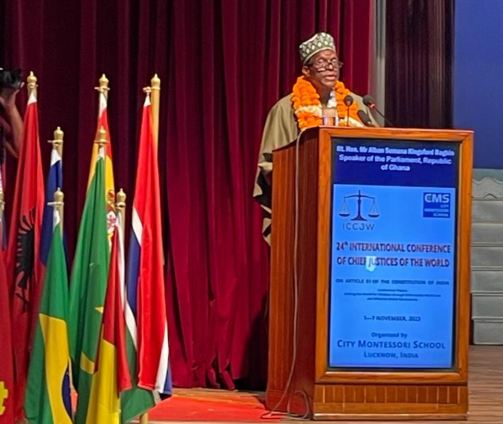
The Speaker of Parliament, Alban Bagbin, has called for a new world order that will manage conflicts better, deliver justice, reclaim the loss of trust by the people in the leadership of all sectors of the society, provide hope and optimism for the people, and promote peace, love and happiness.
He also proposed a reform of the United Nations Charter, given its inadequacy in the face of current global realities, to make it more responsive, democratic, inclusive, and aligned to modern-day governance requirements and structure.
It must create an equitable, just and sustainable future for all, prescribe behaviour and enact enforceable laws to regulate the conduct of nations in areas where the global community is most challenged.
Mr Bagbin was speaking at the 24th International Conference of Chief Justices from across the world, organised by the City Montessori School in Lucknow, India.
It was under the theme “Uniting the world for children through enforceable world law and effective global governance.” Sixty-three countries participated in the conference.
To achieve the world order he envisioned, the Speaker recommended a new global governance structure of four equal arms – the executive, legislature, judiciary and civil society (including the media).
He argued that “the tripod of three arms of government – executive, legislature and judiciary – is not working well. The checks are jerks and the balance are imbalances”.
He described CSOs as the backbone of positive change that can contribute to transformative reforms and hold governments and international bodies accountable for their actions.
Pressing home his point, he said “Let’s face it, legislatures all over the world have not been able to throw light on the operations of the executive nor hold it accountable to the people; neither have legislatures succeeded in self-regulation nor post legislation scrutiny.
“The proposed four world governance institutions must be truly equal, and work on the principles of checks and balances, openness, transparency and accountability”.
Rt. Hon. Bagbin told the participants that as leaders, they had a responsibility to ensure that they bequeath to the next generation a world that is inhabitable, that meets the aspirations of the youth, and that secures the integrity and dignity of the human race.
He touched on today’s global challenges requiring concerted, urgent attention and mentioned the depletion of the ozone layer, global water scarcity, hunger, poor sanitation, the loss of biodiversity and the extinction of certain species due to the exponential growth in population.
He also mentioned conflicts in the Korean Peninsula, Russia-Ukraine, the Sahel, Israel-Hamas, and issues around Artificial Intelligence (AI), and its potential existential threat to humanity.
In all these, he said, the global community must prioritise laws and governance interventions that safeguard the future of children and develop mechanisms to hold governments accountable for their acts that violate children’s rights such as child labour, child marriages, trafficking, and exploitation.
He encouraged governments to protect children’s rights and guarantee their survival and development, by upholding their legal obligations under the UN Conventions on the Rights of the Child.
“They must ensure all children are allowed to be children, to grow, learn, and play in a safe, inclusive and caring environment, and in dignity”.
He advised the youth who were part of the conference to remain optimistic and focus on developing an international community that cares for all.
He told them “you have innovation and energy to build a better society. You are the best placed to lead this transformation.
“You must compel governments to consider more resilient safety nets for the vulnerable, and demand participation in government”.
The Minister of Energy and the Volta River Authority (VRA) management are scheduled to appear before Parliament on Wednesday, November 8, to deliver an update on the Akosombo Dam spillage and its impact on communities along the Volta River basin.
Over the past few weeks, numerous residents in parts of the Volta and Eastern Regions have been forced to leave their homes, as their properties, including farmlands, have been inundated and destroyed by the excess water released from the dam.
During a parliamentary session, Dr. Matthew Opoku Prempeh, the Minister of Energy, reassured that his department is committed to providing the necessary accountability.
“Even though VRA is under the Ministry of Energy, we take responsibility. It is a national disaster, an emergency. It is not only affecting people in the South… I am not the lead government agency.”
“There is an inter-ministerial advisory team, but we will take responsibility and come to inform you about what VRA has done and hasn’t done once we have completed everything… And I do pledge that if it is next week Wednesday, I will be here with VRA,” he stated.
Nigeria’s House of Representatives has rejected the government’s proposal to procure a presidential yacht for $6 million amid public criticism of extravagant spending during an economic crisis, according to senior lawmaker Abubakar Bichi.
Instead, lawmakers redirected the $6 million to increase the budget for student loans, effectively doubling its allocation.
President Bola Tinubu, who assumed office in May with a pledge to reduce waste and alleviate financial burdens on citizens, sparked controversy when he presented a supplementary budget to the National Assembly.
The proposed purchase of the yacht was listed within the Nigerian Navy’s capital expenditure of $53 million.
Human rights activist and former lawmaker Shehu Sani reacted by saying that “the poor can’t be struggling for survival in a canoe while their leader is yachting”.
Mr. Tinubu’s spokesperson, Temitope Ajayi, clarified that the president had no involvement in the plans to acquire the yacht.
“From what I know, the request for a yacht, however it is named or couched in the budget is from the navy and they must have operational reasons for why it is required,” he said.
The budget, which was approved by the House of Representatives on Thursday, allocates $36 million for State House expenses, including luxury vehicle purchases and the construction of a presidential office complex. Additionally, $15 million is earmarked for the presidential air fleet.
This issue has arisen at a critical time when President Tinubu is facing significant challenges related to the cost of living and the steep depreciation of Nigeria’s currency, the naira, against the US dollar. Nigeria’s annual inflation rate reached 26.7% in September, according to official data.
A leading advocacy group in Nigeria, the Socio-Economic Rights and Accountability Project (Serap), said the purchase of a yacht could not be justified when “137 million Nigerians live in extreme poverty”.
Furthermore, their situation has deteriorated following President Tinubu’s decision to eliminate fuel subsidies in his inaugural address, leading to increases in fuel prices and the cost of essential goods.
Activist Omoyele Sowore accused the government of spending on luxuries while it “maintains the miseries of the Nigerian populace”.
Mr Ajayi said the president and his vice-president were not planning to add new vehicles to their fleet, and were using “inherited vehicles” from the previous administration.
He said the budget for vehicles was for hundreds of civil servants and political aides working at State House.
The next scheduled date for the Parliament to reconvene is Tuesday, October 31, 2023. The previous session ended in August.
The Eighth Parliament of the Fourth Republic has begun its Third Meeting of the Third Session with this.
Members of Parliament are expected to gather at Parliament House in Accra by 10:00 a.m., according to a statement signed by the Clerk to Parliament, Cyril K.O., and posted on the platform of the Minority Chief Whip.
The statement reads, “In accordance with Standing Order 32(2) of the Parliament of Ghana, I, Cyril Kwabena Oteng Nsiah, Clerk to Parliament, hereby inform Honourable Members of the Third Meeting of the Third Session of the Eighth Parliament of the Fourth Republic, which will commence on Tuesday, 31st October at Ten O’clock in the morning at Parliament House, Accra.”
Below is the statement
The Third Meeting of Third Session of the Eighth Parliament of the Fourth Republic starts on 31/10/2023. pic.twitter.com/CtdyCqDZlO
The Office of the Special Prosecutor (OSP) has called on Parliament to work expeditiously in passing the Corrupt Practices Act into law to codify the prohibition of all forms of corruption in the country.
The Office of the Special Prosecutor (OSP) made the clarion call after directing the closure of investigation in respect of allegations of corruption and corruption-related offences involving former Minister of State for Finance, Charles Adu Boahen.
President Akufo-Addo on November 14, 2022 requested the OSP to investigate allegations of corruption and corruption-related offences involving Mr. Adu Boahen contained in an investigative documentary titled Galamsey Economy published by investigative journalist, Anas Aremeyaw Anas and his associates operating under the corporate name of Tiger Eye P.I.
Tiger Eye P.I. audio visually recorded Mr Adu Boahen in the act of his commission of corruption and corruption-related offences. Undercover agents of Tiger Eye P.I., posing as businessmen who were interested in investing in Ghana, met with Mr. Adu Boahen and tabled their investment plans and proposals to him.
It was reported that sensing an opportunity to cash-in on his position as a Deputy Minister of Finance, Mr. Adu Boahen demanded twenty per cent (20%) of the value of the proposed initial investment or ten per cent (10%) upfront payment of the value of the proposed initial investment and post-investment sharing of the proceeds of the investment.
Per the OSP, as part of its investigations, it found out that in 2019 in Accra, Ahmed Hussein Suale, an operative of Tiger Eye P.I., who was shot to death tabled a proposal that the Al Baraka Banking Group were interested in investing in Ghana, particularly in the banking sector.
According to the OSP in its recently published report, convincing Mr. Adu Boahen was not a straightforward matter.
“Initially, he was altogether unreceptive of the idea of meeting with the supposed representatives of the Al Baraka Banking Group. Subsequently, he softened his stance and he suggested a meeting in Accra. The undercover agents demurred. They insisted on a meeting in Dubai. Eventually, Mr. Adu Boahen agreed to meet with the supposed representatives of the Al Baraka Banking Group in Dubai by taking a brief detour to Dubai on his way to Singapore on official government business,” a portion of the report read.
A second meeting was held and there, a supposed wealthy sheikh expressed his desire of investing about half a billion United States dollars in Africa.
Mr. Adu Boahen, intending to assure the supposed sheikh of his political office, influence and connections, is said to have launched into his family history about his father, the relationship between the President and his father, his close ties to the President, which is akin to an uncle and nephew relationship, and his close affinity to the Vice President.
“The supposed sheikh picked up on Mr. Adu Boahen’s assurances of the comfort of his high political influence and connections, and he laid the cards of the whole purpose of the sting operation on the table by enquiring as to the percentage cut Mr. Adu Boahen would take in respect of the intended investment in the financial sector in Ghana,” the report added.
After a bit of hesitation, Mr. Adu Boahen, on his own volition, suggested twenty percent (20%) of the intended investment as his cut. Mr. Adu Boahen must have meant this percentage cut demand as a shot in the dark.
The report noted that “this is because he could not believe his immense good fortune and he could not hide his utter surprise as the supposed sheikh readily agreed to his suggestion. Indeed, Mr. Adu Boahen stated that he thought the sheikh would reject the suggested percentage cut as too pricey.”
The supposed sheikh offered Mr. Adu Boahen US$40,000.00 in cash as shopping money. The supposed sheikh placed the cash on a piece of furniture close to Mr. Adu Boahen, and he accepted and collected the cash with gratitude.
During the OSP’s investigation, Mr. Adu Boahen is said to have stated that he politely accepted the cash gift in order not to offend the sensibility of a potential wealthy investor looking to invest half a billion United States dollars in Ghana.
For the OSP, it was “improper” for Charles Adu Boahen to bargain for twenty percent of the value of the proposed investment and his receipt of a cash gift of US$40,000.00 from the supposed sheikh.
“Mr. Adu Boahen exhibited lack of sound judgment. His claim that he accepted the cash gift to avoid offending the supposed sheikh lies very thinly; and his suggestion of the payment of an appearance fee of Two Hundred Thousand United States dollars (US$200,000.00) to the Vice President was quite reckless – especially as the Vice President was unaware of the business he was conducting and had not tasked him to demand money of whatever description on his behalf,” the OSP added.
According to the OSP, the indices point to the conclusion that Mr. Adu Boahen’s principal motivation was his own personal gain though he intimated to the supposed sheikh that he was driven by the potential developmental benefits to Ghana of the proposed investment.
The actions of Mr. Adu Boahen tantamount to trading in influence or influence peddling, the OSP said. This is the practice of using one’s influence or connections in public office or with persons in public office to obtain favours or preferential treatment for oneself or for another person, usually in return for payment.
These acts have not been specifically prohibited in our jurisdiction as crimes per se, the OSP noted.
“Though the conduct of Mr. Adu Boahen amounts to trading in influence or influence peddling, which is closely associated with corruption, there is no actual criminal prohibition of his acts in respect of which the OSP has a mandate to further act,” the report added.
The OSP notes that the non-prohibition of most predicate acts of corruption and corruption-related offences engenders impunity of malevolent conduct and the erosion of democratic tenets, which spawn formidable hurdles in the fight against corruption, especially in the public sector.
“On this score, the OSP calls for the passage of a Corrupt Practices Act to comprehensively codify the prohibition of all forms of corruption. Further, the OSP joins up with the positively persistent calls of the pressure group, OccupyGhana for the passage of a Conduct of Public Officers Act to properly regulate the conduct of public officers,” the report added.
North Tongu Member of Parliament, Samuel Okudzeto Ablakwa, has made it known that when Parliament reconvenes after the recess, it will call upon officials from the Volta River Authority (VRA) to provide answers concerning the ongoing spillage that has triggered widespread flooding and the displacement of numerous residents in the Volta Region.
The flooding, arising from the discharge of water from the Akosombo and Kpong hydro dams, has compelled various communities in the North, South, and Central Tongu districts of the Volta region to evacuate their residences.
During an appearance on JoyNews’ PM Express, Mr. Ablakwa underscored the pressing need for deliberations regarding the relocation and compensation of flood victims, as many have seen their homes and livelihoods devastated by the deluge.
“Remember that even when the spilling stops, a lot of these people have had their homes destroyed. And so we need to have a discussion about resettlement; we need to have a discussion about compensation,” he said on Tuesday.
He firmly asserted his conviction that the VRA bore a responsibility to address inquiries regarding their management of the situation.
“We [MPs] don’t think they conducted themselves properly in this matter, and we expect that they announce plans for full compensation of the victims. They cannot be living in these camps for the rest of their lives. They cannot lose their farms, fish ponds, or businesses for the rest of their lives,” he said.
The Member of Parliament emphasized the necessity of tackling the situation through a multifaceted approach.
He highlighted the importance of providing immediate relief to those currently residing in temporary shelters due to the flooding. Simultaneously, he underlined the significance of looking ahead to the long-term aspects of resettlement and ensuring full compensation for those who have been impacted.
He also made it clear that there would be no concessions when it comes to safeguarding the rights and well-being of the flood victims. He indicated that Parliament would act swiftly to launch an investigation into the dam spillage and the ensuing floods, holding the responsible authorities accountable.
Member of parliament representing the North Tongu constituency, Samuel Okudzeto Ablakwa, has predicted that the current Managing Director of the Ghana Airports Company Limited (GACL), Pamela Djamson-Tettey will be fired by the end of the year 2023.
According to him, some influential persons in parliament are working around the clock to make that happen.
“Do you know, I can probably reveal for the first time that efforts are underway to do away with the Managing Director of Ghana Airports Company Limited,” Okudzeto Ablakwa stated.
He said, “What I am tracking, I don’t think she will be there beyond December.”
During a time of media engagement on TV3’s New Day program, which was monitored by GhanaWeb Business on Wednesday, October 11, 2023, the Member of Parliament for North Tongu made the assertion that the Managing Director of GACL stands accused of delaying the approval of a contract with Heaven Builders Limited.
Heaven Builders Limited, a private company, had initially been granted a lease for 38.14 acres of land around the Kotoka International Airport for a total of US$85,021,340. However, they countered with a proposal for 62.14 acres and requested an extension of the lease period from 45 years to 99 years.
According to Okudzeto Ablakwa, separate assessments conducted by independent institutions such as the Ghana Institution of Surveyors and Brightwater Property Investments Limited have revealed that the ‘Heaven’ deal is economically unfavorable.
In his perspective, the Heaven Builders Limited scandal appears to be a ploy to acquire state land for personal purposes.
“This whole scheme is state capture…Let Heaven Builders take the lead, go and front, take the lands and then they will just distribute it among cronies. That’s what this is about,” the lawmaker asserted.
He claimed that the individuals behind Frontier Healthcare Service were also those attempting to negotiate with the government on behalf of Heaven Builders Limited.
The Heaven Scandal: Samuel Okudzeto Ablakwa reveals efforts are underway to do away with the Managing Director of Ghana Airport Company Limited.#TV3NewDaypic.twitter.com/TLyyY4zVn7
The Minority in Parliament is calling for the immediate removal of the Managing Director of the state-owned National Investment Bank (NIB) in order to rescue the financially troubled institution.
NIB is presently undergoing a strategic review with the intention of selling its majority shares to the Agricultural Development Bank (ADB), effectively leading to a takeover. The government is reported to have concluded talks and is awaiting approval from the Finance Ministry to finalize the takeover process.
Isaac Adongo, the Ranking Member of Parliament’s Finance Committee, contends that the current Managing Director of NIB, Samuel Sarpong, has exceeded the mandatory retirement age and should vacate the position to allow for a more dynamic individual to address the bank’s financial challenges.
During a press briefing in Parliament on October 9, Isaac Adongo highlighted that despite its precarious financial state, NIB has been involved in questionable transactions.
“I am surprised that a sick bank requiring around-the-clock 24-hour attention by an energetic young man is now being managed by an over-aged man…I call on the President to in the interest of NIB and national interest to sack Samuel Sarpong to go and continue his retirement and get a very young, energetic mature person who has the energy and drive to turnaround the NIB,” Adongo said.
“NIB has renewed its banking software for seven years at the expense of the banks’ resources…so to now let somebody else acquire it means that the bank will run two banking software’s while crediting and debiting in two separate banks? This is a joke!” the Bolgatanga Central lawmaker lamented.
The Minority MP further cited verifiable documents in his possession over what he termed as ‘sleazy deals’ with regards to NIB and its current head office.
“We are aware of the sleazy deals with regards to NIB and its current head office and some developments that should have happened at the airport residential area close to the National Service Secretariat and I am in possession of very verifiable documents to that effect and we will pursue them at some point in time”
Dr. Cassiel Ato Forson, Minority Leader, has denied media rumors that he has sought a plea bargain in the continuing ambulance issue.
These reports, according to the Member of Parliament for Ajumako-Enyan-Essiam, are the work of his adversaries aiming to destroy his image.
Dr. Ato Forson asked the public to dismiss these reports in a news release released on Thursday, October 5, noting that they lack any factual basis.
“The publication is without any factual basis and an attempt to court public disaffection to the person of Hon Dr. Cassiel Ato Forson.”
He further stated that he has not applied to the Honorable Court or the Attorney General’s Department for a plea bargain or an out-of-court settlement.
Dr. Ato Forson stated that he is ready to defend himself and that he has already begun his defense in the ongoing case.
“The record would show that the Honorable Dr. Cassiel Ato Forson has opened his defense in the trial and has since called some of his witnesses.”
“The Honourable Dr. Cassiel Ato Forson has throughout maintained his innocence, having pleaded not guilty to the charges.”
Meanwhile, Dr. Abdul Baasit Bamba, leading the legal team for the Minority Leader, had previously submitted a request for the judge to disqualify herself from the case. Dr. Bamba contended that it was legally improper for the judge to preside over the motion for her own recusal, citing concerns of partiality.
The judge had faced allegations of partiality from another defendant in the case, Richard Jakpa, who had clashed with her during a hearing. While the Chief Justice had indicated that the judge could continue handling the case, Dr. Bamba argued that the accusations of bias were serious and warranted consideration by a different judge.
He pointed to specific instances where the judge’s remarks had unsettled his client and raised doubts about receiving a fair trial.
Read the minority leader’s full statement below:
FALSE PUBLICATION
The attention of the Minority Leader, Hon Dr Cassiel Ato Forson has been drawn to a malicious publication on the front page of the Thursday, 5th October, 2023 edition of the Daily Guide Newspaper.
We wish to state that the said publication is without any factual basis and merely an attempt to court public disaffection for the person of Hon. Dr Cassiel Ato Forson. As the minority leader of Ghana’s Parliament, The Hon. Ato Forson values the role that the media plays in informing the public and fostering a sense of community. However, it is disheartening to witness the dissemination of information that appears to be driven by malicious intent rather than a commitment to truthful reporting.
The Hon. Dr Cassiel Ato Forson has not applied to the Honorable Court or the Attorney General Department for a plea bargain or any out of court settlement of the pending charges being prosecuted against him. Indeed, the record would show that the Honorable Dr Cassiel Ato Forson has opened his defence in the trial and has since called some of his witnesses.
The Honourable Dr Cassiel Ato Forson has throughout maintained his innocence having pleaded not guilty to the charges.
The lawyers for the 3rd Accused person have indicated their readiness together with their principal to settle the case and the Honorable Dr Cassiel Ato Forson has clearly indicated that he has no objection to the desire of the 3rd Accused to settle the matter without more.
The Honourable Dr Cassiel Ato Forson believes that this latest mischievous publication by the Daily Guide is basically to divert attention from the #OccupyBOG demonstration. The Honourable Dr Cassiel Ato Forson cannot be distracted by this calumny, as he remains focused for God and Country.
In the interest of promoting a healthy and constructive public discourse, The minority leader kindly requests that the Daily Guide Newspaper retracts the content in question and issue a public statement acknowledging the lack of substance in the allegations made against him. By doing so, you will demonstrate your commitment to journalistic integrity.
The #OccupyBoG demonstration, orchestrated by the Minority in Parliament on Tuesday, October 3, vividly highlighted the grievances and discontentment of ordinary citizens regarding the state of the nation.
Numerous participants in the #OccupyBoG protest openly expressed their significant hardships amid the ongoing economic challenges, demanding swift resolutions.
Among those who shared these heart-wrenching stories was a woman with whom GhanaWeb’s Reporter Mawuli Ahorlumegah had a conversation during the protest.
This lady revealed that she struggles to afford three meals a day due to the financial constraints imposed by the economic situation.
She went on to explain that she manages to survive on just GH¢20 a day because exceeding that amount would have dire consequences for her financial stability.
“The way I’m suffering, I cannot afford three-square meals. I do it 1-0-1 (takes breakfast, no lunch and takes supper) otherwise, 1-0-0 (she takes only breakfast on some days). Three-square meals, I can’t afford. GH¢20 a day, that is what I spend.”
The #OccupyBoG demonstration comes just two weeks after the conclusion of the #OccupyJulorbiHouse protest, during which a significant number of Ghanaian youth gathered around the Flagstaff House.
However, the Minority in Parliament is set to announce a second session of the #OccupyBoG demonstration, as the initial one did not achieve the desired outcomes.
The organizers of the #OccupyBoG had aimed to present their petition to Governor Ernest Addison but instead encountered Kwame Asare-Boateng, the head of security at the Bank of Ghana.
The prevailing sentiment among many citizens of the country reflects their dissatisfaction and displeasure with the state of the economy.
Consequently, the public is readily supportive of any movement that seeks to hold the ruling government accountable.
‘They will suffer the same way I’m suffering’ – Young lady fumes at NPP government
A candidate aspiring to become the flagbearer of the New Patriotic Party (NPP), Kennedy Agyapong, has joined the chorus of voices advocating for a change to the constitutional provision that requires most ministers to be members of parliament.
The Assin Central lawmaker believes that this specific provision has consistently weakened the effectiveness of parliament, leading to a lack of proper scrutiny of the executive branch by the legislative arm of government.
Mr Agyapong stated his position during an interview on US-based Kings Radio on September 24, saying,
“No Member of Parliament should be a minister, it weakens parliament. Per the Constitution, about 70% of ministers must be MPs, I totally disagree, we have to change it,” he submitted on US-based Kings Radio on September 24.
He argued that when 70% of the legislature is part of the executive branch, it essentially results in self-scrutiny, and parliament should function as an independent body.
He also highlighted that MPs who become ministers tend to receive preferential treatment, while those who remain solely as MPs face more rigorous scrutiny.
Mr Agyapong acknowledged that there might be strong opposition to his stance and suggested that a referendum could be the way to resolve the issue.
He also lamented the challenges faced by MPs, including early deductions from their salaries for car loans, in contrast to CEOs of government departments and agencies who receive official cars, some of which they can purchase at a fraction of the cost at the end of their tenure.
Kennedy Agyapong, with over two decades of parliamentary experience, is poised to leave parliament as he pursues the NPP flagbearership, signaling his next political move.
He will vie for the flagbearership position alongside three other contenders: Vice President Dr. Mahamudu Bawumia, Dr. Owusu Afriyie Akoto, and Francis Addai-Nimoh.
The NPP has scheduled November 4, 2023, as the date to elect a successor to President Nana Addo Dankwa Akufo-Addo as the leader of the party.
President Akufo-Addo has called upon members of the Parliament of ECOWAS to address the concerning trend of re-militarization within governance.
Additionally, he has urged the regional community to collectively tackle the attempted erosion of democracy by elite groups and the alarming threats posed to democracy by terrorist organizations and armed criminal gangs operating within the region.
Stating what he described as three serious threats to democracy in the region, President Akufo-Addo said, “Democracy in West Africa is in danger”.
He therefore said the regional fraternity “must work even harder to entrench the principles of democratic accountability in the citizenry.”
According to President Akufo-Addo, democracy in the region has been seriously subverted by “the attempted confiscation of democracy by elites, who engage, through legal antics, in the manipulation of constitutional rules and the subjugation of the institutions of the Republic with the sole aim of remaining in power.”
He added that another key threat is “the emerging re-militarisation of governance with the intrusion, once again, of the military on the political scene, who have neither consulted nor received any mandate from, the people on whose behalf they purport to act.”
The President did not hesitate to also mention “the wanton desire to destroy democracy by terrorist groups and armed criminal gangs, who seek to establish zones of lawlessness and the absence of freedom” as another deliberate threat to the democratic stability of the region.
Referring to the great British wartime leader, Winston Spencer Churchill’s statement that “democracy is the worst form of governance, except for all the others”, he stated that “modern history has taught us that tyranny, oppression, and totalitarian government do not last long.
“No matter how a people apparently reject democracy and civil liberty, circumstances would always force them back to embrace them.”
President Akufo-Addo told the gathering that “we cannot run away from the fact that our Region is confronted with a difficult economic, political, social and security situation.
“As all of us know, despite the considerable progress made by the Community, in the areas of democracy, good governance and the rule of law since the early 1990s, which meant that, four years ago, all 15 leaders of ECOWAS States were democratically elected, we are, at the moment, witnessing a decline in our democratic credentials.”
President Akufo-Addo was addressing the 2nd Ecowas Parliamentary Seminar, in Winneba, on Friday, September 29, 2023, under the theme, “Challenges Relating to Unconstitutional Changes of Government and Presidential Term Limits in West Africa – Role of the ECOWAS Parliament.”
Describing the prevalent situation as bitter and implacable, he said, “Today, four ECOWAS Member States are led by military governments as a result of coups d’états.
“This sad and unfortunate development has created a state of palpable anxiety and tension in every corner of the region, raising the spectre of regional instability, which we thought had been banished forever.
“Equally abhorrent is the culture of violence and disputes that characterise the periods of electing some of our leaders.
Mentioning the election of Mohammed Bazoum in Niger as a recognition of the common will of the people, he said “That is why the coup against him is particularly tragic for the consolidation of democracy in our region.”
He that, “the only legitimacy for any leader is through a mandate that is given freely by the people in a fair, peaceful and transparent election.
“This is the most tangible and objective way to know and recognize the common will, which is the will of the people.”
That is why, he continued, “any attempt at the manipulation of opinion and of the rules of the democratic game for partisan political ends always leads to a loss of legitimacy, which is reflected in the social tensions it creates.
“We must distinguish between legality and legitimacy because our region will only experience genuine stability if our powers are imbued with both legality and legitimacy.”
“The true purpose of democratic governance is to obtain the objective of free government, shared prosperity and progress, equitable and accessible justice and lasting peace for the wellbeing of the citizenry, he added.
He called on the ECOWAS legislators to ensure that one of the expected outcomes is to help “us understand even better the root causes of democratic regression and political instability in the region in order the better to address them and speak against the extension of presidential term limits by some leaders to strengthen their grip on power.
“These actions tend to result in discontent amongst the populace, which create fertile grounds on which military interventions disingenuously feed,” he observed.
In Parliament, the Minority is sounding a cautionary note to the management of the Ghana National Petroleum Corporation (GNPC). They are advising against seeking approval for a $431 million loan facility.
The concern raised by the NDC MPs revolves around suspicions that the government is pressuring GNPC into obtaining this loan from a company called Litasco, using oil as collateral.
Isaac Adongo, the Ranking Member for the Finance Committee, addressed the media on September 28, asserting that this arrangement runs afoul of the conditions set by the existing IMF program.
Specifically, it violates the stipulation prohibiting the government from acquiring commercial loans with collateral.
“They should not even dare to invite parliament to consummate the illegality they are about to undertake. The conduct so far suggests that they are keen to breach the agreement they signed with the IMF. Otherwise, they would not even go to the GNPC Board to approve any term sheet, go to Ministry of Energy [to] go and get no objection, go to Ministry of Finance…and Ken Ofori-Atta you don’t even read the agreement you signed then you give no objection and the president approved it… They can do it there.”
He added, “They don’t even respect the laws of Ghana. So they should just stay there and do it. Then we will know that they don’t respect Parliament. But they should not even invite us to be part of that process that “
Minority Leader Dr. Cassiel Ato Forson, for his part, has warned that his party will not vote on an agreement that he claims is in flagrant violation of Ghana’s 17th IMF plan.
The planned US$620 million loan from Lukoil International Trading and Supply Company (LITASCO) SA to the Ghana National Petroleum Corporation (GNPC) will be forwarded to parliament for consideration next month, according to the Ministry of Energy.
The ministry explained that GNPC has initiated the process and has already received board approval. Following this, both the sector ministry and the Ministry of Finance have provided their ‘no objection’ and granted their approval in accordance with the Public Financial Management Act (PFMA).
The ministry further stated that the loan request will be submitted to parliament in mid-October when the legislative body reconvenes.
“From the foregoing, it is clear that GNPC needed to meticulously finalise the facility’s terms and conditions and obtain necessary procedural approvals ahead of the final parliamentary approval,” it stated.
The ministry issued the statement in response to concerns voiced by minority lawmakers regarding the government’s handling of the deal.
It should be noted that GNPC, as part of its 2023 work-plan presented to parliament, included efforts to refinance the LITASCO SA loan facility, which would involve incorporating bank guarantees in support of the Karpower Barge project. In the plan submitted to parliament, GNPC outlined its intentions to arrange a ‘pre-export financing facility’ of up to US$500 million, as well as a bank guarantee amounting to US$120 million.
However, John Jinapor, the Ranking Member of the Mines and Energy Committee, expressed apprehensions that the government is exerting undue pressure on GNPC to secure the facility.
“The Presidency is using coercive force to compel the GNPC to proceed and execute this loan agreement without parliamentary approval. This is unconstitutional, this is unlawful – and this is a blatant disregard to the directive and resolution of parliament”.
“If you (GNPC) proceed with this directive, you will be committing an illegality. You do not have the mandate and the power to enter into such an agreement without parliamentary approval. The minority wishes to serve notice that we shall use every necessary tool available to ensure that the right thing is done,” he said.
A deed of indebtedness on the Jubilee Oil Holding Limited (JOHL) crude oil supply and purchase deal, prepayment facility agreement, and guarantees facility agreement were also intercepted at the GNPC board level, he claimed.
“The key has to do with the fact that GNPC is raising this facility from LITASCO, and in return they are giving our oil out to this company for the next five-and-a-half years. Indeed, all the oil in the TEN Oil Field has been encumbered including royalties; and our carried and participating interests will be escrowed into this company,” he said.
During a press conference held in Accra, the parliamentary minority expressed concerns about the lack of transparency regarding the utilization of the loan. They argued that, apart from debt repayment, there is insufficient justification for obtaining a US$431 million loan that would tie up resources for the next five-and-a-half years. They also cautioned that this could potentially encumber the entire oil production from the TEN field.
However, the Ministry of Energy contends that GNPC’s annual work program, including any necessary loans for program execution, is approved by parliament.
“It is important to state that this particular facility that the minority mischievously makes allusion to is being re-financed for the sixth time”.
According to the statement, the Mines and Energy Committee of parliament has since requested that the loan’s terms and conditions be presented before the legislature in accordance with the house’s supervision powers.
“Government actors in this matter have no intention of hiding any part of the process in secrecy,” the energy ministry further assured.
The bill has been causing disagreements for many years since it was first suggested in 1996. Some political parties have been against it, which has caused delays in its progress.
It will happen again before the general elections in May 2024.
On Tuesday, Law Minister Arjun Ram Meghwal introduced it during the first meeting of MPs in the country’s new parliament building.
The bill is not yet a law because it needs to be approved by both houses of parliament and signed by the Indian president.
During his first speech at the new parliament building, Mr. Modi praised the suggested laws and mentioned that it was an important moment for the nation.
The world knows that it’s not sufficient to only talk about women leading development. He said that it is a good step and asked lawmakers to support the bill.
The Prime Minister also criticized the opposition and said that the previous governments led by the Congress party did not pass the bill when they were in charge.
There have been talks for a long time about reserving spots for women. “We can proudly say that we have made history,” he said.
Mr Modi opened a new parliament building in May, but no work has happened there yet.
He organized a special five-day meeting that started on Monday, but the first day’s gathering took place in the old parliament building.
On Tuesday morning, the members of both houses of lawmakers gathered together for a photo session at the old building. After that, they had an event to remember and honor the history of the parliament in the Central Hall of the British-era building.
After that, they relocated to the new parliament building, which was officially named the Parliament House of India by the lower house of parliament. The meeting is happening even though opposition leaders are upset. They believe that the government has not told people about everything that might be discussed this week.
The government says there are eight bills to talk about in the session. However, this could change or more bills could be added later in the week.
The government is building a new parliament building in Delhi as part of their plan to replace old government buildings from the colonial era.
The new building is located in front of the old parliament. It has four floors and it cost around 9. 7 billion rupees ($117 million, £94 million) to build. The new building is larger and can accommodate 1,272 MPs.
The Lok Sabha chamber, where the lower house of the parliament will sit, is built to look similar to a peacock, which is India’s national bird. The Rajya Sabha chamber, where the upper house will sit, looks like a lotus flower. The lotus is India’s national flower and also the symbol of Mr. Modi’s Bharatiya Janata Party, which won the election.
The current building where the members of parliament meet will be changed into a place where people can go to learn and see things of historical and cultural value.
Director of the Institute of Statistical Social and Economic Research (ISSER), Professor Peter Quartey, has emphasized the need for Parliament to promptly reinstate the Fiscal Responsibility Act as a measure to restrain discretionary expenditure.
He cautioned that failing to take this action could exacerbate Ghana’s debt situation, particularly as the country approaches the election year in 2024, despite the ongoing implementation of the International Monetary Fund (IMF) US$3 billion loan-support program.
Prof. Quartey made these remarks during a media interview following a forum held on Monday, September 18, in Accra, which focused on “Ghana’s public debt management: facts, impact, and the way forward.”
The Fiscal Responsibility Act, 2018 (Act 982), mandates the Government to maintain a fiscal balance on a cash basis within a specific year, ensuring it does not exceed a deficit of five percent of the Gross Domestic Product (GDP) for that year.
However, in 2020, it was temporarily suspended due to the onset of the COVID-19 pandemic. The government believed it would not be able to meet the five percent deficit threshold before 2024.
While the primary aim of the Act is to ensure macroeconomic stability and debt sustainability by capping the fiscal deficit at five percent, the country faced a fiscal deficit of 11.4 percent of GDP when the Act was suspended.
Professor Quartey pointed out that this situation significantly contributed to Ghana’s mounting debt problem, leading to the 17th loan-support program with the IMF. He urged Parliament to reinstate the suspended Act, emphasizing that Parliament has the authority to oversee both the Central Bank and the Finance Ministry, and it should fulfill its oversight responsibilities effectively.
“So, when they were faced with the challenge, the easier way was for the Central Bank to support the government. “Prof Quartey, also an Economist said, adding that there should be rules on discretionary spending.
“Discretionary behaviour if not checked, can lead to crisis… We have the right to bring the Finance Minister and the Governor Bank of Ghana to Parliament to seek approval so why do we avoid this situation going forward,” he said.
He recommended that in times of financial difficulties, Parliament should ensure that its suspension of the Fiscal Responsibility was made temporal, and “give timeline, so that for example, in one year they can come back for another approval.” To ensure accountability, he also suggested imposing penalties on individuals who violate the Act.
During a presentation at the forum, Dr. Sam Mensah, a Financial Economist and Investment Banking Consultant, reiterated the importance of practicing fiscal prudence to ensure debt sustainability.
He emphasized the need to revise the Constitution to restrict the government’s discretionary spending and borrowing. Additionally, he called for the implementation of policies aimed at fortifying the financial sector.
Dr. Mensah underscored the significance of these measures, particularly in times of economic crises when the financial sector’s vulnerabilities are exacerbated by its lending to the government.
Professor Peter Quartey, who serves as the Director of the Institute of Statistical Social and Economic Research (ISSER), has urged the Ghanaian Parliament to take swift action to reinstate the Fiscal Responsibility Act.
He emphasized the importance of this step in controlling discretionary spending, highlighting the potential exacerbation of Ghana’s debt situation, particularly as the country approaches the 2024 election year.
This concern persists despite the ongoing implementation of the International Monetary Fund’s (IMF) US$3 billion loan-support program.
Professor Quartey made these remarks during a media interview following a forum held on Monday, September 18, in Accra. The forum’s theme was “Ghana’s public debt management: facts, impact, and the way forward.”
The Fiscal Responsibility Act, 2018 (Act 982), mandates the government to ensure that the overall fiscal balance, on a cash basis, for a given year does not exceed a deficit of five percent of the Gross Domestic Product (GDP) for that year. However, this Act was temporarily suspended in 2020 due to the outbreak of the COVID-19 pandemic.
The government’s rationale for this move was the anticipation that it would not be able to meet the five percent deficit threshold until 2024.
While the primary objective of the Act is to uphold macroeconomic stability and debt sustainability by capping the fiscal deficit at five percent, the country had a fiscal deficit of 11.4 percent of GDP at the time of its suspension.
This situation, according to Prof. Quartey, significantly contributed to Ghana’s mounting debt problem, eventually leading to the 17th loan-support program with the IMF.
He urged Parliament to reinstate the suspended Act. Furthermore, Prof. Quartey emphasized that Parliament possesses the authority to oversee both the Central Bank and the Finance Ministry but fell short in exercising its oversight responsibilities.
“So, when they were faced with the challenge, the easier way was for the Central Bank to support the government,“ Prof Quartey said, adding that there should be rules on discretionary spending.
“Discretionary behaviour if not checked, can lead to crisis… We have the right to bring the Finance Minister and the Governor Bank of Ghana to Parliament to seek approval so why do we avoid this situation going forward,” he said.
He recommended that in times of financial difficulties, Parliament should ensure that its suspension of the Fiscal Responsibility was made temporal, and “give timeline, so that for example, in one year they can come back for another approval.”
Masked assailants reportedly carried out an attack on Ghanaian citizens who were waiting to register for their Voter ID Cards at the Okaikwei North District office of the Electoral Commission in Achimota during the early hours of Sunday morning.
These attackers disrupted the queue, resulting in injuries to several individuals, before fleeing the scene. Sources close to GhanaWeb revealed that the assailants arrived at the registration center at approximately 5 am. Among the victims was a lactating mother who was struck with a stick.
Furthermore, the attackers stole money, mobile phones, and other personal belongings from those who were waiting to register.
In response to this troubling incident, Member of Parliament for Okaikwei North, Theresa Awuni, took to Facebook to voice her concerns.
She stated, “We come in peace, but I am sending a warning to all the elephant members [referring to NPP] in Okaikwei North that they should not start what they cannot finish. This dawn, my boys were attacked by known NPP thugs, masked up, seized their money, phones, and other items as they queued up at the registration centre. Unfortunately for them, two were arrested. I patiently await the outcome of this arrest because that will determine our next line of action. Mind you, we are very prepared for ANYTHING.”
Ranking member of the Finance Committee in Parliament, Isaac Adongo, has raised allegations of a conflict of interest against Dr. Ernest Addison, the Governor of the Bank of Ghana (BoG), in connection to the reported proposal of allowing the Agricultural Development Bank (ADB) to acquire the National Investment Bank (NIB).
Dr. Addison has cited the liquidity challenges faced by NIB, making it increasingly difficult for the bank to sustain its operations based on its current financial status. Consequently, the Central Bank Governor has revealed that, as part of the conditions associated with the IMF facility, various options are being explored to address the challenges confronting NIB.
There are widespread reports suggesting that the government has settled on a decision to permit ADB to take over NIB.
Isaac Adongo contends that the Bank of Ghana, which owns a 64% stake in ADB through its 100% owned Financial Investment Trust, is thus potentially conflicted in this matter. Transferring NIB to ADB, in his view, would constitute a conflict of interest.
The Member of Parliament representing Bolgatanga Central is opposed to this proposed move and advocates for the Central Bank to inject capital into NIB and ensure its independent operation.
In an interview with Starr News, Mr. Adongo argued that, according to section 22 of Act 612 of 1963, which established NIB, the Bank of Ghana cannot unilaterally liquidate the bank without seeking approval from Parliament.
“The Bank shall not be placed in liquidation except pursuant to an Act passed in that behalf and then only in such a manner as the Act shall direct” the Act states.
Mr. Adongo has therefore warned any attempt to liquidate NIB through the backdoor will be illegal and that will be heavily resisted.