Inspector General of Police (IGP) George Akuffo-Dampare has urged political parties to align their actionswith their words.
He emphasised that signing an agreement should not be a mere formality but a genuine pledge to honour the terms of the pact through their actions.
During the signing of the peace agreement, the IGP commended the political parties for their cooperation throughout the election preparations, acknowledging their collaborative efforts toward ensuring a peaceful process.
“…Let us make sure the cooking is complete, and when we are eating it, we will eat comfortably to the glory of God and also for the benefit of the generation that will come after us, so let us finish hard by doubling our efforts so that at the end of the day our actions will speak louder than our talks,” he said.
The IGP emphasised that ensuring peace does not end with signing the pact but requires continued efforts to maintain calm and stability before, during, and after the 2024 elections.
“It’s about what you have done that has made our work easy. But the important point is the fact that the job is still not done. It’s still a work in progress, and in our traditional circle, if there’s food to be cooked, you cannot half cook it and start eating it.
So we have eaten it in advance in terms of appreciating how far we have conducted ourselves as Ghanaians,” he added.
The National Peace Council met with representatives from all political parties and their presidential candidates ahead of the 2024 election today to sign a peace pact that will bind candidates to promote national unity and stability.
The event took place at the Kempinski Hotel, Gold Coast City, Accra, under the theme: Pursuing Peaceful Elections, Non-Violence, and Justice.
Presidential candidates contesting the December 7 elections have signed a peace pact as a sign of their commitment to ensure and uphold peace ahead of the 2024 polls, during and after.
The event took place at the Kempinski Hotel, Gold Coast City, Accra, under the theme: Pursuing Peaceful Elections, Non-Violence, and Justice.
Currently, 13 presidential candidates are officially contesting Ghana’s 2024 elections.
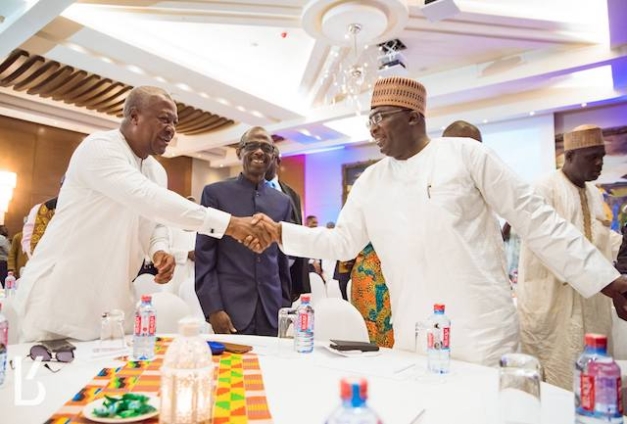
The current vice president and flagbearer of the ruling (NPP), Mahamudu Bawumia, and former president and presidential candidate for the National Democratic Congress (NDC), John Mahama, are the two leading candidates in contention to win the poll.
Others include independent candidates such as Alan Kyerematen and George Twum-Barima-Adu.
Speaking at the signing of the 4th Presidential Election Peace Pact in Accra on Thursday, November 28, Jean Mensa encouraged confidence in the electoral process and emphasised the importance of a peaceful and stable environment during the elections.
She reaffirmed the Commission’s commitment to promoting peace throughout the electoral process leading up to the 2024 general elections.
Dr. Mahamudu Bawumia, the flagbearer of the New Patriotic Party (NPP), made a passionate appeal to political parties, the media, and security agencies to preserve peace during and after the elections. He stressed the need for all actors to ensure peace prevails, emphasising that Ghana has always passed the test of democracy during elections.
In attendance for the signing of the peace pact, John Mahama remarked that although the NDC will protect the country’s peace, the onus lies on all to play their part in safeguarding the country’s peace.
“We are all too aware of the devastating consequences of electoral violence in other countries. We cannot afford to traverse that same path. As patriotic citizens, we have a collective responsibility to ensure our country remains a beacon of peace and stability in our subregion, and we in the NDC stand prepared to play our part to achieve this,” he said.
His primary contender, Dr Bawumia, also assured that, “As we head into the December 2024 polls, the 9th presidential elections in Ghana, nine days from today, I am certain of two outcomes. Ghana will win, and peace will reign.”
He also added that “My plea to everybody involved in the electioneering process, including candidates, political parties, electoral officers, voters, the media, security, and the general public, is to take responsibility for ensuring peace and harmony seriously and to demonstrate that we are not reluctant Democrats.”
Representatives from all political parties and their presidential candidates are expected to convene and sign a peace pact today, Thursday, November 28.
The peace agreement will bind candidates to uphold peace before, during, and after the elections.
Chairman of the National Peace Council, Rev. Dr. Ernest Adu-Gyamfi, in an interview with Citi FM, Rev. Dr. Ernest Adu-Gyamfi, called on political candidates to partake in the ceremony to ensure a free and fair election.
“So far, we believe that all the parties will be there. We have commitments for all of them. We have sent them a copy of the pact for them to study if they have any comments to come back, and so far, we have not had any adverse reactions from any of the parties.”
“And so right now what we are doing is putting down appropriations for the various logistics and the things that need to be done for the signing of the pact.”
There is still uncertainty regarding the participation of the opposition National Democratic Congress (NDC) in the peace pact.
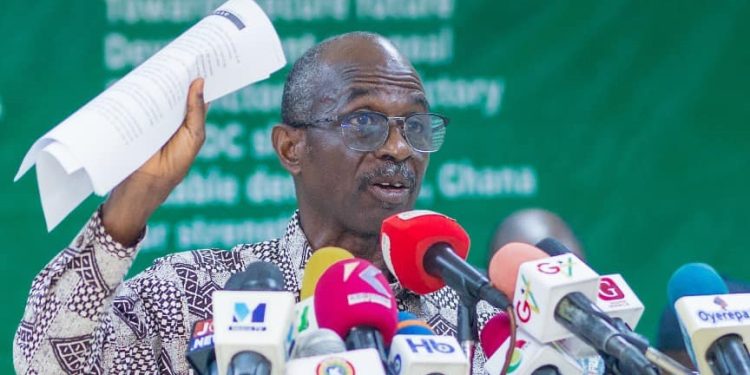
NDC Chairman, Johnson Asiedu Nketiah, had indicated that unless specific conditions are met the party will not join in the signing ceremony.
He requested that signatures of key government figures such as the President, the Inspector-General of Police, the Chief Justice, the National Security Coordinator, and the Attorney-General must also be included in the pact.
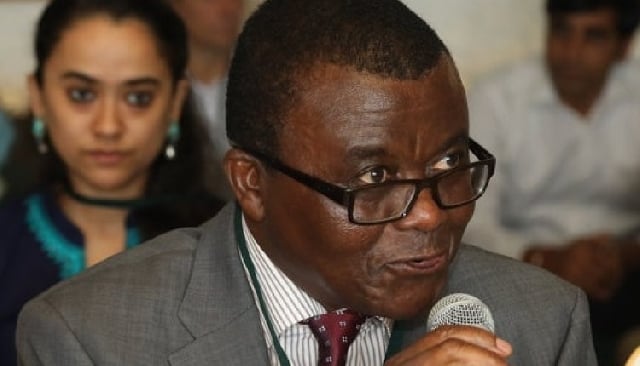
A former UN Senior Governance Advisor, Professor Baffour Agyeman-Duah, has expressed concerns over the conditions laid out by the opposition National Democratic Congress (NDC) before signing the election peace pact ahead of the 2024 General Elections.
According to him, the NDC’s demands suggest an intent to complicate the election process.
During an interview on JoyNews’ UpFront on Wednesday, August 21, Prof. Agyeman-Duah acknowledged that while the NDC’s concerns are valid, their conditions are ultimately unrealistic and impractical.
“Even though I have to say I do sympathize with the concerns raised by the NDC, I do sympathize with them because truly, it’s not been fair that these incidents in the past were not properly addressed, especially if the president himself set up a commission,” he stated.
“But those conditions that were made, I think they’re very unrealistic. You want the Chief Justice to come and sign, you want the Attorney-General to sign, you want the IGP to sign,” Prof. Agyeman-Duah pointed out.
His comments come after the NDC Chairman, Johnson Asiedu Nketia, reiterated the party’s refusal to sign any peace pact unless certain conditions were met.
During a meeting with the National Peace Council on Tuesday, August 20, 2024, Asiedu Nketia outlined six key demands that the NDC insisted must be fulfilled. These include:
Full implementation of the Ayawaso Commission’s recommendations following the violence during the Ayawaso West Wuogon by-election.
Prosecution of individuals responsible for the killings that occurred during the 2020 elections.
Prosecution of those involved in the illegal printing of ballot papers.
Transparent and honest resolution of the issue surrounding missing IT equipment from the Electoral Commission’s office, with an explanation satisfactory to the general public.
A public declaration by President Akufo-Addo that he will accept the outcome of the 2024 general elections.
The signing of the peace pact by key national figures, including the President, the Chief Justice, the Attorney-General, and the Inspector General of Police (IGP).
While the National Peace Council has urged political parties to work together to ensure peace, Prof. Agyeman-Duah questioned the necessity of involving such high-ranking officials in the peace pact process. He argued that the political parties themselves should be capable of committing to peaceful elections without these additional demands.
“If you think of the implications of such a move that henceforth, we’re going to have a Chief Justice, the A-G and all these people come in to sign, I think that is a bit too far-fetched. So I do not subscribe to the conditions,” Prof. Agyeman-Duah added.
The ongoing discussions between the NDC and the National Peace Council reflect heightened tensions ahead of the 2024 General Elections, as concerns over electoral fairness, security, and integrity continue to dominate the political landscape.
National Chairman of the opposition National Democratic Congress (NDC), Johnson Asiedu Nketiahas outlined specific conditions that the party requires before considering the signing of the Peace Pact proposed by the National Peace Council ahead of the December 7 elections.
Mr. Nketia expressed doubt about the effectiveness of previous Peace Pacts, citing that they failed to achieve their goals, especially during the 2020 elections when eight NDC members were allegedly killed by national security operatives without accountability.
In an August 20 meeting with the National Peace Council at the NDC headquarters, Mr. Nketia presented the party’s conditions for participating in the Peace Pact.
General Mosquito has presented the Peace Council with six conditions for the NDC to sign the peace pact:
1. Full implementation of the Ayawaso Commission's recommendations. 2. Prosecution of those responsible for the killings during the 2020 election. 3. Prosecution of… pic.twitter.com/NOxHLoy00I
The NDC demands the full implementation of the recommendations from the investigation into the violence during the Ayawaso West Wuogonby-election.
They also call for the prosecution of those responsible for election-related violence in the last election, emphasizing the need for justice and prevention.
Additionally, the party insists on accountability regarding irregularities in the printing of ballot papers and requires visible measures to prevent such issues in the future.
The NDC also seeks a thorough investigation into the missing IT equipment from the Electoral Commission’s (EC) warehouse, raising concerns about the integrity of the EC’s systems and the potential bias of its staff.
Furthermore, the NDC is urging the President to publicly commit to respecting the results of the 2024 elections.
Lastly, the party insists that key figures, including theInspector General of Police,the Chief Justice, the Attorney-General, and the National Security Coordinator, sign the Peace Pact before they will consider signing it themselves.
In an effort to avoid unrest leading up to the February 25 elections, the 18 presidential candidates in Nigeria’s general election have signed a second peace accord in the nation’s capital, Abuja.
The agreement is to “place national interest above personal and partisan concerns” and to “ensure the conduct of free, fair, credible, transparent, and verifiable elections, cognizant of the need to maintain a peaceful environment before, during, and after the 2023 general elections.”
Former military head of state and retired general Abdusalam Abubakar claimed that a prior agreement, which was signed in September 2022, had been broken numerous times.
National Peace Committee and the Kukah Leadership Centre, an Abuja-based think tank, organised the signing on Tuesday night, which was attended by President Muhammadu Buhari and other African and international leaders and diplomats.
Committee officials said the accord was meant to bind political parties, candidates, and their supporters to resort to constitutional means if they are dissatisfied with electoral outcomes.
Abubakar, the chairperson of the National Peace Committee, said 44 percent of the September accord’s violations “were carried out by the spokespersons for political parties, 26 percent by party members, 19 percent by the presidential candidates themselves, 11 percent by the hardcore supporters and four percent by the chairmen of the parties”.
“As a nation, we’ve got to put a stop to all this,” he said, without providing further details about the incidents.
Saturday’s race to succeed Buhari is being keenly contested.
Among the 18 candidates, four are generally accepted to be top contenders.
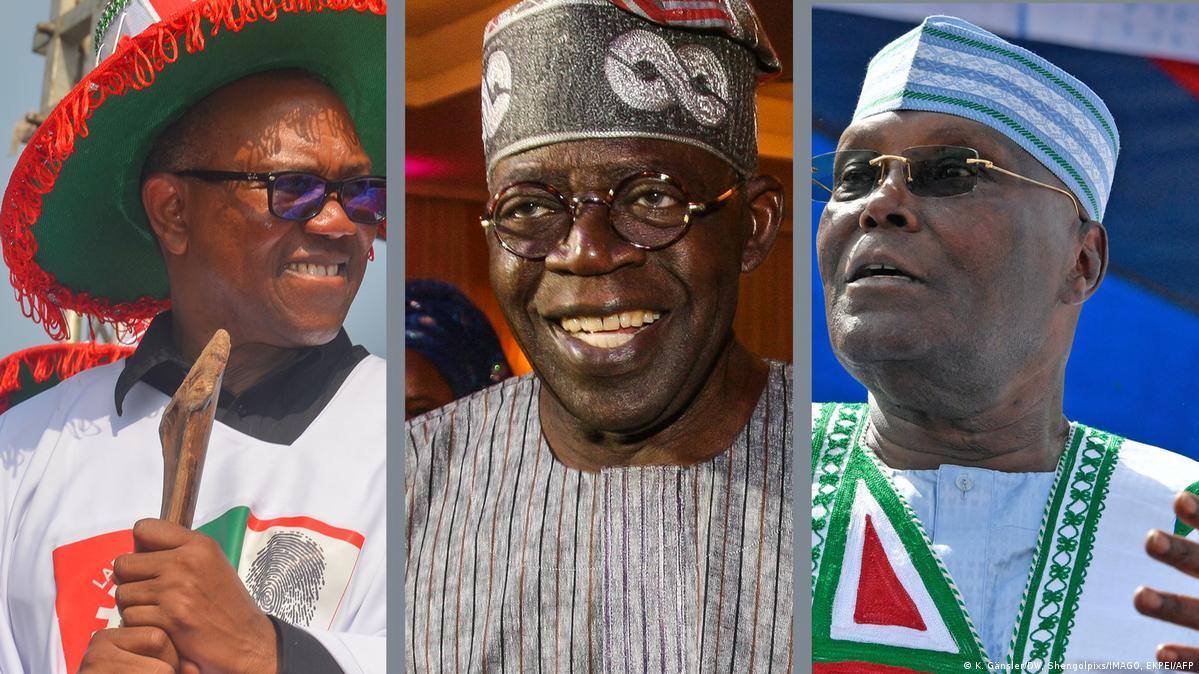
The ruling All Progressives Congress (APC) candidate, former Lagos governor Bola Tinubu, faces his former associate and Nigeria’s former vice president, Atiku Abubakar, of the main opposition People’s Democratic Party (PDP).
The Labour Party’s Peter Obi, has, however, emerged as a surprise third candidate to challenge a traditional dichotomy in Nigeria’s political landscape. A fourth candidate, Rabiu Kwankwaso of the New Nigeria People’s Party (NNPP), is seen as a wild card in the race.
Tuesday’s signing was held in the presence of domestic and international stakeholders to monitor for potential violence – a common feature in Nigerian elections.
Along with the presidential candidates, members of observer missions from the African Union, European Union and the Commonwealth, and other diplomats were present at the signing.
Also present were Thabo Mbeki, Joyce Banda, Uhuru Kenyatta, John Mahama and Ernest Bai Koroma, the former presidents of South Africa, Malawi, Kenya, Ghana and Sierra Leone respectively who are heading foreign observer missions.
Africa’s richest man, Aliko Dangote, another member of the committee also attended, as was Patricia Scott, secretary-general of the Commonwealth and a representative of the United Nations secretary-general.
President Buhari urged all the contestants to have the “confidence to trust our legal systems”.
”Let me remind all Nigerians not for the first time that this is the only country we have and we must do everything to keep it safe, united and peaceful,” he said. “There should be no riots or acts of violence after the announcement of the election results. All grievances, personal or institutional, should be channelled to the relevant courts.”
Mahmood Yakubu, the chairman of the Independent National Electoral Commission, said election preparations were well under way, with ballot papers and other materials being moved to polling units nationwide.
“By Friday, we will activate the registration area centres so that at first light on Saturday, polling units will open on time.”