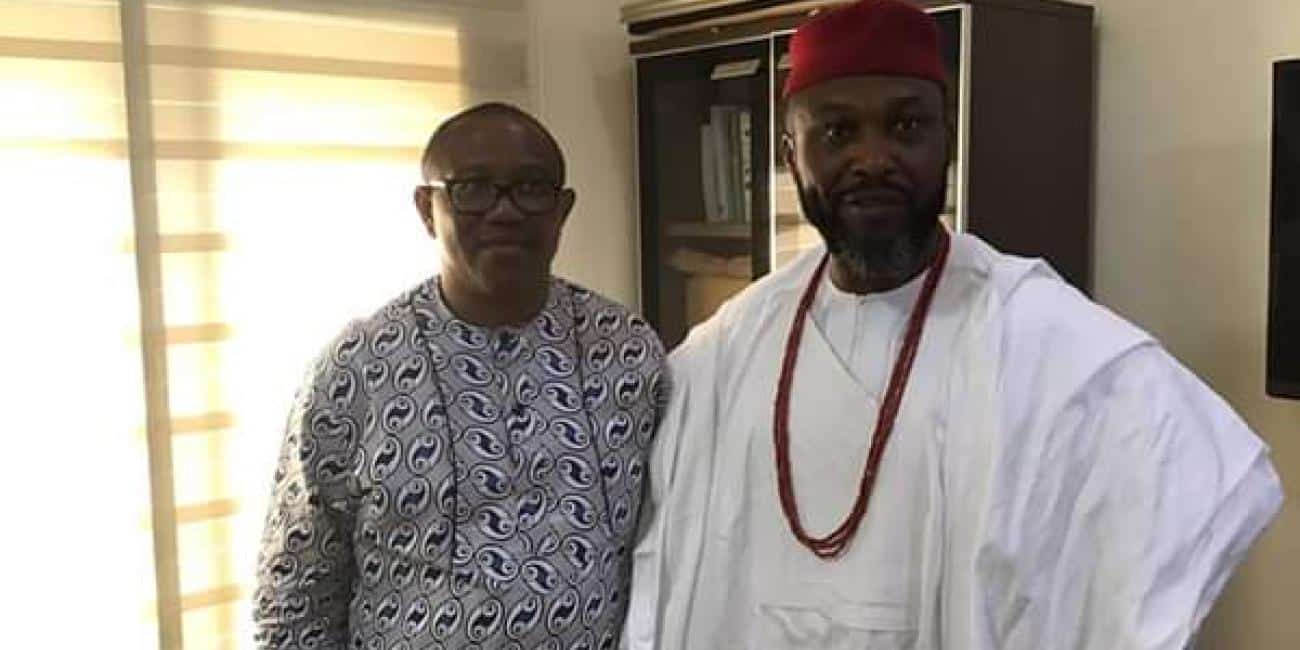
Renowned figure and leader of the New Force, Nana Kwame Bediako, popularly known as Cheddar, has expressed gratitude to God Almighty for the cancellation of the New Convention event which was slated to take place on Sunday, January 7, 2024, at Black Star Square.
Cheddar recently made a significant appearance at Perez Dome to express his gratitude and thanksgiving.
Having been a dedicated member of the Perez Dome community for 21 years, Cheddar highlighted the importance of his faith and the influence of God in his life.
Despite facing unexpected challenges, including the cancellation of New Convention event due to “unforeseen” circumstances, an event scheduled to take place at the Black Star square, he emphasized that every prayer he directed towards God had been answered.
“ I started fasting the first day of the year, I do it at the beginning of the year, with the church and by myself, so I was praying that let the Convention be successful so that it can reach Africans but I want to tell you this, everything I have asked God he has giving it to me.
“So I was expecting more and just an hour before the event I was told the event was cancelled with helicopters and with men, guns and soldiers, you can’t fight this one you have to step back.
“I went back to God to ask, I thought you said you were going to make the event successful but he said God meant for the event to be cancelled for the event to be successful,” Cheddar stated.
The Convention was to bring together thought leaders in Africa including Professor PLO Lumumba, Peter Obi, Julius Malema, and others to speak on key challenges confronting Africa’s development.
Hours after the cancellation, the leaders of the Convention organized a press conference at Cantonments.
Professor PLO Lumumba said, “We came to Ghana to share a message of hope that Africa needs at this time and there is no better place to begin that message than Accra Ghana.
“It is in Accra that Osageyefo Kwame Nkrumahalmost 67 years ago, spoke to the world and said the ‘Independence of Ghana is meaningless until it is linked with the independence of the African continent’”.
He said 67 years later, they were congregating in Accra in the very same place where the founding fathers of Ghana stood to make that statement but they were stopped bizarrely.
Professor PLO Lumumba, however, said, “The message will be served” as the journey of hope “continues with the youth.”
Dr Arikana Chihombora-Quao, alongside notable figures such as Patrick Loch Otieno Lulumba of Kenya, Peter Obi of Nigeria, and Nana Kwame Bediako, expressed her sentiments in a press conference following the cancellation of the Convention titled “Igniting the Voices of Africa.”
Addressing the speculation surrounding the event’s cancellation, Dr Chihombora-Quao revealed, “I feel strongly that I should make this comment. As I was coming here, I got a call from one of my Africa diaspora who is a Ghanaian, who actually came to Ghana from the United States because I was coming here.”
She continued, recounting the rumour she had heard: “He said, Ambassador, I heard a rumour that the reason why the event was cancelled was because the young man who was sponsoring it is a millionaire, and he has political ambitions.”
In response, Dr Chihombora-Quao clarified her stance, stating, “I can tell you as clearly and plainly as I can that I never heard the conversation about him being a millionaire. I never heard the conversation about him having political ambitions.”
Highlighting the nature of her interactions with Nana Kwame Bediako, she emphasized, “The time I have spent with him has had more to do with entrepreneurship and the possibilities. So for those who are saying we are here to support him further his political ambitions, that is a damn lie.”
She elaborated on the focus of her discussions with Nana Bediako, stating, “Certainly for my interactions with him, Nana Bediako, have been about entrepreneurship and the possibilities of what we can do if the Africa youth could be empowered and how we can raise money to support African youth so they can build the Africa that we want. That’s all the conversation that I have had. Anything else, I do not know.”
Explaining her initial hesitation and subsequent acceptance of the invitation, Dr Chihombora-Quao said, “When the invitation came, I did not know him, but I had to do homework. What got me to accept the invitation is his age and the fact that he is a youth. Because if we do not support our youth, then who is going to support them.”
The mysterious ‘Man in the Mask,’ identified as Nana Kwame Bediako, who revealed himself on Sunday, January 7, 2024, has indicated that he has come to save Ghana.
Stepping into the spotlight at an impromptu press conference prompted by the last-minute cancellation of the ‘Convention 2024’ rally organized in Accra by the Government of Ghana, Kwame Bediako found himself addressing a situation where influential African thought leaders, including Professor PLO Lumumba, Dr Arikana Chihombori-Quao from Zimbabwe, and Peter Obi, had gathered to discuss critical challenges facing the continent’s development.
In response to the unexpected turn of events, Kwame Bediako asserted his fearlessness, emphasizing that he was not a person to be intimidated by the circumstances. The hastily convened press conference became a platform for Bediako to express his resilience and determination, despite the setback of the canceled rally that had brought together prominent minds to deliberate on pressing issues affecting Africa’s progress.
“I am nothing to be scared of. I came to you as your salvation. I don’t invest in myself alone. I am investing in you,” he said, adding later on that he has a great vision for both Ghana and Africa.
Sounding rather poetical, Bediako, the founder of ‘The New Africa Foundation,’ said he has for the past 21 years dedicated himself to the service of the nation.
“We need to educate. We need to uplift our children. We need to voice out to them. You are about to find out about this man in the mask because I never spoke a word, you were looking for me. I didn’t tell you whether I am into politics, whether I am an evangelist, whether I am a conventionist or a revolutionist. After this day, you will have to wait for me to share my policies and my visions with you.
“And if I’m the reason why the country or the government is not happy about these great voices coming to educate not only Ghana, but also Africa, then I take this moment to sacrifice myself, to unveil myself, because I have much respect for these great leaders beside me. I would have taken my own time to tell you that I am. But for this very moment, I am sacrificing myself to let you know that I’m that man.
“But I’m that man with a good purpose, with a great vision. I have a plan, and I have a vision for this nation. And not only this nation, I have it for Africa too. But I know Africa is the next biggest thing because out of all the continents that have been developed in this world, there is only one continent that is not developed and I am sent to do that,” he said to applause from the gathering.
He passionately discussed the significance of knowledge, wisdom, and understanding as fundamental pillars for constructing genuine wealth. He underscored the importance of extracting value from one’s surroundings, emphasizing the role of these key elements in the process.
Labour Party’s nominee for president, Peter Obi, vowed on Wednesday to appeal the ruling of the Presidential Election Petition Tribunal and to continue seeking justice.
Obi made this statement in response to the five-person panel’s decision, which supported President Bola Tinubu’s victory and was led by Justice Haruna Tsammani, on Thursday during a press conference in Onitsha, Anambra state.
Obi said, “Yesterday, 6 September 2023, the Presidential Election Petition Court (PEPC) finally delivered its long-awaited judgments on the Petitions challenging the outcome of the presidential election held on 25 February 2023. This judgment was delivered within the statutory time frame under the extant statutes. We acknowledge the Court’s contributions to due process and the seeming attempt to strengthen our democracy.
“As petitioners in this case, we respect the views and rulings of the Court, but we disagree with the Court’s reasoning and conclusions in the judgment it delivered. It is my intention as a presidential candidate and the intention of the Labour Party to challenge this judgment by way of appeal immediately, as allowed by the Constitution of the Federal Republic of Nigeria.
“The PEPC has rendered its judgment, but that esteemed body is not the final arbiter. The responsibility now falls on the Supreme Court. I do know that judgment is not coterminous with justice. I implore Nigerians to remain focused, steadfast, and peaceful; abide by the rule of law, and understand that this matter has not reached its logical conclusion.
“Our legal team has already received our firm instruction to file an appeal against the decision. I shall not relent in the quest for justice, not necessarily for myself but indeed for our teeming supporters all over the country whose mandate to us at the polls was regrettably truncated by INEC.
“The strength and value of our democracy reside in solid national institutions and our confidence in them. Electoral litigations will be almost unnecessary and nonexistent if the Independent National Electoral Commission (INEC) discharges its statutory functions creditably, transparently, and with discernible fairness. When that body fails, as it did recently, thus subverting the will of Nigerian voters, the recourse to the judiciary becomes imperative, as is now the case.
“I thank every Nigerian who has supported our cause and campaign for a New Nigeria characterized by fairness, equity, justice, the rule of law, peace, prosperity, inclusiveness, sustainable growth, and development. A New Nigeria is possible and achievable. I especially thank our legal team, the Labour Party and Obidient Family, and all those who showed up daily during the court trials. God bless you all, and God bless the Federal Republic of Nigeria.”
Earlier, in a statement released on Wednesday by the party’s national publicity secretary, Obiora Ifoh, the LP rejected the ruling.
Ifoh said, “The Labour Party watched with dismay and trepidation the dismissal of petitions by the five-man panel of the Presidential Election Petition Court led by Justice Haruna Tsammani today and we reject the outcome of the judgment in its entirety because justice was not served and it did not reflect the law and the desire of the people.
“Nigerians were witnesses to the electoral robbery that took place on February 25, 2023, which was globally condemned but the Tribunal in its wisdom refused to accept the obvious.
“What is at stake is democracy and we will not relent until the people will prevail. We salute the doggedness of our team of lawyers who fearlessly exposed the wrath in our system. We can only weep for democracy in Nigeria but we refuse to give up on Nigeria.”
The Presidential Election Petition Court in Abuja has issued a ruling stating that the allegations of drug trafficking in the US against President Bola Tinubu, made by the Labour Party’s presidential candidate, Peter Obi, were unsubstantiated.
A five-member panel of the court, led by Haruna Tsammani, delivered the lead judgment on the substantive suit and clarified that President Tinubu had not been convicted of any crime in the United States.
The court referenced correspondences between the Nigeria Police and the US embassy in Nigeria, indicating that the US consulate in Lagos had cleared Mr. Tinubu of any criminal record in the US.
Mr. Obi had asserted in court that Mr. Tinubu was convicted of drug trafficking, resulting in the forfeiture of $460,000.
However, the court emphasized that the forfeiture of $460,000 by Mr. Tinubu was part of a civil case and could not serve as a basis for disqualification from the election under Nigerian law.
It has been alleged that the Director General of Nigeria’s Department of State Services (DSS), Yusuf Bichi, enlisted the assistance of hackers to breach WhatsApp and gain access to the messages of President Bola Tinubu’s political opponents during and after the 2023 presidential election.
These hackers were reportedly brought in from Cape Verde under the direction of the DSS boss.
During the 2023 presidential election, Bola Tinubu, the candidate of the ruling All Progressives Congress (APC), emerged as the winner.
However, his victory is currently being contested at the Presidential Election Petition Tribunal by the Peoples Democratic Party (PDP) and the Labour Party, along with their respective candidates, Atiku Abubakar and Peter Obi.
“The DG of DSS brought hackers from Cape Verde to help Tinubu break into WhatsApp messages of his opponents during the elections and afterwards,” one of the sources said.
In June, President Tinubu made a significant decision by authorizing the immediate retirement of various key officials, including the Service Chiefs, the Inspector-General of Police, Advisers, and the Comptroller-General of Customs.
These retirements took effect immediately, and President Tinubu also announced their respective replacements.
Additionally, Chairman AbdulRasheed Bawa of the Economic and Financial Crimes Commission (EFCC) was indefinitely suspended from his position by President Tinubu.
“But guess who was spared from being axed! Yusuf Bichi. That is the reason why Tinubu retained Bichi after firing all the heads of security agencies,” one of the sources said.
The Director of Information in the Office of the Secretary to the Government of the Federation, Willie Bassey, in a statement, disclosed that the suspension would allow investigations into “weighty allegations” of abuse of office against the suspended chairman of the anti-corruption body.
“President Tinubu has approved the indefinite suspension from office of AbdulRasheed Bawa, CON, as the Chairman, Economic, and Financial Crimes Commission to allow for proper investigation into his conduct while in office. This follows weighty allegations of abuse of office levelled against him.
“Bawa has been directed to immediately hand over the affairs of his office to the Director, Operations in the Commission, who will oversee the affairs of the Office of the Chairman of the Commission pending the conclusion of the investigation,” the statement read.
Bawa was appointed by then President Muhammadu Buhari in February 2021 as the EFCC chairman following the removal of Ibrahim Magu, his predecessor, over allegations of corruption.
Bawa was subsequently invited for questioning by the DSS and has been in the custody of the secret police since then.
On June 28, SaharaReporters exclusively reported that Bawa had been moved from the headquarters of the secret police to a private facility.
Sources told SaharaReporters that Bawa was moved to another facility to have total control over him after he refused to write any statements in custody.
SaharaReporters also exclusively reported on Wednesday, June 21, 2023, that Bawa had refused to write statements at the secret police’s facility. It was learnt that Bawa told investigators that the DSS had no right to detain him without charges, hence his refusal to write any statements in custody.
“They’ve taken Bawa from DSS headquarters to one of their private facilities to have total control over him after he refused to write statements requested from him,” a top security source had said.
Following their suspension from their respective offices by President Tinubu’s administration due to corruption allegations and abuse of office, both AbdulRasheed Bawa, the Chairman of the Economic and Financial Crimes Commission (EFCC), and Godwin Emefiele, the suspended governor of the Central Bank of Nigeria, have been detained.
SaharaReporters previously reported that Emefiele implicated Bawa as an accomplice in the Naira redesign scandal that shook the country some months ago.
Bawa’s invitation and subsequent interrogation by the Department of State Services (DSS) occurred shortly after Emefiele’s arrest and transfer from Lagos to Abuja for alleged corruption and abuse of office.
On November 23, 2022, then-President Buhari and Emefiele unveiled new Nigerian currency notes with denominations of N200, N500, and N1,000.
Emefiele clarified that the old notes would no longer be considered legal tender after January 31, 2023. Emefiele emphasized that the move was not aimed at any specific individual, although there were speculations that it was influenced by the influential group within the Presidency to hinder the chances of Bola Tinubu, who was the presidential candidate of the ruling All Progressives Congress (APC), from winning the election held on February 25, 2023.
This policy resulted in significant hardships for Nigerians due to the scarcity of new currency notes. The Central Bank of Nigeria (CBN) struggled to meet the demand, leading to cash shortages and long queues at banks and ATMs.
Furthermore, Emefiele disregarded a Supreme Court ruling that extended the validity of the old notes until December 31. Former President Buhari distanced himself from the non-compliance with the court order.
According to the Independent National Electoral Commission, Bola Tinubu emerged as the winner of the election, defeating 17 other candidates with a total of 8,794,726 votes. Atiku Abubakar of the People’s Democratic Party (PDP) secured second place with 6,984,520 votes, while Peter Obi of the Labour Party came third with 6,101,533 votes. Rabiu Kwankwaso of the New Nigeria People’s Party came fourth with 1,496,687 votes.
The Labour Party’s (LP) presidential candidate, Peter Obi, says he is aware of certain terrible plans against himself and his followers in the coming months.
The former Anambra State governor disclosed this in a statement released on his verified Twitter handle on Monday, May 29, 2023.
The release of the statement coincided with the inauguration of Bola Tinubu of the All Progressives Congress (APC) as Nigeria’s President at the Eagle Square in Abuja.
I am aware of some evil designs being hatched against me and my supporters in the coming months. Efforts will be made to taint my image. Campaigns of calumny are being perfected to defame my character and diminish my hard-earned integrity.
For all Nigerians, this is a time for deep reflection. It is also a time to re-examine our assumptions, even as we reaffirm our hopes. Let us calmly review our aspirations, in order to recalibrate our expectations and pin down the causes of our missed opportunities and disappointments.
We stand at that critical moment in time when, as a people, we must collectively come to grips with the reality of our injured destiny as well as the reasons for that injury. It is for us to reassess our plight as a young democracy and identify clear pathways to a better and greater future for us all. As we await the verdict of the election tribunal, I urge all Nigerians to use this opportunity to renew their commitment to the Nigerian ideal. That ideal remains noble and worth every sacrifice we can make.
Nigeria remains our only patrimony and it is a patrimony we must protect, rather than violate. We have no other nation but this, so let us remain committed to rescuing and rebuilding it.
The judiciary is part of the democratic enterprise and a critical governance tool for determining the propriety of the decisions and actions of every citizen and every institution of state. To that extent, and for that reason, I urge everyone to treat it with the respect and dignity it deserves.
We expect that the Nigerian judiciary will use the election cases now before it to reaffirm its independence and integrity. It has to do so, for all our sakes and for itself.
Nigerians must, therefore, remain peaceful and law abiding. No matter the depth of anyone’s reservations about what is going on in the polity today, no matter the real and imagined provocations, and no matter the disagreement out there, we should remember that this will not last forever.
I remain committed, and untiring, in my determination to work with like-minded fellow Nigerians to end the curse of missed opportunities and squandered hope that has become our lot here.
I will never shrink from that original commitment, because I firmly believe that we must change from the present politics of criminality, and corruption, in order to make a new Nigeria possible.
I call on fellow Nigerians, especially the youths to remain steadfast, calm, patient, and peaceful. Our journey may be long and difficult but it is worth it in every way. Victory is assured.
We have to work together to move our beautiful country from corruption and criminality to a center of productivity rather than aimless consumption.
I am aware of some evil designs being hatched against me and my supporters in the coming months. Efforts will be made to taint my image. Campaigns of calumny are being perfected to defame my character and diminish my hard-earned integrity.
These schemes will aim at degrading our support base and confusing the public. But, no evil campaign will alter the substance of my character; nor diminish my patriotic commitment to a better Nigeria. It is about the future of our youths. it is about ending the Years of Locust.
In all of this, I thank Nigerians, our great party (LP) and the media. The latter, as the Fourth Estate of the realm, has remained a trusted ally.
This Estate must continue to guide our people on the immense promise of a future in a new Nigeria.
God bless Nigeria and protect the troops keeping us safe in this season of vaulting insecurity.
Ahead of the inauguration of President-elect Bola Tinubu, the presidential candidate of the Labour Party (LP) in the last election, Peter Obi, has urged his supporters and citizens in general to remain calm and law abiding, as only a court of law will determine the actual winner of the poll in due course.
Obi who spoke on the sidelines of an event in Kaduna State, where he said the unity, peace and security of the country is paramount than any other interest, and as such, he called on all citizens to be law abiding and work for the progress and development of the country.
“We must continue to live on the path of peace, religious harmony, ethnic harmony, coexistence, that is the most important thing for now.
“Let’s have a peaceful, quiet Nigeria where government will concentrate on caring for the sufferings of the people,” the LP flagbearer stated.
While noting that there are questions and issues with the last election, Obi, however, said citizens must have to live peacefully and be able to work and concentrate on facing the issues of Nigeria which is insecurity, poverty, education and other very important aspects of the nation’s existence.
Accompanied by his running mate, Senator Datti Baba-Ahmed, the Labour Party Presidential candidate also tasked the incoming administrations at all levels to deals with issues of high youth unemployment , poverty and insecurity especially in the Northern region, adding that such critical areas must be addressed by elected leaders if the country must achieve progress and development.
The third-placed candidate in Nigeria’s presidential election, Peter Obi, says he is being pressured to leave the country.
He did not offer proof to back the claim but said it was part of government’s attempt to “divert attention” from a “blatantly stolen” elections.
Mr Obi has already challenged the results of the presidential election at Nigeria’s highest appeal court.
“The attempts to manipulate Nigerians is very sad and wicked,” he tweeted on Wednesday night.
An audio recording has been doing rounds in Nigeria of an alleged conversation between Mr Obi and a religious leader, in which the presidential election is likened to a religious war.
Mr Obi said the audio was a “fake doctored audio call”.
“Let me reiterate that the audio call being circulated is fake, and at no time throughout the campaign and now did I ever say, think, or even imply that the 2023 election is, or was a religious war,” he said.
He added that his lawyers will take action against an online publication that circulated the clip.
Peter Obi, the third-place candidate in Nigeria’s presidential vote, claims he is under pressure to leave the nation.
The government was trying to “divert attention” from “blatantly stolen” elections, he claimed, without providing any evidence to support his assertion.
The results of the presidential election have already been disputed by Mr. Obi at Nigeria’s highest appeals court.
“The attempts to manipulate Nigerians is very sad and wicked,” he tweeted on Wednesday night.
An audio has been doing rounds in Nigeria of an alleged conversation between Mr Obi and a religious leader, in which the presidential election is likened to a religious war.
Mr Obi said the audio was a “fake doctored audio call”.
“Let me reiterate that the audio call being circulated is fake, and at no time throughout the campaign and now did I ever say, think, or even imply that the 2023 election is, or was a religious war,” he said.
He added that his lawyers will take action against an online publication that circulated the clip.
The third-place finisher in Febuary’s presidential election in Nigeria, Peter Obi, has officially petitioned the court to annul the decision in favor of the candidate of the ruling party.
The suit filed on Monday is probably just the beginning of a protracted court struggle over the election scheduled for February 25, as it has with previous presidential contests in the most populous country in Africa.
Obi of the Labour Party was a surprising third candidate who challenged the dominance of the All Progressive Congress (APC) and the main opposition Peoples Democratic Party by appealing to younger people (PDP).
Former Lagos governor and APC stalwart Bola Tinubu won the election with around 37 percent of vote, but opposition parties say delays in electronic uploading of results aided massive ballot rigging.
In the petition filed in an Abuja appeals court, Obi alleges that the Independent National Electoral Commission or INEC broke electoral law.
INEC has denied any illegal activity, though acknowledged technical problems.
Among other claims, the petition says Tinubu was not qualified to be a candidate because of a 1990s drug-related forfeiture of nearly $500,000 from one of his accounts in a US bank. Tinubu denies any wrongdoing.
Nigeria’s ruling APC won most of the states in the local elections, but on the back of a low turnout.
“The election… was invalid by reason of corrupt practices and non-compliance with the provisions of the electoral act,” the petition says.
It claims “based on the valid votes cast”, Obi won the largest number and “ought to be declared and returned the winner of the presidential election”.
The main opposition presidential candidate PDP’s Atiku Abubakar has also said he will challenge the results, calling the election a “rape of democracy”.
Analysts expect those legal challenges to end up the country’s Supreme Court, as they did after the 2019 election.
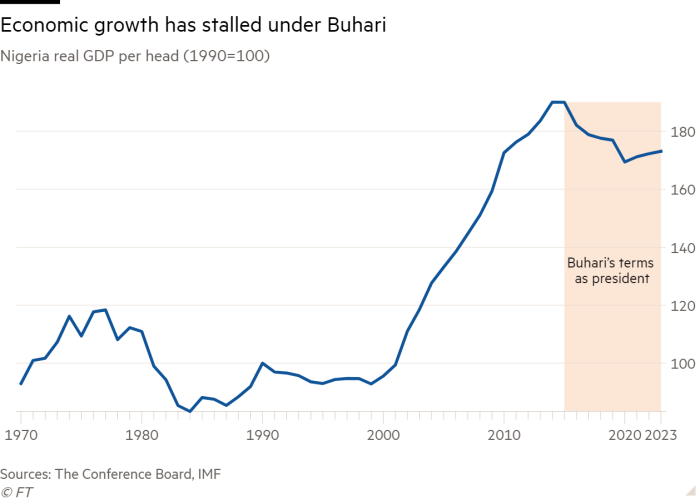
President Muhammadu Buhari steps down in May after two terms, leaving Nigeria grappling with widespread insecurity, economic woes and growing poverty.
Nigerians had hoped the presidential ballot would give them a chance to be heard, but many were disappointed by the way the election was conducted.
Voters and opposition parties complained last month that technical mishaps with voting machines caused delays and allowed for vote rigging, which the electoral commission has denied.
International observers, including from the European Union, noted major logistical problems, disenfranchised voters and a lack of transparency.
“The process of reclaiming the people´s mandate has started,” Labour spokesman Yunusa Tanko said in a statement on Tuesday.
Earlier on Tuesday, president-elect Tinubu appealed for unity, saying “the time for politicking is gone”.
– Violent intimidation –
Nigeria’s ruling party also won the majority of governorships contested in last weekend’s local elections, results showed Tuesday, following a ballot marred by voter suppression and violent intimidation which the US government called deeply troubling.
Elections were held to choose governors in 28 of Nigeria’s 36 states and state assembly lawmakers. Governors in the remaining eight states had earlier been chosen in by-elections.
According to the results from Saturday’s vote declared by INEC, APC won the governorship in 15 states — Lagos, Sokoto, Katsina, Jigawa, Gombe, Kwara, Niger, Yobe, Nasarawa, Cross River, Ebonyi, Ogun, Benue, Kaduna and Borno.
PDP won seven — Plateau, Bauchi, Oyo, Delta, Rivers, Akwa Ibom and Zamfara states.
Governors are powerful figures in Nigeria and some control state budgets that are larger than those of several African nations.
In a major upset in the presidential election, outsider Obi won the most votes in Lagos, considered the fiefdom of president-elect Tinubu.
A big question on Saturday was whether Obi’s popularity, especially among younger voters, would translate into success at the local polls.
But the APC’s Babajide Sanwo-Olu scored a landslide re-election as Lagos governor.
Local and international observers said the latest poll was impacted by disappointments in the presidential election but also by tactics to scare voters, buy ballots and threats of violence.
“The United States is deeply troubled by the disturbing acts of violent voter intimidation and suppression that took place during the March 18 polls in Lagos, Kano, and other states,” the US embassy said in a statement on Tuesday.
EU mission Chief Observer Barry Andrews on Monday said Nigerians’ expectations for Saturday’s election were not met in many parts of the country.
“Many were disappointed and we witnessed voter apathy that is a clear consequence of failures by political elites and, unfortunately, also by INEC,” he said.
His mission also said polling was disrupted by “thuggery and intimidation of voters, polling officials, observers, and journalists.”
“Unfortunately, there were many casualties and fatalities,” it said. “Vote-buying, also directly observed by EU (election) observers, further detracted from an appropriate conduct of the elections.”
Nigerian veteran actor, Kanayo O Kanayo has expressed worry over the safety of the Labour Party (LP), presidential candidate, Peter Obi.
According to Kanayo O Kanayo, Nigerians should watch out because Obi would soon be arrested.
He added that some people are conspiring against Mr Obi, and alleged that something fishy is about to happen.
The veteran actor said: “Peter Gregory Obi will soon be arrested, Watch Out. The conspiracy is brewing, you want to bet?”
Recall that the All Progressives Congress, Presidential Campaign Council, had called for the Labour Party flagbearer’s arrest for allegedly inciting violence.
According to Tinubu’s spokesman, Bayo Onanuga, Peter Obi has made inflammatory statements following his loss in the presidential election.
Presidential candidate for the Labour Party, Peter Obi, could not hold back his emotions as he engaged the media following the declaration of the 2023 presidential elections.
Mr Obi, who fells cheated and has pledged to head to court broke down into tears. This was not directly as a result of claims of being cheated. He was recounting an unforgettable moment with a Nigerian lady he believed should be studying.
According to him, the lady decided to enter the baking business since she could not continue her education, but that even became impossible as she could not afford N75,000 to buy an oven
This got Peter Obi emotional and shed a few tears.
“Labour party won the election and I will prove it. I have had several phone calls where I asked people to remain calm and peaceful, that has nothing to do with what I am challenging, I am challenging the process.
“If a process is faulty, it is faulty, in fact, you can’t build peace on a faulty foundation, it cannot happen anywhere in the world.”
At the end of the election held on February 25, 2023, APC presidential candidate Bola Ahmed Tinubu emerged as the winner.
The Independent National Electoral Commission (INEC) chairman, Mahmood Yakubu, indicated that Tinubu polled a total of 8,794,726 to defeat his closest rivals and candidates of the Peoples Democratic Party, PDP, Atiku Abubakar and Obi of the Labour Party, LP who scored 6,984, 520 and 6,101,533 respectively.
Atiku Abubakar of the Peoples Democratic Party (PDP) and Peter Obi of the Labour Party (LP) have applied to the Presidential Election Court (PEC), Abuja, for a ruling allowing them to inspect materials used for the election on February 25, but there seems to be no end in sight to the legal disputes surrounding it.
Their request is contained in two ex-parte motions they both filed at the PEC secretariat at the Court of Appeal, Abuja earlier this week.
Atiku’s motion was filed on Wednesday, March 1, while Obi’s filed his on Thursday.
Meanwhile, six states of the federation; Adamawa, Akwa-Ibom, Bayelsa, Delta, Edo and Sokoto have also dragged the federal government before the Supreme Court over the conduct, collation and announcement of the February 25, 2023, presidential and National Assembly elections.
The States want the apex court to declare that the pronouncement of the candidate of the All Progressives Congress, Bola Ahmed Tinubu, as the winner of the presidential election and president-elect based on that election be voided by the court.
There have been mixed reactions following the declaration of Bola Tinubu of the APC as the winner of the February 25 presidential poll. Some analysts believe the process that led to the Tinubu’s emergence as president-elect was marred by irregularities amidst other forms of electoral rigging.
Following the announcement of Bola Tinubu as the president-elect of Nigeria, some celebrities have taken to their respective social media accounts to react to the news.
The Independent National Electoral Commission chairman, Professor Mahmood Yakubu on Wednesday, March 1, declared Bola Tinubu as the winner of the 2023 general election.
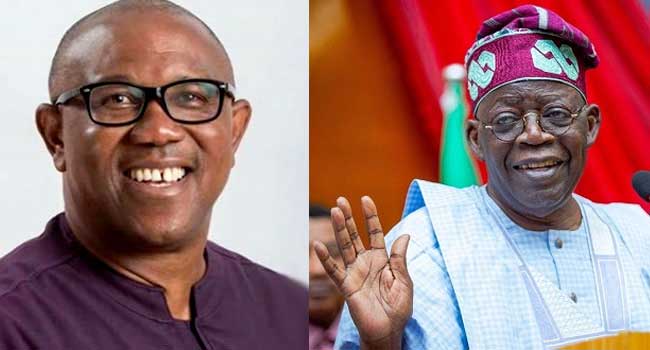
Tinubu beat Peter Obi and Atiku Abubakar, his major contenders, to emerge as the winner.
However, some celebrities have since taken to social media to share their thoughts on the development.
Peter has a bright future if he and his Party go back to the drawing board and heal the fractures in the party and put correct processes in place because he was able to poll 6,101,533 against the President-8,794,726. elect’s
30% of the more than 80 million eligible voters actually cast ballots, which is the lowest turnout since 1999.
For being able to advance in a hot state like Lagos and even defeat Tinubu, who served as governor of Lagos State from 1999 to 2007, Peter must be applauded from the rear.
The benefits of this is that, you get people(House and Senate Candidates and his Team) on grounds to campaign for you in your absence. These same people will help resolve issues so that party faithful will be happy in campaigning.
Secondly, these are the people (Candidates for House and Senate) you will be working with should you win the election, so it will be good to get more of your people in the House and in the Senate to help you succeed.
The Labour Party failed here because out of 109 seats in the Senate, Peter Obi’s Labour Party had only 80 candidates contesting which gives a deficit of 29 seats here.
Again, out of 360 in the House of Representatives, his party had only 208 candidates contesting. Again a deficit of 152 seats which is unacceptable.
So even if Peter Obi had won the Presidential election, he would not have had the numbers from both the Senate and the House of Representatives to run his Government.
The bottom line is Peter wasn’t well cooked to win.
To add to these analysis, there were pockets of misunderstanding among the Labour Party in the North and the National Executives including the Presidenial Candidate, Mr Obi.
The chairmen in the North felt marginalised in everything the Party does to the extent of claiming that they never received any funds when the Party is disbursing funds to Executives and alleged that disbursement was done based on tribe.
This was said barely 48 hours to voting during a press conference led by Sani Abdulsalam, the Gombe state Labour Party chairman and co-ordinating chairman for the 36 states.
“As of tonight, no alert has been received by any state chairmen and information reaching us confirmed that money was paid based on ethnic and religious consideration because only persons of a particular ethnic group currently run the campaign of Mr. Peter Obi in cohort with the national chairman, Mr. Julius Abure, has polluted the party.”
Accompanied by Mohammed Alkali, the national vice chairman, northeast, Ibrahim Bukar, the Yobe state chairman, amongst others, the leader of LP states chairmen alleged that money meant for the mobilisation of polling agents was withheld by the national chairman, Julius Abure.
“I speak on behalf of 36 state chairmen of our party in my capacity as the coordinating chairman. We have never been respected by the party leadership and also our presidential candidate has no respect for our party executives at state levels because Peter Obi deliberately mismanaged our good will with the imposition of his members and other support groups that decamped with him in May 2022 to our party”.
“To our surprise, the national chairman Julius Abure said the presidential candidate Peter Obi has no confidence in all the 36 state chapters’ leadership but would rather choose to work with their cronies and support group that came with him”.
As members of the Labour Party National Executive and National Working Committee (NWC), it is our considered opinion and informed conclusion that Peter Obi cannot win this election since all party executives have been sidelined. He is not ready and is grossly ill-prepared for the Presidential race.”
Why should it be so when you have a running mate who is from the North? This running mate was supposed to pull his region along no matter what the grievancesaid are. He should be a unifier and not just to occupy space.
This clearly means Mr. Yusuf Datti Baba-Ahmed failed his Boss Peter and his Party in this regard.
PeterObi
Peter Obi, a business man, a Banker and a politician. He was the governor of the Anambera State and became the running mate to Atiku Abubakar in the 2019 election but broke away. He is now the leader of Labour Party. He seems to have galvanized enough support from the youth and alot of entertainers. He has always maintained that it’s time for Nigerians to take their Country back. The youth believed he is the one to break the APC and PDP jinx and bring in new style of governance which will be people centered. Many people say he is a Nollywood president and will remain so.
We believe that, Mr Peter Obi stands a better chance in the next Election if he puts his house in order.
DISCLAIMER: Independentghana.com will not be liable for any inaccuracies contained in this article. The views expressed in the article are solely those of the author’s, and do not reflect those of The Independent Ghana
Peter Obi, the Labour Party’s flag-bearer candidate, has broken silence after the declaration of presidential result by the INEC.
He said he will address Nigerians promptly after the results of the 2023 presidential elections.
This, he disclosed on his verified Twitter account.
Our Vice presidential candidate Dr. Yusuf Datti Baba-Ahmed is addressing an international press conference at the Labour Party Headquarters in Abuja. I intend to address Nigerians and the international community shortly. -PO pic.twitter.com/Q3hEXvFdZs
Deputy Senate President and Delta State APC Governorship Candidate, Ovie Omo-Agege, and the state APC Campaign Council, have congratulated, Bola Ahmed Tinubu, on his victory at the 2023 presidential election.
“The country holds you to higher standards than most, and we are confident that you will take the nation to heights previously unknown,” Mr Omo-Agege said.
In a statement of congratulations that he signed, Mr. Omo-Agege stated that Mr. Tinubu’s victory is evidence of renewed optimism for a better, forward-thinking Nigeria, in which we can better determine our future as a nation.
The Campaign Council referred to Mr. Tinubu as a genuine renaissance president and pro-democracy champion who was undoubtedly destined for leadership in its own statement. According to the council, Nigerians closely watched the President-career Elect’s as a leader of NADECO, the National Democratic Coalition, a senator, a governor, and ultimately as the National Leader of the Progressives under the APC.
Bola Ahmed Tinubu and Kashim Shettima
“The country holds you to higher standards than most, and we are confident that you will take the nation to heights previously unknown.”
Mr Omo-Agege assured the president-elect of his readiness to work with him to maintain and consolidate the overall development of Delta State and the country at large.
He specifically congratulated Labour Party candidate, Peter Obi, for his tenacity, commitment and perseverance; and for creating a new thinking among Nigerians especially the youths. He assured Mr. Obi and his teeming supporters, ‘the Obedients’, in Delta State, that when elected, he will uphold the shared values of responsible governance, transparency and accountability, and ensure people feel the impact of governance.
His words: “On behalf of myself and the good people of Delta State, I congratulate Asiwaju Ahmed Bola Tinubu, President-elect of the Federal Republic of Nigeria. I send you the warmest wishes as you exercise your new mandate. I pray God’s blessing upon you, your government, and the people of our dear country.
“I can attest to the fact that you truly have had a front-row seat in the socio-economic and political development of Nigeria. It is evident that in you, we have a fearless, tested, experienced, urbane, business-like, well-rounded, and visionary president-elect…you represent the best bet for the continued prosperity of the country.
“There is no doubt that your victory is a testament to renewed hope; the certainty of victory over poverty and the conviction that our country carries within its bosom the potential of the world’s next economic power. Renewed Hope for a Better Nigeria will drive forward-looking thinking and show that we can begin to define our destiny as a people.
“Be assured of my constant readiness to work with you to maintain and consolidate the overall development of Delta State and our dear country.
Labour Party Presidential Candidate, Peter Obi [PHOTO: TW @PeterObi]
“Let me also congratulate my dear friend and brother, Mr. Peter Obi. We are so very proud of you! Through this election, you have solidified your reputation as an ethical personality. Your tenacity, commitment and perseverance have created new thinking among Nigerians, especially the youth.
“However, the most significant issue I have taken from your participation in the 2023 election is your concern about responsible governance through transparency and accountability. I assure you and your teeming supporters, especially in Delta State that when elected, I will uphold those beliefs and ensure that our people feel the impact of government. I wish you even more success in the future.
“I also commend all the staff of INEC and all the security agencies for their services. However, more needs to be done, especially regarding the early arrival of materials to the polling units and more security for voters and staff of INEC.
“Finally, I congratulate all Nigerians on a successful presidential election. I urge all registered voters to once again turn out en masse for the March 11, Governorship and House of Assembly Elections to vote for all APC candidates. We must free and save our dear State in the interest of generations yet unborn.
All People’s Congress’ (APC) candidate, Bola Tinubu, has won the 2023 Nigerian presidential election.
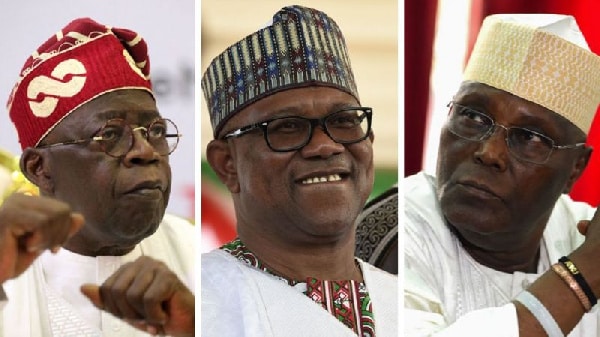
APC’s Tinubu, PDP’s Atiku Abubakr and LP’s Peter Obi were considered the frontrunners in the elections that was held over the weekend.
After collation by the Independent National Electoral Commission (INEC), 70-year-old Tinubu got 36% of the vote, official results show.
His main rival Atiku Abubakar polled 29%, and Labour’s Peter Obi 25%.
Ealier, the opposition parties dismissed the poll as a sham, and demanded a rerun.
Mr Tinubu is one of Nigeria’s richest politicians, and based his campaign on his record of rebuilding the biggest city, Lagos, when he was governor.
He was nevertheless defeated in the city by Mr Obi, a relative newcomer who mobilised the support of many young people, especially in urban areas, shaking up the country’s two-party system.
Mr Bola Tinubu will now take over the helm of affairs from President Buhari.
He becomes the fifth president after Nigeria ended its military rule.
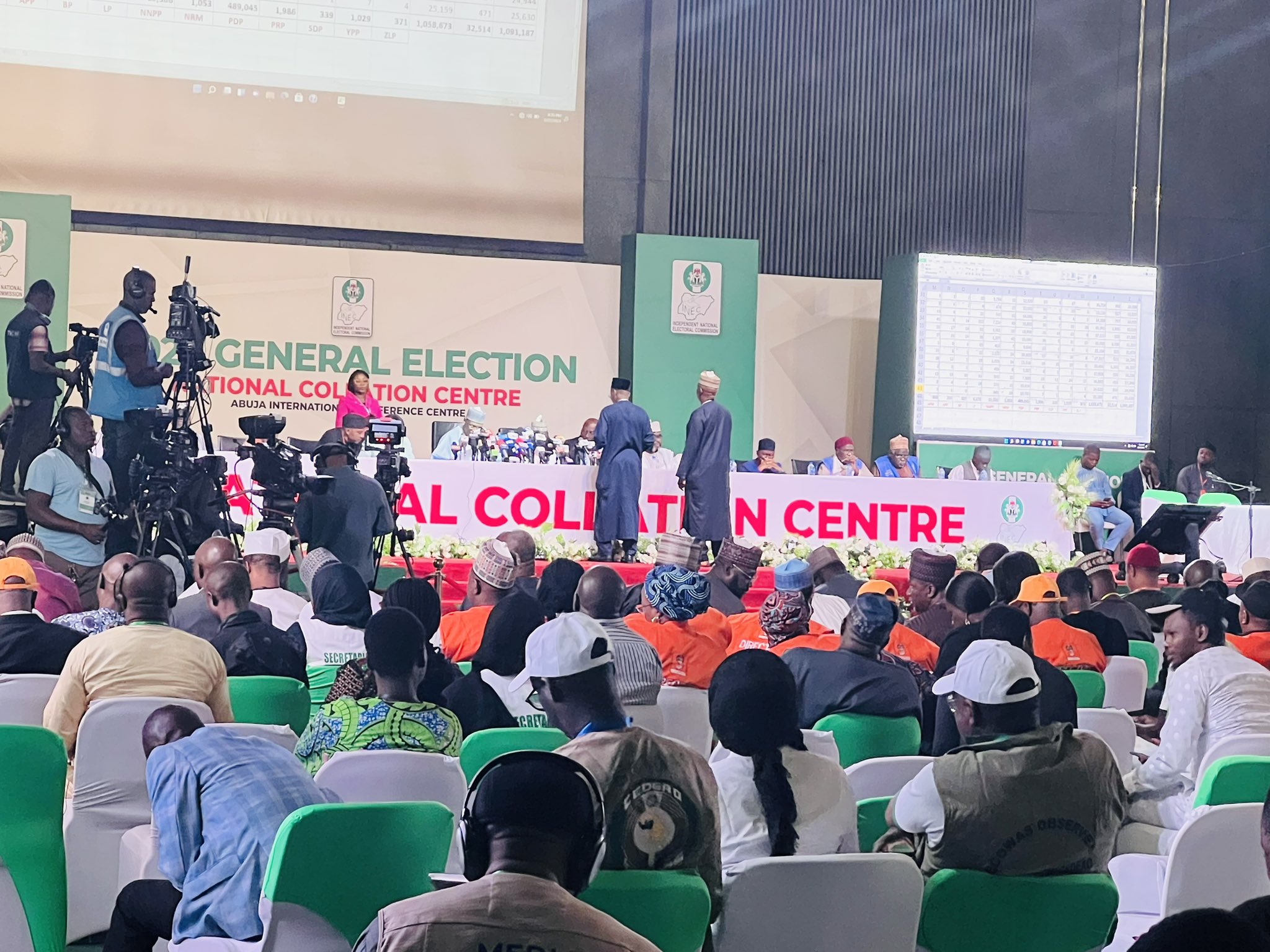
The Independent National Electoral Commission (INEC) has released the results of 14 states with regards to Nigeria’s presidential election.
All People’s Congress’ (APC) Bola Tinubu has won six states. They are Kwara state, Oyo state, Ogun state, Ekiti state, Ondo state and Jigawa state.
Atiku Abubakar of the People’s Democratic Party has won five states. Osun state, Adamawa state, Gombe state, Yobe state and Katsina state are the said five.
Peter Obi, who is representing the Labour Party has won three states, namely; Lagos state, Enugu state and Nasarawa state.
To win in the first round, a candidate must have the largest number of votes nationwide. Also, he or she must have at least 25% of the votes in two-thirds of the 36 states and the Federal Capital Territory.
As a Democrat, Bola Tinubu, the candidate for the All Progressives Congress (APC), says he must accept the results of the 2023 election.
The former governor of Lagos State also stated that democracy’s beauty can be seen in Peter Obi’s triumph over his Labour Party (LP) rival in the state.
In addition, Tinubu urged his supporters to be calm and uphold peace, saying Obi’s victory in Lagos shouldn’t be a cause for agitation.
“The APC candidate further said that as a democrat he is bound to accept the outcome of any election whether favourable or not,” said a statement by the Director, Media & Publicity of the APC Presidential Campaign Council, Bayo Onanuga on Monday.
Tinubu also expressed serious concern over reports of violence in parts of the state especially reported attacks on some traders of Igbo origin.
The former Lagos State Governor condemned any form of violence against people of any ethnic group in Lagos.
“The fact that the APC narrowly lost Lagos State to another party should not be the reason for violence. As a democrat, you win some, you lose some. We must allow the process to continue unhindered across the country while we maintain peace and decorum,” the statement said.
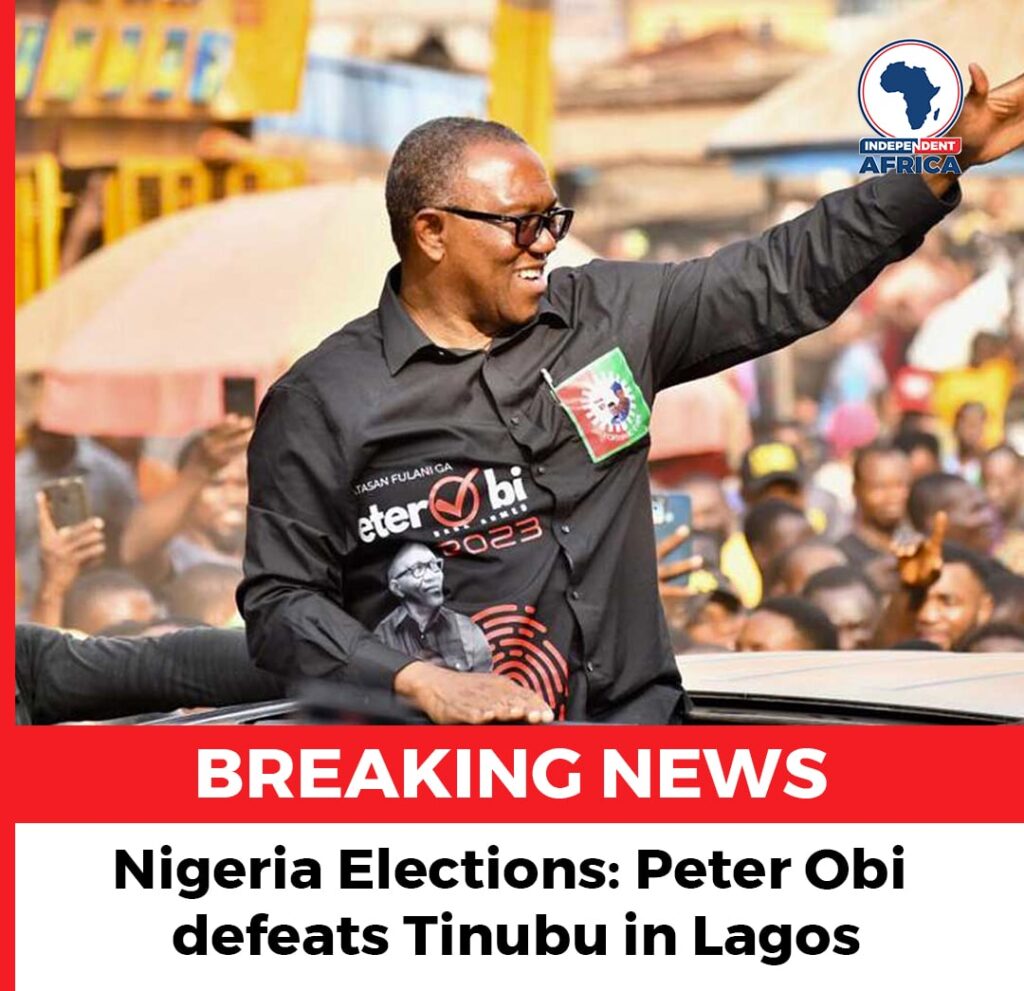
Obi defeated the former governor of Lagos State, who received 572,606 votes, with a vote total of 582,454.
From 1999 to 2007, the state’s governor was based in Lagos. Obi also defeated Rabiu Kwankwaso of the New Nigeria People’s Party and Atiku Abubakar of the Peoples Democratic Party (PDP) (NNPP).
Atiku received 75,750 votes and Kwankwaso received 8,442.
Though Tinubu won 11 local government areas in the state Obi won the overall votes in the state, with a landslide victory in nine powerful local governments with numerical strength including Alimosho, Ojo and Oshodi-Isolo, Kosofe, Amuwo Odofin, amongst others.
The accredited votes in the state are 1,347,452, the total valid votes are 1,271,451, rejected votes 64,278 and the total votes cast 1,335,729.
Nigerians are awaiting the final results to find out who will succeed President Muhammadu Buhari, as well as the results for the numerous candidates elected to the national parliament and the senate.
Results from the various states in the nation are still coming in slowly after more than 48 hours.
The Independent National Electoral Commission (INEC) of Nigeria has characterized the election as largely peaceful, despite isolated incidents of violence and interference at some polling places.
The Commission has been providing updates about the electoral process in between time during which they also announce voting results from the states where results have been collated.
The provisional figures indicated in no way determine the final results as the figures from the other states could change the ‘game’ at any point.
Regardless, these are the figures currently as indicative of provisional results.
1. Bola Ahmed Tinubu of the All Progressives Congress (APC) currently has 3,329,968 votes representing 42.98%
2. Atiku Abubakar of the Peoples Democratic Party (PDP) currently has 2,292,433 representing 29.59%
3. Peter Obi of the Labour Party (LP) has some 1,480,948 votes, representing 19.11%
4. Rabiu Musa Kwankwaso of the New Nigeria Peoples Party (NNP) got 573,372 representing 7.40%
The other candidates – Peter Umeadi of APGA, Adebayo Adewole of SDP, Omoyele Sowore of AAC, Dumebi Kachikwu of ADC, Christopher Imumolen of AP, Hamza Al-Mustapha of AA, Yusuf Sani Yabagi of ADP, Ojei Chichi of APM, Adenuga Sunday Oluwafemi of BP, Okwudili Nwa-Anyajike of NRM, Abiola Latifu Kolawole of PRP, Ado-Ibrahim Abdulmalik of YPP, Daniel Nwanyanwu of ZLP, and Charles Nnadi Osita of APP all currently have votes beneath 1%.
Breakdown:
Bola Ahmed Tinubu of the All Progressives Congress (APC) won states like Benue, Jigawa, Katsina, Kwara, Lagos, Niger, Ogun, Oyo, Rivers, Sokoto, Yobe and Ekiti Atiku Abuabkar of of the Peoples Democratic Party (PDP) won states including – Ondo, Federal Capital Territory, Taraba, Osun, Kaduna, Bayelsa, Bauchi, Akwa Ibom, and Adamawa
Peter Obi of the Labour Party (LP) won states including Abia, Delta, Ebony, Edo, Enugu, Gombe, Imo, and Plateau
Rabiu Musa Kwankwaso of the New Nigeria Peoples Party (NNP) won the Kano state.
Peter Obi, the Labour Party’s nominee for president, won Enugu State in the presidential election that took place on Saturday.
Obi defeated Bola Tinubu of the All Progressives Congress and Atiku Abubakar of the Peoples Democratic Party with a total of 428,640 votes, according to the results announced by the INEC collation officer in the state, Prof. Maduebibisi Ofo Iwe (APC).
In the state, Tinubu received 4,772 votes, while Atiku received 15,749 votes, placing him in second place. With 1808 points, Rabiu Kwankwaso of the New Nigerian Peoples Party placed third.
Out of the 2,112,793 registered voters in the state, 482,990, according to Igwe, had their credentials.
The number of valid votes according to the collation officer is 456,424 while rejected votes were 12,467.
The Peoples Democratic Party’s (PDP) presidential candidate, Atiku Abubakar, won the Gombe State presidential vote on February 25.
In the 11 local government areas (LGAs) of the state, he received 319,123 votes, according to the results released by the Independent National Electoral Commission (INEC).
According to the Gombe State Collation Officer, Prof Maimuna Waziri, who announced the results around 1 a.m. on Monday, the PDP candidate received the most votes in the North-East state.
The former vice president defeated his closest competitors, Peter Obi of the Labour Party (LP), Bola Tinubu of the All Progressives Congress (APC), and Rabiu Kwankwaso of the New Nigeria Peoples Party (NNPP), by a margin of more than 160,000 votes.
In 17 local government areas (LGAs) in Lagos State, Peter Obi, the presidential candidate of the Labour Party (LP), is ahead of Bola Tinubu, the APC’s nominee, by more than 1,000 votes.
In 17 local government areas in Lagos, as of the time of posting this report at 7:30 am on Monday, Obi had received 448,878 votes while Tinubu had received 447,187.
The state collation center in the Yaba area of the state opened its doors on Sunday, and the collation continued there till midnight on Monday. Olusegun Agbaje, the INEC Resident Electoral Commissioner.
The results for 17 of the state’s 20 LGAs presented by 3:40 am on Monday including Lagos Mainland, Ikorodu, Epe, Ibeju-Lekki, Lagos Island, Badagry, Agege, Ikeja, Shomolu, Kosofe, Amuwo Odofin, Eti Osa, Surulere, Apapa, Ifako Ijaiye, Ajeromi, Oshodi Isolo.
Results presented for Mushin LGA have yet to get cleared by the state collation officer as they are being contested by the Inter-party Advisory Committee (IPAC) and thus had yet to be signed by most party agents.
INEC asked that they be presented afresh.
Meanwhile, Ojo and Alimosho are the only two LGAs left to be announced. The REC in the state is expected to reconvene later on Monday for the final collation of results.
Of the 87, 209,007 Permanent Voter Cards (PVCs) collected nationwide for the election, 6,214,970 PVCs were collected in Lagos. This is closely followed by Kano with 5,594,193, and Kaduna with 4,164, 473.
Lagos is the base of who was governor of the state from 1999 to 2007. Aside from Tinubu and Obi, an ex-governor of Anambra State, other presidential candidates in the race include Atiku Abubakar of the Peoples Democratic Party (PDP), and Rabiu Kwankwaso of the New Nigeria Peoples Party (NNPP).
Atiku Abubakar, the opposition Peoples Democratic Party (PDP) candidate, claims that early results indicate he will likely win Nigeria’s presidential election.
The party said on Twitter that Mr Abubakar was “securing the highest number of valid votes cast as well as the statutory 25% in at least two thirds of the states”.
This is true despite the fact that only one of Nigeria’s 36 states had official results declared by the Independent National Electoral Commission (Inec).
Bola Tinubu, the candidate for the ruling All Progressives Congress (APC) party, received 201,494 votes from the state’s southwest.
Peter Obi of the Labour Party received 11,397 votes, compared to Mr. Abubakar’s 89,554 votes.
Mahmood Yakubu, the chairman of Inec, stated that the commission would make part of the findings from the other states public on Monday at 10:00 GMT.
On Sunday, Inec announced that it was attempting to resolve issues with its portal for viewing election results.
Final presidential results are expected to be declared by 1 March. The vote on Saturday was marred by pockets of violence, widespread delays and logistical problems.
The Economic Community of West African States’ (Ecowas) election observer mission described the election as generally peaceful and with a massive voter turnout.
Peter Obi is a businessman, politician, and former governor of Anambra State in Nigeria. On July 19, 1961, he was born in Onitsha, Anambra State, Nigeria.
Obi earned a Bachelor of Arts degree in Philosophy from the University of Nigeria, Nsukka, in 1984. In 1991, he earned a Master’s degree in Business Administration from the same university.
Obi had a successful business career before entering politics, and he is widely regarded as one of Nigeria’s most successful businessmen.
He established Next International Nigeria Ltd, a conglomerate with interests in a variety of industries, including import and export, manufacturing, real estate, and hospitality.
Obi’s political career began in 2003 when he was elected Governor of Anambra State on the All Progressives Grand Alliance platform (APGA). During his tenure as Governor, Obi oversaw a number of development projects in Anambra State, including road construction, education reform, and healthcare expansion.
Obi was re-elected Governor in 2007, but the Court of Appeal overturned his victory and ordered a new election. Obi won the re-run election and was sworn in as Governor for a second term in February 2010. He served as Governor until his term expired in 2014.
Obi has received numerous awards for his contributions to Nigerian business and politics. In 2018, he was chosen as the People’s Democratic Party’s (PDP) Vice Presidential candidate for the 2019 Presidential election, running alongside Atiku Abubakar. The incumbent President, Muhammadu Buhari, and his running mate, Yemi Osinbajo, defeated the duo.
Obi is still active in politics and is involved in business and philanthropy.
Social media is buzzing with messages predicting Peter Obi will certainly win Nigeria’s 2023 election as President.
This comes following observations of how some members of some constituencies share results emerging from various polling station.
It appears all the tweets has high number of votes going in favour of Peter.
Below are the displayed results from twitter:
Comrade JIMMY has delivered his polling unit to LP The polling unit na APC strong hold but OBIDIENTS no dey look face LP 79 APC 59 PDP 4 NNPP 1 Oba Elegushi Toyin Abraham Surulere Lagos Rivers Kano #ObiWon Peter Obi Atiku Kwankwaso MC Oluomo LP APC PDP NNPP#SituationReportpic.twitter.com/P1LJ0ZpqBc
— Sarima👩🏫👩🎓♥️ Obidient and yusful❤️🇮🇹🇳🇬 (@AmaraBlessing_) February 25, 2023
Labour Party won in my pooling unit. Similar results in over 15 pooling unit around my area. Massive win for Labour Party. We are the real city boy #ObiWon#NigeriaDecides Peter Obi wonPresidential Election at Ilaje/Akoka ward. Lp 104 Apc 41 Pdp 12 Nnpp 2 Add 1 App 3 Invalid 2 pic.twitter.com/z6jEIPPqA4
In Rivers state, bcos of Wike bad decision, PDP is gone, it’s LP all through even though who didn’t campaign all. 199 people voted Presidential, 2 APC, like 7 Invalid, Peter Obi 190 -Open Space Rumuodara, Rivers #ObiWon#SituationReport#NigeriaDecides2023 Labour Party pic.twitter.com/MHRyIOzMtS
Labour Party won in my pooling unit. Similar results in over 15 pooling unit around my area. Massive win for Labour Party. We are the real city boy #ObiWon#NigeriaDecides Peter Obi wonPresidential Election at Ilaje/Akoka ward. Lp 104 Apc 41 Pdp 12 Nnpp 2 Add 1 App 3 Invalid 2 pic.twitter.com/z6jEIPPqA4
The Labour Party (LP) presidential candidate, Peter Obi, has won the first polling unit to be declared in the Aso Rock, Abuja vicinity.
At PU 131, which is one of the several units around the premises, he polled 17 votes to beat the candidate of the All Progressives Congress (APC), Bola Tinubu who got six votes, and their counterpart in the Peoples Democratic Party (PDP), Atiku Abubakar, who garnered three votes.
It appears that Labour Party (LP) presidential candidate, Peter Obi, trekked from his house in Onitsha to cast his vote.
It is believed that he spent about an hour before getting to the Agulu area of the Aniocha Local Government Area of Anambra State in Nigeria’s South-East geopolitical zone to vote.
He cast his ballot in polling unit 19 in the Agulu neighborhood. He spent approximately 30 minutes, before he and his wife were able to vote at 11:45am on Saturday morning.
After casting his ballot, Mr Obi told reporters that the process was “seamless”.
Per reports, Mr Obi would use the same means he used in getting to the polling station back home.
Moment Peter Obi treks from his house to Golden Tulip, Agulu… (one hour trek) and he will still trek back. pic.twitter.com/qvNF2NCEKN
The Labour Party’s nominee for president, Peter Obi, has voiced confidence in the current election, stating he is not seeking a position in another cabinet but is just coasting to victory.
This was said by the LP presidential candidate while addressing the media at his voting location, PU 019, Umudimakasi Square, Agulu, Anambra State.
“People are coming out to vote to make sure the Labour Party wins.”
Rivers State Governor, Nyesom Wike has explained that the G-5 governors of the Peoples Democratic Party (PDP) have withdrawn from talking regularly in public to embark on strategic actions in silence in order to achieve set goals…
Governors and ministers from the South-West of Ogun, Lagos, Ondo, and Ekiti, including the immediate past governor of Osun State, Alhaji Isiaka Oyetola, will grace the rescheduled presidential rally of the All Progressives Congress…
Rivers State Governor, Nyesom Wike has faulted the implementation of the Naira swap policy by the Central Bank of Nigeria (CBN) as shoddy and political…
The Supreme Court of Nigeria will today resume hearing in the suit brought by three states, against the federal government over the controversial currency swap policy of the Central Bank of Nigeria…
Pep Guardiola is unsure if Erling Haaland will be available for Manchester City’s huge Premier League showdown with title rivals Arsenal…
A recent poll conducted by the CNN, has ajudged Peter Obi President at the end of the 2023 presidential election.
The report Peter Obi, the Labour Party’s (LP) presidential candidate, would prevail in the Saturday election.
This online newspaper is aware that Nigerians will cast their votes in a closely watched presidential election on Saturday. The greatest democratic election on the continent will take place in the most populous nation in Africa.
In an effort to avoid unrest leading up to the February 25 elections, the 18 presidential candidates in Nigeria’s general election have signed a second peace accord in the nation’s capital, Abuja.
The agreement is to “place national interest above personal and partisan concerns” and to “ensure the conduct of free, fair, credible, transparent, and verifiable elections, cognizant of the need to maintain a peaceful environment before, during, and after the 2023 general elections.”
Former military head of state and retired general Abdusalam Abubakar claimed that a prior agreement, which was signed in September 2022, had been broken numerous times.
National Peace Committee and the Kukah Leadership Centre, an Abuja-based think tank, organised the signing on Tuesday night, which was attended by President Muhammadu Buhari and other African and international leaders and diplomats.
Committee officials said the accord was meant to bind political parties, candidates, and their supporters to resort to constitutional means if they are dissatisfied with electoral outcomes.
Abubakar, the chairperson of the National Peace Committee, said 44 percent of the September accord’s violations “were carried out by the spokespersons for political parties, 26 percent by party members, 19 percent by the presidential candidates themselves, 11 percent by the hardcore supporters and four percent by the chairmen of the parties”.
“As a nation, we’ve got to put a stop to all this,” he said, without providing further details about the incidents.
Saturday’s race to succeed Buhari is being keenly contested.
Among the 18 candidates, four are generally accepted to be top contenders.
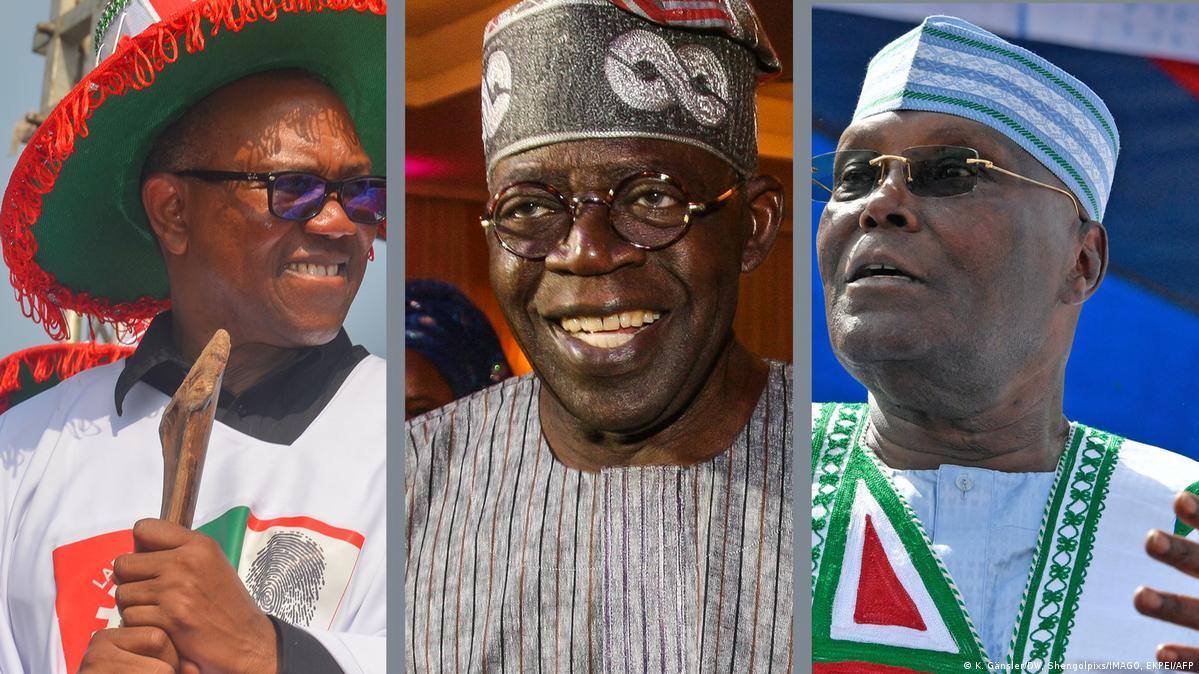
The ruling All Progressives Congress (APC) candidate, former Lagos governor Bola Tinubu, faces his former associate and Nigeria’s former vice president, Atiku Abubakar, of the main opposition People’s Democratic Party (PDP).
The Labour Party’s Peter Obi, has, however, emerged as a surprise third candidate to challenge a traditional dichotomy in Nigeria’s political landscape. A fourth candidate, Rabiu Kwankwaso of the New Nigeria People’s Party (NNPP), is seen as a wild card in the race.
Tuesday’s signing was held in the presence of domestic and international stakeholders to monitor for potential violence – a common feature in Nigerian elections.
Along with the presidential candidates, members of observer missions from the African Union, European Union and the Commonwealth, and other diplomats were present at the signing.
Also present were Thabo Mbeki, Joyce Banda, Uhuru Kenyatta, John Mahama and Ernest Bai Koroma, the former presidents of South Africa, Malawi, Kenya, Ghana and Sierra Leone respectively who are heading foreign observer missions.
Africa’s richest man, Aliko Dangote, another member of the committee also attended, as was Patricia Scott, secretary-general of the Commonwealth and a representative of the United Nations secretary-general.
President Buhari urged all the contestants to have the “confidence to trust our legal systems”.
”Let me remind all Nigerians not for the first time that this is the only country we have and we must do everything to keep it safe, united and peaceful,” he said. “There should be no riots or acts of violence after the announcement of the election results. All grievances, personal or institutional, should be channelled to the relevant courts.”
Mahmood Yakubu, the chairman of the Independent National Electoral Commission, said election preparations were well under way, with ballot papers and other materials being moved to polling units nationwide.
“By Friday, we will activate the registration area centres so that at first light on Saturday, polling units will open on time.”
As the 2023 Presidential election draws near, all eyes are on the candidate, Peter Obi, who has emerged as a beacon of hope for many Nigerians, particularly the youths.
The former Anambra State Governor Obi has garnered both admiration and apprehension from the public.
There are those who view him as an outsider to the political class, even though he has a good understanding of the political landscape in Nigeria, in spite of his two successful tenures as governor.
Despite facing negative predictions from some members of the opposition, Obi has remained steadfast in his quest to become the next President of Nigeria. With just one day left until the election, several polls have projected Peter Obi as the likely winner. If these projections come to fruition, it will undoubtedly be a significant moment in Nigerian political history. The country has been plagued by political turmoil and corruption for years, and many are looking to Obi as a potential agent of change.
Obi’s willingness to take bold action, even if it means risking his own social status, is what attracts many people to him. However, this same quality makes some members of the political class uncomfortable with the idea of him becoming president. They fear that his government will put an end to the corrupt practices that have been draining Nigeria’s resources for far too long.
It is essential to note that the road ahead will not be an easy one for whoever emerges victorious in the election. The challenges facing Nigeria are vast and complex, and it will require a leader with both vision and skill to address them effectively.
The 61-year-old candidate has highlighted key issues facing Nigeria and outlined his plans to address them.
One of the most pressing issues facing Nigeria is the rampant police brutality that has been widely reported, even after the EndSARS campaign two years ago.
Police Brutality:
Police brutality has been a persistent problem in Nigeria, and EndSARS campaigns over the years has brought it to the forefront of national consciousness. However, reports of police brutality have continued to emerge, highlighting the need for long-lasting reforms.
Peter Obi has promised to address police brutality by apologising to victims and ensuring that it never happens again. He has also promised to train the police force on proper policing and prevent harassment of citizens. This approach is consistent with the recommendations of the Presidential Panel on Police Reform in Nigeria, which called for increased training and accountability for police officers.
Obi’s promise to create a peaceful country where security agents will no longer be used for harassment is a welcome prospect for Nigerians who have long suffered from police brutality. However, it remains to be seen whether he can implement his reforms if elected.
Unemployment:
According to the National Bureau of Statistics, Nigeria’s unemployment rate reached its highest value in 2021, with around 33.3% of the population unemployed or underemployed. The high rate of unemployment has been a persistent problem in Nigeria, leading to widespread poverty and social unrest.
Peter Obi has promised to address the issue of unemployment by creating an enabling environment for business and moving Nigeria from consumption to production. He has also promised to develop the gas sector to generate more revenue than oil and support the youth for enterprise.
Obi’s proposed solutions are consistent with the economic diversification plans of the current government, which aims to reduce Nigeria’s dependence on oil revenue. However, critics have raised concerns about the government’s ability to implement these plans effectively, given the persistent challenges facing Nigeria’s economy.
Terrorism:
Terrorism has been a major security crisis in Nigeria, with Boko Haram and other extremist groups launching attacks on civilians and security forces. The Nigerian government has struggled to contain the crisis, leading to widespread insecurity in the country.
Peter Obi has promised to address the root causes of terrorism, including poverty, unemployment, and injustice. He has also promised to engage agitators and insurgents in dialogue to address their grievances through a carrot and stick approach.
Obi’s approach is consistent with the recommendations of experts who have called for a holistic approach to addressing the crisis, including addressing the underlying causes of extremism. However, critics have raised concerns about the government’s ability to negotiate with extremist groups and the potential risks of rewarding them for their actions.
Corruption:
Corruption has been a persistent problem in Nigeria, with reports of corrupt practices in the public and private sectors. The military procurement process has been particularly susceptible to corruption, leading to concerns about the country’s ability to secure itself.
Peter Obi has promised to ensure transparency in all procurements and prevent under-the-table deals. He has also advocated for community state police and involving community leaders in securing their environments in collaboration with regular security agencies.
Obi’s approach is consistent with the recommendations of experts who have called for increased transparency and accountability in the government’s procurement process. However, critics have raised concerns about the feasibility of community state police and the potential risks of involving community leaders in security matters.
Peter Obi’s proposed solutions to Nigeria’s problems may be consistent with the recommendations of experts in various fields. However, the effectiveness of his reforms depends on his ability to implement them effectively if elected. As Nigerians prepare to cast their votes, the question remains: Will Obi’s appeal as a reformer and his commitment to fighting corruption be enough to overcome the concerns of the political elite? Regardless of the outcome, one thing is certain: the 2023 Presidential election will have far-reaching implications for the future of Nigeria, and the eyes of the world will be watching closely as the country goes to the polls tomorrow.
The All Progressives Congress (APC) and Peoples Democratic Party (PDP) are certain the presidential candidate of Labour Party, Peter Obi, stands no chance in Saturday’s keenly contested vote.
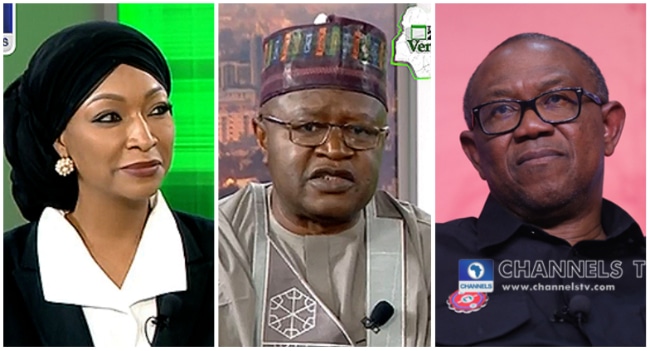
The Deputy Spokesperson and Deputy Director, Public Affairs, APC Presidential Campaign Council (PCC), Hanatu Musawa; and a PDP member, Ladan Salihu, made their arguments on Channels Television’s The 2023 Verdict on Wednesday.
The APC’s Bola Tinubu and PDP’s Atiku Abubakar are considered front-runners alongside Obi. The presidential candidate of the New Nigeria Peoples Party (NNPP), Rabiu Kwankwaso, is also believed to be a wild card.
While Salihu held that Obi’s chances are hampered by a lack of political structure across the country, compared to the PDP, Musawa described the Labour Party’s victory as a “constitutional impossibility.”
‘No Numbers To Compete In The North’
The PDP argued that a study at the political parties and their grassroots structures show that the NNPP and the Labour Party “don’t have representation on the ground in the North – no governors, no senators.”
Asked if the lack of subnational representation matters, Salihu said, “It matters to some people, but to the PDP, we’re not so much concerned (sic). I wouldn’t say I sympathise [with the party] but my heart goes out to the Labour for not having the kind of numbers to compete.
“How do you have a party going into a presidential election [and] out of 176,000 polling stations, your presence is only felt in 42,000? So, there’s just no way Labour can pose a threat to the PDP in the North. Ditto NNPP.”
According to the PDP chieftain, the 2023 race is a contest with the APC – but barely.
“We’re not losing sleep over beating Bola Ahmed Tinubu because that has been done and dusted, as far as I’m concerned,” he said.
Obi’s Opportunity
The APC shared Salihu’s sentiment that the contest is a two-man race, describing it as a “straight contest between APC and PDP – that’s the reality”.
Musawa admitted that “other brilliant candidates” are in the running, though her view is that none of them has the kind of political structure or capital needed to achieve victory.
“My concern is this narrative that has been put out there that the Labour Party candidate, Peter Obi, has an opportunity.
“Yes, he’s got an opportunity to contest but there is a constitutional impossibility for Peter Obi to win this election because of the way our laws are constituted. It’s just not possible.
“He’s disrupting the PDP, not the APC because what Peter Obi has done is he’s cannibalising the votes of the PDP. I’m completely ruling,” she said.
It was in January that the comedy routine of Mr Makati began to change. His weekly Saturday night standup at the Memento Lounge in Lagos, Nigeria’s pulsing commercial capital, switched from gags about the daily hassles of living in Africa’s most populous nation to the practicalities of voting.
“He was telling jokes about how to obtain your PVC [Permanent Voter Card], getting people to register to vote,” says the novelist A Igoni Barrett, a regular at the club. Although no names were mentioned, Barrett says, everyone knew what the voter registration drive was all about.
“Ninety per cent of the audience support Peter Obi,” Barrett estimates, referring to the relative political newcomer whose emergence as a credible candidate has electrified young voters and shifted the odds in this month’s presidential election. “Nigerians are trying to take back power through the ballot box,” he adds.
Nigeria is the biggest economy in Africa and home to at least 216mn people, though some sources put the figure closer to 220mn. Its population will nearly double in the next 25 years to 400mn, surpassing the US as the world’s third most populated country.
The success or failure of this oil-rich mammoth matters greatly to Africa and to the rest of the world, says Chidi Odinkalu, a professor at the Fletcher School of Law and Diplomacy at Tufts University. The election is being fought against the backdrop of rampant insecurity and economic stagnation. Crisis-ridden Nigeria is no longer the stabilising force it once was in a region where coups, terrorism and Russian influence are proliferating.
“No one wants to see Nigeria go up in flames,” says Odinkalu. “We have been teetering on the brink for such a long time that Nigerians have come to believe we are defying the laws of gravity. But some day, gravity will have its say.”
In the first round of voting on February 25, Obi, 61, will take on two more seasoned politicians with much deeper pockets and the backing of well-greased party machines. Bola Tinubu, 70, a former governor of Lagos and political kingpin running for the ruling All Progressives Congress party, is considered the man to beat. Atiku Abubakar, 76, a former vice-president, is making his sixth run for president as a candidate for the People’s Democratic party.
A few months ago, most Nigerians assumed the contest was between these two wealthy septuagenarians, a depressing prospect for many in a country where the median age is 18. There is a growing disaffection with big-money politics dominated by the same old faces.
By contrast, Obi, a businessman and former governor with a carefully crafted reputation for shunning the accoutrements of power, is something new. Yet all but Obi’s most loyal supporters, who call themselves “Obidients”, are realistic about him being an urban phenomenon whose chances of converting social media buzz into victory are slim.
Sceptics say Obi’s tiny Labour party, which has no governors and only one senator, lacks the organisational capacity to get the vote out or to properly monitor the country’s nearly 177,000 polling stations to mitigate potential vote-rigging and other election-day tricks. Others deride Obi’s purported popularity as “four people tweeting in a room”.
A string of opinion polls put Obi well ahead of the two would-be frontrunners, whose campaign managers are privately rattled. Yet experts warn that polls, which tend to pick up the views of smartphone-owning urbanites, are unreliable. They may not accurately reflect the broader electorate in a multi-ethnic country where more than 500 languages are spoken. Polls are particularly sketchy outside the big cities, where people are sometimes paid in bags of rice or bundles of notes to vote for a particular candidate.
Many voters are keeping their intentions to themselves. In a recent poll by the data company Stears, 27 per cent said they would vote for Obi, putting him 12 points ahead of Tinubu. But 37 per cent of respondents declined to disclose their voting intention.
All of these factors help explain why political analysts consider this election the hardest to predict since Nigeria returned to democracy in 1999. The serious challenge by Obi, the first third-party candidate to make a dent during the campaign, means there is a possibility of a run-off for the first time in the country’s history.
Obi has won the endorsement of prominent Nigerians, including Olusegun Obasanjo, an elder statesman, and Chimamanda Ngozi Adichie, a celebrated author. In an open letter, Obasanjo, who ran Nigeria in the 1970s as a military general and again as elected president from 1999-2007, told young Nigerians they had the power to change history.
Some 40 per cent of 93mn registered voters are below 35. The more they show up to vote, in a country with a history of low turnout, the higher the chance of an electoral upset. In an interview with the Financial Times, Obasanjo said the youth vote and God would deliver Obi victory.
Odinkalu, of the Fletcher School, puts much of the electoral excitement down to raw hope. “Nigerians are in search of magic,” he says. “They are looking for a miracle.”
Everything at stake
Nigeria is not simply a failing state. Africa’s “sleeping giant” has a swagger and entrepreneurial drive reminiscent of the US.
A Nigerian, Ngozi Okonjo-Iweala, heads the World Trade Organization. Tech start-ups in Lagos, including several unicorns, attract more capital than anywhere else on the continent. Nigeria is a cultural powerhouse whose artists, from author and TED-talk darling Adichie to Burna Boy, an Afrobeats singer, command a global following. Kano-born Aliko Dangote, who made his fortune in salt, flour and cement and is building the world’s largest single-train oil refinery, is Africa’s richest person.
In better times, this has counted. Nigeria has been an engine of regional, if not continental, growth and a democratic, stabilising force. Economically and diplomatically diminished, the country has drifted during the past eight years of President Muhammadu Buhari, a former military leader. A man who campaigned on a ticket of personal integrity has overseen an increase in corruption.
The economy, though still Africa’s biggest, has stalled. Under Buhari, income per capita has fallen and 90mn Nigerians live on less than $1.90 a day. At least a third of the population are out of work and tens of millions hold precarious jobs in the informal sector.
A recent survey by Afrobarometer, a pan-African polling organisation, found that 89 per cent of Nigerians thought their country was heading in the wrong direction. “What’s at stake in this election?” asks Ayoade Alakija, a health expert and critic of the political elite. “Nigeria is at stake,” she says. “Our very statehood is at stake.”
Security is in an appalling state. During Buhari’s presidency, some 60,000 people have been killed by terrorists, criminal gangs or the army, according to data compiled by the Council on Foreign Relations.
Though the threat from Boko Haram has receded, the Islamic State of West Africa Province, an Isis offshoot, kills and plunders with virtual impunity in some northern states. Violent herder-farmer clashes have spread to almost all parts of the country. Secessionist agitations in the south-east, which fought an almost three-year civil war in the late-1960s to create a breakaway Biafra state, has strengthened, causing violence and unleashing state repression.
Kidnappings and extortion have surged. “Almost everybody knows someone who has been abducted,” says Toni Kan, a public relations consultant who has moved to London because of safety concerns, part of a gathering brain drain.
Economic prospects look bleak. Foreign investment has shrunk. The manufacturing base has withered. Nigeria relies on petroleum exports for 80 per cent of government revenue, a structural challenge. But so much oil is stolen by criminals and corrupt state actors that official production is below 1.3mn barrels a day, 500,000 barrels shy of Nigeria’s Opec quota.
Further ahead, the world is turning away from fossil fuels. “I keep telling people that, if you squint now, you can see the end of oil,” says Feyi Fawehinmi, an author and political commentator.
The central bank has compensated for falling revenue by running the printing presses, stoking inflation, now at 22 per cent. The tax base is a dismal 6 per cent of gross domestic product. Almost all government revenue is swallowed up by debt service and payment of government salaries.
Despite decades of oil revenue, much of it stolen, the state has never provided the public goods necessary for economic take-off. More than 10mn children are out of school, two-thirds of them girls. Once prestigious universities, including Ibadan, Ahmadu Bello and Nsukka, are a shadow of their former selves, unable to pay lecturers properly or maintain buildings. Health provision is poor, with Nigeria’s elite relying on foreign hospitals. At 53, Nigeria’s life expectancy is shockingly low, a decade below Ghana’s, a country with a similar income per capita.
“There’s been incredible damage. “We’ve gone back on almost every development index,” says Fakhrriyyah Hashim, a peace and security researcher, referring to the past eight years. “In our entire democracy, things have never been this bad.”
Route to a reset
For decades, most Nigerians have felt powerless to stop the rot, convinced that their lives are at the mercy of venal politicians. This election, unexpectedly, has offered a glimmer of something different.
“Sometimes you go so far in a certain direction that you hit a brick wall,” says Dimieari Von Kemedi, an entrepreneur and former presidential adviser. “Whether in nature or in human life, eventually you must reset.”
That reset, at least politically, may have begun early on in the pandemic when young people took to the streets against state brutality in protests known as EndSARS, referring to a particularly brutal police unit. The EndSARS movement morphed into a broader alliance against the failings of Nigeria’s political elite but was brutally suppressed in October 2020 when members of the Nigerian army opened fire on protesters in Lagos, killing at least 12.
At the time, Tinubu, nicknamed the “godfather of Lagos”, was seen as unsympathetic. Obi by contrast tweeted his support of the protests, a move that enabled him to tap into youth sentiment. “The EndSARS base has effectively become an Obi base,” says Hashim, the researcher. “Young people had to explore other ways of non-violently challenging the government — and elections are the perfect route.”
Obi made a fortune in the import-export business and in banking. He won his political spurs from 2006-2014 as a two-term governor of Anambra state, leaving state coffers in a healthier position than he found them. He ran as vice-president for the People’s Democratic party in Abubakar’s unsuccessful 2019 campaign, somewhat undermining his image as a political neophyte.
Despite his reputation for frugality and probity, Obi’s name appeared in the Pandora Papers, a leaked dossier of offshore wealth, which showed he had registered business entities in tax havens, failing to declare them as required. Obi says the money was legitimate and that he did not know he had to declare assets registered in family members’ names.
His opponents have arguably worse allegations against them. Abubakar was named in a 2010 US Senate committee report in connection with the transfer of $40mn in “suspect funds”. Tinubu had his assets frozen in the 1990s by the US government, which said it had probable cause to believe the money was linked to drugs. Tinubu settled the case with a payment of $460,000. Both men deny wrongdoing.
While Obi has question marks against his name in common with his two main rivals, he is an outsider in other ways. He is an Igbo from Nigeria’s south-east. Although Igbos are the third-largest ethnic group behind the Yoruba and the Hausa, an Igbo has never won the presidency since the return to democracy.
Neither has any presidential candidate outside the two main parties won more than 7.5 per cent of the vote since 1999. Candidates must win at least 25 per cent of the vote in at least two-thirds of Nigeria’s 36 states plus Abuja, the capital, to win.
There are doubts about whether Obi, a Catholic, can muster enough support in the predominantly Muslim north, where his faith and relatively low profile could count against him. He has chosen northern Muslim Yusuf Datti Baba-Ahmed as his running mate, a formula that has proven successful in the past. This time, Tinubu, a southern Muslim, has also chosen a northern Muslim as running mate, a so-called “Muslim-Muslim ticket” that may not play well in his southern heartland.
Experts say Obi’s strong showing, even if limited to the south, has complicated the electoral map, making it harder to predict the winner.
Nigerian elections have rarely been about policy. Politicians frequently swap party allegiance. This time, though, Obi’s participation plus the fact that current policies are clearly not working, mean the level of debate has risen, if only a notch.
Both Obi and Abubakar are promising pro-business policies and a bigger role for the private sector. All three have committed to taking on the two taboos of Nigerian politics: scrapping a ruinously expensive fuel subsidy and freeing up the exchange rate.
Abubakar Suleiman, chief executive of Nigeria’s Sterling Bank, argues that both distortions have warped economic incentives, facilitating corruption and promoting “rent-seeking” over productive activity. “These things have prevented the private sector from growing at a [sufficient] pace and creating employment. If we’d removed those subsidies, we’d have been in a very strong position today,” he says.
Lifting them will not be easy. Big vested interests profit from the opaque currency regime. Although the fuel subsidy benefits the car-owning middle class, poor people regard cheap petrol as one of the few things they get from the state. “Without legitimacy, whoever wins can’t take the decisions the country needs,” says Odinkalu of the Fletcher School. “If the person does not have legitimacy the country is going to burn.”
Dele Olojede, a Nigerian journalist who won the Pulitzer Prize, says it is important not to have unrealistic expectations of Obi, either about his capacity to win the election or to turn the country around if he pulls off a miraculous political upset. Like others, though, he acknowledges that Obi has shaken things up. “It’s a sign of improvement,” he says. “It forces the other two candidates not to take things for granted.”
This election is also likely to be less easy to rig, say political experts, thanks to improvements in the electronic voting system and the recent withdrawal as legal tender of old banknotes that could have been used to bribe voters. Kemedi goes so far as to conclude that “the old party machinery is broken”.
Olojede is more cautious. “I don’t think Obi will win, but there is a possibility of a surprise,” he says. “And any one of these guys will be better than Buhari.”
A recent survey conducted by Bloomberg, the New York-based international television and media conglomerate, has concluded that Nigerian businessman and former governor of the state of Anambra Peter Obi is still the front-runner to lead the country as its next president.
Two-thirds of respondents said in the polls published Friday they intend to vote for Obi, a third-party candidate, in elections scheduled for February 25, 2023.
The results of the survey conducted for Bloomberg News by Premise Data Corp. a San Francisco based data company, were published on Friday – 15 days before the vote to choose President Muhammadu Buhari’s successor. Premise Data Corp has so far conducted six polls for Bloomberg, and in all Obi has maintained an unassailable lead.
Of the 93% of participants who said they’ve decided how to vote, 66% named Obi as their preferred choice. Obi scored a slightly higher 72% among decided respondents in an earlier Premise poll that was released by Bloomberg in September as the official election campaign kicked off.
While Obi’s campaign has generated a momentum that the two established forces in Nigerian politics were not expecting, the ruling All Progressives Congress and main opposition Peoples Democratic Party insist that he cannot triumph on Feb. 25. They say his appeal is too thinly spread across the country’s states and have derided polling that has almost universally put the candidate of the much smaller Labour Party in first place.
Still, Obi has emerged as the most popular candidate in six polls including the two surveys conducted by Premise for Bloomberg. Another poll released this week by Lagos-based media and data company Stears predicted that Obi will win in the event of high turnout, but lose to Bola Tinubu of the APC if participation is weak.
Dismissed by his opponents as a “social media candidate,” Obi’s rise has been fueled by disenchantment with the status quo. His campaign has attracted an enthusiastic following known as “Obidients” — initially online but increasingly at rallies and marches — even if the man they wish to help to Nigeria’s biggest ever electoral upset hardly has an anti-establishment background.
Pollsters say they account for Nigeria’s electoral makeup when designing their surveys.
San Francisco-based Premise polled 2,384 Nigerians from Jan. 26 to Feb. 4 via a smartphone app. Submissions were selected from quotas developed by age, gender and location across the country’s six geopolitical zones, the company said. Results were then weighted against the original quotas to ensure national representation.
About 44% of Nigerians own smartphones, according to the Alliance for Affordable Internet. Premise estimates that the access rate rises to 74% among the voting age population.
The candidates of the two parties that have ruled Nigeria since the restoration of democracy in 1999 finished in a distant second and third. Tinubu obtained 18% of decided voters and the PDP’s Atiku Abubakar tallied 10%.
A former governor of the southeastern Anambra state and ex-chairman of Lagos-listed Fidelity Bank Plc, Obi is running on the ticket of the Labour Party, whose presidential candidate garnered only 0.02% of votes in the last election four years ago. The APC and PDP dominate both chambers of parliament, and 35 of the country’s 36 governors come from their ranks.
While widespread frustration with worsening economic hardship and growing insecurity has propelled Obi’s campaign further than many initially felt possible, his party lacks the nationwide organizational capabilities of the APC and PDP — which are experienced at mobilizing voters across the West African country of approximately 200 million people. Vote buying is also common in Nigerian elections which provides an advantage to better resourced parties.
State Threshold
The constitution also dictates that a candidate acquiring the most votes in the election can only win the presidency in the first round if they secure over 25% in more than two-thirds of the states. If no one crosses that threshold, Nigeria will have its first runoff between whoever polled best overall and the remaining contender who scored majorities in the higher number of states.
The APC insists the rules make a Labour Party victory impossible as its Christian candidate will not be able to accumulate a quarter of the votes in states across the predominantly Muslim north or Tinubu’s southwestern stronghold that includes the commercial hub of Lagos.
“Peter Obi cannot win the election,” Nasir el-Rufai, the APC governor of the northern Kaduna state, said in a television interview this month. “He doesn’t have the number of states.” Out of Nigeria’s six so-called geopolitical zones, 43% of the country’s 93.5 million registered voters are located in the northwest and southwest.
Another factor that will have a significant impact on the result is the level of participation — turnout in 2019 was the lowest ever at only 35%.
Chieftain of the Peoples Democratic Party and former aviation minister, Osita Chidoka has described the presidential candidate of the Labour Party, Peter Obi as a disruptor and insignificant player in the 2023 election.
The ex-minister, who stated on Sunday night in an interview session on Channel TV monitored by SaharaReporters, claimed that the 2023 presidential election is between the ruling All Progressives Congress (APC) and his party, Peoples Democratic Party (PDP).
He said it is incorrect to assume that there is a national youth movement supporting Obi’s presidential ambition because the majority of the youths are from the Northwest, where Obi is unpopular.
He said, “Peter Obi is a disruptor and an insignificant player in the election, but you see the problem is that let me take something like the youth votes, there are 37 million between the ages of 18 and 35. Of this 37 million people, 9 million of them are in the northwest, 36 per cent. There is no national youth movement. 4.1 million of them are in the southeast, 11 per cent which mirrors the total voting structure of the country.”
He also said considering the present realities in the country, Obi will not win all the votes from the youth “because the issues before the youth in the south and the youth in the north are different”.
“When we were talking about #EndSARS, nobody in the north moved because that was not a problem for them.
“The Igbo position for me is that our significant investment in the PDP for 24 years cannot be thrown away overnight. I remain in the PDP and many Igbos remain in the PDP,” he added.
General elections will be held in Nigeria on February 25, 2023, to elect the President and members of the Senate and House of Representatives.
A prominent presidential candidate named Peter Obi’s campaign manager was found guilty of money laundering by a Nigerian High Court in the nation’s capital, Abuja.
Doyin Okupe was found guilty of receiving more than $400,000 (£330,000) from a person without following the proper procedures in addition to other charges.
The presidential campaign of Mr. Obi is likely to suffer a serious setback as a result.
He has positioned himself as a departure from prior leaders and corrupted parties.
Just two months remain until the elections. Okupe, a crucial ally and the director-general of Mr. Obi’s campaign organisation.
Nigeria’s anti-corruption agency, the Economic and Financial Crimes Commission, had charged Okupe in 2019 for money laundering and diversion of funds.
This was before he began working for Mr Obi. He was accused of accepting money in 2015 in excess of the amount that is allowed without having to declare it to the authorities.
Delivering the judgement on Monday, Justice Ijeoma Ojukwu said that Okupe had violated the Money Laundering Act, and sentenced him to two years in prison – though there is the option to pay a fine.
Neither Okupe’s lawyers nor the Obi campaign have yet reacted to the judgement.
Mr Obi is running without the backing of either of Nigeria’s two main political parties but he has cultivated a lot of support among young people.
The presidential candidate of the Labour Party, Peter Obi has reacted to comments that he distributed loaves of bread when he visited a community ravaged by flood.
Recall there were rife rumors that Obi on his visit to a flood-ravaged community donated 24 loaves of bread to flood victims.
Members of the opposition party, Ahmed Bashir and Reno Omokri made a mockery of him when the rumors broke.
Reacting in an interview on Arise TV, he said: “I never provided any food. Be it one bread. Whatever you might have seen is what people brought on their own to where I visited. What I have rather done is to ask those who are involved in places I have been to give me a bank account so I can help.”
MyNigeria had earlier reported how a rampant flood situation across the country ravaged many communities, washed away farmland, and destroyed people’s property.
Commuters passing through these communities have been made to take longer routes to get to their destinations.
Many roads were washed away, and many farmlands, houses, vehicles, and other structures also succumbed to the overpowering effect of flooding.
Peter Obi, a candidate in February’s presidential election in Nigeria, says he is waiting for the positions of labour unions – the Nigeria Labour Congress (NLC) and the Trade Union Congress (TUC) – before releasing his manifesto.
Mr Obi, a candidate of the Labour Party, has been criticised for not releasing his policy plans before campaigns opened two weeks ago, which critics said signalled unpreparedness for office.
But Mr Obi told the BBC that Nigeria was not bereft of ideas or documented policies, rather it had an “institutional weakness and political will to implement good ideas and policies”.
Of the three frontrunners that also includes Bola Tinubu of the ruling All Progressives Congress (APC), only Atiku Abubakar of the Peoples Democratic Party (PDP) has released a document of how he intends to lead Nigeria if elected.
Mr Obi, a two-time governor of Anambra state in south-east Nigeria where there are agitations by groups that want a breakaway Biafra state, said he is a firm believer in Nigeria and that his solution for the different “agitations across the country,” is to have dialogue and reach a consensus.
He said Nigeria’s number-one priority is the issue of insecurity because it has become an existential one “that must be dealt with head-on decisively”.
“If you deal with it [security] today, you deal with inflation because farmers would go back to farms and that would reduce food inflation,” he said.
Since the presidential candidate of the Labour Party, Peter Obi declared his intentions to contest the 2023 general elections, he has received several major supports from different personalities and institutions.
His name is constantly on the lips of everyone, including children. Rallies have been organized in various states and countries, and financial assistance from supporters and well-meaning citizens has been donated to his campaign.
This loud acceptance from Nigerians especially the youth can be seen as a cry for change in leadership. Many believe Peter Obi is the right leader for the country of Nigeria.
Although there have been oppositions, the former Governor of Anambra refuses to allow the naysayers to deter him from his victory.
Aside from the Nigerian youth backing Peter Obi in his bid to become the next president of the country, there are other supporters which are been listed below;
1. Social media users have been major supporters of Peter Obi as they formed a movement called the “Obidients Movement”.
They have taken their campaign from the internet to the streets with thousands of supporters shutting down the streets in various states. These rallies shocked the camps of the other political parties.
2. The international community: Peter Obi continues to have several invitations to speak on certain topics including the upcoming election in major international institutions. His political stance and plans for the country has earned him recognition from these community.
His most recent exploit in the international space includes; Talk on prospects of transformation governance in Nigeria at Harvard University USA. He was proclaimed an Honorary Citizen of Dallas by the Mayor of Dallas, Eric Johnson.
3. The diasporans: Many Nigerians in America and the United Kingdom continue to campaign for Peter in their various areas. Some organize rallies in their communities to support his presidentialbid.
4. Peter Obi has been seen on several media both local and international media speaking on his plans for the Nigerian people and the way forward for the country should he win the 2023 presidential election.
5. Religious leaders: So far, there have been some religious leaders who have declared their support for the Labour Party Presidential candidate.
6. Entertainers: Celebrities in the Nigerian entertainment industry has been known to have a huge fan base. And some of these entertainers have declared their support for Peter Obi.
A former Minister of Education, Oby Ezekwesili, says the Labour Party presidential candidate for the 2023 elections is a better option than the other two front liners- Bola Tinubu of the All Progressives Congress and Atiku Abubakar of the Peoples Democratic Party
She, however, noted that the trio is from the same political class.
Ezekwesili, in an interview with Channels TV Sunday night, said Nigerians are “served badly as a country in terms of the political class” while endorsing Mr. Obi as a better candidate.
“Somebody says to you between a cast of possible presidents that include the three frontrunners that we currently have – a possible President Tinubu, Atiku, and Obi – do you need anybody to tell you where you would be going? It would be an Obi.
“Regardless of the fact that he comes from that particular political class that we are talking about, he still at least represents many more shapes than the other two top candidates (Atiku and Tinubu),” Mrs. Ezekwesili said.
Obi, a former Anambra governor, has been punching above his political weight since acquiring the ticket of the Labour. Many youths dissatisfied with the status quo have provided oxygen upon which his campaign is running, much to the discomfort of veteran politicians, Messrs Tinubu and Abubakar.
The LP presidential candidate is campaigning to make Nigeria a producing country, cutting the cost of governance, among others, if elected.
18 candidates have so far been cleared by Nigeria’s electoral commission to contest the presidential election scheduled for February next year.
In a list published on Tuesday, the Independent National Electoral Commission (INEC) noted that 18 parties had fielded presidential candidates and their running mates.
The list include the names of the 75-year-old veteran presidential contestant and former vice-president, Atiku Abubakar of the opposition Peoples’ Democratic Party, and former Lagos governor Ahmed Bola Tinubu, 70, of the ruling All Progressives Congress.
It also includes the 60-year-old former governor of Anambra state, Peter Obi of Labour Party, who is seen as a third force.
Election campaigns officially begin next week on Wednesday.
Rampant insecurity, chronic unemployment and a worsening economic outlook are among issues the candidates are expected to address.
Nigeria has a population of more than 200 million people, out of which more than 95 million voters have registered to participate in the coming election.

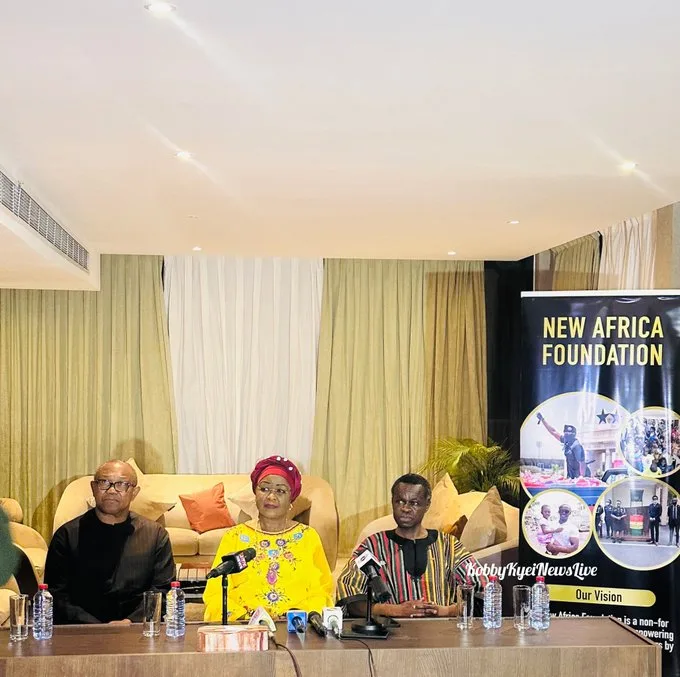
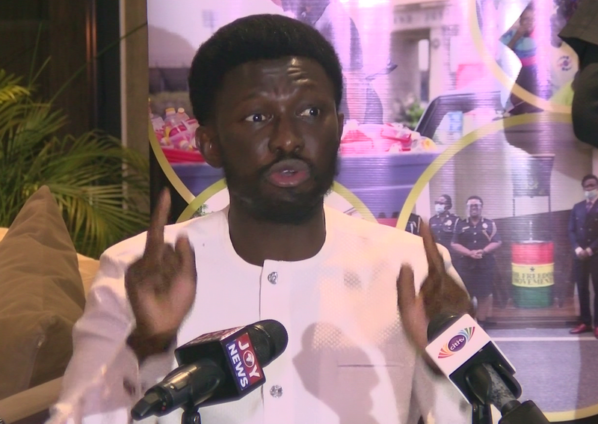

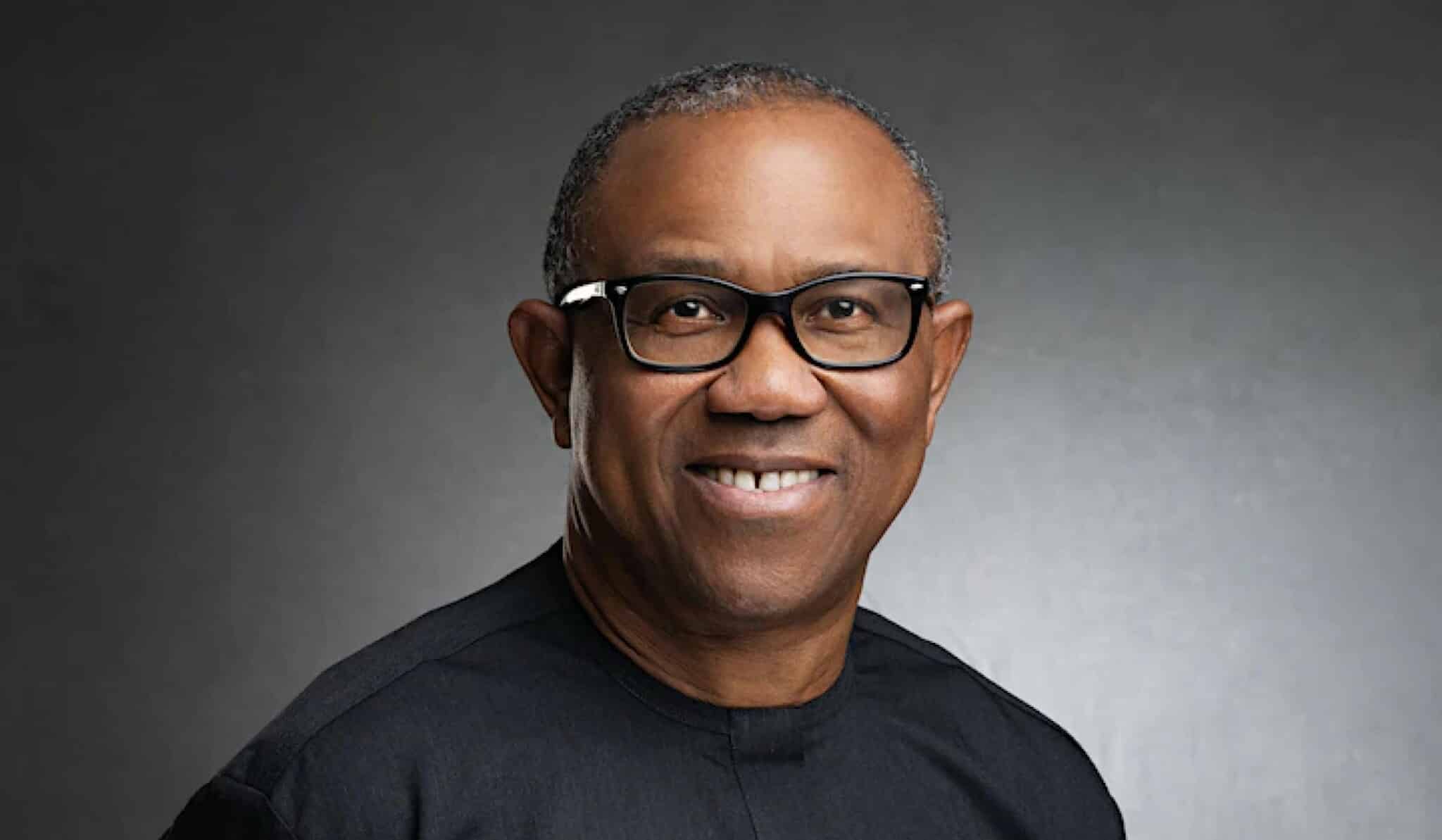
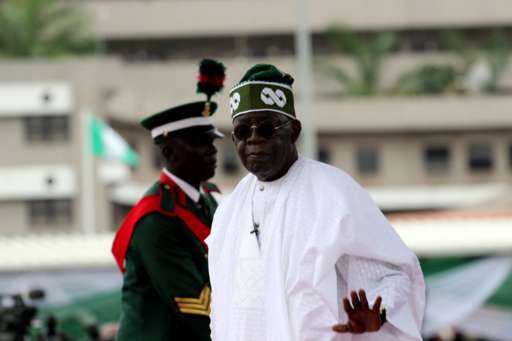
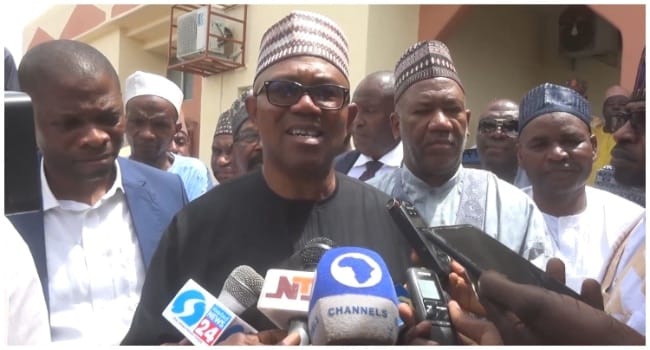
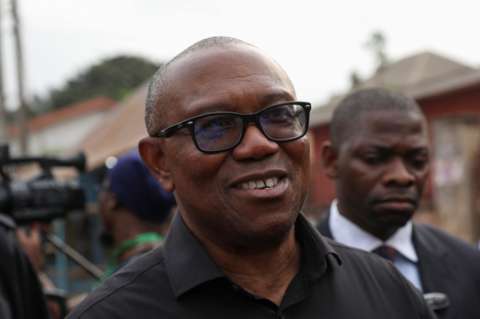
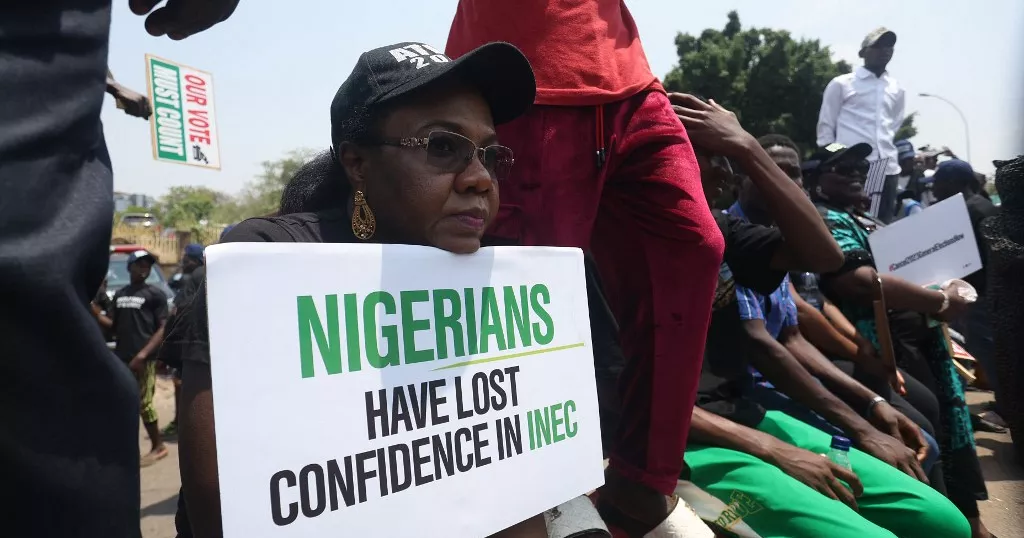
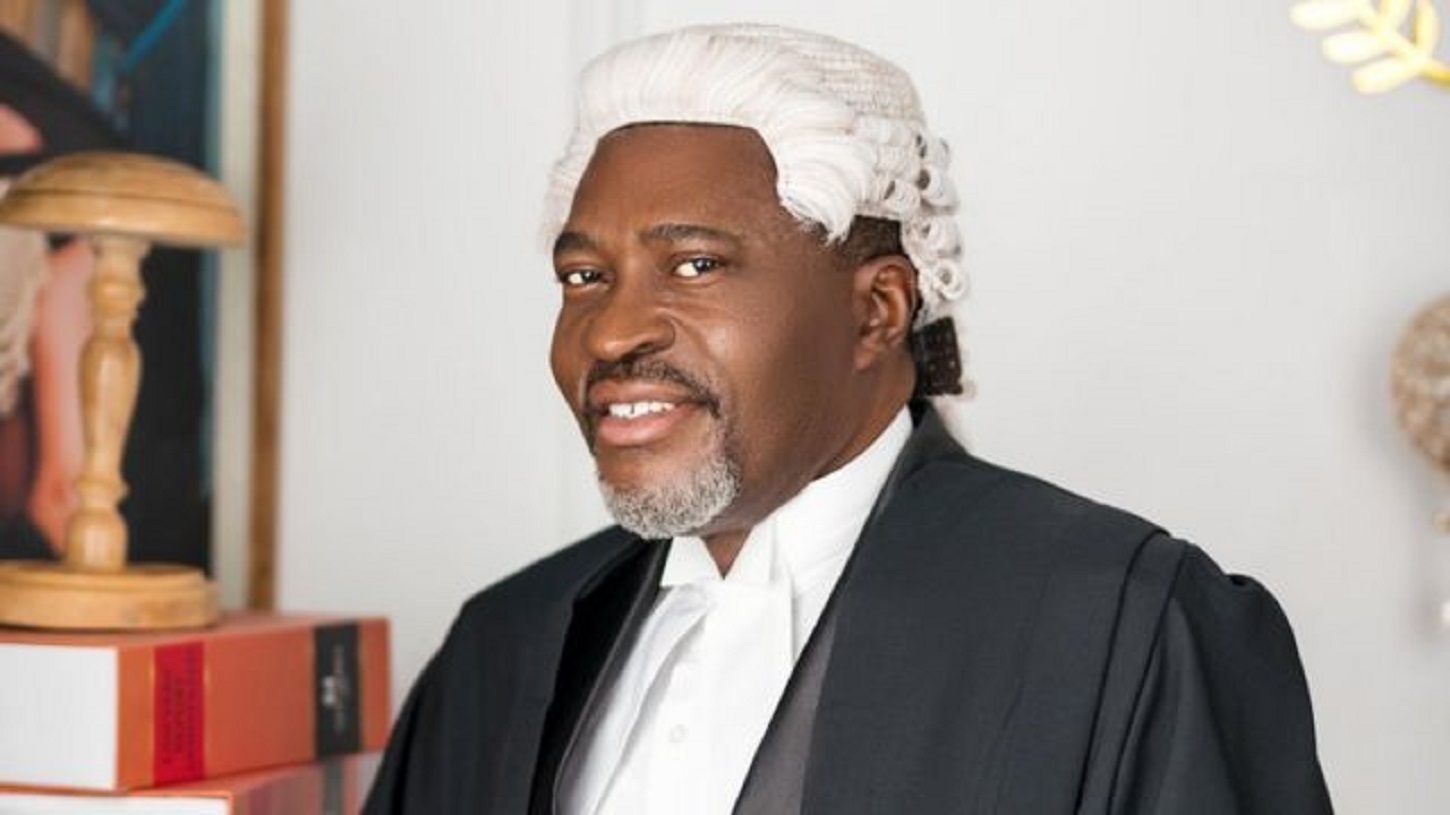

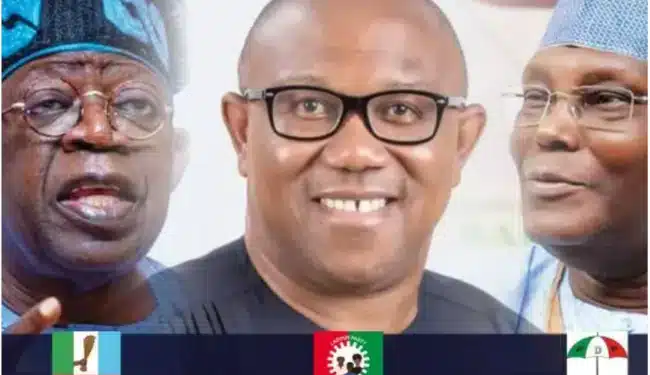
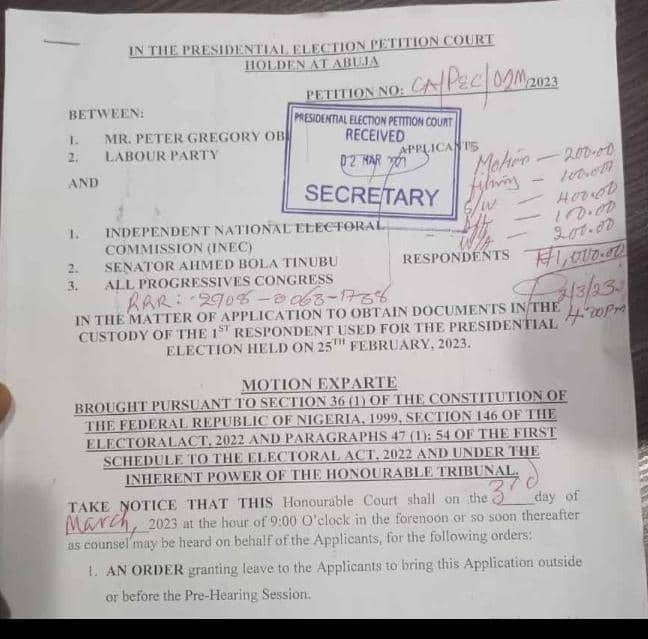
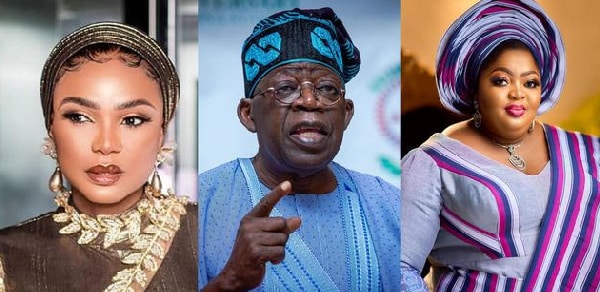
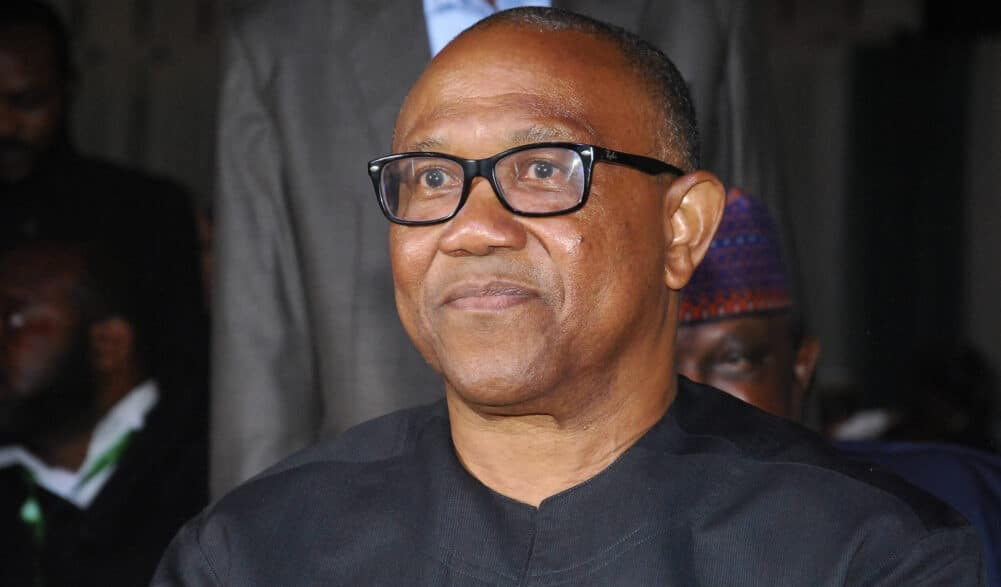
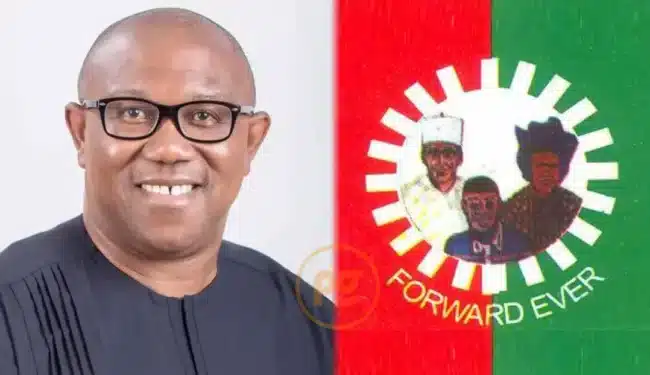
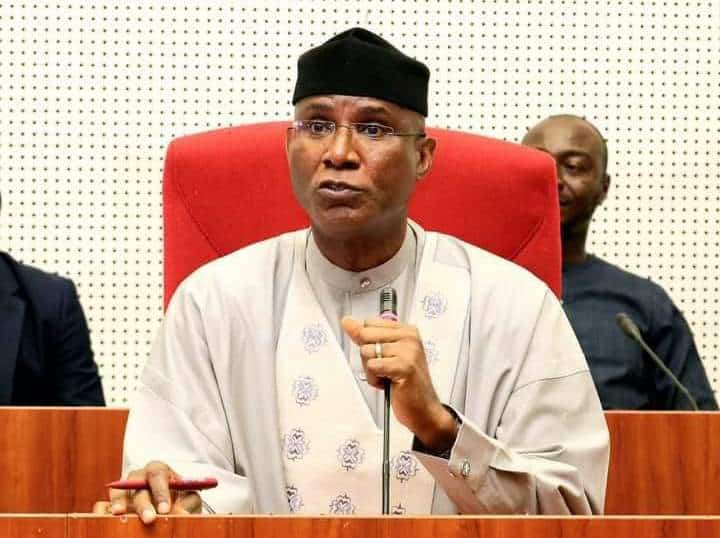
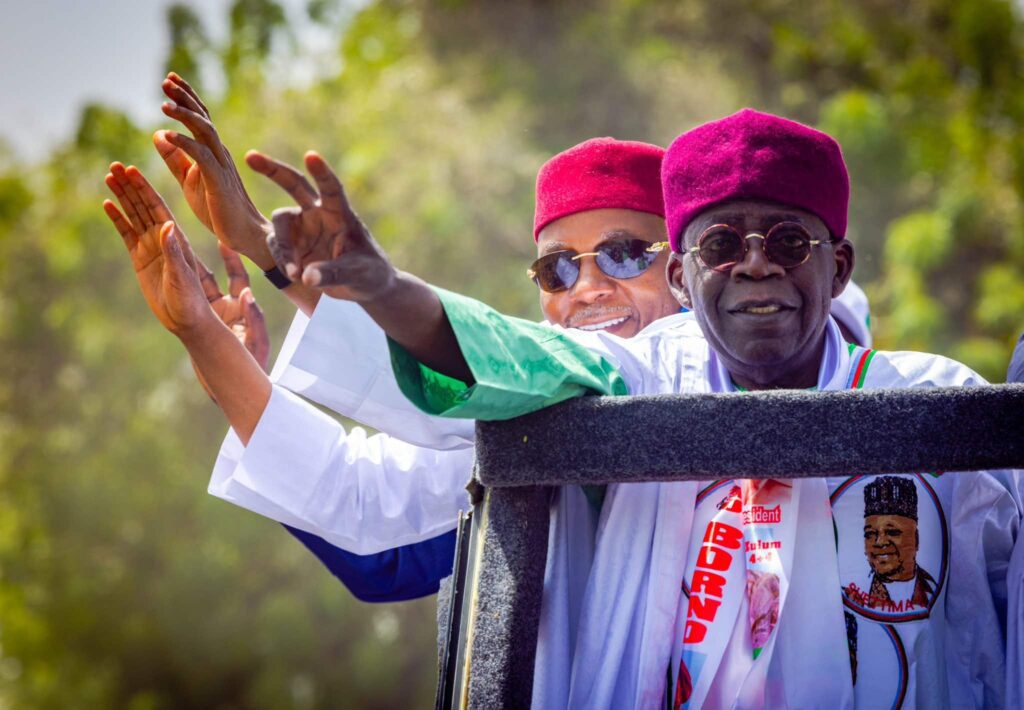
![Labour Party Presidential Candidate, Peter Obi [PHOTO: TW @PeterObi]](https://media.premiumtimesng.com/wp-content/files/2023/01/FmQ-2xNWYAcea46-e1673607532446.jpg)