Tag: Psychologist

  • Ghana Armed Forces records nearly 1,300 cases of mental health disorders annually – CDS

    Ghana Armed Forces records nearly 1,300 cases of mental health disorders annually – CDS

    The Ghana Armed Forces (GAF) have seen a concerning rise in mental health disorders since 2017, with post-COVID-19 statistics revealing an average of about 1,300 cases annually from 2021 to 2023.

    Major General Thomas Oppong-Peprah, Chief of the Defence Staff (CDS), highlighted these figures, noting that 70 percent of cases involve male officers, predominantly due to alcohol use disorder.

    Addressing a conference in Accra themed “Promoting the Mental Health of Men in a Gender Sensitive Armed Forces,” Maj. Gen. Oppong-Peprah underscored the severe impact of mental health issues within the military.

    He expressed particular concern over the stigma surrounding mental health, which often leads to underreporting and, in severe cases, suicidal tendencies among officers.

    Anita Paddy, a senior clinical health psychologist at the 37 Military Hospital, emphasized that globally, one in four people experiences mental health issues, but only one-third seek help.

    She stressed the importance of healthy lifestyles, including good nutrition and adequate rest, as well as engaging in hobbies and seeking professional advice to maintain mental well-being.

    Maj. Gen. Oppong-Peprah urged GAF personnel to support each other, openly discuss their emotions, and avoid behaviors like substance abuse and excessive alcohol consumption.

    He emphasized the need for financial planning and healthier living to mitigate mental health risks among military personnel.

  • Psychologist becomes first person in Peru to die by euthanasia after battling in court for years

    Psychologist becomes first person in Peru to die by euthanasia after battling in court for years

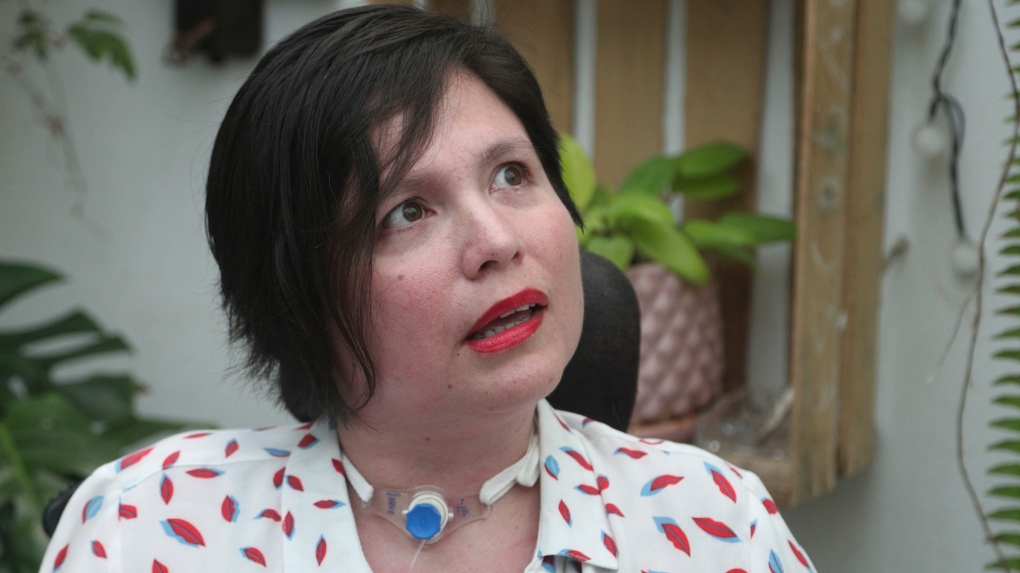
    A psychologist from Peru who was suffering from a disease that made her muscles weak and kept her in bed for many years, died with medical help, her lawyer said on Monday. She was the first person in the country to be allowed to choose to die this way.

    Ana Estrada fought for a long time in the courts of Peru for the right to choose when and how she could die. She became well-known in the country, which doesn’t allow euthanasia or assisted suicide.

    In 2022, the Supreme Court said it was okay for Estrada to choose when to die, and no one would get in trouble for helping her. Estrada was the first person in Peru to be allowed to die with help from a doctor.

    Ana fought to be able to die with dignity. Her fight has taught many people in Peru about this right and why it is important to protect it, said her lawyer, Josefina Miró Quesada. “Her struggle went beyond our country’s borders. ”

    MrEstrada, who is 47 years old, had a disease called polymyositis. This disease makes muscles become weaker and there is no cure for it.

    She started showing symptoms as a teenager and began using a wheelchair at 20 because she couldn’t walk anymore.

    Even though there were problems, Estrada got a degree in psychology and became a therapist. She made enough money to buy her own apartment and didn’t need help from her parents anymore.

    However, in 2017, Estrada’s health got worse and she couldn’t get out of bed anymore.

    She had a hard time breathing and beat pneumonia. Even though she couldn’t type, Estrada used a special program to write a blog called “Ana for a death with dignity. ” In her blog, she talked about her difficulties and why she chose euthanasia.

    “I am not free anymore,” she said in an interview with the Associated Press in 2018. “I have changed and I’m not like I used to be. ”

    With the help of the person in charge of looking after people’s rights in Peru, Estrada won a case that allowed her to choose to end her life with euthanasia. She joined court sessions from her bed using video calls.

    In 2022, Estrada told judges that she thinks life is important and she doesn’t want to die right away. She wants to be able to choose when to end her life.

    “She said she wants to choose euthanasia when she can’t handle suffering anymore. ” “I want to say goodbye to my loved ones peacefully and calmly. ”

    Only a few countries have made it legal to end someone’s life intentionally, which includes Canada, Belgium, and Spain. In some US states like Maine and Oregon, a doctor can help a very sick person end their life.

    Most Latin American countries do not allow euthanasia, but Colombia and Ecuador have made it legal or decriminalized it.

  • 4 out of 10 Nigerian women depressed – Psychologist say

    4 out of 10 Nigerian women depressed – Psychologist say

    Dr. Akin Gabriel, a Clinical Psychologist at the Federal Neuropsychiatric Hospital in Yaba, Lagos, highlights that approximately four out of ten Nigerian women experience depression.

    He emphasizes that about 25% of these depressed women eventually reach a point of breakdown, necessitating treatment.

    During an interview with the News Agency of Nigeria in Lagos, Gabriel stated, “In this country, out of 10 women, four will have one form of depression or the other.”

    Depression is identified as one of the numerous conditions linked to mental illness.

    Gabriel elaborates that mental health encompasses the capacity to cope with life, achieve potential and goals, manage stress, interact with others, and overcome life challenges.

    The psychologist emphasizes that psychological well-being is a crucial aspect of overall health, often overlooked, yet capable of leading to physical ailments.

    He suggests that individuals can monitor their mental health by paying attention to subtle changes in themselves.

    Gabriel encourages Nigerians to reflect on their mental well-being and recognize any alterations they observe in themselves.

    Gabriel said, “Humans will begin to observe the changes within themselves though they may not understand these changes.

    “When an individual realises that things he or she does with ease were getting difficult to be done or realise that situations they were able to easily manoeuvre is becoming complex, they should begin to ask questions.

    “When an individual begins to have strange feelings; responds spontaneously to situations without a thought; easy to anger, always on edge, misdirects aggression, something is wrong.”


    The psychologist further mentioned that additional indicators of depression could involve disturbances in sleep patterns, changes in appetite leading to weight fluctuations, reactions to financial pressures, and recurrent illnesses.

    Gabriel also informed NAN that depression manifests as a disruption in a person’s thoughts and self-image, characterized by persistent low moods, diminished self-esteem, and feelings of self-deprecation.

    “Depressed people think they have fallen short of assumed benchmark of achievements when they compare themselves with others, making them withdraw from people. Such people sometimes feel hopeless and unloved, leading to suicidal thoughts and actions,” he added.

    Gabriel added that the changes in a person suffering from depression can be mild, moderate, or severe, with subtle symptoms that become more obvious if left untreated.

    He said, “A depressed person may not dress like he or she used to, but still passable under mild depression.

    “By moderate, others are beginning to notice some differences; the person is not looking as well kept as he used to be.

    “Maybe the mood has dropped; the person is not as spontaneous as he or she used to be; there may be sleep issues, attention, focus, appetite and weight issues.

    “If not taken care of, the symptoms will affect the daily life of the depressed person and everyone begins to notice because it affects relationships,”

    The psychologist observed that while fewer men experience depression, they tend to suffer from more severe emotional and mood disorders.

    However, he noted that cultural expectations of male strength and resilience often lead many men to silently endure their struggles.

    Gabriel outlined specific signs to watch for in men, including increased alcohol and substance consumption, extended absences from home, and displays of aggression towards family members.

    He emphasized that timely intervention can effectively treat depression if individuals seek assistance for the condition.

  • Addressing the educational needs: The imperative of recruiting educational psychologists in Ghana’s Basic schools

    Addressing the educational needs: The imperative of recruiting educational psychologists in Ghana’s Basic schools

    In Ghana, the education sector plays a crucial role in shaping the future of the nation. However, amidst efforts to improve educational outcomes, there exists a critical need to address the socio-emotional and psychological well-being of students.

    This article advocates for the recruitment of educational psychologists in Ghana’s basic schools to provide comprehensive support for students’ holistic development.

    The Role of Educational Psychologists

    Educational psychologists specialize in understanding how students learn and develop within educational settings. They apply psychological principles to address academic, social, emotional, and behavioural challenges that students may encounter. By collaborating with teachers, parents, and other stakeholders, educational psychologists create inclusive learning environments and support students’ academic success and overall well-being.

    Challenges in Ghana’s Basic Schools

    Ghana’s basic schools face various challenges that impact students’ learning experiences and outcomes. These challenges include:

    Socio-economic Disparities: Socio-economic factors significantly influence students’ access to quality education. Children from disadvantaged backgrounds often face barriers such as poverty, lack of resources, and inadequate support systems, which can affect their academic performance and well-being.

    Learning Difficulties: Some students experience learning difficulties or disabilities that require specialized support. Without timely intervention and appropriate strategies, these students may struggle to keep pace with their peers and may experience feelings of frustration and low self-esteem.

    Behavioral and Emotional Issues: Many students grapple with behavioral and emotional issues that affect their learning and social interactions. These issues may stem from family problems, trauma, peer pressure, or mental health disorders, and they can hinder students’ ability to engage effectively in the learning process.

    Limited Support Services: Basic schools in Ghana often lack access to adequate support services for addressing students’ socio-emotional and psychological needs. While teachers strive to support their students, they may not possess the specialized training or resources required to address complex psychological issues effectively.

    The Need for Educational Psychologists: Recruiting educational psychologists in Ghana’s basic schools is essential for several reasons:

    Early Intervention: Educational psychologists can identify and address students’ learning difficulties, behavioral challenges, and emotional issues at an early stage. Early intervention is critical for preventing academic failure, promoting positive social interactions, and fostering students’ overall well-being.

    Individualized Support: Educational psychologists assess students’ strengths, weaknesses, and learning styles to develop individualized intervention plans. By tailoring support to meet students’ unique needs, educational psychologists help maximize their potential and facilitate academic success.

    Collaborative Approach: Educational psychologists collaborate with teachers, parents, and other professionals to create inclusive learning environments that support students’ diverse needs. By fostering collaboration and sharing expertise, educational psychologists enhance the effectiveness of interventions and support services.

    Advocacy and Awareness: Educational psychologists advocate for policies and practices that promote students’ socio-emotional and psychological well-being. They raise awareness about the importance of mental health and provide training to educators and parents on strategies for supporting students’ holistic development.

    Recommendations for Implementation

    To effectively integrate educational psychologists into Ghana’s basic schools, the following recommendations are proposed:

    Recruitment and Training: The Ghana Education Service should prioritize the recruitment and training of qualified educational psychologists to serve in basic schools across the country. This may involve establishing specialized training programs and providing ongoing professional development opportunities.

    Resource Allocation: Adequate resources, including staffing, funding, and materials, should be allocated to support the integration of educational psychologists into basic schools. This may require collaboration with government agencies, non-governmental organizations, and international partners to secure funding and resources.

    Stakeholder Engagement: Collaboration and communication among stakeholders, including government agencies, educational institutions, community leaders, and parents, are essential for successful implementation. Stakeholders should be involved in decision-making processes and encouraged to contribute their expertise and resources to support the initiative.

    Monitoring and Evaluation: Regular monitoring and evaluation mechanisms should be established to assess the impact of educational psychologists’ interventions on students’ academic performance, attendance, behavior, and well-being. Feedback from stakeholders should be solicited to inform continuous improvement efforts.

    The recruitment of educational psychologists in Ghana’s basic schools represents a proactive step towards addressing students’ socio-emotional and psychological needs. By providing comprehensive support services, educational psychologists contribute to the creation of inclusive learning environments where all students can thrive academically, socially, and emotionally. With collective efforts from government agencies, educational institutions, and community stakeholders, Ghana can realize the full potential of its educational system and empower future generations to succeed.

    Letters to my Old Boy

    By Godwin Kwame, Mileba DPF, BEd, MEd.

    DISCLAIMER: TIGPost.co will not be liable for any inaccuracies contained in this article. The views expressed in the article are solely those of the author’s, and do not reflect those of The Independent Ghana.

  • Why you should reach out to old friends

    Thinking of reaching out to old friends but nervous it will be awkward or that they won’t appreciate it? You should make those phone calls or send a text or email, according to new research.

    A study published July 11 in the Journal of Personality and Social Psychology found that people often underestimate how much their friends and old acquaintances appreciate hearing from them.
    “If there’s been someone that you’ve been hesitating to reach out to, that you’ve lost touch with perhaps, you should go ahead and reach out, and they’re likely to appreciate it much more than you think,” said Peggy Liu, the study’s lead author. Liu is the Ben L. Fryrear chair in marketing and associate professor of business administration at the University of Pittsburgh’s Katz Graduate School of Business.
    The researchers conducted a series of 13 experiments with more than 5,900 participants to see if people could accurately estimate how much their friends value them reaching out and what forms of communication make the biggest impact. In these experiments, reaching out was defined as a phone call, text, email, note or small gift.
    The experiments found that initiators significantly underestimated the recipient’s reaction to the check-in.
    “It’s often less about these kinds of grand overtures that we can make in our relationships and more about the small moments of letting a friend know that we’re thinking of them,” said Miriam Kirmayer, a clinical psychologist and friendship expert who was not involved in the study.
    A recipient appreciated the communication more when it was surprising, such as when it was from someone the recipient did not regularly contact or when the participant and recipient did not consider themselves to be close friends, the study found.
    “When you feel that sense of positive surprise,” Liu said, “it really further boosts the appreciation that you feel.”
    Relationships, including friendships, can be one of the strongest predictors of how healthy we are and how long we live, and they can boost our overall well-being.
    “Those types of small reach outs with lower stakes can go a long way towards strengthening relationships early on, getting a friendship off the ground and maintaining them over time,” Kirmayer said.

    Overcoming anxiety about being rejected

    Friendships require nourishment, sociologist Anna Akbari said. But a variety of insecurities can prevent us from reaching out, said Akbari, who was not involved in the study.
    To get over some of this discomfort, take notice of automatic thought patterns that arise when thinking about communicating with a friend, and try to push back against them, Kirmayer said. These patterns can include ideas that one friend cares more and puts in more effort than another, or the assumption that a friend does not like you back.
    One of the common fears around reaching out is rejection, Akbari said. When focusing on the possibility of rejection, one may deprive oneself of close friendships and enjoyable experiences, she added.
    It’s impossible to avoid rejection, so learning how to be OK with it can allow people to become more resilient, Akbari said.
    People can also combat fear by putting themselves in their friends’ shoes and thinking about how they would feel if they received the contact, said Marisa Franco, a psychologist and assistant clinical professor at the University of Maryland and author of the forthcoming book “Platonic: How the Science of Attachment Can Help You Make — and Keep — Friends.” She was not involved in the study.
    Doing so can help push back against the assumption things will go poorly when you reach out, she added.

    Using social media as a way to connect

    The recent research did not evaluate the effects of reaching out on social media platforms, and friendship experts have conflicting opinions on how much social media may make a difference when communicating with an old friend.
    For those who aren’t ready to text or call their friends out of the blue, commenting or responding on social media can be a good place to start, Franco said.
    However, using social media isn’t the most natural form of communication and can often lead to more surface level conversations, Akbari said.
    “We mistake comments on social media posts as personal communication and connection rather than private exchanges,” she said.
    And while communicating by text or email isn’t as impersonal as social media, Akbari recommended that people call their friends. It might feel awkward to pick up the phone and make a call, but the connection will likely be more genuine, she added.
    Younger generations have become conditioned to communication that doesn’t happen in real time, she said. As a result, they may feel performance anxiety when picking up the phone.
    “If we’re on the phone or face-to-face with someone, we’re having a dialogue,” Akbari said. “You can respond. I can say something. There is no sort of delayed ‘I’m going to think about it,’ ‘I’m going to craft just the right thing’ or ‘I can easily opt out if it makes me the slightest bit uncomfortable.’
    Not quite ready to call? Write a gratitude letter, said Harry Reis, a psychology professor and dean’s professor in arts, sciences and engineering at the University of Rochester. He was not involved in the study. Practicing gratitude has been shown to lead to “solidified and secure social relationships,” according to a 2021 study by the Journal of Applied School Psychology.

    Take time to evaluate your friendships

    This new study can help calm the anxiety that people face when it comes to contacting friends, Akbari said. Since the primary way people reach out is through private means of communication, the worst that can happen is that the recipient does not respond, she added.
    “You kind of got your answer of how that person regards you,” Akbari said of a lack of response. “You shift your attention to someone else who will be more appreciative, who will reciprocate.”
    Friendships can sometimes feel one-sided, where one person feels like they are putting in all the effort, Kirmayer said.
    Kirmayer has noticed that many clients have been increasingly worried they are carrying a heavy emotional load when it comes to their friendships. However, this often isn’t the case, she added.
    “Sometimes we can overestimate the extent to which we ourselves are the one reaching out,” she said. “It’s also important to push back against that a little bit, to take notice of the little moments when our friends are reaching out.”
    Source: CNN
    DISCLAIMER: Independentghana.com will not be liable for any inaccuracies contained in this article. The views expressed in the article are solely those of the author(s) and do not reflect those of The Independent Ghana.
  • Employees who repeat mistakes at workplace may be mentally unstable Psychologist

    The National President of Ghana Psychological Association (GPA), Dr. Collins Badu Agyemang, has linked constant errors by employees at the workplace to mental health challenges.

    He revealed in an interview that a number of employees are going through a lot of work-related stress however, they are unable to voice out their grievances to get the needed mental help.

    “There are a number of employees from our practice who make mistakes, they get it wrong [but] they keep repeating it. It may not be as a result of non-performance but simply because there may be spillover effects. They are finding it difficult to manage their work with their life or their life with their work…”, he said in a Joy News monitored by Angelonline.com.gh.

    In August 2021, the GPA revealed that personnel in the security services and media professionals are victims of poor mental health due to the nature of their work and abysmal working conditions.

    According to Dr. Badu Agyemang, the inability of workers to find solutions to life-changing challenges confronting them can result in substance abuse and subsequently impact negatively on their work.

    “They [employees] are finding it difficult to deal with home-related violence, they are finding it difficult to manage life-related challenges that they are confronted with… Some begin to use drugs, they will be drinking, smoking [and] hanging out with their colleagues at work till 4:00am on Saturday”, he said.

    While emphasizing that these are signs that many employees are going through difficult times and they need help, he questioned the preparedness of Human Resource directors to adequately support workers.

    Dr. Agyemang outlined a number of occupational stresses including work-related conflicts, bullying at the workplace, workplace harassment, all of which he believes make employees depressed.

    The Mental Health Foundation, based in UK, has indicated that mental health problems are “the leading cause of sickness absence. A staggering 70 million work days are lost each year due to mental health problems in the UK, costing employers approximately £2.4 billion per year”.

    The GPA president has therefore challenged the Ministry of Employment to address the mental health of employees.

    Again, he urged HR managers and organizations to be taught to prioritize mental health and optimize support for wellbeing and psychological health of employees just as is done for biological health.

    Source: angelonline.com.gh

    Source: angelonline.com.gh

  • Parents must pay attention to red flags – Psychologists

    Parents must watch out for red flags in managing children’s behaviour, Dr Mrs Sandra Thompson-Assan, a researcher and a counselling psychologist of Tema International School, has stated.

    Speaking at the Grace Presbyterian Church Tema Community Eleven, as part of education week celebration, Dr. Mrs. Thompson-Assan said, red flags have to do with things parents needed to be worried about.

    “Again, red flags are certain emotions that children would usually show to us at home and it also has to do with dangers that children are going through,” she said.

    She said children usually do not show their inside out to parents even though they go through a lot as they aged, but some of these things they go through could be detected by non-verbal signs.

    Dr. Thompson-Assan indicated that, when a child was unable to manage emotions, poor impulse control, failure to respond to discipline, sexualise behaviour among others, then it should be a course for worry.

    She noted that, some children were scared to share with parents what they went through for fear of being beaten, insulted, yelled at and screamed at, which inflicted more pain on them.

    Mrs Thompson-Assan urged parents to engage in communication, open up and have that listening ears and to validate the children’s experiences.

    She indicated that the behaviour of today’s children was hidden in their laptops, computers, iPad among others, parents should not allow their children to be on these gadgets for more than thirty minutes without intermittent checks on them.

    She noted that there were a lot of suicidal platforms on the internet these days and children were practicing, so parents should be on guard.

    Dr Thompson-Assan said sometimes some of the behaviours they put up, could also have medical underlings, because every part of the brain corresponds to some of the behaviours they put up.

    She encouraged parents to visit the hospital when a child behaves anyhow, for the doctor to ascertain whether it was a medical condition or would need a psychological checkup.

    “Be careful who you entrust your child with when you go to work, being it your gardener, driver, nannies, or even family relations, because they have ways of exposing the children to unhealthy behaviours,” she said.

    Source: gna.org.gh