Tag: Russia

  • Russia completes human trials of Covid-19 vaccine

    After Brazil was the first emerging market to get a test drive of the Oxford University coronavirus vaccine, its Russia that is the first to complete human trials.

    Elena Smolyarchuk, chief researcher for the Russian Center for Clinical Research on Medications at Sechenov University, told TASS newswire on Sunday that human trials for the vaccine had been completed and those test patients will be discharged soon.

    “The research has been completed and it proved that the vaccine is safe. The volunteers will be discharged on July 15 and July 20,” Smolyarchuk was quoted as saying in the report.

    There was no other information on when this vaccine would enter commercial production.

    Russia had allowed clinical trials of two forms of a potential coronavirus vaccine developed by the Gamaleya National Research Center for Epidemiology and Microbiology. The first one was carried out at the Burdenko Military Hospital. The other vaccine was given to test patients at the Sechenov First Moscow State Medical University.

    Some 20 people volunteered for the injection.

    Source: forbes.com

  • Russia’s opposition flounders as Putin changes constitution

    Russia’s opposition is denouncing this week’s vote on President Vladimir Putin’s constitutional reforms as a joke, pointing out that copies of the amended basic law are already on sale in Moscow bookshops.

    From liberal reformers to Communists, Kremlin critics say the vote — which started last week and ends on Wednesday — is a thinly veiled attempt to keep Putin, 67, in power for life.

    But other than tepid calls to boycott or vote “No”, the opposition has done little to actively fight the changes.

    Russia’s top opposition figure Alexei Navalny, who last summer rallied thousands against suspected voter fraud in Moscow, has also shown little interest in combating the reforms.

    Experts say deep divisions and shrewd moves by the Kremlin are keeping opponents from mounting any serious opposition to Putin’s plans.

    “A lack of resources, a lack of new faces, a lack of excitement, inspiration and faith — that’s what I think are the main reason for the problems,” said Vitali Shkliarov, a Harvard University fellow and political adviser who has worked with the Russian opposition.

    “There have been a million opportunities to prove yourself” since Putin announced the reforms, he said. But after years of repression, Kremlin critics feel dispirited.

    “The Russian opposition does not believe in itself.”

    Putin proposed amending the constitution in January and later approved a last-minute addition that would reset presidential term limits to zero, potentially allowing him to serve two more six-year terms after his mandate expires in 2024.

    They also include political changes like strengthening the role of parliament and a series of populist measures such as a requirement to adjust state pensions for inflation and an effective ban on gay marriage.

    Opinion polls show a majority of Russians support the social amendments but there is less enthusiasm for the political reforms.

    ‘Opposition in a bind’

    The amendments have already been approved by parliament but Putin called the public vote in an effort to boost their legitimacy.

    Initially planned for April 22, the ballot was postponed by the coronavirus epidemic and analysts say its quick scheduling and then rescheduling is part of the reason the opposition has been unable to mount a strong campaign.

    Tatyana Stanovaya, the founder of analysis firm R. Politik, said the Kremlin also pulled the rug from under its opponents when it gave Russians the choice to vote only “yes” or “no” on the entire package of changes, instead of individual amendments.

    Opposing popular measures such as better pensions and minimum wages could leave Kremlin opponents vulnerable, she said.

    “In such a situation it’s hard to argue against the amendments,” she told AFP. “The opposition is in a bind.”

    Liberal party Yabloko has urged Russians to stay away from the “illegal, anti-constitutional and fake vote”.

    The Communist Party is calling on its supporters to vote “No”, an unusual move for a party that often toes the Kremlin line.

    ‘A circus with balloons’

    Navalny, a 44-year-old anti-corruption campaigner who has organised the biggest anti-Kremlin demonstrations in recent years, has slammed the reforms as a “constitutional coup” but has done little to forcefully oppose them.

    He has said a debate about whether to participate in the plebiscite is pointless because lawmakers have already backed the amendments and the vote will be a fraud.

    “What we are left with is a circus with balloons,” he wrote on Telegram.

    While many opposition supporters have been frustrated by its inability to offer a more decisive plan of action, some said change will come sooner or later.

    Mikhail Samin, a 20-year-old programmer who took part in anti-government protests in Moscow last summer, pointed to Putin’s approval ratings, which fell to a historic low of 59 per cent in April, according to a poll by the Levada Centre.

    “The opposition is moving in the right direction,” Samin said. “Society is moving in the right direction.”

    Navalny has said that, instead of focusing on Putin’s constitutional changes, Russians should prepare for regional elections in September and parliamentary polls due in 2021.

    Last year pro-Kremlin candidates suffered losses in Moscow city polls after Navalny called for tactical voting to oppose Putin loyalists.

    Analyst Stanovaya said it was time for Navalny to save his strength for another battle.

    “Now is not his time.”

    Source: france24.com

  • US ‘outraged’ as Russia convicts American of spying

    The United States expressed outrage Monday over a Russian court’s conviction of American Paul Whelan on espionage charges, saying he was deprived of a fair trial.

    Whelan, a former Marine arrested in December 2018, was sentenced Monday to 16 years of hard labour after being found guilty of receiving classified information.

    “The United States is outraged by the decision of a Russian court today to convict US citizen Paul Whelan after a secret trial, with secret evidence, and without appropriate allowances for defence witnesses,” US Secretary of State Mike Pompeo said in a statement.

    “We demand Paul Whelan’s immediate release,” he said.

    Just days earlier, Pompeo had publicly called on Russia to release Whelan, who contends that he was on holiday in Russia when he was given a USB drive thinking it contained family photographs.

    “The treatment of Paul Whelan at the hands of Russian authorities has been appalling,” Pompeo said.

    Pompeo said Russian authorities “put his life at risk by ignoring his long-standing medical condition.”

    Whelan’s conviction is another impediment in relations between the two powers, which are at odds over Ukraine, Syria, Libya, arms control and a host of other issues.

    President Donald Trump nonetheless recently said he hoped to invite his counterpart Vladimir Putin to the United States, welcoming him back into the elite club of the Group of Seven major industrial democracies, thereby ending Russia’s suspension over its annexation of Crimea after seizing it from Ukraine.

    Source: france24.com

  • Putin makes first public appearance in weeks of lockdown in Russia

    Russian President Vladimir Putin has made his first public appearance in weeks of coronavirus lockdown to celebrate the country’s national day.

    He used the Russia Day holiday to promote a controversial reform of the constitution which could keep him in office until 2036.

    Mr Putin, 67, has dominated Russia for the past 20 years whether as president or prime minister.

    Moscow lifted lockdown curbs this week despite a huge number of infections.

    But there was confusion as the mayor of the capital, Sergei Sobyanin, urged people to stay at home during Friday’s holiday and another on 24 June, which marks victory in World War Two.

    About 510,000 people have tested positive for coronavirus in Russia, the third-highest number of cases in the world after the US and Brazil. Russia has recorded 6,705 deaths amid accusations of under-reporting by the authorities.

    Where has President Putin been?

    His last public appearance was on 9 May when he attended a Victory Day ceremony – the traditional parade has been postponed until 24 June. Since then he had been working from his country residence outside Moscow.

    Flanked by allies, he attended an open-air flag-raising ceremony in western Moscow on Friday.

    In his speech, he urged Russians to turn out and vote for the constitutional reform in a referendum on 1 July, saying he was certain that an “absolute majority” of Russians backed it.

    The reform would effectively allow him to stand for two more terms as president after his current six-year term expires in 2024.

    Putin critics have accused the authorities of trying to bribe Russians to turn out for the vote.

    The city of Moscow, for example, is planning to hand out shopping vouchers to those who vote, justifying the offer as an incentive to boost consumer demand after lockdown.

    Georgy Alburov, an ally of opposition leader Alexei Navalny, said the mayor of Moscow had failed to support small businesses during the lockdown but could “find plenty of money if he has to lure in people to ‘polling stations’ to affirm Tsar Putin”, Reuters news agency reports.

    Russia, like many countries, has been suffering acute economic hardship because of its lockdown, which began at the end of March.

    Amid rising unemployment, there have been signs of growing disillusionment with the Kremlin.

    Source: bbc.com

  • Russia arrests three people over 21,000-tonne diesel spill

    Russia has arrested three power plant staff after more than 21,000 tonnes of diesel leaked into the soil and waterways in Siberia.

    The arrests came on Wednesday, weeks after the spill took place on May 29 after a fuel reservoir collapsed at a power plant operated by a subsidiary of metals giant Norilsk Nickel in the city of Norilsk beyond the Arctic Circle.

    The Investigative Committee, which is probing the accident, said it had arrested the director of the power station, Pavel Smirnov, along with two engineers on suspicion of breaching environmental protection rules. If charged, they would risk up to five years in prison.

    The Committee said the fuel tank had required major repairs from 2018, but the suspects “continued to use it in breach of safety rules”.

    “As a result the accident occurred,” the investigators’ statement said.

    In materials distributed on Tuesday, Norilsk Nickel said the fuel reservoir was built in 1985 and underwent repairs in 2017 and 2018 after which it went through a safety audit.

    “The company considers this measure to be unjustifiably harsh,” the press service said in a statement to RIA Novosti news agency, citing Vice President Nikolai Utkin.

    He said those arrested “are cooperating with law enforcement authorities and now they would be much more useful at the scene of the clean-up operation”.

    Emergency situation

    President Vladimir Putin declared an emergency situation and Norilsk Nickel head Vladimir Potanin told the president the company would pay for clean-up efforts estimated at $146m.

    Regional officials have said despite efforts to contain the fuel leak using booms on the surface of a river, it has now reached a freshwater lake that is a important source of water for the region.

    The pollution could now flow into the Kara Sea in the Arctic Ocean north of Siberia, which Greenpeace Russia expert Vladimir Chuprov told AFP news agency would be a “disaster”.

    Norilsk Nickel’s first vice president denied the spill had reached the lake on a conference call on Wednesday, saying the company did not find contamination there.

    The metals giant has said the accident could have been caused by global warming thawing the permafrost under the fuel reservoir.

    The company has acknowledged it did not specifically monitor the condition of permafrost at its sites.

    Source: aljazeera.com

  • Climate change brings fires, floods and moths to Siberia

    Best known as a vast, cold tundra, Russia’s sprawling Siberia region is being transformed by climate change that has brought with it warmer temperatures, forest fires and growing swarms of hungry moth larvae.

    Spanning millions of square kilometres east of the Urals to the Pacific Ocean, the area has been particularly hard hit this year by extreme weather, which scientists say is the result of global warming.

    Photographs of wildflower fields in local media last month were a rare sight so early in the year in the normally chilly region — and ice cream sales were up 30 per cent.

    “This winter was the hottest in Siberia since records began 130 years ago,” said Marina Makarova, the chief meteorologist at Russia’s Rosgidromet weather service.

    “Average temperatures were up to six degrees centigrade higher than the seasonal norms.”

    Then spring came and with it much warmer temperatures. Makarova says April saw some days reach 30 C or higher.

    The warmer temperatures didn’t just bring wildflowers and boosted ice cream sales.

    Rainfall was up by a third in eastern Siberia, sparking devastating floods that forced thousands to be evacuated, particularly in the town of Tulun and the surrounding area.

    – ‘Huge moths’ –

    Swarms of the Siberian silk moth, whose larvae eat away at conifer trees in the region’s forests, have grown rapidly amid the rising temperatures.

    The moths are usually inactive during winter and eat in spring, summer and autumn periods which are now lengthening.

    “In all my long career as a specialist, I’ve never seen moths so huge and growing so quickly,” said Vladimir Soldatov, a moth expert, who warns of “tragic consequences” for forests.

    The larvae, which are taking over larger areas of forest, strip trees of their needles and make them more susceptible to forest fires.

    The moth “has moved 150 kilometres north compared to its usual territory and that’s because of global warming,” Soldatov told AFP.

    In the Krasnoyarsk region of eastern Siberia, more than 120,000 trees have had to be treated to kill the larvae, according to the regional forest protection centre.

    Another insect pest, the bark beetle that bores into tree trunks, has also recently colonised the region. It has flourished since 2003 as the climate became milder.

    With the snow melting earlier in the year in northern Siberia, exposed dry vegetation and soil means fires can spread easily, said Alexei Yaroshenko, who heads the forest section at Greenpeace Russia.

    From January to mid-May, fires devastated 4.8 million hectares in Siberia, among them 1.1 million hectares of the high-latitude boreal forest, according to a Greenpeace report published Tuesday.

    This year’s fires follow on from exceptionally severe blazes last summer.

    – Forest fires ‘doubled’ –

    Climate change has led the number of forest fires to “double in 10 years,” said Vyacheslav Kharuk, the head of the forest monitoring laboratory at the Forest Institute in the city of Krasnoyarsk.

    The fires risk cutting the capacity of far-northern boreal forests to retain carbon dioxide and methane, which will lead to higher emissions of greenhouse gases that contribute to climate change.

    According to research by Kharuk’s laboratory, between 2000 and 2009, around three million hectares of forest caught fire every year. Between 2010 and 2019, the average was six million hectares.

    In years to come “the area of the fires will increase to double or four times the size,” he predicted.

    The news is not all bad: the changing nature of Siberia’s landscape will attract new species of birds and animals, Kharuk added.

    “Our steppes are getting greener. Our lakes are warming up. Siberia is becoming a more appealing region for animals and for us, too.”

    But, he says, the number of extreme weather events means he is already starting to “miss our winters with temperatures of minus 40 degrees centigrade”.

    Source: france24.com

  • Russia says coronavirus infections pass 400,000

    Russia on Sunday reported 9,268 new cases of the novel coronavirus, raising the national tally to 405,843.

    Officials said 138 people had died of COVID-19, the respiratory disease caused by the coronavirus, in the last 24 hours, pushing to nationwide toll up to 4,693.

    Source: reuters.com

  • US says Russia sent jets to Libya ‘mercenaries’

    The US military has accused Russia of sending fighter jets to Libya to support Russian mercenaries there.

    There was no immediate response from the Russian Defence Ministry to the US Africa command (Africom) allegation.

    Earlier this month a leaked UN report spoke of hundreds of mercenaries from the shadowy Wagner Group operating in Libya. Russia backs renegade Gen Khalifa Haftar’s army.

    The country has issued a new call for a Libya ceasefire and political talks.

    Russian Foreign Minister Sergei Lavrov discussed the conflict with an ally of Gen Haftar by phone on Tuesday, the foreign ministry said.

    He told Aguila Saleh Issa, a parliament speaker, that “there needs to be a constructive dialogue involving all the Libyan political forces” and “an immediate ceasefire”.

    Russia has not confirmed the presence of Wagner mercenaries in Libya. There have been many reports – though not from Russian officials – about Wagner deployments in Syria, eastern Ukraine and other hotspots, including the Central African Republic.

    The Russian government denies any state involvement in the militant group.

    On 18 May forces of the UN-recognised Tripoli government, fighting Gen Haftar’s army, were photographed at a captured airbase, al-Watiya, just south of the Libyan capital.

    According to the UN-recognised Government of National Accord (GNA), more than 1,000 Wagner fighters fled an area south of Tripoli aboard Russian transport planes, having been pushed back by GNA troops.

    That evacuation was not confirmed by Gen Haftar’s eastern-based Libyan National Army (LNA), nor by Russia.

    The US Africom statement on Tuesday said: “Moscow recently deployed military fighter aircraft to Libya in order to support Russian state-sponsored private military contractors (PMCs) operating on the ground there.”

    “Russian military aircraft are likely to provide close air support and offensive fires for the Wagner Group PMC that is supporting the Libyan National Army’s fight,” it said.

    “The Russian fighter aircraft arrived in Libya, from an airbase in Russia, after transiting Syria where it is assessed they were repainted to camouflage their Russian origin.”

    Source: bbc.com

  • Russia records more than 10,000 new virus cases

    Russia reported more than 10,000 new coronavirus cases Wednesday, continuing a grim trend that has seen the country register the world’s second-highest number of infections.

    Health officials reported 10,028 new cases over the last 24 hours, bringing Russia’s total number of infections to 242,271.

    Health Minister Mikhail Murashko told parliament more than 100,000 patients are now hospitalised with confirmed or suspected coronavirus, a significant jump from the figure of 80,000 he gave on Friday.

    Nearly 1,500 patients are currently on ventilators, the minister said.

    Six patients have died in deadly fires at hospitals in Moscow and Saint Petersburg over the past week.

    The blazes have been linked to domestically-produced ventilators and the country’s healthcare regulator on Wednesday suspended the use of the particular model involved.

    Murashko acknowledged ongoing “disruptions” in supplies of personal protective equipment for medics, while he said those working in “red zones” with infected patients now have enough.

    The Kremlin this week began easing a national lockdown to slow the spread of the virus, despite a steady rise in numbers that on Tuesday brought Russia to second place in a global tally of infections, behind the United States.

    A majority of Russia’s new cases were registered in the capital, a government virus tally said, where Moscow Mayor Sergei Sobyanin has extended a lockdown until the end of May.

    Senior figures infected

    President Vladimir Putin’s spokesman Dmitry Peskov has become the most recent senior official to test positive for the coronavirus.

    He told reporters he was receiving treatment in hospital.

    His wife, Olympic ice dancer Tatiana Navka, who has also tested positive, wrote on Instagram that she was already recovering but “it’s a bit more complicated for my husband”.

    Despite the steady rise in new cases, Russia’s reported mortality rate is significantly lower compared to other European countries hit hard by the pandemic, with 96 new deaths and a total of 2,212 dead from the coronavirus as of Wednesday.

    Authorities say the low mortality rate is because Russia was able to learn lessons from the experiences of western Europe, moving quickly to isolate travellers and people at risk, convert hospitals for virus patients and launch a vast campaign to test and quarantine those infected.

    Health Minister Murashko said low fatalities were “thanks to our hero medics.”

    Authorities on Monday said they had carried out nearly six million tests.

    But critics have cast doubt on the figures, accusing the authorities of under-counting by blaming virus-related deaths on other causes.

    Murashko said that Russia was working on developing vaccines and clinical tests are planned to start in June.

    Source: france24.com

  • Merkel cites ‘hard evidence’ Russian hackers targeted her

    German Chancellor Angela Merkel voiced frustration Wednesday that Russia was targeting her in hacking action, saying she had concrete proof of the “outrageous” spying attempts.

    “I can honestly say that it pains me. Every day I try to build a better relationship with Russia and on the other hand there is such hard evidence that Russian forces are doing this,” she told parliament.

    Germany’s intelligence service has repeatedly called out attempts by Russian hackers to spy on lawmakers or leading politicians.

    German media reported that among information copied by hackers in 2015 was data from Merkel’s email account. That attack also targeted the Bundestag.

    Merkel said investigators into the 2015 hacking had identified a specific suspect.

    “Unfortunately the conclusion I have reached is that this is not new,” she said, noting that “cyber-disorientation, the distortion of facts” were all part of “Russia’s strategy”.

    “Obviously this doesn’t make it easier” to foster a better relationship with Moscow, she said, calling such spying tactics “more than uncomfortable”.

    Source: france24.com

  • Czech media name Russian diplomat in ‘poison plot’ row

    Russia’s embassy in Prague has asked for police protection for one of its diplomats, who has been named by Czech media amid allegations of a plot to poison Czech politicians.

    It said “false and unfounded” allegations had been made against one of its employees and he was now receiving threats.

    There has been no confirmation three Czech mayors were the focus of a plot.

    But all three – including the Prague city mayor – got police protection.

    Last month a Czech weekly, Respekt, alleged that a Russian agent had travelled to Prague with a suitcase containing the highly potent toxin, ricin. It suggested the poison might be used to target Czech politicians who had angered Russia.

    Who is the man named in Czech media? A Czech TV news programme has now alleged that the reports involved Andrei Konchakov, head of the Russian Centre for Science and Culture in Prague, and suggests he is an undeclared intelligence officer.

    Without naming him, the embassy said on its Facebook page that a member of its staff was the target of an “anti-Russian information campaign” and that it had been forced to apply for police protection for him. It said the diplomat was the victim of a “slander campaign” whipped up by Czech media.

    Mr Konchakov told Czech website Seznam Zpravy he had brought “disinfectant and sweets” into the country in his suitcase, and not ricin as had been claimed.

    Several Russian media have also reported his name. According to his biography on the Prague Russian centre’s website, he was born in 1986 and given his current job in December 2017.

    The head of the federal agency he works for in Moscow dismissed the reports as a “pure provocation”, linked to an ongoing row over the removal of a statue of Soviet Marshal Ivan Konev in Prague.

    Prague and Moscow are due to start talks in the coming days to try to defuse growing tension in bilateral relations.

    Who is Konchakov?

    Is Andrei Konchakov’s cover blown? Is he even an undercover agent?

    Russia denies this which, even if he was, is understandable. That’s the whole point of being an undeclared intelligence agent.

    Czech authorities also won’t comment. But they have in the past complained about the supersized Russian diplomatic delegation.

    In 2018, there were 121 Russian diplomats and support staff in Prague, with another 18 at the country’s consulates in Brno and Karlovy Vary. It’s one of the biggest Russian diplomatic missions in Europe.

    Exactly how many are spies using diplomatic cover is known only to Moscow. Privately Czech officials believe it could be as high as 40%.

    Czech journalists are now tweeting photos of Mr Konchakov from his Facebook account. One of the most recent shows him surrounded by members of Russia’s Night Wolves motorcycle gang, in front of the statue of World War Two Russian general Ivan Konev in Prague.

    That’s the statue that has now been removed; the act that caused so much anger in Moscow.

    Source: bbc.com

  • Coronavirus: Putin eases Russian lockdown as cases rise

    Russian President Vladimir Putin says that from Tuesday the nationwide coronavirus lockdown will be eased and businesses will go back to work.

    He said the country’s “non-working period” imposed to curb the virus had lasted six weeks.

    The easing of restrictions will affect all sectors of the economy, Mr Putin said, but some regions may keep tighter controls if necessary.

    Russia now has the third-highest number of confirmed infections worldwide.

    In the last 24 hours it reported a record daily rise of 11,656 cases, bringing the official total to 221,344.

    That means Russia now has more confirmed cases than both Italy and the UK. Only Spain and the US have reported more infections.

    According to official figures, 2,009 people in Russia have died from the virus. But some question the low figure, and believe the tally is far higher.

    What did President Putin say?

    In a televised address, the Russian leader announced an end to six weeks of countrywide restrictions, which he said had allowed the country to prepare its health system and save “many thousands of lives”.

    “Starting from tomorrow, May 12, the national period of non-working days will be over for all sectors of the economy,” Mr Putin said. Individual regions however will be able to keep rules in place if needed.

    Large public events remain banned and people must still follow “strict sanitation demands”, but it is in everyone’s interest for the economy “to return to normal quickly”, he said, adding that construction and farming should be among the first industries to restart.

    The address comes just days after the mayor of Moscow, Sergei Sobyanin, extended the capital’s lockdown until 31 May.

    Though construction and industrial workers must now return to work in the city, everyone must wear face masks and gloves in shops and on public transport.

    Residents still cannot leave home unless to shop, work or walk the dog, and must have a digital permit to travel.

    Moscow is the epicentre of Russia’s outbreak, accounting for more than half the country’s official confirmed case and death totals.

    Mr Sobyanin has however estimated that the capital may have more than 300,000 infections – about three times its confirmed tally of 115,909.

    Over the weekend, Russia was forced to cancel its annual World War II Victory Day Parade due to the outbreak.

    Source: bbc.com

  • Coronavirus cases in Russia surpass 200,000

    The number of novel coronavirus cases in Russia surpassed 200,000 on Sunday as the number of deaths approached 2,000, according to the country’s emergency task force.

    With 11,012 infections registered over the past day, the total number of cases rose to 209,688, it said in a daily report.

    In the same period, 88 people died, raising the death toll to 1,915, while recoveries reached 34,306, including 2,390 in the last 24 hours.

    The growth rate of new cases in the country has fallen, despite new cases exceeding 10,000 for the eighth day in a row, said the emergency task force.

    “The daily increase was 5.5%, the lowest since the outbreak began. It is noted that 4,674 (42.4%) of the newly recorded cases were actively identified as asymptomatic,” it said.

    To date, 5.44 million tests were carried out in Russia aiming to diagnose the illness at early stages when it is less contagious.

    The capital Moscow remains the worst-hit area, counting more than half — 109,740 — of all cases, with 80% of patients being under 65 years old and 6% children.

    Four top Russian officials, including Prime Minister Mikhail Mishustin, were hospitalized over the past two weeks after contracting COVID-19.

    Despite the country’s measures, including a lockdown in Moscow, a ban on foreign entry and suspension of international air and railway traffic, Russia is the fifth-worst coronavirus-hit country in terms of number of cases.

    After originating in China last December, COVID-19 has spread to at least 187 countries and regions. Europe and the US are currently the worst-hit regions.

    The pandemic has killed over 279,000 worldwide with more than 4.03 million total infections, while recoveries surpassed 1.38 million, according to figures compiled by the US’ Johns Hopkins University.

    Source: aa.com.tr

  • Coronavirus: Russia’s cases rise by 10,000 in one-day record

    Russia has recorded 10,633 new coronavirus infections in the past 24 hours, the highest daily rise since the outbreak began in the country.

    The increase brings Russia’s total number of coronavirus cases to 134,686, the seventh highest tally in the world.

    But Russia’s mortality rate remains low relative to other countries, such as the US, Italy and Spain.

    On Sunday, a further 58 coronavirus-related deaths were announced, bringing the total to 1,280 in Russia.

    Moscow has been hit particularly hard by the virus, leaving its healthcare system struggling to cope.

    Moscow’s mayor Sergei Sobyanin on Saturday cautioned against complacency, saying the capital was not past the peak of its coronavirus epidemic.

    The mayor said around 2% of residents in the city – around 250,000 people – had tested positive for coronavirus. On Sunday, Moscow’s total number of cases jumped by 5,948 to a total of 68,606.

    A strict lockdown has been imposed in Moscow, where its 12 million residents have been ordered to stay at home with few exceptions.

    Russian President Vladimir Putin has said situation remains “very serious”, warning Russians to brace for a “gruelling phase of the pandemic” in the weeks ahead.

    Earlier in the week Russian Prime Minister, Mikhail Mishustin, confirmed he had been diagnosed with Covid-19, the first senior minister in the country to do so.

    Mr Mishustin, who was appointed as PM in January, was still being treated in hospital on Sunday. His spokesman said he was feeling fine, enabling him to work from hospital.

    On Friday, Russia’s housing minister, Vladimir Yakushev, became the second senior minister to be confirmed to have Covid-19.

    Russia puts big rise down to testing The number of confirmed coronavirus cases here is rising steadily each day. The Russian authorities put that down to a big increase in testing – over 40,000 people a day, in Moscow alone.

    They also say up to half of the new cases are people without symptoms – including those detected through screening, like healthcare workers.

    Still, the virus is spreading more quickly now in Russia’s regions – where hospital facilities are far worse than in the capital and where medics have been complaining they don’t have the masks and protective clothing to keep them safe.

    And even here, in Moscow, some 1,700 people are being admitted to hospital each day, increasing the strain on the system.

    Coronavirus crisis tests Putin’s grip on power

    Putin admits PPE shortage as lockdown extended President Putin has extended a nationwide non-working period until 11 May, saying “the peak is not behind us”.

    Beyond that, the president said his government will consider gradually lifting coronavirus restrictions from 12 May, depending on the region.

    Last week, Mr Putin admitted there was a shortage of protective kit for medics on the frontline of the coronavirus crisis.

    Source: bbc.com

  • Coronavirus: Russian PM Mishustin tests positive for virus

    Russian Prime Minister Mikhail Mishustin says he has been diagnosed with coronavirus.

    His positive test came on the same day that Russia recorded a record 7,099 cases, taking the total number of infections above 100,000.

    Mr Mishustin was given the role of prime minister in January and has been actively involved in Russia’s handling of the epidemic.

    Russian TV showed him telling President Vladimir Putin of his diagnosis.

    “I have just learned that the test on the coronavirus I took was positive,” the prime minister said during the video call.

    Mr Mishustin suggested that First Deputy Prime Minister Andrei Belousov should take his place and Mr Putin agreed. Mr Mishustin will now go into self-isolation.

    Despite the sharp rise in cases, the Moscow-based coronavirus headquarters says 1,073 people in Russia have now died of coronavirus, a relatively low number for Russia’s size.

    Presidential spokesman Dmitry Peskov says Russia’s reaction to the pandemic has enabled it to avoid an “Italian scenario”.

    Source: reuters.com

  • Russia sees record rise as virus cases surge past 100,000

    Coronavirus cases in Russia surged past 100,000 on Thursday as the country recorded its largest daily increase, after officials warned infections had not yet peaked and extended lockdown measures.

    A spike of 7,099 confirmed infections in the last 24 hours brought Russia’s total to 106,498 cases and 1,073 deaths from the virus, the government’s coronavirus information site said in a daily update.

    With the number of cases increasing by several thousand each day, Russia is now leading European countries in registering new infections.

    President Vladimir Putin said the country’s coronavirus response had shown that “we are together, we are a united country”.

    “Battling the threat of the coronavirus is a real test of our humanity,” he said in a teleconference with volunteers and charity workers from various regions.

    Russia’s coronavirus death rate remains relatively low and Kremlin spokesman Dmitry Peskov said the country’s actions had helped it avoid the catastrophic “Italian scenario”.

    Russia’s success was down to “tough self-isolation decisions” and government measures “which convinced people to stay at home,” Peskov told the RTVI television channel.

    He also said Russia had quickly and efficiently increased the number of available hospital beds.

    The virus has spread to all 85 regions of the country, with Moscow the epicentre with around half the total cases.

    Russia recently surpassed Iran and China in the number of confirmed infections and is now eighth in the world in virus cases, according to an AFP tally.

    The country has carried out nearly 3.5 million virus tests, health officials said, and is ranked 19th in the world for the number of coronavirus deaths.

    Situation ‘very difficult’

    Putin warned this week that the situation remained “very difficult”, saying Russia had managed to slow the spread of the epidemic but cautioning that “this should not reassure us”.

    Medics in Russia have complained of shortages of protective equipment and testing kits and hospital staff are becoming increasingly concerned with deaths in the medical community.

    Medics and trade union representatives have told AFP that the problem is particularly severe outside of Moscow where staff are at an even greater risk of infection.

    The Kremlin this week extended until May 11 a “non-working” period when Russians would stay at home but still receive their salaries as part of sweeping efforts to contain the virus.

    Yet the measure has brought uncertainty to the economy and business owners struggling to pay full salaries to employees while shutting their doors to customers.

    The government has been phasing in anti-crisis measures, such as loan payment deferrals or cheap loans, but there is concern that Russians are unable to access the support.

    Despite the steady increase in cases, Putin said that Russia may begin to gradually lift different quarantine regimes throughout the country from mid-May.

    Prime Minister Mikhail Mishustin on Wednesday extended a ban on entry for foreigners into the country, which was due to expire Thursday, until “the fight against the infection is over and the epidemic situation has improved.”

    The pandemic has thwarted several major political events for the Kremlin this year, with Putin postponing a massive military parade on May 9 commemorating the 75th anniversary of victory in World War II. Many world leaders had been due to attend.

    The Kremlin also postponed an April 22 vote on landmark constitutional reforms, which would have paved the way for Putin, 67, to potentially stay in power until 2036.

    Source: france24.com

  • Russias coronavirus cases rise to 87,147

    Russia reported 6,198 new confirmed coronavirus cases on Monday versus 6,361 on the previous day, which took the national tally of infections to 87,147.

    The Russian coronavirus crisis response centre said that 50 more deaths of coronavirus patients were confirmed in the last 24 hours.

    In the number of confirmed coronavirus cases, Russia surpassed mainland China, which reported the total of 82,830 cases on Monday.

    Source: reuters.com

  • Russia’s small businesses buckling under virus restrictions

    When President Vladimir Putin announced a paid holiday for the month of April to keep Russians home and prevent the coronavirus from spreading, many small business owners braced themselves.

    How would they keep to the president’s promise of paying employees while they were shut down?

    The small furniture manufacturing company where Natalia Garnova works has told her she will receive only half her monthly salary of 40,000 rubles ($544).

    “I do not know how I will feed my children tomorrow!” the 41-year-old told AFP.

    “This month, we have no orders… We already know that several people will be laid off.”

    Lawmakers are due Tuesday to table legislation to help small and medium-sized businesses, but for many it could already be too late.

    According to the Center for Strategic Research, a think tank close to the government, about a third of companies it surveyed forced employees to take leave without pay from the first week of the non-working period.

    Nearly half of the thousand companies surveyed reduced wages, 16 percent announced redundancies and nine percent anticipated bankruptcy this year.

    The non-working period was initially introduced by Putin on March 28 and extended on April 2 to the end of the month as part of tightening measures to slow COVID-19.

    Russia on Monday reported 2,558 new infections, its biggest daily increase to date, bringing its total tally to 18,328 cases and 148 deaths.

    The fallout could see the number of unemployed rise from 2.5 to 8 million this year, according to Russia’s Audit Chamber.

    Difficult to survive

    Some self-employed Russians, like 29-year-old personal trainer Olga Novikova, have already seen their incomes vanish.

    “The longer it lasts, the more difficult it becomes to survive,” she told AFP.

    She cannot give lessons in gyms since they were closed earlier this month.

    Coaching online is not an attractive option, Novikova says, because of competition from any number of free alternatives.

    For Russians whose purchasing power has already been hit over recent years, the economic situation looks set to become even more precarious.

    The outlook is especially bleak for the nearly two-thirds of Russians who according to a survey last year by the Levada polling agency, have no savings.

    In an effort to support entrepreneurs, the government has rolled out tax cuts and offered deferred payments. The central bank has released funds for banks so they can offer cheap loans to small businesses.

    But Igor Nikolayev, director of the Institute for Strategic Analysis of FBK Grant Thornton Russia, said the “government measures should be on a bigger scale and better targeted.

    “There should be direct support for the citizens, those who suffer most from the situation,” he added.

    Economic crisis fears

    “The state has money,” he said, citing the sovereign wealth fund worth $160 billion, which the Kremlin seems reluctant to tap.

    “If a company has no income, how can wages be paid? They must be subsidised,” Nikolayev said.

    Without government intervention, Russia faces an economic crisis similar to the one that followed the collapse of the Soviet Union, he said.

    “GDP fell by 14.5 percent in 1992. The Russian economy could fall to the same level,” he added.

    On April 8, Putin asked regional governors to introduce coronavirus measures that would not do unnecessary damage to the economy.

    Beauty salons and hairdressers reopened in the Far East the next day. But Top Gun, a barber shop in Vladivostok run by Denis Lukoyanov, is still struggling.

    With only one customer allowed at a time, keeping afloat is “almost impossible,” he told AFP.

    Political scientist Konstantin Kalachev said the situation is perilous for the president, who is tasked with safeguarding the health of Russians as well as the economy.

    If the coronavirus fallout turns out to be worse than expected, Kalachev said, “Putin will be seen as the one who

    misjudged the situation.”
    Source: France24

  • Russia’s top coronavirus doctor who met Putin tests positive

    The head of Moscow’s main coronavirus hospital who met with President Vladimir Putin a week ago has tested positive, he said Tuesday, as the Kremlin announced the Russian leader’s health was fine.

    Last Tuesday Denis Protsenko met with the Russian leader who inspected the Kommunarka hospital while wearing a bright yellow hazmat suit. But the 67-year-old Putin was also seen talking to Protsenko without any protective gear.

    Kremlin spokesman Dmitry Peskov swiftly told Russian news agencies that Putin took regular tests and there was no reason to worry about his health.

    “Everything is fine,” Peskov said.

    Protsenko said he tested positive but “felt quite well”.

    Posting a picture of himself wearing a mask and green scrubs on Facebook, he said he self-isolated in his office and would continue to work.

    Protsenko has become a high-profile figure on the frontlines of Russia’s fight against COVID-19, posting daily on Facebook to inform Russians about his hospital’s work and patients.

    Over the past 24 hours Russian authorities have reported 500 new cases — the biggest daily increase so far — bringing the total tally to 2,337 cases and 17 fatalities.

    Most have been registered in Moscow, which has become the epicentre of the outbreak in Russia.

    Since the start of the pandemic, the Kremlin has started measuring temperatures of people attending events with the president, asking journalists feeling unwell to stay home.

    Observers say the Russian strongman appears to be exceptionally conscious of risks to his health.

    Source: France24

  • 7.5-magnitude quake hits off Russia’s Kuril Islands

    A 7.5-magnitude quake hit off Russia’s Kuril Islands on Wednesday, the US Geological Survey said, although there was no tsunami threat.

    The quake hit at a depth of 59 kilometres (37 miles), around 1,400 kilometres (around 850 miles) northeast of the Japanese city of Sapporo, USGS added.

    The Pacific Tsunami Warning Center said “only very small tsunami waves were generated by this earthquake and there is no further threat”.

    It had previously warned tsunami waves were possible for coasts in the region.

    The four southernmost islands of the Kuril chain — Habomai, Shikotan, Etorofu and Kunashiri — have been disputed between Moscow and Tokyo since the end of World War II.

    The Kurils are known as the Northern Territories in Japan.

    Source: AFP

  • President Akufo-Addo off to Russia, Azerbaijan

    The President of the Republic, Nana Addo Dankwa Akufo-Addo, left Ghana on Tuesday, 22nd October, 2019, to lead the Ghanaian delegation to attend the maiden Russia-Africa Summit, being held in Sochi, Russia.

    The Summit is being held to deepen the ties of friendship between the two sides, as well as explore other areas of co-operation to their mutual benefit.

    Whilst in Russia, President Akufo-Addo is expected to hold bilateral meetings with the President of the Russian Federation, Vladimir Putin, deliver a statement on the floor of the Summit on the theme “For Peace, Security and Development”, and hold meetings with CEOs of some important Russian enterprises.

    The President will leave Russia on Thursday, 24th October, 2019, to attend the 18th Non-Aligned Movement (NAM) Conference, being held in Baku, Azerbaijan. NAM is a forum of 120 developing world states that are not formally aligned with or against any major power bloc. After the United Nations, it is the largest grouping of states worldwide.

    The President was accompanied by the Minister for Foreign Affairs, Shirley Ayorkor Botchwey; the Minister for Energy, John Peter Amewu; and officials of the Presidency and Foreign Ministry.

    The President will return to Ghana on Saturday, 26th October, 2019, and in his absence, the Vice President, Alhaji Dr Mahamudu Bawumia, shall, in accordance with Article 60(8) of the Constitution, act in his stead.

    Source: 3news.com

  • Russian doping scandal: Russia faces ban from all major sports events – Wada

    Russia could face a ban from all major sports events over “discrepancies” in a lab database, the World Anti-Doping Agency has warned.

    The country has been given three weeks to explain “inconsistencies” or risk being excluded from the Olympics and world championships.

    Russia also faces being barred from hosting major events.

    “There’s evidence this data has been deleted,” chairman of Wada’s compliance panel, Jonathan Taylor, told BBC Sport.

    “We need to understand from the Russian authorities what their explanation is.”

    Background

    Russia handed over data from its Moscow laboratory in January as a condition of its reintegration back into the sporting fold after a three-year suspension for a state-sponsored doping programme.

    But on Monday Wada said its executive committee had been informed that a formal compliance procedure had been opened over the discovery of “inconsistencies”.

    Read:Mueller report: Trump cleared of conspiring with Russia

    “This is hypothetical at the moment, but if the experts maintain their current view, then the compliance review committee will make a recommendation to send a notice to Rusada asserting ‘you’re non-compliant’ and proposing consequences,” said Taylor.

    “In a case with a ‘critical non-compliance’, there is now a starting point for the sanctions that can go up and down, and they do include sanctions against Rusada and options include no events hosted in Russia, and they do include no participation of Russian athletes in world championships and up to the Olympics.”

    Taylor emphasised that under a new set of rules, Wada now has the power to apply such punishments, but also explained that if Russia were to appeal, the case would ultimately be decided by the Court of Arbitration for Sport (Cas).

    “Everyone has agreed they will enforce what Cas agrees,” he said.

    “We’ve got to be very careful. Procedure has got to be followed. We can’t prejudge the outcome.”

    Athletes are ‘furious’

    The International Olympic Committee (IOC) rejected Wada’s recommendation to ban Russia from the 2016 Olympics in Rio following the doping scandal, but suspended the team from the 2018 Winter Olympics in Pyeongchang, with athletes forced to compete as neutrals.

    Read:Russia charges US investor with fraud in high-profile case

    On Monday the International Association of Athletics Federations (IAAF) confirmed its decision to uphold a ban on Russia just four days before the start of the World Championships in Doha after hearing a report from its task force overseeing the country’s reinstatement efforts.

    But Russia now faces the prospect of being excluded from many other events, including next year’s Olympics in Tokyo and football’s 2022 World Cup.

    Taylor said Wada’s new sanctioning powers justified the highly controversial decision to reinstate Rusada in January before the data could be analysed.

    But Rob Koehler of Global Athlete, a group that has been critical of Wada’s handling of the crisis, said his members were “furious”.

    “The time has come to demand resignations from Wada’s leadership because they have shown they are not fit for purpose.

    “I hope I, along with the athlete community, am proven wrong, but this entire ordeal will play out in favour of Russia as it has done all along with no meaningful consequences.”

    Read:Russia says rocket explosion caused 16-fold radiation spike

    ‘This is a test for the new system’

    Taylor said he had “no concerns” that 47 disciplinary cases already referred to international sports federations would be undermined by the database discrepancies, but others may be affected.

    “There will be cases where it looks like the data has irretrievably gone, and in those then potentially a cheat is going to escape.

    “But then the job is for Wada to respond to that action. If the experts say it was deliberate deletion of data…

    “The problem will be if Wada and its stakeholders don’t pursue and don’t get proper sanctions, but this is a test for the new system.

    “Obviously if the experts say the Russians have deliberately tampered with this evidence, of course it’s disappointing. But the question now is how is Wada and its stakeholders going to respond?

    “If they are able to respond in a way that sends a clear message that this kind of conduct carries severe sanctions, that’s all you can do.

    “You can’t stop cheating. You can only make sure you’ve got a system that allows you to respond to it.”

    In comments reported by the Russian news agency Tass, the country’s sports minister Pavel Kolobkov said: “What exactly are these discrepancies and what are they related to?

    “Experts in digital technology from both sides are already in collaboration. For our part, we continue to provide all possible assistance.”

    Russia had missed deadlines to hand over the data before finally granting Wada access to the Moscow anti-doping laboratory in January.

    Source: bbc.com

  • Russia’s ruling party hit badly in Moscow election

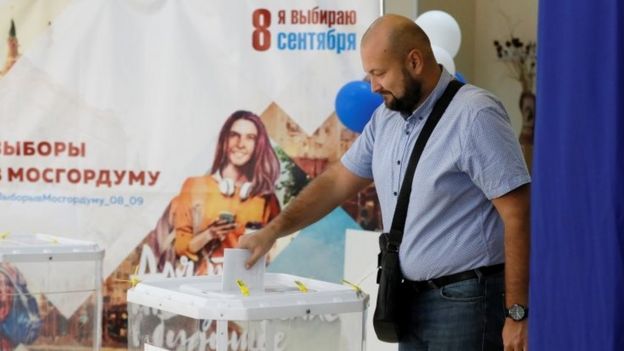
    Russia’s ruling United Russia party has suffered major losses in Sunday’s election to the Moscow city parliament, nearly complete results show.

    The party lost nearly a third of the seats in the 45-member parliament, but remains on course to retain its majority with about 26 seats.

    With most opposition candidates disqualified, the Communists, independents and others gained seats.

    The exclusion of the opposition candidates triggered mass protests.

    Read:Russian Airbus makes emergency landing in corn field

    Thousands of people have been detained, and riot police have been accused of a brutal crackdown on demonstrators.

    What’s the latest from Moscow?

    With nearly all the results in, United Russia is predicted to get 26 seats in the city parliament (Mosgorduma).

    The party’s brand has become so toxic lately that all its members ran as independents, the BBC’s Sarah Rainsford in Moscow reports.

    Turnout in Sunday’s election was about 22%

    In a major upset, the party’s leader in the Russian capital, Andrei Metelsky, was not re-elected.

    The Communist Party is expected to get 13 seats, while the liberal Yabloko party and left-leaning Just Russia will each have three seats.

    Read:Russia says rocket explosion caused 16-fold radiation spike

    Opposition leader Alexei Navalny promoted a strategy of “smart voting” after his own allies were all barred from running in this election.

    Mr Navalny’s team outed what they called “undercover” United Russia candidates, and campaigned for those best placed to defeat them. He described the result as “fantastic”.

    Turnout in Sunday’s election was about 22%.

    Source: bbc.com