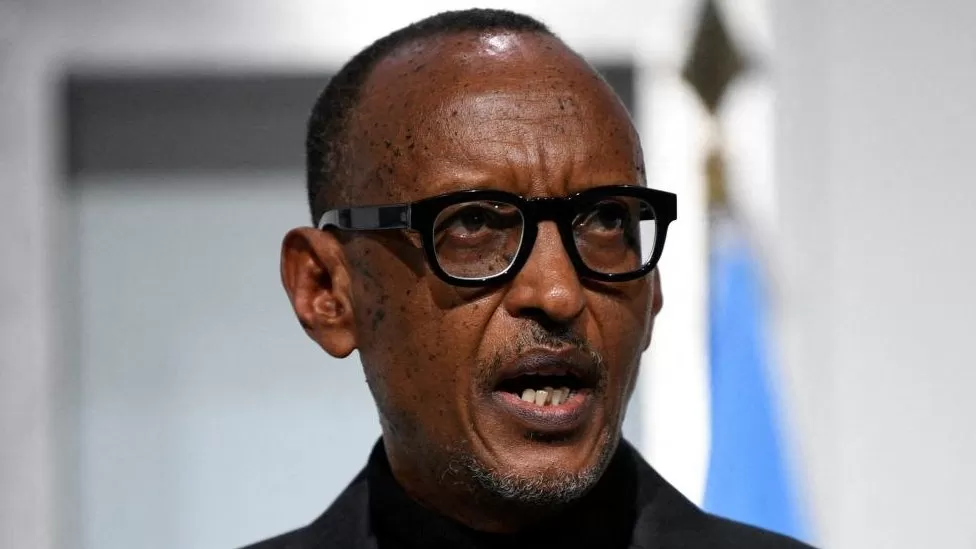
Rwanda’s leader, Paul Kagame, has said he will try to become president for a fourth time next year, which could mean he stays in power for almost thirty years.
“I feel pleased that Rwandans trust and believe in me,” President Kagame said in an interview with Jeune Afrique magazine on Tuesday.
He has been criticized by rights groups for being hard on the opposition.
But the president said he didn’t care about what people from outside thought.
Mr Kagame was elected as the President in 2017 by almost 99% of the people who voted. An organization called Human Rights Watch (HRW) said that the vote happened when people didn’t have much freedom to express their opinions.
The president said in a magazine interview that he would continue to be their leader for as long as the people of Rwanda wanted him to and as long as he could help them.
He had hinted before that he might run for president again, but this is the first time he clearly said that he will definitely be running in next year’s election, which is set to take place in August.
The 65-year old person has been the most powerful leader in Rwanda ever since his rebel group, the Rwanda Patriotic Front (RPF), took control after the genocide ended.
However, he didn’t become president until 2000 after Pasteur Bizimungu resigned.
In 2003, Rwanda made a new set of rules called a constitution. This constitution said that the president could be in office for seven years, and after that, they could be chosen again for another term.
But this was changed in a vote in 2015 that caused disagreement.
The changes, which were agreed upon by 98% of the people who voted, allowed the president to be in office for a third time for seven years. After that, the president could then serve two more times, each lasting five years, starting in 2024.
When asked about what the Western countries would think of his decision to run again, Mr. Kagame said that their opinions are not something that concerns us.
Personally, I am no longer sure about what matches with Western values. What is democracy. Is it the West telling others what to do. But if they don’t follow their own rules, should we still listen to them. ” President Kagame asked.
Trying to force democracy on someone else is a contradiction to democracy. He said that individuals should be able to do things on their own and choose how they want to arrange themselves.
Many well-known people who disagree with the current government have been hurt or even died while living in another country.
The Rwandan government has consistently said they were not involved in the killings. However, in 2014, Mr. Kagame cautioned that anyone who acts against the country will face punishment.
In the past, he strongly supported and protected Rwanda’s reputation for respecting human rights and allowing people to have political freedom.
Tag: Rwanda
-
President of Rwanda affirms bid for fourth term
-
Five new World Heritage sites celebrated in Rwanda
Rwandans are happy because Unesco included five places in its important World Heritage list on Wednesday.
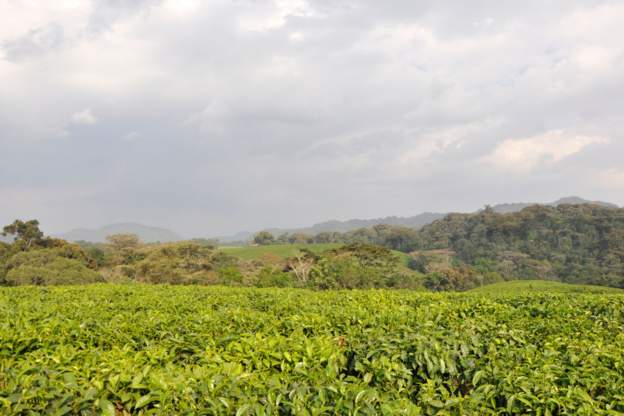
Nyungwe National Park is a special rainforest with lots of different plants and animals. It is famous for having some rare animals like the endangered eastern chimpanzee and golden monkey.
Arcos Network, a conservation organization based in Rwanda, described the development as “exciting”. The leader of Rwanda, Sam Kanyamibwa, told the BBC that this proves that Rwanda’s efforts to protect and take care of the environment are successful.
Furthermore, four places where memorials for genocide victims are located have been added to the list.
Nyamata, Murambi, Gisozi, and Bisesero places remember the sad things that happened in 1994 in Rwanda. About 800,000 Tutsis and moderate Hutus were killed during the Rwandan Genocide.
More than 20 new sites that are extremely valuable to humanity could be added to the list of world heritage sites. However, people have been arguing about where the sites are located around the world.
In Europe, there are lots of places to visit. Some countries, like France and Germany, have more than 50 sites each.
Before this new addition, there were 27 countries that did not have any sites listed on the World Heritage list. Out of these 27 countries, 12 of them were from Africa. -

Paul Kagame to run fourth term in 2024
President of Rwanda, Paul Kagame, has declared that he will stand for reelection a fourth time in 2019.
“Yes, I am indeed a candidate,” Mr Kagame told French-language magazine Jeune Afrique on Tuesday.
Asked about what the West would think about his decision to run again, Mr Kagame said, “I’m sorry for the West, but what the West thinks is not my problem.
“I am happy with the confidence that the Rwandans have in me. I will always serve them, as much when I can.”
In April, President Kagame made a lighthearted remark about looking forward to retirement after 23 years in office, but the Rwandan Patriotic Front (RPF-Inkotanyi), the country’s ruling party, reelected him as its chairman. Mr. Kagame has been at the helm of the party since 1998 and has served as the President of Rwanda since 2000.
In 2015, a controversial referendum removed the constitutional limit of two seven-year terms for presidents, replacing it with two five-year terms. However, this change allowed Mr. Kagame to run for another seven-year term, with the alterations set to take effect in 2024. He secured victory in the last election in 2017, winning with 98.8% of the vote.
During President Kagame’s tenure, Rwanda has experienced relative political stability, but critics and human rights organizations have accused his government of restricting political freedoms and suppressing dissent.
-
Photos of home of Rwandan serial killer
The arrest of a suspected serial killer in Rwanda has sent shockwaves rippling throughout the nation.
In a country where murder cases are typically infrequent, the discovery of more than 10 bodies buried at a house in the capital city of Kigali has captivated public attention.
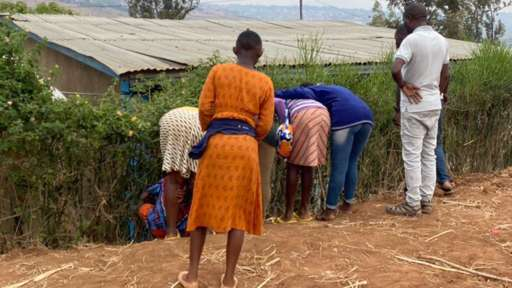
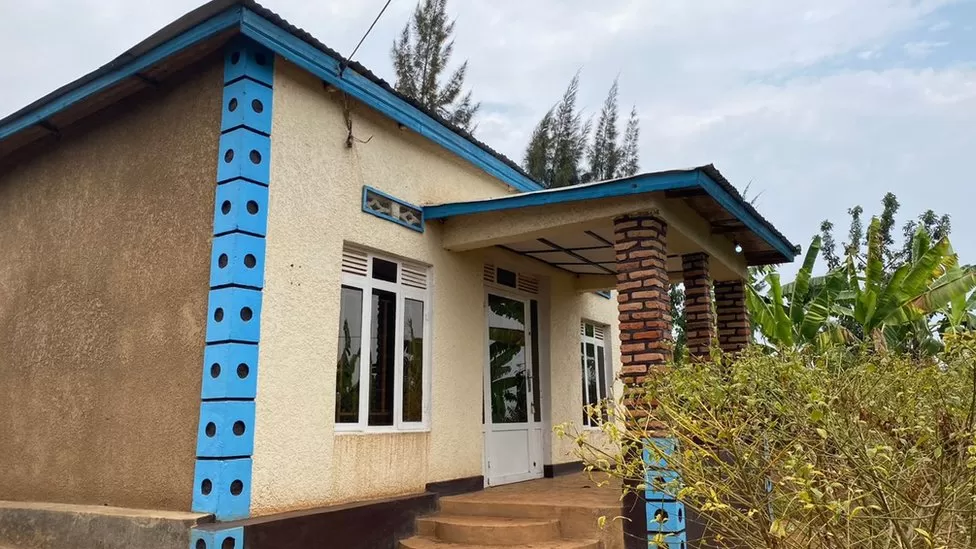
Our correspondent, Jean Claude Mwambutsa from the BBC, visited the site located in Kicukiro, a hilly suburb of the city, and captured these compelling images.
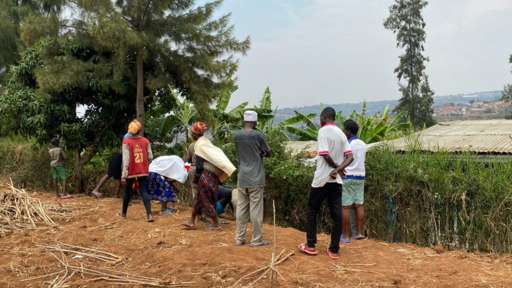
Neighbors have reported that the man had occupied the residence for over a year. Police were initially dispatched to evict him due to unpaid rent, and during this process, the man’s behavior raised suspicions, eventually leading to his confession of the murders.
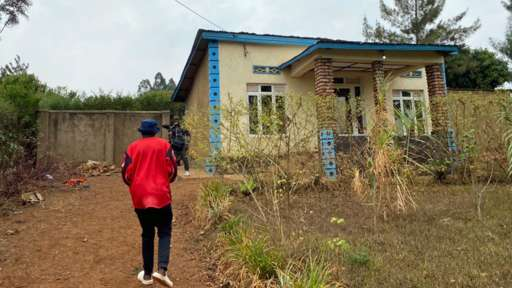
Subsequently, on Tuesday, law enforcement officers revisited the property to initiate an investigation, focusing their efforts on the kitchen.
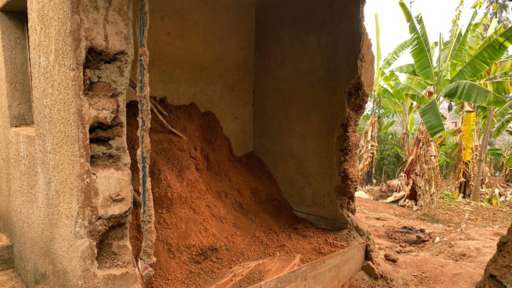
It was in this very location that the suspect had informed the police he had concealed the bodies of his victims.
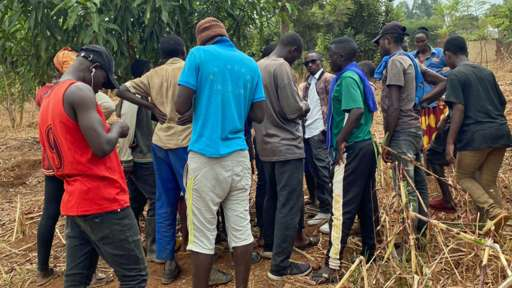
Local residents have confirmed that the man had been residing alone in the rented property.
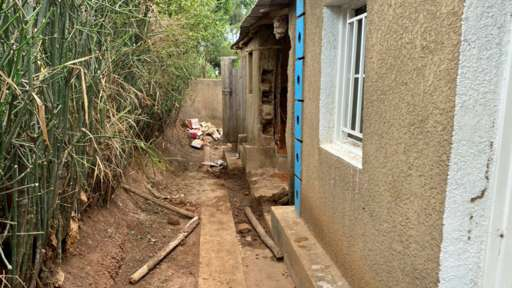
While the victims’ identities remain undisclosed at this point, a police spokesperson has informed the state broadcaster that a majority of them were women he had encountered at bars.
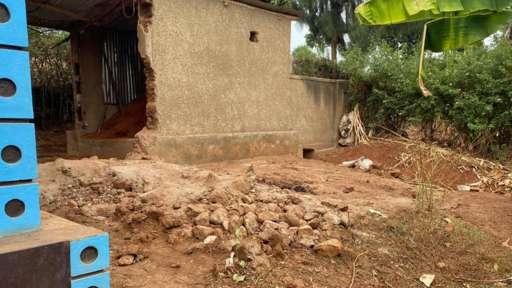
As of now, the 34-year-old suspect has not yet faced formal charges in court, as investigations are still underway.
-
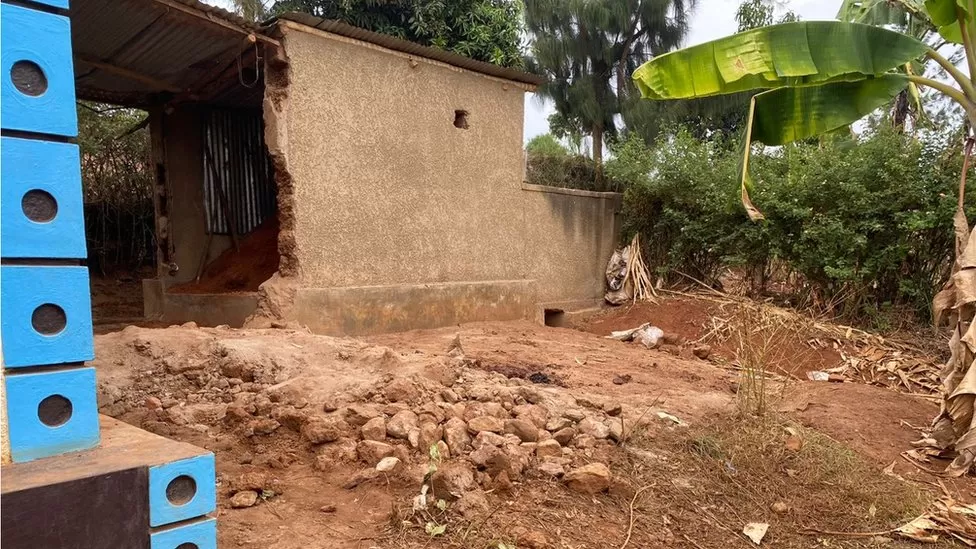
Suspected serial killer in Rwanda arrested
Rwandan police have arrested a 34-year-old suspected serial killer who is alleged to have murdered more than 10 people and buried them in the kitchen.
Police discovered the crime after the man was evicted from his rented accommodation in Kicukiro, a suburb of the capital, Kigali.
They were called after the suspect had defaulted on rent payments for months.
A police officer told local media the victims appeared to have been sex workers. They included men and women.
Murder is relatively uncommon in Rwanda and this case has shocked the country.
An unnamed police official told Rwanda’s private newspaper The New Times that the man had put up a fight when officers went to evict him on Monday.
“He apologised and cried excessively, which raised our suspicions. It is at the police station where he confessed to having killed some people, prompting Rib [Rwanda Investigation Bureau] to investigate,” the official said.
According to Rib spokesman Thierry Murangira, a number of bodies have been recovered, but the precise number will only become known following forensic examinations.
“He operated by luring his victims, mostly prostitutes, to his home where he would rob them of their phones and belongings and then strangled them to death and buried them in a hole dug in the kitchen of his rented house,” Mr Murangira said.
He hasn’t been formally charged yet.
According to reports, the man was detained in July for allegedly robbing, raping, and threatening some women but was later released due to a lack of proof.
-
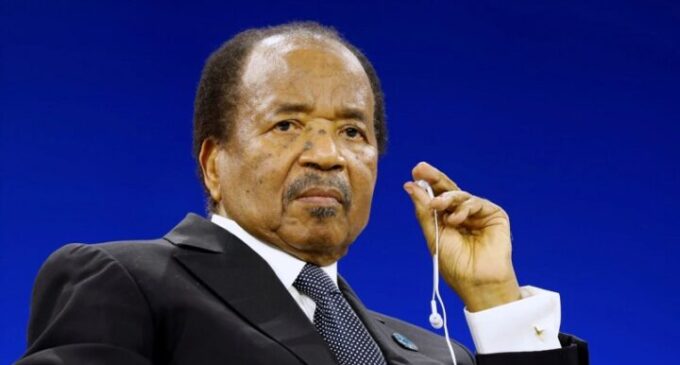
Gabon’s coup leads to military reshuffle in Rwanda, Cameroon
Amid the increasing occurrence of coups across Africa, certain leaders are being proactive in response by restructuring defense portfolios.
Just recently, Cameroon’s President Paul Biya implemented significant alterations within the country’s Ministry of Defense.
The reshuffle affected positions such as the delegate to the presidency overseeing defense, air force personnel, navy officials, and the police.
Biya originally seized power through a coup d’état in 1982. His initial years in office were characterized by allegations of repression and human rights abuses.
Despite later permitting multiparty elections in the nation, the 90-year-old leader has maintained his presidency since his rise to power.
Following the Gabon coup, Rwanda’s defense force (RDF) made an announcement on X, the social media platform previously known as Twitter, stating that President Paul Kagame sanctioned the retirement of 83 senior officers.
The RDF also reported that Kagame endorsed the advancement and selection of certain officers to assume the roles previously held by others.
Discussions took place involving the Chief of Defence Staff of Rwanda, the Ambassador of the United Arab Emirates (UAE) to Rwanda, and the Defence Attaché of Cameroon. The purpose of these meetings was to explore avenues for strengthening defense collaboration between their individual nations.
In 2015, amendments were made to Rwanda’s constitution, permitting Kagame to continue as president until 2034. Having held power since 2000, the 65-year-old stands among Africa’s longest-serving leaders.
The decisions by Kagame and Biya to reorganize their military forces occurred shortly after soldiers took control in Gabon, ending a 53-year dominance by President Ali Bongo’s family. Bongo had recently secured a third term in office in the Central African nation, an electoral process criticized by the opposition as “fraudulent.”
President Bola Tinubu of Nigeria has voiced grave concern regarding the spreading “contagious autocracy” across the continent. He revealed ongoing collaboration with leaders from the African Union (AU) and other global regions to address this worrisome trend. As the chairperson of the Economic Community of West African States (ECOWAS), Tinubu remains steadfast in his efforts to restore constitutional order to Niger Republic, which has faced its fifth coup.
Analysts posit that the dissatisfaction with prolonged leadership in various African countries serves as a catalyst for the recurrent coups witnessed on the continent.
-

Rwanda and Bayern Munich agree on five-year contract
Rwanda and Germany‘s top football club, FC Bayern Munich, have made an agreement to support local football and tourism. However,some people are criticizing this deal, claiming it is an attempt to distract attention from Rwanda’s bad human rights situation.
The “Visit Rwanda” logo will be shown at the German team’s big stadium with 75,000 seats during matches as part of a five-year agreement made for an unknown amount of money.
Approximately 30 gifted children in Rwanda will be given the chance to enhance their abilities and receive education at a newly established FC Bayern youth academy, as announced by the government.
This opportunity is also a chance for Germany’s top team to get involved in Africa and learn important things, says its chief executive, Jan-Christian Dreesen.
Kigali has agreements with Arsenal and Paris St-Germain for sponsorship, but Rwandan football teams have not done well in regional and continental competitions.
Critics say that these deals are a waste of valuable resources for wealthy European clubs, especially when many Rwandans are living in poverty. -
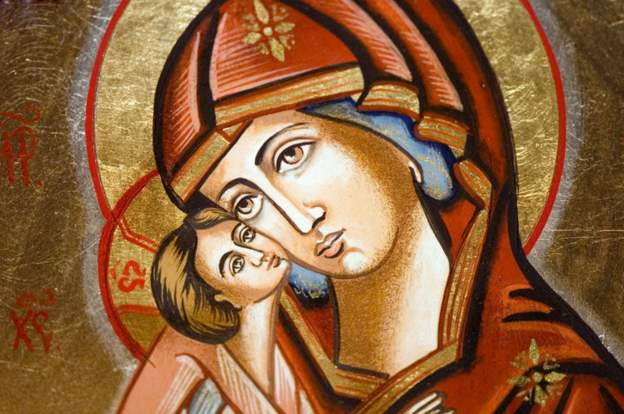
Kigali cautions Catholics in Rwanda about ‘cult-like’ practises
Rwandan President Paul Kagame has told Catholic followers not to do things that make poverty look good. A government spokesperson called these actions “cult-like. He talked about a Catholic pilgrimage that took place in June, as reported by the New Times newspaper.
Rwandan President Mr. Kagame is upset with the idea of people traveling to worship poverty. He says that if he hears about it again, he will bring trucks to gather those people and put them in prison. They will only be released when they stop thinking in a poverty mindset. Kagame made these comments to a group of young people at a conference in the capital city, Kigali.
We should not admire or worship being poor. “He said don’t do it again. ”
The government explained that Mr. Kagame was not talking about the well-known Catholic site in Kibeho where people believe the Virgin Mary appeared, as previously reported.
“President Kagame never mentioned any particular place for a pilgrimage, and definitely not Kibeho,” said spokesperson Yolande Makolo to the AFP news agency.
Ms Makolo explained that the president was probably talking about a casual journey-like event that happens in Rutsiro district.
According to Rwanda’s New Times, during this event, devoted people go on a three-day journey to a hill called Our Lady of the Poor. -

Uganda, Rwanda implements opposing strategies to protect their economy
Starting from August 2022, the Somali military has been actively involved in an offensive operation against the Shebab, a group with affiliations to al-Qaeda. This operation is being conducted in collaboration with local clan militias, and it’s receiving support from African Union forces as well as American airstrikes.
Although Shebab militants were expelled from Mogadishu in 2011, they have entrenched themselves deeply in expansive rural regions. From these areas, they persistently launch attacks targeting both security forces and civilians.
Somali President Hassan Sheikh Mohamoud is committed to eradicating Islamist militias from the nation. It is anticipated that he might imminently unveil the second stage of the military campaign aimed at countering the Shebab in the southern parts of the country.
“This decline is expected for all main components: Core, energy and fresh food inflation. We don’t see this rate increasing further, and we remain optimistic that inflation further reduces to our benchmark by next year…” Rwangombwa said announcing the rate-setting – committee’s decision.
Anticipated by the Central Bank, headline inflation is projected to fall within the specified range (below 8 percent), with an estimated average of 7.6 percent during the fourth quarter by year-end, followed by a decline to approximately 5 percent in the coming year.
Rwanda’s Consumer Price Index (CPI), the primary measure of inflation, displayed an 11.9 percent year-on-year increase in July 2023, a decrease from the 13.7 percent recorded in June 2023. The headline inflation rate saw a reduction to 15.2 percent in the second quarter, down from 20.2 percent in the preceding quarter.
Initially, analysts in Uganda were predicting a consistent Central Bank Rate (CBR) of 10 percent, a rate that had been upheld by the Bank of Uganda for nearly a year. However, a strong impetus to stimulate economic recovery, despite the challenges faced by the currency, is believed to have instigated this new decision.
Benoni Okwenje, the General Manager for Financial Markets Operations at Centenary Bank, expressed surprise at the rate cut. He foresees that the 0.5 percent reduction will likely lead to lower lending rates in the near future, although yields on specific treasury bonds experienced an increase the previous week.
During the first half of 2023, Uganda exhibited indications of an economic slowdown, coupled with decreased credit flows in the private sector. The Bank of Uganda cited these circumstances as influencing its decision to lower the policy rate. Notably, Uganda’s inflation had been subdued due to declining food prices.
Despite certain sectors reporting negative growth in the initial six months, headline inflation decreased from 4.9 percent in June to 3.9 percent the following month. This was attributed to declining prices of food crops, reduced fuel costs, and subdued consumer demand trends.
However, the recent suspension of development funding support by the World Bank, prompted by Uganda’s enactment of the Anti-Homosexuality Act of 2023, triggered concern among foreign investors. This led to a sell-off in the foreign exchange market, causing the Ugandan shilling to dip to record lows against the US dollar, reaching Ush3,770 per dollar. The currency slightly recovered following the Bank of Uganda’s latest announcement, indicating a stabilization of investor sentiments.
Furthermore, the unpredictability of climate change-related events could potentially impact agricultural production in the region.
-
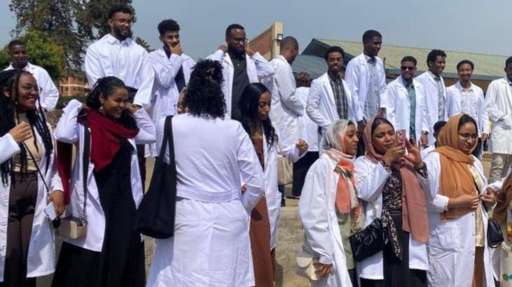
Medical students fleeing Sudan war welcomed in Rwanda
In the aftermath of the outbreak of a civil war in mid-April, a group of medical students from Sudan found refuge in Rwanda, where they have been warmly welcomed to continue their studies.
Their original campus at the University of Medical Sciences and Technology in Khartoum, Sudan, was overtaken and converted into a base by armed fighters amid a power struggle involving paramilitary forces and the army.
Comprising 160 undergraduates, who were merely eight months away from completing their course, this group of students, predominantly consisting of women, has been provided with the opportunity to continue their education at the University of Rwanda.
Along with their lecturers, they have been offered space at the Rwandan university, where they will also have the chance to gain practical experience by working in local hospitals.
During a function in the Rwandan capital, Kigali, one of the students, Dina Abdalrahim Obaid, expressed the profound significance of the warm welcome they received in their new academic environment.
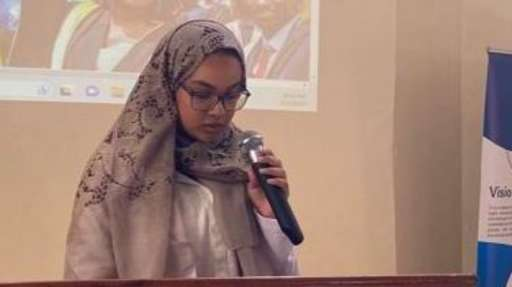
“We are grateful to Rwanda that offered us refuge and opportunity to continue our studies.”
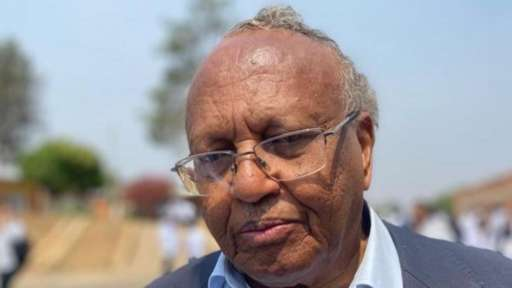
Vice-chancellor of the Sudanese institution Prof. Mamoun Mohamed Ali Homeida emphasized how fortunate they felt, as many other students had left to other nations “with no chance to carry on their studies.”
The scholar continued: “We requested to come to Rwanda because we hope that when the war is over, our country will need medics.”
Didas Muganga Kayihura, the vice-chancellor of the University of Rwanda, acknowledged that while the students are in Rwanda, they will continue their Sudanese coursework while receiving training in neighborhood hospitals.
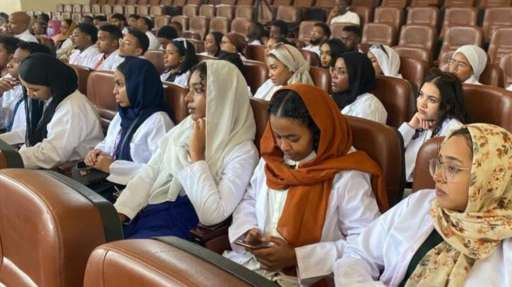
According to officials, the student doctors were supposed to finish their training and then either go back home or, if violence persisted, be given the chance to serve in Rwanda or somewhere else.
In 2021, a private girls’ boarding school relocated its pupils and staff to Rwanda after the Taliban seized power in Afghanistan and outlawed women and girls from pursuing higher education.
-

Paul Kagame’s daughter appointed to presidency’s top strategy and policy position
Rwanda’s President Paul Kagame has appointed his 29-year-old daughter, Ange Kagame Ndengeyingoma, to a crucial department within his office.
As per a communique issued by the Office of the Prime Minister, Ange will assume the role of “Deputy Executive Director, Strategy and Policy Council/SPC.”
Having been part of the president’s office for approximately five years, Ange pursued her education abroad and had a relatively low profile during her childhood due to security and privacy considerations.
She attended Dana Hall School, a private preparatory school in Wellesley, Massachusetts, USA.
Later, Ange pursued her undergraduate studies at Smith College, where she majored in political science with a minor in African studies. She further obtained a master’s degree in international affairs from Columbia University.
It is notable that President Kagame has appointed his children to significant positions, possibly with the aim of providing them valuable experience in handling government affairs.
In 2020, Kagame’s eldest son, Ivan Kagame, was appointed to the board of the Rwanda Development Board, a critical government body focused on expediting the country’s economic growth by fostering private sector development.
-
Tanzanian women golfers to compete in ECA Challenge Trophy competition
Tanzania is one of the 11 countries whose golfers are set to compete in the upcoming East and Central All Africa Regional Challenge Trophy (ECA). This prestigious event is scheduled to take place in Kigali, Rwanda, in November.
Joining Tanzania in the tournament will be lady golfers from Burundi, Kenya, Zambia, Malawi, Uganda, Ethiopia, Mauritius, Reunion, the Democratic Republic of the Congo (DR Congo), and the host nation, Rwanda.
The ECA Regional Challenge Trophy was first introduced in 2009, and this year, the Tanzania Ladies Golf Union (TLGU) president, Queen Siraki, has announced that they have already begun preparations for the 54-hole stroke play competition.
TLGU is proud to have a pool of talented lady golfers who they are confident will represent the country exceptionally well in Kigali and vie for the coveted trophy. Among the potential players in the provisional squad are notable names like Madina Idd, Vicky Elias, and Hawa Wanyeche.
Each participating country will field four players in this championship, making it one of the most significant golf events in the region.
“Tanzania has the best lady golfers who managed to shine in various events on the African continent. Most of them have experience and international exposure. We hope that they will perform well and make us proud,” she said.
She stated that following a unique tournament to be hosted in Dar es Salaam, TLGU will reveal the roster for the event.
After winning the Lugalo Ladies Open a few months ago, Neema Olomi of the Arusha Gymkhana golf club has already guaranteed herself a spot in the competition.
A 54-hole stroke play competition between the teams is held over three days of 18 holes each. For each round, the top three gross scores are used to calculate each country’s score.
The team competition is won by the nation with the lowest cumulative gross score after the first three rounds. The player with the lowest cumulative gross score throughout the three rounds is given an individual prize.
-

Security issues surrounds borders of DRC-Rwanda – Congoleses Army
On Thursday July 27, the army of the Democratic Republic of Congo (DRC) declared that it successfully repelled an incursion by the Rwandan army into the eastern province of North Kivu.
In a press release issued by General Sylvain Ekenge, the spokesperson for the FARDC (Forces armées de RDC) general staff, they asserted their intention to “exercise the right of pursuit.”
The press release did not confirm the reported information from local Congolese sources about a Rwandan soldier being killed in the clash.
According to General Ekenge’s statement, the Rwandan Defence Forces crossed the border north of Goma, the provincial capital of North Kivu, on Thursday morning. Their stated purpose was to send reinforcements and continue destabilizing and intentionally violating the territorial integrity of the DRC.
However, the FARDC units responsible for border security effectively repelled the Rwandan soldiers, forcing them to withdraw back to their own country. The press release emphasized that the FARDC would respond vigorously and exercise the right of hot pursuit.
Additional military sources, who preferred to remain anonymous, revealed that one Rwandan soldier was killed during the exchange of fire, according to interviews conducted in the Goma region.
By Thursday evening, there had been no response from the Rwandan army or government when contacted by AFP.
It’s worth noting that relations between the DRC and Rwanda have reached an all-time low, with Kinshasa accusing Kigali of supporting the M23 rebels, who had seized significant portions of territory in North Kivu the previous year. Incidents along the border between the two countries have become relatively frequent.
-

Belgium accused by Rwanda of heeding to demands of exiles
The rejection of Rwanda’s nominee for ambassador by Belgium is anticipated to deteriorate relations between Kigali and Brussels on a diplomatic level.
Following his appointment by President Paul Kagame in March to succeed Dieudonné Sebashongore, Karega was anticipated to assume the position. But after four months of suspense, Belgium rejected him, signaling a change in the two countries’ diplomatic ties because of their shared colonial past.
Yolande Makolo, Rwanda government spokesperson, termed the decision “unfortunate,” adding that the Belgian government “seems to have capitulated to pressure from the DRC government as well as propaganda from ‘negationist’ organisations and activists, through whom they decided to leak the decision.”
While Brussels has not made any public statements on the matter, there are allegations that it leaked its decision to Jambo news, a publication run by Rwandan exiles whom Kigali accuses of extremism and genocide negationism.
Mr. Karega previously served as the Rwandan ambassador to the Democratic Republic of Congo (DRC) but was recalled in November 2022 during heightened tensions between the two neighboring countries. Kinshasa accused Rwanda of supporting M23 rebels, and Rwanda countered by accusing the DRC government of harboring and supporting the FDLR, a Rwandan rebel group composed of remnants of the genocidal regime.
The blocking of Mr. Karega’s accreditation has sparked differing opinions, with some analysts accusing Belgium of succumbing to pressure from Rwandan exiles and Congolese pressure groups in Europe, who advocated for his rejection.
Following the strained relations between Rwanda and the DRC, Belgium has sought to strengthen its ties with Kinshasa. Recently, Brussels initiated European sanctions against specific Rwandan and Congolese military officers and offered European funds to enhance the capabilities of the 31st Rapid Reaction Brigade in the DRC through the European Peace Fund.
-
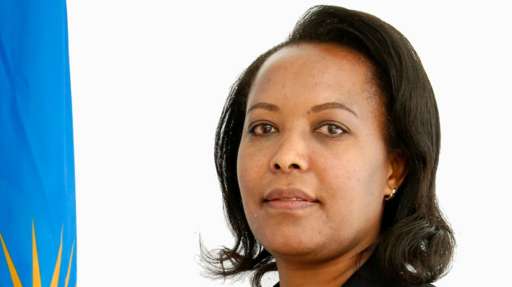
VP of Rwandan Senate apologizes to Kagame for clan meeting
After she took part in a ceremony to introduce a clan head, the vice president of the Rwandan senate wrote and uploaded a lengthy apology to President Paul Kagame on Twitter.
Espérance Nyirasafari said she had “done a horrible thing” for taking part in that function, an act that the governing RPF party said “threatens the unity of all Rwandans”.
Several other party members who participated in the incident have also issued apologies.
In the aftermath of the incident, one vice-mayor made the decision to resign on Monday night.
The clan leader, who was introduced at the function earlier this month, also expressed remorse and offered an apology.
Given the sensitivity surrounding ethnicity in Rwanda, which still persists nearly three decades after the genocide that claimed the lives of around 800,000 Tutsi and moderate Hutu in just 100 days, Mrs. Nyirasafari’s apology casts doubt on her political influence and position.
Throughout her career, she has held various prominent roles, serving as a national prosecutor, minister of gender, and minister of sports and culture.
In her apology, she expressed regret for not taking action to prevent the clan meeting from occurring.
Public apologies are not uncommon for the RPF, and the opposition believes that their purpose is to publicly shame and discredit officials who might otherwise express differing policy ideas.
-

Sudan: Kagame’s party shaken by shocking clan coronation
The Rwanda Patriotic Front (RPF) leadership is currently grappling with maintaining the image of Rwanda following a clan meeting organized by a group of influential leaders to ordain a leader. This event has the potential to foster factionalism within President Paul Kagame’s party.
After the gathering on July 9, several senior party officials who attended the ceremony were briefly detained and questioned due to pictures and videos showing them dancing at the venue circulating.
During the Abakono Clan meeting, Rwandan business magnate Justin Kazoza was crowned clan chief, and funds were raised for various activities. However, the ruling party swiftly condemned the event, viewing it as an attempt to divide the nation.
While party chairman President Kagame refrained from commenting on the matter, the ruling party cautioned its members against engaging in sectarianism.
Although the meeting may seem innocuous at face value, it has put the RPF in a challenging position, given that the party has always prided itself on promoting national unity and eliminating discrimination based on ethnic and cultural identities, while advocating for Ndu’munyarwanda.
-
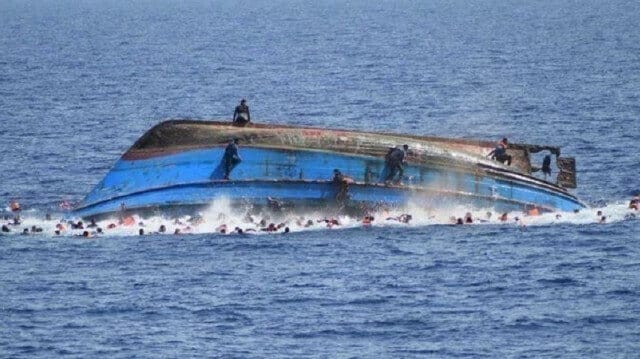
Search for 10 missing in Rwanda boat accident continues
Authorities in Rwanda are continuing their search for 10 individuals, mostly children, who remain missing after a boat they were traveling in sank in the Nyabarongo River.
The incident occurred in the country’s southwest region.
During the rescue operation on Monday evening, four people, including the captain, were saved. However, the captain has since been taken into custody by the police.
Local provincial governor Alice Kayitesi, speaking on Radio Rwanda, acknowledged that the boat did not meet safety requirements, such as lacking an engine and life jackets.
Boat accidents on the Nyabarongo River have occurred over the past decade, often attributed to old and overloaded vessels.
Some residents living close to the river rely on boat trips as a cost-effective and efficient means of transportation through areas that would take significantly longer to reach by land.
-
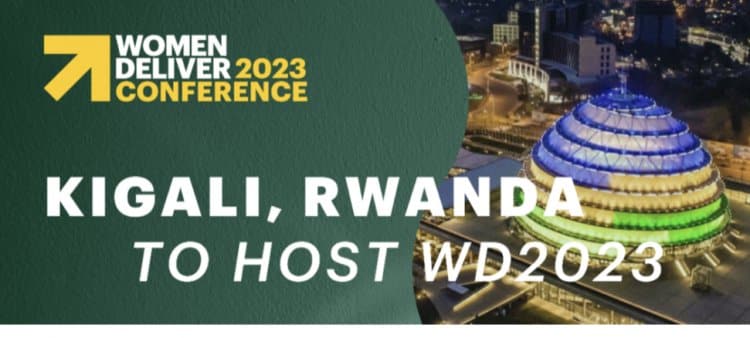
Rwanda holds conference on Call for gender rights protection
During the opening of the Women Deliver conference in Rwanda, multiple heads of state and activists emphasized the crucial need to safeguard the progress achieved in global gender equality.
Regarded as one of the largest gatherings focused on gender equality worldwide, this significant summit is taking place in Africa for the first time.
President Paul Kagame, addressing the conference, highlighted the persistent political resistance against women’s equality and the resulting disproportionate impact they bear in the face of global crises such as climate change.
Dr. Maliha Khan, women’s rights activist and president of Women Deliver, called upon activists and governments to intensify their efforts and collaborate closely to confront the substantial challenges hindering gender equality.
The resounding message from the conference is a call to action, urging individuals and nations to remain steadfast in their commitment to protect and advance gender equality despite the formidable obstacles encountered.
-
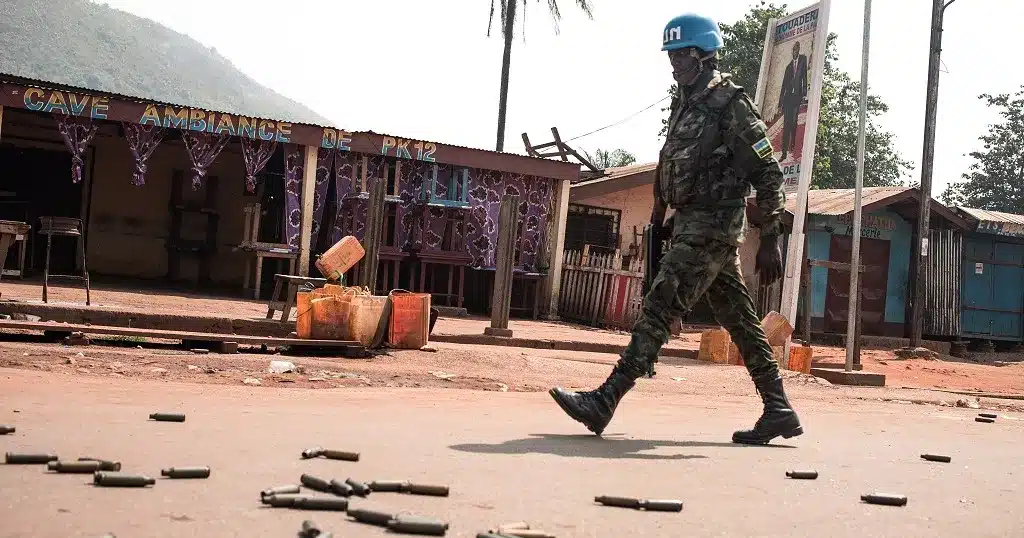
Army of Rwanda’saddened’ by soldier’s death in CAR
The Army in Rwandan army, has said that it is “deeply saddened” by the death of one of its soldiers who was killed by “armed elements” while on patrol with UN forces in the Central African Republic (CAR).
According to a statement from the UN, the attack on the military took place on Monday in the Haute-Kotto region to the northeast of the CAR.
“Three armed elements were killed and one was captured,” the report reads.
The attack on the peacekeepers has been denounced as “outrageous” by Valentine Rugwabiza, the director of the UN mission in the Central African Republic.
Approximately 2,000 of the 17,000 UN forces in CAR are Rwandan.
-
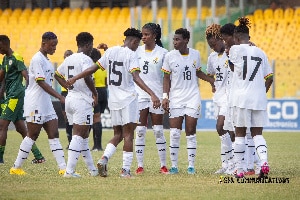
WAFCON: Black Queens to face Rwanda in qualifiers
Ghana’s national women’s team, the Black Queens, have been drawn to face Rwanda in the first round of qualifiers for the 2024 Women’s Africa Cup of Nations (WAFCON).
The two-legged matches will be held between September 18 and 23, 2023, as confirmed during the draw in Rabat, Morocco.
After missing out on the previous edition, the Black Queens are determined to secure their place in the continental tournament.
If they successfully overcome Rwanda, they will face the winner of the Gambia versus Namibia clash in the next round, scheduled between November 27 and December 5.
Ghana is one of eleven teams competing for a spot in the tournament, which will be hosted by Morocco for the second consecutive time.
The Black Queens have been diligently preparing for the qualifiers, already securing victories in three friendly matches against Benin and Senegal.
It is worth noting that Ghana failed to qualify for the 2022 WAFCON following a 2-1 aggregate loss to Nigeria.
-

Rwanda defends safety record over UK asylum ruling
Rwanda has strongly asserted its commitment to providing care for refugees and expressed its disagreement with a recent legal ruling in the UK that deemed it unlawful to deport asylum seekers to Rwanda.
According to Rwandan government spokeswoman Yvonne Makolo, the judges’ assertion that there were insufficient guarantees against the return of refugees to their home countries was an overly narrow perspective on the issue.
Makolo emphasized that Rwanda, as a signatory to the UN refugee convention, adheres to policies and practices that ensure refugees are not sent back to perilous situations.
Makolo further highlighted Rwanda’s track record in refugee care, pointing out that the country is currently hosting approximately 140,000 refugees.
Additionally, Rwanda has been actively collaborating with the UN refugee agency since 2019 to evacuate migrants facing danger in Libya.
“We know what it is to flee and seek safety. Many of us have lived outside the country, we’ve been forced to leave… and come back. So we empathise with those in this situation,” she said.
She said the information being given about Rwanda was “not sufficient or has been misunderstood”, adding that the country had been ranked one of the safest in the world.
“If there are issues that come up in this [asylum] programme and on the distorted views of what Rwanda is and how we govern this country, we are happy to explain – a lot of it is unjustified”.
-
Sunak suffers as UK court declares Rwanda deportation plot illegal
A British judge has indicated that Rwanda cannot be regarded as a safe third country, hence the government‘s contentious plan to deport asylum applicants there is unconstitutional.
In a major setback for Prime Minister Rishi Sunak, who has pledged to deter people from arriving across the Channel in small boats, three Court of Appeal judges on Thursday said the “removal of asylum seekers to Rwanda” would be “unlawful”.
“The deficiencies in the asylum system in Rwanda are such that there are substantial grounds for believing that there is a real risk that persons sent to Rwanda will be returned to their home countries where they face persecution or other inhumane treatment,” judge Ian Burnett said, but added that he, himself, disagreed with the other two judges on this point.
The United Kingdom government has been planning to deport asylum seekers to the East African country as part of a 120 million pound ($148m) deal to deter people from crossing the English Channel from France in small boats.
Asylum Aid director Alison Pickup said many of her clients were breathing a sigh of relief.
“Some of them have experienced torture, they’ve had very traumatic journeys, and have been waiting for over a year to find out if they will be able to make a case in the UK – or if they will be sent to Rwanda, a country they know nothing about,” Pickup told Al Jazeera.
She added that the ruling will “hopefully give them that reassurance of safety”.
Sunak under pressure
As well as fighting against criticism from his own right-wing party and the public on migrant and refugee arrivals, Sunak is dealing with stubbornly high inflation and a cost-of-living crisis.
Sunak made “stop the boats” one of his priorities and hopes a fall in arrivals might help his Conservative Party pull off a win at the next national election.
The Rwanda plan was announced in April last year, but the first deportation flight was blocked by the European Court of Human Rights (ECHR), which imposed an injunction preventing any deportations until the conclusion of legal action in Britain.
In December, the High Court ruled the policy was lawful, but that decision was challenged by asylum seekers from several countries, along with human rights organisations, who blasted the plan as “cruel”, “inhumane” and “neo-colonial”.
Home Secretary Suella Braverman in April said Rwanda was a safe country for the resettlement of asylum seekers but declined to set any deadline for the first deportations there.
The government has put forward a series of bills aimed at curbing migration that have been strongly criticised by civil society.
In March, it proposed a contentious new law that would allow authorities to deport people arriving on its shores via small boats across the English Channel that divides the island from France.
Several charities and human rights groups criticised the plan – known as the Illegal Migration Bill – saying it criminalises the efforts of thousands of genuine refugees.
More than 45,000 people entered by crossing the channel in 2022, according to government figures – a jump of more than 17,000 from the previous year’s record.
-
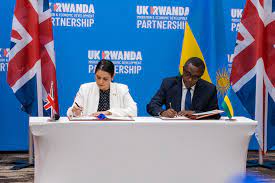
UK’s plan to deport asylum seekers to Rwanda deemed unlawful
In the ongoing legal dispute surrounding the contentious deportation policy to Rwanda, the British government has recently suffered a setback .
The Court of Appeal has ruled in favor of a collective of individuals who arrived in the UK via small boats, as well as an asylum charity, who have contended that the policy is illegal.
A panel consisting of three judges reached a divided decision on whether Rwanda meets the criteria as a “safe third country” for processing UK asylum cases, with two judges determining that it does not. It is anticipated that the government will likely challenge this ruling in the Supreme Court.
-
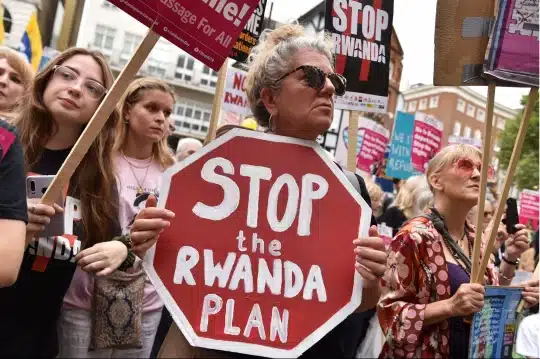
Judges find government’s intention to transfer asylum seekers to Rwanda illegal
Judges have ruled that the government’s intention to transfer asylum seekers to Rwanda is illegal.A Court of Appeal lawsuit against the Government’s proposed Rwanda deportation scheme was won by activists and asylum seekers.
In response to legal objections to the contentious government proposals, the Court of Appeal has issued its decision.
A High Court decision that had earlier stated that the country in east Africa may be regarded as a “safe third country” was reversed by three justices.
According to Lord Burnett, the court came to its decision based on the law and “took absolutely no view” as to the political benefits of the policy.
He added: ‘The result is that the High Court’s decision that Rwanda was a safe third country is reversed and that unless and until the deficiencies in its asylum processes are corrected removal of asylum-seekers to Rwanda will be unlawful.’
Steve Smith MBE, the CEO of refugee charity Care4Calais who brought an earlier legal challenge against the policy, responded with immense relief’.
Speaking after the ruling, he said: ‘After today’s judgement, it’s time the Government abandoned its brutal Rwanda policy and any alternative proposal to shirk the UK’s responsibility for people seeking asylum.
‘Instead, they should offer safe passage to refugees in Calais as the effective and compassionate way to put smugglers out of business, end small boat crossings and save lives.’
A packed room in the Royal Courts of Justice had awaited the ruling as the clock ticked nearer to 10am.

People gather to oppose the Rwanda Deal agreement in a protest last June (Picture: Thomas Krych/ZUMA Press Wire/REX/Shutterstock) Today’s decision followed Rishi Sunak’s repeated pledge to ‘stop the boats’ since becoming Prime Minister.
The multimillion-pound proposals were put forward by former Home Secretary Priti Patel, during a time when ministers faced increased pressure to tackle the number of people attempting to reach the UK by crossing the Channel.
In December last year, two judges at the High Court had dismissed a series of legal bids against the Government’s plan to provide asylum seekers with a one-way ticket to Rwanda.
However, Lord Justice Lewis and Mr Justice Swift also gave the go-ahead to several individual asylum seekers and the charity Asylum Aid to challenge their decision.

Rishi Sunak has vowed to ‘stop the boats’ since he became Prime Minister (Picture: AP) Today, the Lord Chief Justice Lord Burnett, Sir Geoffrey Vos and Lord Justice Underhill gave their decision on the bid to overturn the previous ruling.
At a hearing in April, lawyers for the group of asylum seekers argued the High Court ‘showed excessive deference’ to the Home Office’s assessment that assurances made by the Rwandan authorities ‘provide a sufficient guarantee to protect relocated asylum seekers’ from a risk of torture or inhuman treatment.
The appeal judges were told that material provided by the Rwandan authorities ‘lacked credibility, consisting of blanket denials and clear contradictions’.
Charity Freedom from Torture, which intervened in the appeal, also argued the speed of the process means there is no ‘adequate opportunity’ to identify torture survivors.
Lawyers for the Home Office opposed the appeal, telling the court the Rwandan government had indicated willingness to work together with the British Government.
The Court of Appeal’s ruling comes days after the Home Office’s own figures showed the Government could spend £169,000 on every asylum seeker forcibly removed to a third country such as Rwanda.
Nearly two in five people would need to be deterred from crossing the Channel in small boats for the the Illegal Migration Bill to break even, the economic impact assessment published on Monday said.
The £169,000 cost includes flights and detention, as well as a £105,000 per person payment to third countries.
However, the sum is an estimate not based on the true cost of the ‘commercially sensitive’ Rwanda scheme.
If passed, the Bill would see the law changed so that people who come to the UK illegally through a safe country are not allowed to stay – instead being detained and removed, either to their home country or a country such as Rwanda.
The first flight to Rwanda was due to take off on Tuesday, June 14, 2022 but was stopped at the last minute.
The Boeing 767-300 – chartered at a cost of £500,000 to taxpayers – was grounded at RAF Boscombe Down, Wiltshire, after a frantic series of last-minute legal challenges.
-

Ex- Rwandan Police officer sentenced to life for genocide
A former Rwandan police officer, Philippe Hategekimana, has been sentenced to life imprisonment by a court in France.
He was found guilty of genocide and crimes against humanity committed during the 1994 Rwandan genocide, where Hutu militias massacred hundreds of thousands of Tutsis and moderate Hutus.
Prosecutors presented evidence showing Hategekimana’s significant involvement in the killings, both through direct acts of murder and by inciting others to commit atrocities.
After the genocide, Hategekimana, who held a senior position as a gendarme in Nyanza, a town in southern Rwanda, fled to France. He obtained refugee status and later acquired French nationality under the name Philippe Manier.
He worked as a security guard at a university in France until 2017 when he fled to Cameroon upon learning that a complaint had been filed against him. He was arrested in Yaoundé and extradited to France the following year to face trial.
This trial marked the fifth instance in France where an alleged participant in the Rwandan genocide was prosecuted.
The genocide, which lasted for 100 days in 1994, resulted in the killings of approximately 800,000 Tutsis and moderate Hutus.
-

Kayishema is seeking asylum in South Africa after the Rwandan genocide
A former member of the Rwandan police, Fulgence Kayishema, is requesting asylum in South Africa after being charged with having a significant involvement in the 1994 genocide.
Arrested last month in Cape Town, the Rwandan has abandoned his application for bail, his lawyer announced on Tuesday before a Cape Town court, who added that his client “fears for his life, if and when, he is extradited”.
The asylum request is likely to delay the legal process in South Africa, where he is currently facing numerous charges linked to his irregular stay in the country.
The state prosecutor indicated that South Africa will oppose any future bail application.
Until his arrest on 24 May, the 62-year-old was one of the last fugitives sought for their role in the genocide in which 800 000 Rwandans died, a majority of whom were Tutsis killed by Hutus.
Church massacre
Kayishema was discovered to be living under a false identity and claimed to be from Burundi. He sought asylum first in 2000, then refugee status in 2004.
At his first court hearing in Cape Town, two days after his arrest, he denied having participated in the genocide. “I didn’t have any role,” he said, in what he described as a “civil war”.
Kayishema was sought under an arrest warrant by the International Residual Mechanism for Criminal Tribunals (MICT) which, since 2015, was charged with completing the work of the International Criminal Tribunal for Rwanda (ICTR), formed by the United Nations following the genocide.
According to UN prosecutors, Kayishema “directly participated in the planning and execution” of the massacre of more than 2000 Tutsi who had sought refuge in a church. He is alleged to have procured and distributed fuel to set the church alight with the refugees inside. When that failed, Kayishema and others allegedly used a bulldozer to demolish the building, killing and burying those inside.
The next hearing will take place in Cape Town on August 18.
-
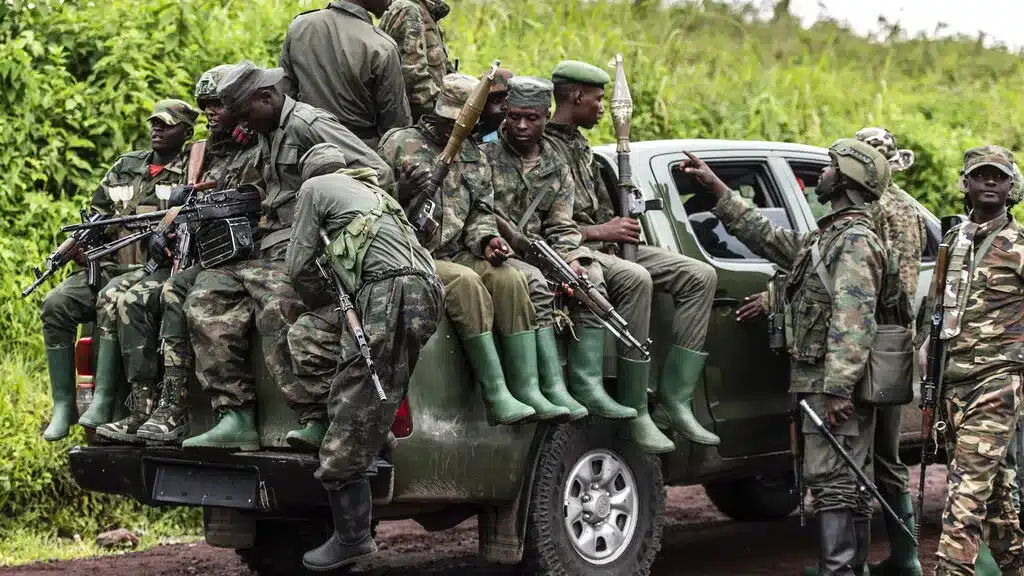
France denounces Rwanda’s “ongoing military support” for M23 Rebels in DRC
On Tuesday, France demanded a halt to Rwanda’s “ongoing military support” for the M23 rebels in the Democratic Republic of the Congo (DRC)’s east and denounced the crimes committed by the many terror organizations terrorizing the area.
“France is concerned by reports confirming the continued presence of the M23 in territories in the east of the DRC, Rwanda’s ongoing military support for this armed group and the presence of Rwandan soldiers on Congolese territory. This support, which we condemn, must cease”, according to a statement from the Ministry of Foreign Affairs.
A mainly Tutsi rebellion, the M23, accused by the UN of numerous crimes in the east of the DRC, took up arms again at the end of 2021 after ten years of dormancy and has seized vast swathes of territory in the Congolese province of North Kivu, bordering Rwanda and Uganda.
“The commitments made by the various regional players must now be put into practice in order to speed up the withdrawal of the M23 from the occupied territories, to confine this group and to encourage all armed groups to commit to the national demobilization and disarmament process”, continues the Quai d’Orsay, which raises the possibility of “sanctions against those who obstruct peace”.
During his trip to the DRC in March, French President Emmanuel Macron issued a warning to Kigali, without however clearly condemning Rwanda.
In its statement, the Quai d’Orsay also condemned “the many abuses committed by the armed groups cited in the latest report by the UN group of experts”. In addition to the M23, other groups such as the Allied Democratic Forces (ADF), the Mai Mai and the Forces Démocratiques de Libération du Rwanda (FDLR) are terrorizing the region.
These violations “cannot go unpunished”, emphasizes the Quai d’Orsay, calling for an end to “the support given by the Congolese armed forces to certain armed groups such as the FDLR”.
In a report published on Monday, UN experts sounded the alarm over the “galloping violence” and “growing humanitarian needs” in the east of the DRC. They also established that the ADF rebels were receiving financial support from the Islamic State (ISIS) group.
-
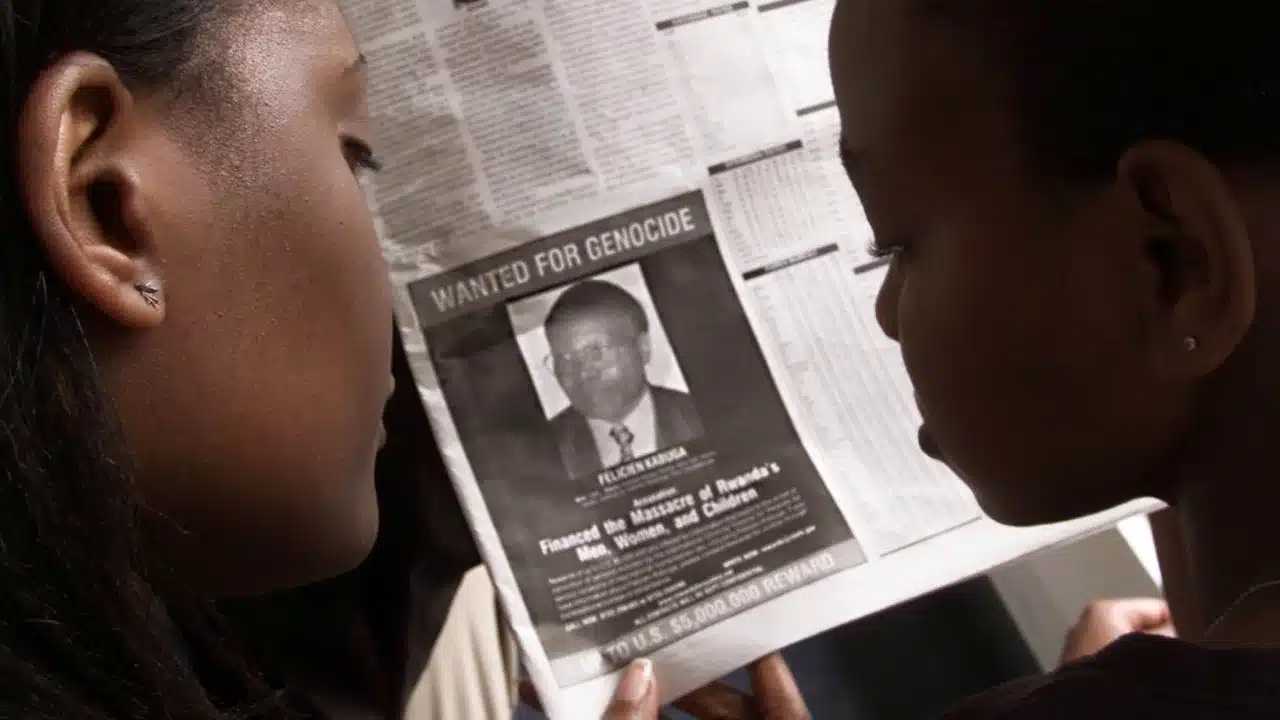
Rwandan genocide suspect deemed mentally unfit for trial by UN court
A UN war crimes court has determined that 88-year-old Rwandan genocide suspect Félicien Kabuga is no longer capable of “meaningful participation” in his trial.
The court said their judgement was based on information acquired from medical records and those who care for him which suggest “a significant decline in Kabuga’s ability to care for himself.”
“The trial chamber finds Mr Kabuga is no longer capable of meaningful participation in his trial,” the Hague-based International Residual Mechanism for Criminal Tribunals (IRMCT) said in an order released on Tuesday.
The court suggested that because Kabuga is unlikely to regain fitness, the judges should adopt an “alternative procedure that resembles a trial as closely as possible, but without the possibility of a conviction.”
Kabuga is one of the last fugitives accused of broadcasting hateful propaganda and arming militias in the 1994 genocide in Rwanda.
He was arrested in May 2020 at a modest apartment in Paris where he was living under a pseudonym after 26 years on the run.
He pleaded not guilty at his first tribunal appearance in November 2020.
As president of Radio Television Libre des Mille Collines (RTLM), he had been one of Rwanda’s wealthiest and most influential men among the Hutu elite.
Kabuga’s trial began last September before the IRMCT for what prosecutors say was his “substantial” contributions to the genocide against the Tutsi ethnic group in Rwanda.
Prosecutors say Kabuga’s radio station RTLM broadcast genocidal propaganda and accuse him of arming the ‘Interahamwe’ militia, widely considered to be the main culprits behind the killings.
IRMCT prosecutors say he did not wield a machete or pick up a microphone to broadcast hate but his conduct since 1992 pointed to a consistent anti-Tutsi agenda.
They told judges that an estimated 800,000 people were killed in just 100 days.
“The charges against Kabuga reflect his status as a wealthy and well-connected insider,” prosecutor Rashid S. Rashid said in his opening statement last September.
He said the case reflects Kabuga’s “individual responsibility for serious crimes committed during the 1994 Rwanda genocide.”
-
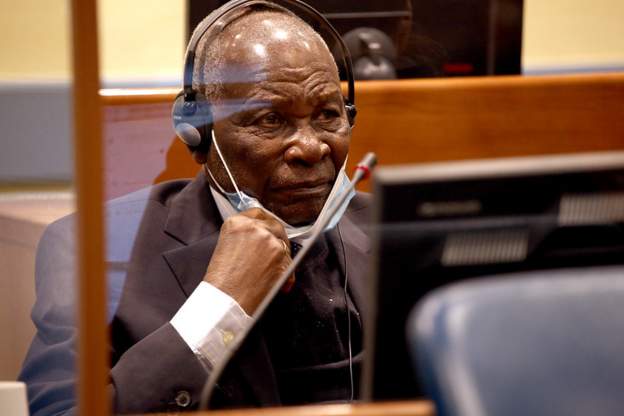
Rwandan genocide defendant Kabuga incapable to stand trial
A United Nations court has ruled that 88-year-old Rwandan genocide suspect, Félicien Kabuga is unfit to stand trial.
The Hague-based International Residual Mechanism for Criminal Tribunals said it finds him unfit to participate meaningfully in his trial and is very unlikely to regain fitness in the future”.
It has called for an “alternative” legal procedure that “resembles a trial as closely as possible, but without the possibility of a conviction”.
Félicien Kabuga is accused of being the primary financier of the militia and political groups that perpetrated the 1994 Rwandan genocide.
He denied the charges of setting up hate media that urged ethnic Hutus to kill rival Tutsis and supplying death squads with machetes.
The trial of Mr Kabuga, was put on hold in March over health concerns after his arrest in Paris in the year 2020 after evading capture for 26 years.
-
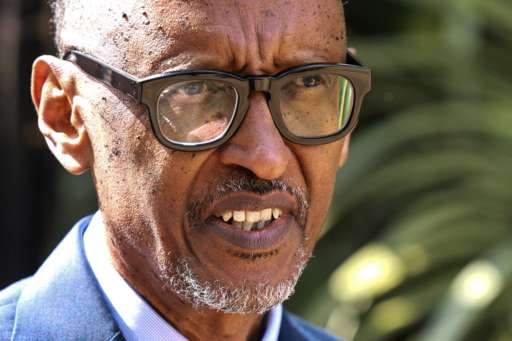
Rwanda’s top military officers reshuffled
Rwanda’s President Paul Kagame has undertaken a significant reshuffle by appointing new military and intelligence chiefs in the country.
The reshuffle saw the appointment of Maj Gen Juvénal Marizamunda as the new defense minister, replacing Maj Gen Albert Murasira, who had held the position since 2018.
Additionally, Lt Gen Mubarakh Muganga has been appointed as the new army chief, taking over from Gen Jean Bosco Kazura, who had been leading the Rwanda Defense Force (RDF) since November 2019.
It is noteworthy that the simultaneous dismissal of a defense minister and an army chief is an uncommon occurrence in Rwanda. However, no specific reasons have been provided for the reshuffle.
In previous instances of senior military personnel changes, President Kagame would occasionally provide hints publicly about the underlying motivations.
Alongside these key appointments, President Kagame also named new officials for positions such as the army chief of staff (land forces) and the head of military intelligence.
Furthermore, he made changes to the top commanders overseeing the Rwandan troops deployed in Mozambique, where they are assisting in the fight against militant Islamists.
President Paul Kagame’s recent reshuffle signifies a significant shift in the leadership of Rwanda’s military and intelligence sectors, although the specific reasons for these changes remain undisclosed.
-
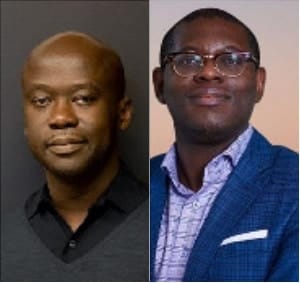
David Adjaye has not been awarded any contract for National Cathedral in Rwanda – Bright Simons
The vice president of IMANI Africa, Bright Simons, has rejected claims in the Ghanaian media that the contract for the design of a new national cathedral for Rwanda, a new Kigali Cathedral, has been awarded to the architect for the National Cathedral of Ghana, Sir David Adjaye.
Simon’s remark comes after claims by proponents of the government and a member of the Board of Trustees of the National Cathedral of Ghana, Dr Joyce Aryee, that Sir Adjaye, who has been berated for his work in the construction of Ghana’s cathedral, got the Rwanda job because of his competence.
According to the IMANI vice president, his checks from the Rwanda Development Board (RDB) confirms that there is no such contract.
“I just confirmed directly with the RDB that no such contract to build a cathedral has been awarded to Sir David Adjaye.
“At least, as of today. Citi Newsroom rarely slips, however. So, this is curious. I wonder,” parts of the tweet he shared on Wednesday, May 25, 2023.
Simon, however, added that the claims are being made because “maybe there is intel that such an award will be made.”.
GhanaWeb, on Saturday, May 21, 2023, fact-checked the claim which was made in a news publication by citinewsroom.com.
What GhanaWeb Fact-Check team found:
Our first stop was to get a local news portal or government site that had reported on the development or even posted about it on social media.
Rwanda’s leading pro-government news portal is the New Time Rwanda news portal which had no active webpage with the story except for a broken link. It appears that the story they published had been pulled down.
Second step, we went through the social media handles of the Rwandan Development Board which had nothing related to Kigali Cathedral throughout May 11, the day the said deal was announced during a budget hearing.
Curious so, because the RDB is very active on social media and posts all major updates of its activities in real-time. Its website also has no trace of such a development.
Third step: The website of Adjaye and Associates will ordinarily post such deals on their news page.
The most recent news on that page dates back to March 21, titled: “Street Plaza by Adjaye Associates with Daniel Boyd,” a reference to a project that they were working on in Sydney, Australia’s Central Business District.
Fourth step: When you type “Rwanda” into the search engine of the Adjaye and Associates website, you get one news item popping up.
It relates to the 2015 story by dezeen.com titled: “David Adjaye unveils designs for children’s cancer treatment centre in Rwanda”
Its first two paragraphs read: “British architect David Adjaye has revealed plans for a 100-bed paediatric cancer centre in Rwanda, East Africa.
“The architect, who was born in Tanzania, is designing the Gahanga International Children’s Cancer Hospital for a four-hectare site in Gahanga, a region to the south of Rwandan capital Kigali.”
The project was actually commissioned by an NGO and co-funded by a Rwandan diplomat.
Conclusion:
There is no concrete evidence that Adjaye and Associates have been commissioned to design the Kigali Cathedral.
What we can report is that there have been plans to build the facility but nothing has so far been mooted about architectural drawings.
-

Rwandan genocide suspect apprehended in South Africa after two decades
After years on the run, authorities say the most sought fugitive suspected of taking part in the 1994 Rwandan genocide has been captured in Paarl, South Africa.
According to a statement, Fulgence Kayishema was apprehended on Wednesday in a combined operation involving South African law enforcement and a UN team tasked with tracking down the remaining fugitives.
Kayishema initially disputed his identification when he was apprehended in the late afternoon, according to detectives. But by the end of the evening he told them: “I have been waiting a long time to be arrested.”
Investigators said he used multiple identities and forged documents to evade detection.
Kayishema allegedly orchestrated the killing of more than 2,000 Tutsi refugees – women, men, children and the elderly – at Nyange Catholic Church during the genocide. He has been on the run since 2001.
“Fulgence Kayishema was a fugitive for more than 20 years. His arrest ensures that he will finally face justice for his alleged crimes,” said Chief Prosecutor Serge Brammertz of the United Nations’ International Residual Mechanism for Criminal Tribunals (IRMCT).
“Genocide is the most serious crime known to humankind. The international community has committed to ensure that its perpetrators will be prosecuted and punished.
This arrest is a tangible demonstration that this commitment does not fade and that justice will be done, no matter how long it takes,” Brammertz said.
Huge reward offered
In recent years, the IRMCT prosecutor has complained about the lack of cooperation from South African authorities and there have been a series of near misses capturing Kayishema. But on Thursday, Brammertz lauded the cooperation and support of the South African government.
The events in Nyanga, Rwanda, were one of the most brutal of the genocide, in which an estimated 800,000 Tutsis and moderate Hutus were killed over the period of 90 days.
The tribunal alleges that Kayishema directly participated in the “planning and execution of this massacre.” The indictment says he bought and distributed petrol to burn down the church while refugees were inside. Kayishema and others are also accused of using a bulldozer to collapse the church following the fire, while refugees were still inside.
The office of the IRMCT says the investigation spanned multiple countries across Africa and in other regions.
A reward of up to $5,000,000 was offered by the US War Crimes Rewards Program for information on Kayishema and the other fugitives wanted for perpetrating the Rwandan genocide.
Kayishema is due to be arraigned on Friday in a Cape Town court.
The Rwandan genocide saw Hutu militias and civilians alike murder vast numbers of members of the Tutsi ethnic minority: men, women and children, many of whom had been their neighbors before the conflict began.
The killings finally came to an end 100 days later, when Rwandan Patriotic Front (RPF) troops, led by Paul Kagame, defeated the Hutu rebels and took control of the country.
-
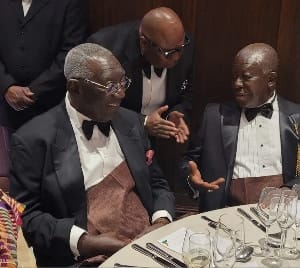
Why Kufuor is in a wheelchair – Otumfuo tells story
The Asantehene Otumfuo Osei Tutu II has revealed the hidden circumstances that led to Ghana’s former President John Agyekum Kufuor being confined to a wheelchair.
According to the king of the Ashanti Kingdom, the former president failed to prioritize his health after he survived an accident on his way to the castle while he was president.
He detailed that former president John Agyekum Kufuor decided to put the country above himself when he had the accident despite his advice to him not to overwork.
Speaking at a dinner in Ransford in the United Kingdom (UK), Otumfuo said;
“He cannot walk and I said to him that it was his own fault. He had an accident on his way to the Castle, he was safe and went to the 37 military hospital and returned to the Presidency to work. I called him from Kumasi and he said [I’m in the office].
I asked what are you doing there, Ofa (Uncle)? and he said [I’m okay, nothing happened to me I’m fine]. I told him Ofa (Uncle) you better go home and rest. And I told him Ghana will still be there if you die. But he stayed in the office till 4pm before he left the office. This is the amount of sacrifice he had for Ghana,” starfmonline.com quoted Otumfuo as having said.
On November 14, 2007, former Ghanaian President John Agyekum Kufuor, also then Chairman of the African Union, escaped unhurt when a private car crashed into his vehicle, rolling it over several times.
‘The car finally rested on the sidewalk and the people around helped his security men to pull him out. The president came out holding his head’, an eyewitness said.
A man using a Mercedes Benz, ignored the siren of the presidential convoy and drove straight into Kufuor’s vehicle at the Opeibea House traffic light Intersection on the Airport – 37 Military Hospital road.
The man who caused the accident was put before a Motor Court in Accra and charged with four counts of dangerous driving, negligently causing harm, driving under the influence of alcohol and failing to give way to the presidential convoy.
Investigations further revealed that the accused was under the influence of alcohol at the time of the accident, and when tested with an Alco Sensor III, his alcohol level read 0.41% instead of the legal limit of 0.08%.
It was alleged that the accused person admitted to taking at least one bottle of alcoholic beverage before the incident.
-
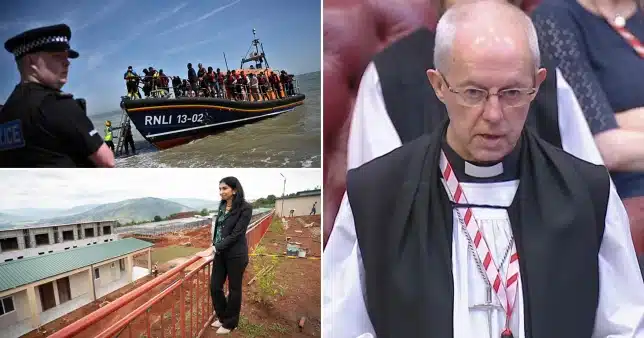
Archbishop makes morally repulsive statement that is unusual in Rwandan policy
The Government’s Illegal Migration Bill has been denounced by the Archbishop of Canterbury in the House of Lords.
The legislation that seeks to send immigrants to Rwanda, according to Justin Welby, is “morally unacceptable.”
Speaking in the House of Lords, he claimed that the measure is a “short-term fix” that “risks great damage to the UK’s interests and reputation at home and abroad, let alone the interests of those who need protection.”
Of course, we cannot accept everyone, and we should not do so either, but this Bill has absolutely no understanding of the long-term and global scale of the crisis that the globe faces, according to Mr. Welby.
‘It ignores the reality that migration must be engaged with at source as well as in the channel. As if we as a country were unrelated to the rest of the world.’
Mr Welby added: ‘It is isolationist, it is morally unacceptable and politically impractical to let the poorest countries deal with the crisis alone and cut our international aid.
‘Our interests as a nation are closely linked to our reputation for justice and the rule of law and to our measured language, calm decision and careful legislation. None of those are seen here.
‘This nation should lead internationally, not stand apart’.
Immigration minister Robert Jenrick accused Mr Welby of being ‘wrong on both counts’.
He told the BBC’s World At One: ‘It’s important that the House of Lords plays its constitutional function scrutinising legislation but I strongly disagree with some of the comments that have been heard in the House of Lords today. This is the right approach.
‘We have to tackle illegal migration and we have to bring control back to our borders.’
Asked about the archbishop’s comments in the Lords earlier on Wednesday, Mr Jenrick said: ‘Well, he’s wrong on both counts.
‘Firstly, there’s nothing moral about allowing the pernicious trade of people smugglers to continue… I disagree with him respectfully. By bringing forward this proposal we make it clear that if you come across illegally on a small boat you will not find a route to life in the UK.’
He added: ‘That will have a serious deterrent effect.’
House Of Cards author Lord Dobbs also rejected the Archbishop’s criticism, stressing the need to tackle the people smugglers.
The Tory peer and former adviser to the Thatcher government said: ‘They trade in lies, they trade lives.
‘It is our moral obligation to stop them, to bring an end to the unimaginable pain of mothers and fathers watching their children drowning off our shores in the channel.
‘No amount of handwringing or bell ringing is going to do that.’
He is one of the 90 peers expected to raise issue with the proposed bill in its second reading within parliament.
The intervention marked his second major rebuke of the Government’s treatment of migrants and asylum seekers.
The clampdown has been prompted by Prime Minister Rishi Sunak’s pledge to ‘stop the boats’ bringing migrants across the English Channel.
More than 6,000 migrants have crossed the channel so far in 2023.
To cope with the numbers, the Government plans to use disused military camps and a barge as accommodation centres.
But critics argue the flagship immigration reforms break international law and threaten modern slavery protections.
The Archbishop, in a speech to the Lords last year, warned against ‘harmful rhetoric’ that treats those arriving in the UK as ‘invaders’.
He has previously called for a better system based on ‘compassion, justice and co-operation across frontiers’.
Downing Street defended the bill as ‘compassionate and fair’ after the proposed legislation was condemned by the Archbishop.
Asked whether the Prime Minister believed Justin Welby’s intervention was appropriate, his official spokesman said: ‘Obviously it’s right that the Lords are able to scrutinise this Bill.
‘The Government for its part will continue to robustly defend it.
‘We think it is about an issue of fairness and it is not right to allow people to be preyed upon by criminal gangs.’
Downing Street refused to be drawn on the Archbishop’s criticism specifically but added: ‘The Prime Minister does not think it is compassionate or fair to allow people who are jumping the queue over some of the most vulnerable people who are seeking to come here through safe and legal routes.’
Asked whether the Bill was morally acceptable, the Prime Minister’s official spokesman said: ‘We think it is the compassionate and fair thing to do.’
The Bishop of Durham also appeared alongside other peers in the Lords, and quoted Jesus as he urged ministers to ensure migrant children will not be kept in detention for long periods of time.
The Rt Rev Paul Butler said migrant children needed the ‘highest levels of safeguarding written into the letter of the law’ to protect them.
Explaining his worries about the Bill, he told peers: ‘The state will view a child or a pregnant woman first and foremost as individuals subject to immigration control, not as an innocent child or a vulnerable mother due to give birth.
‘We need to ask – what about the Government’s duty to protect?’
The Bishop added: ‘I am reminded of Jesus’ words: It would be better to have a millstone around the neck and be cast into the sea than to cause a little one to stumble.
‘This responsibility needs to bear upon us heavily.’
Ahead of the legislation returning to the red benches, Home Secretary Suella Braverman and Justice Secretary Alex Chalk have urged peers not to stand in the way of the ‘will of the British people’ by blocking the UK Government’s migration policies.
Writing jointly for Times Red Box, the two Cabinet ministers said: ‘We urge the House of Lords to look at the Illegal Migration Bill carefully, remember it is designed to meet the will of the British people in a humane and fair way, and back the Bill.’
But in a rare parliamentary move, Liberal Democrat Lord Paddick, a former senior police officer, has proposed a so-called fatal motion to the proposed legislation, aimed at stopping it in its tracks at its first Lords hurdle.
His amendment argues the draft legislation would see Britain fail to meet its international law commitments, allow ministers to ignore the directions of judges and undermine ‘the UK’s tradition of providing sanctuary to refugees’, while failing to tackle the backlog of asylum cases or people-smuggling gangs.
But the blocking bid is destined to fail without the backing of the main opposition.
A Labour source said: ‘We’re not supporting the motion. If successful, which they never are, the Government could just Parliament Act the Bill in the next King’s Speech and peers would lose the opportunity to make any amendments.
‘It is therefore an irresponsible way to deal with legislation that has already gone through the the elected House.’
The two Green Party peers will be among those supporting the fatal motion, with Baroness Jones of Moulsecoomb saying: ‘This Bill is illegal because it breaks international law and should be opposed for that reason alone. It is also immoral and plain nasty.
‘It effectively makes all asylum seekers criminals unless they are from a few select countries where the UK has approved pathways and safe routes for immigration such as Hong Kong.’
Lady Jones added: ‘It is hugely disappointing that Labour are failing to oppose this legislation outright, but unsurprising given their recent track record of caving in on Voter ID and the Public Order Bill. If we are to save our democracy, we need an opposition that is up to the job.’
-

Rwanda floods and landslides kill more than 130 people
Authorities have annouced that floods and landslides in Rwanda’s northern and western districts have resulted in at least 130 fatalities.
The rains hit at night when many people were asleep – an official told the BBC this is one reason why so many died.
The five-year-old daughter of Claudette Nyiraneza was among them.
“We could not save my daughter under the rubble until morning,” she told the BBC, adding that neighbours eventually helped retrieve her body.
Local governor François Habitegeko said many houses had collapsed on people.
He said that main roads in the area “are not usable because of landslides”.
Rwanda’s public broadcaster RBA reports that the casualty numbers are expected to increase as floodwaters continue to rise.
Rwanda’s president offered his condolences to those who have been affected. His statement also added that residents were being evacuated from “affected and high-risk areas”.
The government’s main priority now is to “reach every house that has been damaged to ensure we can rescue any person who may be trapped”, the Reuters news agency quotes Mr Habitegeko as saying.
Relief efforts have already started, “including helping to bury victims of the disaster and providing supplies to those whose homes were destroyed,” a government minister for emergencies, Marie Solange Kayisire, told AFP
- Africa Live Page: For news updates from around the continent
The heavy rains pounded Rwanda “all night” and more downpours are expected throughout the month, authorities say.
Heavy rains and consequent damage and casualties between March and May are commonplace in Rwanda, but the deluge on Tuesday night was unusually strong and long-lasting.
This is the worst flooding Rwanda has seen since May 2020 when around 80 people died.
Deaths have also been reported in neighbouring Uganda, where six people have died after landslides, the Ugandan Red Cross says.
Rwanda’s weather authority is linking the unusual rains seen in recent years to climate change.
Many factors contribute to flooding, but a warming atmosphere caused by climate change makes extreme rainfall more likely.
The world has already warmed by about 1.2C since the industrial era began and temperatures will keep rising unless governments around the world make steep cuts to emissions.
-

Deaths rise to 130 in Rwanda floods
The death toll from the flooding and landslides that struck Rwanda’s north, west, and south on May 2 grew to 130 by Thursday morning, according to the government’s deputy spokesperson Allain Mukuralinda.
In addition, 77 individuals were injured, with 36 receiving treatment in local hospitals and five people are still missing. The district of Rubavu was hit the hardest, with over 1,000 homes destroyed due to ongoing rainfall.
Rescue teams are still working to recover bodies that are trapped in landslides and collapsed houses.
In response to this crisis, various authorities, military forces, religious organisations and humanitarian groups have initiated interventions since Wednesday.
Affected individuals have been provided with essential items such as tents, blankets, food, and basic household utensils. Some people have also been accommodated in safe zones such as churches and schools.
According to a statement by the office of Rwandan president, rescue interventions including relocating residents from affected areas to safer zones have been carried out. Affected districts also increased from four to nine: Nyabihu, Rubavu, Karongi, Rutsiro, Gakenke, Burera, Musanze Ngororero, and Nyamagabe in the northern, western, and southern provinces.
It started raining on Tuesday around 11 pm and by Wednesday morning, over 50 people were declared dead. Among the victims is a family of five that was all killed in the disaster.
“My deepest condolences to the families and loved ones of the victims of the landslides and floods that occurred last night in the Western, Northern, and Southern Provinces. We are doing everything within our means to address this difficult situation. I am personally following up on the response closely,” President Kagame took to Twitter to console survivors.
Rwanda normally experiences heavy rains and hailstorms between January and April, which often result in the loss of lives especially those living in high-risk zones.
In Kigali, 27,000 families still reside in high-risk zones where disaster always looms when it rains.
The deaths from the latest floods bring the toll to 197 lives lost since January, according to Rwanda’s Ministry of Emergency Management.
Search and rescue operations
Rwandan authorities have launched a search and rescue operation to locate victims of the floods and assist those affected by the disaster. Emergency facilities have been set up to help those who have lost their homes. Funeral preparations for those who died are underway.
Rwanda’s Minister of Emergency Management Marie Solange Kayisire on Wednesday morning said that the latest floods were because of the rains that soaked mountains and that victims were not only families living in high-risk zones given the mountainous nature of the region.
At least 408 disaster cases were recorded in this period. These include 107 windstorm cases, 66 rainstorms, three mine disasters, 77 lightning cases, seven landslides, 13 house collapses, eight hailstorms, 29 floods as well as 98 fires.
The Rwanda Meteorology Agency released a weather forecast for May, indicating above-average rainfall ranging between 50mm and 200mm across the country.
The forecast stated that the first 10 days of May 2023 would have a higher amount of rainfall in many parts of the northwestern region ranging between 175mm and 200mm. Four districts of Ngororero, Rubavu, Nyabihu, Rutsiro and Karongi were affected by the heavy rains on the night of May 2.
According to the weather forecast, Rulindo, Gakenke and Gicumbi districts are also likely to see similar amounts of heavy rains in the next few days.
On Wednesday morning, the main road from Kigali, crossing through Rulindo, Gakenke, Musanze and Nyabihu districts to Rubavu, was closed due to landslides.
-
Rwanda pays back $400 million in Eurobonds amid economic hardships
Rwanda pays down a $400 million Eurobond despite Despite pressure on the nation’s finances brought on by ongoing global shocks linked to the prolonged impact of the Covid-19 pandemic, the war in Ukraine, and the appreciation of the US dollar, Rwanda has successfully repaid its $400 million Eurobond.the strain on its finances
The EastAfrican has learned that the full payment, which was due this week, was successfully made.
Officials from Rwanda’s Ministry of Finance and Economic Planning say the repayment was made possible partly due to the availability of financing from the International Monetary Fund (IMF) that allowed the government to make savings.
“The government has set aside $63 million as part of the International Monetary Fund’s Special Drawing Rights (SDR) allocation that it received in 2021 as support to fight against the impact of Covid-19 on the economy,” the finance ministry told The EastAfrican.
“This foresight and proactive measure by the government have significantly reduced the risk of default and allowed a successful repayment of the remaining 15.1 percent of the 2013 Eurobond,” the ministry added.
However, Rwanda successfully managed to reduce its debt burden during the pandemic when it took advantage of the low-interest rate environment and issued the second $620 million Eurobond, using part of its proceeds to repay part of the $400 million.
The 10-year Eurobond ($620 million) issued in April 2021 attracted a coupon rate of 5.5 percent, lower than the 2013 rate of 6.625 percent.
The lower yield led to a reduction in its annual interest payments over the next 10 years, which has helped to make its debt sustainable.
While the government has aggressively borrowed in recent years to finance economic recovery and development projects with public and publicly guaranteed debt rising sharply to 78.3 percent of GDP in 2021 up from a pre-pandemic figure of 60.7 percent of GDP in 2019.
However, approximately 80 percent of this debt is concessional with development finance institutions with low-interest rates and long maturity.
-

6 quick facts about the 1994 genocide attack
On April 6, 1994, a plane carrying Habyarimana and Burundi’s president Cyprien Ntaryamira was shot down over the capital city of Kigali, leaving no survivors. (It has never been conclusively determined who the culprits were. Some have blamed Hutu extremists, while others blamed leaders of the RPF.)
The Rwandan Genocide was a mass slaughter of Tutsi people and moderate Hutus that occurred between April and July 1994, resulting in an estimated 800,000 deaths.
The genocide was sparked by the death of Rwandan President Juvenal Habyarimana, a Hutu, whose plane was shot down on April 6, 1994, leading to widespread violence and killings.
The genocide was carried out by the Hutu-led government and militias, who targeted Tutsis, moderate Hutus, and anyone who opposed their agenda.
The violence was fuelled by propaganda and hate speech disseminated through government-controlled media, which portrayed Tutsis as enemies of the state.
The international community failed to intervene, despite warnings of impending genocide, and many Rwandans were left to fend for themselves.
The aftermath of the genocide saw the establishment of the International Criminal Tribunal for Rwanda to prosecute those responsible, as well as efforts to promote reconciliation and rebuild the country.
-

I’m happy to retire and become a journalist – Kagame
After 23 years in service, Rwanda’s President Paul Kagame has stated that he is looking forward to his retirement and the transfer of power.
Speaking at a joint press briefing with his Kenyan counterpart, William Ruto in the Rwandan capital, Kigali, Mr Kagame said a succession plan was being actively discussed by the ruling party, terming his retirement an “inevitability”.
Mr Kagame said he was not necessarily interested in choosing his successor but rather creating an environment that would give rise to people who can lead.
“We have been having this discussion within our [ruling] party since 2010 but circumstances, challenges and history of Rwanda tend to dictate certain things,” he said.
He said his retirement was an issue that has to be discussed “sooner or later”.
“I’m sure one day I may join journalism in my old age. I’m looking forward to that,” Mr Kagame said.
His comments come days after the country’s ruling party, the Rwandan Patriotic Front (RPF-Inkotanyi), elected its first woman vice-chairperson.
President Kagame retained the chairmanship position. He has led the party since 1998.
This was not the first time Mr Kagame has talked about retirement. In December 2022, he said he had no problem becoming an ordinary senior citizen.
Mr Kagame has been president of the East African nation since 2000. A controversial referendum in 2015 removed a two-term constitutional limit for presidents.
The president last year told a French TV channel he would stand for president again at the next election in 2024.
-

President Kagame expresses interest to become a journalist after retirement
After 23 years in service, Rwanda’s President Paul Kagame has stated that he is looking forward to his retirement and the transfer of power.
In a joint press conference with his Kenyan counterpart, William Ruto, Mr. Kagame stated that the ruling party was actively discussing a succession plan and that his retirement was “inevitable” while speaking in Kigali, the capital of Rwanda.
Mr. Kagame claimed that he was less concerned with selecting his successor than he was with cultivating a climate that would produce leaders.
“We have been having this discussion within our [ruling] party since 2010 but circumstances, challenges and history of Rwanda tend to dictate certain things,” he said.
He said his retirement was an issue that has to be discussed “sooner or later”.
“I’m sure one day I may join journalism in my old age. I’m looking forward to that,” Mr Kagame said.
His comments come days after the country’s ruling party, the Rwandan Patriotic Front (RPF-Inkotanyi), elected its first woman vice-chairperson.
President Kagame retained the chairmanship position. He has led the party since 1998.
This was not the first time Mr Kagame has talked about retirement. In December 2022, he said he had no problem becoming an ordinary senior citizen.
Since 2000, Mr. Kagame has served as the country’s president. A contentious vote in 2015 overturned the constitutional restriction on presidents serving two terms.
The president announced last year that he would run for office once more in the 2024 election to a French television station.
-
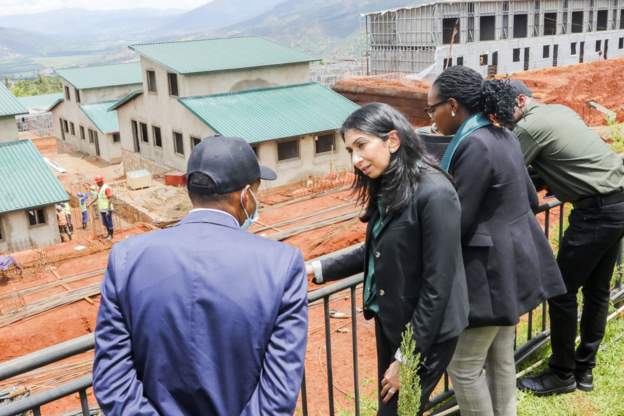
UN furious over asylum plan by Rwanda
The UN human rights office has said that it remains “extremely apprehensive about the ramifications” of the UK government’s plans to send certain migrants to Rwanda if they enter the country unlawfully.
The UK home secretary, Suella Braverman, has said that foreigners can feel safe in Rwanda.
She said on Sunday that she believed the Rwanda policy would have “a significant deterrent effect” so that people would stop making the journey across the Channel to the UK.
But the UN human rights office said assessments done by the UN refugee agency showed that the asylum system in Rwanda was “not robust enough”.
“There are also concerns about respect for the right to freedom of assembly and freedom of expression in Rwanda. Those concerns do remain today,” spokesperson Ravina Shamdasani told the BBC’s Newsday programme.
“We have a lot of evidence of how these plans [off-shore asylum facilities] go wrong,” she added.
-
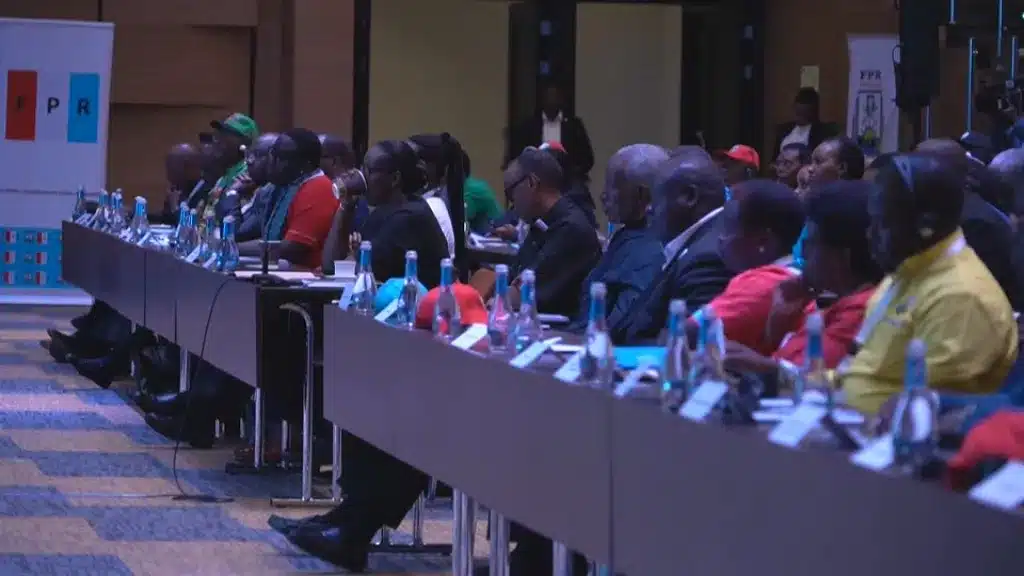
Kagame re-elected to lead Rwanda’s ruling party
At the RPF-16th Inkotanyi’s congress, which got under way on Sunday, Paul Kagame, the president of Rwanda, was convincingly re-elected as the party’s chairman.
According to a Rwandan national daily, the Rwandan president received 2, 999 votes, or 99.8% of the total, whereas Abdulkarim Harelimana, who came in second place, received just 3 votes, or 0.2%. The party’s supporters were thrilled with the outcome.
“I’m very satisfied with the elections, how it went, the results. Especially the re-election of the President of the Republic and President of the RPF, Paul Kagame, who was re-elected by a very large majority of 99.8 percent,” a member of the Rwandan Patriotic Front, Olivier Mugabonake, said.
Kagame, who has served as president of Rwanda for 22 years, will now lead the Rwandan Patriotic Front for a further five years. He has done so since 1998.
Even the Rwandan Patriotic Front’s Alice Urusaro Karekezi wants him to run for president once more.
“It’s true that it’s the work of all Rwandans who have accompanied him in this. But it’s true that the particular character of his leadership has a lot to do with this success. As far as I am concerned, if he runs for a re-election (to the presidency, ed), yes without hesitation.” Karekez said after the announcement of the result.
On the occasion of the 35th anniversary of the ruling party since the end of the genocide, the 2,000 supporters gathered at the congress in Kigali cast their votes on Sunday.
-
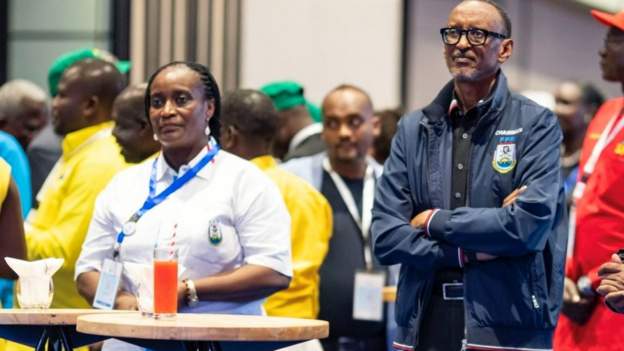
Ruling party in Rwanda elects first woman vice-chairperson
The Rwandan Patriotic Front (RPF-Inkotanyi), the country’s ruling party, elected its first female vice-chairperson on Sunday as President Paul Kagame kept the chairmanship position.
With 1,945 votes, or around 93% of the total votes cast, Consolee Uwimana won the election.
According to observers, elevating her is the party’s strategy for empowering women and maintaining racial parity in its top leadership.
Up until 2019, Ms. Uwimana, a seasoned banker and businesswoman, served as a senator.
In 2024, Rwanda will have its next round of general elections.
President Kagame has been president of the East African nation since 2000. A controversial referendum in 2015 removed a two-term constitutional limit for presidents.
On Sunday, Mr Kagame got 99.8% of the total votes to retain leadership of the ruling party.
Rwanda has one of the world’s highest proportions of women in parliament and government.
-
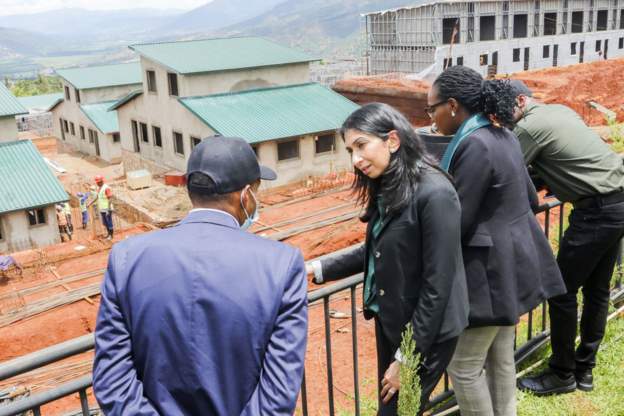
Rwanda’s asylum plan leaves UN ‘extremely worried’
The UN human rights office is “extremely worried about the impact” of plans by the United Kingdom government to send some migrants to Rwanda if they arrive in the country through unlawful routes.
The UK government’s proposals to send certain migrants to Rwanda if they enter the country illegally are still causing the UN human rights office “great worry about the impact,” the office claims.
Suella Braverman, the UK home secretary, has insisted that migrants can travel freely in Rwanda.
She stated on Sunday that she thought the Rwanda policy would have “a significant deterrent effect” so that people wouldn’t travel to the UK over the Channel.
Yet, according to evaluations conducted by the UN agency for refugees, the Rwandan asylum system was “not robust enough,” according to the UN human rights office.
“There are also concerns about respect for the right to freedom of assembly and freedom of expression in Rwanda. Those concerns do remain today,” spokesperson Ravina Shamdasani told the BBC’s Newsday programme.
“We have a lot of evidence of how these plans [off-shore asylum facilities] go wrong,” she added.
-
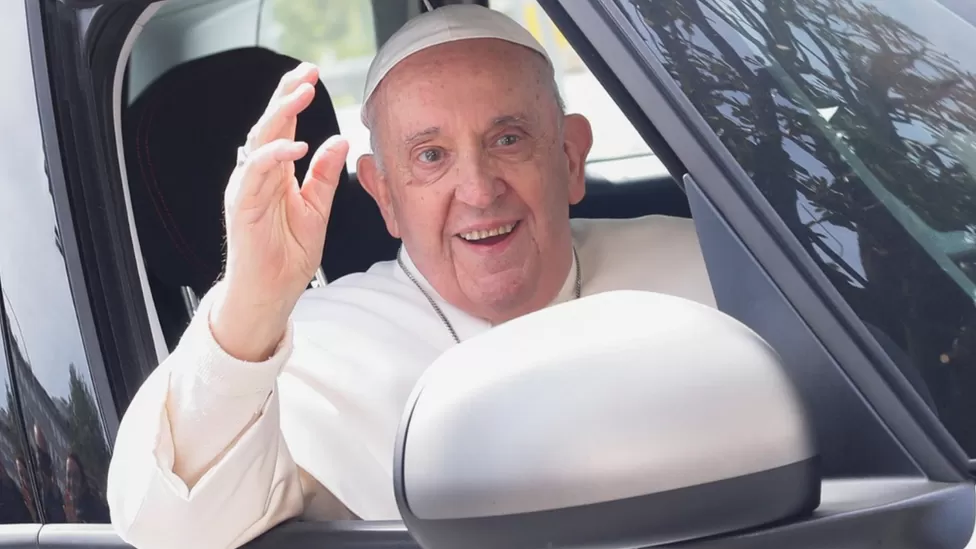
Pope Francis to moderate services for Palm Sunday a day after receiving medical attention
Just one day after leaving the hospital, Pope Francis presided over Sunday’s Easter services in St. Peter’s Square.
In front of more than 30,000 faithful, he presided over the Palm Sunday ceremony, which was followed by the Angelus prayer.
He had difficulties breathing when he was brought into Rome’s Gemelli Hospital on Wednesday, and bronchitis was later determined to be the cause.
Upon being discharged on Saturday, the Pope joked that he was “still alive”.
“I just felt a malaise, but I wasn’t afraid,” Italian news agency Ansa quoted him as saying on Saturday.
After being discharged, the pontiff was seen smiling and waving from his car, before getting out to speak to a crowd.
Instead of heading home, his car drove past the Vatican and stopped at the Basilica of Santa Maria Maggiore. When he came out after praying, people on the street applauded and shouted: “Long live the Pope!”
During another stop, he exited his vehicle to give chocolate Easter eggs to police officers in his motorcade, AP news agency reported.
On Sunday he thanked those who prayed for him during his hospital stay.
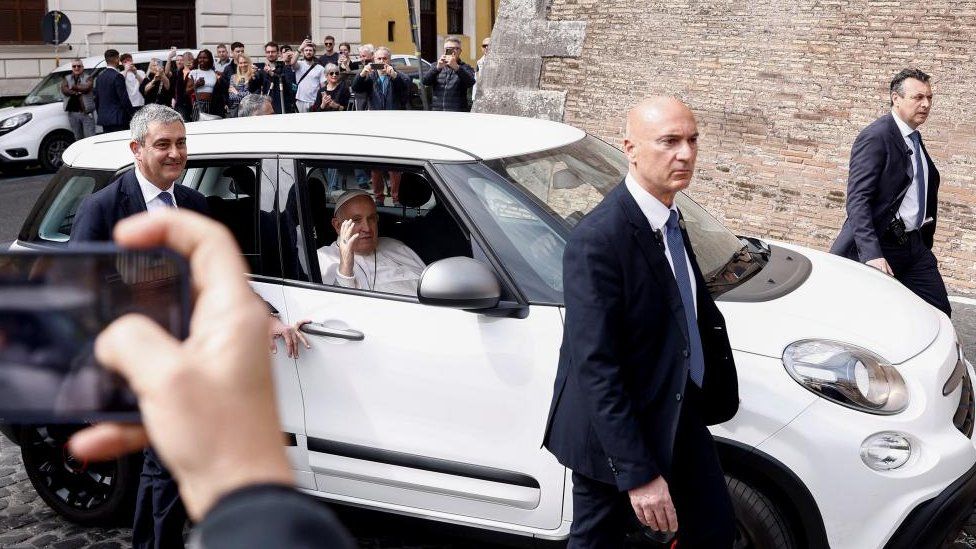
Image caption,Pope Francis, surrounded by security officers, waved to the crowds that had gathered outside his hospital in Rome The pontiff’s admission to hospital came ahead of the busiest week in the Christian calendar.
The Holy Week includes a busy schedule of events and services which can be physically demanding.
The Argentine pontiff, who marked 10 years as head of the Catholic Church earlier this month, has suffered a number of health issues throughout his life, including having part of one of his lungs removed at age 21.
He has also used a wheelchair in recent months because of problems related to his knee.
Wednesday’s hospitalisation was his second since 2021, when he underwent colon surgery, also at Gemelli.
But the Pope has remained active, visiting the Democratic Republic of Congo and South Sudan in February. The previous month, he led the funeral of his predecessor Pope Benedict XVI.
Although the pontiff, who has pushed for reforms in the Catholic Church, has previously said he would consider stepping down if his health failed him, he recently confirmed he had no plans to quit.
https://emp.bbc.com/emp/SMPj/2.48.0/iframe.htmlMedia caption,
Watch: The Pope comforted grieving parents as he left Gemelli Hospital
Pope’s schedule over Easter
2 April, Palm Sunday: 09:30 (07:30 GMT) Papal Mass, 12:00 Sunday Blessing
5 April: 09:00 Papal General Audience
6 April, Holy Thursday: 09:30 Chrism Mass in St Peter’s Basilica
7 April, Good Friday: 17:00 Passion of the Lord, 21:15 Stations of the Cross at the Colosseum
8 April, Holy Saturday: 20:30 Easter Vigil in St Peter’s Basilica
9 April, Easter Sunday: 10:00 Easter Sunday Mass, 12:00 Urbi et Orbi in St Peter’s Square
10 April, Easter Monday: 12:00, Pasquetta in St Peter’s Square
-
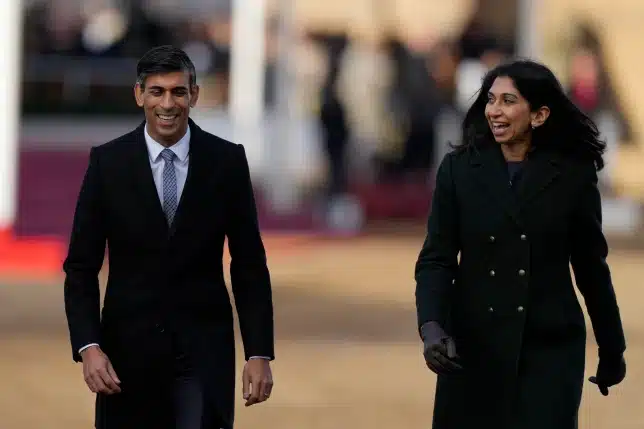
Government puts an end to the Tory uprising over the Illegal Immigration Bill
A smoldering uprising among Tory MPs in opposition to the government’s bill on illegal immigration appears to have been put down for the time being.
Before a significant debate on the contentious legislation, which attempts to ban migrants from crossing the English Channel in small boats, Home Secretary Suella Braverman is rumored to have had conversations with her parliamentary colleagues.
Liberal and right-wing Conservatives have expressed reservations about the law, and some had signed amendments.
In its current form, the legislation would mean asylum seekers arriving through unauthorised channels are detained without bail or judicial review for 28 days.
They would then be ‘swiftly removed’ to their home country or a ‘safe third country’ such as Rwanda.
While some of the party’s MPs believe more efforts should be made to ensure removals are not blocked by the European Court of Human Rights, others want safe routes to be established for asylum seekers.
Reaction to the proposals has also been furious outside parliament, with both Prime Minister Rishi Sunak and Ms Braverman being heckled earlier today.
As the pair walked around Essex, a woman shouted ‘allow migrants into our country’, before adding: ‘Go away, we don’t want you here.’
Ahead of the bill coming back to the House of Commons for its committee stage today, Mr Sunak was bracing for the possibility of the biggest Conservative rebellion of his premiership so far.
But this morning, policing minister Chris Philp said: ‘My understanding is that the various amendments to strengthen the bill aren’t going to be pushed to a vote today or tomorrow.
‘They are being discussed between those people who proposed the amendments and the government, and the home secretary in particular.
‘I know the home secretary is keen to make sure this bill is effective.’
‘You can’t stay’: PM Rishi Sunak promises to detain and deport small boats migrants
Video Player is loading.
Current Time 0:00
Duration 5:57
Among the would-be rebels was Danny Kruger, who had said he wanted provisions in the bill to ‘operate notwithstanding any orders of the Strasbourg court or any other international body’.
Last year, the European Court of Human Rights – based in Strasbourg – granted an injunction that effectively grounded a flight sending asylum seekers from the UK to Rwanda.
Mr Kruger joined his Tory MP colleagues Simon Clarke and Jonathan Gullis in putting forward amendments that they said would be ‘necessary for the bill to function’.
Figures within the party have denied reports that the home secretary is secretly backing the right-wing rebellion in order to pressure the prime minister to toughen up the legislation.
Tim Loughton, who is among the leaders of the parliamentary movement, told BBC Radio 4’s World at One programme: ‘I have absolutely no evidence of that.
‘And whatever you want to call the Home Secretary, she’s certainly nobody’s puppet.’
On his visit to Essex, Mr Sunak said: ‘The home secretary and I have worked incredibly closely for the last two months to get the legislation exactly right.’
-
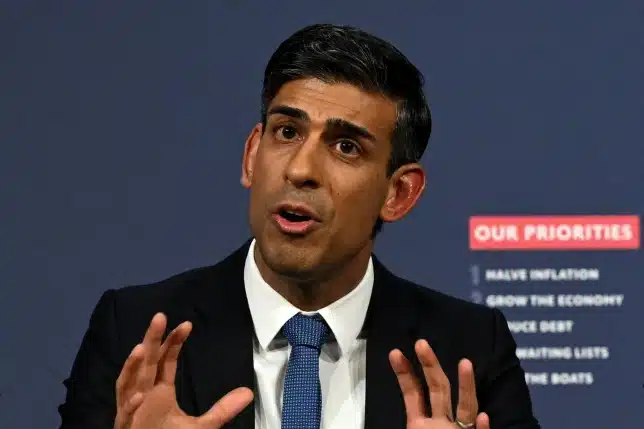
Rishi Sunak might encounter the worst Tory uprising over illegal migration bill
The prime minister is preparing for what may be the largest Tory uprising of his leadership thus far as his Illegal Immigration Bill takes center stage in the Commons.
Human rights organizations are extremely worried about the contentious law intended to crack down on asylum seekers arriving in the UK in small boats, but many Conservative MPs think it doesn’t go far enough.
The European Court of Human Rights (ECHR) won’t be able to stop removals, according to an amendment that is expected to receive support from about 60 Conservatives.
Meanwhile, others have called for Rishi Sunak to commit to establishing safe routes which people in desperate situations can use to come to Britain.
‘You can’t stay’: PM Rishi Sunak promises to detain and deport small boats migrants
Downing Street officials will meet with a gang of rebels on Monday in an attempt to calm the revolt.
Two days of debate are expected as the Bill reaches its committee stage today, with more than 50 pages of amendments tabled.
Under the legislation’s current proposals, it would see asylum seekers arriving through unauthorised means being detained without bail or judicial review for 28 days.
They will then be ‘swiftly removed’ to their home country or a ‘safe third country’ such as Rwanda.
Tory Devizes MP Danny Kruger has sponsored an amendment that seeks provisions in the Bill to ‘operate notwithstanding any orders of the Strasbourg court or any other international body’.
Former minister Andrea Jenkyns tweeted that she had signed amendments with the intention of ‘strengthening the Bill and stopping the European Court of Human Rights’ laws superseding British law’.
It comes after the ECHR last year granted an injunction, via its Rule 39, that effectively grounded a flight sending asylum seekers from the UK to Rwanda.
Since then, Home Secretary Suella Braverman has held what she called ‘constructive’ negotiations with the Strasbourg court to secure a higher legal threshold for any injunction under Rule 39 to be imposed on any future deportation flights.
Levelling-Up Secretary Michael Gove has signalled Home Office ministers are open to further talks about the strength of the Bill, as MPs prepare to go through the legislation line by line.
A Home Office source said the legislation contains a ‘marker clause’ relating to ECHR deportation orders.
It is understood the clause allows for initial negotiations with Strasbourg to conclude before ministers consider setting out further legal measures.
Mr Sunak and Ms Braverman have both stressed that they think the draft law complies with international obligations and that Britain would not need to exit the European Convention on Human Rights to introduce the plans.
But in a letter to MPs following publication of the Bill earlier this month, the Home Secretary admitted there is a ‘more (than) 50% chance’ her legislation may not be compatible with the convention.
While some Tories look to ‘toughen up’ the already highly divisive legalisation, others have backed an amendment that would force the Home Secretary to declare ‘safe and legal routes by which asylum seekers can enter’ the UK.
Tory MP Tim Loughton’s proposed modification has been signed by former Brexit secretary David Davis and Dame Diana Johnson, the Labour chairwoman of the Home Affairs Select Committee.
The government’s approach has been slammed by groups including the United Nations High Commissioner for Refugees, which has accused ministers of ‘extinguishing the right to seek refugee protection in the UK’.
The charity Refugee Action warned it would ’cause misery, cost millions to the taxpayer and drive desperate people to take ever more dangerous journeys’, while the Archbishop of York described the bill as ‘cruelty without purpose’.
Hundreds of protestors gathered outside Parliament to demonstrate against the Bill earlier in March.
Downing Street said last night that Mr Sunak is continuing to engage with backbenchers over the legislation’s proposals.
-
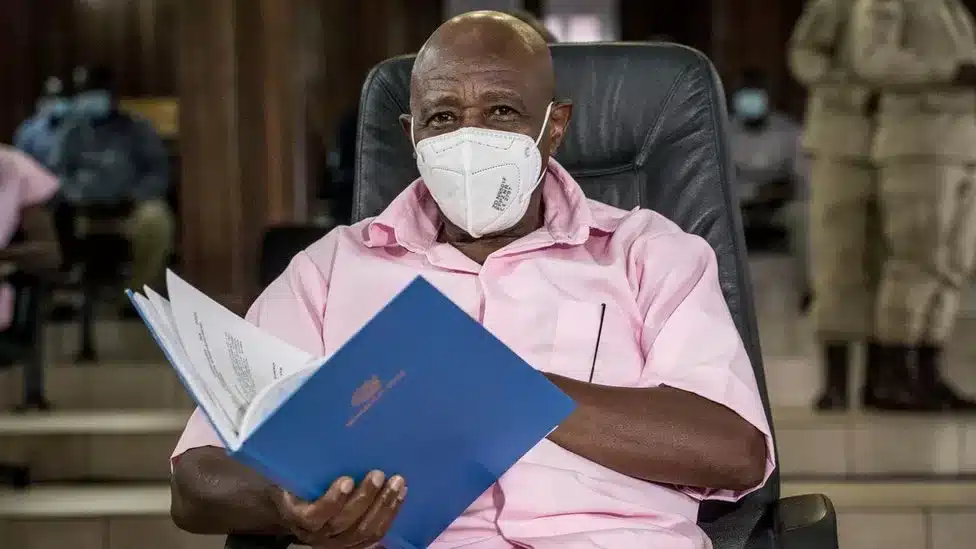
Paul Rusesabagina of Hotel Rwanda film may soon be released from prison
A former hotel manager who was portrayed as a hero in the Hollywood movie Hotel Rwanda, Paul Rusesabagina, may soon be freed from a Kigali prison.
In what his supporters referred to as a sham trial, he was given a 25-year prison term for terrorism by a Rwandan court two years ago.
The sentence of Mr. Rusesabagina had been “commuted by presidential decree,” according to a government official.
Some 1,200 people are said to have been saved by Mr. Rusesabagina, 68, during the 1994 genocide.
In a statement his family told the BBC: “We are pleased to hear the news about Paul’s release. The family is hopeful to reunite with him soon.”
There have been international calls for Mr Rusesabagina’s release, especially from the United States, where he had lived since 2009. The Biden administration has said he was “wrongfully detained”.
His family say the Rwandan government lured him from Texas, where he had permanent residency, back to Rwanda in 2020.
Mr Rusesabagina left Rwanda in 1996. His story remained largely unknown for a decade, while he worked as a taxi driver in the Belgian capital, Brussels.
It was featured in a section of journalist Philip Gourevitch’s 1998 book about the genocide, but it was the 2004 Hollywood movie, where he was played by Don Cheadle, that brought him global attention.
- Rwanda’s 100 days of slaughter
- The Hollywood hero convicted of terrorism
The Rwandan genocide lasted 100 days from April 1994, when 800,000 people, mostly from the Tutsi ethnic group, were slaughtered by extremists from the Hutu community.
Mr Rusesabagina – a hotel manager at the time – protected some 1,200 people from the violence, after they sought shelter in the building.
The following year he was awarded the Presidential Medal of Freedom by then-US President George W Bush for his efforts. But he became a fierce critic of Rwanda’s President Paul Kagame.
In a 2018 video message, Mr Rusesabagina called for a regime change, saying that “the time has come for us to use any means possible to bring about change in Rwanda”.
He was arrested in 2020, when, according to his supporters, a private jet he believed would take him to Burundi, instead landed in the Rwandan capital Kigali.
In September 2021 he was found guilty of backing a rebel group behind deadly attacks in 2018 and 2019 in Rwanda.
Mr Rusesabagina was freed alongside Callixte Nsabimana, spokesman of the Rwanda Movement for Democratic Change – an opposition political party.
A spokesperson for the Rwandan government said: “No-one should be under any illusion about what this means, as there is consensus that serious crimes were committed, for which they were convicted.
“Under Rwandan law, commutation of sentence does not extinguish the underlying conviction.
“Rwanda notes the constructive role of the US government in creating conditions for dialogue on this issue, as well as the facilitation provided by the state of Qatar.”
-
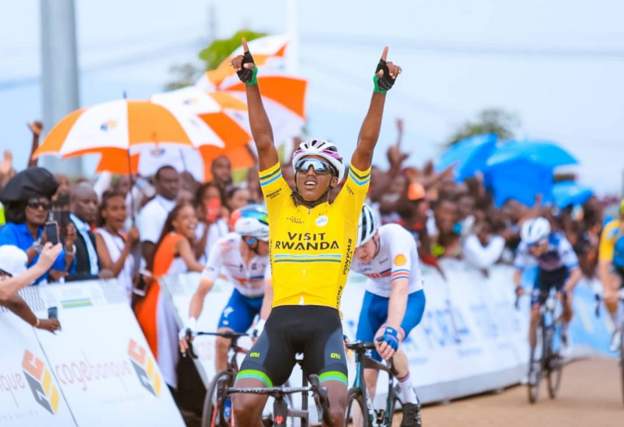
Mulubrhan emerges winner in Tour du Rwanda race
The Tour du Rwanda 2023 race, which began on February 19 and concluded on Sunday, was won by an Eritrean cyclist, Henok Mulubrhan, who competes for the Italian team Bardiani CSF.
The winner of the African continental championship in 2022, Henok Mulubrhan, waited until the final few yards before attacking and defeating his nearest competitors.
Paul Kagame, the president of Rwanda, gave him the award.
“This is the best day of my life It was always my dream to win this race. The game was too tough in general. I will always remember this achievement,” he said.
As the Tour du Rwanda was elevated to category 2.1 competition, Eritrean cyclists took home the yellow jersey for the fourth time this year.
The four-time Tour de France champion Chris Froome participated in the competition but received little attention.
He had earlier told reporters that the July Tour de France was his main objective and that he was putting a lot of effort into being in shape for it.
Cristian Rodriguez, a Spanish cyclist, became the first and only rider from Europe to win the Tour du Rwanda in 2021.
-

Ex-Kenyan leader urges more regional troops to DR Congo
Leaders of the East African Community (EAC) have been urged to expedite the deployment of more soldiers to the regional force operating in the eastern Democratic Republic of the Congo.
According to the Luanda ceasefire agreement, more troops are required to take up positions in areas where armed groups have evacuated, according to former Kenyan president and mediator Uhuru Kenyatta for the East African Community (EAC) bloc.
Mr. Kenyatta expressed worry about the deteriorating security situation in the province of North Kivu, where M23 rebels have recently clashed with security forces.
After Burundi and Kenyan contingents arrived in eastern DR Congo last year to help end decades of instability, Uganda and South Sudan are preparing to send troops.
Mr Kenyatta welcomed recent calls by East African leaders for the cessation of hostilities by all sides in the conflict.
In a statement, the facilitator said he would intensify plans for the fourth round of talks in Nairobi by mobilising regional and international support for the meeting.
He has urged all parties involved to accelerate implementation of resolutions of the third consultative talks in Nairobi.
He has also appealed for urgent humanitarian support to more than half a million people displaced by the conflict in North Kivu province.
The conflict has strained relations with the DR Congo, which accuses neighbouring Rwanda of backing the M23 rebels. Rwanda denies the accusations.