Ghana’s senior women’s national team has kicked off preparations in Senegal with their first training session ahead of two international friendlies scheduled for April 5 and April 8.
The Black Queens are on a nine-day training tour in the West African nation as part of their build-up to the postponed 2024 Women’s Africa Cup of Nations (WAFCON).
All 22 players selected by head coach Kim Lars Bjorkegren reported for duty and participated in the session held on Thursday, April 3. Notably, the squad includes five players who were previously absent from the team’s February training camp in Morocco during the coach’s initial stint.
Ghana is set to face the Senegalese women’s team in a double-header aimed at strengthening squad cohesion and assessing tactical readiness ahead of the continental tournament.
The training camp is expected to provide valuable game-time experience and sharpen the Black Queens’ competitive edge as they gear up for WAFCON.
Senegal’s parliament has given the green light to make changes to the country’s amnesty law, potentially paving the way for the investigation and prosecution of security personnel and members of the former government suspected of abuses.
126 law makers – mostly members of the ruling Pastef party voted yes for the changes.Twenty legislators voted against the text after nearly eleven hours of debate on Wednesday.
The changes remove exceptions for torture, assassination and murder.The amnesty law was adopted last March during the final days of President Macky Sall’s administration.
The law ensured that President Bassirou Diomaye Faye and his Prime Minister Ousmane Sonko were released from prison to campaign in the election that saw Faye emerge victorious.
During Senegal’s political unrest that lasted from 2021-2024, 65 people were killed – 51 by gunfire mostly during oppositionled protests.
One year into his presidency, Bassirou Diomaye Faye’s administration has drawn both praise and criticism.
While his government has prioritized economic reforms, anti-corruption efforts, and food security, opinions on its progress remain divided.
Supporters believe the country is on the right track, though they emphasize the need for openness to feedback.
“The project is so far good,” said a young resident of Dakar. “We’re confident it is going to work. But they have to accept criticism.”
However, others are disappointed, arguing that the government has yet to deliver on its promises. A motorcycle taxi driver voiced his frustration: “We haven’t seen any of the promises from the government [implemented]. They had asked us to fight by promising young people projects and assuring us that there would be work. But we haven’t seen anything yet.”
Since taking office, Faye has introduced measures to ease food inflation, ordered an audit of the previous administration, and initiated efforts to revitalize the agricultural sector. Yet, some opposition figures say these actions are not enough.
“This is indeed a disappointment. Insofar as the referential document is concerned, there are no projects they have launched that actually emanate from their referential called Senegal Vision 2050. I think that, for the time being, we need to find mechanisms to revive our economy,” said opposition leader Mouhamdou M. Mane.
In response, Prime Minister Ousmane Sonko’s government has rolled out policies aimed at cleaning up public administration, cutting down waste, and optimizing financial management. Some political analysts see progress in these efforts.
“I consider the balance sheet to be generally positive. When you look at two laws, justice, which was a bit of a weak point, and which was much criticized, he organized a conference on justice,” observed political analyst Mamadou Thior.
With expectations still high, many Senegalese are looking to Faye’s government for concrete results, particularly in economic and social sectors, as he enters his second year in office.
Senegal has officially sealed a peace agreement with the Movement of Democratic Forces of Casamance (MFDC), putting an end to one of Africa’s longest-standing separatist conflicts.
The accord, facilitated by Guinea-Bissau’s President Umaro Sissoco Embalo, was unveiled during a joint press conference in Bissau, where Senegalese Prime Minister Ousmane Sonko was present.
The Casamance conflict, ongoing since 1982, has led to widespread violence and economic decline in the region.
This milestone paves the way for lasting stability in Casamance, a region cut off from northern Senegal by The Gambia.
Prime Minister Sonko expressed President Bassirou Diomaye Faye’s gratitude to Guinea-Bissau for brokering the discussions, which took three days to conclude.
“We had to close the work on the negotiations between the MFDC and the state of Senegal,” he stated.
The MFDC’s decades-long struggle for independence has gradually shifted toward reconciliation.
Last May, around 250 fighters surrendered their weapons in Mongone, signaling progress. With this peace deal, the region moves closer to security and economic revival.
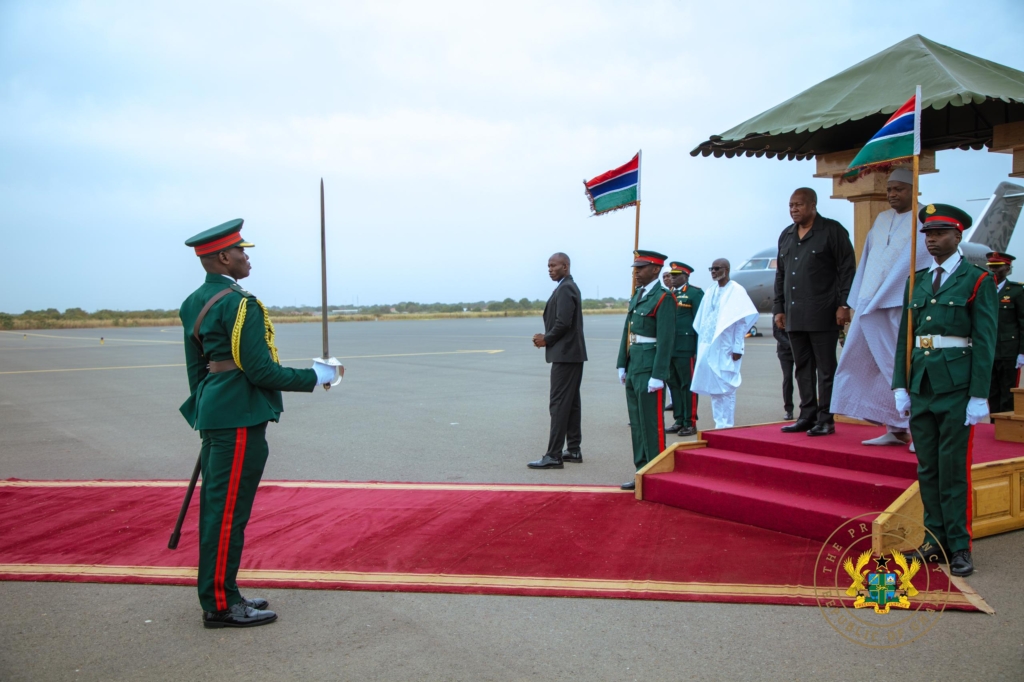
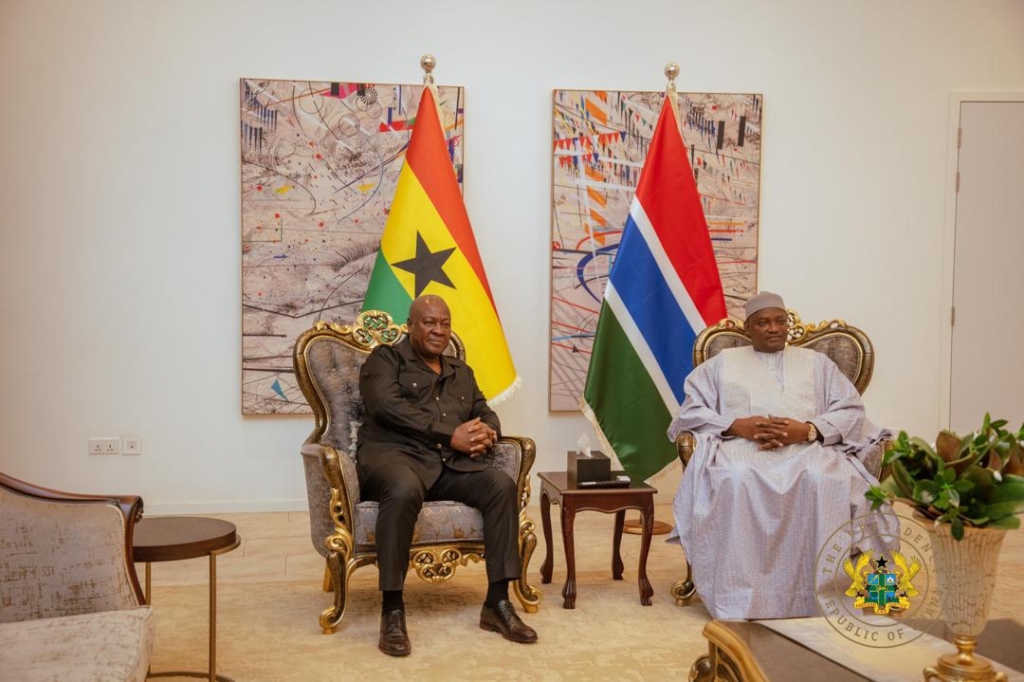
President John Dramani Mahama has arrived in Banjul, The Gambia, as part of a diplomatic tour to The Gambia and Senegal aimed at strengthening Ghana’s ties with its West African neighbours.
The visit serves as a gesture of gratitude to the leaders of both countries for attending Ghana’s presidential inauguration on January 7.
President Mahama’s meetings with his counterparts also emphasize his commitment to reinforcing regional cooperation and diplomatic relations within the sub-region.
After concluding his engagements in The Gambia, President Mahama will continue his tour in Senegal before returning to Ghana later today, Friday, January 17.
Aliou Cissehas been dismissed as Senegal’s head coach after leading the Teranga Lions for nearly a decade.
During his nine and a half years at the helm, the 48-year-old led the team to its first-ever Africa Cup of Nations (Afcon) victory, clinching the 2021 title in February 2022.
Although his contract expired in August, Cisse continued to oversee Senegal’s campaign, including their 1-1 draw with Burkina Faso and a 1-0 win against Burundi in the 2025 Afcon qualifiers last month.
Despite the Senegalese Football Federation (FSF) seeking to renew his contract, the country’s new government, led by Bassirou Diomaye Faye, opted to part ways with Cisse just over a week before the next set of qualifiers.
“The FSF would like to thank Aliou Cisse for his good collaboration and his brilliant results at the head of various national selections and wishes him every success for the future,” a statement said.
Despite occasional friction between the Senegalese Football Federation (FSF) and the government, which finances the national coach’s salary, the timing of this latest development has come as a surprise.
Aliou Cissé, who had already scheduled a press conference for Friday to reveal his squad for the upcoming double-header against Malawi, is at the center of attention.
Cissé, a former player with 35 caps for Senegal, has been at the helm since March 2015. His tenure has been instrumental in keeping the Teranga Lions at the top of Africa’s football rankings for over four years.
Under his guidance, Senegal claimed their first Africa Cup of Nations title in a dramatic penalty shootout against Egypt in Cameroon. This victory came after narrowly missing out in 2019, where they finished as runners-up.
However, their attempt to defend the title earlier this year fell short when they were knocked out in the round of 16 by Ivory Coast, who went on to win the tournament after a tense penalty shootout.
Cissé also led Senegal to two FIFA World Cup appearances, in 2018 and 2022. They exited in the group stage in 2018 and reached the round of 16 in 2022, but Morocco overtook them as Africa’s highest-ranked team by the end of last year.
Currently, Senegal is placed second in their World Cup qualifying group, trailing group leaders Sudan by two points. With four matches played, the next round of qualifiers is scheduled for March 2024.
The FSF’s statement said that Khady Diene Gaye, Senegal’s Minister of Youth, Sports and Culture, had not approved a one-year contract extension for Cisse in a letter it received on Monday.
It said the reasons behind the decision were the “failure to achieve the objectives assigned in November”2022″—namely reaching the quarterfinals of the 2022 World Cup and winning the 2023 Afcon title—the “regression” in the world rankings and “the risk of disaffection between our national team and the Senegalese in general”.
The FSF is yet to announce an interim coaching team for the upcoming 2025 Afcon qualifiers against Malawi.
Cisse was part of Senegal’s first golden generation during his playing career, which included spells at Sedan, Paris St-Germain, Birmingham City and Portsmouth.
He captained the national side at the 2002 World Cup as they shocked holders France en route to reaching the quarter-finals on their first appearance at the tournament.
Earlier that year, he had missed the decisive penalty in the shootout at the end of the 2002 Africa Cup of Nations final against Cameroon, while in September 2002 he experienced personal tragedy in the Joola ferry disaster.
Eleven family members, including his sister, died when the ship, often labelled ‘Africa’s Titanic’, sank off the coast of The Gambia.
He told BBC Sport Africa in 2022 that he still feels the effects of the tragedy, which he says he could easily have been part of.
“I can’t even count how many times I took the ferry,” he said.
“Every time I came back home, I travelled on the Joola. I could have easily been on the boat too, so I was lucky.”
His coaching career started when he joined the FSF in 2011 and he first worked with Senegal’s Under-23 team, including at the 2012 Olympics, before taking charge of the Teranga Lions following the departure of Alain Giresse.
At least 30 decomposing bodies have been found on a boat off the coast of Senegal, militaryauthorities say.
The navy was informed of a vessel that was adrift about 70 km (45 miles) from the capital Dakar, according to a military statement on X. They brought the wooden canoe, or pirogue, into port on Monday morning.
“Recovery, identification, and transfer operations are being made extremely delicate by the advanced state of decomposition of the bodies,” the statement said.
There has been a noticeable rise in the number of migrants departing from Senegal in an attempt to reach Spain’s Canary Islands, a perilous 1,500 km (950-mile) voyage across the Atlantic Ocean.
Fishermen recently discovered severely decomposed bodies believed to be migrants who had been adrift for several days.
Authorities are currently investigating the circumstances surrounding the boat’s departure, its point of origin, and how many people were onboard.
In a similar tragedy, 14 bodies, thought to be Senegalese migrants, were found off the coast of the Dominican Republic in August.
In response to the increasing migrant deaths, Senegal’s government introduced a 10-year strategy in August aimed at curbing illegal migration. Recently, authorities have intercepted numerous migrant boats along the country’s coastline.
Despite the persistent loss of life, many young men are driven by unemployment, poverty, and conflict to risk the dangerous journey from West Africa to the Canary Islands.
Some Senegalese fishermen, struggling to make a living due to foreign trawlers in their waters, have turned to migration or lent their boats to human traffickers.
For many West African migrants, the route to the Canary Islands has become an increasingly popular alternative to crossing the Sahara Desert and the Mediterranean Sea, though it remains extremely dangerous.
According to Frontex, the European border agency, the Atlantic route experienced a 161% increase in migrant crossings in 2023 compared to the previous year.
Around 40,000 migrants successfully reached the Canary Islands last year, while nearly 1,000 were reported dead or missing, though the true figure is expected to be significantly higher.
Senegal hasmade a groundbreaking step into space exploration with the successful deployment of its first satellite, Gaindesat.
The satellite was launched from California’s Vandenberg Air Force Base at 6:46 p.m. GMT on Friday, with the support of SpaceX.
“After five years of hard work by our engineers and technicians, this achievement marks a significant step toward our technological sovereignty.
I wish to express my pride and gratitude to all those who made this project possible,” President Bassirou Diomaye Faye wrote on X following the launch.
Senegal’s latest achievement in space technology, the Gaindesat satellite, marks a significant milestone for the nation and the broader African space industry.
Developed by a team of Senegalese engineers in partnership with the Montpelier University Space Center (CSUM), Gaindesat is poised to enhance various sectors including water management, weather prediction, aviation safety, and climate monitoring.
This satellite will support key organizations such as the Directorate of Water Resource Management and Planning (DGPRE) and the National Agency for Civil Aviation and Meteorology (ANACIM).
Gaindesat’s launch positions Senegal as the second Francophone country in sub-Saharan Africa to deploy a satellite, following Djibouti’s precedent.
Senegal’s advancement in space technology highlights the nation’s readiness to lead in scientific innovation and explore new frontiers.
This initiative not only represents a leap forward for Senegal but also serves as an inspiration for other African nations, showcasing the potential for progress in the space sector across the continent.
The global space industry, currently valued at approximately $469 billion, sees Africa’s contribution growing. With the African space sector valued at $19.49 billion in 2021, projections suggest it will reach $22.64 billion by 2026.
As of 2022, Africa has launched 52 satellites, with ambitious plans to significantly increase this number in the coming years, as reported by Space Hubs Africa.
Akon unveiled plans in 2018 to build a futuristic city in Senegal, his country of birth.
He likened the vision to a real-life version of Wakanda, the fictional city from Marvel’s Black Panther. The project, named Akon City, aims to be a cutting-edge hub powered by a local cryptocurrency called AKoin.
Despite the global economic disruptions caused by the COVID-19 pandemic in 2020, Akon remained committed to the development of the $6 billion venture.
He revealed that construction was slated to start in 2021, with the aim of not only providing employment opportunities for Senegalese but also offering a welcoming environment for Black Americans and diaspora members facing racial discrimination.
By August 2020, Akon, accompanied by government officials, visited the project site in Mbodienne and confirmed that one-third of the necessary funds had been secured.
However, he chose not to disclose the investors involved due to confidentiality agreements. Although initially set for completion by 2023, the project’s timeline is now uncertain due to significant delays and complications.
The Senegalese government has expressed dissatisfaction with the project’s slow progress.
Through Sapco-Senegal, the state agency overseeing coastal and tourism developments, officials have issued a warning to Akon, threatening to reclaim the majority of the allocated land if substantial progress is not made.
According to reports, Akon risks losing up to 90 percent of the land if construction does not advance promptly.
In response, Akon’s team has reported that initial tasks like geotechnical surveys and land preparation are in progress. Project manager Cheick Seck from Axiome Construction has stated that they are awaiting further guidance to proceed with major construction. Akon is anticipated to visit Dakar soon to address concerns and reassure stakeholders of the project’s future.
The endeavor has also been marred by legal issues. In 2021, former business associate Devyne Stephens filed a $4 million lawsuit against Akon, alleging unpaid funds from a previous settlement.
A subsequent court filing in March 2022 sought to freeze Akon’s New York assets until the lawsuit’s resolution.
Stephens’ legal team argued that Akon City exhibited signs of fraudulent activity, such as Ponzi and pyramid schemes, and implied the project might be a scam.
Despite these legal challenges and the impact of the pandemic, Akon has denied the accusations and has taken steps to resolve the lawsuit, including a partial settlement payment of $850,000 in April 2022.
The singer remains optimistic, asserting that the project is progressing according to a revised 10-year plan.
The National Petroleum Authority (NPA) has reached an agreement with Senegal and Gambia to export petroleum products from Ghana.
This expands the list of countries already importing petroleum products from Ghana, including Mali, Niger, Burkina Faso, Côte d’Ivoire, and Togo.
In 2023, the total volume of petroleum products re-exported and transited to these neighboring countries was 385,154,100 liters.
Delivering his opening speech at the Ghana International Petroleum Conference (GhiPCon), with the theme: “The Petroleum Industry: Building a Future for Growth, Efficiency, and Sustainability”,
Dr. Mustapha Abdul-Hamid stated that the rise in export volumes is evidence of the NPA’s significant achievements in tackling illicit fuel activities in the country.
At present, the industry has over 3,000 service providers with substantial local involvement, collectively supplying over four million metric tonnes of petroleum products each year, both domestically and internationally.
This progress has enabled the industry to become a major contributor to the growth of Ghana’s gross domestic product (GDP).
“We estimate that the sector had a monetary value of over Ghc 71 billion, representing about 84% of the country’s 2023 GDP. In the past seven years the industry returned an average annual value of over Ghc 35 billion”, he said.
The NPA emphasized its commitment to leveraging technology and innovation to stay relevant in the evolving downstream petroleum industry. By developing and implementing forward-thinking strategies and policies, the NPA aims to ensure the industry’s efficiency and profitability while providing consumers with optimal value for their money.
The authority highlighted that the new transparent automatic price adjustment formula has transitioned from an annual regulated price with unpaid subsidies to a more frequent bi-weekly and daily pricing model.
Dr. Abdul-Hamid underscored the NPA’s zero-tolerance stance on toxic fuels, noting that Ghana, Kenya, Tanzania, Uganda, and Morocco now use low-sulphur fuels with typical imports below 50 ppm, and local refineries are on track to meet compliance standards.
He also pointed out that the NPA has introduced technology-driven initiatives such as the petroleum marking scheme, bulk road vehicle tracking project, electronic cargo tracking system, and enterprise relational database management software to ensure the quality and quantity of petroleum products delivered to consumers.
Meanwhile, the Minister of Energy, delivering a speech on behalf of Vice President Dr. Mahamudu Bawumia, praised the NPA for its effective management of the “Gold for Oil” program and the Cylinder Recirculation Model (CRM), which has increased investor confidence in the sector.
He noted that these efforts, combined with a strong policy framework, have encouraged private sector investment and significantly contributed to achieving Ghana’s goal of 50% LPG penetration by 2030.
He urged the NPA to continue investing in infrastructure, adopting cutting-edge technology, and strengthening the supply chain to secure Ghana’s energy future.
He said with the geopolitical tensions to technological advancements and environmental concerns, “our strategies must be robust, innovative, and adaptable.”
He also pledged the government’s ongoing dedication to advancing and exploring policies that boost Ghanaian content, support capacity building, and create opportunities for the Ghanaian population.
He believes that such efforts can ensure that the advantages of our resources are broadly distributed while fostering the growth of our local workforce and businesses.
“Our plane is on fire,” wrote musician Cheick Siriman Sissoko on Facebook. He posted a picture of passengers sliding down emergency slides at night while flames covered one side of the plane.
Transport Minister El Malick Ndiaye said that on Wednesday the Air Senegal flight, operated by TransAir, was going to Bamako, Mali. There were 79 passengers, two pilots, and four cabin crew on board. The airport opened again on Thursday morning after being closed at night.
The people who were hurt were taken to the hospital, while the rest were brought to a hotel to relax. Boeing told the airlines to ask for a comment about the situation.
This was the third time a Boeing airplane was in trouble this week. On Thursday, 190 people were safely taken off a plane in Turkey because one of its tires burst when it landed at a southern airport. This information was shared by Turkey’s transportation ministry.
The company has been facing a lot of problems since a door plug blew out of a Boeing 737 Max during an Alaska Airlines flight in January, causing a big hole in the plane. In February, Boeing was told by the Federal Aviation Administration to come up with a plan in 90 days to fix its plane-building problems and make sure its planes are safe.
The incident has made people look very closely at Boeing because two crashes with Boeing 737 Max planes in 2018 and 2019 killed 346 people. Around twelve family members of people who died in the second plane crash want the US government to bring back a criminal fraud charge against the company. They believe Boeing broke the terms of a 2021 agreement.
In April, a person who used to work for Boeing, Sam Salehpour, told the government that the company was making airplanes too fast and not doing it right. This could make the airplanes break.
The Aviation Safety Network keeps track of plane crashes and said that the plane was a Boeing 737-38J. Pictures of the broken plane in a field with foam to put out fires were posted on X, which used to be called Twitter. One engine seems to have broken and a wing is also broken according to the pictures.
ASN is part of a group called Flight Safety Foundation. This group wants to make sure that air travel is safe and keeps track of accidents.
President Nana Addo Dankwa Akufo-Addo travelled to Dakar for the April 2 swearing-in ceremony of President Bassirou Diomaye Faye.
The event marked Senegal’s celebration of its fifth president, following President Faye’s victory in the March 24 presidential elections with over 54% of the votes.
The ceremony was attended by almost all leaders from the West African bloc, ECOWAS, including ECOWAS President Bola Ahmed Tinubu of Nigeria.
In a video on social media platform X, President Akufo-Addo walked to the podium to greet President Faye, following the protocol observed by other leaders at the event center in the city of Diamniadio.
After exchanging pleasantries, President Akufo-Addo stood side-by-side with President Faye for photographs.
Akufo-Addo at the swearing in ceremony of Bassirou Diomaye Faye of Senegal 🇸🇳 . Bassirou don't listen to anything from him otherwise you will bath in the skies 🌌 😂😀 pic.twitter.com/tOnKbjloQU
Bassirou Diomaye Faye, Senegal’s president-elect, is set to assume office in April following his victory in the presidential election held on March 24.
Initially entering the race as the primary opposition candidate, Faye stepped into the spotlight after his predecessor, the widely admired Ousmane Sonko, was disqualified by the courts due to prior convictions for serious offenses.
On March 22, 2024, just two days before the election, Faye took a bold step by publicly disclosing his full assets on his official Facebook page and challenged the other 18 contenders to follow suit. However, according to GhanaWeb’s investigations, none of them accepted the challenge.
According to the disclosed information, Faye accumulated two houses during his tenure in public service, along with ownership of two second-hand cars. Additionally, he maintained two bank accounts and resided in a self-built house. The document further revealed his involvement in farming and acknowledged his main debt to a friend who provided a loan for investment in his farm.
At 44 years old, Faye has garnered praise from many social media users for his transparency even before assuming office, succeeding outgoing president Macky Sall. He has affirmed his commitment to submitting the document to the Constitutional Court as required by law upon assuming office.
See the French and English translation of his declaration form below:
Senegal’s President-elect, Bassirou Diomaye Faye, who clinched victory has pledged to steer the nation with modesty, echoing his commitment to governance marked by humility and transparency.
Addressing reporters on Monday following his triumph in the recent elections, Faye, a newcomer to the political scene, expressed gratitude to the Senegalese populace for their support.
Faye is on track to assume the presidency after his primary rival conceded defeat, commending President Macky Sall and fellow candidates for upholding Senegal’s democratic values by acknowledging his win well before the official results were announced.
“In choosing me, the Senegalese people have opted for a departure from the past,” Faye declared during his inaugural public appearance post-election. “I pledge to lead with humility and transparency.”
Provisional results indicate Faye secured approximately 53.7% of the vote, with Amadou Ba, representing the current ruling coalition, garnering 36.2%, as reported by the electoral commission based on 90% of polling stations’ tallies in the initial round of voting.
Ba and Sall extended congratulations to Faye, who celebrated his 44th birthday on Monday, hailing the electoral outcome as a triumph for Senegal, whose reputation as one of West Africa’s most stable democracies faced a challenge when Sall postponed the elections.
“The Senegalese people have reaffirmed the robustness of our democracy… I wish him (Faye) success in leading our nation,” Ba remarked.
A smooth transition of power in Senegal would signify a significant boost for democracy in West Africa, a region that has witnessed eight military coups since 2020.
Senegal welcomes its newest president, Bassirou Diomaye Faye, who at 44 years old, becomes the youngest democratically elected leader in West Africa.
Born in 1980, Faye emerged as the de facto opposition leader in the March 24, 2024 election, which featured 19 candidates.
Faye assumed the role of opposition leader after his mentor, the widely admired Ousmane Sonko, was disqualified from the race by the courts due to previous convictions for serious offenses.
This outcome signals the conclusion of the two-term presidency of outgoing President Macky Sall, who has reiterated his commitment to stepping down on April 2 as scheduled.
Similar to his mentor Sonko, Faye had previously been incarcerated and was only granted presidential pardon in the weeks leading up to the elections.
Here are key details about Senegal’s incoming president:
A. He was released from imprisonment on March 16, alongside Sonko.
B. Faye and Sonko are both leaders of the Patriotes Africains du Sénégal pour le Travail, l’Ethique et la Fraternité (Pastef), a party dissolved in July 2023.
C. He spent 335 days in pre-trial detention on charges including “contempt of court” and “incitement to insurrection.”
D. He celebrated his 44th birthday on March 25, 2024, the same day he was declared the victor in the election.
E. In 2014, at the age of 34, Faye, an alumnus of the Ecole Nationale de l’Administration (ENA), played a significant role in the formation of Pastef during meetings.
F. He emerged as one of the chief architects of Sonko’s presidential campaign program in 2019, earning praise for his strategic acumen. During his first presidential bid, Sonko secured nearly 16% of the vote, finishing third, as noted in a Le Monde profile.
G. President Macky Sall, the ruling party’s candidate Amadou Ba, and other political opponents have extended their congratulations to him on his victory.
H. He becomes Senegal’s 5th president, in a country known for its stable democracy, which has remained free from military intervention since gaining independence.
I. Diomaye Faye’s polygamous status, with two wives, has sparked significant reactions on social media.
In his social media-posted victory speech, he listed four urgent priorities.
“In view of the emergencies that confront us and the hope placed in us, we are working relentlessly, diligently and methodically around priority projects:
1- National reconciliation and the reconstruction of the foundations of our living together;
2- The rebuilding of institutions
3- Significant reduction in the cost of living to alleviate the burdens of daily life;
4- National inclusive sectoral consultations on the evaluation and relaunch of public policies.
“We will walk together, act together and succeed together! Long live Senegal; Long live the Republic; Long live Africa,” he stated.
Preliminary results from Senegal’s presidential election show opposition candidate Bassirou Diomaye Faye leading the race, prompting his supporters to take to the streets in celebration.
However, the main rival from the ruling coalition insists that a run-off will be necessary to determine the ultimate winner.
Following Sunday’s election, initial reports indicate Faye’s growing support, with at least five of the 19 candidates extending their congratulations as results slowly emerge.
Former prime minister Amadou Ba, representing the ruling coalition, cautioned against premature celebrations, expressing confidence in the possibility of a run-off based on the feedback from their team of experts.
The election marked a pivotal moment for Senegal, with millions turning out to peacefully cast their votes amid a backdrop of political turmoil over the past three years. The outcome could signal a shift from the administration led by outgoing President Macky Sall, which, while promoting investor-friendly policies, has struggled to alleviate economic challenges in the region.
With Sall not on the ballot for the first time in Senegal’s history, his ruling coalition selected Ba as their candidate, aiming to maintain their hold on power.
Initial tallies suggested a significant lead for Faye, sparking joyous scenes across the capital, Dakar, as supporters celebrated in anticipation of victory.
Despite the early celebrations, final provisional results are expected by Tuesday, with a second round of voting possible if no candidate secures the required majority.
Faye’s alliance with firebrand opposition leader Ousmane Sonko, who was disqualified from running due to a defamation conviction, has drawn attention. Sonko’s endorsement of Faye underscores their shared vision for Senegal’s future.
As Senegal awaits the final outcome, Faye remains committed to his platform, promising to address corruption, restore stability, and prioritize economic independence, particularly for the country’s youthful population.
After some time of trouble in the government, people in Senegal are choosing a new leader. Seventeen people want to be the next president because the current president, Macky Sall, can’t run for reelection.
The election was supposed to happen last month but Mr. Sall delayed it, causing protests from the opposition and a crisis in the democratic process. Up until now, people have always said that Senegal is a strong example of democracy in West Africa.
Seven million people can vote in the election on Sunday.
One of the people running for the most important job in Senegal is Amadou Ba, a 62-year-old former Prime Minister and the candidate of the governing BBY coalition.
His biggest competition is Bassirou Diomaye Faye, 44. He was in jail for a long time until last week. He said the charges against him were not fair and were just because of politics.
Famous leader Ousmane Sonko, who was in jail until last week for false charges, cannot run for office. He and his old party Pastef are supporting his friend Mr. Faye
On Friday, Abdoulaye Wade and his PDS party supported Mr Faye, after his son Karim Wade had to quit because he had citizenship in both France and Senegal.
We will know the results in a few days and there will probably be another round because there are a lot of people competing. A candidate has to get more than half of the votes to win.
The whole world will be watching to see if the election can help repair Senegal’s damaged reputation.
Earlier this week, President Sall told the BBC that he doesn’t feel sorry for delaying the election. It was supposed to happen on 25 February.
“He said I didn’t do anything wrong and the decision to delay the vote wasn’t made by just one person, but because some members of parliament had concerns about the election. ”
“All the things we did were legal and followed the rules. “
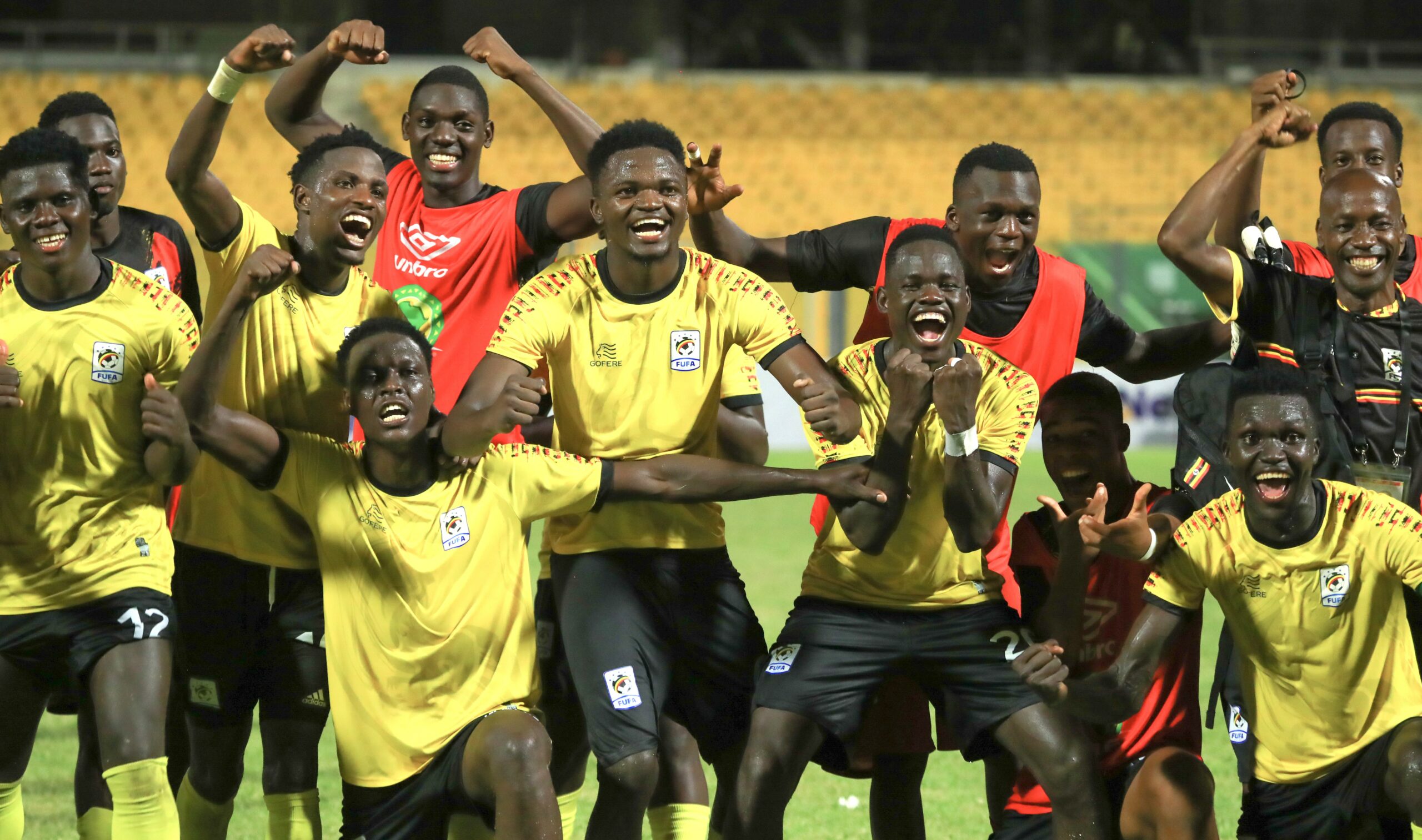
In a thrilling Group B clash at the 13th edition of the African Games, Uganda’s men’s U20 football team secured a remarkable 1-0 victory over Senegal.
The match, held at the Accra Sports Stadium, saw Allan Oyirworth emerge as the hero with a crucial goal just before the hour mark, sealing the fate of the highly fancied Senegal side.
This victory propelled Uganda to six points after their earlier win against Nigeria, surprising many and sending shockwaves through the tournament.
Despite Senegal’s formidable reputation, Uganda’s determined performance proved decisive, earning them a spot in the semi-finals and at least second place in the group.
With this unexpected triumph, Uganda’s young talents have showcased their prowess and established themselves as a formidable force in the competition.
In another intense match, Nigeria secured a hard-fought 1-0 victory over South Sudan. The deadlock was broken in the 80th minute when Nigeria was awarded a late penalty, expertly converted by Sadiq Isiyaka, securing a crucial win and keeping their semi-final hopes alive.
Senegal’s national electoral commission says there’s no cause for alarm over its preparedness to conduct the presidential election on 24 March.
It’s been a joyful mood in Senegal as the government finally fixed a day for the delayed presidential election.
But there are concerns the electoral commission may not have enough time.
The commission has assured Senegalese that they have nothing to worry about, with an official telling the BBC that they are not under any pressure.
The official said electoral materials had already been sent to the regional offices and their teams mobilised before elections were postponed early last month.
The move to hold elections before 2 April, when the mandate of President Macky Sall comes to an end, ends the crisis that divided the country and led to protests for weeks.
Prior to Wednesday’s announcement, authorities had attempted to postpone the original 25 February poll to December, which resulted in the political crisis.
Senegal’s Justice Minister Aissata Tall Sall has announced the release of nearly 400 protesters from prison.
They were arrested and imprisoned during the political demonstrations of March 2021 and June 2023.
Ms Sall did not indicate whether opposition leader Ousmane Sonko and presidential candidate Bachirou Diomaye Faye would be released.
“The only thing I can say is that this is not a mass release; these are cases that are studied on a case-by-case basis according to the elements in the files,” she added.
The minister said the release of the political prisoners was aimed at easing tensions in the country.
Political demonstrations in Senegal have often resulted in arrests and deaths.
Most recently, three people died during protests over the cancellation of the country’s 25 February elections.
The justice minister said investigations were ongoing to determine those responsible.
The top election authority in Senegal has declared the government’s postponement of the presidential election, originally slated for February 25th and rescheduled for December, as unconstitutional.
According to a judgement approved by seven members of the Constitutional Council and obtained by The Associated Press, the decree signed by President Macky Sall to postpone the election has been cancelled. Similarly, the National Assembly’s decision on February 5th to reschedule the vote for December 15th has been deemed “contrary to the constitution.”
The Constitutional Council’s judgement emphasized the necessity of holding the presidential election as soon as possible, given the impossibility of organizing it on the initially planned date.
The postponement has sparked political turmoil in the country. It remains uncertain whether the election can proceed as initially scheduled or if additional time will be required to facilitate political campaigns.
President Sall has refrained from making immediate public comments in response to the ruling. In a recent interview with The Associated Press, he had avoided speculation about his reaction to the court’s decision, stating that he would address the matter when the judgement is delivered.
The decision to postpone the election came just hours before campaign activities were set to commence. President Sall cited a dispute between the judiciary and the legislature over the final list of candidates, as well as concerns about the reported dual nationality of some candidates, as reasons for the delay.
Opposition leaders vehemently rejected the postponement, leading to protests, violent clashes with security forces, arrests, and mobile internet disruptions, further exacerbating political tensions in Senegal, known as one of Africa’s most stable democracies.
This year’s election has been marred by controversies, including deadly protests that prompted President Sall to announce that he would not seek a third term, as well as the disqualification of two opposition leaders.
While the opposition accused President Sall of attempting to extend his tenure beyond constitutional limits, he maintained that the postponement was aimed at preventing the country from facing “major difficulties” due to the electoral dispute.
The Constitutional Council canceled President Macky Sall’s decision and a controversial law passed by parliament, which means the vote will now take place in December.
There are big protests happening in a country in West Africa that used to be known for its strong democracy.
Opposition leaders said it was like a takeover of the constitution.
He got support from 105 out of 165 MPs for his idea after a heated argument, and the police had to remove some of the opposing MPs from the room. Originally it was suggested to delay the election by six months, but at the last minute it was changed to 10 months, so now the new election date is 15th December.
Mr Sall said again that he does not want to run for office again. But people who disagree with him said he either wants to stay in charge or wants to have too much control over the next leader.
Khalifa Sall, a top challenger and a former mayor of Dakar, who is not a relative of the president, said the delay was like a “constitutional coup. ” Another candidate, Thierno Alassane Sall, who is also not related, called it “high treason. ”
The court said the election can’t happen on February 25, but they want it to happen as soon as they can.
Mr Sall has not responded to the decision yet. His second time in office ends on April 2nd.
The election might happen before April, but the arguments that caused the polls to be delayed are still not fixed. These include claims of corruption in the Constitutional Council and objections from opposition candidates who were not included in the candidate list last month.
Carrying out the elections with the controversial candidate list could cause more protests and fighting by the followers of the people who are not allowed to run, especially Ousmane Sonko, who is very popular among young Senegalese.
Many candidates have not been campaigning since President Sall issued his decree on 3 February, just before campaigns were supposed to start.
The decision comes at the same time as a few opposition politicians and members of civil society were let out of jail. Some people in the country think this was done to make the public happy.
Senegal has been known for a long time as one of the most stable countries with a democratic government in the area. This country in mainland West Africa has never had a military takeover. It has changed leaders three times without much trouble and never before pushed back a presidential election until now.
The Aar Sunu Election, a new group of about 40 organizations, said the protests will begin at 3 PM. They want to protect our election.
The people in charge of the protest, including groups that oppose the government, have asked everyone to come out in big groups even though the police said no.
Cherif Mouhamadou Blondin Ndiaye, the leader of Dakar, stopped the march because he thought it could cause trouble and make it hard for people and things to move around freely.
President Macky Sall changed the date of the vote to 25 February suddenly. He did this because there was a disagreement about who could run for president.
A Senegalese individual has expressed admiration for the “bond” between Ghana and Nigeria, as observed through the banter and camaraderie exhibited by citizens of both nations during the 2023 AFCON tournament.
This sentiment arose from the playful teasing exchanged between Ghanaians and Nigerians following their respective performances in the tournament. Ghana faced an early elimination in the group stages, leading to Nigerians poking fun at their misfortune.
However, Nigeria’s journey to the final stage ended in defeat against Ivory Coast, prompting Ghanaians to reciprocate with jests directed at their neighbors.
This dynamic exchange of banter on social media has caught the attention of other Africans, who find themselves impressed by the mix of friendly rivalry and mutual respect displayed between Ghana and Nigeria.
Many are intrigued by the origins of this unique relationship between the two countries, which oscillates between playful teasing and solidarity during sporting events.
“As a Senegalese. I want to ask. How did the vibe between Ghana and Nigeria start. U make us and other countries jealous of the bond. You guys make it look like Africa is made up of only Ghana and Nigeria. Why?” one @bontiyaka asked.
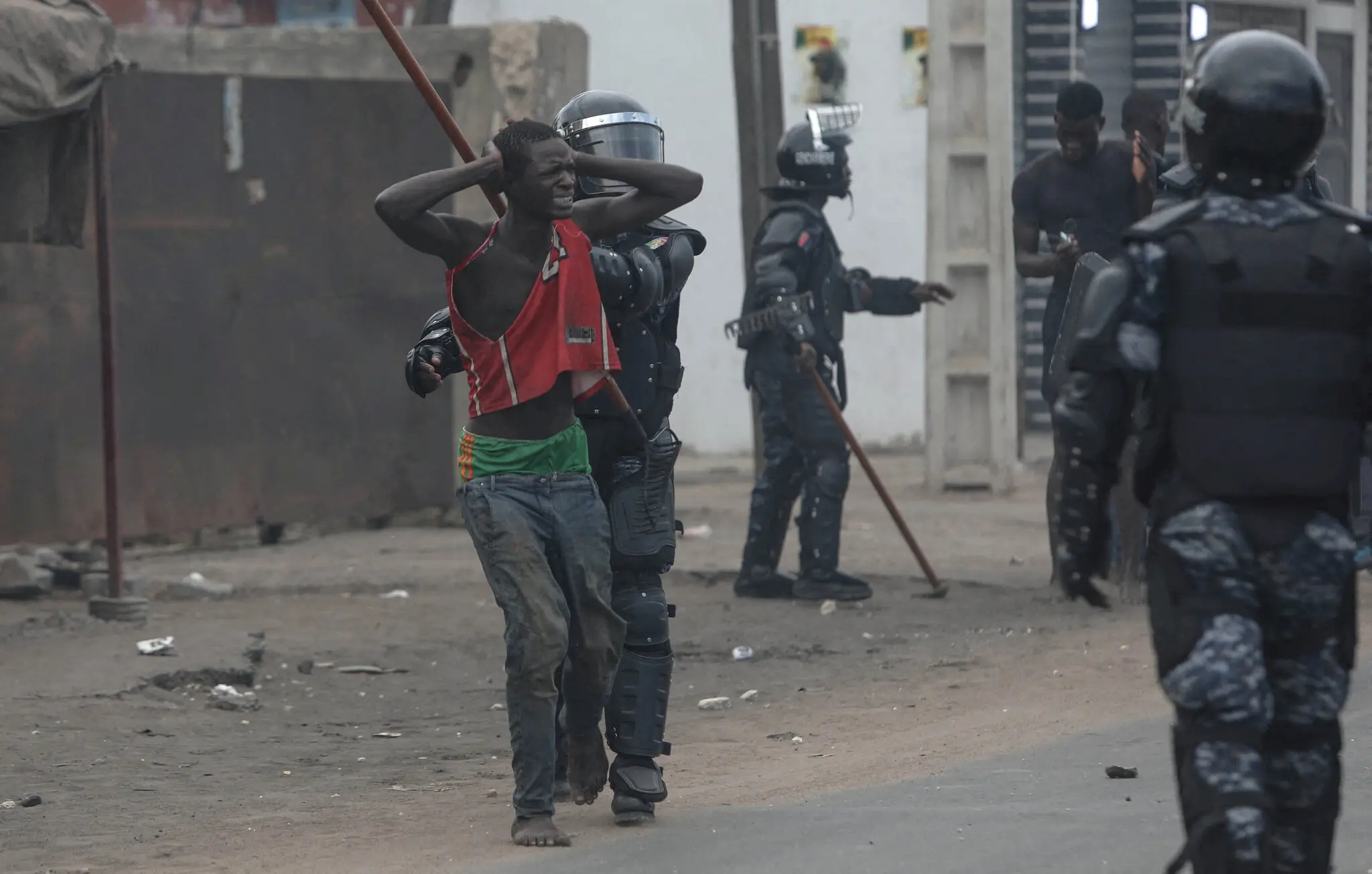
Violent protests have erupted across Senegal in response to the postponement of presidential elections, with the first fatality reported as clashes intensify.
A student died during clashes with police on Friday in the northern city of Saint-Louis, as confirmed by an opposition leader and a local hospital source.
In the capital Dakar, security forces deployed tear gas to disperse the crowds.
Originally scheduled for February 25, the elections were postponed until December 15, with President Macky Sall asserting that this decision was not about holding onto power.
Earlier, Mr. Sall had indefinitely suspended the polls, citing the need to resolve a dispute over the eligibility of presidential candidates. Subsequently, lawmakers extended Mr. Sall’s mandate by 10 months.
Critics of the move argue that Senegal’s reputation as a democratic stronghold in an otherwise volatile region of West Africa is at stake.
Opposition leader Khalifa Sall, unrelated to the president, denounced the election delay as a “constitutional coup.”
While Mr. Sall expressed willingness to step down, he emphasized the importance of ensuring stability and peace in the country.
The student’s death in Saint-Louis was reported by Khalifa Sall on social media, lamenting the clashes as a consequence of the unjustifiable interruption of the electoral process.
The incident was confirmed by a local hospital source and an official from the student’s university, according to AFP.
Senegalese authorities have yet to comment publicly on the matter.
Last weekend, mass protests erupted across the country, culminating in Friday’s confrontations in Dakar, where demonstrators clashed with security forces, leading to stone-throwing and tire-burning.
President Sall, although asserting he won’t seek reelection, faces accusations of attempting to retain power or unfairly influencing his successor.
While twenty candidates initially qualified for the elections, several were excluded by the Constitutional Council, responsible for determining candidates’ eligibility.
West Africa’s regional bloc, ECOWAS, urged Senegal’s political leaders to urgently restore the electoral calendar in accordance with the constitution.
Senegal has long been regarded as one of West Africa’s most stable democracies, having experienced three peaceful transfers of power and never delaying a presidential election.
A student was killed in a fight with the police on Friday in the city of Saint-Louis, a leader of the opposing group and a source from the nearby hospital confirmed.
In the main city Dakar, the police used tear gas and loud stun grenades to make people leave.
MPs decided to delay the February 25 elections until December 15.
The lawmakers later made Mr. Sall’s time in office 10 months longer.
Critics say that Senegal’s reputation as a strong democracy in a shaky part of West Africa is at risk because of this decision.
Opposition leader Khalifa Sall, who is not related to the president, said that the election delay is like a government takeover that goes against the country’s laws.
“He said all democrats are upset by the fighting caused by stopping the election for no good reason. ”
The hospital and the university confirmed that the student has passed away, but they want to keep their identities a secret. This information came from the AFP news agency.
The Senegalese officials have not said anything about the problem in public.
The country had big protests last weekend. On Friday, people in Dakar fought with the police. They threw rocks and burned tires.
President Sall said he will not run for office again, but some people think he is either trying to stay in power or unfairly influencing the next leader.
Twenty people were chosen to run for election, but some others were not allowed to because they didn’t meet the rules.
West Africa’s Ecowas group asked Senegal’s political leaders to quickly follow the constitution and make sure the electoral schedule is back on track.
Senegal has been seen as a stable democracy in West Africa for a long time. It is the only country in West Africa that has never had a military takeover.
It has had three times where a new person became the leader without fighting, and it has never put off a vote for president.
Director of Academic Affairs and Research at the Kofi Annan International Peacekeeping Training Centre, Professor Kwesi Aning, has highlighted what he views as a significant threat to the stability of the remaining members of the Economic Community of West African States (ECOWAS).
During an interview on JoyNews’ PM Express, Professor Aning stressed the critical lack of understanding among ECOWAS states regarding the shifting dynamics in the sub-region, the expectations of their populations, and the constitutional challenges surrounding elections.
He specifically noted that three states—Mali, Burkina Faso, and Niger—have indicated intentions to withdraw from the regional union, suggesting that they might navigate the changing dynamics successfully.
“The coastal states of ECOWAS were more willing to listen to their masters from outside the sub-region and listen to the bogus analysis from elsewhere that the terrorists were coming. Coming from where?” Professor Aning questioned, stressing the need for a more nuanced understanding of the situation.
Security Expert and Senior UN Mediation Advisor, Dr. Emmanuel Bombande, echoing Professor Aning’s sentiments, stressed that these states indeed harbor genuine intentions to break away from the regional union.
However, he proposed that preventive measures and diplomatic dialogues could potentially reverse these intentions.
Dr. Bombande pointed out a flaw in the strategies pursued by the coastal states, noting that they were primarily focused on preventing the southward spread of terrorism, rather than addressing the root causes of instability in the Sahel states.
“The intention is genuine because we saw it coming and the attitude of the rest of West Africa particularly the coastal states was to innovate the initiatives that would halt the spread of terrorism from coming southward.
“This simply means that as long as terrorism stayed in the Sahel states it was okay. I think those strategies were fundamentally flawed and that is the genesis of the conversation among the Sahel states who said to themselves “let’s see one another as people whose destinies must be taken by us because our counterparts in West Africa are abandoning us.””
On Monday, Senegal’s parliament voted to reschedule the postponed presidential election for December 15 amidst public outcry.
The decision came after President Macky Sall’s unexpected announcement of a postponement on Saturday, plunging the West African nation into constitutional uncertainty and potentially tarnishing its reputation as a beacon of democratic stability in a region marred by coups.
Protests erupted outside parliament as lawmakers deliberated on the bill, which initially proposed moving the February 25 vote to August 25 and extending Sall’s tenure until his successor’s inauguration. Riot police deployed tear gas to disperse the demonstrators.
Eventually, just before the final vote, the bill was amended to set the election date even later, to December 15, and passed by 105 out of 165 MPs in the Assembly.
This last-minute change is expected to provoke further opposition resistance and may trigger violent protests similar to those seen in recent years, partly fueled by allegations of Sall’s authoritarian tendencies.
The parliamentary proceedings were briefly disrupted when a group of opposition members stormed the central dais, obstructing parliamentary business. Security forces intervened to remove them, allowing the vote to proceed after a delay of over two hours.
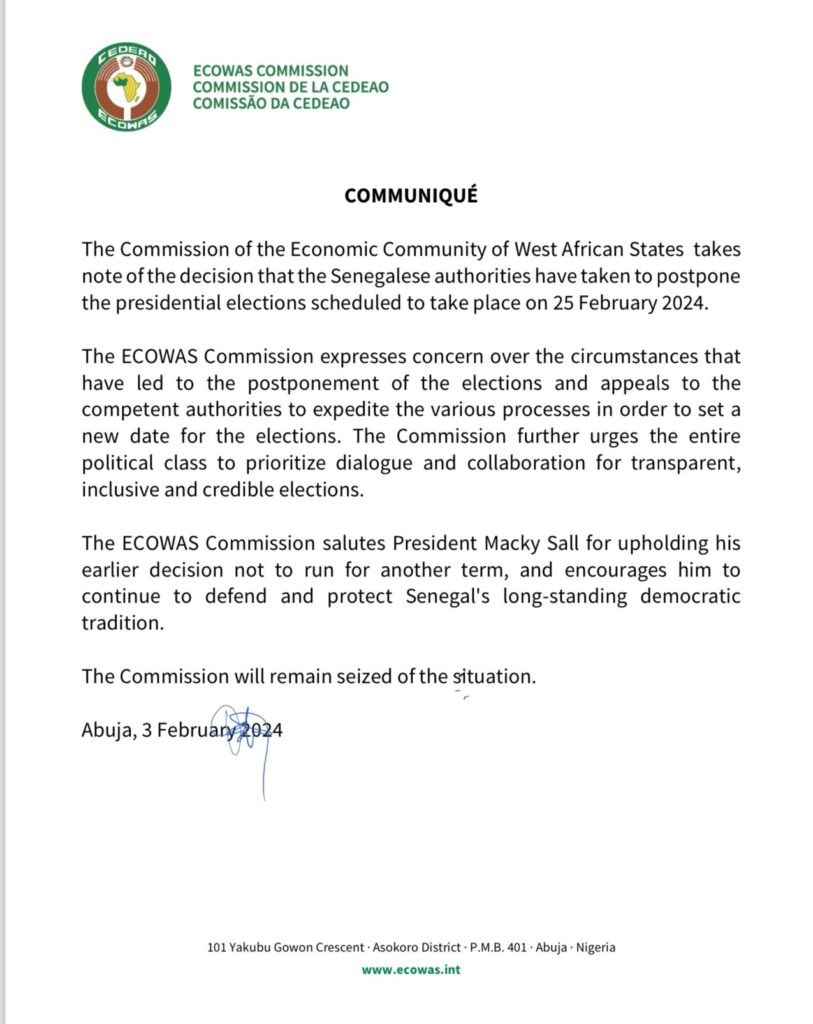
The Commission of the Economic Community of West African States (ECOWAS) has expressed concerns about the decision by Senegalese authorities to indefinitely postpone the presidential elections, which were initially scheduled for February 25, 2024.
President Macky Sall cited a dispute over the candidate list (electoral roll) as the reason for the postponement.
The Constitutional Council in Senegal had excluded some opposition candidates’ names from the candidate list in January, leading to concerns about the credibility of the electoral process.
“I will initiate an open national dialogue to bring together the conditions for a free, transparent and inclusive election in a peaceful and reconciled Senegal,” President Sall said.
In a communiqué issued by the Commission of the Economic Community of West African States (ECOWAS) on February 3, 2024, in Abuja, Nigeria, the commission expressed concern about the circumstances that led to the postponement of the Senegalese presidential elections.
ECOWAS urged the authorities in Senegal to expedite processes for setting a new date for the elections. Additionally, the commission called on the entire political class to prioritize dialogue and collaboration to ensure transparent, inclusive, and credible elections.
“The Commission of the Economic Community of West African States takes note of the decision that the Senegalese authorities have taken to postpone the presidential elections scheduled to take place on 25 February 2024. The ECOWAS Commission expresses concern over the circumstances that have led to the postponement of the elections and appeals to the competent authorities to expedite the various processes in order to set a new date for the elections.”
The ECOWAS Commission applauded outgoing President Macky Sall for adhering to his earlier decision not to seek re-election.
Host Ivory Coast secured a place in the 2023 Africa Cup of Nations quarter-finals after defeating reigning champions Senegal in a penalty shootout.
The match ended 1-1 after extra time, with Frank Kessie converting the winning penalty. Senegal had taken an early lead through Habib Diallo, but Ivory Coast equalized with a Kessie penalty in regular time.
The quarter-final for Ivory Coast is set for Saturday, facing either Mali or Burkina Faso.
Senegal’s elimination means no reigning champion has advanced beyond the first knockout round of the Cup of Nations since 2010.
Cheikhou Kouyaté had to carry a heartbroken Lamine Camara into the dressing room after Senegal’s defeat to Ivory Coast😢#JoyAFCON
Rigobert Song, the Head Coach of Cameroon, has assumed full responsibility for the team’s 3-1 defeat against Senegal in the second game of the TotalEnergies Africa Cup of Nations (AFCON).
The Indomitable Lions coach stated at press conference held after the match, that “When there is a defeat, we must bear responsibility, and therefore we must admit that Senegal was better than us in the match,” he said.
Song mentioned that his young players would require more experience to perform well in such significant occasions.
“Senegal was stronger than us. Their players were in their places on the field. They deserved their victory. For our part, we have young players in the national team, and they are at the beginning of their experience.”
Commenting on the match, he said, “I think that the players did everything they could during the match, and small details made the difference in the match.
“We admit that the competitor was better than us,” he explained.
Despite drawing the first game against Guinea and losing to Senegal in the second match, Rigobert Song remains optimistic about Cameroon’s chances in the Africa Cup of Nations.
With just one point heading into the third game, Song expresses confidence that he will lead the Indomitable Lions to the second round of the competition.
“I am always optimistic. As long as there is a final match, there are no calculations to make. The next match will be a final for us, and I know that we would qualify for the second round,” he stated.
Senegal forward Sadio Mane has officially tied the knot with his long-time partner, Aisha Tamba, in a stunning ceremony held in the capital city of Dakar.
The news of Mane’s wedding caught many football fans off guard, as his personal life has been notably private.
The Teranga Lions forward had previously spoken about marriage around two years ago, providing insight into the qualities he values in a life partner.
This surprise announcement marks a significant milestone in Mane’s personal life, offering fans a rare glimpse into the footballer’s private world.
Get to know how Mrs Mane
Tamba, born in Casamance, a town bordering Bambali—her husband’s village—is reportedly 18 years old, according to the Senegalese news outlet Sene News. She is the daughter of an architect and shares the native Mandingo language with her husband, the Al-Nassr star Sadio Mane.
Mane is said to have first noticed Tamba when she was just 16 years old but refrained from approaching her formally, respecting her status as a minor at the time. Instead, he reportedly conveyed his intentions to his uncle, a family friend, setting the stage for their eventual union.
Throughout Tamba’s education, Mane is reported to have been a supportive presence. Mrs. Mane is described as a Quran scholar, having dedicated much of her youth to studying at a private institute in Mbao. Currently, she is in her final year of school.
As previously covered in Sports Brief, Sadio Mane exchanged vows with his partner, Aisha Tamba, in a formal wedding ceremony held in Dakar on January 7, 2024. The romantic affair was graced by the presence of friends, family, former players, and members of Senegal’s national team.
Despite the celebratory occasion, Mane’s January has been filled with various engagements, including the inauguration of a stadium in his hometown. Additionally, he has swiftly returned to training with the Teranga Lions for the ongoing AFCON, highlighting the Senegalese forward’s busy start to the new year.
Black Princesses, Ghana’s under-20 women’s national football team, are taking thorough measures in their preparation for the pivotal clash againstSenegal in the U-20 World Cup Qualifiers.
Engaged in a rigorous training schedule, the team has been fully immersed in their camp, intensifying their efforts in the days leading up to their departure from Ghana to Dakar, Senegal.
Afi Amenyaku, the captain of the Princesses and a standout player for the Northern Ladies, expressed her perspective on the preparations and the upcoming match.
“The training has been good, the intensity has been good as well and each individual here is putting out their best to be able to cope with what the coach wants and also be able to play as a team. We are also trying our possible best to follow how the coach wants us to play as a team.”
AS FAR Ladies sharpshooter Maafia Nyame is spearheading the team’s offensive prowess, diligently refining their abilities to break through Senegal’s defensive strategies.
Expressing confidence, Maafia is optimistic that the team will be well-prepared to face their opponents and is committed to making every effort to secure qualification for the World Cup.
“We have watched games of Senegal and our coaches have taught us a lot, so we are ready to give out our best on the field. This game means a lot to us and it’s the final hurdle of the World Cup qualifiers so we are willing to do our best to qualify the team for the World Cup.”
Head Coach Yusif Basigi has been meticulously fine-tuning his team’s strategy to counter Senegal’s strengths while capitalising on their own.
“Training has been good because we all know what is at stake so we have put things together in order to live up to expectations.
I know the Senegalese team a little bit and they are not a bad side. We must respect them and see how the game will go.”
The camp exudes a sense of concentration and solidarity as the Black Princesses prepare for the crucial upcoming match.
With the entire nation rallying in support, the team is determined to clinch a coveted spot, marking their seventh participation in the U-20Women’s World Cup scheduled to take place in Colombia from August 31 to September 22, 2024.
Sadio Mane’s recent bride received a warm welcome upon her return to school after marrying theAl-Nassr football star.
Aisha Timba, who is 18 years old, tied the knot with Mane in a ceremony this month and resumed her studies the next day.
Tamba stood on the balcony of a block and waved at the students who gathered and chanted ‘Sadio amenda jabar – Aissaa amena jekeur’, to wit ‘Madame Sadio Mane’.
In a video shared by Senegalese outlet Senenews, Aisha was greeted with songs from her fellow students as she waved to them.
Mane made headlines following his marriage to Timba with allegations of child marriage due to Timba’s age. According to netizens, Sadio was dating a minor, which is an offence and a violation of human rights.
In response to these claims, Tamba’s father detailed that Mane set eyes on his daughter when she was 16 but had to wait until she turned 18 before marrying her.
‘He probably saw something special in her and his parents appreciated her as well. They came to see me. We discussed as per tradition, agreed on everything, and waited for this day to happen.’
https://www.youtube.com/watch?v=t0scWHpuw9o
He clarified that Sadio Mane did not date the young lady when she was a minor.
‘They were not dating because Aisha was still young.’
The ceremony, which was held at Keur Massar, Dakar, Senegal, had in attendance close relatives of Mane and his new wife.
According to reports, Aisha Tamba is originally from Casamança, and like her husband, she speaks Madingue.
Meanwhile, Mane is currently in Cote d’Ivoire, preparing for the Africa Cup of Nations.
The 31-year-old aims to contribute to Senegal’s quest for a second consecutive AFCON victory.
Senegal’s AFCON 2023campaign kicks off against Gambia on January 15, and they share a group with Cameroon and Guinea.
On Sunday (December 24), the Senegalese navy revealed the seizure of 690kg of cocaine en route to Europe.
The drugs were confiscated from an ultra-fast go-fast boat, and all five Spaniards on board were arrested, as announced by the army in a statement.
The interception occurred 220 km off the coast of Senegal, where an ocean-going patrol boat had to issue verbal warnings and fire shots to halt the boat.
The cargo had already been released by the time of the intervention, but the authorities managed to recover the 690 kg of cocaine.
This incident follows two other sea seizures announced by the Senegalese army on November 28 and December 16, involving nearly three tonnes of cocaine each time. In January of the same year, the Senegalese navy confiscated over 800 kg of cocaine from a ship off Dakar.
While West and Central Africa have historically been transit areas for drugs traveling from Latin America to Europe, the region is now facing increasing drug consumption, according to the United Nations Office on Drugs and Crime (UNODC).
In June 2019, Senegalese customs seized 1.3 tons of cocaine from two Italian-flagged ships at the Autonomous Port of Dakar, marking the second-largest cocaine haul in Senegal since 2007.
ENACT research also reveals another significant seizure of nearly one ton from a vessel destined for Dakar on the high seas in early November.
Sadio Mane, aged 31, celebrated his 100th cap for Senegal by scoring two goals in a comfortable 4-0 home victory over South Sudan as they kicked off their World Cup qualifying campaign.
The Group B match in Dakar saw Mane set up the opening goal for Pape Matar Sarr in the first minute and add a goal himself five minutes later.
Debutant Lamine Camara scored the third just before halftime, and Mane netted his second from the penalty spot in the second half.
Senegal aims to qualify for their third consecutive World Cup, with the Democratic Republic of the Congo expected to be their toughest opponents in the group.
In other results, South Africa secured a 2-1 home victory over Benin in Group C, with Percy Tau and Khuliso Mudau scoring for the hosts, while Tanzania won 1-0 away against Niger in Marrakech, Morocco, with Charles M’Mombwa scoring in his debut for Tanzania.
South Africa now leads Group C, with aspirations of qualifying for the World Cup for the first time since hosting the tournament in 2010. The winners of the nine qualifying groups will advance to the 2026 finals, co-hosted by Canada, Mexico, and the US.
Five moreAfrican qualifiers are scheduled for Sunday, featuring challenging away games for heavyweight contenders Algeria, Egypt, and Nigeria.
On Thursday evening, a judge in the southern town of Ziguinchor reversed the exclusion of imprisoned opposition politician Ousmane Sonko from Senegal’s electoral rolls, thus allowing him to run as a presidential candidate.
This decision was confirmed by Mr. Sonko’s legal team and his dissolved political party.
Mr. Sonko’s lawyers, who successfully challenged his disqualification, asserted that their client was now eligible to participate in the February 2024 elections.
However, in a statement released by the State’s legal representative, it was indicated that the State would appeal the judge’s ruling and that Mr. Sonko’s candidacy was still in question.
The legal proceedings took place in Ziguinchor, where Mr. Sonko serves as mayor and is registered, and were seen by some as the opposition’s final opportunity for him to stand as a candidate.
The court “declared Mr. Ousmane Sonko’s removal from the electoral rolls null and void and ordered his reinstatement, which should take immediate effect”, one of his defenders, Me Ciré Clédor Ly, said in a message on Friday.
“The Ziguinchor district court ruled on the law and only on the law (…) There was no justification for removing President Ousmane Sonko from the electoral rolls,” said El Malick Ndiaye, a leading figure in Mr. Sonko’s dissolved party.
On June 1, Mr. Sonko was convicted guilty of defiling a minor and given a two-year prison term. He declined to show up for the trial, which he claimed was an attempt to prevent him from running for office. As a result, he was found guilty in absentia.
At the end of July, Mr. Sonko was detained on additional allegations, including inciting rebellion, criminal involvement with a terrorist organization, and damaging national security.
The authorities are examining his involvement in a string of violent protest outbursts since 2021, the most significant of which occurred in June and left many people dead.
After a court meeting on Thursday, a judge decided that the imprisoned Senegalese leader, Ousmane Sonko, should be put back on the list of people eligible to vote. He was accused of behaving badly towards someone under 21, but he said it wasn’t true and that the accusation was made for political reasons.
Mr Sonko’s lawyers stated that the judge’s decision on Thursday allowed him to participate in the upcoming presidential elections in February. But, it has not been confirmed.
In a statement released on Friday, lawyers for the government said they will challenge the decision.
The court hearing happened in Ziguinchor, a city in the south where Mr Sonko is both on the voters’ list and serves as the mayor.
The punishment he received for “influencing young people in a wrong way” caused angry demonstrations in a very peaceful country in Africa. Officials reported that at least 16 people lost their lives and hundreds of others were injured.
In the end of July, the leader of the opposing group was put in jail for new accusations: urging for a rebellion, being involved in a harmful plan with a group of terrorists, and putting the safety of the country at risk.
Mr Sonko, who used to work for the government, became well-known during the presidential election in 2019. He finished in third place.
The Senegalese government has upheld the ban it imposed on the social media platform TikTok back in August.
Officials had implemented the ban, alleging that TikTok had become a platform of choice for individuals spreading hateful and subversive messages that posed a threat to the country’s stability.
Senegal’s Communications Minister, Moussa Bocar Thiam, stated on Thursday that TikTok would only be reinstated if the company agreed to a pact allowing for the removal of accounts promoting what he referred to as inflammatory content.
“For the time being, the restriction is being maintained pending the conclusion of a comprehensive written agreement,” Mr Thiam said, following discussions with representatives of the company.
The ban on TikTok was prompted by the arrest of opposition leader Ousmane Sonko.
Government officials asserted that the app had been employed to disseminate “hateful and subversive messages,” which contributed to the country’s instability amid the violent protests triggered by Mr. Sonko’s detention.
Furthermore, the government has stipulated that TikTok must commit to providing equitable compensation to its Senegalese content creators as a condition for reinstatement.
Senegal‘s government is still not allowing people to use TikTok, a social media app, since they banned it in August.
The authorities banned the app because they believed that it was used by bad people to spread harmful and rebellious messages that could harm the country.
Senegal’s Communications Minister, Moussa Bocar Thiam, announced on Thursday that TikTok will only be allowed back if they agree to remove accounts that promote harmful content.
“Currently, we will continue to have restrictions until we can reach a final agreement after discussing with company representatives,” Mr Thiam explained.
Officials said that the app was being used to send harmful and rebellious messages that were causing problems in the country as people started protesting violently after Mr. Sonko was arrested.
The government also wants TikTok to promise to pay Senegalese content creators fairly before they allow the app to come back.
Senegal’s F24 is a platform that brings together different political groups and civil society organizations. They have asked their supporters to make noise by banging pots to show their opposition to President Macky Sall on Sunday.
At a press conference, they said they are fighting for the freedom of people called “political detainees” and for a fair presidential election that includes everyone.
They had planned to have a peaceful protest this Friday in the center of Senegal’s capital city. However, the governor of Dakar forbade the movement from holding their rally.
The authorities have recently banned some F24 demonstrations because they could cause problems with public safety.
The opposition claims that 700 people who are against the government have been taken into custody in the country since 1 June.
On Friday, Senegal temporarily reactivated a long-dormant railway line to transport worshippers to an annual religious festival.
The GTS railway company announced the deployment of three trains, each capable of carrying 240 passengers, on a 130-kilometer route between Thies and the sacred town of Touba in central Senegal.
Dozens of people, some of whom were dancing, gathered by the tracks in Thies to witness the delayed departure of the first four-carriage train, adorned in old-fashioned green and grey livery, as observed by an AFP reporter.
Samba Ndiaye, the head of GTS, remarked, “People are emotional about the train. All the seats for today’s departures have already been sold. Passengers are going to travel in comfort and knowing what time they’ll arrive.”
This temporary train service will operate from Friday to the following Wednesday, helping alleviate the congestion on roads filled with cars and buses heading to Touba for the Grand Magal pilgrimage. The festival is organized by the Mouride Brotherhood, one of Senegal’s four Sufi Islam orders.
The reintroduction of this train service, with stops at Diourbel and Mbacke, is presented as a preview of the potential permanent restoration of railway traffic. The Thies-Touba line had been closed in 2018, and it is part of a network that France built in the 19th and early 20th centuries to connect its colonies in West Africa.
The network in Senegal had fallen into disuse due to a lack of track maintenance. However, this situation began to change in December 2021 when a new 36-kilometer line was inaugurated, connecting the capital Dakar to the new city of Diamniadio.
The Senegalese Minister of Justice has affirmed that the conviction of opposition figure Ousmane Sonko in a moral-related case is definitively upheld, rendering him ineligible for the 2024 presidential election.
Ousmane Sonko, whose protracted struggle with authority and the legal system has captivated Senegal for over two years, was found guilty on June 1 of “debauchery of a minor” and was sentenced to two years in prison.
Choosing not to appear at the trial, which he decried as a plot to exclude him from the upcoming presidential election, Sonko was sentenced in absentia. In late July, he was subsequently incarcerated on additional charges, including incitement to insurrection, criminal conspiracy associated with a terrorist enterprise, and endangering state security.
Authorities have questioned Sonko’s involvement in a series of protest events that have arisen since 2021 due to his confrontation with authority and legal issues, including a significant episode in June, resulting in multiple fatalities.
Sonko’s legal representatives contend that because he has been in detention since his conviction, a retrial is necessary as per the prevailing regulations on absentia trials.
In response to this, Ismaïla Madior Fall, the Minister of Justice, stated in an interview published by Jeune Afrique magazine on Wednesday that Sonko’s arrest was “in the context of another matter” unrelated to the moral case, thereby negating the applicability of the rule that mandates a retrial for someone tried in absentia upon their arrest.
“Why didn’t he become a prisoner if he wanted to get his conviction in absentia overturned? It has since become final,” Fall asserted.
He added, “It is for this reason that Mr. Sonko was deprived of his electoral rights and that he was removed from the lists. There is no conspiracy intended to remove a presidential candidate.”
Sonko commenced a hunger strike on July 30 and has been under hospital care since August 6.
The authorities announced the dissolution of Sonko’s party and conducted numerous arrests, a move met with robust criticism from human rights advocates. The government cites the necessity to safeguard the population from what it characterizes as an insurrectional scheme.
Regarding the 2023 unrest, the minister disclosed that around 500 individuals have been detained. He clarified, “Those incarcerated have vandalized shops or banks, attacked gendarmerie stations, or even set fire to town halls. There are no political prisoners in Senegal.”
Over six weeks following their departure from Senegal, 38 survivors of the boat tragedy off Cape Verde have returned to Dakar via a military aircraft on Monday evening, as confirmed by the authorities.
This group constitutes part of the 101 individuals who embarked on the voyage on July 10 with the intention of reaching Spain’s Canary Islands.
Tragically, over 60 individuals, primarily men hailing from the fishing community of Fass Boye and its environs, are feared to have lost their lives after their vessel remained adrift at sea for more than a month.
The Walking Borders NGO reported that it notified the authorities in Senegal, Mauritania, Morocco, and Spain back in July, yet no rescue operations were initiated by these nations. As a result, those aboard the vessel were left isolated and subjected to the mercy of the Atlantic Ocean for several weeks.
In the wake of the boat tragedy, a sense of sorrow and frustration persists within the affected town. Several residents, including members of the same family, shared with the BBC their relief upon learning that their loved ones were en route back home, having survived the ordeal.
Over six weeks ago, 38 people who survived a boat accident near Cape Verde came back to Dakar, Senegal on Monday evening using a military plane, according to officials.
They are part of a group of 101 people who started their trip on July 10th with the goal of reaching the Canary Islands in Spain.
More than 60 people, mostly men from the fishing town of Fass Boye and nearby areas, are believed to have died after their boat drifted in the sea for more than a month.
People in this town are still feeling sad and angry because of the boat accident.
Some people, including family members, told the BBC that they were relieved to know that their loved ones were coming back home alive.
Over 60 individuals, primarily from Senegal, are feared to have perished as their boat was discovered adrift approximately 300 kilometers (186 miles) away from the Atlantic island nation of Cape Verde.
Among the 38 survivors, seven are currently undergoing medical treatment in a hospital.
The wooden fishing vessel in which they were traveling was located a month after its departure from Senegal with over 100 migrants on board. The fate of those who remain unaccounted for remains unknown.
Officials in Senegal are arranging repatriation for the survivors. Authorities in Cape Verde have urged for international collaboration in addressing migration issues to prevent further loss of lives.
The vessel is believed to have been en route to the Spanish Canary Islands, a common migrant entry point into the European Union.
The boat was initially spotted on Monday by a Spanish fishing vessel.
Among the survivors are four children aged between 12 and 16, as confirmed by a representative from the International Organization for Migration (IOM).
The imprisoned opposition leader of Senegal, Ousmane Sonko, has been transported to a hospital for medical care.
Prior to this, Sonko embarked on a hunger strike within his prison confines as a form of protest against the charges laid against him.
His admission to a health facility has been confirmed by his political party and local sources. The statement from his political party also held the authorities accountable for his deteriorating condition.
Sonko, once at the helm of the dissolved Pastef party, was apprehended last week and faced multiple charges, including incitement to rebellion and plotting against the state.
In the past three years, the West African sub-region has witnessed a total of six successful coups, raising concerns due to their shared characteristics.
Mali experienced two coups, the first in August 2020 and the second in May 2021. Guinea faced a military takeover in 2021, while Burkina Faso encountered two coups in January and September 2022.
In Mali’s case, President Ibrahim Boubacar Keïta was ousted from power by a military coalition in August. Subsequently, Mali’s former Defense Minister, Bah Ndaw, assumed the presidency of the new transitional government, with Colonel Assimi Goita appointed as vice president. However, they were both removed from power a year later in May by Colonel Assimi Goita.
Colonel Assimi Goita
On September 5, 2021, Guinea experienced a coup d’état as the armed forces captured President Alpha Condé, who had extended his stay in power through a constitutional amendment.
In Burkina Faso, President Roch Kabore was ousted from power on January 24, 2022, following a coup led by Colonel Paul-Henri Damiba. However, eight months later, military rule was reestablished, led by Captain Ibrahim Traoré.
Captain Ibrahim Traoré
The most recent incident is the military takeover in Niger, where General Abdourahamane Tchiani orchestrated a coup on July 26, 2023, overthrowing President Mohamed Bazoum.
So who is next?
Experts are troubled by the similarities underlying these coups. In many cases, corruption, political instability, and deteriorating security have been the driving factors.
Guinea’s situation stemmed from President Condé’s alteration of the constitution to extend his term beyond the mandated two terms. He secured a controversial third term in an election marred by violence and alleged irregularities in October 2020.
In Burkina Faso, the escalation of a jihadist insurgency contributed to the leadership change, which was also the reason behind Colonel Assimi Goita’s removal from power.
A recurring theme across these incidents is leaders’ failure to safeguard their citizens. This pattern persists in Niger, as President Bazoum’s administration has faced criticism for inadequately addressing the region’s entrenched violent Islamist extremism over the past decade.
President Mohammed Bazoum
The United Nations Security Council reported that West Africa endured over 1,800 attacks in the first half of 2023, resulting in nearly 4,600 fatalities and grave humanitarian repercussions. Due to these terrorist activities, approximately half a million individuals in the Economic Community of West African States (ECOWAS) are refugees, with nearly 6.2 million internally displaced.
Experts are concerned that this trend of military takeover is far from over.
Engaging JoyNews on the issue of coups in the West African Sub-region on Wednesday, August 2, 2023, security expert Dr Vladimir Antwi-Danso noted that the subject matter of human security has been trivialised by governments.
Dr Vladimir Antwi-Danso
He argued that there has been a misplaced priority as the leaders are more interested in maintaining power and conforming to a democratic structure seeking to please global leaders.
“The point is that we have similar specificities within the West African sub Region. Regime security should have been a thing of the past and human security assures the people of a collective way of moving forward.
“Unfortunately, government upon government of the sub region are thinking about the next election, satisfying global norm that there is democracy – frequent elections, institutions of state etc,” he said.
With the issue of political instability in mind, he made a projection on which country in the sub-region is likely to face the same fate as Niger and the others.
Senegal, Mr Antwi-Danso, is currently prone to a dissolution of democratic governance.
“Look at what is happening in Senegal. What is ECOWAS waiting for before they trigger the Panel of the wise to be able to at least, cool things down. And they have a problem with Casamance already. And then the population, a lot of them, it is about 18-20 percent unemployment rate in Senegal, and yet what is happening is so bad.
And when it goes so bad what happens is what I talk about as Systemic Coup. The military will just see that let us intervene before there is an implosion. So I will not be surprised that in future, you will see something like that in Senegal also,” he explained.
Why Senegal?
Senegal is a West African country that has been widely regarded as a model of democracy and stability in the region. However, in recent months, the country has been rocked by protests and violence over the government’s alleged attempts to stifle the opposition and manipulate the electoral process.
The protests were sparked by the decision of the constitutional council, the highest judicial body in Senegal, to invalidate the list of candidates submitted by the main opposition coalition, Pastef-Les Patriotes, for the upcoming legislative elections on July 31.
The council said the list did not meet the legal requirements, such as having a minimum number of female candidates and paying a deposit fee. The opposition denounced the decision as a political maneuver to exclude its leader, Ousmane Sonko, and other prominent opponents from running.
Ousmane Sonko
Sonko is a popular and outspoken critic of President Macky Sall, who has been in power since 2012. Sonko came third in the 2019 presidential election and is seen as a potential contender for the 2024 election.
He has accused Sall of corruption, nepotism, and authoritarianism. He has also faced legal troubles, such as being arrested in March on rape charges that he claims were fabricated to eliminate him from politics. His arrest triggered a wave of violent protests that left at least 14 people dead.
On June 18, thousands of Sonko’s supporters took to the streets in Dakar and other cities to demand his reinstatement on the ballot and to denounce Sall’s rule. The protests turned violent as protesters clashed with security forces, who used tear gas and rubber bullets to disperse them.
According to Amnesty International, at least three people were killed and dozens were injured in the unrest. Several opposition figures were also arrested and charged with inciting violence and insurrection.
The protests have exposed the deepening political crisis and social discontent in Senegal, which is facing economic challenges, rising poverty, and high unemployment, especially among the youth.
They have also raised concerns about the state of democracy and human rights in Senegal. Some observers have warned that Senegal’s democratic credentials are at risk of eroding under Sall’s administration, which has been accused of using the judiciary and security forces to silence dissent and consolidate power.
The international community, including regional bodies such as ECOWAS and the AU, have called for dialogue and restraint from all parties to preserve peace and stability in Senegal. They have also urged the government to respect the rights of citizens to protest peacefully and to participate in free and fair elections.
The opposition, meanwhile, has vowed to continue its mobilization until its demands are met. The outcome of the legislative elections, which will determine the composition of the 165-seat National Assembly, will have significant implications for Senegal’s political future and its role in West Africa.
Casamance
Casamance is a region in southern Senegal that has been the site of a separatist rebellion since 1982. The rebels, known as the Movement of Democratic Forces of Casamance (MFDC), claim that the region has been neglected and exploited by the central government in Dakar. The conflict has claimed thousands of lives and displaced tens of thousands of people. It has also hampered the development of the region, which is rich in natural resources and tourism potential.
The situation in Casamance has been affected by the recent political crisis and protests in Senegal over the government’s alleged attempts to sideline the opposition and manipulate the electoral process. Some observers have suggested that the government may be using the Casamance issue as a diversion from its domestic problems, or as a bargaining chip with the opposition.
In March 2022, the Senegalese army launched a military offensive against one of the factions of the MFDC, led by Salif Sadio, who is considered to be the most radical and violent among the rebel leaders. The offensive came after four Senegalese soldiers were killed and seven others captured by Sadio’s fighters in a border area with Gambia in January. The army said it aimed to dismantle Sadio’s bases and restore security in the area.
The offensive has put pressure on Sadio’s faction, which has been weakened by internal divisions, defections, and lack of external support. Some of his fighters have surrendered or fled to neighbouring countries. However, Sadio himself remains at large and has vowed to continue his struggle until independence is achieved.
Meanwhile, another faction of the MFDC, led by Cesar Atoute Badiate, who is seen as more moderate and pragmatic than Sadio, has expressed its willingness to engage in dialogue with the government and end the conflict peacefully. In May 2023, Badiate’s faction signed a peace agreement with a local civil society group, known as Diakaye Platform for Peace, which has been mediating between the rebels and the authorities. The agreement calls for a ceasefire, disarmament, demining, and development projects in Casamance.
The government has welcomed the agreement as a positive step towards resolving the Casamance issue, but has also stressed that any dialogue with the rebels must be based on respect for Senegal’s territorial integrity and national sovereignty. The government has also called on Sadio’s faction to join the peace process and renounce violence.
The prospects for peace in Casamance depend largely on the political will and commitment of both sides to find a lasting solution that addresses the root causes and grievances of the conflict.
It also requires the involvement and support of other actors, such as civil society groups, religious leaders, traditional authorities, neighbouring countries, and regional and international organisations. Peace in Casamance would not only benefit the people of the region, but also contribute to stability and development in Senegal and West Africa.
Senegal's interior minister said it had dissolved the party of opposition leader Ousmane Sonko for rallying supporters into stoking violence during protests last month, prompting more calls for resistance as demonstrators clashed with police https://t.co/4JLXdqO0Hupic.twitter.com/qGBIiaZHR1
Meanwhile, the Dr Antwi-Danso warns that Ghana, despite being tagged as a respecter of democracy could be hit by the unexpected.
Dr Antwi-Danso indicated that the indiscipline in the country puts the nation at risk of a military taker.
“With Ghana, we should be very careful. Let’s not play the ostrich that everybody sees Ghana as a serious Democratic country.
“The level of indiscipline in the country, the lack of human security is such that when there is anything untoward, we will see some explosion in Ghana.
“There is hardly any country in the West African sub region that does not have the ingredient for implosion and that is what we should be thinking about,” he explained.
Senegal has blocked TikTok, saying it’s threatening the stability of the country.
The media reports that it’s an attempt to clampdown on critics using the platform.
Senegal’s Minister of Communication Moussa Bocar, has announced that TikTok has been suspended because it is being used to propagate “hateful and subversive messages threatening the stability of the country.
“The well-known social networking app was referred to as the “preferred network for people with malicious intent” by the speaker.
The actions came a few days after fiery opposition politician Ousmane Sonko was detained and accused of a number of offenses, including inciting a riot.
During demonstrations protesting the politician’s incarceration in the city of Ziguinchor, where he serves as mayor, three people were slain.
Earlier this week, the minister issued an order temporarily shutting down mobile data, and telecom firms were instructed to follow it.