Tag: Sierra Leone

  • Ghana, Sierra Leone agree to revitalise joint cooperation agreement initially signed in 2018

    Ghana, Sierra Leone agree to revitalise joint cooperation agreement initially signed in 2018

    Ghana and Sierra Leone have reaffirmed their commitment to strengthening bilateral ties by reviving a joint cooperation agreement originally signed in 2018.

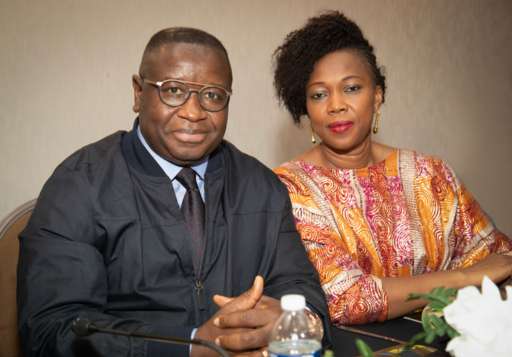
    This was the key outcome of a meeting between Ghana’s President, John Dramani Mahama, and Sierra Leone’s President, Dr. Julius Maada Bio, during Mahama’s one-day working visit to Freetown on Tuesday.

    Their discussions covered a range of strategic areas, including trade, education, investment, and institutional support. Emphasizing the need to deepen collaboration between the two nations, President Mahama noted that both leaders were aligned in their vision for progress.

    “We agreed to revitalise the joint cooperation agreement initially signed in 2018, with a proposal to hold the inaugural meeting here in Ghana soon! We shared our commitment to meeting the aspirations of our citizens and ensuring progress in key sectors,” Mahama stated.

    Beyond bilateral issues, the two leaders also tackled broader regional concerns, including terrorism, conflict, and drug trafficking. They reaffirmed their commitment to working together and with other West African nations to address these threats and mitigate their impact on the region.

    Additionally, Mahama and Bio discussed ways to enhance the West African Power Pool to improve power generation and distribution across the region.

    https://twitter.com/JDMahama/status/1902391886758781373

    During his visit, President Mahama also engaged with members of the Ghanaian community in Sierra Leone, listening to their concerns, particularly regarding work permits and taxation. He assured them that these issues would be addressed to improve their living and working conditions.

    With plans in place to reignite the 2018 cooperation agreement, Ghana and Sierra Leone are set to build stronger ties and pursue mutual development in the years ahead.

    In 2017, Ghana and Sierra Leone agreed to ratify the agreement for cooperation between the two countries, so as to provide the legal framework for addressing their trade and investment concerns.

    Despite the good relations that existed between the two countries, there was no framework for cooperation to guide these relations. This development hampered the deepening of bilateral ties and cooperation amongst the two countries.

    To this end, then President Akufo-Addo assured that “I will pursue this matter with my Parliament to ensure the ratification of this Agreement”, an agreement that was signed between the two countries on 19th December, 2013, but which was yet to be ratified.

  • Mahama in Sierra Leone for bilateral talk on trade and development

    Mahama in Sierra Leone for bilateral talk on trade and development

    President John Dramani Mahama has arrived in Sierra Leone for a state visit aimed at fostering stronger economic and diplomatic relations between the two countries.

    The discussions between President Mahama and his Sierra Leonean counterpart, Julius Maada Bio, are expected to focus on trade, infrastructure development, and regional cooperation. The visit seeks to deepen economic collaboration and explore new opportunities for growth.

    Confirming the visit in a Facebook post on March 18, Joyce Bawah Mogtari, Special Aide to President Mahama, stated that both leaders would engage in high-level discussions covering economic partnerships, social infrastructure, and regional integration.

    Ghana and Sierra Leone share a rich history of mutual support and development cooperation, particularly in times of crisis. In January 2025, President Bio attended Mahama’s inauguration in Accra, underscoring the strong ties between the two West African nations.

    This visit is expected to build on that relationship, reinforcing bilateral trade agreements and advancing initiatives that promote economic stability and sustainable development in the region.

    As key members of the Economic Community of West African States (ECOWAS), Ghana and Sierra Leone’s partnership is viewed as essential in driving peace, security, and economic progress across West Africa.

    https://twitter.com/Citi973/status/1901992220640641040

  • Sierra Leone recalls ambassador over drug scandal in Guinea

    Sierra Leone recalls ambassador over drug scandal in Guinea

    Sierra Leone’s ambassador to Guinea, Alimamy Bangura, has been recalled following the discovery of seven suitcases containing suspected cocaine in a vehicle belonging to the Sierra Leonean embassy.

    Guinean authorities detained the vehicle’s occupants on Monday after discovering “substances suspected to be cocaine,” according to Sierra Leone’s Foreign Minister, Alhaji Musa Timothy Kabba.

    The minister confirmed that the ambassador was not in the vehicle at the time and is not under arrest, but he has been called back to Freetown to provide a detailed explanation of the incident.

    “In light of this serious development, the government has urgently recalled Sierra Leone’s ambassador to Guinea…to provide a full account of the incident,” Kabba stated, adding, “It has not been proven that the ambassador is involved in this trafficking.”

    Guinean officials also reportedly found $2,000 in cash alongside the suspected drugs, though the exact quantity of the substances remains undisclosed. Kabba emphasized that Sierra Leone is fully cooperating with Guinea in an extensive investigation, vowing accountability for anyone implicated.

    “Anyone found guilty of breaking Sierra Leonean and international drug trafficking laws will face the full force of the law,” he pledged.

    This incident sheds light on West Africa’s persistent role as a transit hub for cocaine trafficking from Latin America to Europe. While most of the drugs are destined for international markets, local consumption has been on the rise.

    Sierra Leone has been grappling with a growing drug crisis, with President Julius Maada Bio declaring drug abuse a national emergency in April. The rise of “Kush,” a dangerous mix of addictive substances, has plagued local communities, prompting calls for government intervention to address both trafficking and the social impact of drug abuse.

    4o

  • Sierra Leone sex worker shares agony of working on the streets

    Sierra Leone sex worker shares agony of working on the streets

    A young single mother Isata, in her early twenties, a young single mother embodies the grim realities faced by sex workers in Sierra Leone.

    She has endured beatings, robberies, kidnappings, and has been trafficked across borders, rescued, only to be trafficked and saved once more.

    Throughout these ordeals, she developed an addiction to kush, a harmful street drug ravaging communities across West Africa.

    BBC Africa Eye spent four years documenting the lives of a group of sex workers in Makeni, a city roughly 200km (124 miles) away from Freetown, the capital.

    Situated in a diamond-rich region, Makeni is scarred by the legacy of Sierra Leone’s civil war, a conflict whose devastating effects are still being felt today.

    Isata is one of many sex workers in Makeni. Like the other women we interviewed, she chose to identify herself by her first name only.

    “All the sacrifices I’m making, I do it for my daughter. I have been through so much pain on the streets,” she said.

    “I met a man in the club. He tore my clothes. He took money from my bra. I was trying to fight my way out. He hit me on the back of the head with his gun. He wanted to kill me.”

    It’s a perilous existence—some of the women we encounter have contracted HIV.

    Others have lost their lives.

    Yet, many believe they have little to no other options.

    In a dimly lit swampland in the city, two sex workers showed us a spot with empty grain sacks scattered across the ground.

    One of the young women, Mabinty, explained that this is where they work, side by side, seeing up to 10 men each night.

    The men pay them a dollar per encounter.

    Mabinty is trying to earn enough to care for her children. She had six, but three passed away.

    Her remaining three children are in school.

    “One child has just sat his exams. I don’t have money to pay for him to go to school, unless I sell sex. These are my sufferings,” she said.

    Thousands of women are estimated to have turned to sex work across Sierra Leone.
    Many of them are young women orphaned by the war, which claimed the lives of more than 50,000 people and displaced almost half the country’s population by the time it ended in 2002.

    Charity groups say the number of young girls working in the sex trade has further increased as the country grapples with the economic fallout of the Ebola outbreak and the coronavirus pandemic.

    Like many crises, these have disproportionately impacted women.

    Prostitution is not illegal in the country, but the women are seen as outcasts and receive little support from the government or society.

    Not long after we met Isata in 2020, she was kidnapped by a criminal gang and forced into sex slavery in The Gambia, Senegal and finally Mali.

    She managed to get hold of a phone and described her life there.

    “The way they approach us, it is like they want to kill us unless we accept,” she said.

    “I am suffering so much.”

    BBC Africa Eye was then able to track her down and a UN body, the International Organisation for Migration (IOM), helped Isata return to Sierra Leone.

    She gave up sex work but, when we saw her in 2021, she was struggling to make enough money to take care of her daughter, by cooking in a local kitchen.

    The next time we got an update on Isata, in 2023, she had returned to prostitution after becoming hooked on kush – a psychoactive blend of addictive substances sold cheaply, that can contain human bones.

    The drug has become such a problem in Sierra Leone, the president has declared it a national emergency.

    In the grip of addiction, Isata left behind her youngest child – a son just four months old.

    He was being looked after by Isata’s mother, Poseh.

    “The stress of the street life led her to smoking kush. It’s the stress,” Poseh said.

    Nata is also a single mother in her twenties.

    She has three daughters.

    We met her at home, where she was getting ready to go out and work.

    “I want my children to do well in life. I hope my prayers will be answered by God,” she said.

    Her daughter watched her mum apply her make-up. She told us she wanted to become a lawyer when she is older.

    “To help my mum,” she said.

    Across town, we met another young girl, Rugiatu, aged around 10.

    Her mother Gina was also a sex worker. She was murdered in 2020 at just 19 years old.

    Rugiatu now lives with her elderly grandmother.

    “My mum and dad are dead now. I am only left with my grandma. If my gran dies, all I can do is go and beg in the street,” Rugiatu said.

    “I don’t want them to kill me on the street too.”

    When we next saw Nata, she was unrecognisable. She, too, has become hooked on kush.

    “I am not happy to be like this, but I don’t want to think much,” she tells us.
    “Sometimes I cry when I remember. That why I am smoking, to forget.”

    Her three daughters have had to go and live with relatives.

    Then, in early 2024, there was more bad news from Isata.

    She had been trafficked again, as part of a group of women who were promised nanny work in Ghana but were instead taken to Mali and forced to sell sex in a gold-mining area.

    “I want to be taken home. I’m begging, I regret everything,” Isata tells us over the phone.

    She said she became worried when the man who promised the nannying work dodged police checkpoints and border posts at every stage of the journey.

    “He handed us over to a Nigerian woman called Joy,” she said.

    “We asked: ‘You told us we are going to Ghana for nanny work, is this Ghana?’”
    “Joy asked us: ‘Were we not told we are coming to do sex work?’ Then I said: ‘No’.”

    “She said: ‘Go and get some money’ and give it her.”

    Like many trafficked women, Isata was told she must work to pay her traffickers a large sum of money to buy back her freedom.

    Her traffickers demanded she pay $1,700 (£1,300), a sum that would require her to have sex with hundreds of men to accumulate. They gave her just three months to settle the amount.

    According to the IOM—the UN agency that aids victims of trafficking—thousands of Sierra Leoneans, including children, fall prey to trafficking each year.

    Many are either kidnapped or lured with false promises of better job opportunities abroad, only to be sold into forced labor or sexual exploitation across various countries in the continent.

    Sadly, many never return home.

    Thankfully, Isata has managed to escape and is now back in Makeni, where she lives with her mother and two children.

  • Sierra Leone power crisis restored

    Sierra Leone power crisis restored


    Sierra Leone has finally seen the return of electricity supplies after enduring weeks of power cuts, a relief that came after the country settled a portion of its $48 million (£38 million) debt to a Turkish firm.

    This crucial $18 million payment coincided with the resignation of the country’s energy minister, who took full responsibility for the crisis.

    Freetown, the capital, largely relies on electricity from a Turkish ship stationed off the coast, but severe supply reductions—from 60 megawatts to 6 megawatts—had been enforced due to unpaid bills, exacerbating the prolonged disruption.

    The power shortages had profound impacts, with residents enduring days without power, and hospitals grappling with the consequences. Tragically, at least one infant reportedly succumbed due to the lack of electricity, highlighting the dire consequences.

    Medical professionals resorted to using mobile phones for illumination during procedures, underscoring the critical need for uninterrupted power.

    Before the restoration of power, Fatmata Gassim, a second-year engineering student in Freetown, voiced her frustration, questioning how daily tasks such as ironing clothes and cooking could be accomplished without electricity.

    The resignation of Kanja Sesay prompted the direct supervision of the energy ministry by President Julius Maada Bio’s office, indicating a significant shift in management.

    This isn’t the first time Karpowership has wielded its leverage over African nations due to unpaid bills, having previously cut off power to Guinea-Bissau.

    The floating power plants operate by converting gas into electricity, offering a vital energy source for nations with struggling infrastructure.

    Despite some progress, access to electricity remains limited in sub-Saharan Africa, with over 50% of the population lacking grid connections, according to the United Nations Conference on Trade and Development (Unctad).

  • Sierra Leone faces prolonged blackouts due to $48m unpaid electricity bills

    Sierra Leone faces prolonged blackouts due to $48m unpaid electricity bills

    For weeks, Sierra Leone’s capital, Freetown, and other urban centers have been shrouded in darkness owing to overdue electricity payments to power providers. This situation has severely disrupted daily life, leading to operational challenges even in major hospitals.

    Karpowership, the Turkish vessel that serves as the primary electricity supplier for Freetown, has effectively halted power distribution due to an outstanding bill of approximately $48 million (£38 million). Despite assurances from the finance minister to settle the debt, Karpowership has reduced electricity supply from 60 megawatts to just six megawatts, solely catering to essential services.

    Additionally, CLSG, an Ivorian power supplier, has substantially decreased its supply to southeastern cities such as Bo, Kenema, and Koidu due to unpaid arrears. Their supply has dwindled from 32 megawatts to 10, though the exact amount owed by the state remains unclear.

    The third major electricity source, the state-owned hydroelectric dam in Bumbuna, primarily serves the northern city of Makeni and adjacent areas. However, due to the dry season’s peak, water levels have plummeted, leading to a significant reduction in supply, currently standing at only six megawatts.

    Reports suggest that less than two megawatts from the hydro dam currently reaches Freetown, according to a source at the state-owned electricity distribution company (EDSA). However, Finance Minister Sheku Ahmed Fantamadi Bangura, who could provide further insights, is unavailable for comment as he is out of the country.

    Sierra Leoneans have vented their frustrations on social media, with many expressing anger over the persistent power outages. Joseph Kargbo, a resident in an eastern suburb of Freetown, lamented going without electricity for six days.

    Karpowership, a major player in floating power plant operations globally, has adopted a stringent stance against non-payment. In October last year, it cut power to Guinea-Bissau’s capital due to outstanding bills, plunging the city into darkness.

  • Idris Elba leads construction of smart city project in Sierra Leone

    Idris Elba leads construction of smart city project in Sierra Leone

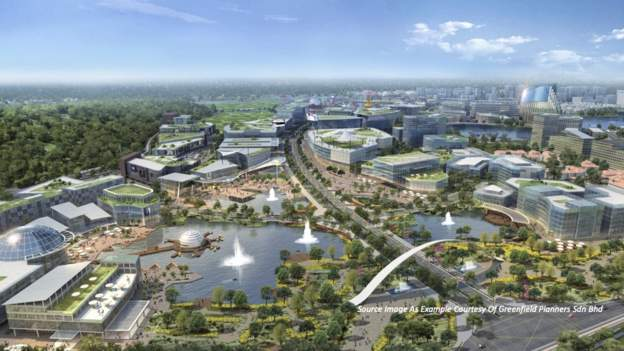
    Renowned actor, Idris Elba, in collaboration with Siaka Stevens and Octopus Energy Generation, is spearheading the development of an eco-city on Sierra Leone‘s Sherbro Island, challenging conventional perceptions of Africa.

    The ambitious project includes a wind and solar farm to address the country’s electricity shortage, with Elba emphasising the goal of self-reliance over profitability.

    With less than a third of homes in Sierra Leone currently having access to electricity, the eco-city aims to be a beacon of innovation, attracting businesses, fostering growth, and reshaping Africa’s narrative beyond the traditional aid model.

    Elba envisions a city that not only appeals to tourists but also empowers local communities through sustainable development.

    “Are we ever gonna make a profit? I don’t think so, but it is about being self-reliant, it’s about bringing an economy that feeds itself, that has growth potential.

    “I’m very keen to sort of reframe the way Africa is viewed. We often view the framing of Africa as an aid model and this opportunity is completely different,” Elba told the BBC Newsday programme.

    In addition to the eco-friendly initiatives, Elba plans to establish a film studio and a retirement home for his Ghanaian mother on the island.

    The actor, with Sierra Leonean roots, is driven by a desire to change the perception of Africa while creating opportunities for economic growth and innovation in the region.

  • Idris Elba leads smart city project to challenge stereotypes in Sierra Leone

    Idris Elba leads smart city project to challenge stereotypes in Sierra Leone

    Actor Idris Elba, spearheading the development of a smart city in Sierra Leone, states that his motivation for the project is to challenge the stereotypical image of Africa.

    Elba, in collaboration with Siaka Stevens, the grandson of Sierra Leone’s former president, shares plans to construct the eco-city on rural Sherbro Island, situated off the West African coast.

    Partnering with renewable energy firm Octopus Energy Generation, the initiative aims to establish a sustainable energy source for residents through wind and solar farms.

    This endeavor is particularly significant as currently, fewer than one-third of households in Sierra Leone have access to electricity.

    “Are we ever gonna make a profit? I don’t think so, but it is about being self-reliant, it’s about bringing an economy that feeds itself, that has growth potential,” Elba told the BBC Newsday programme.

    “I’m very keen to sort of reframe the way Africa is viewed. We often view the framing of Africa as an aid model and this opportunity is completely different,” he added.

    Elba informed Newsday that the city aims to draw businesses and innovation, as well as cater to tourists and uplift local communities.

    Additionally, the actor intends to establish a film studio and a retirement home for his mother within the city.

    Elba’s mother hails from Ghana but relocated to the UK, while his late father was of Sierra Leonean descent.

  • Former leader of Sierra Leone departs amid accusations of treason

    Former leader of Sierra Leone departs amid accusations of treason

    Sierra Leone’s old leader is going to Nigeria for medical care even though he is supposed to be on trial for his part in a coup attempt last year.

    The High Court gave Ernest Bai Koroma permission to leave for up to three months on Wednesday.

    The president of Sierra Leone said this is a “kind act to help people in need”.

    Many people think that Mr. Bai Koroma has agreed to leave the country and go into exile.

    He will go to trial for betraying his country in March.

    Mr Bai Koroma was the leader of Sierra Leone for 11 years until 2018. Then, President Julius Maada Bio was elected.

    A plane from Nigeria with the ex-president on board was spotted leaving the airport in Freetown on Friday afternoon.

    There are rumors that Ecowas has made a deal with Sierra Leone so the 70-year-old can go to Nigeria to help calm things down after the trouble in November.

    In a speech on TV, President Julius Maada Bio said the decision about his predecessor is up to the courts.

    “The courts have allowed the former President to leave the country for medical reasons, and his trial will be paused while he is away,” President Bio said. He also reassured that this decision does not lessen the significance of the trials, and shows that they are focused on uncovering the truth about the events of November 26, not on politics.

    The attack happened when armed people broke into a military base and prisons, and let around 2,000 prisoners go free, according to the authorities. At least 21 people died in the fighting.

    The government said it was an attempt to overthrow it, and more than 80 people were arrested in the following weeks – many of them were from Sierra Leone’s military.

    The daughter of the ex-president, Dankay Koroma, has been listed as a suspect in the police investigation of the failed coup. She has not said anything.

    A group of people tried to take over the government five months after the president was re-elected in a close election.

    Mr Koroma’s All People’s Congress did not accept the results. Foreign observers also said the elections were not fair because the vote counting process was not clear.

  • Ex-Sierra Leone president Ernest Bai Koroma allowed medical travel amidst coup trial

    Ex-Sierra Leone president Ernest Bai Koroma allowed medical travel amidst coup trial

    Former Sierra Leone President Ernest Bai Koroma has been granted permission by the High Court to travel to Nigeria for medical treatment, even as he faces trial for an alleged coup attempt.

    The court-approved leave spans a maximum of three months, described by Sierra Leone’s current president as a “humanitarian gesture.”

    However, speculation suggests a potential exile arrangement. Bai Koroma’s treason trial is scheduled for March.

    The former president, who led Sierra Leone for 11 years until 2018, left on a Nigerian presidential jet from Freetown International Airport on Friday afternoon.

    Amid ongoing speculation, there are indications that the Economic Community of West African States (Ecowas) may have facilitated a deal between the Sierra Leone government and the 70-year-old former president, Ernest Bai Koroma, allowing him to travel to Nigeria.

    This move aims to ease tensions following the November unrest and has prompted President Julius Maada Bio to address the nation.

    In his Thursday night speech, President Bio emphasized that the matter of his predecessor’s travel lies solely within the jurisdiction of the judiciary.

    “The courts have, therefore, granted the application for the former President to depart from the country purely for specialised medical reasons, and his trial will be suspended for the duration of his absence,” he said.President Bio said it did not in any way detract from the seriousness of the ongoing trials, and that it was further proof that “the trial is not a political witch-hunt but one aimed at unravelling the truth behind the events of 26 November”.

    That attack saw armed assailants storm a military barracks and prisons, freeing around 2,000 inmates, the authorities said. At least 21 people were killed in the violence.

    The government said this amounted to an attempt to overthrow it, and in subsequent weeks more than 80 people were arrested as suspects – many of them belonging to Sierra Leone’s military.

    The former president’s daughter, Dankay Koroma, has previously been named on a list of suspects wanted by police investigating the failed coup. She has not commented.

    The attempted coup came five months after a disputed election which saw President Bio narrowly re-elected for a second term.

    The results were rejected by Mr Koroma’s All People’s Congress. International observers also criticised the elections, highlighting a lack of transparency in the count.

  • Ernest Bai Koroma: Former president of Sierra Leone travels to Nigeria for health care

    Ernest Bai Koroma: Former president of Sierra Leone travels to Nigeria for health care

    Sierra Leone’s ex-president is going to Nigeria for medical care even though he is supposed to go on trial for his alleged involvement in a coup attempt last year.

    The High Court allowed Ernest Bai Koroma to leave for up to three months on Wednesday.

    Many people think that an agreement has been made for him to leave the country.

    His trial for betraying his country is supposed to start in March.

    “Mr Bai Koroma was the leader of Sierra Leone for 11 years until 2018. Then Julius Maada Bio became the new President. ”

    A plane from Nigeria with the ex-president on board was spotted leaving Freetown International Airport on Friday afternoon.

    This is happening while people are guessing that Ecowas has made an agreement with Sierra Leone’s government to let the 70-year-old move to another place to reduce tension after the trouble in November.

  • Sierra Leone’s national team train on dusty, grassless pitch ahead of AFCON

    Sierra Leone’s national team train on dusty, grassless pitch ahead of AFCON


    As Sierra Leone’s national team, the Leone Stars, readies itself for a friendly match against the hosts of the 2023 Africa Cup of Nations (AFCON), concerns have emerged regarding the training facilities following pictures of the team practicing on a dust-laden, grassless pitch.

    Although the Leone Stars did not qualify for the AFCON tournament in Ivory Coast, they perceive this friendly encounter as a vital test ahead of their World Cup qualifiers resuming in March.

    The less-than-ideal training conditions have sparked conversations among fans and observers, with images of the team honing their skills on a subpar pitch raising eyebrows.

    Despite this setback, the Leone Stars remain focused on their opening game against Guinea-Bissau at the Olympic Stadium in Ebimpe on January 13.

    For 2015 AFCON Champions Ivory Coast, this friendly match serves as a strategic opportunity to assess their readiness for the upcoming tournament, where they find themselves grouped with Nigeria, Equatorial Guinea, and Guinea-Bissau in Group A.

    Eager to make a significant impact as hosts and surpass the quarter-final exit from the last edition, the Elephants are determined to showcase their prowess.

    The upcoming friendly clash holds added significance as the last encounter between Sierra Leone and Ivory Coast during the 2021 AFCON in Cameroon resulted in a 2-2 draw.

    Both teams, utilizing this match to fine-tune their strategies, set the stage for an intriguing prelude to the much-anticipated AFCON tournament in Ivory Coast.

    Amidst discussions about the pitch conditions, the friendly match offers a glimpse into the teams’ preparations and aspirations for success on the continental stage.

  • Sierra Leone accuses 12 people of trying to stage coup

    Sierra Leone accuses 12 people of trying to stage coup

    Twelve people in Sierra Leone are accused of being involved in a coup attempt that happened in November. They are now facing charges.

    This group includes some former police and prison officers, and also the ex-bodyguard of former President Ernest Bai Koroma.

    Mr Koroma is being suspected of trying to overthrow the government. He has been told to stay at his house by the police since they questioned him last month.

    The people accused of a crime have been charged with several serious crimes, including betrayal of their country, hiding that betrayal, and helping the enemy. This was announced by the Information Minister, Chernor Bah.

    More people are expected to be arrested soon, the police chief said.

    On 26 November, some people with guns broke into a military weapons storage place and some jails in the main city Freetown, letting almost 2,000 prisoners go free.

    At least 19 people, including 13 soldiers, died in the fighting, when the army tried to take over the government but didn’t succeed.

    In December, the government said that they arrested 80 people who were suspected of trying to take over the government. Some of them were regular people and others were police or military.

    Mr Koroma’s daughter, Dankay Koroma, was one of 54 people who were wanted by the police.

  • Boss LAJ released from prison following failed coup attempt in Sierra Leone

    Boss LAJ released from prison following failed coup attempt in Sierra Leone

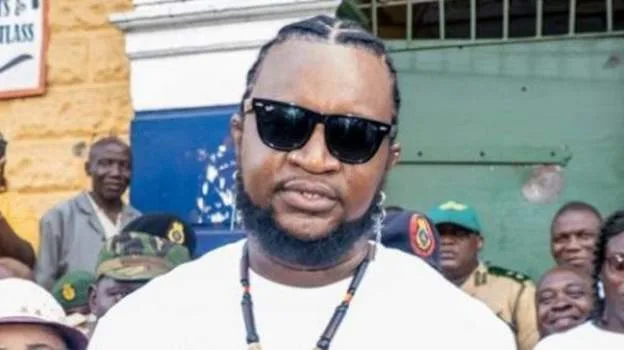
    Sierra Leonean authorities have released 352 prisoners, including famous rapper Alhaji Amadu Bah, known as Boss LAJ, who was serving a nine-year prison sentence for robbery.

    The country’s information ministry said they were released following an amnesty Monday by President Julius Maada Bio.

    The move comes just a month after more than 20 people were killed and about 2,000 prisoners escaped in a coup attempt.

    Bah, one of those who escaped, later surrendered to prison authorities in the capital Freetown.

    “Today the president released our brother King Boss La and 351 other detainees across the country,” Information Minister Chernor Bah told AFP.

    The minister said the rapper had “demonstrated good citizenship” by voluntarily returning to prison.

    Prison authorities said some of the released prisoners, including 11 women, were serving sentences for “minor crimes”.

    Rapper Bah is known for his lyrics criticizing President Bio’s government. More than 80 people, mostly military officers, were arrested following the coup attempt.

  • Police question former president of Sierra Leone Koroma

    Police question former president of Sierra Leone Koroma

    Ex-President of Sierra Leone Ernest Bai Koroma has been asked questions by the police in the capital city, Freetown, about a failed coup.

    Mr Koroma, who led the country for 10 years, arrived at the criminal investigations department around 10:00 local time with a lot of police and military guards.

    It’s not known how long the questioning lasted, but the ex-president said on social media that it would continue on Saturday.

    He said that he keeps an open mind and trusts that the legal process and rules will be fair.

    The police called Mr Koroma on Thursday and asked him to come in for questioning within 24 hours, as part of their investigation into the failed coup attempt on 26 November.

    Last month, there was an attack in Sierra Leone. Gunmen went to a military base, a prison, and other places. They let about 2,000 prisoners go and killed more than 20 people. The government said the gunmen were trying to take over the government.

    71 people have been arrested, including 45 soldiers, 7 police officers, and 13 regular people.

  • Sierra Leone violence: Violence in Sierra Leone was a botched coup – Minister

    Sierra Leone violence: Violence in Sierra Leone was a botched coup – Minister

    Sierra Leone’s government says that the trouble on Sunday was an attempted coup. Armed men attacked buildings in the capital city.

    The information minister said that on Sunday, some people with guns tried to take over the government.

    The attackers broke into a military base and jails, letting about 2,000 prisoners go free, according to the officials.

    At least 19 people, including police and one civilian, were killed in the fighting.

    “The incident was a failed try to take over. ” The plan was to secretly overthrow a government that was chosen by the people, said Information Minister Chernoh Bah on Tuesday.

    We will try to catch them and make them follow the laws of Sierra Leone.

  • Manhunt underway for prisoners who escaped from Sierra Leone

    Manhunt underway for prisoners who escaped from Sierra Leone

    Police in Sierra Leone say they are proceeding the manhunt for individuals included in what the government has portrayed as a arranged and co-ordinated assault on the capital.

    Shooters broke into an arsenal and a few detainment facilities in Freetown on Sunday, empowering the elude of nearly 2,000 detainees.

    Establishments exterior the capital were moreover assaulted.

    The specialists are advertising a remunerate of $2,000 (£1,580) for anybody with data on a culprit still at expansive, as well as $1,000 for any leads on gotten away detainees.

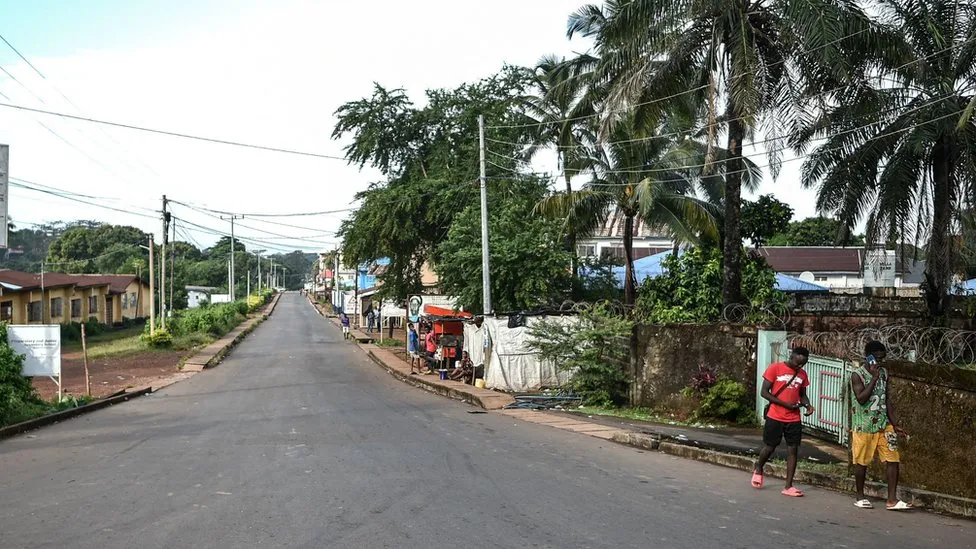
    A night-time time limit remains in put all through Sierra Leone.

    Twenty individuals kicked the bucket within the assaults, 13 of them servicemen steadfast to the government.

  • Sierra Leone prison breaks co-ordinated and properly planned – Minister

    Sierra Leone prison breaks co-ordinated and properly planned – Minister

    In Sierra Leone, some people with guns attacked a military base and let out hundreds of prisoners in a carefully planned attack, according to the country’s information minister.

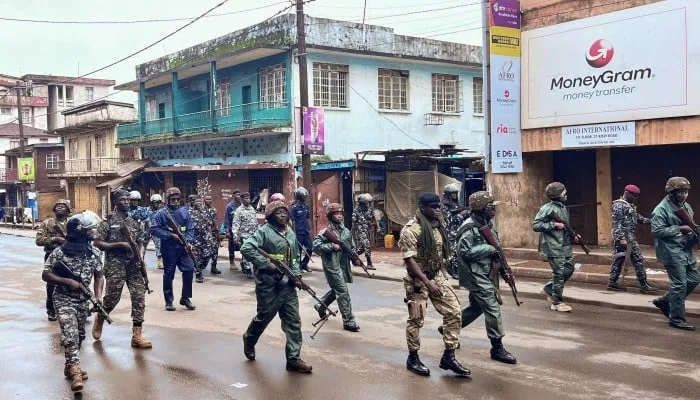
    People in Sierra Leone had to stay inside all day on Sunday because there was trouble in the capital city, Freetown.

    A BBC reporter saw men with guns on the streets saying they wanted to “clean” Sierra Leone.

    The attack was a “very serious violation”, said Information Minister Chernoh Bah.

    “He said on the BBC’s Newsday show that these were planned and coordinated attacks on our state’s safety and well-being. This was said on Monday morning after the curfew was lifted.

    Current and former soldiers were part of the group, and some of them have been captured by the security forces.

    Mr Bah said that we have caught some of the main people behind yesterday’s attack and our security forces are asking them questions. Some people suggested there was a coup but that’s not true.

    “Once they understand completely why they are doing it. ” We will decide if it was an attempted takeover.

    Many countries in West and Central Africa are now controlled by the military after a number of recent coups. Sierra Leone borders Guinea, Mali, Niger, and Chad.

    A guard who worked for former President Ernest Koroma was arrested, according to a military source who spoke to the BBC on Sunday.

    Mr Koroma said in a statement a few hours later that one of his guards had been killed and another one taken away.

    He said he was very against the violence. One person was shot from very close and another person was taken away to a place that is not known.

    However, Bah also said that a search is going on to find the gunmen and the prisoners who escaped.

    On Sunday evening, the president spoke on TV and said the events were a security breach and an attack on democracy.

    A new rule says people must stay home from 9:00 pm until 6:00 am starting on Monday.

    The situation in Sierra Leone has been uneasy since June when President Bio was re-elected by a small margin, just missing the need for a second round of voting.

    Foreign observers have criticized the way votes were counted and complained about the lack of openness. They also raised concerns about violent acts and threats.

    In August, some soldiers were taken into custody and accused of planning to overthrow the president.

    The US, European Union, UK and Ecowas all spoke out against the violent events that took place on Sunday.

  • Nationwide curfew declared in Sierra Leone after attack on military barracks

    Nationwide curfew declared in Sierra Leone after attack on military barracks

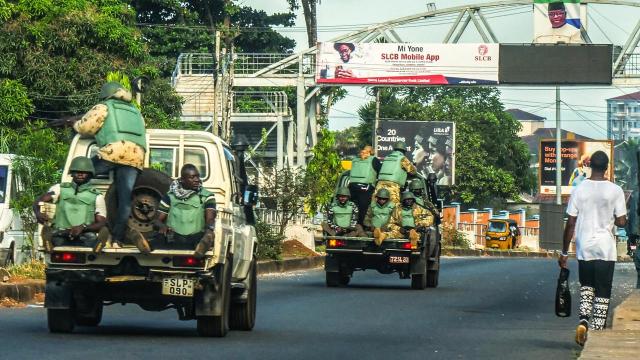
    Sierra Leone has declared a nationwide curfew after unidentified gunmen attacked a military barracks and attempted to break into an armoury in the capital, Freetown, the government said on Sunday.

    A government statement said the security forces were in control of the situation.

    “In the early hours of Sunday, some unidentified individuals attempted to break into the military armoury at the Wilberforce barracks. The have been rebuffed,” information minister Chernor Bah said in the statement.

    “A nationwide curfew has been declared with immediate effect … We strongly advise citizens to stay indoors,” the statement added.

    A senior official who requested anonymity told Reuters that the central prison in Freetown was open and some inmates had escaped. The prison, designed to hold 324 inmates, held over 2,000 in 2019, according to a U.S. State Department report.

    It was not clear how many had broken out of the facility, but videos shared on social media showed several people fleeing from the area of the prison, while gun shots could be heard in the background.

    The political situation in the West African nation has remained tense since the re-election of President Julius Maada Bio in a disputed election in June, the result of which was rejected by the main opposition candidate.

    Anti-government protests that resulted in the death of six police officers and at least 21 civilians last August were an attempt to overthrow the government, President Maada Bio said at the time.

  • Why Sierra Leone has imposed a nationwide curfew

    Why Sierra Leone has imposed a nationwide curfew

    Sierra Leone is on curfew because some armed men broke into a prison and let the prisoners go free.

    Prisoners from Central Padema Road prison in the city of Freetown were let go on Sunday morning, a person in charge at the prison told BBC News.

    Before, armed men had attacked a military base in the city.

    People who live nearby heard gunshots at the barracks, which are near the president’s house.

    After the attack, the Ministry of Information said everyone in the country should stay inside right away.

    President Julius Maada Bio said everything is peaceful now and the police are looking for the people who did the shooting.

    The BBC’s reporter Umaru Fofana, who works in Freetown, says that there is still trouble in the city.

    He saw soldiers with big guns in a captured police car, and heard others saying they wanted to “clean Sierra Leone”.

    In June, President Julius Maada Bio won the election again after almost having to compete in a run-off.

    Several countries in West and Central Africa are now ruled by the military after a series of coups, including Guinea.

  • Liberia expels former police chief of Sierra Leone

    Liberia expels former police chief of Sierra Leone

    A former police chief from Sierra Leone has been detained and turned over by Liberian authorities after that nation accused him of plotting a coup against President Julius Maada Bio’s administration.

    Mohammed Y Toure was detained “at the request of the Sierra Leonean authorities on the allegation of helping plan subversive activities intended to unseat [Mr Bio’s] government,” Liberian Information Minister Ledgerhood Rennie said in a statement on Tuesday.

    According to him, preliminary investigations led Liberia to decide to comply with Sierra Leone’s request and deliver the former police commander to that country.

    He continued by saying that Sierra Leone had assured him that all of his rights, including the right to a swift and fair trial, would be upheld.

    The Independent National Commission on Human Rights of Liberia, however, issued a strong warning against the extradition, citing the possibility that anyone handed over could be subjected to “physical abuse, unfair trials, or excessive punishment” by the authority making the request.

    It also reaffirmed Liberia’s commitments, such as not agreeing to extradition requests where the crime “is regarded as a political offence or as an offence connected with a political offence,” in a statement.

    Since last year, the former police chief has been residing in Liberia. According to local media, he was one of the policemen fired from the Sierra Leonean police service in 2020 while other officers were pushed into retirement.

    More than a week ago, the police in Sierra Leone accused nameless people “at home and abroad” of plotting violent protests, and now they are deporting him.

    The police reported last week that they had detained a number of persons, including senior military commanders who were not named, for “working to undermine the peace and tranquillity of the state.”

  • Sierra Leone bans meat imported from Liberia over anthrax scare

    Sierra Leone bans meat imported from Liberia over anthrax scare

    In response to the unexplained death of 36 cows in a border area, Sierra Leonean authorities have imposed a ban on the movement of cattle from Liberia and the import of meat from the neighboring country.

    The incident occurred in the town of Kelima Bendu, located in Lofa County, approximately ten kilometers from the Sierra Leone border and fifteen kilometers from Guinea.

    Liberian authorities have initiated an investigation into the cause of the cattle deaths, although no timeline has been provided for when the results will be made known.

    As a precautionary measure, Sierra Leone has implemented several actions, including the prohibition of cattle, goats, and sheep movement along the border with Liberia, temporary closure of livestock markets in the border area, and increased surveillance in slaughterhouses.

    These measures aim to prevent any potential spread of the unknown cause of death to Sierra Leonean livestock.

    It is important to note that Sierra Leone experienced an anthrax epidemic in May 2022, which resulted in the loss of over 200 animals.

    Anthrax, caused by spores that can remain dormant in the soil for extended periods, poses a risk to both animals and humans, with potentially fatal consequences in rare cases.

    Authorities in both Sierra Leone and Liberia are taking these precautions to ensure the safety of their respective livestock populations and mitigate any potential risks to public health.

  • Opposition MPs boycott their swearing-in in Sierra Leone

    Opposition MPs boycott their swearing-in in Sierra Leone

    Opposition MPs in Sierra Leone have skipped their parliamentary swearing-in ceremony following elections last month.

    According to the electoral commission’s results, which the opposition contests, the All People’s Congress (APC) won 54 of 149 seats.

    The head of the election commission’s resignation and a new election within six months have been demanded by the APC.

    According to David Reimer, the US ambassador to Sierra Leone, “those who voted for the opposition need to have their voices heard” and “a vibrant democracy needs a strong opposition.”

    But APC leader Samura Kamara, the losing presidential contender, tweeted: “Under normal circumstances, each day forward means progress. In our political journey however in Sierra Leone, a new day now means going backwards.”

  • Sierra Leone overtakes Ghana as West Africa’s most peaceful country

    Sierra Leone overtakes Ghana as West Africa’s most peaceful country

    Ghana has lost its status as the most peaceful country in West Africa, according to the latest Global Peace Index (GPI) released last week.

    The country also dropped from the second to the fourth position in Africa, behind Mauritius, Botswana and Sierra Leone.

    The GPI ranks 163 countries, covering 99.7 per cent of the world’s population, based on 23 indicators from reputable sources. These indicators measure the level of safety and security in society, the extent of domestic and international conflict, and the degree of militarisation.

    The Chairman of the Governing Board of the National Peace Council (NPC), Rev. Dr Ernest Adu-Gyamfi, disclosed this at a two-day national dialogue on improving civilian-security agency relations for the prevention of violent extremism in Ghana.

    He said that factors such as armed robbery, attacks on journalists, political violence, land guard menace and public perceptions contributed to the decline in Ghana’s peace score.

    He was speaking at the event held at Prampram in the Greater Accra Region yesterday, which brought together personnel of the Ghana Police Service and representatives from various political parties.

    The event was organised by the NPC and the Catholic Relief Services (CRS) and funded by the Netherlands Embassy. It was part of a project named “Prevention of violent extremism through social accountability (PoVETSA)”.

    Enhancing trust

    Rev. Dr Adu-Gyamfi stressed the need to enhance trust and confidence between the security agencies and the civilian population to prevent extremism and promote understanding and tolerance in the country, especially ahead of the 2024 general election.

    He said that since 2020, the NPC had undertaken several programmes to build resilience against terrorism and violent extremism. These included engaging more than 100 student leaders across the country, training more than 400 youths in all the regions and reaching out to more than 200 fisherfolk and commercial drivers on ways to prevent the insurgents from infiltrating the country.

    He also expressed concern about protracted chieftaincy conflicts and unresolved disputes within and between political parties, which he said could create opportunities for violence and extremism.

    “Other unresolved conflicts, including intra and inter-party elections at all levels, must be holistically dealt with so that they do not serve as motivation for violence and provide impetus for aggrieved individuals to use unlawful means to seek revenge,” he added.

    Challenges

    The Country Representative of CRS, Daniel Mumuni, said there had been instances where trust between political parties and security agencies in the country had been strained, leading to a sense of apprehension within the society.

    He said such situations endangered democratic processes and undermined national development. He added that establishing a vibrant peace-building infrastructure would strengthen partnerships and promote inclusive and participatory governance.

    The Tema Regional Police Commander, Commissioner of Police Daniel Kwame Afriyie, said his outfit had embarked on a transformation agenda to position itself as a world-class institution.

    He said this was being done through engaging various stakeholders in communities to ensure law and order prevailed.

  • Maada Bio sworn in as president of Sierra Leone

    Maada Bio sworn in as president of Sierra Leone

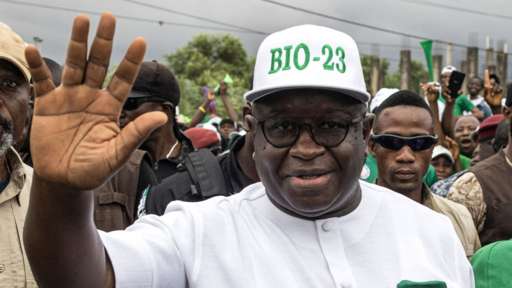
    Maada Bio, the president of Sierra Leone, was sworn in for a second term on Tuesday, just hours after the country’s electoral body recognised his victory over competitors’ protests.

    Samura Kamara of the opposition All People’s Congress (APC) party came in second with 41% of the vote, while Bio’s Sierra Leone People’s Party (SLPP) garnered approximately 1.6 million votes, or 56.1% of the total ballots.

    “By the authority granted to me… President Bio Julius Maada has been legitimately elected, I hereby certify, said Chief Electoral Commissioner Mohamed Konneh.

    Just hours after the results was announced, Bio was sworn in at the State House where he gave a speech thanking citizens for their “trust and dedication.”

    “Our triumph belongs to every Sierra Leonean,” he added.

    Kamara however rejected the results and described it as a “frontal attack on our fledgling democracy.”

    His APC party had on Monday rejected provisional results that showed an early lead for Bio, describing then as “cooked-up figures.”

    APC alleged a lack of transparency by the electoral body in tallying the ballots, adding that its agents “were neither allowed access to participate (at tally centers) nor were they allowed to verify results prior to the announcement.”

    The vote count was fraught with controversies and some international observers expressed concerns about the integrity of the process.

    “Carter Center observers reported that the tabulation process lacked adequate levels of transparency,” the observer group said in a statement ahead of the declaration of the final results.

    “Carter Center observers directly observed instances of broken seals and inappropriately open ballot boxes in three of the five tally centers,” it added in its preliminary report issued Tuesday.

    The electoral commission described the weekend poll as relatively peaceful but acknowledged pockets of violence and delays in polling in some areas.

    On Sunday, Kamara’s APC party accused the country’s security forces of laying siege to its head office in the capital Freetown, and firing live rounds into the property while it held a press conference after the polls.

    He described it as an “assassination attempt,” however police denied firing live rounds.

    The June 24 vote was the fifth election since the end of the country’s brutal civil war in 2002. Key among voter concerns were high inflation rates and unemployment levels, as well as political violence and corruption.

  • Sierra Leone: Julius Madaa Bio declared winner of presidential poll

    Sierra Leone: Julius Madaa Bio declared winner of presidential poll

    President Julius Maada Bio of Sierra Leone has officially been declared the winner of the presidential election, ensuring his re-election for a second term as the leader of the country.

    The Electoral Commission of Sierra Leone (ECSL) announced that Bio won with 56.17% of the total votes cast.

    The presidential election took place on June 24, 2023, and the official results were announced today.

    In order to be declared the winner, a candidate in the election needed to secure at least 55% of the valid votes cast. Otherwise, a runoff would have been held between the top two candidates two weeks after the announcement of the results.

    A total of 13 candidates contested for the presidential seat, including the incumbent president, Julius Maada Bio, who sought a second term in office.

  • Julius Maada Bio leading Samura Kamara in presidential elections

    Julius Maada Bio leading Samura Kamara in presidential elections

    The electoral commission has noted that with 60% of polling stations counted, the incumbent Julius Maada Bio currently holds a 56% share of the votes.

    Samura Kamara, from the All People’s Congress (APC), trails behind with 42%. To secure victory in the first round, a candidate needs more than 55% of the votes.

    The main opposition candidate has denounced the early results of Sierra Leone’s presidential election as “daylight robbery.” He claims that his electoral agents were denied the opportunity to verify the ballot counting process.

    Bio’s success can be attributed to strategic electoral alliances he formed during the campaign, even in opposition strongholds. However, European Union observers have criticized the electoral commission for a lack of transparency and have reported incidents of violence in some regions during the voting on Saturday.

    The APC had previously raised concerns about the election’s conduct and the electoral commission. Kamara reported that live ammunition was fired into his party’s headquarters during a press conference, resulting in the injury of a woman whose life is now in danger.

    Furthermore, the APC alleged that one of its supporters was shot dead by the police, although the police have denied these claims. Supporters of both major parties have been accused of attacking their opponents.

    Accusations of election irregularities, including ballot stuffing and voter suppression, have been made by Kamara, intensifying the controversy surrounding the election.

    However, the electoral body had insisted, in a press conference, that it had mechanisms in place to ensure a fair vote. Local media reports that arrests were made.

    Saturday’s vote saw a high turnout, with voters telling the BBC the process was smooth despite polling stations opening hours late in many areas.

    The election took place against the background of a troubled economy, the rising cost of living, and concerns about national unity.

    The voters were choosing a president, MPs and councillors in the West African country’s fifth election since the civil war ended in 2002.

    The 11-year conflict cost an estimated 50,000 lives, but since then the country has a tradition of largely peaceful, free and credible elections, according to Marcella Samba Sesay, chairperson of the NGO National Elections Watch.

    With strong party loyalty among the 3.3 million registered voters, the campaigns have focused on shoring up their parties’ bases rather than articulating and debating policy issues.

    However, voters have told the BBC they want to see concrete change in the country.

    “I want a responsible government that will provide jobs, education, improve healthcare and also ensure food security. I expect the new president to work for the nation,” Solomon Beckley from Freetown said.

  • Tensions intensifies as Sierra Leone gets ready for crucial elections

    Tensions intensifies as Sierra Leone gets ready for crucial elections

    In the midst of rising unhappiness and demands for change from its citizenry, Sierra Leone is preparing for Saturday’s vital presidential elections.

    Since the horrific civil war that raged through the nation’s history concluded 21 years ago, there have been five elections.

    Devastating illnesses like the Covid pandemic and Ebola in 2014 have also hit Sierra Leone.

    Samura Kamara, the leader of the opposition “All People Congress” (APC) party, is one of the twelve candidates running against Maada Bio, 59, in the general election.

    Kamara, a former cabinet minister, 72, is facing trial on corruption charges which he denies. The case has been adjourned until after the general election.

    The mood in the country is tense as the country prepares for the high-stakes elections.

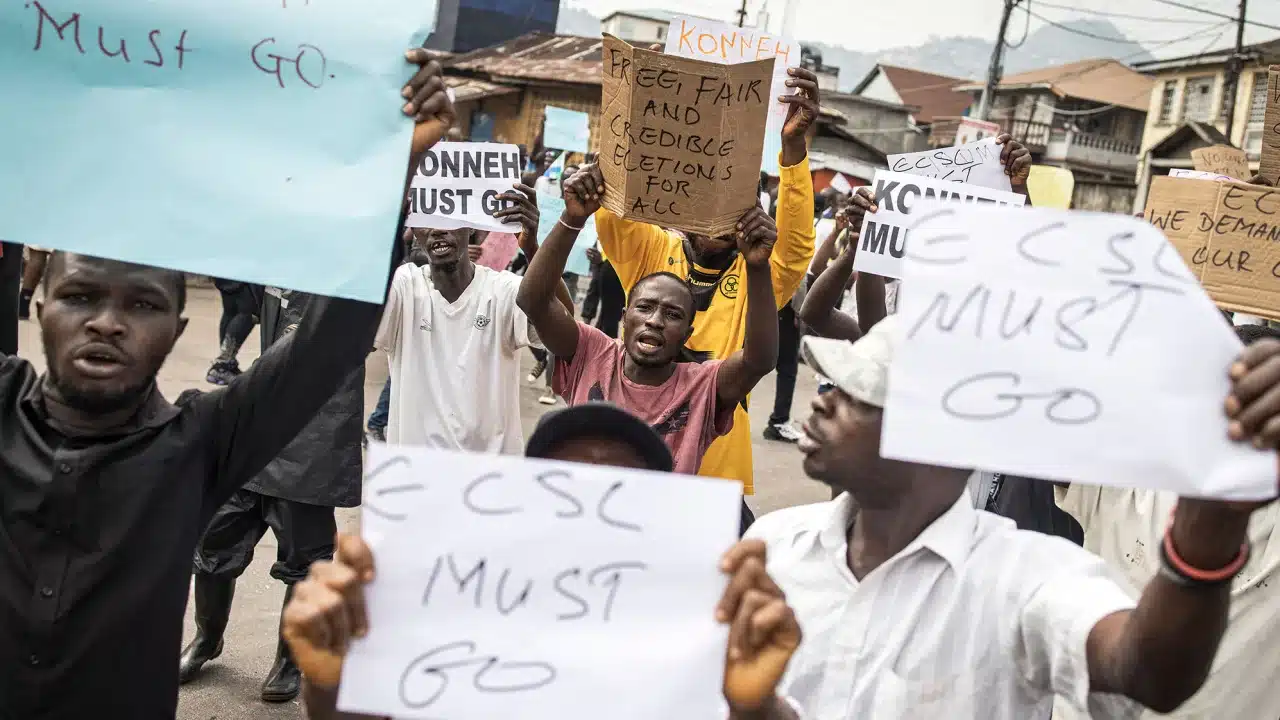
    Earlier in the week, police officers fired rubber bullets and teargas at supporters of the opposition party, All People’s Congress (APC), during a protest in the capital Freetown calling for the Chief electoral Commissioner, Mohamed Konneh, to step down after allegations of electoral fraud.

    The United Kingdom, the United States, Ireland, Germany, France, and the European Union issued a joint statement urging all parties to remain peaceful.

    Sierra Leoneans are concerned about several issues, including economic management, food shortages, healthcare services, infrastructure development, and education.

    Many citizens say they are frustrated with high inflation rates and unemployment levels, as well as political violence and corruption.

    ” …We are not seeing any prospect that the prices are coming down because the dollar inflation is very high. Everything is very high,” said Aminata Fanta Koroma, an APC party member.

    While Samura supporter Kadira Rodhe Kamara said: “We are tired with the austerity, we’re tired with the problems, the killings, the brutality, tribalism, nepotism, all kinds of things. You know, no democracy, no freedom of speech. The people are tired.”

    President Bio has promised to tackle these problems by feeding the nation and creating half a million jobs for young people if re-elected.

    However, Sierra Leoneans remain uncertain about their future as the country remains one of the poorest in the world despite its abundant diamond resources and other minerals.

    The illicit trade in these gems, commonly referred to as “blood diamonds” due to their association with conflict financing, exacerbated the civil war.

    Sierra Leone has a population of around 8.8 million, but less than half (3.3 million) are registered to vote in this election.

    The country has been facing a number of issues, including a soaring cost of living and massive unemployment.

    Inflation rates in April were recorded at around 37% according to the International Monetary Fund (IMF).

    The outcome of the elections is expected to depend largely on the younger demographic as people under the age of 35 make up around 60% of the voting-age population.

    A significant proportion of this group belongs to the post-war generation, who have grown up in a country grappling with poverty, unemployment, and political instability.

    However, Ishmael Beah, a former child soldier and author, turned human rights activist told CNN the youth are not hopeful of change.

    “The general mood of the country is it’s not hopeful at all because… the security situation has gotten tense in the way that you have more presence of armed police, armed military that are basically patrolling the streets as if going to an election is also going to war.”

    Beah added that the two political parties have not “presented any policies or any ideas of what they are going to do and that are credible. There was no presidential debate to talk about policy,” he said.

    There have been concerns of unrest in the run-up to the poll, similar to deadly anti-government protests that broke out last August, over the rising cost of living.

    Following August’s protests, President Bio ordered a crackdown as he believed the protests were part of an attempt to overthrow his government.

    “This was not a protest against the high cost of living occasioned by the ongoing global economic crisis. The chant of the insurrectionists was for a violent overthrow of the democratically elected government,” he said at the time.

    To be declared winner, a presidential candidate must secure 55 percent of the total votes. If this is not achieved in the first round of voting, a run-off election will be held between the two candidates with the highest votes — as was the case in the 2018 election.

  • President of Sierra Leone pulls ahead in the heated election contest

    President of Sierra Leone pulls ahead in the heated election contest

    Based on the preliminary results, Maada Bio, the president of Sierra Leone, has gained the lead in the race for the position.

    The Sierra Leonean Electoral Commission (ECSL) stated that it has so far counted roughly 60% of the total votes and anticipated announcing a winner within the following two days.

    President Bio of the Sierra Leone People’s Party (SLPP), who is 59 years old, and Samura Kamara, the leader of the opposition All People’s Congress (APC) party, who is 72 years old, are widely regarded as the two front-runners in the election.

    Bio has so far polled more than a million votes and currently leads Kamara with over 200,000 votes, according to ECSL.

    Earlier, Bio’s SLPP party said it was “greatly anticipating a landslide victory” following an internal review of its performance in the elections.

    To be declared winner, a presidential candidate must secure 55% of the total votes. If this is not achieved in the first round of voting, a run-off election will be held between the two candidates with the highest votes. Kamara

    The electoral commission described the weekend poll as relatively peaceful but acknowledged pockets of violence and delays in polling in some areas.

    On Sunday, Kamara’s APC party accused the country’s security forces of laying siege to its head office in the capital Freetown, and firing live rounds into the property while it held a press conference after the polls.

    In a series of tweets, Kamara said his party’s headquarters had been surrounded by government forces and live bullets had been fired at the door of his private office.

    “This is an assassination attempt,” he added.

    Another opposition leader, Yvonne Aki-Sawyerr, who is seeking reelection as the mayor of Freetown, posted photos from inside the surrounded building and wrote: “I am in the APC Party office and we are under fire. It is tear gas and what sounds like live rounds. There are about 20 of us on the ground in one office. The shots are still being fired. We need help please!”

    The police accused the APC party of carrying out a procession and claiming victory in the polls ahead of an official declaration by the electoral commission, in a statement made available to CNN.

    It added that officers were forced to fire teargas canisters when the “situation became unbearable,” but did not include details about whether shots were fired at the APC’s head office.

    The statement accused APC party members of “harassing passers-by”, including those thought to be members of the ruling SLPP party and “announcing to the public that they had won the just concluded elections.”

    Voting was carried out Saturday under heavy security presence and armored tanks.

    Ahead of the polls, police fired rubber bullets and teargas at supporters of the APC, during a demonstration that called for the resignation of Chief electoral Commissioner, Mohamed Konneh, following allegations of electoral fraud.

  • Police ‘open fire’ at Sierra Leone’s opposition’s headquarters

    Police ‘open fire’ at Sierra Leone’s opposition’s headquarters

    The headquarters of Sierra Leone’s main opposition party has been surrounded by soldiers while the country awaits the results of the presidential election.

    Samura Kamara, the leader of the All People’s Congress, reported that live ammunition was fired into the building during his news conference, which he described as an assassination attempt.

    The area was enveloped in tear gas, adding to the chaotic situation.

    The reason for the deployment of troops in large numbers remains unclear, and the police have yet to provide any comments on the incident.

    The opposition party seeks to remove President Julius Maada Bio from office as he runs for a second term.

    The election, held on Saturday after a tense campaign, saw sporadic violence targeting election officials.

    Meanwhile, the results are yet to be made public.

  • Sierra Leone election awaits results in tense poll

    Sierra Leone election awaits results in tense poll

    In the aftermath of a contentious campaign marked by violence, Sierra Leoneans are awaiting the results of the general election.

    There was a high turnout, with voters telling the BBC the process was smooth despite ballots opening hours late in many areas.

    There had been concern about potential clashes in the run up to the vote.

    On Wednesday, the main opposition party alleged that one of its supporters was shot dead by police, which the police have denied.

    Supporters of both main parties have been accused of attacking opponents.

    Accusations of election irregularities were also being thrown on Saturday, after the leader of the opposition alleged ballot stuffing and voter suppression in some parts of the country.

    However, the electoral body had insisted, in a press conference earlier this week, that they had mechanisms in place to ensure a fair vote. Local media reports that arrests were made.

    The election is taking place against the background of a troubled economy, the rising cost of living, and concerns about national unity.

    The voters are choosing a president, MPs and councillors in the West African country’s fifth election since the civil war ended in 2002.

    The 11-year conflict cost an estimated 50,000 lives, but since then the country has a tradition of largely peaceful, free and credible elections, according to Marcella Samba Sesay, chairperson of the NGO National Elections Watch.

    With strong party loyalty among the 3.3 million registered voters, the campaigns have focused on shoring up their parties’ bases rather than articulating and debating policy issues.

    However, voters have told the BBC, they want to see concrete change in the country.

    “I want a responsible government that will provide jobs, education, improve healthcare and also ensure food security. I expect the new President to work for the nation,” Solomon Beckley from Freetown said.

    Who are the candidates?

    President Julius Maada Bio, 59, of the Sierra Leone People’s Party (SLPP) is running for a second five-year term. His main rival among the 12 challengers is Dr Samura Kamara, 72, of the All People’s Congress (APC).

    This is a repeat of the race in 2018, which saw Mr Bio narrowly win following a second round run-off.

    How much violence has there been?

    There has been an uptick in violence compared to five years ago, according to the West Africa Network for Peace-building Sierra Leone. It has counted 109 violent incidents since April.

    This week, the APC said one person was killed by security forces as its supporters gathered for a protest at its headquarters in Freetown on Wednesday.

    The police alleged the shots were fired from the direction of the APC building.

    Dr Kamara has also said that his motorcade came under attack and there were reports that the APC office was set ablaze in the city of Bo last weekend.

    The SLPP has said that it too has faced attacks in opposition strongholds.

    https://emp.bbc.com/emp/SMPj/2.49.3/iframe.htmlMedia caption,

    What you need to know about the elections

    President Bio has called for “peaceful elections” and “no violence”. The African Union has also expressed concerns over reported incidents of violence and intimidation in parts of the country.

    Sierra Leoneans have been alarmed by campaigners’ rhetoric, the Reuters news agency reports.

    “All I want is peace. I am scared by the high level of hatred I see being exhibited on social media by political extremists on both sides,” a student from Freetown who wanted to remain anonymous told Reuters.

    What about women?

    This election comes months after a landmark law which says women must make up 30% of all positions in both the public and private sector – including in parliament.

    But analysis from Sierra Leone’s Institute for Government Reform (IGR) suggest the next parliament will fall short of this.

    Parties have put forward lists of candidates running in each of the country’s districts to be elected on a proportional representation basis. But according to the IGR, not enough women are placed high enough on those lists to make sure the 30% threshold is crossed.

    Out of the 13 candidates running for president only one is a woman – the little-known Iye Kakay.

    How does the election work?

    The APC has also expressed concerns about the transparency of the counting process and has cast doubt on the electoral commission’s ability to hold fair elections.

    The commission has defended itself, saying measures have been put in place to ensure the credibility of the voting and counting process.

    Results should be known within the next few days.

    To be declared the winner of the presidential race, the leading candidate must secure 55% of the votes cast, otherwise a run-off will be held between the two candidates with the highest number of votes.

    Additional reporting from Azeezat Olaoluwa in Lagos

  • Tensions intensify as Sierra Leone gets ready for crucial elections

    Tensions intensify as Sierra Leone gets ready for crucial elections

    In the midst of rising unhappiness and calls for change from its citizenry, Sierra Leone is preparing for Saturday’s vital presidential elections.

    Since the violent civil war that lasted for 21 years in the nation’s past has come to an end, there have been five elections.

    Devastating illnesses like the Covid pandemic and Ebola in 2014 have also affected Sierra Leone.

    In the general election, Maada Bio, 59, is being challenged by twelve individuals, including Samura Kamara, the leader of the opposition “All People Congress” (APC) party.

    Kamara, a former cabinet minister, 72, is facing trial on corruption charges which he denies. The case has been adjourned until after the general election.

    The mood in the country is tense as the country prepares for the high-stakes elections.

    Earlier in the week, police officers fired rubber bullets and teargas at supporters of the opposition party, All People’s Congress (APC), during a protest in the capital Freetown calling for the Chief electoral Commissioner, Mohamed Konneh, to step down after allegations of electoral fraud.

    The United Kingdom, the United States, Ireland, Germany, France, and the European Union issued a joint statement urging all parties to remain peaceful.

    Sierra Leoneans are concerned about several issues, including economic management, food shortages, healthcare services, infrastructure development, and education.

    Many citizens say they are frustrated with high inflation rates and unemployment levels, as well as political violence and corruption.

    ” …We are not seeing any prospect that the prices are coming down because the dollar inflation is very high. Everything is very high,” said Aminata Fanta Koroma, an APC party member.

    While Samura supporter Kadira Rodhe Kamara said: “We are tired with the austerity, we’re tired with the problems, the killings, the brutality, tribalism, nepotism, all kinds of things. You know, no democracy, no freedom of speech. The people are tired.”

    President Bio has promised to tackle these problems by feeding the nation and creating half a million jobs for young people if re-elected.

    However, Sierra Leoneans remain uncertain about their future as the country remains one of the poorest in the world despite its abundant diamond resources and other minerals.

    The illicit trade in these gems, commonly referred to as “blood diamonds” due to their association with conflict financing, exacerbated the civil war.

    Sierra Leone has a population of around 8.8 million, but less than half (3.3 million) are registered to vote in this election.

    The country has been facing a number of issues, including a soaring cost of living and massive unemployment.

    Inflation rates in April were recorded at around 37% according to the International Monetary Fund (IMF).

    The outcome of the elections is expected to depend largely on the younger demographic as people under the age of 35 make up around 60% of the voting-age population.

    A significant proportion of this group belongs to the post-war generation, who have grown up in a country grappling with poverty, unemployment, and political instability.

    However, Ishmael Beah, a former child soldier and author, turned human rights activist told CNN the youth are not hopeful of change.

    “The general mood of the country is it’s not hopeful at all because… the security situation has gotten tense in the way that you have more presence of armed police, armed military that are basically patrolling the streets as if going to an election is also going to war.”

    Beah added that the two political parties have not “presented any policies or any ideas of what they are going to do and that are credible. There was no presidential debate to talk about policy,” he said.

    There have been concerns of unrest in the run-up to the poll, similar to deadly anti-government protests that broke out last August, over the rising cost of living.

    Following August’s protests, President Bio ordered a crackdown as he believed the protests were part of an attempt to overthrow his government.

    “This was not a protest against the high cost of living occasioned by the ongoing global economic crisis. The chant of the insurrectionists was for a violent overthrow of the democratically elected government,” he said at the time.

    To be declared winner, a presidential candidate must secure 55 percent of the total votes. If this is not achieved in the first round of voting, a run-off election will be held between the two candidates with the highest votes — as was the case in the 2018 election.

  • Residents in Sierra Leone’s capital in fear over pre-poll clash

    Residents in Sierra Leone’s capital in fear over pre-poll clash

    Residents in Freetown have informed the international media that people are swarming the markets in the nation’s capital to stock up on food before the elections on Saturday.

    It follows a stand-off on Wednesday between the security forces and supporters of the main opposition party that reportedly left at least one person dead.

    Businesses shut down briefly amid the chaos and there is now a palpable fear that there could be further violence after Saturday’s poll.

    Sidi Yahya Tunis, spokesperson for the opposition All People’s Congress (APC), told the Reuters news agency that one of the party’s supporters had been killed by the police.

    An unverified video of the chaos showed an unconscious man who appeared to have been shot in the neck.

    Police Director of Operations Mohamed Braima Jah said no shots had been fired by officers, accusing the protesters of firing the shots: “Two from a pistol and three from an AK-47.”

    Local media say about 66 people have been arrested.

    The trouble started after the APC called for a demonstration over allegations that the election commission’s electoral roll was incorrect. Around 3.4 million people are registered to vote.

    The election is the fifth since Sierra Leone’s decade-long civil war officially ended in 2002. It was a particularly brutal conflict, with 50,000 deaths and thousands of people estimated to have had their arms and limbs amputated.

    President Julius Maada Bio is seeking re-election for a second and final term in office.

    His main challenger is the APC’s Samura Kamara, who came a close second in the last election in 2018.

    One of the biggest campaign issues has been about soaring prices – inflation reached about 43% in April.

  • “That is what I call a striker” – Liberia’s George Weah on Osimhen

    “That is what I call a striker” – Liberia’s George Weah on Osimhen

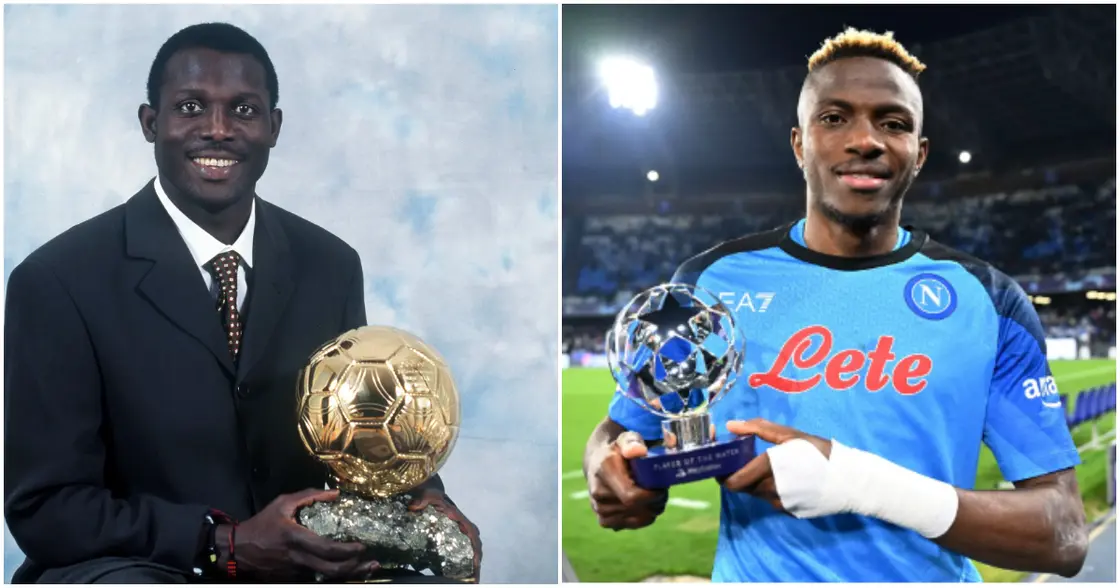
    Liberian President George Weah has praised Napoli striker Victor Osimhen for his outstanding performance during the Nigerian national team’s qualification match for the 2023 African Cup of Nations against Sierra Leone.

    On Sunday, June 18, Nigeria faced a tough challenge before securing a 3-2 victory over Sierra Leone in Liberia, with Kelechi Iheanacho scoring the winning goal.

    Osimhen played a crucial role in the match, scoring two goals before the hosts equalized in the second half, with the game seemingly heading for a draw.

    However, Iheanacho’s remarkable strike secured the win for Nigeria.

    According to the reports in Sun and Daily Post, Weah expressed happiness about the form of Osimhen urging the former Lille star to continue shining for his club and the national team.

    George Weah hails Osimhen

    “That is what I call a striker. Good positioning always. Very athletic and knows where to be each time the ball is coming. He is so strong and a fighter par excellence.”

    Meanwhile, Osimhen has been tipped to become the next African best footballer of the year following his incredible performances last term for Napoli.

    Some clubs in the Premier League have also shown interest to sign the Nigerian star.

    Victor Osimhen hails himself

    Earlier, Sports Brief had reported how Super Eagles striker Victor Osimhen stated emphatically that he deserves to be at the top in Africa and the world going by his excellent performances last season winning the Scudetto with Napoli.

    Last term was the best so far in the career of the Nigerian star as he did not only win the Serie A title alone with Napoli but also finished as the top scorer with 26 goals.

    Osimhen set the record as the first African to win the Golden Boot award in Serie A which is a landmark achievement.

    The former Lille strongman made it clear that he had a good season with Napoli.

  • 5 fact you should know about Sierra Leone

    5 fact you should know about Sierra Leone

    In addition to having white sand beaches and lush tropical forests, Sierra Leone, which will elect its president on Saturday, is also known for its history of slavery and a brutal civil war.

    Here are five things you need to know about the former British colony whose name, meaning “lion mountain”, derives from an old Portuguese phrase

    1. Freed slaves

    Sierra Leone was historically inhabited by the Mende, Temne and other indigenous groups who encountered the Portuguese, Dutch, English and French traders during the 15th, 16th and 17th centuries.

    At the end of the 18th and beginning of the 19th centuries, the British, out of philanthropy or interest, settled former slaves freed from the United Kingdom, North America or the Caribbean.

    Freetown, today the capital of Sierra Leone, was founded in 1792.

    The descendants of former slaves are now considered forming their own human group, the creoles (or Krio).

    Krio, which combines English, Portuguese, French and local languages such as Akan, Yoruba and Igbo, is the country’s lingua franca.

    2. Civil war, blood diamonds

    Sierra Leone was ravaged between 1991 and 2002 by a civil war that claimed tens of thousands of lives and left its mark in barbaric terms.

    The conflict, an extension of the civil war in neighboring Liberia, was largely financed by the sale of diamonds mined in the south-east of the country.

    The UN security council-imposed sanctions on the sale of diamonds from Sierra Leone between 2000 and 2003. This aspect of the war inspired the 2006 film “blood diamond”, starring Leonardo DiCaprio and Djimon Hounsou. 

    3. Ebola

    The Ebola virus disease killed around 11,000 people between 2014 and 2016 in Sierra Leone, Liberia and guinea.

    It has had devastating socio-economic effects on Sierra Leone, which was trying to recover from the war.

    4. Chimpanzees and ecotourism

    Sierra Leone has made the chimpanzee a national emblem for 2019. The country is trying to promote the image of an ecotourism destination offering pristine beaches, green hills and ecologically rich islands.

    It is home to a chimpanzee sanctuary in a rainforest reserve that has been visited by British primatologist Jane Goodall and Princess Anne.

    5. Idris Elba, Rüdiger and others

    Several international personalities have Sierra Leonese roots.

    British actor Idris Elba, whose father is Sierra Leonese and whose mother is Ghanaian, received Sierra Leonese nationality in 2019.

    Real Madrid central defender Antonio Rüdiger, a German international, was born of a Sierra Leonese mother, as was British foreign secretary James cleverly.

    Sheku Kanneh-Mason, the British cellist who played at Prince Harry and Meghan Markle’s wedding in 2018, was also born to a Sierra Leonese mother.

  • Idris Elba calls for peaceful Sierra Leone election

    Idris Elba calls for peaceful Sierra Leone election

    Idris Elba, a British actor who is of Sierra Leonean descent and citizenship, has asked for calm during the country’s next general election on Saturday.

    “This election please let it be peaceful,” he said in a message in Pidgin English.

    He reminded young people that they have the “power” in this vote, and that if the country is destroyed due to violence, it will be down to Sierra Leoneans to have to patch it back up again.

    “Not only is the world watching,” he said, but the whole of Africa.

    Saturday’s vote will be the country’s sixth presidential vote since a military takeover in 1992.

    It will see the incumbent, President Julius Madaa Bio of the Sierra Leone People’s Party (SLPP) go up against Dr Samura Kamara of the All People’s Congress (APC).

    There have been arrests of critical opposition voices in the the run up to the vote.

    Elba’s comments come on the same day that the Commonwealth Observer Group in Sierra Leone, led by former Nigerian Vice President Professor Yemi Osinbajo, called for peaceful elections that will reflect the will of the people.

    “The eyes of more than 2.5 billion people of the Commonwealth – more than 60% of whom are young people under the age of 30 – will be upon Sierra Leone. Watching, in solidarity and in hope,” Prof. Osinbajo said. 

  • Sierra Leone, Algeria join UN Security Council

    Sierra Leone, Algeria join UN Security Council

    Africa will be represented by Sierra Leone and Algeria as newly elected non-permanent members of the UN Security Council.

    Sierra Leonean President Julius Maada Bio hailed this achievement as a significant milestone for the nation, describing it as a testament to Sierra Leone’s successful transition from war to peace and its status as a resilient democratic country.

    In addition to Sierra Leone and Algeria, Guyana, Republic of Korea, and Slovenia were also elected as non-permanent members following a vote by the General Assembly.

    These five countries will join Ecuador, Japan, Malta, Mozambique, and Switzerland as non-permanent members of the Council.

    The newly elected members will assume their seats on January 1 and serve until December 31, 2025.

    The UN Security Council consists of 15 countries, with five permanent members—China, France, Russia, the UK, and the US—who hold veto power over resolutions.

  • Why Sierra Leone mourns 230-year-old iconic cotton tree felled by rains

    Why Sierra Leone mourns 230-year-old iconic cotton tree felled by rains

    The Sierra Leone government has reacted to the removal of a historic and landmark tree in the heart of Freetown.

    President Julius Maada Bio confirmed via a tweet, reports in local media, that the cotton tree had been felled due to heavy downpour in Freetown on May 24.

    “The iconic Cotton Tree has fallen due to the heavy downpour of rain in our capital this evening. A great loss to the nation. It was regarded as a symbol of liberty and freedom by early settlers.

    “We will have something at the same spot that bears testament to the great Cotton Tree’s place in our history. All voices will be brought together for this,” the tweet added.

    “Freetown’s most iconic landmark is gone. The city’s Chief Administrator, Festus Kallay, says the towering Cotton Tree – hundreds of years old – has just been brought down by a heavy storm. It’s a huge vacuum in the city’s skyline,” a BBC journalist, Umaru Fofana tweeted.

    Sierra Leoneans on social media have been sharing photos of the fallen tree which according to history dates back to the 1700s, reminding of the country’s colonial past, its history and resilience.

    The iconic Cotton Tree has fallen due to the heavy downpour of rain in our capital this evening. A great loss to the nation. It was regarded as a symbol of liberty and freedom by early settlers. We will have something at the same spot that bears testament to the great Cotton…— President Julius Maada Bio (@PresidentBio) May 24, 2023

    About the Cotton Tree – Credit Atlas Acura

    THE HISTORIC SYMBOL OF FREETOWN, the capital of Sierra Leone, is a large kapok tree known as the “Cotton Tree.” According to legend, the tree gained importance in 1792 when a group of formerly enslaved people settled the site of what is now Freetown.

    After the American Revolution, the British granted freedom to the enslaved people who had fought with the Crown during the war. Some so-called “Black Loyalists” were given land and supplies to resettle in British-controlled Nova Scotia, while others went to London and parts of the Caribbean.

    In 1787, some 4,000 formerly enslaved people were resettled in Sierra Leone—regardless of where they or their ancestors had originally come from. Five years later, another group emigrated from Nova Scotia to Sierra Leone.

    According to the story, when the first boat arrived, they walked up to a large tree just above the bay and held a Thanksgiving service there, praying and singing hymns.

    That tree still stands, (has fallen as of May 24), it stood between the courthouse and the National Museum. Though its exact age is unknown, it is known to have existed in 1787 and believed to be the oldest cotton tree in the nation. The Cotton Tree is an iconic monument in the capital and appears on the 10,000 Leones banknotes.

    The passing of many an iconic Sierra Leonean has been likened to the falling of a big tree. How then do we describe the falling of #SierraLeone’s most recognisable landmark and greatest icon? RIP the Cotton Tree. pic.twitter.com/spekaaHzAr— Sheka Forna (@tonkolili) May 24, 2023

    The world must achieve a sharp drop in global warming in the next 8yrs, if the natural calamities we have seen recently across the globe are not to get worse. The fall of the Cotton Tree in Freetown should therefore reenergize our efforts to address climate change issues in ???????? pic.twitter.com/Z5KSYqJADH— Babatunde Ahonsi (@AhonsiBA) May 25, 2023

    You can also watch the latest episode of People & Places:

    The unique names and customs you can only find among the Adas in Ghana | People & Places

    The unique names and customs you can only find among the Adas in Ghana | People & Places

    0 seconds of 18 minutes, 53 secondsVolume 90%

    Due to the heavy downpour of rain this night, the famous, historic and iconic cotton tree that was once standing tall at the center of Freetown, the capital of Sierra Leone, has fallen after 200+ years of existence. ????#SaloneTwitter #SierraLeone #Freetowncottontree pic.twitter.com/14Tyvb0lhK— The African Dream (@theafricadream) May 24, 2023

  • Multi-hazard approach best for curbing local disasters – NADMO

    Multi-hazard approach best for curbing local disasters – NADMO

    Director-General of the National Disaster Management Organization (NADMO), Eric Nana Agyeman-Prempeh, has urged for a strategic transition from a one-directional system to a multi-hazard strategy to managing disasters.

    He said such a move was necessary in the wake of the frequency and intensity of disasters in Ghana.

    He said technology and collaboration were key enablers in developing and implementing a multi-hazard approach to early warning response and disaster risk reduction.

    “The devastating fire and flood disaster of June 3, 2015, in Accra is a classic example of a multi-disaster emergency that requires advanced technology to deal with it,” he noted.

    He said out of the many disasters in Ghana, flooding was the most common that occurred every year and was managed by NADMO with a strong stakeholder collaboration.

    Disaster forum

    Nana Agyeman-Prempeh was speaking at an executive breakfast forum organised in Accra to discuss Ghana’s disaster risk reduction strategy.

    Dubbed: “Israel-Ghana Emergency Preparedness and Crisis Management”, the forum provided a platform for stakeholders to discuss the country’s ability to deal with emergencies and manage crisis.

    Disaster forum

    The forum was organised by the Israel Economic and Trade Mission to Ghana and the Israel Export Institute, in collaboration with NADMO.

    It brought together personnel from the security agencies and representatives from the Ghana Health Service, the Ghana Geological Survey Authority, the National Development Planning Commission and the National Signals Bureau.

    Other participants came from CDD Ghana, the National Centre for Coordination of Early Warning and Response Mechanism, the Ghana Journalists Association, the Ghana Maritime Authority, the Ghana Institution of Engineers, and the Hydrological Services Department.

    Five Israeli companies presented Israeli innovative solutions and technologies in the areas of communication, emergency preparedness and public safety, disaster management, and search and rescue areas.

    Earthquake

    In terms of earthquake, the Director-General of NADMO said records from the Ghana Geological Survey indicated 11 earth tremors on December 12, 2022, spanning nearly two-and-a-half hours.

    He said such disasters, among others, made it critical to collaborate with international partners to adopt best practices.

    Nana Agyeman-Prempeh said it was also to adhere to the Sendai Framework for Disaster Risk Reduction (2015-2030), an international document adopted by the United Nations (UN) member states, which called for the need for international collaborations.

    “The Sendai framework priorities emphasise the need to invest in disaster risk reduction and the importance of establishing strong private sector collaboration,” he said.

    Collaborations

    The Israeli Ambassador to Ghana, Liberia and Sierra Leone, Sholmit Sufa, said she had so far witnessed the Appiatse mine explosion disaster, the annual rainfall flooding and the many fire outbreak incidents.

    She said such situations called for a national conversation on emergency preparedness, crisis management and best practices to solve them.

    She expressed excitement about the partnership, and the hope that some of the innovative solutions developed in Israel could be applied in Ghana to enhance emergency preparedness and crisis management.

    “We also hope to highlight some key challenges related to Ghana’s emergency preparedness and crisis management that could have potential solutions from the state of Israel,” she added.

  • Cocaine worth 1.5 tonnes seized in Guinea

    Cocaine worth 1.5 tonnes seized in Guinea

    From a ship flying the flag of Sierra Leone, authorities in Guinea have seized 1.5 tonnes of cocaine.
    According to the AFP news agency, the crew was made up of four Sierra Leoneans, three Ghanaians, and three Guineans.

    Guinean television claims that they have all now been detained.

    According to the Reuters news agency, authorities discovered more than 60 bags, each of which contained 25kg (3.9 stone) of cocaine.

  • Children injured at president’s event in Sierra Leone

    Children injured at president’s event in Sierra Leone

    News outlets have reported that children were hurt on Thursday when a railing at a stadium in Sierra Leone collapsed as the president and first lady were distributing free sanitary pads.

    Social media videos depict people rushing out of a stadium in the city of Bo, many of them carrying what appear to be injured people, according to the AFP news agency.

    President Julius Maada Bio tweeted, “My heart goes out to all the children affected and the families of the kids who sustained injuries in the unfortunate incident at the Bo Stadium today.”

    “Our medical team is working assiduously to administer medical attention to the injured.”

    The number of casualties was not immediately clear.

    The accident happened when a “short section of metal guardrail on one of the levels of the stadium came apart“, a statement from the government’s office of the press secretary is quoted as saying.

  • Brazilian ship transporting cocaine intercepted  by the French navy in Sierra Leone

    In an operation off the coast of Sierra Leone, a Brazilian vessel carrying more than 4.6 tonnes of cocaine worth over $157.4 million was seized.

    According to Europol, the ship was seized by a French Navy helicopter carrier on November 30, 2022, about 400 miles off the coast of Sierra Leone.

    The NCA, US Drug Enforcement Agency, and Brazilian Federal Police collaborated to uncover and battle criminal networks involved in cocaine trafficking between Brazil, Africa, and Europe. This collaboration resulted in the operation.

    According to EUROPOL, the 21-metre-long Brazilian ship where the drugs were found was sailing toward Europe when it was intercepted.

    “An investigation is underway to identify the criminal groups involved on either side of the Atlantic Ocean,” Europol said in a statement.

    The National Crime Agency reported that the crew, who were all citizens of Brazil, were detained and the cocaine was destroyed. Drug smugglers and sellers have recently traveled often along Sierra Leone’s coast.

    At Freetown’s Queen Elizabeth II Port in July of this year, the Sierra Leone Police allegedly found a 40-foot container with cocaine inside. According to reports, the container was sent from the UK to Sierra Leone.

    When a ship using the flag of Sierra Leone was stopped in Guinean waters carrying almost three tons of cocaine, authorities there held the ship. Recently, many ships were stopped in the waters off Sierra Leone for engaging in unlawful activities.

  • Sierra Leone: Gas shortages forces taxi drivers to turn to black market

    Major gas stations in Sierra Leone continue to see long queues as the west African nation struggles with high gas prices and a lack of supplies.

    The gas prices have nearly doubled compared to the previous year to 1.14 USD.

    “If I come to the gas station and there is no gas, I will go to the black market, the Jebu, where people sell it in bottles. They sell it in the black market for 30 Leones for one litter. 30 Leones for 1 litre at the black market,” said Modiboh Jebbo, a motorcycle taxi driver.

    “When we came, we were expecting to buy gas at 21 Leones. If I want to buy 5 litres, it will cost me 105 Leones. I will ride with this for the rest of the day so I have to maintain the bike, I have to pay my boss 80 Leones (nb, he rents the bike), I buy fuel 105 Leones, I have to eat and I have to maintain the bike, change the oil, so I have to do all those things.

    So if we have this fuel crisis, it affects us and now we cannot buy directly from the gas station, we buy at the black market for 30 Leones (per liter).” said Alhaji Mohammed Kamara, a bike rider.

    But with shortages at gas stations, taxi drivers riding motorcycles or tricycles called Kekes are forced to turn to the black market, where the price is even higher. This has now forced them to increase fare prices.

    Despite being illegal gas from the black market costs 50 percent more than at petrol station and increase that motorists like taxi drivers have to direct to their customers.

    “The price of gas is high so I have to increase the price for the passengers and the passengers have to pay me a high price because I paid a very high price for my gas,” said Alhaji Mohammed Kamara, a motorcycle taxi driver.

    Just like the rest of the world, Sierra Leone is also faced with high inflation and a dwindling economy.

    In August, a protest against “economic hardship” in Freetown, Sierra descended into clashes between security forces and youth demanding the president resign amid the struggling economy.


    Source: African News

  • Sierra Leone MPs scuffle over electoral reform

    A brawl broke out in Sierra Leone’s parliament in Freetown Wednesday (Nov 23) as MPs were in session.

    They debated a proposed change to the electoral system to allow for proportional representation in next year’s election.

    In video footage, representatives from the ruling Sierra Leone People’s Party (SLPP) and the opposition All People’s Congress (APC) party are seen fighting and throwing chairs.

    The West African nation’s electoral commission advised switching to a proportional representation system for next year’s local and parliamentary elections excluding presidential polls.

    The opposition claims the move would be unconstitutional when the government backs the plan.

    However, for it to be passed, it requires parliamentary approval.

    Lawmakers torn apart equipment and broke a vase.

    The fight erupted around 1100 GMT and had quieted down by afternoon. According to local reports, the police intervened to calm down the riotous scene and expel disruptive MPs from the chamber.

    The June 2023 vote will see President Julius Bio, who was first elected in 2018, contest a second term in office.

    Last week, lawmakers passed legislation to introduce a gender quota in all elected and appointed positions ahead of next year’s election, which had been a major campaign promise by the president in 2018.


    Source: African News

  • Sierra Leone MPs brawl over electoral system

    A row over a new electoral system in Sierra Leone has prompted a brawl in parliament.

    Video footage shows punches being exchanged amid raucous shouting.

    A huge object, apparently the parliamentary mace, is hurled from one side of the chamber to the other – and then back.

    A journalist said security then threw out some MPs.

    Members from the governing and opposition parties were pitted against each other over a plan to bring in proportional representation for next year’s local and general elections.

    The proposals from the electoral commission require parliamentary approval.

    Source: BBC

  • Sierra Leone passes bill to make women a third of MPs

    Parliament in Sierra Leone has unanimously approved legislation that will ensure that one in three of its members, and a third of all local councillors, are women.
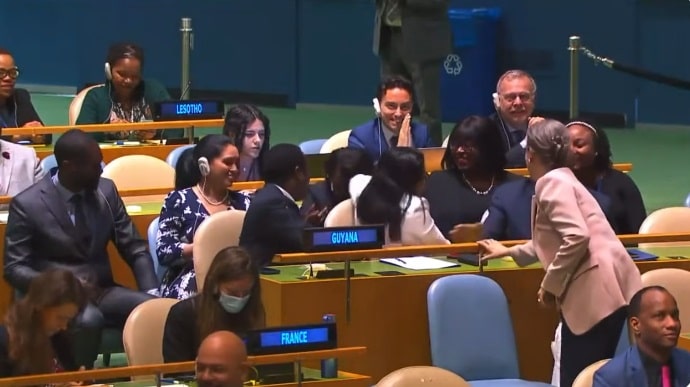
    The bill will now go to President Julius Bio to be signed into law.

    Despite it being a key promise in his 2018 election campaign, it took three years for cabinet to approve the draft.

    An earlier version was withdrawn over a technicality.

    Currently only 19 of Sierra Leone’s 146 members of parliament are women.

    Source: BBC

  • Women in politics: Sierra Leone passes legislation to make women make up one-third of MPs

    Sierra Leone‘s parliament has unanimously approved legislation that will ensure that one-third of its members and one-third of all local councillors are women.
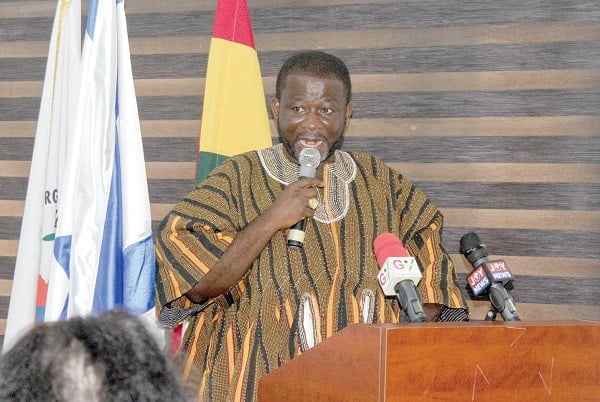
    The bill will now be signed into law by President Julius Bio.

    Despite the fact that it was a key promise in his 2018 election campaign, it took cabinet three years to approve the draught.

    A previous version was withdrawn due to a technicality.

    Only 19 of Sierra Leone’s 146 members of parliament are women at the moment.

  • Sierra Leone: First women’s football league kicks off

    Sierra Leone’s first professional women’s football league launched on Saturday with a match in the northern city of Makeni, kicking off a six-month season in which 12 clubs from across the country will compete.

    “We are so proud to make this history as the first ever national women’s premier league,” Asmaa James, chairperson of the Sierra Leone Women’s Premier League Board, told AFP.

    The Mena Queens of Makeni battled the Kahunla Queens from Kenema during the opening match on Saturday with Sierra Leone’s first lady, Fatima Bio, in attendance at the crowded Wusum Sports Stadium in Makeni.

    “This is the first time women are participating in our local Premier League, it’s an honour that our best footballers are from Bombali District”, Sierra Leone president Julius Maada Bio said on Saturday during the kick-off.

    “Football is about peace and cohesion. We want to see beautiful football, all the teams are winners.”

    The 12 privately-owned clubs will compete for a cash prize and trophy in April, James said.

    She said women’s football has long been neglected in the West African nation of about eight million people, adding that it was now time for women to showcase their potential.

    “We have engaged the girls and their parents and also the team managers and other football stakeholders to allow the girls to play football,” she said.

    Supporters hope the league will boost the success of the national women’s team, which failed to qualify for the 2022 Women’s Africa Cup of Nations.

    But they face several key challenges, including inadequate venues.

    The national 45,000-seater stadium in Freetown, opened in the 1980s, is currently being renovated with support from the Chinese government.

    Then there are the logistical hurdles of criss-crossing the country — where only about 10 percent of the road network is paved, according to the African Development Bank — for matches.

    In a meeting with the Sierra Leone Football Association (SLFA) and the Women’s Premier League Board Wednesday, president Bio said his government takes women’s empowerment very seriously and would work to elevate women’s football in the country to international standards.

    SLFA President Thomas Daddy Brima said the new league would boost employment.

    The league will help shine a light on the women’s game both locally and internationally, and will put Sierra Leone on the map in the sport, Brima added.

    Key challenges to gender equality and women’s empowerment in Sierra Leone include a lack of economic independence, “high illiteracy and entrenched customs and traditions” and an “absence of progressive laws that protect and promote participation for women”, according to a September report by the United States Agency for International Development (USAID).

    Sierra Leone the former British colony ranks 182 out of 189 countries on the United Nations’s Human Development Index.

    Source: Africa News

  • Fascinating story behind the helmet mask carved by men but worn by only women in Sierra Leone

    One of the respected traditional symbols of the Mende people of the West African nation, Sierra Leone, in initiation ceremonies is the helmet or sowei mask.

    In the Mende culture, the helmet mask is used to invoke the protection of the guardian spirits called Sowo by key figures of Sande, the women’s wing of the Mende people. The characteristic hairstyle which adorns the mask represents beauty, wealth and health.

    The high forehead and iconic facial features, according to literature from the Herbert F. Johnson Museum of Art, signify the feminine beauty of the maidens, with the large neck rings standing for their physical wellbeing.

    An irony of the helmet mask is, although it is worn by women, it is carved by men. It is made out of wood and given its dark color by immersing it in vegetable dye.

    In Sierra Leone, the Mende tribe is the most dominant group with the Poro standing for men’s society and Sande representing the women’s society. These two sects are actively involved in the grooming and preparation of young teenagers for adulthood.

    According to a paper by the Pacific Lutheran University, the girls are taught the roles of being a mother and a wife as well as their contribution to building a society. In all of this, the most important aspect is the ceremony performed for the girls when they ascend to adulthood.

    The ceremony is performed the moment they have undergone and passed the tutelage offered by the elderly women of the Sande society. During this period, they are recognized as qualified for both marriage and motherhood.

    The ceremony is heralded by dancing and singing traditional songs to usher young teenage girls to adulthood. It is during this period they wear the helmet mask, which represents the spirit of society. The mask is first placed on the head of the young teenage girl while the rest of her body is covered by black cloth and raffia fibers.

    The sowei mask is considered a bridge between the physical and spiritual world, that’s why it is important for the wearer’s whole body to be concealed. By so doing, the young adult girl becomes one with the past and present of the Mende spirit.

    The helmet mask is considered the embodiment of what the Mende tribe stands for and its authority, and among the elderly women, it’s added to the initiation ceremony to teach, heal and guide the ways of the young teenager.

    It is also worn by the elderly women of Sande during the ceremony either to provide some sense of liveliness or scare a section of the gathering. The mask is usually made light when carving because it is worn as a helmet to make it easier on the shoulders of young adult girls.

    The helmet mask, when carving, must weigh between two to four pounds and must be symmetrical in form. What makes the helmet mask stand out lies in the three major parts, which are the neck, face and coiffure. The neck often has two to three rings of flesh, which represent wealth and prosperity.

    The face typically takes the form of downcast eyes, little ears, and a large rounded forehead.

    The mouth is also small and closely fitted to represent the silence of the spirits. It is regarded that it’s only humans who speak in the physical world and not spirits.

    The hair and other embellishments make up the coiffure, which stands for the symbol of a bird or snake.

    Source: face2faceafrica

  • First Lady: Sierra Leone president has PhD in coups

    Speaking at a charity event over the weekend in the US, Fatima Bio said that unknown individuals wanted to have her husband removed from power.

    Julius Maada Bio’s wife, Fatima Bio, has said that because Julius Maada Bio has a Ph.D. in coup planning, no one can remove him.

    She was referring to the violent riots that took place on August 10 in strongholds of the opposition and left 31 people dead, including six police officers.

    The president blamed the protests – which were generally about the high cost of living – on the opposition alleging that they were part of a plot to overthrow him, leading to the dismissal of the top three in the army.

    Speaking over the weekend at a fundraising event in the US, Mrs Bio accused unnamed people of wanting to overthrow her husband.

    “Maada Bio has a Ph.D. in coup d’état, can you remove him?” she asked rhetorically, before reiterating: “The man has a Ph.D. in [staging] coups, how can you remove someone who teaches people how to stage a coup?,” the first lady said in a video shared on Facebook.

    Mrs Bio was making an apparent reference to the fact that her husband first came to power in April 1992 as part of a group of young military officers who overthrew the civilian government of Joseph Saidu Momoh of the All People’s Congress, the party he defeated at the polls in 2018 and whom he accused of being behind the August protests.

    The opposition party vehemently denied the allegations.

    Many have condemned the statement with some of the moderate elements within her Sierra Leone People’s Party (SLPP) condemning it.

    Mrs Bio, a prolific user of Facebook and TikTok, has been known to make controversial comments.

    She has not responded to the reactions following her coup comments, nor has anyone at the presidency.