Families in Johannesburg, South Africa are looking for their loved ones in mortuaries after a very bad fire happened in a building, which is one of the worst in the country’s history.
At least 76 people died in the fire, including 12 kids.
Scared and very worried, a man from Malawi named Grif arrived at the Diepkloof morgue. He only told his first name.
There were a lot of bodies, some of them badly burned, and he found one of his two missing younger sisters.
The 26-year-old received a phone call early on Thursday morning about a fire. He quickly went to several hospitals in the city to search for Miriam and Fatima. After a few hours, he realized that he needed to look for something else.
On Friday, he started checking the morgues in the city and eventually went to Dieplkloof in Soweto, Johannesburg, where all the victims were taken.
He was standing outside a short building, crying and very tired. He told the BBC that he could recognize one of his sisters.
The word ‘lucky’ might not be suitable here, but the officials say that only 12 out of over 70 bodies can be recognized just by looking at them.
Grif said he will continue looking for his sister who is lost.
The two women lived together in a cramped and rundown five-story building in downtown Johannesburg. Grif lived in a place that was like the one close by.
It is believed that many of the victims are undocumented migrants who struggle to survive on the outskirts of South African society.
“Grif said he is feeling a lot of pain. ” And I’m afraid to share with my family. “It hurts a lot and there is nothing I can do. ”
Earlier today, the firefighters went back into the building to check if there were any more bodies.
We don’t know what caused the fire yet, but investigators are searching through the destroyed building to find out more.
The government said they will help all the victims, but it’s hard for many of them because they don’t have the right papers to be in the country. Some people are worried that if they speak up, they might be reported to the authorities.
According to Malawi’s foreign ministry, as reported by Reuters, it is believed that twenty people from Malawi have died.
Tanzania’s temporary leader, Peter Shija, stated that he has learned that five of his fellow Tanzanians passed away in the fire, and three others were hurt. He told a news broadcaster in South Africa called eNCA that 150 Tanzanians were living in the building before it caught on fire.
President Cyril Ramaphosa visited the central area of Johannesburg on Thursday evening. He said the tragic incident should make us realize that we need to start finding solutions for the housing situation in the city center.
The building used to be a safe place for women and children who were being hurt by others. But when the rental period ended, someone took control of it without permission, as President Ramaphosa told the journalists.
Several buildings near the location of the fire have been declared unsuitable for habitation.
However, these old buildings are left behind by their owners or the city authorities, and many families live in them. These families often have to pay rent to criminal gangs who control the buildings.
Some of the people who use the buildings are undocumented migrants, mainly from other African countries.
In many of these places, the living conditions are like shanty towns. The homes have weak walls, and there is hardly any access to water and electricity.
There are suggestions that a candle, paraffin stove, or a bad electricity connection could have caused the fire on Thursday.
The country is starting to come out of winter, and the nights in Johannesburg have been quite cold, with temperatures dropping to 4C.
Tag: South Africa
-

Families visit various mortuaries after Johannesburg fire
-

Gold Fields records 4% drop in gold production during first half of 2023
Gold Fields Limited reported that it produced 1,154,000 ounces (oz) of gold during the first half of 2023, marking a 4 percent decline in production compared to the same period in the previous year when they produced 1,201,000 oz.
The decrease in production is primarily attributed to the planned reduction in output at Damang, as stated by the company.
For the first half of 2023, the company’s all-in-costs stood at US$1,398/oz, reflecting a 3 percent increase compared to H1 2022, where it was US$1,352/oz. This increase is attributed to lower gold sales and higher cost of sales before amortization and depreciation, partially offset by reduced non-sustaining capital expenditure.
Conversely, the all-in-sustaining cost (AISC) for H1 2023 amounted to US$1,215/oz, in contrast to the US$1,148/oz recorded during H1 2022. This represents a year-on-year increase of 6 percent.
As a result of these developments, the company reported earnings of US$454 million for the six months ending in June 2023, equivalent to US$0.51 per share. This represents a 9 percent decrease compared to the US$498 million (US$0.56 per share) earned in H1 2022.
In light of these financial results, the company, in unaudited interim results shared with the press, declared an interim dividend of 325 South African cents per share, which accounts for 35.1 percent of normalized earnings.
This compares to the 2022 interim dividend of 300 South African cents per share, marking an 8 percent increase year-on-year. This dividend decision aligns with the company’s dividend policy of distributing between 30 to 45 percent of normalized profit as dividends.
The company’s performance comes on the back of a difficult operating period – marked by “elevated mining cost inflation and strong competition for skills in our key mining jurisdictions presenting significant headwinds”.
The Group made two significant corporate announcements that underscore our commitment to pursuing value-enhancing transactions to enhance the quality and value of our portfolio. These announcements included the proposed Tarkwa/Iduapriem joint venture in Ghana in March 2023 and the Windfall joint venture with Osisko Mining in Canada in May 2023.
Furthermore, we have expedited several internal initiatives designed to further reinforce the execution of our strategy. These initiatives are aimed at unleashing the full potential of our personnel and assets, ultimately driving increased business value.
During the first half of 2023, our primary focus was on two of these initiatives: the implementation of our cultural transformation journey, known as the “Gold Fields Way,” and the optimization of our assets.
Local production
Silver Fields During Q2 2023, Ghana delivered approximately 204,000 oz of gold, including 45 percent of Asanko, at an AIC of US$1,227 per ounce. Ghana produced 397 000 oz of gold in H1 2023 at an AIC of US$1,210 per
-

“External force not likely to be behind coup” in Gabon – Analyst
An investigation is ongoing to determine the cause of a tragic fire that consumed a five-story building in Johannesburg, which had been taken over for unauthorized housing. Officials from the city and the region, who visited the scene, have pledged to hold those responsible accountable for the devastating overnight fire.
Lebogang Maile, the MEC for Human Settlements and Infrastructure Development for Gauteng, affirmed, “If any city official is found to have disregarded their duties or neglected their responsibilities, there will be consequences.”
The fire occurred on Thursday morning and resulted in the loss of more than 70 lives, including children, as reported by Johannesburg city’s emergency services. An additional 52 individuals were injured, making it one of the deadliest recent fires on a global scale.
The bodies of the victims were discovered accumulated at a closed security gate, preventing their escape from the blaze, according to an official account. The building, situated in a deprived and crime-prone area, had been repurposed for illegal housing after being abandoned. Many of the occupants were foreigners.
Emergency Management Services spokesman Robert Mulaudzi shared, “We now have 73 fatalities and 52 injured individuals who have been transported to various healthcare facilities for further treatment.” Among the deceased were at least seven children, with the youngest being under two years old.
Kenny Bupe, a survivor caught in the fire while visiting a friend, recounted the Analyst
. “I’m thankful to be alive. Many of us were running, trying to find the fire exit, and unfortunately, many people lost their lives due to smoke inhalation.” He revealed that some individuals resorted to breaking open a locked fire escape gate, while others jumped out of windows to escape the flames.
Firefighters have managed to extinguish the fire, and search and recovery operations are ongoing. Mulaudzi explained, “We are systematically recovering bodies on each floor.”
This tragic event has left the city of Johannesburg deeply saddened, with Mulaudzi expressing, “It is indeed a somber day for Johannesburg… In my over 20 years of service, I have never encountered something like this.”
The cause of the fire is still under investigation, but Mgcini Tshwaku, a member of the city’s mayoral committee overseeing public safety, suggested that candles used for lighting inside the building could be a potential cause. The building had been repurposed for informal settlement, and the tragic outcome was exacerbated by a closed security gate that prevented people from escaping.
Illegal occupation of abandoned structures is widespread in Johannesburg’s city center, often controlled by criminal syndicates collecting rent from occupants. South Africa, as a significant economic hub on the continent, attracts numerous migrants, many of whom are undocumented, from various African nations.
This fire marks one of the deadliest incidents in the country’s recent history and stands as a stark reminder of the challenges associated with informal housing and urban development.
-

Authorities in South Africa pledges to investigate and prosecute culprits
An investigation is ongoing to determine the cause of a tragic fire that consumed a five-story building in Johannesburg, which had been taken over for unauthorized housing. Officials from the city and the region, who visited the scene, have pledged to hold those responsible accountable for the devastating overnight fire.
Lebogang Maile, the MEC for Human Settlements and Infrastructure Development for Gauteng, affirmed, “If any city official is found to have disregarded their duties or neglected their responsibilities, there will be consequences.”
The fire occurred on Thursday morning and resulted in the loss of more than 70 lives, including children, as reported by Johannesburg city’s emergency services. An additional 52 individuals were injured, making it one of the deadliest recent fires on a global scale.
The bodies of the victims were discovered accumulated at a closed security gate, preventing their escape from the blaze, according to an official account. The building, situated in a deprived and crime-prone area, had been repurposed for illegal housing after being abandoned. Many of the occupants were foreigners.
Emergency Management Services spokesman Robert Mulaudzi shared, “We now have 73 fatalities and 52 injured individuals who have been transported to various healthcare facilities for further treatment.” Among the deceased were at least seven children, with the youngest being under two years old.
Kenny Bupe, a survivor caught in the fire while visiting a friend, recounted the chaos. “I’m thankful to be alive. Many of us were running, trying to find the fire exit, and unfortunately, many people lost their lives due to smoke inhalation.” He revealed that some individuals resorted to breaking open a locked fire escape gate, while others jumped out of windows to escape the flames.
Firefighters have managed to extinguish the fire, and search and recovery operations are ongoing. Mulaudzi explained, “We are systematically recovering bodies on each floor.”
This tragic event has left the city of Johannesburg deeply saddened, with Mulaudzi expressing, “It is indeed a somber day for Johannesburg… In my over 20 years of service, I have never encountered something like this.”
The cause of the fire is still under investigation, but Mgcini Tshwaku, a member of the city’s mayoral committee overseeing public safety, suggested that candles used for lighting inside the building could be a potential cause. The building had been repurposed for informal settlement, and the tragic outcome was exacerbated by a closed security gate that prevented people from escaping.
Illegal occupation of abandoned structures is widespread in Johannesburg’s city center, often controlled by criminal syndicates collecting rent from occupants. South Africa, as a significant economic hub on the continent, attracts numerous migrants, many of whom are undocumented, from various African nations.
This fire marks one of the deadliest incidents in the country’s recent history and stands as a stark reminder of the challenges associated with informal housing and urban development.
-
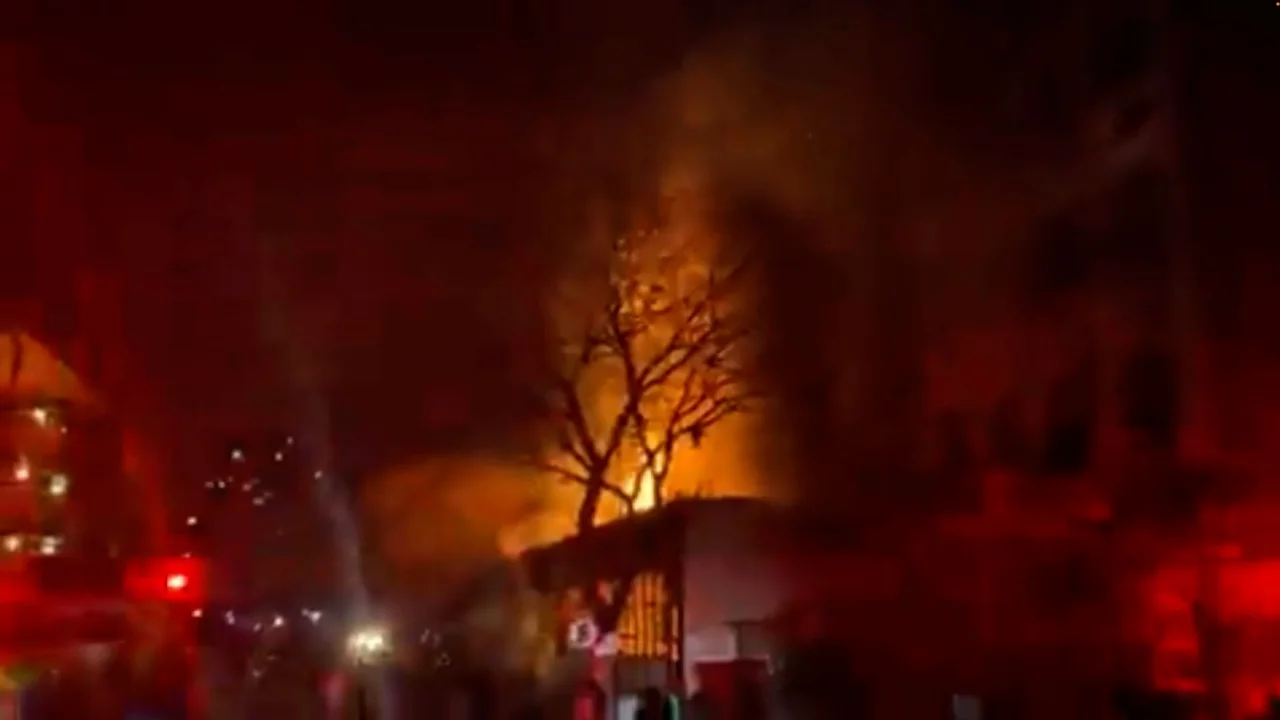
South Africa’s fire survivors to be housed in another city
The survivors of a fire that broke out in an early-morning building in Johannesburg will be given alternative housing in surrounding structures.
73 people have died as a result of the fire, and numerous others have been injured. At least 141 families have had to leave their homes.
Lebogang Maile, the Gauteng MEC for Human Settlements, stated that aid has already arrived at the tragedy site in inner-city Johannesburg.
“There will be social relief. We have already identified three buildings that the surviving victims will be allocated to and we have agreed that we are not going to deal with people on the basis of their nationality. At this point, anybody who’s affected, we are going to give humanitarian assistance. This is a tragedy that affects people, irrespective of their nationality.
“We must convey our condolences to the families who have lost their loved ones. This is a tragedy of monumental proportions and it is unfortunate that today we are here. This, for us, demonstrates a chronic problem of housing in our province as we have previously said, there’s at least 1.2 million people who need housing,” Maile said.
The MEC slammed what he called a “cartel” of people hijacking buildings in the inner city with no running water and limited services.
He added, however, that “if there is an official of the city found to have neglected their responsibilities…heads will definitely roll”.
“There are cartels who prey on poor vulnerable people. Some of these buildings, if not most of them, are actually in the hands of cartels who collect rental from our people. Some of these people who are in these buildings can afford to pay, therefore government must create stock for rental…that is affordable.
“There’s about 23 buildings that the Johannesburg Housing Company owns that are like [that building] that they have a plan but they don’t have money for. There’s a 100 buildings that are owned by the private sector and they are neglected. We have to be decisive in how we deal with that and one of the things might be to expropriate those buildings so that we can be able to house people,” he said.
Johannesburg mayor, Kabelo Gwamanda, confirmed that the building belongs to the city but was overrun by illegal occupation.
“The building does belong to the city. It was…leased to an NGO to run a non-profit organisation to house women that needed to be given relief of some sort. That’s when things escalated out of control. When the city leases a building, whoever is taking responsibility needs to make sure that the building is well kept that they can return it to the city in the condition in which they found it in.
“But I cannot project and predict how the business would then find itself in a situation where it’s abandoning its operation,” he said.
In response to inquiries about the city’s actions regarding the challenge of hijacked buildings, the mayor explained that the city is adopting a cautious stance to prevent potential legal actions.
“The city is currently approaching the matter of addressing hijacked buildings with careful consideration, aiming to avoid any legal complications that might arise. We are aware of various non-profit organizations that closely observe our approach to building evictions. Therefore, our approach is more measured and less forceful. We are actively striving to implement a highly sensitive strategy.
“We have engaged in discussions with both the MEC and the Minister of Human Settlements, where we discussed the possibility of activating a number of buildings for the purpose of offering alternative housing and social accommodations. Our primary focus lies in implementing a strategy that centers on providing viable alternative housing solutions. This way, we can repurpose these buildings for the greater purpose of social housing,” stated Gwamanda.
-

Ramaphosa describes Johannesburg fire deaths a ‘great tragedy’
President Cyril Ramaphosa of South Africa has publicly addressed the Johannesburg fire for the first time, deeming it a “profound tragedy.” During a visit to the Eastern Cape province, he extended his sympathy, stating, “Our thoughts are with all those impacted by this calamity.”
In response to the incident, he emphasized the collective responsibility to aid survivors in their recovery, both physically and emotionally, stating, “This situation underscores the need for us to unite and support survivors in rebuilding their physical and mental well-being.”
President Ramaphosa expressed optimism that the ongoing investigations into the fire would contribute to preventing any recurrence of such a devastating event, thereby enhancing community safety and resilience.
-
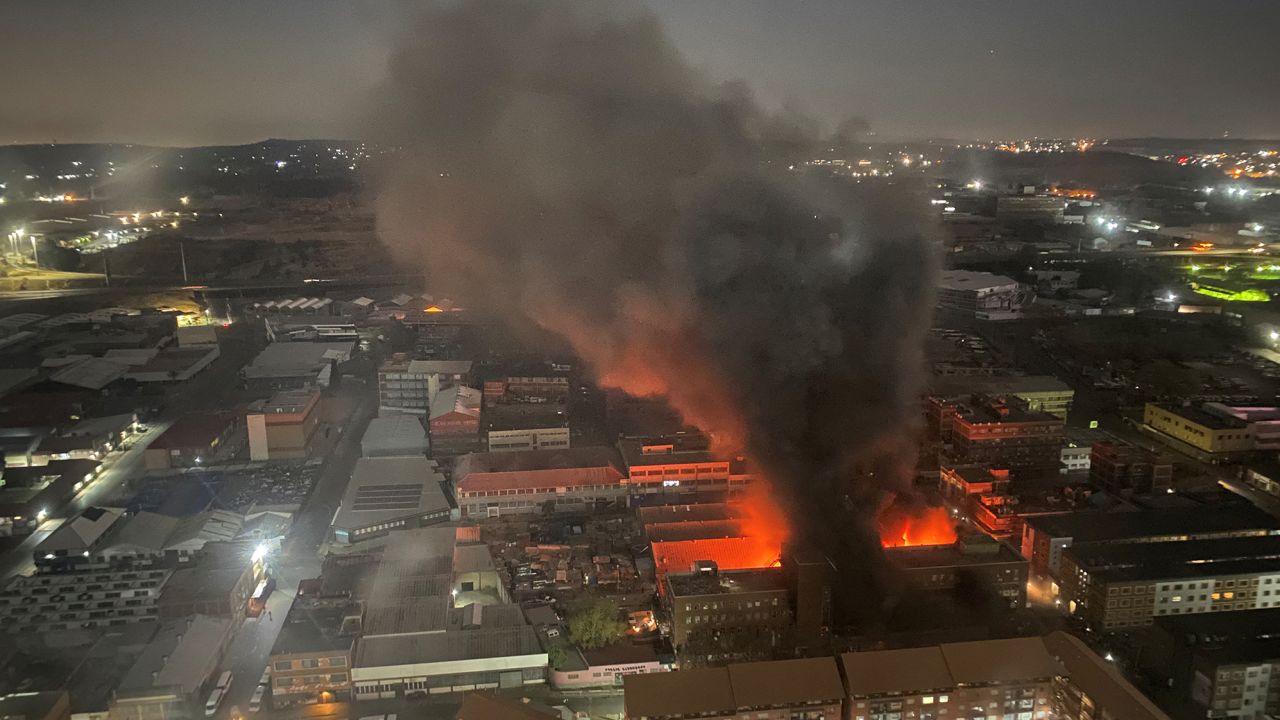
South Africa fire: Opposition leader calls it ” a catastrophe for our country”
Following the tragic fire in Johannesburg, South Africa’s opposition party, the Democratic Alliance (DA), is urging citizens to unite for improved and safer living standards for all.
Party leader John Steenhuisen conveyed the gravity of the situation, labeling it a national catastrophe that has inflicted unimaginable pain on innocent individuals.
He confirmed that the DA’s representatives in Johannesburg would be actively involved in aiding those affected by the fire. Simultaneously, Steenhuisen called for stronger measures from authorities to avert similar tragedies.
Steenhuisen stressed the party’s ongoing commitment to advocating for enhanced living conditions and adequate housing for inner city residents, emphasizing the importance of safety and well-being.
Minister in the Presidency, Khumbudzo Ntshavheni, noted that the national government and presidency are vigilantly monitoring the situation, prepared to extend assistance if additional support is required.
-
At least 63 people have died in building fire in South Africa
The number of people who have died in a big fire in a five-story building in central Johannesburg is now 63, according to the city’s emergency services.
According to spokesperson Robert Mulaudzi, 43 people were hurt.
Emergency services and firefighters are trying to extinguish the fire, as reported by public broadcaster SABC.
Videos from the scene show big orange flames covering the bottom floor of a building, and lots of people who seem to have escaped outside.
Emergency services spokesperson Robert Mulaudzi said on X, which is also known as Twitter, that several people were receiving medical attention and a few had been taken to healthcare centers.
SABC says they don’t know how the fire started.
The firefighters in Johannesburg got a call about a fire at about 1:30 in the morning. Thursday at the current time.
The statement said that the reason for the fire is still being looked into. The City of Johannesburg Disaster Management officials are starting to help families who have been affected. -

SA congratulates president of Zimbabwe while others denounce the poll
South Africa, Russia, and China have praised Zimbabwe’s President Emmerson Mnangagwa for winning the election, despite some controversy surrounding it.
Additionally, the United States, along with other countries, voiced their disapproval of the recent general election, claimed to be dishonest by the opposition.
The government of the United States said that there was a consistent unfairness against the opposition and pointed out trust worthy reports that showed election monitors were made to change certain result forms. The electoral commission said that these claims were not true.
A message from the government of South Africa
South Africa knew that the elections happened during a tough economic situation due to sanctions against Zimbabwe.
It also agreed with worries from independent election watchers about how real the outcome is.
Some people who watch over things said that the survey didn’t meet the rules of the whole world or Zimbabwe’s own laws.
Zimbabwe has important trade relationships with South Africa, Russia, and China. These countries supporting the poll is important because Zimbabwe may face more isolation and penalties from Western countries due to criticism of the poll.
The opposition Citizens Coalition for Change is currently counting their own results and hasn’t yet made a final decision on the next steps they will take. But the messages of congratulations to President Mnangagwa show that Zimbabwe’s main supporters are willing to move forward and agree with the outcomes. -
South Africa: Cyril Ramaphosa emphasizes neutrality ahead of Brics summit
President of South Africa, Cyril Ramaphosa, has reaffirmed that his nation will not be pulled into international power dynamics.
Prior to Tuesday’s gathering of the Brics countries — Brazil, Russia, India, China, and South Africa — in Johannesburg, Mr. Ramaphosa gave a broadcast speech.
“We will not be drawn into a contest between global powers. Instead, our country strives to work with all countries for global peace and development,” he said.
He noted, however, that this “does not mean that we are neutral on matters of principle and national interest”.
Vladimir Putin, the president of Russia, will take part virtually after agreeing with Mr. Ramaphosa not to go.
Following Russia’s invasion of Ukraine, an arrest order for him has been issued by the International Criminal Court. If he enters the nation, South Africa must detain him in accordance with the legislation there.
A fifth of the world economy is made up of the Brics nations, and this year has seen a significant increase in interest in joining the organization.
-
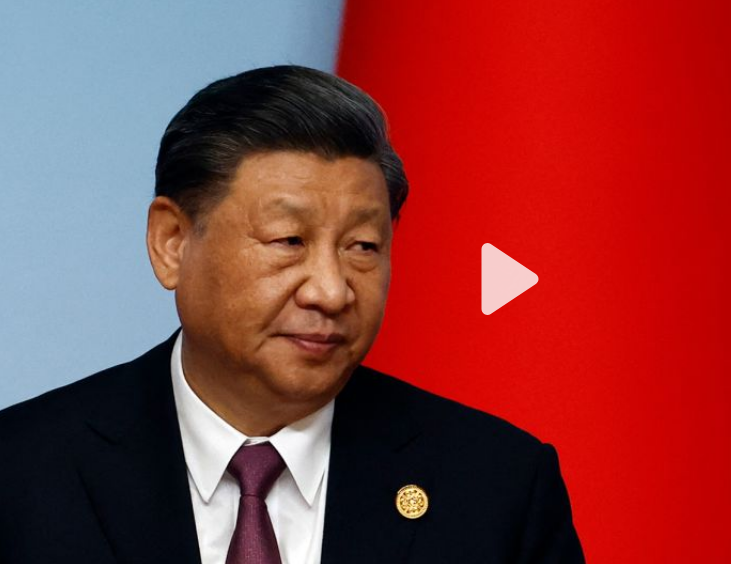
Xi of China visits South Africa for the second time this year while dealing with domestic economic problems
The Chinese president, Xi Jinping, will travel to South Africa on Monday in an effort to increase Beijing’s influence among rising and developing countries while relations with the United States remain extremely tense and domestic economic problems continue to grow.
A stark contrast to his globe-trotting days of diplomacy prior to the coronavirus outbreak is the three-day state visit, which also includes a summit with the leaders of the BRICS rising economies.
The last time the Chinese leader travelled outside of the nation was in March to meet with his “dear friend” Vladimir Putin in Moscow. There, the two authoritarian strongmen renewed their strategic alliance against the US and outlined their plans for a post-Western world order.
The BRICS grouping’s first in-person summit since the outbreak will give Xi another chance to pursue that ambition.
More than 40% of the world’s population resides in the countries that make up the bloc: Brazil, Russia, India, China, and South Africa. They both want a more multipolar world and more influence over international affairs.
“Xi Jinping is not attempting to subvert the US’s dominance of the current liberal international order. His long-term objective is to transform the global order into one that is Sino-centric, according to Steve Tsang, head of the University of London’s SOAS China Institute.
Tsang stated that in order to achieve this goal, “it makes sense for China to engage with the Global South, (which is) much more numerous than Western democracies and mostly authoritarian in its governance structure.”
Chen Xiaodong, China’s ambassador to South Africa, praised BRICS as “the backbone of international fairness and justice” and “an important platform for cooperation among emerging and developing nations” ahead of Xi’s arrival on Friday.
The established structure of global governance looks to be dysfunctional, unable to function, and nonexistent. The BRICS will soon “play a leading role in the international community,” Chen told reporters.
A few days ago, US President Joe Biden met with the leaders of Japan and South Korea in a show of power and unity against the growing dangers from China. Now, Xi is travelling to South Africa.
The US and its two closest allies in Asia strengthened their military and economic ties during the Camp Davis meeting, and China was criticised for its “dangerous and aggressive behaviour” in the South China Sea.
According to Paul Nantulya, a research associate at the Africa Centre for Strategic Studies, the BRICS have gained increased strategic significance to Beijing as China and the United States are embroiled in an increasingly bitter rivalry.
Vladimir Putin won’t be present in person, so Xi will be the focus of the BRICS summit, he claimed.
Putin, who is wanted internationally for allegedly committing war crimes in Ukraine, will participate by video from Russia.
“Another multilateral platform through which China can exert influence around the world, especially in the Global South,” was how Nantulya characterised BRICS.
But Xi, who is ten months into his historic third term, is also facing a number of domestic difficulties at the time of the summit.
The long-awaited economic recovery of China following its strict Covid lockdowns is struggling. Instead, a slew of issues, including a growing real estate crisis, rising local government debt, and deflationary pressure, plague the second-largest economy in the world.
The youth unemployment rate in the nation, which just reached back-to-back records highs, is so severe that the Chinese government has stopped disseminating data on it entirely.
Hear how other nations may be harmed and helped by China’s economic decline.
According to Yun Sun, director of the China programme at the Washington-based Stimson Centre think tank, Xi’s diplomatic charm offensive is severely hampered by the faltering economy, particularly in the Global South.
“When Xi travels to underdeveloped nations, it’s customary for China to offer sizable aid, financing, and collaboration packages. But Beijing is no longer as prepared to do that given the situation of the Chinese economy, she said.
His ability to portray the great power leader he once was is limited by the economy.
The populace in China has grown considerably more wary of their government’s extravagant expenditures abroad.
Xi’s premier international infrastructure initiative, the Belt and Road Initiative, has received a lot of criticism on Chinese social media, according to Nantulya.
“Chinese citizens are wondering why China is investing so much money abroad when there are so many issues at home.”
According to Nantulya, the Chinese government has become considerably more picky about which international projects it funds as a result of the economy’s slowdown.
Xi’s journey to Africa is his first in five years.
His most recent trip to the continent, which coincided with the BRICS conference in South Africa, included a flurry of stops in Senegal, Rwanda, and Mauritius, covering nearly the whole Sub-Saharan region.
Beijing has not yet confirmed Xi’s further stops this time.
On the margins of the BRICS meeting, the Chinese leader will co-chair the China-Africa Leaders’ Dialogue with his South African counterpart, Cyril Ramaphosa, according to China’s Foreign Ministry.
The conference has received invitations from 69 nations overall, including all African governments.
-

Parties in South Africa sign agreement to overthrow ANC
A coalition consisting of seven political parties in South Africa has formalized an agreement in their endeavor to dislodge the governing African National Congress (ANC) in the upcoming 2024 election.
Termed the Multi-Party Charter for South Africa, this pact outlines that in the event of their assumption of power, the coalition members will collaborate to assign ministerial roles and parliamentary seats.
Additionally, a significant aim of this alliance is to prevent the Economic Freedom Fighters (EFF) party, led by Julius Malema, from gaining ascendancy.
The initiative, spearheaded by the primary opposition party, the Democratic Alliance (DA), comes at a juncture when the nation grapples with challenges such as a struggling economy, corruption, crime, unemployment, and an unprecedented energy crisis.
Among the signatories are the Inkatha Freedom Party, Freedom Front Plus, ActionSA, United Independent Movement, Independent SA National Civic Organisation (Isanco), and the Spectrum National Party.
The coalition intends to expand its inclusivity by extending invitations to other parties in due course.
Observers suggest that the ANC faces the potential of relinquishing its parliamentary majority for the first time since South Africa’s transition to democracy in 1994.
However, the newly formed bloc has yet to determine the identity of the elected president in the event of a successful outcome in the election.
-

Ghanaian journalist, Ridwan Karim robbed of $1,000 and €200
Ghanaian journalist, Ridwan Karim Dini-Osman, known for receiving international awards, has recently shared a distressing incident during his stay at the Protea Hotel Fire & Ice by Marriott Johannesburg Melrose Arch in South Africa.
Allegedly, a considerable amount of money, totaling $1000 USD and €200 Euros, was stolen from his briefcase within his hotel room.
Expressing his shock at the incident, Dini-Osman felt compelled to share the incident as a stern caution for those who prioritize safety and trust in hospitality establishments.
His original purpose in South Africa was to attend an awards ceremony, with his accommodation pre-arranged by the event organizers at the aforementioned hotel.
However, what seemed like a reputable choice turned into an unfortunate situation that he believes cannot go unaddressed.
During his five-day stay in room 107, Dini-Osman’s briefcase, containing the stolen cash, remained untouched in his hotel room.
He emphasizes that there was no reason for him to withdraw cash from it since he had both his visa card on hand and a per diem allowance provided by the event organizers.
Dini-Osman alleges that the money was stolen by the hotel staff and suspects that the cleaning staff, who were the only ones with access to his room, were involved.
Upon discovering the theft on August 5, 2023, Dini-Osman promptly reported the incident to both the local police and the hotel management, expecting a thorough investigation.
However, he was disappointed to receive an email indicating that both the hotel and its staff were absolved of any responsibility.
Expressing genuine concern for the well-being of fellow travelers, Dini-Osman stresses that safety, security, and trust should be upheld and respected at all times when selecting accommodations.
He asserts that the Protea Hotel Fire & Ice by Marriott Johannesburg Melrose Arch failed to meet these fundamental expectations, highlighting the importance of choosing establishments that prioritize guest safety and security.
-

China’s leader to be received in South Africa on state visit
South African officials have verified that Chinese President Xi Jinping is scheduled to conduct a state visit to South Africa in the coming week. During this time, he will also participate in the Brics summit, which is to be hosted in the same country.
The acronym “Brics” represents the nations of Brazil, Russia, India, China, and South Africa. For some, this grouping is seen as a potential alternative to the G7, a collection of developed countries.
This upcoming journey will mark President Xi’s second international excursion this year, following his official state visit to Russia in March.
These developments coincide with an imminent meeting of Brics leaders, where one of the agenda items will involve discussions on potentially expanding the group’s membership. Various African countries, including Algeria, Egypt, and Ethiopia, have previously expressed their desire to become part of this bloc.
Initially, uncertainty surrounded the participation of Russia’s president in the summit. Subsequently, South Africa’s presidency clarified that he would not be in attendance.
It’s worth noting that there were concerns about the implications if Russia’s president had left the confines of his country. Specifically, he would have been susceptible to an arrest warrant issued by the International Criminal Court (ICC) due to matters related to the conflict in Ukraine.
Given South Africa’s status as an ICC signatory, the country would have been obligated to assist in executing the arrest had he set foot on South African soil.
-

South Africa parties agree to work together to overthrow ANC
In an effort to unseat the ruling African National Congress (ANC) in the 2024 elections, seven political groups in South Africa have formed an alliance.
According to the Multi-Party Charter for South Africa, if elected, the parties would cooperate to distribute ministerial and parliamentary seats.
Additionally, they want to prevent Julius Malema’s Economic Freedom Fighters (EFF) party from winning the election.
The main opposition Democratic Alliance (DA) party spearheaded the accord, which comes as the nation struggles with a failing economy, crime, corruption, unemployment, and an unparalleled energy crisis.
Seven political parties in South Africa have joined together to form an alliance in an effort toThe Spectrum National Party, United Independent Movement, Freedom Front Plus, Inkatha Freedom Party, Independent SA National Civic Organisation, and ActionSA are the other signatories.
According to the new coalition, invitations will be sent to additional parties as soon as possible.
Analysts claim that for the first time since South Africa’s return to democracy in 1994, the ANC may lose its legislative majority.
However, if the new bloc wins the election, it has not yet decided who will be chosen as president.
-
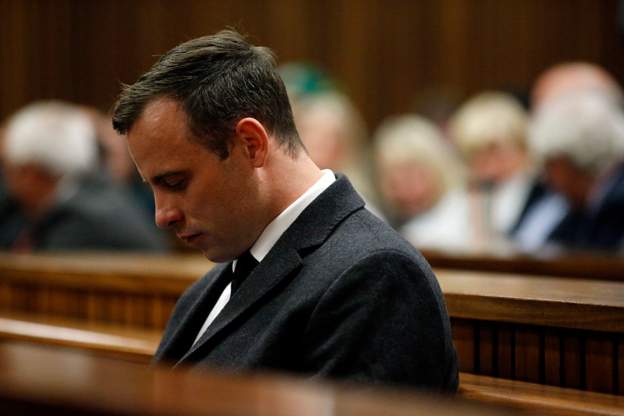
Oscar Pistorius requests a second opportunity for early parole
South African athlete, Oscar Pistorius, who has been incarcerated for six years following the conviction for the murder of his girlfriend Reeva Steenkamp, has formally petitioned the Constitutional Court to grant him eligibility for parole.
This move comes subsequent to his previous attempt for parole being rejected in March. The denial was rooted in the revelation that he had not completed the stipulated minimum sentence duration required to qualify for early release.
Pistorius was initially found culpable for murder and subsequently sentenced to 13 years in prison in 2017, following a protracted and highly publicized trial that involved numerous legal proceedings.
His conviction stemmed from the tragic incident in which he shot and fatally wounded Reeva Steenkamp by firing through the bathroom door of his heavily fortified residence on Valentine’s Day in 2013. Pistorius asserted that he believed Steenkamp was an intruder, leading to the fatal confrontation.
He believes he qualifies to be released on parole and that “staying longer in prison constitutes an infringement on his fundamental rights“.
The nation’s highest appeals court stated earlier this year, nevertheless, that the six-time Paralympic gold medalist must still serve an additional year and a half in prison before being considered for parole.
Confusion was caused by the fact that Pistorius’ prison sentence had been fragmented by house arrest and appeals.
-

Forex bureaus offer $1 at GHC11.60, BoG Interbank Rate at GHC11.00
NB: Please be aware that these rates could vary at forex bureaus in your vicinity. The provided forex bureau rates are sourced from Afriswap Bureau De Change situated in Osu, Accra.
The Bank of Ghana’s Interbank foreign exchange rates on August 17, 2023, indicate that the Ghana Cedi is currently being exchanged against the dollar with a purchase rate of 10.9991 and a selling rate of 11.0101.
At an Accra-based Forex bureau, the purchasing rate for the dollar stands at 11.20, while the selling rate is GHC11.60.
Against the Pound Sterling, the Cedi is trading at a buying price of 14.0019 and a selling price of 14.0181.
At a forex bureau in Accra, the pound sterling is being bought at a rate of 14.30 and sold at a rate of 15.00.
The Euro is trading at a buying price of 11.9746 and a selling price of 11.9874.
At a forex bureau in Accra, the Euro is being bought at a rate of 12.10 and sold at a rate of 12.70.
The South African Rand is trading at a buying price of 0.5748 and a selling price of 0.5751.
At a forex bureau in Accra, the South African Rand is being bought at a rate of 0.35 and sold at a rate of 0.95.
The Nigerian Naira is trading at a buying price of 70.3978 and a selling price of 71.4147.
At a forex bureau in Accra, Nigerian Naira is being bought at a rate of 11.00 Naira for every 1 Cedi and sold at a rate of 16.00.
For the CFA, it is trading at a buying price of 54.7205 and a selling price of 54.7790.
At a forex bureau in Accra, CFA is being bought at a rate of 16.50 CFA for every 1 Cedi and sold at a rate of 20.50 CFA for every 1 Cedi.
Our forex bureau rates are provided by Afriswap Bureau De Change in Osu, Accra.
-
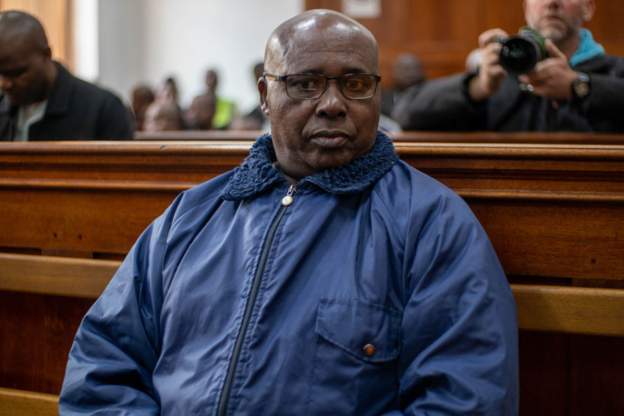
Suspect in Rwandan massacre detained once more in South Africa
Fulgence Kayishema, a fugitive from justice from Rwanda who had been held in South Africa, was apprehended once more on a warrant for his extradition to Arusha, Tanzania, where he would face a genocide prosecution.
His attorneys appear to have been taken off guard by the most recent developments, which were requested by the UN International Residual Mechanism for Criminal Tribunals.
He was taken into custody earlier on Tuesday while being held in the high court’s holding area in Cape Town.
The tribunal wants him to respond to allegations that he planned the death of over 2,000 Tutsi refugees in Rwanda at a Catholic church during the 1994 genocide.
After being located at a wine vineyard in Paarl, in the Western Cape region, Mr. Kayishema is already detained in South Africa. He was initially detained for breaking the nation’s immigration restrictions.
Investigators in South Africa claimed that since his entrance in the country in 2000, he has been residing there using a fictitious name.
He is charged with crimes against humanity, involvement in genocide, and having a significant role in the 1994 genocide in his native Rwanda.
He gave up on his request for release during his most recent court appearance in June and declared that he will seek asylum in South Africa instead.
To give his attorneys and the regional prosecutors time to reply to the arrest and transfer order, the case against him has been continued until August 30.
Although he hasn’t yet entered a plea to the allegations brought against him, he has previously denied any involvement in the offences.
-

South African manhunt after ID-related shooting
Following a horrific shooting in which six people killed, a manhunt has been started in South Africa, according to authorities.
According to preliminary information, four suspects are suspected of shooting the victims in Umlazi, KwaZulu-Natal, just before midnight on Friday.
One of the suspects thought one of the victims had his identification since it had been dropped accidently during a previous murder for which he was wanted.
One of the highest murder rates in the world is found in South Africa.
According to a police statement, it is believed that the suspects shot four people: two inside the home, one in a back room, and one close to an outdoor toilet.
The suspects allegedly then shot three victims in a neighbouring cabin.
Later, a casualty was taken by ambulance to the hospital.
Police have identified three of the suspects, and they are asking anyone with information to come forward.
-

MultiChoice’s DStv halts operation in Malawi over court order
A pay TV operator headquartered in South Africa, MultiChoice, has taken the decision to temporarily cease its DStv service operations in Malawi. This move comes as a response to an injunction that restrains its local subsidiary from modifying the pricing structure of the DStv service.
MultiChoice Africa Holdings (MAH) stated that their choice was influenced by an injunction put forth by the High Court in Lilongwe. This legal matter emerged from a dispute involving MultiChoice Malawi (MCM) and the Malawi Communications Regulatory Authority (MACRA). The court order prevents any alteration to the tariffs associated with the DStv service.
MAH has maintained that its local subsidiary is not vested with the authority to determine the pricing of the service, as this responsibility rests with the parent company independently. It’s important to note that MultiChoice Malawi does not provide the DStv service to the general public in Malawi. Instead, the local entity oversees the digital-terrestrial GOtv service. For the latter, MultiChoice Malawi sought and obtained approval from the regulatory body for modifications to pricing.
Having consistently argued that the operations in Malawi were not responsible for the DStv service, MAH has conveyed that its subsidiary lacks the capability to comply with the court order mandating the implementation of MACRA’s pricing directive.
It declared it was pulling DStv out of the nation because disobeying may result in “grave consequences for the directors and management of MultiChoice Malawi, including imprisonment.”
Since failure to comply could have “grave consequences for the directors and management of MultiChoice Malawi, including imprisonment”, it said it was withdrawing DStv from the country.
The DStv service will be recognized for customers who have already paid their new membership fees up until the current 30-day viewing cycle expires on or before September 10, 2023. No new memberships or reconnections will be permitted after Wednesday, August 9, 2023.
The injunction was first imposed on July 31, but MultiChoice Malawi was successful in obtaining a stay of injunction, which was then extended until last Friday.
MultiChoice’s primary area of expansion outside of its home market of South Africa is the Rest of Africa segment. Inflation increased expenses and put pressure on its client base, which had a negative effect on its success in the South African market.
-

British physician killed in South Africa after making a mistake
Following a false detour from the airport, a British physician on vacation in South Africa was shot and killed.
Last Thursday, the unidentified 40-year-old man’s car ended up in Ntlangano Crescent in the Nyanga township together with two other family members, according to reports.
Police said: “Several suspects approached his vehicle, shot him, and killed him.” The fate of the other passengers in the automobile is yet unknown.
One of Cape Town‘s oldest townships, Nyanga, has previously been referred to as the most hazardous place in the country.
The doctor’s whereabouts remain a mystery, but the tragedy occurred as violent rioting tore through Cape Town.
Minibus taxi drivers in the city have been on strike in protest of a recent crackdown on offences such operating without a licence or licence plates.
They contend that local authorities unfairly single them out for impoundment for infractions that other drivers would only receive a fine for.
The campaign, according to the city’s mayor Geordin Hill-Lewis, is an effort to make commuting safer for many people who use taxis to move around.
Five people have died as a result of the rioting, including a police officer, as a result of looting, road blockades, stone-throwing, and burning.
The primary implicated union, the South African National Taxi Council (Santaco), has denied that any of its members are responsible for the violence and on Sunday made a formal demand for an end to it.
John HillLewis will not talk to unions until there has been a period of peace before engaging in negotiations with Santaco.
Travellers are advised by the British Foreign Office to avoid the disturbances since they “have the potential to turn violent and may impact multiple areas, including journeys to and from the airport.”
Similar to this, the British High Commission warned that using GPS services could lead to being diverted into unsafe places or into active protests.
Formerly referred to as the murder capital of South Africa, Nyanga is famed for its horrifying bloodshed.
Despite the fact that it no longer has the greatest murder rates (131 murders were reported in the years 2022–2022), it nonetheless frequently witnesses violent crimes committed during gang warfare in the township.
As a result of the migrant labour system used under apartheid to enforce segregation while giving cities access to cheap black workers, Nyanga was created in the 1940s.
Black men were effectively compelled to leave their rural family homes in search of jobs in urban centres where they could only find lodging in hostels or townships on the periphery.
There are currently more than 500 townships in South Africa, and while many of them have developed into distinct neighbourhoods, they are often crowded and impoverished, with residents being the ones most likely to be a victim of the high crime rates in the nation.
-

South African pay TV provider exits Malawi over regulatory prohibition on increasing prices
Multichoice, a South African entertainment business that owns and runs the satellite pay TV service DSTV, has left Malawi after a court ruled that its local franchise was not allowed to raise costs.
The business said that it will only continue to provide services to customers who had valid subscriptions through September 10 and that “no new subscriptions or reconnections will be accepted.”
The termination of services in Malawi signifies the culmination of a strained relationship between Multichoice and the regulatory authority.
In the previous month, Multichoice Malawi had unveiled plans to raise DSTV prices, but the Malawi Communications Regulatory Authority (Macra) secured a temporary court injunction to halt the proposed increase.
In response, MultiChoice Malawi managed to secure a temporary suspension of the injunction.
Earlier in January, Macra imposed a fine of 10 million kwacha ($9,220; £8,400) on MultiChoice and instructed the company to reimburse subscribers for the additional charges incurred due to MultiChoice’s unauthorized increase in DSTV prices.
MultiChoice Malawi contended that it was merely collecting subscription fees on behalf of MultiChoice Africa, the entity responsible for setting and adjusting prices.
Renowned as Africa’s premier entertainment platform, MultiChoice caters to 23.5 million households across 16 countries in sub-Saharan Africa.
Although DSTV offers a range of entertainment services, it is particularly recognized for its live sports event streaming, notably football.
In recent months, MultiChoice Africa has raised subscription fees for TV services in several markets, including South Africa, Nigeria, and Kenya.
The company has addressed criticisms from users in these nations by explaining that the price hikes are a consequence of inflation and the subsequent escalation in operating costs.
-

Five people, including police officer killed in South Africa taxi strike
In Cape Town, South Africa, violent protests over the taxi strike have claimed the lives of five individuals, including a 40-year-old British national and a police officer.
The South African National Taxi Council (Santaco) had previously called for a week-long strike.
Drivers who participated in the strike did so in protest of what they saw as “heavy-handed tactics” by police enforcement.
Following the strike, which was deemed to pose a serious security risk, the UK issued a travel advisory for South Africa.
After talks between Santaco and the Democratic Alliance-led provincial government collapsed, the taxi strike is anticipated to go on.
Meanwhile, the immediate release of minibus taxis seized by the local government has been ordered by Transport Minister Sindisiwe Chikunga.
She claimed that the city’s use of the law had been improperly applied and carried out.
Taxi drivers and owners complained that their vehicles were singled out and detained for infractions as small as failing to buckle up or using the emergency lane improperly, while other drivers received only penalties for the same violations.
-

Netherlands end South Africa’s dream in World Cup tournament
At the Sydney Football Stadium, the Netherlands brought an end to South Africa’s impressive journey to the knockout stages of the Women’s World Cup, securing a 2-0 triumph.
In the second half, a fortuitous strike by Lineth Beerensteyn proved to be the decisive factor, sealing the victory for the Dutch team against a resilient South African squad. This victory now paves the way for an exciting quarter-final clash between the Netherlands and Spain.
South Africa commenced the match with a spirited approach, employing their speed advantage to take the first shot on goal. However, Netherlands’ goalkeeper Daphne van Domselaar was quick to secure the ball, thwarting the attempt.
After withstanding the initial offensive, the Dutch team capitalized on their first cross during the afternoon. A failed clearance set the stage for a close-range header by Jill Roord, marking her fourth goal in the tournament.
Throughout the first half, South Africa’s defense appeared unsettled, leading to frequent squandered possession and maintaining pressure on their side.
Challenges increased as injuries forced Jermaine Seoposenwe and Bambanani Mbane to leave the field for South Africa. Despite this, the Netherlands couldn’t find the pivotal second goal to further secure their lead.
As the initial 45 minutes transpired, the majority of the time was spent with South Africa defending within their own territory. However, the balance of momentum shifted in South Africa’s favor as the clock reached the brink of added time.
Thembi Kgatlana, the striker renowned for her swiftness, managed to challenge the Dutch defense on several fleeting opportunities when she found herself in open spaces. Just before halftime, she came heartbreakingly close to leveling the score.
In an impressive display of speed, she outpaced the defense to collect a well-timed through ball, positioning herself perfectly. Nonetheless, the scrambling efforts of goalkeeper van Domselaar ensured that the Dutch maintained their lead as the first half concluded.
The Netherlands secured their second goal in the 68th minute. Lineth Beerensteyn launched a long-range attempt toward South Africa’s goalkeeper, Kaylin Swart.
Although Swart managed to get her hands on the ball, the shot slipped through her grasp and nestled into the net.
In the upcoming clash against Spain, the Dutch will be without midfielder Danielle van de Donk, who received her second yellow card of the tournament.
-

Ghana’s Prince Annor Amponsah joins Stellenbosch FC in South Africa
A team in the South African Premier Soccer League, Stellenbosch FC, has officially announced the signing of Prince Annor Amponsah, a talented 18-year-old defender from Ghana. The club confirmed the long-term deal on its website.
Amponsah’s journey to this professional contract began with his youth development at Scores Football Academy in Ghana, followed by a short stint at the Ubuntu FC Academy. His impressive performances at these clubs caught the attention of Stellenbosch FC, leading to a professional trial with the team.
During his trial period, Amponsah showcased his skills and potential as a center-back. Notably, he was part of Stellenbosch FC’s U-21 squad that traveled to India to participate in the prestigious Premier League’s international NextGen tournament. There, he displayed excellent defensive abilities, helping the team secure a second-place finish.
Impressed by his performances, Stellenbosch FC offered Prince Annor Amponsah a professional contract, securing his position in the team’s ranks. With his promising talent and dedication, the young Ghanaian defender looks set to make a significant impact in the South African football scene.
“We are massively excited about the signing of Prince and his addition to our squad,” head coach Steve Barker said. He is a young player with huge potential,” the club wrote on its website after finalizing the deal.
Stellenbosch FC added, “He has immense ability with the ball at his feet, a great passing range, and is all-round a really good defender, so we are excited to see him grow and develop with us at the club.”
After signing a large contract with the club, Prince Annor Amponsah will be looking to make the first squad and establish himself as a regular.
-

Italy’s coach blames defeat against SA on dwindled confidence from previous defeats
Coach Milena Bertolini attributed Italy’s surprising exit from the Women’s World Cup to their shaken confidence.
The dented morale played a significant role as South Africa’s 3-2 upset in Wellington brought an end to Italy’s campaign.
Italy’s expectation of progressing required only a draw against their lower-ranked opponents.
However, their failure to capitalize on crucial opportunities, coupled with Thembi Kgatlana’s stoppage-time winning goal, sealed their fate.
While they began with a promising 1-0 victory against Argentina, Italy faced a crushing setback with a 5-0 loss to Sweden in their subsequent match.
This devastating defeat left an enduring impact on the team’s psyche, making it difficult to regain their footing.
“I’m sure that the game against Sweden and also the goals we conceded effected our trust, our confidence, our peace of mind,” she told reporters via a translator.
“It’s clear that today the emotional side was actually important, (a) major factor but this is an aspect that is part of the growth that this team has to make.”
Their early exit marked the latest major disappointment for Italy after Euro 2022, where they finished bottom of their group following a demoralising 5-1 opening defeat by France.
It is a disappointing trajectory for the team four years after they stunningly reached the World Cup quarter-finals, following a two-decade-long absence from the tournament.
But Bertolini insisted there was cause for optimism.
“We’re in a transition period for that historical group of players in 2019 and now we’re actually inserting new players, young players,” she said.
“This is part of our pathway and perhaps in (the) future, in the next competitions, the Italian national team will have young players that are very experienced, have accrued experience.”
-

Less death of rhinos recorded in south Africa
South African authorities, have reported that efforts to combat poaching have resulted in a decline in the number of rhinos slaughtered for their horns in the first half of the year.
According to the environment ministry, 231 of the nation’s rhinos were murdered for their horns between January and June, which is a decrease of 28 over the same time last year.
The environment ministry reports that combined efforts by South Africa’s law enforcement agencies, customs officers, and private security have resulted in some convictions for poachers.
The endangered creatures, whose horns are still highly valued in China and Vietnam, are being killed by well-armed poaching gangs, but South Africa, Botswana, and Namibia continue to fight this battle.
-

Third richest person in Africa close to making $10b net worth – Report
South African billionaire Nicky Oppenheimer has experienced remarkable financial success this year, witnessing a surge in his net worth by over $1.3 billion, inching closer to the $10-billion milestone.
Currently ranking as Africa’s third-richest person and the second-richest man in South Africa, trailing behind Johann Rupert, Oppenheimer’s net worth has soared by a significant $1.38 billion since the beginning of the year.
According to Bloomberg Billionaire Index, his net worth has risen from $8.03 billion to an impressive $9.4 billion, elevating him to the 237th spot among the world’s wealthiest individuals.
The driving force behind Oppenheimer’s wealth gains lies in his private equity investments, particularly through his ventures, Stockdale Street in London, and Tana Africa Capital in Johannesburg. These shrewd investments have capitalized on lucrative opportunities, generating substantial returns and solidifying his position among the continent’s few billionaires who have witnessed substantial growth in their fortunes this year.
Oppenheimer’s financial success reflects his astute approach to wealth management and diversification of investments, which include stakes in various companies, notably Integrated Diagnostics Holdings (IDH), a healthcare services provider based in Cairo, led by Egyptian businesswoman Hend El-Sherbini.
Beyond his business interests, the billionaire is renowned for his unwavering commitment to wilderness conservation. Oppenheimer owns and operates Tswalu Kalahari, South Africa’s largest private game reserve, in partnership with his son Jonathan. The reserve serves as a sanctuary for wildlife, playing a crucial role in preserving the country’s natural heritage.
Additionally, Oppenheimer owns the Shangani Ranch, a sprawling 65,000-hectare property known for its wildlife sanctuary status. The ranch boasts a robust cattle operation and employs 400 workers, exporting beef to the United Kingdom since 1937. Moreover, it serves as a vital corridor for migrating animals, underscoring Oppenheimer’s dedication to wildlife preservation and ecological balance.
With a year-to-date wealth gain of $1.38 billion, Oppenheimer is poised to join the ranks of the few African billionaires with a fortune surpassing $10 billion. His impressive financial achievements and commitment to wildlife conservation have solidified his status as a prominent figure in the business and philanthropic spheres.
-

Blast in Johannesburg kills 1, injures 48 others
Authorities have said that an explosion has occurred in the heart of Johannesburg, South Africa, on Wednesday evening, resulting in the death of one person and injuring 48 others. Panyaza Lesufi, the premier of Gauteng province, which encompasses Johannesburg, addressed the media on Thursday, revealing that 12 of the injured individuals remain hospitalized.
Emergency services are currently at the scene, assessing the extent of the damage and evacuating people as needed.
Due to the incident’s gravity, several streets in this typically bustling area of South Africa’s commercial hub have been closed to traffic.
While the cause of the massive explosion is yet to be definitively determined, Gauteng officials suspect that it might have been triggered by a rupture of underground gas pipes.
Witnesses reported feeling the ground shake and hearing a loud bang just before a section of Breet street collapsed, causing overturned cars and minibus taxis. Video footage illustrates the significant impact, showing a wide split in the road resulting from the incident.
-

One person confirmed dead in South Africa’s ‘earthquake-like’ gas explosion
On July 19, 2023, Johannesburg, the largest city in South Africa, experienced a massive gas explosion that wreaked havoc similar to that of an earthquake. Streets were torn apart, structures were destroyed, and vehicles were thrown into the air by the force of the blast.According to a BBC report, one person lost their life, and 48 others sustained injuries in the incident that occurred on Wednesday night.
Authorities in the Gauteng province are still investigating the cause of the explosion, but initial suspicions point to a possible rupture of underground gas pipes.
Panyaza Lesufi, the premier of Gauteng province, stated on Thursday that 12 of the injured individuals are currently receiving medical treatment at the hospital. Several streets in Johannesburg have been closed to traffic, and emergency services remain on-site to assess the damage and evacuate people as needed.
Witnesses reported feeling the ground shake and hearing loud bangs just before a section of Breet Street collapsed, creating a vertical split in the road.
The aftermath of the explosion revealed around 20 vehicles lying on the sides of the street, severely damaged by the force of the blast.
-

Putin to be absent from Brics summit – South African presidency
President Vladimir Putin will not attend an upcoming summit in South Africa. This decision comes in response to South Africa’s leader stating that any attempt to arrest Putin would be considered a declaration of war against Russia.
If Putin were to leave Russian territory, he would be subject to an International Criminal Court (ICC) arrest warrant. As a signatory to the ICC, South Africa would be expected to assist in his arrest.
Instead, Russia will be represented by its Foreign Minister, Sergei Lavrov, at the two-day summit. However, Putin will participate in the Brics conference, which includes Brazil, Russia, India, China, and South Africa, through a video link.
The Brics conference is often viewed as an alternative to the G7 group of advanced economies.
In a statement, South Africa’s presidency described the agreement for Mr Putin not to attend as “mutual” and said it had come about following a “number of consultations” on the summit.
The decision by South Africa not to arrest Vladimir Putin has faced criticism from supporters of Russia, who argue that the country should have asserted its sovereignty and defended its friendship with Russia. The invitation extended to Putin prior to the ICC’s accusations of war crimes in Ukraine has sparked controversy both domestically and internationally.
This move was seen by some as a departure from South Africa’s traditionally neutral stance, aligned with other African nations, in the conflict between Russia and Ukraine. However, President Cyril Ramaphosa’s government faced increasing pressure to arrest Putin, leading to a sense of urgency.
The Democratic Alliance, the main opposition party in South Africa, took the matter to court in an attempt to compel the authorities to arrest Putin if he visited the country. International human rights organization Amnesty International also joined the legal challenge.
Court documents revealed that President Ramaphosa opposed the arrest, citing national security concerns as the primary reason for his stance.
“Russia has made it clear that arresting its sitting president would be a declaration of war. It would be inconsistent with our constitution to risk engaging in war with Russia,” he said in an affidavit.
Mr Peskov denied Moscow had told South Africa that arresting its president would mean an act of war, but said it was “clear to everyone what [that kind of] infringement against the head of the Russian state would mean”.
Russia has consistently described the ICC arrest warrant as outrageous and legally void, because the country is not a member of the organisation.
The African continent remains split over the war between Russia and Ukraine, with some countries showing reluctance to back United Nations’ resolutions condemning Russia for its actions in Ukraine.
The reasons for this vary from country to country, but experts say one factor is the economic ties that some, including South Africa, have with Moscow.
A sanctioned Russian oligarch, Viktor Vekselberg, is said to be one of the biggest donors to South Africa’s governing party, the African National Congress (ANC).
-

South Africa most internet-dependent world for the following reasons
In a study that examined global digital habits, it was revealed that South Africans have emerged as the most avid internet users, spending an astonishing average of at least 9.5 hours online per day in 2022. This figure exceeded the global average by a significant three hours, as reported by Atlas VPN, a virtual private network (VPN) platform based in Delaware.
The study, which analyzed internet usage patterns among individuals aged 16 to 64 in 46 countries, sourced its data from reputable sources such as social media research firm We Are Social and social media intelligence platform Meltwater.
One of the key factors driving South Africa’s high internet usage is the increasing accessibility of the internet across the country and the African continent. In 2020, approximately 70% of South Africans had internet access, a figure that has likely increased since then.
By 2023, the country had reached 43.48 million internet users, representing an impressive penetration rate of 72.3% among its population of 60.14 million. The South African government aims to achieve universal internet access for all households in the country by 2024, further contributing to the surge in digital activity.
Although South Africa’s internet speed lags behind the global average, the nation has been making progress in improving connectivity. In 2021, the country ranked 68th globally for its digital quality of life. Additionally, South Africa stands out for mobile and broadband internet affordability within Africa, as well as commendable mobile internet stability.
Globally, mobile internet usage has become the primary mode of connectivity, particularly in sub-Saharan Africa, where smartphones have become the primary means of accessing the internet.
The study by Atlas VPN highlighted the top reasons why South Africans spend their time online, including seeking information, staying connected with friends and family, staying updated on news and events, watching videos, and acquiring knowledge on various subjects.
In addition to South Africa, several other countries exhibited significant internet usage. Brazil topped the list, with an average daily internet usage of 9 hours and 32 minutes, followed closely by the Philippines (9 hours and 14 minutes), Argentina, and Colombia, both tied at 9 hours and 1 minute.
Notably, the United States and Singapore were also recognized for dedicating an above-average amount of time to internet browsing, with a daily average of 419 minutes (6 hours and 59 minutes).
On the other hand, some European countries, such as Denmark, Austria, and Germany, spent less time online compared to the global average. East Asian countries like China and Japan also had lower daily internet usage, with figures of five hours and 25 minutes and three hours and 45 minutes, respectively.
Globally, the overall average time spent online has gradually declined, decreasing by 20 minutes (4.8%) compared to 2021. This shift is likely attributed to the world moving beyond the COVID-19 phase, where internet usage saw a significant surge due to lockdowns and restrictions.
As technology continues to advance and internet infrastructure improves worldwide, the global internet landscape will undergo further transformations, influencing how people interact and engage with the online world.
-

Nelson Mandela day: Why it is important
Tuesday, July 18, marks Nelson Mandela Day, an annual commemoration of the South African leader’s extraordinary achievements on his birth anniversary.
Established by the United Nations in 2009, this day serves as a tribute to Mandela’s life and lasting legacy.
The theme for Nelson Mandela Day 2023 is “It’s in your hands,” emphasizing the connection between food and climate change. The aim is to raise awareness and encourage individuals to contribute by planting trees and cultivating food in their communities.
The organizers have set a goal of planting one million trees globally, highlighting the significance of environmental sustainability.
Nelson Mandela was a renowned global figure who left an indelible impact on the 20th century and continues to shape the 21st century. He dedicated his life to effecting profound change and improving the lives of countless South Africans.
To delve deeper into the inspiring life story of Nelson Mandela, keep reading.
Why was Nelson Mandela important?
WATCH: A look back at Nelson Mandela’s life (December 2013)
Nelson Mandela became the first black president of South Africa in the country’s first democratic elections in 1994, but it wasn’t an easy road to get there.
When Nelson Mandela was a young man, white and black people in South Africa were not allowed to do things together and had to live separate lives under a system called apartheid.
White people, who were a small proportion of the population, were in charge of everything in South Africa.
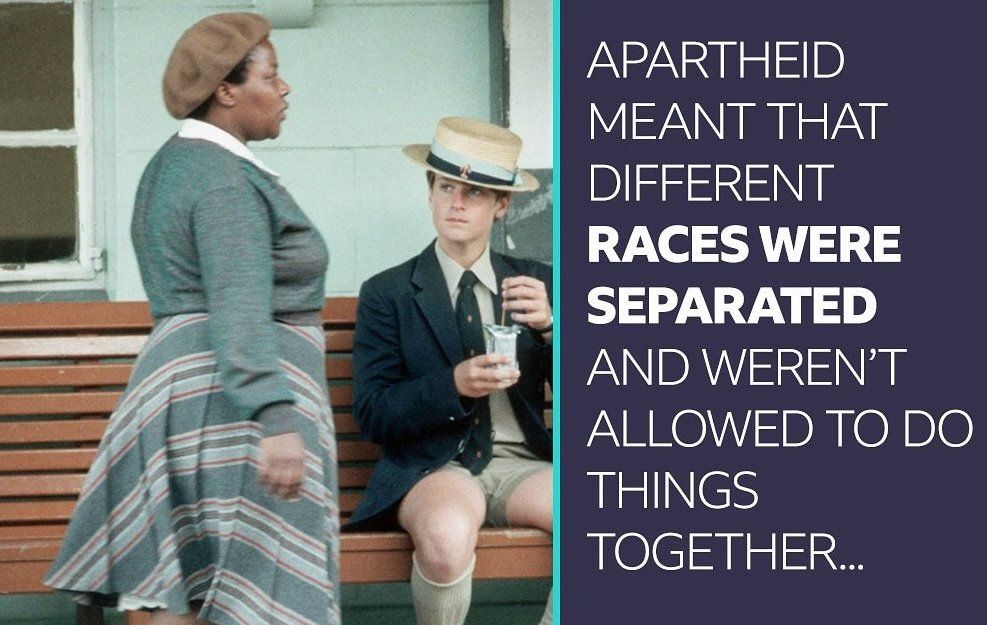
Image caption,Apartheid in South Africa saw black people treated very differently with fewer rights than white people Black people had fewer rights and couldn’t vote and white people controlled which jobs black people could have, and even where they lived. They also had access to better schools and hospitals.
Nelson Mandela wanted South African apartheid to end and protested against it.
Mandela sent to prison
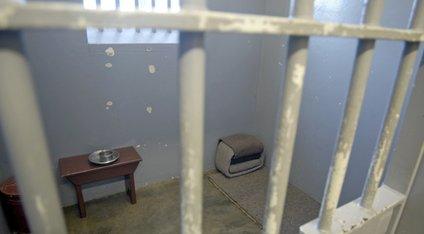
Image caption,This was Mandela’s prison cell, which is now a museum During this time, some anti-apartheid demonstrations in South Africa turned violent, prompting Mandela’s detractors to brand him and his supporters as terrorists.
Mandela spent time on Robben Island while serving a life sentence in jail after being found guilty of treason and attempting to undermine the government in 1964.
For 300 years, a jail operated on the island off the South African city of Cape Town. The majority of prisoners, including Nelson Mandela, were black men who had committed political crimes.
In spite of this, a large number of individuals supported Nelson Mandela’s cause and worked to secure his release.
2020: Children discuss what Nelson Mandela means to them.
Mandela released from prison
Finally in 1990, after being in prison for 27 years, the South African President FW de Klerk – a white man – allowed Mandela to go free, signalling a new era in the country.
Mandela had become a symbol of resistance against apartheid and his release saw celebrations not only in South Africa but across the world.
Remembering the day Nelson Mandela was released from prison (2020)
Apartheid in South Africa ended a year later in 1991, and three years after that, South Africa held its first fully-democratic elections in which black people, as well as white, were allowed to vote.
Nelson Mandela was elected president and set about trying to bring people of different races together.
In 1993, he was awarded the Nobel Peace Prize – the highest honour of its kind – for his work.
YouTuber Caspar Lee speaks to Newsround about South Africa, Rugby and Nelson Mandela
In 1995, South Africa held its first major sports competition – the Rugby World Cup.
Mandela gave his support to the South African rugby team, made up mostly of white men, so that it would unite the country. The team, known as the Springboks went on to lift the trophy.
Mandela has gone down in history as one of the most famous world leaders ever and is remembered by many for promoting a message of forgiveness and equality.
-

The importance of Nelson Mandela Day
On July 18th, the world celebrates Nelson Mandela Day, honoring the remarkable achievements of the South African leader on the anniversary of his birth. This day, established by the United Nations in 2009, serves as a tribute to Mandela’s extraordinary life and enduring legacy.
Under the theme “It’s in your hands,” Nelson Mandela Day 2023 seeks to raise awareness about the impact of climate change on food and encourages individuals to make a difference in their communities by planting trees and cultivating food. The organizers aim to plant one million trees globally as part of this initiative.
Nelson Mandela, a renowned global statesman, left an indelible mark on the 20th century and continues to shape the 21st. Through his unwavering dedication, he brought about significant changes in the lives of countless South Africans, inspiring generations with his message of peace, reconciliation, and social justice.
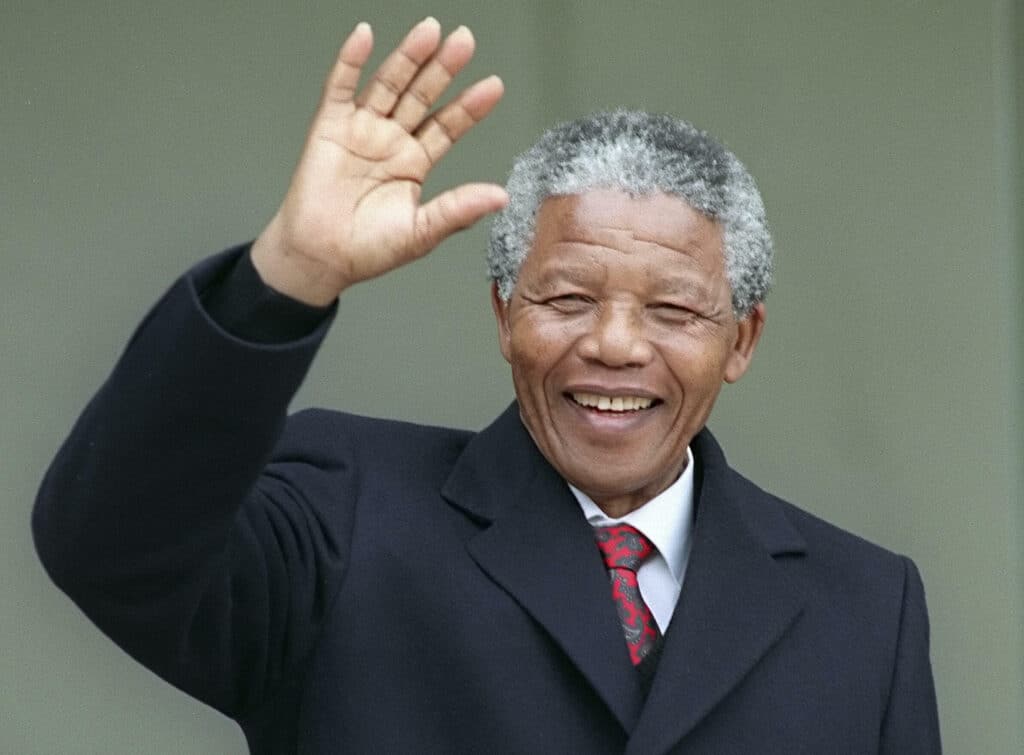
Nelson Mandela Day stands as a reminder of the power of individual action and the importance of fostering a better world. It encourages people worldwide to embrace Mandela’s spirit of compassion, equality, and determination to make a positive impact in their communities and beyond.
Nelson Mandela’s journey to becoming the first black president of South Africa in the nation’s inaugural democratic elections in 1994 was a challenging one.
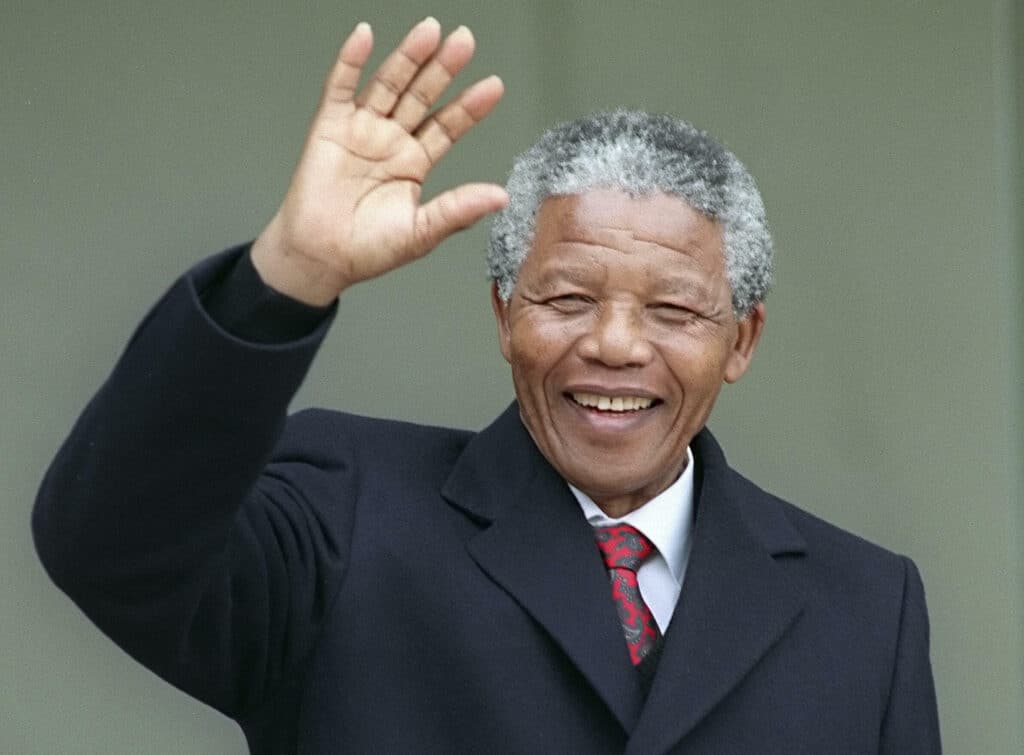
During Mandela’s youth, South Africa was deeply divided by apartheid, a system that enforced racial segregation and discrimination. Under apartheid, white and black individuals were prohibited from engaging in activities together and were forced to lead separate lives.
In this unjust system, the minority white population held absolute power over all aspects of South African society. Black individuals had limited rights, including the denial of voting privileges. White authorities controlled employment opportunities for black citizens, as well as where they could reside. Disparities in education and healthcare were also prevalent, with white individuals having access to superior facilities and resources.
Nelson Mandela, driven by his deep conviction for equality and justice, dedicated himself to fighting against the oppressive apartheid regime. He became a prominent figure in the anti-apartheid movement and led numerous protests and demonstrations against the unjust policies.
Mandela’s unwavering determination and commitment to ending apartheid were instrumental in reshaping the course of South African history. His leadership, coupled with the efforts of countless activists, ultimately led to the dismantling of apartheid and the establishment of a more inclusive and democratic South Africa.
Image caption,
This was Mandela’s prison cell, which is now a museumAmidst the struggle against apartheid in South Africa, certain protests escalated into acts of violence, leading critics to brand Nelson Mandela and his supporters as terrorists.
In 1964, Mandela faced conviction for treason and conspiracy to overthrow the government, resulting in a life sentence. He served a significant portion of his imprisonment on Robben Island, located off the coast of Cape Town, South Africa. This island had served as a prison for political offenders, predominantly black men, for over three centuries.
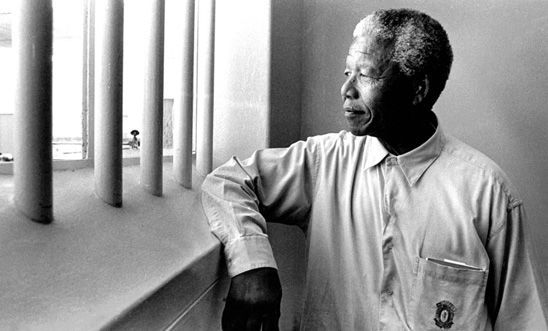
However, despite the negative portrayal by some, Mandela garnered widespread international support for his cause. People from around the globe rallied behind him, advocating for his release and standing in solidarity with the fight against apartheid.
Mandela’s resilience and the global solidarity he received played a pivotal role in shedding light on the injustices of apartheid and contributed to the eventual dismantling of the discriminatory system.
In a historic moment in 1990, Nelson Mandela was finally released after spending 27 years in prison. The decision to release Mandela came from South African President FW de Klerk, who, as a white man, played a crucial role in ushering in a new era for the country.

Mandela had emerged as a powerful symbol of resistance against apartheid, capturing the hearts and minds of people around the globe. His long-awaited release sparked widespread celebrations, not only in South Africa but also across the world. Mandela’s freedom marked a significant turning point in South African history, symbolizing the potential for reconciliation, unity, and the dismantling of the oppressive apartheid system.
The release of Nelson Mandela paved the way for his subsequent involvement in negotiations and ultimately his election as South Africa’s first black president in 1994.
Apartheid in South Africa officially ended in 1991, and the following year, the country witnessed its first fully-democratic elections, enabling both black and white citizens to exercise their right to vote. In this historic election, Nelson Mandela was elected as the president of South Africa, embarking on a mission to foster unity and reconciliation among people of different races.
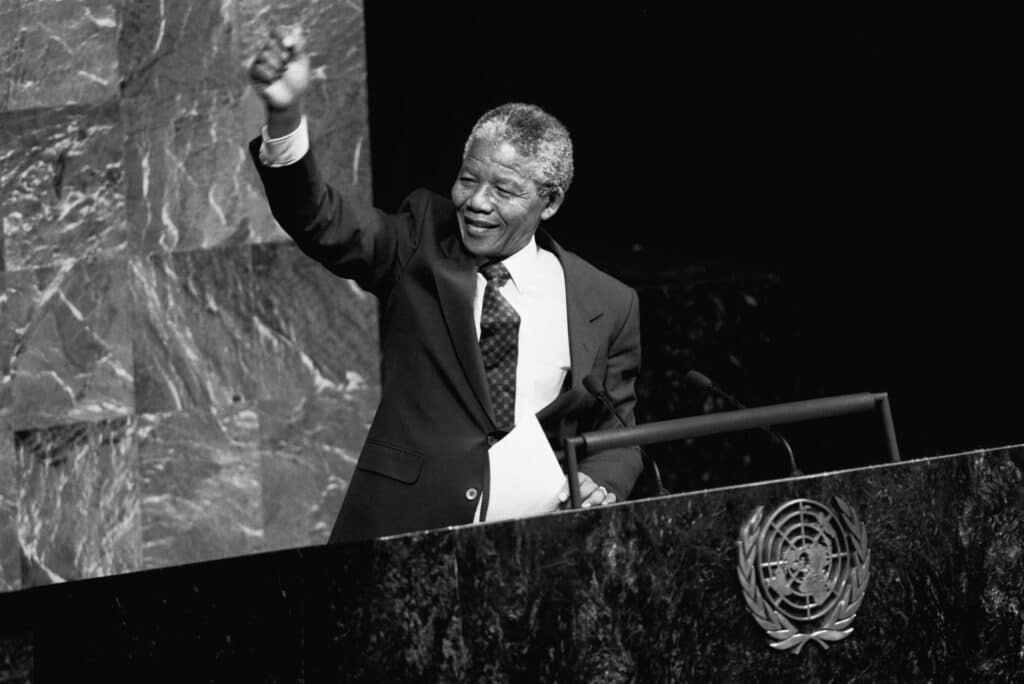
In recognition of his remarkable efforts, Nelson Mandela was honored with the Nobel Peace Prize in 1993, the highest accolade in its category, for his tireless work in promoting peace and justice.
In 1995, South Africa hosted the Rugby World Cup, a significant sporting event. Mandela saw an opportunity to use the occasion to bridge racial divides and foster national unity. He offered his support to the South African rugby team, predominantly composed of white players, known as the Springboks. Against the odds, the team went on to win the tournament, symbolizing a triumph that transcended the boundaries of sport and united the nation.
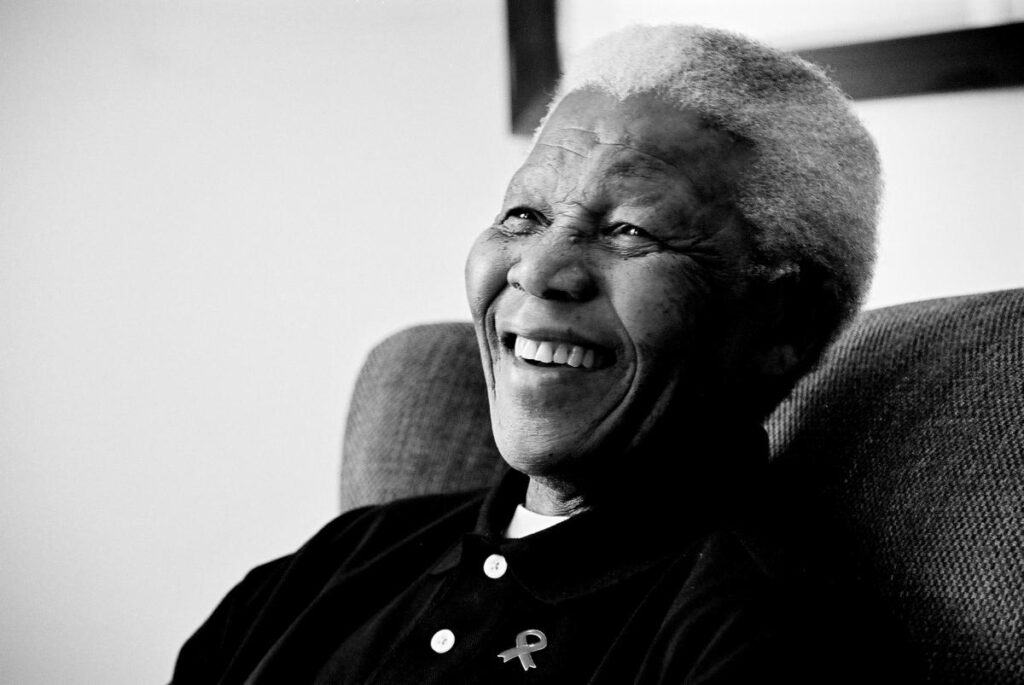
Nelson Mandela’s impact as a world leader has secured his place in history. He is widely revered for advocating messages of forgiveness and equality, leaving an indelible legacy that continues to inspire people across the globe. His unwavering commitment to justice and the pursuit of a more inclusive society has left an enduring mark on the world’s collective memory.
-

Fire destroys hundreds of Durban homes in South Africa
A devastating fire has ravaged a disadvantaged neighborhood in Durban, a port city in South Africa.
The Kennedy Road informal settlement was engulfed in flames early on Sunday morning, resulting in the destruction of numerous homes.
Tragically, one person has been confirmed dead, and there are concerns that additional casualties may be discovered.
Distressing video footage depicts the charred remnants of makeshift shelters, constructed using corrugated iron sheets, amid the smoldering debris. Desperate residents can be seen salvaging what remains of their possessions.
At present, the cause of the fire remains unknown. However, eyewitnesses suggest that it may have originated from an argument between two individuals who were reportedly intoxicated.
This incident has brought immense suffering to the affected community. The South African Red Cross, recognizing the magnitude of the disaster, estimates that approximately 1,000 shacks have been destroyed, leaving around 3,000 people homeless.
Siyabonga Hlatshwayo, a spokesperson for the South African Red Cross, has described the situation as a catastrophe.
The organization has been working tirelessly to provide essential aid to those affected, including the distribution of hot meals, mattresses, and blankets.
Hlatshwayo has issued an appeal to the public for additional donations to support their efforts in assisting the displaced residents during this challenging time.
-

Former South African President Zuma visits Russia for ‘health reasons’ – Spokesperson
Former President of South Africa, Jacob Zuma, who was removed from office in 2018 due to corruption allegations and faced multiple legal cases, is presently in Moscow for medical treatment, according to his spokesperson. This revelation comes just a day after a court ruling that upheld his imprisonment.
Mr. Zuma, 81, “went to Russia last week for health reasons and he will return to the country when his doctors have completed his treatment,” Mzwanele Manyi said in a statement.
This trip, aboard a commercial flight, “is private, but not secret” , defends the spokesperson, in the wake of leaks in the local press on this trip by Mr Zuma, who was still on the 7 July in Zimbabwe , where he represented a group from Belarus at a conference on carbon credits.
On Thursday, South Africa’s highest court reiterated that Mr Zuma should return to prison to finish serving a 15-month sentence for contempt, rejecting an appeal asking that he be spared.
This decision should not have immediate effect: the penitentiary services affirmed that they were going to study this judgment and seek a legal opinion before expressing themselves on this file.
Mr. Zuma was sentenced in June 2021 for stubbornly refusing to respond to a commission investigating corruption under his presidency (2009-2018). His imprisonment a few days later sparked several days of riots, killing more than 350 people.
He had been released on parole after two months for medical reasons, without further details on his state of health.
Mr. Zuma, when he was president, had close ties with Moscow. More generally, relations between South Africa and Russia date back to the apartheid era, with the Kremlin providing support to the ANC in the fight against the racist regime.
Mr. Zuma, feared intelligence chief at the time of the ANC in exile, whose middle name Gedleyihlekisa means in Zulu “he who laughs while crushing his enemies”, spent ten years in Robben Island penitentiary alongside Nelson Mandela.
-

10 ‘irresistible’ beaches in Africa you need to visit
Africa, with its vast coastline spanning 18,950 miles across 54 countries, is home to some of the world’s most breathtaking beaches.
Offering diverse landscapes and a range of activities, these coastal gems cater to romantic getaways, family vacations, and thrilling adventures. Let’s explore ten must-visit beaches in Africa that showcase the continent’s awe-inspiring natural wonders.
1. Anse Source D’Argent, La Digue Island, Seychelles:
Located on the tranquil southwest coast of Seychelles’ La Digue Island, Anse Source D’Argent stands out as one of the archipelago’s most mesmerizing beaches. Garnering accolades from prestigious travel publications, it has rightfully earned the title of the world’s most photographed beach. With its crystal-clear waters, ideal swimming conditions, and vibrant marine life, this beach is a haven for snorkeling and sunbathing enthusiasts.
2. Camps Bay Beach, Cape Town, South Africa:
Nestled on the west coast of the Cape Peninsula, Camps Bay is not only a beautiful bay but also an affluent suburb of Cape Town. Its stunning white sand, along with breathtaking views of the ocean and Lion’s Head mountains, creates a picturesque setting. Camps Bay Beach offers an ideal backdrop for group activities and romantic strolls during warm summer evenings. The suburb’s luxury beachfront restaurants and boutique hotels attract celebrities and stylish visitors alike.
3. Nungwi Beach, Zanzibar Island, Tanzania:
Situated on Zanzibar’s main island, Unguja, Nungwi stands as the second-largest settlement after Stone Town. This beach perfectly blends tradition and modernity, offering warm and sunny weather thanks to its equatorial location. Travelers flock to Nungwi for its exquisite beauty, wide range of activities, and accommodation options to suit every budget.
4. Margarida, Príncipe:
Located in the Mé-Zóchi District of São Tomé and Principe, Santa Margarida village boasts a 550-meter-long stretch of golden sand known as Margarida Beach. Its shallow, clear waters make it ideal for swimming and leisurely walks along the shoreline. This popular tourist destination offers a marina, navigable waterways, dining options, shopping, and a vibrant nightlife.
5. Plage d’Agadir, Morocco:
Situated just 2.3 kilometers from Agadir’s city center, Plage d’Agadir is one of the top-rated beaches in the Souss-Massa region. The beach’s length ensures it rarely feels overcrowded, making it a favorite destination for locals and tourists alike. With its calm waters, protection from winds, and pleasant ambiance, Plage d’Agadir is perfect for families with young children.
6. Trou aux Biches, Mauritius:
Nestled along Mauritius’ northern coast in the Pamplemousses district, the small settlement of Trou aux Biches boasts one of the island’s most stunning public beaches. Recognized as the World’s Leading Beach Destination at the 2011 World Travel Awards, Trou aux Biches offers a range of resorts and boutique hotels. Its convenient location, just west of Port Louis, makes it easily accessible for visitors.
7. Lamu Archipelago, Kenya Coast:
The Lamu Archipelago, situated near Kenya’s northern coast in the Indian Ocean, is renowned for its pristine beaches and rich African-Arabic coastal heritage. Lamu Island, the highlight of the archipelago, offers white sandy beaches, delectable cuisine, friendly locals, and various accommodation options. Visitors can also indulge in dhow sailing, dolphin watching, and exploring the UNESCO World Heritage Site of Lamu Town.
8. Bazaruto Island, Mozambique:
Bazaruto, meaning the “island of the mist,” is part of the Bazaruto Archipelago, a national park since 1971. These picturesque islands in Mozambique boast untouched beauty and diverse ecologies. Snorkeling enthusiasts can marvel at over 2,000 fish species inhabiting the pristine coral reefs, alongside whales and dolphins. Fishing and surfing opportunities add to the allure of this Southern African destination.
9. Naama Bay, Egypt:
Located in the resort city of Sharm El Sheikh, Naama Bay allures tourists with its vibrant ambiance. Boasting cafes, restaurants, hotels, and bazaars, the bay offers a wide range of activities, including swimming, surfing, kayaking, and diving among exotic coral reefs. With year-round sunshine and pleasant temperatures, Naama Bay guarantees unforgettable vacations.
10. Île Sainte-Marie, Madagascar:
Known as a favored tourist destination, Île Sainte-Marie in Madagascar is a tiny island with a rich historical past as a pirate haven. Its idyllic setting features white sandy beaches, natural pools, and vibrant coral reefs. Visitors are captivated by the island’s unique atmosphere and find it difficult to leave.
Africa’s stunning beaches offer an array of natural wonders, making them irresistible to travelers seeking memorable experiences. From the idyllic shores of Seychelles and Zanzibar to the vibrant coasts of Cape Town and Lamu Archipelago, each beach presents its own allure. Whether you crave relaxation, adventure, or cultural exploration, Africa’s beaches are waiting to provide an unforgettable escape.
-
Court rules Zuma’s release from South African jail unlawful
The South African Constitutional Court has found that former president Jacob Zuma’s medical parole was improperly granted.
Zuma had been granted parole by Arthur Fraser, a former prison service chief who is thought to be a close ally of the former president.
After spending less than eight weeks of a 15-month prison term, he was freed in September 2021.
After refusing to cooperate with an anti-corruption investigation throughout his tenure in government, Zuma was found guilty of contempt.
He was recently observed in Zimbabwe at a climate conference.
The prisons department has said it is studying the constitutional court’s judgement and will comment after seeking legal advice.
This week marks the second anniversary of the deadly riots sparked by Zuma’s arrest. More than 350 people were killed in the violence.
-
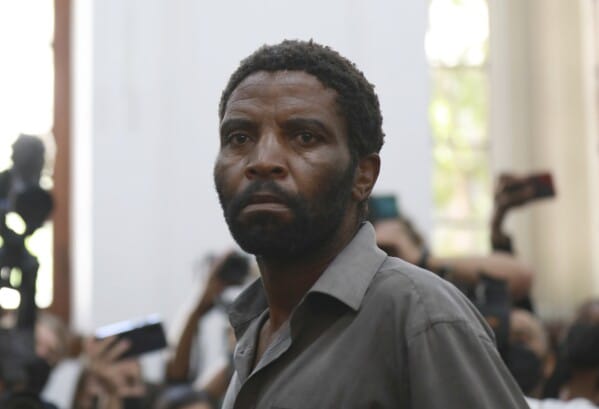
Man confesses to ‘intentionally’ torching South Africa parliament
A man has confessed to “intentionally” setting the South African Parliament ablaze.
He is currently facing terrorism charges over the fire that badly damaged South Africa‘s Parliament building last year said in a courtroom outburst on Thursday that he “burned it intentionally.”
Shouting and pointing his finger, Zandile Mafe said he was going to “burn it more” if the Parliament was not moved from Cape Town to either the city of Bloemfontein or Pretoria.
The huge blaze badly damaged the historic Parliament complex in January last year as it ripped through various buildings, including the main chamber where lawmakers sit. It hasn’t been fully repaired, with estimates saying it will cost around $120 million and take at least three years.
Mafe was arrested in the Parliament precinct soon after the fire started. He was charged with breaking and entering, arson and terrorism, but his case has been held up after a judge ordered him to undergo a psychiatric evaluation to determine if he is fit to stand trial.
The judge overseeing Thursday’s court appearance allowed Mafe to finish his rant, saying he didn’t want to “exacerbate” his “mental condition,” according to South African media reports.
Judge Nathan Erasmus then said an expert report indicated that Mafe was not able to understand the wrongfulness of the acts he is accused of, although a final decision on whether there will be a criminal trial was postponed until next month.
Mafe had also challenged the court to give him a sentence of 25 years to life, which is what he could face if his trial goes ahead.
“I’m not afraid of a life sentence,” he shouted.
The fire at the seat of South Africa’s democracy raised criticism of the security procedures in place at the Parliament whose members were on a break and the buildings were largely empty. No one was hurt.
Mafe has said he is angry at various issues in South Africa. He has called the opposition political party that runs the Cape Town municipality racist against Black people and has also accused the government of failing to help the poor.
-

Concerns raised in Sudan over torching vehicles
The South African government is attempting to crack down on the torching of vehicles on busy highways. 21 large trucks have been set on fire so far this week.
The arson occurs on the same day as the second anniversary of deadly countrywide riots that claimed more than 350 lives.
Despite similarities with the methods used, the government claims the lorry attacks are unrelated.
Investigators are closing up on 12 people who have been named as the instigators, according to Police Minister Bheki Cele.
“They’ve been identified by names, some of them by address and some of them by the cars they drive,” Mr Cele said on Wednesday.
Investigations are being conducted into a number of motives, including economic sabotage, robbery, and labor problems.
The police minister stated that soldiers had been sent to key locations where arson attacks had been recorded.
They constituted “economic sabotage,” according to President Cyril Ramaphosa, because the trucks were burned “on the main artery of our country.”
The arrest in 2021 was brought on by the arrest of former President Jacob Zuma for contempt of court, which fueled accusations that Zuma’s loyalists were attempting to topple South Africa’s fledgling democracy.
-

Ex-minister of Mozambique extradited to the US for debt scandal trial
South African justice ministry, former Mozambique finance minister Manuel Chang has been extradited from South Africa to the United States on Wednesday to face prosecution for his alleged involvement in a $2 billion debt scam.
Chang, who has consistently maintained his innocence, has been held captive in South Africa since 2018 after being seized there at the US government’s request on suspicion of money laundering and conspiracy to commit fraud.
Later, Mozambique also asked for his extradition, and the two nations engaged in a legal and political battle over Chang’s ownership. In a final ruling issued in May, the constitutional court of South Africa refused Mozambique permission to appeal.
“The Ministry of Justice and Correctional Services confirms that the Republic of South Africa’s law enforcement agencies successfully surrendered Mr Manuel Chang to the United States of America on July 12, 2023,” a ministry statement said.
The U.S. allegations concern loans from Credit Suisse and Russia’s VTB bank that were approved by Chang while he served as Mozambique’s finance minister from 2005 to 2015. The loans were guaranteed by the Mozambique government.
A large portion of the funds disappeared, and the projects for which the loans were purportedly intended never materialized. According to U.S. investigators, the projects, which included shipyard development, maritime security, and tuna fishing, were a front for a complex bribery and kickback operation.
When the true scale of the borrowing was made public in 2016, donors including the International Monetary Fund withdrew their support for Mozambique, which led to the collapse of the local currency and a debt default.
-

Police in South Africa on manhunt after death of 6 in mass shooting
The police has reported that three guys opened fire in a home’s yard in South Africa, killing six people and injuring four more.
The shootings took place on Tuesday night in the Eastern Cape province’s KwaNobuhle settlement, which is close to Kariega.
Police said on Wednesday that a search was ongoing and that no arrests had been made of the accused.
According to official crime figures, South Africa has one of the highest homicide rates in the world, and at least 2,629 people were shot to death in the first three months of this year. 30 people every day is a sobering pace for the 60 million-person nation.
In South Africa, there has also been an increase in celebrity-targeted killings and kidnappings for ransom.
Authorities said that a woman was among the wounded in the shooting on Tuesday that left five males and a woman dead.
“It is alleged that three unknown males entered the yard and opened fire at people who were in the property or nearby to the house,” said police spokesperson Colonel Priscilla Naidu. “Two females were shot at the gate. One female succumbed to her injuries while the other sustained gunshot wounds.”
The security service is still trying to identify the cause of the shooting.
In South Africa, there have been several large-scale shootings recently, including at least three this year.
16 people were killed in Soweto, a slum in Johannesburg, last year as a result of many shooters shooting at patrons at a bar.
At a birthday celebration in the same Eastern Cape area in January, eight people were shot and killed.
Ten members of the same family were killed at a home in April, including a youngster.
-

South Africa’s rand strengthening against US dollar
The rand gained momentum on Tuesday as a result of increased local industrial output and a weaker dollar brought on by predictions that rate hikes in the U.S. will come to a halt.
At 14:43 GMT, the rand was trading at 18.53 against the dollar, up 1.3% from the previous close.
-

Police escorts of SA’s Deputy President suspended for highway attack
Eight police officers have been suspended from duty following a disturbing incident in Johannesburg where civilians were allegedly assaulted on the side of a motorway.
The incident, which took place earlier this month, involved officers from the VIP protection unit responsible for Deputy President Paul Mashatile’s security.
In a video capturing the incident, the officers can be seen forcibly removing the civilian-clothed military trainees from their vehicle and subjecting them to physical assault.
Make these thugs famous! Allegedly cops of VIP protection unit. This is an atrocity. This is what happens when the police is used as an iron fist for the state. Apparently in Johannesburg today. What will happen to them @SAPoliceService? Whatever happened to serve and protect?! pic.twitter.com/mkImtSNpmw
— Ian Cameron (@IanCameron23) July 3, 2023One of the victims was rendered unconscious after being kicked in the head. The motive behind the attack remains unclear.
The release of the video sparked widespread outrage in a country where concerns have been raised about the necessity of extensive protection for the political elite while ordinary citizens face the brunt of rampant crime.
-

South Africa to hand Mozambique ‘tuna bond’ minister to US FBI
South African police have confirmed that Manuel Chang, the former Finance Minister of Mozambique, will be extradited to the United States to face fraud and corruption charges.
Chang has been in custody in South Africa since December 2018.
During his tenure as Mozambique’s finance minister, the country guaranteed over $2 billion in secret loans by state-owned firms, leading to a major corruption scandal and subsequent economic collapse.
The funds were allegedly used for various purposes, including the purchase of a large tuna factory, earning the scandal the nickname “tuna bond” scandal.
Last year, 11 individuals, including the son of Mozambique’s former president, were convicted of embezzlement and money laundering in connection with the same scheme. However, Chang maintains his innocence.
It is now understood that Chang will be escorted by FBI officials from Lanseria airport in Johannesburg to New York, where he will stand trial. The Mozambican authorities had sought to have Chang returned to Mozambique for trial rather than being extradited to the US.
According to South African authorities, Chang is expected to face charges in the US related to loans acquired from Credit Suisse and Russia’s VTB bank, which were guaranteed by the Mozambican government.
Some of these loans were not properly disclosed and were authorized by Chang during his tenure as finance minister from 2005 to 2015.
The US has indicted Chang, alleging his involvement in the misappropriation of funds that were invested by American investors.
-

Seasoned anti-apartheid ex-minister Pahad, passes away
In a statement from President Cyril Ramaphosa’s office, it has been announced that Essop Pahad, a revered anti-apartheid veteran and former Minister in the Presidency of South Africa, has passed away at the age of 84.
“We mourn the passing of a veteran of our struggle,” President Ramaphosa said, citing Mr Pahad’s contribution to South African democracy.
“Security crackdowns, banning and exile shaped Essop Pahad’s contribution over decades to our struggle and, as Parliamentary Counsellor to President Thabo Mbeki and Minister in the Presidency, to the early design and impact of our democratic state.”
Described as a visionary and strategist, Essop Pahad embarked on his remarkable political journey 65 years ago when he joined the Transvaal Indian Congress, an organization that actively opposed white-minority rule during apartheid in South Africa.
He subsequently became a member of the African National Congress (ANC), the party led by President Ramaphosa. Pahad’s activism led to his arrest and subsequent exile in the 1960s, but even in exile, he continued to contribute to the cause of the banned ANC.
In 1990, coinciding with the lifting of the ban on the ANC and the dawn of a new era for South Africa, Pahad returned to his homeland. This pivotal year marked the end of apartheid and the birth of a democratic government.
Later, during the presidency of Thabo Mbeki from 1999 to 2008, Mr. Pahad served as Minister in the Presidency, further solidifying his dedication and service to the nation.
-

South Africa’s World Cup pay dispute resolved by a billionaire
The president of the Confederation of African Football (Caf), Patrice Motsepe, has stepped in to resolve a salary dispute between the South Africa women’s football team and the national federation.
The team’s preparations for the upcoming Women’s World Cup were thrown into disarray ahead of their final warm-up game against Botswana. In protest, the Banyana Banyana team boycotted the match and refused to sign contracts due to concerns over bonuses.
While FIFA had guaranteed each player $30,000 (£24,000) for their participation in the tournament, this amount was not included in the contracts provided to the players.
Patrice Motsepe, a wealthy South African businessman who also serves as the president of Caf, and his wife Precious Moloi, played a pivotal role in mediating an agreement between the two parties. Their foundation made a donation towards the players’ bonuses, helping to resolve the issue.
The Women’s World Cup is scheduled to commence later this month, with Australia and New Zealand as the host countries.
-
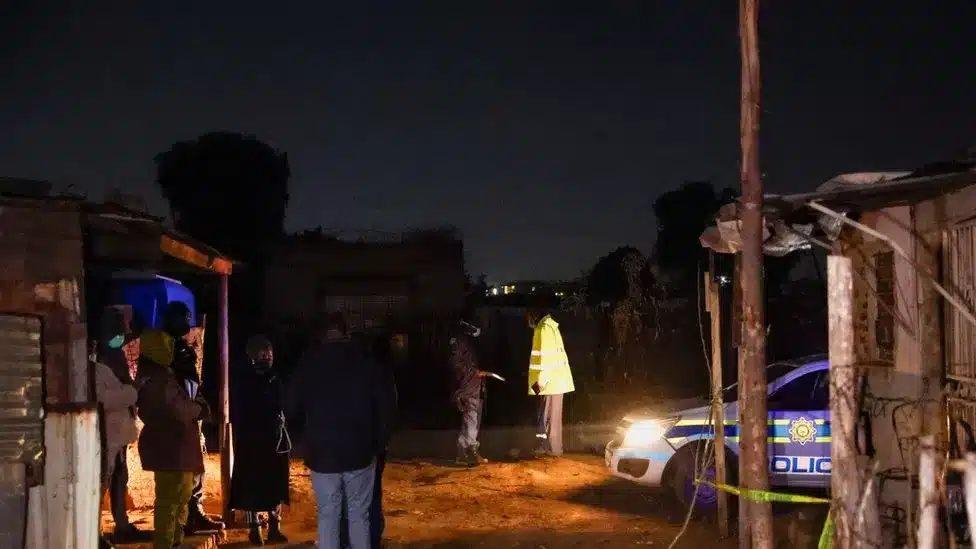
Suspected gas leak kills 17 in South Africa
Seventeen people have tragically lost their lives due to a suspected nitrate oxide gas leak in South Africa, according to local authorities.
The victims, including women and children, succumbed to gas inhalation in an informal settlement located in Boksburg, east of Johannesburg.
The incident, which occurred on Wednesday, is believed to be connected to illegal gold mining activities in the area.
Illegal gold miners, known as “zama zamas,” often utilize nitrate oxide gas to extract gold from soil obtained from abandoned mine shafts.
Authorities discovered a leaking gas cylinder in the densely populated Angelo shanty town of Boksburg.
The victims were found within a 100-meter radius of the leak site.
Rescue teams continue their search, and there are concerns that additional bodies may be discovered.
Fifteen individuals are currently receiving medical treatment, with three in critical condition.
A devastated woman from Mozambique, residing in South Africa, shared with the BBC that her husband lost his life in the gas leak. She received a distressing call from a neighbor informing her of her husband’s collapse.
Tearfully, she expressed worries about repatriating her husband’s body to Mozambique since she is unemployed, and her husband worked part-time as a handyman.
This tragedy occurred only six months after a gas tanker explosion claimed 41 lives in the same town on Christmas Eve.
-
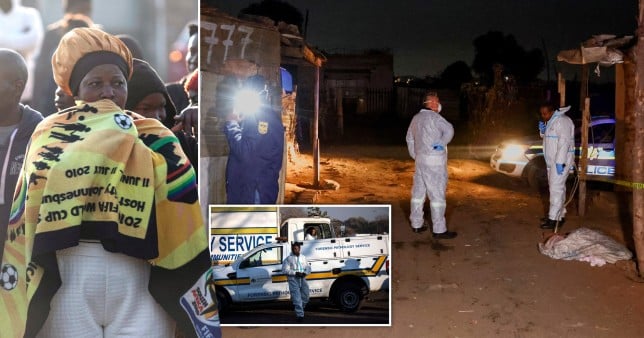
16 people including kids killed by poisonous gas leakage at gold mining company
In South Africa, a suspected deadly gas leak from a cylinder at an illicit gold mining operation claimed the lives of at least 16 persons, three of whom were children.
Rescuers are conducting searches within a 100-meter radius of the scene in Boksburg, east of Johannesburg, where they suspect that up to 24 people may be dead.
While police, ambulance, and fire brigade search for more victims, the youngest victims are thought to be 1, 6, and 15 years old.
Zama-zamas, or illegal gold miners, had been utilising nitric oxide in a sizable shanty where they lived and worked.
This was to separate gold they extracted from dirt and earth.
Spokesman William Ntladi said: ‘The search and recovery team is searching the shacks in and around the area where the cylinder leaked to verify if there are other casualties nearby.
‘The bodies we have found had already died but others could have tried to escape and collapsed elsewhere so we won’t have a final toll until the whole scene has been fully examined.
‘We do not know when the gas started leaking but when the emergency teams arrived at around 8pm on Wednesday night the cylinder which had leaked into the shack was already empty.’
Another Ekurhuleni EMS officer spoke to TimesLIVE and said women and children were among the dead, with their bodies scattered in different parts of the settlement near the leak.
He said: ‘The zama-zama guys live amongst the community and clean and refine their gold here using gas cylinders but sadly this time the gas leaked resulting in sleeping people suffocating.
‘Others who were awake died as they tried to run but the fumes were too much to bear. The scene is horrific with bodies lying everywhere waiting for the forensic teams to arrive,’ he said.
A township elder, fearful of the zama-zamas added: ‘There is nothing we can do about them. They are too powerful and too dangerous. They live amongst us in the Angelo area.
‘What has happened has destroyed Angelo – there are bodies wherever you look.’
A South African Police source said: ‘They are a law onto themselves and are always heavily armed and wherever they set up camp rape and murder and violence follows behind them.’
It is not the first time an incident like this has happened, after 41 suspected miners were killed when a lorry carrying liquefied petroleum gas exploded under a bridge at the same township on Christmas Eve.
And at least 31 illegal miners were killed in a gas explosion while underground illegally excavating a disused mine in Welkom, in the Free State Province in June.
-
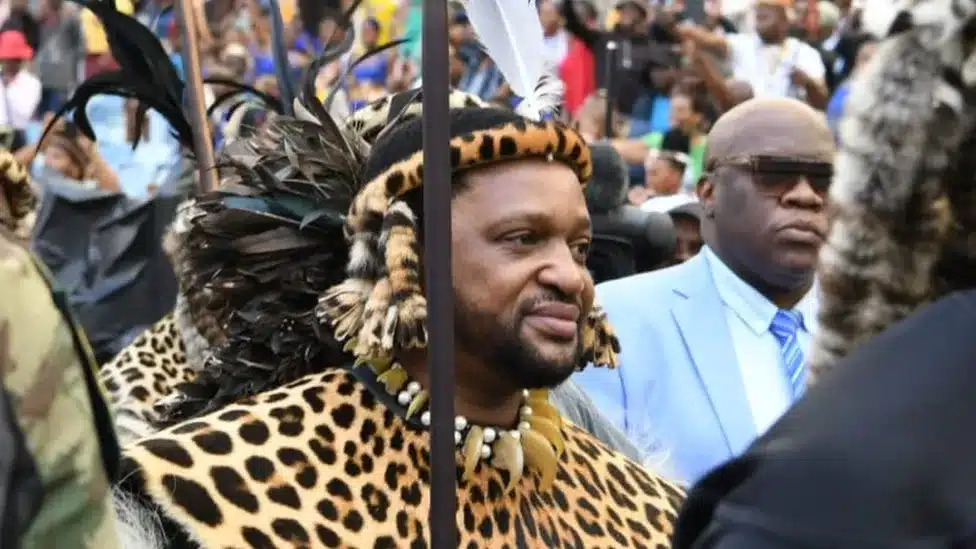
Zulu King Misuzulu kaZwelithini refutes claims of being poisoned
Zulu King Misuzulu kaZwelithini has refuted rumors of poisoning.
“I am not poisoned, I am well,” he said on a video released on Monday evening.
In the video released, the king, looking well, explained that he had travelled to Eswatini for a regular medical health check – something that Chief Buthelezi continues to dispute saying that the king crossed the border to “urgently seek medical attention”.
“I’m happy, everything is well-functioning, there is no poison whatsoever. So please people, mostly to the Zulu people, the Zulu royal family also to remind everyone to please don’t listen to everything that people say,” the king said.
🟥WATCH🟥 In a recent video recorded in eSwatini and shared with the SABC by his spokesperson Prince Africa Zulu, AmaZulu King MisuZulu kaZwelithini assured his followers that he is in good health and vehemently denied allegations of poisoning. pic.twitter.com/L6T7gq4t0I
— Central News (@centralnewsza) July 4, 2023Over the weekend, the traditional prime minister of Zulu King Misuzulu kaZwelithini stated that the king had traveled to neighboring Eswatini for medical treatment.
Chief Mangosuthu Buthelezi also mentioned that this decision came in the wake of the sudden passing of one of the king’s senior advisers, who was also suspected to have been a victim of poisoning.
But in response, the king’s spokesperson, Prince Africa Zulu alleged there was “an orchestrated agenda and a desperate narrative to communicate defamatory and baseless claims of His Majesty’s ill-health”.