Tag: Sudan

  • Coup attempt in Sudan, Prime Minister under house arrest

    Several members of Sudan’s transitional government have been arrested in their homes amid reports of a military coup.

    According to a BBC report sighted by GhanaWeb, Civilian PM, Abdallah Hamdok and at least four ministers were among those believed to have been detained by unidentified soldiers at their homes shortly before dawn on Monday.

    The events come just two days after a Sudanese faction calling for a transfer of power to civilian rule warned of a “creeping coup” at a press conference that a crowd of unidentified people sought to prevent.

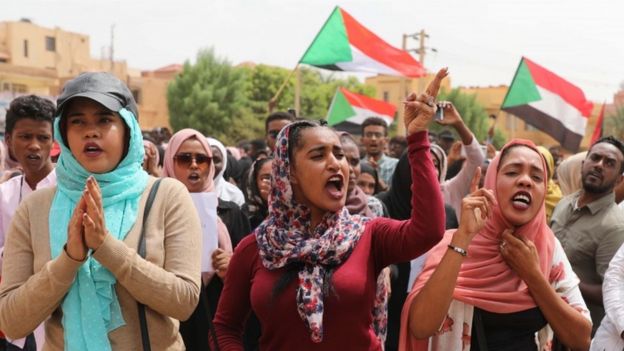
    A government source told AFP that, the internet was cut off throughout the country, while demonstrators gathered in the streets to protest against the arrests, setting fire to tires.

    The army has not commented, but pro-democracy groups urged street protests.

    Military and civilian leaders have been at odds since long-time ruler Omar al-Bashir was overthrown two years ago and a transitional government was set up.

    It remains unclear who carried out the arrests.

    Sudan has been undergoing a precarious transition marred by political divisions and power struggles since the ouster of President Omar al-Bashir in April 2019.

    Since August 2019, Sudan has been under the rule of a civilian-military administration overseeing the transition to an all-civilian regime.

    The main civilian bloc – the Forces for Freedom and Change (FFC) – which led the anti-Bashir protests in 2019, has split into two opposing factions.

    “The current crisis is artificial — and is taking the form of a creeping coup,” FFC leader Yasser Arman said at a press conference in the capital Khartoum on Saturday.

    “We renew our confidence in the government, Prime Minister Abdallah Hamdok, and in the reform of the transitional institutions, but without order or imposition,” Arman added.

    Tensions between the two sides have long existed, but the divisions were exacerbated after the failed coup on September 21.

    The Information Ministry of Sudan in a Facebook post said, military forces also stormed Sudan’s state broadcaster in the nearby city of Omdurman and detained workers, the ministry added.

    The ministry added Sudan’s leader is under pressure to release a statement in “support of the takeover” but had called on the people to take to the streets in protest.

    “Sudanese Prime Minister Abdalla Hamdok, in a message from his house arrest, asks the Sudanese to adhere to peaceful (means of protest) and occupy the streets to defend their revolution,” parts of the Facebook post read.

    Among those arrested by “joint military forces” include various civilian ministers of Sudan’s transitional government and members of Sudan’s sovereign council, the Information Ministry said.

    “Members belonging to the civilian component of the Transitional Sovereign Council and a number of ministers of the transitional government were arrested by joint military forces and taken to unknown destinations,” the statement added.

    Source: www.ghanaweb.com
  • Sudan army men held for killing protestors

    Sudan’s military said Saturday it has handed over to the attorney general the findings of an investigation into the killing of two demonstrators at a recent rally that called for justice for victims of violence against protesters in 2019.

    The Sudan Tribune reported separately that seven army personnel had been arrested and were due to be handed to prosecutors for interrogation, citing the Attorney General.

    On Tuesday, several hundred protesters gathered outside the army headquarters in Khartoum to mark two years since the violent dispersal at the same location of a sit-in by the popular protest movement calling for the departure of former president Omar al-Bashir.

    Tuesday’s rally was dispersed by security forces, leaving two dead and dozens injured.

    “General Abdel Fattah al-Burhane, chairman of the Sovereign Transitional Council and commander-in-chief of the armed forces, handed over the results of an armed forces investigation into the events … to Attorney General Tagelsir al-Hebr,” the army said in a statement Saturday.

    The results include a list of soldiers suspected of involvement in Tuesday’s events and an order “to lift their immunity,” it added.

    “This will allow the General Prosecutor’s Office to initiate legal proceedings and reach final results,” the army said.

    The 2019 sit-in was held in a large camp set up in front of the army headquarters.

    In June of that year, armed men in military fatigues then violently dispersed the camp. The days-long crackdown left at least 128 people dead, according to doctors linked to the protest movement.

    The generals in power at the time denied ordering the bloody dispersal and ordered an investigation into the events.

    Sudan has been led since August 2019 by a civilian-majority transitional administration, which has promised to bring justice to the victims and their families.

    Source: africanews.com

  • Sudan protests activist’s torture and killing

    Hundreds of protesters in Sudan took to the city of Omdurman on Tuesday to demonstrates against the torture and killing of the pro-democracy activist Bahaa Eddine Nouri.

    They allege members of the powerful Rapid Support Forces paramilitary are responsible for his death.

    The RSF largely drew its personnel from the Janjaweed militias, which were accused by rights groups of committing atrocities in the Darfur conflict that began in 2003.

    “The Rapid Support Forces are explaining how the killing took place, but we do not want half of the truth, we want the whole truth, we want to know the reason,” said Mohammed Nory, brother of Bahaa Eddine Nouri.

    Bahaa Eddine Nouri, 45, was snatched on December 16 from a cafe in the southern Khartoum district of Kalakla by men in plainclothes who were driving a vehicle without license plates, according to local media.

    His body was found days later bearing signs of torture at a hospital morgue in Omdurman, the capital’s twin city, triggering a public outcry.

    His family collected his body from a hospital morgue in Omdurman, the capital’s twin city, and demonstrators followed for the burial.

    “Enough with disparaging the people’s blood,” read one banner, also referring to the protesters killed during months of unprecedented demonstrations in 2019.

    Those months-long, youth-led protests spurred the military to depose autocrat Omar al-Bashir in April 2019.

    The rallies continued for months afterward as civilians demanded the generals hand over power, culminating in a fragile power-sharing arrangement from August last year.

    State news agency SUNA reported on Monday that the Rapid Support Forces had referred its intelligence chief and other personnel for questioning over Nouri’s arrest and killing, without providing names.

    It later quoted the prosecutor’s office as saying that proceedings were underway to “arrest immediately… all members of the Rapid Support Forces involved in the arrest and subsequent death of Nouri so they can be prosecuted”.

    Source: africanews.com

  • Black Stars land in Sudan ahead of 2021 AFCON qualifier

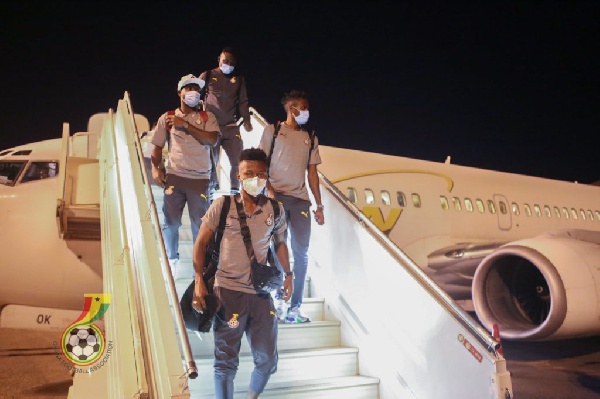
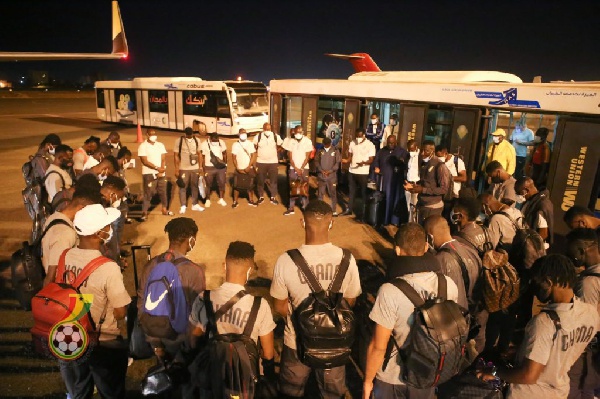
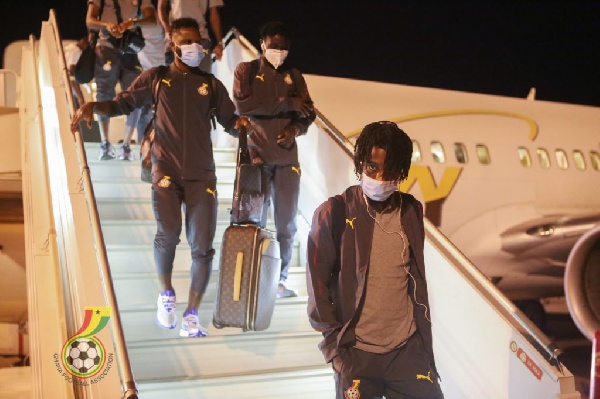
    The Black Stars of Ghana have landed safely in Sudan ahead of their 2021 Africa Cup of Nations qualifier on Tuesday.

    Ghana departed from the Kotoka International Airport on Sunday for the return encounter against Sudan.

    The team touched down in Omdurman in the early wee hours of the morning and headed straight to their hotel.

    Below are the players that made the trip:

    Goalkeepers: Fatau Dauda, Lawrence Ati-Zigi, Razak Abalora.

    Defenders: John Boye, Baba Abdul Rahman, Kwadwo Amoako, Christopher Nettey, Alexander Djiku, Joseph Aidoo, Joseph Attamah, Nicholas Opoku.

    Midfielders: Emmanuel Lomotey, Afriyie Acquah, Clifford Aboagye, Majeed Ashimeru, Mubarak Wakaso

    Forwards: Jordan Ayew, Andre Ayew, Tariqe Fosu, Samuel Owusu, Caleb Ekuban, John Antwi, Jefferey Schlupp.

    Sudan will host Ghana on Tuesday, November 17, in a matchday four tie at Omdurman, Khartoum.

    The game is scheduled to kick off at 13:00 GMT.

    Check out some images below:


    Source: Ghana Soccernet

  • 2021 Afcon: Bad officiating led to our defeat against Ghana – Sudan coach Hubert Velud

    Sudan head coach Hubert Velud was not impressed with the performance of referee Maguette Ndiaye as he felt bad officiating led their defeat against Ghana in the 2021 Africa Cup of Nations qualifiers on Thursday, November 12, 2020.

    The Black Stars made it three wins from three with a 2-0 win over Sudan at the Cape Coast stadium courtesy Andre Ayew’s brace.

    In the 36th minute, Sudan claimed a penalty as Ghana defender John Boye tangled with striker Abdel Rahman who burst into the area.

    When the penalty was waved away it incensed Frenchman Velud and he angrily confronted the assistant referee, who pushed the coach to the ground.

    To add insult to injury, Velud was shown a yellow card when he stood up.

    Speaking after the game, coach Velud said the refereeing performance was very bad, and that there was a clear penalty kick with striker Abdel Rahman that was not counted.

    He, however, praised the performance of his players, indicating that he was satisfied with his team’s performance in general.

    The captain of the visitors, Ammar Tayfour also praised the performance of the team. “The national team played a good match and we explored the Ghanaian team during the match and we will be ready for the return match on 17th November.”

    Source: footballghana.com

  • Afriyie Acquah: Turkey-based midfielder reacts to late Ghana call-up for Sudan showdown

    Black Stars midfielder, Afriyie Acquah is pumped up for action after being handed a late call-up for the upcoming 2022 Africa Cup of Nations (Afcon) qualifying double-header against Sudan.

    The Yeni Malatyaspor man is among seven players announced by the Ghana Football Association (GFA) as new additions to the original 23-man squad on Monday.

    It is his first invitation for national duty since playing at the 2019 Afcon final tournament in Egypt.

    Ghana host Sudan for a match week three tie on Thursday, five days before the reverse match week four fixture.

    “I always try to do my best for the team. I am going to do the same job I have been doing for the team: to play well and help the team win the game,” Acquah told Sportsworldghana.

    “I want to help the team to qualify for the Afcon as we try to win the tournament this time around.

    “We reached the finals in 2015 and have made a couple of semi-finals appearances and now the most important thing for us is to try to win the Afcon for our country. This is what I am looking forward to achieving with the team.”

    Acquah shared his thoughts on the recent transfer of veteran Ghana striker Asamoah Gyan to local side Legon Cities.

    “When I heard that Gyan has joined the Ghana Premier League again, I was so happy for him because I think this is going to help make the league more interesting,” said the 28-year-old.

    “When you look at the career of Gyan he has done amazing things and he comes to the league with a huge personality. This is my dream also.

    “One day when I feel that I have had enough of European football I want to come to the Ghana Premier League and have a feel of it before I call time on my football career.

    “As you know I never played in the Ghana Premier League or even the Division One and so it is my dream to also do what Gyan has done now.”

    Nearing the twilight of his career, Acquah sheds light on the possibility of following the likes of Gyan.

    “I am a BA United fan through and through. My family is a BA United one but you know they are currently not in the elite league,” he revealed.

    “In the future when I decide to come back to Ghana to play in the top-flight I will consider BA United first if and only if they are in the elite league.

    “If United is in the league then straight away I go there. Otherwise, the club that I dream to play for in Ghana is Asante Kotoko. Kotoko is the club that I want to play for one day.

    “This is my dream also and so I congratulate Gyan and wish him all the best at his new club.”

    Acquah has previously played for Italian sides Palermo, Parma, Sampdoria, Torino and Empoli, and Hoffenheim.

    Source: footballghana.com

  • Sudanese in Israel fear being returned after normalisation

    Sudanese asylum seekers living in Israel fear being kicked out once ties are normalized between the two countries, though some hope their presence will be seen as an advantage.

    Technically at war with Israel for decades, Sudan on Friday became the third Arab country this year to announce it is normalizing ties with the Jewish state, following the United Arab Emirates and Bahrain in August.

    But since the announcement, members of the Sudanese community in Israel have been “very afraid” of being sent back, said 26-year-old Barik Saleh, a Sudanese asylum seeker who lives in a suburb of Tel Aviv.

    Israel counts a Sudanese population of around 6,000, mostly asylum seekers.

    Thousands of others left or were forced to return after Sudan split in 2011 when South Sudan won its independence — only for the fledgling country to plunge into civil war.

    Some of the Sudanese — often labeled as “infiltrators” for crossing illegally into Israeli territory before being granted permission to stay — were minors when they arrived.

    They are not always allowed to work, and they cannot gain Israeli citizenship.

    Saleh, who grew up in West Darfur, was just nine when his family fled the war to neighboring Chad.

    “My parents are in a refugee camp,” said the young man, who arrived after journeying through Libya and Egypt, and has lived in Israel for 13 years.

    “I will be the first one for normalization,” he said.

    “But if I will be deported from here, then I will be in 100 percent danger,” he added.

    ‘Not safe to go back’ – Former president Omar al-Bashir oversaw Sudan’s civil war in the Darfur region from 2003. Some 300,000 people died in the conflict and 2.5 million were forced from their homes.

    Bashir, in detention in Khartoum, is wanted by the International Criminal Court over charges of genocide, war crimes and crimes against humanity in Darfur.

    “We are here because it is not safe to go back to Sudan yet,” said 31-year-old Monim Haroon, who comes from a stronghold region of Darfuri rebel leader Abdelwahid Nour’s Sudan Liberation Movement (SLM) faction.

    “The reason why we are here in Israel is not because of the lack of a diplomatic relationship between Sudan and Israel, but because of the genocide and ethnic cleansing that we went through,” Haroon said.

    Sudan’s transitional government, in place after the fall of Bashir in 2019, signed a landmark peace deal with an alliance of rebel groups earlier this month.

    But Nour’s rebel faction was not one of them.

    Some of those in power in Sudan today were also in control under Bashir.

    They include Mohamed Hamdan Daglo, vice president of Sudan’s ruling transitional sovereign council.

    He heads the feared Rapid Support Forces, long accused by human rights groups of committing widespread abuses in Sudan’s Darfur provinces.

    “For me it is very dangerous,” said Haroon, who was previously head of Nour’s office in Israel.

    “Unless Abdelwahid signs a peace agreement, I cannot go back.”

    – ‘Second home’ – In Neve Shaanan, a suburb of Tel Aviv known for its asylum seeker community, stalls and restaurants offer Sudanese food, including a version of the popular bean dish “foul”, served with grated cheese.

    Usumain Baraka, a smartly dressed 26-year-old who works nearby, has finished a master’s degree in public policy at a university in Herzliya, north of Tel Aviv.

    Like Saleh, he too was nine when he fled Darfur for Chad, where his mother still lives in a refugee camp.

    “They (militiamen) killed my dad and my big brother, and they took everything we had in the village,” Baraka said.

    “At one point I had two options: to go back to Darfur to fight for a rebel group, or leave the camp and try to have a normal life.”

    While the young men who AFP spoke to expressed fear that their presence in Israel would be at risk under the normalization agreement, some said they would like the Jewish state to see it as an asset rather than a burden.

    Haroon said Sudanese in Israel could be a “bridge” between the countries, not only in the private sector but to also to help build understanding between the two peoples.

    “I hope the Israeli government will see this potential asset, the important role that we can bring promoting the interest of the two countries,” he said.

    Both Sudan and Israel have said in recent days that migration would be one of the issues on the agenda during upcoming meetings on bilateral cooperation.

    “Israel is my second home,” said asylum seeker Saleh. “There is no language that I speak better than Hebrew, even my own local language.”

    But Jean-Marc Liling, an Israeli lawyer specialized in asylum issues, warned that with the normalization announcement, the return of Sudanese asylum seekers would likely be on the government’s radar.

    “The first thing that comes to the government’s mind is: we’ll be able to send back the ‘infiltrators’,” Liling said.

    Source: africanews.com

  • Sudan protests against dire living conditions turn deadly

    Protests in Sudan have turned deadly after one person was reportedly killed and a dozen others were wounded, according to a group of doctors linked to the movement that led to the downfall of President Omar al-Bashir.

    The demonstrations on Wednesday in the cities of Khartoum and Omdurman are over the country’s worsening economic situation. Protesters are also demanding justice for the hundreds killed during the 2019 uprising, which led to Bashir being toppled.

    ‘We demanded freedom, peace and justice’

    Eyewitnesses said police fired teargas to disperse the small gatherings of about 100 protesters.

    “There has not yet been any sentencing for the martyrs,” said one protester.

    “We demanded freedom, peace and justice and neither achieve peace, neither freedom nor justice.”

    Sudan has embarked on a rocky three-year transition since then under a joint civilian-military administration but has struggled with severe economic woes and skyrocketing consumer prices.

    High inflation and a shortage of hard currency mean people are finding it difficult to even buy the basics. Long queues outside grocery stores have also become the norm as have power cuts that can last up to six hours.

    Authorities have vowed to rebuild the economy and to bring to justice those responsible for killing protesters.

    More than 250 people were killed during the anti-Bashir protests and the ensuing unrest, according to doctors linked to the protest movement.

    The transitional authorities have been pushing to end the country’s isolation and to rebuild its economy.

    On Monday, President Donald Trump declared his readiness to remove post-Bashir Sudan from a US blacklist of state sponsors of terrorism, a move Khartoum hailed as a vital step towards securing debt relief and spurring economic recovery.

    Source: africanews.com

  • Sudan’s PM sacks provincial governor after protests

    Sudan’s Prime Minister Abdalla Hamdok has sacked the governor of the eastern Kassala province, barely three months after he appointed him.

    Governor Saleh Ammar’s appointment sparked ethnic protests in the province that barred him from reporting to work.

    He had to stay in the country’s capital, Khartoum, as protesters from the rival Beja community demonstrated for weeks. The governor is from the Beni Amr community.

    The protests had turned deadly with several people reported to have died.

    Sudan’s main port was blocked by the protesters for three days last week.

    The protesters had also forced the closure of the road linking the eastern city of Port Sudan to Khartoum.

    Governor Ammar’s sacking on Tuesday sparked fresh protests in the province as members of his community cried foul, according to Associated Press.

    Prime Minister Hamdok appointed 18 civilian governors sparking ethnic rivalries in some states.

    Source: bbc.com

  • Floods leave ‘nine million Sudanese in need of aid’

    The UN’s Food and Agriculture Organisation says more than nine million people in Sudan are in need of assistance because of flooding.

    The agency told the BBC that millions of hectares of farmland had been affected.

    Much of Sudan has been suffering the worst floods in decades, with historically high levels of rainfall since July.

    The rain has finally begun to ease and the floodwaters are receding, but a huge humanitarian problem now looms.

    The Food and Agriculture Organisation said a million tonnes of grain has been lost. There are also growing fears about the risk of disease caused by contaminated water supplies and stagnant surface water. Cases of malaria have increased sharply.

    The UN has warned that emergency relief efforts are suffering from a low level of funding, compounded by high inflation in Sudan and severe fuel shortages.

    Source: bbc.com

  • 2021 AFCON qualifiers: Ghana’s opponents Sudan line-up Tunisia friendly on Oct 9

    Ghana’s 2021 Africa Cup of Nations qualifying Group opponents Sudan will play Tunisia in a friendly before their double-header in November.

    The warm-up game against will be played on October 9 at the Hamadi Agrebi Olympic Stadium in Rades.

    Head coach Hubert Velud has called up 29 home-based players, dominated by stars playing for Al Hilal Omdurman and El Merreikh SC, for camping.

    The qualifiers of AfCON 2021 that was postponed to 2022 were suspended last March due to the coronavirus pandemic.

    The Nile Crocodiles will face the Black Stars in match day three and four of the qualifications in Cape Coast and in Khartoum in November.

    The two fixtures were initially scheduled to take place in March but for the coronavirus outbreak, CAF has rescheduled for November.

    The 2021 Africa Cup of Nations finals will take place in January 2022 following a CAF decision on 30 June 2020 follow an Executive Committee meeting.

    Source: Ghana Soccernet

  • Sudan government and rebels sign peace deal

    The transitional government of Sudan has signed a peace deal with five rebel groups at a ceremony in neighbouring South Sudan.

    The deal is aimed at ending 17 years of conflict in the western region of Darfur and southern states.

    This is a significant step towards ending multiple conflicts in the country, reports the BBC’s senior Africa correspondent Anne Soy.

    But two key rebel groups refused to sign the deal, which covers issues such as land ownership, power sharing and the return home of the millions displaced by the fighting.

    Previous agreements to end the long-running conflict have failed to hold.

    Source: bbc.com

  • Two killed in Sudan protests over new governor

    At least two people were killed when a protest march turned violent in Sudan’s Kassala state over the appointment of a new governor.

    Two ethnic groups – Beni Amer and Beja – clashed over the nomination of Governor Salah Ammar of the Beni Amer community.

    Prime Minister Abdalla Hamdok has sent a ministerial delegation to the state.

    The acting governor Arbab El Fadul has imposed a three-day curfew in the state and police have been deployed to enforce it.

    Supporters of the new governor want him to quickly arrive in Kassala and assume office, while the rival ethnic community has rejected his appointment.

    The disputed governor in his Eid al-Adha address said his arrival had been delayed because of the protests over his nomination.

    Prime Minister Hamdok appointed 18 civilian governors sparking tribal rivalries in some states.

    Source: bbc.com

  • Pompeo arrives in Sudan after historic flight

    US Secretary of State Mike Pompeo has arrived in Sudan on a flight from Israel on the first visit of such a high-ranking US official for 15 years.

    He is the first top US official to visit the country since last year’s ouster of its longtime leader Omar al-Bashir.

    Sudan wants to be removed from the US list of state sponsors of terror, while Mr Pompeo is promoting closer ties between Israel and Arab countries.

    Relations between the US and Sudan have eased since last year’s overthrow of President Omar al-Bashir.

    Source: bbc.com

  • Pompeo touts Israel to Sudan historic flight

    The US Secretary of State Mike Pompeo, who is on his way to Sudan from Israel, has touted the direct flight as a signal of a change in relationship between the two countries.

    Sudan under ousted leader Omar al-Bashir maintained a hardline policy towards Israel which has thawed since a transitional government came into power last year.

    Sudan has been pushing to be removed from the list of countries that the US considers state sponsors of terrorism.

    Mr Pompeo is expected to meet senior Sudanese officials including Prime Minister Abdalla Hamdok.

    The meeting will discuss support for the civilian-led government and “deepening the Sudan-Israel relationship”, according to a statement from the state department.

    An official from the department told news agency Reuters that “it’s possible that more history will be made,” in regard to whether Sudan might join the UAE as the third Arab country to normalise relations with Israel.

    On 19 August, Sudan announced it had sacked its foreign ministry spokesman after he called the UAE decision “a brave and bold step”.

    Source: bbc.com

  • Sudan discovers a mass grave of military officers

    The Sudanese government has announced that it has discovered a mass grave dating to 1990.

    The attorney general on Thursday said the mass grave had 28 military officers believed to have been involved in a failed coup against former President Omar al-Bashir.

    “The attorney has found strong evidences that there is a mass grave of military officers that were killed in 1990 and the grave is now under the protection of the authorities until the investigations would finish,” read a statement.

    Mr Bashir’s regime foiled a military coup in 1990 and many reports said that the officers involved were killed.

    He is currently facing charges over the military coup that brought him to power in 1989.

    If convicted, the former president who ruled Sudan for 30 years – could face the death penalty.

    Mr Bashir has also been indicted by the International Criminal Court for alleged war crimes and genocide in the western Darfur region.

    He was overthrown last year after months of pro-democracy demonstrations.

    Source: BBC

  • Sudan declares state of emergency in Darfur region

    Sudan has declared a state of emergency in the western region of Darfur, according to state media.

    The move follows an escalation of clashes between demonstrators and security forces after weeks of protests.

    The African Union-United Nations Mission in Darfur said it had sent a team to the town of Kutum following the reported burning of a police station and cars.

    On Sunday, security forces fired live rounds to disperse another protest, reportedly killing five people.

    There have been peaceful demonstrations and sit-ins in many parts of the region, calling for the dismissal of corrupt officials and the withdrawal of armed militias from towns and villages.

    The Sudanese Prime Minister Abdalla Hamdok on Sunday pledged to address the insecurity.

    Source: bbc.com

  • Sudan’s PM fires ministers over slow reforms

    Sudan’s prime minister has replaced four key ministers after protests over the slow pace of reform following the overthrow of Omar al-Bashir as president last year.

    Abdalla Hamdok dismissed the health minister and accepted the resignations of the three others – in charge of finance, foreign affairs, and energy, the government said.

    Correspondents say the Sudanese economy was already in a crisis before the impact of the coronavirus so the new finance minister faces a daunting task amid worsening food and fuel shortages.

    On Sunday Mr Hamdok – who heads a power-sharing interim government with the military – replaced the police chief and his deputy.

    Source: bbc.com

  • Talks on Nile giant dam dispute to resume

    Ethiopia, Sudan and Egypt are to resume talks over Ethiopia’s controversial $4bn (£3.2bn) dam on the Nile.

    Ethiopia’s prime minister, Abiy Ahmed, tweeted that water ministers from the three countries will attempt to reach what he called a win-win solution.

    No date has been set for the resumption of talks.

    The dam is close to Ethiopia’s border with Sudan. Egypt, which relies on the Nile for 90% of its fresh water, views its as an existential threat.

    In March, Ethiopia pulled out of US-mediated talks, accusing the US of overstepping the role of neutral observer by saying that the dam should not be completed without an agreement.

    Construction of the dam began in 2011.

    Source: bbc.com

  • Sudan deploys troops to South Darfur amid clashes

    Sudan has sent 300 military vehicles to South Darfur state following ethnic clashes which have killed dozens of people.

    The deputy commander of the paramilitary Rapid Support Forces, Major General Abdel-Rahim Hamdan Dagalo, is leading the force.

    He said his troops had recovered more than 10,000 head of livestock stolen during the clashes.

    The fighting between the Arab al-Raziqat and African al-Falata was sparked by a dispute over livestock.

    There has been conflict in the Darfur region in western Sudan for the past 17 years.

    Source: bbc.com

  • Untold suffering awaits Sudan unless it receives help – Michelle Bachelet

    The UN High Commissioner for Human Rights, Michelle Bachelet on Tuesday expressed serious concerns about the crisis facing Sudan’s transition in the midst of the Covid-19 pandemic. She said that untold suffering awaits Sudan unless donors act fast.

    The promise of economic and social development, democracy, justice and peace is being threatened by acute resource constraints on the transitional government of Sudan, Bachelet said.

    These resource constraints are exacerbated by a combination of the practical effects of ongoing unilateral sanctions, the failure of international institutions to provide debt-relief, and a deficit of international support, she added.

    “The tipping point,” the UN Human Rights Chief and former Chilean president said, “could be Covid-19.”

    Medical sources have warned there is a serious shortage of equipment and protective gear. As of 27 April, 275 people had been tested positive with COVID-19, 22 of whom have died, and 21 recovered.

    “The health system is simply not equipped to handle an outbreak on the scale we have seen elsewhere in the world. There is only one way to prevent a humanitarian disaster, and that is for the donors to step up and extend a helping hand to Sudan,” said Bachelet.

    “We must act swiftly and generously to provide financial support. Otherwise, we run the risk of a country which held such promise relapsing back into political instability and potential conflict. The only way Sudan will ever be able to break out of this cycle of poverty and desperation is to be freed from the impediments of sanctions imposed at the time of the previous government. This would enable Sudan to attract investment for its much-needed economic reforms, and to fully access funds of the international financial institutions,” Bachelet said.

    Source: allafrica.com

  • AFCON Qualifiers: Sudan squad for Ghana headlined by Al Hilal Omdurman, Al Merreikh stars

    A combined 15 players from Sudanese club giants Al Hilal Omdurman and Al Merreikh have been named in the nation’s squad for an upcoming 2021 Africa Cup of Nations (Afcon) qualifying double-header against Ghana later this month.

    The roster announced on the official website of the Sudan Football Association on Monday also has three players who play club football abroad.

    The list is Hubert Velud’s first selection as head coach of the Falcons.

    Third on the table in Group C, Sudan are set to take on the Black Stars in back-to-back games on March 27 and 30. They face travel for the first leg before hosting the return fixture.

    Before taking on Ghana, the Northeastern African side will test their strength against Togo in a friendly fixture on March 21.

    Full squad:

    Al Hilal Omdurman (8): Al-Samal Al Merghani, Athar Al-Tahir, Abdul Latif Boya, Abuagla Abdallah, Nasr Eldin Sheigel, Walid Bakhit Hamid, Faris Abdallah, Mohammed Musa Al-Dai

    Al Merreikh SC (7): Ali Abu Ashreen (Goalkeeper), Monged Al Neel (Goalkeeper), Amir Kamal, Muhammad Al-Rasheed, Ramadan Agab, Muhammad Hamed, Deia Aldin Mahjoub

    Al Ahli Shendi (3): Ishag Adam (Goalkeeper), Yasser Muzammil, Musab Kurdman

    Al-Khartoum Al Watani (2): Hussein Ibrahim, Moaz Abdelraheem

    Al-Merreikh Al Fasher (2): Mofadal Mohamed Hassan, Bakhit Khamis

    Al-Hilal Obeid (1): Ahmed Ibrahim Ahmed

    Foreign Based Players (4): Muhammad Abdulrahman (CA Bordj Bou Arréridj – Algeria), Yassin Hamed (Miercurea Ciuc – Romania), Ammar Taifour (AS Bastia 1924 – Italy), Sharaf Eldin Shiboub (Simba SC – Tanzania)

    Source: Goal.com

  • Sudan Prime Minister survives assassination attempt

    Sudan’s prime minister has survived an assassination attempt after his convoy was attacked in the capital, Khartoum.

    “An explosion hit as Prime Minister Abdalla Hamdok’s car was driving by but thank God no-one was hurt,” Ali Bakhit, in the PM’s office, told AFP.

    Mr Hamdok was appointed to head Sudan’s transitional government last August, a few months after the overthrow of long-time President Omar al-Bashir.

    He has reportedly been moved to a safe location.

    Pictures on state television showed several damaged vehicles at the site of the blast, the AFP news agency reports.

    According to the Reuters news agency, witnesses say the attack happened near the north-eastern entrance to Kober bridge, which connects Khartoum North to the city centre, where the prime minister’s office is based.

    The convoy appeared to have been targeted from above, the witnesses said.

    Mr Hamdok is a respected former UN economist and says one of his main priorities is to solve Sudan’s economic crisis.

    He was appointed by Sudan’s Sovereign Council, made up of six civilians and five military officers, to lead a three-year transition to civilian rule after Mr Bashir was ousted.

    Source: bbc.com

  • Sudan’s June crackdown may have killed 241 people – Rights group

    Sudanese security forces deliberately killed scores of people, possibly as many as 241, in a crackdown on a pro-democracy protesters last June, an international rights group said on Thursday.

    It was the deadliest episode of a months-long protest movement that kicked off in late 2018 and led to the resignation of veteran President Omar al-Bashir in April 2019 and to civilian rule later that year.

    Thousands of Sudanese protesters had camped outside the army headquarters in capital Khartoum, demanding al-Bashir’s removal and kept up their sit-in even after his departure to protest against the military rule.

    On June 3, armed men in military fatigues moved in on the protest camp and dispersed thousands of demonstrators. In the ensuing days-long crackdown, many were killed and wounded.

    Doctors linked to the protest movement have said at least 128 people were killed in the violence. Authorities gave a lower death toll of 87, and denied ordering the violent dispersal.

    But in a scathing report titled Chaos and Fire, the US-based NGO Physicians for Human Rights said the crackdown was a “massacre” that could have claimed up to 241 lives, according to estimates.

    “Sudanese security forces launched a series of planned, violent attacks against pro-democracy protesters that killed up to 241 people and injured hundreds more,” the report released on Thursday said.

    Unconscionable acts

    The group said its findings were based on multiple witness testimonies, consultations with health workers, and analyses of thousands of online video footage and images of the dispersal.

    “Sudanese security forces were responsible for perpetrating unconscionable acts of violence against pro-democracy demonstrators,” said the report.

    Those acts included “extrajudicial killings and torture, excessive use of force, sexual and gender-based violence, and the forced disappearance of detained protesters,” it added.

    Phelim Kine, the group’s research and investigation director, called the dispersal “an egregious violation of human rights”.

    The group called on the United Nations member states to sanction Sudanese officials responsible for the violence.

    Al Jazeera’s Hiba Morgan was in the capital when the shooting began last June.

    “We were in Khartoum when the attack on the citizens happened, and we do remember hearing the gunshots opened on protesters at the sit-in,” she said.

    “People ran for their lives and into buildings and hospitals and those were targeted. The report does match up to what we experienced on 3 June.”

    In August, Sudan’s military and protest-movement leaders formed a civilian-majority body to rule the country for a transitional period of three years.

    The new authorities set up an independent commission to investigate the events of June 3, 2019. The team has yet to release its findings.

    Source: aljazeera

  • Sudan to hand over Omar al-Bashir to ICC to face war crimes charges

    Sudan’s former president Omar al-Bashir will be handed over to the International Criminal Court to face war crimes charges, it was announced Tuesday.

    Bashir, who was ousted in April 2019 after months of nationwide protests, faces five counts of crimes against humanity and two counts of war crimes at the ICC in The Hague. The crimes were allegedly committed during Sudan’s military campaign in Darfur between 2003 and 2008.

    A member of Sudan’s ruling sovereign council said Tuesday that all Sudanese wanted by the ICC would appear before it. A senior government source confirmed to CNN that Bashir was among them.

    The move is part of a proposed agreement between the Sudanese government and Darfur’s rebel movement, according to the source, who asked not to be named for security reasons. No timeline has been set.

    ICC spokesman Fadi El Abdallah told CNN: “We are aware and following the news in relation to Mr. al-Bashir. We have no official confirmation on our side at this moment.”

    In a video statement, a member of Sudan’s ruling sovereign council, Mohammed al-Ta’ashy, said: “We cannot achieve justice unless we heal wounds with justice.”

    The ICC issued two arrest warrants for Bashir, first in March 2009 and then in July 2010. It now considers him to be “at large.”

    Bashir, who ruled Sudan for three decades, was the first sitting president to be wanted by the ICC, and the first person to be charged by the ICC for the crime of genocide, according to the court’s website.

    Last December, he was sentenced to two years in a correctional facility after being found guilty of corruption and illegitimate possession of foreign currency.

    Sudan had previously said it would not extradite Bashir.

    source: BBC

  • USS Cole bombing: Sudan agrees to compensate families

    Sudan has agreed to compensate the families of 17 US sailors who died when their ship, the USS Cole, was bombed by al-Qaeda at a port in Yemen in 2000.

    This is a key condition set by the US for Sudan to be removed from its list of state sponsors of terrorism.

    The US ruled Sudan was responsible for the attack as the two suicide bombers involved were trained in the country.

    Removal from the US blacklist would allow sanctions to be lifted, a major objective of Sudan’s new government.

    High inflation and shortages of fuel and foreign currency helped trigger the protests which led to the downfall last April of the long-serving President Omar al-Bashir.

    It is not clear how much Khartoum has agreed to pay to the families, but the Reuters news agency quotes a source close to the deal as saying it is $30m (£23m).

    Why now?

    Sudan’s new rulers are desperate to end the country’s economic isolation and gain access to the dollar-based international financial system to attract loans and investment.

    The compensation is one of several steps taken recently to appease Sudan’s critics.

    A wounded American sailor from the USS Cole being taken to a Yemeni hospital, 12 October 2000
    At least 40 people were wounded in the attack in 2000

    The transitional government has agreed that Mr Bashir should be handed over to the International Criminal Court (ICC) to face genocide and war crimes charges allegedly committed in the country’s Darfur region.

    Earlier in the month, Sudan’s top general Abdel-Fattah Burhan met Israel’s Prime Minister Benjamin Netanyahu in Uganda in an apparent effort to normalise relations after decades of enmity.

    The country’s information minister told the Associated Press that figures for the USS Cole compensation could not be revealed as negotiations were ongoing to reach a similar settlement with families of those killed in the 1998 al-Qaeda bombings of US embassies in Kenya and Tanzania.

    More than 200 people were killed in those attacks.

    Why was Sudan put in the US blacklist?

    Al-Qaeda leader Osama Bin Laden lived in Sudan for five years in the 1990s as a guest of Mr Bashir’s government. Sudan was added to the US terrorism list in 1993.

    The families of those killed in the USS Cole say Sudan gave al-Qaeda and Bin Laden financial and technical support. They say this allowed the group to establish training bases, run businesses and even use Sudanese diplomatic passports to carry explosives.


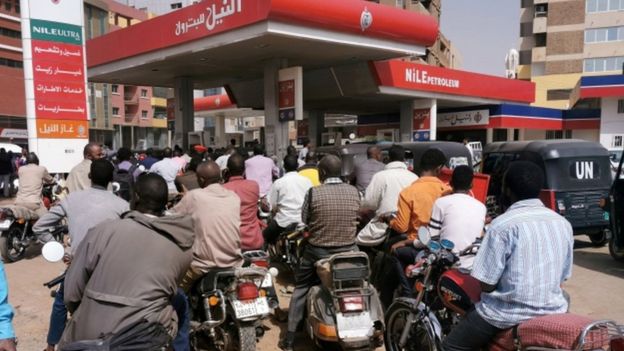
    People queuing for fuel in Khartoum, Sudan
    Sudan is suffering from acute shortages including fuel and people queue at station for hours

    But Sudan has always insisted this was not the case, and a justice ministry statement has reiterated this point.

    “The government of Sudan would like to point out that the settlement agreement explicitly affirmed that the government was not responsible for this incident or any terrorist act,” the state-run Suna agency quoted the statement as saying.

    “It entered into this settlement out of [its] determination to settle the historical allegations of terrorism left over by the former regime, and only for the purpose of fulfilling the conditions set by the US administration to remove Sudan from the list of state sponsors of terrorism in order to normalise relations with the US and the rest of the world.”

    What happened to the USS Cole?

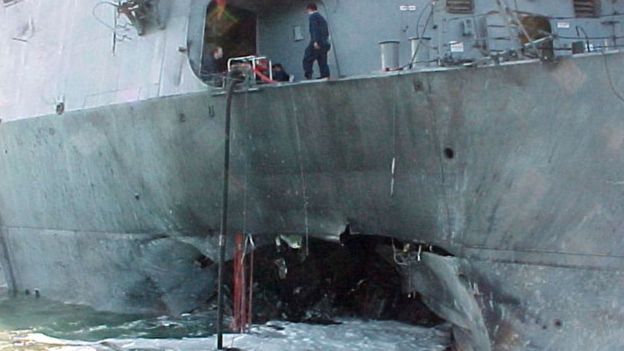
    On 12 October 2000 two Yemeni suicide bombers in a rubber dinghy packed with up to 225kg (500lb) of high explosives rammed the US destroyer, leaving a gaping hole in the side of the warship.

    Seventeen crew were killed and at least 40 people were wounded in the attack on the ship as it was refuelling in the port of Aden.

    The port side of the guided missile destroyer USS Cole damaged after an attack during a refuelling operation in the port of Aden in Yemen - October 2000
    The ship was refuelling in the port of Aden in Yemen at the time of the attack

    Last year, Jamal al-Badawi, a militant linked to the attack, was killed in a US air strike on Yemen.

    The attack’s alleged planner, Saudi-born Abd al-Nashiri, is being held in US custody at Guantanamo Bay.

    Last year, the US Supreme Court overturned, on procedural grounds, a 2012 ruling ordering Sudan to pay more than $300m to the victims’ families.

    Source: BBC

  • Sudan agrees to pay out families of bombed sailors

    Sudan has signed a deal to compensate the families of 17 American sailors who died when their ship, the USS Cole, was bombed at a port in Yemen in 2000.

    This is a key condition set by the US for Sudan to be removed from a terrorism blacklist. It is not clear how much Khartoum will pay.

    Al-Qaeda said it had carried out the attack in which the warship was rammed by a rubber dinghy packed with explosives.

    The US ruled Sudan was responsible because the two suicide bombers were trained in the country – an allegation denied by Khartoum.

  • Sudan plane crash: Children among victims in West Darfur

    A Sudanese military plane has crashed in West Darfur state killing at least 18 people, including four children.

    The aircraft crashed five minutes after taking off from an airport in the state capital of El Geneina.

    It had been delivering aid to the area, where there have been deadly clashes between ethnic groups in recent days.

    South Sudan declares state of emergency in flood-hit areas

    Army spokesman Amer Mohammed al-Hassan told AFP that among the victims were seven crew members, three judges and eight civilians, four of them children.

    It is not clear what caused the Antonov 12 aircraft to crash. Mr Hassan added that an investigation was under way.

    This week, at least 48 people have been killed and 241 wounded in the violence that has broken out in West Darfur, according to Sudan’s Red Crescent.

    Clashes broke out between Arab and African groups in El Geneina on Sunday night, and continued until the following day.

    Source: bbc.com

  • Egypt, Ethiopia, Sudan to try to resolve dam dispute in Jan. 13 Washington meeting -statement

    The foreign ministers of Egypt, Ethiopia and Sudan plan to meet in Washington on Jan. 13 to try to finalize an agreement to resolve their dispute over a massive dam project on the Nile River in Ethiopia, according to a joint statement issued by the U.S. Treasury Department on Monday.

    Read:Nile dam dispute: Egypt needs water, Ethiopia seeks electricity, Sudan wants both

    The statement was issued after the three ministers met with Treasury Secretary Steven Mnuchin and World Bank President David Malpass to work out differences over the Grand Ethiopian Renaissance Dam, the second such meeting since early November.

    Source: af.reuters.com

  • Sudan’s ex-President Omar al-Bashir arrives for trial

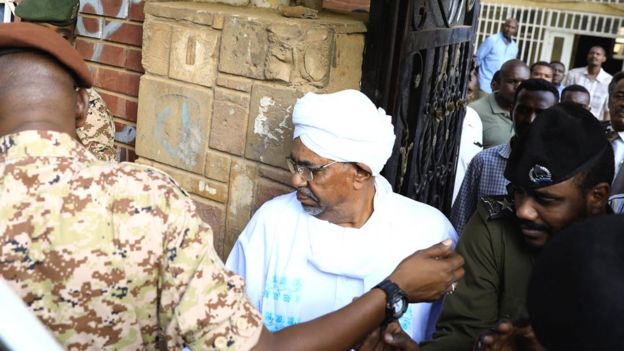
    Sudan’s former President Omar al-Bashir has arrived at court to face corruption charges, which his lawyers say are baseless.

    Mr Bashir was ousted in April after months of protests bringing an end to his nearly 30 years in power.

    In June, prosecutors said a large hoard of foreign currency had been found in grain sacks at his home.

    On Sunday, pro-democracy activists and the country’s military leaders signed a deal paving the way for elections.

    There was heavy security outside the courthouse in the Sudanese capital, Khartoum, witnesses say,

    The former president arrived with a large military convoy, AFP news agency reports.

    In June, Omar al-Bashir was seen in public for the first time outside the prosecutor’s office in Khartoum

    What are the corruption charges?

    The former president faces charges related to “possessing foreign currency, corruption and receiving gifts illegally”.

    In April, Sudan’s military ruler General Abdel Fattah al-Burhan said more than $113m (£93m) worth of cash in Sudanese pounds and foreign currency had been seized from Mr Bashir’s home.

    Mr Bashir’s defence team rejects the charges.

    The ousted leader had been due in court in July – but the trial was postponed for security reasons.

    What other charges does Mr Bashir face in Sudan?

    In May, Sudan’s public prosecutor charged Mr Bashir with incitement and involvement in the killing of protesters.

    The charges stem from an inquiry into the death of a doctor killed during protests that led to the end of Mr Bashir’s rule in April.

    There have been protests on the streets of Sudan for months

    The doctor had been treating injured protesters in his home in Khartoum, when police fired tear gas into the building.

    A witness told the BBC that the doctor had walked out with his hands in the air, told the police he was a doctor and was instantly shot.

    What about the transition to democracy?

    Mr Bashir’s trial will be seen as a test of whether the new authorities are able to deal with the alleged crimes of the previous regime.

    On Saturday, Sudan’s ruling military council, which took over after Mr Bashir’s ousting, and civilian opposition alliance signed a landmark power-sharing deal.

    The agreement ushers in a new governing council, including both civilians and generals, to pave the way towards elections and civilian rule.

    Mohamed Hamdan “Hemeti” Dagolo, widely regarded as Sudan’s most powerful man, has pledged to abide by its terms.

    The members of the new sovereign council were supposed to be sworn in on Monday, but the ceremony has been postponed for 48 hours after a request from pro-democracy activists, the Reuters news agency quotes a military spokesman as saying.

    Source: bbc.com