Tag: Supreme Court

  • Ghanaian man drags govt to court over Kotoka renaming, cites constitutional breach  

    Ghanaian man drags govt to court over Kotoka renaming, cites constitutional breach  

    A Ghanaian citizen has challenged the government’s decision to rename Kotoka International Airport (KIA), citing a breach of the Constitution.

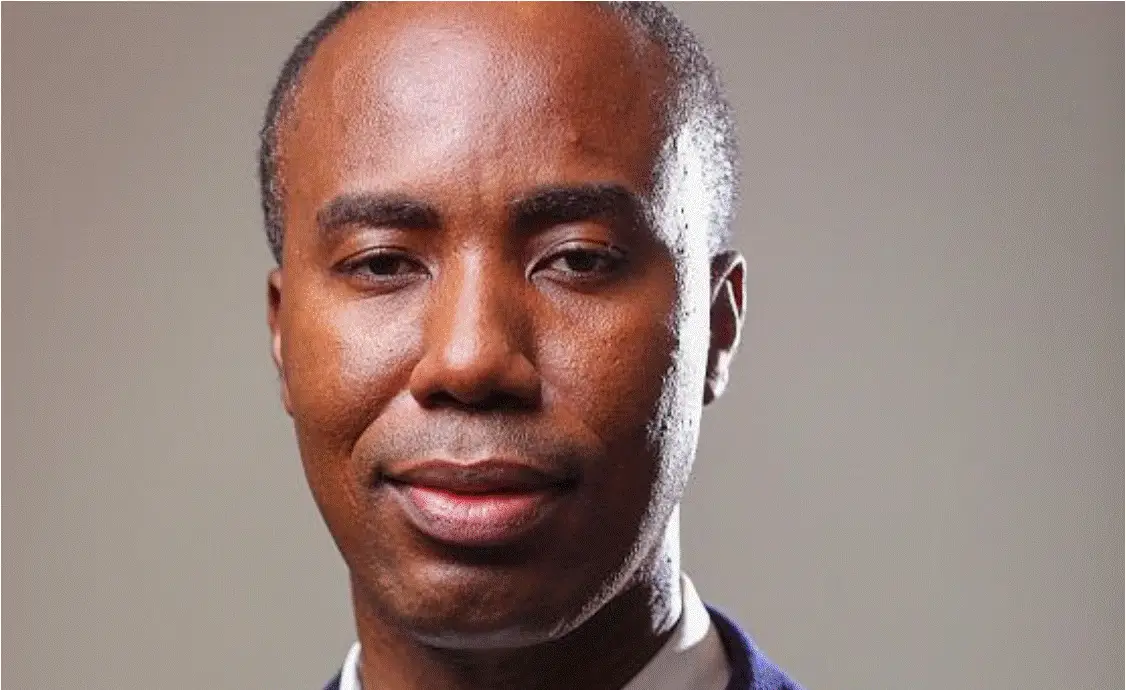
    The plaintiff, a private legal practitioner, Austin Kwabena Brako-Powers, filed the suit on March 13, invoking the Supreme Court’s original jurisdiction.

    In the writ submitted by the plaintiff’s lawyers at the apex court in Kumasi, Mr. Powers requested about seven reliefs, stating that the renaming of the airport is “in contravention of the law, Article 11(1)(d)… and paragraph 8(1)(a) of the General Kotoka Trust Decree, 1969 (NLCD 339).” He argued that until the law is changed or repealed through the proper procedures, it “remains valid and binding.”

    NLCD 339 created a corporate trust in Kotoka’s name, appointed patrons and trustees, established a fund, and set out rules for its management and accountability. His lawyer, Michael Akosah of Adu-Gyamfi & Associates, submitted the writ in Kumasi.

    “Any executive order purportedly issued to effect the renaming of Kotoka International Airport to Accra International Airport… is null, void, and of no legal effect,” he stated in the filing.

    It continued: “An order annulling the reversion of the Kotoka International Airport to Accra International Airport for contravening Article 11 of the Constitution of the Republic of Ghana, 1992, and paragraph 8(1)(a) of the General Kotoka Trust Decree, 1969 (NLCD 339).”

    He further contends that the decision to rename the airport, announced by the government as part of a broader transport sector rebranding, breaches Articles 11(1)(d) and 11(4) of the 1992 Constitution.

    The plaintiffs are seeking an interim injunction to halt the implementation of the proposed renaming pending the determination of the case, and a perpetual injunction to permanently restrain the government from enforcing the decision unless the applicable law is duly amended, repealed, or set aside.

    “An order of perpetual injunction restraining the Government, through the Ministry of Transport, its assigns, agents, privies, or any person acting under its authority, from implementing or enforcing the purported renaming unless and until NLCD 339 is lawfully amended, repealed, or nullified. Any further or consequential orders as this Honourable Court may deem fit,” it added.

    What right does he have to sue the state?

    Mr Powers cited his right as a citizen as one of the bases for seeking such relief, adding that the move is not just in his personal interest but in the interest of the general public, emphasising the need to protect the 1992 Constitution as Ghana’s supreme law.

    “The Plaintiff herein, a citizen of Ghana and a registered voter, invokes the original jurisdiction of this Honourable Court pursuant to Articles 2(1) and 130(1) of the Constitution of the Republic of Ghana, 1992, for the enforcement and interpretation of the Constitution. The Plaintiff is acting not only in his own interest, but in the general interest of Ghanaians to safeguard the primary law of Ghana, the 1992 Constitution,” he continued.

    The suit was filed under Rule 45(1) of the Supreme Court Rules, 1996 (C.I. 16), and the Attorney-General has fourteen days from the date of service to respond.

    “IN THE NAME OF THE REPUBLIC OF GHANA, you are hereby commanded, within fourteen days after service on you of the statement of the Plaintiff’s case, inclusive of the day of service, to file or cause to be filed for you a statement of the defendant’s case in an action at the suit of…,” Mr. Powers stated.

    Kotoka International Airport was named after Lt. Gen. Emmanuel Kwasi Kotoka, one of the key figures in the 1966 coup that ousted Dr Kwame Nkrumah.

    He was killed a year later during a counter-coup attempt, and the airport was subsequently named in his honour.

    The proposed renaming sparked public debate, with some questioning the necessity and others pointing to the historical significance of the existing name.

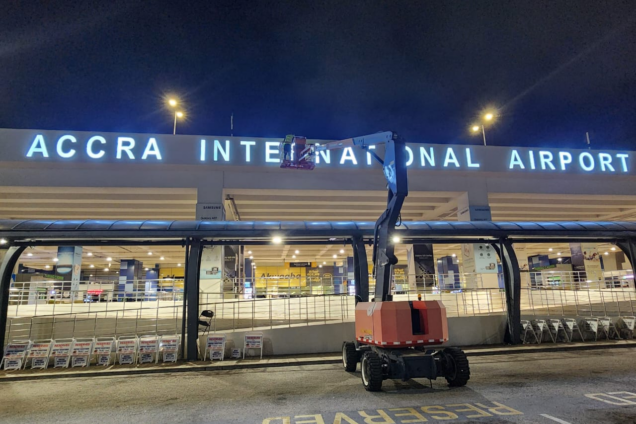
    Meanwhile, the fixing of signage at Accra International Airport has been completed. This was announced by the airport authorities, who indicated that the works were completed in the early hours of Saturday, March 21, after initial delays the previous day.

    According to the authorities, “the maintenance, including repainting and installation, was carried out at night after the last flight due to the height of the structures and the impact on the car park area, to minimise inconvenience to the public and travelling passengers.”

    This is expected to enhance navigation within Terminal 3 and reinforce Ghana’s position as a preferred aviation hub in the sub-region.

  • Supreme Court ruling paves way for Kpandai MP Nyindam’s return to Parliament

    Supreme Court ruling paves way for Kpandai MP Nyindam’s return to Parliament

    Kpandai MP Mathew Nyindam returned to Parliament on Tuesday, February 3, following a Supreme Court ruling that reversed a lower court judgment which had removed him from office.

    He took his seat alongside other legislators when the House reconvened for the second session on Tuesday, February 3, 2026, ending months of uncertainty over his status as a Member of Parliament.

    Mr Nyindam joined fellow lawmakers in honouring the late Ayawaso East MP, Nasser Toure Mahama, describing him as a figure who brought people together and transcended party lines.

    “Alhaji was not excessively partisan; he treated everyone as a brother,” he said. “He was not loud and did not speak often, but when he did, his words carried wisdom. He was calm, gentle and affable.”

    A Supreme Court ruling delivered on January 28 has cleared the way for Kpandai MP Mathew Nyindam to return to Parliament, after the apex court overturned a decision by the Tamale High Court that had nullified his election and ordered a rerun in the Kpandai Constituency of the Northern Region.

    In a 4–1 majority decision, the court granted an application for certiorari filed by Mr Nyindam, holding that the High Court exceeded its jurisdiction in setting aside the parliamentary election. Justices Yonny Kulendi, Amadu Tanko, Samuel Asiedu and Henry Kwofie formed the majority.

    Justice Gabriel Scott Pwamang, who presided over the panel as its President, dissented from the decision. The Supreme Court is expected to publish its detailed reasons on February 6, 2026.

    The ruling effectively halted preparations by the Electoral Commission for a rerun election, allowing Mr Nyindam to reclaim his seat in Parliament.

    The legal dispute dates back to November 24, 2025, when the Tamale High Court annulled Mr Nyindam’s election and directed that a fresh poll be held within 30 days. Following that ruling, Parliament officially declared the seat vacant.

    In a letter dated December 4, 2025, the Clerk to Parliament, Ebenezer Ahumah Djietror, informed the Electoral Commission Chairperson, Jean Mensa, that the court’s decision required the conduct of a rerun election.

    Earlier this year, the former Member of Parliament (MP) and National Democratic Congress (NDC) Parliamentary Candidate for Kpandai, Daniel Nsala Wakpal, submitted a petition to the Tamale High Court challenging the results of the 2024 parliamentary election in the constituency.

    According to the petitioner, the Kpandai parliamentary election was marred by irregularities in the voting and collation processes. He argued that Pink Sheets from many polling stations were not accurate or consistent.

    He stated: “The parliamentary election held in the Kpandai constituency on 7th December 2024 was not conducted in compliance with Regulations 39 of the Public Elections Regulations, 2020 (CI 127) and the principles laid down by Regulations 39, and that the said non-compliance affected the results of the elections.

    “The declaration and publication of the parliamentary election results held in the Kpandai constituency on 7th December 2024 were not made in compliance with Regulations 43 of the Public Elections Regulations, 2020 (C.I 127) and the principles laid down by Regulations 43, and that the said non-compliance affected the entire results of the parliamentary elections in the Kpandai constituency.”

    This will be the second time the country will witness a rerun of elections after the 2024 general polls. Ablekuma North had remained the only constituency in Ghana without a sitting MP due to unresolved disagreements over the outcome of the parliamentary vote.

    In view of this, the Electoral Commission on Friday, July 11, held a rerun election in 19 polling stations in Ablekuma North to provide constituents with a representative. Ewurabena Aubynn polled 34,090 votes to beat the New Patriotic Party’s (NPP) Akua Afriyie, who secured 33,881 votes.

    On December 10, 2024, three days after the national polls, the EC declared Ewurabena Aubynn of the NDC the winner of the Ablekuma North parliamentary seat, defeating the New Patriotic Party’s (NPP) Nana Akua Owusu Afriyieh.

    However, the EC later revoked the announcement, revealing that results from 62 of the 281 polling stations had not been included in the initial collation.

    Efforts to restart the collation in January 2025 were disrupted by multiple challenges. These included interruptions due to the submission of unverified Pink Sheets and a violent intrusion at the collation centre that heightened security concerns.

    After extensive deliberations, the Electoral Commission in July announced that it would hold a rerun election because the 19 scanned polling station results used for the collation, though approved by agents of both political parties, were not verified by the presiding officers responsible for those polling stations.

    The EC arrived at this decision after meeting with representatives of the National Democratic Congress (NDC) and the New Patriotic Party (NPP) on Tuesday, July 1.

    Violence mars Ablekuma North rerun election

    At the Odorkor Methodist 1 polling station in the Ablekuma North constituency, some individuals engaged in a fisticuff with the police personnel. Also, a JoyNews journalist was slapped by an unknown individual.

    Former Minister of Fisheries and Aquaculture Development and Member of Parliament for Ewutu Senya East Constituency, Hawa Koomson, was also assaulted by a group of men. A journalist with GH One Television, Banahene Agyekum, was also slapped by a police officer.

    The Ghana Police Service has interdicted one of its officers who was caught on camera slapping a journalist with GH One Television, Banahene Agyekum, during the rerun election at Ablekuma North.

    In line with internal disciplinary procedures, he has been referred to the Police Professional Standards Bureau (PPSB) for investigation.

    The officer concerned has been withdrawn from the ongoing election duty at Ablekuma North. The police have assured the public that a thorough investigation will be conducted into the matter, and further updates will be communicated.

    It is unknown what exactly transpired between the reporter and a group of police officers that led to him being slapped. The police officer’s action has been condemned by all, including the mayor of Accra, Michael Kpakpo Allotey, who witnessed the unfortunate incident.

    Deputy Minister for Government Communications, Shamima Muslim, in reaction to the said incident, commended the police for its swift action to reprimand its officer for such unlawful acts and condemned the recent attacks against civilians and journalists during the Ablekuma North election rerun.

    “What we are happy about is the swift action that the Ghana Police itself has taken in interdicting the officer in question. It is completely unwarranted. Government itself takes a very serious stance, especially on security agencies meting out unwarranted attacks to civilians under any circumstances,” she added.

  • Kpandai Ruling: It is unconstitutional for Supreme Court’ to adjudicate an election petition – Tanko-Computer

    Kpandai Ruling: It is unconstitutional for Supreme Court’ to adjudicate an election petition – Tanko-Computer

    The Deputy Director of Elections and IT for the National Democratic Congress (NDC), Rashid Tanko-Computer, has challenged the Supreme Court’s authority to hear election petition cases.

    He argues that Article 91(1) of the Constitution does not grant the apex court the power to determine election petitions, maintaining that jurisdiction over such cases lies solely with the High Court.

    “The Supreme Court doesn’t have the jurisdiction of the substance of the matter. If you look at the PNDC Law 284. That of the election petition, under article 91 (1) of the constitution, it is only the High Court that goes into the election petition matter, the Supreme Court doesn’t deal with that,” he argued.

    He argued that although the apex court has supervisory authority over all matters, it is unconstitutional for it to adjudicate an election petition: “When it comes to the substance of the matter and the intricacies of an election petition under Article 91(1), it is the High Court that has jurisdiction, not the Supreme Court.”

    Mr Tanko-Computer made the remarks during JoyNews’ Newsfile programme on Saturday, January 31, in reaction to the Supreme Court’s recent decision on the Kpandai parliamentary election.

    On January 28, the Supreme Court, in a 4–1 split decision, set aside a High Court judgment that had nullified the Kpandai parliamentary election, which was won by Matthew Nyindam of the New Patriotic Party (NPP).

    The ruling came after Mr Nyindam filed an application asking the apex court to exercise its supervisory authority, arguing that the High Court acted beyond its jurisdiction in annulling the election.

    The Supreme Court agreed with his argument, a move that reinstated him as the duly elected Member of Parliament.

    According to Tanko-Computer, the apex court’s intervention reflects a flawed reading of the constitutional provisions on election disputes, warning that such rulings risk weakening coherence and predictability within Ghana’s electoral justice system.

    Mr Tanko-Computer added that the NDC is not satisfied with the ruling, “We are a law-abiding political party, but we disagree with the ruling.”

    “We are waiting for the reason behind their ruling on the 6th of February, and we will advise ourselves appropriately,” he emphasised.

    Controversies surrounding the Kpandai parliamentary seat have received a reaction from the Supreme Court. Today, Tuesday, December 16, the Supreme Court ordered that the parliamentary rerun election in the area, scheduled for Tuesday, December 30, be suspended until further notice.

    The legal team of New Patriotic Party (NPP) parliamentary candidate Matthew Nyindam has also been directed by the Supreme Court to follow due process in serving the National Democratic Congress (NDC) candidate, Daniel Nsala Wakpal. Meanwhile, Tuesday, January 13, 2026, has been set for the next hearing.

    Weeks ago, the Member of Parliament (MP) for the Kpandai constituency, Mathew Nyindam, filed an application challenging the recent High Court ruling on the 2024 parliamentary elections in the area.

    Earlier this year, the former Member of Parliament and NDC parliamentary candidate for Kpandai, Daniel Nsala Wakpal, submitted a petition to the Tamale High Court challenging the results of the 2024 parliamentary election in the constituency.

    According to the petitioner, the Kpandai parliamentary election was marred by irregularities in the voting and collation processes. He argued that Pink Sheets from many polling stations were not accurate or consistent.

    He stated: “The parliamentary election held in the Kpandai constituency on 7th December 2024 was not conducted in compliance with Regulations 39 of the Public Elections Regulations, 2020 (CI 127) and the principles laid down by Regulations 39, and that the said non-compliance affected the results of the elections.

    “The declaration and publication of the parliamentary election results held in the Kpandai constituency on 7th December 2024 were not made in compliance with Regulations 43 of the Public Elections Regulations, 2020 (C.I 127) and the principles laid down by Regulations 43, and that the said non-compliance affected the entire results of the parliamentary elections in the Kpandai constituency.”

    However, Mathew Nyindam has argued that “The Parliamentary Election Petition filed by the 1st Interested Party on 25th January 2025, in respect of the Parliamentary Election held at the Kpandai Constituency on 7th December 2024, was invalid and could not have properly invoked the jurisdiction of the High Court, Commercial Division, Tamale.”

    This will be the second time the country has had a rerun of elections after the 2024 general polls. Ablekuma North had remained the only constituency in Ghana without a sitting MP due to unresolved disagreements over the outcome of the parliamentary vote.

    In view of this, the Electoral Commission (EC) on Friday, July 11, held a rerun election in 19 polling stations in Ablekuma North to provide constituents with a representative. Ewurabena Aubynn polled 34,090 votes to beat the NPP’s Akua Afriyie, who secured 33,881 votes.

    On December 10, 2024, three days after the national polls, the EC declared Ewurabena Aubynn of the NDC the winner of the Ablekuma North parliamentary seat, defeating the NPP’s Nana Akua Owusu Afriyieh.

    However, the EC later revoked the announcement, revealing that results from 62 of the 281 polling stations had not been included in the initial collation.

    Efforts to restart the collation in January 2025 were disrupted by multiple challenges. These included interruptions due to the submission of unverified Pink Sheets and a violent intrusion at the collation centre that heightened security concerns.

    After extensive deliberations, the Electoral Commission in July announced that it would hold a rerun election because the 19 scanned polling station results used for the collation, though approved by agents of both political parties, were not verified by the presiding officers responsible for those polling stations.

    The EC arrived at this decision after meeting with representatives of the NDC and the NPP on Tuesday, July 1.

  • Kpandai rerun ruling: Supreme Court judges upheld rule of law – Nyindam

    Kpandai rerun ruling: Supreme Court judges upheld rule of law – Nyindam

    Member of Parliament (MP) for Kpandai, Matthew Nyindam, has expressed satisfaction over the Supreme Court’s ruling that annulled the parliamentary election results for the area.


    Addressing the media on Wednesday, he noted that the recent ruling upholds the principles of justice and due process. “The 4–1 decision I saw clearly tells me that the law is the law. And the Supreme Court judges have held the integrity of this country to the very highest,” he stated.


    He added that, “Yes, I am from the opposition. Yes, I don’t have powers behind me. But they looked into my face, they looked into the case, and realised that this young man had a case,” he said.

    According to him, “They never decided to give it to the ruling government. That is integrity. That is sincerity”.

    On Wednesday, January 28, the Supreme Court, by a 4–1 majority decision, quashed the judgment of the Tamale High Court that annulled the parliamentary election results in the Kpandai Constituency.


    Defending its decision, the Supreme Court noted the High Court’s ruling was contrary to the law that guides how parliamentary election petitions should be handled.


    On Tuesday, December 16, the Supreme Court ordered that the parliamentary rerun election in the area, which was scheduled for Tuesday, December 30, be suspended until further notice.


    The Supreme Court’s verdict came after the Tamale High Court declared the Kpandai parliamentary election conducted in 2024 invalid on Monday, November 24.

    As a result, His Lordship Emmanuel Brew Plange directed the Electoral Commission (EC) to conduct a new poll in the constituency within 30 days.


    But addressing the media on Tuesday, December 9, Minority Chief Whip Frank Annoh-Dompreh noted, “Mr Speaker, there is a letter that was sent into the House to declare the Kpandai seat vacant. That letter is out of place, unfortunate, and goes against the rule of law. We strongly submit that the letter must be withdrawn by Parliament. We in the Minority will not agree to the writing of this letter”.


    However, the candidate at the centre of the Kpandai election challenge, Matthew Nyindam, has disclosed that the 2024 parliamentary election in the area was conducted in a free and fair manner.


    Despite the High Court directing a re-run of the election, Matthew Nyindam insisted that he and his team did not engage in any wrongdoing and are prepared to face the re-run.

    Speaking to the media on Tuesday, December 9, he noted, “I am so fine because I am not troubled. We’ve not cheated in this particular election. What I’ve realised is that there is a government that is so strong, and whatever they want to do, they will want to do it. They don’t care whether you are right or you are wrong.”


    The legal team of New Patriotic Party (NPP) parliamentary candidate Matthew Nyindam was also directed by the Supreme Court to follow due process in serving the National Democratic Congress (NDC) candidate, Daniel Nsala Wakpal.

    Last year, the Member of Parliament (MP) for the Kpandai constituency, Mathew Nyindam, filed an application challenging the recent High Court ruling on the 2024 parliamentary elections in the area.


    The former Member of Parliament and NDC parliamentary candidate for Kpandai, Daniel Nsala Wakpal, submitted a petition to the Tamale High Court challenging the results of the 2024 parliamentary election in the constituency.


    According to the petitioner, the Kpandai parliamentary election was marred by irregularities in the voting and collation processes. He argued that Pink Sheets from many polling stations were not accurate or consistent.


    He stated: “The parliamentary election held in the Kpandai constituency on 7th December 2024 was not conducted in compliance with Regulations 39 of the Public Elections Regulations, 2020 (CI 127) and the principles laid down by Regulations 39, and that the said non-compliance affected the results of the elections.


    “The declaration and publication of the parliamentary election results held in the Kpandai constituency on 7th December 2024 were not made in compliance with Regulations 43 of the Public Elections Regulations, 2020 (C.I 127) and the principles laid down by Regulations 43, and that the said non-compliance affected the entire results of the parliamentary elections in the Kpandai constituency.”


    However, Mathew Nyindam has argued that “The Parliamentary Election Petition filed by the 1st Interested Party on 25th January 2025, in respect of the Parliamentary Election held at the Kpandai Constituency on 7th December 2024, was invalid and could not have properly invoked the jurisdiction of the High Court, Commercial Division, Tamale.”


    According to a new poll conducted by Global InfoAnalytics last year, fifty percent (50%) of constituents declared their support for the New Patriotic Party (NPP) candidate, Mathew Nyindam, ahead of the Kpandai rerun.


    The poll showed that the National Democratic Congress (NDC) candidate, Daniel Nsala Wakpal, secured 46% of the vote against the embattled Member of Parliament (MP) for Kpandai.


    Regarding performance ratings, 32% of voters described Mathew Nyindam’s performance as very good or good, while 3% rated him as excellent.


    Additionally, 36% rated his performance as average, and 29% considered it poor or very poor. The poll further projected that independent candidate Donkor Eric Nipani would receive 1% of the vote, while 3% of respondents remain undecided, down from an initial 28%.

  • Supreme Court rules against A-G in Adu Boahen trial review bid

    Supreme Court rules against A-G in Adu Boahen trial review bid

    An application by the Deputy Attorney-General (A-G), Dr Justice Srem-Sai, seeking a review of a key aspect of its earlier ruling in the criminal trial involving former National Signals Bureau Director-General, Kwabena Adu Boahen, and his wife has been thrown out by the Supreme Court .


    The request by the Deputy Attorney-General seeks to ensure the Supreme Court reinstates a key aspect of the Practice Direction on Further Disclosures.

    The Practice Direction on Further Disclosures mandates the prosecution to disclose materials that are in its possession and “relevant” to the case.


    However, the Supreme Court revised this to require the prosecution to disclose materials that are in its possession and connected to the case.


    The adjustment by the Supreme Court followed an application by Adu Boahen and his wife, who had formally asked the Court to stop the High Court judge handling their criminal trial from continuing with the case.

    But counsel for Mr Adu Boahen, Samuel Atta Akyea, has argued that the Deputy Attorney-General’s reasons for the review lack merit and fail to meet the exceptional circumstances required for the Supreme Court to exercise its review jurisdiction.


    Last year, prosecution against the third accused person, Mildred Donkor, in the ongoing GHS49 million theft case involving former National Signals Bureau boss, Kwabena Adu-Boahene, and his wife, Angela Adjei-Boateng, was discontinued by the Attorney-General (A-G), Dr. Dominic Ayine.


    Ms. Donkor was formally discharged under Section 59 of the Criminal and Other Offenses (Procedure) Act, 1960 (Act 30) after she declared her willingness to testify for the state in the ongoing trial.


    Kwabena Adu-Boahene is the first accused, while his wife and their company, Advantage Solutions Limited, are the second and fourth accused respectively.


    Adu Boahen was arrested in March this year at the Kotoka International Airport (KIA) after allegedly attempting to elude authorities using multiple passports.


    Attorney-General Dominic Ayine formally charged Mr. Adu Boahene and his wife, Angela Adjei Boateng, with corruption offences to the tune of GHS49 million on Wednesday, April 30, 2025.


    According to the writ filed at the High Court on April 30, Mr. Adu-Boahene, who was responsible for overseeing critical national security infrastructure, including contracts with foreign companies, signed a deal with an Israeli company, ISC Holdings Limited, to purchase cyber defence software for $7 million.


    In total, Adu-Boahene is alleged to have transferred approximately GHS49 million (approximately $7 million) from the NSB’s funds into his personal accounts, falsely justifying these transactions as payments for the cyber defense systems, together with his accomplice.


    “Further investigations have revealed that no cybersecurity system of the description in the January 30, 2020, contract was ever received by the Bureau of National Communication or by its successor agency, the National Signals Bureau, or by the Government of Ghana,” court documents indicated.


    Adu-Boahene’s wife, Angela Adjei Boateng, is one of three directors of Advantage Solutions Limited, the sole shareholder of BNC Communications Bureau Limited. Mildred Donkor is a former bank relationship officer for Adu-Boahene, his wife, and BNC Communications Bureau Limited.


    The A-G, during a media address in March, detailed that on February 6, 2020, Adu Boahene authorized the transfer of GHC27.1 million from the National BNC’s account at Fidelity Bank to a private BNC account at UMB.


    The stated purpose of this transaction was to facilitate the acquisition of cyber defense system software from ISC Holdings in Israel for $7 million.


    Further scrutiny of the bank records showed that Mr. Adu Boahene instructed the private BNC to transfer GHC9,537,520, equivalent to $1,750,000 at the time, to ISC Holdings.

    However, the Attorney-General revealed that “Mr. Adu Boahene fraudulently attached a copy of the government of Ghana ISC contract as well as an invoice, which he held as an invoice issued by ISC Holdings.”


    In addition to the initial transaction, two further payments amounting to GHC21 million were transferred from the National BNC Director’s account at Fidelity Bank to the same private BNC account at UMB on March 18 and March 30, 2020. These payments were recorded as funding for the cyber defense system.


    However, upon closer examination, it was discovered that although a total of GHC49 million had been moved into the private BNC account—an amount equivalent to $7 million at the prevailing exchange rate—only a fraction of the money had been paid to ISC Holdings, raising concerns about the whereabouts of the remaining funds.


    According to court documents, it is alleged that Adu-Boahene, his wife, and Mildred “ran an elaborate criminal enterprise using A4 (Advantage Solutions Limited) as a holding company through which the stolen funds were funneled and laundered for their own benefit.”


    The documents added that as the holding company for several subsidiary companies, including the private BNC, A4 received a substantial portion of the stolen funds, which its shareholders and directors then invested in the business activities of the subsidiaries, including investments in treasury bills, real estate, the manufacturing of fertilizers, and the rental of luxury cars to VIP customers.


    In July, the former Director-General of the National Signals Bureau (NSB), Mr. Adu Boahene, along with three co-defendants, including his wife, made their formal court appearance on the 18th day after the High Court in Accra, presided over by Justice John Nyante Nyadu, set July 18 as the date for the trial following a pre-trial hearing on July 3.


    The pre-trial was held for the court to address a motion filed by the defendants’ legal team requesting access to national security accounts dating back to 1992.


    However, their request was dismissed due to inadequate justification by the presiding judge. During proceedings, the defence lawyer, Samuel Atta Akyea, raised concerns about missing evidence, specifically claiming that 83 pages of bank statements had not been disclosed to the defence.


    In response, Deputy Attorney-General Justice Srem Sai objected to allegations that the Attorney-General’s office had lost evidence in the ongoing criminal case involving former NSB Director-General, Kwabena Adu-Boahene.


    These claims emerged after the defence team reiterated during a Case Management Conference on June 26 that the bank statements provided by the prosecution were incomplete and that essential pages were missing.


    They suggested that these omissions might contain exculpatory evidence and accused the Attorney-General’s office of “cherry-picking” documents to support its case while withholding material that could potentially clear the accused.


    The Attorney-General’s office, in a statement shared on its official X page on August 28, stated that it is still in possession of all rightful evidence against the accused. Justice Srem Sai added that all necessary documents needed to prove the charges have been filed.


    The documents include contracts, bank records, property ownership documents, INTERPOL reports, and witness testimonies.


    “The Attorney-General’s office has not lost any evidence regarding the ongoing Republic v Adu-Boahene criminal trial. As of June 18, we had filed all the documents which we intend to rely on to prove the charges against the 4 Accused Persons in the case.


    “The documents include contracts of sale, bank wire transfer records, bank account statements, company registration documents, property ownership records and purchase receipts, INTERPOL stolen vehicle records, investigative caution statements and charge statements of each Accused Person, records of asset non-declaration, a flow chart of money movements through a complex web of bank accounts, and testimonies of our 3 witnesses,” he noted.


    According to him, Adu-Boahen’s legal team is wrong and misguided to believe that the government has lost evidence in the case against their client. He added that “there is no cherry picking as all accused persons have been duly served.”


    “Further, court-certified copies of each of these documents have been duly served on each of the Accused Persons. So, it is not even realistic that the documents could be lost to jeopardise the prosecution of the case.”


    On the current status of the case, the Deputy A-G revealed that before the court went on recess, three prosecution witnesses had already testified, proving that the case is still on track and not disrupted by any lack of evidence.


    “…Before the start of the legal vacation on July 31, the first of our 3 prosecution witnesses had completed testifying and had been cross-examined by the lawyers of 3 of the 4 Accused Persons,” he said, adding that, “The trial will resume in earnest in mid-October when the courts return from the legal vacation.”

  • Bid to remove Justice Yoni Kulendi thrown out

    Bid to remove Justice Yoni Kulendi thrown out

    A petition seeking the removal of Justice Yonny Kulendi from office as a Justice of the Supreme Court has been quashed by President John Dramani Mahama, based on the advice of the Chief Justice, Justice Paul Baffoe-Bonnie.

    The decision was communicated in a letter dated December 4, 2025, signed by the Secretary to the President, Dr Callistus Mahama, and sent to the petitioner, Daniel Marfo Ofori-Atta.

    “I have the instructions of His Excellency the President to respond to your petition dated 30 September 2025 on the above matter,” the letter stated.

    Dr Mahama stated that, under Article 146(3) of the 1992 Constitution, the President forwarded the petition to the Chief Justice on October 20, 2025, to assess whether it established a prima facie case.

    “By a letter dated 2 December 2025, the Chief Justice informed His Excellency the President that no prima facie case had been established by the petition to warrant any further investigation,” the letter said.

    Quoting the Chief Justice’s determination, the letter noted: “In the circumstances, the Petitioner’s own evidential material undermines and collapses the factual foundation of the allegations.

    “When compared against the sworn testimony of Mr Jakpa, the petition’s claim that Justice Kulendi abused his office to secure bail for his cousin and that he sought to inappropriately influence the outcome of the case is exposed as a clear distortion of the record and fails to disclose any evidentiary basis upon which a prima facie finding can be properly grounded.

    “In conclusion, it is my determination that this petition fails to meet the evidential threshold required to establish a prima facie case under Article 146(3) of the Constitution. Accordingly, I find that no prima facie case has been established against Justice Yonny Kulendi by the Petitioner.”

    Dr Mahama added that, “In view of the Chief Justice’s determination that the constitutional threshold under Article 146(3) has not been met, no further steps are required in respect of your petition. The matter is therefore concluded.”

    The Minister for Goverment Communication, Felix Kwakye Ofosu, also confirmed this development in a Facebook post.

    Background

    Daniel Marfo Ofori-Atta submitted a petition to President Mahama on October 2, 2025, seeking the removal of Justice Kulendi, after previously filing a petition with the Criminal Investigation Department (CID) of the Ghana Police Service.

    The petitions called for investigations into Justice Kulendi and his cousin, Richard Jakpa, over claims of attempts to influence the administration of justice.

    The claims arose from the widely followed case, Republic v Cassiel Ato Forson & two others, in which Jakpa, who serves as Director of Operations at the National Security Secretariat, was listed as the third accused person.

    Ofori-Atta alleged that Justice Kulendi sought to interfere with justice in violation of the code of conduct required of a Supreme Court judge, contending that the actions amounted to stated misbehaviour and made him unsuitable to remain in office.

    Justice Emmanuel Yonny Kulendi was sworn in as a Justice of the Supreme Court on May 26, 2020, alongside Professor Henrietta J. A. N. Mensa-Bonsu, by then President Nana Addo Dankwa Akufo-Addo.

    Their nominations followed approval by Parliament’s Appointments Committee after vetting conducted on May 11 and 12, 2020, and final parliamentary endorsement on May 20, 2020.

    A couple of months ago, President John Dramani Mahama relieved embattled Chief Justice Gertrude Tokornoo of her duties with immediate effect.

    A press statement issued by the presidency and signed by the Spokesperson to the President, Felix Kwakye Ofosu, indicated that her dismissal is in accordance with Article 146(9) of the 1992 Constitution.

    President Mahama, on Tuesday, April 22, suspended the Chief Justice after a prima facie case was established, following separate petitions calling for her removal.

    However, the new development comes shortly after President John Dramani Mahama officially received recommendations from the committee probing petitions seeking the removal of Chief Justice Gertrude Araba Esaaba Sackey Torkornoo, today, Monday, September 1.

    The presidency justified its decision to dismiss the Chief Justice, citing findings from the Article 146 Committee of Inquiry.

    According to the statement, the Committee found that the grounds of stated misbehavior under Article 146(1) had been established and recommended her removal from office.

    “President John Dramani Mahama has, in accordance with Article 146(9) of the 1992 Constitution, removed the Chief Justice, Her Ladyship Justice Gertrude Araba Esaaba Sackey Torkonoo, from office with immediate effect.

    “This follows receipt of the report of the Committee constituted under Article 146(6) to inquire into a petition submitted by a Ghanaian citizen, Mr Daniel Ofori. After considering the petition and the evidence, the Committee found that the grounds of stated misbehaviour under Article 146(1) had been established and recommended her removal from office.

    “Under Article 146(9), the President is required to act in accordance with the committee’s recommendation,” parts of the statement read.

    The committee chaired by Supreme Court Justice Gabriel Scott Pwamang and includes Justice Samuel Kwame Adibu Asiedu, former Auditor-General Daniel Yaw Domelevo, Major Flora Bazwaanura Dalugo of the Ghana Armed Forces, and Professor James Sefah Dzisah of the University of Ghana.

    In July, an application for review regarding an ‘abuse of court processes’ by the embattled Chief Justice, Justice Gertrude Torkornoo, was dismissed by the Human Rights Division of the Accra High Court.

    The court presided over by Justice Amoako on Thursday, July 31, revealed that several claims, such as illegal composition of the committee and wrongful conduct of adversarial proceedings, were already before the Supreme Court.

    Justice Amoako argued that relitigating these issues would result in duplication of litigation and abuse of court processes. As such, such claims were dismissed.

    The judge also dismissed reliefs such as an order of certiorari to quash the committee’s proceedings and nullify its sittings on the basis that the Chief Justice did not receive a fair hearing, on jurisdictional grounds.

    The judicial review application filed on June 9 this year sought nine reliefs, which included a series of declarations that the Article 146 committee set up to probe her removal from office had acted unlawfully.

    She wanted the court to prevent the committee from proceeding with its work without providing her with authenticated copies of the petitions seeking her removal and the subsequent responses.

    The Chief Justice notes that the president’s purported prima facie determination contained no reasons or justification and was entirely devoid of the elements of judicial or quasi-judicial reasoning expected under the Constitution.

    As the proceedings of the Article 146 committee are to be held in-camera in accordance with Article 146(8) of the Constitution, the court noted that it could not inquire into matters raised by the suspended Chief Justice.

  • Supreme Court suspends Kpandai Parliamentary rerun election

    Supreme Court suspends Kpandai Parliamentary rerun election

    Controversies surrounding the Kpandai parliamentary seat have received a reaction from the Supreme Court. Today, Tuesday, December 16, the Supreme Court ordered that the parliamentary rerun election in the area, scheduled for Tuesday, December 30, be suspended until further notice.

    The legal team of New Patriotic Party (NPP) parliamentary candidate Matthew Nyindam has also been directed by the Supreme Court to follow due process in serving the National Democratic Congress (NDC) candidate, Daniel Nsala Wakpal. Meanwhile, Tuesday, January 13, 2026, has been set for the next hearing.

    Weeks ago, the Member of Parliament (MP) for the Kpandai constituency, Mathew Nyindam, filed an application challenging the recent High Court ruling on the 2024 parliamentary elections in the area.

    Earlier this year, the former Member of Parliament and NDC parliamentary candidate for Kpandai, Daniel Nsala Wakpal, submitted a petition to the Tamale High Court challenging the results of the 2024 parliamentary election in the constituency.

    According to the petitioner, the Kpandai parliamentary election was marred by irregularities in the voting and collation processes. He argued that Pink Sheets from many polling stations were not accurate or consistent.

    He stated: “The parliamentary election held in the Kpandai constituency on 7th December 2024 was not conducted in compliance with Regulations 39 of the Public Elections Regulations, 2020 (CI 127) and the principles laid down by Regulations 39, and that the said non-compliance affected the results of the elections.

    “The declaration and publication of the parliamentary election results held in the Kpandai constituency on 7th December 2024 were not made in compliance with Regulations 43 of the Public Elections Regulations, 2020 (C.I 127) and the principles laid down by Regulations 43, and that the said non-compliance affected the entire results of the parliamentary elections in the Kpandai constituency.”

    However, Mathew Nyindam has argued that “The Parliamentary Election Petition filed by the 1st Interested Party on 25th January 2025, in respect of the Parliamentary Election held at the Kpandai Constituency on 7th December 2024, was invalid and could not have properly invoked the jurisdiction of the High Court, Commercial Division, Tamale.”

    This will be the second time the country has had a rerun of elections after the 2024 general polls. Ablekuma North had remained the only constituency in Ghana without a sitting MP due to unresolved disagreements over the outcome of the parliamentary vote.

    In view of this, the Electoral Commission (EC) on Friday, July 11, held a rerun election in 19 polling stations in Ablekuma North to provide constituents with a representative. Ewurabena Aubynn polled 34,090 votes to beat the NPP’s Akua Afriyie, who secured 33,881 votes.

    On December 10, 2024, three days after the national polls, the EC declared Ewurabena Aubynn of the NDC the winner of the Ablekuma North parliamentary seat, defeating the NPP’s Nana Akua Owusu Afriyieh.

    However, the EC later revoked the announcement, revealing that results from 62 of the 281 polling stations had not been included in the initial collation.

    Efforts to restart the collation in January 2025 were disrupted by multiple challenges. These included interruptions due to the submission of unverified Pink Sheets and a violent intrusion at the collation centre that heightened security concerns.

    After extensive deliberations, the Electoral Commission in July announced that it would hold a rerun election because the 19 scanned polling station results used for the collation, though approved by agents of both political parties, were not verified by the presiding officers responsible for those polling stations.

    The EC arrived at this decision after meeting with representatives of the NDC and the NPP on Tuesday, July 1.

    Violence mars Ablekuma North rerun election

    At the Odorkor Methodist 1 polling station in the Ablekuma North constituency, some individuals engaged in a fisticuff with police personnel. Additionally, a JoyNews journalist was slapped by an unknown individual.

    Former Minister for Fisheries and Aquaculture Development and MP for the Ewutu Senya East constituency, Hawa Koomson, was also assaulted by a group of men. A journalist with GH One Television, Banahene Agyekum, was also slapped by a police officer.

    The Ghana Police Service has interdicted one of its officers who was caught on camera slapping GH One Television journalist Banahene Agyekum during the rerun election at Ablekuma North.

    In line with internal disciplinary procedures, the officer has been referred to the Police Professional Standards Bureau (PPSB) for investigation and withdrawn from the ongoing election duty at Ablekuma North.

    The police have assured the public that a thorough investigation will be conducted and that further updates will be communicated. It is unknown what exactly transpired between the reporter and a group of police officers that led to him being slapped.

    The police officer’s action has been condemned by many, including the Mayor of Accra, Michael Kpakpo Allotey, who witnessed the incident.

    Deputy Minister for Government Communications, Shamima Muslim, in reaction to the incident, commended the police for their swift action in reprimanding the officer and condemned the recent attacks against civilians and journalists during the Ablekuma North rerun election.

    “What we are happy about is the swift action that the Ghana Police itself has taken in interdicting the officer in question,” she said.

    “It is completely unwarranted. Government itself takes a very serious stance, especially on security agencies meting out unwarranted attacks on civilians under any circumstances,” she added.

    President of the Ghana Journalists Association (GJA), Albert Kwabena Dwumfuor, also condemned the attacks on journalists. Due to the chaos that erupted, Inspector General of Police Christian Tetteh Yohuno visited some polling stations in the constituency.

    The Minority in Parliament has also condemned the violence that occurred during the just-ended Ablekuma North rerun election, accusing members of the ruling NDC of instigating the violent acts.

    In a statement signed by Minority Leader Alexander Afenyo-Markin, the caucus said: “The most disturbing aspect of today’s violence is not just the brutality itself, but the deliberate endorsement and celebration of these attacks by senior government officials.

    “For example, Dr. Hanna Louisa Bissiw, National Women’s Organiser of the NDC and CEO of the Minerals Development Fund, provided perhaps the most damaging response with her statement that ‘violence begets violence’ and her suggestion that the brutal attacks were somehow justified.”

    “Even more shocking is the Facebook post by Malik Basintale, Acting Chief Executive Officer of the Youth Employment Agency (YEA) and Deputy National Communications Officer of the NDC, who apparently celebrated the man who attacked Hon. Mavis Hawa Koomson with the disturbing declaration, ‘From today, I name him the Flying Python. He shall be in charge of the 5k Airforce!’ This grotesque celebration of violence against a former Member of Parliament represents a new low in Ghana’s political discourse,” the statement added.

    The Minority also registered its displeasure with the conduct of the Ghana Police Service at the polling stations.

    “The Ghana Police Service’s response raises serious questions about their preparedness and commitment to protecting our electoral process. Security personnel were overwhelmed by the perpetrators, failing to prevent these attacks on political figures, party agents, and journalists. More concerning are allegations surrounding Chief Superintendent Lumor Frederick Senanu and his potential role in facilitating these disruptions.”

    The caucus stressed the need for increased protection for voters, electoral officers, journalists, and candidates, and called on the international community, civil society, and the media to closely monitor developments.

  • Supreme Court to hear bid challenging Kpandai parliamentary election ruling

    Supreme Court to hear bid challenging Kpandai parliamentary election ruling

    An application challenging the decision of the Tamale High Court that set aside the results of the Kpandai parliamentary election will be heard today, Tuesday, December 16, by the Supreme Court.


    Weeks ago, the Member of Parliament (MP) for the Kpandai constituency, Mathew Nyindam, filed an application challenging the recent High Court ruling on the 2024 parliamentary elections in the area.

    Earlier this year, the former Member of Parliament and National Democratic Congress (NDC) parliamentary candidate for Kpandai, Daniel Nsala Wakpal, submitted a petition to the Tamale High Court challenging the results of the 2024 parliamentary election in the constituency.


    According to the petitioner, the Kpandai parliamentary election was marred by irregularities in the voting and collation processes. He argued that Pink Sheets from many polling stations were not accurate or consistent.


    He stated: “The parliamentary election held in the Kpandai constituency on 7th December 2024 was not conducted in compliance with Regulations 39 of the Public Elections Regulations, 2020 (CI 127) and the principles laid down by Regulations 39, and that the said non-compliance affected the results of the elections.


    “The declaration and publication of the parliamentary election results held in the Kpandai constituency on 7th December 2024 were not made in compliance with Regulations 43 of the Public Elections Regulations, 2020 (C.I 127) and the principles laid down by Regulations 43, and that the said non-compliance affected the entire results of the parliamentary elections in the Kpandai constituency.”


    However, Mathew Nyindam has argued that “The Parliamentary Election Petition filed by the 1st Interested Party on 25th January 2025, in respect of the Parliamentary Election held at the Kpandai Constituency on 7th December 2024, was invalid and could not have properly invoked the jurisdiction of the High Court, Commercial Division, Tamale”.


    This will be the second time the country has had a rerun of elections after the 2024 general polls. Ablekuma North had remained the only constituency in Ghana without a sitting MP due to unresolved disagreements over the outcome of the parliamentary vote.


    In view of this, the Electoral Commission (EC) on Friday, July 11, held a rerun election in 19 polling stations in Ablekuma North to provide constituents with a representative. Ewurabena Aubynn polled 34,090 votes to beat the New Patriotic Party’s (NPP) Akua Afriyie, who secured 33,881 votes.


    On December 10, 2024, three days after the national polls, the EC declared Ewurabena Aubynn of the NDC the winner of the Ablekuma North parliamentary seat, defeating the NPP’s Nana Akua Owusu Afriyieh.


    However, the EC later revoked the announcement, revealing that results from 62 of the 281 polling stations had not been included in the initial collation.


    Efforts to restart the collation in January 2025 were disrupted by multiple challenges. These included interruptions due to the submission of unverified Pink Sheets and a violent intrusion at the collation centre that heightened security concerns.


    After extensive deliberations, the Electoral Commission in July announced that it would hold a rerun election because the 19 scanned polling station results used for the collation, though approved by agents of both political parties, were not verified by the presiding officers responsible for those polling stations.


    The EC arrived at this decision after meeting with representatives of the NDC and the NPP on Tuesday, July 1.


    Violence mars Ablekuma North rerun election


    At the Odorkor Methodist 1 polling station in the Ablekuma North constituency, some individuals engaged in a fisticuff with police personnel. Additionally, a JoyNews journalist was slapped by an unknown individual.


    Former Minister for Fisheries and Aquaculture Development and MP for the Ewutu Senya East constituency, Hawa Koomson, was also assaulted by a group of men. A journalist with GH One Television, Banahene Agyekum, was also slapped by a police officer.


    The Ghana Police Service has interdicted one of its officers who was caught on camera slapping GH One Television journalist Banahene Agyekum during the rerun election at Ablekuma North.


    In line with internal disciplinary procedures, the officer has been referred to the Police Professional Standards Bureau (PPSB) for investigation and withdrawn from the ongoing election duty at Ablekuma North.

    The police have assured the public that a thorough investigation will be conducted and that further updates will be communicated.
    It is unknown what exactly transpired between the reporter and a group of police officers that led to him being slapped.


    The police officer’s action has been condemned by many, including the Mayor of Accra, Michael Kpakpo Allotey, who witnessed the incident.


    Deputy Minister for Government Communications, Shamima Muslim, in reaction to the incident, commended the police for their swift action in reprimanding the officer and condemned the recent attacks against civilians and journalists during the Ablekuma North rerun election.


    “What we are happy about is the swift action that the Ghana Police itself has taken in interdicting the officer in question,” she said.


    “It is completely unwarranted. Government itself takes a very serious stance, especially on security agencies meting out unwarranted attacks on civilians under any circumstances,” she added.


    President of the Ghana Journalists Association (GJA), Albert Kwabena Dwumfuor, also condemned the attacks on journalists. Due to the chaos that erupted, Inspector General of Police Christian Tetteh Yohuno visited some polling stations in the constituency.


    The Minority in Parliament has also condemned the violence that occurred during the just-ended Ablekuma North rerun election, accusing members of the ruling NDC of instigating the violent acts.


    In a statement signed by Minority Leader Alexander Afenyo-Markin, the caucus said:
    “The most disturbing aspect of today’s violence is not just the brutality itself, but the deliberate endorsement and celebration of these attacks by senior government officials.

    “For example, Dr. Hanna Louisa Bissiw, National Women’s Organiser of the NDC and CEO of the Minerals Development Fund, provided perhaps the most damaging response with her statement that ‘violence begets violence’ and her suggestion that the brutal attacks were somehow justified.”


    “Even more shocking is the Facebook post by Malik Basintale, Acting Chief Executive Officer of the Youth Employment Agency (YEA) and Deputy National Communications Officer of the NDC, who apparently celebrated the man who attacked Hon. Mavis Hawa Koomson with the disturbing declaration, ‘From today, I name him the Flying Python. He shall be in charge of the 5k Airforce!’ This grotesque celebration of violence against a former Member of Parliament represents a new low in Ghana’s political discourse,” the statement added.


    The Minority also registered its displeasure with the conduct of the Ghana Police Service at the polling stations.


    “The Ghana Police Service’s response raises serious questions about their preparedness and commitment to protecting our electoral process. Security personnel were overwhelmed by the perpetrators, failing to prevent these attacks on political figures, party agents, and journalists. More concerning are allegations surrounding Chief Superintendent Lumor Frederick Senanu and his potential role in facilitating these disruptions.”


    The caucus stressed the need for increased protection for voters, electoral officers, journalists, and candidates, and called on the international community, civil society, and the media to closely monitor developments.

  • Supreme Court sets Jan 14 for ruling on Adu Boahen disclosure review

    Supreme Court sets Jan 14 for ruling on Adu Boahen disclosure review

    The Supreme Court will on Wednesday, January 14, decide whether to adjust portions of its earlier ruling in the case involving former National Signals Bureau boss, Kwabena Adu Boahen, and his wife, who are standing trial for money laundering and causing financial loss to the state.

    The request by the Deputy Attorney-General (A-G) seeks to ensure the Supreme Court reinstates a key aspect of the Practice Direction on Further Disclosures.


    The Practice Direction on Further Disclosures mandates the prosecution to disclose materials that are in its possession and “relevant” to the case.

    However, the Supreme Court revised this to require the prosecution to disclose materials that are in its possession and connected to the case.

    The adjustment by the Supreme Court followed an application by Adu Boahen and his wife, who had formally asked the Court to stop the High Court judge handling their criminal trial from continuing with the case.


    In October, prosecution against the third accused person, Mildred Donkor, in the ongoing GHS49 million theft case involving former National Signals Bureau boss, Kwabena Adu-Boahene, and his wife, Angela Adjei-Boateng, was discontinued by the Attorney-General (A-G), Dr. Dominic Ayine.


    Ms. Donkor was formally discharged under Section 59 of the Criminal and Other Offenses (Procedure) Act, 1960 (Act 30) after she declared her willingness to testify for the state in the ongoing trial.


    Kwabena Adu-Boahene is the first accused, while his wife and their company, Advantage Solutions Limited, are the second and fourth accused respectively.


    Adu Boahen was arrested in March this year at the Kotoka International Airport (KIA) after allegedly attempting to elude authorities using multiple passports.


    Attorney-General Dominic Ayine formally charged Mr. Adu Boahene and his wife, Angela Adjei Boateng, with corruption offences to the tune of GHS49 million on Wednesday, April 30, 2025.

    According to the writ filed at the High Court on April 30, Mr. Adu-Boahene, who was responsible for overseeing critical national security infrastructure, including contracts with foreign companies, signed a deal with an Israeli company, ISC Holdings Limited, to purchase cyber defence software for $7 million.


    In total, Adu-Boahene is alleged to have transferred approximately GHS49 million (approximately $7 million) from the NSB’s funds into his personal accounts, falsely justifying these transactions as payments for the cyber defense systems, together with his accomplice.


    “Further investigations have revealed that no cybersecurity system of the description in the January 30, 2020, contract was ever received by the Bureau of National Communication or by its successor agency, the National Signals Bureau, or by the Government of Ghana,” court documents indicated.


    Adu-Boahene’s wife, Angela Adjei Boateng, is one of three directors of Advantage Solutions Limited, the sole shareholder of BNC Communications Bureau Limited. Mildred Donkor is a former bank relationship officer for Adu-Boahene, his wife, and BNC Communications Bureau Limited.


    The A-G, during a media address in March, detailed that on February 6, 2020, Adu Boahene authorized the transfer of GHC27.1 million from the National BNC’s account at Fidelity Bank to a private BNC account at UMB.

    The stated purpose of this transaction was to facilitate the acquisition of cyber defense system software from ISC Holdings in Israel for $7 million.


    Further scrutiny of the bank records showed that Mr. Adu Boahene instructed the private BNC to transfer GHC9,537,520, equivalent to $1,750,000 at the time, to ISC Holdings. However, the Attorney-General revealed that “Mr. Adu Boahene fraudulently attached a copy of the government of Ghana ISC contract as well as an invoice, which he held as an invoice issued by ISC Holdings.”


    In addition to the initial transaction, two further payments amounting to GHC21 million were transferred from the National BNC Director’s account at Fidelity Bank to the same private BNC account at UMB on March 18 and March 30, 2020. These payments were recorded as funding for the cyber defense system.


    However, upon closer examination, it was discovered that although a total of GHC49 million had been moved into the private BNC account—an amount equivalent to $7 million at the prevailing exchange rate—only a fraction of the money had been paid to ISC Holdings, raising concerns about the whereabouts of the remaining funds.


    According to court documents, it is alleged that Adu-Boahene, his wife, and Mildred “ran an elaborate criminal enterprise using A4 (Advantage Solutions Limited) as a holding company through which the stolen funds were funneled and laundered for their own benefit.”


    The documents added that as the holding company for several subsidiary companies, including the private BNC, A4 received a substantial portion of the stolen funds, which its shareholders and directors then invested in the business activities of the subsidiaries, including investments in treasury bills, real estate, the manufacturing of fertilizers, and the rental of luxury cars to VIP customers.


    In July, the former Director-General of the National Signals Bureau (NSB), Mr. Adu Boahene, along with three co-defendants including his wife, made their formal court appearance on the 18th day after the High Court in Accra, presided over by Justice John Nyante Nyadu, set July 18 as the date for the trial following a pre-trial hearing on July 3.


    The pre-trial was held for the court to address a motion filed by the defendants’ legal team requesting access to national security accounts dating back to 1992.

    However, their request was dismissed due to inadequate justification by the presiding judge. During proceedings, the defence lawyer, Samuel Atta Akyea, raised concerns about missing evidence, specifically claiming that 83 pages of bank statements had not been disclosed to the defence.


    In response, Deputy Attorney-General Justice Srem Sai objected to allegations that the Attorney-General’s office had lost evidence in the ongoing criminal case involving former NSB Director-General, Kwabena Adu-Boahene.


    These claims emerged after the defence team reiterated during a Case Management Conference on June 26 that the bank statements provided by the prosecution were incomplete and that essential pages were missing.


    They suggested that these omissions might contain exculpatory evidence and accused the Attorney-General’s office of “cherry-picking” documents to support its case while withholding material that could potentially clear the accused.


    The Attorney-General’s office, in a statement shared on its official X page on August 28, stated that it is still in possession of all rightful evidence against the accused. Justice Srem Sai added that all necessary documents needed to prove the charges have been filed.


    The documents include contracts, bank records, property ownership documents, INTERPOL reports, and witness testimonies.


    “The Attorney-General’s office has not lost any evidence regarding the ongoing Republic v Adu-Boahene criminal trial. As of June 18, we had filed all the documents which we intend to rely on to prove the charges against the 4 Accused Persons in the case.


    “The documents include contracts of sale, bank wire transfer records, bank account statements, company registration documents, property ownership records and purchase receipts, INTERPOL stolen vehicle records, investigative caution statements and charge statements of each Accused Person, records of asset non-declaration, a flow chart of money movements through a complex web of bank accounts, and testimonies of our 3 witnesses,” he noted.


    According to him, Adu-Boahen’s legal team is wrong and misguided to believe that the government has lost evidence in the case against their client. He added that “there is no cherry picking as all accused persons have been duly served.”


    “Further, court-certified copies of each of these documents have been duly served on each of the Accused Persons. So, it is not even realistic that the documents could be lost to jeopardise the prosecution of the case.”


    On the current status of the case, the Deputy A-G revealed that before the court went on recess, three prosecution witnesses had already testified, proving that the case is still on track and not disrupted by any lack of evidence.


    “…Before the start of the legal vacation on July 31, the first of our 3 prosecution witnesses had completed testifying and had been cross-examined by the lawyers of 3 of the 4 Accused Persons,” he said, adding that, “The trial will resume in earnest in mid-October when the courts return from the legal vacation.”

  • Ban ‘stay of proceedings’ in corruption-related cases to prevent trial delays – Domelevo to govt

    Ban ‘stay of proceedings’ in corruption-related cases to prevent trial delays – Domelevo to govt

    Former Auditor-General and a member of the ORAL preparatory team, Daniel Yao Domelevo has advocating for a legal reform that bans stay of proceedings in corruption-related cases.

    According to him, stay of proceedings delays corruption trials which merits criminals and their lawyers which also results in nolle prosequi when there is a change in government. 

    Speaking in an interview on TV3’s The Key Point, Saturday, October 25, 2025. Mr Domelevo indicated that Ghana will not be the first because the Nigerian Supreme Court has blocked stay of proceedings in corruption prosecutions under Section 306 of its Administration of Criminal Justice Act and Section 40 of the Economic and Financial Crimes Commission Act. 

    “Put a time limit on trials. If you go to Nigeria, they have made good progress. The Supreme Court in Nigeria based on Section 306 of the Administration of Criminal Justice Act and then Section 40 of the Economic and Financial Crimes Commission Act has prevented Stay of Proceedings in criminal cases so we should apply that. “If not to all criminal cases in Ghana at least to corruption-related cases.” 

    Domelevo stands by the narrative that once Ghana adopt a similar rule, the accused would not have the option to stay proceedings for years once a corruption trial begins.

    “Once we start trying you on corruption, you can’t go to a high court and come back and tell us stay proceedings, let me finish my appeal before you continue so that we can bring finality and a law must guide us. Until we do that, the prayer of criminals and their lawyers is delayed, because a change of government could lead to a nolle prosequi and the case dies” he added.

    He is therefore urging Parliament to amend the Internal Audit Agency Act so that internal auditors are not controlled by the very people they are auditing.

    He further mentioned that auditors currently operate under principal spending officers who can easily influence their work through transfers, promotion threats, or even dismissal. 

    He noted that protecting auditors from such pressures would enable them to detect theft early and prevent future losses rather than only pursuing past ones.

    Amid the advocacy, Chief Executive Officer of the defunct Menzgold Ghana Limited, Nana Appiah Mensah, indicated plans to escalate his legal battle to the Supreme Court months ago, after the Court of Appeal dismissed his application for a stay of proceedings.

    Nana Appiah Mensah, who is popularly known as NAM1, suffered another legal setback on Monday, 19 May 2025, when a three-member panel of the Court of Appeal unanimously rejected his request to suspend proceedings in the ongoing criminal trial at the Financial Division of the High Court in Accra.

    “It is not over yet. There is also the Supreme Court,” NAM1 told reporters after the ruling, adding that he would consult his lawyers before deciding on the next steps.

    The embattled Chief Executive Officer and his two companies, Brew Marketing Consult and Menzgold Ghana Limited, are currently facing trial on 39 charges. These charges include selling gold without a licence, operating a deposit-taking business without approval, inducement to invest, defrauding by false pretence, fraudulent breach of trust, and money laundering.

    The charges are in connection with an alleged misappropriation of over GH¢340 million belonging to thousands of customers.

    In July 2024, the High Court directed NAM1 to open his defence after dismissing his submission of no case to answer. His legal team subsequently filed an appeal to challenge that decision and applied for a stay of proceedings, first at the High Court and later at the Court of Appeal, but both requests were denied.

    The Court of Appeal panel, which was presided over by Justice Gbiel Suurbaareh and included Justices Afia Serwaa Asare-Botwe and Christopher Archer, ruled that NAM1 had failed to show any exceptional circumstances that would warrant the grant of a stay.

    Following this decision, the case at the Financial Court is expected to continue on 28 May 2025.

    In the same vein, an Accra High Court dismissed an application filed by lawyers for the former Director-General of the National Signals Bureau (NSB), Mr Kwabena Adu-Boahene, for stay of proceedings pending an appeal.

    The application concerned an earlier ruling by the Court’s refusal to grant the defence access to additional documents they indicated were material and exculpatory evidence to help them with their case.

    The accused, his wife, and two others have been charged with 11 offences, including stealing, laundering GH¢49.1 million in state funds, willfully causing financial loss to the state, conspiracy, collaboration to commit crime, and abuse of public office. They have all pleaded not guilty.

    Mr Samuel Atta-Akyea, Counsel for the accused persons, argued that without those documents, their clients could not get a fair trial and therefore asked the court to stay the ongoing criminal proceedings pending the appeal.

    Dr Justice Srem-Sai, the Deputy Attorney-General, opposed the stay.

    The State argued that the defence had not established exceptional circumstances for stay of proceedings to be granted.

    Dr Srem-Sai said the requested materials were either irrelevant or not held by the prosecution, points that underpinned the earlier refusal to order further disclosure.

  • Torkornoo drags President Mahama to court over her removal as Supreme Court Judge

    Torkornoo drags President Mahama to court over her removal as Supreme Court Judge

    An application for judicial review at the High Court has been filed by the Former Chief Justice, Justice Gertrude Araba Esaaba Sackey Torkornoo, following her removal as a Supreme Court Judge by President John Dramani Mahama.

    Her submission, through her counsel, stated that President Mahama did not act in line with the 1992 Constitution regarding her dismissal. She maintains that the Inquiry Committee, which looked into the matter, was not a legally recognized body.

    Justice Torkornoo has asked the High Court to:

    • Declare that the President has no authority to remove a Justice of the Superior Court without adhering to the constitutionally required process.
    • Declare that jurisdiction to hear any removal petition against a Justice of the Superior Court lies solely with a body established under Article 146(4).
    • Declare that the President’s warrant of removal is “unlawful, null, void, and of no effect.”


    On Monday, September 1, the President stripped Gertrude Araba Esaaba Sackey Torkornoo of the Chief Justice and Superior Court Justice titles. President Mahama cited recommendations from the committee that was probing petitions seeking the removal of Chief Justice Gertrude Araba Esaaba Sackey Torkornoo as a key reason for revoking her appointment.


    The committee on Monday, September 1, described the first petition submitted by a Ghanaian citizen, Daniel Ofori, which called for the Chief Justice’s removal as valid.


    Daniel Ofori’s petition was filed under Article 146 of the 1992 Constitution, which outlines the process for removing a Chief Justice on grounds such as “stated misbehaviour” and “incompetence.


    “I, the undersigned, respectfully petition Your Excellency for the removal of the Honourable Chief Justice of the Republic of Ghana, Her Ladyship Gertrude Sackey Torkonoo CJ on grounds of “stated misbehaviour” and “incompetence” under Article 146 (1) of the 1992 Constitution of the Republic of Ghana.


    “ I state below twenty-one (21) specific allegations of misbehaviour of the Honourable Chief Justice and four (4) allegations of incompetence, all of which relate to the Honourable Chief Justice’s discharge of her administrative roles and functions as head of the Judiciary, responsible for its supervision and administration,” part of his petition read.


    The committee found her guilty of stated misbehaviour, including unlawful expenditure of public funds, abuse of discretionary power, and interference in judicial appointments.

    These findings were tied not just to her role as Chief Justice, but also to her conduct as a Justice of the Supreme Court. Therefore, the committee recommended her complete removal from both roles, and President Mahama was constitutionally obligated to act on that recommendation.


    Outlining the charges against the Chief Justice on unlawful expenditure of public funds, the Committee’s report suggested that, “In the opinion of the committee, the travel expenses which the Chief Justice heaped on the Judicial Service when she travelled on holidays in September 2023, first to Tanzania with her husband and second, to the United States of America with her daughter, together with the payment of per diem to the spouse and daughter of the Chief Justice, constituted unlawful expenditure of public funds.”


    “Those acts… constitute avoidable and reckless dissipation of public funds and, in the view of the committee, to have been occasioned by the overall head of the Judiciary and the Judicial Service, whose duty is to guard public resources allocated by the Government, is caught within the spectrum of stated misbehaviour.”


    According to the Committee, she abused her powers as a Chief Justice in the transfer of one Mr Baiden, adding, “The committee also stated without fear or favour that the Chief Justice unjustifiably breached the provisions in Article 295 (a) and (b) of the Constitution, 1992, in the way and manner that she transferred Mr. Baiden. It said her conduct amounted to misbehaviour.”


    On interference in judicial appointments, the Committee highlighted the Chief Justice’s deliberate actions of bypassing the designated system of selecting Supreme Court Judges. Hence, the Committee labelled her as unacceptable and counted it as misconduct.


    “Justice Torkornoo… cannot lay claim to ignorance of the nomination process and procedure, even though the process and procedure are not spelled out in the Constitution but in case law. Therefore, to seek, wittingly, to outwit this known process and procedure for appointing Supreme Court Justices amounts to misbehaviour in the eyes of the Committee and the Committee finds it as such,” excerpts of the Committee report read.


    The committee, chaired by Supreme Court Justice Gabriel Scott Pwamang, includes Justice Samuel Kwame Adibu Asiedu, former Auditor-General Daniel Yaw Domelevo, Major Flora Bazwaanura Dalugo of the Ghana Armed Forces, and Professor James Sefah Dzisah of the University of Ghana further recommended that the Chief Justice be removed from office.


    The Chief Justice was earlier suspended by President Mahama on Tuesday, April 22, after a prima facie case was established, following separate petitions calling for her removal.

    A series of petitions filed against Chief Justice Torkornoo, beginning with one from a group known as Shining Stars of Ghana.


    The group alleges she violated Article 144 of the Constitution by personally recommending judges for promotion to the Supreme Court, and further claims she ruled on a case involving the Speaker of Parliament without granting him a hearing, despite his refusal to respond to the suit.


    Another petition from a police officer who is also a lawyer accuses the Chief Justice of manipulating evidence and abusing her authority, following an incident during a Supreme Court session where he was reportedly reprimanded, arrested, and detained.


    However, court records suggest the lawyer’s conduct during proceedings prompted a unanimous caution from the bench, not just the Chief Justice.


    A third petition, submitted by a private individual, lists 21 alleged misconducts and four claims of incompetence. Among the accusations is the misuse of public funds—specifically, that she spent over GH¢261,000 and $30,000 on a family trip abroad in 2023 and misused an additional GH¢75,580 and $14,000 during another foreign assignment without proper accountability.


    Subsequent reports indicate two more petitions have been added to the list, intensifying pressure on the judiciary. Chief Justice Gertrude Torkornoo, in her written response to President Mahama, strongly denied allegations of misconduct and abuse of office brought against her by a senior police officer, describing them as baseless and lacking grounds for her removal from office.


    In July, an application for review regarding an ‘abuse of court processes’ by the embattled Chief Justice, Justice Gertrude Torkornoo, was dismissed by the Human Rights Division of the Accra High Court.


    The court presided over by Justice Amoako on Thursday, July 31, revealed that several claims, such as illegal composition of the committee and wrongful conduct of adversarial proceedings, were already before the Supreme Court.


    Justice Amoako argued that relitigating these issues would result in duplication of litigation and abuse of court processes. As such, such claims were dismissed.


    The judge also dismissed reliefs such as an order of certiorari to quash the committee’s proceedings and nullify its sittings on the basis that the Chief Justice did not receive a fair hearing, on jurisdictional grounds.


    The judicial review application filed on June 9 this year sought nine reliefs, including a series of declarations that the Article 146 committee set up to investigate her removal from office had acted unlawfully.


    She wanted the court to prevent the committee from proceeding with its work without providing her with authenticated copies of the petitions seeking her removal and the subsequent responses to those petitions.


    The Chief Justice notes that the president’s purported prima facie determination contained no reasons or justification and was entirely devoid of the elements of judicial or quasi-judicial reasoning expected under the Constitution.


    As the proceedings of the Article 146 committee are to be held in-camera in accordance with Article 146(8) of the Constitution, the court noted that it could not inquire into matters raised by the suspended Chief Justice.


    In response, Justice Gertrude Torkornoo proceeded to the ECOWAS Community Court in Abuja, Nigeria, seeking compensation worth $10 million over her suspension from office by His Excellency President John Dramani Mahama.


    This forms part of 10 reliefs being requested. The Chief Justice’s recent suit follows several unsuccessful cases at the Supreme Court this year after her suspension.


    The former Chief Justice wanted the court to ensure she continues to enjoy the paraphernalia and entitlements of her office as the Chief Justice of Ghana pending the hearing and determination of the case.


    The former Chief Justice wanted the court to ensure she continues to enjoy the paraphernalia and entitlements of her office as the Chief Justice of Ghana pending the hearing and determination of the case.

    The applicant has also requested the ECOWAS Court to assign four precautionary measures to the country.


    On Thursday, August 14, the Bar Council of England and Wales and the Commonwealth Lawyers Association called for the immediate reinstatement of Ghana’s Chief Justice by President John Dramani Mahama and the Executive arm of government.


    “Immediately and without delay, reinstate the Chief Justice of Ghana to her Office. consistent with both the hitherto strong attachment to the rule of law demonstrated by Ghana and also, the constitutional duties incumbent upon them.


    “And afford the Chief justice due and fair process in the investigation and determination of the disciplinary matters brought against her, including but not limited to full and transparent access to that process by her legal representatives,” the group demanded in a joint statement issued on August 14.


    Additionally, the group asked the government for a proper and impartial investigation of the disciplinary charges against her, with her lawyers given full and transparent access to the proceedings.


    Also both groups demanded the establishment of transparent procedural rules to guide the disciplinary process, including a definite timeframe within which the investigative committee must conclude its work and communicate its decision.
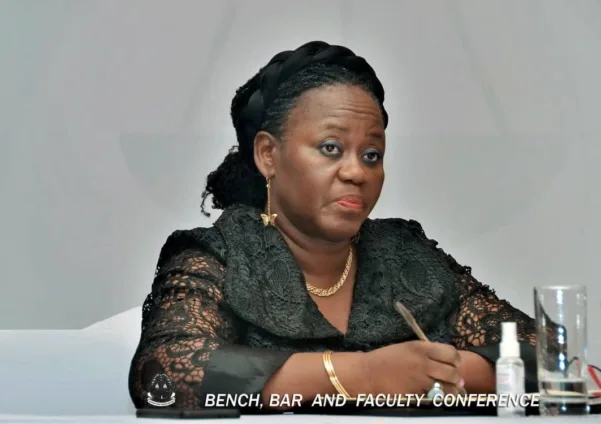
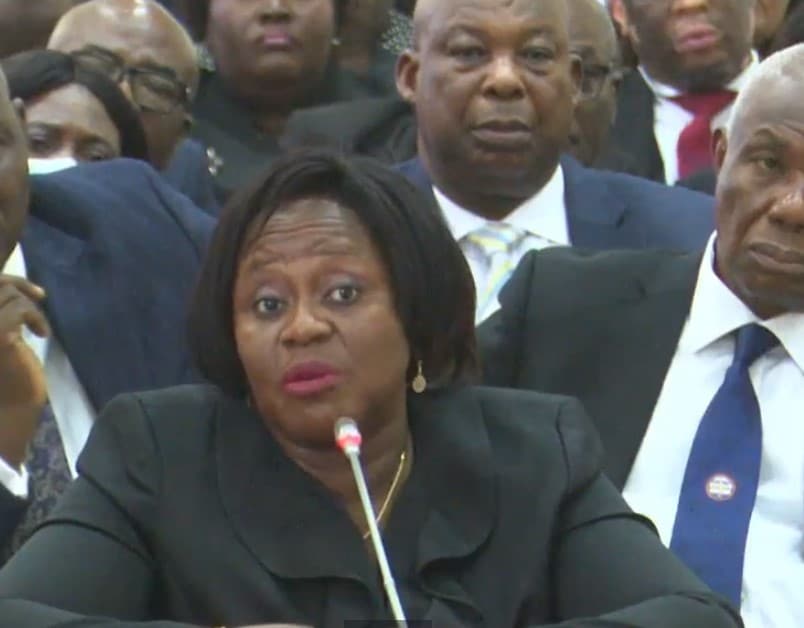
  • Justice Ackaah-Boafo’s vetting halted over petition citing bias

    Justice Ackaah-Boafo’s vetting halted over petition citing bias

    The vetting session for one of President John Dramani Mahama’s Supreme Court judge nominees, Justice Kweku T. Ackaah-Boafo, has been indefinitely suspended following a last-minute petition filed to Parliament on Thursday, June 19.

    The formal complaint was brought before the Parliament’s Appointments Committee by an acclaimed international human rights activist, Anthony Kwabenya Rau, who levels serious allegations of judicial bias against the nominee.

    The dramatic development leaves Justice Ackaah-Boafo’s promotion to Ghana’s highest court hanging in limbo. The petition alleges Justice Ackaah-Boafo used unprintable words during past court proceedings, emphasizing extreme bias.

    Mr Rau questioned Justice Ackaah-Boafo’s legitimacy to serve at the Supreme Court, labeling him a “so-called Messiah international Human Rights Activist”.

    “For me, he will be a disaster at the Supreme Court if approved (sic) for the international and national interest of the republic. These are my reasons to petition the vetting committee not to approve this particular judge,” parts of the petition read.

    According to the petitioner, Justice Ackaah-Boafo “insulted and attacked” him during a court hearing, which he claims is undeniable evidence of bias and corruption.

    He called Justice Ackaah-Boafo “arrogant, biased, power-drunk, an abuser of human rights (sic) and supportive of corruption.”

    Meanwhile, the Appointments Committee has referred the complaint to Speaker Bagbin for further review. As per Parliament’s Standing Order 99, petitions received must undergo a 30-day inquiry to ensure they are not “frivolous or vexatious.”

    Justice Kweku Tawiah Ackaah-Boafo would have been the last person to have appeared before the Parliament’s Committee for interrogation.

    So far, Justice Sir Dennis Dominic Adjei, Justice Gbiel Simon Suurbaareh, Justice Senyo Dzamefe, Justice Philip Bright Mensah, Justice Janpere Bartels-Kodwo and Justice Hafisata Ameleboba have been vetted.

    Their vetting comes after the Speaker of Parliament Alban Kingsford Sumana Bagbin on May 27 referred the nominees to the Appointments Committee for vetting and subsequent approval.

    This is in accordance with Article 144(2) of Ghana’s 1992 Constitution, which mandates that Supreme Court nominees undergo parliamentary scrutiny before their appointments are confirmed.

    The Appointments Committee, is chaired by Bernard Ahiafor, and assisted by Emmanuel Armah-Kofi Buah.Other members of the committee also include, Alexander Afenyo-Markin (Ranking Member), Patricia Appiagyei (Deputy Ranking Member), Mahama Ayariga (Majority Leader), Agnes Naa Momo Lartey, Frank Annoh-Dompreh, Patrick Yaw Boamah, Shaibu Mahama, Alhassan Umar, Kwame Governs Agbodza.

    About the nominees

    Justice Sir Dennis Dominic Adjei – A Court of Appeal judge since 2010, he was elected to the African Court on Human and Peoples’ Rights in 2022 for a six-year term. He has served as Director of the Judicial Training Institute and Dean of the Faculty of Law at GIMPA. He is an Adjunct Professor of Law at multiple universities.

    Justice Gbiel Simon Suurbaareh – Appointed to the Court of Appeal in 2010, he previously served as the Supervising High Court Judge in the Eastern Region and is known for his expertise in constitutional and administrative law and represents Court of Appeal judges on Ghana’s Judicial Council.

    Justice Senyo Dzamefe – A Court of Appeal judge since 2010, he chaired the Dzamefe Commission, which investigated Ghana’s performance at the 2014 FIFA World Cup. He was elected President of the Association of Magistrates and Judges of Ghana (AMJG) in 2018.

    Justice Kweku Tawiah Ackah-Boafo – A Court of Appeal judge, has emphasised the need for legal education reforms and has advocated for the integration of artificial intelligence into Ghana’s legal system to enhance efficiency and transparency.

    Justice Philip Bright Mensah – Known for his contributions to appellate jurisprudence, he recently presided over a Court of Appeal panel that directed the Accra High Court to adopt proceedings from a previous trial in the Republic vs. Stephen Kwabena Opuni case.

    Justice Janpere Bartels-Kodwo – A Court of Appeal judge, he has been nominated to strengthen the Supreme Court’s capacity amid increasing demands on Ghana’s judiciary.

    Justice Hafisata Ameleboba – A Court of Appeal judge, she has been involved in key judicial decisions and reforms. Her nomination is expected to bring diversity and expertise to the Supreme Court.

  • My dignity has been trampled – Suspected CJ on removal proceedings

    My dignity has been trampled – Suspected CJ on removal proceedings

    Suspended Chief Justice Gertrude Torkornoo has broken her silence over recent controversies surrounding her removal from office.

    In a supplementary affidavit filed with the Supreme Court, she criticized the Justice Pwamang Committee’s proceedings investigating petitions for her removal.

    According to her, such calls are a “mockery of justice” and a “ruse” to unfairly remove her from office.

    She added that the ongoing process undermines her fundamental rights and goes against the constitution.

    Justice Torkornoo accused the committee of its inability to grant her a legal basis, making it impossible for her to mount a proper defense.

    She raised concerns about transparency with regard to the venue for hearings being conducted.

    The CJ emphasized that, unlike previous similar inquiries conducted at the Judicial Service’s Court Complex, the current one is being held in a high-security zone.

    Background

    A series of petitions have been filed against Chief Justice Torkornoo, beginning with one from a group known as Shining Stars of Ghana.

    The group alleges she violated Article 144 of the Constitution by personally recommending judges for promotion to the Supreme Court, and further claims she ruled on a case involving the Speaker of Parliament without granting him a hearing, despite his refusal to respond to the suit.

    Another petition from a police officer who is also a lawyer accuses the Chief Justice of manipulating evidence and abusing her authority, following an incident during a Supreme Court session where he was reportedly reprimanded, arrested, and detained. However, court records suggest the lawyer’s conduct during proceedings prompted a unanimous caution from the bench, not just the Chief Justice.

    A third petition, submitted by a private individual, lists 21 alleged misconducts and four claims of incompetence. Among the accusations is the misuse of public funds—specifically, that she spent over GH¢261,000 and $30,000 on a family trip abroad in 2023 and misused an additional GH¢75,580 and $14,000 during another foreign assignment without proper accountability.

    Subsequent reports indicate two more petitions have been added to the list, intensifying pressure on the judiciary.

    Chief Justice Gertrude Torkornoo, in her written response to President Mahama, strongly denied allegations of misconduct and abuse of office brought against her by senior police officer describing them as baseless and lacking grounds for her removal from office.

    A five-member committee has been formed to investigate the matter. The committee is chaired by Supreme Court Justice Gabriel Scott Pwamang, and includes Justice Samuel Kwame Adibu-Asiedu, former Auditor-General Daniel Yaw Domelevo, Major Flora Bazwaanura Dalugo of the Ghana Armed Forces, and Associate Professor James Sefah Dzisah of the University of Ghana.

    Legal matters arising

    Member of Parliament for Old Tafo, Ekow Vincent Assafuah, has moved to challenge the suspension of Chief Justice Gertrude Torkornoo, filing an application at the Supreme Court to injunct the presidential decision.

    The notice of motion, dated April 24, is a direct response to President John Dramani Mahama’s April 22 suspension of the Chief Justice, which was carried out in line with Article 146(6) of the 1992 Constitution after consultations with the Council of State and a determination that a prima facie case existed.

    According to Mr Assafuah, the process that led to the Chief Justice’s suspension violated constitutional provisions, as she was not informed of the petitions nor given an opportunity to respond before the President engaged the Council of State.

    He further described the actions taken thus far, including the formation of an investigative committee, as “a farce and the product of a pre-conceived orchestration to unconstitutionally remove the Chief Justice from office.”

    Ekow Vincent Assafuah filed an injunction application to halt the process for the removal of the Chief Justice; however, this application was also dismissed by the Supreme Court on May 6.

    The second interlocutory injunction application challenging the process for the removal of Chief Justice Gertrude Torkonoo from office has been thrown out by the apex court.The Supreme Court, by a 4 to 1 majority decision, deemed the application by a private citizen, Theodore Kofi Atta-Quartey, unmeritorious on Wednesday, May 21.

    The five-member panel comprised Justices Paul Baffoe-Bonnie (Presiding), Issifu Omoro Tanko Amadu, Yonny Kulendi, Henry Anthony Kwofie, and Yaw Asare Darko. Justice Yaw Asare Darko was the only one who disagreed with the majority’s opinion.

    Justice Torkornoo heads to court

    Suspended Chief Justice Gertrude Torkornoo has headed to the Supreme Court to prevent the committee set up by President John Mahama to probe the petitions seeking her removal from office.

    She is also requesting the apex court to halt her suspension issued by the President under Article 146(10) of the Constitution until a final determination is made on the matter.

    On Wednesday, May 21, her legal team at Dame and Partners filed an interlocutory injunction application.

    The defendants per the writ, are Attorney-General Dr Dominic Ayine, Justice Gabriel Scott Pwamang, Justice Samuel Kwame Adibu-Asiedu, Daniel Yao Domelovo, Major Flora Bazwaanura Dalugo, and Professor James Sefah Dzisah.

    The plaintiff has prayed the apex court to restrain the committee from proceeding with any further inquiry as well as prevent Justice Gabriel Scott Pwamang, the acting Chief Justice, from participating in the process.

    Experts react to Torkornoo’s suit

    A former Director of the Ghana School of Law, Kwaku Ansa-Asare, believes that Justice Torkornoo should have first sought counsel from the Judicial Council before heading to the apex court.

    “The Judicial Council has been established to aid successive Chief Justices to behave themselves. So if an incumbent Chief Justice has a problem, her first port of call should be to seek counsel. I don’t think that has been done,” he said.

    Director of Legal Affairs for the National Democratic Congress (NDC), Godwin Edudzi Tameklo, described the suspended Chief Justice’s move as interesting.

    “I’m happy that the suspended Chief Justice is going to have the benefit of how the justice system works. Just like any one of us, her leadership may need the benefits of the very justice she, together with others, over the years, delivered to people,” he said while engagaing the media in an interview.

  • Respect the right of Chief Justice to hearing – Assafuah to Supreme Court

    Respect the right of Chief Justice to hearing – Assafuah to Supreme Court

    The plaintiff in the case filed against the processes triggered by the President for the removal of the Chief Justice, Hon. Vincent Ekow Assafuah, Member of Parliament for the Old Tafo Constituency in the Ashanti Region, has filed a statement of case in support of the writ issued by him on 27th March.

    In a comprehensive 42-page submission filed on his behalf on 9th April, by his counsel, former Attorney-General and Minister for Justice Godfred Yeboah Dame, the plaintiff argues for the Supreme Court to declare as null, void, and of no effect all steps taken by the President in consultation with the Council of State for the removal of the Chief Justice, Gertrude Araba Esaba Torkornoo.

    Mr. Dame refers to the constitutional history of Ghana from 1957 on provisions to protect the judiciary from what he describes as “undue interference with the independence of the judiciary and protection of the security of tenure of judges” and also examines the legal regime and practice of various jurisdictions from around the world. He concludes that the Supreme Court ought to exercise its powers of “judicial review under articles 2(1) and 130(1) to nullify all steps taken purportedly to remove the Chief Justice from office as prayed for in the writ of summons”.

    The plaintiff submits in his statement of case that the right to be notified of charge(s) levelled against one and to be heard on same is a fundamental and inalienable right enshrined in the Constitution, 1992.

    That right, according to plaintiff, “assumes greater significance in the context of quasi-judicial proceedings. The process of determining the existence or otherwise of a prima facie case in a petition for the removal of the Chief Justice is a quasi-judicial one performed by the President in consultation with the Council of State”.

    In the view of the plaintiff, following the presentation of a petition to the President for the removal of the Chief Justice, the Chief Justice is entitled to receive a copy of the petition and to be notified about the contents thereof.

    “The Chief Justice, upon a true and proper interpretation of the Constitution, is entitled to deliver his or her responses to allegations contained in the petition which will be a basis for consultation between the President and the Council of State on whether a prima facie case is disclosed by the petition”, Mr. Godfred Dame submitted to the Supreme Court.

    Counsel for the plaintiff contends that a notification of the Chief Justice and the grant of an opportunity to deliver a response to allegations contained in a petition are not only procedural rights but substantive due process designed to protect the institution of the judiciary from abuse and undue interference and must therefore be strictly observed.

    Effect of President’s press release and subsequent measures

    Counsel for the plaintiff notes that a purported step to furnish the Chief Justice with a copy of the petition and request his or her answers after the consultation process with the Council of State has begun violates the constitutional requirements of due process anticipated by articles 23 and 296 as stated above. Such a step further shows bad faith and should not be condoned by the Court.

    “Respectfully, there is no justifiable reason for the President to “commence the consultation process mandated by Article 146 of the Constitution”, and announce it to the world before coming back to ask the Chief Justice for her responses. This is unfair and violates due process. It is outstandingly bad, shocking and egregiously unfair for the President to announce a trigger of the removal processes of the Chief Justice under article 146 to the whole world, when he has not even extended the courtesy of informing the Chief Justice about a receipt of the petition(s) in question.

    What could explain the unbridled zeal of the President to trigger Article 146 and commence consultation with the Council of State as announced by his Spokesperson to the world when he had not informed the Chief Justice or given her a copy? What kind of consultation had the President actually commenced with the Council of State? Was it consultation to form a committee, or a consultation to make a prima facie determination? These questions arise from the press release by the President”, Mr. Dame quipped in the statement of case filed on behalf of the plaintiff.

    Having regard to the history of this country for some political administrations in the past to control the Judiciary through removal processes, the Court ought to insist on a strict compliance with the procedural requirements anticipated by the letter and spirit of articles 23, 146 and 296 in the processes for an attempt to remove the Chief Justice, and declare any step taken in violation of the provisions null, void and of no effect”, counsel for plaintiff submitted.

    Constitutional history of Ghana

    Examining the strength of Ghana’s history of protection of judges, as can be seen in the various constitutions the nation has had since independence, Mr. Dame noted that the 1957 and 1960 Constitutions presented the weakest regime for protection of the security of judges.

    On this account, “the President in 1963 dismissed the Chief Justice. This was supported by the votes of two-thirds of the Assembly in a Parliament dominated by one political party – a situation very similar to the circumstances Ghana finds itself in now as a country”, he submitted.

    This experience calls for stronger measures to protect the independence of the Judiciary and the tenure of judges, particularly, the head of the Judiciary, the Chief Justice. 

    Practice in foreign jurisdictions

    Regarding the practice in other jurisdictions, counsel for the plaintiff, Godfred Yeboah Dame noted that “all advanced legal systems stipulate a rigorous and elaborate procedure for the removal of a judge of a superior court. The procedures do not consider such exercises lightly and are calculated at protecting judges from abusive tendencies to compromise the independence of the Judiciary – a necessary organ for the running of any heathy society.  Even when the legal framework is as scanty and sketchy as Ghana’s, practice has ensured that it is only through an elaborate and rigorous mechanism that the removal of a superior court judge may be effected. It is even more so in the case of the Head of the Judiciary – the Chief Justice”.

    Counsel concluded his submissions by stating that a failure by the President to notify the Chief Justice about allegations contained in a petition filed against him or her before consulting the Council of State on same, results in a violation of a substantive right impinging on an abuse of the Head of the Judiciary, shows complete bad faith and renders the process null, void and of no effect.

  • Case on Chief Justice’s removal adjourned indefinitely

    Case on Chief Justice’s removal adjourned indefinitely

    The hearing of an application seeking to halt the ongoing process for determining a prima facie case regarding petitions for the removal of the Chief Justice has been adjourned indefinitely by the Supreme Court.

    The adjournment followed the absence of the Attorney General, who had secured prior permission from the Chief Justice. The Attorney General had requested that all cases involving his office be postponed from April 7 to April 10, citing a mandatory training workshop for lawyers at the Attorney General’s Department.

    In court, two state attorneys — including a former Personal Assistant to Godfred Dame during his tenure as Attorney General — appeared and formally requested an adjournment as a courtesy to the court.

    However, Godfred Yeboah Dame, representing Vincent Ekow Asafuah, the plaintiff in the matter, expressed surprise at the absence of Attorney General Dr. Dominic Ayine and his deputy, Dr. Justice Srem-Sai, especially considering the significance of the case.

    Dame subsequently requested the court to adjourn the hearing to Monday, April 14.

    The plaintiff is seeking a Supreme Court declaration that the President’s decision to proceed with the establishment of a prima facie case against the Chief Justice is unconstitutional.

    Meanwhile, Chief Justice Gertrude Torkornoo has presented her initial response to President John Mahama regarding petitions that call for her removal from office over alleged misconduct.

    Her submission comes just as the 10-day period granted for her to reply to the petitions ended on Monday, April 7.

  • Supreme Court to hear case on Chief Justice’s removal process on April 9

    Supreme Court to hear case on Chief Justice’s removal process on April 9

    On Wednesday, April 9, the Supreme Court will hear a pivotal constitutional case challenging the process initiated to possibly remove Chief Justice Gertrude Torkornoo from office.

    The lawsuit, filed by the Member of Parliament for Old Tafo, Vincent Ekow Assafuah, disputes the procedure followed by President John Mahama after receiving three separate petitions seeking Torkornoo’s removal.

    Assafuah argues that the Chief Justice was not afforded the chance to respond to the allegations before the President began consultations with the Council of State, which he contends violates Article 146(6) of the Constitution.

    Represented by former Attorney-General Godfred Dame, Assafuah claims that skipping the Chief Justice at this early stage of the process denies her the right to a fair hearing and undermines judicial independence.

    This case is critical as the Supreme Court’s ruling will not only clarify the legal steps required for the removal of a sitting Chief Justice but may also set an important precedent for handling similar cases involving other high-ranking officials in the future.

  • Supreme Court schedules hearing on injunction against Chief Justice’s removal process for April 2

    Supreme Court schedules hearing on injunction against Chief Justice’s removal process for April 2

    The Supreme Court has scheduled April 2, 2025, to hear an injunction application filed by Vincent Assafuah, the New Patriotic Party (NPP) Member of Parliament for Old Tafo. The MP is challenging the procedure President John Mahama is using to address petitions seeking the removal of Chief Justice Gertrude Torkornoo.

    This development follows a formal request from the Chief Justice, who has written to the President and other relevant stakeholders, asking for copies of the petitions filed against her.

    Assafuah’s lawsuit, led by former Attorney-General Godfred Dame, argues that the Chief Justice must be informed of any petitions concerning her removal and given an opportunity to respond before the President consults the Council of State.

    Meanwhile, the Minister for Government Communications, Felix Kwakye Ofosu, has confirmed that the three petitions have been forwarded to the Council of State in accordance with Article 146 of the 1992 Constitution.

    Although the details of the petitions remain unknown, their submission initiates a constitutional process that could have major implications for Ghana’s judiciary.

    The Council of State is now tasked with examining the petitions and advising the President on the next steps.

    In a letter addressed to the President on Thursday, March 27, Chief Justice Gertrude Torkornoo formally requested the opportunity to respond to the allegations before any further action is taken.

    “I am by this letter humbly and respectfully asking His Excellency the President and eminent members of the Council of State to forward the petitions against me to me, and allow me at least seven days after receipt of same, to provide my response to you, which response can then form part of the material that you conduct the consultations anticipated under 146 (6), before the possible setting up of a Committee of Inquiry under Article 146 (7),” she stated.

    Assafuah, acting as a concerned citizen under Article 2(1)(b) of the 1992 Constitution, seeks several declarations from the Supreme Court, whose original jurisdiction he is invoking, regarding the interpretation of constitutional provisions governing the removal of a Chief Justice.

    The suit argues that the President must notify the Chief Justice and obtain the comments of the Chief Justice before initiating consultation with the Council of State on the matter.

    Reliefs sought by the plaintiff

    The plaintiff requests the court to declare that:

    The Constitution mandates that before a petition for the removal of the Chief Justice is submitted to the Council of State, the President must first inform the Chief Justice and seek their response, in accordance with Articles 146(1), (2), (4), (6), and (7), as well as Articles 23, 57(3), and 296.

    Proceeding with consultations without notifying the Chief Justice violates Article 146(6) and compromises the constitutional safeguard ensuring the security of tenure for the Chief Justice.

    Any deviation from this requirement constitutes undue interference with judicial independence, contravening Articles 127(1) and (2).

    By failing to obtain the Chief Justice’s input before initiating the removal process, the President breaches the right to a fair hearing, thereby rendering the entire consultation process invalid.

    The court is also urged to grant any additional reliefs it deems necessary.

  • Supreme Court declares moot injunction on removal of security heads

    Supreme Court declares moot injunction on removal of security heads

    The apex court has ruled that the suit filed by Imani Ghana and security expert Prof Kwesi Aning to restrain the President from removing the Inspector-General of Police and other heads of security agencies is moot.

    In a ruling on March 25, a five-member panel of the apex court, which had Justice Paul Baffoe Bonney as its President, said the pendency of the application for an interlocutory injunction does not stop the president from performing his public and administrative function. 

    Imani Ghana and security expert Prof Kwesi Aning jointly filed a suit at the Supreme Court, seeking to restrain the President from removing the Inspector-General of Police and other heads of security agencies until an ongoing case relating to the matter is decided in May 2025.

    According to the plaintiffs, the security heads in question would be unfairly treated if they were removed before the Supreme Court delivers its ruling.

    The development followed widespread reports that the President intended to dismiss the Inspector-General of Police, Dr George Akuffo Dampare and other key security officials.

    In their suit, the plaintiffs prayed the court to grant an order of interlocutory injunction restraining the Defendant, including His Excellency the President of the Republic, and the respective councils of the Ghana Immigration Service, Ghana Police Service, National Fire Service, and Ghana Prisons Service, from removing, terminating, dismissing, sacking, suspending, or otherwise interfering with the positions of the Director-General of the Ghana Prisons Service, the Comptroller of the Ghana Immigration Service, the Director-General of the National Fire Service, and the Inspector-General of Police.

    The plaintiffs further argued that the suit raises serious constitutional issues, with the balance of convenience heavily favouring the applicants.

    They contended that the government would suffer no harm should the court grant the application, as the verdict is imminent. Moreover, should the plaintiffs fail in their case, the Executive would still have the authority to remove the security heads in question.

    The suit concluded by stating that the application is just, appropriate, and necessary under the circumstances, urging the court to grant the injunction to prevent any premature dismissals before the case is fully adjudicated.

    The Supreme Court has fixed May 7, this year to give judgment on the substantive case.

    So far, President Mahama has replaced the heads of several security agencies. Outgone officers include former Ghana Prisons Service boss Isaac Kofi Egyir, former Fire Service chief Julius A. Kuunuor, and ex-Immigration Service head Kwame Asuah Takyi.

    They have been replaced with DDGP 3 Patience Baffoe-Bonnie as Director-General of Prisons, DCFO Daniella Mawusi Ntow Sarpong as Chief Fire Officer, and DCI Samuel Basentale Amadu as Comptroller-General of Immigration.

    COP Christian Tetteh Yohuno has replaced Dr George Akuffo Dampare as the Inspector General of Police. Article 202 (3) of the Constitution states that the power to appoint persons to hold or to act in an office in the Police Service shall vest in the President, acting in accordance with the advice of the Police Council.

  • Prof Aning, Imani file drag Mahama to Supreme Court to prevent removal of IGP, other security heads

    Prof Aning, Imani file drag Mahama to Supreme Court to prevent removal of IGP, other security heads

    Imani Ghana and security expert Professor Kwesi Aning have taken legal action at the Supreme Court to stop the President from dismissing the Inspector-General of Police and other security heads until an ongoing court case on the issue is resolved in May 2025.

    The plaintiffs argue that removing these officials before the case is decided would be unfair.

    This lawsuit follows widespread reports suggesting that the President plans to replace the Inspector-General of Police and other top security officials.

    In the suit, the plaintiffs prayed the court that “In the circumstance, I humbly and respectfully pray the honourable court for an order of interlocutory injunction restraining the Defendant/Respondent its principals, including His Excellency the President of the Republic, the respective Council of the Ghana Immigration Service, Ghana Police Service, National Fire

    “Service, Ghana Prisons Service, and whomsoever or however described from removing, terminating, dismissing, sacking, suspending or whichever way described; the Director General of the Ghana Prisons Service, the Comptroller of the Ghana Immigration Service, the Director General of the National Fire Service and the Inspector General of Police from their respective positions as Heads of the Ghana Prisons Service, the Ghana Immigration Service, the Ghana National Fire Service and the Ghana Police Service pending the final determination of the suit”.

    The suit further noted “That without a doubt, the suit, which raises very serious constitutional issues and with the balance of convenience heavily tilting in favour of the Applicants this application has merit.

    “That the Defendant suffers no injury, should the application be granted, especially since, the decision is in no way far to be delivered; and more so, since, in the event Plaintiffs do not emerge victorious in the final action, the Executive will not be proscribed in exercising their rights of removal of any of these heads.

    “That this is an apposite case which is just and convenient, that the instant application is granted”.

    Find below full document:

  • Supreme Court to rule on High Court’s contempt decision against Akwatia MP today

    Supreme Court to rule on High Court’s contempt decision against Akwatia MP today

    The Supreme Court will deliver its decision today, Wednesday, March 12, on a request by the convicted Akwatia MP to overturn a Koforidua High Court injunction.

    The injunction prevents him from acting as a Member of Parliament until he resolves his contempt case in the High Court.

    The five-member panel had previously postponed its ruling, citing uncertainty over whether they could hear the case while the MP remained in contempt. Justice Gabriel Pwamang, who was the only judge to oppose the Supreme Court’s earlier decision to delay sentencing, insisted that the court should not entertain the MP’s case unless he first addressed the contempt charges.

    On February 26, the Supreme Court, in a 4-1 ruling, halted the High Court’s sentencing of MP Ernest Yaw Kumi for contempt, pending a final decision on an appeal to dismiss the ruling. Justice Pwamang opposed the decision, while the other four justices approved the stay.
    Case Details

    The MP’s legal representatives filed a motion seeking to bar the High Court from proceeding with the case, arguing that the judge had no authority to rule on an election petition before the Electoral Commission had officially gazetted the results.

    He further claimed that the court acted unfairly by hearing the contempt case while his request to dismiss it was still pending.

    The MP also accused the judge of bias for refusing to allow his lawyer to speak on the grounds that legal representation had not been formally registered in the contempt case.

    The MP requested a declaration that the election petition filed by Henry Boakye-Yiadom on December 31, 2024, was invalid due to the lack of an official gazette. He argued that all rulings based on the petition should be nullified.

    Additionally, Mr. Kumi called on the Supreme Court to overturn the Koforidua High Court’s contempt ruling of February 19, 2025, along with its interim injunctions from January 2 and January 6, contending that they were based on a flawed election petition.

  • Stay true to the economic record – Oppong-Nkrumah to Finance Minister

    Stay true to the economic record – Oppong-Nkrumah to Finance Minister

    Ofoase Ayirebi MP, Kojo Oppong-Nkrumah, has warned the Finance Minister against including unverified debts in the national budget, cautioning that it could open the door for fraudulent claims against the government.

    In an interview with the media on Monday, March 10, he emphasized that adding questionable liabilities would not only misrepresent Ghana’s fiscal position but also create opportunities for the misuse of public funds.

    “We advise him, stay true to the economic record. Don’t admit phantom debts and phantom figures that people bring to try and bloat the books,” he stated.

    Kojo Oppong Nkrumah cited to a case from 2009 during the NDC administration when a new budget category was introduced for legal compensations.

    He noted that this measure was misused by certain individuals, resulting in a widely criticized financial scandal.

    “The last time they did that, if you recall, in 2009, when they admitted phantom debts and created cost centers for it, it became an avenue for people to put things there and collect money. That’s what the Supreme Court described as create, loot, and share,” he recalled.

    The former Akufo-Addo administration’s Minister for Works and Housing and Information has advised the government to be cautious in recognizing liabilities, warning that endorsing unverified debts could result in unjustified payouts to individuals or organizations without legitimate claims.

    He emphasized the need to prevent fraudulent financial claims, stating that incorporating suspicious debts would create loopholes for exploitation by entities not genuinely owed by the state.

    Beyond the potential financial risks, Kojo Oppong Nkrumah cautioned that inflating Ghana’s debt figures could distort the country’s economic outlook and send unfavorable signals to investors.

    “It is important to avoid admitting dubious or doubtful debts, as this will be exploited by persons who the state doesn’t owe,” he emphasized.

    He urged the Finance Minister to ensure transparency and accuracy in financial disclosures, stressing the importance of maintaining credibility in economic reporting to prevent unnecessary panic in financial markets.

    “He should keep fidelity with the economic records of the country and avoid spooking the markets with lamentations,” he advised.

    His comments come amid ongoing discussions on Ghana’s economic trajectory, particularly rising debt levels and fiscal challenges.

    Meanwhile, Finance Minister Cassiel Ato Forson is set to present the 2025 Budget and Economic Policy to Parliament tomorrow.

  • High Court ruling on Ernest Kumi’s contempt case halted by Supreme Court

    High Court ruling on Ernest Kumi’s contempt case halted by Supreme Court

    The Supreme Court, by a 4-1 majority ruling, has put a hold on the sentencing of Akwatia MP Ernest Yaw Kumi in a contempt case, pending the outcome of his appeal to overturn the verdict.

    While four justices supported the decision to suspend the sentencing, Justice Gabriel Pwamang dissented.

    Yaw Kumi has challenged the February 19 contempt ruling by filing a certiorari and prohibition application at the Supreme Court.

    His legal representative, Gary Nimako Marfo, argues that Justice Emmanuel Senyo Amadehe of the Koforidua High Court overstepped his authority by presiding over the parliamentary election petition before the Electoral Commission had officially gazetted the election results.

    Justice Amadehe had found Kumi guilty of contempt and issued a bench warrant for his arrest, citing his disregard for an interim injunction that barred him from being sworn in as an MP.

  • Ernest Kumi heads to Supreme Court to challenge contempt conviction

    Ernest Kumi heads to Supreme Court to challenge contempt conviction

    Member of Parliament for Akwatia, Ernest Yaw Kumi, has escalated his legal battle to the Supreme Court, seeking to overturn a contempt conviction handed down by the Koforidua High Court on February 19.

    The MP’s legal counsel, Gary Nimako Marfo, filed an application for certiorari and prohibition, challenging the ruling delivered by Justice Emmanuel Senyo Amadehe. According to the application, the High Court judge allegedly overstepped his authority by proceeding with a parliamentary election petition before the Electoral Commission officially published the election results in the Gazette.

    Marfo argues that Justice Amadehe committed “a jurisdictional error of law apparent on the face of the record when he assumed jurisdiction in [the] Parliamentary Election Petition at Akwatia Constituency at the time when the Electoral Commission had not published the Gazette Notification of the results to which the Election relates in the Gazette.”

    The conviction stemmed from Kumi’s alleged defiance of an interim injunction that barred him from being sworn into office as a legislator. Following this, Justice Amadehe issued a bench warrant for Kumi’s arrest after finding him in contempt of court.

    However, Kumi’s legal team insists that the judge violated the principles of natural justice by proceeding with the contempt hearing while a motion to dismiss the application for lack of jurisdiction was still pending. The application states:

    “The learned High Court Judge breached the rules of natural justice when he proceeded to hear and determine the Contempt application despite the pendency of Applicant’s Motion to set aside the said Contempt application for want of jurisdiction.”

    The MP’s lawyers also allege bias on the part of Justice Amadehe, claiming that the judge was prejudiced against their client by denying the legal team a hearing. According to the application:

    “The learned High Court Judge was biased and highly prejudiced against the Applicant when he, among others, refused to grant Counsel for the Applicant audience on the basis that Counsel had not filed ‘Appearance’ in the Contempt application.”

    As part of their reliefs, Kumi’s legal team is urging the Supreme Court to declare the election petition filed by Henry Boakye-Yiadom on December 31, 2024, invalid due to the absence of an official Gazette notification. They argue that:

    “The Petition filed by the 1st Interested Party [Henry Boakye-Yiadom] on 31st December, 2024 in the absence of the Gazette Notification of the Parliamentary Election Results to which the election relates is incompetent, as same did not properly invoke the jurisdiction of the High Court, and that any Order founded on same is void and of no effect.”

    In addition, they are requesting the Supreme Court to nullify both the contempt proceedings and the February 19 ruling:

    “A declaration that the Contempt Proceedings and the Ruling dated 19th February, 2025, founded on the premature election petition filed on 31st December, 2024, is void and of no effect.”

    The legal team is also seeking an order to quash the execution of the bench warrant issued against the MP:

    “An Order quashing the Ruling delivered on the Contempt Application and the Execution of the Bench Warrant issued by the Court dated 19th February, 2025, by His Lordship Justice Emmanuel Senyo Amadehe.”

    The Supreme Court has yet to schedule a date for the hearing of the application.

  • Trump files Supreme Court appeal on removal of US agency leader

    Trump files Supreme Court appeal on removal of US agency leader

    Former President Donald Trump has asked the US Supreme Court to let him fire the leader of an independent ethics agency that protects federal whistleblowers. He has made an urgent appeal to the highest court to decide if he can dismiss Hampton Dellinger, who heads the US Office of Special Counsel.

    This is believed to be the first case from Trump’s many executive actions to reach the Supreme Court. Trump has also removed over a dozen inspectors general from various federal agencies and dismissed thousands of government employees.

    Mr Dellinger, who was nominated by President Joe Biden, sued the Trump administration after he was fired by email this month.

    He argued that his removal broke a law that protects leaders of independent agencies from being fired by the president, “except in cases of neglect of duty, malfeasance or inefficiency”.

    The agency’s main goal is to protect federal employees from illegal actions taken against them for whistleblowing, as stated in its mission statement. On Wednesday, a federal judge in Washington DC issued a temporary order allowing Mr. Dellinger to keep his job while the case is reviewed. On Saturday, the US Court of Appeals in the capital, which was split in its decision, denied the Trump administration’s request to overturn the lower court’s ruling.

    This has led to the current legal situation.tice department filing an emergency appeal to the conservative-dominated Supreme Court, a filing seen by various US media.

    “This court should not allow lower courts to seize executive power by dictating to the president how long he must continue employing an agency head against his will,” Sarah M Harris, acting solicitor general, wrote in the filing provided by the Department of Justice to the Washington Post.


    “Until now, as far as we are aware, no court in American history has wielded an injunction to force the president to retain an agency head,” the acting solicitor general wrote, according to the Associated Press news agency.

  • UMB’s dismissal of former MD, Peter Illiasu, upheld by Supreme Court

    UMB’s dismissal of former MD, Peter Illiasu, upheld by Supreme Court

    The Supreme Court has ruled in favour of Universal Merchant Bank (UMB), affirming the bank’s decision to dismiss its former Managing Director, Peter Illiasu, over financial mismanagement and unauthorised transactions dating back to 2010.

    On January 22, a five-member panel of justices, led by Chief Justice Gertrude Sackey Torkornoo, unanimously upheld UMB’s case. The other justices on the panel were Justices Amadu, Professor Henrietta Mensa-Bonsu, Asiedu, and Darko Asare.

    The ruling followed a long-standing legal dispute in which the bank accused Illiasu of breaching statutory banking regulations and exceeding his authority in approving multimillion-dollar loan facilities. According to court records, he sanctioned credit transactions that violated the bank’s lending limits and internal policies.

    A key issue in the case was an unauthorised transaction involving GHS349,593.75 from Volta River Authority’s (VRA) account. The court found that Illiasu had improperly approved the payment to Abi Capital without VRA’s consent. The payment was linked to what was described as brokerage or due diligence fees, but the court ruled that neither the service nor the transaction was lawfully entered into.

    Additionally, the court held that Abi Capital was aware of the illegality of the credit facility and, therefore, jointly liable with Illiasu. As a result, both parties have been ordered to refund the GHS349,593.75 with interest, calculated at the bank’s lending rate from April 21, 2010, until full repayment.

    In delivering its judgment, the Supreme Court underscored the responsibilities of bank directors to uphold statutory banking regulations and corporate governance principles. It found that Illiasu had not only violated his contractual obligations to UMB but also breached his fiduciary duty as a director, leading to financial losses for the bank.

    This ruling marks the conclusion of a protracted legal battle, reinforcing the Supreme Court’s stance on accountability in financial institutions.

  • Supreme Court seem to uphold TikTok ban in US

    Supreme Court seem to uphold TikTok ban in US

    On Friday, the U.S. Supreme Court appeared likely to support a law that could lead to the sale or ban of the popular app TikTok in the United States by January 19.

    The court’s discussions mainly centered on concerns over national security risks posed by the app’s Chinese parent company, ByteDance.

    The justices questioned whether the Chinese government could exploit TikTok to spy on Americans or influence public opinion.

    Chief Justice John Roberts directly asked TikTok’s lawyer, Noel Francisco, whether the app’s Chinese ownership could be ignored, considering the potential for ByteDance to be compelled to assist China’s intelligence efforts.

    TikTok, ByteDance, and app users have sued to block the law, arguing that it violates the First Amendment, which protects free speech. However, a lower court previously upheld the law, dismissing these claims.

    While some justices raised concerns about the impact on free speech, the focus remained on the risks of a foreign-owned platform collecting data on 170 million American users.

    Justice Brett Kavanaugh highlighted the long-term dangers, such as the possibility of China using user data for espionage, blackmail, or recruitment. TikTok’s lawyer argued that the law unfairly targets speech and could shut down the app entirely unless ByteDance divests.

    Francisco also requested the court to delay the law’s implementation, noting President-elect Donald Trump’s preference for a political resolution when he takes office on January 20.

    Liberal Justice Elena Kagan brought up a historical comparison, questioning whether similar actions against the American Communist Party during the Cold War would have been constitutional.

    Meanwhile, the U.S. Solicitor General, Elizabeth Prelogar, defended the law, asserting that TikTok poses a severe national security threat due to the Chinese government’s potential to misuse the platform for espionage or propaganda.

    Francisco countered that Congress could not force a company like ByteDance to sell TikTok without violating constitutional rights.

    He presented a hypothetical scenario where China could coerce media outlets like The Washington Post but insisted that such forced sales would still infringe on rights.

    Prelogar argued that Congress has the authority to act to protect American users and their data from foreign adversaries. She highlighted the risk of China using TikTok’s vast data for covert operations that could harm U.S. interests.

    According to her, TikTok’s algorithm, which curates content for users, is part of its speech, and the law directly restricts this.

    As the January 19 deadline approaches, the Supreme Court must decide whether to uphold the law or grant TikTok temporary relief while the case continues.

  • Re-collated results for Okaikwei Central, Tema Central constituencies annulled by Supreme Court

    Re-collated results for Okaikwei Central, Tema Central constituencies annulled by Supreme Court

    The Supreme Court has invalidated the re-collated parliamentary election results for Okaikwei Central, Ablekuma North, Tema Central, and Techiman South, effectively overturning the Electoral Commission’s (EC) earlier declarations for these constituencies.

    This decision follows heated legal and political disputes surrounding the re-collation process.

    The court, however, confirmed the re-collated results for Nsawam Adoagyiri and Ahafo Ano North, leaving them unaffected by the ruling.

    This landmark decision emphasizes the judiciary’s critical role in tackling electoral issues and ensuring strict adherence to constitutional and procedural norms.

    The decision comes after the National Democratic Congress (NDC) raised a legal challenge against a contentious High Court ruling from December 20. The ruling had instructed the Electoral Commission (EC) to re-collate results in nine contested constituencies.

    The EC has completed the re-collation process in seven of these constituencies, all of which were won by candidates from the New Patriotic Party (NPP). However, the results for Dome/Kwabenya and Ablekuma North are still pending.

    The decision comes after the National Democratic Congress (NDC) raised a legal challenge against a contentious High Court ruling from December 20. The ruling had instructed the Electoral Commission (EC) to re-collate results in nine contested constituencies.

    In his ruling delivered in Accra on Friday, Justice Gabriel Pwamang, the presiding judge, explained that the orders under review are distinct and separate.

    He stated, “Since the orders which have been brought to be quashed are separate and distinct we have decided to exercise our discretionary power to quash by certiorari having required to the peculiar circumstances of each ruling.

    “Consequently, we hereby quash the orders of mandamus made for collation of results by the EC in the following constituencies Okawkwei Central, Ablekuma North, Tema Central and Techiman South.”

    The court found that the trial judge had breached the NDC parliamentary candidates’ right to a fair hearing when they filed their application with the High Court.

    This ruling directly questions the disputed re-collation carried out by the Electoral Commission and the resulting declarations for the affected constituencies.

    Additionally, the court emphasized that, despite the annulment, the mandamus application is still in effect and will be heard by the High Court on Tuesday, December 31.

  • SC failed to reveal what constitutes vacation of a parliamentary seat – Prof Kofi Abotsi 

    SC failed to reveal what constitutes vacation of a parliamentary seat – Prof Kofi Abotsi 

    The Dean of the UPSA Law School, Prof. Kofi Abotsi, has expressed concerns over the Supreme Court’s recent ruling against the Speaker of Parliament, highlighting the court’s failure to clearly define what constitutes the vacation of a parliamentary seat.

    The court’s decision overturned Speaker Alban Bagbin’s declaration of vacancies for Members of Parliament (MPs) who intend to contest upcoming elections on the tickets of different parties.

    While the court clarified what does not constitute the vacation of a seat, Prof. Abotsi argues that it did not provide a comprehensive definition of what does.

    Speaking on JoyNews’ Newsfile, Prof. Abotsi explained, “The court spoke in negative terms, explaining what does not amount to vacating a seat, but failed to offer a positive statement detailing what exactly constitutes the vacation of a seat.”

    He noted that this omission leaves room for ambiguity, especially since the Constitution refers to “leaving the party” as a factor in vacating a seat.

    Prof. Abotsi emphasized that this gap in the ruling could lead to future disputes, as it lacks clear guidelines for determining whether an MP has vacated their seat by leaving their party.

    He concluded, “I would have been happier to have seen a more positive statement outlining the circumstances that constitute vacation of seats, as I expect this matter to arise again.”

  • Vacant Seat Saga: No one has won Martin Kpebu on Supreme Court ruling

    Vacant Seat Saga: No one has won Martin Kpebu on Supreme Court ruling

    Private legal practitioner Martin Kpebu has expressed concerns over the Supreme Court’s recent ruling regarding the Speaker’s declaration of vacant parliamentary seats.

    The ruling came after a petition by Alexander Afenyo-Markin, the Member of Parliament for Efutu.

    In an interview on Joy FM’s Super Morning Show, Lawyer Kpebu criticised the Court’s interpretation of the law, claiming that the judiciary had exceeded its authority by effectively “amending” the constitution through judicial interpretation.

    “The provision is clear, but what’s also clear is that I don’t have the power to change it.

    The issue is that we are trying to twist an undesirable law into the desirable one we want,” Lawyer Kpebu remarked.

    He stressed the importance of adhering to the law as it is written rather than allowing it to be ““recrafted” through judicial interpretation.

    Lawyer Martin Kpebu also cited a statement from renowned lawyer Tsatsu Tsikata, who warned that the judiciary, if not checked, could undermine the constitution.

    “It’s not only military force that can overthrow a constitution. The judiciary, too, has the power to do so,” Tsikata had said.

    Lawyer Kpebu referenced this quote, explaining that in law, for every principle, there is a counter-principle, making it difficult to find a clear “winner” in legal cases like this one.

    The lawyer also called for more transparency in constitutional matters, suggesting that, to ensure impartiality, the executive should not have a role in Supreme Court appointments.

    “If we don’t speak openly about these issues, our constitution will never grow,” Kpebu concluded, urging for a more open and honest legal conversation.

    On Thursday, Mr. Thaddeus Sory, lawyer for the Speaker of Parliament, argued that the Supreme Court’s decision did not amount to any orders against Speaker Alban Bagbin.

    “The Supreme Court decision released this afternoon is interesting. The majority decision raises a number of legal issues. Since this is public and not a legal platform, I will discuss the most basic but fundamental issue for debate,” Sory stated.

  • It was vital Supreme Court addressed vacant seat controversy – Kofi Bentil

    It was vital Supreme Court addressed vacant seat controversy – Kofi Bentil

    The Vice President of IMANI Africa, Kofi Bentil, has commended the decision of the Majority Leader to petition the Supreme Court regarding the controversy surrounding the vacant seats in Parliament.

    He described the move as prudent, emphasizing the Supreme Court’s demonstrated expertise in constitutional interpretation through detailed analyses of past cases.

    Speaking on Joy FM’s Super Morning Show on Friday, November 15, Mr. Bentil dismissed claims that the issue should not have been taken to the Supreme Court.

    “I have heard many people say this was very clear, everybody understands what it says, and so there is no doubt about it and it shouldn’t have even gone to the Supreme Court,” he remarked. “That is totally debunked, it is debunked even on the fact before it went to court that certain people disagreed. The fact that you have a view, and I have a different view, showed clearly that there needed to be somebody to break that jam.”

    Mr. Bentil explained that the Supreme Court’s intervention was necessary due to the disagreement on the matter, dismissing suggestions that the High Court should have been the first point of call.

    “There was a point that it should go straight to the High Court and if the High Court felt there was a problem with interpretation, then they refer it to the Supreme Court, the High Court deals with the interpretation then it’s referred back to the Supreme Court to finish the matter,” he said.

    However, he argued that the Supreme Court was right to assert jurisdiction in the case since it involved interpretation issues, a role uniquely suited to the apex court.

    Referencing the Supreme Court’s ruling, Mr. Bentil pointed to Page 33 of the judgment, which, he said, supported his earlier assertions during the interview.

    “When in one case you have matters of interpretation, and then other matters which are specifically given to a high court, the Supreme Court must necessarily take it. We don’t want a situation where it goes there and comes back, and goes there again wasting everybody’s time and going back and forth,” he explained.

    He acknowledged Justice Tanko Amadu’s opposing view regarding the High Court’s jurisdiction being usurped but maintained that the majority ruling of the Supreme Court was sound.

    “Well, clearly, the majority disagree with him,” he responded during the show.

    Citing Page 12 of the ruling, Mr. Bentil emphasized that the Supreme Court’s assumption of jurisdiction was neither novel nor inappropriate. He recalled past situations where Parliament faced constitutional challenges, underscoring the importance of the Supreme Court stepping in to provide clarity.

    “And so, for the Supreme Court to assume it, with all due respect, was the sensible thing to do, and that is what they did,” he concluded.

  • Has the Supreme Court rendered Article 97 of the 1992 Constitution useless?

    Has the Supreme Court rendered Article 97 of the 1992 Constitution useless?

    Analysing the ruling of the Supreme Court on the current brouhaha in Parliament, Critics are asking, has the Supreme Court not rendered Article 97 of the 1992 Constitution useless? I believe the Court just interpreted it in ways that have influenced its application and the political landscape in Ghana.

    OVERVIEW OF ARTICLE 97

    Article 97 of the 1992 Constitution of Ghana outlines the grounds for the removal of Members of Parliament (MPs) from office. Specifically, it states that an MP can be removed from office if they:

    Are convicted of a crime involving dishonesty

    Are declared bankrupt.

    Are unable to perform the functions of their office due to physical or mental incapacity.

    Engage in conduct that is inconsistent with the office of a Member of Parliament.

    SUPREME COURT INTERPRETATIONS: 

    The Supreme Court’s interpretations of Article 97 have been significant in shaping its application. Some key points include:

    Judicial Review: 

    The Supreme Court has asserted its role in reviewing actions taken by Parliament and other state institutions, including the processes for the removal of MPs. This has sometimes led to debates about the limits of parliamentary privilege and the judiciary’s role in political matters.

    Political Context: 

    The application of Article 97 has often been influenced by the political context in which it is invoked. For example, cases involving the removal of MPs have sometimes been contentious and politically charged, leading to legal battles that reflect broader political disputes.

    Case Law: 

    Specific cases brought before the Supreme Court have tested the boundaries of Article 97. For instance, the Court has ruled on issues related to the interpretation of “conduct inconsistent with the office” and the procedural requirements for removing an MP.

    WHAT ARE THE IMPLICATIONS?

    While the Supreme Court’s rulings have clarified certain aspects of Article 97, they have also led to discussions about the effectiveness and relevance of the provisions in the current political climate. Critics may argue that certain interpretations have made it more challenging to hold MPs accountable, while supporters may contend that the Court is upholding constitutional protections.

    Will the speaker comply with the ruling of the Supreme Court? We have people calling out the speaker to challenge the Supreme Court’s ruling. Private legal practitioner Martin Kpebu has called on the speaker to challenge this decision. Lawyer Martin Kpebu argued that if the speaker were to push back on the court’s decision, it could serve as a powerful statement for the independence of parliament and strengthen democratic governance.
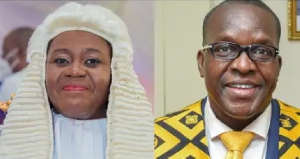
    CONCLUSION:

    In summary, while the Supreme Court of Ghana has not made Article 97 useless, its interpretations and rulings have significantly impacted how the article is applied in practice. The on-going dialogue between the judiciary and the legislature regarding the accountability of MPs continues to evolve, reflecting the dynamic nature of Ghana’s constitutional democracy. For the most current developments or current case, let’s see how it unfolds.

    Will the speaker comply with the ruling of the seven member Panel or will challenge the ruling of the Supreme Court?

    Source: 3News.com

    DISCLAIMER: Independentghana.com will not be liable for any inaccuracies contained in this article. The views expressed in the article are solely those of the author’s, and do not reflect those of The Independent Ghana

  • Supreme Court’s full ruling on parliamentary vacant seats controversy

    Supreme Court’s full ruling on parliamentary vacant seats controversy

    The Supreme Court has clarified its decision to uphold the suit filed by Majority Leader Alexander Afenyo-Markin, bringing clarity to the controversy surrounding when a Member of Parliament (MP) is deemed to have vacated their seat.

    In its detailed judgment, the Court ruled that an MP is considered to have vacated their seat only if they change their political affiliation during their current term while continuing to serve in Parliament under a new party identity.

    The ruling, which aligns with the Majority Leader‘s position, interprets Articles 97(1)(g) and (h) of the Constitution as applying strictly to the ongoing parliamentary term. These provisions, the Court emphasized, do not extend to future terms, meaning an MP’s decision to contest elections under a different party in subsequent electoral cycles does not constitute grounds for vacating their seat.

    The judgment further clarified that an MP must relinquish their seat if they switch parties during their tenure while still representing the new party in Parliament. The provisions are designed to address political alignment during the present term of service and do not regulate political choices made for future elections.

    The full ruling is provided below.

  • Lawyer petitions court to freeze govt’s borrowing on T-bills

    Lawyer petitions court to freeze govt’s borrowing on T-bills

    Legal practitioner Jonathan Amable has petitioned the Supreme Court to impose an immediate injunction on government borrowing through treasury bills.

    The application seeks to prevent the government and its representatives from issuing treasury bills to fund operations, citing the absence of parliamentary approval for such actions, which he argues violates the 1992 Constitution.

    In his writ, Amable contends that without this prohibition, the government’s borrowing will continue to harm the economy. The Attorney General of Ghana is named as the defendant, and the suit also accuses the Ministry of Finance and Bank of Ghana of unconstitutional actions in the issuance of treasury bills.

    Amable’s application highlights the risk of economic fallout, noting that if the borrowing contracts are deemed unconstitutional, they may be voided, jeopardizing the investments of banks, microfinance institutions, insurance companies, pension funds, and everyday Ghanaians. This, he argues, endangers the stability of the financial sector and the public’s invested capital.

    The suit references Section 30 of the Bank of Ghana Act, 2002 (Act 612), and Section 61 of the Public Financial Management Act, both of which require parliamentary oversight on government borrowing via treasury bills and debt instruments.

    Amable’s request targets only new borrowing transactions and does not aim to prevent the government from meeting obligations on existing debt, provided repayment funds are not drawn from new, unapproved borrowing.

    “That the consequence of the relevant borrowing contracts being conducted without the requisite parliamentary approval makes them liable to be declared void for unconstitutionality and such a consequence will be made more dire by the fact that the holders of the offending debt instruments include banks, savings and loans companies micro-finance companies, asset management companies, insurance companies, pension funds and ordinary Ghanaians. Accordingly, the unconstitutional conduct of the state potentially jeopardises the entire Ghanaian financial sector and hard-earned capital of the investing public”, the application read in part.

  • Select Vacant seats: I’m relieved! – Joe Ghartey reacts to Supreme Court’s ruling

    Select Vacant seats: I’m relieved! – Joe Ghartey reacts to Supreme Court’s ruling

    The lead counsel for the Member of Parliament for Effutu, Joe Ghartey, has praised the Supreme Court’s ruling, which overturned the Speaker of Parliament’s decision to declare four parliamentary seats vacant.

    Speaking in an interview with Citi TV on Tuesday, November 12, 2024, Ghartey expressed his approval of the court’s decision, noting that the ruling had met his expectations.

    “I think, I have been in court for too long. I accept decisions as they came. If they had ruled against us, I would have accepted it. I have to realise that in this matter of law, you must accept decisions as they come,” he stated.

    Reflecting on the case, Joe Ghartey noted that while the behavior of some judges during proceedings can occasionally create confusion, it is ultimately the judge’s final ruling that holds significance.

    “You go to court and a judge is questioning you, you may think that that judge doesn’t like you. You will be surprised that, that judge may rule in your favour, maybe he needed clarification.

    “Some of the judges will also heckle you and then they’ll go the way you expected them to go”, he stated.

    Joe Ghartey described the legal dispute as unnecessary and emphasized the importance of fostering a peaceful environment as the nation approaches the upcoming elections.

    “What motivates me, is the country, Ghana. It is one country that we have. NPP, NDC, you, me our passports, and Ghana Card, and so, we need an oasis of peace. I am glad that this is behind us. I pray that this election is peaceful. Whoever wins, God bless the person, whoever loses, God bless the person. We work together to make Ghana better,” he stated.
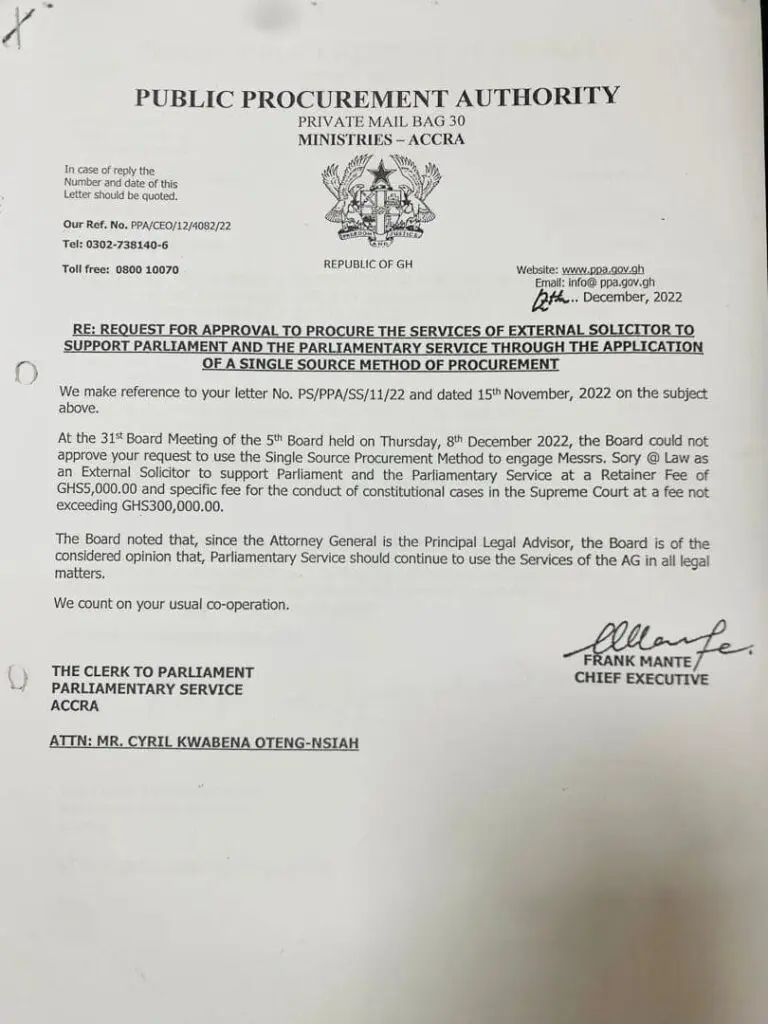
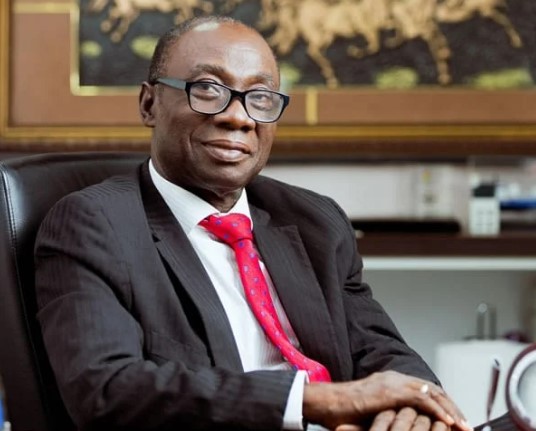
    The Supreme Court has ruled in favor of Alexander Kwamina Afenyo-Markin, the leader of the New Patriotic Party (NPP) caucus, overturning Speaker Alban Bagbin’s decision to declare four parliamentary seats vacant.

    In a 5-2 ruling, the seven-member panel, led by Chief Justice Gertrude Torkornoo, sided with Afenyo-Markin, agreeing with his arguments and restoring the NPP’s status as the Majority in Parliament.

    The dispute arose when Speaker Bagbin, responding to a petition from Haruna Iddrisu, the MP for Tamale South, declared the seats for Agona West, Fomena, Suhum, and Amenfi Central vacant.

    This was due to MPs from these constituencies either crossing the floor to contest the 2024 elections as independents or joining other parties.

    Bagbin based his ruling on Article 9(1)(g) and (h) of the 1992 Constitution, which states that MPs lose their seats if they change political affiliation or choose to sit as independents after being elected. The matter was initially raised in Parliament by Minority Leader Dr. Cassiel Ato Forson on October 15.

    According to the Speaker, the four MPs had breached Article 9(1)(g) and (h) of the 1992 Constitution, which states that “A member of Parliament shall vacate his seat in Parliament — (g) if he leaves the party of which he was a member at the time of his election to Parliament to join another party or seeks to remain in Parliament as an independent member; or (h) if he was elected a member of Parliament as an independent candidate and joins a political party.”

    However, the Supreme Court disagreed with Bagbin’s interpretation of the Constitution, ruling that his decision was erroneous.

    Chief Justice Torkornoo expressed concerns about the potential disenfranchisement of voters in the affected constituencies, particularly with the general elections on the horizon and no provisions for by-elections.

    To expedite resolution, the Court instructed both parties to submit their claims within seven days.

  • Speaker could face 10-year prison term if he fails to comply with Supreme Court ruling – Atuguba

    Speaker could face 10-year prison term if he fails to comply with Supreme Court ruling – Atuguba

    Former Supreme Court Justice William Atuguba has disclosed that Speaker of Parliament, Alban Bagbin, is bound by the Supreme Court’s recent ruling on 4 vacant seats in parliament.

    On Tuesday, the Supreme Court nullified the Speaker’s declaration that four parliamentary seats were vacant.

    The Court ruled that the Speaker’s decision to declare the seats vacant was unconstitutional, thereby reinstating the ruling New Patriotic Party’s (NPP) majority in Parliament just before the December 7 election.

    Discussing the implications, Mr. Atuguba stated that the Speaker is obligated to follow the Supreme Court’s ruling, cautioning that failure to do so could lead to contempt charges.

    He highlighted that such contempt is a serious offense, carrying a potential prison sentence of up to 10 years without the option of a fine.

    “There are processes at the Supreme Court…contempt is there…it is a high crime and when its prosecuted you have to suffer imprisonment up to 10 years…[host: that is if the court’s decision is not complied with?]…yes up to ten years. It is not necessarily 10 years. There is no option of a fine but you might just suffer some term of imprisonment not exceeding 10 years. Not only that, a ten year disqualification from holding public office. If you’re a President you are liable to removal from office,” Atuguba expressed.

  • Politics has taken over every govt affair but pretend it hasn’t – Atuguba

    Politics has taken over every govt affair but pretend it hasn’t – Atuguba

    Former Supreme Court Justice William Atuguba has voiced his worries about the widespread reach of politics into numerous sectors nationwide.

    Speaking exclusively to JoyNews on November 12, he observed, “In this country, we like to pretend, but politics have entered everywhere.”

    His remarks followed the Supreme Court’s recent decision reversing the Speaker’s announcement that four parliamentary seats were vacant.

    Justice Atuguba expressed frustration at how political agendas frequently take precedence over ethical standards.

    “These politicians, we know how they operate. They are not interested in the righteousness of the matter but the party inclination…even if someone knows they are on the wrong side, they will still push it. A court is a court—you persuade it for whatever reasons, and it may adopt your view, ” he said.

    He also noted that the Speaker of Parliament, Alban Bagbin, is bound by the Supreme Court’s recent ruling.

    According to him, compliance with the Supreme Court’s ruling is mandatory, warning that failure to adhere could lead to contempt charges.

    He highlighted that such contempt is a serious offense, carrying a potential prison sentence of up to 10 years without the option of a fine.

    He added that it goes along with a disqualification from holding public office for a decade.

  • Supreme Court to decide on vacant Parliamentary seats today

    Supreme Court to decide on vacant Parliamentary seats today

    The Supreme Court will deliver a ruling today, Tuesday November 12, on the contested decision to declare four parliamentary seats vacant, a case that has sparked political debate and raised questions about the Speaker of Parliament’s constitutional authority.

    Initially scheduled for Monday, November 11, the court postponed its judgment until today, November 12.

    The case, initiated by Majority Leader Alexander Afenyo-Markin, questions Speaker Alban Bagbin’s decision to declare the seats vacant without judicial approval or the initiation of by-elections.

    At the heart of the dispute is Bagbin’s interpretation of the 1992 Constitution concerning parliamentary vacancies. On October 17, 2024, Bagbin deemed the four seats vacant, arguing that the MPs in question had violated constitutional requirements, thus justifying their removal.

    Afenyo-Markin contends that Bagbin acted beyond his constitutional limits, insisting that only the judiciary has the authority to interpret the Constitution in such cases.

    He argues that Bagbin’s decision bypasses proper legal processes and effectively denies those constituencies their right to representation.

    Following Afenyo-Markin’s suit, the Supreme Court issued an injunction preventing further action regarding the seats until a final judgment.

    Bagbin, however, challenged this injunction, arguing that it restricted his duties as Speaker and that his declaration was necessary to maintain parliamentary integrity.

    The court dismissed Bagbin’s motion to lift the injunction, reinforcing its stance and paving the way for today’s crucial ruling on the matter.

  • Supreme Court to decide on vacant Parliamentary seats tomorrow

    Supreme Court to decide on vacant Parliamentary seats tomorrow

    The Supreme Court is set to deliver a ruling tomorrow, Tuesday, November 12, on a high-stakes case regarding the controversial decision to declare four parliamentary seats vacant.

    This case has ignited political debate and raised questions about the constitutional authority of Parliament’s Speaker, Alban Bagbin.

    The case was filed by the leader of the New Patriotic Party (NPP) parliamentary caucus, Alexander Afenyo-Markin, who contests Speaker Alban Bagbin’s unilateral declaration of the seats as vacant.

    Afenyo-Markin argues that Bagbin acted without judicial oversight and bypassed the process of calling by-elections.

    Central to the case is Bagbin’s interpretation of the 1992 Constitution’s stipulations on parliamentary vacancies. Bagbin justified his September 17, 2024, decision, asserting that the MPs in question had breached constitutional requirements, thereby forfeiting their seats.

    Afenyo-Markin contends that the Speaker exceeded his authority, asserting that only the judiciary has the power to interpret constitutional matters of this nature. He claims that Bagbin’s decision effectively deprives constituents in these districts of their right to representation.

    In response to Afenyo-Markin’s suit, the Supreme Court issued an injunction preventing further actions on the vacated seats until it reached a final judgment. Speaker Bagbin filed a motion to challenge this interim ruling, arguing that the injunction obstructed his official duties and asserting that his actions were within his authority to uphold the integrity of Parliament.

    The court upheld the injunction, dismissing Bagbin’s appeal to reverse it, which has now set the stage for today’s pivotal judgment on this constitutional dispute.

    However in court today, the Speaker of Parliament’s legal team failed to submit the required statement of case and was notably absent from the court proceedings.

    This absence has raised concerns, as the Speaker’s representation was expected to be crucial in addressing the legal issues at hand regarding the vacant seats.

    Meanwhile, the Attorney-General has expressed strong disapproval of the Speaker’s legal team, particularly criticizing Thaddeus Sory, the Speaker’s lawyer, for his failure to appear in court or submit the necessary documents.

    The Attorney-General pointed out that this lack of participation undermines the judicial process.

    In response, the Attorney-General urged the court to take a firm stance on the matter, warning that such conduct diminishes the authority of the court and could compromise the fairness of the legal proceedings.

    With the ruling expected tomorrow, the outcome is highly anticipated, as it will likely have significant implications for parliamentary representation and the interpretation of constitutional responsibilities for public officials.

  • Supreme Court under Akufo-Addo is acting as if it is above the constitution – Tony Aidoo

    Supreme Court under Akufo-Addo is acting as if it is above the constitution – Tony Aidoo

    Former Ghana Ambassador to the Netherlands, Dr. Tony Aidoo, has criticised the Supreme Court under President Akufo-Addo, alleging that it acts as a supra-constitutional authority that intrudes into the functions of Parliament.

    In a recent interview on Newsfile aired by JoyNews and reported by MyNewsGh.com, Aidoo questioned the legal validity of a lawsuit brought forward by the Majority Leader, Hon. Alexander Kwamena Afenyo-Markin, asserting that it lacks any legal foundation.

    Aidoo’s comments reflect a growing concern over the judiciary’s influence on legislative processes in Ghana.

    “The Supreme Court in the past years, especially under the Akufo-Addo administration, behaved as if it’s a supra-constitutional body that can interfere in every activity of Parliament.

    Afenyo-Markin’s writ did not show any legal course for interpretation,” Dr. Aidoo bemoaned.

    Dr. Tony Aidoo contends that the matter regarding vacant parliamentary seats is not a legal one but rather a direct outcome of actions taken by the MPs, governed by a clear conditional provision that requires no further interpretation.

    He expressed his backing for the Speaker of Parliament, Alban Bagbin, stating that Bagbin properly applied the law as outlined in Article 97, sections (g) and (h).

    Additionally, Aidoo raised concerns about the Supreme Court’s actions, suggesting it behaves as if it were a sixth colonist for the ruling New Patriotic Party (NPP), implying undue influence over parliamentary affairs.

    “Every case the NPP loses in Parliament, it takes it to the Supreme Court because they know it is a pact court where decisions are taken to favour them. This is not the root of proper governance of our country,” Dr. Aidoo lamented.

    The Supreme Court of Ghana has rejected an application from Speaker of Parliament Alban Bagbin, who aimed to overturn a prior ruling that prevented him from declaring four parliamentary seats vacant.

    This ruling adds to the ongoing legal discourse regarding the extent of the Speaker’s authority and the judiciary’s influence on parliamentary matters.

    In his application, Speaker Bagbin sought to nullify the Supreme Court’s earlier decision that had temporarily halted his ruling concerning the four disputed seats.

    Additionally, he aimed to dismiss a writ submitted by Majority Leader Alexander Afenyo-Markin, which called for judicial intervention to stop the Speaker from making further declarations regarding these seats .

  • No one is above our orders – Supreme Court

    No one is above our orders – Supreme Court

    The Supreme Court has unequivocally stated that its orders, judgments, and timelines are mandatory and must be adhered to, including by the President and Vice President.

    According to the court, failure to comply with its directives constitutes a serious offense.

    On October 30, 2024, the court dismissed an application from Speaker of Parliament Alban Bagbin, who sought to overturn its previous stay of execution regarding the declaration of four parliamentary seats as vacant.

    This action followed a lawsuit filed by Effutu MP Alexander Afenyo-Markin, challenging the Speaker’s declaration.

    The legal representatives for the Speaker argued that the Supreme Court lacked jurisdiction over the matter, among other points raised during the proceedings.

    Nevertheless, the court refuted this claim, standing by its earlier ruling and labeling the Speaker’s appeal as lacking merit.

    After hearing arguments from all relevant parties, including the Attorney-General and Minister for Justice, Chief Justice Gertrude Torkornoo, who chaired the panel, reiterated that disobeying the court’s orders is tantamount to a high crime.

    The panel emphasized that the Speaker’s application reflected a “misinformation and misapprehension of the law.”

    The court also clarified that the Speaker’s assertion about the court’s lack of jurisdiction was misguided, stating that the issue necessitated constitutional interpretation.

    “This exceptional circumstance arising from the outcome of the ruling weighed on the mind of the Supreme Court to grant an order directing a stay of execution of the ruling of the Speaker on 17th October 2024.”

    “It is therefore disingenuous and wrong, including being an act of disinformation, for the argument to be presented that the jurisdiction of the Supreme Court could never be evoked to determine a constitutional interpretation because of the High Court’s jurisdiction to hear and determine disputes on elections and vacation of seats of Members of Parliament under Article 99.

    “Our clear view is that Article 99 gives the jurisdiction to hear cases involving questions on the validity of election or vacation of seats of a Member of Parliament and the Speaker. It does not in any way take away the jurisdiction of the Supreme Court to interpret and enforce any provision of the Constitution, including Article 99 itself,” the Chief Justice said.

    “We are satisfied that administrative procedures cannot override the potency of legality, and every procedure used by the Supreme Court to serve the processes of the Speaker of Parliament was actually in conformity with law and the circulars issued by the Chief Justices in 2021 and 2024.”

    Furthermore, the Supreme Court confirmed its decision to grant a stay of execution on the Speaker’s declaration of four vacant seats, explaining that no by-elections could lawfully take place to fill these seats between October 17, 2024, and January 7, 2025.

    Chief Justice Gertrude Torkornoo indicated that this critical timeframe played a significant role in the court’s ruling on the stay of execution.

    “The four constituencies in the Western Region, Ashanti Region, Central Region, and Eastern Region of Parliament are made up of hundreds of thousands of Ghanaians who had been cued to elect these members of parliament to represent their interests in Parliament as their voices.

    “By declaring that their duly elected representatives in Parliament had vacated their seats for acts that were interpreted within the light of Article 97 (1)(g) by the Speaker, the Speaker was actually enforcing this interpretation of Article 97 (1)(g) against those hundreds of thousands of Ghanaians and not just the four people that sit in Parliament.

    “He was also doing so at a time that, from the official records of Parliament presented to the Supreme Court, the Speaker knew that a contrary interpretation was being placed on the same constitutional provision and that the Supreme Court jurisdiction had been invoked to provide the correct interpretation,” she said.

  • Pressure mounts on Speaker Bagbin to accept Supreme Court’s ruling on vacant seat case

    Pressure mounts on Speaker Bagbin to accept Supreme Court’s ruling on vacant seat case

    The Speaker of Parliament, Rt. Hon. Alban Bagbin, is facing calls to accept the Supreme Court’s ruling concerning an injunction on his decision to declare four parliamentary seats vacant.

    This pressure comes as Alan Kwadwo Kyerematen, the Presidential Candidate for the Movement for Change, and other influential figures have voiced concerns about the implications of his challenge to the court’s authority.

    Mr Kyerematen commended Speaker Bagbin’s intent in vacating the parliamentary seats but argued that contesting the Supreme Court’s jurisdiction on this matter might be misdirected. According to him, Bagbin should comply with the injunction, then seek a swift legal resolution to minimize tensions between Parliament and the judiciary.

    Mr Kyerematen argued that the Supreme Court’s injunction—which currently prevents the enforcement of Bagbin’s original ruling—should be respected as an essential step in maintaining a balance of powers and avoiding potential conflict between the branches of government.

    “Bagbin must accept first the decision of the Supreme Court to grant an injunction that operates as a stay of execution of his initial order. He must accept the second decision of the Supreme Court to throw away their application,” Kyerematen advised. He further urged Bagbin to request a reconsideration of the Supreme Court’s injunction on the grounds that the case does not involve constitutional interpretation, which would keep Parliament’s decisions from being unnecessarily challenged.

    Senyo Hosi, former CEO of the Ghana Chamber of Bulk Oil Distributors, also weighed in, stressing the importance of respecting judicial rulings to uphold public confidence in democracy. In a letter to Speaker Bagbin, Hosi cited the growing global disillusionment with democratic systems and highlighted Ghana’s role in setting a standard for rule of law. He cautioned that ignoring Supreme Court rulings could lead to further erosion of public trust in Ghana’s democratic institutions, especially in an era where African youth increasingly feel disillusioned by political systems that don’t appear to deliver on promises of development and equity.

    “Reports of democratic recession globally and a disenchanted African youth must guide our governments and leaders,” Hosi remarked, emphasizing that Ghana’s leaders should set an example by adhering to judicial decisions.

    With elections approaching, both Kyerematen and Hosi highlighted the importance of cooperation among the branches of government to avoid prolonged disputes that could disrupt democratic stability. As calls grow for Speaker Bagbin to accept the court’s ruling, the outcome of this case may set a crucial precedent for the balance of power and public trust in Ghana’s democracy.

  • PPA directs Parliament to engage A-G’s Office in vacant seats case at Supreme Court

    PPA directs Parliament to engage A-G’s Office in vacant seats case at Supreme Court

    The Public Procurement Authority (PPA) has directed the Parliamentary Service of Ghana to engage the Attorney General’s Department, rather than an external firm, for legal representation in a Supreme Court case concerning vacant parliamentary seats.

    The PPA’s decision follows a request by Parliament to procure the services of Messrs Sory@Law, which was subsequently denied.

    The PPA emphasised that, as a state institution, Parliament should rely on the Attorney General’s Department for legal matters to maintain institutional integrity and adhere to procurement protocols.

    The decision was outlined in a letter dated December 12, 2022, signed by PPA Chief Executive Officer Frank Mante, responding to Parliament’s initial request submitted on November 15, 2022.

    “At the 31st Board Meeting of the 5th Board held on Thursday, 8 December 2022, the Board could not approve your request to use the Single Source Procurement Method to engage Messrs Sory@Law as an external solicitor to support Parliament and the Parliamentary Service at a Retainer Fee of GHS5,000.00 and specific fee for the conduct of constitutional cases in the Supreme Court at a fee not exceeding GHC300,000.00,” the PPA’s letter to the Clerk to Parliament stated.

    “The Board noted that, since the Attorney General is the Principal Legal Advisor, the Board is of the considered opinion that, Parliamentary Service should continue to use the Services of the AG in all legal matters,” read the PPA’s letter to Cyril Kwabena Oteng-Nsiah, Clerk to Parliament.

    Sory@Law, which represented Parliament in the 2023/2024 legal year, has filed on behalf of Parliament in several cases for the ongoing 2024/2025 year, including a recent case involving Alexander Afenyo Markin against the Speaker of Parliament and the Attorney General’s Department. This case, now at the Supreme Court, seeks an interpretation of Article 97 (1) (g) and (h) concerning the seats held by four current members of Parliament.

  • Vacant seats: Supreme Court ruling on vacant seats influenced by politics – Dr. Kwabena Donkor

    Vacant seats: Supreme Court ruling on vacant seats influenced by politics – Dr. Kwabena Donkor

    Committee, Ranking Member of Parliament’s Employment, Social Welfare, and State Enterprises Committee, Dr. Kwabena Donkor, has openly criticised the Supreme Court’s recent dismissal of Speaker Alban Bagbin’s application.

    Speaker Bagbin had filed to overturn an earlier ruling preventing him from declaring four parliamentary seats vacant.

    The Supreme Court’s ruling, delivered on Wednesday, October 30, upheld its prior decision, effectively barring Speaker Bagbin from proceeding with the seat declarations and preserving the current occupants.

    In an interview on Citi FM’s Eyewitness News with Selorm Adonoo, Dr. Donkor accused the Supreme Court of prioritising political considerations over legal principles.

    He took particular issue with the Chief Justice’s stance that the court’s decision aimed to prevent leaving thousands of constituents temporarily unrepresented if the Speaker’s declarations were upheld.

    The Chief Justice argued in her ruling that maintaining current representation was crucial, as declaring the seats vacant would leave constituencies without parliamentary voice until by-elections could be held.

    Dr. Donkor challenged this reasoning, calling it inconsistent and pointing to the people of Santrokofi, Akpafu, Likpe, and Lolobi (SALL), who have been without representation in Parliament since the 2020 elections due to administrative and boundary issues.

    He argued that the court’s position on representation fails to address the ongoing disenfranchisement of the SALL communities, highlighting a selective application of the principle of representation.

    He also questioned the impartiality of the court’s decisions, expressing concern over the judiciary’s role in ensuring fair and democratic representation for all Ghanaians.

    “The decision is not a legal one but a political one. I have also stated that this particular Supreme Court is more political than legal.

    If you listened to the argument of the Chief Justice in her ruling that thousands of Ghanaians will not have representation if the ruling of the Speaker is not stayed, it is the most flawed reasoning I have heard in Ghana’s political economy.

    “It is flawed because Parliament, per its calendar, will be rising in two weeks from today. And also, the people of SALL have been without representation, and they are not Ghanaians.”

  • Parliament to reconvene early November – Speaker announces

    Parliament to reconvene early November – Speaker announces

    The Office of the Speaker of Parliament is preparing to recall Parliament in early November in response to a petition from the New Patriotic Party (NPP) Caucus, which urged the Speaker to reconvene the House to address urgent issues.

    Speaker Alban Sumana Kingsford Bagbin informed a five-member delegation from the Council of State, led by Chairman Nana Otuo Siriboe II, that steps are already underway to facilitate Parliament’s recall.

    The delegation visited the Speaker to gain insight into recent legislative developments, including the indefinite adjournment of the House.

    In a statement copied to the Ghana News Agency, the Parliamentary Service shared that, following extensive discussions, Council members expressed their commitment to assisting the Speaker and House leadership in resolving any ongoing issues to enable Parliament’s prompt resumption.

    The Speaker also briefed the delegation on the circumstances in Parliament and elaborated on his recent pronouncements on the floor.

    He assured the Council of his dedication to advancing the nation’s democracy. However, he explained his current obligation to lead a Ghanaian delegation to the 67th Conference of the Commonwealth Parliamentary Association (CPA) in Sydney, New South Wales, Australia.

    The delegation includes Mr. Osei Kyei-Mensah-Bonsu, former Majority Leader and MP for Suame, along with the two House leaders, Whips, the Clerk to Parliament, and other Parliamentary Service officials.

    The CPA Conference is set to take place from November 3 to November 8, during which Speaker Bagbin, as the outgoing CPA International President, is expected to transfer leadership to the newly elected President, the Speaker of the New South Wales Parliament.

    However, Speaker Bagbin indicated his intention to return to Ghana earlier than initially planned to fulfill MPs’ request to recall Parliament.

    The Council praised Speaker Bagbin for upholding Ghana’s democratic integrity through his legislative leadership and international roles, including his presidency of CPA International, the Conference of Speakers and Presidents of African Legislatures (CoSHAL), and his executive membership with the International Legislative Advisory Council of the National Conference of State Legislatures (NCSL) in the United States. Nana Otuo Siriboe encouraged him to continue these efforts for the benefit of Ghana and its citizens.

    The Speaker has recently been re-elected to a second term as President of the Conference of Speakers and Presidents of African Legislatures. On October 22, he indefinitely suspended parliamentary proceedings due to ongoing legal proceedings related to his October 17 declaration of four seats as vacant.

    This action led the National Democratic Congress (NDC) to claim majority status, as two of the affected seats belong to NPP members running as independents in the December 7 election, while a third seat is held by an independent candidate allied with the NPP. The fourth seat belongs to an NDC member.

    The impacted MPs include Andrew Asiamah Amoako, Second Deputy Speaker and MP for Fomena, who serves as an independent member; Madam Cynthia, the NPP MP for Agona West; Mr. Kwadjo Asante, NPP MP for Suhum; and Peter Yaw Kwakye-Ackah, the NDC MP for Amenfi Central.

    Upon adjourning the House, Speaker Bagbin noted that he had received a Supreme Court directive to stay his previous ruling regarding the four vacant seats. Although Parliament had a quorum to conduct business, he stated that the House lacked sufficient numbers to make formal decisions.

    “Hon. members, we don’t have at least half of all the Members of Parliament present. Consequently, in view of the current circumstances, the fact that there’s a question on the composition and constitution of Parliament, and having regard to the public interest, and the exigencies of the affairs in Parliament, I will proceed in accordance with standing order 59 adjourn the house indefinitely, that is sine die.

    “Hon. members, I have consulted leadership, and I’m exercising my discretion to decide to suspend the meeting of the house indefinitely – the House is accordingly.”

    Prior to the declaration of the four seats as vacant, Majority Leader Alexander Afenyo-Markin submitted an application to the Supreme Court, requesting it to prevent the Speaker from ruling on the matter in response to a motion filed by the Minority to declare the seats vacant.

    However, on Wednesday, October 30, the Supreme Court declined the Speaker’s request to overturn its prior ruling suspending the Speaker’s declaration of the seats as vacant, given Afenyo-Markin’s application before the court.

    The Court has now scheduled November 11 for its final judgment on the main application submitted by Mr. Afenyo-Markin.

  • Seat vacancy: Bagbin’s application to set aside Supreme Court’s earlier ruling dismissed

    Seat vacancy: Bagbin’s application to set aside Supreme Court’s earlier ruling dismissed

    The Supreme Court has denied an application from Speaker of Parliament Alban Bagbin, which sought to overturn the Court’s earlier ruling suspending his declaration of four parliamentary seats as vacant.

    This legal battle began when Effutu MP Alexander Afenyo-Markin filed a suit challenging the Speaker’s declaration.

    In response, Bagbin’s legal team argued that the Supreme Court did not have jurisdiction over the matter, among other grounds presented in court.

    However, after carefully considering the arguments from all parties, including those from the Attorney-General and Minister for Justice, the Supreme Court affirmed its previous ruling, stating that the Speaker’s appeal lacked merit.

    Chief Justice comments reflected this conclusion, emphasizing, “We have considered the application, and we have come to the conclusion that the grounds supporting the application have no merit”.

    In a related development, the Court also dismissed an objection from Thaddeus Sory, Bagbin’s counsel, regarding Justice Ernest Gaewu’s participation.

    Mr Sory argued that Gaewu’s history as a parliamentary candidate for the New Patriotic Party (NPP) might present a conflict of interest. However, the Supreme Court rejected this claim.

    This decision follows an October 18 directive from the Court instructing Parliament to allow the four MPs to continue their duties until the case is resolved, effectively putting the Speaker’s declaration made on October 17 on hold.

    The ruling is significant, as both factions in Parliament currently assert their claim to a majority.

  • Vacant seats case: Supreme Court rejects Speaker’s   motion for Justice Gaewu’s recusal

    Vacant seats case: Supreme Court rejects Speaker’s motion for Justice Gaewu’s recusal

    The Supreme Court has rejected an application from the Speaker of Parliament seeking to have Justice Ernest Gaewu recuse himself from a panel tasked with hearing a case regarding the Speaker’s authority to declare four parliamentary seats vacant.

    Represented by his legal team, the Speaker argued for the court to nullify a previous ruling that directed him to suspend his October 17 decision declaring the seats vacant.

    During the hearing on Wednesday, October 30, counsel for the Speaker, Thaddeus Sory, raised concerns over Justice Gaewu’s involvement in the case, claiming that his past as a parliamentary candidate for the governing New Patriotic Party (NPP) in the Volta Region could compromise his impartiality in a matter potentially impacting the party.

    Mr. Sory argued that Justice Gaewu’s political ties to the NPP could affect his judgement in the case, given the party’s potential stake in the outcome.

    However, the court dismissed this application, allowing Justice Gaewu to remain on the panel.
    “He was known to be associated with the New Patriotic Party (NPP), and in fact he was a parliamentary candidate in one of their constituencies in the Volta Region,” Thaddeus Sory argued.

    But the apex court says the law does not bar one from serving as a judge of the Supreme Court because they belonged to a particular political party.

    In her ruling, the Chief Justice highlighted that once a nominee is vetted and approved by Parliament, it indicates they are qualified to preside over cases of this nature.

    She noted that the court already includes a former General Secretary of the People’s National Convention (PNC) and an ex-parliamentary candidate from the National Democratic Congress (NDC), underscoring the nonpartisan capacity of judges despite prior political affiliations.

    The case at hand addresses the Speaker’s declaration that several seats in Parliament were vacant due to Members of Parliament (MPs) shifting their political allegiance. According to Article 97(g)(h) of the Constitution, MPs who align with a different political party than the one on whose ticket they were elected are considered to have vacated their seats.

    Following the Speaker’s decision on October 17, 2024, the prior Majority caucus lost members, making it the Minority, while the previous Minority caucus became the Majority.

    Alexander Kwamena Afenyo-Markin, Leader of the New Patriotic Party (NPP) caucus, subsequently filed a case with the Supreme Court to seek an interpretation of Article 97.

    The court granted a temporary stay on the Speaker’s ruling until a final judgment on the matter is reached after an ex parte application from Afenyo-Markin.

    In response, the NPP caucus boycotted the October 22 parliamentary session, which led the Speaker to adjourn Parliament indefinitely due to insufficient quorum.

  • Speaker Bagbin’s bid to challenge Justice Gaewu’s empanelment rejected by Supreme Court

    Speaker Bagbin’s bid to challenge Justice Gaewu’s empanelment rejected by Supreme Court

    The Supreme Court has rejected an objection concerning the participation of one justice in the panel reviewing the case brought by Speaker of Parliament, Alban Bagbin.

    This case challenges the court’s earlier ruling that voided Bagbin’s declaration of four parliamentary seats as vacant.

    On Wednesday, October 30, 2024, during the proceedings, lead counsel for the Speaker, Thaddeus Sory, objected to Justice Ernest Yaw Gaewu being part of the panel, citing his ties to the ruling New Patriotic Party (NPP).

    Mr Sory argued that such connections disqualified Justice Gaewu from fairly presiding over the case.

    The five-member panel, chaired by Chief Justice Gertrude Torkornoo, retreated to deliberate on Mr Sory’s objection before issuing a ruling.

    The issue originated from Speaker Bagbin’s announcement on October 17, 2024, regarding the vacant seats, which prompted NPP caucus leader Alexander Kwamina Afenyo-Markin to request a stay of the decision from the Supreme Court.

    In response, Speaker Bagbin adjourned Parliament indefinitely and directed his legal team to challenge the Supreme Court’s ruling.

  • LIVESTREAMING: Supreme Court hears Speaker’s application on vacant seats ruling

    LIVESTREAMING: Supreme Court hears Speaker’s application on vacant seats ruling

    The apex court has begun hearing on the Speaker of Parliament’s directive to declare some Parliamentary seats vacant.

    Speaker of Parliament, Alban Bagbin directed his lawyers to file a stay of execution application to temporarily suspend the Supreme Court’s ruling that sought to suspend his directive on declaring some four parliamentary seats vacant.

    Speaker Alban Bagbin had declared four parliamentary seats vacant in accordance with Article 97(g) and (h) of the 1992 Constitution. 

    This provision stipulates that any Member of Parliament (MP) who intends to run as an independent candidate or contest for a different party in the upcoming 2024 elections must vacate their seat.

    The affected MPs were Cynthia Morrison, Kwadjo Asante, Andrew Amoako Asiamah, and Peter Kwakye Ackah. The Supreme Court’s suspension delays any immediate actions until the case is fully resolved.

    However, the Supreme Court instructed Bagbin to halt his ruling after an application from New Patriotic Party (NPP) MPs challenged the Speaker’s ruling. The court, led by Chief Justice Gertrude Torkornoo, issued a stay of execution, halting the enforcement of Bagbin’s ruling until further legal proceedings take place.

  • Parliament’s letter ordering return of Supreme Court’s writ on vacant parliamentary seats

    Parliament’s letter ordering return of Supreme Court’s writ on vacant parliamentary seats

    Speaker Alban Bagbin has rejected writs served on Parliament by the Supreme Court to halt the removal of four legislators who have decided to contest the 2024 general elections as independent candidates.

    The apex court instructed Bagbin to stay the execution of declaring four parliamentary seats held by Andrew Asiamah Amoako (Independent, Fomena Constituency), Cynthia Morrison (NPP, Agona West Constituency), Peter Yaw Kwakye-Ackah (NDC, Amenfi Central Constituency), Kwadjo Asante (NPP, Suhum Constituency) after an application from New Patriotic Party (NPP) leader of the House, Alexander Afenyo-Markin, who challenged the Speaker’s ruling.

    The Speaker has directed that the documents be returned to the Supreme Court, noting that “the attempted service is contrary to Article 117 of the 1992 Constitution” and contravenes the circular issued by “Her Ladyship Justice Cyra Pamela C.A. Korangteng (JA), the Judicial Secretary, and copied to the Honourable Lady Chief Justice, with reference number SCR9, entitled “Enforcement of articles 117 and 118 of the constitution -immunity from service of process and arrest” dated 12th July 2024 addressed to all registrars of courts.”

    This information was communicated by Deputy Clerk Ebenezer Ahumah Djietror in a letter that read “I am directed by Rt. Hon. Alban Sumana Kingsford Bagbin, Speaker of Parliament, to return the attached processes which was left at the Legal Services Office of the Parliamentary Service, by three (3) bailiffs of the Court on Wednesday, 16th October 2024. Attempts were made to serve the same processes on Tuesday, 15th October 2024.”

    On October 17, Speaker Alban Bagbin declared four parliamentary seats vacant in accordance with Article 97(g) and (h) of the 1992 Constitution prompting a change in the composition of the Majority and Minority sides of the House. The National Democratic Congress (NDC) Members of Parliament assumed the Majority position with 136 legislators and the New Patriotic Party (NPP) became the Minority with 135 lawmakers.

    However, both sides of the House are clinging to the Majority position amid the controversy. On October 22, Speaker Alban Bagbin adjourned Parliament indefinitely.

    The New Patriotic Party Caucus in Parliament has submitted a formal memo to the Speaker, Alban Bagbin, calling for an urgent meeting of the House in accordance with Article 112(3) of the 1992 Constitution and Order 53 of the Standing Orders of Parliament

    The NPP MPs want government businesses such as tax exemptions for eligible beneficiaries under the One District, One Factory Programme and the approval of the Ghana Financial Stability Fund, a $250 million facility from the International Development Association to be discussed and acted upon.

    Additionally, the Caucus outlined several bills for deliberation, such as the Environmental Protection Agency Bill, 2024, the Social Protection Bill, 2023, the Customs (Amendment) Bill, 2024, the Budget Bill, 2023, the Ghana Boundary Commission Bill, 2023, and the Intestate Succession Bill, 2022.

  • Bagbin orders return of Supreme Court’s writ on vacant parliamentary seats

    Bagbin orders return of Supreme Court’s writ on vacant parliamentary seats

    Speaker of Parliament, Alban Bagbin has rejected writs served on Parliament by the apex court regarding the vacant seats controversy in the House. The Speaker has directed that the documents be returned to the Supreme Court.

    This comes after Alban Bagbin demanded that his lawyers seek legal action to temporarily suspend the Supreme Court’s recent declaring four parliamentary seats not vacant, this is according to a JoyNews report.

    Speaker Alban Bagbin had declared four parliamentary seats vacant in accordance with Article 97(g) and (h) of the 1992 Constitution. 

    This provision stipulates that any Member of Parliament (MP) who intends to run as an independent candidate or contest for a different party in the upcoming 2024 elections must vacate their seat.

    The affected MPs were Cynthia Morrison, Kwadjo Asante, Andrew Amoako Asiamah, and Peter Kwakye Ackah. The Supreme Court’s suspension delays any immediate actions until the case is fully resolved.

    However, the Supreme Court instructed Bagbin to halt his ruling after an application from New Patriotic Party (NPP) MPs challenged the Speaker’s ruling. The court, led by Chief Justice Gertrude Torkornoo, issued a stay of execution, halting the enforcement of Bagbin’s ruling until further legal proceedings take place.