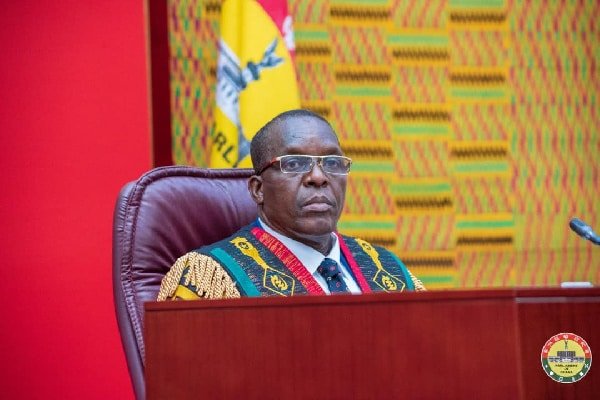
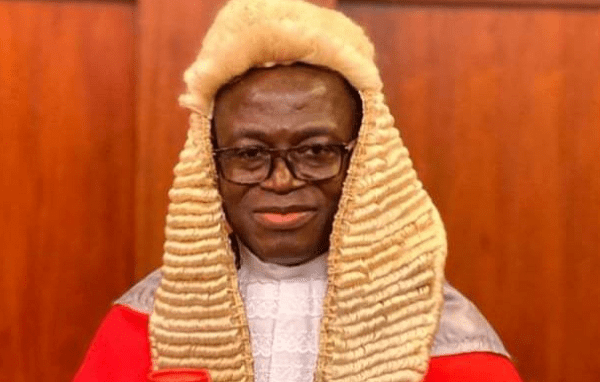
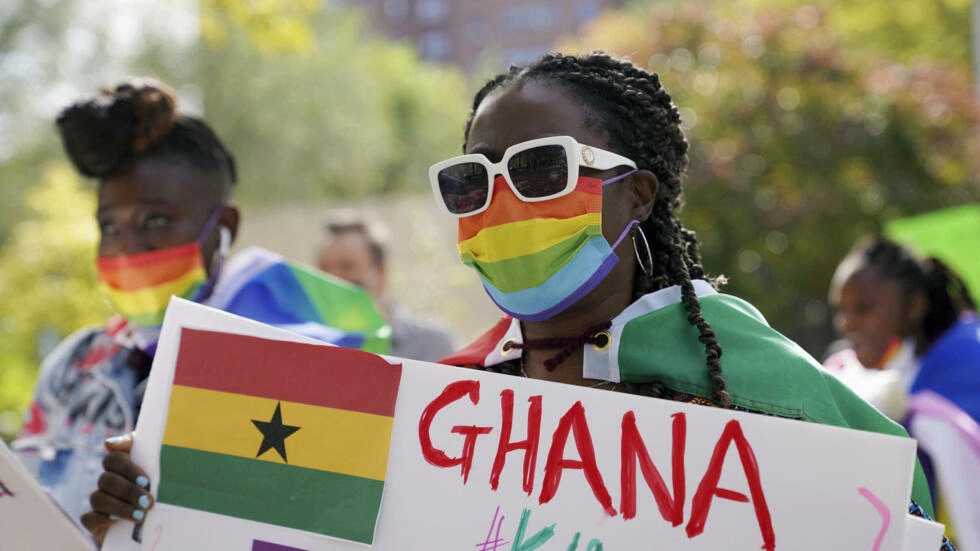
Justice Yonni Kulendi of the Supreme Court of Ghana has stated that the court will not be influenced by external pressures to adopt practices such as homosexuality, which are not in line with Ghanaian norms.
In his concurring opinion, he emphasized that Ghana’s Constitution holds supreme authority and is not subject to the influence of other nations’ laws or practices.
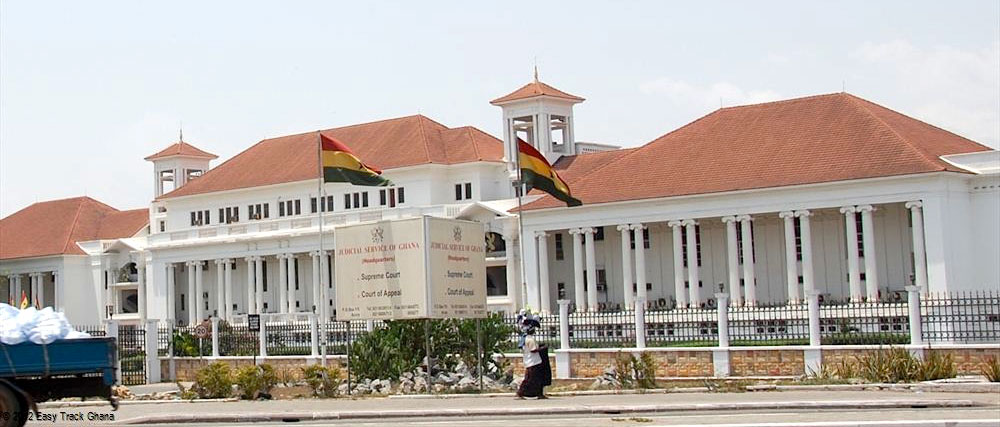
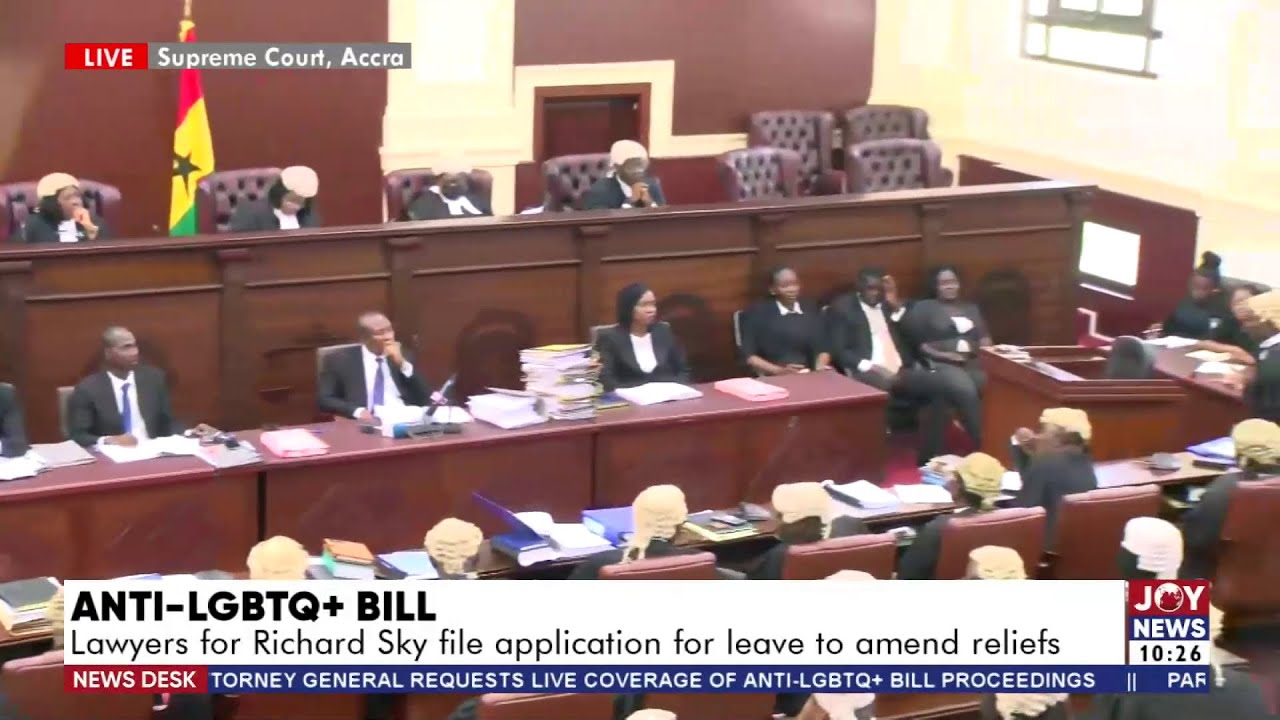
On July 24, 2024, the Supreme Court, led by Justice Paul Baffoe-Bonnie, unanimously rejected a petition filed by law lecturer Dr. Obiri-Korang challenging the constitutionality of laws criminalizing homosexuality.
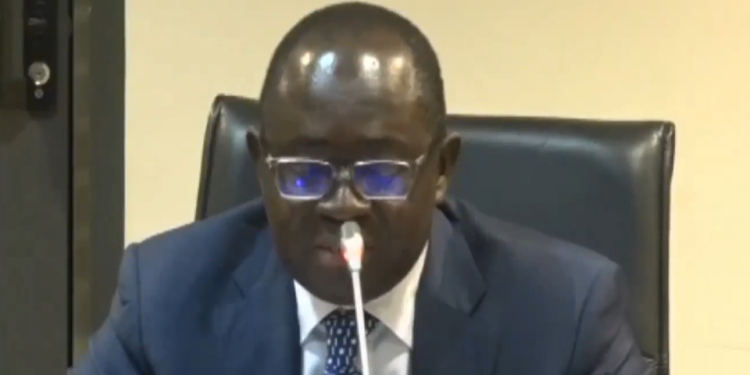
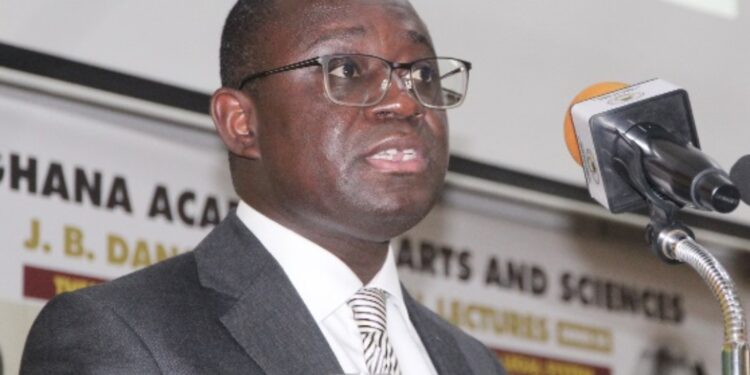
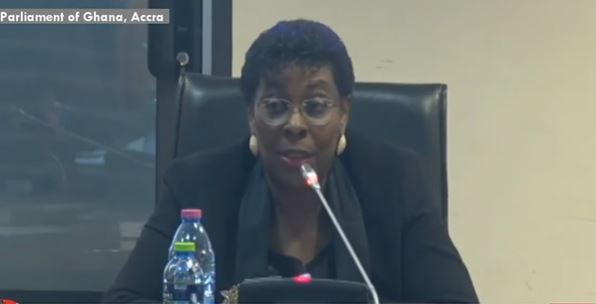
The seven-member panel, which included Justices Avril Lovelace-Johnson, Omoro Amadu Tanko, Ernest Gaewu, Yaw Darko Asare, and Agyei-Frimpong, upheld that Section 104(1)(D) of Act 29 is not discriminatory and does not infringe on individual privacy, whether for homosexuals or other sexual orientations involving unnatural carnal knowledge.
The court affirmed that the criminalization of unnatural carnal knowledge under Section 104(1)(b) of the Criminal and Other Offences Act, 1960 (Act 29) is consistent with the 1992 Constitution.
“Section 104(1)(D) of Act 29 is not discriminatory against homosexuals; neither does it infringe on the privacy of individuals, be they homosexuals or practitioners of other forms of sexual orientation which involve unnatural carnal knowledge however described.”
As a result, the panel dismissed Dr. Obiri-Korang’s lawsuit in its entirety.
“It is, therefore, not unconstitutional,” the panel said, and on that premise, dismissed the Plaintiff’s action in its entirety.
On February 28, 2024, Ghana’s Parliament unanimously passed the Human Sexual Rights and Family Values Bill, 2021.
The bill which is yet to be assented to by President Akufo-Addo to become law criminalises the mere identification as an LGBTQ+ community member and “related activities,” including same-sex relationships, the use of sex toys, and cross-dressing.
Presently, the content of the bill has not been made public as the President has been advised against receiving the bill from the Clerk of Parliament due to the legal action against the bill currently at the Supreme Court.
Concurring Opinion
Justice Yonni Kulendi, a member of the panel, in his concurring opinion, said, “whilst the constitutions and laws of other nations may have expressly legalized homosexuality, glorified gay marriages, and by way of affirmative actions, promulgated legislation to propagate, outdoor, evangelize, preach, and sell the notions of homosexuality to every fabric of those societies, Ghana as a nation, and for that matter this (Supreme) Court, cannot by ‘peer pressure’ be cajoled into adopting a similar stance.”
“Our Constitution is sui generis and the only one of its kind. Thus, citizens who ply this Court must do more than merely cite and refer to the Constitution of other states as well as their case law to persuade us on what the law is or ought to be in Ghana.
“Our duty as judges and the oath that we swore before assuming office was not to uphold the laws of other nations or their case law.
“Our oath is to uphold the Constitution and laws of the Republic of Ghana. Thus, we shall neither engage in legislative drafting nor usurp the lawmaking powers of Parliament in order to substitute our wisdom for that of the lawmakers by superimposing foreign perceptions of propriety and/or normalcy on our laws and established social structures,” the Supreme Court judge said in a 57-page judgment released on August 13, 2024.
“We must, therefore, as judges, avoid any extent of judicial activism that will mislead us into assuming the role of Parliament,” Justice Kulendi stated while pointing to the case of Republic v Fast Track High Court, Accra; Ex parte Daniels [2003-2004] SCLR 364 at p.370.
Conclusion
In his conclusion, he reiterated that, “in respect of the issue that was set down for determination in this suit, that Section 104(1) of Act 29, which criminalizes unnatural carnal knowledge, does not contravene the Constitution of the Republic of Ghana.
“The Plaintiff’s conception of private morality as a ground to limit or expand the constitutional right to privacy lacks sufficient context in the nation’s constitutional architecture.
“Indeed, it is fundamentally poles apart from Ghanaian family values. Our constitutional provisions derive their purpose and values from our traditions, customs, and culture,” Justice Yonni Kulendi said while dismissing the action in its entirety.
Relief Sought
Dr. Obiri-Korang, the Plaintiff, per his writ filed on August 26, 2024, specifically sought the following reliefs:
a. A declaration that Section 104(1)(b) of the Criminal Offences Act (Act 29) 1960 is ultra vires Article 18(2) of the Constitution of Ghana in so far as the said section will lead to the unlawful and arbitrary interference of the privacy of all adult persons living in Ghana.
b. A declaration that Section 104(1)(b) of the Criminal Offences Act of Ghana is ultra vires Article 17(2) of the Constitution of Ghana, in so far as the said section arbitrarily and unjustifiably discriminates against persons based on their sexual orientation.
c. A declaration that Section 104(1)(b) of the Criminal Offences Act of Ghana is ultra vires Article 14(1) of the Constitution of Ghana, in so far as the said section arbitrarily deprives homosexuals of their liberty to select their intimate sexual partners and their right to engage in intimate sexual conduct without state interference.