Tag: Taxes

  • GPRTU gives govt 2-day ultimatum to scrap GHS1 fuel levy or risk fare hikes

    GPRTU gives govt 2-day ultimatum to scrap GHS1 fuel levy or risk fare hikes

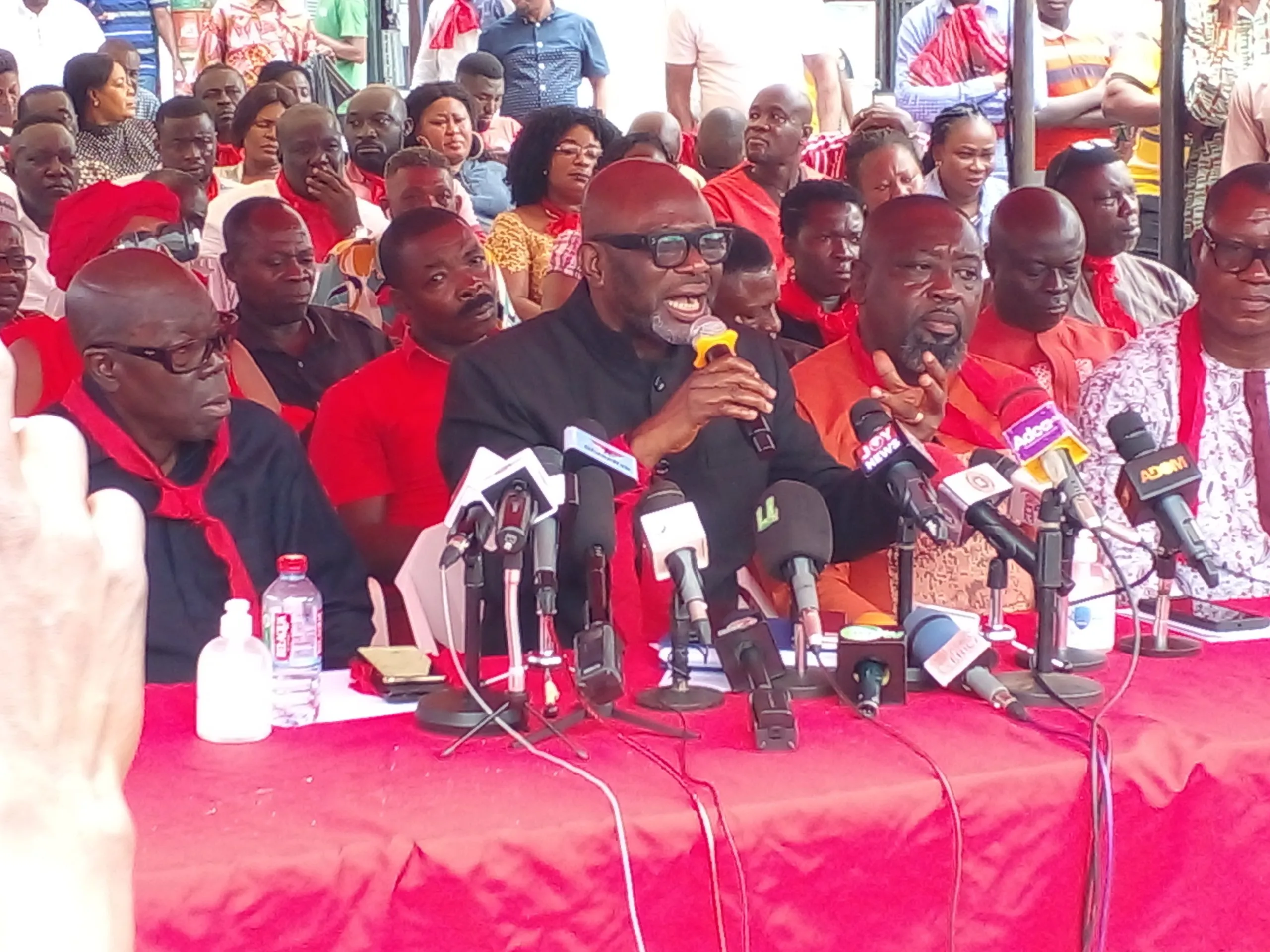
    The Ghana Private Road Transport Union (GPRTU) has threatened to increase transport fares should the government fail to scrap the fuel-related taxes in 48 hours. 

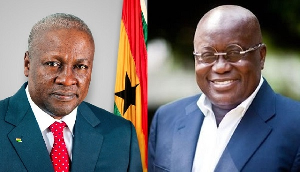
    Last year, the President John Dramani Mahama-led government implemented a GH¢1 fuel levy on petroleum products. This move falls under the Energy Sector Levies (Amendment) Act, 2025 (Act 1141), which was assented to by the President on June 5 to address energy-sector shortfalls, reduce legacy debts, and stabilize power supply across the country, following parliamentary approval.

    Speaking to the media on Wednesday, April 1, GPRTU Deputy Industrial and Public Relations Officer Samuel Amoah said drivers are struggling to cope with the fuel tax amid rising fuel prices, costly spare parts, deteriorating road conditions, and higher charges from the Driver and Vehicle Licensing Authority (DVLA).

    He noted, “We came up with this release and gave the government two days to do something about it. If they fail to do [that]…then we have no option but to organise ourselves to request an increment of transport fares for our members. What the government and the president is saying is, it is something they can’t control right now, but the transport operators may be forced to”.

    He said the union’s move is also aimed at shielding drivers from the National Petroleum Authority’s (NPA) recent fuel price adjustments.

    The NPA has set petrol at GH¢13.30 per litre and diesel at GH¢17.10 per litre. Meanwhile, a senior Research and Policy Analyst at the Institute for Energy Security (IES), Smith Prosper Boahene, has noted that it would be ‘premature’ for the government to scrap the GH₵1 fuel levy amid growing calls for its abolition.

    Addressing the media on Wednesday, March 25, explained that although there’s a recent drop in global oil prices, it will be dangerous for the government to scrap the levy.

    He added that the GH₵1 fuel levy is crucial to Ghana’s energy sector which is already at the verge of collapsing.

    “IES from the commencement has been against it; that call is premature.The levy is there to serve a very critical purpose… to replenish the debt that has been accumulating in the sector,” he added.

    The researcher argued that calls should rather be directed towards the temporary suspension of the Price Stabilisation and Recovery Levy (PSRL) to help reduce fuel prices and ease the burden on consumers.

    Meanwhile, global crude oil prices have dipped by about 5%, falling from around $104 per barrel to approximately $98.95, while gas prices in Europe have also declined by roughly 8%.

    The government insists the levy is crucial for the financial recovery of Ghana’s energy sector. President John Mahama, while speaking at the presentation of the final report of the National Economic Dialogue 2025 on June 4, announced the government’s decision to clear the accumulated legacy debts in the power sector with part of the revenue generated by the yet-to-be-implemented levy.

    He stated that “initially much of this revenue will go to the purchasing of fuel to ensure stable power of electricity.”

    But President Mahama has justified that the levy will also help reduce the use of liquid fuel in the energy mix, as it expects more gas from the ENI, Sankofa, Jubilee, and TEN fields, as well as the West African Gas Pipeline.

    “At that stage, the resources generated by this increased levy will be channeled to pay accumulated legacy debts in the power sector,” he added.

    He assured Ghanaians that funds generated from the newly approved GHC1 fuel levy will undergo regular audits. He explained the move is to ensure accountability and transparency.

    “Funds from this levy will not be subject to the hazards of the Consolidated Fund. The fund will be regularly audited and audit reports made public to ensure its transparent use.”

    Energy and Green Transition Minister, John Abdulai Jinapor, has defended government’s move despite opposition from some stakeholders in the energy sector.

    He noted that the timing of the introduction of the levy is apt as the cedi continues to appreciate against major trading currencies.The minister projects to generate revenue ranging between GH¢5 billion and GH¢6 billion to support the procurement of liquid fuel.

    “Fuel was around GH¢16.00, and a sensitive government will not slap a tax when fuel is GH¢16.00. You couldn’t have imposed that tax around that time when fuel was still very high, and so you needed to work to bring fuel down to this level and share the gain with Ghanaians. At that time, if we had increased it, you can imagine the impact on Ghanaians, but today, the net effect is that you are still having a reduction of GH¢3.00 on a litre of fuel.

    “It is better to do it today than to (have done) it yesterday, when it would have eroded your income; today, your purchasing power has increased because of the reduction of the value of the dollar,” he said while speaking on JoyFM.

    Some stakeholders in the energy sector have expressed their displeasure over the approval of the Energy Sector Levy (Amendment) Bill, 2025, by Parliament and its pending implementation.

    On the matter, Chief Executive Officer of the Association of Oil Marketing Companies (AOMCs), Dr Riverson Oppong Peprah, warned that the implementation of the levy could drive fuel prices higher, adding further strain on consumers and the downstream sector.

    “When fuel prices began to fall, it wasn’t because the cedi gained stability; rather, it was due to a drop in plant prices caused by the decline in West Texas Intermediate (WTI) crude oil prices. Only after that did the cedi stabilise and support the downward trend.”

    “As we speak today, plant prices are already rising again. So, I urge the government to reconsider this levy since there are other options,” he counselled.

    Also, Executive Director of the Centre for Environment and Sustainable Energy Benjamin Nsiah has raised similar concerns, calling the introduction of the levy “unfair.”

    “This approach is not only tired but unfair. We’ve seen this playbook before. The Energy Sector Levies Act (ESLA) and the Energy Sector Recovery Levy have provided a lasting solution to the underlying issues. It’s not about collecting more. It’s about managing what’s already collected,” he added.

  • I’m still married because Offset wants my property and money – Cardi B

    I’m still married because Offset wants my property and money – Cardi B

    Grammy-winning rapper Cardi-B has revealed that the process to divorce her estranged husband, Offset has stalled because of his demands from her, such as money and properties.

    During a livestream on X spaces on Monday, the 32-year-old confidently stated that she will not succumb to those demands.

    “The only reason why I’m still married is because somebody wants me to pay for their taxes,” the Grammy-winning rapper stated without mentioning Offset’s name. “Y’all wanna know the tea? The only way I can get out of my marriage is if I pay for somebody else’s taxes, even though I pay for my own, and give them one of my properties. I’mma fight for that. This is no love shit. I’m not gonna stop living my life,” Cardi B stated.

    It is alleged that Cardi B spilled the tea over backlash from netizens because she has already moved on with another man, Stefon Diggs and is expecting a baby with him.

    In 2023, Cardi B responded to public accusations of adultery made by her husband, Offset. The situation garnered attention as both parties navigate the challenges within their relationship.

    Offset stated in an Instagram post uploaded on his official Instagram account that his wife slept with a man behind his back.

    “My wife fcked a nigga on me gang yall nigga know how I come,” Offset said.

    Cardi B fashioned a song out of her answer on Twitter, implying that her husband was accusing her of the same thing he does.

    The couple’s relationship has been rocky in the past, with multiple public breakups and reconciliations.

    Cardi B had stated that if she ever divorced her spouse, she would write hit songs about the event. She further stated that if they divorced, she would marry another wealthy man.

    Cardi B went on to advise her fans not to lend their ears to Offset’s words. She emphasized that he was attempting to shift blame onto her for actions he knew he was guilty of. Urging her followers not to pay attention to Offset’s words, she dismissed him as a mere “country man.”

    She asserted her identity as Cardi B and reminded everyone that she was not just anybody.

    Cardi B confidently stated that if she were involved with anyone intimately, she would make it known, highlighting her refusal to engage in clandestine amorous affairs.

    In her words:

    “You can’t accuse me of the things you know you are guilty of and I see that it’s easy for you to blame everything on me.

    “Don’t pay attention to that country man you all.

    “Come on now, I’m Cardi B and I think motherfuckers forget I’m Cardi B. If I was giving out my body to anybody, it would be out. I’m not just anybody.”

    Netizens have reacted to the incident, with many expressing sympathy for Cardi B and condemning her husband’s actions.

    Others said Offset can’t handle everything he throws at her and that he should be more understanding of his wife’s career.

    authentik_fitwears said: “She said she’s gon upgrade dude.”

    callmedamy said: “Let the divorce begins.”

    captain__linda said: “Did I hear her say upgrade.”

    ndukauba_anthonia commented: “So he can’t work it out with her? Seek counselling, maybe he’s gained extra weight or maybe doesn’t know better ways of satisfying her…”

    king_mayorblack reacted: “Man had a taste of his medicine.”

    iam_veekee_ reacted: “Most Nigerian men deserves a character like cardi B.”

    evelyn_ xX said: “Pray for your wife. Be a good husband.”

    worha sonia said: “The day offset married Cardi B he married both gold and thorn, he should pick which one he wants to live with.”

    In 2023, Cardi B announced she had broken up with her spouse, rapper Offset.

    She revealed in an Instagram Live that she had been dropping hints that she and her partner are no longer together on social media.

    “I’ve been single for a minute now, but I have been afraid to like… not afraid, I just don’t know how to tell the world. But I feel like today has been a sign,” she said. “The last time I got on Live, I kind of wanted to tell you guys. But I didn’t know how to tell you, so I changed my mind. But it has been like this for a minute now. I just took it as a sign.”

    The “sign” she was referring to was some online messiness in which Offset’s name was part of an allegation of infidelity that he has denied on social media.

    “I don’t think it’s true, I don’t care to find out,” Cardi B said of the chatter.

    It seems like she would prefer to concentrate on the future.

    “I want to start 2024, like, fresh, open,” she said during the IG Live. “I don’t know. I’m curious for a new life, for a new beginning. And yeah, I’m excited.”

    In October 2017, the pair publicly announced their engagement when he proposed to her onstage. Subsequently, it was disclosed that they had privately tied the knot in his hometown of Atlanta in September of the same year.

    Together, they share a daughter named Kulture, aged 5, and a son named Wave, aged 2.

    Cardi B. and Offset have experienced multiple separations in the past, notably in 2018 when he made a grand gesture by crashing her performance at the Rolling Loud Festival in Los Angeles to plead for her reconciliation.

  • We’re not expecting new taxes – GUTA to govt

    We’re not expecting new taxes – GUTA to govt

    The Ghana Union of Traders’ Association (GUTA) has urged the Mahama administration to avoid introducing new taxes in the 2025 Budget, stressing that traders are already burdened by existing levies.

    With the Finance Minister, Dr. Cassiel Ato Forson, set to present the budget on March 11, GUTA President Dr. Joseph Obeng emphasized that businesses cannot withstand additional tax pressures. His remarks follow a recent engagement between the minister and traders to discuss their concerns.

    “We’re not expecting new taxes. We’re also not going to be worried when new taxes are tailored to bring in people outside the tax net to pay. That one, we will not be worried. But what we will be worried about is just compounding the taxes on a few of us who pay,” Dr. Obeng stated in an interview with Channel One News’ Charles Owusu Kumi.

    While welcoming the government’s decision to remove some levies, including the betting tax and e-levy, Dr. Obeng stressed the need for a broader tax base rather than imposing additional burdens on compliant taxpayers.

    “Expanding the tax net is welcomed. And whichever means they do to rope in a lot more people who are outside the tax net to come in is also a welcome news,” he added.
    He further praised the Finance Minister’s initiative to engage traders ahead of the budget, describing it as a step in the right direction.

    “It’s the best thing to do. It gives me hope; it’s very worthwhile and refreshing, and I’m happy about that. It’s the best thing that could ever have happened to us, and we’re very grateful,” Dr. Obeng said.

    As traders brace for the upcoming budget, they remain hopeful that their concerns will be taken into account in shaping policies that promote business growth.

  • Minority iterates pledge to resist new, increased taxes by govt

    Minority iterates pledge to resist new, increased taxes by govt

    The Minority in Parliament has reaffirmed its commitment to opposing any attempt by the government to introduce new taxes or increase existing ones, warning that such moves would worsen the economic hardship faced by Ghanaians.

    At a press conference on Monday, March 3, 2025, former Finance Minister Dr. Mohammed Amin Adam, speaking on behalf of the Minority caucus, described the government’s ambitious tax revenue target of GH¢200 billion for the year as unrealistic and detrimental to economic growth.

    “This is how they intend to tax Ghanaians to collect their target of GH¢200 billion in tax revenues this year. This government accused us of overtaxing the people of Ghana because, by the end of 2024, the NPP administration collected GH¢152.9 billion, which was a 17% tax-to-GDP ratio, up from President Mahama’s 13% in 2016. How do you then turn around to expect to collect GH¢200 billion in a broken economy?” he questioned.

    Dr. Amin Adam criticized the government for what he described as hypocrisy, recalling its past criticisms of the NPP administration’s taxation policies. He argued that instead of burdening citizens with additional taxes, the government should focus on efficient revenue collection and prudent expenditure management.

    “We, the Mighty Minority, will join the people of Ghana to resist any attempt to smuggle in new taxes or increase existing taxes. We owe it a duty to hold this government accountable and protect the livelihoods of our citizens,” he declared.

    Meanwhile, Finance Minister Dr. Cassiel Ato Forson has urged the Ghana Revenue Authority (GRA) to surpass its revenue target for 2025, emphasizing the importance of meeting the government’s financial obligations.

    GRA Commissioner-General Anthony Kwasi Sarpong disclosed that Dr. Forson had challenged the authority to exceed the GH¢200 billion target.

    “Our sector minister, Honourable Ato Forson, has already indicated that in 2025, as GRA, he expects us to exceed GH¢200 billion as tax revenue,” Mr. Sarpong told the media.

    He assured that the GRA remains committed to meeting and surpassing the target, emphasizing that strong revenue performance would contribute to national development.

    “We will work hard to deliver on our commitments and ensure that we support the nation’s financial needs. This is not an individual effort but a collective one, and when we succeed, it will benefit the entire country,” he stated.

    The GRA exceeded its 2024 revenue target, collecting GH¢153.5 billion, which was 5.3% above the projected GH¢145.9 billion. This performance was driven by a 31.6% increase in domestic revenue and a 47% rise in customs collections, with corporate tax revenues alone reaching GH¢38 billion, surpassing the GH¢30 billion target.

  • Don’t hesitate to maintain taxes you promised to scrap to save the economy – Economist to Finance Minister

    Don’t hesitate to maintain taxes you promised to scrap to save the economy – Economist to Finance Minister

    Economist Dr. Priscilla Twumasi Baffour has urged the government to reconsider its pledge to abolish certain taxes if doing so would threaten Ghana’s economic stability.

    Speaking on Joy News’ PM Express Business Edition on Thursday, February 13, she emphasized that while tax cuts may be politically attractive, they must be weighed against the country’s fiscal health to prevent further economic distress.

    “It’s a difficult period, and I believe that there is nothing wrong if the government, I mean, the finance minister, comes out to say that we promised X, Y, and Z, but this is the reality—it is not possible,” she stated.

    Dr. Baffour cautioned that hastily eliminating multiple taxes without a clear plan to compensate for lost revenue could push the economy into deeper instability. She warned that such a move could have dire consequences for businesses and individuals alike.

    “The risk to businesses and Ghanaians as a whole is that if the trajectory that the economy is currently on switches and we enter into another phase of turbulence, it will be quite disastrous for everybody. It affects people in terms of standards of living. Fixed-income earners really struggle with high inflation and all that,” she explained.

    Acknowledging the political implications of maintaining taxes, Dr. Baffour stressed that economic stability should take precedence. She advised that the government has the flexibility to adjust its stance in light of economic realities.

    “Initially, it would mean some political cost, but I think that the government has a lot of room at the moment, and it should not be hasty in taking out all the taxes that it promised to remove if indeed it’s very difficult to make up for it,” she advised.

    Reflecting on past policies, she noted that the government’s previous attempts to shift focus from taxation to production by scrapping so-called “nuisance taxes” were well-intended but did not yield immediate economic growth.

    “The whole idea of, for example, taking out a lot of taxes, nuisance taxes as we heard some time ago, is the fact that you want to de-emphasize taxation and look at production. But the reality is that in our context, growth is quite difficult. It takes quite some time to be able to observe a given substantial level of growth,” she remarked.

    Her remarks come as the government faces pressure to fulfill campaign promises on tax relief while simultaneously managing economic recovery from high debt, inflation, and revenue shortfalls. Dr. Baffour’s perspective serves as a reminder that maintaining a stable economic environment should take precedence over short-term political gains.

  • Ghana’s revenue-enhancing measures must expand tax base, rely on efficient taxes – World Bank

    Ghana’s revenue-enhancing measures must expand tax base, rely on efficient taxes – World Bank

    The World Bank has emphasized the need for Ghana to adopt a more effective approach to revenue mobilization by broadening its tax base and implementing efficient tax policies.

    The government of Ghana has announced its decision to abolish draconian taxes such as the Electronic Transfer Levy, betting tax, among others and focus on addressing the issue of tax compliance to increase tax revenue to 16% of GDP.

    In its latest Public Finance Review report, titled “Building the Foundations for a Resilient and Equitable Fiscal Policy,” the World Bank highlighted critical areas requiring urgent reform to ensure sustainable economic stability.

    According to Robert Taliercio, the World Bank Country Director for Ghana, Liberia, and Sierra Leone, Ghana must focus on fair and sustainable fiscal adjustments while protecting key social and economic investments. 

    “Ghana needs to persist in its ambitious fiscal consolidation efforts, ensuring that adjustments are both fair and sustainable,” he stated. “It is crucial to protect pro-poor and pro-growth investment while enhancing domestic revenue mobilization. Additionally, Ghana must address the increasing fiscal liabilities stemming from the energy and cocoa sector.”

    The World Bank outlined four high-level policy priorities Ghana must implement to strengthen its fiscal system:

    Strengthening Fiscal Discipline and Transparency

    The report recommends that Ghana enforce a fiscal rule to limit procyclical spending while ensuring better expenditure controls and oversight of liabilities. It suggests replacing the current fiscal balance rules with a combination of “an expenditure and a debt rule (with well-defined escape clauses and limits on external borrowing).” Additionally, it advises granting institutional independence to the fiscal council and improving transparency through engagement with Parliament, civil society organizations, and the media.

    Improving Public Financial Management (PFM)

    To enhance fiscal discipline, the World Bank stresses the need for structural reforms in budget preparation and execution. The report calls for “improving the budget preparation process to enhance its credibility, strengthening commitment controls and cash management (notably by expanding the scope of the GIFMIS and the TSA) to improve budget execution.” It also recommends leveraging technology to boost transparency and trust in government operations.

    Containing Contingent Liabilities and Rigid Expenditures

    The report highlights the risks associated with unchecked public spending, particularly in the energy and cocoa sectors. It calls for deepened reforms in these areas to limit fiscal liabilities. Among the measures suggested are “reducing rigid expenditures by containing the public sector wage bill, rationalizing public spending on goods and services, and limiting transfers to government units.”

    Expanding Domestic Revenue Mobilization (DRM)

    To reduce reliance on external financing, Ghana must pursue equitable and sustainable revenue generation strategies. The World Bank underscores the importance of operationalizing the country’s Medium-Term Revenue Strategy (MTRS) and implementing key tax reforms, including “removing VAT exemptions, reforming the CIT by phasing out tax holidays and exemptions, and strengthening safeguards against profit-shifting.” The report also urges enhanced oversight of tax expenditures to ensure transparency and efficiency.

    The World Bank advises Ghana to ring-fence investments in sectors that drive human development, economic transformation, and climate resilience.

    Human Capital Development: Protecting funding for primary education, healthcare, and social assistance programs like LEAP.

    Agricultural Transformation: Increasing capital expenditures, improving monitoring of government spending in the sector, and ensuring the profitability and transparency of the cocoa industry.

    Economic Infrastructure: Enhancing transport networks, ICT infrastructure, and urban planning to facilitate trade and economic growth.

    Climate Resilience: Investing in cost-effective climate solutions that provide both environmental and economic benefits, such as improved water management and low-carbon energy initiatives.

    The report concludes that Ghana’s long-term economic recovery hinges on bold policy reforms, efficient spending controls, and a modernized revenue collection system.

  • A review of Ghana’s value-added tax (VAT) system

    A review of Ghana’s value-added tax (VAT) system

    Ghana’s Ministry of Finance has published a major new report—A review of Ghana’s value-added tax (VAT) system.

    This report, jointly produced with researchers from the Institute for Fiscal Studies (UK), analyzes the design and administration of Ghana’s VAT and associated levies, as well as short- and longer-run revenue trends.

    It draws on well-established VAT policy principles, practice in other countries, and both detailed tax data and qualitative intelligence on the operation of the VAT and levies in Ghana.

    Key findings in the report include:

    • That Ghana’s VAT system is progressive, with VAT making up a larger share of expenditure for richer households than poorer households, in large part reflecting exemptions for basic foodstuffs. But in cash terms, the biggest beneficiaries of many exemptions are richer households, which is why the Government of Ghana is carefully reviewing exemptions to ensure they are as effective as possible as part of the Medium-Term Revenue Strategy (MTRS).
       
    • Many businesses below the VAT registration threshold choose to register for VAT, but survey data suggest that there are many businesses above the threshold that should register but do not. A significant share of registered taxpayers also fail to file tax returns or file a ‘null’ return with zero sales and purchases. This is one reason why improvements in both voluntary compliance and enforcement are an important part of Ghana’s MTRS.
       
    • The restriction of the VAT Flat Rate Scheme (VFRS)—a turnover tax scheme previously available to all wholesalers and retailers – to small taxpayers in 2023 is likely to have both boosted tax revenues and focused the benefits of reduced administration and compliance costs on those who can benefit most from this.
       
    • The composition of economic growth in Ghana in the second half of the 2010s, led by investment and exports, was not conducive to growth in revenues from VAT, which is a consumption tax. This is likely to be a factor in why VAT revenues did not grow as fast as may have been expected given overall economic growth and increases in tax rates.

    The analysis and findings of the report have already fed into tax policymaking in Ghana, and has guided plans set out in the MTRS. Further options for policy and administration reforms flowing from the report will also be considered by the Government.

    Click to Access the document: https://mofep.gov.gh/sites/default/files/reports/revenue/Review-of-Ghanas-VAT-System.pdf

  • Don’t use the back door to introduce new taxes – Gideon Boako to govt

    Don’t use the back door to introduce new taxes – Gideon Boako to govt

    Member of Parliament for Tano North, Dr. Gideon Boako, has cautioned the Mahama-led government against covertly introducing new taxes under the pretense of scrapping the electronic levy (e-levy) and betting taxes.

    His remarks follow statements made by Finance Minister-designate Dr. Cassiel Ato Forson during his parliamentary vetting on Monday, January 13. Dr. Forson announced plans to eliminate both the e-levy and betting taxes in the government’s first budget presentation.

    Reacting to this, Dr. Boako warned that such a move could create substantial revenue gaps that the government would struggle to fill. He expressed concerns that eliminating these taxes without a clear replacement strategy would be incompatible with Ghana’s commitments to the International Monetary Fund (IMF), which requires strong revenue generation to meet debt servicing obligations.

    “I think by and large, he [Ato Forson] has done his part, but unfortunately, it wasn’t enough,” Dr. Boako noted. “For instance, he was asked how he plans to make up for the revenue shortfalls from scrapping the taxes, and he said he would cut expenditure. However, cutting expenditure does not address the problem because the IMF focuses on debt service to revenue ratio, not debt service to expenditure ratio.”

    Dr. Boako argued that while reducing government spending could offer temporary fiscal relief, it would not sufficiently resolve Ghana’s need for stable revenue streams to manage debt obligations effectively.

    He further expressed concerns that the IMF’s revenue demands might eventually pressure the government to introduce alternative taxes, undermining the initial promise to eliminate the e-levy and betting taxes.

    “We don’t want a situation where you give with the right hand and take with the left hand,” he added, urging the government to prioritize transparency and sustainable revenue strategies rather than cosmetic policy shifts.

    Dr. Boako concluded by advising the government to adopt a more comprehensive and long-term approach to resolving the country’s fiscal challenges, emphasizing the importance of clear policies that do not mislead the public.

  • Govt can generate revenue without increasing taxes – Ato Forson

    Govt can generate revenue without increasing taxes – Ato Forson

    Finance Minister-designate, Dr. Cassiel Ato Forson, has shared his plan to boost revenue without increasing taxes, focusing instead on better compliance.

    Speaking to the Appointments Committee of Parliament, he promised to work closely with the Ghana Revenue Authority (GRA) to improve tax collection processes and ensure greater efficiency.

    “We don’t necessarily need to increase taxes to rake in revenue,” Dr Forson asserted. “We have the handles, and I will work with the GRA to ensure we take in the needed revenue by increasing compliance.”

    Dr. Cassiel Ato Forson expressed confidence in his plan to improve Ghana’s tax-to-GDP ratio, which is currently at 13%, aiming to raise it to 16% to support the country’s development goals.

    He also reassured Ghanaians of the government’s commitment to easing the tax burden by reviewing and removing certain taxes where necessary. This, he explained, would provide relief for individuals and businesses while creating a fairer and more balanced tax system that encourages economic growth.

    As Finance Minister-designate, Dr. Forson stressed the importance of balancing revenue collection with creating a favorable environment for economic activity.

    He stated that his proposed strategies are designed to tackle the country’s fiscal challenges while supporting development without putting excessive pressure on taxpayers.

  • We will scrap certain taxes – Ato Forson reassures

    We will scrap certain taxes – Ato Forson reassures

    Dr. Cassiel Ato Baah Forson, the Minister-designate for Finance, has reiterated the government’s commitment to removing certain taxes as part of its economic strategy.

    During his vetting session with the Appointments Committee of Parliament, led by Bernard Ahiafor, Forson emphasized that the administration will uphold its pledge to eliminate some taxes while ensuring revenue generation remains a priority.

    Forson explained that while tax cuts are on the horizon, improving tax compliance will be a key focus. “We don’t necessarily have to increase taxes to raise revenue. What is crucial is to enhance compliance,” he stated.

    He outlined his plans to collaborate with the Ghana Revenue Authority (GRA) and the Ministry of Finance’s tax policy unit to boost tax adherence, aiming to increase tax revenue from 13.8 percent of GDP to between 16 and 18 percent in the medium term.

    In addition to addressing tax issues, Forson expressed confidence in the Ghanaian economy’s potential for growth, citing his extensive study of the sector. “We can do better,” he said, reinforcing his optimistic outlook.

    Other ministers-designate, including John Abdulai Jinapor for Energy and Dr. Dominic Akuritinga Ayine for Justice, are also undergoing vetting.

  • 2025 budget must remove taxes hindering business growth, job creation – Financial expert

    2025 budget must remove taxes hindering business growth, job creation – Financial expert

    Chief Executive Officer of Dalex Finance, Joe Jackson, has stated that the 2025 budget will demonstrate President John Mahama’s commitment to partner with the private sector to help reset the economy.

    “When the 2025 budget comes out, then we will see whether those taxes that have been removed are indeed growth-friendly and will create the right environment for businesses to create jobs. The 2025 budget will also show us how the government plans to use the 24 Hour Economy Programme to assist the private sector in creating the required jobs,” he said.

    Mr. Jackson emphasized the need for a budget that will set the tone for the business community to see the government’s commitment.

    “Within the context of an International Monetary Fund programme and a challenging economic environment, we also want to see how the private sector will be prioritized so we can deliver the jobs needed,” he said. “The budget will also send some signals to the investors that the government is committed to attracting the needed FDI to develop the economy,” he added.
    President Mahama, in his inaugural speech at the Black Star Square, appealed to the private sector to come on board to help reset the economy. He promised to review the tax regime and rationalize it to address concerns raised by businesses in the country.

    In his address, President Mahama also assured private sector operators that Ghana is now open for business.

    Additionally, the Executive Secretary of the Ghana Real Estate Development Association (GREDA), Samuel Amegayibor, has expressed concern over the current tax structure.

    “President John Mahama has promised to review it; that should come as good news for us as real estate players. We also want the new administration to pay great attention to firmly stabilizing the cedi,” he added.
    Pointing out the perennial depreciation of the cedi, he stated that the government must stabilize the currency to bring some relief to stakeholders in the built environment.

    “The cedi normally comes under some pressure in the first quarter of every year, and everything must be done to ensure that we witness some stability.”

  • Govt raked in over GHC9.8bn in taxes from telecom sector in 2023 – Ken Ashigbey

    Govt raked in over GHC9.8bn in taxes from telecom sector in 2023 – Ken Ashigbey

    The government of Ghana received over GH₵9.83 billion in taxes and other payments from the telecom sector in 2023, representing a significant 30% increase from the GH₵6 billion collected in 2022.

    This contribution accounted for approximately 7.38% of Ghana’s total revenue for the year, according to the Ghana Chamber of Telecommunications.

    Speaking at the launch of the Transparency Initiative Report, Dr. Kenneth Ashigbey, Chief Executive Officer of the Chamber, highlighted the sector’s pivotal role in driving economic growth.

    Telecom chambers are really contributing massively to Ghana’s economy. As we can see, these taxes paid to the government is a progressive tax,” he stated.

    Dr. Ashigbey further elaborated on the scale of the telecom sector’s financial contributions, adding:
    “If you put together the total taxes that we bear and other remittances that we made to other government agencies, the total is GH₵9.8 billion in 2023. And this contribution forms about 7.4 per cent of government total revenue.”

    The report also revealed that the telecom sector provided 2,464 direct jobs in 2023, slightly down from the 2,600 jobs created in 2022.

    The figures were part of the Transparency Initiative Report, a collaborative effort by the Ghana Telecommunications Chamber and the Electronic Money Issuers Chamber of Ghana. The report underscores the economic impact of the telecom industry, detailing its significant contributions to national revenue and employment.

  • Fuel prices anticipated to decrease for fourth consecutive time

    Fuel prices anticipated to decrease for fourth consecutive time

    The Chamber of Petroleum Consumers (COPEC) expects fuel prices to drop in the upcoming pricing window beginning Monday, September 16, 2024.

    COPEC predicts an average reduction of approximately 4% for petrol, diesel, and LPG, providing consumers with some relief amidst the continued global volatility in petroleum prices.

    “Unless there are unforeseen significant changes in global Petroleum FOB prices, the downstream petroleum market indicates that the pump retail prices of Petrol, Diesel, and LPG will decrease, benefiting consumers in the next pricing window beginning September 16, 2024,” COPEC’s Executive Secretary, Duncan Amoah stated.

    COPEC’s forecast indicates that the average retail price of petrol is expected to fall to GH¢12.956 per liter. Diesel and LPG prices are projected to decrease to GH¢13.642 per liter and GH¢15.345 per kilogram, respectively.

    These anticipated reductions are due to a drop in international petroleum product prices, with crude oil reaching its lowest level this year.

    COPEC has also called on the government to take significant steps to lower taxes on fuel products, particularly LPG, to improve affordability and encourage its use.

    This move could help address deforestation issues linked to the use of firewood.

    Furthermore, COPEC suggested reviving the Tema Oil Refinery (TOR) to reduce reliance on imported refined fuels and to avoid problems such as fuel contamination.

  • Lower telcos taxes to make data prices more accessible – X user to govt

    Lower telcos taxes to make data prices more accessible – X user to govt

    A user on the X platform, @TechinTwi, has called for government intervention to address high data prices, attributing them to the substantial taxes imposed on local communication companies.

    In a post, the user stated that Ghanaian telecom operators are burdened with various taxes, which significantly impact their pricing structures.

    He pointed out that these taxes are not only a financial strain on the companies but also translate into higher costs for consumers.

    He emphasized that the current tax regime makes it challenging for telecom providers to offer competitive rates, ultimately affecting the cost of data services for users.

    “According to Nii Laryea, these are the taxes our local communication companies in Ghana pay. Remember, their users also pay more taxes on each service they buy. This is why I say data prices can drop today only if the government decides to make them affordable,” he stated.

     He argued that by reducing the tax burden on telecom companies, the government could facilitate a more affordable data pricing structure, benefiting both businesses and consumers.

    The call for government action comes at a time when many Ghanaians are advocating for lower data costs to ease financial pressures.

  • Pay your taxes – Chief Imam tells Muslims 

    Pay your taxes – Chief Imam tells Muslims 

    National Chief Imam of Ghana, Sheikh Osman Nuhu Sharubutu, has called on Muslims across the country to fulfil their civic duty by paying taxes, emphasizing that doing so is essential for sustainable national development.

    He expressed concern about the country’s growing indebtedness and urged the Muslim community to play their part in raising revenue for Ghana’s development.

    Speaking through his spokesperson, Sheikh Aremeyaw Shaibu, during a courtesy call by the newly constituted Board of the Ghana Revenue Authority (GRA) on Thursday, the Chief Imam stressed that paying taxes is in line with Islamic teachings on supporting the less privileged and contributing to societal well-being.

    “As Muslims, it is our obligation to engage in acts of charity, but it is equally important that we adhere to national laws, including the responsibility of paying taxes to support development projects,” the Chief Imam stated.

    The visit was part of the GRA’s tax education month, during which the Board sought to introduce its new members to the Chief Imam and to foster collaboration on tax sensitization efforts.

    The Chief Imam expressed willingness to partner with the GRA in outreach programs aimed at educating the public on tax compliance.

    Sheikh Sharubutu also encouraged all Imams across the country to use their platforms to promote the importance of tax payment, highlighting the direct connection between tax revenue and the provision of public infrastructure and services. Additionally, he urged the GRA to ensure accountability and transparency in the collection and utilization of taxes, which he said would help build trust among citizens.

    In his remarks, Joe Ghartey, Chairman of the GRA Board, expressed concern over Ghana’s low tax compliance rates, noting that only 40% of the country’s revenue comes from taxation. He stressed that without adequate tax contributions, the country cannot undertake significant development projects or achieve financial independence.

    “Ghanaians must start thinking about what they can contribute to the country in addition to what they expect from the government through their taxes. If we truly want to reach our developmental goals, we must pay our taxes,” Ghartey said.

    He added that reducing dependence on borrowing from development partners would strengthen Ghana’s economy and help pave the way for long-term growth.

    Other members of the GRA Board present at the meeting included Ms. Julie Essiam, the Commissioner-General; Brigadier General Ziblim Ayorrogo, Commissioner of the Customs Division; Ms. Pearl Darko, Commissioner in charge of the Support Services Division; and board members Ms. Susan Akomea and Mrs. Araba Bosomtwe.

    As part of the visit, the GRA team also made a donation to the Chief Imam, presenting him with an undisclosed sum of money along with various items, including bags of rice, cartons of Frytol oil, bottled water, and soft drinks.

    The Chief Imam concluded by offering prayers for the leadership of the GRA and for continued peace in Ghana as the country approaches the next general elections.

  • Taxes are already burdening Ghanaians, cancel COVID-19 Levy – Franklin Cudjoe

    Taxes are already burdening Ghanaians, cancel COVID-19 Levy – Franklin Cudjoe

    Founder and President of IMANI Africa, Franklin Cudjoe, has condemned the government’s decision to maintain the COVID-19 levy, despite significant pressure from the business sector to eliminate it.

    The government insists that the levy remains essential to mitigate the ongoing financial repercussions of the pandemic.

    Prior to the mid-year budget review, business leaders had advocated for the removal of several outdated taxes, including the COVID-19 levy.

    However, the government has stood by its choice to retain the levy.

    During a Public Accounts Committee meeting on Wednesday, Abena Osei-Asare, Minister of State at the Finance Ministry, explained that although the immediate threat of COVID-19 has diminished, the economic impacts persist.

    Mr. Cudjoe highlighted the heavy tax burden on Ghanaians.

    He urged the Akufo-Addo administration to abolish the COVID-19 levy promptly and voiced his frustration over the lack of infrastructure development despite the government’s significant tax revenues.

  • The taxes collected by gov’t are wasted – Franklin Cudjoe

    The taxes collected by gov’t are wasted – Franklin Cudjoe

    Founder and President of IMANI Africa, Franklin Cudjoe, has condemned the government’s management of tax revenues, asserting that the taxes collected are squandered.

    In a recent interview with Citi FM on July 27, Cudjoe criticized the government’s decision to retain several taxes, including the COVID-19 levy, despite strong appeals from the business sector for tax relief.

    Mr Cudjoe expressed disappointment that the government has not acted on public demands to remove certain taxes to ease the financial burden on Ghanaians.

    He noted that the business community has been vocal about the negative impact of these levies, and the government’s reluctance to address these concerns demonstrates a lack of understanding of the struggles faced by ordinary citizens.

    Furthermore, Cudjoe lamented the absence of significant infrastructure development despite the high tax revenues. He questioned how the substantial amounts collected are being utilized, suggesting that the current approach is ineffective.

    “Look at the haemorrhage we have been experiencing in terms of the way taxes received are wasted. There’s a certain anomaly to think that it’s only the government that can deliver development to persons and individuals. I’m not too sure that we should be conceptualising the essence of government… In the face of the wanton distraction that has happened to COVID-19 money, you recall that there was a special audit done for all COVID-19 received funds,” Cudjoe said.

    He further criticized the COVID-19 tax, calling the situation “unnerving” and questioning its continued necessity amid economic difficulties largely caused by mismanagement.

    Cudjoe urged the government to reassess its tax policies and prioritize the welfare of Ghanaians by ensuring more effective and transparent use of tax revenues.

  • Raise more revenue domestically without increasing taxes – Prof Quartey tells govt

    Amidst the renewed discourse on achieving a ‘Ghana Beyond Aid,’ Professor Peter Quartey, Director of the Institute of Statistical, Social, and Economic Research (ISSER), has urged the government to explore innovative approaches to boost domestic revenue without burdening Ghanaians with higher taxes.

    During an appearance on Joy FM’s Super Morning Show, the economist highlighted the potential benefits of digitizing the tax system, emphasizing that it would enhance revenue efficiency and reduce human discretion in tax collection.

    While acknowledging the strides made by the Ghana Revenue Authority (GRA) and other institutions in digitizing aspects of the tax system, Prof Quartey stressed the need for further intensification of these efforts and expansion of the tax base to include the informal sector.

    “We need to raise more revenue domestically, not by imposing higher taxes but by making the existing tax systems more efficient, and we’ve started that with digitization which GRA and the others are doing and I think we need to deepen that.

    “And we need to remove the human interface. There is so much discretion when it comes to raising revenue in the country,” he stated.

    Mr. Quartey’s statement follows remarks by Lord Paul Boateng, a Member of the House of Lords in the United Kingdom, who emphasized during a leadership lecture at the UPSA in Accra the need for Ghana to wean itself off foreign aid.

    Lord Boateng asserted that reliance on external aid impedes significant growth in the country.

    Concurring with Lord Boateng, the Director of ISSER highlighted that enhancing domestic revenue generation could lessen Ghana’s dependence on external funding sources.

    Prof. Quartey also emphasized the importance of government reducing its expenditure to aid Ghana’s journey toward financial independence.

    He questioned the rationale behind significant expenditure increases in the government’s annual budget statements despite revenue challenges, referencing budget statements from 2022 and 2023.

    “We also need to look at our expenditure. I don’t think we are getting value for money for the expenditures, especially for the procurement of goods and services.

    “It surprises me that in times of difficulty like this, if you look at the budget statement from 2023, 2022, and even before that we increased expenditure, sometimes, 42%, 30% and you ask yourself, if you are struggling to raise revenue yet your expenditure is still going up, how do you address all the beautiful things you raised in the Ghana Beyond Aid document? We need to go back to the drawing board,” he stated.

  • Raise more revenue but don’t introduce more taxes – ISSER Director to gov’t

    Raise more revenue but don’t introduce more taxes – ISSER Director to gov’t

    Director of the Institute of Statistical, Social, and Economic Research (ISSER), Professor Peter Quartey, has emphasized the need for the government to devise innovative ways of boosting domestic revenue without increasing taxes on Ghanaians.

    Speaking on Joy FM’s Super Morning Show, the economist underscored the importance of enhancing the efficiency of the tax system through digitalization to improve revenue collection and reduce human intervention.

    Prof. Quartey acknowledged that the Ghana Revenue Authority (GRA) and other institutions have already taken steps toward digitizing the tax system, but he stressed that these efforts should be intensified, particularly to include the informal sector.

    “We need to raise more revenue domestically, not by imposing higher taxes but by making the existing tax systems more efficient, and we’ve started that with digitization which GRA and the others are doing, and I think we need to deepen that,” he stated.

    He further highlighted the issue of human discretion in revenue collection, which he believes hampers the effectiveness of the tax system.

    “We need to remove the human interface. There is so much discretion when it comes to raising revenue in the country,” Prof. Quartey added.

    His comments come in the wake of a keynote speech by Lord Paul Boateng, a Member of the House of Lords in the United Kingdom, at a leadership lecture at the University of Professional Studies, Accra (UPSA).

    Lord Boateng argued that Ghana must move away from reliance on foreign aid to achieve substantial growth, as dependence on external assistance impedes progress.

    Prof. Quartey concurred with Lord Boateng, stating that enhanced domestic revenue generation could reduce the country’s dependence on external funding. He also pointed out that a crucial step towards financial independence is for the government to curb its expenditure.

    Despite low revenue generation, Prof. Quartey criticized the government’s pattern of increasing expenditures in its annual budget statements. He referred to budget statements from 2022 and 2023, questioning the logic behind significant expenditure hikes in times of revenue challenges.

    “We also need to look at our expenditure. I don’t think we are getting value for money for the expenditures, especially for the procurement of goods and services,” he said.

    He expressed surprise at the government’s decision to increase expenditures by substantial percentages during difficult times.

    “It surprises me that in times of difficulty like this, if you look at the budget statement from 2023, 2022, and even before that we increased expenditure, sometimes, 42%, 30% and you ask yourself, if you are struggling to raise revenue yet your expenditure is still going up, how do you address all the beautiful things you raised in the Ghana Beyond Aid document? We need to go back to the drawing board,” Prof. Quartey remarked.

    In conclusion, Prof. Quartey called for a reassessment of the country’s financial strategies, urging the government to enhance the efficiency of its tax system and manage its expenditures more prudently to realize the vision of a ‘Ghana Beyond Aid.’

  • Presidents must not be exempted from paying taxes – Constitutional Review Consultative Committee

    Presidents must not be exempted from paying taxes – Constitutional Review Consultative Committee

    The Constitutional Review Consultative Committee has proposed changes to Article 68 (5), recommending that the exemption of the president from income tax payment should be amended.

    According to the Committee, the president should pay taxes on his salary and emoluments to set an example for the rest of the citizens. This amendment, the Committee argues, would uphold the principle of equality before the law and align with the rule of law.

    Furthermore, the Committee suggests deleting Article 68 (5) altogether to mandate that the president pays taxes.

    Such an amendment would necessitate corresponding changes in the country’s income tax legislation.

    Chaired by Clare Kasser-Tee, the committee was established under the auspices of the Minister of Parliamentary Affairs, Osei Kyei-Mensah-Bonsu, to review the 2011 report of the Constitution Review Commission.

    In fulfilling its mandate, the committee has reviewed submissions, proposals, and reports from various constitutional review platforms, including Kwame Nkrumah University of Science and Technology (KNUST), Institute of Economic Affairs (IEA), University of Ghana Law School, University of Professional Studies (UPSA), and Ghana Institute of Management and Public Administration (GIMPA).

    Additionally, the committee is tasked with making recommendations to the Ministry of Parliamentary Affairs and its partners, including the National Commission on Civic Education (NCCE), Africa Centre for Economic Transformation (ACET), Centre for Democratic Development (CDD), Institute of Democratic and Economic Governance (IDEG), and the National Development Planning Commission (NDPC), among others.

    These recommendations, aimed at the review of the 1992 Constitution, were presented to Minister for Parliamentary Affairs, Osei Kyei-Mensah-Bonsu, on June 13, 2024, for consideration and further action.

  • Cheddar promises to remove excessive taxes on traders

    Cheddar promises to remove excessive taxes on traders

    Leader of the New Force Movement, Nana Kwame Bediako, has pledged to eliminate excessive taxes imposed on Ghanaian traders if elected President in the upcoming 2024 general elections.

    He believes these taxes are severely hindering the wealth generation potential of traders, leaving them in hardship.

    Mr Bediako made these remarks during an introductory meeting with the Ghana Union of Traders Association (GUTA) in Accra.

    The meeting aimed to understand the current challenges faced by the union and explore how both parties could collaborate to develop meaningful policies to address issues within the Ghanaian business landscape.

    “I can’t stand here and say that I’ll create free taxes once you start trading, but definitely I’ll look into it and make it reasonable overnight. Because there’s no point if that’s the only job we have as part of the nation, thus, importing from other countries then at the end of the day, we spend 60 or 70% and by the time we sell, the 30% profit we’re supposed to make is gone either by interest from what we borrowed or by just living the hard life. So, I would definitely revise the taxes.”

    Some affected students have managed to pay off outstanding fees, but the university is now unable to intervene in the Home Office process, the BBC understands.

    A university spokesman said: “Teesside University is proud to be a global institution with a diverse student population but is also very aware of its obligations regarding visa issuance and compliance.

    “These strict external regulations ensure that the university fully supports a robust immigration system and is outside of the university’s control.”

    The spokesman added it was “aware of the challenging financial situation faced by some students” and had “actively offered bespoke payment plans where requested”. 

    “This option has been taken up by many of our international students; however, some students have still defaulted on these revised payment plans,” he said.

    The Home Office said a decision to offer or withdraw visa sponsorship rested with the sponsoring institution.

    A spokesman said wherever a visa was shortened or cancelled, individuals should “take steps to regularise their stay or make arrangements to leave the UK”.

    He also mentioned plans to impose embargoes on foreign traders operating within the country, aiming to ensure that the wealth generated remains within Ghana.

    “I want to infuse industrialization into your trading, that a lot of things that you go to China to bring would be made here and you would be able to distribute it. But before I implement that plan, I’d have to place an embargo for you traders by stopping the outsiders who are invading your trading in the country,” he said.

    “Our major concern as businesses now are with exchange rates. If there’s no stability in your currency, you cannot even industrialize because the products of your industry is not going to be competitive in the sub-region. So, there’s a need therefore that we do everything to stabilize our currency. Our capital is being spirited away and now we have crossed the threshold of 15 cedis to a dollar.

    “We are also proposing that our tax and duty system be simplified and thrown down to the barest minimum to make tax payment affordable and that will definitely ensure compliance”.

  • It is not our fault, blame your govt’s ‘numerous’ taxes and levies for huge port charges – GPHA boss

    It is not our fault, blame your govt’s ‘numerous’ taxes and levies for huge port charges – GPHA boss

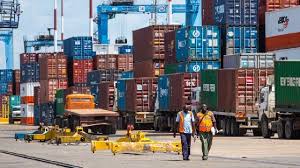
    Ghana Ports and Harbours Authority (GPHA) has denied accusations of imposing excessively high port charges, stating that it is responsible for only around 10% of the total fees and levies at the ports.

    Director-General Michael Luguji emphasised this point during a meeting with Finance Minister Mohammed Amin Adam and his delegation.

    He called for a thorough review and restructuring of the port clearance system to ease the financial burden on importers.

    Luguji pointed out that while the GPHA is often associated with port-related charges, a closer examination of invoices reveals a variety of customs duties, levies, and fees from other government agencies that are not under the purview of the GPHA.

    “Whenever a typical invoice is raised from the port, then the agency that comes to mind is the GPHA, which everyone knows as the Authority that handles port stuff.

    However, when you study the invoice carefully, there are customs duties, levies, and other government agency charges that cannot be attributed to GPHA in any way.

    “Counting the number of levies and taxes, I can see about 22 government taxes or levies on the invoice of an importer and this is a challenge because we did research that indicates that our contribution to that entire cost of clearing is less than 10%”, Luguji stated, stressing the need for a fairer distribution of costs within the port system.

    The purpose of the finance minister’s visit, along with ministry officials, was to gain direct insight into port operations, demonstrating the government’s dedication to addressing issues and enhancing efficiency within the port industry.

  • Taxes on dialysis consumables should be removed – Okoe-Boye

    Health Minister designate, Dr. Bernard Okoe-Boye, is advocating for the removal of taxes on dialysis consumables to ease the financial burden on renal patients in Ghana.

    His call comes after recent fee hikes for dialysis treatment at the Komfo Anokye Teaching Hospital and Korle Bu Teaching Hospital raised concerns about the affordability of care for patients. Some patients have tragically died due to financial constraints.

    During his vetting process, Dr. Okoe-Boye suggested exploring assistance from the National Health Insurance Scheme (NHIS) to help public health facilities providing dialysis treatment.

    He also expressed support for removing the cap on the NHIS levy to enhance healthcare financing.

    If confirmed as Health Minister, Dr. Okoe-Boye plans to prioritize these initiatives to improve the healthcare financing system and ensure better access to treatment for renal patients in Ghana.

  • Has Bawumia imposed over 40 new taxes on Ghanaians?

    Has Bawumia imposed over 40 new taxes on Ghanaians?

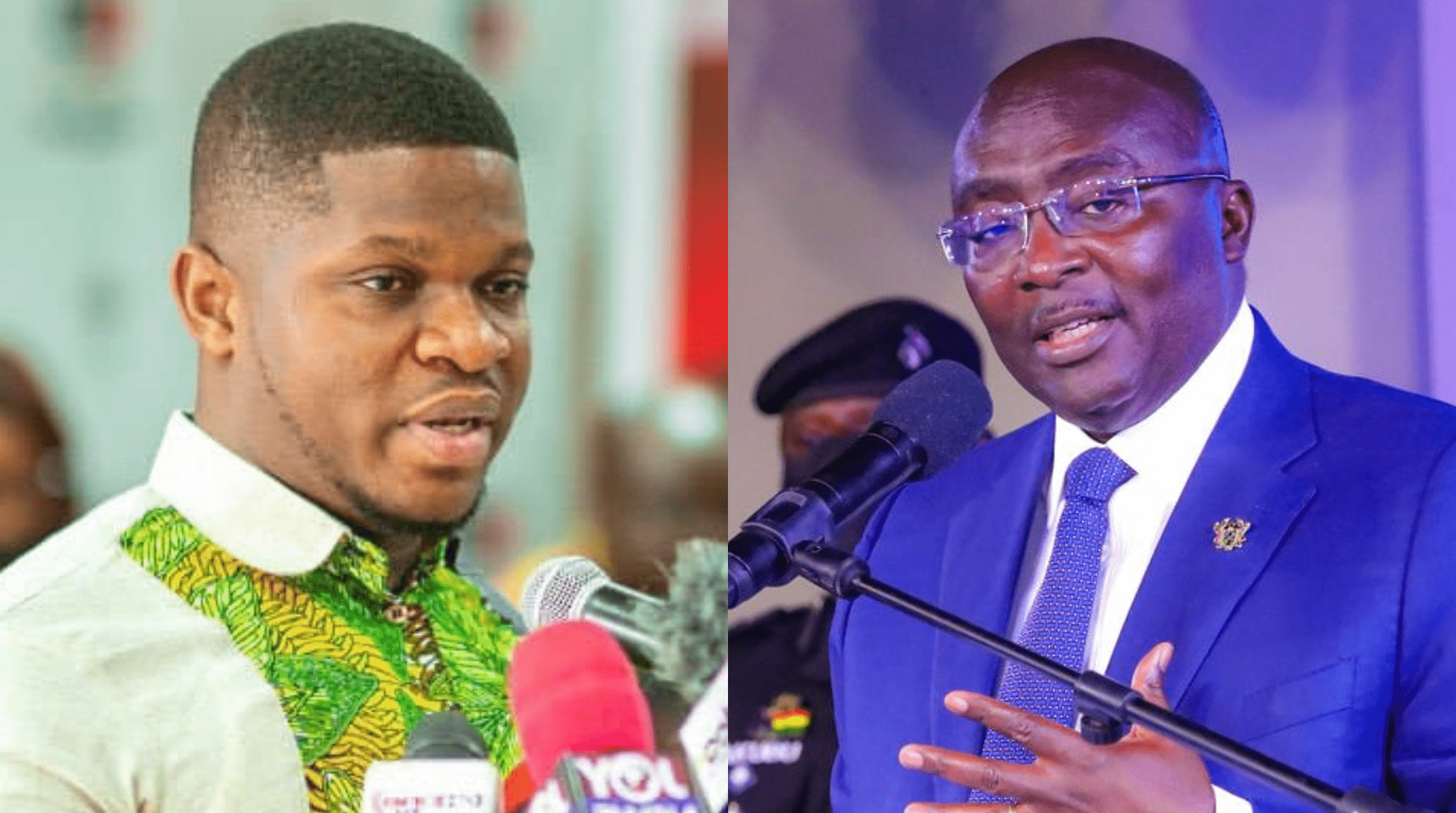
    On Saturday, February 10 2024, the National Communications Officer of the National Democratic Congress (NDC), Sammy Gyamfi said on TV3’s The Key Point that over 40 new taxes have been slapped on Ghanaians by the government. 

    He made this statement while presenting his views on the recent public lecture delivered by the flagbearer of the New Patriotic Party (NPP), Dr Mahamudu Bawumia, about his vision for the country. 

    Claim: He [Bawumia] has slapped over 40 taxes on Ghanaians as chairman of the Economic Management Team.

    In this explainer, Fact-Check Ghana presents a breakdown of all the taxes introduced and reviewed by the Akufo-Addo/Bawumia government.

    New taxes introduced by the Akufo-Addo/Bawumia government 

    • Covid levy – 2021

    In 2021, the government introduced a 1% COVID-19 Health Levy on the supply of goods or services made in the country other than exempt goods or services as well as on the import of goods or services other than exempt imports to support COVID-19 expenditures.

    • Electronic Levy – 2022

    In May 2022, the government introduced a tax of 1.5% on electronic transactions but later reduced it to 1% in March 2023.

    • 5% Financial Sector Clean-up Levy – 2021

    The government imposed a 5% levy on the pre-tax profit of banks, known as the Financial Sector Clean-Up levy. The government said it was a temporary measure to generate revenue to help settle outstanding commitments related to cleaning up the financial sector in 2017. The levy is expected to be reviewed this year, 2024.

    • Energy Sector Cleanup levy – 2021

    The government introduced a 20 pesewas energy sector recovery levy on every litre of diesel or petrol.

    • Sanitation and Pollution Levy – 2021

    The government introduced the Sanitation and Pollution levy on Petrol and diesel at a charge of GH¢ 0.10 per litre.

    • Growth and Sustainability Levy – 2023

    Ghana’s Parliament on Friday 31st March 2023, passed three (3) tax bills which are expected to rack up about GH¢4 billion annually (Income Tax Amendment Bill, The Excise Duty Amendment Bill, and the Growth and Sustainability Amendment Bill).

    The Growth and Sustainability Levy is a new tax which came to replace The National Fiscal Stabilization Levy Act 2013 (Act 862) which has already been repealed. The levy is calculated as a percentage of the business’s Profit Before Tax (PBT) or Gross Production, regardless of any existing concessions or agreements. 

    • Withholding tax on the realisation of assets and liabilities- 2023

    This is a 3% and 10% tax withheld by residents and non-residents respectively when making payment for considerations regarding assets and liabilities realised.

    • Betting Tax 2023

    This is a 10% tax on all lottery and sports betting winnings

    • VAT Flat Rate Scheme (VFRS) introduced for retailers and wholesalers under VAT, NHIL, GETFUND – 2017

    In 2017, a 3% VAT Flat Rate Scheme was introduced for retailers and wholesalers.

    • Emissions Levy Act, 2023 (Act 1112)

    The Emissions Levy Act, 2023 (Act 1112) has been enacted to impose charges on carbon dioxide equivalent emissions originating from specific sectors and emissions produced by internal combustion engine vehicles (See here for the rates payable).

    Taxes reviewed upwards by the Akufo-Addo/Bawumia government 

    1. An increase in BOST Margin from 3% to 9% in 2022.
    2. About 11% increase in Special Petroleum Tax (from 41 pesewas to 46 pesewas) on every litre of diesel and petrol.
    3. The 12 pesewa Price Stabilisation and Recovery Levy on petrol and 10 pesewas of diesel and LPG were increased to 16 pesewas on petrol and 14 pesewas on diesel and LPG
    4. Increase in Fuel Marking Margin (from 3 pesewas to 5 pesewas) per litre of petrol and diesel.
    5. Increase in Primary Distribution margin from 8 pesewas to 10 pesewas.
    6. 36% increase in Unified Petroleum Price Fund (UPPF) from 22 pesewas to 30 pesewas.
    7. Increase in Road Fund Levy from 46 pesewas to 48 pesewas on every litre of diesel and petrol.
    8. Energy debt recovery levy was increased from 42 pesewas to 49 pesewas on petrol and imposed on petrol and diesel. 
    9. Excise Duty (Amendment) (No.2) Act, 2023, Act 1108 was amended. The Act was expanded to include certain items and commodities such as processed fruit juice, cigars, mineral water, spirits, wines, and sparkling wine. 
    10. Stamp Duty (Amendment) Act, 2023, Act 1109 was amended and gazetted on 29th December, 2023 to increase the rate of stamp duties. The new rates range from as low as Ghs18 to as high as Ghs896.30 for duties assessed on specific basis whilst as low as 0.25% to 0.5% on duties assessed on ad valorem basis. The revised rates of income tax for individuals introduce an additional income tax bracket.
    11. Income Tax (Amendment) (No. 2) Act, 2021, Act 1071. The Act was amended to increase the rates of income tax applicable to individuals (See here for chargeable incomes and rates).
    12. Income Tax Amendment Bill – 2022. The Income Tax (Amendment) Act, of 2023 (Act 1094) introduced a 10% withholding tax on lottery and winnings. 

    Taxes reviewed downward by the Akufo-Addo/Bawumia government 

    – National Electrification Scheme Levy has been reduced from 5 per cent to 3 per cent.

    – Public Lighting Levy has been reduced from 5 per cent to 2 per cent.

    – The 17.5 VAT/NHIL rate has been replaced with a flat rate of 3 per cent for traders; and

    – Tax credits and other incentives for businesses that hire young graduates have been instituted.

    –The withholding tax rate for the sale of unprocessed gold by small-scale miners has been reduced from 3% to 1% under the Income Tax (Amendment) (No. 2) Act, 2021, Act 1071.

    While some politicians argue that an upward adjustment in current taxes increases the tax burden on Ghanaians, tax experts contend that categorising an increased existing tax as a new tax is incorrect.

    In conclusion, even with the addition of the increased taxes to the tax list, the new taxes introduced by the Akufo-Addo/Bawumia government do not exceed 40. This makes Sammy Gyamfi’s claim that the NPP has introduced 40 new taxes false.

    DISCLAIMER: TIGPost.co will not be liable for any inaccuracies contained in this article. The views expressed in the article are solely those of the author’s, and do not reflect those of The Independent Ghana.

  • Don’t wait till 2025, support our private member’s bill to remove harsh taxes – Minority to Bawumia

    Don’t wait till 2025, support our private member’s bill to remove harsh taxes – Minority to Bawumia

    Minority Leader in Parliament, Dr Cassiel Ato Forson, has stated that the National Democratic Congress (NDC) legislators will push for the removal of some nuisance taxes through a private member’s bill.

    This decision comes after Vice President Dr. Mahamudu Bawumia pledged to abolish several taxes, including the electronic transactions levy, emissions tax, and the proposed 15 percent Value Added Tax on electricity.

    Dr. Forson expressed that if Dr. Bawumia is sincere about his intentions, the NPP MPs will support the private member’s bill when it is introduced on the floor of Parliament.

    Speaking on JoyNews’ PM Express on February 13, Dr. Cassiel Ato Forson argued that the majority’s position on the matter will confirm whether or not the NPP flagbearer was honest about his intentions to abolish certain taxes.

    “All the taxes that we have opposed, we will make an attempt to get the government to remove them.

    “In fact, now that the Vice President himself has come to confirm to us that they don’t want the taxes, we have already said on the floor, he is only copying what the NDC is saying.

    “I have said on the floor and the hansard will bear me out that the next NDC government will remove this [taxes]. I have said this. I am the first person,” he said.

    When asked why he would not wait for the next NDC to remove these taxes, the Minority leader said “Why should we wait? Ghanaians are struggling.

    “The only reason why this tax is still effective and your good self and my good self and the ordinary Ghanaian is paying this tax is that the NDC is not in office.”

    Dr. Ato Forson emphasized that the NDC is more concerned about the welfare of the populace than the governing party. Therefore, if they were to win office, they would prioritize scrapping all taxes that have overburdened the population in their first few months in office.

    “In fact, if the NDC is in office and if Ghanaians vote for us, by December, our first budget before Easter, we will remove all these taxes. But now we are not in office. This is a government that is in office; they have said that they will remove it in 2025. To show good faith to the people of Ghana, we urge them to come and remove it.”

    “We have to compel them and that is what it is. We have to compel them to remove these taxes because it is not easy,” he added.

  • Diana Hamilton shares conducive tax system in the UK

    Diana Hamilton shares conducive tax system in the UK

    Award-winning Gospel musician, Diana Hamilton, has voiced her discontent with the taxation system governing events organized in Ghana.

    During an appearance on the United Showbiz on Saturday, February 10, 2024, Hamilton highlighted her observations regarding the stark contrast between the tax regulations for event organizers in Ghana compared to those in the United Kingdom, where she has also hosted events.

    Hamilton expressed her belief that there is a significant disparity in how the two countries approach taxing event organizers, indicating her dissatisfaction with the current system in Ghana.

    Diana Hamilton highlighted the favorable tax system in the UK, where she is only taxed on her profits from events. She emphasized the flexibility of this system, noting that if she were to operate at a loss, no taxes would be levied. However, she lamented the disparity in Ghana, where the taxation process is less conducive.

    Hamilton criticized the Ghana Revenue Authority (GRA), stating that officials often fail to accurately apply taxes. She expressed frustration with the inefficiencies within the tax system in Ghana, indicating a need for improvement and proper enforcement by GRA officials.

    “I have the privilege of hosting events in the UK and Ghana. If I hold an event in the UK, all the monies accrued will go into my account. I make all my withdrawals, and at the end of the year, I get taxed on my profits. And if I make a loss, I do not get taxed.

    “But in Ghana, when I am hosting an event, the GRA officials won’t check anything; all they do is stand at the entrance and count the number of people entering the hall and they tax you. With or without complimentary tickets, as long as anyone enters the hall, they will count everyone and tax you on that without taking into consideration the venue, cost of production, and all that,” she told show host MzGee.

  • Excessive taxes forcing employers lay off employees – GNCCI

    Excessive taxes forcing employers lay off employees – GNCCI

    The CEO of the Ghana National Chamber of Commerce and Industry (GNCCI), Mark Badu-Aboagye, has expressed concern over the increasing collapse of businesses due to a multitude of taxes, leading to widespread layoffs.

    Mr Badu-Aboagye highlighted the chamber members’ struggles, stating that economic challenges are forcing companies to downsize their workforce.

    He emphasized the discontent among employers with the current economic conditions.

    During an appearance on PM Express, he called for government intervention to alleviate the financial burden on businesses, emphasizing the need to reduce operational costs for sustained viability.

    He shared a specific example, stating, “One of our workers had over 125 workers somewhere last year, but now he has abandoned some of the work he was doing. He will eventually shutdown some of his plants because it is difficult to meet up with some of the demands from these employees”, he narrated.

    “As of the third quarter of 2023, the growth of GDP was 2%. And when you look at the details you will realise that most of the sectors are not doing well. Consistently from the beginning of the year to now. The industry sector has recorded negative growth. It’s only in the last quarter that the manufacturing sector recorded a 2% growth. So it shows clearly that businesses are not doing well”.

    “If they are doing well, they produce a lot and by multiplying it by the market value, you will see that your GDP [Gross Domestic Product] will go higher. So it’s not far-fetched, if the government wants to know the state of businesses in Ghana, just check the GDP.” he said.

    Badu-Aboagye further underscored the consistent negative growth in the industry sector throughout 2023, revealing the broader challenges faced by businesses.

    He pointed out that as of the third quarter of 2023, the GDP growth was only 2%, with most sectors facing difficulties.

    He concluded by asserting, “It shows clearly that businesses are not doing well. If the government wants to understand the state of businesses in Ghana, they can simply check the GDP. The manufacturing sector only recorded a 2% growth in the last quarter, indicating the overall struggle faced by businesses.”

  • Entity charged to oversee liquidation of defunct banks owes GHC91M in taxes – GRA

    Entity charged to oversee liquidation of defunct banks owes GHC91M in taxes – GRA

    The Ghana Revenue Authority (GRA) is actively pursuing the receiver of defunct banks for an amount of GHȼ91 million in evaded taxes.

    The licenses of over 300 financial institutions were revoked by the central bank in 2017 due to various financial breaches.

    Appearing before the Public Accounts Committee, Mr. Edward Apenteng Gyamerah, Commissioner in Charge of Domestic Tax and Revenue Division at the GRA, disclosed that the GRA has been unable to collect the GHȼ91 million owed by the defunct banks.

    The receiver has been notified multiple times to remit the funds to the GRA, as it holds the first right to receive any such payments if the receiver recovers money from the companies.

    “And we are yet to receive from the receiver,” he said.

    A member of the committee, Kofi Adams, emphasized the significance of transparency and accountability by requesting copies of the letters, specifically the first and the latest ones, sent to the receiver demanding payments.

    He expressed concern that with significant tax revenues due to the government remaining uncollected, there is no justification for imposing additional taxes on the citizens.

  • Govt is ‘stealing’ from citizens, Ghanaians are financially repressed – Prof Bokpin on taxes

    Govt is ‘stealing’ from citizens, Ghanaians are financially repressed – Prof Bokpin on taxes

    Economist and Professor of Finance, Prof Godfred A. Bokpin, has expressed his view that the government’s frequent imposition of taxes represents a lazy strategy for revenue generation, ultimately causing financial strain on citizens.

    During an appearance on Newsfile on JoyNews, he elaborated on the idea that while the need for increased revenue to support the economy is acknowledged, the unpredictability and regular introduction of new taxes are placing a burden on Ghanaians.

    “This is state-sponsored robbery. This is robbery that leaves the citizens financially repressed. It should not be accepted. I think in Ghana, we have allowed too many wrongs in this country,” he noted.

    Professor Godfred A. Bokpin emphasized the significance of exploring more effective methods for revenue generation that do not jeopardize the capacity of households to fulfill their essential needs and the ability of the private sector to stay competitive.

    “Nobody can tell us that the only way out is to impose more taxes and taxes, as we have done. The more we impose taxes, the real effect in scaling up or our tax revenue to GDP ratio is not seen,” he said.

    “This is a small open economy. We have more than 27 different tax handles. That is not the only thing. If since 2020 the taxes we have imposed, if you estimate the compliance cost to the taxpayer, it’s huge, configuring systems virtually every six months, there is no predictability,” Prof Bokpin said.

    He highlighted the need for the government to exert more effort in generating revenue for the benefit of the people it seeks to support in building the economy.

    “Are we not building it (economy) for Ghanaians? Are we not building it for Ghanaian private-sector businesses? What happens if by the time we achieve macroeconomic stability, half of Ghanaians have gone into poverty and have no way of reversing that? What economy is that? At the centre of it all are people and businesses.”

    “The banking sector spends millions of dollars to configure their system to allow the charging of E levy. Check the manufacturing sector, they pay so much and disruption to their production line just to fix their tax stamp or something. Virtually every six months, there’s some level of disruption to planning, and to the production process. My considered view is that what Ghana is doing is not taxation,” he added.

    In January 2024, the government instructed the Ghana Revenue Authority (GRA) to collaborate with two power distribution companies to transfer Value Added Tax (VAT) collected from consumers surpassing their lifeline power consumption. Finance Minister Ken Ofori-Atta, in a press release, directed the Electricity Company of Ghana (ECG) and the Northern Electricity Distribution Company (NEDCO) to coordinate with GRA to implement VAT on households exceeding the specified maximum consumption level for lifeline unit block charges, effective January 1, 2024.

    However, on January 19, the Secretary-General of the Trades Union Congress (TUC), Dr. Yaw Baah, expressed opposition, stating that labor cannot accept the imposition of a 15% Value Added Tax on lifeline electricity consumers, deeming it detrimental to workers’ welfare.

    Dr. Baah questioned the government’s decision to burden the already suffering workers with this new tax amid prevailing hardships.

    “This country called Ghana, and all the resources we have, now the government doesn’t see anywhere else to tax; they are taxing our electricity also. Tomorrow they will tax our water, and we are not going to sit down for that to continue. That’s why I’m saying you are going to have a baptism of fire; we need to fight it until this thing is cancelled,” Dr Baah said.

  • Call me, let’s talk if I owe you taxes – Cheddar tells GRA

    Call me, let’s talk if I owe you taxes – Cheddar tells GRA

    Founder of the New Force, Nana Kwame Bediako, also known as Cheddar has reacted to allegations of tax evasion made by the Ghana Revenue Authority (GRA) against him.

    The GRA accused Mr Bediako of failing to file personal income tax returns from 2013 to 2016, resulting in a fine of GH¢50,000.

    In a publication dated January 18, it was reported that despite settling a sum of GH¢209,171 between 2018 and 2020, Bediako had once again neglected to file his returns for the post-2020 period. The GRA further estimated tax assessments for Bediako at GH¢2,088,228 and GH¢5,096,536 for the years 2021-2022, respectively, along with penalties for his failure to file his personal income tax returns.

    Mr Bediako has vehemently denied these accusations, suggesting that the GRA aimed to disgrace him and tarnish his reputation. He expressed the belief that he was being targeted despite being one of the few individuals consistently fulfilling his tax obligations.

    In response to the tax evasion claims, Nana Kwame Bediako took to social media on January 18, 2024, to defend himself and address the situation.

    He argued that if the GRA had concerns about his tax payments, they could have opted for a more diplomatic approach, such as scheduling a meeting with him, rather than resorting to the publicized method they employed.

    Expressing bewilderment at the situation, Cheddar questioned the motives behind the Ghana Revenue Authority’s (GRA) decision to publish his pictures in connection with the tax evasion allegations.

    “If we consider the state of the economy and the hardship we face as citizens, it appears the government was doing nothing to alleviate our difficulties.

    “The government intends to disgrace me, so it published my pictures in the papers. No, you cannot disgrace a man whom God has graced,” he said.

    Speaking in local parlance he added “ I woke up this morning, only to see my pictures on the front cover of multiple publications alleging that I have evaded taxes. I have dedicated almost 22 or 23 years in this country. When it comes to taxes,  I have consistently fulfilled my obligations and continue to do so.”

    He emphasized that, given his regular importation of goods into the country, it would have been impossible for him to evade taxes without detection up to the present date. He highlighted that despite his consistently high income, he has always made sure to promptly fulfill his tax obligations.

    Taking advantage of the situation, Cheddar used the opportunity to make a broader appeal to the government. He called on authorities to focus on creating more job opportunities to address the issue of unemployment, emphasizing that it’s crucial to have a larger portion of the population gainfully employed rather than relying on a few individuals.

    He pointed out his observation that the government, in his view, has struggled to meet its responsibilities. If elected, he pledged to provide transparency by furnishing evidence of how tax revenues are utilized, differentiating his approach from what he perceives as shortcomings in the current government’s accountability.

  • Spare parts dealers at Abossey Okai eager to oust NPP govt in upcoming elections over new taxes

    Spare parts dealers at Abossey Okai eager to oust NPP govt in upcoming elections over new taxes

    Abossey Okai spare parts dealers have voiced concerns over the government’s new taxes, expressing dissatisfaction with the adverse  business impact.

    The spare parts dealers conveyed their disappointment, having initially perceived the New Patriotic Party (NPP) government as business-friendly, only to witness what they now characterize as detrimental taxation measures. 

    The dealers urged the government to establish a stable business environment to support economic growth.

    “The country and everything in it are messed up, and everything has changed, right down to the food we eat. Everything is being taxed, and we don’t see what the tax is being used for. I am paying GHS6,000 for a container, and a part I used to sell for GHS5 is now GHS20,” one spare parts dealer said.

    “Some two years ago, we were selling Toyota Vitz for GHS35,000, but it is now selling for GHS70,000, and the cost of spare parts has also shot up due to high import duties and the unstable exchange rates, and all we look forward to is voting this government out,” another dealer stated.

  • Illicit Financial Flows and Ghana’s ongoing battle against economic drainage

    Illicit Financial Flows and Ghana’s ongoing battle against economic drainage

    Illicit Financial Flows (IFFs) refer to the movement or transfer of money and assets acquired from an illegal trade across borders in a manner that is illegal, illicit, or intended to evade taxation or regulation. 

    Forms or Types of IFFs:

    IFFs can take various forms and have significant implications for Ghana’s economy. These include: 

    Trade Misinvoicing which occurs when the value of goods imported or exported is deliberately misrepresented on customs documents to either understate the value of imports (thus avoiding taxes) or overstate the value of exports (allowing for illicit capital flight).

    Transfer Pricing Abuse: Companies manipulate intra-group transactions to shift profits from high-tax jurisdictions to low-tax or tax haven jurisdictions, thereby reducing their tax liabilities in Ghana.

    Corruption and Bribery: Funds obtained through corrupt practices, such as embezzlement, kickbacks, or bribery, are often moved offshore to avoid detection and prosecution.

    Money Laundering: Illegal proceeds from activities such as drug trafficking, human trafficking, and organized crime are laundered through legitimate financial systems to obscure their illicit origins.

    Tax Havens and Offshore Financial Centers: Wealthy individuals and corporations use offshore accounts and tax havens to conceal assets and income, avoiding taxation in Ghana, etc. 

    Impact on Ghana’s Economy

    Ghana continues to grapple with the pervasive issue of Illicit Financial Flows (IFFs), which continues to siphon billions of dollars annually.

    Some effects of IFFs on Ghana’s economy include:

    Revenue Loss: Illicit financial flows deprive the Ghanaian government of much-needed revenue, limiting its ability to invest in infrastructure, healthcare, education, and other essential services.  Per available data, the country loses approximately USD 3 billion annually through IFFs.

    Erosion of Tax Base: By evading taxes through various means, including trade misinvoicing and transfer pricing abuse, companies reduce the tax base, leading to higher tax burdens on compliant taxpayers and undermining the fairness and integrity of the tax system.

    Undermining Development: IFFs hinder economic development by diverting resources away from productive investments towards illicit activities and offshore accounts, exacerbating poverty, inequality, and economic instability.

    Weakened Institutions: The prevalence of IFFs undermines governance, transparency, and accountability in Ghana. Corruption and lack of enforcement mechanisms facilitate the flow of illicit funds, weakening institutions and eroding public trust.

    Increased Debt Burden: The loss of revenue due to IFFs may force the government to rely more heavily on borrowing, leading to an unsustainable accumulation of debt and potential debt crises.

    IFFs, which represent the clandestine transfer of illegally obtained funds across borders, are facilitated by a myriad of nefarious activities such as corruption, tax evasion, money laundering, and organized crime. These illicit channels not only undermine the economy but also impede the nation’s progress towards achieving the Sustainable Development Goals (SDGs).

    According to estimates by the Organisation for Economic Co-operation and Development (OECD), Africa loses a staggering $60 billion yearly to IFFs, with Ghana bearing a significant burden. The country’s economy bleeds through various channels including trade mispricing, under-invoicing, and fraudulent practices in sectors ranging from real estate to the extractive industry.

    Recent revelations by the Economic and Organised Crime Office (EOCO) highlight the magnitude of the issue in Ghana. Investigations uncovered billions of dollars illicitly transferred outside the country, with alarming figures pointing to $1.8 billion in the customs management system alone and over $1 billion from gold exports.

    The impact on Ghana’s economy is profound. The country’s historical data reveal a staggering $40 billion drain between 1960 and 2012 solely through trade-based illicit flows. Moreover, studies highlight losses amounting to billions from key sectors such as gold and cocoa exports, exacerbating economic challenges and hampering development efforts.

    Despite the gravity of the situation, media coverage on IFFs remains disproportionately low. Journalists cite the complexity of the issue and lack of resources as key barriers to comprehensive reporting. However, there is a growing call for increased capacity building and funding to empower journalists to delve deeper into this critical subject matter.

    In response to the crisis, Ghana has initiated various measures aimed at combating IFFs. Inter-agency coordination committees have been established to foster collaboration among key stakeholders, while new institutions such as the Financial Intelligence Centre (FIC) and Transfer Pricing Unit (TPU) are being tasked with enhancing oversight and enforcement.

    Internationally, efforts to address IFFs are gaining momentum through initiatives like the Financial Action Task Force (FATF), Global Forum on Transparency and Exchange of Information for Tax Purposes, and the OECD’s Inclusive Framework on Base Erosion and Profit Shifting (BEPS). These frameworks aim to strengthen cooperation among governments and stakeholders to combat illicit financial activities effectively.

    The onus to combat IFFs extends beyond national borders. In addressing the canker, developed nations must lead the charge in preventing illicit inflows, while developing countries like Ghana must bolster their legal and regulatory frameworks to deter such activities. Civil society organizations also play a crucial role in advocating for transparency and accountability, while the international community must collectively address entities profiting from illegal behaviors that undermine global efforts to promote fair taxation and trade policies.

    Journalists must also do their part by “following the money,” which is a term that basically means tracing the movement of funds through various financial transactions and records to uncover the source and destination of illicit funds.

  • There is inequality in payment of taxes – GUTA tells govt

    There is inequality in payment of taxes – GUTA tells govt

    President of the Ghana Union of Traders Association (GUTA), Dr. Joseph Obeng, has emphasized the need for fair and equitable taxes for all citizens in Ghana.

    Speaking at a national stakeholders forum on tax equity, Dr. Obeng raised concerns about the current taxation system carried out by the Ghana Revenue Authority (GRA), which, according to him, leads to non-compliance by some businesses due to perceived inequalities.

    He specifically pointed out discrepancies in tax rates, with some businesses paying 22%, others 4%, and some being exempted based on the GH₵‎200,000 threshold.

    “The consumer has the discretion of buying what he or she wants, the one paying 22% VAT and those paying 4% VAT stand at a disadvantage since their goods are likely to be priced high while those not paying any VAT at all sell at affordable prices and are able to make good sales,” he noted.

    Dr Obeng said the government must implement policies to restructure the Value Added Tax (VAT) to ensure full compliance.

    “To increase productivity, we must reduce taxes to compete with other developed countries,” he added.

    Dr. Joseph Obeng emphasized the importance of widening the tax net to include artisans, carpenters, mechanics, tailors, electricians, and other businesses that were not previously paying taxes.

    He argued that this expansion of the tax base would generate more revenue for national development. Dr. Obeng expressed concern that the current tax system was taxing a few businesses disproportionately, leading to lower overall revenue.

    He urged the government to ensure fair and equitable taxation to encourage compliance and contribute to the country’s development.

    “We need to find innovative ways of bringing a lot more people to comply with their tax obligations, failure to do that enforces discrimination,” he stated.

    Dr. Alex Ampaabeng, Senior Programmes Officer at the International Budget Partnership (IBP), emphasized the need for a fair and equitable taxation system that includes a larger portion of the population. He expressed concern that the current system, where only a fraction of the population pays taxes, serves as a disincentive for others to comply.

    Dr. Ampaabeng highlighted the low number of individuals in the informal sector paying taxes, emphasizing the importance of addressing this issue to achieve tax equity. He called on Civil Society Organizations (CSOs) to actively engage with key stakeholders and contribute to the development of fair taxation policies.

    Additionally, he advocated for the government to explore effective digital taxation and policies that encompass online workers.

    “Government should start with the riding apps like Uber, Bolt, and Yango to ensure payment of taxes and also to ensure safety from cybercrime,” he added.

    The forum saw discussions on how different stakeholders could work harmoniously to promote tax equity in Ghana and enhance civil society relationships.

  • Taxes straining production budgets – Theatre consultant tells govt

    Taxes straining production budgets – Theatre consultant tells govt

    Francis Tetteh Nutakor expresses concerns about the future of producers, fearing that they may cease production due to what they perceive as excessive government levies and minimal returns.

    Nutakor conveyed his apprehensions during an interview with Prince Benjamin (PB) on the entertainment segment of the Class Morning Show on Class 91.3 FM, aired on Thursday, December 21, 2023.

    In his lamentation, Nutakor highlighted the oppressive impact of taxes on the theatre industry, emphasizing that despite substantial financial contributions, the sector receives insufficient support from the government.

    He specifically pointed out the absence of tangible initiatives such as infrastructural development and capacity building, which are crucial for the growth and sustainability of the theatre community.

    “We don’t know it all but if the government is taking 21 per cent [in taxes from us] and the next week you come to the theatre and there is some improvement in the AC condition, chairs, we’d then know that our taxes are being used for our sector. But we don’t see that,” Nutakor said.

    Meanwhile, the officials of the Ghana Revenue Authority (GRA) “are always at the gate,” he noted.

    He claimed that at the production venues’ gates, GRA representatives frequently get confused with ticket sellers and customers.

    Nutakor said: “Sometimes, they come late and they go and count the people inside. There are a 1000 people in the venue and your tickets are selling at 150.

    “They do the 21 per cent of the 150, and then they ask you to come and pay. And it’s huge money.

    “The taxes are more expensive than the auditorium, the light, the set and, sometimes, the payment for the crew combined.

    “So you’re paying for auditorium, you’re paying for light, you’re paying for sound, you’re paying for security. When you combine all these things, the tax you’re paying is even more than that.

    “I’m telling you. You can pay taxes, probably 30,000 or 40,000, and you ask yourself: ‘What’s the point of all this?’”

    Romanus Incomplete V, starring comic actor Foster Romanus, is the most recent work by Francis T. Nutakor.

  • Be ready to pay tax for CO2 emissions – Bright Simons warns GHACEM, other industries

    Be ready to pay tax for CO2 emissions – Bright Simons warns GHACEM, other industries

    Vice President of the policy think tank IMANI-Africa, Bright Simons, has responded to the government’s implementation of new taxes in 2024, focusing specifically on the introduction of an environmental tax targeting emissions.

    He highlighted that manufacturers will face an $8 tax for each tonne of CO2 emitted during their processes.

    In a somewhat critical tone, Simons commented on the Association of Ghana Industries, seemingly questioning their support for the government’s proposal for the Import Restrictions Bill.

    He wrote on X: “Remember AGI was recently praising the government of Ghana for the import restrictions list? Okay, their time has come. Govt is slapping ~$8 tax for every tonne of CO2 emitted by manufacturers. Cement, fuel, steel, aluminum and all high-energy industries should get ready to be smacked!”

    Bright Simons added that the Ghana Revenue Authority will be tasked with measuring the level of CO2 and taxing the companies accordingly.

    “Oh, & GRA will be doing the measuring. You will be in your factory like that and they will show up with the measuring device, industry reference charts, & a nice smile pregnant with meaning. Like: Aban nsa, aka wo. Why, you thought it was going to be Al Gore’s Climate Trace?” he added.
    Bright also added that some large manufacturers like GHACEM and others could be paying up to $24 million in taxes when these new taxes take effect.

    He said: “If GHACEM, Ghana’s largest cement corp, with ~50% share, continues hitting its 3 million metric tonnes a year target, it will face new taxes of $24 million a year if Ghana strictly enforces the new carbon taxes it is introducing. If the Kumasi plant comes on stream, carbon taxes will total $36 million.
    AGI dey?”

    Minority Leader and Member of Parliament for Ajumako-Enyan-Esiam, Dr. Cassiel Ato Forson, has disclosed a list of purported new taxes that the government plans to introduce in the upcoming year.

    In a post shared on X on Sunday, December 3, 2024, he presented sections of a tax bill that the government is purportedly aiming to have parliament approve.

    According to Dr. Ato Forson, among the proposed new taxes is a 20% levy on the local spirit, ‘akpeteshie.’ Additionally, the government is reportedly seeking to implement a GH¢100 annual tax on all petrol and diesel cars.

    “The Akufo-Addo/Bawumia government is imposing a 20% tax on “akpeteshie” (they have run out of ideas). Petrol and diesel vehicle owners should also expect to pay a new annual tax of GHS100 per vehicle on all petrol and diesel cars (internal combustion engine vehicles).

    “This tax will be imposed on all trotros, aboboyaas, okadas, taxis, commercial buses, trucks, ambulances, construction and heavy-duty vehicles, water tankers, private cars, etc.

    “Once your vehicle is powered by petrol or diesel, the government will impose this tax on you. According to the government, this policy is aimed at promoting the use of cleaner and more eco-friendly sources of energy (like electric vehicles),” he wrote.

    The documents also show that the government is seeking to introduce a GH¢100 per tonne carbon dioxide emission tax on all companies in the country.

  • Govt received GHC6bn in taxes, remittances from Telcos in 2022

    Govt received GHC6bn in taxes, remittances from Telcos in 2022

    The Ghana Chamber of Telecommunications has reported that telecommunication companies in the country paid taxes and other remittances totaling GHC6.07 billion to the government in 2022.

    Dr. Kenneth Ashigbey, the Chief Executive Officer of the Ghana Chamber of Telecommunications, revealed this information at the launch of the 2022 Mobile Industry Transparency Initiative Report in Accra.

    The breakdown of the GHC6.07 billion includes payments of GHC1.7 billion for Corporate Income Tax, GHC922.9 million for Value Added Tax, GHC679.4 million for Withholding Tax, GHC482.8 million for the electronic levy, GHC768 million for NHIL, GETF levy, and COVID-19, GHC511.6 million for Communications Service Tax, GHC175.18 million for PAYE, and GHC560.7 million for other remittances.

    Dr. Ashigbey called on the government to consider granting tax holidays to the industry, highlighting the significant tax burden faced by the telecommunications sector.

    Additionally, he mentioned that beyond taxes and remittances, the industry has contributed to job creation, with over 202,600 direct jobs and about 3.1 million indirect jobs in the mobile financial services sector.

    He said considering the fact that telecommunications was foundational to ensuring real growth, it was important for the government to see the industry as a “cash cow rather than the work horse” that would drive other businesses.

  • Govt takes steps towards affordability and local production of sanitary pads

    Govt takes steps towards affordability and local production of sanitary pads

    The taxation of sanitary pads emerged as a prominent topic of discussion ahead of the 2024 budget reading in Parliament by Finance Minister Ken Ofori-Atta.

    Public reactions to the government’s proposed solution, as presented by Minister Ofori-Atta, varied. While some Ghanaians expressed dissatisfaction, others saw it as a step toward providing relief for young girls and women during menstruation.

    During the 5th edition of the Deloitte Economic Dialogue in Accra on November 22, 2023, Deputy Minister of Finance Abena Osei-Asare revealed that Fay Enterprise and Sunda Ghana were identified as local companies poised to manufacture sanitary pads on a large scale for young girls and women.

    Sunda Ghana, with the potential support from the government, can produce 900 million sanitary pads, while Fay Enterprise has the capacity to produce 600 million sanitary pads annually. Currently, Sunda Ghana employs 900 people, while Fay Enterprise has approximately 40 employees.

    The Deputy Minister emphasized that removing import duties and implementing a Zero Value Added Tax (VAT) for these companies would enhance their production capacity and contribute to creating more job opportunities for the sizable population of unemployed youth in the country.

    Abena Osei-Asare said, “Government engaged the two companies that produce sanitary pads in this country; they were Fay Enterprise and Sunda Ghana and government sat with them and we looked at their numbers and clearly it confirmed that given that support, they can be able to produce the needed capacity for this country and so government decided that based on the numbers that have shown us, Sunda, given the support will be able to produce 900 million pieces a year.”

    “For Fay Enterprise, given the support will be able to produce about 60 million pieces a year. Sunda employs close to 900 people, Fay employs close to 40 people and so given that support, they can increase employment as well,” the Deputy Minister of Finance stated.

    The government waived import duties on raw materials used in the local production of sanitary pads and offered a zero-rate VAT on pads made locally.

    Currently, sanitary pads are subject to a 15% VAT and a 20% import tax.

    Sanitary pads range in price from GH¢20.00 to GH¢40.00 per pack.

  • Cry for roads, potable water when you are ready to pay taxes – Ursula Owusu-Ekuful

    The Minister of Communication and Digitalization, Ursula Owusu-Ekuful, has delivered a strong caution to Ghanaians who evade taxes.

    The minister emphasised that it is unjust for individuals to demand benefits without fulfilling their responsibilities.

    During an interview with Oyerapa TV, she clarified that essential amenities such as good roads, clean drinking water, and reliable networks are not obtained solely through requests.

    She underscored that the government can only furnish the nation with fundamental necessities when citizens play their part by fulfilling their tax obligations.

    “We are all crying about the hardships in the country. As it stands now, we are unable to finance our debts. So, we need to pay for our development. You can’t cry for a road, electricity, water and a good network; where do we go for the money? If you don’t get the money through taxes, where will you get it from?

    “The only way to finance your development anywhere in the world is through either taxation, through dividends citizens pay to the government or through loans. That’s my little knowledge about that. So, if you don’t want to pay taxes, you don’t want the government to also borrow; where will the government get money to finance development?” she said.

    https://twitter.com/oyerepaofficial/status/1725081191806546366

    Finance minister’s budget presentation before parliament suggested an increase in taxes by the government.

    He opined that the most effective strategy to stabilise the current economic situation is through tax increases.

    “If I were the finance minister, there should be an increase in taxes. 

    “You see, our brothers from the NDC know that the only way to restore and consolidate our fiscal policy now (sic) is to generate revenue internally.”

    Source: The Independent Ghana

  • Govt to implement zero rate VAT on locally produced sanitary pads

    Govt to implement zero rate VAT on locally produced sanitary pads

    Government has failed to totally scrap the taxes on sanitary pads in its 2024 budget statement presented by Finance Minister, Ken Ofori-Atta today.

    According to the Finance Minister, this is because, in the short term, fiscal sustainability requires that the country improve its tax ratios significantly; otherwise, its long-term competitiveness will be eroded despite believing in lower taxes for industry.

    In the interim, government says there are some reliefs that have been prioritised for implementation.

    Among these reliefs is a zero-rate VAT (value-added tax) on locally produced sanitary pads.

    Also, the government is looking at granting import duty waivers for raw materials for the local manufacture of sanitary pads.

    This implies that the cost of local sanitary products will decline when implemented. However, imported sanitary pads will continue to see the current taxation measure.

    Sanitary products are currently enlisted in Chapter 96 of the Harmonized System, and that attracts a 32.5% tax on imported sanitary pads, which comprises a 20% import duty and a 12.5% Value Added Tax.

    Prior to the 2024 budget presentation, many called on the government to remove the taxes on sanitary pads which has stalled the education of several girls in rural communities. Aggrieved individuals lamented the high cost of sanitary pads due to the high taxes.

    The other relief measures are as follows:

    • Extend zero rate of VAT on locally manufactured african prints for two (2) more years.
    • Waive import duties on import of electric vehicles for public transportation for a period of 8 years.
    • Waive import duties on semi-knocked down and completely knocked down Electric vehicles imported by registered EV assembly companies in Ghana for a period of 8 years;
    • Extend zero rate of VAT on locally assembled vehicles for 2 more years;
    • Grant exemptions on the importation of agricultural machinery equipment and inputs and medical consumables, raw materials for the pharmaceutical industry;
    • A VAT flat rate of 5 percent to replace the 15 percent standard VAT rate on all commercial properties will be introduced to simplify administration.
  • Govt to introduce more taxes in 2024 budget

    Govt to introduce more taxes in 2024 budget

    Member of Parliament for Yapei-Kusawgu, John Jinapor, claims the Finance Minister, Ken Ofori-Atta, will impose a new tax in the 2024 Budget to raise an additional GH 11 billion.

    “We just met the Minister of Finance at the Finance Committee and the minister indicated that he intends to raise an additional GH₵11 billion, which is about 1 percent of GDP but we have told him that we think that the people have been taxed so much that it will be inappropriate to come with new taxes; rather, the minister should look at cost cutting,” Jinapor said.

    He added, “I think that it is improper and unacceptable to further come out with new taxes and increase the tax burden on Ghanaians.” The Finance Minister, Ken Ofori-Atta, is set to present the government’s 2024 Annual Budget Statement and Economic Policy to Parliament on Wednesday, November 15, 2023.

    Leading up to the presentation, there are widespread calls for the government to significantly curtail its expenditures to alleviate the struggling economy.

    Last week, the Chief Executive Officer (CEO) of Dalex Finance and Leasing Company Limited, Kenneth Thompson, issued a warning about a potential economic downturn in 2024 if the government persists in its current trend of escalating and substantial expenditures.

    In related discussions, Member of Parliament for Dormaa East, Paul Twum Barimah, hinted at the government’s potential introduction of an emission tax to address the impacts of climate change.

    Also, Albert Sandaare, the Member of Parliament for Daffeama Bussie Issa, suggested that the government should consider either eliminating the COVID-19 levy or renaming it.

  • Govt to introduce new taxes to raise GH 11bn – Jinapor claims ahead of 2024 budget reading

    Govt to introduce new taxes to raise GH 11bn – Jinapor claims ahead of 2024 budget reading


    Member of Parliament for Yapei-Kusawgu,
    John Jinapor, claims the Finance Minister, Ken Ofori-Atta, will impose a new tax in the 2024 Budget to raise an additional GH 11 billion.


    “We just met the Minister of Finance at the Finance Committee and the minister indicated that he intends to raise an additional GH₵11 billion, which is about 1 percent of GDP but we have told him that we think that the people have been taxed so much that it will be inappropriate to come with new taxes; rather, the minister should look at cost cutting,” Jinapor said.


    He added, “I think that it is improper and unacceptable to further come out with new taxes and increase the tax burden on Ghanaians.”


    The Finance Minister, Ken Ofori-Atta, is set to present the government’s 2024 Annual Budget Statement and Economic Policy to Parliament on Wednesday, November 15, 2023.


    Leading up to the presentation, there are widespread calls for the government to significantly curtail its expenditures to alleviate the struggling economy.


    Last week, the Chief Executive Officer (CEO) of Dalex Finance and Leasing Company Limited, Kenneth Thompson, issued a warning about a potential economic downturn in 2024 if the government persists in its current trend of escalating and substantial expenditures.


    In related discussions, Member of Parliament for Dormaa East, Paul Twum Barimah, hinted at the government’s potential introduction of an emission tax to address the impacts of climate change.


    Also, Albert Sandaare, the Member of Parliament for Daffeama Bussie Issa, suggested that the government should consider either eliminating the COVID-19 levy or renaming it.


  • Manufacturing facility of Sol Cement shut down over GHS700m unpaid taxes

    Manufacturing facility of Sol Cement shut down over GHS700m unpaid taxes

    The future of Sol Cement, a Chinese-owned cement manufacturing company, remains uncertain as the Ghana Revenue Authority (GRA) closed down its operations due to outstanding taxes amounting to GH¢700 million.

    Nearly a week after the closure, both the company’s premises and its officials are barred from accessing the facility by an order issued by the GRA.

    A visit by GhanaWeb Business on October 30, 2023, to the Sol Cement site in the Tema Industrial Area revealed a lack of activity, with only security personnel remaining on duty.

    An anonymous security personnel stated that they are hopeful that the situation will be resolved, as more than 300 Sol Cement workers were sent home following the GRA’s audit exercise.

    The Chinese-owned firm was cited for VAT violations, corporate income tax evasion, and unpaid penalties, spanning over two years.

    The GRA’s action is part of its tax compliance measures aimed at ensuring that both domestic and foreign companies adhere to Ghana’s tax laws.

    Efforts to obtain further information from the GRA regarding the company’s future have proven unsuccessful at the time of this report.

    Companies operating in various sectors in Ghana are advised to comply with tax laws to avoid a similar situation.

  • Reduce tax barriers to explore mining opportunities – Sulemanu Koney

    Reduce tax barriers to explore mining opportunities – Sulemanu Koney

    CEO of the Ghana Chamber of Mines, Sulemanu Koney, has emphasized the need for the government to eliminate taxes on mineral exploration, citing it as being in the country’s best interests.

    During a discussion series titled ‘What would Ghana forfeit without mining,’ Dr. Koney raised concerns, stating, “We have a fiscal regime which requires companies to make some payments even before digging the ground and that is the challenge that we have.”

    As an example, he illustrated that if an exploration company invested $10 million, approximately 22 percent of that amount would be allocated to taxes and levies.

    He illustrated, for example, how roughly 22% of the $10 million in capital raised by an exploration company would go toward paying taxes and levies.

    “We need to lower the barrier to entry for exploration because it serves our interest as a country”, Dr Koney insisted.

    “Ideally, we should do the exploration ourselves before we invite exploration firms to come and mine but because the resources are not there, we do it the other way round”, he observed.

    “When companies outsource drilling services, it comes with Value Added Tax (VAT)”, he mentioned.

    Also, he added, “When they outsource assaying services, they also pay VAT on them and we believe this is not too good for exploration”.

    He highlighted that the mining sector significantly contributes to the nation’s economic development through tax revenues.

    In 2022, as reported by the Ghana Revenue Authority (GRA), the mining industry, along with the quarrying sub-sector, including dividend payments, contributed GH¢6.82 billion. Furthermore, the minerals sector solidified its position as the primary source of foreign exchange for the country in 2022.

    Data from the Bank of Ghana reveals that mineral exports generated 39 percent of gross merchandise receipts, surpassing the revenues from crude oil, cocoa, and other export commodities.

    Dr. Koney stated that without mining in Ghana, the country would have lost $1.41 billion in mineral export revenue channeled through the Bank of Ghana and $2.73 billion that passed through commercial banks.

  • Used electrical appliance dealers in Tema dissatisfied with high taxes

    Used electrical appliance dealers in Tema dissatisfied with high taxes

    Used electrical appliance sellers in Tema Communities One and Two have complained about the high excise taxes placed on imported items, blaming them for the low quality of customer support.

    They complained that several tariffs were levied on their products, making clearance difficult.

    In an interview with Ghana News Agency in Tema, Mr. Frank Okyere, a dealer in secondhand products, claimed that the low consumption of goods was caused by the current state of the economy and taxes, which also explained why prices were increasing so quickly.

    He listed some of the appliances that have been impacted by the taxes, including washing machines, press irons, and stoves.

    A cooker, he claimed, currently sells for between GHS 1,500.00 to GHS 2,000.00, as opposed to GHS 800.00 in the past.

    Mr. Okyere claimed that because such business transactions required a lot of capital, they could not be entered into without a strong financial base.

    “As a result, some seek out grants and bank loans for additional funding.”

    Mr. Nimako Clement, another Dealer, sought for help after claiming that taxes were hurting their business.

    Mr. Nimako begged the government to reduce import taxes so that many dealers might gain and, in turn, help to cut the unemployment rate by hiring some of the younger generation.

    The Ghana Revenue Authority (GRA) has stated that the implementation of tax stamps on new items and textile products at all entry points commenced on October 1, 2023 through Mr. Kwabena Apau, Head of Excise.

    He claims that the transitioning period will last from October 1 through December 31 of 2023. All currently marketed goods that were exempt from the tax stamp requirement during this time will need to have them stamped, including sweetened beverages.

    “GRA is urging everyone who has inventory of these products to visit the nearby GRA office and apply for stamps to be attached to their inventory,” the speaker stated.

    Mr. Apau made this declaration during a Joint Customs Consultative Committee (JCCC) session in Tema as part of GRA’s initiatives to increase customer knowledge in the port community regarding the use and adherence of excise tax stamps.

    He declared that freshly imported commodities that had not previously been subject to the tax stamp would be starting on the aforementioned date.

    To demonstrate compliance and payment of all necessary customs and taxes, each textile product will have a special stamp called a “textile tax stamp” attached to it.

    On October 1, we started the entrance point enforcement, he said.

    “Therefore, all dealers of textile products holding stocks must contact the nearest GRA offices and request that the necessary tax stamps be applied to them,” the speaker concluded.
  • Check out the 20 taxes and levies on food products imported to Ghana

    Importing food products into Ghana is an expensive endeavor due to the numerous taxes and levies that add to the overall cost of these essential goods.

    This list of charges is extensive, and when combined with regular hikes in utilities, significant fees imposed by Municipal and District Chief Executives (MMDCEs), it’s evident that the food and beverage industry is under considerable financial pressure.

    Here’s a detailed breakdown of approximately 20 taxes and levies that can be imposed on an average imported product, significantly driving up the expenses for consumers:

    1. Import Duty – 20%

    2. Import VAT – 15%

    3. ECOWAS Levy – 0.50%

    4. Network Charge – 0.40%

    5. Network Charge VAT – 15%

    6. Network Charge Covid-19 – 1%

    7.Network Charge NHIL – 2.5%

    8. Special Import Levy – 2%

    9. Ghana Shippers Authority – 0.9%

    10. Import NHIL – 2.5%

    11. Withholding Tax on Import – 1%

    12. GHS Disinfection Fee – Amount not specified

    13. Ghana Export-Import Bank Levy – 0.75%

    14. Ghana Education Trust (GET) Fund Import – 2.5%

    15. Network Charge GET Fund Levy – 2.5%

    16. Inspection Fee – 1%

    17. African Union Import Levy – 0.2%

    18. Covid-19 Health Recovery – 1%

    19. FDA (Food and Drugs Authority) Fee – 0.5% and 0.8% of invoice value

    20. Ghana Standards Authority Fee – Cumulative fee of $65.95 + FDA + GSA + Disinfection fee $30

    The list of charges is extensive and, when coupled with quarterly increases in utility tariffs and substantial fees imposed by Municipal and District Chief Executives (MMDCEs), the food and beverages sector is grappling with significant financial pressure.

    Approximately 20 taxes and levies can be applied to an average imported product, significantly inflating the cost for consumers. This financial strain is particularly concerning because the food and beverages sector alone pays over 70% of its profit to the government in the form of taxes and levies.

    This heavy financial burden not only impedes business growth but also affects employment levels and government revenue. To address these challenges, the government’s response is crucial in safeguarding the viability of Ghana’s food and beverage importers.

    Acknowledging the need for improvements in the taxation and revenue sector, Ghana’s Medium-Term Revenue Strategy for 2024-2027 outlines plans to review and consolidate tariff lines that contribute to the high cost of doing business at the ports.

    Additionally, indirect tax strategies are proposed as part of this medium-term revenue plan. One key strategy is to “Align excise duty rates such that similar products attract the same rates.”

    This initiative aims to establish fairness and uniformity in the excise duty structure for food and beverages and similar products. By aligning these tax regulations, it can level the playing field for businesses and ensure that the taxation of essential goods remains both reasonable and consistent.

    The government now has the responsibility to carefully consider the importers’ appeals and take steps towards implementing a more balanced taxation system. Such a system should support economic growth while also ensuring the affordability of crucial food products for consumers.

  • Resist any form of harassment by GRA – GUTA charges members

    Resist any form of harassment by GRA – GUTA charges members

    The Ghana Union of Traders (GUTA) has called on its members to stand firm against any attempts at harassment or intimidation by Ghana Revenue Authority (GRA) officials.

    The union has alleged that the GRA has been seizing their shipments in transit from Accra to other regions on suspicions of goods underreporting.

    The President of GUTA, Dr. Joseph Obeng, voiced his concerns at a press conference, stating that the GRA has not provided any valid justification for these actions against traders.

    “A few days ago our Ashanti region branch issued a press conference on this constant harassment and intimidation of traders in the region by GRA officers after their cargoes had passed through the due clearing processes at the port of Tema and released them to them.

    “The GRA cannot assign any cogent reason for the harassment of the traders in the Ashanti region apart from their usual flimsy explanation that the Ashanti region only contributes only about 12% to the national revenue.

    “They also claim that they do not understand why goods in the Ashanti region are cheaper than those in the Greater Accra region; failing to recognize the simple fact that purchasing power and demand for goods and services in Accra are higher than any part of the country,” he said.

    During a subsequent radio interview on Joy FM’s Midday News, Dr. Joseph Obeng revealed that the Ghana Revenue Authority (GRA) officials and other relevant stakeholders have been informed about the harassment faced by traders.

    Despite these notifications, their concerns have yet to be adequately addressed.

    “Yes, we’ve done everything. We’re almost always in touch with GRA complaining about these issues. As a matter of fact, we made a whole seminar out of it, we went to Kumasi at the Golden Tulip, now Lancaster Hotel on the 8th of June and all the stakeholders were there, and we talked about this issue.

    “They said they’re going to stop and it’s still persisting. It means that they’re not taking it seriously and that we have to take our destiny into our hands,” he said.
    Furthermore, he emphasized that if the harassment and intimidation continue, traders have been advised to firmly resist such actions through any means available to them.
    “Pure resistance, simple resistance that you do not allow anybody to come and harass and intimidate you by telling you to come and bring your goods for further examination where you have paid the legitimate duty at the port and all that.

    “The Kumasi people have been told not to allow those things to happen to them again. And that if they do it to individuals, then collectively all of us will come on board and agitate and whatever resistance that we’ll put up will be for your imagination,” Dr Obeng said.

  • Govt over-burdening us with taxes – GUTA

    Govt over-burdening us with taxes – GUTA

    President of the Ghana Union Traders Association (GUTA), Dr Joseph Obeng, has bemoaned the high-tax environment businesses are currently operating in.

    In his submission to discussions on tax payment and evasion during the Graphic Business/Stanbic Bank Breakfast meeting held at Labadi Beach Hotel on Tuesday, September 19, Dr Joseph Obeng noted that businesses are currently struggling as they are unable to reflect the exorbitant taxes they pay to the government on the cost of their commodities.

    He explained that consumers form an integral part of the business cycle and, hence, cannot be made to bear the total cost derived from high taxes.

    For him, it would be unwise to take such a decision as consumers are also being hit by the economic crisis characterized by high inflation, high interest rates, among others.

    He said: “The taxes that we pay here are just too much compared to the sub-region. So taxes should be simplified and structured in a manner that will ensure compliance. That is why were are not getting the tax to GDP ratio to 20 percent, like our neighbours are doing. We are having difficulty as a business community to navigate through this turbulence of economic situation that we are having here.”

    “We have to contend with high cost of doing business in this country. The duties that we pay, the high interest rates, the inflation. It makes businesses very difficult to do. While doing that, government is still compiling alot of taxes on us, even to the point of harassing us in tax payment. When we are trying to do all these things and navigate through, then the consuming public is also on us saying that we should reduce prices.”

    According to Dr Joseph Obeng, businesses would have to shut down if they listened to the plea of the consumer and reduced the prices of goods. He added that businesses would not be able to generate profits, the primary reason for their existence.

    “How do we break even in our businesses? That is the difficulty that we have to contend with. Because the purchasing power of the consuming public is so minimal because of the effect of inflation.

    “We do not do the business in isolation, we do it with the consuming public. So we cannot also overburden them. We cannot overprice our goods so that the consumers cannot patronize them,” he stated.

    In April this year, Parliament passed the following acts: Excise Duty (Amendment) Act, 2023 (Act 1093), Ghana Revenue Authority (Amendment) Act, 2023 (Act 1096), Growth and Sustainability Levy Act, 2023 (Act 1095), Income Tax (Amendment) (No. 2) Act, 2023 (Act 1094) and Revenue Administration Act, 2022 (Act 1086).

  • How do we break-even when we reduce prices – GUTA laments high taxes

    How do we break-even when we reduce prices – GUTA laments high taxes

    President of the Ghana Union Traders Association (GUTA), Dr Joseph Obeng, has highlighted the challenges businesses will face in the country in their bid to make their commodities affordable to consumers amidst a high-tax environment.

    In his submission to discussions on tax payment and evasion during the Graphic Business/Stanbic Bank Breakfast meeting held at Labadi Beach Hotel on Tuesday, September 19, Dr Joseph Obeng noted that businesses are currently struggling as they are unable to reflect the exorbitant taxes they pay to the government on the cost of their commodities.

    He explained that consumers form an integral part of the business cycle and, hence, cannot be made to bear the total cost derived from high taxes.

    For him, it would be unwise to take such a decision as consumers are also being hit by the economic crisis characterized by high inflation, high interest rates, among others.

    He said: “The taxes that we pay here are just too much compared to the sub-region. So taxes should be simplified and structured in a manner that will ensure compliance. That is why were are not getting the tax to GDP ratio to 20 percent, like our neighbours are doing. We are having difficulty as a business community to navigate through this turbulence of economic situation that we are having here.”

    “We have to contend with high cost of doing business in this country. The duties that we pay, the high interest rates, the inflation. It makes businesses very difficult to do. While doing that, government is still compiling alot of taxes on us, even to the point of harassing us in tax payment. When we are trying to do all these things and navigate through, then the consuming public is also on us saying that we should reduce prices.”

    According to him, businesses would have to shut down if they listened to the plea of the consumer and reduced the prices of goods. He added that businesses would not be able to generate profits, the primary reason for their existence.

    “How do we break even in our businesses? That is the difficulty that we have to contend with. Because the purchasing power of the consuming public is so minimal because of the effect of inflation.

    “We do not do the business in isolation, we do it with the consuming public. So we cannot also overburden them. We cannot overprice our goods so that the consumers cannot patronize them,” he stated.

    In April this year, Parliament passed the following acts:

    • Excise Duty (Amendment) Act, 2023 (Act 1093)
    • Ghana Revenue Authority (Amendment) Act, 2023 (Act 1096)
    • Growth and Sustainability Levy Act, 2023 (Act 1095)
    • Income Tax (Amendment) (No. 2) Act, 2023 (Act 1094)
    • Revenue Administration Act, 2022 (Act 1086)

    Since 2022, the country’s inflation has been relatively high. Recent information from the Ghana Statistical Service (GSS) indicates a fall in the inflation rate from July to August.

    In August 2023, the year-on-year inflation rate saw a decrease to 40.1 percent, down from the 43.1 percent recorded in July 2033.

  • Anglican Bishop urges Christians to pay taxes

    Anglican Bishop urges Christians to pay taxes

    Bishop of the Anglican Diocese of Tamale, the Right Reverend Dennis Debukari Tong, has urged Christians to consistently pay taxes as a way of upholding their civic duties.

    He said, “If the church wants to be a voice for the voiceless to demand for the rights of the vulnerable, then we must contribute towards the development of the nation by paying our taxes.”

    He issued this call during his sermon in Tamale, with the theme being “Those in Authority.”

    Reverend Tong emphasized that government and state authorities, as outlined in the book of Romans chapter 13:1, were instituted by God and should be obeyed by Christians.

    He further asserted that Christians should actively contribute to the nation’s development by advocating for job opportunities for the youth, advocating for improved schools and hospitals, and calling for reduced utility tariffs.

    Reverend Tong also encouraged Christians to actively participate in the electoral process and seek leadership positions.

    He stressed the need to change the prevailing mindset that views politics as a tainted field, suggesting that the involvement of righteous Christians in partisan politics could bring about positive transformation and integrity in the political arena.

  • New taxes proposed by African governments to combat climate change

    New taxes proposed by African governments to combat climate change

    African leaders want to introduce new taxes worldwide to help pay for efforts to address climate change.

    The Nairobi Declaration was released after a three-day Africa Climate Summit in the capital of Kenya.

    The leaders of the countries say that the declaration is important for their discussions at the COP28 summit in Dubai in November.

    Experts have found that even though the continent is severely affected by climate change, it only gets around 12% of the money it requires.