Tag: Taxes

  • Greater Accra alone can give govt GHS12bn from property tax – Economist

    Greater Accra alone can give govt GHS12bn from property tax – Economist

    Economist and Associate Professor at the Institute of Statistical, Social, and Economic Research (ISSER), Prof. Charles Ackah, has highlighted the substantial revenue potential that the Greater Accra region holds.

    He made the revelation while emphasizing the need for a more ambitious approach to property tax collection.

    Prof. Ackah expressed his views during a special discussion on Joy Business with the theme “Ghana’s High Tax Regime: Causes and Remedies.”

    As per data from the Ghana Statistical Service, there are approximately GH¢8.5 million completed residential structures in Ghana, with 1.7 million of them located in Accra. Notably, the Greater Accra region accounts for roughly 21% of all completed residential structures in the country.

    Currently, the Ghana Revenue Authority and municipal assemblies have set a goal of generating approximately ¢165 million from property tax across the country.

    However, Prof. Ackah contends that this target lacks ambition, especially when considering the revenue potential of the Greater Accra region alone.

    “If you do the analysis and you decide to raise GH¢165 million target in Accra alone, divide 165 million by the structures in Accra and each property is likely to pay just about 97 a year. This means that the target is quite low.”

    “According to my analysis, we could raise as much as GH¢12 billion in property taxes alone. So property tax holds a huge potential to boost the country’s tax revenues. Even if we focus on high-earned communities and the increasing luxury real estate, we can do more”, he added.

     He further called for a more accountable way of setting revenue targets with constant monitoring from the legislature.

    “What we need to do is to mandate parliament to set revenue targets and apply punitive measures for failure to meet targets.”

    Prof. Ackah also emphasized that the sluggish growth of Ghana’s economy plays a pivotal role in the country’s relatively low tax revenue. He pointed out that as the economy experiences more substantial growth and becomes more formally structured, the government’s capacity to broaden the tax base also increases.

    The GDP-to-tax ratio, as a metric, gauges the proportion of tax revenue collected over a specific period in relation to a nation’s total GDP. It is worth noting that research findings suggest that countries with higher GDP per capita often exhibit lower tax revenues. This phenomenon is closely linked to the size and robustness of the economy, as it directly influences effective tax compliance and collection.

  • Fuel taxes and lodging fees to go up in Ireland

    Fuel taxes and lodging fees to go up in Ireland

    Starting from midnight, the temporary reductions on fuel and hospitality taxes in Ireland will no longer be in effect, resulting in an increase of these taxes.

    In March 2022, the government reduced fuel taxes because prices rose a lot due to Russia invading Ukraine.

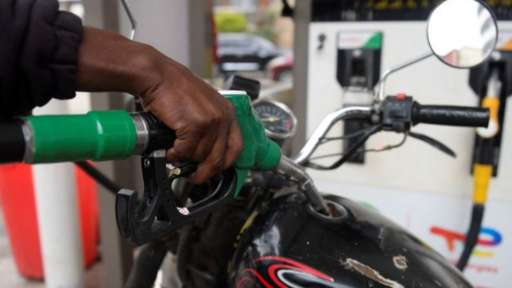
    The cost of petrol will go up by 7 cents for each litre, and the cost of diesel will go up by 5 cents.

    The tax rate for tourism, hospitality and certain other service businesses will go up from 9% to 13. 5%

    The rate was reduced in November 2020 because of the pandemic.

    Originally, it was planned to continue until December 2021, but it was extended twice.

    Business groups wanted the lower rate to continue because they believed that an increase would make things harder for companies that are already struggling with the effects of rising prices.

    Government ministers said no, because they could no longer find a good reason to have a lower rate.

    But the finance minister hasn’t said no to delaying the increase in fuel taxes that is supposed to happen before the year ends.

    Michael McGrath stated that the proposal to raise the cost of petrol by 8 cents per litre and diesel by 6 cents per litre would be regularly reviewed.

    The prices of fuel for cars in Ireland affect the market in Northern Ireland.

    A recent study from the UK’s competition watchdog showed that petrol and diesel in Northern Ireland are less expensive than in other areas of the UK. This is due to the competition from filling stations located across the border.

  • Ghana among top ten African nations with highest tax payments

    Ghana among top ten African nations with highest tax payments

    In the rankings of African countries with the highest corporate taxes, Ghana secures the 10th position on the continent.

    As indicated by a survey conducted by OnDeck, the average corporate tax in Ghana stands at approximately $25,000.

    A number of African nations surpass Ghana in terms of corporate tax payments. These countries include South Africa ($28,000), Ethiopia ($30,000), Kenya ($30,000), Nigeria ($30,000), and Cameroon ($30,800).

    The survey incorporated corporate tax data from 200 countries.

    OnDeck Capital, an online small business lending company based in the United States, highlights that corporate tax rates exhibit significant diversity globally, aligning with each nation’s distinct economic requirements.

    For instance, countries endowed with substantial natural resources frequently generate a significant portion of their tax revenue through elevated corporate taxes imposed on oil and natural gas enterprises. This approach enables other industries to function within a relatively low-tax environment.

    OnDeck Capital underscores that Africa possesses some of the least competitive tax rates among all continents.

  • Why would you tax a woman? – Bagbin on government’s failure to scrap taxes on sanitary pads

    Why would you tax a woman? – Bagbin on government’s failure to scrap taxes on sanitary pads

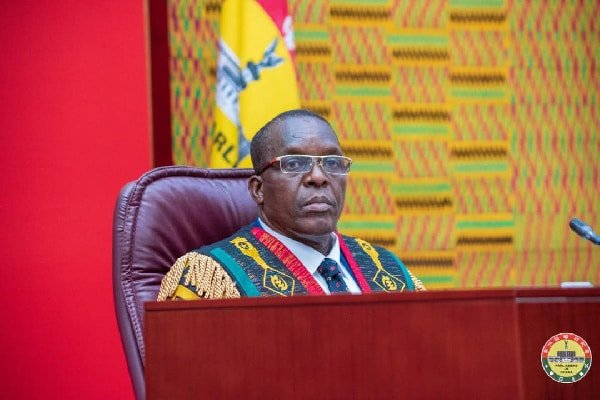
    The Speaker of Parliament, Alban Bagbin, has expressed his disappointment with the government for not withdrawing taxes on sanitary pads during the mid-year budget review.

    He had previously urged the government to take advantage of the review to eliminate these taxes, but the Finance Minister’s presentation on Monday did not include such a provision.

    During a debate in Parliament, when the Member of Parliament for Sefwi Akontombra, Alex Tetteh Djornobuah, attempted to defend the imposition of taxes on sanitary pads, the Speaker reacted strongly to the matter.

    He called on the government and future administrations to seriously reconsider the taxes on sanitary pads.

    Bagbin highlighted that these taxes apply not only to imported sanitary pads but also to locally produced ones, including the raw materials used in production.

    He emphasized the negative impact these taxes have on local businesses, with some even having to shut down due to the financial burden.

    The Speaker voiced his strong opposition to taxing essential feminine hygiene products, stating that he would not support such taxation, especially on items used by women, including his own mother. He stressed that the state should address this matter seriously.

    Bagbin also pointed out that in other countries, there are instances where sanitary pads are provided for free or where heavy taxes on such products have been removed. He called on all future governments to reconsider these taxes, asserting that they disproportionately affect the poor while sparing the wealthy.

    This issue has drawn widespread attention, with many stakeholders advocating for the government to abolish taxes on sanitary pads.

  • Nuisance business taxes need to be addressed during budget review -GFL

    Nuisance business taxes need to be addressed during budget review -GFL

    The Ghana Federation of Labour (GFL) has urged the government to use the mid-year budget review to eliminate obnoxious taxes that are affecting business operations.

    On July 31, 2023, the mid-year review of the 2023 budget is expected to be delivered by the minister of finance.

    Speaking to the Ghana News Agency about what the Federation expects, Mr. Abraham Koomson, the Secretary General of GFL, said that these annoyance taxes make it very expensive for businesses to run efficiently.

    According to Mr. Koomson, this resulted in businesses closing down and employees being laid off, necessitating the removal of them.

    He asserted that despite the bailout requirements from the International Monetary Fund (IMF), the local manufacturing sector must continue to exist in order to satisfy reasonable tax obligations and support national economic development.

    According to him, continuing to impose such taxes on regional businesses would only threaten the government’s plan to use these taxes as a source of funding to meet its spending goals.

    He urged the government to consult important stakeholders like the Association of Ghana Industries (AGI) before implementing tax policies.

  • Expand tax net instead of introducing new ones – GNCCI to govt

    Expand tax net instead of introducing new ones – GNCCI to govt

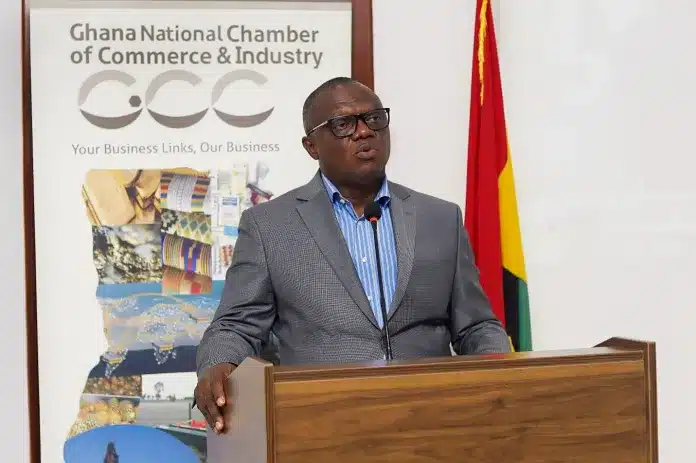
    The Ghana National Chamber of Commerce and Industry (GNCCI) has urged the government to find innovative ways of increasing the efficiency of the tax administration and expanding the tax net instead of introducing new taxes and increasing tax rate.

    It emphasised that the tax reforms are driving up the cost of production and stifling the growth of the private sector.

    “Immediate measures are necessary to safeguard and promote domestic businesses and the private sector. This is crucial to prevent any adverse effects on the government’s efforts to accelerate industrialization, boost exports, generate employment, and achieve sustainable growth”.

    “As previously mentioned, the government should utilize the mid-year budget review as an opportunity to provide relief to domestic businesses”, it stated.

    The Chamber also entreated the government to collaborate with the Bank of Ghana (BoG) to urgently explore innovative strategies for tackling the high inflation prevailing in the economy.

    These recommendations form part of the Chamber’s proposals to be considered during the 2023 Mid-Year Budget Review.

    The GNCCI emphasizes that addressing the high inflation rate is crucial for businesses to obtain necessary funding for expansion and recovery from the COVID-19 pandemic’s impact.

    The Chamber further highlights that the consistent rise in the policy rate and subsequent lending rates have had adverse effects on key productive sectors and overall growth within the industrial and service sectors.

    Again, it pointed out that, “Supply-side constraint should be explored as the current inflation trend shows clearly that the problem is not solely a monetary issue”.

  • Here are recommendations Alban Bagbin made to Ofori-Atta about E-Levy, other taxes

    Here are recommendations Alban Bagbin made to Ofori-Atta about E-Levy, other taxes

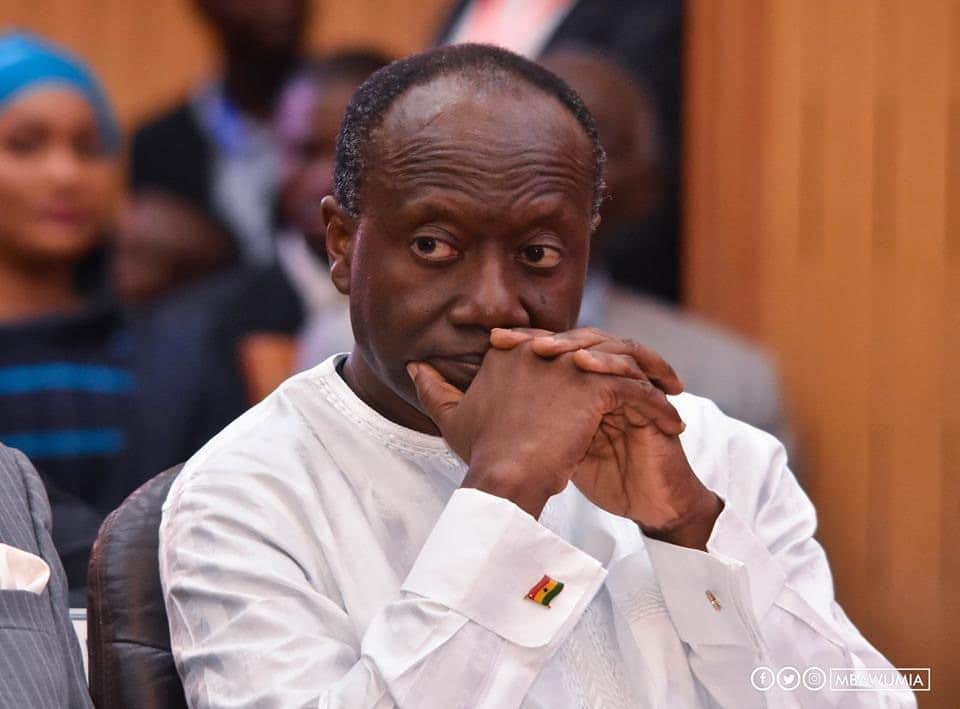
    Prior to the implementation of the Electronic Transfer Levy (E-Levy), the Speaker of Parliament, Alban Bagbin, engaged in discussions with the Minister of Finance, Ken Ofori-Atta, regarding his strategy to include the informal sector in the country’s tax system.

    According to Bagbin, the E-Levy was not the most optimal approach for ensuring tax compliance from the informal sector.

    However, he suggested a tax rate below zero percent, as the majority of individuals in this category were the specific target of the finance minister.

    During a meeting with Media General’s management in Accra on June 29, 2023, the Speaker of Parliament expressed that implementing a lottery tax could be an alternative method for the government to generate additional revenue for the state.

    He elaborated that the lottery tax would involve customers using tax receipt numbers to participate in lotto games.

    “I made it known to the Finance Minister long ago that there are so many areas where we can raise revenue, not E-Levy. But if you wanted to use e-levy, let us start from zero point something percent and then go up. You have an informal economy where a large percentage of the people are outside the tax net. Because of no documentation, you will never know their income, there are things that you have to do to bring them to the formal sector. I suggested to him the lottery tax,” Alban Bagbin said.

    He added that, “The lottery tax is very simple, you use tax receipt numbers to play the lotto and every week, one tax receipt number will win and you can give a pickup to the person. So everybody now comes in because the person wants to win a pickup and so they start issuing receipts.”

    “And so they formalize the informal businesses. Countries have done it, Malaysia and the rest and they jumped over 500 percent increase in revenue. I discussed this with the Minister,” the Speaker of Parliament highlighted.

    Additionally, Bagbin pointed out that the government could explore other revenue-generating areas such as insurance and narcotics.

    The government introduced the E-Levy as part of its efforts to enhance domestic revenue mobilization. However, in response to various criticisms, the E-Levy tax rate was reduced from 1.5% to 1%.

    As per data from the Ghana Revenue Authority (GRA), the Electronic Transfer Levy generated GH¢246.9 million in revenue, contributing 11 percent to the projected GH¢2.24 billion for the year.

    Since its implementation in May 2022, the E-Levy had accumulated a total revenue of GH¢861.47 million by March 2023.

  • MPs in Kenya agree to double taxes on fuel

    MPs in Kenya agree to double taxes on fuel

    In Kenya, Members of Parliament (MPs) have approved a measure to double the value-added tax (VAT) on fuel from 8% to 16%. This decision is expected to contribute to the increasing cost of living in the country.

    During the parliamentary session on Wednesday, MPs from the ruling party coalition voted in favor of the proposal, with 184 supporting the inclusion of the clause in the new finance bill. On the other hand, 88 lawmakers opposed the measure.

    The government’s objective in implementing this tax hike is to generate approximately 50 billion Kenyan shillings ($356 million; £279 million) in additional revenue, citing the necessity to address the mounting national debt.

    But the leader of the opposition MPs in parliament said it was punitive, terming the decision to push ahead with the fuel tax clause as “the saddest day in the history of this country”.

    This week, Kenya’s parliament has been combing through clauses within the unpopular finance bill and considering and voting on amendments.

    Besides the fuel tax, some of the controversial proposals include a housing fund levy to be paid by all salaried workers and an increase in taxes for social media influencers.

  • You don’t have the power to solicit taxes for government – Importers & Exporters to OSP

    You don’t have the power to solicit taxes for government – Importers & Exporters to OSP

    The Importers and Exporters Association of Ghana has declined the Office of the Special Prosecutor’s (OSP) request for access to the Integrated Customs Management System (ICUMS) platforms operating at the ports.

    According to the Importers and Exporters, the ICUM platform contains valuable and sensitive data of importers and exporters as well as business operators, hence any breaches caused to the platform in the name of data access could prove futile to the business community.

    Speaking to Starr News, the Executive Secretary for Importer and Exporters Association, Samson Asaki Awingobit indicated that the OSP can make such a request if there is a report made to him that needs investigation or he has picked intelligence on the ICUM that he wants to investigate that will be understandable.

    “Because we strongly believe that the OSP office was not established to do clarification and valuation and collect duty on behalf of the State. In Ghana we use laws and that is why the Office of the Special Prosecutor was established by an ACT of Parliament. It is the same law that established the GRA and that is a globally custom issue of the GRA to be able to collect freight and duty for and on behalf of the government of Ghana not the Special Prosecutor.

    “The Special Prosecutor’s duty is to investigate allegations and corruption practices and I strongly believe that he requesting that they put him on the ICUM system, his mandate is not to do clarifications and collect duties for the government,” Mr. Asaki Awingobit stated.

    He further stated that the Importers and Exporters Association of Ghana has been a propagator of best business practices and will support any move by the OSP to ensure the Port sector is free from corrupt practices.

    “However, we also demand for clarity in the discharge of its duties to attract the needed support from industry players,” he stated.

  • A GHS843m tax payment made by Newmont to government

    A GHS843m tax payment made by Newmont to government

    Newmont Africa has revealed that its Ghana operations (Ahafo South and Akyem mines) paid a total of GHS843.72 million in taxes, royalties, and levies to the Ghanaian government through the Ghana Revenue Authority (GRA), Forestry Commission, and Ministry of Finance in the first quarter of 2023.

    This amount consists of corporate tax (GHS514.57 million), minerals royalties (GHS197.06 million), Pay As You Earn (GHS78.23 million), GHS42.31 million as withholding tax and GHS11.55 million as forestry levy.

    “Fulfilling our obligations in terms of statutory payments, and being transparent about what we pay, are in line with our commitment to regulatory compliance and good corporate governance,” said Mr David Thornton, Regional Senior Vice President, Newmont Africa Operations, in a statement issued by the miner.

    Newmont Africa’s operations in Ghana have a strong tax compliance history and the company has received multiple taxpayer recognitions from the GRA.

    “It is important, especially in these challenging times, for companies to honour their obligations to the state, as well to their various stakeholders, through direct payment of their taxes and investment in social programmes,” Mr Thornton added.

    Apart from the taxes, royalties, and levies that go directly to government towards the growth and stabilisation of the economy, Newmont Africa said it also focuses on stimulating economic development in the local communities that host the mining operations, through a range of programmes and projects that deliver measurable outcomes.

    Being cognisant of the key role that road infrastructure plays, particularly in farming communities, Newmont Africa’s operations in Akyem and Ahafo have both funded critical road infrastructure, working through the Ministry of Roads and Highways.

    Newmont’s investment in skills acquisition and sustainable livelihood programmes also ensure that local community residents are equipped with employable skills that are needed in the extractive and construction industries.

  • Akufo-Addo hints at more taxes

    Akufo-Addo hints at more taxes

    Ghanaians may be hit with more tax measures by the government and enhanced measures to ensure collection of revenue is robust before the end of the year.

    The projection follows President Akufo-Addo’s admission to the fact that the country is “seeing signs” and that “domestic revenue mobilization is absolutely critical for us.”

    Speaking at the Qatar-Africa Economic Forum in Doha, President Akufo-Addo noted that aside from widening the tax base, it is also working assiduously to rationalize government’s expenditure.

    “We have a fiscal responsibility law in Ghana that has pegged our fiscal deficit at 5 percent but already we are way above that and the sooner we can bring that to more acceptable levels the better for us,” he added.

    As part of conditions set by the International Monetary Fund (IMF) for a $3 billion credit facility, Ghana is to bolster its revenue generation measures and cut down its expenditure to check the alarming debt deficit.

    Government’s commitment to ensuring this was assured by the Finance Minister while speaking during a press conference on May 18, 2023.

    “There is no rush in going back to the international capital market. Our expectation is that, by managing our expenditure and increasing our revenue, we will have the resources to address our needs,” Mr Ken Ofori-Atta, the Finance Minister is quoted by Citinewsroom to have said.

    Prior to the IMF deal, three new taxes were approved by Parliament and passed into law. They are Excise Duty Amendment Bill 2022, the Growth and Sustainability Levy Bill, 2022, the Ghana Revenue Authority Bill 2022 and the Income Tax Amendment Bill 2022.

    On the matter of additional taxation, Member of Parliament from the North Tongu, Samuel Okudzeto Ablakwa, has predicted that government will soon introduce 50 new tax measures as a result of the International Monetary Fund (IMF) deal.

    “The analysis we have shows that because of this (the IMF) bailout, there are going to be 50 new tax measures… income tax is coming to be progressive.

    “There is going to be quarterly tariff adjustment. So, every quarter, electricity tariffs are going to go up, can you believe that, every quarter?” the MP asked.

    Meanwhile, although Mr Ofori-Atta has announced government’s hesitation to head back to the international capital market for assistance, President Akufo-Addo notes that “we have positioned ourselves to be able to go back into the International market which had been a source of funding for us during the first three or four years of our government.”

    Source: The Independent Ghana

  • Review unfavorable taxes  preventing private sector expansion – Ghana CEO Network to authorities

    Review unfavorable taxes preventing private sector expansion – Ghana CEO Network to authorities

    Business leaders in the nation are urging the government to examine some of the tax revenue initiatives that were implemented in the 2023 budget during the mid-year budget.

    They argued that most of the new taxes introduced in the budget are inimical to private sector growth.

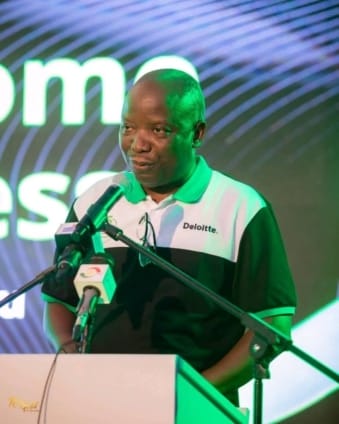
    Speaking at the 7th Ghana CEO Summit and Exhibition, Country Managing Partner of Deloitte Ghana, Daniel Owusu, said, reviewing recurrent expenditure and re-allocating resources to industry and agriculture sectors are key to driving growth and job creation.

    “With the International Monetary Fund (IMF) programme now on board, government should use the mid-year budget to review some of the revenue measures introduced in the 2023 budget including some of the new taxes that have the potential to adversely affect the productive sectors of the economy”.

    Businesses overburdened with taxes – Mahama

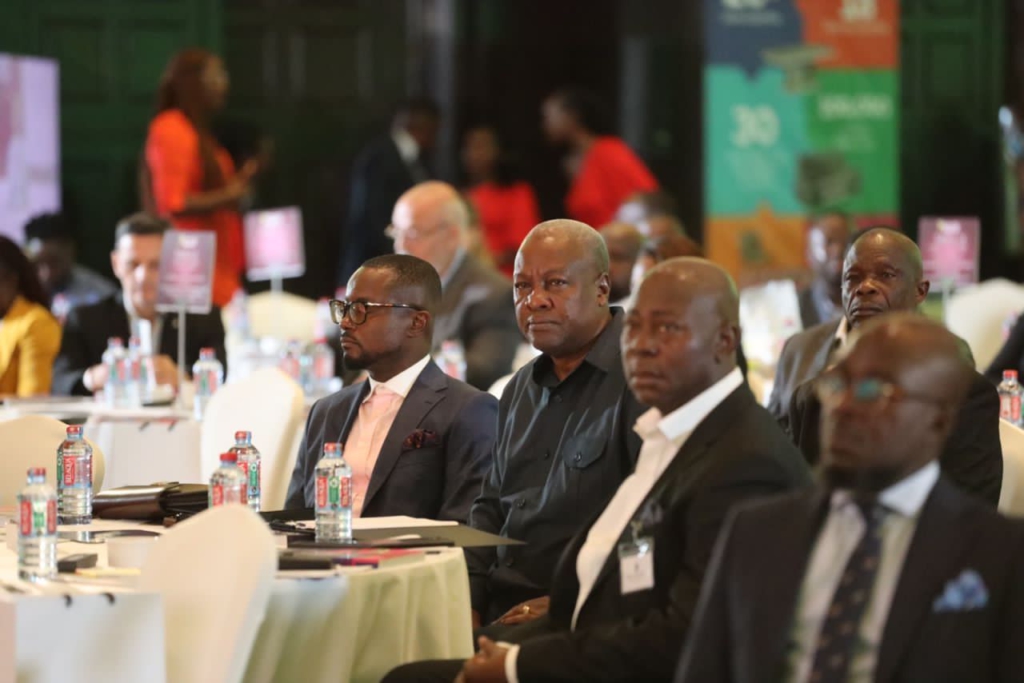
    Delivering the keynote address, former President John Mahama, said despite Ghana securing a deal from the IMF, business players are already burdened with exorbitant taxes, which he says is affecting their operations.

    According to him, his outfit will work closely with the private sector towards economic recovery when he becomes the next President in December 2024.

    “By working together, we can leverage our collective knowledge, resources and experiences to implement comprehensive policies and initiatives that drive sustainable development growth, create jobs and improve the standard of living for all Ghanaians. We can foster innovation and create an economy that is resilient inclusive and globally competitive”. 

    Review unfriendly taxes suffocating private sector growth – Ghana CEO Network to government

    He promised to rollout a 5G revolution and Artificial Intelligence to fully unlock the potential of digitalisation.

    According to him, his government will invest and leverage on digital infrastructure to expand and enhance productivity in the various sectors of the economy.

    Meanwhile, Senior Country Manager for Benin, Ghana, Liberia, Sierra Leone, and Togo, at the International Finance Corporation, Kyle Kelhofer, says the $3 billion IMF loan would help strengthen Ghana’s economic recovery.

    “Post-IMF, there are increased opportunities for Ghana and Ghanaian businesses with this increased stability, resilience, competitiveness and economic independence”.

    Value proposition

    The summit adopted a dynamic approach to deliver value to its stakeholders. There was CEO panel discussions, plenaries, business cases, masterclasses and experts insights with Cohort of Speakers Panelists and Experts.

    The dialogue with the Special Guest of Honour, former President John Mahama, looked into important policy issues ranging from resetting of the economic development agenda, public sector leadership, Business Regulatory Reforms, Social inclusion to digital economy agenda of government.

    The 7th Ghana CEO Summit and Expo was on the theme “Sovereignty, Sustainable Corporate Governance and Digital Industrial Transformation: New Paths for Growth and Prosperity. A Private-Public Sector CEO Dialogue & Learning”.

    It brought together stakeholders including the CEO Network of Ghana, to restore Ghana’s economy and strive to achieve sustainable economic sovereignty.

    The summit offered concrete, innovative and actionable solutions, championed private sector growth, led discussions around game-changing public policies, and advocated for best growth-oriented practices to help the country move forward, build resilient companies and develop outstanding CEOs.

  • Companies that sell lotteries and conduct betting lament hefty taxes

    Companies that sell lotteries and conduct betting lament hefty taxes

    The implementation of 20 and 10 percent taxes on businesses under the “Gross Gaming Revenue” hasn’t gotten the support of lottery and wagering players.

    They said the taxes on gross revenue of lottery companies and the staking public would undermine the sales, revenue, profits and growth of lottery industry.

    A statement copied to the Ghana News Agency in Accra said “The 10 per cent Withholding Tax on Winnings will prevent thousands of players from staking the lottery products both in the kiosks and online.

    “Already, a lot of Lotto Marketing Companies are dying out because of huge debts as a result of higher wins by the staking public, coupled with huge amounts of money paid to the National Lottery Authority as a license fee.

    “The inability of the National Lottery Authority too to pay winning tickets to the staking public promptly as well as the 20 per cent commissions to the Lotto Marketing Companies have already negatively affected the lottery business leading to decline in sales and revenuez.

    They called on the Ministry of Finance to have a second look at the 20 per cent and 10 per cent taxes on the gross sales of Lotto Marketing and Betting Companies, and winnings respectively.

    They also appealed for the suspension of the implementation of the Taxes on the lottery companies and players of the staking public and broaden consultations with the National Lottery Authority, Private Sector Lotto Operators, Lotto Marketing Companies, Sports Betting Companies and all other relevant stakeholders to reach a consensus on the best way forward to address the concerns of the lottery industry.

  • 3 key tax measures to be implemented effective May 1 – GRA

    3 key tax measures to be implemented effective May 1 – GRA

    Effective May 1, 2023, the Ghana Revenue Authority will start implementing the new and revised taxes announced in the 2023 Budget.

    The implementation date was captured in a notice issued by the authority.

    The new and revised taxes include three key tax measures – the Excise Amendment Act, 2023; Income Tax Amendment Act, 2023 and the Growth and Sustainability Levy Act, 2023.

    The GRA noticed indicated that businesses have been given enough time to configure their systems for the taxes to be implemented since the law was passed.

    Excise Duty Amendment Tax

    On the Excise Duty Amendment Act, the authority added that the tax has been expanded to cover some items and commodities that was previously not captured.

    The development may result in the prices of some processed fruit juice, cigar, mineral water, spirits and wines including sparkling wine, going up. 

    However, the Ghana Union of Traders Association, maintains that it will not hesitate to pass on the cost to consumers as it might be difficult for it members to absorb these taxes.

    Income Amendment Tax

    On the Income Tax Amendment Tax, the GRA said it will be charging a minimum of 5% on firms that will be declaring loses for 5 years.

    However, income earned beyond ¢500 will attract some taxes. 

    Those earning an extra ¢100 will attract a tax rate of 5%, while ¢100 only will attract a rate of 10%.

    Based on the schedule sighted by Joy Business, the more one earns the more one would be paying taxes to the state.

    For persons in the game of betting, they will pay 10% of their earnings to the state, which will be deducted when monies are being paid them by the respective companies.

    Firms that are into lottery and gaming will also pay 20% on their gross revenue.

    Based on revised taxes, individuals who receive, gains from realization of investment assets or liabilities as well as other than gifts received in respect of business or employment may have to pay 25% of the value to the state.

    Growth and Sustainability Levy

    For banks, non-bank financial institutions, telecom companies and firms working in the oil sector will pay 5% of their profit before tax to the state.  

    Mining firms, oil and gas companies are however expected to pay 1.0% of their gross production, while all other firms will pay 2.5% of their profit before tax to the GRA.

  • Chamber of Mines works to have taxes on renewable energy projects eliminated

    Chamber of Mines works to have taxes on renewable energy projects eliminated

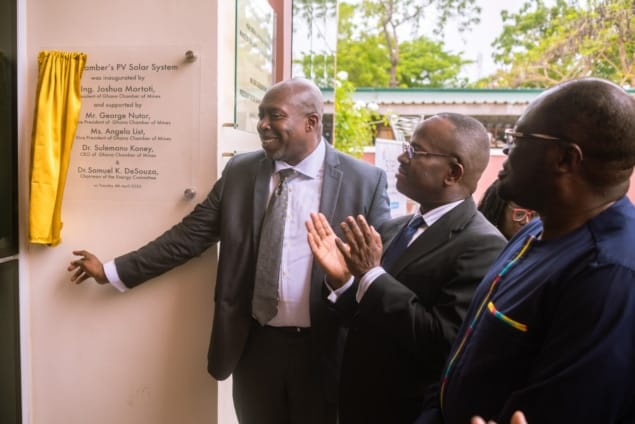
    The Ghana Chamber of Mines has endorsed proposals for the government to eliminate all tariffs on machinery brought in for use in renewable energy projects.

    Suleiman Koney, the company’s chief executive officer, claims that many people are unable to switch to using green energy because of the hefty taxes on the equipment that have become a deterrent to the private sector.

    He had just inaugurated an 84 kilowatt solar PV installation for the chamber office when he spoke to Joy Business.

    “You may be aware that the government of Ghana is fully aligned on the global initiative to transition to clean and sustainable energy. However, the ecosystem that is required to encourage households and firms to invest in clean energy is still in an inchoate stage”.

    “While the government has exempted imported solar panels from VAT [Value Added Tax] and other levies, the payments for a completed project are still subject to these statutory taxes and levies. Further, the absence of a net metering system implies that a consumer would be subsidizing the operational cost of ECG anytime the solar plant feeds its excess generation beyond its demand into the national grid,” he added.

    The 84kWp installed capacity PV system, which was created to satisfy the secretariat’s electricity needs, was built for a total of $122,316.35.

    According to the CEO, statutory taxes and levies account for about 11% of the contract cost, which works against the government’s aim for the energy transition. 

    The system can produce 111,000 kWh at its maximum capacity, and the chamber now uses less electricity from the national grid than it did before it started using the system.

    On the basis of a number of assumptions regarding the currency rate and electricity cost, the payback period for the project is predicted to be less than eight years. renewable energy projects The infrastructure has a 25-year performance lifetime and a 10-year warranty period.

  • New tax laws: Prices of goods, services to go up; businesses to collapse – GNCCI warns

    New tax laws: Prices of goods, services to go up; businesses to collapse – GNCCI warns

    Individuals and businesses will relatively pay higher for goods and services in the coming days, the Ghana National Chamber of Commerce and Industry (GNCCI) has warned.

    The Chamber made this revelation after President Akufo-Addo assented to the new tax bills – Excise Duty Amendment Bill 2022, Growth and Sustainability Levy Bill, 2022, Ghana Revenue Authority Bill 2022 and Income Tax Amendment Bill 2022 – passed by Parliament.

    According to Chief Executive of GNCCI, Mark Badu-Abaogye, consumers will have to bear the additional cost that will arise from the new taxes measures.

    http://backend.theindependentghana.com/introduction-of-new-taxes-is-not-to-cripple-business-deputy-trade-minister/

    This, he said has become necessary as businesses are already struggling to stay afloat following COVID-19 and the current economic crisis, hence the need for consumers to adjust their budget.

    “These taxes are going to force businesses to pass on the cost in the form of prices to customers. So we should brace ourselves for an increase in prices of goods and services.

    “Businesses are not even making profits and cannot absorb these taxes. If you take the excise duty for instance, businesses will have no option than to push the prices to consumers.”

    Citing the Growth and Sustainability Levy Bill, he noted that taxing collapsing businesses 5% on their profits will inevitably lead to their shut down.

    “If you take the Growth and Sustainability levy, the businesses are not making profits and you want to tax 5% out of it. So, what we’re saying is that we don’t want businesses to collapse”, he said.

    “I don’t think the IMF will be happy to see our businesses collapse because the amount of money that we will spend resuscitating the businesses and bringing them back to profitable level will be more than the $3 billion that we are looking for”, he added.

    http://backend.theindependentghana.com/a-list-of-the-taxes-enacted-under-akufo-addos-leadership/

    Following the amendment of the Excise Duty Bill 2022, Ghanaians will pay 20% of excise duty on sweetened beverages and 50% on alcoholic beverages.

    Prior to the amendment of the Income tax bill, the government charged (5, 10, 17.5, 25 and 30 per cent) respectively on all income of an individual in employment, whether it is received in cash or in kind. 

    Full details of the current rates are yet to be made available to the public but it is certain that Ghanaian workers and consumers will pay more.

    Source: The Independent Ghana

  • Three new tax laws have been made law by Akufo-Addo – Oppong Nkrumah

    Three new tax laws have been made law by Akufo-Addo – Oppong Nkrumah

    The three new tax bills passed by parliament late last month have now been signed into law by President Nana Addo Dankwa Akufo-Addo.

    This was confirmed by information minister Kojo Oppong-Nkrumah in an interview on April 16, 2023 with Accra-based Joy News.

    He told Emefa Apau on The Probe programme that the president’s lawyer Kow Essuman confirmed the assent and said the document has since been deposited with the Clerk of Parliament for other processes.

    Oppong-Nkrumah is currently part of the government delegation attending Spring Meetings of the World Bank and International Monetary fund in Washington DC.

    The three new taxes are: Excise Duty Amendment Bill 2022, the Growth and Sustainability Levy Bill, 2022, the Ghana Revenue Authority Bill 2022 and the Income Tax Amendment Bill 2022.

    The bills were presented to Parliament as part of government’s plans to raise about 4 billion Ghana Cedis annually in domestic revenue mobilisation.

    They are also crucial to help secure Board Approval for the US$3 billion International Monetary Fund (IMF) Programme after a staff-level agreement was reached late last year.

  • Netizens in an outcry over ‘outrageous’ taxes at restaurants

    Netizens in an outcry over ‘outrageous’ taxes at restaurants

    The Ghana Revenue Authority has noted that not all taxes or charges patrons pay at restaurants are from the government.

    For some days now, Twitter users have been going on and on about the taxes that are charged at restaurants and eateries in the country.

    The reactions were to a receipt that showed how much a patron had to pay for services at a restaurant.

    The taxes were as follows:

    GFT (GETFL) – GetFund Levy 2.5%
    NHL (NHIL) – National Health Insurance Levy – 2.5%
    CRL (CHRL) – Covid-19 Health Recovery Levy – 1%
    VAT – Value Added Tax – 15%
    GTL – Ghana Tourism Levy – 1%

    These taxes accumulated to an additional 42% of the entire cost of the purchase

    In a response by the Ghana Revenue Authority on Twitter on April 7, 2023

    GFT (GETFL) – GetFund Levy 2.5%
    NHL (NHIL) – National Health Insurance Levy – 2.5%
    CRL (CHRL) – Covid-19 Health Recovery Levy – 1%
    VAT – Value Added Tax – 15%
    GTL – Ghana Tourism Levy – 1%
    SUR – Service Charge – 10%

    “The other taxes are not from GRA,” the Authority added.

    A Twitter user said “The very thing your guy said he wouldn’t do; is the very thing we’re actually suffering from the most… Do we learn? No.”

    Another said, “From taxation to more tax.”

    “SC is service charge” 10% and these restaurants still pay their employees under 500cds and still don’t pay in full. These owners should be arrested, trade and workers union should ensure employees are treated right but in the farm there, everyone is not serious,” another tweet said.

    One user also noted that “Never really paid attention to receipts as they are not vat refundable for visitors but thanks for the awareness – almost 25% of additional taxes!! There will certainly be a curtailment in expending and supporting these places.”

  • John Dumelo condemns new 10% tax on gambling winnings

    John Dumelo condemns new 10% tax on gambling winnings

    Ghanaian actor turned politician, John Dumelo, has expressed his opposition to the Ghanaian government’s decision to implement a 10% tax on earnings from lotteries, games of chance, and sports betting.

    The new tax policy is part of the government’s efforts to increase domestic tax revenue and expand the tax base.

    In a tweet, Dumelo criticized the government’s decision and noted that the youth, who have created their own jobs through sports betting and other forms of gambling, would rise against the government if the tax policy is implemented.

    He argued that instead of taxing the youth’s winnings, the government should focus on creating jobs and providing economic opportunities for the youth.

    “Create jobs; you won’t create. The youth have created their own jobs too; ahhh, you want to tax their winnings…continue. That day will come when the youth will rise against you. It will be too late,” he said.

    Dumelo’s comments have sparked a heated debate on social media, with some Ghanaians supporting his position and others criticizing him for promoting gambling and opposing a legitimate tax policy.

    John Dumelo is not new to the political scene in Ghana. He contested for a parliamentary seat in the 2020 general elections under the ticket of the National Democratic Congress (NDC), but lost to his opponent from the New Patriotic Party (NPP).

    However, he has remained vocal on issues affecting youth and has used his platform to advocate for their interests.

  •  Focus on tax efficiency and compliance instead of new taxes -GNCCI 

     Focus on tax efficiency and compliance instead of new taxes -GNCCI 

    The Ghana National Chamber of Commerce and Industry, (GNCCI) has entreated the government to focus on tax efficiency and compliance, to increase revenues rather than introducing new taxes that stifle businesses.

    The Chamber expressed concern about the negative impact that the newly introduced taxes by the State would have on businesses, which it said had the potency to collapse many indigenous businesses, affect job creation, and the development of a robust private sector to spear growth.

    Mr Clement Osei Amoako, the National President of GNCCI, was speaking at the second edition of the “Western Chamber Bazaar,” held on the theme: “Creating and Promoting Unlimited Opportunities for Goods and Services Through Effective Market Linkages”.

    The Bazaar, which was hosted by the Regional Branch of the Chamber, brought together diverse businesses to showcase, sell and create market linkages and future partnerships for local economic growth.

    Mr Amoako said the Excise Duty, Growth and Sustainability levy and the Income Amendment Bill, had a devastating effect on the private sector saying, “We cannot ignore the reality that these new taxes are counter-productive, obnoxious and harmful to the development of the private sector”.

    Businesses in Ghana are already struggling under the existing tax regimes and the new additions would only exacerbate the turbulent business environment.

    The GNCCI President indicated that the new taxes had the potential to make the country less competitive, discourage foreign investment, and make it difficult for local enterprises and businesses to compete with their overseas counterparts.

    He said already, the current harsh business environment had seen most businesses shut down, relocated to other countries, or overburden the consumer with operational costs, and urged the government to create a conducive environment for businesses to thrive.

    Mr Kwabena Okyere Darko-Mensah, the Western Regional Minister, said the region thrived on enterprises and was keen on seeing the private sector excel, and the Regional Coordinating Council was ready to assist businesses to grow.

    He was happy to see the Regional Chamber of Commerce organise such a Bazaar and outreach to increase awareness of indigenous products and encouraged the manufacturing sector to participate in the next event, to showcase products of the region to the world.

    The Regional Minister urged businesses in the Region to be resolute and participate in programmes such as the African Continental Free Trade and other such initiatives to grow the private sector.

  • Ghana is under taxed – Kojo Oppong Nkrumah justifies new taxes

    Ghana is under taxed – Kojo Oppong Nkrumah justifies new taxes

    The government’s decision to enact three new revenue measures (taxes) has been defended by the minister of information, Kojo Oppong Nkrumah.

    He claimed that the taxes were required to raise Ghana’s tax-to-GDP ratio, which is woefully insufficient in comparison to other nations in the West African sub-region and around the globe. 

    Speaking in an interview on Kumasi-based Oyerepa TV on Monday, April 3, 2023, the minister also clarified that despite the new names of the revenue measures, they are just an expansion of existing tax laws.

    “These (the taxes) are existing laws that we are implementing to get more money for the government for the development of the country. These taxes have been expanded to include people who were previously not.

    “The tax-to-GDP ratio of Ghana is 13 per cent and so we saw the need to expand some of these taxes. What we have done will ensure that we get a tax-to-GDP ratio between 16 and 18 per cent so that we can get closer to the 20 per cent target.

    “We have not increased the taxes; we have only included people and items who were not included in these taxes. If you take the Fiscal Responsibility Act which has now become the Growth and Sustainability Act, we have added mining companies and other who were previously not covered by the law,” he said.

    The information minister added that the new Exercise Duty Levy has included some goods that were not previously covered by the previous law and the Income Tax Law has been amended to ensure that wealthy people pay more taxes.

    Parliament passed three new tax measures on Friday, March 31, 2023, during an extended sitting of the House.

    The said taxes also faced stiff opposition from the Minority Caucus in the House, but the Majority managed to marshal all their numbers on the day to get the taxes passed.

    The three new taxes are: Excise Duty Amendment Bill 2022, the Growth and Sustainability Levy Bill 2022, and the Income Tax Amendment Bill 2022.

    The bills were presented to Parliament as part of the government’s plans to mobilize about GH¢4 billion in domestic revenue annually.

    They are also crucial to helping secure board approval for the US$3 billion International Monetary Fund (IMF) program after a staff-level agreement was reached late last year.

  • Tax efficiency must take precedence over new tax Bill – Prof Bokpin

    Tax efficiency must take precedence over new tax Bill – Prof Bokpin

    A professor of economics at the University of Ghana Business School, Godfred Bokpin, has hinted that a successful tax framework, rather than more ineffective tax bills, is what Ghana needs to help produce the needed revenue.

    Professor Bokpin bemoaned the many existing taxes which he stated if properly implemented, should have been enough to raise the needed revenue for the government.

    He indicated it will be difficult for the government to boost the economy using taxes because far too few people are burdened with taxes while the larger population is not captured in the tax bracket.

    “There is no way you can grow your economy with the number of taxes we have in the country. We have so many taxes in the country yet still we want to introduce more to raise more revenue.

    “We are just burdening a faithful few in terms of deepening the tax system rather than broadening it, and we can close the gap by improving efficiency. The inefficiency in our VAT alone is 2.87 percent of our GDP, in other words, we could generate more than $1 billion without increasing the rate of VAT.”

    “If you look at corporate tax rates, it is just a few that are captured, the inefficiency in our corporate tax productivity is more than 75 percent, and you don’t close the gap by introducing additional taxes and also increasing the rates paid,” Professor Bokpin added in an interview on Eyewitness News on Citi FM.

    The government is seeking to have three new revenue bills passed by parliament as it seeks to rake in GH¢4 billion per year to shore up revenue to fix the ailing economy and secure a Board approval for a bailout from the International Monetary Fund (IMF).

    The bills which include the Excise Tax Stamp and Excise Duty amendment bills, Income Tax amendment bill and Growth and Sustainability levy bill are already being rejected by some business groups and Parliament is expected to vote on the bills today [March 31].

  • Seth Terkper describes 3 new taxes as “draconian”

    Seth Terkper, a former finance minister, has criticized the government’s additional revenue measures as being technical and punitive.

    The Growth and Sustainability Amendment Bill, the Excise Duty Amendment Bill, and the Income Tax Amendment Bill—would bring in roughly GH4 billion yearly.

    Speaking on JoyNews on Thursday, he said that “I say there are technical reasons, past and present why it is draconian. A measure that was in SMCD 5 (Supreme Military Council Decree 5) is being brought back in this day and electronic age.”

    According to him, per the tax, “any business that does not declare profit in five years would have to pay a certain tax compulsorily.”

    “Where are tax audits, where is the data? The tax audit is going to examine the records for this and if there is a reason they are not paying. Another one, minimum taxes are coming back where you are going to be paying a tax irrespective of business size, it is because of a lack of continuous investment in the domestic tax system,” he stated.

    Mr. Terkper added that the above-mentioned are measures that were replaced under the economic recovery programme and Structural Adjustment Programme in Dr Botchway’s era.

    He maintained that industry will struggle to operate should these measures receive parliamentary blessing.

    On Friday, Parliament passed the new tax measures.

  • Menstruation is not a luxury good, remove the taxes – Dzifa Gomashie

    Menstruation is not a luxury good, remove the taxes – Dzifa Gomashie

    Member of Parliament for Ketu South, Dzifa Gomashie, has entreated the government to remove taxes on sanitary towels as they cannot be considered luxury goods.

    Speaking to the Independent Ghana after President Akufo-Addo’s 2023 State of the Nation Address, the legislator noted that sanitary towels are not similar to luxury goods such as make-up, jewelry among others.

    Below is her engagement with the media:

    Source: The Independent Ghana

  • GRA exceeds its 2022 revenue target

    GRA exceeds its 2022 revenue target

    The Ghana Revenue Authority (GRA) finished 2022 by collecting more taxes than it had hoped to.

    Rev. Dr. Ammishaddai Owusu-Amoah, Commissioner-General of the GRA, said that the GRA collected ¢3.6 billion more than the 2022 objective.

    The nominal rise over the tax revenue gathered in the fiscal year 2021 for this is 31.5 percent.

    The GRA was expected to earn $¢80.3 billion for the 2022 budget.

    Finance Minister Ken Ofori-Atta, however, lowered the aim downward in the Mid-Year Budget Review to ¢71.94 billion, a decrease of ¢8.36 billion.

    The GRA reported nominal growth of 28.9% and 38.4% for domestic tax collections and customs revenue, respectively.

    In contrast to the target of ¢51.75 billion, the total tax revenue collected by the Domestic Tax Revenue Division in 2022 was ¢53.28 billion, a positive divergence of ¢1.53 billion (3%).

    Whilst the Customs Division collected ¢22.26 billion as against a target of ¢20.20 billion also exceeding the target by ¢2.06 billion.

    http://backend.theindependentghana.com/gra-bills-mtn-ghana-us773-million-for-2014-2018-back-taxes-2/

    Reasons for tax mobilized

    Providing some explanations, Rev. Owusu-Amoah said that the target was achieved mainly as a result of rigorous efforts made by the staff of the GRA as well as some new measures which brought about transparency and efficiency in tax administration.

    He also linked the performance to enhance revenue mobilization efforts introduced by the GRA.

    “The GRA rolled out some initiatives which included the implementation of the 2.5 percent increase in the Value Added Tax (VAT) rate, Reduction in the Electronic Transfer Levy (E-Levy) rate to 1% and resumption of collection of Vehicle Income Tax (VIT)”.

    The rest are Resumption of collection of Tax Stamp, Complete reversal of the discount of import values of general goods & Home Delivery Values of vehicles and Partnering the MMDAs in the collection of property rates.

    The Commissioner General said that these revenue measures will go a long way to complement the authority’s efforts in achieving the revenue target for 2023.

  • Trump New York trial: Organization found guilty of tax evasion

    Family real estate company of former US President Donald Trump has been found guilty of tax evasion.

    After two days of jury deliberation in New York, the Trump Organization was convicted on all counts on Tuesday.

    The business is synonymous with the former president, but neither he nor his family members were personally prosecuted.

    Mr Trump said he was “disappointed” with the verdict and called the investigation a “witch hunt.”

    For more than a decade, the company was convicted of enriching its top executives with off-the-books benefits.

    Prosecutors stated that untaxed perks included luxury cars and private school fees, which compensated for lower wages and thus reduced the amount of tax the company was required to pay.

    The company is expected to face a fine of around $1.6m (£1.3m) and may also face difficulty in securing loans and financing in the future.

    Mr Trump previously criticised the trial as being politically motivated. He also attacked his long-serving former chief financial executive Allen Weisselberg after he pleaded guilty in August and testified against the business.

    In his most recent statement, attacking the verdict, the former Republican leader asked why the Trump Organization should be prosecuted for Mr Weisselberg’s “personal conduct” – accusing him of “committing tax fraud on his personal tax returns”.

    “There was RELIANCE by us on a then highly respected and expensive accounting firm, and law firm, to do this work,” Mr Trump said in the statement issued by his office.

    “This case is unprecedented and… is a continuation of the Greatest Political Witch Hunt in the History of our Country,” he said, adding that New York City was now a “hard place to be a Trump”.

    Prosecutors accused the Trump Organization – which operates hotels, golf courses and other properties around the world – of having a “culture of fraud and deception” during the six-week trial.

    They said it ran a scheme that allowed some executives to “understate their compensation” so that their taxes “were significantly less than the amounts that should have been paid”.

    “The smorgasbord of benefits is designed to keep its top executives happy and loyal,” prosecutor Joshua Steinglass told the jury during closing arguments.

    Two subsidiaries of the Trump Organization – Trump Corp and Trump Payroll Corp – were convicted on all 17 charges of tax fraud and falsifying business records.

    Manhattan District Attorney Alvin Bragg praised the verdict on Tuesday, saying the case was “about greed and cheating”.

    “For 13 years the Trump Corporation and the Trump Payroll Corporation got away with a scheme that awarded high-level executives with lavish perks and compensation while intentionally concealing the benefits from the taxing authorities,” he said.

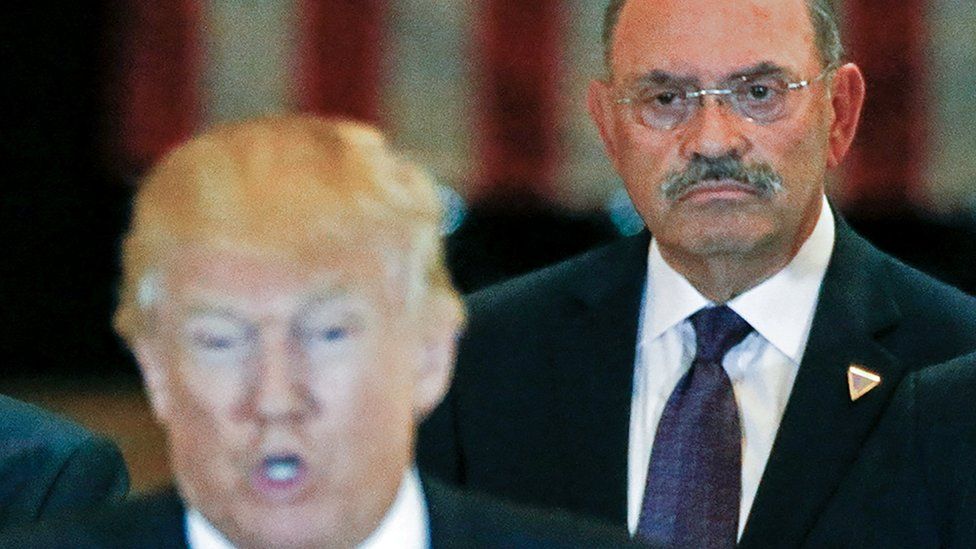
    Trump Organization former chief financial officer Allen Weisselberg looks on as then-U.S. Republican presidential candidate Donald Trump speaks
    IMAGE SOURCE,REUTERS Image caption, Allen Weisselberg, who worked for Donald Trump for decades, pleaded guilty to tax crimes in August (file image)

    Mr Weisselberg, 75, testified against the company as part of a plea deal he struck with prosecutors that will mean he spends no more than five months in jail.

    He will be jailed at the notorious Rikers Island prison and must pay back more than $1.7m (£1.4m) in concealed income.

    Following the verdict, the judge set a sentencing date of 13 January.

    Mr Trump and his three eldest children are facing a separate civil lawsuit which could see them banned from doing business in the state.

    New York Attorney General Letitia James, who is leading that civil case, issued a statement hailing Tuesday’s verdict as a “big victory”.

    “[It] shows that we will hold individuals and organisations accountable when they violate our laws to line their pockets,” she said.

  • Trump taxes: Supreme Court clears Democrats to see returns

    The US Supreme Court has cleared the way for ex-President Donald Trump‘s tax forms to be released to a Democratic-controlled congressional committee.

    The justices rejected Mr Trump’s bid in October to block a lower court’s ruling that granted the panel’s request for his financial records.

    The move is a blow to Mr Trump, who has for years kept his returns sealed.

    Mr Trump became the first president in 40 years not to release his taxes after announcing his first presidential run.

    The House of Representatives Ways and Means Committee has been seeking access to his records since 2019.

    Mr Trump, who launched his third campaign for the White House last week, is facing several investigations related to his business practices. He denies any wrongdoing.

    The Supreme Court’s brief response on Tuesday did not note dissent from any of the judges.

    The decision means the US treasury department can deliver the tax returns from 2015-20 for Mr Trump and some of his businesses to the Democratic-controlled committee.

    It comes just before the Republicans take control of the House after this month’s midterm elections.

    Donald Trump was almost able to run out the clock on the congressional request to view his tax returns.

    Almost.

    With just over a month left of Democratic control of the House of Representatives, the Supreme Court has given the green light for the treasury department to provide the documents to the Ways and Means Committee.

    Given that the treasury department is run by the Biden administration, the process of handing over the documents should proceed expeditiously.

    Democrats won’t have long to review them before Republicans take over on 3 January, however.

    And coming up with any proposed changes to federal law regarding presidential tax returns – the stated purpose of the congressional request – seems a pointless effort with the little time remaining before congressional adjournment.

    But a few weeks may be long enough to unearth evidence of any unusual or potentially improper accounting by Mr Trump – and for those details to leak to the public.

    And that, many assume, was the real motive behind the request.

    Mr Trump has notched two other defeats this year from the conservative-dominated Supreme Court, three of whose justices he appointed.

    In October, the court refused to weigh in on the legal fight over the FBI search of Mr Trump’s Mar-a-Lago home. Agents served a warrant at the estate in August on suspicion that the former president improperly handled classified documents.

    In January, the court refused to act to stop the National Archives from handing over documents to the committee investigating the 6 January 2021 riot by Trump supporters at the US Capitol.

    Mr Trump has rejected the Ways and Means Committee’s hunt for his taxes as politically motivated.

    The chairman of the committee, Congressman Richard Neal, said in a statement that lawmakers “will now conduct the oversight that we’ve sought for the last three and a half years”. He did not say whether the committee plans to publicly release Mr Trump’s tax statements.

    Last year, a Trump-appointed judge on the court of appeals in Washington DC ruled that the House did have a legitimate need to review the forms.

    The committee argued it needed to see Mr Trump’s records to determine if tax officials were properly auditing presidential candidates, and whether any new legislation was necessary.

    They had argued to the lower court that Mr Trump’s refusal blocked Congress from conducting oversight of the executive and judicial branches.

    Source: BBC.com 

  • Autumn statement: Millions to pay more in tax as chancellor cuts top-rate threshold and lays out plan to plug ‘black hole’

    The chancellor said he “tried to be fair” and said his plan would lead to a “shallower” recession and £55bn in savings. However, the OBR said disposable incomes will fall by 7.1% in real-term costs – the lowest levels since records began in 1956/7, taking incomes down to 2013 levels.

    Millions more Britons will pay more tax as Jeremy Hunt cut the top-rate threshold and announced freezes on several other taxes in his autumn statement.

    The total amount of savings from the autumn statement has been costed at £55bn, through tax rises and cutting government spending.

    However, in real-term costs, UK households’ disposable incomes will fall by 7.1% over the next two years – the lowest levels since records began in 1956/7, taking incomes down to 2013 levels, according to the independent Office for Budget Responsibility.

    Some of the main announcements:

    • Higher rate of tax threshold reduced to £125,140
    • Benefits and state pension to rise in line with inflation
    • Windfall tax extended to March 2028 and increased to 35%
    • Electric cars no longer exempt from road tax from April 2025
    • An extra £2.4bn per year on schools
    • NHS to get £3.3bn and adult social care £1bn next year and £1.7bn in 2024
    • Freeze on income tax personal allowance, national insurance and inheritance tax thresholds
    • Minimum wage increases to £10.42 an hour
    • Social housing rent increases capped at 7% from next year.

    The chancellor said the government is introducing two new fiscal rules: that underlying debt must fall as a percentage of GDP by the fifth year in a rolling five-year period: and public sector borrowing over the same period must be below 3% of GDP.

    He said he had “tried to be fair” in his decisions by asking those “with more to contribute more” and avoided tax rises that “most damage growth”.

    Mr Hunt promised to “protect the vulnerable” and said his plan to plug what he previously called a fiscal “black hole” will lead to “a shallower downturn and lower energy bills”, while revealing his three priorities: “stability, growth and public services”.

    But opposition parties and unions have accused the chancellor of holding the country back, with Labour saying the plan means “working people are paying the price” for the Tories’ “failure”.

    Higher tax rates for the wealthiest and energy companies

    The chancellor said the 45p higher rate of tax will now be payable from £125,140, as opposed to the current £150,000.

    He said those earning £150,000 or more will now pay just over £1,200 more a year.

    Mr Hunt also expanded and increased the windfall tax, so from 1 January 2023 until March 2028 energy giants will have to pay 35%, instead of the current 25% on their profits.

    And there will be a temporary new 45% levy on electricity generators, which is in addition to the tax on the companies that provide energy to households and businesses.

    He also said electric car owners will no longer be exempt from vehicle excise duty from April 2025.

    And he announced the government, as expected, will proceed with the building of the new Sizewell C nuclear plant in Suffolk, which will create 10,000 highly skilled jobs and provide energy to the equivalent of six million homes over 50 years.

    However, there was no mention of fuel duty in the statement, as the law means it goes up by the Retail Price Index – which is set to be 23% in March next year.

    The OBR said that would add £5.7bn to the government coffers and would be a “record cash increase” and the “first time any government has raised fuel duty rates in cash terms since 1 January 2011, with an expected rise of around 12p a litre on petrol and diesel.

    It is understood the government is not making a decision on fuel duty now but will in the spring budget next year.

    Extra cash for schools and the NHS

    Much of the chancellor’s statement had been pre-briefed following the economic turmoil the mini-budget created after his predecessor announced surprise unfunded tax cuts.

    But Mr Hunt did pull a rabbit out of his hat as he announced an extra £2.3bn each year will be invested in schools for the next two years.

    As was expected, he increased the NHS budget by £3.3bn and said he has asked former Labour health secretary Patricia Hewitt to advise on how to make sure the new Integrated Care Boards work properly. They were introduced in April and are aimed at bringing NHS services in local areas together.

    Adult social care will get £1bn more next year and £1.7bn in 2024 and he said altogether, along with previous commitments, that means the government is committing to a “record £8bn” package for the health and social care system.

    ‘Stealth taxes’

    There will be a freeze on income tax personal allowance, the main National Insurance thresholds and inheritance tax thresholds for a further two years, until April 2028.

    These have been branded “stealth taxes”, with the freeze on income tax to bring in £6.8bn for the government as more people will be pushed into a higher tax bracket.

    On personal income allowances, he said the dividend allowance will be cut from £2,000 to £1,000 next year then to £500 from April 2024.

    The annual exempt amount for capital gains tax, which is paid on the profit of selling an asset that has increased in value such as property, will also be cut from £12,300 to £6,000 next year then to £3,000 from April 2024. It means people will have to pay tax at a lower threshold than before.

    Cost of living and minimum wage help

    On help for energy bills, Mr Hunt said the Energy Price Guarantee will continue for a further 12 months from April 2023 at a higher level of £3,000 per year for the average household. It is currently capped at an average of £2,500.

    There will also be additional cost of living payments next year for the most vulnerable, with £900 for households on means-tested benefits, £300 for pensioner households and £150 for those on disability benefits.

    Social housing rents will have their increases capped at a maximum of 7% in 2023-24, he added.

    And the hourly minimum wage will increase by 9.7% from April next year to £10.42 from the current £9.50.

    Pensions and benefits rise

    Mr Hunt committed to maintaining the triple lock on pensions, which promises to increase the state pension each year in line with the highest of inflation, average earnings or 2.5%. At the moment, that is inflation which reached a 41-year high on Wednesday of 11.1%.

    From April, pensions will rise in line with inflation of 10.1%, meaning an £870 annual increase.

    Benefits will also rise in line with inflation while a further 600,000 people on Universal Credit will be made to meet with a work coach to get more people into the workforce and in better-paid jobs.

    Defence and overseas aid

    Defence Secretary Ben Wallace had previously said he would quit if the government did not stick to spending 3% of GDP on defence by 2030.

    He has tempered his tone since as the economy dived but will have been disappointed by Mr Hunt announcing he is committing to “at least 2%”.

    On overseas aid, the chancellor said it will remain at 0.5% as he said the “significant shock to public finances” means it will not be possible to return to the 0.7% target.

    Source: Sky news.com 
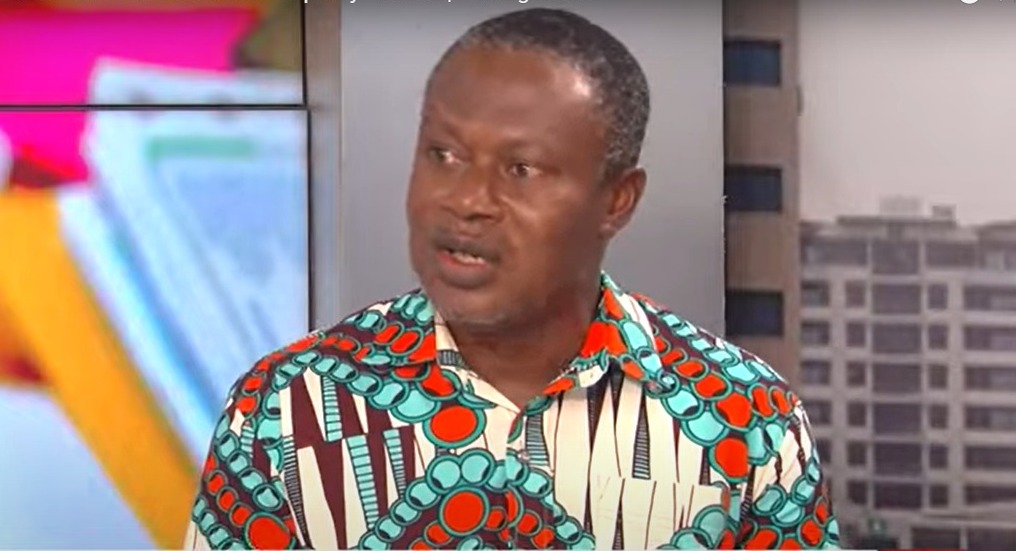
     

  • Mahama never taxed cutlasses, condoms – Seth Terpker tells Anyidoho

    Former Finance Minister Seth Terkper has debunked the notion that cutlasses and condoms were taxed under the NDC government led by John Dramani Mahama.

    The former minister said he had serially challenged anyone with evidence that cutlasses and condoms were taxed or any evidence of same being repealed by the current government to make them available; but it has yielded no response.

    Anyidoho had tweeted: “Who taxed condoms and cutlasses in this country when he was President?” reference to claims that Mahama had at a point taxed the two products.

    “Wrong!! My good brother. I have been challenging anyone to cite the provision in the Customs Act and relevant Tariff # that imposed such taxes. He or she can also cite the “amendments” by the current administration. None to date but still on standby,” Terkper hit back.

    Was Bawumia the first to make cutlass, condom tax claim?

    In the run up to the 2016 elections, the then running-mate of the flagbearer of the then opposition New Patriotic Party (NPP), Dr Mahamudu Bawumia, accused the government of undermining economic growth by overburdening businesses with taxes.

    Speaking on Accra-based Joy FM, Dr Bawumia said the government had mismanaged the economy to a point where it had to rely desperately on raising taxes to generate revenue.

    He said: “You have a government where you have cutlasses being taxed; condoms being taxed…. When you become desperate, this is what happens; and when you mismanage the economy into this hole then, anything sounds great to you. You don’t have any option and this is the problem.

    “Anything that is taxable and that can feasibly be taxed, they are trying to impose tax on them. All of these are hurting the economy and therefore you are not going to get the growth, and when you don’t get the growth, you will not get the revenue, and when you don’t get the revenue, you go back to increasing taxes to get the revenue, and then you are in a cyclical downward spiral. So they have it wrong and we’ll change that particular policy.”

    Source: Ghanaweb via Myinfogh

  • Taxes with smiles – Elizabeth Ohene writes

    I wish I could say honestly that paying my taxes was one of the happiest things I enjoy doing in my life. I can say, for example, without any hesitation that I enjoy singing, I enjoy driving, I enjoy reading, I enjoy talking, I enjoy arguing, I enjoy listening to the radio.

    I would say I used to enjoy writing a lot because it came to me effortlessly, but I don’t enjoy it quite as much any longer because it now takes me a long time and I struggle to write these days.

    There are things I do that I can’t say I enjoy, but I know they have to be done whether you enjoy doing them or not.

    For the greater part of my life, I cooked, but I can say that it wasn’t something I enjoyed. The kitchen is not my favourite room in the house, I cooked because it was part of growing up and my mother would have been horrified to have a daughter that didn’t know how to cook.

    I discovered it was a useful skill to have and I didn’t need to enjoy doing it to be passably okay at it.

    I am not quite sure where paying taxes fits in this range of things that I do because they have to be done and things I enjoy doing.

    There are things I do that I must confess I do only because I am obliged by the law. For example, I insure my car only because the law says I should. If there weren’t a law that says all vehicles on the roads have to be insured, I would not bother to insure my car.

    So I can safely say that taking an insurance policy on my car and renewing the policy is not something I enjoy doing. I do not believe in the whole business of insurance, I am convinced they rip me off and I can never win in any dispute with an insurance company. But I make sure I insure my car because it is the law.

    So there are things I do that I do not like, never mind, enjoy, but I do them because I would much rather be on the right side of the law.

    Paying taxes does not fall in this category either.

    I happen to believe in the paying of taxes. I happen to believe in the common good and until the experts come up with some other mechanism that will bring revenue to the State, taxes would have to be the way to keep the State running.

    The law obliges me to pay taxes, I do not dislike paying my taxes, but I suspect that part of the unstated reason I don’t mind paying taxes comes from the expectation that this is something all of us must do.

    I have been watching the current events surrounding the GRA with keen interest.

    If restaurant owners and shopkeepers collect VAT from us customers, what they collect cannot fall into the category of the taxes that the restaurant owners and shopkeepers have to pay.

    It is not money that they have to struggle with their conscience or ideology to decide whether to pay or not. It is not part of their profit or investment or operating capital.

    It is money they have collected for the GRA.

    By the time the VAT is collected, all the arguments, questions and hesitations about whether to pay taxes or not would have been concluded.

    I do not understand how it came about that the GRA should be so lax that monies collected for them by shopkeepers and restaurant owners would become subjects over which major operations have to be planned.

    I am hearing stories of shops who regularly make VAT returns of about GH¢30,000 a month, suddenly turning in GH¢1,000,000 once the “invigilation” and “E-VAT” torch is turned on their operations.

    I refuse to believe that such a state of affairs could exist without the active connivance of GRA officials.

    This is money we customers have already factored into our hike in cost of living lamentations; it is money for which we have already cursed the authorities and paid with reluctant smiles.

    In my book, keeping such monies sounds like stealing to me and not the fancy words the GRA is giving it.

    Source: Graphiconline.com

  • Judges’ residential complex in Kumasi to be commissioned on Monday – CJ reveals

    The Chief Justice, Kwasi Anin-Yeboah has announced the judges residential complex in Kumasi in the Ashanti region is going to be commissioned next week Monday.

    The Chief Justice said this when he was speaking during a meeting with the leadership of Judicial Service Staff association of Ghana in Accra on Tuesday October 11.

    Explaining why he appeared late at the meeting, he said “Please accept my apology for not being here on time. Indeed, yesterday I was unable to come to work because I had to attend to more pressing matter in Kumasi and I came just this morning. As some of you may be aware, we are going to commission the residential complex in Kumasi on Monday  and we have invited some of the Directors to be with us.

    “So, I had to spend the whole time with the consultant, the contractors, and the regional  Minister.”

    In April last year, President Akufo-Addo cut sod for the construction of 20 residential facilities for Court of Appeal judges in Kumasi.

    Supported by the Asantehene, Otumfuo Osei Tutu II, and the Chief Justice, Justice Kwasi Anin Yeboah, President Akufo-Addo cut the sod to signify the beginning of construction works for the accommodation facilities.

    “With the collaboration of the Ministry of Local Government and the District Assembly Common Fund, 20 townhouses and a guesthouse are being built to be used as permanent residences for Court of Appeal Judges based in Kumasi, who will be mandated to handle cases in the northern part of the country,” Mr Akufo-Addo said.


  • Lets pay taxes for development – Hassan Ayariga

    Dr. Hassan Ayariga, founder of the All People’s Congress (APC), has encouraged the citizenry to pay taxes for the rapid socio-economic development of the country.

    “Taxation is what is going to help us develop our country and not borrowing, no country has ever developed on borrowing, and I believe Ghanaians want to pay taxes, but they do not want to pay taxes that don’t contribute to development,” he said.

    Addressing a Press Conference in Accra on Monday, dubbed, “Post Budget Analysis,” Dr. Ayariga, the 2020 Presidential Candidate for the APC, applauded the Government for suspending the collection of road tolls from next year as captured in the 2022 Budget Statement.

    He also commended the Government for its YouStart Initiative, aimed at empowering young people to start, and grow small businesses.

    The target is to create one million jobs with a seed capital of one billion Ghana Cedis beginning from March 2022.

    He called for a policy to provide sustainable livelihood for street hawkers and urged the Government to the telecos on a one-way payment of the proposed 1.75 percent E-levy.

    The Finance Minister Ken Ofori-Atta announced 1.75 percent charges on all electronic transactions on Wednesday during the presentation of the 2022 Budget Statement to Parliament.

    “The suffering is killing too much, the hardship is beginning to have a toll on people,” he said, asking the populace to rise above “pettiness and save the country…”

    Dr. Hassan Ayariga, founder of the All People’s Congress (APC), has encouraged the citizenry to pay taxes for the rapid socio-economic development of the country.

    “Taxation is what is going to help us develop our country and not borrowing, no country has ever developed on borrowing, and I believe Ghanaians want to pay taxes, but they do not want to pay taxes that don’t contribute to development,” he said.

    Addressing a Press Conference in Accra on Monday, dubbed, “Post Budget Analysis,” Dr. Ayariga, the 2020 Presidential Candidate for the APC, applauded the Government for suspending the collection of road tolls from next year as captured in the 2022 Budget Statement.

    He also commended the Government for its YouStart Initiative, aimed at empowering young people to start, and grow small businesses.

    The target is to create one million jobs with a seed capital of one billion Ghana Cedis beginning from March 2022.

    He called for a policy to provide sustainable livelihood for street hawkers and urged the Government to the telecos on a one-way payment of the proposed 1.75 percent E-levy.

    The Finance Minister Ken Ofori-Atta announced 1.75 percent charges on all electronic transactions on Wednesday during the presentation of the 2022 Budget Statement to Parliament.

    “The suffering is killing too much, the hardship is beginning to have a toll on people,” he said, asking the populace to rise above “pettiness and save the country…”

    Dr. Ayariga also called on all political parties to work together and stand firm against LGBTQ, saying the practice was “demonic”.

    Source: GNA

  • We wont tax churches Government

    The Government of Ghana has indicated clearly that it has no intention whatsoever to tax churches in the country.

    Minister of Chieftaincy and Religious Affairs, Samuel Kofi Ahiave Dzamesi, made this known in an encounter with the media on Wednesday, November 20, 2019, at the Information Ministry in Accra.

    He noted emphatically that taxing religious bodies was not on the agenda of Government.

    Read: Church tax: Pastors flaunting their wealth attracting tax authorities- Ace Ankomah

    Non-Compliance

    However, he expressed that Government was concerned about some of the practices of religious bodies in the Ghanaian “society making it possible for us to raise issues that touch on their conduct and response to societal
    concerns.”

    According to him, particularly regarding compliance to laws and regulations, “we observe a degree of non-compliance.”

    Read: GRA hints of taxing individuals who earn from churches

    He stated that “this creates disaffection. This attitude and posturing is anathema
    to religious values.”

    He added that even more disconcerting is the involvement of religious bodies in the management of psychological and
    mental health in camps and activities with the tendency to entrap people.


    Source: dailyguidenetwork.com