Tag: U.S

  • U.S. court to review legal basis for Ofori-Atta’s extradition

    U.S. court to review legal basis for Ofori-Atta’s extradition

    The United States (U.S.) court will today, Thursday, February 19, decide whether to extradite the former Finance Minister, Ken Ofori‑Atta, to Ghana.

    The court will give its verdict after reviewing the legal documents and evidence submitted by Ghanaian authorities to support their extradition request.


    According to an immigration judge at the Arlington Immigration Court in Virginia, David A. Gardey the court today’s bond hearing is necessary as the “cannot act on assertions without proof”.


    On January 20, a closed-door court session to consider Ofori-Atta’s bail application was brought to a halt after his lawyers demanded that the court first verify the legality and completeness of Ghana’s extradition request before any decision on his release could be made.


    He has remained in detention since his arrest on 6 January by the U.S. Immigration and Customs Enforcement (ICE).


    Consequently, his lawyers requested bail so that he could be released while his case is pending. However, this was rejected by the government lawyers over his extradition links, though the judge, David A. Gardey, didn’t make any final decision on the extradition but noted that no documents were shown in court to prove that an extradition request had actually been submitted.


    “The court cannot act on assertions without proof,” the judge indicated, directing the federal government to file any evidence of an extradition request on or before February 19, 2026.


    The case has been adjourned to Thursday, April 27, at 1 pm, when the tribunal is expected to hear both the bail application and any documents the government may submit. Until then, Mr Ofori-Atta will remain in ICE detention.


    His detention was first announced on January 7 by his Ghanaian legal representatives, Minkah-Premo, Osei-Bonsu, Bruce-Cathline & Partners (MPOBB), who said he had been taken into custody a day earlier over concerns about his immigration status.


    “The United States Immigration and Customs Enforcement (ICE), as of January 6, 2026, detained the former Minister for Finance, Mr Ken Ofori-Atta, regarding the status of his current stay in the United States,” the firm said in a public notice signed by Justice Kusi-Minkah Premo, Esq.

    According to the lawyers, Mr Ofori-Atta has a pending petition for adjustment of status, a legal process that allows individuals to remain in the US beyond the validity of their visa.


    “Under US law, a change of status by this method is common,” the statement added, stressing that the former minister is “a law-abiding person” and is fully cooperating with ICE.


    Official records from the US Department of Homeland Security indicate that Mr Ofori-Atta is currently being held at the Caroline Detention Facility in Bowling Green, Virginia.


    The development has attracted attention in Ghana, especially given Mr Ofori-Atta’s recent legal and medical history.


    On January 7, Ken Ofori-Atta’s lawyers, Menka-Premo, Osei-Bonsu, Bruce-Cathline and Partners issued a statement confirming their client’s arrest by US Immigration and Customs Enforcement (ICE) over his immigration status.


    While it was widely reported that he had been detained for overstaying his visa term, the Attorney General’s Department has clarified that his visa was revoked in June last year and he was given up to November 29 to leave the USA; however, he ignored the order, leading to his detention by ICE.


    “ICE will not come for you unless you have visa issues; that is what has happened. In June 2025, his visa was revoked; it’s not an expiration of the Visa. The information we have is that his visa was revoked. So he has been living in America without a visa,” he said on the KeyPoints on TV3 Saturday, January 10.


    According to reports, a US visa can be revoked if the holder becomes ineligible for it. This can happen if they violate their status, commit fraud, or otherwise fall under a ground of inadmissibility.


    Dr Srem-Sai also mentioned that Ghanaian authorities collaborated with the US law enforcement agencies on Ken’s arrest.


    “We are keenly involved in this matter. We collaborate with law enforcement agencies in this matter,” he said on the Key Points on TV3 Saturday, January 10.


    Mr Ofori-Atta has been on Ghana’s wanted list for months now, and all efforts to bring him down to Ghana appear to have proven futile.
    Ofori-Atta continues to be a central figure in a legal battle, despite his current health condition. He appeared on Interpol’s website for “using public office for profit” after being declared wanted by the Office of the Special Prosecutor (OSP). This followed his failure to appear before the OSP on Monday, June 2.
    His lawyers are said to have formally communicated the development to the OSP and the Human Rights Court, submitting medical reports that detail his current condition and outline scheduled surgical procedures. The OSP, during an engagement with the press on Tuesday, June 3, noted the failure of the former minister to inform the OSP of changes in medical procedures that were to have happened in March of this year.
    “He has failed to show any medical report that shows he is a medical risk. We want him physically, and we insist on it,” the OSP said, while noting that Mr Ofori-Atta cannot indicate the mode of investigation. “His conduct is totally unacceptable. We will no longer tolerate him,” the OSP noted.
    Later, the legal representatives of the former finance minister informed the OSP that their client is currently undergoing medical treatment in the United States and is unable to honour an invitation for questioning. Ofori-Atta then assured the OSP of his commitment to appearing for questioning on a fixed date, which influenced the OSP’s decision to temporarily take his name off the wanted list in March.
    However, the office stressed that he is legally obligated to show up on June 2. Failure to do so would result in an Interpol Red Notice being issued and extradition proceedings being initiated in any country where he may be located.
    Ken Ofori-Atta then took legal steps to block the OSP from re-declaring him wanted. His lawsuit argues that the agency’s actions are baseless and unjustified. Ofori-Atta has dismissed allegations of financial misconduct and corruption, insisting that he has been cooperating with investigators through his legal representatives.
    In his court filing, he contends that the OSP’s actions have inflicted serious harm on his reputation and personal life. He is seeking a legal injunction to prevent further declarations against him until the case is fully resolved.
    The Human Rights Court adjourned to June 18 for a ruling on the motion filed by the former finance minister, seeking to restrain the OSP from declaring him wanted, among other reliefs. In February, the OSP declared Ofori-Atta wanted for causing financial loss to the state in several dealings.
    These dealings include contractual arrangements between Strategic Mobilisation Ghana Limited (SML) and the Ghana Revenue Authority, aimed at enhancing revenue assurance in the downstream petroleum sector, upstream petroleum production, and the minerals and metals resource value chain.
    They also include the termination of a distribution, loss reduction, and associated network improvement project contract between the Electricity Company of Ghana Limited and Beijing Xiao Chen Technology BXC. Other issues involve the procurement of contractors, materials, and activities, as well as payments related to the National Cathedral project.
    Additionally, activities and payments connected to a contract awarded by the Ministry of Health-initially commenced by the Ministry for Special Development Initiative -to service Ghana Auto Group Limited for the purchase, after-sales service, and maintenance of 307 Mercedes-Benz Sprinter 304 5 CDI ambulances for the National Ambulance Service are included.
    Finally, payments from and utilisation of the tax refund account of the Ghana Revenue Authority were also cited.

  • U.S suspends immigrant visas for Ghana, 74 others

    U.S suspends immigrant visas for Ghana, 74 others

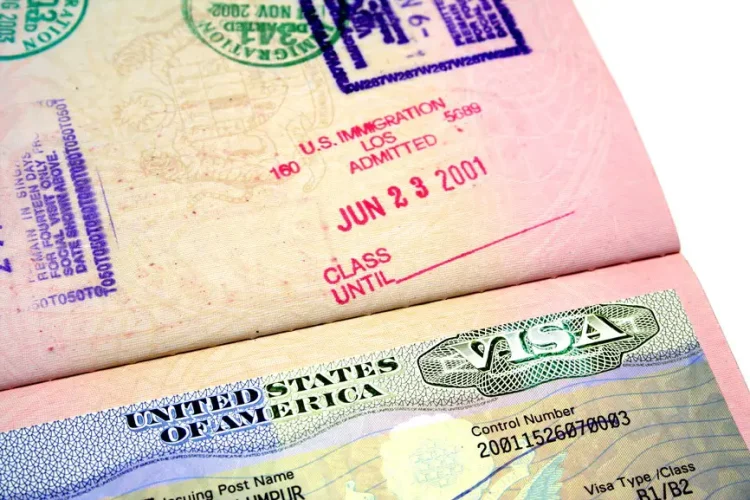
    Ghana has been listed among seventy-four other countries whose immigrant visa processing has been suspended by the United States (U.S) government, effective Wednesday 21 January.

    The new development, according to the Donald Trump administration, is to prevent what it claims is the misuse of welfare and public benefit programs by some immigrants. 

    This information was disclosed by an Associated Press released by the State Department. 

    “The State Department will use its long-standing authority to deem ineligible potential immigrants who would become a public charge on the United States and exploit the generosity of the American people, …to prevent the entry of foreign nationals who would take welfare and public benefits”, parts of the statement read. Countries such as  Russia, Iran, Afghanistan and several countries in Africa have had had stricter migration and visa rules imposed on them. 

    In July 2025, the U.S. Department of State—Bureau of Consular Affairs limited the number of entries and duration given under non-immigrant visa classifications. The affected countries were slapped with a maximum three-month single-entry visa and other limitations. In the specific case of Ghana, the Trump Administration said they were reacting to many years of visa overstays, mainly by students.

    It announced that Ghanaian visa applicants, including those applying for B-class visas covering business and tourism travel, will be issued single-entry visas valid for just three months. It emphasized that they can no longer access the 5-year visa and multiple-entry.

    The guidelines were published under the U.S. Visa, which revealed that Reciprocity and Civil Documents by Country for Ghana also affect student visa applicants.

    It noted that the F-1 visa holders, who are typically enrolled in full-time academic programmes in the U.S., will now be issued visas that allow for only one entry and expire after three months.

    Additionally, diplomats and government officials will, however, continue to receive multiple-entry visas with validity ranging from 24 to 60 months.

    The K1 visa, issued to the foreign-citizen fiancé(e) of a US citizen intending to marry within 90 days of arrival in the United States, and the K2 visa, provided to the unmarried dependent child (under 21 years old) of a K1 visa holder, are single-entry visas that will be valid for 6 months.

    The K3 visa, for the foreign-citizen spouse of a US citizen, and the K4 visa, for their unmarried dependent child (under 21 years old), are multiple-entry visas that will be valid for 24 months.

    All other visa applicants, including those applying for B-class visas, which cover business and tourism travel, will now be issued single-entry visas valid for just three months.

    In reaction to the US’ new policy that affects Ghana and Nigeria, the Vice President of IMANI-Africa, Bright Simons, quizzed whether or not Ghana and Nigeria can retaliate.

    “Given the scale and scope of the restrictions this time around now, citizen interest is likely to be much higher putting pressure on the government to openly discuss the measures it intends to take in response,” he noted while revealing how diplomatic channels resolved similar actions by the US in the past.

    He called on the government to provide statistics on whether or not US citizens coming to Ghana do not get long-term, multiple-entry visas as often as Ghanaian citizens visiting the US do.

    “Thus, they are trying to frame the issue as one of “reciprocity”. Something that, per policy, they ought to review regularly. Our governments should publish stats on this. Is it true or not?”

    “The visa regimes of some other places Ghanaians like to visit, like Europe, China, and the Middle-East, are not any more liberal. Getting long-term, multiple-entry visas for these places has been quite hard. It may be hard to justify retaliation against the US when visa rules for other places seem just as tight or even tighter. Except, of course, that there is no rule that says that retaliation must be symmetrical,” he added.

    However in September 2025, the United States government lifted the visa restrictions imposed on Ghanaian nationals. According to the U.S. Embassy in Ghana, B1/B2 visas, which cover business and tourism travel, are now valid for up to five years with multiple entries, while F1 student visas are valid for up to four years with multiple entries. For F1 student visas, the Consular stated that the maximum validity has changed from a single entry with three months expiration to four years with multiple entries.

    “The U.S. Embassy is pleased to announce that the maximum validity periods for all categories of nonimmigrant visas for Ghanaians have been restored to their previous lengths. The maximum validity allowed for the B1/B2 visitor visa is again five years, multiple entry. The maximum validity for the F1 student visa is again four years, multiple entry,” it indicated on X.

  • U.S plans to deport Salvadoran native Abrego Garcia to Ghana – Report

    U.S plans to deport Salvadoran native Abrego Garcia to Ghana – Report

    Salvadoran native Kilmar Abrego Garcia is expected to be deported from the United States (U.S.) to Ghana in the coming days, according to a notice from the agency to his attorneys.

    His transfer to Ghana will be finalized after a court hearing on Friday, where government officials are expected to deliver their final verdict regarding his deportation.

    Per reports, Kilmar Abrego Garcia was wrongly deported to El Salvador by the Department of Homeland Security. However, he was later sent back to the U.S., and subsequently to Eswatini and Uganda. Abrego Garcia was later imprisoned in El Salvador’s CECOT mega-prison in March. Before his deportation, he lived in Maryland with his wife and children.

    In 2019, the Trump administration argued that he was a member of a violent transnational criminal gang, the Mara Salvatrucha (MS-13), when a court ruled that he shouldn’t be sent back to El Salvador because it could have adverse effects on him. But the Trump administration’s claims were refuted by his family and lawyers.

    This development comes at a time when President John Dramani Mahama has assured that Ghana will not be turned into a dumping ground for deportees, especially those with criminal records from the United States.

    While speaking at the swearing-in ceremony of newly appointed Ambassadors and High Commissioners in Accra on Wednesday, October 1, President Mahama disclosed that the deal between the two countries would protect Ghana’s interests.

    “I wish to assure my countrymen and women that our understanding with the U.S. does not undermine our sovereignty, security, or stability. Ghana will not, and I repeat, will not become a dumping ground for deportees, nor will we accept individuals with criminal backgrounds,” he added.

    His assurance follows criticism after the government hosted about fourteen (14) individuals deported from the U.S. The deportation agreement between the Government of Ghana and the United States drew massive scrutiny from the Minority in Parliament.

    Addressing the media on Wednesday, September 24, the Ranking Member on the Foreign Affairs Committee, Samuel Abu Jinapor, described the deal as unconstitutional and called for its immediate suspension.

    The Minority Caucus has demanded a thorough review of the deal in Parliament while seeking clarity on the processes and safeguards that guided its approval.

    “We therefore reiterate our call on the Government to suspend, with immediate effect, the unconstitutional implementation of this agreement until Parliament has duly exercised its constitutional mandate to ratify same.

    “We urge Government to provide full clarity on the processes, safeguards, and other broader implications associated with receiving these deportees, including the measures, if any, that have been taken to protect Ghana’s security interests,” he added.

    The Minority cited Article 75 of Ghana’s Constitution, which dictates that an international agreement must be approved by Parliament.

    They pointed to previous Supreme Court rulings, such as the one involving the Gitmo 2 detainees, as precedent for why executive-only agreements are unconstitutional.

    “The deal should have been brought to Parliament. It’s the same President Mahama who entered into a deal for the relocation of the Gitmo 2 to Ghana. What’s in it for our beloved country, Ghana?” NPP MP for Abirem, Charles Owiredu, wrote.

    The opposition also accused Mahama of hiding behind the Economic Community of West African States (ECOWAS) protocol on free movement, describing it as misleading. They argued that those protocols apply to voluntary travel, not forced deportations orchestrated by non-member states like the U.S.

    “Accepting forced deportations orchestrated by non-ECOWAS states contradicts the spirit of regional integration protocols designed for voluntary movement,” stated the Minority Caucus on the Foreign Affairs Committee.

    However, the Foreign Affairs Minister, Samuel Okudzeto Ablakwa, has explained that the decision was driven primarily by humanitarian concerns after observing the harsh treatment of deportees abroad.

    “We didn’t agree to this because we agree with President Trump’s immigration policies. We’re not doing the U.S. a favour. We’re doing our fellow Africans a favour; we’re offering them refuge, hope, and we want them to come back home and be comfortable.

    “We solidarised with them when we saw those images, the arrests, the violation of their rights, and their being detained against their will. It was purely on a humanitarian basis; we did not take any financial benefits. We’re doing this because we want to continue to position Ghana as the Mecca for Africans,” Ablakwa stressed.

    On Wednesday, September 10, the first batch of West African nationals arrived in Ghana following their deportation from the U.S. During a media encounter at the Jubilee House, President John Dramani Mahama said that the batch consisted of 14 individuals, mostly Nigerians, along with one Gambian national.

    “We were approached by the U.S. to accept third-country nationals who were being removed, and we agreed that West African nationals could be accommodated, since all our fellow West Africans do not require a visa to enter Ghana. So, if they travel from the U.S. to Accra, entry is not an issue. Bringing our West African colleagues back is therefore acceptable,” President Mahama explained.

    President Mahama did not explicitly detail the terms of Ghana serving as a transit hub for West African nationals deported from the U.S. Meanwhile, the Government of Ghana has sent back home the fourteen (14) West African migrants who arrived in the country after their deportation from the United States (U.S.).

    This was made known today, Tuesday, September 23, after an Accra High Court struck out a human rights case filed by eleven (11) of the 14 West African nationals against the government. During court proceedings, the lawyer for the applicants, Oliver Barker-Vormawor, revealed that the individuals returned to their home countries over the weekend despite safety concerns.

    “We had before the court two applications—one for a writ of habeas corpus and the other for an interim injunction preventing repatriation. Unfortunately, the court adjourned the matter to this morning without granting interim relief. Over the weekend, the applicants were deported, and as such, our applications have become moot. This is precisely the injury we sought to prevent,” Barker-Vormawor told the court.

    The eleven individuals include Nigerians Daniel Osas Aigbosa, Ahmed Animashaun, Ifeanyi Okechukwu, and Taiwo K. Lawson; Liberian national Kalu John; Togolese nationals Zito Yao Bruno and Agouda Richarla Oukpedzo Sikiratou; Gambian national Sidiben Dawda; and Malians Toure Dianke and Boubou Gassama.

    According to the applicants, they were forcibly transported to Ghana without prior notice. They allege that they were secretly moved from U.S. detention centers between September 5 and 6 in shackles.

    They wanted the court to temporarily stop them from being deported back to their home countries until the court decided on their case. Their submission further revealed that Ghanaian authorities allegedly confined them in a military facility.

    They cited Article 14(1) of Ghana’s 1992 Constitution, which guarantees personal liberty, as well as Article 23, which protects the right to administrative justice.

    They are arguing that Ghana is violating international law by trying to send them back to countries where their lives or freedom could be at risk. As a result, they have demanded that the Attorney-General, the Chief of Defence Staff, and the Comptroller-General of the Ghana Immigration Service appear before the Human Rights Division of the High Court with valid reasons.

    A federal judge, Judge Tanya Chutkan, has expressed concern that the arrangement suggested complicity on the part of the Ghanaian government in the deportation process.

    Judge Chutkan granted an emergency hearing after lawyers for the deportees argued that their clients expected to be returned to Nigeria and Gambia and feared torture or persecution if sent home. She instructed the Trump administration to submit a report outlining measures to prevent Ghana from returning the deportees to their home countries.

    According to her, concerns about their safety were not speculative but “real enough that the United States government agrees they shouldn’t be sent back to their home country.” Judge Chutkan described the arrangement as appearing to have been designed by U.S. officials “to make an end run” around legal requirements barring the government from deporting migrants to situations of danger.

    The deportations, she noted, form part of President Donald Trump’s broader strategy of relocating migrants to “third countries” to expedite removals and pressure undocumented immigrants to leave the U.S.

    It later emerged, following a lawsuit filed on Friday, September 12, by the American Civil Liberties Union (ACLU) and Asian Americans Advancing Justice, that five of the nationals deported to Ghana had U.S. legal protections preventing deportation to their home countries. One of them, a bisexual man, was already sent to Gambia and is reportedly in hiding.

    The others were held in an open-air facility managed by the Ghanaian military, which was described as having squalid conditions. The complaint alleged that the migrants were taken from a Louisiana detention facility, shackled, and flown on a U.S. military aircraft without being told their destination. Some were reportedly restrained in straitjackets for 16 hours.

    The U.S. Department of Justice, responding to Judge Chutkan’s request, argued that it no longer had custody of the migrants and therefore the court lacked authority to interfere in matters of diplomacy. They cited a Supreme Court ruling allowing deportations to third countries.

    U.S. Department of Homeland Security spokesperson Tricia McLaughlin rejected the claim that straitjackets were used during the flight but declined to comment on allegations of circumventing immigration law.

    In January 2016, President Mahama welcomed two Yemeni nationals, Mahmud Umar Muhammad Bin Atef and Khalid Muhammed Salih Al-Dhuby, who had been detained at Guantanamo Bay for about 15 years. They were linked to Al-Qaeda activities, and their transfer to Ghana formed part of a bilateral agreement with the U.S.

    The Mahama government explained that the move was a humanitarian gesture and that the two men would stay in Ghana for two years. However, the deal was never submitted to Parliament as required by the Constitution.

    In June 2017, the Supreme Court ruled that the Gitmo 2 agreement was unconstitutional, ordering the government to present it to Parliament within three months or return the detainees to the U.S.

  • U.S. reverses visa restrictions imposed on Ghana

    U.S. reverses visa restrictions imposed on Ghana

    The recent visa restrictions imposed on Ghanaian nationals by the United States (U.S.) have officially been lifted by the U.S. government. This information was contained in a post on the U.S. Embassy in Ghana’s official X (formerly Twitter) page on Saturday, September 27.


    Prior to this announcement, Foreign Affairs Minister Samuel Okudzeto Ablakwa, had written on the X platform that “I am really pleased that months of high-level diplomatic negotiations has led to a successful outcome. I am really pleased that months of high-level diplomatic negotiations has led to a successful outcome”.

    According to the U.S. Embassy in Ghana, B1/B2 visas, which cover business and tourism travel, are now valid for up to five years with multiple entries, while F1 student visas are valid for up to four years with multiple entries. For F1 student visas, the Consular stated that the maximum validity has changed from a single entry with three months expiration to four years with multiple entries.


    “The U.S. Embassy is pleased to announce that the maximum validity periods for all categories of nonimmigrant visas for Ghanaians have been restored to their previous lengths. The maximum validity allowed for the B1/B2 visitor visa is again five years, multiple entry. The maximum validity for the F1 student visa is again four years, multiple entry,” it indicated on X.

    It will be recalled that the US imposed visa restrictions on Ghana and other countries in July this year. The affected countries were slapped with a maximum three-month single-entry visa and other limitations. In the specific case of Ghana, the Trump Administration said they were reacting to many years of visa overstays, mainly by students.


    In July, the U.S. Department of State—Bureau of Consular Affairs limited the number of entries and duration given under non-immigrant visa classifications.


    Ghanaian visa applicants, including those applying for B-class visas covering business and tourism travel, will be issued single-entry visas valid for just three months. It emphasized that they can no longer access the 5-year visa and multiple-entry.

    The guidelines were published under the U.S. Visa, which revealed that Reciprocity and Civil Documents by Country for Ghana also affect student visa applicants.


    It noted that the F-1 visa holders, who are typically enrolled in full-time academic programmes in the U.S., will now be issued visas that allow for only one entry and expire after three months.


    Additionally, diplomats and government officials will, however, continue to receive multiple-entry visas with validity ranging from 24 to 60 months.


    The K1 visa, issued to the foreign-citizen fiancé(e) of a US citizen intending to marry within 90 days of arrival in the United States, and the K2 visa, provided to the unmarried dependent child (under 21 years old) of a K1 visa holder, are single-entry visas that will be valid for 6 months.


    The K3 visa, for the foreign-citizen spouse of a US citizen, and the K4 visa, for their unmarried dependent child (under 21 years old), are multiple-entry visas that will be valid for 24 months.


    All other visa applicants, including those applying for B-class visas, which cover business and tourism travel, will now be issued single-entry visas valid for just three months.


    In reaction to the US’ new policy that affects Ghana and Nigeria, the Vice President of IMANI-Africa, Bright Simons, quizzed whether or not Ghana and Nigeria can retaliate.


    “Given the scale and scope of the restrictions this time around now, citizen interest is likely to be much higher putting pressure on the government to openly discuss the measures it intends to take in response,” he noted while revealing how diplomatic channels resolved similar actions by the US in the past.


    He called on the government to provide statistics on whether or not US citizens coming to Ghana do not get long-term, multiple-entry visas as often as Ghanaian citizens visiting the US do.


    “Thus, they are trying to frame the issue as one of “reciprocity”. Something that, per policy, they ought to review regularly. Our governments should publish stats on this. Is it true or not?”

    “The visa regimes of some other places Ghanaians like to visit, like Europe, China, and the Middle-East, are not any more liberal. Getting long-term, multiple-entry visas for these places has been quite hard. It may be hard to justify retaliation against the US when visa rules for other places seem just as tight or even tighter. Except, of course, that there is no rule that says that retaliation must be symmetrical,” he added.

    The development comes at a time when U.S. President Donald J. Trump has imposed a fifteen percent (15%) ad valorem tariff on Ghana’s exports.

    This means that Ghanaian goods shipped to the U.S. will be charged a 15% tax based on their price. Thus, a product at $100, would be $115 as a result of the $15 tariff. The U.S. government explains that the new development forms part of the efforts to protect its economy, as the country buys more goods from other countries than it sells to them.

    According to the Executive Order, “These modifications shall be effective with respect to goods entered for consumption, or withdrawn from warehouse for consumption, on or after 12:01 a.m.” The policy is expected to reflect on Ghanaian goods entering the U.S. in the coming days, which will affect many countries, including Nigeria, Zimbabwe, Zambia, Uganda, Mozambique, Mauritius, Malawi, Lesotho, and Madagascar.

    Also, countries such as South Africa and Libya face a 30 percent tariff, while Tunisia will face a 25 percent steeper duty. Meanwhile, the Ghana Export Promotion Authority (GEPA) and Ghana’s Trade Ministry are yet to react to the new tariff. The new tariff adjustment comes at a time when the Ghanaian government is implementing tax reforms to ensure the elimination of successive charges of taxation that increase the cost of goods and services.

    Although the measure is premised on the principle of reciprocity, President Trump insisted in the executive order that the United States had been unfairly disadvantaged by trade barriers erected by other countries. This policy affects numerous Ghanaian exports, notably those under the African Growth and Opportunity Act (AGOA), which previously allowed duty-free access to the U.S. market.

    Ghanaian officials have criticized the move, arguing that the U.S. cannot claim the tariffs are to protect domestic industries. Ghana is not facing the issue in isolation; as such, the African Union and the African Continental Free Trade Area (AfCFTA) are coordinating a collective response.

    Some African nations, such as Lesotho, could face import duties of up to 50 percent. The African Growth and Opportunity Act (AGOA), which was passed by the U.S. Congress in 2000 to provide duty-free access for African exports to the U.S. market, remains in effect but faces new scrutiny in light of the latest U.S. trade policy shift.

    In 2022, two-way trade between AGOA members and the US exceeded $46 billion, with $13.5 billion more in imports than exports. That year, AGOA recipients exported $30 billion worth of goods to the US, of which $10.2 billion were sold under the duty-free AGOA preference.

    However, with AGOA’s framework set to expire in September, there are growing concerns that the Trump administration’s stance may hinder any renewal. The U.S. government in May announced a new 10% tariff on exports, but the then U.S. Ambassador to Ghana, Virginia Palmer, insisted that the new global tariff adjustments could benefit Ghana, unlike other countries.

    In an interview with Citi News on Monday, May 26, she explained that the 10% tariff on exports to the U.S. is in favor of Ghana, as the nation’s key exports, oil and gas, are not affected, as it is imposed on rival countries.

    “There were 10% applied globally, which the new US administration has taken, that may in the short term [be] to Ghana’s advantage, vis-à-vis its competitors. Oil and gas, which is being [a] major exporter to the US, is not subject to the tariff. If Ghana faces a 10% tariff, Bangladesh and Vietnam face 47% and 63%,” she said.

    According to her, Ghana is currently in a better position in the U.S. market as compared to 60 countries that are facing a much higher rate of the 10% imposed tax. “There were 60 countries where tariffs were much higher than 10%, which may be an advantage for Ghana in the near term. I hope that Ghana will be the one making that point to the American legislature when it expires at the end of September [2025],” she added.

    Virginia Palmer therefore urged the country’s leadership to seize the advantage to persuade the U.S. government to renew a trade benefit before its expiry in September this year. She emphasized that Ghana remains a valued partner. Trade analysts, on the other hand, suggest the U.S. is unintentionally nudging African countries toward deeper engagement with China.

    In July, The U.S. Department of State—Bureau of Consular Affairs limited the number of entries and duration given under non-immigrant visa classifications.

    Ghanaian visa applicants, including those applying for B-class visas—covering business and tourism travel—will be issued single-entry visas valid for just three months. They can no longer access the 5-year visa and multiple-entry. The updated guidelines, published under the U.S. Visa, reveal that Reciprocity and Civil Documents by Country for Ghana also affect student visa applicants.

    F-1 visa holders, who are typically enrolled in full-time academic programmes in the U.S., will now be issued visas that allow for only one entry and expire after three months. Diplomats and government officials will, however, continue to receive multiple-entry visas with validity ranging from 24 to 60 months.

    The K1 visa, issued to the foreign-citizen fiancé(e) of a US citizen intending to marry within 90 days of arrival in the United States, and the K2 visa, provided to the unmarried dependent child (under 21 years old) of a K1 visa holder, are single-entry visas that will be valid for 6 months.

    The K3 visa, for the foreign-citizen spouse of a US citizen, and the K4 visa, for their unmarried dependent child (under 21 years old), are multiple-entry visas that will be valid for 24 months. All other visa applicants, including those applying for B-class visas, which cover business and tourism travel, will now be issued single-entry visas valid for just three months.

    The Ministry of Foreign Affairs has debunked reports that it is responsible for the United States government’s revision of the reciprocity schedule for a considerable number of African countries, including Ghana.

    The ministry noted that, consistent with bilateral arrangements, US passport holders are entitled to a maximum visa validity of five years, and in most instances, five-year multiple-entry visas are issued upon request. “Some applicants, however, apply for single-entry visas owing largely to limited validity of their passports,” a statement released by the Ministry read.

    Besides the maximum five-year multiple visas, Ghana also issues multiple-entry 6-month, one-year, two-year, three-year, and four-year visas based on various considerations. From January 2025 to date, 40,648 visas have been issued by Ghana’s missions in Washington, D.C., and New York. Out of this, 28,626 are multiple-entry visas to Ghana.

    The statement further indicated that “The official statistics clearly demonstrate that, contrary to false narratives, Ghana has issued, on average, an impressive 70.42% of multiple long-term visas to US passport holders, consistent with our bilateral arrangements.”

  • Tyler Robinson told roommate he would kill Charlie Kirk because of his “hate speeches” –  Prosecutors reveal

    Tyler Robinson told roommate he would kill Charlie Kirk because of his “hate speeches” – Prosecutors reveal

    Investigations conducted by authorities have revealed prior messages exchanged between Tyler Robinson, the suspect in the killing of the conservative influencer Charlie Kirk, and his roommate.

    On Tuesday, the officials noted that the duo exchanged messages two hours before the murder incident. 

    According to officials, the 22-year-old defendant is in a romantic relationship with the unnamed roommate, who is in the process of transitioning from a male to female. 

    Prosecutors say Robinson’s message to  his roommate read “I had the opportunity to take out Charlie Kirk and I’m going to take it.”

    Authorities have alleged that,  in response, his roommate asked “why” and Tyler Robinson wrote back. with “I had enough of his hatred. Some hate can’t be negotiated out.”

    Utah County prosecutor Jeff Gray in a Tuesday news conference, indicated that the police were able to retrieve their messages with the assistance of Robinson’s roommate.

    The prosecutor revealed that Robinson’s lover, after the former instructed him to delete their messages, gave those messages to the police as evidence.

    However, Robinson’s mother, in an indictment, has disclosed that her son had recently developed an interest in political views, especially those that are “pro-gay and trans-rights oriented”. She noted that her son accused Charlie Kirk of spreading hate through his comments before the shooting incident.

    Meanwhile, no-one else has been charged in connection with the case yet. But the FBI director Patel during Tuesday’s Senate hearing announced that several others are under investigation for their alleged involvement in the shooting.

    Many individuals, together with those affiliated with President Trump and Kirk’s Turning Point USA organisation, have linked the unfortunate incident to transgender activism sponsored by left-wing activists.

    President Donald Trump has called Charlie Kirk’s death a “heinous assassination”. In a tribute, President Trump praised Charlie Kirk as a patriot and martyr. President Trump ordered flags at half-staff, reaffirming Kirk’s legacy of faith and freedom.

    Charles James Kirk was an American right-wing political activist, entrepreneur, and media personality. He co-founded the conservative organization Turning Point USA in 2012 and was its executive director.

    He published a range of books and hosted The Charlie Kirk Show, a talk radio program. He was shot dead at Utah Valley University in Orem, Utah, on Wednesday afternoon, September 10, while engaging the audience as part of his“American Comeback Tour.”

    His death has drawn widespread attention and reignited debates about political violence in the U.S. Charlie Kirk is survived by a wife, Erika Kirk, and two children: a boy of a year and some months old, and a three-year-old girl.

    His wife has vowed to carry out his movement. According to her, “The movement my husband built will not die. It won’t I refuse to let that happen. It will not die. All of us will refuse to let that happen. No one will ever forget my husband’s name, and I will make sure of it”.

    She has emphasized that  her late husband’s organization wouldn’t back down on campus tours, adding”There will be even more tours in the years to come”.

  • Trump undermining U.S. Congress’ power on tariff decisions – President Mahama

    Trump undermining U.S. Congress’ power on tariff decisions – President Mahama

    President John Dramani Mahama has lamented the United States (U.S) President Donald Trump’s refusal to allow the U.S Congress authority on tariff matters.

    Speaking during his first presidential media encounter of his second term in office, he noted that the power to set tariffs lies significantly with the U.S Congress; however, President Donald Trump oversteps the boundaries.

    “The power to impose tariffs is that of Congress, but in this case, the US president [Donald Trump] always pushes the limit,” President Mahama said.

    According to him, African countries are under pressure due to the United States (U.S) President Donald Trump’s interest in quick deals rather than a long-term partnership. President Mahama stated that the U.S President’s recent trade policies have resulted in the “technical” collapse of the African Growth and Opportunity Act (AGOA).

    He mentioned that “Countries like Africa enjoyed zero tariffs in the US because we were in the developing world. It was a concession that the US gave. In comes President Trump. He has a more transactional mindset.

    “He says the US has been taken for granted for a long time so even countries like Ghana in Africa, he slapped a 15% tariff on us from a zero tariff”.

    AGOA was established to give certain African countries special trade access to the U.S. market. It was enacted on May 18, 2000 by the 106th United States Congress and signed into law by President Bill Clinton.

    Although AGOA was initially set to expire in 2008, the U.S. has extended it multiple times, with the current extension running through 2025.


    But President Mahama has emphasized that its renewal is uncertain following President Donald Trump’s steep tariff on goods exported to the U.S by African exporters.


    “AGOA is technically dead. It was due for renegotiation in September, but there is no way with this 15% tariff, AGOA is going to be renewed. We are just watching carefully,” he added.


    On Friday, July 31, imposes a fifteen percent (15%) ad valorem tariff on Ghana’s exports. This means that Ghanaian goods shipped to the U.S. will be charged a 15% tax based on their price.
    Thus, a product at $100, would be $115 as a result of the $15 tariff.

    The U.S. government explains that the new development forms part of the efforts to protect its economy, as the country buys more goods from other countries than it sells to them.


    According to the Executive Order, “These modifications shall be effective with respect to goods entered for consumption, or withdrawn from warehouse for consumption, on or after 12:01 a.m.”

    The policy is expected to impact Ghanaian goods entering the U.S. in the coming days, affecting many countries, including Nigeria, Zimbabwe, Zambia, Uganda, Mozambique, Mauritius, Malawi, Lesotho, and Madagascar.


    Also, countries such as South Africa and Libya face a 30 percent tariff, while Tunisia will face a 25 percent steeper duty. Meanwhile, the Ghana Export Promotion Authority (GEPA) and Ghana’s Trade Ministry are yet to react to the new tariff.


    The new tariff adjustment comes at a time when the Ghanaian government is implementing tax reforms to ensure the elimination of successive charges of taxation that increase the cost of goods and services.


    Although the measure is premised on the principle of reciprocity, President Trump insisted in the executive order that the United States had been unfairly disadvantaged by trade barriers erected by other countries.

    This policy affects numerous Ghanaian exports, notably those under the African Growth and Opportunity Act (AGOA), which previously allowed duty-free access to the U.S. market.


    Ghanaian officials have criticized the move, arguing that the U.S. cannot claim the tariffs are to protect domestic industries. Ghana is not facing the issue in isolation; as such, the African Union and the African Continental Free Trade Area (AfCFTA) are coordinating a collective response.


    Some African nations, such as Lesotho, could face import duties of up to 50 percent. The African Growth and Opportunity Act (AGOA), which was passed by the U.S. Congress in 2000 to provide duty-free access for African exports to the U.S. market, remains in effect but faces new scrutiny in light of the latest U.S. trade policy shift.


    In 2022, two-way trade between AGOA members and the US exceeded $46 billion, with $13.5 billion more in imports than exports. That year, AGOA recipients exported $30 billion worth of goods to the US, of which $10.2 billion were sold under the duty-free AGOA preference.


    However, with AGOA’s framework set to expire in September, there are growing concerns that the Trump administration’s stance may hinder any renewal.

    The U.S. government in May announced a new 10% tariff on exports, but the then U.S. Ambassador to Ghana, Virginia Palmer, insisted that the new global tariff adjustments could benefit Ghana, unlike other countries.


    In an interview with Citi News on Monday, May 26, she explained that the 10% tariff on exports to the U.S. is in favor of Ghana, as the nation’s key exports, oil and gas, are not affected, as it is imposed on rival countries.


    “There were 10% applied globally, which the new US administration has taken, that may in the short term [be] to Ghana’s advantage, vis-à-vis its competitors. Oil and gas, which is being [a] major exporter to the US, is not subject to the tariff. If Ghana faces a 10% tariff, Bangladesh and Vietnam face 47% and 63%,” she said.


    According to her, Ghana is currently in a better position in the U.S. market as compared to 60 countries that are facing a much higher rate of the 10% imposed tax.

    “There were 60 countries where tariffs were much higher than 10%, which may be an advantage for Ghana in the near term. I hope that Ghana will be the one making that point to the American legislature when it expires at the end of September [2025],” she added.


    Virginia Palmer therefore urged the country’s leadership to seize the advantage to persuade the U.S. government to renew a trade benefit before its expiry in September this year. She emphasized that Ghana remains a valued partner.


    Trade analysts, on the other hand, suggest the U.S. is unintentionally nudging African countries toward deeper engagement with China.


    In July, The U.S. Department of State-Bureau of Consular Affairs limited the number of entries and duration given under non-immigrant visa classifications.


    Ghanaian visa applicants, including those applying for B-class visas—covering business and tourism travel will be issued single-entry visas valid for just three months. They can no longer access the 5-year visa and multiple-entry.


    The updated guidelines, published under the U.S. Visa, reveal that Reciprocity and Civil Documents by Country for Ghana also affect student visa applicants.


    F-1 visa holders, who are typically enrolled in full-time academic programmes in the U.S., will now be issued visas that allow for only one entry and expire after three months.


    Diplomats and government officials will, however, continue to receive multiple-entry visas with validity ranging from 24 to 60 months.


    The K1 visa, issued to the foreign-citizen fiancé(e) of a US citizen intending to marry within 90 days of arrival in the United States, and the K2 visa, provided to the unmarried dependent child (under 21 years old) of a K1 visa holder, are single-entry visas that will be valid for 6 months.


    The K3 visa, for the foreign-citizen spouse of a US citizen, and the K4 visa, for their unmarried dependent child (under 21 years old), are multiple-entry visas that will be valid for 24 months.

    All other visa applicants, including those applying for B-class visas, which cover business and tourism travel, will now be issued single-entry visas valid for just three months.


    The Ministry of Foreign Affairs has debunked reports that it is responsible for the United States government’s revision of the reciprocity schedule for a considerable number of African countries, including Ghana.


    The ministry noted that, consistent with bilateral arrangements, US passport holders are entitled to a maximum visa validity of five years, and in most instances, five-year multiple-entry visas are issued upon request.


    “Some applicants, however, apply for single-entry visas owing largely to limited validity of their passports,” a statement released by the Ministry read.


    Besides the maximum five-year multiple visas, Ghana also issues multiple-entry 6-month, one-year, two-year, three-year, and four-year visas based on various considerations.


    From January 2025 to date, 40,648 visas have been issued by Ghana’s missions in Washington, D.C., and New York. Out of this, 28,626 are multiple-entry visas to Ghana.


    The statement further indicated that “The official statistics clearly demonstrate that, contrary to false narratives, Ghana has issued, on average, an impressive 70.42% of multiple long-term visas to US passport holders, consistent with our bilateral arrangements.”

  • New U.S. trade rule places 15% levy on Ghanaian exports

    New U.S. trade rule places 15% levy on Ghanaian exports

    The United States (U.S.) President Donald J. Trump’s new executive order, issued on Friday, July 31, imposes a fifteen percent (15%) ad valorem tariff on Ghana’s exports. 

    This means that Ghanaian goods shipped to the U.S. will be charged a 15% tax based on their price. Thus, a product at $100, would be $115 as a result of the $15 tariff. The U.S. government explains that the new development forms part of the efforts to protect its economy, as the country buys more goods from other countries than it sells to them. 

    According to the Executive Order, “These modifications shall be effective with respect to goods entered for consumption, or withdrawn from warehouse for consumption, on or after 12:01 a.m.” The policy is expected to reflect on Ghanaian goods entering the U.S. in the coming days, which will affect many countries, including Nigeria, Zimbabwe, Zambia, Uganda, Mozambique, Mauritius, Malawi, Lesotho, and Madagascar.

    Also, countries such as South Africa and Libya face a 30 percent tariff, while Tunisia will face a 25 percent steeper duty. Meanwhile, the Ghana Export Promotion Authority (GEPA) and Ghana’s Trade Ministry are yet to react to the new tariff. The new tariff adjustment comes at a time when the Ghanaian government is implementing tax reforms to ensure the elimination of successive charges of taxation that increase the cost of goods and services.

    Although the measure is premised on the principle of reciprocity, President Trump insisted in the executive order that the United States had been unfairly disadvantaged by trade barriers erected by other countries. This policy affects numerous Ghanaian exports, notably those under the African Growth and Opportunity Act (AGOA), which previously allowed duty-free access to the U.S. market.


    Ghanaian officials have criticized the move, arguing that the U.S. cannot claim the tariffs are to protect domestic industries. Ghana is not facing the issue in isolation; as such, the African Union and the African Continental Free Trade Area (AfCFTA) are coordinating a collective response.

    Some African nations, such as Lesotho, could face import duties of up to 50 percent. The African Growth and Opportunity Act (AGOA), which was passed by the U.S. Congress in 2000 to provide duty-free access for African exports to the U.S. market, remains in effect but faces new scrutiny in light of the latest U.S. trade policy shift.

    In 2022, two-way trade between AGOA members and the US exceeded $46 billion, with $13.5 billion more in imports than exports. That year, AGOA recipients exported $30 billion worth of goods to the US, of which $10.2 billion were sold under the duty-free AGOA preference.

    However, with AGOA’s framework set to expire in September, there are growing concerns that the Trump administration’s stance may hinder any renewal. The U.S. government in May announced a new 10% tariff on exports, but the then U.S. Ambassador to Ghana, Virginia Palmer, insisted that the new global tariff adjustments could benefit Ghana, unlike other countries.

    In an interview with Citi News on Monday, May 26, she explained that the 10% tariff on exports to the U.S. is in favor of Ghana, as the nation’s key exports, oil and gas, are not affected, as it is imposed on rival countries. 

    “There were 10% applied globally, which the new US administration has taken, that may in the short term [be] to Ghana’s advantage, vis-à-vis its competitors. Oil and gas, which is being [a] major exporter to the US, is not subject to the tariff. If Ghana faces a 10% tariff, Bangladesh and Vietnam face 47% and 63%,” she said.

    According to her, Ghana is currently in a better position in the U.S. market as compared to 60 countries that are facing a much higher rate of the 10% imposed tax. “There were 60 countries where tariffs were much higher than 10%, which may be an advantage for Ghana in the near term. I hope that Ghana will be the one making that point to the American legislature when it expires at the end of September [2025],” she added.

    Virginia Palmer therefore urged the country’s leadership to seize the advantage to persuade the U.S. government to renew a trade benefit before its expiry in September this year. She emphasized that Ghana remains a valued partner. Trade analysts, on the other hand, suggest the U.S. is unintentionally nudging African countries toward deeper engagement with China.

     In July, The U.S. Department of State—Bureau of Consular Affairs limited the number of entries and duration given under non-immigrant visa classifications.

    Ghanaian visa applicants, including those applying for B-class visas—covering business and tourism travel—will be issued single-entry visas valid for just three months. They can no longer access the 5-year visa and multiple-entry. The updated guidelines, published under the U.S. Visa, reveal that Reciprocity and Civil Documents by Country for Ghana also affect student visa applicants.

    F-1 visa holders, who are typically enrolled in full-time academic programmes in the U.S., will now be issued visas that allow for only one entry and expire after three months. Diplomats and government officials will, however, continue to receive multiple-entry visas with validity ranging from 24 to 60 months.

    The K1 visa, issued to the foreign-citizen fiancé(e) of a US citizen intending to marry within 90 days of arrival in the United States, and the K2 visa, provided to the unmarried dependent child (under 21 years old) of a K1 visa holder, are single-entry visas that will be valid for 6 months.

    The K3 visa, for the foreign-citizen spouse of a US citizen, and the K4 visa, for their unmarried dependent child (under 21 years old), are multiple-entry visas that will be valid for 24 months. All other visa applicants, including those applying for B-class visas, which cover business and tourism travel, will now be issued single-entry visas valid for just three months.

    The Ministry of Foreign Affairs has debunked reports that it is responsible for the United States government’s revision of the reciprocity schedule for a considerable number of African countries, including Ghana.

    The ministry noted that, consistent with bilateral arrangements, US passport holders are entitled to a maximum visa validity of five years, and in most instances, five-year multiple-entry visas are issued upon request. “Some applicants, however, apply for single-entry visas owing largely to limited validity of their passports,” a statement released by the Ministry read.

    Besides the maximum five-year multiple visas, Ghana also issues multiple-entry 6-month, one-year, two-year, three-year, and four-year visas based on various considerations. From January 2025 to date, 40,648 visas have been issued by Ghana’s missions in Washington, D.C., and New York. Out of this, 28,626 are multiple-entry visas to Ghana.

    The statement further indicated that “The official statistics clearly demonstrate that, contrary to false narratives, Ghana has issued, on average, an impressive 70.42% of multiple long-term visas to US passport holders, consistent with our bilateral arrangements.”

  • Ghana risks export losses if govt delays tariff talks – Oppong-Nkrumah

    Ghana risks export losses if govt delays tariff talks – Oppong-Nkrumah

    The Minority in Parliament is pressing the government to urgently engage with U.S. authorities in hopes of securing an exemption from a newly introduced 10% levy on Ghana’s exports to America.

    Ranking Member of Parliament’s Economy and Development Committee, Kojo Oppong-Nkrumah, made the appeal, warning that the additional charge would make Ghanaian goods more expensive abroad, undermining their competitiveness and threatening exporters.

    “The newly imposed 10% tariff on Ghanaian exports to the U.S. will undoubtedly increase costs for Ghanaian products in that market. Ghanaian goods risk losing their competitive edge—an outcome that could severely impact businesses and livelihoods that rely on exports,” he cautioned in a social media post on Friday.

    Oppong Nkrumah believes the government must act swiftly and take advantage of existing diplomatic tools—particularly those available under the African Continental Free Trade Agreement (AfCFTA)—to negotiate a reprieve.

    “At a time when economic diplomacy has been enhanced in the erstwhile government under pillars like the AfCFTA, Ghana must engage the United States and ultimately seek a waiver for our nation,” he added.

    He also noted that if the administration’s proposed 24-hour economy is to thrive, it would need a vibrant export sector—something that could be severely undermined if the tariffs are left unchallenged.

    While the Ministries of Trade and Industry and Foreign Affairs have not yet issued any public remarks on the development, there is growing anticipation that business groups and sector players will soon voice their stance on the matter.

  • Two persons killed by tornadoes that rip throughout central and southeast of U.S

    Two persons killed by tornadoes that rip throughout central and southeast of U.S

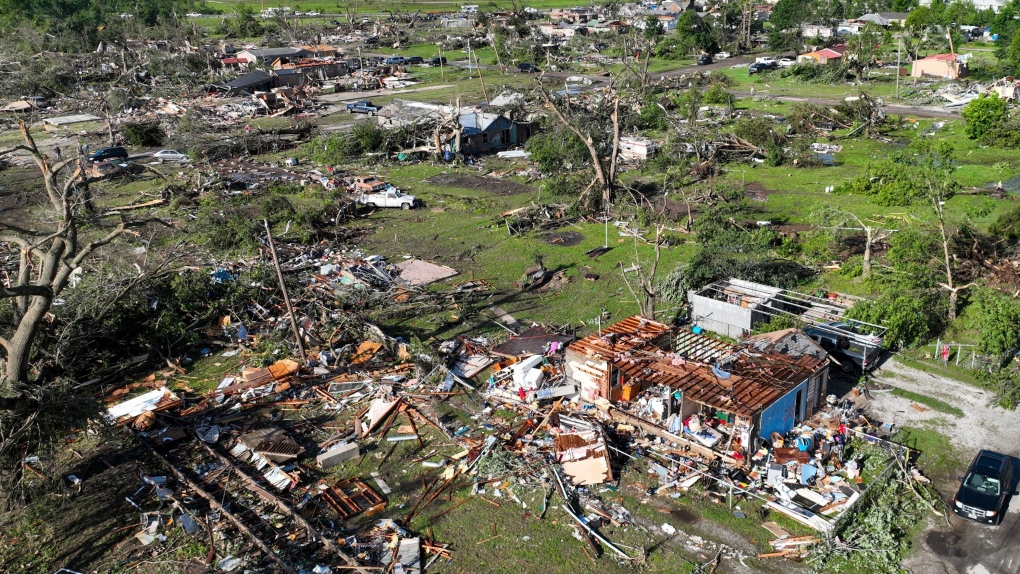
    Strong storms caused a lot of damage in the middle and southeast of the US on Tuesday and Wednesday. They made big tornadoes, big hail, and two people died in Tennessee and North Carolina when trees fell on their cars.

    The big storm in northeastern Tennessee had strong winds that knocked over power lines and trees. Sheriff Bob Brooks said a 22-year-old man was in a car that got hit by a tree.

    On Wednesday, there was a very serious tornado warning for the southern part of Nashville. The towns of Spring Hill, Chapel Hill, and Eagleville were also in danger.

    A tornado alert was given in Columbia, which is about 45 miles south of Nashville. According to Lynn Thompson, who helps run Maury County 911, people in Columbia got hurt and their homes got damaged. Thompson said to The Associated Press that he couldn’t give more information: “We have too much to do right now. ”

    A big storm hit Gaston County in North Carolina, so the government declared a state of emergency on Wednesday evening. Emergency workers were clearing roads of fallen power lines and trees and were helping people, officials said. The New Hope Fire Department went to help when a tree fell on a car. Officials said that one person died in the car and another person was taken to the hospital.

    Over 135,000 people did not have electricity in the state by Wednesday evening, according to PowerOutage. us

    Tornadoes were spotted in Michigan, Indiana, and Ohio on Tuesday night, according to the US National Weather Service. The storms came one day after a deadly tornado hit a town in Oklahoma.

    The National Weather Service said tornadoes hit several counties in western Ohio on Tuesday: five in Warren County and one each in Darke, Mercer, and Auglaize counties. The weather service is checking Franklin and Butler counties to see if tornadoes hit there too. A tornado hit Jefferson County, but experts will have to check the damage to figure out how strong it was, according to Jeff Craven, a weather expert in Pittsburgh.

    On Wednesday, the crews looked at the damage from the big storms with hail and heavy rain. The storms also caused power outages for many utility customers.

    In Michigan, a weather expert named Nathan Jeruzal said that tornadoes hit Kalamazoo, Cass, and Branch counties in the southwestern part of the state. The leader of the state or province. Gretchen Whitmer said there is a big problem in four counties that need help.

    The area of Portage in Kalamazoo County was heavily impacted, with a FedEx building being torn apart and over twelve mobile homes being destroyed. Roughly 50 people were stuck inside the broken building because of fallen power lines.

    Over twelve houses were ruined in a group of mobile homes in Pavilion Township, and 16 people were hurt, according to Kalamazoo County Sheriff Richard Fuller.

    On Wednesday afternoon, Samantha Smith held a box as she left her mom’s damaged home in Pavilion Township, which is about 137 miles west of Detroit. The box had her grandmother’s remains inside. Being able to find the most treasured items gave Smith a rare feeling of relief during the terrible storm.

    Her mom, dad, and brother got hurt in the storm but they made it through.

    “I have thanked God so many times since this happened yesterday,” she said. “My children are doing well and are healthy. ” “We need to recover what we lost. ”

    Travis Wycoff went out on Tuesday night after seeing on radar that a tornado had hit the Portage area. He helped an older couple out of their partly fallen home and saved a service dog from a house.

    “Many people were running in the streets to find other people and their pets,” Wycoff said. “It was just very chaotic. ”

    In southern Indiana, a tornado hit on Wednesday morning and damaged homes in a neighborhood near the city of Sellersburg. Sellersburg is about 12 miles north of Louisville, Kentucky.

    The storm messed up 24 buildings, according to the Clark County Emergency Management Agency.

    Candice Holmes, who lives in the Lewis & Clark neighborhood north of Sellersburg, said that she, her husband and son went to their bathroom for safety when they heard the storm coming and the wind suddenly got very strong.

    “It was really frightening. ” Please simplify this text. “I’m happy that we’re still alive,” Holmes said to WDRB-TV.

    Tornadoes were also found in Pennsylvania near Pittsburgh, in central Arkansas, and in northern West Virginia. The West Virginia tornado happened on Wednesday in eastern Ohio. It was the 11th tornado in the state this year, even though the state usually only sees an average of two tornadoes a year.

    Large pieces of hail the size of baseballs fell on Wednesday in areas just southwest of St Louis, Missouri. There was heavy rain which caused sudden flooding and at least one person had to be rescued from the water near Sullivan, a town that was hit by a small tornado just two days ago. Large balls of ice also damaged things in the Kansas City area.

    On Tuesday, there were big storms in the central United States after heavy rain, strong winds, hail, and tornadoes hit the area the day before. The Plains and Midwest have been hit hard by tornadoes this spring.

    The whole week in the US will have a lot of storms. The Midwest and the South will have the worst weather for the rest of the week. This includes cities like Indianapolis, Memphis, Nashville, St Louis and Cincinnati, where over 21 million people live. It will be sunny during the weekend.

  • Trump wants U.S Supreme Court to rule on immunity claims before New York hush money trial

    Trump wants U.S Supreme Court to rule on immunity claims before New York hush money trial

    Donald Trump wants to push back his trial for paying money to keep something secret. The Supreme Court made a decision about the president’s claim that he is immune from being charged in another criminal case.

    The ex-president’s lawyers asked a judge in Manhattan to delay the New York criminal trial until his claim of immunity in his election interference case in Washington, D.C, is resolved

    Merchan did not make a decision right away on Monday, the judge scolded Trump’s lawyers for not filing a document on time and for waiting too long to bring up the issue of immunity. The judge also said that from now on, both Trump’s lawyers and the prosecutors need to ask for permission before making any other legal requests before the trial.

    Trump says he cannot be prosecuted for things he did while being president. His lawyers say that some of the evidence and alleged actions in the hush money case happened while he was in the White House and were part of his official duties.

    The highest court will listen to arguments on April 25. This is a month after jury selection was supposed to start in Trump’s hush money case. He has four criminal cases and the first one is going to trial. He is trying to become the Republican presidential nominee and win the White House again.

    The Manhattan district attorney’s office did not want to say anything. Lawyers need to give their answer to Trump’s request for a delay in court this week.

    Trump first brought up the immunity issue in his criminal case in Washington, D.C. It’s about claims that he tried to change the 2020 election results before his followers rioted at the US Capitol on January 6, 2021.

    The hush money case is about claims that Trump lied about his company’s records to hide payments to his lawyer Michael Cohen, who helped Trump keep bad stories secret during his 2016 presidential campaign. Cohen gave Stormy Daniels $130,000 to keep quiet about her saying she had sex with Trump while he was married.

    Trump’s lawyers say that the evidence prosecutors want to use in the hush money trial, like the messages he posted on social media in 2018 about paying Cohen, were from when he was president and were part of his official duties.

    Last year, Trump said he did not do the 34 crimes of lying about his business records. He said he didn’t have sex with Daniels, and his lawyers say the money given to Cohen was for legal costs, not to hide anything.

    Last year, a judge said no to Trump’s request to move a case from state court to federal court. Trump had said the case was about his job as president, but the judge disagreed. If the case had been transferred to federal court, Trump’s lawyers could have tried to get the charges dismissed because federal officials are protected from prosecution for things they do as part of their job.

    The proof strongly shows that the President was just trying to hide something embarrassing that was personal to him, according to US District Judge Alvin Hellerstein in July. “Money paid to keep a movie star quiet is not connected to the President’s official actions. ” It does not show the President’s official duties at all.

    Trump’s lawyers asked for a change in Hellerstein’s decision, but then they decided to stop asking for it in November. They said they were doing it with prejudice, which means they couldn’t change their minds.

    It’s not clear if a past president can be charged for things they did while in office.

    The prosecutors in the Washington, DC case said Trump doesn’t have immunity and the things he’s accused of doing after losing the election aren’t considered official actions.

    The judge in Washington and a higher court didn’t agree with Trump, but now the high court is going to look at it again, which means the case in Washington will be delayed and we’re not sure when it will go to trial.

  • U.S aid policy for Gaza “illogical” considering its military support for Israel – UN expert

    U.S aid policy for Gaza “illogical” considering its military support for Israel – UN expert

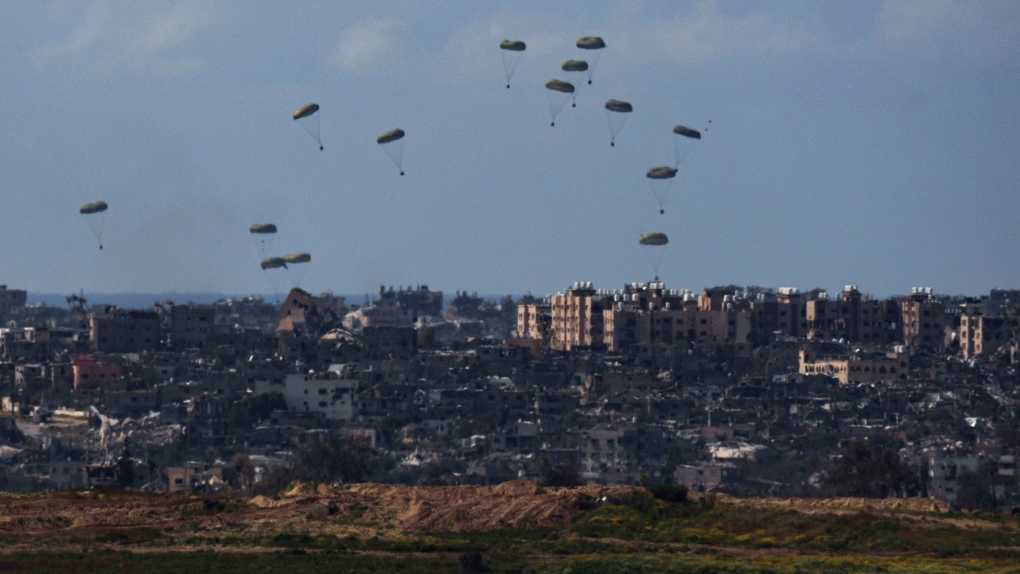
    The United Nations expert has criticised the United States’ actions for attempting to increase help for people in Gaza, like setting up a temporary port and dropping supplies from the air, were called “ridiculous” and “sneaky” as long as Israel keeps receiving military assistance.

    Despite warnings of a potential famine five months into Israel’s fight against the Palestinian group Hamas in Gaza, the U.S The military has dropped food from the air to help people in Gaza. They also want to make a temporary port to bring in more help by boat.

    Air drops of food will not help much to reduce hunger and malnutrition, and they won’t stop famine, according to Michael Fakhri, who works for the UN and talks about people’s right to food. He said this to the media in Geneva.

    He said things could get messy when hungry people fight for food. Regarding the port, he said nobody had requested it. He said using the port and air drops methods should only be done if there are no other options left.

    “He said that countries use air drops and maritime piers when they want to deliver aid to enemy territory. ”

    The United States The diplomatic office in Geneva was not able to reply right away to the comments made late on Friday.

    Fakhri, a law professor from Lebanon and Canada, was asked by the UN Human Rights Council to write about and give advice on food security around the world. He said it didn’t make sense to do this while the US is still helping Israel with its military.

    The United States The new law proposes giving Israel an extra $17. 6 billion in military help as they continue to fight against Hamas after their deadly October attack. 7 times people have been hurt.

    “That’s more than just supporting a friend. ” That’s a wedding. “It’s nearly impossible to understand,” he said about the U. SThe US is giving help to Israel and some people think it’s just for show to please people in the US. “The presidential elections are coming soon. ”

    “That’s the only logical way to understand these aid announcements because from a humanitarian, international, and human rights perspective, it’s absurd in a dark and cynical way,” he said.

    Fakhri, who often says bad things about Israel on social media, told a group in Geneva that Israel is ruining Gaza’s food supply on purpose. Israel says this is not true and they are not stopping aid from getting to Gaza.

  • George Stinney Jr,. the youngest person in U.S. history to face capital punishment in 10 minutes at age 14

    George Stinney Jr,. the youngest person in U.S. history to face capital punishment in 10 minutes at age 14

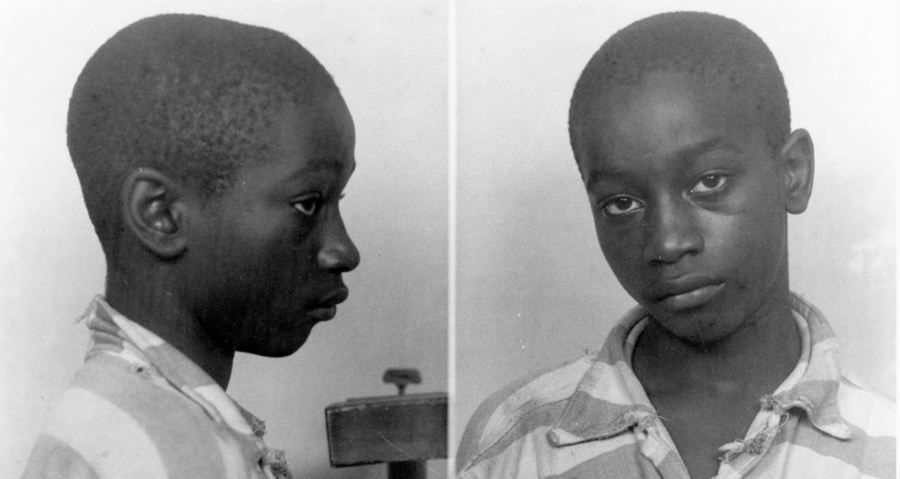
    In 1944, during the Jim Crow era in the Deep South, George Stinney Jr., a 14-year-old African-American boy, became the youngest person in the United States to be executed in the electric chair.

    Stinney lived in Alcolu, South Carolina, a segregated mill town where white and black residents were separated by railroad tracks.

    Stinney’s family lived in a modest company house until they were forced to leave when he was accused of killing two white girls, 11-year-old Betty June Binnicker and 7-year-old Mary Emma Thames. The girls had gone missing while riding their bicycles in search of flowers. Their bodies were found the next day in a ditch, showing signs of violent head injuries.

    Despite a lack of physical evidence and a trial lasting only 10 minutes, Stinney was swiftly convicted by an all-white jury. It would take 70 years for Stinney to be posthumously exonerated.

    The case of George Stinney Jr. highlights the racial injustices and systemic discrimination prevalent in the Jim Crow South, where a young black boy could be sentenced to death based on flimsy evidence and racial bias.

    Dr. Bozard concluded that Binnicker and Thames had suffered wounds likely caused by a “round instrument about the size of the head of a hammer.”

    Mary Emma Thames With Her Family

    File/ReutersMary Emma Thames (left) is pictured with her family in 1943. Thames and her friend Betty June Binnicker were murdered the following year.

    Despite rumors that the girls had visited a prominent white family’s home on the day of their murder, which was never confirmed, the police focused their investigation on George Stinney Jr., a young black boy. When law enforcement officers learned that the girls had been seen talking to Stinney, they promptly arrested him.

    Stinney was taken into custody, handcuffed, and interrogated for hours in a small room without his parents, an attorney, or any witnesses present. The police claimed that Stinney confessed to the murders, allegedly stating that his plan to have sex with one of the girls had failed.

    An officer named H.S. Newman wrote in a handwritten statement, “I arrested a boy by the name of George Stinney. He then made a confession and told me where to find a piece of iron about 15 inches long. He said he put it in a ditch about six feet from the bicycle.”

    Newman refused to disclose Stinney’s whereabouts as rumors of lynching circulated in the town. Even Stinney’s parents were unaware of his location as his trial rapidly approached. In those days, 14 was deemed the age of responsibility, and Stinney was held accountable for the murder.

    A Two-Hour Trial

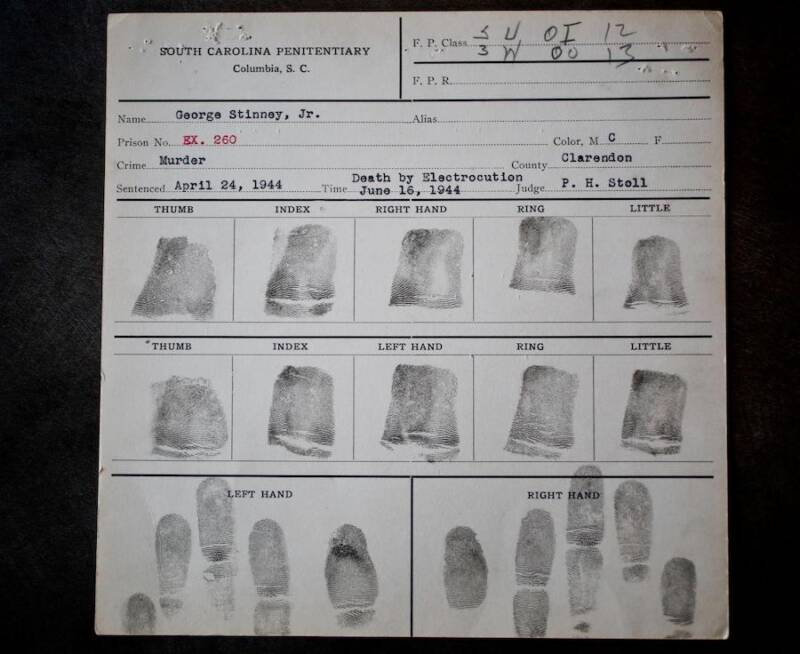
    George Stinney Jr. Fingerprints

    South Carolina Department of Archives and HistoryGeorge Stinney Jr.’s fingerprints are pictured on this certificate.

    About a month after the girls’ deaths, George Stinney Jr.’s trial began at a Clarendon County Courthouse. Court-appointed attorney Charles Plowden did “little to nothing” to defend his client.

    During the brief two-hour trial, Plowden neglected to call witnesses or present evidence that could have challenged the prosecution’s case. The key evidence against Stinney was his alleged confession, but there was no written record of this confession.

    At the time of his trial, Stinney had not seen his parents for weeks. They were too afraid of being attacked by a white mob to attend the court proceedings. As a result, the 14-year-old was surrounded by strangers, estimated to be up to 1,500 people.

    After a deliberation that lasted less than 10 minutes, the all-white jury found Stinney guilty of murder, without recommending mercy.

    On April 24, 1944, the 14-year-old was sentenced to death by electrocution.

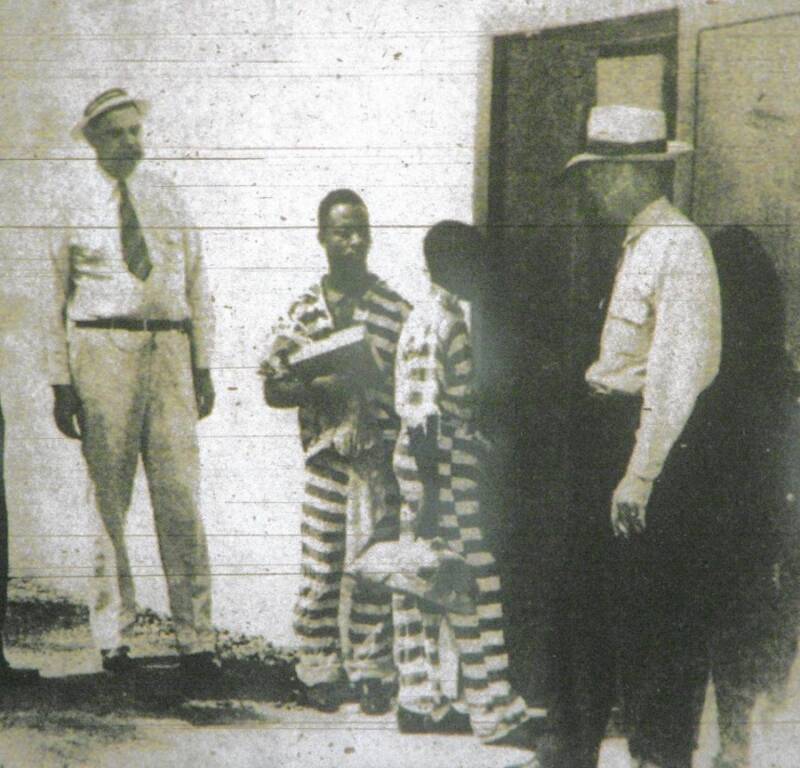
    The Execution Of George Stinney Jr.

    George Stinney's Execution

    Jimmy Price/Columbia RecordGeorge Stinney Jr. (second from right) was likely coerced into confessing to the murder of two girls.

    Despite protests and appeals for clemency from both white and black ministerial unions, as well as hundreds of letters and telegrams, Governor Olin Johnston did not grant George Stinney Jr. clemency based on his young age.

    On June 16, 1944, Stinney walked into the execution chamber at the South Carolina State Penitentiary in Columbia with a Bible under his arm. Weighing just 95 pounds, he was dressed in a loose-fitting striped jumpsuit.

    Strapped into an adult-size electric chair, he was so small that the state electrician had difficulty adjusting an electrode to his right leg. A mask too big for him was placed over his face.

    An assistant captain asked Stinney if he had any last words. Stinney replied, “No sir.” The prison doctor prodded, “You don’t want to say anything about what you did?” Again, Stinney replied, “No sir.”

    When officials activated the switch, 2,400 volts surged through Stinney’s body, causing the mask to slip off. His eyes were wide and teary, and saliva was emanating from his mouth for all the witnesses in the room to see. After two more jolts of electricity, it was over.

    Stinney was pronounced dead shortly thereafter. In a span of just 83 days, the boy had been charged with murder, tried, convicted, and executed by the state.

    A Murder Conviction Overturned 70 Years Later

    Katherine Robinson
    Tribune News Service via Getty ImagesKatherine Robinson, one of George Stinney’s sisters, testifies to what she remembers from the day of his arrest. The 70-year-old case of George Stinney Jr. was re-examined in 2014.

    In 2014, George Stinney’s murder conviction was overturned. His siblings asserted that his confession had been coerced and that he had an alibi: he was with his sister Aime, watching the family’s cow, at the time of the murders.

    They also cited testimony from Wilford “Johnny” Hunter, who claimed to be Stinney’s cellmate and said that Stinney had denied killing Binnicker and Thames.

    “He said, ‘Johnny, I didn’t, didn’t do it,’” Hunter said. “He said, ‘Why would they kill me for something I didn’t do?’”

    After months of consideration, on December 17, 2014, Judge Carmen T. Mullen vacated the murder conviction, calling George Stinney Jr.’s death sentence a “great and fundamental injustice.”

    George Stinney Jr.’s siblings were overjoyed to learn of their brother’s exoneration after 70 years, grateful that they had lived long enough to witness this momentous event.

    “It was like a cloud just moved away,” said Stinney’s sister, Katherine Robinson. “When we got the news, we were sitting with friends… I threw my hands up and said, ‘Thank you, Jesus!’ Someone had to be listening. It’s what we wanted for all these years.”