Tag: U.S.

  • Crude oil prices surpass $100 a barrel as US-Israel war on Iran impedes production and shipping

    Crude oil prices surpass $100 a barrel as US-Israel war on Iran impedes production and shipping

    The ongoing Middle East conflict involving the United States, Israel, and Iran continues to take a toll on the globe. For the first time since 2022, a barrel of crude oil is selling at $100 globally. 

    According to reports, a barrel of Brent crude is currently trading slightly above $107, while West Texas Intermediate (WTI) is selling at around $104.

     The massive increase is expected to negatively impact petroleum product prices in Ghana, particularly in the second pricing window of March.

    COPEC warns that Ghana could soon feel the impact at the pumps, as higher global prices and supply uncertainty may force fuel price adjustments. 

    International energy markets have been thrown into turmoil following a complete shutdown of the Strait of Hormuz, sending crude oil prices soaring above 91 dollars per barrel.

    The Executive Secretary of the Chamber of Petroleum Consumers (COPEC), Duncan Amoah, says the escalation of tensions in the Middle East has effectively crippled one of the world’s most critical oil transit routes.

    Speaking on Saturday, February 28, Mr. Amoah described the situation as a tense naval standoff. He claims forces from Iran, Russia, and China,  a bloc he referred to as the “Iron Triangle,” have positioned naval assets in the strategic corridor, halting oil shipments. 

    He added that U.S. forces are also moving toward the area, raising fears of a broader confrontation.

    According to him, more than 22 percent of the global oil supply that should have moved within the past 24 hours has not been transported.

    In these few days oil prices have jumped sharply from about 67 dollars per barrel to over 91 dollars, representing an increase of more than 30 percent in a single day. The geopolitical premium on oil is now at levels not seen since the 2022 Russia-Ukraine conflict.

    The ongoing tensions have been linked to the death of Iran’s Supreme Leader, Ayatollah Ali Khamenei. Ayatollah Ali Khamenei was reportedly killed in strikes by the Unites States (U.S.) and Israel. This development significantly impacting travelers from Ghana to Asia, Europe, and North America, as Dubai is a major transit hub connecting travelers through the United Arab Emirates.

    On Saturday, 28 February, Emirates flight EK 788 from Kotoka International Airport (ACC) in Accra to Dubai International Airport (DXB) was cancelled, and passengers were advised to contact their airlines for rebooking or refund options due the ongoing tensions.

    The airline suspended its services following reported bombings in Iraq and retaliatory attacks across the region.

    The flight from Accra to Dubai International Airport, scheduled for 7:15 pm GMT on Saturday, 28 February 2026, was canceled at the last minute through a notice.

    Last year, the Minister for Foreign Affairs, Samuel Okudzeto Ablakwa, warned the Israeli Embassy against maltreating Ghanaian nationals. Speaking to the media on Thursday, December 11, Mr. Ablakwa noted that Ghana will respond with equal force if any of its citizens are deported.

    According to him, “If they deport ten Ghanaians, we will deport ten. If they deport twenty, we will deport twenty. If they deport fifty, we will deport fifty. We are not going to accept this.”

    His comments are in response to an incident in which several Ghanaian travellers, including four members of a parliamentary delegation en route to Tel Aviv for an international cybersecurity conference, were detained and deported by Israel Embassy officials.

    Mr. Ablakwa narrated, “We were told that the Ghanaian Embassy was uncooperative, but the facts simply do not support that. Out of the six people on the list that Israel provided, one is not even Ghanaian. He is Gabonese. Our embassy had every right to verify the identity of the individuals involved.

    “One of the people listed was seriously ill, and Israeli doctors themselves advised that she should not travel until she had recovered. How can you deport someone who is unwell and needs medical attention? Another individual had already been issued a travel certificate, so there was no reason to stop their entry into Israel.”

    But in their actions, Israeli officials indicated that six Ghanaians who were supposedly due for deportation failed to provide the necessary details needed by Ghana’s Embassy in Tel Aviv to issue travel certificates.

    The matter adds to broader concerns surrounding deportation practices. In September, eleven West African nationals filed two ex-parte applications at the Labour Division of the High Court in Accra, challenging their alleged detention in Ghana after being deported from the United States (U.S).

    The eleven individuals include Nigerians Daniel Osas Aigbosa, Ahmed Animashaun, Ifeanyi Okechukwu, and Taiwo K. Lawson; Liberian national Kalu John; Togolese nationals Zito Yao Bruno and Agouda Richarla Oukpedzo Sikiratou; Gambian national Sidiben Dawda; and Malians Toure Dianke and Boubou Gassama.

    According to the applicants, they were forcibly transported to Ghana without prior notice. They allege that they were secretly moved from the U.S. detention centers between September 5 and 6 in shackles.

    They want the court to temporarily stop them from being deported back to their home countries until the court decides on their case. Their submission further revealed that Ghanaian authorities allegedly confined them in a military facility.

    They cited Article 14(1) of Ghana’s 1992 Constitution, which guarantees personal liberty, as well as Article 23, which protects the right to administrative justice.

    They are arguing that Ghana is violating international law by trying to send them back to countries where their lives or freedom could be at risk.

    As a result, they have demanded that the Attorney-General, the Chief of Defence Staff, and the Comptroller-General of the Ghana Immigration Service appear before the Human Rights Division of the High Court with valid reasons. The court has fixed Tuesday, September 23, to hear the case.

  • Middle East tensions: Ghana Embassy in Tehran closed indefinitely 

    Middle East tensions: Ghana Embassy in Tehran closed indefinitely 

    Ghana has closed its embassy in Tehran indefinitely and evacuated all diplomatic staff in response to escalating tensions involving the United States, Israel, and Iran.

    Announcing the decision on social media on Monday, March 2, Foreign Affairs Minister Samuel Okudzeto Ablakwa confirmed that all Ghanaian embassy staff have been safely evacuated from Iran. 

    “The safety, welfare, and protection of Ghanaians remains our utmost priority in these tempestuous times,” he stated. On Monday, March 2, the Ghanaian Embassy in Doha directed all Ghanaian nationals residing in Qatar to register with the mission as part of emergency preparedness measures amid escalating tensions in the Middle East.

    The Embassy in a statement explained that this forms part of ongoing efforts to ensure the safety of Ghanaian nationals. The Embassy of Ghana Doha, State of Qatar on Sunday, March 1, advised Ghanaians living in the area to exercise caution and remain vigilant during this period.

    A press statement from the Embassy of Ghana Doha, State of Qatar read, “Due to missle attack and its impact in Doha, please take shelter until further notice, obtain information from official sources. We urge everyone to stay from military states, remain indoors, avoid crowded areas for any exposure to danger and keep essentials supplies like medication and food”.

    “The Embassy of the Republic of Ghana in Doha hereby urges all Ghanaian nationals residing in the State of Qatar who have not registered to immediately do so, as part of ongoing emergency preparedness measures.

    “In view of the heightened tensions and unrest within the region, this registration will enable the Embassy to effectively communicate with, assist, and, if necessary, coordinate evacuation arrangements for Ghanaian citizens,” it noted.

    The ongoing tensions have been linked to the death of Iran’s Supreme Leader, Ayatollah Ali Khamenei. Ayatollah Ali Khamenei was reportedly killed in strikes by the Unites States (U.S.) and Israel. This development significantly impacting travelers from Ghana to Asia, Europe, and North America, as Dubai is a major transit hub connecting travelers through the United Arab Emirates.

    On Saturday, 28 February, Emirates flight EK 788 from Kotoka International Airport (ACC) in Accra to Dubai International Airport (DXB) was cancelled, and passengers were advised to contact their airlines for rebooking or refund options due the ongoing tensions.

    The airline suspended its services following reported bombings in Iraq and retaliatory attacks across the region.

    The flight from Accra to Dubai International Airport, scheduled for 7:15 pm GMT on Saturday, 28 February 2026, was canceled at the last minute through a notice.

    Last year, the Minister for Foreign Affairs, Samuel Okudzeto Ablakwa, warned the Israeli Embassy against maltreating Ghanaian nationals. Speaking to the media on Thursday, December 11, Mr. Ablakwa noted that Ghana will respond with equal force if any of its citizens are deported.

    According to him, “If they deport ten Ghanaians, we will deport ten. If they deport twenty, we will deport twenty. If they deport fifty, we will deport fifty. We are not going to accept this.”

    His comments are in response to an incident in which several Ghanaian travellers, including four members of a parliamentary delegation en route to Tel Aviv for an international cybersecurity conference, were detained and deported by Israel Embassy officials.

    Mr. Ablakwa narrated, “We were told that the Ghanaian Embassy was uncooperative, but the facts simply do not support that. Out of the six people on the list that Israel provided, one is not even Ghanaian. He is Gabonese. Our embassy had every right to verify the identity of the individuals involved.

    “One of the people listed was seriously ill, and Israeli doctors themselves advised that she should not travel until she had recovered. How can you deport someone who is unwell and needs medical attention? Another individual had already been issued a travel certificate, so there was no reason to stop their entry into Israel.”

    But in their actions, Israeli officials indicated that six Ghanaians who were supposedly due for deportation failed to provide the necessary details needed by Ghana’s Embassy in Tel Aviv to issue travel certificates.

    The matter adds to broader concerns surrounding deportation practices. In September, eleven West African nationals filed two ex-parte applications at the Labour Division of the High Court in Accra, challenging their alleged detention in Ghana after being deported from the United States (U.S).

    The eleven individuals include Nigerians Daniel Osas Aigbosa, Ahmed Animashaun, Ifeanyi Okechukwu, and Taiwo K. Lawson; Liberian national Kalu John; Togolese nationals Zito Yao Bruno and Agouda Richarla Oukpedzo Sikiratou; Gambian national Sidiben Dawda; and Malians Toure Dianke and Boubou Gassama.

    According to the applicants, they were forcibly transported to Ghana without prior notice. They allege that they were secretly moved from the U.S. detention centers between September 5 and 6 in shackles.

    They want the court to temporarily stop them from being deported back to their home countries until the court decides on their case. Their submission further revealed that Ghanaian authorities allegedly confined them in a military facility.

    They cited Article 14(1) of Ghana’s 1992 Constitution, which guarantees personal liberty, as well as Article 23, which protects the right to administrative justice.

    They are arguing that Ghana is violating international law by trying to send them back to countries where their lives or freedom could be at risk.

    As a result, they have demanded that the Attorney-General, the Chief of Defence Staff, and the Comptroller-General of the Ghana Immigration Service appear before the Human Rights Division of the High Court with valid reasons. The court has fixed Tuesday, September 23, to hear the case.

  • U.S. court considers extradition of Sedina Tamakloe-Attionu today

    U.S. court considers extradition of Sedina Tamakloe-Attionu today

    The United States (U.S.) Court will decide today, Wednesday, January 21, whether or not to extradite the Former Chief Executive Officer of the Microfinance and Small Loans Centre (MASLOC), Sedina Tamakloe-Attionu, to Ghana.

    Her extradition will ensure that she faces the law after she and the former Chief Operating Officer of MASLOC, Daniel Axim, were found guilty on charges including causing financial loss to the state, theft, conspiracy to steal, money laundering, and contravening public procurement laws in 2024.


    An Accra High Court issued an arrest warrant for Sedina Christine Attionu Tamakloe. This action followed an ex-parte motion filed by State Prosecutors. Assistant State Attorney Yvonne Yaache-Adomako, who addressed the court on April 22, 2024, stated that Tamakloe was convicted on all 78 counts against her.


    Sedina Tamakloe-Attionu received 10 years in prison, while Daniel Axim received a 5-year sentence. Madam Sedina Tamakloe-Attionu was tried in absentia after absconding abroad under the pretext of a medical check-up.


    Daniel Axim testified in person but did not present any witnesses.The government successfully located the former CEO of MASLOC. Despite being sentenced to 10 years in prison with hard labor, Tamaklo fled abroad.


    During that period, the government collaborated with partners in the United States to facilitate Tamaklo’s return to Ghana.


    The convictions are linked to the misappropriation of funds allocated for MASLOC activities between 2013 and 2016. Notably, the accused withdrew GH₵500,000 as a loan from Obaatampa Savings and Loans company and demanded a refund when the company refused to offer a 24% interest rate.


    Despite evidence of the refund, it was not reflected in MASLOC’s accounts. Additionally, the pair misappropriated over GH¢1.7 million intended for a sensitization exercise, with only a small portion used as planned.

    Funds designated for victims of a fire incident at Kantamanso were also misappropriated, and there were discrepancies in the purchase of vehicles and Samsung phones for MASLOC.


    Currently, Sedina Tamakloe-Attionu is in U.S detention following an extradition request by the Ghanaian government.


    MASLOC is an apex body responsible for implementing the Government of Ghana’s microfinance programmes targeted at reducing poverty. It was established in 2006 to grant loans to start-ups and small businesses to help them grow and expand as part of its core functions.


    Recently a collaboration between the Microfinance and Small Loans Centre (MASLOC) and the National Security operatives have resulted in the seizure of three out of five government vehicles which were in possession of the Ashanti Regional Chairman of the New Patriotic Party (NPP), Bernard Antwi Boasiako, popularly known as Chairman Wontumi.


    This information was disclosed by the Deputy Women Organizer for the National Democratic Congress (NDC), Abigail Elorm Mensah who also doubles as the CEO of MASLOC on Wednesday, September 10.


    Speaking to Citi News, the retrieval of vehicles from Wontumi is in line with a broader initiative to recover government loans and vehicles from defaulters.


    She noted that Chairman Wontumi adds up to one of the many individuals who receive loans and vehicles from the institutions but have refused to fulfill the terms of the agreement.


    According to the CEO of MASLOC, her outfit is working tirelessly to ensure Chairman Wontumi returns the two other government-owned cars.


    “I have gone with National Security operatives to the house of the Chairman of the NPP in Ashanti Region, Chairman Wontumi. Three cars. In fact, the cars were five. We’ve retrieved three. I have collected all from his house. We are still chasing him for the two.


    “He has to pay for them. What we do is that once I seize the cars, the agreement we have with you is that you would have to repay whatever has accrued, and we release the cars to you,” she said.


    The CEO of MASLOC mentioned that, “Between February and now, I have recovered roughly about GHS8 million, but that is not even up to 10% of what is in debt. We have in debt over GHS430m”.

    In the meantime, former Finance Minister Ken Ofori-Atta is scheduled to appear before a United States (U.S.) immigration court in Virginia on April 27, 2026, over his immigration status in the country.

    The embattled former minister was detained on 6 January 2026 in Washington, D.C., by U.S. Immigration and Customs Enforcement (ICE); however, he appeared before the court on Tuesday, January 20.

    According to reports, ICE has reportedly determined that Mr Ofori-Atta no longer has lawful status to remain in the United States, a development many believe could help expedite Ghana’s extradition process of the former Minister to Ghana.

    Ken Ofori-Atta left Ghana for the United States on January 4, 2025, according to investigative reporting detailing his departure timeline and visa use. As of today, January 8, 2026, that places his time in the U.S. at approximately 1 year and 12 days, following which he has been detained.

    Deputy Attorney General, Dr Srem-Sai, clarified a widely reported narrative about the circumstances surrounding Ghana’s Former Finance Minister’s arrest and detainment by immigration authorities in the United States (US).

  • Ofori-Atta to make next appearance before U.S. Court on April 27 over visa status

    Ofori-Atta to make next appearance before U.S. Court on April 27 over visa status

    Former Finance Minister Ken Ofori-Atta is scheduled to appear before a United States (U.S.) immigration court in Virginia on April 27, 2026, over his immigration status in the country.

    The embattled former minister was detained on 6 January 2026 in Washington, D.C., by U.S. Immigration and Customs Enforcement (ICE); however, he appeared before the court on Tuesday, January 20.

    According to reports, ICE has reportedly determined that Mr Ofori-Atta no longer has lawful status to remain in the United States, a development many believe could help expedite Ghana’s extradition process of the former Minister to Ghana.

    Ken Ofori-Atta left Ghana for the United States on January 4, 2025, according to investigative reporting detailing his departure timeline and visa use. As of today, January 8, 2026, that places his time in the U.S. at approximately 1 year and 12 days, following which he has been detained.

    Deputy Attorney General, Dr Srem-Sai, clarified a widely reported narrative about the circumstances surrounding Ghana’s Former Finance Minister’s arrest and detainment by immigration authorities in the United States (US).

    On January 7, Ken Ofori-Atta’s lawyers, Menka-Premo, Osei-Bonsu, Bruce-Cathline and Partners issued a statement confirming their client’s arrest by US Immigration and Customs Enforcement (ICE) over his immigration status.

    While it was widely reported that he had been detained for overstaying his visa term, the Attorney General’s Department has clarified that his visa was revoked in June last year and he was given up to November 29 to leave the USA; however, he ignored the order, leading to his detention by ICE.

    “ICE will not come for you unless you have visa issues; that is what has happened. In June 2025, his visa was revoked; it’s not an expiration of the Visa. The information we have is that his visa was revoked. So he has been living in America without a visa,” he said on the KeyPoints on TV3 Saturday, January 10.

    According to reports, a US visa can be revoked if the holder becomes ineligible for it. This can happen if they violate their status, commit fraud, or otherwise fall under a ground of inadmissibility.

    Dr Srem-Sai also mentioned that Ghanaian authorities collaborated with the US law enforcement agencies on Ken’s arrest.

    “We are keenly involved in this matter. We collaborate with law enforcement agencies in this matter,” he said on the Key Points on TV3 Saturday, January 10.

    Also, speaking on JoyNews’ Newsfile on Saturday, January 10, Attorney General, Dr Ayine explained that although Mr Ofori-Atta had initially been permitted to remain in the United States until November 29, he failed to depart within the stipulated period.

    According to him, the revocation of the visa was intentional and tied to ongoing investigations, not standard immigration enforcement.

    This is not simply an immigration issue. His visa did not expire; it was revoked. I state this on authority,” Dr Ayine said, adding that the visa was due to run until February before it was withdrawn.

    While his lawyers didn’t explicitly state whether he had overstayed his visa time, they noted that “Mr Ofori-Atta has a pending petition for adjustment of status, which authorises a person to stay in the US legally past the period of validity of their visa. Under US law, a change of status by this method is common.”

    This comes amid a legal tussle involving Ofori-Atta. The Special Prosecutor, for about eight months, has been making efforts to bring him to Ghana to face the law over some corruption-related issues.

    Ofori-Atta, who served as Ghana’s Finance Minister from 2017 to 2023, steered fiscal policy during the COVID-19 pandemic, debt restructuring efforts and IMF negotiations.

    His extended stay in the U.S. has coincided with ongoing legal proceedings in Ghana, including corruption-related charges filed by the Office of the Special Prosecutor in November 2025.

    A few days after his arrest, the Embassy of Ghana in Washington proposed a meeting with him, but he declined.

    The Embassy reported this in a formal statement shared by the Deputy Attorney General, Dr Srem-Sai, on his X (formerly Twitter) page on Sunday, January 11.

    According to the Ghanaian Ambassador, Victor Emmanuel Smith, his outfit requested access to Mr Ofori-Atta after confirming his arrest and detention over his immigration status.

    Their request for access to him was “to provide consular assistance in line with established diplomatic and international protocols”.

    However, “The Embassy was informed by the facility that the detainee declined to engage with consular officials at that time without his lawyers present”.

    However, “The Embassy of Ghana remains in contact with the appropriate United States authorities and will continue to follow the matter closely to ensure that Mr. Ofori Atta’s rights are totally respected.”

    Meanwhile, investigative journalist Manasseh Azure Awuni has shed more light on the arrest and detention of Ghana’s former Finance Minister, Ken Ofori-Atta, by US Immigration and Customs Enforcement (ICE).

    Speaking during an interview on TV3’s Key Points program on January 10, Manasseh revealed that Ofori-Atta’s arrest was a targeted operation by ICE and wasn’t part of a general swoop.

    He mentioned that witnesses present at the scene claim that Mr Ofori-Atta was arrested right after he exited his residence, a luxury apartment complex in Washington DC, known as Westlight Apartments, located at 1111 24th Street, on the morning of Tuesday, January 6.

    “This wasn’t like those organised raids by ICE in specific places. They got in specifically for him. As soon as he emerged from the entrance of the building, they moved in, surrounded him, got him into a car and drove him away,” Mr Azure said on January 10.

  • Full list of countries affected by U.S. visa suspension

    Full list of countries affected by U.S. visa suspension

    Several countries across Africa, the Middle East, Europe, and Asia have been affected by the United States’ (U.S.) visa suspension.

    Ghana, Nigeria, Somalia, Afghanistan, Albania, Algeria, Armenia, Bangladesh, Brazil, Cameroon, Egypt, Ethiopia, Gambia, Guinea, Haiti, Iran, Iraq, Jamaica, Kenya, Liberia, Libya, Morocco, Pakistan, Russia, Rwanda, Senegal, Sierra Leone, South Sudan, Sudan, Syria, Tanzania, Togo, Tunisia, Uganda, Uzbekistan, Yemen, and several others are under the U.S.suspension list.

    The new development, according to the Donald Trump administration, is to prevent what it claims is the misuse of welfare and public benefit programs by some immigrants.

    This information was disclosed by an Associated Press released by the State Department.

    “The State Department will use its long-standing authority to deem ineligible potential immigrants who would become a public charge on the United States and exploit the generosity of the American people, …to prevent the entry of foreign nationals who would take welfare and public benefits”, parts of the statement read. Countries such as Russia, Iran, Afghanistan and several countries in Africa have had had stricter migration and visa rules imposed on them.

    In July 2025, the U.S. Department of State—Bureau of Consular Affairs limited the number of entries and duration given under non-immigrant visa classifications. The affected countries were slapped with a maximum three-month single-entry visa and other limitations. In the specific case of Ghana, the Trump Administration said they were reacting to many years of visa overstays, mainly by students.

    It announced that Ghanaian visa applicants, including those applying for B-class visas covering business and tourism travel, will be issued single-entry visas valid for just three months. It emphasized that they can no longer access the 5-year visa and multiple-entry.

    The guidelines were published under the U.S. Visa, which revealed that Reciprocity and Civil Documents by Country for Ghana also affect student visa applicants.

    It noted that the F-1 visa holders, who are typically enrolled in full-time academic programmes in the U.S., will now be issued visas that allow for only one entry and expire after three months.

    Additionally, diplomats and government officials will, however, continue to receive multiple-entry visas with validity ranging from 24 to 60 months.

    The K1 visa, issued to the foreign-citizen fiancé(e) of a US citizen intending to marry within 90 days of arrival in the United States, and the K2 visa, provided to the unmarried dependent child (under 21 years old) of a K1 visa holder, are single-entry visas that will be valid for 6 months.

    The K3 visa, for the foreign-citizen spouse of a US citizen, and the K4 visa, for their unmarried dependent child (under 21 years old), are multiple-entry visas that will be valid for 24 months.

    All other visa applicants, including those applying for B-class visas, which cover business and tourism travel, will now be issued single-entry visas valid for just three months.

    In reaction to the US’ new policy that affects Ghana and Nigeria, the Vice President of IMANI-Africa, Bright Simons, quizzed whether or not Ghana and Nigeria can retaliate.

    “Given the scale and scope of the restrictions this time around now, citizen interest is likely to be much higher putting pressure on the government to openly discuss the measures it intends to take in response,” he noted while revealing how diplomatic channels resolved similar actions by the US in the past.

    He called on the government to provide statistics on whether or not US citizens coming to Ghana do not get long-term, multiple-entry visas as often as Ghanaian citizens visiting the US do.

    “Thus, they are trying to frame the issue as one of “reciprocity”. Something that, per policy, they ought to review regularly. Our governments should publish stats on this. Is it true or not?”

    “The visa regimes of some other places Ghanaians like to visit, like Europe, China, and the Middle-East, are not any more liberal. Getting long-term, multiple-entry visas for these places has been quite hard. It may be hard to justify retaliation against the US when visa rules for other places seem just as tight or even tighter. Except, of course, that there is no rule that says that retaliation must be symmetrical,” he added.

    However in September 2025, the United States government lifted the visa restrictions imposed on Ghanaian nationals. According to the U.S. Embassy in Ghana, B1/B2 visas, which cover business and tourism travel, are now valid for up to five years with multiple entries, while F1 student visas are valid for up to four years with multiple entries. For F1 student visas, the Consular stated that the maximum validity has changed from a single entry with three months expiration to four years with multiple entries.

    “The U.S. Embassy is pleased to announce that the maximum validity periods for all categories of nonimmigrant visas for Ghanaians have been restored to their previous lengths. The maximum validity allowed for the B1/B2 visitor visa is again five years, multiple entry. The maximum validity for the F1 student visa is again four years, multiple entry,” it indicated on X.

  • Ghana’s Abu Trica arrested over alleged $8m U.S. romance swindle on elderly victims

    Ghana’s Abu Trica arrested over alleged $8m U.S. romance swindle on elderly victims

    31-year-old Ghanaian from Swedru, Frederick Kumi, popularly known as Abu Trica, has been arrested after he allegedly tricked elderly victims in the United States (U.S) into sending him money by pretending to be in a romantic relationship with them. He was arrested in Ghana on Thursday, December 12.

    Kumi has been charged with conspiracy to commit wire fraud, money laundering conspiracy, and a forfeiture specification. He risks being jailed for 20 years.

    According to the indictment, Kumi had been working with a criminal group since 2023, using Artificial Intelligence (AI) technology to create fake profiles and lure victims into online romantic relationships.

    The indictment further added that Abu Trica and his team contacted the elderly individuals through social media and dating platforms, where they requested money or valuables to sort out urgent medical bills, travel expenses, or investment opportunities. The criminal group’s co-conspirators in Ghana then received funds and valuables defrauded from the elderly victims.

    The Attorney General’s Office, Economic and Organised Crime Office (EOCO), Ghana Police Service, Ghana Cyber Security Authority, Narcotics Control Commission (NACOC), and the National Intelligence Bureau, among others, aided the U.S. in tracing Abu Trica. Meanwhile, these agencies are working to arrest co-conspirators and recover the defrauded funds.

    In October, four Ghanaian nationals—Isaac Oduro Boateng aka “Kofi Boat,” Inusah Ahmed aka “Pascal,” Derrick Van Yeboah aka “Van,” and Patrick Kwame Asare aka “Borgar”—were charged for their roles in an international criminal organization that stole more than $100 million from victims via romance scams and business email compromises.

    United States Attorney for the Southern District of New York, Jay Clayton, and Assistant Director in Charge of the New York Field Office of the Federal Bureau of Investigation (FBI), Christopher G. Raia, announced the unsealing of an indictment charging them.

    Boateng, 36; Ahmed, 40; Van Yeboah, 40; and Asare, 39, are charged with one count of wire fraud conspiracy, which carries a maximum sentence of 20 years in prison; one count of wire fraud, which carries a maximum sentence of 20 years in prison; one count of money laundering conspiracy, which carries a maximum sentence of 20 years in prison; one count of conspiracy to receive stolen money, which carries a maximum sentence of five years in prison; and one count of receipt of stolen money, which carries a maximum sentence of 10 years in prison.

    The charges contained in the indictment are merely accusations, and the defendants are presumed innocent unless and until proven guilty.

    Boateng, Ahmed, and Van Yeboah were extradited and arrived in the U.S. on August 7 and appeared before U.S. Magistrate Judge Robert W. Lehrburger. Asare, on the other hand, remains at large. The case has been assigned to U.S. District Judge Arun Subramanian.

    “As alleged, Isaac Oduro Boateng, Inusah Ahmed, Derrick Van Yeboah, and Patrick Kwame Asare led and participated in an international fraud ring that engaged in a massive conspiracy to defraud vulnerable people and steal from businesses,” said U.S. Attorney Jay Clayton.

    “Offshore scammers should know that we, the FBI, and our law enforcement partners will work around the world to combat online fraud and bring perpetrators to justice.”

    “The defendants have been brought to the United States to be held accountable for their alleged roles in scamming companies and vulnerable Americans out of over $100 million,” said FBI Assistant Director in Charge Christopher G. Raia.

    “Deceiving businesses using email compromise campaigns and tricking innocent elderly victims through fraudulent companionship in order to exploit their trust and finances is not merely appalling but illegal. The FBI will continue to ensure anyone who preys on companies and vulnerable Americans online is made to face the criminal justice system.”

    The indictment revealed that Boateng, Ahmed, Van Yeboah, and Asare were high-ranking members of a criminal organization based in Ghana that committed romance scams and business email compromises against individuals and businesses located across the U.S.

    Many of the conspiracy’s victims were vulnerable older men and women who were tricked into believing that they were in online romantic relationships with people who were, in fact, fake identities assumed by members of the conspiracy.

    Once members of the conspiracy had gained the trust of their victims, they deceived those victims into sending their money to the enterprise or into helping them launder funds from other victims.

    The conspirators also committed business email compromises to trick and deceive businesses into wiring funds to the enterprise. In total, the conspiracy stole and laundered more than $100 million from dozens of victims.

    After stealing the money, the fraud proceeds were then laundered to West Africa, where they were largely funneled to individuals called “chairmen,” who directed the activities of other members of the conspiracy. Boateng and Ahmed were considered chairmen of the organization.

    The maximum potential sentences in this case are prescribed by Congress and provided here for informational purposes only, as any sentencing of the defendants will be determined by a judge.

    Mr. Clayton praised the outstanding work of the FBI. He also thanked Ghana and the U.S. Department of Justice’s Office of International Affairs for their assistance.

    The Justice Department’s Office of International Affairs worked with the International Cooperation Unit of the Office of the Attorney-General of Ghana to secure the extraditions to the United States. Ghana’s Economic and Organized Crime Office, the Ghana Police Service – INTERPOL, Ghana’s Cyber Security Authority, and Ghana’s National Intelligence Bureau all provided significant assistance to ensure the success of these extraditions.

    The case is being prosecuted by the Office’s Complex Frauds and Cybercrime Unit. Assistant U.S. Attorneys Kevin Mead and Mitzi Steiner are in charge of the prosecution.

    There has been a surge in reports of Ghanaian nationals being involved in illegal activities abroad, especially romance scams.

    Last month, Ghana’s nightlife mogul and alleged crypto kingpin, Nana Kojo Boateng, popularly known as “Dada Joe Remix,” was extradited successfully to the United States to face romance scam charges.

    This was made known on the Embassy’s Facebook page on July 1, 2025, following a collaborative effort between the Embassy’s Diplomatic Security Service special agents and Ghanaian authorities who offered support to the FBI in the operation.

    Mr. Boateng has been charged with leading a fraud ring that targeted Americans through deceptive romance and inheritance ploys, resulting in multimillion-dollar losses. He is now in the U.S. to face prosecution.

    Last year, a Ghanaian national, Emmanuel Quamey, was sentenced to 48 months in prison for his involvement in defrauding vulnerable and elderly victims in the United States, according to asaaseonline.com.

    United States District Judge Carol Bagley Amon handed down the sentencing, which also includes a forfeiture order of $3.3 million and restitution totaling approximately $3.8 million to the victims.

    Quamey, who pleaded guilty in October 2023 to conspiring to receive stolen money, was part of a scheme laundering the proceeds of romance scams, exploiting victims’ trust and companionship desires, resulting in significant financial loss.

    Breon Peace, United States Attorney for the Eastern District of New York, underscored the seriousness of the crime, condemning romance scams as callous crimes preying on vulnerable victims.

    “Romance scams are callous crimes in which perpetrators steal money from vulnerable and elderly victims by taking advantage of the victims’ trust and desire to form human connections,” Peace stated.

    “This sentence serves as a warning to individuals like the defendant that there are real consequences to participating in these cruel scams. This Office and our law enforcement partners are committed to bringing these fraudsters to justice and getting the victims’ money back.”

    Special Agent-in-Charge Ivan J. Arvelo of Homeland Security Investigations (HSI), New York, commended the investigators for their efforts.

    According to court filings, between September 2019 and March 2023, Quamey and his co-conspirators orchestrated a scheme receiving over $3.8 million in fraud proceeds from vulnerable U.S. victims of romance scams. These scams involve scammers posing as potential romantic partners on social media or dating sites, tricking victims into sending money under false pretenses.

    Quamey’s role was to receive and launder the victims’ money, personally receiving approximately $3.3 million wired into bank accounts he controlled.

    Using multiple bank accounts in the United States and Ghana, Quamey and his co-conspirators transferred the victims’ money overseas to Ghana.

    “Romance scams are callous crimes in which perpetrators steal money from vulnerable and elderly victims by taking advantage of the victims’ trust and desire to form human connections,” Peace stated.

    “This sentence serves as a warning to individuals like the defendant that there are real consequences to participating in these cruel scams. This Office and our law enforcement partners are committed to bringing these fraudsters to justice and getting the victims’ money back.”

  • Ghana not included – Ablakwa clears air on U.S. Green Card review

    Ghana not included – Ablakwa clears air on U.S. Green Card review

    Ghana has been exempted from the United States government’s latest Green Card review and temporary immigration suspension, the Foreign Affairs Minister, Samuel Okudzeto Ablakwa, has confirmed.

    The Foreign Affairs Minister disclosed on the X platform on Monday, December 1, after a formal briefing from the acting United States (U.S.) Ambassador to Ghana, Rolf Olson.


    “I held a very constructive meeting with acting US Ambassador to Ghana, H.E. Rolf Olson, today. We assessed recent positive strides in our bilateral relations, including the restoration of 5-year visas for Ghanaians, the removal of President Trump’s 15% tariffs on cocoa, semi-processed cocoa and other qualifying agricultural products, arrangements for World Cup soccer fans and the exemption of Ghana from last week’s Trump Green Card Review and immigration suspension policy.


    “We are also pleased to announce enhanced security cooperation efforts with the United States. In accordance with our longstanding bilateral Defence Cooperation Agreement, Ghana and the United States have increased intelligence sharing and training activities with the coordinated use of U.S. military aviation assets. Ghana welcomes this collaboration with the United States on our shared security priorities. Aviation activities will always be coordinated with the appropriate government authorities,” he added.


    Ablakwa’s statement has allayed fears among many Ghanaians as the U.S. moves to review Green Card holders from selected countries following President Trump’s order. President Donald Trump’s directive follows a shooting incident involving an Afghan man who held a Green Card.


    In November, the U.S. government made a U-turn on its decision to impose a 15% tariff on Ghana’s cocoa and selected agricultural goods exported to the country. Some of the agricultural products include cashew nuts, avocado, banana, mango, orange, lime, plantain, pineapple, guava, coconut, ginger and assorted peppers.


    With the new development, Ghana stands a chance of earning about $60 million more per year from selling cocoa to the U.S. This revelation was made by the Minister of Foreign Affairs, Samuel Okudzeto Ablakwa, in a post on X on Monday, November 24. According to him, the 15% tariff reversal was effected earlier this month.


    He added, “The United States Administration has officially informed the Government of Ghana that President Trump’s 15% imposition of tariffs on cocoa and certain qualifying agricultural products from Ghana has been rescinded. US diplomats confirm to me that the 15% tariff reversal came into effect on November 13, 2025, following President Trump’s new Executive Order.”


    “Other agricultural products from Ghana now exempted include cashew nut, avocado, banana, mango, orange, lime, plantain, pineapple, guava, coconut, ginger and assorted peppers. With an estimated annual Ghanaian cocoa beans export to the US averaging 78,000 metric tons, and at current spot price of $5,300/MT, Ghana stands to raise additional revenue of US$60 million (GHS667million) each year resulting from Trump’s tariff rescission. Ghana welcomes this positive development from the US which is the world’s leading importer of chocolate and cocoa products.”

    He concluded that Ghana and the USA will continue to forge closer and mutually beneficial relations. On Friday, July 31, the United States of America’s (U.S.A.) President Donald J. Trump issued a new executive order imposing a fifteen percent (15%) ad valorem tariff on Ghana’s exports.

    This means Ghanaian goods shipped to the U.S. would attract a 15% tax based on their price. Thus, a product priced at $100 would cost $115 as a result of the $15 tariff.


    The U.S. government explained that this measure formed part of ongoing efforts to protect its economy, as the country buys more goods from abroad than it sells.


    According to the Executive Order, “These modifications shall be effective with respect to goods entered for consumption, or withdrawn from warehouse for consumption, on or after 12:01 a.m.”

    The policy was expected to affect Ghanaian goods entering the U.S. in the following days and was also expected to affect several countries, including Nigeria, Zimbabwe, Zambia, Uganda, Mozambique, Mauritius, Malawi, Lesotho, and Madagascar.


    Additionally, countries such as South Africa and Libya were to face a 30% tariff, while Tunisia was set to face a 25% tariff. Meanwhile, the Ghana Export Promotion Authority (GEPA) and Ghana’s Trade Ministry were yet to respond to the tariff announcement.


    The tariff adjustment also came at a time when the Ghanaian government was implementing tax reforms aimed at eliminating excessive compounded taxes that raise the cost of goods and services.


    Although the measure was premised on the principle of reciprocity, President Trump insisted in the executive order that the United States had been unfairly disadvantaged by trade barriers erected by other countries.

    The policy affected numerous Ghanaian exports, especially those under the African Growth and Opportunity Act (AGOA), which previously offered duty-free access to the U.S. market.


    Ghanaian officials criticised the move, arguing that the U.S. could not claim the tariffs were intended to protect domestic industries. Ghana was not alone in facing the challenge, and the African Union and the African Continental Free Trade Area (AfCFTA) began coordinating a collective response.


    Some African nations, such as Lesotho, could have faced import duties of up to 50%. AGOA, passed by the U.S. Congress in 2000 to provide duty-free access for African exports, remains in effect but now faces new scrutiny in light of the broader U.S. trade policy shift.


    In 2022, two-way trade between AGOA members and the U.S. exceeded $46 billion, with imports surpassing exports by $13.5 billion. That year, AGOA members exported $30 billion worth of goods to the U.S., of which $10.2 billion were sold under the duty-free AGOA preference. However, with AGOA’s framework set to expire in September, there are growing concerns that the Trump administration’s stance may hinder renewal efforts.


    Earlier this year, the U.S. government announced a new 10% tariff on exports, but the then U.S. Ambassador to Ghana, Virginia Palmer, insisted the new global tariff adjustments could benefit Ghana more than other countries.


    In an interview with Citi News on Monday, May 26, she explained that the 10% tariff on exports to the U.S. could work in Ghana’s favour, as the nation’s key exports—oil and gas—were not affected, while rival countries faced significantly higher tariffs.


    “There were 10% applied globally, which the new US administration has taken, that may in the short term [be] to Ghana’s advantage, vis-à-vis its competitors. Oil and gas, which is being [a] major exporter to the US, is not subject to the tariff. If Ghana faces a 10% tariff, Bangladesh and Vietnam face 47% and 63%,” she said.


    According to her, Ghana was in a comparatively better position in the U.S. market compared to 60 countries facing much higher tariff rates. “There were 60 countries where tariffs were much higher than 10%, which may be an advantage for Ghana in the near term. I hope that Ghana will be the one making that point to the American legislature when it expires at the end of September [2025],” she added.


    Virginia Palmer therefore urged Ghana’s leadership to seize the opportunity to persuade the U.S. government to renew the trade benefit before its expiry in September. She emphasised that Ghana remains a valued partner. Trade analysts, however, suggest that the U.S. may be unintentionally encouraging African countries to forge closer economic ties with China.


    In July, the U.S. Department of State—Bureau of Consular Affairs—limited the number of entries and duration granted under non-immigrant visa classifications. Ghanaian visa applicants, including those applying for B-class visas—which cover business and tourism travel—will now be issued single-entry visas valid for only three months. They will no longer have access to the five-year multiple-entry visa.


    The updated guidelines, published under the U.S. Visa Reciprocity and Civil Documents schedule, also affect student visa applicants. F-1 visa holders, typically enrolled in full-time academic programmes in the U.S., will now receive visas that allow for a single entry and expire after three months.


    Diplomats and government officials will, however, continue to receive multiple-entry visas with validity ranging from 24 to 60 months. The K1 visa, issued to the foreign-citizen fiancé(e) of a U.S. citizen, and the K2 visa, issued to their unmarried dependent child (under 21), will now be single-entry visas valid for six months.

    The K3 visa, for the foreign-citizen spouse of a U.S. citizen, and the K4 visa, for their unmarried dependent child, will remain multiple-entry visas valid for 24 months. All other visa applicants, including B-class visa applicants, will now receive single-entry visas valid for three months.


    The Ministry of Foreign Affairs has debunked reports claiming it is responsible for the U.S. government’s revision of the reciprocity schedule for several African countries, including Ghana. The ministry noted that, consistent with bilateral arrangements, U.S. passport holders are entitled to a maximum visa validity of five years, and in most cases, five-year multiple-entry visas are issued upon request. “Some applicants, however, apply for single-entry visas owing largely to limited validity of their passports,” a statement released by the ministry read.


    In addition to the maximum five-year multiple-entry visa, Ghana also issues multiple-entry visas valid for six months, one year, two years, three years, and four years based on various considerations. From January 2025 to date, 40,648 visas have been issued by Ghana’s missions in Washington, D.C., and New York. Out of this number, 28,626 are multiple-entry visas.


    The statement further indicated that “The official statistics clearly demonstrate that, contrary to false narratives, Ghana has issued, on average, an impressive 70.42% of multiple long-term visas to U.S. passport holders, consistent with our bilateral arrangements.”

  • U.S. is aware Ghana cannot be an option for Salvadoran national Abrego Garcia’s deportation – Ablakwa

    U.S. is aware Ghana cannot be an option for Salvadoran national Abrego Garcia’s deportation – Ablakwa


    The United States (U.S.) government has made a U-turn over its intentions to deport one  Salvadoran national Abrego Garcia to Ghana. This was revealed by the Minister of Foreign Affairs, Samuel Okudzeto Ablakwa on his official X platform on Friday, October 10.

    According to the Minister of Foreign Affairs, Samuel Okudzeto Ablakwa, the U.S’ Department of Homeland Security has taken the appropriate steps to inform Garcia’s lawyers and amend court submissions to reflect the fact that Ghana cannot be an option for Garcia’s deportation.

    “We also note with satisfaction that DHS has today taken the appropriate steps to inform Garcia’s lawyers and amend court submissions to reflect the fact that Ghana cannot be an option for Garcia’s deportation,” Ablakwa stated.

    A recent report indicated that Salvadoran native Kilmar Abrego Garcia is expected to be deported from the United States (U.S) to Ghana in the coming days. However, his coming to Ghana will be finalized after a court hearing on Friday to hear the government officials’ final verdict regarding his deportation.

    Per reports, Kilmar Abrego Garcia was wrongly deported to El Salvador by the Department of Homeland Security. However, he was later sent back to the U.S., to Eswatini, and Uganda. Abrego Garcia was later imprisoned in El Salvador’s CECOT mega-prison in March. Before Abrego Garcia’s deportation, he lived in Maryland with his wife and children.

    In 2019 the Trump administration argued he was a member of a violent transnational criminal gang, the Mara Salvatrucha (MS-13) gang, when a court ruled that he shouldn’t be sent back to El Salvador because it could have a toll on him.

    But Trump’s administration claims were shot down by his family and lawyers. This development comes at a time when President John Dramani Mahama has assured that Ghana will not be turned into a dumping ground for deportees, especially those with criminal records from the United States.

    While speaking at the swearing-in ceremony of newly appointed Ambassadors and High Commissioners in Accra on Wednesday, October 1, President Mahama disclosed that the deal between the two countries will protect Ghana’s interests.

    “I wish to assure my countrymen and women that our understanding with the U.S. does not undermine our sovereignty, security, or stability. Ghana will not, and I repeat, will not become a dumping ground for deportees, nor will we accept individuals with criminal backgrounds,” he added.

    His assurance follows criticism after the government hosted about fourteen (14) individuals deported from the U.S. The deportation agreement between the Government of Ghana and the United States drew massive scrutiny from the Minority in Parliament.

    Addressing the media on Wednesday, September 24, the Ranking Member on the Foreign Affairs Committee, Samuel Abu Jinapor, described the deal as unconstitutional, calling for its immediate suspension.

    The Minority Caucus has demanded a thorough review of the deal in Parliament, while seeking clarity on the processes and safeguards that guided its approval.

    “We therefore reiterate our call on the Government to suspend, with immediate effect, the unconstitutional implementation of this agreement until Parliament has duly exercised its constitutional mandate to ratify same.

    “We urge Government to provide full clarity on the processes, safeguards, and other broader implications associated with receiving these deportees, including the measures, if any, that have been taken to protect Ghana’s security interests,” he added.

    The Minority cited Article 75 of Ghana’s Constitution, which dictates that an international agreement must be approved by Parliament.

    They pointed to previous Supreme Court rulings, such as the one involving the Gitmo 2 detainees, as precedent for why executive-only agreements are unconstitutional.

    “The deal should have been brought to Parliament. It’s the same President Mahama who entered into a deal for the relocation of the Gitmo 2 to Ghana. What’s in it for our beloved country, Ghana?” NPP MP for Abirem, Charles Owiredu, wrote.

    The opposition also accused Mahama of hiding behind the Economic Community of West African States (ECOWAS) protocol on free movement, describing it as misleading. They argued that those protocols apply to voluntary travel, not forced deportations orchestrated by non-member states like the U.S.

    “Accepting forced deportations orchestrated by non-ECOWAS states contradicts the spirit of regional integration protocols designed for voluntary movement,” stated the Minority Caucus on the Foreign Affairs Committee.

    However, the Foreign Affairs Minister, Samuel Okudzeto Ablakwa, has explained that the decision was driven primarily by humanitarian concerns after observing the harsh treatment of deportees abroad.

    “We didn’t agree to this because we agree with President Trump’s immigration policies. We’re not doing the U.S. a favour. We’re doing our fellow Africans a favour; we’re offering them refuge, hope, and we want them to come back home and be comfortable.

    “We solidarised with them when we saw those images, the arrests, the violation of their rights, and their being detained against their will. It was purely on a humanitarian basis; we did not take any financial benefits. We’re doing this because we want to continue to position Ghana as the Mecca for Africans,” Ablakwa stressed.

    On Wednesday, September 10, the first batch of West African nationals arrived in Ghana following their deportation from the U.S. During a media encounter at the Jubilee House, President John Dramani Mahama said that the batch consisted of 14 individuals, mostly Nigerians, along with one Gambian national.

    “We were approached by the U.S. to accept third-country nationals who were being removed, and we agreed that West African nationals could be accommodated, since all our fellow West Africans do not require a visa to enter Ghana. So, if they travel from the U.S. to Accra, entry is not an issue. Bringing our West African colleagues back is therefore acceptable,” President Mahama explained.

    President Mahama did not explicitly detail the deal of Ghana serving as a transit hub for West African nationals deported from the U.S. Meanwhile, the government of Ghana has sent back home the fourteen (14) West African migrants who arrived in the country after their deportation from the United States (U.S).

    This was made known today, Tuesday, September 23, after an Accra High Court struck out a human rights case filed by eleven (11) of the 14 West African nationals against the government.

    During court proceedings lawyer for the applicants, Oliver Barker-Vormawor, revealed that the individuals returned to their home countries over the weekend despite safety concerns.

    “We had before the court two applications-one for a writ of habeas corpus and the other for an interim injunction preventing repatriation. Unfortunately, the court adjourned the matter to this morning without granting interim relief. Over the weekend, the applicants were deported, and as such, our applications have become moot. This is precisely the injury we sought to prevent,” Barker-Vormawor told the court.

    The eleven individuals include Nigerians Daniel Osas Aigbosa, Ahmed Animashaun, Ifeanyi Okechukwu, and Taiwo K. Lawson; Liberian national Kalu John; Togolese nationals Zito Yao Bruno and Agouda Richarla Oukpedzo Sikiratou; Gambian national Sidiben Dawda; and Malians Toure Dianke and Boubou Gassama.

    According to the applicants, they were forcibly transported to Ghana without prior notice. They allege that they were secretly moved from the U.S detention centers between September 5 and 6 in shackles. They wanted the court to temporarily stop them from being deported back to their home countries until the court decides on their case.

    Their submission further revealed that Ghanaian authorities allegedly confined them in a military facility.They cited Article 14(1) of Ghana’s 1992 Constitution, which guarantees personal liberty, as well as Article 23, which protects the right to administrative justice.

    They are arguing that Ghana is violating international law by trying to send them back to countries where their lives or freedom could be at risk. As a result, they have demanded that the Attorney-General, the Chief of Defence Staff, and the Comptroller-General of the Ghana Immigration Service at the Human Rights Division of the High Court appear before the court with valid reasons.

    A federal judge, Judge Tanya Chutkan, has expressed concern that the arrangement suggested complicity on the part of the Ghanaian government in the deportation process.

    Judge Chutkan granted an emergency hearing after lawyers for the deportees argued that their clients expected to be returned to Nigeria and Gambia, and feared torture or persecution if sent home. She instructed the Trump administration to submit a report outlining measures to prevent Ghana from returning the deportees to their home countries.

    According to her, concerns about their safety were not speculative but “real enough that the United States government agrees they shouldn’t be sent back to their home country.”Judge Chutkan described the arrangement as appearing to have been designed by U.S. officials “to make an end run” around legal requirements barring the government from deporting migrants to situations of danger.

    The deportations, she noted, form part of President Donald Trump’s broader strategy of relocating migrants to “third countries” to expedite removals and pressure undocumented immigrants to leave the U.S.

    It later emerged, following a lawsuit filed on Friday, September 12, by the American Civil Liberties Union (ACLU) and Asian Americans Advancing Justice, that five of the nationals deported to Ghana had U.S. legal protections preventing deportation to their home countries. One of them, a bisexual man, was already sent to Gambia and is reportedly in hiding.

    The others were held in an open-air facility managed by the Ghanaian military, which was described as having squalid conditions.

    The complaint alleged that the migrants were taken from a Louisiana detention facility, shackled, and flown on a U.S. military aircraft without being told their destination. Some were reportedly restrained in straitjackets for 16 hours.

    The U.S. Department of Justice, responding to Judge Chutkan’s request, argued that it no longer had custody of the migrants and therefore the court lacked authority to interfere in matters of diplomacy. They cited a Supreme Court ruling allowing deportations to third countries.

    U.S. Department of Homeland Security spokesperson Tricia McLaughlin rejected the claim that straitjackets were used during the flight, but declined to comment on allegations of circumventing immigration law.

    In January 2016, President Mahama welcomed two Yemeni nationals, Mahmud Umar Muhammad Bin Atef and Khalid Muhammed Salih Al-Dhuby, who had been detained at Guantanamo Bay for about 15 years.

    They were linked to Al-Qaeda activities, and their transfer to Ghana formed part of a bilateral agreement with the U.S.

    The Mahama government explained that the move was a humanitarian gesture and that the two men would stay in Ghana for two years. However, the deal was never submitted to Parliament as required by the Constitution.

    In June 2017, the Supreme Court ruled that the Gitmo 2 agreement was unconstitutional, ordering the government to present it to Parliament within three months or return the detainees to the U.S.

    A recent report indicates that Salvadoran native Kilmar Abrego Garcia is expected to be deported from the United States (U.S) to Ghana in the coming days. However, his coming to Ghana will be finalized after a court hearing on Friday to hear the government officials’ final verdict regarding his deportation.

    Per reports, Kilmar Abrego Garcia was wrongly deported to El Salvador by the Department of Homeland Security. However, he was later sent back to the U.S., to Eswatini, and Uganda. Abrego Garcia was later imprisoned in El Salvador’s CECOT mega-prison in March. Before Abrego Garcia’s deportation, he lived in Maryland with his wife and children.

    In 2019 the Trump administration argued he was a member of a violent transnational criminal gang, the Mara Salvatrucha (MS-13) gang, when a court ruled that he shouldn’t be sent back to El Salvador because it could have a toll on him.

    But Trump’s administration claims were shot down by his family and lawyers. This development comes at a time when President John Dramani Mahama has assured that Ghana will not be turned into a dumping ground for deportees, especially those with criminal records from the United States.

    While speaking at the swearing-in ceremony of newly appointed Ambassadors and High Commissioners in Accra on Wednesday, October 1, President Mahama disclosed that the deal between the two countries will protect Ghana’s interests.

    “I wish to assure my countrymen and women that our understanding with the U.S. does not undermine our sovereignty, security, or stability. Ghana will not, and I repeat, will not become a dumping ground for deportees, nor will we accept individuals with criminal backgrounds,” he added.

    His assurance follows criticism after the government hosted about fourteen (14) individuals deported from the U.S. The deportation agreement between the Government of Ghana and the United States drew massive scrutiny from the Minority in Parliament.

    Addressing the media on Wednesday, September 24, the Ranking Member on the Foreign Affairs Committee, Samuel Abu Jinapor, described the deal as unconstitutional, calling for its immediate suspension.

    The Minority Caucus has demanded a thorough review of the deal in Parliament, while seeking clarity on the processes and safeguards that guided its approval.

    “We therefore reiterate our call on the Government to suspend, with immediate effect, the unconstitutional implementation of this agreement until Parliament has duly exercised its constitutional mandate to ratify same.

    “We urge Government to provide full clarity on the processes, safeguards, and other broader implications associated with receiving these deportees, including the measures, if any, that have been taken to protect Ghana’s security interests,” he added.

    The Minority cited Article 75 of Ghana’s Constitution, which dictates that an international agreement must be approved by Parliament.

    They pointed to previous Supreme Court rulings, such as the one involving the Gitmo 2 detainees, as precedent for why executive-only agreements are unconstitutional.

    “The deal should have been brought to Parliament. It’s the same President Mahama who entered into a deal for the relocation of the Gitmo 2 to Ghana. What’s in it for our beloved country, Ghana?” NPP MP for Abirem, Charles Owiredu, wrote.

    The opposition also accused Mahama of hiding behind the Economic Community of West African States (ECOWAS) protocol on free movement, describing it as misleading. They argued that those protocols apply to voluntary travel, not forced deportations orchestrated by non-member states like the U.S.

    “Accepting forced deportations orchestrated by non-ECOWAS states contradicts the spirit of regional integration protocols designed for voluntary movement,” stated the Minority Caucus on the Foreign Affairs Committee.

    However, the Foreign Affairs Minister, Samuel Okudzeto Ablakwa, has explained that the decision was driven primarily by humanitarian concerns after observing the harsh treatment of deportees abroad.

    “We didn’t agree to this because we agree with President Trump’s immigration policies. We’re not doing the U.S. a favour. We’re doing our fellow Africans a favour; we’re offering them refuge, hope, and we want them to come back home and be comfortable.

    “We solidarised with them when we saw those images, the arrests, the violation of their rights, and their being detained against their will. It was purely on a humanitarian basis; we did not take any financial benefits. We’re doing this because we want to continue to position Ghana as the Mecca for Africans,” Ablakwa stressed.

    On Wednesday, September 10, the first batch of West African nationals arrived in Ghana following their deportation from the U.S. During a media encounter at the Jubilee House, President John Dramani Mahama said that the batch consisted of 14 individuals, mostly Nigerians, along with one Gambian national.

    “We were approached by the U.S. to accept third-country nationals who were being removed, and we agreed that West African nationals could be accommodated, since all our fellow West Africans do not require a visa to enter Ghana. So, if they travel from the U.S. to Accra, entry is not an issue. Bringing our West African colleagues back is therefore acceptable,” President Mahama explained.

    President Mahama did not explicitly detail the deal of Ghana serving as a transit hub for West African nationals deported from the U.S. Meanwhile, the government of Ghana has sent back home the fourteen (14) West African migrants who arrived in the country after their deportation from the United States (U.S).

    This was made known today, Tuesday, September 23, after an Accra High Court struck out a human rights case filed by eleven (11) of the 14 West African nationals against the government.

    During court proceedings lawyer for the applicants, Oliver Barker-Vormawor, revealed that the individuals returned to their home countries over the weekend despite safety concerns.

    “We had before the court two applications-one for a writ of habeas corpus and the other for an interim injunction preventing repatriation. Unfortunately, the court adjourned the matter to this morning without granting interim relief. Over the weekend, the applicants were deported, and as such, our applications have become moot. This is precisely the injury we sought to prevent,” Barker-Vormawor told the court.

    The eleven individuals include Nigerians Daniel Osas Aigbosa, Ahmed Animashaun, Ifeanyi Okechukwu, and Taiwo K. Lawson; Liberian national Kalu John; Togolese nationals Zito Yao Bruno and Agouda Richarla Oukpedzo Sikiratou; Gambian national Sidiben Dawda; and Malians Toure Dianke and Boubou Gassama.

    According to the applicants, they were forcibly transported to Ghana without prior notice. They allege that they were secretly moved from the U.S detention centers between September 5 and 6 in shackles. They wanted the court to temporarily stop them from being deported back to their home countries until the court decides on their case.

    Their submission further revealed that Ghanaian authorities allegedly confined them in a military facility.They cited Article 14(1) of Ghana’s 1992 Constitution, which guarantees personal liberty, as well as Article 23, which protects the right to administrative justice.

    They are arguing that Ghana is violating international law by trying to send them back to countries where their lives or freedom could be at risk. As a result, they have demanded that the Attorney-General, the Chief of Defence Staff, and the Comptroller-General of the Ghana Immigration Service at the Human Rights Division of the High Court appear before the court with valid reasons.

    A federal judge, Judge Tanya Chutkan, has expressed concern that the arrangement suggested complicity on the part of the Ghanaian government in the deportation process.

    Judge Chutkan granted an emergency hearing after lawyers for the deportees argued that their clients expected to be returned to Nigeria and Gambia, and feared torture or persecution if sent home. She instructed the Trump administration to submit a report outlining measures to prevent Ghana from returning the deportees to their home countries.

    According to her, concerns about their safety were not speculative but “real enough that the United States government agrees they shouldn’t be sent back to their home country.”Judge Chutkan described the arrangement as appearing to have been designed by U.S. officials “to make an end run” around legal requirements barring the government from deporting migrants to situations of danger.

    The deportations, she noted, form part of President Donald Trump’s broader strategy of relocating migrants to “third countries” to expedite removals and pressure undocumented immigrants to leave the U.S.

    It later emerged, following a lawsuit filed on Friday, September 12, by the American Civil Liberties Union (ACLU) and Asian Americans Advancing Justice, that five of the nationals deported to Ghana had U.S. legal protections preventing deportation to their home countries. One of them, a bisexual man, was already sent to Gambia and is reportedly in hiding.

    The others were held in an open-air facility managed by the Ghanaian military, which was described as having squalid conditions.

    The complaint alleged that the migrants were taken from a Louisiana detention facility, shackled, and flown on a U.S. military aircraft without being told their destination. Some were reportedly restrained in straitjackets for 16 hours.

    The U.S. Department of Justice, responding to Judge Chutkan’s request, argued that it no longer had custody of the migrants and therefore the court lacked authority to interfere in matters of diplomacy. They cited a Supreme Court ruling allowing deportations to third countries.

    U.S. Department of Homeland Security spokesperson Tricia McLaughlin rejected the claim that straitjackets were used during the flight, but declined to comment on allegations of circumventing immigration law.

    In January 2016, President Mahama welcomed two Yemeni nationals, Mahmud Umar Muhammad Bin Atef and Khalid Muhammed Salih Al-Dhuby, who had been detained at Guantanamo Bay for about 15 years.

    They were linked to Al-Qaeda activities, and their transfer to Ghana formed part of a bilateral agreement with the U.S.

    The Mahama government explained that the move was a humanitarian gesture and that the two men would stay in Ghana for two years. However, the deal was never submitted to Parliament as required by the Constitution.

    In June 2017, the Supreme Court ruled that the Gitmo 2 agreement was unconstitutional, ordering the government to present it to Parliament within three months or return the detainees to the U.S.

  • Ghana will not be a deportee dumping ground – President Mahama assures

    Ghana will not be a deportee dumping ground – President Mahama assures

    Ghana will not be turned into a dumping ground for deportees, especially those with criminal records from the United States (U.S.), as President John Dramani Mahama has stated.

    While speaking at the swearing-in ceremony of newly appointed Ambassadors and High Commissioners in Accra on Wednesday, October 1, President Mahama disclosed that the deal between the two countries will protect Ghana’s interests.


    “I wish to assure my countrymen and women that our understanding with the U.S. does not undermine our sovereignty, security, or stability. Ghana will not, and I repeat, will not become a dumping ground for deportees, nor will we accept individuals with criminal backgrounds,” he added.

    His assurance follows criticism after the government hosted about fourteen (14) individuals deported from the U.S. The deportation agreement between the Government of Ghana and the United States drew massive scrutiny from the Minority in Parliament.

    Addressing the media on Wednesday, September 24, the Ranking Member on the Foreign Affairs Committee, Samuel Abu Jinapor, described the deal as unconstitutional, calling for its immediate suspension.


    The Minority Caucus has demanded a thorough review of the deal in Parliament, while seeking clarity on the processes and safeguards that guided its approval.


    “We therefore reiterate our call on the Government to suspend, with immediate effect, the unconstitutional implementation of this agreement until Parliament has duly exercised its constitutional mandate to ratify same.


    “We urge Government to provide full clarity on the processes, safeguards, and other broader implications associated with receiving these deportees, including the measures, if any, that have been taken to protect Ghana’s security interests,” he added.


    The Minority cited Article 75 of Ghana’s Constitution, which dictates that an international agreement must be approved by Parliament.


    They pointed to previous Supreme Court rulings, such as the one involving the Gitmo 2 detainees, as precedent for why executive-only agreements are unconstitutional.


    “The deal should have been brought to Parliament. It’s the same President Mahama who entered into a deal for the relocation of the Gitmo 2 to Ghana. What’s in it for our beloved country, Ghana?” NPP MP for Abirem, Charles Owiredu, wrote.


    The opposition also accused Mahama of hiding behind the Economic Community of West African States (ECOWAS) protocol on free movement, describing it as misleading. They argued that those protocols apply to voluntary travel, not forced deportations orchestrated by non-member states like the U.S.


    “Accepting forced deportations orchestrated by non-ECOWAS states contradicts the spirit of regional integration protocols designed for voluntary movement,” stated the Minority Caucus on the Foreign Affairs Committee.


    However, the Foreign Affairs Minister, Samuel Okudzeto Ablakwa, has explained that the decision was driven primarily by humanitarian concerns after observing the harsh treatment of deportees abroad.


    “We didn’t agree to this because we agree with President Trump’s immigration policies. We’re not doing the U.S. a favour. We’re doing our fellow Africans a favour; we’re offering them refuge, hope, and we want them to come back home and be comfortable.


    “We solidarised with them when we saw those images, the arrests, the violation of their rights, and their being detained against their will. It was purely on a humanitarian basis; we did not take any financial benefits. We’re doing this because we want to continue to position Ghana as the Mecca for Africans,” Ablakwa stressed.


    On Wednesday, September 10, the first batch of West African nationals arrived in Ghana following their deportation from the U.S. During a media encounter at the Jubilee House, President John Dramani Mahama said that the batch consisted of 14 individuals, mostly Nigerians, along with one Gambian national.


    “We were approached by the U.S. to accept third-country nationals who were being removed, and we agreed that West African nationals could be accommodated, since all our fellow West Africans do not require a visa to enter Ghana. So, if they travel from the U.S. to Accra, entry is not an issue. Bringing our West African colleagues back is therefore acceptable,” President Mahama explained.


    President Mahama did not explicitly detail the deal of Ghana serving as a transit hub for West African nationals deported from the U.S. Meanwhile, the government of Ghana has sent back home the fourteen (14) West African migrants who arrived in the country after their deportation from the United States (U.S).


    This was made known today, Tuesday, September 23, after an Accra High Court struck out a human rights case filed by eleven (11) of the 14 West African nationals against the government.


    During court proceedings lawyer for the applicants, Oliver Barker-Vormawor, revealed that the individuals returned to their home countries over the weekend despite safety concerns.


    “We had before the court two applications-one for a writ of habeas corpus and the other for an interim injunction preventing repatriation. Unfortunately, the court adjourned the matter to this morning without granting interim relief. Over the weekend, the applicants were deported, and as such, our applications have become moot. This is precisely the injury we sought to prevent,” Barker-Vormawor told the court.


    The eleven individuals include Nigerians Daniel Osas Aigbosa, Ahmed Animashaun, Ifeanyi Okechukwu, and Taiwo K. Lawson; Liberian national Kalu John; Togolese nationals Zito Yao Bruno and Agouda Richarla Oukpedzo Sikiratou; Gambian national Sidiben Dawda; and Malians Toure Dianke and Boubou Gassama.


    According to the applicants, they were forcibly transported to Ghana without prior notice. They allege that they were secretly moved from the U.S detention centers between September 5 and 6 in shackles.


    They wanted the court to temporarily stop them from being deported back to their home countries until the court decides on their case. Their submission further revealed that Ghanaian authorities allegedly confined them in a military facility.


    They cited Article 14(1) of Ghana’s 1992 Constitution, which guarantees personal liberty, as well as Article 23, which protects the right to administrative justice.


    They are arguing that Ghana is violating international law by trying to send them back to countries where their lives or freedom could be at risk.
    As a result, they have demanded that the Attorney-General, the Chief of Defence Staff, and the Comptroller-General of the Ghana Immigration Service at the Human Rights Division of the High Court appear before the court with valid reasons.


    A federal judge, Judge Tanya Chutkan, has expressed concern that the arrangement suggested complicity on the part of the Ghanaian government in the deportation process.


    Judge Chutkan granted an emergency hearing after lawyers for the deportees argued that their clients expected to be returned to Nigeria and Gambia, and feared torture or persecution if sent home. She instructed the Trump administration to submit a report outlining measures to prevent Ghana from returning the deportees to their home countries.


    According to her, concerns about their safety were not speculative but “real enough that the United States government agrees they shouldn’t be sent back to their home country.”


    Judge Chutkan described the arrangement as appearing to have been designed by U.S. officials “to make an end run” around legal requirements barring the government from deporting migrants to situations of danger.


    The deportations, she noted, form part of President Donald Trump’s broader strategy of relocating migrants to “third countries” to expedite removals and pressure undocumented immigrants to leave the U.S.


    It later emerged, following a lawsuit filed on Friday, September 12, by the American Civil Liberties Union (ACLU) and Asian Americans Advancing Justice, that five of the nationals deported to Ghana had U.S. legal protections preventing deportation to their home countries. One of them, a bisexual man, was already sent to Gambia and is reportedly in hiding.


    The others were held in an open-air facility managed by the Ghanaian military, which was described as having squalid conditions. The complaint alleged that the migrants were taken from a Louisiana detention facility, shackled, and flown on a U.S. military aircraft without being told their destination. Some were reportedly restrained in straitjackets for 16 hours.


    The U.S. Department of Justice, responding to Judge Chutkan’s request, argued that it no longer had custody of the migrants and therefore the court lacked authority to interfere in matters of diplomacy. They cited a Supreme Court ruling allowing deportations to third countries.


    U.S. Department of Homeland Security spokesperson Tricia McLaughlin rejected the claim that straitjackets were used during the flight, but declined to comment on allegations of circumventing immigration law.


    In January 2016, President Mahama welcomed two Yemeni nationals, Mahmud Umar Muhammad Bin Atef and Khalid Muhammed Salih Al-Dhuby, who had been detained at Guantanamo Bay for about 15 years. They were linked to Al-Qaeda activities, and their transfer to Ghana formed part of a bilateral agreement with the U.S.


    The Mahama government explained that the move was a humanitarian gesture and that the two men would stay in Ghana for two years. However, the deal was never submitted to Parliament as required by the Constitution.


    In June 2017, the Supreme Court ruled that the Gitmo 2 agreement was unconstitutional, ordering the government to present it to Parliament within three months or return the detainees to the U.S.

  • Don’t risk your stay in U.S. – Ghana’s Mission to citizens

    Don’t risk your stay in U.S. – Ghana’s Mission to citizens

    Ghanaian citizens in the United States (U.S.) have been cautioned not to flout the recently updated visa restrictions imposed on Ghana by the U.S. government.

    Speaking at the 40th anniversary celebration of the Ga Dangme Association in Washington, Deputy Head of Mission at Ghana’s Embassy in the U.S., Jane Gasu Aheto, urged Ghanaians to avoid overstaying their visas, warning that doing so could have serious repercussions.


    “After many deliberations, the restrictions on visa for Ghana has been restored and once again Ghanaians can be eligible for up to five years multiple entry visas. While this is very welcome news, it is imperative that we as a people do not abuse the privileges granted to us.We must ensure that we abide by the rules governing visas, responsibly, so we do not suffer adverse consequences,” she said.


    She noted that the Mission is committed to support Ghanaians living in the U.S., emphasizing, “The Embassy stands in readiness to offer support and assistance to our fellow Ghanaian brothers and sisters who live and work here, in all their activities”.


    Minister for Foreign Affairs, Samuel Okudzeto Ablakwa, has allayed fears amongst Ghanaians after the United States (U.S) government made a U-turn on an earlier directive regarding visas.


    According to the Minister, the new development will not undermine Ghana’s security or stability, as many are speculating. He added that Ghana did not make any concessions or compromises to get the U.S. visa restrictions adjusted.


    In a post on the X platform, he wrote, “Since Ghana became the only country under US visa restrictions to secure a reversal from the Trump Administration, an avalanche of conspiracy theories has been making the rounds. May I respectfully ask that you ignore the conspiracy theorists and scaremongers”.


    On Saturday, September 27, the U.S. Embassy in Ghana announced that visa restrictions imposed on Ghanaian nationals by the United States (U.S.) have officially been lifted by the U.S. government.


    Prior to this announcement, Foreign Affairs Minister Samuel Okudzeto Ablakwa, had written on the X platform that “I am really pleased that months of high-level diplomatic negotiations has led to a successful outcome. I am really pleased that months of high-level diplomatic negotiations has led to a successful outcome”.


    According to the U.S. Embassy in Ghana, B1/B2 visas, which cover business and tourism travel, are now valid for up to five years with multiple entries, while F1 student visas are valid for up to four years with multiple entries. For F1 student visas, the Consular stated that the maximum validity has changed from a single entry with three months expiration to four years with multiple entries.


    “The U.S. Embassy is pleased to announce that the maximum validity periods for all categories of nonimmigrant visas for Ghanaians have been restored to their previous lengths. The maximum validity allowed for the B1/B2 visitor visa is again five years, multiple entry. The maximum validity for the F1 student visa is again four years, multiple entry,” it indicated on X.


    It will be recalled that the US imposed visa restrictions on Ghana and other countries in July this year. The affected countries were slapped with a maximum three-month single-entry visa and other limitations. In the specific case of Ghana, the Trump Administration said they were reacting to many years of visa overstays, mainly by students.


    In July, the U.S. Department of State—Bureau of Consular Affairs limited the number of entries and duration given under non-immigrant visa classifications.


    Ghanaian visa applicants, including those applying for B-class visas covering business and tourism travel, will be issued single-entry visas valid for just three months. It emphasized that they can no longer access the 5-year visa and multiple-entry.


    The guidelines were published under the U.S. Visa, which revealed that Reciprocity and Civil Documents by Country for Ghana also affect student visa applicants.


    It noted that the F-1 visa holders, who are typically enrolled in full-time academic programmes in the U.S., will now be issued visas that allow for only one entry and expire after three months.


    Additionally, diplomats and government officials will, however, continue to receive multiple-entry visas with validity ranging from 24 to 60 months.


    The K1 visa, issued to the foreign-citizen fiancé(e) of a US citizen intending to marry within 90 days of arrival in the United States, and the K2 visa, provided to the unmarried dependent child (under 21 years old) of a K1 visa holder, are single-entry visas that will be valid for 6 months.
    The K3 visa, for the foreign-citizen spouse of a US citizen, and the K4 visa, for their unmarried dependent child (under 21 years old), are multiple-entry visas that will be valid for 24 months.


    All other visa applicants, including those applying for B-class visas, which cover business and tourism travel, will now be issued single-entry visas valid for just three months.


    In reaction to the US’ new policy that affects Ghana and Nigeria, the Vice President of IMANI-Africa, Bright Simons, quizzed whether or not Ghana and Nigeria can retaliate.


    “Given the scale and scope of the restrictions this time around now, citizen interest is likely to be much higher putting pressure on the government to openly discuss the measures it intends to take in response,” he noted while revealing how diplomatic channels resolved similar actions by the US in the past.


    He called on the government to provide statistics on whether or not US citizens coming to Ghana do not get long-term, multiple-entry visas as often as Ghanaian citizens visiting the US do.


    “Thus, they are trying to frame the issue as one of “reciprocity”. Something that, per policy, they ought to review regularly. Our governments should publish stats on this. Is it true or not?.


    The visa regimes of some other places Ghanaians like to visit, like Europe, China, and the Middle-East, are not any more liberal. Getting long-term, multiple-entry visas for these places has been quite hard. It may be hard to justify retaliation against the US when visa rules for other places seem just as tight or even tighter. Except, of course, that there is no rule that says that retaliation must be symmetrical,” he added.


    The development comes at a time when U.S. President Donald J. Trump has imposed a fifteen percent (15%) ad valorem tariff on Ghana’s exports. This means that Ghanaian goods shipped to the U.S. will be charged a 15% tax based on their price.

    Thus, a product at $100, would be $115 as a result of the $15 tariff. The U.S. government explains that the new development forms part of the efforts to protect its economy, as the country buys more goods from other countries than it sells to them.


    According to the Executive Order, “These modifications shall be effective with respect to goods entered for consumption, or withdrawn from warehouse for consumption, on or after 12:01 a.m.”

    The policy is expected to reflect on Ghanaian goods entering the U.S. in the coming days, which will affect many countries, including Nigeria, Zimbabwe, Zambia, Uganda, Mozambique, Mauritius, Malawi, Lesotho, and Madagascar.


    Also, countries such as South Africa and Libya face a 30 percent tariff, while Tunisia will face a 25 percent steeper duty. Meanwhile, the Ghana Export Promotion Authority (GEPA) and Ghana’s Trade Ministry are yet to react to the new tariff.

    The new tariff adjustment comes at a time when the Ghanaian government is implementing tax reforms to ensure the elimination of successive charges of taxation that increase the cost of goods and services.


    Although the measure is premised on the principle of reciprocity, President Trump insisted in the executive order that the United States had been unfairly disadvantaged by trade barriers erected by other countries. This policy affects numerous Ghanaian exports, notably those under the African Growth and Opportunity Act (AGOA), which previously allowed duty-free access to the U.S. market.


    Ghanaian officials have criticized the move, arguing that the U.S. cannot claim the tariffs are to protect domestic industries. Ghana is not facing the issue in isolation; as such, the African Union and the African Continental Free Trade Area (AfCFTA) are coordinating a collective response.


    Some African nations, such as Lesotho, could face import duties of up to 50 percent. The African Growth and Opportunity Act (AGOA), which was passed by the U.S. Congress in 2000 to provide duty-free access for African exports to the U.S. market, remains in effect but faces new scrutiny in light of the latest U.S. trade policy shift.


    In 2022, two-way trade between AGOA members and the US exceeded $46 billion, with $13.5 billion more in imports than exports. That year, AGOA recipients exported $30 billion worth of goods to the US, of which $10.2 billion were sold under the duty-free AGOA preference.


    However, with AGOA’s framework set to expire in September, there are growing concerns that the Trump administration’s stance may hinder any renewal. The U.S. government in May announced a new 10% tariff on exports, but the then U.S. Ambassador to Ghana, Virginia Palmer, insisted that the new global tariff adjustments could benefit Ghana, unlike other countries.


    In an interview with Citi News on Monday, May 26, she explained that the 10% tariff on exports to the U.S. is in favor of Ghana, as the nation’s key exports, oil and gas, are not affected, as it is imposed on rival countries.


    “There were 10% applied globally, which the new US administration has taken, that may in the short term [be] to Ghana’s advantage, vis-à-vis its competitors. Oil and gas, which is being [a] major exporter to the US, is not subject to the tariff. If Ghana faces a 10% tariff, Bangladesh and Vietnam face 47% and 63%,” she said.


    According to her, Ghana is currently in a better position in the U.S. market as compared to 60 countries that are facing a much higher rate of the 10% imposed tax. “There were 60 countries where tariffs were much higher than 10%, which may be an advantage for Ghana in the near term. I hope that Ghana will be the one making that point to the American legislature when it expires at the end of September [2025],” she added.


    Virginia Palmer therefore urged the country’s leadership to seize the advantage to persuade the U.S. government to renew a trade benefit before its expiry in September this year. She emphasized that Ghana remains a valued partner. Trade analysts, on the other hand, suggest the U.S. is unintentionally nudging African countries toward deeper engagement with China.


    In July, the U.S. Department of State—Bureau of Consular Affairs limited the number of entries and duration given under non-immigrant visa classifications. Ghanaian visa applicants, including those applying for B-class visas—covering business and tourism travel—will be issued single-entry visas valid for just three months. They can no longer access the 5-year visa and multiple-entry.

    The updated guidelines, published under the U.S. Visa, reveal that Reciprocity and Civil Documents by Country for Ghana also affect student visa applicants.


    F-1 visa holders, who are typically enrolled in full-time academic programmes in the U.S., will now be issued visas that allow for only one entry and expire after three months. Diplomats and government officials will, however, continue to receive multiple-entry visas with validity ranging from 24 to 60 months.


    The K1 visa, issued to the foreign-citizen fiancé(e) of a US citizen intending to marry within 90 days of arrival in the United States, and the K2 visa, provided to the unmarried dependent child (under 21 years old) of a K1 visa holder, are single-entry visas that will be valid for 6 months.


    The K3 visa, for the foreign-citizen spouse of a US citizen, and the K4 visa, for their unmarried dependent child (under 21 years old), are multiple-entry visas that will be valid for 24 months. All other visa applicants, including those applying for B-class visas, which cover business and tourism travel, will now be issued single-entry visas valid for just three months.

    The Ministry of Foreign Affairs has debunked reports that it is responsible for the United States government’s revision of the reciprocity schedule for a considerable number of African countries, including Ghana.


    The ministry noted that, consistent with bilateral arrangements, US passport holders are entitled to a maximum visa validity of five years, and in most instances, five-year multiple-entry visas are issued upon request. “Some applicants, however, apply for single-entry visas owing largely to limited validity of their passports,” a statement released by the Ministry read.


    Besides the maximum five-year multiple visas, Ghana also issues multiple-entry 6-month, one-year, two-year, three-year, and four-year visas based on various considerations. From January 2025 to date, 40,648 visas have been issued by Ghana’s missions in Washington, D.C., and New York. Out of this, 28,626 are multiple-entry visas to Ghana.

    The statement further indicated that “The official statistics clearly demonstrate that, contrary to false narratives, Ghana has issued, on average, an impressive 70.42% of multiple long-term visas to US passport holders, consistent with our bilateral arrangements.”

  • U.S. visa reversal poses no threat to Ghana – Ablakwa

    U.S. visa reversal poses no threat to Ghana – Ablakwa

    Minister for Foreign Affairs, Samuel Okudzeto Ablakwa, has allayed fears amongst Ghanaians after the United States (U.S) government made a U-turn on an earlier directive regarding visas.

    According to the Minister, the new development will not undermine Ghana’s security or stability, as many are speculating. He added that Ghana did not make any concessions or compromises to get the U.S. visa restrictions adjusted.

    In a post on the X platform, he wrote, “Since Ghana became the only country under US visa restrictions to secure a reversal from the Trump Administration, an avalanche of conspiracy theories has been making the rounds. May I respectfully ask that you ignore the conspiracy theorists and scaremongers”. 

    On Saturday, September 27, the U.S. Embassy in Ghana announced that visa restrictions imposed on Ghanaian nationals by the United States (U.S.) have officially been lifted by the U.S. government.

    Prior to this announcement, Foreign Affairs Minister Samuel Okudzeto Ablakwa, had written on the X platform that “I am really pleased that months of high-level diplomatic negotiations has led to a successful outcome. I am really pleased that months of high-level diplomatic negotiations has led to a successful outcome”.

    According to the U.S. Embassy in Ghana, B1/B2 visas, which cover business and tourism travel, are now valid for up to five years with multiple entries, while F1 student visas are valid for up to four years with multiple entries. For F1 student visas, the Consular stated that the maximum validity has changed from a single entry with three months expiration to four years with multiple entries.

    “The U.S. Embassy is pleased to announce that the maximum validity periods for all categories of nonimmigrant visas for Ghanaians have been restored to their previous lengths. The maximum validity allowed for the B1/B2 visitor visa is again five years, multiple entry. The maximum validity for the F1 student visa is again four years, multiple entry,” it indicated on X.

    It will be recalled that the US imposed visa restrictions on Ghana and other countries in July this year. The affected countries were slapped with a maximum three-month single-entry visa and other limitations. In the specific case of Ghana, the Trump Administration said they were reacting to many years of visa overstays, mainly by students.

    In July, the U.S. Department of State—Bureau of Consular Affairs limited the number of entries and duration given under non-immigrant visa classifications.

    Ghanaian visa applicants, including those applying for B-class visas covering business and tourism travel, will be issued single-entry visas valid for just three months. It emphasized that they can no longer access the 5-year visa and multiple-entry.

    The guidelines were published under the U.S. Visa, which revealed that Reciprocity and Civil Documents by Country for Ghana also affect student visa applicants.

    It noted that the F-1 visa holders, who are typically enrolled in full-time academic programmes in the U.S., will now be issued visas that allow for only one entry and expire after three months.

    Additionally, diplomats and government officials will, however, continue to receive multiple-entry visas with validity ranging from 24 to 60 months.

    The K1 visa, issued to the foreign-citizen fiancé(e) of a US citizen intending to marry within 90 days of arrival in the United States, and the K2 visa, provided to the unmarried dependent child (under 21 years old) of a K1 visa holder, are single-entry visas that will be valid for 6 months.

    The K3 visa, for the foreign-citizen spouse of a US citizen, and the K4 visa, for their unmarried dependent child (under 21 years old), are multiple-entry visas that will be valid for 24 months.

    All other visa applicants, including those applying for B-class visas, which cover business and tourism travel, will now be issued single-entry visas valid for just three months.

    In reaction to the US’ new policy that affects Ghana and Nigeria, the Vice President of IMANI-Africa, Bright Simons, quizzed whether or not Ghana and Nigeria can retaliate.

    “Given the scale and scope of the restrictions this time around now, citizen interest is likely to be much higher putting pressure on the government to openly discuss the measures it intends to take in response,” he noted while revealing how diplomatic channels resolved similar actions by the US in the past.

    He called on the government to provide statistics on whether or not US citizens coming to Ghana do not get long-term, multiple-entry visas as often as Ghanaian citizens visiting the US do.

    “Thus, they are trying to frame the issue as one of “reciprocity”. Something that, per policy, they ought to review regularly. Our governments should publish stats on this. Is it true or not?”

    “The visa regimes of some other places Ghanaians like to visit, like Europe, China, and the Middle-East, are not any more liberal. Getting long-term, multiple-entry visas for these places has been quite hard. It may be hard to justify retaliation against the US when visa rules for other places seem just as tight or even tighter. Except, of course, that there is no rule that says that retaliation must be symmetrical,” he added.

    The development comes at a time when U.S. President Donald J. Trump has imposed a fifteen percent (15%) ad valorem tariff on Ghana’s exports.

    This means that Ghanaian goods shipped to the U.S. will be charged a 15% tax based on their price. Thus, a product at $100, would be $115 as a result of the $15 tariff. The U.S. government explains that the new development forms part of the efforts to protect its economy, as the country buys more goods from other countries than it sells to them.

    According to the Executive Order, “These modifications shall be effective with respect to goods entered for consumption, or withdrawn from warehouse for consumption, on or after 12:01 a.m.” The policy is expected to reflect on Ghanaian goods entering the U.S. in the coming days, which will affect many countries, including Nigeria, Zimbabwe, Zambia, Uganda, Mozambique, Mauritius, Malawi, Lesotho, and Madagascar.

    Also, countries such as South Africa and Libya face a 30 percent tariff, while Tunisia will face a 25 percent steeper duty. Meanwhile, the Ghana Export Promotion Authority (GEPA) and Ghana’s Trade Ministry are yet to react to the new tariff. The new tariff adjustment comes at a time when the Ghanaian government is implementing tax reforms to ensure the elimination of successive charges of taxation that increase the cost of goods and services.

    Although the measure is premised on the principle of reciprocity, President Trump insisted in the executive order that the United States had been unfairly disadvantaged by trade barriers erected by other countries. This policy affects numerous Ghanaian exports, notably those under the African Growth and Opportunity Act (AGOA), which previously allowed duty-free access to the U.S. market.

    Ghanaian officials have criticized the move, arguing that the U.S. cannot claim the tariffs are to protect domestic industries. Ghana is not facing the issue in isolation; as such, the African Union and the African Continental Free Trade Area (AfCFTA) are coordinating a collective response.

    Some African nations, such as Lesotho, could face import duties of up to 50 percent. The African Growth and Opportunity Act (AGOA), which was passed by the U.S. Congress in 2000 to provide duty-free access for African exports to the U.S. market, remains in effect but faces new scrutiny in light of the latest U.S. trade policy shift.

    In 2022, two-way trade between AGOA members and the US exceeded $46 billion, with $13.5 billion more in imports than exports. That year, AGOA recipients exported $30 billion worth of goods to the US, of which $10.2 billion were sold under the duty-free AGOA preference.

    However, with AGOA’s framework set to expire in September, there are growing concerns that the Trump administration’s stance may hinder any renewal. The U.S. government in May announced a new 10% tariff on exports, but the then U.S. Ambassador to Ghana, Virginia Palmer, insisted that the new global tariff adjustments could benefit Ghana, unlike other countries.

    In an interview with Citi News on Monday, May 26, she explained that the 10% tariff on exports to the U.S. is in favor of Ghana, as the nation’s key exports, oil and gas, are not affected, as it is imposed on rival countries.

    “There were 10% applied globally, which the new US administration has taken, that may in the short term [be] to Ghana’s advantage, vis-à-vis its competitors. Oil and gas, which is being [a] major exporter to the US, is not subject to the tariff. If Ghana faces a 10% tariff, Bangladesh and Vietnam face 47% and 63%,” she said.

    According to her, Ghana is currently in a better position in the U.S. market as compared to 60 countries that are facing a much higher rate of the 10% imposed tax. “There were 60 countries where tariffs were much higher than 10%, which may be an advantage for Ghana in the near term. I hope that Ghana will be the one making that point to the American legislature when it expires at the end of September [2025],” she added.

    Virginia Palmer therefore urged the country’s leadership to seize the advantage to persuade the U.S. government to renew a trade benefit before its expiry in September this year. She emphasized that Ghana remains a valued partner. Trade analysts, on the other hand, suggest the U.S. is unintentionally nudging African countries toward deeper engagement with China.

    In July, The U.S. Department of State—Bureau of Consular Affairs limited the number of entries and duration given under non-immigrant visa classifications.

    Ghanaian visa applicants, including those applying for B-class visas—covering business and tourism travel—will be issued single-entry visas valid for just three months. They can no longer access the 5-year visa and multiple-entry. The updated guidelines, published under the U.S. Visa, reveal that Reciprocity and Civil Documents by Country for Ghana also affect student visa applicants.

    F-1 visa holders, who are typically enrolled in full-time academic programmes in the U.S., will now be issued visas that allow for only one entry and expire after three months. Diplomats and government officials will, however, continue to receive multiple-entry visas with validity ranging from 24 to 60 months.

    The K1 visa, issued to the foreign-citizen fiancé(e) of a US citizen intending to marry within 90 days of arrival in the United States, and the K2 visa, provided to the unmarried dependent child (under 21 years old) of a K1 visa holder, are single-entry visas that will be valid for 6 months.

    The K3 visa, for the foreign-citizen spouse of a US citizen, and the K4 visa, for their unmarried dependent child (under 21 years old), are multiple-entry visas that will be valid for 24 months. All other visa applicants, including those applying for B-class visas, which cover business and tourism travel, will now be issued single-entry visas valid for just three months.

    The Ministry of Foreign Affairs has debunked reports that it is responsible for the United States government’s revision of the reciprocity schedule for a considerable number of African countries, including Ghana.

    The ministry noted that, consistent with bilateral arrangements, US passport holders are entitled to a maximum visa validity of five years, and in most instances, five-year multiple-entry visas are issued upon request. “Some applicants, however, apply for single-entry visas owing largely to limited validity of their passports,” a statement released by the Ministry read.

    Besides the maximum five-year multiple visas, Ghana also issues multiple-entry 6-month, one-year, two-year, three-year, and four-year visas based on various considerations. From January 2025 to date, 40,648 visas have been issued by Ghana’s missions in Washington, D.C., and New York. Out of this, 28,626 are multiple-entry visas to Ghana.

    The statement further indicated that “The official statistics clearly demonstrate that, contrary to false narratives, Ghana has issued, on average, an impressive 70.42% of multiple long-term visas to US passport holders, consistent with our bilateral arrangements.”

  • Assassination attempts on U.S. Presidents: From Lincoln to Trump

    Assassination attempts on U.S. Presidents: From Lincoln to Trump

    From as early as the 19th century, there have been numerous assassination attempts and plots targeting presidents of the United States of America, a trend that continues to this day.

    Donald Trump, the former president of the US, became the latest victim of such attempts on Saturday, July 13, 2024. He narrowly escaped death when a bullet grazed his right ear while delivering a speech at a campaign rally in Pennsylvania.

    Reports indicate that the former president is now out of danger, thanks in part to the swift actions of the Secret Service in apprehending the shooter.

    Conversations have already begun regarding gun ownership in a nation where the constitution guarantees citizens the right to bear arms.

    In response to the attempted assassination of Donald Trump, this report explores the extensive history of such incidents involving US presidents dating back to the 19th century.

    The following excerpt is drawn from the Wikipedia page titled “List of United States presidential assassination attempts and plots.”

    Presidents assassinated

    Abraham Lincoln

    The assassination of Abraham Lincoln, the 16th president of the United States, occurred on Good Friday, April 14, 1865, at Ford’s Theatre in Washington, D.C., around 10:15 PM. The assassin, John Wilkes Booth, a well-known actor and Confederate sympathizer from Maryland, planned initially to kidnap Lincoln but later decided to assassinate him after attending one of Lincoln’s speeches on April 11, 1865, advocating for voting rights for Black people.

    Booth and his co-conspirators planned to attack Lincoln at Ford’s Theatre, as well as Vice President Andrew Johnson and Secretary of State William H. Seward at their homes.

    On the night of April 14, Lincoln attended the play “Our American Cousin” at Ford’s Theatre with his wife Mary and guests Major Henry Rathbone and Clara Harris. Booth entered the president’s state box and shot Lincoln with a .44-caliber Derringer pistol, fatally injuring him.

    Despite a brief struggle in which Booth stabbed Major Rathbone, Booth managed to escape. Lincoln, unconscious, was quickly taken to the Petersen House across the street. Despite the efforts of doctors, Lincoln succumbed to his injuries at 7:22 AM on April 15, 1865, after remaining in a coma for nine hours.

    As Abraham Lincoln passed away, accounts describe his breathing growing quieter and his face becoming serene. According to some reports, as he drew his last breath the morning after the assassination, he even smiled broadly before peacefully expiring. Historians, like author Lee Davis, have highlighted Lincoln’s tranquil demeanor at the moment of his death, noting it was a rare peaceful expression after years of turmoil.

    Eyewitnesses, such as journalist Noah Brooks, observed that Lincoln’s passing was devoid of suffering or struggle, describing it as a gentle cessation of breathing. John Hay, Lincoln’s secretary, remarked on the peacefulness that settled upon Lincoln’s features.

    Despite the tragic loss of Lincoln, the broader conspiracy failed in its goals: Secretary of State William H. Seward survived his wounds, and Vice President Andrew Johnson was spared an attack.

    John Wilkes Booth, the assassin, evaded capture for twelve days before Union soldiers found him on April 26, 1865, at a farm in Virginia.

    Refusing to surrender, Booth was fatally shot by Union cavalryman Boston Corbett. Additionally, four other conspirators involved in the plot were later hanged for their roles.

    James A. Garfield

    The assassination of James A. Garfield, the 20th president of the United States, unfolded at the Baltimore and Potomac Railroad Station in Washington, D.C., on July 2, 1881, less than four months into his presidency. As Garfield arrived at the station, Charles J. Guiteau, a writer and lawyer, fired two shots from a .442 Webley British Bull Dog revolver. One bullet grazed Garfield’s shoulder while the other penetrated his back.

    Despite the medical care Garfield received, which included relentless probing of his wound with unsterilized instruments, he endured suffering for eleven weeks before succumbing on September 19, 1881, at 10:35 PM.

    His death resulted from complications caused by iatrogenic infections.

    Guiteau was promptly arrested and stood trial from November 1881 to January 1882. Found guilty, he was sentenced to death and executed by hanging on June 30, 1882, in the District of Columbia, just two days before the first anniversary of the assassination attempt.

    Guiteau was assessed as mentally unstable or suffering from neurosyphilis during his trial and autopsy.

    He claimed his motive for the assassination was disappointment at not being appointed Ambassador to France and believed Garfield’s election victory was due to a speech he had written in support of him.

    William McKinley

    The assassination of President William McKinley occurred on September 6, 1901, at 4:07 PM, during his visit to the Pan-American Exposition at the Temple of Music in Buffalo, New York. Leon Czolgosz, an anarchist, shot McKinley twice in the abdomen at close range with a concealed .32-caliber revolver. The first bullet was deflected by a button or medal on McKinley’s jacket, lodging in his sleeve, while the second bullet pierced his stomach. Initially showing signs of recovery, McKinley’s condition deteriorated due to gangrene, leading to his death on September 14, 1901, at 2:15 AM.

    James Benjamin Parker and others in the crowd subdued Czolgosz after the shooting. Despite being beaten severely following his capture, Czolgosz survived and was swiftly convicted after a brief trial where he refused to mount a defense. He was sentenced to death and executed via electric chair at Auburn Prison on October 29, 1901. Czolgosz’s motives were politically driven, although his specific goals remain unclear.

    In response to McKinley’s assassination, Congress mandated that the Secret Service provide protection to the president of the United States.

    John F. Kennedy

    President John F. Kennedy was assassinated at 12:30 PM on Friday, November 22, 1963, in Dallas, Texas, during a motorcade through Dealey Plaza. Accompanied by his wife Jacqueline, Texas Governor John Connally, and Connally’s wife Nellie, Kennedy was shot by Lee Harvey Oswald, a former U.S. Marine and American defector, from the sixth floor of the Texas School Book Depository. Kennedy suffered wounds to his back and head, with Governor Connally also seriously injured and a bystander, James Tague, receiving a minor facial injury from bullet fragments.

    The motorcade rushed to Parkland Memorial Hospital, where President Kennedy was pronounced dead at 1:00 PM. Oswald was swiftly apprehended and charged by the Dallas Police Department not only for Kennedy’s assassination but also for the murder of Dallas policeman J. D. Tippit, who Oswald shot dead in the Oak Cliff neighborhood later that day.

    On Sunday, November 24, while being transferred between jails, Oswald was fatally shot in the basement of Dallas Police Department Headquarters by Jack Ruby, a local nightclub owner.

    Ruby was convicted of Oswald’s murder, but his conviction was overturned on appeal. He died in prison in 1967 while awaiting a new trial.

    In September 1964, the Warren Commission concluded that Oswald acted alone in both the assassination of Kennedy and the murder of Officer Tippit, and that Ruby acted alone in killing Oswald.

    Despite this official finding, public opinion polls from 1966 to 2004 revealed that up to 80% of Americans suspected there was a plot or cover-up regarding Kennedy’s assassination. Conspiracy theories surrounding the events of that day continue to persist.

    Presidents wounded

    Theodore Roosevelt

    Three and a half years after leaving office, Theodore Roosevelt entered the 1912 presidential election as a candidate for the Progressive Party. While campaigning in Milwaukee, Wisconsin, on October 14, 1912, Roosevelt was shot in the chest by John Schrank, a saloon-keeper from New York who had been stalking him for weeks. Fortunately, the bullet was slowed by a 50-page speech folded over twice and a metal glasses case in Roosevelt’s breast pocket, preventing it from penetrating deeply. Roosevelt, showing remarkable composure, reassured the crowd and ordered that Schrank be unharmed and taken into custody.

    Despite being wounded, Roosevelt declined immediate medical attention, correctly deducing that the bullet had not reached his lung as he was not coughing blood. Instead, he delivered an 84-minute speech with blood seeping into his shirt, opening with the memorable line: “Ladies and gentlemen, I don’t know whether you fully understand that I have just been shot, but it takes more than that to kill a Bull Moose.” Subsequent examination showed the bullet lodged in Roosevelt’s chest muscle, where doctors decided it safer to leave it than to attempt removal.

    After two weeks of recovery, Roosevelt resumed campaigning but ultimately lost the election to Democrat Woodrow Wilson. John Schrank, who claimed McKinley had appeared to him in a dream instructing him to avenge his assassination by killing Roosevelt, was found legally insane. He spent the remainder of his life institutionalized until his death in 1943.

    Ronald Reagan

    On March 30, 1981, as Ronald Reagan left the Washington Hilton hotel after delivering a speech, John Hinckley Jr. attempted to assassinate him by firing six gunshots. One of the bullets ricocheted off the presidential limousine, striking Reagan in the left underarm, causing a broken rib, a punctured lung, and serious internal bleeding. Rushed to George Washington University Hospital, Reagan arrived in critical condition but was stabilized in the emergency room and underwent immediate surgery. He recovered and left the hospital on April 11. Alongside Reagan, White House press secretary James Brady, Secret Service agent Tim McCarthy, and police officer Thomas Delahanty were also injured. Brady suffered brain damage and later died in 2014, with his death ruled a homicide due to complications from his injuries.

    Hinckley, arrested immediately, later confessed he had intended to impress actress Jodie Foster by killing Reagan.

    Found mentally ill, he was confined to psychiatric care. Released on September 10, 2016, 35 years after the incident and 12 years after Reagan’s death from pneumonia complicated by Alzheimer’s disease, Hinckley’s release drew significant attention and debate.

    Donald Trump

    On July 13, 2024, during a rally in Butler, Pennsylvania, former President Donald Trump sustained a gunshot wound to his upper right ear inflicted by Thomas Crooks. Despite the attack, Trump displayed resilience by briefly ducking and then rising to pump his fist amid chants of “USA” from the crowd.

    He was swiftly surrounded by Secret Service personnel and evacuated to safety, later receiving medical treatment at a hospital. Trump was released in stable condition and subsequently departed for New Jersey by plane. Tragically, the shooter and one attendee lost their lives, with two others critically injured.

    Assassination attempts and plots
    Andrew Jackson

    On January 30, 1835, near the Capitol Building, a house painter named Richard Lawrence attempted to assassinate President Andrew Jackson using two pistols, both of which misfired. Interestingly, later tests showed the pistols were functional. Jackson responded by striking Lawrence with his cane until he was subdued. Lawrence was later deemed not guilty by reason of insanity and spent the remainder of his life in a mental institution, passing away in 1861.

    Abraham Lincoln

    In February 1861, as President-elect Abraham Lincoln traveled through Baltimore amid threats of the alleged Baltimore Plot—an attempt by Confederate sympathizers to assassinate him en route to his inauguration—his security was managed by Allan Pinkerton’s National Detective Agency. Despite debate among scholars about the plot’s validity, Lincoln and his advisors took precautions to ensure his safe passage through the city.

    In August 1864, an unknown sniper narrowly missed Lincoln’s head by inches with a lone rifle shot while he traveled unguarded from the White House to the Soldiers’ Home in Washington, D.C. Lincoln continued his journey, stating to his friend and bodyguard, Ward Lamon, that “it takes more than that to kill a Bull Moose.”

    William Howard Taft

    In 1909, President William Howard Taft and Mexican President Porfirio Díaz planned a historic summit in El Paso, Texas, and Ciudad Juárez, Chihuahua. Amid serious security concerns, including assassination threats related to the disputed Chamizal strip, a substantial security detail ensured their safety during the event.

    In 1910, while visiting his aunt in Massachusetts, Taft’s family reported a stranger who allegedly overheard an assassination plot in Boston. The incident was reported to local police and the Secret Service, though the identity of the stranger was never determined.

    Herbert Hoover

    During a goodwill tour of Central and South America in 1928, President-elect Herbert Hoover narrowly escaped an assassination plot by Argentine anarchists. The plotters planned to bomb his train, but were intercepted before they could carry out the attack.

    Franklin D. Roosevelt

    In February 1933, Giuseppe Zangara fired shots at President-elect Franklin D. Roosevelt in Miami, Florida. While Roosevelt was unharmed, Chicago Mayor Anton Cermak was fatally wounded in the attack. Zangara was executed for Cermak’s murder.

    Harry S. Truman

    In November 1950, Puerto Rican pro-independence activists attempted to assassinate President Harry S. Truman at the Blair House in Washington, D.C., where he was residing during renovations at the White House. The attempt resulted in the death of one White House policeman, while Truman himself escaped unscathed.

    John F. Kennedy

    In December 1960, Richard Paul Pavlick, driven by anti-Catholic sentiments, planned to assassinate President-elect John F. Kennedy in Palm Beach, Florida. Pavlick was arrested before he could carry out his plan and was later committed to a mental hospital.

    Richard Nixon

    In April 1972, Arthur Bremer attempted to shoot President Richard Nixon during a motorcade in Ottawa, Canada, but was unsuccessful due to the fast-moving nature of the event. Bremer later shot and seriously wounded Governor George Wallace of Alabama.

    In February 1974, Samuel Byck attempted to hijack a commercial airliner with the intention of crashing it into the White House to kill Nixon. Byck’s attempt failed, and he ultimately committed suicide during the incident.

    These rewritten accounts provide a concise overview of the various assassination attempts and plots involving U.S. presidents throughout history.

    Gerald Ford

    In mid-August 1974, Muharem Kurbegovic, known as The Alphabet Bomber, threatened to throw a nerve gas bomb at President Gerald Ford in Washington, D.C., just ten days into his presidency. The CIA, U.S. Secret Service, and other agencies swiftly identified and arrested Kurbegovic within a day using voice analysis and court records. His Yugoslav origins were pivotal in his identification and subsequent apprehension.

    On September 5, 1975, at the northern grounds of the California State Capitol, Lynette “Squeaky” Fromme, a follower of Charles Manson, aimed a Colt M1911 .45-caliber pistol at Ford. The pistol malfunctioned, as it had no cartridge in the firing chamber, and Secret Service agent Larry Buendorf swiftly apprehended her. Fromme was sentenced to life in prison and released on parole in 2009, after Ford’s death in 2006.

    Just 17 days later, on September 22, 1975, in San Francisco, Sara Jane Moore fired a revolver at Ford from a distance of 40 feet (12 m). Her shot missed, hitting a building wall and slightly injuring a bystander. Oliver Sipple, another bystander, intervened and subdued Moore. She received a life sentence but was paroled in 2007, after serving over 30 years in prison.

    Jimmy Carter

    On May 5, 1979, Raymond Lee Harvey was arrested by the Secret Service in Los Angeles, carrying a starter pistol with blank rounds just before President Jimmy Carter was scheduled to give a speech. Harvey claimed involvement in a plot to assassinate Carter and fired blank rounds from a hotel roof the previous night as a test. He was later released due to insufficient evidence, and charges against him and his associate, Osvaldo Espinoza Ortiz, were dropped.

    George H. W. Bush

    On April 13, 1993, Kuwaiti authorities claimed to have foiled an alleged plot to assassinate former President George H. W. Bush with a car bomb during his visit to Kuwait University. Fourteen Kuwaiti and Iraqi men, suspected of working for Saddam Hussein, were arrested. The plot, believed to be directed by the Iraqi Intelligence Service, led to a cruise missile attack on an Iraqi intelligence building in Baghdad by then-President Bill Clinton. Later assessments suggested the plot might have been fabricated by Kuwaiti authorities to justify actions against Iraq.

    This revision provides a concise summary of the attempted assassinations involving Gerald Ford, Jimmy Carter, and George H. W. Bush.

    Bill Clinton

    January 21, 1994: Ronald Gene Barbour, a retired military officer and freelance writer, planned an assassination attempt on President Clinton while he was jogging. Barbour, who was in Florida during Clinton’s state visit to Russia, did not carry out the attack. He was later sentenced to five years in prison and released in 1998.

    October 29, 1994: Francisco Martin Duran fired at least 29 shots from a semi-automatic rifle at the White House, aiming at figures he mistook for President Clinton among men in dark suits on the North Lawn. Tourists Harry Rakosky, Ken Davis, and Robert Haines subdued Duran, who had a suicide note. He was sentenced to 40 years in prison.

    November 1994: Osama bin Laden enlisted Ramzi Yousef, known for the 1993 World Trade Center bombing, to target President Clinton. Yousef opted not to proceed, citing formidable security, and instead planned an attack on Pope John Paul II.

    November 24, 1996: During the Asia-Pacific Economic Cooperation (APEC) forum in Manila, President Clinton’s motorcade was redirected due to intercepted intelligence indicating an imminent attack. Secret Service Director Lewis Merletti ordered the change, leading to the discovery of a bomb under a bridge. U.S. investigators later linked the plot to Saudi terrorist Osama bin Laden, residing in Afghanistan at the time.

    October 2018: A pipe bomb addressed to Hillary Clinton was intercepted at their home in Chappaqua, New York, during a wave of similar packages sent to Democratic leaders including Barack Obama. Bill Clinton was present in Chappaqua when the package was discovered, while Hillary was campaigning in Florida. Fingerprint DNA identified the sender as Florida resident Cesar Sayoc, who was apprehended two days later. Sayoc received a 20-year prison sentence after prosecutors sought life imprisonment.

    George W. Bush

    May 10, 2005: During a speech in Freedom Square, Tbilisi, Georgia, President Bush narrowly escaped harm when Vladimir Arutyunian threw a live Soviet-made hand grenade toward the podium. The grenade’s explosion was prevented by a tightly wrapped red tartan handkerchief, which blocked the safety lever. Arutyunian was arrested in July 2005 after a subsequent incident in which he killed an Interior Ministry agent during his apprehension. He received a life sentence in January 2006.

    On May 24, 2022, Shihab Ahmed Shihab Shihab, an Iraqi resident of Columbus, Ohio, was arrested for his involvement in a plot to assassinate President George W. Bush. The arrest followed conversations he had with undercover FBI informants, during which he discussed illegal immigration activities and plans to smuggle Iraqi nationals into the U.S. from Mexico to aid in the plot. Shihab also claimed connections to former ISIS members, including Abu Bakr Al-Baghdadi, and sought to launder money from a former ISIS financial chief into the U.S. through a car dealership in Columbus.

    In February of that year, Shihab and an informant conducted surveillance on Bush’s residence in Dallas, Texas, and the George W. Bush Institute. Shihab had entered the country illegally in September 2020 using false identification. He admitted to collaborating with Iraqi terrorists during the Iraq War, targeting American servicemen from 2003 to 2006, citing anger over the conflict as motivation for the assassination plot.

    Barack Obama

    December 2008: Kody Brittingham, a U.S. Marine, plotted to assassinate President-elect Obama, whom he labeled a “domestic enemy”. Found with white supremacist material, Brittingham was sentenced to 100 months in federal prison.

    April 2009: A Syrian man with forged press credentials planned to assassinate Obama with a knife at an Istanbul summit. He confessed, implicating three accomplices.

    November 2011: Oscar Ramiro Ortega-Hernandez fired shots at the White House due to fringe beliefs, receiving a 25-year prison sentence.

    2011–2012: The far-right group FEAR plotted attacks including Obama’s assassination, foiled by arrests.

    October 2012: A ricin-laced letter aimed at Obama was intercepted.

    June 2013: White supremacists planned to use a homemade “radiation gun” against Obama, among others.

    October 2018: A pipe bomb sent to Obama’s D.C. home was intercepted.

    Donald Trump

    June 16, 2016: Michael Steven Sandford attempted to grab a police officer’s gun at a Trump rally in Las Vegas to assassinate Trump, sentenced to prison and deported.

    September 6, 2017: Gregory Lee Leingang attempted to use a forklift to attack Trump’s motorcade in North Dakota, sentenced to 20 years.

    November 2017: An ISIL-affiliated man was arrested in the Philippines for planning to assassinate Trump.

    July 13, 2024: Thomas Matthew Crooks shot at Trump during a rally near Butler, PA, resulting in injuries and fatalities before being killed by Secret Service agents.

    Joe Biden

    May 23, 2023: Sai Varshith Kandula attempted to breach the White House grounds with intent to “kill the president”, arrested with Nazi paraphernalia.

    Deaths Rumored as Assassinations

    Zachary Taylor

    July 9, 1850: President Zachary Taylor’s death was initially rumored to be from poisoning due to political motives, but modern analyses found no evidence to support this theory.

    Warren G. Harding

    August 2, 1923: President Warren G. Harding’s sudden death led to speculation of poisoning, but it was officially attributed to a stroke. His wife’s refusal of an autopsy fueled conspiracy theories, although medical experts later concluded he likely suffered a heart attack.
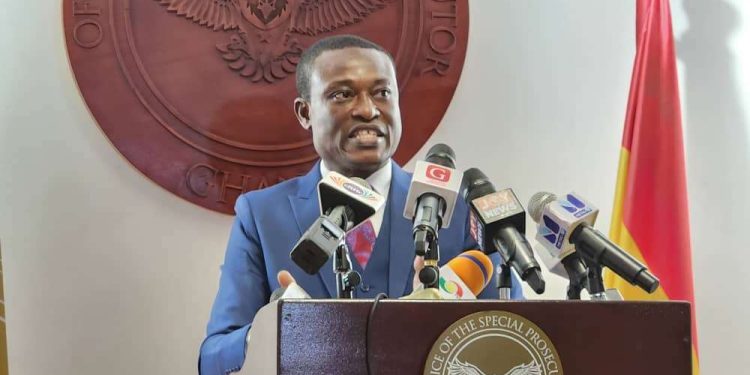
  • I was arrested and deported from U.S. 3 years ago because of bad friends – Ghanaian Musician

    I was arrested and deported from U.S. 3 years ago because of bad friends – Ghanaian Musician

    Ghanaian Afro-highlife musician, Omayor, has recently opened up about a significant ordeal he faced in the past.

    Taking to Instagram, he shed light on a challenging chapter that deeply impacted his life and career.

    Recounting events from three years ago, he detailed a troubling encounter that led to his arrest.

    According to Omayor, the distressing turn of events originated from a betrayal of trust by a close friend.


    He mentioned that he had the chance to travel to the United States (US), but his friend, who had previously gained much from him, placed an illegal substance in his bag, resulting in his deportation.

    “I have a story to share with those who like friends. Three years ago I was arrested. I had a visa to travel to America but my close friend who benefited a lot helped put an illegal substance into my bag which eventually led to my arrest. This is why I composed this song, otan,” he added.

    Omayor reaffirms his dominance in the Afro-highlife music landscape and beyond, following his successful partnership with Kwame Yogot on the chart-topping track ‘Arroglass.’

    His ability to excel across diverse musical genres remains evident.”

    Titled ‘Otan,’ meaning ‘Hatred’ in English, the song unfolds a tale inspired by real-life experiences. It showcases Omayor’s signature style, characterized by poignant lyrics exploring themes of love, hate, betrayal, and resilience.”

    The collaboration with Kwame Yogot on ‘Arroglass’ initially showcased Omayor’s versatility as an artist. With the release of ‘Otan,’ he further solidifies his standing as an emerging talent in the music industry.”

  • U.S. diplomat denounces China for pressing maritime claims through intimidation

    U.S. diplomat denounces China for pressing maritime claims through intimidation

    The top American diplomat for East Asia and the Pacific has said China is using intimidation to make other countries agree with its claims in the South China Sea.

    Daniel Kritenbrink talked to reporters after coming back to the United States from meetings in Singapore, Cambodia, Thailand, Vietnam and Brunei. He used the trip to show that the US is committed to making sure all countries respect freedom to travel by sea and air and solve conflicts peacefully.

    “He said that China is doing things in the South China Sea that break international laws and scare other countries. This is not okay and it makes things more unstable,” said Kritenbrink, who works for the US government and deals with issues in East Asia and the Pacific.

    China says that the South China Sea belongs to them, but other countries like the Philippines, Vietnam, Malaysia, Taiwan, and Brunei disagree. They are arguing about who owns the area. It is getting more and more aggressive by being in the ocean where there are lots of resources and a lot of activity. Kritenbrink made his comments at the same time when a Chinese coast guard ship hit a Philippine patrol vessel at sea.

    The fighting on Tuesday at Second Thomas Shoal, which is controlled by the Philippines, is the most recent in a series of clashes in the disputed waters. People are worried that this could lead to a bigger fight between China and the U.S and its friends.

    “The United States” often sends warships through the Taiwan Strait and does naval exercises in the South China Sea and other areas as allowed by international law. This shows that all countries have the same rights. The strategy also included helping make sure that its partners can defend their own independence and their own interests, he said.

    He said that if we do that, we increase our chances of avoiding mistakes and fighting, and once again, bringing peace and stability.

    In Beijing, on Thursday, the Chinese Foreign Minister Wang Yi blamed the U.S Causing problems in Taiwan and the ocean near China, without saying the specific place.

    “We will only take action in response to unfair actions,” Wang told the media. We recommend that countries outside the area do not create problems, take sides or cause trouble in the South China Sea.

    Aside from talking about safety, Kritenbrink said he also talked with officials in the area about money, the environment, energy rules, and other topics.

    I met with the new Cambodian Prime Minister, Hun Manet, and I brought up the U.S Worries about China being part of making the Ream Naval Base bigger. The project started under Hun Sen’s strict father, Hun Manet. Last year, Hun Manet became the new prime minister after Hun Sen.

    Cambodia says its constitution doesn’t allow foreign military bases, but two Chinese navy ships parked there in December. The place on the Gulf of Thailand could help China to get to the Malacca Strait, which is very important for them.

    “Many countries, including the United States, are very worried about the building happening at Ream Naval Base and the involvement of China’s military in it. “

    He didn’t say how Hun Manet reacted to the worries, but he said that in general “we had a very useful and honest conversation. ”

    During his trip to Southeast Asia, Kritenbrink tried to tell officials that even though there are big problems in Gaza and Ukraine, the U.S still cares about them too. still dedicated to the area.

    “He said that even though there are many problems around the world, the United States is very focused on the Indo-Pacific region. ”

    He said that this place is very important and many important things will happen here in the future. It will also be important for America’s safety and wealth.

  • Oldest Guantanamo Bay prisoner released back to Pakistan after over 17 years

    A 75-year-old Pakistani man was released from the Guantanamo Bay detention center and repatriated to his home country.

    The man, Saifullah Paracha has been detained at Guantanamo since 2003 for his alleged ties to Al Qaeda, according to NBC News. He has now been “reunited with his family” in Pakistan.

    “We are glad that a Pakistani citizen detained abroad is finally reunited with his family,” a statement said from Reprieve, a legal fund that worked with Paracha for his release. Reprieve added that the Foreign Ministry had “completed an extensive interagency process” to have him returned to his country.

    During the over 17 years he was held at the U.S. base in Cuba, Paracha was never charged with a crime. Following his eighth time in front of the prisoner review board, he was told in May 2021 that he would be released. The reason for his being discharged wasn’t divulged, with the notification only saying he is “not a continuing threat” to the U.S.

    Prior to his detainment, Paracha was a wealthy businessman who lived and owned property in the U.S. He was later caught in Bangkok, Thailand in 2003 amid accusations that he was an Al Qaeda “facilitator” who aided two 9/11 conspirators with a financial transaction. He denied his connection to the terrorist attacks but was still taken to the Bagram airbase in Afghanistan before being transferred to Guantanamo in 2004.

    “Saifullah is returning to his family as a frail old man, having been taken from them in the prime of his life. That injustice can never be rectified,” Maya Foa, the executive director of Reprieve, told NBC.

    She continued, “The Biden administration deserves some credit for expediting the release of Guantánamo detainees who were never charged with a crime, but the U.S.’ embrace of indefinite detention without trial has done lasting damage.”

    Paracha’s son, Uzair was convicted in 2005 in a New York federal court for providing support to terrorism. He was later released and sent back to Pakistan in March 2020 when a judge tossed the witness testimony originally made against him.

    Thirty-five detainees are still being kept in Guantanamo Bay, with 18 set to be released. One of those men is Khalid Sheikh Mohammed, the man accused of organizing 9/11.

    Source: Complex.com

  • Roma sold to US businessman Friedkin for 591 million euros

    Roma on Thursday announced a change of ownership, with US billionaire Dan Friedkin buying the Serie A club for 591 million euros ($700 million).

    Friedkin, 54, takes over the Italian side from American businessman James Pallotta, 62.

    “AS Roma can confirm that an agreement has tonight been reached between AS Roma SPV, LLC, the majority shareholder of AS Roma S.p.A, and The Friedkin Group regarding the sale of the club,” the club said in a statement.

    “The operation is valued at around 591 million euros,” the club added. The final sales agreement must be signed before the end of August.

    Pallotta bought two-thirds of the club’s shares in 2012, but has had 100 percent ownership since 2014.

    Houston-based Friedkin is the chief executive of the Friedkin Group, a consortium notably involved in the automotive and hotel and entertainment industry.

    “All of us at The Friedkin Group are so happy to have taken the steps to become a part of this iconic city and club,” said Friedkin in a statement.

    “We look forward to closing the purchase as soon as possible and immersing ourselves in the AS Roma family.”

    According to Forbes, his fortune is estimated at just over four billion dollars (3.6 billion euros), which would make him the 504th richest man in the world.

    Friedkin’s son Ryan will reportedly be involved in the day to day running of the club.

    “Over the last month, Dan and Ryan Friedkin have demonstrated their total commitment to finalising this deal and taking the club forward in a positive way,” said Pallotta.

    “I am sure they will be great future owners for AS Roma.”

    Boston-based Pallotta had been unpopular among club fans for his rare appearances in Italy and his handling of player transfers and the departures of club legends Francesco Totti and Daniele De Rossi who were both pushed out of the club.

    Roma have had recurring financial difficulties and been sanctioned by European football’s governing body UEFA for breaches of financial fair play.

    As a result the club are very active in the transfer market, regularly selling off their best players, to the chagrin of fans.

    Pallotta’s great project had been the construction of a new stadium in the south of the capital which was delayed because of legal and bureaucratic issues, and remains at the planning stage.

    The high-point of Pallotta’s reign was the club’s sensational Champions League 3-0 second leg comeback in 2018 to beat Barcelona, before losing to Liverpool in the semi-finals.

    The club won their third Serie A title in 2001, but have not lifted any silverware since the Italian Cup in 2008.

    This season they finished fifth, missing out on elite European competition for the second year in a row.

    They will play Sevilla later Thursday in the Europa League last 16.

    Source: france24.com

  • US offers $10 million reward against election interference

    US Secretary of State Mike Pompeo on Wednesday offered a $10 million reward aimed at preventing foreign interference in the November election, as the State Department accused Russia of waging an increasingly sophisticated disinformation campaign.
    The reward marks one of the most public signs that members of President Donald Trump’s administration are taking election meddling seriously, despite anger by Trump himself over findings that Russia has assisted him.

    Pompeo pointed to efforts by “Russia and other malign actors” as he announced the effort to stop election interference.

    The United States “is offering a reward of up to $10 million for information leading to the identification or location of any person who, acting at the direction or under the control of a foreign government, interferes with US elections by engaging in certain criminal cyber activities,” Pompeo told reporters.

    US intelligence concluded that Russia interfered in the 2016 election to support Trump, especially through manipulation of social media, although it did not find that his campaign colluded with Moscow.

    Trump has been outraged by the “Russia hoax” and in February removed the director of national intelligence over a briefing to lawmakers that found that Russia appeared to want Trump to win a new term on November 3.

    Last month four top Democratic lawmakers with access to intelligence said they were “gravely concerned” about a new “foreign interference campaign,” but their joint statement was notably not signed by members of Trump’s Republican Party.

    Trump at a notorious 2018 joint press conference appeared to accept Russian President Vladimir Putin’s denials of meddling. Trump’s former national security advisor, John Bolton, in an explosive memoir wrote that the mogul believed that any talk of interference discredited his victory.

    US officials have also warned less specifically about election efforts by China.

    Network of ‘proxy’ sites
    The State Department’s Global Engagement Center, which is in charge of studying and countering foreign propaganda, warned in a report Wednesday that Russia has invested “massively” in disinformation efforts on the internet.

    “The Kremlin bears direct responsibility for cultivating these tactics and platforms as part of its approach to using information as a weapon,” it said.

    The report, which did not focus specifically on election meddling, said that Russia has relied on proxy voices to amplify messages that boost propaganda goals such as stirring up opposition to the United States.

    One favorite topic was the coronavirus pandemic, with Russian sites active in promoting unfounded narratives that COVID-19 was planted by the CIA or Microsoft billionaire turned philanthropist Bill Gates, the study said.

    In one example, the study pointed to the Strategic Culture Foundation, an online journal that it said promoted “obscure Western fringe thinkers and conspiracy theorists” and formed foreign partnerships.

    “When one of these proxy sites is publishing information, it’s murky as to where it’s actually coming from,” said Lea Gabrielle, head of the Global Engagement Center.

    “Russia tries to hide its affiliation with these different proxy sites and that’s what makes them effective,” she told reporters.

    “It’s difficult for just the average person who is online to look at these sites and know that it’s actually Russian disinformation.”

    On Twitter, material of the Strategic Culture Foundation and six similar sites was tweeted or retweeted 173,000 times from April through June, the study said.

    Britain, not Russia, appeared to be the top source of Twitter activity involving the suspicious material, it said.

    Russia has denied allegations of election meddling as well as charges led by Britain that Moscow is hacking coronavirus vaccine research.

    Pompeo, for his part, has promoted a theory discounted by mainstream scientists that the new coronavirus came out of a Chinese laboratory.

    Source: AFP

  • Islamists becoming ‘more aggressive’ in Mozambique

    The US has warned that Islamist militants are getting more aggressive in Mozambique’s northern province of Cabo Delgado with support from the Islamic State.

    The militants, known locally as al-Shabab – although it has no known links to the Somali jihadi group of the same name, have been attacking remote villages across the province over the past two years.

    Head of US special operations in Africa, Maj-Gen Dagvin Anderson, told journalists that the group is receiving external support that is making it more dangerous.

    “We have seen them over the last 12 to 18 months develop in their capabilities, become more aggressive, and use techniques and procedures that are common in other parts of the world in the Middle East that are associated with Islamic State,” Gen Anderson told avirtual media briefing.

    “We do believe there are external actors that are influencing that and making that more virulent and more dangerous up in the Cabo Delgado region.”

    Source: bbc.com

  • Barack Obama calls for end to US voter suppression

    Former US President Barack Obama has sharply criticised what he described as Republican attempts at voter suppression in a speech at civil rights leader John Lewis’s funeral.

    He said people in power were “attacking our voting rights with surgical precision” and called for wide reform.

    He also decried the police killing of George Floyd and the subsequent use of federal agents against protesters.

    Lewis died of cancer earlier this month aged 80.

    He was one of the “Big Six” civil rights leaders, which included Martin Luther King Jr, and helped organise the historic 1963 March on Washington.

    In a fiery eulogy delivered in Ebeneezer Baptist Church in the city of Atlanta, Mr Obama, a Democrat, launched a stinging attack on Republican President Donald Trump’s administration and some police departments.

    “Today we witness with our own eyes, police officers kneeling on the necks of black Americans,” he said. “We can witness our federal government sending agents to use tear gas and batons against peaceful demonstrators.”

    He said people in government were “doing their darnedest to discourage people from voting” by closing polling stations and imposing “restrictive ID laws” on minorities and students.

    Mr Obama singled out the role of the US postal service in delivering postal votes amid the coronavirus pandemic. Earlier on Thursday Mr Trump suggested the 2020 presidential election in November should be delayed because he said – without providing evidence – that postal voting would enable large-scale voter fraud.

    Mr Obama also proposed a series of reforms to voting in the US, including:

    – making sure Americans are automatically registered to vote
    giving the vote to former prison inmates who had “earned their second chance”

    – creating new polling stations and expand early voting

    – making election day a national holiday so workers who can’t get time off can vote

    He also called for people in Washington DC and Puerto Rico to have the same representation as other Americans, a long-cherished ambition of Democrats.

    Washington is a federal district and so does not have representatives in Congress, but only a delegate to the House of Representatives with limited powers. Puerto Rico is a US territory that does not have representation in Congress and Puerto Ricans cannot vote in presidential elections.

    And he called for an end to the filibuster – which requires 60 votes to pass legislation instead of a simple majority of 51. He described it as a “Jim Crow relic”. Jim Crow laws enforced racial segregation in southern states until 1965 and were used to disenfranchise black people.

    “If all this takes eliminating the filibuster, another Jim Crow relic, in order to secure the God-given rights of every American, then that’s what we should do,” he said.

    Paying tribute to Lewis, Mr Obama said he had becomes the first black US president because of the congressman’s fight for civil rights for black Americans.

    Lewis, also a Democrat, did “everything he could to preserve this democracy and as long as we have breath in our bodies, we have to continue his cause,” Mr Obama said.

    The service was also attended by former presidents Bill Clinton and George W Bush and House speaker Nancy Pelosi.

    Mr Bush, a Republican, said he had his “differences” with the late congressman, but “we live in a better and nobler country today because of John Lewis”.

    “He believed in humanity and he believed in America,” Mr Bush added.

    During the civil rights movement, Lewis was one of the founders of the Student Nonviolent Coordinating Committee (SNCC), and then became its chairman from 1963 to 1966.

    He co-organised and spoke at the March on Washington for Jobs and Freedom, the rally at which Dr King delivered his historic I Have a Dream speech. Lewis was the last surviving speaker from the march.

    Source: BBC

  • News Corp: Rupert Murdoch’s son James quits company

    James Murdoch, the younger son of media mogul Rupert Murdoch, has resigned from the board of News Corporation citing “disagreements over editorial content”.

    In a filing to US regulators, he said he also disagreed with some “strategic decisions” made by the company.

    The exact nature of the disagreements was not detailed.

    But Mr Murdoch has previously criticised News Corp outlets, which include the Wall Street Journal, for climate change coverage.

    Rupert Murdoch, News Corp’s executive chairman, and his other son Lachlan, co-chairman, wished James well in a joint statement.

    “We’re grateful to James for his many years of service to the company,” the statement said. “We wish him the very best in his future endeavours.”

    Representatives of Mr Murdoch and his wife Kathryn have acknowledged the couple’s “frustration” with coverage of the subject by some of most influential Murdoch-owned news brands, including Fox News.

    They have also spoken of particular disappointment about climate change denial in Murdoch-owned Australian outlets.

    News Corp also owns The Times, The Sun and The Sunday Times in the UK, as well as a stable of Australian newspapers, including The Australian, The Daily Telegraph and The Herald Sun.

    What do we know about past disagreements?

    Earlier this year, amid devastating wildfires in Australia, Mr Murdoch and his wife Kathryn expressed their frustration with climate change coverage by News Corp and Fox.

    Their spokesperson told The Daily Beast they were “particularly disappointed with the ongoing denial among the news outlets in Australia given obvious evidence to the contrary.”

    Rupert Murdoch has described himself as a climate change “sceptic” and denies employing climate deniers.

    But critics of News Corp pointed to its comment articles and reporting of the alleged role of arson in the wildfires as minimising the impact of a changing climate.

    Who is James Murdoch?

    Born in London in 1972, he is the youngest of Rupert Murdoch’s three children from his marriage to Anna Torv, the others being sister Elisabeth and brother Lachlan.

    Schooled in New York, he studied film and history at Harvard University but dropped out in the mid-1990s without completing his degree.

    Gaining a reputation as the family rebel, he set up an independent hip-hop label, Rawkus Records, which launched the career of rapper-actor Mos Def and gave an airing to the then little-known Eminem.

    He was formerly chief executive of 21st Century Fox before Walt Disney bought most of its assets last year.

    Source: BBC

  • China orders US consulate closure in tit-for-tat move

    China has ordered the closure of the US consulate in the south-western city of Chengdu, the latest in a tit-for-tat escalation between the two countries.

    China said the move was a “necessary response” to the US, which ordered China to close its consulate in Houston earlier this week.

    Secretary of State Mike Pompeo said the US decision was taken because China was “stealing” intellectual property.

    Tensions have been rising between the US and China over several key issues.

    President Donald Trump’s administration has clashed repeatedly with Beijing over trade and the coronavirus pandemic, as well as China’s imposition of a controversial new security law in Hong Kong.

    What has China said?

    China’s foreign ministry said the closure was a “legitimate and necessary response to the unreasonable actions taken by the United States”.

    “The current situation between China and the United States is something China does not want to see, and the US bears all responsibility for that.”

    The US consulate in Chengdu, which was established in 1985 and currently has more than 200 staff, is strategically important because of its proximity to the autonomous region of Tibet, correspondents say.

    The US-China battle behind the scenes

    What’s behind Trump’s new strategy on China?

    Why did the US order the Chinese consulate to close?

    On Tuesday, the US government ordered China to close its consulate in Houston, Texas, by the end of the week.

    The move came after unidentified individuals were filmed burning paper in bins in the building’s courtyard.

    Mr Pompeo accused China of stealing “not just American intellectual property… but European intellectual property too… costing hundreds of thousands of jobs”.

    “We are setting out clear expectations for how the Chinese Communist Party is going to behave. And when they don’t, we’re going to take actions,” he said.

    The Chinese consulate in Houston was one of five in the US, along with the embassy in Washington DC. It was not clear why it was singled out.

    China’s foreign ministry spokeswoman said the reasons given by the US for closing the consulate were “unbelievably ridiculous”.

    Hua Chunying urged the US to reverse its “erroneous decision”, or China would “react with firm countermeasures”.

    In a further US move, four Chinese nationals have been charged with visa fraud for allegedly lying about their membership of China’s armed forces – three are under arrest while the FBI is seeking to arrest the fourth, who is said to be in China’s San Francisco consulate.

    Why is there tension between China and the US?

    There are a number of things at play. First, US officials have blamed China for the global spread of COVID-19. More specifically, President Trump has alleged that the virus originated from a Chinese laboratory, despite his own intelligence officers saying it “was not man-made or genetically modified”.

    The US and China have also been locked in a tariff war since 2018.

    US-China trade war in 300 words

    Mr Trump has long accused China of unfair trading practices and intellectual property theft, but in Beijing there is a perception that the US is trying to curb its rise as a global economic power.

    China’s new law: Why is Hong Kong worried?

    Trump hits China with order on Hong Kong trade

    The US has also imposed sanctions on Chinese politicians who it says are responsible for human rights violations against Muslim minorities in Xinjiang. China is accused of mass detentions, religious persecution and forced sterilization of Uighur and others.

    Beijing denies the allegations and has accused the US of “gross interference” in its domestic affairs.

    What about Hong Kong?

    China’s imposition of a sweeping security law there is also a source of tension with the US and the UK, which ruled the territory until 1997.

    In response, the US last week revoked Hong Kong’s special trading status, which allowed it to avoid tariffs imposed on Chinese goods by the US.

    The US and UK see the security law as a threat to the freedoms Hong Kong has enjoyed under a 1984 agreement between China and the UK – before sovereignty reverted to Beijing.

    The UK has angered China by outlining a route to UK citizenship for nearly three million Hong Kong residents.

    China responded by threatening to stop recognizing a type of British passport – BNO – held by many of those living in Hong Kong.

    Source: bbc.com

  • American Airlines reports 2Q loss as coronavirus hits demand

    American Airlines became the latest US carrier to report a hefty second-quarter loss, but said it made progress in reducing cash burn, according to results released Thursday.
    The company suffered a $2.1 billion loss in the quarter ending June 30, compared with profits of $662 million in the year-ago period.

    Revenues plunged 86.4 percent to $1.6 billion behind a steep drop in customer traffic.

    “This was one of the most challenging quarters in American’s history,” said Chief Executive Doug Parker. “We have moved swiftly to improve our liquidity, conserve cash and ensure customers are safe when they travel.”

    Following cost-saving moves such as retiring four aircraft types and voluntary leave for thousands of employees, American reduced its daily cash burn rate from nearly $100 million in April to around $30 million in June.

    American warned last week that up to 25,000 workers could be laid off beginning October 1. Like other carriers, it is encouraging employees to take early retirement or another voluntary exit in an effort to reduce layoffs.

    The company said that while passenger demand has improved somewhat since April, “demand has weakened somewhat during July as COVID-19 cases have increased and new travel restrictions have been put into place.”

    American said it expects third-quarter capacity to be down around 60 percent from the year-ago level.

    Shares rose 1.2 percent to $11.50 in pre-market trading.

    Source: rfi.fr

  • Ropapa Mensah scores debut goal for Pittsburgh Riverhounds

    Ghanaian forward Ropapa Mensah scored his first goal of the season for Pittsburgh Riverhounds as they thrashed Philadelphia Union II 6-0 in the USL championship on Saturday night.

    The lethal forward scored to break the game’s duck after 29 minutes, with a sublime cheeky chip over the goalkeeper.

    Riverhounds scored 5 more goals afterwards to complete the mauling to make two wins out of two games this campaign.

    Mensah was substituted in the 64th minute.

    The former Inter Allies FC star has now recorded 1 goal and 2 assists with Riverhounds so far this term.

    Source: Ghana Soccernet

  • Bahamas closes borders to US tourists

    The Bahamas has announced it will ban US visitors amid recent rises in Covid-19. The Caribbean nation had begun reopening its borders at the start of July.

    Prime Minister Hubert Minnis said in an address on Sunday: “Regrettably, the situation here at home has already deteriorated since we began the reopening of our domestic economy. It has deteriorated at an exponential rate since we reopened our international borders.”

    The Ministry of Health has confirmed a total of 153 Covid-19 cases, 49 of which happened after the borders opened on 1 July.

    “Our current situation demands decisive action, if we are to avoid being overrun and defeated by this virus.”

    By Wednesday, the Bahamas will prohibit all international commercial flights and vessels – with exceptions for commercial flights from the UK, Canada and the EU.

    All visitors – as well as any returning Bahamians – will be asked to show a negative Covid-19 test from an accredited laboratory upon arrival.

    Americans who are currently on the islands will still be able to leave on outgoing flights, but no new tourists from the US will be allowed in.

    Source: bbc.com

  • US Supreme Court allows federal executions to resume

    The US Supreme Court has cleared the way for the first executions of federal prisoners in 17 years.

    Several executions were delayed after a judge ruled on Monday that there were still unresolved legal challenges against the justice department.

    Among those facing the death penalty is triple murderer Daniel Lewis Lee, who was due to be executed on Monday.

    The condemned prisoners have argued that lethal injections constitute “cruel and unusual punishments”.

    The Supreme Court voted 5-4 that “executions may proceed as planned”.

    How US death penalty capital changed its mind
    US government death penalty move draws sharp criticism
    The Americans volunteering to watch executions
    Last year, the Trump administration said it would resume federal executions.

    In a statement at the time, Attorney General William Barr said: “The justice department upholds the rule of law – and we owe it to the victims and their families to carry forward the sentence imposed by our justice system.”

    Some of the relatives of Lee’s victims oppose his execution in Indiana and had sought to have it delayed, arguing that attending it could expose them to coronavirus.

    Earlene Peterson, 81, whose daughter, granddaughter and son-in-law were killed by Lee, has said she wants the 47-year-old to be given life in jail, the same sentence as his accomplice.

    The Trump administration’s move has been criticised as a political decision, with campaigners expressing concern about cases being rushed.

    The last inmate executed by federal death penalty was Louis Jones Jr, a 53-year-old Gulf War veteran who murdered 19-year-old soldier Tracie Joy McBride.

    Who are the condemned prisoners?
    Daniel Lewis Lee was convicted of torturing and killing a family in Arkansas in 1996, dumping their bodies in a lake.

    Postponed from December, his execution had been rescheduled for 16:00 (20:00 GMT) on 13 July but was blocked by a ruling from District Judge Tanya Chutkan.

    “The court… finds that the likely harm that plaintiffs would suffer if the court does not grant injunctive relief far outweighs any potential harm to defendants,” the judge had said.

    Her ruling was consequently overruled by the Supreme Court, which said: “The plaintiffs in this case have not made the showing required to justify last-minute intervention by a Federal Court.”

    Three more federal executions are scheduled in the near future. All three prisoners are, like Lee, child killers:

    -Wesley Ira Purkey, who was sentenced in Missouri in 2003 for the rape and murder of a 16-year-old girl whose body he dismembered, burnt and dumped in a septic pond, is due to be executed on Wednesday

    -Dustin Lee Honken, sentenced in Iowa in 2004 for shooting dead five people including two girls aged six and 10, is due to be executed on Friday

    -Keith Dwayne Nelson, sentenced in Missouri in 2001 for the rape and murder of a 10-year-old girl behind a church, is set to be executed next month

    Federal and state executions – what’s the difference?

    Under the US justice system, crimes can be tried either in federal courts – at a national level – or in state courts, at a regional level.

    Certain crimes, such as counterfeiting currency or mail theft, are automatically tried at a federal level, as are cases in which the US is a party or those which involve constitutional violations. Others can be tried in federal courts based on the severity of the crimes.

    The death penalty was outlawed at state and federal level by a 1972 Supreme Court decision that cancelled all existing death penalty statutes.

    A 1976 Supreme Court decision allowed states to reinstate the death penalty and in 1988 the government passed legislation that made it available again at federal level.

    According to data collected by the Death Penalty Information Center, 78 people were sentenced to death in federal cases between 1988 and 2018 but only three were executed. There are 62 inmates currently on federal death row.

    Capital punishment in the US

    All four condemned men are white but race is a major concern among campaigners against the death penalty in the US.

    Black people account for 34% of those executed and 42% of those currently on death row despite making up only 13.4% of Americans, the Death Penalty Information Center reports.

    According to the non-profit organisation:

    -The death penalty is a legal punishment in 28 US states

    -Since 1976, 1,519 executions have taken place

    -Since 1976, Texas has carried out the most executions (570), followed by Virginia (113) and Oklahoma (112)

    -There were 2,620 inmates on death row in the US as of 1 January

    -California has the most prisoners on death row – 725 – but has carried out only 13 executions since 1976

    -The vast majority of executions were by lethal injection (1,339) with just three by firing squad

    -Since 2002, it has been illegal to execute defendants with “mental retardation”

    Source: bbc.com

  • Ghanaian star Herbyboi’s ‘Lobi’ play-listed on various radio stations in the USA

    Hakell Entertainment’s latest signee Herbert Ohene Addo popularly known as Herbyboi just made giant strides as his debut single Lobi, made it to the AFROZONS playlist in the USA.

    Herbyboi made the list together with other renowned stars including Fabolous, Jeremih, Lil Baby, Kranium, Wizkid and a few others.

    Quite unique from many other genres, Lobi which Herbyboi describes as Afrolife Music was produced by Fimfim and has so far garnered over 10,000 streams across several platforms.

    Currently, a student of Music from the University of Ghana, Herbyboi hails from the Central Region of Ghana and hopes to take on Ghana and Africa with his music.

    Zeal Governor, A&R for the label revealed the news came as a good one, especially as the team, was mapping out plans to get Herbyboi heard across Africa and the rest of the world.

    “We are encouraged to do more since we had not established any relations with the media outfit yet. Apparently, they chanced on the song online and decided to playlist it since it is a good one. We will move on from just the playlisting and get something better going,” he said.

    AFROZONS is a syndicated radio show that airs on several stations across the United States of America including Power 92.3 Chicago, Amazing 102.5FM, WNAA 90.1 GRVL, Sirius XM, WWRN, WHUR and many others.

    Stream Lobi from below.

    Source: Ebenezer Nana Yaw Donkoh, Contributor

  • US says international students must leave if classes are online

    The Immigration and Customs Enforcement (ICE) branch of the Department of Homeland Security issued new rules for exchange students Monday that could present challenges for universities and schools amid the continuing coronavirus pandemic.

    The “Department of State will not issue visas to students enrolled in schools and/or programs that are fully online for the fall semester nor will U.S. Customs and Border Protection permit these students to enter the United States”, ICE’s highly anticipated new rules said.

    Students already in the US whose programmes have switched to online-only instruction must “depart the country or take other measures, such as transferring to a school with in-person instruction to remain in lawful status”, the rules continued.

    “If not, they may face immigration consequences including, but not limited to, the initiation of removal proceedings.”

    “[S]tudents attending schools adopting a hybrid model – that is, a mixture of online and in-person classes -will be allowed to take more than one class or three credit hours online”, the rules said.

    A 2020 ICE report showed there were 1.55 million active non-immigrant student visas under the Student and Exchange visitor program (SEVP) in 2018.

    About 1.3 million of those students were enrolled in higher education courses at universities. About 85,000 were in grade school, with 92 percent of those in grades 9-12.

    School questions

    President Donald Trump said on Monday that US “schools must open in the fall” – a decision over which he has limited power.

    Schools are largely under the jurisdiction of state and local governments. Educators have struggled with decisions about opening schools considering the risk of infection to both students and staff.

    It was not immediately clear what schools Trump was referring to – primary and high schools or colleges and universities – or what actions he was considering.

    As the coronavirus pandemic sees a renewed surge in the US, many schools and universities are still deciding how they will hold courses next year.

    Harvard University’s first year students will be invited to live on campus this year, while most other undergraduates will be required to learn remotely from home, the Ivy League institution announced on Monday.

    University officials decided to allow only 40 percent of undergraduates on campus in an effort to reduce density and prevent the spread of COVID-19. All freshmen will be invited, along with some other students who face challenges learning from afar.

    All classes will be taught online, however, regardless of where students live. Students living on campus would live in dormitory rooms, but continue taking their classes remotely, the university said.

    Trump also made a series of Twitter posts defending his administration’s response to the pandemic. The US has the highest number of cases and deaths worldwide from the novel coronavirus.

    Source: aljazeera.com

  • Coronavirus: Anger over US decision on foreign students’ visas

    Politicians and academics have criticised a decision to withdraw US visas from foreign students whose courses move fully online.

    US Immigration and Customs Enforcement (ICE) said people could face deportation unless they changed to an institution with in-person tuition.

    A number of US universities are considering online teaching in the new academic year due to coronavirus.

    It is not clear how many people will be affected.

    The Student and Exchange Visitor Program, which is operated by ICE, had introduced a temporary exemption to allow students whose courses had moved online for the spring and summer semesters to remain in the US.

    However, the exemption will not be extended into the new academic year. The decision affects students who are in the US on F-1 and M-1 visas, according to the ICE statement.

    US online tuition move hits foreign visas The news came on the same day that Harvard announced all course instruction would be delivered online in the new academic year, including for the limited number of students allowed to live on campus.

    According to The Chronicle of Higher Education, 9% of US universities are planning to teach all their classes online in the autumn, although this could change in the coming months.

    The president of Harvard University, Larry Bacow, said in a statement quoted by US media: “We are deeply concerned that the guidance issued today by US Immigration and Customs Enforcement imposes a blunt, one-size-fits-all approach to a complex problem, giving international students, particularly those in online programs, few options beyond leaving the country or transferring schools.”

    He added that the decision “undermines the thoughtful approach taken on behalf of students by so many institutions, including Harvard, to plan for continuing academic programs while balancing the health and safety challenges of the global pandemic”.

    “Kicking international students out of the US during a global pandemic because their colleges are moving classes online for physical distancing hurts students,” said Democratic Senator Elizabeth Warren. “It’s senseless, cruel, and xenophobic.”

    Her comments were echoed by the former US ambassador to the UN, Samantha Power, who said the decision made “no sense and [is] unworkable for most college students”.

    Journalist Elizabeth Spiers, who teaches at New York University, said many of her students were reliant on visas and would be unable to follow an online programme due to the time difference between the US and their home countries and other considerations.

    Muhammad Ehab Rasul, a graduate student at the University of South Florida who is originally from Pakistan, said the move “added to a growing list of things that induce uncertainty and anxiety among international students”.

    “As international students, and as minorities, we are expected to prove why we belong here and that in itself is something that drives anxiety and uncertainty. And not knowing whether you can stay at your university only further flames that issue,” he told CBS News.

    Source: bbc.com

  • US firms create record 4.8 million jobs in June

    The US economy created jobs at a record pace in June as firms took on more staff after the coronavirus downturn.

    Payrolls surged 4.8 million, the most since the Labor Department began keeping records in 1939, helped by the reopening of factories and restaurants.

    It follows May’s jobs rebound, when 2.5 million joined the labour market, and comes after consumer spending data saw a jump in activity.

    But a recent spike in Covid-19 cases has raised fears for continued growth.

    June’s rise is far higher than the three million jobs that many economists forecast would be created last month.

    However, separate Labor Department data also showed that in the week ending 27 June, initial claims for unemployment fell only slightly, to 1.43 million, on the previous week.

    Oxford Economics called it a “worryingly small decline”.

    Companies, including in populous states such as California, Florida and Texas, plan to scale back or delay reopening because of the fresh coronavirus outbreaks, which would hold back hiring.

    This week, Federal Reserve chairman Jerome Powell acknowledged the rebound in activity, saying the economy had “entered an important new phase”. But he warned that continuing growth would depend on “our success in containing the virus”.

    And despite two months in a row of jobs growth, employment is still about 15 million below its pre-pandemic level, with the jobless rate just above 11%.

    Source: bbc.com

  • Oklahoma woman shot while trying to remove Nazi flag

    A US woman has been shot while trying to remove a Nazi flag from someone’s front yard in the state of Oklahoma.

    Garfield County Sheriff’s office said the woman had been at a party nearby when she took one of two flags being flown outside Alexander Feaster’s home.

    Mr Feaster, 44, then reportedly shot her in the back with a semi-automatic rifle as she ran away.

    The 26-year-old woman is expected to recover from her injuries and Mr Feaster is being held in custody.

    Sherriff Jody Helm said the woman was found lying in a ditch with four gunshot wounds after deputies responded to a call early on Sunday morning.

    Sherriff Helm initially suggested the woman had tried to steal the swastika-emblazoned flag for a dare, but in an interview with NBC News she said there was “conflicting information” surrounding the woman’s motive.

    An affidavit seen by NBC News says “several” cameras at Mr Feaster’s home show he fired on the woman “without warning”. A neighbour then moved a red pickup truck near the home to serve as a barricade, and a witness trained a rifle on the property as a precaution while waiting for deputies to arrive.

    Mr Feaster was later taken into custody without incident. He has been charged with assault and battery with a deadly weapon, and shooting with intent to kill, and is due to appear in court on 9 July.

    A neighbour told local radio KFOR that he had been flying the flags for around a year, and they had been snatched from his home a few times in the past. They added that he would occasionally dress up in black uniform with a red swastika armband – an outfit reminiscent of Nazi SS uniforms. But he was said to mostly keep to himself.

    Another woman and friend of the victim said there had been “no problems” with Mr Feaster before, but that his flags were a cause for concern.

    “I feel like these flags are a disaster waiting to happen,” she told the Enid News and Eagle.

    Source: bbc.com

  • Coronavirus: US officials warn ‘this is just the beginning’

    Health officials across the US have expressed growing concern about the nation’s ability and willingness to slow or end the coronavirus pandemic.

    A Centers for Disease Control and Prevention expert said on Monday the US has “way too much virus” to control.

    It comes as top US disease expert Anthony Fauci, who is due to testify to Congress, says an “alarmingly large” number of Americans are “anti-science”.

    Many US states have paused reopenings as their infection caseloads balloon.

    On Tuesday, cases rose by more than 40,000 in one day for the fourth time in the past five days.

    The surge – which is occurring particularly strongly in southern and western states – has forced at least 16 states to pause or reverse their reopening plans, according to CNN.

    For some the new measures come over a month after they first began to reopen their economies.

    Dr Anne Schuchat, principal deputy director of the Centers for Disease Control and Prevention (CDC), warned that the US is not responding like other countries who have shown success in containing the coronavirus, and has allowed the virus to spread much more widely and rapidly.

    “We’re not in the situation of New Zealand or Singapore or Korea where a new case is rapidly identified and all the contacts are traced and people are isolated who are sick and people who are exposed are quarantined and they can keep things under control,” Dr Schuchat said in an interview with The Journal of the American Medical Association on Monday.

    “We have way too much virus across the country for that right now, so it’s very discouraging.”

    New Zealand declared the country infection-free on 8 June, and since then has had to contain several cases that came from international travellers. South Korea has aggressively employed contact tracers, and since 1 April has recorded fewer than 100 cases per day. Singapore’s outbreak peaked in mid-April when 1,400 new cases were reported in one day.

    The US has recorded 2,682,897 confirmed cases of coronavirus as of Tuesday, according to Johns Hopkins University, and has a total of 129,544 deaths.

    “This is really the beginning,” Dr Schuchat added.

    “I think there was a lot of wishful thinking around the country that, ‘hey it’s summer’. Everything’s going to be fine. We’re over this and we are not even beginning to be over this. There are a lot of worrisome factors about the last week or so.”

    On Tuesday, Dr Anthony Fauci, the director of the National Institute of Allergy and Infectious Diseases – along with CDC Director Robert Redfield – are testifying to the Senate on the subject of “getting back to work and school”.

    Dr Fauci warned on Monday that the US is “unlikely” to develop herd immunity to the coronavirus even once a vaccine is available, which he earlier predicted could be available by early 2021.

    He said this was due to the combination of a vaccine that is potentially only partially effective, and the large number of Americans who might refuse to get it.

    “There is a general anti-science, anti-authority, anti-vaccine feeling among some people in this country – an alarmingly large percentage of people, relatively speaking,” he said, calling for more education to promote confidence in vaccines.

    Dr Fauci added that he would gladly “settle” for a vaccine that is only 70% to 75% effective at first.

    According to the CDC website, herd immunity is reached when “a sufficient proportion of a population is immune to an infectious disease (through vaccination and/or prior illness) to make its spread from person to person unlikely”.

    Source: bbc.com

  • US top court strikes down law limiting abortions

    The US Supreme Court has ruled that a law restricting abortions in Louisiana is unconstitutional in a landmark decision.

    The law required that doctors providing abortions have admitting privileges to nearby hospitals, which the justices said led to an undue burden on women.

    Chief Justice John Roberts joined liberal justices in the 5-4 decision in a blow to anti-abortion groups.

    The court struck down a similar policy in Texas in 2016, the opinion noted.

    This is the first major abortion case ruling from the Supreme Court during the Trump presidency.

    The 2014 Louisiana law said that doctors must hold privileges at hospitals within 30 miles (48km) of their practice – which the state argued was to protect women’s health.

    But critics said the controversial law would limit the number of providers in the state, violating a woman’s right to an abortion.

    What was the case about?

    Medical Services vs Russo asked the Supreme Court to rule on whether to uphold a lower court’s opinion concerning the Louisiana law.

    The law required doctors to have admitting privileges to a hospital “not further than 30 miles from the location at which the abortion is performed or induced” in order to perform abortions.

    While the state said the requirement was to protect women’s health, pro-choice advocates said that it’s incredibly rare for women to face complications from an abortion. They also pointed out that many hospitals in the region are religiously-affiliated or conservative and don’t allow abortions to take place in their facilities, which severely limits the number of doctors who can carry out the procedure.

    This then, in turn, constitutes an undue burden on a woman’s constitutional right to seek an abortion, they said.

    A district court agreed that the law was unconstitutional, however, the 5th Circuit appeals court determined no clinics would “likely be forced to close” because of the law, and allowed it to stand.

    The petitioners asked the Supreme Court to rule on whether that decision violated past precedents and should be struck down.

    What did the justices say? Writing the majority opinion, Justice Stephen Breyer disagreed with the 5th Circuit court reasoning for upholding the Louisiana restrictions.

    Justices Ruth Bader Ginsburg, Sonia Sotomayor, and Elena Kagan joined Justice Breyer’s opinion. Justice Roberts concurred, but filed a separate opinion noting that the reason for the ruling was because of the court’s decision “four years ago invalidating a nearly identical Texas law”.

    Justice Roberts, a conservative, noted that he dissented in the Texas case, but the question in today’s case was not whether that precedent was right or wrong, “but whether to adhere to it”.

    The court’s other conservatives, Clarence Thomas, Samuel Alito, Neil Gorsuch, and Brett Kavanaugh dissented.

    Justice Thomas wrote: “Today a majority of the Court perpetuates its ill-founded abortion jurisprudence by enjoining a perfectly legitimate state law and doing so without jurisdiction.”

    Justice Thomas also took issue with the fact that the lawsuit was brought by abortion providers, not women themselves, saying for most of the Court’s history, it “maintained that private parties could not bring suit to vindicate the constitutional rights of individuals who are not before the Court”.

    “Our abortion precedents are grievously wrong and should be overruled,” he wrote.

    Abortion rights advocates have said, however, that mandating women come forward to challenge abortion laws themselves will limit the number of challenges, as many patients do not have access to the financial and legal resources.

    What’s the reaction? Nancy Northup, president of the Center for Reproductive Rights – the group that challenged the Louisiana law – said the ruling was a relief, “but we’re concerned about tomorrow”.

    “As a result of this decision, the clinics in Louisiana can stay open to serve the one million women of reproductive age in the state,” she said.

    “Unfortunately, the Court’s ruling today will not stop those hell-bent on banning abortion. We will be back in court tomorrow and will continue to fight state by state, law by law to protect our constitutional right to abortion.”

    The White House denounced the ruling, and said it “devalued both the health of mothers and the lives of unborn children”.

    Southeastern Baptist Theological Seminary Professor Karen Swallow Prior, who is against abortion, told the BBC today’s ruling was unsurprising.

    “Admitting privileges are a relic from a bygone era of healthcare. The real issue – the same issue at the centre of the Roe v Wade ruling – is the status of the unborn child.”

    She said rather than the Supreme Court, the anti-abortion movement should focus on changing people’s minds.

    What’s the situation with US abortion laws? Last year saw a rise in the number of Republican states enacting abortion restrictions or passing laws that ban abortion even before many women know they’re pregnant.

    According to the American Civil Liberties Union, 59 restrictions were passed in 2019 along with bans in several states, including Alabama, Georgia, Kentucky, Missouri and Ohio.

    Anti-abortion groups hope the contested laws will make their way to the Supreme Court and allow for Roe v Wade to be overturned.

    If that happens, abortion will not become illegal across the country – rather, the decision will return to the individual states.

    And some states have acted to safeguard abortion rights. New York and Illinois last year recognised the right to end, continue or prevent a pregnancy as a fundamental right. They also allow some qualified nurses to provide abortion care.

    The bans and many of the restrictive policies have been blocked in courts. Louisiana’s case, had it not been struck down, could have set a precedent for similar laws restricting abortions without criminalising them.

    Source: bbc.com

  • US police reform: Trump signs executive order on ‘best practice’

    US President Donald Trump has signed an executive order introducing several police reforms while rejecting calls to defund or dismantle the police.

    His order offers federal grants to improve police practices, including creating a database to trace abuses by officers.

    The order comes amid anger over the killing of African Americans by police officers.

    Several US cities have proposed more radical reforms.

    Speaking at the White House on Tuesday, Mr Trump began by saying he had met a number of African American families who had lost loved ones, including the relatives of Antwon Rose, Botham Jean and Ahmaud Arbery – the black jogger killed in Georgia earlier this year.

    In his address, the president again defended police while condemning looters and “anarchy”.

    “We have to find common ground,” Mr Trump said. “But I strongly oppose the radical and dangerous efforts to defund, dismantle and dissolve our police departments.”

    He added that “without police, there’s chaos”.

    “Americans believe we must support the brave men and women in blue who police our streets and keep us safe,” Mr Trump said.

    “Americans also believe we must improve accountability, increase transparency and invest more resources in police training, recruiting and community engagement.”

    The latest drive for reform began after the death in police custody of George Floyd last month.

    Mr Floyd died after a white police officer in Minneapolis knelt on his neck for almost nine minutes. The killing spurred global protests led by the Black Lives Matter movement.

    There was fresh outrage after the death of another black man, Rayshard Brooks, who was shot during an attempted arrest in Atlanta last Friday.

    What does the Trump order include?

    The Trump announcement comes as Democrats and Republicans in the US Congress are developing reforms of their own.

    The president’s executive order aims to provide incentives for police departments to improve by tying some federal grants to “best practices”.

    It will create a federal database of complaints against officers. It will also encourage the deployment of social workers alongside officers to deal with non-violent cases involving drug addiction and homelessness.

    The White House has stressed the idea is to bring the police closer to communities.

    The order will also prioritise federal grants to departments that obtain certifications of high standards regarding de-escalation training and use of force.

    “As part of this new credentialing process, chokeholds will be banned except if an officer’s life is at risk,” Mr Trump said. “Everybody said it’s time, we have to do it.”

    The president said the government was looking into new “less lethal weapons to prevent deadly interactions”.

    Mr Trump has described the Atlanta incident as “very disturbing”, and said his initiative was “about safety”.

    The president has also condemned George Floyd’s death, but rejected suggestions of ingrained racism in police forces.

    Critics say the measures fall short of the deep reform that many are seeking.

    Following the announcement, Senate Democratic leader Chuck Schumer called on lawmakers to pass bolder legislation.

    “Unfortunately, this executive order will not deliver the comprehensive meaningful change and accountability in our nation’s police departments that Americans are demanding,” he said.

    Disclaimer : “Opinions expressed in this article are the sole responsibility of the author(s) and do not in any way reflect those of backend.theindependentghana.com. Our outfit will hereby not be liable for any inaccuracies contained in this article.”

    Source: bbc.com

  • U.S. bank profits plunge 70% on coronavirus loss provisioning

    U.S. bank profits fell by 69.6% to $18.5 billion in the first quarter of 2020 from the year prior as banks felt the economic impact of the novel coronavirus pandemic, according to new data from a banking regulator.

    The Federal Deposit Insurance Corporation reported that “deteriorating economic activity” caused lenders to write off delinquent debt and set aside billions of dollars to guard against future losses. Over half of all banks reported a profit decline, and 7.3% of lenders were unprofitable.

    The new report, the first government survey of the industry since the pandemic shut down large parts of the economy, shows banks set aside $38.8 billion to cover potential loan losses in the future, up nearly 280% from the year prior. The number of loans banks charged off as delinquent was up nearly 15%, driven by an 87% increase in charge-offs for commercial and industrial loans.

    The noncurrent loan rate rose 7.3% from the previous quarter, the biggest increase since 2010.

    Despite the setbacks, FDIC Chairman Jelena McWilliams said banks had been able to effectively serve clients in the downturn, and were a “source of strength for the economy.”

    “Bank capital and liquidity levels remain strong,” she added in a statement.

    As many investors cashed out of the stock market, banks saw a $1.2 trillion, or 8.5%, spike in deposits from the previous quarter.

    Loan balances also jumped as companies tapped credit lines with banks, led by a 15.4% increase in commercial and industrial loans.

    The total number of “problem banks” monitored by the FDIC increased for the first time since 2011, growing from 51 to 54 firms in the first quarter.

    Disclaimer : “Opinions expressed in this article are the sole responsibility of the author(s) and do not in any way reflect those of backend.theindependentghana.com. Our outfit will hereby not be liable for any inaccuracies contained in this article.”

    Source: reuters.com

  • Confederate and Columbus statues toppled by US protesters

    Statues of Confederate leaders and the explorer Christopher Columbus have been torn down in the US, as pressure grows on authorities to remove monuments connected to slavery and colonialism.

    A statue of Confederate President Jefferson Davis was toppled in Richmond, Virginia, on Wednesday night.

    Statues of Columbus in Boston, Miami and Virginia have been vandalised.

    The movement has been sparked by the death in police custody of African American George Floyd.

    His death in Minneapolis has led to protests in the US and internationally against police brutality and racial inequality.

    Memorials to the Confederacy, a group of southern states that fought to keep black people as slaves in the American Civil War of 1861-65, have been among those targeted.

    A number of Confederate statues on Monument Avenue in Richmond have been marked with graffiti during the protests.

    Richmond also saw a statue of Italian explorer Columbus pulled down, set alight and thrown into a lake earlier this week,.

    A three-metre tall (10ft) bronze statue of Columbus was toppled in Saint Paul, Minnesota, on Wednesday.

    The Columbus statue in Boston, which stands on a plinth at the heart of town, was beheaded.

    Many people in the US celebrate the memory of Columbus, who in school textbooks is credited with discovering “the New World”, the Americas, in the 15th Century.

    But Native American activists have long objected to honouring Columbus, saying that his expeditions to the Americas led to the colonisation and genocide of their ancestors.

    Source: bbc.com

  • Wall Street slides at open on fears of second virus wave

    U.S. stocks opened sharply lower on Thursday with the Nasdaq falling after a four-day rally on fears of a second wave of coronavirus infections and a grim economic forecast from the Federal Reserve.

    The Dow Jones Industrial Average .DJI fell 707.48 points, or 2.62%, at the open to 26,282.51.

    The Nasdaq Composite .IXIC dropped 229.11 points, or 2.29%, to 9,791.24 at the opening bell.

    The S&P 500 .INX was down 88.15 points, or 2.76%, at 3,101.99 after market open.

    Source: Reuters

  • U.S. air passengers fell 96% in April to historic low: government

    U.S. airlines carried 3 million passengers in April, a staggering 96% decline amid the coronavirus pandemic and flight restrictions, the Transportation Department said Wednesday.

    The department said U.S. airlines carried about 2.8 million domestic passengers and 132,000 international passengers. International passengers fell 99% over April 2019 as the U.S. imposed flight restrictions on many international visitors.

    Total U.S. airline passengers were the lowest since 1974 when the government began collecting monthly data. By comparison, there were 76.1 million total U.S. airline passengers in April 2019.

    Source: Reuters

  • US cop show cancelled after George Floyd death

    One of America’s longest running reality TV cop shows has been cancelled amid nationwide protests against police brutality over George Floyd’s death.

    Cable network Paramount said it had no plans for Cops, which first aired more than three decades ago, to return.

    The future of another reality ride-along cop show, Live PD, is in doubt.

    The A&E cable TV network hit has been engulfed by controversy since the death of another unarmed black man who was heard pleading: “I can’t breathe.”

    Cops ran for 25 years after first being broadcast on Fox in 1989, before it was taken up by Paramount’s predecessor, Spike TV, in 2013.

    Its 33rd season had been due to air on the ViacomCBS-owned network on Monday.

    A Paramount spokesperson told US media on Tuesday: “Cops is not on the Paramount Network and we don’t have any current or future plans for it to return.”

    The show was temporarily pulled from air late last month as protests gathered pace over the death of Floyd, an unarmed black man who died on 25 May in Minneapolis, Minnesota, after a police officer knelt on his neck. He was heard saying: “I can’t breathe.”

    Since Floyd’s death, some activists and opinion writers have called for cop shows to be yanked from air.

    They have argued that the genre portrays police officers as action-heroes and stigmatises African-American communities.

    The future of Live PD, another programme that follows police on patrol around the nation, is also uncertain.

    Last week the A&E cable network pulled episodes and said it was evaluating whether to bring the show back.

    A&E said its decision was out of “respect for the families of George Floyd and others who have lost their lives”.

    Live PD is under scrutiny following last year’s death of Javier Ambler, a black man from Texas.

    The 40-year-old father-of-two died on 28 March 2019 following a 22-minute police chase that ended in the city of Austin.

    Live PD was filming sheriff’s deputies when the pursuit began.

    Travis County District Attorney Margaret Moore has accused A&E of failing to hand over its video footage of Ambler’s death to investigators.

    Williamson County deputies reportedly began chasing Ambler because he failed to dim his headlights to oncoming traffic.

    Police body-camera video shows Ambler – who had been on his way home from a poker night with friends – on the ground with several officers.

    Ambler tells the sheriff’s deputies he has congestive heart failure and repeatedly says: “I can’t breathe.”

    A post-mortem examination said Ambler died of congestive heart failure and hypertensive cardiovascular disease associated with morbid obesity “in combination with forcible restraint”.

    The death was ruled a homicide.

    Source: bbc.com

  • US dictionary Merriam-Webster to change its definition of racism

    The American reference dictionary Merriam-Webster will change its definition of the word racism at the suggestion of a young black woman, who wanted it to better reflect the oppression of people of colour.

    Kennedy Mitchum, a recent graduate of Drake University in Iowa, contacted Merriam-Webster, which has published its dictionaries since 1847, to propose updating the term.

    “I basically told them that they need to include that there’s systematic oppression upon a group of people,” she told the local CBS affiliate KMOV. “It’s not just, ‘Oh, I don’t like someone.’”

    Merriam-Webster’s editorial manager Peter Sokolowski confirmed to AFP that the definition would be modified after Mitchum’s request.

    The dictionary currently offers three definitions of racism, and Sokolowski said that the second definition touches on Mitchum’s point — but that “we will make that even more clear in our next release”.

    In the current version of the second definition, racism is “a doctrine or political program based on the assumption of racism and designed to execute its principles,” and “a political or social system founded on racism.”

    “This is the kind of continuous revision that is part of the work of keeping the dictionary up to date, based on rigorous criteria and research we employ in order to describe the language as it is actually used,” Sokolowski said.

    One of the dictionary’s editors told Mitchum that the definitions of other words “related to racism or have racial connotations” would also be updated, without specifying which ones.

    “We apologize for the harm and offence we have caused in failing to address this issue sooner,” the editor wrote, according to a message published by Drake University and retweeted by Mitchum.

    The Merriam-Webster site, where the definitions are available for free, had nearly 50 million unique visitors in May, according to the SimilarWeb site.

    Merriam-Webster’s Twitter account has also become a viral hit in recent years, with Buzzfeed calling it “the sassiest dictionary on Twitter”.

    Source: france24.com

  • US records 749 coronavirus deaths in past 24 hours

    The coronavirus pandemic killed 749 people in the United States in the past 24 hours, according to figures released Saturday by Johns Hopkins University.

    The latest deaths bring the total in the United States to 109,791, and there have been more than 1.9 million cases, according to a real-time tally maintained by the Baltimore-based university at 8:30 pm (0030 GMT Sunday).

    Some 500,000 people have recovered from the disease.

    The United States has suffered by far the largest number of both COVID-19 deaths and infections.

    On a per-capita basis, however, several European countries — including France, Italy and Spain — have a higher death toll.

    President Donald Trump said Friday that the United States was “largely through” the pandemic and renewed his call on governors to ease lockdown measures in their states.

    While the United States was suffering around 3,000 deaths a day in mid-April, that number has declined to around 1,000 deaths and 20,000 new cases a day at present.

    But health care professionals worry about mass demonstrations against police brutality and racism taking place in cities across the US may lead to a new surge in infections in the coming weeks.

    Source: punchng.com

  • US Democrats introduce sweeping legislation to reform police

    US Democrats in Congress have proposed sweeping legislation to reform American police, following weeks of protests against police brutality and racism.

    The bill would make it easier to prosecute police for misconduct, ban chokeholds, and addresses racism.

    Its comes as Minneapolis lawmakers vowed to disband the city’s police force.

    The death of George Floyd at the hands of a white officer there sparked national pressure for change.

    However, it was unclear whether Republicans, who control the US Senate, will support the proposed Justice in Policing Act of 2020.

    Mr Floyd’s brother is expected to testify to the House of Representatives later this week in a hearing on police reform.

    What does the bill say?

    The Justice in Policing Act of 2020 was introduced on Monday by top Democratic lawmakers House Speaker Nancy Pelosi, Senate Minority Leader Chuck Schumer, black senators Kamala Harris and Cory Booker and members of the Congressional Black Caucus.

    As she unveiled the bill, Mrs Pelosi read the names of black men and women who have died at the hands of police in recent years.

    The bill forces federal police to use body and dashboard cameras, ban chokeholds, eliminate unannounced police raids known as “no-knock warrants”, make it easier to hold police liable for civil rights violations and calls for federal funds to be withheld from local police forces who do not make similar reforms.

    “The martyrdom of George Floyd gave the American experience a moment of national anguish, as we grieve for the black Americans killed by police brutality,” Mrs Pelosi said.

    “Today, this movement of national anguish is being transformed into a movement of national action”.

    The bill makes lynching a federal crime, limits the sale of military weapons to the police and gives the Department of Justice the authority to investigate state and local police for evidence of department-wide bias or misconduct.

    It would also create a “national police misconduct registry” – a database of complaints against police.

    Some Republican leaders have said they would consider the possibility of writing their own bill, with a hearing scheduled in the Senate Judiciary committee next week.

    However, members of President Trump’s party have been largely reticent on signalling support for legislation.

    In a break with his party, Republican Senator Mitt Romney on Sunday tweeted pictures of himself marching towards the White House with Christian protesters, with the caption “Black Lives Matter.”

    What chance does the bill have?

    The reform package, crafted by Democratic leaders in Congress, can be viewed as the “official” position of the party – at least for now. It is, in part, an effort to head off more drastic measures that some on the left, under the slogan “defund the police”, are pushing.

    If the Democrats can keep their liberal ranks in line, they should be able to get the reforms passed in the House of Representatives, where they have a majority. The outlook is less certain in the Republican-controlled Senate – particularly if Donald Trump sees political advantage in trying to paint Democratic proposals as a threat to “law and order”.

    While there is sure to be plenty of heated rhetoric from national politicians during a presidential election season, the real change may end up coming from local officials who are more directly accountable to the voters in municipalities that have seen the largest protests.

    The call to disband the police in Minneapolis, while largely symbolic at this point, could indicate that sweeping changes are very real possibility – with or without federal guidance.

    This could be the beginning of series of local experiments in policing reform that take very different forms in different parts of the US.

    Source: bbc.com

  • Prince Andrew ‘offered to help Jeffrey Epstein prosecutors’

    The Duke of York offered to help US officials on “at least three occasions” in the inquiry into sex offender Jeffrey Epstein, his lawyers say.

    US authorities have previously accused Prince Andrew of not cooperating with the investigation.

    But the duke’s representatives suggested the US Department of Justice was seeking publicity rather than accepting the offer of help.

    The duke has been heavily criticised for his friendship with Epstein.

    He has previously said he did not witness any suspicious behaviour during visits to Epstein’s homes.

    Prince Andrew’s legal team has hit back at allegations from the US prosecutor in charge of the investigation into Epstein that the duke had provided “zero co-operation” to the Department of Justice (DoJ).

    In a statement, the legal team said: “The Duke of York has on at least three occasions this year offered his assistance as a witness to the DoJ.

    “Unfortunately, the DoJ has reacted to the first two offers by breaching their own confidentiality rules and claiming that the duke has offered zero cooperation. In doing so, they are perhaps seeking publicity rather than accepting the assistance proffered.”

    Prince Andrew stepped away from royal duties last year following a widely-criticised BBC interview about his relationship with Epstein, who took his own life in a US jail cell in August, aged 66, while awaiting trial on sex trafficking and conspiracy charges.

    Source: bbc.com

  • Prince Andrew’s lawyers deny lack of cooperation in Epstein case

    Britain’s Prince Andrew on Monday hit back at claims he had failed to cooperate with US authorities investigating the late sex offender Jeffrey Epstein.

    US lawyers have claimed that Queen Elizabeth II’s second son refused to help in the case, which centres around lurid sex trafficking claims against the multi-millionaire financier.

    The 60-year-old senior royal publicly defended his friendship with Epstein in a BBC television interview last year, prompting outrage from his victims, and leading him to quit frontline royal duties.

    But Andrew’s lawyers, Blackfords, said in a statement that claims he had stonewalled investigators were untrue and accused the US Department of Justice (DoJ) of chasing headlines.

    “The Duke of York has on at least three occasions this year offered his assistance as a witness to the DoJ,” the statement said.

    “Unfortunately, the DoJ has reacted to the first two offers by breaching their own confidentiality rules and claiming that the Duke has offered zero co-operation.

    “In doing so, they are perhaps seeking publicity rather than accepting the assistance proffered.”

    Andrew, a former Royal Navy helicopter pilot who as a younger man had a reputation as a playboy prince, is accused of having sexual relations with one woman when she was 17 – an allegation he has vehemently denied.

    The woman, Virginia Giuffre, alleges she was trafficked under-age to have sex with friends of Epstein, who was 66 when he killed himself in a New York jail in August last year.

    The hedge fund manager, who befriended countless celebrities over the years, including US President Donald Trump, was awaiting trial on sex-trafficking charges.

    ‘Disappointing’

    Andrew’s lawyers said they had upheld their commitment to confidentiality but said they were forced to go public “in view of misleading media briefings” from the United States.

    US investigators had been looking into Epstein’s affairs for more than 16 years but only requested the prince’s help on January 2 this year, they said.

    “Importantly, the DoJ advised us that the Duke is not and has never been a ‘target’ of their criminal investigations into Epstein and that they sought his confidential, voluntary cooperation.

    “In the course of these discussions, we asked the DoJ to confirm that our co-operation and any interview arrangements would remain confidential, in accordance with the ordinary rules that apply to voluntary co-operation with the DoJ,” the statement said.

    “We were given an unequivocal assurance that our discussions and the interview process would remain confidential.”

    The lawyers pointed to two claims from New York attorney Geoffrey Berman on January 27 and March 9 that the duke was refusing to cooperate, leading to “misleading” media reports.

    “These statements were inaccurate, and they should not have been made,” Andrew’s lawyers added, accusing the DoJ of treating their client “by a lower standard” than anyone else.

    The Sun newspaper on Monday reported that the DoJ had submitted a mutual legal assistance request to Britain’s interior ministry to force the prince to give a statement.

    His lawyers said that would be “disappointing” given his willingness to do provide a written statement voluntarily.

    Source: france24.com

  • US records 749 coronavirus deaths in past 24 hours

    The Coronavirus pandemic killed 749 people in the United States in the past 24 hours, according to figures released Saturday by Johns Hopkins University.

    The latest deaths bring the total in the United States to 109,791, and there have been more than 1.9 million cases, according to a real-time tally maintained by the Baltimore-based university at 8:30 pm (0030 GMT Sunday).

    Some 500,000 people have recovered from the disease.

    The United States has suffered by far the largest number of both Coronavirus deaths and infections.

    On a per capita basis, however, several European countries — including France, Italy and Spain — have a higher death toll.

    President Donald Trump said Friday that the United States was “largely through” the pandemic and renewed his call on governors to ease lockdown measures in their states.

    While the United States was suffering around 3,000 deaths a day in mid-April, that number has declined to around 1,000 deaths and 20,000 new cases a day at present.

    But health care professionals worry mass demonstrations against police brutality and racism taking place in cities across the US may lead to a new surge in infections in the coming weeks.

    Source: punchng.com

  • Twitter accuses President Trump of making ‘false claims’

    Twitter has accused the US president of making false claims, in one of the app’s own articles covering the news.

    The move – which effectively accuses the leader of lying – refers to a tweet by Donald Trump about his first defense secretary.

    Mr. Trump had tweeted that he had given James Mattis the nickname “Mad Dog” and later fired him.

    But Twitter’s article says that the former general resigned, and his nickname preceded Trump’s presidency.

    It follows last week’s explosive confrontation, which saw Twitter fact-check two of President Trump’s tweets and labels another as glorifying violence.

    The latest confrontation was prompted by a strongly-worded statement issued by General Mattis last night, in which he criticised the president’s handling of the protests that followed the killing of George Floyd.

    Gen Mattis described Donald Trump as “the first president in my lifetime who does not try to unite the American people – does not even pretend to try. Instead, he tries to divide us.”

    The president fired back quickly in a tweet saying that the one thing he and predecessor Barack Obama had in common was “we both had the honour of firing Jim Mattis, the world’s most overrated general. I asked for his letter of resignation and felt good about it”.

    “His nickname was ‘Chaos’, which I didn’t like, and changed it to ‘Mad Dog’,” he added.

    Twitter later published what it calls a Moment, a summary of a news story that you can see when you press the platform’s search button. It has also been promoted within the What’s Happening box that appears on Twitter’s website.

    The article says that “Mattis resigned from the position… after the administration decided to withdraw US troops from Syria”, and attributes the fact to a report by the Associated Press news agency.

    It then refers to journalists at CNN, the National Review, the Washington Post and The Dispatch as having written that the nickname ‘Mad Dog’ had been used before Trump’s presidency, with published references dating back to 2004.

    Moments are curated by an internal team at Twitter. They provide a summary of a recent development before presenting some related tweets.

    This is not the first time the tool has been used to call out Donald Trump.

    In March 2019, it said the president had misidentified a co-founder of Greenpeace, and in April 2020 it said he had falsely claimed he could force states to reopen during the Covid-19 pandemic.

    But what is interesting here is that Twitter has chosen to raise the temperature of its clash with the president over what could be seen as a relatively minor issue.

    It was on 20 December 2018 that Gen Mattis announced his resignation, effective from 28 February 2019.

    A furious Mr Trump then announced his defence secretary was going from 1 January and stated he’d essentially fired him. So you could at least argue that, as in many cases, there is a blurry line between a resignation and a firing.

    Perhaps Twitter’s chief executive Jack Dorsey is looking on, with a degree of schadenfreude, at what has happened in recent days at Facebook.

    There, Mark Zuckerberg’s determination not to follow Twitter’s lead and take some kind of action over the president’s posts has sparked open revolt.

    Facebook staff, who previously would only grumble anonymously about the company’s practices, have put their names to statements deploring Mr Zuckerberg’s failure to act.

    This morning, nearly three dozen former employees, including some who had helped write the original guidelines on what can and cannot be posted, published an open letter accusing Mr. Zuckerberg of a “betrayal” of Facebook’s ideals.

    Last week, it felt as though Twitter might be putting its future in danger by taking on the president.

    This week, it feels as though Mr. Zuckerberg’s failure to act might leave him facing an even bigger crisis than the Cambridge Analytica scandal.

    Source: bbc.com

  • George Floyd death: More large protests in US but violence falls

    Tens of thousands of people have demonstrated, mainly peacefully, across the United States for an eighth night following the death of African-American George Floyd in police custody.

    One of the biggest protests, joined by Floyd’s relatives, took place in his hometown of Houston, Texas.

    Many defied curfews in several cities, imposed after violence and looting in some districts on Monday night.

    The Pope has issued a call for racism not to be ignored.

    “We cannot tolerate or turn a blind eye to racism,” he said. But he also condemned the violence: “Nothing is gained by violence and so much is lost.”

    The Floyd case has reignited deep-seated anger over police killings of black Americans and racism.

    Demonstrators have taken to the streets – not only to express their outrage at the treatment of Mr Floyd – but to condemn police brutality against black Americans more widely.

    There have been calls, and a proposal from a US lawmaker, to end the qualified immunity of police which prevents civil legal action against them. More generally protesters have called for an end to racism and discrimination.

    In central Washington DC police fired tear gas after darkness. The military were again on the streets of the capital and helicopters hovered above protesters marching towards the White House.

    Traffic was blocked in New York’s Manhattan district as protesters ignored a night-time curfew, which had been extended for a week. Video footage showed them surrounding a police van.

    Disclaimer : “Opinions expressed in this article are the sole responsibility of the author(s) and do not in any way reflect those of backend.theindependentghana.com. Our outfit will hereby not be liable for any inaccuracies contained in this article.

    Source: bbc.com

  • ‘I wish you the best’: US military adviser resigns after Trump’s controversial photo-op at church

    President Donald Trump looks to Secretary of Defense Mark Esper during a ceremony in the Oval Office at the White House in Washington, July 23, 2019.
    • The former principal deputy under secretary of defense for policy resigned, effective immediately, from the Defense Department’s science board.
    • James Miller’s reasoning centered around President Donald Trump’s controversial visit to St. John’s Episcopal Church, where he posed with a Bible for photographs as protesters in the surrounding area were tear-gassed for the event.
    • Defense Secretary Mark Esper was also present during the visit.
    • “You may not have been able to stop President Trump from directing this appalling use of force, but you could have chosen to oppose it,” Miller wrote in his resignation letter to Esper, which was obtained by The Washington Post. “Instead, you visibly supported it.”
    • Visit Business Insider’s homepage for more stories.

    A Department of Defense adviser resigned, effective immediately, from the military’s science board citing what he believed to be a violation of conduct from Defense Secretary Mark Esper.

    In his resignation letter, James Miller Jr., the former under secretary of defense for policy from 2012 to 2014, recalled that he swore an oath of office to “support and defend the Constitution of the United States … and to bear true faith and allegiance to the same,” similar to what the defense secretary had done before he took office.

    “On Monday, June 1, 2020, I believe that you violated that oath,” Miller wrote in his letter to Esper, which was obtained by The Washington Post.

    Miller’s reasoning centered around President Donald Trump’s controversial visit to St. John’s Episcopal Church in Washington, DC, on Monday, where he posed with a Bible for photographs as protesters in the surrounding area were hit with smoke canisters and pepper balls at the event, according to the United States Park Police.

    The trip was widely condemned by religious leaders, including Washington Archbishop Wilton Gregory, who called it “baffling and reprehensible.”

    Esper, along with US Army Gen. Mark Milley, the chairman of the Joint Chiefs of Staff, was also present during the visit.

    “Law-abiding protesters just outside the White House were dispersed using tear gas and rubber bullets — not for the sake of safety, but to clear a path for a presidential photo op,” Miller wrote. “You then accompanied President Trump in walking from the White House to St. John’s Episcopal Church for that photo.”

    “You may not have been able to stop President Trump from directing this appalling use of force, but you could have chosen to oppose it,” Miller added. “Instead, you visibly supported it.”

    In his letter, Miller also queried Esper on where he believed the Constitution’s limits were in relation to his duties.

    “You must have thought long and hard about where that line should be drawn,” Miller wrote. “I must now ask: If last night’s blatant violations do not cross the line for you, what will?”

    “Unfortunately, it appears there may be few if any lines that President Trump is not willing to cross, so you will probably be faced with this terrible question again in the coming days,” he added. “You may be asked to take, or to direct the men and women serving in the US military to take, actions that further undermine the Constitution and harm Americans.”

    Esper claimed he was unaware of where he was going with the entourage on Monday.

    “I thought I was going to do two things: to see some damage and to talk to the troops,” he said in an NBC News interview.

    “I didn’t know where I was going,” he added. “I wanted to see how much damage actually happened.”

    Miller served on the military’s Defense Science Board, a group of retired senior officials who are “best equipped to tackle the Department’s challenges in acquisition, cyber, communication technology, and weapons of mass destruction.”

    He was awarded the Medal for Distinguished Public Service, the Defense Department’s highest honorary award for civilians, four times in his car

    Carolyn Kaster / Associated Press
    President Donald Trump looks to Secretary of Defense Mark Esper during a ceremony in the Oval Office at the White House in Washington, July 23, 2019.
    • The former principal deputy under secretary of defense for policy resigned, effective immediately, from the Defense Department’s science board.
    • James Miller’s reasoning centered around President Donald Trump’s controversial visit to St. John’s Episcopal Church, where he posed with a Bible for photographs as protesters in the surrounding area were tear-gassed for the event.
    • Defense Secretary Mark Esper was also present during the visit.
    • “You may not have been able to stop President Trump from directing this appalling use of force, but you could have chosen to oppose it,” Miller wrote in his resignation letter to Esper, which was obtained by The Washington Post. “Instead, you visibly supported it.”
    • Visit Business Insider’s homepage for more stories.

    A Department of Defense adviser resigned, effective immediately, from the military’s science board citing what he believed to be a violation of conduct from Defense Secretary Mark Esper.

    In his resignation letter, James Miller Jr., the former under secretary of defense for policy from 2012 to 2014, recalled that he swore an oath of office to “support and defend the Constitution of the United States … and to bear true faith and allegiance to the same,” similar to what the defense secretary had done before he took office.

    “On Monday, June 1, 2020, I believe that you violated that oath,” Miller wrote in his letter to Esper, which was obtained by The Washington Post.

    Miller’s reasoning centered around President Donald Trump’s controversial visit to St. John’s Episcopal Church in Washington, DC, on Monday, where he posed with a Bible for photographs as protesters in the surrounding area were hit with smoke canisters and pepper balls at the event, according to the United States Park Police.

    The trip was widely condemned by religious leaders, including Washington Archbishop Wilton Gregory, who called it “baffling and reprehensible.”

    Esper, along with US Army Gen. Mark Milley, the chairman of the Joint Chiefs of Staff, was also present during the visit.

    “Law-abiding protesters just outside the White House were dispersed using tear gas and rubber bullets — not for the sake of safety, but to clear a path for a presidential photo op,” Miller wrote. “You then accompanied President Trump in walking from the White House to St. John’s Episcopal Church for that photo.”

    “You may not have been able to stop President Trump from directing this appalling use of force, but you could have chosen to oppose it,” Miller added. “Instead, you visibly supported it.”

    In his letter, Miller also queried Esper on where he believed the Constitution’s limits were in relation to his duties.

    “You must have thought long and hard about where that line should be drawn,” Miller wrote. “I must now ask: If last night’s blatant violations do not cross the line for you, what will?”

    “Unfortunately, it appears there may be few if any lines that President Trump is not willing to cross, so you will probably be faced with this terrible question again in the coming days,” he added. “You may be asked to take, or to direct the men and women serving in the US military to take, actions that further undermine the Constitution and harm Americans.”

    Esper claimed he was unaware of where he was going with the entourage on Monday.

    “I thought I was going to do two things: to see some damage and to talk to the troops,” he said in an NBC News interview.

    “I didn’t know where I was going,” he added. “I wanted to see how much damage actually happened.”

    Miller served on the military’s Defense Science Board, a group of retired senior officials who are “best equipped to tackle the Department’s challenges in acquisition, cyber, communication technology, and weapons of mass destruction.”

    He was awarded the Medal for Distinguished Public Service, the Defense Department’s highest honorary award for civilians, four times in his career, according to his biography from the Center for a New American Security think-tank.

    “I wish you the best, in very difficult times,” Miller said at the end of his letter. “The sanctity of the US Constitution, and the lives of Americans, may depend on your choices.”

    eer, according to his biography from the Center for a New American Security think-tank.

    “I wish you the best, in very difficult times,” Miller said at the end of his letter. “The sanctity of the US Constitution, and the lives of Americans, may depend on your choices.”

    Source: businessinsider.com

  • Iranian scientist acquitted of stealing research deported by US

    An Iranian scientist detained in the United States has left the country and is on his way back to Iran, Foreign Minister Mohammad Javad Zarif has said.

    Sirous Asgari, a materials science professor from Tehran, was charged in 2016 with trying to trade secrets research from an American university.

    He was acquitted by a federal court in November.

    It was reported last month that Mr Asgari would be deported once he had recovered from a Covid-19 infection.

    The US and Iran have denied that he is part of a prisoner swap.

    In a post on Instagram on Tuesday morning, Mr Zarif welcomed what he described as the “good news” of Mr Asgari’s return on a flight to Iran, but accused the US of holding “hostage” several other Iranian scientists.

    The 59-year-old professor at Sharif University of Technology was accused by US prosecutors of stealing trade secrets from a research project being carried out by Case Western Reserve University in Ohio for the US Navy.

    He denied the charge and a judge eventually threw out the prosecution’s case.

    His return to Iran led to speculation that he could be part of another prisoner swap.

    At least six US citizens are currently imprisoned in Iran or out on bail. They include US Navy veteran Michael White, who was temporarily released from prison in March on medical grounds and is in the care of the Swiss embassy in Tehran.

    In response to Mr Zarif’s Instagram post, Acting US Deputy Homeland Security Secretary Ken Cuccinelli tweeted that Mr Asgari and Mr White’s cases had “never been related”.

    “We have been trying to deport Asghari since last year, being stalled every step of the way by the Iranian government. We wish Iran was so enthusiastic to get its illegal nationals back as they would have us all believe…”

    He added: “… so how about the Iranians take the other 10 currently in custody with removal orders? You haven’t heard much about that, have you? If #Zarif wasn’t blowing smoke, they would’ve already made arrangements for these other 10. But instead, they stall.”

    Iranian Foreign Ministry Spokesman Abbas Mousavi also said talk of a swap was “groundless”, noting that Mr Asgari was “released on the basis of being acquitted”.

    In December, the US and Iran conducted a prisoner swap in a rare sign of co-operation. Chinese-American researcher Xiyue Wang and Iranian scientist Massoud Soleimani were freed.

    Relations between the US and Iran have become increasingly hostile since 2018, when President Donald Trump abandoned the Iran nuclear deal.

    Earlier this year, the US assassinated top Iranian commander Gen Qasem Soleimani in a drone strike in Iraq. Iran retaliated by launching ballistic missiles at Iraqi military bases hosting US forces.

    Disclaimer : “Opinions expressed in this article are the sole responsibility of the author(s) and do not in any way reflect those of backend.theindependentghana.com. Our outfit will hereby not be liable for any inaccuracies contained in this article.”

    Source: bbc.com

  • Wall Street inches higher at open on recovery optimism

    U.S. stocks opened higher on Tuesday as optimism around reopening businesses overshadowed fears of more disruptions from protests in the country over the death of a black man while in police custody.

    The Dow Jones Industrial Average .DJI rose 107.50 points, or 0.42%, at the open to 25,582.52.

    The S&P 500 .SPX opened higher by 9.05 points, or 0.30%, at 3,064.78, and the Nasdaq Composite .IXIC gained 14.48 points, or 0.15%, to 9,566.53 at the opening bell.

    Source: reuters.com

  • Dystopian movie or American Spring – world media on US protests

    The sheer extent and ferocity of the US protests have widely caught the attention of news organisations around the world.

    Latin America’s media dedicated front-page headlines and photographs to the “fire and fury” of street protests raging in the US over the death of a black man during a Minneapolis police arrest.

    Their reports spoke of “chaos”, “scenes of barbarism” and anger against the “virus of racism”.

    In Russia, a five-minute report on state news channel Rossiya featured cases of heavy-handed police tactics, such as a police car driving into a crowd of protesters.

    The report concluded that the situation resembled a “dystopian movie”.

    Pan-Arab TV channels, too, gave rolling coverage to the protests, highlighting the most prominent incidents of violence.

    Many social media users condemned the police brutality. Some called the protest movement “the American Spring”.

    And some conservative newspapers in Iran referred to the curfews imposed in US cities as “martial law”.

    Hardline Keyhan’s front page headline read “Martial law in 25 American cities”, and the banner headline of Vatan-e Emruz newspaper was “US under military boots”.

    Source: bbc.com

    Disclaimer : “Opinions expressed in this article are the sole responsibility of the author(s) and do not in any way reflect those of backend.theindependentghana.com. Our outfit will hereby not be liable for any inaccuracies contained in this article.”