According to local media reports, eight members of a Ugandan music band were arrested for expressing dissatisfaction with the length of the president’s speech during a weekend event.
The complaint, made by one of the band members, was perceived as disrespectful to President Yoweri Museveni.
The president was delivering a speech at the 50th wedding anniversary celebrations of former Prime Minister Amama Mbabazi and his wife Jacqueline Mbabazi on Saturday night.
Reportedly speaking in the local Runyankole language, the Crane Performers band members allegedly uttered the phrase “Rutabandana Waturusya Rugahamuzindaro,” which loosely translates to “over speaker, we are tired, leave the microphone”.
According to security sources cited by the privately owned Uganda Radio Network news website, the musicians are currently being held at the Kampala Central Police Station.
Court documents seen by local media indicate that the musicians have been charged with insulting the president.
As of now, neither the band nor the police have provided official statements regarding the incident.
The Guinness World Record has surged in popularity, trending since late 2023, with individuals striving to etch their names in history.
The latest achiever is Ugandan content creator Raymond Kahuma, who astoundingly set a record for the quickest time to make three chapatis.
Renowned as a content creator from Uganda, Raymond Kahuma achieved this feat in an impressive 3 minutes and 10.22 seconds at a cookout in Nairobi, as acknowledged by Guinness World Records.
Excitement radiates from Kahuma as he proudly holds his two certificates, sharing a picture and detailing the techniques behind his record-breaking chapati-making.
He wrote: “So, the timer starts the moment I touch the dough. The current world record time to beat is three minutes and fourteen seconds. I rolled the first chapatti, and by 20 seconds, I was done.”
Then, as required by the Guinness World Record, he placed it on a hot frying pan and attempted to give it a round feel with his fingers.
He rolled the second chapati while the first was cooking, and at 54 seconds, he placed it on the pan. Then he rolled the third.
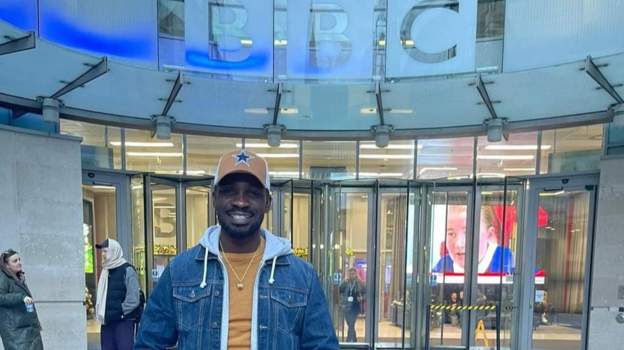
Ugandan opposition politician and former musician Bobi Wine visited the UK for the first time in ten years. This happened more than three weeks after the UK government allowed him to enter the country again, following a reported nine-year ban.
“London, it’s been 10 years since I last visited. ” he wrote alongside a picture of himself in front of BBC’s London office on Wednesday.
Bobi Wine may have been stopped from going to the UK because of his song “Burn Dem” from 2014. Some people said the song had words that encouraged attacks on gay people.
Bobi Wine was not allowed to go to the UK after his song came out. He had to cancel two shows there.
The UK Home Office did not say if they banned Bobi Wine when The Guardian asked them.
On 5 November, Bobi Wine, whose real name is Robert Kyagulanyi, said that he could go back to the UK.
“I am happy to tell you that the UK ban on me has been lifted. I will be visiting the UK soon after 10 years,” Bobi Wine posted on X.
He said his lawyers worked really hard to lift the travel ban.
He said the lawyers argued that it wasn’t right for the UK government to let Uganda’s President Yoweri Museveni visit, because he’s a well-known ruler who treats people badly, while stopping others who are working to make their country free and fair from visiting.
Ugandan parliamentarians have been informed that the drug regulators have been aware for a long time that medications used to treat HIV/AIDS have been given to farm animals.
The committee in Parliament that deals with HIV/Aids is looking into a research done by a university. This study is about giving animals in East Africa medications to treat their illnesses and make them gain weight.
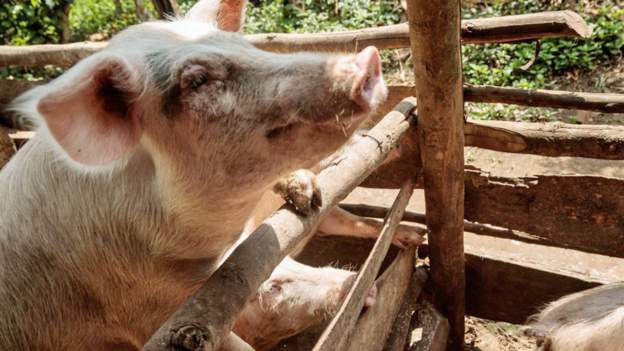
The study discovered that pigs and chickens were given ARVs, but the findings were not made known to the public.
“He said that we were worried about making the situation seem worse than it actually is, and how that might affect our economy if we want to sell food to other countries. So we were looking for other ways to handle that problem. ”
Their report found that the ARVs were mostly used to treat African swine fever, a disease that affects pigs and has no cure at the moment. It also confirmed that the medications were being used to help chickens with Newcastle Disease.
Newcastle Disease is a condition that affects animals, as defined by the World Organisation for Animal Health.
Bird flu is a very contagious and serious illness that affects birds all over the world, including domestic chickens.
Last week, Makerere University’s College of Health gave a new study to the parliamentary committee. The study said that people believe pigs who are given ARVs (antiretroviral drugs) grow bigger and faster and get sick less often.
It was found that about one-third of the chicken tissue and half of the pig meat from markets in the capital city, Kampala, and the northern city of Lira had traces of ARV residues.
People are worried that eating this food may cause some people to become resistant to drugs they need to take. It could also put at risk the money given by donors who provide the drugs to treat HIV and Aids.
People on social media are really mad about the parliamentary session because they are upset that the NDA didn’t share their earlier findings.
The NDA’s spokesperson tried to make the scandal seem less important by saying they have taken action to stop drug abuse, specifically in animals.
Abiaz Rwamiri said that the ongoing operations have resulted in the arrest and punishment of several wrongdoers.
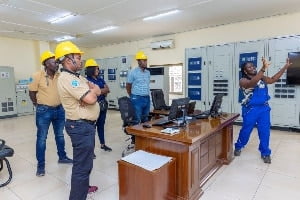
A delegation from the Ugandan Electricity Transmission Company Limited (UETCL) has spent three days at the Ghana Grid Company Limited (GRIDCo) concretising discussions on the Optic Fibre Business due to GRIDCo’s expertise.
This comes six months after the Board of the UETCL signed a Memorandum of Understanding (MoU) to collaborate with the power-producing company.
Acting Director, Office of the Chief Executive, Sam Acquah, led the GRIDCo Consult, Southern Network Department, to hold interactive sessions on working models adopted by the power-producing company with regard to the commercialisation of fibre.
Jumba Abdul Karim, who led the Ugandan delegation, said the UETCL would adopt a good fibre business strategy.
“We will start a fresh page of a profitable and economically viable fibre business. We will also adopt good fibre business strategy; fibre business roadmap and restructure the ICT organogram accordingly. Additionally, the team will correct the errors made to avoid losses and litigation issues,” Mr. Karim said.
He indicated that the next step would be to revamp UETCL’s fibre business model in order to incorporate the lessons learned in GRIDCo benchmarking.
The UETCL, after its commencement in 2001, held a Public Infrastructure Provider’s Licence from the Uganda Communications Commission for owning and operating its optic fibre infrastructure.
The primary purpose was to support the Supervising Control and Data Acquisition (SCADA) system in ensuring grid availability and reliability in Uganda.
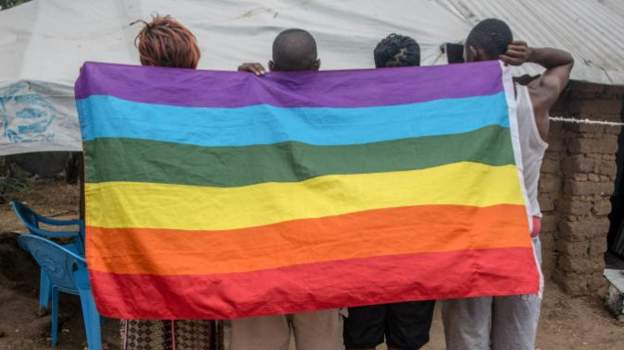
The authorities in Uganda are calling for the criminalisation of LGBTQ organisations and their activities in the country.
A January report from the NGO Bureau, an official body which oversees the work of NGOs, calls for the amendment of the country’s laws to criminalise LGBTQ activities.
In the alternative it urges the enactment of a new law “that prohibits the promotion of LGBTQ activities in the country”.
It further says the government needs to provide more resources to the NGO Bureau so that it can “identify and weed out those that are involved in activities that are prejudicial to the interests of the people of Uganda”.
Gay relationships are illegal in Uganda, where they can be punished by up to life in prison for committing “unnatural offences”.
The report is a result of a year-long investigation into activities of NGOs involved in sexual minorities’ rights work in Uganda.
The bureau says it received concerns regarding various organisations, but did not state the source of the concerns.
In total 26 NGOs were investigated but the probe is yet to conclude its work on many of them.
It says that Sexual Minorities Uganda, one of the most prominent LGBTQ organisations in the country, was neither officially registered as an NGO nor as a business.
The NGO Bureau ordered the closure of the organisation in August 2022, but the organisation has since filed a case at the East African Court of Justice contesting its closure.
Registration applications of at least three other organisations to the bureau were rejected due to their involvement in LGBTQ human rights work.
In recent weeks, several government officials and leaders in the country have been speaking out against the “promotion of gay activities” in the country.
Last week, Archbishop Stephen Kaziimba, the head of the Anglican Church of Uganda, spoke against the recent Church of England’s decision to bless same-sex marriages.
Archbishop Kaziimba said that homosexuality was a sin and that the Anglican church in Uganda would not endorse it.
There have also been renewed calls in parliament for a new anti-gay bill to be drafted and tabled for debate.
Uganda received global attention when it passed an anti-homosexuality law in 2013. It later annulled it in 2014 when a court ruled that it had been passed without the required quorum in parliament.
The International Criminal Court (ICC) on Thursday upheld the conviction for war crimes and crimes against humanity of Dominic Ongwen, a Ugandan child soldier who became a top commander of the Lord’s Resistance Army (LRA).
“The appeals chamber rejects all the grounds of appeal presented by the defence and unanimously confirms the decision on the guilt of Mr Ongwen,” said presiding judge Luz del Carmen Ibáñez Carranza, adding that the court would rule later on Thursday on the rebel leader’s appeal against his 25-year prison sentence.
Dominic Ongwen, abducted on his way to school at the age of nine by the Lord’s Resistance Army (LRA), led by fugitive Joseph Kony, was convicted last year of murder, rape and sexual slavery in northern Uganda in the early 2000s.
The ICC does not know the exact age of Dominic Ongwen, who appears to be in his 40s.
He had appealed against his conviction and sentence at the ICC, based in The Hague, six years after his trial began.
Founded in Uganda in the 1980s by former choirboy Joseph Kony to establish a Ten Commandments regime, the LRA terrorised large areas of central Africa for 30 years, kidnapping children, maiming civilians on a massive scale and enslaving women.
“The appeals chamber wishes to recognise the extreme suffering endured by the victims of Dominic Ongwen’s crimes during the period covered by the charges,” the judge said.
Ongwen’s lawyers had argued earlier this year that his conviction and sentence should be quashed because he was himself a victim of the LRA as a child soldier.
“Dominic Ongwen was, and still is, a child,” his lawyer Krispus Ayena Odongo told the court in February, adding that his client still believed he was “possessed” by the spirit of Joseph Kony.
The ICC prosecutor recently asked judges to confirm the charges against Joseph Kony, who has been on the run for more than 17 years, so that once captured, his trial can take place as soon as possible.
– Scapegoat’ –
The LRA is responsible for the deaths of over 100,000 people and the abduction of 60,000 children, turning boys into docile soldiers and girls into sex slaves.
Mr Ongwen was found guilty of 61 counts of war crimes and crimes against humanity, including forced pregnancy – a first for the ICC – but also murder, rape, sexual slavery and conscripting child soldiers.
At first instance, the ICC found that Mr Ongwen was not mentally ill, despite his abduction and brutality at the hands of the LRA and that the “White Ant” – his nom de guerre – had personally ordered the massacre of civilians in refugee camps between 2002 and 2005.
The defence had appealed on more than 100 grounds, including that Mr Ongwen was a “scapegoat” for the rebel movement.
“The judgment is full of errors based on law, fact and procedure,” lawyer Krispus Ayena Odongo said in court documents.
Joseph Kony should be in the dock, as he was the one who decided on the distribution of women and children as sex slaves, the defence argued.
This is Munu Nyende’s first harvest of avocado after clearing his sugarcane farm for Hass three years ago.
Many had cautioned him about his decision. However, with the government’s assurance, he found the courage to grow the fruit whose new popularity around the world is widening its global market.
“There is a shamba which I harvested after about 36 months and obviously you get disappointed. And when you look at avocado and what we read about it because incidentally we have not started harvesting but the prospects are high”. Nyende said
Uganda’s soils and climate favour avocado growing and are considered among the best even compared to the world’s top ten exporters including neighbour Kenya.
According to Africanews correspondent, Raziah Athman, “From one avocado tree that’s about five years old, a farmer can harvest 3000 fruits in a year, that’s about 500 kilograms. And, as direct export, a kilogram is sold at $2. That compared to a cane farm of the same size means that the avocado farmer is earning six times more but experts say sufficient export volume needs at least 10,000 more farmers to grow the fruit”.
Munu Nyende’s is not the only in this field of farming. Ali Kibwika Muyinda says even as it picks up, those willing to venture into Hass are treading carefully. Ali Kibwika Muyinda is part of an initiative working with a nucleus avocado farm in the eastern region.
“I wouldn’t say switching to avocado is a gamble, I think it should be the thing”. Ali said
The government says the idea is not to replace sugarcane but grow the list of strategic crops.
“Our intention is to have Hass avocado for export, but also have value-addition because vegetable oil is extracted from Hass avocado so the nucleus farmer will act as the off-taker, the buyer from the grass root farmers in the sub-counties but also act as a value adder”. Bwino Fred Kyakulaga – minister of state for agriculture
In 2021, avocado exports totalled $7 billion, a figure Uganda hopes it can tap into if more farmers embrace avocado.
Ugandan officials say they’re now concerned about the spread of Ebola virus in the capital city of Kampala, following the death of a man who traveled there from affected regions.
Minister of Health Dr. Jane Aceng told local media outlets that another 42 people who may have been exposed through contact with the man are being monitored for infection. Aceng said he first visited the Mubende and Luweero districts and, when he became ill, sought out care from a traditional healer.
When the traditional healer was unable to help him, he traveled to Kampala for medical care. He died last Friday at Kiruddu Referral Hospital in the city, using a different name than the one originally given to health authorities who tracked him after he became infected.
Ugandan broadcaster NTV said that despite health worker outreach and communications, some people in the affected regions attribute Ebola-related illness to witchcraft and seek help from traditional healers. In one case, government officials forcibly removed 15 people from Mubende after seven family members were lost to Ebola.
Aceng said there is concern that Ebola will take hold in Kampala and its environs, which are home to 7 million people. Uganda’s Ebola outbreak, confirmed three weeks ago, has claimed at least 17 lives. There are 48 confirmed cases and more than 1,000 people are monitored for the virus.
The Ebola-Sudan strain of the virus responsible for the outbreak hasn’t been seen in Uganda since 2012. A suspected case was identified in neighboring South Sudan, with World Health Organization officials expressing concern over the risk of international spread.
22 people, according to Kenyan authorities, have been freed from Laos’ human trafficking rings in Southeast Asia.
They say a Ugandan and a Burundian national were also rescued in a joint operation by the International Organization for Migration and the governments of Kenya and Laos.
This comes weeks after another group of Kenyans was rescued from human traffickers in Myanmar.
The government says it has received distress calls from Kenyans in several southeast Asian countries who have become stranded after falling for job scams.
Some are promised jobs in factories but then get trapped in prostitution or cybercrime rings.