After clashes over tax increases reportedly turned deadly, the United Nations stated that it was “very concerned” about the widespread use of violence by Kenyan police against demonstrators.
On Wednesday, protests broke out all around the nation, including in the nation’s capital, Nairobi, where Opiyo Wandayi, the head of the opposition in Kenya’s parliament, told CNN that police had to use force to disperse the crowds.
In a news statement on Friday, Jeremy Laurence, a spokesperson for the UN Human Rights Office, stated that “reports say up to 23 people have been killed and dozens have been injured in the demonstrations in the past week.”
Laurence called for “prompt, thorough, independent and transparent investigations into the deaths and injuries. Those responsible must be held to account. Effective measures to prevent further deaths and injuries must be adopted.”
“In light of calls for further protests next week, we call on the authorities to ensure the right to peaceful assembly as guaranteed by the Kenyan Constitution and international human rights law.
The policing of protests must seek to facilitate peaceful assemblies, and any use of force must be guided by the principles of legality, necessity, proportionality and non-discrimination. Firearms should never be used to disperse protests,” Laurence said.
Laurence also appealed “for calm and encourage open dialogue to address social, economic and political grievances, with the aim of identifying lasting solutions in the interests of all Kenyans.”
Demonstrations have flared in Kenya over a raft of unpopular tax hikes proposed by the national government.
Kenyan opposition leader and former prime minister Raila Odinga has led calls for protests over the increases.
Odinga lost the election in August last year and believes the results were manipulated and has since led civil disobedience protests against his political rival.
A Kenyan court temporarily halted the implementation of the Finance Act 2023 touted by President William Ruto as a measure to shore up public finances and increase domestic revenue.
However, the Ruto administration defied the court order and increased tax on fuel prices, which has led to a rise in cost of transport and staple goods.
The United Nations has strongly denounced the escalating prevalence of sexual violence targeting women and girls in Sudan during the ongoing conflict that has spanned over two months.
The UN human rights office in Sudan has reported receiving credible information regarding more than 20 cases of conflict-related sexual violence, affecting at least 57 women and girls. Disturbingly, one incident involved the rape of up to 20 women in a single attack.
Martin Griffiths, the UN’s chief humanitarian official, expressed deep concern over these abhorrent acts and emphasized that it is morally unacceptable for Sudan’s women and children to endure such traumatizing experiences.
Following clearance from the United Nations‘ nuclear inspector for a contentious plan that comes 12 years after the Fukushima nuclear catastrophe, Japan will soon start discharging treated radioactive water into the ocean.
The environment minister stated in 2019 that there were “no other options” because to the limited amount of space available to store the hazardous material. The proposal to release wastewater has been in development for years.
The head of the International Atomic Energy Agency (IAEA), Rafael Grossi, came in Japan on Tuesday to tour Fukushima and provide Prime Minister Fumio Kishida the IAEA’s safety assessment.
But the UN’s approval has done little to reassure rattled residents in neighboring countries, and local fishermen who still feel the impact of the 2011 disaster.
Some have cast doubt on the IAEA’s findings, with China recently arguing that the group’s assessment “is not proof of the legality and legitimacy” of Fukushima’s wastewater release.
Here’s what you need to know.
The devastating 2011 earthquake and tsunami damaged the Fukushima nuclear plant’s power supply and cooling systems – causing the reactor cores to overheat and contaminate water within the plant with highly radioactive material.
Since then, new water has been pumped in to cool fuel debris in the reactors. At the same time, ground and rainwater have leaked in, creating more radioactive wastewater that now needs to be stored and treated.
The state-owned electricity firm Tokyo Electric Power Company (TEPCO) has built over 1,000 massive tanks to contain what is now 1.32 million metric tons of wastewater – enough to fill more than 500 Olympic pools.
But space is quickly dwindling. The company says building more tanks isn’t an option, and it needs to free up space in order to safely decommission the plant – a process that involves decontaminating facilities, dismantling structures and fully shutting things down.
Radioactive wastewater contains some dangerous elements, but the majority of these can be removed from the water, said TEPCO.
The real issue is a hydrogen isotope called radioactive tritium, which cannot be taken away. There is currently no technology available to do so.
But Japan’s government and the IAEA say the contaminated water will be highly diluted and released slowly over decades.
That means the concentration of tritium being released would be on par or lower than the amount other countries allow, and meet international safety and environmental regulations, they say.
TEPCO, Japan’s government, and the IAEA also argue that tritium occurs naturally in the environment, from rain to sea water to tap water, and even in the human body – so releasing small amounts into the sea should be safe.
In the IAEA report, Grossi said discharging treated water into the sea would have a “negligible radiological impact on people and the environment.”
But experts are divided on the risk this poses.
The Canadian Nuclear Safety Commission says tritium itself is too weak to penetrate the skin – but can increase the risk of cancer if consumed in “extremely large quantities.” Meanwhile, the US Nuclear Regulatory Commission acknowledged that “any exposure to radiation could pose some health risk” – but added that “everyone is exposed to small amounts of tritium every day.”
Robert H. Richmond, director of the Kewalo Marine Laboratory at the University of Hawaii at Manoa, is among a group of international scientists working with the Pacific Island Forum to assess the wastewater release plan – including visits to the Fukushima site, and meetings with TEPCO, Japanese authorities and the IAEA. After reviewing the details of the plan, Richmond called it “ill-advised” and premature.
One concern is that diluting the wastewater might not be enough to reduce its impact on marine life. Pollutants like tritium can pass through various levels of the food chain – including plants, animals, and bacteria – and be “bioaccumulated,” meaning they will build up in the marine ecosystem, he said.
He added that the world’s oceans are already under stress from climate change, ocean acidification, overfishing and pollution. The last thing it needs is to be treated like a “dumping ground,” he said.
And the potential risks won’t just affect the Asia-Pacific region. One 2012 study found evidence that bluefin tuna had transported radionuclides – radioactive isotopes like the ones in nuclear wastewater – from Fukushima across the Pacific to California.
First, the wastewater will be treated to filter out all the removable harmful elements. The water is then stored in tanks and analyzed to measure how radioactive it still is; much of it will be treated a second time, according to TEPCO.
The wastewater will then be diluted to 1,500 becquerels of tritium – a unit of radioactivity – per liter of clean water.
For comparison, Japan’s regulatory limit allows a maximum of 60,000 becquerels per liter. The World Health Organization allows 10,000, while the US has a more conservative limit of 740 becquerel per liter.
The diluted water will then be released through an undersea tunnel off the coast, into the Pacific Ocean. Third parties including the IAEA will monitor the discharge during and after its release.
“This will ensure the relevant international safety standards continue to be applied throughout the decades-long process laid out by the government of Japan and TEPCO,” Grossi said in the report.
Fukushima 10 years later: Struggles to rebuild continue (2021)
The plan has met a mixed reaction, with support from some corners and skepticism from others.
The US has backed Japan, with the State Department saying in a 2021 statement that Japan had been “transparent about its decision” and seems to be following “globally accepted nuclear safety standards.”
Taiwan’s Atomic Energy Council said the amount of tritium being released is estimated to be “below the detection limit, and the impact on Taiwan will be minimal.” The island is located southwest of Japan.
But there is more resistance from Japan’s closer neighbors.
In March, a prominent Chinese official warned the wastewater could cause “unpredictable harm to the marine environment and human health,” adding: “The Pacific Ocean is not Japan’s sewer for discharging its nuclear contaminated water.”
The Secretary General of the Pacific Islands Forum, an inter-governmental group of Pacific islands including Australia and New Zealand, also published an op-ed in January voicing “grave concerns.”
“More data is needed before any ocean release should be permitted,” he wrote. “We owe it to our children and grandchildren to work toward ensuring that their futures are secured and safe.”
South Korean Prime Minister Han Duck-soo showed support for the plan in June, saying he could drink the wastewater after it had been treated to meet international standards, according to Yonhap – a statement ridiculed by the country’s opposition leader.
Many bodies, including the IAEA, point out that nuclear plants around the world routinely and safely release treated wastewater containing low levels of tritium.
A spokesperson from the US’ Nuclear Regulatory Commission, a government body, confirmed to CNN that “virtually all nuclear plants in the US discharge water containing low levels of radioactivity to the waterway on which they are located.”
“Tritium cannot be filtered out, but a member of the public would have to ingest a significant amount of it for there to be even the possibility of a health concern and radioactive water released is greatly diluted by the flows in the waterway,” the spokesperson added.
Many scientists aren’t reassured. Tim Mousseau, a biological sciences professor at the University of South Carolina, pointed out that even if this is common practice among nuclear plants, there just isn’t enough research into the impact of tritium on the environment and on our food items.
Richmond, from the University of Hawaii, added that “other people’s bad behavior” was not an excuse to continue releasing wastewater into the ocean. “This is an ultimate opportunity for (Japan and the IAEA) to change the way in which business is being done for the better,” he said.
There has been much more skepticism from residents in the region – prompting some shoppers to stock up on seafood and sea salt, for fear these products may be impacted by the wastewater release.
In South Korea, sea salt prices have jumped, with store owners saying their sales had doubled recently, Reuters reported. It cited a viral tweet in Korean that claimed to have bought three years’ worth of seaweed, anchovies and salt.
The Korean fisheries authority also said it would ramp up efforts to monitor salt farms for radioactivity, and maintain a ban on seafood from waters near Fukushima, Reuters reported.
Members of the Korean public have also staged protests against the plan, with some donning gas masks outside the Japanese embassy in Seoul.
Opinion is mixed among the Japanese public, too. A survey by Asahi Shimbun in March found that 51% of 1,304 respondents supported the wastewater release, while 41% opposed it. Earlier this year, residents in the capital Tokyo took to the streets to protest the plan.
In Fukushima, the prefecture where the disaster occurred, local fishermen have been vocal against the plan from day one. For many years after the meltdown, authorities suspended their fishing operations and other countries introduced import restrictions.
Even after the surrounding water and fish returned to safe levels, consumer confidence was never fully restored, and Fukushima’s fishing industry is now worth just a fraction of what it once was.
The release of wastewater could further damage Fukushima’s global and regional reputation – once again hurting fishermen’s livelihoods, many argue. Earlier this year, one told CNN: “It really feels like they made this decision without our full consent.”
President Akufo-Addo has stated that government is determined to achieve the United Nation’s Sustainable Development Goal (SDG) 6, which focuses on providing access to water and sanitation for all.
He made this commitment during the inauguration of phase three of the five districts water project in Adaklu, Volta Region.
The project has successfully provided clean drinking water to a population of over 89,000 individuals residing in the Adaklu, Agotime-Ziope, and Central Tongu districts.
President Akufo-Addo emphasized the government’s dedication to ensuring that the lack of safe water in rural areas of Ghana becomes a thing of the past.
“Regarding SDG 6 with demands that we provide clean water and sanitation for all, the Akufo-Addo government has made significant improvement towards this objective.”
“You may recall at a ceremony in the Ho West District on the same day I cut the sod for the commencement of five districts’ water project, I commissioned completed projects under the water supply improvements project of the Ghana Spain Debt Swap Development Programme implemented by the Community of Water Sanitation Agency (CWSA) at a total cost of $3.7 million,” he stated.
The Second Ghanaian Battalion (GHANBATT 2) serving with the United Nations Interim Security Force for Abyei (UNISFA) has held its Consecration of the United Nations (UN) and the Battalion Colours as well as Induction Religious Parade for the Commanding Officer (CO) at the GHANBATT Headquarters at Athony Company Operating Base (COB), ABYEI.
The ceremony was held on Saturday 24 June 2023, under the theme “Duty Consciousness” to officially induct the CO of UNISFA GHANBATT 2 Lieutenant Colonel Edward Sarpong Appiah into office and to mark the successful insertion of the full compliment into Sector South of UNISFA Area of Operational Responsibility (AoR).
The induction religious parade was officiated by Rev Lieutenant (Lt) Solomon Aidoo and Imam Lt Yunus Abdallah.
The Clergy in their respective sermons expressed gratitude to the Almighty God for successful deployment of GHANBATT into the AoR and encouraged all ranks to discharge their duties diligently and consciously to help Command achieve UNISFA’s mandate.
Additionally, the Clergy urged all to be submissive, humble and conscious in the discharge of their duties so that GHANBATT would be victorious at the end of the tour of duty.
Lt Col ES Appiah in his remarks expressed his profound gratitude to God for the opportunity to serve as CO UNISFA GHANBATT 2 and reiterated his commitment to execute the mission of the GHANBATT.
He expressed his gratitude to Ghana Armed Forces High Command, the Mission Leadership at UNISFA HQ, Troop Contributing Countries, Chiefs, Local Authorities and Community Protection Committees in the ABYEI Box for their support over the period.
The CO also admonished all GHANBATT personnel to conduct themselves professionally throughout their stay in the mission area since discipline is the bedrock of every Armed Forces.
He urged all ranks to be cooperative, supportive and loyal to Command and UNISFA towards the achievement of peace in Sector South of the ABYEI Box.
The Guest of Honour, was the Sector South Commander of Joint Border Verification and Monitoring Mechanism, Colonel John Ishmael Yao Boglo who doubles as the Ghanaian Contingent Commander.
The Guest of Honour in his remarks stated that, Ghana has participated under the auspices of the UN since its first deployment in ONUC in 1960 and UNISFA was not an exception.
He said Ghanaian Soldiers have and would continue to fulfill their commitment to international peace and security in diverse ways to signify their nobility and call to serve humanity with dignity and professionalism.
He advised all to engage and cooperate with all stakeholders to cover all the gaps in security architecture of UNISFA Areas of Operation in order to promote peace.
Also present at the ceremony were CO Nepal Force Headquarters Support Unit, CO Nigerian Base Defence Company, Deputy Commanding Officer Indian Battalion and representatives from Level 2 Hospital (GHANMED).
Other dignitaries present were the UN Senior Civilian Staff from UNISFA headquarters, Military Observers/Staff Officers and United Nations Police, Staff of Troop Contributing Countries and Chiefs from the neighbouring communities.
At least 41 people, mostly kids, were killed and six others were kidnapped when armed rebels assaulted a school in western Uganda, according to Ugandan officials.
Military spokesman Felix Kulayigye told CNN that some of the victims were killed by machete attacks while others perished in dormitory fires.
The Lhubirira secondary school was attacked late on Friday by about 20 members of the rebel organisation Allied Democratic Forces (ADF), which has ties to ISIS.
The school is situated along Uganda’s border with Congo in the town of Kasese, and educates children between the ages of 13 and 18. Of the dead, 39 were students and two were from the local community, local officials said.
Authorities were still trying to extinguish the fire by Saturday morning. The military suspects more dead bodies may be found, but said there was no one still alive trapped in the school.
According to Kulayigye, there had been 62 people in the school during the attack.
“We’re commiserating with the families, and the leadership of the UPDF (Ugandan Peoples’ Defense Forces) are on the ground and have been deployed to protect the place,” he added.
The United Nations condemned the attack. “Those responsible for this appalling act must be brought to justice,” a statement read.
Extending “heartfelt condolences” to victims and their families, Secretary General Antonio Guterres called for the immediate release of those abducted and reiterated “the importance of collective efforts to tackle cross border insecurity between Congo and Uganda and restore durable peace in the area.”
The spokesman for Uganda’s military operations in the Democratic Republic of Congo (DRC), Major Bilal Katamba, told CNN the military is pursuing the suspects in the DRC and believes they are headed towards the Virunga National Park.
Major Dick Olum, commander of the UPDF operation in eastern DRC, said the rebels had spent two days in the town – where they were led and shown around by local residents – before the killings.
“Everybody should be on the lookout,” he warned residents in Kasese.
“If you see someone you don’t recognize, have him arrested. Please identify the youth that led the ADF here,” he appealed.
Footage of the aftermath showed whole areas of the school cordoned off and armored military vehicles in the vicinity. Large crowds were also seen gathering on school premises.
Ugandan government officials led by State Minister for Higher Education John Muyingo visited the school on Saturday.
In a statement shared on Twitter, First Lady Janet Museveni said the government was “providing support for the bereaved families during this trying time.”
“On behalf of the Ugandan government… I extend heartfelt condolences to the families, students, staff of Lhubiliriha Secondary School and the broader community affected by this tragedy,” she said.
“We call upon everyone to offer prayers for the affected families and community while also urging vigilance to uphold the safety of our children in schools.”
“I remain confident that the UPDF, with divine guidance, will ensure those responsible face justice,” she added.
An eyewitness who lost three cousins in the brutal attack, told CNN that the local mortuary is “very crowded” as victims rescued from the school continue to be treated.
“I knew my relatives were at school, so when I heard about the incident, very early in the morning we rushed to the hospital and we found their bodies there, and the mortuary was very crowded,” Clay Biromunane said.
Biromunane was in his bedroom around 300 meters away from the school when he heard gunfire erupt at around 10:40 p.m. local time.
“Up to now people are up and down looking for their relatives,” Biromunane said.
The 35-year-old said the community was “very much surprised” by the attack and said they had never experienced anything like it before.
Mapoze Slevest, Mayor of Mpondwe, similarly expressed surprise, telling reporters that Mpondwe “was a good community with no rebels.”
Based along the mountainous border between Uganda and the DRC, the ADF began fighting against the government after being founded in the mid-90s.
The group was sanctioned by the United States and the United Nations in 2014 for terrorist activities in the region, including attacks on children.
The US Department of Treasury denounced the ADF “for targeting children in situations of armed conflict, including through killing, rape, abduction and forced displacement.”
In January, the ADF was accused of detonating a bomb during a church service in the DRC, killing at least 12 worshipers.
Diop criticized Minusma, stating that it has contributed to escalating intercommunal tensions and exacerbating the existing problems.
His concerns were expressed during his address to the UN Security Council.
Minusma, which comprises over 13,000 troops, has been deployed for a decade but has been unsuccessful in curbing the proliferation of jihadist violence in Mali.
Currently, the military rulers in Mali are receiving support from Russian Wagner mercenaries.
Western officials have accused Wagner of human rights abuses in Ukraine and parts of Africa, and last month the US announced sanctions on Ivan Maslov, whom it described as Wagner’s top official in Mali.
Wagner has not commented on the Western allegations and its activities in Mali and other parts of Africa remain shrouded in secrecy.
Minister Diop’s criticism of Minusma followed earlier Malian objections to France’s long-standing involvement in Mali. The alliance with France, the former colonial power, collapsed last year.
Mr Diop spoke of a “crisis of confidence between the Malian authorities and Minusma” and said “the Malian government asks for the withdrawal without delay of Minusma”.
Minusma’s mandate is due to end on 29 June,but UN chief Antonio Guterres has recommended that the mission be reconfigured to focus on a few limited priorities.
The UN currently lists military contingents from Chad, Bangladesh and Egypt as the biggest in the force.
When asked about Mr Diop’s remarks on Friday the UN special envoy to Mali, El-Ghassim Wane, said “we stand to be guided by whatever decision the [Security] Council may take”.
But he added that without the host country’s consent “operating in a specific country would be extremely challenging, if not impossible”.
A report by the UN high commissioner for human rights accused the Malian armed forces and “foreign security personnel” of having killed more than 500 people during an operation in the village of Moura, in central Mali, in March last year. The governments of Mali and Russia both condemned that report.
In order to protect the ocean’s ability to regenerate,President Akufo-Addohas called on African countries to enhance their domestically defined contributions and adaptation strategies.
This would ensure that the ocean continues to deliver substantial economic, environmental, and social value for the continents’ development.
The President made the call when he opened the National Blue Economy Summit (NBES) in Accra on Wednesday.
The summit is on the theme “Our Ocean’s Health, Our Prosperity, Our Planet’s Security.” It brought together blue economy experts to brainstorm and drive policy on the marine ecosystem.
The objective of the two-day summit is to reverse marine pollution and enhance the management and restoration of the marine and coastal ecosystem of the nation.
It also aims to mobilise transformative ocean action to achieve the United Nations(UN) Sustainable Development Goals (SDGs).
Blue economy refers to the sustainable use of coastal and marine resources for economic growth and improved livelihoods and jobs.
President Akufo-Addo explained that the health of the planet and the health of the peoples of the world are linked to the health of oceans, which are now under pressure from unsustainable fishing practices, pollution, marine debris, habitat loss, ocean acidification and climate change.
He told the gathering that the ocean, the lifeblood of the planet, generated half of the world’s oxygen supply, drove the global economy through transport trade, and provided food and sustenance, mineral resources, energy, employment, and livelihoods, as well as cultural recreation value for billions of people around the world.
“The consequences of neglecting the ocean are dire not just for the millions of people who depend on it for their livelihoods, but also for the health of our planet.
“There is therefore the need to preserve and protect the ocean and all its resources…We need to take decisive actions now to safeguard the ocean’s capacity to regenerate and continue to deliver substantial economic, environmental and social value for our development.”
President Akufo-Addo noted that in Ghana’s instance, its coastal exclusive economic zone stretches 218,00 square kilometres, and is home to over 7.5 million people.
Sadly, Ghana’s coastal and marine resources face significant threats in the form of biodiversity loss, pollution, ocean dumping, overfishing, illegal and unreported and unregulated fishing, piracy, and trafficking.
Those threats, the President said, “are avoidable” and the inability to deal with them held consequences for the livelihoods of many people, affecting food security prospects, critical infrastructure, important ecosystems and the security and stability of the entire African region.
“Like many other coastal African countries, the blue economy provides us with food, employment, and income. For instance, some 10 per cent of Ghana’s workforce is employed in the fishing sector which also accounts for 4.5 per cent of the country’s GDP.
“Additionally, 70 per cent of Ghana’s trade is carried by sea through the ports of Tema and Takoradi. We are well positioned to benefit from the ocean resources if sustainably managed,” he said.
The President thus proposed a five-point agenda for urgent action at the country and continental levels to protect the ocean, the planet, and the wellbeing of all.
He said the continent must prioritise sustainable management of its oceans by establishing and enforcing robust regulations to prevent overfishing and promote responsible fishing practices.
“We must collaborate closely with our international partners as well to establish marine protected areas, safeguarding critical habitats and promoting biodiversity conservation.”
Secondly, the President suggested that Africa deepens strategic partnerships and build a progressive coalition led by the private sector, academia, civil society organisations and community leaders, for enhanced ocean health and the accelerated development of communities.
He said the Continent must be deliberate in ensuring greater and smarter investments into ocean action.
President Akufo-Addo also urged investment in research and technological advancements and innovation to navigate the challenges to the blue economy to pave the way for a brighter future.
He also called for international cooperation, the sharing of data and research findings and collaboration on joint projects.
“We must recognize the interconnectivity of our global community and the need for international collaboration. The challenges facing the ocean transcend borders and no single nation can tackle them alone…We can leverage the collective wisdom and expertise of nations worldwide.
“Together, we can drive innovation, develop sustainable solutions, and address the pressing issues that threaten the ocean. The ocean is the life source of our planet, a healthy ocean, human wellbeing, and sustainable ocean management are inseparably interconnected,” he stressed.
He urged participants at the summit to, as a matter of urgency, propose policies that would help Ghana and the rest of the African continent protect its oceans and marine life.
Dr Tedros Adhanom Ghebreyesus called on countries to implement necessary reforms to prepare for the next pandemic at the United Nations Annual General Assembly in Geneva.
The disease has killed about 7 million people worldwide and is still killing people every day due to low vaccination rates.
He insisted Covid is still a threat, but not the only one the world may have to confront.
Despite the darkest days of the pandemic considered over, Dr Ghebreyesus said the next one was bound to ‘come knocking’.
After ending the global emergency status for Covid, he stressed: ‘We cannot kick this can down the road.
‘If we do not make the changes that must be made, then who will? And if we do not make them now, then when?
‘When the next pandemic comes knocking – and it will – we must be ready to answer decisively, collectively and equitably.’
The 10-day annual World Health Assembly, which coincides with the WHO’s 75th anniversary, is set to address global health challenges including future pandemics, eradicating polio and steps to ease Ukraine’s health emergency triggered by the war.
The WHO’s 194 member states are now drafting a pandemic treaty which is up for adoption at next year’s assembly.
‘A commitment from this generation (to a pandemic accord) is important, because it is this generation that experienced how awful a small virus could be,’ added Ghebreyesus.
At the same meeting, countries approved a $6.83 billion budget for 2024-25 – a decision that tested national commitments to fixing its funding model which was seen as too small and overly reliant on donors.
The budget includes a 20% increase in member states’ mandatory fees.
The award will be presented by UN Secretary-General, Antonio Guterres as part of celebrations on the International Day of UN Peacekeepers on Thursday, May 25, 2023.
Captain Erzuah who has served in Abyei – an area on the border between South Sudan and Sudan since March 2022 expressed her gratitude for being selected to receive the prize while acknowledging her platoon members. She described the award as ‘an award for all of us’.
Captain Erzuah who is an ardent gender advocate made sure her 22-strong platoon were composed equally of men and women and conducted regular patrols and outreach to local leaders as well as women’s and youth groups, to better understand and address community concerns and needs.
“Together with civilian UN colleagues, she also hosted discussions on domestic violence, gender equality, and childcare. Those conversations resulted in an increase in the number of women enlisted in Community Protection Committees, which were initially male-dominated. The engagement with community members led to improved early warning about threats of violence against civilians and broader security issues.
“The monthly market walks she initiated with her battalion also contributed to building strong and enduring relationships between traders, local residents, and the UN., “part of the statement said.
About the Military Gender Advocate of the Year Award:
The United Nations Military Gender Advocate of the Year Award created in 206 recognises the dedication and efforts of an individual military peacekeeper in promoting the principles of UN Security Council Resolution 1325 on Women, Peace, and Security.
“The Resolution 1325 reminds us that our women peacekeepers are not only supporting global peace and security. They are leading the way. By every measure, Captain Cecilia Erzuah of Ghana is one of those leaders,” said Secretary-General Antonio Guterres.
“On every front, Captain Erzuah’s work has set the standard for ensuring that the needs and concerns of women are reflected across our peacekeeping operations,’ he added.
As reported to the judiciary news agency Mizan, two persons who had been given the death penalty for blasphemy in Iran were hanged on Monday.
Because they ran online “anti-Islam groups and channels,” Yusef Mehrdad and Sadrullah Fazeli Zare were detained in May 2020 and given the death penalty in April 2021, according to Mizan.
According to the US Commission on International Religious Freedom, authorities determined both of them to be members of the Telegram group “Critique of Superstition and Religion,” which led to their convictions.
Members of the Telegram channel allegedly shared opinions insulting Islam. One member allegedly said that they set religious books on fire, the US Commission on International Religious Freedom claimed. Iran’s state-run AlAlam said Mehrdad was filmed burning the Quran.
Zare and Mehrdad were denied family visits and phone calls for eight months after their arrest. Mehrdad reportedly went on hunger strike in February 2022 to protest the authorities’ refusal to allow him to make phone calls, the US Commission on International Religious Freedom said.
United Nations experts have previously called on Iran to stop the persecution of religious minorities, under what they described as a policy of targeting dissenting beliefs and religious practices, including Christian converts and atheists.
“Such state-sanctioned intolerance furthers extremism and violence. We call on the Iranian authorities to de-criminalize blasphemy and take meaningful steps to ensure the right to freedom of religion or belief,” the experts said in a statement published in August.
The executions come days after the execution of a dual Swedish-Iranian national, Habib Chaab, who was convicted for leading a national Arab separatist group accused of attacks in Iran.
A joint report issued by the Norway-based Iran Human Rights (IHR) and the France-based Together Against the Death Penalty (ECPM) revealed at least 582 executions were carried out last year – a 75% increase from the previous year.
It was the highest number of executions in the Islamic republic since 2015, according to the report released last month.
The report found there was a “surge” of executions in Iran following the death of 22-year-old Mahsa Amini in police custody in September. Amini’s death sparked a months-long national uprising, which was eventually quashed by a brutal police crackdown.
Young people in Japan are taking over government positions, so move over, boomers and older millennials.
Supporters have hailed the recent by-elections as a welcome change to the nation’s administration, which is dominated by conservative older males. The elections have brought a number of different new faces into the national spotlight.
Data from the Inter-Parliamentary Union shows that the majority of members of the Japanese parliament are male and between the ages of 50 and 70.
Making headlines is Ryosuke Takashima who, at 26 years old, is Japan’s youngest-ever mayor, according to Japanese public broadcaster NHK. He graduated last year from Harvard University, where he earned his bachelors degree in environmental engineering.
“Being young, I think there is a possibility that citizens will feel closer to me. Because I have no experience in politics, I can ask around what I don’t understand, learn various things, and I want reflect them in my own vision,” he told reporters, according to NHK.
The country’s previous youngest mayor had been Kotaro Shishida, elected in 1994 at the age of 27, NHK reported.
Takashima had campaigned on green infrastructure planning, promising to create more public spaces and parks, as well as reforms in education, childcare and youth healthcare. He will begin serving as mayor of Ashiya City in Hyogo Prefecture on May 1.
Then there’s the 26-year-old YouTuber who ran his campaign for Hiratsuka City Council – and won – under the official name “Shin the Hiratsuka YouTuber.”
Shin also runs a Pokemon card store but is best known for his YouTube channel, where he makes videos about local shops and events in the city; his most popular video reviews 10 recommended ramen shops in Hiratsuka.
It was while making these videos and talking to local business owners that Shin learned about their complaints and troubles – inspiring him to run for city council and freshen up the staid political scene, according to his website.
“Japan’s politicians are aging,” his site reads. “There are many high schools and universities in Hiratsuka, so there is no doubt that young people live here.”
As a single father of a 3-year-old son, he focused on childcare issues during his campaign, highlighting the need for greater support for parents and work-life balance – as well as supporting the elderly, as Japan’s population rapidly ages and its workforce shrinks.
Ayaka Nasuno, 25, is another Gen Z politician making her debut after winning the highest share of votes for the Kawasaki City Council earlier this month.
After being bullied as a child, Nasuno decided to “create her own community” by organizing a local trash cleanup effort – which is how she began working with constituents and local resources, according to her website and multiple social media accounts.
“This is the start of my career as a councilor, so I will work hard for the benefit of my hometown,” she wrote on Twitter after the election, thanking supporters for their votes.
Another high-profile name this election season is 34-year-old Arfiya Eri, whose parents are Uyghur and Uzbek, and who has advocated for greater women’s rights and gender equality.
With her election to Japan’s Lower House, Eri is the first woman of Uyghur descent to be elected to any parliament in the world, according to the World Uyghur Congress, which called her victory significant for the Uyghur Japanese community and the global Uyghur diaspora.
The Uyghur ethnic group largely lives in China’s western Xinjiang region, where Beijing is accused of committing human rights abuses against Uyghurs. The United Nations has called these actions “crimes against humanity” in a report last September, while the United States has previously accused China of holding up to 2 million Uyghurs and other Muslim minorities in detention camps, accusations Beijing has repeatedly denied.
She is also one of the few parliament members with non-Japanese ancestry in what remains a highly homogenous country with comparatively low levels of immigration.
Eri was born in Japan but moved to China as a child, before studying at Georgetown University in the US and working for the United Nations. She researched Uyghur issues during her studies abroad, according to her official website – with one blog post decrying the “unspeakable tragic oppression and human rights violations” taking place against Uyghurs.
She has also turned the spotlight to Japan’s male-dominated politics and society, highlighting issues such as the gender wage gap, the unequal burden of housework and childcare on women, and the need for men to take more active roles in child-rearing.
Her election as a “33-year-old working woman” would send a message to the world that “Japan is going to move forward,” she wrote on her blog last year.
After Beijing’s top ambassador in Paris questioned the sovereignty of former Soviet republics, undermining China’s ambitions to be considered as a potential mediator between Russia and Ukraine, European nations have demanded explanations from Beijing.
Lithuanian, Latvian, Ukrainian, French, and European Union representatives have all reacted angrily to comments made by Lu Shaye, China’s ambassador to France, who claimed that the Baltic States and other former Soviet states lack “effective status in international law.”
When asked if Crimea, which Russia illegitimately annexed in 2014, was a part of Ukraine, Lu made the remark.
“Even these ex-Soviet countries don’t have an effective status in international law because there was no international agreement to materialize their status as sovereign countries,” Lu said, after firstnoting that the question of Crimea “depends on how the problem is perceived” as the region was “at the beginning Russian” and then “offered to Ukraine during the Soviet era.”
The remarks appeared to disavow the sovereignty of countries that became independent states and United Nations members after the fall of the Soviet Union in 1991 – and come amid Russia’s brutal invasion of Ukraine under leader Vladimir Putin’s vision the country should be part of Russia.
China has so far refused to condemn Russia’s invasion of Ukraine or call for a withdrawal of its troops, instead urging restraint by “all parties” and accusing NATO of fueling the conflict. It has also continued to deepen diplomatic and economic ties with Moscow.
EU foreign affairs chief Josep Borrell responded Sunday calling the remarks “unacceptable.”
“The EU can only suppose these declarations do not represent China’s official policy,” Borrell said in a statement on Twitter.
France also responded Sunday, with its Foreign Ministry stating its “full solidarity” with all the allied countries affected and calling on China to clarify whether these comments reflect its position, according to Reuters.
Several leaders in former Soviet states, including Ukraine, were quick to hit back following the interview, which aired Friday on French station LCI.
Latvian Foreign Minister Edgars Rinkevics called for an “explanation from the Chinese side and complete retraction of this statement” in a post on Twitter Saturday.
He pledged to raise the issue during a meeting of EU foreign ministers Monday, where relations with China are expected to be discussed.
“It is strange to hear an absurd version of the ‘history of Crimea’ from a representative of a country that is scrupulous about its thousand-year history,” Mykhailo Podolyak, an adviser to Ukraine’s Presidential Administration, also wrote on Twitter.
“If you want to be a major political player, do not parrot the propaganda of Russian outsiders…”
China’s Ministry of Foreign Affairs did not immediately respond to a request for comment from CNN on Monday.
Beijing has formal diplomatic relations with post-Soviet states, which include Russia.
This is not the first time that Lu – a prominent voice among China’s so-called aggressive “wolf-warrior” diplomats – has sparked controversy for his views.
But they place Beijing under the spotlight at a particularly sensitive moment for its European diplomacy.
Ties have soured as Europe has uneasily watched China’s tightening relationship with Russia and its refusal to condemn Putin’s invasion.
Beijing in recent months has sought to mend its image, highlighting its stated neutrality in the conflict and desire to play a “constructive role” in dialogue and negotiation, further fueling debate in European capitals over how to calibrate its relationship with China, a key economic partner.
That debate intensified this month following a visit to Beijing from French President Emmanuel Macron, who signed a raft of cooperation agreements with China during a trip he framed as an opportunity to start work with Beijing to push for peace in Ukraine.
Voices in former Soviet states, where many remember being under Communist authoritarian rule, have been among those in Europe critical of such an approach.
“If anyone is still wondering why the Baltic States don’t trust China to ‘broker peace in Ukraine,’ here’s a Chinese ambassador arguing that Crimea is Russian and our countries’ borders have no legal basis,” Lithuanian Foreign Minister Gabrielius Landsbergis wrote on Twitter Saturday following Lu’s interview.
Moritz Rudolf, a fellow and research scholar at the Paul Tsai China Center of the Yale Law School in the US, said China had been “increasingly successful in being perceived as a responsible power that might play a constructive role in a peace process in Ukraine.”
“It remains to be seen whether the leadership in Beijing realizes how damaging those words may turn out to be for its ambitions in Europe if the Foreign Ministry does not distance the (People’s Republic of China) from the words of Ambassador Lu,” he said.
He added that China’s “official position and practice” contradict Lu’s comments, including as China had not recognized the sovereignty of Russia over Crimea or any territory it annexed since 2014.
Others suggested Lu’s remarks may also shed light on Beijing’s real diplomatic priorities.
For Russia, giving up control of Crimea is widely seen as a non-starter in any potential peace settlement on Ukraine. This means Beijing may have a hard time giving a straight answer on this question, according to Yun Sun, director of the China Program at the Washington-based think tank Stimson Center.
“The question is impossible to answer for China. China’s relationship with Russia is where its influence comes from,” she said, adding that didn’t mean Lu could have given a “better answer.”
“Between sabotaging China’s relationship with Russia and angering Europe, (Lu) chose the latter.”
A Cobra emergency meeting has been called by Rishi Sunak to address rescuing British nationals who are stranded in Sudan.
Since April 15, fierce violence has broken out all over the nation as a result of rising tensions between the RSF paramilitary organisation and the Sudanese army.
According to the United Nations, there have been over 400 fatalities and at least 3,500 injuries thus far.
Government officials have said they are ‘doing everything possible’ to support those trapped in the capital.
The Sudanese army has said they are coordinating efforts to evacuate American, British, Chinese and French citizens and diplomats from Sudan on aircraft.
Prospects of airlifting people out of the country have been complicated due to battlegrounds breaking out across airports.
An evacuation from the capital is expected to happen imminently with the British Army on standby.
Fierce fighting between the Sudanese army and the RSF parmilitary force broke out (Picture: AFP via Getty Images)
The Ministry of Defence (MoD) is also planning for a wide range of scenarios, alongside the Foreign Office, on how it can assist in Sudan.
The MoD confirmed a high-readied armed forces unit is always ready to be deployed should they be required.
A UK Government spokesperson said: ‘We recognise that the situation is extremely concerning for British nationals trapped by the fighting in Sudan.
‘We are doing everything possible to support British nationals and diplomatic staff in Khartoum, and the Ministry of Defence is working with the Foreign Office to prepare for a number of contingencies.’
Those trapped in Sudan are advised to register with the FCDO and to stay indoors.
The Pentagon confirmed it is moving additional troops and equipment to a naval base in the Gulf of Aden to prepare for the evacuation of US embassy personnel.
But the White House has no plans for a government co-ordinated evacuation of an estimated 16,000 American citizens trapped in Sudan.
Rishi Sunak and the leader of Dijibouti have agreed to ‘continue to co-ordinate efforts to de-escalate the violence and protect civilians, including our citizens’.
Explosions and gunfire continue across the capital with an end to violence not yet in sight.
The Sudanese army has said it is coordinating efforts to evacuate foreign citizens and diplomats from Sudan on military aircraft.
Army chief Gen Abdel Fattah Burhan said he would facilitate the evacuation of American, British, Chinese and French citizens and diplomats from Sudan after speaking with the leaders of several countries that had requested help.
Following claims that the US was reportedly eavesdropping on the Secretary-General and other senior UN officials, the United Nations delivered a rare censure of the US weeks after a cache of classified US intelligence papers was exposed on social media.
“The UN has made clear that such actions are inconsistent with the obligations of the United States of America enumerated in the UN charter and the Convention on the Privileges and Immunities of the United Nations,” UN Spokesman Stephane Dujarric stated at his midday briefing on Tuesday.
The UN also sent a note to the US Mission at the United Nations in New York regarding the leak, according to Dujarric.
The stern reaction comes after a BBC report last week on a US intelligence leak which accused Guterres of being too soft on Russia. According to the broadcaster, the documents in the leak also includes detail of a private conversation between Guterres and his deputy Amina Mohammed.
“The Secretary-General has been at this job, and in the public eye, for a long time. He’s not surprised by the fact that people are spying on him and listening in on his private conversations,” Guterres’ office said in a statement Thursday.
“What is surprising is the malfeasance or incompetence that allows for such private conversations to be distorted and become public,” it added.
Stéphane Dujarric, the spokesperson for the Secretary-General, added later that “the Secretary-General is not soft on any one country”.
The leak appears to shed light on how Washington perceived Guterres’ handling of the Black Sea grain deal, according to the BBC. It suggests US officials believe Guterres was so keen to maintain the deal that he made generous concessions to Russia back in February .
CNN has not independently verified the documents.
“Guterres emphasised his efforts to improve Russia’s ability to export,” the leaked documents reportedly say, “even if that involves sanctioned Russian entities or individuals”.
The intelligence document continues saying Guterres was “undermining broader efforts to hold Moscow accountable for its actions in Ukraine,” according to the BBC report.
A State department spokesperson responded Thursday saying: “The Department of Defense and the intelligence community are actively reviewing and assessing the validity of the photographed documents that are circulating on social media sites, but we are not in a position to confirm or comment on any specific information they contain.”
The Black Sea grain deal was brokered by the UN and Turkey last year to help alleviate a global food crisis brought about by sky-rocketing grain prices. The deal was extended in March and is due to expire on May 18, after Russia refused to extend by more than 60 days.
In recent days there have been delays to Ukrainian grain ships passing through the Black Sea. Inspections,which rely on co-operation between Russian, Ukrainian, Turkish and UN officials, have repeatedly been halted.
Russian Foreign Minister Sergey Lavrov is set to discuss the Black Sea grain deal with Guterres during a visit to New York next week, according to Russian state news agency TASS.
The anti-LGBTQ law enacted by Ugandan parliament has been considered deplorable by the UN and the NGO Amnesty International.
President Yoweri Museveni of Uganda was urged by the UN High Commissioner for Human Rights to veto the anti-homosexuality law.
The anti-gay legislation that Uganda’s parliament passed imposes severe penalties on same-sex partnerships there.
Despite a hectic session, the House of Representatives conducted its last vote on the bill on Tuesday, and the Speaker of the House determined that the “Ayes have it,” according to AFP news.
Even though homosexuality is already illegal in the country, the anti-gay legislation proposes that anyone in the conservative East African nation who engages in same-sex activity or who identifies publicly as LGBTQ could face up to 10 years in prison.
In a report by Africanews.com, the UN High Commissioner for Human Rights, Volker Türk, called on Museveni on Wednesday not to enact the law.
“The passage of this discriminatory text -probably the worst of its kind in the world– is a deeply troubling development,” he said in a statement.
“If signed into law by the president, (this law) will make lesbians, gays and bisexuals criminals in Uganda simply by existing (…). It could give carte blanche to the systematic violation of almost all their human rights,” he added.
Amnesty’s director for East and Southern Africa, Tigere Chagutah, in a statement said “this ambiguous, vaguely worded law criminalizes even those who promote “homosexuality”.
A global initiative launched by the UN Secretary-General to ensure that all countries are protected by early warning systems, by 2027, is being fast-tracked into action on the ground, the World Meteorological Organization (WMO) said on Tuesday.
UN chief António Guterres convened an Advisory Panel of top UN agency officials which met for the first time to inject more “political, technical and financial clout to ensure that Early Warnings for All becomes a reality for everyone, everywhere”, said WMO in a press release.
Tuesday’s panel included development banks, humanitarian organisations, civil society representatives, insurance and information technology companies.
The record-breaking Tropical Cyclone Freddy, which has caused severe disruption to critical services in southeast Africa, and fuelled a dangerous cholera outbreak, once again shows the importance of early warning systems that can save lives and livelihoods from increasingly extreme weather, the agency said.
Stepping it up
The months ahead will see stepped up coordinated action, initially in 30 particularly at-risk countries, including Small Island Developing States and Least Developed Countries. Additional countries are expected to be added, as this vital work with partners gathers pace.
At the same time, the UN’s existing life-saving actions and initiatives will continue and be reinforced, “ensuring the Early Warnings for All campaign turns its pledges into life-saving reality on the ground for millions of the most vulnerable people”, said WMO, harnessing the power of modern mass communications.
Results time: Guterres
“Now it is time for us to deliver results. Millions of lives are hanging in the balance”, said Mr. Guterres.
“It is unacceptable that the countries and peoples that have contributed the least to creating the crisis are paying the heaviest prices,” he added.
Need for improvement
“People in Africa, South Asia, South and Central America, and small island states are 15 times more likely to die from climate disasters. These deaths are preventable. The evidence is clear: early warning systems are one of the most effective risk reduction and climate adaptation measures to reduce disaster mortality and economic losses,” said Mr Guterres.
In the past 50 years, the number of recorded disasters has increased by a factor of five, driven in part by human-induced climate change which is super-charging our weather.
If no action is taken, the number of medium or large-scale disaster events is projected to reach 560 a year – or 1.5 each day – by 2030.
The occurrence of severe weather and the effects of climate change will increase the difficulty, uncertainty, and complexity of emergency response efforts worldwide.
Preventable deaths
Half of all the world’s countries currently do not have adequate early warning systems and even fewer have regulatory frameworks where warning systems are linked to emergency plans.
“The unprecedented flooding in Mozambique, Malawi and Madagascar from Tropical Cyclone Freddy highlights once again that our weather and precipitation is becoming more extreme and that water-related hazards are on the rise,” said WMO Secretary-General Prof. Petteri Taalas.
“The worst affected areas have received months’ worth of rainfall in a matter of days and the socio-economic impacts are catastrophic.”
“Accurate early warnings combined with coordinated disaster management on the ground prevented the casualty toll from rising even higher. But we can do even better and that is why the Early Warnings for All initiative is the top priority for WMO”, he said.
Beneficial all round
He added that improved hydrological and weather services will also be “economically beneficial for agriculture, air, marine and ground transportation, energy, health, tourism”.
WMO and the UN Office for Disaster Risk Reduction (UNDRR) are spearheading the Early Warnings for All initiative, along with the International Telecommunication Union (ITU) and the International Federation of Red Cross and Red Crescent Societies (IFRC).
“The operationalization of this initiative is a clear example of how the UN System and partners can work together to save lives and protect livelihoods from disasters”, said Mami Mizutori, Special Representative of the Secretary-General for Disaster Risk Reduction and Head of UNDRR.
‘Moral imperative’
“Inclusive and multi-hazard early warning systems that close the ‘last mile’, are among the best risk reduction methods in the face of climate-related hazards and geophysical hazards such as tsunamis.
“Achieving this is not only a clear target in the Sendai Framework for Disaster Risk Reduction but a moral imperative as well”.
The precise import for the formation of the United Nations (UN) was to come together to resolve conflicts that might result in war.
The UN replaced the League of Nations.
The aftermath of World War II premised the advent of this international organisation.
The enormity of the death, destruction and terror that wreaked our community of nations was a sufficient testimony of the need to prevent a third world war.
There are so many horrifying stories about World War II.
The war could be termed as the world’s worst humanitarian crisis, with states and individuals committing appalling human rights violations.
There was unimaginable horror across countries, with towns largely empty of inhabitants.
1945
The UN is the only international organisation which takes a universal character.
States have agreed together to meet the challenges relating to international peace and stability.
States have agreed that the UN charter be accepted and recognised as the document to guide the conduct of nations and individuals in matters relating to international peace and stability.
As member states, the contents of the charter is to be our watch word. Member states have the legal responsibility to adhere to the statutes of this document.
The UN continues to articulate a vision to lift the world from impending conflicts.
Our assurance in the organisation is based on the fact that the League of Nations failed to prevent the World War II.
The charter which was to regulate the running of the UN was drawn based on the proposals from the representatives of the US, The Soviet Union (Russia), and the UK.
These three countries became permanent members of the UN Security Council.
The cardinal aim of the UN as inscribed in the preamble of the charter is to save succeeding generations from the scourge of wars.
The implication is that the UN will endeavour to avoid mass scale wars, at the scale of the first and second world wars.
In this perspective, the UN became an organisation in which the international community, which primarily constitutes the member states, could build trust.
Some of the states which were the architects of the UN charter suffered as a result of the Second World War.
The UN after 1945, through its diplomatic efforts, has been trying to prevent a Third World War.
Series of conflicts, civil wars like what occurred in Liberia, Sierra Leone, the war in the former Yugoslavia, and currently Russia’s invasion of Ukraine had individual or state action contradicting the requirements of the preamble to the charter, which states: “…And to reaffirm faith in fundamental human rights in the dignity and worth of the human person, in the equal rights of men and women and of nations large and small…”.
Has UN failed?
No. Though member states which accept the obligations of the charter continue to defy human rights and international humanitarian laws, it could be deduced from this that the UN has challenges, but hasn’t failed.
“For the United Nations there’s no higher goal nor deeper commitment and no greater ambition than preventing armed conflicts.
The prevention of conflicts begins and ends with the development of human security”.
Kofi Annan General Assembly Security Council A/52/871S/1988/318.
The cardinal aim of the UN is clearly defined, preventing of wars, and defending humanity.
Security Council
The mandate of the UN Security Council is to ensure global peace and stability.
The Security Council has to deal with interstate and intrastate conflicts.
The Security Council has the primary responsibility for the maintenance of international peace and stability under the charter.
It’s involvement in the maintenance of peace and stability is manifested in various roles, calling on countries to contribute troops for peace keeping operation, the formation of observer missions, all within the framework of peace building.
The Security Council influence should be supreme, pervading and controlling every other, the Security Council at its 9135-meeting presided over by Shirley Ayorkor Botchway Ghana’s Minister For Foreign Affairs and Regional Integration condemned Russia’s invasion of Ukraine.
The meeting was of the view that Russia’s action is at war with international humanitarian laws and that Russian initial pronouncements as a special military operation has been converted into a full-scale war.
The writer is Initiator, International Forum on the Status of Refugees in the World, Senior Lecturer, Coordinator, Russian Section. University of Ghana.
As diplomats from the two nations clashed during a Security Council meeting on the anniversary of their war, Russia’s envoy to the UN interrupted a moment of quiet for Ukraine.
Dmytro Kuleba, the foreign minister of Ukraine, suggested a tribute “in memory of the victims of the invasion” as he wrapped off his speech in the chamber.
Vasily Nebenzia, the representative of Russia to the United Nations, remained seated and requested the floor as everyone in the council room stood silently.
He then broke the silence, saying: ‘We are getting to our feet to honour the memory of all victims of what has happened in Ukraine starting in 2014 – all of those who perished.’
His use of 2014 and double emphasis on the word ‘all’ referred to Russia’s claims that the conflict began that year after Ukraine’s Moscow-friendly president was driven from office by mass protests.
The Kremlin responded by seizing the Crimean Peninsula and throwing its weight behind an insurgency in the mostly Russian-speaking Donbas region, which Putin has also now annexed.
Nebenzia went on: ‘All lives are priceless, and that is why we’re rising to honour the memory of them all.’
Vassily Nebenzia, permanent representative of Russia to the United Nations, speaks during a meeting of the UN Security Council (Picture: AP)
Earlier, he accused Malta, which holds the council’s rotating presidency, of giving Ukraine preference in choosing it to speak first just because it is ‘part of your geopolitical project’.
He also objected to foreign ministers of 14 European countries on the speakers list along with the European Union’s foreign policy chief Josep Borrell, saying they all have the same EU position ‘and will bring no added value’ to the debate.
Malta’s Foreign Minister Ian Borg responded that the European ministers flew to New York and asked to speak because ‘they feel that their countries have been and are still being directly impacted by this war’.
Kuleba told the council that ‘Ukraine will resist as it has done so far, and Ukraine will win’. And he declared that Russian President Vladimir Putin ‘is going to lose much sooner than he thinks’.
UN Secretary-General Antonio Guterres opened the meeting recalling his plea to the council for peace just before Russian troops and tanks crossed the border on February 24, last year.
He similarly repeated his warning that war could be the worst since the beginning of the century, with consequences not only for Russia and Ukraine but potentially for the world economy – all of which has proven true in the past year.
The UN chief lamented that ‘peace has had no chance’ and ‘war has ruled the day’, unleashing widespread death, destruction and displacement and leaving 17.6 million Ukrainians, nearly 40% of the population, in need of humanitarian assistance and protection.
President Nana Addo Dankwa Akufo-Addo has clarified why Ghana took a stance against Russia in a United Nations General Assembly resolution in October 2022.
The vote was to condemn Russia’s annexation of three Ukrainian regions months after Moscow launched an onslaught on Kiev.
“This is something I need to put on record,” President Akufo-Addo stated whiles speaking with a German delegation led by Svenja Schulze, German Federal Minister for Economic Cooperation and Development.
Akufo-Addo added that Ghana, for good reason led the independence fight in Africa, because of a historic position of being against great power domination of the affairs of the world.
That was the basis on which Ghana joined over 140 other nations to vote against Russia, “and it is a position we will continue to hold. Great powers trampling on small nations is not something that we welcome. Within our modest means we will register our disapproval of that.”
The war on Ukraine clocks a year today (February 24) with allies of Ukraine especially the United States promising to stand by them in the fight to resist Russia.
Ghana votes against Russia
Ghana voted in favour of a United Nations General Assembly resolution condemning Russian aggression on Ukraine by way of the recent annexation of four regions after a controversial referendum.
Ghana was one of 143 nations that voted ‘YES’ with 35 ‘ABSTENTIONS’ and five ‘NO’ votes.
A UN statement on the vote read: “The results were 143 Member States in favour, with five voting against, and 35 abstentions. The countries who voted against were Belarus, the Democratic People’s Republic of Korea, Nicaragua, Russia and Syria.
“A majority of those countries abstaining were African nations, alongside China and India.
“The resolution “defending the principles” of the UN Charter, notes that the regions of Donetsk, Kherson, Luhansk and Zaporizhzhia are temporarily occupied by Russia as a result of aggression, violating Ukraine’s territorial integrity, sovereignty and political independence,” it added.
The YES vote is consistent with Ghana’s position that Russia must end the war it started on February 24, 2022 and to respect all territorial arrangements that existed prior to the commencement of hostilities.
It was the second pro-Ukraine resolution Ghana has backed. The earlier one was in March, weeks after the war started, with Ghana voting to condemn Russian aggression on Ukraine.
International Mother Language Day was first established byUNESCO in 1999, and was formally endorsed by the United Nations in 2002 as a component of its broader effort to protect all languages.
Every year on February 21, the day is observed to highlight the significance of protecting and fostering the usage of mother languages in all areas of human development.
This year’s theme is “Multilingual Education: a Necessity to Transform Education”.
In a world where most countries are challenged in some way by migration, it is essential to focus on multilingual education to enable societies to develop the best kinds of education for development.
Most developing countries with a history of colonisation have had to decide what their official language would be: whether an indigenous language or a language of the colonial era.
All 16 countries in West Africahave an official language tied to their colonial history (English, French, Portuguese Creole). However, some countries have a widely spoken indigenous language, such as Akan in Ghana and Hausa in Nigeria, that can be regarded as a shadow national, indigenous language.
The language of power
Ghana has 81 indigenous languages, which are spoken by roughly 30 million people. Of these, 11 languages (Akuapem Twi, Asante Twi, Dagaare, Dagbani, Dangme, Ewe, Fante, Ga, Gonja, Kasem and Nzema) are taught in schools. English is the sole language of instruction beyond lower primary level in government basic schools.
Research by Grace Afrifa et al published in 2019 showed that the English language “exudes so much power and prestige in Ghana”. It is seen as the “language of the elite and the gateway to success”.
Previous research by Kofi Agyekum in 2009 and Jemima Anderson and Gladys Ansah in 2015 shows that English is fast becoming the language spoken at home among many Ghanaians, especially in urban and peri-urban areas. The Population and Housing Census (PHC) of 2010 shows that 20.1% of Ghanaian children below the age of 11 can speak only English. It is worth noting that urban dwellers are more inclined to shift to English than rural dwellers, who are generally more conservative.
The 2021 PHC shows that about 96% of the literate population is literate in English. Roughly 90% of the literate population in the Greater Accra Region can read and write Asante Twi, Ewe and Ga. It shows further that about 45.8% of the literate population aged six or older can write two languages, English and a Ghanaian language being the dominant tongues.
Ghana’s National Literacy Acceleration Programme (NALAP) was implemented across 20 districts as a pilot project in the 2009/2010 academic year to facilitate a comprehensive and innovative multilingual approach to education. The programme sought to teach children from kindergarten to lower primary in the indigenous language common to their school’s locality. The aim was to help children acquire skills in any one of the 11 main indigenous language and to improve understanding and academic performance. Research by the educational psychologist Tuntufye Mwamwenda in 2014 shows that NALAP recorded tremendous improvement in the learning abilities of children who took part in the programme.
This supports theories which suggest that when children are taught in their indigenous language, they understand better because they have acquired more vocabulary in the language from home and interaction with other speakers in the community. The current language policy promotes a transition from the indigenous language as the sole medium of instruction in lower primary school to English. This means children get to learn a second language (English) using their first language as a base.
Research shows that children who are supported to master their mother language “tend to encounter fewer problems with regard to speech, listening, reading and writing when it comes to learning a second language”.
Valuing heritage
Many children in urban and peri-urban homes watch cartoons in English at home after school and at the weekend. Preschool children learn children’s rhymes in English from TV and phones/tablets. This extends the usage of English from school to home. It leaves children with little time to interact with others in their indigenous language.
One question that comes to mind is this: is it possible to produce cartoons with indigenous characters from folk stories who speak Ghanaian languages? Can such cartoons be promoted on national and private television and online platforms?
As an element of cultural heritage, language is an integral part of cultural identity, history and traditions. For instance, a study of the English language involves studying the grammatic and other features of the language as well as literature in English. This has helped to spread English culture across the globe. Similarly, a conscious effort to give priority to indigenous Ghanaian languages will help preserve Ghanaian culture and help Ghanaians understand it better.
The argument comes that Ghanaian languages have a limited vocabulary to describe complex concepts. My question is, what prevents us as a people from creating new words to describe these complex concepts? Just as the English language borrows words from other languages to describe concepts, dishes and so on that are not indigenous to its culture – think kwashiorkor, pizza, rendezvous, kindergarten and ballet – indigenous Ghanaian languages can also borrow from other languages for enrichment.
Picture courtesy USAID
As the government implements language policies to improve education in schools, what can we do to make learning easy for our children and also preserve indigenous languages? Some suggestions:
Parents should make a conscious effort to teach their children their mother tongue at home, especially in urban and peri-urban communities. I was born to an Nzema father and an Akuapem mother. That makes me Akan but gives me two different dialects. My siblings and I missed out on learning Nzema because Daddy was almost always busy with work and Mummy was a housewife who did petty trading. Quite the same story for most adults of my generation. We got to learn only Akuapem as our mother tongue. Daddy tried to speak Nzema with us when we were much younger but he stopped at a point because he was mostly away from home. In our adult years, we are Nzemas by name but Akuapem in practice. I am married to an Akuapem woman. We both love to speak what I call “Twinglish”, a fine blend of English and Akuapem Twi. We decided that we would speak Akuapem Twi with our children at all times. This has been helpful. We make a conscious effort to speak as much Akuapem Twi with our children, although Twinglish finds its way in there often when we are speaking with each other. To make their Akuapem skills better, they get to spend holidays with their grandparents in the countryside. Their Akuapem Twi is always improved by the time they return. I noticed that when they bring a school assignment home, we are able to help them through it using Akuapem Twi and English. This helps them to understand the concepts better. Our children (the eldest is six years and the youngest 18 months old) speak and understand both English and Akuapem Twi quite well. If they run short of vocabulary in either language, we are always available to help them out.
I have noticed over the years that many musicians, especially those who do gospel, are incorporating indigenous languages into English to gain more international appeal and at the same time share our rich culture. Artists such as Joe Mettle, Celestine Donkor, Diana Hamilton and Wiyaala are doing an amazing job in this regard. The same can be said of pop artists such as Kuami Eugene and KiDi, who use pidgin English and patois French mixed with Ga and Twi. This should be encouraged more widely.
Media houses such as Asaase and Citi FM, which are generally anglophone radio stations, have indigenous languages beautifully incorporated into their main morning shows and other programmes. These are ways we promote the speaking of Ghanaian languages and let the public know that it is okay to speak English fluently and also speak an indigenous language fluently with pride.
I remember when I was in primary school back in the 1990s, we were punished for speaking “vernacular” – that is, our indigenous language. This caused a measure of fear of speaking vernacular in school even as we struggled to express ourselves properly in English. English not spoken properly attracted teasing by colleagues and sometimes punishment from teachers. This discouraged some pupils from speaking at all in school. It affected their sense of self-confidence and self-worth. The situation is better now, but it can be improved. Beyond the school environment, we need to appreciate that people who do not speak English are fully capable of expressing valuable ideas in their indigenous language.
Language is an important part of our heritage. It would be such a breakthrough to have a national policy which acknowledges, in addition to English, at least one indigenous language as an official language that could be used across all levels of education as a medium of instruction. It is never too late to start.
A new UN report has suggested the most common factor driving people to join extremist groups in sub-Saharan Africa is not religion, but the need for work.
The report by the UN Development Programme surveyed thousands of people in eight African countries, including Mali, Nigeria and Somalia.
Only 17% of respondents said that religion was the reason for joining radical groups, whereas 40% said poverty was their main motivation.
Education is also important, with one extra year of education significantly reducing a person’s likelihood of joining an extremist group.
In 2021, nearly half of deaths attributed to terrorist groups took place in sub-Saharan Africa.
According to the UN human rights chief, the spate of death sentences issued in Iran after the start of civil unrest constitutes “state sanctioned killing,” with executions being used to terrorise the populace and quell dissent.
Volker Turk, the UN High Commissioner for Human Rights, said in a statement on Tuesday that “the weaponization of criminal procedures to punish people for exercising their basic rights – such as those who participate in or organise demonstrations – amounts to state sanctioned killing.”
Such executions, he continued, were against international human rights law.
On Saturday, Iran hanged two men convicted of killing a member of the security forces during nationwide protests sparked by Mahsa Amini’s death in police custody in September.
The UN Human Rights office has received information that two further executions are imminent, the statement said.
As part of the ongoing crackdown, Iranian activist Faezeh Hashemi, daughter of former president Akbar Hashemi Rafsanjani, received a preliminary sentence of five years in prison for spreading “propaganda” and acts against national security, her lawyer, Neda Shams, said on Monday.
Hashemi was arrested in the capital Tehran on September 27 for encouraging residents to demonstrate. The 60-year-old former lawmaker and women’s rights activist was charged with “collusion against national security, propaganda against the Islamic republic and disturbing public order by participating in illegal gatherings”, Shams said.
Hashemi will be able to appeal the sentence.
The Islamic Republic has been rocked by a wave of protests since Amini’s death. The 22-year-old had been arrested for allegedly violating Iran’s strict dress code for women.
Iranian authorities said hundreds of people, including members of the security forces, have been killed and thousands arrested in connection with the protests, which they generally describe as “riots”.
Despite months of popular unrest, authorities have signalled an increased crackdown since the start of the year, with police warning that women must wear headscarves even in cars. Iran’s judiciary on Tuesday ordered police to “firmly punish” people who violate the country’s hijab law.
“Courts must sentence the violators, as well as fine them, to additional penalties such as exile, bans on practicing certain professions and closing workplaces,” Mehr news agency quoted the judiciary as saying.
Executions spark international concern
Oslo-based group Iran Human Rights (IHR) said on Monday that at least 109 protesters now in detention have been sentenced to death or face charges that can carry capital punishment.
In an updated death toll, IHR said 481 protesters have been killed, including 64 minors, since the unrest began.
The UN human rights chief’s statement is the latest reprimand from the international community.
The White House on Monday condemned Saturday’s executions, saying the United States stood with other countries demanding a halt to the death sentences.
“We condemn the executions of Mohammad Mehdi Karami & Mohammad Hosseini and the additional executions announced today,” US National Security Advisor Jake Sullivan tweeted.
“We join with partners around the world calling for an immediate cessation of these abuses. Iran will be held accountable.”
Canadian Foreign Minister Melanie Joly announced a new round of sanctions over Iran’s “brutal repression of brave Iranian voices.”
The European Union and several European countries, including Austria, Belgium, Britain, Denmark, France, Germany, the Netherlands and Norway summoned Iranian diplomats in protest.
On Monday,Pope Francis denounced recourse to the death penalty, saying it “only fuels the thirst for vengeance.”
He stressed that everyone had a “right to life” and “demanded greater respect for the dignity of women.”
Iran has blamed the unrest on hostile foreign forces, and the country’s supreme leader, Ayatollah Ali Khamenei, said on Monday that authorities had been dealing “seriously and justly” with those implicated in the “riots.”
In light of the conflict in the Ukraine and China’s challenges, Brussels is the spot for the leaders of Southeast Asian nations.
In Southeast Asia, the EU has pledged to invest billions of dollars as leaders sought to strengthen ties at a summit in the face of the conflict in the Ukraine and challenges from China.
In Brussels on Wednesday, the European Union and the Association of Southeast Asian Nations (ASEAN) held their first formal summit.
“There might be many, many miles that divide us, but there are much more values that unite us,” European Commission President Ursula von der Leyen told the gathered leaders.
But different opinions about Russia’s war in Ukraine and concerns about tensions with China over a key shipping route for global trade loomed over the meeting.
The EU has been on a diplomatic push to galvanise a global front against Moscow as its invasion has sent economic and political shock waves around the world.
ASEAN’s 10 nations – nine of which were represented, after Myanmar’s military leadership was not invited – have been divided in their response to the Kremlin’s war on Ukraine.
Singapore has gone along with the West on Russia, while Vietnam and Laos, which have close military ties to Moscow, have remained more neutral.
Along with Thailand, they abstained from a United Nations vote in October condemning Russia’s attempted annexation of regions of Ukraine seized since February.
Final declaration
The diverging views led to intense wrangling over a final declaration from the summit as the EU pushed for stronger language to condemn Moscow.
A draught of the final statement said “most members” decried Russia’s war, but conceded there were also “other views and different assessments”.
While Europe pressed for a tougher response to Russia, another global giant figured prominently at the summit.
Chinese claims over the South China Sea have set it against some neighbours and sparked fears in Europe over trade flows through the key global thoroughfare.
But China remains the biggest trade partner for ASEAN and many in the region are wary of distancing themselves from their giant neighbour.
The EU is eager to pitch itself as a reliable partner for southeast Asia’s dynamic economies amid the growing rivalry between Beijing and Washington.
The EU and ASEAN are each other’s third-largest trading partner and Europe sees the region as a key source of raw materials and wants to increase access to its booming markets.
Europe’s vulnerabilities
EU nations are pushing to diversify key supply chains away from China as the war in Ukraine has highlighted Europe’s vulnerabilities.
Von der Leyen offered an investment package over the next five years worth 10 billion euros ($10.6bn) under the EU’s Global Gateway strategy designed as a counterweight to China’s largesse.
“There is a battle of offers today in the geopolitical arena, not only a battle of narrative,” said EU foreign policy chief Josep Borrell. “We have to offer more.”
Heads of state pose for a family picture at the EU-ASEAN summit [John Thys/AFP]
ASEAN and the EU suspended their push for a joint trade deal more than 10 years ago, but the bloc’s top officials said they hoped to relaunch efforts for a broad agreement.
So far, deals with Vietnam and Singapore are in place, and the EU is looking now to make progress with ASEAN’s largest economy Indonesia and to resume talks with Malaysia, the Philippines and Thailand.
One issue that risked clouding discussions was a new law in Indonesia criminalising sex outside marriage that has sparked fears for foreign visitors to the country.
Indonesia’s President Joko Widodo insisted though that the EU-ASEAN relationship needed to be based more on “equality”.
“There must be no imposition of views,” he said. “There must not be one who dictates over the other and thinks that my standard is better than yours.”
Sproxil works by providing consumers the means to do a quick authenticity test by SMS or app to check the unique number on the packaging of products on its platform.
Read the full story originally published on December 12, 2021, by face2faceafrica
Counterfeit drugs are among some of the leading causes of death in sub-Saharan Africa.
According to a report by the United Nations Office on Drugs and Crime, counterfeit drugs could be responsible for up to 270,000 additional deaths per year in sub-Saharan Africa.
In addition, the report notes that in some parts of Africa, more than 30% of medicines sold are substandard or falsified medical products. What is more, the continent is the most affected by the falsification of medicines, recording 42% of global seizures.
In order to help improve public health safety and ensure that consumers are buying the right drug and not a counterfeit, a Ghanaian entrepreneur, Ashifi Gogo, launched a tech startup called Sproxil which helps people to detect counterfeit products.
Sproxil works by providing consumers the means to do a quick authenticity test by SMS or app to check the unique number on the packaging of products on its platform. The platform/Sproxil was launched in 2009 and its first trial was done in Nigeria employing what was then called Mobile Product Authentication (MPA) on the well-known diabetes drug Glucophage, according to How We Made It In Africa.
Customers sent an SMS to the code on a pack of Glucophage at no charge and received a notification on whether the product was authentic or not. Since the trial, Sproxil now has over three billion unique digital codes for the products of brands using its platform.
Gogo’s decision to invest in detecting authentic drugs was influenced by a tragic event that occurred in Nigeria in 2008 where children died after ingesting teething syrup. It was later uncovered that the teething syrup contained a high concentration of a toxic chemical. It was alleged that the manufacturer got ingredients from an unlicensed chemical marker.
According to Gogo, his vision to sanitize the drug industry would not have been possible without the vision of the then director-general of the Nigerian National Agency for Food and Drug Administration and Control (NAFDAC), Professor Dora Akunyili. She wanted to adopt technology to solve the issue of counterfeiting and so invited Sproxil to make presentations to various stakeholders and trade groups.
Gogo funded the startup using his personal savings. Later, he got grants and prize money from competitions. Customer revenue also helped.
In its first year, the company achieved venture-style growth. “We tripled revenue each year for the first two years, then nearly doubled it again each year for the subsequent two years. It was in line with how venture capital investors expect companies they fund to grow,” he said.
The company in 2011 got a $1.8 million investment from Acumen Fund and a seven-figure loan facility from Deutsche Bank in 2015.
There are now other companies like Sproxil but Gogo believes his company can compete successfully. “We can accelerate sales but also plug holes in the supply chain where there might be security issues,” he said. “It’s two-for-one value.”
Born in Ghana, Gogo moved to the U.S. in 2001 to attend Whitman College. He studied mathematics and physics and completed his Ph.D. in engineering. The topic of his thesis was authentication technology designed for emerging markets.
All regions of the world saw water extremes last year – both floods and droughts — and billions of people had insufficient freshwater, the United Nations said on Tuesday.
Large areas of the planet recorded drier than normal conditions in 2021, the UN’s World Meteorological Organization said in its first annual State of Global Water Resources report.
The report assesses the effects of changes in the climate, environment and society on the Earth’s freshwater resources – limited supplies that are under growing demand — so they can be managed better.
“The impacts of climate change are often felt through water — more intense and frequent droughts, more extreme flooding, more erratic seasonal rainfall and accelerated melting of glaciers — with cascading effects on economies, ecosystems and all aspects of our daily lives,” said WMO head Petteri Taalas.
“And yet there is insufficient understanding of changes in the distribution, quantity and quality of freshwater resources.”
Some 3.6 billion people face inadequate access to freshwater at least one month per year. That is forecast to rise to more than five billion by 2050, the report said.
Between 2001 and 2018, 74 percent of all natural disasters were water-related, according to UN studies.
In 2021, all regions saw devastating water extremes, the report said.
There were record-breaking floods in western Europe and the Amazon, while water levels in rivers in Paraguay and southern Brazil dropped to an all-time low.
The report assessed streamflow – the volume of water flowing through a river – over a 30-year period.
Drops in water volumes were twice as widespread as rises.
Major river basins in the Americas and central Africa saw water volumes shrink. Rivers in northern India and southern Africa saw above average increases.
Frozen resources
Terrestrial water storage — all water on the land surface and in the subsurface – shrank more than it grew, the report said.
Negative hotspots included Patagonia, the Ganges and Indus headwaters, and the southwestern United States.
“Some of the hotspots are exacerbated by (over-extraction) of groundwater for irrigation. The melting of snow and ice also has a significant impact in several areas, including Alaska, Patagonia and the Himalayas,” the WMO said.
The world’s biggest natural reservoir of freshwater is the cryosphere – glaciers, snow cover, ice caps and permafrost – and changes to this reservoir affect food production, health and the natural world, the report said.
Around 1.9 billion people live in areas where drinking water is supplied by glaciers and snow melt but these glaciers are melting increasingly fast, it stressed.
It urged authorities to speed up the introduction of drought and flood early warning systems to help reduce the impact of water extremes.
UN Secretary-General Antonio Guterres held a meeting with Morocco’s King Mohammed VI on Wednesday, where they discussed the disputed Western Sahara region.
Western Sahara – a former Spanish colony – is considered a “non-self-governing territory” by the United Nations.
Morocco controls 80% of the territory and the rest is held by the Polisario movement – which fought with Morocco for years after Spanish forces withdrew in 1975.
🔴Statement by the Royal Office: His Majesty King Mohammed VI, may God assist him, received, today at the Rabat Royal Palace, the Secretary General of the United Nations, Mr. António Guterres.
The two leaders met on Wednesday on the side-lines of the United Nations Alliance of Civilizations held in the Moroccan city of Fez.
King Mohammed reaffirmed Morocco’s position that the dispute be resolved “on the basis of the autonomy initiative, within the framework of the sovereignty and territorial integrity of the Kingdom”.
According to the most recent data from the United Nations COMTRADE database, Ghana imported raw sugar worth US$151 million in 2020 alone, ranking as the 45th highest importer of the good internationally.
The product is also among the top ten most imported goods into the nation, with the cost of importing Ghana’s staple foods rising year over year and now totaling US$2 billion, according to the finance ministry.
The statistics also showed that Mexico, Brazil, the United States, Guatemala, France, and India were the top importers of sugar and sugar confectionery in 2019, with imports totaling US$158.3 million.
Data from the Ghana Export Promotion Authority (GEPA) show that the country consumes about 370,000 tonnes of sugar annually, with domestic production currently at an all-time low.
The Ministry of Trade and Industry has further projected that domestic consumption of sugar in Ghana could rise to 872,000 metric tonnes in 2030.
Similarly, the West Africa sub-region – which is also forecast to experience rapid growth in sugar consumption – also presents a potential sugar export market for Ghana. Amid these market potentials and existing congenial climatic and lithospheric conditions, production of sugar remains at zero.
The Sugar Industry in Ghana>/b>
Ghana’s sugar industry is virtually fully dependent on imports. Local production remains negligible at a mere 150 tonnes in 2013 according to the UN data, and there’s a mere 6,000 hectares of sugar plantation in existence.
With two sugar mills in Asutsuare and Komenda, these facilities have been lying idle since 1983 largely due to inefficient management. However, the Komenda Sugar Factory was revived in 2015 and 2016 – but was shut down shortly after due to lack of raw materials.
Attempts to revive Komenda sugar factory
In 2016, government secured a US$35million loan from the Export-Import (EXIM) Bank of India and invested it in the factory. An additional US$24million was set aside to support out-grower farmers.
The factory, which was inaugurated on May 31, 2016 to produce sugar, became stillborn due to a multiplicity of factors that were touted as technical and operational challenges.
On June 3, 2020, however, Trade and Industry Minister Alan Kyerematen announced in parliament that Cabinet had officially approved Park Agrotech Limited as a new strategic investor to operate the factory.
Nevertheless, a number of plans, according to the trade ministry, are also underway to develop sugar-cane plantations for a second revival of the Komenda sugar factory.
Also, plans by multinational trading house Cargill to build a sugar refinery in Tema are a possibility.
GEPA’s NEDS projections
Meanwhile, GEPA through the National Export Development Strategy (NEDS) has designed a blueprint for harnessing the full potential of sugar production to curb the rising imports.
In the NEDS, the Authority has projected revenues from the export of sugar by 2029 to be US$1.2billion.
Current data from the United Nations COMTRADE database have indicated that Ghana imported US$151million worth of raw sugar in 2020 alone – with the country being ranked 45th largest importer of the commodity globally.
The commodity is also ranked among the first ten most-imported products into the country, as Ghana’s essential food imports bill continuously rise year by year – currently valued at US$2billion according to the finance ministry.
The data also added that the imports of sugar and sugar confectionery was US$158.3million in 2019, with Mexico, Brazil, USA, Guatemala, France and India being the lead importers.
Data from the Ghana Export Promotion Authority (GEPA) show that the country consumes about 370,000 tonnes of sugar annually, with domestic production currently at an all-time low.
Industrial and domestic supply prospects
Huge supply opportunities exist for large industrial sugar importers, such as FNJ Investments, Fan Milk, Multi-Pac, Kasapreko, Stallion Industries, Nutrifoods and Blow Chem, among others
The Ministry of Trade and Industry has further projected that domestic consumption of sugar in Ghana could rise to 872,000 metric tonnes in 2030.
Similarly, the West Africa sub-region – which is also forecast to experience rapid growth in sugar consumption – also presents a potential sugar export market for Ghana. Amid these market potentials and existing congenial climatic and lithospheric conditions, production of sugar remains at zero.
The Sugar Industry in Ghana
Ghana’s sugar industry is virtually fully dependent on imports. Local production remains negligible at a mere 150 tonnes in 2013 according to the UN data, and there’s a mere 6,000 hectares of sugar plantation in existence.
With two sugar mills in Asutsuare and Komenda, these facilities have been lying idle since 1983 largely due to inefficient management. However, the Komenda Sugar Factory was revived in 2015 and 2016 – but was shut down shortly after due to lack of raw materials.
Attempts to revive Komenda sugar factory
In 2016, government secured a US$35million loan from the Export-Import (EXIM) Bank of India and invested it in the factory. An additional US$24million was set aside to support out-grower farmers.
The factory, which was inaugurated on May 31, 2016 to produce sugar, became stillborn due to a multiplicity of factors that were touted as technical and operational challenges.
On June 3, 2020, however, Trade and Industry Minister Alan Kyerematen announced in parliament that Cabinet had officially approved Park Agrotech Limited as a new strategic investor to operate the factory.
That notwithstanding, the current status of the investment by Park Agrotech is unknown.
Nevertheless, a number of plans, according to the trade ministry, are also underway to develop sugar-cane plantations for a second revival of the Komenda sugar factory.
Also, plans by multinational trading house Cargill to build a sugar refinery in Tema are a possibility.
GEPA’s NEDS projections
Meanwhile, GEPA through the National Export Development Strategy (NEDS) has designed a blueprint for harnessing the full potential of sugar production to curb the rising imports.
In the NEDS, the Authority has projected revenues from the export of sugar by 2029 to be US$1.2billion.
United Nations officials announced on Friday, 18 November, a second shipment of Russian fertiliser will go to West Africa after a first attempt was blocked in European ports because of sanctions imposed due to the conflict in Ukraine.
The move follows talks between Moscow and the UN .
Secretary General of UN’s trade and development agency UNCTAD, Rebeca Grynspan, told journalists: “There are around 300,000 tonnes of fertiliser in the different European ports.
“The first shipping will get out of a Netherlands port going to Malawi, the vessel is loading right now. And the date that has been established for the vessel to go is on the 21st of November, to Malawi through Mozambique.”
As part of the implementation of the two agreements signed on 22 July in Istanbul to ensure unhindered access to food and fertiliser from Ukraine and Russia, the WFP earlier announced it would facilitate the donation of 260,000 tonnes of fertiliser by the Russian fertiliser company Uralchem-Uralkali to the neediest countries in Africa, with Malawi as its first destination.
Grynspan added: “Beyond Malawi, with the help again with the donation from Uralchem/Uralkali, the intervention of WFP, and the help of the World Bank and France, we hope that the next destination of the fertilisers will be West Africa. That has been very affected by the affordability crisis of fertilisers.”
Agricultural products and fertilisers do not fall under the sanctions against Russia, but because of the risks linked to the conflict in the Black Sea, shipowners no longer wanted to hire their ships because they could not find insurance.
After intensive discussions, Russiaand the UN have established a framework for insurance, financial transactions and other matters which is compatible with the three existing sanctions systems (US, UK and EU) put in place following the Russian invasion of Ukraine on 24 February.
Last week, the Black Sea Grain Initiative, signed on 22 July between Turkey, Ukraine, Russia and the UN allowing Ukrainian grain exports from Ukrainian ports, was extended for 120 days from 19 November.
Ghana’s President, Akufo-Addo, has been working with other African presidents during this year’s United Nations (UNFCCC) 27th Conference of the Parties (COP 27) in Egypt to pressure rich countries that pollute the most to release the $100 billion in climate finance promised to poor countries to help them green their economies and better adapt to climate change.
However, the emphasis on a quick delivery of billions of dollars to African economies raises concerns about accountability, transparency, and the standard of governance, both as support for helping Africa adapt to the unavoidable effects of climate change and as reparations for loss and harm.
In the past, substantial amounts of funding for development in Africa have been squandered due to mismanagement, bad policy design, and corruption.
How can we keep the nascent field of “climate finance” from falling victim to outdated prejudices?
Furthermore, African leaders are also busily using the climate talks to convince rich nations to continue investing in the continent’s fossil fuels, which they see as necessary to expand economies and boost electricity access. However, decades of investment in oil and gas have generally failed to deliver cheap and reliable electricity supply to Africa’s poorest consumers due to poor strategic choices, policy incoherence and outright corruption.
To probe these challenges, confusions and contradictions, a group of African think tanks and Civil Society Organisations (CSOs) convened by the Africa Centre for Energy Policy (ACEP) and the IMANI Center for Policy & Education (IMANI) held deliberations on the virtual sidelines of COP 27 on 9th November 2022. At the event, the partners launched a series of case studies intending to show how corruption, mismanagement and onerous offtake terms, have blunted the strategic flexibility of African governments by saddling them with mounting debts and poor response choices, in a time when rising energy costs are fuelling a cost of living crisis across the continent.
The first case study is presented in this short brief. It looks at Tema LNG Terminal (Tema LNG), a project led by Helios Investment Partners to import LNG into Ghana, supported by multiple development finance institutions.
The project was expected to start operations in 2020 but as at November 2022, it is still not online. Ghana’s national oil company, Ghana National Petroleum Corporation (GNPC), is committed to pursuing the project, despite officials admitting there is no demand for the gas. There are now serious doubts about the feasibility of the project even in 2023, or ever.
Tema LNG poses a major risk to the already strained finances of GNPC. Calculations by ACEP and IMANI suggest GNPC could be paying between $790 million – $1.357 billion a year (based on average 2022 Brent crude prices) for gas the country doesn’t need.
Whilst GNPC has contracted gas from the Tema LNG Terminal Company (TLTC) at more than $13/MMBtu in the current oil price environment, it is bound by regulation to on-sell the gas at $5.99/MMbtu to most power utilities in Ghana. Prices are even lower for opaquely-selected “strategic industries,” which pay just $4.2/MMBTU for the gas. GNPC has even signed a contract to sell gas for as low as $2.79/MMBtu to Genser Energy Limited, an off-grid power supplier to Ghanaian gold mines, with plans for a further reduction to $1.72/MMBTU, on dubious pipeline-barter grounds.
Moreover, origins of the Tema LNG project in perverse bid-rigging and attendant procurement irregularities have heightened the corruption risk associated with the project.
Tema LNG is just one example of how mismanaged investments in gas and power capital projects in Ghana are financially crippling the country and failing to deliver affordable or reliable energy to consumers. Ghana’s power sector arrears, already in the billions of dollars, continue to mount. In November 2020, the ex-head of Ghana’s Energy Commission estimated that the country was paying a combined $1.2bn annually for excess power capacity and gas supply it does not use.
These costly investments in oil and gas have been backed by the international community. Development finance institutions have spent at least US$2.8bn in direct project finance to support the development of upstream and downstream fossil fuel projects in Ghana since 2010. Meanwhile, Ghana’s vast renewable energy potential has generally been overlooked.
Ghana’s modern renewable generation capacity remains negligible, at less than 1% in 2020. This is despite renewable energy sources, such as solar, now being the cheapest form of energy in many parts of Africa, according to the International Energy Agency. Solar and similar renewable energy sources are in fact set to outcompete all other sources continent-wide by 2030.
In light of all the above, the Alliance of policy think tanks advocating for good governance to drive green growth in Africa proposes the following:
1. A public release of all contracts, agreements, restated/amended agreements and constructive understandings entered into by GNPC, TLTC and all other actors connected in any commercial sense to the Tema LNG project.
2. An immediate suspension of the Tema LNG project and a standstill arrangement in respect of all obligations of the Ghanaian state concerning the project.
3. A complete renegotiation of the financial and commercial terms of the project to better reflect the current strategic situation in the global and domestic energy markets.
4. A halt to further funding and financing for the project, particularly from DFIs, MDBs and international development agencies until a sound ESG framework is in place.
5. An upgrade to the governance of the project and others like it by instituting a credible stakeholder participatory model and set of consultative practices.
We don’t have time to choose between stopping emissions and removing CO2 from the air. We need to do both to survive.
In 2015, I visited Fiji, Kiribati, and Tuvalu, which had just been hit by a cyclone. There, I learned a slogan — “1.5 to stay alive” — which refers to the 1.5 degrees Celsius (2.7 degrees Fahrenheit) threshold for global warming that, in theory, would avoid disastrous consequences. People living on the Pacific islands are well aware of the grave threat to humanity posed by climate change.
Six months later, I met these new comrades again at climate negotiations in Paris. While speaking at an event, I referred to “1.5 to stay alive”. I saw people shaking their heads. They told me their slogan had changed. Now, it was “1.5, we might survive”.
This was the sad reality seven years ago. It is even more so today. World leaders are gathered at the United Nations climate change conference in Sharm el-Sheikh. It is past time for them to take action. This means rapidly reducing emissions through just transition pathways.
However, because we have delayed reducing emissions for so long, it also means acting to restore the climate system and removing existing carbon dioxide (CO2) pollution already causing extreme harm. Leaders must act to accelerate research for carbon dioxide removal strategies and enact equitable policy frameworks that ensure solutions are guided and owned by affected communities. This work can happen at the same time that the crucial work of mitigation takes place.
The significant 1.2C (2.2F) of warming we are already experiencing, compared with pre-industrial times, is destroying lives and livelihoods, making parts of our world uninhabitable. These horrific effects are felt especially in the Global South,where people who have made negligible contributions to greenhouse gas emissions are paying the first and most brutal price.
Leaders of the world’s most powerful nations and corporations have chosen to ignore the pleas, with half-hearted responses that fail to offer the scale and pace required. Millions of people stand on the brink.
Enter carbon dioxide removal. While I wish we had acted early enough through emissions reductions so there was not a need for carbon dioxide removal, I recognise now that these strategies must be part of the climate solution. Science agrees. The Intergovernmental Panel on Climate Change – the global scientific body informing the UN on climate change – says we must remove between 100 and 1,000 gigatons of CO2 build-up in our atmosphere in this century, even as we also pursue all other decarbonisation paths.
To be clear, just a decade ago, supporting carbon removal was unthinkable for activists like me. Many, including myself, thought these strategies would be an excuse for the fossil fuel industry to avoid action.
Today, while there is a global consensus that we need to get off fossil fuels, we have no time left to wait. Even if we stop all emissions tomorrow, the problem remains. In fact, the choice between reducing emissions or removing carbon dioxide is one we simply do not have. Rather, affected communities demand we do both, urgently, and equitably.
When considering carbon dioxide removal, I have feared the effects of intervening in nature. It does not help that CO2 removal is mostly a Global North-led effort in the early stages of pilots — sometimes with exaggerated claims of efficacy. These efforts often have inadequate levels of transparency and accountability.
Still, the idea of climate restoration – giving to the earth as much or more than we take – itself is squarely in line with ancient wisdom and indigenous knowledge, as well as with the needs of affected communities. Protection is step one. Clean-up and revitalisation are step two.
Carbon dioxide removal also suffers from being confused with carbon capture and sequestration – a technology and approach led by fossil fuel industry giants that is not delivering on its promise to reduce emissions but instead has been used by these corporations to pollute more. Consider Shell’s Quest facility in Canada, built with $1bn in government grants, and Chevron’s Gorgon facility, built with $60m in government funding.
We must not confuse the two. While carbon capture and sequestration allow for the same bad actors that have gotten us into this mess to continue emitting, carbon removal represents a mindset that allows us to clean up pollution while also transitioning from fossil fuels.
There are, in fact, many forms of carbon removal available. Some are nature-based, or, what some have called “rewilding”. These solutions include planting trees, restoring mangroves, cultivating seaweed or growing algae blooms in the open ocean. There are also more technological solutions that claim to augment and speed up natural processes and bring them to larger scales.
For all solutions, be they natural or technological, it is important that we accelerate science-led research in a transparent and accountable manner. All risks must be considered, including those of no action.
It is also critical that free, prior and informed consent is secured on the lands of the communities involved. Policy frameworks around carbon removal – and particularly that which occurs in the Global South – should be evolved to include systems whereby solutions and profits from solutions are guided and owned by the most affected communities. For ocean-based solutions, which have fewer chances of land conflict, we must also ensure that benefits flow to affected communities globally.
So, not only must we act urgently, but we must act thoughtfully. It is our collective moral responsibility as a global community to move forward together. As my friends on the Pacific islands told me: “1.5, we might survive”. Let this COP be the one at which we reset our ambition to restore and thrive.
DISCLAIMER: Independentghana.com will not be liable for any inaccuracies contained in this article. The views expressed in the article are solely those of the author’s, and do not reflect those of The Independent Ghana
An explosion in eastern Poland near Ukraine’s border killed two, prompting world leaders to call for an investigation.
A missile hit Przewodow village in eastern Poland near the Ukrainian border and killed two people on Tuesday, raising alarm among world leaders about a possible escalation of the war in Ukraine.
The blast occurred as Russian attacks hit cities and towns throughout Ukraine.
While Russia and Ukraine were quick to trade blame over the incident, the United States and NATO adopted a cautious approach to ease tensions.
Ultimately, US President Joe Biden said the missile that struck the village in Poland was “unlikely” to have been fired from Russia.
Poland’s President Andrzej Duda, who on Tuesday suggested the missiles were Russian, changed track on Wednesday and said it is “very likely” that the rocket was from Ukraine’s air defence system.
Here is how some world leaders reacted:
President Duda of Poland, a strong ally of Kyiv, said on Wednesday the missile appeared to be from Ukraine’s air defence.
“Absolutely nothing indicates that this was an intentional attack on Poland … It’s very likely that it was a rocket used in anti-missile defence, meaning that it was used by Ukraine’s defence forces,” he told reporters.
Previously, he had said it was “most probably” a Russian attack but that its origins were still being verified.
“We are acting with calm,” he said. “This is a difficult situation.”
Polish Foreign Minister Zbigniew Rau earlier summoned the Russian ambassador and “demanded immediate detailed explanations”, the government said.
Ukraine
Zelenskyy told G20 leaders there was a “terrorist state” among them and accused Russia of the missile attack.
“We exchanged available information and are clarifying all the facts. Ukraine, Poland and all of Europe and the world must be fully protected from terrorist Russia,” Zelenskyy wrote on Twitter.
After NATO and Poland said the blast was likely a Ukrainian accident, officials in Kyiv demanded to visit the site of the blast and asked that allies share their information.
Had a call with 🇵🇱 President @AndrzejDuda. Expressed condolences over the death of Polish citizens from Russian missile terror. We exchanged available information and are clarifying all the facts. 🇺🇦, 🇵🇱, all of Europe and the world must be fully protected from terrorist Russia.
Vasily Nebenzya, head of the permanent mission of Russia to the United Nations, said the missile blast was an attempt to provoke a direct clash between Russia and NATO.
Dmitry Polyanskiy, the first deputy permanent representative of Russia to the UN, wrote on Twitter: “I advise everyone to analyse facts before rushing to conclusions. It’s obvious that impact of direct rocket strike would be significantly bigger than the pictures show.”
The Russian defence ministry said the explosion had been caused by a Ukrainian air defence missile, and that Russian strikes in Ukraine had been no closer than 35km (22 miles) from the Polish border.
“The photos published in the evening of Nov. 15 in Poland of the wreckage found in the village of Przewodow are unequivocally identified by Russian defence industry specialists as elements of an anti-aircraft guided missile of the S-300 air defence system of the Ukrainian air force,” the Russian defence ministry said in a statement.
On Wednesday, the Kremlin decried Poland’s initial response as hysterical and said the US had been more “measured” – rare praise.
I advise everyone to analyze facts before rushing to conclusions. It’s obvious that impact of direct rocket strike would be significantly bigger than the pictures show #Przewodowhttps://t.co/WQXTG3fzrK
US President Joe Biden attended an “emergency” meeting of the G7 and NATOleaders in Indonesia on Wednesday morning for consultations over the explosion, and later said the missile was “unlikely” to have been fired from Russia.
“There is preliminary information that contests that,” Biden told reporters when asked if the missile had been fired from Russia. “It is unlikely in the lines of the trajectory that it was fired from Russia, but we’ll see.
“I’m going to make sure we find out exactly what happened,” he said. “And then we’re going to collectively determine our next step as we investigate.”
Unnamed US officials told The Associated Press news agency the missile was fired by Ukrainian forces at an incoming Russian missile.
Biden called Duda to express his condolences.
On Twitter, Biden promised “full support for and assistance with Poland’s investigation”.
Earlier, I met with G20 and NATO Leaders to discuss the explosion in Eastern Poland near the Ukrainian border.
We offer our full support for and assistance with Poland’s ongoing investigation. pic.twitter.com/KZcWZBo4VI
Jens Stoltenberg said even though the Ukrainian air defence missile likely caused the explosion, Russia should be ultimately blamed since it is behind the war.
“This is not Ukraine’s fault. Russia bears ultimate responsibility as it continues its illegal war against Ukraine,” he said.
He had called an emergency meeting of the alliance’s envoys in Brussels on Wednesday. Like Biden, he offered his condolences to Duda.
“NATO is monitoring the situation and Allies are closely consulting. Important that all facts are established,” Stoltenberg wrote on Twitter.
Spoke with President Duda @prezydentpl about the explosion in #Poland. I offered my condolences for the loss of life. #NATO is monitoring the situation and Allies are closely consulting. Important that all facts are established.
Turkey’s President Recep Tayyip Erdogan, who holds good ties with both warring sides, said Russia had “nothing to do” with the missiles and that he respects Moscow’s statement denying the accusation.
“Russia saying this has nothing to do with them and Biden saying these missiles are not Russian-made show that this has nothing to do with Russia,” Erdogan said at a news conference during the G20 summit in Bali, Indonesia.
“It could be a technical glitch or something else. That’s why it’s necessary to investigate and research into this.”
He said pointing fingers at Russia after finding out that the missile is not Russian-made “will cause provocation”, as Turkey has been working to “gather Russia and Ukraine around the same table” for negotiations.
European Union
European Commission President Ursula von der Leyen said the G20 summit participants discussed the blast in Poland and expressed their continued solidarity with Ukraine.
“We offer our full support to Poland and assistance with the ongoing investigation. We will remain in close contacts with our partners on the next steps. We will stand with Ukraine as long as it takes,” she said.
While G20 leaders were meeting and calling for the war to end, Russia conducted massive strikes against Ukraine.
With G7 and NATO partners, we condemn these brutal acts.
We also offer full support to Poland and assistance with the investigation on the explosion at the border. pic.twitter.com/gohB25y1et
Prime Minister Giorgia Meloni said the origin of the missile does not change much since Russia is still to blame for attacking infrastructure in Ukraine.
“The possibility that the missile falling on Poland was not a Russian missile but a Ukrainian one changes very little,” she said.
Meloni said she spoke to Polish Prime Minister Mateusz Morawiecki.
China
Chinese foreign ministry spokeswoman Mao Ning called for calm.
“Under the current situation, all relevant parties should stay calm and exercise restraint to avoid escalation of the situation,” she told a press briefing.
United Kingdom
Prime Minister Rishi Sunak spoke to Duda about the missile blast and “reiterated the UK’s solidarity with Poland and expressed condolences for the victims”, he wrote on Twitter.
I have just spoken to Polish President @AndrzejDuda following reports of a missile strike in Poland.
I reiterated the UK’s solidarity with Poland and expressed condolences for the victims.
We will remain in close contact and continue to coordinate with our NATO allies.
Chancellor Olaf Scholz called for a careful inquiry.
“This destruction must be investigated, the rocket parts must be investigated and then we must wait for the results before they are publicly released,” Scholz told reporters in Indonesia.
“In such a serious matter, there must not be any hasty conclusions about the course of events before this careful investigation.”
Meanwhile, a German government spokesperson dismissed Ukraine’s call for a no-fly zone, saying such a move would threaten a direct confrontation between Russia and NATO.
Ukraine’s presidential adviser Mykhailo Podolyak had earlier tweeted that European countries should “close the sky” over Ukraine after the blast.
The world’s population surpassed the 8 billion mark on Tuesday, according to United Nations’ calculations.
The middle of the month was chosen as the official day to mark the milestone, because it is impossible to keep an exact track of hundreds of thousands of births and deaths each day.
It’s the first time in history that 8 billion people have been alive on our planet. The UN estimates there will be 9 billion by 2037, and 10 billion by 2058.
“The Earth can sustainably and healthily support 8 and also 10 billion people,” said Rolf Sommer, head of agriculture and land use Change at WWF Germany. “But for this to happen, the global community must make better use of the available agricultural land.” Above all, that means less animal products, he said.
“More than 50% of the growth by 2050 is accounted for by just eight countries, most of them in Africaand some in Asia,” said Frank Swiaczny, a scientist at Germany’s Institute for Population Research.
These are the Democratic Republic of Congo, Egypt, Ethiopia, India, Nigeria, Pakistan, the Philippines and Tanzania. In sub-Saharan Africa, women have an average of 4.6 children; in some countries the average is six or more.
Despite the fact that there are more people on Earth than ever before because we are living longer lives, population growth is at its slowest rate since 1950, according to UN data.
According to UN Population Division projections, the world’s eighth billionth resident was born today.
The global population has grown to eight billion people, three times the size it was in 1950, and while there are more people on Earth than ever before because we are living longer lives, population growth is slowing to its slowest rate in more than 70 years.
The global population growth rate will be less than 1% in 2020. This is largely due to a lower birth rate, with women having fewer children as a result of widespread contraception and improved education and mobility opportunities for women and girls.
The global population is also getting older – 10% are aged over 65, and this will increase to 16% by 2050.
By 2050 the number of over-65s will be twice that of those under five.
China and India are the joint-most populated countries in the world, with 1.4 billion people each.
Based on UN projections, India will surpass China for the first time next year.
Image:The population of India is expected to surpass that of China next year
More than half of the projected increase up to 2050 will be concentrated in eight countries: the Democratic Republic of the Congo, Egypt, Ethiopia, India, Nigeria, Pakistan, the Philippines and Tanzania.
Countries in sub-Saharan Africa are expected to contribute more than half of the increase anticipated through 2050.
The biggest increases will come specifically from the Democratic Republic of Congo and Tanzania, with both populations doubling in the next 30 years.
Elsewhere in Africa, the biggest surges will be in Nigeria, Ethiopia and Egypt.
In Asia outside India and China, the biggest growth will happen in Pakistan and the Philippines.
More generally, 46 of the least-developed countries in the world will have the fastest-growing populations between now and 2050.
Most of this growth (two-thirds) will be driven by what has already happened – and the youthful structure of the population.
Image:China has been the most populous country since records began
Where is the population shrinking?
The world population is growing more slowly than it has in decades due to long periods of low fertility.
More than two-thirds of people live in countries where women have 2.1 children or fewer.
This is roughly the level that would produce zero growth worldwide.
The population of 61 countries will decrease by 1% or more between now and 2050 – either due to decreased birth rates or increased levels of migration.
The war in Ukraine is having a huge impact on its population size – with projections showing it will have lost more than 20% of its population by 2050.
Four other central and eastern European countries – Bulgaria, Latvia, Lithuania and Serbia – will experience similar population decreases in the next three decades.
COVID decreases life expectancy
Overall life expectancy fell from 72.8 before the pandemic in 2019 to 71 last year.
COVID’s impact was not the same for every region, however.
Central and southern Asia, Latin America and the Caribbean were hit the most – with life expectancy decreasing by around three years.
But in Australia and New Zealand, which both shut their borders and pursued a “zero COVID” policy for most of the pandemic, life expectancy increased by 1.2 years due to a decreased risk of dying from other causes during successive lockdowns.
Coronavirus may have resulted in some short-term reductions in pregnancies, but there was no evidence of an overall decline, UN experts said.
What’s next?
The global population will continue to grow – to around 8.5 billion people by 2030 and 9.7 billion by 2050.
It will start to peak at around 10.4 billion people in the 2080s and remain at that level until 2100.
After that, trends are uncertain.
Australia, New Zealand, the rest of Oceania, North Africa and Western Asia will still be growing in population by the end of this century.
But the rest of the world, including Europe and North America, will have reached their peak and started to decline before the year 2100.
Antonio Guterres, the UN secretary-general, said of the eight billion milestone: “This is an occasion to celebrate our diversity, recognise our common humanity and marvel at advancements in health that have extended lifespans and dramatically reduced maternal and child mortality rates.”
But he added: “At the same time, it is a reminder of our shared responsibility to care for our planet and a moment to reflect on where we still fall short of our commitments to one another.”
The United Nations General Assemblyhas called for Russia to be held accountable for its invasion of Ukraine, approving a resolution recognising that Russia is responsible for reparation in the country.
The resolution, supported by 94 of the assembly’s 193 members, recognises that Russia must be held accountable for violations of international law in or against Ukraine and “must bear the legal consequences of all of its internationally wrongful acts, including making reparation for the injury, including any damage, caused by such acts”.
General Assembly resolutions are non-binding, but they carry political weight.
The United States has imposed new sanctions aimed at disrupting Russian military supply chains, targeting 14 people and 28 entities it claims are part of a transnational network that procures technology to support Moscow’s invasion of Ukraine.
The US Treasury also designated family members of Russian oligarch Suleiman Kerimov, as well as individuals who worked as financial intermediaries in Suleiman’s network.
“The United States will continue to disrupt Russia’s military supply chains and impose high costs on President Putin’s enablers, as well as all those who support Russia’s brutality against its neighbor,” Secretary of State Antony Blinken saidin a statement.
Due to the strong dollar and the Russia-Ukraine conflict, global spending on food imports is expected to reach all-time highs in 2022.
According to the United Nations Food and Agriculture Organization (FAO), the global food import bill is expected to exceed $1.9 trillion in 2022, a 10% increase over last year’s record level.
The figure, released in a report (PDF) on Friday, represents a “all-time high” due to currency depreciation against the US dollar – the main currency of exchange on international markets – as well as Russia’s ongoing war in Ukraine.
“The bulk of the increase in the [global food import] bill is accounted for by high-income countries, due mostly to higher world prices, while volumes are also expected to rise,” the report said.
Consequences will be more dramatic for economically vulnerable countries, it added.
“For instance, the aggregate food import bill for the group of low-income countries is expected to remain almost unchanged even though it is predicted to shrink by 10 percent in volume terms, pointing to a growing accessibility issue for these countries,” the FAO said.
Sub-Saharan Africa, already hard-hit by malnutrition, is expected to spend $4.8bn more on food imports, despite a decrease in volumes.
“These are alarming signs from a food security perspective,” FAO said.
Russia and Ukraine together accounted for 30 percent of the world wheat trade and 78 percent of sunflower oil exports before Russia launched a full-scale invasion of its neighbour on February 24. The ongoing conflict has caused grain prices to spike.
The opening of a secure maritime corridor has allowed more than 10 million tonnes of agricultural products to leave Ukraine in recent months, leading to a cautious decline in market prices.
Another easing factor is that world wheat production “should reach a record level of 784 million tons in 2022/23”, the FAO said, driven in particular by the Russian and Canadian crops.
But other factors are weighing heavily on the balance of poor importing countries, warns the FAO, like the global import bill for agricultural inputs.
In particular, fertiliser imports are expected to reach $424bn in 2022, a nearly 50 percent increase compared with the previous year.
Russia is one of the world’s leading exporters of gas and nitrogen fertilisers, and prices have tripled in one year.
“As a result, some countries may be forced to reduce input applications, almost inevitably resulting in lower agricultural productivity and lower domestic food availability,” the FAO said.
It also warned of “negative repercussions for global agricultural output and food security” in 2023.
In the 2022-23 season, the agency sees wheat production jumping 0.6 percent year-on-year to a record 784 million tonnes, but notes increases are expected mostly in China and Russia, leaving inventories down 8 percent in the rest of the world.
Production of coarse grains like corn, barley and sorghum is meanwhile seen falling 2.8 percent in the season.
On the plus side, however, the FAO said oilseeds output is seen rebounding 4.2 percent to hit an all-time high, sugar output is seen rising 2.6 percent, while rice output is expected to remain at overall average levels, in part due to resilient plantings in Asia and recovering output in Africa.
The Ghana Alternative Exchange (GAX) is on course to attract additional market listings as managers of the stock exchange have engaged more than 140 Small and Medium-sized Enterprises (SMEs) in partnership with the Association of Ghana Industries (AGI), as well as Stanford Seed Transformation Network Ghana.
GAX, a parallel market, focuses on businesses at various stages of their development, including start-ups and existing enterprises – both small and medium, with potential for growth.
In an interview with the B&FT on the side-lines of the Entrepreneurs Solutions Summit, incoming Managing Director of the Ghana Stock Exchange (GSE), Abena Amoah, mentioned that the Exchange has over the last two years stepped up its efforts at engaging with SMEs through the various established associations, which is expected to yield some positive outturns.
“We’ve signed various memoranda of understanding (MoU) and some are being implemented; one is already with the Stanford Network which is made up of about 140 medium-sized Ghanaian companies run by serious entrepreneurs, and we’re talking to them about utilising the market. We are confident that in the medium-term we can get about 10 of them to come into the market.
“Another partnership we’re pursuing is with the Association of Ghana Industries. What we are doing is screening SMEs, running clinics for them and preparing them to be put in front of investors,” Ms. Amoah said.
Some weeks ago, the Ghana Stock Exchange (GSE) signed an MoU with Development Bank Ghana (DBG) and the Association of Ghana Industries (AGI), ensuring that SMEs listed on the Ghana Alternative Market (GAX) will be able to access long-term debt at a low-cost.
Even though the agreement will give these companies access to debt funding, it is anticipated that its design won’t prevent the listed companies from using the Ghana Fixed Income Market (GFIM) or seeking equity financing in the long run.
“We have held some joint clinics with DBG already, screening these companies and even outside that – what we are doing with AGI – we are targetting some of the individual AGI members that could be attractive to the market,” Ms. Amoah said.
Currently, there are six companies listed on the Alternative Market with a total market capitalisation of GH¢49.8billion, which is woefully inadequate at a time the country is ramping up efforts to be a major player in the continental free trade area.
Ms. Amoah hinted that the GSE is already engaging institutional investors on possibly investing in some of the identified SMEs, in order to diversify their investment portfolios.
“We have also been engaging with institutional investors to help them look at how they go about diversifying their portfolios. To this end, we are planning a non-deal road show whereby we bring some significant businesses to sell their stories to institutional investors. Hopefully, by the time some of these companies are ready to come to the market, the institutional investors would already know a lot about them,” Ms. Amoah disclosed.
“Our stance is that the market is big for businesses, so SMEs should not be afraid of using the market. Many of these SMEs worry about opening up their companies and being transparent about their operations and putting out their financial information to the public,” she added.
ESG
The Deputy MD further stated that her outfit is putting in measures to ensure the long-term viability of these companies, with the recent roll-out of its guidance manual for disclosures on Environmental, Social, and Governance (ESG) for listed firms.
At the launch, she said the manual will help publicly-listed companies, including those listed on the GAX, better position themselves to be globally competitive.
“It is a well-known fact that businesses across the globe have moved beyond solely focusing on financial metrics in performance evaluation, and are now focusing on both the positive and negative impacts of their operations on the environment… The GSE is thankful to our partners for their support in producing this ESG guide that helps Ghanaian companies be more accountable for the impact of their businesses,” she said, adding that the Accra bourse will lead the way by reporting on its ESG impact as an entity.
The manual has been in the works for three years, and is the result of efforts led by the Global Reporting Initiative (GRI), the Swiss State Secretariat for Economic Affairs (SECO) and the African Securities Exchanges Association (ASEA).
It sees the GSE join some 60-plus stock exchanges globally which provide guidance on ESG reporting, according to the United Nations Sustainable Stock Exchanges (SSE), and comes as the value of global sustainable bond issuance is projected to top US$1.5trillion in 2022.
The United Nations has indicated its readiness to scale up support for Ghana under its newly-proposed Cooperation Framework.
Under a previously signed framework, a total of $440 million was expended in assisting the country towards achieving her developmental need.
However, in what he describes as “realignment,” the UN Resident Coordinator in Ghana, Charles Abani, revealed that the new framework (2022-2025) is expected to scale up assistance to over $500 million.
“This is a gross increase in the value that comes through the UN system into Ghana. The 261 (million) that we announced at the Global Citizens (festival) is the core part of that and that has been secured already.”
UN Resident Coordinator in Ghana, Charles Abani
“For the rest, we are in the motion of raising that fund, which backs my pledge that we stand ready to support,” Charles Abani told JoyNews.
In its report titled, ‘The Impact of the War in Ukraine on Sustainable Development in Africa’, the United Nations Development Programme (UNDP) noted that “Africa is facing a double crisis with the combined effects of the war in Ukraine and of the Covid-19 pandemic – now is a critical time for action.”
“It is time to intensify efforts and reframe development finance, strengthen resilience in African economies, and foster economic transformation as a key driver for change in Africa,” the report added.
Charles Abani [left] and Blessed Sogah
Commenting on the report, Charles Abani noted that the UN is collaborating with Ghanaian agencies to avert the impact of these exogenous factors hindering sustainable development.
“We need to ensure that we are investing in things that matter most. We should work more on strengthening Ghana’s institutions and the capacity of Ghanaians,” he stressed.
The United Nations is hopeful the government of Ghana will cooperate with its officials to successfully flesh out the cooperation framework.
The United Nations has warned that nearly eight million people in South Sudan, or two-thirds of the population, are at risk of food insecurity and famine.
“Hunger and malnutrition are on the rise in flood-, drought- and conflict-affected areas of South Sudan, and some communities are at risk of famine unless humanitarian assistance is sustained and climate adaptation measures are strengthened,” the new report released on Thursday said.
The joint report by the U.N. Food and Agriculture Organization (FAO), the U.N. Children’s Fund (Unicef), and the World Food Programme (WFP) says the proportion of people facing high levels of food insecurity and malnutrition “has never been higher,” exceeding levels seen even during the conflict in 2013 and 2016.
According to the report, 7.76 million people are at risk of acute food insecurity during the lean season from April to July 2023, while 1.4 million children will suffer from malnutrition.
Tens of thousands of Somalis face famine as drought enters its fifth year https://t.co/OI6BwxioSf
According to the report, 7.76 million people are at risk of acute food insecurity during the lean season from April to July 2023, while 1.4 million children will suffer from malnutrition.
The report blames a combination of conflict, poor macroeconomic conditions, extreme weather events, and spiraling food and fuel costs, as well as a decline in funding for humanitarian programs.
“We have been in famine prevention mode all year and have avoided the worst outcomes, but that is not enough,” says Makena Walker, WFP’s acting country director in South Sudan, in a statement.
“South Sudan is on the front lines of the climate crisis, and day after day, families are losing their homes, livestock, fields, and hope due to extreme weather conditions,” Walker adds.
“Without humanitarian food aid, millions more will find themselves in an increasingly dire situation and unable to provide the most basic food for their families.”
Famine was declared in South Sudan in 2017 in Leer and Mayendit counties in Unity State, areas that have often been a hot spot for violence.
Last month, the U.N. Office for the Coordination of Humanitarian Affairs (Ocha) estimated that about 909,000 people had been affected by flooding in South Sudan, as torrential rains ravage crops and destroy homes.
The world’s youngest country, South Sudan has struggled with deadly conflict, natural disasters, economic malaise, and ongoing political strife since gaining independence from Sudan in 2011.
It has spent more than half its life at war, with nearly 400,000 people dying during a five-year civil war that ended in 2018.
As anti-French sentiments rise in Bamako, Mali’s military government has been strengthening ties with Russia.
Mali’s economy minister, Alousseini Sanou, says the West African country expects Russia to send shipments of fuel, fertilizer, and food worth around $100 million in the coming weeks.
Russian President Vladimir Putin discussed providing the supplies with his Malian counterpart in August, a sign of deepening ties as Mali’s relationship has soured with its longtime ally and former colonial ruler, France.
Speaking on national television from Moscow, Sanou said on Wednesday that Russia was going to send 60,000 tonnes of petroleum products, 30,000 tonnes of fertiliser and 25,000 tonnes of wheat.
Mali’s ruling military government came to power in a 2020 coup and has sparred repeatedly with neighbouring countries and Western powers over election delays, alleged army abuses and cooperation with Russian mercenaries in its fight against an uprising that has raged in Mali since 2012.
Fighters from the Wagner Group, a Kremlin-linked private military company, have been supporting the Malian army since late last year in its fight against groups linked to al-Qaeda and ISIL (ISIS).
In October, Putin told Mali’s interim president, Assimi Goita, that Moscow was committed to strengthening cooperation to help root out “terrorist groups” in Mali.
France intervened militarily in Mali in 2013, leading an effort to removearmed groups that had seized control of towns in northern Mali.
The departure of French troops in August raised new concerns about whether those fighters would regain territory as security responsibilities have now fallen on the Malian military and United Nations peacekeepers.
Ghana will assume the rotating monthly Presidency of the United Nations Security Council on Tuesday, 1st November 2022.
During the month of November 2022, Ghana shall preside over the meetings of the Council (adoptions, debates, and consultations) and, under its authority, shall represent the Security Council in its capacity as an organ of the United Nations.
The Security Council, which is composed of 15 Member States, is the organ of the United Nations authorised by the Charter with primary responsibility for the maintenance of international peace and security.
The responsibility of presiding over the Security Council comes at a time when international peace and security are threatened in several parts of the world.
The President of Ghana, H.E. Nana Addo Dankwa Akufo-Addo, and the Minister for Foreign Affairs and Regional Integration, Hon. Shirley Ayorko Botwey are expected to be in New York during the period to participate in the meetings of the Security Council.
Key highlights of Ghana’s presidency are two signature events that will take place on 3rd and 10th November, as well as an exhibition of Ghanaian arts and a food tasting event.”
Iranian officials criticise a United Nationsrapporteur, while a large number of journalists demand the release of their detained colleagues.
Protests in Iran that began last month in response to the death of a young woman in police custody have been documented in cities across the country this week, even as protesters’ first court hearings have been held and internet restrictions remain in place.
More protests were seen on social media at universities, particularly in Tehran and Sanandaj, the capital of Kurdistan’s northwestern province, where Mahsa Amini, 22, was from. She died on September 16 after being detained by Iran’s morality police.
Social media footage showed clashes breaking out on Sunday at Tehran’s Azad University between students and security forces, who fired tear gas.
The demonstrations persisted after Hossein Salami, the commander-in-chief of the Islamic Revolutionary Guard Corps, said on Saturday, “Today is the last day of the riots,” as he warned people “not to come to the streets”.
An unknown number of protesting students was suspended from universities this week, reports on social media and foreign-based outlets said. It prompted their fellow students to demonstrate on Monday in their support, according to images on social media, which could not be independently verified.
Meanwhile, a court in Tehran on Sunday held the first hearings for “rioters” accused, among other things, of intentionally killing police officers and burning public and government property. Several people are charged with “corruption on Earth” and “waging war against God”, which carry the death penalty.
The Iranian judiciary said more than 1,000 indictments have been issued for people participating in “riots” across the country after a call this month by the judiciary chief to fast-track cases and hand out harsh sentences.
Iranian media reported that one arrest was of Toomaj Salehi, a dissident rapper who had filmed himself participating in protests and regularly posted his opposition to the Iranian establishment on social media. His friends rejected reports that he was arrested in a border province while trying to flee the country. Salehi had been previously detained in September 2021 after releasing songs with lyrics decrying the establishment but was released on bail.
‘Let’s free the journalists’
Amini died days after being detained by Iran’s morality police and taken to a “re-education centre” for allegedly not fully complying with the country’s mandatory dress code.
Those arrested since the start of the protests include a slew of reporters and photojournalists. More than 500 local journalists have signed a statement that calls on authorities to release their colleagues. They say the detained journalists have been denied access to lawyers and charged prior to facing public trials and official submission of evidence.
“Let’s not blind the eyes of the society,” said the statement on Sunday, which was carried on the front page of several newspapers. “Let’s free the journalists.”
Its publication came two days after Iran’s intelligence community, in a rare joint report, accused two journalists – Niloufar Hamedi and Elaheh Mohammadi – of covering Amini’s death after being trained abroad by the United States spy agency.
Hamedi had reported on Amini’s death from a hospital in Tehran and posted an image of the woman’s parents holding each other. Mohammadi had travelled to Amini’s hometown of Saqqez to cover her funeral. The editors-in-chief of the two newspapers they work for have said the reporters were on assignment and only did their job.
Dozens of people are thought to have been killed during the protests and many more injured, but Iranian authorities have yet to release an official tally. Dozens of members of the security forces have also been killed. Several of them died this week, according to authorities, who release their names and hold state funerals for them.
Speaking with the family of a security officer killed in Tehran, President Ebrahim Raisi promised, “We will under no circumstances allow the enemy’s designs for harming our security.”
Top Iranian authorities, including Supreme Leader Ali Khamenei, have accused the United States and Israel of being behind the unrest.
Some officials have signalled that they are open to reforms as a result of the protests, provided protests are differentiated from “riots” and efforts to “overthrow the establishment”.
“The country’s political establishment is a definitive platform for any type of reforms and changes to secure popular interests, and some of this change consists of reforms in governance within the framework of the Islamic Republic’s political establishment that must lead to new governance,” Parliament Speaker Mohammad Bagher Ghalibaf said.
Foreign tensions rising
The persistent protests and lingering internet restrictions have put the Iranian state at odds with a number of other countries and officials.
The US and Albania are preparing to hold an informal meeting of the United Nations Security Council on Wednesday to discuss what Washington has called “brutal suppression” of the protests.
Speaking to reporters on Monday, Iranian foreign ministry spokesman Nasser Kanani criticised Javaid Rehman, the special UN rapporteur on human rights in Iran, for a “deeply anti-Iranian approach” and for agreeing to participate in the Security Council meeting, which Tehran considers to be politically motivated.
“Unfortunately, human rights have become a tool for pursuing the political goals of some countries, especially the US,” Rehman said.
On Sunday, a group of prominent women from 14 countries – including Nobel laureates Malala Yousefzai and Nadia Murad, former US Secretary of State Hillary Clinton and former US first lady Michelle Obama – published an open letter calling for Iran’s immediate expulsion from the UN Commission on the Status of Women.
German Foreign Minister Annalena Baerbock said the European Union was examining whether to classify the Revolutionary Guard as a “terrorist” organisation for its response to the protests, something the Iranian foreign ministry on Monday called “illegal”. The US already designated the elite force as a “terrorist” group in 2019.
Tehran has responded to human rights sanctions by the US, EU the United Kingdom, and Canada with sanctions of its own and has said new measures on US and Canadian officials and entities would be imposed.
Iran this week blocked a host of services by Google, including its maps and Android apps store after the store flagged a major state-backed application as being unsafe because of suspicions of “spying” on users’ data. Authorities denounced Google’s move as being politically motivated.
State-affiliated media showed footage of “large numbers of students and professors” who were reported to be taking part in demonstrations denouncing a “terrorist” attack on a major Shia religious shrine in Shiraz last week. It killed 15 people and wounded dozens.
Authorities organised rallies in the southern city and elsewhere to denounce the attack. Top Iranian officials have linked the attack to “riots” and pledged to take revenge as a website linked with ISIL (ISIS) claimed responsibility.
Russia has warned that it would be “risky” for Ukraine to continue exporting grain via the Black Sea after Moscow suspended its participation in an initiative to facilitate shipments.
“In conditions when Russia is talking about the impossibility of guaranteeing the safety of shipping in these areas, such a deal is hardly feasible, and it takes on a different character – much more risky, dangerous and unguaranteed,” Kremlin spokesman Dmitry Peskov told reporters.
Peskov said Russian contacts with Turkey and the United Nations, who brokered the grain export deal in July, were continuing. He declined to comment when asked what needed to happen, from Russia’s point of view, for the deal to be resumed.
The death toll in Somalia is expected to rise further following Saturday’s twin bombings targeting the education ministry.
According to Somali President Hassan Sheikh Mohamud, at least 100 people were killed and 300 were injured in two car bomb explosions in Mogadishu.
Mohamud told reporters on Sunday that he expected the death toll from the twin blasts to rise further, blaming the al-Shabab armed group for the attacks.
“Our people who were massacred … included mothers with their children in their arms, fathers who had medical conditions, students who were sent to study, businessmen who were struggling with the lives of their families,” the Somali leader said after visiting the site of the blast.
Death toll climbs to 100, over 300 hurt in the nasty bombings at Sobe junction, says president @HassanSMohamud, adding the fatalities likely to rise. “We will defeat and we already defeated this radical group,” the Head of State said after visiting the site of the terror attack. pic.twitter.com/VcobTx3CgR
Authorities said the attack at the busy Sobe intersection on Saturday targeted the Somali education ministry and a school.
Sadiq Doodishe, a police spokesperson, told reporters that women, children, and the elderly had been killed in the attack.
State news agency SONNA said independent journalist Mohamed Isse Kona was also killed.
The first explosion hit the ministry; then the second blast occurred as ambulances arrived and people gathered to help the victims, police officer Nur Farah told the Reuters news agency.
“I was 100 meters away when the second blast occurred,” witness Abdirazak Hassan told The Associated Press news agency. “I couldn’t count the bodies on the ground due to the [number of] fatalities.” He said the first blast hit the perimeter wall of the education ministry, where street vendors and money changers plied their trade.
A Reuters journalist near the blast site said the two explosions occurred within minutes of each other and smashed windows in the vicinity. Blood from victims of the blasts covered the tarmac just outside the building, he said.
Moments after the blasts, a large plume of smoke rose over the site.
The Aamin ambulance service said on Saturday that they had collected at least 35 wounded people. One ambulance responding to the first attack was destroyed by the second blast, director Abdulkadir Adan added in a tweet.
A driver and a first aid worker were wounded, he said.
One Ameen Ambulance driver was injured when his ambulance was completely destroyed. Our team was attempting to help the victims who were caught in an explosion attack against Ministry of Education building. It is very sad incident that the second explosion hit out vehicle.
The United Nations Mission in Somalia condemned Saturday’s “vicious attack” and extended its condolences to the families of the victims. Turkey condemned the “heinous” attack, while Qatar – firmly rejecting violence and “terrorism” – expressed its condolences and wished the wounded a speedy recovery.
The explosions occurred in the same location as Somalia’s largest bombing in October 2017, which killed more than500 people. In that bombing, a truck bomb exploded outside a busy hotel at the K5 intersection, which is lined with government offices, restaurants, and kiosks.
Al-Qaeda-allied al-Shabab, which has been fighting in Somalia for more than a decade, is seeking to topple the central government and establish its own rule based on a strict interpretation of Islamic law.
The group uses a campaign of bombings both in Somalia and elsewhere, and targets have included military installations as well as hotels, shopping centres, and busy traffic areas.
In August, at least 20 people were killed and dozens wounded when al-Shabab fighters stormed the Hayat Hotel in Mogadishu, triggering a 30-hour standoff with security forces before the siege was finally ended.
Mohamud, with support from the United States and allied local militias, has launched an offensive against the group, although results have been limited.
A rare Iranian joint intelligence report reveals that the arrested journalists who reported on Mahsa Amini’s death were trained abroad by the US.
Tehran and Washington are clashing again over weeks-long protests in Iran, as the US prepares to convene the United Nations Security Council to discuss the unrest sparked by the death of 22-year-old Mahsa Amini in the custody of morality police last month.
According to Reuters and Iranian state media, the US and Albania, another major critic of the Iranian government, will hold an informal UN Security Council meeting on Wednesday.
Iranian Nobel Peace Prize laureate Shirin Ebadi and Iranian-born actress and activist Nazanin Boniadi – whom the Iranian state considers to be anti-establishment – will speak at the meeting, along with UN investigator on human rights in Iran, Javaid Rehman, according to Reuters. Other UN member states and rights groups can reportedly attend the meeting as well.
But while the outlet cited a note outlining the event as saying the meeting will “highlight the ongoing repression of women and girls and members of religious and ethnic groups in Iran”, Tehran has offered a different account.
The Iranian government’s website, IRNA, on Saturday, cited unnamed “diplomatic sources” as saying Washington is organising the meeting in response to a rare joint report by the Iranian intelligence ministry and the intelligence division of the Islamic Revolutionary Guard Corps (IRGC) late on Friday that blamed the US as the main culprit behind the protests.
“Instead of responding to the points raised in the Iranian intelligence community, the US is fleeing forward and exhibiting selective support for human rights with specific political goals,” the source was quoted as saying.
Iran’s mission to the UN made the same point in a statement referring to the US as the “prime suspect of the riots” in Iran.
“The US and its allies have consistently taken advantage of such a platform (the UN) to advance their political agendas, even at the expense of violating international rules and the UN Charter,” it said, accusing Washington of double standards in supporting Iranians.
Women and ethnic Kurd and Baluch populations have featured prominently in the protests.
The commander of the elite IRGC warned protesters on Saturday against taking to the streets. “Do not come to the streets! Today is the last day of the riots,” Hossein Salami said, according to Reuters.
Iran’s top authorities, including Supreme Leader Ali Hosseini Khamenei, have publicly blamed the US, Israel and others as being the orchestrators of unrest across the country, during which many dozens are thought to have been killed, with more injured or arrested.
UN spokesman Stephane Dujarric on Friday voiced concern and urged the Iranian authorities to address the “legitimate grievances of the population” while condemning “all incidents that have resulted in death or serious injury to protesters”.
What’s in the Iranian intelligence report?
The lengthy joint intelligence report that Tehran claims has motivated the upcoming UNSC meeting paints a picture of accounts that inform Iranian authorities’ stance on the protests.
According to the report, the US and some of its allies had planned – and delayed – unrest similar to what is happening across Iran right now for a long time, and had designs for different stages prior to, during, and following such unrest.
The Central Intelligence Agency (CIA) has been at the forefront of the US efforts and has been aided by the intelligence services of Israel, Saudi Arabia, the United Kingdom and other countries, it asserted, citing “completely credible” information.
The Iranian intelligence community claimed the US has spent billions of dollars over the years to create a network of sympathetic organisations and individuals, holding many gatherings and courses to teach “hybrid wars and soft overthrow” of the Iranian establishment.
These all-paid courses, it said, have been held in Italy, South Africa, Turkey, and the United Arab Emirates among others, with or without the knowledgeof those countries’ governments.
The report uses the initials of two female Iranian journalists, whom it says were “trained by the courses of the US mafia regime in foreign countries” and “played the role of being the first sources to manufacture news for foreign media” on developments concerning Amini that led to the protests.
The reporters accused by Iranian intelligence are Niloofar Hamedi and Elaheh Mohammadi, who were arrested shortly after protests broke out last month and remain imprisoned in Evin prison in Tehran. Hamedi was among the first to report on Amini’s death at the hospital, while Mohammadi travelled to Amini’s hometown of Saqqez to report on her funeral.
The intelligence report also alleges that CIA officials met with Kurdish separatist groups in neighbouring Iraq’s northern Erbil region in late September to ask them to amplify their role in Iran’s unrest. The IRGC in late September and early October repeatedly pounded positions in Iraq’s semi-autonomous Kurdish region to punish the “terrorist groups” it said were based there.
Foreign-based Persian-language television channels, which Tehran blacklisted this week, and social media platforms like Twitter and Instagram, which have been banned, were also featured in the intelligence report as being influenced and manipulated by Washington in its efforts to counter the Iranian state.
Plastics are used extensively in agriculture, from plastic-coated seeds to protective wraps used to modify soil temperature and prevent weed growth over crops.
These synthetic materials also added intentionally to biosolid fertilizer, which is spread on fields, and are used in irrigation tubes, sacks and bottles.
Plastic covered seedlings.
Biodiversity, health impacts
While all these products have helped increase crop yields, there is growing evidence that degraded plastics are contaminating the soil and impacting biodiversity and soil health, the report warns.
Moreover, microplastics, such as the one used in some fertilizers, are also impacting human health when transferred to people through the food chain.
“There is only a finite amount of agricultural land available,” said report’s co-author Professor Elaine Baker from the University of Sydney. “We are starting to understand that the build-up of plastic can have wide-ranging impacts on soil health, biodiversity and productivity, all of which are vital for food security”.
Microplastics come in a large variety of sizes, colours and chemical compositions, and include fibres, fragments, pellets, flakes, sheets or foams.
Everything’s affected by plastic
UNEP’s experts explain that over time, big pieces of plastic can break into shards less than 5 mm long and seep into the soil.
These microplastics can change the physical structure of the earth underfoot and limit its capacity to hold water. They also can affect plants by reducing root growth and nutrient uptake.
Currently the single-biggest source of microplastic pollution in soil, is fertilizers produced from organic matter such as manure.
Although these can be cheaper and better for the environment that manufactured fertilizers, the manure is mixed with the same plastic microspheres that are known to be commonly used in certain soaps, shampoos, and makeup products.
While some countries have banned these microspheres, other microplastics continue to enter our water systems via discarded cigarette filters, tire components, and synthetic clothing fibres.
A girl runs through deserted farmland in Mynmar’s Sagaing region.
What to do?
The report highlights that progress is being made to improve the biodegradability of polymers used in agricultural products.
However, some protective films – used to prevent moisture loss – are now being marketed as fully biodegradable and compostable, which is not always the case.
Bio-based polymers are not necessarily biodegradable, some may be as toxic as fossil fuel-based polymers, and their price is still an issue.
A solution proposed by the report authors are the so-called ‘cover crops’, which shield the soil and are not meant to be harvested.
These nature-based solutions can suppress weeds, counter soil diseases and improve soil fertility, but there are concerns they could reduce yields and increase costs, UNEP warns.
“None of these solutions are a magic bullet. Plastic is inexpensive and easy to work with, which makes trying to introduce alternatives a hard sell”, Ms. Baker explained.
However, the expert recommends governments to disincentivize” the use of agricultural plastics, following the path of the European Union, which earlier this year restricted certain types of polymers from being used in fertilizer.
“Now is the time to adopt the precautionary principle and develop targeted solutions for stopping the flow of plastic from the source and into the environment”, the Australian scientist underscored.
To accomplish this, “wealthier countries and international financial institutions need to support developing countries to make these crucial investments”, said UN Secretary-General António Guterres.
In an address to the opening of the World Health Summit in Berlin, via a video message, he began by noting how poorly prepared most of the world is, for crises. The annual gathering is being hosted by the presidents of Germany, France and Senegal, alongside WHO Director General Tedros Adhanom Ghebreyesus.
Women’s burden
“Women have been among the hardest hit. They are shouldering an increased burden of care, in families and as frontline workers”, he said. But at the same time, many women has lost income due to job loss, and inadequate safety nets.
He said COVID and now the food, energy and financial shocks spinning out from Russia’s invasion of Ukraine, are threatening the 17 Sustainable Development Goals, and poverty reduction efforts.
To advance the SDGs, “we must recalibrate multilateralism and strengthen global cooperation”, he added.
Failing the developing world
Too little is being invested in health and well-being and the “unbalanced global financial system is failing the developing world”, he declared.
“This must change. All people need inclusive, impartial and equitable access to health services, to deliver universal health coverage”, including neglected mental healthcare services.
Combined, good health is the foundation, for peaceful and stable societies, he said.
Paradigm shift away from ‘sick care’: Tedros
In his remarks at the opening ceremony, WHO chief Tedros said to fulfill the theme of “taking global health to a new level” in the year ahead, this translated into three key priorities.
First, the new pandemic accord being negotiated by countries, and for countries, was key, so the world can truly come together as one in the face of further pandemics on a par with COVID-19.
“It will not give WHO any powers to do anything without the express permission of sovereign nation States”, he reassured.
Second, a new “global architecture” is needed “that is coherent and inclusive.” The fractured COVID response made it clear that new and better tools are needed to shore it all up.
Thirdly, a new global approach must be taken which prioritises promoting health and preventing disease, not just treating the sick. Too many health systems “do not deliver healthcare, they deliver sick care”, he said.
Healthcare needs to be no longer just about one ministry or sector, but “of the whole of government, and the whole of society.”
Dr. Tedros Adhanom Ghebreyesus welcomes the family of Henrietta Lacks for a special dialogue at WHO headquarters in Geneva.
Lacks family in new Goodwill Ambassador role
In another development on Sunday, WHO chief Tedros announced the appointment of the Lacks family, as WHO Goodwill Ambassadors for Cervical Cancer Elimination.
Henrietta Lacks, an impoverished African-American woman, died in 1951 from the disease, but left behind an extraordinary legacy through the unique properties of her cancer cells, which became the first “immortal” cell line, able to replicate outside the human body, providing countless medical breakthroughs since then.
The so-called HeLa cells were taken from her without her knowledge or consent: “Much like the injustice of Henrietta Lacks’ story, women all over the world from racial and minority ethnic groups, face disproportionately higher risks from cervical cancer”, said Tedros.
Cervical cancer elimination
“WHO’s goal is to eliminate cervical cancer, which means the innovations created”, with her cells, “must be made available equitably to all women and girls. We look forward to working with the Lacks family to raise awareness on cervical cancer and advance racial equity in health and science.”
Speaking at a ceremony during the World Health Summit, Alfred Lacks Carter Jr. said the family was accepting the honour to serve as Goodwill Ambassadors, “in the spirit of my mother, Deborah Lacks, who lost her mother, Henrietta, to cervical cancer, and worked to make certain the world recognizes her impact.”
Ghana will reaffirms its commitment to promoting international cooperation, global peace and security as it marks the 77th anniversary of the United Nations(UN) on October 25.
Ghanawill use the platform to highlight the need for evidence-based solutions that are rooted in science for decision making to promote sustainable development.
At the sideline, will be the signing of the New Cooperation Framework between Ghana and the UN for the period 2023-2025.
The new framework is developed by the UN to support Ghana’s development agenda and aims to ensure that women, youth and persons with disability and those furthest behind will enjoy an inclusive and transformed economy that creates decent jobs and sustainable livelihoods, reducing inequalities.
Ghana will mark the UN Day on the theme: “Building on the 3Ss- Solidarity, Sustainable and Science –towards a more resilient Ghana” in line with the 77Th session of the UN General Assembly theme: “Solutions Through Solidarity, Sustainability and Science.”
The UN has put the spotlight on science, given the fact that science played a pivotal role in finding solutions to the global COVID-19 pandemic that wreaked havoc on humanity.
October 24 is marked every year as UN Day in commemoration of the adoption of the UN Charter that came into force on October 24, 1945.
But, Ghana, as a member of the 193 member states, will observe the day on October 25 with a solemn flag-raising at the forecourt of the Ministry of Foreign Affairs and Regional Integrity (MFA&RI), to be addressed by the sector Minister, Shirley AyorkorBotchwey, and UN Resident Coordinator, Charles Abani.
As part of the preparation, the Inter-Ministerial Ad-Hoc Planning Committee, chaired by Mrs. Joyce Asamoah –Koranteng, Director II of the Multilateral Relations Bureau of the Ministry of Foreign Affairs and Regional Integration, Wednesday held its fourth meeting at the MFA&RI to deliberate on the number of activities to commemorate the event.
They include health walk, media engagement and Model UN conference by LifeLink Friendship Schools.
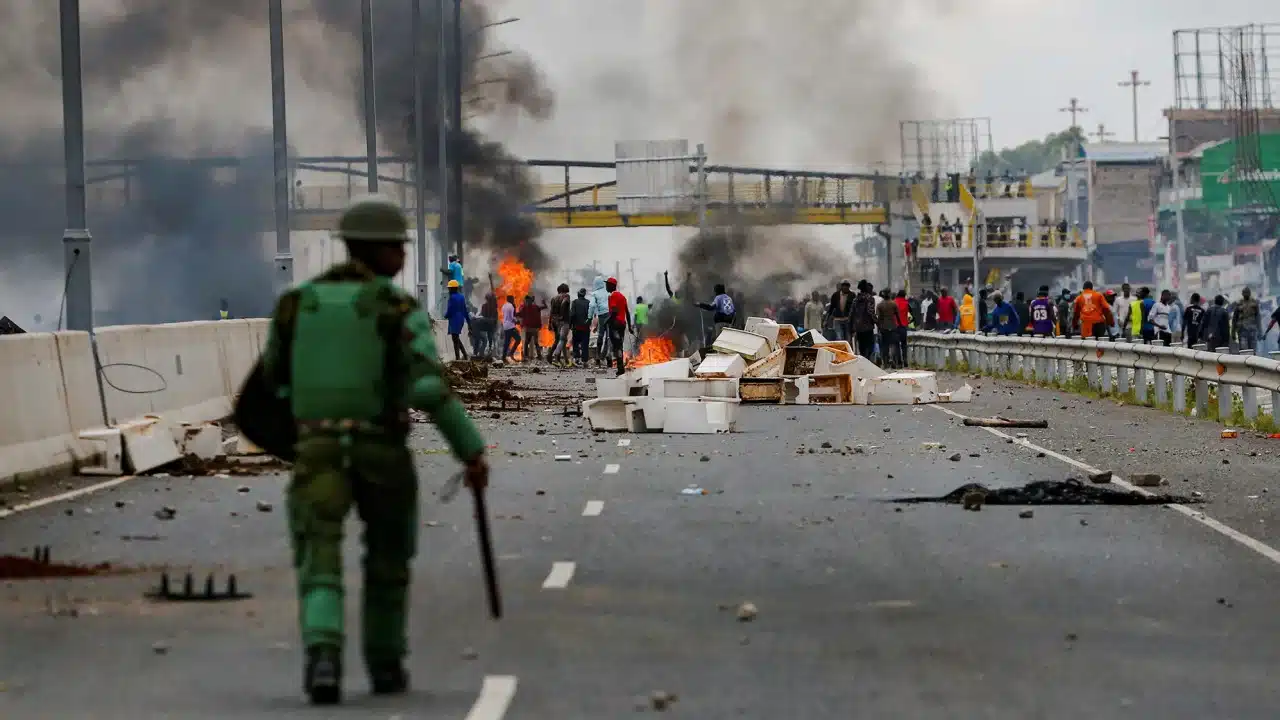
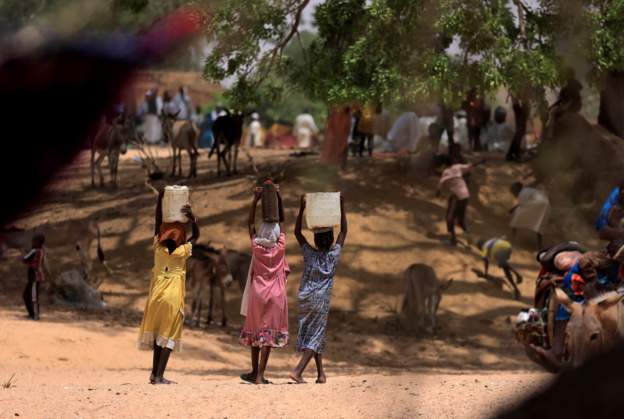


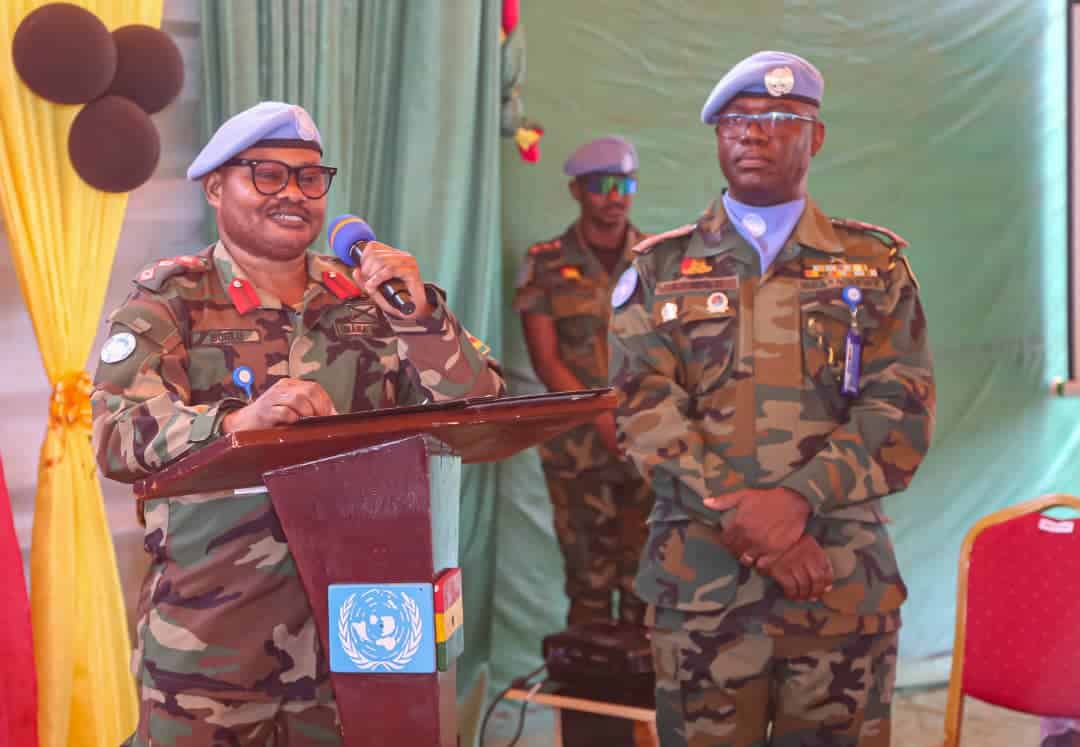
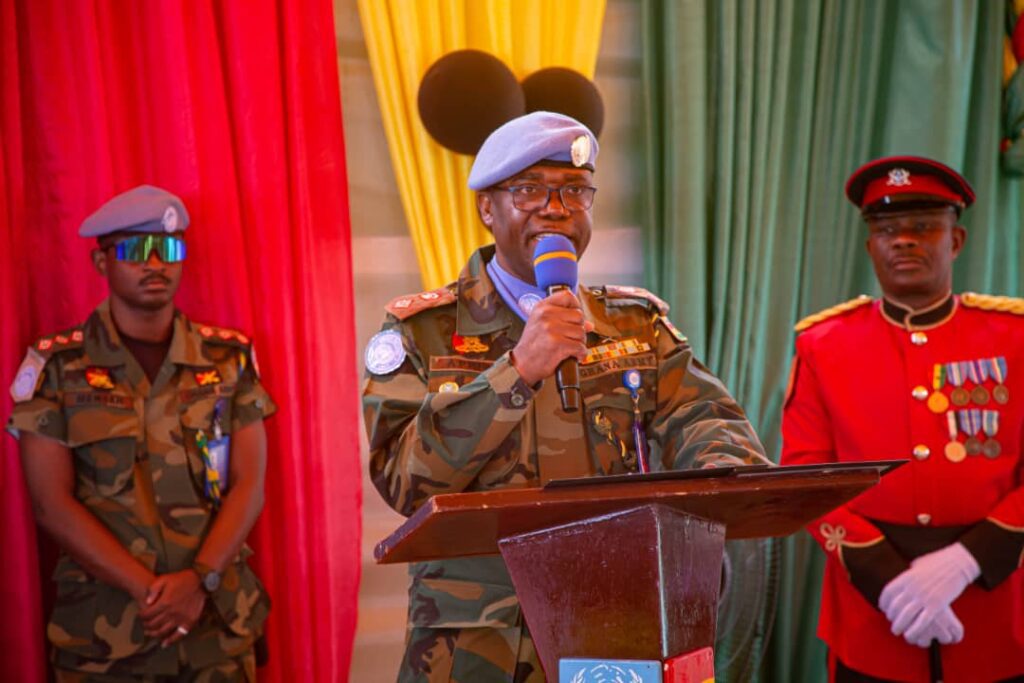
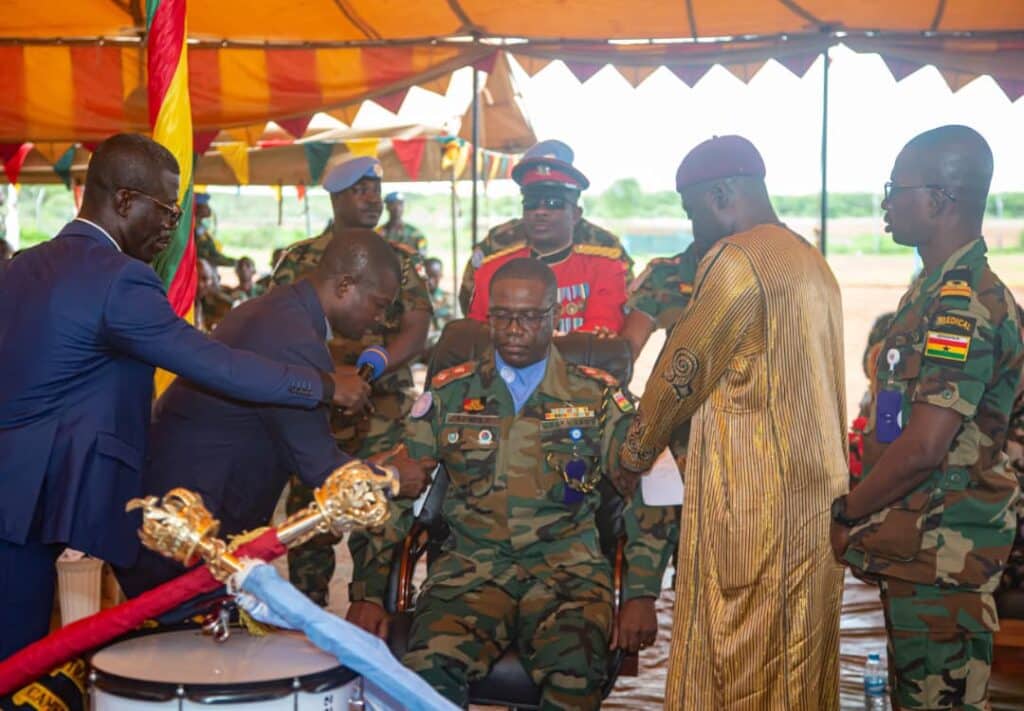
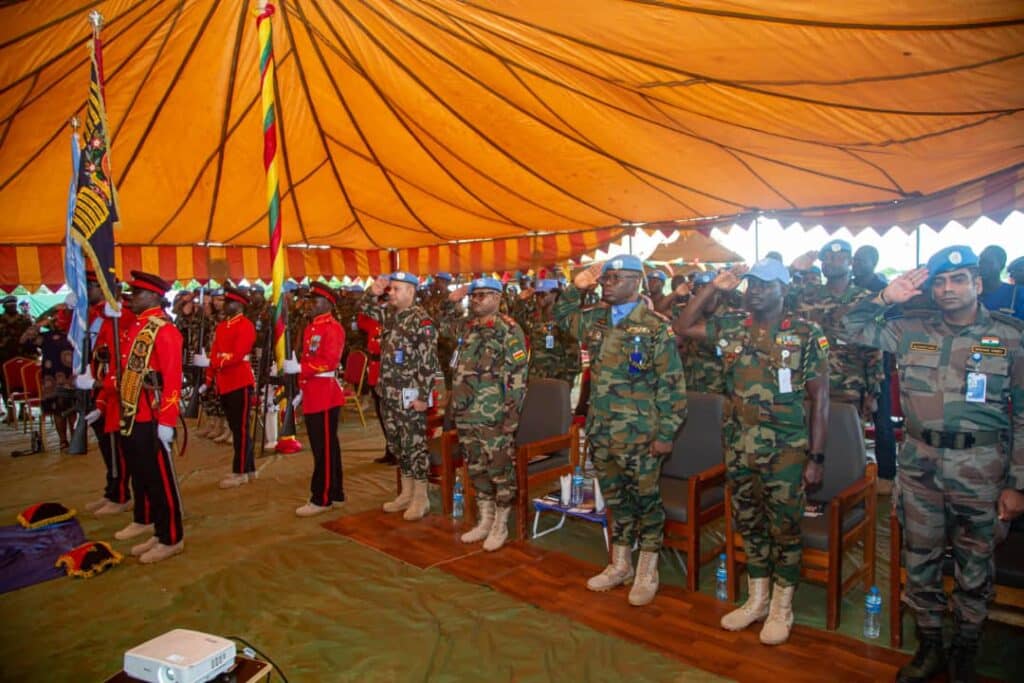
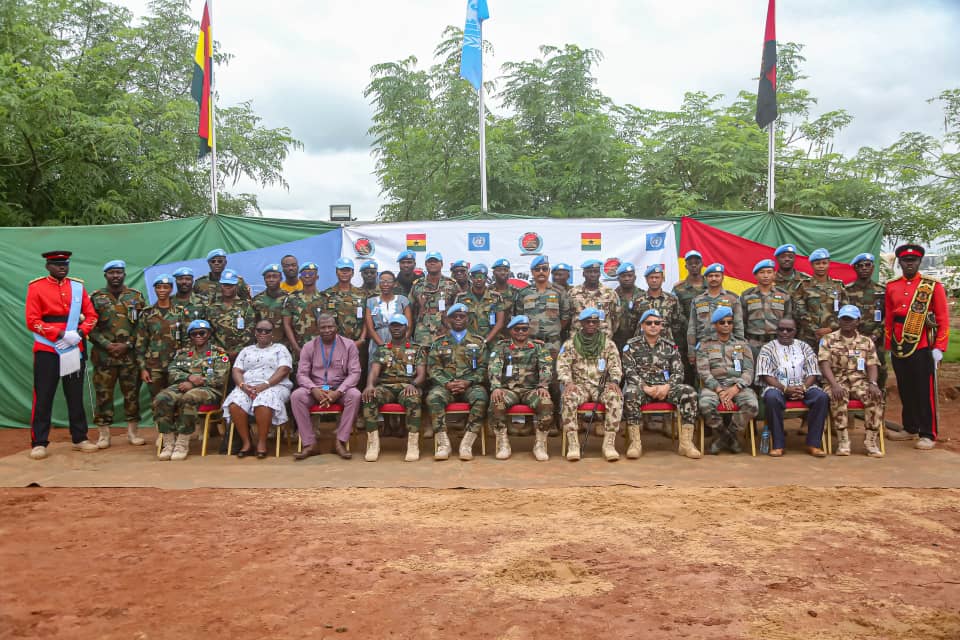
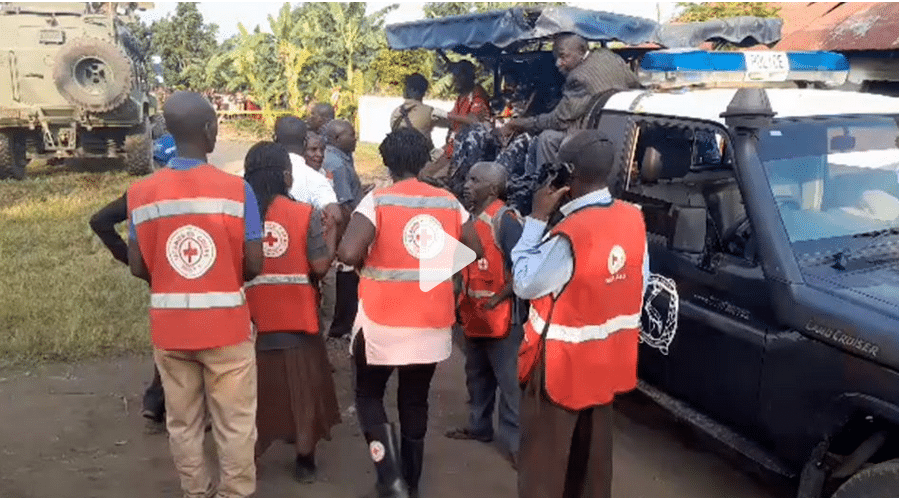
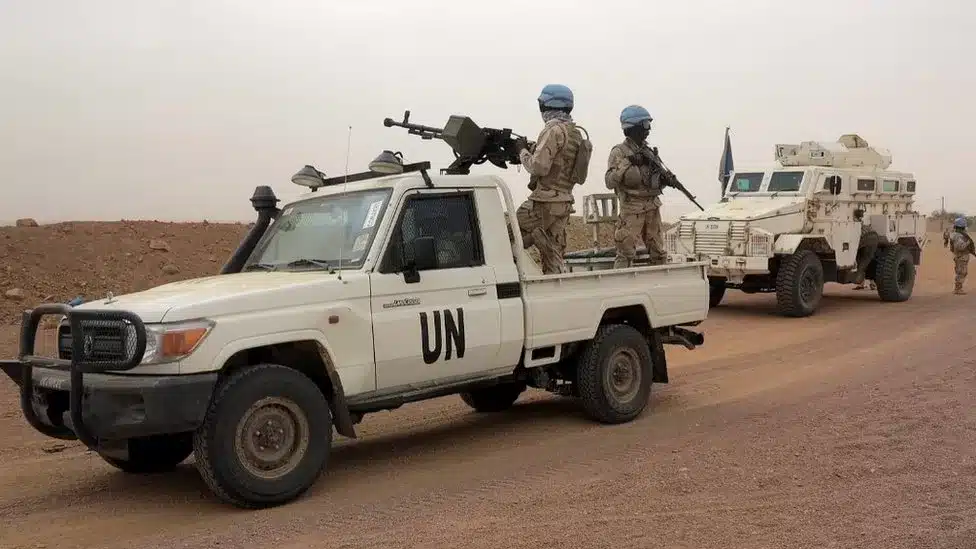


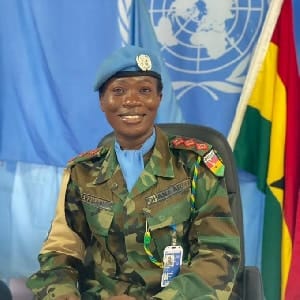
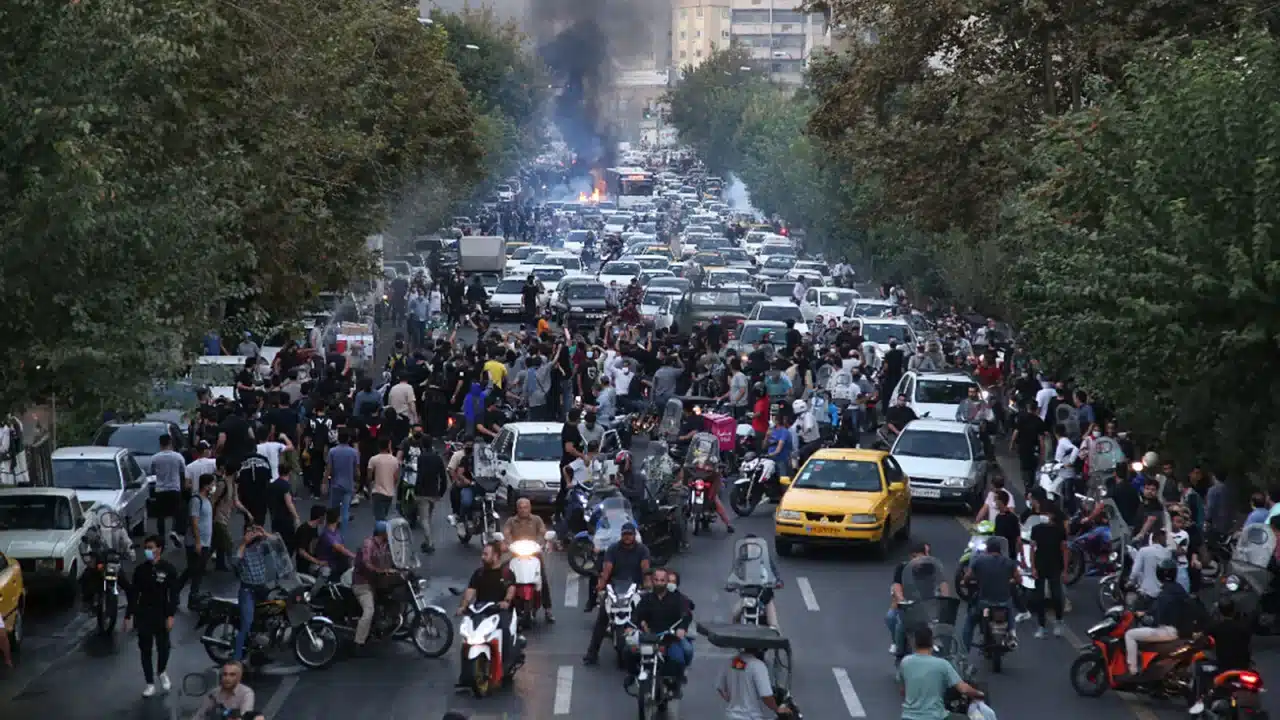
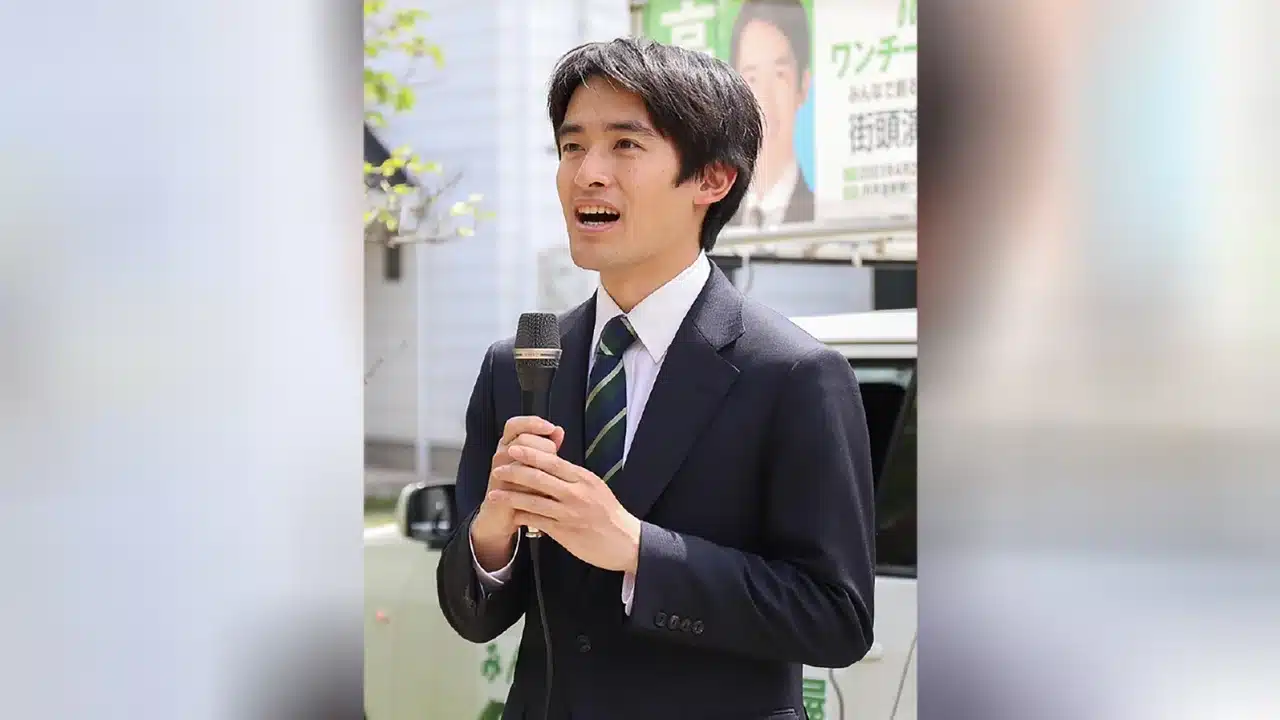
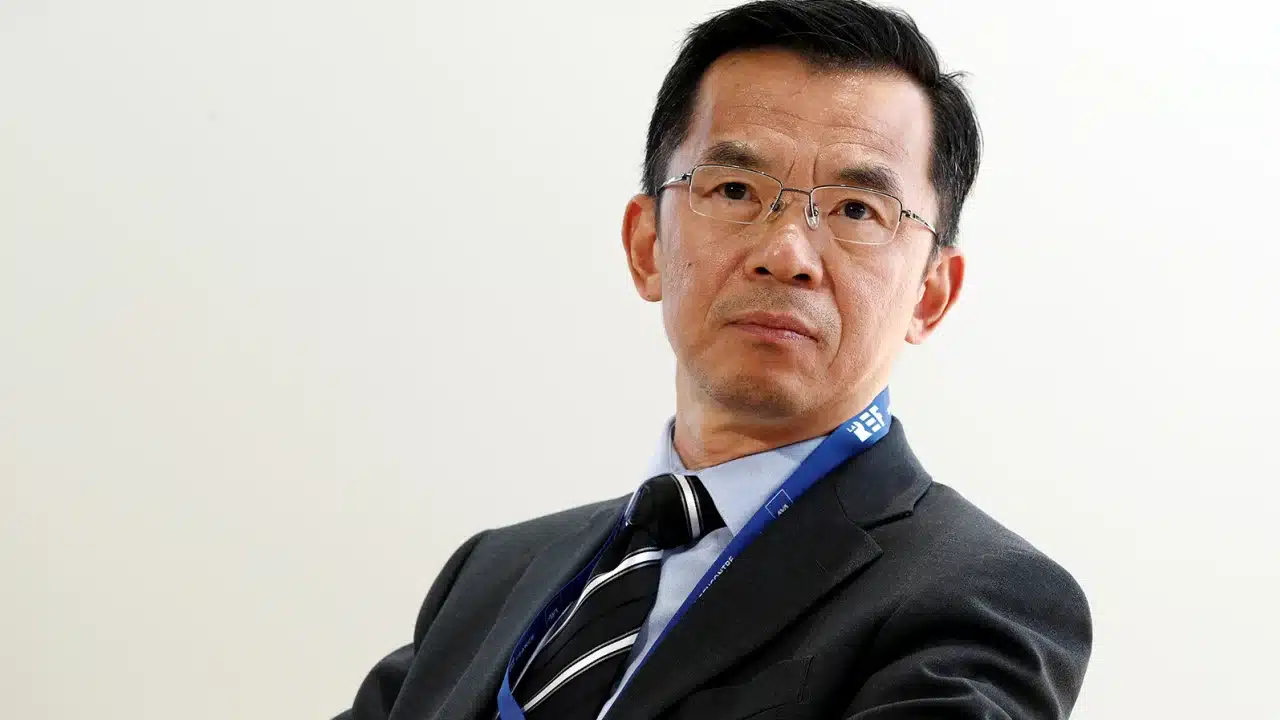
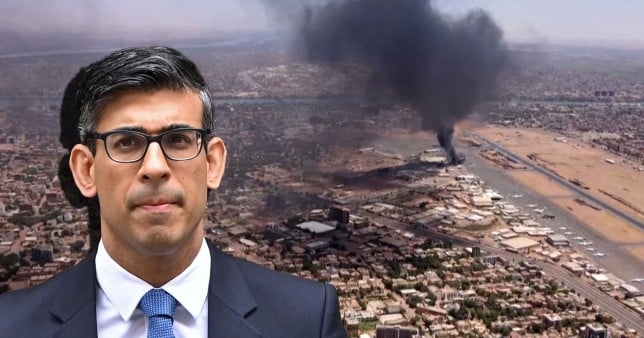

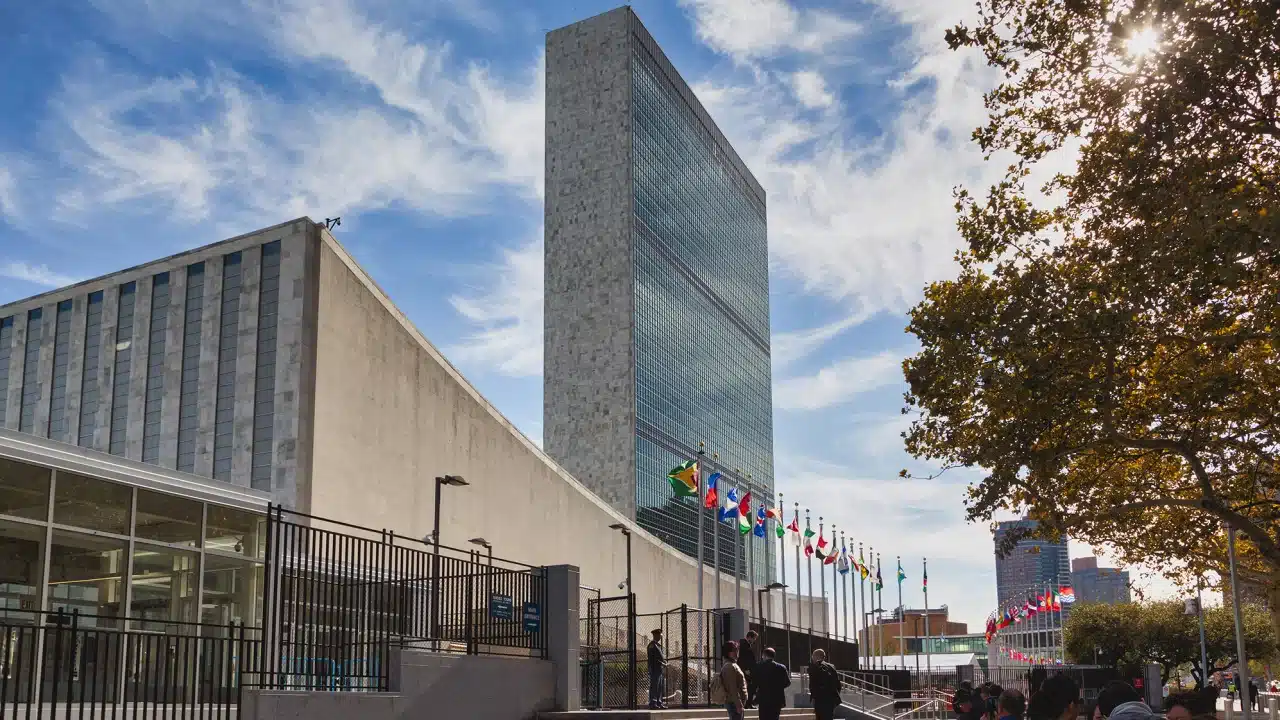
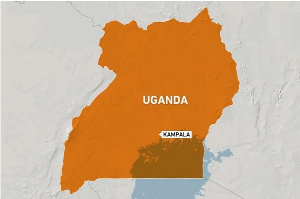
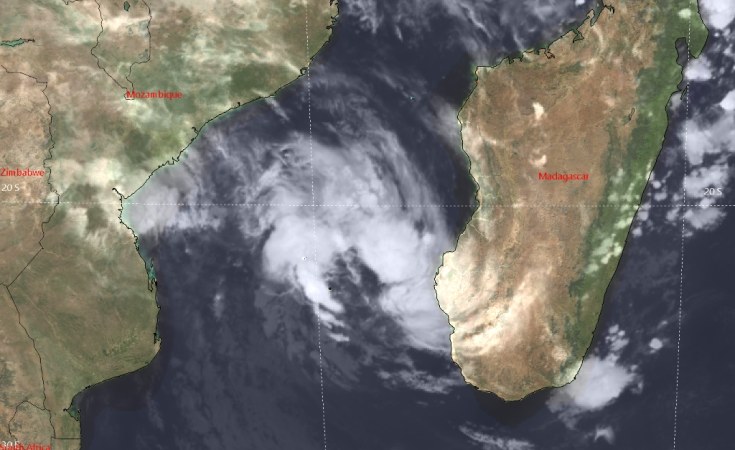
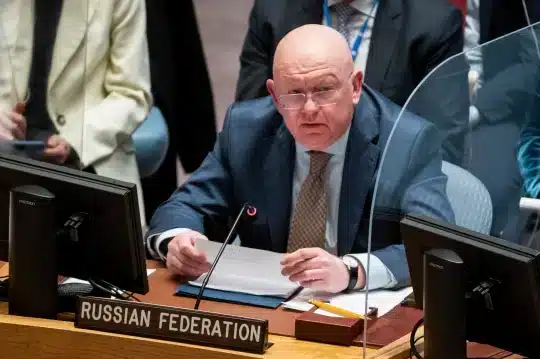

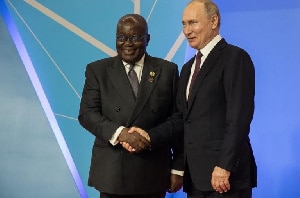
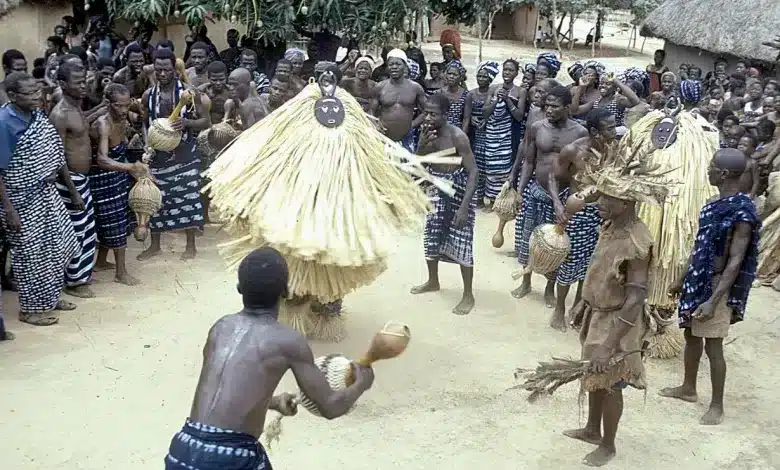


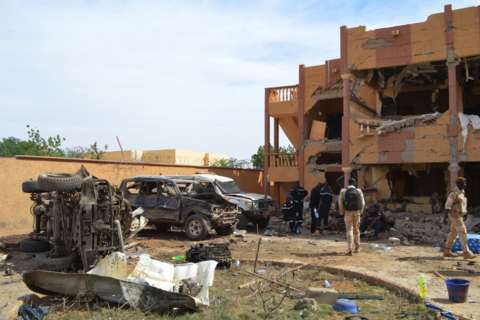
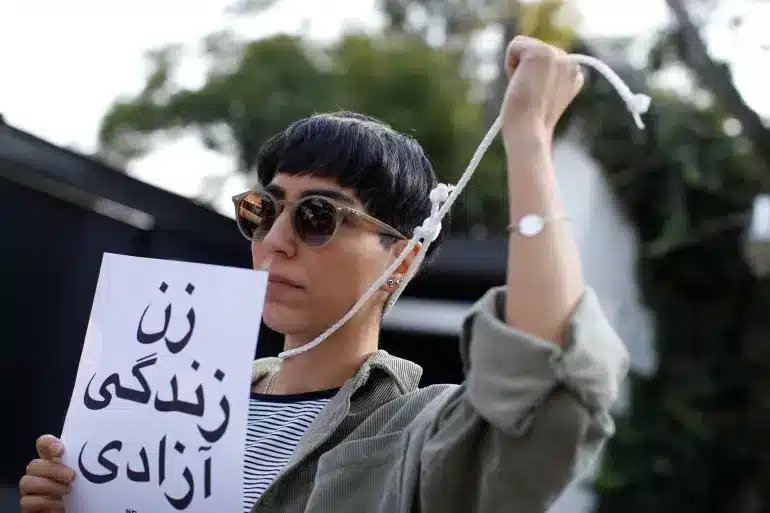


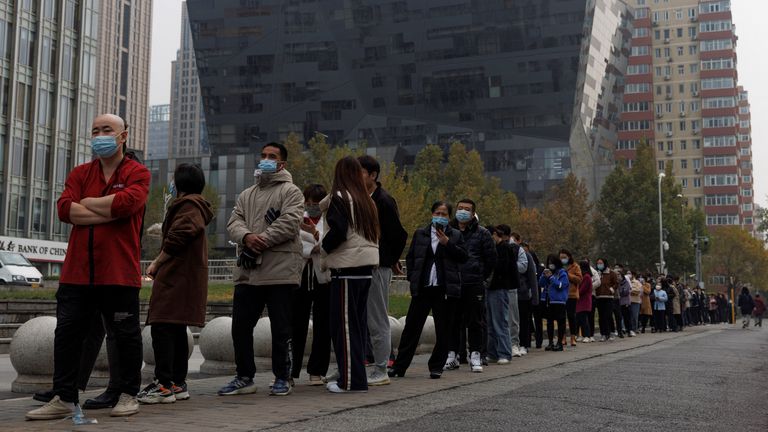
 UN Resident Coordinator in Ghana, Charles Abani
 Charles Abani [left] and Blessed Sogah