Tag: United Nations

  • African countries divided over UN vote against Russia

    The United Nations (UN) General Assembly on Wednesday condemned Russia’s “illegal annexations” of Ukrainian territory after Moscow vetoed a similar text in the Security Council in late September.

    Twenty-six African countries voted in favour of the resolution, rejecting Moscow’s controversial referenda in four Ukrainian regions. Nineteen others abstained.

    Mali, the Central African Republic, Ethiopia, the Republic of Congo, South Africa, Sudan, Uganda, and Zimbabwe were among the African countries that abstained. Eritrea, which had previously voted to reject a UN resolution condemning the Russian invasion of Ukraine, also abstained.

    Three of these countries hosted Russian diplomatic chief, Sergei Lavrov, during his tour of the region in July.

    Burkina Faso, Cameroon, Equatorial Guinea, and Sao Tome were absent from the assembly.

    The General Assembly of the 193 member states had met in an emergency meeting. It adopted the resolution with 143 votes in favour, with five countries against and 35 abstaining, including China, India, Pakistan, and South Africa, despite diplomatic efforts by the United States.

    The five states that voted against were Russia, Belarus, Syria, North Korea, and Nicaragua.

    Earlier this month, Ukrainian Foreign Minister,DmytroKuleba, toured Africa in an effort to counter Russia’s apparent hold on the continent. The goal was to persuade leaders to support Kyiv.

    He was forced to cut his visit short after Moscow intensified its bombing of Ukraine.

    Source: Ghanaian Times

  • End of Yemen’s ceasefire leaves civilians afraid dark days are back

    On October 2, the six-month-long cease-fire, which had so far been unsuccessfully attempted to be extended, came to an end.

    Yemenis have had years to get used to the political and economic crises that have rocked their lives, even before the outbreak of the war in the country in 2014.

    So, when it became apparent earlier this week that the United Nations-brokered six-month truce that had significantly reduced hostilities on the country’s front lines would not immediately be renewed, residents of Sanaa, the country’s rebel-held capital, immediately resorted to tried and trusted coping mechanisms.

    Petrol stations were full; fuel supplies may be stable, but Yemenis have learned the hard way that they have to be prepared.

    “I wasn’t worried about petrol throughout the ceasefire as it was available in all petrol stations,” Mokhtar Saleh, a 25-year-old minibus driver in Sanaa, told Al Jazeera. “But when I heard about the failure of the truce renewal, I darted to the station to fill up my bus.”

    Saleh was worried. No fuel means no work. And in a country like Yemen, already impoverished before the conflict started, there are few safety nets.

    “If the petrol tank of my vehicle is empty, my four children and I will go to bed with empty stomachs,” he said. “This is my sole source of income, and the resumption of the war will bring us hunger.

    “The continued failure of the attempts to extend the truce is horrible, and is a bad sign for us.”

    The truce expired on October 2 and has yet to be renewed, despite efforts by the UN to sign parties in the conflict onto a new deal.

    Fuel imports into Hodeidah, the main port of entry for fuel and other goods into Yemen, had increased since the start of the ceasefire in April, positively affecting the livelihoods of Yemenis and stabilizing the price of essential goods.

    During the ceasefire, the number of civilian deaths declined by 60 percent, and displacement nearly halved, according to the UN.

    The main dividing line in Yemen’s civil war is between the Yemeni government, backed by a Saudi-led military coalition, and Iran-allied Houthi rebels. However, other groups are also involved in the conflict, including United Arab Emirates-backed separatists in the south.

    While a truce significantly reduced fighting in the country, the UN has been unable to get the government and the rebels any closer to a lasting peace deal that would end the conflict.

    Brief calm

    The six months of relative calm allowed some Yemenis to dream of a better future.

    Basheer Nasser opened a bakery in Sanaa two years ago but had struggled due to a shortage of cooking gas.

    “I used to close the bakery when the cooking gas was unavailable or highly expensive,” Nasser told Al Jazeera. “I also bought firewood to manage the shortage. It made me consider giving up on this business.”

    That all changed after the truce began in April.

    “Days after the truce declaration, my business improved,” said Nasser. “It was easier to find and buy cooking gas at a reasonable price. I have not closed my bakery for even one single day since then, and profits have been good.”

    Yunis Saleh, a grocery store owner in the al-Thawra district of the city, reasoned that the truce had boosted businesses – the flow of goods had increased, and prices had not risen.

    “The conflict makes people unwilling to spend because they fear more rainy days ahead,” said Nasser. “Only those who are wealthy or war profiteers see no value in the truce.”

    While there has been no major uptick in violence since the truce expired, the Houthi rebels have threatened to attack oil companies operating in Saudi Arabia, the UAE and Yemen. Houthi military spokesman, Yahya Saree, said the group was ready for another round of fighting.

    Meanwhile, the Yemeni government is adamant that fighting is the only way to defeat the Houthis.

    On Monday, after the truce had expired, the military’s chief of staff, Sagheer bin Aziz, said that “military force alone” would end the war, and establish peace in the country.

    Efforts by the UN and the United States, among others, have continued to renew the truce.

    While the Yemeni government has indicated its support for a continuation of the ceasefire, despite frustration at the continued Houthi blockade of Yemen’s third-largest city Taiz, the Houthis, according to the US special envoy for Yemen, have not.

    Instead, the Houthis have made “maximalist and impossible” demands, Tim Lenderking said.

    The Houthis, for their part, said that discussions had reached a “dead end”.

    For now, some of the main gains of the truce, such as the increase in fuel shipments to Hodeidah, and flights to Sanaa International Airport resuming, have held.

    But that does not mean that civilians in Sanaa are not worried that heavy fighting, and the Saudi air attacks that used to hit their city, might return.

    “The Houthis are confident in their military abilities, and demanded tough conditions for the truce to be extended,” Saleh, the minibus driver, said. “They want to win militarily. But what we hope for is for weapons to be fully silenced in Yemen.”


  • World wastes 1.6 billion tonnes of food – FAO report

    The Food and Agriculture Organization (FAO) of the United Nations estimates that around 1.6 billion tonnes of the main product equivalent are wasted as the globe observes the International Day of Awareness of Food Loss and Waste.

    According to the FAO’s Food Wastage Footprint and Impact on Natural Resources report, 1.3 billion tonnes, or 81 percent of this total, are edible.

    The FAO stated in a report posted on its website that “the total volume of water used each year to produce food that is lost or wasted (250km3) is equivalent to the annual flow of Russia’s Volga River, or three times the volume of Lake Geneva.” “Food wastage’s carbon footprint is estimated at 3.3 billion tonnes of CO2 equivalent of GHG released into the atmosphere per year.”

    According to the paper, food that is lost or wasted is produced on 1.4 billion hectares of land annually, or 28% of the world’s agricultural area.

    According to the report, agriculture is responsible for a majority of threats to at-risk plant and animal species tracked by the International Union for Conservation of Nature.

    The report said a low percentage of all food wastage is composted and that much of it ends up in landfills, and represents a large part of municipal solid waste resulting in Methane emissions, one of the largest sources of GHG emissions from the waste sector.

    “Developing countries suffer more food losses during agricultural production, while in middle- and high-income regions, food waste at the retail and consumer level tends to be higher. The direct economic consequences of food wastage (excluding fish and seafood) run to the tune of $750 billion annually,” the report said.

    In this regard, a research Scientist at the Biotechnology and Nuclear Agriculture Institute of the Ghana Atomic Energy Commission (GAEC), Dr. Stella AgyemanDuah, has asked that the quality of food produced in the country should not be compromised.

    She said causes of food loss and waste could not only be attributed to post-harvest losses but warm or humid environments which promote insect, pest, and microorganism infestation.

    In her view, consumer rejection due to aesthetic defects of produce especially fruits and vegetables is equally high in developed countries contributing to food loss.

    “In reducing these challenges, shortening the food supply chain, and promoting food security, the standards of food produce should not be compromised,” DrDuah said in an article to mark the day.

    Governments’ investment at the local level to reduce food losses and waste, she said, must be visible and reflective in the farmers’ lives.

    To this end, Dr. Duah said the global trend of food insecurity in the world should necessitate the provision of storage facilities like silos by governments for staples to avoid glut in bumper seasons.

    “On the part of consumers, it is important to promote planetary health by making a shopping list and buying what is needed. Consumers who decide to shop in bulk should be sure of adequate storage in their homes. It is kind to share leftovers with the needy. Do not throw them away, it contributes to global warming,” she advised.

  • Former NPP MP found dead in a chair

    According to reports, Richard Akuoko Adiyah, the Produce Buying Marketing Company’s current CEO, has passed away.

    Although information concerning his passing is still limited, according to a Myjoyonline.com report GhanaWeb saw on Friday, September 29, 2022, Mr. Adiyah was discovered dead in his chair.

    Mr Adiyah also worked as Chief Finance Officer (CFO) at United Nations Observers Mission in Georgia (UNOMIG). He again served as the in charge of Budget and Finance at the United Nations Office of the High Commissioner for Human Rights (OHCHR), Geneva, Switzerland, and the Finance Officer, United Nations Office for the Coordination of Humanitarian Affairs (OCHA), New York, USA.

    Before becoming the CEO of PBC, Mr Adiyah was the Financial Controller of GIHOC Distilleries Company Limited.


  • UN pledges $260m support for SDGs, Agenda 2063

    The United Nations (UN) Office in Ghana has pledged $260 million (GH¢2.6 billion) to support the country’s efforts to accelerate and achieve
    the Sustainable Development Goals (SDGs) and Agenda 2063.

    The UN in Ghana, represented by more than 30 of its agencies, funds, and programmes, will concentrate on empowering individuals and institutions via capacity development and other initiatives, ensuring that no one is left behind by reaching out to the most vulnerable.

    The UN Resident Coordinator for Ghana, Charles Abani, announced this at the Global Citizen Festival, co-hosted by Ghana and the UN in Accra over the past weekend. The commitment represents about 50 percent of the proposed funding by the UN to support the UN Cooperation Framework, which will soon be signed by the UN and the Government of Ghana. It will cover the period 2023 to 2025 to support inclusive economic growth, equitable access to services, and durable peace in Ghana and across the sub-region.

    The festival, which was broadcast live across the world, brought together renowned artistes, Ghanaian leaders and thousands of young people from all walks of life, determined to add their voices to accelerate the attainment of the SDGs and create a just, equitable and sustainable world.

    Flanked by the World Food Programme Director for Ghana, Barbara Clemens, and the Executive Secretary of the National Council of Persons with Disabilities, Esther Akua Gyamfi, Mr Abani said: “Today is the best time to rally the needed support for Ghana.”

    “The UN stands with Ghana on this forward-looking ambition to accelerate the achievement of the SDGs and Agenda 2063,” he added.

    The Global Citizen Festival is an annual music festival started in 2012 and organized by Global Poverty Project. It was founded Ashanti RCC to sponsor 2000 children under NHIS – Simon Osei-Mensah Aisha Huang and accomplices denied bail again Simon Osei-Mensah, Ashanti Regional Minister by Ryan Gall and Hugh Evans.

    Gall said he was inspired by visiting Austin City Limits and seeing the branding on the stage, but wanting to replace the corporate branding with branding from charities.

  • ‘Africa is ready for business’ – President Akufo-Addo to investor community

    “As a result, our message to the world’s investors is that Africa is open for business.
    You need Africa, and Africa needs you.
    Africa is actively creating the largest single market in the world with 1.3 billion people, so you need it.
    A customs union and a continental payment system that will speed up and streamline trade between us will be established soon.

    President Nana Addo Dankwa Akufo-Addo said these things during his speech to the 77th session of the United Nations, which is taking place in New York, United States of America.

    In his address, the President stated that Africa sees “the current geopolitical crisis as an opportunity to rely less on food imports from outside the continent and use better our sixty percent global share of arable lands to increase food production.”

    According to him, “we have seen the devastating impact of relying on Russia and Ukraine for seventy percent of our wheat consumption. We have enough land, enough water, enough gas and enough manpower to produce enough fertiliser, food and energy for ourselves and for others.”

    In spite of this, President Akufo-Addo acknowledged that “we cannot do it all by ourselves”, and asked the global investor community to see Africa for what it is – “the new frontier for manufacturing, for technology, for food production.”

    In the case of Ghana, the President told the gathering that his government has launched the successful policy of ‘One District One Factory’ – a policy, with government incentives, that has directly seen, so far, to some one hundred and twenty-five (125) enterprises being set up in various districts across the country, leveraging on each area’s competitive advantage.

    “That is why, six years ago, my government embarked on an aggressive policy of planting for food and jobs, which has helped our farmers increase their yields in folds. Indeed, we are recognising that many of the things we import can be found or produced in Ghana, or in other African countries,” he added.

    With the Secretariat of the African Continental Free Trade Area located in Ghana, the President stressed that the free trade area is driving intra-Africa trade and creating an unparalleled momentum for Africa’s economic diversity and transformation.”

    True to our knowledge that industrialisation is the way to go and, with the single market as the added incentive, President Akufo-Addo indicated that Ghana has taken policy measures to add value to her natural resources.

    “For example, we are processing more of our cocoa, refining more of our gold, and we are determined to exploit the entire value chain of our huge lithium deposits. We are busily building an integrated bauxite and aluminium industry and an integrated iron and steel industry, building new oil refineries and have, so far, attracted six (6) of the world’s biggest automobile manufacturers to set up assembling plants in Ghana, prior to producing them in the country,” he added.

    In line with the African Union’s Agenda 2063 and the United Nation’s Sustainable Development Goals (SDGs), the President indicated that Africa’s ambition is to transform her food systems over the next decade, anchored in the Comprehensive Africa Agriculture Development Programme (CAADP) and the Malabo Declaration on Accelerated Agricultural Growth.

    “What we require now is support from the investor community for the rolling out of Africa’s lucrative agro-industry, and for the community to see agribusiness in Africa as much more an opportunity than the perceived, exaggerated risk which has been the false, but dominant narrative,” he added.

    In conclusion, President Akufo-Addo tasked the United Nations “to take proper stock of this initiative and ask a few searching questions, recognising what could have been achieved with greater commitment and focus.”

  • Halt operations, withdraw troops from Ukraine – Ghana admonishes Russia

    Ghana has asked the Russian Federation to halt its military operation in the neighboring Ukraine.

    Speaking at the United Nations (UN) Security Council meeting yesterday September 22, the Minister for Foreign Affairs and Regional Integration, Shirley Ayorkor Botchway, bemoaned the atrocities the ongoing war between the two countries has left in its wake.

    She called on the Security Council to take urgent steps to prevent its own ‘near paralysis’ and end the war in Ukraine.

    Ayorkor Botchway emphasized Ghana’s commitment to ensure that perpetrators of the heinous crimes in the war were brought to book.

    “With the rising death toll, civilian casualties and growing reports of war crimes and other human rights violations, we must uphold our responsibilities as a Council and send a clear message that perpetrators of atrocities would be held to account,” she said.

    The minister further admonished Russia to withdraw it troops from Ukraine in respect of the sovereignty and independence of the country which once formed part of the Soviet Union.

    “We reiterate the call on the Russian Federation to immediately and unconditionally cease its operations, withdraw its troops from the internationally recognized borders of Ukraine and respect it neighbours sovereignty and political independence,” she reiterated.

    Russia invaded Ukraine in February this year after the latter had shown signs of joining the European security bloc, Nato. The war has been condemned by a majority of world leaders.

    The government of Ghana has also been partly blaming the ongoing war for it economic challenges.

    Speaking on Wednesday, September 21, 2022; at the UN General Assembly Meeting, President Akufo-Addo indicated that the ‘bombs and bullets’ being launched at Ukraine was hitting the pocket of African countries.

    “As we grappled with these economic challenges, Russia’s invasion of Ukraine burst upon us, aggravating an already difficult situation.

    “It is not just the dismay that we feel at seeing such deliberate devastation of cities and towns in Europe in the year 2022, we are feeling this war directly in our lives in Africa.

    “Every bullet, every bomb, every shell that hits a target in Ukraine, hits our pockets and our economies in Africa. The economic turmoil is global with inflation as the number one enemy this year,” he added.

  • FULL TEXT: Akufo-Addo’s Address at 77th United Nations’ General Assembly

    ADDRESS BY THE PRESIDENT OF THE REPUBLIC OF GHANA, NANA ADDO DANKWA AKUFO-ADDO, AT THE 77TH SESSION OF THE UNITED NATIONS’ GENERAL ASSEMBLY, ON THE THEME “A WATERSHED MOMENT: TRANSFORMATIVE SOLUTIONS TO INTERLOCKING CHALLENGES”, ON WEDNESDAY, 21ST SEPTEMBER, 2019, NEW YORK.

    Mr President, I congratulate you on your election to lead us through this 77th gathering of the General Assembly of the United Nations. I wish you the best of luck, as you take on this onerous task at this most difficult period of the world.

    Mr President, as we would say in Ghana, our world is currently not in a good place. The World Bank observed, last Thursday, that the global economy was enduring its steepest slowdown since 1970. Two years ago, our world came to a thundering halt, as we cowered from a health pandemic from an unknown, malicious virus, coupled with a devastating global economic pandemic. High budget deficits were no longer concerns of only developing nations.

    By 2021, COVID-19 had pushed Africa into the worst recession for half a century. A slump in productivity and revenues, increased pressures on spending and spiralling public debts confronted us without relent.

    As we grappled with these economic challenges, Russia’s invasion of Ukraine burst upon us, aggravating an already difficult situation. It is not just the dismay that we feel at seeing such deliberate devastation of cities and towns in Europe in the year 2022, we are feeling this war directly in our lives in Africa. Every bullet, every bomb, every shell that hits a target in Ukraine, hits our pockets and our economies in Africa.

    The economic turmoil is global with inflation as the number one enemy this year.

    It hit a 40-year-high in the US and UK in recent months. There is record inflation in the euro zone. Several African countries have inflation rates surging three to four times higher than what they were just two years ago. In Ghana, we are experiencing the highest inflation for 21 years. The high costs of food are hurting the poor, especially the urban poor, the most.

    Moreover, the spillover from central banks raising interest rates to combat inflation has been severe beyond borders, as global investors pull money out of developing economies to invest in bonds in the developed world.

    This has led to depreciating currencies and increased borrowing costs; meaning we need to raise and spend more of our own currencies to service our foreign debts in US dollars.

    It has become clear, if ever there was any doubt, that the international financial structure is skewed significantly against developing and emerging economies like Ghana. The avenues that are opened to powerful nations to enable them take measures that would ease pressures on their economies are closed to small nations.

    To make matters worse, credit rating agencies have been quick to downgrade economies in Africa, making it harder to service our debts. The tag of Africa as an investment risk is little more than, in substance, a self-fulfilling prophecy created by the prejudice of the international money market, which denies us access to cheaper borrowing, pushing us deeper into debts.

    The financial markets have been set up and operate on rules designed for the benefit of rich and powerful nations, and, during times of crisis, the façade of international co-operation, under which they purport to operate, disappears. These are the savage lessons that we have had to take in, as the world emerged from the grip of the coronavirus to energy and food price hikes, and a worldwide rise in the cost of living. The necessity for reform of the system is compelling.

    Mr President, I am a modest student of history, and I would say it is doubtful that any generation of inhabitants of this earth has ever witnessed such a perfect storm of global economic chaos, a war with global consequences, and an unwillingness or inability to find a consensus to deal with the catastrophe.

    It is under such circumstances that we have gathered under the theme: “A Watershed Moment: Transformative Solutions to Interlocking Challenges.”

    The problems we face are, indeed, many, and vary in level of importance, depending on where you are in the global order of things. Just last year, the focus was on energy transition. This year, it is about energy security, as Europe goes back to burning coal to replace Russian gas.

    Nevertheless, we do not have the luxury of being able to pick and choose which big problem to solve. None of them can wait; the economic turbulence requires urgent and immediate solution; the turmoil and insecurity in many parts of the world require urgent attention; and so does the need to tackle the problems posed by climate change.

    A watershed moment, indeed, it is, and history will judge us harshly if we do not seize the opportunity to make the changes that will enable us deal with the many problems we face.

    Mr President, a case in point is the destabilising conflict in the Sahel. It might look to many, today, as a local conflict which affects only the
    countries in that region. We, in Ghana, know differently, we have watched in horror as the unrest has moved from the Sahel, inexorably, to the West African coastal countries. All of Ghana’s neighbours have suffered terrorist attacks, and some have lost territorial space to the invading forces.

    Furthermore, the terrorist pressure has provided a pretext for the unhappy reappearance of military rule in three (3) of the fifteen (15) member ECOWAS Community, two (2) of whom have borne the brunt of the terrorist outrages in the Region – Mali and Burkina Faso. It is a development we are determined to reverse, so that the ECOWAS space remains a democratic one.

    All of us in the Region are being forced to spend huge amounts of money on security. This is money we should be spending on educating and giving skills to our young people; on building much needed roads, bridges, hospitals and other such infrastructure, which we are spending to fight terrorists or to keep them out from destabilising our countries.

    This is a global problem, deserving the attention of the world community for a global solution. Mr President, I am contributing to this debate on a date that has special significance for us in Ghana. 21st September is the date we mark the birth of our first President, Dr Kwame Nkrumah.

    He would have been one hundred and thirteen (113) years old today, and it is worth recalling on this day the driving force of his political career, which was to contribute to the birth of a united Africa, i.e., a United States of Africa.

    We recognise today, more than ever before, the importance of the strength in unity of Africa, and we are working to shed that image of a helpless, hapless continent.

    There is a renewed commitment towards an inclusive and sustainable industrialisation and economic integration and the intensity of the challenges we face today is only matched, like never before, by the immensity of the opportunity before us. We, the current leaders of Africa, should be determined not to waste the crisis that confronts us.

    Incidentally, 2022 is billed as Africa’s Year to take action on food and nutrition development goals. We see the current geopolitical crisis as an opportunity to rely less on food imports from outside the continent and use better our sixty per cent global share of arable lands to increase food production.

    We have seen the devastating impact of relying on Russia and Ukraine for seventy per cent of our wheat consumption. We have enough land, enough water, enough gas and enough manpower to produce enough fertiliser, food and energy for ourselves and for others.

    But, we also recognise that we cannot do it all by ourselves. Our message to the global investor community is, therefore, this: Africa is ready for business. Africa needs you and you need Africa. You need Africa because Africa is busily building the world’s largest single market of 1.3 billion people.

    Soon we will have a customs union, and soon we will have a continental payment system that will accelerate and facilitate trade amongst ourselves. Already, goods and services are flowing more freely across our artificial borders. See Africa for what it is: the new frontier for manufacturing, for technology, for food production. That is why six years ago, I launched in Ghana the successful policy of ‘One District One Factory’.

    A policy, with government incentives, that has directly seen, so far, some one hundred and twenty-five (125) factories being set up in various districts across the country, leveraging on each area’s competitive advantage. That is why, six years ago, my government embarked on an aggressive policy of planting for food and jobs, which has helped our farmers increase their yields in folds. Indeed, we are recognising that many of the things we import can be found or produced in Ghana, or in other African countries.

    The African Continental Free Trade Area, whose Secretariat is located in Accra, Ghana’s capital, is driving intra-Africa trade and creating an unparalleled momentum for our continent’s economic diversity and transformation. We know that industrialisation is the way to go and, with the single market as the added incentive, we have taken policy measures in Ghana to add value to our natural resources. For example, we are processing more of our cocoa, refining more of our gold, and we are determined to exploit the entire value chain of our huge lithium deposits.
     

    We are busily building an integrated bauxite and aluminium industry and an integrated iron and steel industry, building new oil refineries and have, so far, attracted six (6) of the world’s biggest automobile manufacturers to set up assembling plants in Ghana, prior to producing them in the country.

    In line with the African Union’s Agenda 2063 and the United Nation’s Sustainable Development Goals (SDGs), Africa’s ambition is to transform our food systems over the next decade, anchored in the Comprehensive Africa Agriculture Development Programme (CAADP) and the Malabo Declaration on Accelerated Agricultural Growth.

    What we require now is support from the investor community for the rolling out of Africa’s lucrative agro-industry, and for the community to see agribusiness in Africa as much more an opportunity than the perceived, exaggerated risk which has been the false, but dominant narrative.

    In conclusion, Mr President, on 25 July 2016, the United Nations General Assembly adopted Resolution A/RES/70/293, proclaiming 2016-2025 as the Third Industrial Development Decade for Africa (IDDA III), with UNIDO tasked to lead it in collaboration with a range of partners.

    I believe it is time for the UN to take proper stock of this initiative and ask a few searching questions, recognising what could have been achieved with greater commitment and focus.

    Working together, we can get our world back into a better and happier place.

    I thank you very much for your attention.

    Source; presidency.gov.gh

  • Akufo-Addo to address the 77th Session of the UN General Assembly

    President Akufo-Addo will address the United Nations today Wednesday, 21 September 2022 at 8:45 pm.

    He will participate in the General Debate of the 77th Session of the United Nations General Assembly (UNGA77) in his capacity as President of the Republic of Ghana.

    The high-level General Debates of the UNGA77 opened Tuesday, September 20, 2022 with the theme, “A watershed moment: transformative solutions to interlocking challenges.” It would end on Monday, September 26.

    The UNGA77 will focus on the war in Ukraine, the soaring energy and food prices, climate action and ending COVID-19 pandemic.

    About 157 heads of state and representatives of governments plan to deliver speeches. During the General Debate, heads of delegation are expected to state the positions of their governments on topical issues.

    The General Debate will also provide member states with an opportunity to raise matters relating to priorities and concerns that are of a national, regional, and global nature.

    Source: GNA

  • World leaders gather at UN General Assembly

    The UN gang is finally getting back together in person, after three years of leaders speaking by video due to the global pandemic.

    But many leaders from the 193 UN member countries were in the United Kingdom for the funeral of Queen Elizabeth II on Monday, forcing their missions to the UN to scramble to reschedule speeches and rendezvous.

    Perhaps most prominent among the changes, US President Joe Biden will speak on Wednesday morning instead of taking America’s traditional second speaking slot after Brazil on Tuesday. Biden has also built in time for chats with country leaders in London, which may limit some discussions in Manhattan.

    Meanwhile, Ukraine’s President Volodymyr Zelensky will be the only world leader to speak by video, occupied as he is by the war in his country. The Assembly on Friday overrode Russian objections to permit Zelensky to speak virtually.

    Source: GNA

  • Ethiopia rejects UN report on Tigray atrocities

    The Ethiopian government has rejected finding in a report by a UN commission, highlighting what it called credible information of large-scale killings committed by Ethiopia‘s national defence force.

    The Ethiopian government has described the report as “incomplete, incoherent and unsubstantiated” and intended to demonise Ethiopia.

    “The government regrets the hasty, substandard, and agenda-driven pathway the [International Commission of Human Rights Experts on Ethiopia], chose to discharge its responsibility”

    It added that the report was “a manifestly political statement issued under the guise of an investigation report”.

    The government defended itself saying it had brought perpetrators of human rights violations to justice.

    Both the federal government and the rebel Tigray forces have accused each other of human rights violations as the war in the northern region of Tigray rages.

    Source: BBC

  • Adutwum supports changing the educational system to enhance 21st-century abilities

    Key stakeholders from all African countries at the United Nations Educational, Scientific and Cultural Organisation (UNESCO) Regional Meeting of African National Commission, 2022 called for the need to foster collaborative efforts to ensure effective transformation of education on the continent.

    According to the various countries’ representatives, almost every country on the continent is doing quite well in one particular area based on certain policy initiatives and mechanisms put in place; hence, the need for collaboration to tap into the best practices of one another to hasten growth and development of education.

    Commissioner for Education, Science, Technology and Innovation, African Union Commission (AUC), Mohamed Belhocine, in a remark read on his behalf by the Principal Scientific Officer of the AUC, Dr. Monica Ebele Idinoba, indicated that every citizen in Africa deserves a better life, and until all countries unite and ensure collaborative efforts to create the big picture wanted for the continent, Africa will continue to remain behind in terms of global competitiveness.

    “Recalling that about 46 percent of Africa’s labour force from 2015 to 2063 will constitute young people under 34 years who will need access to basic secondary and tertiary level skills that will unlock their potential for innovation, effectiveness, entrepreneurship, employment, and making them become responsible citizens, we need to make higher education more accessible.

    “A key priority of the agenda 2063, is therefore, to build human capacity through the prioritisation of higher education, skills development, investment in science, research and innovation,” he said.


    He added further that the AU Agenda 2063 is keenly ongoing and effects are needed in terms of harmonisation, building synergy, and filling in the gaps.

    Reiterating continental education strategy for Africa (CESA), science and innovation strategy for Africa (SISA), and continental strategy for technical vocational education and training (CSTVET) as the key policies being championed in the education sector.

    Minister of Education, Dr. Yaw Osei Adutwum, on his part, emphasised that indeed the world all over is in the era of the fourth industrial revolution (4IR), and education is the key to unlocking opportunities and taking advantage of opportunities to compete in the global space.

    “If we can tune our mind and accept that change is possible, then we can achieve that. The future of the children of Africa depends on us, and if we are not able to transform the current education system to promote 21st-century skills acquisition, then it is our fault and not that of the children.

    “We need to collaborate, exchange ideas and see how best to learn from one another to transform the education space to help our children who are ready to learn, develop their raw talents and become key players in the transformation of our continent,” he stressed.

    Assistant Director-General for Priority, Africa and External Relations, UNESCO, Firmin Edouard Matoko, urged the over 50 countries’ representatives gathered at the conference to take advantage of the platform offered by UNESCO to think about how best to transform the education sector to encourage skills development, innovation and creativity.

    Source;bftonline

  • Pakistan floods are a monsoon on steroids, warns UN chief

    Pakistan is facing “a monsoon on steroids”, the UN’s secretary general has warned, after floods submerged a third of the country.

    Antonio Guterres urged the world to come to Pakistan’s aid as he launched a $160m appeal to help the tens of millions affected in the disaster.

    He blamed “the relentless impact of epochal levels of rain and flooding”.

    At least 1,136 people have been killed since June and roads, crops, homes and bridges washed away across the country.

    This year’s record monsoon is comparable to the devastating floods of 2010 – the deadliest in Pakistan’s history – which left more than 2,000 people dead.

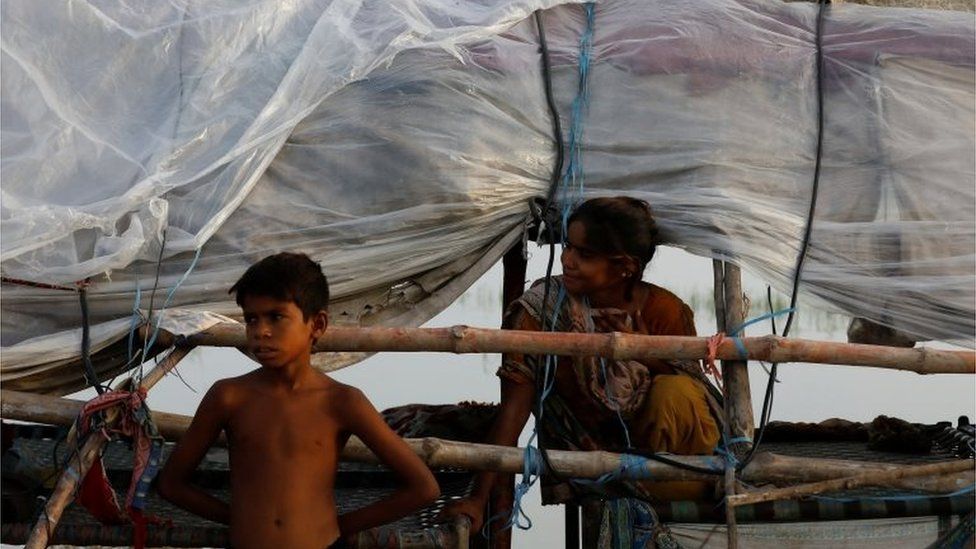
    Flood victims at their makeshift family tent in Mehar, Pakistan August 29, 2022.
    Image source, Reuters Image caption, Makeshift relief camps have sprung up all over Pakistan to cope with the many displaced

    In a video message, Mr Guterres called South Asia a “climate crisis hot spot” where people were 15 times more likely to die from climate impacts.

    “Let’s stop sleepwalking towards the destruction of our planet by climate change. Today, it’s Pakistan. Tomorrow, it could be your country.”

    He said the UN appeal aimed to provide 5.2 million people with food, water, sanitation, emergency education and health support.

    Officials estimate that more than 33 million Pakistanis – one in seven people – have been affected by the flooding.

    Sadia, a student in Quetta, the capital of Balochistan province, said she felt helpless as her family were cut off in their home village of Jhal Magsi, about eight hours away.

    “You can’t find a single home that is safe now,” she told the BBC’s Outside Source programme. “They are under the sky with no help.

    “Right now, we are in need of first aid relief like tents, some shelter and some basic food, they can’t cook anything. And they need clean water to drink.”

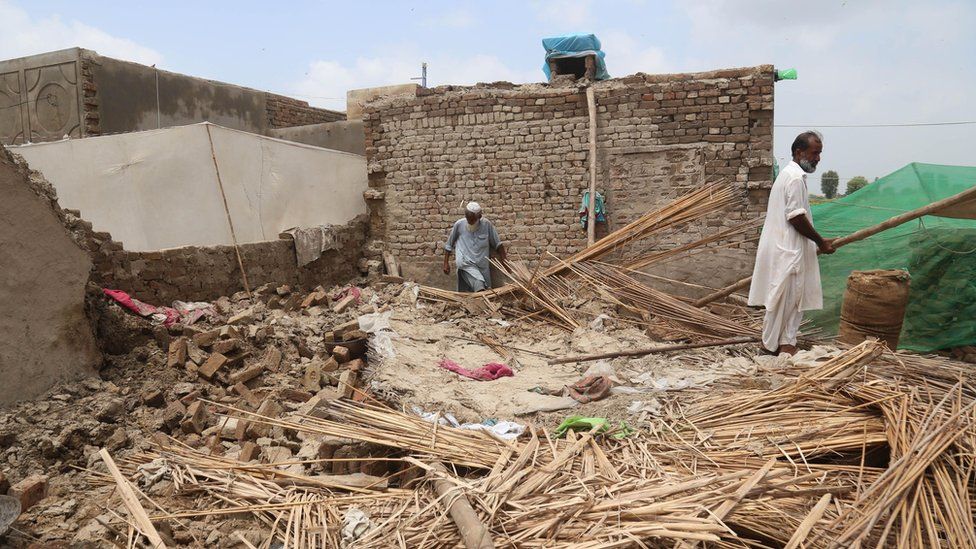
    People check the damage to their houses in the aftermath of floods in Sanghar District, Sindh province, Pakistan, 29 August 2022.
    Image source, EPA Image caption, Clearing up in Sindh – countless properties have been damaged or destroyed

    On Monday, Pakistan’s climate change minister Sherry Rehman described the situation as a “climate-induced humanitarian disaster of epic proportions”.

    Pakistan produces less than 1% of global greenhouse gas emissions but ranks consistently in the top 10 countries most vulnerable to the effects of climate change.

    Many factors contribute to flooding, but a warming atmosphere caused by climate change makes extreme rainfall more likely.

    The world has already warmed by about 1.2C since the industrial era began and temperatures will keep rising unless governments around the world make steep cuts to emissions.

    Pakistan’s planning minister says estimates suggest the floods have caused at least $10bn (£8.5bn) of damage, and many people face serious food shortages. The country was already suffering from an economic crisis.

    Vaste swathes of rich agricultural land have been devastated in this year’s monsoon, damaging food supplies and sending prices soaring.

    “Things are so expensive because of this flood that we can’t buy anything,” Zahida Bibi, a shopper at a market in Lahore, told AFP news agency.

    The flood situation is most severe in provinces such as Sindh and Balochistan, but mountainous regions in Khyber Pakhtunkhwa have also been badly hit.

    Thousands of people have been ordered to evacuate villages cut off in northern Swat Valley, where bridges and roads have been swept away – but even with the help of helicopters, authorities are still struggling to reach those trapped.

    “Village after village has been wiped out. Millions of houses have been destroyed,” Prime Minister Shehbaz Sharif said on Sunday after flying over the area in a helicopter.

    Aid is starting to arrive after Pakistan launched its own appeal for help. The United Arab Emirates and Turkey have delivered tents and medicines, while the US and Britain have pledged their support.

    Earlier on Monday, the International Monetary Fund said it had approved a $1.2bn loan for the country.

    Source: BBC

  • UN chief calls for “safe, secure and unfettered access” to detention center

    United Nations Secretary-General António Guterres discussed with Ukrainian President Volodymyr Zelensky about the UN’s efforts to establish a fact-finding mission into the attack that killed more than 150 Ukrainian prisoners of war at Olenivka late in July.

    He said the terms of reference for such a mission had been shared with Ukraine and Russia, and he had appointed a Brazilian general with long experience of peacekeeping operations, Carlos dos Santos Cruz, to lead the mission.


    The Russian defense ministry said immediately after the attack that it was inviting the UN and International Committee of the Red Cross to visit the site, but the ICRC later said its requests had gone unanswered.

    Each side has accused the other of being behind the attack, but a CNN investigation found that the Russian version of what had happened was highly unlikely.

    In remarks distributed by his office, Guterres said the UN “will now continue to work to obtain the necessary assurances to guarantee secure access to the site and any other relevant locations.”

  • Rebels fire rockets at UN peacekeepers in DR Congo

    The United Nations says its peacekeepers in the east of the Democratic Republic of Congo have come under rocket fire from rebels.

    There are no reports of any casualties as a result of the attack in Kibindi district in North Kivu province, which has been blamed on fighters of the M23 group.

    The UN has condemned the attack in their compound.

    Earlier this week, the Congolese army regained control of villages in the area after heavy fighting.

    The upsurge in clashes since April has prompted 175,000 people to flee their homes.

    The fighting has also raised tensions between DR Congo and Rwanda, which denies supporting the rebels.

    On Wednesday, a top UN official told the Security Council that M23 fighters were operating like a conventional army with the military capacity to overrun UN troops.

    Source: BBC

  • UN condemns killing of Al Jazeera reporter

    The UN Security Council has condemned the killing of veteran Al Jazeera reporter Shireen Abu Aqla and called for an immediate probe into her death.

    The move followed outcry on Friday after Israeli police hit mourners at Abu Aqla’s funeral. Police said they acted after being pelted with stones.

    Abu Aqla, 51, was shot dead while covering an Israeli military raid in Jenin in the occupied West Bank on Wednesday.

    Her death has caused a surge of anger.

    In a statement released on Friday, the Security Council said its members called for “an immediate, thorough, transparent, and fair and impartial investigation into the killing, and stressed the need to ensure accountability.”

    Though the statement showed a rare case of Security Council unity on an issue related to Israel, reports quoting diplomatic sources said there were difficult negotiations over the text’s contents.

    China succeeded in pushing the US to get rid of paragraphs denouncing abuses committed against the media globally, defending their freedom and urging their protection while covering military operations, news agency AFP reported. Instead the text said that “journalists should be protected as civilians.”

    During Abu Aqla’s funeral on Friday, her coffin almost fell as police, some using batons, waded into a crowd of Palestinians gathered around it.

    Footage showed a standoff between police and Palestinians gathered around the coffin in a hospital compound, before officers pushed the crowd back, with some beating and kicking mourners. Police said officers “were forced to use riot dispersal means”.

    United Nations Secretary-General António Guterres said he was “deeply disturbed” by the confrontations between Israeli security forces and Palestinians and the behaviour of some police.

    Mr Guterres also said he was “moved by the outpouring of sympathy from the thousands of Palestinian mourners over the past two days,” which he said was a “testament” to Abu Aqla’s work and life.

    Abu Aqla, a 51-year-old Palestinian American, was a veteran correspondent for Al Jazeera’s Arabic news channel and had reported on the Israel-Palestinian conflict for two decades.

    A preliminary report by the Palestinian public prosecution service said the sole source of gunfire that killed the journalist on Wednesday was from Israeli forces, which were conducting a raid in the city of Jenin.

    Palestinian authorities have already described her death as an assassination by Israel, which for its part has said that it remains unclear whether she died from Israeli or Palestinian fire.

    An Israeli military interim report on Thursday said the fatal shot could have come from “massive fire from Palestinian gunmen”, or possibly from “a few bullets” fired by a soldier “at a terrorist who was firing at his vehicle”.

    Source: BBC News

  • UN chief warns of ‘catastrophic’ consequences of conflict in Ukraine

    UN Secretary-General, Antonio Guterres, used his opening speech at the Munich Security Conference on Friday to warn against conflict in Ukraine, saying it was “high time to seriously de-escalate.”

    “With a concentration of Russian forces around Ukraine, I am deeply concerned about heightened tensions and increased speculation about a military conflict in Europe. I still think it will not happen. But if it did, it would be catastrophic,” he said.

    “I am often asked whether we are in a new Cold War. My answer is that the threat to global security now is more complex and probably higher than at that time,” he said.

    “During much of the Cold War, there were mechanisms that enabled the protagonists to calculate risks and use back-channels to prevent crises. Today, many of those systems no longer exist and most of the people trained to use them are no longer here with us.”

    Just prior to Guterres, conference chair Wolfgang Ischinger described this year’s edition as “the single most importance conference” during his 14 years in charge of the meeting. The world was faced, he said, with a “rising tide of mutually reinforcing crises.”

    Ischinger said he regretted that Russian representatives were not at the conference, and welcomed the participation of Ukrainian President Volodymyr Zelensky, at which point many delegates in the hall clapped.

    Source: GNA

  • UN calls for ‘full access’ to Tigray

    The UN says it is increasingly concerned about the plight of civilians in Ethiopia’s Tigray region and has once again called on the government to allow full access so that allegations of war crimes can be investigated.

    The UN High Commissioner for Human Rights, Michelle Bachelet, said two humanitarian assessment missions were able to enter the region on Monday.

    But she said due to restrictions it had not yet been possible to investigate allegations of artillery strikes on populated areas, extrajudicial killings and widespread looting.

    The UN said it had received consistent reports of artillery strikes last month on homes and a hospital in the town of Humera on the border with EritreaArticle share tools

    Source: bbc.com

  • More than 63,000 people internally displaced in Tigray – UN spokesman

    A UN spokesman said Tuesday that more than 63,000 people have been recorded as “internally displaced” in Tigray, but the UN hopes to know the true number once the world body has more access.

    Stephane Dujarric, spokesman for UN Secretary-General Antonio Guterres, told the regular press briefing that in Ethiopia, the UN continues to engage at the highest levels with the federal government to work out operational details “to guarantee humanitarian access.”ÿÿ

    “We are also working to scale up humanitarian assistance in the Tigray region once access is re-established,” he said.ÿ

    “In the meantime, our humanitarian colleagues tell us that arrangements are being made to deploy surge teams to different areas in Tigray, Afar and Amhara, and that supplies – including food, health, emergency shelter, and other items – are being continuously mobilized,” he added.

    The spokesman said that in neighboring Sudan, UN humanitarian teams there have said that “there are still challenges to help the increasing number of refugees crossing the border.”

    “Water, hygiene and sanitation services are extremely limited in all transit centers, as well as in Um Raquba settlement, to where over 16,000 refugees have now been relocated,” said the spokesman.

    More than 50,000 people have now fled to Sudan since the beginning of the conflict in Tigray, which started in early November, Dujarric added.ÿ

    The crisis erupted early last month during clashes between Tigray rebels and the federal government, cutting civilians from necessities, forcing tens of thousands to flee their homes and refugee camps running out of supplies.

    Source: GNA

  • Burundi tells UN to close local office by January

    Burundi has told the United Nations secretary general that the office of the organisation’s special envoy must shut by the end of the year.

    UN Secretary General Antonio Guterres recently asked that the office remain in operation for one more year owing to a “fragile” situation in the country.

    The envoy’s office was established in 2016 to track tension in Burundi, which had plunged into a political crisis a year earlier when then President Pierre Nkurunziza ran for a disputed third term.

    In a notice seen by AFP and confirmed by a senior Burundian diplomat, the foreign affairs ministry notified Guterres of “the formal closure and liquidation of the office of the special envoy to Burundi on December 31, 2020.”

    UN officials in New York said the body did not intend to comment immediately.

    The UN sought to extend the envoy’s mission by a year despite a positive change on the part of new President Evariste Ndayishimiye, who took office after Nkurunziza died in June, describing the situation in Burundi as still “fragile”.

    The foreign affairs ministry replied by commenting that a UN “political presence” was no longer “pertinent” given that the situation was now “calm and stable” and a recent election had led to a “historic political transition”.

    “Our decision is sovereign and irrevocable, we no longer need an office that fosters the idea of a crisis that exists only in the minds of certain foreign powers,” a ministry source said.

    The source was likely referring to the European Union and western countries.

    A UN diplomat said on condition of anonymity that Burundi’s decision was possibly aimed at “negotiating a more flexible political relation with the UN.”

    In its note, the Burundi foreign ministry said that “socio-economic development is the only leading domain that requires assistance” from the UN.

    Source: theeastafrican.co.ke/afp

  • Ghana attains UN target of women deployment in Peacekeeping Missions

    Ghana remains one of the few troop-contributing countries to deploy between 13-15 per cent of females in United Nations Peacekeeping Missions around the world, Lieutenant General Obed Boamah Akwa, the Chief of Defence Staff (CDS), has said.

    He said gender mainstreaming was good for achieving the right balance in their day-to-day decisions, operations and activities.

    “In this regard, we are obliged by the UN Security Council Resolution 1325 to ensure women’s participation in decision making, peacekeeping and peacebuilding,” he said.

    Lt Gen. Akwa said this in his address at a High-Level Gender Conference on the theme: “Generating Equal Opportunities in the Ghana Armed Forces (GAF),” attended by high ranking officers of the Armed Forces.

    As recent as August 28, this year, the UN Security Council adopted Resolution 2538, which highlights the need to promote the full, effective and meaningful participation of uniformed and civilian women in Peacekeeping operations at all levels and in all positions including senior leadership positions.

    The CDS noted that Ghana was among one of the few countries globally to have started enlisting females as far back as 1958 – barely a year into her independence.

    Ghana was also accredited to have trained the first female officer pilots in 1965 in the sub-region “additionally, unprecedented in our history, we have seen an increase in the intake of women to approximately 17 per cent,” he said.

    “And not only have the numbers increased but also, we continue to see them employed in ever-expanding roles.”

    He said for the first time, the GAF had two female Generals – Brigadier Generals Constance Edjeani-Afenu and Felicia Twum Barima.

    “We have also recently (2018) commissioned five female officers into the infantry corps.”

    Lt Gen Akwa said in the ranks, a good number of females were employed in trades or capacities initially preserved for men, such as colour ensigns and related colour escorts, physical training instructors, attending drill and duties courses and some as sergeant majors or service equivalents.

    The Command gave all necessary support to female officers to celebrate their 60th Anniversary in a grand style, he said.

    “In talking about female appointments and their achievements, I cannot leave out our first-ever and in fact, my first ever Gender Policy Advisor, Commander Veronica Adzo Arhin, who has worked tirelessly since her appointment to establish her office and extend gender desks to all units,” the CDS said.

    He praised Commander Arhin for being the brain behind the organisation of the maiden GAF High-Level Gender Conference.

    He said the seminar was not only timely but very important for them as major decision-makers.

    “We need to ramp up our dedication and efforts on this all-important global subject. I humbly entreat us all to genuinely embrace the concept to ensure the GAF is in tune with global trends for change,” he said.

    “Enhanced gender mainstreaming today is not just right for the day, but also a better Armed Forces for tomorrow and all times.”

    Commander Veronica Adzo Arhin, on her part, said the establishment of her office was currently underway and that subsequently, a comprehensive gender policy would be promulgated for the GAF.

    Dr Fiifi Edu-Afful, Research Fellow, Kofi Annan International Peacekeeping Centre (KAIPTC), noted that gender equality on paper did not always translate into equality on the ground.

    “The GAF needs to do some mainstreaming, promotion, and appointment of females in senior management positions to align itself with gender equality.”

    Source: GNA

  • UN peacekeepers warn of fresh rebel violence ahead of vote

    Major Ashif is tense as he watches from the turret of his armoured vehicle as the muddy road in front of him slowly unwinds.

    His is the lead vehicle in a UN escort shepherding a convoy through northwest Central African Republic (CAR), one of the world’s poorest and most violent countries and the thick undergrowth on either side of the road is perfect for an ambush.

    And, in line with the CAR’s tortured history, those likely to carry out any attack are members of an armed group that has signed up to a peace deal.

    The militia calls itself the 3R, from the words in French meaning “Return, Reclamation, Rehabilitation”.

    One of the most powerful rebel groups in the country, the 3R claims to defend the Fulani — a cattle-herding community also called the Peul.

    In February last year, the 3R’s chief, Sidiki Abass, joined the heads of 13 other armed groups to sign an accord in Khartoum on ending the country’s endemic violence.

    Risk of Conflict

    But with presidential and legislative elections looming on December 27, the army and the UN force MINUSCA that supports the beleaguered government are bracing for a possible flareup.

    In June, MINUSCA carried out a wide-ranging operation to root out 3R rebels from bases in the northwest.

    Several hundred militiamen scattered into the bush, where they have continued to mount attacks on the security forces and carry out ransom kidnappings of traders.

    Ahead of the vote, Abass has raised the stakes, declaring a ban on security forces and electoral teams from entering “his” territory.

    “Last year, I could travel by road by myself, but this is impossible now because of the poor security,” said a judge who was travelling with the convoy that day.

    The CAR has had negligible peace since it gained independence from France in 1960.

    It plunged once more into bloodshed in 2013, when the Seleka, a rebel coalition drawn largely from the Muslim minority, toppled then-president Francois Bozize, a Christian.

    In 2016, after France intervened militarily to quell sectarian massacres, elections were won overwhelmingly by Faustin-Archange Touadera, who is seeking re-election in December.

    But Touadera’s reach is small. Militias still control two-thirds of the territory, typically claiming to defend the interests of a given ethnic or religious group.

    Ethnic violence

    The 3R was born in 2015 to defend the Fulani, who are Muslim, from a Christian militia called the anti-balaka.

    But the convoy’s trip through the northwestern landscape provides telling clues of a more ancient conflict.

    The road through the bush eventually leads to a rocky, valleyed region.

    Here, the semi-nomadic Fulani and sedentary farmers have squabbled for years over the use of land to graze herds.

    All along the roadside lie the empty, ruined homes of farmers, many of them also Muslims, who have fled to neighbouring Cameroon.

    The 3R imposes heavy taxes on Fulani herders in exchange for their declared protection.

    “We have a mutual arrangement,” said a 3R leader who gave his name as General Bobo, at their stronghold in Koui, more than 500 kilometres (300 miles) from the capital Bangui.

    “If you are four brothers, two join the movement and two look after the cattle.”

    The group have used the income to buy grenade- and rocket-launchers, US-made M16 assault rifles, mines and improvised explosive devices.

    Mobile foe

    The 800 Bangladeshi peacekeepers in the region are involved in a high-risk game of cat and mouse with a group that, from generations of herding, knows every nook and cranny.

    Their knowledge of the bush “is better than anyone’s,” said a senior MINUSCA officer. “They move at night and lay low during the day.”

    The UN troops have to make do with untrustworthy local informants, rifles without telescopic sights and vehicles battered by the CAR’s poor roads.

    Added to this is a dispiriting sense that the military are powerless to haul the country out of a political and social quagmire.

    Despair is also felt within the Fulani community.

    Sabi Mandjo, the descendant of a line of Fulani princes who represents the community in distant Bangui, said many recruitments to 3R were “forced.”

    “The Fulani are fed up but don’t know where to go or what to do,” he said.

    Sedentary farmers in the northwest, for their part, feel they are chaff caught up in the CAR’s whirlwind of violence.

    Asha Salamatou is president of a women’s association in Bocaranga, a town just outside Koui.

    A Christian married to a Muslim, she has repeatedly tried to mediate to end the violence, sometimes at the risk of her life, but inevitably in vain.

    “It’s alway the same — we are the ones who pay the price,” she said. “All we want is to live in peace.”

    Source: africanews.com

  • Nobel laureate Denis Mukwege put under UN security

    Nobel Peace Prize winner, Denis Mukwege, has been placed under the security of United Nations forces in Democratic Republic Congo after death threats against him.

    Dr Mukwege won the 2018 Nobel Peace Prize for his work in treating rape victims in the conflict in eastern DR Congo.

    He said in July he had been threatened after calling for justice over serious human rights violations in the country’s eastern region, the AFP agency reports.

    He has tweeted about the deployment of UN security forces at Panzi hospital in the city of Bukavu where he operates:

    Source: bbc.com

  • UN warns of hunger and malnutrition in East Africa

    The World Food Programme (WFP) has said serious hunger and malnutrition looms for millions of refugees across eastern Africa who depend on assistance from the food agency to survive.

    It said that the socio-economic impact of the Covid-19 pandemic has reduced vital funding from donors.

    The WFP has already reduced food or cash transfers by up to 30% for more than 2.7 million refugees in Ethiopia, Uganda, Kenya, South Sudan, and Djibouti, it said.

    “Refugees are especially vulnerable to the spread of Covid-19 because they are crowded together in camps with weak or inadequate shelter, health services and access to clean water and sanitation,” the WFP Eastern Africa Regional Director Michael Dunford said.

    Source: bbc.com

  • UN staff in Israel sex-act video suspended without pay

    The United Nations has placed two of its workers on unpaid leave over allegations of sexual misconduct in an official car in Israel.

    The men were filmed in a UN-marked vehicle on a main street by Tel Aviv’s seafront.

    In the video, a woman in a red dress is seen straddling a man in the back seat of the car.

    The UN launched an investigation into the 18-second video after it was shared widely on social media last month.

    Stéphane Dujarric, the spokesman for the UN’s secretary general, said he was “shocked and deeply disturbed” by the footage.

    Now the UN says the men in the video have been identified as staff members of the United Nations Truce Supervision Organization (UNTSO), UN military observers based in Israel.

    The two staff members have been suspended without pay until the investigation into the incident has concluded.

    Mr Dujarric told the BBC on Thursday their suspension was appropriate “given the seriousness of the allegations of failing to observe the standards of conduct expected of international civil servants”.

    “UNTSO has re-engaged in a robust awareness-raising campaign to remind its personnel of their obligations to the UN Code of Conduct,” Mr Dujarric said.

    Third of UN workers sexually harassed UN peacekeepers sexual abuse cases rise The UN has strict policies against sexual misconduct by its staff members.

    Staff may be disciplined if they are found to be in breach of conduct rules. They may be repatriated or banned from UN peacekeeping operations, but it is the responsibility of their home nation to take further disciplinary or legal action.

    The UN has long been under scrutiny over allegations of sexual misconduct by its peacekeepers and other staff. There have been frequent allegations in recent years.

    In 2019, there were 175 allegations of sexual exploitation and abuse against UN staff members, a report said. Of those allegations, 16 were substantiated, 15 were unsubstantiated and all others were still being investigated.

    Secretary General António Guterres has pledged to take a “zero-tolerance” approach to sexual misconduct within the UN’s ranks.

    Source: bbc.com

  • Ghanaian gets nod to represent ECOWAS at UN

    A Ghanaian energy icon, Mr Mahama Kappiah has been appointed the Permanent Representative Ambassador of the Economic Community of West African States (ECOWAS) to the United-Nations, in New York, USA, a statement from the Regional entity says.

    The release, copied to the Ghana News Agency said his appointment takes effect from May 1st, 2020.

    He was the Executive Director of the ECOWAS Centre for Renewable Energy and Energy Efficiency (ECREEE).

    Mr. Kappiah in his position as Executive Director, created and led ECREEE from inception in 2010 to become a full-fledged institution whose annual budget currently exceeds USD 15 million, from a modest USD 2 million, and this led to its replication in other regions of the world as a model for sustainable energy development.

    The release said as Executive Director, he cultivated key partnerships to optimise fund mobilisation and sustained national and international partnerships to make its programmes and services a reference for African energy initiatives.

    It said Mr Kappiah influenced policies and implemented major energy projects supported by governments and private sector investments and actively participated in the creation of the West African Power Pool (WAPP).

    The release also created the Regional Electricity Regulation Authority (ERERA) and regularly facilitated high-level collaborations with executive decision-makers, policymakers and government officials.

    He received the African Energy Leader of the Year Award for outstanding performance and innovation in the energy industry, and the Green Future Leadership Award for leading positive social change in 2017 for his exemplary contributions to the renewable and energy efficiency sector.

    The release said Mr Kappiah is a board member for key international renewable energy organisations, including the Renewable Energy Policy Network for the 21st Century (REN21), the Clean Energy Solutions Centre, and member of the Africa-Europe High-Level Platform for Sustainable Energy Investments (SEI Platform).

    It said he would be succeeded by Mr. Bah Saho who would act as the Executive Director of ECREEE.

    The release said Mr. Saho comes to the position with a wealth of experience spanning a period of over 25 years in the energy sector.

    Source: GNA

  • Coronavirus: Millions of children risk missing vaccines, says UN

    Millions of children risk missing “life-saving” vaccines, the UN has warned, after a “massive backlog” of shipments built up due to the coronavirus pandemic.

    The outbreak has had a huge impact on the air industry, drastically reducing commercial and charter flights.

    Dozens of countries are at risk of running out of vital vaccines, the UN children’s agency Unicef says.

    It wants governments and the private sector to free up freight space.

    Immunization programs are one of Unicef’s key activities. The organization estimates that vaccinations for serious diseases like measles, polio, and tetanus save the lives of up to three million children a year.

    With medical researchers hard at work on a coronavirus vaccine, Unicef says the outbreak is disrupting active efforts against other illnesses.

    “Unicef is calling for support to unlock a massive backlog in vaccine shipments due to unprecedented logistical constraints related to Covid-19 mitigation measures including lockdowns in some countries,” said spokesperson Marixie Mercado.

    Warning of a “dramatic decline” in commercial flights and the “exorbitant” cost of securing them, she said: “Countries with limited resources will struggle to pay these higher prices, leaving children vulnerable to vaccine-preventable diseases.

    “Unicef is appealing to governments, the private sector, the airline industry, and others to free up freight space at an affordable cost for these life-saving vaccines.”

    Last month the organisation warned measles outbreaks might occur as a result of vaccine programmes being delayed by the coronavirus outbreak.

    Even before coronavirus emerged Unicef estimated that more than 20 million children a year were missing out on a measles vaccine, with the organisation citing scepticism of vaccines as a factor.

    On Thursday, teenage climate activist Greta Thunberg donated $100,000 (£80,000) she won from a Danish charity to Unicef to help its fight against coronavirus.

    Launching a campaign to help protect children’s lives in the outbreak, she said: “Like the climate crisis, the coronavirus pandemic is a child-rights crisis. It will affect all children, now and in the long-term, but vulnerable groups will be impacted the most.”

    Source: bbc.com

  • Hunger ‘could double’ in East Africa because of virus

    The United Nations food agency has warned that the number of people who risk going hungry in East Africa could double in the next three months as a result of coronavirus.

    The World Food Programme said 43 million people risk lacking access to food in nine countries. They are Ethiopia, Kenya, Rwanda, Burundi, Djibouti, Eritrea, Somalia and South Sudan and Uganda.

    It said that, although the number of confirmed cases was relatively low compared with elsewhere in the world, the economic effect of the virus is already being felt.

    There have been more than 33,000 confirmed cases on the continent, and nearly 1,500 confirmed deaths.

    Source: bbc.com

  • UN warns against ‘excessive force’ in covid-19 response

    The United Nations Human Rights Office has warned countries against using excessive force during the Covid-19 pandemic.

    The agency urged governments to “recognize that the threat is a virus, not people”.

    South Africa, Kenya, Uganda and Rwanda are among countries where security forces have used repressive measures to enforce restrictions to movement.

    The UN Human Rights Commissioner Michelle Bachelet said countries should not use emergency powers as a weapon to quash dissent and control the population.

    She said shooting, detaining or abusing people for breaking curfew because they are desperately searching for food is unacceptable and unlawful.

    The UN body she heads said more than 17,000 South Africans have been arrested as a result of Covid-19 restrictions.

    In Kenya, 27 human rights organisations have written an open letter to the government demanding that it stops punishing curfew offenders by forcefully sending them into quarantine centres.

    About 32,100 coronavirus cases have been reported in 52 African countries, with 1,428 deaths and 9,741 recoveries.

    Source: bbc.com

  • Coronavirus: UN warns number of hungry could double

    The United Nations has warned that the coronavirus pandemic could almost double the number of people around the world suffering from acute hunger, expressing concerns for people in South Sudan and the Democratic Republic of Congo.

    The UN’s World Food Programme said the virus could be catastrophic for millions of people whose lives are already hanging by a thread – who can only eat if they are earning a wage.

    A report compiled by the organisation said the total number suffering from hunger could be pushed from 135 million last year to more than 250 million.

    Most are in 10 countries affected by conflict, economic crisis and climate change. They include Yemen, Syria, South Sudan, the DR Congo, Venezuela, Haiti and Afghanistan.

    Source: bbc.com

  • UN faces many challenges as It prepares to mark 75th Anniversary

    Preparations for the observation of the United Nations’ 75th anniversary are underway as the world body’s ability to maintain global peace and security appears ever more tenuous.

    The United Nations was founded in the aftermath of World War II on October 24, 1945, to prevent another devastating conflict. The 51 founding members hoped this new body would succeed where its predecessor, the League of Nations, had failed in maintaining global peace and security.

    Read:United Nations calls for end to virginity testing

    U.N. Undersecretary General Fabrizio Hoschschild is special adviser on the preparations for the commemoration of the 75th anniversary of the United Nations. He acknowledges the world body has fallen short of this mark, but he tells VOA conflicts would have been more intense and frequent, and longer without the United Nations. Moreover, he adds, some superpower confrontations have certainly been averted.

    “But at the moment, the conflict resolution aspect of the United Nations, the principle body of which is the Security Council, is clearly not fulfilling its promise. And, perhaps the most painful testimony of that is the hundreds of thousands of dead that have come out of the Syrian conflict,” he said.

    Read:Wakanda Forever: United Sates removes fictional country from free trade list

    Against these setbacks, Hoschschild says, are significant achievements made over the last 75 years in the betterment of the social, economic and human rights of people throughout the world.

    “If we think of health, the average life expectancy when the U.N. was founded was around 50 years. Today it is around 75 years. People are living 25 years longer … if we think of poverty eradication — when the U.N. was founded global poverty levels were 50%. Today they are down to 10%,” he said.

    Read:Kofi Annan was the United Nations Guterres

    Special events are being planned in the lead up to the U.N.’s 75th anniversary on October 24. These include a large-scale youth forum at the end of March in New York and a ceremony in San Francisco on June 26 to mark the signing of the U.N. charter there on that day in 1945.

    On September 21, world leaders will gather in New York at a U.N. Summit coinciding with the opening of the U.N. General Assembly. They will discuss opinions and suggestions gathered throughout the year on ways to increase global cooperation.

    Source: allafrica.com

  • At UN, US justifies killing Iranian commander as self-defence

    The United States told the United Nations on Wednesday that the killing of Iranian commander Qassem Soleimani was self-defense and vowed to take additional action “as necessary” in the Middle East to protect U.S. personnel and interests.

    In a letter to the U.N. Security Council, U.S. Ambassador Kelly Craft said the United States also stands “ready to engage without preconditions in serious negotiations with Iran, with the goal of preventing further endangerment of international peace and security or escalation by the Iranian regime.”

    Read:Key Iran General Soleimani killed by US in Iraq

    The killing of Soleimani in Baghdad on Friday was justified under Article 51 of the U.N. Charter, wrote Craft in the letter seen by Reuters, adding “the United States is prepared to take additional actions in the region as necessary to continue to protect U.S. personnel and interests.”

    Under Article 51, countries are required to “immediately report” to the 15-member Security Council any measures taken in exercising the right of self-defense. The United States used Article 51 to justify taking action in Syria against Islamic State militants in 2014.

    Read:US government website hacked by Iranian group

    Source: France24