Tag: VAT

  • GRA to roll out revised VAT rates from January 1, 2026

    GRA to roll out revised VAT rates from January 1, 2026

    The implementation of the value-added tax reforms is set to commence from 1st January 2026 by the Ghana Revenue Authority (GRA).

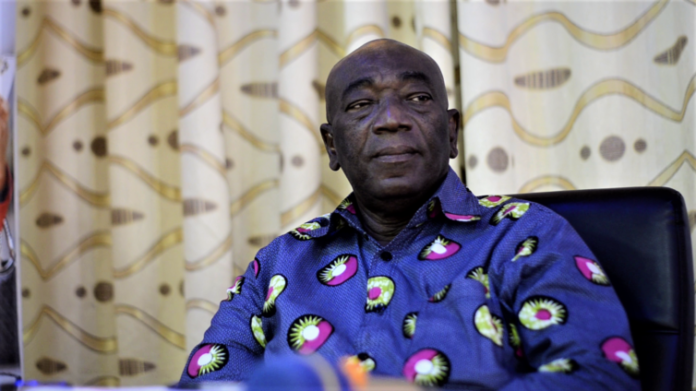
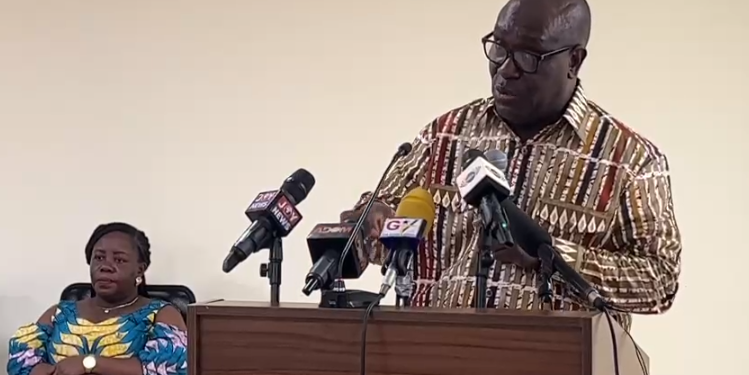
    New VAT, Commissioner for Domestic Tax Revenue Division, Dr. Martin Kolbil Yamborigya explained that hat customers will now be required to pay 20 % instead of 21.9% on their goods and services.

    “There will be a lot benefits for the tax payer because we have now re-coupled the National Health Insurance Levy and Ghana Education Trust Fund (GETFUND), so it will bring down the amount to be paid. This will mean that some savings will be made by businesses and also the fact that it has become an input tax to be claimed at the end of the day” he said.

    Following the passage and presidential assent of the VAT Bill 2025 in November fter it was presented to parliament during the 2026 Budget statement and economic policy presentation, the new law is set to simplify Ghana’s tax framework, consolidate existing regulations, abolish the COVID-19 Levy, and enhance compliance through digitalisation.

    The reforms aim to promote fairness and stimulate economic growth while strengthening domestic tax mobilisation. They also reflect recommendations from the International Monetary Fund to reduce bureaucratic hurdles in revenue collection.

    Among the key changes are the unification of the flat-rate system, lower effective tax rates, the ability to deduct GETFund and NHIL contributions as input tax, and measures to improve overall revenue efficiency.

    The law will also leverage digital platforms, including the E-VAT system, to ensure more accurate and transparent tax collection.

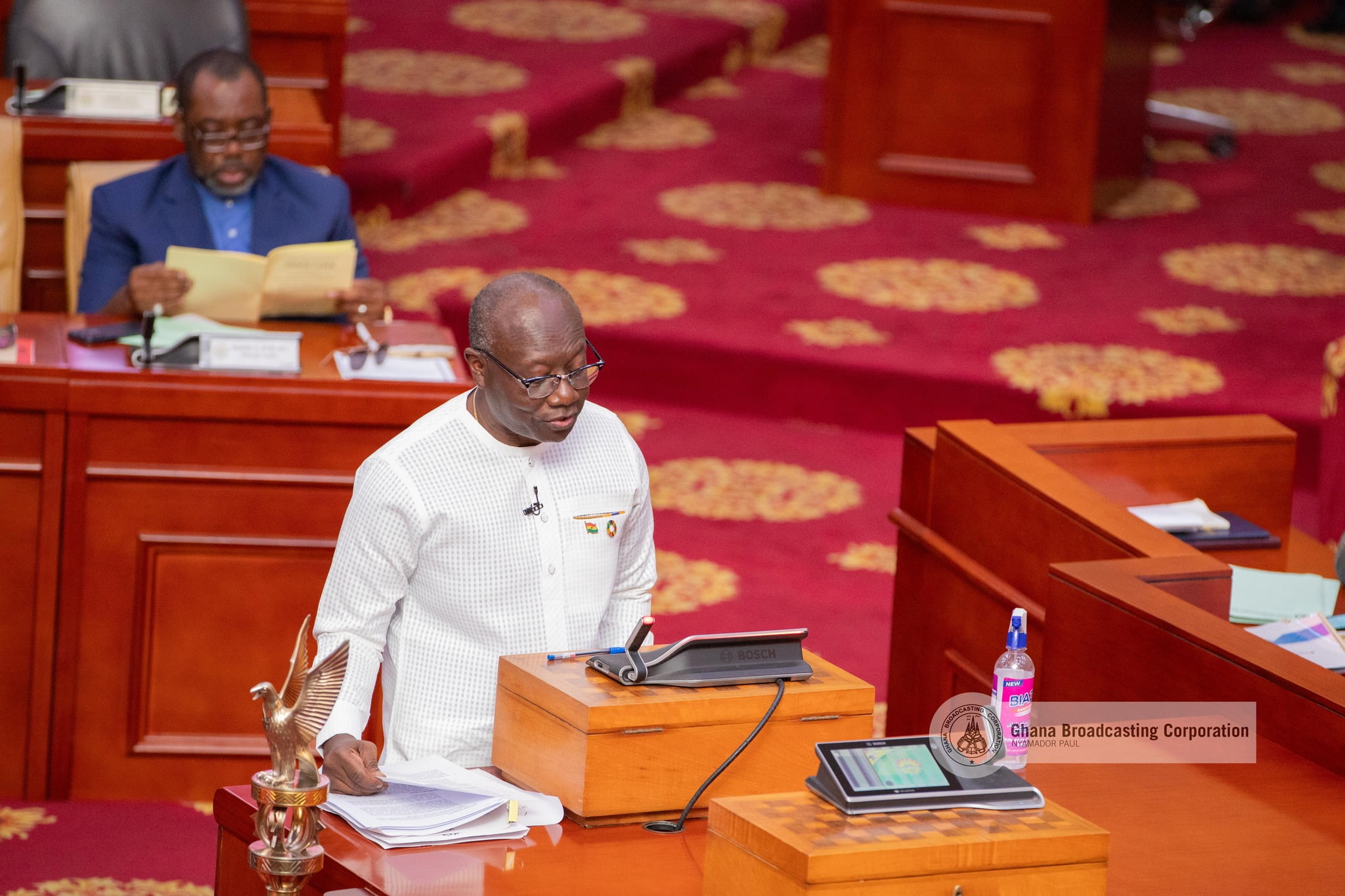
    Presenting the 2026 Budget Statement and Economic Policy to Parliament on Thursday, November 11, Finance Minister Cassiel Ato Forson hinted that the government had completed the design of a modernised Ghana Value Added Tax (VAT) system fit for the country’s economic transformation agenda.

    He mentioned, “As the new VAT reforms will do the following, we will abolish the COVID-19 Health Recovery Levy, Mr Speaker; we will abolish the decoupling of GetFund and National Insurance Levies from the VAT tax base. The current VAT rate will be reduced from 21.9% to 20%.

    “In the 2025 budget, in the mid-year fiscal policy review, government made a firm promise to reform Ghana’s Value Added Tax (VAT) system to make it fairer, simpler, and more efficient. We pledged to remove distortions, address the cascading effects inherited in the VAT system, strengthen compliance, and create a tax regime that supports both businesses and fiscal stability. These distortions have negatively impacted overall welfare, increasing the deadweight loss in the economy and reducing VAT compliance.

    “Today, Mr Speaker, I am proud to report to this House that we have finally delivered on that promise. After months of detailed analysis and broad consultations with stakeholders, we have completed the design of a modernised VAT system fit for Ghana’s economic transformation agenda. Government is therefore submitting to this House today, for approval, a bold package of VAT reforms that will make our tax system more equitable, transparent, and business-friendly.

    “The new VAT reforms will do the following: we will abolish the COVID-19 Health Recovery Levy. We will abolish the decoupling of GetFund and National Insurance Levies from the VAT tax base. We will abolish VAT on the recognition of minerals. We will reduce the effective VAT rate from 21.9% to 20%. We will raise the VAT registration threshold from GH₵200,000 to GH₵750,000.

    “We will extend VAT zero rating on the supply of local manufacturing textiles to 2028. Mr Speaker, for emphasis, we promised to abolish the COVID Levy, and with the support of this House, I am proud to say that today, the COVID Levy is accordingly abolished. By abolishing the COVID-19 Levy, the government is putting GH₵3.7 billion in the pockets of individuals and businesses in 2026 alone”.

    Earlier this year, President John Dramani Mahama’s administration repealed the betting tax, emissions tax, and other levies. The Electronic Transaction Levy (E-Levy), introduced in 2022, imposed a 1.5% tax on electronic transactions. Although it was later reduced to 1%, the levy remained unpopular, drawing criticism from businesses, consumers, and political stakeholders who argued that it stifled digital transactions and disproportionately affected low-income earners. Many contended that it placed an unnecessary burden on citizens.

    The removal of this tax was a core pledge in the NDC’s manifesto, aimed at reducing the cost of living and encouraging business expansion. With the repeal bill now signed into law, many Ghanaians can breathe a sigh of relief.

    Supporters of the repeal argue that eliminating these levies will promote digital transactions, stimulate economic activity, and improve disposable income for households and businesses. Meanwhile, the government has officially scrapped the COVID-19 Health Recovery Levy introduced during the pandemic era.

    Introduced on 31 March 2021 under Act 1068 during the tenure of former President Nana Addo Dankwa Akufo-Addo, the levy applied a 1% charge on the supply of goods and services in Ghana, excluding certain items. and on imports of goods and services. According to the New Patriotic Party (NPP), the levy was intended to help the government raise funds to fight the pandemic and support recovery efforts.

    However, presenting the 2026 Budget Statement and Economic Policy to Parliament on Thursday, November 11, Finance Minister Cassiel Ato Forson disclosed that the government has abolished the levy with immediate effect.

    According to him, the move will save individuals and businesses GH₵3.7 billion in taxes, money that can instead be invested back into their businesses or personal ventures.

  • Ghana to lose over GHS2bn revenue in 2026 due to removal of COVID-19 levy – Economist

    Ghana to lose over GHS2bn revenue in 2026 due to removal of COVID-19 levy – Economist

    The abolition of the COVID-19 Levy and removal of key taxes in the 2026 budget, as announced by Finance Minister Cassiel Ato Forson, is expected to create a significant revenue gap for the economy in 2026.

    According to Economist, Dr Adu Owusu Sarkodie on Joy News’ PM Express Business Edition, the government is placing its hope on compliance at a time when it has already abolished the E-Levy, which was fetching the government around 2 billion over a little over GH¢2 billion

    Adding that, the betting tax, which brought in “roughly about ¢300 billion,” has also been abolished.

    However, the most severe hit to government revenue comes from the removal of the COVID-19 levy, which was expected to bring in about ¢3 billion next year.

    “Covid-19 was giving us almost the same amount as the total royalties from oil and gas. This year, total royalties from oil and gas are estimated to be ¢2.9 billion. Covid-19 levy will be giving us ¢2.8 billion,” he stated.

    Finance Minister Cassiel Ato Forson has warned that removing the COVID-19 levy, on top of the ¢2 billion E-Levy, could slash government revenue by about ¢5 billion. He noted, however, that the government believes it can still raise funds by widening the tax base.

    “When you increase the base, if more people are paying, it’s better than a few people paying higher rates,” Dr. Sarkodie explained, highlighting the strategy shaping the fiscal outlook.

    The National Democratic Congress (NDC) government has honoured a promise it made before assuming office. In line with this, the government has officially scrapped the COVID-19 Health Recovery Levy introduced during the pandemic era.

    Introduced on 31 March 2021 under Act 1068 during the tenure of former President Nana Addo Dankwa Akufo-Addo, the levy applied a 1% charge on the supply of goods and services in Ghana, excluding certain items. and on imports of goods and services. According to the New Patriotic Party (NPP), the levy was intended to help the government raise funds to fight the pandemic and support recovery efforts.

    However, presenting the 2026 Budget Statement and Economic Policy to Parliament on Thursday, November 11, Finance Minister Cassiel Ato Forson disclosed that the government has abolished the levy with immediate effect.

    According to him, the move will save individuals and businesses GH₵3.7 billion in taxes, money that can instead be invested back into their businesses or personal ventures.

    The Finance Minister further added that, after months of detailed analysis and broad consultations with stakeholders, the Ministry has completed the design of a modernised Ghana Value Added Tax (VAT) system fit for the country’s economic transformation agenda.

    He mentioned that if approved by Parliament, the VAT reforms will make Ghana’s tax system more equitable, transparent, and business-friendly. “As the new VAT reforms will do the following, we will abolish the COVID-19 Health Recovery Levy, Mr Speaker; we will abolish the decoupling of GetFund and National Insurance Levies from the VAT tax base. The current VAT rate will be reduced from 21.9% to 20%,” he revealed.

    “In the 2025 budget, in the mid-year fiscal policy review, government made a firm promise to reform Ghana’s Value Added Tax (VAT) system to make it fairer, simpler, and more efficient. We pledged to remove distortions, address the cascading effects inherited in the VAT system, strengthen compliance, and create a tax regime that supports both businesses and fiscal stability. These distortions have negatively impacted overall welfare, increasing the deadweight loss in the economy and reducing VAT compliance.

    “Today, Mr Speaker, I am proud to report to this House that we have finally delivered on that promise. After months of detailed analysis and broad consultations with stakeholders, we have completed the design of a modernised VAT system fit for Ghana’s economic transformation agenda. Government is therefore submitting to this House today, for approval, a bold package of VAT reforms that will make our tax system more equitable, transparent, and business-friendly.

    “The new VAT reforms will do the following: we will abolish the COVID-19 Health Recovery Levy. We will abolish the decoupling of GetFund and National Insurance Levies from the VAT tax base. We will abolish VAT on the recognition of minerals. We will reduce the effective VAT rate from 21.9% to 20%. We will raise the VAT registration threshold from GH₵200,000 to GH₵750,000.

    “We will extend VAT zero rating on the supply of local manufacturing textiles to 2028. Mr Speaker, for emphasis, we promised to abolish the COVID Levy, and with the support of this House, I am proud to say that today, the COVID Levy is accordingly abolished. By abolishing the COVID-19 Levy, the government is putting GH₵3.7 billion in the pockets of individuals and businesses in 2026 alone,” he added.

    While delivering the 2025 Mid-Year Budget Statement to Parliament on Thursday, July 24, the Finance Minister assured Ghanaians that the VAT Act was undergoing a series of reforms to eliminate successive charges that increased the cost of goods and services. As such, the COVID-19 Levy, Ghana Education Trust Fund (GETFund), and National Health Insurance Scheme (NHIS) levies assented to by former President Akufo-Addo during the NPP-led government will be scrapped next year.

    He noted that his ministry would conclude the review process by the end of September, adding that the new bill would then be submitted to Parliament in October to be included in the 2026 Budget Statement. The new development is aimed at reducing financial burdens on Ghanaians, thus improving economic conditions. The current VAT flat-rate scheme, the minister asserts, should be replaced with a unified VAT rate for all businesses.

    Additionally, the VAT registration threshold will also be raised, a measure expected to exempt small and micro enterprises from registering for and paying VAT, as well as to encourage growth in the informal sector.

    To ensure compliance and transparency, the government plans to roll out fiscal electronic devices such as e-invoicing systems and electronic cash registers. Furthermore, public education campaigns and awareness programs will be implemented.

    “Rt. Hon. Speaker, the Ministry of Finance hopes to complete this process by September 2025, prepare a new VAT bill by October 2025, and submit it to Parliament as part of the 2026 Budget Statement. Mr Speaker, I would like to reassure Ghanaians that under the reforms, at a minimum, the COVID-19 levy will be abolished, the effective VAT rate will be reduced, and the punitive cascading effect of the GETFund and NHIS levies will be removed.

    “VAT flat rates will be removed, and a unified VAT rate will be implemented; the VAT registration threshold will be increased to exempt small and micro businesses; and compliance will be improved through public education, awareness creation, and the introduction of fiscal electronic devices,” he said.

    Earlier this year, President John Dramani Mahama’s administration repealed the betting tax, emissions tax, and other levies. The Electronic Transaction Levy (E-Levy), introduced in 2022, imposed a 1.5% tax on electronic transactions. Although it was later reduced to 1%, the levy remained unpopular, drawing criticism from businesses, consumers, and political stakeholders who argued that it stifled digital transactions and disproportionately affected low-income earners. Many contended that it placed an unnecessary burden on citizens.

    The removal of this tax was a core pledge in the NDC’s manifesto, aimed at reducing the cost of living and encouraging business expansion. With the repeal bill now signed into law, many Ghanaians can breathe a sigh of relief.

    Supporters of the repeal argue that eliminating these levies will promote digital transactions, stimulate economic activity, and improve disposable income for households and businesses.

  • VAT lottery – Dep. Finance Minister-designate hints as possible measure to resolve VAT gap

    VAT lottery – Dep. Finance Minister-designate hints as possible measure to resolve VAT gap

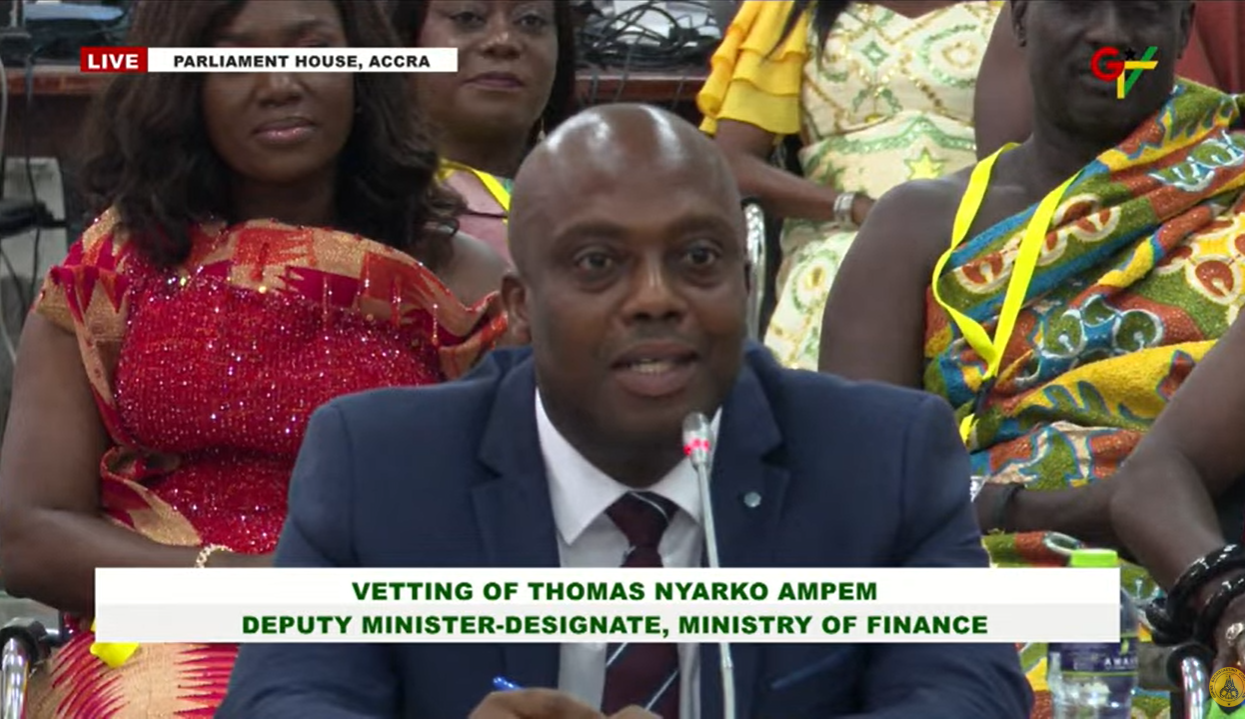
    Deputy Minister-designate for Finance, Thomas Nyarko Ampem, has proposed innovative strategies to address the persistent Value Added Tax (VAT) revenue gap, highlighting the potential of a VAT lottery as a means to encourage compliance.

    During his vetting before Parliament’s Appointments Committee today, Ampem emphasized the need to leverage technology and incentivize consumer participation in tax collection.

    “I will work with my minister and GRA to use technology to ensure that we rake in more revenue… One suggestion that has come up is a VAT lottery. Today a lot of people go to buy things and they don’t insist on VAT receipt because they do not see the need for it. If we can have VAT lottery that will let people know that if I get my VAT receipt and I enter into a draw and I’ll possibly win a fridge, an iron… it doesn’t matter how small it is. Probably some of these little things will get us there,” Ampem stated.

    This suggestion comes on the heels of a comprehensive report jointly published by the Ministry of Finance and the Institute for Fiscal Studies (UK), titled A Review of Ghana’s Value-Added Tax (VAT) System. The report delves into the design and administration of Ghana’s VAT structure, examining revenue trends and assessing current tax policies through international comparisons and extensive data analysis.

    Key findings reveal that Ghana’s VAT framework is progressive, with wealthier households contributing a larger share of VAT revenue due to exemptions on essential goods that benefit lower-income households. However, the report notes that, in absolute terms, wealthier households gain more from these exemptions, prompting the government to reconsider their effectiveness under the Medium-Term Revenue Strategy (MTRS).

    Additionally, the report highlights compliance challenges, revealing that while many businesses below the VAT registration threshold voluntarily register, numerous businesses that exceed the threshold fail to do so. Even among registered taxpayers, non-compliance remains an issue, with some businesses either not filing returns or submitting returns with zero sales and purchases. The MTRS aims to address these issues through improved voluntary compliance and stricter enforcement.

    Another significant reform noted in the report is the 2023 restriction of the VAT Flat Rate Scheme (VFRS) to small taxpayers. This adjustment is believed to have enhanced revenue collection while simplifying compliance for smaller businesses.

    The report also points to Ghana’s recent economic growth patterns as a factor in VAT revenue stagnation. Growth driven by investments and exports, rather than consumption, has limited the potential for increased VAT revenue, despite economic expansion and higher tax rates.

    These findings have already begun shaping Ghana’s tax policies, with the government exploring additional reforms in line with the MTRS. The proposed VAT lottery, aimed at incentivizing consumers to demand VAT receipts, could become a practical step toward closing the VAT gap and strengthening revenue collection.

  • Review VAT on exploration, enhance security of mines – Lands Minister on boosting mining sector

    Review VAT on exploration, enhance security of mines – Lands Minister on boosting mining sector

    The Minister for Lands and Natural Resources, Samuel Abu Jinapor, has called for a review of Value Added Tax (VAT) on exploration and enhanced security for mining operations to maximize Ghana’s benefits from its mining sector.

    Speaking at the 10th Ghana Mining Industry Awards held at the Kempinski Hotel Gold Coast, Accra, Jinapor outlined three key recommendations aimed at strengthening the relationship between the government and the Ghana Chamber of Mines.

    He emphasized that these measures would position Ghana as a leading mining hub while fostering sustainable development in the sector.

    Jinapor highlighted the productive collaboration between his ministry and the Ghana Chamber of Mines, attributing Ghana’s rise to becoming Africa’s leading gold producer to this partnership.

    He stated, “We have worked together, closely and in good faith, not only to overtake South Africa as the leading producer of gold on the continent, but we have consistently increased production, reaching some four million ounces (4,000,000 oz) last year.”

    He further disclosed that gold export receipts had significantly bolstered the national economy, with last year’s receipts amounting to $4.67 billion as of August 2023. This year, gold receipts for the first half alone reached $5 billion, with a projection to exceed $10 billion by the year’s end.

    To sustain these achievements, the minister proposed three key actions. First, he urged the next government to prioritize the issue of VAT on exploration, describing exploration as the lifeblood of the mining industry and calling for incentives to encourage it. He revealed that while progress had been made on this issue, the current parliamentary situation had hindered its conclusion.

    “I led the Chamber to make a presentation to the Economic Management Team, and we were seriously working to review this VAT. Unfortunately, with the current situation in Parliament, it is unlikely that we can conclude this matter before the end of the year. I, therefore, strongly recommend that the next Minister takes this matter up, and it is my hope that the Chamber will collaborate with the next Minister to deal with this matter,” he said.

    He stressed the importance of enhancing the security of mines, noting that the growth of the industry depends on the peace of mind of its players. He highlighted efforts to train special security forces and urged the next administration to continue implementing agreed security measures.
    The Minister then called for increased attention to the development of mining communities, arguing that ensuring the happiness of local communities is closely tied to the security and sustainability of mining operations.

    Mr Jinapor also commended mining companies and personalities for their contributions to the sector, assuring continued government support to create an environment conducive to successful investments. He pointed out the significant opportunities for value addition to Ghana’s mineral resources, emphasizing that such initiatives would drive wealth creation.

    On his part, the Chief Executive Officer of the Ghana Chamber of Mines, Sulemanu Koney, praised Jinapor’s visionary and amiable leadership, crediting him with the impressive results seen in the large-scale mining sector. He remarked that the minister’s extraordinary relationship with stakeholders has already yielded fruitful outcomes.

  • We expect VAT reforms as several parties incorporate our input in their manifestos  – AGI 

    We expect VAT reforms as several parties incorporate our input in their manifestos – AGI 

    The Association of Ghana Industries (AGI) is in anticipation of changes to the country’s Value Added Tax (VAT) system under the next government.

    This comes after the Chief Executive Officer, Seth Twum-Akwaboah indicated that the Association regularly engaged with political parties ahead of elections to outline policies aimed at boosting the industrial sector. 

    He said the engagements with political parties lead to agreements through Memorandums of Understanding (MoUs) which outlined specific plans or strategies designed to promote and help the industry grow.

    “We’re pleased to see that several parties have incorporated our input into their manifestos, and we look forward to collaborating with whoever forms the next government,” Mr Twum-Akwaboah indicated.

    Mr. Twum-Akwaboah noted that VAT reform is important for enhancing the competitiveness of local industries but there has been limitations because businesses struggle to recover all the VAT paid to government under the current system.

    “We can only recover 15 percent out of the 21.9 percent VAT paid to government,” he explained. The rest, he lamented, becomes a levy on businesses – undermining the VAT system’s effectiveness. For this reason, AGI maintains that the structure needs to change.

    In an interview following the Accra Regional AGI’s Annual General Meeting (AGM), Mr. Twum-Akwaboah noted that political parties had responded favorably to AGI’s proposals, with their manifestos showing commitments to tackle VAT issues.

    Alongside VAT, AGI also discussed plans to support small and medium-sized enterprises (SMEs), enhance funding access for entrepreneurs, and strengthen the export potential of local industries.

    “At the SME level, we’ve had extensive discussions on how to support their development and enhance the export sector,” Mr. Twum-Akwaboah said. “It’s essential for every government to prioritise export development, and AGI is committed to playing a central role in achieving this goal.”

    The AGM was themed ‘Empowering Growth: Building a Strong Workforce for Tomorrow.’

    Speaking on behalf of the Executive Director of the National Service Authority (NSA), Gabriel Osei Junior, Head of Business Development at NSA, emphasized the crucial role of workforce development in shaping Ghana’s economic future.

    “Investing in lifelong learning and workforce development is crucial for maintaining economic growth and competitiveness,” Mr. Osei Junior said. “Collaboration between government, industry and educational institutions is essential to equipping workers with the necessary skills for a rapidly evolving economy.”

    He emphasized that education and vocational training are essential for developing a skilled workforce capable of fueling economic growth.

    “A strong, competitive economy depends on well-trained workers who can adapt to new technologies and shifting work patterns,” Osei emphasised. “We must sustain an approach that covers the entire workforce, is incremental in its effectiveness and dynamic enough to meet evolving skill requirements.”

    Mr. Osei Junior emphasized that innovation, powered by research and development, is crucial for boosting productivity and enhancing living standards.

    “The private sector plays an essential role by investing in solutions to industry challenges and employing highly skilled workers to address these issues,” he said.

    He urged the public and private sectors to work together in funding research and expanding educational access, stressing that this partnership is essential to equip workers for the needs of the future economy.

    “Education improves workers’ ability to leverage new technologies, live healthier lives and adjust to changing economic realities,” he noted. “Ultimately, the alignment of business, education and government will foster innovation and sustainable growth.”

  • VAT policy must be reviewed to be flexible – GRA

    VAT policy must be reviewed to be flexible – GRA

    The Ghana Revenue Authority (GRA) wants a comprehensive review of the country’s Value Added Tax (VAT) policy to simplify the tax system and enhance compliance.

    Commissioner General of the GRA, Julie Essiam, emphasized the need for reforms during the 12th Annual International Tax Conference organized by the Chartered Institute of Taxation, Ghana.

    Addressing participants, Commissioner General Essiam stated that the current VAT structure is complex and makes it difficult for both individuals and businesses to comply with tax regulations.

    She highlighted the importance of implementing tax policies that are straightforward and understandable to all stakeholders.

    “These policies must be simple and easy to understand by everyone and all of us. As we look into the future as a revenue authority, we believe that the future tax policies should focus on the simplification of tax handles,” Essiam remarked.

    She suggested that efforts should be made towards establishing a simplified VAT rate, eliminating the complexities of the current system, which some perceive as causing a cascading effect on the tax burden.

    Essiam further noted that simplifying the VAT system could significantly boost compliance, particularly among private sector businesses.

    “Tax policies must therefore be flexible enough to grow and optimize tax revenues in tandem with private sector development,” she explained.

    Ghana faces mounting pressure to improve its domestic revenue collection as the country struggles with economic challenges and limited access to international capital markets. The GRA has been tasked with increasing tax revenue to support the nation’s development.

    In July 2024, the GRA reported that it had collected GH¢68.05 billion in revenue during the first six months of the year, exceeding its mid-year target by GH¢138.69 million. This represented a 0.2 percent excess in collections, demonstrating the authority’s commitment to raising domestic revenue.

    Calls for reform have not only come from the GRA but also from the business community. Organizations such as the Ghana Union of Traders Association (GUTA) and the Association of Ghana Industries (AGI) have consistently advocated for a review of the current VAT system.

    They describe the existing structure as a disincentive for the private sector, attributing rising market prices, in part, to the VAT regime.

    GUTA has pointed to the cascading effect of VAT on pricing, arguing that the current system puts undue pressure on businesses and consumers alike, contributing to inflation and market instability.

    During the conference, the President of the Chartered Institute of Taxation (CIT), George Ohene Kwatia, added his voice to the discussion, advocating for the creation of a national tax policy to harmonize activities in the sector.

    Mr Kwatia stressed that a unified tax policy could serve as a long-term framework that would guide future governments and reduce the frequent changes in tax regimes driven by shifts in political power.

    “If you have a true national policy, it will drive the tax agenda. This will serve as a guideline for every government that comes to power. This will avoid frequent changes in our tax regimes based on the government in power,” Kwatia said.

    The 12th Annual International Tax Conference, organized by the Chartered Institute of Taxation, provided a unique platform for policymakers, academia, and tax professionals to discuss improvements to Ghana’s tax system.

    The conference encouraged dialogue on balancing tax policy with private sector growth, with the ultimate goal of fostering an enabling environment for businesses to thrive.

    The three-day conference, which concludes on August 23, 2024, is themed “Balance Tax Policy and Private Sector Development.”

    It has featured presentations and discussions aimed at creating tax reforms that promote economic development while enhancing revenue collection.

    The growing consensus is that simplifying the VAT policy will benefit both the government and businesses by improving compliance, boosting revenue, and reducing the financial burden on the private sector.

  • IMF hints at reinstating 15% VAT on electricity as inflation falls

    IMF hints at reinstating 15% VAT on electricity as inflation falls

    The International Monetary Fund (IMF) has indicated that the government may consider reinstating the 15 percent value-added tax (VAT) on electricity if inflation rates continue to decline.

    The IMF’s July 2024 Country Staff Report suggests that reintroducing the VAT is a potential course of action as inflationary pressures decrease.

    With recent data from the Ghana Statistical Service showing a drop in annual inflation to 20.9 percent in July, down from 22.8 percent in June, the government may reconsider the VAT policy.

    “On the revenue side, implementation of VAT on residential electricity (expected yield 0.17 percent of GDP) was suspended due to strong social resistance. The authorities are committed to implementing this measure when the inflation dynamics are more conducive,” the IMF said on page 10 of the report.

    Originally, the government had postponed the VAT on electricity due to significant public opposition, particularly from residential users concerned about the added financial burden.

    This tax was initially part of broader revenue measures implemented as part of the IMF-supported recovery plan following the COVID-19 pandemic.

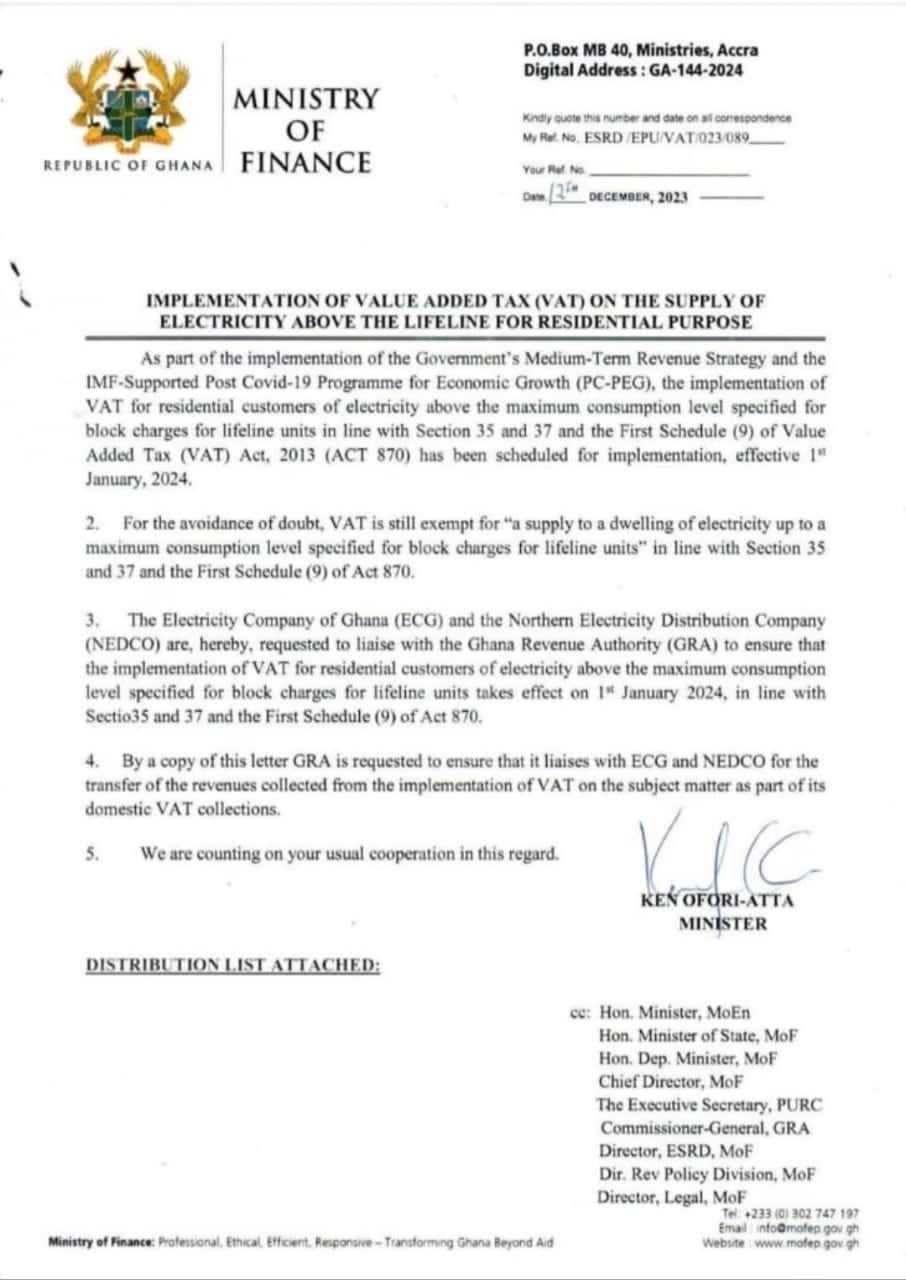
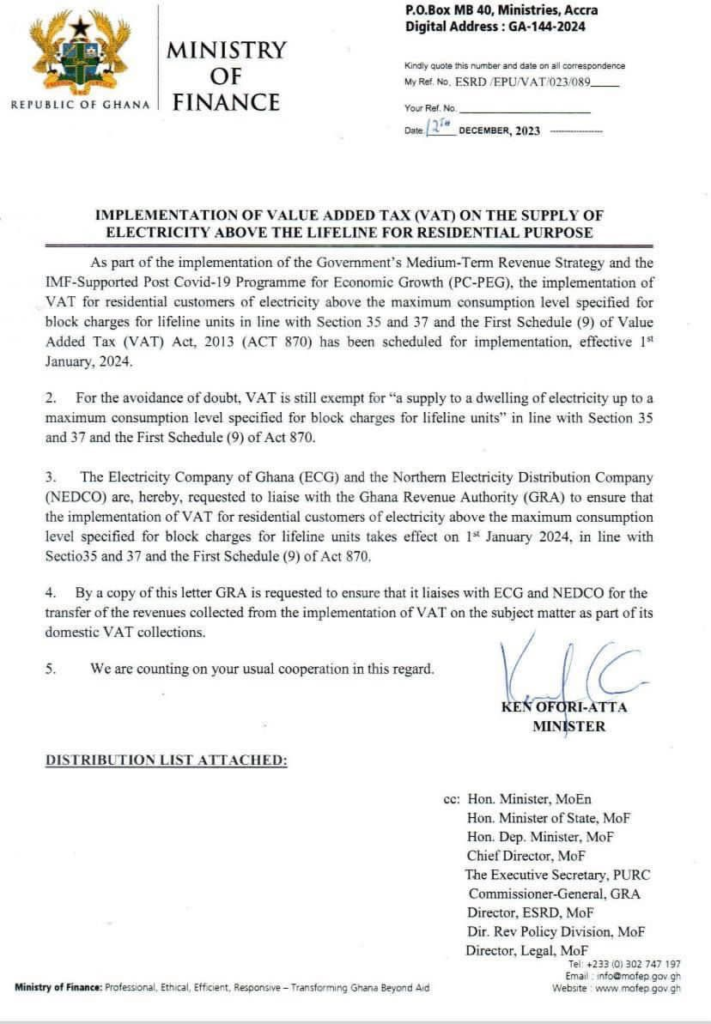
    A directive from the Ministry of Finance, dated January 1, 2024, and signed by former minister Ken Ofori-Atta, instructed the Electricity Company of Ghana (ECG) and Northern Electricity Distribution Company (NEDCo) to impose the VAT on residential consumers who surpassed a specified consumption threshold.

    “On behalf of the Government, Ministry of Finance would like to inform ECG and NEDCO to suspend the implementation of the VAT directive pending further engagement with key stakeholders, including Organised Labour.

    “The Ministry expects that these engagements will birth innovative, robust, and inclusive approaches to bridging the existing fiscal gap, while bolstering economic resilience.”

    However, on February 7, 2024, the government halted the VAT implementation following a threat of nationwide protests from Organised Labour, who had planned demonstrations for February 13, 2024, if the tax was not retracted.

  • Gov’t considers reintroducing VAT on electricity – Report

    Gov’t considers reintroducing VAT on electricity – Report

    The previously suspended 15 per cent value-added tax (VAT) on electricity could be reinstated as inflation continues to decrease.

    The Ghana Statistical Service (GSS) announced last week that annual inflation had dropped to a 28-month low of 20.9 per cent in July—the slowest rate since March 2022—down from 22.8 per cent in June this year.

    In its July 2024 Country Staff Report, the International Monetary Fund (IMF) acknowledged the readiness of local authorities to reintroduce the tax once inflation subsides.

    “On the revenue side, implementation of VAT on residential electricity (expected yield 0.17 per cent of GDP) was suspended due to strong social resistance. The authorities are committed to implementing this measure when the inflation dynamics are more conducive,” the IMF said on page 10 of the report.

    The VAT on residential electricity was originally introduced as a revenue-generating measure under the IMF-backed COVID-19 recovery program.

    In a letter dated January 1, 2024, and signed by former Finance Minister Ken Ofori-Atta, the Ministry of Finance instructed the Electricity Company of Ghana (ECG) and Northern Electricity Distribution Company (NEDCo) to apply the VAT to residential customers exceeding a specified consumption threshold.

    However, after significant public backlash led by organized labour, the government suspended the contentious tax in early February 2024 to allow for further discussions with stakeholders. The suspension followed strong opposition from the Trades Union Congress (TUC) and the general public.

    To address the anticipated GH¢1.8 billion revenue shortfall resulting from the suspension of electricity VAT, the government announced plans to tax the foreign incomes of resident Ghanaians, among other measures.

    During an economic update in April 2024, Finance Minister Dr. Mohammed Amin Adam stated that the government had to explore alternative revenue sources after dropping the VAT on electricity.

    “And so we had to look at alternative measures to generate more revenue to fill in that gap,” Dr. Adam said. “As for those alternative measures, some were announced in the Budget Statement of 2023 and also 2024 but were not effectively implemented. And so, now, we are determined to effectively implement these measures to generate the desired revenue and fill the gap created as a result of suspending the VAT.”

    Dr. Adam noted that the government’s decision to suspend the VAT on electricity had significant implications for the country’s fiscal framework. The new tax on foreign incomes is a measure aimed at ensuring that Ghana meets its key fiscal targets under the IMF program.

    “Now, what this means is that when we take a decision as a government which borders on our fiscal framework, there are consequences,” Dr. Adam said. “And the consequences could persist unless we are proactive enough to find ways to fill the gap and avoid those consequences. One of the consequences could be that you miss out on the fiscal target, and the IMF programme then suffers.”

  • GREDA calls for removal of 17.5% VAT on property sales in mid-year budget

    GREDA calls for removal of 17.5% VAT on property sales in mid-year budget

    Stakeholders in the real estate sector are expressing concern over the government’s reinstatement of a 17.5 percent Value Added Tax (VAT) on the sale of immovable properties.

    They contend that the tax is stifling sector growth and criticize the lack of consultation before its reimplementation.

    They are urging the government to eliminate the tax, aligning with its promise to avoid new taxes in the mid-year budget review set for Tuesday, July 23.

    The Executive Secretary of the Ghana Real Estate Developers’ Association (GREDA), Samuel Amegayibor, stated:

    “They never engaged us. All of a sudden, there is a directive that the tax should be implemented, and then they have gone ahead to develop guidelines without a major stakeholder like GREDA.

    “So how do you expect us to be your agent of tax collection and you don’t involve us in the guidelines, and then you just snap on us? I was surprised. I saw a copy of this guideline just last night. ”

    He added: “As the Executive Secretary of GREDA, I have not seen what my sector is supposed to help implement for the government to make revenue. Then what are we doing? I think these are some of the things that we are talking about.

  • Foreign income tax of resident Ghanaians to replace VAT on electricity – GRA

    Foreign income tax of resident Ghanaians to replace VAT on electricity – GRA

    The Ghana Revenue Authority (GRA), under the leadership of Commissioner-General Julie Essiam, has introduced a new compliance measure focusing on the foreign income of resident Ghanaians.

    This initiative is intended to replace the suspended Value Added Tax (VAT) on electricity and is aimed at generating sustainable revenue beyond 2024.

    Commissioner-General Essiam stated that while this measure is not new and has been part of the law for some time, it has not been effectively implemented until now.

    “We [GRA] will specifically speak to the measure that is replacing the VAT on electricity. So, the measure that we put in place is a compliance measure on foreign income of resident Ghanaians.

    “This measure is already in the law, as the minister said, so it is not a new measure. The difference is that its implementation and application have not been implemented effectively,” the GRA Commissioner-General said in her brief remarks at the joint IMF, BoG and Ministry of Finance presser held in Accra on April 13, 2024.

    Essiam added that “The GRA, with support from the Organization for African, Caribbean, and Pacific States (OACD), has refined the processes and structures to ensure effective implementation.”

    “So for us to implement this measure, we have, with the aid and assistance of the OACD, gone through sustainable processes and structures to ensure that when we implement this measure, the sustainability of this measure is going to go beyond 2024 in our revenue numbers.

    “So this is the measure that, together with the Government of Ghana and our mother ministry, the Ministry of Finance, is going to take place or is going to replace the VAT on electricity,” she added.

    This initiative is part of the Ghanaian government’s collaborative efforts with the Ministry of Finance to address the country’s fiscal needs, particularly in revenue mobilization.

    Julie Essiam expressed confidence that this measure will not only be sustainable but will also effectively replace the projected revenue target of GH¢1.8 billion, signifying a significant change in the nation’s tax policy.

  • Domestic VAT collections increased to GHC1.9 billion in 2023 – BoG

    Domestic VAT collections increased to GHC1.9 billion in 2023 – BoG

    According to the January 2024 Monetary Policy Report from the Bank of Ghana, the real sector of the economy showed a mixed performance in the eleven months of 2023.

    Consumer spending, indicated by domestic VAT collections and retail sales, saw a strong performance in November 2023 compared to the same period in 2022.

    Domestic VAT collections increased significantly by 128.9% year-on-year to GH¢1.978 billion, while total domestic VAT for the first eleven months of 2023 rose by 66.6% to GH¢12.831 billion.

    Retail sales also increased by 2.4% year-on-year to GH¢193.12 million in November 2023, up from GH¢188.60 million in November 2022. Cumulatively, retail sales for the first eleven months of 2023 rose by 30.4%.

    In the manufacturing sub-sector, indicated by trends in the collection of direct taxes and private sector workers’ contributions to the Social Security and National Insurance Trust (SSNIT) Pension Scheme (Tier-1), there was an improvement in November 2023. Total direct taxes collected increased by 135.3% year-on-year to GH¢5.880 billion in November 2023, while total direct taxes collected for the first eleven months of 2023 rose by 60.6% to GH¢44.432 billion.

    However, activity in the construction sub-sector, indicated by the volume of cement sales, declined by 13.2% year-on-year in November 2023 to 231,571.37 tonnes, down from 266,695.03 tonnes a year ago. Cement sales for the first eleven months of 2023 also decreased by 25.1% to 2,358,386.77 tonnes.

    Transport sector activities, indicated by new vehicle registrations by the Driver and Vehicle Licensing Authority (DVLA), declined by 14.8% to 7,268 in November 2023, from 8,533 vehicles registered in November 2022. Cumulatively, vehicles registered by the DVLA within the first eleven months of 2023 decreased by 35.7% to 135,544.

    Passenger arrivals, however, improved by 25.5% year-on-year to 104,157 in November 2023, compared to 82,977 arrivals a year ago. Cumulatively, for the first eleven months of 2023, there were 1,019,841 arrivals recorded at the international airport and land borders, representing a growth of 25.8% compared to the same period in 2022.

    International trade at the two main harbors (Tema and Takoradi) showed improvement, with total container traffic increasing by 28.8% year-on-year to 57,738 in November 2023. However, in cumulative terms, total container traffic for the first eleven months of 2023 dipped by 3.3% to 570,711, compared to the same period in 2022.

  • Passengers to go stranded on Feb. 13 as drivers prepare to strike over VAT on electricity

    Passengers to go stranded on Feb. 13 as drivers prepare to strike over VAT on electricity

    Ghana Private Road Transport Union (GPRTU) has declared its intention to join Organized Labour in a planned demonstration against the implementation of Value Added Tax (VAT) on the domestic consumption of electricity. The demonstration is scheduled to take place on February 13, 2024, despite the government’s recent announcement of the suspension of the VAT.

    In a statement released by the GPRTU, commuters of public transport have been advised to prepare themselves for disruptions in transportation services on the day of the demonstration. The Union has announced that no commercial vehicles under its umbrella will be offering services to passengers during the protest.

    Abass Moro, the Industrial Relations Officer of the GPRTU, reiterated the Union’s commitment to the cause of Organized Labour, emphasizing that their leadership is demanding the complete scrapping of the 15% VAT on electricity without any compromise.

    “We are part of Organized Labour. Our leadership says it doesn’t want any bargaining apart from striking out completely of the 15% VAT on electricity. This is all that our leadership says it wants,” Moro stated in an interview.

    Organized Labour remains steadfast in its stance against the VAT on electricity, asserting that its call for the abolition of the tax is non-negotiable. Despite the government’s announcement of the suspension of the VAT, the union maintains that the tax must be completely scrapped.

    The planned demonstration signifies the determination of Organized Labour and its affiliates, including the GPRTU, to advocate for the interests of the Ghanaian populace and address concerns regarding the affordability and accessibility of essential utilities.

    As preparations for the demonstration continue, commuters are advised to make alternative transportation arrangements on February 13, 2024, due to the anticipated suspension of public transport services by the GPRTU and other participating unions.

  • Protest against 15% VAT on electricity off – Organised Labour announces

    Protest against 15% VAT on electricity off – Organised Labour announces

    Organised Labour has decided to suspend its planned demonstration against the 15 percent Value Added Tax (VAT) on Electricity, which was scheduled for Friday, February 9.

    This decision comes following the government’s recent announcement to halt the implementation of the contentious tax policy.

    During a press conference, Dr. Yaw Baah, the General Secretary of the Trades Union Congress (TUC), warned that the demonstration would proceed if the government did not fully withdraw the policy immediately.

    Dr. Baah emphasized that Organised Labour remains prepared to protest against any future unfavorable tax policies.

    Meanwhile, the Ministry of Finance has officially notified Organised Labour about the suspension of the policy’s implementation.

    In a letter dated Thursday, February 8, the Ministry informed Organised Labour that it had instructed the Electricity Company of Ghana and NEDCO to cease the implementation of the controversial policy.

    The government has directed ECG and NEDCO to suspend the imposition of the tax on electricity consumption by residential customers until further consultations are held with key stakeholders, including Organised Labour.

  • GPRTU to partner organised labour to demonstrate against VAT on electricity

    GPRTU to partner organised labour to demonstrate against VAT on electricity

    Ghana Private Road Transport Union (GPRTU) has declared its intention to join Organized Labour in a planned demonstration against the implementation of Value Added Tax (VAT) on the domestic consumption of electricity. The demonstration is scheduled to take place on February 13, 2024, despite the government’s recent announcement of the suspension of the VAT.

    In a statement released by the GPRTU, commuters of public transport have been advised to prepare themselves for disruptions in transportation services on the day of the demonstration. The Union has announced that no commercial vehicles under its umbrella will be offering services to passengers during the protest.

    Abass Moro, the Industrial Relations Officer of the GPRTU, reiterated the Union’s commitment to the cause of Organized Labour, emphasizing that their leadership is demanding the complete scrapping of the 15% VAT on electricity without any compromise.

    “We are part of Organized Labour. Our leadership says it doesn’t want any bargaining apart from striking out completely of the 15% VAT on electricity. This is all that our leadership says it wants,” Moro stated in an interview.

    Organized Labour remains steadfast in its stance against the VAT on electricity, asserting that its call for the abolition of the tax is non-negotiable. Despite the government’s announcement of the suspension of the VAT, the union maintains that the tax must be completely scrapped.

    The planned demonstration signifies the determination of Organized Labour and its affiliates, including the GPRTU, to advocate for the interests of the Ghanaian populace and address concerns regarding the affordability and accessibility of essential utilities.

    As preparations for the demonstration continue, commuters are advised to make alternative transportation arrangements on February 13, 2024, due to the anticipated suspension of public transport services by the GPRTU and other participating unions.

  • Organised Labour’s electricity VAT demo to come off despite suspension of tax measure

    Organised Labour’s electricity VAT demo to come off despite suspension of tax measure

    In spite of the Ministry of Finance’s order to suspend the contentious 15 percent Value Added Tax (VAT) on electricity, the Greater Accra Regional branch of the Organised Labour of the Trades Union Congress (TUC) remains resolute in its decision to proceed with its planned protest.

    Issued on February 7, 2024, the Ministry of Finance directed the Electricity Company of Ghana (ECG) and the Northern Electricity Distribution Company (NEDCO) to pause the implementation of the new tax policy until discussions with stakeholders, including Organised Labour, have been conducted.

    However, the labour unions have expressed dissatisfaction with this directive, insisting on a complete repeal of the tax.

    A representative from the regional metro council of labour, Patrick Binyemi, outlined their plans for a nationwide demonstration during a press conference held in Accra on February 13.

    “We will embark on a never-happened demonstration. This is scheduled for next week Tuesday, the 13th of February 2024. By this, we are calling on all organised labour members all over the Greater Accra region to be ready and prepared for this demonstration

    “On Tuesday at 6:30 am we are all gathering at the Obra Spot, Circle where we will proceed through the Kojo Thompson road to the Farisco traffic light. We will take a left to the TUC traffic light then a right to the polo grounds along the Professor John Evans Atta Mills highway, that is the high street and we will end at Independence Square or the Black Stars Square. Please let us take note,” he stated.

    The protest is set to involve various activities, with one significant action being the suspension of commercial vehicle operations on the day of the demonstration.

  • TUC proceeds with protest plans despite reported withdrawal of VAT on electricity

    TUC proceeds with protest plans despite reported withdrawal of VAT on electricity

    Trades Union Congress (TUC) remains steadfast in its preparations for a protest following the imposition of Value Added Tax (VAT) on electricity consumption exceeding the lifeline threshold, despite reports of a potential withdrawal of the controversial tax.

    Joshua Ansah, Deputy Secretary-General of the Trade Union Congress (TUC), reiterated the union’s commitment to organizing the demonstration during an appearance on Asempa FM’s Ekosii Sen programme on Monday. While acknowledging rumors of the government’s decision to withdraw the 15% VAT on electricity, Ansah emphasized that the TUC had not received official confirmation.

    “The government has not informed us, neither have we met with them to officially tell us their intention to withdraw the tax. We only heard it on social media, and trust me, we will not rely on social media to make decisions. So we are still preparing our demo until we get an official communique from government regarding the withdrawal,” Ansah stated.

    The imposition of VAT on electricity consumption beyond the lifeline threshold has sparked widespread criticism from Organised Labour, civil society groups, and various segments of Ghanaian society. While the government has defended the tax as part of its COVID-19 recovery program, opponents argue that it will exacerbate the socio-economic hardships faced by Ghanaians.

    Organised Labour has been at the forefront of calls for the withdrawal of the VAT on electricity, citing its adverse effects on the already burdened populace. Despite the reported withdrawal of the tax, the TUC remains vigilant, emphasizing the need for official communication from the government before altering their protest plans.

    The controversy surrounding the VAT on electricity underscores broader concerns about the impact of government policies on the welfare of citizens. As tensions persist, stakeholders await further developments and official statements from both the government and the TUC regarding the fate of the contentious tax and the planned protest.

  • GUTA ‘wails’ over impact of emissions levy, VAT on electricity on businesses 

    GUTA ‘wails’ over impact of emissions levy, VAT on electricity on businesses 

    Ghana Union of Traders Association (GUTA) has vehemently opposed the government’s proposed implementation of Value Added Tax (VAT) on electricity charges and the introduction of an emission levy. In a press release issued on February 4, 2023, GUTA expressed serious apprehensions regarding the potential negative economic impacts these measures could inflict on businesses operating within the country.

    GUTA contends that the proposed VAT on electricity charges would have direct and adverse effects on businesses, especially those heavily reliant on electricity for their operations. The association predicts that such businesses may face heightened financial strain, potentially leading to reduced production capacity, layoffs, and, in extreme cases, business closures, thereby hindering economic progress and stifling job creation opportunities.

    The release also draws attention to the challenges presented by the emission levy, emphasizing concerns about double taxation and the current lack of infrastructure for electric vehicles, including charging stations and a reliable power source. GUTA highlights that Ghana already imposes energy taxes, such as the petroleum tax on gasoline, diesel, kerosene, and LPG.

    Dr. Joseph Obeng, the President of GUTA, underscored the need for the government to reconsider these proposed measures and engage in extensive consultations with key stakeholders, particularly the business community, before implementing any new taxation policies.

    “It is crucial that the voices and concerns of businesses are heard and taken into account to ensure policies that do not hinder economic growth and investment,” the communique stated.

    As the government grapples with economic challenges and explores revenue-generation avenues, GUTA’s opposition underscores the importance of striking a balance that promotes economic sustainability while addressing fiscal concerns. The call for inclusive dialogue with business stakeholders aims to ensure that any new policies are well-informed, considerate of business realities, and contribute positively to Ghana’s economic growth.

  • CLOGSAG declares withdrawal of 15% VAT directive as ‘only condition to stop’ their demonstration 

    CLOGSAG declares withdrawal of 15% VAT directive as ‘only condition to stop’ their demonstration 

    Executive Secretary of the Civil and Local Government Staff Association of Ghana (CLOGSAG), Isaac Bampoe-Addo, has declared that the planned nationwide demonstration by Organised Labour is inevitable unless the government takes immediate action to withdraw a contentious directive.

    Speaking in an interview, Mr Bampoe-Addo asserted that no institution, particularly the Ghana Police Service, has the authority to prevent their planned street protest on the scheduled date of February 13.

    “I can assure you that the only thing that can stop us is the withdrawal of this letter. The law is saying we should just notify the police; the police cannot tell us not to go on our demonstration, so we are just notifying them,” stated Bampoe-Addo emphatically,” he said on JoyNews.

    At the heart of the brewing conflict is the Finance Ministry’s directive to the Electricity Company of Ghana (ECG) and the Northern Electricity Distribution Company (NEDCO) to implement a 15% Value Added Tax (VAT) on residential electricity consumption. Bampoe-Addo emphasized that the only resolution to prevent the planned demonstration is for the government to retract this directive.

    “The only thing that can stop this demonstration from happening is when the government, through the Finance Ministry, withdraws this letter directing ECG and NEDCO to implement 15% VAT on electricity,” he added during the Sunday interview.

    Bampoe-Addo warned that his association, joined by 35 other organised labor unions, is prepared to embark on a mammoth demonstration should the government refuse to reconsider the VAT implementation.

    This statement follows the steadfast opposition of organised labor unions against the 15% VAT on residential electricity consumption, expressing concerns that such measures would exacerbate the financial burdens faced by citizens.

    On the same show, Prof Mamudu Akudugu, the President of the University Teachers Association of Ghana (UTAG), dismissed claims that workers are being unfair to the government. According to Akudugu, it is the citizens who are feeling the brunt of excessive taxes, stating, “It is the other way round since the populace is being suffocated by taxes.”

    As the February 13 demonstration date looms large, the standoff between Organised Labour and the government intensifies, raising questions about the potential impact on public services and the broader socio-economic landscape in Ghana. The nation watches closely as tensions escalate, awaiting developments that could shape the trajectory of this highly charged situation.

  • Cabinet withdraws 15% VAT on electricity – Reports

    Cabinet withdraws 15% VAT on electricity – Reports

    The Ghanaian government has reportedly decided to reverse the previously approved policy of imposing a 15% Value Added Tax (VAT) on electricity.

    Asaase Online in a report says according to sources close to the government, Cabinet unanimously agreed to drop the VAT on electricity during a meeting held on February 2, 2024.

    The decision comes after strong opposition and criticism from the Trade Unions Congress (TUC) and other stakeholders.

    While the 15% VAT on electricity had received prior approval from both Cabinet and Parliament, the negative reaction from various groups prompted a serious reconsideration of the policy.

    The government has now expressed its intention to engage with the International Monetary Fund (IMF) to discuss potential alternatives for making up for the revenue shortfall resulting from dropping the VAT on electricity. The final decision on the policy is expected to become clearer after these discussions with the IMF.

    “The position currently is that the 15% VAT on electricity is off, and it is likely it could either be off totally or significantly slashed,” Asaase News sources said on condition of anonymity.

    Organized Labour in Ghana convened a meeting on February 2, 2024, where a decision was made to stage a nationwide demonstration on Tuesday, February 13, 2024. T

    he purpose of the demonstration is to press the government to withdraw the directive given to the Electricity Company of Ghana (ECG) and the Northern Electricity Distribution Company (NEDCO) to implement a 15% Value Added Tax (VAT) on residential electricity consumption.

  • Govt could decide to tax water and number of children soon – TUC

    Govt could decide to tax water and number of children soon – TUC

    The Secretary General of the Trades Union Congress (TUC), Dr. Anthony Yaw Baah, has justified the union’s resistance to the recently implemented 15% Value Added Tax (VAT) on domestic electricity usage.

    Dr. Baah maintained that acquiescing to this new tax could establish a precedent, potentially leading the government to introduce additional taxes, such as levies based on the number of children in couples.

    Speaking during a crucial meeting on February 2 to discuss the union’s strategy post the government’s ultimatum expiration, Dr. Yaw Baah underscored the burden on Ghanaian workers and urged resistance against further taxation.

    “If we don’t fight this, tomorrow it will be on the water, the next day it may be on the number of children that we will have. This is our duty and we will do it and do well until we win this battle,” Dr. Baah stated.

    “If we don’t oppose this, it could extend to water charges, or even taxes based on the number of children. It is our responsibility, and we will persist until we emerge victorious,” Dr. Baah emphasized.

    The TUC leader called for a unified front, urging both public and private sector workers, in both formal and informal sectors, to participate in the planned demonstration on February 13.

    He emphasized that the cause was a national obligation and invited employers, market women, and those in the informal economy to join the movement.

    Dr. Baah also disclosed that Ghana Publishers had informed him about the imposition of VAT on books on the same day.

    The TUC, along with 35 organized labor unions, declared their intention to stage a demonstration on February 13, demanding the repeal of the 15% VAT on electricity. The unions argue that the additional tax exacerbates the financial strain on workers, and the government’s refusal to accede to their demand has triggered the planned protest.

  • TUC joins 35 other unions to protest against 15% electricity tax on Feb. 13

    TUC joins 35 other unions to protest against 15% electricity tax on Feb. 13

    The Trades Union Congress (TUC) and 35 organized labor unions have declared their intention to stage a demonstration on February 13.

    The decision to protest comes in response to the government’s rejection of their demand to repeal the 15 percent Value Added Tax (VAT) imposed on electricity.

    The TUC and the coalition of 35 labor unions argue that they are already facing substantial burdens, and the introduction of this new VAT on electricity will further exacerbate their financial challenges.

    During crucial meeting on Friday, February 2, the General Secretary of TUC, Dr Anthony Yaw Baah, said “The VAT that the government has imposed that electricity on consumers. We have expected to pay.

    “We have agreed not to pay, so we gave the government until 31[January] to implement changes. If they don’t change we mentioned that we will decide on what to do. Now we have decided to demonstrate on the 13th of February in all regional capitals.”

    “Ghana workers, both formal and informal, in both the public and private sector, have decided to demonstrate in all regional capitals. From Accra to Bolgatanga.”

    Dr. Baah emphasized that if the government does not reconsider its decision to implement a 15 percent VAT on electricity or engage in negotiations with them before Tuesday, the organized labor, including the Trades Union Congress (TUC), intends to proceed with the planned demonstration.

    “If the government does not want us to embark on the demonstration, they should withdraw the letter, and if we don’t hear anything before Tuesday, February 13, we will demonstrate. 

    “The demonstration is to show the government that we will not pay [the VAT]. The country is ours and we say we don’t agree to pay VAT,” he added.

    The VAT is yet to be implemented due to some technical challenges sighted by the Electricity Company of Ghana (ECG).

    Earlier, the Finance Ministry revealed its intention to hold comprehensive meetings with Organised Labour and other crucial stakeholders in the upcoming weeks to incorporate their input into the decision-making process.

    The introduction of the 15% VAT on electricity comes at a time when consumers have experienced continues rise in electricity tariff in 2023 by the Public Utilities Regulations Commission (PURC).

  • We will take action if you fail to revoke VAT on electricity – Organised Labour to govt

    We will take action if you fail to revoke VAT on electricity – Organised Labour to govt

    Organised Labour plans to convene and determine its course of action following the government’s failure to meet the deadline for withdrawing the electricity tax.

    Last week, Organised Labour formally requested the government to retract the proposed electricity tax scheduled for implementation this year. The government argued that the tax aimed to support its COVID-19 recovery efforts.

    In an interview on Wednesday, Joshua Ansah, Deputy Secretary-General of the Trade Union Congress (TUC), stated that if the government does not withdraw the Value Added Tax (VAT) on residential electricity consumption by the end of the day, Organised Labour would reassess its position.

    “We are steadfast in our stance that unless a complete withdrawal is implemented, we maintain our decision that if by the end of today, the government fails to withdraw, Organised Labour will advise itself,” Ansah asserted.

    He further added, “Organised Labour will convene and make a decision if the government remains inactive regarding the total withdrawal.”

  • Finance Ministry to engage Organised Labour over 15% VAT on electricity in the coming weeks

    Finance Ministry to engage Organised Labour over 15% VAT on electricity in the coming weeks

    The Ministry of Finance has recognized the concerns expressed by Organised Labour regarding the proposed implementation of Value Added Tax (VAT) on residential customers’ electricity consumption.

    In a press statement issued on Tuesday, January 30, the Ministry revealed its intention to hold comprehensive meetings with Organised Labour and other crucial stakeholders in the upcoming weeks to incorporate their input into the decision-making process.

    The statement urged Organised Labour, ECG, NEDCO, and all stakeholders to exercise restraint, create a conducive environment for constructive dialogue, and work towards a prompt resolution of the current impasse.

    The Ministry’s response comes in the wake of Organised Labour’s threat of industrial action over the proposed implementation of Value Added Tax (VAT) on domestic electricity consumption.

    On Wednesday, January 24, Organised Labour expressed dissatisfaction with the imposition of VAT on a specific category of electricity consumers and called for the Finance Ministry to retract the directive. This stance was reinforced by the Trades Union Congress (TUC), which issued a seven-day ultimatum to the government, demanding the withdrawal of VAT on electricity consumption beyond the lifeline threshold.

    The Ministry’s statement also highlighted the country’s positive achievements under the Post Covid-19 Programme for Economic Growth (PC-PEG). These accomplishments include surpassing growth targets, reducing inflation, improving fiscal and external positions, achieving a more stable exchange rate, and lowering the Monetary Policy Rate.

    Moreover, the Finance Ministry reaffirmed the government’s commitment to collaborating with all stakeholders to maintain progress, foster macroeconomic stability, and promote inclusive growth.

  • Alan Kyerematen advocates for Economic relief measures rather than VAT on electricity

    Alan Kyerematen advocates for Economic relief measures rather than VAT on electricity

    Founder of the Movement For Change, Alan Kyerematen, has strongly voiced his disapproval of the government’s recent decision to impose a Value Added Tax (VAT) on electricity consumers beyond the lifeline threshold.

    In a post on X, the former Trade and Industry Minister expressed concerns about the timing of the tax implementation, emphasizing that, considering the prevailing economic challenges faced by Ghanaians, it was inappropriate for the government to introduce additional financial burdens through new taxes.

    Kyerematen said: “In the kind of economic situation we find ourselves, every government policy, plan or decision, has to have the objective of achieving the following; reduce the cost of living, reduce the cost of doing business, reduce exchange rate, and create sustainable jobs for the youth.”

    The former minister claimed that imposing a value-added tax (VAT) on electricity would worsen the problems that everyday Ghanaians face rather than help to accomplish any of these goals.

    Kyerematen asserted the legitimacy of his Great Transformational Plan (GTP), saying it is a reliable road map that can lead the country to accomplish the goals that have been set forth as well as more.

  • VAT on electricity directive cannot be implemented because there are issues – ECG MD

    VAT on electricity directive cannot be implemented because there are issues – ECG MD

    Amidst disagreements over the government’s decision to enforce a new Value Added Tax (VAT) on electricity consumers beyond the lifeline threshold, the Electricity Company of Ghana (ECG), tasked with implementation, has voiced reservations about the legal framework surrounding the tax.

    Although ECG and the Northern Electricity Distribution Company (NEDCO) had been instructed to initiate the tax from January 2024, ECG has indicated that it has not yet implemented it.

    During an appearance on Joy News’ PM Express on Wednesday, January 24, Samuel Dubik Masubir Mahama, the Managing Director of ECG, stated that the company cannot simply comply with the government’s directive, especially when there are issues with the provisions in the law passed as far back as 2013.

    Mahama explained that in January 2023, he sought the opinion of ECG lawyers regarding the provisions in the law due to identified problems. To substantiate his claim, he presented a document to the show’s host, Evans Mensah, dated January 10, 2023.

    “I asked for a legal opinion from the lawyers for ECG, to find out if within the law, this provision is right and in its implementation what it will mean. So let’s not take it for granted that even the company ECG or the government itself is not taking proactive measures to close this gap and find a way out of it.


    The Managing Director of ECG holds the perspective that the government’s letter instructing the implementation of the tax from January 2024 provides an opportunity for additional engagement with stakeholders regarding the policy.

    When the host reminded him that the letter from the government was a directive, he retorted, “It’s a directive, but if you are giving a directive and there are bottlenecks, you don’t go implementing a directive that has bottlenecks. Every directive allows for conversations to be had. ECG itself you have to come to ECG to ask ECG how you are going to implement this. There has to be stakeholder engagement, there has to be some form of sensitization so if you call this as a directive to me, I didn’t treat it as a directive” he emphasised.

    He mentioned that he has engaged in additional discussions with the Ministers of Energy and Finance to review the law and consider subsequent actions.

    “Conversations are far advanced. If this thing would have been charged this year, then by 1st January it would have been charged. Clearly, where we are now, we are finding whether even the law that was passed, what are the restrictions on the law…if it can be passed. We are finding a lot of interpretations.

    “If this law has to go back to parliament for it to be looked at and reconsidered then yes, so be it. It should be a national consensus, so we need to applaud the TUC [Trades Union Congress] for what they are doing and also be clear that, if the thing is not being implemented and the last paragraph said, transfer the revenues collected from the implementation of the VAT on the subject matter as a domestic VAT collection, there are processes that need to be outlined.”

    As per the Managing Director of ECG, implementing the VAT on pre-paid electricity consumers will pose a particular challenge.

    “It’s a technical difficulty; it’s a nightmare. How do you go about this?” he quizzed.

    “First of all, one of the biggest challenges that will come up is this; are we charging the VAT on residential customers? If yes, are they on pre-paid meters? Yes. So, are you charging per the money or the consumption? Because with pre-paid the consumption will be known at the end of the day, so I will only know your consumption after you have consumed. So, if I charge you the VAT when you are about to pay that will not be fair if I am charging on consumption.

    “If I am to implement it that means that at the end of the day, when you are about to purchase again you will actually have a debt that needs to be settled. There’s a lot of stakeholder engagement that has to go into something like this. So, I see more of this letter as a letter setting in motion an enquiry into all of this” he reiterated.

  • Alan condemns 15% VAT on electricity

    Alan condemns 15% VAT on electricity

    An independent presidential aspirant and former Minister of Trade and Industry, Alan Kwadwo Kyerematen, has criticized the government’s introduction of an additional Value Added Tax (VAT) on electricity users who exceed the lifeline threshold.

    In a statement on the social media platform X, the founder of the Movement For Change expressed disapproval, arguing that given the current challenges faced by Ghanaians, imposing new taxes was untimely and added further burden to the citizens.

    “In the kind of economic situation we find ourselves, every government policy, plan or decision, has to have the objective of achieving the following; reduce the cost of living, reduce the cost of doing business, reduce exchange rate, and create sustainable jobs for the youth” the former minister said.

    Mr. Kyerematen emphasized that levying VAT on electricity would not contribute to any positive outcomes; instead, it would exacerbate the difficulties faced by the average Ghanaian.

    The former Trade and Industry Minister noted that his Great Transformational Plan (GTP), “as a trusted roadmap, would guide us to achieve the above objectives and more.”

    Various groups and individuals, including the Trades Union Congress (TUC), have strongly condemned the imposition of VAT on electricity. The TUC, through its General Secretary, Dr. Yaw Baah, issued a seven-day ultimatum to the government, demanding the withdrawal of the tax.

    Dr. Baah underscored the detrimental impact of this decision on the livelihoods of ordinary Ghanaians, especially pensioners and those with low incomes.

    During a press conference on Tuesday, January 23, he emphasized that the impoverished population in the country cannot afford to bear the additional tax burden. Dr. Baah called on the government and its agencies to promptly reverse the implementation of the proposed tax.

    “It’s always the poor people in this country, including pensioners, who bear the brunt. And we should not allow that to continue. Organised Labour, we have come together and our message to the government is very simple, we cannot pay VAT on electricity.

    “We will not pay it today or tomorrow. Organised Labour is demanding the immediate withdrawal of the letter, and another directive from the Finance Minister to Ghana Grid Company (GRIDCo), ECG to stop the implementation of the VAT on electricity. We are giving the government, up to January 31, 2024, to withdraw the letter,” Dr Yaw Baah said.

    He emphasised that they would take the necessary action if the Finance Minister does not instruct GRIDCo and ECG to retract the letter.

    “If by that time the Minister of Finance fails to give directive to GRIDCO and ECG, we will advise ourselves,” he said.

    In a letter dated January 1, Finance Minister Ken Ofori-Atta directed the Electricity Company of Ghana (ECG) and the Northern Electricity Distribution Company (NEDCO) to implement a 15 percent VAT on electricity consumption. The objective behind this move is to generate revenue for the government’s COVID-19 recovery program.

    The government has provided a rationale for the imposition of the VAT, citing it as a crucial component of their strategy to generate additional funds for the COVID-19 recovery initiative. Deputy Energy Minister Agyapa Mercer, in a media interview on Monday, January 15, acknowledged the difficulty of the decision but emphasized its necessity in settling debts owed to independent power producers.

    “Obviously, if you look at the scope of the tax and what it is intended to do—raise revenue to meet some obligations of the government in the energy sector—it will interest you to know that, as we speak, as of July 2023, the amount of money that we owe to the IPPs alone is in the region of GH¢1.7 billion.

  • Buy enough credit – ECG warns as it embarks on shutdown of CLOU prepaid metre users

    Buy enough credit – ECG warns as it embarks on shutdown of CLOU prepaid metre users

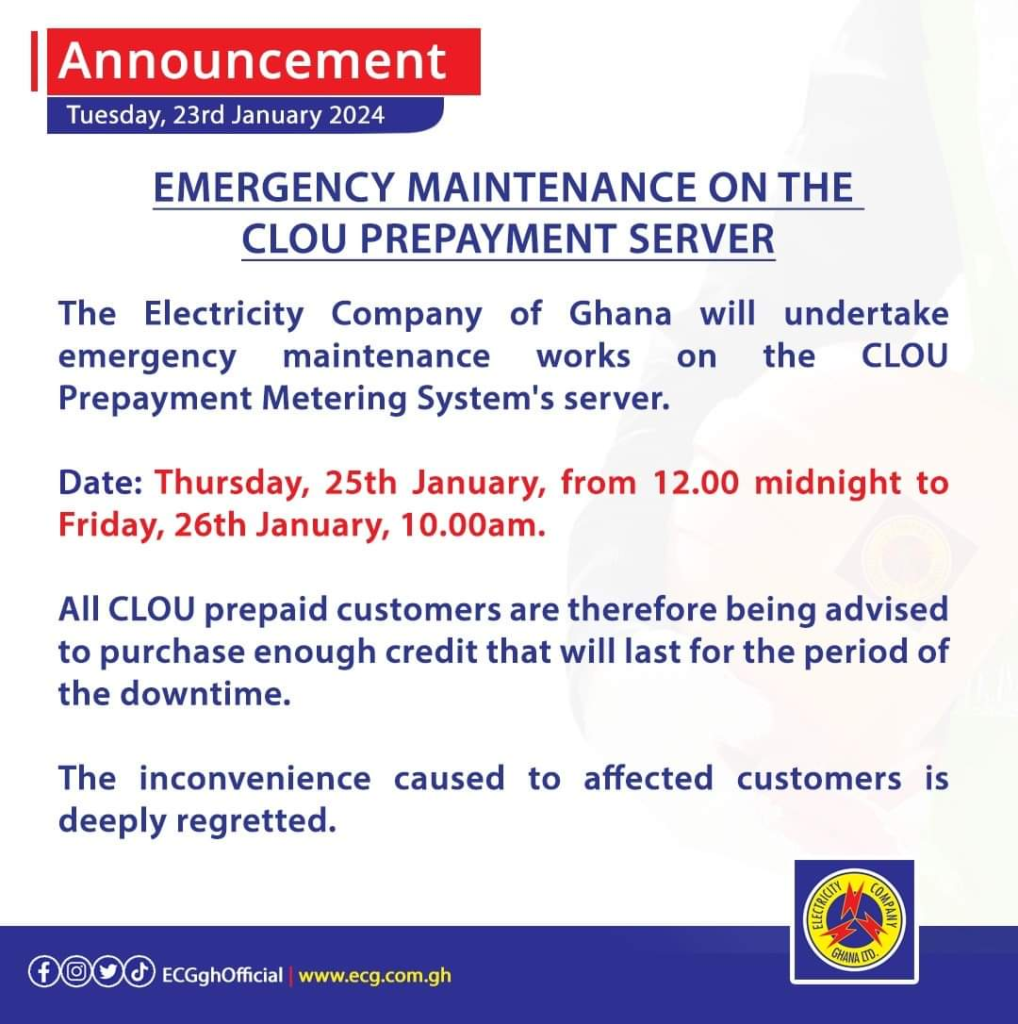
    Electricity Company of Ghana (ECG) has advised all CLOU customers to ensure they have sufficient credit, as the company plans to conduct emergency maintenance on the CLOU Prepayment Metering System’s server.

    The maintenance is scheduled to take place from midnight on Thursday, January 25, to 10:00 a.m. on Friday, January 26, 2024.

    Customers using remotes to operate their prepaid metres are considered CLOU customers.

    ECG issued this notice on Tuesday, January 24, emphasising the importance of purchasing enough credit to cover their power needs during the maintenance period.

    Areas such as Korle-Bu District, Ablekuma District, Nsawam District, Amasaman District, Bortianor District, Tema North and South Districts, Ashaiman District, Krobo District, Nungua District, Afienya District, Koforidua District and Kibi District are expected to be affected during the operation.

    The statement added that “The inconvenience caused to affected customers is deeply regretted”.

    Electricity Company of Ghana (ECG) has clarified that the Value Added Tax (VAT) on residential electricity consumption above the lifeline category has not been implemented. In a statement dated January 22, 2024, the company urged all stakeholders to adhere to the previous payment model.

    The proposed VAT on electricity consumption is intended to address debts owed to independent power producers, according to the government.

    Finance Minister Ken Ofori-Atta, in a letter dated January 1, directed ECG and the Northern Electricity Distribution Company (NEDCO) to apply a 15 percent VAT to residential customers exceeding the maximum consumption level for lifeline units.

    The VAT is part of the government’s COVID-19 recovery program to generate revenue.

  • 15% VAT on electricity tariff has many problems – ECG Boss

    15% VAT on electricity tariff has many problems – ECG Boss

    In the aftermath of disagreements surrounding the government’s decision to impose a new Value Added Tax (VAT) on electricity consumers beyond the lifeline threshold, the Electricity Company of Ghana (ECG), the implementing agency, has expressed reservations about the legislation enforcing the tax.

    Despite being directed to implement the tax from January 2024, both ECG and the Northern Electricity Distribution Company (NEDCO) have yet to enforce it.

    Speaking on Joy News, the Managing Director of ECG, Samuel Dubik Masubir Mahama, revealed that ECG has not implemented the tax due to concerns about the legal provision dating back to 2013.

    Mahama sought a legal opinion from ECG’s lawyers in January 2023, highlighting issues with the provision in the law. He emphasized that proactive measures are being taken to address the gaps and find a resolution.

    The ECG MD views the government’s directive to implement the tax as an opportunity for further stakeholder engagement on the policy. Despite acknowledging it as a directive, Mahama emphasized the need for conversations and stakeholder engagement, particularly when faced with bottlenecks.

    “I asked for a legal opinion from the lawyers for ECG, to find out if within the law, this provision is right and in its implementation what it will mean. So let’s not take it for granted that even the company ECG or the government itself is not taking proactive measures to close this gap and find a way out of it.

    He mentioned ongoing discussions with the Energy and Finance Ministers to review the law and determine the necessary actions. Mahama expressed support for the Trades Union Congress (TUC) and suggested that if the law needs reconsideration, it should be a national consensus.

    “Conversations are far advanced. If this thing would have been charged this year, then by 1st January it would have been charged. Clearly, where we are now, we are finding whether even the law that was passed, what are the restrictions on the law…if it can be passed. We are finding a lot of interpretations.

    “If this law has to go back to parliament for it to be looked at and reconsidered then yes, so be it. It should be a national consensus, so we need to applaud the TUC [Trades Union Congress] for what they are doing and also be clear that, if the thing is not being implemented and the last paragraph said, transfer the revenues collected from the implementation of the VAT on the subject matter as a domestic VAT collection, there are processes that need to be outlined.”

    “It’s a technical difficulty; it’s a nightmare. How do you go about this?” he quizzed.

    “First of all, one of the biggest challenges that will come up is this; are we charging the VAT on residential customers? If yes, are they on pre-paid meters? Yes. So, are you charging per the money or the consumption? Because with pre-paid the consumption will be known at the end of the day, so I will only know your consumption after you have consumed. So, if I charge you the VAT when you are about to pay that will not be fair if I am charging on consumption.

    Mahama highlighted potential challenges in implementing the VAT on pre-paid electricity consumers, citing technical difficulties and the need for thorough stakeholder engagement to ensure fairness.

    Various groups and individuals, including the TUC, have condemned the VAT on electricity, giving the government a seven-day ultimatum to withdraw the tax. Finance Minister Ken Ofori-Atta instructed ECG and NEDCO to implement the VAT as part of the government’s COVID-19 recovery program.

    The government justifies the 15 percent VAT on electricity consumption as a measure to generate additional revenue for the COVID-19 recovery program.

    Deputy Energy Minister Agyapa Mercer emphasized the necessity of the tax to settle debts owed to independent power producers, amounting to GH¢1.7 billion as of July 2023.

  • Report forecasts decline in inflation to 22.4% for January 2024

    Report forecasts decline in inflation to 22.4% for January 2024

    Ghana is expected to experience a decrease in inflation, dropping from 23.4 percent in December 2023 to a projected rate of 22.4 percent in January 2024.

    In their latest report on Ghana, research firm IC Research has disclosed that the country’s inflation is anticipated to decrease, with projections indicating a decline from 23.4 percent in December 2023 to 22.4 percent in January 2024.

    The research firm attributed the foreign exchange out-turn recorded from late December 2023 to early January 2024 as a factor expected to perpetuate price pressures within the inflation basket.

    “Our forecast shows a modest decline in the annual inflation rate to 22.4% y/y in January 2024 as the improved FX out-turn in late December 2023 into early January 2024 sustains the lid on price pressures,” the firm projected.

    It further added that local energy prices are expected to remain stable at the pumps on the back of downward bias in the January 2024 Consumer Price Index (CPI) window relative to the same period in 2023.

    The research firm also predicts that a reduction in electricity tariffs implemented in December 2023 will help support the disinflation process in January 2024.

    “We also anticipate the lagged impact of the lower electricity tariff implemented last month to sustain the disinflation in January 2024. However, the authorities have signalled the introduction of VAT [Value Added Tax] on residential use of electricity above lifeline consumers (>30kWh) with effect from January 1, 2024,” IC Research said.

    The firm, however, pointed out that the new taxes introduced in the 2024 budget of the government will weaken the pace of disinflation in early 2024 while the Bank of Ghana is expected to remain cautious on the timing of policy rate cuts.

  • TUC slams government’s move for 15% VAT on electricity, calls it unfair to labor

    TUC slams government’s move for 15% VAT on electricity, calls it unfair to labor

    Deputy General Secretary of the Trades Union Congress (TUC), Joshua Ansah, has condemned the government’s move to impose a 15% Value Added Tax (VAT) on electricity, labeling it as unjust.

    He argues that the government could explore alternative avenues to generate revenue for addressing the mounting energy sector debts, rather than imposing additional hardship on Ghanaians already grappling with economic challenges.

    In an interview with Citi FM’s Eyewitness News, Mr. Ansah asserted that workers would vehemently oppose the implementation of the 15% VAT on electricity, advocating for a reprieve for the Ghanaian populace.

    The TUC deputy general secretary stated that, “Organized labour will advise itself, and unions will do what unions often do when an unpopular decision or tax is introduced that affects workers…VAT is not the only thing the government can do to bring back the lights. I don’t think that is the only way the government can take to make the electricity supply stable when a lot of the population is suffering. This is not fair, and that is why workers are resisting it with all their might.”

    “If you are bringing additional taxes or VAT, then it is an easy way for the government. There are other ways the government can use to raise revenue, and it must work harder. To be burdening workers every day is not fair,” he added.

    The TUC had earlier given government a seven-day ultimatum to withdraw the tax, citing its detrimental impact on the livelihoods of Ghanaians, particularly pensioners and low-income earners.

    His comment comes after government, through the Minister of Finance, Ken Ofori-Atta directed the Electricity Company of Ghana (ECG) and the Northern Electricity Distribution Company (NEDCO) in a letter to implement a 15% VAT on electricity consumption effective January 1, 2024.

    He explained that the tax aimed to raise revenue for the COVID-19 recovery programme.

    The letter said the VAT will apply to residential electricity customers above the maximum consumption level specified for block charges for lifeline units.

    The implementation of VAT for residential customers of electricity is in line with Sections 35 and 37 and the First Schedule (9) of the Value Added Tax (VAT) Act, 2013 (ACT 870).

  • January 2024 inflation to hit to 22.4% – Report

    January 2024 inflation to hit to 22.4% – Report

    In its latest report, IC Research predicts a decline in inflation to 22.4% in January 2024 from the December 2023 figure of 23.4%.

    The research firm attributes this anticipated decrease to improved foreign exchange outcomes in late December 2023 and early January 2024, which are expected to mitigate upward price pressures.

    “Our forecast shows a modest decline in the annual inflation rate to 22.4% y/y in January 2024 as the improved FX outturn in late December 2023 into early January 2024 sustains the lid on price pressures”.

    The report notes that domestic energy prices exhibited stability with a downward bias during the January 2024 Consumer Price Index window compared to the same period in 2023.

    Additionally, IC Research expects the lagged impact of the recently implemented lower electricity tariff to contribute to the disinflation trend in January 2024.

    However, the report cautions that the introduction of Value Added Tax (VAT) on residential electricity usage above the lifeline threshold (>30kWh) from January 1, 2024, coupled with new taxes outlined in the 2024 budget, may weaken the pace of disinflation in early 2024.

    This, in turn, could make the Bank of Ghana exercise caution in deciding when to initiate cuts in the policy rate.

    The report highlights a significant drop in headline inflation to 23.2% in December 2023, marking a 320 basis points decrease.

    This outcome surpassed market expectations and the 25.4% outer band of the lower limit specified in the International Monetary Fund (IMF) program target.

    The report acknowledges that the end-2023 annual inflation rate significantly outperformed projections, experiencing a cumulative decline of 30.9 percentage points within a 12-month cycle, following its peak at 54.1% in December 2022.

  • VAT on electricity: Govt sidelining us in decision-making process is surprising – Austin Gamey

    VAT on electricity: Govt sidelining us in decision-making process is surprising – Austin Gamey

    A Labor Consultant, Mr. Austin Akufo Gamey, has expressed the view that the government should have engaged labor unions in the decision-making process regarding the introduction of Value Added Tax (VAT) on electricity consumption.

    He emphasized that considering the impact on workers, involving labor unions would have been appropriate to reach a consensus and prevent the current agitations.

    Speaking on the Ghana Tonight show on TV3 in response to recent labor union protests, Mr. Gamey pointed out the need for the government to learn from past experiences.

    He recalled a situation during the tenure of former President John Mahama where a similar issue was addressed through dialogue with labor unions, resulting in a beneficial outcome.

    “When the former president [John Mahama] was in office, we came close to a situation where almost all labour unions were clamouring for some conditions of service, legitimately as the case may be, but all things added it was realized that almost 70 percent of national income was being used to pay wages alone.

    “So the former president initiated a move and we met at Ho, almost 20 percent of the national unions were present, we had a very useful conversation and the unions having appreciated the concerns of the former president and Finance Minister, Seth Terkper came to the conclusion that they should hold on with everything.

    “And so therefore lessons have not been learned I am surprised that they want to introduce this measure which will impoverish or create problems and did not involve the unions,  they should have involved the unions in the decision-making. It was most unfortunate, this is a bitter lesson.”

    Mr. Gamey lamented the lack of lessons learned and expressed surprise at the government’s decision to introduce a measure without consulting the unions, considering the potential negative consequences.

    He emphasized the importance of involving labor unions in the decision-making process, stating that it was an unfortunate oversight.

    “It is always the poor including pensioners who bear the brunt and we should not allow that to continue. Today organized labour, our message to the government is that we cannot pay VAT on electricity, we will not pay it today, we will not pay it tomorrow.

    “Organized labour is therefore demanding the directive from the Minister of Finance to stop the VAT on the consumption of electricity. So we are giving the government up to 31st January 2024  to withdraw the letter. If by that time the directive has not been given to withdraw it we will advise ourselves,” Dr Yaw Baah said at a press conference in Accra on Tuesday, January 23.

    The Trades Union Congress (TUC) has called on Finance Minister Ken Ofori-Atta to withdraw the directive on the introduction of VAT on electricity.

    TUC Secretary-General, Dr. Anthony Yaw Baah, argued that this move would worsen the economic hardships faced by workers and pensioners. The TUC has given the government until January 31st to withdraw the directive, threatening further action if it is not heeded.

    The Ministry of Finance, as part of its Medium-Term Revenue Strategy and the IMF-supported Post Covid-19 Programme for Economic Growth (PC-PEG), announced the commencement of a 15% VAT for residential electricity customers above specified consumption levels.

    The Ministry clarified that VAT remains exempt for electricity supplied to dwellings up to a maximum consumption level specified for lifeline units.

    The Ministry directed the Electricity Company of Ghana (ECG) and the Northern Electricity Distribution Company (NEDCO) to collaborate with the Ghana Revenue Authority (GRA) for the implementation of VAT on residential electricity customers, effective January 1, 2024.

    The letter also instructed GRA to coordinate with ECG and NEDCO for the collection and transfer of revenues from the implemented VAT.“The Electricity Company of Ghana (ECG) and the Northern Electricity Distribution Company (NEDCO) are, hereby, requested to liaise with the Ghana Revenue Authority (GRA) to ensure that the implementation of VAT for residential customers of electricity above the maximum consumption level specified for block charges for lifeline units takes effect on 1 January 2024, in line with Sectio35 and 37 and the First Schedule (9) of Act 870,” it said.“ By a copy of this letter GRA is requested to ensure that it liaises with ECG and NEDCO for the transfer of the revenues collected from the implementation of VAT on the subject matter as part of its domestic VAT collections,” it added.VAT on electricity: It's surprising govt didn't involve labour unions in decision-making process - Austin Gamey

  • Ghanaians will not be burned by 15% VAT on electricity – Ken Ofori-Atta

    Ghanaians will not be burned by 15% VAT on electricity – Ken Ofori-Atta

    Finance Minister Ken Ofori-Atta has reiterated that the 15% Value Added Tax (VAT) on electricity consumption, particularly for lifeline consumers, will not pose a significant burden.

    He emphasized that the additional cost for lifeline consumers, estimated at GHS100 annually, is manageable for the average Ghanaian.

    In an interview with Joy FM, the Finance Minister addressed concerns about the impact of the VAT on electricity, emphasizing the government’s objective to generate revenue for essential services and infrastructure development.

    The Minister initially announced the 15% VAT during the 2024 budget presentation, assuring Ghanaians that the impact on lifeline consumers would be minimal.

    However, Elikplim Apetorgbor, CEO of Independent Power Producers (IPPs), expressed opposing views, urging policymakers to assess the broader economic consequences.

    Apetorgbor outlined potential challenges, including reduced demand, increased compensation for idle capacity, impact on economic growth, energy poverty, investment disincentives, financial stress on utilities, grid instability, regulatory and political challenges, quality of service issues, barriers to electrification efforts, and inflationary pressure.

    He further highlighted the implications for the West Africa Power Pool (WAPP) or Regional Electricity Market (REM), emphasizing the potential negative impact on Ghana’s competitiveness, cross-border energy trade appeal, regional integration efforts, and achieving economies of scale.

    Understanding these implications is deemed crucial for balancing domestic fiscal needs with regional energy integration and competitiveness. The implementation of VAT on electricity consumption in Ghana could have far-reaching consequences that extend beyond domestic policy considerations.

  • TUC sets 7-day deadline for government to withdraw VAT on electricity

    TUC sets 7-day deadline for government to withdraw VAT on electricity

    Trades Union Congress (TUC) has issued a seven-day ultimatum to the government, demanding the withdrawal of the imposition of Value Added Tax (VAT) on electricity consumption above the lifeline.

    In a letter dated January 1, Finance Minister Ken Ofori-Atta instructed the Electricity Company of Ghana (ECG) and the Northern Electricity Distribution Company (NEDCO) to implement the VAT as part of efforts to generate revenue for the COVID-19 recovery program.

    However, the TUC, led by Secretary General Dr. Yaw Baah, strongly opposes this decision, highlighting its adverse effects on the lives of ordinary Ghanaians, particularly pensioners and low-income earners.

    At a press conference on Tuesday, Dr Baah said “It’s always the poor people in this country, including pensioners, who bear the brunt. And we should not allow that to continue. Organised Labour, we have come together and our message to the government is very simple, we cannot pay VAT on electricity.

    “We will not pay it today or tomorrow. Organised Labour is demanding the immediate withdrawal of the letter, and another directive from the Finance Minister to Ghana Grid Company (GRIDCo), ECG to stop the implementation of the VAT on electricity. We are giving the government, up to January 31, 2024, to withdraw the letter,” Dr Yaw Baah said.

    He stated that they will advise themselves if the finance minister fails to direct GRIDCo, and ECG to withdraw the letter.

    “If by that time the minister of finance fails to give directive to GRIDCO and ECG we will advise ourselves,” he said.

  • ECG is yet to implement VAT on residential electricity bills – Management

    ECG is yet to implement VAT on residential electricity bills – Management

    The Electricity Company of Ghana (ECG) has clarified that it has not yet enforced the Value-Added Tax (VAT) on residential electricity consumption exceeding lifeline units.

    Despite a directive from Finance Minister Ken Ofori Atta on December 12, 2023, instructing ECG and Northern Electricity Distribution Company (NEDCO) to collaborate with the Ghana Revenue Authority (GRA) for VAT implementation, the company states that the order is not currently in effect.

    Originally slated to commence on January 1, 2024, the implementation aligns with Sections 35 and 37, as well as the First Schedule (9) of the Value Added Tax (VAT) Act, 2013 (ACT 870).

    In a notice issued on Monday, ECG stated, “The Value Added Tax (VAT) on residential electricity consumption above the lifeline category has not been implemented. All stakeholders should please take note.”

    Despite consumer opposition, citing potential cost hikes and economic repercussions, the Ministry of Finance defends the measure, asserting its alignment with the government’s medium-term strategy and the IMF-Supported Post-COVID-19 Programme.

  • CEO of IPPs Chamber raises concerns over 21% VAT on electricity

    CEO of IPPs Chamber raises concerns over 21% VAT on electricity

    Energy Specialist Dr Elikplim Kwabla Apetorgbor has highlighted the imminent rise in electricity costs for consumers in Ghana due to the imposition of a 21% Value Added Tax (VAT) on electricity.

    Dr Elikplim Kwabla Apetorgbor warned that this move could potentially erode Ghana’s competitiveness in the West Africa Power Pool (WAPP), as neighboring countries with lower electricity costs might gain a comparative advantage.

    In an article titled “21% VAR on End User Electricity Tariff is Retrogressive and Makes Ghana Unattractive in the Regional Electricity Market”, Dr. Apetorgbor who also doubles at the Chief Executive Officer of the Chamber of Independent Power Operators Ghana, said, a 21% VAT on electricity consumption in Ghana can be counterproductive and have countless adverse effects on the overall economy and the electricity sector of Ghana.

    “The imposition of VAT increases the cost of electricity for consumers in Ghana. This could make Ghana less competitive compared to neighboring countries in the WAPP that have lower electricity costs. Investors and businesses often seek locations with lower operational costs, including energy expenses. At a stage where the Regional Electricity Market is through so much competition with regards to tariff affordability, Ghana is walking out of competition. This is very injurious to economic recovery”.

    “If Ghana’s electricity becomes more expensive due to VAT, it could reduce the attractiveness of the country as a trading partner within the regional electricity market”, he said, adding. “Neighboring countries might prefer to engage with partners offering more competitive prices”.

    Below is the statement:

    21% VAR ON END USER ELECTRICITY TARIFF IS RETROGRESSIVE AND MAKES GHANA UNATTRACTIVE IN THE REGIONAL ELECTRICITY MARKET

    It is essential for policymakers to carefully assess the broader economic consequences of the 21% VAT imposition on end user electricity tariffs and consider a more balanced approach that protects the sustainability of the power sector, support economic recovery, stability and industrialization. In line with the efforts being made towards economic recovery, imposing a 21% VAT on electricity consumption in Ghana can be counterproductive and have countless adverse effects on the overall economy and the electricity sector of Ghana:

    Reduced Demand and Increase in compensation for Idle Charge: To cope with higher costs, households might reduce their energy usage, which could lead to under-utilization of essential appliances, affecting their quality of life and productivity. Higher prices can lead to a decrease in electricity consumption as consumers and businesses seek to minimize costs. This reduced demand can affect the overall revenue generation of the sector. Consumers and businesses might shift to alternative energy sources like solar to reduce dependence on the grid, which could lead to under-utilization of existing infrastructure and challenges in grid management. The principal effect in this circumstance is the upsurge in the compensation for Idle Capacity to the Independent Power Producers.

    Impact on Economic Growth: High electricity costs can be a deterrent to economic growth. Industries and businesses facing high operational costs due to expensive electricity may reduce production, delay expansion, or relocate to areas with cheaper energy costs. Reduced spending power due to higher utility bills can contribute to a slowdown in economic activity, as consumer spending is a key driver of economic growth.

    Energy Poverty: The increased cost might push more households into energy poverty, where a significant portion of their income is spent on energy bills, leading to tough choices between electricity and other necessities. Elevated tariffs can exacerbate energy poverty, where a significant portion of the population cannot afford adequate energy services. This leads to broader social issues and can widen economic disparities.

    Investment Disincentives: High tariffs can deter investment in the sector. Potential investors might be cautious about entering a market where high costs could lead to reduced demand or regulatory interventions.

    Financial Stress on Utilities: Utilities may face financial stress if high tariffs lead to bill defaults, late payments, or increased instances of electricity theft. If the electricity sector is not able to balance the revenue from high tariffs with investment in infrastructure, it could lead to quality of service issues, such as frequent outages and poor maintenance. Grid Instability: If a significant number of consumers move to off-grid solutions, it could lead to instability in the electricity grid due to fluctuating demand and supply patterns.

    Regulatory and Political Challenges: High tariffs can lead to regulatory and political challenges, including public discontent, protests, and pressure on governments to intervene, which can lead to regulatory uncertainty.

    Quality of Service Issues: Barriers to Electrification Efforts: In regions where electrification is still underway, high tariffs can be a significant barrier to extending electricity services to underserved or rural areas.

    Inflationary Pressure: The increased cost of electricity can contribute to inflation. Since electricity is a fundamental input for many sectors, its cost increase can cascade through the economy affecting prices.

    The West Africa Power Pool (WAPP) or Regional Electricity Market (REM) in view

    Imposing VAT (Value Added Tax) on end-user electricity tariffs in Ghana could make the country less attractive within the context of the mission of the West African Power Pool (WAPP) or the regional electricity market for several reasons:

    Higher Prices for Consumers: The imposition of VAT increases the cost of electricity for consumers in Ghana. This could make Ghana less competitive compared to neighboring countries in the WAPP that have lower electricity costs. Investors and businesses often seek locations with lower operational costs, including energy expenses. At a stage where the Regional Electricity Market is through so much competition with regards to tariff affordability, Ghana is walking out of competition. This is very injurious to economic recovery.

    Reduced Cross-Border Energy Trade Appeal: If Ghana’s electricity becomes more expensive due to VAT, it could reduce the attractiveness of the country as a trading partner within the regional electricity market. Neighboring countries might prefer to engage with partners offering more competitive prices. It is country’s goal to make Ghana a net exporter of power and the electricity hub of West Africa, hence the collaborations with the Independent Power Producers to invest in the generation infrastructure.

    Impact on Regional Competitiveness & Potential Disincentive for Foreign Investment: Ghana’s overall competitiveness in the region could be affected. High electricity costs can influence not just the energy sector but also manufacturing, services, and other sectors that are significant for the economy. Investors often consider energy costs when making investment decisions. Higher electricity costs in Ghana could discourage foreign direct investment, which is crucial for economic growth and development. 

    Strain on Regional Integration Efforts: The West African Power Pool aims to create an integrated regional electricity market. Disparities in energy pricing due to VAT could create imbalances and strain these integration efforts.

    Challenges in Achieving Economies of Scale: The regional power pool’s effectiveness relies on economies of scale and the efficient distribution of energy resources across borders. Different tax regimes, like Ghana’s VAT on electricity, could complicate these dynamics. 

    Understanding these implications is crucial. It’s not just about domestic policy but also about how these policies position Ghana within the larger regional energy landscape. Balancing domestic fiscal needs with the goals of regional energy integration and competitiveness is a key in this context.

  • TUC kicks against 15% VAT on domestic power consumption exceeding lifeline limit

    TUC kicks against 15% VAT on domestic power consumption exceeding lifeline limit

    Dr. Yaw Baah, the Secretary General of the Trades Union Congress (TUC), expressed strong opposition to the imposition of a 15% value-added tax (VAT) on lifeline electricity consumers, stating that it is detrimental to the welfare of workers.

    He questioned the government’s decision to burden already struggling workers with an additional tax, considering the prevailing hardships.

    Dr. Baah voiced these concerns during the swearing-in ceremony of the newly-elected leaders of the Ghana Registered Nurses and Midwives Association (GRNA) held at the GRNA head office in Shiashie near Gulf House, Accra, on Tuesday, January 17, 2024.

    “This country is called Ghana, and with all the resources we have, now government doesn’t see anywhere else to tax; they are also taxing our electricity. Tomorrow they will tax our water, and we are not going to sit down for that to continue. That’s why I’m saying you are going to have a baptism of fire; we need to fight it until this thing is cancelled,” he told the new executives.

    “How can you add this to the problems that we have in this country? The lifeline that they are talking about is just 30 kWh. It used to be 50 kWh; they have brought it to 30 and if you have two light bulbs in your house, two, and you have a television, if you leave your TV on for more than five hours, you will pay this tax,” he said, adding that everyone using a refrigerator will be paying as well.

    “Why should this happen in this country? If we don’t resist this, tomorrow they will come and tax water. They will say there is a lifeline. This lifeline they are talking about is two bulbs, part of a television, maybe half of television; if you switch on your fridge, you will pay this VAT.”


    Dr. Yaw Baah said the law imposing VAT on power consumption was promulgated in 2013 and wondered why it is only this government that is interested in its implementation.

    “Why is it that we are allowing the IMF to dictate to us to implement it now? So Comrades, you have been elected at a time when there is a big fight on our hands, and we are going to fight it until we win,” he said.

  • VAT on electricity will affect our businesses – Consumers

    VAT on electricity will affect our businesses – Consumers

    The recent imposition of a 15 percent Value Added Tax (VAT) on electricity consumption, effective January 1, 2024, has triggered concerns among residents in Tema.

    According to the Ministry of Finance, this move is aligned with the provisions of the Value Added Tax (VAT) Act, 2013 (ACT 870).

    The implementation of the VAT is expected to affect residential customers of electricity, with the government emphasizing its role in the Medium-Term Revenue Strategy.

    In response to the announcement, citizens in Tema expressed apprehension about the potential ramifications of the VAT on their cost of living and the overall business environment.

    Some residents argued that the additional VAT charges on electricity would lead to an increase in the already high cost of living.

    Madam Vida Mensah, a trader at the Community One Market, acknowledged the impact on her finances but highlighted the obligatory nature of complying with the enacted law.

    Electricity, deemed an essential commodity, is anticipated to become more expensive for consumers, prompting concerns about the strain on household budgets. Madam Mensah suggested that the VAT implementation might have a positive side by encouraging the public to conserve energy and adopt more efficient power usage practices.

    However, some residents, like Mr. Nathaniel Narh, a phone technician, expressed worry about the potential adverse effects on businesses, particularly those heavily reliant on energy. With spending already surpassing income for many residents, the additional VAT charges on electricity could further strain budgets, particularly when compounded with other bills such as the Water Bill.

    Mr. Emmanuel Amissah Bonsu, a resident, voiced concerns about the potential burden on consumers, especially those with lower incomes who do not fall within the lifeline bracket.

    He emphasized that some individuals were already grappling with financial difficulties due to current economic challenges, and the introduction of VAT on electricity could exacerbate their woes.

    As part of the government’s strategy, the Ministry of Finance has called on the Electricity Company of Ghana and the Northern Electricity Distribution Company to collaborate with the Ghana Revenue Authority to ensure the effective implementation of the VAT on electricity.

    The overarching aim is to bolster government revenue through strategic fiscal measures.

  • GRA declares Jan 1, 2024 as implementation date for 7 new taxes

    GRA declares Jan 1, 2024 as implementation date for 7 new taxes

    Ghana Revenue Authority (GRA) has officially designated January 1, 2024, as the commencement date for the implementation of seven tax amendments recently passed by Parliament and signed into law by President Akufo-Addo

    The announcement, detailed in a circular disseminated by the GRA and published in various newspapers, underscores the significant changes that will impact the country’s tax landscape.

    The GRA has committed to developing administrative guidelines and issuing notices as necessary to facilitate the smooth implementation of these amendments. Notably, the authority has highlighted that payroll deductions for January 2024 must reflect the new rates stipulated in the Income Tax (Amendment).

    The seven Tax Bills, signed into law by President Akufo-Addo on December 29, 2023, encompass a range of measures affecting different aspects of taxation in Ghana. They include amendments to Value Added Tax (VAT), Excise Duty, Stamp Duty, Emissions Levy, Exemptions, Customs, and Income Tax.

    Among these amendments, the VAT Bill aims to broaden the tax net, extend zero rates on locally manufactured products, introduce zero rates on locally-produced sanitary towels, and waive VAT on the import of electric vehicles for public transportation. However, it may also result in a potential increase of over 21% in Motor Insurance Premiums due to the application of Non-Life Insurance Business and products.

    The amended Excise Duty Bill seeks to realign excise duty rates on certain drinks, reduce excise duty on plastics, and broaden the coverage of excise duty on plastics to include imported plastic packaging.

    The Emission Levy Act imposes levies on carbon dioxide equivalent emissions from specified sectors and internal combustion engine vehicle emissions. This levy structure will affect various sectors, including Construction, Manufacturing, Mining, Oil and Gas, Electricity, Heating, and Motor Vehicles, contributing to the Government’s revenue target of over GHS5 billion in 2024.

    While these tax amendments are anticipated to bolster government revenue, concerns have been raised about potential impacts on the cost of living. Notably, motor insurance is expected to surge by more than 30%, adding to the economic considerations accompanying these legislative changes. As these tax reforms take effect, stakeholders will closely monitor their implications on various sectors and the broader economic landscape in Ghana.

  • Labour expert urges govt to hold consultation over 15% VAT on electricity

    Labour expert urges govt to hold consultation over 15% VAT on electricity

    Labour and alternative dispute resolution (ADR) expert, Austin Gamey, has urged the government to swiftly engage with labor representatives to address concerns regarding the recent imposition of a 15% Value Added Tax (VAT) on electricity.

    He emphasized the need for urgent discussions to devise strategies that could alleviate the impact on workers, promoting stability in labor relations.

    “Petrol has been increased by three per cent and the Ghana Private Road Transport Union (GPRTU) is threatening to increase fares by 60 per cent.

    “We have just imposed a tax on electricity and so obviously, people would like you to cushion them.

    “If the government is smart, it should invite them to a national tripartite committee meeting and use the tax thresholds to give everybody something,” Mr Gamey told the Daily Graphic in an interview.

    Austin Gamey emphasized that the Labour Law mandates the tripartite body—comprising representatives from the government, employers, and labor—to regularly convene, at least quarterly, to discuss matters crucial to the national economy.

    He highlighted that the recent imposition of a 15% Value Added Tax (VAT) on electricity was a concern for unions, and engaging in discussions would allow them to address the potential impact on their members and raise pertinent concerns.

    “So the government would have to be sharp and be forthcoming and invite experts who have a better appreciation of how these things are done to assist them,” he said.

    Austin Gamey serves as the Chief Executive Officer (CEO) of Pulse Institute Africa.

    Austin Gamey emphasized the importance of the government tapping into the expertise of the entire Ghanaian population, which consists of around 30 million people. He stressed that the country does not belong to any single political party, and leveraging the collective knowledge and skills of its citizens is crucial. Failure to do so, he warned, could result in the government facing increased pressure from labor issues.

    Gamey argued that labor would be justified in making demands to cushion its members in response to the recent 15% Value Added Tax (VAT) on electricity. He cited a precedent in 2015 when former President John Mahama invited all labor unions, including chiefs, to a meeting in Ho. During this meeting, information about the country’s situation was shared with the unions, helping them understand the potential consequences of extreme actions.

    The Ministry of Finance announced the implementation of the 15% VAT for residential customers of electricity as part of the government’s Medium-Term Revenue Strategy and the International Monetary Fund (IMF) Supported Post Covid-19 Programme for Economic Growth. The VAT applies to residential customers with electricity consumption above specified levels, effective January 1, 2024. The move aims to enhance revenue collection.

  • 15% VAT on electricity for energy sector debt settlement – Deputy Energy Minister

    15% VAT on electricity for energy sector debt settlement – Deputy Energy Minister


    The imposition of a 15 percent Value Added Tax (VAT) on electricity consumption has been justified by the government as a crucial component of its COVID-19 recovery initiative aimed at generating additional revenue.

    In a recent interview with Citi FM on Monday, January 15, Deputy Energy Minister Agyapa Mercer acknowledged the challenging nature of the decision but underscored its necessity in addressing debts owed to independent power producers.

    Mercer highlighted that the outstanding debt to independent power producers alone amounted to approximately GH¢1.7 billion as of July 2023.

    Despite this rationale, there is a growing chorus from the Minority and energy experts urging a reconsideration of the Value Added Tax imposed on specific categories of residential electricity consumers.

    Finance Minister Ken Ofori-Atta, in a letter to the Public Utility Regulatory Commission, clarified that the value-added levy would apply to electricity consumption exceeding lifeline units.

    The Ministry explained that this move is integral to the government’s broader COVID-19 recovery program.

  • 15% VAT on electricity aimed at settling outstanding debts in energy sector – Agyapa Mercer

    15% VAT on electricity aimed at settling outstanding debts in energy sector – Agyapa Mercer

    In a bid to bolster its COVID-19 recovery program, the government has elucidated the reasons behind the implementation of a 15 percent Value Added Tax (VAT) on electricity consumption.

    The move is geared towards generating additional revenue to support the recovery efforts.

    Deputy Energy Minister Agyapa Mercer, in an interview with Citi FM on Monday, January 15, underscored the challenging nature of this decision.

    Nevertheless, he emphasized its necessity, particularly in settling outstanding debts owed to independent power producers.

    “Obviously, if you look at the scope of the tax and what it is intended to do—raise revenue to meet some obligations of the government in the energy sector—it will interest you to know that, as we speak, as of July 2023, the amount of money that we owe to the IPPs alone is in the region of GH¢1.7 billion.”

    Increasing demands from the Minority and energy experts urge the reconsideration of the Value Added Tax imposed on specific residential electricity consumers.

    In a correspondence conveying the Finance Ministry’s policy to the Public Utility Regulatory Commission, Finance Minister Ken Ofori Atta indicates that the value-added levy will be applicable to electricity consumption beyond lifeline units.

    The ministry clarifies that this initiative is a component of the government’s Covid-19 recovery program.

  • Prof Adei calls out govt over VAT on electricity bills

    Prof Adei calls out govt over VAT on electricity bills

    Ex-chairman of the National Development Planning Commission (NDPC), Prof. Stephen Adei, has expressed disapproval of the Nana Addo Dankwa Akufo-Addo government’s choice to implement VAT on a segment of electricity consumers in the country.

    Prof. Stephen Adei argues that the imposition of VAT is counterproductive as it will inevitably impact households and businesses, subsequently affecting the government’s revenue collection through taxes.

    According to reports, he suggested that the government should explore innovative methods of taxing sectors in the country that are currently undertaxed or not taxed at all.

    “There’s no doubt at all people will be worse off. You’ll first focus on things that increase production and then that in turn will feed into your taxes. You should be going after the billions of uncollected property taxes and people getting away [inaudible], being exempted, not even the more important ones.

    “The mines have millions of exemptions and these are the ones we should go after rather than going after the ordinary producer and consumer when it comes to electricity,” Prof. Adei is quoted to have said.

    A letter from the Ministry of Finance showed that the government has been changing Value Added Tax (VAT) on a section of electricity consumers in the country.

    The letter, which was signed by the Minister for Finance, Ken Ofori-Atta, and addressed to the Electricity Company of Ghana (ECG) and the Northern Electricity Distribution Company (NEDCO), indicated that the VAT would be for residential customers of electricity above the maximum consumption level specified for block charges for lifeline units.

    It said that VAT forms part of the implementation of the country’s Covid-29 recovery programme and should be charged starting from January 1, 2024.

    “As part of the implementation of the Government’s Medium-Term Revenue Strategy and the IMF-Supported Post Covid-19 Programme for Economic Growth (PC-PEG), the implementation of VAT for residential customers of electricity above the maximum consumption level specified for block charges for lifeline units in line with Section 35 and 37 and the First Schedule (9) of Value Added Tax (VAT) Act, 2013 (ACT 870) has been scheduled for implementation, effective 1st January 2024.”

    For the avoidance of doubt, VAT is still exempt for “a supply to a dwelling of electricity up to a maximum consumption level specified for block charges for lifeline units” in line with Sections 35 and 37 and the First Schedule (9) of Act 870,” the letter further clarified.

  • Ghanaians paying VAT on electricity since January 1 – Finance Ministry  

    Ghanaians paying VAT on electricity since January 1 – Finance Ministry  

    A letter from the Ministry of Finance indicates that the government has been modifying the Value Added Tax (VAT) for a segment of electricity consumers in the country.

    The letter, signed by the Minister for Finance, Ken Ofori-Atta, and directed to the Electricity Company of Ghana (ECG) and the Northern Electricity Distribution Company (NEDCO), specified that the VAT would be applicable to residential customers of electricity exceeding the maximum consumption level outlined for block charges for lifeline units.

    It added that VAT is a component of the country’s Covid-19 recovery program and should be levied effective from January 1, 2024.

    “As part of the implementation of the Government’s Medium-Term Revenue Strategy and the IMF-Supported Post Covid-19 Programme for Economic Growth (PC-PEG), the implementation of VAT for residential customers of electricity above the maximum consumption level specified for block charges for lifeline units in line with Section 35 and 37 and the First Schedule (9) of Value Added Tax (VAT) Act, 2013 (ACT 870) has been scheduled for implementation, effective 1st January 2024.

    It added, “For the avoidance of doubt, VAT is still exempt for “a supply to a dwelling of electricity up to a maximum consumption level specified for block charges for lifeline units” in line with Section 35 and 37 and the First Schedule (9) of Act 870,” part of the letter which is dated December 12, 2023, reads.

    The minister, in the letter, stated that the ECG and NEDCO to put measures in place and collaborate with the Ghana Revenue Authority (GRA) to ensure that the implementation of the VAT starts on January 1.

    “The Electricity Company of Ghana (ECG) and the Northern Electricity Distribution Company (NEDCO) are, hereby, requested to liaise with the Ghana Revenue Authority (GRA) to ensure that the implementation of VAT for residential customers of electricity above the maximum consumption level specified for block charges for lifeline units takes effect on 1st January 2024, in line with Sectio35 and 37 and the First Schedule (9) of Act 870.”

  • VAT Amendment Bill passed by Parliament

    VAT Amendment Bill passed by Parliament

    On Friday, December 22, 2023, Parliament concluded its session before the festive season by passing the VAT Amendment Bill, securing a majority vote.

    The significant changes brought about by this bill include the imposition of VAT on insurance premiums and imported educational materials such as textbooks, erasers, and other stationery.

    Notably, the VAT Amendment Bill also introduces a zero-rate on VAT for locally manufactured sanitary pads, a move aimed at promoting accessibility to essential hygiene products.

    During the vote, 137 members voted in favor of the motion, while 134 opposed it. Notably, three members of the opposition National Democratic Congress (NDC) were absent during the vote: Assin North MP James Gyakye Quayson, Asawase MP Muntaka Mubarak, and Bia West MP Augustine Tawiah. Additionally, one member from the Majority side, representing the NPP, was also absent.

    Initially, the Speaker conducted a voice vote, with the Ayes prevailing. However, the Minority challenged this decision, prompting a headcount to ensure accuracy.

    The Minority in Parliament continues to express strong opposition to the 2024 budget, citing concerns over the embedded taxes. They argue that these taxes will exacerbate the hardships faced by the people of Ghana.

    The debate surrounding the budget and its implications remains a point of contention between the Majority and Minority in Parliament.

  • Ghana publishers oppose VAT on imported books

    Ghana publishers oppose VAT on imported books

    The Ghana Publishers Association has urged the government to reconsider the rapid imposition of Value Added Tax (VAT) on imported books, expressing the view that the country is not adequately prepared for its implementation.

    While acknowledging the government’s commendable efforts to safeguard the local publishing industry, the association believes that the timing for imposing the tax on imported books is premature.

    President of the Ghana Publishers Association, Mr. Asare Konadu Yamoah, commended the government’s commitment to supporting the local publishing sector during a media address on Thursday, December 14, 2023.

    However, he emphasized that the industry is not yet ready for the immediate implementation of the VAT on imported books.

    “We believe that the government’s efforts to support the local publishing industry is a laudable idea, as publishers, we do not want to fight against us, because we’re all in that industry and it will inure to our benefit if the industry is fully fledged and of course, we’re printing locally. But the situation is such that we’re not yet there”, he said.

    The association highlighted that the local publishing industry lacks the capacity to print certain imported books with diverse content. Mr. Yamoah stressed that the country’s capability to handle the wide range of books through local printing is not currently realized.

    Furthermore, the association questioned the government’s priority in imposing the tax, emphasizing the existence of scientific and technical books not published locally.

    They urged a phased-in approach and called on the Minister of Finance to reconsider the imposition of VAT on imported books.

  • Buy a house for GHC1m, you pay GHC50k tax as govt slaps 5% VAT on home-buying

    Buy a house for GHC1m, you pay GHC50k tax as govt slaps 5% VAT on home-buying

    Minority Leader in Parliament, Dr Cassiel Ato Forson, has criticized the government for what he perceives as insensitivity towards the ordinary Ghanaian over its intention to implement a 5% Value Added Tax (VAT) on any building purchased.

    Dr. Forson argued that the 2024 budget, which includes these proposed VAT policies, has further burdened citizens who are already dealing with a heavy tax load. He emphasized that these VAT proposals are currently awaiting approval in Parliament.

    The Minority Leader, who also represents the Ajumako Enyan Esiam constituency, made these remarks during the National Democratic Congress’ (NDC) Moment of Truth press conference on Wednesday, December 6, 2023.

    “He [Akufo-Addo] has also imposed a 5% VAT flat rate on residential and commercial real estate. Ladies and gentlemen, Ghanaians should get ready to pay 5% VAT anytime they buy a house from an individual or a real estate company going forward.

    “If this law goes through; the VAT before parliament goes through – if you intend to buy a house, get ready to put 5% aside for President Akufo Addo and Alhaji Bawumia. For every house you buy going forward, you will pay 5% VAT on the quantum of the amount that you are supposed to buy. So if it is GH₵1 million you are buying you will pay GH₵50,000 to President Akufo-Addo and Alhaji Bawumia,” he said.

    The Minority Leader further disclosed that Value Added Tax (VAT) is set to be imposed on various stationery items, including paper, pens, textbooks, and domestic airline services, among others.

    This implies that individuals purchasing books or utilizing domestic flights would incur additional charges due to the proposed VAT on such items and services.

  • Govt to impose 5% VAT on buildings – Minority Leader claims

    Govt to impose 5% VAT on buildings – Minority Leader claims

    The Minority Leader in Parliament, Dr Cassiel Ato Forson, has criticized the government for what he perceives as insensitivity towards the ordinary Ghanaian over its intention to implement a 5% Value Added Tax (VAT) on any building purchased.

    Dr. Forson argued that the 2024 budget, which includes these proposed VAT policies, has further burdened citizens who are already dealing with a heavy tax load. He emphasized that these VAT proposals are currently awaiting approval in Parliament.

    The Minority Leader, who also represents the Ajumako Enyan Esiam constituency, made these remarks during the National Democratic Congress’ (NDC) Moment of Truth press conference on Wednesday, December 6, 2023.

    “He [Akufo-Addo] has also imposed a 5% VAT flat rate on residential and commercial real estate. Ladies and gentlemen, Ghanaians should get ready to pay 5% VAT anytime they buy a house from an individual or a real estate company going forward.

    “If this law goes through; the VAT before parliament goes through – if you intend to buy a house, get ready to put 5% aside for President Akufo Addo and Alhaji Bawumia. For every house you buy going forward, you will pay 5% VAT on the quantum of the amount that you are supposed to buy. So if it is GH₵1 million you are buying you will pay GH₵50,000 to President Akufo-Addo and Alhaji Bawumia,” he said.

    The Minority Leader further disclosed that Value Added Tax (VAT) is set to be imposed on various stationery items, including paper, pens, textbooks, and domestic airline services, among others.

    This implies that individuals purchasing books or utilizing domestic flights would incur additional charges due to the proposed VAT on such items and services.

  • This is difficult – Ken Ofori-Atta says as he announces no VAT for local sanitary pads

    This is difficult – Ken Ofori-Atta says as he announces no VAT for local sanitary pads

    Finance Minister, Ken Ofori-Atta, has noted that although government believes in lower taxes for the industry, it is currently unable to remove the majority of the taxes as demanded by the public.

    “It is difficult to implement all the structural reforms and tax reliefs needed to immediately lower and/or eliminate certain tax handles,” the Finance Minister said while presenting the 2024 budget statement.

    He noted that this is because, in the short term, fiscal sustainability requires that the country improve its tax ratios significantly; otherwise, its long-term competitiveness will be eroded despite believing in lower taxes for industry.

    In the interim, government says there are some reliefs that have been prioritised for implementation.

    Among these reliefs is a zero-rate VAT (value-added tax) on locally produced sanitary pads.

    Also, the government is looking at granting import duty waivers for raw materials for the local manufacture of sanitary pads.

    This implies that the cost of local sanitary products will decline when implemented. However, imported sanitary pads will continue to see the current taxation measure.

    Sanitary products are currently enlisted in Chapter 96 of the Harmonized System, and that attracts a 32.5% tax on imported sanitary pads, which comprises a 20% import duty and a 12.5% Value Added Tax.

    Prior to the 2024 budget presentation, many called on the government to remove the taxes on sanitary pads which has stalled the education of several girls in rural communities. Aggrieved individuals lamented the high cost of sanitary pads due to the high taxes.

    The other relief measures are as follows:

    • Extend zero rate of VAT on locally manufactured african prints for two (2) more years.
    • Waive import duties on import of electric vehicles for public transportation for a period of 8 years.
    • Waive import duties on semi-knocked down and completely knocked down Electric vehicles imported by registered EV assembly companies in Ghana for a period of 8 years;
    • Extend zero rate of VAT on locally assembled vehicles for 2 more years;
    • Grant exemptions on the importation of agricultural machinery equipment and inputs and medical consumables, raw materials for the pharmaceutical industry;
    • A VAT flat rate of 5 percent to replace the 15 percent standard VAT rate on all commercial properties will be introduced to simplify administration.
  • Tax-strained companies find relief as GRA extends support

    Tax-strained companies find relief as GRA extends support

    Ghana Revenue Authority (GRA) Commissioner-General Rev. Dr. Ammishaddai Owusu-Amoah has declared that the Authority will support financially troubled businesses in their efforts to recover.

    Despite the fact that the tax authority is ready to carry out the legal compliance measures, he stated that the main objective is to assist in the resuscitation of businesses and guarantee continuous production, particularly in light of the recent economic challenges.

    “The fact is that whatever compliance measures are available in the law, GRA is ready to implement them to the letter. But while we are committed to enforcement, we also aim to revive companies and ensure continuous production,” the Commissioner-General stated during a working visit to B5 Plus Limited – a steel manufacturer located in Tema.

    He added: “Whether small or large, we are ready to ensure the collection of taxes in full. But at the same time, we are also concerned that production should continue and people not be laid off”.

    Sol Cement Shut Down by GRA for Unsettled Tax Debt Exceeding GH¢700 Million; VAT Violations Uncovered in 12 Accra Businesses in August.

    In August, the Ghana Revenue Authority (GRA) closed down Sol Cement for failing to meet tax obligations, revealing an outstanding tax debt of over GH¢700 million. Additionally, VAT infractions were identified in 12 businesses in Accra, ranging from failure to register for VAT to non-issuance of VAT documentation.

    Despite these actions, the GRA emphasized its focus on supporting struggling companies for a potential turnaround, considering closures as a last resort.

    The GRA has established a revenue target of GH¢106 billion, with the Customs Division aiming to collect GH¢28.5 billion in 2023. A total of 93 businesses in the capital have been identified for enforcement and compliance efforts this year.

    The United Steel Company story

    As of 2020, United Steel Company Limited carried an outstanding tax liability principal of approximately GH¢149 million, with accrued interest and penalties exceeding GH¢400 million dating back to 2018.

    The company also had outstanding debts to banks and other creditors.

    In collaboration with financial institutions, the Ghana Revenue Authority (GRA) engaged the services of an administrator to assume control of the factory.

    “We then placed the factory for sale and advertised it in the papers; we succeeded in getting B5 Plus to buy the company,” the GRA’s Commissioner-General recalled.

    “And after they bought the company, they paid the tax liabilities in full because the administrator had then applied for and took advantage of the waiver of interest and penalties. And so, the GH¢149million we had been chasing from 2020 was fully paid in 2023,” he added.

    Explaining further, he said: “The factory has also, as you saw today, been completely put back on its feet and is able to produce; and we’ll be getting over GH¢100million annually in terms of taxes. We are more interested in seeing companies grow to meet their tax obligations. So the mentality or sad notion that GRA is only interested in getting the money, and not so interested in whether the company will survive or not is not true”.

    US$35million invested to revamp the factory

    Mukesh Thakwani, Chief Executive Officer of B5 Plus Limited, commended the favorable domestic investment environment and emphasized the numerous opportunities available.

    He revealed that his company has already injected over US$35 million into the revitalization of the factory. Furthermore, he stated that with the planned expansion of the production line over the next two years, an additional investment of US$10 million is on the agenda.

    “It has been quite challenging for us. What we expected and what we found on the ground was quite different; but a lot of credit goes to the entire team for being positive and optimistic, and we are really looking forward to the future.

    “I think this is one of the reasons that though we are working 24 hours it has still taken six months – and it will take another one and a half months for us to start this plant. Our target is that before December we should at least be able to make some trials, so that from next year we are able to run this plant successfully and make everyone proud,” Mr. Thakwani said.

    The company presently employs 420 workers, but this number could soon increase to over 500 as additional product lines are introduced.

    “We are not only targetting Ghana and the West Africa sub-regional market, but the whole Africa; we want to take advantage of AfCFTA,” he added.