The future of Sol Cement, a Chinese-owned cement manufacturing company, remains uncertain as the Ghana Revenue Authority (GRA) closed down its operations due to outstanding taxes amounting to GH¢700 million.
Nearly a week after the closure, both the company’s premises and its officials are barred from accessing the facility by an order issued by the GRA.
A visit by GhanaWeb Business on October 30, 2023, to the Sol Cement site in the Tema Industrial Area revealed a lack of activity, with only security personnel remaining on duty.
An anonymous security personnel stated that they are hopeful that the situation will be resolved, as more than 300 Sol Cement workers were sent home following the GRA’s audit exercise.
The Chinese-owned firm was cited for VAT violations, corporate income tax evasion, and unpaid penalties, spanning over two years.
The GRA’s action is part of its tax compliance measures aimed at ensuring that both domestic and foreign companies adhere to Ghana’s tax laws.
Efforts to obtain further information from the GRA regarding the company’s future have proven unsuccessful at the time of this report.
Companies operating in various sectors in Ghana are advised to comply with tax laws to avoid a similar situation.
Section 41 of the Value Added Tax Act stipulates that businesses must consistently issue VAT invoices, and failure to adhere to this requirement constitutes a violation of the law.
However, some businesses in Ghana are flouting this law, either by not registering for VAT or by failing to provide VAT documentation to customers.
During an operation in Accra, the Ghana Revenue Authority uncovered VAT violations in 12 businesses.
These businesses were found to be in violation of various tax regulations, including failure to register for VAT and neglecting to issue VAT documentation.
The affected businesses include New Horizon Coldstore, Glorious Shoppers Delight, Kriskay Kiddies, Uncle Sas Autoparts, and Sunset Glow, among others.
Joseph Annan, the Assistant Commissioner at the Head-Accra Central Enforcement Unit of the Ghana Revenue Authority, stated in a press briefing after the operation that his team would continue to ensure that businesses comply with VAT and other tax obligations.
“This time, our focus extends beyond VAT; we are now committed to ensuring complete tax compliance. Taxation encompasses more than just VAT, so our scrutiny will encompass all applicable taxes for any given taxpayer we visit. We are not limiting our search solely to VAT,” he said.
He added that, “a comprehensive examination of the taxpayers we encounter in each area to identify their eligibility for various tax categories…this is how we intend to enhance our tax collection efforts. It’s not solely about VAT compliance; it’s about adhering to all tax categories”.
It should be noted that the Bank of Ghana reported a 92.4 percent increase in domestic VAT collection in its May 2023 Monetary Sector Report.
In the first quarter of this year, the increase was from GH649million to GH1.2billion.
The Compliance and Enforcement Unit of the Ghana Revenue Authority (GRA) is stressing the importance of companies issuing Value Added Tax (VAT) invoices, emphasizing that failure to do so constitutes a criminal offense punishable by law.
Joseph Annan, the Area Enforcement Manager of GRA responsible for Accra Central, has stated that the unit will enhance its enforcement efforts to crack down on businesses that either fail to issue tax invoices or provide invoices not authorized by the Commissioner-General.
Annan further explained that some businesses were generating their own VAT invoices, while others were selectively issuing them.
He highlighted that the VAT Act outlined penalties for such violations, which could include a fine of up to one hundred penalty units, a prison term of up to six months, or both.
Additionally, offenders may be required to pay a penalty amounting to a maximum of GH¢50,000 or three times the tax amount involved.
He added, “Customers who dodge the operation cannot run away from the law, because they will be caught unexpectedly.”
During their recent operation, the GRA team conducted visits to several businesses located in the Ayawaso West Municipal District, including Hansen Decor City, Boost Electronics, De’lish Restaurant, Heiress Flair Boutique, Max pro-Auto Parts, Relay Express Laundry and Dry-Cleaning Services, Julie-Joan Enterprise, House of Fabrics, Dong Chebe Kretons, Fresh Angels, Gi-Fred Enterprise, Milans Star Fabrics, and About Office Ghana Limited.
Out of these visited shops, ten were officially summoned to the Criminal Investigation Department (CID) Unit of the Ghana Police Service for further investigation. Additionally, two shop managers were arrested as a precautionary measure.
According to the asaasenews.com report, these managers were subsequently taken to the customs office at the headquarters to provide their statements before being handed over to the CID.
The Ghana Revenue Authority (GRA) has reaffirmed its dedication to cracking down on businesses resorting to questionable tactics to avoid paying taxes.
The GRA intends to bolster its enforcement units, conducting routine ‘test purchase’ operations and closely monitoring businesses that submit tax declarations but neglect to fulfill their tax obligations.
Joseph Annan, Assistant Commissioner and Head of the Accra Regional Enforcement Unit at GRA, stated in an interview with Joy Business following an operation that resulted in the apprehension of managers from hospitality centers and hardware stores that the Authority is committed to intensifying its endeavors to ensure tax compliance.
“So this is to send a signal to the public that it is not a nine day wonder. We are on the field and we will continue to be on the field.”
“For those we have not visited, do the right thing because we shall surely come to you” he opined.
He urged businesses to corporate with the Authority by assisting visiting teams with evidence of payment to avoid arrests.
“We want records that will assist us to assess you preemptively, but if you fail we will have to restrain you to provide the data we need.”
Furthermore, he mentioned that the GRA’s e-commerce unit is diligently working to guarantee that online retail businesses also adhere to tax regulations.
The revenue collection agency has already apprehended more than one hundred business proprietors and managers of various establishments. Additionally, approximately 93 individuals are currently undergoing legal proceedings with the Criminal Investigative Department of the Ghana Police due to their involvement in various tax-related infractions.
The managers of Regal Hotel in North Kaneshie and Kegali Hotel in Dansoman, Accra, have been apprehended by the domestic tax revenue unit of the Ghana Revenue Authority (GRA).
Their apprehension is a result of their failure to provide Value-Added Tax (VAT) invoices to their customers, a vital obligation according to tax regulations.
This enforcement action is a pivotal element of a broader initiative aimed at improving VAT compliance, which has been put into effect by the GRA.
In an interview with the media, the Accra Area Enforcement Manager, Joseph Annan, emphasized that the GRA is dedicated to bolstering tax compliance and revenue collection.
The authority aims to ensure that businesses meet their responsibilities to the government while simultaneously contributing to the nation’s financial stability and growth.
The 2022 Auditor-General’s report on the Public Accounts of Ghana revealed that approximately ¢1.412 billion were recorded as financial irregularities in that year.
This figure represents an increase of ¢332 million compared to the ¢1.080 billion reported in 2021.
The financial irregularities encompass various categories, including Tax Irregularities (¢1.247 billion), Cash Irregularities (¢57.471 million), Indebtedness/Loans/Advances (¢89,744 million), Payroll Irregularities (¢14.254 million), Stores/Procurement Irregularities (¢321,950), Rent Irregularities (¢2.142 million), and Contract Irregularities (¢556,333).
Tax Irregularities
Tax irregularities accounted for a significant portion of the total financial infractions, amounting to ¢1.247 billion, which constituted 88.3% of the reported cases.
This figure included a sum of ¢327.63 million owed by 18 Oil Marketing Companies (OMCs) that defaulted in paying their rescheduled debt between January 2022 and December 2022.
Additionally, ¢361,677 million was found to be owed by 2,557 registered VAT traders during the assessment period.
The report attributed these irregularities mainly to the Ghana Revenue Authority’s failure to take appropriate measures and sanctions against defaulters among the OMCs and registered VAT traders.
In response to these findings, the Auditor-General advised the Commissioner General of the Ghana Revenue Authority (GRA) to enhance the monitoring and supervision of staff to address these issues effectively.
Cash Irregularities
The sum of ¢57.471 million accounted for 4.1% of the total irregularities and constituted the total cash irregularities during the period. These irregularities were observed across various MDAs and were attributed to several factors, including unapproved disbursements, unpresented payment vouchers, unaccounted revenue, unsupported payment vouchers, funds not credited to the bank, non-lodgement of public funds, embezzlement of funds, and unretired imprest.
In light of the absence of payment vouchers and supporting documents, the Auditor-General recommended that the Chief Executive Officer and the Director of Finance be held responsible for repaying the money.
Indebtedness/Loans/Advances
Total Indebtedness/Loans/Advances amounting to ¢89.744 million represented 6.4% of the total irregularities.
A significant amount of these irregularities was ¢1.763 million owed by 72 farmers who received farm equipment on credit basis under the Ministry of Food and Agriculture’s Brazilian More Food Programme. 24.
The report recommended that the Chief Director ensure that the Head of Tractor Accounts recovers the outstanding amount of ¢1.763 million from the beneficiaries.
Payroll Irregularities
An amount of ¢14.254 million was recorded as payroll irregularities during the reviewed period.
Within the total payroll irregularities, ¢1.922 million represented unearned salaries paid to 95 unidentified individuals from an institution under the Ministry of Health.
In response to these findings, the Auditor General recommended that the Regional Health Director and the Medical Director promptly initiate the recovery process for the full amount.
The audit covered the period from January 2022 to December 2022.
The audit objectives included reviewing the internal control and internal audit functions to assess the risks associated with the management and utilization of public resources. It also aimed to determine the presence of fairness and integrity in administrative decision-making and interactions with stakeholders.
From August 1, 2023, the commercial division of Facebook’s parent company, Meta Business, will add a total of 21 percent in additional taxes to all personal and commercial advertisements placed on the platform.
According to an email from Meta Business, the fee is in accordance with a directive from the Ghanaian government about the implementation of a new value-added tax on products and services.
“Meta is required to charge VAT levies on the sale of ads to advertisers, regardless of whether you’re buying ads for business or personal purposes,” the mail read.
“All advertisers with a business country of Ghana will be charged an additional 2.5% National Health Insurance Levy (NHIL), 2.5% Ghana Education Trust Fund (GETFund), 1% COVID Health Recovery Levy and 15% Value Added Tax (VAT) on advertising services purchased beginning August 1, 2023,” it added.
The e-mail further noted that, “If you’re registered for VAT and provide your name, address and VAT ID, your name, address and VAT ID will show up on your ads receipts. In the event that you’re entitled to recover VAT, this may help you recover any VAT you paid to Ghana Revenue Authority if you are a VAT registered business in Ghana”
🚨 From August 1, 2023 any ads (biz/personal) you make or boost on Meta platforms from Ghana will be subject to 21% added taxes, by order of the Government of Ghana. Breakdown:
The Federal Government has expressed worry about Nigeria’s Value Added Tax, which is the lowest in the region of West Africa.
The administration emphasized the need for a shift in policy while labeling the situation as alarming, saying that the country’s VAT rate was less than 1% of Gross Domestic Product.
During the opening ceremony of a three-day workshop on the harmonization of Nigeria’s VAT Act with ECOWAS guidelines, Basheer Abdulkadir, Director of Tax Policy in the Federal Ministry of Finance, Budget, and National Planning, voiced his concern.
The initiative was put together by the ECOWAS Commission as part of the support program for West Africa’s tax transition.
The PATF sought to achieve better coordination in the ECOWAS and West African Economic and Monetary Union areas as well as improved management of local revenue.
In order for poor households to benefit from the VAT policy, Abdulkadir, who claimed that Nigeria’s VAT exemptions did not line up with those of ECOWAS, urged for the exemption of a select few items and services from VAT.
The United States Department of Agriculture (USDA), has indicated in it second quarter foreign agricultural service report that government plans to significantly increase import taxes on frozen seafood by 1,573 percent.
The current tax rate of GH¢15 per metric tonne will rise to approximately GH¢251 per metric tonne. The USDA’s second quarter foreign agricultural service report states that the tax will be paid in US dollars, which are currently in short supply. This tax hike could lead to a reduction in fish imports and a decrease in fish supplies on the local market.
In addition to the tax increase, the elimination of the benchmark value discount policy and an increase in Value Added Tax (VAT) are cited as potential challenges that could impact seafood imports in Ghana.
These tax measures are already discouraging importers, especially given the current economic situation, making business in the major port of Tema less attractive. Consequently, vessels are opting to unload their cargo in neighboring countries like Togo and Cote d’Ivoire, where they can avoid paying the import taxes.
Despite these tax measures, the seafood industry remains attractive to importers due to the rapid growth of Ghana’s hospitality industry, particularly the food services sub-sector. Ghana relies heavily on seafood imports, as it is a net importer of fish and seafood products. In 2022, the country imported approximately US$145 million worth of seafood, a decrease of 13 percent compared to 2021.
Mauritania was the top supplier of seafood to Ghana in 2022, followed by China and Morocco. Other significant seafood supplying countries include the Faroe Islands, Spain, Norway, South Korea, the Netherlands, Angola, and Singapore.
The United States ranked 13th as a seafood supplier to Ghana, with a value of US$4.2 million in 2022, an increase of 42 percent compared to 2021. Mackerel, sardines, and whiting/hake are among the most commonly imported fish species in Ghana.
Seafood plays a vital role in Ghanaian cuisine, accounting for 60 percent of animal protein intake and having one of the highest per capita consumption rates of fish in Africa, estimated at 26 kilograms per year.
While U.S. seafood sales to Ghana have recently experienced growth, the sustained export of seafood from the U.S. is at risk due to the substantial tax increase on frozen seafood. However, a previous USDA report highlighted that Ghana’s seafood market presents a long-term opportunity for U.S. suppliers if efforts are made to prioritize and enhance domestic production.
The Bank of Ghana has revealed that the country recorded a gain in its domestic Value Added Tax (VAT) collection in 2023.
In its May 2023 Monetary Sector Report, the Central Bank indicated that domestic VAT collections increased by 92.4% on a year-on-year basis from GHS649.93 million to GHS1.250 billion.
Cumulatively, total domestic VAT for the first quarter of 2023 went up by 76.8% to GHS3,196 billion compared to GHS1.808 billion for the corresponding period of last year. This implies that consumer spending soared during the period in question.
Total direct taxes collected also observed a hike, increasing by 37.7 percent year-on-year to GHS4,788.55 million in March 2023, relative to GH¢3,478.67 million recorded in the same period in 2022.
According to the Bank of Ghana, this pushed direct taxes collected for the first quarter of this year up by 65.0 percent to GHS10,773.16 million, from GHS6,529.91 million for the same period last year.
In terms of contributions of the various sub-tax categories, corporate tax accounted for 59.9 percent, Income tax (PAYE and Self-employed) accounted for 27.6 percent, while “Other Tax Sources” contributed 12.5 percent. This arose from activities in the manufacturing sub-sector, the Central Bank noted.
Also, retail sales, which involves selling goods or services directly to individual consumers for personal use or consumption, posted a strong positive performance in March 2023.
Retail sales increased by 44.9 percent year-on-year to GHS165.20 million in March 2023, up from the GHS114.05 million recorded in the same period in 2022.
On a month-on-month basis, retail sales improved by 19.2 percent in March 2023 from GHS138.60 million in the preceding month. In cumulative terms, retail sales for the first quarter of 2023 went up by 30.3 percent.
The Ghana Revenue Authority (GRA) is warned all importers who meet the requirement to register for Value Added Tax (VAT) but have refused to do so will pay 12.5% more on the customs value of taxable goods imported from June 6, 2023.
This follows the implementation of the Upfront Payment Policy.
According to the GRA, the upfront payment is charged at importation on taxable goods imported in commercial quantities with a value of ¢200,000 and above.
It explained that the Upfront Payment Policy is not a new tax, but a compliance tool to encourage persons required to register for VAT to register and file returns.
This is to help bring parity in the administration of VAT.
If continued that importers who make the upfront payment may be allowed to recover the amount when the register and file their VAT returns as stated in Act 1082.
It therefore entreated all importers who qualify to register for VAT to make arrangements to register at the nearest Taxpayer Service Center to avoid the upfront payment.
The Investigation Unit of the Ghana Revenue Authority (GRA) has detained seven people in an ongoing VAT compliance action for allegedly neglecting to produce VAT receipts to clients who use their goods and services.
The accused persons include four Lebanese business owners and three Ghanaian business managers operating at North Industrial area and North Kaneshie in Accra.
The seven business operators, MS Thakkar Overseas Limited, Sika Kobrea, Best Five Company Limited and City Appliances, dealers in the wholesale of beverages, rice and home appliances were picked up by the VAT Investigation Taskforce of the Ghana Revenue Authority for non-issuance of VAT receipts to customers who purchase their products.
The rest are Ad Pharmacy, Panacea Pharmacy as well as BB Laud Plumbing Limited located at North Kaneshie.
The exercise was however not without apprehension from the accused business operators who were unwilling to cooperate with the authorities.
Joseph Annan, the Accra Central Area Enforcement Officer at GRA and Coordinator for the exercise, says the non-issuance of the approved Commissioner-General VAT receipts is an infraction contrary to the VAT Act and the law must be applied.
Meanwhile, over 90 business operators have been arrested and are to be prosecuted for non-issuance and selective issuance of VAT invoices for goods sold to customers.
The nationwide VAT invigilation exercise is to ensure tax compliance and retrieve taxes due the State.
The buying public has been advised by the Ghana Revenue Authority (GRA) to always seek VAT invoices from companies that are registered to pay taxes.
Head of Accra Central Enforcement Unit of GRA, Joseph Annan, gave the advice during a VAT enforcement and test-purchase exercise in Accra.
“Attention will soon be shifted to buyers who do not request VAT invoices after purchases. We want to ensure that businesses and customers collaborate to make tax collection easy,” he said.
The tax collector maintained that refusal of buyers to request for invoices from taxpaying businesses contravenes the VAT law.
Eight businesses were clamped for the offence of selective and non-issuance of VAT invoices during the enforcement exercise at East Legon and Adenta.
The GRA, according to Mr. Annan, will conduct a pre-emptive assessment with full audit and make moves for court processes to prosecute the eight businesses if their case is brought to finality and they are found culpable.
“Section 41 of the VAT Act stipulates that businesses issue the VAT invoice at all times. Failure to do this, contravenes the law,” Mr. Annan explained.
The Authority said it has listed some 93 businesses across the capital as targets of enforcement and compliance this year.
This year, 2023, the GRA has set a revenue target of GH¢206billion – of which the Customs Division is expected to collect some GH¢28.5billion.
Importantly, the tax collector is seeking to leverage the e-VAT regime to better collections as the Authority currently rakes in some GH¢23.4billion from VAT, data from the Finance Ministry have shown.
The country’s VAT penetration and performance is regarded as inadequate among countries in the sub-region – positioned at about 17 percent compared to Benin which has a penetration of up to 40 percent; Cote d’ Ivoire, 32 percent; Niger, 29 percent; Senegal, 33 percent; Sierra Leone, 25 percent; and Togo, 43 percent.
TheGhana Revenue Authority (GRA) is currently investigating and prosecuting 93 businesses for a number of tax offenses.
The Accra Area Tax compliance coordinator, has emphasized that defiant non-taxpayers will face legal consequences to ensure compliance with the country’s tax laws.
Annan made this statement during a press briefing following a recent VAT compliance enforcement exercise.
“We have 93 on our list and there is another one that is being sieved through and once we are done, it will be added to the 93. We are going to go through all the 93 cases, and they are all going to follow the same process. There will be a recommendation for a full audit and there will process for court.”
Mr Annan added that very soon all taxpayers will use the electronic vat invoicing system which will make it difficult for business owners to evade taxes.
“The E-VAT will eventually cover all taxpayers but of course, it is a process. You don’t start a new thing en masse, you need to start gradually before you expand.”
Ninety-three (93) businesses are being dragged to court by the Ghana Revenue Authority (GRA), following their failure to issue Value Added Tax (VAT) invoices for goods sold.
This, according to the Authority, is in efforts to clamp down on businesses that are not paying the right taxes to the state as well as mobilise the expected revenue for the state.
The 93 businesses were detected after a test purchase was conducted on about 115 shops across the Greater Accra region.
As a result, the Enforcement Unit of the Ghana Revenue Authority (GRA) has indicated its readiness to prosecute the 93 shops and business owners.
The exercise is expected to help the GRA mobilise revenue for the state, as well as aid in meeting its revenue target.
These 93 businesses were identified after a test purchase was conducted on about 115 shops across the Greater Accra region.
Speaking to the media, the Commissioner in charge of Domestic Tax Division at the GRA, Edward Gyamerah, said the figure translates into a non-compliance rate of 80.9%.
“Test purchases conducted on 115 tax payers sampled for a week revealed a total number of 93 taxpayers not issuing the VAT invoice. This translates into a non-compliance rate of 80.9%”, he said.
Another challenge facing the Authority, he said, was refusal of some other businesses to register for tax payment even though they were obliged by law to do so.
“It is an offence for a registered taxpayer to fail to issue a VAT invoice for a purchase made therefore we shall make them face the law ” he said.
Managers of Chez Amis, Waves Lounge all at East Legon and Grand Pacific at the Dzorwulu Junction were picked up by the enforcement team during the operation Tuesday, May 17, 2023.
Meanwhile, the team was prevented from getting access to the Departure of the Airport terminal 3 to arrest about 10 business owners for failing to comply with the tax laws.
A professor of economics at the University of Ghana Business School, Godfred Bokpin, has hinted that a successful tax framework, rather than more ineffective tax bills, is what Ghana needs to help produce the needed revenue.
Professor Bokpin bemoaned the many existing taxes which he stated if properly implemented, should have been enough to raise the needed revenue for the government.
He indicated it will be difficult for the government to boost the economy using taxes because far too few people are burdened with taxes while the larger population is not captured in the tax bracket.
“There is no way you can grow your economy with the number oftaxeswe have in the country. We have so many taxes in the country yet still we want to introduce more to raise more revenue.
“We are just burdening a faithful few in terms of deepening the tax system rather than broadening it, and we can close the gap by improving efficiency. The inefficiency in our VAT alone is 2.87 percent of our GDP, in other words, we could generate more than $1 billion without increasing the rate of VAT.”
“If you look at corporate tax rates, it is just a few that are captured, the inefficiency in our corporate tax productivity is more than 75 percent, and you don’t close the gap by introducing additional taxes and also increasing the rates paid,” Professor Bokpin added in an interview on Eyewitness News on Citi FM.
The government is seeking to have three new revenue bills passed by parliament as it seeks to rake in GH¢4 billion per year to shore up revenue to fix the ailing economy and secure a Board approval for a bailout from the International Monetary Fund (IMF).
The bills which include the Excise Tax Stamp and Excise Duty amendment bills, Income Tax amendment bill and Growth and Sustainability levy bill are already being rejected by some business groups and Parliament is expected to vote on the bills today [March 31].
The Food and Beverage Association of Ghana (FABAG) is up in arms over some tax proposals currently in Growth and Sustainability Bill.
The Association’s Executive Director, John Awuni is urging Parliament to pull the brakes on the proposal as it will further deepen the woes of producers.
The Growth and Sustainability Bill forms part of measures by the government to rake in GHS 2.2 billion for the country by the end of this year.
However, the development will see taxes slapped on the profit before tax of companies and institutions operating in the country, including firms in the extractive sector, such as mining and upstream oil and gas firms.
Mr Awuni says “if the government really has their ears on the ground and properly researched they will not go further to bring even 1% or 0.5% of any type of tax in the name of the fact that the companies will bear it.”
“Companies will pass it on to the consumers. Consumers’ disposable income is very low so how can they afford it? So it goes back to the fact that the companies cannot even meet their budget or sales targets.”
The taxes will be spread across three categories dubbed A, B and C who are expected to pay 5% on Profit before tax, 1% of gross production, and 2.5% of Profit before tax respectively.
But ahead of its debate and possible passage, Food and Beverage producers are kicking against the bill over its propensity to kick many of its members out of business.
According to John Awuni, many of their members are already reeling under the implications of the economic turmoil and another imposition will throw them out of gear.
Speaking on Accra-based Citi FM, FABAG boss urged government to rather widen the tax net instead than worsen the burden on tax-compliant businesses.
“So clearly what we are looking at is that let the government ensure that people who are outside the tax bracket [are roped in],” he said.
Economists such as the University of Ghana Business School’s Prof. Godfred Bokpin are worried that excessive tax burden on the populace will impede the economic growth expected.
Speaking on Joy FM’s Super Morning Show on Wednesday, he noted that there are already existing tax avenues that can be explored to generate more income for the nation.
Prof Bokpin believed that the ineffective implementation of tax policies causes great loss to the nation.
“You get the sense that the players in the economy are overburdened with taxes. When you interact with the private sector, and households you get that impression. In as much as we support the need to generate more revenue, we need to be mindful not to undermine private sector competitiveness.
“To do so, we can increase domestic revenue without increasing existing rates or introducing new tax handles. Ghana’s VAT efficiency rate is around 45%.”
The rates for MTN Ghana’s goods and services will increase beginning on February 7, 2023.
The review reflects two changes – first, the implementation of the statutory 2.5 percentage point increase in VAT from 12.5% to 15% across all services. This will affect both prepaid and post-paid customers.
Second, MTN Ghana is proceeding with a 15% average upward review of its mobile data tariffs which was originally announced in November 2022 and was suspended. The increase in mobile data tariffs will affect both pay monthly and pay-as-you-go users.
The review in mobile data bundle offers covers products available on the short codes 138 and 170, as well as on purchases through Electronic Voucher Distribution, MTN Pulse and Data Zone except for XtraTime. The data tariff increases do not apply to Fibre Broadband and Fixed Wireless Access (4G Router/Turbonet) customers.
With this review, voice users will receive less airtime because of the VAT implementation and mobile data customers will receive smaller data bundle allocations.
The chief commercial officer for MTN, Noel Kojo-Ganson, explained the impact by giving an example of how the new pricing will work. A customer who previously got 24.4 minutes’ airtime for GHC3 before the VAT increase will now get 23.9 minutes, while a GHC3 data bundle which previously gave 471 megabytes will now give 401 megabytes.
Explaining the reason for the new prices for services, Kojo-Ganson said recent shifts in the economy had led to rising operating costs, largely because of inflation. “These economic shifts have impacted us directly, and for us to ensure we have the right balance for sustaining growth and investment into the network, we have had to consider price increases in various segments of our business.
“MTN recognises that we are in very tough times and would like to assure our customers that we will continue to offer them the convenience and flexibility in the purchase of data bundles at their desired price points via the MTN Flexi and Non-Expiry Bundles. Also, customers will continue to enjoy the 50% bonus incentive on mobile data purchases via MyMTN App and MoMo (valid for seven days) for 4G customers,” he added.
Kojo-Ganson said that MTN remains committed to investing US$1 billion by 2025 to continue its network expansion and improve the network experience for its customers. The purpose of its growth plan targeting 2025 is to lead digital solutions for Africa’s progress.
The Criminal Investigations Department (CID) of the Ghana Police Service is now setting up the docket to start the prosecution of all defaulting businesses charged for various Value Added Tax (VAT) breaches, according to a statement from the Ghana Revenue Authority (GRA).
This comes after hardship operations that were carried out throughout the holiday season to compel VAT compliance as part of initiatives to increase the state’s revenue collection.
According to Joseph Annan, the Head of Enforcement Unit at the GRA’s Accra Central, offenders will be sent to court to answer for their crimes.
He promised that the GRA and CID would collaborate closely to provide positive role models that would discourage business owners from engaging in tax evasion.
“Currently, the CID is putting together a docket and once that is done, it will be forwarded to our legal unit for possible prosecution”, he affirmed.
According to Mr. Annan, violators who responded to the GRA’s call after being invited do so in compliance with the law.
He insisted that the authority would uphold its obligations and implement the tax rules rigorously and fairly in order to collect the intended funds for national development.
He claimed that the GRA’s primary goal is to collect taxes rather than idly squander money and effort.
According to him, this is essential to how the GRA functions, which is why there are penalties in place to make sure that violators have a chance to mend their ways.
“Those that we invited to our offices are complying. We have raised our assessment and all of them have paid in accordance with the law”, he said.
The GRA, as part of its operations to improve revenue collection commenced a series of exercises that saw the authority visit quarry sites in the country to enforce the VAT laws.
The authority in December, 2022 during the festive season also embarked on an exercise in the tourism and hospitality enforce the E-VAT laws.
An economist, Prof. Godfred Bokpin, has issued a warning that the implementation of the new increase in the Value Added Tax (VAT) rate could have a severe impact on the society’s most vulnerable members as prices for products and services rise.
The 2023 budget was presented by the Finance Minister, who also announced a rise in VAT from 12.5 percent to 15 percent.
The Ghana Revenue Authority (GRA) has stated that it is prepared to put the policy into effect. But in response to the VAT rise, Prof. Bokpin said that since the poor will be severely hurt, household savings may also decrease.
“VAT rate increases is going to affect consumption. At the end of the day, it is also going to affect the savings mobilisation effort of consumers. When these things happen they affect the poor”.
He claimed that because food makes up a sizable portion of the inflation basket, an increase in VAT will have an impact on essential commodities like food.
“If you look at data from Ghana Statistical Service, between 42 and 44 percent of household expenditure is on food and depending on where you buy your food, there may be VAT”, he said.
He explained that a critical calculation of consumption tax in Ghana puts the figure above 20 percent since GETFund and the NHIL are all taxes imposed on goods.
This, he said will cause prices to go up as traders pass on the taxes to consumers.
“If you put all of this together, VAT alone at 21% or depending on where you find yourself in certain times of the year. Don’t forget there will be tourism levy, and other taxes”, he said.
Parliament passes new VAT rate
The Value Added Tax (VAT) rate increase of 2.5 percent was approved by Parliament on December 22, 2022.
When introducing the 2023 Budget, Finance Minister Ken Ofori-Atta stated that the review would directly assist government initiatives for digitisation and road construction projects.
Chairman of the Finance Committee Kwaku Kwarteng praised the tax policy during a debate on the subject in front of the entire House of Representatives.
According to him, the reason of the Minority’s opposition has been considered and incorporated under paragraph 6.3 of the committee’s report, adding that the recommendation by the committee was a majority decision.
The managing editor of the Insight newspaper, Kwesi Pratt Jr has slammed the minority caucus in Parliament for not doing enough to stop the passage of the new Value Added Tax (VAT) Amendment law.
Pratt holds the view that if the minority caucus was determined to block the passage of the bill, they would have done all it takes to achieve that feat.
He compared them to the NPP MPs, stating that if it was the government that needed the bill to go through, they would have done everything possible to seal it.
“The vote on VAT, when they counted it, It was 136-135. Meaning that one NDC MP was not there to vote. We are being told that it was for medical reasons. Medical reasons can mean so many things.
“Maybe the father or aunt was sick. If she herself was not sick, then there is a problem. If the NPP was facing a critical vote like the VAT and one of them was critically ill and in surgery, they would have brought him in an ambulance, Let’s be serious.”
Parliament on Thursday, December 22,2022 passed the Vat Amendment Bill which will see a 2.5% increment on the rate.
How voting was done
Members of the Minority argued against the upward review of the VAT rate stating such a move could compound the hardship Ghanaians are already going through.
Ranking member for the Finance Committee Dr. Cassiel Ato Forson and his deputy Isaac Adongo argued the timing was wrong.
The majority MPs, however, argued that the government needs the revenue to resuscitate the economy urging the NDC MPs to support the passage of the bill.
In the end, minority chief whip Muntaka Mubarak had to call for a head count after the voice vote.
The resistance of the NDC MPs was curtailed after the process, since they could only get 135 of their members against 136 of the majority.
Reports indicate that the decision by the minority leadership to not call for a division, that would’ve required secret voting, angered the backbenchers.
The VAT vote was the only one of eight items the minority caucus opposed in the 2023 Budget that it lost.
In the wake of the current economic crisis, the Tax Justice Coalition Ghana has proposed a better way the government can rake in more revenue for the state.
The coalition wants the government to leverage the property tax, since it believes this is a better way of raising more revenue for the state than the proposed 2.5% Value Added Tax (VAT) increment.
Justifying this call on the government, the chairman of the group, Vitus Azeem, noted that “we are talking about tax on income, property and wealth, for example, when you drive to East Legon, you look at the roads, we are not talking about the beautiful, expensive houses over there. But the roads they have built over there, with taxes of all Ghanaians, are better than the roads in Kasoa”.
“So those people should be paying more than those people in Kasoa. They are in a better position to pay than those in Kasoa, because they are enjoying better benefits than the rest of us, so they must be made to pay more. The point is, let’s concentrate on property income and property taxes,” Chairman of the Tax Justice Coalition Ghana said.
Government intends to raise VAT by 2.5% as part of measures towards economic recovery. This, if approved by Parliament, will take effect from January 2023.
However, the coalition has expressed concern over this mode of raising revenue, stating that if Parliament approves the proposed VAT rate, it will only compound the hardships of the ordinary Ghanaian, especially the marginalised in society.
According to them, this will not work well to the benefit of the ordinary Ghanaian.
The current standard rate of VAT is 12.5%. If the proposed rate is approved, the standard VAT will shoot up to 15%. This will affect the prices of products on the market and make them more expensive.
The BoG has also projected inflation for 2023 to end at around 25%, a figure contrary to the 18.9% the government projects in its 2023 budget.
“The inflation forecast shows that in the outlook, inflation will likely peak in the first quarter of 2023 and settle at around 25% by the end of 2023,” Dr. Addison told the press.
Ghana’s inflation rate currently stands at 40.4 percent for the month of October 2022. With month-on-month inflation between September and October 2022 being 2.7%. This rate is mainly due to continuous increases in the prices of food, housing, transportation, water, electricity, gas, and other fuels, among others.
Food and non-food inflation rose to hit 43.7 percent and 37.8 percent, respectively.
While inflation for locally produced items was 39.1%, it was 43.7% for imported items.
This announcement by the BoG, however, means that inflation is expected to rise till 1st Quarter of next year.
The Central Bank, however, noted that additional pressures from the proposed increase in VAT and continuous exchange rate increases are possible risks to this forecast.
Speaking to Starr Business, Courage Boti said that the government’s proposed policies necessitate a more stringent finance arrangement from the populace.
“It has always been coming and just a confirmation for me that we all in our individual capacity must tighten our finances properly. Because we will have to pay our due to the government and then the economic conditions.
“We will want to achieve some stability steadily into the market forecast, which I am a bit aligned with most of them that inflation will reduce. With all other things being equal the currency should begin to stabilize once there is a balance of payment report. There will be a growth in the debt stock as there is some adjustment along the way,” Mr. Boti explained.
“But on a personal level VAT increasing by 2.5 percent from the 12.5 percent, we are now paying about 15 percent really that is a cost to us consumers. That is something we will have to deal with in addition to all the higher pricing we are facing., Mr. Boti stated.
He added that in the situation Ghanaians find themselves their financial position will definitely increase.
Government on Thursday, November 24, 2022, announced a 2.5% increase in Value Added Tax (VAT).
The Association of Electrical Dealers at Opera Square in the central business district of Accra has been reacting to the content of the 2023 budget.
The leadership is concerned about the increase in the Value Added Tax (VAT) insisting it will make life unbearable for already ailing businesses.
Speaking to JoyNews, the Association’s Chairman, Henry Arhin bemoaned the situation and asked government to reconsider its decision.
“Because of the dollar exchange, businesses are collapsing so if the VAT is also going up then definitely it won’t help us.
“If we want people to pay VATthen they should moderate it for us,” he told Emefa Apawu.
The resistance is not peculiar to the Association of Electrical Dealers alone.
Spare parts dealers in Abossey Okai are also worried the VAT increment will adversely affect their market.
They claim the upward adjustment will further weaken their trade.
In the Ashanti Regional capital Kumasi, while some residents remain confident about the turnaround of the country’s economic fortunes, others are dissatisfied with the increase of the VAT.
“Wasn’t he the same person that organised Kumepreko some years ago because of the VAT, so why has he increased it? He should even scrape the tax policy,” one resident told Luv FM’s Emmanuel Bright Quaicoe.
Yesterday, Finance Minister, Ken Ofori-Atta announced government’s decision to increase VAT by 2.5 per cent.
Revenue raised from this increment, he claimed, will be used for road projects and the digitisation agenda.
“I also want to ensure all Ghanaians that no individual or institutional investor, including pension funds, in government treasury bills or instruments would lose their money as a result of our continuing IMF negotiations,” the president declared in a speech on October 30, 2022.
There won’t be any “haircuts,” so I implore you to disregard the untrue rumors, just as the Government made sure the 4.6 million depositors impacted by the exercise didn’t lose their money during the banking sector clean-up.
However, during the presentation of the 2023 budget, the Finance Minister announced that due to Ghana’s unsustainable debt levels, there will be a debt exchange programme.
“I heard the deputy minister say that the only debt instrument that will not be affected by a debt restructuring is Treasury bills. This simply means that if you are a domestic debt holder, bonds are going to be affected by the restructuring. As long as it is domestic, it is going to be affected.
“The Eurobonds are going to be affected; term loans are going to be affected. Loans are going to go through a haircut. So clearly, the president was not honest to the people of Ghana when he announced that there will be no haircut,” he told journalists on November 25, 2022.
“This budget is going to introduce extreme austerity in the year 2023. I can only urge the people of Ghana to brace up for economic hardship worse than what we went through in 1979 and 1983.
“To the youth of this country, there is going to be a net freeze of employment, there is no hope for you. To the ordinary trader, taxes are going to go up, and to the people of Ghana, be ready that prices of goods and services will go up because of the increase in VAT,” he said.
Government bans the use of V8, V6 vehicles except for cross-country travel
Samuel Okudzeto Ablakwa, a representative for North Tongu, has questioned the government’s intention to raise the Value-Added Tax (VAT).
On Thursday, November 24, 2022, the Finance Minister, Ken Ofori-Atta, announced an increase in the VAT rate for the next year presenting the 2023 Budget Statement and Economic Policy in parliament.
But reacting to the announcement in a Facebook post, the opposition MP wondered how the current event is occurring under the presidency of Nana Addo Dankwa Akufo-Addo, who led a protest against VAT when it was introduced in 1995.
“Who could ever have imagined or predicted that Nana Addo Dankwa Akufo-Addo who led the fatal 1995 Kumepreko demonstration against the introduction of VAT under President Rawlings which tragically claimed the lives of Ahunu Ahonga & 5 others would today be increasing VAT by 2.5%,” he wondered.
The increase in VAT will enable the government to raise money to finance initiatives like road development, according to the minister of finance.
“Mr. Speaker, the demand for roads has become the cry of many communities in the country. Unfortunately, with the current economic difficulties and the absence of dedicated source of funding for road construction, it is difficult to meet these demands. In that regard we are proposing the implementation of new revenue measures. The major one is an increase in the VAT rate by 2.5 percentage points,” the minister said.
In 1995, Nana Akufo-Addo and other members of the New Patriotic Party led what is described as Ghana’s largest demonstration in history.
Five protesters were killed during a protest against the then-government of Jerry John Rawlings’ decision to introduce VAT. Unidentified assailants fired into the crowd of protestors.
This information was announced by Finance Minister, Ken Ofori-Atta, when he presented the 2022 budget statement in Parliament on Thursday.
Prior to increase, VAT – standard rate was at the rate of 12.5%, National Health Insurance Levy (NHIL), 2.50%, Ghana Education Trust Fund (GFL), 2.50%, 1% COVID-19 Levy, 1%, (VAT) on NHIL and GFL and 1% COVID-19 Levy was 0.75%.
From 19.25%, VAT will now hit 21.75%.
“Mr. Speaker, the demand for roads has become the cry of many communities in the country. Unfortunately, with the current economic difficulties and the absence of dedicated source of funding for road construction, it is difficult to meet these demands. In that regard we are proposing the implementation of new revenue measures,” he said.
According to him, the increase in VAT is expected to yield GHc2.70 billion which will be used to augment funding for the road infrastructure development.
“This will be complemented by a major compliance programme to ensure that we derive the maximum yields from existing revenue handles,” he added.
The Minority is predicting that the yet-to-be-read 2023 budget of the government will exacerbate the suffering of Ghanaians.
According to them, this is because the government intends to introduce a number of taxes.
The 2023 Budget is expected to be presented in Parliament on Thursday, November 24, 2022.
Speaking to journalists ahead of the presentation, a Member of the Finance Committee of Parliament, Thomas Ampem Nyarko alleged that government will increase the VAT rate to 20 percent from the current 17.5 percent.
“In fact, what we are hearing is that government intends to increase VAT by 2.5 percent,” he said.
He also claimed that there are rumours that income taxes will be increased, adding that exemptions on Mobile Money will also be removed.
“We will not accept this 2.5 percent increase in VAT because that will be killing. We are not saying no tax at all, because government programmes must run. However, all this when introduced is just going to kill Ghanaians,” Thomas Ampem Nyarko explained.
The NDC MP noted that the government ought to present a clear expenditure cut in the 2023 Budget, considering the hardship a section of the population is facing.
Continuing with his autumn statement, Jeremy Hunt moves on to business taxes.
He says he has decided to retain the employment allowance at its new higher level of £5,000 until 2028.
“This means 40% of all businesses will pay no NICS at all,” he adds, noting that “the VAT threshold is already more than twice as high as the EU average”.
Mr Hunt says he will “make sure multinational corporations, including big tech companies, pay the right tax in the countries they operate”.
He says that reforms to tackle tax avoidance and evasion will raise an additional £2.8bn by 2027-28.
Moving onto the windfall tax,Mr Hunt says he has “no objection” to them if they are “genuinely about windfall profits caused by unexpected increases in energy prices”.
He adds that any such tax “should be temporary”.
“So taking account of this, I’ve decided that from 1 January until 28 March, we will increase the energy profits levy from 25% to 35%,” the chancellor tells MPs.
“The structure of our energy market also creates windfall profits for low carbon electricity generation.
The Director of the Institute of Statistical, Social and Economic Research (ISSER), Prof. Peter Quartey has suggested some fiscal measures to be included in the 2023 budget to help shore up revenue for the government.
According to the Economist, the country’s fiscal space is currently in a bad state, thus would need innovative revenue measures to stabilize the economy.
Speaking on Joy Business’ Pre-Budget Forum on Monday, Prof. Peter Quartey urged the government to reduce its appointees and use the savings to fund the 2023 budget.
“Government said it is going to pursue an austere budget…I expect a step further. I think there should be a reduction in the number of government appointees and how much is spent on them and many other areas, it would go a long way to help streamline our fiscal position,” he told Winston Amoah.
With regard to revenue generation, Prof. Peter Quartey commended the Ghana Revenue Authority for its recent initiative of the E-VAT Invoicing system.
The Authority had said the E-VAT Invoicing system will help it monitor the issuance of VAT by companies and will also deal with the inaccuracies associated with the filing of VAT by companies.
The ISSER Director believes that the 2023 budget should introduce more of such policies to maximize the country’s revenue generation.
“We want to see more of that and I think it is a step in the right direction. We need to enforce that and raise our revenue upstream and so these are some of the innovative measures that we want to see that we aggressively pursue our revenue mobilisation without destroying the base,” he added.
Meanwhile, the 2023 Budget may not be read on November 15 as scheduled.
Majority Leader Osei Kyei-Mensah-Bonsu revealed that the negotiations with the International Monetary Fund (IMF) may delay the presentation.
“Nothing should be done which will eventually become wishy-washy. They want to have the best to be able to uplift us from where we are as a country. And that being the case, if we want to do a thorough job, I think there will be too much pressure if it has to be done on the 15th,” the MP told journalists last week.
According to the Fund, a total of GHC 3.4 billion has been raised by the Ghana Education Trust Fund (GETFund) through its loans and bonds programme as of June this year.
This was revealed by the Financial Controller at GETFund, Alexis K. Asuinura, during a conference on education financing organised by Africa Education Watch in Accra.
Giving a breakdown of the figure, Mr Asuinura indicated that GH¢1.567 billion was raised from syndicated loans; GH¢ 2.622 billion from bond proceeds; syndicated loans refinanced was GH¢ 1.214 billion; total net proceeds were GH¢ 2.975 billion while that of syndicated loans Debit Service Reserve Account (DSRA) was GH¢ 443 million.
Getting into how the fund was spent, GETFund indicated that it was used for the construction of classrooms and dormitories, the building of new model schools, the construction of a TVET centre of excellence, the purchase of buses, furniture, teaching and learning materials, and 2016 unpaid claims and certificates resulting from ongoing projects.
According to GETFund, it has initiated over 2259 projects across the country since 2017. Out of this, 1,131 fall under projects for basic school education, while secondary education, model schools, TVET Centres, and tertiary education had 1052, nine, five, and 54, respectively.
About the GETFund
The Ghana Education Trust (GET) Fund is a public trust set up by the Ghanaian Government to support the delivery of quality education to citizens from the basic to tertiary level through dynamic funding policies aimed at ensuring the equitable provision of essential resources for all levels of education to all segments of the Ghanaian population.
Created by Act 581 of 2000, the primary objective of the GETFund is to provide finance to supplement the provision of education still underground to leave the mine through the exit points where public security personnel are stationed.
The company also pleaded to work with authorities to ensure that activities at all levels.
The sources of funding of the GETFund is 2.5 per cent value added tax(VAT)or any other higher rate as Parliament may determine; investment income; Parliament allocations; grants, donations and gifts and vested property.
GETFund outstanding projects
Speaking on ongoing projects, Mr. Asuinura mentioned that the fund currently has about 3,609 active projects. Out of this, there are 1,805 continuing projects in basic education, there are 1,394 in senior high schools, nine in model schools, 65 in E-blocks, three in TVET Centres, and 333 in tertiary.
Also, between 2019 and 2021, vehicles distributed to the various agencies and institutions under the Ministry of Education summed up to 2,718. Regarding furniture, 677,470 items had been distributed to basic and secondary schools within the same period.
He disclosed that this year, the GH¢ 1.1 billion they had targeted to raise wouldn’t be possible to do so because investors were asking for more, and they wouldn’t be able to give that due to the current high inflation rate.
Traders in the Ashanti regional capital – Kumasi – have called on government to take all revenues at the point of entry of goods and desist from harassing traders with other taxes.
According to the Executive Secretary of the Ashanti Business Community, Charles Kusi Appiah-Kubi, the business community was poised to pay corporate income tax and Pay As You Earn.
However, traders can no longer pay Value Added Tax (VAT) to government.
Mr Appiah-Kubi added that it is about time government finds more innovative ways to collect taxes for the betterment of the country.
Speaking at a press conference in Kumasi on Wednesday, October 12, 2022, he said, “Government should take all its revenue from the points of entry. Take all the charges you want to charge at the point of entry or at the manufacturing and leave us alone.”
“We are ready to pay our corporate income tax and our Pay As You Earn (PAYE), but we can’t pay the VAT again,” the Executive Secretary of Ashanti Business Community stressed.
On Monday, October 10, 2022, some traders in Kumasi locked up their shops in protest of the frequent depreciation of the cedi.
They also cited the high cost of doing business and the collection of exorbitant taxes by the government as some reasons for the protest against the government.
According to the traders within the central business district, the demonstration will last for three days.
They explained that the protest also aims to kick against the decision by the Ghana Revenue Authority (GRA) to station their officers at each shop to record Value Added Tax (VAT) on products they sell.
The Ghana Revenue Authority (GRA) has issued a word of caution to companies that are yet to enroll on a Certified Invoicing System for the administration of Value Added Tax (VAT) in Ghana, following the amendment of the VAT Act 870.
The Authority, in the past days has closed some major shopping malls including Palace and China mall branches.
This comes after the GRA began an exercise to ensure compliance by some 50 selected tax-paying companies to be enrolled on the Certified Invoicing System.
The move, according to the GRA, is necessary to help improve Ghana’s domestic tax mobilization efforts.
According to the Deputy Commissioner, Operations-DTRD, Kwesi Eghan, the China and Palace malls are part of the 50 selected tax-paying companies which have failed to comply with the GRA’s requirements.
Mr. Eghan further went on to caution other companies who he noted have also duly been informed about the system and the need to enroll, to do so before the law catches up with them.
“For the 50 people we are talking about, if you have not yet enrolled, we plead with you to do so before the enforcement officers get to your businesses otherwise we will close your shops until you follow due process, he said while speaking in an interview with the UTV.
Mr. Eghan indicated despite these companies having been informed about the deadline for enrolment on the system – October 12, 2022, only 25 out of the 50 entities have so far complied.
“We want to improve compliance. We are more interested in collaboration than chasing businesses to pay their taxes. But we have no option at this moment than to move swiftly to ensure the right thing is done,” he said in an interview with the media.
Meanwhile, Kwesi Eghan has noted that the GRA hopes to enrol 600 large taxpayers into the system in its first implementation phase, which is expected to end in December 2023.
He added that by 2024, all taxpayers would have been fully integrated into the platform.
The Ghana Revenue Authority (GRA) has urged all taxpayers to hook on to the electronic invoicing system for Value Added Tax (E-VAT) to allow monitoring.
The Commissioner-General of the Ghana Revenue Authority on October 1, 2022, began its certified electronic invoicing system to ensure all invoices that are issued by taxpayers are witnessed by the Commissioner’s system.
The electronic invoicing system will be authenticated with an app and deployment of compliance officers to ensure its enforcement.
There are 50 taxpayers selected across and enrolled on the system. The selected 50 reflect all types of taxpayers registered with the Authority of which some are complying, and others are not.
The Authority will ensure no operations of customers until they hook on to the system.
In a brief meeting with the media on Tuesday, at the Head Office of the Ghana Revenue Authority Accra, Mr Kwesi Eghan, Deputy Commissioner for Operations at the GRA, said the exercise would continue until each taxpayer was fully compliant, 600 additional taxpayers will be enrolled by the end of the first quarter of 2023.
The whole exercise will see its conclusion by 2024 when all taxpayers will be using the Commissioner-General’s invoicing system.
“This closing down of shops is not the path the Authority is forging willingly; it is a last resort action. We will advise that you comply before we start this whole exercise,” he said.
He urged taxpayers to effectively roll out the Commissioner-General’s system to help curb the illegal issuance of own invoices to help generate revenue for the government.
He said the exercise was targeted at the initial selected 50 taxpayers, who are supposed to hook on to the system.
“It is not as if all other taxpayers are not compliant, quite a number are hooked on the system voluntarily as mandated by the Authority,” he added.
He said non-compliant taxpayers would be prevented from operating until hooked on to the system, “if you have six branches and one is closed, you will be prevented from operating from any branch across the country till all six shops are hooked on the system,” he said.
The Authority is embarking on several exercises, including invigilation by officers, electronic invoicing exercises, test-purchase exercises, and enforcement of taxpayers to register with the Authority.
Some traders in Kumasi have called on the government to adopt more sustainable and business-friendly tax policies that would help the government to optimise its revenue mobilisation while promoting business growth.
According to them, the current Value Added Tax (VAT) policy being implemented by the Ghana Revenue Authority (GRA) “does not support our system.”
“The tax structure and its administration do not support the features of our market. The policy introduced taxation for each item as it travels along the distribution channel,” the Executive Secretary of the Ashanti Business Community, Charles Kusi Appiah-Kubi said at a media briefing in Kumasi today (October 12, 2022).
He said the current system where the tax was applied to every single item along the distribution line was making the cost of items more expensive and beyond the reach of customers.
Point of entries
Mr Appiah-Kubi proposed that the government should collect all tax at the point of entry of the goods into the country and allow those in the value chain to operate free of intimidation and harassment.
He said the current practice where the same item was charged from the key distributor down to the last consumer, was overburdening the consumer and making goods more expensive.
He said the tax should be collected just once at the point of entry, either at the ports or at the factories, thereby allowing the businesses to operate freely.
“Government should take all its revenue from the points of entry. Take all the charges you want to charge at the point of entry or at the manufacturing and leave us alone,” he said.
“We are ready to pay our corporate income tax and our Pay As You Earn (PAYE), but we can’t pay the VAT again,” he said.
Ghana Revenue Authority’s enforcement of the E-VAT Invoicing system introduced on October 1, 2022, has led to the closure of four branches of Palace Mall.
On Tuesday, October 11, 2022, the Labone, Spintex, Atomic roundabout and Weija branches of Palace Mallwere closed down.
This is not the first company to be penalised for failing to fix their tax electronic collection system to enable the GRA access its data.
On Monday, October 10, 2022, the Spintex Road and Ashaiman branches of China Mall were shut down until a time management of the company decides to implement the E-VAT in its operations.
The GRA enforcement team has also shut down the Weija branch of the China Mall, bringing the number of branches of the company to five. Per reports, the Weija branch has also been closed down.
He said the Authority is mandated to ensure maximum compliance with all relevant tax laws in order to ensure a sustainable revenue stream for government, trade facilitation and a controlled and safe flow of goods across the country’s borders, thus all flouting companies would be brought to book.
“We shall not rest until the right thing is done, because as I always say, we don’t feel comfortable going around closing shops and do- ing all these operations. But the citizens have paid us to work and so we shall ensure that the right thing is done,” he said.
Retail trade in the country could grind to a halt by the close of work on Wednesday as the Greater Accra Regional branch of the Ghana Union of Traders Association (GUTA) joins their counterparts in Kumasi to close down their shops.
This is in protest of what they describe as the unfair implementation of tax measures by the Ghana Revenue Authority (GRA).
The shutdown of shops is in its third day in Kumasi and the traders have vowed to sustain the action until the GRA withdraws their personnel stationed at shops, restaurants, and other businesses to record sales of products for tax purposes.
The National President of GUTA, Dr. Joseph Obeng, in this regard urged its members nationwide to close their shops, accusing the GRA of unfairness and high handedness in the implementation of the policy.
“You have a system that does not ensure fairness, you have a system that does not ensure equity, you have a system that runs trade concurrently in the same market that we have the standard rate that one pays 90.25 percent and then we have VAT rate of four percent and then we have those who do not pay the VAT at all and they are all legitimate. What system is this?” he questioned GRA.
According to him, “what GRA has done to the VAT system makes compliance very difficult.”
This, he claims, is due to the current economic downturn, which makes it difficult for businesses to thrive with exchange rates collapsing their capitals.
But the Ghana Revenue Authority says it won’t tolerate excuses from companies who refuse to register on its new electronic platform.
The Authority has already shut down major trading franchises including the China Mall, Palace Mall and the Regal Chinese Restaurant in Osu for failing to list.
The officials of the GRA are on the move again saying there are more companies that will suffer closure if they ignore the caution.
Mr. Phillip Acquah, the Assistant Commissioner, VAT Administration, at the GRA urged businesses to cooperate with the Authority to ensure that their systems are onboard the platform.
Meanwhile, an executive member of the Adum Traders Association in Ghana, Charles Appiah Kubi said that until the challenges are resolved, they will remain closed indefinitely.
According to him, as businesses, they are not against the payment of taxes, however the structure of the VAT system is hindering the payment.
“We have not said that we don’t want to pay taxes … our market is so unique that you do not impose taxes that do not sit with the dynamics within the market ..so when you introduce VAT into our system, you have few businesses that have registered for VAT if they have to add the six percent levy on it, their prices go so high that customers do not to buy from them and rather buy from those not registered for VAT with cheaper prices,” he said.
The Labone, Spintex, Atomic roundabout and Weija branches of Palace Mall have been shutdown by the Ghana Revenue Authority (GRA) for non-compliance with the authority’s E-VAT Invoicing system.
According to GRA, a number of selected shops have deliberately failed to issue VAT invoices electronically when customers walk in to make purchases.
The GRA says failure of these shops to abide by its directive sends signals that they are under-declaring tax.
The Weija branch of China Mall has also been shut down, bringing to five, the total number of China Mall branches closed down in the last 24 hours.
Speaking to the media, the Area Manager of GRA’s Accra central office, Joseph Annan, cautioned managers of the shops not to tamper with the Commissioner’s seal as that may compound their situation.
At the Labone branch of Palace Mall, managers of the facility locked themselves inside the shop while observing officials from GRA who were embarking on the enforcement exercise.
They refused to exit the premises after several efforts by the taskforce.
The entrance to the mall has since been sealed.
The Commissioner General of GRA, Dr. Ammishaddiah Owusu-Amoah, earlier spoke to the media and urged businesses that were yet to subscribe to the new VAT policy to do so or bear the brunt of the authority.
“There are 50 taxpayers that have been enrolled in this project. We have started in earnest and the response is quite encouraging. However, what is happening is that, for some of the taxpayers, the deadline had elapsed, and some people are still not on the system.”
“GRA has decided that then compliance enforcement is the way to go. What we are doing now is that for those taxpayers who we have engaged, and are not hooked up unto the system, our compliance team will close down their shops. We are going to ensure that they are not restored until they comply.”
The VAT Invigilation taskforce inspecting the receipt and sales books of one of the businesses.
Operators of eight cold stores at the Takyi Yard Cold Stores Enclave in Tema on Friday closed their stores and absconded before officials of the Ghana Revenue Authority (GRA), undertaking a Value Added Tax (VAT) inspection exercise, arrived at the premises.
The VAT invigilation taskforce was in the area to conduct the exercise following an intel that the operators, although registered to issue VAT receipts, were not issuing to customers.
The very busy enclave, usually characterised by brisk business on Fridays, turned into a ghost town when news went round that the GRA taskforce was conducting a VAT invigilation exercise.
Earlier, the Taskforce locked up The Underbridge, a popular event centre at East Legon, Accra, for failing to register and issue VAT invoices to customers.
Also, the operators of Josnartey Ventures, Isaac Glavi Trading Enterprise, Perez Frozen Foods, all at Tema, were arrested and taken to the head office of the GRA to answer why they failed to issue VAT invoices to their customers.
Sales and receipt books belonging to the operators were also confiscated for VAT assessment.
Mr Joseph Annan, Area Enforcement Manager of Accra Central, GRA, who led the exercise, said the taskforce would review its invigilation strategy at areas where business operators absconded to ensure they all complied with the VAT provisions.
He said the arrested business operators would be investigated and charged for their actions.
Mr Annan stated that they would be assessed preemptively and investigated to pay the taxes lost before a full audit was undertaken to determine the full impact of their actions on other levies they were expected to pay.
He noted that they would then be prosecuted by the GRA legal unit for failing to comply with the tax law.
“Once VAT is under-declared, other taxes will be affected. The investigations will help to determine the impact of their actions so the expected sanctions are applied,” Mr Annan added.
He urged businesses registered for VAT to issue the VAT invoice at all times as required by law to avoid facing the sanctions and prosecutions.
“We are in town enforcing the issuance of VAT invoices. I urge all businesses to do the right thing as expected of them. We will continue the exercise until all businesses comply with the law,” he stated.
Mr Annan further advised the public to demand the VAT invoice whenever they make purchases to support government’s efforts to raise revenue.
About 48 businesses are currently undergoing prosecution for evading taxes and failing to issue Value Added Tax (VAT) invoices on purchase of goods and services.
According to the Commissioner-General of GRA, Rev. Amishaddai Owusu-Amoah, the businesses were put before the Tax Courts for acting in contravention to Section 80 of the Revenue Administration Act 2016 (Act 915).
Mr Owusu-Amoah (left) interacting with a participant
He explained that, the prosecution of tax defaulting businesses was one of the strategies adopted by the Authority to promote tax compliance and enforcement.
He was speaking on Friday during a meeting with editors of the various media organisations in Accra.
As at the end of September this year, Mr Owusu-Amoah said the GRA had collected GH¢51.6 billion as against a target of GH¢52 billion.
“We fell short of the target by GH¢466 million. The performance represents nominal growth rate of 29.0 per cent over same period compared to last year’s collection of 26 per cent. Domestic revenue grew nominally by 28.6 per cent while Customs revenue grew nominally by 29.8 per cent,” he added.
The Authority, he said, was implementing a number of tax policy initiatives including Taxpayers Portal, Electronic VAT Invoicing, Electronic Auction, and Electronic Tax Clearance Certificate to boost revenue generation this year.
He stated that Taxpayers portal was an online self-service system which allows taxpayers to file returns, initiate payments and access other tax related services such as Tax Clearance Certificates (TCCs), apply for tax reliefs, withholding tax exemptions, refunds and update of taxpayer information.
The Commissioner-General noted that the Electronic VAT invoicing was introduced to eliminate invoice cloning, carding and non-issuance of invoices and other irregularities which were affecting domestic tax performance.
“The E-VAT invoicing implementation will be done in phases starting October 1, 2022 and this will help the GRA to monitor the issuance of invoices by taxpayers by certifying all invoices issued for the purpose of accounting and filing of VAT returns,” he stated.
He said a new Excise Tax Stamp Authenticator had also been developed and would soon be used for scanning stamps on excisable products to ascertain whether the stamps were genuine or not.
Starting October 15, Mr Owusu-Amoah said the Electronic Auction platform would be piloted to deal with corruption associated with the auction of confiscated goods at the port and simplify the auction process.
He said the Electronic Tax Clearance Certificate was geared towards automating the process of obtaining Tax Clearance Certificates(TCCs) via the Taxpayers’ portal.
Additionally, the Authority, he noted, had instituted an Informant Award Scheme to award individuals, entities or organisations who offer confidential information to the GRA leading to the recovery of tax adding that an informant was recently paid GH¢130,000 for helping the Authority to recover tax.
“We encourage persons or individuals who have such information to call GRA. The information one provides will be treated with utmost confidentiality and where the information leads to the recovery of taxes, the informant will receive cash amounts in line with our Informant Policy,” the Commissioner-General stated.
Also, to improve the culture and professionalism of staff of GRA, he noted that a new Code of Ethics that defines the expected staff behaviour in line with GRA’s values of integrity had been published.
About eight cold stores within the Tema cold store enclave at a place known as Takyi Yard in Community 1, have absconded upon receiving hints that the Ghana Revenue Authority’s VAT invigilation taskforce was in the area to check if their businesses are tax compliant.
The eight have not erected any signpost of their business names, and some buyers who were around at the time of the visit confirmed not being issued VAT receipts.
The Area Enforcement Manager of GRA in charge of Accra Central, Mr Joseph Annan who led the taskforce during the operations, told the B&FT that the shops would remain closed until the right thing is done.
“We will come back again to effect arrest since they have all run away” Mr Annan said.
He said it was important for these cold stores to register and honour their tax obligations to government, a phenomenon that would enable them to be regarded as legal and responsible businesses.
Meanwhile, the Underbridge Event Centre at East Legon, have also been closed by the GRA for non-registration for VAT.
Others, including, Perez Frozen Foods, Isaac Glavi Trading Enterprise, Wanmafe Company Ltd, Josh Nartey Enterprise were also closed down and arrested for various infractions including non-registration, non-issuance among others.
The various infractions contravene the VAT Act 2013, Act 870.
The Ghana Revenue Authority (GRA) has stepped up efforts to increase tax compliance and generate more revenue with the introduction of an electronic (e) invoicing system that eliminates the various abuses used by taxpayers to deny the state huge revenue.
The authority rolled out the e-invoicing system for value added tax (VAT) from October 1 to 600 large taxpayers that generate more than 90 per cent of VAT revenue.
The exercise is expected to cover medium-sized taxpayers by 2023 before being extended to all businesses in 2024.
Unlike the manual system, the e-invoicing system allows the GRA to monitor live transactions in companies where it has been deployed, thereby making it impossible for taxpayers to either under invoice or dodge the payment of VAT.
GRA estimates show that the country’s VAT contributions to tax revenue could be increased to 30 per cent from the current 18 per cent if the various abuses that the manual invoicing system is pronged to decisively be dealt with.
The system was rolled out simultaneously with an electronic tax clearance certificate (TCC) system that also seeks to remove the abuses the current system is prone to.
The Head of the Domestic Tax Revenue Division (DTRD) at GRA, Edward Apenteng Gyamerah, told journalists on Friday that the two programmes formed part of a tax digitalization agenda being championed by the authority.
He said the authority was optimistic that the e-invoicing and the e-TCC would help increase revenue generations by removing the malpractices that the manual systems had been subjected to.
Last month, GRA swoops and mystery purchases in various companies that led to the discovery of non-compliant institutions and the temporary closure of their operations.
Mr Gyamerah said together with the e-invoicing, the GRA was hoping to raise VAT contribution to total revenue from the current 18 per cent to 30 per cent by 2024.
He said while VAT collections in Ghana’s peer nations amounted to 30 per cent per annum, that of Ghana was around 18 per cent.
This, he said meant that more VAT revenue was being lost through the abuses that the manual system was subjected to.
To help deal with this, the Head of DTRD said authority and the government amended Section 42 of the VAT Act, (2013) Act 870 as amended to make e-invoicing compulsory and the only medium for issuing VAT invoices.
“Through this, we will be able to improve upon compliance, we will have audit trail and that will allow us to know the volume of transactions every minute for us to assess the taxes appropriately,” he said.
Speaking on the mode of implementation, Mr Gyamerah said the system would be deployed using two different routes.
He said for businesses that had their own platform for issuing VAT, GRA connected its software for generating the e-VAT invoices into theirs to allow for take off.
But for businesses that did not have their own systems, he said the authority would give its software to them at no cost.
On the e-TCC, he said businesses only needed to enter their details into the e-TCC portal created by GRA for the certificates to be generated automatically.
Area Enforcement Manager of Ghana Revenue Authority (GRA) in charge of Accra Central, Mr Joseph Annan, has called on the public to demand the Value Added Tax (VAT) invoice from shop owners when they buy goods.
The GRA expects that all suppliers of taxable items, goods or services, issue VAT invoice as required by law and in the same vein, the customer is required by law to obtain invoice if such transactions attract VAT.
He said it was an infringement on the tax laws, if businesses failed to issue the VAT, when they were registered with the Authority.
Mr Annan made the call during the ongoing tax invigilation exercise being conducted at the Authority in Accra.
He said they have clearly violated regulations of VAT.
On Monday, the team visited Chang Wei Company Limited, dealers of Children‘s Toys and Accessories, Selina Bags Shop, Zebrex Motors Limited, dealers in Engine Oil and Batteries and Black Park.
Some documents were taken from these shops together with System Units, POS, and a laptop computer.
He said the exercise or operations were part of an ongoing nationwide VAT Invigilation exercise by the authority to retrieve some taxes due the State.
The Enforcement Officer said all these shops visited failed to issue the VAT invoice, when the team tested them, hence they were arrested and handed over to the Police for investigation and possible prosecution.
He told the Ghana News Agency that the Authority had a legal Unit that handled prosecution and once the investigations were done, the case would be handed over to the unit to proceed to court.
He said these individuals would be assessed and made to pay immediately when that was done and after that “we will commence a full audit on the companies.”
Mr Annan said if one’s VAT was being under declared, other taxes would also suffer the same.
Of the seven people arrested, Mr Annan said the Police were still investigating and some progress had been made so far, “we are finalizing two of the cases, which will be completed for possible prosecution.”
He said the exercise would continue until some sanity prevailed or was restored in the system.
Mr Annan said the GRA as part of the nationwide invigilation would continue to embark on mystery shopping exercises across the country to apprehend culprits evading tax.
The Ghana Revenue Authority (GRA), has directed all electricity and power-producing companies to apply the GETFund Levy of 2.5%, NHIL 2.5% and VAT rate of 12.5% on the value of the energy they supply the Electricity Company of Ghana (ECG).
According to the GRA, it has sighted a notice dated March 13, 2001, which waives VAT on electricity supplied to the ECG.
The GRA said the agreement is contrary to the Value Added Tax, 2013 (Act 870) which does not list supply of energy and capacity charge as one of the items that should be zero-rated.
“It has come to our notice that some electricity producing and power supplying companies do charge VAT, GETfund and NHL, at zero rate to the Electricity Company of Ghana Limited contrary to the Value Added Tax Act, 2013 (Act 870).â€
“We wish to state that Section 36 of the Act which provides for zero rating of supply refers to the Second Schedule of the Act. However, the Second Schedule of the Act did not list supply of energy and capacity charge as one of the items that should be zero rated,†GRA said in a statement signed by its Acting Commissioner-General, Ammishadai Owusu-Amoah.
The standard VAT rate is 12.5 percent calculated on the value of the taxable supply of goods or services or the value of an import.
However, the zero-rated items include goods and services sold by companies who are free from the Goods and Services Tax.
“We hereby direct that all electricity and power producing companies are required to apply the GETFund levy of 2.5% and NHIL 2.5% after that VAT is a standard rate of 12.5% on the value of the supplies, the GRA statement directed.



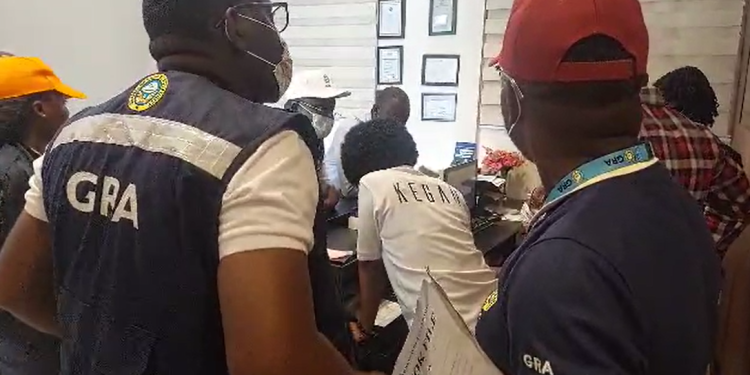










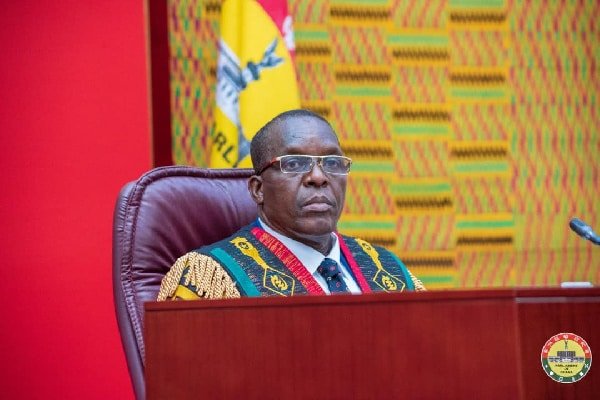
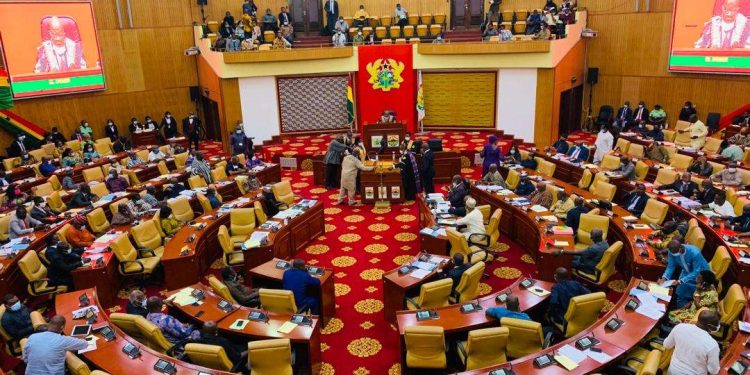

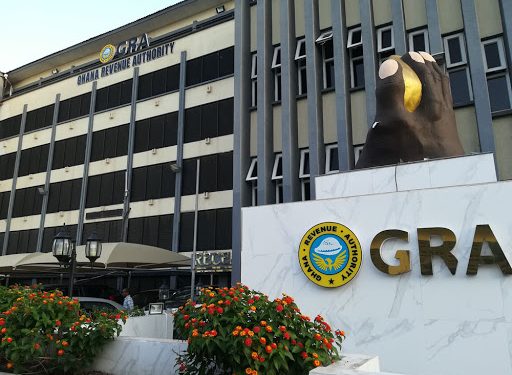



 The standard VAT rate is 12.5 percent calculated on the value of the taxable supply of goods or services or the value of an import.