The miners became trapped on 3 August when a wall in a tunnel collapsed and water from an adjacent chamber gushed into the three shafts.
Officials say the water has to drop to a depth of 1.5m (5ft) to allow rescuers to enter the shafts safely.
But on Sunday, it suddenly rose again to more than 20m.
The governor of Coahuila state, where the coal mine is located, said the water was probably flowing into the shafts from a nearby disused mine. Governor Miguel Riquelme said engineers were trying to find the source of the leak so they can block it.

More than 200 million liters have been pumped from the shafts so far, but the rescue work has been hampered by a number of setbacks.
Last week, a special underwater drone carrying a camera was lowered into one of the shafts.
Relatives of the miners had hoped the drone would provide them with long-awaited news on their loved ones, from whom there has been no sign of life since the accident 12 days ago.
But the drone failed to reach the depth at which the miners are believed to have become trapped.
“There are a great number of solid obstacles and turbulence in the water, which make visibility very limited,” a statement said.
“These are not conditions in which we can send in search and rescue teams.”
Relatives of the 10 trapped miners again expressed frustration and anger at the slow pace of the rescue effort and at what they said was a lack of communication.
“We want them (authorities) to tell us what is happening: if they have identified the places where water is coming through and why,” a member of miner Sergio Cruz’s family told Reuters news agency.
Priests in the area have been saying prayers for the miners’ rescue.
In a breakthrough that could enhance the supply of organs for transplant, researchers have effectively changed the blood type of the donor’s kidneys.
The discovery has special implications for underrepresented populations, for whom it is frequently more difficult to find a match.
A blood type A person cannot donate their kidney to a type B person, and vice versa.
However, making a kidney’s blood type the universal type O will enable it to be transplanted into any recipient.
People from black and other ethnic minority groups often have to wait a year longer for a transplant than white patients because they are more likely to have the rarer B-type blood group.
Rates of organ donation among those populations are also lower. In 2020/21, just over 9% of total organ donations came from black and other minority ethnic donors, while people from those communities make up 33% of the kidney transplant waiting list.
Scientists at the University of Cambridge were able to use a normothermic perfusion machine – a device used to pass oxygenated blood through a kidney to help preserve it – to flush blood infused with an enzyme through a donor’s kidney.
The enzyme removes the blood-type markers that line the blood vessels of the organ, effectively changing its blood type to type O. The process took a matter of hours when it was successfully performed on three donor kidneys.
Serena MacMillan, a Ph.D. student who worked on the study, said it was “very exciting to think about how this could potentially impact so many lives”.
The next step is to see how the kidneys react when given a normal supply of blood from their new blood group, something which can again be tested using a machine before the kidney is transplanted into a patient.
The research, which is funded by the charity Kidney Research UK, is due to be published in the British Journal of Surgery in the coming months.
Dr. Aisling McMahon, executive director of research at the charity, called the work “potentially game-changing”.
This is a fascinating and compelling idea, but its impact on organ transplantation is still unproven.
There are questions about the science and how much more it can increase the availability of organs for donation.
It will take further tests to see how these tweaked organs perform when actually dealing with formerly mismatched blood. And to ensure their process does not damage the kidneys in any way.
This will have to be tested in the laboratory and then in small numbers of patients.
Also, the blood group is only one of three ways kidneys are matched before transplant and half the population is already either O positive or O negative (whose kidneys can be donated to anybody).
Tissue matching and cross-matching (in which the blood of donor and recipient are mixed to see if there’s a reaction) will still be a factor, particularly in ethnic groups.
The couple’s most recent visit to the UK was in June for the Platinum Jubilee festivities.
The Sussexes, who stepped down as senior royals in January 2020, live in California.
They kept a low-key presence during the celebrations for the Platinum Jubilee – watching the Trooping the Colour parade in London from a window and not taking part in the carriage procession.
A spokesperson for the couple said they are “delighted” to be visiting the UK.
The Duchess, who will give a keynote address at the opening ceremony, is a counselor for One Young World, among others including Jamie Oliver, Sir Richard Branson, and Justin Trudeau.
Prince Harry and Meghan will return to the UK on 8 September for the WellChild Awards in London where the duke will make a speech.
Before that, they will attend the Invictus Games Dusseldorf 2023 One Year to Go event.
The duke was inspired to set up the Invictus Games after seeing a similar event in the US were injured and retired service personnel competed.
The first competition was held in London in 2014, with the following games being held in the US, Canada, and Australia.
Prince Harry is currently involved in a legal battle with the Home Office over his security arrangements in the UK.
He has asked for a review of the decision to not allow him to pay for police protection for himself and his family while in the country.
The Platinum Jubilee was the first time the duke and duchess had made an appearance together at a royal engagement since 2020.
The couple visited the Queen in April on their way to the Invictus Games in the Netherlands.
Before this, Prince Harry was last reported to be in the UK in the previous July, while Meghan was not thought to have been in the country since 2020.
Australian PM Anthony Albanese says he will investigate reports that his predecessor, Scott Morrison, secretly assumed three roles in the ministry.
Mr. Morrison became joint minister for the health, finance, and resources portfolios in the two years before he lost power in May, local media report.
Mr. Albanese said he would seek legal advice about the decisions, calling them “unacceptable” and “just weird”.
The former prime minister has declined to comment.
On Monday, Governor-General David Hurley – the Queen’s representative in Australia – confirmed he had signed an “administrative instrument” that had allowed Mr. Morrison to secretly take on the portfolios. It was “consistent with section 64 of the constitution”, a spokesperson said.
But Mr. Albanese, law experts, and Mr. Morrison’s former colleagues have criticized the secrecy surrounding it.
Even some ministers were reportedly not aware they were sharing portfolios with the former prime minister.
“This is the sort of ‘tin pot’ activity that we would ridicule if it was in a non-democratic country,” Mr. Albanese told reporters on Monday.
Local media reported that former Health Minister Greg Hunt agreed in 2020 to share his portfolio in the event he became incapacitated from Covid.
But then-Finance Minister Mathias Cormann – now head of the OECD – only learned last week that his role had been jointly held, said a report by local outlet News.com.au.
Mr. Morrison was sworn in as a second resources minister – joining Keith Pitt – last year. Mr. Morrison used his powers to block a gas exploration license in New South Wales – a decision opposed by Mr. Pitt.
Mr. Albanese said he would not speculate on forthcoming legal advice but accused his predecessor of having governed “in the shadows”.
When asked to respond to Mr. Albanese’s comments, Mr. Morrison said he wasn’t aware of them. “Since leaving the job I haven’t engaged in any day-to-day politics,” he told Sky News Australia.
“I found out about it, and I disagree with it. I believe in a cabinet system of government where ministers are responsible for their own portfolios. We don’t have a presidential form of government,” Mr. Joyce told Channel 7.
The center-right coalition suffered a convincing defeat in May’s general election. It lost many seats in cities – where climate action and political integrity were seen as key issues.
In July, Mr. Morrison drew controversy by telling churchgoers “don’t trust in governments” and “don’t trust in the United Nations” during a speech in Perth.
There are so many questions and you’d be forgiven for being confused. No one is sure who knew what, when.
It would be normal for a leader to make sure that someone can step up and do the job if a minister is incapacitated, especially at the height of the pandemic.
But there are many ways of doing this. Why did it have to be him? And more crucially, why the secrecy?
As it stands, nothing about these gels. But here’s why this could potentially be a big deal.
For a leader of any country, let alone a democracy, to take over several portfolios without the public’s knowledge or the knowledge of his own colleagues, raises serious questions.
If confirmed, this also means that the then-prime minister was potentially aiming to centralize power so that the decision-making would ultimately come down to him.
Remember, this was happening at a time when Australia was in and out of lockdowns and when the Morrison government faced a lot of criticism for the way they handled the vaccination program.
Confidence in the Morrison government was waning – but as the current prime minister put it, it seems that even Scott Morrison had no confidence in the Morrison government.
Iranian media have extensively commented on the attack, calling it “divine retribution”.
Iran’s state broadcaster daily Jaam-e Jam highlighted the news that Rushdie might lose an eye following the attack, saying “an eye of the Satan has been blinded”.
As news emerged of Friday’s attack, eyes turned to Tehran where the fatwa – religious edict – calling for the writer’s assassination was first issued more than three decades ago.
But on Monday, Iran’s foreign ministry spokesperson Nasser Kanaani Tehran “categorically” denied any link, adding “no one has the right to accuse the Islamic Republic of Iran”.
However, he said freedom of speech did not justify Mr. Rushdie’s insulting religion in his writing.
“In this attack, we do not consider anyone other than Salman Rushdie and his supporters worthy of blame and even condemnation,” the spokesman said during his weekly press conference in Tehran.
“By insulting the sacred matters of Islam and crossing the red lines of more than 1.5 billion Muslims and all followers of the divine religions, Salman Rushdie has exposed himself to the anger and rage of the people.”
Iran had no other information about Rushdie’s assailant except what has appeared in the media, he added.
Mr. Blinken had earlier denounced Iran’s state institutions for inciting violence against the author.
He said in a statement that Mr. Rushdie had “consistently stood up for the universal rights of freedom of expression, freedom of religion or belief, and freedom of the press”.
“While law enforcement officials continue to investigate the attack, I am reminded of the pernicious forces that seek to undermine these rights, including through hate speech and incitement to violence.
“Specifically, Iranian state institutions have incited violence against Rushdie for generations, and state-affiliated media recently gloated about the attempt on his life. This is despicable.”
Mr. Blinken added the US and its partners would use “every appropriate tool” at their disposal to stand up to what he called “these threats”.
On Sunday, Mr. Rushdie’s son said the author was still in a critical condition: “Though his life-changing injuries are severe, his usual feisty and defiant sense of humor remains intact,” he said.
The family was “extremely relieved” when Mr. Rushdie was taken off a ventilator on Saturday, he said, adding that his father was able to “say a few words”.
The author’s agent Andrew Wylie said the celebrated novelist suffered severed nerves in one arm, damage to his liver, and would likely lose an eye.
The man charged over Friday’s attack – named Hadi Matar, aged 24 – has pleaded not guilty to charges of attempted murder and assault. He is accused of running onto the stage and stabbing Mr. Rushdie at least 10 times in the face, neck, and abdomen.
The novelist was forced into hiding for nearly 10 years after The Satanic Verses was published in 1988. Many Muslims reacted with fury to it, arguing that the portrayal of the Prophet Muhammad was a grave insult to their faith.
Mr. Rushdie faced death threats and the then-Iranian leader, Ayatollah Ruhollah Khomeini, issued a fatwa – or decree – calling for Mr. Rushdie’s assassination, placing a $3m (£2.5m) bounty on the author’s head.
The fatwa remains active, and although Iran’s government has distanced itself from Mr. Khomeini’s decree, a quasi-official Iranian religious foundation added a further $500,000 to the reward in 2012.
Hospital records were obtained by CNN and scores of parishioners gathered for Sunday morning mass at a church in Giza, greater Cairo, and it indicated that at least 18 youngsters perished in the fire.
According to a statement from Egypt’s Coptic Church and health officials, there have been 41 fatalities and 14 injuries. According to hospital records, the kids ranged in age from 3 to 16.
According to Egypt’s Interior Ministry, an electrical failure in an air conditioner on the second floor of the church caused the fire to start at around 9 a.m. local time. In the densely populated Imbaba area lies the modest church.
Most of the deaths and injuries were caused by smoke inside church classrooms after the electrical failure, the ministry said in a Facebook post.
At least two officers and three civil protection service members were injured responding to the fire, the ministry said.
Church officials also believe the fire was accidental, said Coptic Church spokesperson Archpriest Moussa Ibrahim, adding a priest was among those killed.
Egypt’s Coptic community and churches have been a target of religious-based violence and attacks historically, with persecution and discrimination spiking since the toppling of Hosni Mubarak’s regime in 2011.
“We are in continuous contact with the local authorities and the Health Ministry,” the head of the Coptic Church, Pope Tawadros II, said, according to the church spokesperson.
Youssef Islam, 16, who works at a bakery next door to the church said the worst of the flames were on the fourth floor. He said he ran into the church and intended to get water from the third floor to help put out flames on the floor above.
But when he forced his way through a door, he saw children’s bodies piled on top of each other. “A horrible scene,” he said. “This was probably the nursery.”
Mariam Malak, 23, told CNN that she left the church shortly before the fire broke out.
“I left the church after Sunday mass and was on my way to work when my mom called me. She thought I was caught in the fire. I turned back and saw (the) church in flames. I just missed it by only a few minutes,” she said.
“Everyone who was there went up to the heavens, including our father Abdel Masih, who led the prayers this morning, and a lot of our families and friends. We are trying to identify everyone now.”
The fire broke out during a Sunday service at the Abu Sefein Coptic church.
CNN also spoke to a family that was driving through the neighborhood looking for the body of their cousin after the fire subsided.
“I can’t believe I won’t see you again, Irini. Why did you leave us so fast?” one of the women, Afaf, murmured to herself throughout the drive from one church to the other. Afaf’s sister Amany Marina held her hand and prayed in silence. Their cousin Amany cried silently in the front seat as her husband, Sameh, kept driving.
It was almost sunset when they made it to the church in the Al-Warraq neighborhood where the prayer for the dead was held. The three women held hands as they walked through security.
Egyptian President Abdel Fattah el-Sisi tweeted his condolences to the victims of the fire.
“I offer my sincere condolences to the families of the innocent victims who moved to the side of their Lord in one of the houses of worship,” Sisi said.
The Egyptian President said he is closely following developments of the “tragic accident” and that he has directed state agencies to take the necessary measures to immediately deal with the tragedy and provide care for the injured.
Sisi has directed the Armed Forces Engineering Authority to repair the church, the spokesperson for the Coptic Orthodox Church announced, according to state news Ahram online.
Chairman of the Egyptian Armed Forces Engineering Authority Hesham El Swefy told Pope Tawadros in a phone call about Sisi’s instructions to reconstruct the church, the state news agency said.
Egyptian soccer player Mo Salah, who plays for Liverpool and captains the national team, also sent a message of support to those affected by the tragedy on Sunday, saying in a tweet: “My sincere condolences to the victims of the Abu Sefein Church, and my best wishes for a speedy recovery to all the injured.”
A preliminary investigation into the fire “indicated that the blaze was caused by an electrical short circuit,” Egyptian state news reported, citing a statement from prosecutor-general Hamada El Sawy.
El Sawy visited the site and said eyewitnesses told his team the fire was caused by an electrical short circuit in a power generator, according to Egyptian state news.
“The prosecution team has examined all of the victims’ bodies and found no visible injuries on the deceased bodies except suffocation signs,” El Sawy said.
The public prosecution has questioned 14 of the injured and ordered the Public Administration for Criminal Evidence to collect evidence at the scene, according to the statement quoted.
The honor was established to remember Komla Dumor, a BBC World News presenter who passed away unexpectedly in 2014 at the age of 41.
Buyoya follows in the footsteps of Victoria Rubadiri, Solomon Serwanjja, Waihiga Mwaura, Amina Yuguda, Didi Akinyelure and Nancy Kacungira.
The runner-up for this year’s prize is Ivory Coast’s Lindsay Aida Guei, who presents her own talk show on Canal+ Elles, an Africa-focused TV channel.
The Zambian reporter will spend three months working with BBC News teams in London across TV, radio, and online. He will also receive training and be mentored by leading BBC journalists.
As part of the placement, he will travel to a country in Africa to report on a story that will be broadcast to the BBC’s global audiences.
“Finding out I’d won the BBC News Komla Dumor Award is one of the best things to have happened in my life,” Buyoya says.
“I have a huge admiration for Komla’s prodigious work. I’ve always wanted to be a journalist and I’d watch back Komla’s news reports, inspired by his powerful storytelling and his dedication to covering Africa authentically.
“I’m truly grateful to be part of Komla’s legacy.”
“We’re looking forward to welcoming Buyoya to BBC News. We’re excited by his journalistic talent, and seeing him flourish during his BBC placement,” says BBC Africa head Juliet Njeri.
“His dedication to ensuring important news stories from Africa are told in a compelling and engaging way, makes him ideal to help to continue Komla’s legacy – sharing nuanced and comprehensive stories about the continent.”
The BBC’s Komla Dumor had a charismatic presenting style
Customers at an Ikea branch in Shanghai fled in panic on Saturday after local health officials ordered the business to close down after a Covid-19 case’s close contact was found there.
CNN has reached out to Ikea’s press office in Shanghai for comment.
In a press briefing Sunday, Zhao Dandan, deputy director of the Shanghai Health Commission, said the “store and affected area” would be under “closed loop” management for two days. People inside the loop must undergo two days of quarantine and five days of health surveillance.
On Monday, city health authorities reported six locally transmitted Covid-19 cases in Shanghai, of which five were asymptomatic.
Shanghai, China’s financial capital and home to 25 million people, was locked down for two months earlier this year, leading to widespread public anger as residents reported difficulties in ordering daily essentials including food and medicine.
The lockdown was imposed under China’s rigid zero-Covid policy, which relies on mass testing, extensive quarantines, and even confinement of entire cities to stamp out any resurgence of the virus.
They came for a beach holiday. Now they’re trapped in China’s latest Covid lockdown
Relying on mobile technology and big data, the Chinese government uses a color-based “health code” system to control people’s movements and curb the spread of the virus.
People in many Chinese cities must present a green health QR code to ride public transport and enter venues including shopping malls, gyms, and restaurants. The system logs their whereabouts and whether they have been in contact with a confirmed Covid-19 case — those whose health codes turn red face almost certain confinement to quarantine facilities.
Snap lockdowns have become common in the country, with the public growing increasingly frustrated with the stringent rules as the economy struggles to adapt to the disruption.
There is growing hope that the much-anticipated outcomes of last week’s presidential election in Kenya will be made public soon.
The national tallying center is getting ready for the declaration as the desks utilized for the result verification procedure have been cleaned.
According to the most recent results, Deputy President William Ruto has a slim advantage against former Prime Minister Raila Odinga.
The findings must be made public by 16 August in accordance with the Kenyan constitution.
On Sunday, both Mr. Odinga and Mr. Ruto urged anxious Kenyans to be patient as they wait for the Independent Electoral and Boundaries Commission (IEBC) to determine which of them would be the country’s fifth president.
There have also been calls for peace from several leaders and bodies including the Catholic church which asked for “patience and civility” and urged the main candidates to show “restraint and statesmanship”.
Mr Ruto leads the official tally at 51% against Mr. Odinga’s 48%, according to local media. Verified results from 39 of the 290 constituencies are yet to be declared.
Media organizations have also been releasing provisional tallies using official data from the 46,000 polling stations. They also show a tight race. About 14 million votes were cast – a turnout of 65%.
In 2017, the bloc’s worst wildfire year, about 420,000 hectares had been burnt by mid-August before a devastating October pushed it up to 988,087 hectares for the whole year. With the fire season far from over, the EFFIS warned that this year could set a new record.
This year so far is “just below 2017,” EFFIS coordinator Jesús San-Miguel told Agence France-Presse on Sunday. “The situation in terms of drought and extremely high temperatures have affected all of Europe this year and the overall situation in the region is worrying, while we are still in the middle of the fire season.”
Spain, Romania, and Portugal are the worst affected EU members. France has also been hit hard, with more than 60,000 hectares burnt as of this week, far surpassing the country’s previous record of 43,600 hectares for the entire year of 2019.
French President Emmanuel Macron will meet with firefighters, farmers, EU emergency responders, and officials to discuss future strategies for wildfire prevention and response once the fires have died down, according to the president’s team cited in Le Journal du Dimanche on Sunday.
Firefighters in France this weekend managed to halt the spread of a vast fire that ravaged 6,000 hectares of pine forest within 24 hours in the southwestern region of Gironde. Hundreds of firefighters from other EU countries had rushed to France’s aid over the past week to help contain the blaze.
But with Europe heating up, wildfires are increasingly erupting farther north, too. The EFFIS‘s San Miguel said that since 2010, there had been a trend toward more fires in central and northern Europe.
With this week’s heat wave subsiding and rain bringing some relief, EFFISÂ said on Sunday that the wildfire situation was improving. However, the risk remains high for the Iberian Peninsula and from eastern France across Belgium into Germany.
According to a survey conducted by the Bulgarian Chamber of Commerce and Industry (BCCI) among its members, half of the businesses in Bulgaria have modified their employees’ salaries to reflect the rising inflation.
Between July 19 and July 29, a survey was conducted to investigate how inflation affects the labor market.
Nearly 80% of entrepreneurs reported a serious increase in the prices of raw materials and energy products. One-third of the companies have postponed investments to be able to compensate for the inflation levels, and in over a quarter of the companies the turnover has increased but the amount of their profit has decreased. 21% of respondents saw a reduction in staff numbers. Others pointed out that, as a result of inflation, Bulgaria had lost some of its competitive advantages over other EU producers.
53% of entrepreneurs have increased employee salaries in order to adjust them to the increased prices of goods and services.
The data confirmed the concerns about the need to increase wages, expressed by 51% of Bulgarian business people in the June poll in the context of expectations of Bulgaria’s accession to the euro area.
For half of the entrepreneurs, the wage increase was between 5% and 10%. 24% of the enterprises have increased wages ahead of inflation, above or at the rate of inflation as of June 2022, which is close to 17%. 9% say the increase was 3.3%, which is as much as inflation for 2021.
Businesses express serious concerns about future inflation in Bulgaria and Europe. According to some, the crisis is only now beginning. 66% of entrepreneurs do not expect inflation to return to pre-crisis levels soon, and over 20% say they expect it to fall seriously when the political situation in the country stabilizes or when the war in Ukraine ends. Only 2% expect inflation to recover to tolerable levels by the end of the year.
The transition committee chairman of Nnewi North Local Government Area, Hon Mbazulike Iloka, has been suspended by Anambra State Governor Prof. Chukwuma Soludo due to the circumstances surrounding the death of his wife on Sunday morning.
Chidiebere, Iloka’s wife, is reported to have slouched and passed away on Sunday morning after preparing her husband breakfast.
People who are familiar with the pair, however, insist that the LG Chairman may have killed his wife since he has a history of repeatedly beating her.
It is reported that a huge wound was discovered on her head as signs of violence were also found on her body. This has led to a public outcry over her death.
In a letter of suspension, which was signed by Anambra State Commissioner for Local Government, Chieftaincy and Community Affair, Tony Collins Nwabunwanne, the chairman was asked to hand it over to the head of Local Government administration, to avoid interfering in the investigation.
The letter read: “Following the sad news of the death of your wife, late Mrs. Chidiebere Iloka on 7th August 2022, there has been a massive outcry over the circumstances leading to her death, including alleged possible homicide.
“While you are presumed innocent until the completion of investigations, it has become imperative that you step aside to allow unfettered investigation and justice.
“Consequently, you are directed to step aside and to hand over the affairs of the local government to the head of local government administration, not later than 12th August 2022, until further notice.â€
A celebrated author and winner of the world’s top literary prizes Salman Rushdie, whose writings have attracted death threats has been attacked and apparently stabbed in the neck on stage Friday before giving a lecture at the Chautauqua Institution in western New York, State Police said.
Police say a state trooper on the scene arrested the suspect.
Rushdie was airlifted to a local hospital according to the police, but his current state is unknown.
However, an interviewer also suffered a minor head injury, police said.
Medical staff and police were called to the amphitheater, according to a Chautauqua spokesperson who would not elaborate or confirm details about the incident.
Salman Rushdie’s treatment of delicate political and religious subjects turned him into a controversial figure.
A witness in the audience told CNN he saw Rushdie attack on stage.
The witness could not confirm what was used in the attack, adding that he was 75 feet from the stage.
The 75-year-old novelist — the son of a successful Muslim businessman in India — was educated in England, first at Rugby School and later at the University of Cambridge where he received an MA degree in history.
After college, he began working as an advertising copywriter in London, before publishing his first novel, “Grimus” in 1975.
Rushdie’s treatment of delicate political and religious subjects turned him into a controversial figure. But it was the publication of his fourth novel “The Satanic Verses” in 1988 that hounded him for more than three decades.
Some Muslims found the book to be sacrilegious and it sparked public demonstrations. In 1989, the late Iranian leader Ayatollah Ruhollah Khomeini called Rushdie a blasphemer and said “The Satanic Verses” was an insult to Islam and the Prophet Mohammed, and issued a religious decree, or fatwa, calling for his death.
As a result, the Mumbai-born writer spent a decade under British protection before the Iranian government announced it would no longer seek to enforce the fatwa in 1998.
Police believe an Italian guy who was rescued from a collapsed tunnel close to the Vatican may have been trying to tunnel into a bank.
After firefighters spent eight hours pulling him out from beneath a road, he is now recovering in a hospital.
However, given that he and another guy were both detained by police for causing damage to public property, he may now need to save himself from even more trouble.
Officers believe he may have been part of a gang trying to break into a bank.
Two other men were arrested for “resisting a public official” after trying to escape from the site, Rai News reports.
Three of the four men managed to escape before the tunnel collapsed, leaving the final man trapped six meters below.
“We are still investigating, we do not exclude that they are thieves, it is one of the theories,” a police spokesman told the AFP news agency.
The tunnel, which began in an empty, newly-rented shop, was in an area close to two banks.
Local media believe the motive to be clear, noting that the tunnel was found near a bank shortly before the 15 August long weekend, when much of the city empties.
“The hole gang,” read the headline in the Corriere della Sera daily.
Michele, a resident who lives in the same building, said residents had no idea what was going on, adding: “We all thought that the people there were renovating the place.”
The head of the FBI said violence and threats against the agency “should be deeply concerning to all Americans”.
Police have not formally identified the suspect killed in Ohio on Thursday, and did not comment on his motive during news briefings.
Unnamed law enforcement officials told US media the suspect may have been present at the Capitol building in Washington on the day of last year’s riot by Trump supporters, although he was not charged with any crimes in connection to the disorder.
Police said the suspect tried unsuccessfully to breach a visitor security screening area at the FBI office in Cincinnati at around 09:15 (13:15 GMT).
He fled the area, but was spotted about 20 minutes later by a police officer, Ohio State Highway Patrol spokesman Nathan Dennis told a news conference.
IMAGE SOURCE, REUTERS
A chase ensued until the suspect stopped and exchanged gunfire with officers before fleeing into a cornfield.
After an hours-long standoff, he raised a weapon toward officers and was killed by police around 15:00 local time, said, Mr. Dennis. No police were injured in the shootout.
According to NBC News, the man fired a nail gun at the FBI building and was also armed with a semi-automatic rifle.
There are two social media accounts in the reported name of the suspect, according to the BBC’s disinformation reporter Shayan Sardarizadeh.
Most of the tweets were about the 2020 election, saying it had been stolen from Mr. Trump. The posts also included calls for violence against Democrats, the FBI, and the Supreme Court.
At least two posts on the Twitter account – including one saying “I was there” – suggest the person attended the Capitol riot.
On Truth Social, the website owned by Mr. Trump, an account in the name of one Ricky Shiffer posted earlier on Thursday, calling for Americans to “be ready to combat”, adding: “I am proposing war.”
One post appeared to have been made after the incident at the FBI office in Cincinnati.
FBI Director Christopher Wray, who was appointed by Mr. Trump in 2017, said in a statement that “unfounded attacks on the integrity of the FBI erode respect for the rule of law and are a grave disservice to the men and women who sacrifice so much to protect others.
“Violence and threats against law enforcement, including the FBI, are dangerous and should be deeply concerning to all Americans.”
In a speech to FBI field agents in the state of Nebraska on Wednesday, he called online threats to officials “deplorable and dangerous”, adding: “Violence against law enforcement is not the answer, no matter who you’re upset with.”
Authorities declared large portions of England officially to be in a drought on Friday, asking locals and businesses to save water during the driest summer in 50 years.
Following the National Drought Group meeting, which was attended by water corporations, ministers, and other water authorities, the Environment Agency declared that England’s south, southwest, and southeast, together with the central and eastern regions, are experiencing drought conditions. London, the capital, is also affected in some areas.
The UK has had five consecutive months of below-average rainfall and back-to-back heat waves, with temperatures expected to peak on Saturday as high as 37 Celsius (98.6 degrees Fahrenheit) in some parts. Only two months since the start of 2021 have seen at least average rainfall.
Southern England received just 17% of its average rainfall in July, according to the UK Met office.
“We are currently experiencing a second heatwave after what was the driest July on record for parts of the country. Action is already being taken by the Government and other partners including the Environment Agency to manage the impacts,” the country’s Water Minister Steve Double said in a statement. “All water companies have reassured us that essential supplies are still safe, and we have made it clear it is their duty to maintain those supplies.”
While the lack of rain and heat are driving this drought, around 3.1 billion liters of water are lost every day in England and Wales through leaks in the nation‘s aging infrastructure. Consumer groups and experts have called on water companies to do more to plug leaks.
The Environment Agency said in its statement that the government expected water companies “to reduce leakage and fix leaking pipes as quickly as possible and take wider action alongside government policy.”
Several rivers across England have been drying up in parts, including the Thames, which runs through London. Officials have been reoxygenating rivers and rescuing fish where levels are low. Water levels in reservoirs are also rapidly dropping.
A car passes over a bridge over a dried-up river bed where the River Thames usually flows, near Kemble in Gloucestershire.
The drought declaration means water companies and governments should implement drought plans without seeking permission from ministers. Companies are likely to impose more hosepipe bans, which are already in place for millions of people, forcing them to water gardens and wash cars without hoses, and refrain from filling up paddling pools in the ongoing heat wave. Companies could also take more water out of rivers and other sources to ensure supplies.
The announcement Friday puts the declared area under an amber drought alert, meaning several indicators — including rainfall, river levels and flows, reservoir storage, and groundwater levels — are very low.
Thirteen rivers that the Environment Agency monitors as indicators of wider conditions are at their lowest levels ever recorded, while soil moisture is comparable to the end of the 1975-76 drought, one of the country’s most severe. That drought was also triggered by a combination of extreme heat and consecutive months of low rainfall.
The amber alert is one tier below the more severe red alert and means that there is likely to be stress on water supply sources, reduced agricultural and crop yields, localized wildfires, and impacts on wildlife and their habitats, according to a previous report by the Environment Agency.
The London Fire Brigade has also warned of “tinderbox dry” conditions this week and an “exceptional fire risk” across the capital as temperatures are expected to reach 36 Celsius (97 degrees Fahrenheit) on Saturday and as grass — from lawns to public parks and heaths — is bone dry and brown without the usual rainfall. Parts of the capital, including homes and parks, were hit by fires on July 19 during a record-breaking heat wave.
Concerns grow over food security
The UK does typically experience drought conditions every five to 10 years in some areas.
The Centre for Ecology and Hydrology has said that drought conditions could continue until at least October.
The agency only looks a few months ahead, and climate scientists have warned that if this coming winter is also dry, like last winter, the UK’s food security could be at risk.
Local residents use garden hoses to assist fire crews to tackle a crop fire that swept over farmland and threatened local homes on August 11, 2022, in Skelton, England.
Liz Bentley, CEO of the Royal Meteorological Society, said that there were already concerns about the impact of drought on food supplies and affordability.
“There’s a number of crops that are really struggling due to either lack of rainfall, like the potato crop here relies on rainfall, they don’t usually take water from anywhere else to irrigate the fields. And even some of the other crops that do take water from rivers, for example, to irrigate fields, they’re really struggling at the moment,” Bentley told CNN.
“Even in current conditions, yields are going to be down for a number of crops and the price of these things are going to go up, and obviously that’s due to a drought here in the UK. But there are other things going on across Europe.”
One of Europe’s largest rivers is drying up as the continent endures a long, hot summer, which is causing serious issues for the people and businesses who depend on it.
Captain Andre Kimpel looks across the Rhine, where water levels have decreased dramatically over the past few days, with an experienced but uneasy eye.
Although several ferries in and around the town of Kaub have been rendered inoperable, he is still ferrying passengers and their vehicles to the other bank for the time being.
“It’s no joke,” he says as he navigates the water which sparkles in the summer sunshine. “We have 1.5m [5ft] of water and our boat sits 1.20m deep. So we have 30 centimeters of water left beneath us.”
It’s not unusual for water levels to drop here but, Captain Kimpel says, it’s happening more frequently. “We used to have a lot of floods. Now we have a lot of low waters.”
On the riverbank nearby, there’s an old measuring station. Any skipper wanting to enter the Upper Rhine will refer to the official water level recorded here.
The current level hasn’t yet fallen below the lowest figure ever recorded here, in October of 2018. The measurement was 25cm (the measurement is taken from the same reference point in the water, not the deepest point on the river bed).
It’s currently 42cm – but is forecast to fall further in the coming days.
Image caption,
Captain Andre Kimpel who is still carrying people across the water to the opposite bank says “We have 30 centimeters of water left beneath us”
Travel a little further upstream and the challenge is obvious.
At the town of Bingen, great swathes of the riverbed are exposed, bleached stones powder dry in the baking sun. People from the nearby town pick their way over the rocks and take photographs. In normal times they’d be underwater. One man told me he’d never seen it like this.
A few commercial vessels slowly navigate the channel of water that’s left here.
The Rhine is one of Europe’s great working rivers and industry here relies on barges to fetch and carry raw materials and finished products to and from the power plants and factories that line the riverbank.
The water’s already too low to allow some of the larger vessels through. Others have been forced to reduce their cargo, and lighten the load so that they sit higher in the water. And they’re keeping a close eye on the river levels.
It’s likely that the Upper Rhine will be closed to traffic completely, says Martina Becker from HGK shipping. Low water happens every year, she tells us, but it’s not as extreme as this.
“It’s quite extraordinary, particularly for this time of year. July and August are usually quite wet months with lots of rain and good water levels.”
“This is an unusual situation for us and the question is what happens in October when the usually dry months arrive. We are already approaching the record low level we had in 2018. We could reach that level next week.”
Experts have warned that the low water could significantly damage Germany’s economy.
Image caption,
Due to Russia reducing its gas supply to Germany, the country is relying more heavily on coal-fired power stations
And there’s an extra worry for the government. Since Russia reduced its gas supply to Germany, the ministers are relying more heavily on coal-fired power stations. But much of the coal that feeds them is transported by barge. Some of the load is being shifted to the railway network but there’s limited capacity.
There’s a far greater concern among those who live by or work on the river.
The government agency which monitors the levels says that the current low water may just be part of a normal pattern. But, they note, that such events are becoming more intense as a result of climate change and they say the situation will worsen in the second half of this century.
At Bingen, the water has fallen low enough to expose an old stone bridge that leads to a little island. People laugh as they make their way across the rocks, enjoying the novelty of being able to reach it on foot. But, for many, in this new landscape, it’s a warning.
Hong Kong has recorded its sharpest annual drop in population, with experts blaming the decline on strict Covid control measures and a political crackdown that has taken the shine off a financial hub long advertised as “Asia’s world city.”
The city’s total population fell from 7.41 million people to 7.29 million, a 1.6% decrease, the Census and Statistics Department said Thursday.
That’s the steepest decline since the government began tracking figures in 1961.
Though authorities attributed some of that to a “natural” decrease — more deaths than births — experts said the figures also reflected an exodus that has accelerated in the past few years amid periods of massive social upheaval that have included anti-government protests and the coronavirus pandemic.
Around 113,200 residents left Hong Kong over the past year, the department said, compared to 89,200 the year before. The figures include expatriates and other non-permanent residents.
Throughout the pandemic, experts and industry leaders have warned that the city’s heavy-handed Covid-19 restrictions would drive away residents, travelers, and expatriates.
Even as the rest of the world opened up, for months Hong Kong continued to close borders, suspend air routes and impose mandatory quarantines and social distancing measures such as caps on public gatherings and limits on restaurant services.
Mask mandates remain in effect, while public spaces like beaches and gyms have faced long closures during periods of high case numbers.
The measures have devastated businesses, with some of Hong Kong’s most famous sites — including the Jumbo Kingdom floating restaurant — shuttering in the past year.
“More than two and a half years of Covid-19 restrictions are taking a heavy toll on businesses and the economy,” the Hong Kong General Chamber of Commerce said in a statement this month.
The group’s CEO, George Leung, added that Hong Kong’s border closures were “stifling any prospect of economic recovery” and urged authorities to come up with a “concrete timetable to reopen Hong Kong.”
The government has conceded the impact of its policies, saying on Thursday that flight restrictions — such as requiring all arrivals to be vaccinated, tested negative for Covid, and pay for quarantine in a hotel upon arrival — “had interrupted population inflow.”
People wearing face masks walking in Hong Kong on July 12.
This week the government eased the quarantine requirement, lowering the number of days arrivals must stay in a designated hotel from seven to three.
The government said some Hong Kongers may have chosen to settle elsewhere during the pandemic.
“Meanwhile, Hong Kong residents who had left Hong Kong before the pandemic may have chosen to reside in other places temporarily or were unable to return to Hong Kong. All these (factors) might have contributed to the net outflow of Hong Kong residents during the period,” said a government spokesperson.
But the government downplayed the population drop and seemed to suggest Hong Kong was still a bustling finance hub.
“Being an international city, Hong Kong’s population has always been mobile,” said the spokesperson. “During the past 10 years, net outflows of Hong Kong residents … were recorded for most of the years.”
The spokesperson added that the problem of Covid-driven departures “could be resolved when the quarantine and social distancing measures relaxed,” and that numbers would rise due to government efforts to attract overseas talent.
The political crackdown
Covid aside, experts say another factor behind the exodus is Beijing’s political crackdown on the city.
After Hong Kong’s 2019 pro-democracy, anti-government protests, Beijing imposed a sweeping national security law, under which the government has all but wiped out formal opposition.
Authorities have raided and closed down newsrooms, jailed activists and protesters, unseated elected lawmakers, heightened censorship both online and in printed publications, and changed school curricula.
After a decade in power, where is Xi Jinping taking China? 04:18
Since the law was introduced, many former protesters and lawmakers have fled overseas, fearing prosecution. Many individuals and families have told CNN they too are considering leaving because they feel the city has been transformed beyond recognition.
In the aftermath of the protests, a number of countries including the United Kingdom, Australia, and Canada opened new visa pathways for Hong Kongers looking to leave. Many former protesters and activists have also fled to the self-governing democratic island of Taiwan.
The security law “has swiftly and effectively restored stability and security,” the government said on July 29, adding that residents “are relieved and happy to see that Hong Kong now continues to be an open, safe, vibrant and business-friendly metropolis
Newly revealed pictures reveal two occasions on which former President Donald Trump apparently flushed documents down the toilet.
Maggie Haberman, a New York Times reporter, and CNN contributor are publishing the new images in her forthcoming book, “Confidence Man,” and the images were earlier posted by Axios. CNN has previously reported how Trump flouted presidential record-keeping laws and would often tear up documents, drafts, and memos after reading them.
He periodically flushed papers down the toilet in the White House residence — only to be discovered later on when repairmen were summoned to fix the clogged toilets. Trump has denied the allegations, and in a statement given to Axios on Monday, a spokesman claimed that reporting about the practice was fabricated.
In the images revealed on Monday, it’s unclear what the documents are in reference to — and who authored them — but they appear to be written in Trump’s handwriting in black marker. Haberman said one image is from a White House toilet and the other one is from an overseas trip that was provided to her by a Trump White House source.
Trump had a pattern of disregarding normal record preservation procedures. On one occasion, Trump asked if anyone wanted to put a copy of a speech he just delivered up for auction on eBay, during a mid-flight visit to the press cabin of Air Force One.
In other instances, Trump would task aides with carrying boxes of unread memos, articles, and tweet drafts aboard the presidential aircraft for him to review and then tear to shreds.
A former senior Trump administration official said a deputy from the Office of Staff Secretary would usually come in to pull things out of the trash and take them off Trump’s desk after he left a room.
A former White House official recalled that while document preservation was a key responsibility of the staff secretary, the rest of Trump’s senior staffers lacked the sense of their obligation to maintain records of papers that moved through the West Wing.
Trump’s haphazard record-keeping was the subject of a drawn-out fight earlier this year between him and the National Archives, and the Justice Department has been investigating the matter.
Since early March, occupying forces have been in control of the location, the largest nuclear power plant in Europe. Ukrainian technicians continue to run it, nevertheless.
Moscow has recently been accused of using the plant “as a shield” while its troops launch rockets from there towards nearby locations.
And on Thursday, more shelling was reported – and the head of the UN issued a new warning about fighting near the nuclear site “leading to disaster”.
Now two workers have told the BBC about the daily threat of kidnap, as well as their fears of either “radioactive contamination of the wider region” or a nuclear catastrophe.
The southern city of Nikopol is one of the most dangerous vantage points in Ukraine.
On the banks of the Dnipro River, it’s possible to see the Zaporizhzhia nuclear power plant 10 miles across the water.
It’s a place that has seen heavy shelling over the past couple of weeks, with up to 120 rockets being reported in a single night.
They come from the direction of Enerhodar, the city where the plant is situated.
In turn, Enerhodar – and the power station – have also come under heavy fire.
Another Enerhodar resident tells us that shop and pharmacy prices are now four times higher than in the territory that Ukraine still controls, as well as there is a shortage of doctors. Most ATMs are closed, too.
Svitlana has worked at the plant for many years and says shells have been landing close to it every day.
“The psychological situation is difficult,” she adds. “Soldiers are walking everywhere with weapons and everyone is actually kept at gunpoint.”
Russia is accused of basing about 500 soldiers there. Recent footage has shown military vehicles being driven inside, and Svitlana is in no doubt it’s being used as a base.
“Every day they drive back and forth in their military vehicles,” she says.
“They positioned their military equipment right at the station buildings, to make it impossible for Ukrainian armed forces to strike.”
A text comes in from Mykola: “The staff is now hostages of the Russians,” it reads.
“They turned off the internet, left only landline phones, and food is available only in one single dining room. They turned the others into their bases.”
Ukraine is concerned Russia has started shelling the area it occupies to try to create a false narrative, such as: “Ukraine is attacking you – so better vote to join Russia so we can take root and protect you.”
Moscow-installed politicians for the Zaporizhzhia region have just signed an order for a referendum to be held soon. Russia has staged sham votes in the past, such as with Crimea, which it annexed in 2014.
Mykola continues: “Access to all roofs is prohibited, they made their observation points there. The training building also became their barracks.
“Now, more and more often, staff are kidnapped just when leaving the shift at the security gate.”
It’s not known why the kidnapping takes place – but residents paint a picture of intimidation as Russians look to lay down law.
Svitlana and Mykola also describe
by the Russians – but they say the staff is still able to monitor the reactor properly.
Nigerian security forces say they have arrested four suspects in the attack on a Catholic church in June that killed 40 people. Authorities blamed the massacre on the militant group Islamic State West Africa Province or ISWAP.
Nigeria’s Defense Staff Chief Gen. Lucky Irabor disclosed the arrests on August 9 in Abuja during a media briefing.
He said joint security agents on August 1 arrested four terrorists who allegedly took part in the June church shooting in the town of Owo, in southwest Nigeria. The suspects, including the alleged mastermind of the attack, were arrested in Kogi State, which is close to Nigeria’s capital.
Men heavily armed with guns and explosives invaded the St. Francis Catholic Church on June 5, killing 40 worshippers and wounding 80.
Irabor also said officials have arrested a high-profile militant who escaped from an Abuja prison last month during a jailbreak, for which ISWAP claimed responsibility.
Irabor said the suspects could not be brought in front of reporters because of ongoing investigations.
“We’ve done quite a lot, and it’s my pleasure to let you know that starting with the Owo church attack, we have arrested those behind that dastardly act,” Irabor said.
The local governor in Ondo State, Rotimi Akeredolu, said authorities are continuing to search for the remaining perpetrators.
He responded to the announcement and said, “We have known for a while, but we needed not to come out with it because more work is still ongoing.”
Abuja resident Jethro Titus hailed the police for catching the suspects.
“Kudos to our security agency for being able to capture those people who killed innocent souls,” Titus said. “I think what should be done to them is … they should face the law.”
“I’m not going to follow what Irabor said. I know the country we’re in,” Olajide said. “Why were they not paraded? The fact that he’s chief of defense doesn’t mean whatever he says is the gospel truth.”
Nigeria is struggling to contain an Islamist insurgency in the northeast and a wave of criminal activity, especially kidnappings for ransom, mostly in the northwest.
The number of people displaced by the record-breaking drought in Somalia has topped one million, with the United Nations warning of widespread famine if emergency needs are not soon met.
Ishaku Mshelia, the deputy emergency coordinator for the U.N. Food and Agriculture Organization, told VOA via telephone Wednesday that people are migrating in search of food and other assistance.
He said the FAO is trying to help.
“Our ability as [a] humanitarian community is to be able to reach the affected people in their communities and provide the services that they need so that they … don’t feel pushed to migrate,” Mshelia said. “Unfortunately, previous droughts, what we have seen is that a lot of mortalities have been reported where people that, unfortunately, died on their way to open areas in search of assistance.”
A statement issued by the FAO on Wednesday said that if the funding gap is not addressed, widespread famine may be inevitable.
Drought-related malnutrition has killed 500 children, according to the U.N. Children’s Fund, UNICEF.
Authorities in Somalia’s Gedo region also confirmed to VOA more than 50 deaths of children due to suspected drought-related illnesses. The deaths were reported in the towns of Bardere and Beledhawo, which border Kenya.
Ali Yusuf Abdullahi, the Gedo regional administration spokesman, said that the region is witnessing a “catastrophic” situation due to drought.
He said that people are fleeing in search of a better life and have gathered in major towns including Dolow, near the Ethiopian border.
As of today, Abdullahi said, Dolow has received more than 50,000 displaced people and there are people who are coming from the Ethiopian side who were affected by the drought there and settling in IDP camps in Dolow. He said the town administrators are doing their best to provide relief, but that is not enough.
Somalia’s federal government declared the three-year drought a national emergency last year. The drought, Somalia’s worst in more than 40 years, has affected more than 7 million people.
According to the Somali prime minister‘s office, the drought has also killed more than two million livestock.
According to local reports, the attack took place at an Islamic seminary in the Afghan capital.
Sheikh Haqqani was a supporter of Afghanistan’s Taliban government and a prominent critic of the jihadist militant group Islamic State Kohrasan Province (IS-K), a regional affiliate of IS that operates in Afghanistan and opposes the Taliban’s rule.
“It’s a very huge loss for the Islamic Emirate of Afghanistan,” a senior Taliban official told Reuters news agency, adding that authorities were investigating who was behind the attack.
Despite sharing the same name, he was not related to Afghanistan’s Haqqani militant group network.
The religious leader had previously issued a fatwa, or religious decree, in support of female education – a contentious issue inside Afghanistan.
In an interview with the BBC’s Secunder Kermani earlier this year, he argued that Afghan women and girls should be able to access education: “There is no justification in the sharia [law] to say female education is not allowed. No justification at all.”
He added: “All the religious books have stated female education is permissible and obligatory, because, for example, if a woman gets sick, in an Islamic environment like Afghanistan or Pakistan, and needs treatment, it’s much better if she’s treated by a female doctor.”
In all but a handful of provinces in the country, girls’ secondary schools have been ordered to remain closed by the Taliban.
Sheikh Haqqani had previously survived two assassination attempts, most recently in 2020 when IS claimed responsibility for an explosion at a religious school in the Pakistani city of Peshawar that killed at least seven people.
According to recent satellite photographs, at least seven Russian warplanes were destroyed on Tuesday after explosions shook and claimed Crimea. According to CNN research, this may have been Moscow’s largest loss of combat aircraft in a single day since World War II.
The destroyed warplanes appear to be Su-24 bombers and Su-30 multirole fighter jets, said Peter Layton, a fellow at the Griffith Asia Institute and a former Australian Air Force pilot, who examined Planet Lab satellite photos showing the Saki Air Base before and after the explosions.
Two more warplanes appear to have been damaged, Layton said. On Wednesday, the Ukrainian armed forces added nine aircraft to the tally of Russian military hardware they say has been destroyed since the Russian invasion of Ukraine began in February.
A satellite image from August 10, after the explosion, shows the charred remains of at least seven aircraft in the earthen berms.
The Ukrainian Ministry of Defense said it could not determine the cause of the explosions at the air base, which lies 225 kilometers (140 miles) behind the Russian front line, according to the Institute for the Study of War think tank.
The Russian Ministry of Defense said the blasts were caused by aviation ammunition — but did not say how it had been detonated.
Video on social media, verified and geolocated by CNN as being from the air base, shows smoke rising from the base before it is rocked by three large, fiery explosions that send black mushroom clouds into the sky. Two of the explosions happen almost simultaneously and a third occurs shortly thereafter.
The satellite photos also show ​the explosions burned a swath of vegetation around a portion of the air base.
‘Explosive propagation’
Layton said the satellite images point to a deliberate attack, rather than an accident, due to the presence of three large craters.
Whatever caused the craters could have caused other Russian munitions to explode, Layton said.
“If one bomb explodes, it can send high speed, very hot fragments into any adjacent bombs and detonate them. This is called explosive propagation,” Layton said. “In the image of the Russian air base, you can see three explosion sources. These set off adjacent aircraft that it seems had bombs on them. The explosion propagated.”
In the trenches: See Ukrainians holding the line against Russia 02:24
Russian munitions are not engineered to avoid such chain-reaction explosions, Layton added.
He noted that the type of destruction at the air base is reminiscent of what led to the sinking of the Russian Navy cruiser Moskva earlier in the Ukraine war.
“The Moskva also had an internal explosion when warheads in the anti-ship cruise missiles on board self-detonated,” Layton said. “This was the explosive fill burning to an explosion.
“Russian weapons are less safe than Western weapons in terms of the sensitivity of the explosive fill of the warheads. This is at least due to most weapons being old ex-Soviet stocks and so old technology,” he said.
The detonations also caused damage in a nearby town, where windows in some buildings were blown out, according to Russian state news agency TASS. Some high-rise buildings lost power, while shops and a cultural center were damaged, TASS reported.
Russian warplanes
Four helicopters and a four-engine plane appear to have left the air base in the past 24 hours, the satellite images taken before and after the attack appear to show.
Zelensky’s Crimea vow
Since 2014, the Saki Air Base has been home to a Russian naval aviation regiment, part of Russia’s Black Sea Fleet, according to the state-run RIA-Novosti news service.
Russia annexed Crimea from Ukraine in 2014, after Russian President Vladimir Putin sent military forces into what was then an autonomous region of southern Ukraine with strong Russian loyalties.
Thousands of Russian-speaking troops wearing unmarked uniforms poured into the peninsula in early March that year. Two weeks later, Russia completed its annexation of Crimea in a referendum slammed by Ukraine and most of the world as illegitimate.
 Former US President Donald Trump has declined to respond to inquiries as part of a New York state investigation into the commercial dealings of his family.
Mr. Trump had sued in an effort to block the interview at the New York attorney general’s office on Wednesday.
State officials accuse the Trump Organization of misleading authorities about the value of its assets in order to get favorable loans and tax breaks.
Mr. Trump denies wrongdoing and has called the civil probe a witch hunt.
An hour after he was pictured arriving at the Manhattan office where he was questioned under oath, Mr. Trump released a statement in which he criticized New York Attorney General Letitia James and the broader investigation.
“Years of work and tens of millions of dollars have been spent on this long-simmering saga, and to no avail,” he said. “I declined to answer the questions under the rights and privileges afforded to every citizen under the United States Constitution.”
Ms. James’ office confirmed that the interview took place on Wednesday and that “Mr. Trump invoked his Fifth Amendment right against self-incrimination”.
“Attorney General James will pursue the facts and the law wherever they may lead,” the statement added. “Our investigation continues.”
His deposition comes just days after the FBI executed an unprecedented search warrant at his Florida estate, Mar-a-Lago, as part of a separate investigation that is reportedly linked to his handling of classified material.
While the attorney general’s investigation is a civil one, a parallel investigation is being carried out by the Manhattan District Attorney’s office which could result in criminal charges.
Legal analysts suggest Mr. Trump may have declined to answer questions on Wednesday because his answers could have been used against him in that criminal investigation. The former president invoked the Fifth Amendment, which protects people from being compelled to be a witness against themselves in a criminal case.
Trump on people pleading the Fifth Amendment: ‘Disgraceful’
The questioning lasted around four hours and included lengthy breaks, his lawyer Ronald Fischetti told US media.
Mr. Trump began by reading a statement into the record condemning the attorney general and her investigation and invoking his Fifth Amendment rights.
He proceeded to say “same answer” to every question he was asked.
Once the investigation concludes, the state attorney general could decide to bring a lawsuit seeking financial penalties against Mr Trump or his company.
Ms. James had sought Mr. Trump’s deposition – and that of two of his children, Ivanka and Donald Trump Jr – for more than six months while the family resisted subpoenas through the New York court system.
Lawyers for Mr. Trump had also attempted to sue Ms. James in a bid to prevent her from questioning the former president and his children.
But in February, a New York Supreme Court judge ruled that all three must sit for depositions. Ivanka and Donald Trump Jr were questioned earlier this month.
The judge said the investigation had uncovered “copious evidence of possible financial fraud” giving the attorney general a “clear right” to question under oath the former president and two of his children involved in the business.
Ms. James hailed the judge’s decision as a victory, saying that “justice has prevailed”.
The investigation, which was first opened in 2019, seeks to prove that Mr. Trump and the Trump Organization misrepresented the value of assets in order to obtain favorable loans and tax breaks. The alleged fraud is said to have occurred before Mr. Trump took office.
“The mob takes the Fifth,” Donald Trump said at an Iowa campaign rally in 2016.
His target? You’ve guessed it – Hillary Clinton. Some of her former staffers had exercised their right to silence during a congressional inquiry.
The boot is now on the other foot, as they say.
“I once asked,” said his statement on Wednesday – published while his deposition by the New York attorney general was still ongoing – “If you’re innocent why are you taking the Fifth Amendment?”
“Now I know the answer to that question,” he concluded, suggesting that he had been left with no choice.
While his allies have been demanding answers from officials over the unprecedented action, he could choose to provide some himself. That’s because he’ll have a copy of the warrant and the inventory of material removed from his property.
Yet his public statements suggest he’s been left in the dark, and he has repeatedly attacked the process.
His supporters may believe the narrative that he is being persecuted. But – as Trump once did – others may see his refusal to answer questions as a sign of substance to the case against him.
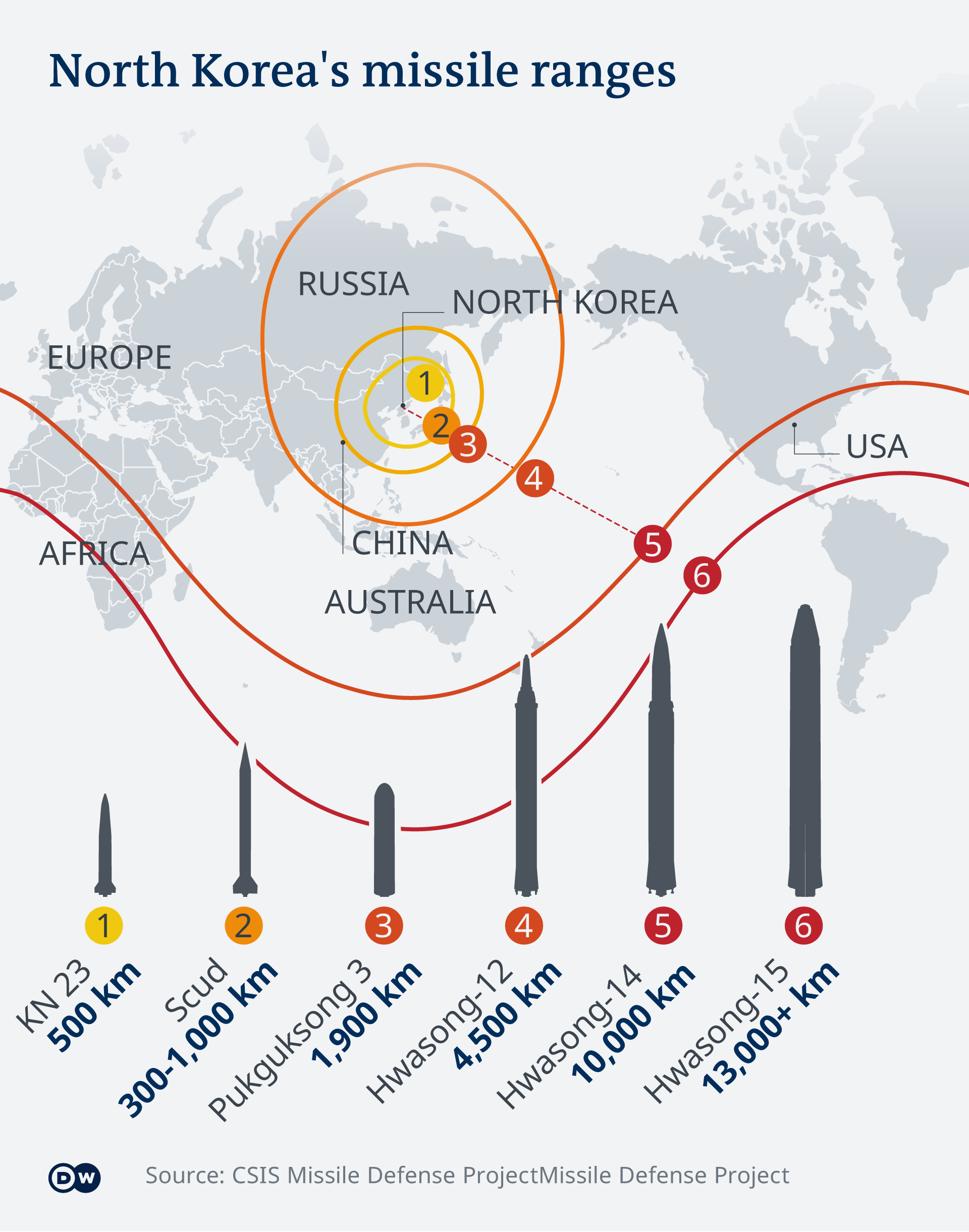
On Thursday, North Korea’s media reported that North Korean President Kim Jong Un has declared victory in the battle against the novel coronavirus, ordering a lifting of maximum anti-epidemic measures imposed in May.
North Korea has not revealed how many confirmed infections of the virus it has found, but since July 29 it has reported no new suspected cases with what international aid organizations say are limited testing capabilities.
While lifting the maximum anti-pandemic measures, Kim said that North Korea must maintain a “steel-strong anti-epidemic barrier and intensify the anti-epidemic work until the end of the global health crisis,” according to a report by the state news agency KCNA.
Analysts said that although the authoritarian North has used the pandemic to tighten social controls, its victory declaration could be a prelude to restoring trade hampered by border lockdowns and other restrictions.
Kim Yo Jong blamed leaflets from South Korea for causing North Korea’s Covid outbreak.
North Korea’s official death rate of 74 people is an “unprecedented miracle” compared to other countries, KCNA reported, citing another official.
Instead of confirmed cases, North Korea reported a number of people with fever symptoms. Those daily cases peaked at more than 392,000 on May 15, prompting health experts to warn of an inevitable crisis.
The World Health Organization has cast doubts on North Korea’s claims, saying last month it believed the situation was getting worse, not better, amid an absence of independent data.
Pyongyang’s declaration of victory comes despite rolling out no known vaccine program. Instead, the country says it relied on lockdowns, homegrown medicine treatments, and what Kim called the “advantageous Korean-style socialist system.”
Is North Korea hiding a bigger problem behind its Covid-19 outbreak?
The North has said it was running intensive medical checks nationwide, with daily PCR tests on water collected in borderline areas among the measures.
Kim’s sister, Kim Yo Jong, said the North Korean leader himself had suffered from fever symptoms, and blamed leaflets from South Korea for causing the outbreak, KCNA reported.
“Even though he was seriously ill with a high fever, he could not lie down for a moment thinking about the people he had to take care of until the end in the face of the anti-epidemic war,” she said in a speech praising his efforts.
On Thursday, South Korea’s Unification Ministry said in a statement it had “strong regrets” over North Korea “repeatedly making groundless claims” about how Covid-19 had arrived in the country.
A Brazilian judge has rejected the defense’s claims of diplomatic immunity and ordered that German Consul Uwe Herbert Hahn be remanded in custody in connection with the alleged murder of his husband in Rio de Janeiro according to CNN.
Rio police first took Hahn into custody on Saturday after his husband, Walter Henri Maximilien Biot, 52, was found dead in an apartment in the Ipanema neighborhood, police said. The video showed Hahn being escorted by Brazilian police outside a police station in Rio on Sunday.
Brazilian judge Rafael de Almeida Rezende cited alleged attempts to tamper with evidence among the factors in his decision to keep the diplomat in custody.
According to the decision, obtained by CNN, “the apartment was cleaned before the forensics team carried out its examination, a fact that by itself demonstrates that the release of the suspect in custody could lead to serious encumbrances to the collection of evidence.”
The judge’s order describes the crime scene and states “several lesions on the victim’s body originating from blunt-force trauma, with one of the [lesions] compatible with a foot stomp and the other with the deployment of a cylindrical instrument (supposedly a wooden club).”
The judge’s ruling also said that forensics “detected blood splatter on the property, markedly in the couple’s bedroom and in the bathroom, compatible with the dynamics of a violent death.”
Hahn’s defense argued to the court that the diplomat is entitled to diplomatic immunity, and a writ of habeas corpus, reports CNN Brasil.
Habeas corpus is a legal principle that allows people who believe they are being held unlawfully in prison or detention to challenge it, and successful challenges can lead to a detainee’s release.
But the judge ruled that “an arrest due to an intentional crime against life, committed inside the couple’s apartment (so outside of the consular environment) has no relation whatsoever to consular duties.”
Video released to CNN Brasil shows Hahn explaining to police chief Camila Lourenço that Biot had shown signs of panicking, acting nervously or “strange” in the days leading up to his death.
In the videotaped police interview, Hahn described how the couple was sitting on the sofa when Biot stood up suddenly and ran toward the balcony before falling face down on the floor.
He tells the chief that he thinks his husband slipped.
“It was very fast,” he said as he walks around the apartment the couple shared.
Hahn said he initially thought Biot was drunk and took a photo of his husband, which he sent to a friend along with the message, “Walter is drunk again.”
Hahn said he then tried to pick Biot up to take him to bed when he noticed his husband was bleeding.
CNN has reached out to Hahn’s lawyers but they were unavailable for comment.
German Foreign Office sources also confirmed to CNN the “arrest of an employee posted to the Consulate General in Rio de Janeiro.”
“Our Embassy in Brasilia and the Consulate General in Rio de Janeiro are in close contact with the Brazilian authorities investigating this case,” the foreign office sources said, adding that due to the ongoing investigations and for personal privacy reasons, they could not disclose additional information.
On Monday family of acclaimed novelist and filmmaker, Biyi Bandele announced the death of the novelist in a Facebook post.
Bandele, 54, is described as a prolific author, playwright, and filmmaker whose work includes the adaptation of famed Nigerian author Chimamanda Ngozi Adichie’s Half of a Yellow Sun starring Chiwetel Ejiofor and Thandie Newton.
In a statement signed by his daughter Temi Bandele, she revealed that her father died in Lagos-Nigeria.
She wrote, “I am heartbroken to share the sudden and unexpected death on Sunday 7th of August in Lagos of my father Biyi Bandele.”
“Biyi was a prodigiously talented writer and filmmaker, as well as a loyal friend and beloved father. He was a storyteller to his bones, with an unblinking perspective, singular voice, and wisdom that spoke boldly through all of his art, in poetry, novels, plays, and on screen. “
“He told stories which made a profound impact and inspired many all over the world. His legacy will live on through his work,” she wrote in the post.
Bandele was considered one of the finest filmmakers and storytellers of his generation.
In an interview with CNN in 2014, he said, “I knew I wanted to be a writer from when I was six. My dad took me to the local library. I was five or six, and I just fell in love with the books.”
Bandele grew up in the small northwestern Nigerian town of Kafanchan, Kaduna State, and left Nigeria at 22 after studying drama at Obafemi Awolowo University.
“I actually came [to London] because I’d been invited to a theater festival … within weeks, I had a publisher, not just in the UK but in Italy and in France and in Germany,” he told CNN.
“Then I got offered a job to be the literary editor of a weekly Nigerian newspaper in London so I had actually come with absolutely no intention of staying.”
Shortly after his arrival in the UK, his work was published and he received his first commission from the Royal Court Theatre where he was catapulted into the arts.
Three years later, Bandele wrote a screenplay that was picked up by the BBC, which attached a young up-and-coming director to it. His name was Danny Boyle.
“Working with Danny was a game changer. I wasn’t that interested at the time in actually directing anything but I watched Danny … it was a joy working with him,” he said.
Mo Abudu, founder of Ebony Life Studios and one of his long-time collaborators told CNN they were preparing to debut their new film, Elesin Oba (The King’s Horsemen) at the Toronto International Film Festival (TIFF) in September.
“He was so passionate about Elesin Oba, more so than any of the other projects he had worked on with us… and was so excited when he heard about our selection at TIFF. I am sad he will not be at TIFF and that he will not get to see how loved his last project was.”
Bandele also co-directed the Netflix hit Blood Sisters. The streaming platform paid tribute to him in a Twitter post calling his passing “a monumental loss to Nigeria’s film and creative industry.”
“Biyi Bandele’s passing is a monumental loss to Nigeria’s film and creative industry. He will be remembered as a powerhouse who made some of the finest films out of Africa. As we mourn him, we commiserate with his family, friends, and colleagues. May he rest in power.”
Seven years after its debut in the country, the American pizza giant has formally shut its stores after it failed to win over locals who preferred homegrown options, according to a report by Milano Today.
EPizza SpA, the franchise operator of the Domino’s brand in Italy, filed for bankruptcy in April, after it struggled to make enough sales during two years of pandemic restrictions, according to a document filed in a Milan court.
The last of Domino’s 29 branches have closed in Italy after the company started operations in the country seven years ago. (Alessia Pierdomenico/Bloomberg via Getty)
The company stopped activity in all its Domino’s stores on July 20, according to a report by Food Service, an Italian food industry publication.
Although some may attribute Domino’s failure to its brazen attempt to infiltrate pizza‘s homeland with American fare, ePizza said it went bust because of competition from food delivery apps.
In response to the inflation crisis, the German Finance Ministry has unveiled a plan to reduce income taxes. However, critics claim the measures would benefit top earners the most, and squeeze public spending.  Â
The price of food, as well as energy, has increased with inflation hitting its highest in decades
German Finance Minister Christian Lindner on Wednesday announced measures to raise tax thresholds and increase child benefits slightly.
The plans are intended to help ease the burden of rising inflation for households, amid rising food and energy prices.
The Finance Ministry is set to raise the tax-free allowance from €10,347 (roughly $10,550) currently to €10,632 next year and €10,932 in 2024. People start paying income tax on earnings after this figure.
The top tax rate, which currently kicks in from €58,597 at present will increase to €61,972 next year and from €63,515 in 2023.
Meanwhile, child benefit payments for the first two children are set to rise by €8 to €227 per month, along with other increases for families with more than two children.
As a result, the Finance Ministry expects tax revenue to drop by €10.12 billion next year, and by €17.5 billion in 202
Politicians from fellow junior coalition partners the Greens have attacked the plans as regressive, saying they provide the greatest advantage to the already wealthy.
“Billions in tax relief from which high earners benefit three times as much in absolute terms than those with lower incomes — that is not in keeping with the times,” Katharina Beck, the Green Party spokeswoman on financial affairs, told the RND newsgroup.
“The opposite would be the right thing. Strong shoulders should have to bear more than those on a low income and should not be disproportionately relieved. These really hard times especially affect those who have little money.”
There was also criticism from Berlin Mayor Franziska Giffey, of Olaf Scholz’s Social Democrats — the leading coalition partner — who said more targeted relief was needed. She told the Welt news channel that tax cuts and across-the-board child benefit increases would not help those most in need.
“Another child benefit increase is nice for those who get it. But again, it doesn’t help pensioners, and it doesn’t help students either.”
Weak euro Good news for who?
Lindner defends measures
Speaking in response to the criticism, Lindner said that, in all, some 48 million would benefit from the tax changes.
He said the changes were aimed at relieving the pressure on people whose income was pushed into taxation at higher rates as salaries rise because of inflation. This, combined with higher living costs, would effectively push down their spending power — a phenomenon known as “cold progression.”
The measures would provide relief to those taxpayers with an annual income below €62,000, Lindner said.
“This is not about a relief, but about removing a burden,” Lindner said. The minister said he was also in favor of “strong shoulders bearing more than narrow shoulders.”
However, he said, the cold progression would also “burden people whose shoulders have not become broader at all.”
Left Party urges spending, not cuts
The chairman of the socialist Left Party, Martin Schirdewan, said the plan would squeeze public spending at the expense of ordinary people.
“Because Lindner refuses to give the rich and crisis profiteers a greater part in financing the costs of the crisis — and at the same time sticks to the debt brake, or better put, the investment brake — predictably money will be lacking for necessary social spending and investments,” Schirdewan told the AFP news agency.
“Those who unilaterally cut taxes also dry up the state budget and create a pressure to save money, usually at the expense of the general public and urgent public tasks.”
After animal rescue organizations began rescuing them from a Virginia facility where they were being raised to be sold to scientists for drug trials, over 4,000 beagles are now looking for homes.
“It’s going to take 60 days to get all of these animals out, and working with our shelter and rescue partners across the country, working with them to get these dogs into eventually into an ever-loving home,” said Kitty Block, president, and chief executive of the US Humane Society.
Shelters from South Elgin, Illinois to Pittsburgh have begun receiving the dogs, which will get medical exams, vaccinations, and other treatments before becoming available for adoption.
4,000 beagles will be rescued from a Virginia breeding facility In May, the US Department of Justice sued Envigo RMS LLC alleging Animal Welfare Act violations at the facility in Cumberland, Virginia. In June, parent company Inotiv Inc. said it would close the facility. In July, Envigo settled with the government, without paying any fines.
Inotiv did not respond to a request for comment.
Government inspectors found beagles there were being killed instead of receiving care for easily treated conditions; nursing mother beagles were denied food; the food they received contained maggots, mold, and feces; and over an eight-week period, 25 beagle puppies died from cold exposure, the Humane Society said in a statement. Some were injured when attacked by other dogs in overcrowded conditions, it added.
The beagle rescue effort began much earlier, according to Bill Stanley, a Republican state senator for Virginia. “I tried to shut them down in 2019 but was not successful. But over the years, we never stopped fighting.”
On Tuesday, firefighters finally overcame what officials described as the worst fire in Cuba‘s history that over five days destroyed 40% of the Caribbean island’s main fuel storage facility and resulted in massive blackouts.
Reuters witnesses reported the raging flames that ravaged a four-tank segment of the Matanzas supertanker port had died down and the towering plumes of thick black smoke streaming from the area were diminished and now mostly gray.
Matanzas is Cuba’s largest port for receiving crude oil and fuel imports. Cuban heavy crude, as well as fuel oil and diesel stored in Matanzas in 10 huge tanks, are mainly used to generate electricity on the island.
Firefighters on Tuesday finally overcame what officials described as the worst fire in Cuba’s history that over five days destroyed 40% of the Caribbean island’s main fuel storage facility and caused massive blackouts.
Reuters witnesses reported the raging flames that ravaged a four-tank segment of the Matanzas supertanker port had died down and the towering plumes of thick black smoke streaming from the area were diminished and now mostly gray.
Matanzas is Cuba’s largest port for receiving crude oil and fuel imports. Cuban heavy crude, as well as fuel oil and diesel stored in Matanzas in 10 huge tanks, are mainly used to generate electricity on the island.
Mexican and Cuban firefighters work to put out the fire at the fuel depot that was sparked by a lightning strike.
Lightning struck one fuel storage tank on Friday evening. The fire spread for a second by Sunday and engulfed the four-tank area on Monday, accompanied by huge explosions and despite efforts by local firefighters supported by more than 100 Mexican and Venezuelan reinforcements.
Firefighter Rafael Perez Garriga told Reuters on the steaming outskirts of the disaster that he worries the fire would impact the power situation in the country.
“The situation is going to be more difficult. If the thermoelectric plants are supplied with that oil, we are going to have the whole world affected, it is electricity and it affects everything,” he said.
A man fishes as smoke rises from the massive fire at a fuel depot in Matanzas, Cuba, on August 9, 2022.
The Communist-run country, under heavy US sanctions, is all but bankrupt. Frequent blackouts and shortages of gasoline and other commodities already had created a tense situation with scattered local protests following last summer’s historic unrest in July.
On Tuesday, more helicopters joined the effort to put out the fire, along with two fireboats sent by Mexico along with heavy firefighting equipment.
“We have not yet been able to access the impact area due to the conditions. There is combustion and so we cannot risk our lives for now,” Perez said around noon.
Smoke rises from a deadly fire at a large oil storage facility in Matanzas, Cuba on August 9.
Later in the day firefighters for the first time were entering the area and spraying foam and water on the still smoldering remains.
“Today we have managed to control the fire,” Rolando Vecino, head of transport for the Ministry of the Interior, said on state-run television from the scene.
Officials have not said how much fuel has been lost in the fire which destroyed all four tanks. Authorities stated that no oil had contaminated the nearby
Matanzas Bay. Still, they warned residents as far away as Havana to wear face masks and avoid acid rain due to the massive plume of smoke the fire generated.
A firefighter helicopter drops water on a massive fire at a fuel depot in Matanzas, Cuba, on August 8.
One firefighter died and 14 went missing on Saturday when the second tank blew up, authorities said on Tuesday, correcting an earlier figure of 16 missings. Five others remain in critical condition.
Mario Sabines, governor of the Matanzas province, about 60 miles (130 km) from Havana, quipped the flames spread like an “Olympic torch” from one tank to the next, turning each into a “caldron.”
A targeted inactivated polio vaccine booster dose should be given to all kids in all London boroughs between the ages of 1 and 9, according to the UK Joint Committee on Vaccination and Immunization.
“This will ensure a high level of protection from paralysis and help reduce further spread of the virus,” the UK Health Security Agency (UKHSA) said in a statement announcing the move.
Around 1 million children of that age live in the London region, according to the most recent data from the UK Office for National Statistics.
The UKHSA said a total of 116 virus isolates were identified in 19 sewage samples collected in London between February and July.
While most of the samples contained a vaccine-like virus, some showed “sufficient mutations to be classified as vaccine-derived poliovirus.” The UKHSA said this was more concerning as such virus behaves more similarly to “wild polio and may, on rare occasions, lead to cases of paralysis in unvaccinated individuals.”
“No cases of polio have been reported and for the majority of the population, who are fully vaccinated, the risk is low. But we know the areas in London where the poliovirus is being transmitted have some of the lowest vaccination rates,” Dr. Vanessa Saliba, a consultant epidemiologist at UKHSA said.
Vaccines are key as there’s no cure for polio
Polio is caused by an enterovirus called the poliovirus. It was one of the world’s most feared diseases until Dr. Jonas Salk invented the polio vaccine and tested its safety in 1954.
By 1988, reported cases of polio worldwide reached a peak of 350,000, according to the World Health Organization.
About 1 in 4 infected people have flu-like symptoms including sore throat, fever, tiredness, nausea, headache, and stomach pain. As many as 1 in 200 will develop more serious symptoms that include tingling and numbness in the legs, an infection of the brain or spinal cord, and paralysis, according to the US
However, any paralysis caused by polio is permanent.
New York adult diagnosed with polio, first US case in nearly a decade
The last case of polio in the UK was in 1984, according to the UKHSA statement.
“Decades ago before we introduced the polio vaccination program around 8,000 people would develop paralysis every year,” Saliba added.
There are three strains of the virus, two of which have been eliminated in the world, according to the Global Polio Eradication Initiative, a WHO program. One type of wild poliovirus still circulates in Pakistan and Afghanistan. Transmission can also occur when not enough children are vaccinated in an area.
Last month, a person from Rockland County, New York, was been diagnosed with polio, the first case identified in the United States in nearly a decade. The unvaccinated young adult began experiencing weakness and paralysis, county Health Commissioner Dr. Patricia Schnabel Ruppert said at the time.
The actor became suspicious after a surveillance footage led them to suspect the actor, who stars in films including the Fantastic Beasts franchise.
Miller is separately facing charges of assault in Hawaii and allegations of abuse from several women.
Vermont State Police said there was no one at home when the house was broken into.
“As a result of an investigation that included surveillance videos and statements, probable cause was found to charge Ezra M Miller with the offense of felony burglary into an unoccupied dwelling,” police said in a statement on Monday.
The Justice League actor was ordered to appear in court to face the charge on 26 September.
The alleged burglary is the latest in a string of incidents involving the 29-year-old actor.
Just two weeks earlier, Miller was charged with harassment and disorderly conduct at a karaoke bar in Hawaii.
According to police, the actor grabbed a microphone from a woman singing and lunged at a man playing darts after becoming aggravated by a rendition of Shallow from the film A Star Is Born.
Miller, who uses “they” and “them” as personal pronouns, is known for their roles in Perks of Being a Wallflower, Trainwreck, and the hugely successful Fantastic Beasts franchise.
They are due to star as Flash in DC’s upcoming film The Flash, set to be released next year.
The company of evolutionary Japanese fashion designer Issey Miyake has announced the death of the designer. He died at age 84.
Miyake, who is famous for his avant-garde designs and scent, established a global fashion brand by creating the iconic black turtleneck sweaters worn by Steve Jobs.
Japanese media reported that the designer died of liver cancer on Friday and a private funeral has already taken place.
Born in Hiroshima in 1938, Miyake was just seven years old when the city was devastated by an atomic bomb dropped by the United States. His mother died of radiation exposure three years later.
“When I close my eyes, I still see things no one should ever experience,” he wrote in a New York Times opinion piece in 2009 – adding that he prefers to think of things “that can be created, not destroyed, and that bring beauty and joy”.
Miyake reportedly wanted to be a dancer or athlete when he was young – but that changed after he read his sister’s fashion magazines.
He studied graphic design at a Tokyo art university and then moved to Paris in the 1960s, where he worked with lauded fashion designers Guy Laroche and Hubert de Givenchy.
He moved to New York for a short time, before heading back to Tokyo in 1970 to open the Miyake Design Studio.
By the 1980s he was celebrated as one of the world’s most pioneering designers as he worked with materials from plastic to metal – and also traditional Japanese materials and paper.
Miyake developed a new way of pleating fabric by wrapping it between layers of paper in a heat press.
Miyake’s distinctive Bao Bao line of bags, recognizable for their small resin triangles, was celebrated for its engineering and was so popular that knock-offs flooded the fake designer market.
He became known for creating a style that was high-tech yet practical and comfortable, and was a household name in not only Japan’s fashion industry – but on the global catwalk.
His fashion house developed highly sought-after clothes for men and women, as well as bags, watches, and perfumes – a bottle of L’Eau d’Issey, launched in 1992, was rumored to sell every 14 seconds.
His A-POC (A Piece of Clothing) line, which can now be seen in museums, used a special weaving machine that made outfits out of one continuous tube of fabric.
IMAGE SOURCE, GETTY IMAGES
Image caption,
The distinctive Bao Bao bag
Miyake was asked by Apple co-founder Steve Jobs to design his iconic turtle neck jumpers and reportedly made 100 of them, at $175 each.
He was awarded the prestigious Kyoto Prize for his dedication to the arts in 2006 and received the Order of Culture in 2010 for “remarkable accomplishments” in Japan’s culture and arts.
“Design needs to express hope,” Issey Miyake famously said, as he believed in the role of fashion in questioning how humans should exist – instead of making money.
For people here, he is one of a few Japanese names who get recognized around the world, along with Yoko Ono.
Not many will know about his traumatic childhood, as Miyake himself didn’t talk about it until his later years.
It was because he wrote in 2009, that he didn’t want to be known as “the designer who survived the atomic bomb”.
Miyake may have chosen not to talk about it for a long time, but Japan’s revolutionary designer left us one day before the 77th anniversary of his hometown’s bombing.
Tributes have been paid from around the world to Olivia Newton-John, who has died from cancer aged 73.
The British-born Australian singer and actress were best known for playing Sandy in Grease, one of the most successful film musicals ever made.
Her Grease co-star John Travolta said she “made all of our lives so much better” while its director said: “What you see is what you get with her.”
She died peacefully at her California ranch surrounded by family and friends.
An actress and musician, Newton-John achieved commercial success as a country singer and sold millions of records globally.
But it was her role as high school student Sandy in the film Grease that catapulted her to worldwide fame.
Tributes have been paid from around the world to Olivia Newton-John, who has died from cancer aged 73.
The British-born Australian singer and actress were best known for playing Sandy in Grease, one of the most successful film musicals ever made.
Her Grease co-star John Travolta said she “made all of our lives so much better” while its director said: “What you see is what you get with her.”
She died peacefully at her California ranch surrounded by family and friends.
An actress and musician, Newton-John achieved commercial success as a country singer and sold millions of records globally.
But it was her role as high school student Sandy in the film Grease that catapulted her to worldwide fame.
“Olivia was the essence of summer – her sunniness, her warmth and her grace are what always comes to mind when I think of her. I will miss her enormously.”
“Her spandex trousers in Grease were my inspiration for my ‘Da ya think I’m Sexy’ era,” he added, referencing the iconic tight black outfit that she wore at the film’s finale.
US television host Oprah Winfrey said her “positivity was just infectious”. “You’ll be missed, Olivia,” she wrote. “Here’s to the good times.”
Travolta wrote on Instagram: “Your impact was incredible. I love you so much. We will see you down the road and we will all be together again.”
“Yours from the first moment I saw you and forever!” he added, signing off: “Your Danny, your John!”
The film’s director Randal Kleiser said he had been friends with Newton-John for 40 years and “she never changed, she was always exactly the way everyone imagines her”.
Asked what his everlasting memory of her will be, he told BBC Radio 5 Live: “Hanging out with her at her ranch. Seeing the real Olivia which was exactly like the Olivia she projected. No cameras around, no people around… she was exactly the same and as loving as ever.”
Didi Conn, who played Frenchy in Grease, told BBC Newsnight: “She was such a humungous, big, big pop star and her persona was of this beauty… pure and sweet. In the movie we would call her Miss Goody Two Shoes, you know, but simmering under that façade of innocence was a hot mama ready to come out.”
Other tributes came from singers Kylie Minogue, who called her an inspiration, and Dionne Warwick, who called Newton-John “one of the nicest people I had the pleasure of recording and performing with”.
Australian rock legend John Farnham, a long-time friend and with whom Newton-John released her final studio album, said she would be “greatly missed” and “behind that iconic smile was a tenacious fighter”.
Olivia Moore, who is currently playing Sandy in Grease in London’s West End, broke the news to a shocked audience at the end of Monday evening’s performance.
Newton-John was first diagnosed with cancer in 1992 and went on to become a leading advocate of cancer research. Her charity, the Olivia Newton-John Foundation, has raised millions of pounds to support research.
“We are incredibly grateful for the special relationship we had with Olivia for many years. Her generous support and gift provided hope and changed the lives of thousands of cancer patients… She was the light at the end of the tunnel for many, many people.”
Her efforts in the field were recognized by the Queen, who honored her with a damehood in the 2020 New Year’s Honours list.
In a statement posted to her social media channels, Newton-John’s husband John Easterling said she had died on Monday, hailing her “a symbol of triumphs and hope for over 30 years, sharing her journey with breast cancer”.
“Her healing inspiration and pioneering experience with plant medicine continue with the Olivia Newton-John Foundation Fund, dedicated to researching plant medicine and cancer.”
In later years, Newton-John became a cancer campaigner which led to the opening of an institute named after her in Melbourne
Newton-John was born in Cambridge on 26 September 1948.
Her father had been a British spy during World War Two. Her mother was the daughter of the German Nobel laureate, Max Born, and had fled with her family when the Nazis came to power in 1933.
The family moved to Australia in 1954, where she was raised.
Her breakthrough came in 1971 when she released a Bob Dylan-penned track, If Not For You, which reached number seven in the UK charts and featured on an album of the same name.
She won four Grammy awards and scored seven US number one hits between 1974 and 1977.
While critics never warmed to her audience-friendly style of music, the star forthrightly dismissed the reviews.
“It annoys me when people think because it’s commercial, it’s bad,” she told Rolling Stone. “It’s completely opposite. If people like it, that’s what it’s supposed to be.”
In 1978 she became a global star with the release of Grease. The film, set in the 1950s, told the story of Sandy’s summer fling with John Travolta’s Danny and the difficulties the relationship encounters. In the end, the pair reconcile, with Sandy having transformed her appearance.
“It was consuming my day and after a time I went ‘you know what, I need to enjoy my life so I’m going to eat a cookie if I want it,” she said.
“Because the joy of life and everyday living has to be a part of that healing process as well. So I’ve chosen that path to be grateful and to feel good about things because the other side’s not so good.”
On Tuesday, a series of large explosions occurred near a Russian military airbase in the Crimean peninsula, which Russia has annexed. Video from the incident showed large smoke plumes rising into the sky.
The Russian defense ministry said the blasts had been caused by detonated aviation ammunition, Russian state media RIA Novosti reported.
“Around 3:20 p.m., several aviation munitions detonated on the territory of the airfield ‘Saki’ near the settlement of Novofedorivka,” the ministry said in the statement, according to RIA Novosti.
Oleg Kryuchkov, adviser to the head of the Crimean region — which Russia annexed from Ukraine in 2014 — confirmed several explosions had occurred near the village of Novofedorivka.
On his Telegram channel, Kryuchkov said: “So far, I can only confirm the fact of several explosions in the Novofedorivka area. I ask everyone to wait for official messages.”
There was no word from the Ukrainian side about any possible attacks in the area. Ukraine is not known to have struck the territory of Crimea since the Russian invasion began.
Companies with outstanding financial structures benefit from Africa’s fast-growing population and rich resources. This article looks at the fastest-growing businesses in Africa. These businesses are selected based on their growth rate and revenue generation potential.
Note that we consulted several reliable sources while compiling this list. These sources include the World Bank, Market Watch, Nairametrics, Tech Crunch, Africa Business Communities, etc.
1. Financial Technology Business
Financial technology businesses continue to outshine many startups in the African continent with problem-solving innovations. According to Tech Crunch, Africa is the world’s second-fastest-growing and profitable payments and banking market after Latin America. The continent is home to over 500 financial technology firms, most in Nigeria, South Africa, and Kenya.
According to The World Bank, about 66% of Sub-Saharan Africa’s population is unbanked. The unbanked population is another reason financial technology businesses thrive in the continent. They leverage technology to modify, automate and enhance financial services for consumers and businesses.
According to Business Elites Africa, 75% of Nigerian financial technology startups earn an average of $5 million annually. Given the continuous funding for financial technology companies in Africa, the sector will continue to grow with internet penetration and smartphone usage.
2. Food Business
With many investors benefiting from Africa’s resources, the food business is one of the businesses in the continent with a fast growth percentage. According to Business Standard, Africa’s food industry recorded a growth of 3.6% in 2020-21 and 3.9% in 2021-22. Food is a basic need for everyone, making it profitable for businesses for entrepreneurs in the sector.
The growth is driven by soaring demands for packaged and processed foods and the high consumption of frozen and dairy products. The food and beverage industry expansion and innovation are other growth contributing factors. According to Nairametrics, a more significant food Crisis is looming in Africa.
The Russia-Ukraine war, low purchasing power, political instability, and conflicts are soaring food prices to unprecedented levels in the continent. Meanwhile, Agro entrepreneurs are benefiting from feeding over one billion people. Entrepreneurs earn huge rewards locally by storing and packaging food products with an excellent transportation network.
3. Real Estate Business
With Africa’s large population, there is a high demand for commercial and residential properties, making the real estate business thrive. According to Nairametrics, The Nigeria real estate market grew by 1.77% in 2021 and 10.84% in the first quarter of 2022. The Egyptian real estate market generated $10 billion, representing a growth of 8% in 2021.
According to Nairametrics, Egypt’s real estate market has a growth projection of 6.5% in 2022. Kenya’s real estate market rose by 5.2% in Q3 2021 and is projected to grow by 5.9% in 2022. The real estate business is one of the most valued in Africa, with entrepreneurs earning from leasing, buying, and renting commercial and residential properties.
The real estate business is highly profitable but requires knowledge and experience. To get started in Africa’s real estate business, consider seeking advice from experienced realtors and learn from previous mistakes. Learn the industry’s strengths, weaknesses, and how it works.
4. E-Commerce Business
Electronic commerce is a fast-growing African business due to technological advancement and innovation. Firms in this sector allow individuals and companies to trade goods and services through the internet. According to Vanguard Newspaper, Africa’s real estate market value has a projection to reach $180 billion by 2025. The report further disclosed that Africa’s eCommerce ventures secured funding of more than $256 million in 2021, representing a 40% growth from 2020.
According to Africa Business Communities, the e-commerce industry is expected to generate annual revenue of $46.1 billion by 2025. The lucrative industry business involves facilitating the sales of goods and services between companies and their customers. E-commerce ventures also facilitate the sales of goods and services through third parties. Jumia, eBay, Konga, and Kilimall are a few examples of African e-commerce platforms.
5. Logistics Business
Logistic business is a lucrative and fast-growing business in many African countries. Whether in Mauritius, South Africa, Ethiopia, Ghana, Kenya, or Nigeria, entrepreneurs earn considerable rewards in the industry. According to Market Watch, Africa’s logistics market rose from millions to Multi-million dollars from 2017 to 2022. Reports from Sawya show that Egypt’s Suez Canal recorded a revenue of $704 million in July 2022, representing an increase from the $531.8 million reported in July 2021.
According to Research and Markets, Nigeria’s Logistics and Freight Market is expected to grow with a compound annual growth rate (CAGR) of over 3% from 2022 to 2027. The business is profitable in various African countries with the rise of delivery agencies working hand-in-hand with traditional and online retailers. Delivery agencies streamline the transfer of goods to customers’ destinations. Consider researching the business’s strengths and weaknesses before investing and focusing on building an online presence for promotions
 Twitter made legal summons to billionaire investors Chamath Palihapitiya and Marc Andreessen on Monday according to documents obtained by The Post.
According to the report, Twitter also summoned investors Jason Calacanis, Keith Rabois, and Joe Lonsdale as well as board members David Sacks, Stephen Jurvetson, who founded SpaceX and Tesla, and one of the businessmen who assisted Musk in founding PayPal.
Rabois declined to comment on the subpoena when contacted by Insider. Twitter, Musk, Palihapitiya, Andreessen, Sacks, Jurvetson, Calacanis, and Lonsdale did not respond to a request for comment from Insider ahead of publication.
Lonsdale dubbed the social media company’s legal requests a “giant harassing fishing expedition,” on Twitter.
Joe Lonsdale (@JTLonsdale)Â August 1, 2022
Sacks also responded to the subpoena on Twitter with an image of a middle finger.
David Sacks (@DavidSacks)Â August 2, 2022
The social media company is requesting information from Musk’s social circle related to any communication between the Tesla CEO and his social circle related to bots or spam. The legal request also includes any information related to Musk’s appearance at the All-In Summit in May an event he attended with Palihapitiya, Sacks, and Calacanis. At the Miami event, Musk appeared to backtrack on his plans to buy Twitter, weeks before he officially attempted to pull out of the $44 billion deal in July.
Notably, some of the individuals that received legal requests from Twitter have not been openly involved in Musk’s deal to purchase the company. Though, Calacanis and Andreessen have publicly helped the billionaire in his efforts to finance the deal.
The missives to Musk’s social circle came after several banks that were helping finance the deal, including Morgan Stanley, Citigroup, and Bank of America.
The case is being tried in Delaware. Last month, Twitter appeared to win its first battle against Musk when Chancery Court judge Kathaleen St. J. McCormick agreed to an expedited trial. The social media company is suing to compel Musk to buy the company for $44 billion.
Multiple experts previously told Insider that Musk faces an uphill battle in his efforts to get out of the deal due to the ironclad contract he signed earlier this year.
In an interview with CNN on Monday, Taiwan’s Foreign Minister said that despite China’s threat to the island being “more serious than ever,” Taiwan will continue to steadfastly defend its independence and democracy, including by embracing people who support it.
Minister Wu’s defiant message came after China said it will continued military drills around the self-governing island, after a four-day show of force following US House Speaker Nancy Pelosi’s trip to Taipei last week.
“China has always been threatening Taiwan for years and it’s getting more serious in the last few years,” Wu said. “Whether Speaker Pelosi visits Taiwan or not, the Chinese military threat against Taiwan has always been there and that is the fact that we need to deal with.”
Military drills drum home China’s relentless message in the Taiwan Strait
Welcoming overseas friends to the island was a key part of Taiwan’s strategy to counter China’s attempts to isolate it from the international community — regardless of the potential backlash from Beijing, Wu said.
“(China) cannot dictate to Taiwan that we should not welcome anyone who likes to come and show support for Taiwan,” said Wu, who has served as Taiwan’s foreign minister since 2018.
Pelosi’s Taiwan trip — the first by a sitting House Speaker to the island in 25 years — was vehemently opposed by China’s ruling Communist Party, which views Taiwan as its territory despite never having controlled it.
In the wake of Pelosi’s visit, Beijing has ramped up pressure on Taiwan, including via economic penalties, the launch of missiles over the island for the first time, and drills that Taipei has said were meant to “simulate” an attack against its main island and navy.
Though those exercises were originally expected to end Sunday, drills around Taiwan continued Monday, according to an announcement from China’s military.
But as the live-fire drills raised global fears of a possible military conflict, the mood in Taiwan remained calm, with life carrying on as usual with packed restaurants and crowded public transport.
For Wu, the threat made it even more critical that Taiwan continues to build its international relationships and show it is not afraid.
“I worry that China may really launch a war against Taiwan,” he said. “But what it is doing right now is trying to scare us and the best way to deal with it (is) to show to China that we are not scared.”
Though her trip was long-mooted and much discussed, Taiwanese officials only received short notice of her arrival, Wu said.
“Since her travel is always subject to a lot of considerations, especially security considerations … we were not able to find out until the very last moment when she firmed up her plan,” Wu said, adding Taipei knew the itinerary a few days beforehand, but not the exact timing of her arrival.
The visit from the speaker and an accompanying congressional delegation included meetings at Taiwan’s legislature and the office of Taiwanese President Tsai Ing-wen, where Pelosi said they came to send an “unequivocal message” that “America stands with Taiwan.”
US House Speaker Nancy Pelosi is welcomed by Taiwanese Foreign Minister Joseph Wu after landing at Taipei Songshan Airport on August 2.
Wu said his most memorable impression of the trip was greeting Pelosi and the delegation at the airport, where she “showed her charm” by saying she’d been looking forward to her visit for a long time.
“And by the time she departed, she not only said goodbye to me, but also said goodbye to the ground crew, the security people, and to those people who had been taking care of the airport, one by one,” Wu said.
When asked whether the United States would increase its support for Taiwan after the visit, Wu said the US has always been “highly supportive” of Taiwan — but the current support was “unprecedented.”
In an exclusive interview with CNN last October, Taiwan’s President Tsai Ing-wen confirmed some US military trainers were in Taiwan — the first time a Taiwanese leader had admitted to their presence since Washington and Taipei severed diplomatic ties in 1979.
But perceptions of American support sparked Beijing’s ire against the speaker’s visit, with China’s foreign ministry issuing a statement on the heels of Pelosi’s arrival Tuesday evening saying her trip would have a “severe impact on the political foundation of China-US relations,” and “gravely undermines peace and stability across the Taiwan Strait.”
Beijing announced the large-scale military exercises in what it said were six zones around the island of Taiwan swiftly after Pelosi’s arrival, in response to what it viewed as an infringement of China’s “sovereignty and territorial integrity.”
While the US and many of its allies have decried the drills, China defended its actions as “legitimate and justified,” saying it was the US, not China, who was “the biggest saboteur and destabilizer of peace in the Taiwan Strait,” where China claims “sovereign rights and jurisdiction.”
‘Wrecking’ the status quo
Taiwan and China have been governed separately since the end of a civil war more than seven decades ago, in which the defeated Nationalists fled to Taipei.
Taiwan transitioned from authoritarian rule to democracy in the 1990s and is now ranked one of the freest jurisdictions in Asia by Freedom House, a US-based non-profit organization.
In recent years, as his power has grown, Chinese leader Xi Jinping has made clear his ambitions to “reunify” with the island — by force if necessary.
Wu accused China of trying to change the status quo in the Taiwan Strait, including by conducting military exercises in recent days across the median line — the
halfway point between the island and mainland China that has previously been an informal but largely respected border of control between Beijing and Taipei.
Dozens of Chinese warplanes crossed the median line between Thursday and Sunday, according to accounts from Taiwan’s Defense Ministry. While the informal median line has largely preserved peace in the Taiwan Strait for decades, China now openly denies its existence.
A military plane takes off from a Taiwanese airbase in Hualien for an air patrol operation on August 7.
“This kind of behavior is wrecking the status quo, and it’s wrecking peace and stability in this region and it should not be accepted,” Wu said, adding that China had sought to declare the Taiwan Strait as its internal waters for “some time” before Pelosi’s visit.
That had implications beyond Taiwan as China seeks to expand its influence across the Western Pacific, Wu said. But he added that he remained optimistic about the future.
“Democracy is going to prevail,” he said. “If you look at authoritarianism, it’s not resilient. It may appear strong, and it may appear to be expanding. But it’s not resilient and at some point is going to break.”
When asked if the situation could be called a crisis, Wu said that was ultimately up to Beijing.
“It depends on the will of the Chinese leaders to see whether they want to pursue the relations with Taiwan … in a peaceful and stable manner.”
“The important thing for us is that we need to be prepared,” Wu said. “We want to defend the freedom and democracy that we enjoy over here. Nobody can take that away from us.”
Police took a wounded civilian to the pavement as the bullets bounced off the armored car, another victim of the terrible daily shootings that blight Port-au-Prince, the capital of Haiti, and the neighborhood. Here, within Croix-des-Bouquets, a gang-controlled area, the SWAT team of Haiti has rammed into a gun battle that has already destroyed a public bus.
In the past 72 hours, the Haitian police have succeeded in killing a leader of the 400 Mawozo gangs and rescued six hostages from them, they say. But the gang – one of the dozens terrorizing the capital – has not been dislodged from these streets.
“Can you see that red sign ‘SMS’? That’s them,” said a SWAT officer, indicating the gunmen’s position. Like his team, he did not want to be named, citing their safety. He pointed down the road towards a small shack, as dozens of people flooded from a side alley into the street.
“Get away,” he said to the crowd, over the armored car’s loudspeaker. “You’re too exposed. It’s dangerous.”
It is a common scene of injury, gunfire, and panic in one of the dozens of neighborhoods controlled by gangs Seventeen American and Canadian missionaries appear to descend into a full-blown war between police and increasingly well-equipped and organized criminal groups.
And this is a familiar routine: Police probe into gang areas to show their reach, and gangs respond with intense volleys of bullets.
Police SWAT stand watch following an anti-gang operation in Croix-des-Bouquets.
Social media video from inside the area shows gangs using a bulldozer covered with steel plates to act as armor demolishing homes, presumably those of rivals. Other houses had been burned, with other videos showing dozens of locals fleeing the area on foot at night, during the peak of the fighting.
Flies blanket the rain-sodden concrete floor of the sporting amphitheater stage, where children as young as four months struggle to sleep, exposed to the elements. One has bruises from a fall, another a painful and ugly rash, but they are alive.
Here, Natalie Aristel angrily shows us her new, unpalatable home.
“Here’s where I sleep in a puddle,” she said, pointing at the water. “They burned my house and shot my husband seven times,” she says, referring to gang members.
“I can’t even afford to go see him [in the hospital]. In this park, even if they brought some food, there’s never enough for everyone. The kids are dying.”
Others are missing. “I have four kids, but my first is missing and I can’t find him,” another woman said. “We’ve been totally abandoned by the state and have to pay to even use a toilet,” another added.
A young boy added: “My mother and father have died. My aunt saved me. I want to go to school but it was torn down.”
Locals speak of a perfect storm of calamities — and warn the country increasingly feels on the verge of societal collapse.
People in this neighborhood built a wall on a public road last month to keep out gangs who were kidnapping residents for ransoms.
What remains of the country’s emergency interim government, created last year after the assassination of President Jovenel Moïse, is beginning to crumble and steeped in accusations of inactivity. His successor, Prime Minister Ariel Henry, has pledged to combat insecurity and hold new elections but so far has shown little progress toward either goal.
Meanwhile, analysts calculate inflation in the country at 30%. Gas is scarce and the subject of angry queues at stations. The UN has warned gang violence may put the youngest children in areas of active fighting at the risk of imminent starvation, as their parents cannot access food or go to work.
One Haitian security forces source speaking to CNN estimated that gangs control or influence three-quarters of the city.
Frantz Elbe, Director General of the Haitian National Police, rejects the assertion. “It is not a general problem in the metropolitan area,” he told CNN, declining to give a percentage.
Kidnappings are rampant and indiscriminate — one of few thriving industries in Haiti. Seventeen American and Canadian missionaries were kidnapped last year after visiting an orphanage in Croix-des-Bouquets and only released after a ransom was paid to the 400 Mawozo gangs.
Police, often outgunned, are doing what they can, Elbe tells CNN.
“The gangs are changing the way they fight. It used to be with knives, and now it is with big weapons. The police need to be well-equipped. With the little we have, we will do what we can to fight the gang members,” he said.
Director General of the Haitian police force Frantz Elbe.
The challenge they face is exposed by a brief checkpoint set up in Croix-des-Bouquets, where a truck has been dragged across the main road by the gangs and torched.
Police bring in an armored military bulldozer to push the wreckage to the roadside, which is already littered with other truck carcasses. The bulldozer operator, asked if he works under fire, replies: “Often.”
SWAT police set up a perimeter, scanning nearby rooftops. Locals and the vehicles they travel in are stopped and checked. One man says the situation is “bad, very bad,” before another gives him a stern glance.
He suddenly changes tone: “We know nothing.”
Fear is the currency of this war, though it is unclear if he fears speaking to the press, or the police, or what the gang may learn he said later.
To flee this fear, however, requires enduring more. A short boat journey from the mainland is the island of La Gonave, a hub for human traffickers.
The lackadaisical tempo and blue water of one tiny inlet on La Gonave belie its poverty. Heat, trash, hunger, and the business of leaving dominate this world.
One, a smuggler who introduced himself as Johnny, calmly explained how his business works.
The journey is often one-way for the boat, so each endeavor requires the boat to be bought outright, at a cost of about US $10,000, he says. To cover that cost, Johnny needs at least two hundred customers, who will huddle in its disheveled hull.
Shreds of netting appear to plug any gaps between in the hull, and loose wooden planks will make up the boat’s interior. Johnny shows where the pump and motors will eventually go.
“If we die, we die. If we make it, we make it,” he said.
He added he hoped to pack his boat with 250 passengers, as he considered it in “good” condition.
The ultimate destination is the United States, with Cuba and the Turks and Caicos islands sometimes accidental stops along the way.
And it is from these three places that the International Organization for Migration has reported surging numbers of forced repatriations of Haitians in the first seven months of this year, with 20,016 so far, compared to 19,629 for all of 2021.
Some Haitians appear to be getting closer to the journey’s end, with the US Coast Guard interdicting 6,114 Haitians between October and late June — four times as many as between October 2020 and October 2021. In the past weekend alone, more than 330 migrants from Haiti were rescued by the US Coast Guard near the Florida Keys.
A boat in La Gonave, Haiti.
The numbers are as staggering as the risks. Previous journeys from this inlet have ended in tragedy. Johnny is unclear on the timing of the last boat, but precise about the potential losses: One recent trip he organized led to the deaths of 29 people.
“The boat had an engine problem,” he said. “Water got inside the boat. We called for help, but they took too long. The boat was sinking while I was trying to save people. When help came, it was too late.”
While CNN cannot independently confirm Johnny’s account of the system, two other locals who said they were involved in trafficking described similar details independently. Authorities in the neighboring Caribbean nations the Bahamas and Turks and Caicos have repeatedly reported finding the remains of would-be migrants after boats capsized in their waters.
Despite the risks, many Haitians are still desperate for a way out. Locals on La Gonave told CNN that at least 40 people who aimed to attempt the boat trip were already on the island and the rest would follow from the mainland once Johnny said the boat was ready.
One potential passenger, a university graduate who was once a teacher, described why he would risk all to take the voyage.
“I worked as a teacher, but it did not work out. Now, I am driving a motorcycle every day in the sun and the dust. How will I be able to take care of my family when I have one?”
He said he saved a year’s money to make the journey and did not fear the rickety conditions of the boat. “I can be eaten by a shark or make it to America.”
Serhii Sorokopud a fourteen-year-old Ukrainian teenager is still tormented by what happened when Russian tanks rolled into his village five months ago.
The deep scars across his back are a reminder of trauma both hidden and visible.
Russian troops set up a military camp in the small farming community of Yahidne, northeast of the capital Kyiv, on March 3, on their advance toward the capital.
Serhii and his family were taken captive with hundreds of others in the basement of his school.
“First, there was a strong blow to the back. I fell, couldn’t get up, couldn’t move,” he told CNN on Thursday, showing the spot behind his school where he was hit. “People ran over and lifted me up. I couldn’t even walk. There was a lot of blood.”
The next day, the teenager was taken by Russian troops in a helicopter across the border to Belarus for treatment alongside their wounded soldiers.
Photos of his injuries, shared with CNN, show a deep laceration to his shoulder. A medical report from the Gomel Regional Children’s Clinical Hospital, where he was treated, said he suffered an open fracture of the shoulder blade, fractured ribs, and a deep bruising of his right lung.
Serhii sustained injuries after being struck with shrapnel last March.
Over the next month, Serhii had no contact with his family and underwent major surgery twice.
His mother, Svitlana Sorokopud, said Russian troops in Yahidne took all the residents’ cell phones and, cut off from the outside world, she had no way to find out where her son had gone.
“It cannot be described in words when you don’t know where your child is,” she said. “I cried day and night. He had such a serious injury, and I did not know where he was.”
It wasn’t just physical injuries that beset her son, but the agony of being separated from his family, she said.
“In the beginning, he couldn’t even sleep there, and he had nightmares. He was worried that we would not pick him up.”
Serhii made contact with his parents only after the Russians started their retreat on March 30, and his family was able to buy a new cell phone and access the internet again.
They say that a Belarusian doctor had posted Serhii’s name, date of birth and hometown on social media. “Parents, perhaps, [are] in Yahidne,” the post read.
“Please spread the word so they know the boy is alive.”
When they found out where he was, Svitlana said they spoke on the phone every day for around a month, assuring him they were coming.
His 25-year-old sister crossed the border to Poland and then to Belarus at the beginning of May to get him.
Now, in Yahidne, there are burned-out homes on every street.
Outside the house where Serhii and his family now live, his 9-year-old brother and young nephew pretend to operate a checkpoint. The specter of a new Russian offensive in northern Ukraine is never far from their minds.
“There is no fear now,” Serhii said. “But sometimes I wonder what will happen if they come back, and what they will do.”
Serhii’s mother Svitlana was devastated when her son was separated from the family.
As the war stretches into its sixth month, the impact on Ukraine’s children is evident in the grim tally of young lives cut short.
On a new Ukrainian government webpage, “Children of War,” the toll ticks up against the backdrop of a black screen: 361 dead and 703 wounded at the last count.
Yet the impact is not just physical, but psychological, Daria Gerasimchuk, the Ukrainian president’s commissioner for children’s rights, said.
“Absolutely every Ukrainian child is affected … Every child has heard air raid warnings.
Children see the suffering of their relatives and friends.
Children are forced to say goodbye to parents who go to defend the country on the front line.
There are those who are still under occupation.
Those who are injured. In other words, absolutely every Ukrainian child has got quite serious psychological and physical injuries,” Gerasimchuk said in an interview with CNN last week.
Most Ukrainian children have fled the front lines and nearly two-thirds have been displaced, either inside the country or across borders as refugees, according to UNICEF in June.
That same month, Ukrainian President Volodymyr Zelensky said: “Russia is stealing the childhood of our children, it wants to destroy our future.”
Human Rights Watch has said that Russia’s invasion “instantly suspended the education of 5.7 million children between the ages of 3 and 17, many of whom had already missed out on months of education due to deadly attacks on schools in eastern Ukraine, or Covid-19 school closures.
” Many schools in Ukraine have resumed classes, according to the World Bank, but these take place almost entirely online.
The deep scars on Serhii’s back are a permanent reminder of his survival.
While something resembling normal life returns to the streets of Kyiv, Jenya Nikitina — a bashful 7-year-old — knows this uneasy calm can be shattered in an instant. She was asleep when multiple Russian missiles hit the capital’s western district of Shevchenkivskyi on the morning of June 26, striking her family’s apartment block. Her father, Oleksii, was killed. Jenya and her mother, Katerina Volkova, a 35-year-old Russian citizen, were trapped for hours.
Her mother remembers the moment she heard Jenya call out, confirming she was still alive.
“There was no happiness [at] this moment I was able to hear her,” she told CNN, sitting beside her daughter outside a school gymnasium in Chokolivka district in Kyiv ahead of Jenya’s Saturday morning gymnastics class. “It was even more awful because I was thinking [that] she was also in pain … I was telling her, ‘Someone will come.’ Was I believing in this? That is another question.”
Jenya, who was trapped for a few hours, had a concussion and multiple abrasions. Her mother, trapped for five hours, sustained burns, deep cuts, and a fracture.
Weeks later, it’s her daughter’s psychological scars that worry Katerina the most. Asked if it’s possible for a child to understand what has happened, her voice breaks.
“I’m not sure we adults emotionally understand what is happening.”
Katerina Volkova and her 7-year-old daughter Jenya.
In case the sirens start again, Jenya’s gymnastics classes are the only time they are separated. Leaping and bounding on the mat is a chance to heal and, for a brief time, forget.
Katerina is worried that fear is now too familiar for her daughter.
“It [her childhood] was taken … in the future there will be joyful moments and lots of parents are trying, still, to make these moments for them,” she said, adding that children have experienced “too much.”
Torrential rain has hit parts of South Korea’s capital Seoul. At least eight people have died and 14 others have been injured as a result of the flooding caused by rain.
Heavy downpours on Monday night submerged roads, flooded metro stations, and caused blackouts across the city and neighboring provinces.
Korea’s meteorological agency reported that some areas received the highest rate of rainfall in 80 years.
Weather officials added that the rain was likely to continue over several days.
Images showed floodwater gushing down the steps of metro staircases, parked cars submerged up to their windows, and people making their way across streets in knee-high water.
Local reports said three victims were living in a semi-basement apartment known as a banjiha.
Rescue officials said they were unable to access the apartment as floodwaters had risen to waist-high levels on the street.
Destruction is scattered all around Seoul this morning. But the scene of the real tragedy is one pink house, where tiny smashed-out windows peek out from just above the pavement.
Sun-woo has lived in the flat above the family for 10 years. By the time he arrived home at 8 pm, their home was submerged.
“I feel devastated about this tragedy,” he said. “If I’d come home earlier perhaps, I could have saved them. I have a lot of regrets.”
He said the family who had died had lived there for 10 years, and that their older sister had learning difficulties.
The home is almost identical to the apartment featured in the Oscar-winning film Parasite. The real-life events here evoke the opening scene, in which the leading family tries desperately to funnel the water out of their home during a torrential downpour – only this outcome is far worse.
That South Korea’s President Yoon visited the apartment earlier shows these deaths are significant.
They are a reminder that away from the glitzy towers of upmarket Gangnam, where much much of the damage was done, live hundreds of Koreans in these subterranean apartments that are not fit for purpose.
Image caption,
Three people were killed when floodwater submerged their semi-basement flat
Parts of Seoul, the western port city of Incheon, and Gyeonggi province surrounding Seoul charted rainfall of over 10cm per hour on Monday night, according to the Yonhap news agency.
Meanwhile, Seoul’s Dongjak district recorded more than 141.5 mm of rain per hour – the highest rate since 1942, according to Korea’s Meteorological Administration (KMA).
The other victims included a person who was electrocuted, one person was found under the wreckage of a bus stop and another died in a landslide. At least 14 were injured and six others were reported missing.
IMAGE SOURCE,REUTERS
At least 163 people in Seoul have been made homeless and have taken shelter in schools and public facilities, according to Yonhap.
The downpour also affected public transportation, as flooded railroads forced the suspension of railway services in Seoul and Incheon.
South Korean president Yoon Suk-yeol ordered government officials to evacuate residents from high-risk areas and urged businesses to grant employees flexible commuting hours on Tuesday morning.
The KMA continued to issue heavy rain warnings across Seoul and surrounding metropolitan areas and said it expected rainfall for the central part of the country to continue at least until Wednesday.
In accordance with the New START arms limitation deal, Russia has informed the US that it has “temporarily” stopped on-site inspections of its strategic nuclear weapons.
The Russian foreign ministry claims that the US seeks to take advantage and had deprived Russia of the right to undertake inspections on US territory.
It said US sanctions imposed on Russia over Ukraine had changed conditions between the countries.
The treaty came into force in 2011.
It is the last remaining arms reduction agreement between the former Cold War rivals. It caps at 1,550 the number of long-range nuclear warheads that each country can deploy.
The suspension comes a week after US President Joe Biden said he was ready to work on a new nuclear arms deal with President Vladimir Putin. The current one will expire in 2026.
The ministry accused the US of ignoring “existing realities” such as “the suspension of normal” air links.
New START followed years of arms reduction talks between the US and the former USSR, aimed at preventing nuclear war.
Russia’s invasion of Ukraine in February sparked hostile rhetoric on both sides, including warnings that the conflict could escalate into a third world war.
Some commentators on Russian state media have boasted about Moscow’s nuclear arsenal in the context of current tensions with Nato.
Former US President Donald Trump claimed that the FBI searched his Florida property and that a safe was forced open during the search.
Mar-a-Lago in Palm Beach, according to Mr. Trump, was “occupied by a huge group of FBI investigators.”
According to reports, the search on Monday was related to a probe into how Mr. Trump handled official documents.
“These are dark times for our nation,” Mr. Trump’s statement said. “Nothing like this has ever happened to a President of the United States before.”
The FBI (Federal Bureau of Investigation) and the justice department have not commented on the reported search.
American presidents are required by the Presidential Records Act (PRA) to transfer all of their letters, work documents, and emails to the National Archives (NA).
There are also other federal laws regarding the handling of classified documents.
In February, the National Archives said it had retrieved 15 boxes of papers from Mar-a-Lago, which Mr. Trump should have turned over when he left the White House.
The agency later told Congress the boxes included “items marked as classified national security information”.
Mr. Trump’s lawyer, Christina Bobb, told NBC News that some papers had been seized during the search.
The dramatic escalation of law enforcement scrutiny of Mr. Trump comes as the Republican prepares for possible another presidential run in 2024.
News of the search has mobilized some of Donald Trump’s supporters. A group of fans gathered outside Mar-a-Lago to wave flags and express their anger.
House of Representatives Republican minority leader Kevin McCarthy said: “I’ve seen enough. The Department of Justice has reached an intolerable state of weaponized politicization.”
Meanwhile, Florida Senator Marco Rubio, a Republican, tweeted: “Using government power to persecute political opponents is something we have seen many times from 3rd world Marxist dictatorships.”
Mr. Trump said he had co-operated with all relevant government agencies and so the “unannounced raid on my home was not necessary or appropriate”.
He said it amounted to “prosecutorial misconduct” and “the weaponization of the justice system” to prevent him from running for the White House again.
“Such an assault could only take place in broken, Third-World countries,” he said. “Sadly, America has now become one of those countries, corrupt at a level not seen before.
“They even broke into my safe!”
According to CBS News, the BBC’s US partner, Mr. Trump was in Trump Tower in New York City at the time of the reported raid.
Eric Trump, the president’s second-oldest son, told Fox News that the FBI’s execution of the search warrant on Mr. Trump’s Mar-a-Lago estate was related to an investigation into the handling of National Archives records.
In February, the NA asked the justice department to investigate Mr. Trump for his handling of official papers.
NA officials say the former president illegally ripped up many documents. Some of them had to be taped back together, they said.
Mr. Trump at the time rejected reports that he had mishandled official records as “fake news”.
A senior Trump adviser in Palm Beach told CBS the new search by federal agents on Mar-a-Lago was about the presidential records.
“This is about the PRA,” said the Trump source, who only agreed to speak on condition of anonymity.
“When have you ever heard about a raid because of PRA?”
The source added: “They [the FBI] just left and they left with very little.”
A federal search warrant must be signed by a judge. Though such a warrant does not suggest that criminal charges are expected, law enforcement agencies must first demonstrate they have probable evidence of illegality.
An unnamed law enforcement official told CBS that the Secret Service was notified shortly before the warrant was served around 10:00 local time on Monday (14:00 GMT) and that agents protecting Mr. Trump helped the FBI investigators.
Several boxes were taken away, the source said, adding that no doors were kicked down and that the raid had concluded by the late afternoon.
In a forthcoming book, Confidence Man, New York Times journalist Maggie Haberman reports that staff at the White House residency sometimes found wads of paper clogging a toilet and that they believed Mr. Trump was the flusher.
Ms. Haberman has posted photos that she says show paper in a toilet bowl at the White House.
A senior White House official has told CBS that President Joe Biden’s administration was given no notice of the FBI search.
“No advance knowledge,” said the senior official, who was not authorized to speak publicly about the matter. “Some learned from old media, some from social media.”
The White House has said it is limiting its interactions with top justice department officials to avoid any hint of political pressure or impropriety.
Mr. Biden pledged during his White House campaign to stay out of justice department affairs. The Democratic president and his family are also waiting to see whether federal prosecutors will indict his son, Hunter Biden, on tax evasion or other federal charges.
There is a school of thought that the timing of this search is designed to avoid the long-held maxim that the justice department does not engage in actions that are deemed politically sensitive, near the time of an election.
We are exactly three months away from the poll that will determine the makeup of the next Congress and rarely has there been such a sensitive time in American politics.
Mr. Trump certainly believes the motives behind the “raid” were entirely political, a move designed to scupper his chances of running for the White House in 2024.
There is much that we do not know, but Trump’s supporters are apoplectic with rage at what’s happened.
In addition to the NA inquiry, a US House of Representatives select committee is investigating Mr. Trump’s actions surrounding the US Capitol riot on 6 January 2021 – when a horde of his supporters rioted at Congress as lawmakers met to certify Mr. Biden’s election victory.
The US justice department is examining Mr. Trump’s challenge to the results of the 2020 presidential election. Attorney General Merrick Garland has said he intends to hold “everyone” accountable.
And a prosecutor in Fulton County, Georgia, is also investigating whether Mr. Trump and his associates tried to interfere in that state’s results from the 2020 election.
US politician Nancy Pelosi’s visit has set off fresh tensions between self-ruled Taiwan and China, which claims the island as part of its territory. BBC correspondents weigh in on the significance of China’s main response – its live-fire military drills around the island – and how the two sides see them
The hardliners at the top of the Chinese Communist Party would likely be pleased with the results of Nancy Pelosi’s visit. They took advantage of the window Ms. Pelosi provided.
Now, a number of harsher military actions in the vicinity of Taiwan are considered “acceptable”.
These actions, like shooting missiles over the island, have come to be regarded as “legitimate” by the international community not because they were sanctioned but rather because Beijing got away with them.
Each time the People’s Liberation Army (PLA) flies fighter jets closer – or in greater numbers – across the Taiwan Strait, this becomes the new standard.
What’s more, the very idea that mainland China might one day attack Taiwan to seize the territory by force is now being considered a likely possibility by many more Chinese people.
Again, this is seen as a win for those who want it to happen.
Other, more peaceful strategies for achieving what China’s Foreign Minister Wang Yi described as Taiwan’s “return to the motherland” are not being discussed currently – or certainly not in any detail.
A side benefit of this grand, live-fire show by the PLA has also been to accelerate the belief globally that China’s military rise is unstoppable – this may possibly intimidate South East Asian neighbors which have rival claims to the South China Sea.
These vast military exercises would have taken some planning. It is hard to imagine that the generals conceived of them, all of a sudden when it was leaked that Ms. Pelosi was planning to visit.
What seems more likely is that they had the plans ready and pulled them out of the drawer because the opportunity presented itself.
As one laughing nationalist in Beijing put it when he was interviewed in the street last week, “Thanks comrade Pelosi”!
IMAGE SOURCE, REUTERS
Image caption,
US House Speaker Nancy Pelosi met Taiwan President Tsai Ing-wen during her visit
It would be dangerous though if the Chinese government became too caught up in its own belligerent rhetoric and started convincing itself that seizing and holding Taiwan could be relatively easy – rather than a tough, bloody, catastrophic event.
Some analysts even think that these war games have assisted the Taiwanese and US military in preparing defense strategies to ward off any attack from the mainland.
But the exercises were not enough for President Xi Jinping’s government. On Friday night the foreign ministry announced that China was suspending cooperation with the US on cross-border crime, including narcotics, and maritime safety; and that all high-level US-China military dialogue were to be paused.
American media has also reported that calls from the US Defense Secretary, Lloyd Austin, and General Mark Milley, chairman of the joint chiefs of staff, have gone unanswered from the Chinese side.
Crucially, Beijing has suspended climate change cooperation with Washington. The world’s largest carbon emitters are not talking.
Tensions have certainly increased following Ms. Pelosi’s visit, but Mr. Xi’s government seems to like it that way – at least for now.
A war of words
Rupert Wingfield-Hayes, Taiwan
For the last few days, much of the attention has been on the military fireworks going on around Taiwan. But equally important are the words from Beijing that have accompanied the drills.
China’s foreign minister Wang Yi has pointed to a small group of Taiwanese politicians whom he has labeled the “Taiwan separatist forces”.
At the top of this list is Taiwan’s President Tsai Ing-wen. She has been singled out for special opprobrium. Minister Wang called her an “unworthy descendant of the Chinese nation” – in other words, a traitor.
The aim is to try and separate the mass of Taiwanese people, who Beijing says are not the enemy, from the small “clique” it claims is trying to tear Taiwan away from the motherland.
The problem for Beijing is this version of Taiwan is completely at odds with reality. Recent polls show an overwhelming majority of Taiwanese oppose any sort of unification with China, and a large and growing majority consider themselves “Taiwanese” and not “Chinese”.
According to Wang Yi – this is because Tsai Ing-wen’s government has been going “all out to promote de-Sinicisation” and trying to create “two Chinas” or “one China, one Taiwan”.
IMAGE SOURCE,EPA
Image caption,
A majority of Taiwanese oppose unification with China, according to recent polls
That is why we’ve heard the Chinese ambassador to France saying that after Taiwan is “reunified” with China, Taiwanese people “will need re-education”. According to him, they have been “brainwashed” into believing they are not Chinese.
Again, this is completely at odds with reality. Taiwan is an open society where people are free to read what they want, think what they want, and vote for who they like.
The question now is: what impact will all of this have?
Beijing’s objective is to frighten the Taiwanese into voting against President Tsai’s party in the next election in 2024. They would like to see the more-China-friendly KMT (Kuomintang) back in power.
China is also making direct threats to Taiwanese business leaders, many of whom have large investments in the Chinese mainland. They’re being told they need to “choose the right side”.
Beijing has tried these sorts of tactics before, and they have not been very successful. A lot of Taiwanese businesses will be hurt by Beijing’s sanctions, particularly its fruit farmers. The tourist industry is already being hurt by China’s embargo on mainland tourists coming to Taiwan.
But if the evidence of the last few days is anything to go by, Taiwanese attitudes towards Beijing look set to harden further.
Voting will be open to anybody in the queue  when it closes.
The results of the last presidential election in 2017 were annulled after the Supreme Court ruled that the electoral commission had not followed the law when it came to the electronic transmission of the vote tallies from the polling stations.
Judges ruled that “illegalities and irregularities” had taken place.
A re-run was won by Mr. Kenyatta, but boycotted by Mr. Odinga – the main opposition candidate at the time.
The chairman of the electoral commission, Wafula Chebukati, who was also in charge of the 2017 vote, has frequently tried to reassure Kenyans that his team will be up to the task this time.
But Monday’s logistical problems have increased the pressure on him.
Baba v Hustler
This election looks like it will be a tight race between frontrunners Mr. Odinga and Mr. Ruto.
Mr. Odinga – a long-serving opposition leader, nicknamed Baba (“father”) by his supporters, is running for president for the fifth time. Mr. Ruto, who has tried to emphasize his connection with ordinary Kenyans by calling himself a “hustler”, will be taking his first stab at the presidency.
Two other candidates – David Mwaure and George Wajackoya – are also in the race.
Despite the campaign being dominated by issues, ethnic loyalty may also play a part in determining how people vote.
For the first time in the multi-party era, none of the main candidates are from the country’s largest ethnic group – Kikuyu.
But knowing that those votes are vital, both have chosen Kikuyu running mates.
Voting process
To win the presidential race in the first round, a candidate needs:
more than half of all the votes cast across the country
at least 25% of the votes are cast in a minimum of 24 counties.
Voters will also be choosing MPs and senators to go to the national parliament, county governors, and county assembly members, as well as 47 women’s representatives, to sit in the National Assembly.
On election day, voters will have their fingerprints scanned to check their identity but a printed register can also be used if the machines fail.
Each voter will then be given color-coded ballot papers for each of the elections, which they will mark in a private booth and drop in the relevant ballot boxes.
Counting will start at the polling stations shortly after voting ends. Officials will then take a photo of the final tally and send the image to both the constituency and national tallying centers.
To ensure transparency the media, political parties, and civil society groups have been urged to run their own tallies using final results declared at the more than 40,000 polling stations.
Like much of the global airline industry, Qantas is struggling to resume its services as borders reopen.
“The high levels of winter flu and a Covid spike across the community, coupled with the ongoing tight labor market, make resourcing a challenge across our industry,” Qantas’ chief operating officer Colin Hughes said in an email shared with the BBC by the company.
“There is no expectation that you will opt into this role on top of your full-time position,” Mr. Hughes added.
The managers and executives were asked to work in the baggage handling roles for three or five days a week, in shifts of either four or six hours a day.
The note went on to say that applicants need to be able to move suitcases weighing as much as 32kg each.
“We’ve been clear that our operational performance has not been meeting our customers’ expectations or the standards that we expect of ourselves – and that we’ve been pulling out all stops to improve our performance,” a Qantas spokesperson told the BBC.
“As we have done in the past during busy periods, around 200 head office staff have helped at airports during peak travel periods since Easter.”
Qantas was among airlines hit hard by the pandemic as countries closed their borders, grounding planes.
The industry laid off thousands of staff during the pandemic, many of which were the ground staff.
In November 2020, Qantas outsourced more than 2,000 ground staff roles, on top of thousands more job cuts it had already announced, in an effort to limit its financial losses.
Last month, the airline apologized after passengers complained of delays and missing luggage.
As measures to slow the spread of Covid-19 have eased around the world, Qantas and other major airlines have struggled to resume services at the scale seen before the pandemic.
Staff shortages have also affected UK airports and airlines, resulting in cancellations and delays throughout the holidays. The lack of baggage handlers has also contributed to a backlog of bags in terminals.
To assist control demand, airports like Heathrow have capped passenger numbers over the summer. As a result, several airlines have suspended ticket sales for specific routes.
Top media correspondent for CNN, says the Texas jury’s decision last week to find Alex Jones liable for punitive damages of more than $45 million in a case brought by the parents of Sandy Hook shooting victim Jesse Lewis was a “reckoning that was 10 years in the making.”
In the last five years, two Chicago-based podcast hosts have held Jones and his Infowars network accountable. Their program, Knowledge Fight, has produced more than 700 episodes, and uses comedy to “cut through crazy lies,” Stelter said on Reliable Sources Sunday.
A jury finds Infowars conspiracy theorist Alex Jones should pay $45.2 million to a Sandy Hook shooting victim
Jordan Holmes and Dan Friesen, the hosts, flew to Texas to attend Jones’ trial in person. Watching Scarlett Lewis, the mother of Jesse Lewis, give her evidence and address Jones directly, according to Friesen, was the most moving moment in the courtroom.
“I think it will stay with pretty much everyone there for the rest of their lives,” Friesen said.
The co-hosts have been covering Jones since 2017, watching his transformation from a seemingly untouchable figure to one that is now in serious legal and financial jeopardy.
“During this whole stretch of time, his content itself has been essentially hollow,” Friesen said. “Watching him from my perspective has gotten a lot less interesting.”
But despite Jones’ legal woes, Holmes said that the culture he’s helped engender has gotten a lot bigger.
“Conspiracy culture is something that is created through the cracks of our regular society,” Holmes said.
“People would like to focus on Alex being kind of a bombastic character that we can mock and make fun of, but this isn’t about him,” Holmes said.
The podcast format allows the hosts to go beyond Jones as a character and dive into the mechanisms of what he’s doing and why these conspiracy narratives exist.
“We approach it with the understanding that it’s a serious topic,” Friesen said. “But also that in order to make it interesting for anybody to listen to, we have to make it something entertaining.”
Alex Jones’ company files for bankruptcy amid Texas trial to award damages to Sandy Hook families
Friesen has listened to countless hours of Jones’ program, and calls it an “incredibly boring experience.”
“The reason that I do this is because I can stomach that boredom,” Friesen said. He endures the task in order to help others get insights into the misinformation phenomenon. “So they could be in a place where they could better understand what Alex is doing and what he brings to the table.”
Many people believe that Jones’ current financial and legal difficulties will help to reduce the spread of false information and conspiracy culture. Friesen isn’t sure it will be a serious blow, though.
“The conspiracy producers and people who engage in the sorts of conduct that Alex does end up becoming a little bit savvier,” Friesen said. “They end up learning where the lines are … of what they can do and what they can get away with.”