Author: Amanda Cartey

  • BoG expresses commitment to addressing illegal fees in Mobile Money transactions

    BoG expresses commitment to addressing illegal fees in Mobile Money transactions


    The Bank of Ghana (BoG) has committed to resolving issues related to illegal fees in mobile money transactions due to increasing consumer complaints about unauthorized charges imposed by certain mobile money service providers.

    In a statement, BoG reaffirmed its dedication to protecting consumers’ interests and upholding the integrity of the mobile money system.

    BoG highlighted its ongoing scrutiny of mobile money operators to detect and rectify any instances of unauthorized fees.

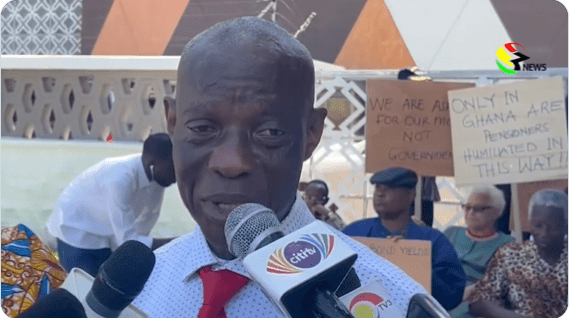
    “To my understanding, if you are doing this for yourself, there are no charges. I think that it is where there are third-party individuals involved that these charges come into play and it is something that we have raised in the past. It is an area that we are looking at because of the issue of financial inclusion. It is very important for all of us,” he said.

    The central bank stressed the significance of transparency and accountability within the mobile money sector to uphold consumers’ trust and confidence.

  • Video: Celebrities appear in their numbers to support Fella Makafui’s ‘Resonance’ movie priemier

    Video: Celebrities appear in their numbers to support Fella Makafui’s ‘Resonance’ movie priemier


    A host of prominent Ghanaian celebrities graced the red carpet at the premiere of actress-turned-producer Fella Makafui’s latest movie, ‘Resonance’.

    Among the attendees were singer Becca, actress Salma Mumin, Wendy Shay, Prince David Osei, comedian Waris, Kalybos, Elikem Kumordzie, and many others.

    Fella Makafui’s daughter, Island, and other family members were also present at the event.

    The premiere on Saturday night witnessed an overwhelming turnout from the public, showing strong support for Makafui’s endeavor.

    Fella’s manager shared a video of the packed audience, praising her for proving the doubters wrong.

    “THERE’s NO ONE WHO CAN CONVINCE ME that there’s NO GOD… GOD SOLD OUT ALL CINEMAS OF OUR PREMIERE BEYOND EXPECTATIONS FROM 7am to the Next Day 😫🙏🏾🧎🏾🙌🏾… TAKE ALL THE PRAISE ABA FATHER 🤲🏾🤲🏾🙏🏾🙏🏾 – GOD DID 😫” he wrote.

    Check out videos below…

  • If Bawumia will make a female his running mate, it should be Samira his wife – Okyeame Kwame

    If Bawumia will make a female his running mate, it should be Samira his wife – Okyeame Kwame

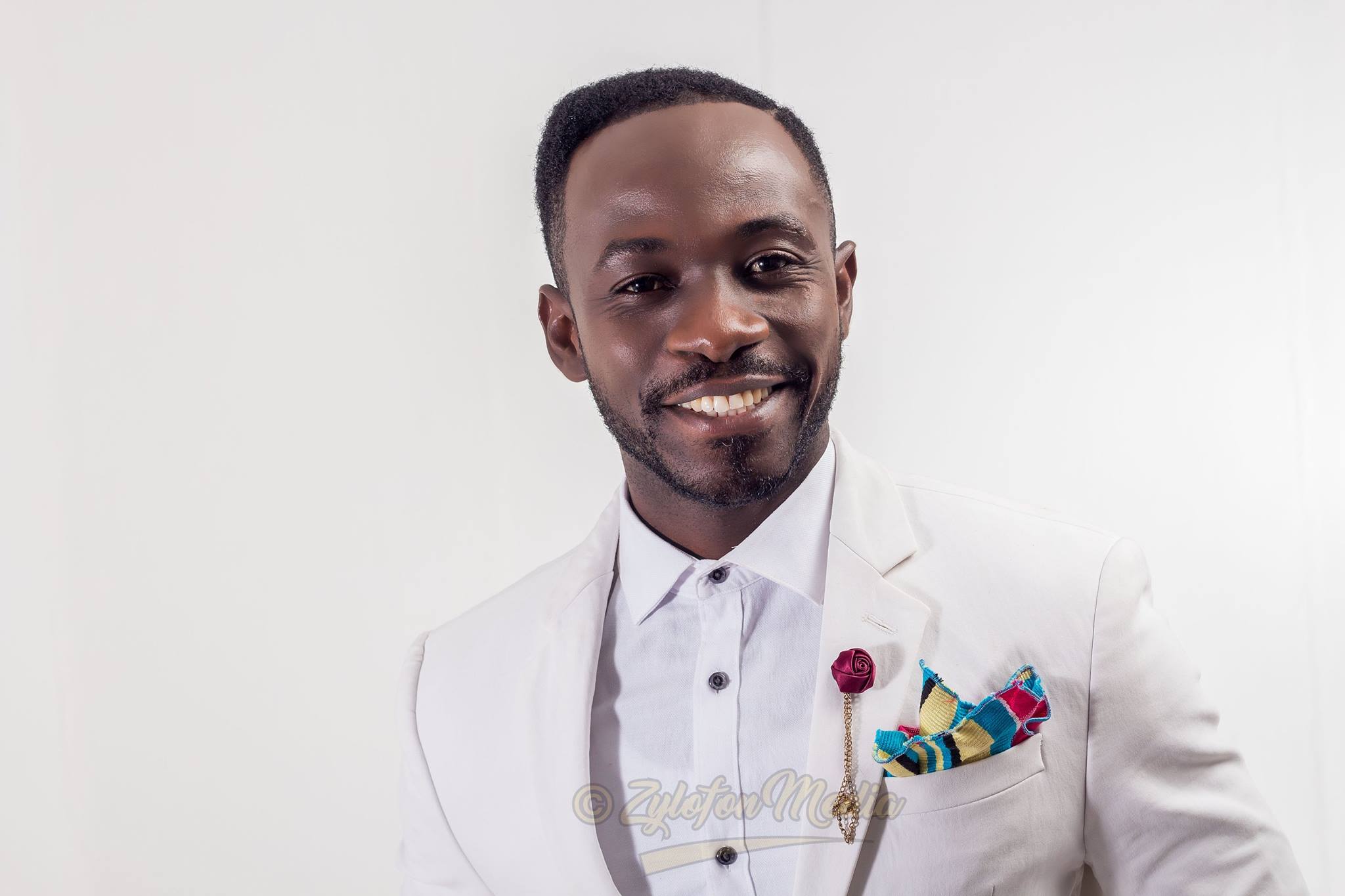
    As anticipation mounts within the NPP and among Ghanaians for the announcement of the running mate for Vice President Bawumia, who also serves as the party’s flag bearer, Ghanaian musician Okyeame Kwame has weighed in with a suggestion.

    Recognized as an affiliate to the NPP, Okyeame Kwame has offered advice to the Vice President in preparation for the December 7 general election.

    The artist, known for his hit “No Competition,” believes that the Second Lady of Ghana, Samira Bawumia, is well-suited for the role of running mate.

    Okyeame Kwame voiced his suggestion during an interview with Ohemaa Woyeje on Angel FM, as monitored by Ghpage.com.

    When questioned about the possibility of Vice President Bawumia selecting a female running mate for the upcoming election, Okyeame Kwame expressed his support for the idea that “then he should bring his wife”.

    According to him, Samira Bawumi “Is so intelligent”, adding that “She is a wise person and learned too”.

  • Video: Man barks like a dog after being bitten

    Video: Man barks like a dog after being bitten

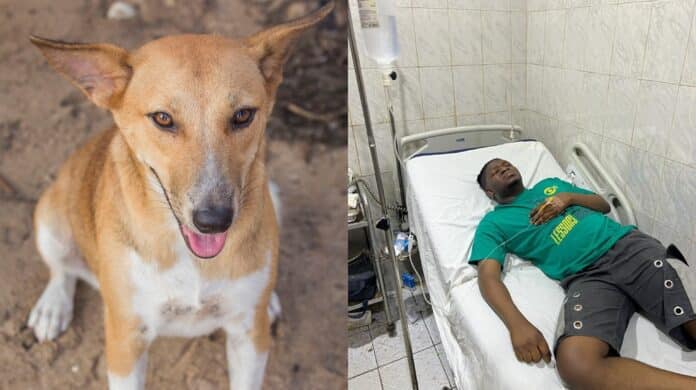
    A video circulating on various social media platforms captures a Ghanaian man confined to a hospital bed, evidently in a serious condition.

    In a surprising turn of events, the man, who was receiving oxygen, began barking like a dog while lying in his hospital bed.

    According to information gathered by Ghpage.com, the man was reportedly pursued by a menacing dog, leading to the unfortunate incident.

    Regrettably, the encounter with the dog resulted in the victim displaying canine behavior, now mimicking the barking of a dog.

    Watch video below:

  • Video: Nana Agradaa spotted chanting with lighted candles on social media

    Video: Nana Agradaa spotted chanting with lighted candles on social media


    A video of Nana Agradaa chanting has sparked discussion among social media users.

    In the video, Nana Agradaa is depicted in a dimly lit, undisclosed location, likely her residence.

    She appears wearing a red top, with a rope tied around her head, though the purpose remains unclear.

    Additionally, the video reveals a bottle with a rope around it, adding to the intrigue.

    To make the situation more scary, Nana Agradaa put on candles and began chanting as she sang a song that belong to the “Gyidi K)k))”.

  • “I bought Afronita a GHC20,000 phone to celebrate her on her birthday” – Champion Rolie clarifies

    “I bought Afronita a GHC20,000 phone to celebrate her on her birthday” – Champion Rolie clarifies


    A member of the DWP (Dance With Purpose) academy, Champion Rolie, has dismissed rumors suggesting a romantic involvement with his colleague dancer, Afronita.

    In an upcoming interview with Delay, Champion Rolie asserts that his bond with Afronita is purely platonic. He describes her as his closest confidant, akin to his best friend.

    Regarding his decision to gift Afronita an iPhone 15 Pro Max valued at 20,000 Ghana Cedis, Champion Rolie explains it was simply a birthday present.

    He emphasizes that as someone deeply connected to Afronita, he wanted to contribute to making her birthday celebration truly memorable.

    He said, “She is my PP. meaning she is my personal person. She is my favorite persona and she was celebrating her birthday so I bought an iPhone 15 Promax worth Ghc 20,000 to celebrate her”.

    To intensify the atmosphere, Nana Agradaa lit candles and commenced chanting while singing a song associated with the “Gyidi K)k))” tradition, adding an eerie vibe to the scene.

  • Highlife musician Guru contests for UG SRC Presidency

    Highlife musician Guru contests for UG SRC Presidency


    Hiplife artist also known as Maradona Yeboah Adjei, Guru, who is a student at the University of Ghana (UG), has stepped up his efforts to become the Student Representative Council (SRC) President.

    The Ghanaian rapper and fashion designer, who is currently pursuing studies in Political Science and Information Technology, recently announced his candidacy for the position.

    Guru aims to tackle various challenges faced by students on the UG campus if elected as president.

    His decision follows in the footsteps of Samini, a renowned artist who served as SRC President at the Ghana Institute of Management and Public Administration (GIMPA).

    Gurunkz publicly announced his presidential candidacy on social media, extending a warm welcome to returning Legon students.

    Maradona Yeboah Adjei ( GURU NKZ)* Welcomes all students back to campus;

    Dear Legonites, I’m thrilled to have you back in school. Let’s kick off this semester with positivity and enthusiasm!”

    *MARADONA YEBOAH ADJEI (GURU -NKZ)*

    UGSRC PRESIDENT HOPEFUL’24

    #Building the SRC with Everyone for everyone

    #Let’s all get involved

    # WEGODOAM

    In an interview with Accra-based TV3, Guru emphasized the significance of implementing practical solutions to address the prevailing challenges that students face at the University of Ghana.

    “As a third-year student studying Political Science and Information Studies at the University of Ghana, I’ve observed the issues and understand the type of leadership students desire,” Guru stated.

    He outlined several proposed initiatives, including the creation of Legon Television, improving campus transportation with more buses, and introducing recreational activities to ease student stress.

    “I believe introducing Legon TV is necessary as students are tired of the radio station. Additionally, we need more buses on campus,” Guru explained.

    His vision is centered on rejuvenating the University of Ghana, with the goal of reinstating its previous prestige and appeal to attract potential students.

  • Fatal mudslide in western Uganda claims 13 lives

    Fatal mudslide in western Uganda claims 13 lives


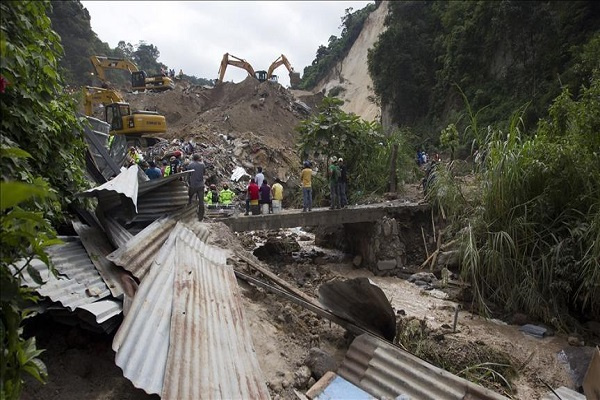
    Over the past three days, a mudslide in western Uganda has claimed the lives of at least 13 individuals.

    The fatalities occurred in Kasese district, and Uganda’s meteorological agency has cautioned about additional heavy rains and flooding.

    In neighboring Kenya, a nationwide tree-planting initiative has been conducted as part of a day of mourning for the over 200 individuals who lost their lives due to weeks of intense rainfall.

  • Nine university students abducted in Kogi State, Nigeria

    Nine university students abducted in Kogi State, Nigeria


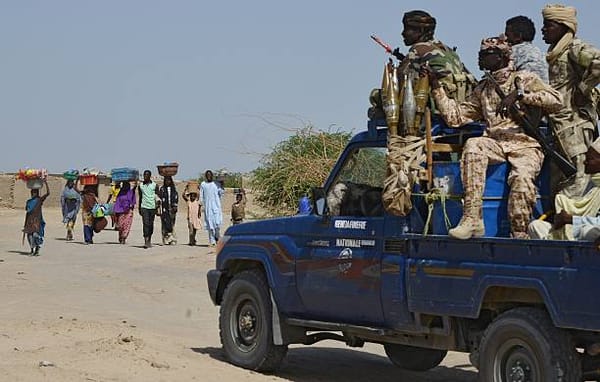
    Gunmen have kidnapped nine university students in central Nigeria’s Kogi State.

    Reports indicate that the assailants targeted the Confluence University of Science and Technology late on Thursday night.

    They stormed into classrooms while students were studying for upcoming exams, firing shots into the air before rounding up a group of students and abducting them.

    Although the Kogi state government confirmed nine abductees, concerns linger that the actual number could be higher.

    Authorities have mobilized security forces to conduct a search and rescue operation for the abducted students.

    “Hundreds of local hunters who understand the terrain as well as the conventional security agents are currently combing the area to ensure safe rescue of the abducted students who were kidnapped in the classrooms,” a statement said.

    Nigeria has experienced a rise in kidnappings – hundreds of people, including children, have been abducted in recent months.

    Some families said they were made to pay ransoms running into thousands of dollars before their loved ones were freed.

  • Israeli military expands operations in Gaza, prompting further evacuations

    Israeli military expands operations in Gaza, prompting further evacuations


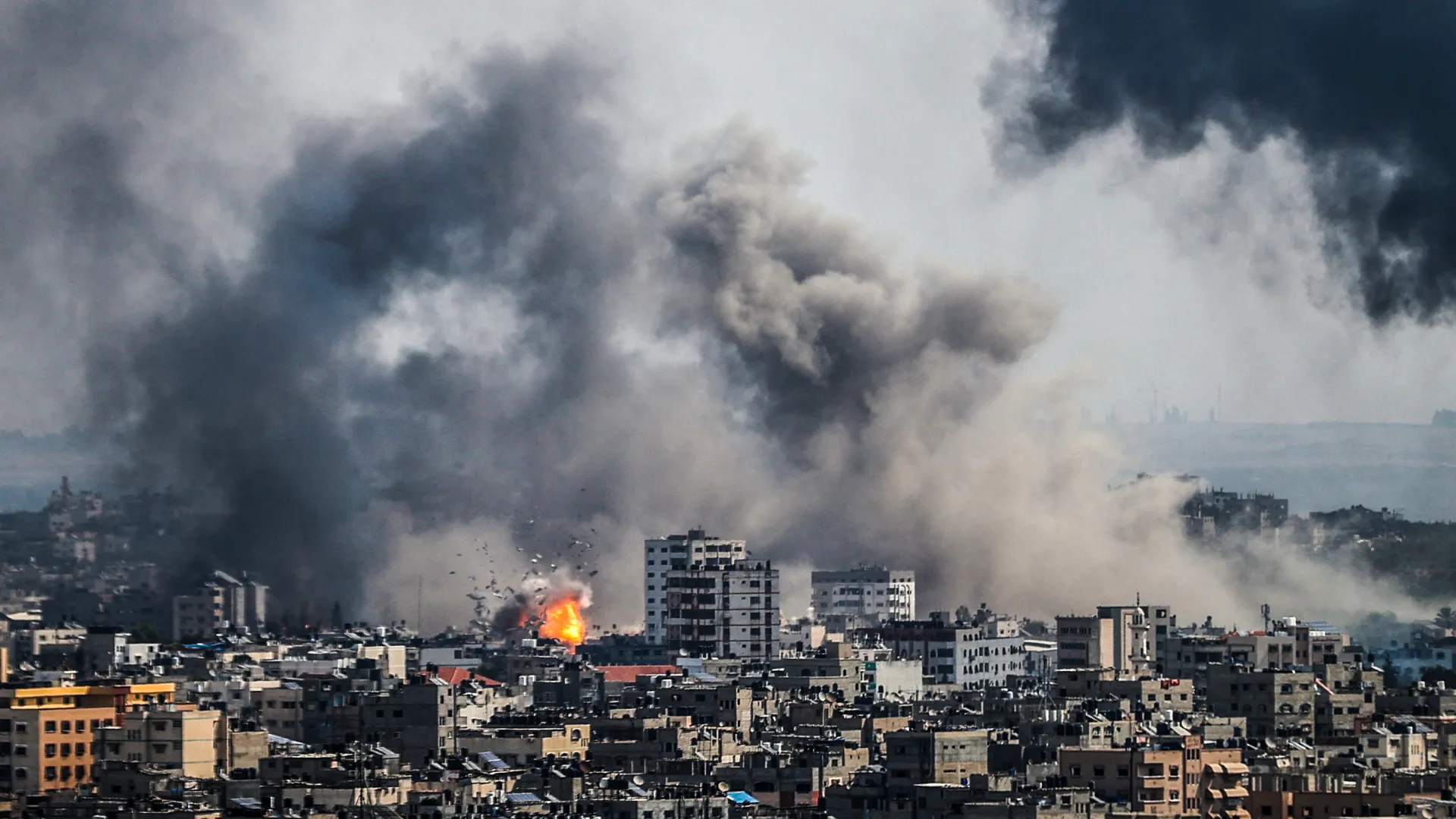
    Israel urged Palestinians in additional areas of Gaza’s southern city of Rafah to evacuate to what it termed an expanded humanitarian zone in Al-Mawasi.

    This move signals the military’s intent to proceed with a ground attack on Rafah.

    A military spokesperson, in a social media post on X, also urged residents and displaced individuals in Jabalia and 11 other neighborhoods in Gaza to relocate immediately to areas west of Gaza City.

    According to the Palestinian health ministry, at least 37 Palestinians, including 24 from central Gaza, were killed in overnight airstrikes, including those in Rafah.

    “They threw fliers on Rafah and said, from Rafah to al-Zawayda is safe, people should evacuate there, and they did, and what has become of them? Dismembered bodies? There is no safe place in Gaza,” Khitam Al-Khatib, who said she had lost at least 10 of her relatives in an airstrike on a family house earlier on Saturday, told Reuters.


    Al-Zawayda, a small town in the central Gaza Strip, has become overwhelmed by thousands of displaced individuals from various parts of the enclave.

    The Israeli military reported conducting airstrikes on numerous targets throughout the Strip in the past day. Additionally, ground troops claimed to have neutralized fighters in Zeitoun in recent hours.

    Medics confirmed that an Israeli airstrike resulted in the deaths of at least seven individuals from the same family in a house in Beit Lahiya town, located in the northern Gaza Strip.

    Residents in Rafah informed Reuters that the latest evacuation directives issued by the Israeli military encompassed areas in the city center. This development has raised concerns that Israel intends to extend its ground offensive in the region.

    “The situation is very difficult, people are leaving their homes in panic,” said Khaled, 35, a resident of the Shaboura neighbourhood, an area where the new orders to leave have been issued.

    The Israeli military said it was continuing operational activity against Hamas fighters in eastern Rafah and on the Gazan side of the Rafah crossing.

    Despite heavy U.S. pressure and alarm expressed by residents and humanitarian groups, Israel has said it will proceed with an incursion into Rafah, where more than 1 million displaced people have sought refuge during the seven-month-old war.

    Israeli tanks captured the main road dividing Rafah’s eastern and western sections on Friday, effectively encircling the eastern side in an assault that has caused Washington to hold up the delivery of some military aid to its ally.

    Israel says it cannot win the war without rooting out thousands of Hamas fighters it believes are deployed in Rafah.

    About 300,000 Gazans have so far moved towards Al-Mawasi, according to Israeli military estimates released on Saturday.

    The war was triggered by a Hamas-led attack on southern Israel on Oct. 7 in which some 1,200 people were killed and more than 250 people taken hostage, according to Israeli tallies.

    Israel’s military operation in Gaza has killed close to 35,000 Palestinians, according to Gaza’s health ministry. The bombardment has laid waste to the coastal enclave and caused a deep humanitarian crisis.

    Two crossing points vital for delivery of aid to Gaza were still closed on Saturday: the Palestinian WAFA news agency said the Rafah crossing was closed for a fifth day, while another crossing, Kerem Shalom, has been shut for around a week.

    The latest evacuation orders came hours after internationally mediated ceasefire talks appeared to be faltering, with Hamas saying Israel’s rejection of the truce offer it had accepted returned things to square one.

    The Palestinian militant group also hinted it was reconsidering its negotiation policy. It did not elaborate on whether a review meant it would harden its terms for reaching a deal, but said it would consult with other allied factions.

    Israel says it wants to reach a deal under which hostages would be released in exchange for the freeing of Palestinian prisoners held by Israel, but that it is not prepared to end the military offensive.

    ‘EXHAUSTED’

    In Deir Al-Balah in the central Gaza Strip, where hundreds of thousands were sheltering, Palestinians mourned relatives during funerals on Saturday.

    “Here they are, in pieces, here is my sister-in-law, without a head, my aunt is without a head, what is this injustice? Until when will this go on? We are exhausted, by God we are exhausted, I have lived in tents for the past seven months,” said Khatib, sitting near bodies wrapped in white shrouds bearing the names of the dead men and women.

    Prime Minister Benjamin Netanyahu’s government is under increasing pressure over its military campaign, including from longtime ally the United States.

    The Biden administration said on Friday Israel’s use of U.S.-supplied weapons may have violated international humanitarian law during its Gaza operation, in its strongest criticism to date of Israel.

    But the administration stopped short of a definitive assessment, saying that due to the chaos of the war it could not verify specific instances where use of those weapons might have been involved in alleged breaches.

  • Dutch artist disqualified from Eurovision song contest

    Dutch artist disqualified from Eurovision song contest

    The Dutch performer Joost Klein has been removed from the Eurovision Song Contest following an incident backstage.

    A female member of the production crew reported an allegation of intimidation to Swedish authorities.

    Organizers of the contest stated that it would be inappropriate for Klein to continue participating while the legal process unfolds.

    Meanwhile, Ireland’s contestant Bambie Thug missed their dress rehearsal but assured fans of their presence for the main show.

    Explaining the absence on Instagram, Bambie Thug referenced a prior “situation” requiring urgent attention from the European Broadcasting Union (EBU).

    There’s no indication of a connection between Klein’s disqualification and Bambie Thug’s absence.

    Additionally, reports from Norway indicate that their jury representative, Allesandra Mele, has withdrawn due to the tense atmosphere in Malmo.

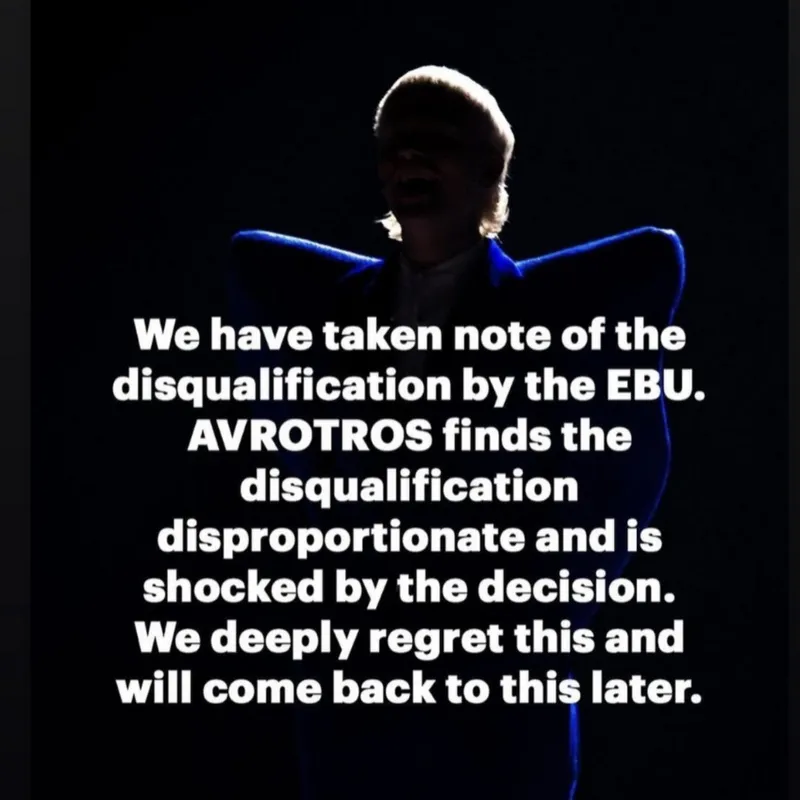
    Avrtotros, the Dutch broadcaster, criticized Klein’s disqualification as disproportionate, pledging to address the matter further.


    Klein, a top contender for this year’s Eurovision win with his song “Europapa,” dedicated the pro-Europe techno anthem to his father, who he lost to cancer at the age of 12. At 26, he had vowed to fulfill his father’s dream of seeing him perform at Eurovision.

    His suspension was announced on Friday afternoon during the first dress rehearsal for the televised final. As Klein’s props were being set up at the Malmö Arena, a production manager signaled for their removal.

    Subsequently, his performance was skipped without explanation, and Israel’s Eden Golan took his place in the running order.

    The European Broadcasting Union (EBU), which organises the event, later issued a statement saying they were “investigating an incident that was reported to us involving the Dutch artist”.

    ‘Zero tolerance’

    On Saturday, Swedish police confirmed that a man had been reported for making “unlawful threats” at Malmö Arena, after Thursday’s semi-final.

    “The police have taken all essential investigative measures and questioned the suspect, plaintiff and witnesses,” a spokesperson said.

    “The investigation has been completed by the police… and the case will now go to the prosecutor within a few weeks.”

    The EBU subsequently confirmed Klein would not be taking part in Saturday’s grand final.

    “We maintain a zero-tolerance policy towards inappropriate behaviour at our event and are committed to providing a safe and secure working environment for all staff at the Contest,” they said.

    “In light of this, Joost Klein’s behaviour towards a team member is deemed in breach of Contest rules.”

    Although contestants have been disqualified from Eurovision in the past, none has ever lost their place this close to the final.

    More commonly, songs are rejected at the selection stage. In 2021, the Belarusian entry was banned after refusing to change lyrics that the contest deemed to be political in nature; while in 2016, Romania was barred from participating due to outstanding debts owed to the EBU.

    Swedish and Dutch news outlets have said that the incident involved Klein and a member of the television production team.

    Organisers stressed that “contrary to some media reports and social media speculation, this incident did not involve any other performer or delegation member”.

    Early reports suggested there had been antagonism between Klein and Israel’s contestant, as feelings run high over the Israel-Gaza war.

    At a Eurovision press conference on Thursday, Golan was asked whether she had “ever thought that by being here you bring risk and danger for other participants and public?”

    When the Israeli singer was told by the moderator that she did not have to answer the question, Klein chimed in: “Why not?”

    Golan replied: “I think we’re all here for one reason, and one reason only, and the EBU is taking all safety precautions to make this a safe and united place for everyone, and so I think it’s safe for everyone and we wouldn’t be here [if not].”

    Earlier, when Klein was asked if his song could live up to the Eurovision slogan and unite people by music, he replied: “I think that’s a good question for the EBU.”

    EPA Eurovision press conference with Joost Klein and Eden Golan

    Saturday’s grand final will now progress with 25 acts, instead of the planned 26.

    Dutch viewers are still allowed to vote, and the Dutch jury result (which was decided during Friday’s second dress rehearsal) is still valid.

    It would not be possible for another act to replace Klein, partly because of the difficulty in adding new elements to the production at the last minute.

    Organisers would also be unwilling to promote the eliminated, 11th-place contestant from Thursday’s semi-final, as it would contravene rules on revealing the results of the public vote.

  • Afghanistan flash floods claim hundreds of lives

    Afghanistan flash floods claim hundreds of lives

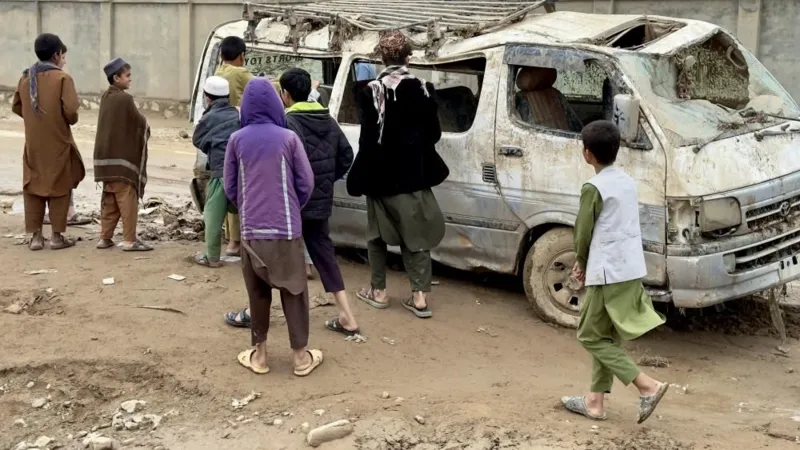
    Flash flooding in northern Afghanistan has claimed hundreds of lives, with concerns that the death toll may escalate due to further storms in the region.

    Taliban officials report at least 150 fatalities, while the World Food Programme indicates that the toll exceeds 300 following heavy rainfall in five districts of Baghlan province on Friday night.

    Social media images depict torrents of water engulfing houses in numerous villages, leaving widespread devastation.

    The country has experienced unusually intense rainfall in recent weeks, resulting in numerous flood-related fatalities since mid-April.

    Abdul Mateen Qani, a spokesperson for Afghanistan’s interior ministry, informed the BBC of at least 131 deaths in Baghlan province and 20 in Takhar.

    Rana Deraz, a communications officer for the UN’s World Food Programme, informed the AFP news agency of 311 fatalities in Baghlan, along with the destruction of 2,011 houses and damage to 2,800 more. Additionally, three mosques and four schools were impacted.

    Many casualties occurred in the Borka district of Baghlan province, where over 200 individuals were trapped in their homes.

    Severe damage is also reported in the provinces of Badakhshan, Ghor, and western Herat.

    Local official Hedayatullah Hamdard told AFP news agency emergency personnel including the army were “searching for any possible victims under the mud and rubble”.


    Some families who lost their homes received tents, blankets, and food, according to the official.

    The primary road linking Kabul to northern Afghanistan has been shut down.

    Last month’s flooding in the west resulted in numerous deaths and left thousands in need of humanitarian assistance.

    Flash flooding occurs when rainfall exceeds the capacity of drainage systems.

    Experts note that a relatively dry winter has hampered the soil’s ability to absorb rainwater, leading to extensive flooding of farmland.

    Torrential rain and flooding claim lives annually in Afghanistan, particularly affecting poorly constructed homes in remote rural areas.

    Afghanistan ranks among the world’s most vulnerable nations to climate change impacts.

    Decades of warfare, culminating in the 2021 Taliban resurgence following the withdrawal of a US-led coalition, have left Afghanistan one of the world’s poorest countries.

    Various factors contribute to flooding, but climate change-induced warming increases the likelihood of extreme rainfall.

    Global temperatures have already risen by approximately 1.1°C since the onset of the industrial era, with further increases projected unless governments worldwide enact significant emissions reductions.

  • Russian attacks prompt evacuation of nearly 1,800 from Kharkiv area

    Russian attacks prompt evacuation of nearly 1,800 from Kharkiv area


    Russian assaults in northeastern Ukraine have led to the evacuation of almost 1,800 individuals from the Kharkiv region, according to the regional governor.

    Following Russia’s surprise incursions on Friday, heavy fighting has persisted in the border area.

    Kyiv has anticipated a Russian summer offensive for some time, including a potential attempt to seize Kharkiv, Ukraine’s second-largest city.

    However, Ukraine maintains that its forces are capable of resisting any assault.

    On Saturday, Russia claimed to have captured five villages near the town of Vovchansk in its latest offensive. The BBC has not been able to independently verify this assertion.

    The extent of Russia’s advance remains unclear – it’s uncertain whether this is a probing attack or the beginning of a larger campaign.

    Ukrainian artillery guns are now retaliating. The sounds of gunfire reverberate loudly through the already bomb-ravaged streets.

    According to Kharkiv regional head Oleh Syniehubov, a total of 1,775 individuals have been evacuated, with hundreds more still in Vovchansk, just 6 kilometers (3.7 miles) from the Russian border.

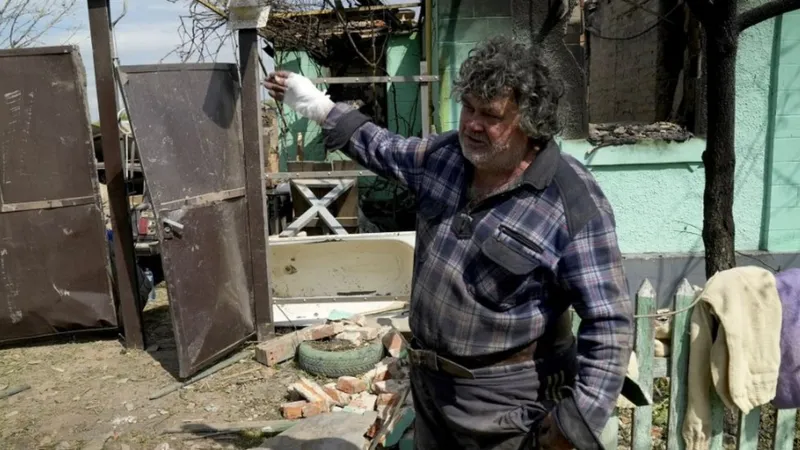
    One resident, Serhii, recounted to the BBC that his home and vehicles were destroyed by a Russian glide bomb. His wife sustained more severe injuries and was rushed to the hospital. Small fires continued to emit smoke from the remains of his home.

    Serhii expressed reluctance to leave due to concerns for their four goats.

    Amidst the destruction, the shriek of more glide bombs being released and the subsequent heavy explosions were heard.

    Russia’s air force is causing increasingly deadly consequences, and Ukraine currently lacks a response.

    Ukrainian officials assert that while Russia has the capacity to escalate tensions in border areas, it does not have the capability to capture the city of Kharkiv itself.

    Moscow aims to establish a 10km (six-mile) buffer zone for its Belgorod region following a series of Ukrainian cross-border attacks.

    On Friday, the US unveiled a new $400m (£319m; €371m) military aid package for Ukraine, marking its third installment of assistance to the country after months of political deadlock.

    This additional aid supplements the previous $7bn package dispatched in late April. US Secretary of State Anthony Blinken described the aid as “urgently needed,” comprising air defense munitions, artillery rounds, anti-tank weapons, and armored vehicles.

    National Security Spokesman John Kirby stated on Friday that Russia is expected to “make further advances in the coming weeks to try and establish a buffer zone along the Ukrainian border.”

    Moscow’s efforts to capitalize on the delayed arrival of US weaponry are evident, as it continues to advance in the eastern Donetsk region. The resurgence of heavy fighting in the northeast underscores Russia’s expanding ambitions.

  • ‘I won’t do it again so you have peace’ – Davido hints on quitting music soon

    ‘I won’t do it again so you have peace’ – Davido hints on quitting music soon


    Davido intends to withdraw from the music industry due to ongoing media disputes involving himself and fellow artist Wizkid.

    Expressing a sense of being targeted and experiencing hostility within the Nigerian music community, Davido cited recent online conflicts, triggered by an alleged video shared by Wizkid, as contributing factors to his decision.

    In a recent post on X, Davido expressed a strong belief that many desire his departure from the music industry, prompting his decision to step back.

    Despite currently working on a new album, Davido plans to retire from music upon its completion, redirecting his focus towards pursuits beyond the music realm.

  • Kendrick and Cole are the only 2 I compete with – Sarkodie

    Kendrick and Cole are the only 2 I compete with – Sarkodie

    Ghanaian rapper Sarkodie, also known as Michael Owusu Addo, made waves with his latest track ‘Brag,’ where he confidently asserts his superiority over other African rappers and musicians.

    He highlights his longstanding presence in the music industry, predating the fame of artists like Davido, Wizkid, Burna Boy, Black Sherif, and Asake.

    Sarkodie declares that his only competitors are J Cole and Kendrick Lamar. The song delves into Sarkodie’s journey, including moments of Wizkid and Davido’s rise while he was already established.

    He mentions rising talents like Odugwo, Black Sherif, and Asake, affirming his ongoing relevance and creativity.

    “I gotta brag, I am too quiet,” he says, signaling he is ready to outline his long list of achievements in the music scene.

    “Wizkid came, I was already doing it. Davido started, I was already improving it. Then Odugwo came through, Black Sherif, Asake, and I’m still going… you thought I was losing it? My biggest competition is Kendrick and Cole,” he raps on the song.

    Sarkodie reflects on challenges and disappointments from those he expected support from.

    He also teased his upcoming project, ‘The Championship,’ scheduled for release by May 24 or possibly earlier.

    This release is highly anticipated, being his first major music release since his eighth studio album, ‘Jamz,’ in 2022. Fans are eager to see the impact Sarkodie’s new music will have on the hip-hop scene.

  • Delay flaunts luxurious wig, handbag, 25 Karat gold jewelry on social media

    Delay flaunts luxurious wig, handbag, 25 Karat gold jewelry on social media


    Ghanaian businesswoman and TV show host, Deloris Frimpong Manso, known as Delay, has chosen to assert her successes to her detractors, showcasing the fruits of her numerous ventures.

    In a self-recorded video, Delay proudly displays her collection of lavish 25 Karat gold jewelry, designer bags, and high-end human hair.

    With a humorous touch, she remarks that she reinvests her earnings from her businesses into pampering herself.

    Delay embarked on her broadcasting journey as a presenter at Life FM in Nkawkaw, Eastern Region, Ghana, at the age of 17 in 1999.

    She later transitioned to Top Radio in Accra in 2005, where she hosted the mid-morning show until 2007.

    In 2007, she joined the newly established Oman FM, remaining there until 2016.

    During her tenure at Oman FM, Delay launched her television program, the Delay Show, on TV3 in 2008. In 2011, she authored and produced the widely acclaimed television series, Afia Schwarzenegger.

    Her television production company, Maxgringo Productions, unveiled another television series titled “Cocoa Brown,” a narrative loosely inspired by her own life experiences.

    Checkout the video below;

  • Moses Bliss responds to critics commenting about about his wife on social media

    Moses Bliss responds to critics commenting about about his wife on social media


    Nigerian gospel musician Moses Bliss recently tactfully addressed critics who raised concerns about his wife preaching during their events.

    Since their marriage, she consistently takes the opportunity to impart the word of God to the audience whenever Moses Bliss ministers at various events.

    Prior to their marriage, Marie Wiseborn was already actively engaged in preaching at the altar, influenced by her parents’ ministry background.

    Despite encountering some negative feedback online, Moses Bliss firmly stood by his wife’s zeal for sharing the word of God. He emphasized that she had been preaching even before their marriage and expressed his wholehearted support for her in this pursuit.


    The marriage ceremony uniting Moses Bliss and his Ghanaian bride, Marie Wiseborn, embodied a harmonious blend of sophistication and simplicity.

    Marie radiated elegance in a pristine white gown, while Bliss exuded charm in a white suit accentuated with brown details.

    The bridal party infused vibrancy into the occasion with their striking orange ensembles, while Marie’s parents graced the event with the traditional splendor of Ghanaian kente attire.

    Prior to their nuptials, Bliss unveiled an EP titled “Love Testament,” which provided a poignant musical backdrop to their journey together.

    Their enchanting love story commenced with a romantic proposal in London and culminated in a civil ceremony held in Abuja, Nigeria.

    In essence, their union serves as a testament to love, faith, and a shared dedication to propagating the gospel.

  • Skrewfaze express joy for his 1st daughter who has successfully joined US Army

    Skrewfaze express joy for his 1st daughter who has successfully joined US Army


    Ghanaian Hiplife artist Skrewfaze is beaming with joy as his daughter successfully joins the US Armed Forces.

    The singer, known offstage as Jehoshaphat Eshun, turned to Instagram to share this delightful news, expressing his immense excitement and gratitude to God for his daughter’s milestone.

    In a video, the acclaimed Gbalagaza hitmaker jubilated with his family as his daughter proudly displayed her certificate, symbolizing her induction into the U.S. military.

    Skrewfaze attributed his daughter’s accomplishment to a combination of divine intervention and diligent effort, drawing inspiration from one of his songs playing softly in the background.

    “Like I keep saying in the song playing at the background, ‘JAH TIME IS THE BEST. WORK HARD BELIEVE IN YOURSELF AND HE WILL DO THE REST’,” Skrewfaze captioned.

    Watch the video below:

  • Team Eternity Ghana shares backstory of their trending song titled ‘Defe Defe’

    Team Eternity Ghana shares backstory of their trending song titled ‘Defe Defe’


    Ghanaian music ensemble, Team Eternity, has garnered significant attention following the remarkable success of their song ‘Defe Defe,’ which has climbed to the top position on the Apple Music Top Hundred chart.

    This track is featured on their album ‘Testimony,’ which boasts an additional seven songs that have also secured spots within the top 100 rankings.

    The narrative behind this iconic song has recently emerged, with Dr. Emmanuela Abasa Konadu, a member of the group and soprano singer, sharing the inspiration behind its creation.

    “The writer of the song, he’s called Patrick, most people know him as Vessel Kordrick. He wrote the first half of the song and Naana wrote the rap. He mentioned that he wrote that song from a place of chaos. I don’t know what that chaos was, but I want to believe that he was going through a really hard time and God gave him that song.

    “When you listen to the lyrics, it’s about feeling limited in your expression of praise and worship because sometimes you want to give your all, but you can’t,” she said in an interview with Joy News.

    Expanding on the story, tenor singer Joseph Gordon credited the song’s triumph to its captivating melody and the deep-rooted Ghanaian passion for dance.

    “I think it’s a known fact that Ghanaians love to dance, love to move their body, and we are constantly suckers for melody, and that is what ‘Defe Defe’ encompasses. The fact is that it’s even appealing to the ear. I mean, as believers, we are even blown away that the shout-out is even coming from the non-believing side of people, and it’s only a testament.

    “Like we said earlier, our message is Jesus, and the vision actually for Team Eternity is that we reach out to young people,” he said.

    Gordon further revealed that the team never planned any promotion strategy for the song and was surprised by the song’s traction on major streaming platforms.

    “People think we had a release strategy, promotion budget, and stuff like that, but guess what? It wasn’t like that. We actually woke up after uploading the album for review on the digital stores, and before we realized, it had even gone live without us knowing, and we just had to key in a quick copy just to try and let people know that the album was out. And guess what? The results are just amazing. We count it all to the grace of God,” he said.

    The group’s success doesn’t stop at one song; they have claimed seven additional spots on the chart with soulful tracks like ‘Ghana Chant’, ‘Brass Band Medley’, and ‘Jehovah Overdo’ which features Nigerian singer Eben.

    Other songs from the album, including ‘Miracle Working God’, ‘Tribute’, ‘Testimony’, and ‘Wasem’, have all secured places within the top 100 on Apple Music.

    This impressive feat comes just one week after the album’s release, signalling Team Eternity’s significant impact on the gospel music scene and their growing international acclaim.

    The group is currently trending on social media, with many fans coming out to express their love for the song, the group, and the album in general.

    Additional tracks from the album, such as ‘Miracle Working God’, ‘Tribute’, ‘Testimony’, and ‘Wasem’, have also earned positions within the top 100 on Apple Music.

    This remarkable achievement occurs within just one week of the album’s debut, underscoring Team Eternity’s profound influence on the gospel music realm and their escalating global recognition.

    The ensemble is currently generating buzz on social media platforms, with numerous fans voicing their admiration for the song, the group, and the album as a whole.

  • Dutch Eurovision star suspended amid a backstage incident undergoing investigations

    Dutch Eurovision star suspended amid a backstage incident undergoing investigations


    The Dutch Eurovision contestant, Joost Klein, will be absent from Friday evening’s dress rehearsal as organisers investigate a backstage incident.

    The European Broadcasting Union (EBU), responsible for the event, has not disclosed details of the incident involving Joost Klein.

    During the evening dress rehearsal, which determines scores from juries across Europe for the grand final, jurors will watch a pre-recorded performance from earlier in the week.

    Klein’s song “Europapa” is considered a frontrunner in this year’s contest.

    Dedicated to his late parents, who passed away during his childhood, the performer had vowed to compete at Eurovision one day.

    His suspension was evident during Friday afternoon’s first dress rehearsal for Saturday’s televised grand final.

    As Klein’s props were being set up on stage at the Malmö Arena, a production manager instructed their removal.

    Subsequently, his song was omitted without explanation, and Israel’s entrant, Eden Golan, assumed his place in the running order.

    The EBU later issued a statement saying they were “investigating an incident that was reported to us involving the Dutch artist”.

    The statement was updated shortly after 20:30 CET (19:30 BST), half an hour before the jury rehearsal began.

    “The investigation into the incident with the Dutch artist in this year’s Eurovision Song Contest is still ongoing,” it said.

    “Discussions are also taking place between the EBU and AVROTROS, the Dutch participating broadcaster.

    “While the investigation continues the EBU has decided that Joost Klein will not perform during Dress Rehearsal 2 of the competition which is voted on by juries in the 37 participating countries.

    “His performance from Semi Final 2 will be used instead.”

    “We have no further comment at this time and will update in due course.”

  • Israel may have violated international law using American weapons in Gaza – US suggests

    Israel may have violated international law using American weapons in Gaza – US suggests


    The United States suggests that Israel might have employed American-provided weaponry, potentially violating international humanitarian law at times during the Gaza conflict.

    According to the State Department, it is deemed “reasonable to assess” that these arms were utilized in manners “inconsistent” with Israel’s obligations.

    However, it acknowledged that the United States lacked comprehensive information in its evaluation and stated that shipments could persist.

    The report, which experienced a delay, was submitted to Congress on Friday.

    Ordered by the White House, the review examined the utilization of US-supplied arms by the country, alongside six others embroiled in conflicts, since the beginning of the previous year.

    The report criticized certain Israeli operations in Gaza but refrained from explicitly stating that the Israel Defense Forces (IDF) campaign had violated international law.

    Israel faced an “extraordinary military challenge” combatting Hamas in Gaza, the report stated.

    Furthermore, it mentioned that assurances from Israel regarding the lawful use of US weapons were considered “credible and reliable.”

    The document also noted that because Hamas “uses civilian infrastructure for military purposes and civilians as human shields”, it was often “difficult to determine facts on the ground in an active war zone” of what are legitimate targets.

    But it said that given Israel’s significant reliance on US-made weapons, they had probably been used “in instances inconsistent with its IHL [international humanitarian law] obligations or with established best practices for mitigating civilian harm”.

    It added that “Israel has the knowledge, experience, and tools to implement best practices for mitigating civilian harm in its military operations”, but that “results on the ground, including high levels of civilian casualties, raise substantial questions as to whether the IDF is using them effectively in all cases”.

    The report said the UN and humanitarian organisations had described Israeli efforts to mitigate civilian harm as “inconsistent, ineffective and inadequate”.

    The state department found that Israel did not fully co-operate with US efforts to “maximise” humanitarian aid into Gaza in the initial months of the conflict. It said, however, that this situation had changed.

    “We do not currently assess that the Israeli government is prohibiting or otherwise restricting the transport or delivery of US humanitarian assistance,” the report said.

    One of the contributors to the report, David Satterfield, a former US ambassador to Turkey, told the BBC that the report was the first of its kind and that the US would continue to keep Israeli actions “under review”.

    “This is a conflict quite unlike any that the world has seen,” he added. “We tried to take account of all those factors in coming up with a very frank, but also credible judgement.”

    The report was finally released days after US President Joe Biden publicly threatened to withhold certain bombs and artillery shells from Israel if it went ahead with an assault on Rafah, the last stronghold of Hamas in Gaza that is packed with more than a million Palestinians.

    Shortly before the report’s publication, Israeli Prime Minister Benjamin Netanyahu dismissed President Biden’s warnings that the operation in Rafah would cross a “red line” and vowed that Israel would “stand alone” if necessary.

    More than 80,000 people have fled Rafah since Monday, the UN says, with Israeli tanks reportedly massed close to built-up areas amid constant bombardment.

    Israeli troops took control and closed the Rafah crossing with Egypt at the start of their operation, while the UN said it was too dangerous for its staff and lorries to reach the reopened Kerem Shalom crossing with Israel.

    Israel launched a military campaign in Gaza to destroy Hamas in response to the group’s attack on southern Israel on 7 October, during which about 1,200 people were killed and 252 others were taken hostage. More than 34,900 people have been killed in Gaza since then, according to the territory’s Hamas-run health ministry.

  • Kofi Kinaata’s songs are full of wisdom – Bessa Simons

    Kofi Kinaata’s songs are full of wisdom – Bessa Simons


    President of the Musicians Union of Ghana (MUSIGA), Bessa Simons, commended Kofi Kinaata for consistently producing songs of substance.

    During the listening party for Kofi Kinaata’s latest EP on May 9, 2024, in Accra, Bessa Simons emphasized the significance of young artists in the industry crafting meaningful compositions.

    He noted that Kofi Kinaata has consistently upheld this standard by consistently delivering such impactful songs.

    “Like I always say to the young ones (artists), in your lifetime, you have to write one sensible song. But you (Kofi Kinaata) always give us sensible songs,” he said.

    Bessa Simons also expressed admiration for the incorporation of Highlife elements in Kinaata’s music, highlighting the authenticity and high-quality rhythms and instrumentation behind his compositions.

    “What I’m so moved by is the element of Highlife music in the song. One can tell you are coming from a place where you have an authentic kind of rhythm and what you do with the rhythms and the instrumentation is great. Hearing live bass these days is very rare because people don’t use it. But for you to use it this way; it’s superb,” he said.

    Kofi Kinaata has unveiled his inaugural EP entitled ‘Kofi oo Kofi’, paying homage to his Friday birth.

    Initially slated for release on his birthday, April 15, the EP debuted on May 10, 2024. It comprises seven tracks that delve into Kinaata’s personal experiences and the wisdom gleaned from them.

  • Ajagurajah shares details of his spiritual journey from age 16

    Ajagurajah shares details of his spiritual journey from age 16


    Prophet Kwabena Boakye Asiamah, more commonly known as Prophet Ajagurajah, the esteemed founder of the Ajagurajah Movement, has shared the story of his journey to becoming a spiritual leader.

    Reflecting on his past, Prophet Ajagurajah fondly remembers his formative years spent overseeing his father’s church in Pankrono, Kumasi.

    During this pivotal period, an event occurred that would change the trajectory of his life forever.

    He recounted how a sick individual was brought into the church, and feeling guided by what he perceived as the prompting of the spirit, he extended his embrace to the afflicted person.

    Remarkably, the sick individual experienced a miraculous recovery following this embrace, sparking murmurs of Prophet Ajagurajah’s burgeoning spiritual abilities throughout the community.

    “At age 16, my father left his church for me at Pankrono in Kumasi and they brought a sick person. Something just told me, to hug the person and immediately I hugged the person, the sickness went away,” recounted Prophet Ajagurajah during an interview on 3FM on May 10, 2024.

    He continued “So, they called my father and told him that there’s something happening in the church and they think I am powerful now.

    “So, my dad called me and I told him what I saw and he said I should be careful not to do this and that.”

  • KODA’s funeral to be held on July 5 2024 – Family announces

    KODA’s funeral to be held on July 5 2024 – Family announces


    The family of the late gospel music luminary Kofi Owusu Dua Anto, known fondly as KODA, has disclosed information regarding his forthcoming funeral arrangements.

    In a statement released on May 10, the family of the revered artist, based in Takoradi, outlined that the funeral proceedings will take place on Friday, July 5, 2024.

    The chosen venue for the event is slated to be the Kingsway International Christian Centre (KICC) or alternatively, the Dominion Centre situated on the Spintex Road in Accra.

    According to a report from Daily Graphic online, several gospel artists, including Pastor Joe Beecham and Uncle Ato, attended the one-week observation ceremony held on Friday.

    KODA passed away on Sunday, April 21, 2024, leaving behind a legacy as both a singer and producer who significantly influenced the gospel music landscape. His notable compositions include ‘Nsempii,’ ‘Nkwa Abodoo,’ ‘Yapai,’ and ‘Adorso.’

    Further information regarding his funeral arrangements and associated rites can be accessed through the dedicated website www.kodasmedia.com.

  • Measures in place by Central Bank to stabilize cedi – Governor

    Measures in place by Central Bank to stabilize cedi – Governor


    Governor of the Bank of Ghana, Dr. Ernest Addison, remains hopeful that the ongoing challenges concerning the cedi’s performance against the US dollar will soon be rectified.

    Over the past few weeks, the Ghana cedi has experienced consistent depreciation vis-à-vis the US dollar. Bloomberg estimates reveal a depreciation of 13.7% of the local currency against the greenback thus far this year.

    Nevertheless, the Central Bank Governor assures that requisite measures are being implemented to tackle the issue and restore stability to the local currency.

    “The exchange rate stability will be sustained because it is not possible to continue with the disinflation process with exchange rates that are not stable. So, implicit in that statement is to give assurance to you all about the stability of the cedi going forward.

    “I’m aware that every commercial bank in the country has received some FX from the Central Bank, and apparently, there are one or two that didn’t need it, and we are keeping a very keen eye on developments,” Dr. Addison said.

    In the meantime, Ghana’s inflation rate experienced a slight reduction, dropping from 25.8% in March of this year to 25.0% in April.

    This signifies a decrease of 0.8 percentage points in April compared to the previous month’s figure recorded in March 2024.

    The Central Bank’s decision on whether to maintain or increase its monetary policy rate, which has stayed steady at 29% since its last meeting in March 2024, remains uncertain.

  • ‘Stolen BVR kits may facilitate illegal voter registration’ – NDC suspects

    ‘Stolen BVR kits may facilitate illegal voter registration’ – NDC suspects


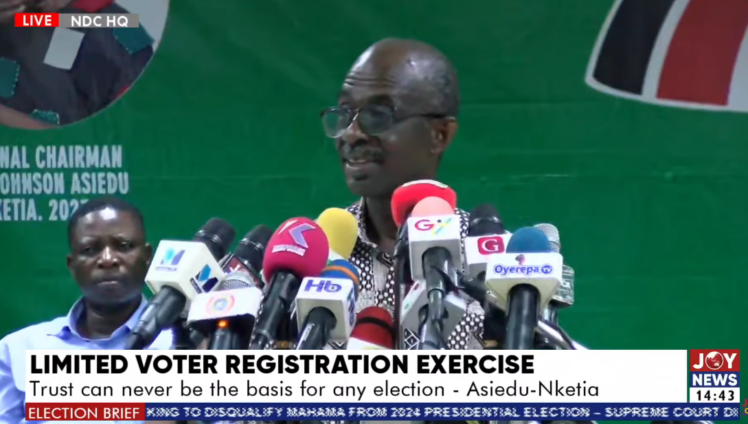
    The National Democratic Congress (NDC) continues to harbor suspicions regarding the disappearance of the Biometric Voter Registration (BVR) kits at the Electoral Commission (EC).

    According to Chairman of the party, Johnson Asiedu Nketia, transparency remains elusive until the EC furnishes them with the serial numbers of the devices. He voiced these concerns during a press conference held on Thursday, May 9, in Accra.

    The Director of Public Affairs at the EC cautioned that disclosing such information could pose a security threat.

    In a statement issued on May 9, 2024, the EC underscored the pivotal role of BVR Kits in electoral procedures, stressing the importance of their individual serial numbers for generating activation codes and monitoring their whereabouts.

    Therefore, sharing these serial numbers with external parties, including political entities like the NDC, presents a substantial risk to the security and credibility of registration operations.

    However, Asiedu Nketia maintains that the EC’s reluctance to comply with their request only reinforces their suspicion of a hidden agenda leading up to the 2024 election.

    “The NDC has always been suspicious that the stolen kits could be used to illegally register some people in order to add them to the voters register to enable them to vote on December 7, 2024. That remains our suspicion,” he said.

    “That underlines all the precautionary measures we are trying to take to forestall that one and give everybody peace of mind including the Electoral Commission and the New Patriotic Party that is in power.”

    Mr. Nketiah also conveyed his astonishment at what he perceives as the Commission’s indifferent attitude towards the NDC’s endeavors to safeguard the registration process.

    “Why is the EC resisting and stopping NDC registration agents from recording the serial numbers of BVR kits. The question is what does the EC have to hide.. what is their fear over the recording knowing very well that some have been stolen under their watch. We are saying let us track and protect those that are stolen and you are resisting, are you not part of thieves?” he quizzed.

    It is anticipated that the 21-day limited voter registration period would conclude on May 27, 2024.

    In the meanwhile, the EC has made a suggestion that, should it be judged necessary to accommodate all eligible persons, the limited voter registration period may be extended.

  • Bawumia’s vision for ‘Ghana Beyond Cocoa and Gold’ will enhance 1D1F Initiative – Ahiagbah

    Bawumia’s vision for ‘Ghana Beyond Cocoa and Gold’ will enhance 1D1F Initiative – Ahiagbah


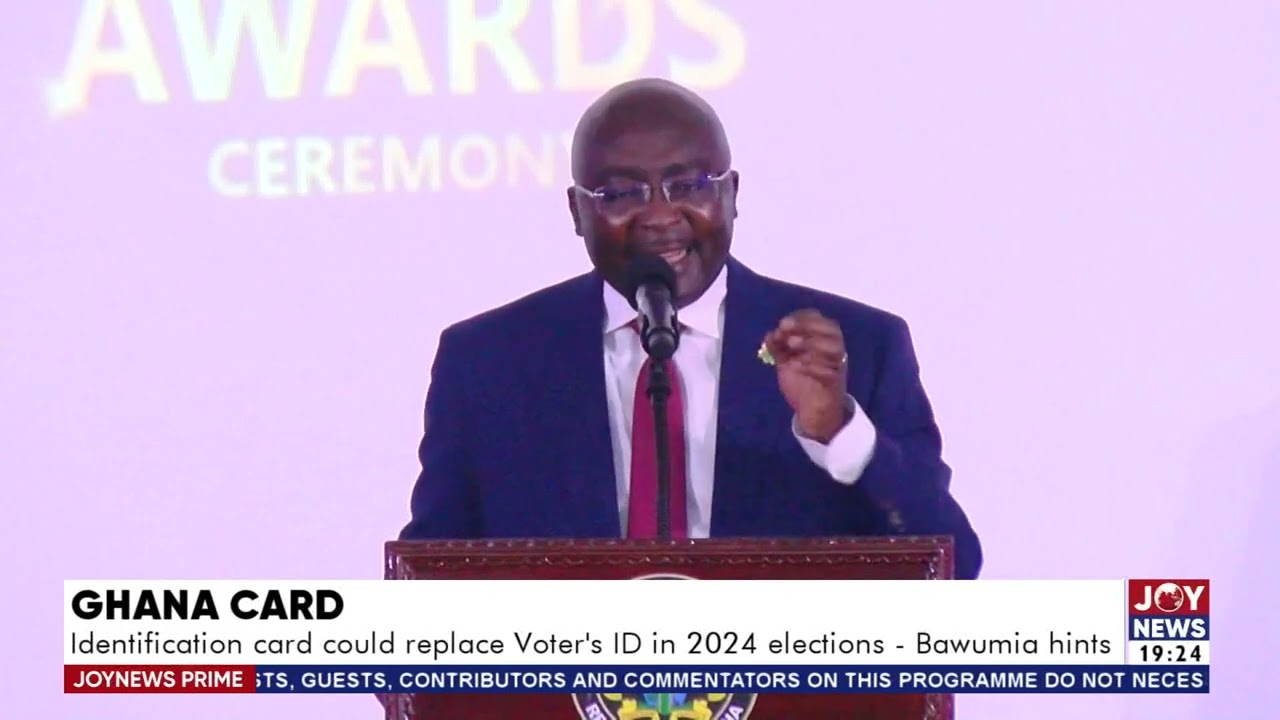
    The flagbearer of the New Patriotic Party (NPP), Vice President Dr. Mahamudu Bawumia, has pledged to propel Ghana’s economy beyond its reliance on cocoa and gold if elected president.

    In urging Ghanaians to support his candidacy in the December 7, 2024 general elections, Dr. Bawumia emphasizes his commitment to this ambitious vision.

    The Director of Communications for the NPP, Richard Ahiagbah, explains that this vision builds upon the One District, One Factory (1D1F) industrialization policy.

    The goal is to broaden and fortify Ghana’s economic landscape, providing employment opportunities for youth and ensuring currency stability by boosting export earnings.

    In a post on his X page, Richard Ahiagbah said, “Bawumia proposes Ghana beyond cocoa and gold. It is a vision to build on the unfolding 1D1F industrialization policy to diversify and enhance the productive capacity of Ghana’s economy.

    “It will deliver jobs for the youth and a stable cedi through increased export earnings. What is the NDC’s alternative? Please don’t tell me it’s anything with ’24’ in it because that one is a vote-seeking gimmick. Forward with Bawumia!”

  • Nigerians criticize new levy on electronic banking transactions

    Nigerians criticize new levy on electronic banking transactions

    Many Nigerians have expressed disapproval of the newly introduced levy on electronic banking transactions, fearing it will force them to revert to cash usage.

    The Central Bank of Nigeria (CBN) has informed financial institutions that the 0.5% levy, aimed at bolstering cybersecurity measures, will be implemented in two weeks.

    Amid Nigeria’s severe economic downturn, exacerbated by the levy, many citizens foresee added financial strain in meeting basic needs.

    Dr. Abdulrazaq Fagge, an economics lecturer at Yusuf Maitama University, criticizes the government’s decision, anticipating adverse repercussions on the nation’s fragile economy.

    According to him, burdening citizens with additional fees during economic hardship is unjustifiable and detrimental, particularly to small businesses.

    He argues that banks, profiting substantially, should bear the levy rather than passing it on to individuals.

    Local bread seller Abubakar Sheka vows to avoid electronic transactions once the levy is enforced on May 20, citing the undue burden on his meager income.

    The Nigeria Labour Congress and Socio-Economic Rights and Accountability Project (SERAP) have both condemned the levy, with SERAP threatening legal action against the government.

    The government has yet to respond to public outcry.

    Public affairs analyst Habu Sani asserts that the levy contradicts the government’s cashless economy initiative, predicting a resurgence in cash transactions.

    He warns of potential cash shortages if the government does not reconsider its decision.

    In 2023, cash shortages plagued Nigeria following currency reforms by the CBN aimed at combating electoral fraud, prompting a shift towards mobile money usage.

    While mobile payment services saw increased usage, digital penetration remains low due to inadequate mobile network coverage in rural areas and limited smartphone accessibility for many Nigerians.

  • Journalists forced into military service in Burkina Faso – Report

    Journalists forced into military service in Burkina Faso – Report

    The West African director of Reporters Without Borders (RSF), Sadibou Marong, has informed the BBC that journalists in Burkina Faso are now being targeted for forced conscription into the army.

    In an interview with the Africa Daily podcast, Mr. Marong stated, “They dared to criticize the government, and now they have been summoned to join the army.”

    Acknowledging previous instances of enrolling critics into the army, the military-led government has openly admitted to this practice.

    According to Mr. Marong, the transitional assembly passed legislation granting authorities the power to identify and compel young individuals to serve in the military.

    He revealed that he has been in contact with two journalists who have received official summonses to enlist in the army. One journalist complied and served for a month before fleeing near the border with Ivory Coast.

    This development follows a recent crackdown on foreign media outlets. The BBC, Guardian, and Le Monde have faced suspension for their coverage of a report by US-based Human Rights Watch (HRW), which accused the Burkinabe army of killing 223 civilians in February.

    Despite these allegations, Burkina Faso authorities have dismissed the reports.

  • Extremist group linked to al-Qaida commits mass killings in central Mali – Human Rights Watch report

    Extremist group linked to al-Qaida commits mass killings in central Mali – Human Rights Watch report


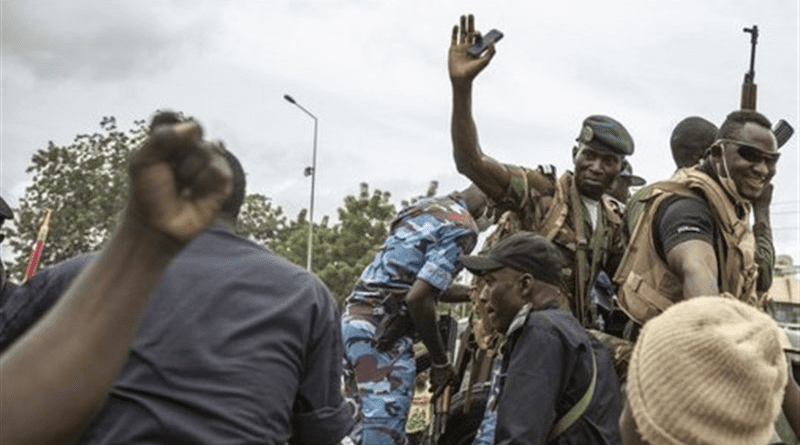
    An extremist group with ties to al-Qaida carried out mass killings in two villages in central Mali in January, according to a report by Human Rights Watch released on Wednesday.

    The attacks, which the report describes as an apparent war crime, led to the deaths of at least 32 people, including three children.

    The group, known as JNIM, attacked the villages of Ogota and Ouémbé on January 27, also setting fire to over 350 homes. Witnesses from the villages described the attacks as ethnically motivated, resulting in thousands fleeing their homes.

    Additionally, the report documented another incident on January 6, in which an ethnic armed group killed 13 people and abducted 24 civilians in two other villages in central Mali.

    “Islamist armed groups and ethnic militias are brutally attacking civilians without fear of prosecution,” said Ilaria Allegrozzi, senior Sahel researcher at Human Rights Watch. “The authorities need to act to end the deadly cycles of violence and revenge killings and better protect threatened civilians.”

    Human Rights Watch stated that the assaults are part of a pattern of revenge killings in central Mali, where both extremists and ethnic armed factions are active. Certain ethnic communities such as the Fulani have been singled out by Dogon and Bambara militias, who allege their support for extremist organizations like JNIM.

    Survivors of the assaults informed Human Rights Watch that they were singled out due to their ethnicity and urged the government to increase efforts to safeguard them.

    Mali, alongside neighboring Burkina Faso and Niger, has grappled with an uprising by armed factions, including some aligned with al-Qaida and the Islamic State group. After military coups in all three countries in recent years, the ruling juntas have expelled French troops and sought assistance from Russia’s private military contractors for security support.

    In December 2023, the United Nations Multidimensional Integrated Stabilization Mission in Mali withdrew from the country at the behest of the junta.

    “We have continuously asked for a military presence but the government says that the army does not have the manpower to ensure one,” a resident of Segue, a village in central Mali, told The Associated Press. He did not want to be named out of fear of reprisal from local armed groups.

    Malian authorities declined to comment.

  • Here are tips to help you write your emails productively

    Here are tips to help you write your emails productively

    If you’re like most people who sit in front of a computer all day, this probably sounds like you: When you’re not currently replying to an email, you’re looking to see if you have any new ones.

    Then when something new does come in, you read it, debate how to respond, then deem it too time-consuming for the moment. “I’ll get to that later,” you think. And if there’s nothing new, you’re nervously wondering why.

    “Is it because my inbox is full?!” So you keep checking back every 15 seconds until something pops up—in the meantime deleting all the junk mail that has since clogged your inbox.

    But a life tethered to your email means those other projects you want and need to do—be they big reports or personal tasks—can get postponed by days, weeks, or months. Not to mention, a new Canadian study found hyperchecking your email can make you (surprise!) more stressed. So we asked five people who have a barrage of emails to answer to tell us how they tame their inbox.

    Read on for their strategies to deal with the deep, dark email crevasse.

    Set designated “reply times”

    “I do many quick checks of email throughout the day to see if there’s something high priority and urgent that has come in, but I only allocate two times a day to fully deal with the email that has accumulated. By batching all of the heavy duty email processing into bigger chunks, I can be much more efficient and reduce the feeling of constantly switching tasks.”

    —Jacob Bank, computer scientist and co-founder and CEO of the Timeful calendar app

    Pick and choose what’s key

    “I respond to priorities as soon as possible, and keep correspondence clear and super positive. Knowing that I’ll still never get through all the emails, I prioritize people who are asking for help and opportunities that support my intention. I’m also not afraid to use the “!” for high priorities or dramatic effect.”

    —Tara Stiles, yoga instructor, author of the Make Your Own Rules Diet ($25, amazon.com), and W Hotels’ fitness partner

    Email only the quick things

    “Email works for quick day-to-day correspondence, but when I have something important to discuss or decisions to be made, I pick up the phone. It is always better to hear the person on the other end—the inflection in their voice. Emails can often be misunderstood.”

    Bobbi Brown, makeup artist and Health‘s contributing beauty and lifestyle editor

    Sort all your stuff

    “I have found that treating my online mail just like post office mail works wonders. I created folders: Everything from mom folder, workout class folder, celebrity clientele folder, house folder, summer cottage folder, medical folder, kid folders, etc. With emails organized into categories, I can easily do my three steps…find, take action, or delete. You’ll also need to unsubscribe from junk. The volume of junk email is tremendous and spending time deleting each one is taking precious time away from you. Finally, prioritize emails that need attention that particular day. I hit reply and drag them to the corner of my desktop if I can’t get to them at that moment, otherwise I use my other rule, don’t leave an email request—answer asap.”

    —Kathy Kaehler, celebrity trainer, author, and founder of Sunday Set-Up, a healthy eating club

    Respond—don’t mull

    “I try to respond to emails as soon as I see them because otherwise they can get pushed further down the inbox and may be ignored. I recommend you be responsive but not superfluous. By responding quickly and writing short, non-flowery emails, you can create an image of efficiency and attentiveness. Even short words like “Thanks” or “Got it” will help you build a culture of trust and signal that you are on top of your inbox.”

  • Is baldness caused by frequent wearing hats?

    Is baldness caused by frequent wearing hats?

    Take off that hat. It will make you bald.

    It’s the sort of thing an opinionated grandparent might tell a grandchild wearing a hat indoors, but there are some who believe there’s wisdom in the admonishment.

    “I’ve had people ask me about this, and I can understand why they think it’s true,” says Dr. Hayley Goldbach, a dermatologist at UCLA Health. Some people start wearing a hat to hide hair loss, she says, which may lead observers to conclude it was the hat-wearing that triggered the baldness. That’s probably not the case. “I think the short answer is that [hat wearing] is probably not a real concern,” Goldbach says.

    “Genetics are the main player in hair loss,” says Dr. Michael Wolfeld, a plastic surgeon specializing in hair restoration and assistant clinical professor at Mount Sinai Medical Center in New York City. Wolfeld says “male pattern” and “female pattern” baldness are both initiated in part by an inherited genetic sensitivity to a hormone called dihydrotestosterone (DHT), which turns up in the scalp as well as other parts of the body. Among people with this inherited sensitivity, hair follicles languish and shrink in response to DHT. Popular hair-loss therapies such as Propecia (finasteride) work by blocking the production of DHT, research has shown.

    That said, the causes of baldness are “multifactorial,” says Wolfeld. The experts TIME spoke with agreed that pulling the hair back severely—like in a very tight ponytail or in stiff braids—can create tension that pulls on hair follicles. “Over a period of years, that tension can cause hair to fall out,” says Wolfeld.

    Most people probably don’t wear a hat so tightly that it could create this kind of tension, Wolfeld says. Tightness is subjective, but if your hat is so tight that it’s leaving a prominent mark or indentation in your skin, you may want to find a looser lid. “I think that if someone were to wear a hat very tight and for long periods of time”—every day, for months or years in a row—“that could cause some damage to the hair,” Wolfeld adds. That, in turn, could promote hair loss.

    “If the hat were too tight, I could see that causing irritation or inflammation in the hair follicle,” Goldbach says. By itself, this probably wouldn’t cause hair loss. But it could be a contributing factor, she says.

    The materials used in a hat—the dyes or textiles, for example—could also play into hair loss, says Dr. Adam Friedman, a professor of dermatology at George Washington University. “If a hat causes an allergic reaction in the scalp, that could cause the hair to shed due to inflammation,” he says. If someone were already going bald due to other factors, like a genetic predisposition, this inflammation-induced shedding could speed up the process of hair loss, he says.

    In rare cases, wearing a hat while you sweat could also be a factor. “The salts from sweat are physically irritating to the skin,” he says. If you wear a sweat-stained hat all the time, this irritation could lead to inflammation, which, again, could speed up the process of losing one’s hair, he says.

    But Friedman and other experts say that for most people, these are unlikely to be serious risk factors. “In general, hats do not cause baldness,” Friedman says. What hats reliably do is protect the wearer’s scalp and face from UV damage, which can in some cases lead to skin cancer, he says, and this benefit is “more valid” than any concern that a hat may cause hair loss.

    DISCLAIMER: Independentghana.com will not be liable for any inaccuracies contained in this article. The views expressed in the article are solely those of the author’s, and do not reflect those of The Independent Ghana

  • Togo’s president signs new constitution eliminating presidential elections

    Togo’s president signs new constitution eliminating presidential elections

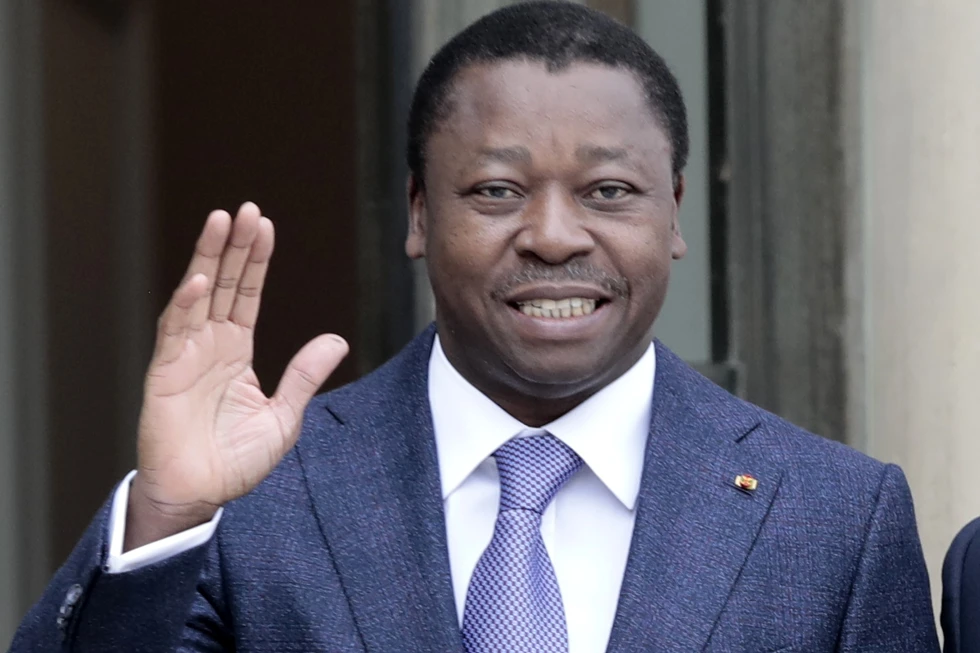
    Late on Monday, Togo’s president signed into effect a new constitution, abolishing presidential elections in a move that critics argue will prolong his family’s decades-long rule. The decision has prompted civil society groups in the West African nation to call for demonstrations.

    Under the new constitution, the president will be chosen by Parliament. This development follows closely on the heels of the announcement by the election commission on Saturday, declaring President Faure Gnassingbe’s ruling party as the winner of a majority of parliamentary seats.

    Ahead of the vote, there was a notable crackdown on civic and media freedoms. The government enforced a ban on protests opposing the proposed constitution and detained opposition members.

    Additionally, the electoral commission restricted the Catholic Church from deploying election monitors, while Togo’s media regulatory body halted the accreditation process for foreign journalists.

    The revised constitution also extends presidential terms from five to six years and introduces a single-term limit. However, it exempts Gnassingbe’s nearly two decades in office, leading political opposition, religious leaders, and civil society to express concerns about Gnassingbe potentially retaining power beyond his current mandate, which ends in 2025.

    Togo has been under the rule of the same family for 57 years, initially led by Eyadema Gnassingbe and later succeeded by his son, Faure Gnassingbe. Faure Gnassingbe assumed office following elections that were heavily criticized by the opposition.

    Moreover, the new constitution introduces a role akin to that of a prime minister, to be appointed by the ruling party. Critics fear this could further entrench Gnassingbe’s control over the government.

    In response to these developments, a coalition of approximately 20 civil society organizations in Togo has urged protests to demand a reinstatement of the previous constitution.

    “We will never accept this new constitution, even after its promulgation,” David Dosseh, a spokesperson for the civil society groups, told The Associated Press, calling the 2025 election “absolutely necessary for the people to choose a new president and finally achieve a democratic transition in Togo.”

  • Cedi currently selling at GHS14.70 to $1

    Cedi currently selling at GHS14.70 to $1

    Today’s Interbank forex rates, as reported by the Bank of Ghana on May 9, 2024, indicate that the Ghana Cedi is valued against the dollar at a buying price of 13.5447 and a selling price of 13.5583.

    Meanwhile, at a Forex bureau in Accra, the dollar is being purchased at a rate of 14.40 and sold at 14.70.

    Against the Pound Sterling, the Cedi is valued at a buying price of 16.9187 and a selling price of 16.9370.

    In Accra’s Forex Bureau, the pound sterling is bought at 17.80 and sold at 18.30.

    The Euro is quoted at a buying price of 14.5537 and a selling price of 14.5682.

    At Accra’s Forex Bureau, the Euro is bought at 15.10 and sold at 15.60.

    Regarding the South African Rand, it’s being traded at a buying price of 0.7291 and a selling price of 0.7297.

    In Accra’s forex bureau, the South African Rand is bought at 0.40 and sold at 1.10.

    For the Nigerian Naira, the buying price stands at 103.0122 and the selling price at 103.4742.

    In Accra’s forex bureau, the Nigerian Naira is bought at a rate of 9.00 Naira for every 1 Cedi and sold at 14.00.

    As for the CFA, it’s valued at a buying price of 45.0266 and a selling price of 45.0715.

    In Accra’s forex bureau, the CFA is bought at 21.50 CFA for every 1 Cedi and sold at a rate of 23.50 CFA for every 1 Cedi.

    Note that these rates may differ at a forex bureau near you. Our forex bureau rates are provided by Afriswap Bureau De Change in Osu, Accra.

    Our forex bureau rates are provided by Afriswap Bureau De Change in Osu, Accra.

  • 1D1F Initiative brought 321 factories and 170,000 Jobs – Akufo-Addo

    1D1F Initiative brought 321 factories and 170,000 Jobs – Akufo-Addo


    President Nana Addo Dankwa Akufo-Addo recently disclosed that the One District One Factory (1D1F) initiative has successfully generated 170,000 jobs.

    This achievement is credited to the establishment of 321 businesses spread across various districts in the country.

    Breaking down the numbers, President Akufo-Addo highlighted that among the 321 businesses, 211 were freshly established medium to large-scale enterprises.

    Additionally, the remaining 110 enterprises were rejuvenated with significant financial injections from the government, enabling them to enhance their operational capacity and expand their production facilities.

    Following his visit to Blue Skies Limited in Nsawam, President Akufo-Addo expressed in a Facebook post, “I am proud to report that my administration has facilitated the development of three hundred and twenty-one (321) 1D1F projects. These include two hundred and eleven (211) new medium to large scale enterprises and the strategic revival of one hundred and ten (110) existing enterprises through significant capital investments for the expansion of production facilities and product diversification.”

    He went on to say that these businesses have been established in 122 districts nationwide, covering all sixteen regions, for a fifty-four percent district coverage rate.

    “The goal is to introduce a 1D1F project in every district. Moreover, during this period, approximately one hundred and seventy thousand jobs have been created by operational enterprises under this innovative 1D1F Programme,” he added.

    With the launch of the 1 District 1 Factory project, Ghana’s economy was to be reoriented toward manufacturing, value addition, and the export of processed commodities rather than being reliant on the import and sale of raw materials.

    1D1F aims to open a factory in every district in the nation.

  • End of doctors’ strike brings belief to Kenya’s public healthcare sector

    End of doctors’ strike brings belief to Kenya’s public healthcare sector

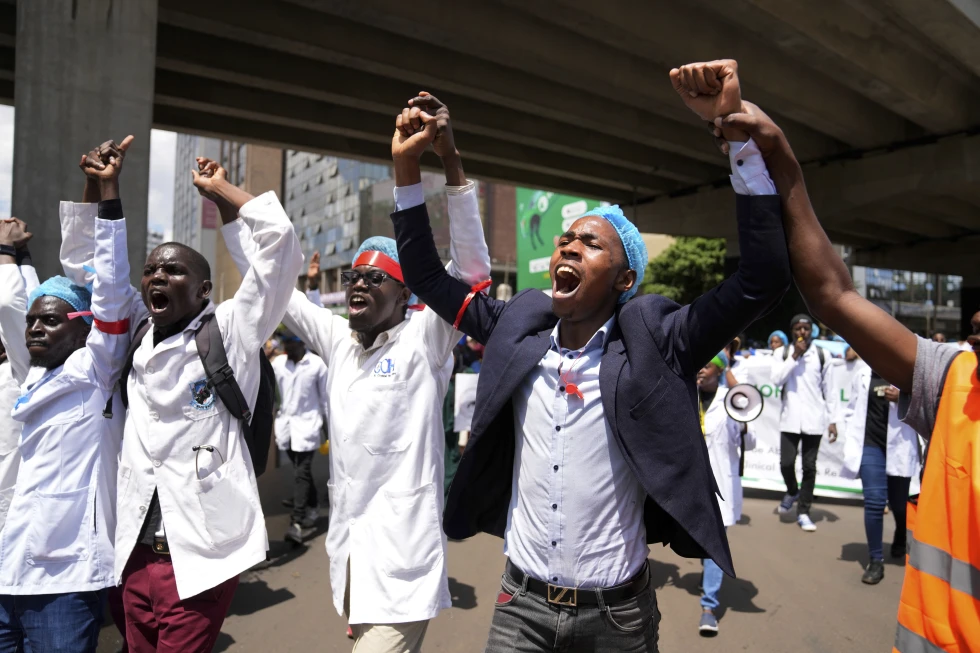
    On Wednesday, Kenya’s public hospital doctors union reached a return-to-work agreement with the government, bringing an end to a national strike that commenced in mid-March and had left patients uncertain of their care.

    The union’s secretary general, Davji Atellah, expressed the doctors’ trust in the government’s commitment to resolving labor issues such as inadequate compensation and poor working conditions, which had triggered the strike.

    A labor court ruling on Tuesday had mandated doctors and the government to finalize a return-to-work agreement within 48 hours, failing which the court would intervene.

    Kenya’s Health Minister Susan Nakhumicha acknowledged the doctors’ effective negotiation skills, contrasting them with the government’s stance, noting that the doctors had put up a formidable resistance.

    The resolution of the strike brings relief to millions of Kenyans reliant on public hospitals, which had been severely impacted by the strike.

    Some hospitals had resorted to hiring temporary doctors to maintain emergency services during the strike.

    In 2017, Kenya witnessed its longest-ever doctors’ strike lasting 100 days, during which doctors demanded improved wages and the restoration of dilapidated public-health facilities.

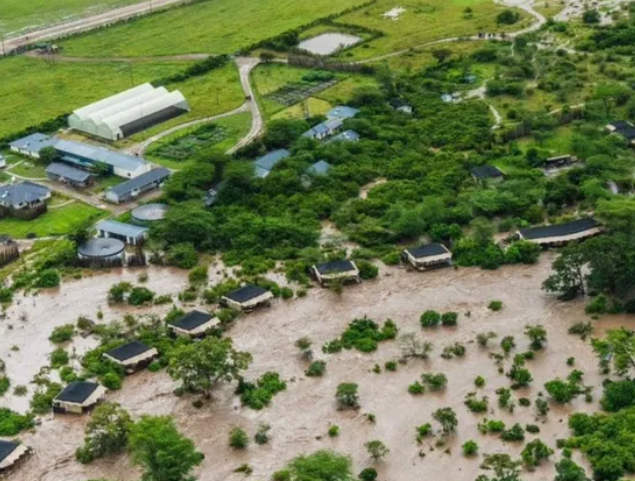
    Kenya is currently grappling with the devastating repercussions of flooding, affecting 235,000 people since the onset of the rainy season in mid-March.

  • 7 reported dead, dozens more missing after collapse of South African building

    7 reported dead, dozens more missing after collapse of South African building

    Wednesday saw rescue teams employing underground cameras and sniffer dogs to locate nearly 40 construction workers still missing in the rubble, two days after the collapse of an apartment building under construction in coastal South Africa.

    Seven workers have been confirmed dead, while 16 of the 29 people rescued from the debris were in critical condition in hospitals, with an additional six facing life-threatening injuries, authorities reported. They stated that 39 workers remained unaccounted for and buried in the rubble of concrete and mangled metal scaffolding.

    The collapse of the unfinished five-story apartment complex on Monday in George, a city on South Africa’s south coast, prompted a desperate rescue effort, drawing disaster response teams from other towns and cities. A total of 75 construction workers were present at the building site during the collapse, according to the George municipality.

    More than 200 rescue personnel continued to search for survivors, using cranes and heavy lifting equipment to lift concrete slabs while forming lines to remove smaller rubble by hand.

    Some survivors trapped under the debris managed to use their cell phones to contact family members, aiding emergency responders in locating them. Cheers and applause erupted when several survivors were rescued on Tuesday night.

    Colin Deiner, head of the rescue effort, described Tuesday night as “very successful,” but noted less progress on Wednesday. The operation has now transitioned into a phase where rescuers rely more on heavy equipment to access deeper areas of the collapsed structure in search of potential survivors.

    The George municipality appealed for donations of water, energy drinks, and food for the exhausted rescue personnel, who had been working in shifts for over 48 hours. The rescue effort, involving emergency response teams from across the region, is expected to continue until at least Friday.

    George, a city known for its scenic coastal views and golfing opportunities, is the site of multiple investigations into the cause of the building collapse, including probes by police, the provincial government, and the national department of labor.

    “There will be consequences,” said Anton Bredell, the Provincial Minister of Local Government, Environmental Affairs and Development Planning.

  • Kenya declares national holiday to mourn victims of flooding

    Kenya declares national holiday to mourn victims of flooding


    Kenya’s President William Ruto has proclaimed Friday as a public holiday to mourn the loss of 238 lives due to persistent flooding.

    In an announcement made on Wednesday, the president specified that the day will be dedicated to national tree planting initiatives aimed at addressing climate change impacts.

    Floods have inundated Kenya, along with other regions in East Africa, resulting in over 235,000 individuals being displaced and seeking refuge in numerous camps.

    President Ruto has also declared the nationwide reopening of schools, following a two-week delay caused by intense rains that inflicted substantial damage to hundreds of educational institutions.

    The government has earmarked funds for repairing over 1,000 schools affected by the torrential rains and subsequent flooding.

    According to the meteorological department’s daily weather forecasts, moderate to heavy rainfall is anticipated across most parts of the country.

    The government is currently undertaking compulsory evacuations of residents residing in flood-prone zones and areas adjacent to rivers and dams, as water levels in the country’s primary hydroelectric reservoirs surge to unprecedented heights.

    This week, authorities used bulldozers to demolish residences in informal settlements such as Mathare and Mukuru in the capital city of Nairobi. In response to the missed deadline for evacuation amidst hazardous rainfall, the president assured displaced families a relocation assistance package equivalent to $75.

  • Tunisian activist arrested amid deteriorating conditions for migrants and advocates

    Tunisian activist arrested amid deteriorating conditions for migrants and advocates


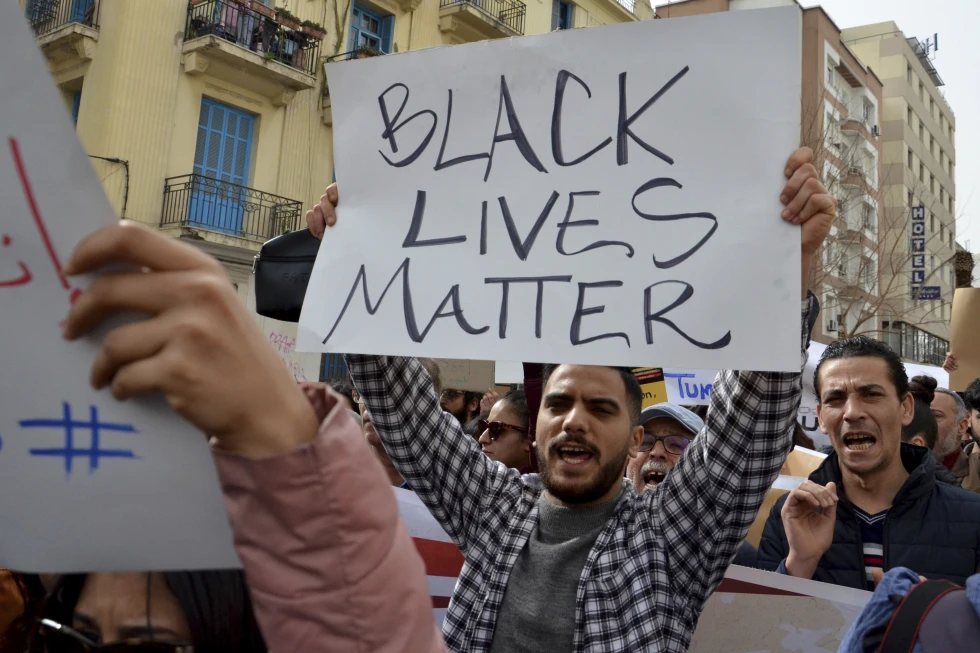
    This week saw the arrest of an anti-discrimination activist in Tunisia amidst a money laundering inquiry, underscoring the worsening plight faced by migrants and their advocates.

    Saadia Mosbah, a Black activist, was detained, and authorities searched her residence in connection with an investigation into the finances of the Mnemty association she leads.

    According to Bassem Trifi, president of the Tunisian League for the Defense of Human Rights, Mosbah’s arrest followed her social media post decrying racism she encountered in her efforts to assist sub-Saharan African migrants.

    This incident highlights the ongoing challenges confronting migrants in Tunisia, with authorities intensifying efforts to monitor coastal areas, where many attempt perilous journeys to Europe.

    During a national security council meeting focused on irregular migration, Tunisian President Kais Saied criticized associations receiving significant foreign funding, branding them as “traitors and

    “Tunisia is deepening the crisis and promoting the idea that there is no solution,” Ben Amor told Radio Mosaique.

    According to a report from an NGO, approximately 244 migrants, the majority originating from outside Tunisia, have either died or gone missing along the country’s Mediterranean coast this year. This figure includes 24 individuals whose bodies were discovered last week.

    Based on government data released Monday, the report highlights a decline in undocumented migrants attempting to cross the Mediterranean, attributed to Tunisian authorities increasingly intercepting such attempts. This trend applies to migrants originating from Tunisia as well as those transiting through the country en route to Europe.

    In April, authorities directly thwarted 209 migration attempts and prevented over 8,200 migrants, predominantly from sub-Saharan African nations, from reaching Italy. The Tunisian Coast Guard has intercepted more than 21,000 migrants attempting to reach Italy this year.

    European leaders, including Italian Premier Giorgia Meloni, have made managing migration to avert scenes of chaos and desperation along Italian shores a key priority. This effort has involved visits to Tunis and collaborative efforts with North African and European officials to combat human trafficking, enhance border security, and patrol coastlines to prevent maritime fatalities.

    Despite these efforts, thousands of migrants continue to embark on the perilous journey, departing from the Tunisian coast north of Sfax and aiming for Italian islands like Lampedusa, located approximately 130 kilometers (81 miles) away.

    The European Union aims to address migration through various policies, including development assistance, voluntary return and repatriation programs, and fostering closer partnerships with neighboring governments to strengthen border enforcement. Financial commitments have been made to countries like Tunisia, Mauritania, and Egypt to support governance, migrant services, and border control.

    While European leaders view agreements, such as the $1.1 billion deal with Tunisia, as models, Tunisian President Saied has vowed not to allow his country to serve as a mere “border guard” for Europe.

    Comparative figures from Italy’s Interior Ministry on May 8 reveal a significant reduction in migrant arrivals in Italy in 2024 compared to the same period last year. The UN refugee agency reported that while over 24,000 migrants traveled from Tunisia to Italy in the first four months of 2023, fewer than 8,000 have successfully completed the journey during the same period this year.

  • Here are 6 mosquito repellent plants to keep pests away

    Here are 6 mosquito repellent plants to keep pests away


    As summer approaches, it’s the perfect opportunity to light up the grill and host barbecue gatherings with friends.

    However, it often feels like uninvited guests, not your in-laws, but bothersome bugs, tend to intrude on the festivities.

    Instead of resorting to dousing yourself in bug spray, there are alternative methods to ward off mosquitoes and other insects. One environmentally-friendly solution is to plant insect-repelling plants in your yard to keep the pests at bay.

    1. Marigolds

    marigolds
    Getty Images

    Not only do they make your landscape more attractive, but marigolds also have a distinct smell that repels mosquitoes. Plant from seed or get a starter plant from a nursery or floral department. Place potted marigolds near mosquito entry-points, such as doors and windows, or on a deck or balcony where you spend a lot of time outdoors. They also deter insects that prey on tomato plants — an added bonus for gardeners.

    2. Citronella

    lemon-grass-citronella
    Getty Images

    Citronella is one of the most common ingredients in insect repellents, due to its strong smell, which masks mosquito attractants. The perennial clumping grass grows 5 to 6 feet, and can be planted in the ground or kept in large pots. Citronella plants thrive best in full sun and areas with good drainage.

    3. Catnip

    catnip
    Getty Images

    Warning: Your catnip might bring all the cats to the yard. The perennial herb, related to mint, is easy to grow. While it repels mosquitoes in close proximity, some people apply crushed leaves for more protection.

    4. Lavender

    lavender
    Getty Images

    In addition to smelling lovely, aiding in relaxation and promoting restful sleep, lavender dissuades mosquitoes and gnats from invading your outdoor dinner party when planted in the garden or in pots placed by windows, doors and entertainment areas. The dried flowers can also be placed in wardrobes to repel moths.

    5. Basil

    Enjoy delicious pesto dishes, and keep mosquitoes at bay, with this insect-repelling herb. Basil is one of the few herbs in which you don’t have to crush the leaves to reap its benefits. Lemon basil and cinnamon basil are the best varieties to prevent unwanted pests.

    6. Lemon Balm

    lemon-balm
    Getty Images

    Also known as horsemint, lemon balm’s aroma wards off mosquitoes, but attracts pollinators like bees and butterflies. It’s fast growing, drought resistant and reseeds itself, so consider planting in a pot rather than in your yard to avoid a lemon balm takeover.

    DISCLAIMER: Independentghana.com will not be liable for any inaccuracies contained in this article. The views expressed in the article are solely those of the author’s, and do not reflect those of The Independent Ghana

  • Risk losing votes if you pick an Ashanti as running mate – Dormaahene warns Bawumia

    Risk losing votes if you pick an Ashanti as running mate – Dormaahene warns Bawumia

    The Dormaahene, Osagyefo Oseadeeyo Agyeman Badu II, has advised the New Patriotic Party’s (NPP) flagbearer, Dr. Mahamudu Bawumia, against focusing solely on one particular region when selecting a running mate for the 2024 elections.

    The Dormahene expressed concerns about the potential repercussions of such a decision when Dr Bawumia, on Wednesday, May 8, engaged the Bono Regional House of Chiefs to seek their counsel and convey his campaign message.

    Osagyefo Oseadeeyo Agyeman Badu II explained that failure to consider qualified candidates from various regions could alienate voters from other regions and undermine the ruling party’s electoral prospects in the upcoming elections.

    “I have seen you haven’t selected a running mate yet, even if you have, I haven’t heard. Sometimes a certain region wants to prove that it is only from there that you are supposed to select your running mate,” he submitted.

    He continued, “But I don’t see it that way. Please, there are lots of people in the other regions, so if your focus goes on just one particular region, only they will vote for you and the rest of us will vote against you.”

    The Dormaahene gave a list of well-known locals and highlighted their qualifications for running mate.

    “Please, I want to plead with you, for me, I am in the Bono region, and we also have qualified candidates here. Even though I am not saying selecting others from other regions is not good, but we also want the best for our people, Martin Adjei Korsah, Ignatius Baffour Awuah and Kwaku Agyemang Manu all qualify for such positions,” he added.

    It is reported that Energy Minister, Dr Matthew Opoku Prempeh, who hails from the Ashanti Region, is the front-runner in the race for the running mate title.

    Meanwhile, other schools of thought, including the immediate past Speaker of Parliament and a member of the governing New Patriotic Party’s Council of Elders, Professor Aaron Michael Oquaye, believe a running mate from the Ashanti Region is the best option for the ruling party should it want to break the 8-year governance cycle.

  • Chiefs will receive living allowance when I become president – Bawumia

    Chiefs will receive living allowance when I become president – Bawumia


    Dr. Mahamudu Bawumia, the presidential candidate of the New Patriotic Party (NPP), has pledged to offer allowances to chiefs who actively participate in Ghana’s governance.

    During the second leg of his “Bold Solutions Campaign Tour,” he addressed the Ahafo Regional House of Chiefs, where he pledged that a new NPP administration, if elected, would introduce allowances for chiefs. He assured the audience that his manifesto team would formulate a plan to ensure chiefs receive appropriate compensation for their duties.

    Dr. Bawumia also advocated for amendments to the Chieftaincy Act to integrate chiefs into Ghana’s governance system. He emphasized the historical neglect of chiefs in the country’s governance since independence as a significant issue.

    He said “The major policy I aim to introduce is a review of Section 63(d) of the Chieftaincy Act, to empower the chiefs further, enabling them to assist the government more effectively in governance.

    “The lack of authority makes managing your areas challenging. Therefore, we intend to amend the law to grant you more power,” he said.

    “We will provide the chiefs with living allowances to ensure they have the necessary resources to perform their work,” Dr. Bawumia added.

  • Locked-up Investment Holders Forum plans demonstration at Ministry of Finance

    Locked-up Investment Holders Forum plans demonstration at Ministry of Finance


    The Locked-up Investment Holders Forum intends to initiate picketing at the Ministry of Finance starting from Wednesday, May 15, 2024, as per their recent announcement.

    Their plea to the minister is to allocate financial resources enabling the Bank of Ghana to annul licenses of financially unstable finance houses and savings and loans companies. This action would facilitate the reimbursement of investors’ funds.

    Dr. Adu Anane Antwi, the group’s Convener, stated that they have been assured by Dr. Ernest Addison, the Governor of the Bank of Ghana.

    The central bank aims to revoke licenses of the insolvent institutions, provided that the Ministry of Finance allocates funds for depositor reimbursements, akin to the measures taken during the revocation of licenses of specific Specialised Deposit-taking Institutions from 2017 to 2018.

    The statement also discloses that a petition was sent to the Ministry of Finance on March 28, urging the Minister to release funds for covering depositors’ funds held by insolvent Finance Houses and Savings and Loans Companies. This action would enable the Bank of Ghana to proceed with license revocations and subsequent payments to depositors.

    However, the ministry has yet to respond to the group’s petition.

    They are determined to persist with their protest until their demands are satisfactorily met.

  • Dr. Bawumia’s 100% natural resource ownership plan not possible – Alan Kyerematen

    Dr. Bawumia’s 100% natural resource ownership plan not possible – Alan Kyerematen

    Founder and Leader of the Movement for Change (M4C), Alan Kyerematen, has asserted that Vice President and NPP Flagbearer, Dr. Mahamudu Bawumia’s proposal for 100% ownership of natural resources by Ghanaians is impractical and misleading.

    Dr. Bawumia recently unveiled campaign plans to enact a policy granting Ghanaians complete ownership of natural resources, aiming to reduce foreign companies’ substantial ownership.

    The NPP flagbearer argued that this move is essential to halt the trend of foreign mining companies repatriating all their profits, leaving minimal benefits for Ghanaians.

    However, Alan Kyerematen, poised to contest the 2024 elections as an independent candidate, criticized the plans as populist propaganda. He shared his perspective on natural resource management during an interview with The Chronicle newspaper.

    Read the full transcript of the interview below:

    Ques. 1: Is 100% Ghanaian ownership of our natural resources feasible?

    Ans.: Thank you for the opportunity to speak to the all-important matter of the management of our natural resource. Article 257 (6) of the 1992 Constitution, vests all mineral resources in its natural state anywhere within Ghana and its territorial waters, in the President in trust for the people of Ghana. Mineral resources, for the avoidance of doubt, include solid minerals (such as metals, industrial minerals etc) and liquid minerals (such as oil and gas). There are separate and individual laws regulating access to and management of these different minerals. So, Ghanaians already own 100% of their mineral resources by law. The impression being created by the Vice President that he will make Ghanaians own 100% of their natural resources is misleading and amounts to populist propaganda.

    The real question is how to exploit the available resources for maximum benefits to Ghanaians.

    Ques. 2: So, you are saying the point is not about 100% Ghanaian ownership but rather exploitation?

    Ans.: Yes, because ownership of natural resources does not automatically confer any direct benefits. To benefit from any natural resource, it must be explored, extracted, processed, and sold. If that was not the case, Ghana from pre-colonial times when it was named the Gold Coast, would have by now been one of the wealthiest countries in the world.

    Ques. 3: The Vice President says Universities and the Geological Services Department will be empowered to explore and exploit these resources. Can that be done or not?

    Ans.: Exploration and processing of natural resources is highly capital intensive and also requires high level technical skills. The Universities and Geological Services Department clearly have a role to play in the exploration and processing of natural resources, but certainly do not have the capital base and all the critical technical skills, technology and equipment required to explore, develop, and process our natural resources, in the short to medium term.

    The claim made by the Vice President is another clear example of political propaganda and rhetoric aimed at deceiving Ghanaians for political gains.

    Ques. 4: But if it is about exploitation, which as you have explained requires capital and technological know-how, how can Ghana control the exploitation of her natural resources?

    Ans.: The example of most of the countries around the world with vast natural resources, point clearly to the critical importance of attracting Foreign Direct Investment (FDI) for the exploration and processing of their natural resources. Even for those countries who now have dominant control over their natural resources, the historical trend has been to progressively attract FDI in exploiting their resources, until such time when they accumulate enough wealth domestically, to take controlling interest in the exploitation of their natural resources.

    Regrettably in Ghana, we are faced with a myriad of problems that in the short to medium term, limit our capacity to control our natural resources. There are traditionally four windows that are open to countries to mobilize capital for the exploitation of natural resources, namely:

    First, is the mobilization of domestic revenue as well as domestic savings to finance capital expenditure. In the case of Ghana, this window is currently closed to us. We have an abysmally low revenue base, with one of the lowest Tax to GDP ratio in Africa.

    Second, is raising debt to finance capital expenditure. As we are all aware, Ghana currently has one of the highest debt levels on the continent, which is unsustainable, and has thus pushed Ghana to seek an IMF bailout. As a consequence of this, Ghana will be unable in the short to medium term, take advantage of the international capital market for our borrowing requirements.

    In addition, our domestic debt market is seriously constrained due to distortions arising from Government’s policy actions and inactions. This means that the second window for raising debt finance to exploit our natural resources is also closed to us as a country, at least in the short to medium term.

    The third, window is to use financing from international development institutions, eg. World Bank, and IMF. This has traditionally not been considered as a source of finance for capital projects such as the exploitation of natural resources. In any case, there has been over the years, a declining appetite for development finance support for Ghana from international finance institutions. This means Ghana cannot rely on this third window to exploit her natural resources.

    The fourth window is attracting foreign and domestic private investment capital. In my considered opinion, this is the most viable option available to Ghana in the short to medium term, if it is to mobilize significant levels of financial resources, and technological innovation that will enable Ghana extensively explore and exploit her natural resources.

    It is against this background, that the propaganda promise by the Vice President to make Ghanaians have 100% ownership of its natural resources, is not only misleading and unfortunate, but also counter productive to attracting private investment capital into the exploitation of our natural resources. If Ghanaians are going to own 100% of our natural resources, then where is the room to attract investments from other partners? Because by logical implication, any investor will be looking for a shareholding interest in the exploitation of Ghana’s natural resources.

    Ques. 5 What would an Alan Kyerematen Presidency do differently in managing the natural resources of Ghana?

    Ans.: The more pragmatic and practical approach is what the Movement for Change has proposed, which is to have Ghanaians either through Government or through public stock holding, have a controlling interest of not less than 60% in the exploitation of its natural resources, through Joint Ventures or other forms of commercial engagements, with participatory interest by government, individual Ghanaians, and foreign private partners.

    Secondly, the Movement for Change has proposed that by the year 2030, at least 60% of all our natural resources that will be exported will have value addition either in whole or in part. This will maximize the benefits to Ghana from its natural resources. The promise made by the Vice President will send negative signals to the international investor community, at a time when there is a gradual and systematic exit of foreign private commercial interests from the country. The policy propaganda by the Vice President may even unfortunately, be interpreted as a desire to nationalize foreign commercial interests in Ghana, knowing very well that previous and current governments have signed subsisting agreements with Foreign Direct Investors, many of which extend years into the future, for the exploitation of Ghana’s natural resources.

    It is the view of the Movement for Change, that where feasible and legally permissible, such existing contracts and agreements would be reviewed by mutual consent, to help Ghana in this critical period of economic crisis to harness more benefits from its natural resources.

    Under the Industrial Development pillar of the Great Transformational Plan, which I have proposed as the new blueprint for Ghana’s economic development, there are new strategic sectors which have been identified as the new growth poles for the Ghanaian economy. Access to FDI in developing these strategic anchor industries will be critical.

    I have also made a number of far-reaching policy proposals to stabilize our macroeconomy, which are all important ingredients for attracting foreign and domestic private investment capital. These include, stabilizing the local currency, bringing inflation down to single digit, significantly reducing interest rates, optimizing revenue mobilization including but not limited to tax reforms, bringing Ghana’s debt to sustainable levels, building our international foreign reserves, maintaining fiscal discipline, and enhancing economic growth, all of which will lead to a significant drop in current unemployment levels.
    Under an Alan Kyerematen Presidency, “Ghana will Rise Again”.

  • ‘Party card-bearing members should be allowed to partake in internal elections’ – Wontumi

    ‘Party card-bearing members should be allowed to partake in internal elections’ – Wontumi

    The Ashanti Regional Chairman of the New Patriotic Party (NPP), Bernard Antwi Boasiako, commonly referred to as Chairman Wontumi, has suggested a plan to extend voting rights to all NPP members possessing party cards in internal elections.

    Wontumi stressed the importance of expanding the current delegates’ list to include every individual with a party card.

    He revealed that discussions with the NPP’s General Secretary, Justin Kodua Frimpong, have commenced, signaling openness within the party leadership to consider this reform.

    “To be sincere, I am going to fight. I have spoken with the General Secretary and he agrees with me, that every card-bearing member of our party be allowed to vote in all our internal elections.

    “He has accepted and I know there are a lot of people in our party who also support this.

    “…What stops card-bearing members of the NPP from voting to decide who becomes their parliamentary candidate; who becomes a member of the constituency or national executive?” 3news.com quoted him to have said in an interview on Wontumi radio.

    His suggestion addresses long-standing worries that certain party members have been left off the delegates’ list, resulting in party defections.

  • “I am heavily disappointed in the AG on how he managed Cecilia Dapaah’s case” – Domelevo

    “I am heavily disappointed in the AG on how he managed Cecilia Dapaah’s case” – Domelevo


    Former Auditor-General Daniel Yao Domelevo has expressed disappointment with Attorney General Godfred Dame regarding his handling of allegations against former Minister of Sanitation and Water Resources, Cecilia Dapaah.

    Domelevo believes that the Office of the Special Prosecutor (OSP) and the Economic and Organized Crime Office (EOCO), the institutions leading the investigations, should have provided the public with details about the probe to maintain credibility.

    He asserted that the AG, given his constitutional mandate, should have facilitated cooperation between these institutions and offered necessary support rather than making statements that could undermine the probe’s integrity.

    In an interview with JoyNews, monitored by GhanaWeb, Domelevo remarked that halting the case against the former sanitation minister could erode public confidence in state institutions.

    “My biggest disappointment comes from the Attorney General. By virtue of the constitutional mandate he has, more or less all these institutions fall under him. Instead of him writing a letter to say you didn’t get information from this person, so discontinue, I thought he should have called the OSP and called Madam Tiwa and said, ‘Look, guys, you are working in the public interest. What information do you need from OSP? What stops you from providing this information’

    “I don’t think the investigation done by OSP was paid for with money from their pockets. It was public funds, and they were doing the investigations in the public interest. So, whatever information is available to them that can aid EOCO in doing their work, I think they should have made that available. I don’t think the non-availability or the non-release of that information to EOCO should be grounds to say that because of that, we are discontinuing the case,” he said.

    Background:

    Cecilia Dapaah faces investigation by the OSP for corruption and corruption-related offenses following allegations that two of her house helps stole over $1 million, as well as €300,000 in cash and other valuables from her Abelemkpe residence.

    The OSP froze Dapaah’s accounts for a second time on September 5, 2023, after an Accra High Court initially directed the office to unfreeze her accounts and investments and return seized funds. This came after an earlier freeze order.

    GhanaWeb reported on August 9, 2023, that the OSP had frozen the assets and bank accounts of the former Minister of Sanitation and Water Resources, containing millions of dollars and cedis.

    On October 16, 2023, the OSP lifted the freeze on five of Dapaah’s bank accounts but maintained the freezing order on her other bank accounts and financial assets.

  • New Kumasi Airport to be inaugurated on May 10 as International airlines contemplate direct flight to Kumasi

    New Kumasi Airport to be inaugurated on May 10 as International airlines contemplate direct flight to Kumasi

    The impending inauguration of the new Kumasi International Airport on Friday, May 10, 2024, has captured the attention of several major international airlines.

    Presently, a minimum of four airlines are engaged in discussions concerning potential direct flights to the Ashanti Regional capital.

    These airlines, hailing from the Middle East, Africa, and Europe, have conducted thorough assessments of the commercial viability of operating direct flights to the Kumasi International Airport.

    Following their evaluations, they have made formal inquiries to the Ministry of Transport, the Ghana Civil Aviation Authority (GCAA), and the Ghana Airports Company Limited.

    The Kumasi International Airport currently boasts a runway length of 1,981 meters, which can adequately support the operations of A319s, A320s, and Boeing 737s.

    To further enhance its capabilities, plans are in place to extend the existing runway pavement from 1,981 meters to 2,320 meters. This extension aims to accommodate larger aircraft models, facilitating smoother operations at the airport.

    Official Inauguration

    The official inauguration, presided over by President Nana Addo Dankwa Akufo-Addo and Asantehene Otumfuo Osei Tutu II, will initiate further equipment testing at the new terminal building in preparation for the complete relocation of all domestic passenger services from the old terminal to the new one in June.

    Accompanying President Akufo-Addo and Otumfuo for the inauguration will be Transport Minister Kwaku Ofori Asiamah, Managing Director of the Ghana Airports Company Limited Yvonne N. A. Opare, and other dignitaries.

    The Kumasi International Airport, strategically situated in the heart of Ghana’s second most populous city, Kumasi, has undergone extensive redevelopment over the past five years.

    The new state-of-the-art terminal building, with a capacity to serve over 800,000 passengers annually, features modern passenger processing facilities and is equipped with navigation aids. Additionally, Jet A1 (aviation fuel) is readily available at the facility.

  • E-VAT implementation progresses as planned, expected to enhance revenue collection – GRA

    E-VAT implementation progresses as planned, expected to enhance revenue collection – GRA

    The Ghana Revenue Authority (GRA) has provided an update on the ongoing implementation of the Electronic Value Added Tax (E-VAT) system, confirming that the rollout is proceeding as planned.

    Addressing recent concerns regarding the status of the E-VAT initiative, the GRA reaffirmed its dedication to swiftly and comprehensively implementing the system. The E-VAT system aims to improve revenue collection, combat tax evasion, and enhance transparency in tax administration.

    According to a press release issued by the GRA on May 8, 2024, a successful E-VAT pilot involving 50 taxpayers has been concluded. The pilot phase paved the way for a smooth and successful implementation of E-VAT, prioritizing minimal disruption to taxpayers’ operations.

    During the pilot phase, VAT revenue increased by over 58%, resulting in additional contributions exceeding GH¢384 million. The efficiency of electronic VAT invoicing contributed GH¢124 million to this increase, representing 32% of the total revenue boost.

    The rollout of the E-VAT system is progressing in phases, with the pilot phase successfully completed. The ongoing initial rollout phase focuses on onboarding large taxpayers, who contribute 80% of VAT collections. The revised timeframe for Phase 1 spans from April 22 to May 31, 2024.

    Initial results from Phase 1 onboarding are highly promising, with a 175% progress rate achieved compared to weekly onboarding targets.

    The second phase, slated for completion by the end of December 2024, will target the onboarding of medium and small taxpayers.

    The final implementation phase will integrate all other VAT-registered taxpayers into the E-VAT system.

    The GRA expressed confidence in the significant positive impact of the E-VAT system on VAT contributions and assured stakeholders of its unwavering commitment to its comprehensive and rapid implementation.

    The authority acknowledged the cooperation and partnership of all stakeholders in the E-VAT implementation process. Taxpayers seeking further information or assistance regarding the E-VAT system are encouraged to contact their nearest GRA office or visit the authority’s website.

    Deployed in accordance with the amended Value Added Tax Act 870, the E-VAT system certifies every taxpayer-issued invoice in near-real-time for revenue assurance purposes.

  • “I am not impressed with what you are doing” – CJ in heated exchanges with Thaddeus Sory during anti-LGBT+ Bill hearing

    “I am not impressed with what you are doing” – CJ in heated exchanges with Thaddeus Sory during anti-LGBT+ Bill hearing

    On Wednesday, May 8, 2024, During the Supreme Court’s sitting on the anti-LGBT+ Bill, Chief Justice Gertrude Torkornoo had a flurry of conversations with a senior attorney.

    Attorney Thaddeus Sory represented Speaker of the House of Parliament Alban Bagbin, a respondent in both of the instances that came before the highest court.

    “I am not impressed with what you are doing,” the CJ said at a point when her exchanges with Sory kept dragging over a preliminary objection the lawyer sought to raise against a request by the petitioners.

    “You can hear me very well, you appreciate the pickle we are in? You filed an affidavit on the 15th of … please hold on,” she said as Sory gave crisp responses to her submissions.

    “Don’t interrupt me, please, always wait for me to land,” the CJ stressed before adding: “Your substantive affidavit before us is dated 2nd of April, listen, let me land.

    “If you had waited to understand my words instead of rushing to justify yourself, you would have admitted that you didn’t have a formal notice to object,” a position the lawyer appeared to disagree with.

    Sory was given the chance to speak up when the Chief Justice questioned the attorney about the “legality” of his viewpoint.

    “The legality lies in the fact that the motion paper invoked the jurisdiction of the court and if there is an irregularity on the face of the motion paper, i.e. his motion for injunction,” he submitted.

  • Societe Generale Ghana achieves 290% profit after tax amid economic challenges

    Societe Generale Ghana achieves 290% profit after tax amid economic challenges


    Societe Generale Ghana has reported a notable achievement with a Profit after tax of GH₵424,802,981, marking a remarkable 290% growth compared to the previous year, 2022.

    Despite facing economic challenges within the nation and the banking industry, the bank managed to attain this feat.

    The significant improvement in Profit after tax can be attributed to efficient cost management and a decrease in the Net cost of Risk on sovereign facilities.

    Consequently, the return on equity surged to 28% from the previous year’s 10% in 2022. Additionally, SG’s cost of income ratio saw a notable decrease from 43% to 39% in 2024.

    Moreover, the report for 2023 revealed positive trends, including a boost in liquidity from 98% to 105%.

    This improvement was largely influenced by a 111% growth in investments and a 20% increase in deposits.

    Furthermore, SG’s Total Assets experienced a significant uptick of 29% in 2023, aligning with the rise in loans and investments during the same period.