Author: Amanda Cartey

  • 11 dead, several others injured as  worshippers trapped in Nigerian Mosque, set ablaze

    11 dead, several others injured as worshippers trapped in Nigerian Mosque, set ablaze

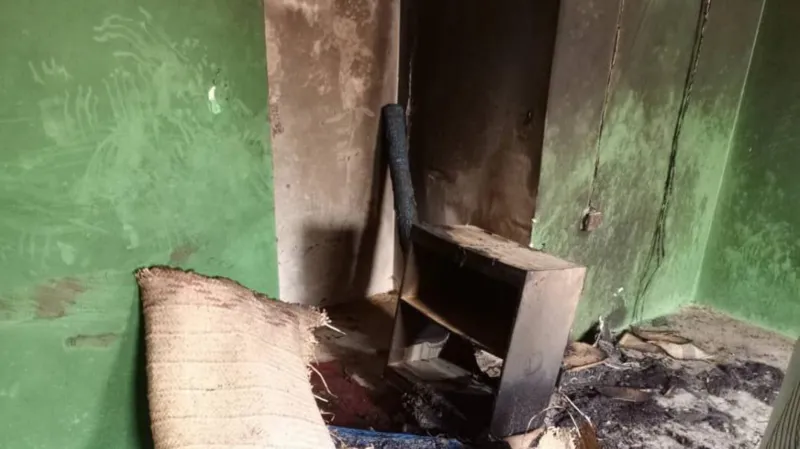
    Tragedy struck in Nigeria’s northern Kano state as at least 11 worshippers lost their lives and several others sustained injuries in a horrific attack on a mosque, according to local police.

    Reports indicate that a man, allegedly embroiled in a family dispute over inheritance, perpetrated the attack by spraying the mosque with petrol and locking its doors before setting it ablaze.

    The incident occurred during morning prayers on Wednesday, May 15 in the Gezawa area of Kano state.

    Rescue efforts were hampered as the flames engulfed the mosque, trapping approximately 40 worshippers inside. Neighbours rushed to assist, but it wasn’t until after the fire had already consumed much of the building that authorities were alerted.

    While initial fears of a bomb were raised, police later confirmed that no explosive device was used in the attack.

    However, questions have arisen regarding the delayed response from the Fire Service, with officials acknowledging that earlier intervention could have mitigated the devastation.

    Meanwhile A 38-year-old suspect has been apprehended in connection with the attack, as investigations into the tragic incident continue.

    “In a situation like this, people are supposed to call us but we didn’t get any call from the location until after normalcy had returned,” Mr Yusuf added.

    According to the police, the suspect admitted that his actions were motivated by a dispute over inheritance. He stated that he intended to target specific family members who were present inside the mosque.

    “What happened is not associated with any act of terrorism, rather it was a skirmish that arose as a result of inheritance distribution,” Umar Sanda, a local police chief, told journalists after visiting the scene.

    “The suspect is presently with us and is giving out useful information,” Mr Sandahe added.

    Initial reports indicated that one worshipper had succumbed to the attack, but the death toll later increased as additional victims passed away while undergoing treatment at the Murtala Muhammad Specialist Hospital in Kano.

    According to the police, more victims, including children, are currently receiving medical attention at the hospital.

    Islamic cleric Sheik Dauda Sulaiman condemned the act, stating that killing people while they are praying constitutes one of the gravest sins. He emphasized that besides seeking forgiveness from God, the perpetrator should also provide compensation to the families of the deceased.

    The entire village is now in mourning over the tragic incident.

  • Finance Minister inks deal with EBID to direct $200m funding to SMEs

    Finance Minister inks deal with EBID to direct $200m funding to SMEs

    On Friday, May 10, 2024, Minister for Finance, Dr. Mohammed Amin Adam, concluded a productive one-day visit to Lomé, Togo.

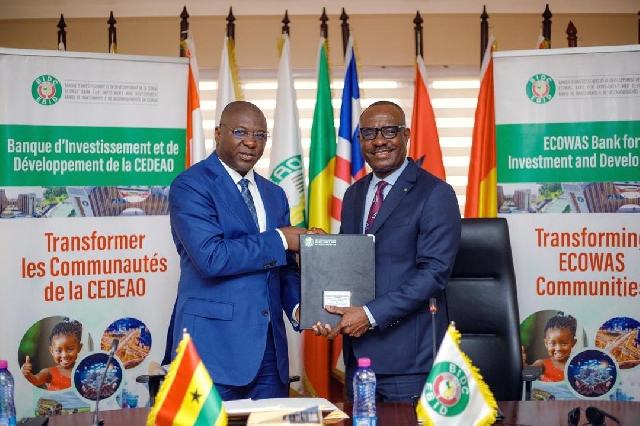
    During the visit, he formalized a strategic partnership by signing a Memorandum of Understanding (MOU) with the ECOWAS Bank for Investment and Development (EBID).

    This MOU facilitates the provision of USD 200 million in funding for Small and Medium Enterprises (SMEs) through concessional lending arrangements facilitated by the Ghana Exim Bank (GEXIM) and the Ghana Commercial Bank (GCB).

    The signing ceremony, held at the EBID headquarters, saw the presence of key stakeholders, including Dr. George Agyekum Donkor, President and Chairman of the Board of Directors of EBID, Mr. Lawrence Agyinsam, Chief Executive Officer of Ghana Exim bank, and Mr. Samuel Aidoo, Executive Director, Wholesale, and Investment Banking at GCB Bank PLC.

    At the signing, the Honourable Minister expressed his gratitude to EBID, stating, “This partnership with EBID marks a significant step towards driving sustainable economic growth and fostering resilience within our SME sector. The commitment of USD 200 million underscores our dedication to empowering SMEs, creating jobs, and catalyzing innovation for long-term economic prosperity.”

    Dr. George Agyekum Donkor emphasized the importance of collaborative efforts in driving regional development, stating, “EBID is proud to partner with Ghana in this transformative initiative. This injection of funds will not only bolster the SME landscape but also contribute to overall economic growth and development in the region.”

    The substantial investment in Ghana’s SME sector is poised to catalyze growth, infuse foreign exchange into the economy, spur job creation, and foster innovation. This initiative resonates with Ghana’s broader agenda of promoting entrepreneurship and sustainable development.

    During his visit to Lomé, Dr. Amin Adam also engaged in discussions with his Togolese counterpart, Honourable Sanni Yaya. The two Finance Ministers explored avenues for economic cooperation aimed at advancing sub-regional development.

    The collaboration between Ghana and EBID sets a precedent for impactful regional partnerships, underlining a collective commitment to fostering private sector-driven growth as a catalyst for sustainable development and shared prosperity across the ECOWAS region.

  • Swiss Court sentences ex Gambian Minister to 20 years for crimes against humanity

    Swiss Court sentences ex Gambian Minister to 20 years for crimes against humanity

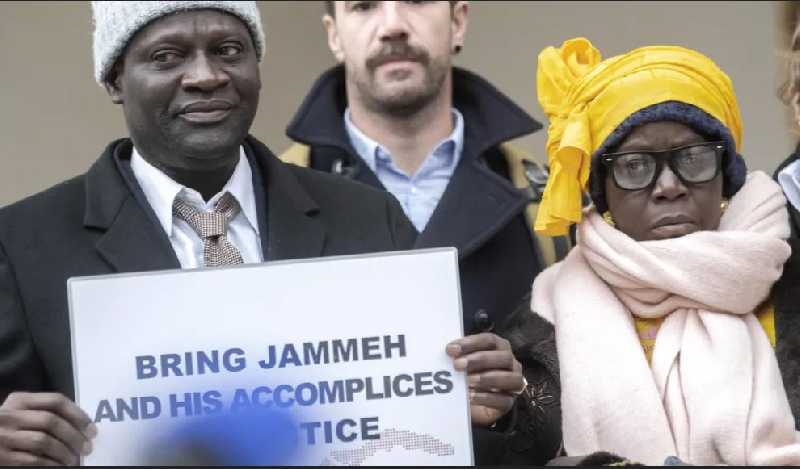
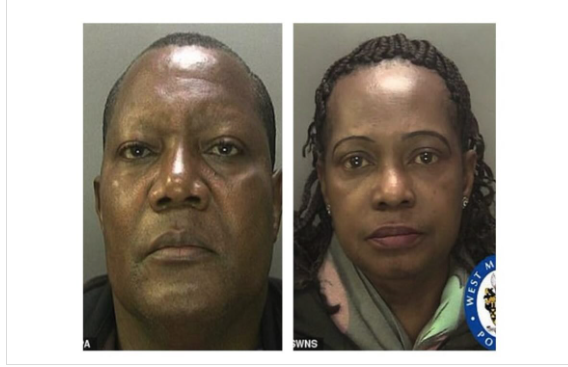
    Ousman Sonko, who fled to Switzerland in 2016 amid political turmoil in Gambia, has been sentenced to two decades in prison for crimes against humanity. This verdict follows accusations of widespread rights abuses during Yahya Jammeh’s presidency, prompting Sonko’s arrest after NGOs presented evidence of atrocities.

    Despite assertions of innocence from Sonko’s legal team, the former interior minister, aged 55, was convicted of intentional homicide, torture, and false imprisonment. Notably, he was acquitted of rape charges.

    The ruling, handed down by the Swiss Federal Criminal Court in Bellinzona on Wednesday, is subject to appeal.

    This trial, conducted under the principle of universal jurisdiction, marks a significant case in Europe, as Sonko is the highest-ranking government official prosecuted under this principle.

    Philip Grant, head of the organisation that filed the complaint leading to Sonko’s arrest, said the case sends a “resounding message against impunity”.

    “Minister-level perpetrators are now within reach of justice,” the Trial International director added.

    Swiss investigators journeyed to The Gambia, conducting interviews with numerous alleged victims and witnesses in preparation for the trial, which commenced in January of this year.

    During Yahya Jammeh’s presidency, spanning from 1996 to 2016, The Gambia witnessed widespread human rights violations, including forced disappearances and extrajudicial killings, as reported by Human Rights Watch.

    Ousman Sonko, perceived as Jammeh’s right-hand man, held the position of interior minister, granting him authority over security services, allegedly including a notorious paramilitary unit known as “the Junglers.”

    However, shortly before Jammeh’s ousting, Sonko sought refuge in Switzerland, where he applied for asylum.

    In January 2017, Swiss authorities apprehended him.

    Beyond Switzerland, other nations are prosecuting former members of Jammeh’s regime.

    In October, Germany convicted Bai Lowe, a former “Junglers” member, to a life sentence for crimes against humanity.

    Additionally, in September of this year, a court in Colorado, USA, will adjudicate an alleged former member of the same group.

    While The Gambia has established its own transitional justice mechanism to address abuses under Jammeh’s rule, human rights organizations criticize its sluggish progress thus far.

  • BoG foresees significant enhancement of Ghana’s payment ecosystem with eCedi

    BoG foresees significant enhancement of Ghana’s payment ecosystem with eCedi

    The Bank of Ghana (BoG) has declared the first Proof of Concept (PoC) for Project Digital Economy Semi-Fungible Token (DESFT) successfully completed.

    This milestone showcases the effective execution of a cross-border transaction using digital credentials, namely the eCedi and an approved stablecoin from Singapore.

    Collaborating with the Monetary Authority of Singapore (MAS), the BoG initiated Project DESFT in June 2023.

    During the initial phase, the project focused on designing and developing a trusted credential system.

    This system enables Small and Medium-sized Enterprises (SMEs) to convert essential information such as credentials, licenses, certificates, and trade records into verifiable digital credentials. These are stored on a secure distributed ledger system, facilitating efficient verification by potential trade partners and financial institutions.

    Building on this foundation, Phase 2 of Project DESFT, conducted in April 2024, successfully conducted a cross-border trade between Ghana and Singapore.

    This was achieved using the DESFT solution, Universal Trusted Credentials (UTC), a Singapore Stablecoin (xSGD), Ghana’s Central Bank Digital Currency (CBDC) – the eCedi, and the Purpose Bound Money (PBM) protocol.

    According to the BoG, these live transactions further validate the potential of utilizing the proposed Ghanaian domestic retail CBDC platform, the eCedi, in cross-border transactions.

    “Project DESFT is aimed at supporting SMEs in Africa to engage in international trade by removing significant obstacles they face, such as establishing trust with overseas trade partners and obtaining support in cross-border payments and supply chain finance. We believe that the new generation of financial technology offers innovative approaches to
    these challenges. After nearly a year and two phases of development, we have crafted a reliable information exchange solution founded on UTC standards and Semi-fungible Token technology.

    “Furthermore, we have rigorously tested a cross-border payment solution built upon the principles of Purpose Bound Money (PBM) and conducted real trade experiments which fully align with our predetermined objectives.

    “The next phase of the Project DESFT will continue to build upon the current achievements, focusing on highly automated digital credential processes, programmable payments across multiple digital currencies, and support for supply chain finance.”

  • Meet the young ECG boss who’s fighting to keep the lights on

    Meet the young ECG boss who’s fighting to keep the lights on

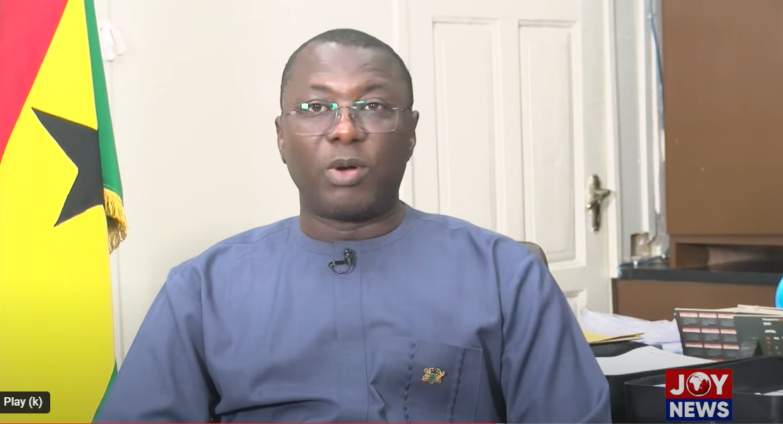
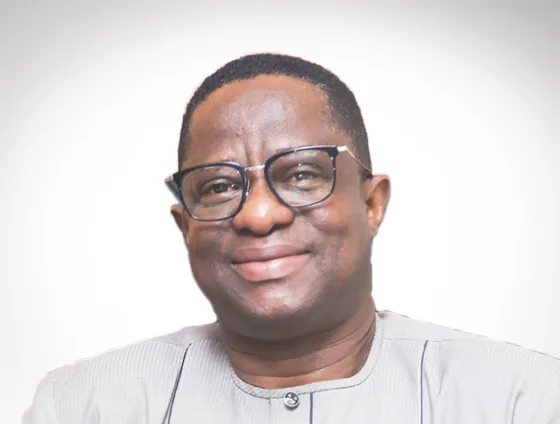
    In 2023, Mr. Samuel Dubik Mahama, the Managing Director of the Electricity Company of Ghana (ECG), distinguished himself as one of the most impactful executives in the nation. Under his leadership, ECG experienced unprecedented growth and success, marking a significant turnaround for the beleaguered power operator. His leadership style, characterized by decisiveness and a no-nonsense approach, played a pivotal role in this transformation.

    Achievements and Recognition

    Mr. Mahama’s tenure at ECG has been marked by substantial accomplishments, earning him numerous awards and widespread recognition. His leadership not only enhanced the company’s performance but also solidified his reputation as a formidable leader in both the public and private sectors.

    Leadership Style and Strategic Initiatives

    Key to Mr. Mahama’s success was his no-nonsense approach to leadership, which was a breath of fresh air for a company long plagued by inefficiencies and operational challenges. He implemented several strategic initiatives that contributed to the company’s turnaround, including:

    1. Operational Reforms: Mr. Mahama introduced rigorous operational reforms aimed at improving efficiency and reducing waste. This included streamlining processes and enforcing stricter compliance measures across all levels of the organization.
    2. Financial Management: He prioritized sound financial management practices, ensuring better accountability and transparency in ECG’s financial dealings. This move helped restore investor and public confidence in the company’s operations.
    3. Customer Service Improvements: Under his leadership, ECG made significant strides in enhancing customer service. By leveraging technology and improving response times, the company was able to better meet the needs of its customers, thereby improving its public image.
    4. Stakeholder Engagement: Mr. Mahama demonstrated exceptional skill in managing relationships with key stakeholders, including the Parliament of Ghana. His dealings with the parliament showcased his commitment to accountability and his ability to handle high-pressure situations with composure.

    Impact on ECG and the Broader Sector

    Mr. Mahama’s leadership not only revitalized ECG but also set a new benchmark for leadership in Ghana’s power sector. His success is a testament to the impact that effective, no-nonsense leadership can have on a struggling organization. By instilling a culture of discipline and excellence, he paved the way for sustained growth and improvement.

    Mr. Samuel Dubik Mahama’s tenure as Managing Director of the Electricity Company of Ghana in 2023 stands as a model of transformational leadership. His strategic initiatives and no-nonsense approach brought about significant improvements, earning him recognition and respect across the industry.

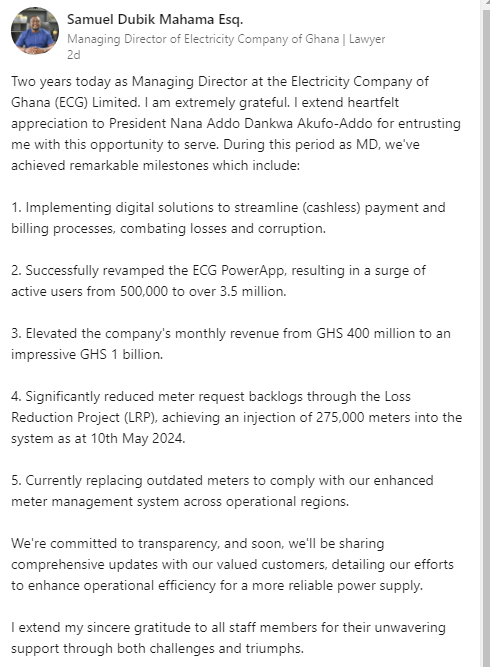
    Reflecting on his two-year tenure as ECG boss, Samuel Mahama shared five key achievements in a LinkedIn post.

    He highlighted the implementation of digital solutions to enhance cashless payment and billing processes in the power system while addressing distribution losses and corruption.

    Dubik Mahama also emphasized the successful revitalization of the ECG PowerApp, resulting in a significant increase in active users from 500,000 to over 3.5 million.

    “Elevated the company’s monthly revenue from GHS 400 million to an impressive GHS 1 billion,” he wrote.

    “Significantly reduced meter request backlogs through the Loss Reduction Project (LRP), achieving an injection of 275,000 meters into the system as of May 10, 2024,” Dubik Mahama added.

    Furthermore, the ECG boss emphasized the ongoing initiative to replace outdated meters in alignment with the power distribution company’s upgraded meter management system across its operational regions.

    “We are committed to transparency, and soon, we will be sharing comprehensive updates with our valued customers, detailing our efforts to enhance operational efficiency for a more reliable power supply. I extend my sincere gratitude to all staff members for their unwavering support through both challenges and triumphs,” Dubik Mahama’s post concluded.

    In May 2022, President Akufo-Addo designated Samuel Dubik Masubir Mahama as the Managing Director of ECG, succeeding Kwame Agyeman–Budu, who reached the statutory retirement age of 60 during the same month.

  • Current currency trends driven by market sentiment – Economist

    Professor Lord Mensah, an economist at the University of Ghana Business School (UGBS), attributes the ongoing depreciation of the local currency to market sentiment.

    According to him, individuals are holding onto the dollar in anticipation of its value increasing in the near future, resulting in reduced trading activity at present.

    “If you take what is happening now, I will attribute it to more of a market sentiment other than the structural issues.”

    “The reaction of the next level of the dollar at any point in time. If you are holding the dollar as to whether to sell it or to hold it depends on your anticipation of the dollar price in the next few moments or the next day, that is what is happening now.

    “So we have gone past the structural issues which used to be the balance of payment crisis that we had. Where our balance of payment depleted so as a result of that, the dollar buffer went down but what we see now is a self-fulfilling crisis,” he said.

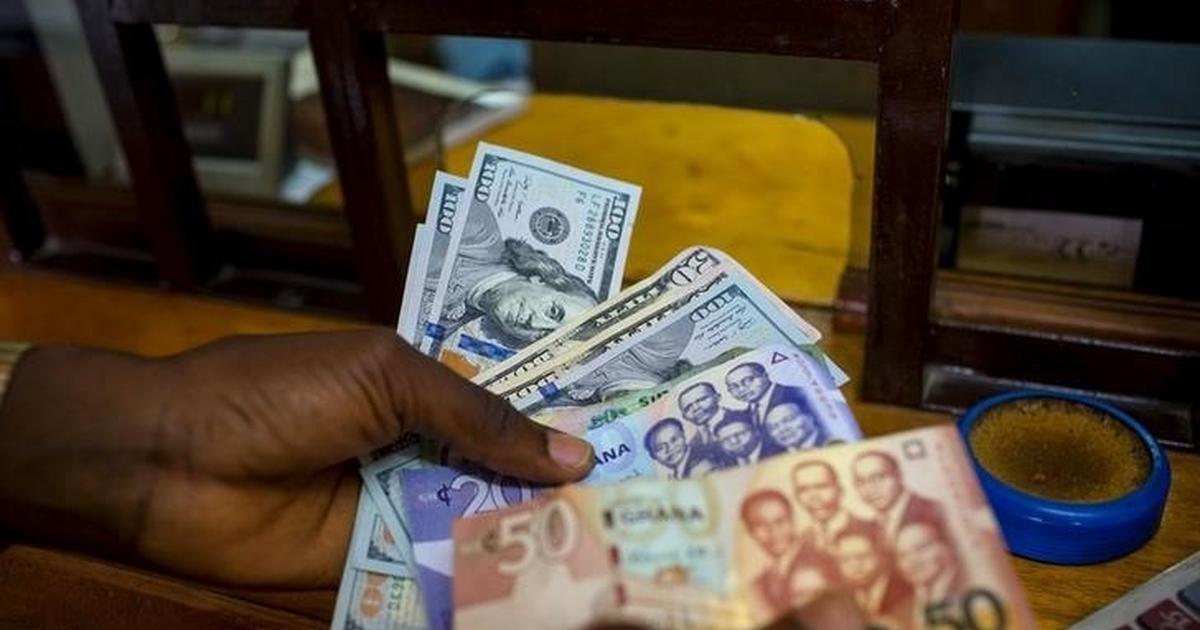
    Presently, the cedi, previously trading at GH₵ 11.98 against the dollar, has surged to approximately GHC 14.80 at forex bureaus. This marks a depreciation rate of nearly 20% since the year commenced.

    In the meantime, Minority Leader Dr. Cassiel Ato Forson has urged NPP flagbearer Vice President Dr. Mahamudu Bawumia to refrain from off-beat dancing on the campaign trail and instead prioritize efforts to stabilize the depreciating cedi.

    During a press briefing in Parliament on Wednesday, May 15, Dr. Ato Forson expressed concern about the negative effects of the cedi’s depreciation on businesses in areas like Okaishie, Abossey Okai, Kejetia, and other commercial hubs.

    The Caucus also highlighted worries regarding the lack of economic improvement despite the funds received from the International Monetary Fund (IMF) and the World Bank as part of the ongoing bailout program.

    He said, “In spite of the huge inflows of foreign exchange from the IMF and the World Bank, into the Ghanaian economy, and I’m talking of billions of Ghana cedis, billions of US dollars, the government’s action and its management of the cedi have continued to fuel steep depreciation with no end in sight unfortunately.”

    “So far, the decisions of the Economic Management Team, chaired by our Vice President Alhaji Bawumia leaves a lot to be desired. The reality of the Ghanaian economy today exposes the credentials of the so-called economic wizkid who was marketed as the savior of Ghana’s economy. Alhaji Bawumia’s credibility is now tatters.”

    GUTA decries high exchange rate

    According to Dr. Joseph Obeng, President of the Ghana Union of Traders Association (GUTA), the depreciation of the cedi against major trading currencies, particularly the dollar, has led to rising business expenses in Ghana.

    Dr. Obeng noted that businesses are facing challenges servicing their debts with banks due to the exchange rate fluctuations.

    GUTA, in a statement on May 14, expressed “deep frustration over the current depreciation of the cedi, which is creating a big mess for the business community, especially, the trading sector. This seeming crisis coupled with the ever-rising freight charges from Asia are rendering the cost of doing business unbearable.”

    Weak fundamentals?

    Meanwhile, a lecturer at the Department of Finance at the University of Ghana Business School (UGBS) has attributed the depreciation of the cedi to “weak fundamentals.”

    Dr. Benjamin Amoah said, “The fundamentals are definitely weak. We should not play jokes about it. The truth is that the fundamentals are very weak. What is the fundamental here? What is the inflation rate as we speak now and what is has been the inflation rate over time, very high. What is interest rate, that is the fundamental factor, it is very high.”

    “What is unemployment rate now? Unemployment rate is very high. What is our balance of payment position, it is very high and these are the very fundamentals that is used in accessing the exchange rate.”

    According to him, the government addressing just one of the indicators does not resolve the depreciation of the cedi, stating that “it requires effective management of each of these factors.”

  • “Instruct your appointees to release FX kept in their homes” – Ato Forson tells Akufo-Addo

    “Instruct your appointees to release FX kept in their homes” – Ato Forson tells Akufo-Addo

    In a statement, Minority Leader Dr. Cassiel Ato Forson called upon President Nana Akufo-Addo to promptly instruct his appointees to release any hoarded foreign exchange.

    Dr. Forson stressed the urgency of this directive to address the challenges of the depreciating Ghanaian Cedi.

    During a press conference held on Wednesday, May 15, Dr. Ato Forson reiterated his belief that these appointees have deliberately withheld foreign exchange for personal gain. He emphasized the negative impact of such actions on the Ghanaian economy.

    Accusing government appointees of prioritizing their own interests over the nation’s economic well-being, Dr. Forson emphasized the need for immediate action from President Akufo-Addo to prevent further harm to the currency.

    The Minority Leader highlighted the growing concerns over the depreciation of the Ghanaian Cedi, emphasizing the necessity for decisive measures to stabilize the currency and protect the economy.

    “We call on the Akufo-Addo government to among others order his appointees to release the FX stashed in their homes,” he said.

    Dr Ato Forson went on to criticize the government’s choice to settle contractor payments that were not included in its budgeted allocations by borrowing GH¢7 billion from the market for treasury bills.

    The Minority Leader claims that this move exacerbates the depreciation of the Cedi relative to the dollar and establishes a concerning precedent of going above budgetary restrictions for political reasons.

    “They are on an expenditure spree, spending money as if there is no tomorrow. In the last few days, we are aware that they have paid approximately GH¢7 billion to contractors, off-budget contractors, off-budget expenditures, GH¢7 billion.”

    “They borrowed from the T-Bill market, so they borrowed the money from ordinary Ghanaians then they paid this money to these contractors, and the contractors are also not certain so they have engaged in currency substitution.”

    “The contractors got cedis and went and changed it into US dollars and kept the money because of a lack of confidence in the economy.”

  • Traders at Kumasi Central Market warn of occupying unfinished market avenue

    Traders at Kumasi Central Market warn of occupying unfinished market avenue

    Traders at Kumasi Central Market have threatened to relocate their goods to the uncompleted market site if the construction firm does not remove all barricades by Sunday, May 19, 2024.

    Their action is a response to what they perceive as prolonged delays in completing the market’s second phase.

    In a petition dated Tuesday, May 14, 2024, the traders expressed frustration with the Akufo-Addo-led government, citing negligence and failure to complete the project. They claim this has adversely affected their businesses due to unsuitable conditions.

    The project has been stalled for over a year and a half due to renegotiations of a loan agreement following Ghana’s decision to seek a financial bailout from the International Monetary Fund (IMF).

    Accusing the government of ignoring their pleas and failing to meet completion targets, the traders plan a five-day continuous demonstration to push for the project’s resumption.

    They have issued Contracta Construction Company Limited a seven-day ultimatum to remove all barricades around the site or face the consequences of their occupation.

    Furthermore, the traders are in discussions with the Ghana Police Service to secure permission for their demonstration, as stipulated in Article 21(1d) of the 1992 Constitution of the Republic of Ghana.

  • Calls to remove Tweneboah Kodua Fokuo as NIB MB unwarranted – Govt’s spokesperson

    Calls to remove Tweneboah Kodua Fokuo as NIB MB unwarranted – Govt’s spokesperson

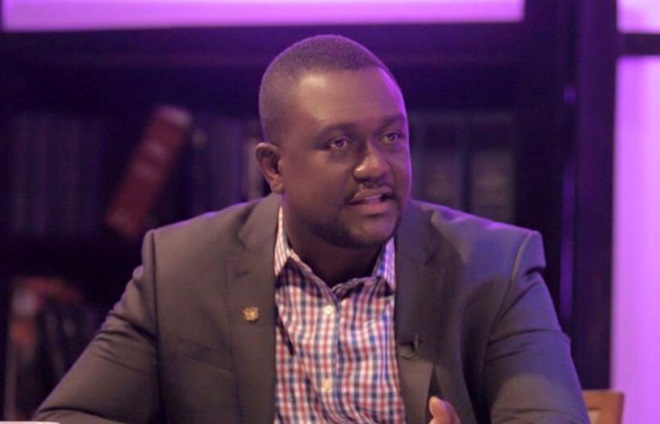
    Government spokesperson on governance and security, Dr. Palgrave Boakye-Danquah, has dismissed calls from Kwabena Donkor for the removal of Tweneboah Kodua Fokuo as Managing Director of the National Investment Bank (NIB), asserting that they lack any merit.

    According to Dr. Boakye-Danquah, Fokuo is competent to rejuvenate NIB.

    He emphasized that there is no issue with Fokuo’s appointment as he possesses the necessary qualifications.

    However, the Minority contends that the CEO of a struggling bank should not have conflicting priorities.

    Dr. Boakye-Danquah argued that since the individual in question meets all the criteria set by the Bank of Ghana to lead a bank, the call for his removal is unwarranted.

    “There are ministerial members of our parliament, some of whom handle important portfolios.

    “Therefore, I believe that people are capable of thinking of more than only elections. We even have a vice president running for president, ”Palgrave Boakye-Danquah told Accra-based Adom FM.

    He served as the Deputy Managing Director of National Investment Bank Ghana PLC (NIB) before his appointment, having joined the Bank in 2019.

    During his tenure at NIB, he played a crucial role in the bank’s turnaround and was specifically responsible for overseeing Risk Management and Operations.

    His arrival at NIB in 2019 coincided with the bank’s need for the full implementation of its Enterprise Risk Model (ERM) to commence its transformational journey. The execution of the ERM Model and the introduction of best practices in governance have established the necessary controlled environment for sound banking.

    He argued that if the minority group’s concern is about time commitment, they have no grounds to call for his removal, citing Kwabena Donkor’s concurrent roles as CEO of the National Petroleum Authority and Member of Parliament for Pru East.

    He maintained that Mr. Fokuo met all requirements before his appointment, asserting that Ghana’s President, His Excellency Nana Addo Dankwa Akufo Ado, did not violate any laws or the constitution in appointing him.

  • “We will hand over peacefully and walk away if we lose 2024 elections” – Henry Quartey

    “We will hand over peacefully and walk away if we lose 2024 elections” – Henry Quartey

    Minister for the Interior, Mr. Henry Quartey, has reassured the public of the New Patriotic Party’s (NPP) commitment to a peaceful transfer of power should they lose the upcoming 2024 general elections.

    His remarks follow concerns raised after incidents of violence during the limited voter registration exercise, leading to the arrest of Asutifi South MP, Collins Dauda.

    Addressing the media in Accra, Mr. Quartey emphasized the NPP’s commitment to upholding democratic principles.

    “As a politician, as a political party, it is our hope, it is our wish, it is our belief that by the grace of God, the good people of this country, the good work that we have done in infrastructure and in other interventions, they will give us another mandate,” he stated.

    The Interior Minister, nonetheless, affirmed that should Ghanaians choose to entrust the governance of the nation to a party other than the NPP, the party will not hesitate to transfer power to the victor of the forthcoming Presidential elections.

    He explained: “Perish the thought, and I say again, perish the thought, if they decide to give their mandate to somebody else, we will hand over peacefully and walk away, go to the drawing board and come back, Insha Allah. But I know that the grace of God abounds, and so we shall break the 8.”

    Furthermore, Mr. Quartey delivered a strong caution against electoral violence. He underscored that individuals instigating violence prior to, during, or following the elections will be met with severe legal repercussions, irrespective of their political allegiance.

    “Let me sound the warning again. You know my track record, I walk my talk. Anybody who goes to do something other than what is prescribed, we will do our best to ensure that the law will take its course and the court of competent jurisdiction will do its work,” Mr. Quartey cautioned.

    The Minister of Interior emphasized further that law enforcement operations will not be driven by political agendas.

    “May I sound this warning that it will not be political vindictiveness. If anybody commits, whoever the person is, we shall ensure that the law will take its course,” he warned.

  • Mahama vows on collaborative effort to rehabilitate lands destroyed by ‘Galamsey’

    Mahama vows on collaborative effort to rehabilitate lands destroyed by ‘Galamsey’

    The National Democratic Congress (NDC) flagbearer for the December 2024 elections, John Dramani Mahama, has emphasized the dire consequences of illegal mining, or “galamsey,” activities.

    Should he win the presidential elections on December 7, Mahama proposes the establishment of a national joint action team on mining and forestry to tackle this issue.

    Speaking at the 3rd Annual Transformational Dialogue on Small-scale Mining at the University of Energy and Natural Resources (UENR) in Sunyani, Mahama expressed deep concern over the extensive damage caused by illegal mining.

    He stressed the urgent need for collaborative efforts and decisive actions to address the challenges posed by this activity.

    Mahama highlighted severe environmental degradation resulting from galamsey, emphasizing Ghana’s urgent need for intervention. Despite widespread devastation, only a few benefit, prompting Mahama to call for collective efforts to address this inequality and safeguard the nation’s natural resources.

    Mahama pledged to formulate a new vision for the mining sector focused on reclaiming degraded lands, restoring environmental integrity, and ensuring equitable distribution of benefits. He underscored the importance of reclaiming damaged lands and harnessing Ghana’s natural environment for sustainable development.

    To address the issue, Mahama proposed establishing a National Joint Action Team on Mining and Forestry, comprising the Forestry Commission, private sector, and small-scale mining (SSM) operators. This collaboration aims to rehabilitate impacted forests and create jobs in affected mining communities.

    Mahama also announced plans to launch an #Atree4life initiative in mining communities, encouraging tree planting among the youth to mitigate environmental destruction caused by illegal mining activities.

    “A Galamsey Rehabilitation Initiative will work to convert impacted lands into commercial crop production zones, such as palm, shea nut, cocoa and rubber plantations. This will be funded through special fees from the Minerals Commission, contributions by the SSM Association, and interested plantation companies.”

    “I will launch a #Atree4life project through which re-afforestation by young people in mining areas will become an economically engaging activity. They will supervise the growth of these economically viable tree crops.” he added.

  • Africa provides fertile ground for Fintech startups to flourish – Bawumia

    Africa provides fertile ground for Fintech startups to flourish – Bawumia

    Vice President Dr. Mahamudu Bawumia highlighted Africa’s burgeoning mobile phone connectivity and internet penetration as a fertile ground for Fintech startups to flourish.

    He emphasized that Africa’s 1.2 billion population and three trillion economy position the continent to lead in Fintech evolution and technological solutions.

    Dr. Bawumia urged Fintech startups and investors to pioneer innovative financial products and services to tackle the unique challenges faced by African consumers and businesses.

    He made these remarks at the inaugural 3iAfrica Summit in Accra on Tuesday.

    The three-day summit is on the theme: “Unleasing the Fintech and Digital Economic Potential of Africa”. 

    Taking place from May 13th to 15th, 2024, the event drew innovators, investors, policymakers, and prominent stakeholders from the global fintech and technology sectors.

    Hosted by the Bank of Ghana (BoG) and the Development Bank Ghana (DBG), in collaboration with the Monetary Authority of Singapore via its subsidiary, Elevandi, the summit aimed to foster collaboration and innovation in fintech.

    The Vice President emphasized the need for fintech startups to adopt a multifaceted approach to attract significant investment in Africa.

    This approach involves showcasing the expansive market potential, ensuring strict regulatory compliance, and maintaining transparency.

    “Today, we delve into the dynamic world of FinTech in Africa, a landscape marked by rapid growth, innovation, and immense potential. The FinTech industry in Africa has experienced a significant surge over the past decade, driven by technological advancements, rising mobile phone penetration, and a youthful population eager to harness the transformative power of digital financial services,” Dr Bawumia observed. 

    According to the Vice President, over the past three decades, African nations have implemented substantial reforms in the formal sector and made notable advancements in macroeconomic management.

    These efforts have led to enhanced economic stability and consistent growth rates in numerous countries. Additionally, national economies have become more open, resulting in increased trade openness across the continent.

    The Vice President highlighted the growing fintech sector as a key driver in accelerating this growth trajectory.

    He pointed out that initially, African consumers and businesses were hesitant to embrace e-commerce, which accounted for only 1% of Africa’s $1 trillion economy in 2009. However, the landscape has undergone significant transformation since then.

    “Recent developments in fintech and mobile financial services have catalysed rapid growth in online commerce.  

    Recent statistics highlight this shift, projecting online sales in Africa to soar to $75 billion by 2025.  

    Of this amount, an estimated $56 billion is anticipated to stem from consumer spending as digital payment platforms gain traction across developing economies; a substantial leap from the $8 billion consumer spending estimate recorded in 2013.  

    Dr Bawumia noted that the evolving consumer purchasing habits in Africa, increasingly influenced by fintech innovations, were emblematic of the continent’s dynamic economic transformation. 

    “The fintech sector’s role in facilitating digital payments and e-commerce growth spotlights its significance as an impetus for economic development and financial inclusion across Africa,” he stated. 

    Another remarkable advancement on the continent is the rapid growth in mobile phone usage and the telecommunications sector. 

    The explosive growth of mobile phone usage in Africa exceeds a mere technological shift, it stands as one of the foremost catalysts driving the fintech revolution across the continent.  

    Currently, Africa is home to over 489 million mobile phone users, and projections suggest that this number could reach a staggering 700 million by 2030. 

    This proliferation of mobile connectivity has created an ecosystem ripe for fintech innovation. As telecommunications infrastructure expands, fintech services are rapidly penetrating previously under-served communities and remote regions. 

    This expansion is fueled by significant investments from stakeholders in both the telecommunications and fintech sectors, aimed at reinforcing infrastructure and enhancing digital capabilities, Dr Bawumia stressed. 

    He believed that an integration of robust telecommunications networks with fintech solutions was democratising access to financial services, fostering entrepreneurial spirit, and unlocking unprecedented economic opportunities. 

    “As Africa continues to embrace this digital transformation, the synergy between telecommunications and fintech will undoubtedly remain a driving force behind the continent’s growth,” he added. 

    Industry research indicates a remarkable surge in tech startups across Africa, with the number nearly tripling from 2020 to 2021 to reach approximately 5,200 companies. 

    Notably, fintechs comprise just under half of those startups, indicating a significant focus on innovation and responsibly disrupting the financial services sector.  

    The rapid development in FinTech in Africa spans across multiple segments, from blockchain and cryptocurrency to robo-advisors and payment platforms.  

    He emphasized that each segment presented unique opportunities and challenges, underscoring the continent’s need to remain agile and adaptable in its approaches.

    In the domain of payments and settlements systems, innovations such as the Ghana Interbank Payment and Settlement Systems (GhIPPS) and platforms like M-Pesa in Kenya have revolutionized payment methods. Dr. Bawumia highlighted how these solutions have enhanced financial accessibility, convenience, and affordability for millions across the continent.

    Regarding lending platforms, he noted the emergence of key players like Branch, Fido, and Tala. These companies have addressed the credit gap by providing quick and convenient loans to individuals and small businesses.

    “In InsurTech, innovators such as Bima and Pula are leveraging mobile technology to offer micro-insurance products tailored to the unique needs of the African market. Blockchain and Cryptocurrency are also gaining traction on the continent with startups like Luno and BitPesa leading the charge. 

    The rise of FinTech, he said, had ushered in transformative changes in the global financial landscape, noting that as technology continued to advance at an unprecedented pace, the financial sector was undergoing a profound transformation, with Africa being no exception. 

     “The continent, with its growing population and increasing mobile penetration, presents a fertile ground for FinTech innovation,” Dr Bawumia stated. 
  • GETFund’s 18-classroom project in Tema to be locked up if GHS500,000 debt is unpaid

    GETFund’s 18-classroom project in Tema to be locked up if GHS500,000 debt is unpaid

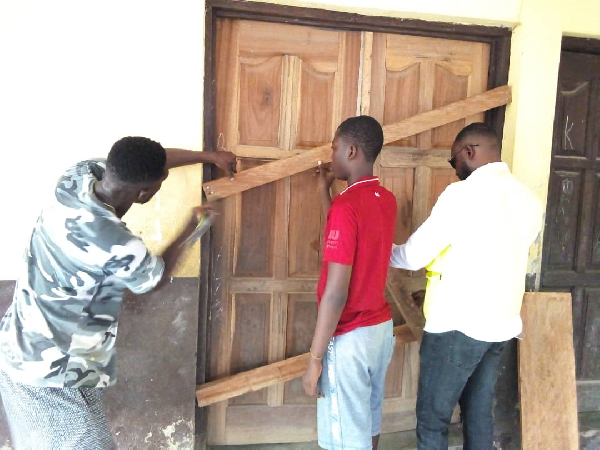
    Contractor and creditor for 18-classroom blocks under the GETFund project, Amo Enterprise, threatens to re-lock TI Ahmadiya School classrooms in Tema over unpaid GH¢500,000 since project completion three years ago.

    Mba Aduku Abarighi, project engineer, states the company locked classrooms on April 30, 2024, due to GETFund’s inaction. However, they discovered classrooms reopened without consultation amid GETFund’s silence.

    Amo Enterprise plans to re-lock classrooms to protest non-payment by the government.

    TI Ahmadiyya School was locked on April 30, 2024, for non-payment of owed funds.

    Amo Enterprise claims the government has ignored pleas for payment, leading to the school’s closure.

    The project, costing GH¢1 million, received an initial GH¢500,000 payment from the government.

    The delayed payment was due to a two-year government review of project pricing.

    Amo Enterprise faced further frustration when their certificate went missing at GETFund’s office.

    They suspect deliberate obstruction from officials.

    Persistent bank harassment over outstanding loans adds to their distress.

    The project, initiated in 2019 and completed in October 2021, suffered from funding delays despite visible government spending.

  • 9 assemblies spend over GHS4m on workshops, fuel, honorarium – Revelations from Takoradi PAC sitting

    9 assemblies spend over GHS4m on workshops, fuel, honorarium – Revelations from Takoradi PAC sitting

    In the course of the Zone Four public hearing of the Public Accounts Committee (PAC) in Takoradi, Western Region, it was revealed that nine assemblies have collectively spent over 4 million Ghana cedis on workshops, fuel, honorarium, and related expenses.

    This information was gleaned from the 2022 Auditor-General’s Report, which highlighted an excess expenditure of GHC 2,706,135.00 attributed to these assemblies.

    Further elucidating in the report, the Auditor-General pointed out that according to Part 1 of the 2019 Guidelines for utilization of the District Assemblies Common Fund (DACF), up to 10 percent of the allocations to the assemblies should be designated for administrative expenditure.

    The report specified that the nine assemblies received a total Common Fund allocation of GHc 20,977,699.78, allowing for 10 percent, which amounts to GHc 2,097,769.98, for administrative expenses.

    In response to this, the Auditor-General recommended that the management of the nine assemblies refund the excess expenditure of Ghc 2,706,134.55 from their Internal Generated Fund (IGF) accounts into the DACF accounts and refrain from contravening the guidelines.

    Subsequently, James Klutse-Avedzi, the Chairman of the Committee, remarked that the Committee will strongly advocate in its final report to Parliament for the rejection of all expenditures exceeding the required 10 percent for administrative purposes on the GIFMIS platform.

    He believes this measure will address the issue of over-utilization of the Common Fund for administrative expenses within the assemblies.

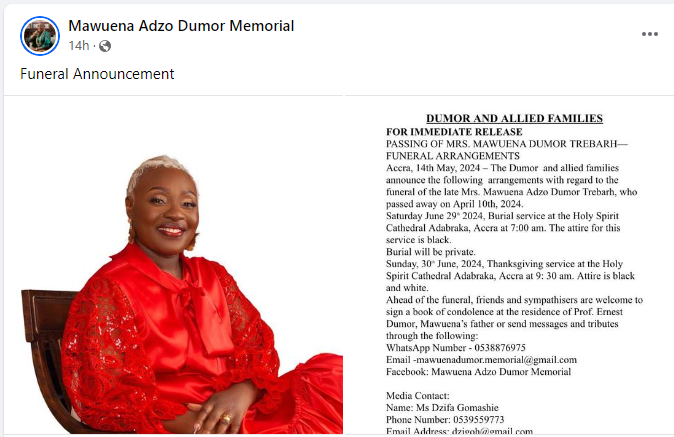
  • Mawuena Dumor’s funeral slated for June 29 will be private – Family announces

    Mawuena Dumor’s funeral slated for June 29 will be private – Family announces

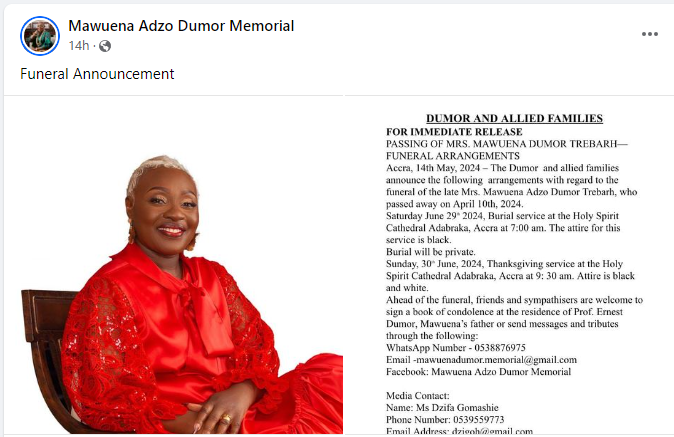
    Funeral arrangements for Mawuena Dumor Trebarh, the former CEO of the Ghana Investment Promotion Center (GIPC), have been announced.

    A statement released on May 15, 2024, by the Dumor and allied families provided details regarding her burial service and thanksgiving ceremony, including dates, venue, and other pertinent arrangements.

    The burial service is scheduled for June 29, 2024, while the thanksgiving ceremony will take place on June 30. Both events are set to be held at the Holy Spirit Cathedral in Accra.

    Mawuena passed away on April 10, 2024, at the age of 52.

    She was widely recognized as a business executive, investor, and geologist.

    Trebarh made history as the first woman to serve as CEO of GIPC, holding the position from 2013 to 2017. Additionally, she was the first female underground exploration geologist.

    At the time of her passing, Mawuena also held the distinction of being the first female Board Chair of Movenpick Ambassador Hotel Ghana.

    STATEMENT: PASSING OF MRS. MAWUENA DUMOR TREBARH— FUNERAL ARRANGEMENTS

    Accra, 14th May, 2024 – The Dumor and allied families announce the following arrangements with regard to the funeral of the late Mrs. Mawuena Adzo Dumor Trebarh, who passed away on April 10th, 2024.

    Saturday June 29th 2024, Burial service at the Holy Spirit Cathedral Adabraka, Accra at 7:00 am. The attire for this service is black.

    Burial will be private.

    Sunday, 30th June, 2024, Thanksgiving service at the Holy Spirit Cathedral Adabraka, Accra at 9: 30 am. Attire is black and white.

    Ahead of the funeral, friends and sympathizers are welcome to sign a book of condolence at the residence of Prof. Ernest Dumor, Mawuena’s father or send messages and tributes through the following:

    WhatsApp Number – ​0538876975
    Email -​​​[email protected]
    Facebook: ​​Mawuena Adzo Dumor Memorial

    Media Contact:
    Name: Ms Dzifa Gomashie
    Phone Number: 0539559773
    Email Address: [email protected]

  • Ato Forson accuses Akufo-Addo of converting NIB into a center for party loyalists

    Ato Forson accuses Akufo-Addo of converting NIB into a center for party loyalists

    The Minority in Parliament has raised apprehensions regarding the government’s handling of the National Investment Bank (NIB), alleging that it has become predominantly a platform for members of the New Patriotic Party (NPP).

    Their worry stems from the recent appointment of Tweneboa Kodua Fokuo, previously the NPP’s Parliamentary Candidate for Manso Nkwanta, as the Managing Director of NIB.

    Adding to their unease, the caucus contends that the situation is exacerbated by the appointment of a politically active individual, who had previously contested for the Fomena Member of Parliament seat, as the bank’s Deputy Managing Director.

    Addressing journalists in Accra on Wednesday, Minority Leader Dr. Cassiel Ato Forson expressed reservations about these developments, highlighting potential implications for the bank’s operations and impartiality.

    “President Akufo-Addo is destroying the governance of our country. In the sense that even banks, a typical example like the NIB has been turned into a hub where they harbour foot soldiers of the party. You have a bank that is struggling, a bank that is almost collapsed, a bank that we know that the governance structure regime is extremely poor but we all want to nurture the bank because obviously it is a state bank.

    “This president in spite of all the problems of the NIB has decided to appoint a PC, someone who is going to contest the election in six months as the MD of the state bank, NIB. And I am surprised at the governor, Governor Addison the printer also had the temerity to approve such a person to become the MD of the NIB.”

    “The deputy of the same politically exposed person who is now the MD of the NIB is also another politically exposed person,” he stated.
    However, Tweneboah Kodua Fokuo has assured that he is proficient in time management and can effectively balance both roles. He emphasized that there would be no conflicts between them.

    The newly appointed Managing Director, formerly the Deputy MD of the bank, is also the parliamentary candidate for Manso Nkwanta in the Ashanti Region under the ruling New Patriotic Party (NPP).

  • KT Hammond issues a directive to reverse recent increase in cement prices

    KT Hammond issues a directive to reverse recent increase in cement prices

    Minister for Trade and Industry, K. T. Hammond, has taken decisive steps to tackle the recent surge in cement prices by instructing the Cement Manufacturing Development Committee (CMDC) to intervene immediately.

    This directive aligns with his earlier mandate to the CMDC during its inauguration on March 8, 2024.

    Hammond stressed the urgency for Ghanaian cement manufacturers to swiftly reverse the recent price hikes.

    Additionally, he urged the CMDC to enforce transparency by compelling all cement companies to publish their retail prices.

    The Minister highlighted that these measures aim to alleviate the burden placed on consumers by arbitrary increases in cement prices.

    Furthermore, Hammond reiterated his call for the adoption of a unified cement pricing mechanism nationwide.

    He proposed a model similar to the Unified Petroleum Pricing Fund (UPPF), which regulates fuel retail prices in Ghana, to ensure price consistency and fairness in the cement market.

    Established under the Ghana Standards Authority (Manufacture of Cement) Regulations, 2023 (L| 2480), the CMDC plays a crucial role in regulating the cement industry.

    Prof. Alex Dodoo, Director-General of the Ghana Standards Authority, chairs the committee, which includes representatives from cement manufacturers, the Association of Ghana Industries, and governmental bodies.

    The CMDC’s mandate extends to promoting the manufacture, wholesale, and retail of cement and its components.

    With a diverse membership comprising industry experts and regulatory agencies, the CMDC is well-equipped to address challenges and ensure compliance within the sector.

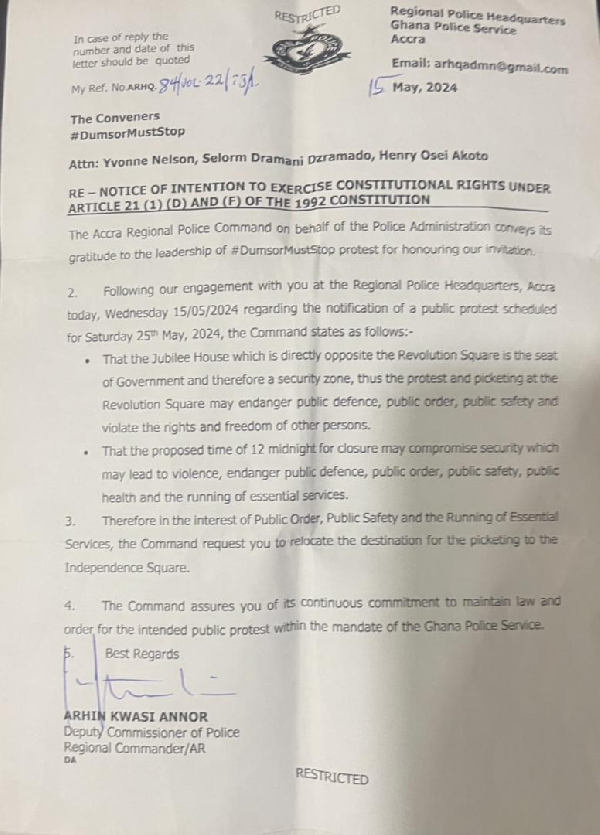
  • ‘You may endanger public defence if you protest at Jubilee House’ – Police tells organizers of dumsor vigil

    ‘You may endanger public defence if you protest at Jubilee House’ – Police tells organizers of dumsor vigil

    The Greater Accra Regional Command of the Ghana Police Service has informed the organizers of an upcoming protest that the location they have chosen is deemed unsuitable due to security concerns.

    Following a meeting held on May 15, 2024, between the organizers of the #DumsorMustStop vigil and the police, where notice of a protest scheduled for May 25, 2024, against the recurring power outages, known as dumsor, was served, the police issued a confidential notice to the organizers on the same day, May 15, 2024, stating:

    “That the Jubilee House which is directly opposite the Revolution Square is the seat of Government and therefore a security zone, thus the protest and picketing at the Revolution Square may endanger public defence, public order, public safety and violate the rights and freedoms of other persons.”

    The police further expressed security concerns regarding the midnight closing time. Consequently, they suggested relocating the protest to Independence Square, emphasizing their commitment to providing necessary support for the event.

    As of now, the organizers have not responded to this latest development.

    Read the police statement below:

  • Ghana among top 10 countries with more debt to pay to the IMF

    Ghana among top 10 countries with more debt to pay to the IMF

    As the landscape of the global economy shifts, the International Monetary Fund (IMF) assumes a vital role in extending financial aid to nations confronting economic adversities.

    A pivotal aspect of this assistance lies in offering loans to member countries, aiding in the stabilization of their economies and rectification of financial disparities.

    Consequently, countries amass debts owed to the IMF, underscoring their dependence on external financial aid.

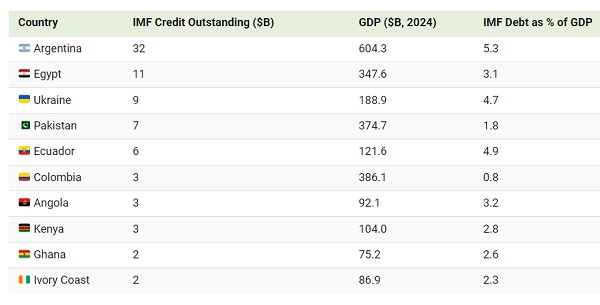
    GhanaWeb Business delves into the top 10 nations with the highest debts to the IMF, illuminating the magnitude of their financial commitments and the ramifications for their economic trajectories.

    Remarkably, Ghana ranks among these leading countries burdened with substantial debts owed to the Fund.

    This list is derived from the IMF’s most recent debt statistics.

    See the full list below

    Egypt
    Egypt owes the IMF $11 billion.

    Angola
    Angola owes the IMF $3 billion.

    Kenya
    Kenya owes the IMF $3 billion.

    Ghana
    Ghana owes the IMF $2 billion

    Cote D’Ivoire
    Cote D’Ivoire owes the IMF $2 billion.

    Argentina
    Argentina owes the IMF $32 billion.

    Colombia
    Colombia owes the IMF $3 billion.

    Ecuador
    Ecuador owes the IMF $6 billion

    Ukraine
    Ukraine owes the IMF $9 billion.

    Pakistan
    Pakistan owes the IMF $7billion.

  • Ghana may loose it position as 2nd largest cocoa producer  – GAWU warns

    Ghana may loose it position as 2nd largest cocoa producer – GAWU warns

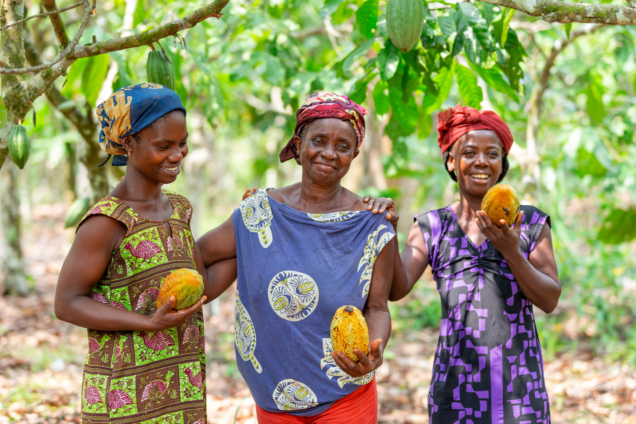
    The General Agricultural Workers Union (GAWU) has issued a warning, highlighting that Ghana risks losing its esteemed position as the world’s second-largest cocoa producer unless stringent measures are implemented to safeguard cocoa farms from illegal mining activities.

    This caution follows revelations by Joseph Boahen Aidoo, Chief Executive Officer of the Ghana Cocoa Board, who disclosed that the organization has returned $250 million obtained from the African Development Bank for irrigation purposes in cocoa farms due to water body contamination in farming regions.

    Presently, Ghana holds the esteemed position of being the world’s second-largest cocoa producer, trailing only behind Ivory Coast. Additionally, Ghana produces premium cocoa beans globally, rendering its cocoa highly preferred.

    Edward Kareweh, General Secretary of GAWU, highlighted that other nations are intensifying efforts to surpass Ghana in cocoa production by promoting sustainable environmental practices.

    He further noted that escalating water pollution levels in farming areas are prompting more farmers to abandon their farms.

    “It’s no more lucrative to be in cocoa production. There are many factors which are real. Even the cocoa farmers who are patriotic and insist that they will not sell their farms and stay with their farms are forced to sell them out”.

    He revealed that while the government remains indifferent, illegal miners are forcibly encroaching on cocoa farms without consequences for mining activities.

    Mr. Kareweh emphasized that contaminated water bodies are being diverted to cocoa farms, resulting in the destruction of the plants.

    “The illegal miners will flood your farms with all the dirty water and will take your farm by force. You cannot even enter the farm again. It is so pathetic and heartbreaking that we can sit down and allow such a monumental criminal act to continue. This crime is against generations to come”.

    Expressing distress, Mr. Kareweh voiced concern that Ghana is on the verge of losing its production capacity and longstanding reputation as the producer of premium cocoa beans.

  • Health Ministry, WHO launch financing strategy as part of plans to achieve universal health coverage by 2030

    Health Ministry, WHO launch financing strategy as part of plans to achieve universal health coverage by 2030

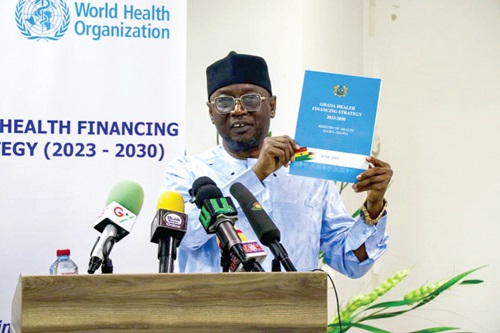
    Ghana’s pursuit of universal health coverage (UHC) by 2030 received a significant boost with the introduction of an eight-year financing strategy for the nation’s health system.

    Dubbed the Ghana Health Financing Strategy (2023-2030), this comprehensive plan aims to tackle persistent health financing challenges hindering the country’s health-related objectives.

    The unveiling of this strategic document follows the formulation of a roadmap designed to guide Ghana’s progress toward achieving UHC.

    The strategy, emphasizing efficiency and expenditure management while addressing critical revenue issues, was jointly launched by the Ministry of Health and the World Health Organization (WHO) at the ministry’s headquarters in Accra last Friday.

    Primary health care

    In a speech delivered on his behalf by the Chief Director, Alhaji Hafiz Adam, at the Ministry, Dr. Okoe Boye explained that the strategy aimed to strengthen the purchasing of primary healthcare services at lower levels, enhance provider autonomy, management, and accountability in receiving and utilizing funds.

    He noted that the strategy aligned not only with the Sustainable Development Goals (SDGs) but also with the Principles of the African Union Agenda 2063, the Global Action Plan for Healthy Lives and Well-being, the Declaration on Primary Health Care in Astana (2018), the UHC 2030 Compact, the UHC 2030 Initiative, and the Political Declaration of UHC adopted at

    “The strategy responds to international standards which require that the financing system should be specifically designed to provide all people with access to the needed health, including prevention, promotion, treatment and rehabilitation of sufficient quality, and ensure that users are not exposed to financial hardship,” he said.

    He further stated that the ministry had initiated the implementation of the strategy, revealing that it had already revised the essential health services package to encompass additional preventive measures and other non-communicable diseases in the benefit package for execution.

    Moreover, he mentioned that the National Health Insurance Scheme tariff review was in progress, and the implementation of the Network of Practice (NoP), which aimed to restructure service delivery at the grassroots level to ensure quality care, was also ongoing.

    Timely

    For his part, the Officer in charge of the WHO Country Office, Dr Frank John Lule, described the launch as timely since it came at the time the country was rolling out key strategies towards achieving UHC. 

    “As development partners, we are happy to note that the revised health financing strategy seeks to provide practical guidance and solutions to financing primary health care in Ghana.

    He stressed that development partners would remain committed to assisting the government to build a resilient health system that placed sustainable financing at the centre of health delivery.

  • “No joke! the fundamentals are definitely weak” – Finance lecturer on cedi depreciation

    “No joke! the fundamentals are definitely weak” – Finance lecturer on cedi depreciation

    A lecturer in the Department of Finance at the University of Ghana Business School, Dr. Benjamin Amoah, has unequivocally asserted that the fundamentals of the domestic economy are fragile.

    He expressed concerns that the depreciation of the local currency, the cedi, coupled with elevated interest and inflation rates, are exacerbating rather than improving the situation, indicating a significant downturn in the economy.

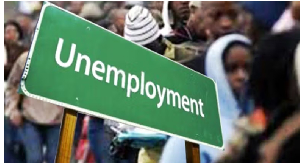
    During an interview on Joy FM, Dr. Amoah also decried the high unemployment rate prevailing in the country.

    He said, “The fundamentals are definitely weak. We should not joke about it. The truth is that the fundamentals are very weak. What are the fundamentals here? What is the inflation rate as we speak now, and what has been the inflation rate over time? Very high. What is the interest rate, which is a fundamental factor? It is very high.”

    “What is the unemployment rate now? The unemployment rate is very high. What is our balance of payment position? It is very negative, and these are the very fundamentals that are used in assessing the exchange rate,” the finance lecturer stated.

    The cedi is currently trading at GH¢14.85 at various forex bureaus, with the inflation rate standing at 25.0%.

    Financial and media company Bloomberg has forecasted further depreciation of the cedi by the year’s end.

    Bloomberg predicts that the cedi will reach a value of GH¢15.98 against the dollar.

    It’s worth noting Vice President Dr. Mahamudu Bawumia’s statement in 2014: “if the fundamentals are weak, the exchange rate will expose you.” This remark was made during a period of persistent cedi depreciation under the Mahama-led administration.

  • Ghana cedi faces continues depreciation amid corporate demand and economic factors

    Ghana cedi faces continues depreciation amid corporate demand and economic factors

    The Ghana cedi is expected to face further depreciation against major trading currencies this week due to persistent corporate demand, as noted by currency analysts and traders who requested anonymity.

    They attribute the cedi’s weakened performance to both internal and external factors, including the strengthening US dollar against Emerging Markets currencies.

    April 2024 witnessed a slight decrease in inflation to 25% year-on-year from March 2024’s rate of 25.8%, largely driven by a reduction in food inflation to 26.8%.

    Some analysts anticipate potential inflationary pressures, which could stimulate additional speculative demand for the US dollar, consequently weakening the cedi. The cedi has been among the worst-performing currencies globally this year.

    Moreover, the upcoming announcement of April 2024 inflation by the US Federal Reserve may provide insights into the Fed’s policy rate trajectory during the June 24, 2024, meeting.

    Recent US data also revealed a rise in unemployment benefit claims last week to the highest level in eight months.

    These developments suggest a slowdown in consumer demand, likely attributed to a tight labor market, which could alleviate inflationary pressures, thereby easing the challenges faced by the cedi to some extent.

    Cedi depreciates by 17.32% to dollar

    Despite the Central Bank’s sale of an estimated $23 million on the spot market last week, the local currency experienced significant depreciation against major trading currencies.

    On the retail foreign exchange market, the cedi depreciated by 2.89% week-on-week against the dollar (-17.32% year-to-date) and weakened against the Euro (-3.52% week-on-week; -15.20% year-to-date) and pound (-3.03% week-on-week; -16.63% year-to-date).

    Currently, the cedi is being traded at GH¢14.90 at forex bureaus, while the Bank of Ghana quotes one US dollar to GH¢13.01.

  • Traders and business communities in Ghana decry impact of depreciating cedi

    Traders and business communities in Ghana decry impact of depreciating cedi

    Traders nationwide are expressing deep concern about the severe repercussions of the depreciating cedi on their operations.

    The business community is in turmoil as many find themselves sinking into debt due to this development.

    According to the Food and Beverages Association of Ghana (FBAG), numerous entrepreneurs rely on selling goods on credit, leading to challenges in repayment for importers.

    In an interview on Top Story, FBAG’s Executive Chairman, John Awuni, characterized the situation as a crisis affecting various product lines.

    FBAG is not alone in facing these challenges.

    Previously, the Ghana Union Traders Association (GUTA) voiced its frustration with the current state of the local currency.

    In a statement signed by its president, Dr. Joseph Obeng, the association lamented that the depreciation of the cedi has created significant difficulties for the business community, particularly within the trading sector.

    It further highlighted the economic hardship exacerbated by escalating freight charges from Asia, making the cost of doing business increasingly unbearable.

    “The current state of affairs has far reaching implications and has caused prices of goods and services to increase for the consuming public.”

    According to the Association, the falling cedi has caused inflationary pressures that have driven up the cost of commodities, making it harder and harder for enterprises to survive.

  • 3rd African Media Convention commence today

    3rd African Media Convention commence today

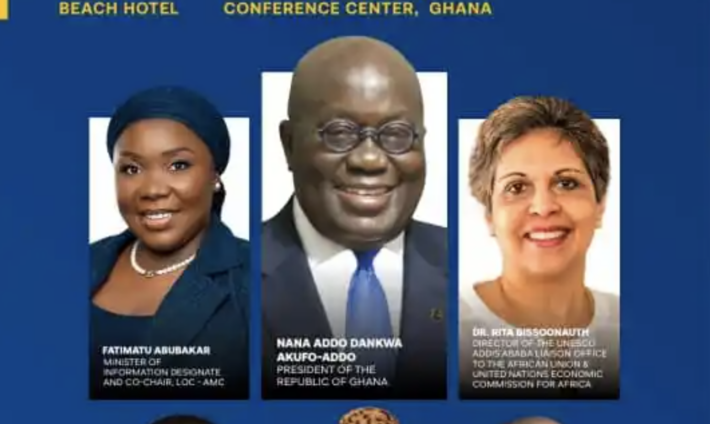
    The third African Media Convention (AMC), opens in Accra today, Wednesday, May 15.

    About 2,000 participants drawn across the continent, including policymakers, Ministers of State, researchers, academics and media practitioners are attending the Convention.

    President Nana Addo Dankwa Akufo-Addo, the Special Guest for the event, will officially open the three-day Convention on Thursday, May 16, at the Accra International Conference Centre.

    Speaking at a media briefing in Accra, on Tuesday, to update the public on the preparations, Albert Kwabena Dwumfour, the President of the Ghana Journalists Association, said 1,000 people had registered as of 1700 hours on Tuesday, May 14, with 600 foreign participants expected to join the Convention on Wednesday, May 15.

    The Convention is on the theme: “The African Media We Want: Enhancing Freedom, Innovation, and Sustainability in a Dynamic Media Landscape”.

    process.

  • DBG partners Proxtera to support SMEs in Ghana with US$100m

    DBG partners Proxtera to support SMEs in Ghana with US$100m

    Small and Medium-sized Enterprises (SMEs) in Ghana’s agriculture, manufacturing, Information, Communications and Technology (ICT), and high-value sectors are set to receive a US$100 million loan through a digital platform.

    This initiative stems from a collaboration between the Development Bank Ghana (DBG) and Proxtera, a Singaporean fintech company focused on simplifying cross-border trade and empowering SMEs through digital platforms.

    DBG will extend loans to eligible SMEs for their growth and expansion, facilitated digitally by Proxtera.

    The formalization of this partnership took place on the sidelines of the ongoing 3iAfrica Summit in Accra on Tuesday, May 14.

    Mr. Duker emphasized that SMEs must meet specific criteria to qualify for the loan, including being Ghanaian-owned and operating within the country, with a bankable financial plan.

    Speaking to the media following the event, Mr. Kwamina Duker, CEO of DBG, highlighted the bank’s commitment to embracing digitization in lending practices to better serve SMEs in today’s era.

    He clarified that while the bank can assess credit portfolios and other requirements for SME loans through traditional channels such as wholesale and rural and community banking, the online platform will streamline and expedite the

    “This platform allows that process to be much quicker, and effective, and as a result of that, the risk premium of the interest rate being applied to SMEs, will over time come down,” he said.

    “If today, it takes about three to six months to get a loan, with a huge amount of documentation, and we can cut that down to turnaround of literally a real time of 24-hours… then we can appreciate the benefits of digitalisation,” Mr Duker said.

    He explained that due to the substantial financing gap for SMEs, no single bank could address it entirely. Therefore, the bank was acting as a catalyst to mitigate risks, enabling other banks to extend affordable loans to SMEs for their operations and job creation for Ghanaian youth.

    Mr. Duker highlighted the bank’s success in the rubber sector, which inspired other banks to provide loans to companies in that sector. Similar initiatives were initiated in the rice sector.

    He illustrated that in the rice sector, for instance, the bank managed to reduce financing costs by approximately 14% through de-risking and demonstrating positive results, thereby attracting other banks. He emphasized that this is the developmental role of the bank.

    Mr. Saurav Bhattacharyya, CEO of Proxtera, announced their intention to develop a credit engine on their technological platform to expedite the evaluation of SMEs for loan disbursement.

    He noted that Ghana is the fourth country to benefit from their platform and expressed confidence that it would address the credit access challenges faced by Ghanaian SMEs.

  • Bernard Okoe-Boye inaugurates 3rd West Africa Pharma and Healthcare Expo 2024 at AICC

    Bernard Okoe-Boye inaugurates 3rd West Africa Pharma and Healthcare Expo 2024 at AICC

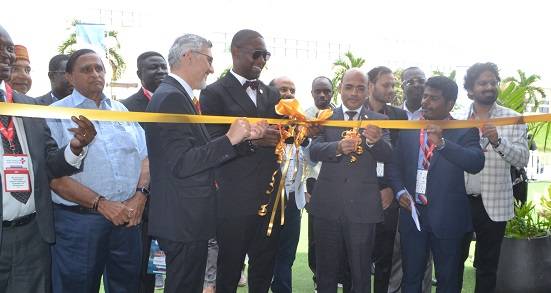
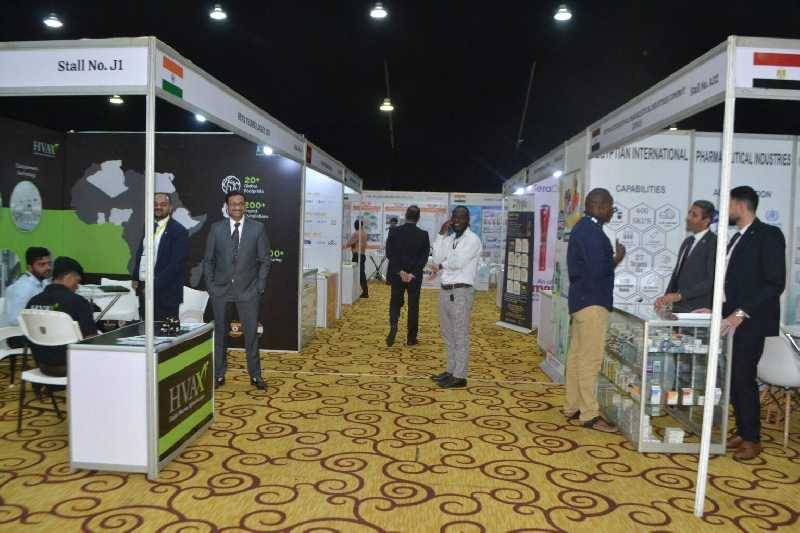
    On May 14, the Minister of Health designate, Dr. Bernard Okoe-Boye, inaugurated the third West Africa Pharma and Healthcare Expo 2024 at the Accra International Conference Centre.

    The event convened a diverse array of stakeholders in the pharmaceutical sector, comprising wholesalers, dealers, and distributors of medical diagnostic pharmaceuticals, as well as hospitals and influential decision-makers from Ghana and other African nations.

    Their aim was to delve into the transformative possibilities offered by digital innovations in healthcare delivery.

    Dr. Okoe-Boye commenced by emphasizing the significant influence of technology on healthcare, presenting statistics that underscored the promising trajectory of digital health solutions in West Africa.

    He commended Ghana’s advancements, particularly initiatives like telemedicine and the National Electronic Pharmacy Platform (NEPP), spearheaded by Vice President Dr. Mahamudu Bawumia.

    Dr. Okoe-Boye highlighted the NEPP’s notable success in improving healthcare access and patient safety through robust regulatory frameworks and public-private collaborations.

    He reassured stakeholders of President Nana Addo Dankwa Akufo-Addo’s vision to establish Ghana as a pharmaceutical hub, urging collaboration and innovation towards a healthier future.

    Mr. Harrison K. Abutiate, Chairman of the Ghana National Chamber of Pharmacy, outlined the chamber’s mission to promote pharmaceutical excellence in Ghana and beyond.

    He provided an overview of the chamber’s structure, which includes the National Executive Council (NEC) and the General Assembly.

    Mr. Abutiate explained that the NEC, consisting of 21 council members representing various pharmaceutical business groups, guides the chamber’s leadership. On the other hand, the General Assembly encompasses the entire membership of these groups, totaling 343 pharmaceutical importers, 1,500 wholesalers, 5,000 retailers, over 19,000 over-the-counter medicine sellers, and 500 small-scale manufacturers.

    He encouraged stakeholders to utilize the chamber’s resources and expertise to advance mutual goals and innovate in healthcare delivery.

    Mr. Thomas James, Marketing Director of WAPHC Ghana, the organizers of the exhibition, mentioned that Ghana’s pharmaceutical, medical, and healthcare industry is valued at approximately US$2 billion, with the majority of its product requirements being imported.

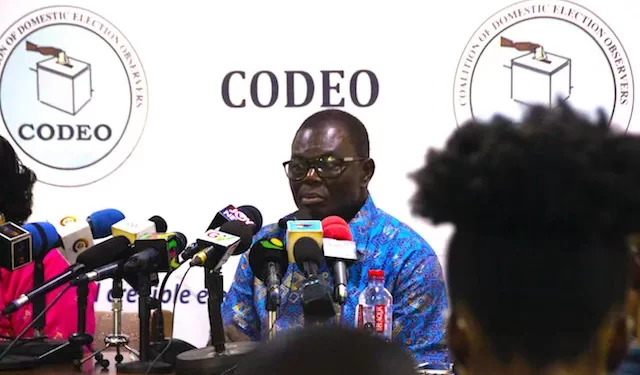
  • Punish individuals arrested for electoral malpractices – CODEO demands

    Punish individuals arrested for electoral malpractices – CODEO demands

    The Coalition of Domestic Election Observers (CODEO) is urging the Electoral Commission (EC) to ensure the prosecution of individuals arrested for inciting violence during the ongoing limited voter registration exercise.

    Instances of violence have occurred at registration centers across various regions, including Kukuom in the Ahafo Region, Adugyama in the Ashanti Region, and Cape Coast in the Central Region.

    Albert Arhin, the National Coordinator at CODEO, emphasized the importance of prosecuting these individuals, stating it as a crucial deterrent against future similar actions.

    During a press conference on Tuesday, May 14, Mr. Arhin highlighted that the failure to take legal action would only embolden others to engage in disruptive behavior during electoral processes.

    He urged security agencies to swiftly apprehend and prosecute those responsible for the disturbances, stressing the importance of impartiality and diligence in the process.

    “The culprits, those who indulge in these election malpractices are to be punished. And the citizenry should see that these people are punished.

    “The moment you just make a wishy-washy kind of arrest, then we don’t hear anything again, people will always want to do it again. So when we arrest them, let us prosecute them so that it serves as a deterrent to others.”

    “If we don’t punish, people will think that it is something that everybody can do and they will go on committing and committing and committing these daily mistakes,” he said.

    Furthermore, the Electoral Commission (EC) has expressed a comparable stance, calling on the Ghana Police Service to ensure that individuals accountable for the disruptions face legal action in court.

  • Cocoa in crisis: The bitter truth behind Ghana’s declining cocoa story

    Cocoa in crisis: The bitter truth behind Ghana’s declining cocoa story

    In the heart of Ghana’s economic landscape lies the cocoa industry, a cornerstone of the nation’s agricultural heritage and a vital source of livelihood for thousands of farmers. However, recent revelations and happenings in the cocoa subsector have cast a pale shadow over the sector, sparking market rigidities and increased smuggling to neighboring markets. Once celebrated as the land of rich, flavorful chocolate, Ghana now faces a bitter truth—it’s a cocoa industry in crisis.

    In the intricate world of cocoa trade, where global demand intersects with local livelihoods, Ghana’s cocoa industry stands as a pivotal player. However, the recent revelations have thrown the operations of the Ghana Cocoa Board (COCOBOD) into sharp relief, sparking debates on pricing policies, managerial competence, and, most importantly, the welfare of cocoa farmers.

    Despite global cocoa prices soaring to unprecedented heights, reaching over $3,280 per metric ton (MT) in 2023, Ghanaian cocoa farmers find themselves grappling with stagnant or declining incomes. What lies behind this alarming trend? At the heart of the crisis lies the diminishing share of profits reaching cocoa farmers, making farmers less efficient with low productivity levels and heavily demotivated to continue the production of cocoa. Historically, Ghana’s cocoa pricing policy aimed to ensure farmers received a minimum of 70% of the Free On Board (FOB) price—the price at which cocoa is exported. However, under the current NPP government, this percentage has plummeted severely, as reported by reputable sources like the World Bank for the 2022/2023 cocoa season. Farmers received a meager 25% of the FOB price, marking a historical low. Government claims of farmers receiving around 76% of the FOB price are not just misleading but insultingly deceptive, undermining the toil of those laboring in the cocoa value chain.

    At this juncture, let’s take a journey through what the government earns from the toil of the farmers. According to the International Cocoa Organization and the International Food Policy Research Institute, as of March 26, prices on the May 2024 cocoa futures contract on the ICE exchange were over $9,600 per metric ton (MT), while the international spot price of cocoa stood at $6,650.25/MT, or 158.49%, since the beginning of 2024.

    It is noteworthy that the average international FOB price of $6,650.25 excludes the Living Income Differential (LID) of $400 per tonne that is paid by the market to Ghana for the direct benefit of the cocoa farmer. Meanwhile, the average international FOB price of $6,650.25 excludes the premium of $497 per metric tonne that Ghana got in June 2023 for every tonne of cocoa.

    At the current interbank (dollar to cedi) rate of $1 to GHC 14.05 and given that the cocoa price had remained stagnant since April, the government should be making an average gross FOB price of GHC 93,432.5 per tonne of cocoa, excluding the LID of $400 per tonne and the premium of $497 per tonne. When you factor the LID of $400 per tonne and the premium of $497 per tonne into the pricing formula, the price per bag of cocoa comes to about GHS 105,332.35, making the average price of a 64kg bag GHC 6,583.27. It is therefore heavily insensitive and rather unconscionable for the government to be offering the already burdened cocoa farmers a paltry GHS2,070 per bag as farm-gate price, which currently only constitutes 31.44% of the gross FOB price (including premium and LID) that the government will be getting from spot sales.

    As a ship pile of insults is being added to injury, COCOBOD continues to report substantial financial losses year after year, despite the buoyant cocoa prices and the exploitation of farmers. On the other hand, it is currently producing about 492,000 metric tons of cocoa beans in the 2023/2024 crop season, about 27.9% less than the 683,000 metric tons of cocoa beans recorded in the 2022/2023 season. Where did we go wrong? Already, the lack of transparency regarding COCOBOD expenditure, budgetary allocations, cocoa debts, and financial mismanagement is fueling public suspicion and eroding trust in the cocoa governance structure.

    At the center of the storm is the revelation that COCOBOD, Ghana’s cocoa regulatory body, engages mostly in forward sales of cocoa. This fact, confirmed by COCOBOD CEO Joseph Boahen Aidoo, has ignited a firestorm of controversy, particularly regarding the pricing mechanisms and their implications for cocoa farmers. While it is an undeniable fact that Ghana over the years has been combining various pricing strategies, including spot sales and forward sales, it has been guided by the principle of maximizing income for farmers through proper market forecasting. The objective has been to identify the highest price points on the futures market to secure the best price for our cocoa and maximize farmers’ income. Therefore, the quantity of cocoa sold through forward sales for various futures positions is carefully managed, leaving reasonable portions for possible spot sales and other lucrative forward deals when the market price rises.

    The government and its assigns have posited that the “giveaway” forward deals were because of the large levels of light crop beans being produced, which beans do not perform better on the international market. This is grossly misleading considering the fact that we have had to import light-crop beans from Nigeria to support the local manufacturing industry in the past few years, and the fact that Ghana’s light-crop beans form only a small portion of the total production volume of the country. This argument only qualifies as a smoke screen for the reckless dissipation of Ghana’s cocoa at cheap prices. More importantly,  it has been amply clear from every available piece of data since last year that the international market price was going to significantly increase on account of the huge global supply deficit of cocoa.

    It is instructive to note that notwithstanding 46-year record high selling price of over $9,600 per metric ton (MT) at forward sales and at $6,650.25/MT at spot sales of cocoa, the highest since 1977, the Akuffo Addo/Bawumia government still touts forward sale at a gross FOB price of $2,600 as a success. Nothing is further from truth, this a total rip-off, woefully inappropriate, and can only be a product of gross incompetence, obscene corruption, and willful negligence.

    Moreover, the NPP government’s approach to the cocoa sector is characterized by a glaring lack of innovation. While neighboring countries like Cote d’Ivoire embrace new technologies and partnerships to enhance efficiency and sustainability, Ghana remains mired in stagnation. Minimal funding for research and development stifles the exploration of high-yielding cocoa varieties resistant to pests and diseases. Shockingly, estimates from the International Cocoa Organization indicate that over two-thirds of Ghana’s cocoa trees are over 30 years old, diminishing productivity and increasing vulnerability to pests and diseases. A 2021 study by the International Institute of Tropical Agriculture (IITA) underscores this, highlighting the inadequate knowledge and skills among Ghanaian cocoa farmers for optimal farm management and disease control. Without forward-thinking leadership, Ghana risks lagging behind in the global cocoa market.

    Ghana’s cocoa sector stands at a critical juncture. To navigate this crisis and ensure the industry’s long-term sustainability, a holistic approach is imperative. Transparency within COCOBOD must be enhanced, with a focus on fairer pricing for farmers and a thorough audit of reported financial losses. Investment in research and development is paramount to promoting disease-resistant cocoa varieties and replacing aging trees. Crucially, empowering farmers through education and training in modern cocoa cultivation techniques is essential for a brighter future.

    To Ghana, cocoa represents more than just a commodity; it is a national treasure intertwined with the country’s economic and cultural identity. The current crisis not only threatens the economic stability of Ghana but also carries profound socio-cultural implications. With the livelihoods of approximately 1.6 million people at stake, the government bears a moral and economic responsibility to take decisive action. The evidence of the past seven years overwhelmingly demonstrates that the NPP government is woefully incapable of meeting this challenge.

    Authored by:

    Dr. Peter Boamah Boamah Otokunor, Ch.FE, F.ChE

    (The author is an Agricultural Economist, a Chartered Financial Economist, a Fellow of the Association of Chartered Economists, a Lecturer at the University of Professional Studies, and a Politician)

    Issued on Tuesday, 14th May, 2024

  • 160 yam and groundnut farmers at Bui receive GHS442,000 from BPA

    160 yam and groundnut farmers at Bui receive GHS442,000 from BPA

    The Bui Power Authority (BPA) has granted over GH¢442,000 to 160 farmers to engage in commercial agriculture.

    These farmers, involved in yam and groundnut cultivation, reside in Bui, a resettlement community situated in the Banda District of the Bono Region.

    This allocation is part of the BPA’s Livelihood Enhancement Programme (LEP) Phase II, initiated in 2019 to enhance the living standards of individuals affected by the Bui hydroelectric project’s construction.

    These recipients are among the 815 eligible individuals set to benefit from the second phase of the BPA’s LEP. Currently, both phases of the LEP have supported about 660 people impacted by dam construction, out of the intended 815.

    During the recent financial assistance presentation, Samuel Kofi Dzamesi, the Chief Executive Officer (CEO) of BPA, affirmed the authority’s dedication to enhancing the socio-economic well-being of locals, particularly the Project Affected Persons (PAPs), to mitigate their challenges.

    Dzamesi emphasized the profitability of farming in the area and encouraged farmers to remain dedicated to their agricultural endeavors, with BPA’s support in maintaining and expanding their farms.

    Furthermore, he urged farmers to uphold discipline, work diligently, strive for self-sufficiency, and combat poverty.

    Challenges

    The Deputy Director, Human and Natural Resources at the BPA, Eric Acheampong, said the implementation of phase one encountered some challenges, which forced the authority to temporarily halt it, to undertake some assessments.

    Mr Acheampong said the authority was on course to improve the socio-economic livelihoods of the people to live decent lives. Giving a brief background of the second phase of the LEP, he said the authority put the eligible PAPs into groups as either “standalone or service providers” and adequately resourced them with the required tools and equipment, including personal protection equipment to operate as independent entities.

    With the Bui enclave being a predominantly farming area, the BPA constituted the Agricultural Modernisation Module, also known as the BPA LEP 2 Irrigation Farming Module, with the aim of strategically investing in the farming exploits of the PAPs.

    Commendation

    Nana Kwadwo Wuo II, the Chief of Bui, expressed gratitude to BPA for their dedication to enhancing the community’s well-being, particularly through investments in health, education, and sports.

    While acknowledging the community’s appreciation for BPA’s contributions to their welfare, he emphasized the need for further efforts to ensure unemployed youth in the area gain employment opportunities, thereby improving their quality of life.

    Judith Nsiah, a groundnut farmer, urged BPA to assist in securing markets and favorable prices for their produce. Maxwell Gbadagbo, a yam farmer and spokesperson for the beneficiaries, extended gratitude to BPA for their support and encouraged fellow farmers to invest the funds in their agricultural pursuits.

  • 17-year-old teen bags doctoral degree after  defending dissertation successfully

    17-year-old teen bags doctoral degree after defending dissertation successfully

    A Chicago teenager participated in her graduation ceremony this month, having achieved her doctoral degree at the age of 17.

    Dr. Dorothy Jean Tillman II embarked on her academic journey at the age of 10 as a freshman at the College of Lake County, where she majored in Psychology. By 2020, she had obtained her Master of Science degree from Unity College.

    At the age of 15 in 2021, Tillman was accepted into the Doctor of Behavioral Health Management Program at Arizona State University.

    Reflecting on her achievements with “Good Morning America,” Tillman attributed her deep appreciation for education in part to her family’s background.

    “People in my life like my grandmother, who was part of the Civil Rights Movement, she of course harped on the importance of education and consistently learning something always,” Tillman said.

    “But the way I always held education so high on my own, aside from being raised that way was finding different things to be educated about it doesn’t just have to be all of the subjects that they teach you in school there’s so many things in the world to learn about that we wish we knew about,” she said. “I feel like that urge to learn something new just never didn’t exist for me.”

    Tillman said, growing up, she had always felt drawn towards psychology and related fields.

    “They’ve always made me so curious,” she said. “And so grinding away, I could continue to study in that area. With even more that was attached to it. It was just really intriguing to me.”

    In December 2023, at the age of 17, Tillman successfully defended her dissertation, earning a doctoral degree in integrated behavioral health from ASU’s College of Health Solutions. On May 6, she participated in ASU’s commencement ceremonies.

    Before the big day, Tillman expressed her excitement to “GMA,” feeling just as thrilled as any other student.

    “I love having a reason to celebrate and throw a big soirée,” she said. “Just that walk, and especially with people I haven’t been there, seeing every day, since my program is online, it’s just gonna feel really fulfilling to finish.”

    Dr. Leslie Manson, a clinical associate professor at ASU, told “GMA” that Tillman is the youngest person in school history to earn a doctoral degree in integrated behavioral health.

    “It’s a wonderful celebration, and we hope … that Dorothy Jean inspires more students,” Manson said, adding of Tillman, “But this is still something so rare and unique.”

    Dr. Dorothy Jean Tillman II officially walked at her graduation ceremony in May.

    Dr. Dorothy Jean Tillman II officially walked at her graduation ceremony in May.

    Throughout Tillman’s time at ASU, Mason said she saw her growth in gaining the skills of professional writing as well as leadership, noting that Tillman is “inquisitive” and “intelligent.”

    “She has innovative ideas and motivation, which is wonderful,” Mason explained. “And truly, I think what is inspiring is that she embodies that meaning of being a true leader.”

    Mason added that “other students can really learn the piece of dedication” from Tillman.
    “So that motivating energy, those are the pieces that I think other folks can really turn to and feel inspired about,” she said. “That curiosity is always there. And I think all learners come with that. But it’s great to be able to see it in someone so young as well.”

    Her inspiration and how she gives back to the community

    Tillman’s journey to success wouldn’t be made possible without the support from her mom whom she said is one of her biggest motivators.

    Dr. Dorothy Jean Tillman II was only 10 when she became a freshman at the college of Lake County

    Dr. Dorothy Jean Tillman II was only 10 when she became a freshman at the College of Lake County, majoring in Psychology.

    “Seeing my mother consistently worked so hard to continuously uphold our family’s legacy, and be that person that everyone was able to go to if they needed anything… Always seeing [her] like [a] ‘Wonder Woman’ definitely made me want to grow up [into] an accomplished person,” she said.

    A proponent of education, Tillman serves as the founder and CEO of the Dorothyjeanius STEAM Leadership Institute. Through this institute, she organizes programs such as summer camps aimed at assisting children in achieving a balance between arts and STEM subjects.

    “I feel like adding art and putting a focus on it throughout science, technology, engineering, and math, makes the kids excited to learn all those things,” she said. “And it opens them up to all of the possibilities and all the knowledge provided in that area of just STEM.”

  • 50-year-old man allegedly steals GHS120,000 worth of fuel dispensers from Fraga Oil Company

    50-year-old man allegedly steals GHS120,000 worth of fuel dispensers from Fraga Oil Company

    A 50-year-old man has been remanded by an Accra Circuit Court on allegations of stealing four used fuel dispensers worth GH¢120,000.00 from the Fraga Oil Company.

    Kattalist Creegbo Kosi, the accused, denied the charges of dishonestly appropriating the dispensers.

    Presided over by Isaac Oheneba Kuffour, the court remanded him into police custody to aid in a swift investigation. His next appearance is scheduled for May 28, 2024.

    Pending his next court date, the prosecution has been directed to provide disclosures—materials intended for use against the accused—to enable his defense.

    Police Chief Inspector Daniel Ofori-Appiah informed the court that the complainant, Eric Forson, is a barber, while the accused, Kattalist, is unemployed. Both resided in a house in Osu owned by the Fraga Oil Company.

    Chief Inspector Ofori-Appiah explained that in 2022, 22 used fuel dispensers owned by Fraga Oil were kept in the house under the care of the complainant. In February 2024, the complainant discovered one dispenser missing.

    Further investigation revealed that the accused had taken them, as reported by other co-tenants.

    The prosecution alleged that the accused subsequently stole three more fuel dispensers, selling them to scrap dealers for a total of GH¢120,000.00.

    Kattalist admitted to the offence in his cautionary statement, claiming to have used the proceeds for sustenance. He was arraigned following additional investigation.

  • Fatal accident on N1 highway kills motor rider, injures another

    Fatal accident on N1 highway kills motor rider, injures another

    A tragic accident on Monday night along the N1 highway in the Greater Accra Region has resulted in the loss of life for a motor rider.

    Another driver was also left injured following the triple collision.

    Eyewitnesses recount that the accident transpired due to a tipper truck speeding along the Accra-Lapaz route of the N1 road.

    In an attempt to overtake a pick-up vehicle entering from the Accra-Ashaiman road, the tipper truck collided with the pick-up, leading to a subsequent collision with the motor rider.

    Tragically, the motor rider was crushed under the weight of the tipper truck. The head-on collision left the pick-up driver trapped inside, with the vehicle severely mangled.

    The rescue efforts were a collaborative endeavor between eyewitnesses and emergency responders, culminating in the successful extraction of the injured pick-up driver.

    It took the collective efforts of both eyewitnesses and emergency respondents to rescue the injured pick-up driver.

  • Sailing yacht sinks in orca collision off Moroccan Coast

    Sailing yacht sinks in orca collision off Moroccan Coast

    According to Spain’s maritime rescue services, a sailing yacht named Alboran Cognac sank in Moroccan waters in the Strait of Gibraltar after colliding with an unknown number of orcas.

    The incident occurred at 0900 local time (0800 BST) on Sunday. Fortunately, two individuals aboard the vessel were rescued by a passing oil tanker.

    This event is part of a series of orca rammings of vessels in the area over the past four years. Scientists are uncertain about the exact reasons behind this behavior but speculate that the highly intelligent mammals may be exhibiting “copycat” or “playful” actions.

    The passengers on the yacht reported feeling sudden impacts to the hull and rudder, resulting in water entering the vessel. They promptly alerted emergency services and were rescued by the oil tanker, which transported them to Gibraltar. Unfortunately, the yacht was left adrift and eventually sank.

    These orca rammings have become increasingly common in the Strait of Gibraltar, one of the world’s busiest waterways, with around 300 ships crossing daily. Similar incidents have also been reported off the Atlantic coast of Portugal and north-western Spain.

    A subpopulation of approximately 15 orcas, known as “Gladis,” is believed to be behind the attacks, according to experts.

    Since the attacks were initially reported in May 2020, the research group GTOA, which monitors the Iberian orca sub-species population, has documented nearly 700 interactions involving the species.

    The attacks are thought to have begun after one or two orcas, also known as killer whales, began engaging with and damaging small sailing vessels during that month.

    A prevailing theory circulated on social media suggests that the orcas are seeking revenge for White Gladis, a killer whale purportedly struck by a boat. This speculation gained traction when Alfredo López Fernández, from the research group GTOA, mentioned a “traumatized orca” instigating the attacks. However, animal behavior experts caution that this narrative may not be accurate.

    “The idea of revenge is a great story, but there’s no evidence for it,” neuroscientist Lori Marino, president of the Whale Sanctuary Project previously told the BBC.

    “There’s never been a case of an orca harming a human being in the wild.

    “If they really wanted to do damage and harm the people on the boat they could easily do that.”

    Instead, Lori told the BBC, it’s more likely the apparent attacks “started out as play behaviour”, and it’s a case of copycat killer whales rather than aggression.

    “We’re talking about very intelligent beings, and we know that they are social learners,” she says.

    Scientists think the endangered mammals instead appear to be “playing” with the boats out of curiosity and copycat behaviour, rather than aggression.

  • Unemployment rate rises in South Africa ahead of elections

    Unemployment rate rises in South Africa ahead of elections


    South Africa’s unemployment rate has climbed to 32.9% in the first quarter of this year, according to the national statistics body.

    This marks a 0.8% increase from the previous quarter of 2023.

    The country is grappling with one of the highest unemployment rates globally, with one in two young South Africans and 60% of the population living below the poverty line.

    The rise in unemployment, along with issues of corruption and economic inequalities, are key topics in the upcoming elections.

    The ruling African National Congress (ANC), in power since the end of apartheid in 1994, faces criticism over its economic policies. Some polls suggest that the ANC might receive less than 50% of the vote for the first time.

  • Emergency response efforts struggle amid Darfur conflict

    Emergency response efforts struggle amid Darfur conflict


    Aid organizations operating in Sudan’s Darfur region are grappling with a dire situation after four days of intense clashes in El Fasher.

    According to Claire Nicolet, the head of emergency response at Médecins Sans Frontières (MSF), the fighting between the army and a rival paramilitary group has resulted in significant civilian casualties.

    Nicolet described the clashes as dramatic and noted the severe challenges in delivering essential supplies to the city and surrounding camps.

    She highlighted the critical issue of supply shortages, particularly food, which has led to skyrocketing prices. Given the ongoing conflict, transporting goods has become increasingly difficult.

    Nicolet warned that if the violence persists, malnutrition rates could reach unprecedented levels, affecting up to two to three million people.

    The already dire nutrition situation is expected to worsen significantly if the current conflict continues, potentially resulting in a substantial loss of life.

  • Concerns mount over militant attack in Mozambique’s Cabo Delgado

    Local media reports from Mozambique suggest that the army incurred substantial casualties during a militant attack in the northern province of Cabo Delgado on Friday and has been attempting to downplay the true extent of the losses.

    State media outlets have acknowledged the death of one member of a local militia during the assault on the town of Macomia, which was eventually repelled.

    However, residents claim that the town remained under occupation for a day, despite efforts by Rwandan peacekeepers to intervene. Additionally, a nearby town was targeted in a separate attack on Sunday.

    Islamist militants have been engaged in a campaign for the past six years in northern Mozambique.

  • Cracks in Kenya’s rift valley raise concerns amid heavy rains

    Cracks in Kenya’s rift valley raise concerns amid heavy rains

    Recent heavy rains and mass flooding in Kenya’s Rift Valley region have led to the emergence of huge cracks, causing significant damage to property and posing risks to residents.

    In Nakuru county, some residents have lost their homes and farms as massive fissures tore through their land. Areas such as Kiambogo, Kaptembwo, Ngata, and London have been particularly hard-hit by the phenomenon.

    Last week, houses in Kiambogo sank into the ground, highlighting the severity of the situation. Concerned by these developments, the government has dispatched top geologists to Nakuru to conduct further investigations.

    Nakuru county sits in one of the vulnerable areas of the Great Rift Valley, a geological feature stretching from the Horn of Africa to Mozambique.

    These areas are known for cracks filled with volcanic ash, which recent rains may have washed away, leading to the formation of new fissures.

    According to Mining Principal Secretary Elijah Mwangi, residents had been previously warned about such geohazards, as Nakuru is prone to earthquakes, sinkholes, and landslides.

    This incident echoes a similar occurrence in 2018 when heavy rainfall caused a crack to split the Mai-Mahiu-Narok road near Suswa, at the base of the Rift Valley.

  • South Africa’s opposition party to take legal action against bill aimed at providing universal health coverage

    South Africa’s opposition party to take legal action against bill aimed at providing universal health coverage

    South Africa’s primary opposition party, along with several labor and business organizations, has announced their intention to initiate legal proceedings against a bill designed to establish universal health coverage.

    Previously, we reported that South African President Cyril Ramaphosa was scheduled to sign the controversial proposal into law on Wednesday.

    The National Health Insurance (NHI) bill aims to grant all South Africans, regardless of race, wealth, or legal residency status, access to high-quality healthcare. Its implementation is estimated to require billions of dollars.

    On Tuesday, the leader of the Democratic Alliance (DA) party stated that his party would contest the legislation “up to the Constitutional Court”.

    “Our legal team was instructed several months ago and will promptly file our legal challenge against this harmful legislation,” John Steenhuisen remarked.

    Additionally, the trade union Solidariteit declared that it had notified Mr. Ramaphosa of its intention to challenge the bill “within an hour” of its signing on Wednesday.

    The South African Health Professionals Collaboration (SAHPC), representing 25,000 healthcare workers in both the public and private sectors, is reported by Reuters to be considering a legal challenge.

    According to Reuters, the group expressed concerns that the bill would “retreat, rather than advance, equitable, high-quality healthcare in South Africa”.

    Proponents of the bill view it as a transformative measure that will address long-standing disparities.

    The South African Medical Association Trade Union, which represents most public sector doctors, called it “a monumental shift towards achieving universal health coverage and ensuring that every South African has access to quality healthcare irrespective of their socio-economic status”.

  • Recipient of first pig kidney transplant passes away

    Recipient of first pig kidney transplant passes away

    Massachusett’s General Hospital (MGH) announced that Richard “Rick” Slayman, 62, the recipient of the first genetically modified pig kidney transplant, passed away two months after the procedure.

    Slayman had been battling end-stage kidney disease prior to the surgery in March.

    The hospital stated on Sunday that there was no indication his death was linked to the transplant. While transplants of other organs from genetically modified pigs have faced challenges in the past, Slayman’s operation was celebrated as a groundbreaking achievement.

    In addition to kidney disease, Slayman also struggled with Type 2 diabetes and hypertension. Despite receiving a human kidney transplant in 2018, his health declined, prompting the recent pig kidney transplant on March 16.

    Following the procedure, doctors reported that Slayman no longer required dialysis as the new organ appeared to function effectively.

    “Mr Slayman will forever be seen as a beacon of hope to countless transplant patients worldwide and we are deeply grateful for his trust and willingness to advance the field of xenotransplantation,” MGH said in a statement.

    Xenotransplantation is the transplanting of living cells, tissues or organs from one species to another.

    MGH said it was “deeply saddened” at his sudden death and offered condolences to his family.

    Slayman’s relatives said his story was an inspiration.

    “Rick said that one of the reasons he underwent this procedure was to provide hope for the thousands of people who need a transplant to survive,” they said.

    “Rick accomplished that goal and his hope and optimism will endure forever.

    “To us, Rick was a kind-hearted man with a quick-witted sense of humour who was fiercely dedicated to his family, friends, and co-workers,” they added.

    While Mr Slayman received the first pig kidney to be transplanted into a human, it is not the first pig organ to be used in a transplant procedure.

    Two other patients have received pig heart transplants, but those procedures were unsuccessful as the recipients died a few weeks later.

    In one case, there were signs the patient’s immune system had rejected the organ, which is a common risk in transplants.

  • Newly imported train from Poland to be commissioned in June – Peter Amewu

    Newly imported train from Poland to be commissioned in June – Peter Amewu

    The Minister of Railways Development, John Peter Amewu, has revealed that the train imported from Poland, which was involved in an accident during a self-acceptance test, is set to be operational by the second week of June. The government anticipates receiving new parts for repairs shortly.

    During a test run on the Tema-Mpakadan railway line, the train collided with a stationary track, raising concerns about its readiness for service.

    As a result of the incident, the driver of the Hyundai truck involved in the collision was arrested and subsequently sentenced to six months in jail.

    In an exclusive interview with Asaase Radio’s Nana Oye Ankrah, Amewu shared that engineers are diligently working on repairing the damaged train. He assured that efforts are underway to ensure the train’s functionality and safety before commissioning it for service.

    “The train will bridge very soon. It was quite unfortunate that we had that nasty scene where the train had to run into a stationary vehicle. I think you were all there to see it,” Amewu stated.
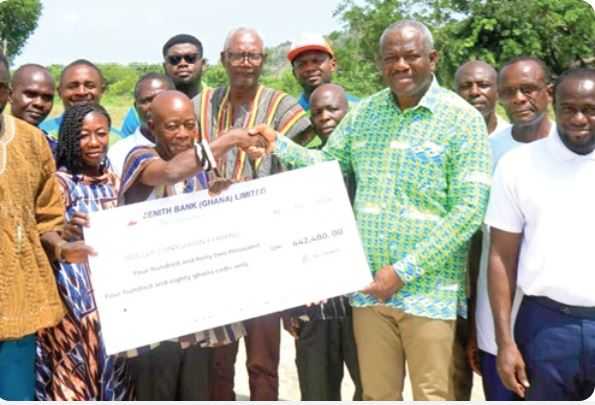
    “So what we have done now is order the parts. The parts will be brought in in the next three, or four weeks. The area or the part that got damaged,” he continued.

    The minister also projected that the commissioning of the line could take place anywhere from the first to the second week of June, stressing the importance of the timely arrival of the parts for the restoration process.

    “We still estimate that commissioning of the line will be coming in any time from the first week to the second week in June. So the arrival of the parts is what we are waiting for. Immediately we get the parts in, the train will be pulled back too,” Amewu said.

    The Tema-Mpakadan railway line aims to enhance the smooth transportation of goods and travelers, fostering economic growth and regional integration.

    Despite recognizing the setback triggered by the accident, Amewu expressed faith in the repair team’s expertise to fix the train.

    He guaranteed the public of the government’s dedication to promptly finishing the repairs and putting the train into operation.

  • Stuck for 9 hours in Accra-Kasoa gridlock – Residents shares nerve-wracking experience

    Stuck for 9 hours in Accra-Kasoa gridlock – Residents shares nerve-wracking experience

    Heavy traffic congestion gripped the Kasoa stretch on Monday, May 13, following a downpour around 4pm.

    The unusual congestion was attributed to silt and filth washed onto the road by the rain, blocking some roads and hindering vehicle movement.

    Social media users reported that the flooding around SCC and Old Barrier forced vehicles from Kasoa to Mallam to merge with those heading towards Kasoa from Mallam, exacerbating the gridlock.

    The traffic situation, which lasted for over 9 hours, compelled drivers of heavy-duty trucks bound for the Central and Western Regions to park as roads became impassable.

    ‘It’s taken me 9 hours to drive from Accra to Millennium City… It is pathetic!’, a Kasoa resident shared.

  • Nursing trainees may receive their allowances by next week – Bawumia

    Nursing trainees may receive their allowances by next week – Bawumia

    The Vice President and flag bearer of the New Patriotic Party (NPP), Dr. Mahamudu Bawumia, has declared that the outstanding nursing trainee allowances for 2024 will be disbursed this Thursday, May 16, 2024, to nursing and teacher trainees across the nation.

    These allowances, reinstated by the Akufo-Addo government after being canceled by the previous Mahama administration, have been delayed for several months.

    During a significant gathering with the youth in Nalerigu, situated in the North East Region, where numerous nursing and teacher trainees were present, Dr. Bawumia announced this latest development to a chorus of cheers.

    “On the nursing training allowance, we have been able to agree on what to do come this Thursday,” Dr. Bawumia said, as the crowd cheered.

    “The Minister of Finance has sent me a message which says that on Thursday, the Controller and Accountant General is going to transfer 177 million Ghana Cedis to the Ministry of Health and the Ministry of Health will transfer it to the Nursing trainees,” he said. 

    “The NPP has demonstrated clearly that it is the party which cares for the youth and have you at heart, through many of our policies, which support you,” he said.

    “My opponent in December and his party, the NDC, cancelled the nursing and teacher trainee allowances. But we came in and restored it. We are committed to it and I am very committed to it that is why I have been following up on it,” he added.

    The NPP Flagbearer’s announcement sparked excitement during his interaction with the youth, especially among the nurses, who openly celebrated and chanted Dr. Bawumia’s name in appreciation.

    After the announcement, Dr. Bawumia reminded the youth and the trainees that the NPP, with its demonstrated commitment to pro-poor policies, cares for nursing and teacher trainees as well as the youth, contrasting this with the approach of Mahama and the NDC.

    “So I believe that, in shaa Allah, by next week, all of you should be receiving the  nursing  trainee allowances, and they will be in your accounts.’

  • Nigerian pastor Oluronbi and wife sentenced to 34 years in UK for raping church members

    Nigerian pastor Oluronbi and wife sentenced to 34 years in UK for raping church members

    A UK-based Nigerian pastor, Michael Oluronbi, 60, has been sentenced to 34 years in prison for multiple rapes of congregation members.

    His victims included both adults and children, whom he abused over a span of 20 years, exploiting his position of trust.

    Some of his female victims became pregnant multiple times, and he was found guilty of using his religious authority to perpetrate these crimes against six women and a man.

    The judge described his actions as among the most severe cases of sexual abuse involving multiple victims.

    Oluronbi, originally from Nigeria and residing in Birmingham, manipulated victims into participating in ‘spiritual bathing’, falsely claiming it would cleanse them of evil spirits.

    He further coerced some into abortions to conceal the pregnancies resulting from his assaults.

    During his trial, the jury learned that Oluronbi committed 15 counts of rape, seven counts of indecent assault, and two counts of sexual assault, totaling at least 88 separate instances of rape.

    His wife, Juliana, was also implicated, convicted on three counts of aiding and abetting rape for facilitating some of the terminations. She received an 11-year prison sentence for her role in supporting her husband’s crimes.

    ‘Everything was my fault’ admits pastor in video confession

    In a confession videoed last year by a victim’s family member who had confronted him, the pastor is heard saying: ‘Everything was just my fault, and as I said before, I wasn’t meant to be human.

    ‘I wasn’t meant to live under the roof of any human being and I said that I was an animal.’

    The footage was released by West Midlands Police after the trial.

    The victim’s relative is then heard, off-camera, asking the pastor: ‘You know I said that you are a paedophile? Everyone knows that you’re a paedophile. You know that that’s the name they give to your type?’

    In the recorded footage, Oluronbi, dressed in a formal shirt and tie, speaks energetically, gesturing with raised hands and closed eyes before responding with a simple ‘Fine.’

    He attributes his actions to the influence of the devil, attempting to justify his abuse.

    Despite the damning recording, Oluronbi maintained his innocence throughout the trial, forcing his victims to testify against him over nine weeks of legal proceedings.

    Even while giving his own testimony, he displayed a callous disregard, laughing in the witness box.

    Judge Sarah Buckingham condemned Oluronbi’s actions, asserting that the purported ‘spiritual baths’ were merely a guise to satisfy his own sexual desires.

    Both Oluronbi and his wife will be required to register as sex offenders for life.

    During the sentencing hearing, Judge Buckingham criticized Oluronbi’s claims that his actions were divinely guided.

    ‘Its real purpose was to fulfil your insatiable sexual appetite.

    ‘The children feared you and this enabled you to continue your grip.

    ‘Your offending has had an extreme and severe impact on all of your complainants.

    ‘Any attempt to suggest otherwise would be without foundation.

    ‘You abused your position of trust – they trusted you like God.’

    The judge continued: ‘You did this because you are an arrogant, selfish and vain man.

    ‘In my judgment, your offending must be one of the worst cases of sexual abuse of multiple children to come before the courts.’

    An adult survivor bravely stepped forward to assist in bringing Oluronbi to account for his actions.

    In court testimonies read by the prosecution, one victim expressed how the defendant’s actions left her questioning the value of her own life.

    Jurors learned that Oluronbi was associated with the Cherubim and Seraphim Church in Edgbaston, Birmingham, which originated in Nigeria.

    He established a separate group comprising approximately 40 individuals, where he introduced the practice of ‘spiritual bathing’, distinct from the main church’s activities.

    These offenses occurred across Birmingham and London.

    Prosecutor Phil Bradley QC explained to the jury that Oluronbi’s primary manipulation tactic involved claiming divine instruction to conduct ‘holy baths’, purportedly to cleanse and protect congregants from malevolent forces.

    For some female victims, these ‘baths’ evolved into repeated instances of rape, often resulting in unwanted pregnancies and subsequent terminations.

    Victims described Oluronbi as ‘controlling’ and possessing an aura of authority.

    These offenses transpired over two decades, spanning various locations dating back to the 1980s.

    Oluronbi was apprehended at Birmingham Airport in May of the previous year while attempting to depart for Nigeria, accompanied by ceremonial items and a sum of money.

    While police could not definitively ascertain his intent to evade justice, they noted that he had recently been confronted by one of his victims about the abuse.


  • Nana Oye Bampoe seeks legal action against ex-husband, seeking $1.5m in damages

    Nana Oye Bampoe seeks legal action against ex-husband, seeking $1.5m in damages

    A former Minister of Gender, Children, and Social Protection during John Dramani Mahama’s administration, Nana Oye Bampoe Addo, has filed a lawsuit against her former husband, Tony Lithur, accusing him of damaging her reputation both nationally and internationally.

    As reported by The Chronicle newspaper, the former minister is seeking general damages amounting to US$500,000.00 and exemplary damages of US$1 million from her ex-husband, who also serves as a lawyer for former President John Mahama.

    The report states that this legal action stems from the “allegedly malicious content” of the divorce petition filed by Mr. Lithur on May 2, 2018, to dissolve their 27-year marriage.

    Nana Oye claims that this has led to significant harm to her reputation and has caused her to be subjected to public ridicule and scorn.

    “The divorce petition, which was variously reported by the media, said the Plaintiff was lazy, irresponsible mother, adulterous, cruel and violent person, as well as engaged in acts that contradict her professional ethics as a human rights lawyer. These claims, Nana Oye Bampoe Addo says have maliciously injured her image.

    “Nana Oye (Plaintiff) said Mr. Lithur’s (Defendant) claims could be understood that she is cruel and violent philanderer, adulteress, human rights violator, mean and wicked person and unfit to hold public office.

    “In reference to the divorce petition, the former minister said her ex-husband accused her, as a human rights lawyer, of an act of cruelty and violence including pouring water, beating, slapping and using her fingernails to harm their domestic staff,” portions of the newspaper story said.

    The plaintiff further stated that her ex-husband’s claim that she traveled to South Africa with the intention of purchasing an investment property worth between US$350,000 and US$500,000 immediately after leaving political office in 2017 could imply that she engaged in corrupt practices and misused her position to embezzle public funds.

    The suit, dated April 25, 2024 indicated that “Due to the false averments and publications of acquisition of investment property in South Africa by Defendant, the Office of the Special Prosecutor instituted investigations into corruption and corruption related offences, money laundering and illegal acquisition of property in South Africa against the Plaintiff, and Plaintiff was investigated and subsequently admitted to bail.

    “The Office of the Special Prosecutor published a pending case against the Plaintiff and Plaintiff had to engage legal services to defend herself.”

    Nana Oye stated that the Defendant published these defamatory words, knowing very well that it was not true, but with the sole intention to cause considerable damage to and to disparage her reputation.

    According to her, the publication of the petition resulted in inundation of phone calls, insults and humiliation, avoiding certain public appearances, and quitting lecturing in some tertiary institutions.

    Nana Oye said constantly she has to deal with answering embarrassing questions and humiliating treatments from strangers, associates, friends, family members, foreigners, some members of the international community, international acquaintances and colleagues.

    The Plaintiff alleged that before the marriage went down the hill, the Defendant told her that he would destroy her reputation and would make sure that by the time he was through with her, there will be no reputation for her to cling on.

    The Plaintiff, therefore, contends that Mr. Lithur acted deliberately and maliciously in publishing the said defamatory words, which he knew were false.

    Furthermore, the Defendant sought to and deliberately published false averments in his divorce petition and reply to annihilate, malign and destroy Plaintiff’s reputation, her professional career in human rights and her public life.

    Meanwhile, Mr. Lithur made the false claims when he knew there was no basis for the said defamatory statements and publications and he knew his averments and publications would be believed by the general public and beyond because of his stature as a senior lawyer.

    Nana Oye is seeking four reliefs; including general damages of US$500,000.00 in respect of libel contents contained in paragraph 8 and 9, and exemplary damages of US$1,000,000.00 for libel contents in the defendant/petitioner’s reliefs.

    She also wants a perpetual injunction restraining the Defendant jointly and severally “either by himself and or his assign(s) from further making any averments or publishing or causing to be published, the said defamatory words or similar words.”

    The Plaintiff is seeking a retraction and apology to be published on social media including on Defendant’s Facebook wall, the website of Lithur Brew & Company, the Twitter (now X) and Instagram handles of Defendant, and all his social media handles and on the website of the GhanaWeb, together with the website of Joy FM, Peace FM and Citi FM.

  • Africa’s economy to reach $16.3tn by 2050 – AfCFTA Secretariat reveals

    Africa’s economy to reach $16.3tn by 2050 – AfCFTA Secretariat reveals

    Secretary General of the African Continental Free Trade Area (AfCFTA) Secretariat, Wamkele Mene, has revealed Africa’s anticipated rise to become the world’s 8th largest economy, reaching an estimated $16.3 trillion by 2050.

    Addressing day one of the 3i Africa Summit in Accra, Mene emphasized the significance of businesses harnessing fintech to optimize outputs. He highlighted the imperative for governments across Africa to utilize all available technological resources to drive growth and sustainability in their economies.

    “The existential economic sovereignty of our continent is precisely why the African Continental Free Trade Area was established so that we can leverage on this market of 1.4 billion people, which by 2050 is projected to be the 8th largest economy in the world with $16.3 trillion 27 years from now but if we don’t deploy these digital technologies, all of us are going to be discussing where we got it wrong.”

    “The emerging global geo-political context should compel us Africans to collaborate to find ways of coming out of the challenges we are facing,” Mr. Mene added.

    The summit, themed ‘Unleashing the Fintech and Digital Economic Potential of Africa’, aims to convene prominent figures from the finance sector across Africa and globally.

    Organized by the Bank of Ghana (BoG) and the Development Bank Ghana (DBG), in collaboration with Elevandi and facilitated by the Monetary Authority of Singapore, the event will host plenary speeches and discussions involving heads of state, senior government officials, investors, industry leaders, policymakers, and innovators.

  • McDan shares his vision of establishing an international chemical production industry through salt mining

    McDan shares his vision of establishing an international chemical production industry through salt mining

    Chairman of McDan Group, Dr. Daniel McKorley, recently shared his vision of establishing an international chemical production industry through salt mining. He explained that the decision to venture into salt mining was driven by his ambition to realize this dream.

    In an interview with YouTuber Wode Maya, Dr. McKorley revealed that Electrochem Ghana, a subsidiary of McDan Group, operates at Ada Songor with the goal of extracting raw materials essential for the envisioned chemical production industry. Through extensive research, he identified Ghana as an ideal location for sourcing high-quality salt.

    Popularly known as McDan, he expressed his concern over the dominance of foreigners in Ghana’s extractive industry, attributing it to the legacy of colonialism. He emphasized the need for Ghanaians to take charge of their natural resources to prevent external control.

    Taking on the challenge of managing Africa’s largest salt mine individually, Dr. McKorley aims to set an example for others in the industry. His endeavor not only seeks to establish a successful business but also to inspire fellow Ghanaians to participate actively in resource management and industrial development.

    He stated, “We cannot always rely on foreigners to do things better than us. To succeed in this endeavor, one needs courage, unlimited courage.”

    While McDan didn’t face financial hurdles at the outset of his entrepreneurial journey, he acknowledged that most people would have doubted his decisions. He emphasized the significance of heeding feedback, be it criticism or encouragement, to pave the way for historic achievements rather than errors.

    Reflecting on the genesis of the Electrochem project, McDan noted its inception stemmed from identifying overlooked opportunities in the region spanning over 55 years. Recognizing the potential in the Songor area, he envisioned its role in fostering a chemical production industry.

    McDan underscored the imperative of industrialization and advancement in Ghana, stressing the importance of adopting the right attitude, mindset, and leadership to drive positive change and enhance resource management.

    Regarding his personal wealth, McDan asserted that overseeing the 41,000-acre salt mine renders him a billionaire.

    When questioned about his billionaire status, he replied, “I believe so,” highlighting the distinctive nature of the mining operation given its scale and salt production volume.

    McDan also emphasized the significance of corporate social responsibility, asserting that billionaires should aim to positively influence society. He cited various initiatives undertaken by the McDan Group, including the McDan Entrepreneurship Challenge, school constructions, AstroTurf projects, hospital developments, provision of interest-free loans for women, and scholarships for students, as examples of efforts to enhance livelihoods.

    Dr. Mahamudu Bawumia, the Vice President and flag bearer of the New Patriotic Party (NPP), has declared that the outstanding nursing trainee allowances for 2024 will be disbursed this Thursday, May 16, 2024, for subsequent distribution to nursing and teacher trainees nationwide.

    The allowances for both teacher and nursing trainees, reinstated by the Akufo-Addo government after being revoked by the previous Mahama administration, have been delayed for several months.

    During a large gathering with the youth in Nalerigu, located in the North East Region, where numerous nursing and teacher trainees were present, Dr. Bawumia announced this latest development to enthusiastic cheers.

  • Libya apprehends senior customs officials for smuggling gold valued at $2b

    Libya apprehends senior customs officials for smuggling gold valued at $2b

    Libyan authorities apprehended numerous senior customs officials for their involvement in a thwarted plot to smuggle approximately $2 billion worth of gold.

    According to a statement from the Attorney General’s Office posted on Facebook, the individuals in custody, including the director-general of the customs authority and the head of customs at Misrata airport, allegedly colluded with others to traffic around 26 tons of gold bullion. This quantity would be valued at approximately $2 billion based on current market prices.

    The intercepted shipment comprises nearly a quarter of Libya’s gold reserves, which stand at approximately 116.6 tons, ranking fourth-highest in Africa.

    Since the overthrow of longtime dictator Moammar Al Qaddafi in 2011, Libya has been engulfed in turmoil, marked by political divisions, instability, and violence, thus becoming a focal point for illicit trafficking over the past decade.

    According to Libyan law, only the central bank is authorized to export gold. The Attorney General’s Office initiated an investigation into the matter in January.

  • Africa projected to become 8th largest global economy by 2050 – Report

    Africa projected to become 8th largest global economy by 2050 – Report

    Secretary General of the African Continental Free Trade Area (AfCFTA) Secretariat, Wamkele Mene, has revealed Africa’s anticipated rise to become the world’s 8th largest economy, reaching an estimated $16.3 trillion by 2050.

    Addressing day one of the 3i Africa Summit in Accra, Mene emphasized the significance of businesses harnessing fintech to optimize outputs. He highlighted the imperative for governments across Africa to utilize all available technological resources to drive growth and sustainability in their economies.

    “The existential economic sovereignty of our continent is precisely why the African Continental Free Trade Area was established so that we can leverage on this market of 1.4 billion people, which by 2050 is projected to be the 8th largest economy in the world with $16.3 trillion 27 years from now but if we don’t deploy these digital technologies, all of us are going to be discussing where we got it wrong.”

    “The emerging global geo-political context should compel us Africans to collaborate to find ways of coming out of the challenges we are facing,” Mr. Mene added.

    The summit, themed ‘Unleashing the Fintech and Digital Economic Potential of Africa’, aims to convene prominent figures from the finance sector across Africa and globally.

    Organized by the Bank of Ghana (BoG) and the Development Bank Ghana (DBG), in collaboration with Elevandi and facilitated by the Monetary Authority of Singapore, the event will host plenary speeches and discussions involving heads of state, senior government officials, investors, industry leaders, policymakers, and innovators.

  • ECOWAS Bank commits $200m investment into Ghana’s economy

    ECOWAS Bank commits $200m investment into Ghana’s economy

    In a Memorandum of Understanding (MOU) signed at the EBID headquarters in Lome, Togo, Dr. George Agyekum Donkor, President and Chairman of the Board of Directors of EBID, and Dr. Mohammed Amin Adam, Minister-designate for Finance of Ghana, solidified a transformative partnership.

    The agreement involves injecting USD 200 million into the Ghanaian economy through strategic alliances with the Ghana Export-Import Bank (GEXIM) and GCB Bank PLC.

    The signing ceremony saw the presence of key stakeholders, including Mr. Lawrence Agyinsam, CEO of GEXIM, and Mr. Samuel Aidoo, Executive Director of Wholesale and Investment Banking at GCB Bank PLC. This partnership underscores EBID’s commitment to fostering economic growth and enhancing resilience across the ECOWAS Member States.

    According to him, this collaborative endeavor underscores EBID’s dedication to fostering synergistic partnerships in the finance and investment sector, setting a pioneering example for future regional collaborations and investments.

    In response, Dr. Amin Adam emphasized the significance of institutions like EBID in driving sustainable transformation, particularly amid ongoing global challenges.

    He praised the profound impact of EBID under Dr. Donkor’s leadership and expressed strong confidence in the Bank’s ongoing role in shaping the developmental agenda of the region.

    The USD 200 million injection aims to catalyze the growth of Small and Medium Enterprises (SMEs) in critical sectors of the economy, promoting job creation, innovation, and sustainable development.

    This injection will elevate EBID’s total commitments in Ghana to USD 600 million.