The United Kingdom government is seeking to recover unpaid London congestion charges from several countries, including Ghana and the United States, for debts accumulated over the past 20 years.
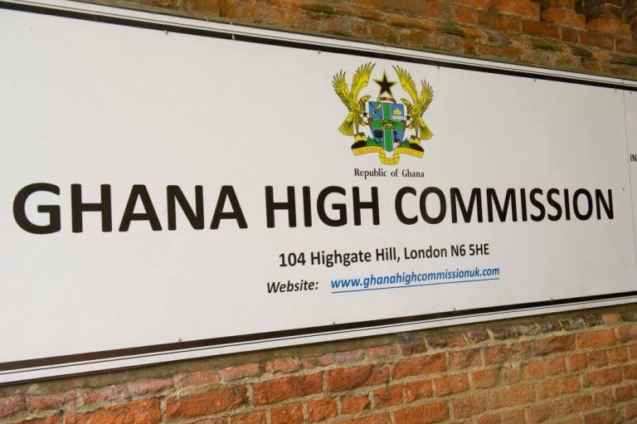
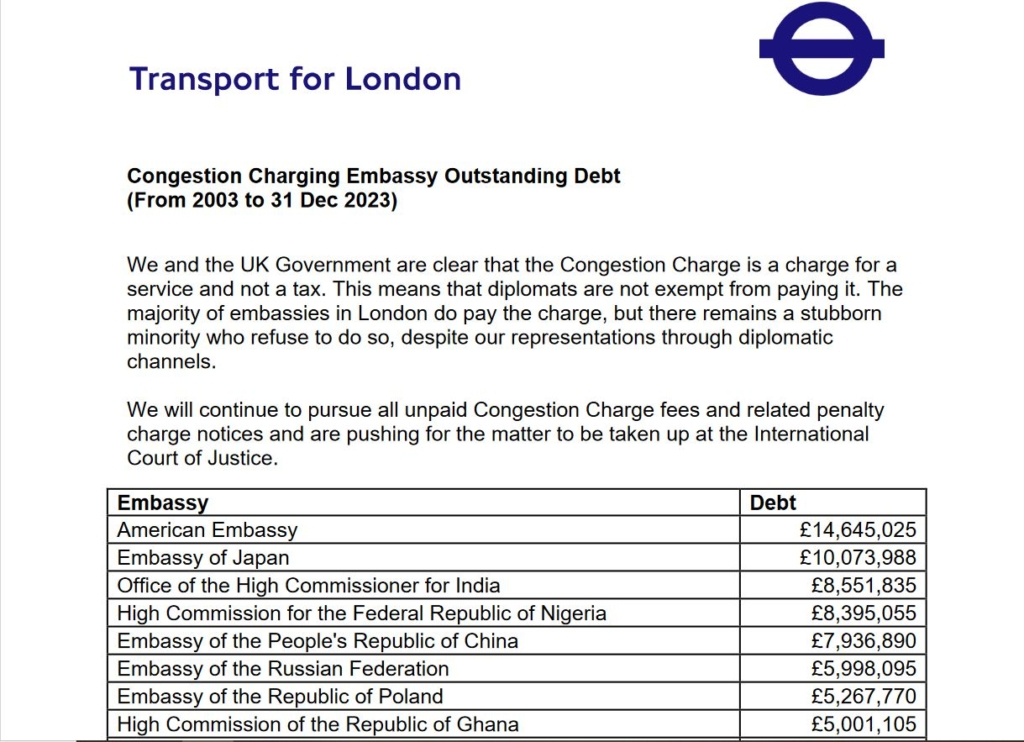
The Ghana High Commission in the UK owes slightly over £5 million.
According to Transport for London (TfL), the Congestion Charging Embassy’s outstanding debt accrued from 2003 to December 31, 2023.
In total, diplomatic missions owe more than £143 million to TfL for unpaid congestion charges.
The US Embassy has the largest outstanding amount at £14.6 million. The Embassy of Japan follows with over £10.1 million, while Togo owes just £40.
The figures from Transport for London (TfL) pertain to unpaid fees and fines accumulated by diplomats from the inception of the congestion charge in 2003 through the end of last year.
The congestion charge scheme imposes a £15 daily fee for driving within central London between 07:00 and 18:00 on weekdays, and between noon and 18:00 on weekends and bank holidays.
Various groups of people and vehicles, such as residents, taxis, and fully electric cars, are eligible for discounts and exemptions.
TfL said in a statement: “We and the UK government are clear that the congestion charge is a charge for a service and not a tax.
“This means that diplomats are not exempt from paying it.
“The majority of embassies in London do pay the charge, but there remains a stubborn minority who refuse to do so, despite our representations through diplomatic channels.
“We will continue to pursue all unpaid congestion charge fees and related penalty charge notices, and are pushing for the matter to be taken up at the International Court of Justice.”
The Foreign Office said it expects diplomats to pay the charge, adding that they believed there were no legal grounds for diplomatic exemptions.
According to the BBC, a spokesperson for the US Embassy in London said: “In accordance with international law as reflected in the 1961 Vienna Convention on Diplomatic Relations, our position is that the congestion charge is a tax from which diplomatic missions are exempt.
“Our long-standing position is shared by many other diplomatic missions in London.”
In February 2020, then-foreign secretary Dominic Raab issued a written ministerial statement revealing that his officials had written to “a number of diplomatic missions and international organisations” to “press for payment” of money owed relating to the congestion charge, parking fines and business rates.
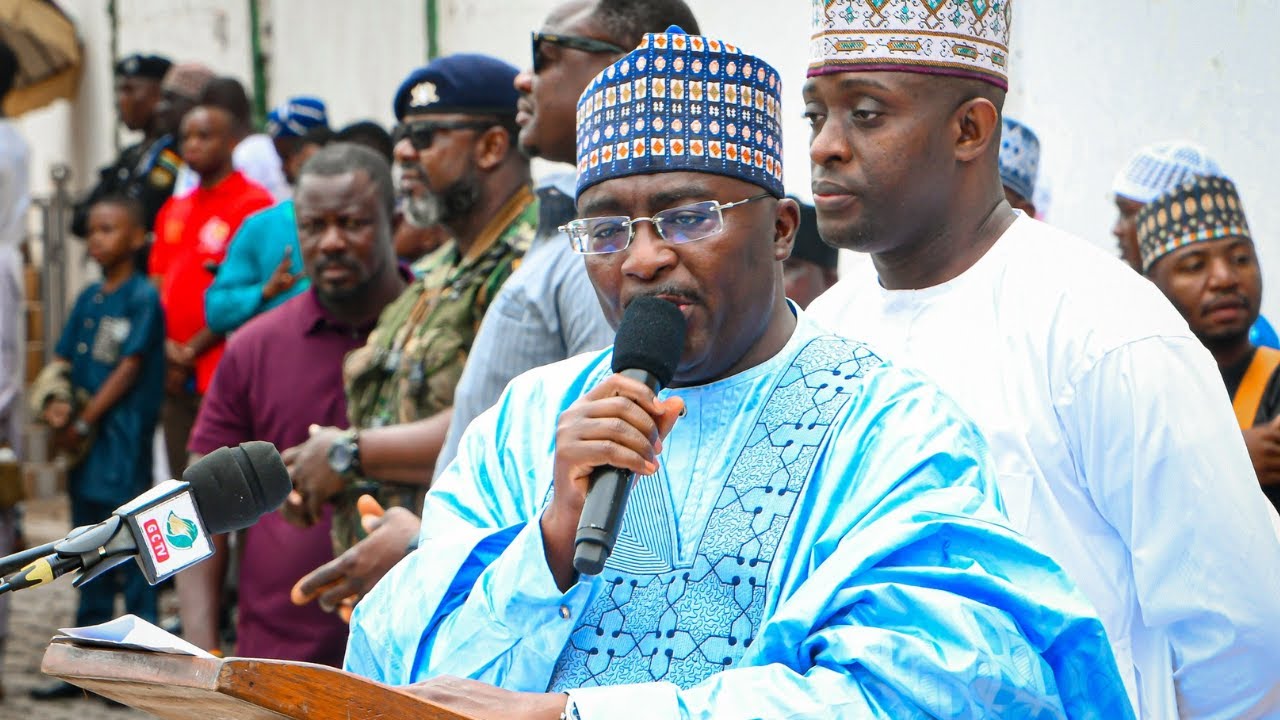
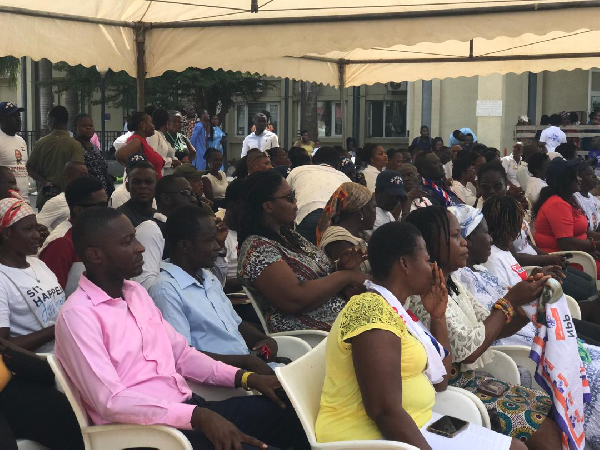
Vice President Dr. Mahamudu Bawumia is set to inaugurate Zoomlion Ghana’s waste recycling plant in Kperisi, Wa Municipality, on Monday, May 20, 2024, as part of his visit to the Upper West Region.
This inauguration will enable the plant to commence operations, aiming to enhance solid waste management in the region, particularly in Wa, which is struggling with solid waste issues.
The plant, established through a public-private partnership (PPP) between the government and the Jospong Group, will handle waste reception, sorting, and processing for the municipality and surrounding areas.
President Nana Addo Dankwa Akufo-Addo previously broke ground for the construction of this solid waste treatment plant in Kperisi, expected to generate over 200 direct and indirect jobs upon completion.
Dr. Bawumia, who is also the New Patriotic Party (NPP) presidential candidate, will pay a courtesy call on the Paramount Chief of the Wala Traditional Area and meet with the Muslim clergy in Wa, followed by a meeting with party members on Sunday, May 19, 2024.
The Vice President and NPP flag-bearer will also engage with the Christian clergy, the Upper West Regional House of Chiefs, and the youth on Monday, May 20, 2024.
Africa’s richest man, Aliko Dangote, has lamented the low level of intra-African trade despite the continent’s abundance of natural resources and promising future.
He emphasized that African investors need to take the risk and invest within the continent to drive its growth.
Speaking at the Africa CEO Forum in Kigali, Rwanda, Dangote highlighted that the development of Africa depends on its own people, not foreigners.
He pointed out that African economies would experience significant growth with the free movement of goods and services, citing the African Continental Free Trade Area (AfCFTA) as a key initiative.
Aliko Dangote said, “Our focus is to make the regional markets all work; once they work, then we can now go to AfCFTA, but for AfCFTA also, we need to make sure that it works. We cannot have a very promising continent and our intra-trade is less than 16%.”
“We, Africans, have to do it. If we are waiting for foreigners to come and develop Africa, it is not going to happen. So it can only happen by us Africans. We must risk our resources and make sure that we lead, then we have people who actually trust and believe inAfricato come and help us push to the next level,” he added.
The African Continental Free Trade Area (AfCFTA), one of the flagship projects of Agenda 2063, is an ambitious trade agreement with a comprehensive scope that includes critical sectors of Africa’s economy such as digital trade and investment protection.
The free trade pact aims to significantly boost intra-African trade by eliminating barriers, particularly enhancing trade in value-added production across all sectors.
Effective from January 2021, AfCFTA is the world’s largest free trade area, encompassing 55 African countries with a combined population of 1.3 billion and a GDP exceeding $3.4 trillion.
The agreement also aims to help African economies build robust and resilient structures to better withstand internal and external shocks.
President of IMANI Africa, has lauded the Social Security and National Insurance Trust (SSNIT) for engaging the private sector to co-invest in the hotels, which are currently wholly owned by the trust but struggling with operational inefficiencies.
He argued that this strategy would lead to a more efficient allocation of resources, benefiting both SSNIT and the broader economy.
According to Mr. Cudjoe, divesting these hotels would not only provide liquidity to SSNIT’s operations but also reduce political interference in the management of these assets.
In a recent Facebook post on Tuesday, May 21, he reiterated his support for the initiative, emphasizing that the negotiated sale price for the four hotels is fair and reasonable.
Mr. Cudjoe highlighted the potential benefits of SSNIT’s decision to involve the private sector in its hotel holdings, indicating a move towards greater operational efficiency and transparency in managing public assets.
“I think it is sensible for a state behemoth such as SSNIT, eternally abused by past and present politicians, to scale down its real estate business, which has never been profitable.”
“Similarly, SSNIT should seek private sector participation (co-investment) in wholly-owned hotels, which are all not running efficiently. Not only will that free up some liquidity, but it will also amputate the long arm of the politicians, who tend to reach into the brick-and-mortar businesses over which SSNIT has control. That said, I will support any competitive divestiture that brings on board more money, technology, and skills and preserves Ghanaian management.”
“I think the investment plan proposed and the price agreed for the 4 hotels are fair,” he stated.
Mr. Cudjoe’s comments come after North Tongu MP, Samuel Okudzeto Ablakwa, formally petitioned the Commission on Human Rights and Administrative Justice (CHRAJ) to investigate the sale processes of six hotels.
The petition identifies Labadi Beach Hotel, La Palm Royal Beach Resort, Elmina Beach Resort, Ridge Royal Hotel, Busua Beach Resort, and the Trust Lodge Hotel.
However, SSNIT clarified that only four of the hotels had successful bids, contrary to the MP’s claim of six.
Mr. Ablakwa’s petition calls for an investigation into various allegations, including conflicts of interest, abuse of power, lack of due process, procurement breaches, cronyism, and graft.
In his petition, Mr. Ablakwa highlights what he perceives as constitutional violations, specifically citing Articles 78(3) and 98(2) of the 1992 Constitution. He contends these actions represent significant breaches of legal and ethical standards.
Additionally, in a Facebook post on Friday, May 17, Mr. Ablakwa argued that Bryan Acheampong’s alleged involvement in the hotel sale without the Speaker of Parliament’s permission constitutes a breach of parliamentary protocol regarding holding offices of profit.
According to Mr. Ablakwa, this is a serious violation that warrants thorough investigation and accountability.
“In my petition, I am inviting CHRAJ to investigate grave matters bordering on conflict of interest, abuse of power, lack of due process, procurement breaches, cronyism, and graft.”
“I have also drawn attention to blatant violations of Article 78(3) and 98(2) of the 1992 Constitution as diligent checks from Parliament’s Committee on Office of Profit reveal that Hon. Bryan Acheampong has not applied and does not have the permission of the Speaker of Parliament to hold an office of profit,” he said.
Today, May 21, 2024, the Bank of Ghana’s Interbank forex rates reveal that the Ghana Cedi is trading against the dollar at a buying price of 13.8326 and a selling price of 13.8464.
In Accra’s forex bureau, the dollar is purchased at a rate of 14.85 and sold at 15.15.
Against the Pound Sterling, the Cedi is traded at a buying price of 17.5729 and a selling price of 17.5919.
In Accra’s forex bureau, the pound sterling is bought at 18.50 and sold at 19.20.
The Euro is traded at a buying price of 15.0273 and a selling price of 15.0409.
In Accra’s forex bureau, the Euro is bought at 15.80 and sold at 16.40.
The South African Rand is traded at a buying price of 0.7600 and a selling price of 0.7608.
In Accra’s forex bureau, the South African Rand is bought at 0.40 and sold at 1.20.
The Nigerian Naira is traded at a buying price of 109.3985 and a selling price of 109.6897.
In Accra’s forex bureau, Nigerian Naira is bought at 9.00 Naira for every 1 Cedi and sold at 13.00.
As for the CFA, it is traded at a buying price of 43.6116 and a selling price of 43.6510.
In Accra’s forex bureau, CFA is bought at 22.00 CFA for every 1 Cedi and sold at 24.50 CFA for every 1 Cedi.
Note that these rates may differ at a forex bureau near you. Our forex bureau rates are provided by Afriswap Bureau De Change in Osu, Accra.
Our forex bureau rates are provided by Afriswap Bureau De Change in Osu, Accra.
Founder and General Overseer of Action Chapel International,Archbishop Nicholas Duncan-Williams, stressed the need for concerted efforts to ensure socioeconomic stability and well-being.
He asserted that Ghanaians are enduring excessive hardship, prompting nurses and doctors to leave the country for opportunities abroad.
He is concerned about reducing the risk of Ghanaians being forced to seek refuge in foreign countries due to internal strife.
“There is too much pain and suffering in this country. All our doctors and nurses are leaving this country. And we just pray that things will be well handled and managed with transparency and fairness so that we will not end up being refugees in any other country.”
“Because without proper fairness, honesty, and transparency, things may fall out of hand. And may I say this, that nobody should think that the Ghanaian is very gentle, I don’t like trouble human being, It is not true,” the man of God expressed.
Founder and General Overseer of Action Chapel International, Archbishop Nicholas Duncan-Williams, has called on the government to prioritize initiatives aimed at easing the hardships faced by the Ghanaian populace.
Expressing deep concern about the struggles of the Ghanaian people, Archbishop Duncan-Williams emphasized the widespread nature of the hardship, leading to significant discomfort and suffering among citizens.
Highlighting the concerning trend of healthcare professionals leaving the country in pursuit of better opportunities abroad, the Archbishop underscored the pressing need for effective measures to address the underlying causes of these difficulties.
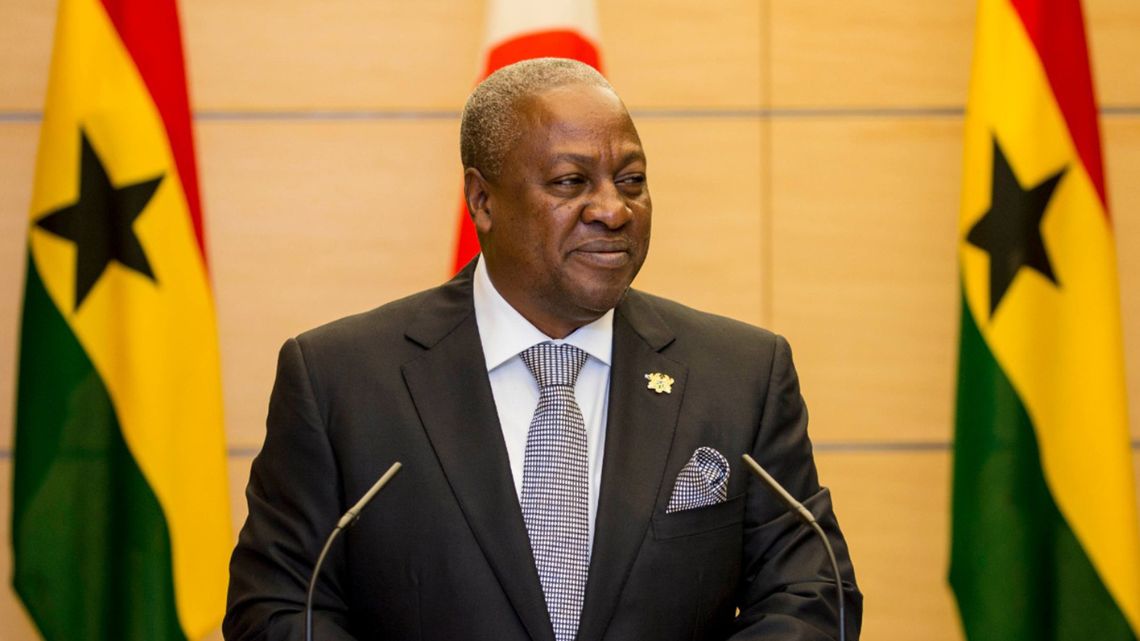
During a meeting with John Dramani Mahama, the flagbearer of the National Democratic Congress (NDC), and members of the Christian Ecumenical Council in Accra on Monday, May 20, Archbishop Duncan-Williams also stressed the importance of maintaining peace to prevent violence during the upcoming elections.
In addition to advocating for peace, Archbishop Duncan-Williams emphasized the necessity of coordinated efforts to ensure socioeconomic stability and well-being, thereby reducing the likelihood of Ghanaians being forced to seek refuge in foreign countries due to internal strife.
“There is too much pain and suffering in this country. All our doctors and nurses are leaving this country. And we just pray that things will be well handled and managed with transparency and fairness so that we will not end up being refugees in any other country.”
“Because without proper fairness, honesty, and transparency, things may fall out of hand. And may I say this, that nobody should think that the Ghanaian is very gentle, I don’t like trouble human being, It is not true.”
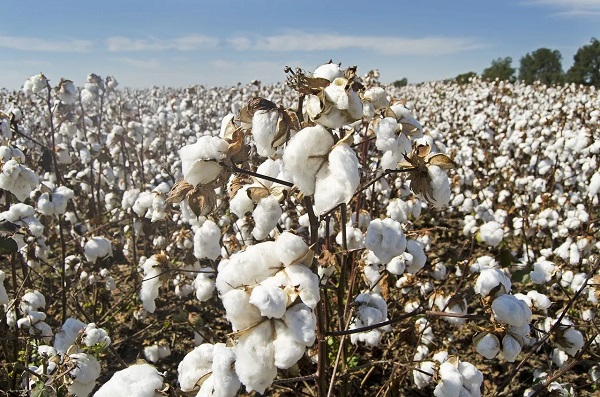
Even though the estimated size of the Africa cotton market reached US$6.06 billion in 2024, Ghana’s cotton sector remains stagnant, contrasting with the progress observed in other West African countries.
Mordor Intelligence, a global market research company, has forecasted that the value of Africa’s cotton industry will reach US$7.7 billion by 2029.
Despite these promising projections, the country’s cotton production has been inconsistent, with production never surpassing 40,000 tonnes since the commodity’s production began in 1968.
“Cotton yield levels in Ghana have never surpassed 800kg per hectare, showcasing a significant disparity compared to other countries in the sub-region. Notably, Burkina Faso has consistently outperformed Ghana in cotton production since 2004; producing more each year than Ghana’s cumulative production since 1968.
World Bank touts potential
Despite being recognized by the World Bank as having suitable conditions for producing the commodity, the country’s cotton production only contributes to less than one percent of total production in West and Central Africa.
The fiber remains a significant source of foreign exchange earnings in over 15 countries of sub-Saharan Africa (SSA) and is deemed a vital source of cash income for millions of rural inhabitants in the region.
Currently, the World Bank and other development institutions are aiding numerous cotton-exporting countries in the region to improve sector performance, utilizing it as a tool in the battle against rural poverty.
Cotton flourishes in warm and moist climates with long summers and abundant soil salinity. This environment allows the commodity to thrive in the SSA region, making it one of the largest producers globally.
Prospects in the sub-region
Benin, Mali, Burkina Faso, and Ivory Coast remain the leading cotton-producing countries in Africa, collectively contributing to about 50 percent of the continent’s production.
In 2021, Burkina Faso exported cotton worth US$459.3 million, marking the highest export value in the region. Similarly, Mali achieved its highest-ever production of over 750,000 tonnes of cotton in the same year.
Meanwhile, France is investing approximately US$83 million in Ivory Coast’s cotton sector over the next five years, targeting around 120,000 cotton farmers.
Despite West Africa accounting for more than three-fourths of the continent’s cotton exports, stakeholders have lamented this reality, citing a relative scarcity of cotton mills in the region despite high foreign demand for West African cotton.
West African cotton is in high demand in countries like Bangladesh, India, Malaysia, Vietnam, and China, prompting clothing brands such as H&M and LPP to consider establishing mills in the region.
Critical challenges to cotton production in Ghana
The cotton industry faces various constraints, including a lack of credit, delayed input delivery, substandard seed quality, low producer prices, insufficient labor, and an unfavorable policy environment, among other challenges.
For example, since the year 2000, the Agriculture Development Bank has ceased financing the cotton sector. This has created financing shortfalls, causing many companies to halt production.
The four remaining active cotton-producing companies in the country—Nulux Plantation Limited, Intercontinental Farms Limited, Plantation Development, and Ghana Cotton Company—have all decreased their production capacity due to various sector challenges.
Secretary-General of the Trades Union Congress (TUC), Dr. Yaw Baah has criticized the Social Security and National Insurance Trust (SSNIT) for allegedly failing to conduct proper due diligence in its attempt to sell its stakes to Rock City Hotel.
This comes as a responds to claims by the Trust that it was selling its stakes in six hotels to Rock City Hotel, a company owned by the Minister of Food and Agriculture, Mr. Bryan Acheampong.
But SSNIT says the hotel presented the strongest technical and financial proposal among other interested companies to back the claim.
However, Mr. Baah has asserted that the Trust mishandled the sale process.
“From all indications, it appears the process is going on, and in fact, they are even speeding it, and we do not think it is right. We do not think the regulations that guide the sale of state assets were followed. We do not think that the necessary due diligence was conducted. We cannot imagine that state property will be sold to a Minister of state,“ he said.
He urged the minister responsible for pensions to take proactive measures to prevent the sale; otherwise, the union would be compelled to take action.
The leadership of Ghana’s organized labor has urged the Social Security and National Insurance Trust (SSNIT) to halt the proposed sale of its stake in six hotels.
This appeal was made during a press briefing delivered by the Secretary-General of the Trades Union Congress (TUC), Dr. Yaw Baah.
Dr. Baah called on the minister responsible for pensions to instruct the Board of Trustees of SSNIT to immediately cease the process.
He mentioned that union representatives on the Board of Trustees of SSNIT had informed the union leadership that they had jointly raised objections to the process.
“SSNIT’s interests in six hotels should not be packaged and sold as if all the hotels were in the same financial situation. The original proposal for the sale of SSNIT’s interests in six hotels has now been reduced to four. We hold the view that this renders the whole process null and void.
The proposed payment terms deviated from the original Memorandum of Understanding (MOU) based on the recommendation of the transaction advisor,” he stated.
Dr. Baah also expressed concern that state assets might be sold to a Minister of State.
The union responded to an accusation against the Trust, claiming that it was selling its stakes in six hotels to a company owned by the Minister of Food and Agriculture, Mr. Bryan Acheampong.
In a press statement, the Trust clarified that Rock City Hotel had presented the strongest technical and financial proposal among other interested companies.
However, Dr. Baah criticized the Trust for allegedly failing to conduct proper due diligence in its attempt to sell its stakes to Rock City Hotel.
“From all indications, it appears the process is going on, and in fact, they are even speeding it, and we do not think it is right. We do not think the regulations that guide the sale of state assets were followed. We do not think that the necessary due diligence was conducted. We cannot imagine that state property will be sold to a Minister of state,“ he said.
He urged the minister responsible for pensions to take proactive measures to prevent the sale; otherwise, the union would be compelled to take action.
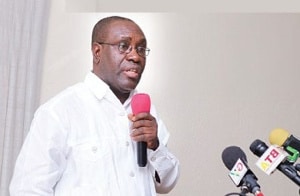
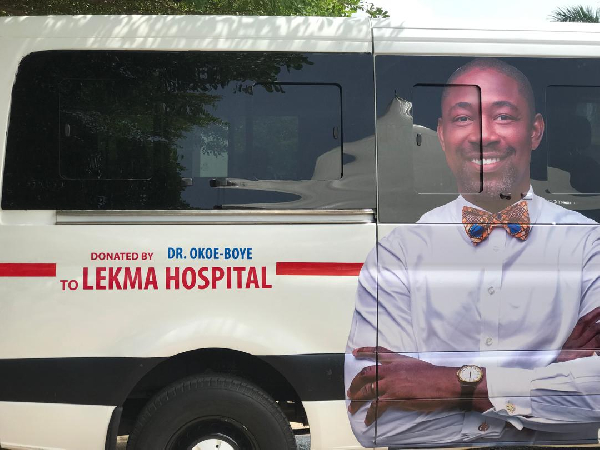
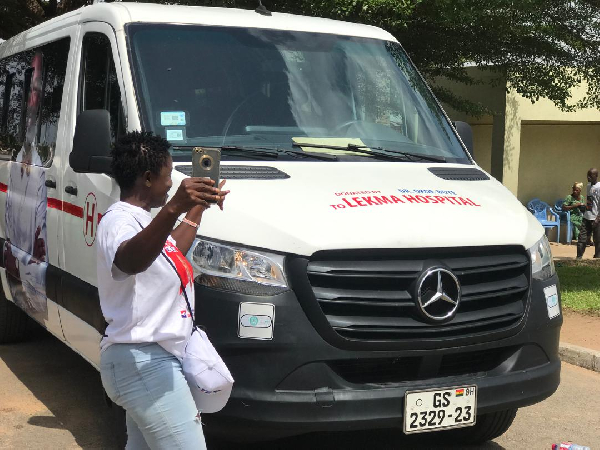
Minister of Health, Dr. Bernard Okoe Boye, has donated a 20-seater bus to Lekma Hospital in Accra.
During the donation ceremony on May 20, 2024, Dr. Okoe Boye, a native of Teshie, emphasized his personal connection to the hospital, having previously volunteered his services there while serving as the Member of Parliament for the Ledzokuku Constituency.
He mentioned that this experience provided him with an understanding of the hospital’s challenges.
“Just a few months ago, the medical director informed me that they struggle to find a bus to pick up nurses and health workers and then drop them in a community to do weighing and other activities.
“So, I talked to a few friends, and we were able to raise half a million Ghana cedis to procure this 20-seater Mercedes Benz bus. The idea is to support health workers so that once they work in a very comfortable environment, they can be motivated to take care of us,” he said.
He also outlined plans for the hospital’s expansion, which is scheduled to commence during his tenure as Minister of Health.
He explained that the hospital, originally constructed through a bilateral agreement between the governments of Ghana and China, is poised to enter its second phase of construction soon.
“The good news is that the Chinese government has made us understand that they are willing to expand this hospital because the population of Accra is increasing.
“When I was a Member of Parliament, the assembly allocated extra land for the construction. So, we will work hard, and this year the Chinese and the Ghanaian governments, through the Ministry of Health, will start the expansion project,” he added.
Greater Accra Regional Minister Daniel Nii Kwartei Titus Glover, who accompanied Dr. Okoe Boye, praised his colleague’s dedication and generosity.
“This morning, we are here to witness a gesture from one of the finest politicians in this country. In every church, in every society, in every family, in every group, God gives you somebody that would come and lift that group, and this is what we see in Dr. Bernard Okoe Boye,” he remarked.
Dr. Akua Afriyie Gyimah-Asante, the Medical Superintendent at Lekma Hospital, accepted the vehicle on behalf of the hospital and conveyed her gratitude.
She reassured the Minister that the bus would be utilized for its designated purposes, improving the hospital’s outreach and healthcare services.
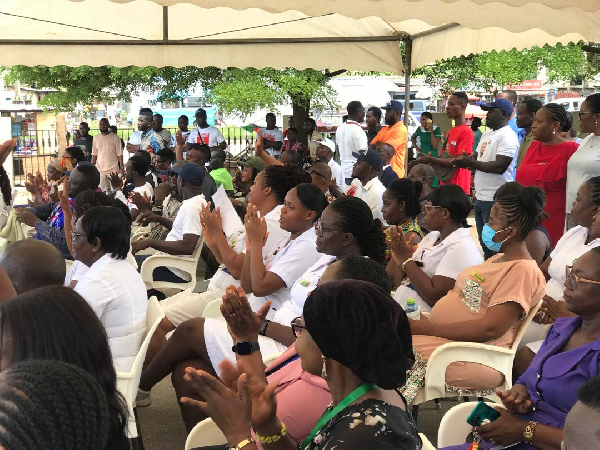
The donation ceremony was also attended by Mordechai Quarshie, Municipal Chief Executive for Ledzokuku Constituency, Board of directors from the Ministry of Health, Isaac Ofei Baah, Head of Public Relations at the Ministry, as well as nurses and supporters of the New Patriotic Party (NPP).
The donation ceremony saw the presence of Mordechai Quarshie, the Municipal Chief Executive for Ledzokuku Constituency, alongside the Board of Directors from the Ministry of Health.
The Head of Public Relations at the Ministry, Isaac Ofei Baah, was also in attendance, along with nurses and supporters of the New Patriotic Party (NPP).
Action Chapel International founder, Archbishop Nicholas Duncan-Williams has warned the political class to serve the citizenry properly, cautioning that continued exploitation could lead to chaos.
He pointed to significant pain and hardship in the country, citing the mass exodus of healthcare professionals.
He stressed that without alleviating the struggles of ordinary Ghanaians through transparency and fairness, the unintended consequences of the current hardship could trigger a crisis.
He also noted that history provides a lesson for current leaders, demonstrating that the populace can rise up, as seen in Ghana’s last two coups.
According to him, there was significant pain and hardship in the country citing the mass exodus of healthcare professionals.
He reiterated that without easing the plight of the ordinary Ghanaian with transparency and fairness, unintended consequences of the hardship in the country could trigger a crisis.
He added that there is the benefit of history to guide the current leaders and show them that the populace can rise up as was the case in the last two coups Ghana witnessed.
Musician and businessman D-Black has clarified his relationship with Fella Makafui, whose marriage to rapper Medikal has hit a rough patch.
Last month, a video circulated on social media showing D-Black lighting a cigar for Fella Makafui, which angered her estranged husband.
Medikal, clearly upset by the situation, called D-Black a fake industry player and stressed that he would never do something like that to D-Black out of respect.
As a result, Medikal recorded a diss track titled “Just in Case,” targeting D-Black.
However, D-Black stated that he has nothing to do with the celebrity couple’s marital issues.
In a series of tweets addressing the controversy for the first time, D-Black explained that he did not hand Fella the cigar but only lit it for her at her request.
He clarified that Fella purchased the cigar herself and merely asked him to light it.
D-Black further dismissed all allegations of a romantic involvement with Fella Makafui, adding that he hasn’t seen her in over two years.
He urged Medikal to contact him directly if he had any grievances instead of ranting on social media.
Meanwhile, Fella Makafui had previously denied any romantic involvement with D-Black.
What pass? She asked me to help light her own cigar she bought. I was holding mine in my hand. Which pass ? U ppl jus de talk by heart . lol https://t.co/8meYGR0HOm
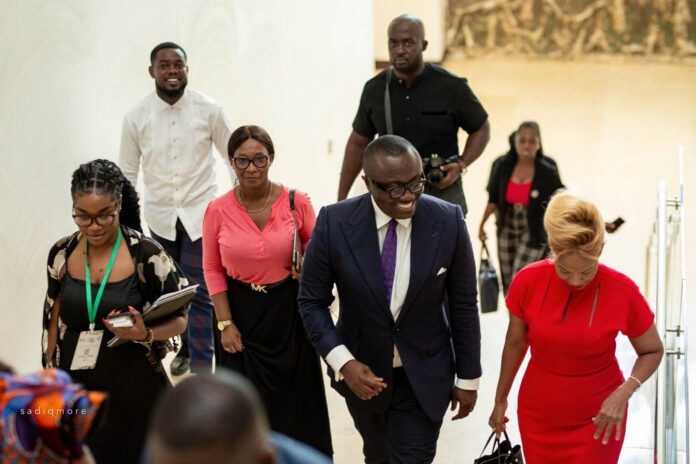
Renowned media mogul and CEO of EIB Network, Bola Ray, is calling on media professionals across the continent to take an active role as agents of change.
In his compelling speech, Bola Ray highlighted the media’s transformative power in shaping Africa’s narrative and driving socio-economic progress.
Speaking to a diverse audience of African leaders, journalists, and influencers, Bola Ray emphasized the significant influence media has on public perception and policy-making.
He urged African media outlets to go beyond traditional reporting and actively contribute to the continent’s development by promoting positive stories, innovative solutions, and inclusive dialogue.
“The media has a profound responsibility to not only inform but also inspire and uplift,” Bola Ray asserted. “We must go beyond the headlines of despair and conflict and showcase the resilience, creativity, and potential of Africa and its people.”
In his speech, Bola Ray emphasized the need for media professionals to engage in investigative journalism, expose injustices, and hold leaders accountable, while also celebrating the achievements and advancements within African communities.
He encouraged collaboration among media outlets to amplify impactful stories and foster a sense of unity and shared purpose.
“By highlighting stories of innovation, entrepreneurship, and community-driven initiatives, we can shift the narrative and drive meaningful change,” he continued. “The media must be a catalyst for development, championing the voices of those who strive to make a difference.”
The Africa Leadership Conference, renowned for its focus on sustainable development and visionary leadership, served as the perfect platform for Bola Ray’s call to action. His speech resonated with attendees, igniting a renewed commitment to using media as a tool for positive transformation.
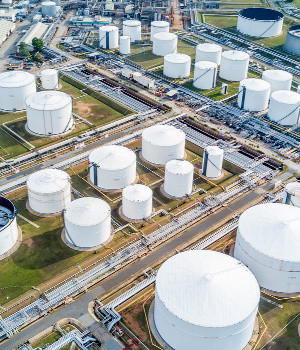
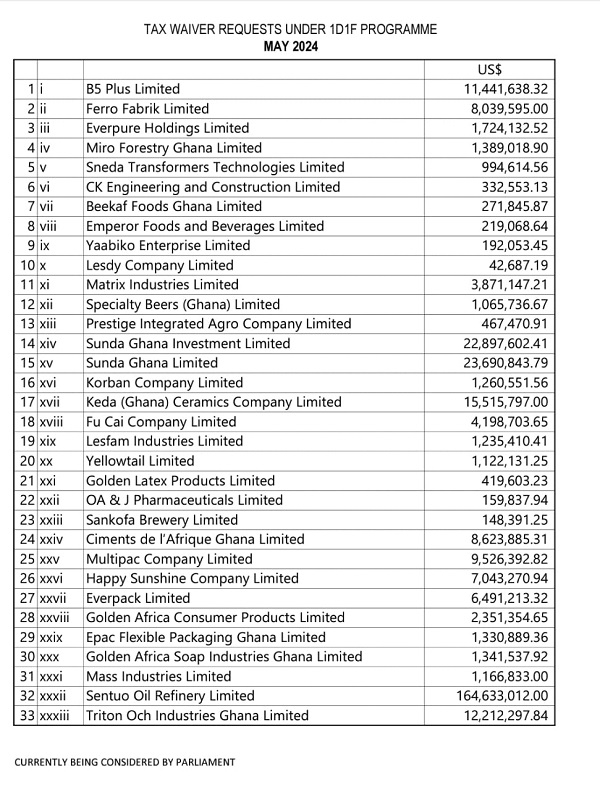
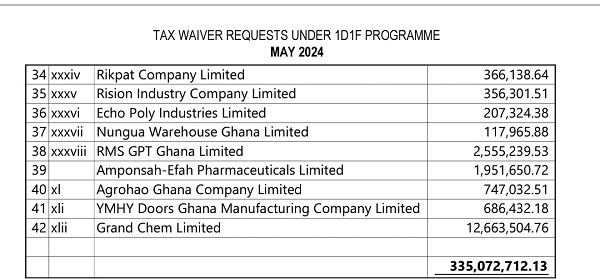
The newly established Sentuo Oil Refinery Limited is poised to receive the highest amount of tax exemptions, totaling $164,633,012.00, pending parliamentary approval.
This refinery is among 42 companies listed in a document submitted to Parliament seeking approval for approximately $335,072,712.13 in tax exemptions under the government’s One District One Factory (1D1F) initiative.
Initially presented to Parliament in 2022 by former Finance Minister Ken Ofori-Atta under The Exemptions Act, 2022 (Act 1083), the proposal faced a deadlock due to disagreements.
The Minority in Parliament claimed the exemptions were a cover for corruption, suggesting they benefited the ruling party’s allies. However, proponents argued that these tax breaks are essential for the success of businesses within the 1D1F initiative, promising economic growth and attracting investments.
On May 17, 2024, the Majority revisited the request for parliamentary consideration. Sentuo Oil Refinery, commissioned by President Nana Addo Dankwa Akufo-Addo on January 26, 2024, represents Ghana’s first private oil refinery.
Built by the Chinese conglomerate Sentuo Group in the Tema Industrial Area, the facility cost $2 billion and has an initial processing capacity of 40,000 barrels per day, scalable to 100,000 barrels.
Despite these advancements, the Institute of Energy Security and the Chamber of Petroleum Consumers have urged the National Petroleum Authority to shut down Sentuo Oil Refinery due to licensing issues related to fuel distribution in the Ghanaian market.
The National Communications Authority (NCA) has announced that repairs to the undersea cables, which were recently damaged and resulted in the country’s complete internet outage last March, have been finalized.
Dr. Joe Anokye, the Director-General of the NCA, disclosed that the repair work on all four affected cables was concluded between April 6 and May 8, 2024.
He revealed this information on Friday during the 2024 World Telecommunications and Information Society Day celebration in Accra.
The day was themed “Digital Innovation for Sustainable Development.”
On March 14 of this year, Ghana experienced disruptions to its data services due to damage to underwater cables.
All four undersea cable landing service providers in Ghana (ACR, MainOne, SAT-3, and WACS) were disconnected from international data services, resulting in a complete shutdown of internet services.
Dr. Anokye announced that repairs to the damaged cables were now complete, and internet services had been fully restored.
According to the subsea cable service providers, all four cable faults were located near the crossing with Le Trou Sans Fond Canyon, an underwater canyon off the coast of Abidjan.
Dr. Anokye confirmed that the SAT-3 cable was restored on April 6 and the ACE cable on April 17, 2024.
“The WACS cable was repaired on April 29, 2024, and the MainOne cable repairs were completed on May 8, 2024,” he added.
Dr. Anokye highlighted that the Authority had initiated the implementation of the nation’s satellite services policy framework to alleviate the impacts of recent disruptions resulting from damaged undersea cables.
This initiative aims to provide the public with access to advanced satellite services alongside existing ground-based options.
“This will enhance the connectivity resilience of the country, considering the recent disruption of undersea fiber optic cables on March 14, 2024,” he stressed.
Mrs. Ursula Owusu-Ekuful, Minister of Communications and Digitalization, urged collaborative efforts among institutions such as the Bank of Ghana, NCA, NITA, and the Data Protection Commission to tackle identified challenges and enhance the digital landscape.
“Meaningful digital innovation does not happen in isolation. It thrives on collaboration. None of us can do it alone; we need each other, and so together, let us forge a path towards a brighter, more connected future for generations to come,” she charged.
According to Mrs. Owusu-Ekuful, the government has taken many crucial measures that will provide the groundwork for attaining its goal of making Ghana the ICT powerhouse of West Africa.
In order to serve underserved and unserved communities, this involves building large in-country fiber optic cables to supplement those installed by the private sector and building rural telephony sites.
An economist and finance expert, Professor Godfred Bokpin, has linked some of the cedi’s devaluation to the International Monetary Fund‘s (IMF) program with Ghana.
He explained that during the IMF program, the Central Bank was restricted from intervening in the currency exchange market when the cedi depreciated against major trading currencies.
This restriction hindered the Bank of Ghana (BoG) from participating in the foreign currency market to stabilize the cedi.
Prof. Bokpin made these remarks during an interview on a local radio station, which was monitored by the Ghana News Agency (GNA) over the weekend.
“Part of the reason the cedi is depreciating is also consistent with the latest IMF-supported program. Under the IMF-supported programme, they favour a stable exchange rate.
“This limits the ability of the central bank to be in the market and fight off the depreciation through our reserves.
“Part of the IMF programme is to build our reserve of three months of import cover for 2026…What that means is that it tightens the hands of the central bank to intervene in the market to sell dollars to stabilise the cedi.
“Now they cannot do that under an IMF programme,” he said.
In May 2023, the IMF Executive Board sanctioned a US$3 billion External Credit Facility (ECF) with Ghana spanning 36 months.
Prof. Bokpin further pinpointed additional factors influencing the recent depreciation of the cedi.
He noted that the currency’s devaluation was also sparked by the delayed restructuring of foreign debt, impacting the disbursement of the third tranche of the ECF within the IMF program.
Despite Ghana’s failure to reach a final debt agreement with its official bilateral creditors, the IMF has pledged to disburse the third tranche amounting to $360 million.
During the discussion, Mr. Charles Kusi Appiah Kubi, a representative of the Ghana Union of Traders Association (GUTA) and a panelist, proposed prioritizing retention policies to stabilize the cedi, as multinational companies might face restrictions on repatriating profits.
Dr. Kwabena Nyarko Otoo, Director of Research for the Trade Union Congress, also urged the Central Bank to tackle the unregulated foreign exchange trade in Ghana, particularly in the black market, to alleviate pressure on the cedi.
A Fellow at CDD-GHANA, Dr. Kwame Asiedu Sarpong, has urged Dr. Mahamudu Bawumia, Vice President and flagbearer of the ruling New Patriotic Party (NPP), to reassess his strategies aimed at halting the cedi’s downward spiral.
During an interview on Kumasi-based Abusua 96.5FM’s Bresosem program with Millicent Safo-Adu over the weekend, Dr. Asiedu Sarpong noted that Dr. Bawumia, prior to assuming the vice presidency in 2017, had instilled confidence in Ghanaians regarding his capability to strengthen the Ghanaian cedi.
He highlighted that during his time in opposition, Dr. Bawumia had outlined measures for cedi stabilization. However, after nearly eight years in power, the cedi has depreciated from Ghc3.80 to Ghc15.
Dr. Asiedu Sarpong recommended that Dr. Bawumia revisit his academic notes, recall the strategies he proposed for John Mahama to implement in strengthening the local currency, and apply them to rescue the cedi from its current decline.
Expressing dissatisfaction with the government’s silence on the cedi’s depreciation, he emphasized, “The government must address the cedi issue as it affects us all.”
Dr. Asiedu Sarpong depicted how the depreciation of the cedi affects an average Ghanaian worker earning Ghc3000, clarifying that the weakened cedi leads to reduced purchasing power as imported goods become pricier.
Furthermore, Dr. Sarpong expressed concern over the significant depreciation of the cedi against major currencies, citing recent fluctuations in the pound’s exchange rate.
“From last week, on the 8th of May, I sent money to Ghana. One pound was Ghc17.13ps. The next day, the pound-to-cedi rate was Ghc17.25ps. Two days later, it moved to Ghc17.35ps. Yesterday, I sent money and it was Ghc18.17ps”, he stressed.
He highlighted the alarming trend of the cedi’s devaluation over a short period, underscoring the urgency of addressing this economic challenge.
“So, I decided to check the trend and understand what’s happening. I found out that on the 18th of April, a pound to a cedi was Ghc16.80ps. As of today, the 18th of May, it is trading at Ghc18.17, with almost 2 cedis added in 30 days”, he noted.
The call for a reevaluation of cedi restoration strategies comes amidst growing concerns over the currency’s decline and its implications on the economy and everyday life in Ghana.
S&P Global Ratings affirmed Ivory Coast’s sovereign credit rating following a eurobond sale earlier this year, which improved its financial position.
The world’s leading cocoa producer’s long-term foreign currency rating remained at BB-, three levels below investment grade, according to a statement from the ratings agency. The outlook was upgraded to positive from stable.
Ivory Coast marked sub-Saharan Africa’s return to the international capital markets this year by issuing $2.6 billion worth of eurobonds in January.
The economy ranks among the region’s fastest-growing, with the International Monetary Fund projecting a 6.5% GDP expansion in 2024, up from 6.2% last year.
Despite a one-third decline in cocoa production during the 2023-24 season, the government secured a $4.8 billion funding agreement with a Washington-based lender, bolstering its finances and reserves.
Authorities are increasingly alarmed by the potential harm posed by artificial intelligence technology.
A finance employee at a multinational corporation fell victim to a sophisticated fraud scheme involving deepfake technology, leading to a loss of $25 million (equivalent to 356,305,500.00 Ghanaian Cedis).
The intricate scam, executed using deepfake technology, included impersonating the company’s chief financial officer in a video conference call, as disclosed by Hong Kong authorities.
Reports indicate that the unsuspecting employee engaged in a video call, assuming it involved several coworkers, only to discover later that all participants were deepfake replicas.
The hoax, according to Hong Kong police, was a “multi-person video conference” in which each participant was actually a fake.
The scheme unraveled when the employee received a message allegedly from the company’s CFO based in the UK, raising suspicions of a phishing scheme.
Despite initial skepticism, the employee was convinced to continue after interacting with seemingly authentic coworkers during the video conference.
Consequently, the employee approved the transfer of $25 million, believing the participants in the call were legitimate company representatives.
This incident reflects a worrying pattern in which scammers exploit deepfake technology to manipulate publicly accessible footage and deceive unsuspecting individuals.
Hong Kong authorities reported six arrests linked to such schemes, underscoring the growing prevalence of sophisticated cyber attacks.
Additionally, the British engineering firm Arup confirmed its involvement as the target of the deepfake fraud.
Arup revealed that it had alerted authorities to the incident, stressing that its financial stability and business operations remained unaffected despite the fraudulent behavior.
Rob Greig, Arup’s global chief information officer, emphasized the increasing threat posed by cybercriminals, citing a surge in attacks targeting businesses worldwide.
He urged organizations to stay vigilant and strengthen their cybersecurity defenses against evolving threats, including deepfakes.
Arup’s ordeal serves as a stark reminder of the urgent necessity for enhanced cybersecurity measures in response to increasingly sophisticated cyber threats.
As businesses navigate the digital realm, safeguarding against deepfake fraud and other cybercrimes is essential for protecting assets and maintaining trust in the digital era.
Today, May 20, 2024, according to the Bank of Ghana‘s Interbank forex rates, the Ghana Cedi is trading against the dollar at a buying price of 13.7931 and a selling price of 13.8069.
In a forex bureau located in Accra, the dollar is purchased at a rate of 14.85 and sold at 15.15.
Against the Pound Sterling, the Cedi has a buying price of 17.5186 and a selling price of 17.5375.
At an Accra-based forex bureau, the pound sterling is bought at 18.30 and sold at 18.90.
The Euro is traded at a buying price of 14.9924 and a selling price of 15.0073.
In an Accra-based forex bureau, the Euro is bought at 15.75 and sold at 16.35.
The South African Rand has a buying price of 0.7590 and a selling price of 0.7594.
At an Accra-based forex bureau, the South African Rand is bought at 0.40 and sold at 1.20.
The Nigerian Naira is valued at a buying price of 109.5652 and a selling price of 110.0000.
At an Accra-based forex bureau, the Nigerian Naira is bought at 9.00 Naira for every 1 Cedi and sold at 13.00.
As for the CFA, it has a buying price of 43.7092 and a selling price of 43.7526.
At an Accra-based forex bureau, the CFA is bought at 22.00 CFA for every 1 Cedi and sold at 24.50 CFA for every 1 Cedi.
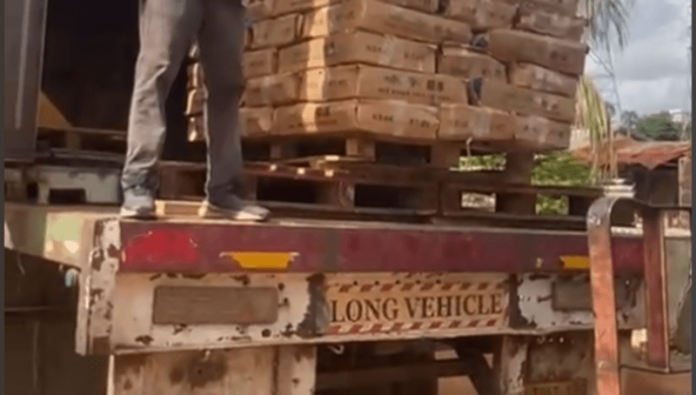
A cargo truck carrying fish that was supposed to be headed for Burkina Faso was intercepted by the Ghana Revenue Authority’s (GRA) Customs Division and was instead directed to a warehouse in Kumasi.
According to reports, customs officers monitored the vehicle and discovered the illicit activity.
Assistant Commissioner Vivian Glover, the Ashanti Regional Commander of Customs, confirmed the incident and stated that investigations are ongoing.
“The consignment was meant for Burkina Faso. They normally put a tracking device on it so that they can monitor the movement. The route was through Kumasi and we were monitoring but along the line, we realised that the truck was off-route, which means it was no more on the approved route.
“And we detailed officers to the area that the device was prompting us to and lo and behold, when they got there, they saw that the people were discharging the goods into a warehouse,” she told Accra-based Citi News.
She mentioned that the truck was seized and thereafter relocated to the Aboabo, a Kumasi suburb, Customs Yard.
“Our officers locked the warehouse with a revenue lock, which means Customs have taken control over the consignment and the truck conveying the consignment is also to be detained. The truck has been taken to our yard in Aboabo,” she added.
The Social Security and National Insurance Trust (SSNIT) has clarified its choice to sell a 60% stake in four of its hotels to Rock City Hotel, owned by Bryan Acheampong, Ghana’s Minister for Food and Agriculture and New Patriotic Party (NPP) Member of Parliament for Abetifi Constituency.
In a statement released on Sunday, May 19, SSNIT explained that Rock City Hotel Limited submitted the strongest technical and financial proposal among the bids received, meeting the criteria outlined in the Request for Proposals (RFP).
SSNIT affirmed that the selection process was transparent and strictly followed the Public Procurement Act, highlighting that no favoritism was involved in choosing Rock City Hotel Limited.
The Trust stated that the decision to seek an investor was aimed at raising capital for further hotel investments and improving their management. This initiative commenced in 2018 through International Competitive Tendering (ICT) procedures to ensure a fair and competitive selection process.
In its press release, SSNIT elaborated on the process, indicating that it began in November 2018 with the engagement of a Transaction Advisor. The Trust emphasized that the Advisor’s role was to facilitate the selection of a strategic investor to partner with SSNIT in the management and enhancement of the hotels.
“Based on the criteria set out in the RFP, Rock City Hotel submitted the best and strongest technical and financial proposal amongst those received. Consequently, it is in negotiation with SSNIT to buy a 60% stake in each of the four (4) hotels (Labadi Beach Hotel, La Palm Royal Beach Resort, Ridge Royal Hotel and Elmina Beach Resort).
“Bids for Busua Beach Resort and the Trust Lodge were considered to be unsuccessful so they are no longer part of the hotels covered in this process,” an excerpt of their statement said.
Following a formal petition submitted by North Tongu MP, Samuel Okudzeto Ablakwa, to the Commission on Human Rights and Administrative Justice (CHRAJ), an investigation has been initiated into the process surrounding the sale of six hotels.
The hotels listed in the petition include Labadi Beach Hotel, La Palm Royal Beach Resort, Elmina Beach Resort, Ridge Royal Hotel, Busua Beach Resort, and the Trust Lodge Hotel.
SSNIT, however, clarified that successful bids were received for only four hotels, not the entire six as asserted by the MP.
Mr. Ablakwa’s petition calls for an investigation into various allegations, such as conflict of interest, abuse of power, lack of due process, procurement breaches, cronyism, and graft.
In his petition, Mr. Ablakwa highlights perceived violations of constitutional provisions, specifically referencing Articles 78(3) and 98(2) of the 1992 Constitution, arguing that these actions constitute significant breaches of legal and ethical standards.
Furthermore, in a Facebook post on Friday, May 17, Mr. Ablakwa contends that Bryan Acheampong’s alleged involvement in the hotel sale without the Speaker of Parliament’s permission breaches parliamentary protocol concerning holding offices of profit. According to Mr. Ablakwa, this is a serious transgression necessitating thorough investigation and accountability.
“In my petition, I am inviting CHRAJ to investigate grave matters bordering on conflict of interest, abuse of power, lack of due process, procurement breaches, cronyism, and graft.”
“I have also drawn attention to blatant violations of Article 78(3) and 98(2) of the 1992 Constitution as diligent checks from Parliament’s Committee on Office of Profit reveal that Hon. Bryan Acheampong has not applied and does not have the permission of the Speaker of Parliament to hold an office of profit,” he said.
Project Director of the Democracy Project and Fellow at CDD-Ghana, Dr. John Osae-Kwapong, has contended that impeaching Special Prosecutor Kissi Agyebeng would erode public trust in anti-corruption endeavors.
He proposed employing alternative administrative measures to address the allegations against Mr. Agyebeng.
“To remove the Special Prosecutor from office, it has to be egregious enough but if there are other administrative remedies to address some of the allegations leveled against him, let’s use them rather than first resorting to his removal from office.”
“It doesn’t set a good precedent for the fight against corruption and deepens the already eroding public confidence in the fight against corruption,” he said.
Dr. Osae-Kwapong voiced his perspective on Saturday during a discussion on a television program based in Accra.
The discussion arose following a petition filed by Mr. Martin Amidu, the former Special Prosecutor, urging for Mr. Agyebeng’s impeachment.
Mr. Amidu claimed in his petition to the President that the Special Prosecutor had violated certain provisions of his office, warranting his removal.
He accused Mr. Agyebeng of procurement breaches in the acquisition of vehicles for the Office of the Special Prosecutor, as well as the abuse of judges and the administration of justice. Additionally, he alleged violations of citizens’ rights through arrests and detentions, infringement upon citizens’ right to information, and irregular appointments of personnel to the office.
Dr. Osae-Kwapong questioned whether Mr. Amidu’s allegations provided adequate grounds for impeachment.
“…as I look at some of the basis, I keep asking myself, do these rise to the level of an impeachable offense for which he must be removed from office?” he quizzed.
A private legal practitioner and Head of Chambers at Clinton Consultancy, Madam Amanda Akuokor Clinton, asserted that, apart from the alleged procurement breaches, Mr. Amidu’s other arguments were insufficient to justify the impeachment of the Special Prosecutor.
“I think aside from the issue of procurement, Mr. Amidu’s other allegations do not stand. According to the Special Prosecution Act 2017, the Special prosecutor can be removed for misconduct, incompetence, or actions that bring the office into disrepute,” she said.
The lawyer also disagreed with allegations that Mr. Agyebeng abused judges, describing his comments about the judiciary as “measured” and simply an “academic assessment.”
She added that it would be “a slippery slope” to remove the Special Prosecutor based on such an accusation.
“His removal would mean politicisation of his office and every future person that goes into the OSP will be persecuted potentially in such a similar way, irrespective of whichever government it is,” she said.
Member of Parliament for Tamale North and Deputy Ranking Member of the Lands and Forestry Committee, Mr. Alhassan S. Suhuyini, expressed that Mr. Amidu’s petition aimed to judge Mr. Agyebeng by his own standards.
He deemed the call for the Special Prosecutor’s removal unrealistic and advocated for addressing the issues through alternative means.
A fatal crash involving the presidential convoy was initially reported on social media in the late afternoon of Sunday, May 19, 2024.
Accra-based UTV, among the first to cover the incident, included a video showing a major wreck.
Their post was captioned: “President Akufo-Addo’s convoy has been allegedly involved in a tragic accident at Bunso Junction, Eastern Region.”
“According to reports, the convoy was crossed by a KIA Rhino truck, resulting in a collision that claimed the life of one individual and left others seriously injured.”
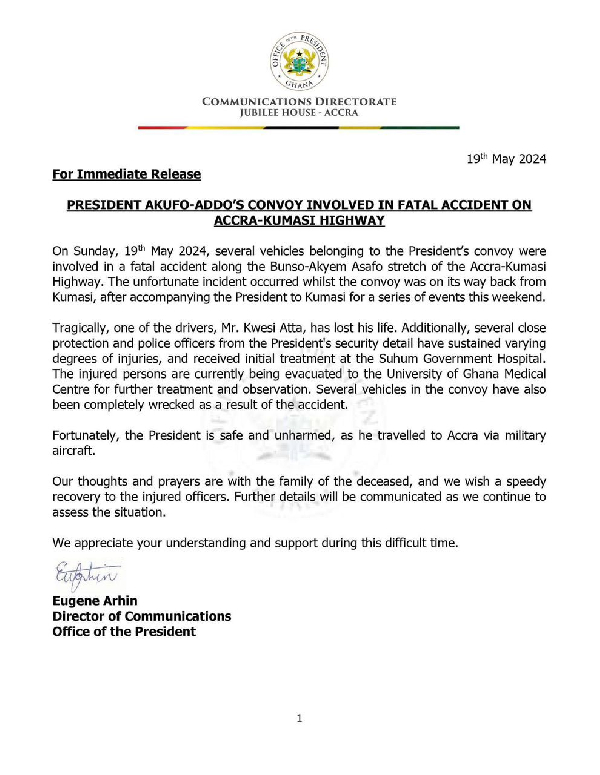
The report has now been confirmed by a statement from The Jubilee House, signed by , the Director of Communications, Eugene Arhin.
The release titled: “PRESIDENT AKUFO-ADDO’S CONVOY INVOLVED IN FATAL ACCIDENT ON ACCRA-KUMASI HIGHWAY,” gave more details into the incident.
Site of incident, several vehicles involved:
“Several vehicles belonging to the President’s convoy were involved in a fatal accident along the Bunso-Akyem Asafo stretch of the Accra-Kumasi Highway,” the statement read in part.
Additionally, it stated that several vehicles in the convoy have been completely wrecked due to the accident.
One dead, others injured and evacuated:
“Tragically, one of the drivers, Mr. Kwesi Atta, has lost his life. Additionally, several close protection and police officers from the President’s security detail have sustained varying degrees of injuries, and received initial treatment at the Suhum Government Hospital.
“The injured persons are currently being evacuated to the University of Ghana Medical Centre for further treatment and observation,” the statement disclosed.
Whereabouts of president:
According to the statement, “the convoy was on its way back from Kumasi, after accompanying the President to Kumasifor a series of events this weekend.
“Fortunately, the President is safe and unharmed, as he travelled to Accra via military aircraft.”
Other details being keenly awaited:
Exact cause of accident:
According to media reports, the accident occurred when the convoy was intercepted by a KIA Rhino truck. However, this claim has not been formally addressed yet.
Any senior officials in convoy?
Were any other high-ranking government officials in the convoy at the time of the crash?
“Our thoughts and prayers are with the family of the deceased, and we wish a speedy recovery to the injured officers. Further details will be communicated as we continue to assess the situation.
“We appreciate your understanding and support during this difficult time,” the statement concluded.
The Head of the Regional Operations Unit at the Land Commission, Raphael Hokey, has called for greater representation of women on Traditional Land Committees to ensure their input on land matters.
Mr Hokey urged communities to collectively advocate for women’s involvement and to respect their contributions during decisions about community lands.
“The Queen mother also has a stake in community land. I know it is not easy, but we have to keep making noise about this advocacy until it is accepted into our system,” he said.
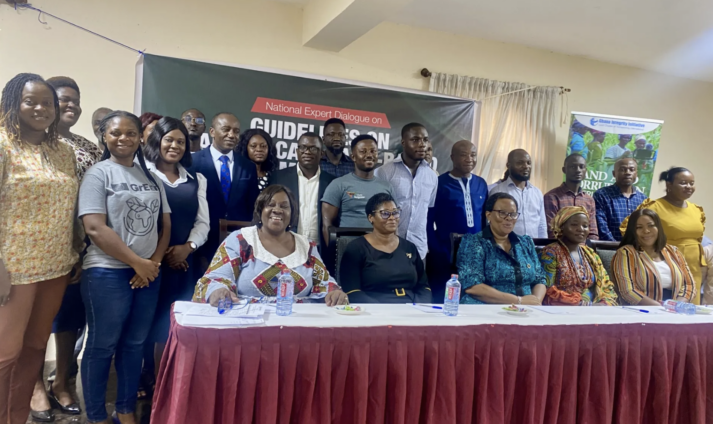
Mr. Hokey made his statement on Thursday during a National Expert Dialogue focused on Large-Scale Land-Based Investment (LSLBI) Guidelines in Ghana.
The Ghana Integrity Initiative (GII) organized the event in Accra, which gathered key stakeholders for a meaningful discussion aimed at creating effective and enforceable guidelines for LSLBIs in Ghana.
He pledged to advocate for stronger female representation at the Customary Land Secretariat at the Commission level.
Mr. Hokey emphasized that public education on land issues is an ongoing effort that requires everyone’s involvement.
He called on stakeholders to support the Commission’s sensitization programs.
In her welcoming address, Mary Awelana Addah, Executive Director of GII, highlighted that land is not only a crucial economic resource but also a foundation of heritage, identity, and livelihood for millions of Ghanaians.
She noted that the changing dynamics of global food demands and economic development have led to a new wave of large-scale land acquisitions.
Mrs. Addah pointed out that while these investments have the potential to improve food production and spur economic growth, they also bring a complex set of challenges, as documented by the International Land Coalition (ILC).
“As highlighted by the ILC, issues like corruption, unequal land access for women, and environmental sustainability concerns threaten to overshadow the potential benefits.”
“Furthermore, a lack of public awareness and stakeholder engagement can exacerbate these challenges, hindering the realization of transparent, equitable, and sustainable land investments.”
Mamaga Agumekosua V, the Paramount Queen Mother of Logba Traditional Area, lamented the stakeholders’ failure to implement policies and called for the strict enforcement of land acquisition laws.
“No one seems to take responsibility for the implementation of all existing laws. We always meet to make policies but struggle to implement them. If enforcement is done well, it would prevent land disputes and its associated corruption,” she said.
Mamaga Agumekosua V, who also serves as the Secretary to the Volta Region Queen Mothers Association, linked some land disputes to the exclusion of women from negotiations with land buyers.
“On many occasions, meetings with investors seeking to acquire a piece of land are done clandestinely without the involvement of the queen mother. At the end of the day, you’ll see someone come to your area to start a project without your knowledge.”
“This causes tension in the family because there are family members who support the Queen mother and want to ensure that no one is left behind in the negotiation process.”
She noted that at times, Traditional Authorities were misled about the true intentions of investors.
Miss Lois Aduamoah-Addo, Programme Manager of WILDAF Ghana, emphasized that land laws should be accessible and simplified for everyone to read and understand.
She advocated for deliberate efforts to enable women, persons with disabilities, and vulnerable groups to participate in discussions on land acquisition and its use.
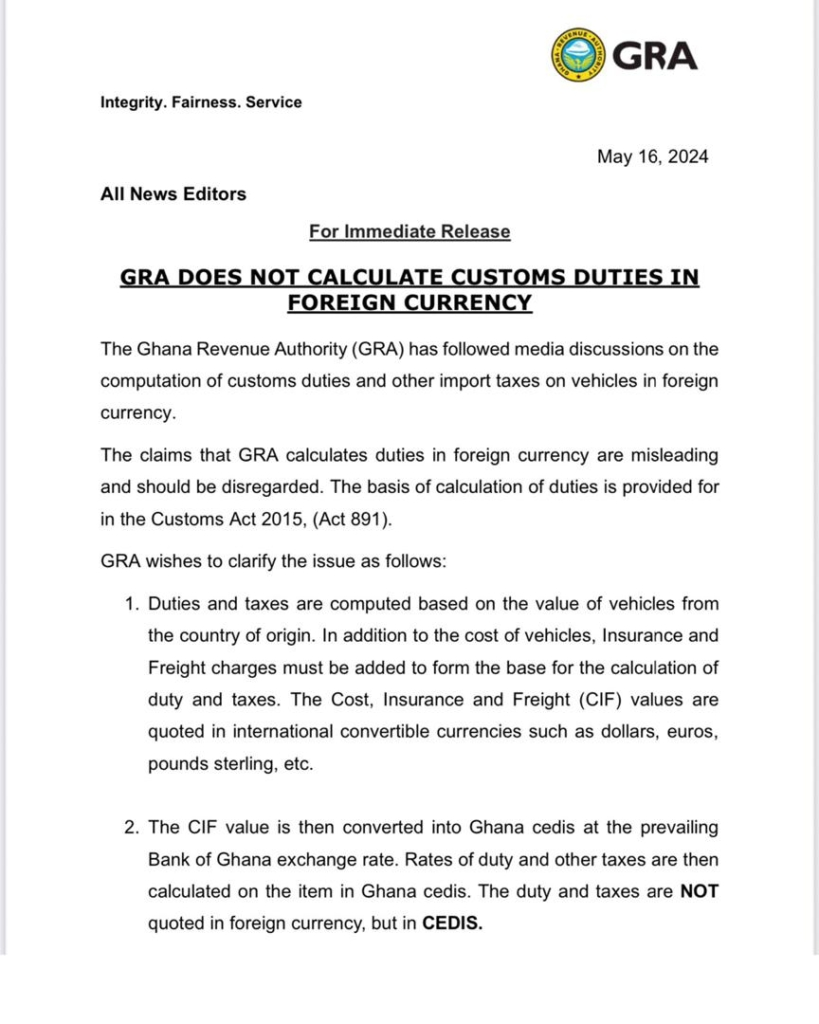
The Ghana Revenue Authority (GRA) has denied assertions that it calculates customs duties in foreign currency, dismissing such accusations as unfounded and erroneous.
In a press statement released on Thursday, May 16, the GRA emphasized that these allegations are completely untrue and should be disregarded by the Ghanaian populace.
The Authority clarified that its protocols for computing duties adhere strictly to the regulations delineated in the Customs Act 2015 (Act 891).
The Ghana Revenue Authority (GRA) clarified that the evaluation of duties and taxes on imported vehicles is predominantly based on factors such as the vehicle’s country of origin, its purchase price, freight costs, and insurance charges.
The GRA emphasized the importance of disregarding any false information concerning its procedures, reiterating its dedication to maintaining transparency and accountability in its responsibility to gather revenue for national advancement.
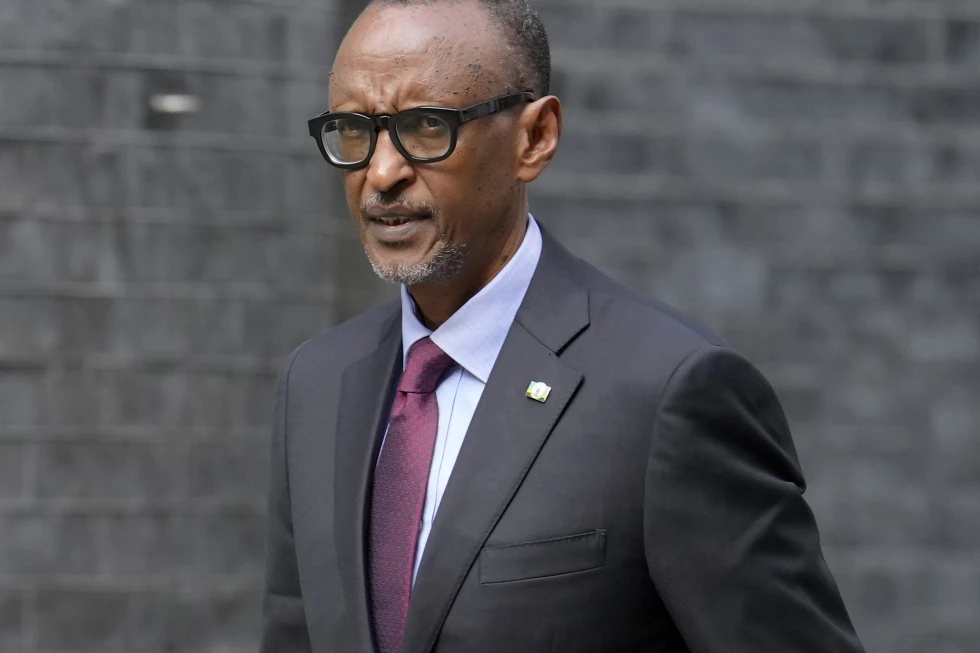
Rwanda’s President Paul Kagame has officially submitted his candidacy to the country’s electoral commission for the upcoming July presidential elections.
Last September, he confirmed his intention to seek a fourth term.
Kagame is widely expected to win, potentially extending his presidency to nearly three decades.
In the 2017 presidential election, he won with nearly 99% of the vote.
Recently, opposition politicians Bernard Ntaganda and Victoire Ingabire have been barred from running due to previous convictions.
Kagame, 66, has faced criticism from rights groups for allegedly cracking down on the opposition.
However, he asserts that Rwanda respects political freedoms.
Rescue operations at the George building collapse site in South Africa have ceased, leaving 19 individuals still missing.
The collapse, which occurred on May 6, claimed the lives of at least 33 construction workers. Fortunately, 29 survivors were rescued from the rubble.
The building is now under investigation to determine the cause of the tragic incident.
President Cyril Ramaphosa, after visiting the site on Thursday, promised compensation for the victims and assured accountability once the investigation concludes.
Luxury watchmaker Rolex is set to shutter its official store in South Africa in June after a remarkable 76-year presence, as confirmed to local newspaper, News24.
According to Rolex, shifting local dynamics and market conditions no longer justify the continuation of an official Rolex affiliate in the region.
However, Rolex assured that they would maintain an active presence in the area through their established retail network.
Since its inception in 1948, the store has been a fixture in South Africa.
Following this decision, all Rolex retailers in the country will now liaise directly with the head office in Geneva.
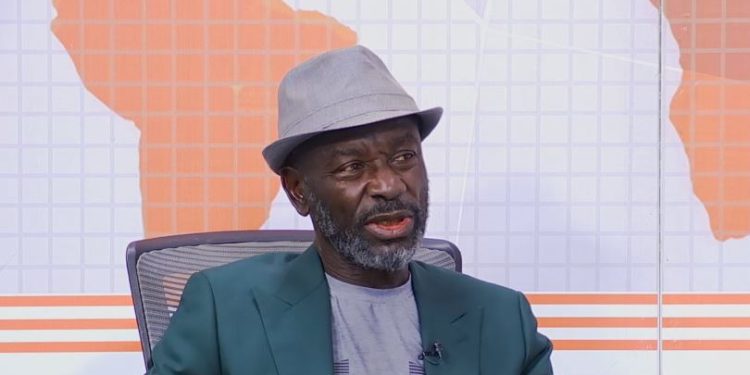
Currency Analyst Collins Appiah expressed confidence that the Ghanaian government would take steps to prevent the cedi from depreciating to GH¢18 against the US dollar.
This response follows projections from various financial analysts indicating that the cedi could decline to between GH¢16 and GH¢18 per dollar.
Banking Consultant Dr. Richmond Atuahene stated that while Bloomberg and other analysts forecast the cedi reaching GH¢16 per dollar, he believes it could drop further to GH¢18.
However, Mr. Appiah clarified that the government is expected to intervene to uphold currency stability, particularly in light of the upcoming election year.
He stated, “I am not sure the government will allow that to happen, they will not allow because as an analyst, trust me, we are in an election year. The government will want to do whatever they can to maintain some level of stability to be able to go into the elections he said on Starr FM.
Mr. Appiah recognized the difficulties but remained optimistic that the government would intervene to stabilize the currency in the near future.
He highlighted that forecasting currency fluctuations after the election is more unpredictable.
Former CEO of the now-closed Unique Trust (UT) Bank, Prince Kofi Amoabeng, has criticized the NPP government’s efforts to enhance road infrastructure in the nation.
Despite the government’s claims of fulfilling more road promises than its predecessors, Mr Amoabeng argues that many ongoing road projects have been suspended due to insufficient funds.
As a result, he cannot confirm the completion of any roads constructed by the current administration.
“Please, please, are you seeing the roads?, is the question I should ask you. All roads that are under construction have come to a halt. Because the gov’t has come out to say they can’t pay foreign financiers. It can’t even pay the local ones and had to take haircut and armpit cut and all sort of things” he told Benjamin Akakpo in an interview.
On the issue of corruption, he mentioned that numerous leaders are corrupt even before taking office, which makes it difficult for them to stop engaging in corrupt activities.
“By the time the leader gets into position, he is corrupt already. He owes too much money. Too much favours. He owes the party. He owes individuals, then our constitution also makes him too powerful to satisfy all those he owes. For example, the president appoints or approves over 6,000 appointments and he has to make sure all his people are there. “
The country has successfully completed its first cross-border trade transaction utilizing digital credentials, the eCedi central bank digital currency (CBDC), and a Singaporean stablecoin.
This groundbreaking pilot was a part of Project DESFT (Digital Economy Semi-Fungible Token), a joint effort between the Bank of Ghana (BoG) and the Monetary Authority of Singapore (MAS).
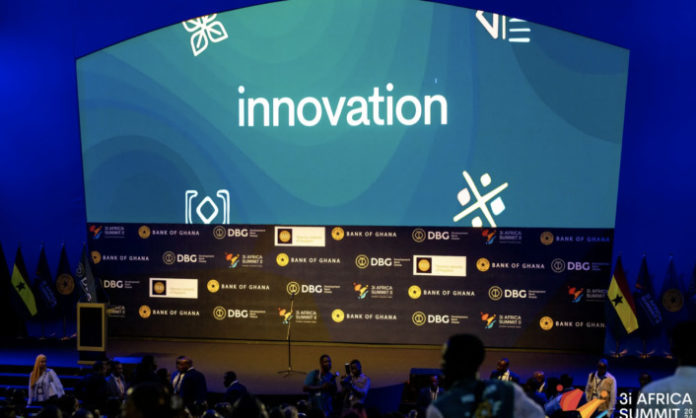
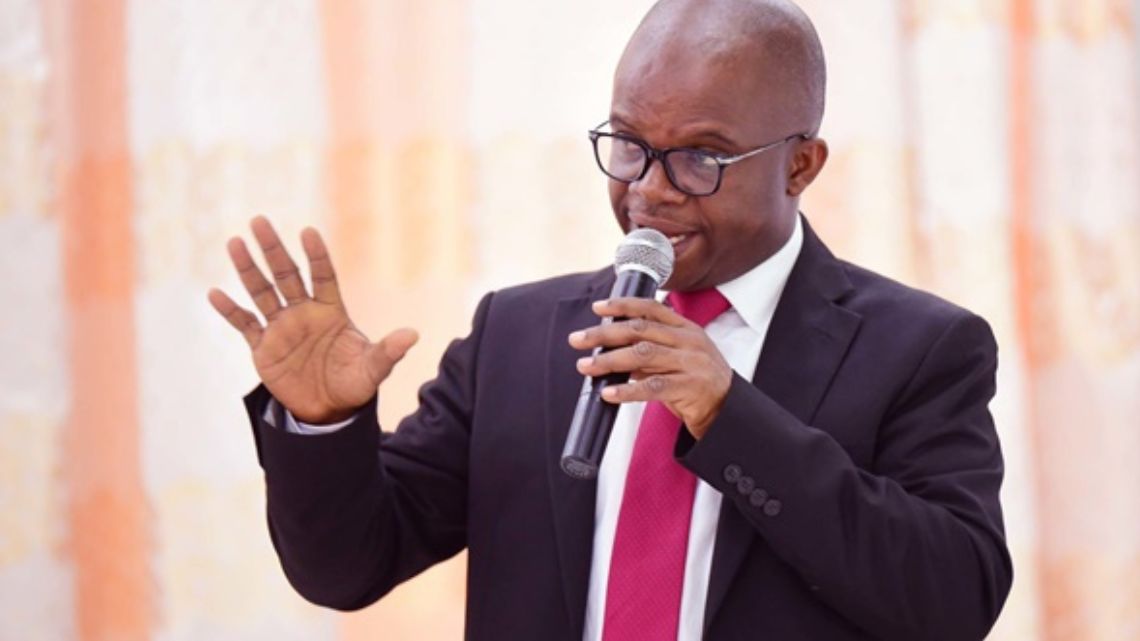
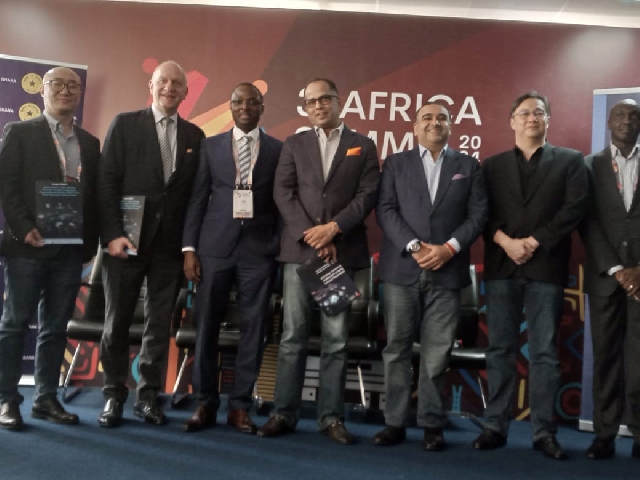
Speaking at the launch event during the recently concluded 3i Africa Summit, Mr. Kwame Oppong, Director of the Fintech and Innovation Office at BoG, highlighted the milestone as a significant advancement for Ghana’s digital economy.
“Project DESFT is aimed at supporting SMEs in Africa to engage in international trade by removing significant obstacles they face, such as establishing trust with overseas trade partners and obtaining support in cross-border payments and supply chain finance,” he stated.
In its first phase, the project concentrated on creating a trusted credential system that allows SMEs to convert essential information, such as licenses and trade records, into verifiable digital credentials on a secure distributed ledger.
The second phase saw the successful execution of a live cross-border transaction between Ghana and Singapore, utilizing the DESFT solution, Universal Trusted Credentials (UTC), a Singaporean stablecoin (xSGD), and Ghana’s eCedi CBDC.
Ghana’s forthcoming retail CBDC, the eCedi, is poised to greatly enhance the nation’s payment ecosystem. It aims to foster inclusive growth and innovation while improving consumer experiences.
By allowing Ghanaian micro, small, and medium enterprises (MSMEs) to engage in international trade more cost-effectively through interoperability with the DESFT system and verifiable credentials via Universal Trusted Credentials (UTC), the eCedi has the potential to transform cross-border commerce.
“We believe that the new generation of financial technology offers innovative approaches to these challenges,” Mr. Oppong stated.
“After nearly a year and two phases of development, we have crafted a reliable information exchange solution founded on UTC standards and Semi-fungible Token technology. Furthermore, we have rigorously tested a cross-border payment solution built upon the principles of Purpose Bound Money (PBM) and conducted real trade experiments which fully align with our predetermined objectives,” he added.
While Project DESFT represents a significant milestone, Oppong stressed that the initiative is ongoing. The next phase will focus on automating digital credential processes, enabling programmable payments across multiple digital currencies, and supporting supply chain finance.
This successful pilot comes as Ghana prepares for the much-anticipated launch of the eCedi. Initially scheduled for 2026, the launch was delayed due to the economic disruptions of 2022.
In a recent statement, the Bank of Ghana reassured the public that progress towards the eCedi launch is continuing. The central bank is adopting a retail token-based CBDC model, which will be stored locally on various devices. This model aims to replicate the traditional attributes of physical cash while incorporating additional functionalities.
The Bank of Ghana (BoG) has successfully concluded the initial Proof Of Concept (POC) within the framework of Project Digital Economy Semi-Fungible Token (DESFT).
This achievement showcases the effective facilitation of cross-border transaction payments through the utilization of digital credentials, the eCedi, and an authorized stablecoin from Singapore.
Mr. Kwame Oppong, Director of the Fintech And Innovation Office at BoG, highlighted during the launch event for the Completion Of Cross-Border Trade Using Digital Credentials, that the Central Bank, in collaboration with MAS, launched Project DESFT in June 2023.
The initial stage of the project focused on developing a reliable credential system enabling SMEs to convert essential information, including licenses, certificates, and trade records, into verifiable digital credentials stored on a secure distributed ledger system. This allows potential trading partners and financial institutions to efficiently authenticate such information.
Expanding on this foundation, Phase 2 of Project DESFT was implemented in April 2024, featuring a cross-border trade between Ghana and Singapore. This phase utilized the DESFT solution, Universal Trusted Credentials (UTC), a Singapore Stablecoin, Ghana’s recently piloted Central Bank Digital Currency (CBDC) – the eCedi, and the Purpose Bound Money protocol.
Mr. Oppong emphasized that the live transactions demonstrated the practicality of leveraging Ghana’s proposed domestic retail CBDC platform, the eCedi, in cross-border trade operations.
“This affirms the potential of the eCedi system demonstrated for future interoperability with various cross-border credential and payment platforms,” he added.
He mentioned that the upcoming launch of the eCedi could greatly improve Ghana’s payment system, promoting inclusivity and innovation while enhancing consumer satisfaction.
The Director highlighted that through its compatibility with the DESFT system and verifiable credentials via UTC, the eCedi could enable Ghanaian Micro, Small, and Medium Enterprises to engage in global trade more affordably.
Project DESFT aims to assist African SMEs in international trade by addressing major hurdles like building trust with foreign trade partners and accessing assistance in cross-border payments and supply chain finance.
“We believe that the new generation of financial technology offers innovative approaches to these challenges. After nearly a year and two phases of development, we have crafted a reliable information exchange solution founded on UTC standards and Semi-fungible Token technology,” he said.
He mentioned that the Bank had thoroughly tested a cross-border payment solution based on the Purpose Bound Money (PBM) principles and conducted actual trade trials that completely matched our set goals.
The upcoming phase of Project DESFT will further expand on the current accomplishments, concentrating on highly automated digital credential procedures, programmable payments involving various digital currencies, and assistance for supply chain finance.
Deputy Minister of Finance, Dr. Stephen Amoah, has indicated that the pressure on the local currency is largely due to the exchange of cedis for major trading currencies, particularly the dollar, for foreign travel.
He emphasized that if Ghanaians were to support local hospitality services and tourist sites, the money would remain in the country, contributing to national development.
Speaking at the second CEO’s Breakfast Meeting in Accra on Thursday, May 16, 2024, Dr. Amoah encouraged owners of hospitality businesses and tourist sites to expand their operations and attract more local customers.
On the international front, he highlighted the need for businesses to gain a competitive edge over other countries to attract Foreign Direct Investments.
“I think the strategic actors and players in tourism in Ghana should do their best to attract more tourists within the sub-region… we need to also create the needed competitiveness…,” he said.
Dr. Stephen Amoah added, “We need to build homegrown policy tools that specifically address our needs… It’s not every day that we have to go to the Maldives… let’s come home. The monkeys are there… we always talk about the cedi; if you exchange dollars and go there [outside Ghana], why won’t the cedi suffer? But if we stay here and the dollar people come here, there will be a demand for our currency.”
He revealed that the government aims to elevate the tourism sector to new heights if the governing New Patriotic Party secures a victory in the general elections on December 7, 2024.
Currently, the cedi is trading at GH¢15 at various forex bureaus, with the inflation rate standing at 25.0%.
Bloomberg has forecasted that the cedi’s value will depreciate further by the end of the year.
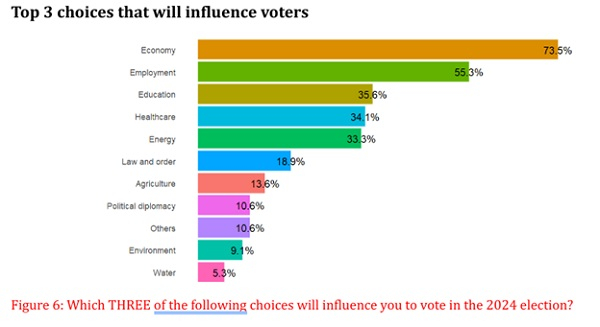
A recent survey conducted by theDataInsight Group | JOB Group Limited and Chartered Media Consult has unveiled a notable shift in voter priorities as the December 2024 General Elections approach.
The study, involving 134 participants, indicated that the economy, employment opportunities, and education have emerged as the most critical factors influencing voter decisions, displacing healthcare from its previous top position.
Survey results revealed that 73.5 percent of respondents identified the economy as their primary concern, reflecting widespread anxiety and interest in economic stability and growth.
The economy has dominated everyday discourse, with sovereign credit ratings reflecting unsustainable public debt. This situation has led to soaring inflation, currency depreciation, exorbitant interest rates, and a domestic debt exchange, all contributing to a cost-of-living crisis.
Inflation stood at 54.1 percent at the end of 2022 but receded to 23.2 percent a year later. However, a comparative analysis of a product priced at GH¢100 in December 2021 showed a significant increase to GH¢154.10 by December 2022 and further to GH¢189.55 by December 2023, indicating a substantial erosion of purchasing power over the past two years.
In other words, to purchase the same basket of goods and services in early 2024 as in early 2022, one would need approximately 90 percent more currency. This translates to a required salary increase from GH¢1,000 in early 2022 to around GH¢1,900 in early 2024 to maintain a comparable standard of living, underscoring the significant impact of inflation on purchasing power.
While ‘less essential’ goods like cars and electronics have tripled in price between 2020 and 2024, the most basic commodity – food – has been the hardest hit.
For instance, data from the Kenkey Index report released in September 2023 presents a worrisome scenario. It indicates a notable decline of 32 percent in the quantity of kenkey obtainable for a fixed price compared to the previous year. Conversely, the price of kenkey for a specified weight has surged by a significant 51.8 percent. This pattern correlates with the national food inflation rate of 51.9 percent reported by the Ghana Statistical Service at the close of 2023.
In essence, consumers are not only shelling out more money for kenkey but are also receiving a substantially smaller portion of their money’s worth.
Following closely behind is employment, with 55.3 percent of voters expressing significant apprehension about job opportunities and labor market dynamics.
This focus on employment, as revealed by the study, mirrors the broader societal ramifications of economic conditions, as voters prioritize policies that foster job creation, reduce unemployment rates, and ensure equitable labor practices.
According to the Ghana Statistical Service (GSS) in its Annual Household Income and Expenditure Survey Quarter Three Labor Bulletin, the country’s unemployment rate surged to 14.7 percent for the initial three quarters of 2023. This figure reflects a spike in unemployment.
During this period, the number of unemployed youth aged 15 to 35 also increased, rising from approximately 1.2 million to over 1.3 million. The report additionally indicated that unemployment rates consistently skewed higher for females compared to males.
Moreover, education has emerged as a pivotal factor for many voters, with 35.6 percent stressing the significance of educational reforms, access to quality education, and opportunities for lifelong learning.
The effectiveness of recent educational policies, notably the flagship Free Senior High School (SHS) program, remains a subject of debate, particularly concerning the quality of academic and non-academic aspects.
“Majority of voters view the economy, employment and education as very critical. Other factors – such as energy, agriculture, diplomacy, water and environment – also play remarkable roles. It is a complex issue with multiple influencing factors and it is, therefore, important to note that these factors can change over time and differ across regions and demographics,” a portion of a communiqué following the study read.
Healthcare
Universal health coverage (UHC) is viewed as an essential human entitlement, rather than a commodity distributed through market mechanisms. Nevertheless, achieving and guaranteeing comprehensive UHC on a global scale is intricate and encounters various obstacles.
Before 2003, all individuals in the nation, irrespective of their economic status, were required to personally finance their healthcare expenses. This situation underwent a transformation with the introduction of the National Health Insurance Scheme (NHIS) in 2003, which witnessed swift expansion nationwide. The NHIS provides fair access and financial protection for essential healthcare services.
“Technically, supply and demand of healthcare remain unlimited and the supply-side is not necessarily an issue potentially due to the growing role of the private sector in the industry. However, the growing cost of medical care characterised by the three economic agents – including patients, insurers and providers -should push voters to demand for clearly defined vision and policies in campaign messages,” Ebenezer Obeng-Nyarkoh, Lead Analyst, Data Insight Group | JOB Group Limited, noted.
The transition in voter preferences away from healthcare, traditionally a focal point in political discussions, indicates a nuanced progression in societal interests.
Although healthcare retains its significance in public policy, experts suggest that the present focus on the economy, employment, and education mirrors the broader aspirations and hurdles confronting the electorate.
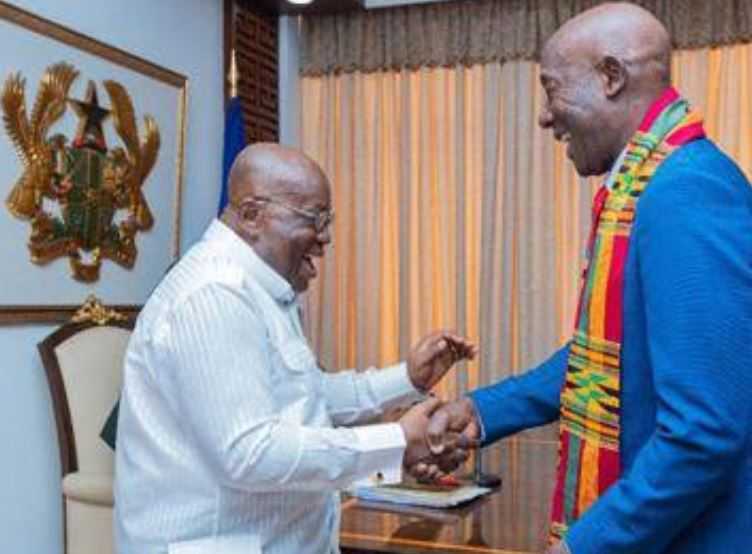
Trinidad and Tobago has pledged its backing for Ghana’s candidacy for the General Secretaryship of the Commonwealth.
Prime Minister Dr. Keith Christopher Rowley of Trinidad and Tobago announced the decision to support Ghana during a courtesy visit to President Nana Addo Dankwa Addo at the Jubilee House in Accra last Friday.
This visit was part of Dr. Rowley’s itinerary during his trip to Ghana, extended as a special guest to the 25th anniversary celebration of the ascension of Asantehene Otumfuo Osei Tutu II to the Golden Stool, upon the invitation of the Asantehene.
Dr. Rowley stated that Trinidad and Tobago’s decision to endorse Ms. Shirley Ayorkor Botchwey, Ghana’s nominee for the position, was one of several initiatives aimed at strengthening bilateral ties between the two countries.
He said, “I just want to give you the assurance that Trinidad and Tobago remains a leader in CARICOM and so we’ve given you the commitment that we will support fully the candidacy of your foreign minister.”
The Prime Minister clarified that despite his absence from the previous CARICOM meeting and his decision not to attend this year’s event, he would be traveling to Samoa to advocate for Ghana’s candidacy.
“I did not intend to go to the ones coming up in Samoa but because of our commitment to Ghana, to get your candidate elected as Secretary General, I intended to go to campaign for CARICOM in support of Ghana’s candidacy,” he emphasised.
Ghana’s Minister of Foreign Affairs and Regional Integration, Ms Shirley Ayorkor Botchwey, is one of the individuals contesting for the position of the Secretary General of the Commonwealth.
Dr Rowley also touched on the need for Africans to establish one international body with one voice to press home the demand for reparation from Western Nations for their role in the Trans-Atlantic Slave Trade.
President Akufo-Addo expressed his profound gratitude to President Rowley for the gesture and noted that Ghana would rely on Trinidad and Tobago to achieve that milestone.
“We know that the voice of Trinidad in the Caribbean goes very far so it’s an important statement for us that you have made here today and the fact that as a result of that you have decided to go to Samoa, which is a long way away for all of us and is also something very heart warming and we thank you very much for it,” he stressed.
Regarding the issue of reparations, President Akufo-Addo remarked that Trinidad and Tobago’s efforts closely aligned with those of Ghana and the African Union as a whole.
President Akufo-Addo said the AU had not created a cross continental, intercontinental international to raising the issues.
“The people in Addis Ababa, the AU will be very happy to hear this initiative and especially because of the decisions that will be taken this last year or two along the same lines, it is time the Caribbean and those of us on this side of the Atlantic, on the continent come together on this matter, because it’s a common fight and it is a common issue,” he said.
President Akufo-Addo said even though the demand for reparations and the “noise surrounding it” had been growing, the time had come for a unified voice in that direction.
Chief Executive Officer of the Ghana Investment Promotion Center (GIPC), Yofi Grant, has revealed that the tourism sector ranks as the country’s fourth-largest earner of foreign exchange.
He highlighted the significant growth of the tourism sector in recent years, attributing it to its appealing characteristics.
Yofi Grant pointed out political stability and adherence to the Rule of Law as contributing factors to the remarkable expansion of the tourism sector.
To support his assertion, he pointed out that Ghana has emerged as a destination of happiness for both local and international tourists.
In his opinion, the tourism sector generates employment opportunities for young people and bolsters the economy.
“Tourism is a low-hanging fruit for the growth of the economy only because it has import ability. We can actually import tourists; it also creates jobs, and it is probably one of the areas where jobs can be created organically without much effort,” he said.
The GIPC CEO added that, “TheBank of Ghanaestimates that tourism is the 4th biggest earner of forex in Ghana, trailing behind gold and cocoa, so it is important to our economy.”
Yofi Grant was speaking on the theme: “Regulatory framework for tourism infrastructure and its growth.”
According to the 2023 report from the Ghana Tourism Authority, a substantial number of visitors, totaling 1,157,632, explored the top attractions, constituting a notable portion of the 1,407,709 visits to various tourist destinations.
Furthermore, the following are the top 10 most visited tourist sites in Ghana:
A prominent economist and Director of Research at the Institute of Economic Affairs (IEA), Dr. John Kwabena Kwakye, has clarified that his proposal for dollarization as a response to the declining cedi was driven by desperation and can only serve as a short-term solution.
In a social media post on X, the former member of the Bank of Ghana Monetary Policy Committee advocated for official dollarization due to the rapid depreciation of the cedi.
However, Dr. Kwakye emphasized that this approach cannot be sustainable in the long term.
“To be honest with you, I think I made that suggestion out of some kind of desperation. People are asking for short-term measures. What do we do now? It is like firefighting. So, I wasn’t offering that as the long-term kind of solution,” he told Starr News’ Edem Kojo.
“I was making the point that given the way the exchange rate is going, it’s as if our authorities don’t have a solution to the problem. So, the action I thought is maybe let’s just adopt the dollar,” he further clarified.
Explaining how the dollarization would be rolled out, Dr. Kwakye proposed three options the government can explore.
“There are about three ways of doing it. The first is what we call unilateral dollarization. That way, we don’t even have to agree with the US. We will sit down here and say, we want to adopt the dollar as our currency. So, we look at how much the Reserve Bank of Ghana has, some of it is in gold, some of it is in foreign exchange reserves, and so on. And therefore, we can let them keep part of it, and the rest we convert it to dollars and say, Ghanaians, bring your cedis in exchange for dollars,” he explained.
He, however, reiterated that the move will only be a stop-gap measure while the underlying structural issues are addressed.
“This will be for a couple of years, maybe two years or so. It will not be a substitute for the underlying structural weaknesses; we should continue to take measures to address those problems. But for the meantime, it’s like we are stabilizing the system,” he emphasized.
The second approach, according to him, is a total adoption of the dollar.
“The second is to approach the US and say that we want to adopt your currency. In the same way, they will say, OK, what reserves do you have in exchange for it? So, you also exchange your reserve and then you take their currency,” he said.
A more sustainable approach, according to Dr. Kwakye, is the maintenance of the cedi as the official currency, while fully backing the cedi with foreign exchange through the introduction of a currency board.
“The third approach is to maintain our currency. But we ask the central bank to make sure that they have enough foreign exchange to back it. So, we call something a currency board. A currency board means that you have your own currency but every single cedi is backed fully by foreign exchange. So, in that case, the cedi will not depreciate,” he explained.
Dr. Kwakye adds that strict terms are, however, needed for its successful implementation.
“It comes with very rigid, strict terms in the sense that the currency board doesn’t lend to the government. Because lending to the government also generates too much liquidity and then fuels depreciation. So, it brings some kind of restrictions,” he concluded.
The cedi, since the beginning of the year, has depreciated by about 14% against the dollar, as the dollar is being sold at some retail outlets at GH¢15.
Despite the global downturn in petroleum prices, Ghanaian fuel consumers are unlikely to benefit from anticipated decreases at the pump.
The rapid depreciation of the cedi is poised to offset any potential price reductions during the second petroleum pricing window for May, which began on Thursday, May 16.
Analysts expect a slight decrease in prices, but projections indicate that the devaluation of the cedi will counterbalance this decline.
While international market trends show significant drops in refined petroleum product prices, with petrol and diesel experiencing declines of 5.68% and 4.51% respectively, according to the Institute of Energy Security, Ghanaian consumers may not experience substantial relief.
The recent depreciation of the cedi, losing 8-10% of its value in the past two weeks, is anticipated to nullify these declines, resulting in minimal savings for consumers at best.
Derrick Xaste, a research and policy analyst at IES, emphasized that competitive pricing strategies employed by oil marketing companies (OMCs) may only lead to a marginal reduction in prices, approximately 2%.
“We expect prices to reduce but not significantly. If it hadn’t been for the cedi depreciation, the reduction would have been more significant. We expect some form of reduction, but you know the forces of demand and supply and the competitive pricing strategies by the various OMCs might bring some sort of slight reduction because they are all competing for the same consumer base.”
“I cannot predict for them because they all have their pricing strategy, they will equally also make a move depending on their other competitors what they’ll be doing so I cannot take that decision for them but definitely that reduction cannot be more than 2 percent.”
In the meantime, Duncan Amoah, the Executive Director of the Chamber of Petroleum Consumers, has cautioned that prices could either stay steady or rise further if the cedi’s depreciation persists.
At the onset of the pricing window, key Oil Marketing Companies (OMCs) such as Goil and Total Energies had kept their prices unchanged, with petrol and diesel retailing at GH¢14.40 and GH¢14.65, respectively.
Consumers are advised to brace themselves for potential price hikes should the cedi’s devaluation persist, underscoring the intricate dynamics involving global market shifts, currency fluctuations, and local pricing strategies.
Member of Parliament for Assin Central, Kennedy Agyapong, has restated his dedication to motivating future generations in Ghana, notwithstanding his unsuccessful attempt to secure the New Patriotic Party’s (NPP) nomination as a presidential candidate in the 2024 elections.
Agyapong utilized the social media platform X (formerly known as Twitter) to articulate his aspirations and fervor for the country.
“My vision and passion will continue to inspire the next generation of this great nation, Ghana,” he tweeted on May 16, 2024.
My vision and passion will continue to inspire the next generation of this great nation, Ghana 🇬🇭
President Nana Addo Dankwa Akufo-Addo has forwarded a petition to the Chief Justice seeking the removal of Special Prosecutor Kissi Agyebeng.
According to a report by Accra-based Joy News, the petition was submitted by inaugural Special Prosecutor Martin Amidu, who accused Agyebeng of procurement breaches.
Agyebeng, appointed as Amidu’s successor in 2021, has faced strong criticism from Amidu over the past three years.
Profile of Mr. Kissi Agyebeng before his appointment:
Mr. Kissi Agyebeng was born on 2nd July, 1978 at Nkwatia, Kwahu.
He is the Managing Partner of Cromwell Gray LLP, a reputable law firm in Accra. He is also the Chairman of the Electronic Communications Tribunal of Ghana, which is an appeal tribunal that sits on appeals from decisions or orders made by the National Communications Authority (NCA) and the Dispute Resolution Committee of the NCA, in respect of the regulation of electronic communications, the regulation of broadcasting, and the use of the electro-magnetic spectrum and related matters.
He completed his LLB at the University of Ghana, Legon and his professional law degree at the Ghana School of Law. He proceeded to the Schulich School of Law at Dalhousie University, Halifax, Nova Scotia for his LLM in Marine and Environmental Law. From there, he went to Cornell Law School, Ithaca, New York, where he pursued another LLM in Corporate Law and Securities Regulation.
His areas of expertise include Telecommunications Law, Energy Law, Real Estate Law, Government Contracts, Procurement Law, Law of the Sea, Corporate and Commercial Law, Maritime Law, International Law, International Commercial Arbitration, International Business Transactions, Criminal Law, International Criminal Law, Sports Law and Media Law.
A report by Accra-based Joy News reveals that President Nana Addo Dankwa Akufo-Addo has forwarded a petition to the Chief Justice seeking the removal of Special Prosecutor Kissi Agyebeng.
The petition, filed by inaugural Special Prosecutor Martin Amidu, accuses Agyebeng of procurement breaches.
Agyebeng, who succeeded Amidu in 2021, has faced severe criticism from Amidu over the past three years.
Today, on May 17, 2024, the Bank of Ghana’s Interbank forex rates indicate that the Ghana Cedi’s buying price against the dollar is 13.7641, with a selling price of 13.7779.
In Accra’s forex bureau, the dollar is being purchased at a rate of 14.70 and sold at 15.00.
Against the Pound Sterling, the Cedi’s buying rate is 17.4474, while the selling rate is 17.4662.
In an Accra forex bureau, the pound sterling is bought at 18.30 and sold at 18.80.
The Euro’s buying price is 14.9673, with a selling price of 14.9822.
At an Accra forex bureau, the Euro is bought at 15.70 and sold at 16.30.
The South African Rand’s buying price stands at 0.7565, with a selling price of 0.7571.
In an Accra forex bureau, the South African Rand is purchased at 0.40 and sold at 1.20.
The Nigerian Naira’s buying rate is 110.3762, while the selling rate is 110.8133.
In Accra’s forex bureau, the Nigerian Naira is bought at 9.00 Naira for every 1 Cedi and sold at 13.00.
As for the CFA, it is bought at a rate of 43.7824 and sold at 43.8260.
In an Accra forex bureau, the CFA is bought at 22.00 for every 1 Cedi and sold at 24.50 for every 1 Cedi.
Our forex bureau rates are provided by Afriswap Bureau De Change in Osu, Accra.
Note that these rates may differ at a forex bureau near you. Our forex bureau rates are provided by Afriswap Bureau De Change in Osu, Accra.
Daughter of Asantehene Otumfuo Osei Tutu II, has commended her father for his unwavering dedication to advancing education.
In an interview on Joy FM’s Personality Profile, Dr. Prempeh emphasized that Otumfuo’s commitment to education is a hallmark of his leadership.
She reflected on her father’s influence, noting that Otumfuo Osei Tutu II’s passion for education goes beyond personal connections.
“I won’t sit somewhere and say that my father is just my father. He is a father of all, especially if you love education, you understand that any child who is from whatever dimension of the world or Ghana, once you’re interested in education, you’re his friend,” myjoyonline.com quoted her to have said.
The medical practitioner also reminisced about the celebrations at the Manhyia Palace commemorating her father’s 25th anniversary on the throne.
“As a family, we were all thrilled. Seeing him celebrate 25 years of impactful leadership was beyond exhilarating,” Dr. Prempeh shared.
On the May 16, 2024, edition of Good Morning Ghana on Metro TV, host Randy Abbey questioned National Democratic Congress (NDC) lawmaker Sam George regarding an allegation he made during the program.
The Ningo Prampram Member of Parliament accused the Electoral Commission of deliberately attempting to reduce the number of registrants in his constituency during the ongoing limited voter registration exercise.
Sam George specifically accused Samuel Tetteh, the EC’s deputy commissioner in charge of operations, of reducing the number of registration kits in Ningo Prampram from three to two.
According to Sam George, an EC official in his area confirmed that the reduction was ordered from higher up and suggested that the MP contact Samuel Tetteh for further information.
Randy Abbey then pressed Sam George with a series of questions about what steps he had taken to verify the accuracy of the report he received.
Randy: Did you call Samuel Tetteh?
Sam George: Why should I call him?
Randy: But that is not fair.
Sam George: Did Samuel Tetteh call me and call the NPP candidate before sitting in Accra and deciding that we didn’t deserve three machines in Ningo Prampram?
Randy: What if the District Director was lying to you?
Sam George: What purpose does it serve?
As the issue lingered, Randy requested that his team contact the EC official for clarification on the allegation.
Opposition flagbearer John Dramani has pledged to investigate the government’s gold-for-oil policy should he secure the presidency, citing concerns over transparency.
Mr Mahama asserts that the arrangement lacks clarity and necessitates a comprehensive inquiry.
Introduced by the government in 2021, the gold-for-oil deal aimed to address the depreciation of the cedi and the surge in fuel prices.
Addressing the 3rd Annual Transformational Dialogue on Small-scale Mining at the University of Energy and Natural Resources (UENR) in Sunyani, the leader of the main opposition National Democratic Congress emphasised revisiting the deal.
He stated, “We will investigate the opaque gold for oil programme and expose the actors benefiting from this so-called barter agreement. Reports reaching me suggest that a new debt burden is being created because Ghana has not been able to keep up with its delivery of gold under the programme.”
Vice President Mahamudu Bawumia introduced the policy in 2022 as part of efforts to counteract Ghana’s diminishing foreign currency reserves and the increasing demand for dollars by oil importers, both of which contribute to the depreciation of the Cedi and rising living costs.
Through the G4O program, Ghana seeks to obtain competitively priced oil through gold trading, with the goal of easing pressure on the Cedi, stabilizing fuel prices, and addressing balance of payment challenges.
As of March 2023, Ghana had acquired over 60,000 ounces of gold, valued at more than $97 million, from local mines. However, the Precious Minerals Marketing Company (PMMC) aims to procure at least 160,000 ounces of gold, valued at approximately $300 million monthly, to fulfill around half of the country’s monthly oil demand.
Senior Staff Association (SSA) of the Volta River Authority (VRA) expresses concern over the impact of the revised Cash Waterfall Mechanism on the company’s operations.
Implemented in April 2020 and revised in 2023 under the Energy Sector Recovery Programme (ESRP), the Cash Waterfall Mechanism aims to ensure fairness and transparency in distributing energy revenues among electricity distribution companies.
However, the Senior Staff of VRA argues that the reality contradicts this intention, citing that Independent Power Producers (IPPs) receive a fixed amount of $43 million monthly.
Despite VRA generating 67.5 percent of power for the national grid, with IPPs contributing only 32.5 percent, revenue distribution disproportionately favors the IPPs, according to the association’s statement.
“Currently, all available plants are running 24/7. That cannot be said about IPPs, yet at the end of the month, they are given $43 million which is more than half of all the payments made into the CWM by the ECG,” portions of the statement said.
“Will IPPs accept this kind of treatment meted to VRA?”the Association quizzed.
The Association further dismissed calls for the privatisation of VRA.
“We wish to reiterate that VRA is the only strategic state-owned power utility providing and guaranteeing the energy security for the people of Ghana and for that matter none of its assets must be put on sale.
“The Authority is efficient in operating and managing its assets and thus should be allowed to operate its diverse generation mix, devoid of any unwarranted privatisation.”
Founder of the Lepers Aid Committee, Reverend Father Andrew Campbell, SVD, has shared startling insights into the hardships faced during the 1979 coup.
He revealed that the coup led to food shortages and a lack of essential health resources, resulting in a surge of kwashiorkor, a severe form of malnutrition, among children resulting in fatalities.
Describing the period as dire, he noted that many children succumbed to kwashiorkor due to the scarcity of medical supplies and food.
“Once, the time came in the coup 1979 and I was very much deeply involved in Princess Luwis children’s hospital. And I can distictively remember there were so many children brought in with Kwashiorkor. So many were brought in and some had died. That I remember. It was the food, things were in short and they hadn’t got the money. So things were hard for them,” the reverend father stated.
When the coup happened in 1979, a lot of children suffered Kwashiorkor and so many died – Fr. Andrew Campbell, SVD
The Bank of Ghana (BoG) and Development Bank Ghana (DBG), in partnership with digital partner Proxtera and with support from the Monetary Authority of Singapore (MAS), have announced an ambitious target of US$100 million to be funneled into the Ghanaian MSME ecosystem through the Ghana Integrated Financial Eco-system (GIFE).
This announcement was made during the ongoing sessions of the 3i Africa Summit, marked by a signing ceremony between DBG and Proxtera.
The collaboration aims to accelerate the distribution of up to 1.83 billion Ghanaian Cedis through the fully digital infrastructure established by the GIFE program.
GIFE, which was launched at the 2022 edition of the Singapore Fintech Festival and operationalized in the first half of 2023 with the Consolidated Bank of Ghana as its pilot financial institution partner, is a digital platform designed to empower MSMEs.
It offers a comprehensive suite of services, including financial literacy, the creation of trusted credentials using the global Universal Trusted Credentials framework, access to working capital, and facilitation of cross-border trade with Asia and the ASEAN region.
Saurav Bhattacharyya, CEO of Proxtera, expressed pride in supporting GIFE as a founding partner, highlighting Proxtera’s commitment to leveraging trusted credentials and digital infrastructure to propel Ghanaian MSMEs onto the global stage of digital cross-border trade and financial networks.
K Duker, CEO of DBG, hailed the partnership as a pivotal moment in DBG’s mission to provide sustainable finance solutions to Ghanaian businesses, particularly MSMEs.
He emphasized the critical role of MSMEs in Ghana’s economy and expressed optimism that the GIFE program would catalyze their growth and contribute to the country’s economic resilience and prosperity.
Dr. Ernest K.Y. Addison, Governor of the Bank of Ghana, reiterated the central bank’s commitment to exploring innovative financing models and enhancing MSME contributions to economic growth, in alignment with the broader economic transformation goals of the Ghanaian government.
Mr. Sopnendu Mohanty, Chief FinTech Officer at MAS, emphasized the importance of the GIFE program in fostering collaboration between central banks and emerging markets, noting its potential to revolutionize financial inclusion through smarter data-driven support mechanisms tailored to the needs of MSMEs and financial institutions.
”As the GIFE programme gathers momentum, stakeholders anticipate significant strides in enhancing the resilience, competitiveness, and international reach of Ghanaian MSMEs, positioning them for sustained growth and prosperity in the global marketplace