Author: Amanda Cartey

  • My early years in London made me a sad African because Afrobeat was unpopular – Tiwa Savage

    My early years in London made me a sad African because Afrobeat was unpopular – Tiwa Savage

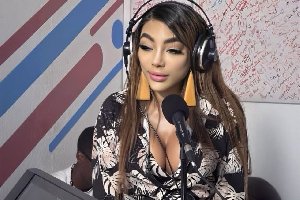
    Nigerian singer, Tiwa Savage, has revealed that her early years in London made her a sad African because Afrobeat was unpopular.

    “I remember growing up in London and I was not happy being African. But now I’m so proud because of how big Afrobeats is growing,” she said.

    Her comments come amid claims from some industry figures, including Paul Okoye (Paulo) and DJ Big N, that Afrobeats is currently declining.

    Tiwa Savage currently disputes the claim due to her belief that, Afrobeats is now the fastest-growing in the world.

    According to her, the genre was developed with nothing, “no support, no infrastructure, no real belief even from our own people initially.”

     But it is now shaping global cultures and inspiring young Africans to embrace who they are.

    “There was a conversation at one point that Afrobeats was going to have its 15 minutes of fame and then fade away. But we are still here. We are not slowing down. We’re filling stadiums, and we have the biggest songs on the charts right now,” she stated.

    Tiwa Savage added that Afrobeats has become a force that cannot be silenced.

    “As much as they are trying to quiet us down, the music is not going anywhere. We are Africans and we are unstoppable,” she added.

    Meanwhile, Tiwa Savage has stated that she is not comfortable with being referred to as the “Queen of Afrobeats.”

    “Yeah, they call me the Queen of Afrobeats, but there are a lot of us that are Queens,” she said on GhanaWeb’s X Space on September 12, 2025.

    The award-winning artist believes that many other female artists deserve such a title.

    Meanwhile, renowned event MC and entertainment pundit, MC Portfolio, has shared his view on whether Stonebwoy deserves recognition as one who introduced the Afro-Dancehall genre or not.

    During a conversation on GhanaWeb Entertainment’s X Space on Friday, July 4, MC Portfolio emphasized that an individual cannot claim ownership of the English word “Afro‑Dancehall,” as a genre.

    He asserts that it demands a clear brand and an ambassador to carry it forward.

    “You cannot leave out Stonebwoy. He has been someone who is very vocal and intentional about drumming the genre. We are not being fair to Stonebwoy if we don’t give him his flowers,” he asserted.

    In an unrelated event, veteran dancehall musician Samini has warned netizens to resist attempts likely to spark a feud between him and Stonebwoy, another dancehall artiste.

    This comes after the “My Own” hitmaker was questioned on X about his contribution to championing the Afro-dancehall genre.

    The user with an account name Repost King noted, “Smh… assuming you right, how well did you champion this. What has been your effort in bringing to light Afro-dancehall. The fact that you advised him on fusing ayigbe to his songs doesn’t make you the originator. You are a legend undisputed but Afro-dancehall has always been 1Gad’s.”

    In response, Samini stated, “Put some respect on my name G. SMH I blame @stonebwoy. Tell me the difference. After that tell me who named it and who renamed it. Don’t make me and @stonebwoy fight ooo. He knows the truth I beg. DONT. Man start vex these foolish newbies. Massa talk to your fans oooo. Yooooo.”

    Stonebwoy takes pride in being the pioneer of the Afro-dancehall genre, which has provided a nurturing environment for numerous emerging artists.

    The award-winning singer, who has earned the title of one of the country’s greatest exports, is fulfilled to have witnessed the growth and widespread use of Afro-Dancehall tunes.

    “It is literally broken down as Afrobeat and dancehall. It is very simple in that context. I am only very confident enough to have coined this name more than a decade ago and I have been living up to it till today.

    “I believe that it is a very beautiful space to be in. It will interest you to know that there are tons of African youths who are into the Afro-dancehall style and paying a lot of respect to the name, Stonebwoy for being a fierce force and pushing this to the world,” the dancehall musician elaborated in an interview on +44 Podcast with Sideman & Zeze Millz in May 2023.

    Article image 1

    Stonebwoy paid tribute to the founding founders and big names who created the dancehall genre and saw it grow.

    Afro-Dancehall was birth when young Stonebwoy received a calling back in 2007. It took careful deliberation and hard work to come out with the perfect name that suits this kind of music which combines African sounds and dancehall.

    “My history with Afro-dancehall is that I should be, you know what they say that an idea is not in one man’s head…it will interest you to know that I have been pushing Afro-dancehall as a coin as a term from early when I started my career before I launched properly. It was the calling I had…I sat and wonder what I was going to call it and as far as 2007 and 2008, I have been about it,” he said.

    The hitmaker has been making waves following the release of his 17-track album titled ‘5th Dimension’ in April 2023.

    Stonebwoy was adjudged the Best Reggae/Dancehall Artiste at the 24th edition of the Vodafone Ghana Music (VGMA).

    Last year, he triumphed at the 2024 International Reggae and World Music Awards (IRWMA) by clinching the prestigious title of Best African Dancehall Entertainer.

    The event, held at the Lauderhill Performing Arts Center in Fort Lauderdale on March 22nd, 2024, marked the 41st anniversary of the awards ceremony and highlighted exceptional talent while also promoting Health Awareness.

    Among the other notable winners were Nigerian star Wizkid, who secured the Best Afrobeat Entertainer award, and Burna Boy, who took home three awards for Best African Entertainer, Best Music Video, and Best Crossover Song with “Talibans II.”Additionally, Seun Paul was honored with the esteemed Emperor of Reggae & World Music category.

  • “We didn’t like you but your consistency is impressive” – Arnold tells Wendy Shay

    “We didn’t like you but your consistency is impressive” – Arnold tells Wendy Shay

    Entertainment pundit Arnold Asamoah-Baidoo has openly admitted to Afropop singer Wendy Shay that he is deeply impressed by her remarkable growth in the music industry, despite facing early criticism and a lack of appreciation.

    He explained that the negative perception many Ghanaians, including himself, had toward Wendy Shay in her early days was partly due to the nation still mourning the untimely death of the late Ebony Reigns.

    Arnold acknowledged, however, that Wendy Shay’s resilience and determination have paid off, making her one of the few artists who have successfully risen above public doubt to solidify their place in Ghana’s music scene.

    “I was the few people who did not like you when you were introduced on the Ghana Music Awards stage because of the love we had for Ebony. But then you won me over over the period. I remember when I told you about how impressed I am with your growth. Even the way you answered questions and how you have grown. I am super impressed. Because you’ve been very consistent. Since the time you were unveiled on that stage,” he said in a conversation on United Showbiz.

    Months ago, Wendy shared some of the challenges she encountered with family members due to trolls on social media.

    According to her, netizens chided her over their belief that she was doing all she could to imitate the late Ebony Reigns.

    During an appearance on Afrobeats Podcast with Adesope Shopsydoo, the ‘It’s Too Late‘ hitmaker revealed that her mother suggested she return to Germany.

    According to her, some family members were shy to associate with her.

    “At a point, my mum asked me to quit music and return to Germany because the trolling was overwhelming and it affected everyone in my family,” she said. “Some of my relatives were even kind of shy to associate with me at the time.”

    “Imagine they take your face, edit it to make you look like an old woman, and start mocking and laughing at you. They even said I wasn’t talented enough. It was crazy. I wouldn’t wish that on my worst enemy, but it built me,” Wendy added.

    Despite these challenges, Wendy Shay established herself as one of Ghana’s most recognized female artistes.

    Her first single titled “Uber Driver” shot her to the limelight, followed by other chart-topping hits such as “Heat”, “Stevie Wonder” featuring Shatta Wale, “Emergency” and “Survivor.”

    Wendy’s latest hit, “It’s Too Late,” has been enjoying massive attention across media platforms and is topping charts globally after a schoolgirl in Ashaiman, Tracy, went viral dancing to the song.

    The video quickly gained traction, with many praising her energy and talent. However, some critics questioned her choice of attire and expressions, calling them inappropriate for a child.

    Despite the mixed reactions, the music star was moved by Tracy’s enthusiasm and decided to take action.

    Wendy Shay, who had performed at Ridoana Comprehensive School during the All Ashaiman Schools Festival, returned to honor the young girl. In a touching video shared on her social media, Wendy spoke to the school’s students and staff, recounting the moment she first saw Tracy perform.

    “About a week ago, I came here to this school to perform, and during my performance, there was this talented, beautiful, shining star—Tracy—dancing and singing passionately to my song ‘Too Late.’ The video went viral and is still trending. So I came back today to say thank you and to reward my little star, my shining star, Tracy,” Wendy said, her words filled with pride.

    In a moment of true generosity, Wendy Shay announced a full educational scholarship for Tracy, covering her education from Class 5 all the way through to university.

    The award-winning artiste, who has bagged honours at both the 3Music Awards and the Ghana Music Awards, credits her resilience and the unwavering support from her fans for her continued success.

    She spoke out against the backlash surrounding a viral video of a teenage girl dancing at one of her recent performances.

    The video, which circulated widely on social media on April 3, 2025, captured the young girl dancing enthusiastically to Wendy Shay’s latest song, Too Late, which contains explicit lyrics.

    While the girl’s passion impressed some viewers, others expressed concern about the setting of the performance, criticizing Wendy for performing such a song in front of minors. The young girl also became a target of online trolls, with some social media users mocking her moves and labeling her dance as overly sensual.

    In reaction to the growing criticism, Wendy Shay took to social media to share her thoughts, highlighting how many were failing to recognize the girl’s potential and confidence. She wrote:

    Wendy went on to condemn the negativity flooding the comment sections and stressed the importance of nurturing young talent rather than discouraging it.

    She continued, “My performance over the weekend has put light on a little girl dancing passionately and happily in the crowd and it’s surprising how some people cannot easily identify a talented and confident child when they see one.

    “I see a lot of negative comments under the post, and it is heartbreaking because what I see is a beautiful, talented, and confident young girl who could become a professional dancer or a musician if she is carefully guided,” she said.

    She concluded her post by urging critics to adopt a more constructive mindset and stop tearing down young people expressing themselves creatively, “Let us advance our mindset and see positivity in things like this.

    Her response has sparked a wave of support from fans and social media users who agree that young talents should be encouraged rather than attacked.

  • Ghana cedi printed abroad due to lack of infrastructure – BoG

    Ghana cedi printed abroad due to lack of infrastructure – BoG

    Head of Currency at the Bank of Ghana (BoG), Dominic Owusu has explained why the Ghana cedi is currently printed abroad and not in the country.

    According to him, the country lacks the infrastructure needed to print banknotes that matches up with international standards.

    In an exclusive interview with GhanaWeb Business during the launch of Cedi@60 celebration in Accra on October 28, 2025, Mr Owusu revealed that there are just a few companies in the whole wide world with technologies to print legal tenders.

    “Currency printing is not only Ghana who prints its currency outside. I think in the world, I can count not more than 20 printers, so it means that every country, some countries, print,” he said.

    The Head of Currency at BoG also disclosed that the government is working around the clock to engage international partners for the establishment of such equipment here in the country.

    “Even if you have a printing facility, you would still be importing all the raw materials. I can tell you for sure that Nigeria has a printing facility but they import a lot of their money. So, looking at where we are and the rate of technological advancement, you want to relax and then do very good contract obligations with the best printers in the world and print the best currency, which the Ghana cedi is also part of,” he stated.


    The Ghanaian cedi marked its 60th anniversary on Tuesday, October 28, symbolizing the nation’s economic independence. To commemorate the milestone, the Bank of Ghana (BoG) held an official launch at the Accra International Conference Center under the theme, “60 Years of the Cedi: A Symbol of Sovereignty, Stability, and Economic Resilience.”

    The celebration represented Ghana’s economic journey and resilience over the past six decades. Vice President Jane Naana Opoku-Agyemang graced the occasion alongside other government officials.

    Since its introduction on July 19, 1965, the cedi has undergone several reforms and redesigns to reflect the nation’s evolving economic landscape.

    Speaking at the event, the BoG Governor, Johnson Pandit Asiama, noted that the celebration aims to rekindle public confidence in the national currency.

    Meanwhile, the Bank of Ghana will begin selling portions of its gold reserves in exchange for foreign currency to banks and other market participants under its Domestic Gold Purchase Programme.

    According to the BoG, only approved banks will be permitted to participate in the auctions, which are scheduled to take place every week. Speaking at a meeting with heads of commercial banks in Accra, the Governor of the Bank of Ghana, Dr. Johnson Asiama, said the exercise will be fair and transparent to ensure equal access for all market participants.

    “Beginning October 2025, the Bank of Ghana will commence foreign exchange (FX) intermediation under the Domestic Gold Purchase Programme, with plans to sell up to US$1.15 billion for the month. These sales will be conducted on a spot basis through twice-weekly, price-competitive auctions open to all licensed banks,” he said.

    The Ghana cedi’s strong performance was a central theme highlighted by President John Mahama in an interaction with potential investors in Singapore and Japan, barely a week ago. President Mahama emphasised the robust performance of the local currency to underscore Ghana’s macroeconomic stability and attractiveness as a destination for foreign capital.

    However, the cedi’s brief gains have proven short-lived, after its rapid depreciation made it the worst-performing currency in a latest report by a global financial news outlet, Bloomberg. According to Bloomberg’s recent report released on Thursday, September 4, the Ghana cedi is the worst-performing currency among all trading currencies, attributing the depreciation to a surge in demand for dollars by companies paying for imports. “A surge in demand for dollars by companies paying for imports has ended the Ghana cedi’s recent strong performance,” Bloomberg said.

    Bloomberg explained that the new development is attributed to the“strong gold prices”, while emphasizing that Ghana’s cedi has seen more than a ten percent (10%) depreciation in the current quarter. This, Bloomberg noted has erased the fifty percent gain against the dollar in April and June, Bloomberg detailed. According to the Bloomberg the cedi traded 0.1 per cent weaker at GH¢11.9507 per dollar at 1:50 a.m. Despite the losses, it has gained 23 per cent so far this year.

    “Now, the currency, which had ranked first globally on the back of strong gold prices, has weakened by 13 per cent in the current quarter. Bloomberg data showed this was the steepest fall worldwide, erasing part of the 50 per cent gain recorded between April and June”, the report said.

    But Bloomberg has indicated that “Despite the losses, it has gained 23 per cent so far this year based on market data. Reacting to Bloomberg’s report, the Bank of Ghana (BoG), noted “The cedi should be stable within a reasonable range,” the central bank said in an emailed response. Our role is to ensure fluctuations remain orderly, that they reflect fundamentals, and that they do not undermine confidence in the broader economy”.

    Bloomberg in April this year, ranked the cedi as the best-performing currency with a sixteen per cent (16%) gain against the dollar. What made the cedi earn the tag as the worst-performing currency is as a result of it seeing the steepest decline on the global level. The cedi’s appreciation in the last eight months helped ease inflationary pressures, pushing consumer inflation down to 21.2 per cent, the lowest in eight months at the time.

    Ghana’s import-dependent economy brings in a wide range of goods, from food to machinery, with demand typically rising toward the end of the year as businesses prepare for the Christmas season. The higher demand for dollars has piled pressure on the cedi, while the Bank of Ghana’s (BoG) limited supply of foreign exchange has added to the strain.

    Head of Market-Risk Management at UMB Bank, Mr Hamza Adam, said banks that submitted dollar requests on behalf of clients to the Bank of Ghana last week received only half of what they asked for.

    “This week the central bank is trying to meet all demand,” he said by phone from Accra on September 3, 2025.

    Before Bloomberg reported on the cedi, BoG addressed the concerns of Ghanaians concerning the fast depreciation of the cedi, calling for calm. Bank of Ghana Governor, Dr. Johnson Asiama, during an interview with Joy Business, which was aired on Wednesday, August 27, mentioned that the current depreciation of the cedi was temporary, assuring a comeback soon.

    “The Bank of Ghana operates a managed floating system in terms of framework; therefore, these blips will happen. But the assurance is that this is a short-term issue, and the challenges are being addressed,” he assured.

  • Fabrication, importation, use of Changfan machines without permit prohibited – EPA

    Fabrication, importation, use of Changfan machines without permit prohibited – EPA

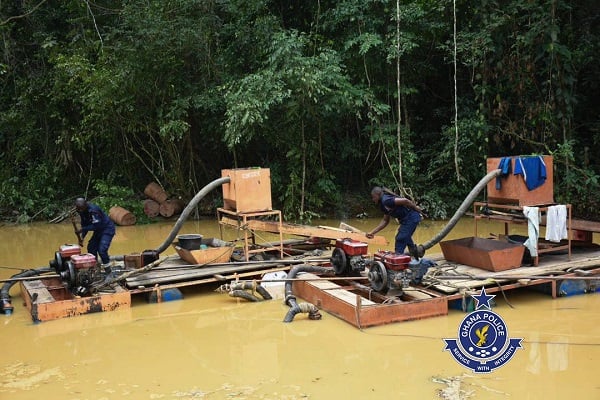
    The fabrication, importation, sale, and use of ‘Changfan’ machines in Ghana, has been ban with immediate effect the Environmental Protection Authority (EPA).

    The move is a response to severe environmental destruction caused by the usage of the machines for illegal mining activities.

    According to a statement issued by the authority on October 29, 2025, the EPA addressed users of the machine without necessary authorization.

    “The fabrication, importation, and use of Changfan machines without EPA permit are prohibited. Any workshops or shops found producing or selling these machines will be shut down, and all existing equipment will be seized and dismantled,” the EPA stated.

    It warned all those engaged in illegal mining activities, otherwise known as galamsey, to desist from the practice.

    “The Authority also issues a final warning to individuals, groups, and companies engaged in mining within water bodies to stop such illegal activities immediately as these actions are serious violations of national environmental and mining regulations,” it noted.

    The EPA stated that it would carry out enforcement operations in collaboration with security agencies to ensure full compliance through monitoring, seizure, and prosecution where necessary.

    Read the full statement below:

    Ghana’s annual food import bill which amounts to $3.5 billion could rise further if the government fails to act against illegal mining.

    This is as a result of a new study by Pure Earth and Environmental Protection Agency (EPA), exposing the extensive contamination of mercury, arsenic, lead and other heavy metals across artisanal and small-scale gold mining areas. 

    Thus, the Executive Director of the Peasant Farmers Association of Ghana, Bismark Nortey, warned that the cost for food import may exacerbate if farmlands and water resources are not protected.

    “I urge all ministries and government agencies responsible to use this report as a benchmark to protect our farmers. If the situation continues and farmers are forced to abandon production, the impact on our nation will be catastrophic. The current amount we spend on food imports, which we have already complained about, could escalate even more if nothing is done, especially as Ghanaian consumers become increasingly cautious about the safety of locally produced food,” he told Citi Business News.

    The year-long study titled, Mercury and Other Heavy Metals Impact Assessment, conducted from August 2024 to September 2025 by Pure Earth in collaboration with the Ghana Environmental Protection Agency (EPA), examined soil, water, air, fish, and food crops in six regions: Ashanti, Eastern, Central, Western, Western North, and Savannah.

    Earlier this year, when Ghana’s annual food import stood at about $2 billion, the Peasant Farmers Association of Ghana (PFAG) called on the government to make strategic investments in the agricultural sector to reduce the country’s growing dependence on import.

    The association insisted that Ghana has the capacity to produce a significant portion of its imported food items locally if the right policies and support systems are put in place.

    Acting Executive Director of PFAG, Bismark Nortey, emphasized the need for urgent policy interventions to boost productivity and lower the cost of food production.

    Speaking to Citi Business News, he noted that the high cost of agricultural inputs and services were major contributors to food price inflation in the country.

    “Currently, one of the major causes of high cost of food is the fact that we are spending so much on production. We are spending so much on cost of input and agricultural services. These are because these things are so high. If the government can find a mechanism to either subsidize or reduce the prices of these inputs, then we can produce at low cost and that will translate into high productivity,” he said.

    Mr Nortey further highlighted the pressing need for improved access to mechanized farming to replace the outdated reliance on manual labor.

    “If you go to a lot of farming districts, they have no access to mechanization, so we are still using the hoe and cutlass which is not helping,” he stated.

    He stressed that with targeted investments in smallholder farming, infrastructure, and all-year-round agricultural production, Ghana could significantly cut down on its food imports and strengthen its food security.

    “If we are able to invest in agriculture, we are able to invest in smallholder farming and infrastructure, I am sure the kind of monies that we spend on importing the food we have the capacity to produce…we are one step away from reducing our dependence on that food import,” he added.

    The PFAG believed that prioritizing agriculture through policy reforms and financial support would not only ease Ghana’s reliance on imported food but also create jobs, enhance food security, and strengthen the local economy.

    In 2024, the Peasant Farmers Association of Ghana (PFAG) issued a grave warning about a potential generational food and nutrition crisis if immediate action was not taken against illegal mining.

    The Association called on the government to impose a ban on these activities to safeguard the environment, protect farmers’ livelihoods, and ensure food security.

    In a statement released on Tuesday, September 10, PFAG highlighted the severe impacts of illegal mining on Ghana’s agriculture. Over 1.2 million hectares of farmland has been lost to these activities, while vital water bodies and irrigation facilities have been polluted, complicating efforts to maintain sustainable agricultural production.

    The Association noted that the cocoa sector and food crop production have been particularly hard hit, with farmers struggling to access clean water and fertile soil. PFAG warned that if these issues are not addressed, they could lead to a catastrophic generational food crisis.

    “Failure to act now will have devastating consequences for future generations,” PFAG stressed, adding that they support an immediate ban on illegal mining. They also encouraged farmers to back efforts to end these harmful practices.

    Major rivers, including the Bonsa and Pra, have suffered severe pollution from toxic chemicals used in mining operations. Additionally, forest reserves such as Tano Nimiri have been irreversibly damaged. Health unions, concerned about the widespread environmental degradation, have echoed the call for a ban as a critical measure to prevent further harm.

    Under the Minerals and Mining Act, 2006 (Act 703), the Inspections and Compliance Division of the Minerals Commission is responsible for conducting mine inspections and ensuring adherence to mining laws. The Act also mandates that licensed miners operate within legal parameters.

    However, PFAG pointed out that regulatory institutions have struggled to enforce these laws effectively, with some mining companies continuing operations in violation of regulations. The Environmental Protection Agency (EPA) is tasked with integrating environmental policy and planning to ensure long-term maintenance of environmental quality, but its efforts have not been sufficient to curb illegal mining.

    In a related event, some unions, led by the Ghana Medical Association (GMA) and supported by groups like the Ghana Registered Nurses and Midwives Association (GRNMA) and the Health Services Workers Union of Ghana (TUC), are calling for a ban on small-scale mining, citing serious environmental and public health concerns tied to illegal mining.

  • “I depend on my church for food and clothing” – Agbeko

    “I depend on my church for food and clothing” – Agbeko

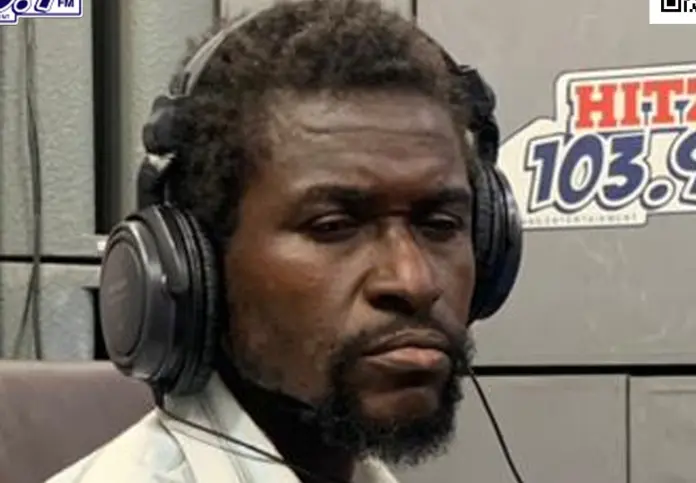
    Ghanaian rapper Agbeko has revealed that years of drug addiction have taken a toll on his health and memory, worsening his struggles while living on the streets.

    In an interview with Hitz FM’s Andy Dosty, monitored by The Independent Ghana, he confessed that he currently depends on the generosity of strangers and members of his church, Holy Hill Chapel, who support him with meals and clothing.

    “The clothes I’m wearing were given to me by my church,” he noted.

    Agbeko also shared that he occasionally finds it difficult to identify familiar faces from his past.

    “I realized I have an issue of memory loss,” he said. “I start to forget people I know really well. It’s serious, and I feel like I need medical attention.”

    He noted that the situation often leads to confusion, as some people think he is deliberately avoiding them when he genuinely cannot recall who they are.

    “They think I’m showing off, but they don’t know what I’m going through,” he said.

    Hiplife musician, Okomfour Kwadee, is showing signs of mental recovery after months of psychiatric care, according to Ghanaian entertainment pundit, Ohemaa Woyeje.

    However, she noted that Kwadee needs a conducive environment to avoid going back to his old deeds.

    “Currently his condition is okay, he looks very fine. But we don’t know the person who sent him to the care home. Like I said he is fine. But you know since he is stable right now he doesn’t have to stay there.

    “His mother even called me to ask me if there is any place he can stay so that he won’t go back to the drugs anymore.

    “His mother is in Accra right now. I spoke to the MUSIGA president and the funds Kwadee received are with him. So we are looking for a place that can accommodate him. A place where people won’t get access to him. And influencing him into doing drugs again,” she added.

    Kwadee, once a dominant figure in Ghanaian music, has battled mental health issues for years, reportedly linked to substance abuse.

    In 2020, former rapper-turned-pastor Lord Kenya took him to a rehabilitation center after a severe breakdown. However, in 2022, his mother revealed that he had been abandoned at the facility, pleading with the public for support.

    Concerns about his well-being resurfaced in 2024 when a video of him looking frail while drinking pito and freestyling among friends circulated online.

    The claims made by Pope Skinny have reignited discussions about Kwadee’s condition, though the musician himself has not publicly responded to the allegations.

    “This is what Okonfo Kwdee told me” I did not know that he was dating Akosua Puni. When I went to cantoment, Okonfuo’s house was at the back and Akosua Puni was in the main house. we were there when Akosua become pregnant. Okomfo felt he was the father. A big woman who lived with his family at Kantoment who was managing an artist. Akosua Puni was dating an ex-president, hence her level was not tallying with Okonfuo.

    “Okomofour told me, skinny, I was in my room when they came for me. They took me to the Titanic beach at dawn.

    They stripped me naked and took pictures of me. they broke my nails and a part of the hair on my head. My hair and nails were then kept on top of a nightclub somewhere. It was a famous nightclub. Okomofour Kwadee is the one who disclosed this to me. Okomofour Kwadee’s issue is quite similar to the issue of Funny Face,” he added.

    The mother of musician holds his former managers responsible for his current struggles, accusing them of prioritizing profits over his well-being.

    She claims that those who handled his career turned a blind eye to the harmful effects of drug use, focusing only on the money they could make from his performances.“His managers are the reason why he turned out the way he did. They did not care about his health and sanity but rather about their money. They were making money off him while he came home with nothing. According to her, because they were not family, they had no real concern for his welfare. Once they had exhausted him, they abandoned him, leaving his family to pick up the pieces.

    Radio personality Hammer Nti has refuted allegations that he failed to look out for Okomfo Kwadee’s well-being, maintaining that the musician was improving under his care until his family stepped in.

    He pointed out that photos available online serve as proof that Kwadee was in a much better state while staying with him.

    Clarifying his position, Hammer Nti stressed that he was never Kwadee’s manager but rather a devoted friend who took it upon himself to support his recovery.

    However, he expressed disappointment that his efforts have not been acknowledged by Kwadee’s mother.“You can attest to the fact that when I was taking care of Kwadee he looked good. Check from photos online and you’ll know that he was better under my care than he currently is. I am officially not Kwadee’s manager but I decided to take care of him because I love him. I’ve been with him since 2019 because he a brother and a friend I love so much,” he said in an interview with UTV.

    Meanwhile, Okomfo Kwadee’s mother has held his former managers responsible for his current struggles, accusing them of prioritizing profits over his well-being.

    She claims that those who handled his career turned a blind eye to the harmful effects of drug use, focusing only on the money they could make from his performances.

  • Expect to marry “Odowgu” if you are a well-established lady – Uzor Arukwe

    Expect to marry “Odowgu” if you are a well-established lady – Uzor Arukwe

    Popular Nollywood actor, Uzor Arukwe, has encouraged young ladies to work on becoming more valuable while expecting to marry wealthy man.

    This was his response to social media users who were hailing for his exceptional role as “Odowgu” played in a Nigerian movie titled “Love In Every Word.”

    On his X handle, he wrote, “While we are basking in our delulu, it’s important to remember that Odogwu saw Chioma as a valuable woman before throwing his full weight to support her. He didn’t even need to ask what she brings to the table because it was clear she’s an industrious woman.”

    “So as a woman, build value for yourself first, and your Odogwu will locate you to become your helpmate that makes everything easier to handle.”

    Ghanaian actress, Christiana Awuni has advised women in the country who plan to settle down in marriage to do so with wealthy men.

    In an interview with Kofi Adomah, the popular actress firmly stated that women must never harbour the intention of getting married to a man who is poor under any circumstance.

    Christiana Awuni explained that most men who are primarily poor shockingly get a weird taste for some particular women once they begin to make money.

    What this means is that, if you are a woman who decides to stick with a poor man with the hope that you guys are building a life together, he might ditch you when he begins to get money.

    Christiana Awuni defined a rich man as one who has a nice place to stay and can at least provide the basic needs of a lady.

    Actress Salma Mumin has denied allegations that her lavish lifestyle is funded by illicit relationships wealthy men.

    According to her, she owns businesses that funds her lifestyle.

    Adding that, she recieves favors from wealthy men with no strings attached.

    “Yes am stating for a fact that my food business, my clothing business, they funded my lifestyle. And its not just that, I am a very beautiful woman. I’m lucky in my encounters with affluent men. I don’t even attract men who are not wealthy,” Salma indicated.

    In a surprising development, Folorunsho Alakija, Nigeria‘s wealthiest woman, is reportedly facing a marital crisis after over three decades of marriage to her husband, Modupe Alakija.

    The couple, long prominent in Nigerian society, has chosen to separate.

    According to The Will newspaper, the former socialite, now a gospel minister, has officially split from her spouse. Sources close to the situation suggest that frequent disagreements led to their decision to live apart.

    Modupe Alakija, once a regular presence at their upscale residence in Ikoyi, Lagos, is now said to spend nights elsewhere.

    The strain in their relationship has prompted Folorunsho Alakija to seek complete privacy, while her husband seeks alternative housing in Ikoyi.

    The specific reasons for their marital discord remain undisclosed, but some speculate that their status in Nigerian society may have influenced their united front until now.

    Folorunsho Alakija, the founder of FAMFA Oil Limited, has not only made a name for herself as a successful businesswoman but also as a philanthropist and minister. This recent upheaval coincides with rumors about her health, particularly regarding her vision.

    As the nation observes, the end of their 30-year marriage marks a significant chapter in the lives of these influential individuals. We extend our wishes for strength and healing during this difficult period.

    A Twitter user, @budgetOdogwu, recently shared the account of a Nigerian man, known as “Egbon,” who ended his marriage due to financial tensions after his wife refused to work following his success.According to @budgetOdogwu, the Nigerian man, referred to as “Egbon,” initially married his wife while he was working at First Bank.While his wife continued her nursing studies in Port Harcourt, the man was solely responsible for providing the family’s finances at the time.

    However, tensions arose when the man secured a job at Shell Petroleum Development Company (SPDC).

    The wife decided to quit her job. Surprised by his wife’s decision to quit her job, he chose to overlook the issue and proceeded to establish a business for her in OkporoDespite his efforts to establish a business for her in Okporo, financial strains persisted, leading to secret wealth accumulation and, eventually, a divorce filing in 2018.

  • Joe mettle is now a mogul , he needs to be studied – Perez Musik

    Joe mettle is now a mogul , he needs to be studied – Perez Musik

    Ghanaian gospel musician Frank Tagoe, known professionally as Perez Musik, has showered praises on fellow artiste Joe Mettle, describing him as a “mugul” whose wisdom and achievements in the music industry are worth studying.

    Perez reflected on Joe Mettle’s remarkable growth and his newly launched multi-purpose studio, emphasizing that his journey truly merits admiration and acknowledgment

    “I knew Joe Mettle when the studio was at Dansoman. The wisdom it takes to achieve what he has achieved and do what he has done is something else. I think he needs to be studied,” Perez Musik told Kwame Dadzie and Doreen Avio on Hitz FM’s Daybreak Hitz on October 27, 2025.

    He is certain that Joe Mettle has advanced beyond the status of an artiste but a mogul in the Industry.

    “Joe Mettle is just not an artist; he has gone beyond being an artist. He is a mogul in the industry now,” Perez stated.

    Perez Musik further noted that Joe Mettle has strengthened both his craft and character through discipline and focus, serving as an inspiration to people within and outside the gospel music scene.

    “He has cemented his artistry, his personality, and his craft beyond doubt. He’s shown what discipline and focus can achieve. I’m greatly encouraged by it,” he added.

    Perez Musik is known for songs such as Blema Tesaa, Hewale Lala, Big God, Glorified, and Kaafo.

    He has currently released a new song titled ‘We Hail You’.

    Renowned gospel musician Joe Mettle has set a record as the first Ghanaian gospel artist to build and launch a full-scale, multi-storey creative facility.

    The studio, Reverb Studios, situated in Sowutuom, Accra, is a modern multimedia and production centre which was launched on Saturday, October 4.

    Reverb Studios, with a motto “Experience Beyond Production,” according to Joe Mettle, was built to suit international standards in terms of client comfort, acoustic engineering and soundproofing, accessibility and booking systems and multi-functional spaces.

    The main studio has the capacity to hold about 150 to 200 people, a good space to allow live music shows, talk shows, and audience recordings.

    Reverb Studios also has three professional audio recording rooms, a video post-production studio for both live and recorded editing.

    Joe Mettle, during a speech at the launch, explained that every part of Reverb Studios was carefully designed to make clients comfortable and inspired.

    It presents guests with beautifully furnished guest rooms, modern restrooms, fully equipped kitchens on each floor (three floors) with contracted chefs to provide meals for clients and guests and it’s accessible to everyone.

    However, to ensure the sustainability of the facility, he added that there will be rules and guidelines for how the space will be put to use.

    The studio’s motto is “Experience Beyond Production.”This means Reverb Studios aims to give clients more than just technical services, it wants to provide a complete creative experience that inspires and supports artists, brands, and event organisers in Ghana and beyond.

    The launch was nothing short of a star-studded event, bringing together numerous creatives from the music, media and movie industry.Some of the well-known people present included Kuami Eugene, Akesse Brempong, Adjetey Anang, Nii Okai, Cwesi Oteng, Roselyn Felli, Arnold Asamoah Baidoo, and Kwesi Ernest.

    On a separate occasion, Perez stated that in a world where everyone wants to access to your life through attacks and criticisms, staying mysterious can be the greatest shield.

    The musician believes that he cannot control how people come at him, but he can control how much of himself he reveals.

    “Attacks are normal. The attacks are many, some of them are physical, some of them are spiritual. Some people would slander you…When you are a mystery to people, they always try to figure out a way to get to you. So, sometimes it’s best to remain the mystery that they know you for because when you talk too much or you show too much you give them a lot to be able to get to you.”

    “Spiritually I would not say they attacked me, but those things happen. But I don’t focus on such things. He who lives in me is greater than he who lives in this world,” Perez Musik stated.

    Perez Musik got married to his wife, Abigail, on November 23, 2024, after overcoming a challenging breakup with his former spouse, Doreen.

    Taking to Instagram, Perez expressed his gratitude to God and shared his excitement about starting this new chapter of his life.

    “Blessed be the Lord who reigns forevermore! #restored,” he wrote.

    Ghanaian-UK-based preacher and gospel musician Sonnie Badu shared how disappointed his colleague, Perez Musik, felt when fellow gospel artists failed to attend his wedding.

    Speaking in an interview on Okay FM on November 26, 2024, Sonnie Badu revealed that the only gospel artist present, apart from himself, was Siisi Beidu.

    The turnout was so poor that Perez Musik was both surprised and delighted to see Sonnie Badu. He even offered him a seat right next to him in appreciation of his presence.

    “I value relationships, and I cherish humanity. When Perez invited me to his wedding, I told him I would come, but he thought I was joking. It was my first time going to Krokobite, and the road was quite challenging, but I made the effort because I wanted to show love.”

    He continued, “When I arrived, the only gospel artiste there was Siisi Beidu. I was glad I came, but Perez was heartbroken. It would have been really sad if I hadn’t shown up. He was so overwhelmed that he asked me to sit beside him, but I felt shy.”

  • “I am not prepared to bury my brother on Dec 6” – Daddy Lumba’s sister

    “I am not prepared to bury my brother on Dec 6” – Daddy Lumba’s sister

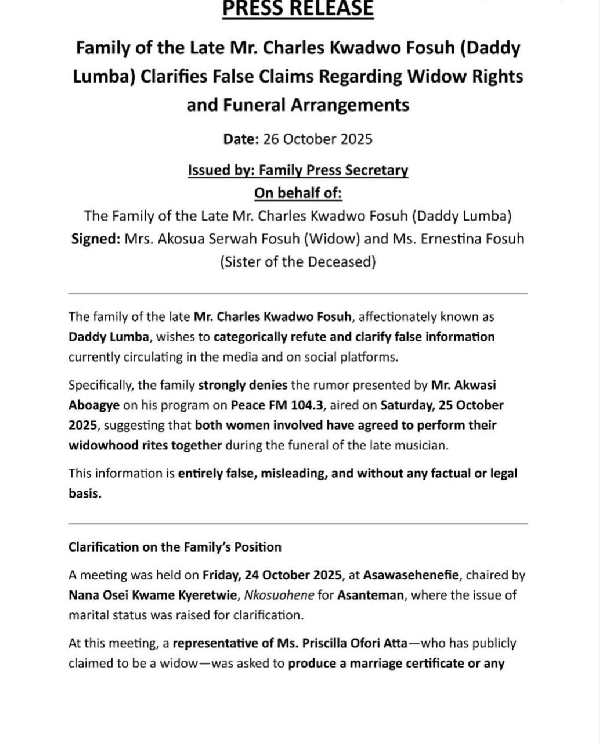
    Ernestina Fosu, the elder sister of the late Highlife legend Daddy Lumba, has indicated that she is not prepared to organize Daddy Lumba’s funeral on Dec 6.

    She made this known to the media in the aftermath of a court proceeding at the Kumasi High Court on October 28, 2025.

    “I am not ready for my brother’s funeral on December 6, 2025,” she stated firmly in a video shared on social media.

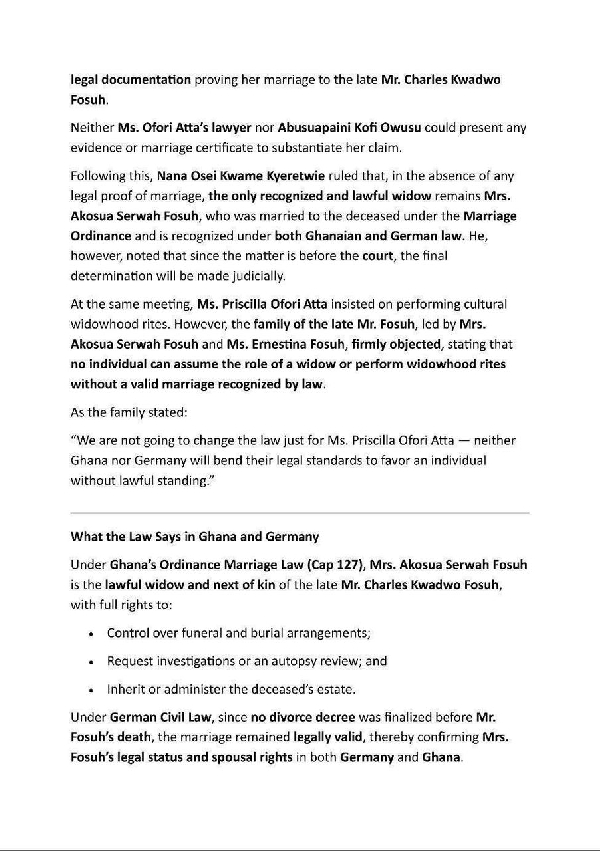
    Akosua Serwaa filed an injunction against the late musician’s funeral scheduled for December 6, demanding that she be recognized as the only surviving wife of the musician and not Odo Broni, who is currently claiming that title.

    While the court has yet to rule on the spousal status of Akosua Serwaa and Odo Broni, the Kumasi High Court has dismissed an injunction application that sought to halt the burial and funeral of the late legend.

    The judgment allows the family to go ahead with burial plans as originally arranged.

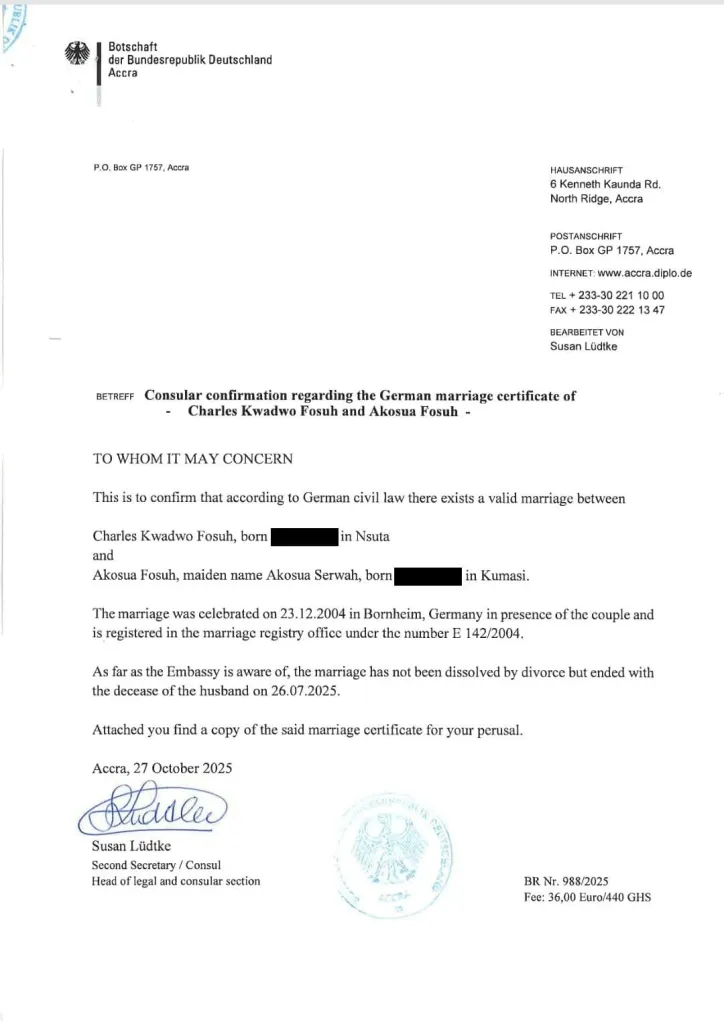
    Madam Serwaa’s lawyer, William Kusi, insisted that his client was the musician’s only legally recognized wife and that her rights were being ignored in the funeral preparations. He supported his argument with a civil marriage certificate reportedly issued in Germany as evidence of their union.

    In July this year, a statement by the counsel for the Fosu family confirmed that the music veteran passed on July 26, after a short illness.

    He succumbed to the illness at the Bank Hospital in Accra, per reports.

    The statement read: “With profound sorrow and deep grief, the Fosu family announces the passing of Ghana’s beloved musical icon, Charles Kojo Fosu, popularly known as Daddy Lumba, who passed away earlier today, Saturday, July 26, 2025, after a short illness.”

    “Daddy Lumba was more than a musician; he was a cultural icon whose music touched countless lives. His soulful voice provided the soundtrack to our love stories, and his poignant lyrics captured the poetry of our struggles, dreams, and resilience.”

    Daddy Lumba was renowned for his incredible talent as a singer, composer, songwriter, recording artist, and producer.

    With an illustrious career that has spanned over three decades, Daddy Lumba was widely regarded as the greatest and most influential musician in Ghanaian history.
    Many artists in Ghana, including Ofori Amponsah, Sarkodie, Kuami Eugene, Paa Solo of Sibo Brothers, Oheneba Kissi, KiDi, and others, consider him their major inspiration in the music industry.
    Daddy Lumba was born 60 years ago to Mr. Johnson Kwadwo Fosuh and Madam Comfort Gyamfi, also known as Ama Saah, in Nsuta, near Mampong in the Ashanti Region of Ghana. Both of his parents were teachers, and he was the second of three siblings.

    His educational journey began in Nsuta Kyebi, and he completed junior high school at Suame Methodist, Kumasi in 1979. Subsequently, he attended Adu Gyamfi Senior High School in Jamasi, but later transferred to Juaben Senior High School, where he completed his secondary education in 1984.

    Daddy Lumba’s music career took off in the early 80s when he formed the Nkwanta Wesley Singers, gaining fame at the Anokye Krom Cultural Center.

    During his time at Juaben Senior High School, he led the school choir and composed the song “Lumba Lumba,” dedicated to the freedom fighters in South Africa. This song’s popularity earned him the nickname “Daddy Lumba”, which later became his stage name. He also formed the Lumba Brothers band during his school days, which included his girlfriend at the time, Theresa.

    After completing school, Daddy Lumba, with the help of his high school sweetheart Theresa Abebrese, traveled to Germany. There, he met Ernest Nana Acheampong, and they formed another Lumba Brothers group, recording their debut album, “Yee Ye Aka Akwantuom,” in 1986. Financial constraints delayed the album’s release until 1989, and eventually, the duo split.
    Daddy Lumba then launched his solo career and released his debut solo album, “Obi Ate Meso Buo,” in 1990. The album received immense popularity and critical acclaim, featuring classics like the title track and “Theresa,” dedicated to his ex-lover. He has since released 33 albums, including notable ones like “Sika Asem,” “Aben Wo Ha,” “Wo Ho Kyere,” “Awosoo,” “Give Peace A Chance,” and “Ahenfo Kyiniye.” His latest project, “Ofon Na Edi Asem Fo,” was released in December 2022, reuniting him with longtime collaborator Kweku Mensah.

    In addition to his own success, Daddy Lumba is renowned for nurturing the careers of budding artists who went on to become legends in their own right.

    Some of these artists include Felix Owusu, for whom he produced the debut album “Vida” in 1992, Afia Ampofowaa, Kwabena Sunkwa, Ofori Amponsah with the “Woho Kyere” album in 1999, Selina Orleans, Akua Serwaa Bonsu, Borax, Ateaa Tina, and many others.

    His contributions to Ghanaian music and the support he provides to upcoming talents have solidified his status as an iconic figure in the country’s music industry.

    With his passion, talent, and dedication to the craft, Daddy Lumba continues to be a role model for aspiring musicians, leaving an indelible mark on the rich musical landscape of Ghana.

  • Nana Konadu once pushed me aside when I wanted to take a photo with JJ Rawlings – Mzbel

    Nana Konadu once pushed me aside when I wanted to take a photo with JJ Rawlings – Mzbel

    Veteran Ghanaian singer, Mzbel has shered what she describes as the most embarassing moment of his life with involved the late Nana Konadu Agyeman Rawalings.

     In an interview with media personality Emmanuel Agyemang, the singer narrated that she was invited to join several others to celebrate the late JJ Rawling’s birdthay when he was still alive.

    Mzbel said that was the moment she had the shock of her life.

    “She did something that really pained me. I don’t know what I did, but during the 2016 election campaign, I was reckless. I didn’t know anything about politics, so I was talking anyhow, and I think she didn’t like it. She was annoyed with me.”

    “It was JJ Rawlings’ birthday and we were all invited. I was excited when I saw JJ Rawlings and decided to hug and take pictures with him. When I got there, Nana Konadu pushed me aside. This was at the National Theatre. That was the biggest embarrassment of my life,” Mzbel recalled.

    Ghana is currently mourning the death of former First Lady Nana Konadu Agyemang Rawlings.

    This information was made public by the Presidency in a press statement today, Thursday, October 23. She passed away at the age of 76.

    The cause of her death is yet to be made known. However, reports suggest that she died at the Ridge Hospital in Accra in the early hours of Thursday. Meanwhile, the Rawlings family and government representatives have yet to issue an official statement regarding her passing at the time of this report.

    Born on November 17, 1948, in Cape Coast to the late J.O.T. Agyeman and his wife, Nana Konadu Agyemang Rawlings served as the First Lady of Ghana from June 4, 1979, to September 24, 1979, during the presidency of Jerry John Rawlings.

    She held the same position again from December 31, 1981, to January 7, 2001. She earned a Bachelor’s degree in Graphic Design at the University of Science and Technology (now KNUST), after specialising in Textiles. She furthered her education at the London College of Arts, where she obtained a Diploma in Interior Design.

    Nana Konadu Agyemang Rawlings did not stop there; she went on to pursue a Diploma in Advanced Personnel Management from Ghana’s Management Development and Productivity Institute in 1979. At GIMPA, she received a Certificate in Development. She later attended Johns Hopkins University in Maryland, USA, where she pursued a Senior Fellow Diploma in Policy Studies.

    Prior to her involvement in politics and social activism, she worked with the Ghana Tourist Board, the Union Trading Company (UTC) in Accra, and several other organizations.

    As a formidable advocate for women’s rights and social justice, she founded the 31st December Women’s Movement in 1982. The influential non-governmental movement aimed at promoting women’s education, economic empowerment, and legal reforms. Through Nana Konadu Agyemang Rawlings’ efforts, the Intestate Succession Law (PNDCL 111) was enacted to protect the inheritance rights of widows and children.

    In Ghanaian politics, she is recognized as the founder of the National Democratic Party (NDP), through which she ran for president in 2016. She was succeeded by Mohammed Frimpong, who led the party after she stepped down in 2024.

    She parted ways with the National Democratic Congress (NDC) in 2012, following her defeat to the late President John Atta Mills in the party’s 2011 flagbearer race. She was elected as the NDC’s First Vice Chairperson in 2009.

    In 2018, she launched her book titled It Takes a Woman, which captures her journey in politics and advocacy. Scores of Ghanaians have poured in with their tributes following her passing.

    Recently, she was seen at the Forecourt of the Jubilee House to honour the eight public servants who passed away following the helicopter crash that occurred on August 6 at Adansi in the Ashanti Region. She was also spotted during the Dote Yie funeral rites for the late Asantehemaa, Nana Konadu Yiadom III.

    Nana Konadu Agyemang Rawlings got married to the late Jerry John Rawlings in 1977 after they both met at Achimota School. The couple had four children — three daughters and one son.

    Their children include Zanetor Agyeman-Rawlings, a medical doctor and Member of Parliament for the Klottey Korle Constituency; Kimathi Rawlings; Yaa Asantewaa Rawlings; and Amina Rawlings. Unfortunately, Jerry John Rawlings passed away in November 2020 at the age of 73. He was confirmed dead after a short illness at the Korle Bu Teaching Hospital.

    Mrs. Nana Konadu Rawlings’ death comes at a time when the country is still recovering from the loss of eight victims in the tragic military helicopter crash. The deceased included Dr. Edward Kofi Omane Boamah, Minister for Defence; Minister for Environment, Science, Technology and Innovation, Dr. Ibrahim Murtala Mohammed; Acting Deputy National Security Coordinator in charge of Human Security, Alhaji Muniru Limuna Mohammed; Vice Chairman of the National Democratic Congress, Samuel Sarpong; and Deputy Director-General of NADMO, Samuel Aboagye.

    Others included Squadron Leader Peter Analaa of the Ghana Air Force, Flying Officer Tsum Ampadu of the Ghana Air Force, and Sergeant Ernest Addo of the Ghana Air Force.

    Meanwhile, investigations into the Z-9 helicopter crash have officially begun following the establishment of an investigative board, as announced by the Ministry of Defence.

    The board is chaired by the National Security Coordinator, with members drawn from the Ghana Air Force and the Aircraft Accident and Incident Investigation and Prevention Bureau of the Ghana Civil Aviation Authority (GCAA).

    President John Mahama earlier disclosed that the flight data and cockpit voice recorders of the Z-9 Air Force helicopter had been retrieved. He made this announcement during his national address on Thursday, August 7, a day after the incident.

    In the United States, the authority responsible for investigating aircraft accidents is the National Transportation Safety Board (NTSB). The NTSB is an independent federal agency mandated by Congress to investigate every civil aviation accident in the U.S. as well as significant incidents in other modes of transportation, including railroad, transit, highway, marine, pipeline, and commercial space.

    Since its establishment in 1967, the NTSB has investigated more than 153,000 aviation accidents and thousands of surface transportation events. Its mission is to determine probable causes, examine safety issues, and develop recommendations to prevent similar accidents in the future.

    To date, the Board has issued more than 15,500 safety recommendations to over 2,470 recipients, with an implementation rate of 82 percent for the more than 12,700 recommendations that have been closed.

    In Ghana, the Aircraft Accident and Incident Investigation and Prevention Bureau (AIB) is responsible for investigating plane crashes. On July 6, 2020, former President Nana Akufo-Addo granted executive approval for the laying before Parliament of the Aircraft Accident Investigation and Prevention Bureau Bill, 2020.

    The bill sought to establish an autonomous Bureau to conduct investigations into aircraft accidents and incidents in line with International Civil Aviation Organization (ICAO) Standards and Recommended Practices (SARPs).

  • Court decision to arrest Chairman Wontumi reversed

    Court decision to arrest Chairman Wontumi reversed

    The High Court in Accra has reversed it decision to arrest  Ashanti Regional Chairman of the New Patriotic Party (NPP), Bernard Antwi Boasiako, popularly known as Chairman Wontumi, who is facing trial by the state for allegedly engaging in illegal mining activities(galamsey).

    According to his lawyer, Andy Appiah-Kubi, their absence was due to misinformation regarding the time trials were expected to start as  they thought the case was going to start at 10:00 am, but it started at 9:00 am.

    A report by TV3 also said, the judge indicated that even though the time for Tuesday’s trial was not advertised, he expected Wontumi and his lawyer to be in court at 9:00 am, because that is the time the court sitting starts.

    To this end, the decision to arrest Chairman Wontumi was reversed on the basis that, he and his lawyer were inadequately informed on when they were expected to show up.

    Chairman Wontumi, who is the owner of Akonta Mining Company Limited in the Western Region, is standing trial for allegedly aiding individuals to conduct unlicensed mining operations at the Samreboi concession.

    He is on bail of GHC15 million with three sureties granted by the High Court in Accra. During his first court appearance, Justice Audrey Kocuvie-Tay directed that two out of the three guarantors must justify their bail with ownership of land or property within the court’s jurisdiction.

    Prosecutors have accused Chairman Wontumi, who doubles as the owner of Akonta Mining, and his co-director, Kwame Antwi, of illegally authorizing mining operations without the necessary licenses. The case relates to activities that took place in 2024. Meanwhile, Wontumi has pleaded not guilty to the charges.

    Deputy Attorney-General, Dr. Srem-Sai, has asked the court to impose stringent bail conditions to prevent him from fleeing.

    “Gold mining is a capital-intensive business, and by their own admission, the accused is a man of substance. It is common knowledge that persons of substance are often greater flight risks,” Dr. Srem-Sai argued.

    On Monday, October 6, Chairman Wontumi appeared at the CID with his lawyer, Andy Appiah-Kubi, following an order from the Attorney-General (A-G), Dr. Dominic Ayine. On Friday, October 3, Dr. Ayine had threatened to arrest him if he failed to surrender to the CID.

    According to the Attorney-General, little progress had been made in investigating the allegations, as key documents were withheld by some officials of the previous administration.

    In April, the Minister for Lands and Natural Resources, Emmanuel Armah-Kofi Buah, revoked Akonta Mining’s license for illegally mining within the Tano Nimiri Forest Reserve in the Western North Region.

    The Minister noted that the company had extended its illegal activities to both the Aboi and Tano Nimiri Forest Reserves, despite possessing a valid license to operate outside forest reserves.

    In response, the company refuted the claims, stating in a press release: “We are not responsible for the activities in the Tano Nimiri Forest Reserve. That responsibility lies solely with the Forestry Commission and the Ministry of Lands and Natural Resources.”

    The company added that the accusations were “a deliberate attempt by the Minister to tarnish the reputation of the company. The decision by the Minister to publicly accuse us and call for the revocation of our license without any investigation or hearing is not just unfair, it is a clear breach of natural justice and a politically motivated act.”

    Chairman Wontumi’s expected reappearance comes amid mounting pressure on the Mahama-led administration to end illegal mining activities in the country. The menace continues to threaten Ghana’s water bodies, food crops, forest reserves, and energy infrastructure.

    In a meeting with Civil Society Organisations (CSOs) on Friday, October 3, President John Dramani Mahama noted that he can only declare a state of emergency over the issue when his government’s advisors approve it.

    According to him, the advisors believe the country can overcome galamsey by adopting best practices in small-scale mining, including technologies that help neutralize or remove harmful chemicals from water bodies.

    President Mahama added that the country could eradicate the long-term problem if it deployed more troops and invested more resources in the fight. “While we are fighting the menace, I am also saying we should uptake technology in order to protect the environment. So yes, let’s fight illegal mining, but at the same time, let’s bring the new technology that will help us protect our environment.

    “Now with the elephant in the room, state of emergency, yes, I have the power to do it, but the president acts on the advice of the National Security Council. As of now, this moment, the National Security Council believes that we can win the fight against galamsey. Declaring a state of emergency… I want to assure you that the day they advise me otherwise, that boss, now we need a state of emergency, I won’t hesitate,” he said.

    Meanwhile, the Parliamentary Select Committee on Energy has issued a stern warning about the potential future repercussions of galamsey if the country fails to find a lasting solution. During a visit to the Anwomaso Thermal Power Station in Kumasi on Wednesday, October 1, Deputy Ranking Member Collins Adomako-Mensah revealed how Ghana’s power installations are being tampered with by illegal miners.

    According to him, electricity generation authorities—including the Ghana Grid Company (GRIDCo), the Bui Power Authority (BPA), WAPCO Gas Pipeline, and the Volta River Authority—risk shutting down due to attacks on their infrastructure.

    “When we were engaging the other participants, two things came up—one has to do with galamsey, and it is having a heavy, heavy toll on the energy sector, not just about water. GRIDCo complained about galamsey.

    “Their pylons, people are digging where they have a lot of their pylons. Yesterday we were at Bui, and the Bui water situation is deteriorating because of the galamsey situation surrounding their water bodies,” he said.

    In September, GRIDCo expressed grave concern over the encroachment on its transmission tower sites by galamsey operators, who are digging dangerously close to the foundations.

    Acting Deputy Chief Executive Officer of Engineering and Operations, Frank Otchere, stated that maintenance teams now face attacks when attempting to access certain areas.

    “Unfortunately, there are some areas that even when our maintenance teams go there, they get shot at. And some of them have had to run away,” he disclosed, adding that the situation has made it impossible for GRIDCo to operate in certain locations without security support.

    He added that galamseyers are weakening the towers, which are carefully engineered to withstand immense weight and pressure, and appealed for urgent assistance from national security agencies to protect transmission corridors and avert potential collapses.

    “This engagement aims to provide a platform for frank and constructive dialogue between the Government and civil society on the menace of illegal mining, with a view to harnessing collective expertise, perspectives, and solutions to address this national challenge,” the letter stated.

    Ongoing research by a forensic histopathologist and former Head of Pathology at KNUST and Komfo Anokye Teaching Hospital (KATH), Prof. Dr. Paul Poku Sampene Ossei, has revealed alarming trends in rising cases of spontaneous abortions among pregnant women in Ghana.

    Approximately 500 cases have been recorded, linked to severe contamination of placentas and the presence of heavy metals such as lead and mercury, resulting from galamsey activities. A spontaneous abortion is the unintentional expulsion of an embryo or fetus from the uterus before it is viable.

    Speaking on JoyNews’ Newsfile on Saturday, September 27, Prof. Sampene warned that galamsey is poisoning unborn babies and endangering mothers. “I have about 500 cases where women go to the hospital and abort their babies because of the concentration of these heavy metals in their placenta,” he disclosed.

    According to him, his research involved over 4,000 placentas examined from different regions across Ghana. The results showed dangerous levels of heavy metal contamination on both the maternal and fetal sides. “The placentas are all contaminated, polluted with heavy metals,” he said.

    The dangers extend beyond pregnancy losses. Another effect of galamsey is the excessive use of alum to address the increasing turbidity of water. Ghana Water Company Limited, the nation’s largest water supplier, has resorted to using higher concentrations of alum. Prof. Sampene cautioned that high levels of aluminium hydroxide pose serious health risks.

    “One of the consequences of excessive alum use is kidney disease, which is already on the rise. Of course, people are talking about turbidity, and then the Water Company is saying that they are using more alum.

    “Alum is aluminium hydroxide. When taken at higher concentrations over a long period, it can cause kidney problems, irritate the respiratory tract, and lead to neurological defects. All these things have been proven, and we have to be very careful about them now. This goes apart from the effects we are seeing around,” he explained.

    Among recent measures to protect water bodies from illegal miners is the deployment of the National Anti-Illegal Mining Operations Secretariat (NAIMOS).

    The Secretariat includes the Ghana Armed Forces, the Ghana Police Service, the Ghana Immigration Service, the National Intelligence Bureau (NIB), the Narcotics Control Commission, and the National Security Secretariat.

    Addressing the security forces, the Minister for Lands and Natural Resources, Emmanuel Armah Kofi-Buah, directed the team to ruthlessly counter galamsey operators as they are enemies of the state.

    “Any recalcitrant entering into these zones is not merely a trespasser. They are an enemy of the state. You are to be firm. You are to be resolute. You are to be ruthless. And please, take it from me, you will take no obstructionist instruction from any big man. Remember, the biggest man in Ghana is the President of the Republic, and he’s the one who has sent you,” Mr. Kofi-Buah charged.

  • Speaker orders reintroduction of Anti-LGBTQ+ Bill

    Speaker orders reintroduction of Anti-LGBTQ+ Bill

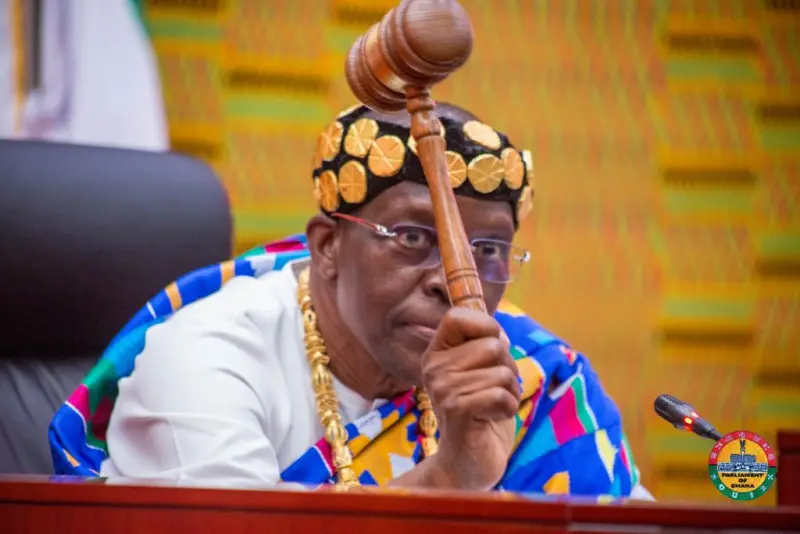
    Speaker of Parliament Alban Bagbin has directed that the contentious Anti-LGBTQ+ Bill be presented afresh in the current Parliament, noting that it lapsed with the dissolution of the 8th Parliament.

    His ruling brings clarity after days of disagreement among lawmakers, as the Majority Leader maintained that the bill had already been passed and required no reintroduction.

    Bagbin, however, insisted that any unfinished matters from the previous Parliament automatically ended with its dissolution.

    “The eighth Parliament is history. So are all the businesses that were pending in the eighth Parliament. They all ended with the eighth Parliament and so we have a new Parliament — the ninth Parliament — and therefore what was pending there came to an end and has to be reintroduced,” he said.

    The Speaker explained that the bill was sent to former President Nana Akufo-Addo, who chose not to sign it. But, he added, the presidency did not send the bill back to Parliament with an explanation for the refusal, as required by the Constitution.

    “They wrote to tell us that they would not assent to it. The only constitutional error they committed was that they didn’t give us reasons why they would not assent to it, and they did not transmit the bill back to us. They imprisoned it there,” he explained.

    He noted that the 9th Parliament has now reclaimed the bill, which was first introduced by some MPs with support from traditional, religious, and civil society leaders.

    “As you would recall, that’s a private member’s bill, and so members of this House took it up. It went through the whole process as detailed in our Standing Orders. But as it went through the process, the new government indicated that they wanted to take it as a public bill.

    “I personally disagreed and made it known to His Excellency the President that this was an initiative of our people — the traditional leaders, the religious leaders, civil society leaders and so we would process it as a private member’s bill.”

    The Speaker indicated that before the bill can be laid before the House again, he must perform the procedural duties required by the Standing Orders of Parliament.

    “Our rules have given what the speaker is expected to do, which I will do before it can be laid in the House.”

    Days ago, a group of MPs from both the NDC and NPP brought back the anti-LGBTQ+ bill, officially called the Human Sexual Rights and Family Values Bill, 2025.

    The bill was presented to the House for its first reading on Tuesday, October 21, marking Parliament’s return from recess.

    Among the MPs sponsoring the bill are John Ntim Fordjour (Assin South), Samuel Nartey George (Ningo-Prampram), Emmanuel Kwasi Bedzra (Ho West), Helen Adjoa Ntoso (Krachi West), Nurideen Muhammed Mummuni (Nalerigu/Gambaga), Vincent Ekow Assafuah (Old Tafo), Alhassan Tampuli Sulemana (Gushegu), Rita Naa Odoley Sowah (Dadekotopon), Dr. Tiah Abdul Kabiru Mahama (Walewale), and Anthony Mmieh (Odotobri).

    The proposed law aims to criminalize LGBTQ+ activities and restrict their promotion and advocacy across the country.

    Parliament initially approved the bill on February 28, 2024, with backing from both sides of the House.

    However, it did not become law, as former President Nana Addo Dankwa Akufo-Addo declined to give his assent.

    Following the dissolution of the 8th Parliament ahead of the 2024 general election—which brought President John Dramani Mahama of the NDC back to power—the bill automatically expired.

    President Mahama has since expressed his support for the overall intent of the legislation but suggested that it should be introduced as a government-sponsored bill rather than one initiated by individual MPs.

    The Member of Parliament (MP) for Assin South, Rev. Ntim Fordjour, has indicated that Parliament could take less than three months to give a final verdict on the controversial Human Sexual Rights and Family Values Bill (anti-LBGTQ+).

    He explained that the current bill before Parliament will not go through extensive consultations and debates, as those processes have already been completed. According to him, the upcoming discussions will resume from where the previous deliberations ended. He made this known while speaking to the media on Wednesday, October 22.

    “Within 3 months to 6 months, we should be able to pass this bill. We’ve had bills more complex than this, which even came under a certificate of urgency. So, I don’t see why this should go beyond three months,” Rev. Fordjour said.

    The bill was presented to then President Nana Akufo-Addo, who was expected to sign it into law or refuse to assent to it within seven days.

    Initially tabled in 2021, the bill stalled following legal challenges at the Supreme Court questioning its constitutionality. Despite the pending case, the sponsors say reintroducing the motion ensures the process remains active.

    Meanwhile, the United States Department spokesperson Matthew Miller indicated last year that the US government will restrict foreign aid to Ghana if the Proper Human Sexual Rights and Family Values Bill, also known as the anti-LGBT Bill, is signed into law.

    Engaging the press, Mr Miller said, “If this bill becomes law, it will only have a chilling effect on investment. For instance, in Ghana, you’ve seen that same chilling effect bear fruit in Uganda, which passed a very similar law in the past. I can say that should the bill pass, it would potentially have ramifications for US assistance in the country.”

    He noted that both governments have had intensive conversations on the matter, which were done behind closed doors.

    The US provided over $211 million in assistance to Ghana in fiscal year 2022, supporting various sectors including agriculture, malaria prevention, and AIDS combat efforts.

    The United States has expressed deep concern over the passage of the stringent anti-LGBTQ+ legislation in Ghana, stating that it threatens constitutional freedoms.

  • GAF warns public to stay away from Bundase area ahead of live firing exercise

    GAF warns public to stay away from Bundase area ahead of live firing exercise

    The Ghana Armed Forces (GAF) has informed the general public, particularly residents of Dawhenya and its environs, that it will conduct a Land Combat Fire Power Demonstration Exercise at the Bundase Training Camp on Friday, 31 October 2025.

    According to a statement shared by GAF on their Facebook page, the exercise aims at testing the operational readiness of the Armed Forces in defending the country against external aggression.

    Adding that, “the exercise will involve the use of live ammunition, explosives, and heavy military equipment accompanied by loud sounds and visible flashes.”

    As a result, the public has been advised to stay away from the training area and its surroundings during the said period.

    The GAF further urged residents not to be alarmed by the sounds of gunfire and explosions which may be heard within the general area.

    “Ghana Armed Forces assures the general public that all necessary safety measures have been put in place to ensure the safety of both residents and participants throughout the exercise. The Armed Forces counts on the cooperation of the general public during this exercise,” GAF assured.

    The Ghana Armed Forces (GAF) has also drawn attention to the commencement of its 2025 recruitment exercise.

    A statement from the Department of Public Relations of the GAF urged the general public to check the detailed requirements for the exercise in the October 1, 2025 editions of the Ghanaian Times and the Daily Graphic newspapers.

    According to the notice, information on the recruitment can be found on pages 15, 16, and 17 of the Ghanaian Times and pages 34, 35, and 36 of the Daily Graphic.

    The GAF further provided official contact lines; 0544338030 and 0240827344 for inquiries and directed interested applicants to visit its verified social media pages for more information.

    It also outlined a new development in which the recruitment exercise would be conducted in all sixteen (16) regions nationwide, marking a significant change in the security force’s recruitment process,.

    The aim is to move away from the traditional method that was largely centralised in a few selected centres such as Accra, Tamale, and Kumasi. The new approach, GAF explained, is to ensure equal opportunity for applicants across the country, particularly those in remote or underserved areas who previously had to travel long distances and incur high costs.

    “The Ghana Armed Forces wishes to inform the public that the 2025 Enlistment/Recruitment Exercise into the Ghana Armed Forces will commence in the coming days at all the regional capitals of the 16 Regions of the country. This approach offers equal opportunity for all potential applicants in the entire country,” parts of the statement read.

    GAF also warned the public to disregard recruitment advertisements circulating on social media, stressing that no member of the force would issue such notices or ads.

    “The general public is kindly informed that any purported recruitment links on Facebook, Instagram, WhatsApp or any other social media platforms inviting people for protocol recruitment are a scam and should be ignored. Additionally, no such enlistment/recruitment invitation will emanate from any member of the Ghana Armed Forces or its High Command and should be ignored as well,” it added. “The Ghana Armed Forces counts on the cooperation of the general public in this endeavour.”

    The strong warning comes against the backdrop of fraudulent recruitment schemes that have increased in recent years, particularly on social media platforms like Facebook, WhatsApp, and Instagram. These scams often promise “protocol recruitment,” suggesting backdoor access in exchange for payment.

    Scammers typically impersonate senior officers, circulate fake enlistment links, and demand fees in return for guaranteed placement.

    Over the years, some scammers have demanded protocol fees ranging from GH¢2,000 to GH¢10,000, depending on the promises made and the desperation of applicants. Victims often paid multiple instalments, believing they were securing officer roles or fast-tracked enlistment. Payments were usually made in cash or through mobile money without receipts, making prosecution difficult. GAF has repeatedly stressed that recruitment is free and that any demand for payment is illegal.

    Meanwhile, on Thursday, September 18, a group of delayed recruits picketed near Jubilee House, demanding clarity on their enlistment status. They claimed to have passed medicals and interviews in 2023–2024 but had not yet been called for training.

    The protest highlighted frustrations over poor communication, with some recruits waiting for more than a year. Barely a week after their demonstration, the Defence Ministry announced a major enlistment exercise that is expected to address their concerns.

    In a Facebook post on September 29, Deputy Defence Minister Brogya Genfi revealed that the government is set to recruit about twelve thousand (12,000) personnel to strengthen the country’s defence. He further disclosed that the cost of recruitment forms has been slashed by 40 percent to ensure wider access and fairness.

    “The Ghana Armed Forces (GAF) is undergoing a massive expansion beginning this week. Over the next 3 years, GAF will recruit 12,000 personnel to reinforce our national defence capabilities. In line with H.E. the President and Commander-in-Chief John Dramani Mahama’s commitment to affordability, accessibility and fairness, the cost of the recruitment forms has been reduced by over 40% compared to the last recruitment,” the Minister said.

    He stressed that the recruitment process remains free of charge and cautioned against fraud.

    “Let this be clear: Recruitment into the Ghana Armed Forces is NOT for sale, and will NEVER be for sale under our #EagleEyes watch. Any individual or syndicate involved in fraudulent recruitment schemes will be dealt with without mercy. Take Note that no recruitment will take place on social media. The process will be transparent and professional,” he emphasised.

    The Minister also cautioned prospective applicants to be ready for the demands of military life.

    “All qualified applicants must be medically fit and be prepared to abandon all hope of normal life! We are building a force that reflects the strength, discipline, and unity of Ghana,” he concluded.

  • Cedi strengthens by 37%, BoG pledges to sustain  performance

    Cedi strengthens by 37%, BoG pledges to sustain performance

    Governor of the Bank of Ghana, Dr. Johnson Asiama, has reiterated the central bank’s dedication to pursuing sound monetary policies aimed at maintaining exchange rate stability and building on recent economic gains.

    His assurance follows the continued strong performance of the Ghana cedi, which has appreciated by 37 percent against the US dollar as of October 17, 2025, driven by improved market confidence and strict monetary controls.

    Speaking at the launch of the Cedi@60 celebrations in Accra, Dr. Asiama stated;

    “The Cedi has appreciated by 37 percent as at October 17 and according to the World Bank it is the world’s best currency in Sub-Saharan Africa. This gain is not by accident. They are the result of hard and sometimes unpopular policies. Fiscal consolidation by government, tight monetary policy stance by the Bank of Ghana and renewed confidence in the investor community and the public. As we celebrate 60 years of the Cedi, as your central bank our mandate remains unchanged.”

    Already, the World Bank has ranked the cedi as the best-performing currency in Sub-Saharan Africa, highlighting the impact of sustained fiscal discipline and foreign exchange reforms.

    The Bank of Ghana however, remains focused on sustaining confidence in the local currency and strengthening the foundation for long-term economic stability.

    On the other hand, Ghana’s total foreign exchange interventions since the height of its economic crisis in 2022 have exceeded $7.4 billion, according to International Monetary Fund (IMF) data analysed by JoyNews Research.

    The data reveal that the Bank of Ghana (BoG) injected about $1.9 billion into the forex market in 2022, the year of the crisis. Interventions fell to $1.1 billion in 2023 but surged again to $3 billion in 2024.

    In just the first quarter of 2025, the Central Bank added another $1.4 billion, signalling continued efforts to stabilise the local currency.

    Earlier this month, the BoG announced plans to inject $1.15 billion through its Domestic Gold Purchase Programme (DGPP). The move, aimed at easing pressure on the cedi, will bring this year’s total forex support to over $2 billion. The Bank said the funds would be disbursed through twice-weekly, price-competitive spot auctions accessible to all licensed banks.

    Following the announcement, the cedi appreciated by 2.5%, reflecting renewed investor confidence in the Central Bank’s strategy. Analysts expect the local currency to maintain its strength against the US dollar through the final quarter of 2025, as offshore FX inflows and a liquid interbank market offset high dollar demand from the energy, services, and manufacturing sectors.

    Dollar interventions have surged sharply in the past two fiscal years, accounting for more than 60% of total injections over the last four years. These interventions have supported one of the strongest performances of the Ghana cedi in recent memory.

    According to the World Bank’s 2025 Africa Pulse Report, the cedi was the best-performing African currency against the US dollar during the first eight months of 2025, appreciating by more than 20% year-to-date.

    This strong showing is attributed to the BoG’s aggressive forex interventions, coupled with rising export earnings from gold and cocoa and steady remittance inflows.

    JoyNews Research data indicate that with the latest round of support, total interventions since 2022 could reach about $8.6 billion. The BoG attributes this year’s efforts to robust inflows from gold and cocoa exports and sustained remittance receipts.

    Gold has remained a critical lifeline for Ghana’s external sector, with prices hitting an all-time high of $4,000 per ounce this week. This surge has strengthened the Central Bank’s ability to generate foreign exchange without heavily depleting its reserves.

    Ghana is expected to retain its position as Africa’s top gold exporter, with projected export revenues surpassing $15 billion by the end of 2025, representing about 65% of total export inflows.

    This windfall has provided the BoG with the “forex muscle” needed to sustain interventions while keeping a strong reserve position. The IMF’s latest Staff-Level Approval report confirms that “in collaboration with the Fund, the BoG has developed a structured foreign exchange operations framework to intermediate FX flows and smooth excessive market volatility, while accumulating international reserves.”

    Ghana’s international reserves have now exceeded $10.7 billion, providing roughly 4.5 months of import cover. The IMF further noted that “international reserves accumulation continues to exceed the ECF-supported program targets, while the cedi appreciated markedly in the first half of the year.”

    Historical data show that most of the Central Bank’s forex interventions typically occur in the latter part of the year. In 2024, for example, about 67% of the $3 billion injected was recorded in the final four months, coinciding with the election period.

    While these consistent interventions have stabilised the cedi in the short term, they raise concerns about long-term sustainability. Analysts caution that Ghana’s reliance on gold-backed interventions exposes the economy to fluctuations in global commodity prices, underscoring the need for a more diversified foreign exchange framework.

    As it stands now, the Bank of Ghana’s decisive moves have given the cedi rare strength, but maintaining that momentum will depend on how effectively the country channels its export windfall, particularly from gold into lasting economic stability.

  • Parliament to probe ‘poor works’ on ongoing $80m Dansoman Sea Defence project

    Parliament to probe ‘poor works’ on ongoing $80m Dansoman Sea Defence project

    Members of Parliament’s Works and Housing committee have expressed dissatisfaction with the progress and quality of work on the $80m Dansoman Sea Defence project.

    According to the committee, the extent of work done does not match the huge cost of the project awarde to the contructors.

    During their visit to the area, the Committee Chair Vincent Oppong Asamoah,  indicated that they were joined by experts who helped to identify loopholes in the Dansoman sea defence project after surveying that of Blekusu sea defence

    Thus, Parliament will launch a formal investigation into the project’s contractual details, the technical capabilities of the company and implementation standards to ensure accountability and value for money.

    “Generally, the impression is that members were not very satisfied with the extent of work that has been done, looking at the cost of the project. Technically, there are a whole lot of issues that members are calling for a probe into.”

    “You know we just left Blekusu a couple of weeks ago. And if you look at Blekusu, the cost and the number of kilometres of sore land they were supposed to protect, Blekusu is supposed to protect eight kilometres, this one is five kilometres. Even though they were talking about additional revetment, Blekusu also has revetment. So, the cost is an issue, and even how procurement and other technical issues were handled are all issues that members are calling for a probe into. So that is what we are preparing, and very soon, you will hear from the committee that we are not very much satisfied,” Honourable Isaac Adongo explained.

    He further revealed that he is particularly concerned about the fact that, although he commended the contractor for being a local firm, the project is worth nearly 80 million dollars and happens to be their first major assignment, which he described as worrying.

    In the month of July this year, President John Dramani Mahama visited Agavedzi on July 19 for a groundbreaking ceremony for the second phase of the Blekusu Coastal Protection Project.

    The project, a significant initiative that will protect lives and livelihoods in the Ketu South Municipality of the Volta Region, was met with palpable joy and deep gratitude from the chiefs and people of the Some and Aflao Traditional Areas, who gathered to witness the realisation of a long-awaited development.

    The ceremony saw an emotional outpouring of appreciation, as community members sang praises and danced, celebrating the President’s commitment to addressing their decades-long struggle against severe tidal erosion.

    Upon completion in four years, the project, which will protect an 8-kilometre stretch of coastline, is set to bring immense relief to the communities of Blekusu, Agavedzi, Salakope, Amutsinu, and Adina.

    Messrs Amandi Holding Limited is the contractor and will deliver 37 groins, extensive dune restoration, reinforced embankments, and other critical shoreline defence structures.

    President Mahama stated that the project is a comprehensive one that will extend beyond mere coastal protection.

    “Aside from the coastal protection works, government has incorporated vital development projects to enhance the lives of the people in the affected area,” he noted.

    These integrated initiatives include a modern fish market, cold storage and processing facilities for fisherfolk, dedicated spaces for fish drying and smoking, a car park, and a lorry station. Additionally, public sanitation facilities and a comprehensive waste collection system will be provided.

    “The sea has taken a lot from this community. It has taken land, it has taken livelihoods, and it has taken our peace of mind. But today, I stand here to say no more will the sea consume our land”, the President said.

    “We are here to reclaim what has been lost, to rebuild stronger, to offer our children a future where they are not forced to flee their homes because of rising tidal waves.”

    President Mahama added that the Blekusu Coastal Protection Project and other ongoing infrastructure developments reflect his government’s strong dedication to building a better Ghana.

    “This is not merely symbolic,” he asserted, “but a clear demonstration of what responsive leadership can do when it listens, when it cares, and when it acts.”

    Phase I of the project, covering 4.3 kilometres of coastal defence works, commenced in 2015 under the Presidency of Mahama to mitigate the serious threat of tidal erosion in Ketu South.

    While that phase offered significant relief, the President lamented, “Unfortunately, for nearly a decade after this, the second phase of the project stalled. Despite repeated appeals by residents, Members of Parliament, traditional authorities, and civil society, the project did not commence.”

    The President specifically referenced the devastating tidal waves that pounded the communities in 2017 and again in 2021, recalling the harrowing images.

    I can still picture the videos and photos showing the aftermath of these tidal waves,” he said, highlighting “the pain, the anxiety, the fear that was etched on the faces of our fellow citizens.”

    He reaffirmed the pledge he made earlier this year during his visit to the Volta Region, promising swift action.

    “And today, I am proud to say that this commitment is being fulfilled. Your cries have not been in vain. Your voices will no longer be ignored. Today is your day – a day of renewal and a day of reassurance.”

    President Mahama also announced progress on the West Africa Coastal Areas (WACA) Programme, designed to enhance coastal resilience across the sub-region.

    Currently awaiting approval, the WACA project is envisioned to extend coastal protection from where the Blekusu project ends, all the way to Aflao, securing Ghana’s vital 550-kilometre coastline, which supports countless livelihoods through fishing, trade, and tourism.

  • Akosua Serwaa’s marriage to Daddy Lumba still valid – German Embassy confirms

    Akosua Serwaa’s marriage to Daddy Lumba still valid – German Embassy confirms

    The German Embassy has confirmed that the marriage between late Daddy Lumba and Akosua Serwaa is still valid under German law.

    According to a statement shared by the Embassy dated October 27, their marriage was celebrated on December 23, 2004, in Bornheim, Germany, in the presence of the couple and is registered in the marriage registry office under number E 142/2004.

    Thus, “as far as the Embassy is aware of, the marriage has not been dissolved by divorce but ended with the decease of the husband on 26.07.2025.”

    Additionally, the family of the late highlife musician Charles Kwadwo Fosuh, popularly called Daddy Lumba, has also declared Akosua Serwaa as Daddy Lumba’s only legal wife.

    This was made known in a statement released by the family on October 26, 2025 after Odo Broni failed to provide evidence of her marriage to the late Daddy Lumba.

    “In the absence of any legal proof of marriage, the only recognized and lawful widow remains Mrs. Akosua Serwah Fosuh, who was married to the deceased under the Marriage Ordinance and is recognized under both Ghanaian and German law,” the letter indicated.

    Adding that, “under German Civil Law, since no divorce decree was finalized before Mr. Fosuh’s death, the marriage remained legally valid, thereby confirming Mrs. Fosuh’s legal status and spousal rights in both Germany and Ghana,”

    It stated that no divorce decree was finalized prior to the musician’s passing, which means the marriage “remained legally valid,” thereby granting her authority over the burial and the estate.

    They further cautioned that “any attempt by other individuals or family members to claim authority over the body or conduct funeral rites without the widow’s consent constitutes a violation of Ghanaian law (Cap 127) and internationally recognized spousal rights under German law.”

    The family urged respect from the public and the media, emphasizing that the matter of legal widowhood is “clear, consistent, and self-explanatory.”

    Reports that the late Daddy Lumba’s two partners, Akosua Serwaa and Odo Broni will be permitted to perform widowhood rites have been debunked by the Fosu family.

    According to the family, Odo Broni has yet to provide any evidence to justify performing widowhood rites.

    “Neither Ms Ofori Atta’s lawyer nor Abusuapainii Kofi Owusu could present any evidence or marriage certificate to substantiate her claim,” a statement by the family indicated.

    This comes after representatives of Ms Priscilla Ofori Atta, were asked to present evidence in a family meeting held on October 24 and chaired by Nana Osei Kwame Kyeretwie,

    The family maintains that widowhood rites cannot be performed by someone who has “no valid marriage recognized by law.”

    They further declared: “We are not going to change the law just for Ms Priscilla Ofori Atta. Neither Ghana nor Germany will bend their legal standards to favor an individual without lawful standing.”

    Daddy Lumba’s final funeral rite has been slated for Saturday, December 6, 2025.

    The event will be held at the Baba Yara Sports Stadium, as thousands of mourners, including family, friends, industry colleagues, and fans from across the country and beyond, are expected in attendance.

    In July this year, a statement by the counsel for the Fosu family confirmed that the music veteran passed on July 26, after a short illness.

    He succumbed to the illness at the Bank Hospital in Accra, per reports.

    The statement reads: “With profound sorrow and deep grief, the Fosu family announces the passing of Ghana’s beloved musical icon, Charles Kojo Fosu, popularly known as Daddy Lumba, who passed away earlier today, Saturday, July 26, 2025, after a short illness.”

    “Daddy Lumba was more than a musician; he was a cultural icon whose music touched countless lives. His soulful voice provided the soundtrack to our love stories, and his poignant lyrics captured the poetry of our struggles, dreams, and resilience.”

    The bereaved family has respectfully requested privacy as they navigate this profound grief. Details of funeral arrangements will be shared in the coming days.

    Daddy Lumba was renowned for his incredible talent as a singer, composer, songwriter, recording artist, and producer.

    With an illustrious career that has spanned over three decades, Daddy Lumba was widely regarded as the greatest and most influential musician in Ghanaian history.

    Many artists in Ghana, including Ofori Amponsah, Sarkodie, Kuami Eugene, Paa Solo of Sibo Brothers, Oheneba Kissi, KiDi, and others, consider him their major inspiration in the music industry.

    Daddy Lumba was born 60 years ago to Mr. Johnson Kwadwo Fosuh and Madam Comfort Gyamfi, also known as Ama Saah, in Nsuta, near Mampong in the Ashanti Region of Ghana. Both of his parents were teachers, and he was the second of three siblings.

    His educational journey began in Nsuta Kyebi, and he completed junior high school at Suame Methodist, Kumasi in 1979. Subsequently, he attended Adu Gyamfi Senior High School in Jamasi, but later transferred to Juaben Senior High School, where he completed his secondary education in 1984.

    Daddy Lumba’s music career took off in the early 80s when he formed the Nkwanta Wesley Singers, gaining fame at the Anokye Krom Cultural Center.

    During his time at Juaben Senior High School, he led the school choir and composed the song “Lumba Lumba,” dedicated to the freedom fighters in South Africa. This song’s popularity earned him the nickname “Daddy Lumba”, which later became his stage name. He also formed the Lumba Brothers band during his school days, which included his girlfriend at the time, Theresa.

    After completing school, Daddy Lumba, with the help of his high school sweetheart Theresa Abebrese, traveled to Germany. There, he met Ernest Nana Acheampong, and they formed another Lumba Brothers group, recording their debut album, “Yee Ye Aka Akwantuom,” in 1986. Financial constraints delayed the album’s release until 1989, and eventually, the duo split.

    Daddy Lumba then launched his solo career and released his debut solo album, “Obi Ate Meso Buo,” in 1990. The album received immense popularity and critical acclaim, featuring classics like the title track and “Theresa,” dedicated to his ex-lover. He has since released 33 albums, including notable ones like “Sika Asem,” “Aben Wo Ha,” “Wo Ho Kyere,” “Awosoo,” “Give Peace A Chance,” and “Ahenfo Kyiniye.” His latest project, “Ofon Na Edi Asem Fo,” was released in December 2022, reuniting him with longtime collaborator Kweku Mensah.

    In addition to his own success, Daddy Lumba is renowned for nurturing the careers of budding artists who went on to become legends in their own right.

    Some of these artists include Felix Owusu, for whom he produced the debut album “Vida” in 1992, Afia Ampofowaa, Kwabena Sunkwa, Ofori Amponsah with the “Woho Kyere” album in 1999, Selina Orleans, Akua Serwaa Bonsu, Borax, Ateaa Tina, and many others.

    His contributions to Ghanaian music and the support he provides to upcoming talents have solidified his status as an iconic figure in the country’s music industry.

    With his passion, talent, and dedication to the craft, Daddy Lumba continues to be a role model for aspiring musicians, leaving an indelible mark on the rich musical landscape of Ghana.

  • “You don’t tell me it depends on the law” – PAC Chair confronts DVLA CEO over number plate privacy

    “You don’t tell me it depends on the law” – PAC Chair confronts DVLA CEO over number plate privacy

    A tense moment erupted during the Public Accounts Committee sitting when Chairperson Abena Osei Asare sharply confronted the Chief Executive Officer of the Driver and Vehicle Licensing Authority (DVLA), Julius Neequaye Kotey, over privacy concerns tied to the authority’s proposed digital number plate system.

    The exchange followed the DVLA boss’s explanation that the new plates would contain Radio Frequency Identification (RFID) chips to boost security and make it difficult for outsiders to tamper with or duplicate.

    Mrs. Osei Asare, however, raised concerns about whether the new plates would display vehicle owners’ surnames, warning that such information could expose personal data.

    In response, Mr. Kotey said the DVLA would comply with Ghana’s Data Protection Law, noting that the system would only digitalize existing information without changing its basic format.

    When pressed for a clear answer on whether names would appear, he replied, “It depends on what the law says; we’ll go by it.”

    That response immediately drew a sharp reaction from the PAC Chair, who retorted, “You don’t tell me it depends on what the law says. You are doing it, so you should be able to tell us what the law says. I’m asking a specific question, is it going to have the user’s surname on the number plate?”

    Mr. Kotey later clarified that names do not appear on standard number plates, explaining that only personalized plates bear such identifiers.

    The Chair, however, maintained that the Committee’s inquiries were in the public interest and aimed at ensuring transparency and accountability in the rollout of the new digital number plate system.

    About PAC

    The Public Accounts Committee (PAC) of Ghana was established under Article 103 of the 1992 Constitution and formally constituted as part of Parliament’s Standing Committees. It has existed since the First Parliament of the Fourth Republic, which began in January 1993.

    Its mandate is to review reports presented by the Auditor-General on public accounts of Ghana, to

    summons ministries, departments, agencies (MDAs), and state-owned enterprises (SOEs) to explain financial infractions and irregularities, and sometimes suggests sanctions, recoveries, and referrals for prosecution.

    However, since its establishment, PAC has reportedly had no documented record of ensuring the prosecution and, in other cases, the imprisonment of culprits, though its recommendations can trigger EOCO investigations or Attorney-General action.

    Over the years, the Committee has engaged several public institutions and heads of these institutions over reported financial irregularities in their respective businesses, but little to no show of penalties have been documented, particularly to serve as a deterrent to others. It will be recalled that in 2017, PAC recommended prosecution of officials at the National Sports Authority for misappropriating funds, but no confirmed convictions followed.

    Also, in a separate incident, the committee in 2021 traced non-existent staff under GETFund and MASLOC, but again, no jail terms have been recorded so far.

    In 2023, PAC recovered GH₵12.9 million, but this was through repayments, not criminal penalties.

    Meanwhile, more than GH¢12.9 billion in misappropriated public funds has been retrieved following a collaboration between the Public Accounts Committee (PAC) and the Auditor-General’s (A-G) Department.

    Addressing the media on Wednesday, October 1, Chairperson of PAC, Abena Osei-Asare, attributed the groundbreaking development to the collective efforts between the Auditor-General’s Department.

    “One thing I am clear about is that what we are doing is yielding positive results. We have a report we will look at. Per the work of the Public Accounts Committee, and with the support of the Auditor-General, we have been able to retrieve GH¢12.9 billion. There is a whole report on that which we will be sharing with the public at the right time,” she said.

    According to her, the Committee will make the report’s details public at the appropriate time. The Committee is scheduled to resume its sittings on Monday, October 27. Various ministries, departments, and agencies to address infractions highlighted in the 2024 Auditor-General’s Report have been interrogated by PAC in recent weeks.

    Recently, the Director of Administration at Tamale Teaching Hospital (TTH), Dr Emmanuel Sena Kwasi Donkor, appeared before the Public Accounts Committee after the A-G’s report suggested that the hospital paid salaries amounting to GHS 1,449,000 to a deceased staff member for a period of 26 months.

    Dr Emmanuel Sena Kwasi Donkor affirmed the report, adding that the hospital has so far recovered GHS303,558.68 of the total amount. He explained that the banks previously handling the transactions had, through a letter, indicated that they had ceased processing them.

    “We were able to recover some amounts. Before we got here, we had received letters from some banks stating that they had stopped transferring the funds to the government chest,” Dr Donkor told the Committee.

    He further urged Parliament to intervene and help the hospital recover the remaining funds. “Maybe at the end of this session, we will make a prayer to this House for the House to make an order directing those banks to transfer,” he said.

    Dr Donkor revealed that his outfit has submitted the names of the individuals implicated in the act to the Economic and Organised Crime Office (EOCO)for recovery. “EOCO has written back requesting the files of the people involved, and we have submitted them,” he added.

    Meanwhile, Ranking Member Samuel Atta-Mills has raised serious concerns regarding the issue. “Habib Napare – date of separation was 2022. This guy had died. Didn’t you go to the funeral? And you validated this dead person for 26 months? And now you are coming to tell Parliament to do what?” Atta-Mills asked sharply,” he added. In the meantime, the Office of the Special Prosecutor (OSP) has released a fifty-page report covering investigations and prosecutions carried out between January 1 and July 31 this year.

  • IMANI’s Selorm Branttie faults Cybersecurity Amendment Bill as vague and oppressive

    IMANI’s Selorm Branttie faults Cybersecurity Amendment Bill as vague and oppressive

    Vice President for Innovation and Technology at IMANI Africa, Selorm Branttie, has criticised the 2025 Cybersecurity (Amendment) Bill, describing it as ambiguous and potentially oppressive.

    In an interview with Joy FM, he observed that several sections of the draft law are vaguely written and overly broad, making it challenging to separate minor online infractions from serious cyber offences.

    Mr. Branttie warned that such lack of clarity could lead to misinterpretation and abuse, allowing ordinary digital activities to be unfairly criminalised.

    “A lot of the lettering for the Cybersecurity Bill, for example, is ambiguous in terms of the kinds of offenses that are being discussed and the ramifications for you being seen as contravening some of these offences makes them draconian, makes it unsuitable for the current day and age and society that we have” he said on

    “You are looking at things that could either be minor or major, and bottling it up into just one category and then criminalising all of it.”

    Mr. Branttie noted that several Ghanaians maintain additional social media profiles or alternative online identities for valid purposes such as protecting their privacy or adhering to workplace policies.

    He explained that, as the bill currently stands, such practices could easily be misconstrued as dishonest or unlawful.

    According to him, the absence of precise definitions and a clear categorisation of offences could give authorities undue power, potentially paving the way for the harassment of individuals, journalists, or political critics under the pretext of enforcing cybersecurity measures.

    “It’s a dangerous to have laws like this, or some of the stipulations in laws like this dictating the what should be the government’s response or the security aparatus’ response to some of these things that happen digitally because in the wrong hands, this could be used to abuse the personal rights of many indivuduals and could be used to target people percieved as political opponents or people perceived as not liked by anybody who is in authority,” he explained.

    Mr. Branttie called on Parliament to carefully revise the language of the bill before its approval to ensure it maintains a fair balance between strengthening national cybersecurity and upholding citizens’ online rights.

    He recommended that legislators work closely with technical professionals, civil society groups, and private sector stakeholders to refine the scope of offences, classify their severity, and establish transparent oversight systems.

    IMANI Africa, a policy think tank recognised for its advocacy in governance and technology, has long championed openness and fairness in the formulation of Ghana’s digital regulations.

    The 2025 Cybersecurity (Amendment) Bill aims to update the Cybersecurity Act, 2020 (Act 1038) by addressing new digital threats, reinforcing the country’s online security systems, and expanding enforcement authority for state institutions.

    Nonetheless, sections of the public and digital rights organisations caution that certain provisions, if not properly clarified, could threaten privacy, restrict free speech, and compromise data protection.

    The draft legislation is presently under review by Parliament’s Communications Committee, with stakeholder engagements expected to continue in the coming weeks.

    Ghana has witnessed a sharp rise in financial damage caused by online sextortion and blackmail, with losses hitting GH¢499,044 within the first four months of 2025.As per data by the Cyber Security Authority (CSA) this is nearly five times the GH¢103,663 recorded over the same period in 2024, pointing to an alarming trend in digital exploitation.

    In its recent advisory, the Authority revealed a slight uptick in the number of reported incidents from January to April 2025, surpassing the 155 cases logged during the comparable period last year.

    These schemes are typically launched through fake social media profiles—often using attractive images to entice users into romantic exchanges.

    Once trust is established, victims are coerced into sharing intimate visuals, which are then weaponized to extort money.

    Perpetrators usually demand mobile money payments under threat of publishing the explicit material. But paying doesn’t always end the torment—victims often face continued harassment even after fulfilling ransom demands.

    To cover their tracks, scammers frequently move chats to encrypted apps like WhatsApp, Telegram, or Signal, making detection more difficult.

    The CSA has advised the public to exercise caution by avoiding interactions with unknown digital identities, refraining from sharing any explicit content online, and reporting any suspicious encounters through its round-the-clock support services.

    Since the start of January 2023, victims targeted by online impersonation have incurred substantial losses amounting to GH¢49.5 million, as reported by the Cyber Security Authority (CSA).

    Online impersonation, also known as identity theft, involves malicious actors adopting the persona of notable figures such as politicians, businesspeople, government officials, diplomats, or reputable brands. This is done either for financial gain or to subject victims to harassment, intimidation, or threats.

    The CSA recently issued an official public warning, revealing that between January and July of 2023, they received a total of 58 reports regarding online impersonation cases. These incidents have resulted in victims collectively losing an alarming sum of GH¢49.5 million.

    This development follows a joint operation carried out by the Economic and Organised Crime Office (EOCO), the Bank of Ghana (BoG), and the Cyber Security Authority (CSA). This operation involved raids on illicit lending applications at three separate locations in Accra, which led to the arrest of 422 suspects. The task force’s investigations encompassed 270 cases involving cyberbullying, fraud, extortion, and the misuse of customer data.

    These investigations unveiled 150 unlicensed digital loan application platforms. The operators of these platforms were found to be engaged in disconcerting practices, including issuing death threats and unauthorized sharing of private messages, images, and videos. These actions were made possible by exploiting permissions unwittingly granted by unsuspecting victims on their digital platforms.

    Modus operandi

    As detailed in the alert, impostors employ deceptive strategies by fabricating false profiles or accounts that mimic legitimate individuals or well-known brands. They use coercive techniques to push their unsuspecting victims, including associates and business partners, into making impulsive decisions without thorough consideration.

    Online impersonation can manifest in various forms, such as job and recruitment scams. In these scenarios, scammers pretend to be government agencies or reputable employers, offering attractive job opportunities that demand victims to part with money or reveal personal information.

    Another common scheme is advance fee fraud, where scammers pose as wealthy businesspeople, representatives of respected companies, government entities, or distant relatives. They convince victims to make upfront payments for goods, services, or financial gains that ultimately never materialize.

    Furthermore, the investment scam involves impostors presenting themselves as investment service providers, financial advisors, or fund managers. They make alluring pledges of substantial profits with minimal risk, which ultimately serve as tactics to defraud victims.

    Lastly, contract scams involve scammers impersonating entities responsible for awarding contracts, often masquerading as representatives of government agencies. They dangle the promise of non-existent contracts, demanding fees in exchange for these fictitious opportunities.

    Recommendations

    Consequently, the CSA strongly advises the general public to exercise caution when it comes to unsolicited communications, particularly those originating from unknown sources or individuals.

    “Be suspicious of any promise of jobs, protocol advantage for recruitment slots, financial gains, gifts or lucrative opportunities. Genuine government officials would not contact anyone via social media to offer them a job or contract,” it said in the alert.

    The public is strongly encouraged to exercise careful consideration and carry out thorough investigations to confirm the authenticity of both individuals and organizations before participating in any financial dealings.

    Furthermore, individuals are advised to promptly report any suspicions regarding impersonators or scammers to the appropriate law enforcement authorities within the country. Alternatively, they can report such incidents to the Cyber Security Authority’s (CSA) 24-hour cybersecurity incident-reporting contact points. These avenues can be used to report cybercrimes, as well as to seek guidance and support for online activities.

  • Seek approval from cabinet before announcing major policies publicly – Ministers warned

    Seek approval from cabinet before announcing major policies publicly – Ministers warned

    All Ministers of State have been warned by government against announcing major policy initiatives or programmes publicly without approval by the Cabinet.

    This comes as a reaction to an observation made by the government where some ministers announce initiatives “purportedly on behalf of the government” without seeking the cabinet’s consent.

    In a circular dated October 27, which was signed by the Secretary to the Cabinet, Prof Kwaku Danso-Boafo indicated that such actions violate constitutional protocols and breach the principle of collective government responsibility, which requires that all major policy decisions reflect consensus at the Cabinet level.

    “Cabinet wishes to remind all Ministers that, in accordance with established governance protocols and the collective responsibility principle enshrined in the Constitution, no public policy, programme, or major initiative shall be considered a policy of government unless it has been duly submitted to, deliberated upon, and approved by Cabinet,” the circular stated.

    Ministers were further instructed to channel all proposed policies, programmes, and legislative initiatives to the Cabinet Secretariat through the Chief Directors of their respective Ministries.

    The Cbinet explained that this process will ensure that all government decisions are adequately vetted, aligned with national priorities, and formally placed on the Cabinet agenda before public communication.

    Full statement below:

    ADHERENCE TO CABINET PROCEDURES IN THE
    FORMULATION AND ANNOUNCEMENT OF PUBLIC POLICIES

    The attention of the Office of the Cabinet Secretary has been drawn to the growing practice where some Ministers of State have publicly announced, or caused to be announced, major policy initiatives and programmes purportedly on behalf of the Government without prior discussion, review, or approval by Cabinet.

    1. Cabinet wishes to remind all Ministers that, in accordance with established governance protocols and the collective responsibility principle enshrined in the Constitution, no public policy, programme, or major initiative shall be considered a policy of Government unless it has been duly submitted to, deliberated upon, and approved by Cabinet.
    2. For the avoidance of doubt, Ministers are respectfully requested to ensure that all proposed policies, programmes, or legislative initiatives intended for public announcement or implementation are first submitted to the Cabinet Secretariat, through the Chief Director of their respective Ministries, for inclusion on the Cabinet agenda and subsequent consideration by Cabinet.
    3. This directive is intended to safeguard policy coherence, uphold collective Cabinet responsibility, and ensure that all Government communications and actions reflect the unified and approved position of the Administration.
    4. Ministers are therefore advised to refrain from announcing or implementing any policy that has not received Cabinet approval. Any such public statement or initiative undertaken outside this process shall not be deemed to represent official Government policy.
    5. Please be guided accordingly.

    On February 7, President John Dramani Mahama officially sworn in a total of 42 ministers, marking a significant milestone exactly one month after his own inauguration.

    The swift approval process for his appointees, he noted, is unprecedented and reflects a commitment to promptly assembling a functional government.

    In the swearing in ceremony, the latest batch of ministers approved by Parliament—some by consensus and others by majority vote—took the oath of allegiance. The 17 newly sworn-in ministers, forming the fourth group of appointees, were urged by the President to approach their duties with humility and dedication.

    President John Dramani Mahama has currently issued a stern reminder to his ministerial appointees that results, not mere attendance, will determine their success in office.

    During the opening of a four-day Executive Leadership Programme on April 24, 2025, he emphasized that the positions they hold are grounded in public trust and the urgent demand for meaningful transformation.

    Addressing the gathering, Mahama highlighted the importance of action over symbolism.

    He made it clear that Ghanaians are not interested in officials who simply fill positions but want leaders who can bring real change.

    “You were not appointed to occupy space. You were appointed to solve problems,” he said. “The Ghanaian people expect us to deliver. And we must – not with excuses, but with results.”

    The leadership retreat, held in collaboration with the United Nations Development Programme (UNDP), was described by the President as a critical moment to reset how governance is approached. He said it was not a traditional orientation, but rather an opportunity to build a new way of thinking and working. He urged his ministers to let go of outdated leadership models and commit to serving with renewed purpose. “The business-as-usual approach will not work. Indeed, it is dead and we must bury it once and for all,” Mahama stated.

    He also appealed to the conscience of his appointees, pointing to the growing restlessness among the youth and frustration among farmers, workers, and entrepreneurs who are eager for better opportunities and improved livelihoods. These groups, he noted, are demanding leadership that listens and delivers.

    Mahama didn’t shy away from issuing a warning. He made it clear that accountability would be central to his administration. Any minister who fails to meet expectations, he said, will be removed. “Please remember, when any of us fall short, I will not hesitate to act,” he concluded.

    The programme brings together government officials, private sector players, and development partners to foster a unified approach to effective and responsible leadership under Mahama’s renewed administration.

  • I pity men with one wife – Ned Nwoko

    I pity men with one wife – Ned Nwoko

    Nigerian billionaire and politician, Prince Ned Nwoko has said he pities men who have only one wife, emphasizing his belief that polygamy helps reduce infidelity and offers stability in marriages.

    His comment came as a responds to the question, “You’ve done many impossible things. How do you manage 4 wives? Because it is incredibly difficult to be with a partner, not to talk of 4.”

    “The example I gave is just imagine telling you to stand on one leg, you know how difficult it is. But to stand on two, three, or four is more balanced. I feel sorry for those who only have one wife because it is difficult to stand on one leg,” he said during an interview on Sunday Politics with Seun Okinbaloye on Channels TV.

    Celebrated Nigerian music executive Don Jazzy made a bold statement that he is incapable of staying faithful to one woman in a relationship.

    The Mavin Records boss explained that he is not emotionally oriented to live the rest of his life with just one woman.

    “I don’t believe I am strong enough to be with one person. I think people will run away from me being truthful. I will not be dating you and tell you you are the only person,” Don Jazzy confessed.

    He has lauded men who have mastered the act of controlling their urge against having mutiple engagement with other women at the same period of time.

    “Some people have this thing when they are dating a person, the thing that makes them get attracted to others gets turned off. I hail you people. But me, you are a beautiful lady, it doesn’t stop me from admiring madam that is over there…”Don Jazzy expressed.

    Legendary Nigerian singer Innocent Idibia, popularly known as 2Face or 2Baba, also had to apologize to his fans, wife, friends, and family over a comment he made supporting the act of infidelity by men in relationships.

    2Face opened up in an interview on Mzansi podcast with media personality Nedu, stating that, “…Man is not built to sexually be with one woman. Your heart, love, respect can be given to one woman but sexually it is impossible for a man.”

    “A man can love a woman completely but when it comes to that sexual satisfaction, can’t be with only one woman. It’s the biology of a man,” he added.

    His remarks generated a myriad of criticism from gender rights advocates and public figures who described 2Face’s statement as misogynistic, inconsiderate, and reckless.

    This led the musician to social media to render an apology through a video he shared on his Instagram page.

    “I said what I said because I wanted people to get my understanding. However, there’s no excuse for those comments. I take full responsibility for my words, and I am sorry for disappointing the millions of people who look up to me,” he stated.

    2Face admitted that his remarks were made carelessly, and he is ready to bear the consequences of his actions.

    Reggae and Dancehall artiste, Lawrence Senyo Adiase, popularly known as DSL, has stated that he would not advise his future son to commit to just one woman due to the heartbreaks and emotional struggles that often come with relationships.

    According to the Mentor X winner, he has witnessed the devastating effects of love on people, including mental breakdowns and, in extreme cases, loss of life. Based on these experiences, he believes it is unrealistic to expect men to stay with only one woman.

    “If I have a son, based on what I’ve seen and experienced in relationships—the heartbreaks, the mental breakdowns, even cases where people have lost their lives over love—I will never tell him, ‘Kwame, Kwesi, Kofi, one woman is enough for you.’ No, one woman is not enough for him,” he said on a podcast hosted by Zeinat Issahak.

    DSL explained that people who dedicate themselves entirely to one partner often end up emotionally broken.

    “When you put your whole heart and mind into one person, they don’t always value it. You can sacrifice everything for them, thinking you are building something meaningful, only to be left heartbroken in the end,” he added.

    He, however, clarified that his position was not an endorsement of promiscuity but a call for emotional caution in relationships.

    “I am not saying people should just go around sleeping with multiple partners. That’s not my point. But based on what I’ve seen and experienced, I wouldn’t advise anyone to invest everything into just one relationship. It’s dangerous emotionally,” he explained.

    His comments have sparked mixed reactions, with some supporting his view while others argue that true love requires trust and commitment.

  • Family finally declares Akosua Serwaa as Daddy Lumba’s  only legal wife

    Family finally declares Akosua Serwaa as Daddy Lumba’s only legal wife

    The family of the late highlife musician Charles Kwadwo Fosuh, popularly called Daddy Lumba, has finally declared Akosua Serwaa as Daddy Lumba’s only legal wife.

    This was made known in a statement released by the family on October 26, 2025 after Odo Broni failed to provide evidence of her marriage to the late Daddy Lumba.

    “In the absence of any legal proof of marriage, the only recognized and lawful widow remains Mrs. Akosua Serwah Fosuh, who was married to the deceased under the Marriage Ordinance and is recognized under both Ghanaian and German law,” the letter indicated.

    Adding that, “under German Civil Law, since no divorce decree was finalized before Mr. Fosuh’s death, the marriage remained legally valid, thereby confirming Mrs. Fosuh’s legal status and spousal rights in both Germany and Ghana,”

    It stated that no divorce decree was finalized prior to the musician’s passing, which means the marriage “remained legally valid,” thereby granting her authority over the burial and the estate.

    They further cautioned that “any attempt by other individuals or family members to claim authority over the body or conduct funeral rites without the widow’s consent constitutes a violation of Ghanaian law (Cap 127) and internationally recognized spousal rights under German law.”

    The family urged respect from the public and the media, emphasizing that the matter of legal widowhood is “clear, consistent, and self-explanatory.”

    Daddy Lumba’s final funeral rite has been slated for Saturday, December 6, 2025.

    The event will be held at the Baba Yara Sports Stadium, as thousands of mourners, including family, friends, industry colleagues, and fans from across the country and beyond, are expected in attendance.

    In July this year, a statement by the counsel for the Fosu family confirmed that the music veteran passed on July 26, after a short illness.

    He succumbed to the illness at the Bank Hospital in Accra, per reports.

    The statement reads: “With profound sorrow and deep grief, the Fosu family announces the passing of Ghana’s beloved musical icon, Charles Kojo Fosu, popularly known as Daddy Lumba, who passed away earlier today, Saturday, July 26, 2025, after a short illness.”

    “Daddy Lumba was more than a musician; he was a cultural icon whose music touched countless lives. His soulful voice provided the soundtrack to our love stories, and his poignant lyrics captured the poetry of our struggles, dreams, and resilience.”

    The bereaved family has respectfully requested privacy as they navigate this profound grief. Details of funeral arrangements will be shared in the coming days.

    Daddy Lumba was renowned for his incredible talent as a singer, composer, songwriter, recording artist, and producer.

    With an illustrious career that has spanned over three decades, Daddy Lumba was widely regarded as the greatest and most influential musician in Ghanaian history.

    Many artists in Ghana, including Ofori Amponsah, Sarkodie, Kuami Eugene, Paa Solo of Sibo Brothers, Oheneba Kissi, KiDi, and others, consider him their major inspiration in the music industry.

    Daddy Lumba was born 60 years ago to Mr. Johnson Kwadwo Fosuh and Madam Comfort Gyamfi, also known as Ama Saah, in Nsuta, near Mampong in the Ashanti Region of Ghana. Both of his parents were teachers, and he was the second of three siblings.

    His educational journey began in Nsuta Kyebi, and he completed junior high school at Suame Methodist, Kumasi in 1979. Subsequently, he attended Adu Gyamfi Senior High School in Jamasi, but later transferred to Juaben Senior High School, where he completed his secondary education in 1984.

    Daddy Lumba’s music career took off in the early 80s when he formed the Nkwanta Wesley Singers, gaining fame at the Anokye Krom Cultural Center.

    During his time at Juaben Senior High School, he led the school choir and composed the song “Lumba Lumba,” dedicated to the freedom fighters in South Africa. This song’s popularity earned him the nickname “Daddy Lumba”, which later became his stage name. He also formed the Lumba Brothers band during his school days, which included his girlfriend at the time, Theresa.

    After completing school, Daddy Lumba, with the help of his high school sweetheart Theresa Abebrese, traveled to Germany. There, he met Ernest Nana Acheampong, and they formed another Lumba Brothers group, recording their debut album, “Yee Ye Aka Akwantuom,” in 1986. Financial constraints delayed the album’s release until 1989, and eventually, the duo split.

    Daddy Lumba then launched his solo career and released his debut solo album, “Obi Ate Meso Buo,” in 1990. The album received immense popularity and critical acclaim, featuring classics like the title track and “Theresa,” dedicated to his ex-lover. He has since released 33 albums, including notable ones like “Sika Asem,” “Aben Wo Ha,” “Wo Ho Kyere,” “Awosoo,” “Give Peace A Chance,” and “Ahenfo Kyiniye.” His latest project, “Ofon Na Edi Asem Fo,” was released in December 2022, reuniting him with longtime collaborator Kweku Mensah.

    In addition to his own success, Daddy Lumba is renowned for nurturing the careers of budding artists who went on to become legends in their own right.

    Some of these artists include Felix Owusu, for whom he produced the debut album “Vida” in 1992, Afia Ampofowaa, Kwabena Sunkwa, Ofori Amponsah with the “Woho Kyere” album in 1999, Selina Orleans, Akua Serwaa Bonsu, Borax, Ateaa Tina, and many others.

    His contributions to Ghanaian music and the support he provides to upcoming talents have solidified his status as an iconic figure in the country’s music industry.

    With his passion, talent, and dedication to the craft, Daddy Lumba continues to be a role model for aspiring musicians, leaving an indelible mark on the rich musical landscape of Ghana.

  • Odo Broni is unable to provide evidence to justify performing widowhood rites – Family

    Odo Broni is unable to provide evidence to justify performing widowhood rites – Family

    Reports that the late Daddy Lumba’s two partners, Akosua Serwaa and Odo Broni will be permitted to perform widowhood rites have been debunked by the Fosu family.

    According to the family, Odo Broni has yet to provide any evidence to justify performing widowhood rites.

    “Neither Ms Ofori Atta’s lawyer nor Abusuapainii Kofi Owusu could present any evidence or marriage certificate to substantiate her claim,” a statement by the family indicated.

    This comes after representatives of Ms Priscilla Ofori Atta, were asked to present evidence in a family meeting held on October 24 and chaired by Nana Osei Kwame Kyeretwie,

    The family maintains that widowhood rites cannot be performed by someone who has “no valid marriage recognized by law.”

    They further declared: “We are not going to change the law just for Ms Priscilla Ofori Atta. Neither Ghana nor Germany will bend their legal standards to favor an individual without lawful standing.”

    Akosua Serwaa’s lawyer, William Kusi, has questioned the legitimacy of Odo Broni’s position as “a wife” to the late Daddy Lumba.

    He is asking whether someone labelled a “slay queen” could rightfully perform widowhood rites.

    This comes shortly after court proceedings, amidst the legal dispute over Daddy Lumba’s widowhood rights.

    “We arrived at court and we got the information that Odo Broni’s lawyers had filed a case challenging Akosua Serwaa’s capacity to bring such a suit. But we are too experienced for such. I even wanted to plead with the court to fine them 50,000, so that they do not delay, but the court told us to wait.” he spoke after the first court hearing on Thursday, October 16, 2025.

    Mr Kusi further revealed that the defence (Odo Broni)’s team has filed a motion contesting Akosua Serwaa’s capacity to go ahead with the suit.

    “I ask, can a slay queen be a widow? I’m asking the Akans, can a slay queen perform widowhood rites? So slayqueens and people who snatch other women’s husbands have no business with widowhood rites.”

    Lawyer Kusi stated that his client, who was represented by Daddy Lumba’s sister, is currently at peace and even has majority support on social media.

    “Akosuah Serwaa is at peace; she has no problem with anybody. If you even check social media, the people sympathising with Akosua Serwaa are a lot. Anyone who is not a slay queen supports her,” he stated.

    He rounded off his remarks by chastising social media commentators, stating, “The people coming on social media to talk plenty about the case are busybodies; nobody sent them.”

    The case arises from a legal effort to delay Daddy Lumba’s funeral until the court determines issues surrounding spousal recognition and the rightful person to perform the widowhood rites.

    Court has however adjourned Akosua Serwaa’s injunction application on Daddy Lumba’s funeral to October 28.

    Meanwhile, Evangelist Diana Asamoah has blamed the late Daddy Lumba for Akosua Serwaa’s struggle with family members in her bid to be recognized as his lawfully wedded wife and the only one deserving of performing widowhood rite.

    During a panel discussion on  UTV’s United Showbiz on October 18, 2025, Diana Asamoah asserted that Akosua Serwaa could have been saved from the current rigmarole if Daddy Lumba had made his supposed side chick, Odo Broni’s position clear to her.

    “Everything that’s happening is Lumba’s fault. From what I understand, the things he might have told Odo Broni made her believe he was no longer with Akosua Serwaa,” she said.

    In the aftermath of Daddy Lumba’s death months ago, his two wives have been locked in a dispute over who should be acknowledged as his lawfully wedded wife.

    It started with a court action filed by Akosua Serwaa Fosuh, seeking recognition as the musician’s only surviving spouse.

    According to a statement dated October 1, 2025, from Baba Jamal & Associates, legal representatives of the Fosuh Royal Family of Parkoso and Nsuta, the family rejected Serwaa Fosuh’s claims and maintained that she “has no right to determine how the Fosu Royal family buries their dead.”

    The letter, signed by Fati Ali-Yallah, Esq., stated that by Akan customary tradition, Serwaa Fosuh had already dissolved her marriage to the late musician when she presented traditional drinks to the family years ago, an act the family said signified her intent to end the union, which was acknowledged by Daddy Lumba at the time.

    “By the traditions of the Akans generally and the Fosu Royal family in particular, the presentation of drinks by a wife to the husband’s family, when accepted, effectively dissolves the marriage between the two,” the letter read.

    The family claimed that about 15 years ago, Serwaa Fosuh declined to return to Ghana with her husband for medical care and eventually abandoned him when he fell ill.

    They further stated that in 2018, she wrote to inform him of her plans to file for divorce, but Daddy Lumba paid no attention to it, saying he had already moved on with his life.

    However, since Akosua Serwaa’s recent lawsuit, the Fosu family has appeared once before the High Court in Kumasi on Thursday, October 16, 2025.

    The suit, filed on October 3, 2025, names Kofi Owusu Fosu, the head of Daddy Lumba’s external family, and Priscilla Ofori Atta, also known as ‘Odo Broni’, as defendants.

    In her lawsuit, Akosua Serwaa Fosu is asking the court to officially recognize her as the late musician’s only surviving lawful wife and the sole individual with the right to perform the widowhood rites at his funeral.

    Highlife musician Charles Kojo Fosu, popularly known as Daddy Lumba, his final funeral rite has been slated for Saturday, December 6, 2025.

    The event will be held at the Baba Yara Sports Stadium, as thousands of mourners, including family, friends, industry colleagues, and fans from across the country and beyond, are expected in attendance.

    In July this year, a statement by the counsel for the Fosu family confirmed that the music veteran passed on July 26, after a short illness.

    He succumbed to the illness at the Bank Hospital in Accra, per reports.

    The statement reads: “With profound sorrow and deep grief, the Fosu family announces the passing of Ghana’s beloved musical icon, Charles Kojo Fosu, popularly known as Daddy Lumba, who passed away earlier today, Saturday, July 26, 2025, after a short illness.”

    “Daddy Lumba was more than a musician; he was a cultural icon whose music touched countless lives. His soulful voice provided the soundtrack to our love stories, and his poignant lyrics captured the poetry of our struggles, dreams, and resilience.”

    The bereaved family has respectfully requested privacy as they navigate this profound grief. Details of funeral arrangements will be shared in the coming days.

  • Use of mother tongue now compulsory in basic schools

    Use of mother tongue now compulsory in basic schools

    Minister of Education, Haruna Iddrisu, has instructed the Ghana Education Service (GES) to fully implement the use of mother tongue as a medium of communication in Ghanaian schools.

    The Minister mentioned that the directive constitutes efforts to reform the education sector, while championing the use of local languages in teaching and learning.

    Speaking at the launch of the Free Tertiary Education Programme for Persons Living with Disabilities, Mr. Iddrisu stressed that the directive will enhance comprehension and learning outcomes in basic schools.

    “I am directing the DG of the GES and the GES that from today, teacher use of mother tongue instruction is now compulsory in all Ghanaian schools. The GES is to ensure strict enforcement of this…This is part of President Mahama’s reset agenda,” the Minister firmly stated.

    In 2023, Ghanaian historian, Nana Osei-Bonsu Sarfo-Kantanka called on managers of educational institutions across the country to desist from punishing students who speak local languages while in school.

    He said they should be encouraged to speak the local languages to better understand the culture and heritage of the country.

    The historian attributed his point to the fact that some foreign countries prioritise their local languages, thereby requiring that a person upon arrival in the country speak and understand the language.

    Speaking to KMJ on Prime Morning, he said, “If you go to school, it is written ‘Speak English.’ If you spoke the local dialect, you would be spanked. All these things must be removed.”

    “If you go to India, you have to learn Hindi to be able to study at the university. Why can’t we learn from them?” He quizzed.

    Despite the fact that English is an international language that cannot be abolished, Nana Osei-Bonsu opined that it could be blended with the local languages so as to activate the country’s heritage.

    He also believes that the Ghanaian languages are likely to fade out as generations pass, if parents do not insist on speaking the local dialects with their children.

    Nana Osei-Bonsu encouraged people to make efforts and speak their local languages at all levels to maintain the cultural heritage of the country and its relevance.

    “Even if just twenty people are speaking the language, it should be encouraged at all levels. If we’re able to do that, gradually ours will take over the so-called international language.” In our houses, parents should be serious and speak our local languages with their children,” he entreated.

    The country celebrates Ghana throughout the month of March every year to commemorate her Independence. The historian thinks that people’s enthusiasm for the celebration is depleting as the years evolve.

    He believes people’s interest is dwindling because most designers in recent times are adding foreign products to their designs.

    The historian also indicated that opinion leaders can be blamed for the low interest of the people as they have failed to insist on the involvement of local languages in the school curricula.

    As to whether the late Osagyefo Dr. Kwame Nkrumah would have maintained the country’s heritage if he were alive, Nana Osei-Bonsu said, “Who knows that he would have kept doing what he was doing because politicians are dictated to.”

    However, Ghanaians are encouraged to project the culture globally by wearing locally made designs, eating Ghanaian food, and speaking the local languages among others, throughout the month of March.

    Earlier this year, Member of Parliament for Atwima Nwabiagya North, Frank Yeboah, urged Ghanaians to protect and preserve their indigenous languages.

    According to him, the country’s indigenous languages play a crucial role in national identity and cultural heritage.

    He made this statement on during the commemoration of the International Day of Mother Language in February.

    Addressing Parliament, he urged all citizens to recognise the value of their native tongues and take proactive steps to safeguard them.

    Mr Yeboah highlighted the importance of community-driven efforts in language preservation, stressing that initiatives such as storytelling, oral history documentation, and intergenerational language transmission programmes must be actively promoted.

    He encouraged schools, traditional authorities, and cultural institutions to collaborate in ensuring that local languages remain relevant in contemporary Ghanaian society.

    “Mr Speaker, we cannot afford to lose our indigenous languages, for in them lies the heart and soul of our identity as Ghanaians,” he stated.

    “Let us act now to protect and promote them, ensuring that future generations inherit not just the words, but the history, values, and wisdom they carry.”

    He further called on policymakers to incorporate indigenous language education into the national curriculum and promote its usage in public and private sectors.

    The MP also emphasised the need for media platforms to dedicate more airtime to local languages, ensuring that they remain widely spoken and appreciated.

    He concluded by urging all Ghanaians to take pride in their linguistic heritage, noting that preserving mother languages is not merely about communication but about protecting a rich legacy of knowledge and identity.

  • Ghana records 39% drop in total credit to GHS8.6bn in August 2025

    Ghana records 39% drop in total credit to GHS8.6bn in August 2025

    Ghana has recorded a 39% decline in total credit flows, falling to GHS8.6 billion in August 2025 from GHS14.2 billion in the same month last year.

    The drop, highlighted in the Bank of Ghana’s September 2025 Monetary Policy Report, was mainly attributed to reduced lending to the public sector and a slowdown in private sector credit as banks redirected their portfolios toward government and Bank of Ghana securities.

    Private sector credit flows stood at GHS10.7 billion in August 2025, down from GHS14.3 billion a year earlier. Despite the decline, the private sector remained the dominant recipient of credit, accounting for 95.5% of total outstanding loans compared to 92.7% in August 2024.

    Credit distribution was concentrated in the services sector, which absorbed 68.2% of total loans, followed by commerce and finance with 23.8% and manufacturing with 23.0%.

    Outstanding private sector credit increased to GHS91.0 billion at the end of August 2025, up from GHS80.3 billion a year earlier. In real terms, private sector credit grew by 1.7%, reversing the 1.1% contraction recorded over the same period in 2024.

    According to the central bank, the growth in real private sector credit was slightly above the long-term trend, with the deviation from trend widening marginally in August 2025.

    On the contrary, Ghana’s year-on-year Producer Price Inflation (PPI) for all goods and services saw a slight increase in September, marking a 0.2 percentage point rise from the 3.0% recorded in August 2025, the Ghana Statistical Service has reported.

    The Statistics Authority said the September PPI stood at 3.2%. Despite the slight increase, it marks a sharp decline of 27.3 percentage points compared to September 2024, when producer inflation was significantly higher.

    On a month-on-month basis, producer prices rose by 0.9% between August and September 2025, meaning that, on average, producers received 0.9% more for their goods and services than they did the previous month.

    The Mining and Quarrying sector, which forms the largest part of the index with 43.7%, saw a modest uptick in its inflation rate from 4.9% in August to 5.0% in September.

    Similarly, Manufacturing, which accounts for 35% of the PPI weights, recorded a modest increase from 1.6% to 1.7% over the same period, marking a 6.25% rise.

    However, Transport and Storage prices continued to decline, with inflation in the sector dropping by 8.2% in September compared to a fall of 8.0% in August 2025.

    The GSS urged businesses to cut waste, improve efficiency, and reinvest savings in technology and skills development to stay competitive amid fluctuating prices. It further encouraged firms to transform inflationary pressures into productivity gains.

    The agency also advised the government to prioritise tax reliefs, address energy and transport bottlenecks, and strengthen local supply chains to make production cheaper and more efficient.

    For households, the GSS recommended smart spending habits, urging consumers to compare prices, buy wisely, and support businesses that pass on cost savings.

    “Spend with intention to stretch income and reward fair pricing,” the Service advised.

    Meanwhile, Ghana’s Producer Price Inflation (PPI) for June 2025 saw a sharp decline of 5.9%, marking the lowest level since November 2023, according to the Ghana Statistical Service (GSS).

    Presenting the data in a press briefing held on Wednesday, July 16, in Accra, Government Statistician Dr. Alhassan Iddrisu indicated that for June alone, there was a deflation of 1.4%, meaning that, on average, producers earned less money for their products than they did in May.

    This comes after a drop of 4.2 percentage points, given the 10.1% rate recorded in May, indicating a significant decrease of 19.7 percentage points compared to June 2024, when it stood at 25.6%. This marked the fifth consecutive month that the PPI had gone down.

    “Ghana Producer Price inflation fell sharply to 5.9% in June 2025, down from 10.1% in May, a 42 percentage point dip in just a month, marking the fifth straight month of decline and the lowest rate since November 2023,” he announced.

    Dr. Alhassan Iddrisu attributed the decline to the mining and manufacturing sectors, along with the transport and hospitality sectors.

    The mining and quarrying sector, Ghana’s largest contributor to the PPI with a 43.7% weight, saw inflation fall from 13.7% in May to 6.5% in June. Manufacturing, which contributes about 35% of the PPI basket, dipped from 9.8% to 7.6%.

    Meanwhile, inflation for September 2025 dropped to 9.4% from 11.5% in August this year, according to the Ghana Statistical Service (GSS).

    This marks the ninth consecutive month of decline since October 2021. The GSS attributed the latest development to the slowdown in food price increases. As of June, the country recorded a 13.7% rate, a 4.7 percentage point decline from the 18.4% rate reported in May.

    Food inflation fell by 6.5 percentage points to 16.3%, down from 22.8% in May, whereas non-food inflation dropped by 3 percentage points to 11.4%.

    The Upper West Region recorded the highest regional inflation of 32.3%, largely due to food inflation and utilities. The Bono Region recorded the lowest at 8.4%.

    On a regional level, the Upper West Region once again recorded the highest inflation at 24.8%, though this was down from 32.3% in June. This figure is more than twice the national average of 12.1%. In contrast, the Central Region posted the lowest rate at 7.7%.

    Before the release of the GSS’s recent data, an economic research firm, IC Research, projected that Ghana’s inflation rate would experience a significant decline, dropping to 16% by the end of June. According to IC Research, the projected improvement is partly driven by the appreciation of the local currency and a reduction in fuel prices, both of which are easing inflationary pressures.

    “The June 2025 CPI data window recorded a 29.5% month-on-month and 35.3% year-on-year appreciation of the Ghanaian cedi against the US dollar. This exerted downward pressure on prices of imported items, with notable declines in petroleum prices and transport fares. The announced 15.0% reduction in commercial transport fares will continue to restrain transport inflation with downside spillovers for other items.

    “Additionally, we estimate that the lower transport cost likely eased the month-on-month pressure observed for vegetables and tubers last month, potentially sustaining food disinflation in June 2025. Consequently, we forecast a 240 basis point decline in the June 2025 annual inflation to 16.0%, with the month-on-month rate at 0.8%,” IC Research added.

    Ghana ended the year 2024 with 23.8% inflation. In January 2025, inflation slightly declined to 23.5%, and since then, it has continued to ease. In February, inflation declined to 23.1%; it saw another decrease in March to 22.4%, and declined again in April to 21.2%.

    Due to the consistent decline in the inflation rate and recorded progress with other macroeconomic variables, the Bank of Ghana’s (BoG) Monetary Policy Committee has reduced the monetary policy rate from 28% to 25%.

    Governor of the Bank of Ghana, Dr. Johnson Asiama, noted that the deceleration was underpinned by the tight monetary policy stance, fiscal consolidation, easing food supply constraints, as well as the strong recovery of the cedi.

    The Bank of Ghana has projected that headline inflation will fall within its medium-term target of 8 ± 2% by the end of 2025.

    The Central Bank attributed this expected decline to tighter monetary policy, the strengthening of the cedi, and continued fiscal consolidation efforts.

    It added that supply-side pressures have eased, resulting in lower food and overall inflation, with risks now tilted to the downside.

    Nonetheless, the Bank warned that some upward risks persist, including supply chain disruptions, global trade tensions, a 2.5% increase in utility tariffs, and a new 1.0% energy levy on ex-pump prices, which could push inflation up.

  • President Mahama secures $200m grant from China to establish Catholic Science and Technology University in Damongo

    President Mahama secures $200m grant from China to establish Catholic Science and Technology University in Damongo

    Ghana has secured an additional 200 million yuan ($30 million) grant from China to establish a new Catholic Science and Technology University in Damongo, in the Savannah Region.

    This was announced by President John Dramani Mahama during a courtesy call by Most Reverend Philip Naameh, Catholic Metropolitan Archbishop of Tamale, at the Presidency in Accra.

    “This new university will produce the scientists and innovators needed for the 21st century,” President Mahama said. “We are bringing tertiary education to the doorstep of every Ghanaian youth.”

    He noted that the initiative aligns with his government’s broader goal of improving access to tertiary education by setting up universities or satellite campuses across all six newly created regions. He further emphasized that Ghana’s development relies on giving every citizen the opportunity to reach their full potential, no matter their situation.

    “This initiative envisions a Ghana where a visually impaired student becomes a software engineer, where a young woman in a wheelchair earns her law degree and defends the voiceless, and where a child with hearing impairment grows up to lead this nation,” he said.

    He declared the Free Tertiary Education for Persons with Disabilities Initiative officially launched, describing it as a milestone in Ghana’s ongoing journey toward equality and social justice.

    “Let this prove that Ghana chooses justice over indifference, inclusion over exclusion,” he said. “With faith in our collective future, I hereby declare the Free Tertiary Education for Persons with Disabilities Initiative officially launched.”

    Concluding his address, the President called for unity and shared purpose in building an inclusive society that values the potential of every citizen.

    “May this programme light the path for generations to come and remind us that every Ghanaian — regardless of ability — deserves the chance to dream and to rise as far as they can.”

    Earlier this month, the Government secured a ¥ 3 billion (Japanese Yen) grant agreement with Japan International Cooperation Agency (JICA) for the improvement of the Inner Ring Road in Kumasi.

    This was announced by the Minister of Finance Cassiel Ato Forson on his X page last week after he signed the agreement on behalf of the government.

    According to him, the Inner Ring Road is a critical artery, linking the N6 and N8 within Kumasi and forming part of the Takoradi/Tema Ports–Ouagadougou Corridor.

    However, the rapid growth in traffic has turned sections of this road into bottlenecks, with congestion, delays, and safety risks for road users.

    Thus, the signed agreement will significantly boost efficiency and mobility within the Kumasi metropolis.

    “I had the privilege of signing a ¥ 3 billion (Japanese Yen) grant agreement with JICA for the improvement of the Inner Ring Road in Kumasi. This project directly tackles those challenges. It will widen 3.2 km of road between Santasi and Ahodwo Roundabouts, upgrade intersections with modern traffic signals, improve pedestrian facilities and drainage systems, and enhance connectivity between Santasi Roundabout and the N8.”

    He further noted that the transformation “will be remarkable as travel speeds will more than triple, journey times will be cut drastically, and both passenger and freight movement will become far more efficient.”

    The Finance Minister expressed his profound appreciation to JICA for their generous support and continued partnership with Ghana.

    He describes the move as one that is only part of his government’s wider agenda for Kumasi(Ashanti), including ongoing and upcoming works such as the Suame Interchange and Local Roads, the Sunyani Road (Phase 2), the Konongo Bypass, and the forthcoming 45km Kumasi Outer Rin.

    Meanwhile, the Minister for Roads and Highways, Governs Kwame Agbodza, has projected a two-year timeline for the completion of all current and upcoming road projects under the government’s “Big Push” initiative.

    President John Dramani Mahama’s Big Push Programme is a $10 billion infrastructure investment initiative aimed at accelerating Ghana’s development by completing abandoned projects and initiating new ones across all 16 regions

    In an interview with the media on Friday, July 31, Mr Agbodza stated that the day when road projects were abandoned midway are over, as the government is committed to completing all ongoing and future works within the stipulated time frame.

    According to him, all “Big Push” projects began at the end of the month August, excluding the Dambai Bridge, which will commence once its structure has been finalized.

    “The average Ghanaian has come to accept something that is completely unacceptable, because they see road projects start around their backyard, and no one can tell them when it will be completed. We want to reset. ‘Reset’ means we need to change that narrative.”

    “All the projects have been deliberately structured to span two years, 24 months, and we will not go beyond that,” he said. “Sometimes, a contractor is awarded 100 kilometers of road. People forget that constructing 100 kilometers is not a small undertaking. There may be people who are more interested in how much it costs — they focus on the money involved. So contractors take the job, and for seven or eight years, they do nothing. We want to avoid that,” he added.

    Furtherance of the measures set in place to tackle the project, Parliament on July 30 unanimously endorsed the government’s proposal to divert all royalties that will be received from oil revenues and mineral royalties to support the implementation of the Big Push Programme.

    This came after the government requested Parliament approve committing funds to assist in the construction of certain road projects. Mr Isaac Adongo, the Chairman of the Parliament’s Finance Committee, while presenting the report by the Budget and Finance joint committee to the plenary, said, “the Committee has carefully considered the Referral, and it is of the opinion that the request is in the right direction.”

    The Committee also noted that Parliament had already approved the policy and the allocation to the “Big Push” Programme in the 2025 Budget Statement. Granting the request would enable the Government to enter into multi-year contracts to execute the road infrastructure projects under the Programme.

    “The Committee accordingly recommended to the House to approve the request for the multi-year commitments for the selected road projects under the “Big Push” Programme contained in the Mid-Year Fiscal Policy Review of the 2025 Budget Statement and Economic Policy of the Government of Ghana, in accordance with Section 33 of the Public Financial Management Act, 2016, (Act 921),” Mr Adongo said.

    The initiative aimed at improving road infrastructure across the country was estimated at GHC 13.8 billion, and it is expected to be completed by 2028 with support from the country’s own financial resources. According to the 2025 budget, GH¢5.75 billion is owed by the Road Fund, with an allocation of GH¢2.81 billion programmed for road maintenance.

    This represents a 155.5% increase from the 2024 allocation of GH¢1.1 billion, underscoring the government’s emphasis on sustaining Ghana’s road network. The Minister for Roads and Highways, Kwame Governs Agbodza, on Wednesday, July 30, revealed that his ministry has undertaken studies and prepared comprehensive engineering interventions and cost estimates for road projects under the Big Push Programme.

    The Ministry of Finance has since issued commitment authorizations for some twenty-nine (29) road infrastructure projects under the Big Push Programme which include: Upgrading of Akosombo-Gyakiti-Kudikope Road, Road Dualization of Winneba-Mankessim Road, Rehabilitation of Mankessim-Ajumako-Breman Asikuma-Agona Swedru, Construction of nchi-Elubo Road, and Rehabilitation of Atimpoku-Asikuma Junction Road.

    The government has also selected a number of abandoned road projects, for which no dedicated funding was allocated by the previous administration. They include rehabilitation and upgrading of Kasoa-Winneba Road, construction of Suame Interchange and Local Roads, reconstruction of Navrongo-Chuchuliga-Sandema Road, and upgrading of Tumu-Chuchuliga-Navrongo, including construction of a 36m span reinforced concrete bridge over the Kanyibie River and a 24m span reinforced concrete bridge over the Bechelihu river.

    The government promised to settle GHC4 billion out of the large debt owed to road contractors by the end of July,  Currently, the government owes road contractors GHC21 billion, according to the Roads Minister. President John Mahama emphasized his government’s commitment to infrastructure development under his administration’s 24-hour economy agenda. On his part, prioritising road construction and the swift resumption of stalled road projects holds the key to promoting economic growth and productivity by ensuring adequate regional connectivity.

    The announcement has been met with excitement and optimism by many stakeholders in the construction sector. The Ghana Institute of Engineers and the Association of Road Contractors have largely welcomed the president’s announcement, but they have called for transparency. They have called on the government to publish clear timelines and payment schedules to ensure that contractors can plan and mobilize resources effectively.

    In March this year, Deputy Minister for Roads and Highways Alhassan Suhuyini acknowledged the significant financial burden facing the government to clear outstanding debts owed to contractors and suppliers. His remarks followed the presentation of the 2025 budget by Finance Minister Dr. Cassiel Ato Forson, who disclosed that the government’s total commitments to contractors stand at a staggering GH¢67.5 billion.

    He emphasized the importance of prioritizing road maintenance, a sector that has suffered due to poor upkeep. “The minister has stressed that a significant portion of these funds will be directed toward road maintenance. This is a smart move because our poor maintenance culture has resulted in roads deteriorating within 8 to 10 years instead of lasting longer,” he explained.

    Mr Suhuyini noted that, in addition to paying off some existing road maintenance debts, the government is looking at a broader infrastructure push. “With GH¢10 to GH¢13 billion allocated under the ‘Big Push’ initiative, several new road projects will commence, while some outstanding debts will also be retired,” he added.

  • “I want to go back to school and leave the street behind” – Showboy

    “I want to go back to school and leave the street behind” – Showboy

    Musician and entertainer Showboy has revealed plans to go back to school after compromising his dream of becoming a lawyer to street life.

    “I want to go back to school. Let me try and see if I can go back to GIMPA,” he stated on 3Music TV monitored by MyNewsGh.

    According to him, he made seven ones in the Basic Education Certificate Examination (BECE) and enrolled at Presbyterian Boys’ Senior High School.

    He travelled to further his education at Montgomery College in the United States having in mind he dreams of becoming a lawyer.

    Unfortunately, in the United States, while earning income from multiple jobs, negative influences pushed him into criminal activities, ultimately leading to a prison sentence that ended his academic progression.

    Nonetheless, he is determined to correct his course.

    Showboy says he has tasked his management to retrieve his index number from Presec as part of his intent to further his education.

    Meanwhile, Gospel musician Reverend Christiana Twene, popularly known as Obaapa Christi, has clearly stated that she will not further her education due to mockery.

    The “Meti Ase” hit singer did not specify the level she would start from, but she feels she is too old to enroll in a school and take on the identity of a student again.

    Speaking to Andy Dosty on Hitz FM, the woman of God indicated that, “I am not shy to go back to school. But I am quite old and I will be made a mockery of, even though I will also make a mockery of them. However, I am trying to learn as much as I can.”

    Despite her reluctance, she is ready to employ other options to equip herself with any knowledge she lacks.

    “I am not going to enroll in school and officially become a student. But I can hire someone to teach me privately,” she said.

    Though she may struggle to sing an English song, Obaapa Christi sees nothing strange about it because she believes it’s the same way a white person struggles to sing a Twi song.

    The gospel musician said she strives to give her all in worship, as her struggle with fluent English cannot be a hindrance to her ministry progress.

    Obaapa Christi disclosed in an interview last year that she deliberately chose not to take her Basic Education Certificate Examination (BECE) results after completing the exam.

    The artist explained that she had a feeling that she wouldn’t pass all the subjects and, as a result, opted not to return to the school to retrieve her results.

    Speaking with Roselyn Felli on Joy Prime’s Prime Morning, Obaapa Christy shared insights into her educational background, revealing her unconventional decision regarding the BECE results.

    “I reached JHS, but it’s not that I stopped; I wrote BECE, but I didn’t go for the results,” she said.

    “Did you pass”? Roselyn asked.

    “I didn’t even go for it to see whether I passed or not because I foresaw that I wouldn’t pass,” the singer replied.

    The “Hyebre Sesafo” and “W’asue Me,” hitmaker opened up about growing up underprivileged.

    She told Andy Dosty on Hitz FM, July 31, that she was not raised by parents who were well-to-do, as she had to sell ice water on the streets to survive.

    “I’m a poor man’s child. I’m a shoemaker’s daughter and I used to be a hawker. My mother used to sell thrift clothes, I move from one village to another to sell them. I even sold ice water and ice-kenkey.”

    “When I close from school, I used to peddle oranges’ and I’ve sold a lot of things. We used to live in a single room” she said.

    She added, “My parents gave birth to nine children, and I was the second born. I’ve really suffered but I’m not a lazy woman. I worked so hard to get to where I am today.”

    Gospel artist Celestine Donkor recently opened up about her upbringing during the ‘Grass to Grace’ edition of Just Being Us.

    She recounted the challenges of growing up in a compound house alongside 11 neighbors, where her parents raised a total of 15 children in a single hall and chamber.

    In a heartfelt tribute to her mother, Celestine shared how her mom worked tirelessly to provide for the family, ensuring that all her children were well-fed despite their limited resources.

    She fondly recalled a particular pot that her mother used for cooking, which her siblings affectionately dubbed the “miracle pot.”

    “It was not easy for parents like mine to take care of 15 siblings. I remember how we all had to eat from one pot. There is a particular pot my mom cooked in. At a point, we all agreed it was a miracle pot because when she had 7 kids, the pot was full and enough for everyone. We were 15, and the same pot was full and was enough for everyone, so we called it a miracle pot.”

    Celestine also discussed the financial struggles her family faced, noting that her mother engaged in various forms of petty trading to support them.

    “My mom did everything to make sure we were fed, like selling everything. I do not know what my mom hasn’t sold in this life.”

    Reflecting on her childhood memories, she described the experience of sleeping on a couch in their cramped living situation.

    “I grew up in a compound house. It was like 12 different families in one compound at Flat Top, Abeka. I remember very well, it was a chamber and hall, so I grew up sleeping on a couch. I thought the couch was actually the bed. It was strange for me, later in life, to have my own bed.”

    The gospel musician also recounted her upbringing in a crowded compound house where she lived alongside 11 neighbors while her parents raised a total of 15 children.

    Reflecting on the challenges of her childhood, she praised her mother for her unwavering dedication to ensuring that her family was well-fed despite their difficult circumstances.

    She recalled how her siblings and she were amazed at how one particular pot seemed to have miraculous qualities.

    “It was not easy for parents like mine to take care of 15 siblings. I remember how we all had to eat from one pot. There is a particular pot my mom cooked in. At a point, we all agreed it was a miracle pot because when she had 7 kids, the pot was full and enough for everyone. We were 15, and the same pot was full and was enough for everyone, so we called it a miracle pot.” she shared.

    Celestine also highlighted the financial struggles her family faced, which compelled her mother to take on various small trading ventures to support the household.

    “My mom did everything to make sure we were fed, like selling everything. I do not know what my mom hasn’t sold in this life.”

    Nostalgically, she recalled the crowded living conditions in their home, where sleeping arrangements were quite limited.

    “I grew up in a compound house. It was like 12 different families in one compound at Flat Top, Abeka. I remember very well, it was a chamber and hall, so I grew up sleeping on a couch. I thought the couch was the bed. It was strange for me, later in life, to have my own bed.”

    Renowned musician King Paluta shared insights into his upbringing during an interview on The Delay Show aired on March 23, 2024.

    He was raised by his mother for the nineteen years (19) in the absence of his father.

    He humorously likened his family dynamics to biblical figures, jestingly referring to himself as ‘Jesus.’

    Drawing parallels, he highlighted his mother’s name, Mary, and his father’s name, Joseph, alongside his birth out of wedlock.

    “I didn’t see my father often,” he said. “I think I was raised by a single mother. Before I was born, my parents weren’t married. When I came into the world, my dad was away. He was in Ghana, but we had no idea of his whereabouts.”

    The musician recalled his first encounter with his father when he visited their home, revealing that he was approximately nineteen years old at the time.

    “It wasn’t until I was 19 or 20 years old that I met him,” said King Paluta. “He came to my mother, and she discussed marriage with him. My father was the only man my mother had.”

    He recounted that throughout this period, his mother consciously chose not to pursue relationships with other men. However, he remained uncertain about her specific reasons, speculating that “her interest in men dwindled after the separation, leading her to prioritize her children.”

    King Paluta shared that his father passed away in 2022, but before his death, there had been a reconciliation between his parents.

    Reflecting on his musical journey, King Paluta disclosed that he penned his debut song in 2004, demonstrating his dedication to music by investing his school fees in studio sessions.

    Today, he has emerged as a respected musician, with his tracks amassing significant views. His notable works include ‘Aha Akye,’ featuring Samini, ‘Sika Aba Fie,’ ‘YaHitte,’ and ‘Aseda.’

  • EPA launches initiative to reclaim and restore degraded mining lands

    EPA launches initiative to reclaim and restore degraded mining lands

    The Environmental Protection Authority (EPA) has launched a major national initiative to reclaim and restore lands destroyed by illegal mining, as part of efforts to protect Ghana’s environment and rebuild affected communities.

    The initiative, known as the EcoReclaim Project, aims to restore soil fertility, revive biodiversity, and promote sustainable livelihoods in areas severely degraded by mining and other unsustainable human activities.

    During a community engagement after inspecting some reclaimed sites, Chief Executive Officer of the EPA, Professor Nana Ama Browne Klutse, said the reclaimed lands would host special plant species to help restore ecosystems and rebuild livelihoods destroyed by illegal mining.

    “The reclamation project we are launching today is a step towards healing the land, restoring livelihoods, and rebuilding hope. The theme is to reclaim, restore, and rebuild. It is a national initiative that focuses on reclaiming degraded lands and rehabilitating ecosystems destroyed by mining and other human activities through the Eco Reclaim Project,” she stated.

    According to her, the degraded sites will be surveyed, mapped, and restored through activities such as replenishing the topsoil and stabilising slopes. She added that indigenous tree species capable of extracting heavy metals from the soil would be planted to revive soil health.

    The project forms part of the government’s flagship Reclaim, Restore, Rebuild programme and will begin with a 2,000-hectare pilot phase at Gyaman Nkwanta in the Amansie Central District of the Ashanti Region.

    It is being implemented by the Lodgist Group Limited and supervised by the EPA.

    Chief Executive Officer of Lodgist Group Limited, Daniel Doe Tamakloe, outlined best land management practices to ensure the project’s success and called on communities to guard reclaimed lands against re-encroachment.

    “As part of our operational framework, Lodgist Group Limited is adopting best land management practices to ensure the long-term success and sustainability of the reclaimed sites. This includes the use of hydro-remediation and biowood species to naturally restore soil nutrients and stabilise ecosystems, integrated land use planning to ensure reclaimed lands are developed for productive agricultural and community purposes, and continuous soil monitoring and mapping using technology to track environmental recovery. We are also promoting a community-based maintenance system that empowers local residents as custodians of the restored lands. However, for these efforts to yield lasting results, we must all work together to protect the reclaimed sites from any form of encroachment,” he explained.

    Traditional leaders have welcomed the initiative and pledged their full support to protect the restored lands and rebuild livelihoods through the project.

    Currently, reclamation work is ongoing at Jaman Nkwanta in the Amansia Central District of the Ashanti Region. The EPA says the exercise will cover about 2,000 hectares of degraded land in the district. According to the CEO of the EPA, trees will be planted, and farming activities will be reintroduced to sustain the environment and local livelihoods.

    Reporting from Jaman Nkwanta in the Amansia Central District of the Ashanti Region, my name is Carlos Kaloney.

    Discussions regarding the government’s response to the rise in illegal mining, commonly referred to as ‘galamsey’, have increased significantly due to the severe environmental damage it is causing in the country, particularly the pollution of our water bodies.

    Recent researches report that 60% of Ghana’s major rivers have been destroyed by galamsey, with heavy presence of metals which have found their way into our food chain, claiming lives and causing deformities, particularly among babies.

    As part of measures to deal with this deadly destruction, the Environmental Protection Agency (EPA) has proposed a modern science-backed technological solution to reverse the devastation caused by illegal mining (galamsey).

    With what they describe as the ‘nano technology, ‘ the EPA is confident that the dechemicalization solution, featuring a copper-based ‘nano liquid,’ has been laboratory-tested and proven effective in purifying heavily contaminated rivers.

    Speaking on The Probe on Joy News on Sunday, October 5, Prof. Nana Ama Browne Klutse, Executive Director of the EPA, dismissed public despondency, insisting that the crisis is solvable through advanced science, provided the government secures the immediate funding for a large-scale demonstration, which will cost over 200,000 dollars for the piloting phase.

    According to her, “I want to tell my fellow Ghanaians that there is still hope, because we are in a technology age. To do pilots to show to Ghanaians and even the president that this is doable. We need 200,000 USD; if I get it today, we will do the pilot for every Ghanaian to see that with the flowing river, this particular technology can be used.” Prof. Klutse declared, shifting the focus from failed military operations to chemical innovation.

    Prof. Klutse revealed that the EPA has identified and tested at least two viable technologies, including one that has been successfully deployed in other international contexts, specifically citing success in Greece.

    She also admitted that these technologies she is advocating for to strip pollutants from our rivers are something she has witnessed for herself, their efficacy and effectiveness in restoring Ghana’s rivers. According to her, nanotechnology is just one among the many technological tests they are exploring to heal Ghana’s galamsey-polluted water bodies.

    “Yes, there’s a nano liquid that is copper-based that can be used. That’s just one. We have tried this, which has been tested in Greece. I have seen for myself. We have done the test in the lab for the EPA and advised the government on this; we have tested it, and it works, and it’s doable,” the University of Ghana Professor said.

    She said that even though the new technology has worked well in tests, Ghana will only use it after checking whether it is worth the money, i.e., to check whether it will work efficiently, not just something cheap.

    “We are looking at all of the options, and we will have to decide on the one that is more affordable, not just cheap affordable, because it’s effective and also cost-effective.”

  • Police arrests 49-year-old fisherman for defiling 13-year-old girl at Apam

    Police arrests 49-year-old fisherman for defiling 13-year-old girl at Apam

    The Central Regional Police Command has arrested a forty-nine-year old fisherman for defiling a 13-year-old girl in Apam, the Central Region.

    His arrest followed a video that went viral on social media capturing the man engaged in the unscrupulous act.

    A statement shared by the police stated that, “On October 17, 2025, about 1300 hours, the Apam District Police Command received information that on October 16, 2025, a 49-year-old fisherman by the name Samuel Armah, a.k.a Kofi Nyan, had defiled a 13-year-old girl at Mumford, a suburb of Apam. That the suspect lured the survivor into a ghetto at Mumford and defiled her.Police on receipt of information proceeded to the area, and with the assistance of Mumford, task force arrested the suspect.”

    The survivor has since been hospitalised at St. Luke Catholic Hospital for examination and treatment.

    The statement further explained that after the matter was reported, the case docket was forwarded to the Central Regional office of the Domestic Violence and Victim Support Unit (DOVVSU) for further investigation. 

    Upon interrogation at the Unit, the suspect admitted to committing the offence. He was then taken into custody by the police to assist with ongoing investigations. 

    The statement added that the accused person will be formally charged and brought before the court for prosecution on 23 October 2025.

    The command has assured the general public that justice will be served in the matter. It has also appealed to residents of Mumford and its surrounding communities to support efforts to arrest the four accomplices identified as Agoogo, Edina, Kwesi Abbam, and Agya Ankoto, who are currently on the run.

    The command has urged anyone with credible information about the whereabouts of these suspects to contact them on 18555 or 0299205854, or to report to the nearest police station.

    In 2022, the Central Regional Police Command recorded more than 200 defilement cases within 18 months.

    Of the total number, about 147 males were arrested with some absconding and are being pursued to face the law.

    A police source told the Ghana News Agency that about 101 cases had been taken to court, and 25 suspects had been charged and convicted.

    It blamed the disparities in reporting, arresting, and prosecution of cases on the lack of incriminating evidence, cooperation from victims and families, and legal complexities.

    The source condemned the act and attributed the rise in defilement cases to poverty and lack of parental guidance and protection of children, which pushed the victims into the hands of pedophiles.

    The source encouraged parents to strictly monitor their children in their usage of  mobile phones, including the sites they visited and their relationships.

    Some children get paedophiles online asking them to snap half or full naked pictures of themselves and innocently, some of the children fall prey to such antics.

    Parents must, however, devise stringent measures to protect children from smartphones, social media, and paedophiles as the police continued to put in all efforts to ensure that criminal activities were reduced across the region, the source said.

    A report by the Domestic Violence and Victim Support Unit said a lot of cases on sexual-based violence were reported to the Unit, but only about five percent was convicted.

    That was because some families later received compensations from the perpetrators and decided to settle the matter at home without considering the physical and psychological effects on the victims.

    The practice had derailed the fortunes of many girls in terms of reproductive health and socio-economic well-being, the source said.

    Earlier this year, the Ministry of Gender, Children, and Social Protection (MoGCSP), through its Domestic Violence Secretariat, convened a stakeholders’ meeting to assess existing laws and introduce new strategies aimed at strengthening protections for survivors of domestic violence.

    The event, which took place on February 26, 2025, brought together legal experts, social workers, civil society groups, development partners, and other key stakeholders to examine the effectiveness of current domestic violence legislation.

    Speaking at the meeting, Gender Minister Dr. Agnes Naa Momo Lartey highlighted the different forms of domestic violence, including physical, emotional, sexual, and financial abuse.

    She pointed out that while these issues were once regarded as private matters, legal advancements have encouraged public discussions and established structured intervention measures.

    The Minister pointed out the necessity of incorporating modern technology, including AI and digital tools, into strategies aimed at tackling domestic violence.

    At the meeting, legal expert Sheila Minkah-Premo provided an in-depth breakdown of domestic violence legislation, covering Act 732, the Legislative Instrument (L.I.), and the National Plan of Action. She examined the legal structure, detailing its provisions and how they impact survivors and service providers.

    Conversations also focused on improving assistance systems for those affected.

    As part of this initiative, the Ministry introduced an upgraded Boame SGBV Mobile Application, designed to offer quick support and essential resources to victims of sexual and gender-based violence.

    The event reaffirmed the Ministry’s resolve to enhance legal protections and improve the support framework for survivors.

    “The advocacy from you as stakeholders cannot be overemphasized, and the Ministry is grateful for your input,” the Minister stated.

  • Ban ‘stay of proceedings’ in corruption-related cases to prevent trial delays – Domelevo to govt

    Ban ‘stay of proceedings’ in corruption-related cases to prevent trial delays – Domelevo to govt

    Former Auditor-General and a member of the ORAL preparatory team, Daniel Yao Domelevo has advocating for a legal reform that bans stay of proceedings in corruption-related cases.

    According to him, stay of proceedings delays corruption trials which merits criminals and their lawyers which also results in nolle prosequi when there is a change in government. 

    Speaking in an interview on TV3’s The Key Point, Saturday, October 25, 2025. Mr Domelevo indicated that Ghana will not be the first because the Nigerian Supreme Court has blocked stay of proceedings in corruption prosecutions under Section 306 of its Administration of Criminal Justice Act and Section 40 of the Economic and Financial Crimes Commission Act. 

    “Put a time limit on trials. If you go to Nigeria, they have made good progress. The Supreme Court in Nigeria based on Section 306 of the Administration of Criminal Justice Act and then Section 40 of the Economic and Financial Crimes Commission Act has prevented Stay of Proceedings in criminal cases so we should apply that. “If not to all criminal cases in Ghana at least to corruption-related cases.” 

    Domelevo stands by the narrative that once Ghana adopt a similar rule, the accused would not have the option to stay proceedings for years once a corruption trial begins.

    “Once we start trying you on corruption, you can’t go to a high court and come back and tell us stay proceedings, let me finish my appeal before you continue so that we can bring finality and a law must guide us. Until we do that, the prayer of criminals and their lawyers is delayed, because a change of government could lead to a nolle prosequi and the case dies” he added.

    He is therefore urging Parliament to amend the Internal Audit Agency Act so that internal auditors are not controlled by the very people they are auditing.

    He further mentioned that auditors currently operate under principal spending officers who can easily influence their work through transfers, promotion threats, or even dismissal. 

    He noted that protecting auditors from such pressures would enable them to detect theft early and prevent future losses rather than only pursuing past ones.

    Amid the advocacy, Chief Executive Officer of the defunct Menzgold Ghana Limited, Nana Appiah Mensah, indicated plans to escalate his legal battle to the Supreme Court months ago, after the Court of Appeal dismissed his application for a stay of proceedings.

    Nana Appiah Mensah, who is popularly known as NAM1, suffered another legal setback on Monday, 19 May 2025, when a three-member panel of the Court of Appeal unanimously rejected his request to suspend proceedings in the ongoing criminal trial at the Financial Division of the High Court in Accra.

    “It is not over yet. There is also the Supreme Court,” NAM1 told reporters after the ruling, adding that he would consult his lawyers before deciding on the next steps.

    The embattled Chief Executive Officer and his two companies, Brew Marketing Consult and Menzgold Ghana Limited, are currently facing trial on 39 charges. These charges include selling gold without a licence, operating a deposit-taking business without approval, inducement to invest, defrauding by false pretence, fraudulent breach of trust, and money laundering.

    The charges are in connection with an alleged misappropriation of over GH¢340 million belonging to thousands of customers.

    In July 2024, the High Court directed NAM1 to open his defence after dismissing his submission of no case to answer. His legal team subsequently filed an appeal to challenge that decision and applied for a stay of proceedings, first at the High Court and later at the Court of Appeal, but both requests were denied.

    The Court of Appeal panel, which was presided over by Justice Gbiel Suurbaareh and included Justices Afia Serwaa Asare-Botwe and Christopher Archer, ruled that NAM1 had failed to show any exceptional circumstances that would warrant the grant of a stay.

    Following this decision, the case at the Financial Court is expected to continue on 28 May 2025.

    In the same vein, an Accra High Court dismissed an application filed by lawyers for the former Director-General of the National Signals Bureau (NSB), Mr Kwabena Adu-Boahene, for stay of proceedings pending an appeal.

    The application concerned an earlier ruling by the Court’s refusal to grant the defence access to additional documents they indicated were material and exculpatory evidence to help them with their case.

    The accused, his wife, and two others have been charged with 11 offences, including stealing, laundering GH¢49.1 million in state funds, willfully causing financial loss to the state, conspiracy, collaboration to commit crime, and abuse of public office. They have all pleaded not guilty.

    Mr Samuel Atta-Akyea, Counsel for the accused persons, argued that without those documents, their clients could not get a fair trial and therefore asked the court to stay the ongoing criminal proceedings pending the appeal.

    Dr Justice Srem-Sai, the Deputy Attorney-General, opposed the stay.

    The State argued that the defence had not established exceptional circumstances for stay of proceedings to be granted.

    Dr Srem-Sai said the requested materials were either irrelevant or not held by the prosecution, points that underpinned the earlier refusal to order further disclosure.

  • “Is Agradaa not a child of God?” – Nigel Gaisie on willingness to help Agradaa if permitted

    Founder and Leader of Prophetic Hill Chapel, Prophet Nigel Gaisie, has stated that he is willing to embrace any opportunity to lobby for a reduction in Agradaa’s fifteen-year prison sentence.

    During an interview on Aluta FM, he explained that his visit to the prisons was part of his usual routine and not specifiaclly to see Agradaa.

    Nonetheless, he considers Agradaa a child of God and will do anything he can to help her if he finds the opportunity.

    “Is Agradaa not a child of God? Someone’s enemy is not mine. They should leave me. Agradaa is a minister of God. Yes, I went to visit Agradaa, and I would go there again to visit her, for that matter if I get the chance. Agradaa is not my enemy. If I get the opportunity, I will do it. You know why I will do it? Because she is a fellow human being, and I will do it for any other person, granted I have the opportunity,” he said.

    @longjondeblogger

    Granted i wanted Agraadaa to be release what is wrong with that, Agradaa is not my enemy even though she has attacked me befoere and i have visited Agradaa in jail and i will go again- Prophet Nigel Gaisel reveals he has so much love he can’t hate Agraada

    ♬ original sound – Long Jon Deblogger

    Traditional priestess turned evangelist, Patricia Asiedua Asiamah, popularly known as Nana Agradaa, is going to spend 15 years in prison for charlatanic advertisement and defrauding by false pretence.

    The Circuit Court in Accra delivered its sentence after it confirmed that she is not pregnant.

    In 2022, she was accused of luring her victims through claims that she possessed spiritual powers to double their money.

    Initially admitting guilt to charges including fraudulent advertising and obtaining money under false pretenses, she spent two weeks in remand before being granted bail of GH₵150,000 with three sureties, one requiring justification.

    She tricked members of the Godsway International Heaven Church into handing over their cash during a night vigil service at her church in Weija, Accra.

    Meanwhile, Ghanaian gospel musician Gifty Oppong Adorye, known in showbiz as Empress Gifty, has dragged Evangelist Mama Pat, popularly known as Agradaa, to court for defaming her.

    In a video targeting Empress Gifty’s husband, Hopeson Adorye, Agradaa extended her attacks to the singer, accusing her of engaging in bestiality and unfaithful activities.

    According to Gifty, other bloggers have leveraged Agradaa’s statement to spread false narratives about her.

    This has affected the “Watch Me” singer and her family, as their children are being ridiculed by friends in school.

    In addition to the negative impact of Agradaa’s conduct, lawyers of Empress Gifty say her trip abroad slated for August has been jeopardized.

    The words used by Agradaa are interpreted to mean the following:

    a) The plaintiff is promiscuous and a prostitute.

    b) The plaintiff is a zoophile who flirts with dogs to earn her money to cater for her husband.

    c) The plaintiff is an adulterous or an unchaste wife who has extramarital affairs with other men, and most of her paramours are pastors.

    d) Pastors who invite the Plaintiff to their programs have sexual intercourse with her in their offices before the Plaintiff mounts the pulpit to sing.

    e) The plaintiff is an imbecile.

    Consequently, Empress Gifty is claiming the sum of twenty million Ghana Cedis for damages for slander.

    She is also seeking a perpetual injunction to prevent the defendant, along with associates, agents, and anyone acting on her behalf, from making further publications of the same or similar defamatory statements.

    In response to this, her husband, Angel Asiamah, who also doubles as a fellow pastor of the church, has revealed that, the church would continue “as he remains a pastor and Rev. Mama Pat also remains a pastor as well, the work of God would still go on”.

    He said that the verdict is “no new news because many whpo worked for God, many who have taken leadership positions at a point in history suffered imprisonment”.

    He continued by drawing comparisons with biblical characters such as Paul and Silas who were imprisoned for doing the work of God and were imprisoned.

    He said “it’s normal,considering how things work in the spiritual realm. However quite disturbing as it ought to be in the physical realm.

    He claims that “God has ways of honouring his servants hence this might only be the beginning of something good” he said.

    Asiamah has pleaded with Ghanaians to forgive his wife, who is currently serving a 15-year jail term.

    While addressing the church on Sunday, July 13, 2025, Angel Asiamah knelt before the congregation in a heartfelt plea, declaring, 

    “I plead with you all, God has forgiven her of all sins. Please forgive her, too. I have knelt here before God. I believe wherever she is, the Spirit of God has spoken with her. I plead with all she has offended to forgive her, we appeal to John Dramani Mahama, the First Lady, and the Vice President to forgive her,” he said.

    Last month, he visited his wife confidently said she was doing perfectly well.

    “I went to see my wife, Mrs Asiamah. This week I went to her and she gave me a bible quote. Based on our chat and how she looked, things are going very well. Do you understand? When I say things are going well, I know what I am saying.”

    He added, “When something is yours, it looks more beautiful to you than everyone else. So as Agradaa is my wife, if I say she’s doing well and living well, then that’s exactly how she is.” he told members of the Heaven Way Champions International Ministry on September 28, 2025.

  • Jamaican singer, Barbee allegedly sexually assaulted and robbed at ShattaFest

    Jamaican singer, Barbee allegedly sexually assaulted and robbed at ShattaFest

    Fast-rising US-based Nigerian-Jamaican singer, Barbee, has alleged that she was sexually assaulted and robbed at the 2025 ShattaFest held at the Black Star Square, Accra on October 18.

    The reggae-pop singer, who is currently in Ghana to promote her new music project, broke down in tears on her TikTok page while she shared the news.

    “Recently, I attended Shatta Wale’s Birthday Bash with two of my neighbours. It was supposed to be a joyful night celebrating music, unity, and community. Instead, I was attacked, robbed, and left feeling completely unprotected and violated,” she said.

    Barbee mentioned she and her neighbours requested to be aided to the to the VIP section.

    To their utter dismay, they led by the security personnel through a densely packed crowd instead.

    “People were trying to grab her hair off, touching my boobs, touching my booty, my private area, in a nutshell I was being molested. I have never been so humiliated in my life. My passport was stolen, Greg lost $800, and our phones were taken. I was left with a swollen, bruised face,” she narrated.

    @barbeesworld

    went to celebrate Shatta Wale’s birthday and was sexually assaulted, robbed, and beaten. Speaking up for the women who can’t. We must do better. 💔

    ♬ original sound – Barbee

    Dancehall musician Shatta Wale’s manager, Sammy Flex disclosed that the musician’s birthday concert dubbed ShattaFest expected to see only 100,000 fans in attendance, but they were blown away with an incredible 300,000 fans showing up.

    According to him, the entire event was planned in just thirteen days, but the massive turnout proved to the team that God truly used Shatta to bless the whole nation.

    “We didn’t anticipate the huge numbers at all. They filled the entire square, the stands and even spilled into the streets. The drone shots captured people stretching from the stadium area all the way to Osu and Tema Station. The whole place was packed.”

    Sammy mentioned that the fire service was invited to step in and sprinkle water on the crowd, as there was intense unbearable heat.

    “When the heat got intense, I asked the Fire Service to step in to sprinkle water on the fans. We had ambulances and five other emergency cars on standby to handle any emergencies,” he added.

    ShattaFest was a star-studded event with Sarkodie, Samini, Wendy Shay, Medikal, Kelvynboy, Amerado, DarkoVibes, Tinny, JZyNo, Kwame Yogot, and DopeNation, among several others were on the lineup.

    The concert wrapped up around 7:05 a.m. on October 19, 2025.

    It received applause from public figures and gospel artists such as Gospel singer Sonnie Badu, who publicly commended Shatta Wale over the success of the concert. 

    Tens of thousands of fans filled the Independence Square on October 18, 2025, for Shatta Wale’s birthday concert themed, “ShattaFest 2025 x Shattabration: The King Calls.”

    Sonnie Badu took to social media to lauds Shatta Wale regarding the massive crowd he pulled for the event. 

    “It’s never happened in the history of Ghana, not even on the day of our independence with Dr. Kwame Nkrumah. This is huge. @shattawalenima needs to be studied. We all go throw money for ground, feed the streets and they got your back. Paaa paaa paaa! I think Ghana is evolving and soon we will take the centre stage again,” he wrote on Instagram on October 20, 2025.

    According to reports, the event was planned to commence at 4pm, however fans began arriving hours earlier, with the entire venue and surrounding streets packed by sunset.

    Shatta Wale’s concert follows another massive one organized earlier by Sarkodie in September.

    Sarkodie thrilled fans with a unique, exciting entry at his just-ended Rapperholic concert in Kumasi over the weekend.

    Despite the delays in the commencement time of the concert, his legendary entrance to the stage melted any possible disappointment or anger.

    It began with a poetic prelude where the poet praised Sarkodie as one whose glory cannot be boxed or hidden, a reference to his kingship, his heritage as the son of the Ashanti Kingdom, highlighting his well-known title “Landlord”, positioning not just a rapper, but a voice of heritage.

    The speaker invoked the spirit of Kumasi and the Ashanti Kingdom, framing Sarkodie’s homecoming as a symbolic return to the source of his strength. One of the lines of the poet was her praise for Sarkodie as one who “ does not just rhyme, but remembers. He does not just perform, he preserves,” she delivered her rich culture and praise-loaded poem for Sarkodie, with the Ashanti Flag projected on the huge LED screens behind her.

    As the poem ended, Sarkodie’s nickname “Obidi” blazed across the stage in flaming letters, followed by a glowing crown that hovered above, symbolising his reign in Ghanaian rap.

    Following the grand display before the ‘landlord’s’ appearance on stage, it began to rain; however, the downpour didn’t dampen the fans’ energy, and they stayed put until Sarkodie appeared.

    He finally showed, opening the stage with his “Original” song in which he addresses critics, cementing his reputation as a pioneer and not a product of hype. His journey through the rap journey with a line in the song which says, “I didn’t come to fit in, I came to stand out.”

    He was surprised on stage by dancehall artist Shatta Wale, whose appearance was welcomed with loud and explosive cheers by fans. The duo performed their decade-old song “Megye Wo Girl”.

    Sarkodie playfully shoved Shatta Wale as he joined him on stage, and their chemistry was electrifying, making it a highlight of the night.

    The concert was held on Saturday, 27, at the Baba Yara Sports Stadium in Kumasi. When the stadium was announced as the venue to host the concert, concerns were raised by football enthusiasts and stakeholders about the authority approving the concert to be held at the stadium when Ghana is preparing for an international match. Ghana has a mixed history when it comes to the quality of our pitches, with rare cases of consistent maintenance often from hosting football, concerts, and rallies. Lack of pitch covers, among others.

    The Baba Yara pitch is undergoing renovations to meet CAF and FIFA standards, including turf upgrades and drainage improvements.

    Hence, to address these concerns, the Director General of the National Sports Authority (NSA), Yaw Ampofo Ankrah, clarified that while his outfit has given the rapper the green light to host the concert at the stadium, he has been banned from extending his activities to the pitch itself.

    Acknowledging the poor state of pitches in the Ghana government’s efforts to renovate and add to the number of stadiums nationwide, he explained that, “Sarkodie is prohibited from using the pitch to host the Rapperholic event. The pitch is important to us, and there is no way the event will be hosted on the pitch,” he said during an appearance on Asempa FM’s Ultimate Sports Show.

    He continued that, while Sarkodie has explicitly been told to stay away from the pitch itself, he cautioned that sanctions would be applied if the arrangements were violated.

    “We are aware that there is an agreement in place stating that a penalty or fine will be incurred should that happen, but we are not interested in pursuing that. There are no pitch covers, so we have to put measures in place to ensure that the pitch is safe,” he noted.

    Sarkodie, responding to the NSA’s directive, took to his social media platform X (formerly Twitter) to assure fans that, as he had been explicitly directed from the outset, he expressed his intention to host the concert at the stadium and would not break any rules.

    “The rules were set from day 1, and we are not ready to break it (sic),” he said.

    @barbeesworld

    went to celebrate Shatta Wale’s birthday and was sexually assaulted, robbed, and beaten. Speaking up for the women who can’t. We must do better. 💔

    ♬ original sound – Barbee
  • Late Castro’s mother is dead

    Late Castro’s mother is dead

    Mother of the late Ghanaian hiplife legend, Castro, has passed away.

    Lydia Naa Deide Tagoe’s death was announced by her son and brother to the late Castro, McBaby Nana Kwame Martin, in a post shared on Facebook

    “I am broken and short of words, but God knows best. I lost my best friend and my angel on earth this morning. Rest on, Mommy, forever in my heart… Wherever you are, may God keep you safe,” McBaby Nana Kwame Martin emotionally wrote on October 23, 2025, with an old picture of him and his mother.

    Meanwhile, the cause of death has not yet been disclosed.

    Renowned gospel musician Mama Esther, disclosed that her 109-year old mother, Deaconess Hannah Opoku, affectionately known as “Maame Hannah,” is dead.

    She shared the news on Facebook on September 15, 2025 expressing devastation over the tragic news.

    “It is with deep sorrow that we share the passing of my beloved mother, Deaconess Hannah Opoku (Maame Hannah), at the remarkable age of 109.

    “She lived a full and blessed life, leaving behind a legacy of faith, love, and strength. Kindly keep us in your prayers during this difficult time,” she wrote.

    Adding that, the family have asked the public to remember them in their prayers to be comforted in this trying time.

    Love ones, fans and well-wishers have since poured their love and support for the bereaved family.

    In 2023, John Dumelo  also lost his beloved mother, Mrs. Veronica Ama Ampoma Dumelo.

    In remembrance of her, a one-week observation was held on Tuesday, August 29, 2023, at the Holy Spirit Cathedral in Adabaraka, Accra. The event was attended by a gathering of showbiz figures, friends, and family, including personalities such as Yvonne Nelson, Bola Ray, and Soraya Mensah.

    Madam Veronica, aged 71, passed away on Tuesday, August 15, 2023. The renowned Ghanaian actor took to social media to confirm the heartbreaking news of his mother’s passing, stating that she had left the world on August 15th.

    Retired from her role as a customs officer, John Dumelo’s mother’s cause of death remains undisclosed.

    Ghanaian gospel singer Empress Gifty shared the heartbreaking news of her mother’s passing last year. Her mother, Evangelist Agnes Aba Annan, affectionately known as ‘Agaga,’ passed away after a short illness.

    Empress Gifty announced her mother’s death on social media on Saturday, December 14, 2024, as messages of sympathy flooded in from family, friends, and fans.

    She mentioned that more details about her mother’s passing and funeral plans would be shared later.

    View this post on Instagram A post shared by Empress Gifty (@empress_gifty)

    ‘Agaga,’ a well-known actress, appeared in several TV commercials and was known for her lively personality.

    Despite her age, she remained outspoken and energetic, always supporting her daughter and defending her against online criticism.

    Empress Gifty and her mother often went live on social media, sharing fun moments and jokes with their followers. During these sessions, ‘Agaga’ also shared faith-based messages and advice for young people.

    Besides her close relationship with her daughter, ‘Agaga’ had a strong bond with her son-in-law, Mr. Hopeson Adorye.

    In 2024, Mzbel made public the loss of her mother, who passed away late on Tuesday, August 6, 2024.

    The cause and details of her mother’s death have not been disclosed. Mzbel shared a photo of her late mother on Instagram with a heartfelt tribute, “Rest in power mummy.”

    This recent loss follows the death of Mzbel’s father, Albert Amoah, in January 2022. Fans and supporters have been sending their condolences and offering prayers for strength during this difficult time.

    In a recent interview with Fiifi Pratt on Kingdom FM, Mzbel opened up about her personal life, revealing that she has never been married and has no plans to marry. She explained, “Marriage is not something I’m interested in. Though I’ve been in several relationships, I’ve never tied the knot and don’t intend to.”

    Mzbel also shared that she has been given rings in past relationships, including one she currently wears. She clarified, “This ring was given to me by a partner after I had a child. It’s not a promise ring, but rather a symbol of our enduring relationship.”

    Actress Roselyn Ngissah received an outpouring of love and support from the entertainment community following the passing of her mother, Madam Elizabeth Ngissah, earlier this year.

    In a show of solidarity, key figures from the industry, including renowned filmmaker Peter Sedufia, Ghana’s Most Beautiful star Araba, and actress Jessica Williams, visited Roselyn to offer their condolences in person.

    Beyond the visits, many others have reached out with heartfelt messages, sharing words of comfort and strength to help her through this period of grief.

    The visit came just two days after the actress announced the passing of her mother, who succumbed to a brief illness.

    Madam Elizabeth Ngissah was a revered educator who dedicated over 40 years of her life to teaching.

    She touched the lives of countless students with her patience, kindness, and unmatched grace.

    Her passing has left a deep void not only in her family but also among the many lives she impacted throughout her decades-long career.

    Popular music duo Keche grappled with a profound loss as Eche Andrew, one-half of the renowned duo, mourned the passing of his beloved mother, Mrs. Gladys Cudjoe (Nee De-graft Asmah), who departed from this world at the age of 66.

    The devastating news was publicly disclosed by Keche Andrew himself through his social media platforms. In an emotionally charged post, he conveyed his deep anguish and disbelief over the sudden loss of his mother.

    Keche Andrew’s tribute read, “You Broke Our Heart Mum, Trust Me You Have Broken Our Heart ….. You Made Me An Orphan Mum, Why ????, Who Do I Share My Secrets With ??? I’m In Pains Mama Gladys …. I Miss You, I Really Love You.”

    In memory of Mrs. Gladys Cudjoe, the family announced a one-week anniversary gathering to commemorate her life. This memorial event took place today, April 9, at the family residence.

    The unfortunate news elicited an outpouring of sympathy and condolences from friends, followers, and fans of Keche Andrew. The music community and fans alike stood in solidarity with the grieving artist during the challenging time.

    Losing a parent is undeniably one of the most difficult experiences one can endure, and the Keche family’s unity and the support of their community undoubtedly played a crucial role in navigating the period of grief.

    As the family cames together to honor and remember Mrs. Gladys Cudjoe, it serves as a reminder of the importance of cherishing our loved ones and holding onto cherished memories.

    Thoughts and condolences went out to the Keche Andrew family as they navigate this heartbreaking loss.

  • Watch Peller’s overjoyed moment as he earns 11 million coins on TikTok through Hallelujah Challenge

    Watch Peller’s overjoyed moment as he earns 11 million coins on TikTok through Hallelujah Challenge

    Nigerian streamer Hamzat Habeeb Adelaja, popularly known as Peller, has earned 11 million coins on TikTok through the Hallelujah Challenge, a praise and prayer event currently ongoing on social media led by Pastor Nathaniel Bassey.

    The TikToker expressed his uncontained joy on X extending his profound gratitude to Pastor Nathaniel.

    According to an X user @AsakyGRN who shared the video, he explained the weight of Peller’s TikTok gain which explains why Peller is in disbelief and joyful at the same time.

    “… as he collected 11 million coins on TikTok, that’s $143,000; TikTok will take 50% leaving Peller with $71,500 (₦103,532,000), ” the X user stated.

    People around the world have shared testimonies of marital breakthroughs, mysterious pregnancies, travel opportunities, speed over delayed expectations, and many unimaginable testimonies.

    I’d like you to please watch the video below to see Peller’s expression of excitement over the blessing he received through the religious event.

    TikTok is giving several users a reason to smile as it’s earning them some cash and recognition, and Chef Abby is one of the beneficiaries.

    Ghanaian culinary sensation and digital content creator Abena Amoakoa Sintim-Aboagye, popularly known as Chef Abbys, has stated that her rise to fame was completely unexpected.

    Chef Abbys was selected as the only African creator to represent TikTok at the 2025 Cannes Lions International Festival of Creativity in France.

    According to her, her TikTok journey began out of a simple joy of showcasing the beauty of Ghanaian cooking.

    Little did she know that it was a step to attain greater heights.

    “Honestly, I started just to share the joy of Ghanaian cooking. I never imagined TikTok would be the platform that would take me from Accra to the global stage in Cannes,” she reflected in an interview.

    Chef Abbys has won the hearts of global audences by combiing the richness of traditional Ghanaian cuisine with a modern, visually appealing presentation style.

    Her videos go beyond cooking. They celeberate local ingredients, shocase cultural traditions and tell the deeper stories behind Ghanaian meals to a worldwide audience.

    After collaborating with international creators and partnering with major brands such as Nestlé and TikTok, she is now urging Ghanaian creatives to take bold steps and begin their journeys, even if everything isn’t perfect from the start.

    “Don’t overthink it, Abena. Just start. Your story matters, and the world is waiting to hear it,” she said—speaking to her younger self, and now hoping the message resonates with every aspiring creator who doubts their value.

    “You don’t need perfect lighting or a perfect video. Be yourself, and let your culture shine through your content. Your perspective is valid. The world doesn’t need another copy—it needs you.”

    Ghanaian chef Failatu Abdul Razak, widely known as Chef Faila, has expressed that even though her attempt to set the Guinness World Record for the Longest Cooking Marathon by an individual was unsuccessful, she considers the experience a major breakthrough.

    “Prior to the cooking marathon, I was simply a young woman from Northern Ghana, driven by passion to make a meaningful impact in my community. My ultimate goal was to shine a spotlight on the north, showcasing its richness and potential, while elevating Ghana’s profile globally.

    “It was just a dream before my attempt. However, the GWR attempt proved to be a transformative experience, far exceeding my expectations. Although I didn’t break the record, I gained something more valuable in terms of visibility, connections and a platform to amplify my vision,” she said.

    In contrast, Media personality and social media influencer Ama Pokuaa Memeneda Ba has revealed that despite having approximately 2.5 million followers, she is not earning money from her TikTok content.

    In an interview on The Delay Show with Deloris Frimpong Manso, Ama Pokuaa discussed her failed attempts at joining the military, her venture into the media, and her eventual transition into content creation, primarily on TikTok.

    When asked if she earns from her TikTok posts, Ama Pokuaa responded, “The videos I post on the platform don’t make me any money. It’s only when a follower gifts me that I can convert those gifts into cash.”

    She clarified that while some creators go live on TikTok to request gifts, she does not engage in such practices.

    Ama Pokuaa also disclosed that she has not secured any major brand deals and relies instead on occasional promotions for small businesses.

    “I don’t have any contracts from brands either. Only one or two business owners contact me to promote their products,” she said.

    In a lighthearted moment, she expressed her desire for a brand deal with Delay, saying, “I would be very happy if I got a brand deal from Delay,” which elicited laughter from the host.

  • Electronic health platform crash cripples healthcare delivery in Ashanti Region

    Electronic health platform crash cripples healthcare delivery in Ashanti Region

    Doctors and nurses of health facilities across the Ashanti Region have reverted to taking medical records in folders and exercise books following the breakdown of their electronic health platform, which has been out of service for over a week.

    The lives of patients are currently at risk due to delayed medical care delivery.

    At the Ejisu Government Hospital, patients were seen wielding folders in queue to seek medical attention.

    Their healthcare officers buried their heads in the folders to write their medical data.

    Patients have been left distraught, waiting in the long queues.

    “I came here around 7 am and after waiting in long queues I have now been served. If I knew this was the situation, I would have gone to a private facility,” a patient said.

    Over the course of the week, major public health facilities have witnessed long winding queues of patients seeking critical care.

    The situation has been similar at the Komfo Anokye Teaching Hospital and Suntreso Government Hospital.

    Health officers reportedly resorted to writing in exercise books, presenting a physical discomfort to the frontline workers and a financial burden on management.

    In the same year, the National Health Insurance Authority (NHIA) forecasted that Ghana will achieve universal health coverage before 2030.

    Chief Executive of the NHIA, Dr. Da-Costa Aboagye, emphasized the implementation of innovative measures, including a forthcoming preventive healthcare initiative integrated into the NHIS claim package.

    This initiative aims to provide medical check-ups on birthdays for all enrolled Ghanaians, with the goal of alleviating financial burdens on both individuals and the nation.

    “To achieve universal health coverage, you see there are things you need to do. So far, over our 20-year history, the NHIS 20 years history, it has been curative. So curative means that you get sick before you go to the hospital. But we believe that with the rise of the noncommunicable diseases, hypertension for example, hypertension contributes a lot of our claims, diabetes.”

    “So we want to reduce the cost burden of the curative services. By doing that, you introduce what we call a preventive approach, so annual health check for every Ghanaian. So you detect the diseases early. Not only that, you also make sure by doing that, you increase life expectancy and, you reduce the cost burden on the patient in the whole country.”

    “The modalities are being worked out, and I’m sure very soon, preventive health care will become part of our claim benefit package in such a way that on your month of birth, you’ll get a notification from the NHIA that goes to the nearest health facility and check your basic vitals. The vitals, obviously, your sugar levels, your, BP, your body weight, and all those things will be included…Reforms are taking place, and I’m hoping that it will all come to the benefit of all Ghanaians,” he stated.

    Dr. Da-Costa Aboagye, who voiced concern about co-payments at various health facilities, asserted that the issue must be tackled directly.

    “Co-payments are a big issue, and we need to address it head-on. We need to address it by our systems, and we also need to address it from the provider’s point of view. Now if you look at our systems, okay, the government e-pharmacy platform offers us the best solution out of this co-payment.

    “Because now when you go to the hospital facilities, they tell you that some of the medicines are not there. But it’s very difficult for our clients to understand the packages we provide in terms of the medicines because they are not experts.”

    “So by this, what we are doing is we put the responsibility on the pharmacies to make sure that they upload their prescriptions on the e-pharmacy platforms because of the property addressing system. So it can be delivered to their local pharmacies or the patients can go to the various, local pharmacies and collect it.

    “So once we also review the tariffs and give the pharma companies and the facilities the accurate tariffs, we will seek parliamentary approval for what we call the automatic price adjustment so that we have what we call the national tariff review committee that will look at the economic conditions and review the tariffs as we go along.”

    “In this case, we from the NHIS will be fulfilling our part, and we will now put the burden on the facilities to fulfil their part. Then we use the systems to check in terms of the e-pharmacy platform to make sure that patients are not being charged for the services that are being paid for by the NHIS,” he stated.

    Some facilities confirm losing medical data records of patients since 2023.

    Many of them are now desperately seeking alternatives to ease the burden.

    Management of the Manhyia Government Hospital, after enduring a week of the discomforting situation, has found an alternative digital platform.  

    For many of these facilities, they urgently want a return to the electronic system.

    In 2024, the Ministry of Health launched the National Health Database Platform and HEFRA’s Digitized Health Facility Assessment system, supported by the USAID Health Strengthening Accelerator Project.

    The platform is set to integrate health data from all agencies under the ministry, centralizing information for better decision-making and improved healthcare services.

    Chief Director of the Ministry, Alhaji Hafiz Adam, highlighted that the platform, developed by Results for Development (R4D), enables the Ministry to visualize health priorities and make data-driven decisions through advanced analytics.

    “The development of the National Health Database and HEFRA’s Digitized Health Facility Assessment Platform is crucial for achieving Universal Health Coverage,” Alhaji Hafiz Adam stated.

    Minister of Health, Hon. Dr. Bernard Okoe Boye, in a speech delivered on his behalf, commended the Accelerator project for its contributions to various critical areas such as health sector planning, service expansion, primary healthcare, digitalization, and regulatory reforms.

    He emphasized the project’s role in shaping the Health Sector Medium Term Development Plan (2022-2025), a key roadmap for delivering essential health services in Ghana.

    The Minister thanked USAID, the Bill and Melinda Gates Foundation, and other partners for their support, urging continued collaboration to ensure that every Ghanaian has access to quality healthcare

  • Import dependence is a threat to Ghana’s economic progress – Sam Jonah

    Import dependence is a threat to Ghana’s economic progress – Sam Jonah

    Ghanaian Business mogul and statesman, Sir Sam Jonah has asserted that the country’s economic progress will continue to retard if imports are not ruled out, especially on basic goods.

    “Go to a state dinner, everything on that table, your seats, your tissue paper, your toothpick, everything is imported. And we are not ashamed of it, he said in an interview with Bola Ray monitored by MyNewsGh.

    According to him, it is out of place, that despite vast natural conditions suitable for self-sufficiency, the country heavily lies on foreign-produced food,

    “A country that loves tilapia, more than 60% of our tilapia is imported from China and the U.S. A significant part of our chicken is imported from Holland and the U.S. It must worry all of us.” he pointed out.

    Jonah stated that after several decades of independence, a nation should not continue to depend on imports for most of its essential goods, particularly food.

    He emphasized that it is the government’s responsibility to champion economic self-sufficiency, pointing to Singapore and South Korea as models of how effective leadership can transform a nation’s economy.

    “Leadership sets the vision and creates the environment,” he said. “If you create a conducive environment, our people will excel, we are incredibly well-endowed with talent.”

    Ghana is projected to significantly increase corn imports in 2025/2026 compared to the previous year, despite anticipated improvements in local harvests.

    According to the U.S. Department of Agriculture’s Grain and Feed Annual 2025 Report, the increased importation is intended to prevent shortages and help keep prices affordable for consumers.

    The report revealed that the country is expected to import 500,000 metric tonnes of corn during the 2025/2026 marketing year, representing a 67 percent increase over the 2024/2025 estimate. It also noted that Ghanaian farmers are likely to harvest more corn during the same period due to favourable weather conditions.

    “Post forecasts Ghana’s MY 2025/2026 (July-June) corn production at 3.3 MMT, up 26 percent from the MY 2024/2025 estimate of 2.6 MMT. The increase is due to a foreseen expansion in area harvested and a more favorable weather outlook.

    Caution flags are raised, however, by the Ghana Meteorological Agency (GMET) forecasting normal-to-below-normal rainfall and possibly longer dry spells for the country in 2025, possibly impacting the MY 2024/2025 lean seasons (i.e., April-July for southern Ghana and May-August in northern Ghana).

    “This season’s potential for a poor harvest is now driving corn prices up, as well as influencing farmers’ planting decisions to prioritize corn production. MY 2025/2026 corn imports are seen at 500,000 MT, up 67 percent from the MY 2024/2025 estimate. This is attributed to the Mahama administration’s resolve to continue with the previous government’s decision to suspend corn import restrictions to help supplement domestic supply and stabilize prices,” parts of the report read.

    In 2024, major commodities such as maize, sesame, rice, and soybeans recorded increased trading activity compared to 2023. Maize transaction volumes rose sharply from 2,311.78 metric tonnes in 2023 to 4,604.38 metric tonnes in 2024, representing a 99.2 percent increase. This growth was attributed to rising demand, improved access to markets, and favourable pricing conditions.

    “Trading volumes for major commodities recovered strongly partly due to increased demand and favourable pricing. Maize trading volumes grew by 99.2 per cent to 4,604.38 metric tonnes in 2024 from 2,311.78 metric tonnes in 2023, driven by increased demand, improved market access, and favourable pricing,” the report added.

    In terms of pricing, maize rose by 34.2 percent in 2024, selling at GH₵4,396.00 compared to GH₵3,276.50 in 2023. Soybean prices experienced an even sharper surge, climbing by 107.1 percent to GH₵8,311.00 per metric tonne from GH₵4,012.50. Meanwhile, sorghum, sesame, and rice prices remained unchanged during the same period.

    “During the period, commodities exhibited varying price trends compared to 2023. Maize prices increased by 34.2 per cent to GH₵4,396.00 from GH₵3,276.50. Soybean prices experienced the sharpest rise, surging by 107.1 per cent to GH₵8,311.00 per metric tonne from GH₵4,012.50 due to increased export demand and rising input costs. Sorghum, sesame, and rice prices remained unchanged, pointing towards stable supply and demand dynamics in those segments of the market,” the report explained.

    Operations at Ghana’s Commodity Exchange (GCX) warehouses also expanded in 2023, supported by enhanced storage capacity and stricter adherence to regulatory standards. The number of warehouses increased from eight to nine in the same year.

    These facilities are strategically located across Ghana’s key agricultural hubs, including the Ashanti, Bono, Northern, Upper East, and Upper West regions.

    “Warehouse operations expanded, reflecting improvements in storage capacity and regulatory compliance. The number of warehouses increased from 8 to 9, indicating investment in storage infrastructure aimed at enhancing market accessibility. This expansion underscores GCX’s commitment to boosting storage and trading activities to address liquidity challenges.

    “Likewise, total warehouse capacity grew by 9.1 per cent to 6,000 metric tonnes, supporting business growth, operational efficiency, and market demand. These developments signal a strengthened warehousing sector, improved storage efficiency, and regulatory compliance,” the report highlighted.

    The review also revealed that investment firms managing funds on behalf of individuals and institutions recorded strong growth in 2024, with the total value of assets under management (AUM) estimated at GH₵71.97 billion. This represented a nearly one-third increase (31 percent) from GH₵55.05 billion in 2023.

    “The Funds Management sector witnessed robust growth. Underpinned by a strong performance in several key segments, total AUM on a MTM basis reached GH₵71.97 billion by the end of the year, an impressive 31 per cent year-on-year growth from GH₵55.05 billion at the end of 2023,” the report stated.

    The Bank of Ghana attributed the significant growth to the strong performance of key financial segments, with pension funds playing the largest role in increasing total investments.

    Pension funds accounted for about 72 percent of AUM, equating to GH₵51.96 billion. This figure reflects a 32 percent year-on-year increase, underscoring their continued dominance in the investment market.Out of the total funds managed by investment firms, pension funds accounted for approximately GH₵51.96 billion.

    “A major contributor to this expansion was the pension fund segment, which continued to dominate the market. Pension funds accounted for 72.0 per cent of the total AUM, amounting to GH₵51.96 billion, based on marked-to-market values and adjusted data from custodians.

    This represents a 32.0 percent year-on-year increase, highlighting the resilience and sustained growth of pension investments in the current economic climate. Collective Investment Schemes (CIS) also demonstrated a notable turnaround from the 1 per cent year-on-year decline in 2023, rebounding by 25.0 per cent year-on-year, to reach marked-to-market values of GH₵6.58 billion for the year under review,” it added.

    Discretionary funds also recorded an expansion of 24 percent compared to the previous year, reaching GH₵12.08 billion in assets. The Real Estate Investment Trusts (REITs) segment, described as a new market category, posted a total market value of GH₵545.56 million in 2024.

    Private funds closed the year at GH₵802.94 million under management, representing a 5.9 percent increase compared to 2023.

    “Discretionary funds managed by fund managers similarly expanded by 24.0 per cent year-on-year to settle at GH₵12.08 billion. The Real Estate Investment Trusts (REITs) segment (new market segment) ended the year with a marked-to-market value of GH₵545.56 million, while Private funds experienced a gain of 5.9 per cent to end the year with AUM on a marked-to-market basis of GH₵802.94 million,” it added.

    The total value of assets managed in the investment industry, measured on a Held-to-Maturity (HTM) basis, also recorded significant growth of 26.9 percent, reaching GH₵85.62 billion.

    This, according to the report, highlights the industry’s resilience and ability to attract investors despite macroeconomic challenges such as inflation, currency depreciation, and sluggish growth.

    “The AUM on Held-to-Maturity (HTM) basis expanded by 26.9 per cent to GH₵85.62 billion in 2024. Based on adjusted data from custodians, the pensions sector posted an HTM AUM of GH₵62.47 billion, discretionary and non-discretionary funds of GH₵13.83 billion, CIS of GH₵7.97 billion, REITs of GH₵0.55 billion, and Private Funds of GH₵0.80 billion.

    “This broader growth on both the marked-to-market and HTM basis underscores the industry’s capacity to attract and retain capital, even when faced with macroeconomic headwinds,” the report observed.

    Collective Investment Schemes also benefited from increased subscriptions, which the report described as a sign of renewed investor confidence and a recovering market environment.

    “The CIS industry experienced some recovery, with subscriptions rising sharply, signalling renewed investor confidence and improved market conditions. This contrasts with 2023, when both subscriptions and redemptions reached their lowest levels, reflecting a period of subdued market activity.

    Redemption payouts increased in 2024 after a sharp decline in the previous year, suggesting that improved liquidity facilitated greater investor payouts. The redemption percentage of Net Asset Value (NAV), which was at its lowest in 2023, also saw a modest increase in 2024, though it remained below historical levels,” it added.

  • The power of digital payments – how Ghana is building a more inclusive digital economy

    The power of digital payments – how Ghana is building a more inclusive digital economy

    When a farmer in Ghana receives payment for her cocoa beans straight to her phone, a tro-tro driver accepts fares without cash and a young trader in Tamale receives mobile payments from customers hundreds of kilometers away, it shows how digital payments are quietly becoming part of everyday life in the country, changing how money moves and how people earn and trade.

    Over the past decade, Ghana has built one of Africa’s most active digital economies, powered by bold policy decisions and strong collaboration between the government, banks, the telecoms sector and development partners.

    The Bank of Ghana reports that there are now around 76 million registered mobile-money accounts and 24 million active users, making the country a continental leader in mobile finance.
    This growth flows from deliberate reform.
     
    The Payment Systems and Services Act (2019) gives the Bank of Ghana clear oversight of payment service providers and fintechs, and protects users through stronger rules on transparency and consumer rights.

    The establishment of the bank’s Fintech and Innovation Office soon after helped guide the digital finance and fintech sector’s expansion while keeping systems secure and accountable.
     
    In 2018, Ghana became one of the first African countries to achieve full mobile-money interoperability, allowing users to transfer funds freely across networks and between bank accounts and digital wallets.

    This simple step removed barriers and set a new benchmark for financial inclusion in Africa.

    Digital payments are now woven into Ghana’s economy – from markets and farms to hospitals and schools. In one initiative supported by the Better Than Cash Alliance, 10 000 cocoa farmers received digital payments – improving transparency and giving many their first verifiable financial record.

    Yet challenges remain
     
    Despite the rapid growth of digital payments, adoption is uneven. Many businesses, especially in agriculture, still rely on personal mobile-money accounts, which can be costly and limit growth.

    Only about a third of firms are using formal digital solutions, according to a report by the Institute of Statistical, Social and Economic Research (ISSER) and Retail Finance Distribution (ReFinD).

    Rural users and women remain less likely to use digital accounts, with the gender gap standing at roughly 7%. Many registered users remain inactive, highlighting challenges of trust, connectivity and digital literacy.

    Closing these gaps is essential. Access alone isn’t enough – digital payments must be easy, affordable and reliable for everyone if they are to translate into real economic opportunity.

    The government’s plan for a “24-hour economy” depends on payments that work beyond business hours.

    Cash creates natural limits – it requires physical exchange, security and proximity, all of which slow trade after dark. Digital finance removes these barriers, allowing traders, artisans and service providers to transact safely and efficiently at any hour.

    A model for Africa

    As host of the African Continental Free Trade Area (AfCFTA) Secretariat, Ghana is helping to shape the continent’s digital trade agenda. Its experience with interoperability, payment systems regulation and consumer protection offers lessons for countries looking to modernise their own systems.

    Partnerships with organisations such as the Better Than Cash Alliance are helping to advance responsible digital payments, promoting systems designed around transparency, data protection and fair recourse for users.

    Ghana’s digital payments story demonstrates what’s possible when policy and innovation work in tandem. The next step is helping people use digital access to build income, savings and financial confidence.
    When small businesses, farmers and workers can move money safely and affordably, they trade more efficiently and keep more of what they earn.

    However, to sustain this progress, Ghana must continue to strengthen consumer trust, data protection and digital literacy.

    Because in the end, it’s not about technology; it’s about people: the farmer checking his phone in Ashanti, the trader in Makola, the tailor in Tamale – each using digital payments to build a little more stability, a little more opportunity, and a little more dignity. That’s the real power in every payment.

    DISCLAIMER: Independentghana.com will not be liable for any inaccuracies contained in this article. The views expressed in the article are solely those of the author’s, and do not reflect those of The Independent Ghana

  • Great Ampong’s “I am that I am” album to be launched on Dec 21

    Great Ampong’s “I am that I am” album to be launched on Dec 21

    Gospel Musician, Great Ampong is gearing up to launch his 18th album on December 21, 2025.

    Unfortunately, details of the launch are scanty, however, he reportedly intends to launch the album at Dunkwa On Offin.

    The Album titled “I am that I am” is poised to make a strong impact on the gospel music scene with a collection of inspiring tracks.

    He has urged fans and followers to look forward to his signature sound, assuring them that his project will showcase his finest work yet.

    Celebrated Ghanaian twin duo DopeNation has officially released a 17-track GhanaPiono album today July 10, 2025

    The album represents the duo’s third studio project, showcasing their skill as sonic architects.

    They crafted every sound on the album from scratch, reflecting a true testament to their artistry and innovation.

    DopeNation’s new album is packed with catchy beats, smooth rhythms, and strong vocals that make a listener want to dance.

    It is more than just good music as it highlights African creativity, teamwork with strong artists from other countries and freedom to express self.

    This album shows how far DopeNation has come and marks a fresh chapter for them.

    They produced all 17 songs themselves, using them to proudly showcase African talent, creativity, and growth in today’s music world.

    As a result of their creativity, the duo lit up the stage at Obomeng with an electrifying performance that proved why they were the perfect headliners for the Adom Kwahu Easter Mega Bash.

    Being the main act for the night, the award-winning twins brought unmatched energy, thrilling the crowd with their signature blend of rap and Afrobeat.

    The performance was nothing short of unforgettable — the kind of show people will still be talking about in years to come.

    From popular tracks like Eish, Zanku, to Gboza, the pair had the audience fully engaged and dancing all night.

    After building excitement with their hits, they performed their anthem Zormizor, and the crowd’s reaction said it all — DopeNation continues to stand out as one of Ghana’s best live performers.

    Their coordination on stage was flawless, mixing choreography with lively interaction. At one point, they even handed the mic to fans, who impressively rapped their lyrics word-for-word.

    DopeNation didn’t just perform; they owned the night

    Ghanaian music sensation Black Sherif has officially unveiled his highly anticipated second studio album, Iron Boy, following the monumental success of his debut, The Villain I Never Was.

    Inspired by the legendary Highlife musician Amakye Dede, Iron Boy captures Black Sherif’s signature storytelling, genre-blending sound, and deep emotional themes. Spanning 15 tracks, the album takes listeners on a journey through resilience, self-discovery, ambition, and personal growth, reinforcing his position as one of Africa’s most dynamic artists.

    With a seamless fusion of Highlife, Hip-Hop, Afrobeats, and soul-stirring melodies, Iron Boy presents Black Sherif as an unstoppable force in the global music scene. The album embodies a range of emotions, from unwavering optimism to moments of introspection, showcasing his evolution both as an artist and as an individual.

    “IRON BOY is where peak optimism and anxiety meet the notion of perseverance and stealth, all coming together to build a self-supporting frame,” Black Sherif shared. “Somewhere along the line, I got obsessed with my aspirations of getting the people to not see me past an art maker who got noticed. I couldn’t make it happen, so I let it be.

    A sudden need to feel grounded came to shake up my whole frame, and so, I plan to build harmony between every line of my thinking,” he added. “This album is for everyone finding their way, embracing their truth, and pushing against the odds.”

    As an artist renowned for his raw authenticity, Black Sherif continues to push musical boundaries, merging Ghana’s rich sonic traditions with modern global influences. The release of Iron Boy follows two visually stunning trailers directed by Ghanaian creative powerhouse David Nicol Sey of North Productions, further heightening anticipation among fans and music lovers worldwide.

    Global Impact and Tour

    To celebrate the release, Black Sherif is set to embark on a headline tour across the United States, kicking off tomorrow in Washington, D.C. The tour includes sold-out stops in New York, Los Angeles, and other major cities before moving to Europe in May.

    Hailing from Konongo, a small town in Ghana’s Ashanti Region, Black Sherif—born Mohammed Ismail Sharif Kwaku Frimpong—has defied the odds to become one of Ghana’s most influential artists. His breakthrough singles “First Sermon” and “Second Sermon” catapulted him into the limelight in 2021, followed by the global success of “Kwaku The Traveller” in 2022.

    His rise has been nothing short of meteoric. In 2024, Black Sherif was named to Rolling Stone’s Future 25, performed at SXSW for Rolling Stone Live, and spoke about African music’s diversity in an exclusive feature. He has graced the stages of major festivals like Afro Nation Miami, Pharrell’s Something in the Water, and the Wireless Festival UK. His headline concert at New York’s Palladium Times Square marked another career milestone, and his music has been featured by NPR, The Fader, Complex, and The New York Times.

    Beyond his solo work, Black Sherif has collaborated on notable projects, including “Wotowoto Seasoning” with Odumodublavk, “Lomo Lomo” with KiDi, and “Jesus Christ 2” with AratheJay.

    With Iron Boy, Black Sherif once again cements his place as a global voice in contemporary African music, delivering an album that is as deeply personal as it is universally resonant.

  • Booker Prize organizers launch new award to celebrate children’s fiction

    Booker Prize organizers launch new award to celebrate children’s fiction

    Organisers of the prestigious Booker Prize have announced the creation of a new award dedicated to celebrating children’s fiction. The new honour, called The Children’s Booker Prize, will officially launch in 2026, with the first award ceremony scheduled for 2027.

    The prize will recognise outstanding works of contemporary fiction written for children aged between eight and twelve. It will follow a unique judging process that includes both adult and child judges.

    UK Children’s Laureate and celebrated author Frank Cottrell-Boyce, known for his 2004 bestseller Millions, has been appointed as the inaugural chair of judges for the 2027 edition. Expressing his excitement, he said, “I am absolutely buzzing about the news that I’m going to be chairing the judging panel. It’s going to be – as they say – absolute scenes in there. Let the yelling commence.”

    Cottrell-Boyce will work alongside two other adult judges to select a shortlist of eight books. Three children will later join the panel to help decide the overall winner.

    Chief Executive of the Booker Prize Foundation, Gaby Wood, described the new prize as a milestone project for the organisation. “The Children’s Booker Prize is the most ambitious endeavour we’ve embarked on in 20 years – and we hope its impact will resonate for decades to come,” she said.

    In line with its mission to promote reading among young people, at least 30,000 copies of the shortlisted and winning books will be distributed to children. Wood added that the award seeks to “champion future classics” and “inspire more young people to read.”

    Speaking on BBC Radio 4’s Today programme, Cottrell-Boyce said he believes the prize “is going to make a big difference.” He noted that it will help make books more accessible to children and “really ignite a conversation.”

    The announcement has been met with widespread praise from prominent authors and former Children’s Laureates. Dame Jacqueline Wilson described the initiative as “a marvellous idea,” while fellow author Anne Fine commented that “when it comes to book prizes, we all say, The More The Merrier – especially when it comes to writing for children, which has all too often been the overlooked Cinderella of the book world.”

    Similar to the existing Booker and International Booker Prizes, shortlisted authors will each receive £2,500, while the overall winner will take home £50,000.

    Publishers will be able to submit entries from spring 2026, when the remaining two adult judges will also be announced. The shortlist and the three child judges will be revealed in November 2026, with the first winner to be announced in February 2027 at an event for young readers.

    The prize will be open to both original English works and translations, provided the books are published in the UK or Ireland between November 1, 2025, and October 31, 2026.

    The launch of the Children’s Booker Prize comes at a time when children’s reading for pleasure has fallen to its lowest level in two decades. The National Literacy Trust has responded by declaring 2026 as the National Year of Reading, aimed at rekindling the nation’s love for books.

    The prize, to be awarded annually from 2027 and supported by AKO Foundation, will celebrate the best contemporary fiction for children aged eight to 12 years old

    The inaugural £50,000 award for children’s fiction will open for submissions in spring 2026, with the shortlist of eight books announced in November 2026. The winner, to be announced in February 2027, will be selected by a combined panel of child and adult judges, chaired by the UK’s Children’s Laureate Frank Cottrell-Boyce. At least 30,000 copies of the shortlisted and winning books will be gifted to ensure more children can own and read the world’s best fiction.

    The Booker Prize Foundation has announced the Children’s Booker Prize supported by AKO Foundation, the first prize for children’s fiction from the charity that awards the prestigious Booker Prize and International Booker Prize. 

    The Booker Prizes have rewarded and celebrated world-class talent for over 55 years, helping to shape the canon of 20th and 21st century literature, transforming the careers of writers and building a global community of readers. The Children’s Booker Prize is the first major new prize from the Foundation in two decades, since the launch of the International Booker Prize in 2005. 

    The Children’s Booker Prize, which will launch in 2026 and be awarded annually from 2027, will celebrate the best contemporary fiction for children aged eight to 12 years old, written in or translated into English and published in the UK and/or Ireland. The aim of the prize is to engage and grow a new generation of readers by recognising and championing the best children’s fiction from writers around the world. Their nominated works will join almost 700 books in the Booker Library.  

    The founding partner and principal funder of the Children’s Booker Prize is AKO Foundation, a grant-giving charitable foundation focused on supporting charities that improve education and the wellbeing of young people, promote the arts, and combat the climate emergency. AKO Foundation has generously committed to supporting the prize for its first three years.

    The development of the prize over the last three years has been made possible with thanks to donations from a small group of philanthropic supporters. 

  • “I’m not going crazy like I used to be” – Kwaw Kese

    “I’m not going crazy like I used to be” – Kwaw Kese

    Rapper Kwaw Kese, famously known as the “King of the Streets,” has stated that he has now tonned down on his once-fiery approach to music, noting that he is now allowing new artists portraying his style to thrive.

    This comes to assure his fans that he has not given up on music, but he is working behind the scenes to catch up with new trends.

    “I haven’t stopped music. But I’m not going crazy like I used to because there are new faces. We have to give them a chance to do their thing. But we still do our thing and try to penetrate through the Gen Zs with our software,” Kwaw Kese revealed in a chat on Showbiz 360 with Giovani Caleb monitored by MyNewsGh.

    For the 38-year-old musician, reinvention has been about more than just releasing new songs, it’s about maintaining relevance while respecting the legacy of his earlier work.

    He described his iconic period as “part of the brand that happened… you can’t have it all the time, but it happened, and I experienced it. It was good.”

    Kwaw Kese also reflected on how his older fans, now busy with family and careers, have given way to a younger audience eager to embrace his music. Yet, he remains confident that his “madman” persona still resonates.

    “I’m the official madman for the Ghana music industry… nobody can take that,” he said proudly.

    Abodam, shared a compelling account of his early struggles and determination to pursue his music dreams in an exclusive interview on Daybreak Hitz at Hitz FM.The “Awoyoo Sofo” artist reminisces about the challenging days when he traversed significant distances, specifically walking from Ashaiman to North Kaneshie, just to lay down tracks.

    Reflecting on the formative years that shaped his unique identity, Kwaw Kese unveiled that his distinctive stage name was born out of the arduous foot journeys he undertook.”I used to walk from Ashaiman to North Kaneshie to Hush Hush Studios. At that time, I realised my life then and that of a madman was the same. I was building the brand, and I was like a mad man. I built myself around that, and people easily bought into it,” he revealed.

    Addressing the challenges he faced, the rapper candidly discussed the stigma associated with individuals sporting dreadlocks during that era.”Back then, if you had dreadlocks, people didn’t want to associate themselves with you, but now they understand and know it’s a brand,” he adds.

    Despite encountering resistance, Kwaw Kese emphasized that his tenacity and distinct brand identity ultimately led to his recognition and earned him respect within the music industry.

    The Award-winning Ghanaian Hiplife artiste passionately advocated for official government recognition on his 20th anniversary in the music industry.The ‘Awoyo Sofo’ hitmaker believes that his substantial contributions to the Ghanaian music scene warrant acknowledgment at the national level.

    With a career spanning two decades, Kwaw Kese emphasised that he has not only entertained but also played a pivotal role in shaping the country’s musical landscape.Known for his lyrical prowess and unique sound, the artist has consistently delivered hit songs that resonate with diverse audiences.

    Beyond his musical achievements, Kwaw Kese has been a vocal advocate for the rights and welfare of musicians, addressing critical issues within the industry.During the interview, he expressed his desire for official recognition, asserting, “I have been in the industry for 20 years, and it has been a back-to-back something. I believe I deserve to be honoured nationally by the government.”

    The artist reflected on the evolution of the music industry since his entry, noting the transformative impact he had on the scene.Despite feeling that he hasn’t received enough acknowledgement for his contributions, Kwaw Kese takes pride in his achievements, asserting, “For ‘flowers,’ I haven’t received enough, but to myself, I’m proud of myself.”As Kwaw Kese celebrates his 20th year in the industry, the artist remains hopeful that his plea for government recognition will be heard.

    Fans and industry stakeholders are now watching to see if the government will officially honour the Hiplife icon for his lasting impact on Ghanaian music.

    He has declared his intention to take legal action against the Ghana Police Service, asserting that his 2014 arrest for alleged public marijuana smoking was unjust.In an exclusive interview on Hitz FM, Kwaw Kese claimed the police lacked evidence for his arrest and treated him unfairly.

    Asserting that he possesses evidence implicating foreign nationals openly smoking with police protection, the musician disclosed his plans, alongside his legal representation, to seek a $1 million compensation from the Police Service for his 2015 arrest and conviction.

    “There’s nothing to show to prove that I was smoking [in public]. I can show you proof of foreign nationals smoking in public with police protecting them with guns. Ghana Police did not treat me right, and these are some of the things I see and I say that Ghana police service did not treat me right,” Kwaw Kese stated in the interview with host Andy Dosty.

    Expressing his belief that the ordeal he faced during his police custody was undeserved, Kwaw Kese emphasised the impact on his music career, which brings joy to his fans.The Hiplife musician, arrested in November 2014 for cannabis smoking, is determined to seek justice and financial compensation for what he perceives as an unjust experience.

    High Court judge William Boampong sentenced Kwaw Kese to a day in jail in April 2015 and ordered him to pay a fine of Gh¢1,200.

    The musician was on remand for over a month at the Kumasi Central Prison before being bailed on December 30, 2014.

    During the Year of Return in 2020, Kwaw Kese expressed his displeasure when Jamaican musician Popcaan was seen smoking what was suspected to be marijuana publicly while touring Ghana with no subsequent action from the Police.

    “Only in Ghana foreigners can f**k up like this. When @kwawkese smoked in public he was arrested. So this means our law set only to control on the citizens but foreigners are free to go. The most painful part is Ghana police. None of them was able to speak the truth out because of the small coins which will be given out … Ooh Ghana,” Kwaw Kese had said at the time.

  • AfroFuture Ghana 2025 returns to El-Wak this December

    AfroFuture Ghana 2025 returns to El-Wak this December

    Culture Management Group (CMG) has announced that AfroFuture Ghana 2025 will be held on December 28 and 29 at the El-Wak Stadium.

    The festival promises another unforgettable celebration of African culture and creativity, powered by Afreximbank and Martell.

    This year’s event will be headlined by Afrobeats superstar Asake. He will be joined by South African duo TxC, Ghanaian artist Moliy, rap sensation King Paluta, and Afrobeat innovator Mavo.

    Together, they will deliver a vibrant mix of performances that reflect the diversity and energy of Africa’s music scene.

    The festival will also feature an impressive lineup of DJs, including DJ Obi & Obi’s House, ADDJ, DJ Loft, and the energetic pair K-Dawg & EZPass.

    These DJs are expected to bring a rich variety of sounds and electrifying energy to the AfroFuture stage.

    The theme for the 2025 edition, “African Nostalgia,” celebrates the shared memories that connect Africans across generations and borders through music, food, fashion, art, and community.

    It pays tribute to the traditions that have shaped African identity while reimagining them for the future.

    “African Nostalgia is the heartbeat of AfroFuture 2025. It’s a celebration of what shaped us yesterday and the fuel for building the African Dream of tomorrow,” said Abdul Karim Abdullah, CEO and Co-Founder of CMG.

    In addition to the two-day concert, AfroFuture 2025 will extend into a week of immersive cultural programming across Accra. The activities will blend entertainment, creativity, and community engagement.

    The Battle of Jollof Basketball Game will take place on December 27 at the Bukom Arena. It will be held in partnership with the Basketball Africa League and will bring together celebrities in a game that merges sports, music, and culture.

    The Fashion Night Out event is scheduled for December 30 at the Nubuke Museum. It will offer a day-to-night showcase of African design, featuring runway shows, interactive installations, panel discussions, and live performances.

    The New Year’s Eve Extravaganza with PVO will be held on December 31 at La Palm.

    This marks AfroFuture’s eighth annual New Year’s Eve celebration, which will feature high-energy entertainment, food, and fashion, presented by Positive Vibes Only (PVO).

    The Afro Expo will run from December 18 to 31 at various locations across Accra. It will serve as a month-long celebration of African innovation through masterclasses, wellness sessions, book talks, film screenings, and networking events.

    The Afro Expo aims to bridge culture and commerce while showcasing visionaries who are shaping Africa’s creative future.

    “Every AfroFuture Festival is a reminder that the future of Black culture is being written right here in Africa. Our 2025 edition builds on that vision by bringing together artists and innovators shaping the next generation,” said Akosua Ayim, CMG’s Director of Operations.

    Tickets for AfroFuture Ghana 2025 are now available at www.afrofuture.com

    ShattaFest was a star-studded event with Sarkodie, Samini, Wendy Shay, Medikal, Kelvynboy, Amerado, DarkoVibes, Tinny, JZyNo, Kwame Yogot, and DopeNation, among several others were on the lineup.

    The concert wrapped up around 7:05 a.m. on October 19, 2025.

    It received applause from public figures and gospel artists such as Gospel singer Sonnie Badu, who publicly commended Shatta Wale over the success of the concert. 

    Tens of thousands of fans filled the Independence Square on October 18, 2025, for Shatta Wale’s birthday concert themed, “ShattaFest 2025 x Shattabration: The King Calls.”

    Sonnie Badu took to social media to lauds Shatta Wale regarding the massive crowd he pulled for the event. 

    “It’s never happened in the history of Ghana, not even on the day of our independence with Dr. Kwame Nkrumah. This is huge. @shattawalenima needs to be studied. We all go throw money for ground, feed the streets and they got your back. Paaa paaa paaa! I think Ghana is evolving and soon we will take the centre stage again,” he wrote on Instagram on October 20, 2025.

    According to reports, the event was planned to commence at 4pm, however fans began arriving hours earlier, with the entire venue and surrounding streets packed by sunset.

    Shatta Wale’s concert follows another massive one organized earlier by Sarkodie in September.

    Sarkodie thrilled fans with a unique, exciting entry at his just-ended Rapperholic concert in Kumasi over the weekend.

    Despite the delays in the commencement time of the concert, his legendary entrance to the stage melted any possible disappointment or anger.

    It began with a poetic prelude where the poet praised Sarkodie as one whose glory cannot be boxed or hidden, a reference to his kingship, his heritage as the son of the Ashanti Kingdom, highlighting his well-known title “Landlord”, positioning not just a rapper, but a voice of heritage.

    The speaker invoked the spirit of Kumasi and the Ashanti Kingdom, framing Sarkodie’s homecoming as a symbolic return to the source of his strength. One of the lines of the poet was her praise for Sarkodie as one who “ does not just rhyme, but remembers. He does not just perform, he preserves,” she delivered her rich culture and praise-loaded poem for Sarkodie, with the Ashanti Flag projected on the huge LED screens behind her.

    As the poem ended, Sarkodie’s nickname “Obidi” blazed across the stage in flaming letters, followed by a glowing crown that hovered above, symbolising his reign in Ghanaian rap.

    Following the grand display before the ‘landlord’s’ appearance on stage, it began to rain; however, the downpour didn’t dampen the fans’ energy, and they stayed put until Sarkodie appeared.

    He finally showed, opening the stage with his “Original” song in which he addresses critics, cementing his reputation as a pioneer and not a product of hype. His journey through the rap journey with a line in the song which says, “I didn’t come to fit in, I came to stand out.”

    He was surprised on stage by dancehall artist Shatta Wale, whose appearance was welcomed with loud and explosive cheers by fans. The duo performed their decade-old song “Megye Wo Girl”.

    Sarkodie playfully shoved Shatta Wale as he joined him on stage, and their chemistry was electrifying, making it a highlight of the night.

    The concert was held on Saturday, 27, at the Baba Yara Sports Stadium in Kumasi. When the stadium was announced as the venue to host the concert, concerns were raised by football enthusiasts and stakeholders about the authority approving the concert to be held at the stadium when Ghana is preparing for an international match. Ghana has a mixed history when it comes to the quality of our pitches, with rare cases of consistent maintenance often from hosting football, concerts, and rallies. Lack of pitch covers, among others.

    The Baba Yara pitch is undergoing renovations to meet CAF and FIFA standards, including turf upgrades and drainage improvements.

    Hence, to address these concerns, the Director General of the National Sports Authority (NSA), Yaw Ampofo Ankrah, clarified that while his outfit has given the rapper the green light to host the concert at the stadium, he has been banned from extending his activities to the pitch itself.

    Acknowledging the poor state of pitches in the Ghana government’s efforts to renovate and add to the number of stadiums nationwide, he explained that, “Sarkodie is prohibited from using the pitch to host the Rapperholic event. The pitch is important to us, and there is no way the event will be hosted on the pitch,” he said during an appearance on Asempa FM’s Ultimate Sports Show.

    He continued that, while Sarkodie has explicitly been told to stay away from the pitch itself, he cautioned that sanctions would be applied if the arrangements were violated.

    “We are aware that there is an agreement in place stating that a penalty or fine will be incurred should that happen, but we are not interested in pursuing that. There are no pitch covers, so we have to put measures in place to ensure that the pitch is safe,” he noted.

    Sarkodie, responding to the NSA’s directive, took to his social media platform X (formerly Twitter) to assure fans that, as he had been explicitly directed from the outset, he expressed his intention to host the concert at the stadium and would not break any rules.

    “The rules were set from day 1, and we are not ready to break it (sic),” he said.

  • Profile of Nana Konadu Agyeman-Rawlings

    Profile of Nana Konadu Agyeman-Rawlings

    Ghana has lost one of its most remarkable political figures, Nana Konadu Agyeman-Rawlings, whose passing today (Thursday, October 23) brings to an end a defining era in the nation’s political and social landscape.

    Known widely as the Iron Lady of Ghanaian politics, she rose to prominence in the 1980s and 1990s through her bold activism and fearless advocacy. Beyond being a former First Lady, she made history as the first woman to contest for the presidency in Ghana—an achievement that solidified her reputation as a pioneer.

    Her life reflected unwavering dedication to women’s empowerment and a determination to challenge established norms, leaving behind a lasting legacy as one of the most influential female leaders in Ghana’s post-independence history.

    The Longest Serving First Lady

    Nana Konadu Agyeman, born on November 17, 1948, in Cape Coast, Central Region, began her education at Achimota School, where she would later meet her husband, Flt. Lt. Jerry John Rawlings.

    She pursued Art and Textiles at the Kwame Nkrumah University of Science and Technology (KNUST) and furthered her studies abroad, earning a diploma in Interior Design from the London College of Arts in 1975. Her quest for knowledge continued with a diploma in Advanced Personnel Management and a certificate in Development from GIMPA, underscoring her intellectual curiosity and commitment to personal growth.

    Her marriage to Rawlings in 1977 marked the beginning of her deep involvement in Ghana’s political evolution. As First Lady, she served during two significant phases of Ghana’s governance—first in 1979 under the Armed Forces Revolutionary Council (AFRC) and later from 1981 to 2001 under the PNDC and the Fourth Republic.

    Her 20-year tenure as First Lady, the longest in Ghana’s history, provided her with a unique platform to drive social transformation and advocate for national progress.

    The Engine of Women’s Empowerment: 31st DWM

    Nana Konadu Agyeman-Rawlings is widely recognised as the founder and president of the 31st December Women’s Movement (31st DWM), which she established in 1982.

    Far from being a symbolic organisation, the movement became a dynamic grassroots force dedicated to mobilising and empowering women across Ghana, particularly in rural areas, inspired by her conviction that women held the key to breaking the cycle of poverty.

    Its achievements were visible and far-reaching, transforming women’s roles from passive beneficiaries of aid to active participants in the country’s political and economic development.

    Grassroots Mobilisation: It mobilised an estimated two million women across the country, encouraging their participation in community and national decision-making. The Movement established over 870 pre-schools across the regions to free women to engage in economic activities.

    Economic Projects: The 31st DWM supported numerous income-generating activities and small-scale, village-level economic projects, encouraging women to save money for community development.

    Education and Health: It ran extensive functional adult literacy programmes to tackle high illiteracy rates among rural women and implemented public health programmes focusing on nutrition and immunisation.

    Legal and Political Reform: She was instrumental in advocating for legal changes, including the crucial role she played in the adoption of the Intestate Succession Law (PNDCL 111), which drastically improved the inheritance rights of widows and children—a vital shift away from traditional barriers where women often had no rights of inheritance upon the death of their husbands. Furthermore, through her efforts, Ghana became the first nation in the world to approve the United Nations Convention on the Rights of the Child (UNCRC) in 1991.

    Agyeman-Rawlings often framed the movement as an essential political tool: “Before December 31, 1981, they had no power of influence in law or politics… I can see from the self-esteem and near arrogance of the women that now we’ve actually been able to break through this thick wall,” she once noted, highlighting the movement’s mission to empower.

    An Unyielding Political Force and Trailblazer

    Even after her years as First Lady, Nana Konadu Agyeman-Rawlings continued to be a formidable presence in Ghana’s political space, known for her strong will and unshakable principles.

    Her political approach—described by some analysts as femocracy—combined her passion for women’s empowerment with her assertive influence in national affairs. Her rise to the position of First Vice Chairperson of the National Democratic Congress (NDC) in 2009 marked the height of her political engagement within the party.

    Tensions, however, surfaced when she challenged the late President John Atta Mills for the NDC’s flagbearership in 2011, a bold move that unsettled the political establishment. This turning point ultimately led her to establish the National Democratic Party (NDP), symbolising her determination to chart an independent path.

    In 2016, Nana Konadu made history as Ghana’s first female presidential candidate—a milestone that not only broke barriers but also inspired countless women to aspire to leadership. Although she garnered just 0.16% of the votes, her candidacy embodied courage and the relentless pursuit of gender equality in politics.

    Her life reflected endurance, conviction, and an unwavering faith in the potential of Ghanaian women. Through her activism and leadership, she left an indelible mark on the nation, paving the way for generations of women to dream bigger and lead boldly.

  • 42 Hajj agents for 2026 pilgrimage approved by PAOG

    42 Hajj agents for 2026 pilgrimage approved by PAOG

    A total of 42 Hajj agents have been accredited and approved to facilitate the 2026 Hajj pilgrimage.

    This was officially announced by the Pilgrims Affairs Office of Ghana (PAOG).

    A statement signed by the Director of Communications at PAOG, Alhaji Mohammed Amin Lamptey, dated 22 October 2025, indicated that the approved list had been vetted and approved by the Hajj Agents Association of Ghana (HAAG) in collaboration with PAOG.

    The release further warned prospective pilgrims to strictly work with these officially recognised agents to discourage fraudulent activities and inconveniences.

    “The public, particularly all intending pilgrims for Hajj 2026, are strongly advised to deal only with these approved and accredited agents to avoid any inconvenience or fraudulent activities.

    “PAOG remains committed to working closely with all stakeholders to ensure a smooth, transparent, and successful Hajj operation for the year 2026,” the statement read.

    The full list of the 42 approved agents has been attached to the release and is available through PAOG’s official communication channels.

    Read the statement below:

    Accredited Hajj agents for 2026 pilgrimage
    Accredited Hajj agents for 2026 pilgrimage 1

    Months ago, the Chairman of the Ghana Hajj Board, Alhaji Collins Dauda, disclosed that the Ghanaian Hajj community lost seven of its members who left the country to participate in this year’s Hajj pilgrimage.

    Speaking to the media on Saturday, June 7, Alhaji Collins Dauda revealed that the deceased were five women and two men. All seven had since been buried in Saudi Arabia, as per Islamic customs.

    The identities of the deceased pilgrims had not been disclosed to the media by the chair of the Ghana Hajj Board. Alhaji Dauda, however, extended the board’s condolences to the bereaved families.

    “Unfortunately, for the 2025 pilgrimage, we have lost seven of our compatriots. Deaths are painful, but death will come when it has to come and therefore, regrettably, as the case is, we take the opportunity to express our deepest condolences to the families back in Ghana who have been affected in this case,” Alhaji Dauda stated.

    According to him, the rest of the pilgrims were expected to be flown from Saudi Arabia to Ghana on Friday, June 20.

    The Hajj pilgrimage began on the 8th day of Dhul Hijjah and lasted till the 13th of the month. The Ghanaian Hajj community encountered several setbacks, including the repatriation of some pilgrims from Mecca, Saudi Arabia.

    Due to visa-related issues, five pilgrims could not participate in the mandatory religious duty for all Muslims as they were repatriated back to their country.

    According to the Head of Corporate Affairs at the Hajj Taskforce, Alhaji A.B.A. Fuseini, “Some said they were deported, but we choose to use the word ‘repatriated.’ Deportation connotes some criminality, but these people who have returned have not committed any crime. It was an error in the issuance of their visa.

    “Some attempts to realign the visas resulted in some unfortunate mistakes where their visas were withdrawn.”

    Recent reports disclosed the scorching temperatures, frequently exceeding 48°C during the peak ritual days. The situation posed significant health risks to pilgrims, especially the elderly or those with pre-existing conditions.

    On Sunday, May 28, an incident was reported at the Rafahya Al-Seteen Hotel in Mecca, where hundreds of Ghanaian pilgrims had lodged, causing a temporary evacuation.

    Per reports, a structural concern and a fire incident on the 12th floor of the edifice are said to be responsible for the ruckus that occurred on Sunday afternoon, May 25. But the authorities are yet to ascertain the cause of the panic.

    Saudi fire and police officials arrived at the scene to ensure all was safe for the residents to return to their various rooms.

    This year’s pilgrimage recorded a massive turnout due to the Mahama-led government’s decision to reduce the Hajj pilgrimage fee to 62,000 to 75,000 Ghana cedis under the previous administration.

    Approximately 6,000 Ghanaian Muslims traveled to Saudi Arabia for Hajj 2025. These numbers show an increase of 2,000 Ghanaian participants as compared to 4,000 last year.

    In Ghana, Friday, June 6, was declared a statutory public holiday for the Eid al-Adha celebration, which marks the end of the annual pilgrimage to Mecca or Hajj.

    Meanwhile, the continuous appreciation of the local currency could reduce the fees Ghanaian Muslims pay to travel to Mecca to perform the Hajj pilgrimage. President John Dramani Mahama announced this during his Thank You Tour in Kintampo in the Bono East Region on Thursday, May 29.

    “At the time we started paying for the Hajj, the cedi was at GHC15.5 to the dollar. So, the fare we came up with for the $4,000 cost to do the Hajj came to GHC 62,000. Next year, if you do a calculation with where the Cedi is currently—GHC 10.5—it means the fare for Hajj may go below GHC 50,000,” he said.

  • EOCO places GHS100k bounty on banker wanted in GHS33m heist

    EOCO places GHS100k bounty on banker wanted in GHS33m heist

    The Economic and Organised Crime Office (EOCO) has named a former Customer Service Manager, Akwasi Agyemang-Abebrese, at the bank (name withheld) in Kumasi, as the prime suspect in a complex fraud case.

    He is wanted for the alleged offences of “Stealing and Money Laundering,” after an audit uncovered in an internal bank documents that “a total of GH¢33,384,494.00 was stolen by Akwasi Agyemang-Abebrese.”

    Authorities have therefore announced a GHS100,000 bounty for information that could lead to his arrest.

    The scheme, which ran from November 2023 to February 2025, involved siphoning funds from the bank’s internal accounts and a KNUST Postgraduate Student Hostel account.

    According to the bank’s petition to EOCO, Agyemang-Abebrese “debited both internal accounts and Kwame Nkrumah University of Science and Technology (KNUST) accounts” before crediting them into his personal bank account.

    An estimated GHS4.85 million was reportedly withdrawn directly from the student hostel’s account.

    According to the bank’s internal investigation, the incident involved multiple layers of participation, uncovering other employees described as “inputters,” who allegedly executed 61 transactions amounting to GHS29.7 million. The bank, however, clarified that “all the transactions were authorised by Akwasi Agyemang-Abebrese.”

    The suspect’s absence was first documented in a letter dated March 7, 2025. It stated that after being requested to present source documents for some questionable transfers, “Akwasi in the bid of searching for the source documents, left the branch without the knowledge of the Branch Manager or any staff.” The bank further indicated that “all efforts to reach him has proven futile as his phone is switched off.”

    EOCO, in a public statement, has placed a “GH¢100,000 Cash Reward” for credible information leading to Agyemang-Abebrese’s arrest. Members of the public are encouraged to reach out to the EOCO Head Office on Barnes Road in Accra, any regional branch, the nearest police station, or call 0256957742 or 0579709066.

    Months ago, the Economic and Organised Crime Office (EOCO) warned the public to be on the lookout for fraudsters and romance scammers.

    EOCO explained that these scammers often appear perfect and move quickly with their emotions, making them seem genuine. They also tend to always have excuses for why they can’t meet in person.

    “Do you know the red flags to look out for when dealing with a fraud boy, Sakawa boy or a romance scammer? Romance Fraud is a Crime, Your mind for Dey. Report Sakawa on the following numbers: 0800- 910 910 or 0547- 419 419,” EOCO posted on its Facebook page.

    Too good to be true:  they seem perfect and move fast emotionally.

    Excuses not to meet. Always have a reason why they can’t meet in person or a video call.

    Emotional manipulation. They profess love quickly and create a sense of urgency or dependency.

    Request for money:  they ask for help due to a sudden emergency, medical bill or travel expense.

    Inconsistent stories: Details about their life don’t quite add up.

    Similarly, in the month of September, the Police and the Ghana Gold Board (GoldBod)announced a GHS1 million cash reward to persons who will aid in the arrest of four individuals suspected of smuggling gold.

    The wanted individuals included Abdul Karim, Sadique Abubakar, Muhammed Afsal Puth Puthalan, and Muhammed Nandoli Rafeeq.

    Speaking at a press conference in Accra on Tuesday, September 16, the Chief Executive Officer of the Ghana Gold Board disclosed that these suspects add up to seven individuals who are involved in illegal gold smuggling activities.

    According to him, three of the seven suspects; Mr. Nkroma, Razak, and Arim Yao were currently in the custody of the National Intelligence Bureau (NIB) following their arrests. However, the four continued to remain at large.

    “We have an arrest warrant for all of them; they are wanted by the police and the GoldBod. If you have any information about them, you can report to the nearest police station or the GoldBod head office. We have a bounty of GHC1 million on each of them,” he said.

    Revealing how their operations were uncovered, Mr. Sammy Gyamfi indicated that the group, which included foreign partners, were being aided by licensed GOLDBOD traders to smuggle gold out of the country. He added that his outfit monitored the group for weeks after receiving a tip off.

    According to GoldBod’s CEO, a vehicle transporting gold from Tarkwa was intercepted at Winneba Junction on Wednesday, August 27, following intelligence received on Tuesday, August 26. The vehicle was being operated by a Guinean courier.

    In response, the Guinean courier, Abdul Razak was arrested after authorities retrieved three packs of gold weighing a net 8.5 kilogrammes with a purity of 92.5 per cent. He noted that at the time, the seized gold was worth more than GH¢10.2 million.

    Sammy Gyamfi noted that Razak ventured into the illegal business through his cousin Abdul Karim and receives GH¢500 per trip. He revealed that in recent months, Razak had made about four trips to Tarkwa. As indicated by Sammy Gyamfi, the seized goldwas supplied by NK Benak Enterprise, owned by Bernard Nkroma, a licensed GoldBod trader.

    Sammy Gyamfi named the mastermind and sponsor of this whole gold smuggling syndicate a the shareholder of the company by name Rafik Mohammed Nandoli (Ramfoh) also known as Salam. He stated that between June and August 2025 Rafmoh, though not licensed by GoldBod, had bought no less than 100 kilogrammes of gold at more than GH¢120 million.

    “The shareholder of the company by name Rafik Mohammed Nandoli, Rafmoh for short, who is also called Salam, is the mastermind and sponsor of this whole gold smuggling syndicate we’ve been tracking for a couple of months now,” Mr Gyamfi said.

  • KNUST set to offer AI courses to students for 2026/2027 academic year

    KNUST set to offer AI courses to students for 2026/2027 academic year

    Kwame Nkrumah University of Science and Technology has committed to enhancing its operations through the application and inclusion of modern technology.

    As a result, students at the university are expected to take courses in Artificial Intelligence (AI) starting next academic year.

    The school’s Vice-Chancellor, Prof. Rita Akosua Dickson, shared the news at the 3-day 11th Summer School of the University held on the theme “Responsible AI in Education,” where she stressed that the students will earn credits for the course while gaining the essential skills required for the technological revolution.

    “This micro-credential course, which will have 1 credit hour will equip graduates with the knowledge and ethical grounding needed to apply AI responsibly across all disciplines,” Prof. Dickson said.

    The Vice Chancellor urged universities the guide AI development to reflect local realities and foster sustainable learning.

    Adding his quote to the development, founder and CEO of MinoHealth AI Labs, Darlington Ahiale Akogo, emphasized academia’s moral responsibility in AI innovation.

    “Academia must not only teach AI but guide its conscience, and if we want AI systems that understand our classrooms and cultures, then the research and data must come from our own academic spaces,” Mr. Akogo said.

    He advocated for partnerships among universities, industry leaders and policymakers to promote ethical and locally appropriate AI solutions.

    In addition, a senior representative from UNESCO’s Section for Technology and AI in Education, Dr. Shafika Isaacs, also emphasized the importance of ethics in AI.

    “Universities must become the testing ground for ethical innovation the space where we ask, ‘What kind of intelligence are we really building, and for whom?’” she quizzed.

    In line with this development, the Ministry of Education announced plans to implement a subject-specific Artificial Intelligence App in Senior High Schools to enhance the delivery of the new Senior High Schools curriculum, without compromising the ethical and cultural values of Ghana. 

    According to a statement shared on the Facebook page of the Ghana Education Service, the design of Apps, which aim to support over 68,000 teachers in delivering the new curriculum to over 1.4 million learners, was co-created by the Ghana Education Service (GES), the National Council for Curriculum and Assessment (NaCCA), the National Teaching Council (NTC), the National School Inspectorate Authority (NaSIA) and the Centre for National Distance Learning and Open Schooling (CENDLOS) and Playlab Al with support from Transforming Teaching, Education & Learning (T-TEL) and Mastercard Foundation.

    “Built on Ghana’s own curriculum materials, including teacher manuals, learner resources, and frameworks for national values, gender equality and social inclusion, the Subject-Specific-Apps are designed to help teachers plan lessons and develop assessments more efficiently while ensuring alignment with national standards,” a part of the statement indicated.

    It further stated that the Subject-Specific Apps are being introduced through the weekly Professional Learning Community (PLC) sessions organized by GES in all 712 SHS. 

    Adding that, these sessions provide a platform for teachers to collaborate, test the tools, and provide feedback ensuring that Al supports teachers and does not replace their expertise.

    The Ministry has therefore outlined a four-phase testing process to ensure the Subject-Specific Apps are effective and appropriate. This includes a Technical Accuracy Review to verify curriculum alignment, an Educational Quality Review to assess pedagogical soundness, a User Experience Review to pilot functionality in schools and a Regional Testing to evaluate readiness for nationwide implementation.

    In 2023, the Ghana Education Service, under the leadership of former Minister of Education Dr. Yaw Osei Adutwum, launched a digital platform known as the Learning Passport as part of efforts to integrate technology into the country’s education system.

    The initiative was designed for pupils from Basic 1 to 3 to enhance learning both in and outside the classroom. Through the Learning Passport, children could access their syllabus online with support from their teachers, while parents were given tools to monitor their progress step by step.

    At the launch, some students demonstrated how the platform worked. Senior Lecturer at the University of Ghana, Dr. Kofi Sarpong Adu-Manu, described it as Ghana’s first digital initiative tailored to the needs of pupils at the basic level.

    “You believe that in our homes, the 2 and 3-year-olds are chasing after phones because their cartoons are resting on our digital infrastructure. So they are already having a feeling for digital technologies. So we can take them out. We want to introduce them, and get them to play with it and then they grow up with it,” he said.

    He emphasized that children were already exposed to digital devices at home, and the Learning Passport provided a structured way to channel this interest into meaningful learning.

    The audience was guided through the sign-up process on the website, Ghana.learningpassport.org, which required basic parental information to ensure the platform was used safely under adult supervision. Parents could also track their children’s academic performance through the system’s analytics.

    The official launch featured a symbolic moment where a pupil from Haatso Presby Basic School, Tracy, joined the minister to unveil the program.

    Sharing her excitement about the initiative, she said, , “I am very happy to be here today for launching of the learning passport. Learning passport has really helped me and i recommend it to you.”.

    Dr. Adutwum echoed her words, describing it as a great opportunity provided through collaboration with UNICEF.

    “What better way to launch this program with recommendation from a student, the end user. Today I am excited to join Tracy in launching the Learning passport. Consider it duely launched by Tracy and the Minister for Education,” the former minister said.

    The Learning Passport was developed by UNICEF and rolled out in Ghana through a partnership between the Ministry of Education and the Centre for National Distance Learning and Open Schooling (CENDLOS). The platform evolved from the President’s Special Initiative on Distance Learning (PSI-DL), established in 2002 to merge ICT with education.

    At the time, Dr. Adutwum urged headteachers to embrace technology to strengthen teaching and improve cognitive skills, with the broader goal of producing a generation of critical thinkers capable of applying knowledge beyond memorization.

  • Kuami Eugene will never rise again – Kwame Yogot angrily vows

    Kuami Eugene will never rise again – Kwame Yogot angrily vows

    Musician Kwame Yogot has vowed with rage that Ghanaian singer and songwriter, Kwame Eugene will never rise again in his music career.

    The ‘Biibi Besi’ hitmaker in an interview on Aluta FM, is somewhat alleging that Kwami Eugene sold his songs to a political party of which he interprets as an attempt by the “Angela” hitmaker to dwindle his music career.

    “If Kuami Eugene succeeds in music or in life again, I will quit music. For me, I’m sure he’s probably gay. He’s not a gangster, he only makes songs for women,” Kwame Yogot said.

    “He giving my song to a political party is like selling my career, that’s what the boy wanted to do and I would never like you. If I see Kuami Eugene and he greets me, I will bite off his nose. I hate him that much and nobody can intervene,” he angrily stated.

    Renowned musician, Kwame Nsiah-Apau known popularly as Okyeame Kwame, also known as the Rap Doctor, revealed his battle with depression in 2016, driven by the apprehension of approaching the age of 40.The artist expressed concerns about losing relevance in the music industry, fearing that his ideas would become outdated.

    Okyeame Kwame shared, “I was 39 and turning 40 years. I had written an article on my fear of the big four zero, and almost everything that I feared…that I will lose my audience share, and then I’m going to be old, my ideas will be old.

    “The artist reflected on the pressure of societal expectations, particularly in an industry driven by social validation metrics.

    The ‘Yeeko’ hitmaker also disclosed that financial setbacks added to his struggles, losing $80,000 invested in his music business.

    “I had invested a lot of money in my career that didn’t work. I put up billboards, I did rebranding and it didn’t work. I lost about $80,000. So that one, plus the shows not coming, plus my fear of the 40 years…the cock came home to roost. All the little things…so I felt inadequate, I am nothing, I am a nobody,” he revealed.

    It took Okyeame Kwame a whole year to recover from this challenging phase, shedding light on the multifaceted nature of his struggles during that time.In the same interview, Okyeame Kwame expressed concern over the rapid decline of Ghana’s music industry, attributing it to the challenging economic conditions faced by artists.

    In a candid conversation on Star Chat with Bola Ray, Okyeame Kwame pointed out the disparity between the success of older artists in developed countries, such as Grammy-winning new artists over the age of 39 and prominent hip-hop stars aged 43 and above.

    “For us Africans, we have sort of relegated our economy and given it to the white man to do what they want with it. We can’t enjoy the sunset, we can’t taste food, that’s why our fashion is not going anywhere. Hiplife couldn’t survive because of the economy.”

    Spouse of well-known Ghanaian actor Adjetey Anang, Elom Anang, revealed her apprehension about the potential loss of her husband and expressed her desire for him to quit acting as a result.

    Making the revelation in the intro of Chapter 10 of her husband’s memoir, Adjetey Anang: A Story of Faith, Imperfection and Resilience memoir, she said she did that out of selfishness and not to lose him to acting.

    “When I realised I was attracted to Adjetey, I decided to be selfish as I was scared I could lose him to acting.

    “So I actually tried to discourage him from it, telling him acting didn’t pay much among other things. He actually listened to me and for a while went off acting into a completely different field. However, he wasn’t happy with the new direction I was pushing him in.

    “He started working with a packaging company and it was clear he wasn’t cut out for that. He was obviously getting results but fulfilment wasn’t evident in his life,” she mentioned in the memoir.

    Elom and Adjetey have been married for 16 years, with a son called Ryan. They seem to be the perfect couple.

    However, that perfection was called to question when Adjetey Anang revealed in his memoir that he cheated on his wife a number of times.

    The confession was not taken lightly by his followers and admirers who criticised him for the confession.

    The Things We Do For Love actor however, later came out to explain during an interview with GTV Breakfast Show that he didn’t have any sexual encounter with his cheating partners.

    “And when I say cheating… for the most part, people think… we conclude that there were sexual affairs. Even the good book tells that, when a woman walks and you look at them lustfully, in your mind, you have sinned, that’s cheating. There is emotional, there’s mental, and the physical as well.

    “So in my bid to explain, that covers a whole spectrum, of ‘I hug you for example’ and my mind is like…I am thinking lustfully of you, that’s cheating. You can’t limit it, otherwise, we get away with some things.

    “…that thought should run through me with only my partner… no no no, I may not going to say that I slept with anybody. In my thought processing that is where cheating happens,” he disclosed during an interview with GTV’s Breakfast Show,” he stated.

  • “I am not ashamed, my life belongs to God” – Tonto Dikeh declares after encounter with the HolySpirit

    “I am not ashamed, my life belongs to God” – Tonto Dikeh declares after encounter with the HolySpirit

    Nollywood actress Tonto Dikeh has confidently surrendered her entire life to God after an encounter she had with the Holy Spirit.

    According to a post she shared on Instagram, the actress revealed that she was involved in sexual sin, struggling with uncontrollable anger that cost her several valuable relationships as well as depression.

    But an encounter with the Holy Spirit completely brought her deliverance. 

    “Jesus healed me from a rage that once ruled my life. I used to have a fuse so short it could ignite a storm. I destroyed relationships, opportunities, and peace without a second thought. My anger was not power; it was pain disguised as control. But one day, I broke down and cried out like a child. I was tired of being ruled by my emotions. And El-Roi, the God who sees me, saw me. He didn’t condemn me. He covered me with mercy and completely healed me.”

    “I lived in pain, breathed it, and wore it like a second skin. Depression was my closest companion, and I attempted suicide. But God said, ‘Child, get up.’ And I did. Weak, trembling, but alive,” the surrendered Tonto Dikeh wrote.

    According to her, her decision to live a godly life began during her secondary school days but she eventually drifted away. 

    Nonetheless, she noted she has rededicated her life to God and is committed to staying true to her faith. 

    “I gave my life to Christ after secondary school, but I took His love for granted. Life showed me its harshest lessons, and the enemy showed me pain without mercy. That was when I ran back to my first Love. And that return has been the most beautiful and fulfilling journey of my life. I am not ashamed to say it loudly: My life belongs to God,” she wrote.

    In 2023, the actress opened up about her shortcomings.

    Expressing herself on her instagram page, the mother of one stated that no matter how hard she tries, she would never be as perfect as Jesus.

    Tonto Dikeh admitted that she isn’t perfect and didn’t profess to be, adding that she is just a young woman who is still thriving and developing.

    “I am not perfect. I don’t claim to be. I could never be Jesus, even if I tried. I am just a girl growing, glowing. I am just a girl growing, glowing. Happy Living and just God’s radical baby”.

    Tonto Dikeh was heavily blamed for her failed marriage and other failed relationships witnessed on social media.

    Ghanaian actress Priscilla Opoku Agyeman, popularly known as Ahoufe Patri, has shared why she decided to stop attending church.

    In an interview on Joy Prime on May 29, 2024, Ahoufe Patri explained that she found Christians to be somewhat judgmental. She recounted being criticized by church members for her style of dressing, which she felt was excessive and ultimately led to her leaving the church.

    The actress noted that these comments distracted her from her main purpose of attending church, which was to worship God. She added that if she had been warmly welcomed instead of judged, her experience might have been different.

    “When people know you and you go to church, you know how our people are; it’s a little too much for me. It has happened to me twice where people commented on what I was wearing. I felt they could have approached it differently. I also felt we lost sight of the reason why I’m there—to worship God. Perhaps welcome me first,” she said.

    In the same year, former German and Ghanaian footballer Kevin Prince Boateng (36) was baptised in Germany and took to social media to declare Jesus as the way, the truth, and the life.

    “Revelation 3:20 – And It’s up to US to open the Door or not. JESUS is The way, The truth and The life,” he wrote on Instagram, accompanied by photos of his baptism.

    Boateng announced his retirement from professional football in August, following a career that spanned nearly two decades.

    In a video reel posted on his Instagram page to confirm hanging his boots, Boateng explained why he decided to become a footballer.

    “You become a criminal or you play football, so I choose to play football,” the former Barcelona and AC Milan star said.

    “I was always special from the first moment, and I knew it. I was my biggest rival all the time. There’s no one else who can be my rival.

    “Because no one is like me, no one thinks like me, and no one has emotions like me. It’s just me and myself. I had to learn that, as well, talent is nothing without hard work.”

    View this post on Instagram A post shared by Prince (@prince27)

    Born in Berlin, West Germany, Boateng’s football journey began in Hertha Berlin’s youth ranks, and he eventually made his way into the senior team in 2005. Despite his modest beginnings, he went on to represent some of Europe’s top clubs, including Tottenham Hotspur, Borussia Dortmund, and AC Milan.

    Boateng’s impressive career also saw him don the jerseys of AC Milan, Schalke 04, Barcelona, Fiorentina, and Monza, before returning to Hertha Berlin for a final stint.

    Throughout his career, Boateng amassed an impressive collection of trophies, including Serie A, Coppa Italia, Supercoppa Italiana, DFB Pokal, and La Liga titles.

    On the international stage, he proudly represented Ghana at the 2010 and 2014 World Cups, earning a total of 15 caps and scoring two goals for his national team.

  •  3 sub-committees inaugurated to enhance accountability, education in cocoa sector

     3 sub-committees inaugurated to enhance accountability, education in cocoa sector

    Key sub-committees needed to promote transparency, accountability, and educational empowerment within the cocoa industry has been has inaugurated  by Ghana Cocoa Board (COCOBOD).

    The Board Chairman, Dr. Samuel Ofosu-Ampofo, inaugurated the Finance Committee, the Cocoa Tertiary Education Trust and Scholarship Committee, and the Cocoa Sector Marketing Committee (COSMARC) in a ceremony held at COCOBOD Headquarters in Accra.

    According to Dr. Ofosu-Ampofo, the inauguration was a crucial step in the Board’s renewed efforts to strengthen effectiveness and long-term growth within Ghana’s Cocoa sector, aligned with President John Dramani Mahama’s reset agenda.

    “Upon assuming office, the President constituted this new Board with a clear mandate to chart a new course for the revival and transformation of Ghana’s cocoa sector. We are to diligently pursue this vision. One that seeks to restore discipline, efficiency, and sustainability in every aspect of our operations,” he said.

    He mentioned that the role of restoring fiscal discipline and ensuring prudent financial management amid current economic challenges will be executed Finance Committee, chaired by Deputy Minister of Finance, Thomas Ampem Nyarko.

    “Our debt situation, estimated at GHS 32 billion, underscores the urgent need for sound financial management. Your committee’s role is pivotal in restoring public confidence and guiding the Board toward stability and growth,” he noted.

    Tertiary education and vocational training for children of cocoa farmers and workers will receive support from the newly-created Cocoa Tertiary Education Trust Fund, overseen by a committee chaired by Bank of Ghana Governor Dr. Johnson Asiama.

    “Education has always been a cornerstone of Ghana’s national development. Through this Trust Fund, we will empower the next generation of cocoa farmers, ensuring they are equipped with the skills and knowledge to sustain and transform the industry,” the Chairman expressed.

    He encouraged members to “visit farmers, listen to their stories, and let their experiences shape the policies and programmes you develop.”

    The third committee, the Cocoa Sector Marketing Committee (COSMARC), chaired by Member of Parliament for Bodi, Sampson Ahi, will focus on ensuring transparency and fairness in cocoa marketing.

    This committee will review the performance of Licensed Buying Companies (LBCs), assess market trends, and recommend policies to maintain integrity and competitiveness in the sector.

    “Irregularities in cocoa purchasing, smuggling, and unfair market practices have long undermined the sector. COSMARC’s work will be crucial in addressing these issues and upholding Ghana’s reputation as a global leader in quality cocoa,” he said.

     Members of the committees were commended by the COCOBOD Chairman for their commitment, expertise, and were encouraged to work with integrity and dedication.

    COCOBOD’s Chief Executive, Dr. Randy Abbey, lauded the initiative, describing it as a key component of the organization’s ongoing transformation drive aimed at creating a stronger and more inclusive cocoa industry. He assured that management would provide full support to the committees in executing their duties.

    The chairpersons of the three committees, in turn, thanked the government and COCOBOD’s leadership for the trust placed in them and vowed to discharge their responsibilities with diligence and integrity.

    Ghana Cocoa Board, in collaboration with the European Union, the Food and Agriculture Organisation, and other stakeholders, launched the Ghana Cocoa Monitor.

    The monitor will check duplication of sustainability programmes, ensure transparency, and build trust among government, civil society, the private sector, and farmers.

    It will also support efforts at tackling challenges such as child labour, deforestation, and climate change in the cocoa sector.

    Article image 1

    This platform will promote a more collaborative approach to tackling challenges facing the cocoa sector and provide real-time insights for informed decision-making on cocoa sustainability.

    Recently, Barry Callebaut Chief Executive Officer Mr. Peter Feld reaffirmed his company’s longstanding collaboration with COCOBOD and emphasised the importance of strengthening ties in a bid to sustain the cocoa industry.

    He also highlighted key concerns, including price stability, continuous business development, and the crucial need for consistent cocoa and chocolate exports to support the global supply chain.

    He called for renewed support for smallholder farmers, whom he described as “the backbone of the industry”, and advocated for deeper partnerships that will empower farmers and sustain cocoa production in the face of rising threats.

    Mr. Feld further raised concerns over the growing menace of illegal mining, which continues to encroach on cocoa farmlands and urged both institutions to critically address the issue, warning that it poses a significant risk to the future of cocoa cultivation and livelihoods

    “There must be a strong partnership between Barry Callebaut and COCOBOD to ensure the sustainability of the industry. The need to protect cocoa farms from destructive mining activities cannot be overemphasised,” he stated.

    In response, COCOBOD’s Chief Executive, Dr. Randy Abbey, assured the Barry Callebaut delegation of the board’s unwavering commitment to partnership and transparency.

    “There is nothing to be sceptical about. Our interest is the same, the sustainability of the cocoa industry,” he said.

    Dr. Abbey emphasised the need for crop financing to continue, as long as it aligns with Ghanaian laws and does not undermine national interests. He added that COCOBOD remains committed to building appropriate systems and mechanisms that ensure mutual growth for all stakeholders within the cocoa value chain.

    The Acting Deputy Chief Executive in charge of Finance and Administration, Mr. Ato Boateng, touched on the issue of illegal mining and gave firm assurance that COCOBOD will confront the challenge head-on by introducing punitive measures against farmers and landowners who allow cocoa farms to be converted into mining fields.

    “This cannot continue. We are taking a firm stand. Sanity must prevail in the industry,” he stressed. He revealed that enforcement mechanisms are being developed in collaboration with other government agencies to protect cocoa-growing areas from further degradation.

    He also reiterated management’s support for deepening collaboration with international partners to safeguard the future of cocoa farming in Ghana.

    The meeting with Barry Callebaut, one of the world’s leading maker of high-quality chocolate and cocoa products, marks an important step in enhancing public-private sector cooperation in the cocoa sector, with both institutions pledging to champion sustainable cocoa production.

  • AG uncovers lavish assets linked to former Buffer Stock boss

    AG uncovers lavish assets linked to former Buffer Stock boss

    Chief Executive Officer of the National Food and Buffer Stock Company, Abdul-Wahab Hannan, acquired several high-value properties with funds from alleged financial crimes.

    This was reported by the Attorney-General and Minister for Justice, Dr. Dominic Ayine during a briefing under the Government Accountability Series at the Jubilee House.

    Dr Ayine indicated that, with the aid of the investigative process, it was discovered that the former CEO purchased luxury properties in Accra and Tamale, worth several million dollars and Ghana cedis using illicit funds.

    The list of assets uncovered includes: A five-bedroom house at Chain Homes valued at $1.625 million, a three-bedroom house at Cantonments worth $600,000, a Plots of land at Airport Development estimated at $750,000, a 17-bedroom boutique hotel at Gumani in Tamale valued at $250,000, a four-bedroom bungalow at Dworwulu, Accra, costing GHS 4,142,451and a 0.32-acre government land purchased for GHS 307,200

    Additionally “Bank documents obtained by EOCO will reveal that within the period that the suspects operated this criminal enterprise, Mr Abdul-Wahab and his wife and their entities became the largest depositors at Republic Bank and the branch was at Labone.”

    “Lastly, we have also, we have frozen all the assets of Hannan that I’ve listed, including a GHs10 million fixed deposit account at Republic Bank Labone branch. That is the liquid assets. They also have a lot of bags. I didn’t want to list them, the wife has over 61 luxury bags… He himself was buying watches, some costing as much as GHs1.5 million Ghana and so on.”

    The AG clarified that the findings are part of extended investigation into a GHS 40.5 million money-laundering scheme involving Sawtina Enterprise, a company is said to have links to Mr. Hannan.

    The Attorney-General said the government is taking steps to retrieve all assets acquired through criminal proceeds and ensure accountability in the management of public funds.

    A list of luxury assets belonging to the former Chief Executive Officer of the National Food and Buffer Stock Company (NAFCO), Hanan Abdul-Wahab, were also made public by the Attorney General (A-G) and Minister for Justice, Dr. Dominic Ayine.

    His assets included a five-bedroom house at Chain Homes valued at $1.625 million, a three-bedroom house at Cantonments purchased for $600,000, and multiple plots of land at the Airport Development Area worth $750,000.

    Other properties included a 17-bedroom boutique hotel in Gumani, Tamale, acquired for $250,000; a four-bedroom bungalow at Dzorwulu, Accra, valued at over GHS 4.14 million; and a 0.32-acre parcel of government land purchased for GHS 307,200.

    The Attorney General made the disclosure while addressing journalists at a press briefing in Accra on Wednesday, October 22, as part of the Government Accountability Series. He added that the recent development was made possible through collaboration with the Economic and Organised Crime Office (EOCO) after several properties and bank transactions were traced to Abdul-Wahab.

    But Abdul-Wahab has denied all allegations leveled against him by the Attorney General. In a statement issued on Wednesday, October 22, Mr Aludiba noted that he has instructed his lawyers to follow up on the allegations.

    “I wish to state, respectfully, that these claims are untrue and do not reflect the facts of the matter. I have no involvement in the issues being referred to, and I find the comments deeply unfortunate.

    “I look forward to the opportunity to present my side and to have my day in court, where I am confident that the truth will be made clear,” the statement added.

    Abdul-Wahab is standing trial over allegations of large-scale financial misconduct during his time in office. He was arrested on June 25, along with his wife. EOCO granted a GHS 30 million bail to his wife while her husband remained in custody pending fulfillment of his GHS60 million bail condition.

    The arrest, which took place simultaneously in Accra and Tamale, also led to the detention of a third, unnamed individual believed to be linked to the investigation.

    On Tuesday, July 8, the former NAFCO boss was released from the custody of the Economic and Organised Crime Office (EOCO) after being detained for 14 days.

    Abdul-Wahab Hanan was released after meeting a GH¢60 million bail condition backed by two guarantors. On June 25, Hanan and his spouse were taken into custody over suspected mismanagement of funds while he led the government agency.

    His wife was granted bail earlier, set at GH¢30 million. Earlier reports indicated that Mr. Hanan had met the bail terms; however, he remained in the custody of EOCO, a situation that drew backlash from the opposition New Patriotic Party (NPP), which described the terms as harsh and unfair.

    A third suspect, an unnamed individual believed to be linked to the investigation, has also been detained.

    Meanwhile, EOCO and two others—the National Intelligence Bureau (NIB) and the Attorney General and Minister for Justice, Dr. Dominic Ayine (defendants)—have been dragged to court by the Bono Regional Chairman of the New Patriotic Party (NPP), Kwame Baffoe, popularly known as Abronye (plaintiff).

    Abronye’s legal case is over the detention of suspects for over 48 hours on the basis that they have not met their bail conditions.

    He wants the Supreme Court to declare that the continued detention of suspects by EOCO and NIB beyond 48 hours, solely on the basis that they have not met bail conditions—however excessive—constitutes a violation of Article 14(3) and is unconstitutional.

    Abronye has prayed the apex court to give a proper interpretation of Article 14(3) of the Constitution. The law states that “A person who is arrested, restricted or detained for the purpose of bringing him before a court in execution of an order of a court; or upon reasonable suspicion of his having committed or being about to commit a criminal offence under the laws of Ghana, and who is not released, shall be brought before a court within forty-eight hours after the arrest, restriction or detention.”

    He asserts that the arresting institutions, including EOCO and NIB, lack constitutional authority to detain any person beyond 48 hours without judicial authorisation, regardless of whether bail has been granted but not executed, and wants the court to declare so.

    Mr. Baffoe wants the court to tackle the issue of EOCO and NIB granting bail on excessive or punitive terms that deprive suspects of actual release. According to him, this “constitutes a constructive denial of bail” and “undermines the purpose and spirit of Article 14, especially clause 3.”

    The plaintiff is urging the court to issue an order directing EOCO and the NIB to take all necessary and lawful steps to ensure that all persons arrested and granted bail but unable to fulfil the bail conditions imposed are either released or brought before a court of competent jurisdiction within 48 hours of their arrest or detention.

    The defendants have within fourteen days after the service on them of the statement of the plaintiff’s case, inclusive of the day of service, to file or cause to be filed for them a statement of the defendant’s case in an action of the suit. Abronye’s legal redress comes after the detention and bail terms of some members of the erstwhile government.

  • ‘You won’t be hurt when one leaves’ – Blaqbonez on supporting polygamy

    ‘You won’t be hurt when one leaves’ – Blaqbonez on supporting polygamy

    Rapper Blaqbonez has confidently welcomed the idea of having multiple partners, including maintaining separate bedrooms in marriage.

    According to him, putting all your trust in one person is risky since heartbreak can hit deeply; however, having another person to lean on can ease the pain.

    “I don’t trust nobody. I don’t trust anything.” he confessed, reflecting on his emotional detachment.

    “When asked if that mindset was why he leans toward polygamy, he responded, “Because at least you have many. You won’t be hurt if one woman goes,” he said in an interview on “In My Opinion’ podcast monitored by MyNewsGh, 

    Blaqbonez admitted that while he still feels pain when someone important leaves, he has never committed to just one woman.

    “I’ve never been like, oh, it’s just going to be you,” he said. “I’m going to be like… Angela is there. There’s going to be one and then… like sister wives.”

    He added that he envisions a future where marriage is built on personal space and mutual understanding rather than traditional expectations.

    “If I’m even going to get married, I need two rooms, bro. That’s what the royals do,” he said. “They only meet when they’re ready to fornicate.”

    Award-winning singer Emmanuel Andrews Samini, popularly known as Samini, also dismissed the notion that a man involved with multiple women is immoral

    He holds the view that the culture is nothing for society to frown upon if the man is honest about it to his partners.

    “I don’t think womanizing is a problem,” Samini said on the Health Quarters podcast monitored by MyNewsGh while he stirred laughter on the podcast. “What matters is honesty. If you’re in multiple relationships, be open. Don’t deceive anyone.”

    The musician also clearly explained that his stance does not equate to forcing polygamy on anyone.

    “You can’t force polygamy down anyone’s throat,” he added. “But if a man is open and a woman knows what she’s agreeing to, then there’s mutual respect,” he said.

    For those who strongly believe that all creatives are womanizers or engage in smoking, Samini debunked the perception and declared it untrue.

    “It’s a perception. There are a lot of doctors and teachers who smoke. So you can’t just say it’s a creative person thing,” ,” Samini stated.

    He further acknowledged that there are young people who are negatively influenced by their peers at a naive sttae in their carrer

    “We enter the space quite young,” he noted. “You’re a teenager, you see what others are doing, and you think it’s part of the culture. If you’re not careful, it becomes a habit before you even realize it.”

    Meanwhile, womanizing and rapid unplanned child birth have been cited as part of the reasons the majority of Ghanaian businesses fail, according to the founder of the A&C mall Andrew Asamoah.

    He claims that because business owners typically don’t plan well, their companies don’t survive their deaths.

    Mr. Asamoah asserted that having children with numerous women frequently jeopardizes the viability of businesses.

    Speaking in an interview on Odana TV, he said: “Because we don’t plan, you must have a vision, you must have a plan. You go some places, someone is a top-class tailor in England, and he makes sure that his son who went to a top-class school comes in, it’s planning.”

    “We don’t plan. And then you are doing business, and you start making money then you start doing women, too many women, having too many children then when you die it becomes a contention. I’ve seen it so much.”

    Business owners should make sure that their families or other relatives are actively involved in their companies, advised Dr. Asamoah.

    Adding that, this will keep businesses should they pass away or become physically unable to manage the affairs of the organization.

    Nollywood actor Daniel Etim-Effiong shared that although he briefly engaged in womanizing – an act not accepted by many due to morality—he considers it part of his personal growth.

    The actor who doubles as an engineer said he eventually realized that toeing the path of womanizing was not going to bring him the fulfillment he desired.

    Etim-Effiong explained that, while it may seem fun to be a “player,” the habit can negatively affect one’s ability to commit in the future.

    “Maybe there was a period in my life that I was,” he admitted. “I wouldn’t say for long, but they were periods of learning.”

    “If you develop that lifestyle, it won’t automatically change overnight,” he said. “When you get married, that muscle hasn’t been developed. So when you face challenges, you may feel like walking away instead of working through it.”

    He now uses his experience to advise philanderers, emphasizing the importance of building healthy relationship habits early.

    Another celebrity in Ghana’s entertainment industry, Incredible Zigi, who is a dancer, also revealed that he used to date numerous women in the early days of his dancing career.

    During an interview with the media, he admitted to his past as a Casanova but expressed that he has now chosen to change his ways.

    “I used to date a lot of women earlier in my career but when you get to a certain stage you want to keep a solid brand so such women issues just don’t get your attention anymore. You can’t just be playing around like you used to because womanizing wouldn’t take you anywhere but I used to womanize when I started dancing.”

    Incredible Zigi emphasized that he has successfully abandoned such behaviors, acknowledging that they were merely “time-wasters.”

    He has learned from his past and has now chosen to focus on more meaningful aspects of his life and career.

    “But this is not the time to waste time and energy chasing after women so as for me I’ve paused those kinds of behaviors some years back,” he disclosed.

    A couple of years ago, Ghanaian rap legend Okyeame Kwame, sparked a significant social media discussion with his unconventional stance on fidelity during a an appearance on the ‘Brocode’ Podcast.

    He boldly asserted that being involved with someone other than your partner while in a committed relationship does not necessarily constitute cheating.

    His perspective, challenging traditional norms, has ignited a fiery debate on the internet. The discourse is divided between those who support his views and those who vehemently disagree, labeling his perspective as misguided and impractical in terms of relationship behavior.

    Okyeame Kwame, known for his candid and forthright nature, did not hesitate to express his views on what qualifies as infidelity. He suggested that cheating is a relative term and may not always involve engaging with other individuals while committed to a partner.

    This audacious perspective has naturally drawn attention and criticism. Many social media users have voiced their disapproval, indicating that such an outlook could potentially undermine the foundations of trust and commitment in a relationship.

    However, a portion of the online community has shown support for Okyeame Kwame’s perspective. They argue that the traditional definition of cheating is outdated and needs to evolve with changing societal norms.

    Regardless of the differing views, Okyeame Kwame’s statements have undoubtedly initiated a new dialogue about fidelity and commitment in modern relationships.

  • Video: Serwaa Amihere makes debut court appearance after being called to the bar

    Video: Serwaa Amihere makes debut court appearance after being called to the bar

    Renowned Ghanaian broadcaster Serwaa Amihere has officially stepped into her new chapter as a lawyer after being called to the Bar.

    A video sighted by The Independent Ghana captured the TV presenter at the entrance of a court building, elegantly dressed in her lawyer’s robe. She was seen holding some documents while scrolling through her new iPhone 17.

    Moments later, Serwaa was spotted descending the stairs of the Accra High Court premises, where a luxurious Lexus RX350 SUV arrived to pick her up. It remains unclear whether her visit to the courthouse was in connection with a legal case or for another purpose.

    On Friday, October 10, 2025, Serwaa joined 824 newly qualified lawyers who were called to the Bar at a grand ceremony held at the Accra International Conference Centre (AICC). The event brought together members of the Judiciary, the General Legal Council, prominent legal practitioners, and political dignitaries.

    The GHOne TV presenter attended the ceremony with her mother, Madam Lydia Tetteh, her sister Maame Gyamfua, and close friends, including lawyer and socialite Sandra Ankobiah and actress Fella Makafui.

    Serwaa Amihere Esq. has shared that being called to the BAR has been the most joyful experience of her life in the past 35 years.

    She was speaking at her graduation lunch yesterday in Accra in a beautifully decorated space filled with her loved ones.

    “I tweeted that today is the happiest day of my life yet. I am hopeful that I will have happier days, but in my thirty-five years, today is my happiest day. And I have invited carefully people that I love that I know that love me back as well to celebrate this day with me.”

    At lunch, she also mentioned that the feat, even though a reality, it feels incredible to her.

    “Today I have become a lawyer, and I still can’t believe it,” ESQ SerwaaAmiherwe mentioned.

    Serwaa Amihere was called to the BAR yesterday, October 10, 2025.

    Sharing a glimpse of her journey on social media, the now barrister indicated that she deliberately kept the news away from the public over the past 5 years.

    “Making this known in a post shared via social media, she said “40 subjects. 40 exams. Over 2,500 lecture-hours. More than 8,000 hours of private studies and group discussions. A thousand plus judicial decisions. Several volumes of textbooks and monographs.”

    “Dozens of enactments, and many more dozens of pens, pencils, markers, highlighters, and sticky notes. Sleepy days and sleepless nights. This is the aspect of my life which I’ve carefully kept away from the public in the last 5 years. Thanks to God, my beloved family and you, wonderful individuals, who supported me through it all. To a new chapter,” Serwaa wrote in a post.

    The Ghana School of Law admitted 824 lawyers-in-waiting to the Bar on October 10, 2025.

    The ceremony signified the end of years of perseverance, commitment, and determination by the prospective lawyers.

    Announcing the call to the Bar, the Ghana School of Law stated, “A new generation of lawyers is ready to serve with integrity and excellence.”

    In 2023, Kennedy Osei, son of Dr Osei Kwame Despite, was also called to the bar.

    He joins the tall list of graduates called to the bar, clad the black and white attire matching it with a peruke that brought a sense of formality and solemnity to their graduation ceremony, Friday, November 11, 2022.

    In a post he shared on his Instagram, he posed wearing his graduation gown while seated with one leg crossed on the other.

    His caption that accompanied the post read, “The Time Is Here: KENNEDY ASANTE OSEI ESQ. #GODFIRST. Thank you.”

    His post has attracted many social media users and some stars to congratulate the businessman on achieving a higher milestone.

    Reacting to his post, netizens shared many clapping emojis with others who expressed joy and shock after the post was shared barely one hour ago.

    So far, his post has amassed close to seven thousand likes with over a hundred comments.

    A social media reaction shared by Afia Schwarzenegger read, “Eishhhhhhh my learned colleague…[with five clapping emojis].”

    Clemento Suarez also added, “Congratulations my fellow atta papa” while Selassie Ibrahim kept it simple with a warm “Congratulations.”

    In the same year, the wife of actor turned politician John Dumelo, Gifty Mawunya Nkornu, was called to the bar.

    She was called to the bar on Friday, May 5, 2023.

    This was made public by her husband in Facebook post.

    A proud husband took to his social media handles to celebrate his wife for her achievement.

    John Dumelo shared a photo of his wife in her judicial gown and wig, plus another picture taken with their kids.

    “Congratulations my love for being called to the Ghana Bar today. You are now Mrs Gifty Mawunya Dumelo Esq. I have cases for you already lol. Love you,” he wrote.

    The couple got married in 2018 and share two children.

    The General Legal Council (GLC) reversed its decision to admit Ms. Elorm Ababio, who is widely recognized on social media as Ama Governor, to the bar.

    This change was communicated in a letter dated October 18, 2023, signed by Justice Cynthia Pamela Addo, the Secretary to the GLC.

    The GLC explained that although Ms. Ababio had submitted the appropriate application and was initially scheduled to be called to the bar on October 20, 2023, the council has now reconsidered its decision.

    According to the letter, upon receiving her application, Ms. Ababio had been informed that her conduct would be closely monitored by the Council, in adherence to the regulations governing the legal profession.

    “In line with the General Legal Council’s letter dated 13th March, 2023, Council was to observe and monitor your conduct during the time leading up to the submission of your application to be called to the bar” the GLC stated.

    The letter indicated that Ms Ababio couldn’t meet the criteria, hence her application to be called to the Ghanaian bar has been declined.

    “At the meeting of the General Legal Council held on Tuesday, 17th October, 2023, your application to be called to the bar was declined on account of elements noted in your public conduct prior to the application,” the Council explained.

    The General Legal Council (GLC) has allowed Ms. Elorm Ababio, popularly known as Ama Governor, to re-apply for admission to the bar any time after October 20, 2023.

    The GLC will continue to monitor Ms. Ababio’s conduct until it is satisfied that she meets the standards required for admission to the bar.

  • ShattaFest turnout could make Pastors envious – Sammy Flex

    ShattaFest turnout could make Pastors envious – Sammy Flex

    The recently held ShattaFest 2025 has left a lasting impression on fans and industry players, as thousands gathered to celebrate Ghanaian dancehall icon Shatta Wale.

    According to the Public Relations manager of the Shatta Movement, Sammy Flex , the event’s massive turnout reflected the artist’s unmatched influence and fan loyalty.

    He remarked, “with the kind of turnout we witnessed, ShattaFest could easily make many churches and pastors envious.”

     Sammy Flex had disclosed that the musician’s birthday concert dubbed expected to see only 100,000 fans in attendance, but they were blown away with an incredible 300,000 fans showing up.

    According to him, the entire event was planned in just thirteen days, but the massive turnout proved to the team that God truly used Shatta to bless the whole nation.

    “We didn’t anticipate the huge numbers at all. They filled the entire square, the stands and even spilled into the streets. The drone shots captured people stretching from the stadium area all the way to Osu and Tema Station. The whole place was packed.”

    Sammy mentioned that the fire service was invited to step in and sprinkle water on the crowd, as there was intense unbearable heat.

    “When the heat got intense, I asked the Fire Service to step in to sprinkle water on the fans. We had ambulances and five other emergency cars on standby to handle any emergencies,” he added.

    ShattaFest was a star-studded event with Sarkodie, Samini, Wendy Shay, Medikal, Kelvynboy, Amerado, DarkoVibes, Tinny, JZyNo, Kwame Yogot, and DopeNation, among several others were on the lineup.

    The concert wrapped up around 7:05 a.m. on October 19, 2025.

    It received applause from public figures and gospel artists such as Gospel singer Sonnie Badu, who publicly commended Shatta Wale over the success of the concert.

    Tens of thousands of fans filled the Independence Square on October 18, 2025, for Shatta Wale’s birthday concert themed, “ShattaFest 2025 x Shattabration: The King Calls.”

    Sonnie Badu took to social media to lauds Shatta Wale regarding the massive crowd he pulled for the event.

    “It’s never happened in the history of Ghana, not even on the day of our independence with Dr. Kwame Nkrumah. This is huge. @shattawalenima needs to be studied. We all go throw money for ground, feed the streets and they got your back. Paaa paaa paaa! I think Ghana is evolving and soon we will take the centre stage again,” he wrote on Instagram on October 20, 2025.

    According to reports, the event was planned to commence at 4pm, however fans began arriving hours earlier, with the entire venue and surrounding streets packed by sunset.

    Shatta Wale’s concert follows another massive one organized earlier by Sarkodie in September.

    Sarkodie thrilled fans with a unique, exciting entry at his just-ended Rapperholic concert in Kumasi over the weekend.

    Despite the delays in the commencement time of the concert, his legendary entrance to the stage melted any possible disappointment or anger.

    It began with a poetic prelude where the poet praised Sarkodie as one whose glory cannot be boxed or hidden, a reference to his kingship, his heritage as the son of the Ashanti Kingdom, highlighting his well-known title “Landlord”, positioning not just a rapper, but a voice of heritage.

    The speaker invoked the spirit of Kumasi and the Ashanti Kingdom, framing Sarkodie’s homecoming as a symbolic return to the source of his strength. One of the lines of the poet was her praise for Sarkodie as one who “ does not just rhyme, but remembers. He does not just perform, he preserves,” she delivered her rich culture and praise-loaded poem for Sarkodie, with the Ashanti Flag projected on the huge LED screens behind her.

    As the poem ended, Sarkodie’s nickname “Obidi” blazed across the stage in flaming letters, followed by a glowing crown that hovered above, symbolising his reign in Ghanaian rap.

    Following the grand display before the ‘landlord’s’ appearance on stage, it began to rain; however, the downpour didn’t dampen the fans’ energy, and they stayed put until Sarkodie appeared.

    He finally showed, opening the stage with his “Original” song in which he addresses critics, cementing his reputation as a pioneer and not a product of hype. His journey through the rap journey with a line in the song which says, “I didn’t come to fit in, I came to stand out.”

    He was surprised on stage by dancehall artist Shatta Wale, whose appearance was welcomed with loud and explosive cheers by fans. The duo performed their decade-old song “Megye Wo Girl”.

    Sarkodie playfully shoved Shatta Wale as he joined him on stage, and their chemistry was electrifying, making it a highlight of the night.

    The concert was held on Saturday, 27, at the Baba Yara Sports Stadium in Kumasi. When the stadium was announced as the venue to host the concert, concerns were raised by football enthusiasts and stakeholders about the authority approving the concert to be held at the stadium when Ghana is preparing for an international match. Ghana has a mixed history when it comes to the quality of our pitches, with rare cases of consistent maintenance often from hosting football, concerts, and rallies. Lack of pitch covers, among others.

    The Baba Yara pitch is undergoing renovations to meet CAF and FIFA standards, including turf upgrades and drainage improvements.

    Hence, to address these concerns, the Director General of the National Sports Authority (NSA), Yaw Ampofo Ankrah, clarified that while his outfit has given the rapper the green light to host the concert at the stadium, he has been banned from extending his activities to the pitch itself.

    Acknowledging the poor state of pitches in the Ghana government’s efforts to renovate and add to the number of stadiums nationwide, he explained that, “Sarkodie is prohibited from using the pitch to host the Rapperholic event. The pitch is important to us, and there is no way the event will be hosted on the pitch,” he said during an appearance on Asempa FM’s Ultimate Sports Show.

    He continued that, while Sarkodie has explicitly been told to stay away from the pitch itself, he cautioned that sanctions would be applied if the arrangements were violated.

    “We are aware that there is an agreement in place stating that a penalty or fine will be incurred should that happen, but we are not interested in pursuing that. There are no pitch covers, so we have to put measures in place to ensure that the pitch is safe,” he noted.

    Sarkodie, responding to the NSA’s directive, took to his social media platform X (formerly Twitter) to assure fans that, as he had been explicitly directed from the outset, he expressed his intention to host the concert at the stadium and would not break any rules.

    “The rules were set from day 1, and we are not ready to break it (sic),” he said.