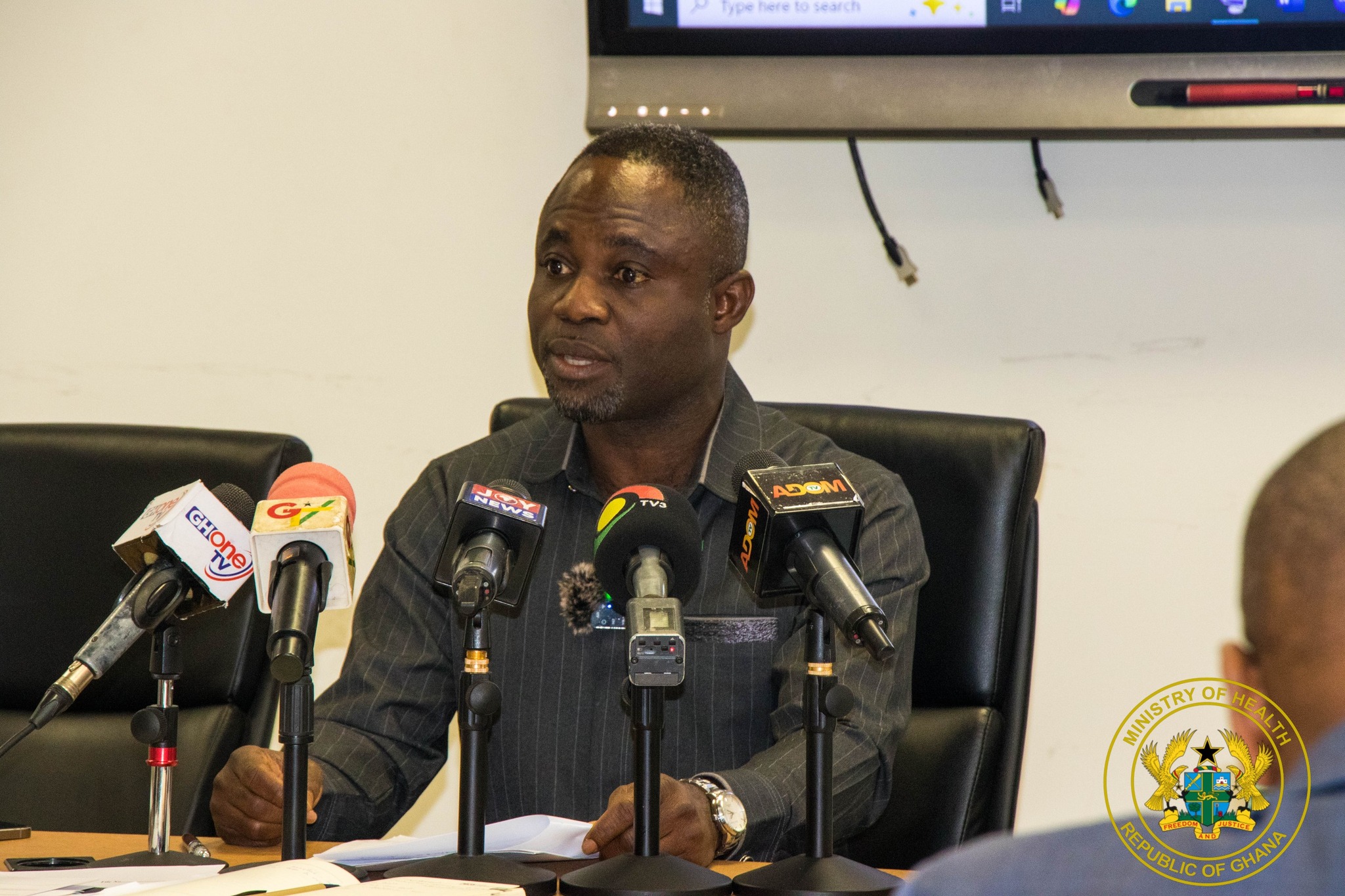
The construction firm working on the Tema-Aflao Highway, BHM International Construction (UK) Ltd, has warned that work may stall again if the government does not immediately disburse $105 million.
Construction work on the Tema-Aflao highway recommenced in April after the Ministry of Roads and Highways assured BHM Construction Company Limited that the necessary funding for the project would be restored.
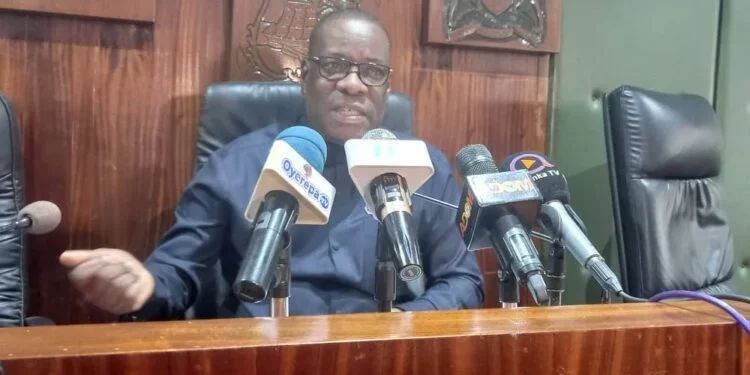
However, the contractors say the funds are yet to be released. Speaking to the media on Thursday, September 11, one of the contractors, Wisdom Adonoo, revealed that, “We are still waiting for the funds…the loan to be reinstated. In the meantime, we are working in good faith based on the Minister’s assurance”.
The project had been put on hold since December 2022, when the debt restructuring initiative led to a freeze on several major infrastructure projects nationwide. BHM Construction responded promptly to the Minister’s call and resumed work on the highway, although they have also requested the government to expedite outstanding payments to ensure the smooth continuation of the project.
The Country Managing Director for BHM Ghana, Adrian Wilson, shared his optimism during a press briefing on April 7.
“We are happy to resume work on the Tema-Aflao Interchange Programme project, especially after receiving the government’s continued assurance regarding funding. This reassurance has given us the confidence to restart the work,” he said.
This highway is a key road that connects Ghana to Togo and other West African countries, so fixing it is important for both local travel and trade across the region. If completed, the project will alleviate the plight of motorists traversing the Tema-Aflao stretch, and tie into the Trans-African Highway Project, from Lagos to Abidjan, with the current two-lane dual carriageway being expanded into a three-lane carriageway in each direction, he said.
With commuters having to spend over four hours traversing the road along with the Dawhenya township, the President described the situation as unproductive, hence the move by the government to address the situation on that road and other areas along other national corridors.
The 17-kilometer road project begins one kilometer east of the Tema Expressway Roundabout, incorporating mixed-use towns such as Dawhenya, and ends approximately 3km east of the Central University intersection.
Meanwhile, Parliament on July 30 unanimously endorsed the government’s proposal to divert all royalties that will be received from oil revenues and mineral royalties to support the implementation of the Big Push Programme.
This comes after the government requested Parliament approve committing funds to assist in the construction of certain road projects. Mr Isaac Adongo, the Chairman of the Parliament’s Finance Committee, while presenting the report by the Budget and Finance joint committee to the plenary, said, “The Committee has carefully considered the Referral, and it is of the opinion that the request is in the right direction.”
The Committee also noted that Parliament had already approved the policy and the allocation to the “Big Push” Programme in the 2025 Budget Statement. Granting the request would enable the Government to enter into multi-year contracts to execute the road infrastructure projects under the Programme.
“The Committee accordingly recommends to the House to approve the Request for the multi-year commitments for the selected road projects under the “Big Push” Programme contained in the Mid-Year Fiscal Policy Review of the 2025 Budget Statement and Economic Policy of the Government of Ghana, in accordance with Section 33 of the Public Financial Management Act, 2016, (Act 921),” Mr Adongo said.
The initiative aimed at improving road infrastructure across the country is estimated at GHC13.8 billion, and it is expected to be completed by 2028 with support from the country’s own financial resources. According to the 2025 budget, GH¢5.75 billion is owed by the Road Fund, with an allocation of GH¢2.81 billion programmed for road maintenance.
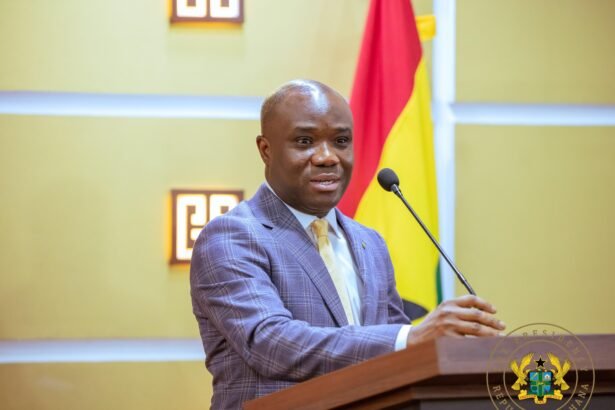
This represents a 155.5% increase from the 2024 allocation of GH¢1.1 billion, underscoring the government’s emphasis on sustaining Ghana’s road network. The Minister for Roads and Highways, Kwame Governs Agbodza, on Wednesday, July 30, revealed that his ministry has undertaken studies and prepared comprehensive engineering interventions and cost estimates for road projects under the Big Push Programme.
However, the Minister for Roads and Highways, Governs Kwame Agbodza, has projected a two-year timeline for the completion of all current and upcoming road projects under the government’s “Big Push” initiative.
The Ministry of Finance has since issued commitment authorizations for some twenty-nine (29) road infrastructure projects under the Big Push Programme, which include: Upgrading of Akosombo-Gyakiti-Kudikope Road, Road Dualization of Winneba-Mankessim Road, Rehabilitation of Mankessim-Ajumako-Breman Asikuma-Agona Swedru, Construction of Nchi-Elubo Road, and Rehabilitation of Atimpoku-Asikuma Junction Road.
The government has also selected several abandoned road projects for which no dedicated funding was allocated by the previous administration. They include rehabilitation and upgrading of Kasoa-Winneba Road, construction of Suame Interchange and Local Roads, reconstruction of Navrongo-Chuchuliga-Sandema Road, and upgrading of Tumu-Chuchuliga-Navrongo, including construction of a 36m span reinforced concrete bridge over the Kanyibie River and a 24m span reinforced concrete bridge over the Bechelihu River.
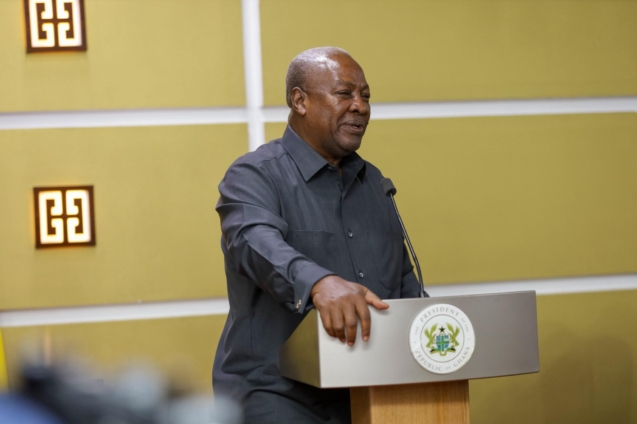
The government will, by the end of July, settle GHC4 billion out of the large debt owed to road contractors. Currently, the government owes road contractors GHC21 billion, according to the Roads Minister. President John Mahama emphasized his government’s commitment to infrastructure development under his administration’s 24-hour economy agenda. On his part, prioritising road construction and the swift resumption of stalled road projects holds the key to promoting economic growth and productivity by ensuring adequate regional connectivity.
The announcement has been met with excitement and optimism by many stakeholders in the construction sector. The Ghana Institute of Engineers and the Association of Road Contractors have largely welcomed the president’s announcement, but they have called for transparency. They have called on the government to publish clear timelines and payment schedules to ensure that contractors can plan and mobilize resources effectively.
In March this year, Deputy Minister for Roads and Highways Alhassan Suhuyini acknowledged the significant financial burden facing the government to clear outstanding debts owed to contractors and suppliers. His remarks followed the presentation of the 2025 budget by Finance Minister Dr. Cassiel Ato Forson, who disclosed that the government’s total commitments to contractors stand at a staggering GH¢67.5 billion.
He emphasized the importance of prioritizing road maintenance, a sector that has suffered due to poor upkeep. “The minister has stressed that a significant portion of these funds will be directed toward road maintenance. This is a smart move because our poor maintenance culture has resulted in roads deteriorating within 8 to 10 years instead of lasting longer,” he explained.
Mr Suhuyini noted that, in addition to paying off some existing road maintenance debts, the government is looking at a broader infrastructure push. “With GH¢10 to GH¢13 billion allocated under the ‘Big Push’ initiative, several new road projects will commence, while some outstanding debts will also be retired,” he added.
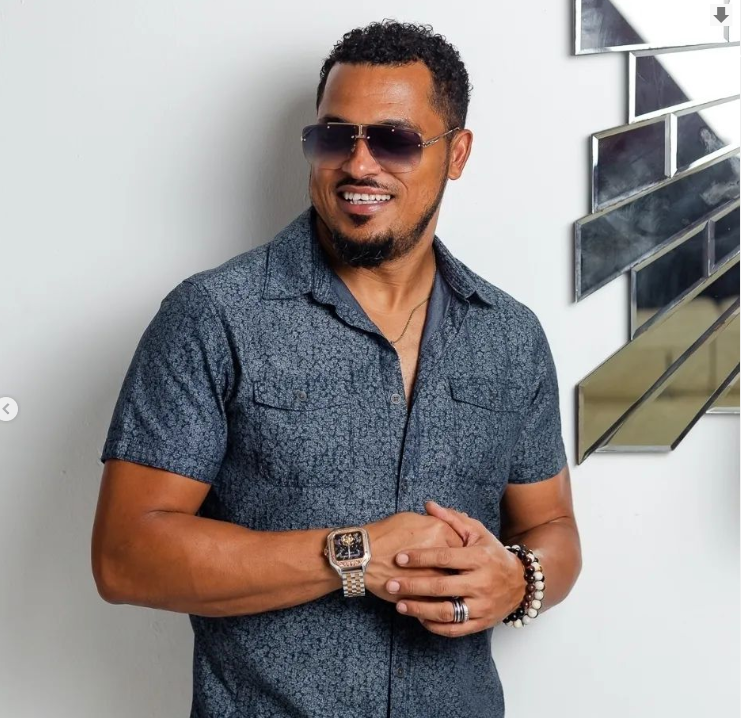
Ghanaian actor Van Vicker has rebuked seasoned movie producer Abdul Salam for allegedly refusing to pay off several actors after engaging them in his movie projects.
He told Nana Romeo in an interview on Okay FM, that, he still carries the pain from Abdul Salam’s actions and has called on filmmakers to end the exploitation of actors.
“Salam owes a lot of people, and I hear all these stories, and I am grieved because a seasoned producer… It is not fair to have actors work, and we don’t get what they are worth,” he stated.
He further explained that Mr. Salam expressed interest in working with him, and they shot a series in 2015. It has been 10 years and he is yet to receive the payment for his services.
Van Vicker’s concerns add to the growing complaints that Ghanaian actors and actresses are underpaid, earning very little from acting despite their fame.
Award-winning Ghanaian actress, Pascaline Edwards has said that her colleagues who claim to have earned a great deal of money from just acting are telling lies.
In a media engagement on Onua Fm, the 53-year-old actress-turned-fashion designer said the movie industry alone as a stream of income would not be able to provide anyone with the requisite resources to build a house or start a business.
“Whoever in the industry says they’ve made a fortune from making movies is a liar,” she said.
Pascaline Edwards also mentioned that acting was a passion-driven job and could propel you to celebrity status.
“The movie industry propels you to a certain level. It gives you a brand. You may get Brand Ambassadorial deals and endorsement which can be lucrative but the income from the movies and set is inadequate,” she pointed out.
She also admonished the youth and upcoming actors not to rely entirely on the funds they receive from movies but to venture into other profitable businesses.
“If you have to sell groundnut and maize as your regular day job do that and add the acting as your side hustle because it’s really a hand-to-mouth industry,” she said
“GBC still owes me 5000 cedis old currency, which is now about 50 pesewas in the new Ghana currency,” Edwards who has had a career spanning over 30 years said, also citing the failure of production houses and filmmakers to pay them their wages.
Pascaline Edwards was Ghana’s Best Female Actress in 2002 and is celebrated as an iconic actress who played several diva roles in her prime. She has acted in over a hundred movies and a number of stage productions.
Ghanaian music icon Samini has opened up about why he prefers music over acting, citing the significant pay disparity between the two industries. According to him, acting is a physically and financially draining profession, yet actors in Ghana are not compensated fairly for their efforts compared to musicians.
Speaking on a podcast, Samini explained that while he has dabbled in acting, he finds the financial returns unimpressive.
He revealed that top musicians can earn between GHS 150,000 and GHS 250,000 for a single full-band live performance, with even lesser-known artists making between GHS 15,000 and GHS 20,000 for a 30-minute set in Accra.
However, the situation is entirely different for actors, who often spend weeks on set but earn significantly less.
Samini disclosed that even A-list actors struggle to secure GHS 10,000 to GHS 25,000 for an entire movie project, which could take up to three weeks of filming.
He pointed out that some of the biggest names in the industry might push for GHS 20,000 or GHS 25,000, but that largely depends on the production house hiring them.
Meanwhile, lesser-known actors reportedly earn as little as GHS 2,000 for weeks of work—an amount far below what musicians make for just a few songs on stage.
“It’s crazy when you think about it,” Samini said. “A musician can go on stage for 30 minutes and earn GHS 15,000, while an actor spends weeks filming and barely makes that. Something has to be done about it.”
As an advocate for fair pay, Samini called for the introduction of a standardized salary structure for actors, similar to what exists in the music industry.
He proposed that A-list actors should not be paid below GHS 50,000 per movie, B-list actors should earn at least GHS 30,000, and no mainstream actor should be paid less than GHS 15,000 per role.
“If for nothing at all, there should be some form of regulation so that actors are fairly compensated,” he emphasized.
Samini believes that a structured pay system would not only improve the livelihoods of actors but also enhance the quality of Ghanaian films. He urged producers and industry stakeholders to re-evaluate their compensation structures to ensure actors receive what they truly deserve.
His comments have reignited discussions about the financial realities of acting in Ghana and whether reforms are needed to bridge the pay gap between musicians and actors.
Popular Kumawood actor and filmmaker Kwadwo Nkansah, known in the entertainment industry as LilWin, has also opened up about the financial struggles of Ghana’s film industry, revealing that many filmmakers are forced to fund their own productions due to a lack of investors.
In an interview with Graphic Showbiz, LilWin emphasized that the film sector is grappling with financial constraints, which has left actors and producers with no choice but to invest their own resources to keep the industry alive.
“At the moment, our industry is struggling mainly due to a lack of investment. This has forced some of us to finance our own film productions,” he stated.
Despite these challenges, LilWin encouraged his colleagues to take control of their careers by exploring filmmaking and directing rather than relying solely on acting opportunities.
“I encourage my colleagues to take action because you can’t sit idle, waiting for a producer to give you a role. If you have what it takes, create your own movie,” he advised.
Having personally experienced the burden of self-financing, LilWin noted that all his projects have been executed without external financial support.
“Today, I can proudly say that all my movies and TV productions were financed solely by me, without any external backing. So you can imagine the quality I could achieve if I had an investor supporting me,” he added.
He cited his latest film, A Country Called Ghana, as a testament to what Ghanaian filmmakers can accomplish despite financial hardships.
“A Country Called Ghana is the best production in recent times, just like the classic I Told You So. It has won several awards, including Best Indigenous Film at the 2024 Nollywood Film Festival, as well as Best Production Design and Best Makeup at the 2024 Imo International Film Festival,” he revealed.
The movie, which was also nominated for Movie of the Year at the 2024 Black Star International Film Festival (BSIFF), features top Nollywood stars such as Ramsey Nouah, Charles Awurum, and Victor Osuagwu, popularly known as Awilo Sharp Sharp.
LilWin remains hopeful that with the right investment, the Ghanaian film industry can thrive, attract international recognition, and create more opportunities for talents in the sector.
Veteran Nigerian filmmaker, Kanayo O Kanayo, has questioned how the industry can nurture fresh talents when producers continue to prioritize fame and physical appearance over skill.
According to him, many were unfairly labeled as “not good enough” or “not marketable,” and those judgments ended the careers of some talented actors.
“Some sponsors woke up and started branding actors: ‘this one is not a good one, this one does not sell films.’ They killed the careers of those guys,” he said.
But Kanayo believes that acting should be about skill and delivery, and not about who has the most attractive face.
He asserted that the industry cannot continue producing quality content if producers rely on such a small pool of actors who are hardly ever free.
“Some of these guys will tell you they are not free from September 2025 till August 2026. How then do we sustain the content you watch? How do we create magic? How do we encourage new actors to come into the business?” he asked.
In light of this challenge, he said, “I have decided to take my destiny in my own hands as it pertains to my platform on YouTube. Movie making is not about having a fine face, it’s about being a good actor, a good performer. So, with or without a fine face, that’s what I’ve decided to do. If you don’t like it, well, that’s quite unfortunate,” he said.
Popular Nollywood actress and filmmaker, Funke Akindele has recounted how she was denied playing major roles during her days as a struggling thespian because people tagged her as “not fine.”
Speaking in the latest episode of the TokeMoments podcast, hosted by Toke Makinwa, Akindele said she lost major roles even in Yoruba indigenous movies because of her physique.
She recalled that actress Iyabo Ojo helped her several times during her altercations with filmmakers who turned her down because of her looks.
The ‘Jenifa Diary’ actress said producers were giving her just minor roles which made her cry.
“I remember people telling me, ‘You are not fine. You don’t have ass. You don’t have boobs. You will not be in this film,” she recalled.
“And, I remember crying. A lot of times I would cry, break down, get into the bathroom and cry.”
Similarly, Ghanaian actress Beverly Afaglo shared how difficult it was for dark-skinned actors to get roles in the movie industry when she started her career.
Speaking in an interview on Joy Learning TV, she revealed that many producers preferred casting light-skinned actors, believing they looked better on screen.
“Our time, what most of the producers were doing was, you have to be a half-cast. I think Jackie Appiah was the only person because she was a star already so they needed her.
“Producers thought light-skinned actors looked better on TV. As a result, most of them preferred casting light-skinned individuals,” she said.
Beverly also described how tough auditions were, as actors had very few chances to impress casting directors.
“There was talent. It wasn’t about beauty or what you were wearing or anything. Everybody was ready to act. People were acting. We were really daring.
“People can master lines in one minute because when you get that chance to audition for a role, it was your only chance and the queue behind you was so long that you don’t want to make a mistake. But the casting for producers made it difficult for us to get into the acting field,” she narrated.
According to her, things only changed when movie storylines required diverse actors, forcing producers to work with dark-skinned talents.
“It got to a time that they didn’t have a choice but to use us because, at that time, most of the stories that were out were about kingdoms, princesses, girls-girls, those stories. So girls-girls, you will need us. You can’t use just one person; you need everybody. So they knew that they had to work with us,” she explained.
On the contrary, Ghanaian actress Vicky Zugah has revealed that her interest in movies began when someone discovered her potential.
In an interview with Akua Sika on Ayekooo, a show available on Happy TV’s YouTube channel, she shared how this chance encounter led her to transition from studying cosmetology to becoming a successful actress and TV presenter.
“I went to school to study cosmetology, but someone discovered me while I was still in school,” she revealed during the interview. The individual who spotted her potential was working on a movie project and believed she had the perfect features for one of the roles.
Interestingly, Vicky had never considered acting at the time. “I wasn’t into movies at all,” she confessed. However, the opportunity to act in her first film became a turning point.
“When I had my first experience on set, it made me realize that I had the confidence to do it,” she added, reflecting on how stepping into the acting world felt natural despite her initial reservations.
That single experience ignited a passion she didn’t know she had. “I started going for auditions and getting cast in roles,” Vicky shared. “And that’s how my journey in acting began.”
She credits her transformation to the person who discovered her and gave her the nudge she needed. “If that person hadn’t seen the potential in me, I probably would have still been doing cosmetology,” she admitted, expressing gratitude for the serendipitous encounter.
Today, Vicky Zugah is a celebrated name in Ghana’s entertainment industry, known for her versatility and confidence, qualities she attributes to that pivotal moment when someone believed in her abilities.
Her story is a testament to the power of opportunity and recognizing untapped potential.
Meanwhile, Veteran Ghanaian actor, Fred Nii Amugi has advised actors and actresses not to fight over roles in movies because it does not bring the best in them.
According to him, before a director assigns a particular role to an actor he (the director) measures the strength, hence fighting for a change in role isn’t the best.
“Don’t fight for roles. Whatever the role a director gives you, do it to perfection because the director knows you can perform”, Mr. Fred Amugi said in an interview on Movement TV.
Mr. Fred Nii Amugi also urged actors and actresses also cautioned actors over such acts adding that it does not bring out the best in them.
He added it is better for an actor to appear in one scene in a movie and perform it well than to be in an entire film without having an impact.
“It is better than roaming in a movie without doing anything relevant. You do it, convince the director for the next movie or for a future role”, he advised.
Ghanaian-American filmmaker Leila Djansi has asserted that YouTube will soon become a thing of the past due to saturation by filmmakers.
She further argued that a government-backed film fund would be wasted if movies are only released on YouTube.
She added that piracy also undermines the platform’s viability for film distribution.
“Personally, I don’t believe the film fund. I really don’t. I think it is premature because there is no distribution. If you give the film fund how are they gonna [make profit].”
People think that we are just gonna put it on YouTube. I’m sorry YouTube is gonna collapse very soon. There is so much congestion on YouTube and they are always changing their policies. So if you go in now a I think it is seriously over-saturated. If you over-saturate it, they’re gonna reduce the earning. So how much are you gonna earn if you just put your film on YouTube,” she said.
Meanwhile, James Gardiner, a leading Ghanaian actor, recently discussed the crucial role social media, particularly YouTube, plays in boosting the Ghanaian film industry.
In an interview with media figure Doreen Avio, the star of ‘Taste of Sin’ pointed out that many are not fully harnessing the potential of these digital platforms.
Gardiner emphasized that YouTube remains underutilized, despite its potential for significant impact.
He noted that individual productions can amass millions of views, potentially translating into considerable earnings.
“YouTube is a goldmine that’s being overlooked. The fact that just one of our productions can hit around 29 million views indicates that African films are resonating widely,” he said.
While acknowledging the importance of major streaming services like Netflix, Gardiner stressed the value of concentrating efforts on YouTube.
He shared insights from his recent experiences in Nigeria, highlighting how Nigerian TV stations swiftly adopt and popularize films from YouTube, further amplifying their reach.
“Work is thriving in Nigeria, and it’s not just Ghanaian audiences that are engaged. In fact, Nigerian platforms quickly pick up new releases from YouTube, often within 20 to 30 minutes, which boosts viewership numbers,” Gardiner observed.
Despite the hurdles the Ghanaian film industry faces, Gardiner remains hopeful about its future.
He believes that with a positive outlook and persistent effort, the industry is poised for continued growth and success.
Popular Nollywood actress Ruth Kadiri recently shared her insights on why she chose YouTube as the platform to showcase her movies.
In an interview with BBC Pidgin, she highlighted YouTube’s significance as a major income source for independent filmmakers and content creators, emphasizing its pivotal role in sustaining livelihoods within the industry.
Kadiri emphasized that YouTube has become indispensable, stating that without it, many individuals, not just filmmakers, would face financial hardships. She underscored the platform’s contribution to feeding people by providing opportunities for filmmakers to monetize their content effectively.
Reflecting on her journey into YouTube, Kadiri revealed her frustration with the constraints of traditional production processes, which motivated her to seek a space where she could freely express her creativity. She discussed her desire to explore and implement innovative ideas without excessive regulations, noting that YouTube offered the flexibility she craved.
Despite encountering skepticism and discouragement from others, Kadiri viewed YouTube as a platform for reaching a broader audience and honing her skills. Her decision to venture into YouTube was fueled by a passion for storytelling and a determination to overcome challenges, even if it meant learning from initial setbacks.
Kadiri’s experience on YouTube has been marked by the production of several films, each contributing to her growth as a filmmaker and entrepreneur. Her journey exemplifies the evolving landscape of film distribution and the opportunities that digital platforms like YouTube offer to aspiring creators.
The surge and mass production of AI-generated content on YouTube has prompted the video-sharing platform to announce a review and update of its monetisation policy under the YouTube Partner Program (YPP).
The YouTube Partner Program is how creators earn money from their content.
In a formal statement shared on July 7 on YouTube’s Support page- a platform where the company shares updates and announcements- it spelt out modifications concerning content and its monetisation policy.
“We’re updating our guidelines to better identify mass-produced and repetitive content. This update better reflects what inauthentic content looks like today,” parts of the statement read.
According to the statement, effective July 15, content would now be subjected to strict scrutiny, and those found as repetitive with no intention to educate or entertain would be demonetised.
“On July 15, 2025, we’re updating our guidelines to better identify mass-produced and repetitive content. This update better reflects what inauthentic content looks like today”, it continued.
Also, content that has been created with heavy use of AI with little to no human effort would be demonetised.
“AI-assisted content is acceptable, but only if it includes considerable human input. Content created with little to no human effort may not be eligible for monetisation.”
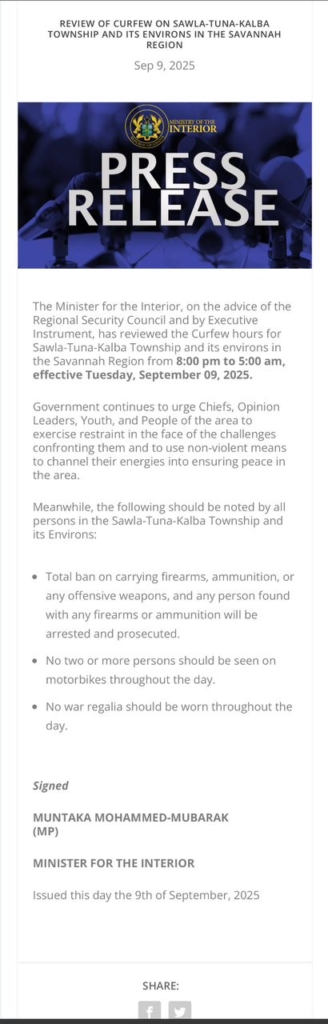
The Ministry of the Interior has announced an adjustment to the curfew hours in the Sawla-Tuna-Kalba Township and surrounding communities in the Savannah Region.
The revised curfew, set from 8:00 p.m. to 5:00 a.m. daily, will take effect on Tuesday, September 9, 2025.
This replaces the earlier curfew, which was enforced on Wednesday, August 27, and ran from 6:00 p.m. to 6:00 a.m. each day.
In a statement signed by Interior Minister Muntaka Mohammed-Mubarak, the Ministry explained that the decision was based on the advice of the Regional Security Council and implemented by Executive Instrument as part of efforts to maintain peace and security in the area.
It added that “Government continues to urge chiefs, opinion leaders, youth, and people of the area to exercise restraint in the face of the challenges confronting them and to use non-violent means to channel their energies into ensuring peace in the area.”
The directive further reminded residents of specific rules that must be strictly observed. It stated that there is a complete ban on carrying firearms, ammunition, or offensive weapons, and anyone found guilty will be arrested and prosecuted.
It also prohibited two or more persons from riding together on a motorbike during the day. In addition, it strictly forbade the wearing of war regalia.
The curfew was imposed in response to recent land disputes that have heightened security threats in the area.
Last month, President John Mahama initiated steps to restore peace in the Sawla-Bole area of the Savannah Region following renewed tensions between the Gonja and Brifor communities.
Upon his return from a state visit to Singapore, the President received a full briefing from the National Security Coordinator and the Minister for the Interior on the latest developments in the conflict.
While abroad, Mr. Mahama held a telephone conversation with the King of Gonja, Yagbonwura Jira Bikunuto Jewu Soale I, during which they discussed measures to end the clashes and foster lasting peace in the area.
As part of efforts to de-escalate the situation, the President has dispatched a government delegation led by the Minister for the Interior, Hon. Muntaka Mohamed-Mubarak, to engage the Yagbonwura and other key stakeholders.
Meanwhile, security has been reinforced with the deployment of additional police and military personnel to the conflict zone. President Mahama has urged all parties to support the peace initiatives being rolled out, stressing the importance of dialogue in resolving outstanding disputes.
He has further directed the government delegation to work closely with the Regional Security Council, traditional authorities, and community leaders to ensure calm is restored and law and order upheld.
Minister for the Interior, Muntaka Mohammed-Mubarak, has assured the Overlord of Gonja, Yagbonwura Bii-Kunuto Jewu Soale I, that the government will take every necessary step to restore peace in the Sawla-Bole area.
“We have taken note of all the concerns, and we have also assured him that we will do everything humanly possible to ensure that peace will be restored. But we need his cooperation and the cooperation of all others. Surely, what talking can solve, dance cannot solve,” he stated.
“Surely, what talking can solve, dance cannot solve, so we are hoping that after all the lengthy discussion and the conclusion that we have come to, we will go and implement our part, we are hopeful that they will also listen to us and also adhere to whatever agreement that we’ve had,” he noted.
Less than a week ago, the sector minister imposed a curfew on the Sawla-Tuna-Kalba township and its surrounding communities in the Savannah Region. The curfew runs from 6:00 p.m. to 6:00 a.m., effective Wednesday, August 27, 2025, until further notice. This measure was taken in response to the recent outbreak of conflict in the area.
In addition to the curfew, there is a total ban on the possession of firearms, ammunition, or any offensive weapons. Any individual found with such items will be arrested and prosecuted. Furthermore, no two or more persons are permitted to ride on motorbikes throughout the day, and the wearing of war regalia has also been prohibited.
Last year, intense security measures were implemented in the Bole and Sawla districts of the Savannah Region due to the chieftaincy dispute between the Bolewura and the Jahori clan. This heightened security response followed a ruling by the Tamale High Court concerning the dispute between the Jahori and Bolewura factions.
In response to the court ruling, youths from Bole set fire to houses belonging to members of the Jahori community residing in both Bole and Sawla districts. The devastating fires resulted in significant property losses for the affected individuals, leaving many tenants in despair and tears. In recent years, the country has witnessed a number of casualties and destruction of property arising from chieftaincy disputes.
The Minister for the Interior, Muntaka Mubarak, has also reviewed the earlier curfew hours imposed on Bawku and Nalerigu townships following recent attacks. The previous curfew, which ran from 6 a.m. to 2 p.m., has been revised to 6 p.m. to 6 a.m. The minister took this decision after receiving advice from the National Security Council.
The Bawku Municipality in the Upper East Region and the East Mamprusi Municipality in the North East Region are affected by the new directive. The curfew has created an environment conducive for the evacuation of students from educational institutions in the affected areas, some of whom had unfortunately been targeted during the conflict.
In a statement issued on July 27, the government announced that it is stepping up its approach from peacekeeping to peace enforcement in Bawku and other affected areas due to the recent escalation of violence, which threatens to derail the peacebuilding process.
These heightened tensions and conflicts have had an impact on the country’s global peace ranking. Ghana has been ranked 61st out of 163 countries in the 2025 Global Peace Index (GPI), marking a continued decline in its standing on peacefulness. The latest ranking follows a downward trajectory from 55th in 2024, 51st in 2023, and 40th in 2022.
Despite the decline, Ghana still ranks ahead of several of its West African neighbors, including Senegal (69th), Liberia (70th), and Nigeria (148th).
The Global Peace Index, compiled annually by the Institute for Economics and Peace (IEP), measures the peacefulness of nations based on 23 indicators across three broad domains: societal safety and security, ongoing domestic and international conflict, and militarisation.
A US$1 billion Memorandum of Understanding (MoU) has been signed by Ghana Gold Board (GoldBod) and Goldstream Global DMCC for the purpose of developing more than 300 responsible mines across the country.
The Memorandum of Understanding will be centered on working with concession owners to develop reserved mineral-rich zone, however, it is expected to transform into a commercial agreement by November 2025
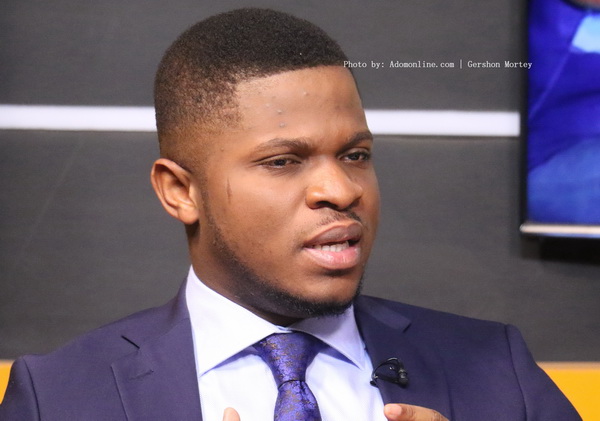
CEO of GoldBod, Sammy Gyamfi, stated that the initiative will promote sustainable mining and bolster Ghana’s gold output with the support of the Ministry of Lands and Natural Resources and its relevant agencies.
“Under this program, GoldBod will collaborate with the Ministry of Lands and Natural Resources and its allied agencies, such as the Minerals Commission of Ghana, to develop mineralised areas. We will also partner with concession owners and local communities to maximise Ghana’s gold output through sustainable mining,” he said, while announcing the signing at the maiden Mining and Minerals Convention on September 8, 2025.
Mr Sammy Gyamfi further introduced a Mining Support Program designed to generate employment for young people and enhance mining operations across the country.
“This crucial Mining Support Program (MSP) will increase national gold output and create thousands of jobs within the mining ecosystem for our teeming unemployed youth. The Minerals Commission has released ten blocked-out mineralised areas to GoldBod for this program and has pledged to release more in the coming weeks,” he added.
The Minerals Commission has so far allocated ten areas to GoldBod for the first phase of this project.
In April this year, the Gold Board (GoldBod) successfully secured an agreement with nine large-scale mining companies to purchase 20 percent of their gold output locally, as part of a national effort to strengthen Ghana’s gold reserves and reduce foreign dependency.
The strategic pact follows extensive negotiations between GoldBod officials and mining companies outside the scope of the Bank of Ghana’s Domestic Gold Purchase Program.
The companies participating in this initiative include Golden Team Mining Company Limited, Akroma Gold Limited, Adamus Resources Limited, Cardinal Namdini Mining Limited, Goldstone Akrokeri Limited, Earl International Group (GH) Limited, Xtra Gold Mining Limited, Prestea Sankofa Gold Limited, and Gan He Mining Resource Development Limited.
According to the agreement, each of the nine companies was required to deliver 20% of any gold they intend to export to GoldBod in the form of doré bars. These deliveries were said to be made at a designated collection point, Assay Laboratory at the Kotoka International Airport.
Payments for the gold were made in Ghana cedis, calculated using the London Bullion Market Association (LBMA) AM spot price with a 1% discount, and settled within two working days of delivery. The prevailing Daily Interbank FX (Weighted Median) Rate, as published by the Bank of Ghana, were be used as the standard exchange rate.
Acting Chief Executive Officer of the GoldBod, Mr. Sammy Gyamfi Esq., expressed appreciation to the mining firms and the Ghana Chamber of Mines for their support and alignment with the government’s strategic objectives.
He remarked, “This agreement is part of the GoldBod’s bid to boost gold and foreign reserve accumulation by the Bank of Ghana in line with the vision of the President.”
Mr. Gyamfi further lauded the companies for their willingness to contribute to President John Dramani Mahama’s broader goal of ensuring the nation derives optimal value from its mineral wealth.
To formalize this new framework, all parties involved were expected to sign the official agreement on May 15 as the program officially began on June 1.
In a contrasting development, the Ghana Gold Board (GoldBod) implemented a significant regulatory change aimed at tightening control over the country’s artisanal and small-scale mining (ASM) gold trade.
Effective immediately, all current gold trading licenses issued by the Precious Minerals Marketing Company (PMMC) or the Minister for Mines, with the exception of those held by large-scale mining companies, were considered invalid.
This decision was supported by the Ghana Gold Board Act (Act 1140), which was approved by Parliament on March 29 and received the President’s assent on April 2.
Under the new framework, GoldBod assumed exclusive authority as the official buyer, seller, assayer, and exporter of all gold produced by licensed Artisanal and Small-Scale Mining (ASM) operators in Ghana.
This measure is intended to combat illegal activities, improve trade efficiency, and ensure comprehensive government oversight of the ASM industry.
“No individual or entity, other than the Ghana Gold Board, is authorized to export ASM gold from the country,” the statement clarified.
To ensure a smooth transition, GoldBod announced a grace period for holders of existing licenses.
These entities continued their operations until April 30, 2025. However, starting May 1, 2025, engaging in gold transactions without a GoldBod-issued license was treated as a criminal offense.
In a bid to enforce monetary control and encourage domestic transactions, the new directive required all licensed local gold buyers to conduct business exclusively in Ghanaian cedis, with exchange rates sourced from the Bank of Ghana’s official website.
In a significant shift, foreign nationals were required to exit the local ASM gold trading market by April 30, 2025. While foreign entities were permitted to still apply to GoldBod for the right to purchase gold, they were no longer allowed to operate independently within the ASM trade.
“It is important to note that beginning May 1, 2025, purchasing or trading in gold within Ghana without a valid GoldBod license will constitute a punishable offense,” the statement emphasized.
Starting April 22, 2025, Ghanaian citizens and wholly Ghanaian-owned companies wishing to enter the gold trade were permitted to apply for new licenses through the GoldBod Licensing and Regulations office in Accra or via their online portal.
This overhaul of the regulatory framework was intended to increase transparency, eliminate illegal players, and enhance government revenue from Ghana’s booming ASM gold industry, which contributes over 30% to the nation’s total gold production.
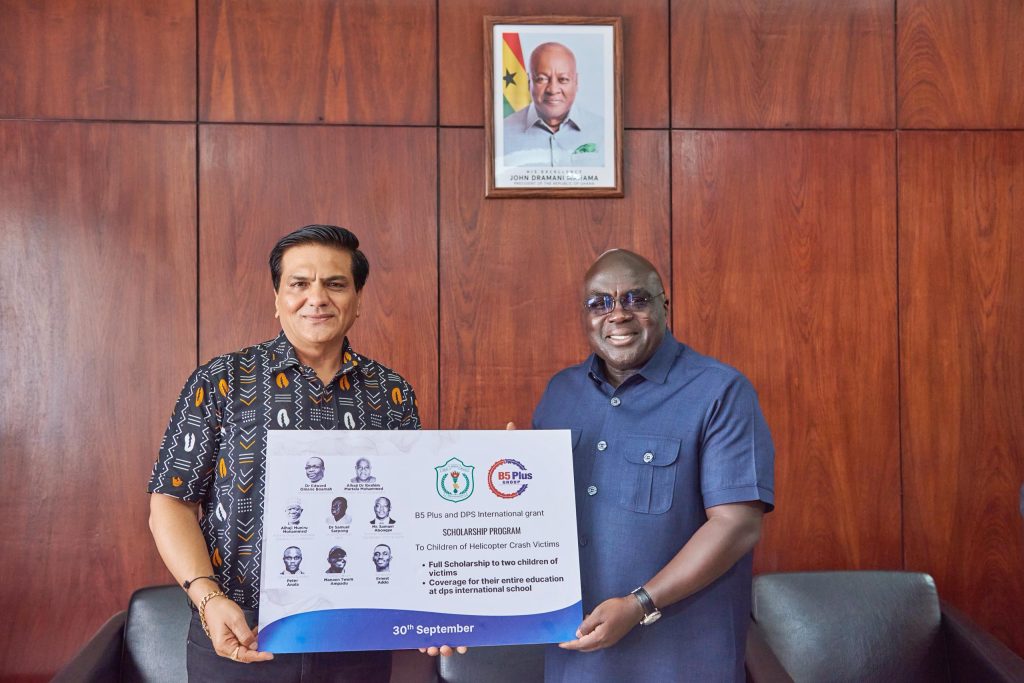
The eight families affected by the August 6 helicopter crash have received a full educational scholarship for their children.
The package, announced at the Office of the Staff, is the result of partnership between B5 Plus Group and DPS International School.
Under the arrangement, two children from each family will be enrolled at DPS International in Tema, with full costs covered from basic school through to A-Levels.
The scholarship includes tuition, uniforms and boarding where required.
Chief of Staff Julius Debrah, who accepted the offer on behalf of the families, described the gesture as a clear demonstration of private sector commitment to nation-building.
Former Attorney-General and Presidential Advisor on Legal Affairs, Marietta Brew Appiah Oppong, also lauded the initiative, stressing that investing in the education of the children is a long-term solution that will secure their future.
The government laid to rest eight victims of the Adansi helicopter crash as of August 15.
The deceased were Dr. Edward Kofi Omane Boamah, Minister for Defence; Samuel Sarpong, Vice Chairman of the National Democratic Congress; Samuel Aboagye, Deputy Director-General of NADMO; Squadron Leader Peter Anala of the Ghana Air Force; Flying Officer Tsum Ampadu of the Ghana Air Force; and Sergeant Ernest Addo of the Ghana Air Force.
Among the eight victims, two Muslims, Minister for Environment, Science, Technology and Innovation, Dr. Ibrahim Murtala Mohammed, and Acting Deputy National Security Coordinator in charge of Human Security, Alhaji Muniru Limuna Mohammed — were laid to rest earlier, on Sunday, August 10, where Janazah prayers were also held at the Forecourt of the State House in Accra before they were buried at the Military Cemetery in Tse Addo.
In solidarity to the bereaved families, a new Children Support Fund initiative, established by government to provide financial aid to the children of the victims received a GHS500,000 donation from Stanbic Bank Ghana.
President John Dramani Mahama made this known at the State Funeral on August 15, 2025, held in honour of the eight gallant men who lost their lives in the line of service to the nation.
The bank expressed condolences to the bereaved families, especially the children who have lost their parents in a statement signed by the bank’s Chief Executive, Kwamina Asomaning,
“In the wake of the heartbreaking helicopter crash that claimed the lives of dedicated servicemen, our hearts go out to the families left behind, especially the children who now face life without their parents,” Mr. Asomaning said.
Mr Kwamina Asomaning added that, “We hope this contribution will serve not only as financial support, but as a message of hope, that these children are not alone, and that Ghana stands with them.”
As of August 19, the Support Fund had accrued a total of GHS 2,315,000.00 represents collective donations from corporate organizations and individuals. This information was disclosed by the Governmental Affairs and Coordinator of the Fund, Dr. Valerie Sawyerr.
Persons who wish to make donations to the Fund have been urged to do so through Stanbic Bank Ghana Limited (Stanbic Heights Branch, Accra) using the following accounts: US Dollar (USD) Account – 9040013628534 and Ghana Cedi (GHS) Account – 9040013628372.
According to the Fund Coordinator, cheques and bank drafts should be made in the name CHILDREN SUPPORT FUND 6825. She emphasized that the names of individuals who make payments into the Fund will be published weekly.
The establishment of the Fund was officially launched by President John Dramani Mahama while speaking at the State funeral organized for the victims at the Black Star Square on Friday, August 15.
President Mahama also expressed his gratitude to Stanbic Bank Ghana for donating GHS 500,000 to the Fund, as well as to companies including Procus GH Limited, GB Foods Ghana, Sunda FM Manufacturing Ltd, Sage Distribution Ltd, Quantum Oil Terminals, Quantum LPG Logistics Ltd, Newgas Cylinder Ltd, and Quantum Terminals PLC for their generous contributions.
The support extended to families of six out of the eight individuals who lost their lives receiving GHC 2 million in donations from Ghana’s leading insurance company, GLICO General Insurance.
The beneficiaries include the families of Acting Deputy National Security Coordinator in charge of Human Security, Alhaji Muniru Limuna Mohammed; Vice Chairman of the National Democratic Congress, Samuel Sarpong; Deputy Director-General of NADMO, Samuel Aboagye; Wing Commander Peter Baafemi Analaa; Flight Lieutenant Manaen Twum Ampadu; and Flight Sergeant Mensah Ernest Addo.
The families of the two ministers—Minister for Defence, Dr. Edward Kofi Omane Boamah, and Minister for Environment, Science, Technology, and Innovation, Dr. Ibrahim Murtala Mohammed—have also received benefits under the personal accident cover, as both were insured with the company.
Speaking during the presentation, Managing Director of GLICO, Andrew Achampong-Kyei, urged the families of the deceased to take advantage of insurance packages as a safeguard against unforeseen circumstances. “I’ll encourage you all that it’s important we protect our lives. Having insurance should be part of our social fabric, so we safeguard our lives and investments,” he said.
The Group Chief Executive Officer, Edward Forkuo Kyei, expressed sympathy to the grieving families while assuring them of the company’s support during these difficult times. “You are not standing alone; we are with you. It is for this reason we express our deepest condolences,” he noted.
Meanwhile those wishing to contribute have been directed to make donations through Stanbic Bank Ghana Limited (Stanbic Heights Branch, Accra) using the following accounts: US Dollar (USD) Account – 9040013628534 and Ghana Cedi (GHS) Account – 9040013628372. According to the Coordinator, cheques and bank drafts should be made payable to CHILDREN SUPPORT FUND 6825. She emphasized that the names of individuals making payments will be published weekly.
The Fund was officially launched by President John Dramani Mahama while speaking at the State funeral organized for the victims at Black Star Square on Friday, August 15.
Officials implicated in acts of corruption during the Basic Education Certificate Examination (BECE) will be blacklisted from ever taking part in West African Examinations Council (WAEC)-related activities again.
This was announced by WAEC’s Director of Public Affairs, John Kapi, following a JoyNews Hotline investigation broadcast led by GH Probe’s Francisca Enchil. The investigation revealed alarming instances of cheating at examination centres, including Derby Avenue RC Basic School and St. George’s Anglican Basic School in Accra.
As part of measures to penalize the officials involved in the exposé, Mr. Kapi stated, “Yes, that is what we usually do. We blacklist them, they no longer take part in any activity that has to do with the WAEC,” on JoyNews’ PM Express on September 8.
He further emphasized that the Council cannot continue to work with individuals who have betrayed the trust placed in them during national examinations.
“These are people who certainly have not proved that they are worthy of the trust that we repose in them. As far as this job is concerned, let me also indicate that when it comes to BECE, most of the decisions are taken by the Ghana Education Service. For example, the selection of supervisors and invigilators is done by the district exams officer,” he explained.
The WAEC Director of Public Affairs added that whenever such issues arise, they expect the Ghana Education Service (GES) to take decisive action, respond appropriately, and ensure the right measures are taken against those involved.
Dark World of BECE Documentary
The 2025 Basic Education Certificate Examination (BECE), a crucial entry point to secondary education, has been marred by what appears to be one of the most alarming cases of organised malpractice ever exposed.
A JoyNews Hotline investigation, spearheaded by GH Probe’s Francisca Enchil, uncovered how officials of the Ghana Education Service (GES), together with supervisors, headteachers, and invigilators, turned the national assessment into a coordinated racket—sacrificing academic integrity for monetary gain.
At both Derby Avenue RC Basic and St. George’s Anglican Basic in Accra, invigilators asked for GH¢60 daily, supervisors accepted GH¢400 cash envelopes, and candidates were told to contribute to an ‘Aseda Offertory.’
Instead of upholding strict monitoring, supervisors doubled as guards for invigilators, tipping them off whenever WAEC or National Security officials approached. Teachers and headteachers, though prohibited from the premises, roamed exam centres, bribed their way through, and in some instances fed answers straight to candidates.
The exposé has triggered outrage. The Acting Director-General of the Ghana Education Service, Prof. Ernest Kofi Davis, has warned that teachers face dismissal if caught. Civil society voices, such as Kofi Asare of Africa Education Watch, caution that Ghana is “teaching children corruption in basic schools”—a dangerous normalisation of dishonesty.
Meanwhile, the West African Examinations Council (WAEC) announced that at least 14 individuals had been arrested across the country for their involvement in malpractice in the 2025 West African Senior School Certificate Examination (WASSCE).
The victims, according to the Council, were teachers, students, and invigilators.
Speaking to the media on Friday, September 5, Head of Public Affairs at WAEC, John Kapi, noted, “As part of our commitment to upholding the integrity and credibility of our examination, we have deployed—for we had to employ a number of staff, as well as our own specialized personnel—to monitor the examination centres. Our monitoring teams have observed irregular activity at a number of the examination centres.”
Three of the convicts were sentenced to a combined 20 months behind bars, as declared by the Kasoa-Ofaakor District Magistrate Court. The convicts include a teacher at Ghana College SHS, Samuel Armah, and two university students, Kwame Oteng Nkansah and Amedeka James.
Armah, an invigilator, was sentenced to eight months imprisonment with a fine of 80 penalty units. He was caught dictating answers from his mobile phone to candidates during the Social Studies Paper 1.
Nkansah, a level 100 student of Accra Technical University, impersonated one Quayson Francis Atta of Ghana College SHS. He received a jail term of six months with a fine of 80 penalty units.
A level 100 student of the University of Ghana, James, was also granted a six-month jail term after attempting to write the exam in place of his twin brother, Amedeka Justice.
On Monday, August 25, authorities caught an invigilator at the Forces SHTS with a phone loaded with exam questions while the West African Senior School Certificate Examination (WASSCE) was in progress. His phone contained exam questions on Picture Making and Oral English.
On Wednesday, August 20, WAEC commenced the 2025 WASSCE with a total of 461,640 candidates who sat for the Oral English exam. The practical papers commenced on August 4. The number of students who sat for this year’s exams saw a 0.22 percent increase from 2024, when a total of 460,611 candidates sat for the WASSCE. This year’s candidates comprise 207,381 males and 254,259 females.
Ahead of the exams, the Ghana Education Service (GES) released funds to cater for the 2025 WASSCE practical examinations for all Senior High Schools (SHSs) and Senior High Technical Schools (SHTSs) across the country. An amount of GH¢15,849,920 was released, according to reports.
According to GES, in a statement issued on Saturday, July 27, and signed by the Head of Public Relations, Daniel Fenyi, the funds were expected to provide all necessary materials and supplies for the practical exams.
“The Management of the Ghana Education Service (GES) announces that funds had been released to all Senior High Schools (SHS) and Senior High Technical Schools (SHTS) across the country to cover the fees for the 2025 WASSCE practicals. This payment ensures that all practical examinations scheduled for the 2025 WASSCE are fully supported, including the provision of the required materials and other essential resources,” the Service noted.
WAEC cancelled and withheld the subject results and entire results of some 2,228 candidates who sat for the 2025 BECE. The Council made this known after revealing that it had released provisional results of candidates who sat for the BECE for School Candidates, 2025.
Following the completion of investigations into several cases of irregularity detected during the conduct of the examination and marking of scripts, the 36th Meeting of the Final Awards and Examiners’ Appointment Committee for the BECE, 2025, held on Friday, August 15, 2025, approved the cancellation of the subject results of 718 candidates and the entire results of 177 candidates.
The committee also withheld the subject results of 1,240 candidates and entire results of 93 candidates. Meanwhile, the subject results of some candidates from 119 schools have been cancelled. In addition, the subject results of some candidates from 87 schools have been withheld for further scrutiny.
The withheld results may be cancelled or released based on the outcome of investigations by September 6, 2025. WAEC has indicated that candidates whose results have been cancelled or withheld should visit their website for details and reasons for the withholding or cancellation of results.
Renowned Ghanaian gospel musician Mama Esther has recounted a dream that foretold her struggle to have a child.
According to her, she had earlier lost her first child, however she went through a 10-year battle to have another.
Sharing in an interview dated September 9, and sighted by The Independent Ghana, Mama Esther said, “I had a dream after I lost one of my children. In the dream, I saw that I was in labour and someone was asking me to push my baby out. After I had given birth, I saw the person running away with everything.
“I then asked her to give me my baby, and she laughed at me, saying that I had taken your womb away. And that I won’t give birth again. But I didn’t take it seriously because I had a baby. She noticed the dream was coming through later.”
She added that as part of the challenges she faced, many accused her of tampering with her womb. Nonetheless, God’s Grace made it possible for her to become a mother.
“Some people accused me that after giving birth to two in a span of two years, I went to tamper with my womb. Some even said that I went to change my womb so I can give birth to a lot of children, and that didn’t go in my favour.
“All these rumours happened after I had lost one of my children. The hard part was that it took me 10 years to conceive. But it took the grace of God for me to have another child after constant prayers,” she added.
Mama Esther joins a few personalities who have struggled to conceive a baby. After eight years of marriage, it was appropriate for TV personality and actress Selly Galley and her husband, Steven Fiawoo, also known as Praye Tietia, to express their immense joy at the birth of their twin children.
The celebrity couple, who got married in September 2015, had always been candid about delivery difficulties. The official announcement of their bundle of joy’s arrival on August 27 has, however, calmed the storm.
Selly Galley had been sharing her gratitude ever since on social media, calling her twin pregnancy and birth “a long and almost hopeless journey” while clinging to her faith.
“Holding on to FAITH… that’s what brought me this far.It’s been a long and almost hopeless journey. But I wasn’t to decide that.
“WHAT THE LORD HAS DONE!, my tongue is heavy with praise and worship, our hearts are heavy with immense gratitude, she added.
Selly Galley-Fiawoo took the opportunity to discuss the personal and emotional challenges she and her husband, Praye Tietia, faced throughout their journey.
Selly revealed at the christening of their twins that their path to expanding their family was marked by a long nine-year wait to conceive. Despite the difficulties, she expressed heartfelt gratitude to God for the blessing of their twins.
In her candid reflections, Selly also addressed the impact of social media scrutiny, admitting that the ridicule and negative comments she received were tough to ignore, even with her best efforts to stay resilient
“Last year, I cried a lot, but it is all to the glory of God. About sixteen years ago, this man came into my life and changed it completely. I am incredibly blessed to have him. We are deeply in love and fortunate to have something so special.”
“The bond we share has completed us. It was nine challenging years, but God did not shame us. Although I faced mockery on social media, and some comments were hard to ignore, here we are, blessed with twins,” she said in a video shared by Zionfelixdotcom on Instagram.
Selly Galley also disclosed that during the nine years of waiting, she had experienced a pregnancy, which unfortunately ended in a loss.
“I did get pregnant along the way, but God said it wasn’t the right time. We cried, but God assured us there was something greater ahead. Now, we are celebrating double blessings, twins, a boy and a girl,” she added.
The celebration was attended by notable celebrities including Nana Ama McBrown, Fella Makafui, Stacy Amoateng, and Gifty Osei, who all came together to mark this joyful event.
Actress Nana Ama McBrown has made an emotional revelation of how she struggled for two decades to have a child.
The new mother, who turned 42 on Thursday, recounted the agony she endured from family, friends and society because she was childless.
In an emotional Facebook Live on Thursday, Nana Ama McBrown who recently delivered in Canada urged woman going through similar challenges not to give up.
She advised such women to rather count on God just as she did.
Meanwhile she has expressed a strong desire to have another child, even considering surrogacy if necessary.The award-winning actress, who gave birth to her first child, a daughter, in Canada at age 41, shared her concerns about not being able to conceive when she was 32.
In a Twitter post at the time of her childbirth, McBrown, whose real name is Felicity Ama Agyeman, encouraged other women facing similar challenges to keep their faith in God.Reflecting on her journey, she mentioned the difficulties she faced, including feelings of loneliness and moments of doubt, but emphasized that her faith helped her persevere.
“I’ve had many tears and sorrows; I’ve had questions for tomorrow. There have been times I feel so alone, but in my lonely hours, God let me know that I was his own. I thank God for the mountains, the storms, the valleys, and the ridicule. Through it all, I learned to trust in Him, and God has given me a blessed consolation.
“This is what faith in God could do. Believe in him for your TESTIMONY. #Mytestimony is here,” she captioned one of the photos showing her baby bump.
During a recent interview with Starr FM on August 22, 2024, McBrown reiterated her determination to have another child.She revealed her plan to explore all available medical options, including surrogacy, to fulfill her dream of expanding her family.
The actress, who is particularly hoping for a son, stated that she intends to pursue this goal before or as she approaches the age of 50.She is committed to ensuring that her daughter, Baby Maxin, has a sibling to grow up with.
“I want to have another baby. I have not started, but if I don’t get, I will surrogate. I really want to have another child. After 50, I want to have a baby running in my house. Baby Maxin (her child) must have a brother or sister.
“I am just putting together a few things, and then I will. If my doctor says I cannot, I will go for surrogacy. I want to have a boy, especially now that there are options. After 50, or when I am hitting 50, I will go through the right process to have another child,” the charming TV presenter said.
I write this letter with a heavy heart, but as a constituent, it is the only channel left to make my concerns heard.
Drawn from personal experiences and conversations with many in North Tongu, this message may be blunt and may feel like a call-out, but such frank accountability is a necessary dose in every true democracy.
Now, to the main thrust of my letter:
You have built a reputation in Ghanaian politics as a fearless crusader, an anti-corruption advocate, a sharp debater, and now the country’s Minister for Foreign Affairs.
To many outside North Tongu, you are a near-national hero. But to those of us at home, the question we keep asking is simple: Is this enterprise all about you?
North Tongu is blessed with many brilliant young men and women, yet you have chosen to play it solo. You have not cared to build a database of these sharp minds who could support your work.
This strategy might have been forgivable if results were evident. But the absence of outcomes from this one-man approach is a glaring problem.
Almost eight months into your ministerial role, the people of North Tongu have yet to see meaningful change.
Our roads remain deplorable, our youth remain jobless, and critical facilities continue to struggle.
In your pursuit of national acclaim, your own people, the very ones who gave you the highest electoral margin in Ghana, are being left behind.
We remember vividly the Akosombo Dam spillage in Mepe about three years ago. While the cameras captured your presence, many of us felt your efforts were more about showmanship than sustainable solutions.
Sadly, that same pattern seems to be repeating itself today: more gallery than groundwork, more attention to image than to infrastructure.
Take the roads, for instance. The Mepe–Sege stretch, which leads directly to the Battor Catholic Hospital, has been in a deplorable state for over a decade.
How do we talk about healthcare access when patients must endure such dangerous routes to reach our major hospital?
Other critical connections – from Mepe to Dove, Juapong to Podoe, Podoe to Ayiwata, and Ayiwata to Titikope- are equally neglected.
Then there is the painful matter of jobs. Along the Aveyime–Mepe stretch, unemployment has forced many young men into crime.
Night after night, homes are raided and belongings stolen. A single factory, one deliberate push for local industry, could redirect this restless energy into productivity. Yet, no such initiative has been championed.
North Tongu has never failed you.
Election after election, we have given you overwhelming support. But loyalty is not a blank cheque. If this neglect persists, trust will erode, not only in you, but in the NDC government you represent.
Honourable Ablakwa, leadership is not measured by how brightly one shines on the national stage, but by the tangible difference made in the lives of one’s people.
Like many of our compatriots across Ghana, North Tongu does not ask for charity. We ask for what is rightfully ours: safe roads, decent jobs, and a fair share of the national cake.
The clock is ticking. Will you be remembered as the minister who soared in Accra while his people languished in Mepe, Battor, Aveyime, and other North Tongu towns?
Or, will you be remembered as the leader who balanced ambition with responsibility, ensuring that North Tongu was never forgotten?
The choice and your legacy are in your hands.
Sincerely,
Joshua Kwasi Tigo, A not-too-proud constituent of yours.
Source: Adomonline.com
DISCLAIMER: Independentghana.com will not be liable for any inaccuracies contained in this article. The views expressed in the article are solely those of the author’s, and do not reflect those of The Independent Ghana
Ghana is currently owing one billion cedis in scholarship commitments to the United Kingdom, according to the Registrar of the Scholarship Secretariat, Kwaku Asafo Agyei.
He made this known in an exclusive interview with Nana Kwadwo Jantuah on Nhyira FM’s Morning show, stating that deep concerns are being raised over the disappearance of Crown Agency in the UK, which previously managed short courses for Ghanaian beneficiaries.
“Ghana currently owes over one billion cedis in scholarships in the UK. This has to be paid to allow beneficiaries to access their tuition,” he stated. “The Crown Agency in the UK, which was responsible for organizing short courses for beneficiaries, has disappeared.”
Mr. Safo said according to an audit report, the previous government administration prioritized funding for short courses while neglecting regular academic programs, a practice that undermined the Secretariat’s core mandate.
“I called for an audit into suspected scandals at the Secretariat. The report shows that the previous administration prioritized paying for short courses while avoiding regular academic programs,” he indicated.
He stressed that the Secretariat has no responsibility to cover expenses for dependents who travel with beneficiaries. Yet, he claimed his predecessor unlawfully extended sponsorship to these dependents and even provided them with monthly stipends, calling it a clear misuse of office.
“The National Scholarship Secretariat is not responsible for the cost of any dependent who accompanies a beneficiary. However, my predecessors paid billions of cedis to sponsor beneficiaries which is unnecessary cost to the state,” he said.
Mr. Asafo Agyei further revealed that certain appointees in President Akufo-Addo’s administration were granted authority letters for 10-year visas, even though the short courses they were attending lasted barely two weeks.
Last year, it was reported that a group of Ghanaian students studying at the University of Birmingham, UK, were facing deportation after their student visas were revoked.
According to a statement from the UK Visas and Immigration, this visa cancellation was due to the students’ failure to pay their tuition fees.
The majority of these students were on the Government of Ghana Scholarship Scheme, but due to the government’s delay in sending the necessary funds, they were unable to meet their financial obligations.
A letter from the UK Visa and Immigration Office sent to the affected students outlined their limited options: either leave the country voluntarily or face legal consequences, including possible detention and prosecution. The students were faced with the threat of deportation if no resolution was found immediately
“You still have permission until 09 November 2024, and the current conditions of your stay will continue to apply until then. Please ensure that you comply with these conditions.”
“You now have until 09 November 2024 to either leave the United Kingdom (UK) or make another application to stay here. You do not have a right of appeal or administrative review against the decision to cancel your permission.”
“If you leave or are already outside the Common Travel Area (the UK, the Channel Islands, the Isle of Man, and the Republic of Ireland) before 9 November 2024, your permission will end immediately, and you will have to make a new application to re-enter the UK,” part of the letter stated.
In contrast, Foreign Affairs Minister Samuel Okudzeto Ablakwa has revealed that Ukraine is committed to reinstating medical scholarship programs for Ghanaian students once the ongoing war with Russia comes to an end.
He made this known after separate discussions with the Foreign Ministers of Ukraine and Georgia during the Raisina Dialogue in India.
In a Facebook post, Ablakwa stated that Ukraine is keen on strengthening its educational partnership with Ghana and expanding bilateral agreements in the sector.
“Ukraine is seeking to restore medical scholarship opportunities and an expanded bilateral educational partnership agreement with Ghana after the war,” he wrote.
The discussions also explored mutually beneficial agribusiness ventures, particularly as Ukraine works towards reviving its economy.
The Ukrainian Foreign Minister reassured that his country remains committed to ending the conflict with Russia, stressing that Ukraine does not intend to be an obstacle to lasting peace.
Meanwhile, Ablakwa noted that Georgia was considering opening a diplomatic mission in Accra as part of efforts to deepen relations with Ghana.
“I am deeply grateful to His Excellency Andrii Sybiha of Ukraine and Her Excellency Maka Botchorishvili of Georgia for their warmth and great respect for Ghana,” Ablakwa added.
The Deputy Director of the National Service Secretariat (NSS), Gifty Oware-Mensah, had been implicated in a recent exposé by The Fourth Estate, spearheaded by investigative journalist Manasseh Azure.
The investigation had unveiled the identities of affluent individuals who allegedly obtained scholarships meant for academically gifted but financially disadvantaged Ghanaians.
Per reports, Gifty who had denied receiving any scholarship, “obtained a government scholarship of GBP18,450 (GBP means Great British Pound) to study at the University of Birmingham in the United Kingdom in 2020 to pursue an MSc in Development Policy and Politics.”
It said that she received the scholarship three years after she started working for the Secretariat.
According to the Fourth Estate, they reached out to her on January 19, 2024, and her response was “From 2019, my name has been Gifty Oware-Mensah. Let me call Kingsley [Agyemang] and get back. I don’t know what you’re talking about. Let me speak to them and get back to you.”
The Fourth Estate further reported that “She later sent a text message that she was driving to Sunyani and would revert. Subsequent calls to her did not yield result.”
Madam Gifty is said to own Berry Ladies FC, a female football formerly known as Halifax Ladies FC, which is currently playing in Ghana’s women premier league.
In other matters, the 2023/24 NSS personnel are calling on the government to settle the allowance arrears owed them. Per reports, government has not payed personnel for the previous two months.
Veteran Ghanaian actor Kofi Adjorlolo has maintained that while the Ghanaian movie industry has its challenges, it was never Nollywood that made Ghanaian actors.
He was on The Real Talk Podcast with Elizabeth Essuman, where he stated that the Ghanaian film industry had carved out its own stars and strong productions long before Nigerian filmmakers reached out.
“Though the Ghana Movie Industry may be having its own problems; it does not mean that Nigerians made us, Ghana Films made Ghanaian actors,” he declared. “Ghana movie industry and the movies produced made us popular before the Nigerian producers noticed, and called us.”
He noted that Ghana’s film industry, popularly called Ghallywood, had established itself strongly on the continent, forming the basis for much of the present cross-border narrative.
“Ghana movie is not down, actors are acting daily, producers are producing daily, work is ongoing daily; rather, it is the promotion and marketing that is lacking – and we’ve got to fix that area,” he stressed.
Mr Adjorlolo added that many well-known actors, Majid Michel, Van Vicker, Jackie Appiah, John Dumelo, Juliet Ibrahim, Nadia Buari, Yvonne Nelson and others, earned domestic acclaim before their Nollywood breakthroughs.
“Ghanaian actors gained their breakthroughs in their home country before being introduced to Nollywood,”
Renowned Ghanaian filmmaker and comedian, Kwaku Simtim-Misa, widely known as KSM, has offered a candid assessment of Ghana’s movie industry, stressing that it cannot yet be compared to the Nigerian film industry in terms of growth, structure, and contribution.
Speaking on The Career Trail program on Joy Learning TV and Joy News, KSM said that while Ghana is blessed with talented filmmakers and promising content, the absence of a sustainable and efficient system continues to hinder the industry’s growth.
“Unfortunately, it is still a growing industry. We can’t compare the film industry in Ghana to that of Nigeria. The Nigerians have had a longer time of being exposed to making films. And the more they make them, the better they get. The more they produce, the more they devise ways of distributing them. Eventually, you realize you’ve developed a system that works for you,” KSM stated.
On the other hand, he said Ghana’s film industry is still trying to find its feet.
Most filmmakers struggle to raise money at every stage, from writing the story, shooting the film, paying actors, to finally getting the movie out there for people to watch.
“Somebody will hustle to make money, then hustle to pay for the film. And after paying for the film, the actors, and everyone else involved, they now have to hustle again just to distribute the film. There are no proper distribution outlets,” he lamented.
Ghana’s film industry, once vibrant in the CD/DVD era, now struggles with structure, funding, and proper distribution.
Unlike Nigeria’s Nollywood, which has grown into a globally recognized industry through consistent production, strong distribution networks, and digital platforms, Ghana’s sector remains largely informal.
Filmmakers often self-fund and face hurdles getting their movies widely seen.
While a few initiatives and talented individuals are pushing forward, veteran filmmaker KSM says the lack of a solid system continues to limit growth and makes it difficult to compare Ghana’s industry with Nigeria.
In contrast, Ghanaian musician Ben Brainy has raised concerns about the state of Ghana’s music industry during an interview on Bryt TV.
He expressed disappointment that Ghanaians have not properly preserved their cultural and musical heritage, which has allowed Nigerians to take the lead in Highlife music.
Highlife, a key part of Ghana’s musical history, has influenced African music for years. Legends like E.T. Mensah, Nana Ampadu, and Agya Koo Nimo helped shape the genre. However, Ben Brainy feels Ghana has not done enough to protect and promote it.
He explained that many Ghanaian artists abandon traditional sounds in favor of modern trends, creating an opportunity for Nigerian musicians to step in. By blending Highlife with Afrobeat, Nigerians have made the genre more appealing worldwide, while Ghana struggles to maintain its impact.
“We don’t hold onto our own for long. We started highlife, but now it’s the Nigerians who are making it big with it. We leave what we have and chase other things,” Ben Brainy lamented during the interview with El Baby.
Ben Brainy encouraged Ghanaian musicians and industry leaders to focus on preserving and promoting Ghana’s unique musical style. He stressed that to keep Highlife music alive, Ghanaians must invest in it, share it with the world, and take pride in their cultural roots instead of letting outside influences take over.
Meanwhile, he has released the music video for his song Location. The track, which mixes Afrobeat and Highlife, highlights his signature style and storytelling skills. The video brings the song’s message to life with colorful and engaging visuals.
Through Location, Ben Brainy is not only gaining attention in the music industry but also reminding people of the importance of embracing Ghana’s musical heritage.
Renowned educationist Professor Stephen Adei has revealed that for the past eleven years, the Basic Education Certificate Examination (BECE) has not been a requirement for admission at his school, his school, Ghana Christian International High School.
He made this known in an interview on Joy FM’s Super Morning Show during a discussion on the Hotline Documentary: Dark World of BECE.
“For 11 years, Ghana Christian International High School in Accra has not used BECE as an entrance requirement because we don’t trust them,” Mr Adei.
He further mentioned some discrepancies by WAEC that undermine their credibility.
“I must say that WAEC has been trying to catch up; there is a catch-up game. It seems the things are entrenched and always the things happen before they try. For example, deploying monitoring teams, some of whom have also been corrupted; arrest and prosecution of only a few; cancellation of results… so they are trying, but there are many against the tide,” he said.
The former Rector of the Ghana Institute of Management and Public Administration (GIMPA) said that the issue of cheating in schools mirrors the wider decay in national values.
“What is happening is a reflection of the moral degradation or degeneration in our society. When you see politicians openly bribing their way, giving money in the open to everybody else. When we see galamsey, people say that ‘so long as we get money, even if we poison the whole nation, we don’t care’. Corruption in the public sector, the decadence in the homes, because it’s parents who are sponsoring these,” he stated.
According to him, the core issue lies in society’s demand for success, which often pushes people to cut corners or act dishonestly.
“Now the question is why? There are a lot of ills in our society and pressure to perform, and, irrespective of how you do it. So people now have a lot of mansions they cannot explain and cars that their income does not support. And that is going down into the schools to say that once you achieve, irrespective of how, society will recognise you. Then there is a very big problem which the World Bank in 2016 called schooling without learning,” Prof. Adei warned.
He added that the poor quality of education at the basic level was worsening the challenge.
“Our primary schools in the public sector; practically, the children go through school totally illiterate. If you go to a place like Togo, by the second year in primary school, every child is literate. And if it is not addressed, these people will therefore go through and will have a way of getting some certificates anyway. And because of that, most of the children have very poor study habits,” he explained.
This comes after a JoyNews Hotline investigation, led by GH Probe’s Francisca Enchil, exposed how some Ghana Education Service (GES) officials, together with supervisors, headteachers, and invigilators, turned the national exams into a money-making scheme — sacrificing integrity for profit.
At two centres in Accra — Derby Avenue RC Basic School and St. George’s Anglican Basic School — investigators uncovered shocking levels of collusion. Invigilators openly demanded daily “tokens” of GHS60, supervisors received envelopes containing GHS400, and candidates were even made to contribute to a so-called “Aseda Offertory.”
The West African Examination Council (WAEC) has announced that at least 14 individuals have been arrested across the country for their involvement in malpractice in the 2025 West African Senior School Certificate Examination (WASSCE).
According to the Council, the victims include teachers, students, and invigilators Speaking to the media on Friday, September 5, Head of Public Affairs at the West African Examination Council, John Kapi noted, “As part of our commitment to upholding the integrity and credibility of our examination, we have deployed for we had to employ a number of staff, as well as our own specialized personnel, to monitor the examination centres. Our monitoring teams have …. of irregular activity at a number of the examination centres”.
Three out of the victims will spend a combined 20 months behind bars, the Kasoa-Ofaakor District Magistrate Court has ruled. The convicts include a teacher at Ghana College SHS, Samuel Armah, and two university students, Kwame Oteng Nkansah and Amedeka James.
Armah who is an invigilator has been awarded an eight months in prison with a fine of 80 penalty units. He was caught dictating answers from his mobile phone to candidates during the Social Studies Paper 1.
Nkansah, who is a level 100 student of Accra Technical University, impersonated one Quayson Francis Atta of Ghana College SHS. He therefore received a jail term of six months with a fine of 80 penalty units.
A level 100 student of the University of Ghana, James, has been granted a six-month jail term after an attempt to write the exam in place of his twin brother, Amedeka Justice.
On Monday, August 25, authorities caught an invigilator at the Forces SHTS with a phone loaded with exam questions during the ongoing West African Senior School Certificate Examination (WASSCE).
His phone contained exam questions on Picture Making and Oral English.On Wednesday, August 20, the West African Examination Council commenced the 2025 WASSCE. A total of 461,640 candidates sat for the Oral English exam.
The practical papers commenced on August 4. The number of students who sat for this year’s exams saw a 0.22 percent increase. In 2024, a total number of 460,611 sat for the WASSCE. This year’s candidates compromise 207,381 males and 254,259 females.
Ahead of the exams, the Ghana Education Service (GES) released funds to cater for the 2025 WASSCE practical examinations for all Senior High Schools (SHSs) and Senior High Technical Schools (SHTSs) across the country.
An amount of GH¢15,849,920 was released, according to reports. According to GES, in a statement issued on Saturday, July 27, and signed by the Head of Public Relations, Daniel Fenyi, the funds are expected to provide all necessary materials and supplies for their practical exams.
“ The Managaement of the Ghana Education Service (GES) announces that funds have been released to all Senior High Schools (SHS) and Senior High Technical Schools (SHTS) across the country to cover the fees for the 2025 WASSCE practicals.
“This payment ensures that all practical examinations scheduled for the 2025 WASSCE are fully supported, including the provision of the required materials and other essential resources,” the Service noted.
Veteran Ghanaian media personality Joyce Akumaa Dongotey-Padi, popularly known as Akumaa Mama Zimbi, has shared the inspiration behind her iconic headgear.
In an interview on Delay’s Show, Akumaa was questioned about whether her headgear was too heavy for her to carry around.
She responded by saying “It’s my brand.”
Akumaa further explained that the headgear she had on during the interview was made from eight yards of fabric, though at times it extended to twelve yards.
“I own many scarves in different velvet colours, but because of my skin tone, I usually prefer wine. I often tie four yards of wine-coloured fabric together with an additional multicoloured piece, making a total of eight yards,” She told Delay in a video sighted by The Independent Ghana.
The media personality stirred a reaction on social media by opting for a makeup-free and headgear-free look months ago.
For some reason, Akumaa appeared unfamiliar or, let’s say, different without her signature headgear. Without makeup, she undergoes a complete transformation.
Social media users commented that Akumaa resembled a Nollywood witch without makeup and her scarf. Some drew other comparisons, attributing her look to old age setting in.
Visible wrinkles on her face and hair loss were noticeable changes.
Despite these observations, Akumaa is seen engaging in her usual provocative activities to garner attention.
In a separate engagement, she revealed that she has been verbally abused on multiple instances for hosting her ‘Odo Ahomaso’ show, a sex education programme on Adom TV.
The host of Odo Ahomaso said that some pastors and members of the community accused her of being a ‘Krobo prostitute’ aiming to ruin Ghana’s youth with the aforementioned programme.
Akumaa Mama Zimbi stated in an interview with Neat FM, on March 13, 2023, explained that the programme does not intend to harm the youth of the country in any way but rather seeks to provide the entire population with sex education.
“I have been to several programs whereby people get up from my side just because they claimed sitting beside me will make their children listen to me.
“People didn’t want to associate with me, they were saying I was evil even including some men of God…a lot of people, and they thought we the ‘Damgbes’, the “Krobos” people think we’re prostitutes, so I’m coming to destroy the world.
By way of advice, she explained: “I’m telling you that, give proper training to your children the moment the person begins to menstruate.
“Tell her not to allow men to sleep with her because she will get pregnant and become a school dropout…
“Let me tell you, in this country, uncles have broken their own nieces’ virginity, aunties have done it, and some fathers are sleeping with their own daughters and sons.
“It is happening, what did you tell your daughter, what did you tell your son…Odo Ahomaso is gospel.” she stressed.
Meanwhile, she has cautioned men to avoid spending money to win the favor of women,
According to her, until God approves the relationship, no man should spend even 10 Ghana cedis on a woman.
Speaking in an interview, Akumaa Mama Zimbi insinuated that a man must seek approval from God through prayer before deciding to spend on a woman.
She added that for the avoidance of doubt and heartbreak, men must be spiritually conscious about their potential partners and must only spend after getting the go-ahead from God.
To the young guys: “Before you want to spend even 10 cedis on a lady, first pray about it. Seek God’s approval first to know if the person is the right partner for you before you go ahead and spend money on her. This will not leave you disappointed later on in life,” she said.
Adding her voice to the prevalence of hook-up business in Ghana, Akumaa said the culture is a clear form of prostitution.
According to her, regardless of the fanciful names – hookups or slay queens – individuals offer casual sex in return for a fee or favour.
The marriage counsellor made these comments as a guest hostess on the 6th Sense Show on Joy Prime.
“It is prostitution. Crystal clear prostitution, and you can’t say anything about it. Then there’s the threesome and the foursome. The lady alone can hook the guys. It has gone to the next level,” she said.
There are concerns over the practise of hooking up girls and boys in our society and how it is eroding Ghanaian values.
Despite being a criminal offence in Ghana, people are finding ways and means to engage in illegal activity for various reasons.
Akumaa Mama Zimbi said prostitution takes different forms, and one does not need to be in an obscure location or wait until the night to be able to engage in the act.
She mentioned that hookups are largely done on social media and that the proliferation of cell phones, websites, and hookup apps has modernised the practice, which is gradually gaining popularity in Ghana.
The guest hostess revealed instances where ladies are flown to Dubai just for one-night stands, as well as hookup girls taking their trade into churches to lure unsuspecting pastors.
“We even have those who go to the church places and then lure some of the pastors who are not really godly. Their dressing alone; their makeup alone; and the kind of perfume…I will see the man of God after church for consultation’ and if you don’t know God and you’re not strong, in your office, that lady, that woman, will rape you beautifully, nicely, and romantically,’ the host of Adom TV’s Odo Ahomaso Show indicated.
Mama Zimbi also suggested that there are ten forms of prostitution, and hookup is just one of them.
She was of the opinion that individuals who engage in hookups to earn money are lazy.
She, however, advised ladies, especially, not to engage in such culture, as it has the potential of jeopardising their lives.
Young people preparing to enter into a Holy Matrimony have been counseled by the Founder and General Overseer of Action Chapel International, Archbishop Nicholas Duncan-Williams, to embrace cost effective weddings rather than extravagant ones.
His comment came while preaching to his congregation, cautioning couples against borrowing money to organize lavish weddings, which often leave them facing frustrations at home due to the intense pressure from creditors demanding repayment.
“If I were you, I would take that money that they are going to use for the wedding to do other things for the marriage itself. Just come to the office, sign the document, we bless you, you kiss one another, go home.”
Duncan Williams went on to share his experience on how he got married unprepared at the age of 21 or 22.
“You could tell that this guy is confused. I was like a sheep carried to the slaughter. I had no idea of what I was doing. I had no idea of what marriage was – I was just told I should marry, so me too, I married.”
He counselled, “So let me say to some of you, when you get it all right, don’t do a wedding.”
Meanwhile, in Bole, efforts have been made by the Chief Imam of the Bole Traditional Area, Alhaji Mohammed Iddrisu to curb the rising financial burden of lavish wedding ceremonies.
He announced a ban on extravagant Islamic weddings within his jurisdiction.
The directive, which took effect from March 5, 2025, was outlined in an official statement signed by the Chief Imam.
“I am grateful to inform your esteemed office that I, the Chief Imam (Alhaji Mohammed Iddrisu) of Bole Traditional Area, after several council meetings with the Islamic clergy, wish to put a ban on extravagant Islamic weddings within my jurisdiction which do not conform to Islamic practices, starting on Wednesday, March 5, 2025,” the statement read.
According to the Chief Imam, the decision seeks to promote modest and affordable weddings that align with Islamic teachings, ensuring that financial constraints do not prevent young people from getting married.
“This decision aims to curb deviant practices which set high wedding costs, therefore making it difficult for many youth to get married,” he stated.
Islamic weddings, much like Christian white weddings, have evolved into elaborate celebrations involving expensive receptions, multiple outfits, and high-end photography.
The move by the Chief Imam is expected to ease financial pressures on families and restore simplicity to the marriage process.
Nonetheless, weddings have evolved into a fashion statement in Ghana today, with couples practically competing with one another for the most lavish and opulent ceremonies.
This trend is often associated with huge wedding costs and items, to somewhat display the grand lifestyles of brides and grooms, or their respective families.
A report by Graphic Daily in 2018 revealed that for couples who want lavish ceremonies, anything less than GH¢90,000 means that their dream ceremony will be a mirage. This situation has landed many couples in huge bank debts as many go for loans just to fulfil their lavish wedding ceremonies.
It is against this backdrop that a young man has said that he would not spend more than GH¢1,000 on his wedding ceremony. He said, he would focus on getting only the items listed by the woman’s family, as the rest will be unnecessary to him.
“I would only spend 1k on my wedding. I would only buy the items on the wedding list provided by the girl’s family. When I do that, I know I have married the lady. Any other expenses would not be featured in my budget. If the lady wants anything extra, she must pay for it,” he explained in a viral video sighted on Twitter.
Another youth also said he would be willing to spend GH¢10,000 only for his wedding.
He said this is as a result of the country’s poor economy state. He believes there is life after a wedding, as such, it would be unwise for couples to empty their wallets for a single day’s event.
“So my wedding, I am not going to exceed more than GH¢10,000, if we exceed that amount, how are we going to survive when we finally settle together. The economy is very bad and so we must be very strategic and economic on spendings for wedding. If you pressure me for a GH¢50,000 and more wedding, I would quit,” he explained.
In 2023, a couple from a French African country gained attention on social media for their low-budget wedding ceremony. The couple got many excited over their unconventional wedding photos.
In a world where the pressure to have a lavish wedding ceremony can be overwhelming, this couple proved that simple is just as beautiful.
They ditched the traditional wedding attire and opted for matching T-shirts with their own faces printed on them. How cute is that?!
And the wedding ceremony itself? Well, it was nothing short of intimate. The couple had only a handful of guests to witness the exchange of vows and that special first kiss.
Their low-budget wedding has received a lot of love online, with many applauding the couple for not giving in to societal pressure. Some even joked about how they wish they had done the same to avoid the debt that comes with expensive weddings.
Report by the Ghana Export promotion Centre (GEPC) shows that Ghana earned US$75million from mango exports in 2024, an increase from US$62.05 million in 2023.
The figures further indicate that the United Kingdom was the largest importer of Ghanaian mangoes, with exports to the UK rising by 21% between 2020 and 2024.
In 2023 the United Kingdom imported mangoes valued at US$218.43 million rising to US$286.95 million in 2024.
This positioned the UK as the fourth-largest importer globally behind the UNited States of America, China and the Netherlands.
Ghana Export promotion Centre’s analysis placed Ghana 13th among global mango exporters in 2024.
Ghana was also ranked second as a supplier to the UK after Brazil and maintained the second position in Africa after Egypt.
Exports to Belgium fell by 14% in quantity and 16% in value between 2020 and 2024, but shipments to Germany and the Netherlands grew in both areas during the same period.
Despite recording an overall negative growth in exports to Switzerland between 2020 and 2024, a turnaround occurred with a 17% increase between 2023 and 2024.
Global mango imports expanded by 3% over the past five years. In 2024, the leading importers were the United States (23.2%), China (15.6%), the Netherlands (6.9%), the United Kingdom (6.6%), and Germany (6.1%).
The report advised Ghana to diversify its export markets by targeting emerging economies with strong growth prospects, high demand for imports, and favourable tariff policies. Suggested destinations included Canada, the UAE, Kazakhstan, and Nigeria.
It further pointed out that Ghana holds a comparative advantage in trading with Nigeria because of their close geographical ties, common language, and supportive tariff arrangements.
Meanwhile, the United States (U.S.) President Donald J. Trump’s new executive order, issued on Friday, July 31, imposes a fifteen percent (15%) ad valorem tariff on Ghana’s exports.
This means that Ghanaian goods shipped to the U.S. will be charged a 15% tax based on their price. Thus, a product at $100, would be $115 as a result of the $15 tariff. The U.S. government explains that the new development forms part of the efforts to protect its economy, as the country buys more goods from other countries than it sells to them.
According to the Executive Order, “These modifications shall be effective with respect to goods entered for consumption, or withdrawn from warehouse for consumption, on or after 12:01 a.m.” The policy is expected to reflect on Ghanaian goods entering the U.S. in the coming days, which will affect many countries, including Nigeria, Zimbabwe, Zambia, Uganda, Mozambique, Mauritius, Malawi, Lesotho, and Madagascar.
Also, countries such as South Africa and Libya face a 30 percent tariff, while Tunisia will face a 25 percent steeper duty. Meanwhile, the Ghana Export Promotion Authority (GEPA) and Ghana’s Trade Ministry are yet to react to the new tariff. The new tariff adjustment comes at a time when the Ghanaian government is implementing tax reforms to ensure the elimination of successive charges of taxation that increase the cost of goods and services.
Although the measure is premised on the principle of reciprocity, President Trump insisted in the executive order that the United States had been unfairly disadvantaged by trade barriers erected by other countries. This policy affects numerous Ghanaian exports, notably those under the African Growth and Opportunity Act (AGOA), which previously allowed duty-free access to the U.S. market.
Ghanaian officials have criticized the move, arguing that the U.S. cannot claim the tariffs are to protect domestic industries. Ghana is not facing the issue in isolation; as such, the African Union and the African Continental Free Trade Area (AfCFTA) are coordinating a collective response.
Some African nations, such as Lesotho, could face import duties of up to 50 percent. The African Growth and Opportunity Act (AGOA), which was passed by the U.S. Congress in 2000 to provide duty-free access for African exports to the U.S. market, remains in effect but faces new scrutiny in light of the latest U.S. trade policy shift.
In 2022, two-way trade between AGOA members and the US exceeded $46 billion, with $13.5 billion more in imports than exports. That year, AGOA recipients exported $30 billion worth of goods to the US, of which $10.2 billion were sold under the duty-free AGOA preference.
However, with AGOA’s framework set to expire in September, there are growing concerns that the Trump administration’s stance may hinder any renewal. The U.S. government in May announced a new 10% tariff on exports, but the then U.S. Ambassador to Ghana, Virginia Palmer, insisted that the new global tariff adjustments could benefit Ghana, unlike other countries.
In an interview with Citi News on Monday, May 26, she explained that the 10% tariff on exports to the U.S. is in favor of Ghana, as the nation’s key exports, oil and gas, are not affected, as it is imposed on rival countries.
“There were 10% applied globally, which the new US administration has taken, that may in the short term [be] to Ghana’s advantage, vis-à-vis its competitors. Oil and gas, which is being [a] major exporter to the US, is not subject to the tariff. If Ghana faces a 10% tariff, Bangladesh and Vietnam face 47% and 63%,” she said.
According to her, Ghana is currently in a better position in the U.S. market as compared to 60 countries that are facing a much higher rate of the 10% imposed tax. “There were 60 countries where tariffs were much higher than 10%, which may be an advantage for Ghana in the near term. I hope that Ghana will be the one making that point to the American legislature when it expires at the end of September [2025],” she added.
Virginia Palmer therefore urged the country’s leadership to seize the advantage to persuade the U.S. government to renew a trade benefit before its expiry in September this year. She emphasized that Ghana remains a valued partner. Trade analysts, on the other hand, suggest the U.S. is unintentionally nudging African countries toward deeper engagement with China.
In July, The U.S. Department of State—Bureau of Consular Affairs limited the number of entries and duration given under non-immigrant visa classifications.
Ghanaian visa applicants, including those applying for B-class visas—covering business and tourism travel—will be issued single-entry visas valid for just three months. They can no longer access the 5-year visa and multiple-entry. The updated guidelines, published under the U.S. Visa, reveal that Reciprocity and Civil Documents by Country for Ghana also affect student visa applicants.
F-1 visa holders, who are typically enrolled in full-time academic programmes in the U.S., will now be issued visas that allow for only one entry and expire after three months. Diplomats and government officials will, however, continue to receive multiple-entry visas with validity ranging from 24 to 60 months.
The K1 visa, issued to the foreign-citizen fiancé(e) of a US citizen intending to marry within 90 days of arrival in the United States, and the K2 visa, provided to the unmarried dependent child (under 21 years old) of a K1 visa holder, are single-entry visas that will be valid for 6 months.
The K3 visa, for the foreign-citizen spouse of a US citizen, and the K4 visa, for their unmarried dependent child (under 21 years old), are multiple-entry visas that will be valid for 24 months. All other visa applicants, including those applying for B-class visas, which cover business and tourism travel, will now be issued single-entry visas valid for just three months.
The Ministry of Foreign Affairs has debunked reports that it is responsible for the United States government’s revision of the reciprocity schedule for a considerable number of African countries, including Ghana.
The ministry noted that, consistent with bilateral arrangements, US passport holders are entitled to a maximum visa validity of five years, and in most instances, five-year multiple-entry visas are issued upon request. “Some applicants, however, apply for single-entry visas owing largely to limited validity of their passports,” a statement released by the Ministry read.
Besides the maximum five-year multiple visas, Ghana also issues multiple-entry 6-month, one-year, two-year, three-year, and four-year visas based on various considerations. From January 2025 to date, 40,648 visas have been issued by Ghana’s missions in Washington, D.C., and New York. Out of this, 28,626 are multiple-entry visas to Ghana.
The statement further indicated that “The official statistics clearly demonstrate that, contrary to false narratives, Ghana has issued, on average, an impressive 70.42% of multiple long-term visas to US passport holders, consistent with our bilateral arrangements.”
President John Dramani Mahama has attributed the country’s decline in global rankings to issues related to assaults on journalists, including the murder of investigative journalist Ahmed Suale.
He made this known while addressing members of the Ghana Journalists Association (GJA) during a courtesy call at the Jubilee House on Friday, September 5, 2025.
“… We’ve seen a consistent decline in our international rankings, and that is an issue of concern for us. And part of it is because of issues to do with harassment of journalists and even the unfortunate murder of Ahmed Suale which caught international attention and I think that since then, other incidents that have occurred have diminished our ranking,” he said.
He believes that these issues continues to persist due to the lack of legal sanctions against perpetrators.
Acknowledging the role of journalists in the country, the President advocated for an environment that permits them to perform their duties freely and without fear of assault.
“And so, we need to find a way of ensuring that when people do that kind of thing, they face sanctions or are punished because once there’s no deterrent, they continue to do it. Aside from that, educate and create awareness that Journalists are not enemies. They are reporting something that is happening, and so they must be given a free leverage to be able to do their reporting,” he said.
Assaults on journalists in the country remain a troubling issue, often making headlines, with the most recent incidents drawing widespread concern.
President of the Ghana Journalist Association (GJA) Albert Kwabena Dwumfuor condemned the attack on journalists during the Ablekuma North rerun election in July.
At the Odorkor Methodist 1 polling station in the Ablekuma North constituency, some individuals engaged in a fisticuff with the police personnel. Also, a JoyNews journalist was slapped by an unknown individual.
A journalist with GH One Television, Banahene Agyekum, was also slapped by a police officer.
The Ghana Police Service interdicted one of its officers who was caught on camera slapping a journalist with GH One Television, Banahene Agyekum, during the rerun election at Ablekuma North.
In line with internal disciplinary procedures, he was referred to the Police Professional Standards Bureau (PPSB) for investigation.
The officer concerned was withdrawn from the ongoing election duty at Ablekuma North.
The Police assured the public that a thorough investigation will be conducted into the matter and further updates will be communicated.
It is unknown what exactly transpired between the reporter and a group of police officers that led to him being slapped.
The Police officer’s action has been condemned by all, including the mayor of Accra, Michael Kpakpo Allotey, who witnessed the unfortunate incident.
Engaging the media after the assault, Banahene Agyekum expressed distress and pain.
“Yes, (I won’t be able to continue work today) because my right eye is shaking and I don’t know what happened to my forehead. I have to go for a medical checkup,” he stated.
Former Minister of Fisheries and Aquaculture Development and Member of Parliament for Ewutu Senya East Constituency, Hawa Koomson, was also assaulted by a group of men at the Ablekuma North rerun election.
Per reports, the former legislator received treatment at a health facility.
Due to the chaos that erupted, Inspector General of Police Christian Tetteh Yohuno visited some polling stations in the constituency.
Minister of State for Government Communications and spokesperson, Felix Kwakye Ofosu, for President John Dramani Mahama, rejected allegations that the government is behind the recent attacks on journalists.
On February 18, Ghana Journalists Association (GJA) President Kwabena Dwumfour sharply criticized the Mahama administration, citing a surge in assaults on media professionals.
He noted that seven of such incidents had been recorded since Mahama took office, describing the situation as unprecedented. Dwumfour also accused the government of failing to ensure justice for the victims.
Addressing the press in Accra on February 19, Kwakye Ofosu dismissed the claims as unfounded, arguing that they unfairly tarnish the government’s reputation.
The Minister stated that he had contacted the GJA President to discuss the matter and gain insight into the reasons behind the press conference.
“It was claimed that seven journalists had been attacked and statements were made that sought to create the impression that there is some design by Mahama and his government to attack journalists. It is a most regrettable narrative. We do not think that it is fair to President Mahama, it is fair to the government, it is even fair to the GJA or even to the journalists who are reported to have been attacked,” Kwakye Ofosu stated.
Following their discussion, they scheduled a direct engagement between his office and the GJA early next week to resolve any issues affecting journalists.
“I sought to find out exactly what informed that press conference and why other alternative approaches were not adopted to discuss the matters with the view to seeking redress for those who might have been affected. After the conversation, we agreed that early next week there should be a direct interaction between my office and the GJA,” he explained.
Kwakye Ofosu challenged the way the issue was framed, arguing that it unfairly misrepresented both the government and President Mahama.
He highlighted Mahama’s approachable and amiable personality, emphasizing his long-standing association with the Ghana Journalists Association (GJA).
According to him, it was inconceivable that the President would preside over an administration that permits attacks on journalists.
“All of you are aware that President Mahama is an easy-going, down-to-earth, affable individual who relates well with all manner of people. He is a member of the GJA in good standing. Essentially, he is one of you and therefore he will be the last person to supervise a dispensation where journalists are attacked,” he stressed.
He further dismissed suggestions that the government was retaliating against certain journalists, describing such claims as completely unfounded.
“The way that the press conference was addressed and the way that the matters were couched created the impression that some journalists had perhaps said or written something that the government was unhappy about and therefore the government was carrying out reprisals against them.
“But that is completely incorrect. It is not true and nothing of the sort has happened,” he affirmed.
Ghanaian actor, Don Little, has narrated how a man at Addis Ababa airport nearly caused his arrest after accusing him of being a thief.
In a video sighted on social media, Don Little explained that he could not convert his Ghanaian cedis into foreign currency before leaving Ghana on one of his usual travels.
After arriving in Addis Ababa, Don Little said he became very hungry. With no local currency on him, he approached a man at the airport to request some Ethiopian birr, offering to pay back with Ghana cedis. Rather than assist, the man accused him of attempting to swindle or steal and even threatened to call the police.
“Within minutes, he was calling me a thief,” Don Little recalled, noting that the confrontation drew attention from bystanders. Fortunately, another traveller recognised him from his movies and intervened, defusing the situation before officers arrived.
He described the situation a scary one and advised fellow Ghanaians to exchange their cedis before boarding international flights to avoid similar embarrassment.
Talking about Don Little’s love life, he has invited women interested in a romantic relationship with him to feel free to express their interest.
In a post shared on X, Don Little shared that he is wealthy enough to accommodate the love of his life.
Unfortunately, his search for the love of his life has been nothing but unsuccessful.
“I have suffered to build a 10-bedroom house but I live in it alone. I occupy just one bedroom. I need someone to live with me, but that has been challenging. I need a woman o…All efforts to find the love of my life have been unsuccessful,” Don Little shared in a video sighted by The Independent Ghana.
Due to his status as a Bachelor, Mr Little says he often feels lonely, describing his home as being as quiet as a cemetery.
“So the ladies who are interested, comment. Let me see your comment in the comments section. The ladies, I am single and still searching, so if you are interested, comment,” he stated.
Meanwhile, Nigerian rapper and actor Falz has revealed that he has no plans to settle down anytime soon, as he enjoys his single life at the age of 34.
In an interview with Chude Jideonwo, Falz shared his thoughts on commitment, explaining that a combination of challenges in the entertainment industry and personal hesitation has kept him from pursuing a relationship.
According to Falz, balancing a fulfilling love life or family life with the demands of his career in entertainment is extremely difficult. He admitted that his fear of “ruining things” and not knowing how to properly manage a serious relationship has made him hesitant about getting involved.
Despite his fame and success, the rapper stated that he has yet to find a woman who is genuinely interested in him. He also confessed that he has never experienced romantic heartbreak or expressed his love to anyone.
“I’ve never been heartbroken. In a romantic way, I’ve never told somebody that I love you. I’ve not found anybody that likes me,” Falz admitted. “Honestly, it’s incredibly tough to maintain a healthy love or family life while being in entertainment. Not knowing how to navigate that, along with the fear of messing things up, has led me to avoid relationships.”
The rapper made it clear that he is not ready for a relationship and would not deceive himself or others by pretending otherwise.
As for the rumors of relationships with various women, Falz dismissed them with a lighthearted comment, saying that they were simply the product of fans’ imaginations.
The burial date for popular Ghanaian TikToker Osanju has been released by his family
Ghanaian blogger, ZionFelix shared a video anouncing that October 4 has been slated for the deceased.
According to the family, there will be no one-week observation before the burial.
The announcement was made in the presence of Osanju’s father and several family members, who appeared in the video to confirm the details. It will take place at Atwima Koforidua in the Ashanti Region.
Though Osanju was humorous and engaging on TikTok, Osanju, bravely battled leukemia for some time.
Unfortunately, his death was confirmed on September 1, 2025, leaving fans and loved ones across Ghana and beyond in shock.
Tributes have since poured in on social media, with many highlighting his creativity, energy, and ability to bring joy to others.
Reports revealed that the social media star passed away on Sunday, 31st August, 2025.
Hours before his passing, Osanju had posted a video of him watching Barcelona’s 1-1 draw with Rayo Vallecano in the Spanish La Liga hours before his death.
He appeared healthy in the video despite his sad countenance due to the Barcelona results
Thus, the sudden news of his death has left several fans shocked and the online community, especially coming shortly after his last post.
It was not immediately known the cause of his death, however, Osanju had previously shared in an interview that he was battling blood cancer.
He was once heard in an interview explaining that “My blood is clotting, and I’m yet to figure out what is causing this. I’m running some tests, the quality clotting profile test. I hope everything turns out great,” he had said in one of his interviews.
He went on to reveal that he had to sell some of his properties for medical care due to the high cost of treatment.
“It got to a point where the treatment had become expensive, and I had to sell my personal belongings to pay for my medical bills. Through TikTok, I met some kind people who donated money to help me buy my medicines,” he said.
In 2023, Ghanaian social media sensation Ahuofe died in Kumasi, according to reports that circulated on social media.
How Ahuofe passed away is unknown but reports surfaced online on Thursday, March 30, 2023.
While YEN.com.gh’s calls to independently verify the reports did not go through, a popular Kumasi-based rapper, Jay Bhad of Asakaa Boys fame, gave credence to the reports.
In a tweet, Jay Bhad shared a video of Ahuofe jamming to one of his songs with a caption about how life is short.
“Life too short rest well ahoufe U gonna be miss 4ever,” he said.
Later, TV3 posted one of the old videos Ahuofe as a tribute to him.
Who is Ahuofe, the TikTok sensation?
Ahuofe, who is based at Oforikrom in Kumasi, burst onto the stage as a TikToker some years ago and got many loving him.
His videos on the app showed him mimicking the personality of the late American rapper Tupac Amaru Shakur. He often dressed and acted like a ‘gangster’.
Within his relatively short time on the app, Ahuofe was able to garner an impressive 3.9 million followers and amass over a whopping 39.8 million views on his 217 videos.
Legendary Ghanaian highlife musician Daddy Lumba, born Charles Kojo Fosu, is among famous entertainment figures who have passed away.
A statement by the counsel for the Fosu family confirmed that the music veteran died on, July 26, after a short illness.
He succumbed to the illness at the Bank Hospital in Accra, per reports.
The statement reads: “With profound sorrow and deep grief, the Fosu family announces the passing of Ghana’s beloved musical icon, Charles Kojo Fosu, popularly known as Daddy Lumba, who passed away earlier today, Saturday, July 26, 2025, after a short illness.”
“Daddy Lumba was more than a musician; he was a cultural icon whose music touched countless lives. His soulful voice provided the soundtrack to our love stories, and his poignant lyrics captured the poetry of our struggles, dreams, and resilience.”
The bereaved family respectfully requested privacy as they navigated their grief.
Profile of the late veteran musician
Daddy Lumba was renowned for his incredible talent as a singer, composer, songwriter, recording artist, and producer.
With an illustrious career that has spanned over three decades, Daddy Lumba was widely regarded as the greatest and most influential musician in Ghanaian history.
Many artists in Ghana, including Ofori Amponsah, Sarkodie, Kuami Eugene, Paa Solo of Sibo Brothers, Oheneba Kissi, KiDi, and others, consider him their major inspiration in the music industry.
Daddy Lumba was born 60 years ago to Mr. Johnson Kwadwo Fosuh and Madam Comfort Gyamfi, also known as Ama Saah, in Nsuta, near Mampong in the Ashanti Region of Ghana. Both of his parents were teachers, and he was the second of three siblings.
His educational journey began in Nsuta Kyebi, and he completed junior high school at Suame Methodist, Kumasi in 1979. Subsequently, he attended Adu Gyamfi Senior High School in Jamasi, but later transferred to Juaben Senior High School, where he completed his secondary education in 1984.
Daddy Lumba’s music career took off in the early 80s when he formed the Nkwanta Wesley Singers, gaining fame at the Anokye Krom Cultural Center.
During his time at Juaben Senior High School, he led the school choir and composed the song “Lumba Lumba,” dedicated to the freedom fighters in South Africa. This song’s popularity earned him the nickname “Daddy Lumba”, which later became his stage name. He also formed the Lumba Brothers band during his school days, which included his girlfriend at the time, Theresa.
After completing school, Daddy Lumba, with the help of his high school sweetheart Theresa Abebrese, traveled to Germany. There, he met Ernest Nana Acheampong, and they formed another Lumba Brothers group, recording their debut album, “Yee Ye Aka Akwantuom,” in 1986. Financial constraints delayed the album’s release until 1989, and eventually, the duo split.
Daddy Lumba then launched his solo career and released his debut solo album, “Obi Ate Meso Buo,” in 1990. The album received immense popularity and critical acclaim, featuring classics like the title track and “Theresa,” dedicated to his ex-lover. He has since released 33 albums, including notable ones like “Sika Asem,” “Aben Wo Ha,” “Wo Ho Kyere,” “Awosoo,” “Give Peace A Chance,” and “Ahenfo Kyiniye.” His latest project, “Ofon Na Edi Asem Fo,” was released in December 2022, reuniting him with longtime collaborator Kweku Mensah.
In addition to his own success, Daddy Lumba is renowned for nurturing the careers of budding artists who went on to become legends in their own right.
Some of these artists include Felix Owusu, for whom he produced the debut album “Vida” in 1992, Afia Ampofowaa, Kwabena Sunkwa, Ofori Amponsah with the “Woho Kyere” album in 1999, Selina Orleans, Akua Serwaa Bonsu, Borax, Ateaa Tina, and many others.
His contributions to Ghanaian music and the support he provides to upcoming talents have solidified his status as an iconic figure in the country’s music industry.
With his passion, talent, and dedication to the craft, Daddy Lumba continues to be a role model for aspiring musicians, leaving an indelible mark on the rich musical landscape of Ghana.
Ghanaian songstress, Sista Afia, has feature King Pauta in a new song titled ‘Baabiaa’.
She released the song earlier today, and it is already making rounds on social media as well as Sista Afia’s YouTube channel.
The song communicates Sista Afia’s preference in bedroom performance, stressing that she’s in it for love and not money.
For his part, King Paluta disclosed that he had fallen in a pool of love and praised his lover’s beauty and complexion.
Earlier this year, Ghanaian music sensation Black Sherif, teamed up with Nigerian superstar Fireboy DML for their first official collaboration, So It Goes, which was released under RBA/EMPIRE.
The track, produced by Sherif’s longtime collaborator SamSney with additional input from Louddaaa, serves as a compelling introduction to his highly anticipated sophomore album, IRON BOY, scheduled for release in the coming months.
Bringing together two of Afrobeats’ most electrifying vocalists, So It Goes portrays Black Sherif’s relentless drive to overcome obstacles, while Fireboy DML reflects on the highs and lows of his journey, honoring his roots and striving to make his loved ones proud.
Black Sherif’s rise to prominence has been remarkable. Born in Ghana’s Ashanti Region, he has garnered a devoted international fanbase with his distinct voice and deeply introspective lyrics. His breakthrough moment came in 2020 with songs like Money and Destiny, which resonated strongly across the Ghanaian music scene.
His Sermon freestyle series further cemented his place in the industry, leading to the explosive success of Kwaku the Traveller. The song became a worldwide sensation, earning the title of the most Shazamed track globally and inspiring millions of TikTok creations.
With collaborations alongside heavyweights such as Burna Boy, Vic Mensa, and Darkoo, Sherif continues to push creative boundaries. His impact has earned him major accolades, including a nomination for Best International Flow at the 2022 BET Hip Hop Awards. So It Goes marks another significant chapter in his career, uniting two of West Africa’s most celebrated artists.
Fireboy DML, renowned for his smooth vocals and hit-making prowess, brings a refined and emotional contrast to Sherif’s raw intensity. Best known for songs like Vibration and Peru (featuring Ed Sheeran), Fireboy is also preparing for a career-defining moment—a headlining concert at London’s prestigious Royal Albert Hall this April.
As the release of IRON BOY draws closer, Black Sherif continues to prove himself as a multifaceted artist with a rare depth of storytelling. With themes of perseverance, purpose, and ambition woven into his music, he continues to transcend borders. So It Goes is yet another powerful statement, solidifying his reputation as one of contemporary music’s most compelling voices.
Award-winning Ghanaian gospel musician Celestine Donkor also teamed up with fellow gospel powerhouse Diana Hamilton to release a new song titled ‘Akorfala’.
The song, which was released on April 1, 2025, is an Ewe word meaning “comforter” and continues Celestine’s mission to promote unity among female gospel musicians in Ghana.
‘Akorfala’ follows earlier collaborations with Obaapa Christy and Piesie Esther and was produced by Joseph Amoah of Springboard Studio.
Both Celestine and Diana have, over the years, ministered healing and hope through their music, and this latest joint effort is being hailed as a spiritually uplifting project that strengthens bonds within the gospel music fraternity.
Adding to the list, Ghanaian sensation Akleh also released a new single titled “Amele” months ago.
It was produced by beatmaker Tubani Music with a blend of Afrobeat and subtle Highlife set to captivate audiences at home and abroad.
Aklerh says life’s journey inspires the song as he marks an exciting departure from his signature reggae and dancehall sound.
Aklerh explained that, “I’ve always wanted my music to show all sides of who I am. With ‘Amele,’ I’m stepping out of my comfort zone and revealing new layers of my personality—letting my fans see more of me than ever before.”
Fans and critics alike are hailing “Amele” as a timeless addition to his catalog. His compelling sound keeps resonating with fans both locally and internationally.
Aklerh’s impressive track record includes hits like “Odo,” “Money,” “Labadi Gyal” featuring Jah Lead, “Body Good” featuring Yaw Gray, and “Run D Town.” With “Amele” now available on Spotify, Apple Music, Boomplay, and more, fans can easily experience her evolving musical journey.
Months ago,Ghanaian musicians Edem Goget’em and KiDi also joined forces on a new song, Higher, delivering a message of hope and resilience to listeners facing life’s challenges.
Released as Edem’s first single of 2025, Higher blends highlife with contemporary Afro sounds and draws inspiration from a popular Ghanaian church praise song.
Edem revealed that the idea came to him while watching a youth choir perform, saying, “It struck me—why not turn this into a beautiful highlife song that could resonate globally? And I believe I’ve done just that.”
Beyond its vibrant melody, the song highlights struggles faced by young people today.
Edem noted that financial difficulties and fear of failure are pushing many into unwanted paths, adding, “This song reminds us to hold on—everything will work out, and we will count our blessings one by one.”
Speaking about KiDi’s feature, Edem praised his delivery, saying, “KiDi on the song—because why not? He delivered beautifully, and his message fired up the hope that joy will come to us like a river.”
Higher is now available on all streaming platforms, serving as an anthem of encouragement for those looking forward to better days.
Ghanaian rapper and entrepreneur, Desmond Kwesi Blackmore, popularly known as D-Black, has dismissed the long-standing perception that he comes from a privileged background.
In a post addressing his critics, he rejected claims that he was born with a silver spoon, stressing that his rise has been shaped by struggle, determination, and divine grace.
“My popee lef we den I chop 12, e lef the world inside too den Vera sef no drop. So don’t talk what u uno know. Momee grind heavy watch we. God’s grace wey see we,” he wrote on X.
His remarks highlights the lost of his fathere at a young age abnd the burden huis mothyer carried to raise him and his siblings.
The rapper explained that, contrary to public assumptions, he had to work his way up in the music industry without the luxury of family wealth.
He once shared an inspiring message with his followers, encouraging them to let go of any feelings of entitlement.
In a post on his X handle on January 14, 2025, the “Enjoyment Minister” reminded his fans that no one owes them anything and advised them not to rely on handouts.
Instead, he urged them to take charge of their lives and actively pursue their goals.
No one owes you anything! Not even ur parents. Get that entitlement mentality out your head and then you’ll start to see real growth and success ! Let’s Hustle !— D-Black (@DBLACKGH) January 14, 2025
“No one owes you anything! Not even your parents. Get that entitlement mentality out of your head and then you’ll start to see real growth and success! Let’s Hustle!” he wrote.
D-Black also announced that his new album will be released on March 6.
The tracklist reveals collaborations with several top artists, including Stonebwoy, KiDi, Kwabena Kwabena, Kuami Eugene, Joyce Blessing, and others.
Earlier this year, D-Black, emphasized the importance of passion and perseverance in achieving success in business.
During a conversation about entrepreneurship, D-Black advised individuals to invest their time and resources in ventures they are genuinely passionate about, as it plays a crucial role in staying committed despite challenges.
“When making a decision about what business to invest in or dedicate your time to, I believe you should choose something you are truly passionate about—something that excites you, something that makes you eager to get up in the morning and work on it,” he stated.
According to him, passion is the foundation of success, especially in difficult times when businesses struggle to stay afloat.
“Passion for what you do is key to success. That’s the first thing—be passionate about it. So when things aren’t going well, your love for it will keep you going until it bears fruit,” he added.
D-Black, known for his success in both the music and business industries, urged aspiring entrepreneurs to remain dedicated to their goals and allow their passion to fuel their perseverance.
My popee lef we den I chop 12 , e lef the world inside too den Vera sef no drop . So don’t talk what u uno know . Momee grind heavy watch we . Gods grace wey see we https://t.co/cR0M55k0Rr
As at 2024, the Ghanaian rapper and businessman shared insights into his personal life and relationship status.
Speaking with Elsie Lamar on GhanaWeb’s Talkertainment, D-Black revealed that although he has never been married, he was once involved in a committed long-term relationship.
“I’ve never been married. When I came into the music industry, I was in a relationship from when I was 22 to almost 30. So I’ve been single for about seven or eight years,” he shared.
He spoke fondly of the mother of his children, describing her as the most supportive person in his life, which led him to gift her a car on his birthday in 2022.
Despite their close bond, D-Black clarified that they are just friends and are excellent co-parents to their children.
“She’s the most supportive person in my life. When I first started, she used to go to the studio with me. So we’re friends now—very, very good friends, and we co-parent very well,” he explained.
D-Black humorously said, “I’ll marry when I’m 40. I’m looking for a wife.”
In the same month and year, he shared how the unexplained disappearance of hiplife musician Castro led him to step back from the music scene.
In an interview with Elsie Lamar on GhanaWeb’s “Takertainment,” D-Black reflected on the emotional toll Castro’s absence had on him, particularly because many of his popular tracks, such as “Seihor” and “Personal Person,” featured Castro.
He admitted feeling uneasy about performing those songs without the closure of Castro’s body being found.
“When Castro’s situation happened, I took a break from music because the most popular songs I had were with him; Seihor and Personal Person.
“I didn’t feel comfortable going on stage to perform those songs either when they couldn’t find his body,” he stated.
Regarding his nickname “Enjoyment Minister,” he explained that it stems from his foray into the hospitality sector.
“I started a nightclub and an events company, focusing on creating enjoyable experiences. My friends dubbed me that because I was always hosting parties and having a good time,” he said.
The Ministry for Communication, Digital Technology, and Innovations has announced a decline in financial losses from cybercrime this year, despite rising online threats.
Speaking at the launch of the 2025 edition of the National Cyber Security Awareness Month (NCSAM) on Wednesday at the Ghana Investment Promotion Centre (GIPC) Auditorium, the sector Minister, Samuel Nartey George, disclosed that from January to June 2025, the country recorded GHS14.9 million in cybercrime from GHS 23.3 million in the previous year.
Online scams, fraud, blackmail, and unauthorized access attributes to the majority of cybercrime-related financial losses in Ghana, according to the Minister. The Minister cited statistics from the Cyber Security Authority to support his disclosure. The Minister added that, the need for a safer and more accountable digital environment requires collective efforts.
“Statistics from the Cyber Security Authority indicate that Ghana recorded cybercrime-related financial losses of GHS 23.3 million in 2024 and GHS 14.9 million in the first half of 2025, mainly through online fraud, blackmail, and unauthorized access,” he stated.
This year’s campaign, themed “Building a Safe, Informed, and Accountable Digital Space,” focuses on countering misinformation, disinformation, and deepfake manipulation. The Minister noted that Ghana’s internet penetration stood at 70 percent, with 24.3 million users and 7.95 million active social media identities, placing the country 15th globally in social media adoption. He cautioned that “the same connectivity that drives innovation also provides an avenue for exploitation by cybercriminals.”
Mr. George disclosed that his Ministry was working to amend the Cybersecurity Act, 2020 (Act 1038) to strengthen regulations that balance innovation with user protection. He further commended the Criminal Investigations Department (CID) and the Cyber Security Authority (CSA) for recent joint operations, including a crackdown in Tema that led to 39 arrests, as well as earlier operations between May and July 2025 that netted 65 suspects linked to sophisticated fraud schemes.
“Let me sound a warning to those exploiting foreign nationals to perpetrate cyber fraud: we are on your trail, and we will bring you to justice,” he declared.
The Minister also underscored the role of the media in safeguarding Ghana’s digital ecosystem, urging journalists to raise awareness on issues such as cyberbullying, fraud, and online exploitation. “This campaign cannot succeed without your active participation,” he stressed.
Adding to the discussion, the Director-General of the Cyber Security Authority, Mr. Divine Selase Agbeti, highlighted the scale of the threat. Reported cyber incidents rose from 1,317 cases in the first half of 2024 to 2,008 cases in the same period this year. Online fraud alone accounted for 36 percent of reported cases, cyberbullying 25 percent, online blackmail 14 percent, unauthorized access 12 percent, and information disclosure 9 percent.
He noted that financial losses increased by 17 percent year-on-year, reaching GHS 14.9 million in the first half of 2025, with fraud and impersonation responsible for more than 94 percent of the figure.
The Dean of the School of Engineering Sciences at the University of Ghana, Ing. Prof. Elsie Effah Kaufmann, also addressed the event, stressing the role of academia in Ghana’s cybersecurity agenda. She described digital transformation—through mobile payments, telemedicine, online education, and smart governance—as a driver of growth, but warned that cyberspace remains unsafe.
Sharing her personal experience of being falsely reported dead on social media days earlier, Prof. Kaufmann cautioned that “the very technologies that connect us and drive progress can also be exploited to undermine trust, disrupt economies, and erode the rights and freedoms of citizens.”
She highlighted three areas where academia can bolster cybersecurity: research, capacity building, and innovation.
In connection to cyberattacks, Sam George announced plans to roll out tailored Artificial Intelligence (AI) solutions in five key Ministries.
According to a post shared on the ministry’s Facebook page, the Honourable Minister mentioned that recent cyberattacks had targeted multiple government portals, with attempts made to manipulate HR databases.
He attributed these breaches largely to poor personal cyber hygiene, such as logging into official email accounts on unsecured public devices.
Speaking at a stakeholder session on Artificial Intelligence (AI) readiness for selected Ministries, held today at the Ministry of Finance, the minister outlined a phased rollout targeting five priority Ministries involving, Finance, Interior, Lands and Natural Resources, Fisheries and Aquaculture including the Ministry of Communication, Digital Technology and Innovations with AI solutions tailored to each institution’s operational needs.
Mr George is therefore poised to collaborate with the Cyber Security Authority to enforce stronger security protocols, enhance user training, and ensure compliance with national standards.
He stressed that AI deployment would be preceded by assessments of each institution’s digital maturity and would be designed to reduce inefficiencies, digitize workflows, and cut operational delays.
The deployment, he noted, would require data standardisation and full utilisation of Ghana’s National Data Centre.
Highlighting cost-saving measures, the Minister cited the success of centralised licensing arrangements with Microsoft, which have already saved the country tens of millions of dollars. He disclosed that similar consolidation of enterprise software contracts was planned to eliminate wasteful spending.
On infrastructure, he announced that the National Data Centre is due for an upgrade to meet current and future hosting demands. Funding discussions with the Ministry of Finance are ongoing to ensure timely completion of the project.
The meeting also reviewed the summary of the National AI Strategy and identified use-cases for the five pilot ministries, with implementation slated for 2026. The Minister encouraged the Ministry of Finance to allocate a dedicated budget line for AI deployment in the 2026 fiscal year.
A month ago, Sam George highlighted Ghana’s commitment to a digital future, emphasizing the country’s dedication to fostering economic growth, innovation, and job creation. He also pointed out that MTN’s decision to establish its second AI lab in Africa plays a key role in this vision, with Ghana being selected as the hub.
He added that Ghana has been selected as the location for MTN’s second artificial intelligence (AI) lab in Africa. According to him, the decision to establish the second lab in Ghana underscores the nation’s growing influence in AI research and technological innovation.
Sam George described the new lab as a “center of excellence,” aimed at driving advancements in AI, machine learning, and digital transformation. The opening of the AI lab is anticipated to foster collaboration among tech leaders, researchers, and innovators, further strengthening Ghana’s expanding digital ecosystem.
The Honourable Minister had also noted that the government of Ghana has signed strategic partnerships with technological giants Huawei and Google.
Updating the members of the general public on the various initiatives taken by his ministry to develop the communication sector as part of the Government Accountability Series in, August, he made this information known.
“In the period under review, we have signed strategic partnerships with Huawei and Google. We entered into a formal partnership arrangement with these technology giants to drive deeper integration between policy research and practical innovation,” Sam Nartey George said.
He noted that these partnerships will see both Google and Huawei train 100,000 beneficiaries each under the One Million Coders Programme.
“This represents a deliberate move to prepare students for the evolving demands of the digital technology economy under President John Dramani Mahama,” the Communications, Digital Technology, and Innovation Minister further remarked.
Mr Sam Nartey George expressed gratitude to the two organisations and clarified that the programme will be both online and in person.
“My gratitude goes to both technology giants, Huawei and Google for their belief in the John Dramani Mahama vision. This Google certificate and Huawei training programme are going to be a mix of in-person and online training programmes and so we will be rolling out the programme very soon in every constituency in the country to allow for people to take this training.”
He added, “the beauty of the Google 100,000 training is Google already has its AI research lab in Ghana, and what we are trying to do is train the people using Google’s certification Programme and then, on the back of that, get them employed to work with Google or any of its partners and affiliates.
Famous Nigerian social media figure Peller has expressed readiness to become a father and a husband to his lover, Javis after he announced that he has secured a house for himself.
“Now that I don buy house, the only tin wey remain be say mey I give my baby better opueh make we go born pikin make we dey live successfully and I will marry her, Amen,” Peller said in a video with an attempt to kiss his girlfriend while in a moving vehicle .
About Javis and Peller’s relationship
Jarvis (Amadou Elizabeth Aminata) and Peller (Habeeb Hamzat Adelaja) rose to fame as a dynamic content-creation duo initially regarded as a power couple with electric on-screen chemistry.
Their performances captured audience attention across TikTok, Instagram, and YouTube, turning them into some of Nigeria’s most-talked-about influencers.
What started as a regular talk show chat took an unexpected turn last year, when Nigerian content creator Peller and his fiancée, Jarvis, had a heated debate about cheating on Honest Brunch.
The couple were engaged at the time and were still enjoying the spotlight from Peller’s big proposal in front of a UK audience.
However, they found themselves tackling one of the toughest topics in relationships, which was about infidelity.
Things escalated when Peller’s casual comments stirred up controversy.
Speaking with a laid-back attitude, he said,
“Let’s not deceive ourselves; it’s almost expected that men will cheat. It’s not right, but society seems to normalize it.”
Peller’s statement, delivered as if it were an undeniable fact, clearly unsettled Jarvis. She shifted uncomfortably in her seat before interrupting him.
“Expected by who?” she interjected sharply, fixing her gaze on him. “How can you sit here, beside me, and speak about cheating as if it’s inevitable? Any man who cheats is a dog—plain and simple. There’s no justification for betraying someone you claim to love.”
Peller, clearly caught off guard, scrambled to explain. “I’m not endorsing cheating,” he said quickly, his voice softening.
“I’m just pointing out how society often turns a blind eye when men do it. But for women, the backlash is unbearable—it’s a double standard.”
“Now that i don buy house, the only thing remaining na to give my baby better Opue, make we go born pikin. I’m not afraid to be a father anymore” – Peller pic.twitter.com/s7O7u2vX25
Rapper, Kwame Ametepee Tsikata, popularly known as M.anifest, has showered praises on songbird, Gyakie, for her vocal prowess.
According to him, Gyakie’s artistry is instantly recognizable and leaves a strong impression on listeners.
“Gyakie has such a great vocal tone. It’s very immediate and felt. Her no frills writing style and effortless delivery cut through in a very effective way,” he wrote on X.
M.anifest further commended the new project, explaining that the songs resonate with him personally. “I enjoyed After Midnight. Consistent vibes,” he added.
The ‘Forever ‘hitmaker officially unveiled After Midnight on August 29, 2025. The 17-track album features notable collaborations with 6lack, Shatta Wale, Omar Sterling, Headie One, and Young Jonn, showcasing Gyakie’s range and versatility.
See M.anifest’s post below.
Gyakie has such a great vocal tone. It's very immediate and felt. Her no frills writing style and effortless delivery cuts thru in a very effective way. I enjoyed 'After Midnight' 💿. Consistent vibes 💙 pic.twitter.com/BVRUpMgur1
Earlier this year, M.anifest unveiled his latest album, New Road & Guava Trees, marking a new chapter in his musical evolution.
The project reflects his continuous pursuit of fresh sounds and perspectives, a principle he strongly upholds in his creative process.
Speaking in an interview on Hitz FM, M.anifest emphasized the importance of growth and reinvention in his artistry.
“I have to evolve. I can’t be doing the same repetitive things. I always explore new ideas, new sounds, and new perspectives,” he said, highlighting his commitment to artistic innovation rather than formulaic trends.
The rapper made it clear that his work is driven by artistic integrity rather than commercial expectations.
“I let the music shape itself. I honor the art. Sometimes I start with a certain vision, but if the process demands that I adjust the canvas, I do it. That’s how I approach my albums.”
Addressing his decision to include 14 tracks on the album, M.anifest noted that the number of songs was not a primary concern. Instead, he focused on creating an immersive and cohesive listening experience.
“It’s not about how many tracks are on an album. It’s about how it makes you feel. After you listen, do you feel like playing it again? That’s what matters to me.”
With New Road & Guava Trees, M.anifest reaffirms his position as a boundary-pushing artist, embracing change while maintaining a deep respect for the craft.
The album serves as a testament to his growth, proving that for M.anifest, evolution is not just an option—it’s a necessity.
The Afro-pop and Afro-fusion singer Gyakien was named in Forbes Africa’s 30 Under 30 Class of 2025.
The announcement was made on X by Forbes Africa with the caption, “The FORBES AFRICA 30 Under 30 Class of 2025 has officially landed — and this year’s trailblazers are rewriting the rules of what it means to lead.”
The recognition highlighted Gyakie’s soulful sound, cross-border collaborations and influence as a cultural ambassador for Ghana and Africa.
The songbird took to Instagram to express her gratitude for the acknowledgment.
“Grateful to be a part of the @forbesafrica 30 under 30 prestigious list with other amazing people. thanks for the recognition. this is for my fans, family, friends and country,”
She also spoke at the 2025 Forbes Woman Africa Leading Women Summit, sharing insights on her artistic evolution and her genre-blending approach, incorporating Afro-fusion, R&B, hip-hop, and highlife.
She stated recently that her fans in Japan are buzzing her phone as they can’t wait for her performance at the maiden edition of the Afro Jam Festival.
“I’ve been getting a lot of dms from my people in Japan that they cannot wait for me to get there.”
“When I got the information that they needed me for the performance, I had to actually take in that I was going to Asia. I can’t believe it,” she told Kwame Dadzie on Joy FM’s Showbiz A-Z.
The Afro Jam Festival, slated for July 18 to 27, 2025, will feature other artists including Jason Derulo, Rema, Ruger, and Shenseea.
Gyakie will be performing on July 18 in Okinawa, July 24 in Osaka, and July 27 in Tokyo.
The goal of Afro Jam Fest is to introduce and celebrate Afrobeats culture in Japan.
Japan is fast becoming a market for Afrobeats, the festival is expected to cement the global appeal of the music form.
The “Rent Free” hitmaker has joined Ghanaian musicians, who are making strides in Asia. King Promise, KiDi and the Santrofi band are among artistes in this league.
Popular Ghanaian comedian Abdul Waris Umaru, popularly known as Comedian Warris, has suggested that public support for rising artists often begins with ridicule particularly with those considered “crazy.”
He mentioned the likes of Ay Poyoo, Bosom P-Yung, among others who were supported in the initial stages of their comedy crafts because several Ghanaians belittled them.
Comedian Waris shared during a discussion on GhanaWeb’s X Space, August 29, 2025, hosted by Joseph Henry Mensah and Isaac Dadzie, that;
“In Ghana, people support people they know they are better than. That is the truth. People support people they know, “this one is mad. I am ok. I am better in a way than them. Look at the track record. Look at somebody like Ghana Tupac. Look at somebody like, when we started, they were supporting Bosom P Yung. They were all looking at them like they were mad. People like KIVO, TWILIGHT. All these people, including AY Poyo. All these people in the beginning thought they were better than them, until they realized management had handled them to redirect their brand and to make it better,” he expressed.
Comedian Waris further lashed out at media houses that promote artists extensively when news about them is completely negative.
“The only time some of the media appear on your pages is when there is a failure. You will see a media house posting who the comedian is that you don’t like. Do you think the Nigerian government and the media will put out Burna Boy like they did to Shatta Wale?” he said.
He made this statement on the back of Shatta Wale’s recent case with EOCO, which in his view, the media amplified far more than his artistic achievements.
Ghanaian dancehall artiste, Charles Nii Armah, popularly known as Shatta Wale, was detained by the Economic and Organized Crime Office (EOCO).
He was detained on Wednesday over an inquiry related to the tax obligations of a yellow Lamborghini vehicle that was seized over a month ago.
On Wednesday night 20th August, he was granted bail of GHC10,000,000 with two sureties to be justified in investigations surrounding a 2019 Lamborghini Urus, a car identified by the FBI and the US Justice Department as proceeds of a $4 million crime.
SPACE Topic: Exploring the Economy of Skit Making in Ghana 🇬🇭
Join Jeffrey Nortey, Nicholas Tetteh Nartey, and Comedian Waris as they dive into the business, creativity, and future of skit making in Ghana.
Meanwhile, Ghanaian reggae/dancehall artist Abdul Razak, also recognized as Iwan, voiced frustration over the media’s perceived lack of support for his songs, attributing it to the lyrical content he selects.
He asserted that despite his endeavors to promote his music, he feels overlooked by the media.
“The issue is always straightforward. The media is not promoting me. I am doing all I can, but I am not getting support. The media have sidelined me, making it appear as if some of us are not trying,” he expressed.
The “Who Is Bad” hitmaker claims that his talent is underappreciated and that people want him to sing about immoral subjects, which he will never do. He declared that he wants to sing about uplifting issues that society needs to hear about.
“Some people don’t understand how a talented artist like Iwan is not gaining traction. Perhaps, they want us to conform to the trend of singing about immoral subjects, but I will always decline that and speak about positive issues that urgently need attention in our society”, he added.
He also encouraged fellow musicians to leverage their art to address societal issues that hold significance for them, including homosexuality.
He emphasized that he will always uphold the truth through his music, acknowledging that many artists shy away from discussing such topics due to concerns about losing their audience.
“I will always speak about it because that is what our songs are supposed to do. Let us be bold and address these issues, as our songs are meant to help correct societal ills,” he said.
Contributing to efforts to give artists more exposure, Dr. Hassan Ayariga, presidential candidate of the All People’s Congress (APC), last year announced a comprehensive plan to nurture emerging talent in the creative arts sector if elected in the December 7, 2024, polls.
In his vision for the future of Ghana’s music industry, Ayariga emphasized the importance of artist education, innovation, and investment. He proposed establishing regional platforms where established artists and producers can mentor young talents, helping them develop their skills and navigate the industry from an early age.
Additionally, he planned to launch an online radio platform that allows budding artists to showcase their music through accessible technology.
To foster growth and elevate the global standing of Ghana’s music scene, the APC government outlineed ten strategic initiatives:
Investment in Infrastructure and Education:
The APC aims to create state-of-the-art music schools and training programs focused on the artistic, technical, and commercial aspects of music.Mentorship programs will be established, pairing seasoned professionals with new artists to guide them in refining their craft and understanding industry dynamics.Leveraging Digital Platforms:
The APC will support artists in utilizing global streaming services like Spotify, Apple Music, and YouTube, helping them reach wider audiences beyond local markets.Musicians will be encouraged to harness social media platforms like TikTok and Instagram to promote their work and engage with fans internationally.Enhancing Production Standards:
The government will invest in high-quality recording studios to elevate production standards and encourage collaborations between artists and top producers.Training programs for sound engineers and video directors will be implemented to enhance overall production quality.Strengthening Intellectual Property Rights:
The APC will focus on bolstering copyright laws to protect artists’ rights and ensure they receive fair compensation for their work.Educational initiatives will inform artists about the importance of copyright registration and provide legal support for contracts and royalties.Creating Exposure Platforms:
The APC plans to organize local and international music festivals, providing artists with opportunities to perform and gain recognition on a global scale.Collaborations between Ghanaian and international artists will be facilitated to increase visibility for Ghanaian music.Support from Government and Private Sector:
A music production fund will be established through partnerships with private investors to support artists and industry events financially.Policies will be introduced to simplify international touring and distribution for Ghanaian musicians.Building a Unified Industry Network:
Strengthening organizations like the Musicians Union of Ghana (MUSIGA) will advocate for artists’ interests and address industry challenges.Collaboration among artists, managers, and producers will be encouraged to create a more cohesive music ecosystem.Promoting Ghanaian Music Globally:
The APC will leverage music for cultural diplomacy, showcasing Ghanaian artists at international events and festivals.Efforts will be made to push for global recognition through international awards, including the Grammys.Encouraging Genre Diversity:
While focusing on Afrobeat and Highlife, the APC will encourage artists to explore genres such as hip-hop, jazz, gospel, and reggae, broadening their audience reach.Developing Music Business Acumen:
Training programs will be established for music managers to help artists navigate contracts and effectively market their music.Stronger distribution networks will be created to ensure that Ghanaian music is accessible worldwide, including the establishment of a Music Royalty Collection Agency to guarantee fair compensation for artists.This comprehensive approach aims to nurture talent, enhance production quality, and elevate Ghana’s music industry on the global stage.
Thirteen thousand five hundred (13,500) nurses have now been placed on the government payroll, according to the Ministry of Health.
This development was made public when the leadership of the Ghana Registered Nurses and Midwives Association (GRNMA) paid a courtesy call on the Health Minister, Kwabena Mintah Akandoh, on Wednesday, September 3, 2025.
Members of the Association were there to render an unqualified apology to the Minister for a recent media attack on his person and discussed strategies to strengthen ties between nurses and the government.
Amidst making amends, a statement was shared on the Health Ministry’s Facebook page, where Honourable Akandoh highlighted some achievements of the current administration, and noted that “the government has made significant strides, including the integration of 13,500 nurses into the government payroll, the establishment of the Ghana Medical Training Fund (GMTF), and the retooling of various government health facilities.”
He also mentioned the payment of arrears on nursing training allowances and National Health Insurance claims, as well as the government’s absorption of half of admission fees for nursing training institutions.
The Minister pledged to see to the successful implementation of the collective bargaining agreement to improve the Condition of service for nurses and to also support the ongoing transformation of the health sector in line with achieving Universal Health Coverage (UHC).
He urged all stakeholders and the general public to remain calm as government is committed to resolving challenges within the health sector.
During the meeting, the GRNMA leadership raised several concerns affecting healthcare professionals and nurses, calling for urgent attention to enhance service delivery.
The leadership who called on the Hon Minister were the former President, Alice Darkoa Asare-Allotey, Immediate past President; Dr. Krobea Asante, the Current President; Perpetual Ofori Ampofo and the General Secretary; Dr. David Tenkorang-Twum.
Members of GRNMA on June 2 withdrew from their posts over delays in their 2024 Collective Agreement. In response, the National Labour Commission (NLC) filed an ex parte application on Thursday, June 5.
A 10-day injunction was placed on the nationwide strike after the Industrial and Labour Division of the High Court in Accra described the protest as illegal.
The GRNMA disclosed that it was yet to formally receive a court order restraining its ongoing strike. Public Relations Officer of the GRNMA, Joseph Krampah, insisted that the group was proceeding with the strike until an official injunction notice was served.
Health Minister Mintah Akandoh, on the matter, revealed that the government waas unable to meet the conditions of service for the Ghana Registered Nurses and Midwives Association (GRNMA), currently on strike, this year.
Engaging the press, the sector minister announced that the conditions of service being requested to be implemented were not captured in the 2025 budget statement; hence, it will “completely throw the economy off gear if implemented in the manner it currently exists.”
“We are mindful of the serious economic consequences of unbudgeted expenditure and want to avoid the economic slippages that have led to the hardship in the recent past,” the Health Minister revealed.
The Minority in Parliament entreated the government to put in the necessary measures to ensure the strike action was called off.
Dr Afriyie Ayew told the government to work towards providing the conditions of service worked on by the previous government.
“It is our belief that governance is a continuous process regardless of which party is in government public servants are paid, collective bargaining rights which are agreed on remain their rights regardless of which government takes over after elections.”
The nationwide strike by the Ghana Registered Nurses and Midwives Association (GRNMA) took a heavy toll on the delivery of healthcare services, with many lives being lost due to patients being stranded.
The Mortuary Workers Association of Ghana (MOWAG) bemoaned the evident rise in mortality cases amid the ongoing strike by nurses and midwives in the country.
General Secretary of MOWAG, Richard Kofi Jordan, noted that the death rate has increased by approximately 100% to 150% due to nurses not being at post.
“Looking at the [number] of deaths compared to the past and now, the death toll has increased significantly, and it is not surprising because of the impact of the nurse’s absence. On average, where we are to record about 10 a day, we are recording about 20 to 25. This tells you that the absence of our nurses is becoming so severe,” he said.
Making reference to Korle-Bu Teaching Hospital, he mentioned that “we know averagely in Korle Bu, you can have about 50 this time. It has risen above that. Other facilities (like) KATH and all that, we are hearing it.”
According to him, the nurses who are no longer at their posts were mitigating the daily death rate across medical facilities in Accra.
The Minister for Communication, Digital Technology, and Innovations, Honourable Samuel Nartey George, has officially launched the 2025 edition of the National Cyber Security Awareness Month (NCSAM).
The launch proceeded with a strong call for collective responsibility in building a safer and more accountable digital environment.
Speaking at the media launch held on Wednesday at the Ghana Investment Promotion Centre (GIPC) Auditorium, he said the growing use of digital platforms for business, education, and social interaction must go hand in hand with improved cyber hygiene and institutional accountability.
Hon. Nartey George noted that this year’s campaign, themed “Building a Safe, Informed, and Accountable Digital Space,” focuses on countering misinformation, disinformation, and deepfake manipulation, while pushing for greater responsibility from both citizens and institutions.
Citing DataReportal’s Digital Report 2025, the Minister noted that 24.3 million Ghanaians, representing 70% internet penetration, were online, while 7.95 million identities were active on social media, ranking Ghana 15th globally in social media adoption. “The same connectivity that drives innovation also provides an avenue for exploitation by cybercriminals,” he cautioned.
He said statistics from CSA indicates that Ghana has recorded cybercrime-related financial losses of GHS 23.3 million in 2024 and GHS 14.9 million in the first half of 2025 alone, mainly through online fraud, blackmail, and unauthorized access.
The Minister also disclosed that the Ministry was working to amend the Cybersecurity Act, 2020 (Act 1038) to strengthen regulations that balance digital innovation with user safety.
He commended the Criminal Investigations Department (CID) and the CSA for successful joint operations, including a crackdown in Tema that led to the arrest of 39 suspects last month, and earlier operations between May and July 2025 that saw 65 arrests—many linked to sophisticated cyber fraud schemes. “Let me sound a warning to those exploiting foreign nationals to perpetrate cyber fraud: we are on your trail, and we will bring you to justice,” he said.
Hon. George underscored the critical role of the media, urging journalists to use their platforms to raise awareness on issues such as cyberbullying, fraud, and online exploitation. “This campaign cannot succeed without your active participation,” he said.
Adding to the Minister’s call, the Director-General of the Cyber Security Authority, Mr. Divine Selase Agbeti, highlighted the urgent threats confronting Ghana’s digital space. He revealed that reported cyber incidents jumped from 1,317 cases in the first half of 2024 to 2,008 cases in the same period this year, underscoring citizens’ growing exposure to online risks.
“Online fraud alone accounted for 36% of all reported cases, while cyberbullying stood at 25%, online blackmail at 14%, unauthorized access at 12%, and information disclosure at 9%,” Mr. Agbeti stated.
He added that financial losses have risen 17% year-on-year, reaching GHS 14.9 million in the first half of 2025, with fraud and impersonation responsible for more than 94% of these losses.
The Dean of the School of Engineering Sciences at the University of Ghana, Ing. Prof. Elsie Effah Kaufmann, emphasized the essential role of academia in Ghana’s cybersecurity agenda.
She described Ghana’s digital transformation—spanning mobile payments, telemedicine, online education, and smart governance—as a driver of innovation and economic growth, but cautioned that “cyberspace is not inherently safe.”
Prof. Kaufmann shared her personal experience of being a target of disinformation on social media, noting that just days ago she was falsely reported dead online.
“The very technologies that connect us and drive progress can also be exploited to undermine trust, disrupt economies, and erode the rights and freedoms of citizens,” she warned.
She outlined three key areas where academia contributes to strengthening cybersecurity: Research, Capacity Building and Innovation.
Months ago, Telecom giant MTN Group confirmed a cybersecurity breach that may have compromised the personal data of approximately 5,700 customers in Ghana.
In a statement dated April 28, MTN acknowledged the incident, noting that while the full extent of the breach was still under investigation, “early indications were that about 5,700 MTN Ghana customers’ data may have been affected.”
The company emphasized that all its platforms remained functional and that it closely monitored its systems to safeguard operations. “The confidentiality, integrity and availability of our systems remain central to how we operate and serve our customers,” MTN stated.
The affected customers were to be contacted directly, according to the company, which had since launched a forensic investigation in partnership with top cybersecurity professionals. “We are working closely with leading cybersecurity experts and are conducting a forensic investigation to assess any impact to our environment in line with our established security protocols.”
Although investigations were ongoing, MTN urged all customers to take extra precautions. Users were advised to remain alert and follow standard cybersecurity practices. These included updating all MTN, Mobile Money (MoMo), and banking applications; using strong, unique passwords; and being wary of suspicious messages or links.
Customers were also reminded not to share sensitive information like passwords, PINs, or One-Time Passwords (OTPs) via phone calls, texts, or emails, and to enable multifactor authentication wherever possible. In cases of suspected fraud, MTN recommended placing a fraud alert with major credit bureaus.
“We understand that this incident may raise concerns,” the company said, assuring customers that their privacy remains a top priority. “We will continue to contain and manage this matter carefully.”
MTN has since encouraged concerned customers to reach out through its toll-free number 100 for further information or assistance.
Political Scientist and Head of the Centre for European Studies at the University of Ghana, Dr Kwame Asah-Asante, has commented on the New Patriotic Party’s defeat in Tuesday’s Akwatia by-election
According to him, the New Patriotic Party’s defeat is a clear indication that constituents are no longer influenced by sympathy when casting their votes, but are instead seeking practical benefits from leaders.
“The issue of sympathy vote, you will record that the NPP’s message was that, let us maintain the work of the late MP by honoring him, let us maintain his seat, sympathy. In the literature, sympathy is not one of the reasons why the people vote the way they do, it is bread and butter issue in this country,” he said while discussing the outcome of the polls on Wednesday on JoyNews AM Show.
Dr Kwame Asah-Asante is of the view that candidates who can improve livelihoods through developmental projects appeal more to voters than those who provide lip service.
“Were they sympathetic to the NPP in terms of the fact that we have lost the MP? No!. They shared in the grief of the family and we also associated with that but look, a hungry man is an angry man, he is looking for food and nothing more or nothing less. I am a farmer, I produce my corn and I am looking for a place to sell, and somebody promises me that, I will gravitate towards than to say that we have lost an MP so I should be sympathetic, so sympathy do not have a place in our political choices.”
The election became necessary after the death of the constituency’s representative, Ernest Yaw Kumi, who was reported dead on Monday, July 7. On Monday, August 4, the Electoral Commission conducted balloting to ensure fairness in the order in which candidates appear on the ballot paper.
The National Democratic Congress’ (NDC) Bernard Bediako Baidoo was declared Member of Parliament (MP) elect for Akwatia constituency.
He polled 18,199 votes to beat the New Patriotic Party’s (NPP), Solomon Kwame Asumadu who secured 15,235. votes. According to the retaining officer of the Electoral Commission (EC), the total votes were 33,819 with 33,516 valid votes and 303 ballots rejected.
The EC on Tuesday, September 2, held a by-election for constituents in 119 polling stations of the Akwatia constituency to provide constituents a representative, following the sudden passing of their former MP, Ernest Yaw Kumi.
Ernest Kumi was confirmed dead on Monday, July 7, 2025. At the time of his passing, Ernest Kumi had only served the constituency for six months.
On Tuesday, September 2, more than 50,000 registered constituents in Akwatia cast their ballots to select an MP to represent the constituencyin Parliament.
The NDC elected legal practitioner Bernard Bediako Baidoo to contest the election. The New Patriotic Party (NPP) on the other hand, selected the Chief Executive of Owuo Mining Company, Solomon Kwame Asumadu, as its parliamentary candidate for the by-election.
However, David Ankomah, who sought to contest on the ticket of the Action People’s Party (APP), was disqualified by the Electoral Commission (EC) over failing to submit his tax clearance certificate. As a result, the disqualified candidate filed a lawsuit against the Electoral Commission.
He has challenged the EC at the High Court for excluding him for failing to submit his tax clearance certificate. Ankomah argued that the Commission gave him too short a notice to produce the certificate through the Akwatia District Electoral Officer, which caused the delay to provide the required document.
Additionally, he maintains that he completed all necessary processes needed to participate in the race. He further prayed the Court to suspend the by-election until the case is determined.
Meanwhile, over 5,500 police personnel were deployed to Akwatia to ensure law and order during the by-election. The police grouped the constituency into nine security zones to ensure effective coverage.
600 officers were fully armed to swiftly respond to any disturbances that may occur during the exercise. Prior to the election the National Democratic Congress and the New Patriotic Party allegedly held back from signing a peace pact.
This follows claims by the NPP that the NDC’s representatives presented constituency executives instead of national-level executives to sign the agreement.
NPP National Organizer Henry Nana Boakye told reporters that the NDC had shown reluctance to commit to the peace declaration, accusing the party of deliberately stalling the process.
Speaking to the media after the failed engagement, a Board member of the Peace Council, Sheikh Armeyaw Shaibu, said, “In the spirit of mutual dialogue and mutual respect, the two parties agreed that we should suspend the meeting”.
The by-election did not witness a lot of chaos, unlike those that occurred during the Ablekuma-North rerun election. In the coming days, constituents of Tamale Central will vote to elect a representative in Parliament. The upcoming by-election is slated for Tuesday, September 30.
This follows the death of its legislator, Alhaji Dr. Ibrahim Murtala Mohammed. He was among the eight individuals who lost their lives in the tragic helicopter accident on August 6. He was laid to rest on August 10.
The National Democratic Congress (NDC) has already cleared 12 out of 16 aspirants who picked up nomination forms to contest the Tamale Central parliamentary primary.
The 12 aspirants were cleared only after the completion of the vetting process. The NDC opened nominations on August 21, for aspirants seeking to contest the Tamale Central Constituency primary.
Nomination forms were available at the Northern Regional Office of the party from Friday, August 22, to Sunday, August 24, 2025, between 8:00 a.m. and 5:00 p.m. each day.
Prospective aspirants will pay a non-refundable nomination fee of GH¢5,000 and a filing fee of GH¢40,000 to be paid in cash only into the party’s official account at UMB Bank, Adabraka Branch. No cheques or bankers’ drafts will be accepted.
There is a slash for …”female aspirants and persons with disabilities are entitled to a 50 per cent reduction on the filing fee. A certified copy of the delegates’ list will be made available to all aspirants after the vetting process.”
A certified copy of the delegates’ list will be made available to all aspirants after the vetting process.
The party has urged all prospective aspirants and stakeholders to ensure strict compliance with these directives and to conduct their campaigns and related activities with decorum, unity, and fairness.”
Meanwhile, the NPP has declared its intention not to participate in the upcoming by-election. According to a statement signed by NPP’s General Secretary Justin Kodua Frimpong, the decision was taken by the Party at a National Steering Committee meeting held on Monday, August 11, 2025, at the Party Headquarters pursuant to Article 10(10)(1) of the Party Constitution.
According to the statement, this will be the party’s better way of honoring Dr. Murtala Mohammed and the other crash victims.
“In arriving at the decision, the Party considered many factors, including the circumstances under which the Tamale Central seat has become vacant and the possibility of a further polarization of the country at this critical time.
The NPP is of the belief that it would be inhumane and unconscionable to subject the nation to competitive processes in search of a replacement for the departed MP.
The Party believes that the tension and acrimony often associated with the conduct of by-elections in the country should be avoided.
“It is the considered view of the Party that the greatest tribute that the NPP and the rest of the nation can pay in honour of the departed, is not only to win the fight against Galamsey but also to ensure a smooth and peaceful replacement for the good people of Tamale Central.
“Consequently, the NPP hereby announces that when the Electoral Commission of Ghana opens nominations for the Tamale Central by-election in line with Article 112 (5) of Ghana’s Constitution, the Party will, in accord with the national interest, not take part in the contest,” parts of the statement read.
Rapper Cardi B has been declared not guilty by a Los Angeles jury in a high-profile civil lawsuit.
The rapper was accused of assault and battery during a 2018 nightclub incidence.
But the case officially ended with the verdict announced on Tuesday, September 2.
Speaking to reporters outside court, Cardi B told the reporters the same key points she had argued in her defense during the trial.
“First things first, I want to thank my lawyers. I want to thank the jurors. I want to thank the judge, and I want to thank the respectful press. I really, really appreciate that and I want to thank everybody at home supporting me,” she said.
Cardi B stressed the personal toll the trial took. “I know you guys having a little key with the moment but to be honest with you, I have missed my kids first day of school today. I missed my kids last day, last week of school yesterday because of this and I’m not even playing around,” she told reporters.
The plaintiff, Emani Ellis had sought roughly 24 million US dollars, saying the alleged attack left her with physical and psychological injuries and harmed her career.
During the trial the woman described being struck and pushed during the confrontation at a Los Angeles club.
She went back to the straightforward denial she had given on the stand. “I will, even if I’m in my deathbed, I swear to God, I will say it in my deathbed. I did not touch that woman. I did not touch that girl,” she stressed.
The singer also used the opportunity to caution others against bringing what she called baseless claims.
“The next person to try to do a frivolous lawsuit against me, I’m going to counter sue and I’m going to make you pay because this is not okay,” she said, adding a firm defence of her hard-earned income. “Don’t ever think that I’m just going to give you my money that I work hard for.”
At the same time, Cardi B urged her fans to show restraint.
“I do also want fans at home though not to find their social media, her family social media, her social media and bother her. I hope that this is something that I leave behind, that she leave behind. Don’t go bother her,” she appealed.
In 2023, Cardi B announced breakup with her spouse, rapper Offset.
She revealed in a recent Instagram Live that she had been dropping hints on social media that she and her partner were no longer together.
“I’ve been single for a minute now, but I have been afraid to like… not afraid, I just don’t know how to tell the world. But I feel like today has been a sign,” she said. “The last time I got on Live, I kind of wanted to tell you guys. But I didn’t know how to tell you, so I changed my mind. But it has been like this for a minute now. I just took it as a sign.”
The “sign” she was referring to was some online business in which Offset’s name was part of an allegation of infidelity that he has denied on social media.
“I don’t think it’s true, I don’t care to find out,” Cardi B said of the chatter.
“It seems like she would prefer to concentrate on the future.”
“I want to start 2024, like, fresh, open,” she said during the IG Live. “I don’t know. I’m curious for a new life, for a new beginning. And yeah, I’m excited.”
In October 2017, the pair publicly announced their engagement when he proposed to her onstage. Subsequently, it was disclosed that they had privately tied the knot in his hometown of Atlanta in September of the same year.
Together, they share a daughter named Kulture, aged 5, and a son named Wave, aged 2.
Cardi B. and Offset have experienced multiple separations in the past, notably in 2018 when he made a grand gesture by crashing her performance at the Rolling Loud Festival in Los Angeles to plead for her reconciliation.
In a similar development in July, music producer and rapper, Sean “Diddy” Combs, was judged not guilty of sex trafficking and being part of a criminal gang by a U.S jury.
However, he was found guilty of bringing women across state lines for prostitution.
The verdict came on Tuesday, July 2, in New York after a high-profile trial that started in May.
The jury spent three days and over 13 hours discussing the case before agreeing on all five charges.
The jury found Combs not guilty of being part of a criminal group (racketeering) and not guilty of sex trafficking singer, Cassie Ventura.
However, he was found guilty of transporting Cassie and other women for ptrostitution.
He was also cleared of sex trafficking another woman referred to as “Jane,” but was found guilty of transporting her and others for prostitution.
The charges came from the testimonies of Cassie and Jane, both of whom had romantic relationships with Combs.
They spoke in Court about being taken to hotels where Combs allegedly arranged for other men to have sex with them while he watched, filmed or gave directions, calling these events “freak-offs” or “hotel nights.”
Before the verdict was announced, Combs was seen praying with his children and hugging his lawyers.
In the room where many were watching, emotions were high and people reacted audibly as each decision was read, even though the judge had asked for silence.
Combs has been in jail since his arrest in September 2024.
Although he was cleared of the most serious charges, his lawyers believe the guilty verdicts shouldn’t stop him from being granted bail.
Ninety-nine (99) double-track Senior High Schools (SHS) will transition back to the single-track system as announced by the Ghana Education Service (GES). It is not clear what may have influenced the action by the Service.
However, according to a press release signed by the Head of Public Relations, Daniel Fenyi, on Monday, the government had made payment of GHC1 billion to the free secondary education programme and cleared all capitation grant arrears, costing GH¢72.8 million.
Additionally, GH¢2.9 billion had been paid to the Ghana Education Trust Fund (GETFUND), and GH¢122.8 million to the Basic Education Certificate Examination registration.
“The School feeding budget increased per child, with GH¢895 million paid to the School Feeding Programme for basic schools,” the release added.
Earlier this year, the Ghana Education Service launched a nationwide survey to gather public feedback on the Free Senior High School (SHS) policy and the Double Track System, aiming to evaluate their impact and uncover the challenges faced by students, parents, and teachers.
The initiative was announced on the Ghana Education Service’s official Facebook page on Saturday, February 22, 2025. The survey sought to assess public understanding of these educational policies, measure their effectiveness, and identify areas that require improvement.
In a call for participation, the Ghana Education Service encouraged students, parents, educators, and the general public to share their experiences and offer suggestions for potential reforms.
Introduced to eliminate financial barriers to secondary education, the Free SHS policy has broadened access to schooling across Ghana. However, it has also faced criticism over issues such as overcrowded classrooms, limited infrastructure, and concerns over the quality of teaching, particularly under the Double Track System, which was implemented to manage the surge in student enrollment.
The double-track system was introduced by the government to manage an increase in the Senior High School student population in relation to limited infrastructure. The introduction of the Free Senior High School policy by the government in 2017 led to an increase in student enrolment, causing a strain on infrastructure.
This consultation marked a significant step toward determining whether the Free SHS and Double Track System are fulfilling their intended goals or if policy adjustments are necessary. As education reform continues to dominate national conversations, the survey’s findings could play a pivotal role in reshaping Ghana’s educational future.
In 2022, the then Deputy Minister for Education. Ntim Fordjour, under the former Akufo-Addo government, reported the abolishment of the double-track system.
When asked during an interview with Okay FM if introducing a new academic calendar will mean the abolishment of the Double Track System, the Deputy Minister for Education answered in the affirmative. He clarified that there would no longer be red, yellow and green tracks, adding that “schools without enough facilities to absorb the current system will have only one batch to be on vacation”.
But in a social media post clarifying the details of the new calendar, the Public Relations officer of the Education Ministry, Kwasi Kwarteng, has stated that the introduction of the new calendar has not brought an end to the double-track system.
“Double Track is not completely abolished. We have eliminated the double-entry of Form One and Form Two students. What it means is that all Form One and Form Two students will go to school each as one cohort, not divided into two,” he wrote.
Kwasi Kwarteng added that the double-track system would be completely abolished once the government fulfils its commitment to building more schools to accommodate the entire student population across the country.
“As more school buildings are completed, entire school populations will report to school at the same time as one cohort as it pertains in Single Track schools,” he added.
Ghana’s historic five hundred (500) Key Performance Indicators (KPI) for heads of missions have been duly launched by President John Dramani Mahama. The initiative is to provide heads of mission with a clear framework for assessing their work and supporting the President’s Reset Vision for the country.
The President was aided by Vice President Professor Naana Jane Opoku-Agyemang and Nii Tackie Teiko Tsuru, the Ghana Mantse, to perform the launch at the Ministry of Foreign Affairs in Accra, on Monday, September 1, 2025. Delivering his keynote address, President Mahama stated that Ghana’s mission had advanced into paths of economic engagement, facilitating trade, attracting investment, and promoting innovation.
Thus, he charged the heads of missions to promote investments in Ghana’s priority sectors, industrialization, renewable energy, digital services, agro-processing, infrastructure and tourism.
“I charge you to expand our export markets, especially for value-added goods such as processed food, shea butter, textiles, crafts, and digital services. I charge you to move the life of our diaspora not only as remittance of money, but also as investors, innovators, and partners in Ghana’s development,” he said.
The 500 KPIs cover areas such as securing scholarships and promoting exchange programmes with foreign institutions to build human capacity as well as increasing tourist arrivals by a least 10 per cent each year to create jobs and strengthen foreign reserves. They also require strict compliance with financial and procurement rules, enhancing national security through stronger intelligence sharing and partnerships with foreign agencies, navigating Permanent Joint Commissions for Cooperation (PJCC) with major partners, and shifting from renting office spaces to building permanent infrastructure to cut down rent costs.
He stressed that the performance of the heads of missions will be judged not by ceremonial protocols, but by the level of investment, trade, and opportunities they can attract for the country.
President Mahama explained that the Government’s Reset Agenda also focuses on governance, particularly restoring public trust through transparency and accountability. He added that as Ghana’s envoys abroad, the heads of mission are expected to reflect these principles, managing the nation’s missions with integrity, efficiency, and professionalism.
“Our citizens abroad must experience fairness and respect, for our diplomacy’s credibility is inseparable from the credibility of our governments,” he added.
List of newly appointed envoys
Twenty-three individuals have been appointed as ambassadors, high commissioners, and consul-generals following their nomination by President Mahama.
Among the first fifteen appointees are Benjamin A. Quashie for the Republic of South Africa, Kojo Bonsu for the People’s Republic of China, Kalsoume Sinare Baffoe for the Kingdom of Spain, Hammed Rashid Tunde Ali for the United Arab Emirates, Hon. Captain George Kofi Nfojoh for the Togolese Republic, and Grace El Mahmoud Marabe for the United Arab Emirates–Dubai.
The others are Prof. Ohene Adjei for the Federal Republic of Germany, Abdul Nasiru-Deen for the Republic of Turkey, Theresah Adjei-Mensah for the Czech Republic, Prof. Kwasi Obiri-Danso for India, Dora Francisca Edu-Buandoh, Ph.D., for Canada, Dr. Margaret Miewien Chebere for Denmark, Labik Joseph Yaani for Equatorial Guinea, Nii Amasah Namoale for the Federative Republic of Brazil, and Dr. Felix Kumah Godwin Anebo for the Republic of Senegal.
The remaining eight appointees are Alhaji Abdul-Rahman Harruna Attah, the Ambassador to the Republic of Namibia; Kojo Choi, Ambassador to the Republic of South Korea; Dr. Kwame Ampofo, who will represent Ghana in Hungary; Mona Helen Kabuki Quartey will serve as Ambassador to the Italian Republic; Magnus Kofi Amoatey has been appointed as Ambassador to the Democratic Republic of the Congo; Kenneth Akibate is Ambassador to Burkina Faso, Said Sinareis, Ambassador to Saudi Arabia, and Paul Evans Aidoo will head Ghana’s mission in the Republic of Kenya.
4th Made-in-Ghana Bazaar set for September 5
In an unrelated development, the 4th Made-in-Ghana Bazaar is slated to commence on September 5 at the Accra International Conference Centre (AICC). The three-day event will run from 9:00 a.m. to 7:30 p.m. daily.
Organized by the Ministry of Foreign Affairs under the theme “Championing Economic Diplomacy: Connecting Producers, Markets, and Opportunities,” the bazaar seeks to promote Ghanaian products and services globally through economic diplomacy. It will also connect Ghanaian producers with consumers, investors, diplomats, and foreign buyers.
The event is being organized in partnership with institutions such as the Ministry of Trade and Industry, Ghana Export Promotion Authority (GEPA), Ghana Investment Promotion Centre (GIPC), Association of Ghana Industries (AGI), Ghana Free Zones Authority (GFZA), Ghana Chamber of Commerce, Ghana Enterprises Agency, and the Ghana National Chamber of Commerce & Industry.
Sponsors include Green Coast, GRA, and Zonda, among others.
The official media partners are The Multimedia Group and SP Agency. For inquiries, interested persons may contact 0538 062 264 or 0209 249 932, or email bazaar@mfa.gov.gh. Earlier this month, the Ministry of Foreign Affairs launched the 4th Made-in-Ghana Bazaar in Accra. At the launch, Minister for Foreign Affairs Samuel Okudzeto Ablakwa stated that the bazaar seeks to support micro, small, and medium-sized enterprises (MSMEs) and increase the country’s export of non-traditional goods.
“We are not merely talking about Made-in-Ghana; we are institutionalising it through bold reforms and strategic action,” he said.
He added that the initiative forms part of President Mahama’s vision to make Ghanaian businesses competitive on the international market and drive national self-reliance.
The Bulk Energy Storage and Transportation Company (BOST) has been charged by the State Interests and Governance Authority (SIGA) to remit dividends to the government before the end of the year. SIGA’s charge is part of efforts to ensure state-owned enterprises meet their financial obligations.
During BOST’s 2025 Annual General Meeting (AGM) on Tuesday, August 26, in Accra, the Acting Director-General of SIGA, Prof. Michael Kpessa-Whyte, expressed optimism that BOST would honor its dividend obligations to support the Ghanaian economy.
Prof. Kpessa-Whyte also acknowledged the efforts of BOST’s leadership while stressing SIGA’s expectation for stronger performance in operational efficiency, cost rationalisation, revenue growth, and prudent management of national assets.
“The Board and Management of BOST must demonstrate accountability to SIGA and to Ghanaians who ultimately own this enterprise. Decisions must be guided by their impact on national development and long-term value creation,” Prof. Michael Kpessa-Whyte stated.
The move comes as state-owned enterprises (SOEs) face mounting pressure to strengthen their finances amid tight government budgets and rising public demands. Many of these entities continue to grapple with losses, mounting debts, and governance challenges, which are fueling demands for reforms to ease their strain on the state.
Minister for Energy and Green Transition, Honourable John Jinapor, applauded BOST’s leadership for the progress made in recent months and encouraged the company to integrate sustainability into its operations to contribute to a cleaner energy future.
Board Chairman, Professor Saint Kuttu, assured stakeholders of the company’s dedication to safeguarding Ghana’s strategic petroleum reserves, while outlining ongoing investments in infrastructure, technology, and governance reforms.
In contrast, the Bui Power Authority (BPA) faces a December ultimatum to commence dividend payments to the government. Speaking at the Bui Power Authority’s 2024 annual general meeting, the General Manager of Operations at SIGA, Millicent Atuguba, called on Bui Power to position itself as a vital economic driver by being efficient, profitable rather than burdening the state.
“Commercial entities like BPA must no longer be perceived as a burden but rather a vital economic asset that drives Ghana’s socio-economic development, especially in the era of a reset agenda. For this reason, our expectations of BPA are straightforward, which are to be efficient, profitable, and to pay dividends to the government of Ghana.”
“By the close of the 2025 financial year, we look forward to BPA demonstrating its commitment by paying a dividend for the first time. This will mark the beginning of a reset where SOEs take their rightful place and significantly contribute to non-tax revenue and national and economic growth,” she said.
Bui Power Authority (BPA) reported total revenue of $139.7 million in 2024 from energy dispatch, slightly above its target of $139.5 million. The performance, however, represents an 11.1 percent decline from the previous year, reflecting reduced generation from lower inflows into its reservoir.
Despite the revenue dip, tighter cost controls pushed net profit to $64.5 million—almost double its target of $33.6 million.
The Board Chairman of BOST, Prof. Saint Kuttu, reiterated the company’s dedication to safeguarding Ghana’s strategic fuel reserves while ensuring dependable storage and transport systems. He pointed to ongoing projects aimed at restoring old facilities, advancing digitalization, and governance at the board level. He pointed to the company’s ongoing commitment to its core mandate of guaranteeing Ghana’s strategic petroleum reserves and providing reliable storage and transportation infrastructure.
“Good governance remains the bedrock of our performance, and the board has strengthened its structures, improved oversight and ensured accountability in all facets of the organisation,” Prof. Kuttu said.
Initially, the Bui Power Authority, established under the 2007 Act (Act 740), was tasked with overseeing the hydroelectric project at Bui and other hydro potential on the Black Volta.
However, an amendment in 2020 (Act 1046) extended its role to cover renewable and clean energy projects throughout Ghana.
Meanwhile, SIGA has reaffirmed its commitment to working closely with BOST and other Specified Entities to drive improved performance, accountability, and sustainable value creation for the State.
Reports circulating on social media claim that popular Ghanaian socialite Abu Trica has been arrested by the Federal Bureau of Investigation (FBI).
The yet-to-be-confirmed news was shared by an anonymous whistleblower identified as SelTheBomb, through a cryptic post yesterday.
“Information reaching me is that Abu Trica will trend this week because of cyber something,” SelTheBomb wrote on X.
Months ago, a secret FBI operation also led to the arrest of Ghana’s nightlife mogul and alleged crypto kingpin, Nana Kojo Boateng, popularly known as Dada Joe Remix, with possible extradition to the United States of America (U.S.A).
Sources said he was “scooped up Rambo-style,” over his alleged involvement in fraudulent financial activities.
Even though people have known him as a big player in the oil and gas business, rumors have it that he might have been involved in shady activities behind the scenes.
Panic has reportedly gripped Accra’s elite social circles since the news broke.
Some prominent figures allegedly involved in cryptocurrency, forex trading, and high-end real estate have also allegedly gone into hiding.
Dada Joe Remix could stand trial and face significant legal consequences if convicted.
Official details regarding his arrest and the nature of the charges are yet to be released.
It will be recalled that in 2022, the Nigerian social media influencer, Ramon Abbas, who called himself Ray Hushpuppi and flaunted a lavish lifestyle supported by laundering millions of dollars was sentenced in Los Angeles to more than 11 years in federal prison.
Ramon Abbas, 40, was also ordered by a federal judge to pay $1.7m in restitution to two fraud victims, according to a statement from the United States Department of Justice.
Abbas was “one of the most prolific money launderers in the world,” Don Alway, assistant director in charge of the FBI’s Los Angeles office, said in the statement.
Prosecutors said Abbas and a Canadian man laundered money from various online crimes, including bank cyberheists and business email compromise, or BEC, a prolific crime in which crooks hack into email accounts, pretend to be someone they’re not, and fool victims into wiring money where it doesn’t belong.
Abbas had more than two million Instagram followers before he was arrested in 2020 in Dubai in the United Arab Emirates.
His social media posts showed him living a life of luxury, complete with private jets, ultra-expensive cars, and high-end clothes and watches.
“I hope someday I will be inspiring more young people to join me on this path,” read one Instagram post by Abbas, who pleaded guilty in April 2021 to one count of conspiracy to engage in money laundering.
In the aftermath of recent FBI-led operations in Ghana involving suspected fraud, entertainment pundit Kwaku Osei Korankye Asiedu, popularly known as KOKA, has pushed for an inquiry into Criss Waddle’s source of wealth.
His concerns come on the back of Criss Waddle’s frequent display of large sums of money and luxurious vehicles on social media.
In an interview spotted by The Independent Ghana on social media, KOKA intimated that since the musician criticized Akufo-Addo’s government over economic hardship, it is appropriate to investigate the legitimacy of his wealth too.
“I am looking for the FBI to ask them to commerce an investigation on Criss Waddle because his source of revenue is questionable to me.”
“Lately, when our girls are celebrating their birthday, you will see them posting their wish list on Snapchat because they don’t want to fry eggs anymore since there are people buying cars for them.”
“The FBI should look for him, and also look for all the cars he has shipped into the country…Those who claim that they bought their Rolls-Royce from Acheke should also be investigated,” he added.
Entertainment pundit Kwaku Osei Korankye Asiedu, popularly known as KOKA, has pushed for an inquiry into Criss Waddle’s source of wealth.
His concerns come on the back of Criss Waddle’s frequent display of large sums of money and luxurious vehicles on social media.
In an interview spotted by The Independent Ghana on social media, KOKA intimated that since the musician criticized Akufo-Addo’s government over economic hardship, it is appropriate to investigate the legitimacy of his wealth too.
“I am looking for the FBI to ask them to commerce an investigation on Criss Waddle because his source of revenue is questionable to me.”
“Lately, when our girls are celebrating their birthday, you will see them posting their wish list on Snapchat because they don’t want to fry eggs anymore since there are people buying cars for them.”
“The FBI should look for him, and also look for all the cars he has shipped into the country…Those who claim that they bought their Rolls-Royce from Acheke should also be investigated,” he added.
Chief Justice Gertrude Araba Esaaba Sackey Torkornoo has been removed from office after a committee set up under Article 146 of the 1992 Constitution found her guilty of gross misconduct and stated misbehaviour.
The dismissal followed the petition filed on March 17, 2025, by Mr Daniel Ofori, who accused the Chief Justice of abuse of office and violation of constitutional procedures.
President John Dramani Mahama, after consulting the council of state and establishing that a prima facie case had been made, constituted a five-member committee to investigate the claims.
The committee, chaired by Justice Gabriel Scott Pwamang of Supreme Court, included Justice Samuel Kwame Adibu Asiedu, former Auditor-General Daniel Yaw Domelevo, Major Flora Bazawaanabua Dalugo of the Ghana Armed Forces, and Professor James Sefee Dzisi of the University of Ghana.
After a full inquiry, the committee’s report pointed to several breaches that, in its view, amounted to stated misbehaviour under Article 146(1) of the Constitution and they are;
“[1.9]. In the opinion of the committee, the travel expenses which the Chief Justice heaped on the Judicial Service when she travelled on holidays in September 2023, first to Tanzania with her husband and second, to the United States of America with her daughter, together with the payment of per diem to the spouse and daughter of the Chief Justice, constitute unlawful expenditure of public funds, It cannot be justified in law or policy. Those acts constitute avoidable and reckless dissipation of public funds and, in the view of the committee, to have been occasioned by the overall head of the Judiciary and the Judicial Service, whose duty it is to guard public resources allocated by the Government, is caught within the spectrum of stated misbehaviour.”
“[3.4.] The committee states without fear or favour that the Chief Justice unjustifiably breached the provisions in article 296(a) and (b) of the Constitution, 1992, in the way and manner that she transferred Mr. Baiden. Her conduct amounted to misbehaviour.”
“[6.7]. The committee is of the view that the conduct of the Respondent squarely in the category of conduct described as stated misbehaviour under article 146(1) of the Constitution.”
“[7.5]. The committee is of the opinion that the action and conduct of the Chief Justice falls within the meaning and categories of stated misbehaviour as provided under article 146(1) of the Constitution, 1992.”
“[9.5.] … However, the Chief Justice, qua Chief Justice, cannot lay claim to ignorance of the nomination process and procedure, notwithstanding the fact that the process and procedure are not spelt out in the Constitution but are clear. The appointment of the Chief Justice herself as a Justice of the Supreme Court went through the very process and procedure set out in the Ghana Bar Association case. Therefore, to seek, wittingly, to abort this known process and procedure for appointing Supreme Court Justices amounts to misbehaviour in the eyes of the Committee and the Committee finds it as such.”
“[14.1]. In view of the findings of the Committee in paragraphs 1.9, 3.4, 6.7, 7.5, and 9.5 above, the Committee recommends to the President in accordance with Article 146(7) of the Constitution, that Chief Justice Gertrude Araba Esaaba Sackey-Torkornoo ought to be REMOVED from office.”
Based on these findings, the committee recommended her removal. Acting in line with Article 146(9), President John Dramani Mahama, by Warrant of Removal under his hand and the Presidential Seal, effected her removal from office as Chief Justice and Justice of the Supreme Court of Ghana yesterday.
In July, an application for review regarding an ‘abuse of court processes’ by the embattled Chief Justice, Justice Gertrude Torkornoo, was dismissed by the Human Rights Division of the Accra High Court.
The court presided over by Justice Amoako on Thursday, July 31, revealed that several claims, such as illegal composition of the committee and wrongful conduct of adversarial proceedings, were already before the Supreme Court.
Justice Amoako argued that relitigating these issues would result in duplication of litigation and abuse of court processes. As such, such claims were dismissed.
The judge also dismissed reliefs such as an order of certiorari to quash the committee’s proceedings and nullify its sittings on the basis that the Chief Justice did not receive a fair hearing, on jurisdictional grounds.
The judicial review application filed on June 9 this year sought nine reliefs, which included a series of declarations that the Article 146 committee set up to probe her removal from office had acted unlawfully.
She wanted the court to prevent the committee from proceeding with its work without providing her with authenticated copies of the petitions seeking her removal and the subsequent responses.
The Chief Justice notes that the president’s purported prima facie determination contained no reasons or justification and was entirely devoid of the elements of judicial or quasi-judicial reasoning expected under the Constitution.
As the proceedings of the Article 146 committee are to be held in-camera in accordance with Article 146(8) of the Constitution, the court noted that it could not inquire into matters raised by the suspended Chief Justice.
In response, Justice Gertrude Torkornoo proceeded to the ECOWAS Community Court in Abuja, Nigeria, seeking compensation worth $10 million over her suspension from office by His Excellency President John Dramani Mahama.
This forms part of the 10 reliefs being requested. The Chief Justice’s recent suit follows several unsuccessful cases at the Supreme Court this year after her suspension.
The suspended Chief Justice wants the court to ensure she continues to enjoy the paraphernalia and entitlements of her office as the Chief Justice of Ghana pending the hearing and determination of the case.
The measures are;“That the Republic of Ghana suspend the disciplinary/ removal from office as Chief Justice process against the Applicant, pending the hearing and determination of the complaint on the merits.”
“That Ghana refrains from taking any other measures that may harm the rights claimed by the Applicant and /or aggravate or extend the dispute submitted to the Court, or compromise the implementation of any decision that the Court may render.”
“Given the urgency of the situation, the Applicant respectfully requests the Court to hold a hearing on this request as soon as possible, and that the President of the Court ask Ghana to act in order to allow any order that the Court may issue on the Request for Assignment of Precautionary Measures to have its appropriate effect.”
The other reliefs are as follows;“A declaration that the panel instituted by the Respondent (Ghana) to investigate and determine the allegations of misconduct against the Applicant was not constituted to guarantee its independence and impartiality and as such has violated the Applicant’s human right to fair hearing guaranteed by Article 7 of the African Charter on Human and Peoples’ Rights.”
“A declaration that the purported suspension of the Applicant as the Chief Justice of the Republic of Ghana by the President of the Respondent State on 22 April 2025, constitutes a violation of her human right to fair equitable and satisfactory conditions guaranteed by Article 15 of the African Charter on Human and Peoples’ Rights.”
“A declaration that the purported suspension of the Applicant as the Chief Justice of the Republic of Ghana by the President of the Respondent State on 22 April 2025 has exposed her to public ridicule and odium locally and internationally and the said act constitutes a violation of her human right to dignity guaranteed by Article 5 of the African Charter on Human and Peoples’ Rights.”
“A declaration that by subjecting the Applicant to an illegal and unfair investigation and trial since April 2025, the Respondent has inflicted injuries on her professional standing and image, thereby ‘exposing her and her family to immeasurable public ridicule.”
“An order to the Respondent Republic to act immediately to prescribe the rule of procedure to govern the investigation of allegations of misconduct against the Chief Justice of the Republic of Ghana in conformity with the right to fair hearing guaranteed by the Constitution of Ghana and the African Charter on Human and Peoples’ Rights.”
“An order directing the Respondent to immediately lift the suspension and restore the Applicant to full office until the conclusion of fair constitutional proceedings.”
“An order restraining the Respondent from continuing with the purported inquiry for the removal of the Applicant as the Chief Justice of the Republic of Ghana in its current form, until it conforms to fair hearing guarantees.”
“An award of USD 10 million as compensation for moral and reputational damages suffered by the Applicant as a result of her illegal suspension and unfair investigation, and lastly, “Any other relief(s) as the Honourable Court deems just.”
The suspended Chief Justice wants the court to ensure she continues to enjoy the paraphernalia and entitlements of her office as the Chief Justice of Ghana pending the hearing and determination of the case.
The applicant has also requested the ECOWAS Court to assign four precautionary measures to the country.Meanwhile, the government’s spokesperson, Felix Kwakye Ofosu, has refuted claims made by Justice Torkornoo, noting that the Chief Justice’s suspension aligns with the constitution.
On Thursday, August 14, the Bar Council of England and Wales and the Commonwealth Lawyers Association called for the immediate reinstatement of Ghana’s Chief Justice by President John Dramani Mahama and the Executive arm of government.
“Immediately and without delay, reinstate the Chief Justice of Ghana to her Office. consistent with both the hitherto strong attachment to the rule of law demonstrated by Ghana and also, the constitutional duties incumbent upon them.
“And afford the Chief justice due and fair process in the investigation and determination of the disciplinary matters brought against her, including but not limited to full and transparent access to that process by her legal representatives,” the group demanded in a joint statement issued on August 14.
Additionally, the group asked the government for a proper and impartial investigation of the disciplinary charges against her, with her lawyers given full and transparent access to the proceedings.
Also both groups, demanded the establishment of transparent procedural rules to guide the disciplinary process, including a definite timeframe within which the investigative committee must conclude its work and communicate its decision.
In response, the Attorney General (A-G), Dr. Dominic Ayine emphasised that his outfit can only intervene after the committee concludes its work and submits a report to President John Dramani Mahama.“The suspension will, therefore, remain in effect until the inquiry committee completes its work and submits its report, to which His Excellency, the President will adhere,” he said.
In July, an application for review regarding an ‘abuse of court processes’ by the embattled Chief Justice, Justice Gertrude Torkornoo, was dismissed by the Human Rights Division of the Accra High Court.
The court presided over by Justice Amoako on Thursday, July 31, revealed that several claims, such as illegal composition of the committee and wrongful conduct of adversarial proceedings, were already before the Supreme Court.
Justice Amoako argued that relitigating these issues would result in duplication of litigation and abuse of court processes. As such, such claims were dismissed.
The judge also dismissed reliefs such as an order of certiorari to quash the committee’s proceedings and nullify its sittings on the basis that the Chief Justice did not receive a fair hearing, on jurisdictional grounds.
The judicial review application filed on June 9 this year sought nine reliefs, which included a series of declarations that the Article 146 committee set up to probe her removal from office had acted unlawfully.
She wanted the court to prevent the committee from proceeding with its work without providing her with authenticated copies of the petitions seeking her removal and the subsequent responses.
The Chief Justice notes that the president’s purported prima facie determination contained no reasons or justification and was entirely devoid of the elements of judicial or quasi-judicial reasoning expected under the Constitution.
As the proceedings of the Article 146 committee are to be held in-camera in accordance with Article 146(8) of the Constitution, the court noted that it could not inquire into matters raised by the suspended Chief Justice.
In response, Justice Gertrude Torkornoo proceeded to the ECOWAS Community Court in Abuja, Nigeria, seeking compensation worth $10 million over her suspension from office by His Excellency President John Dramani Mahama.
This forms part of the 10 reliefs being requested. The Chief Justice’s recent suit follows several unsuccessful cases at the Supreme Court this year after her suspension.
The suspended Chief Justice wants the court to ensure she continues to enjoy the paraphernalia and entitlements of her office as the Chief Justice of Ghana pending the hearing and determination of the case.
The measures are;“That the Republic of Ghana suspend the disciplinary/ removal from office as Chief Justice process against the Applicant, pending the hearing and determination of the complaint on the merits.”
“That Ghana refrains from taking any other measures that may harm the rights claimed by the Applicant and /or aggravate or extend the dispute submitted to the Court, or compromise the implementation of any decision that the Court may render.”
“Given the urgency of the situation, the Applicant respectfully requests the Court to hold a hearing on this request as soon as possible, and that the President of the Court ask Ghana to act in order to allow any order that the Court may issue on the Request for Assignment of Precautionary Measures to have its appropriate effect.”
The other reliefs are as follows;“A declaration that the panel instituted by the Respondent (Ghana) to investigate and determine the allegations of misconduct against the Applicant was not constituted to guarantee its independence and impartiality and as such has violated the Applicant’s human right to fair hearing guaranteed by Article 7 of the African Charter on Human and Peoples’ Rights.”
“A declaration that the purported suspension of the Applicant as the Chief Justice of the Republic of Ghana by the President of the Respondent State on 22 April 2025, constitutes a violation of her human right to fair equitable and satisfactory conditions guaranteed by Article 15 of the African Charter on Human and Peoples’ Rights.”
“A declaration that the purported suspension of the Applicant as the Chief Justice of the Republic of Ghana by the President of the Respondent State on 22 April 2025 has exposed her to public ridicule and odium locally and internationally and the said act constitutes a violation of her human right to dignity guaranteed by Article 5 of the African Charter on Human and Peoples’ Rights.”
“A declaration that by subjecting the Applicant to an illegal and unfair investigation and trial since April 2025, the Respondent has inflicted injuries on her professional standing and image, thereby ‘exposing her and her family to immeasurable public ridicule.”
“An order to the Respondent Republic to act immediately to prescribe the rule of procedure to govern the investigation of allegations of misconduct against the Chief Justice of the Republic of Ghana in conformity with the right to fair hearing guaranteed by the Constitution of Ghana and the African Charter on Human and Peoples’ Rights.”
“An order directing the Respondent to immediately lift the suspension and restore the Applicant to full office until the conclusion of fair constitutional proceedings.”
“An order restraining the Respondent from continuing with the purported inquiry for the removal of the Applicant as the Chief Justice of the Republic of Ghana in its current form, until it conforms to fair hearing guarantees.”
“An award of USD 10 million as compensation for moral and reputational damages suffered by the Applicant as a result of her illegal suspension and unfair investigation, and lastly, “Any other relief(s) as the Honourable Court deems just.”
The suspended Chief Justice wants the court to ensure she continues to enjoy the paraphernalia and entitlements of her office as the Chief Justice of Ghana pending the hearing and determination of the case.
The applicant has also requested the ECOWAS Court to assign four precautionary measures to the country.Meanwhile, the government’s spokesperson, Felix Kwakye Ofosu, has refuted claims made by Justice Torkornoo, noting that the Chief Justice’s suspension aligns with the constitution.
On Thursday, August 14, the Bar Council of England and Wales and the Commonwealth Lawyers Association called for the immediate reinstatement of Ghana’s Chief Justice by President John Dramani Mahama and the Executive arm of government.
“Immediately and without delay, reinstate the Chief Justice of Ghana to her Office. consistent with both the hitherto strong attachment to the rule of law demonstrated by Ghana and also, the constitutional duties incumbent upon them.
“And afford the Chief justice due and fair process in the investigation and determination of the disciplinary matters brought against her, including but not limited to full and transparent access to that process by her legal representatives,” the group demanded in a joint statement issued on August 14.
Additionally, the group asked the government for a proper and impartial investigation of the disciplinary charges against her, with her lawyers given full and transparent access to the proceedings.
Also both groups, demanded the establishment of transparent procedural rules to guide the disciplinary process, including a definite timeframe within which the investigative committee must conclude its work and communicate its decision.
In response, the Attorney General (A-G), Dr. Dominic Ayine emphasised that his outfit can only intervene after the committee concludes its work and submits a report to President John Dramani Mahama.“The suspension will, therefore, remain in effect until the inquiry committee completes its work and submits its report, to which His Excellency, the President will adhere,” he said.
Meanwhile, former President Nana Akufo-Addo earlier this year, rejected a petition seeking to remove Chief Justice Torkornoo. After consultations with the Council of State, he determined that the petition, submitted by Prof. Stephen Kwaku Asare, lacked merit and did not establish a prima facie case for further investigation.
The National Democratic Congress (NDC) and the New Patriotic Party (NPP) have allegedly held back from signing a peace pact ahead of the Akwatia by-election.
This follows claims by the NPP that the NDC’s representatives presented constituency executives instead of national-level executives to sign the agreement.
NPP National Organizer Henry Nana Boakye told reporters that the NDC had shown reluctance to commit to the peace declaration, accusing the party of deliberately stalling the process.
Speaking to the media after the failed engagement, a Board member of the Peace Council, Sheikh Armeyaw Shaibu said, “In the spirit of mutual dialogue and mutual respect, the two parties agreed that we should suspend the meeting”.
The Akwatia by-election is slated for Tuesday, September 2. The election has become a necessity following the tragic passing of the Member of Parliament for the area, Ernest Yaw Kumi, who had only served for six months.
Former Government Spokesperson on Governance and Security, Dr. Palgrave Boakye-Danquah, has encouraged Akwatia constituents to participate in the upcoming by-election without being intimidated by the security presence.
Engaging with the media on Monday, August 25, he indicated that the security presence is to ensure that the electoral process is not tampered with.
Following the disturbance and violence that erupted during the Ablekuma North by-elections, police have beefed up efforts to prevent a similar occurrence at Akwatia.
“I want to appeal to the people of Akwatia that the presence of the security and the Electoral Commission is to ensure that the election is incident-free and peaceful because of the history of past incidents in Akwatia. No one should be afraid to come out and vote. Do not be intimidated at all,” he emphasised.
In a series of security operations in Akwatia, the Eastern South Regional Police Command has announced the arrest of ten persons, confiscating nine firearms ahead of the upcoming by-election.
The firearms include eight pump-action shotguns and one locally manufactured single-barreled gun.
This was announced in a statement shared on their official Facebook page earlier today. They revealed that “These seizures form part of intensified efforts to prevent the unlawful possession and use of weapons during the electoral process”.
The first suspects were intercepted in a vehicle being driven by one Bernard Kumi Ofosu near the St. Dominic Hospital in Akwatia.
Following a search, of the vehicle, they found a Tulpar double-barrel pump-action gun, four AAA live cartridges, and two FTB blanks.
Ofosu admitted ownership and presented a valid license. He is currently assisting with investigations while the exhibits undergo verification.
Also, the statement continued that another operation led to the discovery of 15 live cartridges from another suspect, Joshua Amenuku. A latter search at his residence led to the discovery of a gun and more live catridges.
“In a separate operation at the Akwatia Y-Junction snap check, the Police arrested suspect Joshua Amenuku after retrieving 15 live BB cartridges from him. A subsequent search at his residence uncovered one ADLER TULPA pump-action gun and five additional live BB cartridges” the police added.
They also revealed that “later that evening, Police intercepted a Toyota Hilux pick-up at the Boadua Livingstone snap check point and arrested suspects Enoch Asiedu, and Lu Youyan, a Chinese national, after four live BB cartridges were retrieved from the vehicle.
“Preliminary interrogation revealed that the ammunition allegedly belonged to their employer, one Mohammed, identified as the owner of the vehicle. Efforts are underway to trace and arrest suspect Mohammed for interrogation, while the two suspects remain in custody assisting investigations,” the statement said.
The police continued that “Four live BB cartridges were retrieved from the vehicle. Preliminary checks linked the ammunition to their employer, identified as Mohammed, owner of the vehicle. Police are pursuing him for questioning while the two suspects remain in custody.
In another operation on Friday, August 23, “Police officers on duty at the Boadua Livingstone Junction snap check point again arrested suspect Pieterson Joseph, after retrieving one (1) ADLER TULPAR pump-action gun and 46 AAA and BB cartridges from his vehicle. The suspect admitted ownership of the firearm”.
On the same day, the police “officers on snap-check duty at Staff Village Boadua, intercepted a Toyota Tundra pick-up with registration no WR 5535-13 from the Asamankese direction towards Boadua. A search conducted in the Tundra pick up revealed the three pump-action guns, including (1) Pardus pump-action gun, one (1) Hulglu Atroe pump-action and one (1) other pump-action gun. Suspect Stephen Nkansah claimed ownership of two of the pump-action guns and stated that the third pump-action gun belongs to his chief. Meanwhile, suspect Stephen Nkansah has been arrested and detained for investigation”.
Following such successful operations, the Police assured the public and all other stakeholders that, it will intensify operations to ensure the sanity of the elections as well as maintain peace and security in the region ahead of the elections.
Meanwhile, the Inspector General of Police (IGP), Mr. Christian Tetteh Yohuno, has noted that his outfit will stay alert and avert any form of misconduct and electoral violence during the Akwatia by-election slated for Tuesday, September 2.
Engaging the media, the IGP noted that his officers are up to the task.
“We want to assure Ghanaians that the police is ready to handle any type of thing that may come in Akwatia. We are ready with the men. We have the men who can handle this situation and then our eyes are red for Akwatia and nobody, nobody should think of coming to cause trouble,” he said.
IGP Christian Tetteh Yohuno cautioned the political parties participating in the by-election against marching men to the polling stations to distrupt the electoral process.
“No political party should mobilise men to come and foment trouble, and nobody should have in mind the intention of snatching a ballot box. We have prepared our men adequately to handle this situation, and that, I informed the political parties as I met them yesterday [Tuesday],” he explained.
has noted that individuals who attempt to cause any form of violence during the Akwatia by-election will be quickly whisked away by police personnel to face the full rigor of the law.
According to the police, a mobile prison will be set up to detain suspects. The IGP made this information known to the media during the final day of a five-day intensive training at the High Risk Operations Training Centre (HROT-C) at Akyeremanteng in the Eastern Region.
“There is no fear for Akwatia, this will be one of the best and peaceful elections because we are fully prepared. If you come quietly to vote, we will receive you quietly, if you have any intention of causing trouble, we will not allow you to go free, we will change your location. We will house you in different forms, before your trouble goes far.”
“Under no circumstances will someone come to the polling station to create a problem, and we will allow the person to go free,” the IGP said.
The training included tactical drills such as rappelling, precision shooting, handcuffing, vehicle stop and search, crowd control, and human rights considerations. Over 5,000 police personnel are expected to be deployed to Akwatia for the by-election.
On 12th August 2025, the IGP and his team held a meeting with the Electoral Commission (EC) to discuss the broader roadmap for the polls. The discussions centered on coordination between the Police and the EC to ensure smooth operations before, during, and after the election. The EC also outlined its operational roadmap for the conduct of the by-election.
Similarly, on 13th August 2025, the Police engaged the Institute of Democratic Governance (IDEG) at the National Police Headquarters. At the meeting, IDEG highlighted concerns related to electoral security, transparency, and the role of stakeholders in sustaining public confidence in the process.
Presidential Spokesperson and Minister for Government Communications, Felix Kwakye Ofosu, has stated that the dismissal of Chief Justice Gertrude Torkonoo is an indication that no individual is above the law, as the independence of the Judiciary remains protected through due process.
“The President cannot go and physically purport to be resetting the Judiciary by removing judges. This is a victory for the rule of law,” he said on The Pulse on JoyNews.
President John Dramani Mahama has relieved the embattled Chief Justice Gertrude Tokornoo of her duties with immediate effect today.
A press statement issued by the presidency and signed by the Spokesperson to the President, Felix Kwakye Ofosu, indicated that her dismissal is in accordance with Article 146(9) of the 1992 Constitution.
President Mahama, on Tuesday, April 22, suspended the Chief Justice after a prima facie case was established, following separate petitions calling for her removal.
However, the new development comes shortly after President John Dramani Mahama officially received recommendations from the committee probing petitions seeking the removal of Chief Justice Gertrude Araba Esaaba Sackey Torkornoo, today, Monday, September 1.
The presidency justified its decision to permanently remove the Chief Justice was based on the findings from the five-member committee Article 146 Committee of Inquiry.
According to the statement, the Committee found that the grounds of stated misbehaviour under Article 146(1) had been established and recommended her removal from office.
“President John Dramani Mahama has, in accordance with Article 146(9) of the 1992 Constitution, removed the Chief Justice, Her Ladyship Justice Gertrude Araba Esaaba Sackey Torkonoo, from office with immediate effect.
“This follows receipt of the report of the Committee constituted under Article 146(6) to inquire into a petition submitted by a Ghanaian citizen, Mr Daniel Ofori. After considering the petition and the evidence, the Committee found that the grounds of stated misbehaviour under Article 146(1) had been established and recommended her removal from office.
“Under Article 146(9), the President is required to act in accordance with the committee’s recommendation,” parts of the statement read.
The committee chaired by Supreme Court Justice Gabriel Scott Pwamang and includes Justice Samuel Kwame Adibu Asiedu, former Auditor-General Daniel Yaw Domelevo, Major Flora Bazwaanura Dalugo of the Ghana Armed Forces, and Professor James Sefah Dzisah of the University of Ghana.
In July, an application for review regarding an ‘abuse of court processes’ by the embattled Chief Justice, Justice Gertrude Torkornoo, was dismissed by the Human Rights Division of the Accra High Court.
The court presided over by Justice Amoako on Thursday, July 31, revealed that several claims, such as illegal composition of the committee and wrongful conduct of adversarial proceedings, were already before the Supreme Court.
Justice Amoako argued that relitigating these issues would result in duplication of litigation and abuse of court processes. As such, such claims were dismissed.
The judge also dismissed reliefs such as an order of certiorari to quash the committee’s proceedings and nullify its sittings on the basis that the Chief Justice did not receive a fair hearing, on jurisdictional grounds.
The judicial review application filed on June 9 this year sought nine reliefs, which included a series of declarations that the Article 146 committee set up to probe her removal from office had acted unlawfully.
She wanted the court to prevent the committee from proceeding with its work without providing her with authenticated copies of the petitions seeking her removal and the subsequent responses.
The Chief Justice notes that the president’s purported prima facie determination contained no reasons or justification and was entirely devoid of the elements of judicial or quasi-judicial reasoning expected under the Constitution.
As the proceedings of the Article 146 committee are to be held in-camera in accordance with Article 146(8) of the Constitution, the court noted that it could not inquire into matters raised by the suspended Chief Justice.
In response, Justice Gertrude Torkornoo proceeded to the ECOWAS Community Court in Abuja, Nigeria, seeking compensation worth $10 million over her suspension from office by His Excellency President John Dramani Mahama.
This forms part of the 10 reliefs being requested. The Chief Justice’s recent suit follows several unsuccessful cases at the Supreme Court this year after her suspension.
The suspended Chief Justice wants the court to ensure she continues to enjoy the paraphernalia and entitlements of her office as the Chief Justice of Ghana pending the hearing and determination of the case.
The measures are;“That the Republic of Ghana suspend the disciplinary/ removal from office as Chief Justice process against the Applicant, pending the hearing and determination of the complaint on the merits.”
“That Ghana refrains from taking any other measures that may harm the rights claimed by the Applicant and /or aggravate or extend the dispute submitted to the Court, or compromise the implementation of any decision that the Court may render.”
“Given the urgency of the situation, the Applicant respectfully requests the Court to hold a hearing on this request as soon as possible, and that the President of the Court ask Ghana to act in order to allow any order that the Court may issue on the Request for Assignment of Precautionary Measures to have its appropriate effect.”
The other reliefs are as follows;“A declaration that the panel instituted by the Respondent (Ghana) to investigate and determine the allegations of misconduct against the Applicant was not constituted to guarantee its independence and impartiality and as such has violated the Applicant’s human right to fair hearing guaranteed by Article 7 of the African Charter on Human and Peoples’ Rights.”
“A declaration that the purported suspension of the Applicant as the Chief Justice of the Republic of Ghana by the President of the Respondent State on 22 April 2025, constitutes a violation of her human right to fair equitable and satisfactory conditions guaranteed by Article 15 of the African Charter on Human and Peoples’ Rights.”
“A declaration that the purported suspension of the Applicant as the Chief Justice of the Republic of Ghana by the President of the Respondent State on 22 April 2025 has exposed her to public ridicule and odium locally and internationally and the said act constitutes a violation of her human right to dignity guaranteed by Article 5 of the African Charter on Human and Peoples’ Rights.”
“A declaration that by subjecting the Applicant to an illegal and unfair investigation and trial since April 2025, the Respondent has inflicted injuries on her professional standing and image, thereby ‘exposing her and her family to immeasurable public ridicule.”
“An order to the Respondent Republic to act immediately to prescribe the rule of procedure to govern the investigation of allegations of misconduct against the Chief Justice of the Republic of Ghana in conformity with the right to fair hearing guaranteed by the Constitution of Ghana and the African Charter on Human and Peoples’ Rights.”
“An order directing the Respondent to immediately lift the suspension and restore the Applicant to full office until the conclusion of fair constitutional proceedings.”
“An order restraining the Respondent from continuing with the purported inquiry for the removal of the Applicant as the Chief Justice of the Republic of Ghana in its current form, until it conforms to fair hearing guarantees.”
“An award of USD 10 million as compensation for moral and reputational damages suffered by the Applicant as a result of her illegal suspension and unfair investigation, and lastly, “Any other relief(s) as the Honourable Court deems just.”
The suspended Chief Justice wants the court to ensure she continues to enjoy the paraphernalia and entitlements of her office as the Chief Justice of Ghana pending the hearing and determination of the case.
The applicant has also requested the ECOWAS Court to assign four precautionary measures to the country.Meanwhile, the government’s spokesperson, Felix Kwakye Ofosu, has refuted claims made by Justice Torkornoo, noting that the Chief Justice’s suspension aligns with the constitution.
On Thursday, August 14, the Bar Council of England and Wales and the Commonwealth Lawyers Association called for the immediate reinstatement of Ghana’s Chief Justice by President John Dramani Mahama and the Executive arm of government.
“Immediately and without delay, reinstate the Chief Justice of Ghana to her Office. consistent with both the hitherto strong attachment to the rule of law demonstrated by Ghana and also, the constitutional duties incumbent upon them.
“And afford the Chief justice due and fair process in the investigation and determination of the disciplinary matters brought against her, including but not limited to full and transparent access to that process by her legal representatives,” the group demanded in a joint statement issued on August 14.
Additionally, the group asked the government for a proper and impartial investigation of the disciplinary charges against her, with her lawyers given full and transparent access to the proceedings.
Also both groups, demanded the establishment of transparent procedural rules to guide the disciplinary process, including a definite timeframe within which the investigative committee must conclude its work and communicate its decision.
In response, the Attorney General (A-G), Dr. Dominic Ayine emphasised that his outfit can only intervene after the committee concludes its work and submits a report to President John Dramani Mahama.“The suspension will, therefore, remain in effect until the inquiry committee completes its work and submits its report, to which His Excellency, the President will adhere,” he said.
Television personality Nana Aba Anamoah has revealed that she does not set resolutions for her life, as it’s done by many at the beginning of each year.
Her comment came as a response to the question of whether she was able to achieve a lot the previous year.
She responded by stating, “Well, I don’t set targets for myself. You know every day is a beautiful day, and I just face the day as it happens. Yes, that is how I deal with my life. I know what I want to achieve in my life. I don’t do yearly targets because then, I end up disappointing myself for not meeting them. But I just want to be a good person. I want to be able to give back to people. I want to be able to be better than I was the previous year or the previous day. And so I don’t really set targets for myself, she told radio host, Nana Romeo on Accra FM.
Despite Nana Aba Anamoah’s stance, she does not oppose those who make resolutions and set targets for themselves in any way.
“But for me I don’t do that.I just know that at the end of the year, I want to look back and say to myself that I did good,” She added.
She has also denied claims by some Ghanaians that she is rude. During a conversation on Joy Prime on February 20, 2025, she clarified that she is not rude, as some people think.
She explained that many Ghanaians confuse confidence with rudeness. Nana Aba Anamoah also mentioned that she is not affected by such negative remarks about her.
“I hear that all the time, and I don’t apologise for it. I don’t render any apologies for it. I don’t know why anybody would say I am rude because I just like to tell things as they are.”
“In many ways, most of the time, I am polite. But my politeness is sometimes hidden sarcastically. I am just a very confident person, but I can be rude when I want to be,” she said.
When asked about her recent criticism of the former Deputy Minister of Tourism, Arts, and Culture, Mark Okraku-Mantey, she stood by her words and insisted that the former deputy minister failed woefully during his tenure in office.
She explained that the creative arts industry expected much from him because he was once a creative.
“I felt his comments were unnecessary. He has been in the media before, and he didn’t decide to approach the show. It was my disappointment in him because I felt that, for someone who has been in the creative arts industry before, I expected better from him,” she added.
President John Dramani Mahama has secured a notable $200 million investment from the Olam Group, a leading global food and agribusiness company, to fund several key projects in Ghana, including a pasta production plant scheduled to open in 2026.
The investment, announced by the company’s Co-founder and Group CEO, Mr. Sunny Verghese, will be rolled out over six years. This major capital injection, secured during President Mahama’s state visit to Singapore, will also support the development of feed processing facilities for poultry and aquaculture.
According to Mr. Verghese, these initiatives will help stabilize the Ghanaian cedi by reducing the country’s dependence on imports.
President Mahama expressed the government’s full support for the projects, assuring the Olam Group that his administration will work closely with the company to provide the necessary incentives and assistance to ensure their successful completion.
Durum wheat semolina or flour, water, and optional additives such as eggs or vegetable puree are among the raw materials needed for pasta production. While a few countries, such as Ethiopia, are able to cultivate wheat suitable for pasta, most African nations continue to rely heavily on imports. Projections indicate that pasta imports across the continent could reach $64 million by 2026. Expanding local production would therefore reduce this dependence, cut transport costs, and make prices more competitive.
A publication on the National Library of Medicine website notes that “Ethiopia is the second largest producer of wheat in Africa (next to Egypt) and produces 5.5 Mt of wheat, which is equivalent to 21.7% of wheat produced and 18.3% of wheat area harvested in Africa.”
In 2024, Olam Agri, a global player in food and agribusiness, began construction of a modern pasta production facility at its wheat milling factory in Kpone, near Tema, in the Greater Accra Region.
The groundbreaking ceremony drew several dignitaries, including former Deputy Minister for Trade and Industry, Hon. Michael Okyere Baafi, then-Deputy Minister for Transport, Honourable Frederick Obeng Adom, and traditional leaders of the Kpone municipality.
In attendance were past Chief Executives and representatives from the Ghana Revenue Authority (GRA), the Ghana Investment Promotion Centre (GIPC), the Food and Drugs Authority (FDA), the Ghana Chamber of Commerce, as well as key institutions such as the Ghana Police Service, the Ghana National Fire Service, and the Ghana Water Company.
Speaking through his Deputy, the former Minister for Trade and Industry, K. T. Hammond, highlighted Ghana’s reliance on pasta imports from countries such as Turkey, Italy, China, and South Africa despite pasta’s growing popularity in local homes.
“I am therefore happy to note that Olam Agri as a business is taking advantage of this opportunity to establish this state-of-the-art pasta plant reflecting the company’s commitment to transforming Ghana’s food industry. This facility is expected to meet the growing demand for pasta locally, supporting the government’s import substitution and job creation agenda,” K. T. Hammond said.
He further emphasized the role of the private sector in Ghana’s industrialisation agenda, commending Olam Agri for setting standards in agribusiness, from flour production to support for local rice farmers. He noted that the company’s consistency in quality is evident in the success of household brands such as Mama Gold and Royal Feast.
Country Head of Olam Agri in Ghana, Baibhav Biswas, said the company’s 30 years of operations in Ghana have been marked by significant investments in infrastructure and human resource development.
“Our 30 years’ presence in Ghana has been characterised by significant investments in infrastructure and human resources development. This facility is a testament to our dedication to the country and our effort to contribute positively towards its economic development and food security. This new facility aligns with Olam Agri’s broader strategy of strengthening its position in the African food market,” he said.
Mr. Biswas expressed appreciation to stakeholders for supporting Olam Agri’s activities and for fostering a business-friendly environment.
“As our Grains business continues to grow and evolve, it remains dedicated to providing quality flour products to Ghanaians. Our commitment to community development and sustainability has solidified our position as a trusted partner in the region’s food industry,” he added.
The former Commissioner-General of the Ghana Revenue Authority, Ms. Julia Esiam, congratulated Olam Agri on behalf of the Commission and assured the company of GRA’s continued collaboration.
“The groundbreaking of this new facility will open doors to further opportunities for growth and development. This sets the stage for future achievement, innovation, and progress,” Ms. Esiam said.
Ghanaian TikTok personality and influencer, Osanju Frimpong Elvis, is dead.
Reports have revealed that the social media star passed away on Sunday, 31st August, 2025.
Hours before his passing, Osanju had posted a video of him watching Barcelona’s 1-1 draw with Rayo Vallecano in the Spanish La Liga hours before his death.
He appeared healthy in the video despite his sad countenance due to the Barcelona results
Thus, the sudden news of his death has left several fans shocked and the online community, especially coming shortly after his last post.
It is not immediately known the cause of his death, however, Osanju had previously shared in an interview that he was battling blood cancer.
“My blood is clotting, and I’m yet to figure out what is causing this. I’m running some tests, the quality clotting profile test. I hope everything turns out great,” he had said in one of his interviews.
He went on to reveal that he had to sell some of his properties for medical care due to the high cost of treatment.
“It got to a point where the treatment had become expensive, and I had to sell my personal belongings to pay for my medical bills. Through TikTok, I met some kind people who donated money to help me buy my medicines,” he said.
In 2023, Ghanaian social media sensation Ahuofe died in Kumasi, according to reports that circulated on social media.
How Ahuofe passed away is unknown but reports surfaced online on Thursday, March 30, 2023.
While YEN.com.gh’s calls to independently verify the reports did not go through, a popular Kumasi-based rapper, Jay Bhad of Asakaa Boys fame, gave credence to the reports.
In a tweet, Jay Bhad shared a video of Ahuofe jamming to one of his songs with a caption about how life is short.
“Life too short rest well ahoufe U gonna be miss 4ever,” he said.
Later, TV3 posted one of the old videos Ahuofe as a tribute to him.
Who is Ahuofe, the TikTok sensation?
Ahuofe, who is based at Oforikrom in Kumasi, burst onto the stage as a TikToker some years ago and got many loving him.
His videos on the app showed him mimicking the personality of the late American rapper Tupac Amaru Shakur. He often dressed and acted like a ‘gangster’.
Within his relatively short time on the app, Ahuofe was able to garner an impressive 3.9 million followers and amass over a whopping 39.8 million views on his 217 videos.
Legendary Ghanaian highlife musician Daddy Lumba, born Charles Kojo Fosu, is among famous entertainment figures who have passed away.
A statement by the counsel for the Fosu family confirmed that the music veteran died on, July 26, after a short illness.
He succumbed to the illness at the Bank Hospital in Accra, per reports.
The statement reads: “With profound sorrow and deep grief, the Fosu family announces the passing of Ghana’s beloved musical icon, Charles Kojo Fosu, popularly known as Daddy Lumba, who passed away earlier today, Saturday, July 26, 2025, after a short illness.”
“Daddy Lumba was more than a musician; he was a cultural icon whose music touched countless lives. His soulful voice provided the soundtrack to our love stories, and his poignant lyrics captured the poetry of our struggles, dreams, and resilience.”
The bereaved family respectfully requested privacy as they navigated their grief.
Profile of the late veteran musician
Daddy Lumba was renowned for his incredible talent as a singer, composer, songwriter, recording artist, and producer.
With an illustrious career that has spanned over three decades, Daddy Lumba was widely regarded as the greatest and most influential musician in Ghanaian history.
Many artists in Ghana, including Ofori Amponsah, Sarkodie, Kuami Eugene, Paa Solo of Sibo Brothers, Oheneba Kissi, KiDi, and others, consider him their major inspiration in the music industry.
Daddy Lumba was born 60 years ago to Mr. Johnson Kwadwo Fosuh and Madam Comfort Gyamfi, also known as Ama Saah, in Nsuta, near Mampong in the Ashanti Region of Ghana. Both of his parents were teachers, and he was the second of three siblings.
His educational journey began in Nsuta Kyebi, and he completed junior high school at Suame Methodist, Kumasi in 1979. Subsequently, he attended Adu Gyamfi Senior High School in Jamasi, but later transferred to Juaben Senior High School, where he completed his secondary education in 1984.
Daddy Lumba’s music career took off in the early 80s when he formed the Nkwanta Wesley Singers, gaining fame at the Anokye Krom Cultural Center.
During his time at Juaben Senior High School, he led the school choir and composed the song “Lumba Lumba,” dedicated to the freedom fighters in South Africa. This song’s popularity earned him the nickname “Daddy Lumba”, which later became his stage name. He also formed the Lumba Brothers band during his school days, which included his girlfriend at the time, Theresa.
After completing school, Daddy Lumba, with the help of his high school sweetheart Theresa Abebrese, traveled to Germany. There, he met Ernest Nana Acheampong, and they formed another Lumba Brothers group, recording their debut album, “Yee Ye Aka Akwantuom,” in 1986. Financial constraints delayed the album’s release until 1989, and eventually, the duo split.
Daddy Lumba then launched his solo career and released his debut solo album, “Obi Ate Meso Buo,” in 1990. The album received immense popularity and critical acclaim, featuring classics like the title track and “Theresa,” dedicated to his ex-lover. He has since released 33 albums, including notable ones like “Sika Asem,” “Aben Wo Ha,” “Wo Ho Kyere,” “Awosoo,” “Give Peace A Chance,” and “Ahenfo Kyiniye.” His latest project, “Ofon Na Edi Asem Fo,” was released in December 2022, reuniting him with longtime collaborator Kweku Mensah.
In addition to his own success, Daddy Lumba is renowned for nurturing the careers of budding artists who went on to become legends in their own right.
Some of these artists include Felix Owusu, for whom he produced the debut album “Vida” in 1992, Afia Ampofowaa, Kwabena Sunkwa, Ofori Amponsah with the “Woho Kyere” album in 1999, Selina Orleans, Akua Serwaa Bonsu, Borax, Ateaa Tina, and many others.
His contributions to Ghanaian music and the support he provides to upcoming talents have solidified his status as an iconic figure in the country’s music industry.
With his passion, talent, and dedication to the craft, Daddy Lumba continues to be a role model for aspiring musicians, leaving an indelible mark on the rich musical landscape of Ghana.
Government will today, Monday, September 1, commence a five-day orientation programme in Accra for newly appointed envoys as part of efforts to strengthen Ghana’s diplomatic engagements and foreign policy delivery.
The event, organized by the Ministry of Foreign Affairs and expected to end on Friday, September 5, is under the theme “Harnessing the Dividends of Diplomacy for Ghana’s Reset Agenda.”
It aims to build the capacity of Ghana’s representatives abroad by equipping them with the knowledge and tools needed to effectively discharge their duties. President John Dramani Mahama will officially open the conference and launch Key Performance Indicators (KPIs) designed to guide the work of Heads of Mission.
According to the Ministry, the orientation will provide briefings on key areas of national interest to prepare envoys to deliver on Ghana’s foreign policy objectives aimed at improving the livelihoods of citizens.
The programme will also feature special sessions with experts from key national institutions to deepen the understanding of envoys and enhance knowledge-sharing relevant to their mandates. The Ministry of Foreign Affairs has reaffirmed its commitment to delivering quality public service and ensuring that Ghana’s diplomatic representatives are well-positioned to advance the country’s reset agenda.
Mahama to launch Ghana’s first KPI framework for diplomats
President John Dramani Mahama is also set to launch Ghana’s first-ever KPIs for diplomats and ambassadors, tasking them to deliver tangible outcomes that attract investment and generate employment overseas, starting September 1, 2025.
This was announced by the Minister for Foreign Affairs, Samuel Okudzeto Ablakwa, while speaking at the Ghana Presidential Investment Forum held in Yokohama, Japan, on Tuesday, August 19, 2025.
“On the first of September, the President will be launching the first of its kind, a novel Key Performance Indicators (KPI) for all Ambassadors and diplomats from the Republic of Ghana. This has never happened in our history. And when you peruse that document, you will see that honorary diplomacy is at the heart of it,” he said.
Mr. Ablakwa further explained that the President is keen on ensuring Ghana’s diplomacy yields concrete results. “The President wants our diplomacy to make an impact. Our diplomacy must lead to the improvement in the lives of the people. Our diplomacy must promote investment. And diplomacy must create a safe haven for all of those who invest in our country, and that is what the Foreign Ministry has been charged to do,” he stressed.
List of newly appointed envoys
Twenty-three individuals have been appointed as ambassadors, high commissioners, and consul-generals following their nomination by President Mahama.
Among the first fifteen appointees are Benjamin A. Quashie for the Republic of South Africa, Kojo Bonsu for the People’s Republic of China, Kalsoume Sinare Baffoe for the Kingdom of Spain, Hammed Rashid Tunde Ali for the United Arab Emirates, Hon. Captain George Kofi Nfojoh for the Togolese Republic, and Grace El Mahmoud Marabe for the United Arab Emirates–Dubai.
The others are Prof. Ohene Adjei for the Federal Republic of Germany, Abdul Nasiru-Deen for the Republic of Turkey, Theresah Adjei-Mensah for the Czech Republic, Prof. Kwasi Obiri-Danso for India, Dora Francisca Edu-Buandoh, Ph.D., for Canada, Dr. Margaret Miewien Chebere for Denmark, Labik Joseph Yaani for Equatorial Guinea, Nii Amasah Namoale for the Federative Republic of Brazil, and Dr. Felix Kumah Godwin Anebo for the Republic of Senegal.
The remaining eight appointees are Alhaji Abdul-Rahman Harruna Attah, the Ambassador to the Republic of Namibia; Kojo Choi, Ambassador to the Republic of South Korea; Dr. Kwame Ampofo, who will represent Ghana in Hungary; Mona Helen Kabuki Quartey, who will serve as Ambassador to the Italian Republic; Magnus Kofi Amoatey, who has been appointed as Ambassador to the Democratic Republic of the Congo; Kenneth Akibate, who is Ambassador to Burkina Faso, Said Sinare, who is Ambassador to Saudi Arabia and Paul Evans Aidoo, who will head Ghana’s mission in the Republic of Kenya.
4th Made-in-Ghana Bazaar set for September 5
In an unrelated development, the 4th Made-in-Ghana Bazaar is slated to commence on September 5 at the Accra International Conference Centre (AICC). The three-day event will run from 9:00 a.m. to 7:30 p.m. daily.
Organized by the Ministry of Foreign Affairs under the theme “Championing Economic Diplomacy: Connecting Producers, Markets, and Opportunities,” the bazaar seeks to promote Ghanaian products and services globally through economic diplomacy. It will also connect Ghanaian producers with consumers, investors, diplomats, and foreign buyers.
The event is being organized in partnership with institutions such as the Ministry of Trade and Industry, Ghana Export Promotion Authority (GEPA), Ghana Investment Promotion Centre (GIPC), Association of Ghana Industries (AGI), Ghana Free Zones Authority (GFZA), Ghana Chamber of Commerce, Ghana Enterprises Agency, and the Ghana National Chamber of Commerce & Industry.
Sponsors include Green Coast, GRA, and Zonda, among others. The official media partners are The Multimedia Group and SP Agency. For inquiries, interested persons may contact 0538 062 264 or 0209 249 932, or email bazaar@mfa.gov.gh.
Earlier this month, the Ministry of Foreign Affairs launched the 4th Made-in-Ghana Bazaar in Accra. At the launch, Minister for Foreign Affairs Samuel Okudzeto Ablakwa stated that the bazaar seeks to support micro, small, and medium-sized enterprises (MSMEs) and increase the country’s export of non-traditional goods.
“We are not merely talking about Made-in-Ghana; we are institutionalising it through bold reforms and strategic action,” he said, noting that the initiative forms part of President Mahama’s vision to make Ghanaian businesses competitive on the international market and drive national self-reliance.
President John Mahama has initiated steps to restore peace in the Sawla-Bole area of the Savannah Region following renewed tensions between the Gonja and Brifor communities.
Upon his return from a state visit to Singapore, the President received a full briefing from the National Security Coordinator and the Minister for the Interior on the latest developments in the conflict.
While abroad, Mr. Mahama held a telephone conversation with the King of Gonja, Yagbonwura Jira Bikunuto Jewu Soale I, during which they discussed measures to end the clashes and foster lasting peace in the area.
As part of efforts to de-escalate the situation, the President has dispatched a government delegation led by the Minister for the Interior, Hon. Muntaka Mohamed-Mubarak, to engage the Yagbonwura and other key stakeholders.
Meanwhile, security has been reinforced with the deployment of additional police and military personnel to the conflict zone. President Mahama has urged all parties to support the peace initiatives being rolled out, stressing the importance of dialogue in resolving outstanding disputes.
He has further directed the government delegation to work closely with the Regional Security Council, traditional authorities, and community leaders to ensure calm is restored and law and order upheld.
Minister for the Interior, Muntaka Mohammed-Mubarak, has assured the Overlord of Gonja, Yagbonwura Bii-Kunuto Jewu Soale I, that the government will take every necessary step to restore peace in the Sawla-Bole area.
“We have taken note of all the concerns, and we have also assured him that we will do everything humanly possible to ensure that peace will be restored. But we need his cooperation and the cooperation of all others. Surely, what talking can solve, dance cannot solve,” he stated.
“Surely, what talking can solve, dance cannot solve, so we are hoping that after all the lengthy discussion and the conclusion that we have come to, we will go and implement our part, we are hopeful that they will also listen to us and also adhere to whatever agreement that we’ve had,” he noted.
Less than a week ago, the sector minister imposed a curfew on the Sawla-Tuna-Kalba township and its surrounding communities in the Savannah Region. The curfew runs from 6:00 p.m. to 6:00 a.m., effective Wednesday, August 27, 2025, until further notice. This measure was taken in response to the recent outbreak of conflict in the area.
In addition to the curfew, there is a total ban on the possession of firearms, ammunition, or any offensive weapons. Any individual found with such items will be arrested and prosecuted. Furthermore, no two or more persons are permitted to ride on motorbikes throughout the day, and the wearing of war regalia has also been prohibited.
Last year, intense security measures were implemented in the Bole and Sawla districts of the Savannah Region due to the chieftaincy dispute between the Bolewura and the Jahori clan. This heightened security response followed a ruling by the Tamale High Court concerning the dispute between the Jahori and Bolewura factions.
In response to the court ruling, youths from Bole set fire to houses belonging to members of the Jahori community residing in both Bole and Sawla districts. The devastating fires resulted in significant property losses for the affected individuals, leaving many tenants in despair and tears. In recent years, the country has witnessed a number of casualties and destruction of property arising from chieftaincy disputes.
The Minister for the Interior, Muntaka Mubarak, has also reviewed the earlier curfew hours imposed on Bawku and Nalerigu townships following recent attacks. The previous curfew, which ran from 6 a.m. to 2 p.m., has been revised to 6 p.m. to 6 a.m. The minister took this decision after receiving advice from the National Security Council.
The Bawku Municipality in the Upper East Region and the East Mamprusi Municipality in the North East Region are affected by the new directive. The curfew has created an environment conducive for the evacuation of students from educational institutions in the affected areas, some of whom had unfortunately been targeted during the conflict.
In a statement issued on July 27, the government announced that it is stepping up its approach from peacekeeping to peace enforcement in Bawku and other affected areas due to the recent escalation of violence, which threatens to derail the peacebuilding process.
These heightened tensions and conflicts have had an impact on the country’s global peace ranking. Ghana has been ranked 61st out of 163 countries in the 2025 Global Peace Index (GPI), marking a continued decline in its standing on peacefulness. The latest ranking follows a downward trajectory from 55th in 2024, 51st in 2023, and 40th in 2022.
Despite the decline, Ghana still ranks ahead of several of its West African neighbors, including Senegal (69th), Liberia (70th), and Nigeria (148th).
The Global Peace Index, compiled annually by the Institute for Economics and Peace (IEP), measures the peacefulness of nations based on 23 indicators across three broad domains: societal safety and security, ongoing domestic and international conflict, and militarisation.
Nana Yaw Boakye popularly known as MoG Music, a Gospel Musician, has featured Naa Mercy Sinclear-Mrs Mercy Sinclear, also a Gospel Minstrel, in his single latest titled “Your name is Jesus.”
The single, which is at slow pace ends up calling on the people all over the world to give their lives to Jesus if they have not done so.
The song, by MoG Music is a heartfelt declaration of the unmatched power and authority in the name of Jesus.
Its aim is to reach believers, unbelievers and Gospel lovers globally with a sound that refreshes the soul and stirs worship.
MoG, is a songwriter and Pastor who won the male vocalist of 2020 Vodafone Ghana Music Awards and has since featured Ron Kenoly, Denzel Prempeh, Danny Nartey, Nii Okai, Joe Mette and Ohemaa Mercy.
Naa Mercy Sinclear Profile
Naa Mercy Sinclear is a song minister with a deep passion to be a voice that heralds the lost to God and deepens intimacy with Him through music, prayer and sound teaching.
She is the set woman of Kabod-Shammah Ministries which focuses on restoring the tabernacle of David, nurturing women to discover their God given mandate, bringing children to the saving knowledge of Christ and raising a people of prayer.
She has released two albums with a unique signature that spurs the listener into intimate worship and prayer.
Naa Mercy is married to Rev. Christian Sinclear and they are blessed with 3 children (and counting).
Ghanaian gospel musician Celestine Donkor has made headlines after releasing artwork for her new song featuring Diana Hamilton.
This is a deliberate effort to promote her local language and educate her fans on the basic words for easy conversation.
The award-winning singer, famous for ministering and performing in her local dialect, Ewe, has set the internet ablaze with the title of her new song.
Celestine Donkor and Diana Hamilton looked perfect in matching two-piece outfits. The style influencers wore white long-sleeve shirts and matching tailored-to-fit pants that highlighted their curves.
The famous gospel stars looked effortlessly chic in coloured frontal lace hairstyles and heavy makeup to complement their looks.
Celestine Donkor shared the post on Instagram with this caption:
“THOU SHALL NOT MISS THE CAPTIONS: It’s a great pleasure and honour to join Grace with my sis @dianaantwihamilton as we declare the praises of our “AKORFALA-COMFORTER” Dropping on 1st April sharp!.”
The gospel artist described the process as a beautiful journey.
“I am even more excited about the unity of spirit we both had right from the beginning of the idea of doing this song with her, to how the song message simply resonated with her, to the beautiful studio time, to the long, stressful video shoot at different locations with entire team and crew.
“My favourite part was last night, when I texted Diana on WhatsApp, I was like “sis, the flyer is going out 2moro o, let’s bear up in prayer” and she said ” Trusting God to use this song to bless the world” then I replied “that is my heart’s cry”.”
“#AKORFALA (COMFORTER) is indeed here to bless! And I know our God will do more than we prayed for. Kindly pray with us 🙏.”
Highlife musician, Kwabena Kwabena, has shared some memories of the late Daddy Lumba that will never be erased from his memory.
He told the media on August 30, during the one-week celebration of the late “Biribi Gye Gye Wo” hitmaker, that “My fondest moments will always be how warm he was whenever I visited him. We shared truly wonderful times, full of advice, encouragement, and lessons. Everything that makes a person unique was so evident in his style and the way he carried himself. These are beautiful memories that will always stay with me.”
The one-week observation of Legendary Ghanaian musician Daddy Lumba was held at Independence Square yesterday, August 30, 2025.
Fans of the musician, including colleagues, politicians, industry stakeholders, and other dignitaries, were in attendance to express support to the bereaved artist’s family.
Legendary Ghanaian highlife musician Daddy Lumba, born Charles Kojo Fosu, has passed away.
A statement by the counsel for the Fosu family confirmed that the music veteran passed on today, July 26, after a short illness.
He succumbed to the illness at the Bank Hospital in Accra, per reports.
The statement reads: “With profound sorrow and deep grief, the Fosu family announces the passing of Ghana’s beloved musical icon, Charles Kojo Fosu, popularly known as Daddy Lumba, who passed away earlier today, Saturday, July 26, 2025, after a short illness.”
“Daddy Lumba was more than a musician; he was a cultural icon whose music touched countless lives. His soulful voice provided the soundtrack to our love stories, and his poignant lyrics captured the poetry of our struggles, dreams, and resilience.”
The bereaved family has respectfully requested privacy as they navigate this profound grief. Details of funeral arrangements will be shared in the coming days.
Profile of the late veteran musician
Daddy Lumba was renowned for his incredible talent as a singer, composer, songwriter, recording artist, and producer.
With an illustrious career that has spanned over three decades, Daddy Lumba was widely regarded as the greatest and most influential musician in Ghanaian history.
Many artists in Ghana, including Ofori Amponsah, Sarkodie, Kuami Eugene, Paa Solo of Sibo Brothers, Oheneba Kissi, KiDi, and others, consider him their major inspiration in the music industry.
Daddy Lumba was born 60 years ago to Mr. Johnson Kwadwo Fosuh and Madam Comfort Gyamfi, also known as Ama Saah, in Nsuta, near Mampong in the Ashanti Region of Ghana. Both of his parents were teachers, and he was the second of three siblings.
His educational journey began in Nsuta Kyebi, and he completed junior high school at Suame Methodist, Kumasi in 1979. Subsequently, he attended Adu Gyamfi Senior High School in Jamasi, but later transferred to Juaben Senior High School, where he completed his secondary education in 1984.
Daddy Lumba’s music career took off in the early 80s when he formed the Nkwanta Wesley Singers, gaining fame at the Anokye Krom Cultural Center.
During his time at Juaben Senior High School, he led the school choir and composed the song “Lumba Lumba,” dedicated to the freedom fighters in South Africa. This song’s popularity earned him the nickname “Daddy Lumba”, which later became his stage name. He also formed the Lumba Brothers band during his school days, which included his girlfriend at the time, Theresa.
After completing school, Daddy Lumba, with the help of his high school sweetheart Theresa Abebrese, traveled to Germany. There, he met Ernest Nana Acheampong, and they formed another Lumba Brothers group, recording their debut album, “Yee Ye Aka Akwantuom,” in 1986. Financial constraints delayed the album’s release until 1989, and eventually, the duo split.
Daddy Lumba then launched his solo career and released his debut solo album, “Obi Ate Meso Buo,” in 1990. The album received immense popularity and critical acclaim, featuring classics like the title track and “Theresa,” dedicated to his ex-lover. He has since released 33 albums, including notable ones like “Sika Asem,” “Aben Wo Ha,” “Wo Ho Kyere,” “Awosoo,” “Give Peace A Chance,” and “Ahenfo Kyiniye.” His latest project, “Ofon Na Edi Asem Fo,” was released in December 2022, reuniting him with longtime collaborator Kweku Mensah.
In addition to his own success, Daddy Lumba is renowned for nurturing the careers of budding artists who went on to become legends in their own right.
Some of these artists include Felix Owusu, for whom he produced the debut album “Vida” in 1992, Afia Ampofowaa, Kwabena Sunkwa, Ofori Amponsah with the “Woho Kyere” album in 1999, Selina Orleans, Akua Serwaa Bonsu, Borax, Ateaa Tina, and many others.
His contributions to Ghanaian music and the support he provides to upcoming talents have solidified his status as an iconic figure in the country’s music industry.
With his passion, talent, and dedication to the craft, Daddy Lumba continues to be a role model for aspiring musicians, leaving an indelible mark on the rich musical landscape of Ghana.
Chief of Defence Staff (CDS), Lieutenant General (Lt Gen) William Agyapong, has announced that new initiatives are being considered to enhance the welfare of both serving and retired personnel of the Ghana Armed Forces (GAF).
Addressing 1995/96 GAF retirees at Burma Hall on Friday, August 29, during a deliberation on life after active service, the Chief of Defence Staff noted that a proposed mutual health insurance scheme to ease medical expenses and the establishment of a child endowment fund to support dependents of personnel who die in the line of duty are under consideration.
He explained that these initiatives have become necessary “given the inadequacy of the current dependent pension.” For him, the engagement was an opportunity to clear doubts and respond to pressing issues concerning retirees. He stressed that the Military High Command bears the responsibility of ensuring that all personnel who have served receive their rightful entitlements, particularly emoluments and benefits.
The Chief of Defence Staff concluded by congratulating the 1995/96 retirees for their loyal service to the Colours and for honourably retiring after three decades of dedicated duty.
Last month, President John Dramani Mahama announced the creation of a dedicated support fund for the children of the eight victims who died in the military helicopter crash of August 6. Three of the deceased were security personnel of the Ghana Air Force: Wing Commander Peter Baafemi Anala, Flight Lieutenant Manaen Twum Ampadu, and Flight Sergeant Mensah Addo Ernest.
The welfare of gallant security personnel who put their lives on the line to protect citizens remains one of the government’s priorities. The Minister for the Interior, Muntaka Mohammed-Mubarak, has committed to the welfare of Fire Service personnel by announcing measures to improve their conditions, including support as they approach retirement.
He announced a GH₵100,000.00 insurance package for personnel of the Ghana National Fire Service (GNFS) who sustain permanent injuries in the line of duty. “Under the scheme, GH₵50,000.00 will be paid to firefighters sustaining non-permanent injuries in the line of duty. GH₵100,000.00 will be awarded in cases of permanent disability in the line of duty. GH₵100,000.00 will be given in the event of a firefighter’s death on active duty. Even natural deaths while in service will attract a benefit of GH₵50,000.00,” he announced at a passing-out ceremony of 1,658 recruits on June 20.
He clarified that in the case of death in the line of duty, the family of the deceased officer will receive GH₵100,000.00. According to Honourable Muntaka, the introduction of this new insurance package for all GNFS personnel is aimed at boosting morale and ensuring financial security for officers injured or killed in their line of duty.
“This is just the beginning,” the Minister emphasized. “We are committed to improving welfare packages, logistics support, and working conditions for our gallant fire officers, whose sacrifices often go unnoticed,” he added.
The Honourable Minister also used the occasion to highlight critical challenges facing the Service, including the persistent issue of prank calls to emergency lines. He warned that such misuse of resources delays real-life interventions and can cost lives. He urged the public, especially the youth, to treat emergency numbers with seriousness and responsibility.
The Ghana National Fire Service (GNFS) stands stronger than ever, ready to meet the demands of a fast-changing world. With enhanced training, improved welfare support, and growing public awareness, Ghana’s firefighting force is not only growing in number but also in strength, determination, and readiness to serve the nation.
In June this year, the late Minister for Defence, Dr Omane Boamah, who was one of the eight individuals that perished in the unfortunate helicopter crash, provided clarification regarding the release of 12 Major Generals from the Ghana Armed Forces (GAF). On Wednesday, June 11, the sector minister appeared before Parliament to answer a question he deemed “wrong” from the Member of Parliament for Assin South, Rev. Ntim Fordjour.
According to Dr Boamah, he felt compelled to provide clarification since such a question could “mislead the public.” Presenting the facts to Parliament, the Defence Minister explained that eight Major Generals (2-Star) had reached the point of commencing their terminal leave pending compulsory retirement.
Additionally, four Major Generals (2-Star), aged between 60 and 62 years, are to be released prior to their mandatory retirement age of 63, in accordance with GAF regulations and precedence. Meanwhile, Major General Irvin Nii-Ayittey Aryeetey, who is among the eight being released, is being sponsored in the rank of Lieutenant General to compete for the high office of Military Adviser, Office of Military Affairs of the Department of Peace Operations at the Assistant Secretary General level at the United Nations Headquarters in New York, U.S.A.
Altogether, 12 Major Generals—eight due for terminal leave prior to compulsory retirement—will be released from the Service sometime between December 2025 and January 2026. The Defence Minister also accounted for the whereabouts of three Major Generals who are not on terminal leave pending compulsory retirement. Major General Robert Affram is currently serving as Deputy Force Commander with the United Nations Mission in South Sudan (UNMISS).
Major General Anita Asmah is currently serving as Force Commander with the United Nations Disengagement Observer Force (UNDOF). On the other hand, Air Vice Marshal Felix Asante has been appointed as Acting President of the National Defence University (NDU) in Ghana.
With regard to precedence, Dr Boamah revealed that this practice occurred under the administrations of the late former President Jerry John Rawlings, former President John Agyekum Kufuor, the late former President John Evans Fiifi Atta Mills, and former President Nana Addo Dankwa Akufo-Addo.
The Ghana Statistical Service (GSS) has revealed a downturn in Ghana’s unemployment rate, which currently stands at 13.1% as of the end of 2024.
Government Statistician, Dr. Alhassan Iddrisu, in a video shared on the Service’s Facebook page last Friday, said, “The national unemployment rate declined from 13.3% in quarter three of 2024 to 13.1% in quarter four.”
The figures are captured in the latest Quarterly Labour Statistics Report of the Annual Household Income and Expenditure Survey (AHIES), which was released on Thursday, August 28, 2025.
According to the report, 409,000 new jobs were created in the last quarter of 2024. Despite this growth, the Ghana Statistical Service has expressed concern about the expansion of the informal sector compared to the formal sector.
“Employment is growing, but too many jobs remain informal and insecure. The disparities, especially among young people, are still stark,” Dr. Iddrisu stressed.
The report also acknowledged that youth unemployment remains a pressing concern, with 32% of those aged 15–24 jobless in 2024, 22.5% in the 15–35 bracket, and young people making up seven out of ten unemployed Ghanaians.
To tackle the challenge, Dr. Iddrisu proposed strengthening apprenticeship and placement schemes, tailoring TVET reforms to labour market demands, and widening access to affordable credit for small enterprises. He further appealed to the private sector to create structured internships and entry-level jobs and encouraged development partners to channel investments into rural employment and scalable youth-focused initiatives.
“Addressing youth and long-term unemployment, bridging regional disparities, and formalising informal work must remain urgent national priorities,” he added.
Unemployment and youth unemployment are among the major issues the incumbent government led by President John Dramani Mahama seeks to address to aid the recovery of the Ghanaian economy.
In light of this, the government has introduced several initiatives, including the Adwumawura Programme, to fight youth unemployment and boost entrepreneurship. President John Dramani Mahama, on Monday, April 28, launched the programme at the Prempeh Assembly Hall in Kumasi.
The Adwumawura Programme, according to its design, will “create, mentor, and support at least 10,000 businesses annually,” focusing specifically on young people aged 18 to 35. Participants will benefit from skills training, mentorship, start-up capital, and equipment to help them build sustainable businesses.
During his address, President Mahama described youth unemployment as “one of Ghana’s most pressing challenges” and reiterated his administration’s commitment “to create decent and sustainable jobs for young people,” aligning with the National Democratic Congress (NDC)’s vision of economic growth and innovation.
Funding for the initiative has been secured through a GH₵100 million provision in the 2025 Budget Statement, delivered by Finance Minister Cassiel Ato Forson. To complement Adwumawura, the government has also implemented the National Apprenticeship Programme, which provides free technical and vocational training opportunities for the youth.
More than 150,000 Ghanaians have enrolled in the National Apprenticeship Programme, organised by the National Youth Authority (NYA). The NYA had initially projected 10,000 participants for the first phase of the initiative.
Launched on March 19, the National Apprenticeship Programme is managed by the NYA and focuses on delivering hands-on vocational and technical training. It also supports individuals recovering from substance abuse and those affected by illegal mining activities, offering them a renewed path toward sustainable livelihoods.
In addition, Deputy Finance Minister Thomas Ampem Nyarko has highlighted the government’s plan to leverage Ghana’s emerging pharmaceutical industry to boost employment and economic development.
“With the establishment of a pharmaceutical hub in Ghana, supported by GAVI, we aim to create employment opportunities and add value to our local resources—a crucial step for the Ghanaian economy,” he noted.
Speaking during a courtesy call by Dr. Sania Nishtar, Chief Executive Officer of the Global Alliance for Vaccine Initiatives (GAVI), in May this year, the Deputy Minister stated that the creation of a pharmaceutical hub is a key component of Ghana’s long-term health and industrial strategy.
To augment local efforts to address the unemployment situation in the country, the government of Ghana is also working to export a considerable portion of Ghana’s labour force.
As such, the Ministry of Labour, Jobs & Employment, in partnership with the Youth Employment Agency (YEA) and GIZ Ghana, launched the Work Abroad Programme in May. The programme is structured to equip Ghanaian youth with the essential skills, guidance, and support needed to secure overseas employment.
Meanwhile, the Minister for Health, Honourable Mintah Akandoh, has revealed that the government is engaging countries interested in importing Ghanaian health workers. To this end, a short-term intensive course is being designed to elevate the average health personnel to become experts.
Engaging the media, the Health Minister explained that the collaboration has become necessary due to the high demand for health experts by other international countries in need of Ghanaian health workers.
According to Honourable Mintah Akandoh, the exportation of health workers—what he refers to as the “managed migration” approach—forms part of the two measures being put in place by the government to reduce the number of unemployed health personnel in the country.
He remarked: “Ghana government is going to engage other countries to export health workers. About 13 countries have responded, and we are now agreeing on our MoUs. But there is a challenge; the challenge is that if you look at the requests from the various countries and even our own (African) countries, the request is higher when it comes to specialists than general nurses.”
“We cannot decide to give them all our specialists. What we are doing at the moment is that we are engaging them, looking at how we can bring lots of specialists. Instead of taking you probably about 2 years to become a specialist, we are engaging the institutions to come up with a crash programme, not more than six (6) months. It does not mean that we are going to compromise on the quality.
“It is going to be very intensive. For example, if you were going to do two contact hours a day, you are going to do four or five. We use that approach to solve a particular problem so if we run it for about two to three times and we think the problem has been solved, we return to the former system,” he further explained.
According to the Minister for Health, the country has not less than 70,000 health professionals sitting at home, unemployed. One of the two approaches to reduce the number of unemployed health workers involves the government increasing its recruitment.
“In the 2026 budget, we are looking at the government giving us some clearance to be able to recruit more, and they will spread it across the pharmacists and nurses so that every cadre will be able to get that kind of equitable distribution of recruitment,” Honourable Mintah Akandoh said.
Veteran Ghanaian musician Gyedu-Blay Ambolley has stated that the growing reliance on technology in the studio is diminishing the originality, artistic discipline, and creativity of modern musicians.
Speaking on Joy Prime’s Prime Time show on Wednesday night, the highlife pioneer criticized the wave of current music that prioritizes convenience over depth.
“It makes your music ‘sharp sharp’; it doesn’t last.” The term “sharp sharp,” he explained, refers to the fast-food style of music production that lacks soul, substance, and staying power.
For him, musicians must be patient to learn how to play instruments, study music theory, and perform live to foster originality, considering that music is a craft that requires discipline, mentorship, and cultural grounding.
Sharing his experience with younger artistes, he explained that, “When they send the music, I do my part, but after that, they don’t come back for me to listen to the entire song. Before I know it, it’s on air.”
He describes the experience as evidence of how impersonal and fragmented music-making has become.
Ambolley’s remarks come amid a wider conversation about the impact of AI, beat-generating software, and auto-tune on the integrity of music, both in Ghana and globally. For him, the issue isn’t with technology itself, but with how it’s being used. He urged young artists to embrace technology as a tool, not a replacement for skill, practice, and cultural connection.
Meanwhile, renowned Ghanaian Highlife musician, Amandzeba Nat Brew, discussed last year the challenges faced by Ghanaian music in breaking through international markets.
In an interview with Hitz FM on September 3, 2024, he reflected on a time when Ghanaian musicians were highly influential in Nigeria and Central Africa.Amandzeba observed that the current trend sees Ghanaian artists mimicking Nigerian styles rather than celebrating their own unique Ghanaian heritage.
“About three or four decades ago, eastern Nigeria was full of Ghanaian musicians. So you ask yourself, how were they able to make inroads across West Africa? And it even goes all the way up to Central Africa. And so I’m asking myself if Joe Mensah was so huge in Nigeria.
“Why is the situation now the reverse? The reason is that we are trying to sing like the Nigerians. The Nigerians accepted us because we came as Ghanaians. Now it’s the opposite,” he said.
He questioned why Ghanaian musicians, who once dominated the music scene in Nigeria, are now struggling to gain similar traction.He used the example of Magic System’s hit “Amoulanga” to illustrate his point, arguing that music’s global appeal isn’t tied to language.
Instead, it’s about the music’s simplicity and its ability to connect with listeners. He noted that the catchy nature of a song can overcome any language barriers, as seen with “Amoulanga,” whose meaning remains a mystery but still resonates widely.
“Language is not a barrier. Take for example. Magic System did a song called Amoulanga. What’s the meaning of Amoulanga? We don’t know the meaning of Amoulanga and all of us were digging into it. Where is the barrier here?
“You don’t need to look out for some kind of sophisticated arrangement or something. The simplicity of the rhythm or the lyrics can. If it is catchy, you can’t stop it,” he said.
One member of the defunct music group Wutah, Afriyie, real name Frank Osei is also of the view that current crops of musicians are lazy due to the use of technology.
According to him, musicians nowadays have stopped employing voice trainers and coaches to help them train because technology is available to help them out.
“I think technology has made laziness set in so you don’t have people employing voice coaches, voice trainers like we did in the past,” he said during an interview.
In Afriyie’s words, technology has made music production exciting but he is still surprised some musicians cannot produce and write great songs.
“Technology has made music production more exciting and then easier unlike in the past so I’ll say that’s the best part of this era.
“Right now a lot of musicians don’t have time to sit and write great songs unlike before so now people are singing more hooks,” he said.
Citing an example with Kizz Daniel’s ‘cough’ he stated that he just used two words ‘Odo Yewu’ and only added the beat and once they get people jamming to it they are okay to release it for the public.
“Now they pick two words like Odo yewu and just place in more beats there and once you get the people jumping and dancing to it that’s it,” he ended.
The one-week observation of Legendary Ghanaian musician Daddy Lumba was held at Independence Square yesterday, August 30, 2025.
Fans of the musician, including colleagues, politicians, industry stakeholders, and other dignitaries, were in attendance to express support to the bereaved artist’s family.
He was a prominent musician who thrived massively during his era.
Schedule for Daddy Lumba’s final funeral rites will be communicated to the general public today at the ceremony.
Broadcaster MzGee has implied that she is comfortable with having children while unmarried, as she has been divorced for over two years.
MzGee said her declared stance follows the tons of questions and pressure she has received from society about when she would marry again.
On her Gee O’Clock show she stated, “I am happy. And that is enough.” she said.
Adding that, “I will marry again but at my own pace. Please give me peace. This is my baby-making era and I chose to give myself that gift.”
She further narrated her experience with society that constantly projected its unmet expectations of her in terms of marriage and having children.
“It felt like the world was waiting for me to expire. At 38, nobody had come. At 39, nobody came. At 40, still no one. And yet the pressure never stopped,” She said on her Gee O’Clock show.
However, MzGee has chosen to take control of her narrative by conceiving a son in January this year describing the decision as one of gratitude and faith.
“Yes, God is against fornication, we know that” she admitted. “But I also know that God is merciful. He gave me my son, and I will thank Him every day of my life.”
Now, as a mother and a woman who still believes in love, MzGee insists her story is not about defiance but about freedom to live, to choose, and to find joy on her own terms.
Her comments come in the wake of her February 27, 2025, disclosure that she had been separated for three years and officially divorced for two.
She has opened up about her deeply personal experience with motherhood, revealing the emotional and physical challenges she faced during and after childbirth.
“Motherhood is a big deal,” she reflected with a voice thick with emotion. “When you go through it, you understand. If you don’t respect your mother, if you speak to her anyhow—ah, you will regret it.”
The media personality’s journey into motherhood was not easy. While her pregnancy was complicated, it was the postpartum period that truly tested her strength. After giving birth, MzGee’s health took a frightening turn. Her blood pressure remained dangerously high, requiring constant monitoring. The ordeal left her in a vulnerable state, and she found herself praying for her safety.
“I was on the altar. I was praying because, at that point, I became scared for my own life,” she shared on her show, Gee O’clock, recalling the terrifying moments after childbirth.
Despite her health struggles, the exhaustion of caring for her newborn added another layer of difficulty. It was during this period that MzGee leaned heavily on her support system, especially her friend Ann Marie, who stayed by her side to help with the baby.
“I was physically drained, but it was my support network that gave me the strength to push through,” MzGee said, emphasizing the importance of having people who care during tough times.
Her experience has led to a newfound respect for the complexities of motherhood. “When you go through it, you truly understand the strength it takes to be a mother,” she explained. “Motherhood is not just about giving birth; it’s about surviving the emotional, physical, and mental toll it takes on you.”
This profound journey has reshaped MzGee’s perspective, urging a deeper empathy for mothers everywhere and a call for more appreciation of their struggles.
On a separate occasion, MzGee stated that talking too much often gives others the information they need to work against you.
Speaking on her latest Gee O’Clock show, MzGee said it took the intervention of God to identify individuals who were her friends but were working behind the scenes against her with information she disclosed to them.
“I used to talk a lot… telling people I want to do this, I want to be that… but people don’t really care. Some are only listening to mock you or steal your ideas.”
“They know everything about you, yet they’re masterminding your downfall,” she stated.
She has urged individuals who find themselves in competitive circles to be hesitant when it comes to sharing their dreams with colleagues and supposedly close associates.
MzGee has also shared her perspective on life’s challenges and how she navigates them.
She said that life experiences do not always turn out successful, but even in failure, there are always lessons to be learnt.
“I realised that truly, truly, what John Maxwell said in his book. Sometimes you win, sometimes you learn, is actually true,” she said on her Gee O’clock show.
The broadcaster indicated that some books teach real-life lessons, but people often ignore them until those lessons pan out in their own lives.
She now considers failure as an opportunity to correct the wrongs to achieve excellent results in life.
“Sometimes you need to fail so you can revisit your notes, look at where you went wrong, and then come back so hard,” she said.
Commenting on other matters, MzGee opened up about her deeply personal experience with motherhood, revealing the emotional and physical challenges she faced during and after childbirth.
“Motherhood is a big deal,” she reflected with a voice thick with emotion. “When you go through it, you understand. If you don’t respect your mother, if you speak to her anyhow—ah, you will regret it.”
A 24-hour call centre for handling patient complaints across hospitals in the country has been introduced by the Health Minister, Mr. Kwabena Mintah Akandoh.
The minister made this known at a press briefing in Accra on Thursday, August 21, explaining that the initiative will provide the public with a direct channel to report their displeasure regarding healthcare services. “The best you can do is lodge a complaint. And that brings me to the client service. So this is what we are doing. We have some numbers available where if people feel dissatisfied, you can then call,” he said.
He assured that complaints to the hotline will be managed fairly, but emphasized that this does not automatically mean all complaints will be considered right. “The fact that you have called to lodge a complaint doesn’t mean that you are right. We will look into the matter and then appropriately deal with it,” he stated.
He added that hospitals have been instructed to display the hotline numbers boldly at facilities to make them easily accessible to patients nationwide. “We have communicated directly to all the health facilities in the country, to the Director-General and the teaching hospitals, that they must make these suggestion boxes and numbers conspicuously posted at all health facilities. So it is something I am pursuing aggressively,” he said.
Mr. Akandoh noted that the measure seeks to promote accountability and raise the standard of service delivery in the health sector. Just days earlier, the Health Minister confirmed that the Ridge Hospital incident that saw the assault of health practitioners had led to several arrests by the Ghana Police Service.
“The law has so far dealt with all those who did something wrong, and we are also investigating as a ministry. Anyone who comes to tell you that no arrest has been made in this matter is probably someone who is not ready to contribute to the resolution of this matter,” the Minister told Asempa FM on August 19, without disclosing the names of the suspects.
The arrests stemmed from an incident involving a member of the pressure group Democracy Hub, Mr. Ralph Afful Williams, popularly known as “Fellow Ghanaians.” He reportedly stormed the hospital with about eight men, protesting what he described as delays in treating a critically injured patient.
Hospital management was forced to call in the Ghana Police Service after the situation escalated into the assault of a nurse. Following the incident, several groups and individuals demanded the arrest of Ralph Williams, describing his actions as unlawful.
In response, the Ghana Registered Nurses and Midwives Association (GRNMA) issued a 48-hour ultimatum to the government to arrest Ralph and his accomplices. The association warned that it would be compelled to “advise itself” if immediate action was not taken.
According to the GRNMA’s General Secretary, Dr. David Tenkorang Twum, the nurse who was attacked sustained injuries and is currently receiving treatment at the hospital. He described the assault as unacceptable and stressed that health workers cannot operate in an unsafe environment.
“If anybody can just walk into a facility, like Ridge Hospital, and throw his weight about and beat like a midwife, and you have other party apparatchiks telling them to egg him on, that is unfortunate. We are not happy at all. Our people are traumatized,” he stated.
He continued, “We are very civilized people. We are professionals. And we are asking the government to arrest the guy immediately and the eight accomplices; we were told there were about 50 guys that day. But those who laid their hands on the lady—there were about eight, including Ralph himself. And therefore, if he’s not arrested within 48 hours, we shall advise ourselves.”
Dr. Tenkorang also referenced Section 119 of Ghana’s Labour Act, which empowers workers to withdraw their services if their health and safety are at risk.
“And we are all guided by law. In that, if you read section 119, subsection 1, it is stated that if you are a worker and you think that your safety is not guaranteed, your life and your health are not guaranteed, and you have every right under the law to remove yourself from that danger. And our people have told us this morning, after interacting with them, that they are not safe. They feel that their safety has been breached,” he said.
The association insists that both Ralph Williams and the eight identified accomplices must be arrested immediately to restore confidence and ensure justice for the victim. Their demand follows the circulation of a viral video showing a violent altercation between some patient relatives and medical staff at the hospital’s emergency department.
The Minority in Parliament has also intensified calls for Ralph’s arrest. In a statement dated Tuesday, August 19, and signed by the Ranking Member on the Health Committee, Dr. Nana Ayew Afriye, the group condemned the actions of Ralph and his team.
They described the conduct as “unlawful, reckless, and deeply inconsiderate,” stressing that hospitals are places of care and confidentiality, not “arenas for political theatrics.” The Minority urged the Ghana Police Service to fully investigate the matter and called on the Health Minister to set up a joint parliamentary inquiry to prevent similar occurrences in the future.
“The sanctity of our health facilities must be preserved at all times,” the statement concluded, urging political actors to refrain from compromising patient care for partisan ends.
In response, the Ministry of Health has announced measures to beef up security at the Greater Accra Regional Hospital. The Ministry said this will ensure the safety of staff, patients, and the general public, while also addressing any gaps that may have contributed to the reported delay in treatment.
Reiterating its commitment to protecting healthcare workers, the Ministry confirmed that Health Minister Hon. Kwabena Mintah Akandoh has already visited the facility to receive firsthand information. He assured hospital management and staff of the Ministry’s full support and protection.
“We call on the public to exercise patience, cooperation, and mutual respect at all times to enable healthcare workers to provide effective and timely care,” the Ministry of Health added in a statement.
The Ghana Education Service (GES) and the Ministry of Education have come under scrutiny following revelations in the 2024 Auditor-General’s report about unearned salaries and responsibility allowances.
According to the report, some head teachers validated the names of deceased staff and collected their salaries, a practice that has raised concerns in Parliament.
The Public Accounts Committee (PAC) has directed the head teachers involved to refund the monies within 30 days.
Ranking Member of the Committee and MP for Komenda Edina Eguafo Abrem, Samuel Atta Mills, expressed outrage over the recurring nature of the malpractice. “Awurade nyankopon,” he exclaimed. “My God… GES, this is a problem ooo… Who is keeping an eye on this, to stop these infractions?”
Mr Atta Mills, who has served three terms on PAC, said he was alarmed that the Ministry and GES had year after year failed to curb the irregularities, and called for sanctions against supervisors who allowed the lapses.
The issue came to light when Deputy Minister of Education, Dr Clement Abas Apaak, led a team from the Ministry before the PAC on Friday, August 22. He admitted that dishonesty and collusion among staff of the Ministry and GES had contributed to the persistence of such irregularities, and assured the Committee that steps would be taken to expose those involved.
The Auditor-General’s report also cited weak oversight and poor internal controls as enabling factors behind the infractions.
Meanwhile, responsibility allowances paid by the GES cover certain staff categories, including deputy directors, assistant directors, principal superintendents, school heads, heads of departments, and senior non-teaching officers such as principal accountants and internal auditors.
To address the broader payroll concerns, government has launched a nationwide audit to remove ghost names. Earlier this year, the Controller and Accountant-General’s Department announced the termination of salaries for tens of thousands of inactive or separated government workers and pledged to recover wrongful payments made through wrongful validation.
In a similar event, Over 2,000 ghost names have been deleted from the National Service Authority (NSA)payroll scheme as part of its cleanup exercise.The cleanup exercise, according to the Authority, will save Ghana over GH¢1 million.
While addressing the media, the NSA’s Director-General, Felix Gyamfi, indicated that the Controller and Accountant General’s Department will verify the details of legitimate service personnel.
“If you’re already on another payroll — whether as a police officer, immigration officer, or army officer — and you’re doing national service just to meet the requirement, do not submit your allowance form this month. “We are now working closely with the NIB and other security agencies, and anyone who attempts to defraud the system will be arrested,” Gyamfi warned.
The Fourth Estate, released a report into the payroll records from 2017 to 2023 and the 2024 National Service Year.The finding revealed serious irregularities within the NSA, uncovering how a 72-year-old Kenyan, Kwame Donkor, was wrongly listed as a beneficiary.
Mr Donkor was enlisted in the payroll with a photo and not an official ID card, which is unusual. However, the photo belonged to Emmanuel Mutio, a Human Resource Manager at a private IT company in Kenya. A 72-year-old Kenyan had his name appear on the payroll 226 times as a registered beneficiary.
The Fourth Estate initially uncovered the issue in November 2024, but the NSA obtained a court order preventing them from publishing the findings.
After the court later lifted the injunction, the report was finally released.
In response, President John Dramani Mahama ordered a probe into the matter.
The NIB, upon the President’s directive, interrogated the former Deputy Director of the National Service Authority (NSA), Gifty Oware-Mensah and Kwaku Ohene Djan, who is also a former Deputy Executive Director of the National Service Authority. The payroll fraud reportedly cost Ghana GHȼ50 million monthly.
The government uncovered a major payroll discrepancy within the National Service Authority (NSA), identifying 81,885 suspected ghost names that may have led to substantial financial losses.
This revelation follows a detailed audit of active National Service personnel, exposing a vast gap between the actual number of personnel and the figures previously reported for allowance payments.
Official data now confirms that only 98,145 personnel are currently in service, compared to the 180,030 names submitted for payment in 2024.
“This figure is 81,885 less than the 180,030 names presented by the previous management of the Authority for allowance payment in 2024,” a government statement confirmed.
The discrepancy, which points to potential fraud or payroll inflation, was brought to light after an investigative report by The Fourth Estate, prompting swift action from the presidency.
In response, President John Dramani Mahama has instructed the National Investigations Bureau (NIB) to launch an immediate probe into the operations of the NSA. The investigation aims to determine the extent of the irregularities and hold those responsible accountable.
Additionally, the President has emphasized the urgent need for stricter payroll verification processes to prevent a recurrence of such financial mismanagement in the future.