Oatmeal: A bowl of oatmeal is rich in omega-3 fatty acids, folate, and potassium. This fiber-packed superfood is known to lower LDL (bad) cholesterol levels, promoting clear arteries.
Salmon: Salmon, abundant in omega-3 fatty acids, is effective in reducing blood pressure and preventing clotting. Aim for two servings a week to potentially reduce the risk of a heart attack by up to one-third.
Avocado: Incorporate avocado into your diet with a refreshing avocado salad three times a week. Packed with monounsaturated fat, avocados can lower LDL levels while increasing HDL cholesterol.
Olive Oil: Olive oil, with its wealth of monounsaturated fats, not only enhances culinary experiences but also lowers LDL cholesterol, reducing the risk of heart disease.
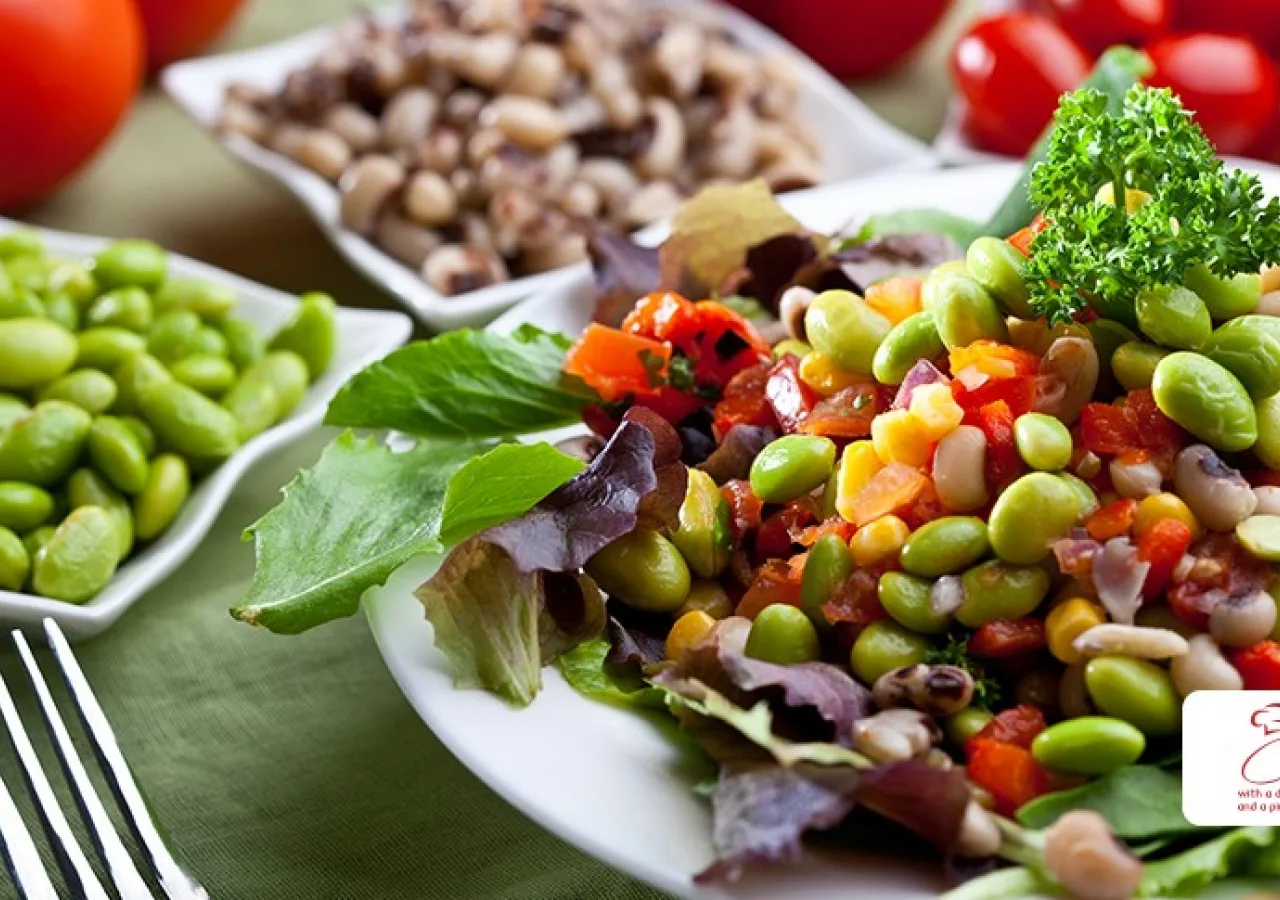
Soy: Low in saturated fat, soy can contribute to lowering cholesterol and serves as an excellent source of lean protein in a heart-healthy diet.
Dark Chocolate: Indulge in the richness of dark chocolate. Cocoa in dark chocolate contains phenols, antiseptic, anti-inflammatory compounds that reduce the risk of heart disease by preventing the oxidation of fat-like substances in the blood and blocking arteries. Consuming 6 ounces of dark chocolate daily has been associated with lower levels of bad cholesterol.
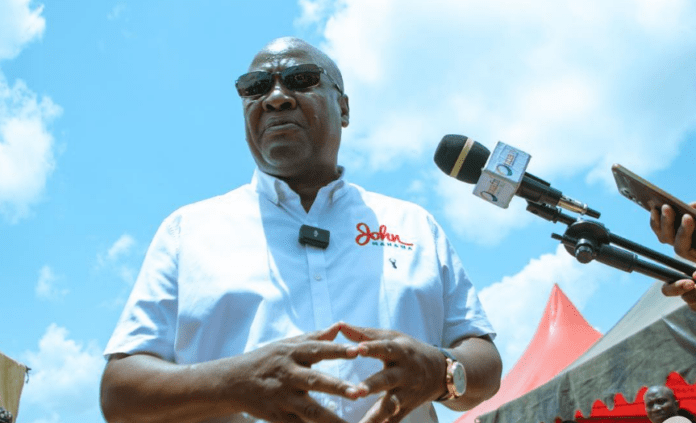
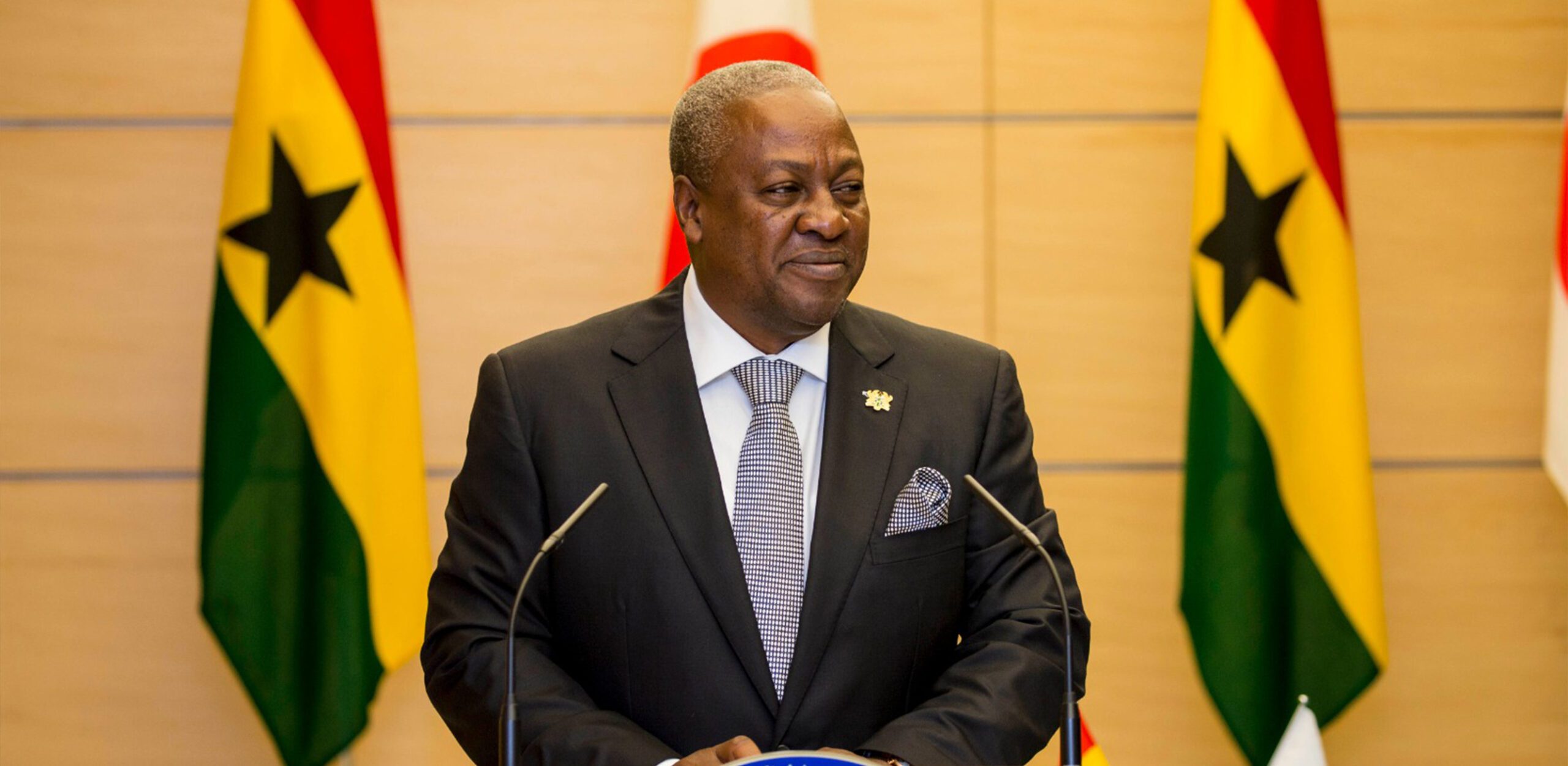
A Ghanaian economist residing in the United States, Dr. Sa-ad Iddrisu, has counseled Vice President Mahamudu Bawumia to cease criticizing former President John Mahama for his 24-hour economy proposal.
Dr. Iddrisu contends that Mr. Mahama’s envisioned policy is not only plausible but also attainable in the country.
“It is crucial to acknowledge that the extent of a 24-hour economy may vary within a country and is often concentrated in major urban centers. Therefore, with the right political will, the establishment of a 24-hour economy is not only conceivable but also achievable in Ghana. John Mahama deserves commendation for proposing such a transformative plan for the country.
“The Vice President, H.E Dr. Bawumia, must stop jabbing H.E John Mahama and tell Ghanaians his economic policy alternatives. The upcoming 2024 election holds significant importance, and voters should exercise caution when evaluating politicians who engage in persistent criticism of their opponent(s) without presenting substantive policy alternatives,” Dr. Iddrisu indicated in a statement.
He continued: “I am urging Ghanaians to hold such politicians accountable and demand a higher standard. This juncture is not a time for jest; it marks a crucial phase in Ghana’s history where politicians, both in government and opposition, must proffer policies capable of rescuing the economy from potential collapse.”
Below is the full statement
The Vice President, H.E Dr. Bawumia, must stop jabbing H.E John Mahama and tell Ghanaians his economic policy alternatives. The upcoming 2024 election holds significant importance, and voters should exercise caution when evaluating politicians who engage in persistent criticism of their opponent(s) without presenting substantive policy alternatives. I am urging Ghanaians to hold such politicians accountable and demand a higher standard. This juncture is not a time for jest; it marks a crucial phase in Ghana’s history where politicians, both in government and opposition, must proffer policies capable of rescuing the economy from potential collapse.
In light of an economy reliant on a $3 billion IMF lifeline, citizens should anticipate policy propositions that extend beyond rhetoric. Initiatives like a “24-hour economy” should be part of the discourse, fostering an environment conducive to private sector growth, job creation for the unemployed youth, and the overall enhancement of the average Ghanaian’s well-being. Thus, the electorate should challenge politicians to articulate their proposed solutions rather than succumbing to the conventional pattern of disparagement and verbal jousting.
As previously articulated in my various media engagements, the advantages of implementing a 24-hour economy in specific sectors are substantial, contingent upon the availability of essential infrastructure such as electricity, water, and security. Also, while acknowledging that no economy operates ceaselessly, certain countries and cities have successfully incorporated features of a 24-hour economy due to heightened service demand or cultural practices. Noteworthy examples, which the Vice President, Dr. Bawumia, must be made aware of, include:
United States: Cities like New York and Las Vegas are renowned for their vibrant day and nightlife and continuous activities, facilitated by a 3-shift system spanning 8 hours each.
Japan: Metropolises like Tokyo boast a vibrant economy, with services such as convenience stores and public transportation accessible 24/7, generating additional employment opportunities.
South Korea: Cities like Seoul feature a dynamic 3-shift system, accompanied by round-the-clock availability of services like transportation and convenience stores and a dynamic nightlife.
Singapore: The city-state of Singapore operates a well-established 24-hour economy, ensuring that public transportation, dining, and shopping services remain accessible at all hours.
United Kingdom: London, particularly in central areas, sustains a thriving nightlife, with select services operating continuously 24/7, contributing to increased job opportunities.
Dubai: The United Arab Emirates city of Dubai is internationally recognized for its 24-hour economy, characterized by activities and services available around the clock.
It is crucial to acknowledge that the extent of a 24-hour economy may vary within a country and is often concentrated in major urban centers. Therefore, with the right political will, the establishment of a 24-hour economy is not only conceivable but also achievable in Ghana. John Mahama deserves commendation for proposing such a transformative plan for the country.
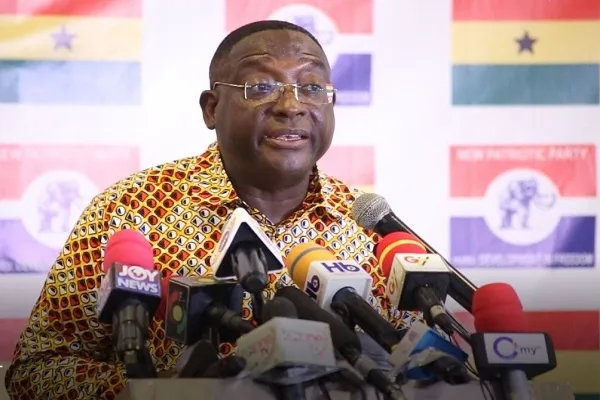
Former Member of Parliament for Adentan Constituency and ex-NPP stalwart, Yaw Buaben Asamoa, declares that the New Patriotic Party (NPP) no longer exists, citing an overwhelming influence from President Nana Addo Dankwa Akufo-Addo.
Buaben Asamoa, who recently abandoned his NPP membership along with three other influential figures to back independent presidential candidate John Alan Kyerematen, alleges that the party has been taken over by the president, transforming its character and fostering factionalism.
In an interview on Citi TV’s Face to Face program, Buaben Asamoa expresses his concerns, stating, “The party has changed character; a party ought to be an association of like minds with freedom and opportunity to rub minds and seek out the best spaces. The New Patriotic Party that I knew in the beginning is not the New Patriotic Party that exists now. It’s become divided by heavy factionalism. Literally, it has been taken over by the executive, that is the blunt truth. The party doesn’t exist.
“The government has taken the party over, the personality of the president is overbearing and he controls that party, and that means that if you don’t do the president’s wish; if you are not in the president’s good books, you are not useful to that party. That is the bottom line, that is what is happening,” he added.
The NPP’s General Secretary, Justin Frimpong Kodua, announced on November 21, 2023, that Buaben Asamoa and three other stalwarts, Hopeson Adorye, Nana Ohene Ntow, and Boniface Abubakar Saddique, had forfeited their membership of the party for endorsing and campaigning for Alan Kyerematen, who had resigned from the NPP ahead of the party’s presidential primaries.
Alan Kyerematen, who served as the Minister of Trade and Industry from 2017 to 2023 has formed a political movement called Movement for Change, with the Golden Butterfly as its symbol.
He has accused the government and the party’s leadership of unfair treatment and bias against him and his supporters. He has also alleged that the flagbearer contest was rigged in favour of Vice President Dr Mahamudu Bawumia.
Out of $2.36 billion globally, a total of $1.68 billion in airline funds are blocked across Africa, according to the most recent data from the International Air Transport Association.
Speaking at the 55th AFRAA AGM, which took place in Entebbe, Uganda on November 18, 2023, Kamil Alawadhi, Regional Vice-President for Africa and the Middle East at the International Air Transport Association (IATA), said that the numbers are concerning and that this is having a disastrous effect on connectivity.
Aviation is capital-intensive. Cash flow is key for airlines’ business sustainability – when airlines are not able to repatriate their funds, it severely impacts their operations and their decisions on where to fly. But the risk of blocked funds is not just limited to airlines; the negative impact extends to the countries blocking the funds.”
“It impacts the country’s economy and its connectivity, and it hurts investor confidence and reputation. Aviation is not only an economic enabler; it is a pillar of modern economies.”
He called on African governments to prioritize aviation and seek sustainable solutions to address the issue of blocked funds. Additionally, he emphasized that IATA would continue to provide support in any possible way.
Blocked funds, as seen in Nigeria, contribute to elevated airfares, as airlines adjust prices upwards for sales made outside the country to sustain their operations and competitiveness.
Approximately US$1 billion is held up in 12 African countries, with Nigeria, Zimbabwe, Algeria, and Eritrea being among the nations facing significant challenges.
In Ghana, the positive working relationship between the government and airlines has prevented disruptions in the operations of international airlines at Kotoka International Airport. This stands in contrast to Nigeria, where some international airlines have signaled a reduction in frequency due to ongoing issues with blocked airline funds.
Cathrine Wesley, Country Manager of Emirates Airlines, highlighted this issue in a previous interview with AviationGhana.
“We have an excellent relationship with the Ghana Government. We have an excellent relationship with the Ministry of Transport, and the Ministry of Foreign Affairs [ in the movement of funds]. For Emirates Ghana, we are extremely fortunate to have the relationship that we have with the Ghana government and we don’t have any of those issues [blocked airline funds].”
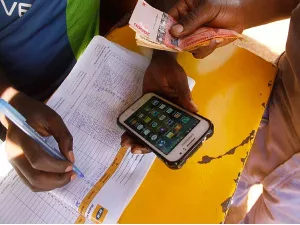
A mobile money vendor by the name Collins Mensah, has made an escape with the business capital of his employer, identified as Ms. Rosina.
As reported by Rainbow Radio Accra, Ms. Nancy lodged a complaint with the police, alleging that the suspect absconded with Ms. Rosina’s business capital amounting to Gh¢20,600.
Ms. Rosina, a mobile money operator, had employed Collins Mensah, also known as Pharmacy, to assist in the expansion of her business.
However, within less than a month of employment, the young man chose to betray her trust by stealing from her.
“I saw that he could do that work, so I employed her, but he said he wouldn’t be able to survive if he had to wait till the end of the month to receive her salary, so I decided to give her 20 cedis monthly and was taking care of his health bills too.”
“So, I was not well on the 29th, so I didn’t go to work, and my mother came to tell me that he was passing by and Collins had locked the shop, so I decided to call him, but he didn’t answer after 16 attempts. I didn’t know he could do that to me. When I went there, he had taken Gh¢20,600 and had left the remaining in the shop,” Ms. Nancy said on Rainbow Radio Accra.
Deputy Finance Minister Abena Osei Asare has emphasized that proactive measures have been implemented to uphold fiscal discipline in 2024. She stated that the government is committed to avoiding excessive spending during the upcoming election.
This response comes in light of concerns raised by the Minority in Parliament, who feared that the government might exceed its budget in 2024 to fulfill unexpected campaign promises associated with the elections. The Minority cited available records indicating a 17 percent budget deficit in 2020 attributed to election-related spending.
John Jinapor, the Member of Parliament for Yapei-Kusawgu, expressed these concerns.
“You said that you have a track record in election year expenditure. For the records, in 2016, go and read the updated data; the deficit was about 6 percent.
|”Mr. Speaker, I refer to the IMF-Ghana decision May 2023 documents; I refer to page 36, table 2 (A). In 2020, under your regime, election year, your deficit was a whopping 17 percent. It has never happened; no country has that deficit of 17 percent.”
But responding in her debate on the budget presentation, the Deputy Finance Minister “In the past, governments have used election year as auctioning periods, engaging in all kinds of projects to win votes. But this government is committing itself to strong fiscal consolidation and efficient management of existing commitments, in order not to derail the hard-won stability that we are witnessing.”
“Government is not initiating new commercial loan funded projects. Government has also put in an amount of money in the budget to clear their arrears so that we can complete existing projects,” the Deputy Finance Minister said.
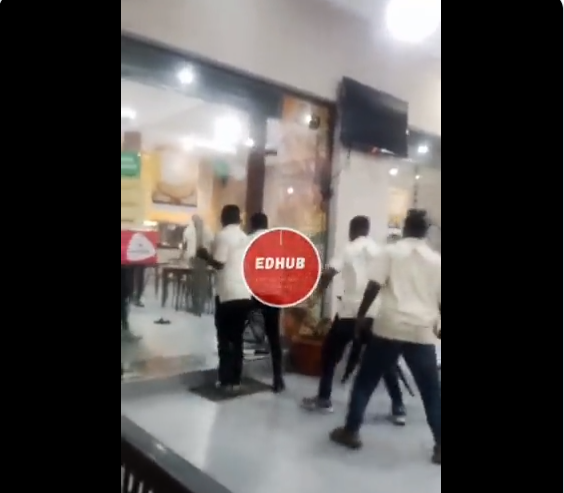
Employees from Quick Credit Ghana, a well-known loan company, aggressively entered a local restaurant to reclaim a loan amount.
Videos captured and shared on social media by GhanaWeb depict approximately six male workers engaging in heated confrontations with the restaurant staff.
The restaurant is reported to be situated in Laterbiokoshie, a suburb of Accra.
As per the footage recorded by an onlooker, the Quick Credit Ghana staff allegedly forcefully entered the establishment, removed the furniture, and successfully secured the premises before departing.
The video, filmed in the evening, does not reveal any impacted customers or casualties.
Despite the incident being widely circulated, Quick Credit Ghana has not yet released an official statement regarding the situation. GhanaWeb is actively attempting to contact the affected business for further details.
Staff members of Quick Credit Ghana stormed a restaurant at Laterbiokorshie, Accra and attacked workers on duty before locking the place over an alleged unpaid loan. pic.twitter.com/Ic8YSE0E0U
The prevailing economic crisis in Ghana has left a substantial portion of the working population, approximately 64 percent, grappling with financial distress.
As per the findings of the annual report, “Old Mutual Financial Services Monitor (OMFSM),” individuals experiencing financial distress are more prevalent in the lower-income bracket (72%) and among those in the informal sector (68%).
“Regarding dependents, about 4 in 10 Ghanaians find themselves in the “sandwich generation,” financially supporting both children and adult dependents. This is in line with the average Africa percentage of 44%,” the study added.
Concerning economic confidence, the survey findings indicated that less than 1 in 5 consumers demonstrate confidence in the country’s economy.
“This low level of confidence is reflected across the surveyed countries in Africa, namely SA, Namibia, and Kenya,” the OMFSM survey explained.
Regarding financial priorities, income security emerged as the foremost concern for a majority of Ghanaians, consistent with trends observed across the surveyed African countries.
The study also revealed that concerning income, 44% of respondents rely on a sole source of income. Additionally, approximately 1 in 4 individuals (24%) identified as PolyJobbers, engaging in side-hustles, freelancing, and additional work beyond regular hours in conjunction with their primary job.
Notably, PolyJobbing is more prevalent among those earning GH¢3000 or more, constituting 37% of this income bracket.
“Through further encouraging and supporting entrepreneurship, we expect this percentage may grow as we have seen among younger consumers in South Africa, helping to address the youth unemployment issue in Ghana,” the report said.
The study’s crucial findings, unveiled by Vuyokazi Mabude, Group Head of Old Mutual Limited, Knowledge & Insights, during a breakfast meeting in Accra on November 22, offer valuable insights into a pivotal segment of society. This cohort primarily comprises employed Ghanaians, constituting around 60% of the population aged 25 to 59, earning an income of GH¢1,000 or more, and residing in urban and peri-urban areas.
These revelations come amid a period of economic uncertainty, with many Ghanaians grappling with the repercussions of the economic crisis, prompting the country to seek financial assistance from the IMF.
The Chief of Staff, Frema Osei Opare, has announced that the government is actively seeking additional financial support from the World Bank and climate-change agencies to facilitate the second phase of restoring properties for victims affected by the Akosombo Dam spillage.
She emphasized the government’s ongoing commitment to rebuilding livelihoods, with GH¢40 million already allocated.
As the chair of the inter-ministerial committee tasked by the president to assess the situation in affected areas, she highlighted that the government’s budget of GH¢220 million, as announced by the Finance Minister, will play a crucial role in assisting victims and ensuring comprehensive support for all affected areas.
“Government has so far made available for relief efforts GH¢40 million between VRA and NADMO within the period. Government is committed to releasing additional funds. Steps are being taken to secure additional funding from the World Bank and international climate-related sources to support the affected communities, especially for rehabilitation,” she said.
Minister for Education, Dr. Osei Adutwum, announced in a press conference that emergency procurement is underway to provide learning materials for students impacted by the Akosombo Dam spillage.
He specifically mentioned the Comboni Vocational School in South Tongu, which suffered substantial damage to its installed equipment. Efforts are being made to replace the equipment promptly to ensure uninterrupted learning.
Addressing the situation at St. Kizito SHS in Mepe, the minister noted that a new academic calendar would be issued to allow students to adjust to their studies. While the school was not directly affected, it is currently providing accommodation for over 9000 flood victims.
In a world where love stories often conform to traditional narratives, occasionally emerges a tale that challenges our perceptions of romance, commitment, and cultural norms.
Such is the case with the extraordinary and heartwarming story of Luwizo, a Congolese man who recently entered into matrimony not with one, but with three sisters.
This unconventional union defies societal conventions and reflects the intricate tapestry of human emotions.
Luwizo’s journey to the altar with the triplets serves as a testament to the enduring power of love and the intricate complexity of human relationships.
This unique situation unfolded as the three sisters insisted that he marry all of them simultaneously.
This unconventional arrangement may provoke curiosity and raise eyebrows, yet at its core, it embodies a profound understanding between Luwizo and the sisters, driven by a genuine desire to honor their unique bond.
In a world where societal norms often emphasize monogamy, Luwizo’s decision to marry three sisters stands as a bold departure from convention.
A Congolese man named Luwizo got married to triplets, after the sisters insisted on him marrying all of them at once. pic.twitter.com/osxqWseDTv
Finance expert and health insurance technocrat, Sylvester Mensah, has criticized Dr. Mahamudu Bawumia, the flagbearer of the New Patriotic Party, for his remarks against the ’24-Hour Economy Policy’ proposed by former President John Dramani Mahama.
In a Facebook post, Mensah, a leading member of the National Democratic Congress (NDC), argued that the vice president lacks policy credibility to critique any proposal put forth by John Mahama.
“He has never understood his own policy proposals and he is known to speak in the opposites, because whatever he says his government would do is exactly what his government won’t do!” Sylvester Mensah wrote.
He went on to criticize Dr. Bawumia for overseeing a struggling Ghanaian economy, which is currently under an IMF program due to factors such as high debt levels and excessive borrowing.
“From a humiliating management of the Ghanaian economy he now wants to take cover under the umbrella of digitalization,” Sylvester Mensah added.
The prominent member of the NDC also characterized John Mahama’s innovative ’24-Hour Economy Policy’ as a transformative initiative that he believes will rejuvenate the Ghanaian economy.
The recent declaration by the former president, John Mahama, has sparked considerable attention and responses from a segment of Ghanaians.
In his pledge, he committed to establishing a 24-hour economy if elected as president in the 2024 presidential elections.
He emphasized that the policy would play a significant role in fostering economic growth and generating employment opportunities, particularly for the majority of Ghanaian youth.
On the recent caution from the US Ambassador regarding potential economic repercussions if Ghana enacts the Promotion of Proper Human Sexual Rights and Ghanaian Family Values Bill (anti-LGBTQI bill), Member of Parliament (MP) for Ningo-Prampram, Sam Nartey George, shared his perspective.
During an interview on JoyNews’ PM Express show on November 21, 2023, Sam George accused US Ambassador Virginia Palmer of misinterpreting certain provisions within Ghana’s proposed anti-LGBTQI legislation.
He suggested that the Ambassador’s statements may be based on a misunderstanding of the bill’s content.
“Virginia Palmer is within her rights to make the comments, she has made. First and foremost, I must say that the things she said about the bill are factually incorrect, they are not true. There is a difference between reading the bill and understanding it. She clearly has no understanding of the bill,” he said.
“On the economic pain, take it from me, the US is within its rights to flex its muscles but Ghana is a sovereign Nation. If you look at the total amount of aid that Ghana received in 2022 from the US, it was a $150 million. What percentage of our GDP is that again?
“If you put together a few corrupt Ghanaian politicians, they have, combined, more than a $150 million to their name – that is the total amount of aid. So, when there is the threat of aid (sic)… are we going to sell our national identity and sovereignty as a state because of a $150 million for an economy whose GDP is nearing a ($) 100 billion – that is less than 1 percent of your GDP,” he said.
The legislator from Ningo-Prampram, one of the backers of Ghana’s anti-LGBTQI bill, rejected the ambassador’s claim that Ghana’s economy would face severe consequences if the bill becomes law.
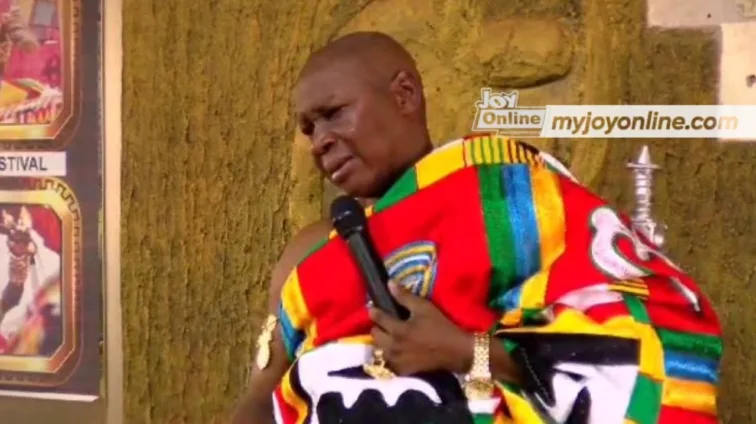
Chief of Goaso, Nana Kwasi Bosompra, has expressed deep sorrow while discussing the deplorable state of roads in the Ahafo Region.
Despite the contract being awarded for the main road connecting Mim to the town, construction has sadly come to a halt, leaving the chief in tears as he highlighted the dismal condition of the road.
“Because of the dusty nature of the road, I have now developed a health condition. What is our crime? Ahafo Region, what have we done wrong?” he asked in tears.
After wiping his tears, the traditional leader continued, “the road in front of the palace was awarded to Kofi Job by the NDC and he mobilized his equipment to the site. But all contractors on Ahafo Roads were stopped immediately after the Nana Akufo-Addo government took over”.
When the NDC’s “Building Ghana Tour” stopped at the palace as part of a visit to the Ahafo Region, the chief voiced his concerns.
The traditional authority claims that after the NPP administration came to power, civil work on the Bediako to Kasapii road—which had been completed but was waiting for an asphalt overlay—was stopped.
The relocation also had an impact on the contractor working on the Gambia Number One to Dormaa road.
“After many years of auditing, they were made to resume work. But all the work they have gone down the drain,” said Nana Kwasi Bosompra.
The Goasomanhene claims that although the Ahafo Region has consistently supported the New Patriotic Party, the party has not yet given the region’s development needs any thought.
The NDC only wins two of the six parliamentary seats in the Region.
In a significant development for Ghana’s aviation sector, McDan Airlines, a prominent aviation company, has successfully obtained a commercial air carrier license.
This notable achievement has received commendation from the Ghana Civil Aviation Authority (GCAA), acknowledging McDan’s dedication to reshaping the aviation landscape in the country.
The GCAA, the regulatory body overseeing civil aviation activities in Ghana, has expressed confidence in McDan Aviation’s foray into the commercial airline sector.
The issuance of the air carrier license marks a pivotal moment in Ghana’s aviation industry, positioning McDan to usher in positive transformations.
During a ceremony for the license presentation, the Deputy Director-General of the GCAA praised McDan for its unwavering commitment to excellence and substantial contributions to the logistics sector.
He stated that “McDan’s acquisition of a commercial air carrier license signals a major leap forward in Ghana’s aviation sector. We believe that their unique approach and unwavering commitment to safety and quality will revolutionize the airline industry, propelling Ghana to new heights.”
McDan Airlines, an integral part of the McDan Group, is now ready to soar into the skies with a sophisticated fleet featuring advanced technology, modern amenities, and an unwavering dedication to safety.
This strategic move not only cements McDan’s status as an industry pioneer but also positions Ghana as a center of excellence in the global aviation landscape. Armed with the newly acquired commercial air carrier license, McDan Aviation is prepared to enhance the travel experience, prioritizing comfort, efficiency, and exceptional customer service.
The airline’s objective is to redefine air travel in Ghana, aspiring to become the preferred choice for both domestic and international flights. Moreover, McDan’s entry into the airline industry is anticipated to create a surge in job opportunities, benefiting both the direct and indirect sectors and contributing to the nation’s economic growth.
The Ghana Civil Aviation Authority (GCAA) is optimistic that this venture will attract foreign investments, fostering extensive growth in the tourism sector and elevating Ghana’s status as a prominent tourist destination in Africa.
The issuance of the commercial air carrier license underscores McDan Group’s commitment to adhering to the stringent safety and regulatory standards set by the GCAA. The company’s focus on thorough pilot training, robust maintenance protocols, and continuous enhancement of safety measures ensures the utmost security for passengers.
In response to receiving the license, Dr. Daniel McKorley, the visionary founder of the McDan Group, expressed gratitude to the GCAA for its support and guidance throughout the licensing process.
He stated, “We are honored to receive the commercial air carrier license from the GCAA. McDan’s foray into the airline industry is a testament to our unwavering commitment to excellence and our zeal to contribute to Ghana’s aviation sector. We look forward to revolutionizing air travel within Ghana and beyond.”
It is clear that the McDan Group’s acquisition of the commercial air carrier license has laid the groundwork for an incredible transformation in the industry as Ghana commemorates this momentous occasion in the history of aviation in the country.
Ghana is about to enter an exciting new era in aviation that is sure to capture the attention of people all over the world, thanks to the support of the GCAA and McDan’s commitment to excellence.
Background
McDan Aviation initially ventured into Ghana’s aviation sector in February 2007, obtaining an Air Carriers License (ACL) from the Ghana Civil Aviation Authority (GCAA) to operate non-scheduled air-cargo services.
At present, the company manages a fleet consisting of three private jets and a helicopter. Its array of services encompasses private jet charters to global destinations, helicopter services for touring, air ambulance operations, bullion services, and more.
In addition to these services, McDan Aviation serves as a Fixed Base Operator, offering passenger handling, aircraft fueling and maintenance, aircraft handling, and ground administration services.
The company takes pride in delivering premium services, including priority immigration services like visa on arrival, lounge amenities, luxury car rentals, spa services, fine dining upon request, ground handling services, rump services, and a variety of other offerings.
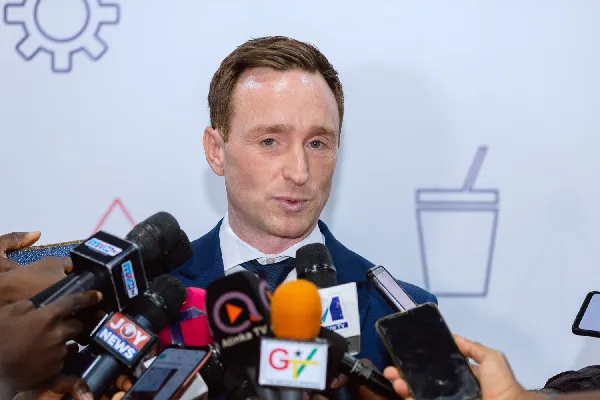
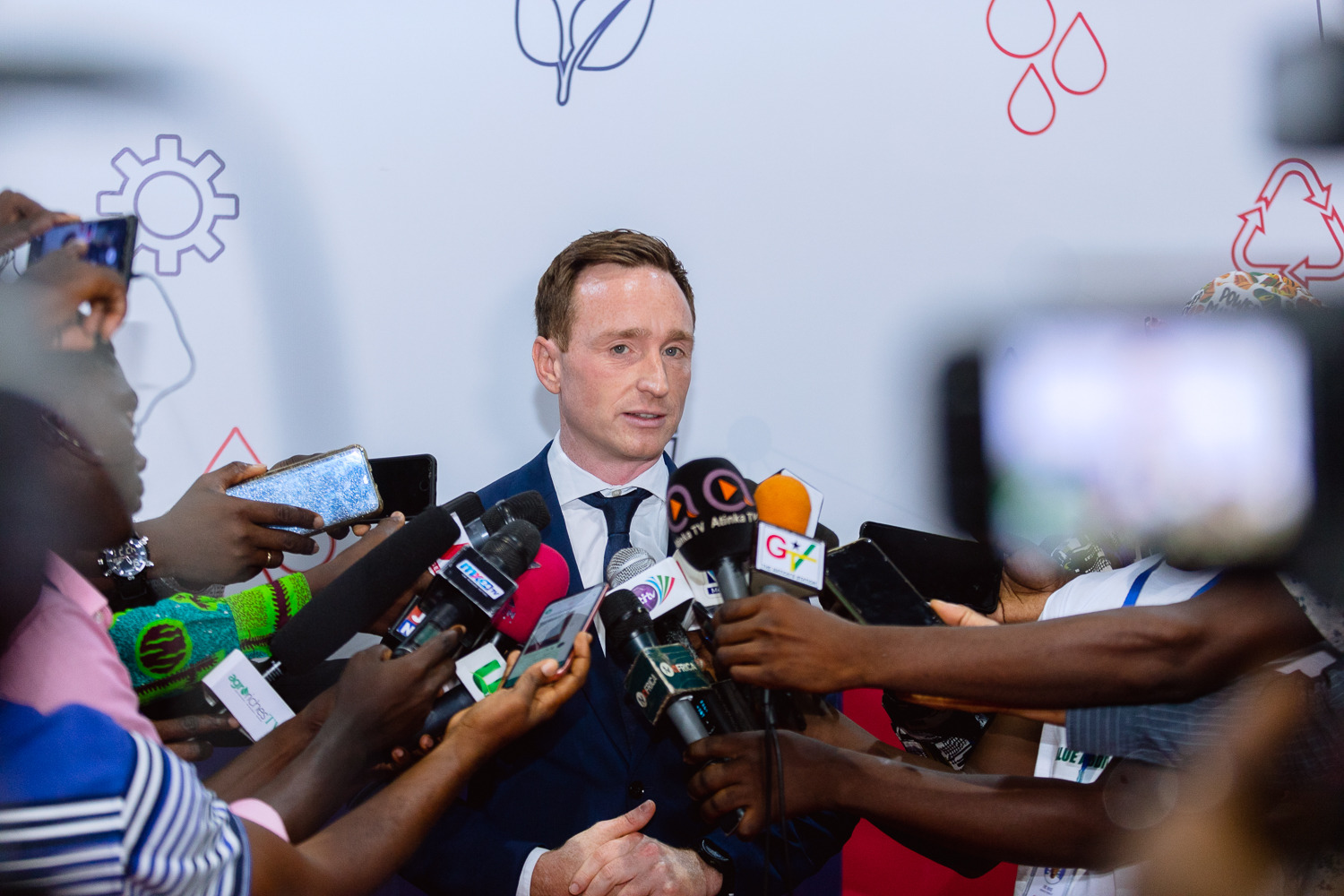
Managing Director of Fairtrade, Mr. Pau März, has said that Ghana offers a substantial food market for investment, given its population of nearly 40 million.
He added that the country’s expenditure in the food and beverage sector is growing steadily and is “by far the largest segment of the Ghanaian processing industry.”
The World Trade Organization (WTO) estimates that in 2021, Ghana will import food worth USD 1.2 billion and export food worth USD 1.7 billion.
“Thus, food trade with Ghana is an USD 8.5 billion business,” he stressed.
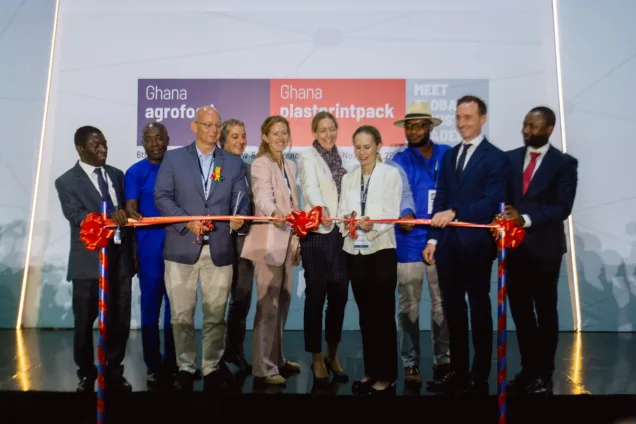
On Tuesday, November 21, 2023, in Accra, during the 6th International Trade Show for West Africa agrofood and West Africa plastprintpack conference and exhibition, Mr. März was speaking in an interview.
Between 2017 and 2022, Ghana’s investment in food and packaging technology increased by 8.6% annually, from 59 million Euros to 89 million Euros.
The occasion, a collaborative effort between the AHK Delegation of German Industry and Commerce in Ghana and Fairtrade Messe, seeks to enhance Ghana’s self-sufficiency and enhance supply.
In her remarks, H.E. Daniela d’Oriandi, the Italian Ambassador to Ghana and Togo, highlighted that trade in technical goods between Ghana and Italy experienced a significant 30% growth, amounting to 90 million Euros in 2022.
This surge indicates an increasing interest among Ghanaian companies in seeking solutions from Italy.
“We invest in innovation, training, provide technical assistance, and our products are reliable, and there are many initiatives to promote trade between Ghana and Italy,” she emphasized.
The Exhibition
In the current edition, organizers have successfully gathered exhibitors from more than 12 countries, aiming to foster business relationships among the participating companies during the exhibition.
Mr. März revealed that the exhibition would feature the presentation of two industry awards, with the Chamber of Agribusiness Ghana taking the lead in this initiative. Additionally, he highlighted the availability of a subsidized package for agricultural machinery.
The Ghana Export Promotion Authority (GEPA), GIZ AgriBiz, and other notable participants are in this year’s show.
About seventy exhibitors representing twelve different nations are showcasing goods, innovations, and solutions designed especially for the Ghanaian and West African markets.
Ghana, Austria, China, France, Germany, Italy, the Netherlands, South Africa, Nigeria, Poland, Thailand, and Ukraine are among the countries represented among the exhibitors.
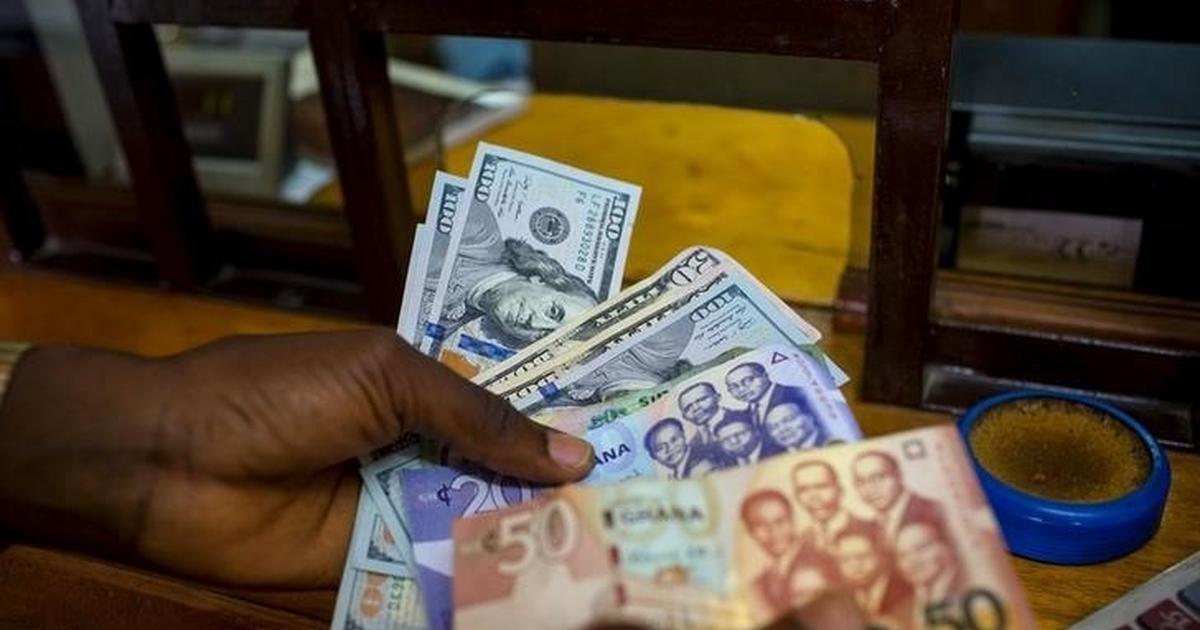
The Ghanaian cedi is expected to undergo a single-digit depreciation against the US dollar in 2024, according to The Economist Intelligence Unit’s (EIU) 2024 Africa Outlook Report. The EIU attributes this potential stability to the positive impacts of the International Monetary Fund (IMF) programme.
The report highlights that only five African countries—Egypt, Sudan, Ethiopia, Angola, and Zimbabwe—are projected to experience double-digit depreciation of their currencies in 2024. Conversely, countries in the CFA franc zone, representing Central and West African nations, are anticipated to witness currency appreciation during the same period.
While the report predicts currency depreciation against the US dollar across much of Africa in 2024, it suggests that the adjustments will be less severe than those recorded in 2023.
Despite this positive outlook, the Ghanaian cedi is currently trading at ¢12.18 in the retail market, facing persistent pressure. High demand from corporates and importers, particularly in anticipation of the Christmas season, remains a contributing factor.
However, the imminent arrival of the first tranche of the Cocoa Syndication Loan, following parliamentary approval, is expected to alleviate some of this pressure. GCB Capital underscores that the cedi’s future stability is contingent on the timing of expected foreign exchange inflows from the cocoa syndication loan and the second tranche of the International Monetary Fund.
Analysts and market observers anticipate that these inflows, scheduled for the remainder of quarter 4, 2023, will significantly influence the cedi’s performance for the rest of the year.
Former President, John Dramani Mahama says the National Democratic Congress (NDC) will choose his running mate for the next election in 2024.
This was in response to calls from some traditional authorities in Asunafo South for the flagbearer to consider their MP, Eric Opoku for the position.
Already, the queen mother of the Bono Traditional Council has made similar calls for a Bono native to be chosen for the role.
However, Mr. Mahama stated that although the position is significant, there are established protocols for selecting the best candidate.
During a public appearance in the Ahafo Region, Mr. Mahama urged calm as the party anticipates making the decision.
He told the gathering; “What I will say is that, just like custom has it, our party also has processes to select candidates for various roles.”
“It is the Presidential candidate, National executives, and Council of Elders who come together to select a running mate. But that process will start next year. So keep praying for such a time,” Mr Mahama explained.
A Ghanaian resident in Dubai has disclosed some unsettling truths about life in the supposedly luxurious city in the Middle East.
Simon Asamoah, speaking on the current episode of the popular ‘Akwantuo Mu Nsem’ show on Ghpage TV with King Asu – B, challenged the common perception that Dubai is a paradise. Instead, he described it as hell in disguise.
Simon went on to reveal distressing details, claiming that women are compelled to engage in degrading activities, such as sleeping with dogs, in order to earn money easily. He also asserted that agents who make grand promises about Dubai opportunities are fraudulent individuals aiming to deceive unsuspecting clients and extract their hard-earned money.
Addressing the job situation, Simon emphatically stated that there are minimal job opportunities in the Middle East regions, exacerbating the hardships faced by residents.women
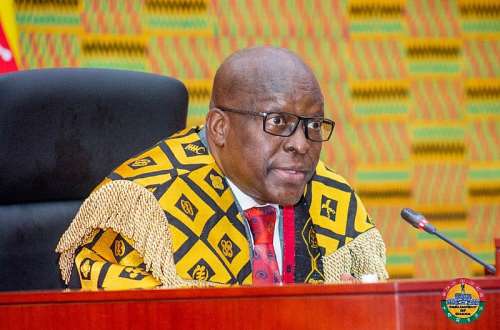
The Ghanaian Parliamentary Service, has said that the Ministry of Lands and Natural Resources’ inquiry into the Speaker’s residence’s attempted sale needs to determine who made the attempt to sell and who the possible buyer was.
Alban Bagbin, the Speaker of Parliament, disclosed that he was on the verge of selling his Accra home to a private developer while he was still residing there.
Speaking on Monday at the Speaker’s Breakfast Forum in Accra, he said that this wasn’t until the developer went to register the land with the Lands Commission.
However, the Lands Commission, in a statement, insisted that “at no point in time was the said property sold to a private developer by the Lands Commission.”
On Tuesday, November 21, 2023, Lands Minister Samuel Abu Jinapor launched an investigation by summoning top officials from the Lands Commission to gather firsthand information about the attempted sale of the speaker’s residence to a private developer, as reported by Citi News.
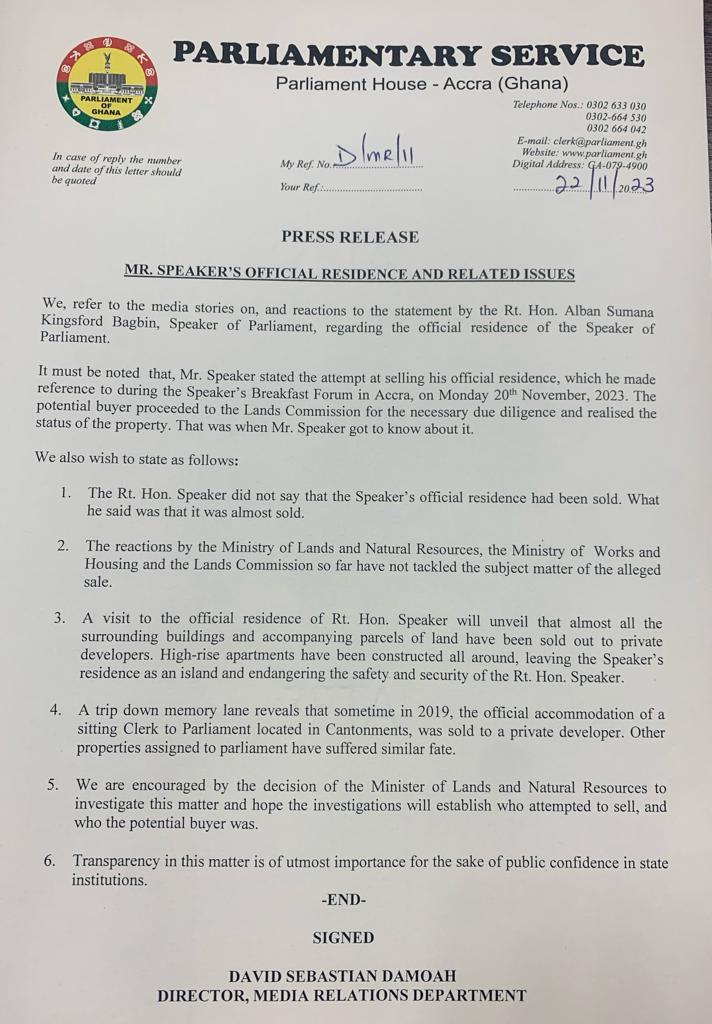
The Parliamentary Service, in a statement issued on Wednesday, said, “We are encouraged by the decision of the Minister of Lands and Natural Resources to investigate this matter and hope the investigations will establish who attempted to sell and who the potential buyer was.”
The Service went on to say that openness in the situation was crucial to maintaining public trust in government agencies.
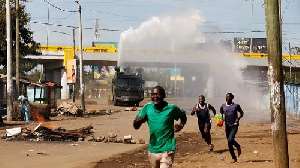
Violent clashes among residents in Nkwanta in the Oti Region has resulted in the death of some individuals and left a police officer severely wounded.
The source of this conflict stems from disputes among the Adele, Challa, and Akyode tribes concerning the venue for the execution of ritual ceremonies associated with their 2023 annual Yam Festival.
According to media reports, one Sergeant Asare Bediako sustained severe injuries and is currently responding to treatment at St Joseph hospital while 2 others lost their lives over the weekend.
“Among the seven individuals unable to avoid gunfire, three have lost their lives. A passing teacher was struck by a stray bullet, resulting in his demise. Additionally, a rasta man, summoned to assist his mother at the market, did not find her there but was instead assaulted and fatally beaten.”
The report further mentioned that the military has been dispatched to the region to alleviate tensions. Nonetheless, numerous residents have evacuated the community due to the perceived lack of safety in Nkwanta.
A survey conducted by the pan-African investment and savings firm Old Mutual unveiled that 57% of the sampled Ghanaian workers lack or don’t enjoy employee benefits from their employers.
The study further highlighted that among those with employee benefits, health insurance and retirement funds were the most common offerings for the majority of employees in Ghana.
“Health insurance leads in both the formal and informal sector, whilst retirement fund membership is much more notable in the formal sector (52% vs 7% informal). About half of formal sector workers reported receiving financial information from their employers verses only 18% of informal sector workers, with most being indifferent on it being beneficial,” the study revealed.
Further insights from the annual report titled “Old Mutual Financial Services Monitor (OMFSM)” indicate that financially distressed individuals in Ghana are more prevalent among the lower-income group (72%) and those in the informal sector (68%).
Additionally, the study highlighted that less than 1 in 5 consumers have expressed confidence in the country’s economy.
“This low level of confidence is reflected across the surveyed countries in Africa, namely SA, Namibia, and Kenya,” the OMFSM survey explained.
In terms of financial priorities, income security emerged as the foremost concern for a majority of Ghanaians, aligning with trends observed across the surveyed African countries.
The study also revealed that 44% of respondents rely on a single source of income, while approximately 24% engage in polyemployment, involving side hustles, freelancing, and additional work beyond their regular job.
Notably, PolyJobbers are more common among those earning GH¢3000 or more, constituting 37% of this group.
The Parliamentary Service of Ghana has intervened in the matter concerning the Speaker of Parliament’s residence. In a statement, the Parliamentary Service revealed that the buildings surrounding the Speaker’s residence have been sold to private developers.
The statement highlighted the construction of high-rise apartments around the Speaker’s residence, creating an “island” and posing risks to the Speaker’s safety and security.
This development comes after Speaker Alban Bagbin disclosed that his Accra residence was nearly sold to a private developer.
The Lands Commission, in response, asserted that the property was not sold to any private developer.
The Parliamentary Service, in a statement issued on Wednesday, indicated that “A visit to the official residence of Rt. Hon. Speaker will unveil that almost all the surrounding buildings and accompanying parcels of land have been sold out to private developers.
High-rise apartments have been constructed all around, leaving the Speaker’s residence as an island and endangering the safety and security of the Rt. Hon. Speaker.”
Deputy Secretary of the Suame Spare Parts Dealers and Importers Association, Godfred Baffoe Bonnie, has asserted that the existing tax system appears designed to undermine businesses, characterizing it as a form of state robbery.
According to him, Finance Minister Ken Ofori-Atta’s firm stance on maintaining certain taxes on import duties, coupled with the perceived lack of inclusivity in crafting the 2024 budget statement, reinforces their position.
These remarks were made during an interview with Julius Caesar Anadem on the Ultimate Breakfast Show in Kumasi, as monitored by MyNewsGh.com.
“This government and the finance minister don’t listen to the business community. We engaged him in Accra ahead of the preparation and reading of the budget to discuss some of the taxes at the ports that are killing our business. We met before the budget presentation, and they assured us something would be done, but nothing has changed in the budget, just unwanted taxes.
“I imported 20-footer containers at the port. I paid 40 thousand Ghana cedis. It used not to be like that, go and check the number of containers that are cleared in a day. It has reduced from almost 100 a day to 25,” he alleged.
He also said “The tax regime in this country is just a planned way to rob businesses. Our businesses are collapsing, and we have locked most of our shops because of the dollar and taxes.”
Ranking Member on the Mines and Energy Committee in Parliament, John Jinapor, accuses Vice President Bawumia of neglecting his primary duty of managing the economy.
Jinapor challenges Bawumia’s claims of competence in the IT sector, urging him to address pressing economic challenges as the head of the economic management team.
During a debate on the 2024 budget on November 21, Jinapor expresses concerns over Bawumia’s apparent shift from economic issues to information technology.
He asserted, “The head of the economic management team, we are not personalizing him(Bawumia) at all, we are dealing with his competence. He has proven that he cannot handle this economic [situation], that is his core duty. Now he wants to turn himself into an IT man and talk about IT.”
Parliament initiated deliberations on the 2024 Budget Statement and Economic Policy on Tuesday, November 21, 2023.
To promote broad participation in the debate, specific time allocations have been suggested: 20 minutes for the seconder and Ranking Members of the Finance Committee, 15 minutes for other committee members, and 10 minutes for all other Members of Parliament (MPs).
The debate will be structured around various sectors, including governance, security, public safety, finance, economy, energy, infrastructure, social sectors, local governance, youth, sports, tourism, and culture.
The proposed schedule outlines discussions on finance, agriculture, trade, and industry for Tuesday. Wednesday’s focus will be on communications, energy, roads, works and housing, sanitation, and environment. Thursday’s agenda includes education, health, employment, youth and sports, tourism, culture, and chieftaincy.
On Friday, the debate will revolve around governance, covering local government, the judiciary, defense, interior, the Electoral Commission, National Commission for Civil Education, and the Commission on Human Rights and Administration of Justice.
Representative of Bawku Central, Mahama Ayariga, has submitted a petition urging an investigation into the government’s delay in disbursing funds to clients of the defunct Gold Coast Fund Management (GCFM).
Despite parliamentary approval, the government has not yet provided funds to 61,000 customers of Blackshield Capital Limited, a subsidiary of the defunct Gold Coast Fund Management.
Ayariga presented the petition on behalf of Charles Nyame (convenor), Bernard Agyekum, Nathaniel Mensah, David Opoku, and Rosemond Mensah Grunitzky, who are members of a group known as Aggrieved Customers of the defunct Gold Coast Fund Management.
He wants the House to “investigate and establish what has accounted for the Government’s failure to pay the customers of the defunct Gold Coast Fund Management” and as well compel “the Government to pay the customers of the defunct Gold Coast Fund Management their investments in the fund since Parliament approved the budget.”
The Gold Coast Fund Management, a legally registered and accredited fund management company under the regulation of the Securities Exchange Commission of Ghana, experienced a financial sector clean-up initiated by the Government of Ghana in 2018.
Approximately GH¢5 billion belonging to the petitioners was trapped in the defunct Gold Coast Fund Management as a result of this exercise.
Following the financial sector clean-up, the petitioners successfully submitted and verified their claims through Price Waterhouse and Coppers (PWC).
The regulator, Securities Exchange Commission (SEC), allocated GH¢8 billion for the overall settlement of claims for customers of all 47 defunct fund management companies.
Parliament approved funds for the Financial Sector Clean-up Exercise, and the Minister of Finance and Economic Planning publicly confirmed the completion of the exercise, having spent Ghc25 billion. Government accounts indicated that this amount encompassed the Ghc8.6 billion intended for settling claims of investors in the 47 defunct fund management companies, including Gold Coast Fund Management.
In his petition, Mr. Ayariga noted that individual members of the petitioners’ association whose investment exceeded GH¢50,000 have not been paid the remainder of their money “because the government paid only GH¢50,000.00 to everyone owed in 2020.
“Many members of the petitioners’ association had gone on pension and invested all their retirement benefits in the fund and have consequently been rendered destitute and many have died not being able to afford critically needed medical care,” he asserted.
On November 28, 2023, the disgruntled clients of Gold Coast Fund Management are scheduled to demonstrate at the Ministry of Finance regarding unpaid invoices from the now-defunct business.
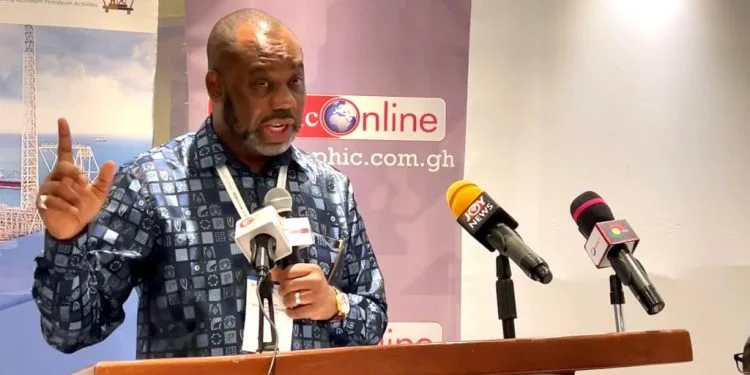
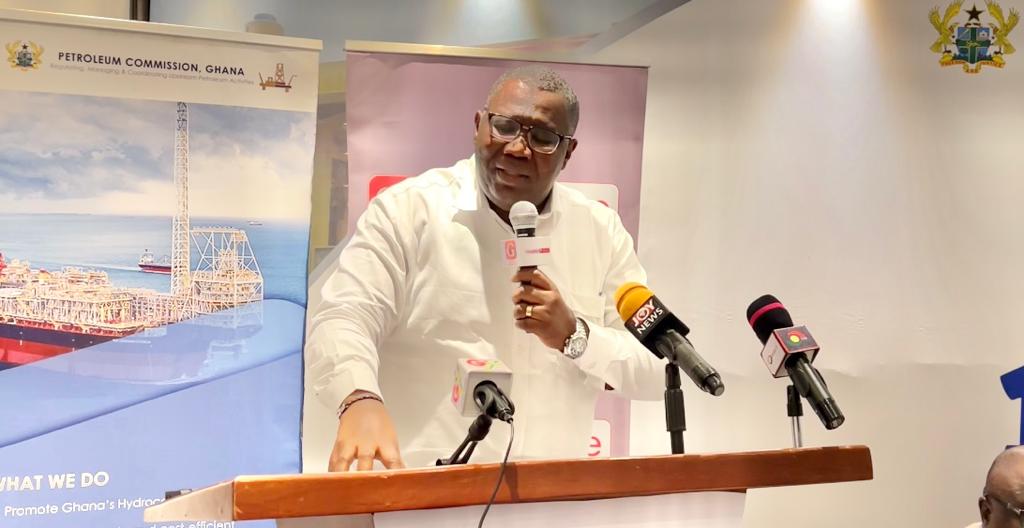
In the ten years following the Local Content Regulation’s (LI 2204) implementation, locals’ share of petroleum contracts has increased from 6.5% to roughly 20%, according to Energy Minister Dr. Matthew Opoku Prempeh.
Speaking at the opening of the 2023 Local Content Conference in Takoradi, which was attended by prominent figures from the oil and gas industry, Dr. Opoku Prempeh hailed this as enormous advancement.
Speaking at the press conference prior to the Local Content exhibition opening, he stated that the discovery of oil was facilitated by the advancement made possible by the enactment of LI 2204.
“The first oil development prior to the passage of the Local Content Regulation awarded only 6.5% of contracts to Ghanaian companies. After the passage of the regulations, about 20% of the value of contracts have been awarded to Ghanaian companies. We haven’t done bad at all. Let me point out that our drive towards optimal local content and participation also contributes to the successes we have achieved. I’m proud as a Ghanaian even now to say that we have a fully indigenous Ghanaian Exploration and Production company that has drilled and drilled successfully and discovered oil in the deep waters of this country. It’s not any easy feat,” he said.
The Energy Minister, while praising the achievements of the Petroleum Local Content Conference, which has become a flagship platform where oil and gas industry players meet to discuss the industry, said it is about time the conference is opened to the international community for other experiences to be brought in.
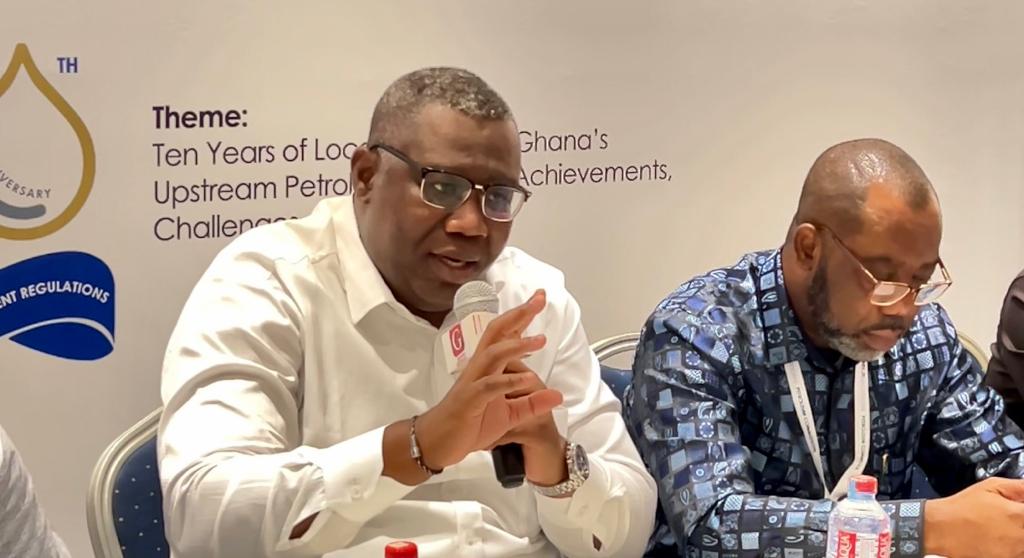
Also speaking on the theme for this year’s Petroleum Local Content Conference, “10 years of Local Content in Ghana’s Upstream Petroleum Industry: Achievements, Challenges, and Prospects,” the Chief Executive Officer of the Petroleum Commission, Egbert Faibille Jnr., said the implementation of LI 2204 has brought tremendous opportunities for Ghanaian businesses and job opportunities for qualified Ghanaians.
Egbert Faibille Jnr.-CEO, Petroleum Commission
In terms of capacity building for locals, the Chief Executive of the Petroleum Commission added that it has also seen growth as ten more Ghanaians would soon be enrolled in pipefitting.
“Even though all oil and gas pass through pipelines, this country has never had any technical institution teaching and certifying anybody as a qualified pipe-fitter. We have identified that concern, and we have worked with our Minister, and we have sent 9 to Canada to train and are back at Takoradi Technical University, Kikam Technical, TTI, among others. We have also sourced funding of $250,000 from Yinson to start training ten more Ghanaians at a Polytechnic in Singapore in January for a 10-month training period in pipefitting. So by the time they come back, we will have a foundation faculty of 19 to train and certify pipefitting,” he added.
Chief Executive Officer of the Petroleum Commission, Egbert Faibille Jnr., and Minister for Energy, Dr. Mathew Opoku Prempeh.
The Petroleum Local Content Conference takes place this year over four days. Stakeholders reflecting on ten years of local content development in Ghana’s upstream petroleum sector, including the MD of Tullow Ghana, Wissam Al Monthiry, MD of ENI, Giuseppe Valenti, CEO of PECAN Energies Ghana, and Kadijah Amoah, among others, will make a variety of presentations on the second day.
The Dormaahene, Oseadeyo Agyeman Badu II, has expressed concern about the current status of Ghana’s National Health Insurance Scheme (NHIS).
He noted that the NHIS is on the verge of collapse because service providers within the scheme are not receiving their rightful dues, despite the government generating substantial revenue from the National Health Insurance Levy (NHI Levy), established to finance the policy.
Addressing attendees at the 3rd Annual General Conference of the Private Health Facilities Association of Ghana in Sunyani on November 18, 2023, Oseadeyo Agyeman Badu II cautioned that if corrective action is not taken regarding the utilization of the NHIS Levy, he would consider filing a court application to seek an interpretation of the intended use of the NHIS levy.
“I want to plead with the government not to touch the National Health Insurance Levy… give it to the National Health Insurance Authority so that they can give it to the private providers.
“If you are taking the money (NHIS levy) and it is been kept somewhere how is work going to proceed? I’m on my knees begging, we have to take this issue seriously as Ghanaians, we are all suffering because of this,” he said in Twi.
He added, “I am sending a warning, at some point, I will go to court… I would ask the court whether the NHIS levy can be used for different purposes other than financing the NHIS. If I do this, people are going to say that I like coursing trouble but I want to ensure that Ghanaians have good health and also that the work of health service providers goes on”.
See what the Dormaahene had to say below:
Osagyefo Osaedeeyo Agyemang Badu II has threatened to seek a court interpretation regarding the usage of the health insurance levy#UTVNewspic.twitter.com/5WsHlBa52S
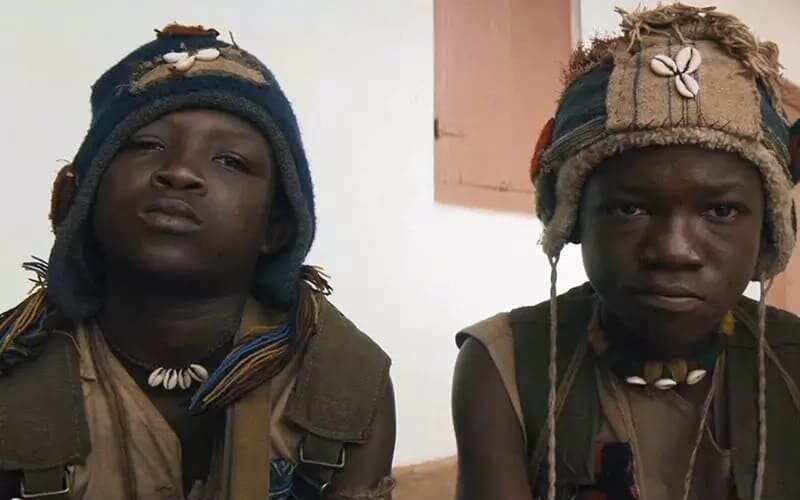
Ghanaian actor renowned for his portrayal of the child soldier, Emmanuel Nii Adom Quaye, popularly known as “Strika” in the acclaimed film “Beasts of No Nation,” has once again captured attention.
In a circulating video on social media, Strika, dressed in a black t-shirt and trousers, is seen singing along to Amerado’s “Kweku Anase.”
This isn’t the first instance of Strika being observed engaging in various jobs on the streets. In 2019, a gospel singer, Minister Edward, encountered him in Kaneshie.
Strika shared that life had been challenging for him both before and after the movie. He mentioned selling yams at Agbogbloshie Market and residing with his grandmother in North Kaneshie.
Furthermore, he revealed that he was still struggling with substance abuse as a means of coping with his pain and hardships.
In 2021, Strika was once again seen on the streets, expressing his disappointment at not receiving the assistance promised by many despite the challenges he faced.
The latest video has triggered responses from numerous social media users who noted his visibly distressed appearance.
Some questioned whether he had been receiving assistance over the years, while others expressed prayers for him to receive the necessary help.
I want to ask oo. Can we dig deeper and know how if they were well paid for their role way back? Dude is grown know and can play other role in movies as well buh Ghana movie industry collapse. I wish he gets a Nigerian link https://t.co/ps145O6pqP
Sorry but I’m tired of seeing this guy on socials and people posting him as a “guys let’s help him, he was once an actor” cause we’ve seen several people trying to help this guy and he keeps running back to the streets. Now you’re tagging Idris Elba saying what? Tjewwwww https://t.co/XOaVDaxaUi
I truly pray God brings a change into this young man’s life. He’s gifted and talented. What happened to him is truly unfair but what God can not does not exist ! https://t.co/UmEGSpzicR
Ghanaian media figure and TV presenter, Bridget Otoo, has taken aim at Vice President Mahamudu Bawumia, the New Patriotic Party (NPP) flagbearer, in response to his criticism of former president John Dramani Mahama’s proposed 24-hour economy policy.
Bawumia asserted that Mahama lacked understanding of his own policy, highlighting that certain sectors and services in Ghana already operated around the clock.
He further stated that he represented the future with a new vision and policy for transforming the country, while Mahama belonged to the past.
These remarks were made during a campaign event in Nalerigu, North East Region, on November 20, 2023.
In reaction to Bawumia’s comments, Bridget Otoo took to her X (formerly Twitter) handle to express her disagreement. She contended that Bawumia lacked the capability to fix economic issues and had no distinct vision or policy.
Bridget Otoo commended Mahama for leading the discussion on the 24-hour economy policy, asserting that Mahama had a well-defined agenda, while Bawumia was merely trailing behind. She advised Bawumia to consider giving lectures on why the policy would not work.
Additionally, Bridget Otoo critiqued Bawumia’s existing policies, asserting that he lacked clear vision and ideas and was attempting to appeal to various interest groups.
The liar in chief @MBawumia thinks it’s 2015/16 on his book-conomist campaign. May I remind him that it’s 2023, he hasn’t been able to show that he’s capable of fixing anything in the economy. Instead critiquing someone’s policy can he actually tell what his own “vision” is? https://t.co/kJkX6A59J3
The trade in technical goods between Ghana and Italy experienced a significant surge of 30%, reaching a total of 90 million Euros in 2022.
Italian Ambassador to Ghana and Togo, H.E. Daniela d’Oriandi, highlighted that this notable growth indicates an increasing number of Ghanaian companies seeking solutions from Italy.
“We invest in innovation, training, provide technical assistance, and out products are reliable, and there are many initiatives to promote the trade between Ghana and Italy,” she emphasized.
Italian Ambassador to Ghana and Togo, H.E. Daniela d’Oriandi
The revelation was shared by the Italian Ambassador during the 6th International Trade Show for West Africa agrofood and West Africa Plastprintpack conference and exhibition held in Accra on Tuesday, November 21, 2023.
Organized in collaboration by the AHK Delegation of German Industry and Commerce in Ghana and Fairtrade Messe, the event seeks to enhance Ghana’s self-sufficiency and enhance its supply capabilities.
In his opening statements, Mr. Paul März, Managing Director of Fairtrade, highlighted that Ghana, with an approximate population of nearly 40 million, represents a substantial food market. He emphasized that the country’s expenditure in the food and beverage sector is consistently increasing and stands as the “largest segment of the Ghanaian processing industry.”
The World Trade Organization (WTO) estimates that in 2021, Ghana will import food worth US$1.2 billion and export food worth US$1.7 billion.
“Thus, food trade with Ghana is a US$8.5 billion business,” he stressed.
Ghana’s investment in food and packaging technology shows an annual growth of 8.6% between 2017 and 2022, from 59 million Euros in 2017 to 89 million Euros in 2022.
The Exhibition
This year the organizers have succeeded in bringing exhibitors from over 12 countries and hope to establish business relationships among the various companies during the exhibition.
Mr. März announced that two industry awards will be presented during the exhibition and this will be led by the Chamber of Agribusiness Ghana.
He also mentioned that there’s a subsidized package for agricultural machinery.
The major participants in this year’s show are the Ghana Export Promotion Authority (GEPA), GIZ AgriBiz and more.
In total, some 70 exhibitors from 12 countries are presenting products, technologies and solutions specifically tailored for the Ghanaian and West African markets.
The exhibitors are from Ghana, Austria, China, France, Germany, Italy, the Netherlands, South Africa, Nigeria, Poland, Thailand and Ukraine.
This year, the organizers have successfully gathered exhibitors from over 12 countries, aiming to foster business relationships among the participating companies during the exhibition.
Mr. März announced the presentation of two industry awards during the exhibition, led by the Chamber of Agribusiness Ghana. Additionally, he highlighted a subsidized package for agricultural machinery.
Key participants in this year’s show include the Ghana Export Promotion Authority (GEPA), GIZ AgriBiz, and others.
In total, approximately 70 exhibitors from 12 countries are showcasing products, technologies, and solutions specifically tailored for the Ghanaian and West African markets.
The participating countries include Ghana, Austria, China, France, Germany, Italy, the Netherlands, South Africa, Nigeria, Poland, Thailand, and Ukraine.
Former dedicated New Patriotic Party (NPP) member, Yaw Buaben Asamoa, has asserted that the party has become internally focused and self-serving, necessitating a prompt change.
This declaration comes as Mr. Asamoa, along with three other notable NPP members—Hopeson Adorye, Nana Ohene Ntow, and Boniface Abubakar Saddique—relinquished their party membership.
Their decision followed the public endorsement and active campaigning for Independent presidential candidate Alan Kyerematen.
In response, the NPP issued a statement on Monday, citing the quartet’s blatant violation of the party’s Constitution, particularly Articles 3(5)(A)(4) and 3(9)(1), as the basis for their forfeiture of membership.
The party highlighted Article 3(9)(1) of its Constitution, which emphasizes the repercussions for such breaches.
“A Member of the Party who stands as an independent candidate against the officially elected member of the Party or who joins or declares his or her support for another Political Party, or for an independent candidate when the Party has sponsored a candidate in a general or by-election automatically forfeits his or her membership of the Party.”
But Mr. Asamoa, in an interview on Face to Face on Citi TV on Tuesday, said, “We believe that it is time that the right things are done. The elephant is supposed to serve the people of Ghana.”
“When it gets to the point where it becomes self-serving when it is supposed to look at the interest of Ghana, it begins to look more about its interests and how it looks like, then it’s time to move on and serve the public.”
Meanwhile, Nana Ohene Ntow, the former General Secretary of the NPP, has asserted that he sees no wrongdoing in publicly endorsing Alan Kwadwo Kyerematen for the 2024 election.
During an interview with Metro TV, Nana Ohene Ntow conveyed his acceptance of the party’s decision.
He underscored the notion that individuals make choices based on the character of the candidate they wish to support, suggesting that such considerations should be straightforward.
Government has affirmed its commitment to fiscal prudence in the upcoming year, assuring that measures have been implemented to enforce financial discipline.
A key pledge is the government’s determination to avoid overspending in the 2024 elections, countering predictions by the Minority in Parliament. The Minority anticipated that the government might exceed its budget to fulfill unplanned campaign promises during the election period.
However, Deputy Finance Minister Abena Osei Asare, in her debate on the budget presentation, stated that the government’s strategy includes refraining from initiating new commercially loan-funded projects in 2024. This move aligns with their commitment to live within their financial means.
“In the past, governments have used election year as auctioning periods, engaging in all kinds of projects to win votes. But this government is committing itself to strong fiscal consolidation and efficient management of existing commitments, in order not to derail the hard-won stability that we are witnessing.”
“Government is not initiating new commercial loan funded projects. Government has also put in an amount of money in the budget to clear their arrears so that we can complete existing projects,” the Deputy Finance Minister assured.
However, the Minority in Parliament claims that records indicate that the government’s 2020 budget deficit was 17% as a result of the elections.
John Jinapor, the Yapei-Kusawgu member of parliament, stated, “You said that you have a track record in election year expenditure. For the records, in 2016, go and read the updated data; the deficit was about 6 percent.”
“Mr. Speaker, I refer to the IMF-Ghana decision May 2023 documents; I refer to page 36, table 2 (A). In 2020, under your regime, election year, your deficit was a whopping 17 percent. It has never happened; no country has that deficit of 17 percent.”
The Ghana Statistical Service (GSS) has identified employment and insurance coverage as the primary contributors to multidimensional poverty in the nation.
The Multidimensional Poverty Index Scorecard, encompassing all 261 Administrative Districts, reveals that employment impacts 206 districts, while insurance coverage influences 55 districts.
Released by the GSS as part of the 2023 African Statistics Day commemorative activities on November 21, 2023, the scorecard highlights that employment constitutes 22.9% to 56.7% of multidimensional poverty across the 206 districts, while insurance coverage accounts for 23.5% to 29.7% across the 55 districts.
Derived from the 2021 Population and Housing Census data, the multidimensional poverty indicator gauges non-monetary deprivation in living conditions, education, health, and employment.
Comprising 13 indicators across these dimensions, such as electricity, housing, assets, overcrowding, and insurance coverage, the scorecards provide statistics on the population within each district experiencing multidimensional poverty.
The GSS notes that 23 districts exhibit an incidence of multidimensional poverty exceeding 50%, more than double the national rate of 24.3%. Urgent and targeted interventions are recommended by the GSS to address this situation.
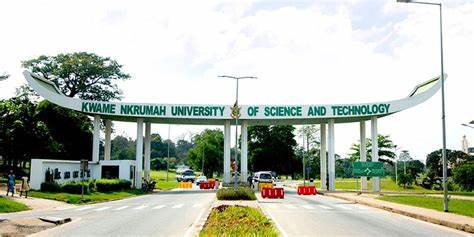
The Management of Kwame Nkrumah University of Science and Technology (KNUST) has refuted circulating reports claiming that applicants are required to pay an amount of GH¢2,550 through a provided link to secure admission for the 2023/2024 academic year.
KNUST clarified that it has not initiated the admission processing, emphasizing that the West African Examination Council (WAEC) has yet to release the WASSCE results.
The university is urging the public to dismiss such messages and advised individuals to refer to the official university website for authentic information regarding admissions.
Several applicants have reported receiving SMS messages instructing them to make the mentioned payment through a specific link. KNUST, however, stressed that it does not use SMS messages for communication related to admissions.
Reiterating that the sole official sources for admission information are the university’s website and official social media handles, KNUST cautioned applicants to be vigilant against scammers who might attempt to solicit money or personal information under the guise of admissions processing.
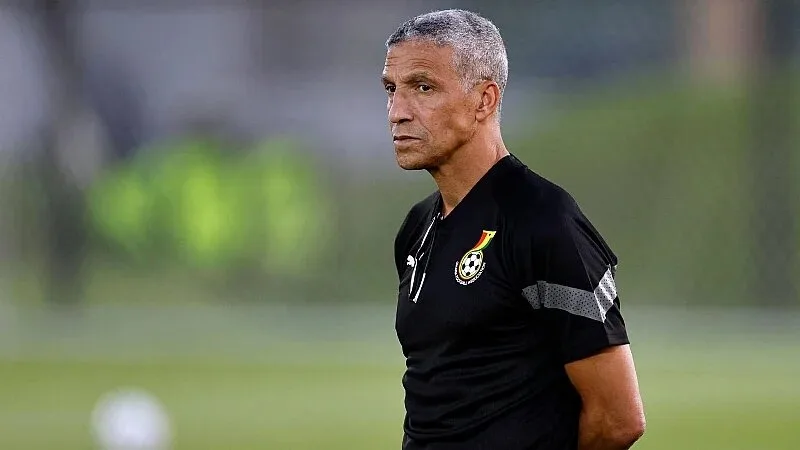
As Ghana lost 1-0 to Comoros in the 2026 World Cup qualifying match, the chorus calling for the dismissal of head coach Chris Hughton became louder.
Fans expressed their disappointment and frustration after the unexpected loss by calling for Hughton’s resignation.
The Black Stars dropped three points behind Comoros in the group standings after two games, failing to live up to the high expectations that surrounded them in Moroni. The loss heightened criticism of Hughton’s coaching choices, specifically his tactical approach and lineup selections.
The discontent among supporters manifested visibly, with many venting their frustrations on social media and various platforms.
Protests against Hughton’s leadership gained traction as supporters expressed worries about Ghana’s chances of qualifying for the World Cup under his direction.
The chorus “Sack Chris Hughton” is resonating strongly within the football community, signaling that Hughton is facing unprecedented pressure.
The focus now turns to the Ghana Football Association’s response and whether they will give in to the demands for change in order to save the World Cup qualifying campaign, as the argument over the coach’s future intensifies.
Chris Hughton, meanwhile, is going to want to hold onto his job and concentrate on getting the team ready for the 2023 Africa Cup of Nations, which is scheduled to take place in Ivory Coast early in the following year.
In recent days, the term ’24-hour economy’ has emerged as a prominent buzzword in Ghana’s media landscape, capturing the attention of politicians, economists, and technocrats alike.
This surge in usage follows the announcement by former President John Dramani Mahama, the presidential candidate of the National Democratic Congress (NDC), who listed it as a key policy measure he would implement if re-elected.
Considered by many experts, including Anthony Yaw Baah, the General Secretary of Ghana’s Trade Union Congress (TUC), as a potential ‘game changer,’ Mahama’s proposal for a ’24-hour economy’ is designed to address Ghana’s unemployment challenges.
However, there is divided opinion on this initiative, with some, particularly from the ruling New Patriotic Party (NPP), including Vice President Dr. Mahamudu Bawumia, expressing skepticism.
They argue that the policy is not groundbreaking, as certain sectors in Ghana’s economy already operate on a 24-hour basis, and accuse Mahama of misunderstanding his own proposal.
Amidst these debates, questions arise about what exactly constitutes a ’24-hour economy,’ its potential to alleviate Ghana’s unemployment issues, and its feasibility in the country.
This article aims to provide insights for The Independent Ghana readers seeking a better understanding of this policy proposal.
What a 24-hour economy is
The concept of a 24-hour economy is essentially an economic strategy that involves implementing measures to ensure businesses across various sectors operate both during the day and at night. In simpler terms, this approach envisions the coexistence of a night economy and a day economy.
The primary objective of this strategy is to make the economy equally vibrant during daytime and nighttime, thereby generating more employment opportunities. In practical terms, businesses are encouraged to establish mechanisms to operate round the clock, necessitating actions such as hiring additional staff and implementing a shift system.
The advantages of a 24-hour economy have been extolled in countries like the UK and the US, where it has been successfully practiced. In London, for instance, the night-time economy contributes significantly to the UK’s economic strength, adding between £17.7 billion to £26.3 billion. This has led to the creation of an estimated 723,000 direct jobs and 1.26 million indirect jobs, according to rereoygroup.com.
In the United States, approximately two out of every five employees operate within the 24-hour economy system, working during evenings, nights, weekends, or on rotating shifts outside the conventional 9-to-5 workday. In Sydney, Australia, the night economy made a substantial contribution, adding $27.2 billion to the economy and creating 234,000 jobs in 2017.
Despite the employment benefits, the 24-hour economy poses challenges, including its potential impact on the health and family time of workers required to put in extended hours.
Mahama’s proposal:
Former President John Dramani Mahama has outlined a vision for the next NDC government, emphasizing measures to stimulate 24-hour business operations in Ghana.
This policy initiative, he elaborated, involves providing incentives for businesses to function around the clock, potentially adopting three shifts and thereby creating more employment opportunities for the youth in Ghana.
“A new NDC administration will work urgently to equip our youth with the entrepreneurial knowledge and skills needed for a sustainable future. We will introduce a 24-hour economy with incentives and tax breaks for manufacturers who will run extra shifts to create more room for employment,” he said.
Mahama underscored the critical role of a robust police service in executing the 24-hour economy strategy. He highlighted the need for a police force capable of ensuring the safety and security of businesses, particularly during the night economy operations.
In conclusion, it is clear and reasonable to anticipate that a 24-hour economy would result in the generation of more jobs.
The crucial question for Ghanaians to consider is the practicality of implementing the necessary police measures. Will the conduct of Ghanaians support the effectiveness of this policy? And, will the Ghana Police Service be adequately equipped to ensure the protection of businesses?
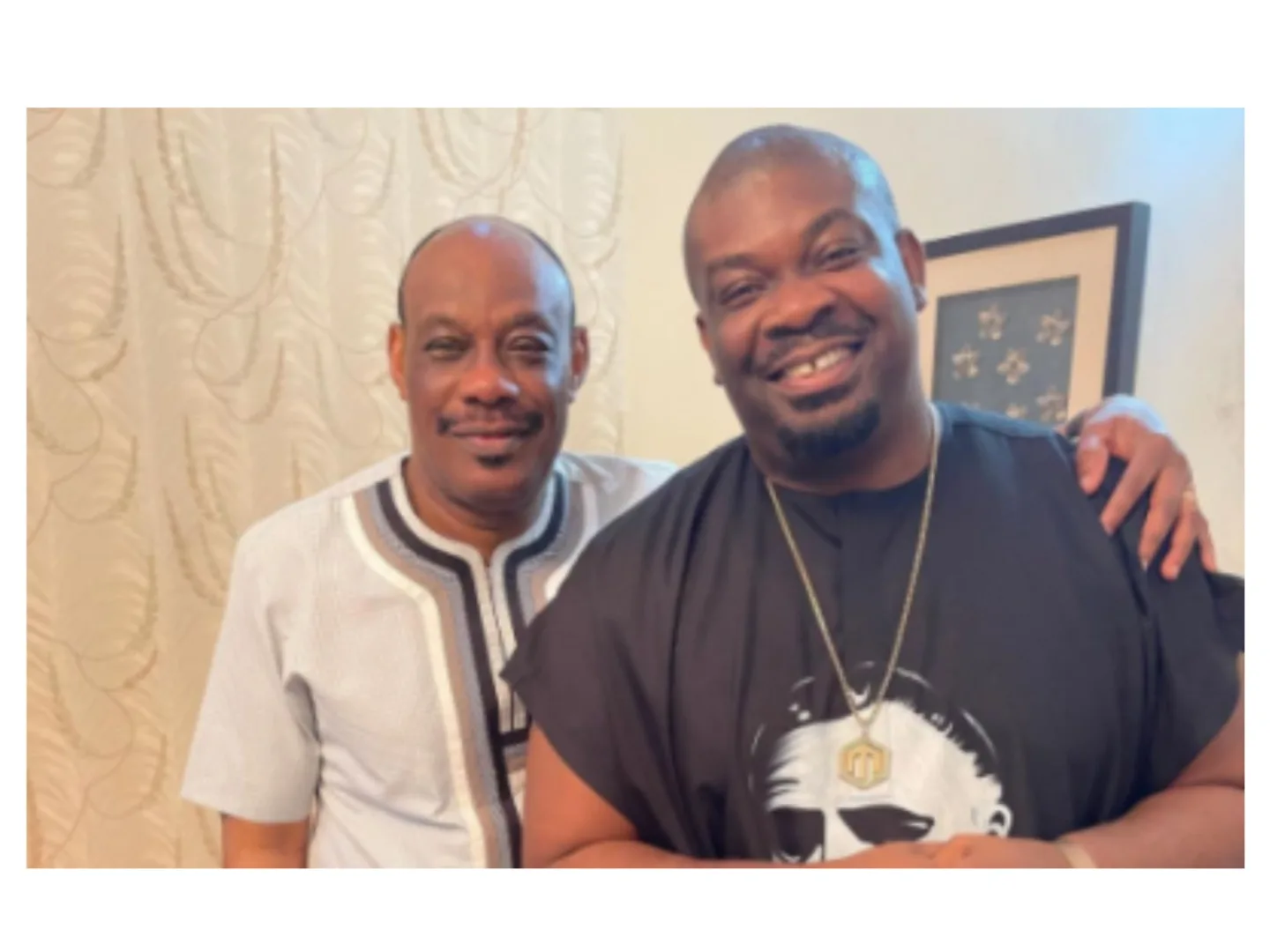
Father of well-known Nigerian music executive and record producer Don Jazzy, Collins Enebeli Ajereh, has stated that he is not pressuring his 40-year-old son to get married.
Don Jazzy had previously been married, he said, but he and his ex-wife made the decision to part ways, which he has since respected.
But in a recent interview with TVC, Mr. Ajereh emphasized that marriage is a personal choice and insisted that he would not pressure Don Jazzy to get married again.
He said, “He [Don Jazzy] was married. But they [he and his ex-wife] decided to end their marriage.”
When asked if he still considers Don Jazzy would get married again, Ajereh replied, “Well, that is his choice. The question of marriage is individual choice. Some people choose marriage and some don’t and yet have relationships that might blossom into what makes their lives complete.”
He continued by saying he didn’t believe Don Jazzy’s decision to remain single was influenced by the nature of his work.
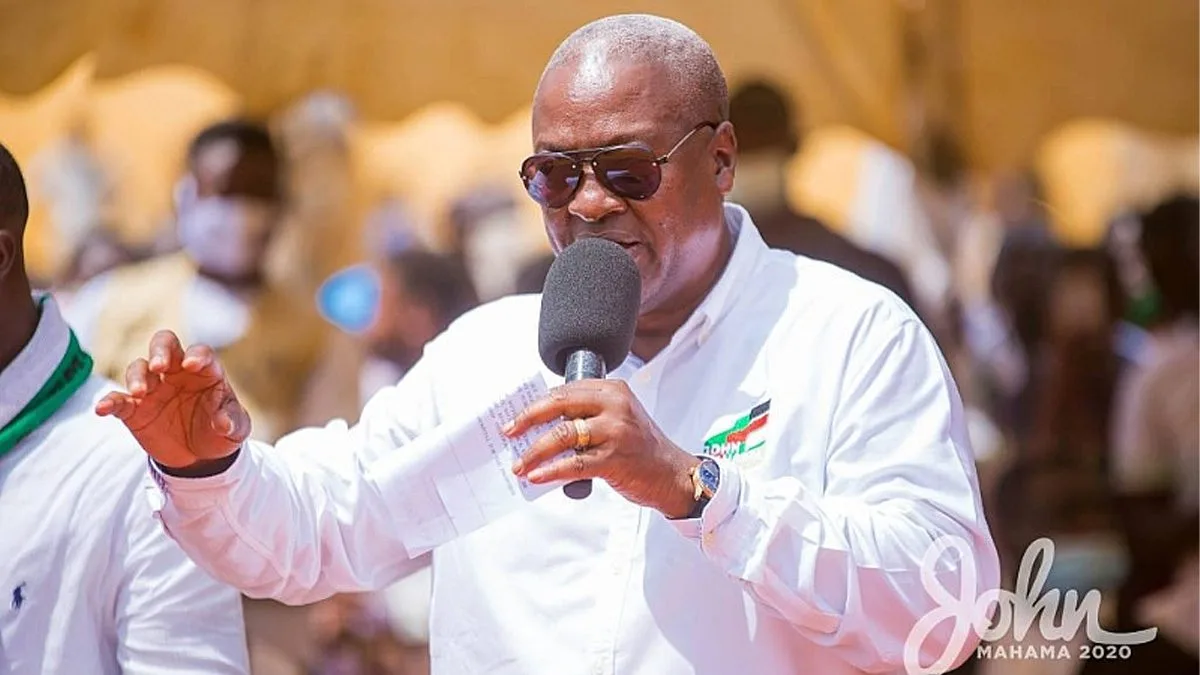
In a recent address to artisans, auto workers, and traders at Techiman Magazine in the Bono Region, John Mahama, the 2024 presidential candidate for the National Democratic Congress (NDC), pledged to eliminate the ban on import of used vehicles.
Mahama emphasized the financial challenges faced by many Ghanaians in affording brand new vehicles manufactured in the country.
To address this, he proposed striking a balance by lifting the ban on used vehicle imports. Additionally, Mahama suggested that the government could contribute to the growth of the local auto industry by becoming a customer and purchasing some of the cars assembled brand new in Ghana.
“There are vehicle assembly plants owned by foreigners with the goal of assembling vehicle parts and selling brand-new cars to Ghanaians. The affordability of these new cars is a challenge for many Ghanaians; the government should play a role in addressing this issue by purchasing a significant portion of these locally assembled cars.” he said.
“Given the substantial demand for vehicles in the government sector, such a move could contribute to the profitability of these companies. Recognizing the financial constraints faced by ordinary Ghanaians in affording new cars, the NDC plans to eliminate the proposed ban on the importation of used vehicles,” John Dramani Mahama added.
To incentivize international companies like Volkswagen AG and Nissan Motor Co. to establish local plants in Ghana, the country has implemented a ban on the importation of cars older than 10 years. This regulatory measure, outlined in an act of parliament, also includes import-duty rebates for companies engaged in the local manufacturing or assembly of cars.
Automakers such as Volkswagen, Nissan, Toyota Motor Corp., Suzuki Motor Corp., and Renault SA have responded to this initiative by establishing local assembly operations in Ghana. The country aims to position itself as a prominent car-manufacturing hub for West Africa, a region boasting a population of over 380 million people.
Volkswagen and Nissan, in particular, are actively pursuing the African market, recognizing the potential for growth in a region where car loans are not readily available.
Founder of Glorious Word Power Miracle International (GWPMI), Isaac Owusu-Bempah, has shared spiritual insights concerning the New Patriotic Party (NPP) in Ghana.
According to him, a divine encounter during the early hours of November 19, 2023, revealed that the party must prioritize spiritual guidance to have a fighting chance in the upcoming 2024 elections.
As a prominent spiritual figure within the party, Owusu-Bempah recounted a significant dream in which an elephant, representing the NPP symbol, was confined in a cage and subdued by divine forces whenever it attempted to break free.
During a sermon to his congregation, he conveyed that God had conveyed a message at the conclusion of this encounter, emphasizing that the NPP would face unfavorable consequences similar to the fate of the confined elephant if it neglected to seek divine direction.
“When I woke up this dawn around 4:33 am, NPP listen, I have said I won’t publicly declare who wins 2024 election but I will disclose it in camera.
“I saw myself hovering over the country. I saw four corners and a divine presence, like images on the four corners of the land. I saw wind which rises like waves of the sea. And I saw something like a huge cage emerged.
“In the cage, I saw a big elephant caged. I did not know who locked it. I saw two standing on both sides (left and right) of the cage. The elephant wants to force its way out, the two presences, like angels, reprimand it and it quietens. But the elephant was strong and trying to break but it quietened after every reprimand,” he narrated.
“This sequence continued for a long while and it was so until the waves swept the cage away with the elephant. So, I asked God what the interpretation of this was and he said, ‘Just as you saw it, so it is’,” the man known as the Nation’s Prophet said to applause from his followers.
Recently, Owusu-Bempah has broken with the NPP leadership, accusing First Lady Rebecca Akufo-Addo of being unfriendly toward him.
Additionally, he has promised never to accept an invitation to the presidential residence, the Jubilee House, or to attend any event at the behest of the government.
Ghana is set to secured its annual loan to fund cocoa purchases at a historically high interest rate, a consequence of this year’s debt restructuring that diminished investor appeal for the West African nation.
Two individuals familiar with the deal’s terms revealed that international banks have committed to lending the Ghana Cocoa Board (Cocobod) $800 million for cocoa purchases from farmers at an interest rate approaching 8%. This marks the most expensive syndicated facility obtained by Cocobod since the inception of the annual loans in 1992-93, according to the sources who requested anonymity as the transaction is not yet public.
Traditionally, Cocobod has secured loans at more favorable rates than the government, averaging around 2%. However, this year’s negotiations were complicated by Ghana’s debt restructuring, a prerequisite for accessing a $3 billion government bailout from the International Monetary Fund.
As the world’s second-largest producer of cocoa, Ghana heavily relies on foreign funding to compensate farmers for beans that are subsequently exported. This external financing is also crucial for the central bank to maintain a stable supply of foreign exchange and stabilize the national currency, the cedi.
Typically, Cocobod conducts an investor roadshow between June and July, finalizing the syndicated facility in September before the commencement of the new harvest in October. However, this year, the loan is anticipated to be signed at the end of the month, involving eight participating banks, including Coöperatieve Rabobank UA as the lead arranger, along with Standard Chartered Plc and Societe Generale SA.
The loan amount is the lowest in at least 16 years, reflecting challenges faced by Cocobod in raising funding and falling short of the $1.2 billion required to purchase beans from growers in the current season. Consequently, Cocobod has arranged to borrow $400 million from cocoa traders such as Olam Group Ltd. and Barry Callebaut AG to bridge the gap.
Additionally, the board plans to leverage higher cocoa prices this year by selling on the spot market to fulfill its liquidity needs, according to the sources. Spokespeople for Coöperatieve Rabobank UA, Standard Chartered Plc, and Societe Generale SA declined to comment, and Fiifi Boafo, a spokesperson at Ghana Cocoa Board, also refrained from providing comments when contacted by phone.
Member of Parliament for Sefwi Wiawso in the Western Region, Kwaku Afriyie, has voiced concerns about the growing challenge faced by parliamentarians in maintaining their seats, attributing it to the increasing financial focus in politics.
Afriyie, speaking in a November 21, 2023 interview on Okay FM, expressed frustration, particularly within his party, highlighting what he sees as a troubling pattern where party executives request money before casting their votes.
The Minister for Environment, Science, Technology, and Innovation emphasized that the monetization has reached a point where party executives, traditionally expected to support their party’s candidates, are now making financial demands.
“In my party, I cannot understand why we give money to polling station executives to vote for us. So, why did you stand in the name of the party?
“The coordinator will be demanding money, and there are always people dragging you to their funerals, I have been attending funerals always. The criteria that we are using to elect MPs are so horrible that if you become an MP, you will regret it because you don’t want to be an MP again; that is the truth,” he said.
He called for a change of mindset and increased education within the Ghanaian political landscape.
“If you become an MP, you will struggle to maintain your seat. Meanwhile, there are no financial benefits attached to it.
“From my point of view, if you become an MP, I think after one or two terms, you have to leave because the people voting have not educated themselves about the kind of demands they are placing on MPs. For me, Kwaku Afriyie, I don’t understand. We need to educate the constituents,” he added.
The emerging threats against LGBTQ+ individuals in Ghana have prompted the United States Embassy to elevate its travel advisory to Level 2, urging travelers to “Exercise Increased Caution.” Issued on November 20, 2023, the alert specifically highlights escalated risks of crime and violence targeting members of the LGBTQ+ community in the country.
The advisory identifies areas with heightened risks, including sections of the Bono East, Bono, Savannah, Northern, North East, and Upper East regions, expressing concerns about potential civil unrest. The embassy underscores the prevalence of violent crimes like carjacking and street mugging, especially at night and in isolated locations.
Travelers are strongly advised to exercise heightened caution, particularly in urban areas, crowded markets, and during nighttime travel when criminal elements may impose blockades to restrict movement. Specific attention is drawn to areas near the northern border in the Upper East and Upper West regions due to security concerns.
The advisory recognizes potential limitations in the U.S. government’s ability to provide emergency services to its citizens in Ghana, emphasizing the local law enforcement’s potential lack of resources to respond effectively to serious crimes.
Addressing the challenges faced by LGBTQ+ travelers in Ghana, the alert references Ghanaian laws prohibiting “unlawful carnal knowledge” between individuals of the same sex, with punishments including fines and incarceration. The advisory underscores the surge in anti-LGBTQ+ rhetoric and violence in recent years, citing incidents of targeted assaults, rape, mob attacks, and harassment.
Travelers are encouraged to visit the embassy’s LGBTQ+ Travel Information page and review the Human Rights Report for additional details. The alert advises enrollment in the Smart Traveler Enrollment Program (STEP) for emergency alerts, a review of the Country Security Report for Ghana, and the preparation of a contingency plan for emergency situations. Additionally, travelers are recommended to follow the Department of State on social media for updates.
The Commercial Division of the High Court in Accra has handed down a verdict in favor of the Ghana Revenue Authority (GRA) in a tax liability case amounting to GH¢19 million, filed against the authority by Scancom PLC, the owners of MTN Ghana.
Scancom PLC brought the case to court, contending that GRA had acted arbitrarily and erred in law by imposing the tax liability order on the company for the period spanning January 2014 to December 2017.
In 2020, the Ghana Revenue Authority initiated a comprehensive tax audit on MTN Ghana, covering the period from January 2014 to December 2018. The audit encompassed all aspects of MTN’s business, including Input Value Added Tax claims related to goods and services procured by MTN Ghana, Value Added Tax on services imported by the company, and Input Value Added Tax claims related to office premises constructed by the telecom giant.
MTN Ghana, dissatisfied with the imposed tax liability and asserting that it had fulfilled all its tax obligations, took the matter to court seeking a reversal of the GRA order. The recent ruling has sided with the Ghana Revenue Authority in this legal dispute.
Thus, the company requested the following reliefs:
a. An order reversing the Respondent’s decision to impose additional Value Added Tax of GHS8,793,598.00 and penalty and interest of GHS10,933,119 on imported services utilized by Appellant for its telecommunication business.
b. An order reversing the Respondent’s decision to impose additional Ghana Education Trust Fund Levy and National Health Insurance Levy of GHC6,379,483.00 and penalty and interest of GHC2,566,124.00 on imported services utilized by the Appellant for its business.
c. An order quashing the parts of the Current Tax Assessment relating to the heads “Disputed Assessment”, and overturning the Objection Decision by Respondent as it relates to those parts.
d. Any other order(s) that the justice of the case requires.
Judgement
In its ruling, the court presided over by Her Ladyship Justice Afi Agbanu Kudomor on November 9, 2023, said GRA did not err in imposing the tax liability on MTN Ghana.
Below are excerpts of the judgement:
By virtue of the combined effect of the said provision of the Value Added Tax Act, 2013 (Act 870) for imported services, Value Added Tax will not apply only if the imported services were applied in making Taxable supplies (telecommunication business). Value Added Tax will however apply if the imported services were applied in making Exempt supplies (mobile money business).
Respondent was therefore right in applying the definition in section 65 of the Value Added Tax Act, 2013 (Act 870) to the transactions concerned in determining the total cost of imported services and apportioned between the Exempt and Taxable supplies with respect to their contribution to total revenue.
Respondent therefore did not err in law and did not act arbitrarily by imposing Value Added Tax liability on the Appellant for Imported Services for the period January 2014 to December 2017 because of Appellant’s status a Partial Exempt Trader for the period of the assessment.
On the second ground of appeal, it is clear from the provisions of the two statutes as amended that the National Health Insurance (Amendment) Act, 2018 (Act 971) and the Ghana Education Trust Fund Act, 2018 (Act 972) are separate from the Value Added Tax Act 2018 (Act 870).
That, the two laws impose tax on import of service which is not subject to input tax deduction.
The two statutes levy taxes on the import of services, and these taxes are not subject to input tax deduction, regardless of the intended use of the imported service during the specified period.
For the relevant periods in 2018 (from August 2018 to December 2018), the Value Added Tax rate of 12.5% did not apply to the Appellant. However, the Ghana Educational Trust Fund Levy and National Health Insurance Levy, each at a rate of 2.5%, were applicable to the imported services by the Appellant, irrespective of whether these imported services were used to produce Taxable or Exempt supplies.
Therefore, the Respondent did not make any legal error when imposing the National Health Insurance Levy and Ghana Education Trust Fund Levy (along with interest and penalties) on the Appellant for their Imported Services from August 2018 to December 2018, regardless of whether they were applied to Taxable or Exempt services. This is why the present Tax Appeal is unsuccessful. No order is given regarding costs, and each party is responsible for its own costs.
The Ghana Statistical Service (GSS) has disclosed that Ghana experienced a trade surplus of US$200 million in the first half of 2023, marking a notable reversal from the US$400 million deficit recorded during the same period in the previous year.
As per the data outlined in Ghana’s 2023 Mid-Year Trade Report, the country’s expenditure on imports increased to GH¢85 billion from January to June 2023, in comparison to GH¢65.4 billion spent in the corresponding period of 2022.
Conversely, the export value for the first half of 2023 surged to GH¢87.4 billion from GH¢63.1 billion in the first half of 2022.
This resulted in a GH¢2.4 billion trade surplus for the first half of 2023, a significant contrast to the GH¢2.3 billion deficit recorded in the first half of 2022.
While both exports and imports showed an increase in Cedi terms, the figures denominated in US dollars were lower in 2023 than in 2022.
Import values in US dollars dropped significantly from $9.6 billion in 2022 to $7.9 billion, and exports also saw a decrease from $9.2 billion to $8.1 billion.
During the presentation of the findings at the commemoration of the 2023 African Statistics Day, Government Statistician Professor Samuel Kobina Anim attributed the decline in dollar valuation to the adverse effects of the depreciation of the Ghana Cedi.
The Overlord of Dagbon, Ya-Na Abukari II, has urged Vice President Dr. Mahamudu Bawumia and Former President John Dramani Mahama, who are flagbearers of the New Patriotic Party (NPP) and the National Democratic Congress (NDC) respectively, to consider each other as brothers rather than enemies.
This message was conveyed during Dr. Bawumia’s courtesy visit on Tuesday, November 21, as part of his thank-you tour following his election as the NPP flagbearer.
“John Mahama is your big brother and not your enemy. See him as an elder brother as you go about your campaign.
“We just have to be grateful to all Ghanaians for trusting that only a Northerner can lead Ghana after 2024. It is a big opportunity for us to demonstrate our maturity, competence, honesty and dedication to move Ghana forward,” Ya-Na said.
Dr. Bawumia, in response, stated, “Ya-Na, I wish to assure you that my team and I will conduct a clean campaign as you have indicated because myself and John Mahama are all your sons. What I will be doing is that I will bring to bear my ideas that I know will complement the development we are currently seeing.
“My brother lacks ideas and so tends to criticize my ideas but I know Ghanaians are decerning and will vote for the NPP that I lead.”
The Vice President has embarked on a thank-you tour following his election as the flagbearer of the NPP on November 4. His tour began in his home region on Monday, November 20, where he addressed a large crowd.
Subsequently, he held a rally in Tamale that was described as electrifying. The 2024 NPP flagbearer also visited Yendi, Bimbilla, and Saboba in the Northern region.
His upcoming plans include a courtesy call on the king of the Gonja Kingdom, Yagbonwura Bi-Kunuto Soale Jewu, at the Jakpa palace in Damongo, followed by another rally.
The decision by the Municipal Chief Executive (MCE) of the Ablekuma West Constituency, George Cyril Bray, to build a public hospital on the Ebenezer Senior High School campus as part of the Agenda 111 initiative has drawn harsh criticism from former students of the school.
The group, comprising both current and past students of the school, has accused the MCE of “forcefully, rudely and inhumanly” encroaching on lands belonging to the school, to execute the project.
“In this current age and level of civilization, such primitive and slavish acts are still going on within the Ghanaian set-up. The MCE of Ablekuma West is forcefully, rudely and inhumanly taking over a portion of the Ebenezer Secondary school land, which we feel is improper and we as old students have taken action against him,” past president of the Old Students Association, Dr. Nii Addo Bruce said.
The former students are disputing the need to build a public hospital on school property when there are other suitable sites outside the school that have been set aside for that purpose.
“Why in the world would you place a hospital in the midst of students who are learning?” Dr. Nii Addo Bruce, former president of the Old Students Association, questioned.
He pointed out certain current infrastructure issues, such as a shortage of classrooms and bungalows, which require the government’s focus instead of the hospital’s construction. The alumni association of the school has pledged to oppose the encroachment and has urged the government to reconsider its decision.
The Agenda 111 initiative is a government program with the objective of building 111 hospitals nationwide.
The move by the alumni of Ebenezer SHS comes weeks after the Chief and elders of Mpoase urged the government to intervene and address the Municipal Chief Executive’s encroachment on the land of Ebenezer Senior High School for the implementation of the Agenda 111 project.
The Mpoase Mantse, Nii Adote Din Barima I, who made the call at a press conference in Accra, described the move by the MCE as a mark of “disrespect, arrogance, a show of political power, and an act without any recourse to the chief and elders of Mpoase,” he said.
The Mpoase Mantse said the land was released and earmarked for the school’s development saying that, “the school was originally sited on a 90-acre plot of land, however, the public had encroached on 45 plots, so that could not justify the need for another plot for the hospital project, particularly on the school’s compound without recourse to the school.”
Managing Director of the Bulk Oil Storage and Transportation Company Limited (BOST), Edwin Provencal, has challenged assertions that the company recorded profits in 2015 and 2016 during former President John Mahama’s administration.
Former President Mahama had recently asserted that BOST achieved net profits of GHC109.36 million in 2015 during an engagement with members of the Trades Union Congress (TUC) in Accra.
However, in an interview on the Asaase Breakfast Show, Provencal refuted Mahama’s claims, stating that the former president was misinformed.
“I can understand why the former president may make that error,” the BOST boss said. “This is because normally when Ministry of Finance requests for data from institutions, the year would not have ended and the accounts unaudited.”
“After an independent auditor comes in to audit, that is when the true state of affairs may come out. So, I am sure the document used by Mahama is what is flawed. He was not told the truth, so he used that information to make that statement,” Provencal said.
Information Minister Kojo Oppong Nkrumah has lauded the 2024 budget, characterizing it as a robust and sensible economic policy.
Stressing the need to minimize excessive partisanship, he called on all stakeholders to fulfill their respective responsibilities to attain the outlined objectives.
“…this economic policy is sensible and pragmatic, the budget is healthy and sensible. We all have a responsibility and we must live up to it so that we to achieve objectives. Let us avoid the excessive partisanship,” he said.
On Tuesday, November 21, 2023, Parliament initiated discussions on the 2024 Budget Statement and Economic Policy. To foster broad participation in the debate, specific time allocations have been suggested: 20 minutes for the seconder and Ranking Members of the Finance Committee, 15 minutes for other committee members, and 10 minutes for all other Members of Parliament (MPs).
The debate will cover various sectors, including governance, security, public safety, finance, economy, energy, infrastructure, social sectors, local governance, youth, sports, tourism, and culture.
The proposed timetable outlines discussions on finance, agriculture, trade, and industry for Tuesday. Wednesday’s focus will be on communications, energy, roads, works and housing, sanitation, and the environment. Thursday’s agenda includes education, health, employment, youth and sports, tourism, culture, and chieftaincy.
On Friday, the debate will center around governance, encompassing local government, judiciary, defense, interior, the Electoral Commission, National Commission for Civic Education, and the Commission on Human Rights and Administration of Justice.
Member of Parliament for Bolga Central, Isaac Adongo, has publicly apologized for his earlier comparison of Vice President Dr. Mahamudu Bawumia to footballer Harry Maguire.
In the 2024 budget debate on Tuesday, Isaac Adongo expressed remorse for comparing Vice President Dr. Mahamudu Bawumia to footballer Harry Maguire.
Adongo acknowledged that Maguire has undergone a transformation in his career, while suggesting that Bawumia is currently “roaming at the IMF with a cup in hand.”
“Mr Speaker you remember that last year I was very quick to compare Dr Bawumia to Harry Maguire. Mr Speaker, I now apologize to Harry Maguire. Today, Harry Maguire has turned the corner and he is a transformational footballer. He is now scoring goals for Manchester United, he is now a key player to Manchester but as for our Maguire (Bawumia), he is now roaming at the IMF with a cup in hand. Our economic Maguire now was able to get pensioners to leave their house and come and parade in the streets.“
Isaac Adongo, in a reversal of his stance from 2022, has expressed regret over his earlier comparison of Vice President Dr. Mahamudu Bawumia to footballer Harry Maguire. Initially criticizing Bawumia’s performance as the Head of the Economic Management Team, Adongo likened him to Maguire, who was known for scoring own goals.
Adongo had argued that Bawumia’s role in economic management posed a risk to the nation’s economic fundamentals, despite initially praising him for his management of foreign currency.
Adongo stated, “Our Economic Maguire is now tackling all the fundamentals of our economy and destroying all of them,” during his remarks in parliament.
The parliamentary deliberations on the 2024 Budget Statement and Economic Policy commenced on Tuesday, November 21, 2023. To facilitate extensive participation in the debate, the proposed schedule designates specific time slots: 20 minutes for the seconder and Ranking Members of the Finance Committee, 15 minutes for other committee members, and 10 minutes for all other Members of Parliament (MPs).
The debate will be structured around different sectors, covering governance, security, public safety, finance, economy, energy, infrastructure, social sectors, local governance, youth, sports, tourism, and culture.
According to the proposed timetable, discussions on finance, agriculture, trade, and industry are scheduled for Tuesday. Wednesday will focus on communications, energy, roads, works and housing, sanitation, and the environment. Thursday’s agenda includes education, health, employment, youth and sports, tourism, culture, and chieftaincy.
On Friday, the debate will revolve around governance, incorporating local government, judiciary, defense, interior, the Electoral Commission, National Commission for Civil Education, and Commission on Human Rights and Administration of Justice.
As some sub-Saharan African nations, Ghana included, are on the path to economic recovery from recent shocks, the International Monetary Fund (IMF) issues a warning against prematurely relaxing stabilization policies.
In Ghana, Finance Minister Ken Ofori-Atta informed Parliament about the government’s efforts to steer the nation’s economy toward growth.
Ofori-Atta attributed the ongoing economic recovery to the swift implementation of robust fiscal and monetary measures throughout the past year and the first half of 2023.
“So far, growth in 2023 has been more resilient than expected, inflation has declined in line with the fundamentals, the fiscal and external balances have improved, and the exchange rate has stabilised,” he said when he delivered the 2024 budget statement in the House on Wednesday, November 15.
The Akufo-Addo administration is committed to upholding discipline in order to keep the economy stable, he added.
After the government finished the first review of the three-year, $3 billion International Monetary Fund External Credit Facility (IMF-ECF) program successfully, he said the country had turned the corner in terms of the economic difficulties.
“We turned the corner when we completed the IMF first review,” he told Parliament while presenting the 2024 budget statement on Wednesday, November 15.
He further assured that the government is poised to “maintain stability and keep growing. and ensure increased growth, currency stability”
“We turned the corner when inflation started declining from 54 1 in December to 35.2 in October 2023, he added. “The recovery is indeed real and is here to stay,” he further assured.
“To ensure that the coming rebound is more than just a transitory glimpse of sunshine, it is important for authorities to guard against a premature relaxation of stabilization policies, while also focusing on reforms to both claw back lost ground from the four-year crisis and also to create new space to address the region’s pressing development needs,” the IMF said.
2023 has been a difficult year for sub-Saharan Africa, with growth expected to slow for the second year in a row to 3.3%, down from 4% in 2022. IMF's @aselassie presents the analysis in the latest Regional Economic Outlook. https://t.co/LapqYnJiFBpic.twitter.com/SlBiuHtGp2