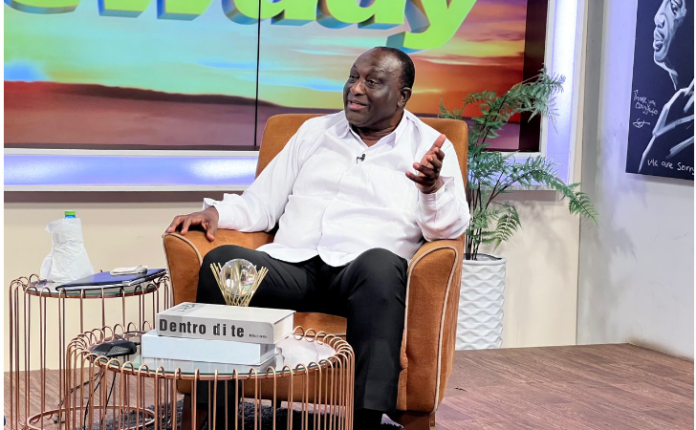
Gospel musician, Obaapa Gladys, famous for her hit song “Cobra,” recently shared her challenging upbringing in an interview on the Go online show with Sammy Kay.
She opened up about the hardships she faced, including selling pure water to survive.
Obaapa Gladys attributed her struggles to her father’s neglect and emphasized her strong desire for education.
Unfortunately, she had to drop out of school when her father left her mother, and she had to rely on someone who promised to support her education.
Despite facing considerable difficulties, she acknowledged the abundant grace of God in her life, expressing gratitude for how far she has come and the person she has become.
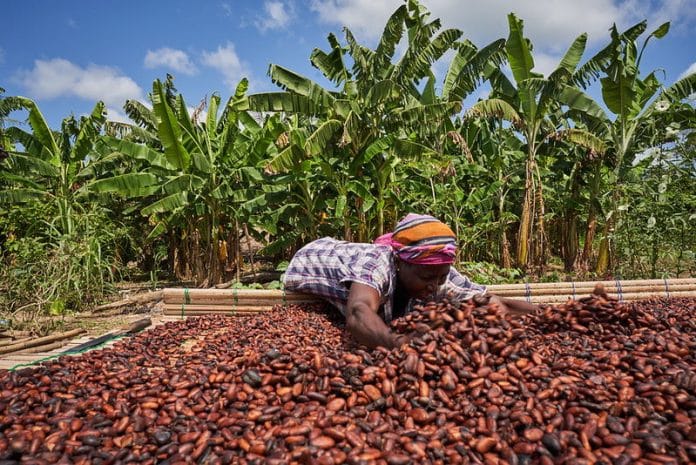
The Minority in Parliament has accused Joseph Boahen Aidoo, the CEO of COCOBOD, of spreading falsehoods regarding the 2023/24 cocoa forward sales.
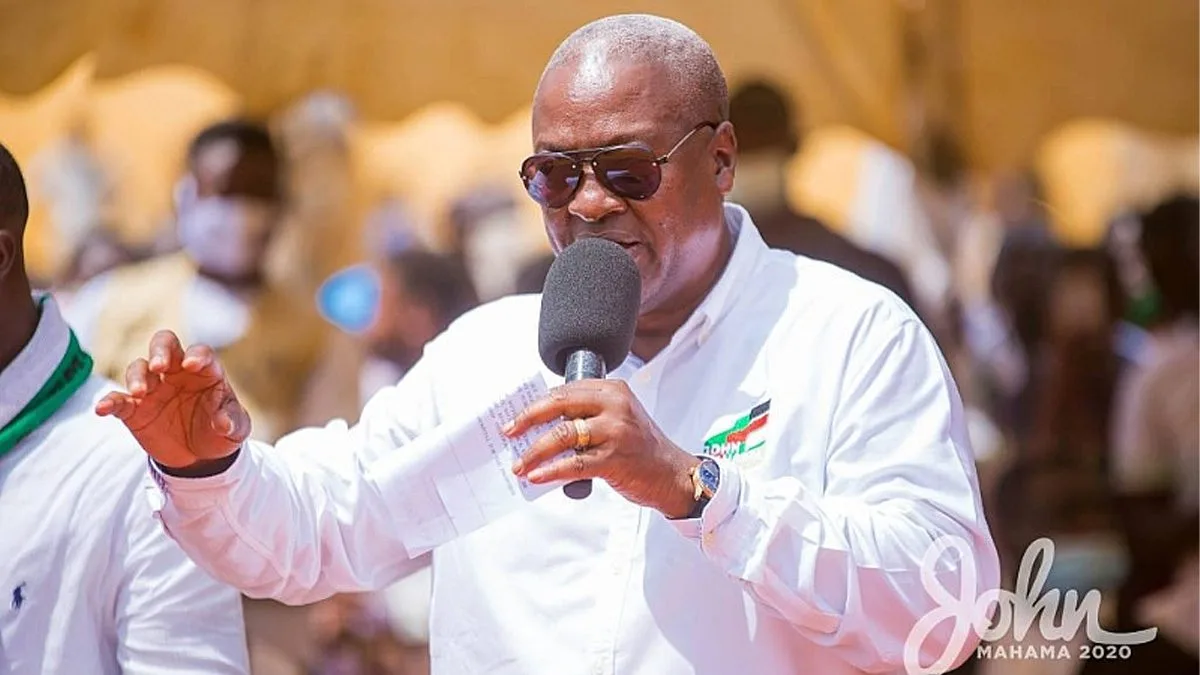
The caucus alleges that Aidoo lied about the proceeds from the sales, despite criticism from former President John Dramani Mahama, who accused the government of shortchanging cocoa farmers.
The Minority is demanding an apology from Aidoo for justifying what they perceive as mistreatment of cocoa farmers.
Documents submitted to Parliament, according to the minority, contradict the CEO’s claims, revealing that only 36.2% of the projected cocoa output for the 2023/24 season was sold forward.
“It has now emerged that the CEO of COCOBOD told deliberate falsehood in his desperate attempt to justify the rip-off that the Akufo-Addo/Bawumia government has meted out to our hard working cocoa farmers. Former President Mahama was spot on when he said that the insensitive Akufo-Addo/Bawumia government is shortchanging cocoa farmers whose toil and sacrifices continue to sustain the country’s economy.
“The incompetent and dishonest CEO of COCOBOD in his bid to deceive our hard working farmers, threw truth and integrity to the dogs and sought to attack the credibility of President Mahama for exposing this grand heist. The Minority Group wishes to state for the record that Joseph Boahen Aidoo has lied to cocoa farmers and the entire nation. He had no basis whatsoever to impugn ill motive into what was a statement of fact by the respected former President. He therefore owes President Mahama, hardworking cocoa farmers and the entire nation an unqualified apology,” part of the statement read.
The group added that in the coming days, they will be embarking on a series of engagements with cocoa farmers across the country on the matter.
“In the coming days, the Minority Group in Parliament shall, in conjunction with the NDC Communications Bureau, embark on a series of engagements with cocoa farmers across the country. Our hard working farmers deserve to know the whole truth about this gross injustice that has been meted out to them by the corrupt and insensitive Akufo-Addo/Bawumia/NPP government,” the statement added.
Below is the full statement by the ranking member, Eric Opoku:
COCOBOD CEO LIED OVER COCOA FORWARD SALES; HE MUST RENDER AN UNQUALIFIED APOLOGY TO PRESIDENT MAHAMA IMMEDIATELY
1. The Minority in Parliament has come by indisputable evidence that exposes a blatant lie peddled by the Chief Executive Officer of COCOBOD, Joseph Boahen Aidoo, about Ghana’s 2023/24 cocoa forward sales.
2. It would be recalled that, shortly after the announcement of the farm-gate price of cocoa for the 2023/24 cocoa season, former President Mahama criticized government for shortchanging cocoa farmers by pegging the farm-gate price at a paltry GHS1,308 despite a 46-year record-high surge in the world market price.
3. President Mahama’s comments were grounded on the fact that, our hard working cocoa farmers deserve far more of the international market price, than they were given by the insensitive Akufo-Addo/Bawumia government, particularly given the unbearable cost of living and hardships they currently reeling under.
4. However, in a so-called Open Letter to former President Mahama dated 12th September, 2023, the Chief Executive Officer of COCOBOD Joseph Boahen Aidoo, took issues with President Mahama. He questioned President Mahama’s understanding of how the producer price of cocoa is determined and claimed that the former President erroneously used $3,600 as the world market price to calculate the producer price.
5. In that statement, the COCOBOD CEO claimed that consistent with practice, Ghana’s cocoa beans are “mostly sold forward”, and that “the 2023/24 crop was sold between October 2022 and March 2023 at international prices; ranging between $2,200 per ton and $2,400 per ton.” The incompetent and dishonest COCOBOD CEO went on to say that, “the international price of cocoa then began to increase in April 2023, when a greater percentage of the 2023/24 crop had already been sold.”
6. It has now emerged that the CEO of COCOBOD told deliberate falsehood in his desperate attempt to justify the rip-off that the Akufo-Addo/Bawumia government has meted out to our hard working cocoa farmers.
7. According to documents submitted to Parliament by COCOBOD as part of processes for the approval of the syndicated loan for cocoa purchases for the 2023/24 crop season, it was disclosed that only 36.2% of our cocoa for this season was sold forward and used as collateral to secure the $800 million syndicated loan.
8. Specifically, Paragraph 7.2 of the Joint Memorandum to Parliament by the Minister for Food and Agriculture and the Minister of Finance on the approval of the terms of the $800 million syndicated facility partly reads; “The facility does not add to Ghana’s debt stock. The loan is backed by cocoa sales contracts, and the quantity of cocoa collateralized for its repayment is about 36.20% of the anticipated production”.
9. For the avoidance of doubt, 36.2% of the projected cocoa output for the 2023/24 season translates to a paltry 307,700 tons. This volume of cocoa cannot by any stretch of imagination constitute a “greater percentage” of our projected annual production volume (i.e 850,000 tons) as claimed by the CEO of COCOBOD in his deceitful response to President Mahama.
10. Simply put, the incompetent and dishonest CEO of COCOBOD lied to the good people of Ghana when he claimed that a “greater percentage” of Ghana’s cocoa for the 2023/24 season was sold forward at a price of $2,600.
11. COCOBOD further disclosed to Parliament that the remainder of 63.8% of our 2023/24 cocoa output, which translates to 542,300 tons would be sold on the market at spot prices, which has been ranging between $3,600 and $4,000. This is contained at paragraph 4.2 of the Joint Memorandum. If COCOBOD succeeds in selling the remainder at the minimum spot price of $3,600 per ton as a worst case scenario, COCOBOD would have shortchanged our hard working cocoa farmers to tune of $542,300,000 (GHC6.5billion).
12. As a matter of fact, further information submitted to Parliament indicates that, COCOBOD has already sold part of the remaining 63.8% of our cocoa output for the 2023/24 season at spot prices ranging between $3,500 and $3,770 per ton from October to mid-November 2023.
13. Clearly, Former President Mahama was spot on when he said that the insensitive Akufo-Addo/Bawumia government is shortchanging cocoa farmers whose toil and sacrifices continue to sustain the country’s economy.
14. The incompetent and dishonest CEO of COCOBOD in his bid to deceive our hard working farmers, threw truth and integrity to the dogs and sought to attack the credibility of President Mahama for exposing this grand heist.
15. The Minority Group wishes to state for the records, that Joseph Boahen Aidoo has lied to cocoa farmers and the entire nation. He had no basis whatsoever to impugn ill motive into what was a statement of fact by the respected former President. He therefore owes President Mahama, hardworking cocoa farmers and the entire nation an unqualified apology.
16. In the coming days, the Minority Group in Parliament shall in conjunction with the NDC Communications Bureau, embark on a series of engagements with cocoa farmers across the country on this subject. Our hard working farmers deserve to know the whole truth about this gross injustice that has been meted out to them by the corrupt and insensitive Akufo-Addo/Bawumia/NPP government.
SIGNED. HON. ERIC OPOKU (MP for Asunafo South and Ranking Member for Food and Agriculture)
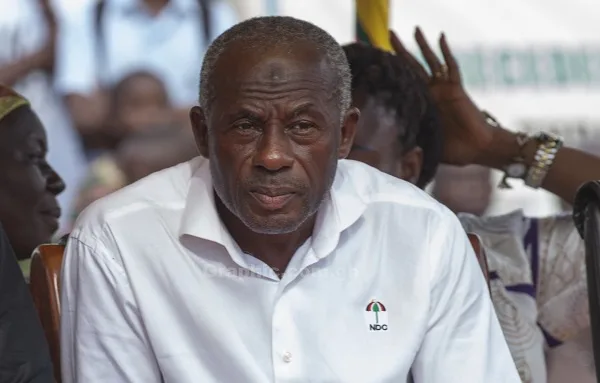
The New Patriotic Party (NPP) has clarified that the actions taken against Hopeson Adorye, Yaw Buaben Asamoa, Nana Ohene Ntow, and Boniface Abubakar Saddique were not expulsions but were in adherence to established party principles and rules.
The statement, released on Monday, asserted that the four individuals had lost their party membership due to a clear violation of the party’s Constitution, specifically citing Articles 3(5)(A)(4) and 3(9)(1).
Justin Kodua Frimpong, the General Secretary of the NPP, pointed to Article 3(9)(I), which stipulates that a member who stands as an independent candidate against the officially elected party member or declares support for another political party automatically forfeits their membership.
Speaking in an interview with Citi news, the General Secretary clarified that, “The party has not sacked anybody. It is what the Constitution states that we are following. And the word used in the constitution is forfeiture. We have not sacked them; it is their action that has made them forfeit their membership in the NPP.”
And the word used in the constitution is forfeiture. We have not sacked them; it is their action that has made them forfeit their membership in the NPP.”
The four NPP members, meanwhile, have accepted the party’s decision and pledged their support for Independent Candidate Alan Kyerematen as a sign of their dedication to Ghana’s prosperity.
Mr. Asamoa, in a statement on Monday, said, “Though none of the persons mentioned has received a personal copy [of the letter from the party], we accept our resignation from the NPP and pledge our commitment to Ghana’s success through our support for Alan Kyerematen. We also take this opportunity to respond and set the minds of concerned, well-meaning patriots at ease.”
Former Minister for Works and Housing, Collins Dauda, is facing legal consequences for allegedly traveling outside Ghana without the required court permission. Currently facing prosecution for financial loss to the state in the Saglemi Housing Project, Dauda needed court approval and the release of his passport to travel.
Reportedly, the presiding High Court justice, Justice Ernest Owusu-Dapaa, expressed shock upon learning that the Member of Parliament for Asutifi had traveled to South Africa without his passport, which was in the court’s custody.
The revelation came during an explanation by Dauda’s lawyer, Thaddeus Sory, about his client’s absence from proceedings on November 20, 2023.
Sory informed the court that Dauda had an emergency invitation for a pan-African conference in South Africa as part of his parliamentary duties, leading to his absence from November 20 to November 24, 2023. While arrangements were initiated to retrieve Dauda’s passport from the court, he had already traveled before the court’s decision on the application filed on November 17, 2023.
The prosecution, represented by Yvonne Atakora Obuobisa, Director of Public Prosecutions at the Office of the Attorney General, expressed surprise at Dauda’s ability to travel without his passport.
She emphasized that this action was concerning, as part of his bail conditions required notifying the court before traveling outside the jurisdiction.
In the midst of this development, the state finally commenced its case against Dauda and his co-accused after several months of witness unavailability. The prosecution’s first witness, Rev. Stephen Yaw Osei, acting Chief Director of the Ministry of Works and Housing, presented his witness statement, with the court adopting it despite objections from the defense. The case was adjourned to Tuesday, November 21, 2023, for the witness to read his statement.
Background:
Alhaji Collins Dauda, Kweku Agyeman Mensah, and three others have faced court charges related to the Saglemi Affordable Housing project, with a total of 52 counts, including causing financial loss to the state.
The charges involve intentional misapplication of public property, causing financial loss, and issuing false certificates in the $200 million Saglemi Affordable Housing Project.
Pleading not guilty to all 52 charges, Alhaji Collins Dauda, Kweku Agyeman Mensah, Alhaji Ziblim Yakubu, Andrew Clocanas, and Nouvi Tetteh Angelo are now navigating the legal proceedings.
Alhaji Collins Dauda was granted self-recognizance bail, while Kweku Agyeman Mensah and Alhaji Ziblim Yakubu received bail in the amounts of $65 million each.
They were also required to produce three sureties, with one being a public officer.
Andrew Clocanas, the fourth accused, was admitted to bail with a sum of $179 million and three sureties, including a public servant. Nouvi Tetteh Angelo, the fifth accused, secured bail with an amount of $13 million and three sureties.
On Monday, November 20, 2023, chaos unfolded in Koforidua, the Eastern Regional Capital, as clashes erupted between members of the Ghana Union of Traders Association (GUTA) and predominantly Nigerian foreign retailers.
The incident unfolded as GUTA escalated efforts to shutter shops and businesses operated by foreigners engaged in retail activities.
Heated confrontations and physical altercations ensued on the streets as mobile phone accessories and bags were seized.
In an unexpected turn of events, dozens of Nigerians mobilized and stormed the New Juaben South Municipal Assembly, where GUTA members had gathered for debriefing after their operations.
Demanding the release of their confiscated items and seeking justice for what they perceived as mistreatment of their compatriots, the Nigerians created a tense atmosphere at the assembly.
The intervention of Michael Okyere Baafi, Member of Parliament for New Juaben South and Deputy Minister for Trades and Industry, was necessary to restore order and pacify tempers.
GUTA’s actions are rooted in concerns over competition and the potential impact of foreign retailers on the local market. Samuel Victor Aikens, Eastern Regional Vice Chairman of GUTA, emphasized the association’s commitment to enforcing the Ghana Investment Promotion Centre (GIPC) Law, which prohibits foreigners from engaging in retail trade.
“Every country has its laws and regulations. GIPC ACT 865 forbids foreigners from entering into retail trade so that is why we are stopping them from operating in retail. We are asking them not to retail. They can bring the goods, and give them to Ghanaians to sell at retail price. So that is why we are trying to prevent them from doing retail. We are not stopping. There are foreigners retailing rice, oil, and motors we are going to stop them,” Samuel Aikens stated.
Not all Ghanaians, nevertheless, agree with GUTA’s policies. Bystanders claim that because Nigerians have competitively priced mobile phones, Ghanaian dealers are no longer able to cheat.
The Member of Parliament for New Juaben South, Okyere Baafi, stressed the need of upholding national laws in spite of efforts made on a continental and regional level to encourage free trade. He emphasized that the GIPC Act forbids foreign nationals from working in the retail industry, and the Ministry is in favor of closing overseas retail locations while promoting a nonviolent strategy.
“Because of what we call ECOWAS UTLS, citizens of countries in the ECOWAS region can enter every market to do business which is duty-free, quota-free, however, you have to get documents to prove that you can do legitimate business. So if you don’t have those documents to prove then you will not be allowed to do business and exactly what is happening.”
This clash follows the closure of 38 shops belonging to foreign retailers by GUTA’s Eastern Regional branch two weeks ago. The association remains steadfast in its commitment to intensify these efforts during the Yuletide season and beyond.
The confrontations between GUTA and foreign retailers contribute to diplomatic strains between Ghana and Nigeria, where Nigerian citizens have flooded the local market engaging in retail activities.
In an attempt to address this issue, a joint communique was signed in 2021 between Ghana and Nigeria during the Extraordinary ECOWAS Summit. The agreement proposed a reconsideration of the 1-million-dollar minimum requirement for foreigners in trading enterprises under section 28(2) of the Act.
This move aimed to resolve a 25-year retail dispute between Ghana and Nigeria and was officially presented by Ghana’s Speaker of Parliament, Alban Bagbin, to Nigeria’s House of Representatives following the summit. Speaker Bagbin expressed that this intervention marked the conclusion of the retail impasse between the two nations.
The adjustment sought to facilitate the regularization of businesses run by affected Nigerian retail traders previously excluded from the market. Additionally, a special concession was introduced, reducing the stamp duty requirement to 0.5%, with the assurance that it would not apply to Nigerian traders.
Stakeholders in Africa’s tax sector are preparing for the 11th Pan-African Conference on Illicit Financial Flows and Taxation (PAC) set to take place in Ghana.
Organized by the Tax Justice Network Africa (TJNA) and The African Tax Administration Forum (ATAF), this conference provides a vital platform for exploring strategies that empower African nations to actively engage in international discussions impacting domestic resource mobilization and the prevention of illicit financial flows.
Bringing together officials from Pan-African organizations, tax administrations, finance ministries, civil society groups, parliamentarians, and academia/researchers, the conference operates under the theme “Making Global Tax Governance Work for Africa.”
Participants will engage in discussions to shape a unified African stance on international matters affecting domestic resource mobilization and to identify actions and solutions for key actors, including governments, parliamentarians, civil society, the private sector, and other policy players.
Amid Africa’s developmental goals, the continent requires additional resources to address global crises, align with SDGs, and prioritize Agenda 2063.
The Annual Sustainable Development Goals financing gap for Africa stands at approximately USD 190 billion (African Union 2023).
Bridging this gap necessitates the development of regional value chains, fostering fair market access through intra-Africa trade, effective tax collection, and combatting illicit financial flows.
PAC 2023 focuses on building partnerships and collaborations to mobilize collective action within the tax sector, recognizing that these alliances are critical for Africa to lead international conversations on domestic resource mobilization and illicit financial flows on the continent.
Senior political science lecturer at the University of Ghana (UG), Dr Asante, has expressed confidence that Ghanaian voters will be receptive to former President John Mahama’s 24-hour economy policy.
This comes in response to Vice President Dr. Mahamudu Bawumia’s assertion that John Mahama lacks understanding of the proposed policy, emphasizing that the 24-hour economy is already in practice in various sectors such as hospitals and fuel companies in Ghana.
Addressing Bawumia’s comments on Morning Starr with Francis Abban, the senior lecturer remarked that he is not surprised by Bawumia’s opposition to John Mahama’s 24-hour economy policy.
“Obviously you should not expect anything less than that from the Vice President. Because if this one is coming from the opposition and it is a good policy, obviously he will attack it. But truth must be told that what is good is always good”.
“Once you come at it heavily like this, advocacy will also come, chasing it and the truth will be understood by the ordinary man. So I don’t have a problem and at the end of the day Ghanaians will put the two together and make sense of it,” he stated.
He went on to say that he was certain the message of the 24-hour economy, which John Mahama is pushing, would catch on.
“You can come with all manner of things to rubbish it but I can tell you that this will really find favor with voters. Who really wants to put their energies to work, who wants to improve productivity? Who can ensure that the resources we have in this country are put to its utmost use? They will go for this policy I have no doubt in my mind,” Dr. Asante stated.
Former General Secretary of the New Patriotic Party (NPP), Nana Ohene Ntow, has emphasized the unwavering credibility of independent presidential candidate Alan Kyerematen.
According to Ntow, who served as the General Secretary of the NPP, Kyerematen, a former Trade Minister, exhibits a commendable level of competence.
“Alan’s credibility cannot be touched…he displays high-level competence,” he said on the Ghana Tonight show on TV3 on Monday, November 20.
Nana Ohene Ntow, along with three others, who have faced expulsion from the New Patriotic Party (NPP), asserted that their choice to back Independent Presidential candidate Alan Kwadwo Kyerematen was justified.
Ntow acknowledged the party’s decision to take disciplinary action against them, emphasizing that it aligns with the provisions of the NPP’s constitution.
“The decision that I and the three other personalities who have also been included in this sanction, to support the independent presidential candidature of Honourable Alan Kyerematen for the high office of President of Ghana is right, what the party has done is also right, the two are both right.”
“We don’t have any qualms at all about the decision that the party has taken,” he said.
Yaw Buaben Asamoa, the former Director of Communications for the NPP, who has faced expulsion from the party, stated that they have accepted their removal. The party also expelled Boniface Abubakar Saddique, former Madina lawmaker, and Hopeson Adorye for endorsing a presidential candidate other than the party’s elected nominee. Their support for Alan Kyerematen has led to the forfeiture of their NPP membership, according to a statement issued by General Secretary Justin Kodua Frimpong.
Responding to this in a statement on November 20, Buaben Asamoa said “Though none of the persons mentioned has received a personal copy, we accept our resignation from the NPP and pledge our commitment to Ghana‘s success through our support for Alan Kyerematen. We also take this opportunity to respond and set the minds of concerned well-meaning patriots at ease.
“First, our public conduct in unconditionally and with great conviction supporting the highflying independent candidature of Alan Kyerematen for president is against the NPP constitution, which provides for automatic forfeiture of membership under article 3(9)(1). That is incontestable and therefore needs no formal written notice.
“Unfortunately for the Party ‘Leadership’, the wholesale application of the poorly written article 3(9)(1), may not be serving the interests of the general membership of the Party well. By not differentiating between support for presidential and parliamentary candidates, conduct against a presidential candidate, results in forfeiture of the parliamentary vote as well. This is clearly out of step with the fast developing political culture of ‘skirt & blouse’, where voters increasingly mix their choice of presidential and parliamentary candidates based on factors other than what the party ‘Leadership’ says.”
Below is his full statement…
Hon Yaw Buaben Asamoa writes…
Re: ‘FORFEITURE OF MEMBERSHIP PURSUANT TO THE PROVISION OF ARTICLE 3(9)(1) OF THE NEW PATRIOTIC PARTY CONSTITUTION’
My attention and that of my esteemed and patriotically principled colleagues, Hopeson Adorye, Nana Ohene-Ntow and Saddique Abu-Bakar Boniface, has been drawn by numerous media outlets to a statement purportedly issued and signed by the General Secretary of the NPP, captioned as above.
Though none of the persons mentioned has received a personal copy, we accept our resignation from the NPP and pledge our commitment to Ghana’s success through our support for Alan Kyerematen. We also take this opportunity to respond and set the minds of concerned well-meaning patriots at ease.
First, our public conduct in unconditionally and with great conviction supporting the highflying independent candidature of Alan Kyerematen for president, is against the NPP constitution, which provides for automatic forfeiture of membership under article 3(9)(1). That is incontestable and therefore needs no formal written notice.
Unfortunately for the Party ‘Leadership’, the wholesale application of the poorly written article 3(9)(1), may not be serving the interests of the general membership of the Party well. By not differentiating between support for presidential and parliamentary candidates, conduct against a presidential candidate, results in forfeiture of the parliamentary vote as well. This is clearly out of step with the fast developing political culture of “skirt & blouse”, where voters increasingly mix their choice of presidential and parliamentary candidates based on factors other than what the party ‘Leadership’ says.
H.E. the President benefitted from ‘skirt and blouse’ when he won ten constituencies in the Central Region where NDC won the parliamentary seats. Are those who accepted the President but voted otherwise at parliamentary level to be sacked? Hundreds of thousands of NPP members and millions of sympathisers are deeply unhappy at the so called ‘mafia’ tactics of intimidation and inducement used to skew delegate elections in favour of choices that may not necessarily be popular with the general electorate. Indeed, the ‘mafia’ approach is against article 55(5) of the 1992 Constitution, which demands democratic principles in internal party processes. Whilst there is value to being part of an ‘organisation’ like a ‘party’, continuing exclusionary practices, quietly erodes loyalty and conviction, over time.
Secondly, the same article 55(2) which gives a right to join political parties also gives a right to support political activity as an independent under 55(10) and (16). Considering that the right of a political party to sponsor candidates, does not exclude the right of independent candidates nor their supporters to participate in general elections, it may not be prudent to continue to reduce ones’ membership with archaic rules.
Thirdly, in the profound wisdom of the 1992 Constitution, qualification to the presidency of Ghana does not require political party affiliation. Articles 57(1), 58, 62 and 63(1)(2)(3) and 94, dealing with the nature, qualification and powers of the office, have nothing to do with parties. Furthermore, exercising the powers of the presidency do not require party authority. In office, a president appoints and runs a government under articles 70, 76, 77, 78(1)(2) and 79, without a stated party presence. A voter does not have to be a member of a party to benefit from the presidency.
Fourthly, the public is keenly aware that the selection of H.E the Vice President, Alhaji Dr. Mahamudu Bawumia as Presidential Candidate of the NPP, was the confirmation of a process carefully designed to have only one outcome. Because it was choreographed, there is nothing new or surprising to offer the voter public. Arguably, the patient Ghanaian voter, has been short-changed by the presidential candidate selection processes of both the NPP and NDC. The lack of genuine choice of candidates at party level, translates into a loss of trust in duopoly politics and increasing apathy, hence the loud chorus for a credible third force leadership if democratic practice is to be sustained for the benefit of youthful voters.
That is why a bold and viable candidate like Alan Kyerematen, meets the need of the times. I and my friends Hopeson Adorye, Nana Ohene-Ntow and Saddique Abu-Bakar Boniface, in our support for Alan Kyerematen, a man of vision, competence, integrity and action, represent millions of Ghanaians who want to serve the country with a clear conscience. We are upholding the preamble to the Constitution, articles 1, 3(2), 17(1)(2)(3), 21(1)(3), 35(1)(4)(5)(9), 37(2)(a) and above all, article 41.
Finally, the 1992 Constitution recognises ‘coalition’ governments. A coalition is defined by the oxford dictionary as “a temporary alliance for combined action, especially of political parties forming a government”. Alan Kyerematen wants to bring Ghanaians together in the next election, in a Government of National Unity, to think Ghana, and redirect Ghana onto a positive trajectory.
Nowhere in our constitution is it specified that Parliament is bi-cameral or that only a majority and minority can operate in Parliament. It is a fiction sold by the Standing Orders. Article 97(2) states unequivocally that a member need not lose their seat under 97(1)(g) and (h), if their party is a member of a coalition government. Article 103(5) admonishes that committees of Parliament ought to “reflect the different shades of opinion in Parliament”. Article 104 talks about a majority of members present and voting. It does not refer to a majority party.
Ghana is ready for a political third force capable of breaking unproductive duopoly politics. We do not need a change of constitution to effect the change of leadership that the parties are incapable of offering. We have Alan Kyerematen. Together, our support for his independent presidency will unleash the development energy being suppressed by tit for tat duopoly politics.
Minority Leader in Parliament, Dr. Cassiel Ato Forson, has rendered certain tax reliefs outlined in the government’s 2024 Budget and Economic Policy useless.
He contends that some of the specified tax reliefs will not provide substantial relief to Ghanaians, characterizing the entire budget statement as lacking substance after its presentation on the floor of parliament on November 15, 2023.
In an interview on JoyNews, Dr. Ato Forson specifically labeled the government’s initiative to waive import duties on electric vehicles as ‘useless.’
He argued that the majority of Ghanaians cannot afford to use electric vehicles, coupled with a scarcity of electric charging infrastructure in the country.
“Let me make this point, I don’t know how many vehicles in Ghana are electric. Where are the charging ports? How many Ghanaians will benefit from it? Useless” the Minority Leader stated.
“It is to encourage the use of semi-knocked-down electric cars. We live in an economy that we are even struggling to get power. How many cars in Ghana today are electric for them to say that we are giving tax exemption for electric cars? I don’t know if you own an electric car, I don’t own one. And go out and find out from people. As an MP, I don’t know of any individual or public transport that owns electric vehicles,” the lawmaker reiterated.
Despite the fact that the EV policy is dependent on future energy transition initiatives, he emphasized that many Ghanaians are unlikely to gain from the change, so it may not be beneficial in the near run.
“So, it is looking at the future probably but is not giving something presently to the ordinary Ghanaian. What the government must do first of all is to create an enabling environment for electric vehicles. This [Tax waiver] is not. The one to create the enabling environment will be access to charging ports,” Dr Ato Forson said.
“…So, if I bring an electric vehicle here to start using it when I travel to Ajumako and for some reason I need to charge my vehicle, where are the charging ports? Which fuel station can I park in and charge my electric vehicle?” the MP questioned.
Vice President of IMANI Africa and a lawyer, Kofi Bentil, has expressed his displeasure at being compared to journalist Paul Adom-Otchere.
The unfavorable comparison, initiated by pro-opposition National Democratic Congress activist Hanan-Confidence Abdul in a Meta verified post with public audience settings, was deemed insulting by Kofi Bentil.
“Clearly, Kofi Bentil is the educated version of Paul Adom-Otchere,” Hanan Confidence Abdul wrote.
In a reply on Facebook that received over 100 reactions, Kofi Bentil said he found it insulting.
“That’s an insult. You’re off,” he said.
The Vice President of IMANI Africa, Kofi Bentil, encountered criticism from elements within the opposition National Democratic Congress (NDC) after publicly endorsing Vice President Mahamudu Bawumia ahead of the New Patriotic Party’s flagbearer primaries.
Despite the backlash, Bentil did not clarify the specific reasons he found the comparison between him and journalist Paul Adom-Otchere insulting.
Paul Adom-Otchere, a Ghanaian broadcast journalist, has been the host of “Good Evening Ghana,” a popular current affairs TV program in Ghana, for nearly 30 years.
Beyond his media career, he served as a board member of the National Communications Authority and later assumed the position of Chairperson of the Board of Ghana Airports Company Limited.
Adom-Otchere attended Presbyterian Boys’ Senior High School for his secondary education and pursued higher education at the University of Ghana, where he earned a Bachelor of Arts in Politics and Classics.
Subsequently, he studied Law at the same university, and he furthered his education at the University of London’s School of Oriental and African Studies, obtaining a Master of Science in Development Economics.
“The NPP entreats its members to remain true to their duties as per Article 3(5) of the party Constitution. We further call upon our members to bear in mind that the Party’s focus is to unite its ranks and rally the support of Ghanaians to make history by winning the 2024 general elections,” the statement said.
In an Accra Circuit Court, two teachers who forged official receipts from the Judicial Service have been sentenced to six years in prison each.
The mastermind behind the forgery, Lordfred Heward Mills, was sentenced in absentia, while Lawrence Ansu Asante, the second accused person, was escorted to jail by the police.
The verdict was reached after Mrs. Afia Owusua Appiah, the presiding judge, found them guilty of charges including conspiracy to commit the offense of uttering forged documents and actually uttering forged documents at the conclusion of the trial.
Inspector Wisdom Alorwu led the prosecution, and it was revealed that the complainant, Eric Ansah Agyei, is a pastor residing in Aburi.
Mills, residing in Bubuashie, and Asante, a resident of James Town, served as sureties in the pending case of Republic versus Jeffery Wilson Ofori before Circuit Court 4, formerly presided over by the late Mr. Emmanuel Essandoh.
According to the court records, in June 2021, the complainant entrusted GH₵3,500 to the now-convicted individuals for payment on behalf of Jeffery Wilson Ofori, an accused person in an ongoing case. Subsequently, the accused, now convicts, devised a scheme to forge an official Judicial Service receipt, failing to remit the money to the court.
The prosecution revealed that the convicts sought the assistance of Boakye Boateng to obtain forged Judicial Service official receipts. They later presented one of these forged receipts, numbered 19/0263336 and dated June 11, 2021, with a face value of GH₵3,500, to the prosecutor, Assistant Superintendent of Police (ASP) Rita Asaah.
Upon submitting the receipt to the court on November 23, 2021, it was rejected, leading to the judge ordering the arrest of the convicts. They were subsequently detained at the Community 18 Police Station for further investigation.
Mills, during questioning, implicated Boakye Boateng, who remains at large, as the source of the forged receipts, allegedly charging them GH₵500 for the service. The remaining GH₵3,000 was reportedly divided between the convicted individuals.
In their caution statements, both convicts admitted to the offense in the presence of an independent witness.
The Bank of Ghana’s Interbank forex rates on November 21, 2023, reveal that the Ghana Cedi is currently trading against the dollar at a buying price of 11.5552 and a selling price of 11.5668.
In Accra’s Forex bureau, the dollar commands a buying rate of 12.00 and a selling rate of 12.20.
Against the Pound Sterling, the Cedi is valued at a buying price of 14.4382 and a selling price of 14.4538.
At a local Forex Bureau in Accra, the pound sterling is acquired at a rate of 14.65 and sold at a rate of 15.15.
The Euro stands at a buying price of 12.6429 and a selling price of 12.6544.
In Accra’s Forex Bureau, the Euro transacts at a buying rate of 12.70 and a selling rate of 13.20.
The South African Rand holds a buying price of 0.6282 and a selling price of 0.6288.
At an Accra-based forex bureau, the South African Rand is bought at a rate of 0.40 and sold at a rate of 1.10.
The Nigerian Naira trades with a buying price of 70.9004 and a selling price of 71.8372.
In an Accra forex bureau, the Nigerian Naira is bought at a rate of 9.00 Naira for every 1 Cedi and sold at a rate of 15.00.
As for the CFA, it is quoted at a buying price of 51.8363 and a selling price of 51.8834.
At an Accra-based forex bureau, the CFA is purchased at a rate of 17.00 CFA for every 1 Cedi and sold at a rate of 19.50 CFA for every 1 Cedi.
Our forex bureau rates are provided by Afriswap Bureau De Change in Osu, Accra.
Note that these rates may be different at a forex bureau near you. Our forex bureau rates are provided by Afriswap Bureau De Change in Osu, Accra.
Vice President Dr. Mahamudu Bawumia, the flagbearer of the New Patriotic Party (NPP), has strongly criticized John Mahama’s 24-hour economy policy, asserting that Mahama lacks a clear understanding of what he is proposing.
Mr. Mahama had indicated that the 24-hour economy was meant to create jobs for all Ghanaians.
But Dr Bawumia is arguing that there are already existing systems and organizations operating 24 hours in the economy, making Mahama’s policy redundant and baseless.
“Today John Mahama says he is bringing a 24 hour economy. He doesn’t even understand that policy because our hospitals are already working 24 hours, our electricity Company, water company, fuel companies work 24 hours. He is trying to come back so he is doing everything possible to convince Ghanaians but before he told us he was a dead goat. The dead goat cannot be revived.
“John Mahama is going round the whole country and promising everything to everybody. It is as if he has never been president of this country before. It is as if he has just landed from mass.
“When he was president, did he create jobs, Did he tackle corruption, Did he issue the Ghana card, Did he bring mobile money interoperability, did he bring the Ghana property address system, did he bring the zongo development fund, did he bring the teacher training allowance, did he bring free WiFi to schools, did he bring paperless ports, did he bring gold for oil, did he bring free shs? All of there problems he couldn’t solve. It was the NPP government under Nana Akufo-Addo who solved all those problems,” Dr Bawumia said on Monday November 20 while addressing a crowd in Nalerigu as part of his ‘Thank you’ tour since being elected flagbearer of the NPP on November 4
Mr. Mahama had asserted that the 24-hour economy initiative aimed to generate employment opportunities for all Ghanaians. This proposal was introduced during his engagement with officials of the country’s primary workers union on Tuesday, November 7, 2023, as part of his efforts to reconnect with key stakeholders in a bid to reclaim political power.
But according to Dr Bawumia, he has brought greater ideas as a Vice President than former President Mahama as president.
“Even me as Vice President, I have solved many problems. What idea did Mahama bring as a Vice President? Dr. Bawumia has brought idea, after idea, after idea.
As part of his tour, Dr. Bawumia is anticipated to stop in Yendi, Saboba, and Bimbilla on November 21.
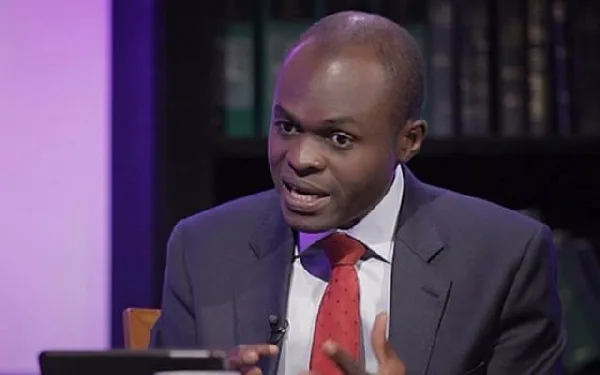
Private legal practitioner, Martin Kpebu, has expressed the opinion that government’s 2024 budget holds little significance for the average Ghanaian, as it neglects to address their fundamental concerns.
During an appearance on TV3’s Key Points program on Saturday, November 18, 2023, Mr. Kpebu asserted that, instead of alleviating the existing economic pressures on the average citizen, the budget appears to be designed to favor party interests.
“If you couldn’t take off taxes from the fuel so that it will bring down the prices so that times will improve, then for them all this is basically not relevant for them.”
“Of course, these are contracts that they will give to a few party faithful, a few party faithful because I have met a number of NPP supporters who are crying because they were never given contracts as promised.”
“So the budget, yes, they said they are projected to spend GH¢227 billion but the ordinary man is saying how much is in it for me? It is going to big party people who will come and take sole-sourced contracts etc right?
“So to that extent, that budget doesn’t mean much to us. As long as we buy koko for GHS3, kenkey for GHS5, fish for ten cedis et cetera, yam, rice and all those things, it doesn’t mean much,” he stated.
He continued by saying that among other things, the government should have taken into account the taxes levied on petroleum products because they contribute to the rise in the cost of goods and services.
“You didn’t take off taxes from petroleum products and you know in the price build up over 40% is due to taxes. So if in your budget you couldn’t take off any taxes that will make sure that the price of petrol will come down, and you know when fuel comes down it affects a lot of sectors of the economy; transport, food, etc, health, everywhere,” he noted.
On Wednesday, November 15, 2023, Finance Minister Ken Ofori-Atta presented the government’s budget statement and economic policy for the year 2024 to parliament.
Titled the “Nkunim” (victory) budget, it delineated the government’s plans for social protection, job creation, and tax reduction measures.
Mr Ofori-Atta emphasized positive economic indicators during his presentation, asserting that the economy was on track with a smaller deficit than targeted in the first eight months of 2023.
Despite these points, the Finance Minister’s budget statement has faced criticism from various quarters, including the largest opposition party, the NDC, civil society organizations, and other stakeholders.
They argue that the budget has fallen short of expectations and neglected to address key factors vital for the country’s economic growth and recovery.
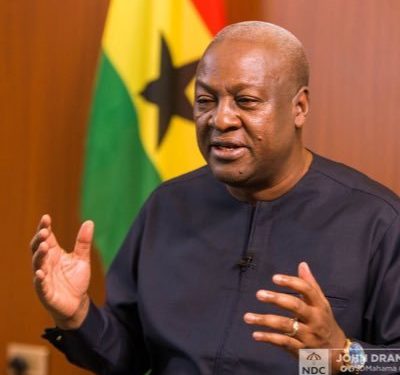
Former President John Dramani Mahama has delineated the advantages that businesses can anticipate under the proposed implementation of a 24-hour economy, should he be re-elected as president.
Among the benefits, he highlighted that businesses would receive tax incentives for voluntarily participating in the policy. Mr. Mahama emphasized that the adoption of this policy would not be mandatory for businesses.
“I envision a 24-hour economy where hospital facilities, filling stations, manufacturers, construction companies, garbage collection companies, mining and extractive industries, agro-processing, harbors and ports, financial services, digital start-ups will operate a three-shift system 24/7 in an atmosphere of safety and security.
“This 24 hour economy I propose will be voluntary, it will not be imposed. Businesses will be encouraged to sign up with tax incentives provided for them and enhanced security and lower electricity tariffs after peak hours. Special meters will be deployed to provide what is known as time-of-use tariffs to deliver cheaper power to such businesses during the hours of especially 10 AM and 6AM,” he said while speaking to Catholic Bishops in Sunyani on Saturday, November 18.
He further said that the 24-hour economy is meant to create jobs for all Ghanaians.
“The 24-hour economy I proposed is for jobs and more jobs,” the flagbearer of the National Democratic Congress (NDC) stressed.
At the beginning of his engagement with key stakeholders in his quest for power, on Tuesday, November 7, 2023, Mr. Mahama proposed the “24hr Economy” project when he met with representatives of the nation’s mother workers union.
The purpose of the “Building Ghana Tour” is to inform the stakeholders about the policies that the incoming NDC administration plans to enact in order to transform the economy.
During his engagement with key stakeholders on Tuesday, November 7, 2023, as part of the ‘Building Ghana Tour,’ Mr. Mahama introduced the ’24hr Economy’ project.
This proposal was presented to officials of the country’s primary workers union, marking the commencement of his efforts to return to power.
The purpose of these interactions with stakeholders is to inform them about the policies that the next NDC administration plans to implement for the transformation of the economy.
He said “NDC was left alone as the solitary voice seeking to hold the government accountable and speaking up for the voiceless Ghanaian and we were often cast out as spoilt brats who were ranting just because we have lost power.”
“Today, the chickens have come home to roost and we are all affected.”
Earlier, he promised to build a cashew processing factory in Wenchi.
Addressing a gathering in Wenchi on Friday, he noted, “Currently, cashews are harvested and exported to India for processing before distribution to other countries. The Indians profit more from cashews that we have struggled to plant and harvest.”
“My leadership aims to introduce machinery in the Bono Region dedicated to cashew processing, designed for the efficient processing and packaging of cashews for export. This initiative is to retain any profits from cashews in the country,” he added.
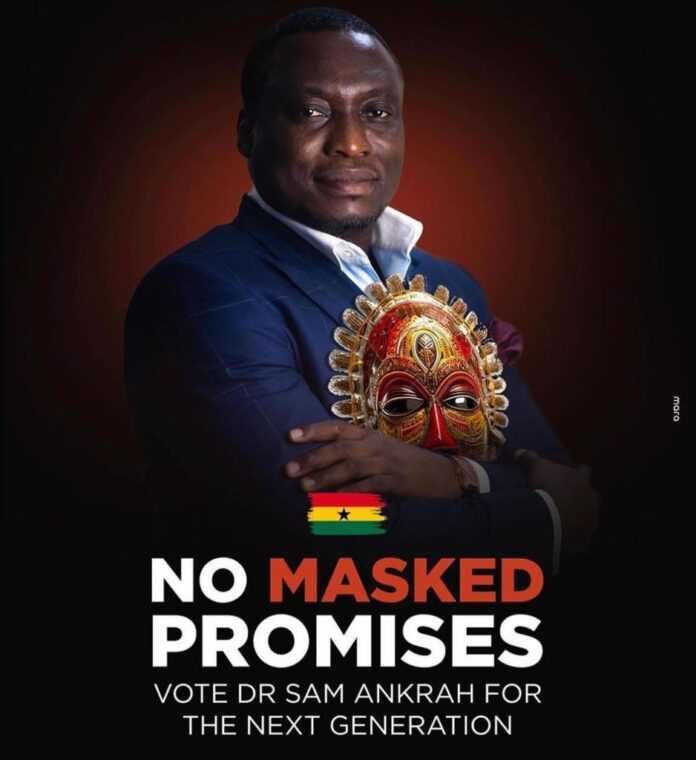
A presidential candidate hopeful, Dr. Samuel Sarpong Ankrah, has dismissed allegations suggesting that he is the individual concealed behind the mask featured on billboards strategically placed around Accra.
Before this clarification, widespread assumptions linked him to the masked figure, fueled by a statement he issued declaring his presidential aspirations, accompanied by an image of himself holding the same mask.
However, during an interview with TV3, Dr. Ankrah addressed these speculations stating that, “I saw the billboards announcing a new candidate and I was totally appalled, that at the height of our plight as Ghanaians, in this economy, we have another political candidate using a mask as the symbol to launch themselves. So, my campaign is a counter campaign to reiterate and send across the message that Ghanaians don’t need another masked leadership. I am not behind the boards. I’m only here to send a message of transparency and accountability.”
In a statement announcing his candidacy for the presidential slot, he touted the country’s current performance as “highly indebted, financially poor and aid-dependent”, as a result of what he says is 60 years of “Self-mismanagement”.
Dr. Ankrah’s vision for the future, encapsulated in what he calls the BIG TEN, involves making housing, healthcare, education, food, fuel, transportation, a business-friendly environment through a robust anti-corruption effort, sound economic policies, sustainable job creation, and government machinery all affordable.
“I wouldn’t mind if I’m called Mr Affordable. Ghanaians can’t afford a living as we speak. Salaries don’t take us anywhere,” he lamented.
His objective is to foster economic transformation, champion unity in diversity, and emerge as an inspirational leader.
Who is Dr Sam Ankrah?
He is an economist and investment banker, he asserts to have made substantial contributions to the realms of economics and investment banking. Holding an economics degree from the University of London, he presently holds the position of President at the Africa Investment Group.
Despite the less promising history of independent candidates in Ghana, with three individuals running in the fourth republic elections since 2008, accumulating a total vote share of less than 1%, Dr. Samuel Sarpong Ankrah remains undeterred. He envisions breaking the cycle and bringing forth a new era with his grand plans for Ghana.
He said, “Einstein said some profound words centuries ago, he says it’s only an insane person that keeps doing the same thing over and over again and expects to get different results. How far or how worse do you want to go. So, the time is now, it’s gotten to the point in our political history that we need to sit down and access things critically as people and analyse our situations and make decisions that will help us to chart a new path.”
I categorically deny the baseless assertions accusing me of claiming credit for the origin of the "Man in the Mask'' political campaign in Ghana. Evident from this interview, that is false & the “No Masked Promises” is a campaign towards transparency & accountable leadership. pic.twitter.com/AJxWPCEFPt
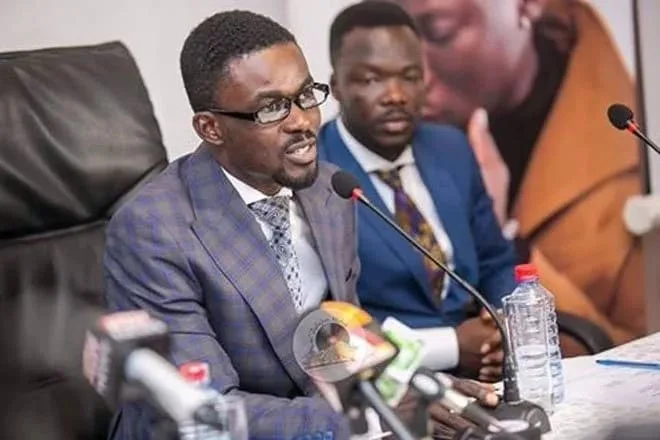
Former Chief Executive Officer of Menzgold, Nana Appiah Mensah, popularly known as NAM1, has revealed plans to organize a protest against the government of the United Arab Emirates (UAE).
The protest is scheduled to take place at various UAE embassies, including the one in Ghana.
In a post shared on X on Monday, November 20, 2023, NAM1 announced that the demonstration, expected to draw 2000 participants, aims to demand a $30 million compensation for what he claims was his unlawful detention by the UAE government.
Additionally, he stated that the protest will also serve as a platform to seek payment of outstanding arrears amounting to $43.8 million owed to him by a UAE-based entity.
“Brace up friends, for a 2,000-man protest at the UAE embassy in Ghana and elsewhere overseas SOON, to claim a USD$43.8 million dollars (750kg of Gold) owed me and another USD$30 million dollars as compensation, for my unjustifiable detention by the Dubai Police in 2018/2019,” he wrote.
Nana Appiah Mensah, commonly known as NAM1, has shared a collection of documents, among which is a letter dated June 11, 2018. This correspondence was directed to Horizon Royal Diamond DMCC, a Dubai-based firm, urging the settlement of a gold purchase agreement.
Included in the disclosed documents were particulars of NAM1’s arrest by the Dubai Police, primarily documented in the Arabic language.
It is noteworthy that on January 14, 2018, Assistant Commissioner of Police, David Eklu, officially confirmed the apprehension of Nana Appiah Mensah, the Chief Executive Officer of Menzgold Ghana Limited, by Dubai authorities. The arrest was linked to a problematic gold deal.
“His arrest in Dubai is to facilitate investigations into suspicions that he had involved in a gold trading deal gone bad within the Emirati jurisdiction,” He told the media.
A Ghanaian court issued a warrant for NAM1’s arrest after his gold dealership failed to reimburse the client for their money.
Brace up friends, for a 2,000 man protest at the UAE embassy in Ghana and elsewhere overseas SOON, to claim a USD$43.8 million dollars (750kg of Gold) owed me and another USD$30 million dollars as compensation, for my unjustifiable detention by the Dubai Police in 2018/2019.🇬🇭 💪🏽 pic.twitter.com/WbDxuJ85ga
Scores of French students at the University of Ghana bear visible expressions of profound despair and distress.
Their aspirations for a year-abroad study program have become a source of painful regret due to the delayed disbursement of funds from the Scholarship Secretariat.
Over 60 students find themselves entangled in a pressing issue that jeopardizes their academic pursuits, leaving them stranded and dependent on their parents.
“We wake up every morning with your parents asking us ‘when are you going’, this and that. Our parents are very disturbed. We are on the brink of deferment,” an affected student told TV3 in an interview.
For some of these affected students, what was to become their dream to hone their proficiency in French is gradually becoming their nemesis.
The seriousness of the problem is because a lot of time has passed since they first asked about their trip.
The academic semester is almost over, and the students going through this are feeling really bad.
Because they don’t know when they can leave, they couldn’t sign up for their semester courses.
Now, they’re worried they might spend a whole year doing nothing at home.
“This isn’t a luxury or it isn’t something that we are demanding for, it’s part of our curriculum. And we have been waiting on the Scholarship Secretariat since September; we haven’t had any news.”
“We know what we want for the language [French] so we can’t just give up in this whole process. That is why we are still at home at the moment, waiting to hear from the Scholarship Secretariat,” another affected observed.
About the year abroad programme
Every year, the Scholarship Secretariat gives scholarships to students from different universities and colleges across the country.
With this support, students can join the yearly study abroad program to learn more about their specific subjects.
This program is especially great for students studying modern languages, including French. It lets them experience living in a country where the language is spoken, improving their language skills in a real-world setting.
But this year, the Secretariat hasn’t been able to release the funds on time. This has made language students worried about what will happen to them. They’re stuck in a situation with no clear information, and the Scholarship Secretariat hasn’t given them any assurances or timelines.
“We don’t also know whether school has resumed in Ivory Coast and we don’t know if we are joining them at the middle of the semester or they will have a new academic year for us. It’s very worrying.”
“Personally, I don’t have a problem deferring my course because I know what I want and what I want to do with the language I am studying. But the fact that school is in session and we are just home, we don’t even know what we are doing, is now the problem,” a distressed student said.
What is the UG Department of French doing?
The Head of the French Department mentioned that they’ve tried multiple times to fix the issue, but nothing has worked.
Dr. Samuel Koffi pointed out that the Scholarship Secretariat hasn’t shared any useful information, even though they promised they would.
“I have written a letter earlier than the time our Vice-Chancellor and the Dean contacted the Scholarship Secretariat. We never had any reply to our letter, not even a phone call and anytime we call, they might not pick it up.”
“The worry is a very impacting one in the sense that we have done what we can; our Dean also has done a lot including our own Vice Chancellor who kept calling. Even, right now, I’m sure if she sees and hears this she will still contact them again,” he explained.
Students from other schools affected
French students at Kwame Nkrumah University of Science and Technology (KNUST), University of Cape Coast (UCC), and the University of Education, Winneba (UEW) are also stuck due to the delayed funds.
Even those who managed to leave the country are having problems getting the funds on time, causing a lot of stress.
The language immersion program was supposed to happen in any French-speaking African country.
In the midst of their regrets and letdowns, the students have a straightforward request.
“I would like to appeal to the Scholarship Secretariat to release the funds for the year abroad. I just pray that this year’s abroad programme will be possible,” the students appealed.
No response from Scholarship Secretariat
The Registrar wasn’t around when the news crew visited the Scholarship Secretariat to ask questions.
As of the time of filing this report, all efforts to contact him again have been unsuccessful.
Over 60 French students of the University of Ghana are on the brink of deferring their courses for a year.
The Ghana Police Service has declared an active pursuit of two individuals involved in the assault on Maxwell Konadu, the head coach of Nsoatreman, who was subjected to a brutal attack.
According to a police statement, the authorities have identified two individuals as suspects and are currently conducting a manhunt to apprehend them.
In the week eleven clash of the Ghana Premier League at the Sunyani Coronation Park, former Black Stars head coach Maxwell Konadu was brutally attacked by fans of Bofoakwa Tano.
Despite Nsoatreman securing a goalless draw, placing second on the league table, some disgruntled fans expressed their displeasure with the results.
Following the final whistle, these fans assaulted Referee Robert Musey and his assistants before mercilessly beating Maxwell Konadu.
In response to the incident, the Ghana Football Association has swiftly imposed a temporary ban on Bofoakwa Tano FC, preventing them from using the Sunyani Coronation Park as their home venue.
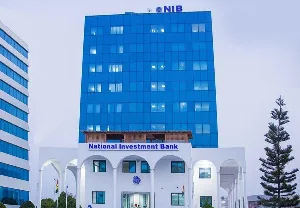
The Industrial and Commercial Workers’ Union (ICU-Ghana) has expressed its approval of the government’s decision to recapitalize the National Investment Bank (NIB).
According to the union, this move reflects a commitment to preserving an institution that has played a significant role in the financial industry over the years.
Mr. Morgan Ayawine, the General Secretary of ICU-Ghana, conveyed this commendation in response to the 2024 Budget presented to Parliament by the Minister of Finance on November 15, 2023.
The government has allocated GH¢4 billion to address liquidity issues in NIB and other distressed Special Deposit-Taking Institutions (SDIs) in the country.
This funding is also intended to address outstanding legacy challenges in the financial sector and aligns with the three-year International Monetary Fund (IMF) Programme.
As part of the IMF program, the Bank of Ghana has committed to completing remaining tasks from the financial sector cleanup, including addressing NIB’s insolvency and the prolonged under-capitalization of various SDIs.
Mr. Ayawine urged the government to extend its support to other distressed State-Owned Enterprises (SOEs) such as Neoplan, Produce Buying Company Limited, and Aluworks, aiming to enhance their operations and contribute to the economy.
He highlighted that the recapitalization of NIB would rejuvenate the institution, allowing it to continue financing industries in the country for economic development.
The General Secretary emphasized the significant contributions of NIB and other distressed SOEs to the country’s development, urging the government not to overlook their impact and to provide the necessary support for recapitalization.
The country’s unemployment rate has gotten worse, according to the General-Secretary, meaning that everyone should benefit from the 2024 budget, not just a select few.
Mr. Emmanuel Benimah, the Deputy General Secretary overseeing Operations, and Mr. Samuel Ananga, the Deputy General Secretary overseeing Administration and Finance, are additional Executives working alongside the General-Secretary.
A visibly angry protester, Halia, Mutawakil, frustrated about the state of roads in Chereponi situated in the North East Region has warned government not to make any attempt to count on their votes when its time for elections.
According to the young lady supposedly a teacher, several teachers turn away from the offer to teach in chereponi due to the poor state of their road.
She says if government does not consider to listen to their plight as Ghanaians, they they should not border to bring posters when its time for elections.
“I can boastfully say that because of the lack of teachers, that is why the students are recording poor grades. No teacher wants to risk their life and family and travel this far. Nurses, Doctors, it is left with only native doctors. The nurses and the teachers who are posted here don’t want to come. It is pathetic, we are begging you. Why? We are not asking for much. But I want to promise you, if you think we are not part of Ghanaians, we’ve taken notice, but don’t dare bring any electoral posters here” Madam Mutawakil angrily told the media.
The lack of motorable roads in the area has forced many farmers to illegally export soya beans and other grain-related products to neighbouring countries.
According to a spokesperson for the Anufor Students, Latif Alhassan, it is difficult for the pupils to learn in school blocks that have had their roofs ripped off by rainstorms.
He added that there are instances teachers refuse postings to the community and surrounding areas due to the bad state of the roads, among other security concerns.
“For some of the schools, before you even get to the street, you will cross a river. It’s a road but the way the rain has damaged it, you can’t cross, and when it rains, nobody can cross to those schools. They are within the Chereponi township and not in villages – you can’t even move from one house to another. They are all part of the challenges we are facing here.
“We have been raising them to the various stakeholders, trying our best to get solutions. If you look around all the four corners of Chereponi, we don’t have good roads. We have students in Chereponi who go to school in other districts and various communities but even the road from Chereponi to Yendi is not safe for children – armed robbers can attack them. Just yesterday, there was an attack on the road,” he told the media
'If you think we are not part of Ghanaians, we've taken notice, but don't dare bring any electoral posters here' – A visibly angry protester, frustrated about the state of roads in the area.#CitiNewsroompic.twitter.com/KZomGQt5Gc
Former General Secretary of the People’s National Convention (PNC), Atik Mohammed has stated that NPP flagbearer, Mahamadu Bawumia will inevitably experience the negative consequences of events that occurred during the leadership of President Nana Akufo-Addo.
According to him, Vice President Bawumia’s reputation has been negatively affected by the actions or decisions of the Akufo-Addo administration.
As a result, Mr. Atik believes that Bawumia is constrained in his ability to present a positive narrative during his campaign, as the unfavorable legacy of the Akufo-Addo government is already influencing how Bawumia is percieved.
“Whether Bawumia likes it or not, the sins and tragedies of Akufo-Addo will be visited upon him,” the former General Secretary of PNC indicated.
The New Patriotic Party (NPP) elected the sitting Vice President, Dr Mahamudu Bawumia as its new leader and flagbearer for the upcoming 2024 presidential elections.
Dr Mahamudu Bawumia, emerged victorious with 61.43% in the NPP primaries, securing the party’s nomination for the race to the presidency.
In a bid to address the persistent issue of youth unemployment in Ghana, the Youth Employment Agency (YEA) has unveiled its artisanal trades and vocation module.
The initiative aims to enroll a minimum of 20,000 jobless youth over the next two years, emphasizing sustainable employment opportunities.
Recognizing youth unemployment as a national security threat, the YEA is collaborating with a private sector player, operating under a public-private partnership (PPP) arrangement.
This partnership seeks to complement existing youth employment initiatives by the agency and the government.
The artisanal and vocation module will focus on building the capacity of unemployed and underemployed youth in 10 relevant trades and vocations by the end of 2024. Additionally, beneficiaries will undergo training in entrepreneurship and business management, preparing them for self-employment.
The program aims to equip participants to deliver high-quality products and services to the public.
To enhance the affirmative action principle, a substantial number of beneficiary slots will be allocated to young women. This approach aims to empower women and support them in identifying entrepreneurial opportunities within their districts and municipalities.
The training program includes assistance for participants in accessing local and international markets for their products and services.
This strategic move not only showcases Ghana’s technical expertise globally but also promotes tourism, fostering foreign exchange inflow into the country.
A growing number of young Ghanaians are shedding light on the severe impact of the ongoing economic crisis on their incomes and daily lives.
They lament that their ability to purchase basic goods, items, and services has significantly diminished due to the prevailing economic challenges.
In a widely circulated video posted on the CediRates platform on X, a young Ghanaian revealed the distressing reality of being unable to afford ‘Digestive’ biscuits, a once-accessible comfort food.
The individual highlighted the substantial increase in the biscuit’s price, underscoring the severity of the economic hardships faced by many.
“I can’t buy digestive chocolate biscuits anymore, that used to be my therapy like when I have stressful day, I’m going to eat that biscuit and I will be fine,” he shared.
What things could you afford in Ghana that you can’t now?
Several Ghanaians, echoing shared sentiments, have conveyed their struggles amid the prevailing economic challenges. One individual lamented the inability to afford the current cost of filling his car’s tank, citing a staggering increase from approximately GH¢300 to GH¢1,800.
These firsthand accounts, shared on the X platform, have sparked a range of reactions, reflecting the widespread resonance of these experiences across the country. The overarching economic difficulties, marked by escalating inflation, heightened living costs, suboptimal revenue generation, and exchange rate volatility, have collectively contributed to the current crisis in Ghana.
In response to these challenges, Ghana has entered into its 17th agreement with the IMF, seeking a $3 billion bailout over three years. The aim is to address macroeconomic instability and implement measures for economic recovery.
The Denkyira Development Association (DDA) strongly advocates for a comprehensive review of Legislative Instrument (L.I) 2462, the regulatory framework governing mining activities in forest reserves.
This call comes in response to recent reports indicating that a mining company applied to the Minerals Commission for permission to mine within the Kakum Forest Reserve.
Although the Minerals Commission promptly rejected the application, the DDA expresses concern about the potential long-term consequences of the existing legislation.
The association emphasizes the need for Parliament to undertake a thorough review of L.I 2462, ensuring that it aligns with principles of sustainable development and provides adequate protection for the nation’s natural resources.
In a statement signed by the Association’s president, Jospeh Banor Lokko, the DDA appeals to Parliament to address the shortcomings in the current legislation, emphasizing the importance of balancing economic interests with environmental conservation.
“As a community organisation dedicated to preservation and sustainable development of the Denkyira state, which is partly covered by the Kakum National Park, DDA strongly expresses disapproval of any activity that might pose a threat to the area and its natural resources”.
The DDA further implored the Minerals Commission to stick to its earlier stance, so that no portion of the park is leased to any individual or company for the purpose of mining, adding: “The Association will vigorously resist any form of mining in the Kakum Forest Reserve and its enclaves”.
The Association is adamant that the Kakum Forest Reserve, which is well-known for its abundant biodiversity and rich cultural legacy, is an ecological gem that needs to receive the highest level of protection from the government.
“The Kakum Forest Reserve plays an indispensable role in supporting Ghana’s tourism industry, attracting visitors from all over the world who come to admire its breathtaking beauty, as well as the canopy walkway and its natural wonders. This is part of the many reasons to protect it” the statement noted.
The Denkyira Development Association (DDA) urges collaboration among various stakeholders, including government agencies, traditional councils, Civil Society Organisations, environmentalists, and concerned citizens. This collective effort aims to facilitate productive dialogues, fostering equitable solutions that strike a balance between developmental needs and the preservation of forest resources.
As a non-profit, non-denominational, and non-partisan organization, the Denkyira Development Association is dedicated to pursuing the common good and holistic development of the Denkyira State.
The association actively advocates for sustainable development practices, environmental protection, and assumes various community-related responsibilities in its commitment to fostering positive change.
A 62-year-old illegal miner is facing legal consequences for a heinous crime, as he poured a liquid suspected to be acid on his former girlfriend, Victoria Salamatu Safia, aged 35, in Prestea, Western Region.
The perpetrator, John Tandoh, also known as Kojo Egyaguma, has been sentenced to 20 years of hard labor by the Tarkwa Circuit Court after pleading guilty to the charge of causing harm during his first appearance before Judge Hathia Ama Manu.
According to reports by GNA, Tandoh has a history of similar offenses. In 2012, he was sentenced to 16 years but was discharged on amnesty in June 2020 after serving eight years. Tandoh and the victim worked together as partners in an illegal mining site in Prestea for about a year. They had been living together after Tandoh proposed love to Victoria, and she accepted.
However, their relationship took a dark turn, with Tandoh’s behavior becoming increasingly hostile. Victoria, sensing the deteriorating situation, decided to end the relationship. On October 20, 2023, a dispute between them escalated, leading to a horrifying act of violence.
After a brief departure, Tandoh returned to the mining site with a concealed bowl, leading Victoria to believe it contained food. Instead, he launched an attack, pouring a liquid suspected to be acid on her head, face, and other parts of her body. The victim suffered severe burns and was rushed to the Prestea Government hospital, where she is currently undergoing treatment.
A witness at the scene attempted to apprehend Tandoh, but the assailant brandished a knife, threatening violence, and managed to escape. Later that day, Tandoh was arrested from his hideout and handed over to the police in Prestea.
The court, acknowledging the severity of the crime, sentenced Tandoh to 20 years of hard labor. This case serves as a stark reminder of the grim consequences of domestic violence and the importance of legal accountability in addressing such heinous acts.
Deputy Minister of Education and Member of Parliament for Assin South Constituency, John Ntim Fordjour, has criticized John Mahama, the flagbearer of the National Democratic Congress (NDC), labeling him as the foremost threat to Ghana’s progress.
According to Fordjour, Mahama is a leader devoid of vision, known for canceling and threatening to annul beneficial policies for citizens.
These remarks follow Mahama’s pledge to abolish the teacher licensure exams if elected in the upcoming December 2024 general elections.
In a recent post on X, Ntim Fordjour highlighted that Mahama had previously revoked allowances for nursing and teacher trainees and had expressed intentions to abolish the Free SHS policy.
Additionally, Fordjour pointed out that Mahama is currently contemplating the cancellation of the impactful teacher licensure policy.
Fordjour emphasized that, in his view, Mahama poses a significant threat to Ghana’s progress and criticized him as being overly eager for power, which he had previously handled with incompetence.
There are leaders who establish policies and introduce new systems for the good of our people and for the development of our nation. This one lacks vision. He only cancels and threatens to cancel good policies at every opportunity. He cancelled allowances for nursing and teacher…
After weeks of anticipation among Ghanaians, the person behind the #TheNewForce billboard has finally been disclosed.
The intriguing image featuring a masked man and the cryptic message, #TheNewForce, now has a recognizable face to go with its bold statement.
Dr. Sam Ankrah, an aspiring independent presidential candidate for the 2024 elections, revealed in a post on X that he is the individual depicted on the enigmatic political billboard.
“Time has come to rally behind a youth movement that seeks to champion transparency & accountability. ‘No Masked Promises’ symbolizes the rejection of political facades & vows to bridge the gap between promises made & promises kept.Learn more about Dr Sam ANKRAH.#TheNewestForce,” the post said.
The strategically positioned billboard, visible at key locations nationwide, became a symbol of anticipation and mystery in recent weeks, sparking widespread speculation about the identity behind #TheNewForce.
Reactions from social media users following the unveiling of the face behind the #TheNewForce Billboard:
So ebe you? You’re more popular with the mask on. Put it back on.— Austin Junior➕ (@JuniAugustine) November 19, 2023
What have been your contribution in the last 12 years of our nation— Kafui Dogba (@DogbaAlex) November 20, 2023
Your executive powers as the new President will be bullied by the legislators of the already existing parties. Extreme lobbying will be on the ascendancy to patronize these legislators and other power-makers to stand towards the interest of the new force or President.— AGBENU CAN DO (@JoshInfiniti999) November 20, 2023
Ok. But they say they don’t know you and are you behind the mask?— Kwame Nkrumah Jnr.The TRAVELLER.???? (@Youthberry2) November 19, 2023
The mask is popular than the person ????— King perry (@De_Xguy) November 20, 2023
Yields on a spectrum of money market instruments, ranging from 91-day to 364-day Treasury bills (T-bills), seem to be approaching a potential peak against the backdrop of diminishing inflation rates, a stable monetary policy, and the implementation of new pricing directives by the Treasury.
Recent market data indicates a significant shift as yields on Treasury bills experienced a decline during the November 10, 2023 auctions, marking a departure from a consistent ascent over 33 weeks. Both the 91-day and 182-day bills witnessed a reduction in yields, although they maintained elevated levels at 29.84 percent (-13bps w/w) and 31.88 percent (-27bps w/w) respectively. Similarly, the 364-day bill saw a 25bps w/w reduction to 33.45 percent, representing its first weekly downturn since June 23.
In response to escalating yields in short-term papers, the issuer introduced price guidance during recent auctions, starting from November 3, 2023. This initiative, embraced for T-bill auctions by the government and Bond Market Specialists (BMSs), aims to align expectations between the Treasury and investors, potentially providing a mechanism to control yield fluctuations as investors bid within the guided rates.
Against the broader economic climate, headline inflation has steadily decreased for the third consecutive month, reaching 35.2 percent in October 2023, down from 38.1 percent in September 2023. This signals a continued disinflationary trend, diverging from the persistent 40 percent range observed in the previous six months, culminating at 40.1 percent in August 2023. Since its peak of 54.1 percent in December 2022, headline inflation has seen a cumulative decline of 18.9 percent.
The monetary policy rate has remained at 30 percent since the July 2023 MPC meetings and is expected to persist through the remainder of the year, aligning with easing inflationary trends.
The November 10, 2023 auction sustained its sixth consecutive oversubscription at 29 percent, attracting bids totaling GH¢4.01 billion against the week’s target of GH¢3.11 billion. The Treasury accepted and sold GH¢3.90 billion, reflecting a bid-cover ratio of 1.03x and adequate funds to settle maturing bills, exceeding 54 percent, marking the highest since March 2023.
Previous measures by the government to curb escalating Treasury yields proved effective in trimming bids towards the end of Q1-2023, capitalizing on robust demand for bills and subsequently lowering the cost of borrowing. However, continued reliance on money market borrowing post-April, coupled with limited external funding, sustained the upward movement in yields as investors sought appropriate compensation against prevailing macroeconomic and fiscal uncertainties.
Projections for this week’s auction anticipate a dip in T-bill rates, attributed to the newly implemented pricing methodology and decline in headline inflation. Moreover, robust participation is expected due to excess liquidity in the banking system and a scarcity of alternative investment options.
Anticipated T-bill maturities in the final quarter indicate a weekly average of approximately GH¢2.56 billion, signaling heightened financing requirements for the government to refinance these maturities. Despite this, an anticipated easing in headline inflation during Q4-2023 could mitigate the rise in yields.
Additionally, securing sufficient financing from entities like the IMF and other donors, a 36-month arrangement under the US$3 billion Extended Credit Facility (ECF) – a program based on the government’s Post COVID-19 Programme for Economic Growth (PC-PEG) – could alleviate the government’s refinancing burden on the T-bills market.
In an outlook shared by Databank, expectations lean toward a slower increase in money market yields and a robust bond market in Q4-2023. The market observer foresees a mirrored slowdown in the uptick of Treasury bill yields, aligning with the government’s reliance on money market funds and diminishing inflationary pressures. Despite this reliance, efforts to diversify funding sources are expected to intensify.
The estimated Treasury bill maturities of GH¢34.02 billion across the 91-day to 364-day bills represent a 9.72 percent increase from the previous quarter, exerting significant pressure on the government’s refinancing needs. The likelihood of the Treasury bolstering its reserves in Q4-2023 against impending domestic debt servicing obligations in Q1-2024 could increase reliance on short-term securities. Nevertheless, softening inflationary pressures are anticipated to decelerate the rise in T-bill yields.
Secondary Market
While competitive T-bill yields pose a short-term risk to the enhancement of bond market activity, forecasts indicate the continuation of strong trading driven by a gradual resurgence in demand from foreign investors.
The analysis of GFIM data for Q3-2023 reveals a significant turnaround in net-selling activity, fueled by substantial buying interest from foreign investors.
With the concurrent improvement in macroeconomic indicators, Databank anticipates that this increase in foreign investor demand will positively impact government bond yields, maintaining a robust trading environment.
A key player in Alan Kyerematen flagbearership campaign team, Hopeson Adorye has responded quickly to his termination from the National Patriotic Party.
Because of their public support and advocacy for Independent presidential candidate Alan Kyerematen, Adorye, Yaw Buaben Asamoa, Nana Ohene Ntow, and Boniface Abubakar Saddique have left the NPP, according to a statement made earlier today by the party’s leadership.
The NPP referenced the quartet’s “flagrant breach” of Articles 3(5) (A)(4) and 3(9)(1) of the party’s constitution in an official statement.
In accordance with Article 3(5) (A) (4), the party stressed the significance of members following and publicly supporting party decisions.
Moreover, Article 3(9) (I) stipulates that party membership is immediately revoked for any member who backs an independent candidate against the officially elected member of the party.
The NPP asked its members to work together to win the next elections in 2024 and to continue to stand by Dr. Alhaji Mahamudu Bawumia, the officially declared presidential candidate.
In response to the development, Hopeson Adorye took to his Facebook, stating, “Afrafranto birthday party in New York tonight.”
Authorities in the Bosomtwe District of the Ashanti Regionhave reported the apprehension of two alleged robbers known as ‘Demon Town’ and his accomplice.
The duo was identified in a viral video where they were seen threatening to stab anyone opposing their attempts to snatch belongings.
One of them is heard saying: “Have you seen the bag behind me? We are going to gather and deposit you in there. For pistol for real, if you don’t leave it, we are stabbing you. Demon, won’t you tell them?
After a brief intervention by the cutlass-wielding ally, he continued: “Look at my dreadlocks, look at it, do you need to be told? Aputuogya gangsters, this is who we are, we will stab the eye of anyone who resists.”
As per a police situational report obtained by MyNewsGh.com, the Kuntenase District Police Patrol team, acting on a tip-off, conducted a raid on a house in Aputuogya suspected to be harboring the two individuals.
Ibrahim Mohammed, aged 23 and one of the suspects featured in the viral video, was handed over to the police by the local residents who had earlier raided the mentioned house.
Upon questioning, Ibrahim Mohammed stated that he is originally from Adansi Fomena Kusa but resides in Madina, Accra. He claimed to have been invited to the Bosomtwe District about a month ago by the other suspect in the video, identified as Kwame Sarpong, who is a distant family member.
The unemployed accomplice, who was on the run, has been apprehended by the police.
Authorities have indicated that they will interrogate the owner of the house where the suspects were harbored.
Meanwhile, Ibrahim Mohammed is expected to face court proceedings.
Two individuals claiming to be gangsters from Apatuogya threaten to stab anyone who refuses to surrender their belongings. pic.twitter.com/xmtAlxFK33
The Finance Minister, Ken Ofori-Atta, continues to grapple with the opposition’s resistance to the Electronic Levy (E-levy) from three years ago.
The controversial levy led to the rejection of the 2021 budget by the house, presided over by Parliament Speaker Alban Bagbin, until his first deputy, Joseph Osei-Owusu, overturned the rejection in the absence of the speaker.
During the opening ceremony of the Post-Budget Workshop in Parliament, Ofori-Atta appealed to the minority not to replicate the E-levy episode, emphasizing the current challenges facing the country.
Ofori-Atta revealed that the government aims to generate 0.9% of GDP through the revenue bills to be presented to Parliament for approval.
“Mr. Speaker we are therefore calling on you to support us once again like we have done in the past to pass the proposed measures in the 2024 budget and on time.
“Mr. Speaker, there is a time and season to tear and a time to mend, there is a time for war, a time for peace and a time to scatter and a time to gather. Mr. Speaker this is the time to gather, this is the time to mend and also a time for peace,” the Finance Minister pleaded.
Speaker of Parliament, Alban Bagbin, emphasized the importance of Members of Parliament (MPs) considering public sentiments in their discussions, asserting that this year’s budget is exceptionally crucial.
“It is our duty to strive to improve the welfare of our people and even though we see this as the usual business of Parliament. This time around is more critical than before, this budget is a critical budget and I want us to have time because leadership have discussed with me and we have enough time to deliberate on the budget,” he added.
Member of Parliament for Bawku Central, Mahama Ayariga, has taken legal action against Finance Minister Ken Ofori-Atta, questioning the legality of establishing the Ghana Financial Stability Fund (GFSF).
In his lawsuit, Ayariga contends that the Fund was established without proper parliamentary approval, constituting a violation of Ghana’s constitution.
Ayariga is also seeking a court order directing the Ministry of Finance to create the Ghana Financial Stability Fund through an explicit Act of Parliament.
He is further praying the court to enjoin the Ministry of Finance from implementing or utilizing the current “Operational Framework of the Ghana Financial Stability Fund (GFSF) for the administration, disbursement, withdrawal, or recovery of funds.”
The MPs reliefs include: “An order directing the Ministry of Finance to establish the Ghana Financial Stability Fund (GFSF) through an express Act of Parliament, outlining clear legal stipulations regarding its administration, mechanisms for disbursing funds, and procedures for fund recovery, in accordance with articles 93(2), 108, 175, 176, 178, and 179 of the Constitution of Ghana.”
“An order enjoining the Ministry of Finance from implementing or utilizing the current “Operational Framework of the Ghana Financial Stability Fund (GFSF) for the administration, disbursement, withdrawal, or recovery of funds, as it is illegal and unconstitutional.”
Earning the attention of a woman typically involves considerable effort, romantic gestures, and numerous proposals from potential suitors aiming to win her heart. While this aspect of courtship has remained relatively unchanged over generations, the story of Ghana’s first-ever beauty queen, Monica Amekoafia, brings a unique twist.
Crowned at the age of 22 in 1957, Monica Amekoafia became the first Miss Ghana, representing Trans-Volta Togoland, now known as the Volta Region. Contestant number 9 in the pageant, she earned the nickname or general tagline “Number 9” for all Ewes in Ghana.
Despite the traditional courtship process, Miss Amekoafia’s experience was exceptional. After winning the beauty contest, she disclosed in an interview published in the April 3, 1957, edition of the state-owned newspaper Daily Graphic that she received over 100 marriage proposals. The overwhelming attention led her to stay up until midnight, listening to the various proposals from interested suitors.
Furthermore, Monica mentioned that winning the beauty contest brought an avalanche of letters from men, both locally and internationally, expressing their desire to propose marriage to her.
“In Accra alone, over 100 suitors had called on her and sometimes she had to stay up all night listening to them,” the paper wrote.
Despite these attempts, Monica told the Daily Graphic that she was excited about her trip to Britain at the time and did not currently have any plans to get married.
She emphasised that “If I should fall in love in Britain. I shall have to return to Ghana first before deciding on the next step to take.”
See the newspaper clipping from April 3, 1957, below:
Following the November 4 presidential primaries, New Patriotic Party (NPP) supporters expressed jubilation over a meeting between the Assin Central Member of Parliament and Vice President Bawumia.
The meeting, initially reported by the pro-government Daily Guide newspaper, occurred at the MP’s residence, with a focus on party unity leading up to the 2024 general elections.
However, Adakabri Frimpong-Manso, a presenter with Despite Media, suggested during a broadcast on Neat FM last week that the meeting might not have been as harmonious as reported.
Frimpong-Manso alleged that Ken was allegedly ambushed after evading several invitations from the Bawumia camp.
“They did all they could to get him but he was also evading them, so they surveilled him till they realised he was at home and then they ambushed him,” he said on Neat FM last week, asking: “Isn’t there the need to inform people of your visit?”
He continued: “This was a case where he was not aware. They tried all they could through the handlers, so when they checked and got information that he was at home, they made their move.
“They kept very long at the residence and had extensive conversations,” he added stating that a central theme was around persons who abused Agyapong during the flagbearer campaign.
He said even before party unity, Agyapong had raised issues with some pro-Bawumia supporters who had publicly abused him during the flagbearer campaigns.
Adakabri said: “Our monitoring shows that two things were discussed. Pro-Bawumia people who had attacked Ken Agyapong, three names came up, Miracles Aboagye, Hawa Koomson and Ursula Owusu.
“It is clear that Ken will not agree to be on a platform with these three persons, but he was largely appealed to. They also discussed campaigning and how it would be structured. Nothing about running mate came up,” he stressed.
Dennis Miracles Aboagye is a presidential staffer who accused Ken Agyapong of having an over-bloated sense of importance in the run-up to the November 4 vote.
“We also, in the media, make people feel…There is something my godfather always says: You can have an overrated impression of yourself. He’s too sure about how many votes he can get in the NPP,” he said.
After the vote, he later changed his mind, saying that the Assin Central MP is an important resource for the NPP in the run-up to the 2024 election.
Serving lawmakers and ministers Ursula Owusu-Ekuful and Mavis Hawa Koomson were also reported to have spoken harshly against Kennedy while endorsing Vice President Mahamudu Bawumia to lead the NPP in 2024.
In a media interview at her constituency on the day of the vote [November 4, 2023], Mrs Owusu-Ekuful said “I know what the kingmakers in this constituency have told me,” she supported her claims, adding “Bawumia will secure nothing less than 80 per cent of the votes.”
The conventional burial process typically involves interment in a grave following a funeral. However, individuals of wealth and importance have chosen more lavish and extraordinary final resting places that have captivated public attention.
The most recent example is the burial of former First Lady Theresa Kufuor, whose interment occurred over the weekend at Daaban, a suburb of Kumasi, the hometown of her husband, John Agyekum Kufuor.
Here are three individuals whose choice of burial sites has sparked discussions online.
1. Theresa Aba Kufuor
The final journey of former First Lady, Theresa Aba Kufuor, commenced on November 16, 2023, with a Requiem Mass held at the Christ the King Catholic Church in Accra.
Subsequent to the Requiem Mass, a state funeral transpired the following day, followed by a traditional funeral held at Heroes Park in Kumasi.
For her private interment, a special burial site located at a private residence in a suburb of the Ashanti Regional capital was utilized. This residence, a gift to the former president, was notably donated by Dr. Kweku Oteng, the CEO of the Angel Group of Companies.
A video shared by Angel TV provided a glimpse of the mansion, still undergoing furnishing, situated on a hilltop at Daaban. Notably, a grave was prepared at one entrance point, designated as the final resting place of the former First Lady.
2. Reverend Anthony Boakye
The funeral service for Rev. Anthony Boakye, the late founder and overseer of the Resurrection Power New Generation Church, became a significant event in Ghana, drawing attendance even from President Nana Addo Dankwa Akufo-Addo.
The funeral ceremonies unfolded across three prominent venues in Accra, namely Independence Square, the Accra Sports Stadium, and the Accra International Conference Centre.
A detailed 13-minute video by Continent Kofi, shared on Instagram by Zionfelix, showcased various aspects of the funeral, including the state-of-the-art final resting place of Rev. Anthony Boakye. Although the exact location of this resting place remains unclear, the impressive architecture and beauty of the structure intended to house the priest’s final remains garnered attention and sparked discussions on social media.
3. Sir John
The concluding funeral ceremonies for Sir John, the former General Secretary of the Ghanaian National Party (NPP), took place in his hometown of Sakora Wonoo on June 3, 2021.
Kwadwo Owusu Afriyie, commonly known as Sir John, was a former lawyer and politician who succumbed to complications from COVID-19 on July 1, 2020, at Korle Bu Teaching Hospital.
His final resting place in Sakora Wonoo, located in the Ashanti Region, was depicted in photos seen by GhanaWeb. The images revealed a painted, walled, and gated structure resembling a two-bedroom house, adorned with a prominent picture of Sir John.
Born in 1957, Sir John made significant contributions as a Ghanaian lawyer and politician during his lifetime.
A thanksgiving ceremony for Mrs. Kufuor took place on Sunday, November 19, 2023, at a Kumasi Catholic Church, graced by the presence of Otumfuo and captured in a video by GhanaWeb.
The Asantehene arrived in a motorcade, accompanied by Lady Julia in his vintage car, and was welcomed at Roman Hill with trumpet blasts and traditional praises.
The Otumfuo and Lady Julia occupied the front pew, and soon after, former President John Agyekum Kufuor joined the ceremony.
This event concluded a week of funeral rites, including a Requiem Mass, a state funeral in Accra, and a traditional funeral, leading to Mrs. Kufuor’s burial on November 18, 2023.
The Asantehene was represented at the royal funeral by the Kumawuhene on November 18, 2023. Mrs. Kufuor passed away on October 1, 2023, 24 days before her 89th birthday.
The second phase of Planting for Food and Jobs (PFJ 2.0) is set to receive a substantial boost, with the government allocating GH¢1 billion to the Millennium Development Authority (MiDA).
This strategic move is part of the broader effort to implement the Economic Enclaves Project (EEP), designed not only to bolster the country’s food security and curb escalating food import costs but also to tackle the pressing issue of youth unemployment.
These funds will be specifically channeled into critical infrastructure projects, such as the development of irrigation systems, canals, and the preparation of land for private sector stakeholders participating in the EEP.
The announcement of this allocation was made by Finance Minister Ken Ofori-Atta during the presentation of the 2024 budget in parliament. PFJ 2.0’s second phase will emphasize large-scale commercial agriculture, focusing on leveraging economies of scale, embracing technology for enhanced efficiency, and supporting initiatives for price stabilization.
This initiative underscores the government’s unwavering commitment to securing and cultivating lands, ensuring a stable foundation for large-scale agricultural investments that will significantly contribute to increased agricultural production in the country.
President Nana Addo Dankwa Akufo-Addo inaugurated PFJ 2.0 in August 2023, with a heightened emphasis on value chain approaches and fortifying linkages within eligible agricultural value chains. PFJ 2.0 is geared towards optimizing the supply and utilization of high-quality inputs, facilitating credit guarantees for aggregators, and fostering support for private commercial agriculture under the EEP.
As of December 2022, operational Economic Enclaves (EEPs) were established in Kasunya (Greater Accra), Kumawu (Ashanti), and Banda (Oti Region). An additional five enclaves are scheduled for establishment in 2024, with a focus on promoting value addition and creating economic growth hubs.
The three operational EEPs are anticipated to yield 160,000 metric tons of rice by the end of 2024, covering over 110,000 acres of land and targeting a minimum of 5,000 jobs.
“PFJ 2.0 has a special focus on poultry to address the heavy reliance on imports. Accordingly, fifteen anchor farmers and 500 out-growers in five regions (Ashanti, Greater Accra, Bono, Bono East and Eastern) will be selected to produce 65,000mt of broilers in 2024,” he said.
He stated that urgent action is needed to close the large gap between domestic vegetable production and demand, particularly in light of the effects of recent supply disruptions from the Sahelian region.
“The engagements with onion producers and importers prior to this 2024 budget revealed the importance of developing an ‘onion index’ to track production, distribution and consumption of the commodity.
“It also emerged during the engagements that in 2022 demand for onions was 314,337mt, while the local production was 178,492mt. In addition, the national demand for tomatoes in 2022 was estimated to be 1,257,348mt, while local production stood at 468,280mt. These are two prominent vegetables in the Ghanaian household,” the minister further stated.
On November 19, the passing of the former First Lady of the United States, Rosalynn Carter, was officially announced.
The Carter Center, responsible for managing communications for the family of the former first couple, disclosed that she passed away at the age of 96.
Rosalynn leaves behind her husband, Jimmy Carter, who served as the 39th President of the United States from 1977 to 1981.
According to a check by GhanaWeb, although the Carters did not visit Ghana during their time in office, they made a joint trip to the country in 2007.
This visit was in collaboration with the Ministry of Health for a health program.
During their visit to Tingoli in the north, they participated in a campaign focused on eradicating guinea worm and trachoma, prevalent issues in the region at that time.
The Carter Center has shared photos and details of their impactful visit.
The Anyaa-Sowutuom Member of Parliament has faced criticism for her recent opinions regarding the reconstruction of La General Hospital, which the government destroyed years ago but hasn’t yet completed.
Dickson Adomako Kissi stated last week that beginning work on the project as outlined in the 2024 budget will be a Christmas present to the people of Louisiana during a presentation on the floor of Parliament (November 14).
“No matter what the issues were, it has come back to bear that the loan agreement is being revisited and construction will take off and I think that this is the best Christmas gift to La. This will be our Christmas gift to La.
“In the sense that this great hospital which has touched many lives is going to be reborn and we all need to be happy,” he submitted stressing that the project is supposed to be built within a space of a year-and-half.
The mentioned project has become a symbol of the government’s failure to fulfill its commitment to provide essential infrastructure, while simultaneously dismantling existing structures that served local communities.
La General Hospital
No matter what the issues were, it has come back to bare that construction will take off. This is the best Christmas gift to La – Dr. Dickson Adomako-Kissi#CitiNewsroompic.twitter.com/8MxROP9ONN
Those responding to a video of the MP’s statement express dissatisfaction with his use of the term ‘gift,’ emphasizing that this was a pre-existing infrastructure that was demolished. Therefore, rebuilding it is considered a matter of right rather than a gift.
Read some of the reactions below:
Mr. YAS (@itsmryas): “Christmas gift? Such impudence!”
Mr. M.B.A ???? (@NanaKwame_MBA): “You see how they talk? It gives you a clear idea of the selfish nature and irresponsible decision making bunch of individuals that you’ve chosen to lead you. I will always say this: They think we are in some sort of orphanage home and they are in the palace and it’s true.”
Matthew (@NhaWinpa): “Nonsense. As if they’re doing the people of La a favor.”
Leeno (@_leeno15): “Ghana leaders.that Parliament House ankasa the sensible people no go reach 6”
Community Two President (@johnny_session): “Shameless people.”
Riches (@samuelkwakye58): “There’s a reason why these people go around with police security because if not, as soon he leaves the Parliament then we corner am for somewhere then e tell we the same thing for there.”
Mystical (@Mysticalgee2): “Useless people any project for Ghana this Maafia’s must go for loan why?”
k’sante (@kasantej): “This is the first time I’m hearing my MP speak at parliament and this is what he’s saying?”
@Lexwils02: “Is he a medical doctor? So these people listen to themselves when they speak?”
Humble Afrikan (@yawkuulboy): “You all saw how Napo was even staring at him upon hearing that “Christmas gift” ridicule.”
Okatakyie Kwabena Ebo (@Shadows91735698): “Until we fully decentralise & each identified assembly accepts responsibility for its funds flow, we will continue to hail policy makers as our “Institution(s)” responsible for the infrastructural development of our country.”
In response to a deepening shortage of hard currency on the continent, African governments are resorting to measures such as bartering, currency devaluations, central bank exchange controls, and seeking assistance from the International Monetary Fund and the Middle East to strengthen their balance sheets.
Investors are now differentiating between nations successfully enhancing dollar liquidity and those struggling to ensure access to the currency necessary for investment and repatriation of returns. Consequently, countries lacking adequate reserves to cover import costs or debt repayments are facing investor apprehension. This is reflected in the dismal performance of African currencies, with approximately a dozen experiencing declines of at least 15% against the dollar, making them the worst performers globally this year.
“Dollar holdings are part of the value proposition,” said Benedict Craven, country risk manager at the Economist Intelligence Unit. “Will investors be able to trade using foreign exchange from official sources? Will they be able to expatriate their dividends abroad? These questions are separating where investment is going.”
The impact of the dollar squeeze is most evident in local currencies, with Eurobond issuers like Egypt, Nigeria, and Angola being compelled to devalue this year. Dwindling capital inflows have led to record lows against the greenback for currencies such as Kenya’s shilling and Zambia’s kwacha. Kenya, facing significant dollar-debt repayments next year, has seen its dollar bonds incur a 2.1% loss since July, outpacing the 1.7% average loss for emerging and frontier peers in a Bloomberg sovereign dollar bond index. Nairobi’s stock index has recorded the steepest decline among 92 global markets tracked by Bloomberg in 2023, slumping by 32%, while the shilling has fallen by 19%.
In Zambia, Mozambique, and Nigeria, the inability to access foreign financing has compelled governments to increase domestic issuance in shallow markets, resulting in higher borrowing costs. Since April 2022, African sovereigns have been shut out of international debt capital markets. Nigeria’s longest-dated naira bond is now trading at a record 18% yield, but foreign buyers remain cautious due to concerns about depreciating local currencies and challenges in repatriating returns. In Zambia, foreign holdings of domestic debt have dropped from 29% at the end of 2021 to approximately 22%, attributed in part to the restructuring process and liquidity issues.
IMF rescue
In certain instances, the IMF is providing assistance. In order to strengthen its reserves in advance of a $2 billion eurobond maturity in June, it announced last week that it will increase financing to Kenya by $938 million. Because of this, yields on the 2024 notes fell by nearly 200 basis points in just four days, ending on Friday, even though they are still much higher than 14%.
“The general perception is when a country trades above 10% in USD yields they are not able to issue in the USD market,” said Lars Krabbe, a portfolio manager at Coeli Frontier Markets AB. “This is of course not good for the general investment environment and debt sustainability in these countries and makes them highly dependent on concessional funding” such as IMF loans, he said.
On the other hand, countries with less pressing foreign-exchange needs are becoming more appealing.
“Countries with less punishing dollar-denominated loan amounts and bond repayments, and large stocks of foreign reserves, are most attractive,” said David Omojomolo, Africa economist at Capital Economics. “And more so those that have made large FX adjustments already.”
One such country is Egypt. Citigroup Inc. strategists are the latest to express optimism about the North African nation’s dollar debt, driven by the acceleration of state asset sales and the government’s progress in meeting IMF-set targets. According to al-Borsa, the central bank is nearing the finalization of securing up to $5 billion in new deposits from Saudi Arabia and the United Arab Emirates.
Egypt’s eurobonds have delivered a robust return of 8.7% in the second half of this year in dollar terms, contrasting with losses experienced by the average developing-nation peers in a Bloomberg sovereign credit index.
For Kaan Nazli, a portfolio manager at Neuberger Berman Asset Management, investors are likely to favor sovereign issuers that have better access to alternative financing sources, citing Ivory Coast and Senegal as examples.
“Ivory Coast, for example, was able to rely on blended finance deals at reasonable cost over the last year,” he said.
The West African nation has additionally secured an IMF loan, and its currency, the CFA franc, is pegged to the euro, providing a buffer against fluctuations. In the same region, Senegal is drawing investments into public-private partnerships in climate finance.
Comparatively, losses in the eurobonds of both Senegal and Ivory Coast have been less pronounced than those of Kenya and narrower than the average since July. Their performance this month has surpassed that of their peers.
Simultaneously, the scarcity of dollars is adversely affecting consumers and local businesses, leading to a surge in import costs and fueling inflation.
In Nigeria, prices of prescription drugs for conditions like hypertension and diabetes have tripled in the past year. One of Zimbabwe’s major retailers, OK Zimbabwe, reported that sales volumes are now below the break-even point due to escalating costs and an exchange rate that has driven customers to the informal sector. In Malawi, the price of corn, a dietary staple, has more than doubled over the past year.
“The problem is there’s only so much you can do if you don’t have a vast trove of dollar reserves,”said Sonu Varghese, global macro strategist at Carson Group. “For investors, the risk that these countries remain on the verge of crisis hasn’t gone away.”
Despite regulations in Ghana prohibiting pastors and vendors from addressing public transport users during commutes, it has become a common occurrence on various roads.
The laws explicitly discourage preaching or advertising products during journeys, yet many passengers and drivers overlook the rules.
In a viral video posted by EDHUB, a man expressed his displeasure at a preacher who was delivering a sermon in close proximity. The incident highlights the ongoing challenge of enforcing regulations related to public transport activities in Ghana.
The pastor, a man in his 30s, was preaching about repentance and could be heard exclaiming; “Our Lord Jesus Christ would be coming again, repent!”
However, the man seated beside him refused to accept it. The pastor was upsetting the quiet in the car, so he told him to stop talking.
“Brother close the Bible; you are making noise… Masa you are making noise, shut up. We need peace,” the man said in Twi.
A video circulating online captured a man forcefully closing the Bible of a pastor who was engaged in preaching within a trotro (public transport) in Ghana. Despite the interruption, the undeterred pastor declared his intent to continue spreading the word of God.
The incident triggered a significant debate among passengers within the trotro. One woman, supporting the pastor, argued that drivers often play loud and profane music without facing similar interventions.
This altercation sheds light on the broader issue of noise disturbances in public transport, explicitly prohibited by Regulation 116 of L. I 2180/2012, known as the Prohibition of Nuisance In A Commercial Vehicle. This regulation categorizes preaching in trotros as a punishable offense.
“A person SHALL NOT cause or permit to cause nuisance including PREACHING and HAWKING on a public or commercial vehicle while the motor vehicle is in MOTION,” parts of the law reads.
An altercation broke out among passengers of a moving bus(Trotro) after one passenger complained about another passenger loudly preaching the word of God while sitting beside him. pic.twitter.com/1W25MjeO4n
Nigeria’s drive for increased investment in the oil and gas sector is getting a boost as the International Oil Company, TotalEnergies, plans to make the final investment decision (FID) on UBETA Oil Mining Lease, OML 58, in the first quarter of 2024.
During the Nigerian Association of Petroleum Explorationists (NAPE) International Conference and Exhibition in Lagos, Emmanuel Ekut, Deputy General Manager and Sub-Surface Development Integrator at TotalEnergies, expressed hope for the FID on UBETA OML 58 in Q1 of the coming year.
He outlined that the project aims to contribute significantly to the supply of gas to the Nigerian Liquefied Natural Gas (NLNG) Plant and domestic gas needs.
The initiative is part of TotalEnergies’ response to the Federal Government’s gas commercialization and domestic utilization plan.
This project aligns with Nigeria’s Decade of Gas Policy, which seeks to position the country as a regional gas hub, providing economic opportunities and sustainable energy solutions.
OML 58, located in the Eastern Niger Delta, about 30 kilometers northwest of Port Harcourt, Rivers State, is the sole onshore OML within the NNPC/TotalEnergies Joint Venture.
It encompasses five fields: Erema, Olo, Ubeta, Obagi (the oldest field in the JV and one of Nigeria’s largest), and the Ibewa gas/condensate field.
Liquids from OML 58 are collected at Olo and Obogu and enter the Shell-operated Trans Niger Pipeline (TNP) system at the Rumuekpe manifold.
Minister of Sanitation and Water Resources, Dr. Freda Prempeh, emphasizes collective responsibility in the fight against galamsey
Minister of Sanitation and Water Resources, Dr. Freda Prempeh, asserts that the battle against galamsey, particularly concerning water-related issues, should not be entrusted solely to a chosen few. She expressed that while traditional leaders and community members have significant roles to play, the primary responsibility rests with every Ghanaian.
During her inaugural interview as the minister of the sector, conducted by GhanaWeb TV’s Etsey Atisu, Dr. Freda Prempeh underscored the need for broader efforts to protect Ghana’s water resources.
“I think I heard Dormaahene somewhere in the media saying that nobody can come to Dormaa and mine… and so you see that the rivers there are clean. So, we all have to put our feet down.
“It’s a collective effort. I cannot fight it alone; you cannot fight it alone, because if they come and we don’t give them access, if they come and we stop them, if they come and we report them, do you think they will continue to come? But when they come, we accept them because we think that we can make a penny or two from what they are coming to do, forgetting that we are contaminating – all those things are affecting our water bodies,” she said.
She also outlined some of the initiatives her ministryis taking to try to maintain Ghana’s sanitation standards.
Following the resignation of her predecessor, Cecilia Dapaah, and a court case in which she is attempting to recover approximately $1 million purportedly stolen from her Abelemkpe home by two house assistants, Freda Prempeh was named minister of the sector.
According to a report on myjoyonline.com, both the Economist Intelligence Unit (EIU) and Fitch Solutions, two UK-based research firms, have predicted a win for former President John Dramani Mahama and the National Democratic Congress (NDC) in the upcoming 2024 General elections.
The EIU attributes the potential shift to factors such as declining living standards, limited job opportunities, and insufficient public services in Ghana.
Similarly, Fitch Solutions anticipates that the New Patriotic Party’s (NPP) tenure is unlikely to continue, projecting that former President Mahama will secure victory in swing regions with a significant margin, obtaining nearly 48% compared to Vice President Bawumia’s projected 29%.
To support their forecasts, Fitch Solutions incorporated data from Global Info Analytics alongside their proprietary data.
The analysis places the NDC ahead of the NPP in key regions, including the Volta and Oti Regions, the three Northern Regions, and the Akan regions, suggesting a challenging scenario for the ruling NPP to retain power after the 2024 election.
One of the daughters of the former President of Ghana, John Agyekum Kufuor, has reminisced about cherished moments with her late mother, the former First Lady, Theresa Kufuor.
In her tribute to her mother, who passed away on October 1, 2023, Helen Saah reflected on the disciplined upbringing they experienced and the emphasis on adhering to rules.
She noted that their childhood was marked by a strict demand to follow the household rules, to the extent that they couldn’t even pick mangoes from the tree without seeking their mother’s permission.
“You were the perfect mother for me. My earliest memories of you were of a beautiful, gentle and kind woman who smiled often and would entertain guests at the house on Switchback Road.
“I saw a different side to you after the coup in 1972, when we lived in Kanda. You knelt and prayed often. You fasted, too. You were strict and had rules which we had to follow. One of the earliest rules was that we couldn’t claim ownership of things we found in the house or compound. Everything, including the mangoes on the tree, belonged to you, so we had to ask permission,” she wrote in her tribute, captured in the funeral brochure of the funeral of the late Theresa Kufuor.
Helen Saah also talked about her experiences learning life lessons from her mother, such as how understanding she was to others, and cooking.
“You taught me how to cook and bake. I remember your homemade ice cream and the first time you baked bread. It didn’t go according to plan and the loaves looked like bricks. We laughed so much when Daddy gave the bricks a nickname: ‘Awudu Bomber.’ After that, you corrected the recipe and we had a constant supply of homemade bread. Christmas was an elaborate affair with a real tree, turkey and all the trimmings. As teenagers, you taught us to be punctual because you would drive off and leave latecomers behind.
“You had a big heart and you were a mother to not just your biological children but to people from all walks of life. There were three of us in Achimota School but I remember when 11 children arrived unannounced for their exeat. I was nervous but you welcomed them with smiles and hurriedly prepared lunch.
Our house was often filled with visiting relatives and friends. I remember when PK came for the holidays because he taught us Abronoma and we would run races holding sheets with the ends tied around our waists. We learned so much from Uncle Badu, Angie, Sister Ama and Sister Afia when they came to stay. I also got freebies such as kelewele from your ‘daughter’ Abena who sells food behind Association School and the one who sells roasted plantain near Mary Mother. You said it was important to give people moral support,” she added.
Theresa Kufuor passed away quietly on Sunday, October 1, 2023, at home. On Thursday, November 16, 2023, a state funeral was held in her honor on the State House forecourt in Accra.
Infidelity in relationships is often limited to physical intimacy, with many individuals believing that if sex is not a factor, it doesn’t qualify as cheating.
While it may not necessarily involve physical intimacy, it can still breach the trust and boundaries established in a relationship.
Here are some ways in which hiding texts can be considered a form of cheating.
1. Keeping secrets: Keeping communication hidden implies a level of secrecy. In a healthy relationship, partners typically share their thoughts, feelings, and interactions with each other.
Hiding certain kinds of information from your partner suggests that one is deliberately concealing information and can be considered as cheating.
2. Emotional connection: Emotional conversations, sharing personal experiences, or expressing intimate thoughts with someone other than your partner is considered cheating.
If a person is engaging in such conversations with someone outside of the relationship without their partner’s knowledge, it can be perceived as emotional infidelity.
3. Hiding texts: The intention behind hiding texts is crucial.
If someone is intentionally concealing messages to avoid confrontation or to maintain a relationship with someone, they know their partner would disapprove of, it may be seen as a breach of trust.
4. Violation of agreements: In many relationships, couples establish agreements or boundaries regarding communication with others.
Breaking those boundaries with other people may violate these agreements, leading to feelings of betrayal.
5. Violation of trust: Trust is a fundamental aspect of any healthy relationship. If you engage in any activity that can potentially erode trust, you are cheating
It’s important to note that perceptions of cheating can vary among individuals and within different relationships.
Open communication and setting clear boundaries are essential in maintaining a healthy relationship.
Authorities in Bundibugyo District have raised concerns over the disappearance of more than 900 Congolese refugees who arrived in Uganda following attacks by suspected ADF rebels in eastern DR Congo.
The group, initially comprising 1,202 refugees, was registered and screened by midday on Tuesday, with temporary shelter provided.
However, only 224 refugees were transported to the Bubukwange Transit Centre in Bundibugyo by Wednesday evening.
Francis Senyondo, the district refugee focal person, suspects that the missing refugees may have integrated into the local community illegally.
Efforts are underway to identify and relocate them to the transit camp.
“We have only transported 224 refugees; three people took themselves to the transit centre, and the rest have mixed with the community, which is illegal. We are tracking them to return them to the transit camp,” Mr Senyondo stated.
According to Mr. Senyondo, they have raised awareness among the public through radio programs about the dangers of welcoming refugees into homes and the advantages of transit centers, where the government offers the required assistance.
“When these refugees go to the community, they will start competing with people for food and medicine in health facilities. Yet in the transit centre, they are looked after by the government. If their areas stabilise, they can be taken back,” he explained.
Relations
It’s worth noting that a considerable number of individuals in Bundibugyo District have family ties in DR Congo, engaging in frequent border crossings for agricultural activities and clan visits.
As of Tuesday, the Uganda Red Cross reported that among the 1,202 refugees entering Uganda, there were 293 adults aged above 18, 293 children aged 0-4, and 516 children aged 5-17.
The influx of refugees from DR Congo into Bundibugyo halted on Tuesday due to the flooding of River Lamia. However, stringent security measures at the border remained in place to prevent potential infiltration by suspected ADF rebels.
Expressing concern, Mr. James Baluku, a resident of Bundibugyo Town, highlighted the security risks associated with refugees integrating into the local community.
“As residents, we remain worried. How do you allow someone into your family and start staying together? What if he is an ADF rebel and kills you?” he wondered.
“Let our local leaders try to identify such people and have them taken to camps. We see many new faces in the town, and you can’t tell where they come from,” Mr Baluku said.
President Bola Tinubu has reversed the contentious decision to deduct 40% of Internally Generated Revenues from federal universities nationwide.
Speaking at the 75th Founder’s Day ceremony of the University of Ibadan, the President, represented by the Minister of Education, Tahir Mamman, deemed the policy implementation “ill-timed” and emphasized that it was inappropriate given the current challenges faced by universities.
Tinubu, in his capacity as the Visitor to the university, expressed his dedication to reforming the nation’s education sector, recognizing its pivotal role in national development.
He said, “The 40 per cent IGR automatic deduction policy stands cancelled. This is not the best time for such a policy since our universities are struggling.”
As per a report by the media the Federal Government, through a letter dated October 17, 2023, titled ‘Implementation of 40% automatic deduction from internally generated revenue of partially funded federal government institutions,’ has announced the commencement of the 40% automatic deduction from internally generated revenue (IGR) of partially funded federal government institutions, effective from November 2023.
The letter, signed by the Accountant-General of the Federation, Mrs Oluwatoyin Madein, and Felix Ore-ofe Ogundairo, Director of Revenue and Investment at the Office of the Accountant-General of the Federation, cited the Finance Circular with reference number FMFBNP/OTHERS/IGR/CRF/12/2021 dated December 20, 2021, as the basis for the auto-deduction policy of gross IGR.
In response, the Committee of Vice Chancellors of Nigerian Universities has written a protest letter to the Federal Government, urging a reconsideration of the plan to deduct 40% of the Internally Generated Revenues of federal universities.
Prof. Yakubu Ochefu, the Secretary-General of the Committee of Vice-Chancellors of Nigerian Universities, conveyed this stance in a phone interview, emphasizing that the government’s demand for 40% of universities’ IGR was unjustified, especially considering the lack of autonomy granted to the universities.
Ochefu warned that if the Federal Government proceeds with the policy, parents would bear the consequences, noting that the Finance Act 2020 stipulates the remittance of 40% to the FG only in the presence of a surplus, which is not the case for universities reliant on user charges rather than profits or revenues.
He said, “If you look at the Act, it didn’t say 40% IGR, but a surplus. So, who determines what is surplus? The Finance Act of 2020 is explanatory, and it is the institution that is supposed to decide and send you the surplus if there is any.”
“But FG says it now wants to deduct it from the source. We have protested and written to the Ministry of Education. If they insist, it means they want to ground the universities to a halt. Or we will be forced to add the 40 per cent to what we are charging the end users and these end users are complaining already. We told the Ministry of Education to write the Ministry of Finance to halt the development. The letter was written on Thursday.”
Concurrently, the Academic Staff Union of Universities protested the mandate for public tertiary institutions to submit forty percent of their IGR to FG.
In a statement released after its National Executive Meeting, ASUU—whose president, Emmanuel Osodeke, signed it—claimed that the decision would make the already publicly funded universities even poorer.
The prominent pay-TV provider in Africa, MultiChoice, has reported its third consecutive semi-annual loss, citing challenges with foreign exchange rates in Nigeria and persistent power outages in South Africa.
According to a filing on Wednesday, the largest pay-TV company in Africa disclosed a net loss of 1.32 billion rand ($72.4m) for the six months ending September 30.
The loss was attributed to the weakened performance of the Nigerian naira against the US dollar, following a 40 per cent devaluation after Nigeria allowed the naira to trade more freely in mid-June.
The company mentioned being affected by inflationary pressures in key markets such as Nigeria and typical trends following a FIFA World Cup or Northern Hemisphere football off-season.
“A total of 0.1m subscribers were added to end the period at 13.0m 90-day active subscribers. The active subscriber base was broadly stable at 8.9 million subscribers and subscription revenues grew 14 per cent organically.
“Revenue of ZAR10.5bn was flat (+13 per cent organic) with a weaker ZAR against the USD on conversion, offsetting the impact of weaker local currencies relative to the USD.
“The RoA (return on assets) segment delivered a trading profit of ZAR330m (+ZAR2.2bn YoY on an organic basis) which was underpinned by specific cost interventions around decoder subsidies and content costs.”
Weaker currencies continued to be a major barrier to profitability gains, according to the company, with average first-half exchanges falling precipitously against the dollar.
“The sharp fall of the naira resulted in a large proportion of the previously recognised losses incurred on cash remittances now being recorded in trading profit.
“The net effect of these forex movements was a negative ZAR1.6bn impact on the segment’s trading profit for the period,” it stated.