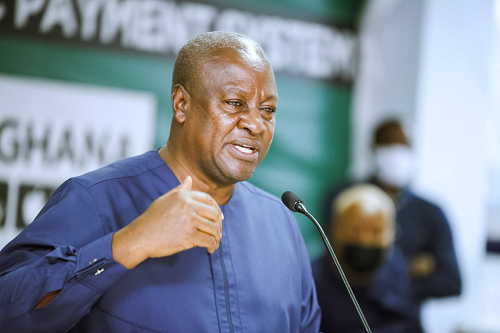
The youth wing of the main opposition National Democratic Congress (NDC) in Greater Accra has officially deferred the clean-up exercise initially slated for 16th November.
The event was originally planned to take place at the Cantonments office of the party’s flagbearer, John Dramani Mahama on Thursday, 16th November 2023.
However, according to a statement released on Monday, 13th November 2023, and signed by the Regional Youth Organiser, Ambrose Amos Blessing, the postponement was announced.
“The Postponement has become necessary due to the invitation extended to the Party and our 2024 flagbearer, to attend the funeral of the late former First lady, Theresa Kufuor.”
It added: “The new date for the cleanup exercise is Thursday, November 23, 2023, at 6am at John Mahama’s house.”
53-year-old businessman, Kwamina Duncan, also known as Nigeriaman, has been slapped with a fine of 200 penalty units (GH¢2,400) by the Agona Nsaba Magistrate’s Court for assaulting Pastor Benjamin Kwaitu amid a heated land dispute.
The court, presided over by Victor Kusi, mandated Duncan to pay the fine and cover the medical bills incurred by the Pastor.
Detective Chief Inspector Lawson Aglago, prosecuting the case, outlined the details to the court. The complainant, originally from Akim Oda, lived in Nsaba, Agona East District of the Central Region, where Duncan, the convict, also resided.
The altercation began several months ago when a dispute arose over a piece of land gifted to the Pastor by a family member of Duncan. Contesting the legitimacy of the gift, Duncan sought to claim ownership of the land.
On Wednesday, April 5, 2023, at approximately 0700hrs, an incident unfolded at Nsaba Health Center Junction. The Pastor, along with some church members, was there for church activities when Duncan, on a motorbike, arrived and confronted the Pastor regarding the contested land.
During the confrontation, Duncan struck the Pastor’s face with a plastic bottle filled with oil, spilling it on him and some of his church members. Subsequently, the Pastor reported the incident, leading to the issuance of a medical form for his hospital treatment.
After investigations, the convict was charged with the assault offence.
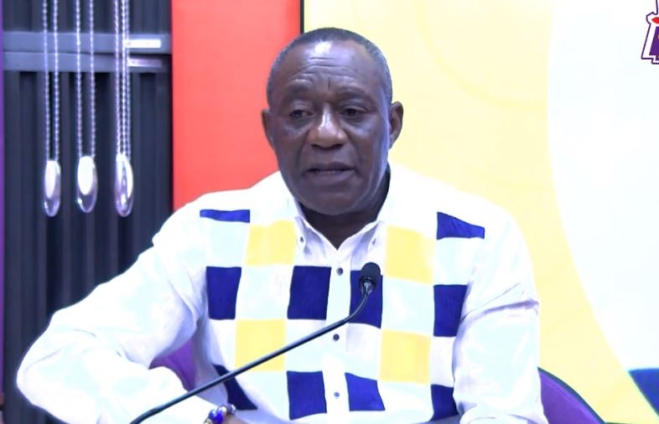
Executive Director for Environmental Protection Agency’s (EPA), Dr. Henry Kwabena Kokofu, has denied reports of potential mining activity in the nation’s protected areas, including Kakum National Park.
During an interview on UTV on November 13, 2023, Dr. Kokofu shared his apprehensions, saying, “I have directed my Chief Executive Director, responsible for the operation, to visit the Minerals Commission and our office in the Central Region and furnish me with feedback.”
“The Minerals Commission didn’t even agree to that, and for us at the Environmental Protection Agency, we won’t sit aloof. If we don’t take care, people can illegally go and mine there without any license. We are calling for security coordination and beefing up security in all the national parks, including Kakum,” he said.
Recent reports have indicated that High Street Ghana Limited, a mining company, is in the process of seeking leasing rights for portions of Kakum National Park to conduct mining activities. This has sparked criticism from various civil society organizations (CSOs) in Ghana, who assert that such a move is unacceptable.
High Street Ghana Limited’s application for a mining license within Kakum National Park is currently undergoing validation by the Minerals Commission. Information gleaned from a stakeholder engagement on November 9, focusing on the new Regulation on Mining in Ghana’s Forest Reserves (LI 2462), revealed that the company’s proposal encompasses around 24% of the park.
Mustapha Seidu, the Director of the Nature and Development Foundation, sounded the alarm during the engagement, cautioning that the failure to reconsider and potentially revoke the legislative instrument (LI 2462) could result in extensive destruction of the country’s forests.
“As we speak, there are 14 more applications under different stages of consideration by the Minerals Commission, including an application by High Street Ghana Limited to mine in the Kakum National Park,” Seidu stated.
“If, in less than one year of coming into force of LI 2462, we are seeing this massive legal destruction of our forest, we can imagine what will happen in the next five years or decade.”
In a press release on Sunday, November 12, 2023, the Minerals Commission revealed that it had rejected an application for mining in Kakum National Park submitted by High Street Ghana Limited. Emphasizing the significance of the park, the commission made it clear that it will not authorize any mining activities within the forest.
The report further detailed that the Minerals Commission has removed the company’s application from its online mining cadaster. The commission responded to social media posts highlighting objections from Civil Society Organizations (CSOs) against the mining firm’s attempt to operate in Kakum National Park in the Central Region.
Addressing these concerns, the Minerals Commission affirmed that the application by High Street Ghana Limited had been officially rejected, and as a result, it would not be processed or considered.
The commission assured the public that no mineral rights, whether for prospecting or mining, would be granted in Kakum National Park.
EPA will not sit aloof and watch this happen – Dr. Henry Kwabena Kokofu responds to the leasing of Kakum National Park for mining#UTVNewspic.twitter.com/oEntkOUKCm
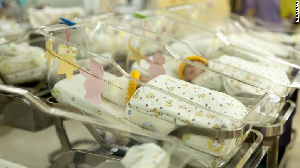
In the face of ongoing Israeli firepower and depleting fuel reserves, premature infants at Gaza’s largest hospital are now being swathed in foil and positioned near hot water in a desperate attempt to sustain their lives, according to a dire warning from the hospital director.
As the facility struggles to function due to the relentless attacks and dwindling resources, staff at Al-Shifa hospital are engaged in a battle to keep newborns alive.
The dire situation forced them to manually transfer infants from the neonatal unit’s incubators to another section of the hospital after running out of oxygen supplies.
“I was with them a while ago. They are now exposed because we have taken them out of the incubators. We wrap them in foil and put hot water next to them so that we can warm them,” the medical center’s director Dr. Muhammad Abu Salmiya told Al-Araby TV on Sunday.
Photographs reveal a distressing scene where multiple newborns, removed from their incubators, are huddled together in a single bed at the hospital.
The doctor reported that several children have lost their lives in the intensive care unit and nursery within the past day due to the sustained Israeli bombardment and blockade of Gaza.
This already impoverished and densely populated territory has faced escalating challenges since the October 7 attack by Hamas militants.
Palestinian health officials estimate that Israeli airstrikes have claimed the lives of more than 11,000 people. The imposition of a fuel blockade has exacerbated the humanitarian crisis, leading to the shutdown of essential services such as hospitals, water systems, and bakeries that depend on electricity.
Conditions at Al-Shifa have rapidly deteriorated into a “catastrophic” state over the weekend. Heavy fighting has trapped staff, patients, and thousands of sheltering residents inside.
While aid agencies and Hamas health officials describe the situation as dire, Israel maintains that individuals can safely leave the hospital by utilizing an evacuation corridor to the east of the complex.
Ghana Revenue Authority (GRA) Commissioner-General Rev. Dr. Ammishaddai Owusu-Amoah has declared that the Authority will support financially troubled businesses in their efforts to recover.
Despite the fact that the tax authority is ready to carry out the legal compliance measures, he stated that the main objective is to assist in the resuscitation of businesses and guarantee continuous production, particularly in light of the recent economic challenges.
“The fact is that whatever compliance measures are available in the law, GRA is ready to implement them to the letter. But while we are committed to enforcement, we also aim to revive companies and ensure continuous production,” the Commissioner-General stated during a working visit to B5 Plus Limited – a steel manufacturer located in Tema.
He added: “Whether small or large, we are ready to ensure the collection of taxes in full. But at the same time, we are also concerned that production should continue and people not be laid off”.
Sol Cement Shut Down by GRA for Unsettled Tax Debt Exceeding GH¢700 Million; VAT Violations Uncovered in 12 Accra Businesses in August.
In August, the Ghana Revenue Authority (GRA) closed down Sol Cement for failing to meet tax obligations, revealing an outstanding tax debt of over GH¢700 million. Additionally, VAT infractions were identified in 12 businesses in Accra, ranging from failure to register for VAT to non-issuance of VAT documentation.
Despite these actions, the GRA emphasized its focus on supporting struggling companies for a potential turnaround, considering closures as a last resort.
The GRA has established a revenue target of GH¢106 billion, with the Customs Division aiming to collect GH¢28.5 billion in 2023. A total of 93 businesses in the capital have been identified for enforcement and compliance efforts this year.
The United Steel Company story
As of 2020, United Steel Company Limited carried an outstanding tax liability principal of approximately GH¢149 million, with accrued interest and penalties exceeding GH¢400 million dating back to 2018.
The company also had outstanding debts to banks and other creditors.
In collaboration with financial institutions, the Ghana Revenue Authority (GRA) engaged the services of an administrator to assume control of the factory.
“We then placed the factory for sale and advertised it in the papers; we succeeded in getting B5 Plus to buy the company,” the GRA’s Commissioner-General recalled.
“And after they bought the company, they paid the tax liabilities in full because the administrator had then applied for and took advantage of the waiver of interest and penalties. And so, the GH¢149million we had been chasing from 2020 was fully paid in 2023,” he added.
Explaining further, he said: “The factory has also, as you saw today, been completely put back on its feet and is able to produce; and we’ll be getting over GH¢100million annually in terms of taxes. We are more interested in seeing companies grow to meet their tax obligations. So the mentality or sad notion that GRA is only interested in getting the money, and not so interested in whether the company will survive or not is not true”.
US$35million invested to revamp the factory
Mukesh Thakwani, Chief Executive Officer of B5 Plus Limited, commended the favorable domestic investment environment and emphasized the numerous opportunities available.
He revealed that his company has already injected over US$35 million into the revitalization of the factory. Furthermore, he stated that with the planned expansion of the production line over the next two years, an additional investment of US$10 million is on the agenda.
“It has been quite challenging for us. What we expected and what we found on the ground was quite different; but a lot of credit goes to the entire team for being positive and optimistic, and we are really looking forward to the future.
“I think this is one of the reasons that though we are working 24 hours it has still taken six months – and it will take another one and a half months for us to start this plant. Our target is that before December we should at least be able to make some trials, so that from next year we are able to run this plant successfully and make everyone proud,” Mr. Thakwani said.
The company presently employs 420 workers, but this number could soon increase to over 500 as additional product lines are introduced.
“We are not only targetting Ghana and the West Africa sub-regional market, but the whole Africa; we want to take advantage of AfCFTA,” he added.
Nana Obiri Boahen, a lawyer and former Deputy General Secretary of the New Patriotic Party (NPP), has entered the current debate surrounding the existence of kings in Ghana.
He asserts that while there are no officially recognized traditional leaders with the title of king, his limited historical knowledge leads him to conclude that five paramount chiefs in Ghana could be regarded as kings.
“In my view, Anlo has a king, this is my little history and knowledge. Ashanti has a king, Yagbonwura, Nayiri and Ya Naa; these five are kings and I am not disputing that whoever else is not a king,” he said in a radio interview shared on Dadzie Multimedia Facebook page.
Obiri Boahen addressed a recent fundraising event led by the Asantehene, Otumfuo Osei Tutu II, named the ‘Heal Komfo Anokye Project.’ The initiative aims to raise US$10 million for the renovation of the Komfo Anokye Teaching Hospital (KATH) in Kumasi.
“What Otumfuo has done is very good,” the lawyer stressed. Emphasizing that it is time traditional authorities step in to champion such causes.
“When these leaders step in, the political divide unites… it is good that these traditional leaders join in,” he stressed.
He clarified that the Yagbonwura could help the Damongo Hospital and the Nalerigu Hospital by Nayiri in the same way that the Otumfuo had. Ho Hospital by the Anlo King, the Awomefia, and Tamale Hospital by Ya Naa.
“The Anlo (leader) is a King, from the history that I know,” he stressed.
On the issue of traditional authority stepping in to help protect public infrastructure, he defended his view stating thus: “Ghanaians are tired with the politicians because they use projects and issues to campaign and deploy contractors and communicators for parochial interests,” he added.
There is no king in Ghana – Historian Frimpong Anokye
The reason Otumfuo cannot be regarded as a king in the traditional sense was expounded by lawyer and historian Yaw Anokye Frimpong in a recent interview with GhanaWeb.
He argues that the Asantehene is not a king because the nation’s laws—to which the Otumfuo himself is subject—do not support the establishment of kings and the once-powerful Ashanti Kingdom has vanished.
“The words kingdom and king are not in Ghana’s chieftaincy laws and regulations. Because to be a king means to be the head of a kingdom, and to have a kingdom means you have a king who has his own parliament, who has got his own judiciary and has an executive under him and the people of the country are subject to him without question.
“With this maybe you would remember some of the Islamic countries like Saudi Arabia and others, we don’t have that (kings) in Ghana and that is why the words kingdom and king are missing from our laws,” he said.
He added that “properly speaking he (Otumfuo) is not a king because he is subject to the parliament of Ghana, and courts and whatever; as opposed to King Charles of England, over there he is the King of England and parliament would make bills for him to sign before they become law… He (King Charles) is the head of state of United Kingdom, the Asantehene is not the head of state of Ghana, and his powers do not go beyond the frontiers of the Ashanti land”.
The historian, however, noted that the Asantehene is a “super paramount chief” because he has powers that no other paramount chief in Ghana has.
He claimed that in contrast to other paramount chiefs in the nation, the Otumfuo is the kingmaker of all the stools under his authority, the Ashanti land, and that he has the power to enstool or destool any paramount chief under his control.
The energy think tank ACEP has suggested the possibility of filing a legal suit against the Government of Ghana and the Ghana National Petroleum Corporation (GNPC) by Civil Society Organizations (CSOs) or a civilian concerning the domiciliation of assets belonging to Jubilee Oil Holdings Limited (JOHL), registered in the Cayman Islands.
The Executive Director of the think tank deems this legal action necessary, emphasizing that the government should promptly repatriate JOHL assets from the tax haven to Ghana. He also highlights that the GNPC, managing the JOHL assets, should be subject to the Petroleum Revenue Management Act (PRMA).
“It has been almost 2 years after advocating for the assets of JOHL to be domiciled in Ghana and nothing has still been done by GNPC and Government, clearly there is no commitment on the part of GNPC or Government to be transparent with JOHL assets.”
“Someone or CSOs must therefore challenge this illegality in court to ensure that JOHL assets are returned to Ghana.”
The ACEP boss made this known when he gave his submission during a Space on the X platform on November 12 on the topic “Is JOHL Under Political Capture? – Analyzing Implications of Securitizing JOHL assets for $420m LITASCO Loan”.
Ben Boakye also charged that the GNPC and the government were breaking the Petroleum Reserve Management Act (PRMA), which mandates that oil earnings go into the Petroleum Holding Fund until they are later approved by the legislature.
“Our fear of JOHL assets being used as a slush fund has been materialised and I’m making particular reference to the collateralisation of oil revenues accrued by JOHL for a $420m debt arrangement between GNPC and LITASCO,” Boakye said.
“The politicians are using it the way they want and being less accountable about the assets to Ghanaians,” he lamented.
Meanwhile, a recent 2023 Semi-Annual report published by the Public Interest and Accountability Committee (PIAC) highlighted that Jubilee Oil Holding Limited (JOHL) did not remit proceeds from liftings in H1 2023, totaling US$70,456,718.93, into the Petroleum Holding Fund (PHF).
This marks the fourth consecutive occurrence where the company failed to transfer the proceeds from liftings in the Jubilee and TEN Fields, amounting to US$343,108,927.88.
The petroleum revenue watchdog also noted that Kosmos Energy Ghana Limited incorrectly paid withholding tax into the Petroleum Holding Fund (PHF) in 2020 and 2021, totaling US$3,999,325.65.
Ensuring the well-being of your prostate is crucial for overall health as a man.
Adopting a nutritious diet plays a key role in promoting prostate health, and specific foods have been identified for their potential to guard against cancer development in the prostate.
Discover below 11 foods recognized for their positive impact on prostate health:
1. Tomatoes: Rich in lycopene, which is associated with a reduced risk of prostate cancer. Cooking tomatoes can enhance the availability of lycopene.
2. Broccoli: Contains sulforaphane, a compound that may help fight cancer, including prostate cancer.
3. Green tea: Contains antioxidants that may have a protective effect on the prostate.
4. Fatty fish: Omega-3 fatty acids found in fish like salmon, mackerel, and trout may have anti-inflammatory properties and are beneficial for overall health.
5. Pumpkin seeds: High in zinc, which is important for prostate health. They also contain other nutrients like magnesium and antioxidants.
6. Avocado: Contains healthy fats and vitamin K, which may contribute to prostate health.
7. Soy Products: Foods like tofu and soybeans contain phytoestrogens, which may have protective effects on the prostate.
8. Pomegranate: Some studies suggest that pomegranate juice may slow the progression of prostate cancer.
9. Green leafy vegetables: Spinach, kale, and other leafy greens are rich in nutrients like vitamin C, vitamin K, and folate.
10. Turmeric: Contains curcumin, which has anti-inflammatory and antioxidant properties.
11. Watermelon: Watermelon contains antioxidants like lycopene, vitamin C, and other phytonutrients.
Lycopene, in particular, is known for its potential role in reducing the risk of certain cancers, including prostate cancer.
Regular exercise, maintaining a healthy weight, and avoiding excessive intake of red and processed meats are also important factors in promoting prostate health.
Sharing one’s feelings with a romantic partner is often considered a crucial aspect of emotional intimacy.
However, not all men find it easy to open up to their wives or girlfriends.
The reasons behind this hesitation can vary widely from person to person.
Here, we delve into five common factors that might contribute to men being reluctant to share their feelings in romantic relationships.
1. Fear of being exposed:
A fear of their partners discussing vulnerabilities with others may lead some men to avoid opening up.
This reluctance could be rooted in a lack of trust in their partner or influenced by past experiences, prompting them to keep personal and sensitive matters to themselves.
2. Fear of being seen as less masculine:
Men might be hesitant to share their struggles or emotions, fearing that it could result in being perceived as less masculine by their partners.
This apprehension may be rooted in societal stereotypes linking vulnerability to weakness, potentially impacting their self-esteem and how they are perceived by others.
3. Concerns about judgment:
Men may worry about their partners’ reactions and fear being judged for their vulnerabilities.
The fear of not being understood or accepted can be a powerful deterrent, leading some men to keep their feelings and struggles to themselves.
4. Past experiences of vulnerability being exploited:
Some men may have had negative experiences in the past where they opened up to someone and had their vulnerabilities used against them, either in the relationship or in social circles.
This can create a sense of mistrust and reluctance to be emotionally open in the future.
5. Coping mechanisms:
Men might have developed coping mechanisms that involve internalizing their emotions or seeking support from friends or family outside the romantic relationship.
This behavior doesn’t necessarily indicate a lack of trust in their partners but may be a result of established patterns.
Encouraging open communication and fostering a supportive environment can help break down these barriers, allowing for healthier expressions of emotions in relationships.
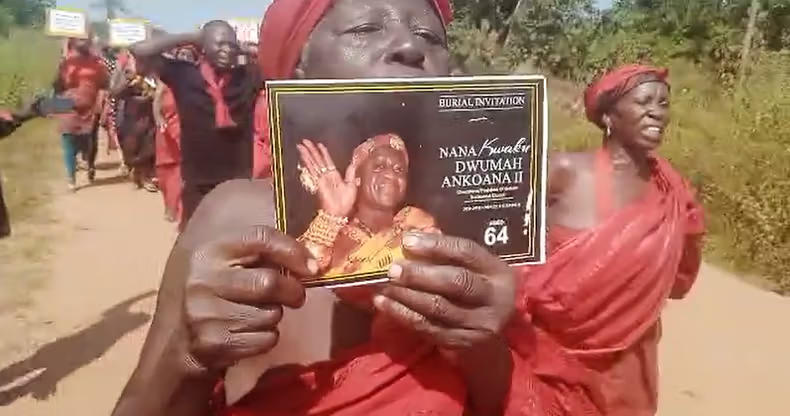
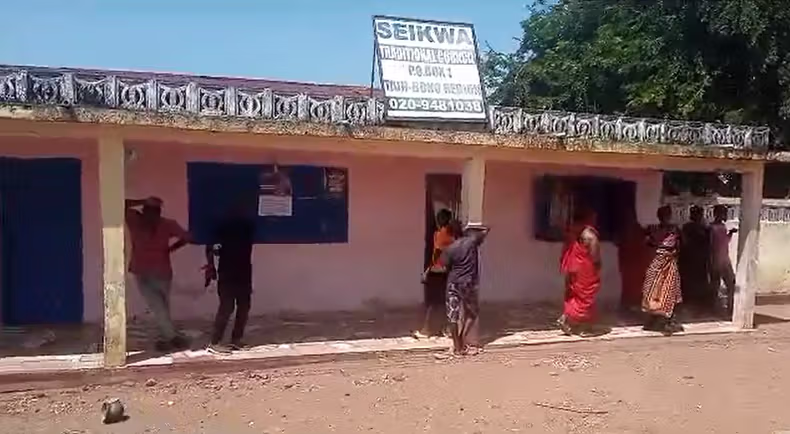
The Tain District Police Command in the Bono Region has initiated an investigation to unravel the mystery surrounding the theft of the Oyoko Traditional Stool from the council’s throne room.
According to reports, the stool had been secured for six years after the passing of the late Seikwamanhene, Nana Kwaku Dwumah Ankoana II.
During the commemoration of the late Nana Kwaku Dwumah Ankoana II’s tenth anniversary, it was discovered that two customary stools belonging to the Oyoko Royal Family were missing from the royal room.
Adehyepanin Kwadwo Asubonteng, the Abusuapanin of the Oyoko Royal Family, alleges that he was compelled to close the royal room by the Tain District Security Council (DiSEC) and certain traditional council elders, despite his objections.
“I told them (the DiSEC) not to lock the room due to some traditional rites we’ll perform, but they insisted and locked it, I got the information a few weeks ago which says two of the traditional stools belonging to the Oyoko Royal Family are missing, I was shocked to hear that but I did nothing until the traditional leaders sent messengers, including the traditional priest officially to inform me about the missing stools,” myjoyonline.com quotes Adehyepanin Kwadwo Asubonteng as saying.
He mentioned that upon opening the throne room, the stools, crucial and significant in the traditional palace, were nowhere to be found. Additionally, there were signs of tampering discovered at the late Nana Kwaku Dwumah Ankoana’s grave.
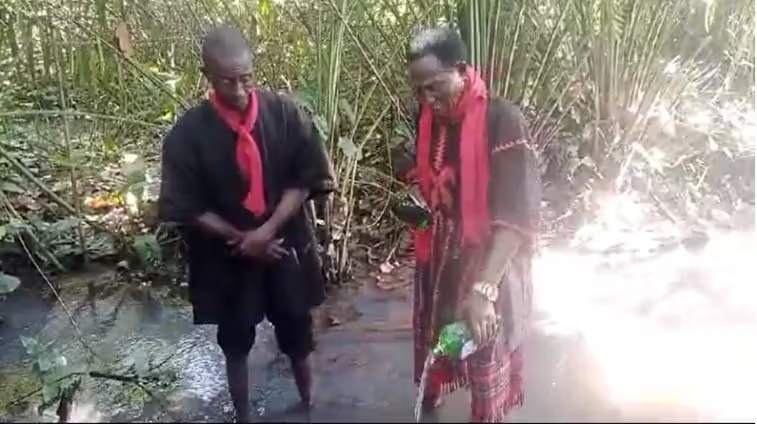
In an effort to identify those responsible for this sacrilegious act, Adehyepanin and his community paid a visit to the Seikwa River god, performing libation and other rituals.
Adehyepanin Kwadwo Asubonteng expressed deep sorrow, stating that this incident has plunged the Oyoko Royal Family into a profound state of grief.
Three Ghanaian cousins in New York, USA, are facing serious criminal charges related to alleged gun trafficking, with a potential 25-year imprisonment each if found guilty.
The arrests were made as part of an undercover investigation known as ‘Operation Amazon Pipeline,’ conducted by the New York Police Department.
The suspects, identified as Abdul Haruna (27), Ahmed Mutalib (32), and Murtala Haruna (30), were taken into custody after an officer, working undercover, established a relationship with the gang members, leading to the purchase of guns.
The alleged traffickers reportedly concealed the illegal weapons, including pistols, ghost guns, and automatic rifles, in Amazon boxes to avoid suspicion.
At a press conference, the NYPD displayed 96 guns seized from the gang, emphasizing that further investigations are underway. The suspects are currently awaiting trial.
In a related incident, a 43-year-old man named Muhammadu Ali tragically lost his life during a bulletproof charm potency trial in Damaiwa Village, Bauchi State, Nigeria.
Ali, along with four others, had gone into the Damaiwa bush to test the charm’s efficacy. However, the charm failed, leading to a live bullet penetrating Ali, resulting in his death.
Police responded to the incident, rushing Ali to the hospital, where he was pronounced dead on arrival.
According to a news report by https://t.co/5F0ah5KUwQ, three Ghanaians who are cousins, were caught in an illegal gun-trafficking ring that ran weapons on the streets of Queens, New York.
The suspects include 27-year-old Abdul Haruna, of the Bronx; 32-year-old Ahmed Mutalib, of… pic.twitter.com/QKaqJdeTOs
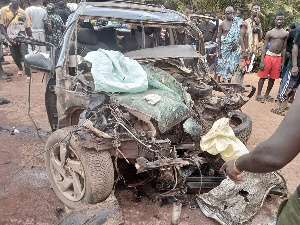
Four individuals reportedly lost their lives, and 11 others sustained serious injuries in a car accident on the Akroso-Asamankese road.
The incident, which happened around 4 pm on Sunday, November 12, 2023, involved a white Toyota Hiace with registration number GM 3150-13, carrying approximately fifteen passengers from Bantama, a suburb of Akim Akroso in the Asene-Manso-Akroso District of the Eastern Region.
The Toyota Hiace collided head-on with a Pontiac Vibe private car with registration number GG 3528-14, traveling from Asamankese to Achiase.
An eyewitness attributed the cause of the accident to a burst tyre, explaining that the speeding Pontiac Vibe, driven by the manager of the South-Birim Rural Bank in Achiase, Emmanuel Asiedu, experienced a tyre burst.
The impact of the burst caused the vehicle to lose control and subsequently collide with the Toyota Hiace, resulting in the instant death of the banker.
Three passengers in the Toyota Hiace, including an infant, also lost their lives, while the others sustained various degrees of injuries.
The injured individuals were promptly taken to the Asamankese Government Hospital for treatment, and the deceased were conveyed to the hospital’s morgue for preservation.
The minister of health, Kwaku Agyemang Manu, has provided an explanation for the delay in the renovation of the Neonatal Intensive Care Unit (NICU) at Keta Hospital.
“As soon as the financing is secured, the Maternity Ward and the Neonatal Intensive Care Unit (NICU) of the Keta Government Hospital will be refurbished,” he told Parliament on Thursday.
Kwaku Agyemang Manu, the minister of health, has provided an explanation for the delay in the renovation of the Neonatal Intensive Care Unit (NICU) at Keta Hospital.
He said, “The Ministry submitted a request, based on a needs assessment carried out by the Ministry, to the Ministry of Finance to fund the refurbishment and or retooling of hospitals that have obsolete equipment or rundown infrastructure.”
Responding to a Parliamentary question asked by MP for Area, Kwame Dzudzorli Gakpey on plans the Ministry has for the construction of a new Maternity Ward and a new NICU for the Hospital, the Sector on the floor mentioned that the construction of a new Maternity Ward and the Neonatal Intensive Care Unit came to his attention during his visit to the facility, and “with the outbreak of COVID-19, the Ministry put up a Treatment and Holding Centre for Infectious Disease at the place to respond to emergencies, which is currently in use”.
He stated, “Our engagement with the Member of Parliament during the construction phase of the infectious disease centre influenced the design for a possible vertical expansion due to the limited land availability.”
He, however, acknowledged the fact that “Keta Municipal Hospital is a 20-bed facility, which may appear small for the population size of a municipal hospital, with the Neonatal and Intensive Care Unit (NICU) requiring some refurbishment. However, the maternity and neonatal wards are not overstretched”.
“The Ministry of Health acknowledges that the population of Keta, (which stands at about 82, 000, is below the 100, 000 threshold to qualify for a district hospital, has grown over the years, and therefore the need for an upgrade.”
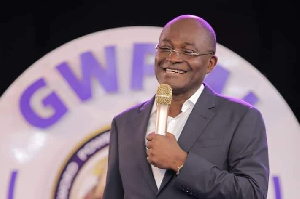
The founder and leader of Glorious Word Power Ministries International, Reverend IsaacOwusu-Bempah, has clarified that he has not made any predictions suggesting that former President Mahama will emerge victorious in the 2024 elections.
He asserts that this is false information maliciously disseminated by the online news website Ghanaweb, and he is perplexed as to why they persist in spreading inaccurate information about him.
“Before God I did not mention anyone’s name as one who will win the 2024 election. You asked me and I told you that I will never come out specifically to say that the NDC or NPP or a certain political party will win the presidential election. I will not stand in the strong room to make any such declaration,” the Rev minister indicated.
Meanwhile the acclaimed man of God has said that there is a possibility that of a former president reclaiming his seat.
This is because, according to him, the spiritual conditions that barred John Dramani Mahama from becoming president back in 2019 no longer exist.
“Different times come with what God ordains or decrees,” he said when asked about his widely-reported prophecy prior to the 2020 general elections.
Owusu-Bempah, known to be a key ally of current president Nana Addo Dankwa Akufo-Addo cited instances in the Bible where God barred Israelites against ravines but later used the same animal to save Eliyah.
“So, the circumstances of years ago that caused God to abandon our father John Dramani Mahama and bar him from the presidency no longer exist.
“So, if people think the status quo still persist, changes can occur in the matters of God,” he said in an interview on Okay FM.
Editor-in-Chief of the Daily Searchlight newspaper, Kenneth Agyei Korankye, has taken legal action againstJohn Mahama by filing a case in the Supreme Court against his bid to become president.
He argues that Mahama lacks eligibility to run for office in the upcoming 2024 elections.
Mr Korankye’s concerns are that, the norm usually involve serving two consecutive terms before considering to step down and contemplate on another future candidacy.
However, in Mahama’s case, he served for only one term and stepped down thereof. Coming back now to contest again according to him, is not permissible.
“I recall raising a concern about the concept of serving two presidential terms. Typically, each term is four years, and presidents are eligible for re-election for another consecutive four-year term. My argument is that these terms should be served consecutively. In the case of Mahama, he did not continue in office after his initial four-year term. After a period out of office, he is now seeking to return to the presidency.”
“My interpretation, which is not in line with the Supreme Court’s perspective, asserts that presidential terms should be consecutive—meaning a leader should serve two terms in a row before considering stepping down. The key point is that it shouldn’t be a case of serving one term, leaving office, and then coming back for another term; instead, there should be two consecutive terms before any break in service,” he told the media
John Mahama will contest the presidency for a fourth time in next year’s elections after securing the main opposition party’s nomination.
The National Democratic Congress chose Mahama, 64, as its flag-bearer ahead of two other contenders, the nation’s Electoral Commission said in the capital, Accra, on Sunday.
He polled 98.9% of total votes, while Kojo Bonsu, a former mayor of Kumasi, Ghana’s second-biggest city garnered 1.1%, Kwabena Duffuor, a former central bank governor and ex-finance minister, withdrew from the race on the morning of the vote.
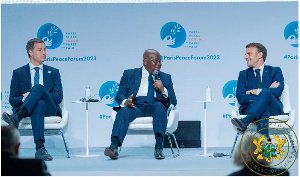
At the sixth edition of the Paris Peace Forum on November 10, 2023, President Nana Addo Dankwa Akufo-Addo urged global leaders to ensure that the advancement of the West does not perpetually come at the expense of Africa and other economically disadvantaged regions.
Highlighting the unjust situation, he questioned, to resounding applause, whether it is necessary for prosperity in Europe, the West, and parts of Asia to be built on the foundation of poverty in the rest of the world, including Africa.
He solicited the minds of the gathering to consider the necessity of living side by side, where “we can contemplate a world whereby all of us can live together on this planet in relative comfort, and that some people will not live in super comfort and other people in super poverty,” and said, “that challenge to the thinking and the mindset of people, is something that in our generation we have to address.”
Continuing, he said “Is it possible for us to create a world where all of us live together on this planet in relative ease? The resources of the world are there, never has there been a time where there has been a greater abundance of technology, of wealth; development that we are seeing in many parts of the world, do they have to be restricted to those parts of the world or they can be made in a universal and a global phenomenon?
President Akufo-Addo implied that, with the pursuit of peace primarily premised on shaping age-old imbalances across the world, “these are some of the matters that we are going to have to look at because if we are going to solve these multifaceted problems, and put ourselves in a position to hand over to the next generation and succeeding generations, a more constructive and better world, we have to deal with these questions.”
He went on to say that there are many problems facing the world, and that many solutions are also needed. He emphasized that the most basic and long-standing problem at the center of all of these solutions is money.
“It doesn’t change, from century to century, generation to generation, access to capital and to money, and I think that a lot of our energies we are looking at, is how we can frame a new arrangement where the multilateral institutions like the Bank, like the Fund, can play in the process of mobilising the greater resources that the world needs for its development,” he said.
The President has been talking about a lot of topics, such as climate action, and he has defended Africa’s limited position after learning that some of its most valuable resources can no longer be used for the continent’s development.
He said, “If, indeed, we are being told that these resources that have helped develop other parts of the world are no longer going to be available for our development, how then do we make the transition to the new source of power and development? That our oil, our gas resources which are there in abundance, can no longer be deployed because of its impact on climate change, is a critical issue we have to look at.”
And even if it is going to be a just and equitable transition, some position has to be found for the manner in which we can then maximumly utilize the resources that we do have.”
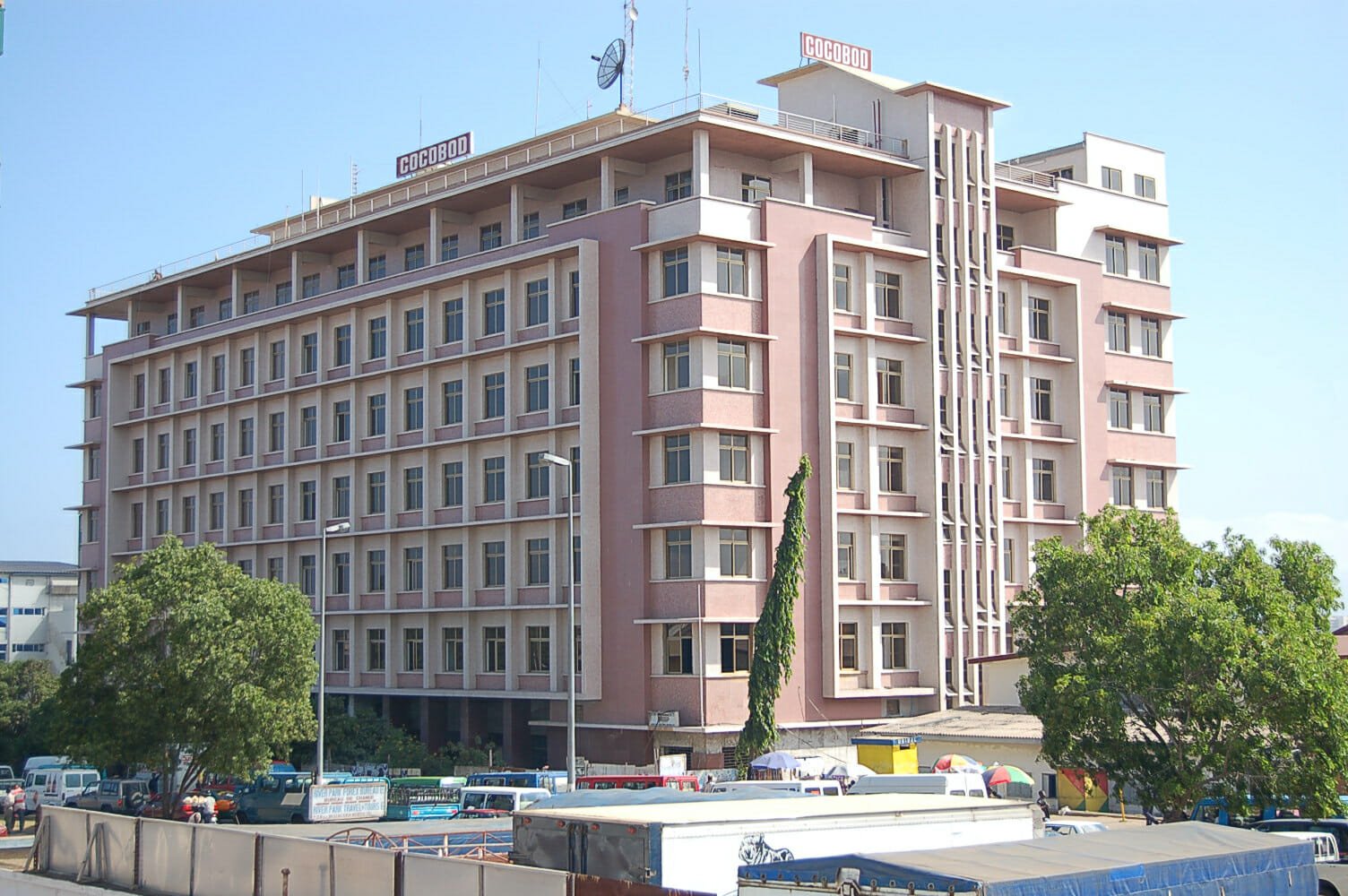
The Ghana Cocoa Board (COCOBOD) has reassured its stakeholders that it has made the necessary arrangements to secure sufficient funding for cocoa purchases in the upcoming 2023/24 crop season.
In response to recent media publications regarding funding concerns, COCOBOD issued a statement highlighting that “the Board has so far received firm response from our bankers in this regard, and the Cocoa syndicated Loan has been laid in Parliament for consideration and approval.”
Clarifications were made in the statement that COCOBOD had planned a two-pronged financing approach for the 2023/2024 crop season to diversify its funding sources for annual cocoa purchases.
The strategy involved a pre-financing arrangement with international buyers to raise $400 million for purchases at the season’s outset in September 2023.
These initial funds were expected to be supplemented by an additional $800 million loan from a syndicate of lenders by the end of November 2023.
However, after several weeks of engagements with buyers, the arrangement was terminated.
“Thus, since the beginning of the season, cocoa purchases have been financed with non-collateralised cocoa sales proceeds. COCOBOD is therefore still in the process of securing the syndicated loan for the 2023/24 crop season,” the statement said.
Historian and lawyer Yaw Anokye Frimpong has contested the claim that the chieftaincy of the Dormaa people, known as the Dormaa stool, achieved paramountcy status through an Asantehene’s influence.
Frimpong argues that historical evidence indicates that, although the Ashantis conquered and enslaved the Dormaa people at a certain point, the Dormaa stool already held paramount status as a distinct state.
He emphasizes that the Dormaa people once again became subject to the Asantehene after the reformation of the Ashanti Confederacy. However, Frimpong reiterates that the Dormaa stool had already attained paramountcy independently before this period.
“After 1896 when the Ashanti Kingdom had completely been destroyed, the confederacy broke down and they were asked not to enslave anybody and not also to have any tributary state. So, the Dormaa people (the Jaman people) had their freedom.
“Then in 1935 when Prempeh was brought back, the Ashanti Confederacy was re-established and because of indirect role, Ashanti was placed together as one region, the western part being the Bono part. They (the Dormaas and the Ashantis) were under one region, so they were given one recognition and because of easy administration, the colonial masters gave an instruction to the Ashanti and to everybody.
“So, for the Ashantis, Dormaa was under them, to the extent that the white man had made them recognise the Asantehene. So, anytime the Asantehene seats in state, all the paramount chiefs under him would come, including the Dormaahene,” he explained.
He continued by saying that the people of Dormaa departed to live on their own as soon as the Ashanti Confederacy was dissolved following Ghana’s independence because they were no longer obligated to submit to the Asantehene.
“… it was not the Otumfuo that did that (left the Dormaa stool to paramountcy), it was not the Otumfuo… Every state that was part of the confederacy was a paramountcy. So, to start with Dormaa was a paramountcy but because you part of the confederacy, you served the Gold Stool,” he reiterated.
Background
On October 19, 2023, at a gathering of the Asanteman Council at the Manhyia Palace, Otumfuo Osei Tutu II addressed his people, stressing the importance of revisiting history to counter attempts by certain groups to distort it.
Portions of his address, shared by Opemsuo Radio on YouTube, featured the Asantehene discussing the induction of the predecessor of the current Dormaahene into office.
“Sampa is my town, Bono and Ahafo… Agyeman Badu (the first) took his oath here before going to assume his throne. He was a teacher here at Government Boys School. He swore in front of my uncle before assuming his position,” Otumfuo stated.
“It is because of these notorious ones that I am recounting this issue. What at all is it?” he emphasized before outlining a historical sequence of relations and how the royal politics has evolved over time.
But, Dormaahene Oseadeyo Agyeman Badu II then responded, saying Otumfuo’s claim was false.
He explained that the Dormaa stool existed for hundreds of years before the Asantehene stool and so there is no way that it would be an Asantehene who elevated the then Dormaahene to a paramount chief.
He added it is important that he addresses this issue because the history of the people of Dormaa is been being distorted by the Asantehene.
“I would speak to this issue because if I don’t, I would not be able to sleep… most people think that I am the one who causes the issue (between myself and the Asantehene). Some are even saying that if I don’t take time, I might cause a war. But if you are correcting your history, is it about fighting?
“… I want to tell every Ghanaian that we the people of Adiana are not from the Ashanti Kingdom. It is never true; it is never true. Otumfuo Osei Tutu II is the leader of the Ashantis, we beg him if he does not know history he should not talk. How can someone from Oyoko talk about the history of the people from Adiana?” he quizzed.
The Dormaahene added, “I want to place it on record with any contradiction that the stool of the people of Adiana in Dormaa existed 300 years before that of the Ashantis was established. So if there is to be an elevation, it is not us who are to elevate them,” he said.
He reiterated that he means no disrespect to Ashantis but if their leader continuously makes wrong claims about the people of Dormaa, he would reply.
“As for this issue, I am begging him (the Otumfuo) he should stop saying it. If he does not stop, I have already said this before, if he speaks 100 times, I would respond 101 times.”
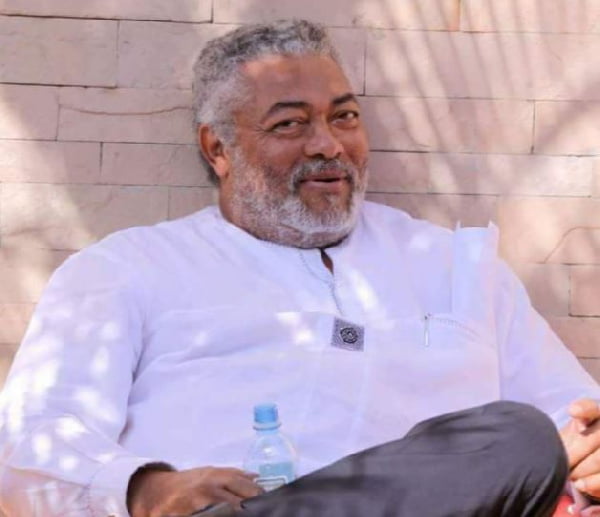
The family and the JJ Rawlings Foundation Former President Jerry John Rawlings passed away three years ago on Sunday; his loss was described as a “difficult pill to swallow.”
The unexpected death of Ghana’s previous President on Thursday, November 12, 2020, shocked the country.
“The shock and pain of the loss of a husband, father and champion of the masses was very heavy to bear and is indeed still a difficult pill for many to swallow,” said the Foundation and Family in a statement copied to the Ghana News Agency.
“Today marks three years of the loss of a man who endeared himself to millions in our country Ghana, our continent Africa, and across the world.”
Flight Lieutenant Jerry John Rawlings stood for selflessness and a rare form of candour.
He was a strong man whose approach to leadership had redefined what “we ought to espouse as leaders regardless of our fields.”
Former President Rawlings’ leadership style, marked by hands-on courage and a profound understanding of the struggles of the common man, remained his guiding force throughout his life. On the third anniversary of his passing, he is fondly remembered as ‘a man of the people.’
A soldier’s soldier, a patriot, and a champion for the people, Former President Rawlings deeply loved his country. His unwavering commitment to political and social issues affecting Ghana and the broader African continent defined his legacy.
Whether in office or as a private citizen, he consistently demonstrated his dedication to assisting the underprivileged and addressing distressing situations, such as the Buruli ulcer crisis in the 1990s and the iconic photograph of him standing knee-deep in floodwaters at Kwame Nkrumah Circle.
“We cannot forget how one June 4 morning he cut short the celebration to visit the site of the June 3, 2015 disaster also at the Kwame Nkrumah Circle,” it said.
“As the JJ Rawlings Foundation and Family, we join all Ghanaians whose lives were impacted by President Jerry John Rawlings to celebrate his memory.”
The declaration urged Ghanaians to put their love of their country and nationalism above their own interests and political prejudice.
It stated that the former president Rawlings stood for honesty, decency, responsibility, equity, openness, and selflessness.
It challenged Ghanaians to consider his lifelong commitment to those principles and live up to them every day.
“As we celebrate the memory of Chairman Rawlings, we pray that we will unite as a people to lift high the image of our country, pursuing Ghana’s socio-economic revival and development with selflessness and purposeful devotion.”
As of June this year, the AfricaNenda report on the State of Inclusive Instant Payment (SIIP) in Africa for 2023 reveals that Instant Payment Systems (IPSs) on the continent executed a remarkable 32 billion transactions, amounting to an astonishing US$1.2 trillion.
Sabine Mensah, Deputy Chief Executive of AfricaNenda, conveyed to journalists in Addis Ababa that these figures are, in fact, conservative, based on data collected from only 22 out of the 32 countries currently equipped with active instant payment systems in Africa.
Additionally, Mensah highlighted the impact of currency depreciation, noting that as of June 2023, there was an average of approximately 30 percent depreciation of African currencies against the US dollar.
Therefore, if the transaction value were calculated based on exchange rates prior to June 2023, the total transaction value would have far exceeded US$1.2 trillion.
Despite these impressive numbers, Mensah pointed out that the availability of data from central banks and payment switches in Africa remains a challenge.
Out of the 22 countries that provided data, only five came directly from their respective central banks, while the remaining 17 were bits and pieces of information gathered from the internet.
Mensah also emphasized that out of the 32 active IPSs, 29 are strictly domestic, with only 3 facilitating cross-border payments. Furthermore, not all 32 IPSs are inclusive, according to Mensah.
“Inclusivity is a spectrum – it means the system must be relevant to all – save time – save money – ensure easy payment (interoperable) – facilitates relevant use cases – the most basic phone should have access to all use cases – send money – receive money – pay to government – receive government support (social payments) – that way the value proposition is compelling enough to drive wide usage,” she said.
In the current landscape, instant payment systems (IPSs) across the continent exhibit diverse levels of inclusivity, ranging from basic to advanced stages. However, none has reached a mature level where individual safety is unequivocally assured, according to the Deputy CEO of AfricaNenda.
The 32 active IPSs are spread across 21 countries, with 7 of these countries hosting multiple IPSs. Additionally, 17 countries are in different stages of planning to launch IPSs, and there are three regional IPSs in the planning stage. However, 27 African countries still lack IPSs, underscoring the significant distance to cover in achieving a fully inclusive digital economy.
Despite Africa boasting one of the highest mobile penetrations globally, over 400 million African adults remain financially excluded. Connectivity issues, safety and security concerns, high costs, and a lack of digital skills pose challenges for those seeking to enter the digital financial sector.
The report also delves into Consumer Research in five countries, uncovering barriers related to access to infrastructure, devices, connectivity, and issues of trust, fraud, and affordability hindering the transition from cash to digital.
Furthermore, an earlier SMEs research by AfricaNenda revealed that existing services do not effectively address the needs of SMEs on the continent.
Challenges include delayed payment confirmation, lack of interoperability across borders, uncertainty in confirming payments reaching the intended recipient, poor or absent connectivity, and costly services.
Regulatory disparities across borders, such as varied licensing regimes, and gaps in identity confirmation between sender and receiver countries, were identified as additional challenges hindering the seamless flow of funds.
“We at AfricaNenda are very willing to provide the technical and capacity building assistance to bridge the gap, but we need data to do the analysis that will drive the ecosystem towards impactful inclusion for all Africans,” she said. “We make the information available and share best practices in the hope that African countries are able to learn from that instead of seeking to reinvent the wheel.”
Sabine Mensah, emphasizing best practices, pointed to India’s UPI and Brazil’s PIX as noteworthy examples that African countries can draw inspiration from. She encourages the exploration of these models to elevate the standards of inclusive instant payments across the continent.
Mensah underscores the pivotal role of media advocacy in propelling the ecosystem forward. She stresses the importance of concerted efforts at both the regulatory and operator levels to establish interoperable, safe, affordable, user-friendly, and inclusive instant payment systems in African countries. Such systems, she believes, will foster consumer confidence and facilitate cross-border trade, aligning with the objectives of the African Continental Free Trade Area (AfCFTA).
The comprehensive report, launched on November 8, 2023, was a collaborative effort involving AfricaNenda, Co-Develop, the World Bank, and the UN Economic Commission for Africa (UNECA).
In 1945, as the world began to emerge from the devastating aftermath of World War II, and the horrors of the Holocaust became painfully clear, humanity united with one voice, declaring, “Never again.”
Never again would the civilized world subject itself to the horrors of war. With this haunting historical backdrop in mind, I invite readers to critically evaluate a recent statement by Kofi Bentil, the Vice President of Imani Ghana, a think-tank. This week, they suggested that Vice President Mahamudu Bawumia is a better choice than John Dramani Mahama.
Initially, I dismissed this statement as nonsensical, but upon further reflection, I feel compelled to offer this cautionary response. Those who do not learn from history are doomed to repeat it.
In a manner reminiscent of the atrocities committed by the Nazis in 1945 Europe, the current administration led by Nana Akufo-Addo and Bawumia has brought our once-proud nation to its knees. This inept leadership duo has shattered our national pride and extinguished our hope, akin to being slammed on solid concrete ground. It is within this grim reality that Kofi Bentil asks us to believe in Bawumia’s leadership abilities.
Reflecting on 2012, the same political strategists operating under the guise of think-tanks persuaded millions of Ghanaians, myself included, that Nana Addo and his economic whiz-kid, Bawumia, would lead us to political and economic prosperity. Regrettably, we find ourselves in the depths of economic despair, with no legacy to show for their time in power. In my assessment, Bawumia is an abject failure in every imaginable aspect of leadership.
Upon deeper contemplation, I’ve come to realize that both the President and his Vice are afflicted by what political scientists term the “Hubris Syndrome,” characterized by a severe disconnect from reality. Bawumia was chosen as a running mate on the basis of his presumed economic expertise, yet there is not a single Ghanaian, except those benefiting from the current chaos, who views our present economic situation as normal, let alone a success.
Our economy has deteriorated, and our national prospects are shrouded in perpetual gloom. The legacy of the Akufo-Addo-Bawumia administration is symbolized by the massive galamsey pit in the Ridge area. This neighborhood reflects the stark contrast between 2016 and the present. His election as the NPP’s flagbearer is in a nutshell their cue to dismissal.
To Kofi Bentil, we were deceived seven years ago by your eloquent words, but rest assured, as the world declared in 1945, we, in Ghana, also declare that we will not be duped into buying Bawumia as a product again. We’ve learned from our mistakes.
In Twi, we say, “Ya soa nsuo asua nsa,” which means we know the difference between water and alcohol. In conclusion, I propose to Kofi Bentil that they spare our nation and consider appointing Bawumia as the President of Imani, their think-tank. Perhaps he can excel there by giving speeches and embarking on lecture tours.
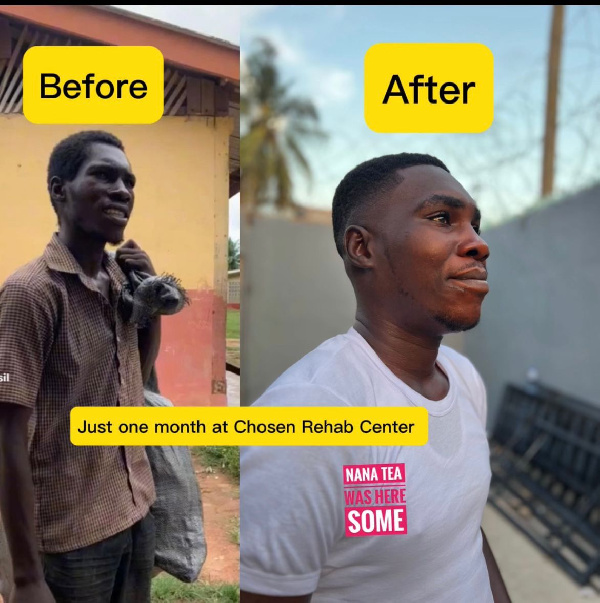
Former Bishop Herman College student, Prince Aniawu, who gained viral attention, is now urging Ghanaian youth to steer clear of drugs, citing his own experience as a cautionary tale.
In the widely circulated video, Prince reveals that his aspiration of becoming a lawyer was shattered by his descent into drug addiction. Despite initially earning a scholarship due to his academic excellence, his life took a downturn due to substance abuse.
Recalling his past, he shares, “I went to Bishop Herman College on a scholarship from the District Assembly. I had 1 throughout, but only French gave me a grade of 4 at Junior High. So, the DCE invited me one-on-one and told me to just go to school. I went to school and I met a colleague, and this is me today.”
Prince’s plea for assistance in the viral video prompted Pastor Elvis Agyemang, the convener of Alpha Hour, to donate GH¢12,000 towards funding a rehabilitation program for him.
Newly released audio-visuals reveal a transformed Prince Aniawu just weeks after his video gained widespread attention.
In the recent footage, he appears well-fed and refreshed compared to his previous unkept appearance. Grateful for the support, he expresses his thanks to Pastor Elvis Agyemang and all those who played a role in helping him reclaim his life. The visuals were shared by Nana Tea on YouTube.
Headaches are a frequent illness that can affect our everyday lives in a variety of ways, ranging from a slight nuisance to a serious disease. Over-the-counter painkillers are frequently used as the first line of treatment for headaches. Sometimes, though, it seems like these analgesics are unable to deliver the anticipated alleviation.
In my capacity as a medical practitioner, I would like to clarify why this could occur and provide information on different headache management strategies if medications are unsuccessful. Understanding the fundamental anatomy involved is crucial before exploring the many types of headaches.
The absence of pain receptors in our brain means that we cannot feel pain. On the other hand, headache discomfort may originate from pain-sensitive tissues such as blood vessels, meninges (the membranes encircling the brain), and head and neck nerves. Consequently, there are two major groups into which headaches can be divided: primary and secondary, and principal headaches.
These include tension-type headaches, migraines, and cluster headaches, and they are usually not brought on by an underlying medical issue. They can reoccur and are often treated with medication and lifestyle changes.
Secondary headaches: These can be caused by vascular problems, sinus infections, head trauma, overuse of medications, or other underlying medical diseases. The underlying issue must be addressed to manage secondary headaches.
Misdiagnosis is one of the reasons why painkillers cannot help. Misdiagnosis is one of the main reasons why painkillers cannot work as intended. Treatments for different kinds of headaches must be customized. It is crucial to get a proper diagnosis from a healthcare provider if you are unclear about the kind of headache you are having.
A misuse of analgesics: The overuse of painkillers may cause “rebound headaches”. The very drugs you depend on to provide relief may worsen the issue and give the impression that they are ineffectual.
If you find yourself needing painkillers regularly, you must adhere to dosage guidelines and get professional counsel.
Poor choice of painkillers: Not all headache kinds respond to painkillers in the same way. Ibuprofen, for instance, might be less helpful for migraines than for tension headaches. To find out which painkiller is right for your particular condition, speak with your healthcare professional.
Chronic illnesses: Simple medications might not be enough to relieve headaches caused by long-term medical illnesses such as hormone imbalances or neurological problems. Taking care of the underlying issue is necessary to properly manage the headaches.
Psychological factors: Headaches may be brought on by stress, worry, or sadness. It is possible that painkillers will not deal with these psychological issues. It may be more beneficial to combine pain management with stress-reduction strategies like counseling or relaxation training. If using painkillers does not appear to be helping, think about these other headache control strategies.
Lifestyle adjustments: Recognize and deal with any triggers such as food, sleep deprivation, or stress. The frequency and intensity of headaches can be considerably decreased by sticking to a regular sleep pattern, reducing stress, and eating a healthy diet. Medications on Prescription: See a healthcare professional if your headaches are more severe or persistent; they may recommend preventive measures or prescription drugs specifically designed for your situation.
Non-medical interventions: In certain situations, acupuncture, biofeedback, physical therapy, and relaxation methods may be helpful. Speak with a Specialist: If you have tried a number of treatments without results, think about speaking with a specialist, like a neurologist, who can provide a more thorough assessment and customized treatment recommendations.
Although many people find that medicines work well for them, headaches are intricate and complicated conditions. When they do not produce the desired results, it is critical to think about other options, such as a precise diagnosis, alterations to lifestyle, and other underlying causes.
The secret is to manage headaches holistically, taking care of the causes of the pain in addition to the actual headache. It is important to remember that there is hope for headache relief. With the help of medical professionals, you can find a solution that suits your needs and lets you live a life free from headache pain.
The Greater Accra Region’s Ayawaso West Wuogon constituency is poised to witness the demolition of at least 300 buildings, including the well-known Asuma Banda Mosque.
A report from the Insight newspaper reveals that this demolition is in response to a notice served by the Ghana Railway Development Authority (GRDA), instructing all occupants to vacate the premises.
According to the report, the notice, dated September 22, 2023, and signed by Susana Delali Akosua Kudjoe, the Deputy Chief Executive of General Services at GRDA on behalf of the Chief Executive Officer, marked the final warning issued to the affected property owners.
“You are by this letter notified, and final notice is hereby given you to vacate occupation of the said land by 30th September 2023…
“The consequences of your failure to comply with the order will not be in your interest, as there will be no further notice of our action,” the letter is reported to have indicated.
The notice was reportedly given to more than 300 landowners, including the Asuma Banda Mosque’s caretakers, according to the report.
The newspaper went on to say that even though Yaw Owusu, the Chief Executive Officer of GRDA, signed the demolition notice, it was issued without his permission.
“What is worrying is that the Deputy CEO Susana Delali Akosua Kudjoe, who is hell bent on carrying out the demolition exercise with the support of one Edem Danku, Deputy Director, Estate and Commercial Unit of the Authority, is alleged to have ignored attempts by the Member of Parliament (MP) for Ayawaso West Wuogon, Lydia Alhassan, to have the exercise shelved entirely because of the repercussions it will have, not only on the political fortunes of the ruling New Patriotic Party (NPP), but the livelihoods of over 1,000 residents on the railway land stretch.
“Already, one Daasebre Dr Asumadu Nyarko Appiah, Chief of Akyem Wenchi and Oseawuomanhene of Akyem Abuakwa Traditional in the Eastern Region recently laid claim to all the railway lands on that stretch claiming that the Ghana Railway Development Authority sold all that stretch of land to him despite the occupants also claiming to have a 50-year lease agreement with the authority,” the report added.
Meanwhile, the Insight newspaper said it has also gathered that several of the people who are to be affected have vowed not to move, insisting that they have legitimate documents from the Ghana Railway Company to support them.
Read the full report below:
The popular Asuma Banda Mosque on the Ghana railway land at the Nyaho Hospital stretch at Dzorwulu in Accra along with over three (300) hundred other private properties are set to be demolished anytime soon following a notice issued by the Ghana Railway Development Authority (GRDA) ordering all occupants to leave the area.
The notice which was signed and issued on 22nd September 2023 by Madam Susana Delali Akosua Kudjoe, Deputy Chief Executive, General Services at GRDA for the Chief Executive Officer of the authority said, “You are by this letter notified and final notice is hereby given you to vacate occupation of the said land by 30th September 2023”.
The notice distributed to the over 300 occupants of the land including caretakers of the Asuma Banda Mosque warned that, “The consequences of your failure to comply with the order will not be in your interest as there will be no further notice of our action”.
The demolition notice is however said to have been issued at the blind side of Mr Yaw Owusu, Chief Executive Officer of GRDA despite being issued on his behalf.
What is worrying is that the Deputy CEO Susana Delali Akosua Kudjoe who is hell bent on carrying out the demolition exercise with the support of one Edem Danku, Deputy Director, Estate and Commercial Unit of the Authority is alleged to have ignored attempts by the Member of Parliament (MP) for Ayawaso West Wuogon, Lydia Alhassan to have the exercise shelved entirely because of the repercussions it will have not only on the political fortunes of the ruling New Patriotic Party (NPP) but the livelihoods of over 1,000 residents on the railway land stretch.
Already, one Daasebre Dr Asumadu Nyarko Appiah, Chief of Akyem Wenchi and Oseawuomanhene of Akyem Abuakwa Traditional in the Eastern Region recently laid claim to all the railway lands on that stretch claiming that the Ghana Railway Development Authority sold all that stretch of land to him despite the occupants also claiming to have a 50-year lease agreement with the authority.
Initial attempts by Daasebre Dr Asumadu Nyarko Appiah to evict the occupants with an eviction notice and threat of legal action brewed tension in the area compelling him to resort to the law courts for redress.
Even though the matter is in court, the latest move by the deputy CEO is said to be orchestrated and if successful, to pave way for the chief to take over the state land on that stretch of the Nyaho Hospital area.
The current impasse at Dzorlwulu appears to be the tip of the iceberg with several state lands leased out for fees and ground rent being sold out like ‘kelewele’ by the officials at the GRDA leading to legal battles at the courts.
Only recently a parcel of land at Avenor in the Ayawaso West Municipality which has for over 25 years been leased out for a fee (ground rent) to one Atta, a truck Mechanic was sold to a private legal practitioner, thus triggering a court action in the process.
What is disturbing is that despite the GRDA disallowing the construction of permanent structures on these state lands, those being sold the land plan to erect permanent structures against the laid down rules and laws of the authority.
Currently, there is uneasy calm in the area as the demolition threat by the GRDA appears to be reverberating with constant threat visits to the area by the deputy CEO, Susana Delali Akosua Kudjoe.
Meanwhile, the hundreds of occupants of the railway land at Dzorwulu who claim to have legitimate documents from the Ghana Railway Company have vowed never to vacate the area.
They have thus appealed to President Nana Akufo-Addo, the Chief of Staff, Frema Opare who was once the Member of Parliament (MP) for the area and the Council of State to intervene and ensure an amicably resolution of the issue so as to avoid any bloodshed or destruction to property.
The Insight learnt that the traders and occupants have been living peacefully and plying their trade in the area until power changed hands in 2016 when rumours emerged that somebody had begun to claim ownership of the lands bordering the railway lines at the Nyaho Clinic area which stretches from Asuma Banda’s Mosque all the way to the Roman Ridge intersection at the railway line.
This paper gathered that the traders did not take the matter seriously until the early part of this year January 2023 when Nana Daasebre Dr Asumadu Nyarko Appiah, Chief of Akyem Wenchi and Oseawuomanhene of Akyem Abuakwa Traditional area caused notices through his lawyers, Kings Law Consult to be dispatched to them (traders) claiming ownership of the entire stretch of the railway lands which are the bonafide property of the government of Ghana.
In an eviction notice served which was a letter written on 14th December 2022 signed by one Christopher King, of Kings Law Consult on behalf of Nana Daasebre Dr Asumadu Nyarko Appiah it said, “We write and act as solicitors for and on behalf of Benfipiah Group Limited with peremptory instructions. Our instruction is that our client purchased a parcel of land situate and lying at Tema Line from the Ghana Railway Company”.
Our client instructs us that you have trespassed upon its property and have been operating a shop on its land for some time now. It is our instruction that our client wants to start development on the land and therefore wishes to have the land vacant.
“We demand that you vacate our client’s property within the next 14 days, by 6th January, 2023 failing which we have our client’s peremptory instructions to commence legal action against you and to make the requisite claim for mesne rent and other damages, fees and costs”, portions of the letter read.
However, some letters of leases granted to the occupants by the Ghana railway Company Limited which were sighted by The Insight showed that some of the traders have been on the land since 2001 and in some cases 1999 and being paying their ground rent to the Ghana Railway Company Limited till date.
A suit or writ of summons filed at the Accra High Court by Benfipiah Group Limited through its Chief Executive Officer, Daasebre Nyarko Asumadu Appiah against the traders who are the defendants namely Beauratex Clothing, Bolegatanga, TNATYS Fashion, Akwei Alla, Eye Awurade Chop Bar, Mama Chris, Nyame Nti Chop Bar claims among many others that the land was leased to him by the Ghana Railway Company in the year 2008 for a period of fifty (50) years.
“The Plaintiff avers that he was issued with an indenture dated 1st July 2008 by the Ghana railway Company.
“The Plaintiff avers that it effectively took possession of the land by putting some containers on the land but without its consent and authority the defendants began encroaching on its land and attempts to remove the trespassers from its land in order to develop it has proved futile and the defendants have failed to vacate the land.
However, the defendants in their counter claim denied all the claims and averments by the plaintiff, Daasebre Nyarko Asumadu Appiah insisting some of them were leased the land as far back as 2001 and in some cases 1999.
Attaining a first-class degree is a common aspiration for many students during their years at the university. Those who accomplish this feat celebrate the realization of their academic dreams.
Nevertheless, some individuals argue that in today’s world, success is not solely determined by the class of degree one graduates with but rather by the connections and networks one builds.
A video, discovered on Twitter by GhanaWeb and shared by Instablog9ja, features a Nigerian woman expressing regret about graduating with a first-class degree and being recognized as the best-graduating student in her department.
She provided reasons for her regret, stating that her singular focus on academics during her time in school resulted in a lack of social life.
“I regret graduating with a first-class. I am not saying it is wrong to graduate with a first-class or as the best-graduating student, don’t get me wrong but that shouldn’t be your only focus. It is a good thing to graduate with good grades. By all means, if you have the mental strength, if you want to, please graduate with a first class but that shouldn’t be your only priority”.
“While I was in school, I was only focused on my academics and nothing else mattered. And now, two years later, I regret it so much. Right now, my social life is a wreck. There is no relation; romantic or even normal friendships”, she said.
She emphasized that in the current century, success is intertwined with networking. Consequently, one’s achievements in life will be influenced more by the connections one builds rather than the class of degree attained.
“Let me tell you something, where networking and connection will take you, trust me, your first-class degree will not take you. Take it from someone who graduated as the best graduating student in my department”.
“Let’s be honest, it’s 2023 and you’re in Nigerian, nobody cares about what you graduated with. Someone with a second-class upper or lower due to networking will be seen at reputable places than someone who graduated with a first-class and has no connections”, she added.
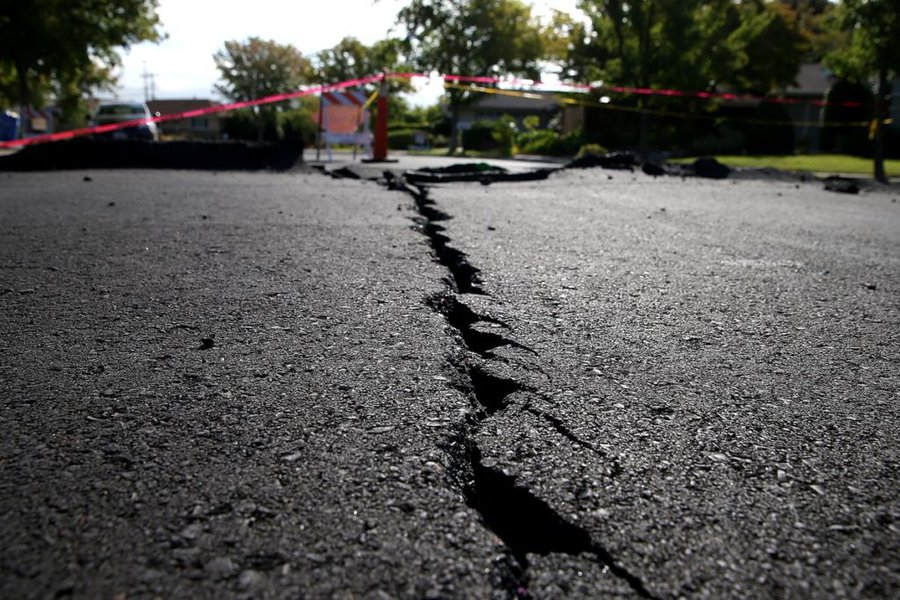
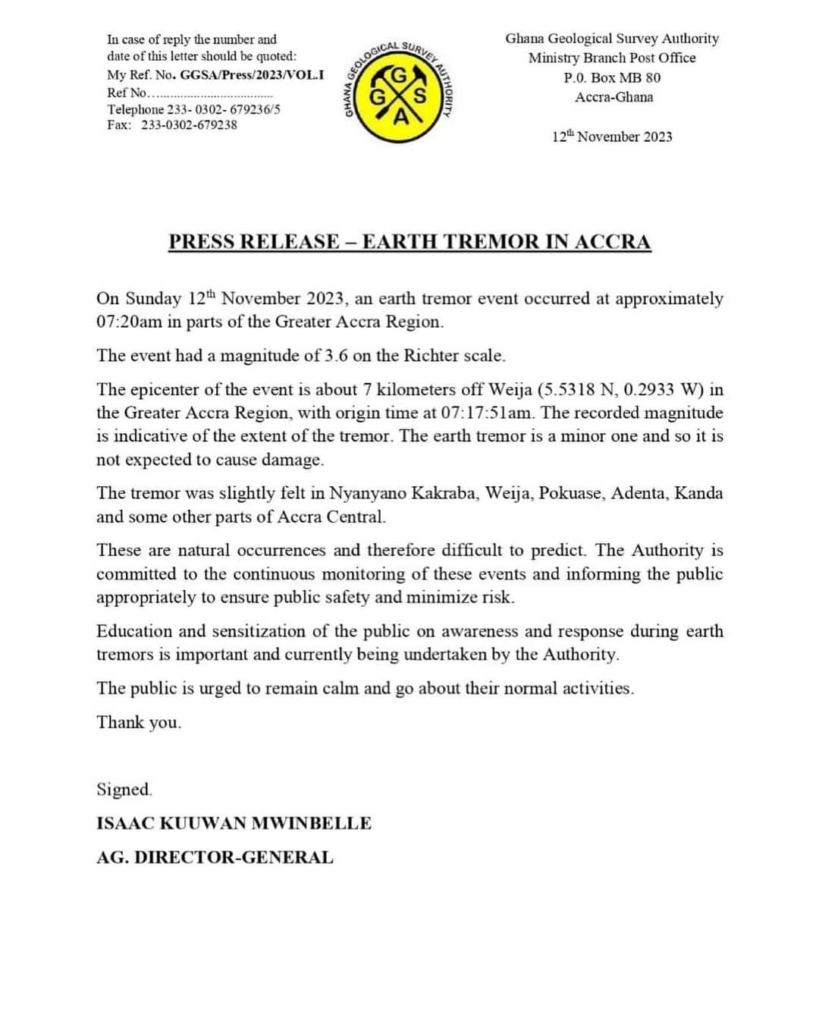
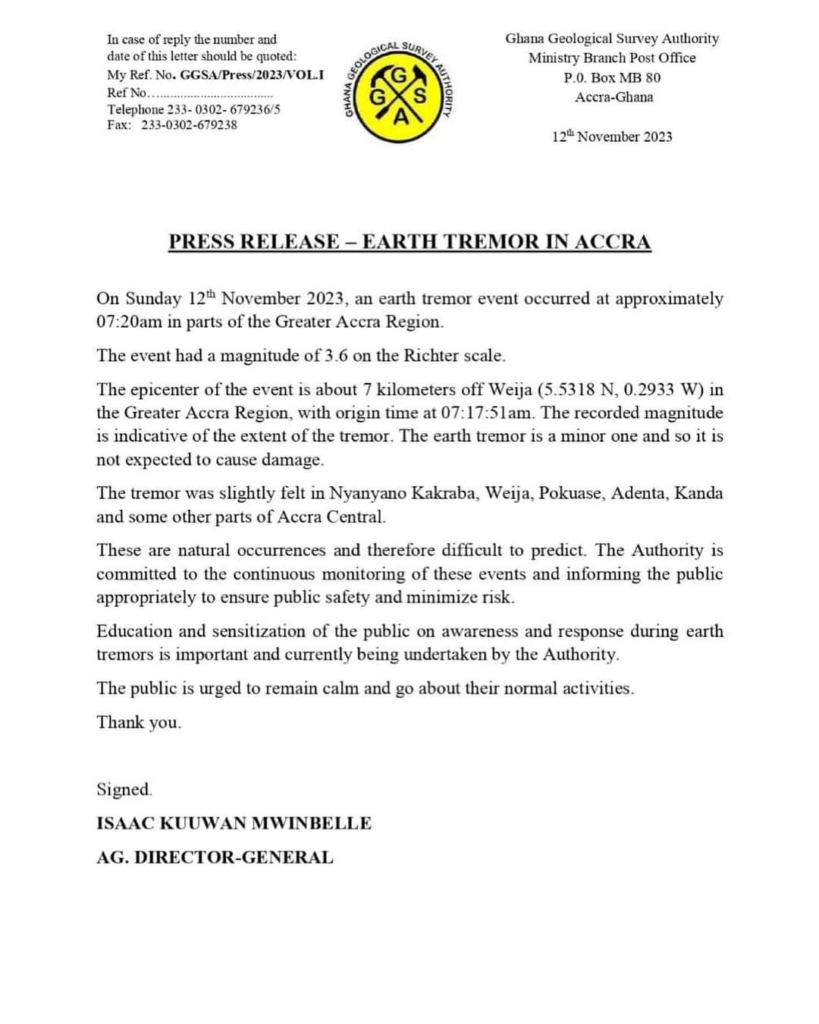
The Ghana Geological Survey Authority (GGSA) has confirmed that the tremor in certain regions of Accra on Sunday measured 3.6 on the Richter scale.
Describing it as a minor event, the GGSA assured that no significant damage was anticipated.
Communities in Weija, Nyanyano, Adenta, Bortianor, and other sections of Accra Central reported sensing the tremor around 7:20 a.m.
These areas have experienced tremors previously, making this occurrence familiar to residents.
“The epicentre of the tremor is about 7 kilometres off Weija (5.5318 N, 0.2933 W) in the Greater Accra Region, with origin time at 07:17:51am.”
The GGSA urged residents to stay calm and report any subsequent tremors to the authority.
The Authority, while admitting that such natural occurrences are difficult to predict, said it is “committed to the continuous monitoring of these events and informing the public appropriately to ensure public safety and minimize risk.”
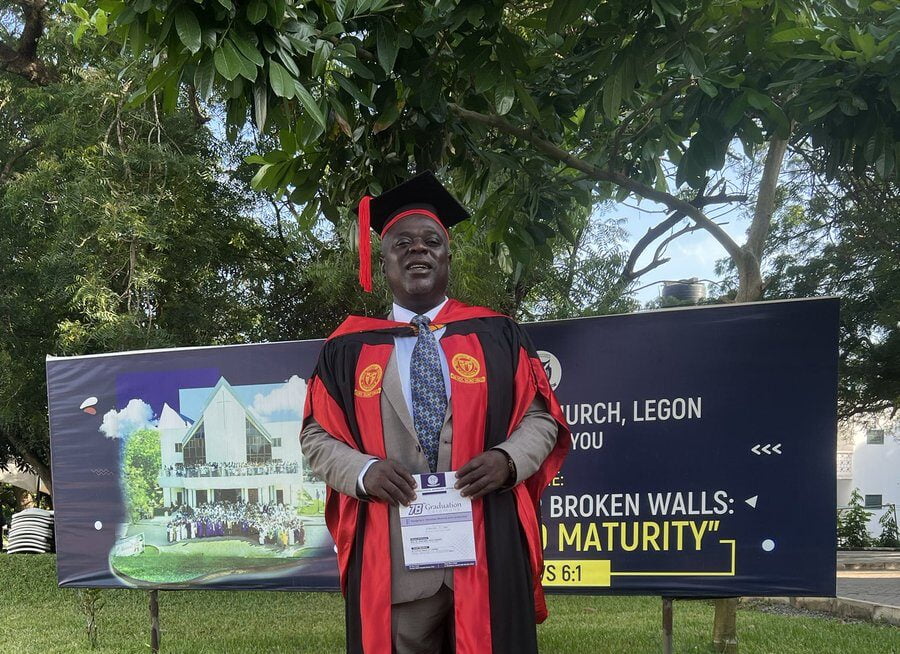
Valedictorian of the October 2023 graduating cohort at Kwame University of Science and Technology (KNUST), Bright Kwame Boadu, is calling on affluent individuals and families to extend their generosity and aid brilliant but financially needy students in realizing their aspirations and contributing to societal development.
Boadu, whose university education was generously funded by businessman and philanthropist Alhaji Seidu Agongo, achieved a cumulative weighted average (CWA) of 78.88, making him the top graduate among 1,104 students from the KNUST College of Agriculture and Natural Resources.
Having been retained by the college as a teaching assistant for his national service, Boadu is pursuing further education with aspirations to become a renowned animal scientist.
Reflecting on his journey, he shared with the media that without Alhaji Agongo’s intervention, he might have either performed poorly or deferred his program due to limited resources.
As the son of a single parent, Boadu emphasized that many students face similar challenges, and the benevolence of wealthy Ghanaians and corporate institutions could empower them to excel.
“But for Alhaji Agongo, I can say I will not have been here as the valedictorian of my graduating group. Before I met him, I was trekking to school and combining studies with extra classes so that I could raise money to feed and pay for books. These weighed heavily on my performance,” the Bachelor of Agriculture graduate said.
“But when he came through and took up all my expenses – fees, hostel, feeding and upkeep – I stopped the extra classes and put my all on books and I saw my grades improving,” said.
Mr. Boadu further urged society to consider the circumstances of the young people before judging their performance, pointing out that while he had potential, his circumstances ran the risk of hiding it.
“People are really struggling and there are a lot of brilliant people out there who need some small push to shine. Unfortunately, people care more about themselves than a better society but we should learn to share more and it will bring big changes to people’s lives and our society,” he said.
“If people are not performing, it could be finance or something because there are problems. Like my situation, if not for Alhaji Agongo’s intervention, I could have had second class and or even lower people would have said I am not serious meanwhile the truth is that was sacrificing my CWA to make ends meet,” he said.
Alhaji Agongo, the founder of the defunct Heritage Bank Limited, was earlier characterized by Mr. Boadu as a quiet philanthropist whose kindness has transformed countless lives and realized dreams.
Additionally, he urged his fellow graduates to remember that success is a multifaceted journey and not to become fixated on grades or results.
“You will define it, and no one will ever belittle you again. Success will emanate from your inner compass of decency and purpose,” he said.
He also gave praise to Gifty Boakye, claiming that she was the one who first found him and paid for his education before introducing him to Alhaji Agongo.
As part of his studies, Mr. Boadu said he became interested in animal feed, especially for poultry, and that his goal going forward would be to create a less expensive, more nutrient-dense feed source than the system’s current one, which is derived from maize.
“The price of the feed of the birds is escalating and that is collapsing many farms across the country. I want to explore alternatives to maize, which the poultry competes for with humans, and I am hopeful that I can develop something mega using cassava,” he said.
He said as part of his project work, he researched on how to use cassava to develop the feed and was now working on securing scholarship for a master degree during which he would expand the research further.
Call to the bar
In October, another benefactor of Alhaji Agongo, Frederick Agaaya Adongo, was called to the bar after successfully completing the law progamme and passing the bar exam, which the philanthropist funded.
The latest add to a tall list of students that the founder of the Class Media Group supports on the quiet.
He adopted and sponsored the education of 81 students in the St. Paul’s Lutheran School in Accra through to various tertiary schools nation-wide.
In 2019, the Muslim philanthropist constructed a 30-bed block at a cost of GH¢857,000 for the Child Emergency Unit of the Korle Bu Teaching Hospital (K’Bu) in Accra.
Alhaji Agongo has also donated sewing machines, tools for various artisans and start-up capitals to people, mostly single mothers, widows and persons with disability, across the country as part of a personal resolve to build a better society.
He is currently coordinating list of needy people affected by the Akosombo Dam spillage for support.
Today, November 13, 2023, the Bank of Ghana’s Interbank forex rates reveal that the Ghana Cedi is trading against the dollar at a buying price of 11.5183 and a selling price of 11.5299.
Simultaneously, at an Accra Forex bureau, the dollar is purchased at a rate of 12.00 and sold at 12.25.
Against the Pound Sterling, the Cedi’s buying and selling prices stand at 14.1480 and 14.1644, respectively. In an Accra Forex Bureau, the pound sterling is bought at 14.50 and sold at 15.00.
The Euro, with buying and selling prices of 12.3401 and 12.3534, is traded on the forex market. Meanwhile, at an Accra Forex Bureau, the Euro is acquired at a rate of 12.50 and sold at 13.00.
The South African Rand shows buying and selling prices of 0.6207 and 0.6214. In Accra’s forex bureau, it is bought at 0.40 and sold at 1.10.
For the Nigerian Naira, the buying and selling rates are 70.9314 and 72.7059. In an Accra forex bureau, the Nigerian Naira is purchased at a rate of 9.00 Naira for every 1 Cedi and sold at 15.00.
Regarding the CFA, it is traded with buying and selling prices of 53.0993 and 53.1565. In an Accra forex bureau, the CFA is acquired at a rate of 17.00 CFA for every 1 Cedi and sold at 19.50 CFA for every 1 Cedi.
Note that these rates may be different at a forex bureau near you. Our forex bureau rates are provided by Afriswap Bureau De Change in Osu, Accra.
Our forex bureau rates are provided by Afriswap Bureau De Change in Osu, Accra.
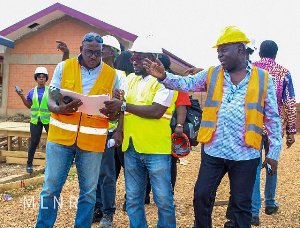
Project Consultants for Apiate, Architectural and Engineering Services Limited (AESL), have received a non-negotiable ultimatum to complete the Apiate township for commissioning.
This stringent deadline was set during a working visit to Apiate on November 10, 2023, by Benito Owusu-Bio, the Deputy Minister for Lands and Natural Resources and Chairman of the Apiate Reconstruction Implementation Team.
While inspecting the project’s progress, Owusu-Bio emphasized the crucial importance of adhering to the established timeline. He conveyed to the consultants that the deadline for the project is non-negotiable, urging heightened supervision to ensure its timely completion.
After inspecting the housing units, the Deputy Minister instructed the consultants to ensure a thorough cleanup of the site by all contractors, removing weeds, excess debris, sand, and blocks to enhance its presentability.
During a site meeting with consultants and contractors, Hon. Benito stressed that the standard quality of work must not be compromised. He emphasized that the government is paying for consistency in quality work, and it is imperative to deliver accordingly.
In the meeting, he also urged the road contractor, the ECG, the community water team, and the sanitation agency to expedite their work on the site.
Mr. Charles Blankson-Hermans, a member of the ARIT Committee and Ghana Institute of Architects, instructed the Urban Roads team to resume work on the roads by November 14, 2023, aligning with the building contractors’ schedule.
During their inspection, the team extensively reviewed the architectural designs for the new market planned for Apiate.
The Ghana Geological Survey Authority (GGSA) assured Ghanaians that they can resume their regular activities after a minor earth tremor occurred in parts of the Greater Accra Region on Sunday, November 12.
With a magnitude of 3.6 on the Richter scale, the authority stated that the event was not projected to cause any damage.
In a released statement on Sunday, the GGSA acknowledged the unpredictability of such natural occurrences while committing to ongoing monitoring and public information to ensure safety and mitigate risks.
The statement read, “Education and sensitization of the public on awareness and response during earth tremors are important and currently being undertaken by the Authority. The public is urged to remain calm and go about their normal activities.”
At approximately 7:20 a.m., residents in several regions, including Weija, Nyanyano, Adenta, Bortianor, and Accra Central, reported sensing the tremor.
The GGSA highlighted that these tremors were familiar occurrences in these specific areas. Their statement reiterated the agency’s dedication to monitoring and communicating with the public to address any concerns related to such natural incidents.
Member of Parliament for Assin Central, Kennedy Agyapong, has responded to a prophecy forecasting that he would receive no more than 16% of votes in the New Patriotic Party (NPP) presidential primaries.
Prophet Paul Kusi Appiah of the Charisma Temple International Ministry stated that he was willing to be labeled a ‘false prophet’ if Agyapong exceeded the 16% prediction in the November 4 vote.
Following the primaries, Agyapong surpassed the forecasted margin, securing 37% of the votes compared to the eventual winner, Vice President Mahamudu Bawumia, who obtained over 61%.
During a thanksgiving party over the weekend, where he addressed his campaign team and supporters from across the country, Agyapong spoke to those who doubted his strength and underestimated him.
“We went into a contest and as you know, you either win or lose. This contest was one man against the whole system. They underestimated me, when the election was getting close, I was told I will get 10% maximum. Others floated a research finding that I will get 15%, today they are all hiding,” he said to applause.
On Prophet Kusi Appaih, he submitted: “A pastor claimed if I got over 16%, he should die. But this evening I pray for God to grant him long life… I want to tell him that he who fights and runs away, lives to fight another day.
“So, I know there is time ahead of us. I beseech you all to pray for me to get long life with good health, with that, the will of God will surely be done,” he stressed.
Aftermath of November 4
Following the November 4 vote, Dr. Bawumia secured victory in the party’s flagbearer contest by polling 61.47% of the total votes cast, representing nearly 200,000 delegates.
His nearest rival, Ken Agyapong, garnered a surprising 37.41%, eliciting commendation from party members who had previously criticized him during the campaigns.
This week, Bawumia visited Ken at his residence, indicating early efforts to bring him on board for the 2024 campaign.
Renowned Nigerian influencer Daniel Anthony Nsikan, also known as Jay Boogie, has taken to social media to candidly discuss the aftermath of a failed buttocks enlargement surgery, revealing significant health complications and financial strain.
In an Instagram Live session, Jay Boogie, a transgender, candidly shared the challenges he encountered post-surgery, which he had initially denied. He pointed fingers at the surgeon, alleging their incompetence and the surgery’s detrimental impact on both his life and career.
Additionally, he expressed that his entire life savings had been exhausted on vital medical provisions, notably diapers.
“This man has messed up my whole life, all my money is going into buying diapers. I don’t have any money to take care of my siblings,” he lamented.
He also described the challenges of getting financial assistance, stating, “I pray this doesn’t take my life…”People are no longer donating to me.”
VIDEO: My Condition Getting Worse, Crossdresser Jay Boogie Cries Out After Failed Medical Procedure
Crossdresser, Daniel Nsikan, popularly known as Jay Boogie, has revealed that his health condition is deteriorating, and he has depleted his finances on dialysis following… pic.twitter.com/FBcYg7FEDl
Minister of Information, Kojo Oppong Nkrumah, has clarified why Ghana’s financial issues surpass the current bailout package that the government is requesting from the International Monetary Fund (IMF).
He emphasized that although Ghana was a victim of international economic difficulties, the country’s current $3 billion bailout support depended on a domestic initiative created by the government.
“Anytime I speak about the IMF, I am quick to mention that the IMF transaction is not the solution to our problems,” he said in an interview on Joy News’ The Probe programme on November 12.
He continued: “The IMF transaction is financing to underpin our PC-PEG [Post Crisis Programme for Economic Growth], which is our programme to recover from the economic challenges that we’ve had.
“The entire world has had economic challenges. In fact, I was watching a speech of the former President Mahama delivered abroad just about a week ago where he explains how the challenges in the global economy affected the Ghanaian economy.
“Everybody knows that there has been a global economic challenge and it has affected Ghana, and various countries have been developing their various plans,” he added.
The government denied in a statement released late last week that it had missed the deadline of November 1 for the release of the second tranche of US$600 million from the IMF bailout.
The minister explained: “The first review has been concluded and Ghana was successful in that review.
“I think at the end of that review, there was a joint conference between Ghana’s Finance Minister and the Head of the IMF team, and a staff level agreement was signed and announced to undergird our parts of the first review.
“And then it was mentioned that the staff level agreement would have to go to the IMF Executive board which board meets in the 3rd week of November to give its approval, and when that approval is given, then the second tranche would be disbursed,” he stressed.
The economy has been a hot topic in recent months due to a downturn brought on by skyrocketing inflation, declining currency value, and a general decline in the standard of living combined with high living expenses.
Before agreeing to a US$3 billion IMF loan last year, of which US$600 million as tranche one has been credited to the government account, the government repeatedly pointed the finger at the fallout from COVID-19 and the Russia-Ukraine war.
Information Minister Kojo Oppong-Nkrumah has revealed government’s new strategy to combat the rising assaults on journalists in the country.
During an interview on JoyNews’ The Probe, he highlighted the necessity for stricter penalties to dissuade individuals engaging in these attacks.
“Of course, nobody is excited about the cases that have come up, we’re more worried that the trend is actually increasing, and we think a somewhat severity in terms of punishment will help deter persons who do this,” he said on Sunday.
Mr. Oppong-Nkrumah detailed the facets of the established mechanism, stating that the government swiftly reports incidents to the police and publicly denounces the attacks to highlight their seriousness.
Emphasizing the call for strict law enforcement, Mr. Oppong-Nkrumah stressed the importance of thorough prosecutions by law agencies, ensuring that severe penalties are imposed by the judiciary.
To ensure accountability, the Information Minister revealed ongoing discussions with the police and Ghana Armed Forces, scheduling an accountability meeting before the year’s end.
The meeting, according to him, aims “to give account for all the cases that we’ve reported to them in the past.”
“Also at the end of the year, they [enforcers] have to publish a report that shows what the nation is doing about all of this.”
The Minister highlighted the government’s dedication to transparency by updating Parliament on the steps taken to tackle attacks on journalists.
He encouraged Parliament to fulfill its oversight responsibilities and initiate discussions with the judicial service to ensure the effective enforcement of penalties against those responsible.
AN expert in international relations, Farouk Al Wahab, has downplayed concerns regarding the intense public exchange between the Asantehene and Dormaahene over status and influence, suggesting that it is unlikely to escalate into a broader crisis.
According to Al Wahab, historical evidence indicates that such disagreements seldom escalate into confrontations, thanks to democratic safeguards and the overall awareness among Ghanaians, particularly the Ashantis and Dormaas.
Nevertheless, Al Wahab has advised Dormaahene Oseadeeyo Agyemang Badu II to show the necessary respect to Asantehene Otumfuo Osei Tutu II.
He highlighted two key factors, central to Ghanaian culture, which should be considered: the age and the extent of the territory controlled by the Ashanti overlord.
“The Ashanti Nation has fought enough, it is the one kingdom in Africa aside eSwatini, that has arranged its affairs properly,” Al Wahab told Okatakyie Afrifa in an interview on Angel FM.
He stressed that no matter now Otumfuo is provoked, the Dormaahene still goes through his territiry when going to Dormaa from Accra, “has he ever been impeded or stopped? No. There is a civilization.”
He added: “Nothing will make some of Dormaahene’s own subjects agree with what he is doing…. Whatever you do, Otumfuo is a big brother to you, are you then using your position to abuse him? I will tell you no… that respect must be given, at least age wise.
“In the post-colonial era, conquests are over but look at age, size of domain and keep the politics at bay because you get it wrong by engaging in that. You are creating animosity,” the expert added.
In a recent address, the Otumfuo reiterated the historical context of how the Dormaa traditional area attained paramountcy, attributing it to a decision made by a previous occupant of the Golden Stool.
Speaking to his people during an Asanteman Council meeting at the Manhyia Palace on October 19, 2023, the Asantehene emphasized the importance of revisiting history to counter attempts from various quarters to distort historical facts.
Segments of his address, shared by Opemsuo Radio on YouTube, featured the Asantehene detailing the induction of a predecessor of the current Dormaahene into office.
“Sampa is my town, Bono and Ahafo… Agyeman Badu (the first) took his oath here before going to assume his throne. He was a teacher here at Government Boys School. He swore in front of my uncle before assuming his position,” Otumfuo stated.
“It is because of these notorious ones that I am recounting this issue. What at all is it?” he emphasized before outlinging a historical sequence of relations and how the royal politics has evolved over time.
Agyeman Badu I, referred to as an uncle of the current Dormaa chief, Agyeman Badu II, has recently engaged in a verbal exchange with the Otumfuo, questioning the extent of his influence.
In a recent interview with Ghanaweb, Dormaahene Osagyefo Oseadeayo Agyeman Badu II expressed his views, asserting, among other things, that there is ‘no King in Ghana,’ as the 1992 constitution does not contain any reference or provision for such a position.
Additionally, he has previously cautioned chiefs under the Dormaa jurisdiction against pledging allegiance to any paramountcy other than the one that bestowed upon them their throne.
A police dispatch rider sustained injuries after a head-on collision with a saloon car while escorting a VIP vehicle.
The unnamed rider tried to navigate through traffic on the Anloga Junction stretch of the Kumasi Airport road on November 11, 2023.
Social media images depicted a severely damaged motorcycle and a car with a badly crushed front. The occupants of the saloon car emerged unscathed, while the injured rider was promptly taken to the airport, as reported by Joy News.
Despite signaling for the approaching car to slow down, the motorcade collided head-on with the vehicle bearing registration number AS-1142-16. This impact caused the police dispatch rider to fall in the middle of the road, according to the report.
Remarkably, the vehicle transporting the VIPs continued its journey without stopping after the incident. Subsequently, police arrived at the scene to alleviate traffic congestion, and both the damaged vehicle and motorcycle were towed away.
Ghanaian Actress Ahuofe Patri, renowned for her on-screen chemistry with Kalybos, surprised fans as she took on the role of the groom’s lady at his wedding.
Social media was abuzz with comments questioning why the two never became a real-life couple.
The speculation heightened when Ahuofe Patricia appeared among the groomsmen at the engagement ceremony, elegantly dressed in an emerald green two-piece outfit.
The wedding, attended by celebrities such as James Gardiner and Prince David Osei, was held at a private location.
Head of the Anti-illegal Mining Unit at Ghana COCOBOD, Prof. Michael Kwateng, has issued a stern warning about the potential cancellation of Cocoa road projects if illegal mining activities persist, leading to the destruction of cocoa farms.
Prof. Kwateng emphasized the adverse effects of galamsey activities on cocoa production, highlighting a significant reduction in the projected cocoa output. COCOBOD, aiming to purchase 850,000 tonnes of cocoa this year, has fallen short, unable to reach even 700,000 tonnes due to the influence of illegal mining and smuggling.
Facing financial challenges resulting from this decline, COCOBOD has shifted its focus. The current priority is the completion of ongoing Cocoa Road construction projects.
Prof. Kwateng indicated that once these projects are completed, COCOBOD may refrain from awarding new contracts, indicating a potential halt to future cocoa road initiatives.
“Illegal mining is having negative implications on cocoa production. This year we projected to purchase 850,000 tonnes, but as we speak now, we have not hit even 700,000 tonnes, which means galamsey and smuggling are affecting cocoa production.”
He added “I have recommended that cocoa road projects should be cancelled because illegal miners have destroyed the cocoa farms. So very soon COCOBOD will stop cocoa road projects,” Prof. Kwateng said.
Prof. Kwateng delivered a crucial message during an engagement between the Anti-Illegal Mining Unit of COCOBOD, local chiefs, and cocoa farmers in Akyem Asafo, Eastern region.
The meeting was prompted by a petition from cocoa farmers in Akyem Asafo who expressed concern about the Chief of Akyem Asafo, Nana Barima Boampong Darkwanin, seizing 860 acres of cocoa farms. The land, originally designated for military bases, was instead repurposed for illegal mining.
Prof. Michael Kwateng, addressing the Chiefs and farmers, underscored the legal consequences outlined in the Economic Plant and Protection Act, Article 47. This legislation prohibits the sale of cocoa farms and any destruction of cocoa plants without the consent of Ghana COCOBOD. Individuals found violating this law are susceptible to legal consequences.
The Concerned Farmers Association of Akyem Asafo lamented the ongoing destruction of their cocoa farms for illegal mining, emphasizing the erosion of their livelihood. They urgently called for COCOBOD’s intervention to combat this menace.
Well-known comedian from Nigeria, Helen Paul, has shared her story of overcoming the stigma she experienced as a child from society.
A few years prior, Helen Paul had disclosed that she was raped at birth.
She claimed in a social media video that went viral that some family members even called her a “bastard” who would never amount to anything.
Not everyone can handle rejection. Some of us are unaware that the words we use can cause someone to feel rejected forever, but in my case, it had a different effect.
“I was born out of rape, and I grew up with my grandmother, where everyone in the area called me a bastard. So, I grew up hearing that I’m a bastard.
“When my aunties come to give grandma money for feeding, they will say ‘Don’t use this money to take care of one bastard child, use it to take care of yourself and buy your medicine’.
She shared her story, inspiring others, saying her mother was everything to her.
“Once they leave, mama would turn to me and speak in pidgin ‘you don hear wetin dem aunty dem dey talk, na so this world be o. Na people wey suppose be your mama blood be that oh but dem don tell you who you be. If you like, grow up, forget yourself, say if person no do well, nobody they celebrate ham’.
“But I realize that anytime I offended Mama, she would not want to touch me because they have warned Mama not to beat me. So you think a child looking at different talk will grow up with love? But today, I am a comedian in Nigeria and a professor in the United States.”
The Dean of the Business School at the University of Cape Coast, Prof. John Gatsi, Clarifies Delay in Second Tranche of IMF Funds Due to Unresolved Issues with External Creditors”
Prof. John Gatsi has provided insights into the delay in disbursing the second tranche of the International Monetary Fund (IMF) funds, attributing it to the protracted discussions with the country’s external creditors. He explained that the external creditors are hesitant to agree to the government’s proposed 30%-40% haircut.
Despite the government’s denial of missing a November 1 deadline, the crucial acceptance of the proposed haircut by external creditors is still pending.
“The delay is occasioned by the inability of the government of Ghana and the creditors to agree on what is required of them. The Government of Ghana is pleading with the creditors to accept the certain elongation of maturity of the debts and some cuts, about 30 to 40 percent on the interest or the coupons that they expect.
“That is where the disagreement is coming from. As things are it seems part of the creditors such as bilateral and multilateral are sort of very soft but it was also indicated that some creditors are excused from the debt exchange programs, they will not be affected,” John Gatsi was quoted by 3news.com.
The economist did note that creditors are currently stuck because it is hard to give up their interests.
“It is very difficult for commercial creditors to see a chunk of the interest wiped away, I believe that is where the disagreement is and they have not come to terms with it yet. That is why we couldn’t meet the target,” he insisted.
Chief Executive Officer (CEO) of the National Petroleum Authority (NPA), Mustapha Hamid, showcased his musical talents by leading a choir in singing a praise song during the 78th Graduation Ceremony of the Trinity Theological Seminary in Legon on November 11, 2023.
The former lecturer in Religions at the University of Cape Coast took the podium and initiated the song, captured in a video shared online by former presidential spokesperson Koku Anyidoho.
The video features Hamid singing in Twi, expressing gratitude and offering deserved praise to God for His blessings in the lives of the faithful.
As the Guest of Honour for the event, Hamid participated in the graduation ceremony where hundreds of students received qualifications in Theology.
The video has sparked various reactions on social media, with many celebrating the beauty of interfaith engagement, especially a Muslim actively participating in Christian worship.
Koku Anyidoho, who shared the video, also commented on the incident in the context of recent controversies surrounding religion and politics. The controversy reached a peak following Ningo Prampram Member of Parliament Sam George’s labeling of Vice President Mahamudu Bawumia as a ‘religious prostitute’ earlier in the week.
“This is Hon Mustapha Hamid, Guest of Honour and Islamic scholar, singing a Christian song at the 78th Graduation Ceremony of the Trinity Theological Seminary, Legon. There is only ONE God in Whom we ALL have our being. 11/11/23,” Anyidoho’s X post read.
This is Hon Mustapha Hamid, Guest of Honour and Islamic scholar, singing a Christian song at the 78th Graduation Ceremony of the Trinity Theological Seminary, Legon. There is only ONE God in Whom we ALL have our being. 11/11/23 🙏🇬🇭❤️👌 pic.twitter.com/zRr3AVD1KD
Head of the Freight and Logistics Department at the Ghana Shippers Authority (GSA), Mr. Fred Asiedu Dartey, has called upon the Police to contribute to the advancement of the nation’s transit trade sector.
Emphasizing the crucial role of the Police service in trade facilitation, Dartey stressed the need for them to carry out their responsibilities without disrupting the flow of commerce.
Addressing a sensitization workshop organized by the Authority for Police officers, Dartey acknowledged the impact of the numerous Police checkpoints on transit trade facilitation.
He highlighted that Ghana’s share of transit patronage from landlocked neighbors was diminishing, citing a study that identified the proliferation of Police checks on highways.
Dartey noted that the Police were responsible for 80 percent of harassment on roads, leading to extended delays and prevalent extortion at checkpoints, which discouraged international movers. This situation has prompted traders to redirect their activities to ports in Togo, Ivory Coast, and other favorable destinations in the sub-region.
Despite the challenges, Dartey underscored the significance of transit trade as a lucrative sector contributing tens of millions of dollars annually to the national economy. He emphasized the need to sustain and promote this sector.
Highlighting the existence of 63 checkpoints from the port of Tema to the community of Hamele on the border with Burkina Faso, and a total of 53 from Tema to Paga, Dartey acknowledged the justified presence of Police checkpoints on trade corridors. However, he urged that such structures should not impede the smooth flow of trade.
“We need to do something. Drivers spend 1 to 3 hours at checkpoints over petty issues, and extortion is affecting the patronage of Ghana’s ports. The police should not sell the birthright of the nation for a pittance on the corridors,” Mr. Dartey stated.
The highlighted transit corridors were further hindered by service taxes, obtrusive middlemen, and delays at border crossings.
Difficulties with banking, demurrage fees, and language barriers were also mentioned.
Police officers were urged to collaborate with relevant agencies to ensure due process in handling different situations, as they were reminded of the unpredictability of international trade.
“Trade facilitation is very crucial and transit trade is key. We should not impede the development of transit trade because it will affect the prospects for the development of the nation’s ports,” Mr Dartey said.
In a speech, Ms. Benonita Bismarck, the Chief Executive Officer of the Ghana Shippers Authority, stated that the Authority would continue to support transit trade facilitation because it was in line with the goals of the AfCFTA.
“Contrary to the widely held perception that Ghana does not derive any benefits from the transit trade through its corridors, the outcome of a study in 2015 showed that tangible financial benefits accrued to operators along the transit value chain,” she said.
In a bid to enhance the sector, the Shippers Authority has entered into a Memorandum of Understanding (MoU) with landlocked countries to foster essential collaboration.
Additionally, land has been procured in the Central Region of Ghana for the establishment of a freight park and a one-stop complex. This initiative aims to be replicated along all major corridors.
The Chief Executive expressed optimism that these engagements would positively impact the expansion of transit trade. He urged stakeholders to actively contribute to the advancement of this endeavor.
Born on April 24, 1827, Ghana’s Kwasi Boakye is the world’s first black mining engineer. The African-Dutch mining engineer was a prince of the Ashanti Empire and the eldest son of Kwaku Dua II, a king of the Ashanti kingdom.
In 1837, along with his cousin Kwame Poku, the prince left to pursue an education in the Netherlands. The prince and his cousin were sent from their homeland to the Netherlands as part of a deal that gave the Dutch ”recruits” from Africa when they could no longer legally take slaves.
The king received a portion of the agreed sum and offered his eldest son Boakye and his cousin Kwame Poku, both aged 10, to Holland. They were given to the governor in Gijzel.
The two boys arrived at Netherlands at a French boarding school.
They were both raised with the Christian doctrine and in 1843, they were baptized in the Dutch Reformed Church of Delft.
Although history has it that the boys were treated well, ‘The Two Hearts of Kwasi Boachi’, a novel that tells the story of Kwame Poku and Kwasi Boakye, portrays otherwise. According to Dutch author Arthur Japin, the young princes were beaten up on the street and bullied at school; they were flustered by the Dutch Christmas custom of blackface.
They inevitably grew apart. Kwasi trained as a mining engineer at Delft University, where he graduated in 1847. His cousin Kwame Poku returned to the Gold Coast (now Ghana) while prince Kwasi stayed in the Netherlands.
He successfully completed his civil engineering examinations in 1847, and was subsequently assigned to a mining engineer. In contrast to the other students, from July 1847 to July 1848, he became a student at the mining academy in Freiberg in Saxony, where, among other things, he was taught by the then famous Bernhard von Cotta.
While others were made available to the governor-general of the Dutch East Indies on February 19, 1850, as second class engineers and as aspiring engineers, Kwasi waited until April 22, 1850, to learn that he would become an ‘extraordinary’ aspiring engineer.
He was reportedly discriminated by his superior Cornelius de Groot van Embden. He was described as highly intelligent and very good at what he did yet due to his colour, he was barely recognized.
Aquasie Boachi with two of his children, Aquasie jr. And Quamina Aquasina. (Java, 1900) Pic Credit: Wikipedia.org
He resigned and requested a public service. He also requested the Minister of Colonies Pieter Mijer to be compensated for the non-fulfilment of promises made to him.
In 1857, Kwasi became entitled to a monthly allowance of 500 guilders and 710 hectares of waste land in the residence Madiun in leasehold that was liquidated in 1898.
Kwasi later settled in Bantar Peteh, a little south of Buitenzorg. He reportedly bore several children outside of marriage to native women.
He was a member of the Association of Civil Engineers (later called the Association of Delft Engineers). In 1871, he again became a member and correspondent for the Dutch East Indies.
In 1893, he was appointed honorary member. He died in 1904.
The Agricultural Development Bank (ADB) has contributed an amount of GHC1,000,000 to the Ministry of Food and Agriculture (MoFA) in support of the 39th National Farmers Day celebration.
The cheque will be presented to the 2023 National Best Farmer during an awards night at the University of Mines and Technology (UmaT) in Tarkwa, Western Region.
The theme for the 39th edition of the National Farmers Day Celebration is “Delivering Smart Solutions for Sustainable Food Security and Resilience.” This annual event honors farmers for their invaluable contributions to the country’s development and aims to leverage innovation and technology to enhance the organization of the national award ceremony.
The ADB has consistently been the lead sponsor of this celebration in recent years. During the presentation of the cheque, Eno Ofori-Atta, the Deputy Managing Director of ADB PLC, reaffirmed the bank’s dedication to increasing investment in the agricultural sector.
This commitment is aimed at improving food security, supplying raw materials to agro-based industries, and generating employment opportunities for the youth in the country.
Deputy Minister of MoFA and Chairman of the Planning Committee, Yaw Frempong Addo, emphasized that the celebration serves as a reminder to stakeholders and the public to stand in solidarity with hardworking farmers. Their sacrifices, perseverance, and tireless efforts contribute significantly to ensuring food sustenance in the country.
He said: “Ghana cannot take for granted the constant supply of our food and nutritional needs by our farmers despite the numerous challenges they face.”
Despite the surge in food prices, the Deputy Minister emphasized that food remains both available and accessible. He added that the government is actively addressing challenges to ensure the affordability of food across the country.
Mr. Frempong highlighted that this year’s planned activities for the celebration would have a unique approach. Among the activities is a five-day exhibition of agricultural products called “Agrifest,” scheduled to take place at the ministerial enclave from November 27 to December 1, 2023.
“Agribusinesses from all 16 regions would come on board to exhibit their agricultural products and show to the whole world what Ghana is doing in terms of food security. There will also be a special desk placed at a vantage point to explain phase two of the Planting for Food and Jobs (PFJ) programme to the citizenry for better understanding and participation so that Ghana will completely end or reduce the importation of food items.”
A parade will traverse the main streets of Accra to raise awareness for the upcoming 39th National Farmers Day Celebration.
The Deputy Minister also informed the media about a farmers’ market set to take place at Independence Square in Accra as part of the festivities. This market will offer a variety of affordable food items, including yams, cassava, plantains, rice, and poultry products.
While the districts and regions will uphold their customary exhibitions and awards, the national event will have a different format.
It will be an indoor awards night hosted at the University of Mines and Technology (UmaT) in Tarkwa, Western Region. Nominees will be invited to attend and receive their awards during this ceremony.
“We are ready to receive donations, we are appealing to everyone to come on board as it has always done over the years to help make this year’s event a success,” he said, pleading with corporate organizations and stakeholders to support this year’s celebrations.
On Saturday, November 11, 2023, Founder and CEO of the Atta-Mills Institute (AMI), Samuel Koku Sitsofe Anyidoho, participated in a vibrant Graduation Ceremony at the esteemed Trinity Theological Seminary (TTS) in Legon.
The ceremony, attended by a large and enthusiastic audience, marked his successful completion of the Master of Arts in Ministry (MAM) Program, a decision driven by a profound calling to serve in the Lord’s Vineyard.
Koku Anyidoho, a distinguished politician known for his integrity, responded to this longstanding divine calling and embarked on the MAM Program, aligning his path with the principles of the Kingdom.
In doing so, he follows in the footsteps of great leaders like Osagyefo Dr. Kwame Nkrumah and his political mentor, President John Evans Atta-Mills.
Drawing parallels with Nkrumah, whose visionary leadership was intertwined with his Theology degree from the Lincoln University Theological Seminary, and Atta-Mills, who openly expressed his strong faith in God by establishing a National Day for Prayer and Thanksgiving,Koku Anyidoho now integrates Kingdom Principles into his political and nation-building approach.
Despite his established credentials as a Politician, Writer, Communications Expert, and Accredited Member of the Institute of Public Relations (IPR), Ghana, among other accomplishments, Koku Anyidoho sees his journey into Theology as an undeniable calling—one he cannot refuse, having heard the voice of God. This marks a significant and illuminating phase in his continued commitment to politics and nation building.
“My parents through divine inspiration named me Samuel, and just like the boy Samuel in the Temple in Shiloh, I have heard the voice of God and asked Him to speak for His servant haereth.”
According to Apostle/Prophet Koku Anyidoho, “If the Founding Fathers of this dear nation of ours were divinely inspired to situate the God-factor firmly in two key symbols of the nation – our National Anthem and National Pledge; “God bless our Homeland Ghana …” and “ … So help me God”, then it stands to reason that we cannot live above our current circumstances if we do not apply divine wisdom and allow our thoughts to be guided by God.”
Koku added, “It does not mean we shall sit and wait for manna to fall from heaven; far from that. What it means is, we shall allow Righteousness and Justice to be the Foundation of our forward march because our National Motto is, Freedom and Justice.”
The Guest of Honour for the event was Dr. Mustapha Abdul-Hamid, an esteemed Islamic Scholar and the Chief Executive Officer of the National Petroleum Authority. The Guest Speaker for the occasion was Mustapha Hamid.
It’s noteworthy that the Trinity Theological Seminary celebrated its 80th anniversary last year, and the Graduation Ceremony held last Saturday marked its 78th year.
Dr. Mustapha Abdul-Hamid, an Islamic scholar, and the current CEO of the National Petroleum Authority (NPA), served as the Guest of Honour. During the ceremony, he urged the graduating students to be mindful of Religious Pluralism as they embark on their mission to preach the Gospel of Christ and salvation.
According to Mustapha Hamid, “Salvation is more about living a Christ-like life than being a Christian”.
Ghanaian comedian Richard Asante, popularly known as Kalybos, has bid farewell to bachelorhood as he tied the knot with his fiancée, Antwiwaa, in a star-studded ceremony on Saturday, November 11.
Kalybos had previously announced his engagement to Antwiwaa on social media, and the wedding celebrations unfolded with the enthusiastic participation of friends and fans.
This marriage brings an end to longstanding rumors surrounding a romantic relationship between Kalybos and his co-filmmaker Ahuofe Patri.
The 35-year-old entrepreneur and filmmaker rose to prominence with his portrayal of Kalybos in the acclaimed comedy series ‘Boys Kasa,’ which began in 2012. Over the years, he has been featured in notable films such as ‘Kalybos in China’ and ‘Amakye and Dede.’
In 2017, Kalybos, alongside his Boys Kasa co-star Patricia Agyemang, was honored with the Black British Entertainment Award in London for their outstanding contribution to TV comedy.
In a recent Investor Market Place Finance Forum held in Accra, finance experts emphasized the importance of women entrepreneurs formalizing their businesses through documented results to attract funding from financial institutions and investors.
The advice particularly targeted women-led micro, small, and medium enterprises (MSMEs), encouraging them to assemble professional teams dedicated to handling the documentation processes, showcasing their financial viability.
During the forum, experts urged women entrepreneurs to shift their mindset and take risks to scale up their businesses by exploring available funding and investor opportunities. The event aimed to accelerate the success of women-led businesses in the agribusiness sector by fostering meaningful connections and partnerships between these businesses, financial institutions, and non-financial institutions.
Organized under the auspices of the United Kingdom Trade Partnerships (UKTP) Programme and implemented by the International Trade Centre (ITC), the forum was part of the UKTP’s efforts to support women-led businesses in Ghana. The program focuses on building the capacity of these businesses to be competitive, resilient, and investor-ready while enhancing their export potential and access to finance for expansion.
According to the World Bank, 44% of MSMEs in Ghana are female-owned, constituting about 92% of all businesses and contributing approximately 70% to Ghana’s Gross Domestic Product.
Madam Augustina Damete-Yeboah, Managing Partner of Alpha and Escamore, a snail farming and consultancy firm, highlighted challenges such as high-interest rates and a lack of flexible funding opportunities faced by women-led MSMEs. She encouraged women entrepreneurs to explore partnerships, join cooperatives, and seek alternative funding sources to reduce operational costs.
Dr. Loretta Sarpong, Head of the Women’s Desk at Ecobank, urged women-led MSMEs to adopt a daily routine of documenting their cash flow and leverage digital payment platforms to facilitate financial institutions’ assessment of their progress.
“You must separate your working capital from operational expenses. Have a personal account and use that for your personal expenses, and pay yourself as a business owner,” she said.
Madam Evelyn Sena King, Lead of Coverage and International Business at C-Nergy Ghana Limited, highlighted that while women entrepreneurs aspire to grow their businesses, many struggle to present them in a way that attracts investors. She emphasized the importance of engaging professionals to handle specific aspects of the business to ensure a professional approach and enhance investor confidence.
Mr. Chris Amponsah Sackey, Head of the National Export and Development Secretariat at the Ghana Export Promotion Authority, pointed out that the high-interest rates faced by Ghanaian MSMEs impact the competitiveness of their products on the global stage.
“The challenge is not about access to financing but at what cost. It is a bigger conversation that we need to have,” he said.
For nearly three years, Electrochem Ghana Limited, a salt mining company owned by Ghanaian businessman Daniel Mckorley, also known as McDan, has been embroiled in an ongoing dispute with the people of Ada.
The conflict emerged in 2020 when Electrochem obtained a lease from traditional leaders and government approval to mine salt in the Ada-Songor lagoon.
The company asserted that the lease would bring developmental opportunities to the area, including job prospects for local youth.
However, opinions among the Ada people were divided. While some believed in the project’s positive impact, others viewed the privatization of the lagoon as a threat to their livelihoods, as they relied on the lagoon for their own salt mining activities.
Despite numerous protests and demonstrations by the youth of Ada, the project persisted. Electrochem proceeded with the mining activities and the project was officially commissioned by President Akufo-Addo on August 30, 2023.
In response, the Chief of Terkpebiawe Clan in Ada and a prominent member of the Ada Songor Lagoon Association (ASLA) emphasized in a press briefing in January that the residents would not consent to the company mining salt extensively in the lagoon.
“McDan has been given a place to work in the Lagoon and we entreat him to focus on his territory because we will not vacate our vast portion for him to operate. He alone cannot feed us and our subjects; this is the source of livelihood of the people. You McDan have no right to be here, your presence in Ada is illegitimate and you cannot give us any ultimatum,” he asserted.
In a rekindled feud, a shooting between Ada residents and Electrochem Ghana Limited resulted in one confirmed death and multiple injuries.
Following the incident, local journalist Isaac Ofei spoke with CitiNews and stated: “Today, these alleged land guards went to Toflokpo. The chief of the town informed me that when the landguards arrived, they began attacking anyone in sight. The people of Toflokpo retaliated as well. Some residents of Ada stated that this is their source of livelihood, so if Electrochem takes over all the land, where will they find their source of income and livelihood?” he asked.
Nonetheless, Electrochem has refuted any role it played in the conflict. Ghanaians are waiting for government action to guarantee a peaceful resolution to the long-running dispute.
The contractor behind the controversial Saglemi Housing Project, Andrew Clocanas, has been laid to rest.
He passed away at his Airport Residential Apartment, with reports indicating that his body was discovered in the bathroom under a shower on Saturday, October 20, 2023.
A Requiem Mass, followed by cremation, took place at the Lashibi Funeral Home on November 7, 2023.
According to a funeral brochure detailing the ceremony, Clocanas’ “mortal remains will be sent to the United Kingdom for a funeral service and burial alongside his late father Nikolaos.”
Meanwhile, the Ghana Police Service conducted inquiries into his death, questioning individuals at his residence as part of their ongoing investigation.
Trial prior to death
Andrews Clocanas, currently under trial in connection with the Saglemi Affordable Housing Project, is joined by co-defendants including Dr. Kwaku Agyeman-Mensah, a former Minister of Water Resources, Works, and Housing; Alhaji Ziblim Yakubu, a former Chief Director of the ministry; Collins Dauda, former Minister of Works and Housing, and Nouvi Tettey Angelo, Chief Executive Officer and owner of Ridge Management Solutions Ghana Limited.
The group collectively faces a total of 70 charges, accused of willfully causing financial loss to the state in relation to the approved $200 million for the Saglemi project.
All defendants have pleaded not guilty and have been granted bail.
Singer behind the hit “Little Things,” Efya Nokturnal, underscores the significance of therapy in the lives of musicians as they venture into their music careers.
She emphasizes that many musicians lead complex lives, and seeking therapy is instrumental in shaping their minds and preparing them for the goals they aspire to achieve.
These sentiments were expressed by the singer during an interview on GhOne Entertainment while promoting her latest EP titled “No More Tears.”
“For the management to provide therapy for their artistes I think that is a wonderful idea. So that they will be mentally okay before they step out into the world because it’s not easy. I think therapy is important for every artiste because as creatives, it is not easy for us because we go through a lot that we cannot express all the time because of the eye that is on us. So, we try to maintain and be a little private as usual. I think therapy is very important for any artiste”, she said.
In addition to musicians, Efya Nokturnal encourages her fans to consider therapy, expressing the belief that everyone requires a sound mind to navigate their daily lives.
“I feel like therapy is necessary for anybody. As human beings, we all have a very complicated mind that we are trying to figure out daily so it is just about placing yourself in the right environment so that you can protect yourself and your mind”, she added.