Presidentof the Chamber of Freight and Trade (CFT), Dennis Amfo Sefah, has raised concerns about Kissi Agyebeng the Special Prosecutor’s (OSP) investigative report involving the owner of Labianca Group of Companies for corruption.
According to them, something is not right about the report and it seems the Special Prosecutor is trying all he can to find faults with Eunice Jacqueline Buah Asomah-Hinneh for an alleged act of influence peddling.
Adding that the corruption report from the OSP is a clear case of giving a dog a bad name and hanging it.
In a statement dated August 10 and signed by its President states, “We have come across a purported report on investigations carried out by the Office of the Special Prosecutor into alleged corruption and corruption-related offences involving Labianca and the Customs Division of The Ghana Revenue Authority in the media space, we are baffled by the contents of the report and are clear in our minds that the OSP got it wrong,” a part of the CFT’s statement read.
The Chamber, stressed that the GRA and the Labianca Group of Companies did no wrong in the said transaction.
“The chamber strongly believes that both Labianca and the Customs division of GRA acted in accordance to the Laws of Ghana, specifically the Customs Act 2015 (Act 891). It is never out of place or illegal for any importer for this matter Labianca Company Limited to engage Customs after the first three years of operations for ‘customs advance ruling’ under Section 12 of the Customs Act (Act 891).
“The company or their Agents may not have known that there is a provision in the Customs Act that allow for an engagement with Customs for value acceptance within their first three years of operations.
“This provision in the Customs Act does not in any way discriminate against any person on condition of their position, religion, status, tribe, Colour or creed, it is open to every importer and exporter, Ghanaians and foreigners. Hence the link of the application of the law to the position of the director and owner of the company is neither here nor there. By Law, the Customs Division of the GRA is the only agency mandated for the classification and valuation of Cargo that is imported or exported out of Ghana, Sections 66 and 67 of Act 891 in reference. Importer like Labianca has no hand in the method of valuation and values customs may apply to their cargo at all times.
“Over the years Labianca has been applying to Customs to engage them in Customs advance ruling under Section 12 of the Customs Act (Act 891). Customs have the authority to either accept or reject the applications and write to the company indicating reasons for rejection or acceptance. At no point during the investigation did the customs division of the GRA state that they approved the application under duress or based on the influence of the director of the company hence it is surprising and factually inaccurate for the OSP to come to the conclusion of influence peddling,†the statement stressed.
Media reports on Monday indicated that the OSP has recovered an amount of ¢1.074 million from a company owned by a member of the Council of State, Eunice Jacqueline Buah Asomah-Hinneh.
The OSP in the report titled: “Report of Investigation into Alleged Commission of Corruption and Corruption Related Offences involving Labianca Group of Companiesand the Customs Division of the Ghana Revenue Authority†noted that the amount represents a shortfall in import duties paid to the state.
Black Stars striker, Felix Ohene Afena-Gyan could join Serie A side, Salernitana on loan, according to Italian transfer journalist Nicolò Schira.
Schira has reported that Salernitana have opened talks with Roma as they seek to acquire the service of Gyan for the new Italian Serie A season.
The negotiations are said to be in the early stages.
“#Salernitana have opened talks with #ASRoma to try to sign Felix #AfenaGyan on loan. #transfers,” Schira tweeted.
The Salerno-based club becomes the third club to propose a loan move for Afena-Gyan after Sassuolo and Crystal Palace.
It appears that Crystal Palace’s move has fallen through unlike Sassuolo who are hopeful of signing the Ghanaian to replace their outgone main-man Gianluca Scamacca.
Afena-Gyan could have limited playing time at Roma this season due to the signing of Argentine forward Paolo Dybala, who is hoping to form a dangerous attacking trio with Nicola Zaniolo and Tammy Abraham. Whereas, Eldor Shomurodov, Stephan El Shaarawy, Nicola Zalewski and Gyan serve as back-up.
Economist, Courage Boti has attributed the free fall of the Cedi to among other things, the excessive expenditure before and during the advent of COVID-19 as against the poor revenue mobilization targets through the e-levy and others.
The cedi has depreciated against the dollar, trading at 9 cedis per dollar.
The sharp fall from 6 cedis at the beginning of the year, to 9 cedis now, has had a major impact on importers in particular, with a far-reaching effect on the purchasing power of consumers.
Courage Boti tells Citi News that managers of the economy failed to take remedial measures to revert the poor performance of the cedi.
“I thought we missed an important opportunity in November when we were reading the budget to try to address the market. Clearly, during the Covid-19 era, we spent monies we did not have, coupled with the energy sector problems and financial sector clean-up. We exceeded our budget. It will take about 3 to 4 years of rationalization to bring things back to normal.â€
“After Covid-19, we could have streamlined expenditure to make up for the excess expenditures we had in the past.â€
Courage Boti shares, with Citi News, some ideas the government should adopt, to arrest the cedi.
“Having done all these, the natural thing going into consolidation would have been to have an IMF bus stop, where we had policy guidance and balance of payment support. If we were under such programs in 2021 and 2022, it would have guaranteed fiscal discipline which the market will trust and balance of payment support that can reassure investors that they are safe.â€
“The harm has been caused, the first solution is to accelerate the conversations with IMF. This will depend on our transparency and the amount of information we are willing to give.â€
Wednesday, August 10, 2022, marks the birthday of Maha Ayew, the wife of legendary Ghanaian and African footballer Abedi Ayew Pele.
Maha who has a Lebanese heritage was born on August 10, 1968, is celebrating her 54th birthday, a day after marking her 35th wedding anniversary with Abedi Ayew Pele.
Maha and Abedi Pele married in 1987 when the former Black Stars captain was playing in the French League for Olympique de Marseille.
Out of her 35-year-old marriage with Abedi Pele, three children have been produced, two of them are popular footballers.
Her two sons, Andre Dede Ayew and Jordan Ayew play for Qatari-based Al- Sadd and Crystal Palacein England respectively, and the only daughter in the family, Imani Ayew works as a model.
Maha’s two sons have scored 42 goals in 188 appearances combined for the Black Stars.
At Dekyemso in the Ashanti region of Ghana, two female prostitutes fought over a “client”, one who in their business terms described as “a good customer that spends liberally on the sex workers, and always paying higher prices above the charged fee to spend a night with the sisters of the night”.
In the area where the prostitutes, a.k.a, the harlots operate in Dekyemso, there’s one woman who has lasted unusually long in the nightly pleasure business, trade others argue it’s the first-ever amongst human race’. Encompassing Bible and any other known religious text, men bought sex from women who sold it.
Aside from the infamous story of Mary Magdalene, the harlot who was saved from lynching by Jesus Christ, there’s also in the Jewish scriptures a story of Judah, the son of Jacob who conceived a baby with his daughter-in-law, Tamar, through whoredom.
In the Dekyemso case, this particular prostitute under discussion, Ama Joy, wouldn’t give joy to another rival in the pleasure trade.
Akua Comfort seems to be the most beautiful Ashanti to engage in prostitution, and since announcing her presence in the brothel, the male clients never hissed or catcalled Ama Joy, and she virtually went out of business. She was peeved and insane to distraction about this turn of unfortunate events.
The Bono people of Goka say: ‘pemtoa bÉ” a É”di awu’. To wit: broken bottles are deadly.
A broken heart woman in truth is more dangerous than that proverbial broken bottle.
Now, not joyful, Ama Joy mobilised her gang of lawless, bodily built, and macho men. They accosted and held down Akua Comfort. They laid her supine and opened her legs as in the position of a woman lying down for the “religious sex style”.
A reader may think ahead that; ‘then the men had a free day with bouts of sexual rounds with their victim’. But no, a wrongly hastily prediction of the suspense. Ama Joy appeared in the scene, and she brought out a razor from her pocket, she aimed at Akua Comfort’s comfortable genitalia, across all lengths and breadths, she inflicted humiliating mortal wounds in this beautiful girl’s vagina, the asset upon which men shower their last income, and left her to her fate, groping in the darkness til help came in the likeness of the Biblical Good Samaritan.
Thank God Ama Joy and her accomplices are now in the grips of the punitive arms of the law, as Akua Comfort recuperates in the hospital.
Moral Lesson
1. Beauty and talent cause envy, so don’t lose your guard in any trade you find yourself in.
2. Crime does not pay. Insanity costs greatly, so control your anger and live a meaningful life.
Kendra Kubala logs off her last telehealth session after a long day of appointments. She spends many of her working hours as a clinical psychologist offering online mental health check-ins, something she had to adapt to quickly when the pandemic began.
Kubala provides guidance on how to practice resilience, the ability to bounce back from adversity, which allowed her to treat frontline workers, such as grocery store employees, at the start of the pandemic, she said.
Being resilient is more challenging when there seems to be no end in sight to difficulties, such as living with Covid-19, said Kubala, who practices in New York and Pennsylvania.
Humans inherently want things to be logical, and we love a beginning, middle and end, she said.
“When we don’t have that readily identifiable ending,” Kubala said, “it can create some excessive worry that might lead to anxiety.”
Resilience is a skill, not a personality trait, she said, so you can strengthen it with various strategies.
Practice mindfulness
Many people mistakenly believe mindfulness only includes meditation, but it’s also about being present in the moment, Kubala said.
One way to do so is to pay attention to your five senses, she said. Focus on what you can hear, see, taste, smell and touch when you may be feeling overwhelmed, Kubala said.
“Recognizing what’s happening in that moment can sometimes calm us down in a way that allows us to move forward in a more predictable, steady way,” she said.
Have a consistent routine
Some people like to keep a daily routine, which can help them feel more in control of their lives, said Jason Moser, professor of clinical science, cognition and cognitive neuroscience at Michigan State Universityin East Lansing.
Routines can include anything that has positively affected your mental health in the past, such as having a sleep schedule or eating healthy foods, he said.
Exercising outdoors is another healthy activity to include in your toolbox of skills, and it can be done with a partner, Moser said.
Nature can also allow you to broaden your perspective, said Ethan Kross, professor of psychology and management and organizations at the University of Michigan in Ann Arbor.
When he goes on walks, he makes a concerted effort to look at the trees, some of which may have been growing for hundreds of years, he said.
“I’ve only been here for a few decades,” Kross said, “and this tree has stood through all sorts of stuff like tornadoes, and it’s still standing.”
Build a strong community
One of the strongest strategies for coping with adversity is to build a strong support network of people whom you care about, Moser said.
It allows you to talk through what you are going through in a safe space and get advice from others with different perspectives, he said.
When you are suffering, you may feel like you are alone, but it can be comforting to talk about problems with others and realize you’re not alone, Moser said.
Other people can also increase your level of accountability to achieve healthy habits or accomplish goals, he said.
If you have another person whom you’re accountable to for a morning walk or a twice-a-week run, that social aspect can help make some of those healthy habitsstick, Moser said.
Talk to yourself like a friend
People are much better at giving advice to others about emotional issues than to themselves and following it, Kross said.
One coping strategy is to shift your perspective and start talking to yourself as though you are speaking to another person, he said.
For example, at a difficult time, ask yourself, “How are you going to manage the situation?” Then give yourself advice, Kross said.
“This helps them shift their perspective to get them to start talking to themselves like they would to another person,” he said, “which often leads to wiser ways of managing situations.”
Nigerian economist and entrepreneur Anthony Onyemaechi Elumelu is one of Africa’s leading investors and businessmen. Tony Elumelu, as he is popularly known across the world, believes strongly that the private sector has all it takes to fuel innovation and foster social wealth creation and sustainable economic growth in Africa.
He is currently the Chairnman of Transcorp PLC, the United Bank for Africa (UBA)) and Heirs Holdings.
Tony Elumelu is actively committed to the African economic transformation by creating an enabling an environment for young entrepreneurs to thrive. During his recent interview with the NewAfrican Magazine, he highlighted some valuable business lessons that could help aspiring entrepreneurs and business owners.
1. Don’t be shortsighted
Tony Elumelu advised young African entrepreneurs to seek opportunities and platforms to implement their vision. When asked, “Would you say there are more opportunities now than when you started?”, Tony Elumelu replied that opportunities are always there, but now it seems to me that we have more opportunities in the world around us than ever before. The digital world is a whole new economy that never existed when we started. Use your brain, discipline, and expertise, and then the world comes to you. Think long term, 10 years ahead, not just for tomorrow.
2. Avoid emotional decisions
I advise young entrepreneurs to take a step back, understand their business, and look at the forces. These factors shape their business, and dispassionately reassess and see what you need to do differently. Tony Elumelu replied to the question saying:
“For young entrepreneurs who had their business collapse during this pandemic, what they must do to get back on track? Tony further stated that we live in a world of knowledge and information accessible with a click on your device. Quitting is not something I advise people to do, but please don’t make a sentimental or emotional decision. Think it through very well; if you have mentors, sit with them. Don’t be dispassionate in your business decisions, as businesses fail because people are not making passionate decisions.”
3. Make sacrifices
Tony Elumelu was very clear with his assertions about making business sacrifices and advised young entrepreneurs to learn. He had sacrificial views when asked about his opinion about what young entrepreneurs should aim for. He said that the Tony Elumelu you see today has not always had everything.
“In the past, for example, I have decided not to buy a car and planned instead to use the money to make investments. I waited for the proceeds of that investment to buy the car. When I say sacrifices, I mean you must learn to defer consumption. It would be best if you thought long term. When you visualize success, you can make sacrifices. Then you can apply the rigor and energy that will lead you to success.”
4. Be Hardworking
Tony Elumelu emphasized hard work, staying focused, and sacrificing for a better tomorrow. In his own words, “my advice to budding young entrepreneurs when I interact with them is to be hardworking, don’t be scared to dream but know that dreaming is less than 1%; the 99% is about translating your dream into action, translating your dream to reality. That is what makes the difference.”
5. There’s no easy way out
The successful Nigerian business mogul encouraged young African entrepreneurs to ignore shortcuts and be very determined and prepared for success. When the interviewer asked him about the essential things one must have before embarking on an entrepreneurial journey, he began by stressing that “the road to success is not linear. It is up and down. You must be very determined and prepared to do whatever is required for your success. And you have to know what success looks like in your chosen field. It is the same if you want to succeed in business. That kind of discipline and training helps a great deal. To become an entrepreneur, you must acknowledge that it is not a bed of roses.”
6. Think Longevity’
The businessman wants young entrepreneurs to think long-term. When asked about the people he admired the most, Tony mentioned Steve Jobs, amongst others. Elumelu picked Steve Jobs because the business he founded became the first to cross a trillion-dollar market cap even after his death. He said:
“I think the key aspirations for every business in the world should be building a business that lasts and not be one you live and die with. I believe that when you are gone, the business should still be there and grow better. That is what Steve Jobs did. Steve Jobs has changed the world through his wonderful devices. Long after his death, the company he founded was the first to cross a trillion. I like that guy because, in addition to all the other aspects, he showed discipline and everything he has achieved in the short period he was on earth.”
The objectives for the introduction of the school feeding program included increasing school enrollment, attendance, and retention at the primary school.
To a significant degree, these objectives are being achieved as students who would have either stopped primary schooling or been truants due to hunger, especially in deprived communities are being significantly regular with their school attendance.
Yet, the success of this social protection program should not stop there; it can also be used as an opportunity to make practical some of the knowledge students acquire in the classroom i.e., Develop skills like teamwork, self-organization, self-control, and self-discipline among others.
It can be recognized as an extra-curricular activity and an integral part of school life for students. With this suggestion, it will be necessary to place the school feeding program under the Ministry of Education; supervised by the Ghana Education Service.
The district School Health Education Program (SHEP) coordinators working closely with professional nutritionists/dieticians from the Ministry of Health should be trained and equipped to design programs for the schools to follow in implementing the school feeding program.
Caterers/cooks will surely be employed but the menu should be planned by the assigned district nutritionist/dietician. The work of the caterers/cooks should be strictly to cook and deliver the food at the doorsteps of the various classes. Serving school lunch should be handled by the students and class teachers.
In Japan, even first-grade students are given the opportunity to organize their classrooms and serve school lunch among themselves. They do this with the supervision of the teacher. The class is in lunch groups. The group in charge on a particular day, will go for the food and serve it. They can serve the food almost equally among themselves.
Before having lunch, the students arrange the classroom for a lunch setting and do some washing of hands and cleaning. As the lunch group on duty dishes out the meals, their classmates pass by in a queue with their trays to receive their food. With this, the caterers` work before lunch ends with making the food ready. Sometimes they deliver the food to the doorsteps of the class and sometimes, the students go for the food from the kitchen to their various classrooms.
Students are not passive during school lunch. They do not just line up in front of the caterer with their bowls and plates in their hands to collect their food and sit anywhere in the school to eat. Their involvement helps them to learn and develop their non-cognitive skills and appreciate and embrace both individual and collective responsibilities.
As they are actively involved in the activity, they learn time management skills since the entire process is well timed from pre-lunch, lunchtime, and post-lunch cleaning. They also learn personal hygiene, working collaboratively, respect for each other, generosity, fairness, self-organization, etiquette, and social skills among others in a real-life situation. It affords the teachers the opportunity to assess students` behavior.
It is sad that even in the senior high schools in Ghana, some seniors would want to take advantage of their seniority to cheat their `table members` at dining. But probably if students are made to assume the collective responsibility for sharing `limited` available resources like school lunch from primary school, some desirable attitudes, and values like fairness and generosity can be cultivated which students can carry along in life.
The practice of teachers and students taking full responsibility for serving school lunch gives teachers and parents the opportunity to consciously monitor the eating and other habits of the students.
It should not be about students waiting for caterers to come and serve them but making students responsible and developing their self-reliance and interdependence. At that early stage of the academic ladder, the students can learn a lot of life and social skills with the school feeding program.
Concerns may be raised with regard to the quality of food and the class environment and conditions in some Ghanaian schools to allow for such practice. Of course, the Japanese model may not necessarily be copied wholesale, but the salient features and practices can be adopted and adapted.
The Ghana Education Service can design a school lunch schedule and program to best suit the Ghanaian condition. Already, the school feeding program has its own challenges especially when it comes to financing it.
But these challenges should not impede the positive impact the school feeding program can make in developing the non-cognitive skills of students. A lot can be done with the school feeding program to help students with their learning and socialization.
With proper deliberation, consideration, and planning, there may be other potential learning opportunities to be discovered with regard to the school feeding program.
Source: Ghanaweb
DISCLAIMER: Independentghana.com will not be liable for any inaccuracies contained in this article. The views expressed in the article are solely those of the author(s) and do not reflect those of The Independent Ghana
Madam Jane Mensah, the head of the Electoral Commission, is fully aware that the NPP, Ghana’s most dishonest and inept political party, will be replaced by a new government that will not only remove her from her position but also potentially subjects her to legal proceedings that could land her in jail. As a result, she may exert all of her efforts to prevent that from happening.
How is she going to stop that is the question? Election rigging, such as what she did in 2020, is the only way to do this. The most crucial question that many Ghanaians haven’t thought to ask, and that the NPP government hasn’t also given an answer is, “If the government didn’t actually win the 2020 elections, how likely is it that they will break the eighth cycle in 2024?
One of the reasons I have lived a good life with my family and never been accused of a crime or faced the law is because I am a man who has no interest in using violence. However, I must caution anyone who intends to use the law to take away any Ghanaian’s means of subsistence at this time. They may be treading dangerous territory because just because Ghanaians are silent doesn’t mean they are stupid.
Political avarice and tribalism prevent tribal bigots from seeing clearly and accepting that the majority of people are no longer interested in the NPP, as a result of our bad performance, so if we are beaten, we must peacefully transfer power. That is not at all how the con NPP government sees things; instead, they have already begun nefarious plans to win the 2024 elections.
Given how this specific government’s incompetence has destroyed every piece of infrastructure in Ghana and led to the greatest rates of unemployment and crime nationwide, that is actually highly dangerous. After President Nana Akufo Addo refused to remove his relative from office, the Finance Minister, Ken Ofori-Atta, even tell Ghanaians that the president is concealing something.
I am fully aware that some NPP politicians are unhappy with how Akufo Addo has decimated the party, while others don’t care what the president will do to keep the NPP in power.
They have information they don’t want the average Ghanaian to know, particularly about the extensive corruption these families of political crooks have fostered. Why, in face of widespread opposition from Ghanaians, is Akufo Addo employing all nefarious means to ensure that the NPP administration receives support from Jane Mensah, the corrupt head of the electoral commission, in order for it to win the 2024 elections?
The easy solution is that if Jane Mensah manipulates elections once more, she will be able to keep her job and avoid being held accountable for her earlier election offenses. More crucially, her aid would prevent Nana Akufo Addo, the president, and other corrupt NPP leaders from being adequately probed and prosecuted since the future leader following Akufo Addo will fire all the Supreme Court judges the president has lined up.
It is up to all of Ghana’s opposition parties to prevent this from happening and intensify the anguish that has already struck Ghanaians so hard without a cure. I believe that tribalism has taken over the brain of many Ghanaians and those in the Diaspora, and therefore; as long as the president is from their tribe, they don’t care if the regular Ghanaians stand in line to buy chicken heads as food.
Isn’t that foolish considering that it might take Ghana five to ten years before this disastrous economic situation gets out of hand? When Akufo Addo named his relative Ken Ofori-Atta as the finance minister, all of Ghana’s intellectuals, educators, and academicians did was stand by and observe. What do Ghanaians anticipate as a result?
I’ve already shown that Akufo Addo chose Ken Ofori-Atta in order to facilitate his involvement in corruption, which is one of the reasons the NPP government was unable to succeed and the nation was left with unmanageable debt. All of the NPP’s efforts to rig the upcoming elections are being made solely to conceal crimes they have done in order to escape going to jail.
Since she refused to enter the witness box to explain the fictitious results of the elections, she gave Ghanaians, Madam Jane Mensah has been terrified to death. As a result, she will do everything it takes to avoid being charged or having to go to court.
As a result, if the needle says it can sew, it should close the hole in its head. To put it another way, if Ghanaians consider themselves to be intelligent people, with professors and scholars, none of them should sit down and observe the NPP government, which has been rejected for its incompetence, as they implement their nefarious fraudulent schemes to maintain power. This is because you people can’t see far enough to realize that Ghanaians may soon have to chew corncobs to survive.
Source: Ghanaweb
DISCLAIMER: Independentghana.com will not be liable for any inaccuracies contained in this article. The views expressed in the article are solely those of the author(s) and do not reflect those of The Independent Ghana
Show me a man who truncates a promising and worthwhile agenda, and I’ll show you the practical definition of disgrace. The worst is when he makes so much noise but has little to show. Guess what? His opposition wing wins extra points and strangles any attempt to break the eight. No matter the defence tactics employed, such a mess is unjustifiable.
In this light, Jesus admonished his followers to finish their course of faith. He said, “Suppose one of you wants to build a tower. Won’t you first sit down and estimate the cost to see if you have enough money to complete it? For if you lay the foundation and are not able to finish it, everyone who sees it will ridicule you, saying, ‘This person began to build and wasn’t able to finish”.(Luke 14:28-30)
Apart from the aforementioned scenario, Jesus also cited the shameful retreat and surrender of a king who goes to battle unprepared (Luke 14:31, 32). Christ introduced these examples in his preaching to encourage his audience to throw away any obstaclethat may hinder their life-long devotion to Him (Luke 14:33). By extension, our Saviour expects the same commitment from every Christian today.
We have no choice but to finish what we have started. If after we have escaped the corruption of the world by knowing our Lord and Saviour Jesus and are again entangled in it and are overcome, we would be worse off at the end than we were at the beginning. It would have been better for us not to have known the way of righteousness than to have known it and then turn our backs on it. (2 Pet. 2:20, 21)
Due to this warning from Peter, I have resolved to do all it takes to finish my Christian course. I Must Finish (IMF) has been my rescue slogan; I ran to it whenever I’m broke. It helps me submit myself to high spiritual disciplines; if perhaps, I could break the wEight of sin. I recommend the same for you.
Enjoy the Grace of God!
Amen!
Source: Ghanaweb
DISCLAIMER: Independentghana.com will not be liable for any inaccuracies contained in this article. The views expressed in the article are solely those of the author(s) and do not reflect those of The Independent Ghana
After a US Supreme Court draft decision on Roe v. Wade was leaked in May, Dr. Joshua Trebach noticed a disturbing turn in the online conversation around abortion.
“I started seeing things on social media, things like TikTok, Twitter, Facebook, Instagram, people saying ‘oh, if Roe v. Wade does get overturned, here are some secret, sneaky ways that you can drink some tea and have an abortion,’ ” Trebach said.
Now that Roe v. Wade has been overturned and some states are putting strict limits on abortions, there’s widespread confusion about whether the procedures are available and to whom. Physicians and poison control officials say they’re worried that people seeking abortions will turn to ineffective and dangerous methods shared online, potentially delaying or preventing safe, proven abortion care.
Social media companies told CNN they’re taking a range of actions, including reviewing some abortion-related posts, elevating content from verified sources, and labeling or removing certain posts.
This type of abortion misinformation is “scary,” said Trebach, an emergency medicine physician and a medical toxicologist in New York City. Some herbs people described may not do anything at all. Others could have a range of medical effects or even be deadly.
Myths about abortion and women’s mental health are widespread, experts say
Trebach said the online posts he saw came from unverified sources and described substances he learned about only in toxicology training. In the US, many herbs and supplements are regulated as food, not drugs, meaning there isn’t safety or efficacy data to back their use. Negative effects from an herb can’t always be treated easily, he said.
“At the end of the day, nothing — no plant, no herb, no tea, no tincture — is going to be safer or more effective than the current medical standard of abortion, the current medical therapies that we have,” he said. “Nothing is a fair substitute for that.”
Julie Weber, board chair of the American Association of Poison Control Centers, said centers have not seen an increase in exposure calls about people attempting abortions, but they’re preparing for it. People can call the association at 1-800-222-1222 or reach experts at poisonhelp.org if they have questions about a substance and its potential effects.
“When I hear or start seeing questions on social media, I hear of people talking about alternative medications or herbal products or supplements, I do get concerned,” Weber said. “And I am concerned with this, and we do want to get that message out there that this is not necessarily a safe alternative or one that’s even going to be effective.”
Tech companies respond
Andrea Miller, president of the advocacy group National Institute for Reproductive Health, has seen abortion misinformation online and said some of it might be coming from “well-intentioned people who are outraged and fearful and want to help right now, but they may inadvertently be sharing information that isn’t accurate or directing people to nefarious resources without realizing it.”
Miller also worries that some posts may be designed to misinform and confuse.
“There has been a calculated, pernicious misinformation campaign that has been many decades in the making from those who are opposed to reproductive freedom, and we anticipate that that is going to be ratcheted up significantly now,” she said.
What is medication abortion, and who has access to it?
One TikTok video — with hashtags such as #womenshealth and #womensrights — listed a range of fruits, herbs and other “DIY” methods that it claimed could induce abortions.
It got more than 244,000 likes before CNN flagged it and it was removed by the platform last week.
TikTok says it’s removing videos about abortion that violate its policy against medical misinformation, although it allows other content on the topics, such as videos discussing access to the procedure, according to a spokesperson. The short-form video platform is also redirecting searches for certain hashtags such as #herbalabortion and #naturalabortion to its Community Guidelines rather than showing results.
Similar posts with misleading, potentially dangerous claims about inducing an abortion have also been shared on Twitter and Facebook, although most appeared to have less reach and engagement than on TikTok.
A Facebook spokesperson said that posts about abortion may be reviewed by its third-party fact-checking partners, and content that is rated “false,” “altered” or “partly false” by fact checkers will have its distribution reduced. Facebook pages, groups or accounts that repeatedly share content debunked by fact checkers may also have their reach reduced or lose the ability to advertise or monetize, according to the company.
Two posts listing potentially harmful claims about self-induced abortion that CNN flagged to Facebook had not been labeled by fact checkers, which choose which content to review, as of Wednesday.
Twitter says it is working to “pre-bunk” misinformation by elevating reliable sources, including on its Trends and Twitter Moments features, according to a spokesperson. Twitter’s rules generally do not prohibit discussion of abortion, contraception or related topics; under the platform’s misinformation policy, it takes action against misleading information related to Covid-19, civic integrity, synthetic and manipulated media, and crisis situations, but the policy does not mention abortion.
As of Wednesday, the platform had not labeled or removed several posts flagged by CNN that contained advice on using herbs or large doses of medication that toxicologists said could be ineffective or harmful.
Miller advises people seeking abortions or information about the procedure to approach the issue in the same way they would any other health concern:
“That is to make sure that they are seeking it out from reputable sources, or if they think ‘hey, that’s an intriguing post, that’s an intriguing thing, I might want to check that out,’ make sure to do some additional research if you’re not confident of the source, even if it’s one of your closest friends and you’re not sure where they got it and they’re not sure where it came from.”
Distraction from truthful information
Doctors CNN spoke with said they’re worried that videos containing abortion misinformation imply there are no paths to legal abortion — which could distract from safe, available options and create more confusion.
“I feel like nowadays, we are lucky that we do have very safe medication abortion options for people, and I’m worried that if people are circulating misinformation, then people will not know that there are ways that they can access safe methods,” said Dr. Jody Steinauer, director of the UCSF Bixby Center for Global Reproductive Health.
Demand for abortion providers is expected to surge in some states. Doctors and nurses turned to TikTok to offer help
Although there are medications that are approved by the US Food and Drug Administration to allow abortion to take place at home, some people may assume they can’t access them, Dr. Nisha Verma, a fellow with the American College of Obstetricians and Gynecologists and an ob/gyn with a specialty in complex family planning.
“Some people may also turn to unsafe abortion methods when they feel they have no other option or based on information they are gathering on social media,” Verma said.
Posts and content on topics that inspire emotion are much more likely to go viral on social media. And that can be dangerous when they contain false or misleading claims.
“Misinformation can be harmful because it may lead people to try to end their pregnancies in an unsafe way, potentially exposing them to serious bodily harm. While people can self-manage their abortions in a safe way, spreading misinformation about unsafe methods of abortion is incredibly dangerous,” Verma said.
Internet searches for medication abortion reached record highs after Supreme Court leak
However, without a federal constitutional right to an abortion, access to abortion differs from state to state. The Biden administration is working across multiple federal agencies to respond to the Roe v. Wade reversal.
On Tuesday, the Justice Department announced a task force aimed at identifying ways to protect reproductive rights in the wake of the Supreme Court decision that struck down the federal right to abortion. And last week, President Joe Biden signed an executive order aimed at protecting access to reproductive health services.
The order attempts to safeguard access to medication abortion and emergency contraception, protect patient privacy and launch public education efforts. It also aims to bolster the security of and the legal options available to those seeking and providing abortion services.
Losing valuable time
Even before the Supreme Court decision, there was evidence that some people tried to self-manage abortions with things like herbs, physical trauma and uterine trauma, said Jenny Higgins, a professor of obstetrics and gynecology at the University of Wisconsin, Madison.
“We, of course, know those techniques are ineffective and, in some cases, also harmful,” Higgins said.
When it comes to methods circulating on social media, she said, her bigger concern is that they will use up valuable time.
Abortion laws impact people trying to become pregnant, too
“Someone might look into alternatives such as herbs, spend time trying to gather information, procure that substance, take the herb, take it again, take it again, and by then, they are later in gestation and maybe even less likely to be able to access effective methods,” Higgins said.
“There’s a real-time constraint here,” she said. “The later people are in gestation, the more effort that needs to be involved in the abortion.”
Being on the border of 10 to 12 weeks of pregnancy can make a big difference in whether someone can safely use FDA-approved abortion drugs, she said.
The available methods for self-managed abortion today are very different from in the pre-Roe era.
“I want people to understand that now we have the very same pills, the very same FDA-approved pills that are used in standard abortion care can be ordered online,” she said. “There are self-managed techniques that are extremely safe and effective.”
Socrates is credited with the philosophy that “the only true wisdom is knowing you know nothing.”
I have found this to be true. Indeed, knowledge is power but there is also the concept of “Half-life of knowledge”, whereby information or knowledge available at a period could become invalid or irrelevant.
I believe life is designed to teach us to learn and unlearn because the world itself is continually evolving with things changing. It may not be prudent to always take entrenched positions about issues.
A name I heard on the radio this morning brought memories of a friend who I have severed ties with for reasons he may never have known before expiring (R.I.P.)
A bad dream was all it took and I am full of regrets for this isolated experience.
I was on a holiday once more in my village at an age where adventure was a strong urge. We sneaked out having fun with other teenagers (pub crawling).
We returned at about 2 am and I slumped into my little bed. My friend couldn’t go home so he helped himself with the sofa.
I had a very bizarre dream. It was trance-like. I saw someone climb my bed and bent over me and I could not move any part of my body.
I was apneic and neared suffocation. As a Christian, I tried to mention “Jesus” for an intervention. But, I couldn’t speak”. I struggled to push the person off but I felt pinned down by so much weight.
Finally, I felt light, the weight and person disappeared. It was a horrifying experience.
I shook in the bed and muttered some scriptures as a declaration over my life. I spent the next few minutes praying and couldn’t sleep any longer. In the morning,I told my friend about the dream and he seemed unconcerned.
Days after when I narrated this dream to a Church leader, he convinced me it was a spiritual attack. After being prayed for I was told, that the “spirit” says my life was at risk. I was warned to stay away from my friend if I valued my life. Answers from further probing out of my inquisitiveness meant that my friend was a wizard.
I may have been gullible, but the circumstances made it so believable. Ever since I treated my friend with contempt and labelled him a child of the devil and a frenemy. Even though he became terminally ill after some years and passed on, I was still judgmental. My conclusion had been, that he was ripping the seeds of his evilness.
Today, with regret, I admit what I experienced as a dream was an episode of “Sleep Paralysis”.
What is Sleep Paralysis?
Your brain assists the muscles in your arms and legs to relax when falling asleep or waking up by sending signals.
You may be conscious or regain awareness but experience muscle atonia (be unable to move). You remain still during rapid eye movement sleep which is also called REM. You are very much aware of your surroundings but cannot move or speak.
The brain makes the muscle in your limbs still, to keep you from acting out your dreams and hurting yourself. There are 2 stages which are the hypnagogic state relating to the state immediately before falling asleep and the hypnopompic relating to the state immediately preceding waking up.
It is frightening and can be accompanied by hallucinations. It may be for a few seconds or minutes but long enough to induce a sense of suffocation, hallucinations, fear, panic, helplessness, and tightening around the throat. You hang in between sleeping and wakefulness.
This is a natural one-time experience for some people but others have it repeatedly. This is not a sign of an underlying medical condition and it is not permanent either. People of all ages are prone to this experience and it is facilitated by sleep deprivation and altering sleep patterns.
As religious and superstitious people can we take a moment to contemplate on how segregated we have become over experiences like this?
Haven’t our work environments, religious settings, and society become daily Salem Witch Trials? How long will our superstitions and paranoia make us torture others physically and psychologically in the name of witchcraft/wizardry?
Do you picture the many innocent children, women, and men, especially the elderly that have been wrongly fingered as witches, and taken to Witch Camps all because of the Sleep Paralysis experienced by someone else?
What about the many families that have been divided over this.May God have mercy on all of us.Long live Mother Ghana.
Source: Ghanaweb
DISCLAIMER: Independentghana.com will not be liable for any inaccuracies contained in this article. The views expressed in the article are solely those of the author(s) and do not reflect those of The Independent Ghana.
Verónica Cruz says she’s been getting frantic calls from women in the United States.
Abortion clinics have canceled their appointments, and they’re scared, she says.
“As soon as the Supreme Court decision came out, they were left without service. There are many people who call us crying, very desperate,” Cruz told CNN in a recent interview. “And the majority don’t even speak Spanish.”
Cruz is the founder of Las Libres — Spanish for “The Free Ones” — and she’s spent years fighting for abortion rights in the Mexican state of Guanajuato and throughout the country.
Now her organization is helping lead the charge in a new battle, fielding calls from a growing number of women in the United States who are turning to Mexico for help.
For decades abortion rights advocates in Mexico looked to the United States as an example of what was possible. The recent US Supreme Court decision left many of them stunned — and determined to show solidarity and take action.
The last year has brought about a dramatic role reversal. In September 2021, Mexico’s Supreme Court decriminalized abortion. And in June 2022, the US Supreme Court overturned Roe v. Wade, the landmark 1973 ruling that guaranteed legal access to abortion across the country.
“It surprised me that Mexico is going forward, and the United States is going backward,” Cruz says. “I never imagined that.”
Cruz says she and other advocates in Mexico have been watching closely as an increasing number of US states passed abortion restrictions. And by the time the US Supreme Court decision came down, she says, they were ready to help.
“A beautiful web is being woven so that women can have different options,” says Sandra Cardona, who helps run “Red Necesito Abortar” — Spanish for “I Need to Abort Network” — from her home in Monterrey, Mexico.
The Mexican groups’ efforts for years have largely focused on helping Mexican women obtain pills for medication abortions and walking them through that process. And now they say they’re seeing a notable increase in requests for that help from the United States.
The rise in calls from people who are reaching out in English, Cruz says, is a sign of how great the need is.
“The numbers are going to keep growing,” says Crystal P. Lira, founder of Bloodys Red Tijuana, another group that facilitates medication abortion. “It’s a snowball effect.”
She traveled to the US for an abortion 10 years ago. Now she’s helping Americans get the same medicine.
Lira remembers how alone she felt when she crossed the US-Mexico border to visit a Planned Parenthood clinic a decade ago.
Back then, when she traveled from her home in Tijuana to San Diego to get medication for an abortion, the pills were harder to come by in Mexico, and the stigma around abortion was overwhelming.
“I went feeling very solitary, feeling like I couldn’t tell anyone else, not knowing who was going to support me,” she says. “I went with many, many questions in my head. It was a very confusing and solitary moment.”
Lira never imagined someday she’d be helping women in the US get that same medication while doing everything she can to promote abortion access on both sides of the border and fight the very stigma she faced herself.
Now the two pills needed for medication abortion — mifepristone and misoprostol — are cheaper and easier to obtain in Mexico. And networks of activists in Mexico have intensified their efforts to send the pills to the United States since the US Supreme Court ruling.
The groups are also providing virtual support — known as accompaniment — to help walk women through the process from afar.
It’s important to remember, Lira says, that many women in the US aren’t able to travel to Mexico due to limited financial resources or a lack of immigration documents.
“We are working to make sure the medication gets to them,” she says.
Groups that spoke with CNN declined to provide specifics about how they’re getting medicine to the United States, saying they didn’t want to jeopardize the security of those they’re working with in the US.
The National Right to Life Committee, the largest anti-abortion group in the US, has suggested states should extend criminal penalties to people who help a woman receive an illegal abortion, including “trafficking” abortion-inducing drugs and even giving instructions about self-managed abortions.
In Texas, a 2021 law already bars mailing abortion medication and threatens jail time for anyone providing the pills who’s not a physician.
And legal experts say it’s possible lawmakers in some states will try to pass legislation to prevent women from traveling out of state to get abortions, like proposed legislation that was introduced in Missouri earlier this year.
The day Roe v. Wade was overturned, they heard from 70 women in the US
For people in the US who can cross the border and would prefer to travel to Mexico, Sandra Cardona says she and others will help them get the medication and, if needed, provide a safe place for them to take it.
Cardona and her partner have converted the second floor of their Monterrey home into a space they dub the “AborterÃa” — Spanish for “the abortion shop.”
Inside there are cozy rooms with couches and signs trumpeting the importance of “free and dignified abortion.”
Women often arrive frightened, she says, but soon appear to be surprised by how simple the medication abortion process is.
“It generally takes a half day. They take the first pill, mifepristone, 24 hours before they come to us, and then they take the misoprostol. The process is very fast, between 3-4 hours, and that’s it, they leave for their homes,” Cardona says.
“When they come and see how fast it was and everything, they say, ‘I should have done it in my house.’ Of course, there is pain, but we give them something for the pain. We are with them and we talk them through it.”
Recently, a woman who was working from home showed up with her laptop and kept working as the medication worked its way through her system.
Cardona says “Red Necesito Abortar” started getting more messages asking for help in September, after Texas enacted a sweeping law barring abortions at six weeks and allowing private citizens to bring civil suits against anyone who helps a pregnant person seeking an abortion in violation of the ban.
“Many women are afraid of doing it there, because they’re afraid they’ll be reported,” she says.
That’s one of many reasons Cardona says she and her partner have opened their home.
“Before September we would receive 5-7 American women per month. After September, we received 7-10 per week. On the day of the Supreme Court decision, we received 70 messages. And things have continued like that, without slowing down,” she says.
Since the US Supreme Court decision, Cardona’s efforts have gotten more publicity, and she says her group has gotten an increasing number of threatening messages — from the US, too.
But she says that won’t deter her.
“Let them do whatever they want. We are going to keep accompanying [these women]. … I’m not going to be afraid of something that isn’t here,” she says.
Abortion clinics are also preparing for more patients
Mexican advocacy groups that facilitate access to medication abortions aren’t the only ones seeing a shift.
Even before Roe vs. Wade was overturned, Profem, which operates abortion clinics in several Mexico’s cities, was seeing some American patients.
In May, about 25% of patients seeking abortions at Profem’s Tijuana clinic were from the US, Director Luisa Garcia says.
“It’s only been a little bit of time, but yes, we’re seeing an increase,” Garcia says, and she says she’s expecting the numbers to grow.
“It’s something that I never would have believed, that from the United States they’d come to Mexico,” she said. “Before, it was the other way around. (The US was) a country with so many freedoms. It’s something I still am struggling to process.”
It’s already common for some Americans to travel to Mexico for other medical procedures. Traveling south of the border to visit abortion clinics could also become a more common occurrence, Garcia says.
MSI Reproductive Choices, an NGO that provides contraception and abortion services, opened a clinic in the Mexican border city of Tijuana just a week after the US Supreme Court decision.
“That was a coincidence,” says Araceli Lopez Nava Vázquez, the Latin America regional director and Mexico country director for the organization, noting that it takes months of planning to open a new clinic.
Nava Vázquez says MSI Mexico’s clinics are expecting an increase in demand from patients in the United States, but so far haven’t seen an uptick.
She says the organization recently has been in talks with several groups in Arizona who are working to secure abortion access and funding for travel. She’s also spoken with organizations in Texas.
“What I sense is a lot of hopelessness, and it is really sad,” she says. “It’s like we’re in the Middle Ages again.”
Groups in Texas have seemed hesitant to make plans, she says, with so much uncertainty about what will happen next in their state. But she says MSI Mexico is trying to do whatever it can to help.
Officials in Mexico’s capital have also said they’re prepared to accommodate any visitors from the US who need abortion help.
“We are a government of inclusion and we attend to all people,” Mexico City Health Secretary Dr. Oliva López Arellano told reporters in May.
“They have the right to make decisions about their bodies. We have the obligation to protect their health.”
Mexican groups are sharing lessons they’ve learned with American counterparts
At a recent protest in Tucson, Arizona, advocates from the Mexican group Marea Verde Nogales wrote a message in chalk on the ground: “If you need to abort, write to @mareaverdenogales.” Next to it, they drew a heart that said “USA Mexico Women United” inside.
And recently, the number of calls to the group from Arizona have increased, member Bianca Valverde says. In addition to helping provide accompaniment for medication abortions, the group hopes to help train advocates in the United States to provide accompaniment for medication abortions using the same methods.
Despite Mexico’s Supreme Court ruling last year, the legal landscape for abortion in the country remains complex.
Mexico City and eight of the country’s 31 states have decriminalized abortion; other states still have laws criminalizing abortion on the books.
About 80% of Mexicans identify as Catholic, and the Roman Catholic Church has organized anti-abortion protests there.
Even in states where abortion is legal, providers have encountered obstacles, Garcia says. Her organization struggled to find a location for a new clinic in Tijuana earlier this year.
“We rented in a very famous medical office building that’s dedicated to medical tourism,” she said. “The moment that they learned it was for abortion, they wouldn’t rent to us.”
But Mexican abortion rights advocates say there’s an important lesson they’ve learned in years of fighting obstacles — a lesson they’re working now to share with their counterparts north of the border.
Even in the toughest times, they say, women can succeed by turning to each other for help.
According to a World Bank document, the economic returns for tertiary education graduates are the highest in the entire educational system an estimated 17% increase in earnings as compared with 7% for primary and 10% for secondary education.
These high returns are even greater in Sub-Saharan Africa, at an estimated 21% increase in earnings for tertiary education graduates. For this reason, President Mahama saw it necessary to invest heavily in the tertiary level of education in Ghana.
At the University of Energy and Natural Resources (UENR) in the Bono Region, the following were done: a modern library, ICT complex, laboratory complex and new classroom blocks with offices.
A total of 129 major projects were at various stages of completion in other tertiary institutions before he left office on January 7, 2017. These comprise libraries, administration blocks, laboratories, bungalows, hostels, lecture theaters and general landscaping.
President Mahama also started the construction work of the University of Environment and Sustainable Development.
Under a US$24 million project, three African Education Centres of Excellence were established in Ghana.
They are the West African Centre for Cell Biology of Infectious Pathogens (WACCBIP) at the University of Ghana, the West African Centre for Crop Improvement (WACCI) an African Centre of Excellence for training plant breeders, seed scientists and seed technologists at the University of Ghana; and the Regional Centres of Excellence for Water and Environmental Sanitation at KNUST.
Reforms aimed at achieving equity and completing the tertiarisation of all 38 public Colleges of Education continued under the watchful eyes of H.E. John Dramani Mahama.
The reforms ensured that the Colleges of Education operated at full capacity, thereby guaranteeing an enhanced supply of trained teachers.
Source: Ghanaweb
DISCLAIMER: Independentghana.com will not be liable for any inaccuracies contained in this article. The views expressed in the article are solely those of the author(s) and do not reflect those of The Independent Ghana
A new digital healthcare platform, EMGuidance which delivers essential medical guidance to support clinical decision-making at the point of care, is this month launching in Ghana.
The independent platform connects healthcare practitioners to the local healthcare ecosystem and medical industry, bringing comprehensive, up-to-date and locally relevant clinical information to healthcare workers.
The platform, a public-private partnership with the Ghanaian Ministry of Health, leading medicines company, Novartis, and the Sickle Cell Foundation of Ghana, will be an instrumental step forward in supporting the initiative to improve outcomes for patients suffering from Sickle Cell Disease.
Globally it is estimated that 15 million babies will be born with sickle-cell disease over the next 30 years, with up to 90% of them in low-income countries likely to die before reaching five years of age. Early detection and treatment of the disease, however, can substantially reduce mortality[1].
“Empowering frontline healthcare professionals with locally relevant medicines and clinical guidance is critical to achieving the best patient outcomes. Many times, however, quick access to the right information to drive important clinical decisions is not at hand,†explains Yaseen Khan, CEO of EMGuidance.
“Taking complex clinical information, from across a medical ecosystem, and creating simple but powerful digital support at the point of care, is at the heart of what EMGuidance does, and is particularly relevant in the treatment of Sickle Cell Disease. With the support and leadership of local Ghanaian medical partners, we believe this effort will enhance clinical guideline adherence by practitioners, supporting improved rates of screening and diagnosis, greater dosage and treatment and accuracy, and ultimately reducing crisis events and supporting improved quality of life for patients with this disease,†he continues.
EMGuidance will serve as an independent medical platform that will be instrumental in carrying content and clinical information that supports the Sickle Cell Disease project to these healthcare professionals. However, the platform will not be restricted to this project alone, but will bring its full service offering to the market.
EMGuidance has launched in South Africa six years ago, and has grown rapidly, with 55% of health care practitioners in the country now signed up as subscribers.
With over 10 000 daily users and over 1 million searches per month, it is a powerful day-to-day clinical decision-making support tool trusted by doctors, nurses, pharmacists and multinational pharmaceutical companies alike. It is free to use for registered health professionals.
Don’t drink or at least drink in moderation, doctors say.
OK, if you know yourself too well and can’t help but over-enjoy, then you may want to read this carefully. Preferably in a dark room without a lot of noise if you just desperately did an Internet search for “hangover cure.”
If you do overindulge this festive season, you certainly are not alone. So many people binge during holidays that there is a medical nickname associated with one of the conditions it causes.
“Holiday heart syndrome” is when your heart beats irregularly or too fast after having too much to drink. Thankfully, hangovers aren’t all that serious.
But all lightheartedness aside, drinking too much alcohol can be a serious problem for people and can take a real toll on your health. Alcohol causes a fatal car crash every 51 minutes, according to the Centers for Disease Control and Prevention.
But let’s say you had a designated driver, and the merrymaking you did got out of hand just this once, then you may still want to know what to do. Here is what doctors suggest. This is not the advice your Uncle Bill will tell you about that helped him through his military days.
A hangover, in case you are in that small percentage of people who don’t experience them, is that unpleasant feeling your body will have after a night of heavy drinking.
Symptomsinclude being tired, thirsty, having a headache or muscle aches, sleeping poorly, suffering from an increased sensitivity to light and sound, dizziness, red eyes, shakiness, depression and an inability to concentrate.
Scientifically speaking, what cures a hangover is hard to know. That’s because what we know about hangovers is still a little murky.
“The problem is, we still don’t know exactly what about drinking causes a hangover, so it’s difficult to know exactly what will prevent one, other than drinking little or not at all,” said Dr. Sharon Horesh Bergquist.
Bergquist is a doctor at Emory Healthcare and an assistant professor of medicine.
What scientists do know about hangovers, she says, is that alcohol, when consumed in excess, can do a real number on your system.
It makes you want to run to the bathroom more and that can lead to dehydration. That process is what causes the thirst, dizziness and the light-headedness you feel.
It can also trigger an inflammatory response from your immune system. That can hurt your ability to concentrate. It can hurt your memory. It can make you feel lethargic.
Drinking alcohol in excess can cause your blood sugar to fall. If it dips too low it can cause a shakiness and weakness, even seizures.
Alcohol can cause your blood vessels to expand, which can cause headaches.
It can irritate the lining of your stomach, making you nauseous.
Bergquist says everyone metabolizes alcohol a little differently.
Some people will get a hangover after having just a couple of drinks. Others will be able to drink much more.
You can’t stop a hangover, but, she says, there are a few ways you can improve your symptoms.
Drinking water as you consume alcohol can help with the dehydration issue.
“That does not improve your concentration or loss of spatial relation skills that come with a hangover, though,” she says.
Eating a little something can help your stomach. But eating greasy food to soak up the alcohol better, as some people will tell you, is a myth. In fact, that greasy stuff may irritate your stomach more. Instead, Bergquist suggests eating some healthy protein and carbohydrates.
But other than avoiding alcohol altogether, the only other way to ease your symptoms is simple.
“Rest is the one way you can really help yourself,” Bergquist said.
So try to sleep it off. You will feel better, eventually.
Go ahead lie about your age. It may be the very thing that helps you live a longer life.
If those fibbers truly believe that they are younger than what it says on their birth certificate, a new study shows they are among a group of people who have a lower death rate.
That’s compared with those who felt their age or who even feel older than their years.
That’s compared with those who felt their age or who even feel older than their years.
The new research letter is published in JAMA Internal Medicine online.
The study looked at data from from 6,489 people with an average age of 65.8 years who reported that they felt a little less than 10 years younger.
What’s interesting is most people in the study didn’t feel like their actual age. Most said they felt about three years younger. Only a tiny percent, some 4.8%, felt at least a year older than their actual age.
When University College London researchers followed up on these people over the next eight years, the scientists found only a little over 14% of those who felt younger than their years had died.
That was compared with the more than 24% of the people who reported feeling older or feeling their age who had died. Some 18% of the people who felt like their chronological age died in that same time period.
Why happiness is healthy
The researchers say they want to better understand what made the difference with this group.
“Possibilities include a broader set of health behaviors than we measured (such as maintaining a healthy weight and adherence to medical advice), and greater resilience, sense of mastery and will to live among those who feel younger than their age,” the study concludes.
“Self-perceived age has the potential to change, so interventions may be possible. Individuals who feel older than their actual age could be targeted with health messages promoting positive health behaviors and attitudes toward aging.”
Dr. Sharon Bergquist, a physician and assistant professor of medicine at Emory University School of Medicine who specializes in healthy aging, isn’t surprised by the results.
“Research is showing us that personality can so be tied to your destiny,” Bergquist said.
Your happiness type matters
New research into the link between personality and aging finds that there are two main traits that seem to help people live a longer life: conscientiousness and optimism.
People who have both traits may have more of a will to do the right thing to live a healthy lifestyle that can keep them healthy long into old age.
“Aging well can certainly become a self-fulfilling prophecy,” she said.
You might call it a sense of well-being, of optimism or of meaningfulness in life, although those could also be treated as separate entities. But whatever happiness is, we know that we want it, and that is just somehow good.
We also know that we don’t always have control over our happiness. Research suggests that genetics may play a big role in our normal level of subjective well-being, so some of us may start out at a disadvantage. On top of that, between unexpected tragedies and daily habitual stress, environmental factors can bring down mood and dry up our thirst for living.
Being able to manage the emotional ups and downs is important for both body and mind, said Laura Kubzansky, professor of social and behavioral sciences at Harvard School of Public Health.
“For physical health, it’s not so much happiness per se, but this ability to regulate and have a sense of purpose and meaning,” Kubzansky said.
Why be happy?
Many scientific studies, including some by Kubzansky, have found a connection between psychological and physical well-being.
A 2012 review of more than 200 studies found a connection between positive psychological attributes, such as happiness, optimism and life satisfaction, and a lowered risk of cardiovascular disease. Kubzansky and other Harvard School of Public Health researchers published these findings in the journal Psychological Bulletin.
It’s not as simple as “you must be happy to prevent heart attacks,” of course. If you have a good sense of well-being, it’s easier to maintain good habits: Exercising, eating a balanced diet and getting enough sleep, researchers said.
People who have an optimistic mindset may be more likely to engage in healthy behaviors because they perceive them as helpful in achieving their goals, Kubzansky said.
Lower blood pressure, normal body weight and healthier blood fat profiles were also associated with a better sense of well-being in this study.
Why trying to make your kids happy can backfire
For now these studies can only show associations; they do not provide hard evidence of cause and effect. But some researchers speculate that positive mental states do have a direct effect on the body, perhaps by reducing damaging physical processes. For instance, another of Kubzansky’s studies found that optimism is associated with lower levels of inflammation.
If what you mean by happiness is specifically “enjoyment of life,” there’s newer evidence to support that, too. A study in the Canadian Medical Association Journal found that people ages 60 and older who said they enjoyed life less were more likely to develop disability over an eight-year period. Mobility was also related to enjoyment of life.
This study does not prove that physical problems are caused by less enjoyment of life, but suggests a relationship.
Where happiness comes from: genes + environment
There is substantial evidence that genetics play a big role in happiness, according to Nancy Segal, psychologist at California State University, Fullerton, and author of “Born Together – Reared Apart.
Research has shown that identical twins tend to have a similar level of happiness, more so than fraternal twins. And in identical twins, one twin’s happiness is a better predictor of the other twin’s current or future happiness than educational achievement or income, Segal said.
10 ways to get happy
“If you have happy parents and happy children, I think that people usually assume it’s because the children are modeling the parents,” she said. “But that’s not really so. You need to make the point that parents pass on both genes and environments.”
What’s more, there seems to be a certain level of happiness that individuals have generally, to which they usually gravitate, Segal said. That level depends on the person, and the situations he or she is in.
Even if genetics has a big influence, though, that doesn’t mean anyone is biologically stuck being unhappy, she said. It might take more work if your baseline mood is low, but certain therapies have proven useful for elevating psychological well-being.
The environment is still quite important for psychological well-being, too, Kubzansky said.
“To say to someone, ‘Don’t worry, be happy,’ is kind of not looking at the whole picture of, what are the environmental constraints on things they can do?” Kubzansky said.
A 2010 study in Proceedings of the National Academy of Sciences found that emotional well-being rises with income up to a point, which seems to be a household income of $75,000. Day-to-day happiness did not increase with higher incomes.
But when participants were asked about overall satisfaction with their lives, that did continue to rise in conjunction with income, even after $75,000, Princeton University researchers Daniel Kahneman and Angus Deaton found.
Their results show a sharp distinction between how people see themselves in terms of happiness “today” vs. life satisfaction.
“More money does not necessarily buy more happiness, but less money is associated with emotional pain,” Kahneman and Deaton wrote.
“Perhaps $75,000 is a threshold beyond which further increases in income no longer improve individuals’ ability to do what matters most to their emotional well-being, such as spending time with people they like, avoiding pain and disease, and enjoying leisure.”
More on money (not) buying happiness
Would you be happier if you bought the car you always wanted? Several studies suggest experiences make us happier than possessions. That’s partly because once you have purchased something, such as a new car, you get used to seeing it every day and the initial joy fades, experts say.
But you can continue to derive happiness from memories of experiences over time.
Experiences form “powerful and important memories that I wouldn’t trade for anything in the world,” Thomas Gilovich, professor of psychology at Cornell University, told CNN in 2009.
But if you’re in the market for a birthday present for your sweetheart, a material object can still be meaningful, becoming a keepsake with sentimental value that increases over time, Gilovich said.
Study: Experiences make us happier than possessions
Or maybe you’ll be happier once you’ve lived longer. Research has also found that some sense of happiness may come with age.
Older adults may be able to better regulate their emotions than younger people, expose themselves to less stress and experience less negative emotion, Susan Turk Charles, a psychologist at the University of California, Irvine, told CNN in 2009.
More science needs to be done on whether the diminished negative response is also associated with a feeling of happiness.
More happiness may come with age, studies say
Happiness: Living in the moment
But what about right now — what can we do to make ourselves feel more positive?
If you’re seeking to increase your own sense of happiness, try mindfulness techniques. Mindfulness means being present and in the moment, and observing in a nonjudgmental way, Susan Albers, psychologist at the Cleveland Clinic, told CNN in 2010.
Can mindfulness help manage pain and mental illness?
Mindfulness comes from Buddhism and is key to meditation in that tradition. Therapies for a wide variety of conditions, including eating disorders, depression and PTSD, incorporate mindfulness.
Focusing on the here and now is a counterbalance to findings that mind-wandering is associated with unhappiness.
Activities such as keeping a gratitude diary and helping other people are also associated with feelings of well-being, Kubzansky said.
A variety of smartphone apps are also available that claim to help you monitor and enhance your moods. But don’t feel you have to face emotional challenges alone; a professional therapist can help you get to where you want to be.
If a sense of well-being makes a healthier person, then policy-makers should also promote large-scale initiatives to encourage that, Kubzansky said.
Creating parks to encourage exercise and insituting flexible work-family initiatives are just some of the ways that communities can become healthier as a whole.
So remember: A glass half full might be healthier than a glass half empty.
Stories of buried treasure and ancient shipwrecks have captivated for centuries, from pirate tales to Hollywood blockbusters.
For one team of explorers, however, legend became reality when they uncovered a trove of artifacts from a 350-year-old sunken Spanish galleon including coins, gemstones and priceless jewels once belonging to seafaring knights.
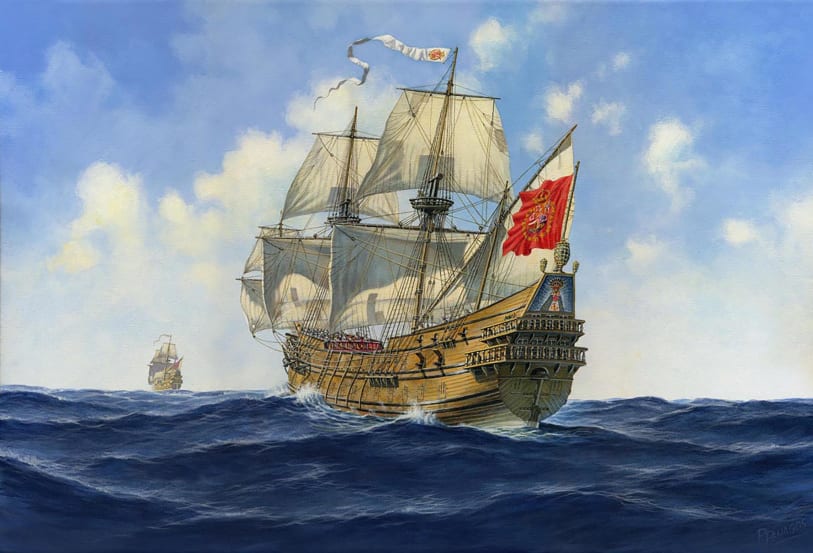
The Nuestra Señora de las Maravillas (or Our Lady of Wonders) sank in 1656 after it collided with another boat from its fleet and crashed into a coral reef off the Bahamas.
The vessel was carrying a haul of treasure, some of which was reserved as royal tax for King Philip IV, from Cuba to Seville, Spain.
The 891-ton ship contained more cargo than usual, as it had also been tasked with transporting treasure retrieved from another ship that had sunk two years earlier.
There have already been several successful attempts to retrieve the ship’s cargo, with almost 3.5 million items recovered between 1650s and 1990s, according to shipwreck specialist Allen Exploration, which carried out a two-year expedition from 2020.
But the latest discoveries, which are going on display this month at the new Bahamas Maritime Museum, offer fresh insight into life aboard the vessel.
Working with local divers, archaeologists and other experts, the researchers are also in the process of “reconstructing the mystery of how the ship was wrecked and fell apart,” project marine archaeologist James Sinclair said in a press release.
Using remote-sensing technology, such as sonar and magnetometers, Allen Exploration tracked “a long and winding debris trail of finds” scattered over a 13-kilometer stretch of ocean floor, founder Carl Allen added in a statement.
Among the discoveries was a 1.76-meter-long gold filigree chain and several bejeweled pendants that once belonged to knights of the Order of Santiago, a centuries-old religious and military order.
One of the gold pendants features a large oval Colombian emerald and a dozen smaller emeralds, which experts believe may represent the 12 apostles, alongside the Cross of St. James.
Three other knightly pendants were also discovered, including one shaped to look like a golden scallop shell.
“When we brought up the oval emerald and gold pendant, my breath caught in my throat,” Allen said, adding: “How these tiny pendants survived in these harsh waters, and how we managed to find them, is the miracle of the Maravillas.”
Other recovered artifacts shine a light on daily life on the Maravillas, which sailed during the “Spainish Golden Age,” including Chinese porcelain and olive jars, as well as a silver sword handle. Some of the galleon’s valuable contents may also have been contraband for the purpose of “illegally greasing the palms of Spanish merchants and officials,” Allen said.
The items discovered by Allen’s team will be permanently housed at the Bahamas Maritime Museum, which opens August 8 in the Caribbean nation’s second-largest city, Freeport.
And Sinclair believes that there may yet be more discoveries to be made.
“The ship may have been obliterated by past salvage and hurricanes … But we’re convinced there are more stories out there,” he said.
Choose paint color, wall coverings and furniture sizes wisely.
Each week, Mansion Global tackles a topic with an elite group of designers from around the world who work on luxury properties. This week we look at how to make your bedroom feel cozier, no matter how large it may be.
A master bedroom often provides a super-sized space to “call it a night.†But with so much room to lay your head, all that extra square footage can feel wasted or cold.
Yet, with some strategic attention to color, the right furniture placement and materials used throughout, you can easily warm up the space so it feels more snug. Follow these tips from design pros to make the space a comfy sanctuary.
I am a proponent of blackness and an ardent supporter of our culture. However, I think we, as blacks, need a retrospection of our behaviour, beliefs, and thoughts with regard to the approach of our daily activities.
Being privileged to travel to some parts of the world, I have come to admire the simplicity of our family of non-blacks (Caucasians). This piece is not to compare in bad faith, but to draw some positives that may help refine our approach to matters that have been complicated by cultural and religious extremism.
Two people falling in love or getting married should not be complicated and difficult. The demands and pressure from both families, churches, and society make marriage look like a high mountain to climb. Just expressing your interest in a lady alone comes with a bill.
Propose to some African women today, and you will have debt chasing you like the defunct UT Savings and Loans. Failure to pay your imposed debt, to your intended, is an indication that you are not truly in love and committed.
Whereas other races propose or express their love with flowers to their partners, our standard here is the iPhone, rent payment, and perhaps walking your lover around a car garage to select their favourite car.
Then, we have the issues of funeral ceremonies. Yes, we should pay respect to our deceased relatives or friends, but it can be done in modesty. Flamboyant funerals that leave the family indebted, and the prolonged nature of keeping the dead in the morgue are unnecessary evil that should be avoided. We must take care of and celebrate people while they are alive and not when they have exited to the land of their ancestors.
Last but not least is carrying the cross for the whole family. Being in a black society sometimes brings unnecessary stress and pressure. Imagine being a young man or woman just starting life or even starting a new job. Suddenly, everyone in the family turns their eyes on you. You are not even established yet to take care of yourself, let alone help your family. Yet, our families won’t allow you to ripen but will harvest you prematurely until you die out. I agree that we shouldn’t neglect our families when we can help, but placing the whole family cross on one person to carry just because they are working is un-called for.
We must give our young generation the chance to grow and build their future before we start bombarding them with family responsibilities. This is a breeding ground for corruption in society. We must respect our culture, but we should do away with certain beliefs and practices that are making life hell for black people.
Source: Ghanaweb
DISCLAIMER: Independentghana.com will not be liable for any inaccuracies contained in this article. The views expressed in the article are solely those of the author(s) and do not reflect those of The Independent Ghana.
An influencer is someone operating in a niche or industry with sway over a target audience. They have specialized knowledge, authority, or insight into a specific subject.
Because of their pre-existing presence in a niche, influencers are a good launching pad for brands in search of credibility. 85% of marketers engaged in influencer marketing in 2017 and 92% said their campaigns were effective.
As a result, an influencer is someone who has the power to affect the purchasing decisions of others because of his or her authority, knowledge, position, or relationship with his or her audience.
The size of the following depends on the size of his/her topic of the niche.
With regards to social media, influencers are people who have built a reputation for their knowledge and expertise on a specific topic.
They make regular posts about that topic on their preferred social mediachannels and generate large followings of enthusiastic, engaged people who pay close attention to their views.
Their endorsements carry considerable weight because they are regarded as an expert within their particular field and people trust their opinions.
To become an influencer, you have to choose a niche that you are passionate about, and promote products or services from brands in that niche. For example, if you are someone who is passionate about travel you may promote things such as tourism packages/ resorts on your page.
Source: Ghanaweb
DISCLAIMER: Independentghana.com will not be liable for any inaccuracies contained in this article. The views expressed in the article are solely those of the author(s) and do not reflect those of The Independent Ghana.
The main mistake Alan Kwadwo Kyerematen’s camp is making is comparing the 2023 presidential primaries to the 2007 one and thinking that just as Alan Kyerematen and Aliu Mahama didn’t get the nod and it went to Akufo-Addo, so, this time, Kyeremantenwould get it easily.
They are very wrong, because, unlike Vice President Aliu Mahama, Dr Muhammadu Bawumia is a very active player who has contributed strategically and openly from 2008 to Nana Akufo-Addo and NPP’s 2016 victory.
That is why many NPP members and supporters genuinely sympathize with him. From that perspective, he deserves the nod because he has worked hard for it. We saw his role in the 2012 elections and 2013 election petition hearing. He and Lawyer Addison were the star players of NPP. Nobody can forget that.
We saw the impact of his lectures and how he pulled the middle class to campaign for Nana Akufo-Addo and the NPP. Many NPP supporters cannot forget that and they may support him as a reciprocating gesture. This explains a lot of the support he has in the NPP.
Another factor one cannot lose sight of is Nana Akufo-Addo’s role and determination to reward Dr Bawumia for helping him realise his childhood ambition.
It is also no secret that the President and his family are committed to consolidating their legacies, securing themselves and extending their reign through Bawumia. Unlike John Kufuor, Nana Akufo-Addo is capable of employing every power and resource at his disposal to achieve that. We saw how Alan Kyeremanten’s supporters were maltreated during and after the 2007 primaries.
So, Alan Kyerematen’s camp should not think that they can be doing inconsistent communication and sleepwalking until their candidate resigns to start his campaigns.
The candidature of NPP is nobody’s birthright. It has not been willed to Alan nor is it his birthright. They must get that clear before they come back crying for sympathy after the deal is completely done.
What they should know is that regardless of how long NPP has existed, Bawumia has contributed enough to deserve to represent the party just as Alan and any other candidate since the party is not a monarchy that has especially predetermined people to lead.
If Alan Kwadwo Kyerematen is serious to run, it must reflect in his strategy and the communications of his camp.
For now, his posture may give people the impression that he is either not serious or he is thinking that he automatically has the right to lead the party which, could go against him if his opponents do their propaganda work well.
As things stand, none of the candidates should be complacent the way Alan’s camp seems.
Source: Ghanaweb
DISCLAIMER: Independentghana.com will not be liable for any inaccuracies contained in this article. The views expressed in the article are solely those of the author(s) and do not reflect those of The Independent Ghana.
Not everyone will have Ghana Card by Sept. ending; It’s ‘Unrealistic’ And ‘Impossible’! – NIA Boss to Ursula
Executive Director of the National Identification Authority (NIA), Professor Ken Agyeman Attafuah seems to have burst Hon. Ursula Owusu’s bubble about getting all Ghanaians to register their SIM cards with Ghana Card by the end of September.
The Communications and Digitalisation Minister, Ursula Owusu-Ekuful, issued a directive to Ghanaians who haven’t yet engaged in the ongoing SIM re-registration exercise to do so or have their SIM cards deactivated.
She has extended the deadline for the registration exercise to the end of September this year hoping that all Ghanaians would have their SIM cards registered. This is the third time of extending the deadline for the exercise.
Deadline Extension
Speaking at a press briefing on Sunday, 31st July and later in an interview with Kwami Sefa Kayi on “Kokrokoo“, Hon. Ursula Owusu-Ekuful said; “Upon consultation with the industry and in view of the challenges enumerated above, I have very reluctantly decided to grant a conditional extension. The programme will be extended to 30th September to end on the anniversary of its commencement.â€
“That will give us one full year of SIM registration. It will be reviewed at the end of this month and any SIM that has not been fully registered by the end of August will be barred from receiving certain services including voice and data services,†she added.
It Is Not Possible
But days after her speech, the NIA – the body mandated to establish and manage a national data centre, by setting up a system to collect, process, store, retrieve and disseminate personal data on Ghanaian citizens and legally and permanently resident foreign nationals, and to issue national identity cards – says it will not be possible for all Ghanaians to receive their Ghana Cards to enable them register their SIM cards before or by the deadline.
Prof Attafuah who heads the NIA, stated on PeaceFM that there are some bottlenecks that need to be taken into serious consideration.
He was emphatic that not all the applicants will have their cards before the deadline because the NIA’s capacity is limited; pointing out that this is because the Authority has inadequate number of personnel to register all Ghanaians and distribute their cards to them by the end of September.
“We have opened 276 operational district offices. Every constituency has an office…On the 3rd of November, 2021, we opened 16 Regional offices and 276 district offices operational simultaneously which is a different case but they are all working. Initially, we had some resistance from some political quarters but the truth of the matter is that, at the end of the day, all these offices are functional and serving the good people of this country.
“Every Regional office has only 5 people. Every district office has only 4 people. During the mass registration, 16 people were in every registration center and in every district, there will be about 200 registration centers. Today, there is only one office in every district or municipality and it has either a maximum of five or a maximum of four”, he said.
Unrealistic Expectation
Prof. Ken Attafuah also added that the law that establishes the NIA didn’t take into effect the SIM re-registration exercise, explaining the law required the NIA to “exist in perpetuity and for Ghanaian to go there and register at their leisure and pleasure“.
The NIA, he expounded, “is like a hospital or a maternity ward; you go there when you need to after the mass registration but today, it’s become impromptu for everyone and the strength does not exist“.
Prof. Attafuah stressed; “It is an unrealistic expectation that we will be able to give all of them their cards…It is not possible to do that. What is possible, however, is to put in greater efforts and make sure as many as can get it can but to guarantee that every single one is not possible”.
“The number of SIM cards linked to the Ghana Cards are less than 15 million and yet we have issued more than 15.5 million, so that’s also another factor to consider. Also, by the NCA’s own statistics, it has not been possible since October 1st when they began to link all the available Ghana Cards to the SIM cards“, he further said.
He made these submissions during an interview on Peace FM’s “Kokrokoo” programme Friday morning.
Source: peacefmonline
DISCLAIMER: Independentghana.com will not be liable for any inaccuracies contained in this article. The views expressed in the article are solely those of the author(s) and do not reflect those of The Independent Ghana.
Nigerian musicianDavido has landed in Ghana, and the ace music artiste is having a good time in the motherland. He received great hospitality upon his arrival in the country.
The O.B.O. crew touched down in Ghana days ago and made their presence known as they toured Accra in a fleet of luxury cars.
To make his stay more enjoyable, Davido threw a private party and had a good time with his boys and a few guests. Men’s Cook made the grand feast memorable as they graced the occasion with some appetising food.
YEN.com.gh sighted videos from the event, and fans have shown excitement at seeing the superstar hang in Ghana.
Reactions To Davido Chilling In Ghana
joetexjewelleryshop was impressed with the luxury home:
North Tongu legislator, Samuel Okudzeto Ablakwa, has given GHc3,000 to the eight-year-old winner of the Volta Regional Reading Competition.
Samelia Mekporsigbe, a class 3 pupil of Battor DA Primary School from North Tongu Constituency, defeated 17 other district champions to win the day.
The lawmaker presented the cash amount to support her preparations for the national reading competition in Accra.
Samelia, 8, also received a Samsung Tablet with free internet connectivity and a wide array of e-reading collections from the MP.
She has also been placed on the MP’s scholarship programme for additional academic assistance until she graduates from the university.
Sharing the images with the child prodigy on his official Facebook page, the MP wrote:
”It was a delight to receive a victorious delegation led by North Tongu Director of Education, Mrs. Isabella Regina Ayimey as they presented to me the phenomenal Samelia Mekporsigbe, a class 3 pupil of Battor DA Primary School in my beloved constituency, and winner of the Volta Regional Reading Competition sponsored by the USAID Learning initiative.”
Members of the cyber community moved in droves to congratulate the child and appreciate the MP.
ClassPee Della Russel said:
”Impressive. Best wishes to her.”
Kojo Kiel commented:
”One day when I am old and she becomes a judge, I’ll just say I know her from some place and remember it was here.”
Nana Kweku Arhin said:
”Congratulations to Samelia and great work done Honourable. You’re a Leader worth emulating!”
Hadzide Midzim commented:
”Wow! What a splendid performance! Hearty congratulations to her. Honourable MP, kudos to you! May God Almighty continue to bless you.”
Mawuna Kwabena said:
”Congratulations to this girl. May God help her to fulfill God’s purpose for her life. God bless you honorable this nation will one day honor you with the highest seat of the land.”
Christian M. Kwesi commented:
”Hon Samuel Okudzeto Ablakwa. Whenever I see or read your posts, I’m always FIRED UP! Thank you for setting the pace and raising the bar so high! God bless you, Sir.”
Prince Agbewu commented:
”That is great! And thank you very much Honorable God bless you to do more!”
Abdul Mumin Mohammed Awal said:
”The leadership of service indeed. You always make leadership easy to emulate and all departments within your constituency easily access you for such great interactions. Congratulations to the lady and may Allah grant her the dreams she aspires.”
China said Friday it was ending cooperation with the United States on a litany of key issues including climate change, anti-drug efforts and military talks, as relations between the two superpowers nosedive over the island of Taiwan.
Beijing has reacted furiously to a visit by US House Speaker Nancy Pelosi to the island, which it claims as its territory and has vowed to retake, by force if necessary.
It has since Thursday encircled the self-ruled, democratic island with a series of huge military drills that have been roundly condemned by the United Statesand other Western allies.
And Friday saw its foreign ministry hit back further against the United States, suspending talks and cooperation on multiple agreements between the two — including on fighting climate change.
The world’s two largest polluters last year pledged to work together to accelerate climate action this decade, and vowed to meet regularly to “address the climate crisis”.
But that deal looks shaky as relations sink to some of their lowest levels in years, as do agreements on everything from talks on military matters to anti-drug cooperation.
Graphic charting recent Chinese military plane flights over Taiwan’s air defence identification zone, according to the island’s ministry of defense announcements via Twitter.. Photo: John SAEKI / AFP
Source: AFP
Pelosi — who was also hit with sanctions by Beijing for the visit — has defended her trip to Taiwan, saying Friday that Washington would “not allow” China to isolate the island.
Taiwan has also condemned Beijing’s furious response to the visit, with premier Su Tseng-chang calling for allies to push for de-escalation.
“(We) didn’t expect that the evil neighbour next door would show off its power at our door and arbitrarily jeopardise the busiest waterways in the world with its military exercises,” he told reporters.
‘Our motherland is powerful’
Beijing has said its military exercises will continue until midday Sunday, and Taipei reported that Chinese fighter jets and ships crossed the “median line” that runs down the Taiwan Strait on Friday morning.
“As of 11 am, multiple batches of Chinese warplanes and warships conducted exercises around the Taiwan Strait and crossed the median line of the strait,” Taipei’s defence ministry said in a statement.
AFP journalists on the Chinese island of Pingtan saw a fighter jet flying overhead, prompting tourists to snap photos as it flew along the coast.
China’s drills involved a “conventional missile firepower assault” in waters to the east of Taiwan, the Chinese military said.. Photo: Hector RETAMAL / AFP
Source: AFP
A Chinese military vessel was also visible sailing through the Taiwan Strait, they added.
China’s drills involved a “conventional missile firepower assault” in waters to the east of Taiwan, the Chinese military said.
And state broadcaster CCTV reported that Chinese missiles had flown directly over Taiwan — a major escalation if officially confirmed.
On the Chinese island of Pingtan, local tourists proudly extolled their country’s military might against its much smaller neighbour.
“Our motherland is powerful. We are not afraid of having war with Taiwan, the US or any country in the world,” Liu, a 40-year-old tourist from Zhejiang province, told AFP.
“We hope to unify Taiwan soon. We are not scared of anyone,” he added.
“Our country is powerful. We don’t want to start a war, but we are not afraid of others.”
‘Significant escalation’
China’s ruling Communist Party views Taiwan as part of its territory and has vowed to one day take it, by force if necessary.
But the scale and intensity of the drills have triggered outrage in the United States and other democracies.
“These provocative actions are a significant escalation,” Blinken said after talks with Southeast Asian foreign ministers in Phnom Penh.
“The fact is, the speaker’s visit was peaceful. There is no justification for this extreme, disproportionate and escalatory military response,” he added.
Japan lodged a formal diplomatic complaint against Beijing, with five of China’s missiles believed to have landed in its exclusive economic zone.
And Australia — which has a troubled relationship with China, its largest trading partner — condemned the drills as “disproportionate and destabilising”.
The manoeuvres are taking place along some of the world’s busiest shipping routes, used to disseminate the global supply of vital semiconductors and electronic equipment produced in East Asia.
A bride and her groom have proven that love always wins as they tied the knot in their old age.
Elderly couple never gave up on love
Nothing beats finding your soul mate, the one your heart beats for and the person to spend the rest of your life with.
An elderly couple walked down the aisle in each other’s arms, and they revealed they had found love when they least expected it.
They were both widowed when they decided to explore a dating site and urged elderly people not to lose hope in love.
Love at first sight?
Robert was on a dating platform searching for love before he came across his wife’s picture, and something about the picture he reveals struck him like she was the one for him.
According to popular website, PEOPLE, Anne revealed that the first time she met Robert for a date, he was well poised, and with how he carried himself, she instantly knew she was in love.
The two adorable lovers were clearly smitten with each other as they shared pictures of each other and looked sweet in their love.
Chevening is one of the major scholarship opportunities open to Africans who want to study in the United Kingdom.
Established in 1982, Chevening is funded by the UK government through the Foreign, Commonwealth and Development Office (FCDO) and other partner organisations.
The scholarship offer is open to bright students from over 160 countries, but they must be those who show uncommon leadership potential. As of 2021, the award amount is £22,000 (about GH₵ 221,210.03).
Since the highly competitive program began, it has awarded scholarships to more than 50,000 students. It accepts applications from students from all fields.
According to the Chevening website, “Chevening Scholars study subjects in almost any field, and go on to implement their ideas for positive change in a range of sectors.”
Are Nigerian students eligible for the Chevening scholarship?
Of course, Nigerians seeking to study for their master’s degree in the UK can apply for Chevening as the country is listed as one of its targets.
Out of the 1500 students that benefited from Chevening in the 2021/2022 phase, 50 were Nigerians.
Popular Nigerian website, Legit.ng spoke to the academician, Dr Olumuyiwa Igbaljobi, and he confirmed that the fellowship is very competitive. He said that based on his assessment, applicants from Nigeria have roughly a 3% chance of getting selected.
When can Nigerian students start applying for Chevening scholarship?
The portal for application for Chevening opens on August 2, 2022. Nigerian students wishing to apply can start their application on that day and submit it before the closing date in November 2022.
How Nigerians can apply for Chevening and get selected
Nigerians seeking to be selected for Chevening can follow this guide.
1. Apply for admission to Chevening partner schools early
The first step towards getting selected by Chevening is to get admitted into UK universities that are partners of Chevening.
There are specific universities that partner with the UK government in awarding the scholarship. You must apply for three different courses, and your chosen programs must be full-time, not part-time.
You must have an unconditional offer of admission from at least one of these schools to qualify for the award.
2. Gather your documents and start the application
Once you have applied and received an admission offer from a qualifying UK university, you can now gather your documents and commence your application on the Chevening website.
Some of the important documents required for the application include two reference letters, university certificates, academic transcripts, and a current international passport.
3. Write your essays very well
One major aspect of the application that gives many applicants headaches is the essay parts. You have to make sure the essay questions are well answered. Each of the four essays must have depth and be written in clear expressions.
Dr Olumuyiwa Igbalajobi says not being able to answer the essay questions well is a major pitfall in the application.
He said:
“The most important part is the 4 major essays that address networking, leadership, studying in the UK, and long-term career goals. There are tons of resources online, YouTube channels, webinars, and even Twitter spaces that could be of help.
“Not being thorough enough with essays, especially inability to articulate effectively their long-term career plans.”
4. Your work experience counts a lot
To qualify for Chevening as a Nigerian student, you must have at least 2,800 hours of work experience. This is an important aspect of the qualifying criteria.
On this, Dr Igbalajobi says:
“Work experience is also very important, at least two years (equivalent to 2,800 hours) of work experience.
“Funmilola Awosanya won Chevening in 2021 with HND. Her work experience contributed to her being competitive.”
How Nigerian students can fill the Chevening Scholarship application form
Once you have all your documents handy, proceed to https://www.chevening.org, create an account, click on “apply”, and start filling out the application form. Make sure you have a functional email since all communications are done by mail. If you are selected, you will be contacted by mail for the next phase.
Tips on how to relocate to the UK
Meanwhile, popular Nigerian website, Legit.ng has listed four tips Nigerians can follow if they want to relocate to the UK.
According to the list, the first step is to get a job in the UK before applying for a visa.
It is after seeking and finding a job in the UK that one can easily get a work visa from the UK embassy in Nigeria.
A 42-year-old man has been sentenced to 12 months in prison for stealing parts of an Electricity Company of Ghana (ECG) transformer valued at about GH¢2700 at Kodjonya, a suburb of Odumase Krobo in the Eastern Region.
The suspect, Isaac Azu was seen loitering around the transformer on July 31.
A resident who spotted him raised the alarm, forcing neighbours to show up at the scene.
The items in possession of the suspect were six fuses, earth cables, and a switch.
He was subsequently handed over to the Odumase policeand processed for court.
The Odumase Krobo circuit court presided over by His Honour, Frank Gbeddy, sentenced the offender to one-year imprisonment for the offence of stealing.
The future of sports in Africa is looking very promising. With the recent success of African teams at the World Cup and the increasing popularity of football across the continent, it seems that Africa is finally starting to make its mark on the world stage.
However, there are still many challenges that need to be overcome if Africa is to truly compete with other continents when it comes to sports. One of the biggest problems facing African sports is the lack of funding.
Many African countries simply do not have the resources to invest in their sporting infrastructure and facilities. This means talented athletes often have to leave their home countries to pursue their dreams.
Another challenge facing African sports is a lack of organisation and structure.
There are many different governing bodies for different sports across Africa, which can make it difficult for athletes to progress through the ranks and compete at a high level. This needs to be addressed if Africa wants its athletes to reach their full potential.
Despite these challenges, there is no doubt that African sport has immense potential. If more investment can be made into developing sporting infrastructure and programmes, then there is no reason why Africa cannot become a major force in global sports.
Source: Ghanaweb
DISCLAIMER: Independentghana.com will not be liable for any inaccuracies contained in this article. The views expressed in the article are solely those of the author(s) and do not reflect those of The Independent Ghana.
The University of Cape Coast (UCC) hosted a Memorial Lecture at its New Examination Centre to commemorate the 10th anniversary of the passing of the late Prof. John Evans Atta Mills, the third President of the Fourth Republic of Ghana.
The lecture was organised by the J. E. A. Mills Memorial Heritage for the Central and Western Regions of Ghana on the theme: “The Man Atta Mills Ten Years On” and addressed by Prof. Kwesi Aning of the Kofi Annan International Peacekeeping & Training Centre (KAIPTC), Accra to celebrate his life during his sojourn here on earth.
The event and story brought some nostalgia and remembrance of some shared events, a sense of awe whilst he lived, respect, a big brother aura, and observations, which I have harboured since his death and burial: moments which to me, should define ‘THE MAN JOHN EVENS ATTA MILLS’ to the ordinary Ghanaian, painting the obvious characterisations, which many a time are taken for granted or go unappreciated.
I got to know the ‘Man’ severally, then Dr. J. E. A. Mills in the eighties, when I had been transferred to Accra to work at the Accra Sports Stadium. He was then with the Internal Revenue Department as a Commissioner of Tax, the University of Ghana as a Lecturer and also at the then National Sports Council as the Chairman of the Board of Directors. He was also the Chairman of the Ghana Universities Sports Association (GUSA) and an ardent hockey player with the Veterans Hockey Club.
I also knew him quite closer as an ardent supporter of the ‘PHOBIA BOYS’ Accra Hearts of Oak Sporting Club and later as one of the Directors appointed at a Congress organised at the Ghana Institute of Management and Public Administration (GIMPA), which I had the honour of organising for and on behalf of the Club’s Chief Patron, Oyeeman Nana Wereko Ampem II, Gyaasehene of Amanokrom and known in private life as Emmanuel Noi Omaboe.
I was a member of a 3-member National Steering Committee (IMC) of Accra Hearts of Oak Sporting Club from 1989 – 1990, with the late Paul Kunke, a General Manager of the S. D. Karam & Company, a textile marketing company responsible for Operations and Goody Van Lare, my senior at Mfantsipim (MOBA 1971), who was in charge of the Finances, whilst I was charged with Special Duties, including the organisation and hosting of a National Congress at GIMPA in 1989, as well as oversight of the registration of Chapters through the mobilisation of supporters nationwide.
The Congress was also to appoint five (5) non-elective Directors and the following were nominated, including Messrs. Amoako Mensah, formerly of the Bank of Ghana; Commodore Mensah, former PNDC Deputy Secretary of Agriculture, credited with the first Pork Show at the Efua Sutherland Park to promote its increased consumption; Ato Ahwoi and Dr. J. E. A. Mills, with the last remaining position without a nomination, I called Oyeeman Nana Wereko Ampem, who was then playing golf some distance away at the Achimota Golf Course, informing him of my predicament and to which he just said, “I nominate you, Rex as the fifth Director, especially as you have been in charge and organising the whole exercise”.
Startled, I confessed to him that I might be everything he said but “Nana, I don’t qualify to serve on the same Board or any Committee with Dr. John Evans Fiifi Atta Mills, even if I could be comfortable with the rest”. In my youthful age, I dreaded that and just couldn’t imagine or fathom the ‘impudence’ of it.
The rest of the Directors, including one more nominated plus elected, were Paul Kunke, Asiedu, Affram. Bediako, Nettey, Attoh, Adjei, Lamptey of then Standard Chartered Bank, and Madam Rosemary Ekwam.
That was how highly I held him in awe at the age, a father figure that I couldn’t see myself serving on the same Board, no matter the depth and or diversity of my skills, knowledge, or talents.
Indeed, Prof. J. E. A. Mills was everything I wanted to be at that age; his gentle demeanour, humility, deep thought, steadfastness with the truth in all forms, standing up to what is or was right irrespective, and God-fearing nature, ready to defend even his enemies, known to him or not because he recognised that we are a much better people as a nation, no matter our differences; and all these attributes or characteristics I learnt or observed, both from a distance and personal interactions.
If you have ever watched how obstinate I can be with regards to the truth in our body-politic and national life, particularly sports, then I observed and became it from one whose sense of right is more read in books than lived.
I remember our days together at the National Sports Council, where he was the Board Chairman and I was the National Stadia Manager; he had given me an assignment to execute, compiling a National Assets Register of everything at all the ten (10) Reginal Sports Councils, including selected district offices and for lack of adequate logistics as well as funds to undertake the exercise, I had not completed the exercise ahead of Senior Staff Evaluations by the Board.
When it got to my turn, he just asked if I had finished the assignment; he did not even look at my Appraisal Sheet; and when I shook my head, he just pronounced the ruling as this: “Rex, you of all people should understand that because of the relationship between us, I would be harsher with you.
My ruling is, you will have your promotion when you complete the exercise and submit to the Chief Administrative Officer, who in turn is directed to issue the letter forthwith without recourse to him or his office”. I was not hurt because I recognised that I shouldn’t take his affection for me for granted but to strive for higher standards always so that I am not seen as taking advantage of the relationship whilst living up to not his standards but the high calling of my potentialities.
As a typical Accra Hearts of Oak SC supporter from my youthful days, from as far back as my days at Mfantsipim School to the Kwame Nkrumah University of Science and Technology (KNUST) in the seventies, I recall the late Ohene Djan, the first Director of Sports at the then Central Organization of Sports (COS) in later years become an advisor to my friend, Simms K. Mensah, the then flamboyant Chairman of Kumasi Asante Kotoko Sporting Club.
I had also developed a close relationship with the Late Tommy Thompson, a contemporary Chairman of Accra Hearts of Oak SC and from this, I saw the late Ohene Djan, without proper appreciation and contextualisation of his exploits and contributions to the growth and development of Ghana Sports, as perceived ‘Against’.
After reading extensively on Ohene Djan’s contributions after his death on March 26 1987, I realised he deserved more than he had been accorded by Ghanaians and therefore sought the permission of his Nsawam family to institute the Annual Ohene Djan Memorial Lectures with the inaugural scheduled for the year 1989.
After contextualising the concept, I was left with the choice of the appropriate person to deliver the first Lectures, with the proper credentials, both in academia and sports, to ensure a befitting tribute to the late Ohene Djan. I approached Prof. George Benneh of the University of Ghana and a family friend, with the intention of getting him to accept and deliver the debut lecture on “The Man Ohene Djan”.
Prof. Benneh politely rejected the invitation to be the Speaker and rather offered to chair the event rather, pointing in the direction of the late Prof. John Evans Fiifi Atta Mills, who incidentally was not only the NSC Board Chairman but a champion athlete in his days at Achimota School and a hockey star in his own right. This was during the tenure of Hon. Kwame Saarah Mensah, former PNDC Secretary for Youth and Sports and my senior at the Department of Land Economy and Estate Management, KNUST, Kumasi.
What a right choice it turned out to be, indeed.
Living up to his credentials as one of the youngest Professors of Law at the University of Ghana, the late J. E. A. Mills took the lecture as a ‘World Cup’ with the depth of research, including the sporting genre of Ghana’s President of the First Republic of Ghana, Dr. Kwame Nkrumah, a talented athlete, a champion runner during his school days at Achimota School and proper plans executed by Ohene Djan with absolute support of his President.
I will never forget how proud I felt at the Inaugural Ohene Djan Lectures in 1989 at the British Council, where Prof. George Benneh, himself also delivered another edition of the same lectures from a different perspective Schools and Colleges Sports as a Tool for Building a Nation.
The late Prof. J. E. A. Mills lived and technically ‘ate’ Hockey, as we would say in ‘Sekondi Fanti’.
Whilst I was an employee of the National Sports Council, I started a sport weekly ‘SPORTS COIN’ as the editor, whilst I was also the HOST of the weekly TV sports magazine programme, ‘SPORTS DIGEST’ on GBC-TV. I had also started a PR & Sports Marketing agency, REX-IMAGE Associates, counting amongst my clientele Bamson Company Limited and Ghamot Company, accredited agents and distributors of Toyota vehicles in the country.
The triangle relationship between Prof. Mills, Ato Ampiah, then Managing Director of Ghamot Company, and my agency bore the fruit of the inauguration as well as the sponsorship of the ANNUAL TOYOTA HOCKEY LEAGUE, managed by my agency and sponsored by Ghamot Company. This witnessed the refurbishments as well as branding of the Theodosia Okoh and 37 Hockey Pitches for the league.
This feat brought the relationship of Prof. J. E. A. Mills and myself closer still and saw him accept an invitation as the SPECIAL GUEST OF HONOUR at the opening of a new Toyota Showroom on Graphic Road, where the ‘TOYOTA’S MOST EXCITING FOOTBALLER AWARD’ was presented to the maestro Abedi Ayew Pele, in another event organised and managed by my agency.
The relationship blossomed over the years and in 2009, Ghana was awarded the rights to host and organise the AfHF Hockey Africa Cup of Nations Championship (Ghana 2009) under the theme: LET’S BEGIN TO DREAM AGAIN’ and which included the refurbishment of the National Hockey Stadium.
Prof. J. E. A, Mills had been elected the third President of the Fourth Republic of Ghana and commissioned the refurbished National Hockey Stadium on July 6, 2009.
Whilst we were preparing to host all the nations who had qualified to participate in the 2009 Hockey Championship, we got wind of the fact that the 44th President of the United States of America, Barrack Hussein Obama II, the first African American President, and his wife, Michelle would be visiting Ghana around the same time of the continental event.
As if possessed, I rushed off to senior Oko Nikoi Dzane, the Vice Chairman of the Local Organizing Committee (LOC) for the African Hockey Championship 2009, and asked, “Why don’t we ask the ‘Old Man’ (the late President J. E. A. Mills) the possibility of getting President Obama to perform the kick-off for the championship, especially as it would give the event the greatest push globally?”
The Opening Ceremony of the Hockey Championship was coinciding with their planned drive to Cape Coast. However, we were informed that the visit had been planned quiet for a while now for months and that possibly if we had made the request earlier during the planning stages it could have been considered, though a long shot.
You see, such was the person, late Prof. J. E. A. Mills, very open to all sorts of ideas for the betterment of his nation.
There are quite intimate moments, which we shared, some through his campaign offices at Kuku Hill, Accra during the 2008 elections, which made his Campaign Assistants call me later to ask, “how did you know this?” and we laughed over the issues for the answers I advanced.
On one of those Sundays that he used to visit various churches, he came to Royalhouse Chapel (Ahenfie) to worship and I found myself seated right behind him, when salutations with introductions were made and shared, he realised that I was seated right behind him so he got up as I did and shook my hand, asked me how I was and sat down: ‘WHAT A HUMBLE PRESIDENT!”, was all I could say to myself with this great lesson in ‘Humility 101’ learnt.
I remember, one of those days before the Opening Ceremony for the 2009 African Hockey Championship, when it became clear that he couldn’t accept to be present because of President Obama’s presence in Ghana, the LOC delegation had to go to the Osu Castle to see him and brief him on preparations thus far.
When he came in and scanned the room as to who constituted the delegation, he intimated that he was happy the occasion had forced someone who had dodged him since his elections to be present, as the person was obviously determined to keep away from him and his office. When he walked over to welcome and shake our hands, he asked when he got to me, “Why have you stayed away from me after the support you had extended to my election?” I smiled as always, and he walked on to the next finally, when it was time to go, he asked me to find time and visit sometimes.
Unfortunately, that was not to be, as we lost him to death.
Yes, I miss him for who he was, a gentle heart, a compassionate soul, a nationalist to a fault, an unrepentant patriot, a humane Ghanaian, a true humanist, and a through and through ‘PHOBIAN’.
His enemies had always preyed on his humility even in the highest office of the land; his care for humanity looked upon by his enemies as his weakest trait will always paint him as a different person, as these showcase the strength of his character and love for the ordinary Ghanaian.
Guess he never bargained for the High Office of the land but lived it as if he was born to be a President of this nation and sincerely, his humanness is definitely what this nation, Ghana needs after the 2024 National Elections.
We are currently too divided and fractious as a nation, as if the next General Elections in 2024 will be our very last, seeing what the last six years have been, the depth of acrimony, depth of divisiveness, the quest to balance scores, the deaths associated with the last 2020 elections without the desire for inquests to punish the crimes, the seeming violence looming ahead of us towards coming elections; the deafening silences of our supposed ‘men of conscience’; the renewed ‘tribalisation’ of our people after 65 years of political independence into nationhood “WHAT WOULD PROF. J. E. A. MILLS HAVE SAID AND DONE?” if he was still alive to be the next President of the Republic after the exit of current President?
I recall one serious infraction that characterised the 2004 General Election Results, when a 3-man New Patriotic Party (NPP) stalwarts, made up of late Jake Obetsebi-Lamptey, Hon. Kwamena Bartels (my senior MOBA) and Peter Mac Manu declared their party the winners and there were agitations by some elements of the National Democratic Congress (NDC), believing their Party had rather won the elections; especially more when the then Electoral Commissioner had delayed unduly to announce the winners.
What was just needed to plug this nation into flames and chaos was the objecting voice of late Prof. J. E. A. Mills; and here he showed his true nature when he rejected the cry by insisting, “I don’t need the loss of the blood of even one Ghanaian to make me a President” that was not the voice of a usurper or a pretender but true ‘Patriot’ in the mold of the Founder of our Nation, the Osagyefo Dr. Kwame Nkrumah of blessed memory and his avowed mentor.
‘WHAT WOULD PROF. J. E. A. MILLS HAVE SAID AND DONE?’ if the people close to him or his relatives or blood brothers were perceived as the looters of state resources meant for the development of all, especially the vulnerable, the deprived, the orphans, the less endowed academically, the seeming dismantling of the well-intended and much-touted FREE SHS policy through not-well thought-out delivery of the feeding aspect, especially if he was to succeed the current President Nana Addo Dankwa Akufo-Addo; knowing how much he desired equal opportunities for all, even for his political opponents, ever-forgiving the worst, most abusive insults from his worst enemies, including those who sat at his feet to be tutored into the law profession?
He lived his Christian faith without shame and in the true spirit always opting to rather forgive as Jesus did when He said “Father forgive them, for they know not what they are doing”.
Prof. Mills was not a ‘pretender’ as he lived his full life for his Maker in the full knowledge that there is more to life and living than all the lootings of state resources meant for all, including generations yet unborn by few ‘family and friends’.
I remember when he made his 2010 call that one week is set aside in a year to pray for the nation, and this call was accepted by the religious leadership of the nation. The leadership of the various Church Councils then designated the 6th to March 13, 2011, as a NATIONAL WEEK OF PRAYER, FASTING & THANKSGIVING with Isaiah 60:1-22 as the Theme Scripture.
The ‘Theme Scripture’ was intended to launch the nation into a new dispensation with a call for the whole nation to ‘ARISE’ (from spiritual depression to a new life), shine (be radiant with the glory and brilliance of the Lord); for your light has come, and the glory and brilliance of the LORD has arisen upon you; believing when we reach that state nations will come to Ghana’s light, and Kings and other Presidents will also come to the brightness of Ghana’s rising.
For me, Professor John Evans Fiifi Atta Mills was like King David in the Holy Bible, an unrepentant Christian, not to shy away from his open, unashamed nor undivided commitment to things of his Maker, prepared even to the point of abuse, insults, ridicule, humiliation, and laughter lie prostrate to glorify the Lord because he owed HIM his everything and all, even the Presidency. Remember his appearance and worship at the late Temitope Balogun Joshua’s Synagogue Church of All Nations (SCOAN) and all the name-callings?
Again, for me and to some of his aides at the Kuku Hill Offices, who know how intimately we were on the blind side of many, especially my two Hearts of Oak FC supporters, you would be surprised to know, that I still feel his admonishing hands on me always, that: “Rex, just let everything go because they are not worth the blunt of any anger!”
I guess at this juncture, I can share this personal story.
During the hugely successful CAN 2008 Extravaganza as the architect, someone I regard still as a friend and a brother of the NDC political persuasion expressed an interest to supply the buses we required for the sixteen (16) teams participating in the fiesta as well as for the Secretariat.
Perceiving the possibility of a witch-hunt I could see ahead of me and especially where there was another interest from the ruling government then, I swerved both interests by renting buses from Ghana @ 50 Secretariat and with the assistance of Hon. Anthony Akoto Osei, then Minister of State at the Ministry of Finance and Economic Planning, paid them through a transfer from an official CAN 2008 Account with the Ministry into their account also with the MOFEP.
In the weeks thereafter, the drivers of Ghana @ 50 vehicles raided our offices that they had not been paid because they are informed the CAN 2008 Secretariat had not paid them for the hiring of their buses, and worse they got the story published in the Daily Guide publication of the day toasting me. This was the least of my burden because the revelation of the payment by a copy of the Transfer Notification silenced them.
However, in the early days of Prof. Mills’ administration after his swearing-in, I got a call from my friend, Elvis Aryeh, former Editor of Daily Graphic and later of the Press Bureau at the Osu Castle, saying the CAN 2008 Secretariat had purchased some buses during the Tournament and they could not trace the payment. I told him that we never purchased any buses but rather rented them from Ghana @ 50 Secretariat and also paid fully for their uses.
He asked whether I was sure and I replied that I had every record. I asked him where he was and he said Osu Castle and then I added, that I could bring him copies of the transfer and every documentation within fifteen minutes. Remember, the CAN 2008 Secretariat was situated at Ringway Estates, Osu.
I was there at a lesser time and gave him the documents; he opened his mouth in awe and asked, “How could I think that way to protect myself?” I just told him that they were out of lessons I learnt dealing with the then-new President, Prof. J. E. A. Mills on public life and how at each stage of our relationship, he never ceased to be the lecturer, he was born to be with the Presidency only a just reward for the thousands of people/students, whose lives he had impacted positively throughout his life.
Unfortunately, he never had the opportunity to see to the coronation of the next ‘Asomdwehene’ in 2025 before his death, ten years after or is it thirteen (13) years after but then who on earth could have foreseen such great loss for this nation, Ghana?
Truth be told, it is his kind and style of leadership and Presidency FATHER OF ALL & FOR ALL, IRRESPECTIVE, that our nation, Ghana needs from 2025 onwards: this is not a prophesy but a caution from one, who will always stand afar, watching the lives of the great and mighty, the simple and unassuming of our leaders unfold, as they live their lives leading us into the future.
Source: Ghanaweb
DISCLAIMER: Independentghana.com will not be liable for any inaccuracies contained in this article. The views expressed in the article are solely those of the author(s) and do not reflect those of The Independent Ghana.
If the Electoral Commissionof Ghana is listening and learning from the challenges associated with the accessibility to the Ghana Card, they should by now be revising their decision to demand that the Ghana Card be the only valid ID for young people who just turned 18.
Public officers are to serve the interest of the Tax Payers but not to take intransigent positions because they feel they have our mandate.
Many young people have turned 18 and are willing and ready to get a voter ID for themselves but do not have access to the Ghana Card. Yet, the Electoral Commission Ghana, says it is the only card they will accept. What a country!
My nephew registered for his Card in Kumasi and had it the same day.
I did mine in Cape Coast and I’m counting months now.
When I called they told me they are resource constrained. But these same people who are supposed to make sure citizens have access to the Ghana Card are using threats of deadlines to frustrate them.
Someone traveled from the Upper East region to Accra to get his Ghana Card. Thankfully he had it but he can’t use it. His name is wrongly spelled. Consider the cost of all this. Some had theirs but they are faulty.
Since 2018 Ghanaians have been queuing up to date.
1. In 2018, they started queuing for the Ghana Card.
2. In 2019 some queued for the limited registration and voting to elect Local Representatives.
3. In 2020, they queued for a new Voter ID and subsequently queued in December for the elections amidst COVID-19.
As if that wasn’t enough punishment for the ordinary Ghanaian who spend his precious time queuing for all these. Markets women have had to close their shops to join long queues. They go there and corrupt officials take bribes from other corrupt citizens to jump the queues.
4. In 2021 Ghanaians were threatened to re-register their SIM cards or have them blocked. Still, in 2022 we haven’t been spared these punishments amidst the economic hardships.
How many more queuing before 2024?
Power must be used for and on behalf of the people.
Source: Ghanaweb
DISCLAIMER: Independentghana.com will not be liable for any inaccuracies contained in this article. The views expressed in the article are solely those of the author(s) and do not reflect those of The Independent Ghana.
Article 1(1) of the 1992 constitution requires those in power to do things in the interest, benefit, and welfare of the citizens.
The sole card required by the Ursula Owusu-Ekuful-led Communication Ministry as the single document for the purpose of Sim registration is the Ghana Card. This is happening at a time when the institution responsible for the registration and issuance of the said Ghana card has said repeatedly that it cannot guarantee the issuance of new cards, correction of errors, and replacement of old card to all eligible citizens would be done by 30th September.
Shouldn’t those in office respect the constitution and its citizens, and do things truly in the interest of the people? Why should Ghanaians bear the brunt of the supposed power-play between the Ministry of Communications and the National Identification Authority (NIA)?
Does the Minister have any motive rather than seeing to the welfare of the citizens and if there is none, why the rush and the show of bravado against all the realities?
In the practice of good governance, the government and the Ministry of Communications should channel their energy and resources to the activities of the NIA to make sure every citizen acquires his/her Identity card before it becomes the single document for the registration of the sim cards.
Ursula Owusu must by now know that the new timeline given, is equally not feasible as the previous ones and is dead on arrival.
Also, the Minister for Communications must avert her mind to Chapter 26 (Miscellaneous), Article 296 of the 1992 constitution before her subsequent actions become inconsistent with the constitution.
Source: Ghanaweb
DISCLAIMER: Independentghana.com will not be liable for any inaccuracies contained in this article. The views expressed in the article are solely those of the author(s) and do not reflect those of The Independent Ghana.
Otumfuo Osei Tutu II, the Asantehene has by far proven to be an outstanding King. A biblical precept goes “to whom much is given, much will be required” (Luke 12:48). Indeed, this is a King to admire.
The Asante Kingdom predates colonial Africa and Ghana with culture and history so invaluable. The kingdom may have been documented to have been in existence from the 17th Century, however, other historians have extended and connected it to Mesopotamia which was located in Iraq, Syria, Kuwait, and parts of Turkey.
Mesopotamia, (Sumerian civilization) is the oldest civilization known to humans. Oral tradition may have also suggested that the Asantes came from a hole. This only goes to make the history intriguing and enhance how great and powerful this kingdom has always been.
The “eve” of Ghana’s independence, saw agitations and suggestions for federalism instead of having the kingdom become part of the New Republic of Ghana. That was only a phase. We have to traverse most differences and today, we have been knitted into one beautiful nation, the pride of Africa. The peace and love we share have reached heights that are worthy of emulation by the world and surpass that which may exist anywhere.
The Asantes have long been expansionists. This uniqueness perhaps may be accountable for their emergence, growth, and stableness as one the most visible on top of the social structure. Interventions like the Otumfuo Education Fund have been instrumental in shaping the new generation. More Asante youths are attaining higher academic laurels and this is so applaudable.
In 2014, Forbes rated Otumfuo Osei Tutu ll highly as one of the richest Kings with an estimated net worth of $10 million. His royal majesty has equally shown good leadership by empowering Ghanaians all over because his investment in education and more isn’t reserved for only Asantes.
This is a refined man who has proven to be a good statesman over the years. His objectivity on state issues, his proactivity, and his non-partisanship have made him an authority and one of the last resorts when the country is saddled with sensitive issues.
King Leopold’s II, letter to the missionaries in Congo, 1883, suggests one prominent thing, and this is relevant to the entire continent. It states clearly that our culture and traditions were to be purposely demonized. We were to be Europeanized in every way and form so we may give prominence to everything Western and demean our culture and heritage. A calculated attempt to rob us of our self-esteem, confidence, and dignity.
Indeed our selfless ancestors put up a resistance but their defences were broken and onboard slave ships like Desire, Amistad, Aurore, Duc du Maine were the best human capital, geniuses of all kinds, gold, silver, diamond, and more. The recent call for Slavery Reparations, as re-echoed by our President may not be out of place. Colonialism created a great void that we keep struggling to fill. Coupled with bad leadership and mismanagement, we have become slaves of our past. There is still hope and as Africans, we will find our way.
Ghana is relevant politically, economically, socially, and culturally to the African continent. Our culture and traditions are the pride for many and the “Asanteness” in there, is one of the many features that can’t be unnoticed. The Asantehene is also respected, globally and has a lot of influence. He is an important custodian of our culture, heritage and the world watches with delight and amazement as he flaunts his rich culture with pride and honour wherever he represents Ghana. He is a positive model for all.
You may have also heard the saying “life is like chess”, and you may have heard as much as I have. I have also gathered that, in the game of chess, in terms of raw power, the “Queen” happens to be the most powerful. In real life, even in our traditional African setting, the King may have the best of elders and advisors in his court to help, and guide him to be at his best, but, the wife of the King, behind the scene, plays an indispensable role in how great a king may be.
Ghana, just like several African states has a patriarchal society, and the role of women and the girl child is often downplayed. It is in good taste that not so long ago, the Asantehene reiterated that his wife is his source of inspiration and very pivotal.
May I take this moment to applaud this woman for being an extraordinary wife to an extraordinary King. However, I am making an appeal that she is called by a more befitting title (Otumfuo-Yere) or another matching Asante accolade instead of “lady”. She is not a lady at all. She is more than a lady. She is a Queen.
A lady is a wife of a Lord among the English. This great woman is married to a King, not a Lord. Kings are higher than Lords and any correction in this regard is welcomed if I am wrong.
In my opinion, the title ‘lady” only belittles her before Europeans and more. Her royalty and that of her husband are not the second tiers to the royalty of the Queen of England or any King or Queen anywhere on the map. The British Kingdom, in reality, survived on the riches of Ghanaians, West Africans, and more.
Even if the Queen bestowed the title “lady” on her, she is worth more than that. She is Otumfuo-Yere Julia Osei Tutu. She is not an European. She is a custodian of our culture. She represents so much and is a representation of our ancestry as great African people.
Please let us reconsider refraining from calling her by the title lady. Long live, Ghana. Long live Asantehene, Long live Otumfuo-Yere Julia Osei Tutu.
4th August was made Founders’ Day by President Nana Akufo-Addo when he was inaugurated in 2017. Even that is not devoid of controversy as citizens struggle over whether our nation has a founder or founders.
Regardless of one’s position, one thing many if not most citizens admit is that this is not the great Ghana we dream of.
Too many Ghanaians are living like refugees in their own country. Millions are enduring acidic poverty in the abundance of wealth and opportunities that only a few are enjoying.
This is not the Ghanaour ancestors and forefathers dreamt of. It cannot be the Ghana we desire to live in. Certainly, not the Ghana we would love to bequeath to future generations.
Where do we start to redefine our path out of this squalor? What should we do?
As a people, we should have the courage to uncover and discuss openly the most sensitive issues of our past, our present and our future with a collective desire to work in unison to redefine our path out of our unpleasant destination.
Otherwise, we may not be able to confront our fears, cure our inadequacies and tear apart the inhibiting boundaries that held our ancestors away from the promised land.
I keep saying that we need to know and appreciate where we are from with insight to know why we are here.
We have to carefully diagnose why great brains like the Nkrumah’s, Danquahs, Gbedemahs, Busias and many others could not work together to actualise the dreams and aspirations of the millions who excitedly applauded their efforts on the day of independence.
And, we have to do all that we could to say and mean “NEVER AGAIN”; never again should we allow the things that denied our forefathers their dreams and aspirations to do the same to us. Never should we permit the ills and evils that killed them leaving a young Ghana orphan in her teenage years in the political wilderness to hold us back. Never again.
It deeply hurts my soul that we are allowing what stopped our forefathers to stop us.
The greed.
The selfishness.
The mistrust.
The ill-suspicion.
The animosity.
The unforgiveness.
The arrogance in power.
And, all the banes to our collective growth trap us in perpetual dehumanizing deprivation.
We have more than enough resources to build a prosperously beautiful nation for all of us, not just a few; a nation in which, where one comes from, who gave birth to him or her, the party he or she belongs to, one’s religious background or ethnicity doesn’t matter than their innate potentialities and how well they are prepared to take opportunities to develop themselves, our communities and our nation.
Painfully, our ancestors could not win independence together; they won dominion status while hanging apart. And, more painfully they could not work together to build the beautiful nation they could have constructed.
If they who were intellectual giants with great visions could fall on the slippery path they thoughtlessly paved into the future, then, we cannot continue on the same slippery dark path unhurt and unscathed.
The good thing is that we can learn from what happened to our tragic heroes and heroines to heal ourselves of the ailments we inherited from them by consciously reuniting with a higher being than ourselves.
By making our collective good the pivot of our engagements and by committing ourselves to the ageless values of selflessness, honesty, justice and fairness, patriotism, love for one another and humility in public service, we can do all the great things our fathers couldn’t do.
This is where to start from. Then, from here, we together commence the reform agenda to redefine our democracy to make it functional and fit for purpose.
As things stand now, our democracy is nothing beyond rituals of regular elections between which, we prepare for the next amidst controversies and acrimonious discourses.
What we need more urgently now are generational leaders who genuinely think far beyond the next election; transformational leaders to create us a new path out of this stinking mud of acrimonious and vindictive politics our nation has been stuck in for decades.
If you are one of them, step forward. Do not deny our dear nation yourself. Ghana breathlessly needs you.
Source: Ghanaweb
DISCLAIMER: Independentghana.com will not be liable for any inaccuracies contained in this article. The views expressed in the article are solely those of the author(s) and do not reflect those of The Independent Ghana.
If you follow social media trends, you will see how some parents are displaying pictures of their children who just had their proms.
Just like the way in public schools, students who complete junior high schools go with their Kente fabrics, scarfs, beads and traditional sandals for performances and group pictures, proms come with a different touch.
A prom is simply a semi-formal (black tie) dance or gathering of high school students. They are a common feature among high school students. High school juniors attending the prom may call it “junior prom†while high-school seniors may call it “senior promâ€.
In practice, this event may be a combined junior/senior dance.
For this event, most of the young ladies wear prom dresses that show off their curves.
There are daring open back gowns that will have heads turning and cute short cut-out dresses for junior prom.
Those in the universities are equally joining the prom train.
We bring you some outfits that can be worn to proms. Fashionexperts say choosing the right prom dresses can seem overwhelming.
This is because there is the need to consider colour and silhouette. The fabric the dress is made of is equally essential.
You can have a prom dress made of chiffon, velvet, taffeta, lace, sequin, organza, georgette, silk, among others.
Some prom dresses come in the form of lace gowns which are either with sleeves or strapless.
They are often embellished with dazzling sequins, metallic fabrics, or beadwork that will give the wearer a sensational spotlight-stealing look for any occasion you want to make special.
The Police received a distress call that there was a robbery attack on the Adom Gold buying shop around 7:30pm on Wednesday, August 3, and Police moved quickly to the scene.
While the robbers were fleeing the scene upon seeing the Police, they started shooting indiscriminately injuring an officer in the process. Police returned fire but the robbers managed to escape.
The officer is currently on admission at the Konongo Odumase Government Hospital and in stable condition.
The Inspector-General of Police has spoken to him and the commanders on the ground.
There is currently an ongoing anti-robbery operation in the area to get the suspects arrested to face justice.
Meanwhile, the Police have urged members of the community to remain calm and be on the lookout for any suspicious characters among them and inform the Police accordingly.
They also urge hospitals and other health facilities in the area to report to the Police any persons who report to them for treatment of gunshot wounds or any other wounds.
Still, in the Ashanti region, Six students of the Kwame Nkrumah University of Science and Technology (KNUST) have been remanded on Wednesday.
The suspects were accused of raping a first-year student.
The development comes after the suspects were arraigned at the Asokore Mampong District Court.
This is the second time a KNUST student has been charged with raping another student at the school.
Probably Ghana’s biggest comedyexport, comedian Augustine Dennis is teaming up with some of the finest comics on the continent to host Pun-African Comedy at Alisa Hotel, Ridge, Accra tomorrow, August 4 which is also Founder’s Day.
The well-journeyed and seasoned stand-up comedian, Augustine Dennis is set to host stellar comedians from around the continent.
The night of laughter will feature rib-splittjng acts like Putogo, Kojo Pjay, OB Amponsah, Pararan of Mocknews fame, and the viral MC-MC Okokobioko.
That’s not all, the night will also see performances by the hilarious acts of Tebogo Ntlhane from South Africaand Evans Musoka from Nairobi, Kenya.
Augustine Dennis who also doubles as the co-founder of Accra Comedy Club intimated that, it was his hope Pun-Africa Comedy will strengthen the ties among respective countries and forge African unity on such an epochal day like the Founder’s Day.
In a brief chat with Graphic Showbiz, Augustine Dennis said the night is going to be fun because he is going all out.
“I believe in the comedians supporting me on the night and together, I believe we will have a great show.
“This is my second show this year and I did everything all by myself and I wish corporate bodies can come in to support,†Augustine Dennis said.
 A one week observation service will held for the late Ghanaian Highlife veteran, AB Crentsil at the Bethel Methodist Church, Tema Community 8 on Saturday, August 13, 2022.
According to the Abrodze Ebusua of Ewoya family, celebration of his life will proceed after the service with a gathering at the Community 8 Number 2 School Park where the final funeraland burial plans would be announce to the public.
The veteran died at The Bank Hospital, Accra on Wednesday, July13, 2022.
He is known for several hits songs such as Devil, Atia, Juliana, I Go Pay You Tomorrow, Papa Shamo, Ayen among other songs.
Biography of AB Crensil
AB Crentsilwas born in 1943, in Prestea in the Western Region. He had his primary and middle school education at the Takoradi Methodist Primary and Rev Cleveland Middle School respectively.
After his middle-school examinations, he worked as an electrical apprentice under his father, who was Works Superintendent of the technical branch of Ghana Railways at Takoradi.
While in middle school, he was introduced to the guitar by a Mr Thedoh. AB Crentsil became proficient in playing guitar and started singing along when playing it.
He was simultaneously working as an electrician and playing with the Strollers Band owned by one Kwesi Donkor.
He has played with bands such as El Dorados, Sweet Talks and his own band, Ahenfo.
He won numerous Ghanaian music awards, including the Fontomfrom Evergreen Award, a special honour bestowed upon a musician with 1520 years of continuous music experience.
At the 2013 MTN Legends and Legacy (LAL) Ball at the Accra International Conference Centre(AICC) AB Crentsil was honoured for the immense contribution he had made to the progress of popular music in this country.
On December 30, 2017, a concert dubbed A Tribute to AB Crentsil was held in his honour at the +233 Jazz Bar and Grill in Accra.
History tells us many things; it reveals the origin of things, places and people and the stories that form their becoming.
In the history of Ghana’s trade and commerce, one name stands out as one of the most popular, with almost every consumable and non-consumable object found in the given geographical area.
The Makola Market sits in the heart of Accra’s CentralBusiness District and plays a very important role in Ghana’s socio-economic culture.
But how did the name Makola come about?
This question may have been answered in a recount of history by the state-owned newspaper, Daily Graphic, in a publication on its Facebook page.
According to the publication, the origin of the name is directly linked to a relationship between khebab sellers and local Ga women who depended on the sellers for leftover charcoal to kindle their early morning fire.
The history told is that cows brought to what is known as Cow Lane back in the days were sometimes slaughtered and sold to buyers. However, the meat was mostly grilled by khebab sellers who worked late into the night and still had the embers of their charcoal fire hot in the mornings.
“Around that time, Ga women have taken to coal pots more than hearths. Thus, they often sent or personally went to pick pieces of the charcoal fire in ladles (ato) or whatever, to kindle the fire in their kitchens,” it is recounted.
Located in a Ga community, the locals who went to Cow Lane to fetch lit charcoal for domestic use announced their mission in their local dialect to avoid coming off as customers seeking to buy khebab.
A simple phrase “makÉ” la”, which translates into “I will pick fire”, was how the locals announced their mission.
From as far as Adedenkpo, Aayalolo, Mudor and Ashaabiena, the locals who went to Cow Lane every morning to fetch fire announced their mission with the phrase which has now become the name of a vast and always bustling commercial area covering a big stretch of land in Ghana’s national capital.
The modern-day Makola Market dates back to 1924 and has been the epicentre of trade activities, including wholesale and retail.
The Finance Ministryhas been able to retrieve a sum of GH¢24.2 million as tax liabilities under recovery from some Oil Marketing Companies and a commercial bank operating in the country.
According to a Joy Business report, the amount, which was retrieved under the Revenue Assurance, Compliance and Enforcement (RACE) initiative follows validation of tax obligations meant for the lifting of refined petroleum products.
The Finance Ministry said personnel under RACE have concluded their first phase of engagements with 99 out of 177 Oil Marketing Companies in the country.
The engagement was to validate the tax payments for the lifting of refined petroleum products sold in the country.
Key stakeholders which participated in the engagements included the Ghana Revenue Authority, Association of Oil Marketing Companies (AOMCs), National Petroleum Authority (NPA) and some commercials banks operating in the country.
Meanwhile, government under the RACE initiative has accrued a tax liability of GH¢62 million against a commercial bank out of which GH¢14.3 million has so far been recovered.
In addition, the initiative has recovered about GH¢9.9 million from some Oil Marketing Companies operating in the country.
Watch the latest edition of BizTech below:
BizTech: Highlights of 2022 mid-year budget presentation by Finance Minister
The Finance Minster, Ken Ofori-Atta, presented the mid-year budget review before Parliament on Monday, July 25, 2022. Among other things, the minister outlined government’s efforts toward building a resilient and vibrant economy amid the current challenges. This week’s edition of BizTech includes highlights of what transpired in parliament. The show will also bring divergent views from both the minority and majority side of parliament on the budget presentation.
Nelson Mandelawas once asked why he still had relationships with, among others, Fidel Castro and Yasser Arafat, the Cuban and Palestinian leaders who had been branded terrorists by Western powers. The revered South African statesman replied that it was a mistake “to think that their enemies should be our enemies.”
This stance has largely typified some African nations’ response to the Russia-Ukraine war. Across the continent, many appear hesitant to risk their own security, foreign investment and trade by backing one side in this conflict.
While there has been widespread condemnation of the attacks on Ukrainian civilians and their own citizens fleeing the warzone — from countries such as Ghana, Nigeria, Kenya — there has been a much more muted response from some key African nations.
Countries on the continent find themselves in a delicate position and will not want to get drawn into proxy battles, says Remi Adekoya, associate lecturer at England’s University of York.
“There’s a strong strand of thought in African diplomacy that says African states should maintain the principle of non-interference and so they shouldn’t get caught up in proxy wars between the East and the West. As some states did get caught up in proxy wars during the Cold War, for instance,” Adekoya told CNN.
One influential voice that has made it clear he will not make an enemy out of Russian leader Vladimir Putin is South African President Cyril Ramaphosa.
While addressing his country’s parliament Thursday, he said: “Our position is very clear … there are those who are insisting that we should take a very adversarial stance and position against, say Russia. And the approach that we have chosen to take … is we are insisting that there should be dialogue.”
After initially releasing a statement calling for Russia to immediately pull its forces out of Ukraine, South Africa has since laid the blame for the war directly at NATO’s doorstep for considering Ukraine’s membership into the military alliance, which Russia is against.
“The war could have been avoided if NATO had heeded the warnings from amongst its own leaders and officials over the years that its eastward expansion would lead to greater, not less instability in the region.” Ramaphosa said in parliament Thursday.
Former South African President Jacob Zuma also earlier issued a statement saying Russia “felt provoked.”
“Putin has been very patient with the western forces. He has been crystal clear about his opposition of the eastern expansion of … NATO into Ukraine … and is on the record about the military threat posed to Russia by the presence of the forces … it looks justifiable that Russia felt provoked,” Zuma said in a statement issued by his foundation on March 6.
South Africa has strong ties to Russia and Ramaphosa has written about being approached to be a mediator in the conflict given its membership of BRICS — a group of emerging economies comprising Brazil, Russia, India, China and South Africa.
The ties between the two countries also date back to apartheid times when the former Soviet Union supported South Africa and the African National Congress party in their liberation struggles. “Those favors have not been forgotten,” said Adekoya.
South Africa was one of 17 African nations to abstain on the UN resolution demanding that Russia immediately withdraw from Ukraine on March 2. It took a similar stance during Putin’s annexation of Crimea in 2014.
Nigeria and Egypt were among the 28 African nations that voted to condemn Russia, while eight others didn’t submit a vote. Eritrea was the only African country that outrightly voted against the resolution.
Zimbabwe’s foreign ministry said in a statement it was unconvinced that the UN resolution was driven towards dialogue, rather “it poured more fuel to the fire, thus complicating the situation.”
‘Strongman leadership’
Many of the countries that abstained from the UN vote are authoritarian regimes. They see Putin’s unilateral decision to invade Ukraine as a show of power and ego that they can appreciate and align with, Yetunde Odugbesan-Omede, a political analyst and professor at New York’s Farmingdale State College, told CNN.
One of those who have spoken out prominently in support of the Russian leader is Lt. Gen. Muhoozi Kainerugaba, the influential son of Ugandan President Yoweri Museveni.
His father has ruled Uganda with an iron fist for 36 years and there has been speculation that Kainerugaba is a would-be successor when the 78-year-old Museveni eventually stands down.
Kainerugaba tweeted that: “The majority of mankind (that are non-white) support Russia’s stand in Ukraine. Putin is absolutely right!”
Some African countries have also hesitated in speaking out against Russia because they want to “keep their options open if they face existential threats or some kind of revolution in their own country in the future,” said Adekoya.
“They saw Putin keep Assad in power in Syria because if not for Russia’s intervention, Assad’s regime would have fallen long ago,” he added.
Adekoya also pointed out that some of the muted response stems from what is perceived as Western hypocrisy.
Kenya’s UN Security Council representative Martin Kimani gave a powerful speech on the brink of Russia’s invasion of Ukraine.
Kimani drew a parallel between Ukraine’s emergence as an independent state after the collapse of the Soviet Union and the experience of post-colonial states in Africa, criticizing Vladimir Putin’s buildup of forces and his support for redrawing Ukraine’s borders by recognizing the breakaway statelets of Donetsk and Luhansk.
“Kenya rejects such a yearning from being pursued by force,” he said, referring to Russia’s recognition of the two territories as independent states. “We must complete our recovery from the embers of dead empires in a way that does not plunge us back into new forms of domination and oppression.”
During the speech, he also mentioned other nations on the Security Council who had breached international law and faced no sanctions. He didn’t mention them by name, but he was talking about the US and UK who invaded Iraq in 2003 … and were never really held to account,” Adekoya said.
“There are many people in many parts of the world who would like to see other regions gaining strength and would like to see the end of Western domination of the world order, putting it simply … of course, no right-thinking person in Africa or anywhere in the world looks at what is going on in Ukraine now and thinks that it’s a good thing … but many people do see the hypocrisy,” he added.
Establishing stronger ties
In recent years, Russia has established itself as one of Africa’s most valuable trading partners — becoming a major supplier of military hardware with key alliances in Nigeria, Libya, Ethiopia and Mali.
Africa accounted for 18% of Russian arms exports between 2016 and 2020, according to the Stockholm International Peace Research Institute (SIPRI) think tank.
Some analysts say the support or non-censure of Russia speaks to a wider sentiment in parts of Africa that Western policy positions do not always work in their favor.
“The message that Moscow is pushing is that if you are tired of the paternalistic way the West approaches you, we are going to be your security partners. It will be a relationship of equals,” Aanu Adeoye, a Russia-Africa analyst at Chatham House, told CNN.
Unlike many of its European counterparts, Russia is not a former colonial power in Africa and so has a wider scope of opportunity in making soft power moves that aim to challenge Western dominance on the continent.
The Soviet Union also had client relationships with many African states during the Cold War, and Moscow has looked to revive some of those ties.
Before the invasion, Russian state media outlet RT announced plans to set up a new hub in Kenya with a job ad that said it wanted to “cover stories that have been overlooked by other organizations” and that “challenge conventional wisdom about Africa.
Yet Africa has often been at the heart of the tussle for influence in the great power competitions between key geopolitical players such as the US, China and Russia.
Some countries are trying to leverage this position in a variety of ways.
Odugbesan-Omede explained that Tanzania, for example, has identified the current situation as a chance for its energy industry to profit. “Tanzania’s President, Samia Suluhu Hassan, sees this an opportunity to look for markets to export gas,” she said.
“Tanzania has the sixth largest gas reserve in Africa. While some African countries will sustain some economic shock from the Russian-Ukraine fight, others are trying to weather the storm by looking for new avenues of profitability,” Odugbesan-Omede added.
It has been eight centuries, to the year, since Pope Honorius III issued an edict to raise money for a new cathedral in the city of Metz. And while it would be years before the first stone was laid, and three centuries until the building was complete, the French city has chosen 2020 to celebrate the birthday of a spectacular structure known as “God’s Lantern.”
It is a nickname befitting both of the building’s distinctive honey-like glow — a property of the local limestone — and an expanse of stained glass that is among the world’s largest. Featuring one of the tallest naves in Gothic architecture, Metz Cathedral (or to give it its formal name, the Cathedral of Saint Stephen) can be considered among the finest examples of medieval church-building.
And yet, it is far less famous than similarly-sized contemporaries, namely Cologne Cathedral and Notre Dame in Paris. According to Christoph Brachmann, who specializes in medieval art and architecture at The University of North Carolina at Chapel Hill, this is due to Metz’s long history of political wrangling, which saw the city change hands between kingdoms and empires.
“It shows just how national the perspective of art historians is,” he said in a phone interview.
“The cathedral doesn’t fit in any national context. Lorraine (the region Metz is located in) moved back and forth, from the 16th century, between France and Germany … so it never served as a point of identification for either.”
As a result, the building remains one of Western Europe’s better-kept secrets, despite its unique architecture and a history that has seen it survive war, fire and sieges. And for fans of renowned artist Marc Chagall, it is something of a pilgrimage site — in the late 1950s, the painter joined a centuries-long line of artisans to produce stained glass windows for the church.
Even now, the cathedral is evolving, with South Korean artist Kimsooja set to unveil a futuristic window design next year.
Reverence for the past
When the pope issued his decree in 1220, Metz was one of the largest and most important commercial hubs in the Holy Roman Empire. With Europe’s architectural tastes progressing, the flourishing city would, by the middle of that century, replace many of its buildings with — or renovate them in the style of — Gothic ones.
Three dozen of them have survived to today, albeit “in varying states of preservation,” according to Brachmann’s research. What ties them together is the use of Jaumont limestone, which can only be quarried from a few hectares of land just outside Metz. With iron oxide giving it a vivid yellow hue, the stone was cut into uniform blocks and, though expensive at the time, used in structures across the city.
Metz Cathedral was the most impressive among them. But while the church bears many of the hallmarks of Gothic architecture — flying buttresses, ribbed vaults and an ornate pointed spire — the design broke with many of the traditions of the time.
Its low arcade and the absence of a two-towered western facade are both considered atypical, according to Brachmann. The building’s small footprint also means that the church is remarkably narrow and is not orientated along the traditional west-east axis.
Some of this may be attributed to the steep hill found on one side. But it also appears that the cathedral was designed to preserve structures already on the site, which had been home to religious architecture long before the 13th century.
This is evident, Brachmann said, in one of the building’s most striking historical quirks: That the unknown architect incorporated an existing church into his design, rather than ordering its demolition and starting from scratch.
“Obviously they didn’t want to destroy history in this case,” Brachmann said of the apparent reverence towards Metz’s architectural heritage. “The normal thing would have been to say (to those occupying the surrounding buildings), ‘We’ll give you some money and some land and you can move there.’ This was the case in Amiens, when they extended the cathedral there in the 13th century.
“It would be the normal thing to do. What happened at Metz was very unusual.”
Evolving through the ages
Construction would take another 300 years to complete, which was slow even by medieval standards. Aside from the logistical challenges, various other events contributed to the delay — not least the War of Metz and a siege in the 1320s, as well as economic downturns and the Black Death’s rampage throughout Europe.
While the cathedral was finally completed in 1520 (or thereabouts), it has continued to change with the prevailing tastes of the day.
During the Enlightenment, the Duke of Belle-Isle ordered the demolition of the cloister and buildings next to the cathedral to make way for a public square.
Later in the 18th century, architect Jacques-François Blondel led a neoclassical renovation that saw the addition of a colonnade and portico, features more associated with ancient Greek temples than medieval churches.
With interest in Gothic architecture reignited in the 19th century, much of Blondel’s work was then reversed. Many of the period’s neo-Gothic alterations, however, resulted from an accidental fire in 1877 (caused by fireworks marking the visit of Kaiser Wilhelm I), according to Vivienne Rudd of Inspire Metz, the tourism agency that partnered with the cathedral for its 800th anniversary celebrations.
“Metz was lucky because the fire started on the outside and didn’t … damage the vaults too badly,” she said in a phone interview.
In a parallel to the aftermath of the recent blaze at Notre Dame in Paris, almost 200 miles away, discussion on how to rebuild the roof ensued, Rudd added.
“When they put the new roof on, they thought, ‘Oh yes, let’s make it taller.’ They then had to add extra decoration onto the cathedral so it would still look impressive. And they actually made it look a little bit more Gothic than it did before.”
A ‘play of light and shadow’
With around 6,500 square meters (70,000 square feet) of stained glass windows, the story of Metz Cathedral is not just one of religion and architecture — it’s one of art. The three are, however, closely linked: The development of flying buttresses during the Gothic period helped reduce the stress on load-bearing walls, allowing for larger openings that could be filled with dazzling displays of color.
Metz Cathedral’s design took full advantage, and the resulting effect is a “play of light and shadow,” Rudd said.
“At the time, all Gothic buildings had big windows and lots of stained glass, but what’s particular in Metz is that we have so much of it,” she explained. “The Book of Revelation (says) that after the day of judgement, you go to heaven and into this ‘new Jerusalem.’ It talks about the walls of the city being like colored jewels — and this is what they tried to recreate with stained glass.”
Through the years, the church has commissioned designs by artists spanning eras and styles. The three tiers of windows feature work by one of the 14th century’s most famous glassmakers, Hermann von Münster, and that of renaissance artist Valentin Bousch less than 200 years later.
For Rudd, the modern windows’ lack of figuration can produce a meditative affect. “When I look at the windows by Bissière, I always think that while they don’t represent anything (specific), they’re the sort of thing you could look at if you just want to stop thinking about anything and empty your mind.”
The most famous of the windows, however, are those by Marc Chagall. Openly inspired by biblical themes, the — albeit non-practicing — Jewish modernist used his commission to depict Old Testament figures central to both religions. Chagall, in his 70s at the time, dedicated much of his later career to stained glass, with his painterly technique giving his windows their distinctive swirling appearance.
“For me a stained glass window is a transparent partition between my heart and the heart of the world,” Chagall said in 1962, at the opening of an Israeli synagogue that also bore some of his designs. “Stained glass has to be serious and passionate. It is something elevating and exhilarating. It has to live through the perception of light.”
Stepping into the future
Metz’s evolution doesn’t end with Chagall. On November 2021, the cathedral’s 800th anniversary program will culminate with the next step in the building’s history: the unveiling of new stained glass windows.
Joining the rollcall of master glassmakers will be conceptual artist Kimsooja. In doing so, she will become not only the first non-European and first 21st-century artist to contribute a design, but also the first woman.
Precise details are yet to be announced, though the artist’s rainbow-inspired installations offer a glimpse into her ultramodern approach.
“She’s using nano-particles to transform light,” revealed Rudd, who has already seen some of the South Korean artist’s test panels. “It’s like when you have a prism, and it breaks into a spectrum of different colors.”
“It almost looks like fixed colors, but if you look (closer), you see that it’s moving slightly, and the colors are changing,” she added. “As the light gets diffused, or as a cloud comes past, it will make a slight flickering.”
Such innovation seems a fitting addition to a building that has, for the past eight centuries, strived to change with times.
When visitors walk into the Pantheon in and encounter its colossal dome, they may experience the same theatricality as its guests nearly 2,000 years ago.
“Anyone who steps inside the Pantheon immediately feels the crushing weight of human history, but also the incredible lightness of human creativity,” said John Ochsendorf, professor of architecture at MIT and former director of the American Academy in Rome.
“You come into this grand space and you look up and you see the sky or a passing cloud. And you think: ‘How could they have done this nearly two millennia ago?’”
The Pantheon is the oldest building in the world that’s still in use today. Since the 7th century, it has been a Roman Catholic church.
Built around 125 A.D. by the Roman emperor Publius Aelius Hadrianus, it was actually the third iteration of the structure. The first Pantheon caught fire around 80 A.D. and was rebuilt shortly after, but it was struck by lightning and burned down again around 110 A.D. The buildings’ ill fate led to rumors that the Pantheon was cursed.
The facade of the completed structure riffed on ancient Greek motifs, with a portico entrance featuring a pediment — a triangular top — and two rows of Corinthian columns. The interior was sweeping and airy, capped by a dome that to this day — is still the largest unsupported concrete dome in the world.
What was it used for?
Pantheon means “all gods,” and though it’s commonly thought the structure was a site of worship dedicated to Roman deities, its original purpose is actually unknown.
With scant mentions of it in Ancient texts, historians have been left somewhat in the dark. Though it could be a temple, Roman buildings were typically multi-purpose structures, said Lynne Lancaster, an architectural historian and humanities educator.
“And so what actually went on in the Pantheon is hard to say.”
Legends say it’s the very site where Rome’s founder, Romulus, ascended to heaven. Others believe the Pantheon was where the Roman emperor could communicate with the gods. Whatever the case, like many Roman architectural feats, the imposing structure was a show of might, an “important symbol of imperial power,” said Luca Mercuri, the Pantheon’s current director.
Indeed, Roman architecture of the time embodied wealth, strength and dignity. Centuries later, Neoclassical architects would reference the Pantheon’s portico and dome combination to imbue their buildings with those same values, from the US Capitol in Washington, DC., to the Somerset House in London.
How was it built?
The Pantheon was an architectural marvel of the Roman Empire.
The oculus — Latin for “eye” — stretches 30 feet across, opening the structure to the heavens. The sun beams through the oculus, and when it storms, the rain comes down like a waterfall into the interior.
The Pantheon’s dome and oculus were a feat of engineering — Medieval religious leaders believed the architectural achievement was evil. Credit: Andreas Solaro/AFP/Getty Images
“The oculus at the center seemed to tempt fate and leave (the Pantheon) open to the sky,” said Ochsendorf. “But it also showed a mastery of geometry and construction — that they could build domes on that scale and leave an oculus open at the center, in a way (that was) almost showing off.”
During the Middle Ages, religious leaders, who were incredulous of the feat, cast doubt on the holiness of the Pantheon, believing it to be the work of the devil.
But it wasn’t Satan; it was engineering.
Though white, yellow, purple and black marble was imported from around the Mediterranean, it was concrete — a Roman invention — that allowed architects to do away with load-bearing columns and introduce spacious domes.
Along with the entry door, the oculus is the only natural source of light in the building. Credit: Alessandra Tarantino/AP
One trick to make a large dome stable was to use progressively lighter stone in the concrete mix as it reached the top. Heavy brick could be used at the base, with spongy, light volcanic rock around the oculus.
Though the Pantheon has revealed some of its design secrets, Lancaster said she still finds magic in the details. As the day progresses, the sun flickers around the dome’s interior, casting light over its sunken grid like a giant sundial.
“It’s one of the few places in the world (where) you can actually watch the Earth turn.”
Some museums require more than a plane and a taxi ride to be reached, but repay you with memories lasting a lifetime. CNN Style has picked some of the best, all nestled off the beaten track, offering stunning natural beauty and artistic value.
Swiss mega-gallery Hauser & Wirth has experience in building museums in unlikely locations: In 2014, it opened a successful, multi-purpose arts center in Bruton, a very quiet village in England’s Somerset countryside, which reportedly attracted more than 110,000 visitors in 2019.
In 2021 they did it again, this time leasing a portion of an 18th century naval hospital on tiny Illa del Rei, an islet near Menorca in Spain. Just under 1,000 feet long, the island is a 15-minute boat ride from Menorca’s capital Mahon and offers a stunning natural setting for a 16,000 square foot center combining art, education and conservation.
Highlights include an outdoor sculpture trail featuring works by prominent 20th century European artists, including Joan Miró and Franz West, and a garden designed by Piet Oudolf, of the High Line fame, which runs alongside the gallery buildings showcasing Mediterranean fauna. Those looking for Mediterranean cuisine instead can find some prominent examples at on-site restaurant Cantina.
Messner Mountain Museum (Italy)
Mountaineer Reinhold Messner, the first climber to ever ascend all 14 peaks over 8,000 meters, started a museum project in his native South Tyrol, Italy’s northernmost province, in 2006. It now consists of six different locations, all dedicated to mountain culture and set in breathtaking locations. The last one to open, however, is something special.
Designed by Zaha Hadid, the Messner Mountain Museum Corones — after the Italian name of the mountain atop which it sits, Kronplatz in the Dolomites — is partially buried in the mountaintop and offers unbeatable views of the Alps, from the Lienz Dolomites in the east to the Ortler in the west, from the Marmolada in the south to the Zillertal Alps in the north.
Inside, the concrete structure contains exhibits devoted to traditional alpinism, and is meant to give the mountain a lease of life in the summer months, when tourism drops from the peaks of the winter skiing season.
The Chinati Foundation (United States)
Â
A three-hour drive from the nearest airport, the Chinati foundation occupies the 340-acre site of a former military base, and opened in 1986 to host works adhering to the principles of its founder, American minimalist artist Donald Judd.
Some of these are displayed outdoors — such as Judd’s “15 untitled works in concrete,” each measuring 8 by 8 by 16 feet and made of 10-inch thick slabs — while others are housed inside repurposed buildings such as barracks or hangars, and dedicated to a single artist in perpetuity.
Among the artists represented are John Chamberlain, Dan Flavin and Carl Andre. There are also temporary exhibition spaces usually reserved for large scale contemporary works.
Designed by French-American artist Louise Bourgeois, famous for her spiders, and Swiss architect Peter Zumthor, who won the Pritzker prize, architecture’s most prestigious award, in 2009, this memorial is located in Norway’s easternmost town, Vardø.
It commemorates the trial and execution of 91 people accused of witchcraft in the 17th century, and consists of two structures. The first, by Zumthor, is a 400-foot-long wooden building containing 91 small windows, representing those who were executed, with a single light bulb hanging next to each window. A plaque narrates the story of each victim.
The other structure, by Bourgeois, is a square smoked glass room containing a metal chair that spits flames. The flames are reflected in seven oval mirrors placed around it like judges. Both installations are accessible 24 hours a day.
South Georgia Museum (South Georgia and the South Sandwich Islands)
Located in the old whaling station of Grytviken, in South Georgia and the South Sandwich Islands — a British overseas territory that is also claimed by Argentina — the South Georgia Museum is truly remote, located about 800 miles east of the Falkland Islands and only accessible by sea.
There is also no visitor accommodation anywhere here, so most people arrive on a cruise ship — although the most intrepid can charter a yacht from the Falkland Islands or somewhere in South America.
The island gets about 120 vessels visiting each year, carrying around 10,000 tourists.
The surrounding Antarctic environment is home to about five million seals and 65 million breeding birds. Credit: Sarah Lurcock
After whaling ceased in 1964, the building that hosts the museum remained unused for more than 20 years, until it was converted and opened to the public in 1992.
The exhibits are dedicated to whaling, the early maritime history of the island and its natural and social history. If that doesn’t sound too enticing, the surrounding pristine Antarctic environment, home to about five million seals of four different species, as well as 65 million breeding birds, should do the trick.
Naoshima (Japan)
Nestled among 3,000 islands, many of which are uninhabited, in the Seto Inland Sea, and nearly two hours from the nearest city on the mainland, Okayama, Naoshima is colloquially known as “Japan’s art island.”
For good reason: It’s home to several museums and permanent art installations, as well as one of Japan’s most widely photographed artworks — a six-foot-tall, eight-foot-wide pumpkin by Yayoi Kusama, which was sadly swept out to sea by a typhoon in 2021.
(The damaged pumpkin was recovered, but it’s not clear if and when it will be reinstalled).
The island is the brainchild of billionaire Soichiro Fukutake, who commissioned Pritzker winning architect Tadao Ando to become its creative director.
Among other things, he designed Benesse House, the island’s main attraction that is part museum and part hotel, set in a beautiful park and containing art by Andy Warhol, David Hockney and Jean-Michel Basquiat.
Another highlight is the Chichu Art Museum, which houses five Monet paintings from Fukutake’s personal collection. On the eastern edge of the island sits the Art House Project, a series of abandoned houses and workshops turned into art installations by artists from all over the world.
Most tourists try to cram a visit to the island in one day, but it’s worth an overnight stay.
Eromanga Natural History Museum (Australia)
Nestled in the Outback, in Australia’s furthest town from the ocean, Eromanga, is the eponymous Natural History Museum. It’s a 660-mile drive from Brisbane (or an 870-mile drive from Sydney) along seriously scenic routes, but there’s also an airstrip used by charter and private flights just five minutes from the museum.
It’s home to the most impressive dinosaur fossil collection in Australia, and hosts the country’s largest dinosaur: A Titanosaur called Cooper, believed to be roughly 95 million years old. It’s named after Cooper Creek and the Cooper Basin, not far from the museum, where it was found. In 2021 it was categorized as a whole new genus and species of Titanosaur, Australotitan cooperensis.
The museum’s exhibits also include some of the world’s largest megafauna, thought to be 50,000 to 100,000 years old, and a variety of microfauna. Even though the town itself only has about 120 residents, the museum is equipped with lodging for visitors, so you can plan an overnight stay.
Visiting Venice this summer? Here’s the best art on show at the Venice Biennale
Molinere Underwater Sculpture Park (Grenada)
Sculptor and environmentalist Jason deCaires Taylor, of English and Guyanese descent, is famous for his permanent, site-specific sculptural works set in submerged and tidal marine environments. The very first of his “sculpture parks” was created in 2006 off the coast of Grenada, in the West Indies’.
Called the Molinere Bay Underwater Sculpture Park, it hosts 75 works across an area spanning more than 8,000 square feet, at depths of up to 26 feet, which makes them accessible by scuba diving or snorkeling, as well as glass-bottomed boats.
The works, which are meant to encourage and inspire environmental awareness, are built with sensitive materials that are pH neutral, to facilitate natural growth.
Among the highlights is a sculpture titled “Vicissitudes,” featuring a ring of children of diverse backgrounds holding hands, and meant as a symbol of unity and resilience.
Since 2006, deCaires Taylor has created parks or installations in several other countries, including Mexico, Spain, Indonesia, Norway, the Maldives, France and Australia.
James Turrell Museum (Argentina)
The James Turrell Museum has nine installations spread over a 5,500-foot space. Credit: Eilon Paz/Bloomberg/Getty Images
Enviably enclosed within the family vineyard of Swiss magnate and art collector Donald Hess, the site includes nine installations spread over a 5,500-foot space.
Highlights include “Unseen Blue,” a chamber with an aperture in the ceiling that is also Turrell’s most celebrated type of work, called a “Skyspace.” This is the largest in the world and it offers a stunning light show starting every day at sunset, and lasting about an hour.
Also exhibited are works on paper by Turrell, who has a pilot’s license and studied perceptual psychology — both things likely influencing the way he manipulates light, color and space to create his stunning site-specific installations, which can be found in more than two dozen countries.
Instituto Cultural Inhotim (Brazil)
Founded in 2004 by former mining tycoon Bernardo Paz to house his art collection, this is now one of the largest outdoor art centers in Latin America.
Located in Brumadinho, about 40 miles from Belo Horizonte, the complex is set on 140 hectares of Atlantic forest and tropical savanna.
Among the works is an installation by American artist Matthew Barney titled “De Lama Lâmina” (“From Mud, a Blade”), which is housed in a geodesic dome nestled within an eucalyptus forest, and contains a gigantic white tree being uprooted by a large agricultural vehicle.
I have reinstated the alarm clock. An overlooked mechanism in today’s technologically-synced, your-phone-does-everything world, it tells the time, it wakes you up, it is decentralized from a phone. It is marvelous.
Why? Because before I brought an analogue clock back into my bedroom I was averaging two hours and 56 minutes of screen time per week, and my phone told me this every Monday, moments after my alarm would sound.
And, every morning, while only trying to tap “snooze,” I’d be confronted by a flurry of notifications piling up behind one another like a card game of solitaire on the screen. My phone would tell me that my friends were feeling chatty last night with 34-plus Whatsapp messages; there would be Instagram alerts and dozens of emails from multiple accounts. The notifications would fill me with a dread and stress about the day ahead before I’d even had my morning coffee.
Trouble sleeping? Try these 4 easy stretches before bed
I didn’t realize it at the time, but my old analogue clock — a compact, travel model — was a low-key luxury.
Its design would have paled in comparison to the latest iPhones, but it did its one job very well; its punctuating and shrill screech was effective at waking me up every morning. Pertinently, it wasn’t filling my mind with chatter, bad news and deadlines before the day had begun.
Riding the world’s most luxurioustrain with the visionary designer who built it
Changing habits
I made the switch from alarm clock to phone about 10 years ago after I told someone what I thought was a funny story about how my alarm clock had once gone off in my suitcase while in the trunk of a taxi, forcing us to pull over so I could retrieve it. The story provoked bemusement. “You use an actual alarm clock?” they asked, as though it was a fax machine. “Why don’t you use your phone!” Oh, I thought. Why don’t I?
I probably didn’t even know I could at the time. But I succumbed to peer pressure and did away with my old clock. And that’s when the luxury of waking up without notifications ended, and the misery of glancing at them in the middle of the night when I checked the time on my phone began.
“The re-introduction of an alarm clock gives me the time, space and separation that my phone didn’t.”
As our use of cell phones continues to grow (a 2018 report by Deloitte found that American smartphone users check their phones 14 billion times a day, up from 9 billion in the same report from 2016), wellness experts say it is having a negative impact our morning routines.
“When you wake up first thing, the ideal is to wake up and spend a little bit of time within your own mind before you’re bombarded with everything else in the world that’s going on. Give yourself a chance to adjust to the waking world,” said mental health and wellbeing coach Lily Silverton. “Historically we’re not used to having our attention taken away as much as it is today.”
Before alarms, it was roosters, church bells, knocker-uppers (people who were paid to wake you up by tapping on the door or window with a long stick, which happened up until the 1970s in industrial Britain) and even our very own bladders that got us out of bed. It is widely thought that the clockmaker Levi Hutchins from Concord, New Hampshire, invented one of the first alarm clocks in 1787. His design would only go off once at 4am, his preferred time to wake.
Little appears to be known on the details of the actual design, but he wrote, “It was the idea of a clock that could sound an alarm that was difficult, not the execution of the idea. It was simplicity itself to arrange for the bell to sound at the predetermined hour.” Hutchins never patented or manufactured this clock.
It was years later, in 1874, when the French inventor Antoine Redier became the first person to patent an adjustable mechanical alarm clock.
And in 1876, a small mechanical wind-up clock was patented in the US by Seth E. Thomas, which prompted major US clockmakers to start making small alarm clocks. German clockmakers reportedly soon followed and by the end of the 1800s, the electric alarm clock had been invented.
5 things we still get wrong about sleep, according to an expert
Shopping for clocks
Today, alarm clocks come in any number of designs. From riffs on the Panasonic RC-6025 radio alarm clock, immortalized in the 1993 film Groundhog Day, to more retro designs from classic brands like Roberts. A quick search on Etsy reveals novelty designs in the shape of robots, owls or even rabbits.
Elsewhere, more modern designs include the addition of colour night lights, projectors (to project the time on your ceiling or wall! No, thank you), USB ports speakers, temperature and humidity control, and even teen-proof bed-shakers.
Last year, the late Virgil Abloh’s Off-White label teamed up with Braun to release a pair of sleek limited-edition alarm clocks. In orange and blue, the design is based on the brand’s classic BC02 alarm clock which, strikingly simple, had been originally conceived by Dieter Rams and Dietrich Lubs in the 1980s. Fashion brand Paul Smith, too, released its version of the clock back in 2020.
How innovative design is reshaping the sex tech industry
All I was after, though, was a straightforward alarm clock, much like my original. And I got one from the local homegoods store nearby for £8.50 (just over 10 dollars). The first night I used it, I felt oddly excited as I physically wound the setting as opposed to swiping on a screen. The next morning, in somewhat of an anti-climax, I woke up before the alarm. But I’d already felt like I had conquered the day, instead of chasing it.
According to Silverton, “Technology exploits our psychological weaknesses.” And being connected, she noted, is incredible but terrible at the same time. “It’s managing that and creating a routine that works for you.”
Which now I think I have. The re-introduction of an alarm clock gives me the time, space and separation that my phone didn’t. Even though my phone still sits next to the bed, the difference is it’s no longer the first thing I’m reaching for. My first utterance of the day is no longer blaspheming about an email and feeling my blood boil, I find myself gently considering what I might have for breakfast.
Which has given me a sense of control and calm. Bizarrely, it has made me feel younger — I supposed because the experience feels nostalgic, or perhaps because I’m getting better sleep. And what can be more luxurious than that?
Before the arrival of photography, the Western imagination of China was based on paintings, written travelogues and dispatches from a seemingly far-off land.
From the 1850s, however, a band of pioneering Western photographers sought to capture the country’s landscapes, cities and people, captivating audiences back home and sparking a homegrown photography movement in the process.
Among them were the Italian Felice Beato, who arrived in China in the 1850s to document Anglo-French exploits in the Second Opium War, and Scottish photographer John Thompson, whose journey up the Min River offered people in the West a rare look into the country’s remote interior.
These are just some of the figures whose work features in a 15,000-strong photo collection amassed by New York antiquarian and collector Stephan Loewentheil. His 19th-century images span street scenes, tradespeople, rural life and architecture, showing — in unprecedented detail — everything from blind beggars to camel caravans on the Silk Road.
A rare book dealer by trade, Loewentheil has spent the last three decades acquiring the pictures from auctions and collectors, both in and outside China. They form what he claims to be the world’s largest private collection of early Chinese photography. (And given the number of artworks and artifacts lost in the country’s turbulent 20th century — during Mao’s Cultural Revolution, in particular — the claim is entirely reasonable.)
In 2018, he put 120 of the prints on display in Beijing for the first time. The exhibition’s scope ran from the 1850s, the very genesis of paper photographs in China, until the 1880s. It featured examples of the earliest forms of photography, such as albumen print, which uses egg whites to bind chemicals to paper, and the “wet plate” process, in which negatives were processed on glass plates in a portable dark room.
These technological developments heralded the birth of commercial photography in China, as they allowed images to be quickly replicated and spread for the very first time.
“People wanted to bring back great images that they could sell in other places,” said Loewentheil. “People who traveled there, everyone from diplomats and businessmen to missionaries, all wanted to bring home a record of this beautiful culture of China that was so unique.
“Some of them had a market back home, but immediately they found a Chinese love for photography and they developed a strong market inside the country. Chinese photographers (then) picked up on that, and served both markets.”
Chinese pioneers
Despite the prominent role of foreigners in early Chinese photography, Loewentheil’s collection also recognizes the achievements of the country’s own practitioners.
Some purchased cameras from departing Westerners looking to sell their cumbersome equipment, while others took advantage of Chinese innovation in the field, such as mathematician Zou Boqi, who used foreign-made products to design his own glass plate camera.
Having first arrived in port cities, photography spread throughout China in the latter half of the 19th century. This led to the creation of commercial studios specializing in portraits of individuals and families, with many of the pictures later hand-colored by trained painters.
Pioneering figures, like Lai Afong, produced portraits, landscapes and cityscapes that were, in Loewentheil’s eyes, equal in quality to those of their Western contemporaries.
“There is an equality in Chinese photography, and of Chinese photographers, that is not sufficiently known in China,” the collector said. “Some of the very earliest Chinese photographers were brilliant.”
Instead of copying their foreign forebears, China’s photographers were often inspired by their own artistic traditions. Portraits, for instance, were treated more like paintings in their composition and use of light, Loewentheil said. Sitters were often pictured facing the camera, straight on and wearing little or no expression, with early portraits appearing to “simulate painted Chinese ancestor portraits.”
Images of architecture, meanwhile, embraced the surrounding nature rather than focusing on the buildings in isolation, another divergence from the Western tradition.
“Very often, when we have an unidentified photographer, we have a pretty good idea of whether they’re Chinese or Western,” Loewentheil added.
Preservers of history
Beyond their artistic value, Loewentheil’s images also appear to be of academic interest, with his 2018 exhibition taking place at Beijing’s Tsinghua University, one of China’s leading colleges.
The arrival of foreign technology, including cameras, during the 19th century was just one of the radical changes that would bring the imperial era to an end (China became a republic in 1912 following a four-month revolution). As such, photos from the time capture a world that would quickly disappear from sight.
Take, for instance, the work of Englishman Thomas Child, an engineer who documented the intricacies of China’s traditional architecture. His pictures of Beijing’s Summer Palace, which was subsequently burned down by English and French invaders, offer an invaluable record of its lost architecture.
“Photography is the greatest preserver of history,” Loewentheil said. “For many years, the written word was the way that history was transmitted. But the earliest photography preserves culture in China, and elsewhere, as it had been for many hundreds of years because it was simultaneous with the technological revolutions that were to change everything.”
The architect charged with bringing China’s former capital back to life
And while Loewentheil has made a business of collecting, he maintains that the images have been brought together for posterity’s sake. He sees himself as the custodian of a historical archive — one that should eventually return to its birthplace — and he is currently digitizing the collection with a view to creating an online repository for historians and researchers.
“We really want this to be an asset to the Chinese people, and we’re open to academics or intellectuals who want to study (the photos),” he said.
“My hope is that the collection will end up in China. It’s not for sale, but from a cultural, intellectually honest perspective: It’s something that doesn’t belong with me.”
Many children are returning to schools while coronavirus case numbers are high in most of the United States. Parentsand caregivers have a lot of questions about what precautions they should take for their children. Do their kids need to wear masks again? How often should they test their kids? Do they need to hold back on any extracurriculars? What happens if their kids contract Covid-19 — how long should they stay out of school? And should families get their children vaccinated if they haven’t already?
To guide us through this back-to-school refresher, I spoke with CNN Medical Analyst Dr. Leana Wen, an emergency physician and professor of health policy and management at the George Washington University Milken Institute School of Public Health. She is also author of “Lifelines: A Doctor’s Journey in the Fight for Public Health” and the mother of two young children who will both be returning back to school soon.
Dr. Leana Wen: No, although I respect other parents and caregivers who are making a different decision from us based on how they view the risk of Covid-19 versus the downside of masking for their children.
Masks, especially well-fitting, high-quality masks, can reduce coronavirus transmission. The US Centers for Disease Control and Prevention recommends indoor masking based on the Covid-19 community level. I think it’s reasonable for parents and caregivers to follow the CDC guidelines and decide that if the Covid-19 level is high in their area, they will ask their children to mask indoors at school. Masking will reduce their children’s risk of contracting the coronavirus and remains advisable for families for whom avoiding Covid-19 is a top priority, such as those with immunocompromised household members.
I also think it’s reasonable for parents and caregivers to make a different risk calculus. Children are already at low risk for severe illness from Covid-19. Vaccination further reduces that risk. In addition, the currently circulating variants are so contagious that it’s quite hard to avoid infection. Some families could decide that they are not prioritizing avoiding infection anymore, and therefore are choosing not to mask their children at school.
That’s what my family has decided. Our views have changed a lot since the beginning of the pandemic, when there was much unknown about the impact of Covid-19 on children. At that time, we followed extremely strict precautions, including masking at all times indoors and only associating with others outdoors. For us, the turning point was after Omicron came to dominate, because it became even more difficult to avoid Covid-19 despite precautions. Getting our children vaccinated also gave us even more reassurance that we could replace masking with the protection that vaccination provides. We know our children could still get Covid-19, but the risk of severe illness is very low.
There is also the question of the perceived cost of masking to our children. Our kids’ school is not requiring masks and based on our conversations with other families, very few parents are going to choose to mask their kids. My almost 5-year-old, who is starting kindergarten, has speech delays that have improved since his schools went mask-optional in the spring. My 2-year-old, who is just starting preschool, does not consistently wear masks anyway. For us, the benefit of requiring our kids to mask does not outweigh the downside at the moment. That could change if a more dangerous variant were to emerge in the future.
CNN: Are there circumstances where you’d advise parents and caregivers to mask their kids at school?
Wen: It all comes down to how much the family wants to avoid Covid-19. Let’s say that there is a medically vulnerable member of the household who could become very sick if they contracted the coronavirus. It would make sense for everyone in that household to be extra cautious in order to not infect that person.
Families could also decide to mask before visiting vulnerable loved ones. For example, if a grandparent who is immunocompromised is coming to stay for a week, the kids can mask in school the week before and during that visit. I’d further advise that the kids take rapid tests right before the grandparent arrives, and that everyone — including the adults — avoid indoor gatherings for the week before and during the visit.
CNN: Speaking of testing, how often should families be testing their kids?
Wen: Some schools may have a regular testing cadence or a random testing protocol to evaluate the level of Covid-19 in their student body. Others may just ask that kids be tested if they are symptomatic or have a known exposure. Again, how much families want to test their kids will depend on the degree to which they want to avoid the coronavirus. Many families see Covid-19 as they do any other viral illness, while some are still very cautious to try to avoid it for a number of reasons, including the unknown future risk of long Covid.
CNN: Should parents and caregivers hold back on any extracurriculars or playdates for their kids?
Wen: Any decision-making needs to weigh the desire to avoid Covid-19 versus the downside of keeping children away from activities that they would enjoy. Given our family’s risk calculus, I am not holding back on activities for my children. My son is playing soccer, which sometimes happens indoors. My daughter is in a music class with lots of singing, which is mostly indoors. We are going on playdates, both outdoors and indoors.
Households with vulnerable family members may decide to focus on outdoor activities for kids as a precaution. Kids play at the Betty Price Playground in Worcester, Massachusetts, on October 19, 2021.
By the way, this is not to say that my family isn’t following any precautions. My husband and I mask at airports and on trains. We are not taking our kids to the aquarium or science center when it’s super crowded, with tons of people packed together. We are not trying to contract Covid-19 — but we are also not going to change our lives as we have for most of the pandemic to try to avoid it. And we fully understand if other parents may decide to be more cautious and stick with primarily outdoor activities.
CNN: What happens if kids contract Covid-19 — how long should they stay out of school? What if someone in their family gets Covid?
Wen: The CDC guidelines say that people who contract Covid-19 should isolate for five days and then can return to public settings with a well-fitting mask for the next five days. People exposed to Covid-19, if they are up to date with vaccines, do not need to quarantine and can return to public settings as long as they are masked for 10 days, test after five days and remain asymptomatic. That’s what our family will do if we get infected again.
Some schools have different protocols than this, so make sure to check with your school to make sure you are following their rules.
CNN: Should families get their children vaccinated if they haven’t already?
Wen: Yes. A recent large study, just published in The New England Journal of Medicine, found that during a time of Omicron predominance, two doses of the Pfizer/BioNTech vaccine reduced hospitalizations by 83% among children 5 to 11. Vaccination also reduced infection by 65%. This and multiple other studies demonstrate how vaccination is crucial in reducing the likelihood of severe infection and symptomatic illness in children.
Both of my kids got their vaccines as soon as they were eligible. (My kids are both younger than 5; children 5 and older are eligible for boosters, though most have not gotten them.) For me, the calculation came down to this. I knew that even without vaccines, their chance of severe illness is very low. But if I can reduce the chance of something bad happening even more, I would want to do that. And now, with vaccination, I am comfortable with my children resuming pre-pandemic normal activities, even during a surge of Covid-19.