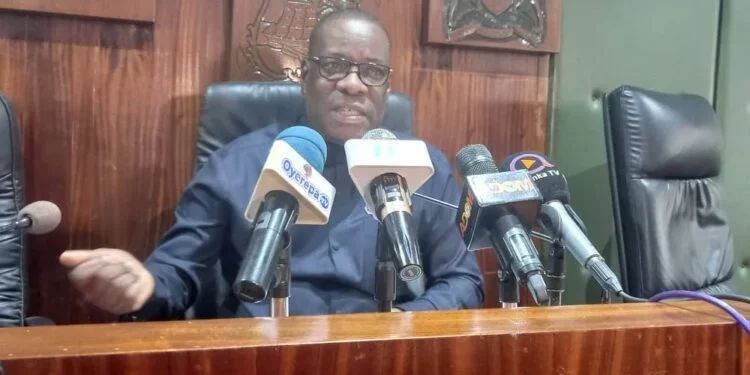
Chief Executive of the National Petroleum Authority (NPA), Dr. Mustapha Abdul-Hamid, has promised ongoing support and partnership with businesses in Ghana’s Petroleum Downstream Industry to tackle challenges and foster growth.
“NPA is very pro-business in the exercise of its regulatory mandate, such that we do protect Ghanaian businesses and employees to enable growth in the Petroleum Downstream Industry, increase employment opportunities and ease the burden of unemployment”.
To achieve this, the NPA has introduced several measures, such as setting up a Receivables Committee that regularly engages with companies deemed to have high credit risks, ensuring their risk is minimized so they can meet tax and margin expectations.
“That is crucial for us because if all these companies are indebted and they collapse under the weight of their indebtedness, then NPA also ceases to exist”.
He mentioned that the NPA has also reached out to the government to put in place economic measures that help protect businesses, especially during tough and unstable times.
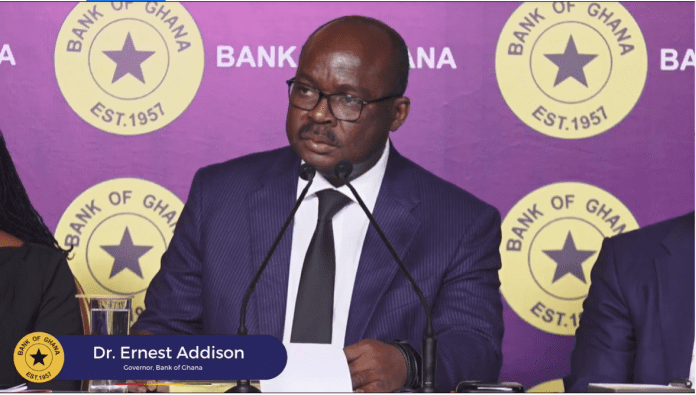
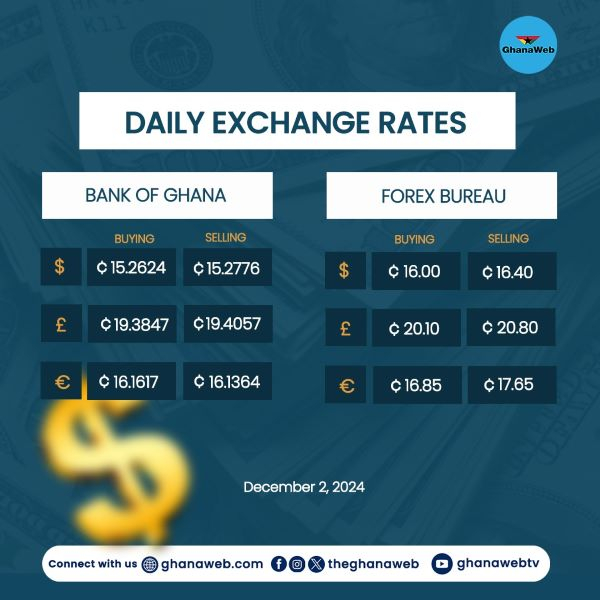
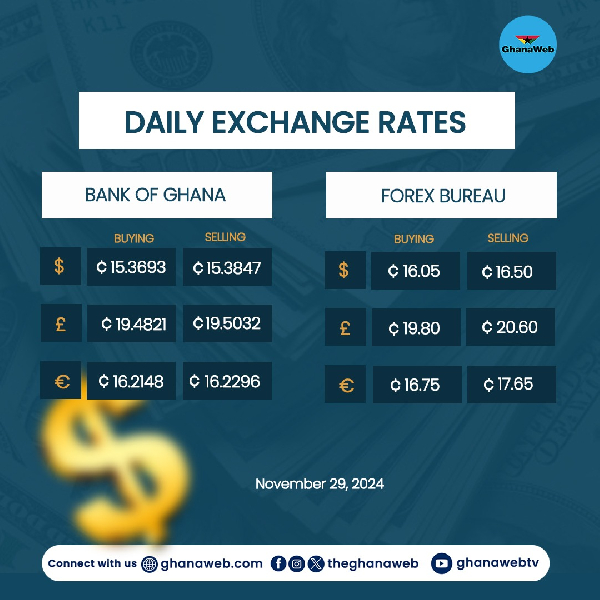
One of these efforts was the NPA asking the Bank of Ghana to hold a forex auction to help stabilize the exchange rate used by companies that import petroleum. This aims to prevent unnecessary price hikes for consumers of petroleum products.
“To this day, the forex auction still goes on, even though the percentage of foreign currency that is provided by the BoG has receded due to additional interventions.”
These remarks were made during a UK-Ghana Chamber of Commerce (UKGCC) and WTS Nobisfields webinar on “Building Consistency in Regulatory Enforcement Across Ghana’s Petroleum Sector,” where he stated, “The introduction of the ‘Gold for Oil’ programme was another government intervention that the NPA facilitated to reduce the direct demand for US dollars for the importation of petroleum products.”
He also highlighted that the NPA has been actively working with the government to introduce measures aimed at protecting businesses, particularly during periods of economic uncertainty. One such effort was urging the Bank of Ghana to conduct a forex auction to stabilize the exchange rate for petroleum imports, helping to prevent unnecessary price increases for consumers.
The NPA’s Mandate: An Act Pending Repeal
According to Dr. Abdul-Hamid, the NPA is mandated under the NPA Act 2005 (Act 691) to regulate, oversee, and monitor activities of the petroleum downstream industry. Its functions include licensing, pricing, ensuring conformance to operational and environmental standards, ensuring fair competition, a Unified Petroleum Price Fund (UPPF), and consumer protection.
“Our duty is to ensure effective, efficient, and a timely delivery of quality petroleum products”, he shared.
However, a new NPA bill will soon be passed in Parliament. The draft bill expunges the NPA’s redundant functions, introduces the regulation of natural gas, and criminalises operations without licence, among other provisions.
“When the new Act is passed, we would then develop Legislative Instruments (LIs) to further strengthen our regulator mandate”, Dr. Abdul-Hamid indicated.
Focus on Innovation and Consumer Protection
Dr. Abdul-Hamid revealed that the NPA is currently undergoing regulatory processes to acquire ISO certification for the key areas of its regulatory mandate.
“We have significantly advanced towards acquisition of ISO certification in Quality Management System, Environmental Management System, and Operational Health and Safety Management”.
Furthermore, the Authority has introduced technological innovation in its operations to improve effective, efficient, and timeous delivery of quality petroleum products to Ghanaians.
For instance, their Automatic Tank Gauging System allows them visibility of various petroleum outlets across the country. This helps them determine beforehand, where in Ghana there are likely to be shortages of petroleum products so they can intervene.
Despite these innovations, tampering of fuel pumps by service attendants at fuel stations has become a challenge. Addressing this growing concern, Dr. Abdul-Hamid urged Ghanaians to activate their rights to quantity verification using the 10 litre can – a standardised measuring tool designed by the Ghana Standards Authority (GSA) and available at all service stations, to verify fuel quantity at service stations.
If any discrepancy is detected, the aggrieved customer may report the issue to the NPA.
“First, the station will be closed if found culpable. The GSA would then be invited to inspect the calibration of the pump and after, a fine would be imposed if the station is found guilty”, he remarked.
Reemphasising the NPA’s commitment to ensuring fair regulation of businesses in the sector, Dr. Abdul-Hamid concluded that, “We try as much as possible not to interrupt with the flow of businesses or regulate in such a way that businesses feel suffocated.
We rather regulate in such a way to prevent businesses from perpetuating corrupt practices, monopolies, cartels, and undercutting of the market to profit at the expense of other competitors among others”.
The webinar, moderated by Theophilus Tawiah, Managing Partner, WTS Nobisfields and lecturer at UPSA Law School, discussed a wide range of related topics, such as the deregulation of petroleum downstream, business opportunities in the sector, general licensing requirements, establishment of the Petroleum Hub, and the newly passed Ghanaian content regulation among others.