Author: Amanda Cartey

  • Abu Trica did not attend to me when I called him for help – Ajagurajah

    Abu Trica did not attend to me when I called him for help – Ajagurajah

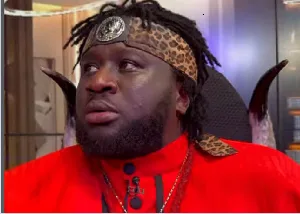
    Spiritual leader and founder of the Ajagurajah Movement, Bishop Kwabena Boakye Asiamah, has rubbished claims that he receives funding from embattled 31-year-old Ghanaian social media influencer from Swedru, Frederick Kumi, popularly known as Abu Trica.

    In a TikTok live session, Ajagurajah explained that Abu Trica chose clearing his Cybertruck at the time over supporting him when he needed it the most.

    “I called Abu Trica for help, and he told me his Cybertruck had just landed, so he needed to clear it. He said, ‘He is very sorry, he cannot help me.’ He told me he couldn’t even give me GH¢1 because he had to clear his Cybertruck.”

    “He never gave me anything, yet most people believe that Abu Trica takes care of me. Many people have donated to support me but Abu has never given me anything. So, to anyone who thinks Abu Trica funds the Ajagurajah Movement, I want to say I have never met him personally, and he has never given me anything. If I am lying, may God take my life,” Ajagurajah said.

    31-year-old Ghanaian from Swedru, Frederick Kumi, popularly known as Abu Trica, has been arrested after he allegedly tricked elderly victims in the United States (U.S) into sending him money by pretending to be in a romantic relationship with them. He was arrested in Ghana on Thursday, December 12.

    Kumi has been charged with conspiracy to commit wire fraud, money laundering conspiracy, and a forfeiture specification. He risks being jailed for 20 years.

    According to the indictment, Kumi had been working with a criminal group since 2023, using Artificial Intelligence (AI) technology to create fake profiles and lure victims into online romantic relationships.

    The indictment further added that Abu Trica and his team contacted the elderly individuals through social media and dating platforms, where they requested money or valuables to sort out urgent medical bills, travel expenses, or investment opportunities. The criminal group’s co-conspirators in Ghana then received funds and valuables defrauded from the elderly victims.

    The Attorney General’s Office, Economic and Organised Crime Office (EOCO), Ghana Police Service, Ghana Cyber Security Authority, Narcotics Control Commission (NACOC), and the National Intelligence Bureau, among others, aided the U.S. in tracing Abu Trica. Meanwhile, these agencies are working to arrest co-conspirators and recover the defrauded funds.

    In October, four Ghanaian nationals—Isaac Oduro Boateng aka “Kofi Boat,” Inusah Ahmed aka “Pascal,” Derrick Van Yeboah aka “Van,” and Patrick Kwame Asare aka “Borgar”—were charged for their roles in an international criminal organization that stole more than $100 million from victims via romance scams and business email compromises.

    United States Attorney for the Southern District of New York, Jay Clayton, and Assistant Director in Charge of the New York Field Office of the Federal Bureau of Investigation (FBI), Christopher G. Raia, announced the unsealing of an indictment charging them.

    Boateng, 36; Ahmed, 40; Van Yeboah, 40; and Asare, 39, are charged with one count of wire fraud conspiracy, which carries a maximum sentence of 20 years in prison; one count of wire fraud, which carries a maximum sentence of 20 years in prison; one count of money laundering conspiracy, which carries a maximum sentence of 20 years in prison; one count of conspiracy to receive stolen money, which carries a maximum sentence of five years in prison; and one count of receipt of stolen money, which carries a maximum sentence of 10 years in prison.

    The charges contained in the indictment are merely accusations, and the defendants are presumed innocent unless and until proven guilty.

    Boateng, Ahmed, and Van Yeboah were extradited and arrived in the U.S. on August 7 and appeared before U.S. Magistrate Judge Robert W. Lehrburger. Asare, on the other hand, remains at large. The case has been assigned to U.S. District Judge Arun Subramanian.

    “As alleged, Isaac Oduro Boateng, Inusah Ahmed, Derrick Van Yeboah, and Patrick Kwame Asare led and participated in an international fraud ring that engaged in a massive conspiracy to defraud vulnerable people and steal from businesses,” said U.S. Attorney Jay Clayton.

    “Offshore scammers should know that we, the FBI, and our law enforcement partners will work around the world to combat online fraud and bring perpetrators to justice.”

    “The defendants have been brought to the United States to be held accountable for their alleged roles in scamming companies and vulnerable Americans out of over $100 million,” said FBI Assistant Director in Charge Christopher G. Raia.

    “Deceiving businesses using email compromise campaigns and tricking innocent elderly victims through fraudulent companionship in order to exploit their trust and finances is not merely appalling but illegal. The FBI will continue to ensure anyone who preys on companies and vulnerable Americans online is made to face the criminal justice system.”

    The indictment revealed that Boateng, Ahmed, Van Yeboah, and Asare were high-ranking members of a criminal organization based in Ghana that committed romance scams and business email compromises against individuals and businesses located across the U.S.

    Many of the conspiracy’s victims were vulnerable older men and women who were tricked into believing that they were in online romantic relationships with people who were, in fact, fake identities assumed by members of the conspiracy.

    Once members of the conspiracy had gained the trust of their victims, they deceived those victims into sending their money to the enterprise or into helping them launder funds from other victims.

    The conspirators also committed business email compromises to trick and deceive businesses into wiring funds to the enterprise. In total, the conspiracy stole and laundered more than $100 million from dozens of victims.

    After stealing the money, the fraud proceeds were then laundered to West Africa, where they were largely funneled to individuals called “chairmen,” who directed the activities of other members of the conspiracy. Boateng and Ahmed were considered chairmen of the organization.

    The maximum potential sentences in this case are prescribed by Congress and provided here for informational purposes only, as any sentencing of the defendants will be determined by a judge.

    Mr. Clayton praised the outstanding work of the FBI. He also thanked Ghana and the U.S. Department of Justice’s Office of International Affairs for their assistance.

    The Justice Department’s Office of International Affairs worked with the International Cooperation Unit of the Office of the Attorney-General of Ghana to secure the extraditions to the United States. Ghana’s Economic and Organized Crime Office, the Ghana Police Service – INTERPOL, Ghana’s Cyber Security Authority, and Ghana’s National Intelligence Bureau all provided significant assistance to ensure the success of these extraditions.

    The case is being prosecuted by the Office’s Complex Frauds and Cybercrime Unit. Assistant U.S. Attorneys Kevin Mead and Mitzi Steiner are in charge of the prosecution.

    There has been a surge in reports of Ghanaian nationals being involved in illegal activities abroad, especially romance scams.
  • Reactions pour in from Kofi Nti, Ohemaa Woyeje, others over Daddy Lumba’s burial dispute

    Reactions pour in from Kofi Nti, Ohemaa Woyeje, others over Daddy Lumba’s burial dispute

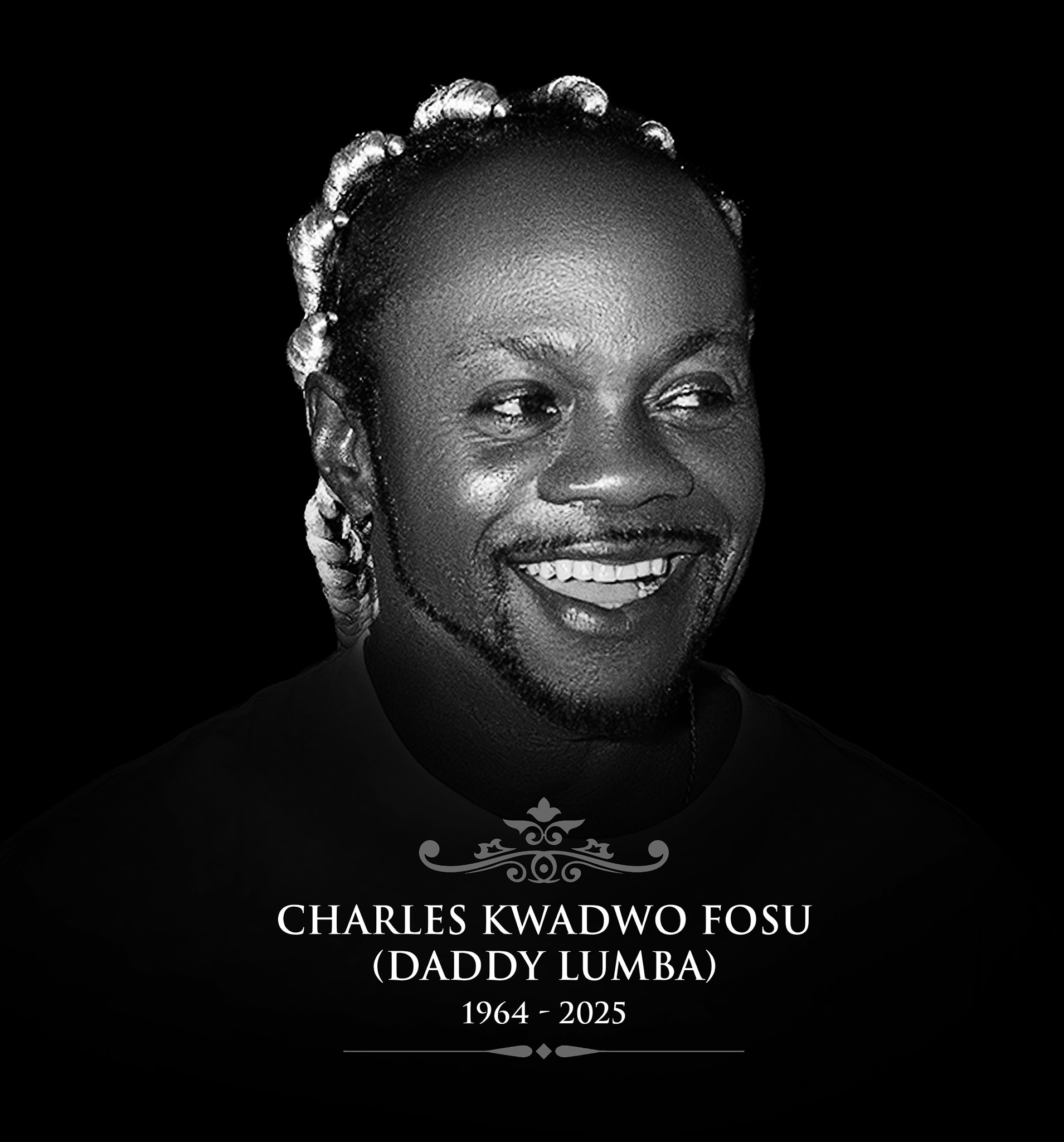
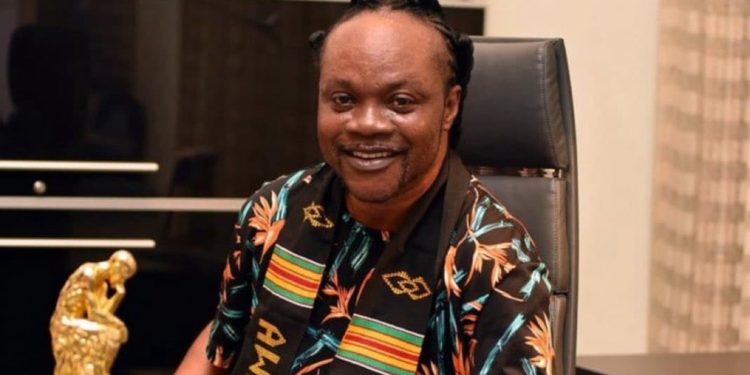
    Kofi Nti, Ohemaa Woyeje, Efia Schwarzenegger and other public figures have reacted to the controversies surrounding the burial of legendary highlife musician Daddy Lumba in Kumasi on December 13, 2025.

    Their responses range from calls for peace to support for the late artist’s legal family.

    Kofi Nti

    Highlife musician Kofi Nti said he intentionally avoided attending the funeral because of safety concerns and his family’s advice.

    He added that, as a peace-loving person, he had hoped the Abusuapanin would bring the two wives together to promote harmony.

    “I’m a very peaceful person. I thought Abusuapanin will bring both wives together for them to be in peace but I didn’t see that,” he said.

    Kofi Nti revealed that his mother advised him to stay out of the funeral disputes after learning about the surrounding controversies.

    “My mother called me and said she had heard a lot about the funeral so I shouldn’t involve myself,” he explained.

    He added that expectations were high for a massive turnout, but the tension discouraged him from attending.

    “We were expecting the whole stadium to be full. I didn’t want to go because the controversies that went.

    “I wouldn’t want something to happen there or someone hitting me with something just because I showed up and since my mother said I shouldn’t involve myself, I had to respect that,” Kofi Nti added.

    Ohemaa Woyeje

    Media personality Ohemaa Woyeje also weighed in, making a strong statement about the late musician’s relationships.

    According to her, Odo Broni was not Daddy Lumba’s wife but his girlfriend, despite public perceptions.

    “Odo Broni is not Daddy Lumba’s wife; she’s his girlfriend. These days, all men call their girlfriends their women and wives but it doesn’t mean he’s married to her,” she said.

    She said many people were aware of the truth but chose to remain silent.

    Ohemaa Woyeje, however, publicly declared her support for Akosua Serwaa, believed to be Daddy Lumba’s legal wife.

    “We know everything but we’re just quiet. To Akosua Serwaa, God is with you. Your efforts will not be in vain. Your husband said he didn’t want anyone to hurt you after his death but they have hurt you,” she stated.

    She added that despite insults and criticism, Akosua Serwaa had strong backing.

    “They should insult us because we are behind you and your truth. We will continue to support you and we will support the truth,” she added.

    Afia Schwarzenegger

    Outspoken media personality Afia Schwarzenegger firmly backed Abusuapanin Kofi Owusu, asserting that Daddy Lumba would still be in the mortuary if not for his decisive actions.

    “If not for Abusuapanin, Lumba wouldn’t have been buried by now. If we didn’t put our feet down, Daddy Lumba would have remained in the mortuary,” she said.

    She praised the Abusuapanin’s leadership, describing him as wise and decisive.

    “I’m so proud of Abusuapanin Kofi Owusu. He’s a wise man,” she shared.

    Afia Schwarzenegger challenged the idea of delaying the funeral to March 14, stating that Odo Broni and her family would not have accepted such a postponement.

    “If the funeral wasn’t done and was postponed to March 14, would Odo Broni and her family agree? Team legal wife were saying they won’t agree.

    “I kept asking myself what would make them think that Odo Broni and her family would agree to hold the funeral on March 14,” she noted. She further criticised the ongoing legal battles, questioning the financial cost of the disputes.

    “With all the controversies, is it not the same money they’re using to pay the lawyers?” she added.

    Evangelist Papa Shee has revealed that Akosua Serwaa, wife of the late highlife legend Daddy Lumba, together with other family members, missed the late musician’s funeral due to a lack of official notice.

    In an interview on Adom TV’s morning show Badwam, Papa Shee explained that Lumba’s immediate family was absent because they were abroad and had requested a postponement to allow everyone to be present.

    He also said his absence at the funeral was to respect elders who had withdrawn from the arrangements and instead stayed home to worship.

    Akosua Serwaa on the other hand, who is currently in Germany, chose to leave the matter in God’s hands after learning of the funeral through hearsay.

    “I didn’t attend the funeral because I was at home worshipping. I didn’t see a need to go, especially since I can’t disrespect my elders who said they would not be attending. Akosua Serwaa is in Germany, and some family members are overseas; that’s why they wanted the funeral postponed until everyone could be present,” he said.

    He added, “Akosua Serwaa has left everything in God’s hands. She was not officially informed about the funeral date on the 13th; it was only hearsay. Since Lumba’s immediate family wasn’t present at the funeral, it’s up to the family to decide if there will be another service. Akosua Serwaa is the reason Daddy Lumba became who he was.”

    Thousands of mourners turned out in long, solemn queues to pay their final respects to the late music icon, Charles Kwadwo Fosu, popularly known as Daddy Lumba, when his body was laid in state at Heroes Park in Kumasi.

    From the early hours of the day, fans from across the country thronged the venue to honour the legendary musician, creating an emotionally charged atmosphere as family members, fellow musicians, industry players and admirers filed past to bid him farewell.

    Daddy Lumba’s timeless songs played softly in the background, deepening the sense of loss and underscoring his immense contribution to Ghana’s music industry.

    Many mourners described him as a cultural symbol whose music spoke to love, hardship, hope and everyday social realities, noting that his work influenced generations of artistes and helped shape the sound and identity of contemporary Ghanaian music.

    Others said that although he has passed on, his music and lasting impact will endure, ensuring that the name Daddy Lumba remains celebrated for years to come.

    The family went ahead with the funeral on December 13, 2025, after the Accra High Court ruled that the burial should proceed as originally scheduled.

    The court’s decision followed an earlier injunction that had halted the funeral, restrained the family head, Kofi Owusu, from organising the burial, and barred Transitions Funeral Home from releasing the body. Shortly after issuing that order, the court recalled all legal representatives and issued a fresh directive.

    In its ruling, the court directed the applicants to deposit GH¢2 million by 2 p.m. on Friday, December 12, 2025, as security to cover potential costs arising from the postponement of the funeral. The judge explained that while the applicants’ concerns were noted, the injunction carried significant financial implications and could impose an unfair burden on the respondents. When the applicants, made up of members of Daddy Lumba’s maternal family, failed to meet the condition, the court ruled that the funeral should proceed on December 13.

    Despite the court’s position, conflicting statements emerged from sections of the family and associates of the late musician ahead of the burial. Evangelist Papa Shee had earlier claimed the funeral would not take place in December, citing delays in travel arrangements for some family members abroad, examinations involving the musician’s children, expired passports, and pending autopsy results. He also indicated that the family intended to meet President John Dramani Mahama over a proposed state burial and suggested a new burial date of March 14, 2026.

    These claims were rejected by the Abusuapanyin, Kofi Owusu, who insisted that December 13 remained the official burial date and warned that he would take legal action against anyone suggesting otherwise. He maintained that no individual had the authority to change the date once it had been fixed.

    The late musician’s elder sister, Ernestina Fosu, also publicly opposed earlier burial arrangements, stating that the family could not proceed with the funeral until the exact cause of Daddy Lumba’s death was known. She stressed that no court ruling or family decision would compel her to support the burial without clarity on the circumstances surrounding his death, though she later indicated her readiness to organise the funeral once the cause was established.

    Amid the family disagreements, Prophet Kumchacha issued warnings of spiritual consequences if the burial was not conducted peacefully, claiming to have received revelations about potential tragedy should the funeral be mishandled. His comments added to the public debate surrounding the burial.

    Daddy Lumba’s burial date had earlier been shifted from December 6 to December 13, 2025, to allow additional time for matters relating to the cause of death to be addressed. Following the court’s final ruling and the failure of the applicants to meet the imposed conditions, the funeral eventually took place on December 13, bringing an end to weeks of legal disputes and public controversy over the final rites of the celebrated musician.

  • ‘Peller’ in police custody over attempt to take his life

    ‘Peller’ in police custody over attempt to take his life

    Twenty-year-old social media influencer, Habeeb Hamzat, popularly known as Peller, has been arrested for allegedly attempting to take his life and reckless driving that resulted in a serious road crash in Lagos.

    The incident has reportedly led to a severe motor accident, during which the suspect’s life and those of other road users were endangered.

    A viral video that emerged on Sunday, December 14, 2025, captured the suspect recklessly driving on a public road while broadcasting it live on social media.

    In a statement issued on Tuesday by the Police Public Relations Officer, Lagos State Command, SP Abimbola Adebisi, on behalf of the Commissioner of Police, CP Olohundare Jimoh, Peller’s arrest was confirmed.

    “The suspect will be charged in a court of competent jurisdiction in accordance with the law,” the police said.

    Commissioner of Police CP Jimoh strongly warned social media influencers, content creators, and the public against taking part in or promoting risky, illegal, or dangerous activities for the sake of content.

    He emphasized that such behaviour can threaten public safety and lead to loss of life, making it clear that the Police Command will not tolerate any lawlessness.

    “The full weight of the law will be applied to anyone found culpable,” the statement added.

    The police also called on all drivers and pedestrians to follow traffic rules closely, emphasizing the Command’s dedication to protecting lives, upholding public order, and promoting safety throughout the state.

    In 2024, Ghanaian Musician Kofi Kinaata calmed fears following a car accident on Sunday, September 22, confirming that he escaped without injury while on his way to an event in the Western Region.

    During a Facebook Live session, Kinaata detailed the events leading up to the accident, stating, “Everyone is doing well, and thanks for the concerns.”

    The award-winning singer also dispelled rumors of a driver’s death, clarifying that the reports are false.

    He explained that their vehicle, while heading to a show in Nkroful, was involved in an accident after a motorbike rider unexpectedly crossed their path.

    He mentioned that the individuals on the motorbike sustained injuries and were taken to the hospital, but none of his team members were harmed.

    ‘We are following up on the conditions of those on the motorbike and we will update everyone on the latest development. We are praying for a speedy recovery,” he added.

    In the same year, Ghanaian gospel artist and preacher Sonnie Badu opened up about a traumatic domestic accident he suffered in December 2023, which resulted in the loss of two toes.

    Just days before his highly anticipated Rhythm of Africa Concert on December 9, Badu revealed he had undergone surgeries on his leg following the incident.“I went through depression for six months, I’m left with only three toes,” he said.

    Despite his condition, he still performed at the concert in Accra, prompting speculation on social media that his injury might be a publicity stunt a claim he strongly refuted.

    Now, in a September 2024 interview on Onua Showtime, Badu shared the harrowing details of the accident. He explained that he slipped while cleaning a staircase, which caused his leg to impale a sharp metal rail, leading to severe injuries.

    “I was bleeding everywhere. We drove to the hospital and I walked to the emergency. When the doctors checked, they asked where are my toes. I asked, ‘Which toes?’ I asked my team members to go check with a torchlight and they saw the toes on the floor, picked it up, placed them in an iced box and brought it to the hospital. The doctors checked and refused it,” he narrated.

    Badu also revealed that he battled depression for six months following the accident, stating, “I’m left with only three toes.” During the interview, he showed host Nana Ama McBrown images related to the incident, further validating his account.

    Earlier this year, popular Ghanaian musician and socialite, Oseikrom Sikani, survived a terrifying car accident that left his vehicle wrecked but miraculously spared his life.

    The accident happened on February 20, 2025, and the artiste took to Snapchat to share his experience. According to him, his car flipped over about eight times, yet he walked away with only minor injuries.

    “(The car somersaulted) more than 8 times… I don’t understand. Told you I saw death today, still living my one life,” he posted.

    Though he escaped unhurt, he jokingly mentioned that he lost his grills in the crash.

    Photos from the scene showed the badly damaged car and some bruises on his body. Fans and well-wishers have since flooded social media with messages of relief and support.

    Oseikrom Sikani has assured everyone that he is doing fine and will be back to his usual self soon.

  • Bid to remove Justice Yoni Kulendi thrown out

    Bid to remove Justice Yoni Kulendi thrown out

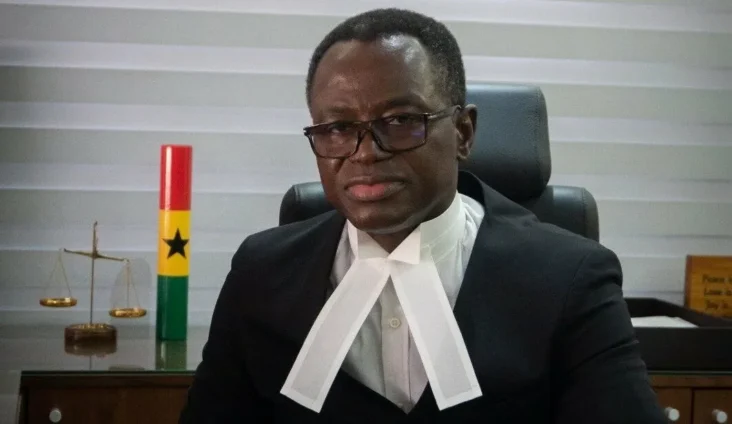
    A petition seeking the removal of Justice Yonny Kulendi from office as a Justice of the Supreme Court has been quashed by President John Dramani Mahama, based on the advice of the Chief Justice, Justice Paul Baffoe-Bonnie.

    The decision was communicated in a letter dated December 4, 2025, signed by the Secretary to the President, Dr Callistus Mahama, and sent to the petitioner, Daniel Marfo Ofori-Atta.

    “I have the instructions of His Excellency the President to respond to your petition dated 30 September 2025 on the above matter,” the letter stated.

    Dr Mahama stated that, under Article 146(3) of the 1992 Constitution, the President forwarded the petition to the Chief Justice on October 20, 2025, to assess whether it established a prima facie case.

    “By a letter dated 2 December 2025, the Chief Justice informed His Excellency the President that no prima facie case had been established by the petition to warrant any further investigation,” the letter said.

    Quoting the Chief Justice’s determination, the letter noted: “In the circumstances, the Petitioner’s own evidential material undermines and collapses the factual foundation of the allegations.

    “When compared against the sworn testimony of Mr Jakpa, the petition’s claim that Justice Kulendi abused his office to secure bail for his cousin and that he sought to inappropriately influence the outcome of the case is exposed as a clear distortion of the record and fails to disclose any evidentiary basis upon which a prima facie finding can be properly grounded.

    “In conclusion, it is my determination that this petition fails to meet the evidential threshold required to establish a prima facie case under Article 146(3) of the Constitution. Accordingly, I find that no prima facie case has been established against Justice Yonny Kulendi by the Petitioner.”

    Dr Mahama added that, “In view of the Chief Justice’s determination that the constitutional threshold under Article 146(3) has not been met, no further steps are required in respect of your petition. The matter is therefore concluded.”

    The Minister for Goverment Communication, Felix Kwakye Ofosu, also confirmed this development in a Facebook post.

    Background

    Daniel Marfo Ofori-Atta submitted a petition to President Mahama on October 2, 2025, seeking the removal of Justice Kulendi, after previously filing a petition with the Criminal Investigation Department (CID) of the Ghana Police Service.

    The petitions called for investigations into Justice Kulendi and his cousin, Richard Jakpa, over claims of attempts to influence the administration of justice.

    The claims arose from the widely followed case, Republic v Cassiel Ato Forson & two others, in which Jakpa, who serves as Director of Operations at the National Security Secretariat, was listed as the third accused person.

    Ofori-Atta alleged that Justice Kulendi sought to interfere with justice in violation of the code of conduct required of a Supreme Court judge, contending that the actions amounted to stated misbehaviour and made him unsuitable to remain in office.

    Justice Emmanuel Yonny Kulendi was sworn in as a Justice of the Supreme Court on May 26, 2020, alongside Professor Henrietta J. A. N. Mensa-Bonsu, by then President Nana Addo Dankwa Akufo-Addo.

    Their nominations followed approval by Parliament’s Appointments Committee after vetting conducted on May 11 and 12, 2020, and final parliamentary endorsement on May 20, 2020.

    A couple of months ago, President John Dramani Mahama relieved embattled Chief Justice Gertrude Tokornoo of her duties with immediate effect.

    A press statement issued by the presidency and signed by the Spokesperson to the President, Felix Kwakye Ofosu, indicated that her dismissal is in accordance with Article 146(9) of the 1992 Constitution.

    President Mahama, on Tuesday, April 22, suspended the Chief Justice after a prima facie case was established, following separate petitions calling for her removal.

    However, the new development comes shortly after President John Dramani Mahama officially received recommendations from the committee probing petitions seeking the removal of Chief Justice Gertrude Araba Esaaba Sackey Torkornoo, today, Monday, September 1.

    The presidency justified its decision to dismiss the Chief Justice, citing findings from the Article 146 Committee of Inquiry.

    According to the statement, the Committee found that the grounds of stated misbehavior under Article 146(1) had been established and recommended her removal from office.

    “President John Dramani Mahama has, in accordance with Article 146(9) of the 1992 Constitution, removed the Chief Justice, Her Ladyship Justice Gertrude Araba Esaaba Sackey Torkonoo, from office with immediate effect.

    “This follows receipt of the report of the Committee constituted under Article 146(6) to inquire into a petition submitted by a Ghanaian citizen, Mr Daniel Ofori. After considering the petition and the evidence, the Committee found that the grounds of stated misbehaviour under Article 146(1) had been established and recommended her removal from office.

    “Under Article 146(9), the President is required to act in accordance with the committee’s recommendation,” parts of the statement read.

    The committee chaired by Supreme Court Justice Gabriel Scott Pwamang and includes Justice Samuel Kwame Adibu Asiedu, former Auditor-General Daniel Yaw Domelevo, Major Flora Bazwaanura Dalugo of the Ghana Armed Forces, and Professor James Sefah Dzisah of the University of Ghana.

    In July, an application for review regarding an ‘abuse of court processes’ by the embattled Chief Justice, Justice Gertrude Torkornoo, was dismissed by the Human Rights Division of the Accra High Court.

    The court presided over by Justice Amoako on Thursday, July 31, revealed that several claims, such as illegal composition of the committee and wrongful conduct of adversarial proceedings, were already before the Supreme Court.

    Justice Amoako argued that relitigating these issues would result in duplication of litigation and abuse of court processes. As such, such claims were dismissed.

    The judge also dismissed reliefs such as an order of certiorari to quash the committee’s proceedings and nullify its sittings on the basis that the Chief Justice did not receive a fair hearing, on jurisdictional grounds.

    The judicial review application filed on June 9 this year sought nine reliefs, which included a series of declarations that the Article 146 committee set up to probe her removal from office had acted unlawfully.

    She wanted the court to prevent the committee from proceeding with its work without providing her with authenticated copies of the petitions seeking her removal and the subsequent responses.

    The Chief Justice notes that the president’s purported prima facie determination contained no reasons or justification and was entirely devoid of the elements of judicial or quasi-judicial reasoning expected under the Constitution.

    As the proceedings of the Article 146 committee are to be held in-camera in accordance with Article 146(8) of the Constitution, the court noted that it could not inquire into matters raised by the suspended Chief Justice.

  • Softcare sanitary pads production line commissioned by Vice President

    Softcare sanitary pads production line commissioned by Vice President

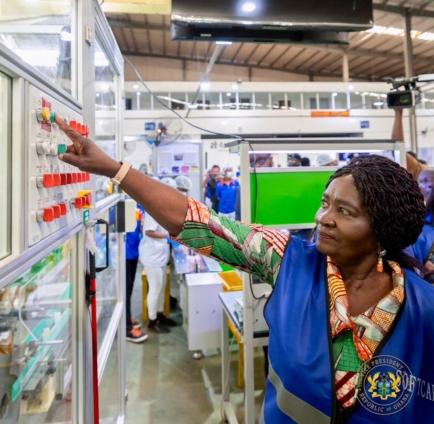
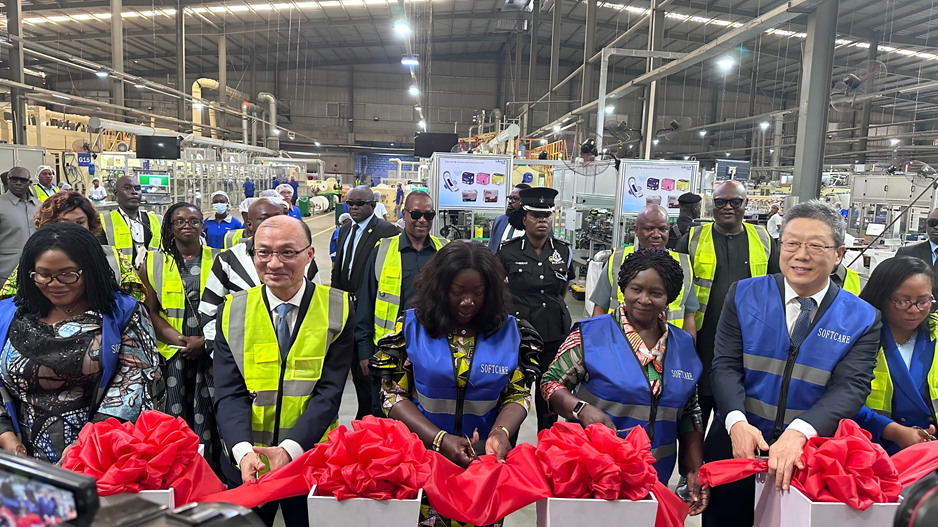
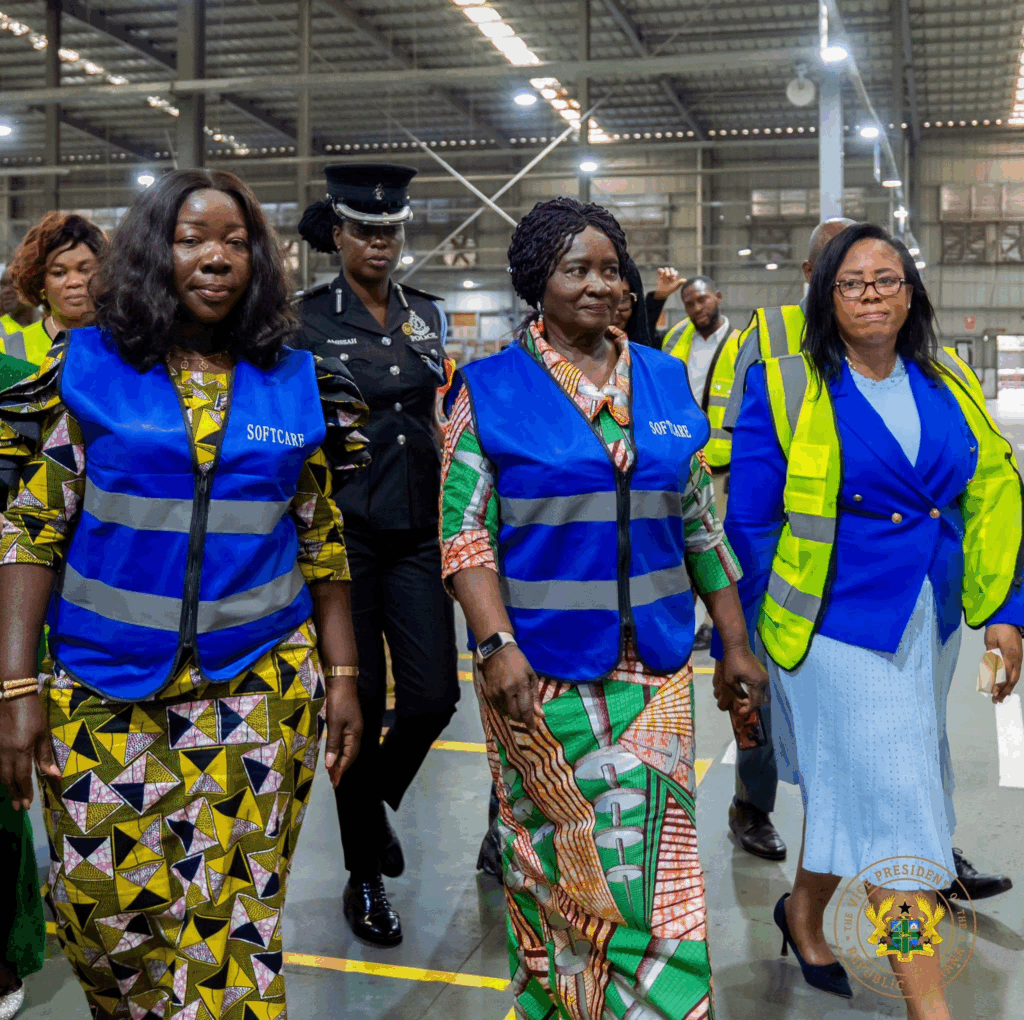
    Vice President Professor Naana Jane Opoku-Agyemang has commissioned Softcare’s new sanitary pads production line, as the company expands its reach across West Africa and parts of Asia.

    At the commissioning ceremony on Monday, 15th December 2025, she commended Softcare for evolving from a necessity-driven idea into a nationally recognized manufacturer, creating thousands of jobs and producing high-quality sanitary pads that proudly carry the “Made in Ghana” label.

    She reaffirmed the government’s commitment to deepening its partnership with the Company, describing the firm as a strategic domestic player within Ghana’s industrial reset agenda.

    “The government of His Excellency President John Dramani Mahama remains committed to the systematic transformation of Ghana’s economy.”

    “The Ghana Framework for Industrialisation and Transformation is a key mechanism in this effort, and today’s commissioning demonstrates that the strategy is yielding tangible results. The partnership with Softcare shows what is possible when a responsive private sector aligns with a stable and supportive policy environment,” she stated.

    The Vice President praised the company’s sustained growth over the past 15 years, noting that it exemplifies how a capable private sector can thrive within a predictable and business-friendly policy environment.

    With the additional production lines, Softcare is positioned to meet local demand while increasing exports. The Vice President noted that sanitary pads have been classified as a high-potential product under the Accelerated Export Development Programme to broaden Ghana’s export base.

    She stressed the need for Africa to move beyond the export of raw materials, arguing that value addition and processing are essential to expanding the continent’s share of global trade. “This is how we create sustainable employment, build local ownership, and anchor development on capital and technology that support long-term transformation,” she noted.

    The Vice President commended Softcare’s social investments in education and healthcare and said the company stands to benefit from opportunities under the Free Sanitary Pads Programme.

    Chairman of Softcare, Mr Y. C. Shen, commended the government’s policy approach, describing it as a key driver of Ghana’s economic progress.

    He noted that Softcare’s activities are closely aligned with the 24-Hour Economy Initiative, adding that the new production line will improve operational efficiency and create more jobs locally.

    Mr Shen said Softcare, as Africa’s leading manufacturer of sanitary pads and baby diapers, was pleased to support the Free Sanitary Pads Programme, which advances education, gender equity and public health outcomes.

    He called on regulators and industry players to sustain a fair and transparent business environment, stressing that such conditions are essential for attracting investment and promoting inclusive economic growth.

    Softcare’s journey began in 2009 with the trading of hygiene products. Over the years, it has grown into a leading multinational hygiene products company, engaged in the development, manufacturing and sale of baby and feminine hygiene products, including diapers, sanitary pads and wet wipes, with a focus on fast-growing emerging markets in Africa and Latin America.

    In Ghana, Softcare entered the market in 2009 with the launch of its baby diapers, marking its first foray into Africa. Since then, Softcare Ghana has maintained a leading position in both the baby diaper and sanitary pads segments, contributing to Ghana’s industrialisation drive, strengthening national standards and positioning the country as a manufacturing hub in West Africa.

    The company has also sustained a strong commitment to corporate social responsibility. In 2025, it rolled out several initiatives, including a Mother’s Day donation event at the Korle-Bu Teaching Hospital and a nationwide road safety education campaign.

    Following the launch of Ghana’s Free Sanitary Pads Programme in April 2025, Softcare joined the initiative as a major local supplier, supporting efforts to provide free sanitary pads to more than two million schoolgirls in public basic and secondary schools.

    Through this intervention, the company aims to address period poverty, reduce school absenteeism and promote menstrual hygiene and dignity nationwide.

    These efforts have earned Softcare significant national recognition. In 2023, the company secured membership of the National Technical Committee on Medical Devices under the Ghana Standards Authority.

    In 2024, it was ranked first in the manufacturing sector at the 21st edition of the Ghana Club 100 Awards by the Ghana Investment Promotion Centre. In 2025, Softcare received multiple honours at the Ghana–West Africa Business Excellence Awards, including Consumer Products Company of the Year, Overall Best Industrial Company of the Year, and Best Corporate Social Responsibility Company of the Year at the Association of Ghana Industries and Quality Awards.

    Softcare says it remains committed to working closely with government to ensure its products meet the highest standards of safety, quality and sustainability, while maintaining deep engagement with local communities through impactful and responsible corporate citizenship.

  • Ghana to take delivery of 300 ISUZU buses to strengthen Metro Mass Transit services

    Ghana to take delivery of 300 ISUZU buses to strengthen Metro Mass Transit services

    Ghana is set to take delivery of 300 additional ISUZU buses to strengthen Metro Mass Transit services.

    This was announced Deputy Minister of Transport, Dorcas Affo-Toffey, through a post on social media,

    “On behalf of the Minister for Transport, Hon. Joseph Bukari Nikpe, under whose leadership I serve, I had the privilege of joining the management of Metro Mass Transit in Egypt for the final inspection of three hundred (300) ISUZU buses slated for delivery to Ghana,” Affo-Toffey stated.

    She added that, “This important undertaking reflects the Minister’s clear vision and policy direction to strengthen Ghana’s public transport system through strategic investment in modern, reliable, and efficient mass transit.”

    The new buses will greatly increase the size of the fleet, widen service routes, cut down waiting periods, and make travel safer and more comfortable for passengers.

    She noted that the move will reduce the daily stress faced by workers, students, and traders, help ease traffic congestion, bring down transport expenses, and support a more organised and environmentally friendly transport system.

    Meanwhile, the Ghana Police received a major boost in operational capacity, safety, and deterrence with the government’s delivery of 40 new armoured vehicles.

    In a handing-over ceremony held at the Ghana Police Headquarters in Accra on Thursday, December 4, President Mahama, in his speech, commended the police for their hard work and efforts in bringing criminals to book, citing their resolve in tackling several cases of murder, armed robberies and other crimes in the country.

    He said, “And you have dealt with them, people who robbed banks and attacked people’s residences.

    You have chalked up many victories in bringing them to justice. Let me commend the CID, too.

    In the past, there were many unsolved murders. I’m happy to note that recently, many of the murders that occurred have been resolved. With good police intelligence, you’ve been able to bring the suspects to book.”

    He noted that the 40 armoured vehicles given to the Service are only the first of many his government will hand over to the law enforcement agency, adding that two tow trucks and patrol pickups will also be supplied to police districts.

    “These 40 vehicles are just the first batch of what you will be receiving. By the end of this month, you will receive two tow trucks so that anytime any of these vehicles becomes immobilised anywhere, you can pick it up and bring it back to base. You will also get 10 covert operational vehicles, which I have been cautioned not to talk about. It is only you who will know you have them. In addition, we want to give every police district a normal pickup for patrol duties”, the President said.

    Inspector-General of Police (IGP) Christian Tetteh Yohunu, in an acceptance speech, assured the president that with vehicles, his outfit will tear down any criminal syndicate and launch a “robust and targeted operation throughout the country”.

    “Your Excellency, these vehicles are going to completely change the face and dynamics of police operations. With these vehicles, we are going to launch very bold, robust, and targeted operations throughout the country. We will dismantle any existing criminal networks, most of whom have gone into hiding due to our intensified activities against them”, he noted.

    He also sent a warning to individuals threatening national security, declaring that the Police Service will relentlessly pursue and apprehend anyone involved in criminal activities.

    “Let me use this opportunity to send a strong word of caution to persons who have decided to threaten the security of this country: we are coming for you. You can run all you want and hide wherever you wish, but we will surely get you,” taunting the police service’s achievements so far under his leadership.

    “We have made several breakthroughs. In addition to numerous robbery attempts that have been foiled through sustained intelligence operations, we have successfully arrested suspects who operated under the illusion that they could get away with crime. These include the suspect behind the rural bank robberies, the robbery of the Radiance Filling Station, the robbery at Enfasatia, attacks on mobile vendors, the Wire and Bullet serial murders, vehicle theft syndicates, and perpetrators behind fake online food-delivery platforms”.

    IGP, Christian Tetteh Yohunu, also assured that the vehicles would be strategically deployed and properly maintained to achieve their intended objectives, commending the government for its intervention.

    “We wish to sincerely express our profound gratitude to the government for thinking about us and prioritising our welfare. Our assurance to you is that the vehicles will be well-maintained and strategically deployed to achieve the intended objectives,” he said.

    The event also saw the presence of Interior Minister Muntaka Mubarak and numerous senior police officers, highlighting the government’s commitment to supporting law enforcement agencies.

    The Interior Minister, speaking at the commissioning, also mentioned that the enhanced security capacity of security services in ythe country should block all chances of criminal networks from operating and doing so effectively.

    “Your time is up. The state is prepared. The police are prepared. The tools are ready. The intelligence is improving. And the public is increasingly vigilant.”

    He said that security agencies will deal decisively with those involved in violent and organised crime. “Whether it is armed robbery, banditry, illegal mining, violence, trafficking, kidnapping, gang activities or terrorism, know that we will find you, we will stop you, and you will face the full force of the law” adding that Ghana, being described as a peaceful country, doesn’t mean it is defenceless.

    “Ghana is a peaceful nation, but we are not defenceless.”

    The Minister explained that the new armoured vehicles would be deployed based on crime data and operational needs. He said the Interior Ministry will work closely with the Police Administration to ensure the vehicles are used effectively.

    “Some will support high crime zones, others will reinforce highway patrol, others will be integrated into rapid response teams and special operations. Deployment will be guided by intelligence, operational need and proper chain of command,” he said.

    He also highlighted the shift towards a more technology-driven policing model, supported by a new real-time crime centre being developed under the Inspector-General of Police.

    “We are moving towards a policing model that is predictive, data-driven and technology-enabled. In this new era, crime will be confronted not only with courage, but with smart intelligence and modern tools.”

  • Suspect arrested for abusing 6-year-old over bedwetting

    Suspect arrested for abusing 6-year-old over bedwetting

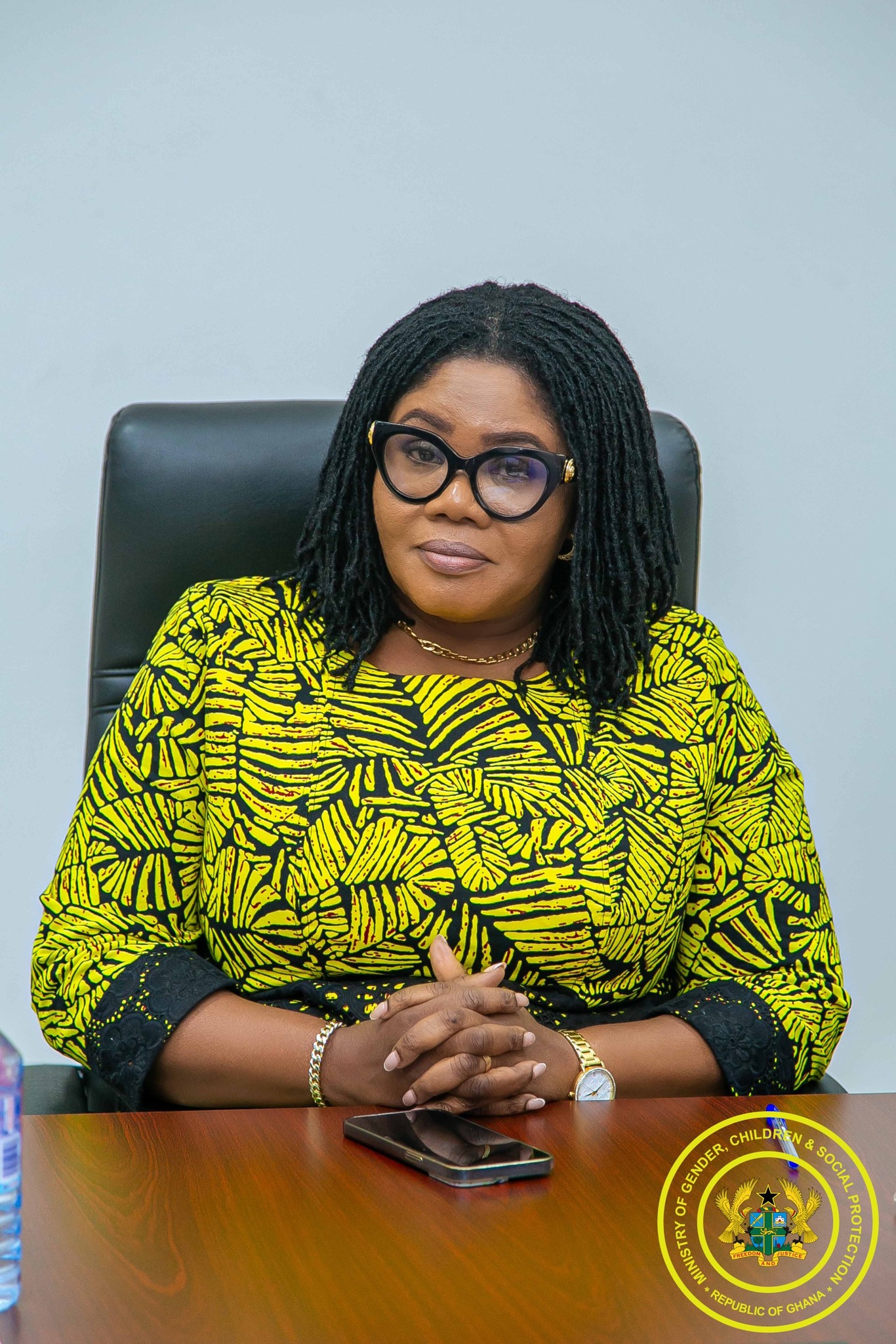
    The Ministry of Gender, Children, and Social Protection (MoGCSP) has announced the arrest of suspect involved in the abuse of a six-year-old child at Asamankese over bed-wetting.

    According to the Ministry, after strongly condemning the act, which went viral a few days ago, the Ghana Police Service was promptly notified to take action on the matter.

    “The Ministry of Gender, Children, and Social Protection (MoGCSP) wishes to inform the general public that, following the circulation of the viral video showing the abuse of a child, the matter was promptly referred to the Ghana Police Service by the Minister for Gender, Children, and Social Protection. The police have since arrested the suspect involved, and the investigation is currently ongoing,” a statement released by the ministry read.

    The Ministry cautioned parents, guardians, and caregivers against the use of violent disciplinary methods and urged the adoption of non-violent approaches to child upbringing, as discipline must never result in physical harm to a child.

    MoGCSP reiterated its commitment to the protection of children. At the same time, it assured that it will continue to collaborate with law enforcement agencies and stakeholders to prevent such incidents and to ensure that perpetrators of child abuse are held accountable.

    “Protecting children is indeed a shared responsibility. Families, communities, traditional and religious leaders, and the public all have a role to play to ensure that children grow up in a safe, caring, and protective environment,” the statement added.

    In October, the Central Regional Police Command arrested a forty-nine-year-old fisherman for defiling a 13-year-old girl in Apam, in the Central Region.

    His arrest followed a video that went viral on social media capturing the man engaged in the unscrupulous act.

    A statement shared by the police stated that, “On October 17, 2025, about 1300 hours, the Apam District Police Command received information that on October 16, 2025, a 49-year-old fisherman by the name Samuel Armah, a.k.a Kofi Nyan, had defiled a 13-year-old girl at Mumford, a suburb of Apam. That the suspect lured the survivor into a ghetto at Mumford and defiled her.Police on receipt of information proceeded to the area, and with the assistance of Mumford, task force arrested the suspect.”

    The survivor has since been hospitalised at St. Luke Catholic Hospital for examination and treatment.

    The statement further explained that after the matter was reported, the case docket was forwarded to the Central Regional office of the Domestic Violence and Victim Support Unit (DOVVSU) for further investigation. 

    Upon interrogation at the Unit, the suspect admitted to committing the offence. He was then taken into custody by the police to assist with ongoing investigations. 

    The statement added that the accused person will be formally charged and brought before the court for prosecution on 23 October 2025.

    The command has assured the general public that justice will be served in the matter. It has also appealed to residents of Mumford and its surrounding communities to support efforts to arrest the four accomplices identified as Agoogo, Edina, Kwesi Abbam, and Agya Ankoto, who are currently on the run.

    The command has urged anyone with credible information about the whereabouts of these suspects to contact them on 18555 or 0299205854, or to report to the nearest police station.

    In 2022, the Central Regional Police Command recorded more than 200 defilement cases within 18 months.

    Of the total number, about 147 males were arrested with some absconding and are being pursued to face the law.

    A police source told the Ghana News Agency that about 101 cases had been taken to court, and 25 suspects had been charged and convicted.

    It blamed the disparities in reporting, arresting, and prosecution of cases on the lack of incriminating evidence, cooperation from victims and families, and legal complexities.

    The source condemned the act and attributed the rise in defilement cases to poverty and lack of parental guidance and protection of children, which pushed the victims into the hands of pedophiles.

    The source encouraged parents to strictly monitor their children in their usage of  mobile phones, including the sites they visited and their relationships.

    Some children get paedophiles online asking them to snap half or full naked pictures of themselves and innocently, some of the children fall prey to such antics.

    Parents must, however, devise stringent measures to protect children from smartphones, social media, and paedophiles as the police continued to put in all efforts to ensure that criminal activities were reduced across the region, the source said.

    A report by the Domestic Violence and Victim Support Unit said a lot of cases on sexual-based violence were reported to the Unit, but only about five percent was convicted.

    That was because some families later received compensations from the perpetrators and decided to settle the matter at home without considering the physical and psychological effects on the victims.

    The practice had derailed the fortunes of many girls in terms of reproductive health and socio-economic well-being, the source said.

  • EC expresses readiness for Kpandai parliamentary rerun on Dec 30

    EC expresses readiness for Kpandai parliamentary rerun on Dec 30

    The Electoral Commission has expressed readiness to organise the parliamentary rerun in the Kpandai Constituency on December 30, unless a court orders otherwise.

    The EC’s Deputy Director of Research, Alfred Tetteh, said this in an interview on JoyNews’ Pulse on Monday. He explained that the Commission is continuing with its preparations because the law requires it to do so.

    Mr Tetteh noted that the EC is aware of ongoing court actions, including an appeal and a request for interpretation at the Supreme Court after a decision by the Tamale High Court.

    However, he said the Commission will continue with the rerun plans until the courts give clear instructions to stop or change them.

    “As a law-abiding institution, we have fixed December 30 as the date for the election. We do not know what will come out of the appeal or the Supreme Court. Until the Appeal Court or the Supreme Court rules otherwise, we are proceeding with the December 30 date.

    “In terms of preparation, we are ready for December 30 unless anything otherwise comes from the Supreme Court or the Appeal Court,” he stated.

    Mr Tetteh said the rerun election will involve the same political parties that contested the December 2024 election — the NPP, NDC and APC.

    He assured the public that all preparations are on track. This includes plans to train polling officials, which will start about five days before the election.

    He also explained that printing the ballot papers will not take long since the candidates are the same. Political parties will be informed of the dates so they can be present to observe the printing process.

    “These are ballots that we have printed before, and with the same candidates, it is quite easy. We can print 66,850 ballot papers, plus an additional two per cent, within a day or two,” he explained.

    He added that the movement and distribution of ballots can be completed within two days, noting that the Commission remains well within its operational timelines.

    Fifty percent (50%) of constituents have declared their support for the New Patriotic Party (NPP) candidate, Mathew Nyindam, ahead of the Kpandai rerun, according to a new poll conducted by Global InfoAnalytics.

    The poll shows that the National Democratic Congress (NDC) candidate, Daniel Nsala Wakpal, secured 46% of the vote against the embattled Member of Parliament (MP) for Kpandai.

    Regarding performance ratings, 32% of voters described Mathew Nyindam’s performance as very good or good, while 3% rated him as excellent.

    Additionally, 36% rated his performance as average, and 29% considered it poor or very poor. The poll further projected that independent candidate Donkor Eric Nipani would receive 1% of the vote, while 3% of respondents remain undecided, down from an initial 28%.

    Kpandai constituency is gearing up for a rerun of the 2024 parliamentary election in the coming days. According to the Electoral Commission (EC), the exercise will take place on Tuesday, December 30.

    Only the three (3) candidates who participated in the 2024 Parliamentary Election in the constituency will contest, according to a press release dated December 10 by the Deputy Director at the Research, Monitoring and Evaluation Department of the EC.

    “The Electoral Commission wishes to inform the General Public that following the Tamale High Court’s ruling on Monday, 24th November, 2025, ordering a rerun of the ‘Kandai Constituency Parliamentary Election within thirty (30) days’ and upon receipt of a letter from the Clerk to Parliament on Tuesday, 9th December, 2025, formally notifying the Commission of the occurrence of a vacancy in the Membership of Parliament, the seat of the Constituency in Parliament has become vacant.

    “The Electoral Commission will hold a rerun of the Parliamentary Election in the Kpandai Constituency on Tuesday, 30th December, 2025.

    “The rerun of the Kandai Constituency Parliamentary Election will be conducted for only the three (3) candidates who contested the 2024 Parliamentary Election in the said Constituency,” part of the statement read.

    Fifty percent (50%) of constituents have declared their support for the New Patriotic Party (NPP) candidate, Mathew Nyindam, ahead of the Kpandai rerun, according to a new poll conducted by Global InfoAnalytics.

    The poll shows that the National Democratic Congress (NDC) candidate, Daniel Nsala Wakpal, secured 46% of the vote against the embattled Member of Parliament (MP) for Kpandai.

    Regarding performance ratings, 32% of voters described Mathew Nyindam’s performance as very good or good, while 3% rated him as excellent.

    Additionally, 36% rated his performance as average, and 29% considered it poor or very poor. The poll further projected that independent candidate Donkor Eric Nipani would receive 1% of the vote, while 3% of respondents remain undecided, down from an initial 28%.

    Kpandai constituency is gearing up for a rerun of the 2024 parliamentary election in the coming days. According to the Electoral Commission (EC), the exercise will take place on Tuesday, December 30.

    Only the three (3) candidates who participated in the 2024 Parliamentary Election in the constituency will contest, according to a press release dated December 10 by the Deputy Director at the Research, Monitoring and Evaluation Department of the EC.

    “The Electoral Commission wishes to inform the General Public that following the Tamale High Court’s ruling on Monday, 24th November, 2025, ordering a rerun of the ‘Kandai Constituency Parliamentary Election within thirty (30) days’ and upon receipt of a letter from the Clerk to Parliament on Tuesday, 9th December, 2025, formally notifying the Commission of the occurrence of a vacancy in the Membership of Parliament, the seat of the Constituency in Parliament has become vacant.

    “The Electoral Commission will hold a rerun of the Parliamentary Election in the Kpandai Constituency on Tuesday, 30th December, 2025.

    “The rerun of the Kandai Constituency Parliamentary Election will be conducted for only the three (3) candidates who contested the 2024 Parliamentary Election in the said Constituency,” part of the statement read.

    Meanwhile, the Minority in Parliament has opposed the court ruling declaring the vacancy of the Kpandai constituency parliamentary seat in the Northern Region null.

    The Tamale High Court declared the Kpandai parliamentary election conducted in 2024 invalid on Monday, November 24. As a result, His Lordship Emmanuel Brew Plange directed the Electoral Commission (EC) to conduct a new poll in the constituency within 30 days.

    But addressing the media on Tuesday, December 9, Minority Chief Whip Frank Annoh-Dompreh noted, “Mr Speaker, there is a letter that was sent into the House to declare the Kpandai seat vacant. That letter is out of place, unfortunate, and goes against the rule of law. We strongly submit that the letter must be withdrawn by Parliament. We in the Minority will not agree to the writing of this letter”.

    However, the candidate at the centre of the Kpandai election challenge, Matthew Nyindam, has disclosed that the 2024 parliamentary election in the area was conducted in a free and fair manner.

    Despite the High Court directing a re-run of the election, Matthew Nyindam insisted that he and his team did not engage in any wrongdoing and are prepared to face the re-run.

    Speaking to the media on Tuesday, December 9, he noted, “I am so fine because I am not troubled. We’ve not cheated in this particular election. What I’ve realised is that there is a government that is so strong, and whatever they want to do, they will want to do it. They don’t care whether you are right or you are wrong.”

    Earlier this year, the former Member of Parliament (MP) and National Democratic Congress (NDC) parliamentary candidate for Kpandai, Daniel Nsala Wakpal, submitted a petition to the Tamale High Court challenging the results of the 2024 parliamentary election in the constituency.According to the petitioner, the Kpandai parliamentary election was marred by irregularities in the voting and collation processes. He argued that Pink Sheets from many polling stations were inaccurate or inconsistent.

    He stated: “The parliamentary election held in the Kpandai constituency on 7th December, 2024 was not conducted in compliance with Regulation 39 of the Public Elections Regulations, 2020 (C.I. 127) and the principles laid down by Regulation 39, and that the said non-compliance affected the results of the elections.

    “The declaration and publication of the parliamentary election results held in the Kpandai constituency on 7th December, 2024 were not made in compliance with Regulation 43 of the Public Elections Regulations, 2020 (C.I. 127) and the principles laid down by Regulation 43, and that the said non-compliance affected the entire results of the parliamentary elections in the Kpandai constituency.”

    But Matthew Nyindam has argued that, “The Parliamentary Election Petition filed by the 1st Interested Party on 25th January, 2025, in respect of the Parliamentary Election held at the Kpandai Constituency on 7th December, 2024, was invalid and could not have properly invoked the jurisdiction of the High Court, Commercial Division, Tamale.”

    This will be the second time the country has had a re-run of elections after the 2024 general polls. Ablekuma North remained the only constituency in Ghana without a sitting MP due to unresolved disagreements over the outcome of the parliamentary vote.

    The Electoral Commission on Friday, July 11, held a re-run election in 19 polling stations in Ablekuma North to provide constituents with a representative. Ewurabena Aubynn polled 34,090 votes to beat the New Patriotic Party’s (NPP) Akua Afriyie, who secured 33,881 votes.

  • Kennedy Agyapong will “kill” my political career if he becomes president – Adwoa Safo

    Kennedy Agyapong will “kill” my political career if he becomes president – Adwoa Safo

    Former Dome–Kwabenya MP, Sarah Adwoa Safo, says she fears for her safety and future if Kennedy Agyapong becomes President of Ghana.

    She claimed that the last NPP government was run in a way that favoured family members and close friends, a situation she believes largely led to the party’s poor showing in the 2024 general elections.

    Adwoa Safo made the comments while campaigning for Vice President Dr Mahamudu Bawumia, who is contesting to become the NPP’s flagbearer. She argued that choosing Kennedy Agyapong as the party’s leader would be a wrong decision for the NPP.

    She referenced her personal relationship with the former Assin Central MP, saying:

    “I have two children with Kennedy Agyapong, but I can assure you that if he becomes president and I send my Curriculum Vitae to his office, there is no way he will employ me because he wouldn’t be running a family and friends government.

    “I am not saying he will become president, but let us assume he does. If I submit my CV to his office, considering the work I have done as a Minister and as a Deputy Majority Leader, and he looks at me and says, ‘You are the woman I have two children with, so I am appointing you as a minister,’ there will be chaos in Ghana if he goes down that path.”

    Adwoa Safo added that she believes her future would be in danger if Kennedy Agyapong became president, saying the party needs to pick someone who can bring members together and win back the trust of the public.

    “The Kennedy Agyapong I know would never appoint me, and that is why my political career and my future would be at stake if he becomes president,” she stated.

    On the other hand, former Energy Minister and running mate of the New Patriotic Party’s (NPP) 2024 presidential candidate, Dr Matthew Opoku Prempeh, has decided to throw his weight behind Dr Mahamudu Bawumia ahead of the party’s presidential primaries in 2026.

    In an interview on Asempa FM on August 26, the former minister noted that he remains grateful to the former Vice President who decided to make him his running mate despite the many individuals who advised him to do otherwise.

    According to Dr Opoku Prempeh, popularly known as Napo, Dr Bawumia was engaged countless times by some bigwigs in the party to pick someone else to be his running mate.

    “I am not ungrateful. Look at this big party and upon all the people who were praying for the running mate slot, he ignored all of them and made me his running mate.”

    “I know it was a difficult situation, but a lot of people don’t know. Some bigwigs in the party went to Dr Bawumia to tell him not to make me the running mate but he ignored them. There are some names that if I mentioned, you would be shocked. Some even took him to offices to advise him against me but still he chose me,” he remarked.

    He thus said; “So, I cannot be ungrateful to him… For those who stood in the flagbearership contest, everyone knows Kennedy Agyapong is my friend, but I am still for Bawumia.”

    On Tuesday, July 29, the NPP opened nominations for its 2028 flagbearer position. Dr. Mahamudu Bawumia, the party’s 2024 flagbearer and former Vice President, Kennedy Agyapong, Kwabena Agyepong, and Dr. Osei Adutwum have all picked up nomination forms.

    Former General Secretary of the NPP, Kwabena Agyei Agyepong, officially filed his nomination forms on Tuesday, August 26. Party executives are also expected to receive the nomination forms from former Assin Central MP and presidential hopeful Kennedy Ohene Agyapong today, Wednesday, August 27, 2025, ahead of the party’s 2026 presidential primaries.

    In the meantime, Dr. Mahamudu Bawumia has received strong backing from 268 former Metropolitan, Municipal, and District Chief Executives (MMDCEs), who paid him a visit in June to pledge their support.

    The New Patriotic Party (NPP) has made room for new additions to its already approximately 220,000 delegates who are eligible to vote in its presidential primaries slated for Saturday, January 31, next year.

    In a statement dated August 26, signed and shared by the Secretary of the Presidential Elections Committee, Williams Yamoah, the party announced that registration has been opened for an additional 60,000 new delegates, which include nineteen new categories of people. This directive follows reforms adopted at the party’s National Annual Delegates Conference held in Accra on Saturday, July 19.

    The statement explained: “In accordance with Article 13(1)(11) of the Constitution of the New Patriotic Party (NPP), and pursuant to the motion on transitional provisions adopted at the National Annual Delegates Conference held in Accra on Saturday, July 19, 2025, the following new categories of Party officials and dignitaries have been included in the upcoming Presidential Primary voter register.”

    The updated voter register, also known as the party album, will now include several new categories of officials and dignitaries. These are: all former regional and constituency executives, members of the National Council of Elders, 30 members of the National Council of Patrons, all past national officers, former party-card-bearing MPs and parliamentary candidates, as well as former party-card-bearing ministers and deputy ministers.

    Other groups added to the list are external branch executives, former external branch executives, and key members of the Tertiary Students Confederacy (TESCON), including presidents of recognised institutions, the National TESCON Coordinator, regional coordinators, and one TESCON patron from each institution.

    Additionally, 10 members from each Regional Council of Elders, 10 patrons from each region, and five members and patrons from each constituency have also been included.

    The statement directed that “all officers that fall under the categories above are requested to register their names with their respective organisational structures, including the National Secretariat, Regions, Constituencies and External Branches, as applicable, with immediate effect.”

    To make the registration process easier, the statement clarified that a digital link would be circulated to External Branch Executives for online registration. All other qualified members were advised to liaise with their respective regions and constituencies to register.

    However, the forms are to be accessed via the party’s official website. “The registration form may be downloaded from the Party’s official website. For ease of reference, a sample copy is hereby attached,” excerpts of the statement read. The statement further warned that the registration was strictly for the aforementioned categories of people, with a deadline set for Friday, September 19.

    Article image 1

    “The deadline for registration is Friday, September 19, 2025. Please be advised that this registration exercise is exclusively open to officers and members who meet the aforementioned criteria. The Presidential Elections Committee shall undertake a comprehensive verification and validation of the Party’s album to ensure that only an authentic and credible register is used for the conduct of the presidential election,” the party cautioned, while expressing confidence in members’ cooperation.

    Article image 2

    “We count on your usual cooperation and adherence to this directive in furtherance of the Party’s commitment to fairness, inclusiveness, and transparency.”

    The NPP is on a journey of reset, reinforcement, and healing following its historic defeat in the 2024 elections. Dr. Bawumia lost the 2024 presidential election, with John Dramani Mahama of the National Democratic Congress (NDC) securing 6,328,397 valid votes, representing 56.55%, against Dr. Mahamudu Bawumia’s 4,657,304 votes, representing 41.61%.

    https://youtube.com/watch?v=R9GwtixNqXs%3Frel%3D0%26modestbranding%3D1

    Since the beginning of this year, the party has undertaken several reforms to position itself strongly against its main opponent, the NDC, and to recapture power.

    Among these reforms is the abolition of the electoral college in favour of a broader base of delegates. The party has also added 19 new delegate categories and granted amnesty to suspended members.

    The NPP has announced that suspended members have been reinstated, and all charges against those facing the disciplinary committee have been dropped.

    This decision was taken by the National Council during an emergency meeting held on July 25. In a statement dated August 16 and signed by the Acting National Chairman of the Party, Mr. Danquah Smith Buttey, members were informed that as part of measures to ensure unity and cooperation, all banned members had been given the right to return.

    “This measure reflects the Party’s unwavering commitment to fostering internal cohesion, strengthening solidarity, and preparing collectively for the political tasks ahead.

    “I write to inform you that the National Council, at its Emergency Meeting held on Friday, July 25, 2025, resolved, in the interest of unity and reconciliation, to grant a General Amnesty to all Party members who have been suspended or whose disciplinary cases are currently pending before the appropriate disciplinary bodies,” parts of the statement read.

    The party further urged all relevant bodies, including Regional and Constituency Executive Committees, to reinstate suspended members in accordance with laid-down rules and guiding principles.

    “We hereby serve notice that this directive lifts all such suspensions and nullifies any ongoing proceedings against affected members,” the statement added.

    However, the party clarified that this recall does not apply to members who willfully forfeited their membership. In cases where such individuals wish to return, they are required to submit a formal reinstatement request to the party’s secretariat. Upon acceptance, a two-year ban will be imposed, preventing them from contesting in any internal elections.

  • Planning 3 weddings in 3 countries was exhausting – Temi Otedola, Mr Eazi

    Planning 3 weddings in 3 countries was exhausting – Temi Otedola, Mr Eazi

    Temi Otedola, daughter of billionaire Femi Otedola, and her husband, singer Mr Eazi, have shared that choosing where to hold their destination weddings was not easy and came with a lot of arguments and emotional stress.

    They explained that organising three weddings in three different countries within just three months was exhausting and much harder than people might think, even though it looked glamorous from the outside.

    “Three weddings in three months is insane,” they admitted, describing the process as exhausting, with one ceremony flowing into another in quick succession.

    Temi said they initially wanted a small, quiet court wedding in Nigeria, but they dropped the idea because it would have been hard to keep it private.

    “If we went to the courthouse in Nigeria, it wouldn’t be as private as we wanted,” she explained.

    The couple also considered holding a private civil wedding in their living room by inviting court officials to conduct the ceremony at home. While Temi liked the idea, Mr Eazi was not comfortable with it, and this led to disagreements that made them change their plans.

    In the end, they chose Monaco for their civil wedding. Temi said the location meant a lot to her emotionally. She explained that although the United Kingdom was an option at one point, it did not feel special or personal enough.

    Mr Eazi, on his part, said he was surprised by how many official processes and paperwork were involved in getting married.

    “I thought getting married was just deciding and signing papers. I didn’t know there was a mountain of administration,” he said.

    Despite all the difficulties, the couple say they are now getting ready for their last and biggest wedding ceremony.

    Temi Otedola, has revealed why she accepted to marry singer and music executive, Mr Eazi.

    She walked down the aisle in Iceland to say “I do” to singer and music executive, Mr Eazi, on August 8, 2025 in a simple but classy wedding ceremony.

    In a conversation with BBC News Pidgin, Temi shared with joy that she has numerous reasons to have said Ido Mr Eazi.

    “Too many…as she burst into laughter. First and foremost he is my best friend, that’s my person, And i think when you meet your persn you know, I cant imaging spending the rest of my life with anybody else. Heisthe person I am excited and can’t wait to spend everyday with and build our lives together and work through our ups and downs together, celeberate togtherband solve problems tiogwether. He is simply my person so we are just excited for what is to come,” the billionaire’s daughter shared.

    Meanwhile, Temi Otedola, who is now Temi Ajibade, has commented on the upcoming release of her father’s book stating that the time has come for the world to glean from his father’s business experiences.

    In an interview with the BBC, Temi said, “My dad has a wealth of wisdom and I’ve been very fortunate as his daughter that I’ve been able to, gleam and learn all of this information growing up with him,” she said

    “But I believe he thought it was time that the public learn and understand his journey as an entrepreneur and as a businessman.”

    Actress and fashion entrepreneur Temi Otedola has shared reason behind her decision to keep details of her life away from the public.

    She and Mr Eazi maintained a low profile throughout their courtship, engagement, and marriage, only to surprise the public with the news of their union solemnization.

    Temi shared in an interview with the BBC that, it’s not necessarily about privacy. “I think it’s more about owning your own narrative.”

    According to her, there is power in living a quiet life as it gives one the power to control narratives.

    “And there’s something about, you know, moving in silence that allows you to, to have certain control over things. It allows you to, yeah, to build the narrative you want,” Temi stated.

    For her, it’s empowering to choose when and how to share personal details of life.

    “And also you’re able to share when you feel you’re ready to share, when you want to share and share it in the way you want to share it.”

    “So I think all of those things are kind of why I’ve always been someone to, to share, whether it’s a work project or personal news, I share it in my own time,” Temi Otedola shared..

    Nigerian singer Oluwatosin Ajibade, popularly known as Mr Eazi, officially tied the knot with actress and daughter of billionaire businessman Femi Otedola Temi Otedola, in a private and intimate ceremony in Iceland after their near decade relationship.

    News of their marriage ceremony emerged after Nigerian comedian Broda Shaggi shared clips on his Instagram Story which captured the musician having a good time with Africa’s richest man, Aliko Dangote, in Iceland.

    The wedding was held at the iconic Hallgrímskirkja Church in Reykjavík, with just a few friends and family in attendance.

    Adorned with flowers and closed to the public, the venue reflected the couple’s enduring wish to keep their love story — and the details surrounding it — away from the public eye

    The second daughte of the Nigerian millionaire was wore a sleek white satin gown with a square neckline, delicate straps, and a modest train. She paired it with minimal jewelry, just diamond studs and a simple bracelet with a soft and natural makeup, and her hair styled in a low, elegant chignon.

    Her partner, Mr Eazi also rocked a crisp white shirt paired with a classic black tuxedo jacket and matching trousers. His look was clean, tailored, and understated, with no flashy accessories.

    Mr Eazi first publicly confirmed his relationship with Temi Otedola in a 2017 Channel 4 News interview titled “Stories of My Life on African Instrumentals”.

    In that conversation, he spoke about his music journey and casually acknowledged his relationship with Temi.

    This was after rumours had began about their relationship following their chemistry in public and frequent appearances together.

    Temi later confirmed the relationship herself, through her lifestyle blog and social media posts. Their bond became more visible when she featured Mr Eazi in her YouTube series.

    Subsequently, Temi confirmed that they met at a DJ Cuppy event, which she had hosted for her sister.

    It got official when the duo announced their engagement in April 2022, when the actress posted a 38-second video of the proposal on Instagram.

    Social media buzzed after . Also in attendance were Temi’s sister, DJ and music producer Florence Otedola—popularly known as DJ Cuppy, their mother, Nana Otedola and Africa’s richest man Aliko Dangote.

    Following the emergence of their wedding photos and videos, the couple have received congratulatory messages from fans and celebrities across Africa, celebrating not only the love story between two stars but also the blending of music, film, and high-profile business worlds.

    Profile of Temi

    Temiloluwa Elizabeth Otedola was born on March 20, 1996, into one of Nigeria’s most prominent families. She is the youngest daughter of billionaire businessman Femi Otedola and his wife Nana Otedola. Her siblings include Tolani, a singer; DJ Cuppy, a DJ and music producer; and Fewa, her younger brother.

    Temi spent much of her childhood in London, where she attended boarding school in Kent and later studied Art History at University College London.

    In 2014, she launched her fashion and lifestyle blog JTO Fashion, which documents her travels, style, and beauty inspirations. The blog quickly gained popularity and helped establish her as a fashion influencer.

    Temi made her acting debut in 2020 in the Nollywood film Citation, directed by Kunle Afolayan. She played the lead role of Moremi Oluwa, a university student navigating a sexual harassment case. Her performance earned her the Best Actress award at the Ghana Movie Awards in 2021.

    She later starred in The Man for the Job (2022) and is set to appear in Ms. Kanyin (2025), a supernatural thriller. Despite not attending formal acting school, Temi has been praised for her natural talent and screen presence.

    Temi is also a podcaster, co-hosting How Far with her now-husband Mr Eazi, a Nigerian singer and entrepreneur.

    In 2024, she became the first Nigerian Digital Brand Ambassador for L’Oréal Paris.

    She currently lives between Lagos and London, balancing her work in fashion, film, and media.

  • My salvation has filled the 40-year void of peace in my life – Tonto Dikeh

    My salvation has filled the 40-year void of peace in my life – Tonto Dikeh

    Nollywood star Tonto Dikeh has revealed that she is now experiencing true peace after her recent commitment to God  through Pastor Jerry Eze’s New Season Prophetic Prayers and Declarations (NSPPD).

    While sharing her testimony on Sunday December 14 at Streams of Joy International, the Nigerian actress stated that this is not just a testimony, but a thanksgiving to God.

    “I got a lot of peace surrounding me… I have never known peace. I’m 40 years old and I can tell you I do not know what peace is. I’m just feeling it. I’m just knowing it. I’m just living in it,” she indicted.

    She explained, ahead of plans to share this testimony, the enemy attempted to stop her, but she was empowered to rather stop the enemy.

    “… The devil tried to tell me that I was bigger than this—coming to church to say my testimony. The devil tried to tell me that I was supposed to protect my image. But I looked at myself and told myself: ‘What image? What image?’ I know, the God that gave me the image or the one that can take it away just like that. No, the devil was too small for me not to say this. Thank you, Lord Jesus. Thank you, Holy Spirit. El-Roi.” She explained.

    Tonto Dikeh also opened up about the personal struggles that once overshadowed her life. She revealed that she lived with a “demonic anger” that negatively affected her relationships and blocked many opportunities.

    “I have lived with a demonic anger… an anger that fueled me, that destroyed my life,” she shared. “They say, ‘Don’t burn the bridge.’… I’ll be on the bridge and burn the bridge, and the car coming with the water to save the bridge, I would burn it! That is how demonic it was.”

    She described herself as a “chimney,” having smoked for 27 years since the age of 13.

    Dikeh revealed she made a direct prayer to God: “If you want me to walk this walk with you, this is something I cannot do alone… I want to preach your word. I can’t, I can’t, I can’t preach your word and come back and still have this in my hands.”

    She testified that the Holy Spirit first brought overwhelming shame, and then the urge itself was shattered. “I’m telling you about the urge was broken. I’m telling you about every yoke broken… My body does not need it. My body does not ask for it. My body is repelling it.”

    This deliverance extended to alcohol abuse. Dikeh confessed to being an alcoholic who would drink and pass out.

    She said, “You’re also looking at an alcoholic. I would drink and I would pass out. I didn’t care who was looking. In fact, it made me… I never went out. I hated going out because of these habits. I didn’t want other people to be able to see it, I didn’t want people to know it. I would drink at home and I will pass out. I’ll be drunk. I’m telling you, I’m not saying a few cups of alcohol. I’m not telling you two bottles of alcohol a day, and I’m not saying little, because I’m telling you about big vodka bottles.

    But today, hallelujah, somebody! But today, but today: Broken! Broken! God restored a lot. He restored a lot.” She testified.

    The Nollywood star also testified to receiving healing from spiritual oppression, including long-term struggles with. She declared that after a prayer conference, “the wicked man who held me captive all my years… ran away!”

    The actress concluded her powerful testimony by confirming her commitment to her new life, stating that she has made a covenant with God “it is me and you” she said.

    Tonto Dikeh has confidently surrendered her entire life to God after an encounter she had with the Holy Spirit.

    According to a post she shared on Instagram, the actress revealed that she was involved in sexual sin, struggling with uncontrollable anger that cost her several valuable relationships as well as depression.

    But an encounter with the Holy Spirit completely brought her deliverance. 

    “Jesus healed me from a rage that once ruled my life. I used to have a fuse so short it could ignite a storm. I destroyed relationships, opportunities, and peace without a second thought. My anger was not power; it was pain disguised as control. But one day, I broke down and cried out like a child. I was tired of being ruled by my emotions. And El-Roi, the God who sees me, saw me. He didn’t condemn me. He covered me with mercy and completely healed me.”

    “I lived in pain, breathed it, and wore it like a second skin. Depression was my closest companion, and I attempted suicide. But God said, ‘Child, get up.’ And I did. Weak, trembling, but alive,” the surrendered Tonto Dikeh wrote.

    According to her, her decision to live a godly life began during her secondary school days but she eventually drifted away. 

    Nonetheless, she noted she has rededicated her life to God and is committed to staying true to her faith. 

    “I gave my life to Christ after secondary school, but I took His love for granted. Life showed me its harshest lessons, and the enemy showed me pain without mercy. That was when I ran back to my first Love. And that return has been the most beautiful and fulfilling journey of my life. I am not ashamed to say it loudly: My life belongs to God,” she wrote.

    In 2023, the actress opened up about her shortcomings.

    Expressing herself on her instagram page, the mother of one stated that no matter how hard she tries, she would never be as perfect as Jesus.

    Tonto Dikeh admitted that she isn’t perfect and didn’t profess to be, adding that she is just a young woman who is still thriving and developing.

    “I am not perfect. I don’t claim to be. I could never be Jesus, even if I tried. I am just a girl growing, glowing. I am just a girl growing, glowing. Happy Living and just God’s radical baby”.

    Tonto Dikeh was heavily blamed for her failed marriage and other failed relationships witnessed on social media.

  • Benin: Boni Yayi’s son arrested after unsuccessful coup attempt

    Benin: Boni Yayi’s son arrested after unsuccessful coup attempt

    Chabi Yayi, son of former Beninese president and opposition leader Thomas Boni Yayi, has been taken into custody in the aftermath of a failed coup in Benin.

    According to a relative who spoke to AFP, Chabi Yayi was arrested in the early hours on Sunday at his residence with no reasons provided.

    “At this time, we don’t know what he is accused of,” one relative told AFP.

    “We don’t know if it is linked to the events of last Sunday,” said another close friend, a member of the Democrats party, the main opposition party, which Yahi heads.

    Former Beninese president Thomas Boni Yayi condemned the failed coup in a video statement released two days after the attempt.

    Since the December 7 putsch, authorities have carried out multiple arrests.

    Those detained include alleged participants, notably former Defence Minister and opposition leader Candide Azannai.

    Azannai has been held in police custody on charges of “conspiracy against the authority of the State and incitement to rebellion.”

    If you want, I can combine this with the Chabi Yayi story into a concise TV broadcast script. Do you want me to do that?

    Azannai was placed in police custody for “conspiracy against the authority of the State and incitement to rebellion”.

    Stellio Gilles Robert Capo Chichi, widely known as Kemi Seba, 44, leads the NGO Pan-Africanist Emergency and is recognized for his outspoken opposition to France and African governments aligned with Paris.

    Seba commands a following of 1.5 million on social media. A dual Franco-Beninese national, he was stripped of his French citizenship in 2024. He openly supports military juntas in the Sahel region that oppose Paris and maintain close ties with Russia.

    He currently travels using a passport issued by Niger’s military government, a neighbouring country to Benin.

    Meanwhile, several individuals involved in the failed coup, including its alleged leader Lieutenant Colonel Pascal Tigri, are still evading arrest.

    The speed with which the coup was contained contrasts with other countries where such attempts have succeeded or plunged nations into prolonged political uncertainty. For example, in Niger, a successful military coup took place on July 26, 2023, when the presidential guard detained President Mohamed Bazoum and declared the formation of a new military junta.

    General Abdourahamane Tchiani proclaimed himself leader, and Niger has since remained under junta rule. That takeover was widely condemned by regional and international actors but has nonetheless endured, leading neighbouring states to revise diplomatic and security strategies.

    Similarly, Burkina Faso has experienced a series of coups in recent years. A military faction led by Captain Ibrahim Traoré assumed power in 2022, ousting his predecessor in yet another example of rapid leadership changes through force. Further reports in 2025 suggested ongoing internal pressure and additional attempted putsch plots against Traoré’s government, underscoring the volatility within that country’s political landscape.

    Mali has also been ruled by military juntas following coups in 2020 and 2021, with transitional authorities extending their hold on power through constitutional changes that have delayed a return to civilian governance. In June 2025, Mali’s military government adopted a bill granting its leader, General Assimi Goïta, an additional renewable five‑year mandate, a move that drew criticism from opposition figures and raised concerns about democratic backsliding.

    These coups and prolonged military regimes have had significant regional implications. In January 2025, Mali, Burkina Faso and Niger formally withdrew from the Economic Community of West African States (ECOWAS), a regional bloc designed to promote economic cooperation and political stability. The three junta‑led nations formed an alternative alliance known as the Alliance of Sahel States (AES), deepening divisions within West Africa and complicating collective responses to security threats.

    The trend is not unique to the Sahel. Guinea and Guinea‑Bissau have also experienced military takeovers, with the latter’s coup occurring as recently as November 26, 2025. These events have contributed to a broader sense of instability across parts of West and Central Africa, prompting strong condemnations from regional bodies such as ECOWAS and the African Union. These organisations have reiterated their “zero tolerance” stance toward unconstitutional changes of government, emphasising the need to uphold democratic norms and constitutional order

    International actors, including the United Nations and the European Union, have also condemned the Benin coup attempt and called on all parties to respect constitutional processes. The UN Special Representative for West Africa expressed concern over threats to stability and reiterated support for the Beninese government’s efforts to protect democracy and peace.

    The causes behind these coups and attempts are complex and varied. In some cases, it is a reaction to perceived authoritarianism or political exclusion, as critics accused President Talon in Benin of restricting political competition ahead of elections.

    In others, security challenges especially the spread of jihadist violence across the Sahel have exacerbated discontent within military ranks and among the broader population. In Niger, for instance, the coup leaders cited insecurity and government shortcomings in addressing insurgent threats as justification for their actions.

    Economic hardship, weakened state institutions, and shifting geopolitical influences, including the rise of external partners offering alternative security and economic alliances, have also played roles. Many junta‑led states have distanced themselves from Western partners and embraced new alliances, often with nations that challenge traditional Western influence in the region.

    The attempted coup in Benin, though quickly thwarted, highlights both the resilience of constitutional order in some contexts and the fragility of democratic governance in others.

    It serves as a reminder that political stability in West Africa remains precarious, and that preventing future coups will require not only strong security responses but also inclusive political dialogue, economic development, and renewed commitment to democratic principles.

    As investigations continue in Benin and authorities pursue those behind the mutiny, regional leaders and international partners will likely intensify efforts to address the root causes driving military takeovers and promote sustainable governance throughout the continent.

  • Akosua Serwaa, others missed Daddy Lumba’s funeral due to lack of official notice – Papa Shee

    Akosua Serwaa, others missed Daddy Lumba’s funeral due to lack of official notice – Papa Shee

    Evangelist Papa Shee has revealed that Akosua Serwaa, wife of the late highlife legend Daddy Lumba, together with other family members, missed the late musician’s funeral due to a lack of official notice.

    In an interview on Adom TV’s morning show Badwam, Papa Shee explained that Lumba’s immediate family was absent because they were abroad and had requested a postponement to allow everyone to be present.

    He also said his absence at the funeral was to respect elders who had withdrawn from the arrangements and instead stayed home to worship.

    Akosua Serwaa on the other hand, who is currently in Germany, chose to leave the matter in God’s hands after learning of the funeral through hearsay.

    “I didn’t attend the funeral because I was at home worshipping. I didn’t see a need to go, especially since I can’t disrespect my elders who said they would not be attending. Akosua Serwaa is in Germany, and some family members are overseas; that’s why they wanted the funeral postponed until everyone could be present,” he said.

    He added, “Akosua Serwaa has left everything in God’s hands. She was not officially informed about the funeral date on the 13th; it was only hearsay. Since Lumba’s immediate family wasn’t present at the funeral, it’s up to the family to decide if there will be another service. Akosua Serwaa is the reason Daddy Lumba became who he was.”

    Thousands of mourners turned out in long, solemn queues to pay their final respects to the late music icon, Charles Kwadwo Fosu, popularly known as Daddy Lumba, when his body was laid in state at Heroes Park in Kumasi.

    From the early hours of the day, fans from across the country thronged the venue to honour the legendary musician, creating an emotionally charged atmosphere as family members, fellow musicians, industry players and admirers filed past to bid him farewell.

    Daddy Lumba’s timeless songs played softly in the background, deepening the sense of loss and underscoring his immense contribution to Ghana’s music industry.

    Many mourners described him as a cultural symbol whose music spoke to love, hardship, hope and everyday social realities, noting that his work influenced generations of artistes and helped shape the sound and identity of contemporary Ghanaian music.

    Others said that although he has passed on, his music and lasting impact will endure, ensuring that the name Daddy Lumba remains celebrated for years to come.

    The family went ahead with the funeral on December 13, 2025, after the Accra High Court ruled that the burial should proceed as originally scheduled.

    The court’s decision followed an earlier injunction that had halted the funeral, restrained the family head, Kofi Owusu, from organising the burial, and barred Transitions Funeral Home from releasing the body. Shortly after issuing that order, the court recalled all legal representatives and issued a fresh directive.

    In its ruling, the court directed the applicants to deposit GH¢2 million by 2 p.m. on Friday, December 12, 2025, as security to cover potential costs arising from the postponement of the funeral. The judge explained that while the applicants’ concerns were noted, the injunction carried significant financial implications and could impose an unfair burden on the respondents. When the applicants, made up of members of Daddy Lumba’s maternal family, failed to meet the condition, the court ruled that the funeral should proceed on December 13.

    Despite the court’s position, conflicting statements emerged from sections of the family and associates of the late musician ahead of the burial. Evangelist Papa Shee had earlier claimed the funeral would not take place in December, citing delays in travel arrangements for some family members abroad, examinations involving the musician’s children, expired passports, and pending autopsy results. He also indicated that the family intended to meet President John Dramani Mahama over a proposed state burial and suggested a new burial date of March 14, 2026.

    These claims were rejected by the Abusuapanyin, Kofi Owusu, who insisted that December 13 remained the official burial date and warned that he would take legal action against anyone suggesting otherwise. He maintained that no individual had the authority to change the date once it had been fixed.

    The late musician’s elder sister, Ernestina Fosu, also publicly opposed earlier burial arrangements, stating that the family could not proceed with the funeral until the exact cause of Daddy Lumba’s death was known. She stressed that no court ruling or family decision would compel her to support the burial without clarity on the circumstances surrounding his death, though she later indicated her readiness to organise the funeral once the cause was established.

    Amid the family disagreements, Prophet Kumchacha issued warnings of spiritual consequences if the burial was not conducted peacefully, claiming to have received revelations about potential tragedy should the funeral be mishandled. His comments added to the public debate surrounding the burial.

    Daddy Lumba’s burial date had earlier been shifted from December 6 to December 13, 2025, to allow additional time for matters relating to the cause of death to be addressed. Following the court’s final ruling and the failure of the applicants to meet the imposed conditions, the funeral eventually took place on December 13, bringing an end to weeks of legal disputes and public controversy over the final rites of the celebrated musician.

  • Court orders Daddy Lumba’s funeral to take place on December 13

    Court orders Daddy Lumba’s funeral to take place on December 13

    The Accra High Court has ruled that Daddy Lumba’s funeral, set for December 13, 2025, should take place as originally arranged.

    This decision follows an earlier injunction granted by the court, which stopped the funeral and barred the family head, Kofi Owusu, from overseeing the burial, while also preventing Transitions Funeral Home from releasing the body.

    But shortly after issuing that ruling, the court summoned all legal representatives and released a new directive.

    In its earlier ruling, the court stated that the applicants must provide GH¢2 million to the court by 2 p.m. on Friday, December 12, 2025. If they failed to do so, the funeral would go ahead on Saturday, December 13, 2025.

    The court explained that although it acknowledged the applicants’ concerns, the injunction came with heavy financial consequences and could place an unfair burden on the respondents.

    Because of this, the judge instructed the applicants—who include members of Daddy Lumba’s maternal family—to deposit GH¢2 million as security to cover any possible costs caused by the postponement.

    After the applicants did not provide the required amount, the court ruled that the funeral could move forward on the 13th.

    Meanwhile, Evangelist Papa Shee has explained that Daddy Lumba’s funeral will not take place in December due to delays in travel arrangements for some family members abroad.

    “The burial ceremony on December 13 will not come off because the musician’s children have exams on February 26, 2026, and others have expired passports. The autopsy result isn’t out because we are also in court with Transition,” Papa Shee stated.

    In a video shared on November 29, 2025, he appeared appeared on United Showbiz with Kofi Owusu, family head of the late Ghanaian Highlife legend to clarify the family’s position on matters surrounding Daddy Lumba’s funeral arrangements.

    He added that the funeral has been scheduled for March 14, 2025, because the family must first meet President John Dramani Mahama over his proposal to grant the late musician a state burial.

    “…We also went to the presidency to inform the President when Lumba passed. He wasn’t around, but we met Julius Debrah, and he even told us that they would like to give Daddy Lumba a state burial. We haven’t even gone back for feedback,” Papa Shee added.

    Contrary to this,  Abusuapanyin Kofi Owusu also maintained that the initial burial date (December 13), will come off as scheduled, and nobody has the authority to change it.

    According to the Abusuapanyin, Papa Shee is not a family member, and he will sue him if he continues to claim that the burial date has been changed.

    “I am the one who fixed the date, and I am saying that the burial ceremony will be held on December 13, no matter what. Your new date will not come on, no matter what.

    “Are you a family member? Why would you interfere in the affairs of another family when you are not part of it? If we hear you mentioning the 14th, I will take you on,” Kofi Owusu insisted.

    The late Daddy Lumba’s elder sister, Ernestina Fosu has declared that there will be no burial for Daddy Lumba until the actual cause of his death is known.

    After a court appearance, Ernestina told Adum TV that until the truth is known, no amount of court ruling or family decision would compel her to allow the funeral to proceed.

    “The funeral will not be held on December 6. We did not seek an injunction because we are mad. We still don’t know what killed my brother. We cannot allow people to rush with his funeral,” she said.

    However, she has expressed readiness to organize the funeral on the once she receives a clear explanation about what caused Daddy Lumba’s death before then.

    “There will be no problem if we find out about the cause of Daddy Lumba’s death before December 6. But if we don’t find out what killed my brother, I won’t allow my family to bury my brother, Charles,” she said.

    Ernestina Fosu has earlier indicated that she is not prepared to organize Daddy Lumba’s funeral on Dec 6.

    She made this known to the media in the aftermath of a court proceeding at the Kumasi High Court on October 28, 2025.

    “I am not ready for my brother’s funeral on December 6, 2025,” she stated firmly in a video shared on social media.

     Prophet Kumchacha has warned that three members of the late Daddy Lumba’s family may loose their lives if the family fails to bury the late musician peacefully.

    This comes at a time where the two partners of the musician are in court seeking redress on who should be recognized as the legal wife.

    Kumchacha explained that his dreams indicated that anyone who blocks Lumba’s funeral or disrupts harmony among his family members would face harsh consequences, as Lumba’s spirit would return for three people after the burial.

    “I also saw that Daddy Lumba said anyone who refuses to allow his burial to be held peacefully, and for peace to reign in the family, he will come and take three persons with him to the graveyard,” he stated.

    He added that the late musician is seen in handcuffs and weeping in the realms of the spirit.

    Thus, he foresees tragedy unfolding from the spiritual realm, which would manifest in the physical world should the burial go ahead on December 13, 2025.

    “I have had several dreams and as I speak, Daddy Lumba’s spirit is sad. In the spiritual realm, he is in handcuffs and weeping. If they try to bury him on December 13, something tragic will happen spiritually and it will be felt in the physical world as well. They should move the funeral to around the sixth month of next year,” Kumchacha  UTV’s United Showbiz on November 22, 2025.

     The burial date for Daddy Lumba has been changed from 6th December to December 13, 2025.

    According to report, the date extension will provide the family with ample time to know the cause of the musician’s death before his burial.

  • WHO advises Africa on multi-drug approach to keep malaria treatments effective

    WHO advises Africa on multi-drug approach to keep malaria treatments effective

    Impact Sante Afrique (ISA), together with Ghana’s National Malaria Elimination Programme, has launched a documentary series called #ProtectTheCure to show the real situation of malaria drug resistance in Africa.

    The four-part series, produced by Boni Lab at Temple University with Normal Life Pictures Ltd, aims to get decision-makers and communities involved in protecting malaria medicines for future generations.

    Through scientists, public health experts, and affected communities, the film explains what Artemisinin resistance is, why it matters, and what can be done to stop it.

    Malaria continues to be one of the biggest health challenges in sub-Saharan Africa, affecting millions of families every year. In 2023, the WHO reported about 263 million malaria cases and 597,000 deaths worldwide, with Africa accounting for 95% of these deaths.

    Besides the human toll, malaria puts huge pressure on health systems, slows economic growth, and affects the well-being of communities.

    For the last 20 years, artemisinin-based combination therapies (ACTs) have greatly improved malaria control and saved millions of lives. But the rise of partial artemisinin resistance now threatens to undo this progress.

    Dr Felicia Owusu-Antwi, WHO Ghana Officer for Malaria and Neglected Tropical Diseases, advised African countries to adopt multi-first-line therapy medicines to stop malaria drug resistance. She made the recommendation during a Regional dialogue on Malaria Drug Resistance in Africa, held alongside the International Conference on AIDS and Sexually Transmitted Infections in Africa (ICASA 2025).

    She explained that the approach “involved making several different, effective ACTs available at the national level, rather than relying solely on a single option for the treatment of malaria on the continent.”

    Dr Owusu-Antwi also said African countries must carry out studies to track how well their malaria medicines are working. She stressed that this is necessary because the medicines “were gradually becoming ineffective because the malaria parasites were learning to overcome them.”

    She warned: “If we lose these ACTs, we lose our strongest line of defence. We will see more severe cases, more deaths, overcrowded health facilities, and higher out-of-pocket payments for households.”

    Despite tools to detect resistance, many African countries struggle with surveillance due to a lack of funding. Dr Owusu-Antwi urged governments to take charge of malaria research, education, and monitoring, warning that “poor treatment adherence, self-medication, and the circulation of substandard drugs were worsening the threat.”

    Dr Mark Nawaane, Chairman of the Parliamentary Select Committee on Health and a member of COPEMA, called on African governments to provide resources to fight malaria. He highlighted Ghana’s ongoing efforts, including destroying larvae, using treated bednets, and indoor spraying.

    He added: “We are importing the drugs. And now there is even a vaccine to assist us, to vaccinate the children against malaria. But we need to keep up the tempo of the fight.”

    Dr Nawaane also revealed that soon, malaria treatment under the government’s primary healthcare programme will be free: “When that happens, anybody suffering from malaria will not be sitting in the house; they will come to the health facilities. And as you know, when you start the treatment early, your resources will be better, and then there will not be any treatment failure.”

    He said education in communities is ongoing to teach people how to respond when they have malaria.

    Mrs Cecilia Senoo, Executive Director of Hope for Future Generations (HFFG), called for stronger collaboration with civil society, saying: “Malaria elimination cannot succeed when key partners are sidelined. Civil society, manufacturers, mothers, community leaders, and the media all have critical roles. We need innovative strategies for prevention and sustained education.”

    She also urged the government to invest in malaria research and expand the malaria vaccination programme, stressing that Ghana should not depend solely on donor funding. Senoo called for greater involvement from the private sector, including mining companies.

    Dr Hilarius Abiwu, Programme Manager at the National Malaria Elimination Programme, reassured that current malaria medicines in Ghana remain effective, with cure rates close to 100%. He emphasized that waiting to react is not a strategy, noting the need for early-warning systems and planning. He also revealed that Ghana is exploring triple-drug combinations to stay ahead of resistance.

    The regional dialogue was organised in collaboration with the RBM Partnership to End Malaria, Medicines for Malaria Venture (MMV), Target Malaria, and Hope For Future Generations (HFFG).

  • Daddy Lumba’s burial put on hold by court until family dispute is resolved

    Daddy Lumba’s burial put on hold by court until family dispute is resolved

    The Accra High Court has temporarily halted the burial of the late musician Daddy Lumba following an injunction filed by his maternal family.

    The court barred the first respondent from organizing the funeral and prevented the third respondent from releasing the body from the mortuary until the main case is decided.

    In its ruling, the court emphasised the importance of considering the merits of each side, noting that affidavits showed the immediate family had been excluded from funeral arrangements.

    While acknowledging that delaying the burial could incur additional costs, the judge stressed that proper family consultation and due process must be respected.

    The court highlighted that although the family head has authority over funeral processes, such leadership must be exercised in consultation with immediate relatives.

    Accordingly, it ordered the first respondent to convene a stakeholder meeting within three weeks to agree on a new burial date.

    The ruling also directed that all funds raised for the funeral be kept separate from the Daddy Lumba Memorial Foundation account, and required the applicants to file an affidavit with the court registrar.

    The dispute follows Daddy Lumba’s death on July 26, 2025, at the age of 60, which sparked disagreements between his maternal relatives and the family head over who should lead the funeral and how related funds should be managed.

    The conflict underscores longstanding Akan customs, which give significant roles to the maternal lineage in burial decisions, and highlights the need for proper family involvement in funeral proceedings.

    Evangelist Papa Shee has stated that the burial of Daddy Lumba is scheduled by his family for March 2026.

    This comes to dispute reports that the funeral of highlife legend will take place in December, insisting that the family has not approved any such date.

    “To my knowledge, and according to the family, the funeral will take place in March,” he said on Asempa FM’s Ekosii Sen show.

    He also claimed that an effort by certain relatives and organizers to deliver drinks and invitations at the Manhyia Palace on Wednesday was turned down.

    “Yesterday they went to the Manhyia Palace and they were turned away. How can they proceed with the funeral if their drinks and invitations were rejected?” he questioned.

    Papa Shee claimed that the earlier-formed committee for Daddy Lumba’s funeral no longer exists, meaning there is presently no formal body overseeing the event.

    “The so-called funeral committee has been dissolved. The planning committee for Daddy Lumba’s funeral was dissolved long ago, so who exactly is claiming to plan the funeral now?” he asked.

    Menawhile on December 3, Denise Lady Ama Saah Fosu, the first daughter of the late Highlife legend Daddy Lumba, announced that their father will be buried on December 13 in Kumasi.

    In a video recorded at the musician’s East Legon residence after arriving in Ghana on November 30, 2025 Ama Saah calmly said, “Hello, my name is Denise Lady Ama Saah Fosu, the eldest daughter of the late Charles Fosu, also known as Daddy Lumba. I’m here, representing my entire family today. We’d like to kindly invite you to my father’s funeral which will take place on the 13th December in Kumasi. We wish all well-wishers and mourners to join us to celebrate his life.”

    Evangelist Papa Shee had explained that Daddy Lumba’s funeral will not take place in December due to delays in travel arrangements for some family members abroad.

    “The burial ceremony on December 13 will not come off because the musician’s children have exams on February 26, 2026, and others have expired passports. The autopsy result isn’t out because we are also in court with Transition,” Papa Shee stated.

    In a video shared on November 29, 2025, he appeared appeared on United Showbiz withKofi Owusu, family head of the late Ghanaian Highlife legend to clarify the family’s position on matters surrounding Daddy Lumba’s funeral arrangements.

    He added that the funeral has been scheduled for March 14, 2025, because the family must first meet President John Dramani Mahama over his proposal to grant the late musician a state burial.

    “…We also went to the presidency to inform the President when Lumba passed. He wasn’t around, but we met Julius Debrah, and he even told us that they would like to give Daddy Lumba a state burial. We haven’t even gone back for feedback,” Papa Shee added.

    Contrary to this,,  Abusuapanyin Kofi Owusu also maintained that the initial burial date (December 13), will come off as scheduled, and nobody has the authority to change it.

    According to the Abusuapanyin, Papa Shee is not a family member, and he will sue him if he continues to claim that the burial date has been changed.

    “I am the one who fixed the date, and I am saying that the burial ceremony will be held on December 13, no matter what. Your new date will not come on, no matter what.

    “Are you a family member? Why would you interfere in the affairs of another family when you are not part of it? If we hear you mentioning the 14th, I will take you on,” Kofi Owusu insisted.

    The late Daddy Lumba’s elder sister, Ernestina Fosu has declared that there will be no burial for Daddy Lumba until the actual cause of his death is known.

    After a court appearance, Ernestina told Adum TV that until the truth is known, no amount of court ruling or family decision would compel her to allow the funeral to proceed.

    “The funeral will not be held on December 6. We did not seek an injunction because we are mad. We still don’t know what killed my brother. We cannot allow people to rush with his funeral,” she said.

    However, she has expressed readiness to organize the funeral on the once she receives a clear explanation about what caused Daddy Lumba’s death before then.

    “There will be no problem if we find out about the cause of Daddy Lumba’s death before December 6. But if we don’t find out what killed my brother, I won’t allow my family to bury my brother, Charles,” she said.

    Ernestina Fosu has earlier indicated that she is not prepared to organize Daddy Lumba’s funeral on Dec 6.

    She made this known to the media in the aftermath of a court proceeding at the Kumasi High Court on October 28, 2025.

    “I am not ready for my brother’s funeral on December 6, 2025,” she stated firmly in a video shared on social media.

     Prophet Kumchacha has warned that three members of the late Daddy Lumba’s family may loose their lives if the family fails to bury the late musician peacefully.

    This comes at a time where the two partners of the musician are in court seeking redress on who should be recognized as the legal wife.

    Kumchacha explained that his dreams indicated that anyone who blocks Lumba’s funeral or disrupts harmony among his family members would face harsh consequences, as Lumba’s spirit would return for three people after the burial.

    “I also saw that Daddy Lumba said anyone who refuses to allow his burial to be held peacefully, and for peace to reign in the family, he will come and take three persons with him to the graveyard,” he stated.

    He added that the late musician is seen in handcuffs and weeping in the realms of the spirit.

    Thus, he foresees tragedy unfolding from the spiritual realm, which would manifest in the physical world should the burial go ahead on December 13, 2025.

    “I have had several dreams and as I speak, Daddy Lumba’s spirit is sad. In the spiritual realm, he is in handcuffs and weeping. If they try to bury him on December 13, something tragic will happen spiritually and it will be felt in the physical world as well. They should move the funeral to around the sixth month of next year,” Kumchacha  UTV’s United Showbiz on November 22, 2025.

     The burial date for Daddy Lumba has been changed from 6th December to December 13, 2025.

    According to report, the date extension will provide the family with ample time to know the cause of the musician’s death before his burial.

  • South African star Tyla dominates Billboard Afrobeats charts in 2025

    South African star Tyla dominates Billboard Afrobeats charts in 2025

    Billboard has crowned South African superstar Tyla as the number-one Afrobeats artiste in the United States for 2025.

    This achievement cements her record as the first performer to hold the number-one spot in consecutive years, following her 2024 success.

    Following Tyla, Wizkid landed at No. 2. He was joined by a powerhouse lineup of compatriots: Rema, Burna Boy, Davido, BNXN, Asake, Shallipopi, and Seyi Vibez. Ghanaian artiste Moliy rounded out the top ten, representing the vibrant pan-African scope of the genre.

    “Tyla takes first place on the 2025 U.S. Afrobeats Artists year-end chart, defending her title from 2024 and becoming the first act to repeat the feat,” Billboard stated in its analysis.

    The announcement which was part of Billboard’s recently published 2025 year-end chart data credited Tyla’s dominance to an impressive 11 chart entries throughout the year.

    This year-end recognition follows another significant moment for Afrobeats on the Billboard platform earlier in the year.

    Tyla’s collaboration with Nigerian superstar Wizkid, ‘Dynamite,’ reached No. 2 on the weekly charts, while her solo track ‘Mr. Media’ climbed to No. 8, boosting her overall chart performance.

    Her dominance extended to the song rankings, with her 2025 single ‘Shake It to the Max (Fly)’ named the year’s top Afrobeats track in the U.S.

    Her 2023 global hit ‘Water’ demonstrated lasting appeal, securing the No. 2 spot on the year-end songs list.

    The year-end ranking of top Afrobeats artists underscored the continued prominence of Nigerian acts, who occupied eight of the top ten positions.

    In 2024, the South African singer achieved a major milestone by winning the Best New Artist award at the 2024 BET Awards, marking a significant moment in her burgeoning career.

    Known for her infectious pop melodies and vibrant energy, Tyla has quickly gained global popularity.

    Her breakout single, “Water,” featuring captivating hooks and a dynamic performance style, became a massive hit, distinguishing her in the music industry with its fusion of pop, R&B, and Afrobeat elements.

    During her acceptance speech, Tyla expressed heartfelt gratitude to her fans, family, and the BET community.

    “Oh my gosh, this is crazy, and it’s also very heavy again,” she began. “First of all, I love Sexyy Red. I love her so much. This is such a gift to be here. I want to dedicate this one to Africa, to all the African superstars before me who didn’t get these opportunities. This is just amazing. Africa to the world, guys,” she passionately stated, as reported by BET.com.

    Tyla’s recognition as Best New Artist underscores her exceptional talent and growing international appeal, promising a bright future in the music industry.

    Her debut album, “Tyla,” released in March 2024, showcases her distinct blend of Afrobeat, R&B, and pop, resonating with listeners worldwide.

    Earlier in the awards ceremony, she also received the “Best International Act” award, presented by actor Coleman Domingo.

    In February of the same year, Tyla secured her first Grammy Award for Best African Music Performance with “Water,” released in 2023, triumphing over top contenders like Burna Boy, Davido, and others.

    Earlier tis year, Nicki Minaj has been named the Greatest Female Rapper in Hip-Hop history by Billboard, cementing her place as a dominant figure in the music world.

    Billboard, a leading music media brand, revealed the ranking on Monday, April 7, 2025. Minaj secured the top spot, surpassing other influential artists like Missy Elliott, Lauryn Hill, Lil’ Kim, and Queen Latifah. Her ranking was based on a variety of factors, including her chart success, cultural impact, lyrical ability, longevity, and distinctive flow.

    Billboard praised Minaj’s body of work, noting that her numerous achievements made her the perfect choice for the title. She became the first female rapper to exceed 100 entries on the Billboard Hot 100 in 2018, a milestone few artists across any genre have achieved.

    More recently, her Pink Friday 2 World Tour broke records, becoming the highest-grossing tour ever by a female rapper.

    “From mixtape bars to mainstream dominance, Nicki has consistently delivered,” Billboard said, emphasizing her ability to merge sharp lyrics with versatility and charisma.

    Following Minaj in the rankings were other legendary Hip-Hop figures, such as Missy Elliott, Lauryn Hill, Lil’ Kim, and Queen Latifah, all of whom have played pivotal roles in shaping female rap over the years.

    With over a decade in the industry, countless platinum records, and an army of dedicated fans known as the Barbz, Minaj’s impact extends well beyond just music.

    Billboard also noted the influence of the women on the list, each of whom contributed to the evolution of hip-hop from the ’80s and ’90s golden era to the digital age of the 2000s and beyond.

    Known for her animated flow, sharp lyricism, and ability to break genre barriers, Nicki Minaj has shattered limitations in a male-dominated industry.

    Since her early mixtapes and debut album Pink Friday, she has built an impressive catalog of hits, amassed millions of fans worldwide, and played a key role in shaping the modern landscape of female rap.

  • Maame Dokono mentored me in art – Dzifa Gomashie

    Maame Dokono mentored me in art – Dzifa Gomashie

    Minister for Tourism, Culture and Creative Arts, Abla Dzifa Gomashie, has revealed that she was mentored by celebrated actress Maame Dokono  when she ventured into the creative industry.

    During an interview on Prime Time on Joy Prime with George Quaye, Madam Dzifa also mentioned that the late former First Lady Nana Konadu Agyeman Rawlings was also a formidable force behind the outcome of her life today.

    “Maame Dokono mentored me from my early years in the arts, Faith brought me to Nana Konadu Agyeman-Rawlings. May she continue to rest in peace,”  she said.

    She also acknowledged her work in women’s advocacy, noting, “I have walked this journey with Nanahemaa Adowa Weandoh for years. Supporting women has always been a calling for me.”

    She also acknowledged her work in women’s advocacy, noting, “I have walked this journey with Nanahemaa Adowa Weandoh for years. Supporting women has always been a calling for me.”

    Gomashie stressed that her core values were formed long before politics. “I was created to be bold and principled,” she said, attributing these traits to her upbringing as a Ga woman raised by Catholic parents in Burma Camp. Discipline, punctuality and respect were compulsory in her home.

    She recalled a childhood incident that stayed with her. 

    “I got home one day at 7:45 from an outing with my cousins. I had broken my curfew,” she said. 

    Although her father rarely resorted to physical punishment, she remembered his reaction clearly. 

    “That day, I saw him throw my checked suitcase away. That was his way of telling me I had crossed a line.”

    Reflecting on her creative beginnings, Gomashie said, “I studied creative arts in secondary school” and “I was a very good dancer. The arts were my first love.” 

    She said relocating to Ethiopia because of her late husband’s posting as Ghana’s defence attaché enriched her cultural experiences and informs her perspective on the creative sector today.

    She explained that her journey took a new direction after noticing that her part of the Volta Region had no female representation.

    “I realized that in the whole of the southern part of the Volta Region, no woman had ever been to Parliament,” she said. “It was traumatizing.”

    She said the revelation moved her to seek the office and break through that barrier. According to her, her victory has inspired many sinc

    On January 16, 2025, President Mahama nominated Dzifa Gomashie, the Member of Parliament for Ketu South, as the Minister-designate for Tourism, Culture, and Creative Arts.

    Gomashie had previously held the position of Deputy Minister for Tourism, Culture, and Creative Arts during Mahama’s administration from 2013 to 2017.

    She promised to work hard and make a difference.

    Speaking on her first day in office on Monday, January 27, 2025, she assured her team of her dedication to the role.

    Dzifa Gomashie was warmly received by the ministry’s Director of Human Resources and Acting Chief Director, Vittus Otto Langmagne. She also met with directors and the management team to discuss the ministry’s plans moving forward.

    The minister stressed the need for teamwork and urged her team to fully support President John Dramani Mahama’s vision for the sector. She asked them to play their part in ensuring the ministry succeeds.

    She also emphasized the importance of promoting tourism, culture, and creative arts in a way that benefits everyone involved.

    Acknowledging the challenges ahead, Dzifa Gomashie expressed confidence in her ability to drive growth, create opportunities, and leave a positive impact.

    “While I may not be new to this ministry, I am open to learning new things, and I am confident that together, we can achieve great things.

    “I am excited to embark on this journey and I look forward to working with each and every one of you,” she added.

    Although it her first day at work in this administration, Dzifa Gomashie was Deputy Minister of Tourism, Culture and Creative Arts from 2013 to 2017 when John Mahama served his first term as Ghana’s president.

    This time, in what is a promotion, she has returned to the helm of the ministry to serve as sector minister.

    She has also pledged to focus on developing key tourist sites, including Mole National Park in the Savannah Region.

    During her vetting by Parliament’s Appointments Committee on Wednesday, January 22, 2025, she stressed the importance of strategic investments to make major tourist destinations more attractive.

    “I agree with you that Mole, for years, has been one of the most frequently visited sites. What it needs is more investment. Our country must focus on giving more to this sector to attract the required resources. I will be pushing for this agenda,” she said.

    Additionally, Gomashie mentioned the Black Star Experience model, a framework aimed at empowering district, municipal, and metropolitan assemblies to initiate projects in arts, tourism, and culture, thereby stimulating local economies.

    As the Member of Parliament for Ketu South and a Queen Mother in the Aflao Traditional Area, she reaffirmed her commitment to leveraging tourism, culture, and creative arts as vital contributors to Ghana’s economic transformation.

    Another pledge she has made is to focus on developing key tourist sites, including Mole National Park in the Savannah Region.

    During her vetting by Parliament’s Appointments Committee on Wednesday, January 22, 2025, she stressed the importance of strategic investments to make major tourist destinations more attractive.

    “I agree with you that Mole, for years, has been one of the most frequently visited sites. What it needs is more investment. Our country must focus on giving more to this sector to attract the required resources. I will be pushing for this agenda,” she said.

    Additionally, Gomashie mentioned the Black Star Experience model, a framework aimed at empowering district, municipal, and metropolitan assemblies to initiate projects in arts, tourism, and culture, thereby stimulating local economies.

    As the Member of Parliament for Ketu South and a Queen Mother in the Aflao Traditional Area, she reaffirmed her commitment to leveraging tourism, culture, and creative arts as vital contributors to Ghana’s economic transformation.

  • Swoop on street forex traders affecting cedi stability – COPEC laments

    Swoop on street forex traders affecting cedi stability – COPEC laments

    The Executive Secretary of the Chamber of Petroleum Consumers (COPEC), Duncan Amoah, has urged authorities to review their handling of black market forex dealers.

    He warned that the task force swoops is already affecting exchange rates and undermining attempts to keep fuel prices stable.

    In an interview on PM Express Business Edition he explained that the cedi often appears stable for about two weeks, and may even appreciate at certain points, but then “you suddenly hear that the currency has lost value again.”

    “For today… I can put on record that whilst at the office with a few people, we kept trying to source dollars from the open market, and you will be surprised by the rates that kept coming within one hour,” he expressed.

    Mr Amoah added the sharp movements were alarming, linking part of the volatility to the security operations against street forex traders.

    “Whatever the task force did yesterday by arresting black market dealers is also having a negative impact.”

    Mr Amoah has advised authorities to reassess their approach, warning that the current method may be worsening the rate rather than stabilising it.

    Meawhile, the Bank of Ghana (BoG) began forex injections in January 2025, just a few weeks after the incumbent government assumed power. This was in response to the massive depreciation of the local currency against major trading currencies, particularly the dollar, in 2024, during which the cedi lost about 24–25% of its value.

    The injections were carried out through scheduled auctions held every week, where commercial banks purchase the forex and pass it to businesses and importers who need it, as part of efforts to stabilise the cedi. Officials describe this process as a “dollar intervention.”

    According to reports, BoG injected into the market almost every month from January to December, totalling approximately $10 billion. In January, the forex intervention became a necessity due to pressures from the festive season and high demand for imports.

    How interventions are funded The intervention has been funded by the BoG’s Domestic Gold Purchase Programme (DGPP). The programme, launched by the Bank of Ghana in 2021, buys locally produced gold directly from mining companies and aggregators. Its goal is to use gold as a reserve asset to strengthen Ghana’s foreign exchange reserves, stabilise the cedi, and reduce reliance on imported dollars.

    According to analysts, as reported by Joy Business, the Central Bank has so far not depleted the country’s reserves following the execution of the programme. Ghana’s reserves, as of October 2025, had hit a record $11.4 billion, with strong indications that the year could close above $12 billion. The latest Economic and Financial Data from the Central Bank showed that Ghana’s international reserves stood at $9.1 billion in December 2024.

    The BoG has channelled portions of the gold windfall into reserve accumulation, upcoming debt repayments, and dollar support for the market. In October alone, the Bank injected $1.15 billion under the FX Intermediation Programme. The dollar auction was conducted on a market-neutral, spot basis. Market watchers believe these interventions helped drive the cedi’s record appreciation in October 2025.

    Data from the Bank of Ghana shows the cedi appreciated by 13.9% against the dollar as of the end of October 2025, and by 32.2% year-to-date.

    According to the Bank, future foreign exchange interventions will follow a “structured discretion-under-constraint” approach. This ensures interventions do not target specific exchange rate levels but instead address market failures, such as the absence of hedging tools for major risks.

    “Reserve accumulation and intermediation objectives will be achieved through transparent and well-communicated operations,” the Bank of Ghana said in a recent statement.

    In November, the BoG announced that it was set to release about $1 billion into Ghana’s foreign exchange (FX) market. The financial institution stated that the injection would be done twice every week, with the central bank holding two separate auctions and selling $300 million to licensed commercial banks through spot sales.

    https://youtube.com/watch?v=uj1DXDEiiN0%3Frel%3D0%26modestbranding%3D1

    However, the amount for the following months will depend on market conditions, i.e., how strong or weak the cedi is. The BoG highlighted its commitment to transparency, stressing that it will publish all information about its forex operations and interventions so the public is informed. In October 2025, the BoG injected $1.15 billion into the market.

    This was not the first injection by the Bank of Ghana in 2025. News about the interventions emerged when the cedi began to stabilise in the first quarter of the year, following the President’s confirmation during his first official meeting with the press in September. He noted that the BoG had withdrawn its intervention in the forex market, stressing the need to balance support for exporters without overburdening importers.

    The IMF, in its country report, confirmed that the central bank injected $1.4 billion in the first quarter of the year. In March 2025, an additional $264 million was released specifically to counter volatility and reinforce the cedi’s strength.

    Subsequently, a substantial injection of $1.15 billion was made in October following the launch of the BoG’s Domestic Gold Purchase Programme in July, which partly involves selling some of the gold it acquires to raise foreign exchange and then injecting it into the country’s forex market to stabilise the cedi.

    In January 2025, the Bank of Ghana injected about $900 million into the forex market. This heavy start was necessary to counter the surge in post-holiday demand and import pressures. In February, another strong intervention of roughly $850 million was aimed at stabilising interbank rates and keeping the cedi steady.

    By March, injections rose to approximately $950 million, bringing the cumulative total for the first quarter to about $2.7 billion. In April, the Bank released around $800 million as seasonal import demand continued to weigh on the currency. May saw a slight moderation, with about $750 million injected, reflecting some improvement in reserves. In June, interventions dropped further to $700 million, yet by mid-year, the cumulative injections had already reached $5 billion.

    The second half of the year began with renewed pressure from oil import bills, prompting the Bank to inject about $850 million in July. In August, another $800 million was released to stabilise the market ahead of expected inflows from the cocoa syndicated loan. September required stronger action, with about $900 million injected to offset depreciation pressures.

    In October, volatility in the cedi demanded sustained interventions, leading to another $850 million injection. By November, the Bank moderated its support to $750 million as donor inflows provided some relief. Finally, in December, year-end demand and festive imports pushed the Bank to inject about $900 million, bringing the cumulative total for the year to an estimated $10 billion.

  • Road Traffic Amendment Bill passed to legalize okada, strengthen safety rules

    Road Traffic Amendment Bill passed to legalize okada, strengthen safety rules

    Parliament has passed the Road Traffic Amendment Bill 2025, giving formal approval for motorcycles, tricycles and quadricycles to be used for commercial transport. Government officials say the move is expected to streamline operations within the transport industry and improve overall road safety.

    Approved on Wednesday, December 10, the amendment also adjusts Ghana’s legally permissible alcohol limit for drivers and introduces stricter sanctions designed to curb alcohol-related road offences.

    Presenting the rationale behind the changes, the Minister for Transport, Joseph Nikpe Bukari, told lawmakers that the updated law seeks to restore order to a sector that has long faced regulatory inconsistencies.

    “The Road Traffic Amendment Bill seeks to sanitise road transport services. We have had several issues involving road users, and this bill aims to introduce stricter punishment, enhance safety measures, and ensure the effective and efficient use of our roads,” he told MPs.

    The recently enacted law aims to formalise the operations of commercial riders, especially among the more than one million motorbike and tricycle operators who have worked outside formal regulations for years.

    Authorities say the reform will create fresh job opportunities for youth while establishing clearer procedures for licensing, training, and regulatory oversight.

    The legislation also revises the legal limit for alcohol levels in drivers.

    Parliamentarians argue that the change is vital to ensure enforceable standards and to reduce preventable accidents caused by impaired driving.

    Road safety continues to be a critical challenge nationwide. Ghana records roughly 2,000 traffic-related deaths each year, with motorcycles playing a major role in accidents in both cities and surrounding communities.

    The Ministry of Transport notes that the new framework will mitigate these dangers through structured rider education, mandatory safety gear, and harsher penalties for violations.

    The amendments also complement wider transport sector reforms scheduled for 2025, which include enhanced safety regulations, evidence-based enforcement, and strengthened cooperation among law enforcement agencies.

    Following the bill’s approval, the Transport Ministry is set to release operational guidelines for commercial licensing and outline enforcement timelines in the near future.

    In July, The Ghana Medical Trust Fund Bill, 2025, also known as MahamaCares, was passed by Parliament.

    The Bill, which was laid before Parliament on Monday, July 21, was opposed by the Minority; the caucus warned that it could put a strain on the National Health Insurance Scheme (NHIS) budget and its operations.

    It is currently play a pivotal role in enhancing healthcare access for many Ghanaians, particularly those battling chronic diseases and unable to afford the necessary medical treatment.

    The Social Protection Bill 2025 intended to aid the establishment of the Social Protection Fund has been successfully passed by parliament.

    This will provide a legal framework for social protection programmes that will enhance accessibility and equity in the delivery of social services to the impoverished communities.

    “This bill will give legal backing and strengthen regulations of many social intervention initiatives in the country,” the Minister for Gender, Children and Social Protection, Agnes Naa Momo Lartey, said on the floor of Parliament on Thursday, July 31.

    The Bill was passed after it faced strong opposition from the Minority in Parliament on Wednesday, July 30, who claimed that the proceedings lacked required quorum.

    However, it has paved the way to set up the Social Protection Fund aimed at providing financial resources to tackle emergencies and the mobilisation of funds for social protection delivery.

    The programmes include the Livelihood Empowerment Against Poverty LEAP, Ghana School Feeding Programme, Basic Education Capitation Grants, and National Health Insurance Exemption, among others.

    The Fisheries and Aquaculture Bill 2025 has also been passed by parliament after taking the Bill through a certificate of urgency on July 16, 2025.

    Explaining the purpose of the Bill to the House, the Minister for Fisheries and Aquaculture Hon. Emelia Arthur noted that the Bill had been revised to reflect Ghana’s commitment to the Blue Economy agenda.

    She was of the view that this underscores the importance of harnessing marine and aquatic resources sustainably to support economic growth, social inclusion, food security, and environmental protection.

    Parliament also passed the University for Development Studies Bill, 2025 after taking the Bill through a certificate of urgency.

    Explaining the purpose of the Bill to the House, the Minister of Education, Honourable Haruna Iddrisu noted that the Bill seeks to establish the University for Development Studies(UDS) through the re-enactment of P.N.D.C.L 279.

    This, he said, will help to restructure and empower the University for Development Studies to provide quality and higher education to meet the diverse and development needs of the country.

    Presenting the report of the Committee to the House, the Chairman of the Committee, Honorable Peter Nortsu-Kotoe, indicated that the Committee acknowledges the significant structural changes that have taken place since the establishment of the UDS over the past 32 years of its existence.

    Accordingly, it has become necessary to review P.N.D.C.L 279 to bring the law into conformity with current policy and best practices adopted in public universities in Ghana.

  • Minority Whip pushes back against President Mahama’s Directive on OSP Bill

    Minority Whip pushes back against President Mahama’s Directive on OSP Bill

    The First Deputy Minority Whip, Habib Iddrisu, has pushed against President John Mahama’s request that the Majority Leader and Majority Chief Whip withdraw a Private Members’ Bill seeking to abolish the Office of the Special Prosecutor (OSP).

    Mr Iddrisu characterised the action as an attempt by the executive to influence the legislature, cautioning that such interference threatens Parliament’s autonomy.

    Addressing the House on Thursday, December 11, he argued that the President had exceeded the powers granted to him under the Constitution.

      “Mr Speaker, because of the inadequate releases to Parliament and the executive wanting to control Parliament, now the President is dictating to Members of Parliament. When the Majority Chief Whip and the Majority Leader intend to file a Private Member’s Bill, the President is telling them to reduce it. We have the official letter from the presidency. He has instructed that they should withdraw it. Mr Speaker, the executive has no authority to dictate what happens in Parliament,” he said.

      His comment comes after President John Dramani asked the Majority Leader, Mahama Ayariga, and the Majority Chief Whip, Rockson-Nelson Dafeamekpor, to put on hold their plans to lay a Private Members’ Bill seeking to scrap the Office of the Special Prosecutor (OSP).

      The directive was contained in a statement released on Thursday, December 11, following intensified public discussion after the two MPs drafted the Office of the Special Prosecutor (Repeal) Bill, 2025, which proposes the dissolution of the OSP.

      Felix Kwakye Ofosu, Spokesperson to the President and Minister for Government Communications, stated that, “President John Dramani Mahama has requested the Majority Leader and Majority Chief Whip in Parliament to withdraw the Private Member’s Bill tabled for the repeal of the Act establishing The Office of Special Prosecutor.”

      He added that the request was informed by the President’s reaffirmed commitment to strengthening anti-corruption institutions.

      This comes after Mahama’s engagement with the Peace Council, during which he emphasized his support for the OSP, saying, “The President’s request follows his public expression of support for the strengthening of The Office of Special Prosecutor as a vital cog in the fight against corruption at a meeting with the Peace Council yesterday.”

      The statement further noted that, “The President also reiterates his call on The Office of The Special Prosecutor to do more to boost public confidence in its work and frontally tackle corruption in line with the objectives informing the establishment of the office.”

      Prior to issuing this directive, the President had already indicated that the continued relevance of the OSP depended on strengthened systems and renewed public trust.

      President John Dramani Mahama has already rejected calls to abolish the office as he strongly believes it plays an essential role in the country’s fight against corruption.

      Speaking during a courtesy call by the National Peace Council at the Jubilee House on Wednesday, December 10, the President stressed that the OSP remains the only anti-corruption body with full prosecutorial independence.

      “I think it’s premature to call for the closure of that office,” President Mahama said.

      “The unique thing about that office is that it is the only anti-corruption agency that has prosecutorial powers to prosecute cases itself without going through the Attorney-General.”

      He explained that public distrust in the Attorney-General’s office, because the AG is part of the sitting government, makes the independence of the OSP even more crucial.

      “People believe the Attorney-General will be very reluctant to prosecute his own,” he noted.

      “But if there is an independent office like the Office of the Special Prosecutor, it won’t matter who you are, because they have security of tenure and the prosecutorial authority to act.”

      The drafted bill, however is yet to be  presented to Parliament by the duo.

      Private legal practitioner Martin Kpebu has expressed concerns about potential disruptions to the operations of the Office of the Special Prosecutor (OSP) following a petition seeking the removal of Kissi Agyebeng from office.

      The petition, submitted by former Special Prosecutor Martin Amidu, urges President Akufo-Addo to remove Agyebeng, citing various infractions as grounds for his removal.

      During an interview on Eyewitness News on May 17, Mr. Kpebu highlighted that the mere initiation of the removal process, coupled with its public announcement, casts a shadow over the OSP.

      He emphasized that this situation creates an unwelcome distraction for the institution, especially at a critical juncture.

      Nevertheless, Mr. Kpebu stressed the importance of allowing the democratic process and legal procedures to take their due course.

      “The petition will have an impact because it is going to disrupt the OSP but we just hope that he will be strong and keep the fight going. But you can’t run away from the fact that even the announcement of this alone will cause him some embarrassment for it is quite a big disruption,” he stated.

      Martin Kpebu, reflecting on the concerns outlined by Martin Amidu in his petition to the president, suggested that issues like non-compliance with a Right to Information (RTI) request, as cited, are not usually grounds for the removal of an officeholder.

      Instead, Kpebu proposed addressing such concerns by escalating the matter to the RTI Commission and, if warranted, pursuing legal recourse.

      Additionally, Kpebu drew comparisons with the police force, where instances of rights violations, such as unlawful arrests, are typically addressed through lawsuits seeking compensation rather than advocating for the removal of police officials.

      “On the face of it, these are not matters ordinarily you should say somebody be removed. So let’s say, Mr Amidu asked for some information through the RTI request and he says Kissi Agyebeng didn’t give him.

      But if you do an RTI request and the office holder doesn’t give you escalate it. You go to the RTI Commission and then if the commission makes a ruling in your case and the institution doesn’t comply, then you go to court.

      Last week, President John Dramani Mahama formally received a petition seeking the removal of the Electoral Commission (EC) Chairperson, Jean Mensa, and her two deputies, Dr. Bossman Eric Asare and Samuel Tettey, over allegations of misconduct.

      Among the 12 counts of stated misbehaviour are allegations of cronyism, abuse of office, and gross incompetence.

      The petition, submitted by a staff member of the Electoral Commission, Joseph Blankson Adumadzie, emphasised that the credibility of Ghana’s electoral system is at stake due to the alleged illegal actions of the officials.

      According to a statement issued on Monday, November 24, by the petitioner, Article 146 of the 1992 Constitution provides the basis for requesting the removal of public officials, particularly those serving in independent constitutional bodies.

      The former Chief Justice, Gertrude Torkornoo, faced a similar challenge and was later replaced by President Mahama after an investigative committee found the allegations levelled against her to be valid.

      The Chief Justice was earlier suspended by President Mahama on Tuesday, April 22, after a prima facie case was established, following separate petitions calling for her removal.

      A series of petitions were filed against Chief Justice Torkornoo, beginning with one from a group known as Shining Stars of Ghana. The group alleged she violated Article 144 of the Constitution by personally recommending judges for promotion to the Supreme Court and further claimed she ruled on a case involving the Speaker of Parliament without granting him a hearing, despite his refusal to respond to the suit.

      Another petition, filed by a police officer who is also a lawyer, accused the Chief Justice of manipulating evidence and abusing her authority, following an incident during a Supreme Court session where he was reportedly reprimanded, arrested, and detained.

      However, court records suggest the lawyer’s conduct during proceedings prompted a unanimous caution from the bench, not just the Chief Justice.

      The third petition, submitted by a private individual, listed 21 alleged misconducts and four claims of incompetence. Among the accusations was the misuse of public funds—specifically, that she spent over GH¢261,000 and $30,000 on a family trip abroad in 2023 and misused an additional GH¢75,580 and $14,000 during another foreign assignment without proper accountability.

      Subsequent reports indicate two more petitions were added, intensifying pressure on the judiciary. Chief Justice Gertrude Torkornoo, in her written response to President Mahama, strongly denied allegations of misconduct and abuse of office brought against her by a senior police officer, describing them as baseless and lacking grounds for her removal from office.

    1. President Mahama orders Majority in Parliament to withdraw bill seeking to scrap Office of the Special Prosecutor 

      President Mahama orders Majority in Parliament to withdraw bill seeking to scrap Office of the Special Prosecutor 

      President John Dramani Mahama has asked the Majority Leader, Mahama Ayariga, and the Majority Chief Whip, Rockson-Nelson Dafeamekpor, to put on hold their plans to lay a Private Members’ Bill seeking to scrap the Office of the Special Prosecutor (OSP).

      The directive was contained in a statement released on Thursday, December 11, following intensified public discussion after the two MPs drafted the Office of the Special Prosecutor (Repeal) Bill, 2025, which proposes the dissolution of the OSP.

      Felix Kwakye Ofosu, Spokesperson to the President and Minister for Government Communications, stated that, “President John Dramani Mahama has requested the Majority Leader and Majority Chief Whip in Parliament to withdraw the Private Member’s Bill tabled for the repeal of the Act establishing The Office of Special Prosecutor.”

      He added that the request was informed by the President’s reaffirmed commitment to strengthening anti-corruption institutions.

      This comes after Mahama’s engagement with the Peace Council, during which he emphasized his support for the OSP, saying, “The President’s request follows his public expression of support for the strengthening of The Office of Special Prosecutor as a vital cog in the fight against corruption at a meeting with the Peace Council yesterday.”

      The statement further noted that, “The President also reiterates his call on The Office of The Special Prosecutor to do more to boost public confidence in its work and frontally tackle corruption in line with the objectives informing the establishment of the office.”

      Prior to issuing this directive, the President had already indicated that the continued relevance of the OSP depended on strengthened systems and renewed public trust.

      President John Dramani Mahama has already rejected calls to abolish the office as he strongly believes it plays an essential role in the country’s fight against corruption.

      Speaking during a courtesy call by the National Peace Council at the Jubilee House on Wednesday, December 10, the President stressed that the OSP remains the only anti-corruption body with full prosecutorial independence.

      “I think it’s premature to call for the closure of that office,” President Mahama said.

      “The unique thing about that office is that it is the only anti-corruption agency that has prosecutorial powers to prosecute cases itself without going through the Attorney-General.”

      He explained that public distrust in the Attorney-General’s office, because the AG is part of the sitting government, makes the independence of the OSP even more crucial.

      “People believe the Attorney-General will be very reluctant to prosecute his own,” he noted.

      “But if there is an independent office like the Office of the Special Prosecutor, it won’t matter who you are, because they have security of tenure and the prosecutorial authority to act.”

      The drafted bill, however is yet to be  presented to Parliament by the duo.

      Private legal practitioner Martin Kpebu has expressed concerns about potential disruptions to the operations of the Office of the Special Prosecutor (OSP) following a petition seeking the removal of Kissi Agyebeng from office.

      The petition, submitted by former Special Prosecutor Martin Amidu, urges President Akufo-Addo to remove Agyebeng, citing various infractions as grounds for his removal.

      During an interview on Eyewitness News on May 17, Mr. Kpebu highlighted that the mere initiation of the removal process, coupled with its public announcement, casts a shadow over the OSP.

      He emphasized that this situation creates an unwelcome distraction for the institution, especially at a critical juncture.

      Nevertheless, Mr. Kpebu stressed the importance of allowing the democratic process and legal procedures to take their due course.

      “The petition will have an impact because it is going to disrupt the OSP but we just hope that he will be strong and keep the fight going. But you can’t run away from the fact that even the announcement of this alone will cause him some embarrassment for it is quite a big disruption,” he stated.

      Martin Kpebu, reflecting on the concerns outlined by Martin Amidu in his petition to the president, suggested that issues like non-compliance with a Right to Information (RTI) request, as cited, are not usually grounds for the removal of an officeholder.

      Instead, Kpebu proposed addressing such concerns by escalating the matter to the RTI Commission and, if warranted, pursuing legal recourse.

      Additionally, Kpebu drew comparisons with the police force, where instances of rights violations, such as unlawful arrests, are typically addressed through lawsuits seeking compensation rather than advocating for the removal of police officials.

      “On the face of it, these are not matters ordinarily you should say somebody be removed. So let’s say, Mr Amidu asked for some information through the RTI request and he says Kissi Agyebeng didn’t give him.

      But if you do an RTI request and the office holder doesn’t give you escalate it. You go to the RTI Commission and then if the commission makes a ruling in your case and the institution doesn’t comply, then you go to court.

      Last week, President John Dramani Mahama formally received a petition seeking the removal of the Electoral Commission (EC) Chairperson, Jean Mensa, and her two deputies, Dr. Bossman Eric Asare and Samuel Tettey, over allegations of misconduct.

      Among the 12 counts of stated misbehaviour are allegations of cronyism, abuse of office, and gross incompetence.

      The petition, submitted by a staff member of the Electoral Commission, Joseph Blankson Adumadzie, emphasised that the credibility of Ghana’s electoral system is at stake due to the alleged illegal actions of the officials.

      According to a statement issued on Monday, November 24, by the petitioner, Article 146 of the 1992 Constitution provides the basis for requesting the removal of public officials, particularly those serving in independent constitutional bodies.

      The former Chief Justice, Gertrude Torkornoo, faced a similar challenge and was later replaced by President Mahama after an investigative committee found the allegations levelled against her to be valid.

      The Chief Justice was earlier suspended by President Mahama on Tuesday, April 22, after a prima facie case was established, following separate petitions calling for her removal.

      A series of petitions were filed against Chief Justice Torkornoo, beginning with one from a group known as Shining Stars of Ghana. The group alleged she violated Article 144 of the Constitution by personally recommending judges for promotion to the Supreme Court and further claimed she ruled on a case involving the Speaker of Parliament without granting him a hearing, despite his refusal to respond to the suit.

      Another petition, filed by a police officer who is also a lawyer, accused the Chief Justice of manipulating evidence and abusing her authority, following an incident during a Supreme Court session where he was reportedly reprimanded, arrested, and detained.

      However, court records suggest the lawyer’s conduct during proceedings prompted a unanimous caution from the bench, not just the Chief Justice.

      The third petition, submitted by a private individual, listed 21 alleged misconducts and four claims of incompetence. Among the accusations was the misuse of public funds—specifically, that she spent over GH¢261,000 and $30,000 on a family trip abroad in 2023 and misused an additional GH¢75,580 and $14,000 during another foreign assignment without proper accountability.

      Subsequent reports indicate two more petitions were added, intensifying pressure on the judiciary. Chief Justice Gertrude Torkornoo, in her written response to President Mahama, strongly denied allegations of misconduct and abuse of office brought against her by a senior police officer, describing them as baseless and lacking grounds for her removal from office.

    2. We are working to make certification simpler for Ghanaian products to be accepted in the market – Zita Benson

      We are working to make certification simpler for Ghanaian products to be accepted in the market – Zita Benson

      Ghana’s High Commissioner to the United Kingdom, Sabah Zita Benson, has revealed ongoing efforts to enhance the accessibility of Ghanaian products in the UK market.

      According to Benson, the Ghanaian mission is working on securing the necessary certifications that would facilitate smoother entry and acceptance of goods from Ghana.

      She explained, “We are trying to work on the necessary certificates to make it easier for Ghanaian products to be accepted on the markets here,” she said in a live interview via Zoom on WoezorTV Breakfast Café.

      In November, the High Commissions of Australia, Canada, and the United Kingdom in Ghana announced a one-week public awareness campaign to educate applicants against fraudulent agents.

      This came in response to revelations made by the British High Commissioner, Dr Christian Rogg, that over 1,600 Ghanaians were duped by fraudulent agents when applying for UK visit visas in 2024.

      The act, he said, has resulted in severe long-term consequences, including 10-year visa bans.

      “In 2024, 1,632 applicants from Ghana used fraudulent means when applying for UK visit visas. While that represents only 4% of all Ghanaian applicants, it is still far too many people misled by agents into taking an action that resulted in a 10-year visa ban. Fraud is never worth the risk,”

      Aligned with International Fraud Awareness Week (16–22 November 2025), this campaign is part of an international initiative with support from partner nations like New Zealand.

      “Visa fraud continues to affect many Ghanaians, with fraudulent agents and misinformation leading to financial loss, emotional distress, and long-term travel restrictions. This initiative is part of a wider global effort led by UK Visas & Immigration,” the joint statement issued on Monday, November 17, 2025, said.

      Berenice Owen-Jones, Australian High Commissioner, added, “Australia is proud to stand with our international partners to combat visa fraud. The Fighting Visa Fraud campaign sends a clear message — always use trusted, official sources and beware of anyone promising shortcuts or guaranteed results.”

      In the meantime, the High Commissions advised all Ghanaians seeking visas to Australia, Canada, or the UK to apply exclusively through official government channels.

      In July this year, the Ministry of Foreign Affairs debunked reports that it is responsible for the United States government’s revision of the reciprocity schedule for a considerable number of African countries, including Ghana, reducing the B1/B2 visa validity from 5 years multiple entry to 3 months single entry.

      Ghanaian visa applicants can no longer access the 5-year visa and multiple-entry.

      It was reported that the Foreign Ministry had also limited the number of entries and duration given to US passport holders, hence the reciprocity by the US government.

      However, in a statement, the Ministry refuted this claim, noting that consistent with bilateral arrangements, US passport holders are entitled to a maximum visa validity of five years, and in most instances, five-year multiple-entry visas are issued upon request.

      “Some applicants, however, apply for single-entry visas owing largely to limited validity of their passports,” the statement read.

      Besides the maximum five-year multiple visas, Ghana also issues multiple-entry 6-month, one-year, two-year, three-year, and four-year visas based on various considerations.

      From January 2025 to date, 40,648 visas have been issued by Ghana’s missions in Washington, D.C., and New York. Out of this, 28,626 are multiple-entry visas to Ghana.

      The statement further indicated that “The official statistics clearly demonstrate that contrary to false narratives, Ghana has issued, on average, an impressive 70.42% of multiple long-term visas to US passport holders, consistent with our bilateral arrangements.”

      The Foreign Ministry noted that the present limitations imposed by the United States vary substantially from the prior reciprocal arrangements that Ghana has kept with the United States.

      The US’ decision has sparked concerns, and the Ministry has acknowledged the legitimate concerns of Ghanaian travellers to the United States for professional, business, educational, touristic, medical and family purposes inconvenienced.

      The Ministry has expressed its firm solidarity with all thoseGhana recognizes the sovereign right of every country to determine its visa regime.

      While the Government of Ghana studies the current developments more closely and considers its options, it remains committed to working expeditiously with its longstanding partner, the US Government.

      “We hope for an early resolution of the concerns that have led to the revision of the schedule which have been confirmed to be overstays, including by ensuring that the conduct of applicants align with the visa application procedures and requirements of the United States,” the statement added.

      Government has stated that it will, at its highest levels, sustain best efforts in strengthening relations with the United States in a manner that further enhances people-to-people relations in the mutual interest of both countries.

      The updated guidelines, published under the U.S. Visa, reveal that Reciprocity and Civil Documents by Country for Ghana also affect student visa applicants.

      F-1 visa holders, who are typically enrolled in full-time academic programmes in the U.S., will now be issued visas that allow for only one entry and expire after three months.

      Diplomats and government officials will, however, continue to receive multiple-entry visas with validity ranging from 24 to 60 months.

      The K1 visa, issued to the foreign-citizen fiancé(e) of a US citizen intending to marry within 90 days of arrival in the United States, and the K2 visa, provided to the unmarried dependent child (under 21 years old) of a K1 visa holder, are single-entry visas that will be valid for 6 months.

      The K3 visa, for the foreign-citizen spouse of a US citizen, and the K4 visa, for their unmarried dependent child (under 21 years old), are multiple-entry visas that will be valid for 24 months.

      All other visa applicants, including those applying for B-class visas, which cover business and tourism travel, will now be issued single-entry visas valid for just three months.

    3. Pensioners to renew certificates annually to ensure continuous payments – SSNIT

      Pensioners to renew certificates annually to ensure continuous payments – SSNIT

      A new pensioner certificate renewal policy will be implemented from April 2026.

      The Social Security and National Insurance Trust (SSNIT) announced in a statement copied to JOYBUSINESS that the revised policy will introduce mandatory annual pensioner certificate renewal for all pensioners.

      “Instructively, once an individual retires, whether at the compulsory retirement age of 60 or the voluntary age of 55, the pensioner must renew their Pensioner Certificate every year during their birth month to guarantee continuous payment of their pensions,” SSNIT added in a statement.

      The new policy is designed to enhance the integrity of the SSNIT Pension Scheme by ensuring that pension payments go only to living and eligible beneficiaries.

      It explained that pensioners may renew their certificates through several channels, including the SSNIT Mobile App using facial verification for both resident and non-resident pensioners, the SSNIT Virtual Branch, and SSNIT partner banks through their co-location points.

      The state pension trust added that all SSNIT branches nationwide will assist to promote accessibility and inclusion.

      It further indicated that arrangements have been made for pensioners with mobility challenges to undergo verification at home. Pensioners may also contact the SSNIT Contact Centre or book a home visit to complete their pensioner certificate renewal.

      “Pensioners will receive reminders at least one month before their birth month via SMS, email or other approved communication channels,” it stated.

      In October, SSNIT announced that it had made a payment of about five billion Ghana Cedis (GH¢5 billion) in pensions this year.

      SSNIT, Ghana’s statutory public trust responsible for administering the country’s basic national pension scheme, mostly make payments on the 20th of every month.

      The payment was confirmed by the Director-General of the Social Security and National Insurance Trust (SSNIT), Kwesi Afreh Biney, during an appearance on Citi TV’s Breakfast show on Thursday, October 30.

      He made these remarks in response to affirming the viability, capacity and commitment of the scheme to meet its obligations.

      “What I will say is that we have successfully paid pensions since 1965. In 1965, only three pensioners were being paid. Today, we pay over 257,000 pensioners each month. This year alone, we paid in excess of five billion cedis in pensions. Is it sustainable? The trust will continue to evolve, we will continue to make it stronger, and we’ll put in systems to ensure that we never fail,” he noted.

      Around October last year, multiple investigations and Right to Information (RTI) disclosures revealed that SSNIT had tied up over GH¢1.8 billion in underperforming or mismanaged real estate projects, which included commercial properties valued at GH¢1 billion, residential projects exceeding GH¢500 million, and land banks with questionable strategic value, sparking fears that poor returns could threaten the fund’s long-term sustainability. These fears, according to reports, still linger in the minds of some Ghanaians.

      But the SSNIT Director General has assured the public that the scheme remains strong, highlighting that pensioners’ pensions will not be in jeopardy.

      Mr Biney acknowledged the shortfalls in the scheme and the challenges he inherited from the previous administration; however, he revealed that his outfit has worked on a three-year strategy to address these issues.

      “The institution remains strong. There were challenges, but there were opportunities in there. I inherited challenges and positives, but we worked together to define a strategy for what the future will look like. This is a defined benefit scheme, so it’s one that we have to pay. It’s what the government even has to guarantee as well. So there’s nothing like the trust will fail, for which reason people’s pensions will be in jeopardy, non” he added.

      During the Trust’s 60th anniversary in July, Dr Afreh Biney highlighted that the time it takes to process a pension has significantly dropped from several weeks to under ten working days.

      He also touted the accessibility of SSNIT’s digital services, looking forward to rolling out its fully-fledged digital branch by September 2025.

      He asserted that institutions survive not because they are flawless, but because they reflect, reform, renew, and take feedback constructively.

      “The road ahead,” he said, “is challenging but also full of promise.” He added, “We must expand coverage, especially for the informal sector, because every worker deserves to retire in dignity. We must innovate with technology, deepen transparency, and strengthen public confidence, and we must do it with government, employers, labour, and civil society.”

      “SSNIT must not just be a system people contribute to; it must be a partner they believe in,” he continued. “So yes, if you are over 60 and still dancing at parties, remember social security is 60 and still standing, still serving, and still strong. If the walls of SSNIT could speak, they would whisper stories of service, of quiet sacrifice, of hard lessons, and of a deep, unwavering belief in simple promises.”

      Meanwhile, SSNIT paid a total of GHS521.96 million to over 257,000 pensioners in July. In a Facebook post, the Trust noted that the disbursement forms part of its commitment to ensuring the timely payment of pensions to retirees under the national scheme. Pensioners are expected to receive their next payment on August 21.

      Earlier this year, SSNIT announced a 12% adjustment in pensions for 2025, starting in January, with payments scheduled for the third Thursday of every month.

      This revision was made in coordination with the National Pensions Regulatory Authority (NPRA) and complies with Section 80 of the National Pensions Act, 2008 (Act 766).

      As per SSNIT, all retirees receiving benefits as of December 31, 2024, will see an average increase of 12% in their monthly payments.

      The adjustment includes a fixed increment of 8% along with an additional GH¢72.58, which accounts for 4% redistributed to assist lower-income pensioners.

      “Redistribution is a mechanism applied to the indexation rate to cushion low-earning pensioners in conformity with the solidarity principle of social security.

      As a result, pensioners will have an effective increment between 32.19% at the bottom end and 8.04% at the top end. Redistribution ensures that the minimum monthly pension of GH¢300 in 2024 will increase to GH¢396.58 in 2025, an effective increase of 32.19%,” a statement from SSNIT said.

      This redistribution policy aims to provide extra relief for pensioners with lower earnings, following the social security solidarity principle.

      Consequently, those receiving the least will experience a 32.19% boost, while those at the highest level will see an 8.04% rise.

      With this revision, the minimum monthly pension will increase from GH¢300 in 2024 to GH¢396.58 in 2025. For retirees under PNDC Law 247, the highest monthly benefit will now stand at GH¢201,792.37, marking an 8.04% growth.

      Meanwhile, the average pension will move from GH¢1,776.81 in 2024 to GH¢1,990.03 in 2025. SSNIT further disclosed that 63% of pensioners, particularly those earning GH¢1,814.50 or less per month, will benefit from increases ranging from 12% to 32.19%, ensuring their income keeps pace with inflation.

    4. 50 Cent’s Diddy documentary reopens Biggie, Tupac controversies

      50 Cent’s Diddy documentary reopens Biggie, Tupac controversies

      A new documentary produced by rapper and filmmaker 50 Cent, detailing the rise and fall of Sean “Diddy” Combs, premiered on Netflix on Tuesday, featuring fresh allegations, unseen archival material, and interviews with former insiders.

      The second episode of the multi-part series, “Sean Combs: The Reckoning,” released on December 2, includes accounts from former Bad Boy Records staff and artistes who revisit long-standing controversies surrounding the deaths of rappers Biggie Smalls and Tupac Shakur. In their recollections, they suggest that Combs had a notable influence on events connected to both cases.

      The documentary also features testimony from rapper Mark Curry, Craig Mack’s former wife Roxanne Johnson, and Bad Boy Records cofounder Kirk Burrowes. Their interviews allege that Combs exploited artistes under the label and contributed to the East-West hip-hop tensions that shaped the industry in the 1990s.

      “I think Sean had an envy for his own artistes, he was jealous of their talent,” Burrowes said.

      One interviewee alleged that Combs pressured him into surrendering his 25% stake in the record label they cofounded, claiming the threat was made while Combs held a baseball bat.

      The episode also explores the intensifying rivalry between Combs’ Bad Boy Records and Suge Knight’s Death Row Records on the West Coast.

      At the time, Death Row featured artistes such as Dr. Dre and later Tupac Shakur, while Bad Boy represented Biggie Smalls, Faith Evans, 112, and Mase.

      According to those interviewed, the feud was not primarily driven by the artistes themselves but escalated when executives—including Combs—heightened tensions between the camps.

      Responding to the allegations, Combs’ representatives told USA TODAY that “Netflix’s so-called ‘documentary’ is a shameful hit piece.”

      “Several of these stories have already been addressed in court filings, and others were never raised in any legal forum because they’re simply not true. The project was built around a one-sided narrative led by a publicly admitted adversary, and it repeats allegations without context, evidence, or verification,” he added

      Engelmayer added, “Sean Combs will continue to address legitimate matters through the legal process, not through a biased Netflix production.”

      Diddy, Suge Knight label war turned into deadly turf war

      The label war eventually bled into a gang war, the documentary argued, with the Crips on the side of Bad Boy and Biggie, and the Bloods on the side of Knight and Death Row.

      Combs was at the centre of it all, the documentary alleged, connecting to drug boss Duane “Keffe D” Davis through Eric Von Zip.

      Davis is currently awaiting trial for the killing of Shakur.

      Von Zip, who Combs claimed was his uncle, loomed large in the New York gang scene.

      In recordings accompanied by commentary from former Los Angeles Police Department detective Greg Krading, Davis was allegedly heard recounting how he and his nephew, Orlando Anderson, pulled off the 1996 Las Vegas shooting of Shakur.

      Davis alleged that Combs had agreed to pay him and other gang members to do away with Shakur and Knight, who was in the car the night of the shooting.

      The money never materialised, he alleged, in part because Knight wasn’t killed and because it was funnelled through Von Zip, who has since died.

      “I think that Sean, now in my mature mind, had a lot to do with the death of Tupac,” Burrowes said.

      He claimed that following the shooting, the Bad Boys crew knew it was dangerous to be in Los Angeles but that Combs pushed them to go anyway.

      He said Diddy urged Biggie Smalls, real name Christopher Wallace, to go to LA for promotion for his album against the rapper’s wishes.

      Wallace was shot and killed during that trip in 1997.

      “He ushered Biggie to his death,” Burrowes argued, claiming in later years that Combs lied about the artiste’s desire to be in Los Angeles, alleging it was Biggie’s idea and not his own.

      In September, USA TODAY uncovered court files in which Davis, a former LA gangbanger, claimed that Combs put a $1 million bounty on the heads of Shakur and Knight.

      Combs denied the allegations.

      Burrowes also alleged that in the aftermath of Wallace’s death, Combs threw a massive funeral but made the charges recuperable to the rapper in death, so Wallace was essentially paying post-mortem for his own funeral.

      Burrowes was later fired, he said, for refusing to change the terms of Biggie’s contract after his death to be more favourable to Bad Boy.

      Archival footage of Wallace’s mother, Voletta Wallace, shows her casting blame on the rap war at the centre of the shooting.

      “All it was was a Puffy and Suge Knight war,” she said.

      Sean Combs, also known as Diddy, has been implicated in the 1996 murder of rapper Tupac Shakur. According to new court documents obtained by the U.S. Sun, the Bad Boy Records boss is accused of paying $1 million for Shakur’s assassination. The suspect, Duane “Keefe D” Davis, who was arrested last year for the murder, claims that Combs financed the killing.

      The court documents, filed on Thursday (July 18), mention Diddy 77 times under various pseudonyms, including Puffy, Puff Daddy, Puff, and his legal name, Sean Combs.

      They highlighted a statement from Davis suggesting that Sean Combs paid Eric Von Martin a million dollars for the assassination.

      In a transcript, Davis testified about Diddy’s involvement, indicating that Combs expressed his willingness to pay for the death of Suge Knight, whom he feared, and had issues with Shakur due to a diss track.

      Prosecutors presented these documents to oppose Davis’ latest bail request, which was rejected last month over concerns about the source of the $112,500 bail bond. It remains unclear if Diddy will be subpoenaed or indicted in connection with the case.

    5. Kelvin Taylor advised me to stay and impact the youth – Shatta Wale, on why he has not left Ghana

      Kelvin Taylor advised me to stay and impact the youth – Shatta Wale, on why he has not left Ghana

      Dancehall artiste Shatta Wale has explained why he hasn’t moved overseas in search of better prospects, despite his frequent complaints about bad governance and dissatisfaction with conditions in Ghana.

      He explained that Kelvin Taylor’s words during a private conversation deeply guided his thoughts on travelling and his responsibilities as an artiste.

      Shatta Wale said Kelvin Taylor told him: “Junior, you need to learn the trade properly and teach the younger generation,” he wrote in a social media post.

      He said the advice completely shifted how he thinks, encouraging him to stay in Ghana so he can refine his craft, build a lasting legacy, and support young talents coming up.

      Shatta Wale, who regularly speaks about the difficulties within the local music scene, hinted that Kelvin Taylor’s guidance pushed him toward focusing on leadership and mentorship instead of relocating abroad.

      The disclosure has triggered a wave of mixed reactions—some fans applauded Kelvin Taylor for influencing Shatta Wale positively, while others were surprised by the unexpected connection between the controversial broadcaster and the acclaimed artiste.

      Although the conversation has generated buzz, both Shatta Wale and Kelvin Taylor have remained silent on the details, leaving fans wondering how their relationship began.

      Gospel artiste Piesie Esther has advised young Ghanaians to reconsider their decision to travel outside the country if they have a thriving job.

      According to her, living abroad is not as luxurious as many perceive it to me.

      “If you are in Ghana and you have a good job and can take care of yourself. Please stay. If you want to travel, you can go out and get further education or experience, but make sure you come back and stay in Ghana,” she told Nana Romeo on Okay FM on September 15, 2025.

      “What I’ve noticed is that people who have relocated abroad are not having it easy. They can work very hard, make money, but bills and other expenses will make them want to come back.

      She noted that while studying or gaining experience abroad has its benefits, the real value lies in coming back to make an impact at home.

      According to her, many Ghanaians eventually return because, despite earning and working hard overseas, the high cost of living and constant expenses make life difficult. She further observed that the pressure of working abroad often comes with health-related challenges.

      “Many Ghanaians who have gone out there to work even develop body pains and health complications from the stress and hard work. So when they come back, they are so relieved. That’s why many people who relocate abroad eventually come back after a while,” she said.

      She acknowledged the efforts of Ghanaians who move abroad for work, especially in Europe, but explained that her own trips are solely for her music career, after which she always returns home.

      Her remarks feed into the broader discussion on brain drain, migration, and the availability of opportunities for young people in Ghana.

      Several public figures have also voiced similar concerns, urging young professionals to remain in the country and support its growth.

      Do you want me to keep it neutral and factual (news style) or give it a slightly opinionated edge to emphasize the brain drain debate?

      A woman advises Africans against traveling abroad without securing accommodation beforehand.

      She stresses the importance of thorough planning, highlighting the significant challenges and differences between life abroad and in Africa.

      “You are travelling abroad, you don’t have where to stay and you are still coming. Whose house do you think you want to come and live in? I know I am the same person that said some Africans are very wicked towards people that travel outside, but I am the same person also saying that prepare your back before you come,” the young lady expressed.

      She encourages prospective travelers to refrain from burdening those already residing in their destination with their stress.

      A retired Ghanaian man who lives in Frankfurt, Germany, has expressed bitterness over going abroad.

      The man, identified only as Expensive Joe, remembered that despite being able to use his abilities as a shoemaker and a carpenter to run his own business back in Accra, Germany did not permit him to do so.

      “I travelled to Nigeria and Libya and finally settled in Frankfurt in 1991. We normally don’t say it, but if I am to speak for myself, I will it is the wasted years of my life. Travelling abroad didn’t help me. I was a shoemaker and carpenter back in Ghana. I was my own boss back in Accra.

      “But when I came to Germany, I couldn’t make use of my skills because the system here is different. I believe if I had been given that chance, I would have made fortunes while I was here,” he explained.

      Touching on his family, he reiterated that he was also not fortunate with women, as he has suffered 2 divorces – from a German woman who removed her womb, and from a Ghanaian woman he sponsored abroad.

      “About family, my first wife, who was a German, told me she had removed her womb so she divorced me after 3 years. After that, I brought a Ghanaian woman here. She came with her 2-year-old child. We had 2 children later together. However, we have been divorced for almost 10 years now,” he said.

      Even though he is being taken care of by the German government, Expensive Joe advised young Ghanaians to think deeply about travelling overseas for greener pastures.

      “Now I am a pensioner, but my first child is 21 years. I am not working at the moment, so I am being taken care of by the government. I will advise young people to really take their time. If you have the money to travel, it would be proper to stay and work in Ghana with that,” he advised.

      Meanwhile, a Ghana Human Development Report, titled “The Future Value of Work in Ghana,” released last year raised alarms about the potential deterioration of the country’s health system if urgent measures are not taken to address the significant outflow of locally trained doctors and nurses.

      The report highlights a troubling trend: 24 percent of nurses trained in Ghana are currently employed abroad due to unfavorable working conditions. The situation is even more severe for doctors, with half of the country’s trained physicians having left for better opportunities overseas.

      Authored by the United Nations Development Program (UNDP) in collaboration with the Statistical Service and the National Development Planning Commission, the report emphasizes that the Ghanaian health sector is in a precarious state.

      It calls for immediate policy and pragmatic interventions to prevent a total collapse of the healthcare system.

      During the COVID-19 pandemic, Ghana’s health system showcased its ability to handle emergencies effectively. However, the sector continues to face significant challenges, including shortages of essential materials such as personal protective equipment (PPE) and a dwindling workforce due to the emigration of qualified health personnel.

      The Global Partnership Network’s 2024 data underscores the gravity of the situation, estimating that 50 percent of doctors and 24 percent of nurses trained in Ghana are working abroad.

      This migration is attributed to poor working conditions for healthcare professionals within the country. The report stresses that without prompt intervention, the already fragile health system could deteriorate further.

      To address these issues, the Future of Work report outlines several strategies to make the healthcare system more responsive to the nation’s evolving health needs. As the disease burden grows more complex due to factors like environmental issues, changing age structures, and lifestyle shifts, the healthcare system must adapt accordingly.

      The report identifies 11 critical areas within Ghana’s health policy that require strengthening, including health promotion, palliative care, and rehabilitative care, which have traditionally lagged behind preventive and curative care. It advocates for a greater focus on health promotion, particularly primary healthcare and environmental health, to enhance both direct and indirect impacts on human capital development.

      Furthermore, the report suggests adopting a life course approach to health delivery. This approach would address the needs of various population groups, such as the elderly, individuals with disabilities, and marginalized communities in urban slums, who often cannot fully benefit from existing curative and preventive care services.

    6. SSNIT rolls out new annual certificate renewal policy for pensioners

      SSNIT rolls out new annual certificate renewal policy for pensioners

      A new pensioner certificate renewal policy will be implemented from April 2026.

      The Social Security and National Insurance Trust (SSNIT) announced in a statement copied to JOYBUSINESS that the revised policy will introduce mandatory annual pensioner certificate renewal for all pensioners.

      “Instructively, once an individual retires, whether at the compulsory retirement age of 60 or the voluntary age of 55, the pensioner must renew their Pensioner Certificate every year during their birth month to guarantee continuous payment of their pensions,” SSNIT added in a statement.

      The new policy is designed to enhance the integrity of the SSNIT Pension Scheme by ensuring that pension payments go only to living and eligible beneficiaries.

      It explained that pensioners may renew their certificates through several channels, including the SSNIT Mobile App using facial verification for both resident and non-resident pensioners, the SSNIT Virtual Branch, and SSNIT partner banks through their co-location points.

      The state pension trust added that all SSNIT branches nationwide will assist to promote accessibility and inclusion.

      It further indicated that arrangements have been made for pensioners with mobility challenges to undergo verification at home. Pensioners may also contact the SSNIT Contact Centre or book a home visit to complete their pensioner certificate renewal.

      “Pensioners will receive reminders at least one month before their birth month via SMS, email or other approved communication channels,” it stated.

      In October, SSNIT announced that it had made a payment of about five billion Ghana Cedis (GH¢5 billion) in pensions this year.

      SSNIT, Ghana’s statutory public trust responsible for administering the country’s basic national pension scheme, mostly make payments on the 20th of every month.

      The payment was confirmed by the Director-General of the Social Security and National Insurance Trust (SSNIT), Kwesi Afreh Biney, during an appearance on Citi TV’s Breakfast show on Thursday, October 30.

      He made these remarks in response to affirming the viability, capacity and commitment of the scheme to meet its obligations.

      “What I will say is that we have successfully paid pensions since 1965. In 1965, only three pensioners were being paid. Today, we pay over 257,000 pensioners each month. This year alone, we paid in excess of five billion cedis in pensions. Is it sustainable? The trust will continue to evolve, we will continue to make it stronger, and we’ll put in systems to ensure that we never fail,” he noted.

      Around October last year, multiple investigations and Right to Information (RTI) disclosures revealed that SSNIT had tied up over GH¢1.8 billion in underperforming or mismanaged real estate projects, which included commercial properties valued at GH¢1 billion, residential projects exceeding GH¢500 million, and land banks with questionable strategic value, sparking fears that poor returns could threaten the fund’s long-term sustainability. These fears, according to reports, still linger in the minds of some Ghanaians.

      But the SSNIT Director General has assured the public that the scheme remains strong, highlighting that pensioners’ pensions will not be in jeopardy.

      Mr Biney acknowledged the shortfalls in the scheme and the challenges he inherited from the previous administration; however, he revealed that his outfit has worked on a three-year strategy to address these issues.

      “The institution remains strong. There were challenges, but there were opportunities in there. I inherited challenges and positives, but we worked together to define a strategy for what the future will look like. This is a defined benefit scheme, so it’s one that we have to pay. It’s what the government even has to guarantee as well. So there’s nothing like the trust will fail, for which reason people’s pensions will be in jeopardy, non” he added.

      During the Trust’s 60th anniversary in July, Dr Afreh Biney highlighted that the time it takes to process a pension has significantly dropped from several weeks to under ten working days.

      He also touted the accessibility of SSNIT’s digital services, looking forward to rolling out its fully-fledged digital branch by September 2025.

      He asserted that institutions survive not because they are flawless, but because they reflect, reform, renew, and take feedback constructively.

      “The road ahead,” he said, “is challenging but also full of promise.” He added, “We must expand coverage, especially for the informal sector, because every worker deserves to retire in dignity. We must innovate with technology, deepen transparency, and strengthen public confidence, and we must do it with government, employers, labour, and civil society.”

      “SSNIT must not just be a system people contribute to; it must be a partner they believe in,” he continued. “So yes, if you are over 60 and still dancing at parties, remember social security is 60 and still standing, still serving, and still strong. If the walls of SSNIT could speak, they would whisper stories of service, of quiet sacrifice, of hard lessons, and of a deep, unwavering belief in simple promises.”

      Meanwhile, SSNIT paid a total of GHS521.96 million to over 257,000 pensioners in July. In a Facebook post, the Trust noted that the disbursement forms part of its commitment to ensuring the timely payment of pensions to retirees under the national scheme. Pensioners are expected to receive their next payment on August 21.

      Earlier this year, SSNIT announced a 12% adjustment in pensions for 2025, starting in January, with payments scheduled for the third Thursday of every month.

      This revision was made in coordination with the National Pensions Regulatory Authority (NPRA) and complies with Section 80 of the National Pensions Act, 2008 (Act 766).

      As per SSNIT, all retirees receiving benefits as of December 31, 2024, will see an average increase of 12% in their monthly payments.

      The adjustment includes a fixed increment of 8% along with an additional GH¢72.58, which accounts for 4% redistributed to assist lower-income pensioners.

      “Redistribution is a mechanism applied to the indexation rate to cushion low-earning pensioners in conformity with the solidarity principle of social security.

      As a result, pensioners will have an effective increment between 32.19% at the bottom end and 8.04% at the top end. Redistribution ensures that the minimum monthly pension of GH¢300 in 2024 will increase to GH¢396.58 in 2025, an effective increase of 32.19%,” a statement from SSNIT said.

      This redistribution policy aims to provide extra relief for pensioners with lower earnings, following the social security solidarity principle.

      Consequently, those receiving the least will experience a 32.19% boost, while those at the highest level will see an 8.04% rise.

      With this revision, the minimum monthly pension will increase from GH¢300 in 2024 to GH¢396.58 in 2025. For retirees under PNDC Law 247, the highest monthly benefit will now stand at GH¢201,792.37, marking an 8.04% growth.

      Meanwhile, the average pension will move from GH¢1,776.81 in 2024 to GH¢1,990.03 in 2025. SSNIT further disclosed that 63% of pensioners, particularly those earning GH¢1,814.50 or less per month, will benefit from increases ranging from 12% to 32.19%, ensuring their income keeps pace with inflation.

    7. Ayariga, Dafeamekpor to meet parliament on repealing OSP

      Ayariga, Dafeamekpor to meet parliament on repealing OSP

      A private member’s bill has been drafted by Majority Leader Mahama Ayariga and his Chief Whip, Rockson-Nelson Dafeamekpor, to repeal the OSP Act and terminate the Office of the Special Prosecutor.

      This comes at a time President John Dramani Mahama has already rejected calls to abolish the office as he strongly believes it plays an essential role in the country’s fight against corruption.

      Speaking during a courtesy call by the National Peace Council at the Jubilee House on Wednesday, December 10, the President stressed that the OSP remains the only anti-corruption body with full prosecutorial independence.

      “I think it’s premature to call for the closure of that office,” President Mahama said.

      “The unique thing about that office is that it is the only anti-corruption agency that has prosecutorial powers to prosecute cases itself without going through the Attorney-General.”

      He explained that public distrust in the Attorney-General’s office, because the AG is part of the sitting government, makes the independence of the OSP even more crucial.

      “People believe the Attorney-General will be very reluctant to prosecute his own,” he noted.

      “But if there is an independent office like the Office of the Special Prosecutor, it won’t matter who you are, because they have security of tenure and the prosecutorial authority to act.”

      The drafted bill, however is yet to be  presented to Parliament by the duo.

      Private legal practitioner Martin Kpebu has expressed concerns about potential disruptions to the operations of the Office of the Special Prosecutor (OSP) following a petition seeking the removal of Kissi Agyebeng from office.

      The petition, submitted by former Special Prosecutor Martin Amidu, urges President Akufo-Addo to remove Agyebeng, citing various infractions as grounds for his removal.

      During an interview on Eyewitness News on May 17, Mr. Kpebu highlighted that the mere initiation of the removal process, coupled with its public announcement, casts a shadow over the OSP.

      He emphasized that this situation creates an unwelcome distraction for the institution, especially at a critical juncture.

      Nevertheless, Mr. Kpebu stressed the importance of allowing the democratic process and legal procedures to take their due course.

      “The petition will have an impact because it is going to disrupt the OSP but we just hope that he will be strong and keep the fight going. But you can’t run away from the fact that even the announcement of this alone will cause him some embarrassment for it is quite a big disruption,” he stated.

      Martin Kpebu, reflecting on the concerns outlined by Martin Amidu in his petition to the president, suggested that issues like non-compliance with a Right to Information (RTI) request, as cited, are not usually grounds for the removal of an officeholder.

      Instead, Kpebu proposed addressing such concerns by escalating the matter to the RTI Commission and, if warranted, pursuing legal recourse.

      Additionally, Kpebu drew comparisons with the police force, where instances of rights violations, such as unlawful arrests, are typically addressed through lawsuits seeking compensation rather than advocating for the removal of police officials.

      “On the face of it, these are not matters ordinarily you should say somebody be removed. So let’s say, Mr Amidu asked for some information through the RTI request and he says Kissi Agyebeng didn’t give him.

      But if you do an RTI request and the office holder doesn’t give you escalate it. You go to the RTI Commission and then if the commission makes a ruling in your case and the institution doesn’t comply, then you go to court.

      Last week, President John Dramani Mahama formally received a petition seeking the removal of the Electoral Commission (EC) Chairperson, Jean Mensa, and her two deputies, Dr. Bossman Eric Asare and Samuel Tettey, over allegations of misconduct.

      Among the 12 counts of stated misbehaviour are allegations of cronyism, abuse of office, and gross incompetence.

      The petition, submitted by a staff member of the Electoral Commission, Joseph Blankson Adumadzie, emphasised that the credibility of Ghana’s electoral system is at stake due to the alleged illegal actions of the officials.

      According to a statement issued on Monday, November 24, by the petitioner, Article 146 of the 1992 Constitution provides the basis for requesting the removal of public officials, particularly those serving in independent constitutional bodies.

      The former Chief Justice, Gertrude Torkornoo, faced a similar challenge and was later replaced by President Mahama after an investigative committee found the allegations levelled against her to be valid.

      The Chief Justice was earlier suspended by President Mahama on Tuesday, April 22, after a prima facie case was established, following separate petitions calling for her removal.

      A series of petitions were filed against Chief Justice Torkornoo, beginning with one from a group known as Shining Stars of Ghana. The group alleged she violated Article 144 of the Constitution by personally recommending judges for promotion to the Supreme Court and further claimed she ruled on a case involving the Speaker of Parliament without granting him a hearing, despite his refusal to respond to the suit.

      Another petition, filed by a police officer who is also a lawyer, accused the Chief Justice of manipulating evidence and abusing her authority, following an incident during a Supreme Court session where he was reportedly reprimanded, arrested, and detained.

      However, court records suggest the lawyer’s conduct during proceedings prompted a unanimous caution from the bench, not just the Chief Justice.

      The third petition, submitted by a private individual, listed 21 alleged misconducts and four claims of incompetence. Among the accusations was the misuse of public funds—specifically, that she spent over GH¢261,000 and $30,000 on a family trip abroad in 2023 and misused an additional GH¢75,580 and $14,000 during another foreign assignment without proper accountability.

      Subsequent reports indicate two more petitions were added, intensifying pressure on the judiciary. Chief Justice Gertrude Torkornoo, in her written response to President Mahama, strongly denied allegations of misconduct and abuse of office brought against her by a senior police officer, describing them as baseless and lacking grounds for her removal from office.

    8. TikTok temporarily limits “late live sessions” in Nigeria

      Nigerians have been temporarily blocked from accessing TikTok’s live feature at night following a recent rise in online sexual misconduct.

      The notice was delivered to users on Monday through an in-app message, explaining that TikTok was reviewing its safety measures and had not provided a timeline for restoring the feature.

      The message read “TikTok is temporarily limiting live late night in Nigeria as part of our investigation to ensure our platform remains safe and our community stays protected” it said.

      “View once,” as they call it, refers to a practice where streamers perform explicit acts for large online audiences in return for virtual gifts, with some groups coordinating adult-themed broadcasts to earn quick payouts through the platform’s gifting system.

      In reaction, many netizens have voiced concern, pointing out that the new development could negatively impact creators who rely on livestreams for legitimate content and business purposes.

      Meanwhile, TikTok has earned people a fortune through their live sessions.

      Hiplife musician Kwaw Kese revealed that he earned $1,000 from his TikTok live sessions in just three days.

      However, he stated that the amount is not substantial enough to make him rely on the platform fully, as it cannot cover all his needs.

      “The first three days I came on TikTok Live, I made $1,000. I don’t have time, and it is not TikTok money that will make me okay. I don’t give a damn, no matter what you people say. You haven’t seen someone who is unbothered before?”Kwaw Kese quizzed.

      His comment comes in response to comment that he is now resorting to Tiktok as amaens to earn a living.

      “Some of you are saying I come on TikTok because of money. If that were the case, I would be here every single day looking for money,” he said.

      Singer Wendy Shay has revealed that she recently received an amount of ten thousand dollars $10,000 as earnings from YouTube.

      In an interview on Adom TV, Wendy revealed that she receives thousands of dollars weekly from song streaming platforms and for this recent one, she has gone ahead to ask to transfer the money into her accounts.

      “I was there this week when $10,000 dropped from YouTube, and that’s just YouTube alone. I don’t like to talk about my finances on air, but I receive thousands of dollars every week.” she said.

      She added the the amount is just what Youtube pays her from time to time.

      Adding that, earnings from other streaming platforms are yet to be known.

      Wendy explained that music is tangible and streamed every day, which accounts for such earnings on a weekly basis.

      Nigerian streamer Hamzat Habeeb Adelaja, popularly known as Peller, has earned 11 million coins on TikTok through the Hallelujah Challenge, a praise and prayer event currently ongoing on social media led by Pastor Nathaniel Bassey.

      The TikToker expressed his uncontained joy on X extending his profound gratitude to Pastor Nathaniel.

      According to an X user @AsakyGRN who shared the video, he explained the weight of Peller’s TikTok gain which explains why Peller is in disbelief and joyful at the same time.

      “… as he collected 11 million coins on TikTok, that’s $143,000; TikTok will take 50% leaving Peller with $71,500 (₦103,532,000), ” the X user stated.

      People around the world have shared testimonies of marital breakthroughs, mysterious pregnancies, travel opportunities, speed over delayed expectations, and many unimaginable testimonies.

      I’d like you to please watch the video below to see Peller’s expression of excitement over the blessing he received through the religious event.

      TikTok is giving several users a reason to smile as it’s earning them some cash and recognition, and Chef Abby is one of the beneficiaries.

      Ghanaian culinary sensation and digital content creator Abena Amoakoa Sintim-Aboagye, popularly known as Chef Abbys, has stated that her rise to fame was completely unexpected.

      Chef Abbys was selected as the only African creator to represent TikTok at the 2025 Cannes Lions International Festival of Creativity in France.

      According to her, her TikTok journey began out of a simple joy of showcasing the beauty of Ghanaian cooking.

      Little did she know that it was a step to attain greater heights.

      “Honestly, I started just to share the joy of Ghanaian cooking. I never imagined TikTok would be the platform that would take me from Accra to the global stage in Cannes,” she reflected in an interview.

      Chef Abbys has won the hearts of global audences by combiing the richness of traditional Ghanaian cuisine with a modern, visually appealing presentation style.

      Her videos go beyond cooking. They celeberate local ingredients, shocase cultural traditions and tell the deeper stories behind Ghanaian meals to a worldwide audience.

      After collaborating with international creators and partnering with major brands such as Nestlé and TikTok, she is now urging Ghanaian creatives to take bold steps and begin their journeys, even if everything isn’t perfect from the start.

      “Don’t overthink it, Abena. Just start. Your story matters, and the world is waiting to hear it,” she said—speaking to her younger self, and now hoping the message resonates with every aspiring creator who doubts their value.

      “You don’t need perfect lighting or a perfect video. Be yourself, and let your culture shine through your content. Your perspective is valid. The world doesn’t need another copy—it needs you.”

      Ghanaian chef Failatu Abdul Razak, widely known as Chef Faila, has expressed that even though her attempt to set the Guinness World Record for the Longest Cooking Marathon by an individual was unsuccessful, she considers the experience a major breakthrough.

      “Prior to the cooking marathon, I was simply a young woman from Northern Ghana, driven by passion to make a meaningful impact in my community. My ultimate goal was to shine a spotlight on the north, showcasing its richness and potential, while elevating Ghana’s profile globally.

      “It was just a dream before my attempt. However, the GWR attempt proved to be a transformative experience, far exceeding my expectations. Although I didn’t break the record, I gained something more valuable in terms of visibility, connections and a platform to amplify my vision,” she said.

      In contrast, Media personality and social media influencer Ama Pokuaa Memeneda Ba has revealed that despite having approximately 2.5 million followers, she is not earning money from her TikTok content.

      In an interview on The Delay Show with Deloris Frimpong Manso, Ama Pokuaa discussed her failed attempts at joining the military, her venture into the media, and her eventual transition into content creation, primarily on TikTok.

      When asked if she earns from her TikTok posts, Ama Pokuaa responded, “The videos I post on the platform don’t make me any money. It’s only when a follower gifts me that I can convert those gifts into cash.”

      She clarified that while some creators go live on TikTok to request gifts, she does not engage in such practices.

      Ama Pokuaa also disclosed that she has not secured any major brand deals and relies instead on occasional promotions for small businesses.

      “I don’t have any contracts from brands either. Only one or two business owners contact me to promote their products,” she said.

      In a lighthearted moment, she expressed her desire for a brand deal with Delay, saying, “I would be very happy if I got a brand deal from Delay,” which elicited laughter from the host.

    9. We don’t respect trailblazers in Ghana – Stella Seal

      We don’t respect trailblazers in Ghana – Stella Seal

      Veteran Ghanaian gospel artiste Stella Aba Seal has lamented the lack of respect for music creators in Ghana.

      Sharing her experience, the seasoned Ghanaian gospel musician said on Onua Showtime that her songs are often used without permission.

      “In Ghana, honouring is not part of our culture. We don’t respect trailblazers and pathfinders. It happens rarely, unlike in sports where international footballers have built houses for communities and offered support,” she stated.

      She describes it as unfortunate that veteran artists are sometimes labelled as attention-seekers when they raise concerns.

      “When you try to correct them for not relating properly to grown adults, they say you just want to trend, even when you are old enough to give birth to them and they met you at the workplace,” she added.

      She stressed that older musicians laid the foundation for much of what exists today. “We have done a lot of education on telling people to appreciate us after inviting us because we pay for our recordings ourselves.”

      Team Eternity Ghana, known for their gospel hit “Defe Defe,” was embroiled in a copyright infringement controversy.

      Veteran music producer Kwame Mickey accused the Christian group of unlawfully sampling a song by his artistes, Helleluyah Voices.

      The dispute came to light when Mickey expressed his grievances on social media, questioning the originality of “Defe Defe.”

      He wrote, “Who is that Defe Defe Singer? If I start right now them go say I am mansonia. What is the difference between the two songs? Somebody tell her to report and do the needful, that’s all.”

      Mickey claims that “Defe Defe” closely mirrors a song released by Helleluyah Voices 15 years ago, sharing the same lines, composure, and arrangement, despite featuring different melodies. These allegations have been supported by comparisons that highlight the striking similarities in lyrics and structure between the two songs.

      “Defe Defe,” which was released earlier this year, has received considerable acclaim within the gospel music community. However, this scandal casts a shadow over its success, raising serious questions about the song’s originality. Team Eternity has yet to respond to the accusations officially.

      The Musicians Union of Ghana (MUSIGA) and the Copyright Office have pledged to work more closely together to solve challenges affecting Ghana’s music industry, especially issues with royalty payment and ongoing troubles within the Ghana Music Rights Organization (GHAMRO).

      At a meeting held on June 2, leaders from both MUSIGA and the Copyright Office discussed how to improve the current system.

      One of the main concerns raised was the delay and confusion in how musicians receive their royalties (i.e., money they earn when their music is used publicly).

      MUSIGA President, Bessa Simons, stressed that most musicians depend heavily on these payments to survive.

      He said, although about 80% of musicians are registered with GHAMRO, the money isn’t being shared fairly and regularly.

      GHAMRO has also been facing internal problems, especially legal disputes over how leaders are elected and how its constitution is applied.

      These legal battles have slowed down the organization’s work.

      The Copyright Office made it clear that only the court can decide who should lead GHAMRO during such conflicts.

      They also noted that the Attorney General’s office must follow the law when stepping in.

      To help end the deadlock, those present suggested bringing in neutral individuals or respected industry elders to help with mediation and get everyone involved again.

       Director of the Copyright Office, Mr William Akwetey Bonsu, encouraged all parties to stop taking each other to court and instead find peaceful ways to address their differences.

      He added that his office has already given legal advice to help keep things on track.

      His office would also continue to remain neutral and support efforts to protect musicians’ rights and keep the industry progressing.

      President of the Film Producers Association of Ghana (FIPAG), James Aboagye, has characterized Ghana’s copyright laws as virtually non-existent.

      In an interview with Graphic Showbiz, he voiced concerns that the current legal framework fails to adequately safeguard the rights of creators, impeding the growth of the creative sector.

      Aboagye attributed this deficiency to the Ghana Copyright Office’s reluctance to embrace digitalization, hindering efforts to combat piracy and other copyright infringements within the country’s creative industry.

      He expressed dismay over the continued reliance on analogue processes by the Ghana Copyright Office, emphasizing that such an approach discourages the creation of new works.

      According to Aboagye, the existing copyright laws lack provisions that empower content creators to assert their rights in the face of piracy and other challenges arising from unauthorized reproduction of their work.

      “Last year, I created content which went viral, and a Nigerian uploaded it on his YouTube channel. When I decided to upload it, YouTube flagged it. I was told I could not do it because it was not mine. How do we fight these issues? Our current copyright laws do not make provision for these online contents and your intellectual property just goes down the drain in just a second.”

      “So, if someone pirates your content and you manage to take them on, and they get a good lawyer to defend them, you are finished, because there is no legal backing for you again,” he added.

      Mr. Aboagye emphasized the need for swift action from the Copyright Office to issue digital certificates to movie producers and creatives.

      He argued that these digital certificates would play a crucial role in empowering creators to assert ownership of their content on major video streaming platforms and effectively combat unauthorized uploads.

      “The Copyright Office is not doing much. They don’t even have plans to develop digital certificates which we could stand on that to challenge certain institutions. This is because when someone uploads your content and you challenge it, they can grant your request if you have a digital certificate for the content you have produced,” he emphasised.

      In addition to championing the issuance of digital certificates, Mr. Aboagye urged the Copyright Office and its stakeholders to undertake public education initiatives on copyright matters. He emphasized the importance of educating the public, with a specific focus on royalties and acquisition processes.

      “There is much education to be done to sensitise stakeholders on these copyright issues, royalties and acquisition to avoid conflict of interest”, he added.

      In response, James Owusu Ansah, a Senior Research and Documentation Officer at the Ghana Copyright Office, acknowledged that attempts to shift their operations to digital platforms have faced challenges due to financial and logistical constraints. He explained that, despite a strong desire to modernize operations and enhance capacity, the office has encountered obstacles in making this transition.

      “We went to the Public Accounts Committee earlier this year and one of the challenges we presented was the Office’s inability to keep pace with current trends due to financial and logistic limitations.

      “We have had this digital agenda on the table for a long time. However, because we don’t have the muscle to pull it through, people think we are not doing anything about it. We have even engaged stakeholders on it before,” he said.

      James Owusu Ansah further explained that ongoing efforts are in place to review copyright laws to better address the contemporary needs of creatives. While he did not provide a specific timeframe, he assured that the office is actively working towards this goal.

      “Our copyright laws came into existence in the analogue era, and the Office has made plans to adjust that. We have engaged stakeholders and strategic partners. However, the revision of laws involves a complex and time-consuming process. So, we can’t tell when it will be reviewed, but our people in the creative arts space should be assured it will surely be reviewed to suit their needs,” he added.

    10. Daddy Lumba’s family plans to bury him in March 2026 – Papa Shee

      Daddy Lumba’s family plans to bury him in March 2026 – Papa Shee

      Evangelist Papa Shee has stated that the burial of Daddy Lumba is scheduled by his family for March 2026.

      This comes to dispute reports that the funeral of highlife legend will take place in December, insisting that the family has not approved any such date.

      “To my knowledge, and according to the family, the funeral will take place in March,” he said on Asempa FM’s Ekosii Sen show.

      He also claimed that an effort by certain relatives and organizers to deliver drinks and invitations at the Manhyia Palace on Wednesday was turned down.

      “Yesterday they went to the Manhyia Palace and they were turned away. How can they proceed with the funeral if their drinks and invitations were rejected?” he questioned.

      Papa Shee claimed that the earlier-formed committee for Daddy Lumba’s funeral no longer exists, meaning there is presently no formal body overseeing the event.

      “The so-called funeral committee has been dissolved. The planning committee for Daddy Lumba’s funeral was dissolved long ago, so who exactly is claiming to plan the funeral now?” he asked.

      Menawhile on December 3, Denise Lady Ama Saah Fosu, the first daughter of the late Highlife legend Daddy Lumba, announced that their father will be buried on December 13 in Kumasi.

      In a video recorded at the musician’s East Legon residence after arriving in Ghana on November 30, 2025 Ama Saah calmly said, “Hello, my name is Denise Lady Ama Saah Fosu, the eldest daughter of the late Charles Fosu, also known as Daddy Lumba. I’m here, representing my entire family today. We’d like to kindly invite you to my father’s funeral which will take place on the 13th December in Kumasi. We wish all well-wishers and mourners to join us to celebrate his life.”

      Evangelist Papa Shee had explained that Daddy Lumba’s funeral will not take place in December due to delays in travel arrangements for some family members abroad.

      “The burial ceremony on December 13 will not come off because the musician’s children have exams on February 26, 2026, and others have expired passports. The autopsy result isn’t out because we are also in court with Transition,” Papa Shee stated.

      In a video shared on November 29, 2025, he appeared appeared on United Showbiz withKofi Owusu, family head of the late Ghanaian Highlife legend to clarify the family’s position on matters surrounding Daddy Lumba’s funeral arrangements.

      He added that the funeral has been scheduled for March 14, 2025, because the family must first meet President John Dramani Mahama over his proposal to grant the late musician a state burial.

      “…We also went to the presidency to inform the President when Lumba passed. He wasn’t around, but we met Julius Debrah, and he even told us that they would like to give Daddy Lumba a state burial. We haven’t even gone back for feedback,” Papa Shee added.

      Contrary to this,,  Abusuapanyin Kofi Owusu also maintained that the initial burial date (December 13), will come off as scheduled, and nobody has the authority to change it.

      According to the Abusuapanyin, Papa Shee is not a family member, and he will sue him if he continues to claim that the burial date has been changed.

      “I am the one who fixed the date, and I am saying that the burial ceremony will be held on December 13, no matter what. Your new date will not come on, no matter what.

      “Are you a family member? Why would you interfere in the affairs of another family when you are not part of it? If we hear you mentioning the 14th, I will take you on,” Kofi Owusu insisted.

      The late Daddy Lumba’s elder sister, Ernestina Fosu has declared that there will be no burial for Daddy Lumba until the actual cause of his death is known.

      After a court appearance, Ernestina told Adum TV that until the truth is known, no amount of court ruling or family decision would compel her to allow the funeral to proceed.

      “The funeral will not be held on December 6. We did not seek an injunction because we are mad. We still don’t know what killed my brother. We cannot allow people to rush with his funeral,” she said.

      However, she has expressed readiness to organize the funeral on the once she receives a clear explanation about what caused Daddy Lumba’s death before then.

      “There will be no problem if we find out about the cause of Daddy Lumba’s death before December 6. But if we don’t find out what killed my brother, I won’t allow my family to bury my brother, Charles,” she said.

      Ernestina Fosu has earlier indicated that she is not prepared to organize Daddy Lumba’s funeral on Dec 6.

      She made this known to the media in the aftermath of a court proceeding at the Kumasi High Court on October 28, 2025.

      “I am not ready for my brother’s funeral on December 6, 2025,” she stated firmly in a video shared on social media.

       Prophet Kumchacha has warned that three members of the late Daddy Lumba’s family may loose their lives if the family fails to bury the late musician peacefully.

      This comes at a time where the two partners of the musician are in court seeking redress on who should be recognized as the legal wife.

      Kumchacha explained that his dreams indicated that anyone who blocks Lumba’s funeral or disrupts harmony among his family members would face harsh consequences, as Lumba’s spirit would return for three people after the burial.

      “I also saw that Daddy Lumba said anyone who refuses to allow his burial to be held peacefully, and for peace to reign in the family, he will come and take three persons with him to the graveyard,” he stated.

      He added that the late musician is seen in handcuffs and weeping in the realms of the spirit.

      Thus, he foresees tragedy unfolding from the spiritual realm, which would manifest in the physical world should the burial go ahead on December 13, 2025.

      “I have had several dreams and as I speak, Daddy Lumba’s spirit is sad. In the spiritual realm, he is in handcuffs and weeping. If they try to bury him on December 13, something tragic will happen spiritually and it will be felt in the physical world as well. They should move the funeral to around the sixth month of next year,” Kumchacha  UTV’s United Showbiz on November 22, 2025.

       The burial date for Daddy Lumba has been changed from 6th December to December 13, 2025.

      According to report, the date extension will provide the family with ample time to know the cause of the musician’s death before his burial.

    11. “Nopeee! Traumatized with that institution” – Regina Daniels on remarrying plans

      “Nopeee! Traumatized with that institution” – Regina Daniels on remarrying plans

      Nollywood actress Regina Daniels has confidently stated that she is psychologically unhealthy to consider remarrying again.

       Responding to an X user asking whether she would consider marrying another man and if he would be her age.

      She candidly replied, “Nopeee! Traumatized with that institution.”

      Regina has asked netizens to put an end to hurling insults at her mother over her estranged marriage to Nigerian senator Ned Nwoko.

      “Stop insulting my mother. She’s the best woman on earth. She warned me. My brothers warned me. Everybody warned me. Nobody’s going to cry on this camera. Everybody warned me, and then I drove out at night. I was going to kill myself if I didn’t marry Ned,” she said in a video posted on her Instagram page on November 5, 2025.

      Contrary to claims that her parent endorsed her marriage to Ned for money, Regina says she was genuinely in love despite opposition from her entire family.

      She recounted an instance where she drove out of home at night to kill herself over her family’s resistance towards her choice of man.

      “I went to the police station and said, ‘Arrest me. My family does not want me to marry the love of my life.’ But I actually did fall in love. It’s crazy, but I did. And I still care and respect him. That’s love. What is love? Care and respect,” she stated.

      Earlier this year, Regina Daniels returned to Instagram after a brief disappearance, but one striking detail has caught fans’ attention—her husband, Senator Ned Nwoko, is missing from her page.

      The Nollywood actress, who had deactivated her account weeks ago, reappeared with a video post captioned, “Even for convoy I Dey with my Google Map 📌#young&accomplished!” However, what stood out was a noticeable change in her profile.

      Her name, previously displayed as Regina Daniels Nwoko, now reads Regina Daniels Nneamaka Favour. In addition, all posts featuring Senator Nwoko have vanished from her account.

      Her social media break coincided with swirling rumors that the senator had welcomed a child with actress Chika Ike—claims he later denied.

      Though Regina has not addressed the changes, her updated profile and missing posts have sparked widespread speculation, with fans flooding her comment section, eager to know the status of her marriage.

      Regina Daniels revealed that her mother and entire family were against her marriage to Ned Nwoko, the Senator from Delta North.

      Disclosing this during a live on Instagram, the actress said: “I went to visit my boyfriend, and I was so angry about why we had to go sightseeing, but when we got there, I met a cute man.

      “The moral of the story is that your boyfriend should not stop you from seeing your husband.

      “When I started with my husband, I forgot I was to have boyfriends; of course, I had like 20. When people think I don’t have a choice, I’m like, what?

      “People were saying Mummy forced me, not knowing that she was against the marriage; my full family said no.”

      Nwoko tied the knot with Regina Daniels in May 2019 in the Aniocha Local Government Area of Delta State, despite their significant age difference.

      The 63-year-old politician expressed that he chose to marry the 23-year-old actress because she hails from his community.

      “For her particularly, I married her because she is from my place. I wanted to marry a wife from my place and was looking for the right person. By the time I met her, I knew she must be the one,” Nwoko had said.

      Nigerian actress Regina Daniels has expressed her deep joy and pride in being a mother of two, describing it as her greatest honor.

      Sharing a touching photo with her children on Instagram on March 31, 2025, Daniels highlighted her commitment to protecting them and doing everything in her power to ensure their happiness and safety.

      “My greatest honour in life is being a mother to these two adorable angels, and everything I will ever do will be for them,” she shared in the post, radiating love and warmth as she celebrated her role as a mother.

      In her message, Daniels emphasized the significance of motherhood in her life, revealing how her children have transformed her world in ways words can hardly capture.

      Beyond the personal celebration, Daniels also surprised her fans with a generous giveaway, pledging ₦50,000 each to 10 lucky followers to do something special for their own families. She encouraged her followers to share what makes their mothers special, adding an extra layer of joy to the celebration.

      “My children are my everything, and I would do anything for them. It is an honor beyond measure,” she said, clearly overjoyed by the blessing of motherhood.

    12. Walewale Hospital discharges assault victim as family fails to reach him

      Walewale Hospital discharges assault victim as family fails to reach him

      The Walewale Municipal Hospital discharged an assaulted patient after more than a week of failed attempts to reach his relatives, according to hospital authorities.

      The patient, identified as 30-year-old Sambor Umar, had been admitted with serious injuries after he was assaulted in Wulugu in the North East Region over an alleged attempted theft.

      Medical staff reported that he was brought in unconscious on December 1 and required intensive care during the initial days of his admission.

      The situation later became a major welfare and logistical concern for the hospital.

      Hospital officials said several calls and follow-up attempts to his family and community members went unanswered, with no one stepping forward to take responsibility for his continued care.

      A senior administrator indicated that all efforts to get his relatives involved were unsuccessful.

      “He was brought here on Monday last week,” Senior Nurse Simon Jabik narrated.

      “He was assaulted, and the ambulance brought him. When he came, he was unconscious with cutlass wounds on his body. We managed and resuscitated him, and he is a bit stable now. But we are struggling to get in contact with any family member so we can discharge him and send him back to his family.”

      “He is now a challenge to us. Our ward is small; there is no space. We have people who need urgent care, and we don’t have space for them.”

      Hospital staff and a local social welfare officer say it is still unclear why the community has refused to respond, although there are indications the man may have been disowned before the assault.

      Reports suggest that his elder brother declined to respond to the hospital’s calls, explaining that he had previously been arrested after standing surety for him in a theft case. The Assemblyman and the community chief also chose not to get involved.

      With no relative available to assume responsibility and with the hospital unable to continue holding a non-critical patient, officials say the facility had no option but to discharge him.

      The hospital is calling on the Social Welfare Directorate to assist by providing temporary shelter or support for the patient.

      Management of the Greater Accra Regional Hospital, also known as Ridge Hospital has released the medical report of a patient who died while receiving treatment at the facility.

      The patient, 47-year-old Esther Sosuh died on the evening of June 25, 2020.

      The hospital decided to probe the circumstances under which the patient died after her husband, Emmanuel Kuto, the Director of the Ghana Institute of Languages,  accused the hospital of impunity and total disregard for accountability.

      According to the report sighted by citinewsroom.com the above-named patient (Esther Sosuh) was first seen at the Greater Accra Regional Hospital (GARH) on the 9th of June 2020 where she reported with complaints of an anterior abdominal wall swelling.

      The report indicates that after a thorough assessment and examination, a diagnosis of a Reducible Epigastric Hernia was made. She was then worked up for surgery and made to do various investigations and subsequently referred to see the Anaesthesia team for review and clearance for surgery. She reported back on the 16th of June 2020, having been cleared by the anaesthesia team for surgery. She was then booked to have an elective hernia repair on 22nd June 2020 to be admitted the day before surgery.

      According to the Ridge hospital, she underwent successful surgery on June 22, 2020, after which she was transferred to the recovery ward where she spent 2 hours under strict monitoring. After spending 2 hours in the Recovery ward she was eventually transferred to the Surgical ward.

      The hospital indicates that on arrival to the Surgical ward, her vital signs were checked and recorded and they were normal. The Patient was seen in the morning of Tuesday 23 rd June 2020 where she complained of pain at the incision site. She was examined and put on analgesia (pain relief)… She was encouraged to mobilize and to start feeding.

      The report, however, indicated that at around 5 pm on Tuesday, 23rd June 2020, the patient fell in the washroom whilst using the toilet and was assisted and examined by doctors and nurses on the ward and an Impression of Pulmonary embolism was formed. She was given SC clexane 80mg and put on TED stockings.

      The hospital further explained that Esther Sosuh “was seen in bed complaining of severe central

      chest pain, sweating and [being] restless on Wednesday, June 24, 2020.

      She was subsequently examined and chest Xray, Electrocardiography, D-Dimer, Troponins I and 2 were done and Physician Specialist was requested to review her.

      Results from the Electrocardiography done had features suggestive of Myocardial Infarction, for which she was put on medication, the report said.

      At 11:45 pm of 24th June, 2020 [the] patient suddenly became severely dyspneic and restless. The night doctors were called to see the patient who they assessed and commenced resuscitation immediately but was unsuccessful and the patient declared clinically dead at 12:10 am on Thursday, 25th June 2020, the report concluded.

      Ridge Hospital Releases Report on 47-Year-old Woman Who Died Under Its Care by The Independent Ghana on Scribd

    13. USA tourist claiming to have been kidnapped and robbed in Ghana has refused to cooperate with us – Police

      USA tourist claiming to have been kidnapped and robbed in Ghana has refused to cooperate with us – Police

      The Criminal Investigation Department says an American tourist, identified as Arianna Naomi Mackey, has refused to cooperate with investigations into her claims that she was kidnapped and robbed in Ghana.

      Naomi Mackey gained the attention of authorities after she made claims in a viral video that she was kidnapped by five masked men, whom she alleges were officers of the Ghana Police Service on snap-check duty in Accra, and robbed her of some amount of money.

      The Criminal Investigation Department then launched an investigation into the matter only to be blocked by Naomi in the process.

      In a letter signed by the Public Relations Officer of the Criminal Investigation Department (CID), Chief Inspector Brigitte Babanawo,
      “Preliminary investigations indicate that the video was recorded at a hotel in Accra where Ms. Mackey and two companions were staying. The investigation also confirmed that they checked out of the hotel on December 5th, 2025. Checks at the Kotoka International Airport also disclosed that she left Ghana on the same day.”

      “The Police subsequently contacted the alleged victim to assist the investigation. She indicated to Police that she was out of the country and she could not get the names of the alleged officers nor the number plate of the vehicle they were using.”

      “Police further requested for the contact details of her friend in Ghana, who she said was with her during the time of the incident. She, however, stated that her friend does not want to be involved in the investigation. She has since deleted the video on her page and further efforts by the Investigators to contact her through WhatsApp calls and messages have proved unsuccessful, as she has declined to respond and later blocked the team.”

      Away from the stalled kidnapping probe, Fifty-seven (57) Nigerian nationals were rescued from a human trafficking and cybercrime syndicate operating at Adom Estates, Community 25.

      This came after a strategic operation took place on Wednesday, October 22, and was led by the CID’s Operations Unit following intelligence gathered on the group’s activities.

      The operation led to the arrest of five suspects alleged to be the master minds behind the syndicate. They include Joel Nosa, Collins Rotimi, Shadrack Lulu, Austin Amahuaro, and John Uloko.

      According to the Police’s preliminary investigations, which were announced through a statement, these suspects lure their victims with promises of jobs and education, and when they finally arrive, they are forced into fraudulent online activities such as romance scams and other illegal activities.

      According to a press statement issued by Chief Inspector Brigitte Babanawo, Public Relations Officer of the CID, “Upon arrival, the victims, aged between 18 and 26 years, were coerced into engaging in online romance scams and other heinous activities,” the statement said.

      During the operation, police retrieved 77 laptops, 38 mobile phones, two vehicles, three television sets, and other internet-enabled devices suspected to have been used in the crimes. The 57 rescued victims are currently receiving care and support, while the suspects remain in police custody, assisting with further investigations.

      The seized items have been retained for forensic analysis.

      The Police Service has urged the public, especially young people, to be cautious about offers of employment, education, or travel made through social media and other unverified sources.

      “The Police reiterate their determination to combat human trafficking, cybercrime, and related offenses, and urge anyone with credible information on such activities to report to the nearest police station,” the statement added.

      Meanwhile, the Economic and Organised Crime Office (EOCO), in a joint operation on Friday, October 17, busted a human trafficking syndicate operated mainly by Ghanaians and Ivorians.

      In a statement shared the same day, the crime intelligence agency announced that following the raid, it had successfully rescued 26 victims of human trafficking, comprising sixteen (16) Ghanaians and ten (10) Ivorians.

      These nationals had fallen victim to job opportunity scams run by individuals posing as recruitment agents for QNET, a multinational company known for its wellness and lifestyle products.

      The operation, dubbed “Operation Quest,” was conducted by EOCO’s Anti-Human Trafficking Unit in collaboration with QNET, around 10:30 a.m.

      “The operation, code-named Operation Quest, followed intelligence that some foreigners and Ghanaians had been trafficked under the guise of employment with the QNET Company — a reputable organisation that trades in wellness and lifestyle products.

      The suspects include two (2) Ivorians and seven (7) Ghanaians, while the victims were made up of ten (10) Ivorians and sixteen (16) Ghanaians,” the statement noted.

      The organisation clarified that these individuals had no legitimate ties to the company and were exploiting QNET’s reputation to carry out their illicit activities.

      “All nine (9) suspects are currently in the custody of EOCO to assist in investigations,” parts of the statement added.

      EOCO cautioned the public against falling for such scams and advised that all reports of employment offers purportedly from QNET be directed to the appropriate authorities. It also reminded the public that the company is working to restore its reputation, which has suffered due to impersonation by groups and agencies using its name for fraudulent recruitment schemes.

      “EOCO wishes to advise the general public to report all cases of individuals and groups who claim to be agents of QNET who can provide job opportunities at the company, either in Ghana or abroad.

      In July this year, EOCO and QNET signed a joint MoU to clamp down on criminal actors using the name of QNET to traffic persons,” the statement continued.

      EOCO further emphasised its commitment to protecting the public from organised crime and encouraged anyone with relevant information to contact the office directly via its official channels.

      Meanwhile, barely two months ago, the Ghana Police, in a collaborative intelligence-aided operation with the operatives of the Akwa Ibom State Police Command, rescued twenty (20) Ghanaians who were trafficked to the Uyo Local Government Area of Abia State.

      The twenty included 10 females and 10 males, all confirmed to be Ghanaian nationals.

      The rescue was announced by the command’s Public Relations Officer (PRO), DSP Timfon John, in a statement in Uyo on Wednesday.

      In the statement, she disclosed that the rescue operation was undertaken following an official request for assistance from the Ghana Police Service and INTERPOL.

      “On August 18, 2025, operatives of the command successfully rescued 20 Ghanians trafficked to Uyo, Akwa Ibom State.

      ‘’The human trafficking victims were rescued from a compound in Obio Etoi village, Uyo Local Government Area, Akwa Ibom State, after an operation that was a collaborative effort following a formal request for assistance from the Ghana Police Service and INTERPOL, she revealed adding that “the raid led to the rescue of 10 males and 10 females (names withheld), all confirmed to be Ghanaian nationals,” the statement read.

      The victims who were rescued in a well-fenced building around 4 pm, John revealed, appeared disoriented and unable to speak. Investigators believe their orientation and countenance suggest potential hypnotism hence their inability to assist with investigations.

      “Acting on credible information, operatives surrounded a well-fenced building at approximately 1617 hours on Monday, August 18, 2025

      ‘’The victims presently appear disoriented and have been unable to provide useful information, leading investigators to suspect they might have been hypnotised”, John added.

      However, investigations are underway “…and further developments will be communicated to the public as they become available,’’ the statement added.

      The Nigerian Police supported Operation mark about the third rescue operation successfully carried out by the Ghana Police Service this year.

      Over four months ago, a group of two hundred and two (202) Ghanaians who were lured with fake promises such as lucrative job opportunities in foreign countries by a human trafficking and scam syndicate, Q-Net (QuestNet International), operating in Nigeria, were rescued and repatriated, according to Foreign Minister Samuel Okudzeto Ablakwa.

      “The traffickers lure unsuspecting compatriots under the pretext of facilitating their travel to France or other European countries for lucrative job opportunities”, he said.

    14. Court grants former NPA boss, 9 others bail in extortion, money laundering case

      Court grants former NPA boss, 9 others bail in extortion, money laundering case

      The High Court in Accra has granted bail to former National Petroleum Authority (NPA) Chief Executive Dr. Mustapha Abdul-Hamid and nine others, largely maintaining the bail terms set by Criminal Court 3, but with some adjustments to strengthen oversight.

      The court, according to Citinews, noted that while the previous charges were withdrawn and replaced with a new 54-count charge sheet, the accused had already complied with many of the earlier bail conditions. It therefore ruled that retaining the original terms, with some modifications, served the “interest of justice.”

      Under the updated conditions, Dr. Abdul-Hamid, along with Jacob Kwamina Amuah and Wendy Newman, is required to report to the Court Registrar—not investigators—on the first and last Tuesday of each month.

      The Registrar is now expected to file monthly reports on whether the accused are obeying all bail conditions, with the court cautioning that any violation will lead to an immediate bench warrant, even on days the court is not in session.

      Meanwhile, the three accused—Dr. Mustapha Abdul-Hamid, Jacob Kwamina Amuah, and Wendy Newman—continue to hold GH¢2 million bail each, backed by three sureties, one of whom must be a public servant earning at least GH¢5,000 net, while another is required to submit land documents. Their passports are still being held by the court registry.

      In addition, the other accused persons, made up of company directors and related entities, remain on GH¢2 million bail each with three sureties, though their required public servant surety threshold has been lowered to GH¢3,000 net monthly income. They are also mandated to report to the registry twice a month until the case concludes.

      Before granting bail, the court took the pleas of all 10 accused persons on a new 54-count charge sheet covering offences such as extortion, using public office for profit, money laundering, and conspiracy.

      All 10 accused persons pleaded not guilty to each of the charges.

      Among those standing trial are former NPA CEO Dr. Mustapha Abdul-Hamid, UPPF Coordinator Jacob Kwamina Amuah, NPA staff member Wendy Newman, company directors Albert Ankrah, Isaac Mensah, Bright Bediako-Mensah, and Kwaku Aboagye Acquaah, together with PropNest Ltd., Kel Logistics Ltd., and Kings Energy Ltd.

      According to the Office of the Special Prosecutor (OSP), the First, Second, and Third accused persons allegedly ran an extortion scheme between 2022 and December 2024, collecting GH¢291,574,087.19 and US$332,407 from oil marketing companies and bulk oil transporters.

      Investigators indicate that the scheme was initiated by Dr. Abdul-Hamid, carried out by Amuah, and supported by Newman, who is said to have received the funds.

      The OSP also claims that part of the money was laundered through the three accused companies to purchase lands, residential properties, fuel stations, and trucks, allegedly to conceal the origin of the funds.

      Under the court’s timeline, the prosecution must file all necessary disclosures by January 12, 2026, ahead of the Case Management Conference set for January 19, 2026.

      On Wednesday, February 12, the Office of the Special Prosecutor announced that it had launched an investigation into Dr. Mustapha Abdul-Hamid over allegations of GH¢1.3 billion embezzlement from the Unified Petroleum Pricing Fund.

      Speaking at a press briefing, Special Prosecutor Kissi Agyebeng confirmed that his office is probing suspected corruption and corruption-related offenses tied to the misappropriation of funds meant to regulate fuel price stability across the country.

      “The OSP has commenced investigations into suspected corruption and corruption-related offenses in respect of an alleged embezzlement of GH¢1.3 billion from the Unified Petroleum Pricing Fund (UPPF) at the National Petroleum Authority (NPA).“The investigation primarily targets the following persons: the coordinator of the UPPF, Jacob Amoah; NPA staff Wendy Ashong Newman; NPA staff Freda Tandoh; and a former Chief Executive of the NPA, Mustapha Abdul-Hamid.”

      National Food and Buffer Stock Company (NAFCO), Hanan Abdul-Wahab, is standing trial over allegations of large-scale financial misconduct during his time in office. He was arrested on June 25, along with his wife. EOCO granted a GH¢30 million bail to his wife, while he remained in custody pending fulfillment of his GH¢60 million bail condition.The arrest, which took place simultaneously in Accra and Tamale, also led to the detention of a third, unnamed individual believed to be linked to the investigation.

      On Tuesday, July 8, the former NAFCO boss was released from the custody of the Economic and Organised Crime Office (EOCO) after being detained for 14 days. Abdul-Wahab Hanan was released after meeting a GH¢60 million bail condition backed by two guarantors.

      On June 25, Hanan and his spouse were taken into custody over suspected mismanagement of funds while he led the government agency. His wife had been granted bail earlier, set at GH¢30 million.

      Earlier reports indicated that Mr. Hanan had met the bail terms; however, he remained in EOCO custody, a situation that drew backlash from the opposition New Patriotic Party (NPP), which described the terms as harsh and unfair. A third suspect, an unnamed individual believed to be linked to the investigation, was also detained.

      While addressing journalists at a press briefing in Accra on Wednesday, October 22, as part of the Government Accountability Series, the Attorney General (A-G) and Minister for Justice, Dr. Dominic Ayine, revealed a list of luxury assets belonging to the former NAFCO boss.

      His assets, according to the A-G, include a five-bedroom house at Chain Homes valued at $1.625 million; a three-bedroom house at Cantonments purchased for $600,000; and multiple plots of land at the Airport Development Area worth $750,000. Other properties include a 17-bedroom boutique hotel in Gumani, Tamale, acquired for $250,000; a four-bedroom bungalow at Dzorwulu, Accra, valued at over GH¢4.14 million; and a 0.32-acre parcel of government land purchased for GH¢307,200.

      He added that the recent development was made possible through collaboration with EOCO after several properties and bank transactions were traced to Abdul-Wahab. However, Abdul-Wahab has denied all allegations leveled against him by the Attorney General. In a statement issued on Wednesday, October 22, Mr. Aludiba noted that he has instructed his lawyers to follow up on the allegations.

      “I wish to state, respectfully, that these claims are untrue and do not reflect the facts of the matter. I have no involvement in the issues being referred to, and I find the comments deeply unfortunate. I look forward to the opportunity to present my side and to have my day in court, where I am confident that the truth will be made clear,” the statement added.

    15. W/R: 29-year-old Insurance agent killed by cement truck on Apowa-Agona Nkwanta Highway

      W/R: 29-year-old Insurance agent killed by cement truck on Apowa-Agona Nkwanta Highway

      A tragic incident on the Apowa–Agona Nkwanta Highway in the Western Region claimed the life of 29-year-old insurance agent Esther Amoah on Saturday, December 6, 2025.

      Reports indicate she was on her way home after visiting her younger brother, a student at St. Mary’s Boys SHS, when she was struck by a Benz truck carrying cement.

      “A 29-year-old lady, Esther Amoah, met her untimely death after she was run over by a truck loaded with cement on the Apowa–Agona Nkwanta Highway last Saturday. According to information, Esther, an insurance agent, was returning home after visiting her younger brother, a student of St. Mary’s Boys SHS, to give him food when the incident occurred.”

      ‘She was reportedly attempting to cross the road when she was knocked down and run over by a Benz truck, killing her instantly,’” a Facebook post by Crime Check TV on Tuesday, December 9, 2025, read.

      An accident in the Krachi East Municipality of the Oti Region also claimed four lives and left 14 others with severe injuries at a market. The deceased persons are made up of three women and a one-year-old girl.

      The unfortunate incident, which occurred on Thursday, August 14, 2025, came after a fuel tanker veered into a crowd at a market where the victims were seated.

      This information was disclosed by the Assembly Member for the Asukawkaw Electoral Area, Mark Oduro, while addressing the media.

      “It is a very sad day for our community. The victims were market women going about their normal activities when the tanker hit them. We have lost three women and a girl believed to be about one year old. Fourteen others have sustained various injuries,” Mr. Oduro said.

      Earlier, an accident at Bechem in the Bono Region claimed the lives of two individuals, including a church leader of the Seventh-day Adventist (SDA) Church. The fatal crash, which occurred on Sunday, August 10, left several others sustaining injuries, including children.

      According to reports, the victims, who were close to Aburaso, were coming from a camp meeting they attended in Kumasi. Reportedly, the tyre of the bus carrying the individuals had a fracture, leading to a burst, hence causing the vehicle to somersault.

      On Monday, July 28, a tragic road accident on the Atwedie stretch of the Kumasi–Accra Highway resulted in the deaths of sixteen members of the Saviour Church of Ghana.

      Earlier this month, an accident at Asamankese in the Eastern Region on Wednesday, August 6, reportedly claimed the life of an individual. Officials are yet to confirm any further casualties. The unfortunate incident occurred after a tipper truck veered off the road, crashing into shops around the Dukes Filling Station.

      According to sources, many other individuals sustained injuries. Reports have it that the tipper truck was overspeeding when it veered off the road. “It happened so fast—one moment the road was clear, the next, the truck was crashing into everything in its path,” an eyewitness recounted.

      Following the incident, it is said that emergency services went to the scene to rescue individuals who were trapped. Medical assistance was also provided, according to reports. Per reports, the Police Service has commenced investigations into the accident, with the driver of the tipper truck providing assistance. Local officials have reportedly given assurance of aiding the victims of the accident.

      The deceased were reportedly returning from the church’s annual programme in the Eastern Region. Their deaths were confirmed after their bus crashed into an oncoming fuel tanker. All 16 victims were laid to rest in a single large grave on Thursday, July 31, by the Obogu community and church leadership.

      Ghana has reported a surge in the number of fatalities recorded due to road crashes. In the first half of 2025, the National Road Safety Authority (NRSA) reported one thousand five hundred and four (1,504) deaths, compared to one thousand two hundred and thirty-seven (1,237) fatalities reported in the corresponding period in 2024, representing a 21.58 percent increase.

      According to provisional data released by the National Road Safety Authority in collaboration with the Police Motor Traffic and Transport Department (MTTD), a total of 7,289 road crashes were recorded between January and June this year.

      Per the data, a total of twelve thousand three hundred and fifty-four (12,354) vehicles were involved in the road crashes. Owing to the road accidents, a total of eight thousand three hundred (8,300) individuals sustained injuries. Also, one thousand three hundred and one (1,301) pedestrians were knocked down across the country.

      According to the recent data provided by the National Road Safety Authority, on average, eight (8) lives are lost every day due to road crashes. Each day, forty (40) road crashes are recorded, and forty-six (46) individuals sustain injuries. Daily, sixty-nine (69) vehicles and motorcycles are involved in road crashes.

      To aid in combating road crashes, the National Road Safety Authority has called for stern enforcement of traffic regulations and public education. The NRSA has called for stricter enforcement of traffic regulations and increased public education to help curb the rising number of road accidents across the country.

    16. Don’t date a man if he’s making no effort to know more about you – Tems to ladies

      Don’t date a man if he’s making no effort to know more about you – Tems to ladies

      Grammy-winning Nigerian star Tems has shared key signs she believes women should watch for when identifying red flags in men.

      According to her, the essence of relationship is lost if a partner isn’t friendly and curious about their spouse.

      Speaking in  an interview with American outfit Complex, the Love Me Jeje crooner explained;

      “My dating terms are someone who is not trying to be your friend is a red flag. Anybody that isn’t curious about you is also a red flag. Because what are we doing? Why are we here if you don’t want to know me? If he or she doesn’t want to know more about you, end the relationship.”

      She added that she is more focused on self-love currently.

      Ghanaian singer Cina Soul has opened up about the type of man she would like to be with, making it clear that she prefers someone who is not in the entertainment industry.

      Speaking on Prime Morning with KMJ, she was asked if she would consider dating a fellow musician, especially since her songs often focus on love. In response, Cina Soul said she would rather be in a relationship or get married to someone from a different profession.

      “I feel like artiste to artiste is someway. It could work for some people, but for me, I want someone with a different story. I want us to come back home and talk about things like, how was the hospital?

      How was court? How was the bank? Not every day talking about the studio. We’ll all talk about the same thing, and I just want something different,” she explained.

      However, she added that while she prefers someone outside her field, the person should be fun and have the right vibe to complement hers.

      When asked whether such a relationship might become boring—using a doctor as an example—she disagreed, stating that it would be interesting to hear about medical experiences.

      “I don’t think it will be boring. You’ll have so many stories. I think he’ll be like, this person did this, and then I saved a life… I feel it will be very interesting,” she noted.

      Although Cina Soul is open to dating someone outside the music industry, she shared that she is not ready for a relationship at the moment. Her main focus is on growing her music career.

      For now, the Ojorley singer has released her first album, Did I Lie, which includes two songs: Larger Than Life featuring Stonebwoy and Too Bad.

      On the other hand, Nigerian Afrobeats star Tiwa Savage opened up about her past relationship with a fellow celebrity who cheated on her and treated her with disdain.

      According to Tiwa Savage who spilled the beans on Joe Budden’s podcast Show,  she was also discouraged from making the relationship public because her ex boyfriend claimed it was necessary to avoid suspicion of their romantic affair. 

      “It’s disrespectful. I’m a public figure, and he is as well. He did this thing where he is like. I don’t want us to go public; I don’t want people to know. So, when we go out, I might be talking to other people, but I’m just doing it, so people don’t suspect, “she shared.

      Revealing more details about the bizarre experience, Tiwa stated that his ex, whose name she did not disclose on the show, cheated on her with other women, and she was made to be calm and quiet about it.

      “We might be in the same event and he would be with other people, talking and touching people, and he looks over at me and is like… ‘I’m just doing it so…I couldn’t say anything. And it was happening right in front of me,” she said.

      The Nigerian Afrobeats queen shared her expectations regarding the caliber of man she is looking forward to settling down with.

      According to her, the man expecting ther to accept his proposal should not be accompanied by the baby mama drama.

      “I am still looking for someone’s son and I’d prefer someone that has a private plane and doesn’t have baby mama dramas,” she confidently said in a video sighted by The Independent Ghana on X.

      Weeks ago, she opened up about her challenges before rising to fame in the music industry.

      Speaking on a recent episode of the Afrobeats Intelligence podcast, Tiwa revealed that her sense of fashion received massive criticism, preventing her from performing at shows.

      “I was really hurt. I would go to shows and wait backstage, and they wouldn’t call me because maybe the governor’s wife had said I couldn’t come up. Or they’d say.

      “Make sure you don’t wear any of those skimpy dresses.’ I’m not making this up.”My fashion sense attracted criticism. Then, I ran back to L.A.,” Tiwa said.

      The backlash, she said, forced her to relocate to United States of America, Los Angeles.

      According to her, it took the intervention of her longtime manager, Bizzle, to get her back to Nigeria.

      Despite her return, Tiwa said she faced rejection from all the top record labels back then.

      “I’ve told the story where I went to all the labels and they all said no—Storm Records, Mo’Hits, Banky W’s EME, everyone,” she noted.

      Tiwa added that Bizzle motivated, encouraged, or supported her at a crucial time.

      “I remember Bizzle called me and told me that ladies were loving me, so I came back to Nigeria,” she stated.

    17. No favouritism, utilize film fund to transform the industry – Selassie Ibrahim

      No favouritism, utilize film fund to transform the industry – Selassie Ibrahim

      Ghanaian actress and Chief Executive of Smartys Management and Productions, Selassie Ibrahim, has cautioned managers of the Film Development Fund against favouritism in the embezzlement of the fund.

      She explained to Kwame Dadzie on Joy FM’s Showbiz A-Z that she hopes those genuinely qualified to receive the fund to help improve the film industry will not be sidelined in favour of people who will misuse it.

      “We are hoping that it will be utilised properly and given to the appropriate people that will make impact and change this industry. Favouritism shouldn’t be part of this fund. When you deserve it you must be given and you must have a certain track record,” she said.

      On November 13, 2025, the Finance Minister, Cassiel Ato Forson, revealed that the government had set aside 20 million Ghana cedis as seed capital for the Film Fund to help revive the movie industry, including Kumawood and other groups.

      Under the Development and Classification of Film Act (Act 935), the Fund is intended to offer financial assistance for producing and developing full-length feature films—its main priority—as well as short and medium-length films, and to support public education aimed at influencing attitudes and cultural values.

      The Fund is also expected to provide support for television content, such as dramas, animated series, sitcoms, soaps, and comedies that help shape positive behaviour among citizens.

      Additionally, the Fund will help develop cinema theatres in regional and district capitals, boost the promotion and release of feature films through publicity materials and media advertising, and back research and professional training for the industry in both public and private institutions.

      The government has introduced a Film Fund in the 2026 budget to offer tangible support to Ghana’s struggling movie industry.

      The announcement, made in Parliament as part of broader measures for the creative sector, is intended to energise local film communities, particularly Kumawood, which has battled financial and production challenges in recent years.

      Finance Minister Dr Cassiel Ato Forson said the new fund will begin with seed capital, signalling a clear commitment to using public resources to strengthen film production, distribution and marketing in the country.

      Although Kumawood and other local film groups remain deeply rooted in Ghana’s cultural identity, they continue to face limited access to financing, weak distribution networks and outdated production infrastructure.

      The fund is expected to provide practical relief. It can support production grants to help filmmakers create higher-quality work and serve as a catalyst for improving the entire value chain.

      More broadly, the initiative reflects a shift in how government views the film sector—not only as a source of entertainment but also as an industry capable of creating jobs, attracting cultural tourism and generating export revenue through international festivals and digital platforms.

      If properly managed, the fund could encourage private investors to participate by reducing early-stage risks and confirming government’s long-term interest in developing the sector.

      However, there are challenges to consider. Previous creative-industry programmes have struggled with weak oversight, unclear selection processes and short funding cycles.

      The success of the Film Fund will depend on strong transparency rules, well-defined criteria for accessing support and systems for assessing its impact on job creation and industry growth.

      Stakeholders also emphasise that the industry requires more than funding. Cinema infrastructure, stronger copyright enforcement and better marketing avenues remain essential components of a full revival—issues already being discussed as part of efforts to rebuild Kumawood and Ghana’s wider film ecosystem.

      Attention now shifts to the operational details: the guidelines for the fund, the timeline for releasing the seed capital and the governance structure that will determine who manages the fund and how projects are approved.

      If these elements are clarified soon and the money is released promptly, the Film Fund could mark a major turning point for an industry that has shaped Ghanaian storytelling and supported livelihoods for decades.

      Filmmakers, producers and audiences now await the next steps. The commitment is on record; the challenge is turning that commitment into films, opportunities and income for those who keep Ghana’s movie culture alive.

    18. Maame Tiwaa has passed away

      Maame Tiwaa has passed away

      Celebrated Ghanaian gospel musician Maame Tiwaa has passed away.

      According to reports by UTV, the veteran singer died in the early hours of Sunday, December 7, 2025. She is said to have passed on after a brief illness, although the exact cause of her sudden death has not yet been disclosed.

      Maame Tiwaa was widely admired for her long-standing collaboration with Yaw Sarpong and the Asomafo Band, a partnership that earned her a revered place in Ghana’s gospel music community.

      After four decades in the industry, she recently earned her first nomination at the 3Music Awards 2021, marking a significant milestone in her career.

      Known for her distinctive and angelic voice, Maame Tiwaa featured in several popular songs, including Tenabea Foforo, Yen Nka Nkyere Yen Agya, Sumenaso, and other well-loved gospel hits.

      Since news of her passing broke, social media platforms have been flooded with tributes from fans, with many expressing deep sorrow and extending condolences to Yaw Sarpong and the entire Asomafo family.

      The musician’s family has not yet released an official statement. Further updates will be provided as more information becomes available.

      Veteran actor, director and cultural advocate William Addo, widely known by his stage name Akpatse, is dead.

      According to reports, he died on November 22, 2025, after years of battling severe health complications.

      Veteran actor William “Akpatse” Addo, was loved for his roles on GTV’s Thursday Theatre. His comic talent and stage presence, became a household name in Ghanaian theatre and television.

      Akpatse was a trained scholar, holding a degree in Drama from the University of Ghana and a master’s in Acting and Directing from the University of Leeds.

      He held important roles in the arts, including Director at the National Theatre and Director of Programmes at the National Commission on Culture, and taught many of Ghana’s top actors as a university lecturer.

      In recent years, he battled serious health problems, including vision loss from glaucoma and cataracts.

      His Funeral arrangements will however, be announced soon.

      Last year, renowned Ghanaian actor, Vincent McCauley, famous for his role in the beloved 90s television series “Things We Do For Love,” passed away.

      The news of his demise was confirmed by his colleague actor and friend, Adjetey Annang.

      Known as Max in the TV series, Vincent McCauley is reported to have died on Thursday, January 18, 2024. The cause of his death is currently unknown.

      Vincent McCauley’s notable roles also include appearances in movies such as “Games People Play,” “Fortune Island,” “Office Palava,” “Living With Trisha: House of Secrets,” and “The Idiot and I.”

      Since the announcement of his death, tributes have been pouring in from various sources.

      Adjetey Annan, also known as Pusher, a rival to Max in the 90s series, expressed his sorrow, saying, “Rivals on set ‘Pusher & Max’ since 1999 but cool guys off set. Thank you for being a part of the family and paying your dues very well. Rest in perfect peace brother🙏 Our deepest condolences to the family.”

      Numerous other celebrities have taken to social media to share their condolences.

      R.I.P to a Ghanaian screen legend Vincent McCauley💔 pic.twitter.com/6fiS1Jnqtc— Silverbird Cinemas Ghana (@SilverbirdGhana) January 18, 2024

      In February this year, celebrated actor Mawuli Semevo died after a fire accident.

      The 63-year-old veteran actor’s unfortunate incident happened on Thursday, February 20, 2025, at the Ridge Hospital, where he was receiving treatment after suffering burns.

      On February 8, 2025, Judith Addison of Beyond Burns International, a dedicated non-profit organization committed to providing advocacy and support for burn survivors, reported that Mawuli was in critical condition.

      “Beyond Burns International got an SOS that something unfortunate has happened. We came here today, and veteran actor Mawuli Semevo has been involved in a severe fire accident. I came here to see him, and his life is hanging in the balance,” Judith said in the video report posted on their social media pages.

      According to her, Mawuli was sleeping in his house when it caught fire.

      “He has suffered burns up to 44% of his body. He has respiratory injuries and cannot breathe properly. This is very serious. From his head to his legs. Everywhere caught fire, and he has lost all his hair,” she further stated.

      The report was later corroborated by actors such as Ken Fiati and Edinam Atatsi.

      Mawuli Semevo is known for his immaculate acting skills both on stage and in movies.

      He has played roles in movies such as ‘ Harvest at 17’, ‘A Stab in the Dark’, ‘Escape of Love’, ‘Like Cotton Twines’ and ‘The Good Old Days: The Love of AA.’

      Months ago in Nigeria, renowned Nollywood actor and distinguished academic, Dr. Columbus Irosanga, sadly departed.

      Actress Hilda Dokubo announced the news on her Instagram account on Thursday.

      In her heartfelt message, she wrote, “There can’t be a shortage of Angels in heaven that the few here are called home like this na! This one is heavy on Uniport, Rivers State, Nollywood.”

      She continued, “Our uncle Coli @colu_mbusirisoanga has gone to be with the Lord. Ikoli eh dein na mu.”

      Originating from Okrika in Rivers State, Dr. Irosanga became a household name for his compelling performances as chief priests in Nollywood films.

      He is especially remembered for his unforgettable portrayal of “Igbudu” in the 2001 hit film, Isakaba.

      His extraordinary acting skills garnered him numerous prestigious awards, such as Best Actor in a Supporting Role at the Africa Movie Academy Awards (AMAA), Best Actor in a Drama at the City People Entertainment Awards, Most Promising Actor in Nigeria at the Africa Magic Viewers’ Choice Awards (AMVCA), and Best Actor in a Leading Role at the Best of Nollywood Awards.

      Beyond his film career, Dr. Irosanga was a respected senior lecturer in the Department of Theatre Arts at the University of Port Harcourt, where he played a pivotal role in mentoring many budding actors.

      He is survived by his spouse and children, though the circumstances surrounding his death remain undisclosed. His passing represents a profound loss to both the academic and entertainment sectors in Nigeria.

    19. Fitch projects Ghana’s GDP growth to rise slightly to 5.9% in 2026

      Fitch projects Ghana’s GDP growth to rise slightly to 5.9% in 2026

      Ghana’s economy is expected to expand modestly next year, with Fitch Solutions projecting annual Gross Domestic Product (GDP) growth to edge up from 5.8% in 2025 to 5.9% in 2026.

      According to the UK-based firm, “We expect annual GDP to edge up from 5.8% this year to 5.9% in 2026 as easing price pressures lift private consumption, tempered by fiscal consolidation, slow credit pass-through and a firmer cedi.”

      Fitch noted that the slight increase in growth comes as a result of easing price pressures boosting private consumption, even as fiscal tightening and slower credit pass-through limit the pace of expansion.

      The firm’s November 2025 Sub-Saharan Africa Outlook also highlighted robust economic performance this year, with Ghana recording a 6.3% year-on-year growth in the second quarter. This was up from a revised 5.7% in the same period in 2024 and was driven by household consumption, fixed investment, and a significant drop in inflation.

      The services sector, encompassing finance, insurance, trade, and education, saw remarkable growth of 9.9% in the quarter compared to just 2% a year earlier, underscoring the sector’s contribution to the country’s economic resilience.

      Fitch’s projection signals cautious optimism for Ghana’s economy as it balances fiscal discipline with measures to sustain private sector growth.

      In November, Fitch Solutions projected that the Bank of Ghana (BoG) would lower its monetary policy rate to 16.50% by the end of 2026, driven by sustained currency stability and a continued drop in inflation.

      At the 2026 PricewaterhouseCoopers (PwC) Post-Budget Forum in Accra, Mike Kruiniger, an Assistant Director at Fitch Solutions, explained that Ghana’s improving macroeconomic outlook creates room for further monetary easing in the year ahead.

      “Rates have remained elevated, but the Bank of Ghana launched a decisive easing cycle this summer, cutting by 650 basis points so far — the fastest monetary easing cycle globally this year,” he said.

      According to him, inflation’s return to the central bank’s target range, combined with firm foreign exchange inflows and a stable currency, provides the basis for Fitch’s projection that the policy rate will ease to 16.50 percent by the end of 2026.

      Ghana’s relatively stable cedi, easing inflation, and robust agricultural performance have earned the country an upgrade in growth by UK-based financial analytics firm, Fitch Solutions.

      Fitch, in its September 2025 Monthly Outlook report, lifted its economic growth forecast for the country from 4.2% to 4.9%, citing signs of renewed macroeconomic stability driven by easing inflation, a relatively stable cedi, and resilient agricultural performance.

      Highlighting the challenges the economy is still grappling with, such as tight fiscal consolidation, elevated interest rates, and stagnant oil output, the report said Ghana’s economy remains firmly on a recovery path.

      The upgrade follows a strong performance in Ghana’s agricultural sector, which boosted the economy’s growth in the first quarter of the year. Between January and March, Ghana’s Gross Domestic Product (GDP) grew by 5.3%, compared to 4.7% recorded during the same period last year.

      Fitch believes this growth will continue into 2026, predicting the economy will expand by around 5.0%. This improvement is expected to come from lower inflation (prices rising more slowly), possible interest rate cuts, and more government spending as Ghana’s IMF-supported program comes to an end.

      However, new data from the Ghana Statistical Service (GSS) show that growth slowed down a bit in July 2025 to 4.5%, compared to 8.3% at the same time last year. Even so, agriculture remained the strongest part of the economy, growing by 8.0%—much higher than the 2.4% growth seen in July 2024.

      Inflation for September 2025 dropped to 9.4% from 11.5% in August, according to the Ghana Statistical Service (GSS).

      This marks the ninth month in a row of decline since October 2021. GSS attributed the latest development to the slowdown in food price increases. As of June, the country recorded a 13.7% rate—a 4.7 percentage point decline from the 18.4% reported in May.

      Food inflation fell by 6.5 percentage points to 16.3%, down from 22.8% in May, whereas non-food inflation dropped by 3 percentage points to 11.4%.

      The Upper West Region recorded the highest regional inflation of 32.3%, largely due to food inflation and utilities. The Bono Region recorded the lowest, at 8.4%.

      On a regional level, the Upper West Region once again recorded the highest inflation at 24.8%, though this was down from 32.3% in June. This figure is more than twice the national average of 12.1%. In contrast, the Central Region posted the lowest rate at 7.7%.

      Before the release of GSS’s recent data, economic research firm IC Research projected that Ghana’s inflation rate would experience a significant decline, dropping to 16% by the end of June. According to IC Research, the projected improvement was partly driven by the appreciation of the local currency and a reduction in fuel prices, both of which were easing inflationary pressures.

      “The June 2025 Consumer Price Index (CPI) data window recorded a 29.5% month-on-month and 35.3% year-on-year appreciation of the Ghanaian cedi against the US dollar. This exerted downward pressure on prices of imported items, with notable declines in petroleum prices and transport fares. The announced 15.0% reduction in commercial transport fares will continue to restrain transport inflation, with downward spillovers for other items.

      “Additionally, we estimate that the lower transport cost likely eased the month-on-month pressure observed for vegetables and tubers last month, potentially sustaining food disinflation in June 2025. Consequently, we forecast a 240-basis-point decline in the June 2025 annual inflation to 16.0%, with the month-on-month rate at 0.8%,” IC Research added.

    20. V/R: Kpando-Aziave road crash kills 3 injures 6 

      V/R: Kpando-Aziave road crash kills 3 injures 6 

      A head-on collision involving a Howo tipper truck and a Daewoo Matiz on the Kpando–Aziave road on December 3, 2025, has resulted in the death of three, leaving 6 passengers injured.

      Fortunately, one occupant escaped unharmed.

      According to Ghana National Fire Service (GNFS), it received the distress call at 2:28 p.m., prompting the Anfoega Fire Station rescue team to rush to the scene. By then, six injured victims had already been taken to the Margaret Marquart Catholic Hospital.

      The tipper truck, carrying two people, left the driver injured while the mate escaped unhurt.

      The Daewoo Matiz, which had eight passengers, saw five injured, and three, including the driver, trapped in the mangled vehicle. GNFS rescuers extricated all three, but the Matiz driver died on the spot, and the other two later succumbed to their injuries at the hospital.

      Eyewitnesses said the Matiz drifted into the tipper truck’s lane, causing the crash. While the smaller vehicle was destroyed, the truck suffered damage to its windscreen, front bumper, right headlight, and fenders.

      Police helped secure the scene as GNFS personnel cleared debris and restored traffic along the road.

      Meanwhile, in September this year, the National Road Safety Authority (NRSA) announced that 1,937 Ghanaians lost their lives while 10,957 were injured between January and August 20.

      During the period, 16,348 vehicles were involved in road accidents.

      Out of the 16,348 vehicles involved in accidents during the period, 5,515 were commercial vehicles, 6,647 were private vehicles, and 4,186 were motorcycles.

      Ghana has recorded a series of road accidents this year. In just the past few weeks, a fatal accident at Wakrom Junction near Yamoransa on the Cape Coast–Accra Highway has killed five people and left twelve others injured. One critically injured victim is currently receiving treatment.

      The unfortunate incident occurred on Monday, September 15, after a DAF truck loaded with 700 bags of rice, registration number AW 9548-13, collided with a Toyota Hiace passenger vehicle, registration number GC 9728-21.

      A rescue team from the Ghana National Fire Service (GNFS) at the Central Regional Headquarters arrived promptly at the scene to assist the accident victims. An accident at Bechem in the Bono Region has claimed the lives of two individuals, including a church leader of the Seventh Day Adventist (SDA) Church.

      The fatal crash, which occurred on Sunday, August 10, left several others sustaining injuries, including children. According to reports, the victims who were close to Aburaso were coming from a camp meeting they attended in Kumasi.

      Reportedly, the tyre of the bus carrying the individuals had a fracture, leading to a burst, hence, causing the vehicle to somersault.

      On Monday, July 28, a tragic road accident on the Atwedie stretch of the Kumasi–Accra Highway resulted in the deaths of sixteen members of the Saviour Church of Ghana. Days after, an accident at Asamankese in the Eastern Region on Wednesday, August 6, reportedly claimed the life of an individual. Officials have yet to confirm any casualties.

      The unfortunate incident occurred after a tipper truck veered off its road, crashing into shops around the Dukes Filling Station. According to sources, many other individuals sustained injuries. Reports have it that the tipper truck was overspeeding when it veered off the road.

      “It happened so fast—one moment the road was clear, the next, the truck was crashing into everything in its path,” an eyewitness recounted.

      Following the incident, it is said that emergency services went to the scene to rescue individuals who were trapped. Medical assistance was also provided, according to reports. Per reports, the Police Service has commenced investigations into the accident, with the driver of the tipper truck providing assistance.

      Local officials have reportedly given assurance of aiding the victims of the accident. The deceased were reportedly returning from the church’s annual programme in the Eastern Region.Their deaths were confirmed after their bus crashed with an oncoming fuel tanker.

      All 16 victims were laid to rest in a single large grave on Thursday, July 31, by the Obogu community and church leadership. Ghana has reported a surge in the number of fatalities recorded due to road crashes. In the first half of 2025, the National Road Safety Authority (NRSA) reported one thousand, five hundred and four (1,504) deaths, compared to one thousand, two hundred and thirty-seven (1,237) fatalities reported in the corresponding period in 2024, representing a 21.58 per cent increase.According to provisional data released by the National Road Safety Authority in collaboration with the Police Motor Traffic and Transport Department (MTTD), a total of 7,289 road crashes were recorded between January and June this year.

      Per the data, a total of twelve thousand, three hundred and fifty-four (12,354) vehicles were involved in the road crashes. Owing to the road accidents, a total of eight thousand three hundred (8,300) individuals sustained injuries.

      Also, one thousand, three hundred and one (1,301) pedestrians were knocked down across the country. According to the recent data provided by the National Road Safety Authority, on average, eight (8) lives are lost every day due to road crashes.

      Each day, forty (40) road crashes are recorded, and forty-six (46) individuals sustain injuries. Daily, sixty-nine (69) vehicles and motorcycles are involved in road crashes. To aid in combating road crashes, the National Road Safety Authority has called for stern enforcement of traffic regulations and public education.

      The NRSA has called for stricter enforcement of traffic regulations and increased public education to help curb the rising number of road accidents across the country.

      The Road Traffic Act 2004, an Act to consolidate and revise the Road Traffic Ordinance, 1952 (No. 55), provides for a more comprehensive regulation of road traffic and road use, to ensure safety on the roads and to provide for related matters.

      A person who drives a motor vehicle dangerously on a road commits an offence and is liable on summary conviction, (a) where (i) a bodily injury does not occur, or (ii) a minor bodily injury does occur, to a person, other than the driver, to a fine not less than one hundred penalty units and not exceeding two hundred penalty units or to a term of imprisonment not exceeding nine months or to both the fine and imprisonment.

      (b) Where bodily injury of an aggravated nature occurs to a person, other than the driver, to a minimum fine of two hundred penalty units and not exceeding five hundred penalty units or to a term of imprisonment of not less than twelve months and not exceeding two years or to both the fine and the imprisonment; or (c) where death occurs, to a term of imprisonment for a term of not less than three years.

      (d) Where there is damage to state property, to a fine of not less than one hundred penalty units and payment for the damage caused in an amount determined by the Court. The Court may, on the conviction of a person under subsection (1), (a) order the payment of appropriate compensation to an injured person or to the estate of that person, or (b) order the withdrawal of the licence for a period of not less than three years and not more than five years.

      A person who drives a motor vehicle on a road without due care and attention, or without reasonable consideration for other persons using the road, commits an offence and is liable on summary conviction to a fine not exceeding two thousand penalty units or to a term of imprisonment not exceeding five years or to both the fine and the imprisonment.

      A person commits an offence if without lawful authority or reasonable excuse, that person, (a) causes anything to be on or over a road, (b) interferes with a motor vehicle, trailer or cycle, or (c) interferes, directly or indirectly, with traffic equipment, where that it would be obvious to a reasonable person that to do so would be dangerous.

      A person who commits an offence under subsection (1) is liable on summary conviction to a fine not exceeding two hundred and fifty penalty units or to a term of imprisonment not exceeding twelve months or to both the fine and the imprisonment.

    21. Parents contribute to cheating culture among students – CDD-Ghana 

      Parents contribute to cheating culture among students – CDD-Ghana 

      Director of Policy, Advocacy and Engagement at the Ghana Center for Democratic Development, CDD-Ghana, Dr. Kojo Asante, has criticized parents for their contribution to the recurring decline in WASSCE performance by students.

      Speaking on Channel One TV’s Big Issue on Saturday, December 6, Dr. Asante said the country cannot fix the recurring problem without first addressing a culture that normalises examination malpractice.

      “The integrity of WASSCE is one of the biggest challenges in the country. It has become so widespread that parents themselves have become major perpetrators, working through schools in certain areas to support students to cheat in order to pass their exams. There has to be active engagement with PTAs and the entire education system to reorient people on the importance of examination integrity,” he said.
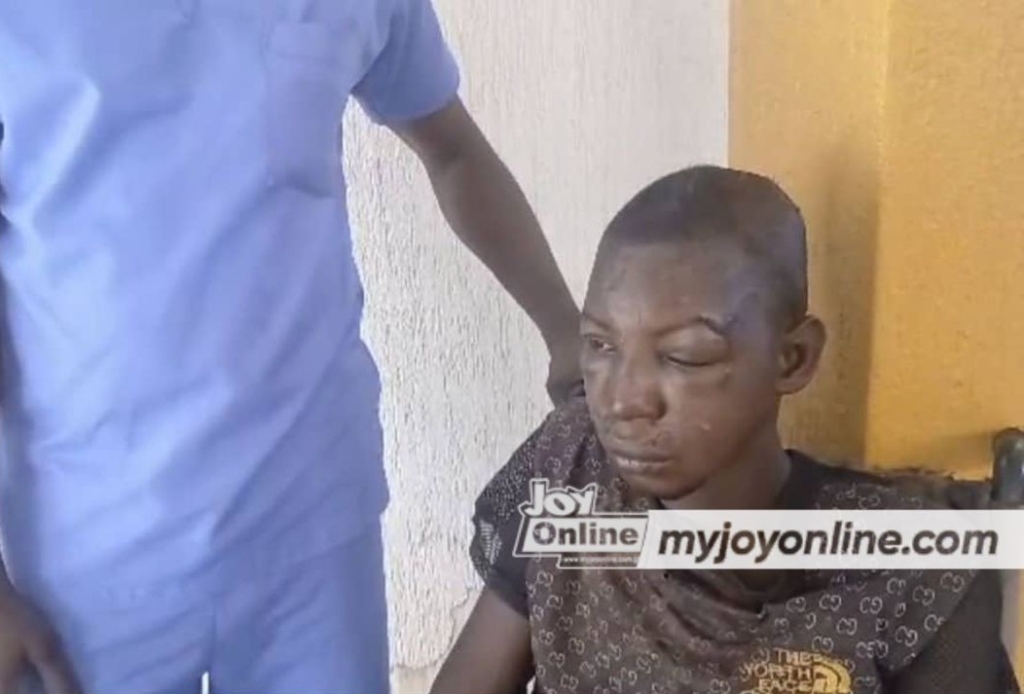
      Adding his voice to the matter, Executive Director of Eduwatch, Kofi Asare, also revealed that deliberate efforts to ban the use of phones can help reduce poor academic performance and indiscipline in schools.

      According to him, research has proven that students failed their West Africa Examination Council (WAEC) 2025 examinations, particularly in Mathematics, due to the overwhelming us of  devices meant to aid academic research

      “So, if we are deliberate in banning the use of mobile phones… it will also lead to much more discipline in our schools,” he spoke on TV3’s The Key Points on December 6, 2025

      National Coordinator for the District Road Improvement Programme (DRIP), Nii Lante Vanderpuye, has attributed the decline in students’ performance in the 2025 West African Senior School Certificate Examination (WASSCE) to addiction to social media and poor reading culture.

      Speaking to the media on Thursday, December 4, Nii Lante Vanderpuye noted that reading culture and study habits among students have been compromised by the growing obsession with digital platforms.

      “I am not surprised by the result. As a nation, as parents and guardians, we have been taken in by modern trends and the technical innovations in our lives. Our children are not focusing enough on what will help them concentrate on their education. One of the things we must look at critically is how to reconcentrate their focus away from tablets and media, because it is making the children lazy,” he cautioned.
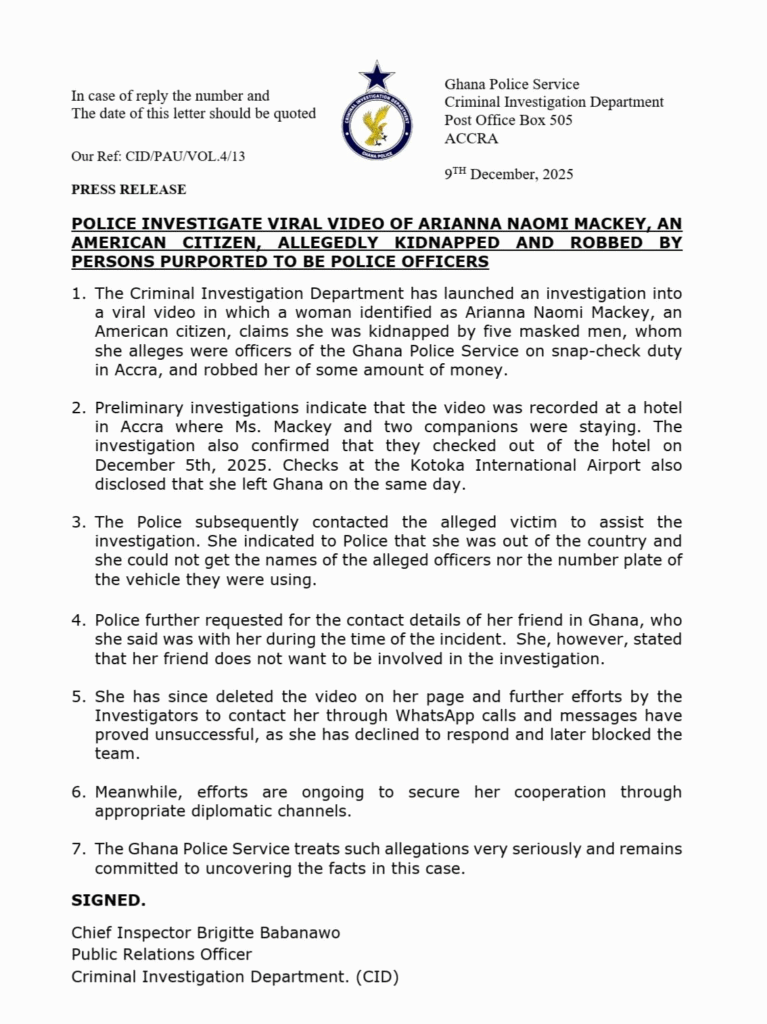
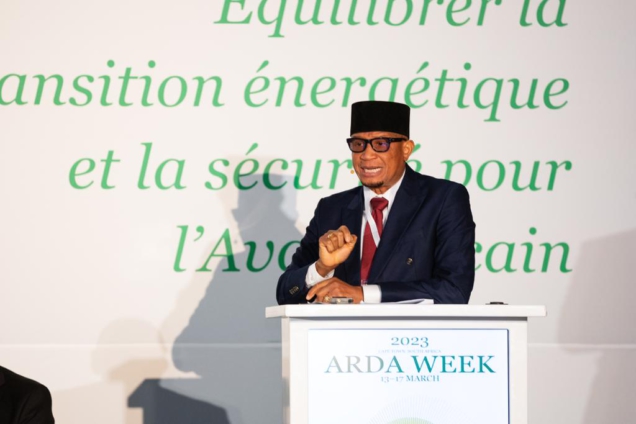
      The comments comes after this year’s WASSCE results showed a significant decline, raising concerns among education stakeholders. According to the provisional results released by WAEC, the percentage of students who failed Social Studies increased steeply from 9.55% in 2024 to 27.50% in 2025, representing a 188% increase.

      The other core subjects, that is, Integrated Science and English Language, also saw a doubling of their previous failure rate. For Integrated Science, the failure rate increased by 8.93%; that is, the 2024 rate was 7.12%, and in 2025 it increased to 16.05%.

      The failure rate for English Language also rose from 5.88% in 2024 to 12.86% in 2025. Core Mathematics recorded the sharpest decline, with the proportion of candidates who failed rising from 6.10% in 2024 to an alarming 26.77% in 2025, more than four times higher.

      Consequently, only 48.73% of candidates achieved grades A1 to C6, a steep drop from the 66.86% recorded in 2024. In absolute terms, 209,068 candidates passed Core Maths, while 114,872 (26.77%) failed outright with an F9. Put simply, for every four students who sat for the exam, one failed Core Mathematics.

      The core subjects are foundational: English, Mathematics, Integrated Science, and Social Studies are the backbone of Ghana’s education system. Failure in these means students lack the basic skills needed for higher education or employment.

      The failure of core subjects by candidates this year comes with several major concerns career opportunities, social consequences, and the impact it is likely to have on the country’s economy.

      Students with F9 grades or who failed in any of the core subjects now have their dreams of pursuing higher education, whether in Ghana or abroad, truncated. They will also be limited in securing many formal jobs, which will, in turn, create long-term barriers to social mobility.

      However, the University of Ghana’s (UG) decision not to adjust its admission requirements for the 2025/2026 academic year has been criticized by Hamza Suhuyini, a member of the National Democratic Congress (NDC) communication team.

      Speaking to the media on Wednesday, December 3, Hamza Suhuyini described the decision as “unacceptable,” noting that the 2025 West African Senior School Certificate Examination (WASSCE) results show a sharp rise in Grade F9 failures across all four core subjects compared to 2024.

      “The UG’s decision not to increase their cut-off point is extremely unacceptable. I think the universities need to be flexible. It is possible that this failure could be due to factors beyond the students themselves,” he said.

      Just after the West African Examinations Council (WAEC) released the provisional 2025 WASSCE results, the University of Ghana, through a statement, directed its prospective applicants to check and update their records on its admission portal until December 5 at 5 pm.

      The statement, dated November 29 and signed by the institution’s Director of Academic Affairs, Lydia Anowa Nyako-Danquah, advised applicants to revisit the portal and upload and do a final check for accuracy, particularly of their full names and date of birth, before the formal admission process begins.

      The statement read, “Following the release of the 2025 West African Senior School Certificate Examination (WASSCE) results, applicants for undergraduate admission to the University of Ghana (UG) are advised to log in again to the UG applications portal to: 1. Review the accuracy of entries, particularly: Full Name and Date of Birth; Examination records (Index Number, Exam Month, Exam Year)”.

      UG advised students to be guided in their selection of programmes so they do not choose options they don’t qualify for. It also added that admissions are still open for applicants who wish to apply.

      “Refer to the UG 2024/2025 entry cut-off aggregates for various programmes at and make realistic choices. Please note that applications for 2025/2026 admissions are still open, and interested persons may purchase e-vouchers at designated banks or through the USSD code 8879# on all mobile telecommunication networks”, UG noted.

      After the WASSCE, some students buy admission forms before their WASSCE results are released. They apply using “awaiting results,” meaning they submit their details but leave the grades section blank.

      Meanwhile, the Ghana Education Service (GES) has indicated that the results obtained by candidates who sat for the 2025 WASSCE reflect their true abilities. Speaking to the media on Monday, December 1, Daniel Fenyi of the GES Public Relations Unit noted that the West African Examinations Council (WAEC) cannot be blamed for the results, as they only assess what the candidates produce.

      According to him, “Indeed, we perfectly agree, and not that we just agree, but we work closely with WAEC. We monitor, we supervise, we collaborate with them to conduct these examinations. And so it is not that we agree, that is actually the case, that the results you see are a true reflection of the competencies of our learners.

      “You wouldn’t train your learners for three good years, take them through all the lessons, teach them, expose them to all the necessary books and content they have to be exposed to, only for them to churn out these results.”

    22. Opanyin Adusei wins 2025 National Best Farmer Award

      Opanyin Adusei wins 2025 National Best Farmer Award

      The overall National Best Farmer for the year 2025 has been awarded to an 82-year-old farmer, Opanyin Abraham Kwaku Adusei, from the Eastern Region.

      Madam Grace Owusuaah on the other hand, won the National Best Female Farmer 2025, and they were both presented with cash prizes for their outstanding contributions to Ghana’s agricultural sector.

      48-year-old Osman Kadiri was also named the first runner-up, while 63-year-old Charles Gyato from the Oti Region took the second runner-up position.

      President John Dramani Mahama presented the awards to the winners at the 41st National Farmers Day Awards Ceremony held in Ho, the Volta Regional capital.

      Delivering his speech, the president said the perception that agriculture is only for “village folks” is outdated and limiting.

      He noted that many professionals, teachers, civil servants, and private sector workers, can successfully combine their regular jobs with farming.

      “Agriculture isn’t only for the village folks,” he said. “You can work and still be a farmer. Teachers and civil servants can go to work and have farms, and the money from the farm can supplement their incomes.”

      The President also said high-interest loans remain one of the biggest obstacles facing farmers, many of whom end up “working for the banks instead of working for themselves.”

      According to him, farmers who borrow at prohibitive rates often lose most of their profits to loan repayments, undermining their ability to expand, invest in modern tools, or ensure stable income for their families.

      “We must provide credit at single-digit rates so our farmers can grow to feed Ghana,” he stressed.

      “Farmers should not be taking loans only to end up using all their profits to repay the banks.”

      President Mahama said the Volta Region has been a major beneficiary of the initiative, which seeks to rapidly expand Ghana’s road network and boost economic activity across all regions.

      “A good percentage of the roads awarded under the Big Push are from the Volta Region,” the President said, emphasising that the allocation is part of a deliberate effort to close infrastructure gaps and support communities that have long faced challenges with transportation.

      Vice President Professor Jane Naana Opoku-Agyeman has revealed that the government will soon engage five thousand (5,000) graduates in agriculture and veterinary science to support farmers nationwide.

      The initiative is aimed at closing the gap between research findings and practical application in the agricultural sector.

      She made this known at the 2025 Asogli Yam Festival held in the Volta Region on October 4, 2025.

      The annual festival, also called Asogli Te Za, began on July 14 and concluded on October 5, under the theme “Together in Honesty and Purpose, We Build a Just, Peaceful and Prosperous Nation.”

      The celebration highlighted the importance of Unity, transparency and national growth.  

      It featured lively cultural performances, drumming and traditional dances.

      It sought to foster peace and togetherness, preserve cultural values, and boost tourism and local business growth in the Volta Region.

      It brought Asogli people together to honour the yam harvest and highlight their enduring culture.

      A colourful durbar took place on October 4, to climax the entire festival.

      “Indeed, the Volta Region is showing her potential to be our agricultural backbone under the Feed Ghana Programme. With an irrigation system that is underutilized and ready to be rehabilitated, the region is ideally placed to scale up crop production, especially rice and yam”.

      The Agbogbomefia of the Asogli state, Togbe afede XIV urged leaders including chiefs and politicians to show commitment to the development of the country. He says corruption is a bane of the country’s underdevelopment and wants people to embrace honesty for a United Ghana.

      Meanwhile, in July this year, Minister for Foreign Affairs, Honourable Samuel Okudzeto Ablakwa, and the Ambassador of the Kingdom of Morocco, Her Excellency Imane Ouaadil, on July 28, handed over two thousand (2,000) tons of fertilizer, equivalent to 40,000 bags of fertilizer, to the Ministry of Food and Agriculture.

      According to the Foreign Ministry, the fertilizer was donated to the West African country by the Kingdom of Morocco during the official visit of Mr Okudzeto Ablakwa to Morocco last month as part of the two countries’ commitment to sustainable agriculture to enhance food security.

      Deputy Minister for Food and Agriculture, John Setor Dumelo, received the donated fertilizers on behalf of the Minister for Food and Agriculture, Eric Opoku. He expressed gratitude to the Morrocan government for the donation. He assured that farmers will receive the fertilizers to aid crop production.

      “Yesterday, 40,000 bags of fertilizer was donated to Ghana by the Kingdom of Morocco through the Ministry of Foreign Affairs. On behalf of my boss Hon Eric Opoku, I want to say a big thank you to Hon Ablakwa and Her Excellency Ouaadil for this kind gesture. We at the Ministry of Agriculture will ensure the fertilizers get straight to the deserving farmers as soon as possible,” he wrote in a post on the X platform on July 29.

      Stakeholders in the agricultural sector have bemoaned the absence of a single chemical fertiliser plant in the country. The Institute for Fiscal Studies noted that the absence of such a plant is having an adverse impact on crop production and the contribution of the agricultural sector to the country’s economy i.e. the Gross Domestic Product (GDP). The sector’s contribution to the country’s GDP declined from 26.9% in 2010 to 22.7% in 2023.

      In March this year, Senior Research Fellow at the Institute for Fiscal Studies, Dr. Said Boakye said, “We need to establish several fertiliser manufacturing plants to ensure that adequate and affordable fertiliser is available to farmers, which will help boost agricultural productivity.”

      “The sad reality is that Ghana lacks a single chemical fertiliser plant. In our rice studies, we have been comparing with Vietnam, where they have more than 7,000 plants. Vietnam’s success in achieving high agricultural productivity is largely due to fertilisers being readily available to farmers at no cost, along with incentivized prices,” he added.

      The Institute for Fiscal Studies has entreated the government to allocate significant funding to establish a fertiliser manufacturing plant.

      Ghana’s engagement with Morocco

      Foreign Affairs Minister Samuel Okudzeto Ablakwa, who also doubles as the Member of Parliament for North Tongu, was in the Kingdom of Morocco from 5th to 6th June for a visit aimed at strengthening the longstanding bilateral relations between Ghana and Morocco and identifying new opportunities for economic cooperation and strategic partnerships.

      During the visit, the Ministries of Foreign Affairs of Ghana and Morocco signed a Memorandum of Understanding (MoU) on political consultations during the Ministerial Session with Moroccan Minister H.E. Mr. Nasser Bourita, which is expected to facilitate regular diplomatic dialogue and promote mutual understanding on regional and international issues.

      Another outcome of the visit was the commitment to the signing of a bilateral visa waiver agreement for holders of ordinary passports to facilitate trade and tourism and deepen people-to-people engagements between both countries. Pending the finalisation of the agreement, the immediate implementation of an Electronic Travel Authorisation (ETA) in favour of Ghanaian travellers to Morocco was announced.

      The Ghanaian minister also paid courtesy calls on the Minister for Industry and Trade, H.E. Mr. Ryad Mezzour; Minister for Transport and Logistics, H.E. Mr. Abdessamad Kayouh; Director-General of the Moroccan Agency for International Cooperation, Amb. Mohamed Methqal; as well as the Vice-President of the General Confederation of Moroccan Entreprises (CGEM), Mr. Mehdi Tazi.

      The discussions with the Moroccan Government officials focused on enhancing cooperation in key sectors such as maritime and air transport, trade and investment, and human resource development, among others. Both sides reaffirmed their commitment to promoting stronger institutional collaboration and private sector engagement.

      Mr Okudzeto Ablakwa also had fruitful discussions with the Ghanaian community in Morocco and briefed them about developments back home.

      Following the minister’s meeting, the Foreign Affairs Ministry announced Ghanaian citizens who wish to visit Morocco will not need traditional visas to do so.

      He revealed that a streamlined online travel authorisation has replaced the previous application process for Ghanaian citizens.

      According to him, the latest move will grant the application within 24 hours without the need to visit the Moroccan embassy.

      “With immediate effect, Ghanaians will no longer require traditional visas to travel to Morocco. An online authorization which will be granted within 24-hours without embassy appointments is all that’s needed,” he wrote.

      The visa waiver to Morocco is expected to increase tourism, improve trade, and strengthen the relationship between Morocco and Ghana.

      “With existing direct flights which would be increased following this new agreement, we expect this bilateral visa waiver policy to greatly facilitate trade, tourism and deepen people to people engagements between both countries,” he added.

      The Moroccan government is also investing in the education of Ghanaians. In March this year, the government of Morocco announced an increase in scholarships for Ghanaian students, raising the number from 90 to 180 starting this year.

      This development follows high-level discussions between Ghana’s Minister of Foreign Affairs, Samuel Okudzeto Ablakwa, and the Moroccan Ambassador to Ghana, Her Excellency Imane Ouaadil.

      During their engagement, Ambassador Ouaadil reassured that Ghanaians and other Africans residing in Morocco remain safe, dispelling social media claims that 700 Africans were being massacred.

      She clarified that the circulated footage was from a border incident on June 24, 2022, which resulted in the deaths of 23 individuals. The incident was investigated by Moroccan and Spanish authorities, with no Ghanaian casualties recorded.

      Beyond education, Morocco and Ghana have agreed to establish a visa waiver for all categories of travelers between the two nations. The agreement is expected to be presented to both parliaments for ratification soon.

      “We have both additionally pledged to deepen collaboration in Agribusiness, Tourism, and Security,” Ablakwa stated.

    23. GSS begins interviews for 2025/2026 Commonwealth Applicants tomorrow

      GSS begins interviews for 2025/2026 Commonwealth Applicants tomorrow

      The Ghana Scholarships Secretariat (GSS) has announced that  Interviews for 2025/2026 Commonwealth Applicants will take place tomorrow Monday, 8 December 2025 as well as Tuesday, 9 December 2025.

      According to a letter signed by the registrar of scholarships, Alex Kwaku Asafo-Agyei, the interview starts at 9:30 a.m. at the Conference Room of the Ghana Scholarships Secretariat.

      “The Ghana Scholarship’s Secretariat (GSS) wishes to inform all applicants of the review of applications for the Commonwealth Scholarship tenable in the United Kingdom for 2025/2026 Academic year and is in the process of inviting applicants to attend an interview which will be a crucial step in assessing the suitability of applicants for the scholarship. The interview is scheduled for Monday 8th & Tuesday 9th December, 2025 at 9.30 a.m. at the Conference Room of the Secretariat,” the letter read.

      The letter also urged applicants who applied online but failed to submit hard copies of their applications to the secretariat to come along with the documents and other relevant academic certificates as indicated in “our earlier advertisement in the national daily (Ghanaian Times).”

      It added that all services offered by the Secretariat are free, urging applicants to beware of fraudsters.

      A public disagreement has emerged between the former and current leadership of the Scholarships Secretariat over the true state of debts owed to foreign universities, with each side presenting conflicting accounts of what was inherited, accumulated, and settled.

      Ghana’s High Commissioner to the United Kingdom, Sabah Zita Benson, challenged statements made by former Registrar of the Scholarships Secretariat, Kingsley Agyemang, who denied ever leaving students stranded during his tenure despite acknowledging that he inherited debt.

      Mr Agyemang dismissed claims that he created a £32 million liability as misleading and politically motivated. He argued that he inherited GH¢230 million (about $54 million) in outstanding payments but managed the situation without any student being sent home.

      “Scholarship debt is continual and moves according to the academic year… This is not new,” he stated.

      Responding in a Facebook post on December 4, 2025, Ghana’s UK High Commissioner insisted that the Abuakwa South MP left behind a £35 million debt, adding that the current administration has already cleared £3 million of that amount. She said some institutions have been awaiting payments since 2021.

      She further challenged Agyemang to provide proof that all fees were paid and that the students he sponsored were never stranded.

      Sabah Zita Benson cited Loughborough University as one of the affected institutions, noting that nearly £500,000 is owed for 17 students.

      “We owe Loughborough University almost half a million pounds from 2022 for just 17 students. He should explain to them why they have not been paid since 2022, even as he continued sending students there,” she said, stressing that students were directly affected by these delays.

      She vowed not to stay silent on the issue, adding that accountability must be ensured so students do not bear the consequences of administrative lapses.

      “We will not keep quiet while students suffer because you were reckless with your job,” she added.

      Madam Benson deleted the Facebook post shortly after it gained traction, and it remains unclear why it was taken down.

      In January this year, the Ministry of Foreign Affairs announced that it had secured scholarships for Ghanaians interested in pursuing short training courses and university education in different fields through a collaboration with some partner countries.

      The Ministry, in a statement shared on its official platform X (formerly Twitter) on Tuesday, September 30, noted that all interested applicants could access the scholarships via the Ministry’s official website. Other opportunities shall also be shared on the Ghana Scholarships Secretariat’s platform for access.

      “The Ministry of Foreign Affairs wishes to inform the general public that, through its diplomatic engagements, scholarships for short-term capacity-building training programmes and for tertiary education covering various fields of study are available to the Republic of Ghana for the benefit of its citizenry.”

      “The links for these capacity-building training programmes were uploaded on the Ministry’s website to make them more accessible to interested individuals. The Ministry also transmitted scholarships received from partner countries to the Ghana Scholarships Secretariat, to be awarded to qualified candidates,” the statement read.

      It added that “Interested persons are encouraged to either visit the Ministry’s website to apply for the available training programmes in accordance with published guidelines or contact the Ghana Scholarships Secretariat for available scholarships. Inquiries can also be sent by email to ipa@mfa.gov.gh”

      The Ablakwa-led Ministry warned the public against engaging people that shall pose as middlemen to grant access to the said programmes. The statement highlighted the Ministry’s commitment to ensuring equal and quality education for the public.

      Ghana was owing one billion cedis in scholarship commitments to the United Kingdom, according to the Registrar of the Scholarship Secretariat, Kwaku Asafo Agyei.

      He made this known in an exclusive interview with Nana Kwadwo Jantuah on Nhyira FM’s Morning show, stating that deep concerns are being raised over the disappearance of Crown Agency in the UK, which previously managed short courses for Ghanaian beneficiaries.

      “Ghana currently owes over one billion cedis in scholarships in the UK. This has to be paid to allow beneficiaries to access their tuition,” he stated. “The Crown Agency in the UK, which was responsible for organising short courses for beneficiaries, has disappeared.”

      Mr Safo said that, according to an audit report, the previous government administration prioritised funding for short courses while neglecting regular academic programs, a practice that undermined the Secretariat’s core mandate.

      “I called for an audit into suspected scandals at the Secretariat. The report shows that the previous administration prioritised paying for short courses while avoiding regular academic programs,” he indicated.

      He stressed that the Secretariat had no responsibility to cover expenses for dependents who travel with beneficiaries. Yet, he claimed his predecessor unlawfully extended sponsorship to these dependents and even provided them with monthly stipends, calling it a clear misuse of office.

      “The National Scholarship Secretariat is not responsible for the cost of any dependent who accompanies a beneficiary. However, my predecessors paid billions of cedis to sponsor beneficiaries, which is an unnecessary cost to the state,” he said.

      Mr Asafo Agyei further revealed that certain appointees in President Akufo-Addo’s administration were granted authority letters for 10-year visas, even though the short courses they were attending lasted barely two weeks.

    24. Ghana achieves 99.3% prevention of mother-to-child HIV transmission

      Ghana achieves 99.3% prevention of mother-to-child HIV transmission

      The Ministry of Health has announced that Ghana recorded 99.3% mother-to-child HIV transmission in its 2024 national estimates.

       At the 23rd International Conference on AIDS and STIs in Africa (ICASA 2025), while presenting Ghana’s 2024 National HIV Estimates, the Health Minister Kwabena Mintah Akandoh further revealed statistics on AIDS-related cases.

      “Our 2024 national estimates reveal both impressive progress and serious challenges. Ghana has approximately 334,721 people living with HIV, including over 18,000 children under 15. Adult prevalence stands at 1.49%, with 15,290 new infections and 12,614 AIDS-related deaths recorded last year. Encouragingly, those on treatment have reached 90%, and prevention of mother-to-child transmission stands at 99.3%,” he said.

      The Honourable Minister explained that while there have been improvements, the fact that more than 160,000 diagnosed people are yet to begin treatment continues to hinder Ghana’s efforts to end AIDS as a public health threat by 2030.

      Last month, the Ghana AIDS Commission (GAC) revealed that an average of 42 new HIV (Human Immunodeficiency Virus) infections are recorded daily among adults and children across the country.

      According to the Commission’s 2024 National and Sub-National HIV Estimates and Projections, a total of 334,721 people are currently living with HIV in Ghana. Out of this figure, 105,460 are males, representing 31.5 percent, while 229,261 are females, accounting for 68.5 percent.

      The Bono, Bono East, and Ahafo Regional Technical Coordinator of the GAC, Mr. Ahmed Ibrahim Bimbilla, who disclosed this in an interview with the Ghana News Agency (GNA) in Sunyani, said the data provides crucial insight into the scale of the epidemic and guides effective planning.

      He revealed that 15,290 new HIV infections were recorded in the country, comprising 4,987 males, representing 32.6 percent, and 10,303 females, representing 67.4 percent.

      Mr. Bimbilla also noted that AIDS-related deaths currently stand at 12,614, consisting of 5,445 males and 7,159 females. He said approximately 229 deaths are prevented each week through the provision of Antiretroviral Therapy (ART) services.

      Providing a regional breakdown, he said the North East Region recorded the lowest HIV population with 1,717 cases, while Greater Accra, Ashanti, and Eastern recorded the highest figures of 77,821, 63,159, and 44,792 respectively.

      He added that seven regions known as Ahafo, Upper East, Northern, Upper West, Oti, Savannah, and North East each recorded HIV populations below 10,000.

      According to him, HIV prevalence is highest in the Bono Region with 2.22 percent, followed by the Eastern Region with 2.08 percent and Ahafo with 1.88 percent, while the North East Region recorded the lowest prevalence at 0.43 percent.

      He further indicated that five regions, namely Oti, Upper East, Savannah, Northern, and North East, recorded prevalence rates below 1.0 percent.

      Mr. Bimbilla stated that the Greater Accra, Ashanti, and Eastern regions also recorded the highest number of new HIV infections, with 3,436, 2,997, and 2,019 cases respectively, while the North East Region recorded the lowest with 97 cases.

      Eleven regions, including Bono, Volta, Bono East, Western North, Ahafo, Upper East, Northern, Upper West, Oti, Savannah, and North East, recorded fewer than 1,000 new infections.

      Commenting on the trend, Mr. Bimbilla described the decline in HIV prevalence, new infections, and AIDS-related deaths as a positive development, which he attributed to the growing uptake of ART services.

      He expressed optimism that the downward trend would help Ghana achieve epidemic control and urged continued efforts in public education, testing, and access to treatment to sustain progress toward eliminating HIV and AIDS.

      In 2024, the Director General of the Ghana AIDS Commission, Dr. Steve Kyeremeh Atuahene, partly attributed the rise in new HIV infections in Ghana at the time to individuals’ reluctance to disclose their HIV status to their spouses, fearing desertion.

      Dr. Atuahene emphasized that the refusal of some HIV-positive individuals to continue their medication was a significant factor in the spike.

      He explained, “The fear of the husband or wife deserting them leads some not to disclose their status. Some are afraid their spouse may discover they are taking daily medication, leading them to hide or discontinue their medicines.”

      According to the Ghana AIDS Commission, over 334,000 people live with HIV in Ghana. In 2023, the country reported 17,774 new cases, with 11,317 women and 6,457 men affected.

      This alarming trend has prompted the commission to address the underlying causes and increase awareness about the importance of medication adherence and status disclosure.

      Dr. Atuahene highlighted the increased vulnerability of females to HIV infections compared to males. He explained, “When a female has sex with a man, penile sex and the man ejaculates, the sperm which might contain HIV particles may remain in her for quite some time, whereas that of the male you hardly can see that. Secondly, the surface area of the vagina is much wider than that of the male, and thirdly, the mucus membrane of the vagina is much more fragile than that of the male.”

      Additionally, the Director General noted that universal male circumcision in Ghana serves as a protective factor against HIV transmission. “Women must be aware that they are more vulnerable and therefore they should protect themselves,” he emphasized.

      Dr. Atuahene also pointed out the significant difference in transmission rates between genders.

      “The transmission rate from woman to man is just about 2%, whereas it is more than 12% for a man. That is why women should not gamble with their health and their life by just accepting that ‘if he will give them more money to have sex without a condom, it’s okay for me.’ It shouldn’t be okay for you, especially when you might have untreated sexually transmitted diseases that can also heighten the chance of you getting HIV,” he warned.

      The Ghana AIDS Commission continues to advocate for increased awareness and preventive measures to combat the rise in HIV infections.

      By addressing issues such as status disclosure, medication adherence, and gender-specific vulnerabilities, the commission aims to reduce the incidence of HIV and improve the quality of life for those affected.

    25. Ban on mobile phones will improve student performs in their exams – Eduwatch

      Ban on mobile phones will improve student performs in their exams – Eduwatch

      The Executive Director of Eduwatch, Kofi Asare, has revealed that deliberate efforts to ban the use of phones can help reduce poor academic performance and indiscipline in schools.

      According to him, research has proven that students failed their West Africa Examination Council (WAEC) 2025 examinations, particularly in Mathematics, due to the overwhelming us of  devices meant to aid academic research

      “So, if we are deliberate in banning the use of mobile phones… it will also lead to much more discipline in our schools,” he spoke on TV3’s The Key Points on December 6, 2025

      National Coordinator for the District Road Improvement Programme (DRIP), Nii Lante Vanderpuye, has attributed the decline in students’ performance in the 2025 West African Senior School Certificate Examination (WASSCE) to addiction to social media and poor reading culture.

      Speaking to the media on Thursday, December 4, Nii Lante Vanderpuye noted that reading culture and study habits among students have been compromised by the growing obsession with digital platforms.

      “I am not surprised by the result. As a nation, as parents and guardians, we have been taken in by modern trends and the technical innovations in our lives. Our children are not focusing enough on what will help them concentrate on their education. One of the things we must look at critically is how to reconcentrate their focus away from tablets and media, because it is making the children lazy,” he cautioned.

      His comments come after this year’s WASSCE results showed a significant decline, raising concerns among education stakeholders. According to the provisional results released by WAEC, the percentage of students who failed Social Studies increased steeply from 9.55% in 2024 to 27.50% in 2025, representing a 188% increase.

      The other core subjects, that is, Integrated Science and English Language, also saw a doubling of their previous failure rate. For Integrated Science, the failure rate increased by 8.93%; that is, the 2024 rate was 7.12%, and in 2025 it increased to 16.05%.

      The failure rate for English Language also rose from 5.88% in 2024 to 12.86% in 2025. Core Mathematics recorded the sharpest decline, with the proportion of candidates who failed rising from 6.10% in 2024 to an alarming 26.77% in 2025—more than four times higher.

      Consequently, only 48.73% of candidates achieved grades A1 to C6, a steep drop from the 66.86% recorded in 2024. In absolute terms, 209,068 candidates passed Core Maths, while 114,872 (26.77%) failed outright with an F9. Put simply, for every four students who sat for the exam, one failed Core Mathematics.

      The core subjects are foundational: English, Mathematics, Integrated Science, and Social Studies are the backbone of Ghana’s education system. Failure in these means students lack the basic skills needed for higher education or employment.

      The failure of core subjects by candidates this year comes with several major concerns career opportunities, social consequences, and the impact it is likely to have on the country’s economy.

      Students with F9 grades or who failed in any of the core subjects now have their dreams of pursuing higher education, whether in Ghana or abroad, truncated. They will also be limited in securing many formal jobs, which will, in turn, create long-term barriers to social mobility.

      However, the University of Ghana’s (UG) decision not to adjust its admission requirements for the 2025/2026 academic year has been criticized by Hamza Suhuyini, a member of the National Democratic Congress (NDC) communication team.

      Speaking to the media on Wednesday, December 3, Hamza Suhuyini described the decision as “unacceptable,” noting that the 2025 West African Senior School Certificate Examination (WASSCE) results show a sharp rise in Grade F9 failures across all four core subjects compared to 2024.

      “The UG’s decision not to increase their cut-off point is extremely unacceptable. I think the universities need to be flexible. It is possible that this failure could be due to factors beyond the students themselves,” he said.

      Just after the West African Examinations Council (WAEC) released the provisional 2025 WASSCE results, the University of Ghana, through a statement, directed its prospective applicants to check and update their records on its admission portal until December 5 at 5 pm.

      The statement, dated November 29 and signed by the institution’s Director of Academic Affairs, Lydia Anowa Nyako-Danquah, advised applicants to revisit the portal and upload and do a final check for accuracy, particularly of their full names and date of birth, before the formal admission process begins.

      The statement read, “Following the release of the 2025 West African Senior School Certificate Examination (WASSCE) results, applicants for undergraduate admission to the University of Ghana (UG) are advised to log in again to the UG applications portal to: 1. Review the accuracy of entries, particularly: Full Name and Date of Birth; Examination records (Index Number, Exam Month, Exam Year)”.

      UG advised students to be guided in their selection of programmes so they do not choose options they don’t qualify for. It also added that admissions are still open for applicants who wish to apply.

      “Refer to the UG 2024/2025 entry cut-off aggregates for various programmes at and make realistic choices. Please note that applications for 2025/2026 admissions are still open, and interested persons may purchase e-vouchers at designated banks or through the USSD code 8879# on all mobile telecommunication networks”, UG noted.

      After the WASSCE, some students buy admission forms before their WASSCE results are released. They apply using “awaiting results,” meaning they submit their details but leave the grades section blank.

      Meanwhile, the Ghana Education Service (GES) has indicated that the results obtained by candidates who sat for the 2025 WASSCE reflect their true abilities. Speaking to the media on Monday, December 1, Daniel Fenyi of the GES Public Relations Unit noted that the West African Examinations Council (WAEC) cannot be blamed for the results, as they only assess what the candidates produce.

      According to him, “Indeed, we perfectly agree, and not that we just agree, but we work closely with WAEC. We monitor, we supervise, we collaborate with them to conduct these examinations. And so it is not that we agree, that is actually the case, that the results you see are a true reflection of the competencies of our learners.

      “You wouldn’t train your learners for three good years, take them through all the lessons, teach them, expose them to all the necessary books and content they have to be exposed to, only for them to churn out these results.”

    26. 27 arrested, one dead in Aboabo forest operation to arrest robbers

      27 arrested, one dead in Aboabo forest operation to arrest robbers

      The IGP Special Operations Team has been involved in a violent confrontation during an intelligence-led operation in the Aboabo Forest area of the Tamale Metropolis.

      Police said the officers, while moving through the forest to track gangs suspected of robbery and drug trafficking, came under sudden fire from a group of armed criminals.

      A source confirmed that one of the suspects was wounded during the exchange, as investigations continue.

      “The attack placed the lives of team members in danger. Acting in line with police rules of engagement and legitimate self-defence protocols, the officers returned fire to neutralise the threat,” the report said.

      According to GhanaWeb, the source added that the remaining armed suspects fled the scene with their weapons as reinforcements arrived.

      Reports indicate that the team attempted to assist the injured suspect and transport him to the Tamale Teaching Hospital.

      Upon arrival, however, the attending medical officer declared the suspect dead.

      The source noted that the body has been taken to the mortuary for safekeeping, pending an autopsy.

      The incident confirmed earlier intelligence suggesting that criminal elements in the area were heavily armed and ready to resist arrest violently.

      A joint intelligence-led operation between the Atadeka Police Patrol Team and the Ashaiman Police Intelligence Directorate has resulted in the arrest of a notorious 25-year-old armed robbery suspect, Seth Tetteh, popularly known as ‘Wonder’.

      He is known to be a ringleader of a robbery syndicate operating across Ashaiman and its environs

      According to a report by Myjoyonline.com, his arrest followed the earlier detention of his two accomplices, who are currently on remand, standing trial at the Ashaiman Circuit Court.

      ‘Wonder’ was detained around 3:00 p.m. near the Ashaiman China Mall area, and authorities believe his arrest will significantly disrupt criminal activities targeting businesses and residents within the municipality.

      The arrest represents a major breakthrough for the Tema Police Command as it intensifies efforts to clamp down on violent crime within the municipality.

      According to police, Wonder is a well-known repeat offender linked to several violent incidents, including residential, street, and industrial robberies.

      Investigators also identified him as the mastermind and leader behind a recent armed robbery at a concrete yard factory.

      In the aftermath of his arrest, the Tema Police Command issued a strong caution to the public about the purchasing of stolen goods, especially electronic devices that criminals often sell at low prices.

      “Police is using this medium to caution receivers of stolen phones, as their arrest has legal consequences for dishonestly receiving.”

      The Command also expressed appreciation to its leadership for the support extended toward ongoing security operations.

      In September, ten people suspected of carrying out armed robberies on rural banks and financial institutions nationwide were taken into custody by the Ghana Police Service.

      A special operation led to the arrest of the group, who had long instilled fear in communities across the Ashanti, Ahafo, Western, Central and Eastern regions.

      Among those detained were the supposed leader, Akwesi Agyei, known as Cobra, together with Ibrahim Alhassan, Samuel Appiah (Akwesi Mugu), Francis Acquah (Preman), David Obuobi (Wasty), Martin Akansina (One Billion), Nana Yaw Frimpong (Mystical), Kojo Atingawo (Borga), Samuel Akwasi Gyan and Stephen Sey.

      Police confirmed that three additional members of the gang died during an exchange of gunfire, while efforts to track down the remaining suspects are underway.

      At a press briefing in Accra on September 24, 2024, Inspector-General of Police Christian Yohuno revealed that the group had operated for more than a year, creating widespread fear among residents and targeted financial institutions.

      He noted that the coordinated operation was the result of six months of intelligence gathering, surveillance and detailed investigations in areas including Ejisu Achiaakrom, Atonsu-Kyirapatre, Obuasi, Kaase and Buoho.

      Officers seized 14 firearms—ranging from AK-47s and pump-action guns to pistols—along with large amounts of ammunition, vehicles, motorbikes, mobile phones and equipment used for the attacks.

      COP Lydia Yaako Donkor, Director-General of the CID, reported that the suspects had been linked to robberies at Adansi Rural Bank (Fomena), Lower Pra Rural Bank (Inchaban), Ecobank (Kenyasi), Ahafo Community Bank (Kukuom), Asokore Rural Bank (Kumasi), and several other locations.

      At Fomena, for example, the attackers climbed over the perimeter wall, restrained the security guards and used an electric cutter to break into the vault before fleeing with cash and weapons. In the Kenyasi incident, they subdued two police officers and took their rifles.

      Investigators identified one of the retrieved rifles as belonging to Corporal Francis Adu Yaw, who died on the Bibiani-Goaso road in November 2024, while two others matched police weapons stolen during the Kenyasi Ecobank robbery.

      COP Donkor indicated that Cobra was apprehended on September 18 at Esereso Adagya, where officers discovered two rifles hidden underwater and a Toyota Noah minibus.

      His arrest paved the way for more breakthroughs, including the capture of David Obuobi (Wasty), in whose possession police found pump-action guns, pistols and ammunition.

      Investigators later picked up another suspect, Stephen Sey, who had a stolen police rifle concealed inside his vehicle.

      She added that some of the arrested individuals have admitted their roles, and both identification parades and items retrieved from them have linked the suspects to the various crimes.

      The police say investigations are still ongoing as they move to apprehend the rest of the syndicate members.

    27. Govt to launch School Agriculture Programme to boost food security  – President

      Govt to launch School Agriculture Programme to boost food security – President

      President John Dramani Mahama says the government is preparing to introduce a significant new policy called the School Agriculture Programme, designed to boost the nation’s food security by giving students hands-on training in agriculture.

      Addressing the National Farmers’ Day event in Ho, the Volta Regional capital, President Mahama explained that the initiative will mandate every secondary and tertiary institution to run its own school farm.

      “We are asking all secondary schools and tertiary education institutions to have a school farm. They can produce their own chickens; they can raise livestock such as goats, sheep, and even larger animals like cattle. They can also grow vegetables like tomatoes, peppers, okra, and other crops they consume,” he said.

      The President noted that a National School Agriculture Coordinator has already been designated to lead the programme and oversee its nationwide rollout.

      He added that he is confident the initiative will improve hands-on learning for students while helping to boost the country’s overall food production.

      The School Agriculture Programme is expected to promote self-sufficiency in schools while encouraging young people to develop greater interest in agriculture.

      Vice President Professor Jane Naana Opoku-Agyeman has revealed that the government will soon engage five thousand (5,000) graduates in agriculture and veterinary science to support farmers nationwide.

      The initiative is aimed at closing the gap between research findings and practical application in the agricultural sector.

      She made this known at the 2025 Asogli Yam Festival held in the Volta Region on October 4, 2025.

      The annual festival, also called Asogli Te Za, began on July 14 and concluded on October 5, under the theme “Together in Honesty and Purpose, We Build a Just, Peaceful and Prosperous Nation.”

      The celebration highlighted the importance of Unity, transparency and national growth.  

      It featured lively cultural performances, drumming and traditional dances.

      It sought to foster peace and togetherness, preserve cultural values, and boost tourism and local business growth in the Volta Region.

      It brought Asogli people together to honour the yam harvest and highlight their enduring culture.

      A colourful durbar took place on October 4, to climax the entire festival.

      “Indeed, the Volta Region is showing her potential to be our agricultural backbone under the Feed Ghana Programme. With an irrigation system that is underutilized and ready to be rehabilitated, the region is ideally placed to scale up crop production, especially rice and yam”.

      The Agbogbomefia of the Asogli state, Togbe afede XIV urged leaders including chiefs and politicians to show commitment to the development of the country. He says corruption is a bane of the country’s underdevelopment and wants people to embrace honesty for a United Ghana.

      Meanwhile, in July this year, Minister for Foreign Affairs, Honourable Samuel Okudzeto Ablakwa, and the Ambassador of the Kingdom of Morocco, Her Excellency Imane Ouaadil, on July 28, handed over two thousand (2,000) tons of fertilizer, equivalent to 40,000 bags of fertilizer, to the Ministry of Food and Agriculture.

      According to the Foreign Ministry, the fertilizer was donated to the West African country by the Kingdom of Morocco during the official visit of Mr Okudzeto Ablakwa to Morocco last month as part of the two countries’ commitment to sustainable agriculture to enhance food security.

      Deputy Minister for Food and Agriculture, John Setor Dumelo, received the donated fertilizers on behalf of the Minister for Food and Agriculture, Eric Opoku. He expressed gratitude to the Morrocan government for the donation. He assured that farmers will receive the fertilizers to aid crop production.

      “Yesterday, 40,000 bags of fertilizer was donated to Ghana by the Kingdom of Morocco through the Ministry of Foreign Affairs. On behalf of my boss Hon Eric Opoku, I want to say a big thank you to Hon Ablakwa and Her Excellency Ouaadil for this kind gesture. We at the Ministry of Agriculture will ensure the fertilizers get straight to the deserving farmers as soon as possible,” he wrote in a post on the X platform on July 29.

      Stakeholders in the agricultural sector have bemoaned the absence of a single chemical fertiliser plant in the country. The Institute for Fiscal Studies noted that the absence of such a plant is having an adverse impact on crop production and the contribution of the agricultural sector to the country’s economy i.e. the Gross Domestic Product (GDP). The sector’s contribution to the country’s GDP declined from 26.9% in 2010 to 22.7% in 2023.

      In March this year, Senior Research Fellow at the Institute for Fiscal Studies, Dr. Said Boakye said, “We need to establish several fertiliser manufacturing plants to ensure that adequate and affordable fertiliser is available to farmers, which will help boost agricultural productivity.”

      “The sad reality is that Ghana lacks a single chemical fertiliser plant. In our rice studies, we have been comparing with Vietnam, where they have more than 7,000 plants. Vietnam’s success in achieving high agricultural productivity is largely due to fertilisers being readily available to farmers at no cost, along with incentivized prices,” he added.

      The Institute for Fiscal Studies has entreated the government to allocate significant funding to establish a fertiliser manufacturing plant.

      Ghana’s engagement with Morocco

      Foreign Affairs Minister Samuel Okudzeto Ablakwa, who also doubles as the Member of Parliament for North Tongu, was in the Kingdom of Morocco from 5th to 6th June for a visit aimed at strengthening the longstanding bilateral relations between Ghana and Morocco and identifying new opportunities for economic cooperation and strategic partnerships.

      During the visit, the Ministries of Foreign Affairs of Ghana and Morocco signed a Memorandum of Understanding (MoU) on political consultations during the Ministerial Session with Moroccan Minister H.E. Mr. Nasser Bourita, which is expected to facilitate regular diplomatic dialogue and promote mutual understanding on regional and international issues.

      Another outcome of the visit was the commitment to the signing of a bilateral visa waiver agreement for holders of ordinary passports to facilitate trade and tourism and deepen people-to-people engagements between both countries. Pending the finalisation of the agreement, the immediate implementation of an Electronic Travel Authorisation (ETA) in favour of Ghanaian travellers to Morocco was announced.

      The Ghanaian minister also paid courtesy calls on the Minister for Industry and Trade, H.E. Mr. Ryad Mezzour; Minister for Transport and Logistics, H.E. Mr. Abdessamad Kayouh; Director-General of the Moroccan Agency for International Cooperation, Amb. Mohamed Methqal; as well as the Vice-President of the General Confederation of Moroccan Entreprises (CGEM), Mr. Mehdi Tazi.

      The discussions with the Moroccan Government officials focused on enhancing cooperation in key sectors such as maritime and air transport, trade and investment, and human resource development, among others. Both sides reaffirmed their commitment to promoting stronger institutional collaboration and private sector engagement.

      Mr Okudzeto Ablakwa also had fruitful discussions with the Ghanaian community in Morocco and briefed them about developments back home.

      Following the minister’s meeting, the Foreign Affairs Ministry announced Ghanaian citizens who wish to visit Morocco will not need traditional visas to do so.

      He revealed that a streamlined online travel authorisation has replaced the previous application process for Ghanaian citizens.

      According to him, the latest move will grant the application within 24 hours without the need to visit the Moroccan embassy.

      “With immediate effect, Ghanaians will no longer require traditional visas to travel to Morocco. An online authorization which will be granted within 24-hours without embassy appointments is all that’s needed,” he wrote.

      The visa waiver to Morocco is expected to increase tourism, improve trade, and strengthen the relationship between Morocco and Ghana.

      “With existing direct flights which would be increased following this new agreement, we expect this bilateral visa waiver policy to greatly facilitate trade, tourism and deepen people to people engagements between both countries,” he added.

      The Moroccan government is also investing in the education of Ghanaians. In March this year, the government of Morocco announced an increase in scholarships for Ghanaian students, raising the number from 90 to 180 starting this year.

      This development follows high-level discussions between Ghana’s Minister of Foreign Affairs, Samuel Okudzeto Ablakwa, and the Moroccan Ambassador to Ghana, Her Excellency Imane Ouaadil.

      During their engagement, Ambassador Ouaadil reassured that Ghanaians and other Africans residing in Morocco remain safe, dispelling social media claims that 700 Africans were being massacred.

      She clarified that the circulated footage was from a border incident on June 24, 2022, which resulted in the deaths of 23 individuals. The incident was investigated by Moroccan and Spanish authorities, with no Ghanaian casualties recorded.

      Beyond education, Morocco and Ghana have agreed to establish a visa waiver for all categories of travelers between the two nations. The agreement is expected to be presented to both parliaments for ratification soon.

      “We have both additionally pledged to deepen collaboration in Agribusiness, Tourism, and Security,” Ablakwa stated.

    28. MTN reverses money transferred to Wontumi with caution – Paul Kwabena Yandoh reveals

      MTN reverses money transferred to Wontumi with caution – Paul Kwabena Yandoh reveals

      The New Patriotic Party (NPP) Ashanti Regional Communications Director, Paul Kwabena Yandoh, has alleged that the Ashanti Regional Chairman of the NPP, Bernard Antwi Boasiako, popularly known as Chairman Wontumi, is financially constrained

      He describes the situation so bad that MTN does not allow money transfers to go through Wontumi’s Momo account with caution, something he experienced in his attempt to send money to Wontumi.

      Speaking on Kumasi-based Ezra FM, in an interview that has since been shared on social media, he stated, “When you send the money, MTN sends it back. His account has been frozen and MTN will tell you not to send money into that account.

      “So, Wontumi has been deprived a lot. Now, if he will talk, it’s only through WhatsApp. They even want to take his number from him.”

      Chairman Wontumi, has been accused of aiding individuals to mine without proper licence at Samreboi concession.

      This was made known during a court proceeding on Tuesday, October 7. Prosecutors have accused Chairman Wontumi, owner of Akonta Mining, and his co-director, Kwame Antwi, of illegally authorizing mining operations without the necessary licenses. The duo’s acts are criminal offenses under Ghana’s mining laws.

      According to prosecutors, one Henry Okum told investigators that he got permission from Chairman Wontumi to mine in the Samreboi area because he thought Wontumi owned the land.

      In Ghana, the Minister of Lands and Natural Resources, Emmanuel Armah-Kofi Buah, is solely responsible for authorizing mining licenses. Authorities are currently pursuing Kwame Antwi.Meanwhile, on Monday, October 6, he was granted bail in the sum of GH¢1 million with two sureties.

      Chairman Wontumi made an appearance at the Criminal Investigations Department (CID) of the Ghana Police Service with his lawyer, Andy Appiah-Kubi, on Monday, October 6, after an order from the Attorney General (A-G) Dr. Dominic Ayine.

      On Friday, October 3, Dr. Dominic Ayine threatened to arrest him if he failed to surrender himself to the CID. According to the Attorney General, little progress has been made in investigating the allegations as key documents have been withheld by some officials of the previous administration.

      In April, the Minister for Lands and Natural Resources, Emmanuel Armah-Kofi Buah, revoked the company’s mining license for illegally mining within the Tano Nimiri Forest Reserve in the Western North Region.

      The Minister explained that Akonta Mining has extended its illegal activities to the Aboi and Tano Nimiri Forest Reserves despite possessing a valid license to operate outside of forest reserves. Reacting to the Minister’s statement, the company refuted claims leveled against its operations.

      It emphasized in a press statement, “We are not responsible for the activities in the Tano Nimiri Forest Reserve. That responsibility lies solely with the Forestry Commission and the Ministry of Lands and Natural Resources”.

      The company added that such claims are a deliberate attempt by the Minister to tarnish the reputation of the company.

      “The decision by the Minister to publicly accuse us and call for the revocation of our license without any investigation or hearing is not just unfair, it is a clear breach of natural justice and a politically motivated act,” the company said.

      In May, the Special Police Anti-galamsey Taskforce from the National Police Headquarters apprehended 17 suspects in connection with illegal mining activities (galamsey) at Samreboi in the Western Region.

      The police nabbed the suspects, comprising seven Chinese nationals and 10 Ghanaians. The suspects were transported to Accra to assist with further investigations.

      The anti-galamsey task force is intensifying operations within the Aowin Tano and Tano Anwia areas near Enchi, focusing on identifying additional persons of interest and protecting the affected forest reserves. The Ghana Police Service announced that it remains resolute in its support for national efforts to combat illegal mining.

      There have been earlier anti-galamsey operations at Samreboi. About months ago, the Police arrested 58 suspects comprising 50 Ghanaians and 8 Chinese, and retrieved 85 excavators and 3 bulldozers to halt galamsey operations at Samreboi, along the Tano River, Wassa Dunkwa, Tigarikrom and surrounding communities in the Western Region.

      Similar anti-galamsey operations were carried out by various Regional Police Commands across the regions as follows:The Western Regional Police Command arrested 19 suspects and retrieved 3 excavators and 3 pump-action guns, among other exhibits.

      The Upper West Regional Police Command arrested 7 Ghanaian suspects and retrieved 11 changfangs and 3 motorbikes, among other exhibits.

      The Eastern South Regional Police Command Region arrested 24 suspects, including one Burkinabe, and retrieved 5 excavators, 3 single-barrel guns, and 1 pump-action gun, among other exhibits.

      The Western Central Regional Police Command arrested 85 suspects, comprising 76 Ghanaians and 9 Chinese, and also retrieved 11 excavators and other exhibits.

      The Eastern North Regional Police Command also arrested 15 suspects, including one Chinese, and retrieved 4 excavator control boards, 9 monitors, and one pistol, among other exhibits.Meanwhile, the prosecution of suspected illegal miners is being pursued by the police.

      On May 20, the Koforidua Circuit Court B granted 14 suspected illegal miners bail each in the sum of GHC350,000 with two sureties, with one to be justified with movable property.

      The suspects were arrested on May 15 for illegally mining at Akyem Muoso in the Eastern Region by the Eastern South Regional Police Command.

      At the time of the arrest, police retrieved a pump-action gun from one of the suspects, Zuberu Nuhoho, who failed to produce documentation for the weapon.

      Two excavator control boards were also retrieved from the mining site. The accused persons were arraigned before the Koforidua Circuit Court B on May 16.

    29. Notorious robber in Ashaiman ‘Wonder’ arrested by police

      Notorious robber in Ashaiman ‘Wonder’ arrested by police

      A joint intelligence-led operation between the Atadeka Police Patrol Team and the Ashaiman Police Intelligence Directorate has resulted in the arrest of a notorious 25-year-old armed robbery suspect, Seth Tetteh, popularly known as ‘Wonder’.

      He is known to be a ringleader of a robbery syndicate operating across Ashaiman and its environs

      According to a report by Myjoyonline.com, his arrest followed the earlier detention of his two accomplices, who are currently on remand, standing trial at the Ashaiman Circuit Court.

      ‘Wonder’ was detained around 3:00 p.m. near the Ashaiman China Mall area, and authorities believe his arrest will significantly disrupt criminal activities targeting businesses and residents within the municipality.

      The arrest represents a major breakthrough for the Tema Police Command as it intensifies efforts to clamp down on violent crime within the municipality.

      According to police, Wonder is a well-known repeat offender linked to several violent incidents, including residential, street, and industrial robberies.

      Investigators also identified him as the mastermind and leader behind a recent armed robbery at a concrete yard factory.

      In the aftermath of his arrest, the Tema Police Command issued a strong caution to the public about the purchasing of stolen goods, especially electronic devices that criminals often sell at low prices.

      “Police is using this medium to caution receivers of stolen phones, as their arrest has legal consequences for dishonestly receiving.”

      The Command also expressed appreciation to its leadership for the support extended toward ongoing security operations.

      In September, ten people suspected of carrying out armed robberies on rural banks and financial institutions nationwide were taken into custody by the Ghana Police Service.

      A special operation led to the arrest of the group, who had long instilled fear in communities across the Ashanti, Ahafo, Western, Central and Eastern regions.

      Among those detained were the supposed leader, Akwesi Agyei, known as Cobra, together with Ibrahim Alhassan, Samuel Appiah (Akwesi Mugu), Francis Acquah (Preman), David Obuobi (Wasty), Martin Akansina (One Billion), Nana Yaw Frimpong (Mystical), Kojo Atingawo (Borga), Samuel Akwasi Gyan and Stephen Sey.

      Police confirmed that three additional members of the gang died during an exchange of gunfire, while efforts to track down the remaining suspects are underway.

      At a press briefing in Accra on September 24, 2024, Inspector-General of Police Christian Yohuno revealed that the group had operated for more than a year, creating widespread fear among residents and targeted financial institutions.

      He noted that the coordinated operation was the result of six months of intelligence gathering, surveillance and detailed investigations in areas including Ejisu Achiaakrom, Atonsu-Kyirapatre, Obuasi, Kaase and Buoho.

      Officers seized 14 firearms—ranging from AK-47s and pump-action guns to pistols—along with large amounts of ammunition, vehicles, motorbikes, mobile phones and equipment used for the attacks.

      COP Lydia Yaako Donkor, Director-General of the CID, reported that the suspects had been linked to robberies at Adansi Rural Bank (Fomena), Lower Pra Rural Bank (Inchaban), Ecobank (Kenyasi), Ahafo Community Bank (Kukuom), Asokore Rural Bank (Kumasi), and several other locations.

      At Fomena, for example, the attackers climbed over the perimeter wall, restrained the security guards and used an electric cutter to break into the vault before fleeing with cash and weapons. In the Kenyasi incident, they subdued two police officers and took their rifles.

      Investigators identified one of the retrieved rifles as belonging to Corporal Francis Adu Yaw, who died on the Bibiani-Goaso road in November 2024, while two others matched police weapons stolen during the Kenyasi Ecobank robbery.

      COP Donkor indicated that Cobra was apprehended on September 18 at Esereso Adagya, where officers discovered two rifles hidden underwater and a Toyota Noah minibus.

      His arrest paved the way for more breakthroughs, including the capture of David Obuobi (Wasty), in whose possession police found pump-action guns, pistols and ammunition.

      Investigators later picked up another suspect, Stephen Sey, who had a stolen police rifle concealed inside his vehicle.

      She added that some of the arrested individuals have admitted their roles, and both identification parades and items retrieved from them have linked the suspects to the various crimes.

      The police say investigations are still ongoing as they move to apprehend the rest of the syndicate members.

      In 2024, the Ghana Police Service made significant strides in the fight against crime by securing convictions for five armed robbers involved in a string of robberies and carjackings in the Ashanti Region.

      The convicted individuals—Jeffrey Dwomoh, Clifford Opoku, Kwabena Kyei Barfour, Prince Opuni, and Henry Kusi Marfo—were all arrested in 2023.

      Two other suspects, Richard Dogbatsey and William Ansah, were acquitted of the charges related to aiding the robbery.

      Jeffrey Dwomoh and Clifford Opoku received hefty sentences of 120 years each in hard labour after being found guilty of conspiracy and robbery.

      Kwabena Kyei Barfour was sentenced to 105 years in hard labour for dishonestly receiving stolen goods.

      Prince Opuni faced charges for reckless driving and was fined 350 penalty units, which translates to 10 months in hard labour if unpaid. He was also ordered to pay GH¢5,000 for damaging a police vehicle.

      Henry Kusi Marfo was convicted of supplying ammunition for robberies. He was fined 1,050 penalty units or 15 months in hard labour, a fine he has already settled.

      The Police Service has shared the convicts’ photos on Facebook, making it clear that these individuals are now confirmed convicts, not just suspects.