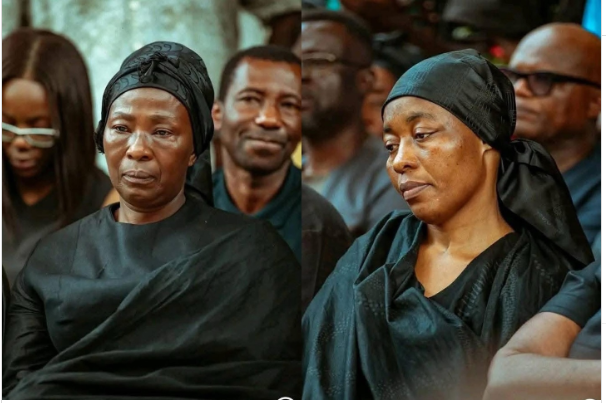
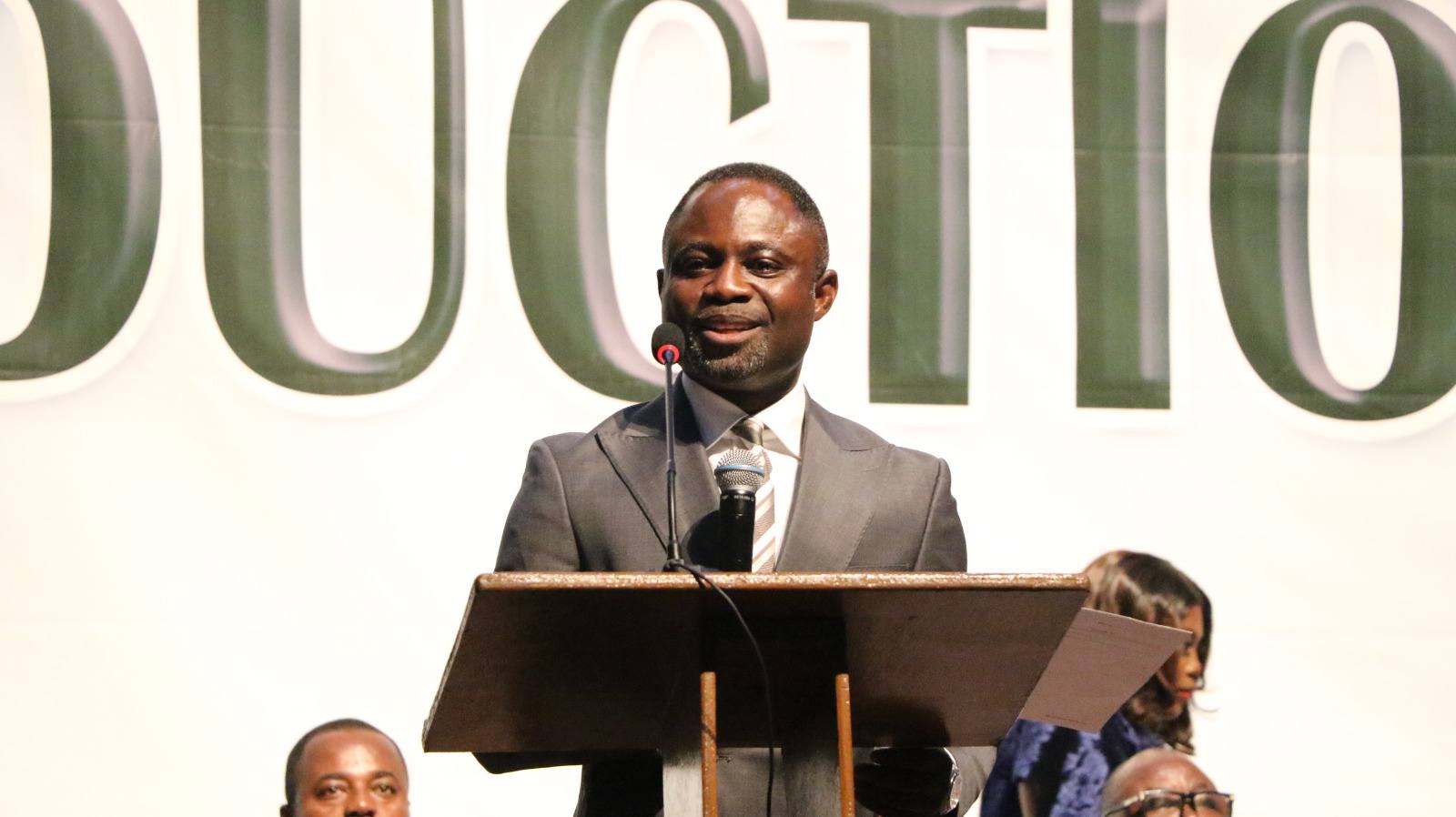
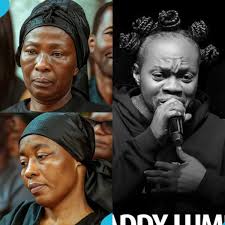
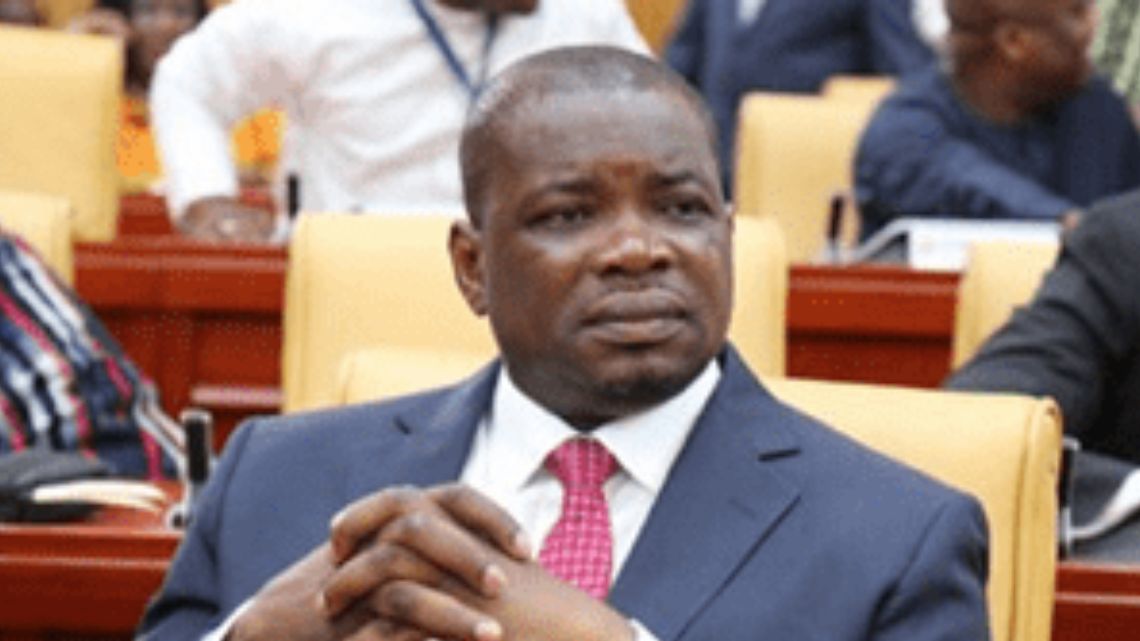
Bishop Owusu Ansah has threatened Her Ladyship Dorinda Smith Arthur that she will not go scot-free following a Kumasi High Court ruling on the widowhood rites of late musician Daddy Lumba.
The ruling on November 28, 2025 allowed Daddy Lumba’s partner, Odo Broni, to perform widowhood rites alongside his legal wife, Akosua Serwaa
The decision came after Serwaa petitioned the court seeking recognition as the sole surviving legal spouse of the late musician.
Unsatisfactory to Bishop Owusu Ansah, he sternly stated, “You, the judge, wait. We will come to you with the word of God. I am taking my time. You want to tell us that there is no use in getting married lately. You want to tell us that adultery is not a sin. God will deal with you, and He won’t let you go free.”
“You, the judge, wait. We will come to you with the word of God. I am taking my time. You want to tell us that there is no use in getting married lately. You want to tell us that adultery is not a sin. God will deal with you, and He won’t let you go free.”
Her Ladyship Dorinda Smith Arthur, who presided over the case, ruled that both women are permitted to take part in the rites, a decision that has been well-received by supporters of Akosua Serwaa, Lumba’s first wife.
Odo Broni (Priscilla Ofori Atta) and Akosua Serwaa Fosuh have both been declared by the Kumasi High Court to be the spouses of the late Daddy Lumba.
This means they can both perform the widowhood rites.
The landmark ruling, ends months of fierce legal and public debate over who should perform the musician’s widowhood rites, who controls his estate, and who rightfully bears the title of “widow”.
The court held that Akosua Serwaa failed to submit the original marriage certificates for the alleged civil marriage between Daddy Lumba and the plaintiff. What she presented were only extracts, not certified copies.
With this decision, the path is now clear for the late music icon’s funeral to proceed.
Background to the Case
After the death of Daddy Lumba on 26 July 2025, a bitter dispute erupted between two women who claim to be his rightful spouse. Graphic Online
Akosua Serwaa Fosuh filed a suit on 3 October 2025, asking the court to declare her as the only surviving lawful spouse, a claim based on a civil marriage she said she contracted with the musician in Bornheim, Germany, in 2004.
She also sought to restrain the head of the musician’s extended family, Kofi Owusu Fosu, and Odo Broni from claiming any right to funeral and widowhood rites.
The defendants opposed the claim, arguing that under customary practice, Serwaa’s marriage had been dissolved when she allegedly “returned the head drinks” to the family, a traditional act recognising separation, and that Odo Broni, who lived with Daddy Lumba for over 15 years and bore him six children, was the rightful widow.
What Happened in Court
On 25 November 2025, the court was presented with the supposed original civil-marriage documents from Germany, including notary-certified translations and associated paperwork, supporting Akosua
The defence challenged these documents, citing inconsistencies in font styles and notary signatures, arguing the evidence was submitted “at the eleventh hour.”
The presiding judge, Dorinda Smith Arthur, noted that under Ghanaian family law, simultaneous customary and civil marriages are redundant, as each is independently valid. This observation, made during the hearing, effectively opened the door to recognising multiple marital claims simultaneously.
With cross-examinations completed, the court reserved judgment. On the verdict day, it ruled that both women are to be recognised as spouses of Daddy Lumba, entitling them to certain marital rights and recognising their status in relation to funeral, estate and widowhood rites.
Prophet Kumchacha has warned that three members of the late Daddy Lumba’s family may loose their lives if the family fails to bury the late musician peacefully.
This comes at a time where the two partners of the musician are in court seeking redress on who should be recognized as the legal wife.
Kumchacha explained that his dreams indicated that anyone who blocks Lumba’s funeral or disrupts harmony among his family members would face harsh consequences, as Lumba’s spirit would return for three people after the burial.
“I also saw that Daddy Lumba said anyone who refuses to allow his burial to be held peacefully, and for peace to reign in the family, he will come and take three persons with him to the graveyard,” he stated.
He added that the late musician is seen in handcuffs and weeping in the realms of the spirit.
Thus, he foresees tragedy unfolding from the spiritual realm, which would manifest in the physical world should the burial go ahead on December 13, 2025.
“I have had several dreams and as I speak, Daddy Lumba’s spirit is sad. In the spiritual realm, he is in handcuffs and weeping. If they try to bury him on December 13, something tragic will happen spiritually and it will be felt in the physical world as well. They should move the funeral to around the sixth month of next year,” Kumchacha UTV’s United Showbiz on November 22, 2025.
The burial date for Daddy Lumba has been changed from 6th December to December 13, 2025.
According to report, the date extension will provide the family with ample time to know the cause of the musician’s death before his burial.
The late Daddy Lumba’s elder sister, Ernestina Fosu has declared that there will be no burial for Daddy Lumba until the actual cause of his death is known.
After a court appearance, Ernestina told Adum TV that until the truth is known, no amount of court ruling or family decision would compel her to allow the funeral to proceed.
“The funeral will not be held on December 6. We did not seek an injunction because we are mad. We still don’t know what killed my brother. We cannot allow people to rush with his funeral,” she said.
However, she has expressed readiness to organize the funeral on the scheduled December 6 if she receives a clear explanation about what caused Daddy Lumba’s death before then.
“There will be no problem if we find out about the cause of Daddy Lumba’s death before December 6. But if we don’t find out what killed my brother, I won’t allow my family to bury my brother, Charles,” she said.
Ernestina Fosu has earlier indicated that she is not prepared to organize Daddy Lumba’s funeral on Dec 6.
She made this known to the media in the aftermath of a court proceeding at the Kumasi High Court on October 28, 2025.
“I am not ready for my brother’s funeral on December 6, 2025,” she stated firmly in a video shared on social media.
Akosua Serwaa filed an injunction against the late musician’s funeral scheduled for December 6, demanding that she be recognized as the only surviving wife of the musician and not Odo Broni, who is currently claiming that title.
While the court has yet to rule on the spousal status of Akosua Serwaa and Odo Broni, the Kumasi High Court has dismissed an injunction application that sought to halt the burial and funeral of the late legend.
The judgment allows the family to go ahead with burial plans as originally arranged.
Madam Serwaa’s lawyer, William Kusi, insisted that his client was the musician’s only legally recognized wife and that her rights were being ignored in the funeral preparations. He supported his argument with a civil marriage certificate reportedly issued in Germany as evidence of their union.
In July this year, a statement by the counsel for the Fosu family confirmed that the music veteran passed on July 26, after a short illness.
He succumbed to the illness at the Bank Hospital in Accra, per reports.
The statement read: “With profound sorrow and deep grief, the Fosu family announces the passing of Ghana’s beloved musical icon, Charles Kojo Fosu, popularly known as Daddy Lumba, who passed away earlier today, Saturday, July 26, 2025, after a short illness.”
“Daddy Lumba was more than a musician; he was a cultural icon whose music touched countless lives. His soulful voice provided the soundtrack to our love stories, and his poignant lyrics captured the poetry of our struggles, dreams, and resilience.”
Prophet Prince Osei, former husband of Ghanaian gospel musician Empress Gifty, says he has now come to terms with what he describes as poor communication, a factor he believes contributed to the collapse of their marriage.
He noted that the absence of proper communication deteriorated their marriage despite several attempts to sustain it.
“Prayer alone cannot sustain a marriage because there are a lot of factors involved. Also, what I have learned so far about marriage is that good communication is crucial.”
“Faithfulness alone cannot sustain a marriage. Even if you want to have an affair with your wife, it all boils down to communication,” he said in a video shared on Instagram on December 2, 2025.
He also recounted how he met his ex-wife when she was still a seamstress.
“When I met her, she was a designer at Tema Community 1. When I saw her, I knew music would open a lot of opportunities for her because she had a good voice.
“Her brother introduced her to me. She wasn’t even a church member, but her brother pushed her to my church,” he added.
Earlier this year, details surfaced online about the divorce between Apostle Solomon Oduro and Counsellor Charlotte Oduro.
Reports showed that Apostle Oduro initially filed for divorce in April 2024. After his wife responded, he revised his petition and resubmitted it on November 29, 2024.
In his petition, he stated that their traditional marriage had already been annulled and requested that their ordinance marriage also be officially dissolved.
A deeper look into the divorce documents reveals the reasons why he believes their marriage cannot be saved.
Apostle Solomon Oduro has revealed shocking details about his marriage troubles with Counsellor Charlotte Oduro in his divorce petition.
He claimed that his wife no longer found him attractive, treated him coldly, and left him out of important decisions. He also accused her of disrespect, poor communication, and even turning their children against him.
According to him, in their 16 years of marriage, they were intimate only 12 times. He also alleged that their children, following their mother’s influence, sometimes locked him out of the house.
Another issue he raised was that since January 2024, his wife stopped eating meals prepared by their chef. By March, she reportedly told their children to do the same and started cooking her own meals inside the master bedroom.
He further stated that the situation worsened, leading to emotional and physical abuse, causing him great distress and anxiety.
“The respondent is abusive both emotionally and physically towards the petitioner. She removed her ring and packed out of their matrimonial home at least twenty times over the slightest provocation,” he alleged.
He also alleged that their children informed him about her relationships with other men, including her ex.
He claimed that despite running several businesses, his wife failed to contribute to the household or care for their children.
Apostle Oduro stated that his wife began her business ventures using proceeds from the naming ceremony for their second child.
He said she sold items such as oil, communion, clothes and many more at the church and kept the money for herself.
Despite all these, Apostle Oduro said he purchased a Suzuki 4×4, a Toyota Camry, and later a brand-new Mercedes Benz for his wife.
However, she later sold the Mercedes Benz and currently owns a Range Rover and a Jetour 4×4.
He said she also purchased a piece of land in Katapor, near Kwabenya.
In addition to that, she owns a diaper brand and a wholesale and retail business.
Apostle Oduro expressed that all these signs indicate that his wife was financially capable of contributing to the home but chose not to.
In 2024, Kumawood actress Portia Asare opened up about the reasons behind the collapse of her second marriage to Raymond Kwaku Marfo. The actress, who divorced Marfo three years after their 2021 wedding, revealed that their separation was primarily due to her husband’s refusal to provide for her financially after insisting that she quit acting.
Portia explained that Marfo pressured her to leave her acting career, which she had relied on for her personal expenses.
“You said you didn’t want me acting any longer, yet you didn’t bother to provide me with any money to start a business. You couldn’t look after me, yet you made me leave my work,” she recounted.However, after quitting, he failed to support her financially or provide the capital needed to start a business. She expressed frustration over the lack of partnership in their marriage, highlighting how her husband neither fulfilled his role as a provider nor allowed her to continue working to sustain herself.
“I was using the acting to take care of my personal expenses. If I needed about GH₵500 cedis monthly, I could afford it. “That was how I was living till I got married.
“Now, you come and you couldn’t help me continue that system and you would allow me to add my own money to the little you’re bringing so it works together,” she said.
Reflecting on her situation, Portia emphasized that many marriages fail because they lack the essential element of mutual support. She shared how difficult it has been to rebuild her life after the end of her second marriage, stressing that a true partnership in marriage should uplift both individuals rather than bring one down.
“That’s why many marriages don’t last long; the core mandate of marriage is missing from it. You came into the marriage to push me up the ladder, not bring me down.
“You go into a marriage for two to three years and by the time you leave, you have to build yourself from scratch all over again,” she added.
Health Minister Kwabena Mintah Akandoh has outlined broad reforms across the country’s healthcare system, highlighting gains in insurance coverage, upcoming primary healthcare interventions, and expanded workforce deployment.
The Minister reported a significant turnaround in the National Health Insurance Scheme (NHIS) following key structural reforms.
He noted that the government’s decision to uncap NHIS funds has restored prompt payments to service providers, rebuilding confidence in the scheme. As a result, subscriber numbers have risen sharply from 18 million to about 20 million within a year indicating renewed public trust in the system.
He also announced major policy measures scheduled to take effect in 2026 that the government will roll out free primary healthcare supported by a GH¢1.5 billion intervention fund. The initiative will prioritise preventive, promotive, and early-detection services, all integrated under the NHIS.
To address the growing burden of non-communicable diseases such as cancer, hypertension, and diabetes, he said the Ghana Medical Trust Fund, also known as the Mahama Cares Fund, has been activated with GH¢2.3 billion and has begun supporting patients.
Mr Akandoh also detailed efforts to strengthen the country’s healthcare workforce.
He stated that 13,500 nurses have been placed on government payroll this year, while 700 medical doctors are currently being deployed nationwide, with a focus on underserved districts.
The government has additionally paid GH¢500 million in nursing training allowances arrears, with a further GH¢231 million expected to be released in early December.
The Minister’s presentation highlighted a health sector undergoing expansive reforms supported by substantial funding.
However, he acknowledged that these gains are occurring alongside major financial constraints imposed by legacy contracts, including the high fixed costs of the Zipline drone delivery service.
In August, a 24-hour call centre for handling patient complaints across hospitals in the country was introduced by the Health Minister, Mr. Kwabena Mintah Akandoh.
The minister made this known at a press briefing in Accra on Thursday, August 21, explaining that the initiative will provide the public with a direct channel to report their displeasure regarding healthcare services. “The best you can do is lodge a complaint. And that brings me to the client service. So this is what we are doing. We have some numbers available where if people feel dissatisfied, you can then call,” he said.
He assured that complaints to the hotline will be managed fairly, but emphasized that this does not automatically mean all complaints will be considered right. “The fact that you have called to lodge a complaint doesn’t mean that you are right. We will look into the matter and then appropriately deal with it,” he stated.
He added that hospitals have been instructed to display the hotline numbers boldly at facilities to make them easily accessible to patients nationwide. “We have communicated directly to all the health facilities in the country, to the Director-General and the teaching hospitals, that they must make these suggestion boxes and numbers conspicuously posted at all health facilities. So it is something I am pursuing aggressively,” he said.
Mr. Akandoh noted that the measure seeks to promote accountability and raise the standard of service delivery in the health sector. Just days earlier, the Health Minister confirmed that the Ridge Hospital incident that saw the assault of health practitioners had led to several arrests by the Ghana Police Service.
“The law has so far dealt with all those who did something wrong, and we are also investigating as a ministry. Anyone who comes to tell you that no arrest has been made in this matter is probably someone who is not ready to contribute to the resolution of this matter,” the Minister told Asempa FM on August 19, without disclosing the names of the suspects.
The arrests stemmed from an incident involving a member of the pressure group Democracy Hub, Mr. Ralph Afful Williams, popularly known as “Fellow Ghanaians.” He reportedly stormed the hospital with about eight men, protesting what he described as delays in treating a critically injured patient.
Hospital management was forced to call in the Ghana Police Service after the situation escalated into the assault of a nurse. Following the incident, several groups and individuals demanded the arrest of Ralph Williams, describing his actions as unlawful.
In response, the Ghana Registered Nurses and Midwives Association (GRNMA) issued a 48-hour ultimatum to the government to arrest Ralph and his accomplices. The association warned that it would be compelled to “advise itself” if immediate action was not taken.
According to the GRNMA’s General Secretary, Dr. David Tenkorang Twum, the nurse who was attacked sustained injuries and is currently receiving treatment at the hospital. He described the assault as unacceptable and stressed that health workers cannot operate in an unsafe environment.
“If anybody can just walk into a facility, like Ridge Hospital, and throw his weight about and beat like a midwife, and you have other party apparatchiks telling them to egg him on, that is unfortunate. We are not happy at all. Our people are traumatized,” he stated.
He continued, “We are very civilized people. We are professionals. And we are asking the government to arrest the guy immediately and the eight accomplices; we were told there were about 50 guys that day. But those who laid their hands on the lady—there were about eight, including Ralph himself. And therefore, if he’s not arrested within 48 hours, we shall advise ourselves.”
Dr. Tenkorang also referenced Section 119 of Ghana’s Labour Act, which empowers workers to withdraw their services if their health and safety are at risk.
“And we are all guided by law. In that, if you read section 119, subsection 1, it is stated that if you are a worker and you think that your safety is not guaranteed, your life and your health are not guaranteed, and you have every right under the law to remove yourself from that danger. And our people have told us this morning, after interacting with them, that they are not safe. They feel that their safety has been breached,” he said.
The association insists that both Ralph Williams and the eight identified accomplices must be arrested immediately to restore confidence and ensure justice for the victim. Their demand follows the circulation of a viral video showing a violent altercation between some patient relatives and medical staff at the hospital’s emergency department.
The Minority in Parliament has also intensified calls for Ralph’s arrest. In a statement dated Tuesday, August 19, and signed by the Ranking Member on the Health Committee, Dr. Nana Ayew Afriye, the group condemned the actions of Ralph and his team.
They described the conduct as “unlawful, reckless, and deeply inconsiderate,” stressing that hospitals are places of care and confidentiality, not “arenas for political theatrics.” The Minority urged the Ghana Police Service to fully investigate the matter and called on the Health Minister to set up a joint parliamentary inquiry to prevent similar occurrences in the future.
“The sanctity of our health facilities must be preserved at all times,” the statement concluded, urging political actors to refrain from compromising patient care for partisan ends.
In response, the Ministry of Health has announced measures to beef up security at the Greater Accra Regional Hospital. The Ministry said this will ensure the safety of staff, patients, and the general public, while also addressing any gaps that may have contributed to the reported delay in treatment.
Reiterating its commitment to protecting healthcare workers, the Ministry confirmed that Health Minister Hon. Kwabena Mintah Akandoh has already visited the facility to receive firsthand information. He assured hospital management and staff of the Ministry’s full support and protection.
“We call on the public to exercise patience, cooperation, and mutual respect at all times to enable healthcare workers to provide effective and timely care,” the Ministry of Health added in a statement.
Health Minister Kwabena Mintah Akandoh has confirmed that government is required to pay Zipline over $500,000 each month, irrespective of the volume of medical supplies delivered.
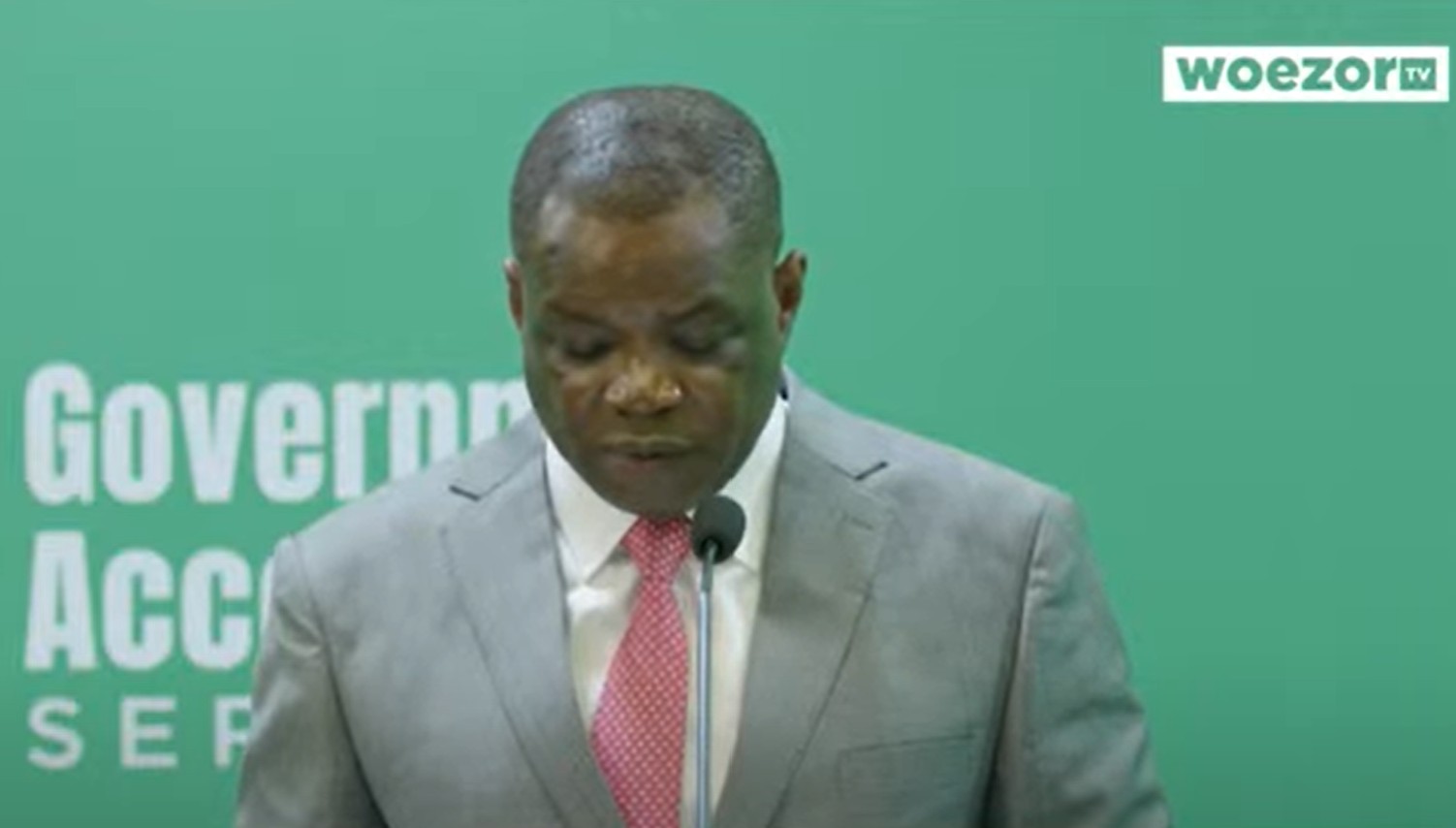
He explained at the Government Accountability Series in Accra on Monday, December 1, 2025, that the 2018 ‘take-or-pay’ sole-sourced contract places colossal financial burden on the government purse.
“For every month, the government is supposed to pay $88,000 per centre. So with six centres, we are paying a little over $500,000 every month,” he said.
Under the terms of the contract, which began in 2019, each operational hub attracts a fixed monthly fee and the system prevents any adjustment in expenditure, irrespective of reduced activity levels or shifts toward non-critical deliveries.
The minister described the agreement as a “sole-sourced contract” that effectively “binds government to continuous payments,” underscoring the lack of fiscal flexibility.
The Majority Leader in Parliament, Mahama Ayariga, has indicated that the government cannot continue to spend GHS170million annually for the Zipline to be sending blood and other products to health facilities using drones.
Responding to concerns raised by the Minority Leader, Alexander Afenyo-Markin, over the cancellation of the contract, Mr Ayariga explained that the Ministry of Health should have bought its own drones after all those years the contract had existed.
“…you cannot continue spending that kind of money that you are paying a service provider, as it is a total waste of money,” he said on the floor of Parliament on Friday, Nov 28, 2025.
Mr. Afenyo-Markin then urged that the Minister of Health address the matter, particularly the measures being taken to resolve it, “because it is not those of us in the cities that will suffer from this shutdown.”
“It is those in the rural areas who otherwise would need emergency medical care and if there is blood, there is the need for them to get blood transfusion as quickly as possible,” he said.
He recalled that the Zipline contract was signed somewhere in 2021, but such a contract had been a drain on national resources.
“Can you imagine every year we are spending GH¢170 million so that they will go and drop blood in some village and then come back?”
“Meanwhile, there is a road network leading to almost every town, every community in this country, and there are only a few locations that you would say the roads are not accessible,” Mr Ayariga said.
The Bawku Central MP argued that the money spent could have been invested in tarring roads to all the regions Zipline served, while the GHS could have obtained drones to make deliveries on its own schedule.
The Leader asked about the price of drones, stating that some models are sold for $4,000–$5,000, while the costliest drones stay below $10,000–$20,000.
“By now we would have had drones for every district in this country managed by the Ghana Health Service.
“Let us go and do a total calculation of how much money we have wasted on this Zipline contract,” he said.
On the 6th-year anniversary of commencing operations in Ghana, Zipline, the world’s largest autonomous logistics system,
has successfully delivered more than 8.4 million medical products in the country, marking a major milestone in the country’s journey toward equitable healthcare access.
Since its launch in 2019, Zipline has served as a critical infrastructure partner for the Government of Ghana.
It has delivered more than 8.4 million medical units – including medications for malaria, HIV, and TB, family planning products, blood products, vitamins, nutritional products, medicines for pregnant women, and more than 17 million vaccine doses – to over 3,000 hospitals, health centers, and CHPS compounds in 14 regions of the country.
Operating from six hubs, Zipline’s autonomous drones enable real-time delivery of medical products regardless of weather, terrain, or infrastructure challenges – revolutionizing last-mile delivery in the health sector.
In 2021, Zipline partnered with Gavi and the UPS Foundation to deliver the COVID-19 vaccine and has since delivered more than 3.4 million doses, including hundreds of thousands of mRNA vaccines.
Research conducted shows that the company disproportionately serves the most vulnerable populations in Ghana, with rural and hard-to-reach districts receiving 30 percent more COVID-19 vaccines than less remote districts during the COVID-19 pandemic.
Zipline is set to scale up its life-saving drone delivery services across Africa following a landmark $150 million pay-for-performance commitment from the U.S. Department of State.
The initiative will boost the company’s AI and robotics infrastructure and strengthen support for African governments implementing national health logistics systems. Under the expanded programme, more than 10,000 additional health facilities and community drop sites are expected to be added, enabling on-demand delivery of essential medicines to over 130 million people.
The expansion is also projected to generate more than 800 high-tech jobs on the continent and unlock over $1 billion in annual economic growth.
According to Zipline, the partnership marks a new phase in global health delivery—one driven by African leadership, advanced technology, and measurable impact.
Country Director, Daniel Merki, joined Citi FM on November 2022, to discuss how Zipline is working with the Government of Ghana to transform healthcare access,
According to him, it has made over 800,000 deliveries nationwide to a 56% drop in maternal deaths in Zipline-supported areas.
“Zipline is more than a service provider; we’re infrastructure in service of the government’s agenda,” he added.
Ghanaian gospel artiste Manuel Bless has lamented a sickening trend in church lately that lures young people into fornicating.
According to him, several young people attend churches in the hopes of meeting a “good boy” or “good girl” instead of for faith.
Unfortunately, these young people end up sleeping with each other instead of focusing on worshiping God.
“One of the problems with youth Christian ministry is that a lot of people have started gravitating towards churches because they are looking for spouses. They are looking for a good boy or a good girl.”
“Most of the time, they meet this one, they sleep with them for a little bit, and they bounce. Then they move on, and they move on. Then they will say the boys or girls in the church are not good,” he said.
Renowned Ghanaian playwright and motivational speaker Uncle Ebo Whyte shared an unexpected encounter with a female admirer during a church event.
In an interview with Giovanni Caleb on TV3, Uncle Ebo recounted how he was invited to speak at a church on a women’s fellowship day, where he had a peculiar experience during a photo session with attendees.
While taking photos, a woman persistently positioned herself behind him, engaging in what he described as “smooching” throughout the session.
“There’s a church I went to preach in. It was women’s fellowship day and after that, they decided we should do pictures. A woman stood behind me and smooched me all through the photos.
“I didn’t even look at her. Any group they called, she was always there behind me, she wouldn’t move,” he narrated.Despite her actions, Uncle Ebo remained composed, choosing not to react visibly.
Reflecting on the incident, Uncle Ebo challenged the typical notion that men dominate sexual encounters, asserting that women, in fact, hold the true power. He emphasized that men often lose more than they gain in such situations, including energy, reputation, and opportunities.
“When a man sleeps with a woman, he tells his friends, ‘Oh, I finish am.’ But if you know who finished who, you will stop. You will not talk.
“In any sexual encounter. The winner is not the man. It’s the woman. The man, all you did was you gave your energy, you gave your reputation, you gave opportunities. You gave all kinds of things,” he said.
Uncle Ebo advised men to maintain their self-respect to avoid the potential consequences of reckless behaviour.
“When you understand that there’s the need for you to respect yourself, then you understand that this thing can bring you down. It can make you lose your respect and reputation like nothing else. And so be careful.
“An older friend of mine told me this. When you go to the forest and you find a table laid, walk away because you don’t know why the table is there,” he said.
Uncle Ebo advised men to maintain their self-respect and be cautious of reckless behavior that could harm their dignity and standing.
He illustrated this point with advice from an older friend: “When you go to the forest and find a table laid, walk away because you don’t know why the table is there.”
His disciplined approach to life and his insightful reflections are further explored in the GhanaWeb TV documentary, “The Uncle Ebo Whyte Story: A Legacy of Inspiration & Creativity,” which chronicles his journey from early struggles to becoming a celebrated figure in Ghanaian theater.
Meanwhile, President John Dramani Mahama has expressed concern over the growing rates of crime and moral decline in Ghana, even though the majority of the population, over 90% professes religious faith.
He emphasized that the presence of the church plays a vital role in preserving moral values and guiding society, arguing that without its influence, the situation could be significantly worse.
“There’s an often-heard argument that while more than 90% of Ghanaians profess to be persons of faith, immorality and crime are on the rise. And my answer to such people who make that argument is that the situation would probably have been worse if there was no church.
“Because consider that there was no church and people could do whatever they wanted. The situation would have been worse. And so the churches are doing their best,” President Mahama told the clergy in Kumasi on Sunday.
He further emphasized the importance of unity among Christian denominations, cautioning that internal divisions diminish the church’s overall impact and influence.
“It is essential to emphasise the importance of fostering unity among Christian denominations. A divided church weakens its impact.
“But a united church can transform society. Let us work together to build a vibrant and influential Christian community that speaks with one voice on issues of national development,” he urged.
Bishop Bernard Elbernard has shared a profound testimony of faith, sacrifice, and divine destiny, revealing that his wife was once his spiritual daughter and the key financier of his church in its early days.
According to the clergyman, 19 years ago, he received a divine instruction from the Lord Jesus Christ to leave Takoradi and move to Accra to establish a ministry. Without knowing what lay ahead, he obeyed, setting out with just GH¢4.60 and his mother’s bag.
“I arrived in Accra with only GH¢4.60, carrying my mother’s bag, and checked into Gloryland Hotel at Odorkor,” he recounted.
Alone in an unfamiliar city, he remembered a young lady he had met years earlier who had since become his spiritual daughter. Reaching out to her for support, she visited him the next day, and that encounter marked the beginning of a life-changing journey.
“I took the money she had with her and asked her to withdraw her investment from an institution. She did, and she brought the money to me. I knew then that the Lord had sent her to sustain me in this new chapter,” Bishop Elbernard revealed.
The woman not only became his first church member, usher, and supporter but also played a crucial role in financing his ministry. Over time, their relationship deepened, and she eventually became his wife.
“Years later, our relationship blossomed, and I turned my spiritual daughter into my wife,” he said.
As he marked his wife’s birthday, the bishop took the opportunity to express gratitude for her unwavering belief in him and her commitment to his calling.
“Today, I express my heartfelt gratitude for her unwavering belief in me and my ministry. Her financial support has been invaluable, and I cherish her as a precious gift from God,” he said.
Bishop Elbernard’s story has since sparked discussions on faith, divine connections, and the unique ways in which relationships evolve within ministry.
Ghanaian filmmaker Leila Djansi has reflected on her journey as a script doctor, stating that personal challenges have strengthened her craft and shaped her approach to storytelling.
In a Facebook post sighted by The Independent Ghana, she disclosed that her work in the film industry over the past three years has focused largely on script doctoring, which involves reading, editing, rewriting and producing speculative drafts for filmmakers. She noted that the process demands consistency and emotional stamina.
“And when you remove your ego, apathy, and worry from the work, the characters begin to speak.”
“When you allow yourself to grow through pain and discipline instead of collapsing under it, your craft becomes sharper and your voice becomes clearer.”
Leila explained that navigating difficult personal moments while working on multiple scripts has not been easy. However, she described the period as the most rewarding phase of her career, stressing that growth often emerges from uncomfortable seasons.
According to her, the experience has taught her humility and discipline, especially in an industry where it is easy to critique other people’s work without acknowledging one’s own limitations. She added that the challenges she encountered have sharpened her writing skills and deepened her understanding of character development.
Leila encouraged creatives to embrace the refining process that comes with their craft, saying it ultimately produces better work and richer stories.
A couple of months ago, the award-winning filmmaker stressed that filmmakers cannot thrive as both filmmakers and film distributors.
She encouraged filmmakers to tell employ the services of professional distributors and include the as part of their entire project.
“In Ghana, filmmakers are forced to play both creator and distributor.That’s unsustainable. Your job is to make the film. Get someone else to sell it. Collaborate. Build distribution networks across West Africa, into the diaspora, and then let streamers become an option, not a lifeline,” she said in a post sighted by MyNewsGh.
Djansi explained that from the script stage, filmmakers must think about their marketing and distribution strategy, ie, Cinema → TV → SVOD → AVOD/FAST, which ensures the film earns over the years, not just once.”
The renowned Ghanaian filmmaker sparked debate among industry players, questioning whether they will continue making excuses for the state of Ghana’s film industry or take action to improve it.
“Good and bad can coexist in anything. But at what point do we stop excusing the bad and start fixing it?” she asked in a Facebook post, calling for a shift from complacency to progress.
Djansi criticized the industry’s reluctance to embrace constructive criticism, urging filmmakers to compare their work with productions from other African countries such as Nigeria, Zambia, Kenya, and South Africa.
“Take two of your most recent critically acclaimed films from the previous three years and compare them to two from Nigeria, Zambia, Kenya, and South Africa. Look at them side by side and ask yourself if we are actually gaining any momentum,” she challenged.
She lamented that since Azali’s Oscar submission in 2018, Ghana’s subsequent entries have not been up to standard.
“In 2018, we got Azali for the Oscars, and since then, every single submission has been a joke. A literal joke. Some of the films would convince you to burn your Ghana card,” she stated.
Djansi stressed that the problem is not a lack of talent but an unwillingness to elevate the industry through hard work and innovation.
Sharing a personal experience, she recalled how a Creative Artists Agency (CAA) agent once critiqued her storytelling approach. Instead of dismissing the feedback, she took it as an opportunity to grow.
“What he actually said to me was, ‘Go take risks with your storytelling.’ I grew up,” she revealed.
She urged filmmakers to stop dismissing criticism as hate or jealousy and instead use it as a tool for improvement.
“Stop enduring mediocrity, please. Instead of these knee-jerk reactions, instead of acting like people just want to hate, forget the who and the how and actually listen. Sit with the criticism. Use it to rise,” Djansi advised.
With her bold remarks, Djansi hopes to ignite a mindset shift in the Ghanaian film industry, pushing creatives to move beyond excuses and take the necessary steps to compete on the global stage.
On a seperate matter, Leila asserted that YouTube will soon become a thing of the past due to saturation by filmmakers.
She further argued that a government-backed film fund would be wasted if movies are only released on YouTube.
She added that piracy also undermines the platform’s viability for film distribution.
“Personally, I don’t believe the film fund. I really don’t. I think it is premature because there is no distribution. If you give the film fund how are they gonna [make profit].”
People think that we are just gonna put it on YouTube. I’m sorry YouTube is gonna collapse very soon. There is so much congestion on YouTube and they are always changing their policies. So if you go in now a I think it is seriously over-saturated. If you over-saturate it, they’re gonna reduce the earning. So how much are you gonna earn if you just put your film on YouTube,” she said.
Meanwhile, James Gardiner, a leading Ghanaian actor, recently discussed the crucial role social media, particularly YouTube, plays in boosting the Ghanaian film industry.
In an interview with media figure Doreen Avio, the star of ‘Taste of Sin’ pointed out that many are not fully harnessing the potential of these digital platforms.
Gardiner emphasized that YouTube remains underutilized, despite its potential for significant impact.
He noted that individual productions can amass millions of views, potentially translating into considerable earnings.
“YouTube is a goldmine that’s being overlooked. The fact that just one of our productions can hit around 29 million views indicates that African films are resonating widely,” he said.
While acknowledging the importance of major streaming services like Netflix, Gardiner stressed the value of concentrating efforts on YouTube.
He shared insights from his recent experiences in Nigeria, highlighting how Nigerian TV stations swiftly adopt and popularize films from YouTube, further amplifying their reach.
“Work is thriving in Nigeria, and it’s not just Ghanaian audiences that are engaged. In fact, Nigerian platforms quickly pick up new releases from YouTube, often within 20 to 30 minutes, which boosts viewership numbers,” Gardiner observed.
Despite the hurdles the Ghanaian film industry faces, Gardiner remains hopeful about its future.
He believes that with a positive outlook and persistent effort, the industry is poised for continued growth and success.
Popular Nollywood actress Ruth Kadiri recently shared her insights on why she chose YouTube as the platform to showcase her movies.
In an interview with BBC Pidgin, she highlighted YouTube’s significance as a major income source for independent filmmakers and content creators, emphasizing its pivotal role in sustaining livelihoods within the industry.
Kadiri emphasized that YouTube has become indispensable, stating that without it, many individuals, not just filmmakers, would face financial hardships. She underscored the platform’s contribution to feeding people by providing opportunities for filmmakers to monetize their content effectively.
Reflecting on her journey into YouTube, Kadiri revealed her frustration with the constraints of traditional production processes, which motivated her to seek a space where she could freely express her creativity. She discussed her desire to explore and implement innovative ideas without excessive regulations, noting that YouTube offered the flexibility she craved.
Despite encountering skepticism and discouragement from others, Kadiri viewed YouTube as a platform for reaching a broader audience and honing her skills. Her decision to venture into YouTube was fueled by a passion for storytelling and a determination to overcome challenges, even if it meant learning from initial setbacks.
Kadiri’s experience on YouTube has been marked by the production of several films, each contributing to her growth as a filmmaker and entrepreneur. Her journey exemplifies the evolving landscape of film distribution and the opportunities that digital platforms like YouTube offer to aspiring creators.
The surge and mass production of AI-generated content on YouTube has prompted the video-sharing platform to announce a review and update of its monetisation policy under the YouTube Partner Program (YPP).
The YouTube Partner Program is how creators earn money from their content.
In a formal statement shared on July 7 on YouTube’s Support page- a platform where the company shares updates and announcements- it spelt out modifications concerning content and its monetisation policy.
“We’re updating our guidelines to better identify mass-produced and repetitive content. This update better reflects what inauthentic content looks like today,” parts of the statement read.
According to the statement, effective July 15, content would now be subjected to strict scrutiny, and those found as repetitive with no intention to educate or entertain would be demonetised.
“On July 15, 2025, we’re updating our guidelines to better identify mass-produced and repetitive content. This update better reflects what inauthentic content looks like today”, it continued.
Also, content that has been created with heavy use of AI with little to no human effort would be demonetised.
“AI-assisted content is acceptable, but only if it includes considerable human input. Content created with little to no human effort may not be eligible for monetisation.”
Evangelist Papa Shee has explained that Daddy Lumba’s funeral will not take place in December due to delays in travel arrangements for some family members abroad.
“The burial ceremony on December 13 will not come off because the musician’s children have exams on February 26, 2026, and others have expired passports. The autopsy result isn’t out because we are also in court with Transition,” Papa Shee stated.
In a video shared on November 29, 2025, he appeared appeared on United Showbiz withKofi Owusu, family head of the late Ghanaian Highlife legend to clarify the family’s position on matters surrounding Daddy Lumba’s funeral arrangements.
He added that the funeral has been scheduled for March 14, 2025, because the family must first meet President John Dramani Mahama over his proposal to grant the late musician a state burial.
“…We also went to the presidency to inform the President when Lumba passed. He wasn’t around, but we met Julius Debrah, and he even told us that they would like to give Daddy Lumba a state burial. We haven’t even gone back for feedback,” Papa Shee added.
Contrary to this,, Abusuapanyin Kofi Owusu also maintained that the initial burial date (December 13), will come off as scheduled, and nobody has the authority to change it.
According to the Abusuapanyin, Papa Shee is not a family member, and he will sue him if he continues to claim that the burial date has been changed.
“I am the one who fixed the date, and I am saying that the burial ceremony will be held on December 13, no matter what. Your new date will not come on, no matter what.
“Are you a family member? Why would you interfere in the affairs of another family when you are not part of it? If we hear you mentioning the 14th, I will take you on,” Kofi Owusu insisted.
The late Daddy Lumba’s elder sister, Ernestina Fosu has declared that there will be no burial for Daddy Lumba until the actual cause of his death is known.
After a court appearance, Ernestina told Adum TV that until the truth is known, no amount of court ruling or family decision would compel her to allow the funeral to proceed.
“The funeral will not be held on December 6. We did not seek an injunction because we are mad. We still don’t know what killed my brother. We cannot allow people to rush with his funeral,” she said.
However, she has expressed readiness to organize the funeral on the once she receives a clear explanation about what caused Daddy Lumba’s death before then.
“There will be no problem if we find out about the cause of Daddy Lumba’s death before December 6. But if we don’t find out what killed my brother, I won’t allow my family to bury my brother, Charles,” she said.
Ernestina Fosu has earlier indicated that she is not prepared to organize Daddy Lumba’s funeral on Dec 6.
She made this known to the media in the aftermath of a court proceeding at the Kumasi High Court on October 28, 2025.
“I am not ready for my brother’s funeral on December 6, 2025,” she stated firmly in a video shared on social media.
Prophet Kumchacha has warned that three members of the late Daddy Lumba’s family may loose their lives if the family fails to bury the late musician peacefully.
This comes at a time where the two partners of the musician are in court seeking redress on who should be recognized as the legal wife.
Kumchacha explained that his dreams indicated that anyone who blocks Lumba’s funeral or disrupts harmony among his family members would face harsh consequences, as Lumba’s spirit would return for three people after the burial.
“I also saw that Daddy Lumba said anyone who refuses to allow his burial to be held peacefully, and for peace to reign in the family, he will come and take three persons with him to the graveyard,” he stated.
He added that the late musician is seen in handcuffs and weeping in the realms of the spirit.
Thus, he foresees tragedy unfolding from the spiritual realm, which would manifest in the physical world should the burial go ahead on December 13, 2025.
“I have had several dreams and as I speak, Daddy Lumba’s spirit is sad. In the spiritual realm, he is in handcuffs and weeping. If they try to bury him on December 13, something tragic will happen spiritually and it will be felt in the physical world as well. They should move the funeral to around the sixth month of next year,” Kumchacha UTV’s United Showbiz on November 22, 2025.
The burial date for Daddy Lumba has been changed from 6th December to December 13, 2025.
According to report, the date extension will provide the family with ample time to know the cause of the musician’s death before his burial.
Nollywood star Nkechi Blessing has revealed she is single, and several men are making the effort to get her attention.
According to her, she is a stage of her life where “If you cannot show me that you are able or capable of taking care of me, then I don’t think I need you.”
Thus, “I get a lot of talking stage now because I’m single. So I’m testing, trying to see who is the right man for me,” she said in a viral video MyNewsGh sighted.
She narrated how she ended a conversation with a guy who failed to offer a helping hand at a time she had an accident and needed funds to recover from some damage.
“There is this guy in the UK I was talking to, I had an accident and I told him, I was planning on changing my car tyres, He just said okay sorry just get it sorted, That was the last time he heard from me”
The actress, who has been on set frequently, added that her career remains her priority. “I dey location. I don’t face every other person reach location. That is how serious I’m taking my job.”
“There is this guy in the UK I was talking to, I had an accident and I told him, I was planning on changing my car tyres, He just said okay sorry just get it sorted, That was the last time he heard from me,” she stated.
In Ghana, female artiste Sista Afia has shared why she has not committed to a romantic relationship.
According to her, she is in love with a man who does not feel the same way about her.
For this reason, she has been single for the past eight years.
”There’s someone I love, but he doesn’t love me. You know how funny this world is? Somebody will want me on a silver platter, will pay for everything to be with you”.
Sista Afia is hopeful that the man she loves will soon pursue her to take the relationship further.
”I mean we’ve been together for a very long time and there are signs I have shown but…I have time for him but he doesn’t have time for me. That is why I say that I love him more than he loves me,” an emotional Sista Afia said.
In 2024, she stirred curiosity with her ambitious romantic goals, revealing her wish to date a President in a recent interview.
The ‘Asouden’ singer boldly discussed her unique relationship ambitions, stating her intention to aim for the highest echelon of love after experiencing several heartbreaks.
Sista Afia openly shared her dream of becoming a First Lady, indicating her willingness to date any President, regardless of their nationality.
“I don’t have a specific President in mind that I wish to date. Even if it’s the President of Chad, I am open to it,” she asserted, demonstrating her willingness to explore diverse possibilities.
When faced with potential complications of dating a married President or one with several spouses, Sista Afia took a practical approach.
She explained that she has no objections to such situations and is willing to accept them, even if it means becoming a fourth wife.
“All I desire now is to establish a romantic connection and eventually marry a President,” she reiterated, emphasizing her unwavering determination to pursue her romantic aspirations at the highest level of leadership.”
Meanwhile, in a 2023 post on Facebook, she unequivocally expressed her decision to distance herself from Ghanaian men, giving rise to a flurry of discussions and conjecture.
The cryptic message left many wondering about the reasons behind her decision and whether she had experienced a broken heart or faced other undisclosed issues.
On June 6, 2023, Sister Afia took to her official Facebook page to share her sentiment, leaving her followers puzzled and eager for more information.
The post, which simply read “done with men with Ghana flag,” immediately attracted attention and ignited discussions in her comment section.
While Sister Afia did not provide any further details about her post, it has led fans and followers to speculate about the potential reasons behind her decision.
Some suggested that she might have encountered a heartbreaking experience.
“Masa u go date wrong guy, n he broke ur heart fior n shout up there,” a follower said
“You know it, Ghana ladies wen u go date wrong guy n broke ur heart then u add all of us up,” another added.
In an entirely different story, Fella Makafui appears to have embraced the popular notion that success is the best form of post-breakup revenge after her split from Medikal.
She has not only focused on rebuilding her life but has also achieved remarkable milestones in quick succession, radiating happiness along the way.
Reflecting on her recent journey, Fella shared, “I’ve finally accomplished things that have always been dear to my heart.”
Her progress has been evident, as she transformed from merely being known as an actress and former wife to becoming a dynamic businesswoman, successfully reviving ventures that had previously stalled.
Fans have been amazed by how many of her long-held ideas have finally come to fruition, with some even suggesting that her marriage may have limited her full potential.
Support from colleagues has poured in as well, with many applauding her ability to reach such heights in a short period — a challenge many who go through divorce often struggle to overcome.
Let’s take a look at the series of successful feats Fella Makafui has accomplished just months after her divorce
Sold-out movie premieres across the country
Following the social media buzz surrounding Fella Makafui’s divorce and her ex-husband Medikal’s public outbursts, her film Resonance became an instant hit, drawing large crowds to five major cinemas across the country.
The movie’s success extended beyond the cinemas, with sold-out shows even on university campuses in other regions.
In addition to the film’s success, Fella has landed new endorsement deals, including one with Harmony Diapers, while also renewing her contracts with Skinzone Spa and Farmhouse Productions, the creators of the popular Yolo series.
After a long break from Yolo, Fella has also been offered a lead role in a new spin-off, Serwaa TV Series, marking her return to the screen in a major way.
View this post on Instagram A post shared by Biggest Fella (@fellamakafui)
Certification in cosmetic micropigmentation
Recently, Fella Makafui took to social media to announce that she has completed her studies in cosmetic micropigmentation in Dubai and has successfully earned her certificate.
She focused on areas including lips, SPMU, BB glow face rejuvenation, and paramedical cosmetic micropigmentation, among others.
View this post on Instagram A post shared by Biggest Fella (@fellamakafui)
Launch of sports wear brand
Fella Makafui recently launched her sportswear brand, a new extension of her ‘Simply Snatched’ weight loss brand.
This move aims to revamp the weight loss brand’s image, which suffered a loss of public trust after her ex-husband alleged that she underwent surgery to promote her tummy trim products, causing many customers to withdraw their support.
View this post on Instagram A post shared by Biggest Fella (@fellamakafui)
Most coveted movie role in popular Netflix series
Fella Makafui has been cast in a leading role for the second season of the popular Nigerian Netflix series Anikulapo.
She celebrated this milestone on her Instagram, disclosing that she will portray the character Abena in Anikulapo, a show that explores life in pre-colonial times.
View this post on Instagram A post shared by Biggest Fella (@fellamakafui)
The Chief Executive Officer of the National Film Authority (NFA), Juliet Asante, also shared the news of Fella’s role along with a picture of the actress in action.
Directed by the renowned Kunle Afolayan and greenlit by Netflix, the movie seeks to position Ghana as an emerging destination for film production under the NFA’s #ShootInGhana agenda.
The Majority Leader in Parliament, Mahama Ayariga, has indicated that the government cannot continue to spend GHS170million annually for the Zipline to be sending blood and other products to health facilities using drones.
Responding to concerns raised by the Minority Leader, Alexander Afenyo-Markin, over the cancellation of the contract, Mr Ayariga explained that the Ministry of Health should have bought its own drones after all those years the contract had existed.
“…you cannot continue spending that kind of money that you are paying a service provider, as it is a total waste of money,” he said on the floor of Parliament on Friday, Nov 28, 2025.
Mr. Afenyo-Markin then urged that the Minister of Health address the matter, particularly the measures being taken to resolve it, “because it is not those of us in the cities that will suffer from this shutdown.”
“It is those in the rural areas who otherwise would need emergency medical care and if there is blood, there is the need for them to get blood transfusion as quickly as possible,” he said.
He recalled that the Zipline contract was signed somewhere in 2021, but such a contract had been a drain on national resources.
“Can you imagine every year we are spending GH¢170 million so that they will go and drop blood in some village and then come back?”
“Meanwhile, there is a road network leading to almost every town, every community in this country, and there are only a few locations that you would say the roads are not accessible,” Mr Ayariga said.
The Bawku Central MP argued that the money spent could have been invested in tarring roads to all the regions Zipline served, while the GHS could have obtained drones to make deliveries on its own schedule.
The Leader asked about the price of drones, stating that some models are sold for $4,000–$5,000, while the costliest drones stay below $10,000–$20,000.
“By now we would have had drones for every district in this country managed by the Ghana Health Service.
“Let us go and do a total calculation of how much money we have wasted on this Zipline contract,” he said.
On the 6th-year anniversary of commencing operations in Ghana, Zipline, the world’s largest autonomous logistics system,
has successfully delivered more than 8.4 million medical products in the country, marking a major milestone in the country’s journey toward equitable healthcare access.
Since its launch in 2019, Zipline has served as a critical infrastructure partner for the Government of Ghana.
It has delivered more than 8.4 million medical units – including medications for malaria, HIV, and TB, family planning products, blood products, vitamins, nutritional products, medicines for pregnant women, and more than 17 million vaccine doses – to over 3,000 hospitals, health centers, and CHPS compounds in 14 regions of the country.
Operating from six hubs, Zipline’s autonomous drones enable real-time delivery of medical products regardless of weather, terrain, or infrastructure challenges – revolutionizing last-mile delivery in the health sector.
In 2021, Zipline partnered with Gavi and the UPS Foundation to deliver the COVID-19 vaccine and has since delivered more than 3.4 million doses, including hundreds of thousands of mRNA vaccines.
Research conducted shows that the company disproportionately serves the most vulnerable populations in Ghana, with rural and hard-to-reach districts receiving 30 percent more COVID-19 vaccines than less remote districts during the COVID-19 pandemic.
Zipline is set to scale up its life-saving drone delivery services across Africa following a landmark $150 million pay-for-performance commitment from the U.S. Department of State.
The initiative will boost the company’s AI and robotics infrastructure and strengthen support for African governments implementing national health logistics systems. Under the expanded programme, more than 10,000 additional health facilities and community drop sites are expected to be added, enabling on-demand delivery of essential medicines to over 130 million people.
The expansion is also projected to generate more than 800 high-tech jobs on the continent and unlock over $1 billion in annual economic growth.
According to Zipline, the partnership marks a new phase in global health delivery—one driven by African leadership, advanced technology, and measurable impact.
Country Director, Daniel Merki, joined Citi FM on November 2022, to discuss how Zipline is working with the Government of Ghana to transform healthcare access,
According to him, it has made over 800,000 deliveries nationwide to a 56% drop in maternal deaths in Zipline-supported areas.
“Zipline is more than a service provider; we’re infrastructure in service of the government’s agenda,” he added.
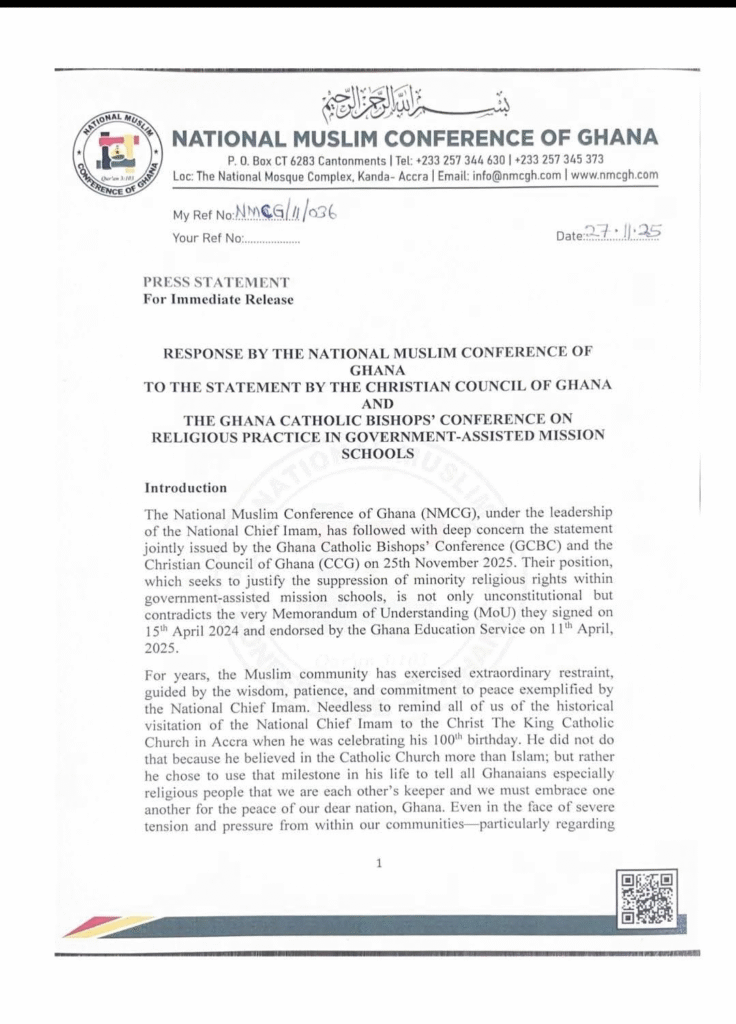
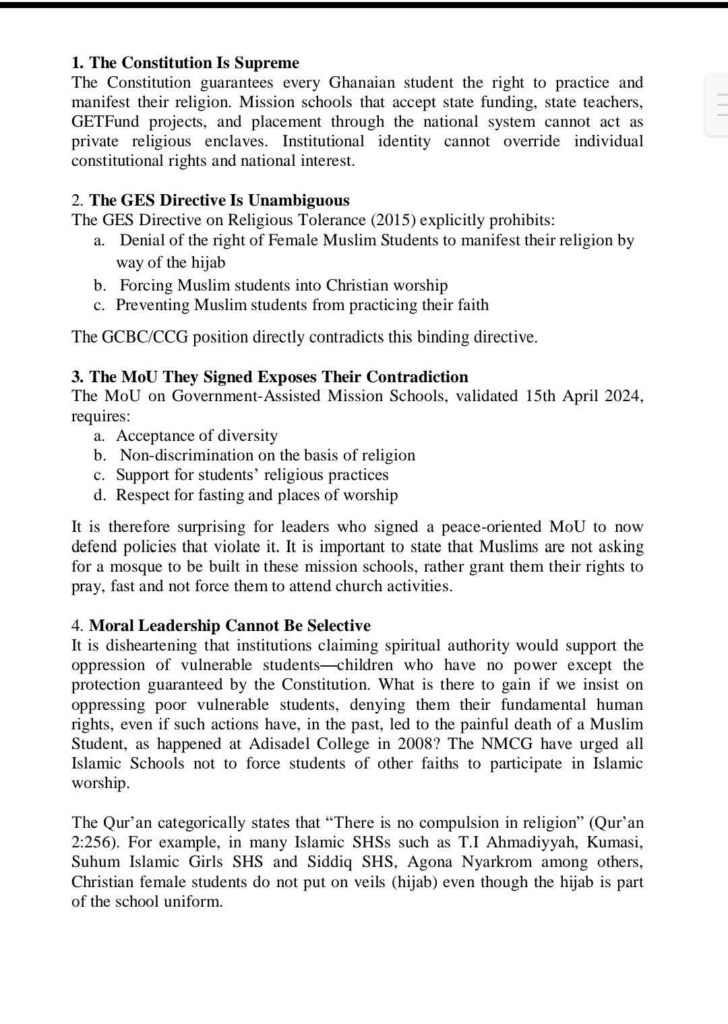
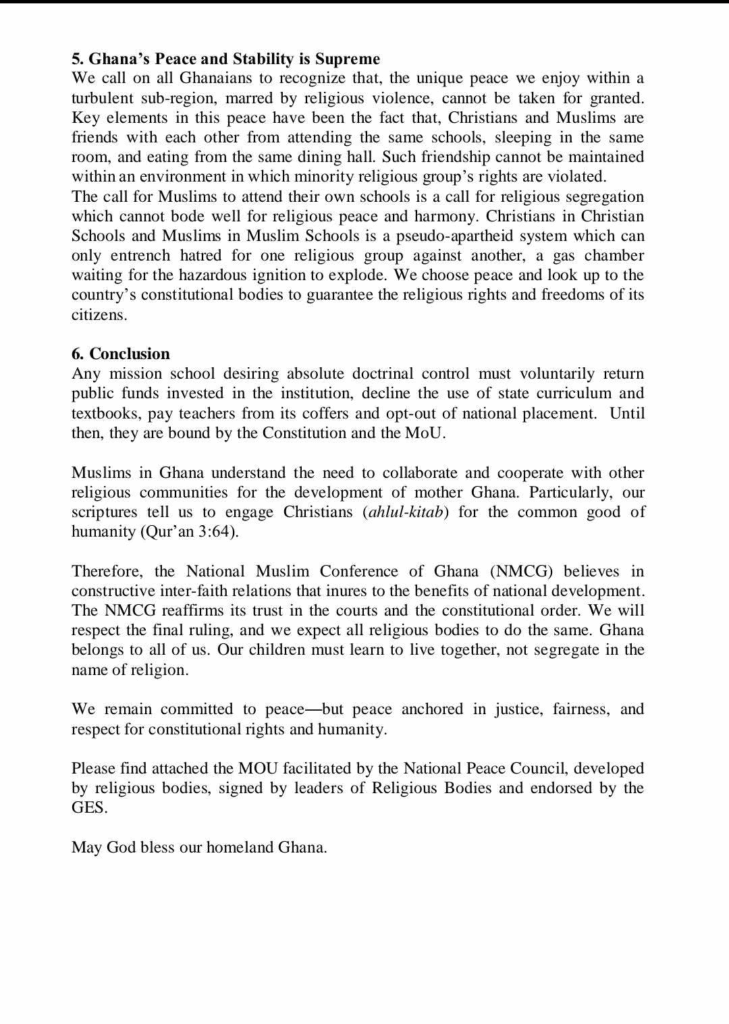
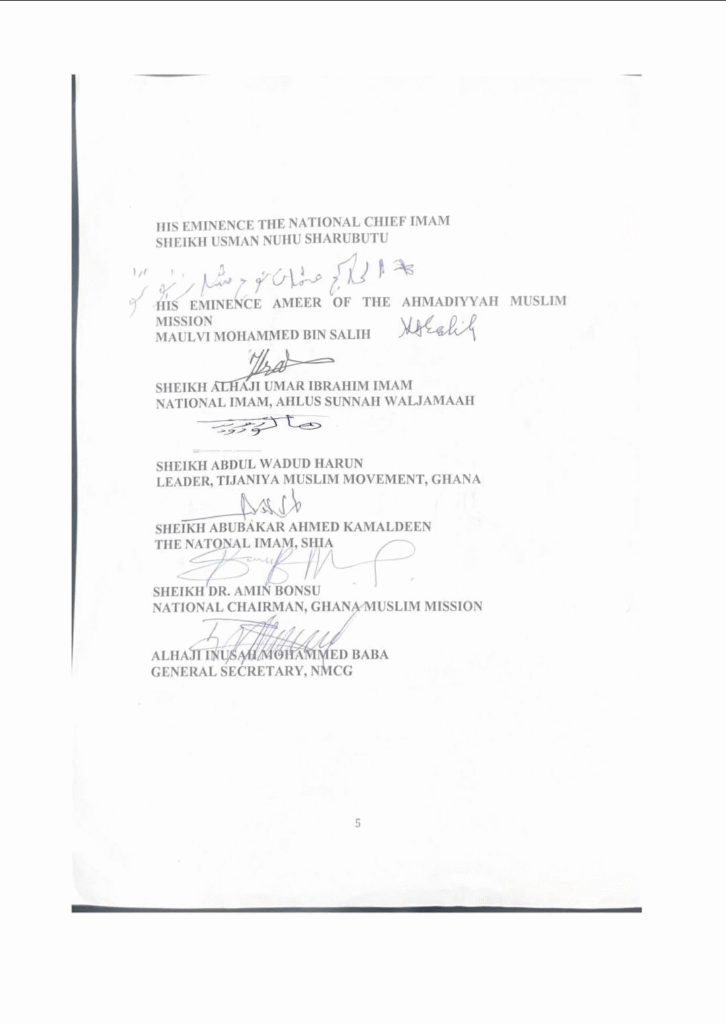
The National Muslim Conference of Ghana (NMCG) has explained that Muslim students in government-assisted mission schools are not demanding the construction of mosques on campus.
According to him, they simply want the freedom to pray, fast, and avoid being forced to participate in church services.
Essentially, the NMCG noted that the Christian bodies had already agreed to the 15 April 2024 MoU, which calls for acceptance of diversity, religious non-discrimination, support for students’ religious observance, and recognition of fasting and worship arrangements.
“It is therefore surprising for leaders who signed a peace-oriented MoU to now defend policies that violate it. It is important to state that Muslims are not asking for a mosque to be built in these mission schools, rather grant them their rights to pray, fast and not force them to attend church activities” a part of the statement read.
Weeks ago, Office of the Attorney General filed a formal response to a Supreme Court suit where Wesley Girls’ Senior High, one of the top SHSs in Ghana, was accused of discriminatory religious policies.
The suit was filed on December 24, 2024, by private legal practitioner Shafic Osman under the Supreme Court’s original jurisdiction, invoking Articles 2(1)(b) and 130(1)(a) of the 1992 Constitution.
It centres on allegations that Muslim students are barred from wearing the hijab, fasting during Ramadan, and observing other Islamic rites, and forced to partake in practices of the Methodist Church, which established the school. He argued that actions the plaintiff says violate constitutional guarantees of freedom of religion.
In his response, the Attorney General dismissed claims that the school is acting unlawfully, insisting that Wesley Girls’ SHS, founded and operated by the Methodist Church of Ghana, is permitted to enforce rules consistent with its Methodist principles, arguing that the school’s faith-based identity grants it the authority to establish standards on religious conduct within the school environment, even where such standards limit the expression of other religious practices.
Below are the exact reliefs below:
A declaration that the 1st Defendant’s policy prohibiting the belief, practice, and observance of Islam by Muslim students on its campus is contrary to and inconsistent with Articles 12, 17(1) and (2), 21(1)(b), (c), (e), and 26 of the 1992 Constitution and international human rights cognisable under Article 33(5) of the Constitution of Ghana, 1992.
A declaration that the 1st Defendant’s policy compelling and requiring the practice of a compulsory school religion in a public school is contrary to and inconsistent with Articles 21(1)(b), (c), and Article 26.
A declaration that the 1st Defendant’s policy prohibiting Muslim students from exercising their religious rights is unlawfully discriminatory and a violation of Article 17(2) of the Constitution of Ghana, 1992.
A declaration that the limitations on Muslim students in the 1st Defendant school undermine the welfare of Muslim students under international human rights of the child cognisable under Article 33(5) of the Constitution of Ghana, 1992.
A declaration that the 1st Defendant’s policy compelling the practice of Methodism by all students is an establishment of religion in violation of Article 21(1)(c) and Article 56 of the Constitution of Ghana, 1992.
A declaration that by allowing the 1st Defendant’s policy of compelling the practice of Methodism by all students, the 2nd Defendant has unlawfully allowed the imposition of a common religious programme in violation of Article 56 of the Constitution of Ghana, 1992.
An order perpetually restraining the 1st and 2nd Defendants, with immediate effect, from further administering the impugned policy in the 1st Defendant school or similar policies in any other school.
An order directing the 2nd Defendant to enact constitutionally compliant guidelines for the regulation of religious practice and observance for all public schools in Ghana.
Any other order(s) that this honourable court may deem fit.
But the Methodist Church of Ghana has also firmly denied claims of religious discrimination at Wesley Girls’ High School (WGHS), stressing that the school’s long-standing traditions are lawful, inclusive, and essential for promoting unity and discipline.
In a statement released Friday, November 28, the Church responded to reports of the Supreme Court case, Shafic Osman v. The Board of Governors, Attorney-General & Ghana Education Service. While it has not yet received formal notification, the Church said it is actively seeking official records to allow its legal team to respond appropriately.
The Church insisted that suggestions portraying WGHS as a “public school” engaging in discriminatory practices are baseless. Since its founding in 1836 by Harriet Wrigley, the school has been dedicated to nurturing the “Head, Heart and Hand” of the girl-child, irrespective of race, religion, creed, or background.
Pointing to nearly 200 years of educating students from diverse faiths—including Muslims, Adventists, Catholics, Jehovah’s Witnesses, Eckists, Buddhists, Hindus, atheists, and agnostics—the Church highlighted that many alumni have made significant contributions to society. It added that this record reflects Methodist teachings, where discrimination has no place in Christian values.
The Church also clarified that government support offered to faith-based schools in the early 1960s did not alter WGHS’s Methodist character. The school has always openly professed its Christian foundation, represented through its motto, “Live Pure, Speak True, Right Wrong, Follow the King”, and its school hymn, which affirms a commitment to Christian and moral formation.
Admitted students are expected only to respect the school’s traditions and follow a framework that promotes uniformity, discipline, order, and shared experiences. The Church explained that with enrolment rising and diversity increasing, maintaining a unified structure is essential for all students to live, study, worship, and participate cohesively.
Recognising students’ constitutional right to practise their faith, the Church stressed that creating separate routines for meals, sleep, worship, or study would encourage segregation and weaken the school’s collective culture.
The Church cited the Memorandum of Understanding signed on April 15, 2024, by the Conference of Managers of Education Units (COMEU) and facilitated by the National Peace Council. Endorsed by major Christian bodies and Muslim leadership, including the Office of the National Chief Imam and the Ahmadiyya Mission, the MoU provides a framework for harmony in mission schools, which WGHS continues to uphold.
The Methodist Church also expressed appreciation for public support from the Ghana Catholic Bishops’ Conference, the Christian Council of Ghana, the Anglican Church, and other ecumenical groups that have issued statements in solidarity.
Odo Broni (Priscilla Ofori Atta) and Akosua Serwaa Fosuh have both been declared by the Kumasi High Court to be the spouses of the late Daddy Lumba.
This means they can both perform the widowhood rites.
The landmark ruling, ends months of fierce legal and public debate over who should perform the musician’s widowhood rites, who controls his estate, and who rightfully bears the title of “widow”.
The court held that Akosua Serwaa failed to submit the original marriage certificates for the alleged civil marriage between Daddy Lumba and the plaintiff. What she presented were only extracts, not certified copies.
With this decision, the path is now clear for the late music icon’s funeral to proceed.
Background to the Case
After the death of Daddy Lumba on 26 July 2025, a bitter dispute erupted between two women who claim to be his rightful spouse. Graphic Online
Akosua Serwaa Fosuh filed a suit on 3 October 2025, asking the court to declare her as the only surviving lawful spouse, a claim based on a civil marriage she said she contracted with the musician in Bornheim, Germany, in 2004.
She also sought to restrain the head of the musician’s extended family, Kofi Owusu Fosu, and Odo Broni from claiming any right to funeral and widowhood rites.
The defendants opposed the claim, arguing that under customary practice, Serwaa’s marriage had been dissolved when she allegedly “returned the head drinks” to the family, a traditional act recognising separation, and that Odo Broni, who lived with Daddy Lumba for over 15 years and bore him six children, was the rightful widow.
What Happened in Court
On 25 November 2025, the court was presented with the supposed original civil-marriage documents from Germany, including notary-certified translations and associated paperwork, supporting Akosua
The defence challenged these documents, citing inconsistencies in font styles and notary signatures, arguing the evidence was submitted “at the eleventh hour.”
The presiding judge, Dorinda Smith Arthur, noted that under Ghanaian family law, simultaneous customary and civil marriages are redundant, as each is independently valid. This observation, made during the hearing, effectively opened the door to recognising multiple marital claims simultaneously.
With cross-examinations completed, the court reserved judgment. On the verdict day, it ruled that both women are to be recognised as spouses of Daddy Lumba, entitling them to certain marital rights and recognising their status in relation to funeral, estate and widowhood rites.
Prophet Kumchacha has warned that three members of the late Daddy Lumba’s family may loose their lives if the family fails to bury the late musician peacefully.
This comes at a time where the two partners of the musician are in court seeking redress on who should be recognized as the legal wife.
Kumchacha explained that his dreams indicated that anyone who blocks Lumba’s funeral or disrupts harmony among his family members would face harsh consequences, as Lumba’s spirit would return for three people after the burial.
“I also saw that Daddy Lumba said anyone who refuses to allow his burial to be held peacefully, and for peace to reign in the family, he will come and take three persons with him to the graveyard,” he stated.
He added that the late musician is seen in handcuffs and weeping in the realms of the spirit.
Thus, he foresees tragedy unfolding from the spiritual realm, which would manifest in the physical world should the burial go ahead on December 13, 2025.
“I have had several dreams and as I speak, Daddy Lumba’s spirit is sad. In the spiritual realm, he is in handcuffs and weeping. If they try to bury him on December 13, something tragic will happen spiritually and it will be felt in the physical world as well. They should move the funeral to around the sixth month of next year,” Kumchacha UTV’s United Showbiz on November 22, 2025.
The burial date for Daddy Lumba has been changed from 6th December to December 13, 2025.
According to report, the date extension will provide the family with ample time to know the cause of the musician’s death before his burial.
The late Daddy Lumba’s elder sister, Ernestina Fosu has declared that there will be no burial for Daddy Lumba until the actual cause of his death is known.
After a court appearance, Ernestina told Adum TV that until the truth is known, no amount of court ruling or family decision would compel her to allow the funeral to proceed.
“The funeral will not be held on December 6. We did not seek an injunction because we are mad. We still don’t know what killed my brother. We cannot allow people to rush with his funeral,” she said.
However, she has expressed readiness to organize the funeral on the scheduled December 6 if she receives a clear explanation about what caused Daddy Lumba’s death before then.
“There will be no problem if we find out about the cause of Daddy Lumba’s death before December 6. But if we don’t find out what killed my brother, I won’t allow my family to bury my brother, Charles,” she said.
Ernestina Fosu has earlier indicated that she is not prepared to organize Daddy Lumba’s funeral on Dec 6.
She made this known to the media in the aftermath of a court proceeding at the Kumasi High Court on October 28, 2025.
“I am not ready for my brother’s funeral on December 6, 2025,” she stated firmly in a video shared on social media.
Akosua Serwaa filed an injunction against the late musician’s funeral scheduled for December 6, demanding that she be recognized as the only surviving wife of the musician and not Odo Broni, who is currently claiming that title.
While the court has yet to rule on the spousal status of Akosua Serwaa and Odo Broni, the Kumasi High Court has dismissed an injunction application that sought to halt the burial and funeral of the late legend.
The judgment allows the family to go ahead with burial plans as originally arranged.
Madam Serwaa’s lawyer, William Kusi, insisted that his client was the musician’s only legally recognized wife and that her rights were being ignored in the funeral preparations. He supported his argument with a civil marriage certificate reportedly issued in Germany as evidence of their union.
In July this year, a statement by the counsel for the Fosu family confirmed that the music veteran passed on July 26, after a short illness.
He succumbed to the illness at the Bank Hospital in Accra, per reports.
The statement read: “With profound sorrow and deep grief, the Fosu family announces the passing of Ghana’s beloved musical icon, Charles Kojo Fosu, popularly known as Daddy Lumba, who passed away earlier today, Saturday, July 26, 2025, after a short illness.”
“Daddy Lumba was more than a musician; he was a cultural icon whose music touched countless lives. His soulful voice provided the soundtrack to our love stories, and his poignant lyrics captured the poetry of our struggles, dreams, and resilience.”
Daddy Lumba was renowned for his incredible talent as a singer, composer, songwriter, recording artist, and producer.
With an illustrious career that has spanned over three decades, Daddy Lumba was widely regarded as the greatest and most influential musician in Ghanaian history.
Many artists in Ghana, including Ofori Amponsah, Sarkodie, Kuami Eugene, Paa Solo of Sibo Brothers, Oheneba Kissi, KiDi, and others, consider him their major inspiration in the music industry.
Daddy Lumba was born 60 years ago to Mr. Johnson Kwadwo Fosuh and Madam Comfort Gyamfi, also known as Ama Saah, in Nsuta, near Mampong in the Ashanti Region of Ghana. Both of his parents were teachers, and he was the second of three siblings.
His educational journey began in Nsuta Kyebi, and he completed junior high school at Suame Methodist, Kumasi in 1979. Subsequently, he attended Adu Gyamfi Senior High School in Jamasi, but later transferred to Juaben Senior High School, where he completed his secondary education in 1984.
Daddy Lumba’s music career took off in the early 80s when he formed the Nkwanta Wesley Singers, gaining fame at the Anokye Krom Cultural Center.
During his time at Juaben Senior High School, he led the school choir and composed the song “Lumba Lumba,” dedicated to the freedom fighters in South Africa.
This song’s popularity earned him the nickname “Daddy Lumba”, which later became his stage name. He also formed the Lumba Brothers band during his school days, which included his girlfriend at the time, Theresa.
After completing school, Daddy Lumba, with the help of his high school sweetheart Theresa Abebrese, traveled to Germany. There, he met Ernest Nana Acheampong, and they formed another Lumba Brothers group, recording their debut album, “Yee Ye Aka Akwantuom,” in 1986. Financial constraints delayed the album’s release until 1989, and eventually, the duo split.
Daddy Lumba then launched his solo career and released his debut solo album, “Obi Ate Meso Buo,” in 1990. The album received immense popularity and critical acclaim, featuring classics like the title track and “Theresa,” dedicated to his ex-lover. He has since released 33 albums, including notable ones like “Sika Asem,” “Aben Wo Ha,” “Wo Ho Kyere,” “Awosoo,” “Give Peace A Chance,” and “Ahenfo Kyiniye.” His latest project, “Ofon Na Edi Asem Fo,” was released in December 2022, reuniting him with longtime collaborator Kweku Mensah.
In addition to his own success, Daddy Lumba is renowned for nurturing the careers of budding artists who went on to become legends in their own right.
Some of these artists include Felix Owusu, for whom he produced the debut album “Vida” in 1992, Afia Ampofowaa, Kwabena Sunkwa, Ofori Amponsah with the “Woho Kyere” album in 1999, Selina Orleans, Akua Serwaa Bonsu, Borax, Ateaa Tina, and many others.
His contributions to Ghanaian music and the support he provides to upcoming talents have solidified his status as an iconic figure in the country’s music industry.
With his passion, talent, and dedication to the craft, Daddy Lumba continues to be a role model for aspiring musicians, leaving an indelible mark on the rich musical landscape of Ghana.
Award-winning Ghanaian musician Kwame Nsiah-Apau, popularly known as Okyeame Kwame and Bice Osei Kuffour, popularly known as Obour, were spotted at the funeral of late Konadu Agyeman-Rawlings
Okyeame Kwame arrived at the funeral clad in a black cloth, and was seen making a phone call as he made his way through the gathering.
Obour on the other hand, was also present, attempting to engage people around him.
Alao spotted was Gospel musician Grace Ashley, who shared a tribute highlighting that the late Konadu Agyeman-Rawlings played a pioneering role in the women’s empowerment movement.
She added that the stateswoman was someone she deeply admired and drew immense inspiration from in navigating life as a woman..
“Growing up, we were made to feel weak as women because society always recognized men as the strongest. But when I saw how our mother, Konadu Agyeman-Rawlings, lived her life, everything changed. I remember a Benjien Conference where she encouraged women to be bold and assertive, challenging the way we had been relaxed about life and reliant on men.”
“Over time, we began to see women stepping up and rising to the occasion. So, when it comes to women’s empowerment—the idea that women should boldly pursue their goals—it was our mother who first sparked that movement,” she gladly told The Independent Ghana at the Independence Square where the funeral was held.
The funeral at Independence Square has become a moment of national reflection, bringing together mourners from all walks of life to honour the legacy of the former First Lady.
Nana Konadu Agyemang-Rawlings, a notable political figure and champion of women’s rights, passed away on October 23, 2025—an event that has deeply resonated across the country and beyond.
Her death has inspired tributes from political leaders, civil society organisations, and everyday Ghanaians who valued her decades of service to the nation’s political and social development.
As the rites progress, more dignitaries and sympathisers are expected to join the gathering to pay their last respects and participate in the national farewell for the late Nana Konadu Agyemang-Rawlings.
, Nana Konadu Agyemang Rawlings served as the First Lady of Ghana from June 4, 1979, to September 24, 1979, during the presidency of Jerry John Rawlings.
She held the same position again from December 31, 1981, to January 7, 2001. She earned a Bachelor’s degree in Graphic Design at the University of Science and Technology (now KNUST), after specialising in Textiles. She furthered her education at the London College of Arts, where she obtained a Diploma in Interior Design.
Nana Konadu Agyemang Rawlings did not stop there; she went on to pursue a Diploma in Advanced Personnel Management from Ghana’s Management Development and Productivity Institute in 1979. At GIMPA, she received a Certificate in Development.
She later attended Johns Hopkins University in Maryland, USA, where she pursued a Senior Fellow Diploma in Policy Studies. Before her involvement in politics and social activism, she worked with the Ghana Tourist Board and the Union Trading Company (UTC) in Accra, as well as with several other organisations.
As a formidable advocate for women’s rights and social justice, she founded the 31st December Women’s Movement in 1982. The influential non-governmental movement aimed at promoting women’s education, economic empowerment, and legal reforms.
Through Nana Konadu Agyemang Rawlings’ efforts, the Intestate Succession Law (PNDCL 111) was enacted to protect the inheritance rights of widows and children.
In Ghanaian politics, she is recognised as the founder of the National Democratic Party (NDP), through which she ran for president in 2016. She was succeeded by Mohammed Frimpong, who led the party after she stepped down in 2024.
She parted ways with the National Democratic Congress (NDC) in 2012, following her defeat to the late President John Atta Mills in the party’s 2011 flagbearer race. She was elected as the NDC’s First Vice Chairperson in 2009.
In 2018, she launched her book titled It Takes a Woman, which captures her journey in politics and advocacy. Scores of Ghanaians have poured in with their tributes following her passing.
Recently, she was seen at the Forecourt of the Jubilee House to honour the eight public servants who passed away following the helicopter crash that occurred on August 6 at Adansi in the Ashanti Region. She was also spotted during the Dote Yie funeral rites for the late Asantehemaa, Nana Konadu Yiadom III.
Nana Konadu Agyemang Rawlings got married to the late Jerry John Rawlings in 1977 after they both met at Achimota School. The couple had four children — three daughters and one son. Their children include Zanetor Agyeman-Rawlings, a medical doctor and Member of Parliament for the Klottey Korle Constituency; Kimathi Rawlings; Yaa Asantewaa Rawlings; and Amina Rawlings. Unfortunately, Jerry John Rawlings passed away in November 2020 at the age of 73.
He was confirmed dead after a short illness at the Korle Bu Teaching Hospital.
Gospel musician Grace Ashley’s tribute highlighted that the late Konadu Agyeman-Rawlings played a pioneering role in the women’s empowerment movement.
She added that the stateswoman was someone she deeply admired and drew immense inspiration from in navigating life as a woman..
“Growing up, we were made to feel weak as women because society always recognized men as the strongest. But when I saw how our mother, Konadu Agyeman-Rawlings, lived her life, everything changed. I remember a Benjien Conference where she encouraged women to be bold and assertive, challenging the way we had been relaxed about life and reliant on men.”
“Over time, we began to see women stepping up and rising to the occasion. So, when it comes to women’s empowerment—the idea that women should boldly pursue their goals—it was our mother who first sparked that movement,” she gladly told The Independent Ghana at the Independence Square where the funeral was held.
A tribute delivered by the children of former First Lady Nana Konadu Agyeman-Rawlings has proven that no matter how far she rose, the late stateswoman remained an actively present mother.
They fondly recalled her humour, animated storytelling, “occasional blastings,” and her passion for music and dance. According to them, her joy was rooted in the simple pleasures of family and togetherness.
“For us, your four children, we will set our feet into the footsteps of your gallant place and with divine grace, emulate your dignified dance through life. We love and miss you, Mom; we love and miss you, Dad. So much,” they said at the tail end of the tribute.
They described her as a tireless patriot, a woman who lived her values with unshakable conviction.
Her children said she embodied a life of purpose and steadfast devotion to the nation.
According to them, “yours was the consummate life of a tireless patriot, a woman who loved her country and celebrated it every opportunity she got.”
They remembered a mother who faced every challenge head-on, believing that no problem was too small or beneath her attention.
As President of the 31st December Women’s Movement, they said she “ignited a force that transformed the landscape of women’s rights and education that still resonates today.”
Ghana has lost one of its most remarkable political figures, Nana Konadu Agyeman-Rawlings, whose passing today (Thursday, October 23) brings to an end a defining era in the nation’s political and social landscape.
Known widely as the Iron Lady of Ghanaian politics, she rose to prominence in the 1980s and 1990s through her bold activism and fearless advocacy. Beyond being a former First Lady, she made history as the first woman to contest for the presidency in Ghana—an achievement that solidified her reputation as a pioneer.
Her life reflected unwavering dedication to women’s empowerment and a determination to challenge established norms, leaving behind a lasting legacy as one of the most influential female leaders in Ghana’s post-independence history.
The Longest Serving First Lady
Nana Konadu Agyeman, born on November 17, 1948, in Cape Coast, Central Region, began her education at Achimota School, where she would later meet her husband, Flt. Lt. Jerry John Rawlings.
She pursued Art and Textiles at the Kwame Nkrumah University of Science and Technology (KNUST) and furthered her studies abroad, earning a diploma in Interior Design from the London College of Arts in 1975. Her quest for knowledge continued with a diploma in Advanced Personnel Management and a certificate in Development from GIMPA, underscoring her intellectual curiosity and commitment to personal growth.
Her marriage to Rawlings in 1977 marked the beginning of her deep involvement in Ghana’s political evolution. As First Lady, she served during two significant phases of Ghana’s governance—first in 1979 under the Armed Forces Revolutionary Council (AFRC) and later from 1981 to 2001 under the PNDC and the Fourth Republic.
Her 20-year tenure as First Lady, the longest in Ghana’s history, provided her with a unique platform to drive social transformation and advocate for national progress.
The Engine of Women’s Empowerment: 31st DWM
Nana Konadu Agyeman-Rawlings is widely recognised as the founder and president of the 31st December Women’s Movement (31st DWM), which she established in 1982.
Far from being a symbolic organisation, the movement became a dynamic grassroots force dedicated to mobilising and empowering women across Ghana, particularly in rural areas, inspired by her conviction that women held the key to breaking the cycle of poverty.
Its achievements were visible and far-reaching, transforming women’s roles from passive beneficiaries of aid to active participants in the country’s political and economic development.
Grassroots Mobilisation: It mobilised an estimated two million women across the country, encouraging their participation in community and national decision-making. The Movement established over 870 pre-schools across the regions to free women to engage in economic activities.
Economic Projects: The 31st DWM supported numerous income-generating activities and small-scale, village-level economic projects, encouraging women to save money for community development.
Education and Health: It ran extensive functional adult literacy programmes to tackle high illiteracy rates among rural women and implemented public health programmes focusing on nutrition and immunisation.
Legal and Political Reform: She was instrumental in advocating for legal changes, including the crucial role she played in the adoption of the Intestate Succession Law (PNDCL 111), which drastically improved the inheritance rights of widows and children—a vital shift away from traditional barriers where women often had no rights of inheritance upon the death of their husbands. Furthermore, through her efforts, Ghana became the first nation in the world to approve the United Nations Convention on the Rights of the Child (UNCRC) in 1991.
Agyeman-Rawlings often framed the movement as an essential political tool: “Before December 31, 1981, they had no power of influence in law or politics… I can see from the self-esteem and near arrogance of the women that now we’ve actually been able to break through this thick wall,” she once noted, highlighting the movement’s mission to empower.
A tribute delivered by the children of former First Lady Nana Konadu Agyeman-Rawlings has proven that no matter how far she rose, the late stateswoman remained an actively present mother.
They fondly recalled her humour, animated storytelling, “occasional blastings,” and her passion for music and dance. According to them, her joy was rooted in the simple pleasures of family and togetherness.
“For us, your four children, we will set our feet into the footsteps of your gallant place and with divine grace, emulate your dignified dance through life. We love and miss you, Mom; we love and miss you, Dad. So much,” they said at the tail end of the tribute.
They described her as a tireless patriot, a woman who lived her values with unshakable conviction.
Her children said she embodied a life of purpose and steadfast devotion to the nation.
According to them, “yours was the consummate life of a tireless patriot, a woman who loved her country and celebrated it every opportunity she got.”
They remembered a mother who faced every challenge head-on, believing that no problem was too small or beneath her attention.
As President of the 31st December Women’s Movement, they said she “ignited a force that transformed the landscape of women’s rights and education that still resonates today.”
Ghana has lost one of its most remarkable political figures, Nana Konadu Agyeman-Rawlings, whose passing today (Thursday, October 23) brings to an end a defining era in the nation’s political and social landscape.
Known widely as the Iron Lady of Ghanaian politics, she rose to prominence in the 1980s and 1990s through her bold activism and fearless advocacy. Beyond being a former First Lady, she made history as the first woman to contest for the presidency in Ghana—an achievement that solidified her reputation as a pioneer.
Her life reflected unwavering dedication to women’s empowerment and a determination to challenge established norms, leaving behind a lasting legacy as one of the most influential female leaders in Ghana’s post-independence history.
The Longest Serving First Lady
Nana Konadu Agyeman, born on November 17, 1948, in Cape Coast, Central Region, began her education at Achimota School, where she would later meet her husband, Flt. Lt. Jerry John Rawlings.
She pursued Art and Textiles at the Kwame Nkrumah University of Science and Technology (KNUST) and furthered her studies abroad, earning a diploma in Interior Design from the London College of Arts in 1975. Her quest for knowledge continued with a diploma in Advanced Personnel Management and a certificate in Development from GIMPA, underscoring her intellectual curiosity and commitment to personal growth.
Her marriage to Rawlings in 1977 marked the beginning of her deep involvement in Ghana’s political evolution. As First Lady, she served during two significant phases of Ghana’s governance—first in 1979 under the Armed Forces Revolutionary Council (AFRC) and later from 1981 to 2001 under the PNDC and the Fourth Republic.
Her 20-year tenure as First Lady, the longest in Ghana’s history, provided her with a unique platform to drive social transformation and advocate for national progress.
The Engine of Women’s Empowerment: 31st DWM
Nana Konadu Agyeman-Rawlings is widely recognised as the founder and president of the 31st December Women’s Movement (31st DWM), which she established in 1982.
Far from being a symbolic organisation, the movement became a dynamic grassroots force dedicated to mobilising and empowering women across Ghana, particularly in rural areas, inspired by her conviction that women held the key to breaking the cycle of poverty.
Its achievements were visible and far-reaching, transforming women’s roles from passive beneficiaries of aid to active participants in the country’s political and economic development.
Grassroots Mobilisation: It mobilised an estimated two million women across the country, encouraging their participation in community and national decision-making. The Movement established over 870 pre-schools across the regions to free women to engage in economic activities.
Economic Projects: The 31st DWM supported numerous income-generating activities and small-scale, village-level economic projects, encouraging women to save money for community development.
Education and Health: It ran extensive functional adult literacy programmes to tackle high illiteracy rates among rural women and implemented public health programmes focusing on nutrition and immunisation.
Legal and Political Reform: She was instrumental in advocating for legal changes, including the crucial role she played in the adoption of the Intestate Succession Law (PNDCL 111), which drastically improved the inheritance rights of widows and children—a vital shift away from traditional barriers where women often had no rights of inheritance upon the death of their husbands. Furthermore, through her efforts, Ghana became the first nation in the world to approve the United Nations Convention on the Rights of the Child (UNCRC) in 1991.
Agyeman-Rawlings often framed the movement as an essential political tool: “Before December 31, 1981, they had no power of influence in law or politics… I can see from the self-esteem and near arrogance of the women that now we’ve actually been able to break through this thick wall,” she once noted, highlighting the movement’s mission to empower.
Minister of Youth Development and Empowerment, George Opare Addo and Minister of Health, Kwabena Mintah Akando, have arrived at the Independence Square for the final funeral rites of the late former First Lady, Nana Konadu Agyeman-Rawlings.
Clad in solemn black, they moved briskly to their seats as the ceremony drew an increasing number of high-profile guests, state officials, and members of the public.
The funeral at Independence Square has become a moment of national reflection, bringing together mourners from all walks of life to honour the legacy of the former First Lady.
Nana Konadu Agyemang-Rawlings, a notable political figure and champion of women’s rights, passed away on October 23, 2025—an event that has deeply resonated across the country and beyond.
Her death has inspired tributes from political leaders, civil society organisations, and everyday Ghanaians who valued her decades of service to the nation’s political and social development.
As the rites progress, more dignitaries and sympathisers are expected to join the gathering to pay their last respects and participate in the national farewell for the late Nana Konadu Agyemang-Rawlings.
, Nana Konadu Agyemang Rawlings served as the First Lady of Ghana from June 4, 1979, to September 24, 1979, during the presidency of Jerry John Rawlings.
She held the same position again from December 31, 1981, to January 7, 2001. She earned a Bachelor’s degree in Graphic Design at the University of Science and Technology (now KNUST), after specialising in Textiles. She furthered her education at the London College of Arts, where she obtained a Diploma in Interior Design.
Nana Konadu Agyemang Rawlings did not stop there; she went on to pursue a Diploma in Advanced Personnel Management from Ghana’s Management Development and Productivity Institute in 1979. At GIMPA, she received a Certificate in Development.
She later attended Johns Hopkins University in Maryland, USA, where she pursued a Senior Fellow Diploma in Policy Studies. Before her involvement in politics and social activism, she worked with the Ghana Tourist Board and the Union Trading Company (UTC) in Accra, as well as with several other organisations.
As a formidable advocate for women’s rights and social justice, she founded the 31st December Women’s Movement in 1982. The influential non-governmental movement aimed at promoting women’s education, economic empowerment, and legal reforms.
Through Nana Konadu Agyemang Rawlings’ efforts, the Intestate Succession Law (PNDCL 111) was enacted to protect the inheritance rights of widows and children.
In Ghanaian politics, she is recognised as the founder of the National Democratic Party (NDP), through which she ran for president in 2016. She was succeeded by Mohammed Frimpong, who led the party after she stepped down in 2024.
She parted ways with the National Democratic Congress (NDC) in 2012, following her defeat to the late President John Atta Mills in the party’s 2011 flagbearer race. She was elected as the NDC’s First Vice Chairperson in 2009.
In 2018, she launched her book titled It Takes a Woman, which captures her journey in politics and advocacy. Scores of Ghanaians have poured in with their tributes following her passing.
Recently, she was seen at the Forecourt of the Jubilee House to honour the eight public servants who passed away following the helicopter crash that occurred on August 6 at Adansi in the Ashanti Region. She was also spotted during the Dote Yie funeral rites for the late Asantehemaa, Nana Konadu Yiadom III.
Nana Konadu Agyemang Rawlings got married to the late Jerry John Rawlings in 1977 after they both met at Achimota School. The couple had four children — three daughters and one son. Their children include Zanetor Agyeman-Rawlings, a medical doctor and Member of Parliament for the Klottey Korle Constituency; Kimathi Rawlings; Yaa Asantewaa Rawlings; and Amina Rawlings. Unfortunately, Jerry John Rawlings passed away in November 2020 at the age of 73.
He was confirmed dead after a short illness at the Korle Bu Teaching Hospital.
Reports from Guinea-Bissau indicate a sudden and dramatic escalation of political tension as a group of military officers claim to have taken control of the country. This development comes amid unconfirmed reports that President Umaro Sissoco Embaló has been arrested following gunfire in the capital, Bissau.
According to government sources who spoke to the BBC, Embaló was allegedly detained shortly after gunshots were heard in central Bissau on Friday afternoon. Witnesses reported a burst of gunfire around 13:00 GMT, prompting widespread panic as residents scrambled for safety. Although the exact source of the shooting remains unclear, the reports immediately fueled speculation of a coup attempt in the small West African nation.
The alleged military takeover comes only three days after a controversial presidential election that was already mired in tension. The poll was overshadowed by the disqualification of the main opposition candidate, a move that drew criticism from civil society groups and international observers. The official results had not yet been released, but both Embaló and his closest challenger, Fernando Dias, had publicly claimed victory, raising fears of a constitutional crisis even before Friday’s events.
Rising Tension After Disputed Election
Political analysts say the nation’s fragile political climate made it particularly vulnerable to unrest. The disqualification of the major opposition candidate raised questions about transparency in the electoral process. Many voters expressed frustration that their preferred candidate had been blocked from contesting, heightening uncertainty about the credibility of the poll.
Both major campaigns had spent the days following the vote preparing for what seemed to be inevitable disputes. The electoral commission had announced that it expected to publish the results on Thursday, but the delay created further anxiety, giving room for speculation, misinformation, and rising political tempers.
Fernando Dias, who represents a coalition of smaller opposition parties, told local reporters earlier in the week that he had “confidence that the people’s voice would prevail,” even as he accused the ruling party of attempting to manipulate the process. Embaló, on the other hand, insisted he had secured a “clear and decisive victory.”
The absence of official results, combined with these conflicting claims, created fertile ground for unrest.
Gunfire Sparks Panic in the Capital
Friday’s gunfire only intensified fears. AFP reported that hundreds of residents fled on foot and in vehicles as shots rang out in the capital’s central districts. Local businesses quickly closed, and some residents sheltered inside schools, shops, and places of worship until the shooting subsided.
Videos shared on social media — which have not yet been independently verified — showed people running through market areas, shouting warnings about an attempted coup. Security forces were also seen moving through parts of the city, though their allegiance and objectives remain unclear.
A resident of Bissau told a local radio station that the situation “felt like déjà vu,” referencing the country’s long history of political instability. “We just want peace. We are tired of coups, tired of guns, tired of uncertainty,” she said.
A Nation with a Troubled Political History
Guinea-Bissau, with a population of just under two million people, is one of the poorest countries in the world. Since gaining independence from Portugal in 1974, the nation has struggled to maintain long-term political stability. Its modern history has been marked by turbulence, including nine coups or attempted coups since 1980.
Many of these coups have been linked to political rivalries within the military, economic struggles, and allegations of corruption among national leaders. International partners have repeatedly urged reforms within Guinea-Bissau’s security sector, noting that political interference within the military remains a persistent problem.
President Embaló, who came to power in 2020, has himself survived two previous attempts to overthrow him, the most recent occurring in December 2023. That attempt, according to the government, was carried out by a group of soldiers who stormed key state institutions before being subdued by loyalist forces. Embaló has often described these repeated attacks as evidence of a “deep-rooted instability” within the country’s political structure.
International Response Begins to Build
As news of the latest alleged takeover spread, international organisations began monitoring the situation closely. The Economic Community of West African States (ECOWAS), which has been involved in peacekeeping and election observation in Guinea-Bissau in the past, is expected to issue a statement once more information becomes available.
ECOWAS has often taken a strong stance against military seizures of power in the region and has imposed sanctions in similar situations, including in Mali, Burkina Faso, and Niger. Diplomats familiar with the region say any response will depend heavily on whether Embaló’s reported arrest can be confirmed and whether the military officers claiming control present a unified front.
The African Union (AU) has also historically condemned unconstitutional changes of government and may call for a swift restoration of civilian rule if a coup is verified.
Unanswered Questions and a Nation on Edge
As of Friday evening, many key details remained unconfirmed. The identity of the military officers claiming power has not been publicly disclosed, and no official statement has been issued by the presidency or the army’s top command.
The condition and location of President Embaló are also unknown. Government sources who spoke to the BBC provided no further details beyond stating that he had been detained. Officials close to the administration have remained silent, likely due to uncertainty about who currently holds power.
The streets of Bissau, usually bustling on Friday afternoons, were reported to be largely deserted as residents stayed indoors awaiting updates. Some community leaders urged calm, while religious groups called for prayers and restraint to avoid further violence.
A Crisis with Regional Implications
Guinea-Bissau’s instability has long been a concern for West Africa, a region where several governments have collapsed in recent years due to military coups. Analysts warn that recurring instability in the region could undermine economic development, weaken democratic institutions, and disrupt regional trade.
If the situation in Guinea-Bissau develops into a full military takeover, it may prompt stronger diplomatic interventions from ECOWAS, the AU, and possibly the United Nations.
For now, the country remains in uncertainty, waiting for clarity on who holds power, what triggered the shooting, and whether the situation will escalate or stabilise in the coming days.
The Ghana Gold Board has made big strides in its work during the third quarter of 2025, especially in collecting and exporting gold, building reserves, and keeping miners in line with the rules.
It’s latest report shows that small-scale miners handed over 26,153.98 kilograms of gold, valued at roughly US$2.76 billion.
According to the Chief Executive Officer of the Board, Sammy Gyamfi, “The Ghana Gold Board continued to demonstrate strong institutional performance and sectoral leadership during the third quarter of its operational year (July–September 2025). The period was marked by steady progress in regulatory enforcement, gold aggregation and export, licensing and compliance, and inter-agency collaboration aimed at formalizing Ghana’s gold value chain.” .
“The GoldBod’s operational and financial performance reflects its growing institutional maturity and alignment with the objectives of the Ghana Gold Board Act, 2025 (Act 1140), which mandates it to regulate, promote, and ensure transparency in the purchase, assay, and export of gold and other precious minerals,” Sammy Gyamfi stated.
This growth, according to the institution, is a demonstration that more small-scale miners are working officially and under better supervision.
GoldBod also bought 119.78 kilograms of gold from large mining companies to add to the Bank of Ghana’s reserves, worth about US$11.82 million. This is all part of the government’s plan to strengthen Ghana’s gold reserves and support the economy.
The Ghana Gold Board (GoldBod) reported strong export numbers for both small-scale and large-scale miners. Small-scale miners exported 25,780.60 kilograms of gold, valued at about US$2.71 billion, while large-scale miners exported 24,911.21 kilograms, worth US$2.43 billion.
The board said these exports show that mining continues to play an important role in generating revenue and bringing foreign money into the country.
The report also highlighted progress under the new tiered licensing system, which aims to make operations more organised and ensure compliance.
During the period, 577 licences were processed, including 432 Tier 2 licences, 123 Tier 1 licences, and 22 self-financed aggregator licences. Two licences were suspended, and several others were revoked for non-compliance, showing GoldBod’s commitment to cleaning up the sector.
Additionally, two suspensions were recorded, while several licenses were revoked due to non-compliance, reinforcing GoldBod’s commitment to sanitizing the sector.
A month ago, the Ghana GoldBoard (GoldBod) reported a significant revenue accrued from small-scale gold export between January and October 15.
The sector earned US$8 billion in foreign exchange within ten months, according to data from the Ghana Gold Board (GoldBod) and the Precious Minerals Marketing Company (PMMC).
The data reports that small-scale miners exported 81,719.23 kilograms of gold during the period, valued at US$8.06 billion. This marks a sharp increase from US$4.61 billion recorded in 2024 and nearly quadruples the US$2.19 billion achieved in 2023.
Also, the data showed that gold export increased by 29% between 2024 and 2025, thus from 63,647 kilograms to 81,719 kilograms. When compared to 2023, GoldBod’s earnings have grown more than threefold.
The data highlighted a consistent upward trend in both gold volume and export value over the three years, reflecting improved regulation, transparency, and compliance within Ghana’s small-scale mining sector.
The data also showed a robust month-on-month growth in the second quarter of the year, with a revenue of US$1.17 billion recorded in May, US$957.9 million in June, and US$897.6 million in April.
The country’s official gold buying and distribution authority has linked its significant gains to its partnership with PMMC and strengthened oversight of small-scale gold exports and other related gold-purchasing and regulations. The GoldBod-PMMC collaboration has proved efficient since mid-April 2025, when the former began operations, absorbing the functions of the latter.
The collaboration has been instrumental in curbing illicit trade and ensuring that proceeds from gold sales are properly repatriated into the Ghanaian economy.
Meanwhile, GoldBod has been quite instrumental in dealing with leakages in Ghana’s gold trading by regulating the affairs of licensed traders.
It functions under the oversight and supervision of the Ministry of Finance of the Republic of Ghana.
GoldBod announced the suspension of the licence of a Tier 2 licensed gold buying company in Tarkwa over breach of several gold laws.
In a statement dated Wednesday, September 16, the governing body overseeing all gold trading and export activities in Ghana informed the public that the company’s license has been suspended and all its shops closed.
“The Ghana Gold Board (“GoldBod”) wishes to inform the general public that it has suspended the license and closed all trading shops of NK Benak Enterprise, a licensed gold buyer (Tier 2), with immediate effect,” the statement stated.
The suspension comes on the heels of the company’s breach of several gold trading laws, leading to the arrest of its CEO, who is currently facing prosecution.
“This action has been taken on grounds of NK Benak Enterprise’s complicity in several gold-related offences, which have led to the arrest of the sole proprietor, Bernard Nkrumah, and his prosecution before the High Court,” GoldBod added.
Consequently, Bernak has lost the right to trade with all other licensed gold trading companies. GoldBod emphasised in the statement, highlighting the commitment to ensuring the appropriate enforcement of all gold trading laws to ensure transparency.
“Notice is hereby given to all licensed traders, miners, and the general public to desist from trading and/or engaging in any form of gold transaction with NK Benak Enterprise forthwith. GoldBod remains committed to enforcing the laws and regulations that govern the gold trading sector in the spirit of accountability and transparency,” it added.
A leading optometrist in the Upper West Region, Dr. Zakaria Al-Hassan Baluri, has warned against the use of breastmilk for curing eye sicknesses.
According to a report by CitiNews, Dr. Zakaria Al-Hassan noted that many children are brought to the clinic with serious eye complications after parents resort to home remedies rooted in long-held traditional beliefs.
He explained that breast milk contains no component capable of treating any eye condition.
“But we don’t know any antibiotic in breast milk. Most of what is happening to the children is due to infection, and breast milk has no antibiotics to treat it. So definitely, what are you putting in? You are doing nothing. Rather, it will cause more havoc,” he warned.
The Optometrist made this known to the media after a tour of it new Bliss Eye Care office building at the Wa Municipality on Monday, November 24, 2025.
He advised parents to consult qualified eye specialists whenever their children show symptoms like redness, discharge, itching, or vision problems
“Early recognition and early treatment are key. The eye is delicate, and once damage is done, reversing it is often difficult,” he emphasised.
Dr. Baluri also stressed the importance of teaching communities about proper eye care, noting that many people still believe eye problems are caused by spiritual forces instead of medical issues that need professional attention.
With more preventable eye infections occurring, he urged health officials, the media, and local leaders to step up awareness efforts to keep children safe from practices that could harm their eyesight.
In 2023, President of the Ophthalmologist Society of Ghana, Dr. Dzifa-Bella Ofori-Adjei, cautioned against the use of eye drops as treatment for glaucoma.
She says eye drop is not a remedy to glaucoma. Rather, they are meant for the medical management of the disease to prevent its progression.
Speaking on the GTV Breakfast Show, she stated that some patients get discouraged from the daily administration of eye drops without being healed.
“You put the drops in the eye every single day, and that is the difficulty for people. The drops do not cure the disease. It does not bring back the lost vision. It maintains the vision you have,” she explained.
Glaucoma is a group of eye diseases that can cause vision loss and blindness by damaging a nerve in the back of your eye called the optic nerve.
Dr. Ofori-Adjei also stated that Ghana has one of the highest prevalences of glaucoma, adding that a 2015 study showed that blindness in one out of five people is caused by glaucoma.
She made these statements to mark World Glaucoma Week (March 12–18, 2023). She encouraged Ghanaians to have their eyes checked at the hospital to aid in early detection and slow the progression of glaucoma.
Her emphasis on health awareness ties into other public conversations about misinformation on the human body.
UK-based Ghanaian artiste, Stephanie Benson, has debunked the belief that breast-sucking can prevent breast cancer and related diseases. She clarified that the notion, which has circulated in the minds of some Ghanaians, allowing men to suck women’s breasts even if they don’t enjoy it, is not based on scientific evidence.
Stephanie Benson emphasized that there is no scientific data to support the claim that breast-sucking can prevent cancer, and she finds it nonsensical to entertain such a narrative. This statement came in response to a question about whether breast-sucking by men can prevent breast cancer and whether there is any scientific validation for such a belief.
During an interview with Okay FM she said,I get very angry when I hear it. I joke all the time on my page. We need to stop it, there are certain things you just don’t mess with. Whoever started that narrative needs to stop it. It’s never true [sucking boobs prevent breast cancer], how can it be? If you say sexual pleasure sucking, how?” she quizzed.
Stephanie Benson went ahead to urge the general public to disregard such a narrative because it has not been proven scientifically yet.
“If that is real why do we have radiotherapists? This is ridiculous! It prevents what? I don’t get it. It is the most irresponsible thing for anybody to say. Because some women are allowing the men to suck the breast even if they don’t enjoy it and that’s almost a rape.
“There are people who want somebody to suck it even if they don’t want to. I don’t understand, it makes no sense to me. So please that narrative should be stopped. It makes no sense scientifically at all,” Stephanie Benson said.
Roads Minister Governs Agbodza has revealed that the budget allocated for construction work on the Accra-Kumasi bypass has increased by 100% due to galamsey pits, swampy terrain discovered in the area.
The revelation comes at a time when the roads Minister was debunking report that President John Dramani Mahama has asked contractors to stop work on the bypass.
Speaking to Parliament on the matter on Tuesday, November 25, Mr Agbogza indicated, “Mr Speaker, let me put it on record. President Mahama’s government never asked any contractor working on the bypasses on the Accra–Kumasi road to stop work. Indeed, I called all the contractors and encouraged them to continue working.”
“However, what they told me was that at the time they were asked to go to site, they were not shown details of the alignment, and this was said in the presence of the Finance Minister. They said they flew a drone and showed them the drone image of the alignment. When they got to the site and started working, they saw galamsey pits and swamp areas. So as we speak, Mr Speaker, almost all the contract prices have increased by more than a hundred percent,” Mr Agbodza clarified.
Parliament on July 30 unanimously endorsed the government’s proposal to divert all royalties that will be received from oil revenues and mineral royalties to support the implementation of the Big Push Programme.
This came after the government requested Parliament approve committing funds to assist in the construction of certain road projects. Chairman of the Parliament’s Finance Committee, Mr Isaac Adongo, while presenting the report by the Budget and Finance joint committee to the plenary, said, “The Committee has carefully considered the Referral, and it is of the opinion that the request is in the right direction.”
The Committee also noted that Parliament had already approved the policy and the allocation to the “Big Push” Programme in the 2025 Budget Statement. Granting the request would enable the Government to enter into multi-year contracts to execute the road infrastructure projects under the Programme.
“The Committee accordingly recommends to the House to approve the Request for the multi-year commitments for the selected road projects under the “Big Push” Programme contained in the Mid-Year Fiscal Policy Review of the 2025 Budget Statement and Economic Policy of the Government of Ghana, in accordance with Section 33 of the Public Financial Management Act, 2016, (Act 921),” Mr Adongo said.
The initiative aimed at improving road infrastructure across the country is estimated at GHC13.8 billion, and it is expected to be completed by 2028 with support from the country’s own financial resources. According to the 2025 budget, GH¢5.75 billion is owed by the Road Fund, with an allocation of GH¢2.81 billion programmed for road maintenance.
This represents a 155.5% increase from the 2024 allocation of GH¢1.1 billion, underscoring the government’s emphasis on sustaining Ghana’s road network. The Minister for Roads and Highways, Kwame Governs Agbodza, on Wednesday, July 30, revealed that his ministry has undertaken studies and prepared comprehensive engineering interventions and cost estimates for road projects under the Big Push Programme.
The Ministry of Finance has since issued commitment authorizations for some twenty-nine (29) road infrastructure projects under the Big Push Programme which include: Upgrading of Akosombo-Gyakiti-Kudikope Road, Road Dualization of Winneba-Mankessim Road, Rehabilitation of Mankessim-Ajumako-Breman Asikuma-Agona Swedru, Construction of nchi-Elubo Road, and Rehabilitation of Atimpoku-Asikuma Junction Road.
The government has also selected a number of abandoned road projects, for which no dedicated funding was allocated by the previous administration. They include rehabilitation and upgrading of Kasoa-Winneba Road, construction of Suame Interchange and Local Roads, reconstruction of Navrongo-Chuchuliga-Sandema Road, and upgrading of Tumu-Chuchuliga-Navrongo, including construction of a 36m span reinforced concrete bridge over the Kanyibie River and a 24m span reinforced concrete bridge over the Bechelihu river.
The government will, by the end of July, settle GHC4 billion out of the large debt owed to road contractors. Currently, the government owes road contractors GHC21 billion, according to the Roads Minister. President John Mahama emphasized his government’s commitment to infrastructure development under his administration’s 24-hour economy agenda. On his part, prioritising road construction and the swift resumption of stalled road projects holds the key to promoting economic growth and productivity by ensuring adequate regional connectivity.
The announcement has been met with excitement and optimism by many stakeholders in the construction sector. The Ghana Institute of Engineers and the Association of Road Contractors have largely welcomed the president’s announcement, but they have called for transparency. They have called on the government to publish clear timelines and payment schedules to ensure that contractors can plan and mobilize resources effectively.
In March this year, Deputy Minister for Roads and Highways Alhassan Suhuyini acknowledged the significant financial burden facing the government to clear outstanding debts owed to contractors and suppliers. His remarks followed the presentation of the 2025 budget by Finance Minister Dr. Cassiel Ato Forson, who disclosed that the government’s total commitments to contractors stand at a staggering GH¢67.5 billion.
He emphasized the importance of prioritizing road maintenance, a sector that has suffered due to poor upkeep. “The minister has stressed that a significant portion of these funds will be directed toward road maintenance. This is a smart move because our poor maintenance culture has resulted in roads deteriorating within 8 to 10 years instead of lasting longer,” he explained.
Mr Suhuyini noted that, in addition to paying off some existing road maintenance debts, the government is looking at a broader infrastructure push. “With GH¢10 to GH¢13 billion allocated under the ‘Big Push’ initiative, several new road projects will commence, while some outstanding debts will also be retired,” he added.
Veteran Gospel musician, Edward Akwasi Boateng, has disclosed that his ex-wife, Genevieve, has dragged him to court demanding 50% of his properties in Kumasi after he legally completed their 5-year divorce process.
According to Edward, he took step to legally end the marriage because Genevieve had earlier returned the bride price her family received when the customary rite were being performed.
In the aftermath, Genevive dragged him to court, claiming rights to some properties they purportedly built together while married.
“She has a house of her own. She was not with me when I built my new house (a house he pointed at in a video), which was funded by well-meaning Ghanaians such as Afia Schwarzenegger, Tracey Boakye, Pastor El Bernard, among others. Even the old house was painted by funds from the names mentioned,” Edward Boateng expressed.
Genevieve, according to reports added to the lawsuit, that Mr Boateng received a loan during their marriage with her assistance and has allegedly refused to repay it, a claim refuted by the gospel musician.
It’s not true. I helped her acquire a UK passport but didn’t ask her to refund. I helped her travel abroad. My old house was even built from proceeds from my hit song “Ade Mepe,” Mr Boateng revealed.
Veteran Ghanaian gospel musician Edward Akwasi Boateng has revealed that his ex-wife, who has been estranged from him for about five years and with whom he shares four children, has served him with a court order demanding 50% of a house he acquired.
In October, the musician publicly announced plans to legally divorce his wife following the late Daddy Lumba’s and his wives saga.
In the aftermath of Daddy Lumba’s death months ago, he two wives have been locked in a dispute over who should be acknowledged as his lawfully wedded wife.
Thus, the “Makoma So Adee” singer was asked by the host to share his opinion on the ongoing entitlement brouhaha.
The gospel singer, without hesitation, stated, ” As I sat here I caught myself tapping my feet. I cant wait to visit the Kumasi Municipal Assembly (KMA).”
Host: Why are you going to KMA?
Edward Akwasi Boateng:I’ll tell you more after the show. Right now, we’re by the roadside. I’ve been deeply enlightened. Ei! With all the toil I’m going through, if I don’t put proper measures in place, someone might one day show up claiming to be my rightful wifen after my death, yet, this same person left me when I needed her the most.
He had stated a year ago, his ex-wife threatened to divorce him before her family finally returned his ‘Etiri nsa’ (dowry) about five years ago.
He recounted losing several properties, including 17 cars, and how his former wife refused to let him use hers, leaving him to walk.
Evangelist Edward also spoke about starving due to his inability to provide housekeeping money. He mentioned that his wife chose to feed outsiders while letting him go hungry.
Despite efforts by many pastors, including Evangelist Akwasi Awuah and Pastor George Owusu Mensah, to reconcile the marriage, his ex-wife remained adamant.
Evangelist Edward Akwasi Boateng, who has been single for the past five years, expressed his readiness to remarry. He stated that at age 53, he has prepared himself well for a second marriage.
In February last year, Evangelist Edward Akwasi Boateng, was seen facing challenging times on the streets of Kumasi, where he was selling pendrives, CDs, and even bread.
Once prosperous, his current circumstances reflect a stark contrast to his former life of wealth and success.
The reasons behind his situation were not entirely clear, but reports suggest that his wife played a significant role. It is said that she took control of his assets by having him sign certain documents, leaving him with very little.
In an interview, Evangelist Boateng opened up about his struggles, including the dissolution of his marriage. He revealed that his wife had threatened divorce multiple times before the marriage ultimately ended.
Despite efforts by several pastors, including Evangelist Akwasi Awuah, to reconcile them, their interventions were unsuccessful.
Despite these challenges, Evangelist Boateng maintains a strong faith in God, believing that things will eventually improve.
His story serves as a reminder of the unpredictability of life’s twists and turns and the importance of resilience in the face of adversity.
Prophet Bernand El Bernard, the head pastor of Spirit Life Revival Ministry, has delivered a life-changing gift to well-known gospel artiste Edward Akwasi Boateng during a church service on Sunday, February 25, 2024.
Captured in a video shared by blogger Zhikay Ikejunior, the heart-warming moment unfolded at the Spiritual Revival Ministry in Accra. Prophet Bernand, alongside his congregation, welcomed Boateng and surprised many by unveiling a series of valuable gifts. These included a brand-new car, an all-expense-paid scholarship for Boateng’s children up to university, and a monthly allowance to alleviate his recent financial crisis.
The touching gesture left Boateng visibly moved and speechless, expressing profound gratitude for the unexpected support extended to him during these challenging times.
This act of benevolence follows the circulation of a viral video on the internet, showcasing Boateng selling pen drives and CDs at a bus station in Kumasi. The footage shed light on the gospel musician’s financial struggles, triggering an outpouring of empathy and support from the public.
Boateng’s journey through adversity traces back to the breakdown of his marriage two years ago, during which he endured maltreatment and unfair treatment due to financial strain. The artist was forced to sell nearly 17 vehicles he owned to cope with mounting challenges.
Despite Boateng’s storied career and successful hits such as “Makoma so Ade,” “Kae asem a waka,” and “mebo wodin,” financial hardships continued to plague him, prompting widespread concern from fans and well-wishers. His recent public appearance selling merchandise served as a poignant reminder of the struggles he faced, igniting a wave of compassion and solidarity from those aware of his predicament.
Prophet Bernand’s extraordinary act of kindness serves as a beacon of hope and inspiration, reminding us of the transformative power of compassion and generosity in times of need. As Boateng embarks on a new chapter, buoyed by the support of his community and the unwavering kindness of strangers, his story stands as a testament to the resilience of the human spirit and the profound impact of selfless acts of kindness.
Nigerian producer and music executive, Michael Collins Ajereh, popularly known as Don Jazzy, has responded to an X user urging to reconcile with his ex wife.
According to him, that is is highly impossible because his ex-wife has moved on.
The ex user urged: “Make una reconcile again naa,”
Don Jazzy responded: “She don remarry.”
Don Jazzy had previously shared how focusing on music cost him a marriage.
He made this admission during his appearance on the Echo Podcast, aired on September 26. Reflecting on what he believes he almost lost in his pursuit of success, Don Jazzy pointed to marriage.
He explained that he had always imagined being married by forty, yet at forty-two, he remains unmarried. While he is open to marriage if the opportunity arises, he stressed that it is not something that keeps him up at night.
“I never thought that I’d be 40-something and not be married when I was growing up. So I’ll say maybe I already lost that one. But don’t mind me. I’m not even interested in this very moment. It’s not like I’m not interested, but it doesn’t bother me like that. If it comes, it comes. If it doesn’t come, I’m totally fine,” he said.
Famous Nigerian musician Innocent ‘2Face’ Idibia revealed months ago that he is separating from his wife, Annie Macaulay, after 13 years of marriage.
Through a social media post, 2Face shared that they had been living separately for some time and felt it was necessary to let his fans know that divorce proceedings were officially underway.
In the Instagram post, which quickly gained attention, he pledged to be open and share all relevant details surrounding their split.
“This thing I have to say is short but also long… Annie Macaulay and I have been separated for a while now and have currently filed for divorce. I will grant a press release soon to share my story—not because it’s anyone’s right to know my personal life, but because I love my people, and I need them to know my innocence or offense. Stay blessed, my people. I love you all.”
The announcement led to mixed reactions from 2Face’s fans and followers.
Shortly after, another post surfaced on the same platform, claiming that 2Face’s account had been hacked and the divorce news was false.
In response, 2Face went live on social media to deny the hacking claim, strongly affirming that he had made the divorce announcement himself and stood by every word.
The situation became even more controversial when, just days before the announcement, 2Face was seen with an unidentified woman at a club, sparking further rumors about his personal life.
Meanwhile, Annie has yet to respond to the announcement.
The couple, who have been together for 24 years and married for 13, share two children.
Cee of Mentor fame, born Cynthia Appiah-Kubi, disclosed that her about a decade marriage has ended.
Speaking during an interview aired on COS TV on July 11, she revealed that she had divorced her husband, who is a pastor, citing personal challenges she could no longer endure as reasons for her separation.
While the interviewer made attempts to probe further, she declined to give details on the cause of the separation, stating that the issues which were unbearable for her to continue her marriage are “very well known to her husband”
“I won’t talk about it because of my three children with him”
“I was married to a pastor, but I left because of certain issues and circumstances that I could not stand. I left because I could no longer take certain things,” she said.
The revelation of her divorce from her husband comes as a surprise to many, given her positive and exciting comments about the stability and success of her marriage.
According to her, her decision to seperate from her husband wasn’t divinely ordered or orchestarted as many gospel usicians purport after sepearting fom their husbands often times.
She said, “God did not tell me to leave my husband; I left because I could no longer take certain things”.
Speaking on reasons why some gospel musicians mostly prefer marriage to pastors she explained that, many of them believe these pastors would be aligned with their calling hence their preference.
Counting herself as an exception, she revealed that growing up, she never intended to marry a pastor.
A couple of months ago, controversial Nigerian broadcaster and media personality, Daddy Freeze, opened up about the collapse of his first marriage.
According to him, he feared criticism from his church and notable figures in his life which made him maintain appearances rather than reveal the failing state of his marriage to the public.
In an interview with Chude Jideonwo on the “With Chude Show,” Daddy Freeze noted that he and his wife at the time weren’t even sleeping in the same room anymore, but they attended church services together.
“The day she packed her load, the first thing that came to my mind was, ‘Ah, my pastor is going to hear about this, ,” Freeze confessed.
At this point Daddy Freeze said he realized he was staying in the marriage because of the fear of being demoted from his position in church.
“I used to introduce my pastor in church. I used to go to MC church events. And I was afraid, can we manage this in such a way that nobody hears? Then I realised that I was the one putting myself in trouble,” he said.
According to him, by the time his wife finally left, their marriage had been dead for a while.
“This union was gone,” he admitted. “We were living in a Cool FM house.
Ghanaian actress and media personality, Efia Odo, has stated that her attention is drawn to those who approve of her lifestyle not those who criticize me
According to her, she has no intentions of changing negative narratives that already exist in the mind of Ghanaian
This in an interview on Showbiz 360, Efia Odo explained that;
“I want Ghanaians to see me for how they want to see me. I’m not going to change anybody’s mind about me.
“As much as some people don’t agree with the things I do, many people do and my focus is only on those who agree,” she said.
She mentioned that even those who support her now were once critical, and she hopes that those who misunderstand her today will eventually understand her perspective.
“Even those who agree, four years ago, they didn’t agree. Those who don’t agree now, they will catch up very soon,” she stated.
Describing her character, Efia Odo revealed that while she is warm and friendly in public, she naturally enjoys spending time alone.
“Naturally, I’m a loner. I don’t like being in the midst of people and I don’t really like people. I’m very friendly, when I see you, I will give you all the love and I will go my way,” she added.
Months ago, Efia Odo fiercely reacted to a comment from one X user questioning why she doesn’t have a child at age 30.
It is not clear how a comment from @GOKUUL on X [“and you still not ready to give birth yet] made its way to Efia Odo.
However, she responded by stating confidently that she won’t succumb to any societal pressure that leads to bringing forth an innocent child into a broken home.
“One thing yall not gone do is pressure me to give birth. I’m not bringing a child into a broken home, neither am I bringing a child into the world cuz society has told me that by 30’s I should’ve given birth.” she wrote on X.
Efia Odo added that she will be prouder to usher in a child into a stable home at age 40 than to do so at age 30 with a broken home.
“I’d rather wait till I’m even 40 knowing I’m bringing a child into a loving healthy home built on love and union. Y’all always talking down on born ones but stay pressuring women to give birth cuz you feel their time is up. No one can tell me what to do with my life and when to do it.
Meanwhile, Marriage counsellor and media personality, Charlotte Oduro, has advised individuals who have suffered humiliation on social media not to retaliate against evil plotters and critics on social media.
While several inferences can be drawn from her comment, The Independent Ghana cannot confirm the specific event that prompted this advice.
She explained that Jesus also endured difficult times at the hands of people, yet all he did was to pray for God’s mercy on them.
Drawing inspiration from this, she encouraged individuals facing similar experiences to remain calm and prayerful.
“They may have the upper hand today. The same thing happened to Jesus. They thought they had beaten and crucified him… The same people he gave his life to were the same people who mocked him.
“He endured and kept quiet and went to the cross… Learn this from Jesus. Let the whole world speak against you and tell God to have mercy,” she added.
Ghanaian circular musician, Jacqueline Acheampong, popularly known as Gyakie, has also stated that she no longer entertains baseless criticisms on social media.
According to her, she is open to receiving feedback that would contribute to her growth as a musician, however, she’ll pick and choose what comment gets her attention.
The songbird is of the belief that she cannot please everyone all the time, but for her fans, she will go all out to excite them.
“I just learn to appreciate what I feel is right because one person will say ‘I don’t like the way your hair is always shorter’, another person will say ‘I don’t like the way your hair is long’. So it’s like what do you want me to do? I am going to do what I feel is right or what I feel my audience is going to enjoy.”
“Because whatever I put out is what is gathering the people that are in my market. In the beginning, I was really allowing a lot of the bad criticism to get to me but right now I just drop the music and do exactly what I have been brought on earth to do,” she said.
Despite her decision, Gyakie says she remains very active on social media but has resolved not to read comments.
She said, comment sections used to ruin her mood for an entire week, even if she trusts herself not to be perturbed by them.
Meanwhile, Gyakie has resisted attempts to revisit the ordeal she went through during an attack on her manager during Portugal’s 2023 Afronation festival.
She told Doreen Avio on Daybreak Hitz on Friday, May 23, she had to juggle her emotions, handle the situation, and maintain a positive energy to perform on stage within the same period.
She said since it was a terrible experience, she hesitates to talk about it because it opens wounds that have already been healed.
“I really wish I was able to answer this particular question at the time, because it’s like anytime I have to talk about it, it kind of opens wounds that have already been healed,” she said.
She added, “What happened, and the fact that I actually had a performance on that day, is not something I would wish on anyone. I had to prepare for the stage, and I had to experience all that happened.”
Gyakie further entreated industry players to be more cautious of challenges that are inevitable in their day-to-day engagement.
A video that went viral in July 2023 on social media showed Gyakie’s manager, Electro Mirror, being manhandled by some uniformed security personnel, to the horror of onlookers.
The video, shared by George Britton, featured George’s panicked voice in the background as he reproached the security officers for their actions.
Mirror was seen pinned to the floor while about five security men held him in a chokehold as he gasped for air.
Meanwhile, Gyakie is preparing to release her debut album after previously dropping two EPs. She has already released the first single, titled Sankofa, off the upcoming album After Midnight.
Ghanaian rapper Medikal has officially appointed social media personality Highest Eri as his new Public Relations Officer (PRO), marking a major move in strengthening his communication team.
The announcement was made by Medikal on social media, where he introduced her to fans and the entertainment industry.
In his post, Medikal described Highest Eri as a valuable addition to his brand, saying, “Meet my new PRO, Highest Eri. She will be handling all my communications from now onwards. Let’s work.”
The decision comes on the back of Eri’s growing influence online, where she has built a strong presence through commentary, promotional content and active engagement with young audiences.
Her appointment is expected to enhance Medikal’s public image, media relations and digital visibility.
Industry analysts say this move reflects the new direction many musicians are taking — partnering with digital creators and influencers to increase their reach and keep their brands relatable.
Highest Eri’s outspoken and confident style is also seen as an asset for managing narratives around the rapper.
Since the announcement, fans have shared excitement and support across social platforms, with many praising Medikal for giving a young creator the opportunity to step into a major industry role.
As PRO, Highest Eri will oversee official statements, media coordination, public updates, and promotional activities surrounding Medikal’s upcoming projects and events.
Her appointment quickly sparked controversy after she exchanged words with Shatta Wale on social media over the role.
The tension began on November 21, 2025, when Medikal unveiled Erica Nana Akua Appiahimah, popularly known as Highest Eri, as BYK’s official PRO. The rapper noted that her background in radio, TV, and content creation, including work with Hitz FM and Kwadwo Sheldon Studios, made her a suitable fit for the role.
However, the announcement immediately sparked outrage among Shatta Wale’s fanbase, who accused Eri of previously making negative remarks about the “Ayoo” hitmaker and his followers. Some fans even threatened to boycott Medikal’s December 13 concert in protest.
Shatta Wale, Highest Eri clash after appointment as PRO for Medikal’s label
Fed up with the backlash, Highest Eri resigned from the role.
In response, Wale admitted to influencing her resignation and cautioned Medikal to stay away from his former PRO.
He also lashed out at Highest Eri for making inappropriate remarks about his fans.
“He [Medikal] should not try to work with that girl [Highest Eri] again. You sit on Twitter and talk anyhow. You can say you won’t work with Medikal again, but I am the one who spoilt it. The satanic spirituality will spoil it. When you sleep, you’ll even dream about me. Kwadwo Sheldon and Eri, you talk about me anyhow, criticizing my shows. Do you know the people who come to my shows? Then you say their armpits smell. That Eri girl behaves anyhow,” Wale said, as shared by Loyal TV Studios on YouTube.
Ghanaian rapper Medikal has addressed concerns from fans after his record label, Beyond Kontrol (BYK), announced Ms. Erica Nana Akua Appiahnimah, also known as Highest Eri, as the new Public Relations Officer (PRO).
Some fans expressed worry on social media, saying the lady had recently made comments about Medikal during a discussion at Kwadwo Sheldon Studios, where she reportedly said she could not marry the artiste because he is “childish.” Others added that she has, on several occasions, made remarks they describe as insults toward both Shatta Wale and Medikal anytime she gets the opportunity, raising further doubts about whether she was the right person to represent the rapper publicly. The concerns intensified after BYK posted the official press release announcing her appointment.
Medikal later stepped in on Twitter to ease the tension and urged fans to back his new appointment. He wrote:
“Growth is when you choose collaboration over conflict. I’ve decided to bring Ms. Erica on board as part of my PR team. What’s in the past stays in the past — now we focus on building bigger and better. Let’s welcome her with positive energy.”
He added that he believes in development and unity within his team, saying: “We move with growth, not grudges. I believe she’ll be a great asset. Let’s support the new journey.” he said
Medikal also appealed to fans to trust his choice and give the new PRO a chance to show her abilities. He said:
“Forgiveness and professionalism go a long way. Despite our past differences, I believe in talent and hard work. To my amazing fans, I hear your concerns, but I also believe in giving people a chance to grow and prove themselves. Love you guys. BYK till the death of me.” he stated
According to BYK’s official statement, Ms. Appiahnimah holds a Diploma in TV and Radio Presentation from the Multimedia Institute of Ghana.
Her career includes stints at DL FM, Asaasepa Radio, Hitz FM, Neat FM, Adom TV, and Peace FM, and she currently creates content for Kwadwo Sheldon Studios.
A video from Burna Boy’s recent U.S. tour has gone viral, drawing mixed reactions from fans and social media users.
The clip, captured during his November 22 performance at Houston’s Toyota Center, shows a largely empty arena and a woman asleep in her seat while the Grammy-winning artiste performed.
Although the venue can hold 18,000 people, reports suggest that only about 2,000 tickets were sold, a detail clearly reflected in the footage.
Fans were scattered throughout the arena, while the sleeping attendee appeared completely unfazed by the loud music and Burna Boy’s high-energy performance.
The viral moment quickly sparked jokes online, with many recalling a recent incident where Burna Boy asked a grieving fan to leave one of his shows. Some commenters noted that had the woman been seated closer to the stage, she might have received similar treatment.
The clip has reignited discussions about Burna Boy’s strict approach toward fans, especially as older videos have resurfaced showing him refunding and ejecting attendees he considered discouraging during performances.
In 2023, Wizkid made history with a spectacular performance at London’s Tottenham Hotspur Stadium on July 29.
Playing to a sold-out audience of 45,000 fans, he became the first African artist to achieve this milestone, launching the European leg of his “More Love, Less Ego” tour.
This accomplishment aligns him with icons Beyoncé and The Red Hot Chili Peppers, who also graced the stadium this year.
Following the show, Wizkid added another accolade, becoming the first African artist to receive the BRIT Billion award for amassing 1 billion music streams in the UK.
This event signifies Wizkid’s second record-setting feat in the UK; in 2021, he achieved a remarkable three-date sellout at London’s O2 Arena, solidifying his status as the first African artist to achieve such success.
The Afrobeats genre’s global popularity continues to surge. In 2024, the Grammy Awards will introduce a new category, “Best African Music Performance,” recognizing unique local expressions from across the continent.
Wizkid’s recent accomplishment aligns with a series of historic moments by Afrobeats stars this year, including Burna Boy, who headlined sold-out stadium shows in both the UK and the US, and an impressive NBA All-Star Game halftime performance featuring Burna Boy, Tems, and Rema.
The future holds more excitement as Tiwa Savage, often referred to as the “Queen of Afrobeats,” is set to become the first female artist from the genre to headline at the OVO Arena Wembley in the UK on November 26.
Wizkid has repeatedly demonstrated the global power of Afrobeats, making history with a string of sold-out performances at London’s O2 Arena. In doing so, he reaffirmed his place as one of Africa’s most influential music exports.
The journey began in 2018 when Wizkid headlined a concert at the venue’s 20,000-seat capacity auditorium for the first time. That night, the crowd responded in full, with fans from around the world turning out in high numbers to celebrate his music.
In 2019, he returned for his “Starboy Fest.” Tickets went on sale and reportedly sold out within 10 to 20 minutes after release, an early sign of just how massive his fanbase had become outside Africa.
However, the defining moment came in 2021 under the banner of his “Made in Lagos” tour. Initially, one show at the O2 was announced. Within minutes of ticket sales opening, the show was completely sold out.
Demand surged even higher. Due to the overwhelming interest, Wizkid and his promoters added two additional concert dates. Astonishingly, tickets for both extra shows also vanished almost immediately, a testament to how far his reach had grown. On social media, he confirmed the sell-outs and thanked his London fans for their enormous support.
Across those three nights, Wizkid performed before tens of thousands of fans from different corners of the globe. The triple sell-out was not only a personal achievement but also a milestone for Afrobeats, showing that African artists could draw global audiences equal to top international acts.
Music insiders and critics view this feat as more than just record-setting ticket sales. They see it as a cultural shift. The rapid sell-outs and full arenas prove that music rooted in Africa can command global stages and loyal international audiences. It marks a turning point in how African music is perceived and consumed beyond the continent.
For Wizkid, the O2 achievements reaffirm his trajectory from a rising star to a global phenomenon. Each concert reinforced why he remains a major force in Afrobeats and why global promoters and venues now consider African artists as headline attractions.
At the same time, this success opened doors for other African musicians. As fans and industry stakeholders take notice, the path becomes smoother for upcoming acts hoping to achieve similar international breakthroughs.
While the 2018 show laid the foundation, and the 2019 concert proved demand was real, the 2021 triple sell-out at the O2 Arena cemented Wizkid’s legacy. It showed that his sound and Afrobeats overall deserved global attention.
As of now, Wizkid stands firmly as a pioneer, one of the first African artists to consistently headline and sell out a major London venue multiple times. His journey remains an inspiration, not just for him but for a growing generation of African musicians aiming to conquer global stages.
The story of Wizkid and the O2 Arena is more than a record of ticket sales. It is proof that African music has arrived on the world stage and is here to stay.
Nigerian actor, content creator and influencer Odira Nwobu is dead.
According to his lawyer Chukwujiekwu Chukwudi and the Guild of Nigeria, who spoke to the BBC, the actor who died on Monday, November 25, died in South Africa at the age of forty-three (43).
The cause of the death is yet to be known but Chukwujiekwu Chukwudi has revealed that an ambulance was called to Nwobu’s hotel in the town of Benoni, near Johannesburg, after he was discovered alone in his room “gasping for breath”
Adding that, Paramedics attempted to keep the actor alive using a defibrillator, but he died at the scene before they could take him to the hospital.
While his family is yet to comment on the matter, many Nigerians and fans have expressed shock online.
Odira Nwobu was born in Nigeria’s south-eastern state of Enugu in 1982.
He was in more than 60 films during his lifetime and was well-known for his comedic persona and babyface.
He landed his first professional role – in a film called Joseph the Dreamer – straight out of secondary school.
He told the BBC News Igbo in 2021 that he enjoyed a successful career but often felt boxed into the same kinds of roles that pushed him toward creating online content, where he felt he had more creative freedom.
On TikTok, Instagram and YouTube, he built a large audience, gathering hundreds of thousands of followers.
According to Emeka Rollas, president of the Actors’ Guild of Nigeria, Nwobu was in South Africa at the time of his passing with a team of social media influencers promoting a Nigerian-owned real estate company.
His lawyer was also on the trip, serving as the legal adviser to the Nigerian firm that arranged the visit.
“[We] were shocked to receive calls from Nigeria to confirm the passing away of the young man, while we were still debating how to break the news to his family,” Mr Chukwudi said.
Nollywood actor Duro Micheal also died in October this year.
The news was shared in a social media post by Nigerian film producer Stanley Ontop.
The deceased is said to have been bedridden for a period of time before his demise.
Details of the exact cause of his death are not yet known; however, his colleagues have confirmed that he had struggled with his health in recent months.
“Nollywood actor Duro Michael has kicked the bucket. He died a few days ago after battling a terminal illness. May his soul rest in peace,” Stanley Ontop, in his tribute, stated.
Months ago, renowned Nollywood actor and distinguished academic, Dr. Columbus Irosanga, sadly passed away.
Actress Hilda Dokubo announced the news on her Instagram account on Thursday.
In her heartfelt message, she wrote, “There can’t be a shortage of Angels in heaven that the few here are called home like this na! This one is heavy on Uniport, Rivers State, Nollywood.”
She continued, “Our uncle Coli @colu_mbusirisoanga has gone to be with the Lord. Ikoli eh dein na mu.”
Originating from Okrika in Rivers State, Dr. Irosanga became a household name for his compelling performances as chief priests in Nollywood films.
He is especially remembered for his unforgettable portrayal of “Igbudu” in the 2001 hit film, Isakaba.
His extraordinary acting skills garnered him numerous prestigious awards, such as Best Actor in a Supporting Role at the Africa Movie Academy Awards (AMAA), Best Actor in a Drama at the City People Entertainment Awards, Most Promising Actor in Nigeria at the Africa Magic Viewers’ Choice Awards (AMVCA), and Best Actor in a Leading Role at the Best of Nollywood Awards.
Beyond his film career, Dr. Irosanga was a respected senior lecturer in the Department of Theatre Arts at the University of Port Harcourt, where he played a pivotal role in mentoring many budding actors.
He is survived by his spouse and children, though the circumstances surrounding his death remain undisclosed. His passing represents a profound loss to both the academic and entertainment sectors in Nigeria.
In 2024, veteran Nollywood actor Emmanuel France passed away at the age of 80, leaving a void in the entertainment world.
The circumstances surrounding his death were not disclosed at the time.
The sad news was confirmed by filmmaker Femi Ogedengbe, who honored France’s memory in a heartfelt social media tribute.
Ogedengbe reflected on the joy of collaborating with him on various projects, including a notable trip to Tanzania in 2006.
Together, they worked on several films, such as Cross My Sin, She is My Sister, and The Director.
Born in Ghana, France was widely admired for his gentlemanly nature, humility, and respect for others.
His infectious warmth and vibrant personality endeared him to both colleagues and fans alike, making him a cherished figure in Nollywood.
One of his lifelong aspirations was to produce the film Ghana Must Go, a project that remained close to his heart but sadly never materialized.
Throughout his prolific career in Nollywood, France’s wit, charisma, and immense talent made him a beloved actor.
His passing represents a great loss to the Nigerian film industry, and he will be sorely missed by all who were fortunate enough to know and work with him.
France leaves behind a lasting legacy of elegance, professionalism, and invaluable contributions to African cinema.
Right around the same year, the legendary Joe Zulu Adigwe, a titan of the Nigerian film industry, reportedly bid adieu to this mortal coil, leaving behind a legacy that’ll be remembered as long as there are screens to watch movies on.
The exact cause of his departure from this world remained a mystery, with his family keeping tight-lipped on the matter. But one thing’s for sure: his absence has left a Zulu-shaped hole in the hearts of fans and fellow actors alike.
From the silver screen to the small screen, Zulu Adigwe made his mark with his unforgettable performances in countless Nollywood flicks. Whether he was making us laugh, cry, or sit on the edge of our seats, he knew how to command attention and steal the show.
But it’s not just his acting chops that’ll be sorely missed; it’s the warmth, the charisma, and the sheer presence he brought to every role. The outpouring of love and tributes flooding in from fans and colleagues is a testament to the impact he had on so many lives.
As we bid farewell to this Nollywood icon, we can’t help but reflect on the other stars who’ve left us too soon. Since the dawn of 2024, the stage lights have dimmed for several other beloved actors, each leaving behind a trail of memories and a profound sense of loss.
So, let’s take a moment to remember those who’ve taken their final bow, leaving us with nothing but their cinematic legacies to cherish. The list includes the venerable Olofa Ina [Deji Aderemi], the radiant Ethel Ekpe, the vibrant Sisi Quadri, and the ever-comical Mr. Ibu, and most recently, the strong and fierce Junior Pope. Their names may have left the credits, but they’ll forever remain etched in the annals of Nollywood history.
Ghanaian Gospel singer Cecilia Marfo has expressed interest in collaborating with Ghanaian music sensation Mohammed, Black Sherif.
She was responding to the question of whether fans should expect a collaboration with him anytime soon, Cecilia responded during an interview on Bryt TV,
“I don’t have any problem at all. I’ll be glad to meet him. We are all God’s children, and we’re all striving toward heaven. God looks at the heart, so make sure everything you do brings glory to Him. I also enjoy musicians like Daddy Lumba, Black Sherif, and others. I’m not discriminatory,” she said.
Madam Cecilia further expressed her admiration for the Black Sherif indicating that, God is at work in his life.
“As for Sherif, it is God who has blessed him, and no one can change that. If you are a musician, don’t be jealous of another person’s grace. If you appreciate someone’s song, praise the God who is working through them. I listen to his music.
When his “Soma Obi” song first came out, I said God would take him far. His songs are uplifting. I listen to his music more than any other, most of the time. I enjoy highlife, and the moment I discovered him, I followed and liked him,” the gospel musician expressed.
Meanwhile, has achieved a major milestone by becoming the most exported Ghanaian artiste in the first half of 2025.
According to Spotify, 13 out of 15 songs on his second album “Iron Boy” were listed among the most exported Ghanaian tracks, occupying 15 of the top 19 positions on the platform’s Global Impact list.
The album made further waves by becoming the first Ghanaian project to remain in Apple Music’s US Top 50 for two consecutive weeks and debuting at number 7 on Spotify’s Global Album Debut chart.
Iron Boy has now surpassed 60 million streams on Spotify and climbed to number 10 on Billboard’s US World Albums chart.
Since the release of his debut album The Villain I Never Was in October 2022, Black Sherif has consistently ranked as the most-streamed Ghanaian artiste on Spotify.
The album itself achieved respectable success, debuting at #12 on Billboard’s World Albums and scoring a #1 hit in Nigeria with “Kwaku the Traveller”.
However, “Iron Boy” has far outpaced its predecessor in both streaming volume and global penetration, solidifying Black Sherif as one of the most formidable artistes in the country.
Black Sherif also revealed that his first recorded song was not welcomed by many while he was still finding his feet in the music industry.
He says that did not discourage him because he was rather inspired by the mere fact that he had become a musician, regardless.
During an interview with a US-based media platform, BET, the artist said, “In 2019, that was when I had my voice on a song for the first time, and I brought it to school. A lot of them didn’t like it, but I didn’t care because I finally had something to show someone that I’m a musician. I make music. It was just one song, and I was just so proud of that, and I couldn’t wait to get out of high school.”
Just as graffiti artists use walls to reflect social or personal realities, Black Sherif said music was his way of dealing with the challenges he faced in his daily life.
“I’m a big fan of graffiti artists and people who reflect whatever the condition or the atmosphere is. That’s what I wanted my music to be.”
Black Sherif has since risen to prominence with hits like “First Sermon” and “Kwaku the Traveller,” blending highlife, drill, and hip-hop to tell authentic stories of resilience and identity.
The 23-year-old is also a nominee for Best International Act at the 2025 BET Awards, competing against Tyla (South Africa), Rema (Nigeria), Any Gabrielly (Brazil), Ayra Starr (Nigeria), Basky (UK), Uncle Waffles (Swaziland), Ezra Collective (UK), Joé Dwèt Filé (France), MC, Luanna (Brazil), and SDM (France) in the category.
The superstar continued to affirm his place as one of Africa’s most compelling musical voices with a raw, soul-stirring performance of his track ‘ONE’ on the acclaimed COLORS platform.
Alongside confirmation of new London and Birmingham live dates, where he will headline London’s O2 Shepherd’s Bush Empire on July 4th and 5th and perform at Birmingham’s O2 Institute on July 6th, the new performance is stripped back and emotionally charged.
Norwegian-Ghanaian musician Britz has listed Black Sherif and 5 other artists as some of the most popular Ghanaian artists currently making waves in Norway.
Speaking in an interview on Daybreak Hitz with Andy Dosty, Britz noted that Ghanaian music is gaining significant traction among Norwegian audiences, thanks in part to social media platforms like TikTok and increased access to African content.
“The music is becoming more popular now. I think with TikTok and the easier access people have to get insight into Africa, it’s now becoming more popular. People are now listening to the likes of King Promise, Black Sheriff, KiDi, Kojo Black, Sarkodie and, Stonebwoy,” he said.
Roads Minister Governs Agbodza has debunked claims that President Dramani Mahama has asked contractors to halt work on the Accra–Kumasi bypass.
However, the contractors disclosed to him that galamsey activities discovered in the area have led to a hundred percent increase in the initial allocated budget for the road construction.
Mr Agbodza made this known on Tuesday in Parliament.
“Mr Speaker, let me put it on record. President Mahama’s government never asked any contractor working on the bypasses on the Accra–Kumasi road to stop work. Indeed, I called all the contractors and encouraged them to continue working.”
“However, what they told me was that at the time they were asked to go to site, they were not shown details of the alignment, and this was said in the presence of the Finance Minister. They said they flew a drone and showed them the drone image of the alignment. When they got to the site and started working, they saw galamsey pits and swamp areas. So as we speak, Mr Speaker, almost all the contract prices have increased by more than a hundred percent,” Mr Agbodza clarified.
“President Mahama has not asked any road contractor on the Accra Kumasi bypass to stop working.” – Roads Minister Governs Agbodza refutes claims that construction on the Kumasi Accra bypass has been halted and says work is still ongoing.#CitiNewsroom#CitiFM#GhanaNewspic.twitter.com/ek024Uhb3f
Parliament on July 30 unanimously endorsed the government’s proposal to divert all royalties that will be received from oil revenues and mineral royalties to support the implementation of the Big Push Programme.
This came after the government requested Parliament approve committing funds to assist in the construction of certain road projects. Mr Isaac Adongo, the Chairman of the Parliament’s Finance Committee, while presenting the report by the Budget and Finance joint committee to the plenary, said, “the Committee has carefully considered the Referral, and it is of the opinion that the request is in the right direction.”
The Committee also noted that Parliament had already approved the policy and the allocation to the “Big Push” Programme in the 2025 Budget Statement. Granting the request would enable the Government to enter into multi-year contracts to execute the road infrastructure projects under the Programme.
“The Committee accordingly recommends to the House to approve the Request for the multi-year commitments for the selected road projects under the “Big Push” Programme contained in the Mid-Year Fiscal Policy Review of the 2025 Budget Statement and Economic Policy of the Government of Ghana, in accordance with Section 33 of the Public Financial Management Act, 2016, (Act 921),” Mr Adongo said.
The initiative aimed at improving road infrastructure across the country is estimated at GHC13.8 billion, and it is expected to be completed by 2028 with support from the country’s own financial resources. According to the 2025 budget, GH¢5.75 billion is owed by the Road Fund, with an allocation of GH¢2.81 billion programmed for road maintenance.
This represents a 155.5% increase from the 2024 allocation of GH¢1.1 billion, underscoring the government’s emphasis on sustaining Ghana’s road network. The Minister for Roads and Highways, Kwame Governs Agbodza, on Wednesday, July 30, revealed that his ministry has undertaken studies and prepared comprehensive engineering interventions and cost estimates for road projects under the Big Push Programme.
The Ministry of Finance has since issued commitment authorizations for some twenty-nine (29) road infrastructure projects under the Big Push Programme which include: Upgrading of Akosombo-Gyakiti-Kudikope Road, Road Dualization of Winneba-Mankessim Road, Rehabilitation of Mankessim-Ajumako-Breman Asikuma-Agona Swedru, Construction of nchi-Elubo Road, and Rehabilitation of Atimpoku-Asikuma Junction Road.
The government has also selected a number of abandoned road projects, for which no dedicated funding was allocated by the previous administration. They include rehabilitation and upgrading of Kasoa-Winneba Road, construction of Suame Interchange and Local Roads, reconstruction of Navrongo-Chuchuliga-Sandema Road, and upgrading of Tumu-Chuchuliga-Navrongo, including construction of a 36m span reinforced concrete bridge over the Kanyibie River and a 24m span reinforced concrete bridge over the Bechelihu river.
The government will, by the end of July, settle GHC4 billion out of the large debt owed to road contractors. Currently, the government owes road contractors GHC21 billion, according to the Roads Minister. President John Mahama emphasized his government’s commitment to infrastructure development under his administration’s 24-hour economy agenda. On his part, prioritising road construction and the swift resumption of stalled road projects holds the key to promoting economic growth and productivity by ensuring adequate regional connectivity.
The announcement has been met with excitement and optimism by many stakeholders in the construction sector. The Ghana Institute of Engineers and the Association of Road Contractors have largely welcomed the president’s announcement, but they have called for transparency. They have called on the government to publish clear timelines and payment schedules to ensure that contractors can plan and mobilize resources effectively.
In March this year, Deputy Minister for Roads and Highways Alhassan Suhuyini acknowledged the significant financial burden facing the government to clear outstanding debts owed to contractors and suppliers. His remarks followed the presentation of the 2025 budget by Finance Minister Dr. Cassiel Ato Forson, who disclosed that the government’s total commitments to contractors stand at a staggering GH¢67.5 billion.
He emphasized the importance of prioritizing road maintenance, a sector that has suffered due to poor upkeep. “The minister has stressed that a significant portion of these funds will be directed toward road maintenance. This is a smart move because our poor maintenance culture has resulted in roads deteriorating within 8 to 10 years instead of lasting longer,” he explained.
Mr Suhuyini noted that, in addition to paying off some existing road maintenance debts, the government is looking at a broader infrastructure push. “With GH¢10 to GH¢13 billion allocated under the ‘Big Push’ initiative, several new road projects will commence, while some outstanding debts will also be retired,” he added.
Fitch Solutions projects that the Bank of Ghana (BoG) will lower its monetary policy rate to 16.50% by the end of 2026, driven by sustained currency stability and a continued drop in inflation.
At the 2026 PricewaterhouseCoopers (PwC) Post-Budget Forum in Accra, Mike Kruiniger, an Assistant Director at Fitch Solutions, explained that Ghana’s improving macroeconomic outlook creates room for further monetary easing in the year ahead.
“Rates have remained elevated, but the Bank of Ghana launched a decisive easing cycle this summer, cutting by 650 basis points so far — the fastest monetary easing cycle globally this year,” he said.
According to him, inflation’s return to the central bank’s target range, combined with firm foreign exchange inflows and a stable currency, provides the basis for Fitch’s projection that the policy rate will ease to 16.50 percent by the end of 2026.
Ghana’s relatively stable cedi, easing inflation, and robust agricultural performance have earned the country an upgrade in growth by UK-based financial analytics firm, Fitch Solutions.
Fitch, in its September 2025 Monthly Outlook report, lifted its economic growth forecast for the country from 4.2% to 4.9%, citing signs of renewed macroeconomic stability driven by easing inflation, a relatively stable cedi, and resilient agricultural performance.
Highlighting the challenges the economy is still grappling with, such as tight fiscal consolidation, elevated interest rates, and stagnant oil output, the report said Ghana’s economy remains firmly on a recovery path.
The upgrade follows a strong performance in Ghana’s agricultural sector, which boosted the economy’s growth in the first quarter of the year. Between January and March, Ghana’s Gross Domestic Product (GDP) grew by 5.3%, compared to 4.7% recorded during the same period last year.
Fitch believes this growth will continue into 2026, predicting the economy will expand by around 5.0%. This improvement is expected to come from lower inflation (prices rising more slowly), possible interest rate cuts, and more government spending as Ghana’s IMF-supported program comes to an end.
However, new data from the Ghana Statistical Service (GSS) show that growth slowed down a bit in July 2025 to 4.5%, compared to 8.3% at the same time last year. Even so, agriculture remained the strongest part of the economy, growing by 8.0%—much higher than the 2.4% growth seen in July 2024.
Inflation for September 2025 dropped to 9.4% from 11.5% in August, according to the Ghana Statistical Service (GSS).
This marks the ninth month in a row of decline since October 2021. GSS attributed the latest development to the slowdown in food price increases. As of June, the country recorded a 13.7% rate—a 4.7 percentage point decline from the 18.4% reported in May.
Food inflation fell by 6.5 percentage points to 16.3%, down from 22.8% in May, whereas non-food inflation dropped by 3 percentage points to 11.4%.
The Upper West Region recorded the highest regional inflation of 32.3%, largely due to food inflation and utilities. The Bono Region recorded the lowest, at 8.4%.
On a regional level, the Upper West Region once again recorded the highest inflation at 24.8%, though this was down from 32.3% in June. This figure is more than twice the national average of 12.1%. In contrast, the Central Region posted the lowest rate at 7.7%.
Before the release of GSS’s recent data, economic research firm IC Research projected that Ghana’s inflation rate would experience a significant decline, dropping to 16% by the end of June. According to IC Research, the projected improvement was partly driven by the appreciation of the local currency and a reduction in fuel prices, both of which were easing inflationary pressures.
“The June 2025 Consumer Price Index (CPI) data window recorded a 29.5% month-on-month and 35.3% year-on-year appreciation of the Ghanaian cedi against the US dollar. This exerted downward pressure on prices of imported items, with notable declines in petroleum prices and transport fares. The announced 15.0% reduction in commercial transport fares will continue to restrain transport inflation, with downward spillovers for other items.
“Additionally, we estimate that the lower transport cost likely eased the month-on-month pressure observed for vegetables and tubers last month, potentially sustaining food disinflation in June 2025. Consequently, we forecast a 240-basis-point decline in the June 2025 annual inflation to 16.0%, with the month-on-month rate at 0.8%,” IC Research added.
A major enforcement operation has been conducted in Osino Fanteakwa South District,in the Eastern Region by the Environmental Protection Authority (EPA).
It targeted illegal mining activities and unlicensed businesses during the exercise, where the EPA impounded several excavators and wheel loaders suspected to be linked to unlawful operations
Both Chinese-owned and locally owned shops dealing in mining equipment and Changfan machine parts without valid permits were shut down. Welding and fabrication centres producing Changfan components were also locked.
Heavy-duty machines found at illegal mining sites were seized and transported to the EPA regional office for documentation.
Mr Danso urged individuals and businesses to comply with EPA regulations to protect their operations and safeguard the environment.
He added that more communities in the Eastern Region are expected to be targeted in the coming days as the enforcement drive continues.
Days ago, the National Anti-Illegal Mining Operations Secretariat (NAIMOS) task force seized illegal mining equipment in a major swoop in Obuasi, in the Amansie Central District of the Ashanti Region. Equipment seized during the operation conducted on Monday, November 17, included motorbikes, vehicles, water pumps, and other tools used for illegal mining activities. Makeshift shelters and assorted equipment at the site were also destroyed.
The taskforce also stormed a concession at Anyankyireml, a site that had been taken over by groups of illegal miners. Although the concession is legally owned by Asante Gold Corporation, it had been occupied by these illegal miners, forcing the rightful owners to flee. However, the intervention of the NAIMOS team drove out the miners and secured the land for its rightful owners.
Illegal mining continues to pose a major challenge to the country, with several foreign nationals implicated and multiple arrests made. In June, NAIMOS warned criminal groups to vacate galamsey areas.
The John Dramani Mahama-led government established the National Anti-Illegal Mining Operations Secretariat in July as part of efforts to curb illegal mining activities in the country. Speaking during an update on Wednesday, July 23, the Minister for Lands and Natural Resources, Emmanuel Armah-Kofi Buah, disclosed that the newly established Secretariat would act as the brain of Ghana’s anti-illegal mining operations.
“To coordinate the efforts of the military, police, and other security agencies, the ministry has established the National Anti-Illegal Mining Operations Secretariat (NAIMOS) as the operational nerve-centre for Ghana’s fight against illegal small-scale mining,” he stated.
The Secretariat’s responsibility is to collaborate with other key institutions, such as the Ministry of Transport, the Ministry of Finance (GRA–Customs Division), and the Ghana Ports and Harbours Authority, as part of its mandate. This collaboration is expected to ensure that excavators and other earth-moving equipment entering the country are not diverted for illegal mining activities.
“In collaboration with the Ministry of Transport, the Ministry of Finance (GRA–Customs Division), and the Ports and Harbours Authority, we have initiated a proactive tracking of all imports of excavators and earth-moving equipment from the point of entry,” he added.
Illegal mining activities continue to pose a major challenge to the country. Several Chinese nationals have been involved in such operations, leading to multiple arrests.
Meanwhile, President John Dramani Mahama has disclosed that scientific tests are being carried out on new chemicals that could help restore polluted water bodies and rivers affected by illegal mining, popularly known as galamsey. Speaking at a high-level stakeholder engagement on galamsey in Accra on Friday, October 3, with members of Civil Society Organisations (CSOs), President Mahama said, “There are new chemicals that have come that allow you to treat water and take out the toxins and the heavy metals. One of them is called dowtine. The people came, and we sent them there. They took samples, tested. We are waiting for them to bring the results back.”
He has asked Ghanaians to exercise patience regarding the longstanding battle against illegal mining activities. During a meeting with CSOs, President Mahama said declaring a state of emergency will not end the menace. According to him, government advisors believe the country can overcome galamsey by adopting best practices in small-scale mining, including technologies that help neutralize or remove harmful chemicals from water bodies.
Additionally, the President pledged to honor the calls of many Ghanaians by declaring a state of emergency when his advisors give him the nod to do so. President Mahama believes that the country can eradicate the long-term problem if it deploys more troops and invests additional resources in the fight. He concluded that the battle seems to be a long one, but his administration is committed to ending it.
“While we are fighting the menace, I am also saying we should uptake technology in order to protect the environment. So yes, let’s fight the illegal mining but at the same time, let’s bring the new technology that will help us protect our environment.
“Now with the elephant in the room, state of emergency, yes, I have the power to do it, but the president acts on the advice of the National Security Authority, and as at now, this moment, the National Security Authority believes that we can win the fight against galamsey without declaring a state of emergency. I want to assure you that the day they advise me otherwise, that boss, now we need a state of emergency, I won’t hesitate,” he added.
The Eastern South Regional Police Command has arrested a 26-year Old Nigerian man suspected to have killed a woman and her daughter in Nigerian and run to hide in Ghana to avoid the Nigerian Police from arresting him.
A statement released on Facebook signed by DSP David Fianko-Okyere said the suspect, Victor Benjamin Fejemirokum, was arrested following the interception of a viral video alleging that he had abducted and killed a woman employed with the Road Safety Corps (FRSC) and her daughter in Abeokuta, Ogu State, Nigeria.
Thus, the suspect was wanted by the Nigerian Police but he escaped to Ghana and hid with his friends at Akyem Wenchi, a suburb of Akwatia.
“On receipt of the information that, the suspect was hiding in his friend’s house at Akwatia the Eastern South Regional Police Command quickly deployed an Intelligence-Led Operations to arrest the suspect in his hide out at Akyem Wenchi.”
“The suspect is currently in Police custody as frantic efforts are underway to hand him over to the Nigerian authorities,” the statement read.
The Police have therefore entreated the public as a matter of urgency to inform them about any suspicious movement of any person or group of persons in their communities to prevent crime.
Months ago, investigations into the gruesome murder of a male adult within the Tema Harbour enclave in the Greater Accra Region led to the arrest of two suspects.
The suspects, Ali Mustapha and Zakaria Mohammed, were detained by police at the Tema Regional Police Command.
The arrest followed a distress call received by the police on May 30, reporting the discovery of a lifeless male body within the harbour area.
While investigating the scene, police received further information that a man had been arrested by some members of the public for allegedly carrying a human head.
The police swiftly proceeded to the second location and rescued the suspect, who was identified as Ali Mustapha.
He was subsequently taken into custody. Further investigations led to the arrest of a second suspect, Zakaria Mohammed.
The body of the deceased has been deposited at the Police Hospital morgue for preservation and autopsy.
Efforts are being made to identify the deceased as investigation continues, Public Affairs Officer, Assistant Superintendent of Police, Dede Dzakpasu stated in a press statement.
In recent months, the police have undertaken several arrest exercises, including two persons, Atame Elijah and Nasiru Yakubu, who were arrested in connection to a gold robbery incident at the Bomfa Adumasa market, Ashanti South Region. The culprits were nabbed at their hideouts following a collaboration between community members and the police.
This was made known by the Ashanti South Regional Police Command while speaking to the media on Tuesday, October 21. The police retrieved a bag containing some gold and money from at the hideout. Meanwhile, efforts are underway to arrest the remaining suspect.
Six individuals sustained injuries following the robbery incident which occurred on Monday, October 20. The armed robbers stormed the community and attacked some gold buyers, firing several gunshots in the process. In the meantime, two of the culprits have been detained by the Konongo Divisional Police Command for further investigation.
In a separate incident, the police in August announced the retrieval of items used by a gang of armed men during a gold shop robbery at Mpohor in the Western Region.
Weapons, ammunition, clothing, and other materials were among the exhibits. According to a Facebook post on Tuesday, August 19, the police stated that the retrieved items would aid in the ongoing investigation into the case.
On Sunday, August 17, one person was arrested in connection with the robbery. The police explained that the retrieval was made possible after officers from the Kuntanase District in the Ashanti Region intercepted a suspicious white Toyota Sienta near the Aputuoagya–Bekwai road.
Currently, the police are on a manhunt for eight others allegedly involved in the heist. They added that two men who were standing by the vehicle fled upon seeing the approaching patrol team.
According to the police, a search of the vehicle led to the recovery of an AK-47 assault rifle, a locally manufactured firearm, two AK-47 magazines loaded with 30 rounds of ammunition each, and other materials believed to have been used during the robbery.
“The Ghana Police Service, in its ongoing investigation into the Mpohor gold shop robbery case, has recovered weapons, ammunition, clothing items and some other exhibits linked to the case. As part of intensified anti-robbery patrols, officers from the Kuntanase District in the Ashanti Region intercepted a suspicious white Toyota Sienta near the Aputuoagya–Bekwai road.
“Two men who were standing by the vehicle fled into the bush upon seeing the approaching police patrol team. A thorough search of the vehicle uncovered an AK-47 assault rifle, a locally manufactured firearm, two AK-47 magazines loaded with 30 rounds of ammunition each, additional packets of ammunition, cowrie shells, a Huawei smartphone, identity documents, and some clothing items.
“A careful examination of the recovered exhibits against the CCTV footages of the Mpohor robbery revealed a striking resemblance between the clothing items (hooded tops) and the wellington boots that were used during the robbery. The recovery of these items marks a significant step in the ongoing investigation and manhunt for the suspects,” parts of the statement read.
The Ghana Police Service assured the public of its commitment to ensuring security, law, and order across the country.”The Police Administration commends the Kuntanase District patrol team for their dedication to duty. The investigation team continues to examine other exhibits and follow possible leads. At the same time, security operations have been intensified across the country to get the perpetrators arrested and brought to justice,” it assured.
What the law says about robbery and stealingSection 149 of the Criminal Offenses Act states that a person who commits robbery commits a first-degree felony. Per Section 150, “a person who steals a thing commits robbery (a) if in, and for the purpose of stealing the thing, that person uses force or causes harm to any other person, or (b) if that person uses a threat or criminal assault or harm to any other person, with intent to prevent or overcome the resistance of the other person to the stealing of the thing.”
Section 124 of the Criminal Offenses Act also indicates that a person who steals commits a second-degree felony. Where the court that finds a person guilty of stealing is satisfied that, on not less than two previous occasions, the accused was found guilty of stealing, the court shall order that the whole or a part of the term of imprisonment imposed shall be spent in productive hard labour.
A person subjected to such an order is disqualified from election to Parliament or a District Assembly within the meaning of the Local Government Act, 1993 (Act 462), for up to five years. Productive hard labour refers to labour in a state farm, state factory, or any other public co-operative or collective enterprise specified by the Minister.
Embattled evangelist, publicly known as Patricia Asiamah or Nana Agradaa, now goes by the name Evangelist Josephine Asiamah.
This was revealed by her husband, her husband, Angel Asiamah while speaking to the congregation of Heaven’s Way Church during a service on November 22, 2025.
“My wife told me that over there in prison, her name has been changed, so the name she responds to now is Evangelist Josephine Asiamah, also known as Mama Pat. That is a new name, so it should tell you things are new in her life. Anyone who changes their name takes on a new life.”
“When I came home that evening, I wondered why she would change her name to Josephine, and I remembered it could be because she is doing the works of Joseph in prison, spreading the word of God and interpreting dreams for inmates,” he said.
Angel Asiamah had earlier on shared an update of his wife’s state in prison.
Nana Agradaa is spending 15 years in prison which commenced in July for charlatanic advertisement and defrauding by false pretence.
According Angel Asiamah, he visited his wife over the week and he can confidently say she is doing perfectly well.
“I went to see my wife, Mrs Asiamah. This week I went to her and she gave me a bible quote. Based on our chat and how she looked, things are going very well. Do you understand? When I say things are going well, I know what I am saying.”
He added, “When something is yours, it looks more beautiful to you than everyone else. So as Agradaa is my wife, if I say she’s doing well and living well, then that’s exactly how she is.” he told members of the Heaven Way Champions International Ministry on September 28, 2025.
Agradaa was officially transferred to the Nsawam Female Prison on Saturday, 5 July, just two days after she was sentenced by Judge Evelyn E. Asamoah at the Accra Circuit Court ‘10’ on Thursday, 3 July 2025.
The Circuit Court in Accra delivered its sentence after it confirmed that she is not pregnant.
In 2022, she was accused of luring her victims through claims that she possessed spiritual powers to double their money.
Initially admitting guilt to charges including fraudulent advertising and obtaining money under false pretenses, she spent two weeks in remand before being granted bail of GH₵150,000 with three sureties, one requiring justification.
She tricked members of the Godsway International Heaven Church into handing over their cash during a night vigil service at her church in Weija, Accra.
However, in a statement made after the verdict, Pastor Asiamah claimed that the sentencing was rooted in complaints from church members following an all-night service held three years ago.
According to him, the allegations of fraud stemmed from the offertory collected during that service.
Nana Agradaa’s legal team has already described her sentence as “excessive,” noting that the amount in question was only GH¢540.
They have vowed to file an appeal on Monday, claiming the punishment is more about who Agradaa is than what she is alleged to have done.
Nana Agradaa is going to spend 15 years in prison for charlatanic advertisement and defrauding by false pretence.
The Circuit Court in Accra delivered its sentence after it confirmed that she is not pregnant.
In 2022, she was accused of luring her victims through claims that she possessed spiritual powers to double their money.
Initially admitting guilt to charges including fraudulent advertising and obtaining money under false pretenses, she spent two weeks in remand before being granted bail of GH₵150,000 with three sureties, one requiring justification.
She tricked members of the Godsway International Heaven Church into handing over their cash during a night vigil service at her church in Weija, Accra.
Meanwhile, Ghanaian gospel musician Gifty Oppong Adorye, known in showbiz as Empress Gifty, dragged Evangelist Mama Pat, popularly known as Agradaa, to court for defaming her.
In a video targeting Empress Gifty’s husband, Hopeson Adorye, Agradaa extended her attacks to the singer, accusing her of engaging in bestiality and unfaithful activities.
According to Gifty, other bloggers have leveraged Agradaa’s statement to spread false narratives about her.
This has affected the “Watch Me” singer and her family, as their children are being ridiculed by friends in school.
In addition to the negative impact of Agradaa’s conduct, lawyers of Empress Gifty say her trip abroad slated for August has been jeopardized.
The words used by Agradaa are interpreted to mean the following:
a) The plaintiff is promiscuous and a prostitute.
b) The plaintiff is a zoophile who flirts with dogs to earn her money to cater for her husband.
c) The plaintiff is an adulterous or an unchaste wife who has extramarital affairs with other men, and most of her paramours are pastors.
d) Pastors who invite the Plaintiff to their programs have sexual intercourse with her in their offices before the Plaintiff mounts the pulpit to sing.
e) The plaintiff is an imbecile.
Consequently, Empress Gifty is claiming the sum of twenty million Ghana Cedis for damages for slander.
She is also seeking a perpetual injunction to prevent the defendant, along with associates, agents, and anyone acting on her behalf, from making further publications of the same or similar defamatory statements.
Meanwhile, Angel Asiamah, husband of the embattled founder of Heaven Way Christian International Ministry, Patricia Asiedua Asiamah, has pleaded with Ghanaians to forgive his wife, who is currently serving a 15-year jail term.
While addressing the church on Sunday, July 13, 2025, Angel Asiamah knelt before the congregation in a heartfelt plea, declaring,
“I plead with you all, God has forgiven her of all sins. Please forgive her, too. I have knelt here before God. I believe wherever she is, the Spirit of God has spoken with her. I plead with all she has offended to forgive her, we appeal to John Dramani Mahama, the First Lady, and the Vice President to forgive her,” he said.
South African Award-winning rapper rapper, Nasty C, has attributed his excessive drinking and smoking habits to his association and hours spent in the studio.
He had observed that he spent every day of his life with friends and stayed in the studio for long hours.
“I used to live with my friends and work in a studio. As soon as I wake up, we’re getting up to something. If we are not going outside, we are recording and other stuff. So the substances will be rolling in there,” he said in an interview on Joy Prime on November 24, 2025.
He described that routine as a big part of his past life, explaining that it made it easy for him to get used to drinking and other habits he no longer engages in today.
“I’m now free from a lot like physical substances. I won’t say addictions because addiction sounds too strong of a word, it’s rather a habit. I used to smoke and drink alcohol every day and night. I used to be a heavy smoker,” Nasty C shared.
Talking about how he managed to quit, Nasty C said, “I just stopped. Weed made me paranoid at some point and it made me anxious. I didn’t like that, so I just decided to stop. For alcohol, I felt it was boring. I’ve not really stopped, actually but I don’t take alcohol like I used to,” he noted.
Just as some people manage to leave behind habits like smoking, others continue to struggle with substance abuse. Here in Ghana, one individual is now heading to rehab in a bid to overcome drug addiction before it completely destroys him.
Rapper Ayigbe Edem announced that embattled rapper Agbeko has expressed readiness to embark on his rehabilitation journey.
According to Edem, he and his team at the Volta Regime Music Group (VRMG) took Agbeko to the facility and have committed to covering all his treatment expenses.
“It’s with great joy that I share with all well-wishers and family that Agbeko reached out this week and said he was ready to get help. My team at VRMG and I arranged for him to begin rehabilitation at Pantang and pledged to take care of all expenses during his stay,” Edem said.
A couple of months ago, hiplife musician, Jerry Anaba, popularly known as Okomfour Kwadee, made a comeback, taking a lead role in a street campaign against substance abuse.
He joined the WillingWay Recovery and Rehabilitation Centre’s street campaign against rising substance abuse as part of the “Red Means Stop” initiative, held on Friday, August 22, in Kumasi.
The event formed part of their broader “Ghana Against Red” campaign to combat opioid abuse among the youth.
In a message to the youth, Kwadee recommended physical exercise to boost their energy levels over choosing substance abuse.
Once a victim of drug abuse, the ‘Ofie Nipa,’ hitsmaker added that, abuse of substances such as opiods, marijuana and red pills only jeopardise ones future with no better outcomes as well.
“I have devoted myself to joining the Ghana Against Red Abuse campaign by Willing Way Recovery and Rehabilitation to advise the youth because there is no better future in engaging in substance abuse,” he made this heartfelt plea to the youth during an interview with Adom TV on Friday August 21.
Kwadee later joined Akosua Agyapong perform on stage during the street campaign.
Earlier this year, Kwadee was in the news again after a disturbing footage of him emerged on social media where he was captured singing but very frail and having lost a significant amount of weight, sparking widespread concern about his health and well-being.
This came after several stays in and out of rehabs after which he was later confirmed to be receiving treatment at the Willingway Foundation-Ghana Recovery Centre at Ejisu-Asawasi.
However, reports of rejection surfaced early August after he successfully went through his rehabilitation process.
It was reported that, Kwadee’s release from the facility has been stalled due to unpaid medical bills amounting to GH¢7,000.
The facility insists that he is fully recovered and fit to return home, yet his family, led by his mother Madam Cecilia Atootaga, has refused to settle the outstanding bills, effectively leaving him stranded and abandoned.
What makes the situation even more alarming is that in March 2025, Madam Atootaga, with the support of media personality Ohemaa Woyeje, embarked on a nationwide donation campaign, appearing on platforms such as UTV to solicit funds for Kwadee’s treatment.
The emotional appeal touched many hearts, resulting in significant financial contributions from Ghanaians who believed they were helping to rescue one of the country’s most gifted musicians.
Ohemaa Woyeje, who played a leading role in the donation campaign, also comes under scrutiny in this investigative report.
After the public attention and media buzz around Kwadee’s case faded, she was reported to have taken no visible steps to follow up on the welfare of the musician.
According to reports from Purefmonlinegh.com, they claimed they could confirm that Ohemaa Woyeje has not been to the facility to visit Kwadee, nor has she shown any interest in how the funds raised were managed.
Her silence raised serious questions about whether the donation campaign was genuinely intended to support Kwadee’s recovery or was merely a publicity stunt to capitalise on his vulnerable state.
Officials at the Willingway Foundation-Ghana confirmed to Purefmonlinegh.com that Kwadee’s current stay at the facility is no longer based on medical grounds.
He has been cleared to leave, but the GH¢7,000 bill remains a barrier to his release, a bill his family refuses to settle, despite the overwhelming public support they once received in his name.
In a conversation with purefmonlinegh.com, Kwadee expressed frustration and disappointment over his continued confinement.
“I have done my part. I am ready. All I ask is for the opportunity to go home and work. My music is my life,” he said, his voice filled with emotion.
Hiplife musician, Okomfour Kwadee, is showing signs of mental recovery after months of psychiatric care, according to Ghanaian entertainment pundit, Ohemaa Woyeje.
However, she noted that Kwadee needs a conducive environment to avoid going back to his old deeds.
“Currently his condition is okay, he looks very fine. But we don’t know the person who sent him to the care home. Like I said he is fine. But you know since he is stable right now he doesn’t have to stay there.
“His mother even called me to ask me if there is any place he can stay so that he won’t go back to the drugs anymore.
“His mother is in Accra right now. I spoke to the MUSIGA president and the funds Kwadee received are with him. So we are looking for a place that can accommodate him. A place where people won’t get access to him. And influencing him into doing drugs again,” she added.
Kwadee, once a dominant figure in Ghanaian music, has battled mental health issues for years, reportedly linked to substance abuse.
In 2020, former rapper-turned-pastor Lord Kenya took him to a rehabilitation center after a severe breakdown. However, in 2022, his mother revealed that he had been abandoned at the facility, pleading with the public for support.
Concerns about his well-being resurfaced in 2024 when a video of him looking frail while drinking pito and freestyling among friends circulated online.
The claims made by Pope Skinny have reignited discussions about Kwadee’s condition, though the musician himself has not publicly responded to the allegations.
“This is what Okonfo Kwdee told me” I did not know that he was dating Akosua Puni. When I went to cantoment, Okonfuo’s house was at the back and Akosua Puni was in the main house. we were there when Akosua become pregnant. Okomfo felt he was the father. A big woman who lived with his family at Kantoment who was managing an artist. Akosua Puni was dating an ex-president, hence her level was not tallying with Okonfuo.
“Okomofour told me, skinny, I was in my room when they came for me. They took me to the Titanic beach at dawn. They stripped me naked and took pictures of me. they broke my nails and a part of the hair on my head. My hair and nails were then kept on top of a nightclub somewhere. It was a famous nightclub. Okomofour Kwadee is the one who disclosed this to me. Okomofour Kwadee’s issue is quite similar to the issue of Funny Face,” he added.
The Ashanti Regional Mental Health Coordinator, Faustina Nuako, said substance abuse among the youth in the Ashanti region is on the rise. “What we have realized is that if drug addicts start gaining mental problems, you will see them preaching instead of their families taking them to the hospital,” she stated.
The street campaign in the Ashanti region brought together some drug addicts who have been to rehabilitation centers and other health workers to advise the youth. The theme of the 2025 Ghana Against Red Abuse campaign is “Red means stop! Say no to Red.”which often drives them back.
The Ashanti Regional Mental Health Coordinator, Faustina Nuako, said substance abuse among the youth in the Ashanti region is on the rise. “What we have realized is that if drug addicts start gaining mental problems, you will see them preaching instead of their families taking them to the hospital,” she stated.
The street campaign in the Ashanti region brought together some drug addicts who have been to rehabilitation centers and other health workers to advise the youth. The theme of the 2025 Ghana Against Red Abuse campaign is “Red means stop! Say no to Red.”
One of the most prominent and beloved proponents of reggae music, Jimmy Cliff, has died at the age of 81.
Cliff’s wife, Latifa Chambers, announced his death via a statement on Instagram.
“It’s with profound sadness that I share that my husband, Jimmy Cliff, has crossed over due to a seizure followed by pneumonia. I am thankful for his family, friends, fellow artists and coworkers who have shared his journey with him. To all his fans around the world, please know that your support was his strength throughout his whole career. Jimmy, my darling, may you rest in peace. I will follow your wishes,” she wrote.
Her message was also signed by their children, Lilty and Aken.
He was a star since the 1960s, who helped to bring the sound of Jamaica to a global audience through hits such as Wonderful World, Beautiful People and You Can Get It If You Really Want.
His lead role as a gun-toting rebel in the 1972 crime drama “The Harder They Come” is a cornerstone of Jamaican cinema and was attributed as the movie that brought reggae to America.
Born James Chambers in 1944, Cliff grew up as the eighth of nine children in abject poverty in the parish of St. James, Jamaica.
Blessed with a sweet, mellifluous voice, he began singing at his local church at the age of six.
He was inspired to write his own material when he heard ska pioneer Derrick Morgan on the radio – and asked his woodwork teacher how one might go about composing their own song.
“He told me, ‘You just write it! So I went ahead and… wrote a song called I Need A Fiancée, another called Sob Sob and I made a guitar out of bamboo to accompany myself,” he told Mojo magazine.
According to the BBC, by the time Cliff was 14, he’d moved to Kingston and adopted the surname Cliff to express the heights he intended on reaching.
He recorded a handful of singles before topping the Jamaican charts with his own composition, Hurricane Hattie.
In 1965, he relocated to London to work with Island Records – later the home of Bob Marley – but the label’s attempts to make his sound palatable to rock audiences were initially unsuccessful.
He eventually struck gold with the 1969 single Wonderful World, Beautiful People – an upbeat, feelgood anthem; and the more politically-charged Vietnam, which Bob Dylan called “the best protest song ever written”.
Its lyric tells the story of a young soldier who writes from the war, promising his mother he’ll be home soon; only for her to receive a telegram the next day, informing her of his death.
Cliff reflected on the song in 1986, telling reggae archivist Roger Steffens: “The essence of my music is struggle. What gives it the icing is the hope of love.”
The musician became an international star with The Harder They Come, expressly written for the movie of the same name, in which he played Ivan Martin, a young man trying to break into Jamaica’s corrupt music industry.
“The film opened the door for Jamaica,” Cliff recalled. “It said, ‘This is where this music comes from.’”
Cliff contributed four songs to the soundtrack, including the gospel hymn Many Rivers To Cross, which reflected his early days as a struggling artist in the UK.
“I was still in my teens,” he later recalled. “I came full of vigour: I’m going to make it, I’m going to be up there with the Beatles and the Stones.”
“And it wasn’t really going like that, I was touring clubs, not breaking through. I was struggling, with work, life, my identity. I couldn’t find my place. Frustration fuelled the song.”
Instead, the film and its soundtrack won him international acclaim. Rolling Stone magazine even named it one of their top 500 albums of all time.
During the 1980s, he collaborated with the Rolling Stones on their Dirty Work album, and he returned to the US charts in 1993 with his cover of I Can See Clearly Now, from the soundtrack for Cool Runnings, which followed the escapades of Jamaica’s bobsled team.
His other recordings included the Grammy Award-winning albums Cliff Hanger (1985) and Rebirth (2012), a nostalgic return to form.
Cliff entered the Rock and Roll Hall of Fame in 2010, calling it “a great thrill and an honour”.
Inducting him, Fugees star Wyclef Jean said he’d been inspired by Cliff’s success as a young boy growing up in Haiti.
“When we saw Jimmy Cliff, we saw ourselves,” he said.
Cliff continued to tour late into his life, playing Glastonbury’s legends slot in 2003; and winning over a new generation of fans at the 2010 Coachella Festival.
His contributions to Jamaican music and culture were recognised in October 2003 when he was awarded the country’s prestigious Order of Merit.
But the singer said his connection to fans was more important than any of the other honours bestowed upon him.
“When someone comes up to me and says, ‘I was a dropout in school and I heard your song You Can Get It If You Really Want, and that song made me go back to school, and now I am a teacher and I use your song with my students’ – that, for me, is a big success,” he told US radio station NPR in 2012.
Prophet Kumchacha has warned that three members of the late Daddy Lumba’s family may loose their lives if the family fails to bury the late musician peacefully.
This comes at a time where the two partners of the musician are in court seeking redress on who should be recognized as the legal wife.
Kumchacha explained that his dreams indicated that anyone who blocks Lumba’s funeral or disrupts harmony among his family members would face harsh consequences, as Lumba’s spirit would return for three people after the burial.
“I also saw that Daddy Lumba said anyone who refuses to allow his burial to be held peacefully, and for peace to reign in the family, he will come and take three persons with him to the graveyard,” he stated.
He added that the late musician is seen in handcuffs and weeping in the realms of the spirit.
Thus, he foresees tragedy unfolding from the spiritual realm, which would manifest in the physical world should the burial go ahead on December 13, 2025.
“I have had several dreams and as I speak, Daddy Lumba’s spirit is sad. In the spiritual realm, he is in handcuffs and weeping. If they try to bury him on December 13, something tragic will happen spiritually and it will be felt in the physical world as well. They should move the funeral to around the sixth month of next year,” Kumchacha UTV’s United Showbiz on November 22, 2025.
The burial date for Daddy Lumba has been changed from 6th December to December 13, 2025.
According to report, the date extension will provide the family with ample time to know the cause of the musician’s death before his burial.
The late Daddy Lumba’s elder sister, Ernestina Fosu has declared that there will be no burial for Daddy Lumba until the actual cause of his death is known.
After a court appearance, Ernestina told Adum TV that until the truth is known, no amount of court ruling or family decision would compel her to allow the funeral to proceed.
“The funeral will not be held on December 6. We did not seek an injunction because we are mad. We still don’t know what killed my brother. We cannot allow people to rush with his funeral,” she said.
However, she has expressed readiness to organize the funeral on the scheduled December 6 if she receives a clear explanation about what caused Daddy Lumba’s death before then.
“There will be no problem if we find out about the cause of Daddy Lumba’s death before December 6. But if we don’t find out what killed my brother, I won’t allow my family to bury my brother, Charles,” she said.
Ernestina Fosu has earlier indicated that she is not prepared to organize Daddy Lumba’s funeral on Dec 6.
She made this known to the media in the aftermath of a court proceeding at the Kumasi High Court on October 28, 2025.
“I am not ready for my brother’s funeral on December 6, 2025,” she stated firmly in a video shared on social media.
Akosua Serwaa filed an injunction against the late musician’s funeral scheduled for December 6, demanding that she be recognized as the only surviving wife of the musician and not Odo Broni, who is currently claiming that title.
While the court has yet to rule on the spousal status of Akosua Serwaa and Odo Broni, the Kumasi High Court has dismissed an injunction application that sought to halt the burial and funeral of the late legend.
The judgment allows the family to go ahead with burial plans as originally arranged.
Madam Serwaa’s lawyer, William Kusi, insisted that his client was the musician’s only legally recognized wife and that her rights were being ignored in the funeral preparations. He supported his argument with a civil marriage certificate reportedly issued in Germany as evidence of their union.
In July this year, a statement by the counsel for the Fosu family confirmed that the music veteran passed on July 26, after a short illness.
He succumbed to the illness at the Bank Hospital in Accra, per reports.
The statement read: “With profound sorrow and deep grief, the Fosu family announces the passing of Ghana’s beloved musical icon, Charles Kojo Fosu, popularly known as Daddy Lumba, who passed away earlier today, Saturday, July 26, 2025, after a short illness.”
“Daddy Lumba was more than a musician; he was a cultural icon whose music touched countless lives. His soulful voice provided the soundtrack to our love stories, and his poignant lyrics captured the poetry of our struggles, dreams, and resilience.”
Daddy Lumba was renowned for his incredible talent as a singer, composer, songwriter, recording artist, and producer.
With an illustrious career that has spanned over three decades, Daddy Lumba was widely regarded as the greatest and most influential musician in Ghanaian history.
Many artists in Ghana, including Ofori Amponsah, Sarkodie, Kuami Eugene, Paa Solo of Sibo Brothers, Oheneba Kissi, KiDi, and others, consider him their major inspiration in the music industry.
Daddy Lumba was born 60 years ago to Mr. Johnson Kwadwo Fosuh and Madam Comfort Gyamfi, also known as Ama Saah, in Nsuta, near Mampong in the Ashanti Region of Ghana. Both of his parents were teachers, and he was the second of three siblings.
His educational journey began in Nsuta Kyebi, and he completed junior high school at Suame Methodist, Kumasi in 1979. Subsequently, he attended Adu Gyamfi Senior High School in Jamasi, but later transferred to Juaben Senior High School, where he completed his secondary education in 1984.
Daddy Lumba’s music career took off in the early 80s when he formed the Nkwanta Wesley Singers, gaining fame at the Anokye Krom Cultural Center.
During his time at Juaben Senior High School, he led the school choir and composed the song “Lumba Lumba,” dedicated to the freedom fighters in South Africa.
This song’s popularity earned him the nickname “Daddy Lumba”, which later became his stage name. He also formed the Lumba Brothers band during his school days, which included his girlfriend at the time, Theresa.
After completing school, Daddy Lumba, with the help of his high school sweetheart Theresa Abebrese, traveled to Germany. There, he met Ernest Nana Acheampong, and they formed another Lumba Brothers group, recording their debut album, “Yee Ye Aka Akwantuom,” in 1986. Financial constraints delayed the album’s release until 1989, and eventually, the duo split.
Daddy Lumba then launched his solo career and released his debut solo album, “Obi Ate Meso Buo,” in 1990. The album received immense popularity and critical acclaim, featuring classics like the title track and “Theresa,” dedicated to his ex-lover. He has since released 33 albums, including notable ones like “Sika Asem,” “Aben Wo Ha,” “Wo Ho Kyere,” “Awosoo,” “Give Peace A Chance,” and “Ahenfo Kyiniye.” His latest project, “Ofon Na Edi Asem Fo,” was released in December 2022, reuniting him with longtime collaborator Kweku Mensah.
In addition to his own success, Daddy Lumba is renowned for nurturing the careers of budding artists who went on to become legends in their own right.
Some of these artists include Felix Owusu, for whom he produced the debut album “Vida” in 1992, Afia Ampofowaa, Kwabena Sunkwa, Ofori Amponsah with the “Woho Kyere” album in 1999, Selina Orleans, Akua Serwaa Bonsu, Borax, Ateaa Tina, and many others.
His contributions to Ghanaian music and the support he provides to upcoming talents have solidified his status as an iconic figure in the country’s music industry.
With his passion, talent, and dedication to the craft, Daddy Lumba continues to be a role model for aspiring musicians, leaving an indelible mark on the rich musical landscape of Ghana.
President Bola Tinubu has directed that police officers assigned to guard VIPs be withdrawn so they can return to their primary policing duties.
The decision was taken during a security meeting he held on Sunday with the heads of the police, Air Force, army, and the DSS in Abuja.
Under the new policy, VIPs who need protection will now have to request well-armed personnel from the Nigeria Security and Civil Defence Corps.
“Many parts of Nigeria, especially remote areas, have few policemen at the stations, thus making the task of protecting and defending the people difficult.
“In view of the current security challenges facing the country, President Tinubu is desirous of boosting police presence in all communities.
“Already, President Tinubu has approved the recruitment of 30,000 additional police officers. The federal government is also collaborating with the states to upgrade police training facilities nationwide.”
Sunday’s meeting was attended by the Chief of Army Staff, Lt General Waidi Shaibu; the Chief of Air Staff, Air Marshal Sunday Kelvin Aneke; the Inspector General of Police, IGP Kayode Egbetokun; and the Director-General of the Department of State Services, Tosin Adeola Ajayi.
The directive marks one of the most significant security restructurings introduced by the Tinubu administration and is aimed at addressing long-standing concerns about the deployment of police resources in the country. For years, a large number of police officers have been assigned to political office holders, business executives, religious leaders, and other influential individuals, leaving many communities understaffed and vulnerable to criminal activities.
Security experts say returning these officers to regular policing duties could boost security coverage, especially in rural areas where police stations often operate with minimal staff and limited logistics. Some stations reportedly have only a handful of officers available to handle patrols, investigations, emergencies and administrative work, making them unable to adequately respond to rising cases of banditry, kidnapping, and armed robbery.
The decision is also expected to restore balance in the country’s policing system. While VIP protection has always been part of police operations, its scale in recent years has drawn criticism.
Analysts note that the Nigeria Police Force has fewer than 400,000 officers serving a population of more than 200 million people—far below the United Nations’ recommended police-to-citizen ratio. The withdrawal of officers from private assignments could therefore significantly increase manpower available for public safety.
In addition to manpower shortages, the police have also faced challenges with outdated infrastructure, inadequate equipment, and limited access to modern training. The federal government’s plans to upgrade police training institutions are expected to improve the quality of new recruits and help officers adapt to evolving security threats. Enhanced training will cover areas such as intelligence gathering, digital forensics, community policing, counterterrorism, and rapid response tactics.
Meanwhile, the Nigeria Security and Civil Defence Corps will now take on expanded responsibility for VIP protection. Over the years, the NSCDC has grown into a key security agency involved in safeguarding critical national assets, crisis response and community-level protection. By assigning VIP duties to the corps, the government hopes to create a more efficient division of labour within the security architecture.
Reactions to the directive have begun to emerge from different sectors. Some civil society groups have welcomed the decision, describing it as long overdue. They argue that public safety should not be compromised because influential individuals occupy a large portion of the police workforce. Others say the success of the policy will depend on strong implementation, transparent deployment procedures, and cooperation between federal and state security bodies.
There are also expectations that the government will issue follow-up guidelines on how VIPs can request NSCDC protection, the categories of individuals eligible for such services, and the costs involved where applicable. Clarity on these processes will be crucial to avoid confusion and ensure the policy achieves its intended goals.
For ordinary Nigerians, the hope is that more officers on the streets and in local communities will translate into quicker response times, more visible patrols, and a stronger sense of security. Many communities battling bandit attacks and kidnappings have repeatedly appealed for more police presence, arguing that the lack of personnel emboldens criminals.
The administration maintains that the directive forms part of a broader effort to reform Nigeria’s security structure, improve coordination among security agencies, and strengthen law enforcement nationwide. As recruitment, training upgrades, and redeployment efforts commence, the coming months will determine how quickly the impact will be felt across the country.
Veteran actor, director and cultural advocate William Addo, widely known by his stage name Akpatse, is dead.
According to reports, he died on November 22, 2025, after years of battling severe health complications.
Veteran actor William “Akpatse” Addo, was loved for his roles on GTV’s Thursday Theatre. His comic talent and stage presence, became a household name in Ghanaian theatre and television.
Akpatse was a trained scholar, holding a degree in Drama from the University of Ghana and a master’s in Acting and Directing from the University of Leeds.
He held important roles in the arts, including Director at the National Theatre and Director of Programmes at the National Commission on Culture, and taught many of Ghana’s top actors as a university lecturer.
In recent years, he battled serious health problems, including vision loss from glaucoma and cataracts.
His Funeral arrangements will however, be announced soon.
Last year, renowned Ghanaian actor, Vincent McCauley, famous for his role in the beloved 90s television series “Things We Do For Love,” passed away.
The news of his demise was confirmed by his colleague actor and friend, Adjetey Annang.
Known as Max in the TV series, Vincent McCauley is reported to have died on Thursday, January 18, 2024. The cause of his death is currently unknown.
Vincent McCauley’s notable roles also include appearances in movies such as “Games People Play,” “Fortune Island,” “Office Palava,” “Living With Trisha: House of Secrets,” and “The Idiot and I.”
Since the announcement of his death, tributes have been pouring in from various sources.
Adjetey Annan, also known as Pusher, a rival to Max in the 90s series, expressed his sorrow, saying, “Rivals on set ‘Pusher & Max’ since 1999 but cool guys off set. Thank you for being a part of the family and paying your dues very well. Rest in perfect peace brother🙏 Our deepest condolences to the family.”
Numerous other celebrities have taken to social media to share their condolences.
R.I.P to a Ghanaian screen legend Vincent McCauley💔 pic.twitter.com/6fiS1Jnqtc— Silverbird Cinemas Ghana (@SilverbirdGhana) January 18, 2024
In February this year, celebrated actor Mawuli Semevo died after a fire accident.
The 63-year-old veteran actor’s unfortunate incident happened on Thursday, February 20, 2025, at the Ridge Hospital, where he was receiving treatment after suffering burns.
On February 8, 2025, Judith Addison of Beyond Burns International, a dedicated non-profit organization committed to providing advocacy and support for burn survivors, reported that Mawuli was in critical condition.
“Beyond Burns International got an SOS that something unfortunate has happened. We came here today, and veteran actor Mawuli Semevo has been involved in a severe fire accident. I came here to see him, and his life is hanging in the balance,” Judith said in the video report posted on their social media pages.
According to her, Mawuli was sleeping in his house when it caught fire.
“He has suffered burns up to 44% of his body. He has respiratory injuries and cannot breathe properly. This is very serious. From his head to his legs. Everywhere caught fire, and he has lost all his hair,” she further stated.
The report was later corroborated by actors such as Ken Fiati and Edinam Atatsi.
Mawuli Semevo is known for his immaculate acting skills both on stage and in movies.
He has played roles in movies such as ‘ Harvest at 17’, ‘A Stab in the Dark’, ‘Escape of Love’, ‘Like Cotton Twines’ and ‘The Good Old Days: The Love of AA.’
Months ago in Nigeria, renowned Nollywood actor and distinguished academic, Dr. Columbus Irosanga, sadly departed.
Actress Hilda Dokubo announced the news on her Instagram account on Thursday.
In her heartfelt message, she wrote, “There can’t be a shortage of Angels in heaven that the few here are called home like this na! This one is heavy on Uniport, Rivers State, Nollywood.”
She continued, “Our uncle Coli @colu_mbusirisoanga has gone to be with the Lord. Ikoli eh dein na mu.”
Originating from Okrika in Rivers State, Dr. Irosanga became a household name for his compelling performances as chief priests in Nollywood films.
He is especially remembered for his unforgettable portrayal of “Igbudu” in the 2001 hit film, Isakaba.
His extraordinary acting skills garnered him numerous prestigious awards, such as Best Actor in a Supporting Role at the Africa Movie Academy Awards (AMAA), Best Actor in a Drama at the City People Entertainment Awards, Most Promising Actor in Nigeria at the Africa Magic Viewers’ Choice Awards (AMVCA), and Best Actor in a Leading Role at the Best of Nollywood Awards.
Beyond his film career, Dr. Irosanga was a respected senior lecturer in the Department of Theatre Arts at the University of Port Harcourt, where he played a pivotal role in mentoring many budding actors.
He is survived by his spouse and children, though the circumstances surrounding his death remain undisclosed. His passing represents a profound loss to both the academic and entertainment sectors in Nigeria.
President John Dramani Mahama has humorously narrated how he met his wife, First Lady Lordina Mahama, during their days in Ghana Senior High School (GHANASCO.
President Mahama explained that during his National Service, he worked as a teacher, and Madam Lordina was one of his students.
After that stage of their lives, their paths crossed again, and that marked the beginning of their love story.
“At the time, Lordina was in Form Four. I know the girls will like to hear this story. And so I taught her for my national service year, and then she finished GHANASCO and went and became a teacher in Juabeng Primary. And so when I came back and I met her again, she had finished school, and of course I was also a very handsome man, and so the rest is history,” President Mahama ended his narration with laughter while addressing guest at the 65th anniversary celebration of Ghana Senior High School (GHANASCO).
Several other public figures have shared the genesis of their love story including Member of the Movement for Change, Hopeson Adorye, who revealed that he met his wife, Empress Gifty Adorye, at a funeral in the year 2018.
He made this known during their TikTok live session after Mrs Adorye clinched the ‘Best Traditional Gospel Song’ award at the 2025 Telecel Ghana Music Awards (TGMA).
“I met my wife in 2018 at a funeral. A friend of my father had passed, and I was invited to the ceremony. At the event, my friend told me Empress Gifty was around. I joked that I was actually looking for her. When we were introduced, the moment she shook my hand, I didn’t want to let go,” Mr Adorye shared.
Mr Adorye added that he was initially hesitant to pursue Empress Gifty after noticing a ring on her finger.
However, it appears they connected well despite his initial reservations.
Adding more context to the story, Empress Gifty disclosed that she had to return a car gift she received from Mr Adorye at a point in time in their marriage.
According to her, it was after she returned the car that Mr Adorye took a decisive step, visiting her family to formally ask for her hand in marriage.
“When he gave me the car, I took it home and told my mother. I also told her I was interested in marriage, not just dating. My mother told me clearly, ‘if it’s marriage you want, return the car.’ I listened to her advice and returned it,” she stated.
She said her decision to return the car turned out to be a turning point in their relationship.
“Just two days after returning the car, he came to my house and asked for my hand in marriage. That’s when we proceeded with the traditional ceremony. Sometimes, when you meet someone, don’t let material things cloud your judgment. Focus on building a future together,” she said.
Gospel musician Joe Mettle also revealed details about how he met his wife, Salomey Selassie, during an interview with Roselyn Felli on JoyPrime.
Mettle explained that he initially met his wife online but did not specify which platform they used.
He went on to say that he would often spot Selassie at his events, recalling a time when he was going through one of his old videos online and saw her.
He added that he always had a strong feeling that she was the one for him but initially ignored it.
Mettle credited social media for helping him connect with his wife, stating that “this social media thing has helped.”
He revealed that his wife had attended one of his programmes and approached him after the event to say, “God bless you,” marking the first time they spoke to each other.
The Founder and Leader of the Liberal Party of Ghana (LPG), Kofi Akpaloo, also opened up about the charming love story that led him to meet his wife during his tenure as a bank accountant.
Recalling the moment, Akpaloo expressed experiencing love at first sight when a lady entered the bank to deposit money, captivated by her corporate elegance.Determined to connect, he strategically orchestrated an accidental encounter, leading to the start of their romantic journey.
The political figure shared that after dating, he travelled to the United States, and within six months, his now-wife joined him.The couple went on to build a family with six children, and Akpaloo fondly described his wife as a pillar and an exceptional life partner.
This heartwarming revelation took place on Adom FM’s morning show, Dwaso Nsem, as Akpaloo shared his love story just in time for Valentine’s Day.
Prophet Kumchacha has warned that tragedy will strike if the family of the late Highlife legend Charles Kwadwo Fosu, popularly known as Daddy Lumba, is buried on December 13, 2025.
According to him, the late musician is seen in handcuffs and weeping in the realms of the spirit.
Thus, he foresees tragedy unfolding from the spiritual realm, which would manifest in the physical world should the burial go ahead on December 13, 2025.
“I have had several dreams and as I speak, Daddy Lumba’s spirit is sad. In the spiritual realm, he is in handcuffs and weeping. If they try to bury him on December 13, something tragic will happen spiritually and it will be felt in the physical world as well. They should move the funeral to around the sixth month of next year,” Kumchacha UTV’s United Showbiz on November 22, 2025.
The burial date for Daddy Lumba has been changed from 6th December to December 13, 2025.
According to report, the date extension will provide the family with ample time to know the cause of the musician’s death before his burial.
The late Daddy Lumba’s elder sister, Ernestina Fosu has declared that there will be no burial for Daddy Lumba until the actual cause of his death is known.
After a court appearance, Ernestina told Adum TV that until the truth is known, no amount of court ruling or family decision would compel her to allow the funeral to proceed.
“The funeral will not be held on December 6. We did not seek an injunction because we are mad. We still don’t know what killed my brother. We cannot allow people to rush with his funeral,” she said.
However, she has expressed readiness to organize the funeral on the scheduled December 6 if she receives a clear explanation about what caused Daddy Lumba’s death before then.
“There will be no problem if we find out about the cause of Daddy Lumba’s death before December 6. But if we don’t find out what killed my brother, I won’t allow my family to bury my brother, Charles,” she said.
Ernestina Fosu has earlier indicated that she is not prepared to organize Daddy Lumba’s funeral on Dec 6.
She made this known to the media in the aftermath of a court proceeding at the Kumasi High Court on October 28, 2025.
“I am not ready for my brother’s funeral on December 6, 2025,” she stated firmly in a video shared on social media.
Akosua Serwaa filed an injunction against the late musician’s funeral scheduled for December 6, demanding that she be recognized as the only surviving wife of the musician and not Odo Broni, who is currently claiming that title.
While the court has yet to rule on the spousal status of Akosua Serwaa and Odo Broni, the Kumasi High Court has dismissed an injunction application that sought to halt the burial and funeral of the late legend.
The judgment allows the family to go ahead with burial plans as originally arranged.
Madam Serwaa’s lawyer, William Kusi, insisted that his client was the musician’s only legally recognized wife and that her rights were being ignored in the funeral preparations. He supported his argument with a civil marriage certificate reportedly issued in Germany as evidence of their union.
In July this year, a statement by the counsel for the Fosu family confirmed that the music veteran passed on July 26, after a short illness.
He succumbed to the illness at the Bank Hospital in Accra, per reports.
The statement read: “With profound sorrow and deep grief, the Fosu family announces the passing of Ghana’s beloved musical icon, Charles Kojo Fosu, popularly known as Daddy Lumba, who passed away earlier today, Saturday, July 26, 2025, after a short illness.”
“Daddy Lumba was more than a musician; he was a cultural icon whose music touched countless lives. His soulful voice provided the soundtrack to our love stories, and his poignant lyrics captured the poetry of our struggles, dreams, and resilience.”
Daddy Lumba was renowned for his incredible talent as a singer, composer, songwriter, recording artist, and producer.
With an illustrious career that has spanned over three decades, Daddy Lumba was widely regarded as the greatest and most influential musician in Ghanaian history.
Many artists in Ghana, including Ofori Amponsah, Sarkodie, Kuami Eugene, Paa Solo of Sibo Brothers, Oheneba Kissi, KiDi, and others, consider him their major inspiration in the music industry.
Daddy Lumba was born 60 years ago to Mr. Johnson Kwadwo Fosuh and Madam Comfort Gyamfi, also known as Ama Saah, in Nsuta, near Mampong in the Ashanti Region of Ghana. Both of his parents were teachers, and he was the second of three siblings.
His educational journey began in Nsuta Kyebi, and he completed junior high school at Suame Methodist, Kumasi in 1979. Subsequently, he attended Adu Gyamfi Senior High School in Jamasi, but later transferred to Juaben Senior High School, where he completed his secondary education in 1984.
Daddy Lumba’s music career took off in the early 80s when he formed the Nkwanta Wesley Singers, gaining fame at the Anokye Krom Cultural Center.
During his time at Juaben Senior High School, he led the school choir and composed the song “Lumba Lumba,” dedicated to the freedom fighters in South Africa.
This song’s popularity earned him the nickname “Daddy Lumba”, which later became his stage name. He also formed the Lumba Brothers band during his school days, which included his girlfriend at the time, Theresa.
After completing school, Daddy Lumba, with the help of his high school sweetheart Theresa Abebrese, traveled to Germany. There, he met Ernest Nana Acheampong, and they formed another Lumba Brothers group, recording their debut album, “Yee Ye Aka Akwantuom,” in 1986. Financial constraints delayed the album’s release until 1989, and eventually, the duo split.
Daddy Lumba then launched his solo career and released his debut solo album, “Obi Ate Meso Buo,” in 1990. The album received immense popularity and critical acclaim, featuring classics like the title track and “Theresa,” dedicated to his ex-lover. He has since released 33 albums, including notable ones like “Sika Asem,” “Aben Wo Ha,” “Wo Ho Kyere,” “Awosoo,” “Give Peace A Chance,” and “Ahenfo Kyiniye.” His latest project, “Ofon Na Edi Asem Fo,” was released in December 2022, reuniting him with longtime collaborator Kweku Mensah.
In addition to his own success, Daddy Lumba is renowned for nurturing the careers of budding artists who went on to become legends in their own right.
Some of these artists include Felix Owusu, for whom he produced the debut album “Vida” in 1992, Afia Ampofowaa, Kwabena Sunkwa, Ofori Amponsah with the “Woho Kyere” album in 1999, Selina Orleans, Akua Serwaa Bonsu, Borax, Ateaa Tina, and many others.
His contributions to Ghanaian music and the support he provides to upcoming talents have solidified his status as an iconic figure in the country’s music industry.
With his passion, talent, and dedication to the craft, Daddy Lumba continues to be a role model for aspiring musicians, leaving an indelible mark on the rich musical landscape of Ghana.
President John Dramani Mahama has announced that his government will soon establish poultry and livestock farms across some Senior High Schools in Ghana.
This, he announced at the 65th anniversary celebration of Ghana Senior High School (GHANASCO), the alma mater of both President Mahama and his wife.
According to him, the initiative is intended to help schools produce their own meat instead of relying on market purchases.
“We are coming up with a policy, a policy where secondary schools will have a poultry farm and a livestock farm, so Ghanasco will be one of the schools selected.
“We will establish a poultry farm here and a livestock farm so that you don’t have to go to the market to buy your meat. You take your meat from your own farm. And again, the headmaster will have no excuse when you go to the dining hall and there’s no meat in your food,” President Mahama said.
Meanwhile, President John Dramani Mahama, on Wednesday, November 12, unveiled the government’s flagship poultry revitalisation programme, the Nkoko Nkitinkiti, in Kumasi.
The programme, which is not just a job-creation intervention but a deliberate policy to curb the heavy importation of frozen chicken, will involve distributing three million poultry birds.
It is designed to bring poultry production directly to the doorsteps of every Ghanaian, in homes, in schools and communities across the country. Beneficiaries will receive birds, feed, and other supplies to start their poultry businesses, transforming subsistence into self-sustaining livelihoods.
Under phase one of the programme, each beneficiary will receive 50 chicks, feed support and technical guidance to ensure the survival and sustainability of the project.
President Mahama said the Nkoko Nkitinkiti initiative, another campaign promise fulfilled, is a key component of the broader Feed Ghana Programme, designed to guarantee food sovereignty and shared prosperity.
“It is with pride and a deep sense of national duty that I stand before you in this historic city of Kumasi, the birthplace of enterprise and innovation, to launch a programme that addresses the core of our national food security and inclusive growth agenda, the Nkoko Nkitinkiti Household and Backyard Poultry Production Initiative,” he said.
The initiative is a national movement, a courageous step towards restoring food self-sufficiency, strengthening household resilience and fostering sustainable livelihoods for tens of thousands of Ghanaians, especially women, youth and vulnerable families, the President added.
Mr Mahama reiterated that, for too long, Ghana’s poultry industry, which was once an active contributor to rural incomes and national nutrition, has faced structural bottlenecks such as high feed costs, limited access to improved breeds, inadequate processing capacity, and over-reliance on imports.
“In 2023 alone, Ghana spent over $350 million importing poultry products, a drain on our foreign exchange and a missed opportunity for the nation’s farmers and entrepreneurs. We must and we will reverse this trend.”
He said the time for Ghana to reclaim the pride of producing, processing and consuming what Ghanaians themselves grow is long overdue.
Under the Feed Ghana programme, the government will execute a three-pronged strategy to restore the poultry value chain from the household level to the commercial scale.
These are the Poultry Farm to Table project, Anchor Farmers, and the Agro-Growers Support Scheme, which shall have 50 carefully selected Anchor poultry farmers.
Each will receive 80,000 chicks, along with housing and logistics, to produce 4 million birds. This will boost local demand and establish a direct market between producers and processors.
Ahead of the launch, Minister for Food and Agriculture, Eric Opoku, who has labelled the initiative as ‘backyard poultry programme’ explained that it will empower about 60,000 households in all the 276 constituencies nationwide to produce 3 million birds.
According to him, the programme is targeted at single mothers, Persons with disabilities and other vulnerable people in the community during an address on October 16.
Speaking during a media briefing ahead of the launch tomorrow, Mr Opoku clarified that “the government’s Nkoko Nkitinkiti policy, which is to be launched, does not cover commercial poultry farmers. The policy is purposely for households. While the government is starting with the Nkoko Nkitinkiti initiative, the public must understand that it is just one aspect of the government’s poultry production plans. We have another program under which we are targeting existing poultry farmers.”
However, he noted that the government has other policy directives that will be rolled out to support large-scale and medium-scale poultry farmers.
The policy is part of the broader Feed Ghana strategy and includes training, access to feed, and improved breeding stock. Originally set for July, it was delayed to October for stakeholder engagement. By reducing the $300 million spent annually on poultry imports, the initiative seeks to revitalise agriculture, empower youth, and strengthen Ghana’s self-sufficiency in protein production.
The Minister for Food and Agriculture stated that technical staff from the ministry are engaging stakeholders in the poultry industry to gather data and information on how best the policy can be rolled out, noting that the information received from the field officers will guide them as to who gets to be selected to benefit from the policy rollout.
“What we are doing now is dealing with backyard poultry farming. That has nothing to do with the commercial farmers. It has nothing to do with the commercial farmers. In fact, the technical people are already in the field. We are selecting the beneficiaries based on their capacities in their various places.
“So, in Bono Ahafo, for instance, the people have submitted their reports. They have gone to their places of work and have identified those people we can work with. Now, we have to engage with them based on the information that we have before we roll out that one”, the Minister said.
Hon. Opoku then noted that there are other plans underway that are purposely for large-scale and medium-scale commercial farmers, emphasising the need for an overall increment in poultry production in the country to reduce imports and over-reliance on imported poultry and poultry produce.
The minister noted that there is an existing program from last year where some poultry farmers were provided with the logistics and financial support, with the understanding that they would pay back after harvest.
The Ghana Police Service has arrested a man seen in a viral video handing a substance suspected to be a cigarette to a child.
The suspect, Samuel Obeng Acheampong was arrested on 22nd November, 2025 through an intelligence-led operation.
According to a letter signed by the Public Relations Officer of the Criminal Investigation Department, Chief Inspector Brigitte Babanawo, the suspect admitted to the offence during interrogation and indicated that the incident occurred about five (5) years ago.
“The suspect is in custody, assisting the investigation, and will be put before the court,” the letter shared on Facebook read.
The Police Service assured that it remains committed to ensuring the safety of children and cautioned the public against acts that expose them to harm.
It added that it will not relent on ensuring that perpetrators are pursued and arrested to face the full rigours of the law.
In July this year, the Wa Circuit Court sentenced Issahaku Waris, a 31-year-old resident of Wa Zongo, to seven years imprisonment for defiling a 5-year-old female child.
The court presided over by His Lordship Jonathan Avoogo gave his ruling on Friday, July 18. The unlawful act, according to the Ghana Police Service, occurred on Thursday, April 24.
The convict was apprehended on Saturday, April 26, by officers of the Domestic Violence and Victim Support Unit (DOVVSU) and swiftly put before the court.
The victim’s family and the community, who were cooperative, aided the diligent investigation carried out by the DOVVSU.
The Police noted the conviction in the defilement case underscores its unwavering commitment to justice and the protection of vulnerable members of society. It has thus encouraged members of the general public to report all forms of abuse promptly.
The Criminal Offences Act, 1960, defines defilement in Section 101(2) of Act 29 as natural or unnatural carnal knowledge of a child under sixteen years of age with or without the child’s consent.
According to section 14(a) of Act 29, consent for carnal knowledge of a child under sixteen years is void—with punishment of not less than seven years and not more than twenty-five years in prison.
The Ghana Police Service continues to ensure it seeks justice for families that have had their underage children defiled.
In January this year, a case of child defilement led to the sentencing of Stephen Otu, a 32-year-old tiler, to 22 years imprisonment with hard labor.
Otu, popularly known as Atta, pleaded guilty to the charges and begged for mercy, but the court found him guilty and handed down the sentence as a deterrent to others.
According to Chief Inspector of Police Abraham Ayitey, the prosecution told the court that the victim, a 12-year-old primary six student, was defiled by Otu in Wassa Akropong township.
The convict had asked the victim her age, and despite knowing she was only 12, he lured her into his room, assaulted her sexually, and gave her GH¢20.00 after the act.
The court heard that Otu took advantage of the victim on three separate occasions, resulting in her pregnancy. The victim’s mother discovered her pregnancy on November 24, 2024, and the victim revealed that Otu was responsible.
A report was made to the police, and a medical examination confirmed that the victim was two months pregnant.
The court, presided over by Hathia Ama Manu, sentenced Otu to 22 years imprisonment with hard labor, emphasizing that the sentence would serve as a deterrent to others who might engage in similar acts.
In 2024, a 47-year-old man was arrested in Kuwait, a community in the GaSouth Municipality of the Greater Accra Region, on suspicion of defiling a three-year-old girl.
Locals apparently captured the culprit, named Efo Emma, in the act and brought her to the Tuba Police Station, where she was placed under arrest.
Reporting on “Nyankonton Mu Nsem” on Rainbow Radio 87.5FM, Oheneba Ademah stated that Efo Emma allegedly lured the minor into his room and defiled her on Wednesday, May 29, 2024. The incident occurred while the victim’s mother was at the market.
According to the report, another tenant in the house heard the minor crying from Efo Emma’s room. Despite knocking, there was no response, and the door was locked from the inside.
Ademah reported that the tenant questioned Efo Emma about why he had the girl in his room and refused to open the door while she was crying. When the suspect did not respond, the tenant raised an alarm, prompting other residents to rush to the scene.
They forced open Efo Emma’s door and discovered him naked, having smeared the victim’s private parts with pomade. Ademah further revealed that the suspecthad also applied pomade to his genitalia.
Efo Emma was arrested and taken to the Tuba Police Station, where he is currently being held. The minor, who is in pain, has been transported to the hospital for a medical examination.
Meanwhile, President John Dramani Mahama on Thursday, August 21, assented to the Fisheries and Aquaculture Bill, 2025.
The new Fisheries and Aquaculture Act, 2025, Act 1146, introduced bold reforms aimed at ensuring sustainability, compliance, and improved livelihoods, especially among small-scale fishers.
Minister for Fisheries and Aquaculture Hon. Emelia Arthur was present in Parliament for the approval of the Fisheries and Aquaculture Bill 2025.
The sector minister revealed to the House that the bill has been revised to reflect Ghana’s commitment to the Blue Economy agenda by harnessing marine and aquatic resources sustainably to support economic growth, social inclusion, food security, and environmental protection.
Chairman of the Parliamentary Select Committee on Food, Agriculture, and Cocoa Affairs, Hon. Jasaw Seidu Godfred, while presenting the committee’s report, noted that the sustainable management, utilization, and exploitation of the fisheries and aquaculture resources require the existence of a robust legal framework that governs fishing activities, regulates resource extraction, and ensures compliance with international and national environmental standards.
He indicated that the fisheries and aquaculture sectors contribute significantly to national development in areas such as job and wealth creation, poverty reduction, gross domestic product contribution, and foreign exchange.
Key Highlights of the Fisheries and Aquaculture Act 2025, Act 1146:Independent Fisheries Commission: Establishment of a fully autonomous body to develop, manage, and conserve fisheries and aquaculture resources.
Strengthen Legal and Regulatory Framework: Alignment with international best practices, enhancing Ghana’s reputation and securing access to global markets.
Safeguarding Seafood Exports: Protection of over $425 million in annual seafood exports by closing compliance gaps and avoiding trade sanctions.
Stricter Enforcement Measures: Introduces tougher penalties against illegal fishing to restore depleted fish stocks and protect marine biodiversity.
Protection of Fisherfolk: Improved safety, security, and welfare standards for crew and workers on fishing vessels.
Expansion of the Inshore Exclusive Zone (IEZ): Extends the IEZ from 6 to 12 nautical miles, protecting breeding grounds and ensuring more catches to sustain the livelihoods of over 2.7 million artisanal fishers and food security.
In May this year, the Ministry of Fisheries and Aquaculture inaugurated the Governing Council of the Fisheries Commission with a firm mandate to scale up the fight against Illegal, Unreported, and Unregulated (IUU) fishing activities in Ghana’s waters.
This development came at a critical time when Ghana faced increased international scrutiny over its fisheries management practices. The European Commission issued a “yellow card” warning to Ghana, signaling the country’s potential classification as non-cooperative in the global fight against IUU fishing.
While the yellow card does not yet carry trade restrictions, prolonged non-compliance could lead to a red card, which would bar Ghana from exporting fishery products to the European Union market.
To avoid such sanctions and restore international confidence, the Minister for Fisheries and Aquaculture, Emelia Arthur, outlined a number of decisive actions at the inauguration of the Commission’s new board. These include delisting non-compliant vessels and strengthening enforcement across the industry.
“This is not just an administrative appointment—it is a national calling,” the Minister told the newly sworn-in council. “Our sector feeds millions, employs thousands, and has the potential for economic transformation. We must pursue a sustainable, well-governed, and resilient fisheries and aquaculture sector that delivers food security, decent jobs, and economic growth.”
Meanwhile, President John Dramani Mahama on Thursday, August 21, assented to the Fisheries and Aquaculture Bill, 2025.
The new Fisheries and Aquaculture Act, 2025, Act 1146, introduced bold reforms aimed at ensuring sustainability, compliance, and improved livelihoods, especially among the small-scale fishers.
Minister for Fisheries and Aquaculture Hon. Emelia Arthur was present in Parliament for the approval of the Fisheries and Aquaculture Bill 2025.
The sector minister revealed to the House that the bill has been revised to reflect Ghana’s commitment to the Blue Economy agenda by harnessing marine and aquatic resources sustainably to support economic growth, social inclusion, food security, and environmental protection.
Chairman of the Parliamentary Select Committee on Food, Agriculture, and Cocoa Affairs, Hon. Jasaw Seidu Godfred, while presenting the committee’s report, noted that the sustainable management, utilization, and exploitation of the fisheries and aquaculture resources require the existence of a robust legal framework that governs fishing activities, regulates resource extraction, and ensures compliance with international and national environmental standards.
He indicated that the fisheries and aquaculture sectors contribute significantly to national development in areas such as job and wealth creation, poverty reduction, gross domestic product contribution, and foreign exchange.
Key Highlights of the Fisheries and Aquaculture Act 2025, Act 1146:Independent Fisheries Commission: Establishment of a fully autonomous body to develop, manage, and conserve fisheries and aquaculture resources.
Strengthen Legal and Regulatory Framework: Alignment with international best practices, enhancing Ghana’s reputation and securing access to global markets.
Safeguarding Seafood Exports: Protection of over $425 million in annual seafood exports by closing compliance gaps and avoiding trade sanctions.
Stricter Enforcement Measures: Introduces tougher penalties against illegal fishing to restore depleted fish stocks and protect marine biodiversity.
Protection of Fisherfolk: Improved safety, security, and welfare standards for crew and workers on fishing vessels.
Expansion of the Inshore Exclusive Zone (IEZ): Extends the IEZ from 6 to 12 nautical miles, protecting breeding grounds and ensuring more catches to sustain the livelihoods of over 2.7 million artisanal fishers and food security.
In May this year, the Ministry of Fisheries and Aquaculture inaugurated the Governing Council of the Fisheries Commission with a firm mandate to scale up the fight against Illegal, Unreported, and Unregulated (IUU) fishing activities in Ghana’s waters.
This development came at a critical time when Ghana faced increased international scrutiny over its fisheries management practices. The European Commission issued a “yellow card” warning to Ghana, signaling the country’s potential classification as non-cooperative in the global fight against IUU fishing.
While the yellow card does not yet carry trade restrictions, prolonged non-compliance could lead to a red card, which would bar Ghana from exporting fishery products to the European Union market.
To avoid such sanctions and restore international confidence, the Minister for Fisheries and Aquaculture, Emelia Arthur, outlined a number of decisive actions at the inauguration of the Commission’s new board. These include delisting non-compliant vessels and strengthening enforcement across the industry.
“This is not just an administrative appointment—it is a national calling,” the Minister told the newly sworn-in council. “Our sector feeds millions, employs thousands, and has the potential for economic transformation. We must pursue a sustainable, well-governed, and resilient fisheries and aquaculture sector that delivers food security, decent jobs, and economic growth.”
As part of reforms, the Ministry is also preparing to reintroduce a revised fisheries law after the previous legislation failed to gain parliamentary approval. The new legal framework is expected to align Ghana’s policies with international commitments and improve governance within the sector.
Chairperson of the Governing Council of the Fisheries Commission of Ghana, Professor Wisdom Akpalu, acknowledged that the fisheries sector has suffered setbacks over the years, making it vulnerable to IUU activities. He emphasized the need for urgent reforms, especially in monitoring, control, and surveillance.
One of the major issues flagged includes illegal transshipment at sea, involving juvenile pelagic species exchanged between industrial trawlers and local canoes—activities that breach both local and international regulations.
The sector minister recounted her meeting at the World Bank Office in Accra to discuss key strategies for advancing Ghana’s fisheries sector on Monday.
“We focused on job creation, coastal infrastructure development, and promoting gender empowerment in our coastal communities. I am grateful for the World Bank’s commitment to supporting our initiatives and their willingness to collaborate on a shared development vision,” she wrote in a post on Facebook.
She welcomed the proposal for further technical engagement to solidify project plans.
The World Bank’s job creation agenda aligns with the Ministry’s goals, particularly in developing Ghana’s aquaculture industry and creating sustainable livelihoods for women and youth in coastal areas.
Hon. Emelia Arthur has noted that international partners like Bloomberg and Oceana are supporting the data gathering efforts, which will inform our policy and project planning.
“With increased investment and technical support, I’m confident we can unlock the full potential of our fisheries sector and drive sustainable growth in our coastal regions,” she added.
The government has allocated fifty million Ghana cedis (GHS50m) for the procurement of outboard motors and essential fishing equipment for communities across the country.
This was announced by President John Dramani Mahama on Friday, November 21, 2025, during the National Chief Fisherman and Queen Fishmonger Conference at the Accra International Conference Centre.
“This year, 50 million Cedis has been allocated for procurement of outboard motors and fishing inputs for fishers and fishmongers. My administration has taken decisive steps to develop a sustainable, modern fishery sector rooted in science, tradition, and community participation.”
“Extension of the inshore exclusive zone from six nautical miles to 12 nautical miles to protect artisanal fishers. Enhanced penalties for IUU fishing and related offenses. A strengthened co-management framework that places chief fishermen and queen fishmongers at the heart of decision-making.” he stated.
The president also hinted at plans to launch an initiative for clean beaches which will involve the fishers.
“We’re going to employ people to clean the beaches and make sure that our beaches are clean. You can give us your children. We will employ them to help clean the beaches for us, and we’ll pay them a monthly allowance,” he mentioned.
The President further revealed, “The third is our national blue economy strategy. Our forthcoming strategy is built on six key pillars: blue wealth, blue health, blue knowledge, blue finance, blue equity, and blue safety and security. This will harness Ghana’s coastal resources for sustainable and inclusive national growth.”
Meanwhile, President John Dramani Mahama on Thursday, August 21, assented to the Fisheries and Aquaculture Bill, 2025.
The new Fisheries and Aquaculture Act, 2025, Act 1146, introduced bold reforms aimed at ensuring sustainability, compliance, and improved livelihoods, especially among small-scale fishers.
Minister for Fisheries and Aquaculture Hon. Emelia Arthur was present in Parliament for the approval of the Fisheries and Aquaculture Bill 2025.
The sector minister revealed to the House that the bill has been revised to reflect Ghana’s commitment to the Blue Economy agenda by harnessing marine and aquatic resources sustainably to support economic growth, social inclusion, food security, and environmental protection.
Chairman of the Parliamentary Select Committee on Food, Agriculture, and Cocoa Affairs, Hon. Jasaw Seidu Godfred, while presenting the committee’s report, noted that the sustainable management, utilization, and exploitation of the fisheries and aquaculture resources require the existence of a robust legal framework that governs fishing activities, regulates resource extraction, and ensures compliance with international and national environmental standards.
He indicated that the fisheries and aquaculture sectors contribute significantly to national development in areas such as job and wealth creation, poverty reduction, gross domestic product contribution, and foreign exchange.
Key Highlights of the Fisheries and Aquaculture Act 2025, Act 1146:Independent Fisheries Commission: Establishment of a fully autonomous body to develop, manage, and conserve fisheries and aquaculture resources.
Strengthen Legal and Regulatory Framework: Alignment with international best practices, enhancing Ghana’s reputation and securing access to global markets.
Safeguarding Seafood Exports: Protection of over $425 million in annual seafood exports by closing compliance gaps and avoiding trade sanctions.
Stricter Enforcement Measures: Introduces tougher penalties against illegal fishing to restore depleted fish stocks and protect marine biodiversity.
Protection of Fisherfolk: Improved safety, security, and welfare standards for crew and workers on fishing vessels.
Expansion of the Inshore Exclusive Zone (IEZ): Extends the IEZ from 6 to 12 nautical miles, protecting breeding grounds and ensuring more catches to sustain the livelihoods of over 2.7 million artisanal fishers and food security.
In May this year, the Ministry of Fisheries and Aquaculture inaugurated the Governing Council of the Fisheries Commission with a firm mandate to scale up the fight against Illegal, Unreported, and Unregulated (IUU) fishing activities in Ghana’s waters.
This development came at a critical time when Ghana faced increased international scrutiny over its fisheries management practices. The European Commission issued a “yellow card” warning to Ghana, signaling the country’s potential classification as non-cooperative in the global fight against IUU fishing.
While the yellow card does not yet carry trade restrictions, prolonged non-compliance could lead to a red card, which would bar Ghana from exporting fishery products to the European Union market.
To avoid such sanctions and restore international confidence, the Minister for Fisheries and Aquaculture, Emelia Arthur, outlined a number of decisive actions at the inauguration of the Commission’s new board. These include delisting non-compliant vessels and strengthening enforcement across the industry.
“This is not just an administrative appointment—it is a national calling,” the Minister told the newly sworn-in council. “Our sector feeds millions, employs thousands, and has the potential for economic transformation. We must pursue a sustainable, well-governed, and resilient fisheries and aquaculture sector that delivers food security, decent jobs, and economic growth.”
Meanwhile, President John Dramani Mahama on Thursday, August 21, assented to the Fisheries and Aquaculture Bill, 2025.
The new Fisheries and Aquaculture Act, 2025, Act 1146, introduced bold reforms aimed at ensuring sustainability, compliance, and improved livelihoods, especially among the small-scale fishers.
Minister for Fisheries and Aquaculture Hon. Emelia Arthur was present in Parliament for the approval of the Fisheries and Aquaculture Bill 2025.
The sector minister revealed to the House that the bill has been revised to reflect Ghana’s commitment to the Blue Economy agenda by harnessing marine and aquatic resources sustainably to support economic growth, social inclusion, food security, and environmental protection.
Chairman of the Parliamentary Select Committee on Food, Agriculture, and Cocoa Affairs, Hon. Jasaw Seidu Godfred, while presenting the committee’s report, noted that the sustainable management, utilization, and exploitation of the fisheries and aquaculture resources require the existence of a robust legal framework that governs fishing activities, regulates resource extraction, and ensures compliance with international and national environmental standards.
He indicated that the fisheries and aquaculture sectors contribute significantly to national development in areas such as job and wealth creation, poverty reduction, gross domestic product contribution, and foreign exchange.
Key Highlights of the Fisheries and Aquaculture Act 2025, Act 1146:Independent Fisheries Commission: Establishment of a fully autonomous body to develop, manage, and conserve fisheries and aquaculture resources.
Strengthen Legal and Regulatory Framework: Alignment with international best practices, enhancing Ghana’s reputation and securing access to global markets.
Safeguarding Seafood Exports: Protection of over $425 million in annual seafood exports by closing compliance gaps and avoiding trade sanctions.
Stricter Enforcement Measures: Introduces tougher penalties against illegal fishing to restore depleted fish stocks and protect marine biodiversity.
Protection of Fisherfolk: Improved safety, security, and welfare standards for crew and workers on fishing vessels.
Expansion of the Inshore Exclusive Zone (IEZ): Extends the IEZ from 6 to 12 nautical miles, protecting breeding grounds and ensuring more catches to sustain the livelihoods of over 2.7 million artisanal fishers and food security.
In May this year, the Ministry of Fisheries and Aquaculture inaugurated the Governing Council of the Fisheries Commission with a firm mandate to scale up the fight against Illegal, Unreported, and Unregulated (IUU) fishing activities in Ghana’s waters.
This development came at a critical time when Ghana faced increased international scrutiny over its fisheries management practices. The European Commission issued a “yellow card” warning to Ghana, signaling the country’s potential classification as non-cooperative in the global fight against IUU fishing.
While the yellow card does not yet carry trade restrictions, prolonged non-compliance could lead to a red card, which would bar Ghana from exporting fishery products to the European Union market.
To avoid such sanctions and restore international confidence, the Minister for Fisheries and Aquaculture, Emelia Arthur, outlined a number of decisive actions at the inauguration of the Commission’s new board. These include delisting non-compliant vessels and strengthening enforcement across the industry.
“This is not just an administrative appointment—it is a national calling,” the Minister told the newly sworn-in council. “Our sector feeds millions, employs thousands, and has the potential for economic transformation. We must pursue a sustainable, well-governed, and resilient fisheries and aquaculture sector that delivers food security, decent jobs, and economic growth.”
As part of reforms, the Ministry is also preparing to reintroduce a revised fisheries law after the previous legislation failed to gain parliamentary approval. The new legal framework is expected to align Ghana’s policies with international commitments and improve governance within the sector.
Chairperson of the Governing Council of the Fisheries Commission of Ghana, Professor Wisdom Akpalu, acknowledged that the fisheries sector has suffered setbacks over the years, making it vulnerable to IUU activities. He emphasized the need for urgent reforms, especially in monitoring, control, and surveillance.
One of the major issues flagged includes illegal transshipment at sea, involving juvenile pelagic species exchanged between industrial trawlers and local canoes—activities that breach both local and international regulations.
The sector minister recounted her meeting at the World Bank Office in Accra to discuss key strategies for advancing Ghana’s fisheries sector on Monday.
“We focused on job creation, coastal infrastructure development, and promoting gender empowerment in our coastal communities. I am grateful for the World Bank’s commitment to supporting our initiatives and their willingness to collaborate on a shared development vision,” she wrote in a post on Facebook.
She welcomed the proposal for further technical engagement to solidify project plans.
The World Bank’s job creation agenda aligns with the Ministry’s goals, particularly in developing Ghana’s aquaculture industry and creating sustainable livelihoods for women and youth in coastal areas.
Hon. Emelia Arthur has noted that international partners like Bloomberg and Oceana are supporting the data gathering efforts, which will inform our policy and project planning.
“With increased investment and technical support, I’m confident we can unlock the full potential of our fisheries sector and drive sustainable growth in our coastal regions,” she added.
Nigerian music stars Yemi Alade and Tiwa Savage have finally settled their long-standing seven-year rift.
Their disagreement traces back to a social media episode in which Yemi Alade made a veiled remark about female celebrities enhancing their backside in pictures to “deceive their fans.”
The post followed Tiwa Savage’s curve-focused photos. Tiwa quickly hit back, stating, “Don’t start a war you can’t finish.”
The two artistes finally reconnected on Thursday in Lagos at ‘The Price of Being Her’ panel hosted by Entertainment Week Africa. In a widely shared video from the programme, Alade addressed Tiwa directly: “I honestly want you to know that those moments you get rugged and do what you truly want to do, you are standing up for many females. Just continue being you. You are literally walking in strength.”
Tiwa was visibly touched by the tribute and was later seen in another video singing and embracing Alade warmly.
Weeks ago, Yemi Alade clearly stated that she will choose her peace of mind over a collaboration with colleague, Tiwa Savage.
In an interview session with Chude, Yemi Alade stated that she fully supports the idea of supporting women on every level but she not in the case of Tiwa Savage.
She explained; “You know the thing is that fans and media just tend to stir the water where the water is supposed to be still.”
“I know that the fan-favourite collaboration is the one you mentioned. I’d rather just stay clear; I don’t want problems in my life. I don’t want problems.
Adding that she’d rather “just exist and not try to make something out of nothing.”
In 2024, the Global Afropop superstar Yemi Alade unveiled her new single, “Tomorrow,” an upbeat track that highlights the promise of a better day and the importance of embracing the opportunities each new day brings.
The song encourages listeners to trust in divine guidance from God, despite the uncertainties of the future.
Produced by Yasso, this vibrant and positive single is the first release from Yemi’s upcoming tenth album, set for release in 2024.
Ahead of the release, Yemi says, “Tomorrow is a timeless piece that honors the aspirations of the future and the ongoing pursuit of turning them into achievements. This is a dedication to all those envisioning brighter days, serving as an anthem for champions.”
Ahead of the release, Yemi says, “Tomorrow is a timeless piece that honors the aspirations of the future and the ongoing pursuit of turning them into achievements. This is a dedication to all those envisioning brighter days, serving as an anthem for champions.”
Yemi Alade is thrilled to present another tantalizing body of work. She revealed that the new album will be a fusion of diverse genres, crafted to appeal to music lovers from all corners of the world.
She says, “I created this album with the sole purpose of creating music I grew up loving and the variety I have grown to love now. I was inspired by the core African music of Highlife and different genres that got us excited as Africans.”
Yemi Alade kicked off 2024 on a high note by performing at the Africa Cup of Nations (AFCON) opening ceremony. Her upcoming album will enhance her stellar discography and expand her global presence.
She is also set to headline her show at Zenith, Paris – La Villette, France, on September 21, 2024, alongside her African Train Band.
About Yemi Alade:
Yemi Alade is a Nigerian singer/songwriter renowned for her multifaceted talents, including acting and being an all-around entertainer. In 2023, she won the Best Music Video award for “Baddie” at the inaugural Trace Awards.
Yemi Alade also clinched the MTV Africa Music Awards (MAMAs) for Best Female in both 2015 and 2016.
Her discography includes ‘Mamapiano’ EP (2023), ‘African Baddie’ (2022), ‘Queendoncom’ (2021), ‘Empress’ (2020), ‘Woman of Steel’ (2019), ‘Black Magic & Deluxe Version’ (2017), ‘Mama Afrique EP’ (2017), ‘Mama Africa – The Diary of an African Woman’ (2016), and ‘King of Queens’ (2014). Yemi was also featured in Beyoncé’s compilation album ‘The Lion King: The Gift’ on the track “Don’t Jealous Me.”
Yemi Alade is the first African female Afropop star to surpass 100 million views on YouTube and VEVO with her smash hit single “Johnny,” making it one of the most viewed music videos from Africa.
In 2020, she was appointed as a UNDP Goodwill Ambassador, adding to her extensive list of responsibilities, which includes running her own charity, the James and Helen PathWay Foundation.
The Nigerian afrobeat artiste, Tiwa Savage has shared that “Dorobucci” used to be a song that did not make any sense to her.
Due to her perception, she was hesitant to record her verse, making her the last Mavin artist to contribute to the track while her colleagues were already excited about it.
What changed her mind to begin appreciating the song was when she heard the final version in the studio upon her return to Nigeria after a trip to Dubai.
“Don’t know if people know this, but Don Jazzy played ‘Dorobucci’ in the hotel when we were in Dubai for my wedding, and honestly, I thought it was such a crap song.”
“When I got back to Nigeria, and I got to the studio, and I heard the song that I heard him play in Dubai, I was flabbergasted. I was so angry, like, I don’t know, because this had happened with ‘Eminado’ too, and I did not like it.”
“I was the last person to record my verse, because I was looking at everybody and I was like, ‘Do you guys really like this?” she said.
Tiwa Savage, looking back on the song’s success, praised Don Jazzy’s creativity and ability to craft hits that connect with fans.
“We all know what happened to the record. I don’t know what Don Jazzy does, but yeah, that was… I heard it, and I didn’t want to tell him. I was like, man, who… I was like, is it Reekado he’s doing this song for? Is it Korede or D’ija? Not knowing I would be on the song too, and it turned out to be phenomenal. Shoutout to Don Jazzy too,” she said.
Meanwhile, the Nigerian musician has stated that she is not comfortable with being referred to as the “Queen of Afrobeats.”
“Yeah, they call me the Queen of Afrobeats, but there are a lot of us that are Queens,” she said on GhanaWeb’s X Space on September 12, 2025.
The award-winning artist believes that many other female artists deserve such a title.
Meanwhile, renowned event MC and entertainment pundit, MC Portfolio, has shared his view on whether Stonebwoy deserves recognition as one who introduced the Afro-Dancehall genre or not.
During a conversation on GhanaWeb Entertainment’s X Space on Friday, July 4, MC Portfolio emphasized that an individual cannot claim ownership of the English word “Afro‑Dancehall,” as a genre.
He asserts that it demands a clear brand and an ambassador to carry it forward.
“You cannot leave out Stonebwoy. He has been someone who is very vocal and intentional about drumming the genre. We are not being fair to Stonebwoy if we don’t give him his flowers,” he asserted.
In an unrelated event, veteran dancehall musician Samini has warned netizens to resist attempts likely to spark a feud between him and Stonebwoy, another dancehall artiste.
This comes after the “My Own” hitmaker was questioned on X about his contribution to championing the Afro-dancehall genre.
The user with an account name Repost King noted, “Smh… assuming you right, how well did you champion this. What has been your effort in bringing to light Afro-dancehall. The fact that you advised him on fusing ayigbe to his songs doesn’t make you the originator. You are a legend undisputed but Afro-dancehall has always been 1Gad’s.”
In response, Samini stated, “Put some respect on my name G. SMH I blame @stonebwoy. Tell me the difference. After that tell me who named it and who renamed it. Don’t make me and @stonebwoy fight ooo. He knows the truth I beg. DONT. Man start vex these foolish newbies. Massa talk to your fans oooo. Yooooo.”
Stonebwoy takes pride in being the pioneer of the Afro-dancehall genre, which has provided a nurturing environment for numerous emerging artists.
The award-winning singer, who has earned the title of one of the country’s greatest exports, is fulfilled to have witnessed the growth and widespread use of Afro-Dancehall tunes.
“It is literally broken down as Afrobeat and dancehall. It is very simple in that context. I am only very confident enough to have coined this name more than a decade ago and I have been living up to it till today.
“I believe that it is a very beautiful space to be in. It will interest you to know that there are tons of African youths who are into the Afro-dancehall style and paying a lot of respect to the name, Stonebwoy for being a fierce force and pushing this to the world,” the dancehall musician elaborated in an interview on +44 Podcast with Sideman & Zeze Millz in May 2023.
Media personality Gloria Akpene Nyarku, widely known as MzGee, has disclosed that the New Season Prophetic Prayers and Declarations (NSPPD) played a significant role in her journey to motherhood.
After struggling with fertility for several years, she welcomed her first child in January this year.
MzGee explained that before becoming a mother, she faced deep frustration with her medical challenges and ultimately turned to God in prayer for help.
“One of the days, those of us who have been on the altar during NSPPD, I just said, ‘What is this?’ Because I had taken the whole pack, and if you don’t take care, it becomes a cycle. I took the whole thing, and it didn’t happen. I went to the altar and said, ‘I’m not drinking this again.’ I think at that time we were doing ‘dress like your miracle’ or something, and I used it as a point of contact,” she said.
She stated that she constantly spoke positively to herself and stayed confident that she would one day become a mother.
“Anybody can say anything to you; it is what you say to yourself that matters. If people say you are barren and you agree, then you are carrying that word because words are powerful. Immediately, you must debunk it and say, ‘No, I will carry my own fruit.’ If you don’t take care and you don’t find kind people around you, people will say things without knowing how hurtful they are. You will go back home and cry or think,” she added.
She has appealed to men to be kind and compassionate to women struggling to have children
She made this comment at the “Stronger Together Women’s Health Conference organised by Adwoa Amofa Osei,
“Please tell people to be kind to us, especially the men. Nobody wants to go through that. Be kind to women,” she urged.
“If you have a man who understands you, that we’re in this together, it’s helpful,” MzGee added.
She had opened up about the harsh cyberbullying she endured during her years of childlessness, revealing that “barren” was a common insult thrown at her by netizens.
she recounted the painful comments she received from strangers on social media, some of whom had the audacity to enter her inbox to hurl insults and offer unsolicited advice.
“Some people even entered my DMs to insult me and say all sorts of things. If I type the word ‘barren’ in my DMs right now, you’d be amazed at the number of messages that will pop up,” she shared.
MzGee emphasized the need for compassion towards women who are struggling to conceive, noting that many face reproductive challenges that make conception or carrying a pregnancy to full term difficult.
“Women go through a lot when it comes to childbirth. There are medical conditions beyond our control, yet society is quick to judge and shame us instead of offering support,” she said.
She also credited her unwavering faith in God for keeping her strong through the difficult moments. MzGee, who announced the birth of her child in January 2025 at the age of 39, acknowledged that many consider that age too late for childbirth but urged women to focus on their own journey rather than societal pressures.
“What have the doctors said? What are you saying to yourself? What are you doing about it? What has God said about your situation?” she asked. “These are the questions that should guide you in handling your circumstances.”
The ‘Stronger Together Women’s Health Conference,’ organized by media personality Adwoa Amofa Osei on International Women’s Day, created a safe space for women to discuss health-related challenges. The event brought together medical professionals and women from various backgrounds to share their experiences.
Participants praised the conference for fostering vulnerability and meaningful conversations, with many looking forward to future editions.
MzGee opened up about how women can sometimes be insensitive to their fellow women, particularly in the workplace.
She recalled a moment early in her career when her commitment to chasing exclusive stories was downplayed by a colleague simply because she had no children.
“I used to hop. Wherever there was an event, you’d find me there. Even if you didn’t invite me, I’d show up because I wanted to get exclusives,” she said on her Gee O’clock show.
“One day, a colleague said, ‘Gee, you don’t have a child, so you’re all over the place. If you had a child, you wouldn’t have had the time to be roaming and scouting for news.’”
MzGee described the remark as more than just a passing comment, noting that such statements could deeply hurt, especially if someone was quietly dealing with fertility struggles. She questioned how a woman advocating for empowerment could make such a comment to another woman.
She further pointed out that women are often the ones behind body-shaming comments, sharing that she had personally suffered such attacks—mostly from other women.
“I am a victim of body shaming, and it mainly came from women. I even had to write on my Facebook page that the rate at which women confidently body shame women is alarming. It gives men the pleasure to do same,” she noted.
MzGee emphasized the need for a change in how women relate to each other, calling for kindness, grace, and respect.
“I get excited when women are excelling… but the things women do to women!” she exclaimed. “You’ll see people who cannot go a day without makeup come and say ‘look at her face without makeup’… and it’s mostly women writing those ill, nasty comments.”
She stressed that if women treated each other better, it would set a stronger standard that discourages men from disrespecting women.
MzGee began her media journey in 2005 at Eagle FM while studying at Cape Coast Technical University.
She later worked with Skyy TV, Pravda Radio, and TV3, before rising through the ranks in the media industry. In 2023, she joined Despite Media as the host of UTV’s United Showbiz.
In January this year, she thrilled fans with the announcement of the arrival of her baby.
She shared the happy news on Monday, January 13, 2025, posting a series of photos of her baby bump on Instagram.
However, the baby’s gender was not immediately disclosed.
After some time away from the spotlight, MzGee made a joyful return to social media, sharing exciting news that quickly grabbed attention.
View this post on Instagram A post shared by Mamaga MzGee (@iammzgee)
Fans, colleagues, and supporters were quick to congratulate her on her announcement.
Her update is especially meaningful, as MzGee had spoken publicly in 2022 about her struggles with childbirth, including a miscarriage, following her marriage in 2017.
Her news has brought happiness to many of her followers, who are now eagerly awaiting more details or a glimpse of the baby.
Popular Nigerian singer Tiwa Savage has revealed that, her decision to avoid going to bed with a boss cost her an endorsement deal.
During a panel session at Entertainment Week Africa, Savage asserted that the situation made her realize that some industry executives valued her body more than her talent.
“I had been told that if I didn’t go and see this chairman personally, I would not be put on a show. I lost an endorsement because I refused to go to Dubai with a man who is one of the owners of the company.”
“That was when I realised they didn’t value my talent but my body, which I was only flaunting as part of branding. It ended up hurting me because that is all they were seeing,” she said.
The Afrobeats star had opened up about her past relationship with a fellow celebrity who cheated on her and treated her with disdain.
According to Tiwa Savage who spilled the beans on Joe Budden’s podcast Show, she was also discouraged from making the relationship public because her ex boyfriend claimed it was necessary to avoid suspicion of their romantic affair.
“It’s disrespectful. I’m a public figure, and he is as well. He did this thing where he is like. I don’t want us to go public; I don’t want people to know. So, when we go out, I might be talking to other people, but I’m just doing it, so people don’t suspect, “she shared.
Revealing more details about the bizarre experience, Tiwa stated that his ex, whose name she did not disclose on the show, cheated on her with other women, and she was made to be calm and quiet about it.
“We might be in the same event and he would be with other people, talking and touching people, and he looks over at me and is like… ‘I’m just doing it so…I couldn’t say anything. And it was happening right in front of me,” she said.
The Nigerian Afrobeats queen shared her expectations regarding the caliber of man she is looking forward to settling down with.
According to her, the man expecting ther to accept his proposal should not be accompanied by the baby mama drama.
“I am still looking for someone’s son and I’d prefer someone that has a private plane and doesn’t have baby mama dramas,” she confidently said in a video sighted by The Independent Ghana on X.
Weeks ago, she opened up about her challenges before rising to fame in the music industry.
Speaking on a recent episode of the Afrobeats Intelligence podcast, Tiwa revealed that her sense of fashion received massive criticism, preventing her from performing at shows.
“I was really hurt. I would go to shows and wait backstage, and they wouldn’t call me because maybe the governor’s wife had said I couldn’t come up. Or they’d say.
“Make sure you don’t wear any of those skimpy dresses.’ I’m not making this up.”My fashion sense attracted criticism. Then, I ran back to L.A.,” Tiwa said.
The backlash, she said, forced her to relocate to United States of America, Los Angeles.
According to her, it took the intervention of her longtime manager, Bizzle, to get her back to Nigeria.
Despite her return, Tiwa said she faced rejection from all the top record labels back then.
“I’ve told the story where I went to all the labels and they all said no—Storm Records, Mo’Hits, Banky W’s EME, everyone,” she noted.
Tiwa added that Bizzle motivated, encouraged, or supported her at a crucial time.
“I remember Bizzle called me and told me that ladies were loving me, so I came back to Nigeria,” she stated.
Initially drawn to acting as her first love, Tiwa disclosed that it was a man in the music industry who caught her attention and influenced her career choice.
She shared that her crush’s close association with musicians led her to abandon acting and pursue a career in music instead.
“I’ve always wanted to do acting. Acting was one of my first loves before music. I got into music because I had a crush on a guy, and he was always around musicians, so I said, ‘yeah, forget acting and just go into music,’” Tiwa revealed.
Last year, she revealed a surprising view on relationships, saying cheating wouldn’t end things for her.
During an appearance on the Receipts Podcast on Spotify, the “African Bad Gyal” shared that every partner she has been with has cheated on her.
Despite this, Tiwa said she has forgiven them all and moved past the pain they caused.
“I’ve been cheated on before. I found out and forgave every time. Every man I’ve ever been with has cheated, and I’ve never left them because of it. I’ve left for other reasons, but not because they cheated. Cheating is not my hill,” Tiwa revealed.
The singer also argued that cheating has long been part of societal dynamics, stating, “I know you say it’s bad that we’ve gotten to a point where cheating isn’t a deal-breaker. But I feel like we’ve always been here—even back in the day, even going back to the Bible and history.”
Tiwa Savage explained that while she can overlook cheating, she won’t accept dishonesty, disrespect, abuse, or theft in a relationship.
She also spoke about her personal experiences, admitting she has never had an orgasm and hasn’t tried using sex toys, even though she’s open to exploring new things.
Her candid comments have sparked conversations online, with some applauding her honesty and others debating her views on love and loyalty.
She also shared a playful story of how she tried to make advances at American actor and activist Kendrick Sampson from of ‘Insecure’ fame.
During a candid interview on ‘The Receipts Podcast,’ the ‘All Over’ hitzmaker talked about trying to spark a romantic connection with actor Kendrick Sampson during the filming of her Forgiveness music video.
Initially unaware of his fame from Insecure, Tiwa became intrigued by Sampson’s charm and good looks. She admitted to making some subtle advances, though they were unsuccessful in forming a romantic bond.
“When he came on set, my makeup and hair stylist was like, ‘That’s the guy from Insecure,’ and I was like, ‘Okay?’ And he was just lovely. Like, really, really sweet,” Tiwa recounted.
After watching Insecure following the video shoot, Tiwa found herself even more intrigued and decided to reach out to Kendrick while she was still in Los Angeles.
Despite her subtle efforts to express interest, Tiwa humorously admitted that her attempts didn’t land.
“I tried to paint and throw signs—but nothing. A little bit of me died,” she joked. “I want to unfollow him [laughs]. I’m angry [laughs].”
Tiwa concluded by praising Kendrick as “lovely” and “so cute,” despite her playful frustration over the unreciprocated signals.
Ghanaian businesswoman, philanthropist and advocate for social causes, Inna Mariam Patty, is set to be formally admitted to the Bar of England and Wales by the Honourable Society of Lincoln’s Inn.
She completed the Bar Practice Course at the University of Law with Distinction and earned the Dean’s Award for Excellence Scholarship.
Her call to the Bar represents a major step in her journey and serves as a source of international inspiration, showcasing her academic strength, dedication to service and leadership across law, business and humanitarian work.
“I see this as a continuation of my purpose, to use law as a tool for empowerment, justice, and social impact, especially for women and vulnerable communities,” said Patty.
Even before starting her legal studies, Patty had already distinguished herself as an impactful leader. As CEO of Exclusive Events Ghana Ltd, she championed projects that strengthened Ghana’s events sector and promoted pageantry as a force for social good.
Under the Miss Ghana Foundation, she helped deliver scholarships to over 40 students, initiated water projects in the northern part of the country, partnered with UNAIDS on national initiatives, and supported FOCOS Orthopaedic Hospital in providing life-saving surgeries for children with scoliosis.
Patty now sits on the Board of FOCOS Orthopaedic Hospital and leads the Miss Ghana Foundation, where she continues to advocate for improved education, healthcare and empowerment.
Her achievements have earned several distinctions, including:
Her outstanding contributions have earned her multiple honours, including being named the Overall African Woman Achiever (CSR Consultant) at the 2023 African Women Awards in Ethiopia, recognition as one of Ghana’s Top 50 Young CEOs in 2023 by Avance Media, the International Arch of Europe Award and BID Quality Award in Frankfurt in 2017, and a place among the 100 Most Outstanding Women Entrepreneurs in Ghana in 2016.
Her legal experience has involved shadowing judges at the Business and Property Courts and the Immigration and Asylum Chamber, as well as volunteering at the Immigration Tribunal at Taylor House, highlighting her commitment to promoting access to justice.
Her forthcoming call to the Bar unites her entrepreneurial spirit, community engagement, and legal advocacy, establishing her as a bridge between business, philanthropy, and the legal sector in both Ghana and the UK.
About Inna Mariam Patty
Inna Mariam Patty is a Ghanaian business executive, lawyer in training and philanthropist. She is the founder and CEO of Exclusive Events Ghana Limited, Chairwoman of the Miss Ghana Foundation and a Board Member of FOCOS Orthopaedic Hospital.
She holds an MSc in Accounting and Finance from the London School of Economics, a GDL and BPC with Distinction from the University of Law, and certifications in mediation and negotiation.
On October 10 in Ghana, Ghana Radio and Television broadcaster Serwaa Amihere has been called to the BAR today, October 10, 2025.
Sharing a glimpse of her journey on social media, the now barrister indicated that she deliberately kept the news away from the public over the past 5 years.
“Making this known in a post shared via social media, she said “40 subjects. 40 exams. Over 2,500 lecture-hours. More than 8,000 hours of private studies and group discussions. A thousand plus judicial decisions. Several volumes of textbooks and monographs.”
“Dozens of enactments, and many more dozens of pens, pencils, markers, highlighters, and sticky notes. Sleepy days and sleepless nights. This is the aspect of my life which I’ve carefully kept away from the public in the last 5 years. Thanks to God, my beloved family and you, wonderful individuals, who supported me through it all. To a new chapter,” Serwaa wrote in a post.
The Ghana School of Law admitted 824 lawyers-in-waiting to the Bar today, October 10, 2025.
The ceremony marked the culmination of years of perseverance, commitment, and determination on the part of the prospective lawyers.
Announcing the call to the Bar, the Ghana School of Law stated, “A new generation of lawyers is ready to serve with integrity and excellence.”
In 2023, Kennedy Osei, son of Dr Osei Kwame Despite, was also called to the bar.
He joins the tall list of graduates called to the bar, clad the black and white attire matching it with a peruke that brought a sense of formality and solemnity to their graduation ceremony, Friday, November 11, 2022.
In a post he shared on his Instagram, he posed wearing his graduation gown while seated with one leg crossed on the other.
His caption that accompanied the post read, “The Time Is Here: KENNEDY ASANTE OSEI ESQ. #GODFIRST. Thank you.”
His post has attracted many social media users and some stars to congratulate the businessman on achieving a higher milestone.
Reacting to his post, netizens shared many clapping emojis with others who expressed joy and shock after the post was shared barely one hour ago.
So far, his post has amassed close to seven thousand likes with over a hundred comments.
A social media reaction shared by Afia Schwarzenegger read, “Eishhhhhhh my learned colleague…[with five clapping emojis].”
Clemento Suarez also added, “Congratulations my fellow atta papa” while Selassie Ibrahim kept it simple with a warm “Congratulations.”
In the same year, the wife of actor turned politician John Dumelo, Gifty Mawunya Nkornu, was called to the bar.
She was called to the bar on Friday, May 5, 2023.
This was made public by her husband in Facebook post.
A proud husband took to his social media handles to celebrate his wife for her achievement.
John Dumelo shared a photo of his wife in her judicial gown and wig, plus another picture taken with their kids.
“Congratulations my love for being called to the Ghana Bar today. You are now Mrs Gifty Mawunya Dumelo Esq. I have cases for you already lol. Love you,” he wrote.
The couple got married in 2018 and share two children.
The General Legal Council (GLC) reversed its decision to admit Ms. Elorm Ababio, who is widely recognized on social media as Ama Governor, to the bar.
This change was communicated in a letter dated October 18, 2023, signed by Justice Cynthia Pamela Addo, the Secretary to the GLC.
The GLC explained that although Ms. Ababio had submitted the appropriate application and was initially scheduled to be called to the bar on October 20, 2023, the council has now reconsidered its decision.
According to the letter, upon receiving her application, Ms. Ababio had been informed that her conduct would be closely monitored by the Council, in adherence to the regulations governing the legal profession.
“In line with the General Legal Council’s letter dated 13th March, 2023, Council was to observe and monitor your conduct during the time leading up to the submission of your application to be called to the bar” the GLC stated.
The letter indicated that Ms Ababio couldn’t meet the criteria, hence her application to be called to the Ghanaian bar has been declined.
“At the meeting of the General Legal Council held on Tuesday, 17th October, 2023, your application to be called to the bar was declined on account of elements noted in your public conduct prior to the application,” the Council explained.
The General Legal Council (GLC) has allowed Ms. Elorm Ababio, popularly known as Ama Governor, to re-apply for admission to the bar any time after October 20, 2023.
The GLC will continue to monitor Ms. Ababio’s conduct until it is satisfied that she meets the standards required for admission to the bar.
Elorm Ama Ababio, also known as Ama Governor, is a Ghanaian YouTuber, social media influencer, and aspiring lawyer. In November 2022, a complaint was filed against her for behavior on social media that was deemed unsuitable for the legal profession. The complainant argued that Ama had been featured in viral videos that were not in line with the conduct expected of a prospective lawyer.
As a result, she was denied admission to the bar, despite having completed her legal studies, passed her exams, and successfully completed her interview. Ama, along with the support of various Ghanaians on social media, engaged in legal battles and online petitions against the General Legal Council.
In September, Ama publicly asserted that her sexual orientation should not be a barrier to her admission to the bar. She claimed victory in her legal battle against the Council and was set to be called to the bar in October 2023. However, with only a few days remaining before her enrollment ceremony, she has been informed that she must re-apply.
Several well-known gospel artistes are gearing up to minister at the upcoming “Ningo-Prampram in Worship” concert in December.
This year will mark the second edition of the Ningo-Prampram Member of Parliament Sam George and his Dzata Foundation’s worship, prayer and praise programme.
The event will take place on Friday, December 5, 2025, at the Anglican School Park and is expected to offer a strong atmosphere of worship and spiritual reflection.
Ministers on the bill are Piesie Esther, Ceccy Twum, MOG, Joe Mettle, Kofi Owusu Preprah, Perez Musik, Team Eternity, Minister Paolo and others.
Attendees will include residents, traditional leaders, clergy, politicians and other distinguished guests.
To make the programme more accessible, organisers are providing buses from selected pickup points in Accra to Ningo-Prampram.
They have also hinted at surprises, urging the public to follow updates on the official Ningo-Prampram in Worship social media pages.
Gospel singer Esther Godwyll is of the view that worship concerts should not be seen as a form of entertainment but rather as a platform for divine transformation.
“When people attend our events, they shouldn’t just look for entertainment. They should come with open hearts, ready to absorb the positive change the lyrics can inspire,” she said.
She adds that, “The gospel was never designed for fanfare or applause but to bring comfort, warmth, and joy,” she explained while engaging Graphic ShowBiz.
Madam Godwyll emphasised that gospel songs may not aim to entertain people in the usual way that secular performers do, but the message and presence they carry can transform lives.
“While we may not entertain in the traditional sense, the light we carry has the power to brighten lives. This powerful perspective resonates deeply, inviting listeners to engage with gospel music on a spiritual level rather than a superficial one,” she added.
She cautioned fellow gospel musicians to remain grounded in their mission of transforming lives for the Kingdom of God, even as gospel music continues to expand its reach and influence.
“Gospel music is stretching its wings,” she admitted, “but with that growth comes the responsibility to keep our focus clear.”
She acknowledged that innovation is fantastic, “but we must not lose sight of our spiritual purpose,” she insisted.
“It’s not a competition. Trust me, there are many bold, talented women whom the Lord is preparing. A lot of up-and-coming female artists are building capacity, and the assignment is not to dethrone anyone but to light up more corners of the world with our message,” she concluded.
Esther Godwyll is a Ghanaian gospel vocalist who debuted with the single “Faithful God” in 2021, followed by the Ghanaian EP in 2023.
With soulful solo releases, worship collaborations, and award recognition, she continues to make her mark in spiritual music.
Meanwhile, Ghanaian gospel musician Joe Mettle has revealed plans to pull out from future nominations for the Telecel Ghana Music Awards (TGMAs).
His decision stems from the demands of the awards process, which he believes sometimes an artist may not be ready for due to other equally important engagements.
“I think I do [have intentions to retire from the awards]. There are things the awards require that sometimes you’re not able to do. Because once you’re nominated, you need to push it, and sometimes a lot is going on. Sometimes it gets to a point where so much is happening around you that you can’t fully commit to the requirements,” he stated.
Joe Mettle added that thoughts of stepping back from the award scheme have been lingering for the past 3-4 years. However, he clarified that his decision is not coming from a place of pride or arrogance, as many would assume.
“For the past three or four years, I’ve wanted to take a step back from the awards. And it’s not because I think I’ve outgrown them, no, it’s not that,” he said.
He continued that, on most occasions, artists who don’t actively promote their nominations are not arrogant; that is often a misunderstanding.
In the media, they might think you’re acting ‘big,’ but it’s not the case. Most of those are assumptions,” he explained.
The “Onwanwani” singer further shared that an artist’s career goes through different seasons, and there are times when one’s focus naturally shifts, making full participation in award-related activities challenging.
“There are seasons. A time comes when you realize you can’t commit to the awards like you used to. But it’s not because you’ve outgrown them,” he added.
Despite his reflections on stepping back, Joe Mettle had a successful night at the 2025 TGMAs, taking home two awards: Best Gospel Artiste of the Year and Best Male Vocal Performance for his song “Obo Awan Oba.”
He was unable to show up for his two awards due to issues he encountered with his ticketing.
Upon his arrival at the event’s grounds, he was prevented from entry as organisers cited that his ticket had already been used; however, after attempts to resolve it, the event staff confirmed it was a network error, hence granting him entry.
Joe mettle is a celeberated Ghanaian gospel singer and songwriter known for his worship music that has tourched many lifes across Africa and beyond.
He has gained widespread recognition with hit songs like “My Everything,” “Onwanwani,” and Bo Noo Ni” which have become staples in many church worship sessions.
Rapper Ayigbe Edem has announced that embattled rapper Agbeko has expressed readiness to embark on his rehabilitation journey.
According to Edem, he and his team at the Volta Regime Music Group (VRMG) took Agbeko to the facility and have committed to covering all his treatment expenses.
“It’s with great joy that I share with all well-wishers and family that Agbeko reached out this week and said he was ready to get help. My team at VRMG and I arranged for him to begin rehabilitation at Pantang and pledged to take care of all expenses during his stay,” Edem said.
It’s with great joy that I announce to all well wishers and family..Agbeko reached out within the week and expressed his willingness to get help to get better..My self and the team at VRMG,facilitated him going to Pantang for rehabilitation and pledge to cover all cost around… pic.twitter.com/NqMy8SXQRV
A couple of months ago, hiplife musician, Jerry Anaba, popularly known as Okomfour Kwadee, made a comeback, taking a lead role in a street campaign against substance abuse.
He joined the WillingWay Recovery and Rehabilitation Centre’s street campaign against rising substance abuse as part of the “Red Means Stop” initiative, held on Friday, August 22, in Kumasi.
The event formed part of their broader “Ghana Against Red” campaign to combat opioid abuse among the youth.
In a message to the youth, Kwadee recommended physical exercise to boost their energy levels over choosing substance abuse.
Once a victim of drug abuse, the ‘Ofie Nipa,’ hitsmaker added that, abuse of substances such as opiods, marijuana and red pills only jeopardise ones future with no better outcomes as well.
“I have devoted myself to joining the Ghana Against Red Abuse campaign by Willing Way Recovery and Rehabilitation to advise the youth because there is no better future in engaging in substance abuse,” he made this heartfelt plea to the youth during an interview with Adom TV on Friday August 21.
Kwadee later joined Akosua Agyapong perform on stage during the street campaign.
Earlier this year, Kwadee was in the news again after a disturbing footage of him emerged on social media where he was captured singing but very frail and having lost a significant amount of weight, sparking widespread concern about his health and well-being.
This came after several stays in and out of rehabs after which he was later confirmed to be receiving treatment at the Willingway Foundation-Ghana Recovery Centre at Ejisu-Asawasi.
However, reports of rejection surfaced early August after he successfully went through his rehabilitation process.
It was reported that, Kwadee’s release from the facility has been stalled due to unpaid medical bills amounting to GH¢7,000.
The facility insists that he is fully recovered and fit to return home, yet his family, led by his mother Madam Cecilia Atootaga, has refused to settle the outstanding bills, effectively leaving him stranded and abandoned.
What makes the situation even more alarming is that in March 2025, Madam Atootaga, with the support of media personality Ohemaa Woyeje, embarked on a nationwide donation campaign, appearing on platforms such as UTV to solicit funds for Kwadee’s treatment.
The emotional appeal touched many hearts, resulting in significant financial contributions from Ghanaians who believed they were helping to rescue one of the country’s most gifted musicians.
Ohemaa Woyeje, who played a leading role in the donation campaign, also comes under scrutiny in this investigative report.
After the public attention and media buzz around Kwadee’s case faded, she was reported to have taken no visible steps to follow up on the welfare of the musician.
According to reports from Purefmonlinegh.com, they claimed they could confirm that Ohemaa Woyeje has not been to the facility to visit Kwadee, nor has she shown any interest in how the funds raised were managed.
Her silence raised serious questions about whether the donation campaign was genuinely intended to support Kwadee’s recovery or was merely a publicity stunt to capitalise on his vulnerable state.
Officials at the Willingway Foundation-Ghana confirmed to Purefmonlinegh.com that Kwadee’s current stay at the facility is no longer based on medical grounds.
He has been cleared to leave, but the GH¢7,000 bill remains a barrier to his release, a bill his family refuses to settle, despite the overwhelming public support they once received in his name.
In a conversation with purefmonlinegh.com, Kwadee expressed frustration and disappointment over his continued confinement.
“I have done my part. I am ready. All I ask is for the opportunity to go home and work. My music is my life,” he said, his voice filled with emotion.
Hiplife musician, Okomfour Kwadee, is showing signs of mental recovery after months of psychiatric care, according to Ghanaian entertainment pundit, Ohemaa Woyeje.
However, she noted that Kwadee needs a conducive environment to avoid going back to his old deeds.
“Currently his condition is okay, he looks very fine. But we don’t know the person who sent him to the care home. Like I said he is fine. But you know since he is stable right now he doesn’t have to stay there.
“His mother even called me to ask me if there is any place he can stay so that he won’t go back to the drugs anymore.
“His mother is in Accra right now. I spoke to the MUSIGA president and the funds Kwadee received are with him. So we are looking for a place that can accommodate him. A place where people won’t get access to him. And influencing him into doing drugs again,” she added.
Kwadee, once a dominant figure in Ghanaian music, has battled mental health issues for years, reportedly linked to substance abuse.
In 2020, former rapper-turned-pastor Lord Kenya took him to a rehabilitation center after a severe breakdown. However, in 2022, his mother revealed that he had been abandoned at the facility, pleading with the public for support.
Concerns about his well-being resurfaced in 2024 when a video of him looking frail while drinking pito and freestyling among friends circulated online.
The claims made by Pope Skinny have reignited discussions about Kwadee’s condition, though the musician himself has not publicly responded to the allegations.
“This is what Okonfo Kwdee told me” I did not know that he was dating Akosua Puni. When I went to cantoment, Okonfuo’s house was at the back and Akosua Puni was in the main house. we were there when Akosua become pregnant. Okomfo felt he was the father. A big woman who lived with his family at Kantoment who was managing an artist. Akosua Puni was dating an ex-president, hence her level was not tallying with Okonfuo.
“Okomofour told me, skinny, I was in my room when they came for me. They took me to the Titanic beach at dawn. They stripped me naked and took pictures of me. they broke my nails and a part of the hair on my head. My hair and nails were then kept on top of a nightclub somewhere. It was a famous nightclub. Okomofour Kwadee is the one who disclosed this to me. Okomofour Kwadee’s issue is quite similar to the issue of Funny Face,” he added.
The Ashanti Regional Mental Health Coordinator, Faustina Nuako, said substance abuse among the youth in the Ashanti region is on the rise. “What we have realized is that if drug addicts start gaining mental problems, you will see them preaching instead of their families taking them to the hospital,” she stated.
The street campaign in the Ashanti region brought together some drug addicts who have been to rehabilitation centers and other health workers to advise the youth. The theme of the 2025 Ghana Against Red Abuse campaign is “Red means stop! Say no to Red.”which often drives them back.
The Ashanti Regional Mental Health Coordinator, Faustina Nuako, said substance abuse among the youth in the Ashanti region is on the rise. “What we have realized is that if drug addicts start gaining mental problems, you will see them preaching instead of their families taking them to the hospital,” she stated.
The street campaign in the Ashanti region brought together some drug addicts who have been to rehabilitation centers and other health workers to advise the youth. The theme of the 2025 Ghana Against Red Abuse campaign is “Red means stop! Say no to Red.”
UK police reportedly showed up at the apartment of popular Nigerian TikToker, Peller, after receiving complaints about loud noise coming from his residence.
A video circulating online captured officers arriving at his UK home to conduct a check. Peller was livestreaming at the time they knocked, and the officers explained that someone had reported excessive noise.
He told them he was only on a livestream, but the police said they needed to look around to confirm he wasn’t arguing or shouting with anyone inside.
Moment UK police pulled up to search Peller’s room because he was too loud…Werey don go buy market for Uk 😭🫵🏽 pic.twitter.com/SEVZubCG5Y
Weeks ago, money laundering claims made by content creator Peller, against fellow content creator Jarvis, were welcomed with lawsuit threats by the latter’s management team.
Peller, during a TikTok livestream, alleged that some creators are leveraging the App’s gifting system to launder money.
Adding to the claim that he once thought Jarvis was wealthy until she allegedly disclosed the money laundering was the secret behind her earnings.
In response, Jarvis’ management, Aiso Entertainment, released a statement dated November 2, 2025, debunking Peller’s allegations.
“The management of Jadrolita, alongside Jadrolita herself, unequivocally and categorically refutes this egregious claim in its entirety. Jadrolita has never engaged in, nor been implicated in, any form of illicit financial conduct; her affairs have always been conducted with the highest standards of transparency and legality, subject to rigorous scrutiny and free from blemish,” part of the statement read.
Peller, has earned 11 million coins on TikTok through the Hallelujah Challenge, a praise and prayer event currently ongoing on social media led by Pastor Nathaniel Bassey.
The TikToker expressed his uncontained joy on X extending his profound gratitude to Pastor Nathaniel.
According to an X user @AsakyGRN who shared the video, he explained the weight of Peller’s TikTok gain which explains why Peller is in disbelief and joyful at the same time.
“… as he collected 11 million coins on TikTok, that’s $143,000; TikTok will take 50% leaving Peller with $71,500 (₦103,532,000), ” the X user stated.
People around the world have shared testimonies of marital breakthroughs, mysterious pregnancies, travel opportunities, speed over delayed expectations, and many unimaginable testimonies.
I’d like you to please watch the video below to see Peller’s expression of excitement over the blessing he received through the religious event.
In 2023, police in Nevada confirmed that they executed a search warrant in relation to the unsolved murder of rapper Tupac Shakur.
The search took place at a residence in Henderson, a suburb of Las Vegas, where Shakur was tragically shot and killed in September 1996.
The Las Vegas Metropolitan Police, while acknowledging the search, did not provide further details due to the ongoing nature of the investigation into Shakur’s murder. At the time of his death, Shakur was 25 years old.
As of now, no arrests have been made, and there are no suspects currently in custody in connection with the case.
It is worth noting that the searched residence is situated less than 20 miles (32km) from the Las Vegas strip where Shakur was fatally shot in a drive-by shooting.
The investigation into the murder remains open as authorities continue their efforts to bring justice to this long-standing unsolved crime.
“LVMPD can confirm a search warrant was served in Henderson, Nevada on July 17, 2023, as part of the ongoing Tupac Shakur homicide investigation,” a Las Vegas police statement said.
“We will have no further comment at this time.”
Las Vegas Police Lt Jason Johansson told the Las Vegas Review Journal that detectives were working on the cold case once more.
“It’s a case that’s gone unsolved and hopefully one day we can change that,” he told the newspaper.
Renowned rapper Tupac Shakur, known by his stage name 2Pac, made his debut in the music industry in 1991, captivating audiences with his talent. He achieved remarkable success on the charts with hits like “California Love,” “All Eyez on Me,” “Changes,” and “I Ain’t Mad at Cha.”
Tragically, on September 13, 1996, Shakur’s life was cut short when he was shot four times while waiting at a red light in his car. He succumbed to his injuries a week later.
With over 75 million records sold worldwide, Shakur left an indelible mark on the music industry. In recognition of his significant contributions, he was posthumously inducted into the Rock & Roll Hall of Fame in 2017, solidifying his enduring legacy.
Former NCA Board Chairman Okatakyie Boakye Danquah Ababio II is at the centre of a legal case involving blogger Samuel Amadotor of Dklassgh.net, who has been accused of publishing false information that allegedly damaged his reputation.
According to a report by myjoyonline.com, an Accra Circuit Court has granted Amadotor bail of GH¢50,000 with two sureties.
Presiding Judge Evelyn Asamoah charged him with two offences: publishing false news to incite fear and panic under Section 208(1) of the Criminal Offences Act (Act 29), and publishing false news under Section 123 of the Electronic Transactions Act (Act 772).
Amadotor pleaded not guilty to both charges.
Police say the blogger was arrested at his home following the online publication of stories and videos allegedly harmful to Ababio’s image.
After hearing arguments from both the prosecution and defence, the court approved bail, though no specific justification was given in the ruling.
Speaking after the hearing, Amadotor’s lawyer, Jerry Avenorgbo, welcomed the court’s decision.
The trial is expected to continue following Amadotor’s release on bail.
Weeks ago, former Chief Executive Officer of the National Food and Buffer Stock Company Limited (NAFCO), Hanan Abdul-Wahab Aludiba, and his wife, Faiza Seidu Wuni, were granted bail totaling GHS150 million by the High Court in Accra. Hanan has a share of GHS100 million in the bail and is to provide six sureties, four of whom must prove ownership of landed property.
His wife, on the other hand, has been granted bail in the sum of GHS50 million with four sureties, three of whom must own property within the jurisdiction of the court.
The duo has pleaded not guilty in the National Food and Buffer Stock Company case. They stand accused of 24 counts, including stealing, defrauding by false pretenses, willful misuse of public funds, money laundering, and exploiting public office for personal benefit. The court has directed that the sureties submit copies of their Ghana Cards. The court has also ordered that the names of the accused persons be added to a stop-list at all entry and exit points in the country, including airports, seaports, and border crossings. Until the final determination of the case, Hanan Abdul-Wahab Aludiba and Faiza Seidu Wuni are required to report to the investigator every Wednesday.
Abdul-Wahab is standing trial over allegations of large-scale financial misconduct during his time in office. He was arrested on June 25, along with his wife. EOCO granted GHS30 million bail to his wife, while her husband remained in custody pending the fulfillment of his GHS60 million bail condition. The arrest, which took place simultaneously in Accra and Tamale, also led to the detention of a third, unnamed individual believed to be linked to the investigation.
On Tuesday, July 8, the former NAFCO boss was released from the custody of the Economic and Organized Crime Office (EOCO) after being detained for 14 days. Abdul-Wahab was released after meeting a GHS60 million bail condition backed by two guarantors. On June 25, Hanan and his spouse were taken into custody over suspected mismanagement of funds while he led the government agency. His wife was granted bail earlier, set at GHS30 million.
Earlier reports indicated that Mr. Hanan had met the bail terms; however, he remained in EOCO custody—a situation that drew backlash from the opposition New Patriotic Party (NPP), which described the terms as harsh and unfair. A third suspect, an unnamed individual believed to be linked to the investigation, has also been detained.
Meanwhile, a list of luxury assets belonging to Hanan Abdul-Wahab has been made public by the Attorney General (A-G) and Minister for Justice, Dr. Dominic Ayine. His assets include a five-bedroom house at Chain Homes valued at $1.625 million, a three-bedroom house at Cantonments purchased for $600,000, and multiple plots of land at the Airport Development Area worth $750,000. Other properties include a 17-bedroom boutique hotel in Gumani, Tamale, acquired for $250,000; a four-bedroom bungalow at Dzorwulu, Accra, valued at over GHS4.14 million; and a 0.32-acre parcel of government land purchased for GHS307,200.
The Attorney General disclosed this while addressing journalists at a press briefing in Accra on Wednesday, October 22, as part of the Government Accountability Series. He added that the recent development was made possible through collaboration with the Economic and Organized Crime Office (EOCO) after several properties and bank transactions were traced to Abdul-Wahab.
But Abdul-Wahab has denied all allegations leveled against him by the Attorney General. In a statement issued on Wednesday, October 22, Mr. Aludiba noted that he has instructed his lawyers to follow up on the allegations. “I wish to state, respectfully, that these claims are untrue and do not reflect the facts of the matter. I have no involvement in the issues being referred to, and I find the comments deeply unfortunate. I look forward to the opportunity to present my side and to have my day in court, where I am confident that the truth will be made clear,” the statement added.
Meanwhile, the Office of the Special Prosecutor (OSP) has released a fifty-page report covering investigations and prosecutions carried out between January 1 and July 31 this year. The OSP’s Seventh Half-Yearly Report is pursuant to Section 3(3) of the Office of the Special Prosecutor Act, 2017 (Act 959). The document also outlines key developments in the Office’s operations.
According to the OSP, despite resistance from powerful interests, it stayed focused on executing its mandate during this period. As such, the Office successfully progressed significant corruption-related investigations to the stage of court proceedings while also initiating new inquiries into suspected acts of corruption. “Then again, the Office, as one of three implementing partners of the new National Ethics and Anti-Corruption Strategy and Implementing Plan, is fashioning and molding anti-corruption structures that would stand the test of time. The task ahead remains formidable. Much more so is our resolve to perform.
“This reporting period was characterised by intensification of the Office’s prosecutorial mandate. We advanced high-profile investigations to court and initiated bold inquiries into suspected corruption, often in the face of deep-seated resistance from entrenched interests. Notwithstanding these expected challenges, the Office remains resolute and guided by the rule of law, fairness, firmness, evidence-based action, and the interest of the public. We recognise that the fight against corruption cannot be waged and won only through punitive action and incarceration,” parts of the report read.
The legislative framework of the Office of the Special Prosecutor mandates the Authority to crack down on corruption, recover assets, and confiscate illicit property. “Indeed, the legislative set-up of the Office leans heavily on corruption prevention and asset recovery and disgorgement of tainted property. Consequently, we proceed on sustainable anti-corruption outcomes by pairing enforcement with robust prevention and asset recovery, especially founded on our unique plea bargaining regime.
“In this spirit, the Office scaled up its preventive mandate through active engagement with public institutions, private sector actors, and civil society, and secured convictions and asset recovery through impactful plea bargaining. We also reckon that the nation’s anti-corruption legal framework requires re-imagination, modernisation, and retooling to address the immense scale and complexity of modern corruption in the context of our social, economic, and political constructs.
“On this score, the Office has proposed the inclusion of a new chapter in the Constitution dedicated to the fight against corruption through definitive constitutional expression by the institution of proposed concrete measures to effectively and comprehensively suppress and repress corruption in public life as well as in the private sector, chief among which include lifestyle audits, non-conviction-based asset recovery, enhanced asset declaration and verification regime, and reverse onus presumption of corruption as the foundation of both anti-corruption criminal proceedings and civil asset recovery proceedings,” parts of the report added.
The Office is also leading the charge for the passage of a comprehensive Corrupt Practices Act and Conduct of Public Officers Act. Currently, sixty-seven (67) cases are being handled by the Office, all of which are undergoing comprehensive review.
The corruption cases being investigated by the OSP include the Minerals Income Investment Fund, Ghana Airports Company Limited, Ghana Education Service, National Commission on Culture, Ghana Revenue Authority/Tata Consulting Services, National Service Authority, Ministry of Health/Service Ghana Auto Group Limited, and the National Cathedral.
e others are: Tema Oil Refinery and Tema Energy and Processing Limited, the Electricity Company of Ghana Limited, State lands, Stool lands, and other vested lands, illegal mining, the National Sports Authority, Customs Division of Ghana Revenue Authority, Bank of Ghana, and the Estate of Kwadwo Owusu-Afriyie, alias Sir John.
The abolition of the COVID-19 Levy and removal of key taxes in the 2026 budget, as announced by Finance Minister Cassiel Ato Forson, is expected to create a significant revenue gap for the economy in 2026.
According to Economist, Dr Adu Owusu Sarkodie on Joy News’ PM Express Business Edition, the government is placing its hope on compliance at a time when it has already abolished the E-Levy, which was fetching the government around 2 billion over a little over GH¢2 billion
Adding that, the betting tax, which brought in “roughly about ¢300 billion,” has also been abolished.
However, the most severe hit to government revenue comes from the removal of the COVID-19 levy, which was expected to bring in about ¢3 billion next year.
“Covid-19 was giving us almost the same amount as the total royalties from oil and gas. This year, total royalties from oil and gas are estimated to be ¢2.9 billion. Covid-19 levy will be giving us ¢2.8 billion,” he stated.
Finance Minister Cassiel Ato Forson has warned that removing the COVID-19 levy, on top of the ¢2 billion E-Levy, could slash government revenue by about ¢5 billion. He noted, however, that the government believes it can still raise funds by widening the tax base.
“When you increase the base, if more people are paying, it’s better than a few people paying higher rates,” Dr. Sarkodie explained, highlighting the strategy shaping the fiscal outlook.
The National Democratic Congress (NDC) government has honoured a promise it made before assuming office. In line with this, the government has officially scrapped the COVID-19 Health Recovery Levy introduced during the pandemic era.
Introduced on 31 March 2021 under Act 1068 during the tenure of former President Nana Addo Dankwa Akufo-Addo, the levy applied a 1% charge on the supply of goods and services in Ghana, excluding certain items. and on imports of goods and services. According to the New Patriotic Party (NPP), the levy was intended to help the government raise funds to fight the pandemic and support recovery efforts.
However, presenting the 2026 Budget Statement and Economic Policy to Parliament on Thursday, November 11, Finance Minister Cassiel Ato Forson disclosed that the government has abolished the levy with immediate effect.
According to him, the move will save individuals and businesses GH₵3.7 billion in taxes, money that can instead be invested back into their businesses or personal ventures.
The Finance Minister further added that, after months of detailed analysis and broad consultations with stakeholders, the Ministry has completed the design of a modernised Ghana Value Added Tax (VAT) system fit for the country’s economic transformation agenda.
He mentioned that if approved by Parliament, the VAT reforms will make Ghana’s tax system more equitable, transparent, and business-friendly. “As the new VAT reforms will do the following, we will abolish the COVID-19 Health Recovery Levy, Mr Speaker; we will abolish the decoupling of GetFund and National Insurance Levies from the VAT tax base. The current VAT rate will be reduced from 21.9% to 20%,” he revealed.
“In the 2025 budget, in the mid-year fiscal policy review, government made a firm promise to reform Ghana’s Value Added Tax (VAT) system to make it fairer, simpler, and more efficient. We pledged to remove distortions, address the cascading effects inherited in the VAT system, strengthen compliance, and create a tax regime that supports both businesses and fiscal stability. These distortions have negatively impacted overall welfare, increasing the deadweight loss in the economy and reducing VAT compliance.
“Today, Mr Speaker, I am proud to report to this House that we have finally delivered on that promise. After months of detailed analysis and broad consultations with stakeholders, we have completed the design of a modernised VAT system fit for Ghana’s economic transformation agenda. Government is therefore submitting to this House today, for approval, a bold package of VAT reforms that will make our tax system more equitable, transparent, and business-friendly.
“The new VAT reforms will do the following: we will abolish the COVID-19 Health Recovery Levy. We will abolish the decoupling of GetFund and National Insurance Levies from the VAT tax base. We will abolish VAT on the recognition of minerals. We will reduce the effective VAT rate from 21.9% to 20%. We will raise the VAT registration threshold from GH₵200,000 to GH₵750,000.
“We will extend VAT zero rating on the supply of local manufacturing textiles to 2028. Mr Speaker, for emphasis, we promised to abolish the COVID Levy, and with the support of this House, I am proud to say that today, the COVID Levy is accordingly abolished. By abolishing the COVID-19 Levy, the government is putting GH₵3.7 billion in the pockets of individuals and businesses in 2026 alone,” he added.
While delivering the 2025 Mid-Year Budget Statement to Parliament on Thursday, July 24, the Finance Minister assured Ghanaians that the VAT Act was undergoing a series of reforms to eliminate successive charges that increased the cost of goods and services. As such, the COVID-19 Levy, Ghana Education Trust Fund (GETFund), and National Health Insurance Scheme (NHIS) levies assented to by former President Akufo-Addo during the NPP-led government will be scrapped next year.
He noted that his ministry would conclude the review process by the end of September, adding that the new bill would then be submitted to Parliament in October to be included in the 2026 Budget Statement. The new development is aimed at reducing financial burdens on Ghanaians, thus improving economic conditions. The current VAT flat-rate scheme, the minister asserts, should be replaced with a unified VAT rate for all businesses.
Additionally, the VAT registration threshold will also be raised, a measure expected to exempt small and micro enterprises from registering for and paying VAT, as well as to encourage growth in the informal sector.
To ensure compliance and transparency, the government plans to roll out fiscal electronic devices such as e-invoicing systems and electronic cash registers. Furthermore, public education campaigns and awareness programs will be implemented.
“Rt. Hon. Speaker, the Ministry of Finance hopes to complete this process by September 2025, prepare a new VAT bill by October 2025, and submit it to Parliament as part of the 2026 Budget Statement. Mr Speaker, I would like to reassure Ghanaians that under the reforms, at a minimum, the COVID-19 levy will be abolished, the effective VAT rate will be reduced, and the punitive cascading effect of the GETFund and NHIS levies will be removed.
“VAT flat rates will be removed, and a unified VAT rate will be implemented; the VAT registration threshold will be increased to exempt small and micro businesses; and compliance will be improved through public education, awareness creation, and the introduction of fiscal electronic devices,” he said.
Earlier this year, President John Dramani Mahama’s administration repealed the betting tax, emissions tax, and other levies. The Electronic Transaction Levy (E-Levy), introduced in 2022, imposed a 1.5% tax on electronic transactions. Although it was later reduced to 1%, the levy remained unpopular, drawing criticism from businesses, consumers, and political stakeholders who argued that it stifled digital transactions and disproportionately affected low-income earners. Many contended that it placed an unnecessary burden on citizens.
The removal of this tax was a core pledge in the NDC’s manifesto, aimed at reducing the cost of living and encouraging business expansion. With the repeal bill now signed into law, many Ghanaians can breathe a sigh of relief.
Supporters of the repeal argue that eliminating these levies will promote digital transactions, stimulate economic activity, and improve disposable income for households and businesses.