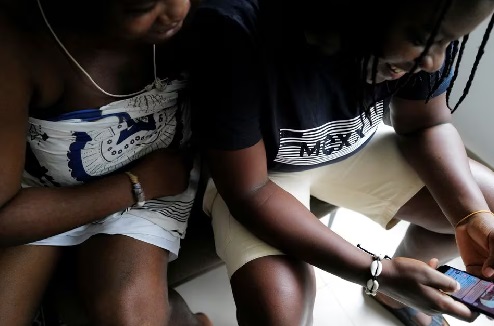
In a nation where religious condemnation of homosexuality is fervent and legal consequences for same-sex relationships are severe, Ghanaian couple Kay and Naa Shika grapple with a profound fear for their safety that eclipses concerns about societal acceptance.
“We are not safe,” confesses 27-year-old Kay, speaking to Reuters in Accra under the condition of anonymity for herself and her partner, according to Graphiconline.
Their apprehension has only intensified following a landmark ruling in December permitting Roman Catholic priests to bless same-sex unions, a decision approved by Pope Francis. However, this development has encountered staunch opposition from African bishops, exacerbating rather than assuaging tensions toward the LGBTQ+ community within Ghana’s Catholic populace, according to Kay.
The Ghana Catholic Bishops’ Conference has staunchly resisted compliance with the Pope’s directive, with Father Dominic Maximilian Ofori expressing concerns that the Pontiff’s position has provoked discontent among Ghanaian Catholics.
In a notable statement in January, Pope Francis acknowledged the unique challenges facing Africans in the wake of his decision, implying an awareness of the backlash it has incited.
“What is the use (of a blessing) if my partner and I can’t hold hands and walk down the street,” she said. “Even when we don’t identify openly, some people, based on rumours, can harm us mentally or even physically.”
Kay observed that the resistance to the Pope’s decision has amplified demands for the swift enactment of legislation that would heighten penalties for same-sex relationships and transgender identity, while also criminalizing any form of advocacy for LGBTQ+ rights.
Pope Francis has responded to criticism of his decision to allow priests to bless same-sex couples, labeling the opposition as “hypocrisy.”
The authorization of blessings for LGBT couples was granted last month through a Vatican document named Fiducia Supplicans (Supplicating Trust).
However, this decision has faced significant pushback within the Catholic Church, especially from African bishops.
“Nobody gets scandalised if I give my blessings to a businessman who perhaps exploits people, and this is a very grave sin. But they get scandalised if I give them to a homosexual,” Francis told Italian Catholic magazine Credere.
“This is hypocrisy,” he said.
Credere released excerpts of the interview on Wednesday, one day before its scheduled publication date.
Additionally, Francis affirmed that he “always” extends a welcome to LGBT individuals and remarried divorcees for the sacrament of confession, as reported by another passage published by Vatican media.
“No one should be denied a blessing. Everyone, everyone, everyone” the pontiff said, repeating a three-word slogan he used in August during a Catholic youth festival in Portugal.
At the outset of his papacy, Francis famously remarked “Who am I to judge?” when questioned about homosexuality, signaling his intention to foster a more inclusive and compassionate Catholic Church.
Making the Church more welcoming and less judgmental has become one of Francis’s key objectives, despite facing criticism from conservatives who argue that this approach risks diluting the Church’s moral teachings.
Francis has consistently defended the Vatican document Fiducia Supplicans, which authorized blessings for same-sex couples, while acknowledging the resistance it has encountered. He has emphasized the importance of priests considering local sensitivities when administering these blessings.
Furthermore, Francis has clarified that these blessings do not signify formal Church approval for same-sex unions, seeking to address concerns within the Church about maintaining doctrinal integrity.
“When a couple comes forward spontaneously to ask for them, one does not bless the union, but simply the people who together have requested it. Not the union, but the persons,” Francis said on Jan. 26.